World Food Books' programme is largely produced on Kulin Nation land. We acknowledge the Wurundjeri people of the Kulin Nation as the first and continuing custodians of this land, and pay respect to their Elders past, present, and emerging.
World Food Books is an arts and special interests bookshop in Naarm / Melbourne. Founded in 2010, World Food Books is devoted to the presentation of a rotating, hand-selection of international art, design, literary and counterculture publications with an emphasis on the anti-traditional, the experimental, the avant-garde, the heretic, the marginal.
Presenting new titles alongside rare and out-of-print books, catalogues and journals spanning the fields of modern and contemporary art, design, photography, illustration, film, literature, poetry, cultural theory, philosophy, sexuality, popular and underground culture in its many radical forms, World Food Books wishes to encourage adventurous, thoughtful and open-minded reading, looking, writing, and exchange of publishing and ideas, both current and historical.
As well as our bookshop, located in Melbourne's historical Nicholas Building, all of our inventory is available internationally via our online mail-order service.
World Food Books semi-regularly co-ordinates "Occasions", a programme of exhibits and events at the bookshop and in partnership with other hosts (such as museums and art galleries) that develop out of the activities, relationships and content of the bookshop itself.
World Food Books
The Nicholas Building
37 Swanston Street
Room 5, Level 6
Melbourne 3000
Australia
SHOP HOURS:
THU–SAT 12–6
WEB-SHOP OPEN 24/7
World Food Books
Postal Address:
PO Box 435
Flinders Lane
Victoria 8009
Australia
info@worldfoodbooks.com
Art
Theory / Essay
Architecture / Interior
Graphic Design / Typography
Photography
Fashion
Eros
LGBTQ+
Fiction / Poetry
Weird / Speculative / Science Fiction / Horror
Transgressive / Visceral / Abject
Symbolism / Decadence / Fin de siècle
Film / Video
Painting
Sculpture / Installation
Performance / Dance / Theater
Drawing
Sound / Music
Curatorial
Group Shows / Collections
Periodicals
Out-of-print / Rare
Posters / Ephemera / Discs
Signed Books
World Food Books Gift Voucher
World Food Book Bag
Australian Art
Australian Fiction
Australian Science Fiction / Speculative Fiction
Australian Poetry
Australian Photography
Japanese Photography
Conceptual Art
Minimal Art
Dada
'Pataphysics / Oulipo
Fluxus
Concrete Poetry
Pop Art
Surrealism
Arte Povera
Arte Informale / Haute Pâte / Tachism
Nouveau Réalisme / Zero / Kinetic
Situationism / Lettrism
Collage / Mail Art / Xerox Art
Art Brut / Folk / Visionary / Fantastic
Illustration / Graphic Art / Bandes Dessinées
Furniture
Italian Radical Design / Postmodernism
Textiles
Ceramics / Glass
Counterculture
Protest / Revolt
Philosophy
Psychoanalysis
Anthropology
Anarchism
Socialism / Anarchism / Communism / Capitalism
Literary Theory / Semiotics / Language
Feminism / Women's Studies
Gender Studies / Sexuality
Anthropology
Fetishism / BDSM
Drugs / Psychedelia
Crime / Violence
Animal Rights / Veganism
Occult / Esoterica
Ecology / Earth / Alternative Living
Whole Earth / Crafts
All prices in AUD (Australian dollars)
Pick-Ups
Pick-up orders can be collected in our bookshop during opening hours after order date. Please collect any Pick-up orders within 2 weeks of ordering as we have limited storage space. Orders will be released back into stock if not collected within this time. No refunds can be made for pick-ups left un-collected. If you cannot make it in to the bookshop in this time-frame, please choose postage option.
Return Policy
All sales are final. We do accept returns (for refund or exchange) for items received in error. All our orders are packed with special care using heavy-duty padding and cardboard book-mailers or bubble mailers (for smaller books), using reinforcement where required. We cannot take responsibility for any lost, stolen or damaged parcels.
Insurance
Should you wish to insure your package, please email us directly after placing your order and we can organise this at a small extra expense. Although all standard/express tracked packages are very safe and dependable, we cannot take responsibility for any lost, stolen or damaged parcels. We recommend insurance on valuable orders.
Interested in selling your old books, catalogues, journals, magazines, comics, fanzines, ephemera? We are always looking for interesting, unusual and out-of-print books to buy. We only buy books in our fields of interest and specialty, and that we feel we can resell.
We base these prices on desirability, market value, in-print prices, condition and our current stock levels. We offer cash, store credit, and can take stock on consignment. All
about 25% of the price we expect to get when we sell them, or 30% in store credit. We base these prices on desirability, market value, in-print prices, condition and our current stock levels.
Sell your books any day of the week. You can drop them off and return later. If you have a lot of books, we can visit your Sydney home.
We buy books that we feel we can resell. We offer about 25 % of the price we expect to get when we sell them, or 30% in store credit. We base these prices on desirability, market value, in-print prices, condition and our current stock levels.
Philadelphia Wireman
03 August - 01 September, 2018
World Food Books is proud to announce our next Occasion, the first presentation of sculptures by Philadelphia Wireman in Australia.
The Philadelphia Wireman sculptures were found abandoned in an alley off Philadelphia’s South Street on trash night in 1982. Their discovery in a rapidly-changing neighbourhood undergoing extensive renovation, compounded with the failure of all attempts to locate the artist, suggests that the works may have been discarded after the maker’s death. Dubbed the "Philadelphia Wireman" during the first exhibition of this work, in 1985, the maker’s name, age, ethnicity, and even gender remain uncertain. The entire collection totals approximately 1200 pieces, all intricately bound together with tightly-wound heavy-gauge wire (along with a few small, abstract marker drawings, reminiscent both of Mark Tobey and J.B. Murry). The dense construction of the work, despite a modest range of scale and materials, is singularly obsessive and disciplined in design: a wire armature or exoskeleton firmly binds a bricolage of found objects including plastic, glass, food packaging, umbrella parts, tape, rubber, batteries, pens, leather, reflectors, nuts and bolts, nails, foil, coins, toys, watches, eyeglasses, tools, and jewellery.
Heavy with associations—anthropomorphic, zoomorphic, and socio-cultural responses to wrapped detritus—the totemic sculptures by Philadelphia Wireman have been discussed in the context of work created to fulfil the shamanistic needs of alternative religions in American culture. Curators, collectors, and critics have variously compared certain pieces to sculpture from Classical antiquity, Native American medicine bundles, African-American memory jugs, and African fetish objects. Reflecting the artist’s prolific and incredibly focused scavenging impulse, and despite—or perhaps enhanced by—their anonymity, these enigmatic objects function as urban artefacts and arbiters of power, though their origin and purpose is unknown. Philadelphia Wireman, whatever their identity, possessed an astonishing ability to isolate and communicate the concepts of power and energy through the selection and transformation of ordinary materials. Over the course of the past two decades, this collection has come to be regarded as an important discovery in the field of self-taught art and vernacular art.
Presented in collaboration with Fleisher-Ollman Gallery, Philadelphia, and Robert Heald, Wellington.
Susan Te Kahurangi King
02 February - 10 March, 2018
Susan Te Kahurangi King (24 February 1951 - ) has been a confident and prolific artist since she was a young child, drawing with readily available materials - pencils, ballpoint pens and felt-tip markers, on whatever paper is at hand. Between the ages of four and six Susan slowly ceased verbal communication. Her grandparents William and Myrtle Murphy had developed a special bond with Susan so they took on caring responsibilities for extended periods. Myrtle began informally archiving her work, carefully collecting and storing the drawings and compiling scrapbooks. No drawing was insignificant; every scrap of paper was kept. The King family are now the custodians of a vast collection containing over 7000 individual works, from tiny scraps of paper through to 5 meter long rolls.
The scrapbooks and diaries reveal Myrtle to be a woman of great patience and compassion, seeking to understand a child who was not always behaving as expected. She encouraged Susan to be observant, to explore her environment and absorb all the sights and sounds. Myrtle would show Susan’s drawings to friends and people in her community that she had dealings with, such as shopkeepers and postal workers, but this was not simply a case of a grandmother’s bias. She recognised that Susan had developed a sophisticated and unique visual language and sincerely believed that her art deserved serious attention.
This was an unorthodox attitude for the time. To provide some context, Jean Dubuffet coined the term Art Brut in 1945 to describe work created by self-taught artists – specifically residents of psychiatric institutions and those he considered to be visionaries or eccentrics. In 1972 Roger Cardinal extended this concept by adopting the term Outsider Art to describe work made by non-academically trained artists operating outside of mainstream art networks through choice or circumstance. Susan was born in Te Aroha, New Zealand in 1951, far from the artistic hubs of Paris and London that Dubuffet and Cardinal operated in. That Myrtle fêted Susan as a self-taught artist who deserved to be taken seriously shows how progressive her attitudes were.
Susan’s parents Doug and Dawn were also progressive. Over the years they had consulted numerous health practitioners about Susan’s condition, as the medical establishment could not provide an explanation as to why she had lapsed into silence. Dawn educated herself in the field of homeopathy and went on to treat all twelve of her children using these principles – basing prescriptions on her observations of their physical, mental and emotional state.
Doug was a linguist with an interest in philosophy who devoted what little spare time he had to studying Maori language and culture. To some extent their willingness to explore the fringes of the mainstream made them outsiders too but it was their commitment to living with integrity and their respect for individuality that ensured Susan’s creativity was always encouraged.
Even though Susan’s family supported her artistic pursuits, some staff in schools and hospitals saw it as an impediment to her assimilation into the community and discouraged it in a variety of ways. Her family was not always aware of this and therefore did not fully understand why Susan stopped drawing in the early 1990s. However, rather than dwell on the challenges that Susan faced in pursuit of her artistic practice, they prefer to highlight her achievements. In 2008 Susan began drawing again in earnest, after an almost 20 year interruption, and her work is now shown in galleries around the world.
Susan grew up without television and has been heavily influenced by the comics she read as a child. She is absolutely fearless in the appropriation of recognizable characters, such as Donald Duck and Mickey Mouse, in her work. She twists their limbs, contorts their faces, compresses them together, blends them into complex patterned backgrounds - always imbuing them with an incredible energy. Although Susan often used pop culture characters in her work they are not naive or childlike. These are drawings by a brilliant self-taught artist who has been creating exceptional work for decades without an audience in mind.
Mladen Stilinović
"Various Works 1986 - 1999"
02 February 16 - September 10, 2016
Various works 1986 - 1999, from two houses, from the collections of John Nixon, Sue Cramer, Kerrie Poliness, Peter Haffenden and Phoebe Haffenden.
Including: Geometry of Cakes (various shelves), 1993; Poor People’s Law (black and white plate), 1993; White Absence (glasses, ruler, set square, silver spoon, silver ladel with skin photograph and wooden cubes), 1990-1996; Exploitation of the Dead (grey and red star painting, wooden painting, black spoon with red table, red plate), 1984-1990; Money and Zeros (zero tie, paintings made for friends in Australia (Sue, John, Kerrie), numbers painting), 1991-1992; Words - Slogans (various t-shirts) - “they talk about the death of art...help! someone is trying to kill me”, “my sweet little lamb”, “work is a disease - Karl Marx”; Various artist books, catalogues, monographs, videos; Poster from exhibition Insulting Anarchy; "Circular" Croatian - Australian edition; Artist book by Vlado Martek (Dostoyevsky); more.
Thanks to Mladen Stilinović and Branka Stipančić.
Jonathan Walker
Always Will Need To Wear Winter Shirt Blue + Ochre Small Check Pattern
21 August - 21 September, 2015
Untitled
I am not a great reader of poetry but I always return to the work of Melbourne poet, Vincent Buckley (1925- 1988). Perhaps I find his most tantalising piece to be not a finished poem but a fragment left on a scrap of paper discovered on his desk after the poet’s death.
The poetry gathers like oil
In the word-core, and spreads
It has its music meet,
Its music is in movement.
This fragment is more the shell left behind from a volatile thought than a finished poem. I find the last two lines honest but awkward whereas the first two lines work like an arrow. Most likely he could not find a resolution so it was left. Still, in its present form, it remains an eloquent testimony to the ultimate failure of a medium to express mobile thought and sensation, in Buckley’s case, through verbal language. It’s an important matter because this is something all artists have to deal with regardless of the medium.
I have never written a poem, however, I am forever copying fragments from books on paper scraps in a vain effort to fix certain notions in my head. At first, they function as bookmarks that are sometimes returned to when I open the book. But before long, as they accumulate, they fall out littering the table interspersed with A4 photocopies, bills, books and medications.
To return to Buckley’s fragment, the first two lines very much evoke how I paint nowadays. As you age, detail diminishes and patches of light become more luminous and float. I feel the most honest way of dealing with this is by smearing the oil paint on the canvas with the fingers and working close-up, blind. Only if the patches coalesce into an approaching image can the work gain a life.
-
Jonathan Walker was born in Melbourne, Australia and brought up on a dairy farm in Gippsland. In the 1970’s he studied painting at RMIT and won the Harold Wright Scholarship to the British Museum, London. During the 1980’s he exhibited at Pinacotheca Gallery, Richmond and had work shown at the NGV and Heidi City Art Gallery. Over the same period he designed the cover for the “Epigenesi” LP by Giancarlo Toniutti, Italy and conducted a mail exchange work with Achim Wollscheid, Germany. The work with artists through the post resulted in an article published in the bicentenary issue of Art and Australia 1988. He showed in artist run spaces such as WestSpace in the 90’s and 2000’s, and until 2012, taught painting at Victoria University, which is where we (Colleen Ahern and Lisa Radford) as organisers of the exhibition, among many others, had the privilege of being his student.
Walker’s knowledge was imparted to students through the careful selection of music, literature, and artists found in books that he himself had ordered for the library. Walker’s strategy was the generosity of sharing his vast knowledge with references specific to each student and their context.
Walker’s paintings share a similar focus and intimacy.
This exhibition presents a small selection of recent paintings alongside a publication that includes Walker’s writing. Observational and analytical, Walker’s work is a type of material notation — the time of day, colour and how it is blended, the both specific and fleeting location of a reflection on lino or the question of whether a chair leg should be included in a painting.
Please join us on Friday August 21 between 6-8pm to celebrate the opening of the exhibition.
Curated by Colleen Ahern and Lisa Radford.
B. Wurtz
Curated by Nic Tammens
March 26 - April 4, 2015
B.Wurtz works from a basement studio in his home on Manhattan’s Lower East Side.
This local fact is attested to by the plastic shopping bags and newsprint circulars that appear in his work. As formal objects, they don’t make loud claims about their origins but nonetheless transmit street addresses and places of business from the bottom of this long thin island. Like plenty of artists, Wurtz is affected by what is local and what is consumed. His work is underpinned by this ethic. It often speaks from a neighborhood or reads like the contents of a hamper:
“BLACK PLUMS $1.29 lb.”
“Food Bazaar”
“USDA Whole Pork Shoulder Picnic 99c lb.”
“RITE AID Pharmacy, with us it’s personal.”
“H. Brickman & Sons.”
“Sweet Yams 59c lb."
Most of the work in this exhibition was made while the artist was in residence at Dieu Donne, a workshop dedicated to paper craft in Midtown. Here Wurtz fabricated assemblages with paper and objects that are relatively lightweight, with the intention that they would be easily transportable to Australia. This consideration isn’t absolute in Wurtz’s work, but was prescriptive for making the current exhibition light and cheap. Packed in two boxes, these works were sent from a USPS post office on the Lower East Side and delivered to North Melbourne by Australia Post.
Wurtz appears courtesy of Metro Pictures, New York.
Thanks to Rob Halverson, Joshua Petherick, Sari de Mallory, Matt Hinkley, Helen Johnson, Fayen d'Evie, Ask Kilmartin, Lisa Radon, Ellena Savage, Yale Union, and "Elizabeth".
John Nixon
"Archive"
December 15 - January 20, 2014
The presentation of John Nixon's archive offered a rare showcase of this extensive collection of the artist's own publications, catalogues, posters, ephemera, editions and more, from the mid 1980s onwards, alongside a selection of his artworks.
Organized by John Nixon, Joshua Petherick and Matt Hinkley.
"Habitat"
at Minerva, Sydney (organised by Joshua Petherick and Matt Hinkley)
November 15 - December 20, 2014
Lupo Borgonovo, Janet Burchill & Jennifer McCamley,
Lewis Fidock, HR Giger, Piero Gilardi, Veit Laurent Kurz,
Cinzia Ruggeri, Michael E. Smith, Lucie Stahl, Daniel Weil, Wols
Press Release:
“...It contained seven objects. The slender fluted bone, surely formed for flight, surely from the wing of some large bird. Three archaic circuitboards, faced with mazes of gold. A smooth white sphere of baked clay. An age-blackened fragment of lace. A fingerlength segment of what she assumed was bone from a human wrist, grayish white, inset smoothly with the silicon shaft of a small instrument that must once have ridden flush with the surface of the skin - but the thing’s face was seared and blackened.”
William Gibson, “Count Zero”, 1986
"Autumn Projects Archive"
Curated by Liza Vasiliou
March 6 - March 15, 2014
World Food Books, in conjunction with the Virgin Australia Melbourne Fashion Festival 2014, presented the Autumn Projects archive, consisting of a selection of early examples in Australian fashion with a particular interest in collecting designers and labels from the period beginning in the 1980’s, who significantly influenced the discourse of Australian Fashion.
Curated by Liza Vasiliou, the exhibition provided a unique opportunity to view pieces by designers Anthea Crawford, Barbara Vandenberg, Geoff Liddell and labels CR Australia, Covers, Jag along with early experimental collage pieces by Prue Acton and Sally Browne’s ‘Fragments’ collection, suspended throughout the functioning World Food Books shop in Melbourne.
H.B. Peace
presented by CENTRE FOR STYLE
November 14, 2013
"Hey Blinky, you say chic, I say same"
Anon 2013
H.B. Peace is a clothing collaboration between great friends Blake Barns and Hugh Egan Westland. Their pieces explore the divergences between 'character’ and ‘personality’ in garments....etc
Special Thanks to Joshua Petherick and Matt Hinkley of WFB and Gillian Mears
and a Very Special Thank you to Audrey Thomas Hayes for her shoe collaboration.
Janet Burchill & Jennifer McCamley
"Aesthetic Suicide"
May 10 - June 8, 2013
The first of our occasional exhibitions in the World Food Books office/shop space in Melbourne, "Aesthetic Suicide" presented a body of new and older works together by artists Janet Burchill & Jennifer McCamley, including videos, prints, a wall work, and publications.
During shop open hours videos played every hour, on the hour.
1995, Japanese
Softcover, 224 pages, 21 x 15 cm
1st Edition, Out of print title / used / very good
Published by
Data House / Tokyo
$25.00 - Out of stock
"Sniff out!! Our fuckin' rotten brain.... Dedicated to all the gay guys in Japan"
???
The very controversial, very vulgar and very popular inaugural 1995 issue of Tokyo's Danger (or Dangerous) magazine, edited by Masaaki Aoyama (1960-2001), a legendary cult writer, editor and pioneer in the genre of "Kichiku" (cruel) publishing who had a major influence on Japanese subculture in the 1980s and 1990s. In 1995, after a prolific career in underground publishing, Aoyama edited the first issue of the "brutal" subculture magazine "Dangerous No. 1," which quoted the words of cult guru Hassan I-Sabah: "There is no truth. Everything is permitted." Packed with an exhaustive range of deviant, perverted, and bad taste content, Dangerous No. 1, declaring "There are no taboos when it comes to fantasies!", became an immediate hit, selling over 250,000 copies and sparking a craze for "Kichiku" (cruel) and bad taste publishing in Japan in the late 19th century.
The peak of 1990's nihilism publishing from Tokyo's "apocalyptic" Data House to file alongside Too Negative and End of The Century, Dangerous, a "scientific" journal of lunatic subculture, launched onto newsstands with an in-depth international reportage on "Drugs". Editor Aoyama, who in 1992 wrote Japan's first practical drug manual, "Dangerous Medicine," a "bible for junkies", which sold over 100,000 copies, brings together articles on speed shooting, South American cartels, the world's rarest drugs, hallucinogenic plants from around the world from magic mushrooms to ayahuasca, how-tos/maintenance/cultivating knowledge, the history of ecstasy, sex on drugs, music on drugs, a drug slang dictionary, drug-related books and guides, world scene and dutch coffeeshop reports, xxx film director Fumiki Watanabe interview, an exploration of Japan's "dangerous documents", corpse museums, hitmen, sex criminals, "Your personality & cause of death", and genuinely horrible other tid-bits from the darker side of humanity.
Note: Aside from some photographs and violent and absurd cartoons, Dangerous is a "scientific" journal, filled with Japanese texts and info graphics.
"People often talk about humanity and humanism, but what makes humans decisively different from animals is that they betray, deceive, and destroy others. Humanity means being cruel."—Masaaki Aoyama
Masaaki Aoyama (1960-2001) was pioneer of the Japanese underground publishing scene. When he was in the third grade of elementary school, his father bought him a copy of Hiroshi Minamiyama's book "Supernatural Mysteries," which sparked his interest in the supernatural and the occult. Although he never studied, he displayed his prodigy qualities from an early age whilst simultaneously becoming addicted to masturbation. His intense quest for knowledge and perversion continued into his adult life. A self-proclaimed hedonist, Aoyama was hailed as a rare genius editor that had a profound, almost traumatic impact on people. Aoyama openly discussed and pursued a wide range of specialised topics, from drugs, lolicon, scat, and freaks to cult movies, progressive rock, punk, techno, the occult, heretical thought, and the spiritual world. He worked prolifically, editing and writing articles for mini-comics, books and magazines such as Hentai, Hey! Buddy, Billy, Witches' Sabbath, Philiac, Eccentric, amongst a seemingly endless list of fringe "pervert" publications that proliferated after the emergence of vending machine books in the 1970s. In 1992, Aoyama wrote Japan's first practical drug manual, "Dangerous Medicine," a "bible for junkies" which sold over 100,000 copies. In 1995, he edited the first issue of the "brutal" subculture magazine "Dangerous No. 1," which quoted the words of cult guru Hassan I-Sabah: "There is no truth. Everything is permitted." The magazine, which was packed with an exhaustive range of deviant, perverted, and bad taste content, became a huge hit, selling over 250,000 copies in total, sparking a craze for "Kichiku" (cruel) publishing in Japan in the late 19th century.
"No taboos in delusions"—Dangerous No. 1 introduction.
The trend of consuming things that are generally viewed as objects of loathing or pity from a mondo perspective was accelerated all over the world during the nihilist 1990's, but it was particularly popularised in Japan. From V-Zone video culture to comic books like Garo and the works of Kei (Takashi) Nemoto, Suehiro Maruo and Hideshi Hino, to subculture magazines that stimulated spectacle-based curiosity, crime and voyeurism, such as GON!, BUBKA, Sekimatsu Club, TOO NEGATIVE, End of the Century, Weekly Murder Casebook, Bessatsu Takarajima. Around the same time, Aoyama was diagnosed with multifocal posterior pigment epitheliopathy (MPPE), an extremely rare eye disease affecting around 50 people nationwide in Japan, which later became one of the factors that led him to become interested in spiritual matters. Aoyama, the mastermind behind this new genre of "Kichiku" (cruel), bad taste publishing, became disillusioned with the vulgar taste that was being mass-produced as a result of the boom. Aoyama felt the genre lost its substance as a counterculture or literary movement and had been absorbed into popular culture, the historical lineage of erotic underground publishing had become dissolved with the boom of extreme content on the internet. Without moralising, he had stared directly into the abyss. The dark truths he sought fed his own deviancy and addictions. Aoyama became depressed and reclusive. In 1997, Sakakibara Seito, an avid reader of Danger No. 1, committed the Kobe child murders. This led to bookstores removing all bad taste subculture books from their shelves. In 1999, "The Complete Works of Aoyama Masaaki” was published, marking the end of "Kichiku" publishing. Aoyama sought the light and pursued a new theory of happiness related to the spiritual world based on psychoneuroimmunology, molecular biology, and Buddhist resignation. In an interview with the magazine BURST, he declared, "the brutal genre is no longer fresh. From now on, I'll go for the soothing genre." He hanged himself at his home in Yokosuka, Kanagawa Prefecture on June 17, 2001, at the age of 40.
Very Good copy, light cover/edge wear. 1995 edition, 1996 printing.
1985, Japanese
Softcover, 290 pages, 21 x 15 cm
1st Edition, Out of print title / used / fine
Published by
Sanwa / Tokyo
$450.00 - Out of stock
"People often talk about humanity and humanism, but what makes humans decisively different from animals is that they betray, deceive, and destroy others. Humanity means being cruel."—Masaaki Aoyama
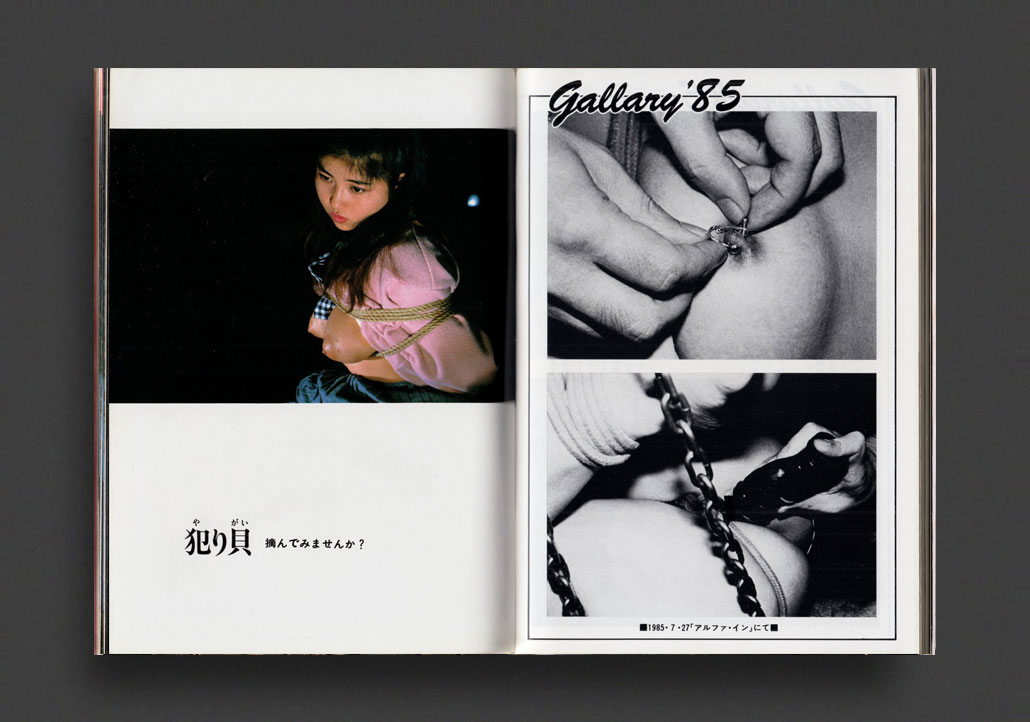
Super rare, first and only issue of cult magazine of erotic obscenity, Witches' Sabbath ("Super Pervert, End of the Century, Abuse History"), published in 1985 by Sanwa Publications as a special edition of SM Mania and edited by Masaaki Aoyama (1960-2001), a legendary cult writer, editor and pioneer in the genre of "Kichiku" (cruel) publishing who had a major influence on Japanese subculture in the 1980s and 1990s.
In 1995, after a prolific career in underground publishing, Aoyama edited the first issue of the "brutal" subculture magazine "Dangerous No. 1," which sparked a huge craze for bad taste culture in Japan, with the opening introduction declaring "There are no taboos when it comes to fantasies!". Ten years earlier, at 25 years old, he edited Witches' Sabbath, a call to "Destroy All Orders", a magazine devoted to "Decadence, Ultra-Abnormality, and Maltreatment"; Aoyama's unique, devilish manifestation of a particular convergence of subcultural 1980s Tokyo — punk and industrial music, splatter horror films, underground manga, SM publishing, and occultism. "The Worst Truth of the 20th Century".
Aoyama was deeply attracted to the culture of monsters, the world of the abnormal, the cruel and dark impulses of human-kind. His publishing ventures centred around his fascination with destructive and socially maladjusted people, perversions, social taboos, "freaks" and subjects turned against public order and morality. Profusely illustrated throughout with colour photo galleries, Aoyama, with contributors including Merzbow's Masami Akita, horror manga artists Suehiro Maruo and Hideshi (Guinea Pig) Hino, manga critic and activist Shinichiro Kurimoto, Hisao Nakano, Mongoose Nagayama, Dan Takasugi, Ken Hirukogami, and others, present features on all manner of heterodox culture, everything from an illustrated guide to corpse photography, splatter horror movies, scatology, how-to seppuku/harakiri (Japanese ritualistic suicide by disembowelment), horror manga (new artworks by Maruo, Hino, comic by Jimmie Morita, and others), infant mania, drugs, necrophilia, Industrial Records (Throbbing Gristle, Monte Cazazza, SPK, etc,), Zeitlich Vergelter, Ron Geesin, sadistic crime history, deformities, Georges Bataille, devil pregnancy kinbaku, sorcery, bestiality, witch hunting, SM readers confessions, the latest in fetish publishing, D-Cup extravaganza (big breast video and magazine publishing), and much more. A special Nazi issue was planned for the next issue, but the magazine was discontinued after this first issue.
An important publication in the history of Japan's "Kichiku" (cruel) publishing. Cover artwork by Ran Akiyoshi.
Not for the faint of heart. Strictly mature audiences only.
From the Editor's notes: "[...] That's because my original path was escapist fairy tales, and whether it was manga, photography, or bookmaking, what I wanted to depict was the world of children. There's no doubt that the purest things and madness are side by side... What is abnormal and what is normal? In this day and age when everything man has created is being torn down and all boundaries are being removed, humans are being led astray by the enormous concepts they have created. Is Witches' Sabbath just a pornographic book? Is Masaaki Aoyama just crazy? It has only just begun."
Masaaki Aoyama (1960-2001) was pioneer of the Japanese underground publishing scene. When he was in the third grade of elementary school, his father bought him a copy of Hiroshi Minamiyama's book "Supernatural Mysteries," which sparked his interest in the supernatural and the occult. Although he never studied, he displayed his prodigy qualities from an early age whilst simultaneously becoming addicted to masturbation. His intense quest for knowledge and perversion continued into his adult life. A self-proclaimed hedonist, Aoyama was hailed as a rare genius editor that had a profound, almost traumatic impact on people. Aoyama openly discussed and pursued a wide range of specialised topics, from drugs, lolicon, scat, and freaks to cult movies, progressive rock, punk, techno, the occult, heretical thought, and the spiritual world. He worked prolifically, editing and writing articles for mini-comics, books and magazines such as Hentai, Hey! Buddy, Billy, Witches' Sabbath, Philiac, Eccentric, amongst a seemingly endless list of fringe "pervert" publications that proliferated after the emergence of vending machine books in the 1970s. In 1992, Aoyama wrote Japan's first practical drug manual, "Dangerous Drugs," a "bible for junkies" which sold over 100,000 copies. In 1995, he edited the first issue of the "brutal" subculture magazine "Dangerous No. 1," which quoted the words of cult guru Hassan I-Sabah: "There is no truth. Everything is permitted." The magazine, which was packed with an exhaustive range of deviant, perverted, and bad taste content, became a huge hit, selling over 250,000 copies in total, sparking a craze for "Kichiku" (cruel) publishing in Japan in the late 19th century.
"No taboos in delusions"—Dangerous No. 1 introduction.
The trend of consuming things that are generally viewed as objects of loathing or pity from a mondo perspective was accelerated all over the world during the nihilist 1990's, but it was particularly popularised in Japan. From V-Zone video culture to comic books like Garo and the works of Kei (Takashi) Nemoto, Suehiro Maruo and Hideshi Hino, to subculture magazines that stimulated spectacle-based curiosity, crime and voyeurism, such as GON!, BUBKA, Sekimatsu Club, TOO NEGATIVE, End of the Century, Weekly Murder Casebook, Bessatsu Takarajima. Around the same time, Aoyama was diagnosed with multifocal posterior pigment epitheliopathy (MPPE), an extremely rare eye disease affecting around 50 people nationwide in Japan, which later became one of the factors that led him to become interested in spiritual matters. Aoyama, the mastermind behind this new genre of "Kichiku" (cruel), bad taste publishing, became disillusioned with the vulgar taste that was being mass-produced as a result of the boom. Aoyama felt the genre lost its substance as a counterculture or literary movement and had been absorbed into popular culture, the historical lineage of erotic underground publishing had become dissolved with the boom of extreme content on the internet. Without moralising, he had stared directly into the abyss. The dark truths he sought fed his own deviancy and addictions. Aoyama became depressed and reclusive. In 1997, Sakakibara Seito, an avid reader of Danger No. 1, committed the Kobe child murders. This led to bookstores removing all bad taste subculture books from their shelves. In 1999, "The Complete Works of Aoyama Masaaki” was published, marking the end of "Kichiku" publishing. Aoyama sought the light and pursued a new theory of happiness related to the spiritual world based on psychoneuroimmunology, molecular biology, and Buddhist resignation. In an interview with the magazine BURST, he declared, "the brutal genre is no longer fresh. From now on, I'll go for the soothing genre." He hanged himself at his home in Yokosuka, Kanagawa Prefecture on June 17, 2001, at the age of 40.
Near Fine collector's copy!
2025, English
Softcover, 640 pages, 24 x 16.99 cm
Published by
Intellect Ltd / US
$110.00 - In stock -
Industrial music has long been recognized for its sonic innovations, but the radical visual culture that accompanied this underground movement has remained largely unexplored. Shock Factory: The Visual Culture of Industrial Music presents the first comprehensive examination of how industrial artists created a coherent aesthetic language across multiple media—from xerox art and mail art to installation and performance—fundamentally challenging modernist utopias while prophetically anticipating contemporary discourse about media manipulation and technological control.
Emerging in mid-1970s Britain from the post-punk underground before expanding globally throughout the 1980s, artists like Throbbing Gristle, Cabaret Voltaire, SPK, Test Dept, Laibach, Einstürzende Neubauten, Nurse With Wound, Current 93, Coil, Psychic TV, Boyd Rice, Whitehouse, Merzbow, Hijokaidan, Hunting Lodge, Controlled Bleeding, Hafler Trio, Z'EV, Nocturnal Emissions, 23 Skidoo, Clock DVA, Master/Slave Relationship, and Monte Cazazza developed sophisticated visual strategies that matched their abrasive soundscapes with equally confrontational imagery.
At 640 pages, this award-winning monograph reveals how industrial artists systematically appropriated reprographic techniques—particularly xerox art and photocollage—to create disturbing visual narratives investigating mind control, criminality, occultism, pornography, psychiatry, and totalitarianism. Through détournement strategies borrowed from Situationist theory, they exposed the coercive mechanisms of mass media and technological society, creating a visual vocabulary that challenged viewers to confront uncomfortable truths about modern power structures. What emerges is a movement that perceptively anticipated contemporary concerns about surveillance, media manipulation, and collective psychological control. Industrial artists' exploration of these themes through deliberately provocative imagery served not as mere provocation but as sophisticated critique of the very media systems they inhabited. Their radical aesthetic choices—degraded reproduction quality, found imagery manipulation, shock tactics—created hybrid forms that defied traditional categorization while establishing independent networks that bypassed conventional art world structures.
Shock Factory positions industrial music's visual culture within broader art historical narratives, revealing connections to Dada, Surrealism, and conceptual art while demonstrating the movement's unique contributions to contemporary visual culture. The book arrives at a moment when questions about technology, media manipulation, and social control have never been more urgent, demonstrating how these artists' radical visual strategies continue to offer valuable insights for our digital age.
For scholars of contemporary art, music history, and media studies, this book provides essential documentation of an overlooked movement that significantly influenced subsequent artistic developments. For readers interested in underground culture and avant-garde aesthetics, Shock Factory reveals the sophisticated visual thinking that accompanied one of the most innovative musical movements of the past half-century.
"A history of industrial music needed to be written. Nicolas Ballet has accomplished this. Thoroughly. This is the book's greatest strength. It explores the significance of noise as a reflection of a world in decay and screaming as a need. And doing it so it reveals a significant connection between industrial music and contemporary art. This is also what makes it an essential book: its contribution to dismantling categories and rethinking history from mixed creative territories."—David G. Torres
Nicolas Ballet is an art historian and assistant curator at the Centre Pompidou in the New Media Department. He is the author of books and articles exploring the visual and sonic contributions of countercultures and experimental artistic practices.
1988, Japanese
Hardcover (w. dust jacket), 250 pages, 19.5 x 13.5 cm
1st Edition, Out of print title / used / very good
Published by
Seikyūsha / Tokyo
$140.00 - In stock -
Discipline/bondage/training, robondage, shoe fetish/heels/bizarre SM, rubber/latex/second skin/fetish fashion, shemale, transsexuality/produced androgony/bisexual syndrome, body decoration and piercing cult, tattoo, corset, chastity belt and genital bondage torture, armed phallus, torture goods, milk and pregnant, bondage purge, hyper pornography, sex devices/artificial sex, medical fetish, retro bondage/fetish merchants/John Willie/comics, cat fighting, "private" magazines and videos ...
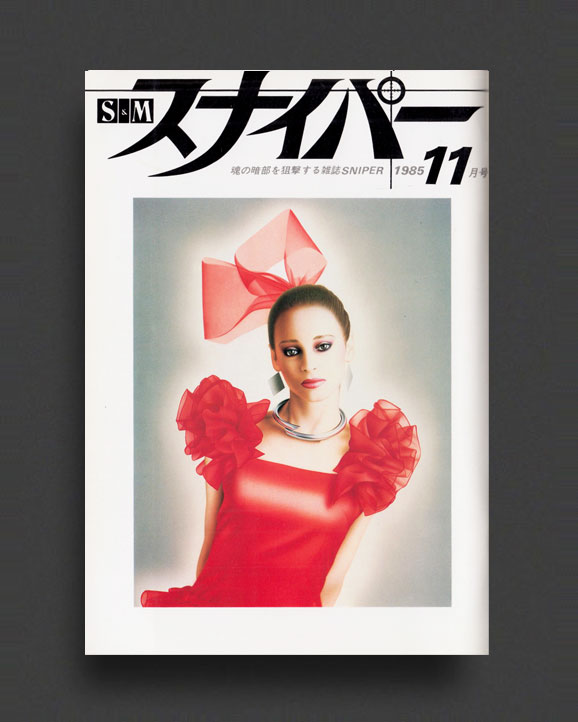
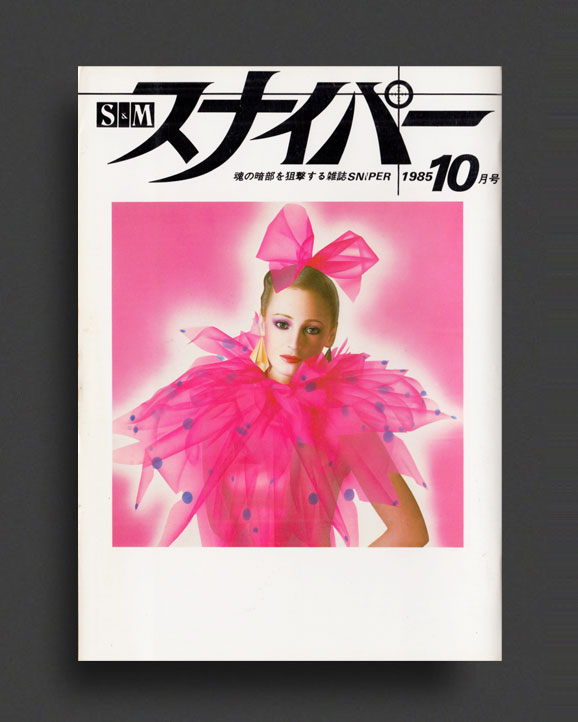
First hardcover edition of "TThe Anagram of Perversion : Theatre of Pornography", written by Merzbow's Masami Akita and published only in Japan in 1988. Covering all the above subjects with b/w illustrations, "The Anagram of Perversion" is Akita's rare first book study on the current status of fetishism, exploring a plethora of sexual utopias and customs and their histories around the world. Merzbow is a noise project created in Tokyo, Japan in 1979 under the direction of noise technician Masami Akita. As well as a legendary underground noise artist, Akita is a prolific writer in Japan and frequently writes on the arts, music, erotica, esoterica, modern architecture, and animal rights, with articles on emerging subcultures and underground extreme cultures appearing in publications like SM Sniper, Studio Voice and Fool's Mate. His development of the Merzbow aesthetic ran parallel with a series of investigative books in which he catalogued and introduced a vast amount of hermetic types of music, sexual practices and autonomous creativity to a fairly conservative (but not close-minded) Japanese audience. "The Anagram of Perversion : Theatre of Pornography" is one, perhaps the first, of these very books.
First edition, Japanese text, VG in VG illustrated dust jacket.
1990, Japanese
Hardcover (w. dust jacket), 206 pages, 13.6 cm x 19.4 cm
1st Edition, Out of print title / used / fine
Published by
Seikyūsha / Tokyo
$80.00 - In stock -
First hardcover edition of "Fetish Fashion", written by Merzbow's Masami Akita and published only in Japan in 1990, an in-depth exploration of the eroticisation and transformation of the body through fetish fashion that revolutionised the world of sexuality, from SM Bizarre, Transvestism, Rubber/latex, mistresses and dominatrixes, bondage clubs, male and female castration, restraints, piercing, the fascist artificial body, medical fetish/medical art (including Romain Slocombe), and much more, all subjects illustrated in b/w. Merzbow is a noise project created in Tokyo, Japan in 1979 under the direction of noise technician Masami Akita. As well as a legendary underground noise artist, Akita is a prolific writer in Japan and frequently writes on the arts, music, erotica, esoterica, modern architecture, and animal rights, with articles on emerging subcultures and underground extreme cultures appearing in publications like SM Sniper, Studio Voice and Fool's Mate. His development of the Merzbow aesthetic ran parallel with a series of investigative books in which he catalogued and introduced a vast amount of hermetic types of music, sexual practices and autonomous creativity to a fairly conservative (but not close-minded) Japanese audience. "Fetish Fashion" is one of these very books.
First edition, Japanese text, fine copy with fine illustrated dust jacket.
1994, Japanese
Softcover, 210 pages, 15 cm x 21 cm
1st Edition, Out of print title / used / very good
Published by
Tom Shobo / Japan
$120.00 - Out of stock
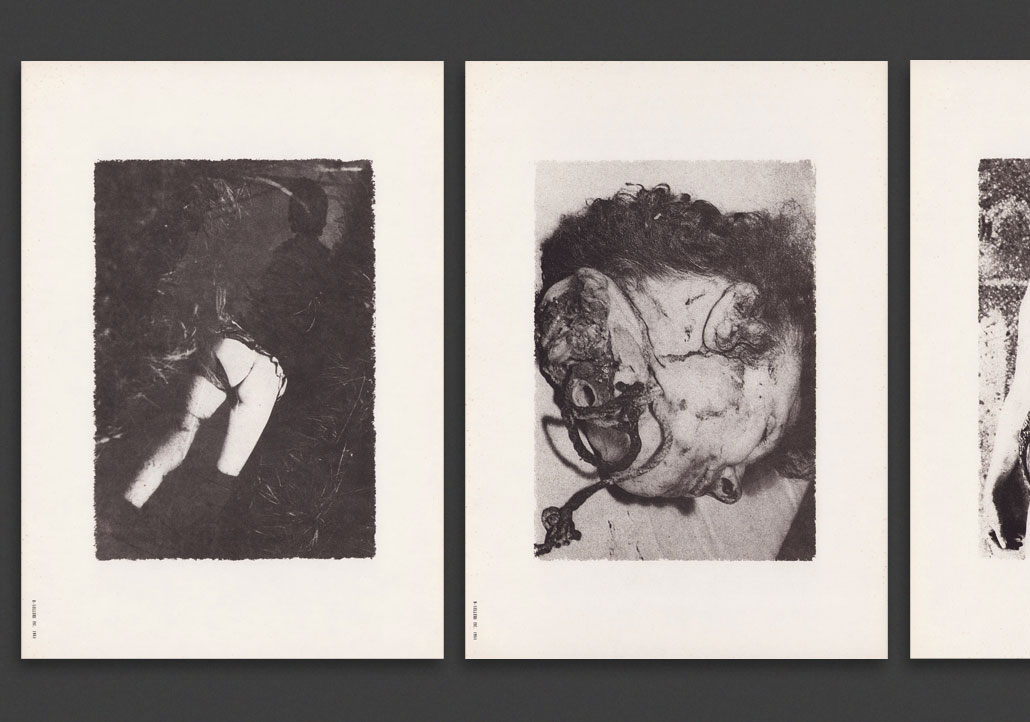
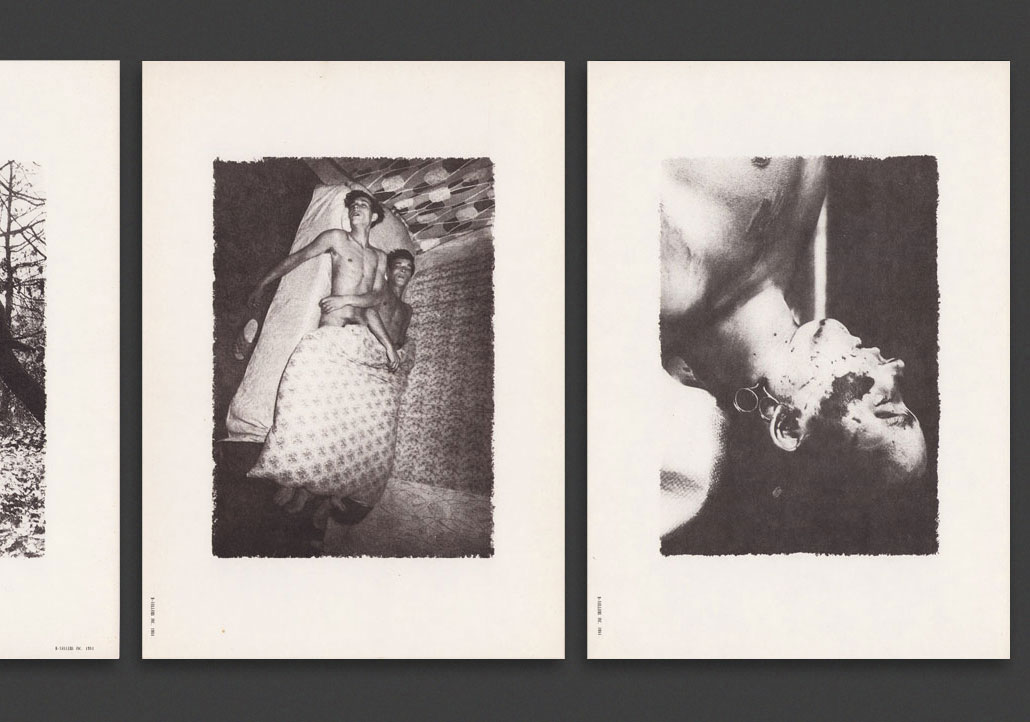
The rare inaugural issue of Too Negative (No. 1 October 1994). Now rare and highly collectible, Too Negative, the "Forbidden Picture Book", was a visceral and visually explosive glossy cult arts magazine that reflected the gory-depraved-beyond salvation-bad taste expressions visible in international subculture at the height of 1990s underground publishing, a time when art was pushing the limits of taste and morality. Edited solely by legendary Japanese publisher and gallery owner Kotaro Kobayashi and published by Tom Publication Inc. between 1994—2000, each thick, glossy volume takes on the aesthetics of a vibrant fashion magazine in the great Japanese "mook" format (the magazine book) packed cover to cover with themes of Eros and Thanatos, such as fetishism, erotica, medical/autopsy photography, death journalism, Japanese bondage, grotesque and neo-surrealist art, crime scene photography, tattooing/irezumi, piercing, and all things of the mondo, macabre, bizarro realm. Frequent collaborators and featured artists were Kiyotaka Tsurisaki, Joel-Peter Witkin, Trevor Brown, Kiyoshi Ikejiri, to name a few. With a Japanese publishing lineage that may be found in earlier bounding-pushing periodicals such as the 1920s erotic grotesque magazine Hentai Shiriou (Pervert Documents), Tasuhiko Shibusawa’s incredible 1960s avant-garde journal Le Sang Et La Rose, or Fiction Inc’s SALE2 journal published from 1980—mid 1990s, Too Negative, and affiliated periodicals such as ORG, Spiral, Schizo, etc. took their subjects to another level of extremism, even by Japanese standards.
Not for the faint hearted.
This issue, Too Negative No. 1 October 1994, features the corpse/death photography of Kiyotaka Tsurisaki, fetish photography of Kiyoshi Ikejiri, Trevor Brown artwork, AIDS body theory by Keiji Nakayama, SM photography by David Pearson, Japanese big girl nude portraits by photographer Yurie Nagashima, Yasumasa Yonehara photography, hermaphrodite masterbation, antique Japanese hermaphrodite genital studies and various early medical drawings, erotic assemblage, medical/anatomy photography, you name it.
Very Good copy.
1994, Japanese
Softcover, 210 pages, 15 cm x 21 cm
1st Edition, Out of print title / used / very good
Published by
Tom Shobo / Japan
$140.00 - Out of stock
Too Negative No. 2 December 1994, featuring the first publication of corpse photographer Kiyotaka Tsurisaki.
Now rare and highly collectible, Too Negative, the "Forbidden Picture Book", was a visceral and visually explosive glossy cult arts magazine that reflected the gory-depraved-beyond salvation-bad taste expressions visible in international subculture at the height of 1990s underground publishing, a time when art was pushing the limits of taste and morality. Edited solely by legendary Japanese publisher and gallery owner Kotaro Kobayashi and published by Tom Publication Inc. between 1994—2000, each thick, glossy volume takes on the aesthetics of a vibrant fashion magazine in the great Japanese "mook" format (the magazine book) packed cover to cover with themes of Eros and Thanatos, such as fetishism, erotica, medical/autopsy photography, death journalism, Japanese bondage, grotesque and neo-surrealist art, crime scene photography, tattooing/irezumi, piercing, and all things of the mondo, macabre, bizarro realm. Frequent collaborators and featured artists were Kiyotaka Tsurisaki, Joel-Peter Witkin, Trevor Brown, Kiyoshi Ikejiri, to name a few. With a Japanese publishing lineage that may be found in earlier bounding-pushing periodicals such as the 1920s erotic grotesque magazine Hentai Shiriou (Pervert Documents), Tasuhiko Shibusawa’s incredible 1960s avant-garde journal Le Sang Et La Rose, or Fiction Inc’s SALE2 journal published from 1980—mid 1990s, Too Negative, and affiliated periodicals such as ORG, Spiral, Schizo, etc. took their subjects to another level of extremism, even by Japanese standards.
Not for the faint hearted.
This issue, Too Negative No. 2 December 1994, features the corpse/death photography of Kiyotaka Tsurisaki, fetish photography of Kiyoshi Ikejiri, Kotaro Kobayashi, Setsuko Chiba, the artwork of Trevor Brown, photography of Nancy Burson, doll art by Katan Amano, loads of vintage medical, autopsy and death photography, tattoo and piercing fetish, freak postcards, sex dolls, and much more.
Very Good copy with some cover/extremities wear.
1989, English
Softcover, 213 pages, 20.5 x 18 cm
1st Edition, Out of print title / used / very good
Published by
City Lights Books / San Francisco
$120.00 - In stock -
First 1989 City Lights English translation, long out-of-print.
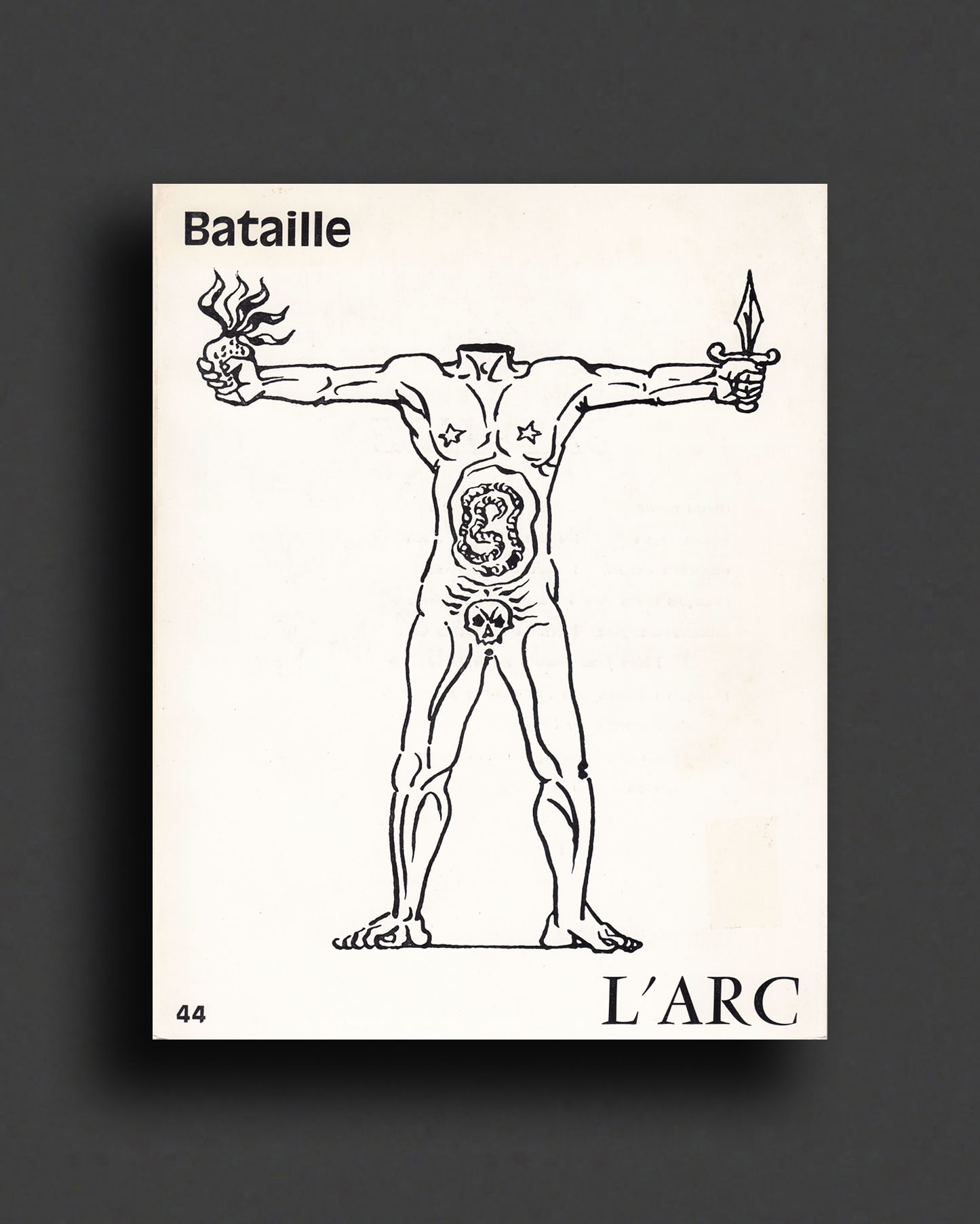
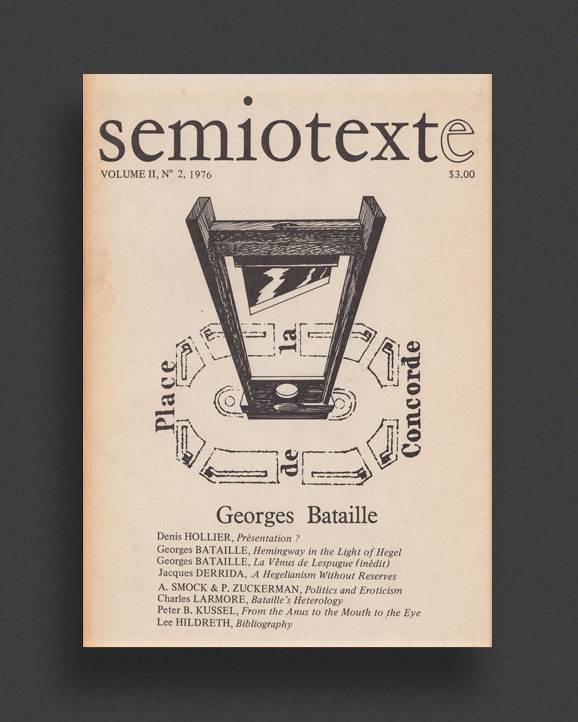
Tears of Eros is the culmination of Georges Bataille's inquiries into the relationship between violence and the sacred. Taking up such figures as Giles de Rais, Erzebet Bathory, the Marquis de Sade, El Greco, Gustave Moreau, Andre Breton, Voodoo practitioners, and Chinese torture victims, Bataille reveals their common death. This essay, illustrated with artwork from every era, was developed out of ideas explored in Death and Sexuality and Prehistoric Lascaux or the Birth of Art . In it Bataille examines death—the "little death" that follows sexual climax, the proximate death in sadomasochistic practices, and death as part of religious ritual and sacrifice. "Bataille is one of the most important writers of the century."— Michel Foucault Georges Bataille was born in Billom, France, in 1897. He was a librarian by profession. Also a philosopher, novelist, and critic he was founder of the College of Sociology. In 1959, Bataille began Tears of Eros , and it was completed in 1961, his final work. City Lights published two of his other Story of the Eye and The Impossible . Bataille died in 1962.
French essayist, philosophical theorist, and novelist, often called the "metaphysician of evil." Bataille was interested in sex, death, degradation, and the power and potential of the obscene. He rejected traditional literature and considered that the ultimate aim of all intellectual, artistic, or religious activity should be the annihilation of the rational individual in a violent, transcendental act of communion. Roland Barthes, Julia Kristeva, and Philippe Sollers have all written enthusiastically about his work.
Very Good copy, light wear to extremities/corners.
1992, English
Softcover (w. dust jacket), 140 pages, 26 x 20 cm
1st Edition, Out of print title / used / very good
Published by
MIMA / Melbourne
$35.00 - Out of stock
Scarce catalogue edited by Adrian Martin and published in 1990 to accompany experimenta — A Major Survey of Film and Video Art, Melbourne, November 20—December 4, 1990, presented by Modern Image Makers Association Inc. (MIMA) and founded in 1988. Showcasing Australian video art, media art, installation and performance works.
Contents include: An introduction to Experimenta 1992 by Lizzette Atkins, Of Prisms and Tools: The Possibility of an Avant Garde by Vikki Riley, Australian Screenings, Introduction by Steven Ball, Opening Night, Signposts To The Imagination Re-animated; (re)constructing an art, Techknowledge, Dusan Marek's Cobweb On A Parachute — Essay by Arthur Cantrill, David Perry's The Refracting Glasses, Interview with David Perry, Passionate Uncertainty, Text and Textures, Engineering Memory: Views of History, Politics, Culture and Geography, Helical Scans: Diverse Ways of Seeing (Video) Programme 1 and 2, One Way Street: Fragments for Walter Benjamin, Sound and Image, Experience and The Other, The Fall Of The Berlin Wall, The Open 'Iron Curtain' and Post-Socialist Drama, Artists seen by artists, Die Mauer—The negative horizon, The Czech Avant Garde 1911-1941 essay by Jaroslav Andel, Programme 1, Programme 2, Video Programmes From 'New Europe' curated by Heiko DaxI, U.K., Intimate Imaginaries, Artist Screening: Michael Maziere, Slow Glass, U.S.A., Shalom Gorewitz-Experimental Television Center, New York, WAX, or the discovery of television among the bees, Flesh Histories, Programme 1, Programme 2, Japan, Emotional Wave: Image Network Japan, V.I.E.W., Shinya Tsukamoto's Tetsuo: The Iron Man, Interview with Shinya Tsukamoto, Performance: Introduction by Jeffrey Fereday, Artist statements, Installation: Introduction by Jennifer Phipps, Artist statements, Medienkunst—A survey of German, installation art— introduction by Heiko Daxl, Medienkunst-Artist statements, Special Events, Noisefest 2, Techno Garden, Century Endings - An Afternoon of Performance in the Great Hall, Seminars and Talks, Essays: Video As Art: Personal Observations From New York by Shalom Gorewitz, Some Thoughts on the German State of Things: Teaching Video by Ingo Petzke, An Attempt Toward The Anti-Oedipus-Japanese Video Art After The '80s by Junji Ito, Schedule of events, Artist index, Title index...
Includes the work of Arthur and Corinne Cantrill, Arf Arf, Ian Haig, GANG, Jun Kurosawa, Warren Burt, Chris Mann, Anne Ferran, Sadie Benning, Michelle Handelman, Monte Cazazza, Pete Spence, Fiona MacDonald, Cyber Dada Manifesto, Dale Nason, Troy Innocent, Dusan Marek, Critical Art Ensemble, John Maybury, David Perrt, Steven Ball, Karel Hašler, Otakar Vávra, Jiří Lehovec, Michael Maziere, David Blair, Danny Fass, Joe Kelly, Shelly Silver, Laurens Tan, John Gillies, and many more.
VG copy light wear to extremities/DJ.
1990, English
Softcover (staple-bound), 54 pages, 30 x 21 cm
1st Edition, Out of print title / used / very good
Published by
MIMA / Melbourne
$25.00 - Out of stock
Scarce catalogue edited by Adrian Martin and published in 1990 to accompany experimenta — A Major Survey of Film and Video Art, Melbourne, November 20—December 4, 1990, presented by Modern Image Makers Association Inc. (MIMA) and founded in 1988. Showcasing Australian video art, media art, installation and performance works, this iteration also included programs of Lettrist Cinema and French Avant-Garde film from the 1980s. Illustrated throughout with information on all of the works, accompanied by essays: Adrian Martin – "The Adventures of Form", John Conomos – "Video as Moonlighting", Christian Lebrat – "The Lettrist Cinema of the 1950s", Vikki Riley – "The Picture Can't Get Any Louder", John Flaus – "In the Eye's Mind - Paul Winkler Retrospective.
Includes the work of Arthur and Corinne Cantrill, Maria Kozic and Ian Haig, Peter Callas, Josko Petkovic, Edward Colless, Tona Keane, Arf Arf, Shelley Lasica, Peter Tyndall, Gerald Murnane, William Yang, John Nixon, Primary Source, Warren Burt, Chris Mann, Stelarc, Pete Spence, Philip Brophy, David Cox, Maurice Lemaitre, Frederique Devaux, Cyber Dada Manifesto, Dale Nason, Troy Innocent, Lydia Lunch, Foil, Swans, Einsturzende Neubauten, Butthole Surfers, Violinda, Steven Ball, and so many more...
VG copy light wear to extremities.
1996, English
Softcover, 116 pages, 21 x 15 cm
Ed. of 300,
1st Edition, Out of print title / used / good
Published by
ACCA / Melbourne
$45.00 - In stock -
Very rare copy of Transgression And The Culture Industry — Critical Media: Perspectives On New Technologies, the book document of The Gordon Darling Foundation Seminars 1995, with guest convenors Denise Robinson and Julianne Pierce (VNS Matrix), presenting the papers from seminars held at the Australian Centre For Contemporary Art, Melbourne, 8 April—7 October 1995.
Contents:
"Introduction" – Denise Robinson, "Duchamp's Queer Signature" – Rex Butler, "Transgression And The Culture Industry (Australia/1995)" – Lesley Stern, "The Art Curator, Our Cultural Transponder" – Juan Davila, "Normalizing Transgression" – David M. Halperin, "Introduction" – Julianne Pierce, "The Indifference Engine – 1990s Culture And The Corporate Imagination" – David Cox, "Observations" – Linda Wallace, "The Amazing Mcscent™ Machine" – Bridget Mcgraw, "Rehearsal Of Memory" – Graham Harwood.
"This one day symposium is a response to the sliding formations of the concept of 'transgression', as it is appropriated, mobilised or mutated by our contemporary cultural institutions. The event comprised two elements. A two hour film screening of short films included a selection from 1964 by New York underground film maker, Kenneth Anger and a selection of recent contemporary films from Australia by Christopher Ryan and Leone Knight. A second element involved a presentation of papers published here by Rex Butler, Juan Davila, David Halperin and Lesley Stern. The papers were not intended to act as a commentary of the films or the films to reflect the papers, rather the co-existence of these elements were to function more like a folding of the languages of cinema and visual art: as one possible means of illuminating the effects of the historicisation of 'transgressive strategies in relation to the Culture Industry."—DENISE ROBINSON, Introduction
Good copy with sunned spine edge, crease to back cover corner.
2005, English
Softcover, 304 pages, 23 x 15.5 cm
1st Edition, Out of print title / used / very good
Published by
Creation Books / London
$60.00 - Out of stock
Scarce 2005 edition published by Creation Books.
The spectre of Gilles de Rais, satanist and child-killer, eclipses French history like a dark star. A fallen general, once the champion of Jeanne d'Arc, de Rais' riches and experimentations led him to the very gates of Hell.
With quotations, essays and fiction, as well as a complete chronology and register of people and places in de Rais' brief but cataclysmic existence, "Dark Star is a rich evocation of the satanic allure of the most intriguing figure in the annals of mass murder.
Features the writings of Georges Bataille, Blaise Cendrars, J-K Huysmans, Valentine Penrose, Angela Carter, Jean Genet, Marquis de Sade, André Breton, Arthur Rimbaud, Gustave Flaubert, Richard Thoma, James Havoc, Charles Perrault, and many others
"Gilles de Rais - one of the most glorious, sinister, enigmatie figures in all European history"—Henry Miller
Very Good copy with some age rippling to the cover laminate. Some foxing to block top.
1972, Japanese
Hardcover (w. dust jacket), unpaginated, 21.5 x 15.5 cm
1st Edition, Out of print title / used / very good
Published by
Tankikai / Tokyo
$180.00 - Out of stock
Very rare and incredible 1972 hardcover collection of Kinbaku (Japanese Bondage) art edited by Mikasa Shobo and published with Tankikai, Tokyo. Cover to cover artworks by Japanese underground masters who have refined the beauty of masochism and carried on the legacy of Japanese Shibari-e eroticism as pioneered by Seiu Ito into the 1960s-70s. Beautiful b/w reproductions of rare artworks by Ayako Nakagawa, Yoji Muku, Akira Kito, Akira Kasuga, Kohinata Ichiyume, Ishizuka Yoshiyuki, Okishiji, Yamada Akihiro, and many more.
Seldom seen, highly recommended.
VG copy in VG dust jacket with minor wear to extremities of DJ.
1996, Japanese
Hardcover (clothbound), 136 pages, 27 x 21.6 cm
1st Edition, Out of print title / used / very good
Published by
NG Publication / Tokyo
$600.00 - Out of stock
Very rare, highly sought after first book, Danse Macabre To The Hardcore Works, by Japanese "corpse photographer" Kiyotaka Tsurisaki, published by NG Publication (imprint of editor Kotaro Kobayashi — Too Negative, Ultra Negative, ORG, etc.) in 1996 in an edition of 1000 copies. This deluxe clothbound hardcover volume contains an unwavering, unapologetic look at death, collecting Tsurisaki's first works (a three year survey) bound together in glossy full-colour. Most never before published, the book includes his first published photographs from the second issue of Kobayashi's Too Negative magazine. Since 1994, Japanese photographer, film director, and writer Kiyotaka Tsurisaki (b. 1966) has become known for prolifically photographing dead bodies; his images of death and conflict from global "hot-spots" earning him a reputation as a leading underground photographer. For Kiyotaka’s raw photo-journalistic practice he habitats disaster areas, accident sites and war zones, locations where society has collapsed to seek out and photograph man's ultimate taboo — death. Many of these people met with violent ends, whether by vehicle crash, homicide, or suicide. The images are stark, confronting, bleak and profound. Tsurisaki also brings the viewer into morgues and forensics labs, where the macabre work of embalming and autopsy is unapologetically documented. His work has led him from Fukoshima and Japan’s suicide forest Aokigahara, Thailand, Colombia, Mexico, Russia, and Palestine, as well as other lawless or war-torn parts of the world, to photograph human corpses. In El Cartucho, Bogota, Kiyotaka filmed the shockumentary Orozco The Embalmer (2001) — a now cult classic in its genre, alongside his Junk Films (2007) and Wasteland (2012). Tsurisaki has published several photo books and authored Book Of The Dead (2011), and The Dogs of the Nuclear War: A Chronicle Of The Fukushima Daiichi Nuclear Power Plant (2017).
Very Good—Near Fine copy.
2018, English
Softcover, 224 pages, 14 x 21.8 cm
Published by
Seven Stories Press / New York
$35.00 - Out of stock
Introduction by Tobi Haslett
"This story, if it is one, deserves the closure of a suicide, perhaps even the magisterial finality of what is usually called a novel, but the remnants of that faraway time offer nothing more than a taste of damp ashes, a feeling of indeterminacy, and the obdurate inconclusiveness of passing time." So writes the unnamed narrator of Horse Crazy, looking back on a season of madness and desire. The first novel from the brilliant, protean Gary Indiana, Horse Crazy tells the story of a thirty-five-year-old writer for a New York arts and culture magazine whose life melts into a fever dream when he falls in love with the handsome, charming, possibly heroin-addicted, and almost certainly insane Gregory Burgess. In the derelict brownstones of the Lower East Side in the late eighties, among the coked out restauranteurs and art world impresarios of the supposed "downtown scene," the narrator wanders through the fog of passion. Meanwhile, the AIDS epidemic is spreading through the city, and New York friendships sputter to an end. Here is a novel where the only moral is that thwarted passion is the truest passion, where love is a hallucination and the gravest illness is desire.
“Horse Crazy is a sad, insane journey of infatuation and love. Frustrating to the bitter end—where all that is left is truth.” – Tracey Emin
“An archetypical story, expertly told. Fascinating to every man, no matter what his sexual tastes—like the characters in Genet.” – William S. Burroughs
“Sex, hypocrisy, solitude, loss, the punitive affinities that swallow the self—these are Gary Indiana’s themes, jingling through his books like money in Balzac. But rumbling beneath the malice is a melancholy yearning, a mind groping vulnerably for a human link.” – Tobi Haslett, from the introduction
2018, English
Softcover, 240 pages, 21 x 14 cm
Published by
Seven Stories Press / New York
$35.00 - In stock -
“A novel too weird and perverted and frankly minacious to stay in print, too unforgettable not to be reissued.”—Sarah Nicole Prickett, from the introduction
The narrator of Gone Tomorrow is an actor who has been cast in an unlikely art film set in Colombia. But from the moment he arrives at the airport in Bogota, only to witness a policeman beat a beggar half to death for no apparent reason, it becomes clear that this will not be the story of gritty bohemians triumphing against the odds. The director, Paul Grasvenor, seems more interested in manipulating his cast than shooting film. The cult star, Irma Irma, is a vamp too bored and boring to draw blood. And the incomparably beautiful Michael Simard doesn't seem to be putting out. Meanwhile, the film's shady financier appears to be sleeping with his mother, and a serial killer is skulking around the area killing tourists. Everything comes to a head when the carnaval celebration comes to nearby Cali. But once the fiesta comes to an end, all that's left is the memory and the narrator's insistence on telling the tale. "Unlike the majority of pointedly AIDS-era novels," writes Dennis Cooper, "Gone Tomorrow is neither an amoral nostalgia fest nor a thinly veiled wake-up call hyping the religion of sobriety. It's a philosophical work devised by a writer who's both too intelligent to buy into the notion that a successful future requires the compromise of collective decision and too moral to accept bitterness as the consequence of an adventurous life."
“Horribly refreshing, like an ice-cold glass of acid on a sweltering summer day . . . Indiana writes with an art critic’s eye for detail and a poet’s ear for language.” –Philadelphia Inquirer
“A disturbing, vivid, and brutal novel that succeeds in its dizzy mix of genres and influences. Not for the prudish, though.” –Kirkus Reviews
“Amazingly perverse, savagely amusing, unflinchingly serious. It may be in fact be the first really serious work of the imagination to come out of the AIDS catastrophe.” –Michael Herr, author of Dispatches
2015, English
Softcover, 116 pages, 12 x 18 cm
Published by
Wakefield Press / Cambridge
$29.00 - Out of stock
In the last days of the Venetian Republic, the successive wives of Count Alvise Lanzi suffer mysterious, agonizing deaths. Murder Most Serene offers a cruel portrait of a beautiful, corrupt city-state and its equally extravagant, cruel, and corrupt inhabitants; redolent of darkness, death, corruption, poison, and transgression, it is also an over-the-top, tongue-in-cheek Venetian romp. Rich in historical detail and bursting with bejeweled putrescence, Gabrielle Wittkop’s chilling memento mori eschews the murder mystery in which it is garbed for a scintillating depiction of physical, moral, societal, and institutional corruption, in which the author plays the role of puppeteer—“present, masked as convention dictates, while in a Venice on the brink of downfall, women gorged with venom burst like wineskins.”
Self-styled heir to the Marquis de Sade, Gabrielle Wittkop (1920–2002) was a French author of a remarkable series of novels and travelogues, all laced with sardonic humor and dark sexuality, with recurrent themes of death, decay, disease, and decrepitude. After meeting Justus Wittkop, a German deserter, in Paris under the Occupation, she hid him from the Nazis and then married him after the war, in what she described as an “intellectual alliance.” He would commit suicide in 1986, with her approval, after being diagnosed with Parkinson’s. Her first novel, The Necrophiliac, appeared in 1972, but a number of her books have only been made available since her own suicide in 2002, after she was diagnosed with lung cancer.
Translated, with an introduction, by Louise Rogers Lalaurie
“To all who suffer under political systems, Wittkop offers a prescription that’s difficult to swallow: the more violent your liberation, the more obscene and criminal you’ll have to become to feel free.” — Joshua Cohen, Harper’s Magazine
“This is dark, rich, deeply disturbing writing, conscious of its artifice and expertly manipulating that.” — M. A. Orthofer, The Complete Review
“This isn’t simply a transcription of past events, but a kaleidoscopic vision of a society on the verge of moral, physical, and political collapse. The inevitable death of the Serene Republic rendered in a precocious admixture of apocalyptic foreboding and arch comedy.” — Karl Wolff, New York Journal of Books
“Wittkop frames her macabre voyeurism in the tradition of the ancient injunction inscribed on the Delphic temple: Know thyself.” — Matt Seidel, The Millions
“[Murder Most Serene] is a romp. Wittkop, too, is a superior writer, and I mean superior to nearly everyone I’ve ever read. These sentences are gorgeous; these sentences are so gorgeous they rekindled my belief in the efficacy of the beautiful. But when I recommend this book to friends, and they dutifully ask me why, I say this, first: Murder Most Serene will be the most fun you have reading this year. It was for me. — Ben Carter Olcott, Three Percent
“[B]y far the most radical of Wittkop’s works thus far available in English, a fascinating—if aesthetically dubious—exploration of Calvinistic world-weariness.” — Mark Molloy, Music & Literature
1995, English
Softcover, 276 pages, 24.5 x 17 cm
1st Edition, Out of print title / used / very good
Published by
Creation Books / London
$80.00 - Out of stock
From Peeping Tom to Videodrome, Mondo Cane to "shockumentaries", Faces of Death to live TV suicides.
The 1994 cult classic, in the updated and revised 1995 edition, Killing for Culture: Death Film from Mondo to Snuff by David Kerekes & David Slater, the definitive investigation into that controversial and inflammatory of all urban myths: the "snuff" movie. Including: Feature film, Mondo film, Death film, and a comprehensive filmography and index. Illustrated by rare and stunning photographs from cinema, documentary and real life, Killing for Culture is a vital book which examines and questions the human obsession with images of violence, dismemberment and death, and the way our society is coping with an increased profusion of these disturbing yet compelling images from all quarters.
Very Good copy.
1976, English
Softcover, 127 pages, 21.5 x 13.5 cm
1st Edition, Out of print title / used / very good
Published by
Peter Owen Ltd. / London
$35.00 - In stock -
Out-of-print 1976 Peter Owen English edition of Guillaume Apollinaire's pornographic classic, Les Onze Mille Verges or : the Amorous Adventures of Prince Mony Vibescu, admired by Louis Aragon, Robert Desnos and Pablo Picasso, who dubbed the novel Apollinaire's masterpiece.
In 1907 Guillaume Apollinaire, one of the most original and influential poets of the twentieth century, turned his hand to the novel. He produced two books for the clandestine market. The finer of these was Les Onze Mille Verges. One of the most masterful and hilarious erotic novels of all time, it was once owlishly pronounced by Picasso to be Apollinaire's masterpiece. For nearly seventy years this novel remained a legend. In 1973 the definitive version was published in France, on which edition The Times Literary Supplement commented: "The rutting is non-stop. Who else would have turned a twosome into a foursome by the arrival of two randy burglars? Even when turning his hand to a dirty novel, Apollinaire was very much Apollinaire." "Apollinaire's celebrated erotic novel... [is] an honest spirited porn job."—Julian Barnes, New Statesman "Apollinaire sent up the French literary world in this pornographic novel. Nina Rootes gets the breezy sparkle of the original."—Gabriele Annan, The Times Literary Supplement "It will be difficult to deny the work its status as serious literature. Peter Owen are to be congratulated on an enterprising piece of publishing, further distinguished by a vigorous and highly readable translation."—S.J. Lockerbie, The Times Educational Supplement
Les Onze Mille Verges tells the fictional story of the Romanian hospodar Prince Mony Vibescu, in which Apollinaire explores all aspects of sexuality: sadism alternates with masochism; ondinism / scatophilia with vampirism; pedophilia with gerontophilia; masturbation with group sex; lesbianism with male homosexuality. The writing is alert, fresh and concrete, humour is always present, and the entire novel exudes an "infernal joy", which finds its apotheosis in the final scene.
Translated from the French by Nina Rootes. Introduction by Richard Coe, former Professor of French Literature at the University of Warwick. With a drawing of Apollinaire by Irène Lagut.
Very Good copy, light wear/age.
2003, Japanese
Softcover, 160 pages, 24 x 18 cm
1st Edition, Out of print title / used / fine
Published by
Atelier Peyotl / Tokyo
$60.00 - Out of stock
"Gothic" Special Feature Issue of cult Japanese underground magazine Yaso, published in 2003, edited by Yuichi Konno and Atelier Peyotl (publishers of Night Vision/Yaso/Peyotl/Wave/Silvester Club...). Heavily illustrated with texts in Japanese with in-depth profiles, interviews with and essays on Trevor Brown, Gottfried Helnwein, Kuniyoshi Kaneko, ero-manga master Keizo Miyanishi, influential Gothic Lolita illustrator Mitsukazu Mihara, Floria Sigismondi, Marilyn Manson, Alice Auaa, loads of "Modern Primitive" material (piercing, body modification, body performance, etc.), and much more...
Near Fine copy.
1982/1992, Japanese
Softcover, 192 pages, 21 x 14.5 cm
Out of print title / used / very good
Published by
Atelier Peyotl / Tokyo
$60.00 - In stock -
"Corpse" Special Feature Issue of cult Japanese underground magazine Yaso, first published in 1982, then re-printed in 1992, edited by Yuichi Konno and Atelier Peyotl (publishers of Night Vision/Yaso/Peyotl/Wave/Silvester Club...). Heavily illustrated with texts in Japanese that look at the theme of death and the dead in the arts, literature, occultism, ancient sciences, philosophy, mythology, poetry, film, crime, and much more. Features John Duncan, Tetsumi Kudo, Cosey Fanni Tutti, Masahisa Fukase, Franz Kafka, Johann Wolfgang von Goethe, Guillaume Apollinaire, Joe Potts (LAFMS), Takashi Ishii, Rudolf II — Holy Roman Emperor, Akinari Ueda, Marcel Duchamp, Chris Burden, Paul Celan, Alain Resnais, Gilyak Amagasaki, Shusaku Arakawa, Pieter Bruegel the Elder, Shuji Terayama, Andy Warhol, Charles Manson, Brian Wilson, Kyoko Endoh, Princess Yongtai, Salvador Dalí, Ono no Komachi, Kiyoshi Kasai, Caravaggio, Throbbing Gristle, Takizawa Bakin, Leno and Rosemary LaBianca, Manson Family, Fyodor Dostoevsky, Wu Zetian, Genesis P-Orridge, Yusuke Nakahara, Ranpo Lagrange, Mitsusada Fukasaku, Nakai Hideo, Richard Wagner, and many more.
Very Good copy.
1990, English
Hardcover (clothbound), 352 pages, 29.5 x 22 cm
1st Edition, Out of print title / used / very good
Published by
Loompanics Unltd / Port Townsend
$200.00 - In stock -
"Society's had their chance. I'm going hunting. Hunting humans."—James Oliver Huberty, 1984
Rare first 1990 blood-red clothbound hardcover edition of 'Hunting Humans: An Encyclopedia of Modern Serial Killers' comprehensively researched and compiled by Michael Newton and published by himself and the legendary Loompanics Unlimited, Washington, purveyors of the controversial. More than 500 detailed case histories of serial killers from the 20th Century. This disturbing book describes their lives & their exploits without any varnish or puffery — the chilling details speak for themselves. More than 60% of the killers described here have never been mentioned in a published book before. This huge book is an unforgettable chronicle of the world's most deranged homicidal maniacs. One of the most complete books on serial killers there is.
Very Good copy with some foxing to block edges and prelims. Light wear to boards.
1995, English
Softcover, 224 pages, 20 x 13 cm
Out of print title / used / good
Published by
Vintage / UK
$20.00 - Out of stock
1995 Vintage UK paperback edition.
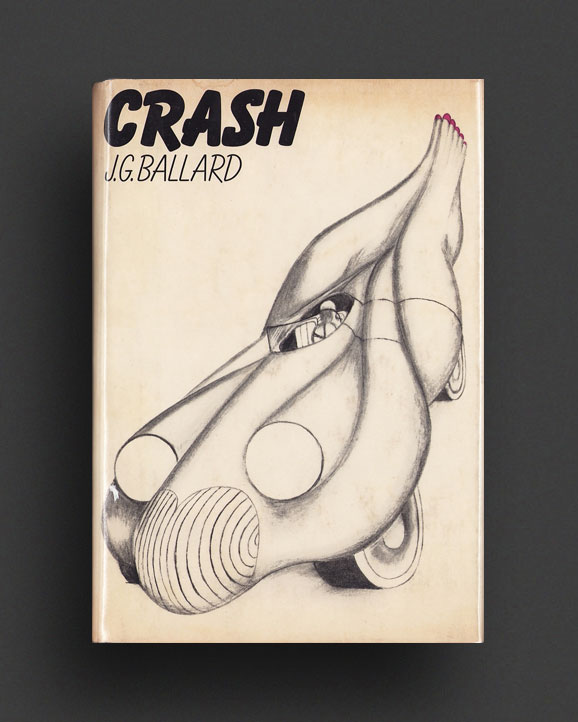
"The cult status of Crash has intensified since its original publication in 1973, making it a classic of underground literature. In this hallucinatory novel, the car provides the hellish tableau in which Vaughan, a 'TV scientist' turned 'nightmare angel of the highways', experiments with erotic atrocities among crash victims, each more sinister than the last: ultimately, he craves a union of blood, semen, and engine coolant in a head-on collision with Elizabeth Taylor."—book jacket
"A writer of enormous inventive powers, Ballard has, like Calvino, a remarkable gift for filling the empty, deprived spaces of modern life with invisible cities and the wonder worlds of the imagination"—Malcolm Bradbury, New York Times Book Review
"Ballard is amongst our finest writers of fiction"—Anthony Burgess
Good copy, bit "kinky" from storage, toned pages, cover wear.
1989, English
Softcover, 210 pages, 21 x 13.5 cm
Out of print title / used / good
Published by
Blast Books / New York
$20.00 - In stock -
Lovely Blast Books 1989 edition of Venus in Furs with introduction by literary critic and founder of Semiotext(e), Sylvère Lotringer.
"Reality and fantasy aren't just intertined, they're indistinguishable."
The legendary novel Venus in Furs earned its author entry into psychology books all over the world after the German psychologist Krafft-Ebing coined the term "masochism" from Leopold von Sacher-Masoch's name.
Illuminating his darkest obsessions, Sacher-Masoch created the unforgettable Severin and Wanda—a "suprasensual" man who craves abuse and domination, and an idealized cruel, icy Venus come to life-literary reflections of Sacher-Masoch's own life. As Sylvère Lotringer writes in his foreword, "In Venus in Furs reality and fantasy aren't just intertwined, they're indistinguishable." A fascinating account of the pathology of submission and control, Venus in Furs bears the unmistakable mark of a literary classic.
Included in this volume is a selection from a remarkable series of letters between Sacher-Masoch and Emilie Mataja, a nineteen-year-old aspiring writer, translated into English for the first time. The letters reveal just how blurry the line was between Sacher-Masoch's fantasies, literary efforts, and life as they bear witness to his single-minded, unrelenting pursuit of the whip held in the hand of a cruel woman in furs.
Together with the letters and foreword, Venus in Furs provides extraordinary insight into the compulsive imagination of Leopold von Sacher-Masoch grappling with the demons that both torment and delight him.
"A pioneering masterpiece."—James Cleugh, The First Masochist
Sylvère Lotringer, writer, theoretician, and founder of Semiotext(e), has written a foreword especially for this edition. His latest book, Overexposed, is about the treatment of sexual perversion in America.
Good-Very Good copy with small closed tear to top of front cover, sunning to spine.