World Food Books' programme is largely produced on Kulin Nation land. We acknowledge the Wurundjeri people of the Kulin Nation as the first and continuing custodians of this land, and pay respect to their Elders past, present, and emerging.
World Food Books is an arts and special interests bookshop in Naarm / Melbourne. Founded in 2010, World Food Books is devoted to the presentation of a rotating, hand-selection of international art, design, literary and counterculture publications with an emphasis on the anti-traditional, the experimental, the avant-garde, the heretic, the marginal.
Presenting new titles alongside rare and out-of-print books, catalogues and journals spanning the fields of modern and contemporary art, design, photography, illustration, film, literature, poetry, cultural theory, philosophy, sexuality, popular and underground culture in its many radical forms, World Food Books wishes to encourage adventurous, thoughtful and open-minded reading, looking, writing, and exchange of publishing and ideas, both current and historical.
As well as our bookshop, located in Melbourne's historical Nicholas Building, all of our inventory is available internationally via our online mail-order service.
World Food Books semi-regularly co-ordinates "Occasions", a programme of exhibits and events at the bookshop and in partnership with other hosts (such as museums and art galleries) that develop out of the activities, relationships and content of the bookshop itself.
World Food Books
The Nicholas Building
37 Swanston Street
Room 5, Level 6
Melbourne 3000
Australia
SHOP HOURS:
Thu–Fri 12–6, Sat 12–5
WEB-SHOP OPEN 24/7
World Food Books
Postal Address:
PO Box 435
Flinders Lane
Victoria 8009
Australia
Art
Theory / Essay
Architecture / Interior
Graphic Design / Typography
Photography
Fashion
Eros
LGBTQ+
Fiction / Poetry
Weird / Speculative / Science Fiction / Horror
Transgressive / Visceral / Abject
Symbolism / Decadence / Fin de siècle
Film / Video
Painting
Sculpture / Installation
Performance / Dance / Theater
Drawing
Sound / Music
Curatorial
Group Shows / Collections
Periodicals
Out-of-print / Rare
Posters / Ephemera / Discs
Signed Books
World Food Books Gift Voucher
World Food Book Bag
Australian Art
Australian Fiction
Australian Science Fiction / Speculative Fiction
Australian Poetry
Australian Photography
Japanese Photography
Conceptual Art
Minimal Art
Dada
'Pataphysics / Oulipo
Fluxus
Concrete Poetry
Pop Art
Surrealism
Arte Povera
Arte Informale / Haute Pâte / Tachism
Nouveau Réalisme / Zero / Kinetic
Situationism / Lettrism
Collage / Mail Art / Xerox Art
Art Brut / Folk / Visionary / Fantastic
Illustration / Graphic Art / Bandes Dessinées
Furniture
Italian Radical Design / Postmodernism
Textiles
Ceramics / Glass
Counterculture
Protest / Revolt
Philosophy
Psychoanalysis
Anthropology
Anarchism
Socialism / Anarchism / Communism / Capitalism
Literary Theory / Semiotics / Language
Feminism / Women's Studies
Gender Studies / Sexuality
Anthropology
Fetishism / BDSM
Drugs / Psychedelia
Crime / Violence
Animal Rights / Veganism
Occult / Esoterica
Ecology / Earth / Alternative Living
Whole Earth / Crafts
All prices in AUD (Australian dollars)
Pick-Ups
Pick-up orders can be collected in our bookshop during opening hours after order date. Please collect any Pick-up orders within 2 weeks of ordering as we have limited storage space. Orders will be released back into stock if not collected within this time. No refunds can be made for pick-ups left un-collected. If you cannot make it in to the bookshop in this time-frame, please choose postage option.
Return Policy
All sales are final. We do accept returns (for refund or exchange) for items received in error. All our orders are packed with special care using heavy-duty padding and cardboard book-mailers or bubble mailers (for smaller books), using reinforcement where required. We cannot take responsibility for any lost, stolen or damaged parcels.
Insurance
Should you wish to insure your package, please email us directly after placing your order and we can organise this at a small extra expense. Although all standard/express tracked packages are very safe and dependable, we cannot take responsibility for any lost, stolen or damaged parcels. We recommend insurance on valuable orders.
Interested in selling your old books, catalogues, journals, magazines, comics, fanzines, ephemera? We are always looking for interesting, unusual and out-of-print books to buy. We only buy books in our fields of interest and specialty, and that we feel we can resell.
We base these prices on desirability, market value, in-print prices, condition and our current stock levels. We offer cash, store credit, and can take stock on consignment. All
about 25% of the price we expect to get when we sell them, or 30% in store credit. We base these prices on desirability, market value, in-print prices, condition and our current stock levels.
Sell your books any day of the week. You can drop them off and return later. If you have a lot of books, we can visit your Sydney home.
We buy books that we feel we can resell. We offer about 25 % of the price we expect to get when we sell them, or 30% in store credit. We base these prices on desirability, market value, in-print prices, condition and our current stock levels.
Philadelphia Wireman
03 August - 01 September, 2018
World Food Books is proud to announce our next Occasion, the first presentation of sculptures by Philadelphia Wireman in Australia.
The Philadelphia Wireman sculptures were found abandoned in an alley off Philadelphia’s South Street on trash night in 1982. Their discovery in a rapidly-changing neighbourhood undergoing extensive renovation, compounded with the failure of all attempts to locate the artist, suggests that the works may have been discarded after the maker’s death. Dubbed the "Philadelphia Wireman" during the first exhibition of this work, in 1985, the maker’s name, age, ethnicity, and even gender remain uncertain. The entire collection totals approximately 1200 pieces, all intricately bound together with tightly-wound heavy-gauge wire (along with a few small, abstract marker drawings, reminiscent both of Mark Tobey and J.B. Murry). The dense construction of the work, despite a modest range of scale and materials, is singularly obsessive and disciplined in design: a wire armature or exoskeleton firmly binds a bricolage of found objects including plastic, glass, food packaging, umbrella parts, tape, rubber, batteries, pens, leather, reflectors, nuts and bolts, nails, foil, coins, toys, watches, eyeglasses, tools, and jewellery.
Heavy with associations—anthropomorphic, zoomorphic, and socio-cultural responses to wrapped detritus—the totemic sculptures by Philadelphia Wireman have been discussed in the context of work created to fulfil the shamanistic needs of alternative religions in American culture. Curators, collectors, and critics have variously compared certain pieces to sculpture from Classical antiquity, Native American medicine bundles, African-American memory jugs, and African fetish objects. Reflecting the artist’s prolific and incredibly focused scavenging impulse, and despite—or perhaps enhanced by—their anonymity, these enigmatic objects function as urban artefacts and arbiters of power, though their origin and purpose is unknown. Philadelphia Wireman, whatever their identity, possessed an astonishing ability to isolate and communicate the concepts of power and energy through the selection and transformation of ordinary materials. Over the course of the past two decades, this collection has come to be regarded as an important discovery in the field of self-taught art and vernacular art.
Presented in collaboration with Fleisher-Ollman Gallery, Philadelphia, and Robert Heald, Wellington.
Susan Te Kahurangi King
02 February - 10 March, 2018
Susan Te Kahurangi King (24 February 1951 - ) has been a confident and prolific artist since she was a young child, drawing with readily available materials - pencils, ballpoint pens and felt-tip markers, on whatever paper is at hand. Between the ages of four and six Susan slowly ceased verbal communication. Her grandparents William and Myrtle Murphy had developed a special bond with Susan so they took on caring responsibilities for extended periods. Myrtle began informally archiving her work, carefully collecting and storing the drawings and compiling scrapbooks. No drawing was insignificant; every scrap of paper was kept. The King family are now the custodians of a vast collection containing over 7000 individual works, from tiny scraps of paper through to 5 meter long rolls.
The scrapbooks and diaries reveal Myrtle to be a woman of great patience and compassion, seeking to understand a child who was not always behaving as expected. She encouraged Susan to be observant, to explore her environment and absorb all the sights and sounds. Myrtle would show Susan’s drawings to friends and people in her community that she had dealings with, such as shopkeepers and postal workers, but this was not simply a case of a grandmother’s bias. She recognised that Susan had developed a sophisticated and unique visual language and sincerely believed that her art deserved serious attention.
This was an unorthodox attitude for the time. To provide some context, Jean Dubuffet coined the term Art Brut in 1945 to describe work created by self-taught artists – specifically residents of psychiatric institutions and those he considered to be visionaries or eccentrics. In 1972 Roger Cardinal extended this concept by adopting the term Outsider Art to describe work made by non-academically trained artists operating outside of mainstream art networks through choice or circumstance. Susan was born in Te Aroha, New Zealand in 1951, far from the artistic hubs of Paris and London that Dubuffet and Cardinal operated in. That Myrtle fêted Susan as a self-taught artist who deserved to be taken seriously shows how progressive her attitudes were.
Susan’s parents Doug and Dawn were also progressive. Over the years they had consulted numerous health practitioners about Susan’s condition, as the medical establishment could not provide an explanation as to why she had lapsed into silence. Dawn educated herself in the field of homeopathy and went on to treat all twelve of her children using these principles – basing prescriptions on her observations of their physical, mental and emotional state.
Doug was a linguist with an interest in philosophy who devoted what little spare time he had to studying Maori language and culture. To some extent their willingness to explore the fringes of the mainstream made them outsiders too but it was their commitment to living with integrity and their respect for individuality that ensured Susan’s creativity was always encouraged.
Even though Susan’s family supported her artistic pursuits, some staff in schools and hospitals saw it as an impediment to her assimilation into the community and discouraged it in a variety of ways. Her family was not always aware of this and therefore did not fully understand why Susan stopped drawing in the early 1990s. However, rather than dwell on the challenges that Susan faced in pursuit of her artistic practice, they prefer to highlight her achievements. In 2008 Susan began drawing again in earnest, after an almost 20 year interruption, and her work is now shown in galleries around the world.
Susan grew up without television and has been heavily influenced by the comics she read as a child. She is absolutely fearless in the appropriation of recognizable characters, such as Donald Duck and Mickey Mouse, in her work. She twists their limbs, contorts their faces, compresses them together, blends them into complex patterned backgrounds - always imbuing them with an incredible energy. Although Susan often used pop culture characters in her work they are not naive or childlike. These are drawings by a brilliant self-taught artist who has been creating exceptional work for decades without an audience in mind.
Mladen Stilinović
"Various Works 1986 - 1999"
02 February 16 - September 10, 2016
Various works 1986 - 1999, from two houses, from the collections of John Nixon, Sue Cramer, Kerrie Poliness, Peter Haffenden and Phoebe Haffenden.
Including: Geometry of Cakes (various shelves), 1993; Poor People’s Law (black and white plate), 1993; White Absence (glasses, ruler, set square, silver spoon, silver ladel with skin photograph and wooden cubes), 1990-1996; Exploitation of the Dead (grey and red star painting, wooden painting, black spoon with red table, red plate), 1984-1990; Money and Zeros (zero tie, paintings made for friends in Australia (Sue, John, Kerrie), numbers painting), 1991-1992; Words - Slogans (various t-shirts) - “they talk about the death of art...help! someone is trying to kill me”, “my sweet little lamb”, “work is a disease - Karl Marx”; Various artist books, catalogues, monographs, videos; Poster from exhibition Insulting Anarchy; "Circular" Croatian - Australian edition; Artist book by Vlado Martek (Dostoyevsky); more.
Thanks to Mladen Stilinović and Branka Stipančić.
Jonathan Walker
Always Will Need To Wear Winter Shirt Blue + Ochre Small Check Pattern
21 August - 21 September, 2015
Untitled
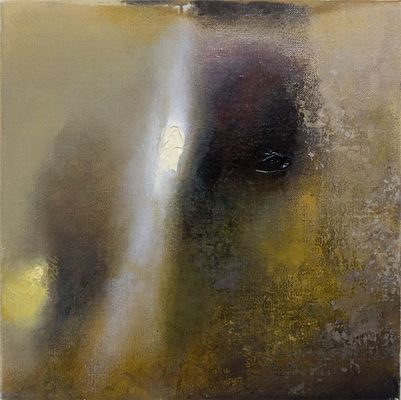
I am not a great reader of poetry but I always return to the work of Melbourne poet, Vincent Buckley (1925- 1988). Perhaps I find his most tantalising piece to be not a finished poem but a fragment left on a scrap of paper discovered on his desk after the poet’s death.
The poetry gathers like oil
In the word-core, and spreads
It has its music meet,
Its music is in movement.
This fragment is more the shell left behind from a volatile thought than a finished poem. I find the last two lines honest but awkward whereas the first two lines work like an arrow. Most likely he could not find a resolution so it was left. Still, in its present form, it remains an eloquent testimony to the ultimate failure of a medium to express mobile thought and sensation, in Buckley’s case, through verbal language. It’s an important matter because this is something all artists have to deal with regardless of the medium.
I have never written a poem, however, I am forever copying fragments from books on paper scraps in a vain effort to fix certain notions in my head. At first, they function as bookmarks that are sometimes returned to when I open the book. But before long, as they accumulate, they fall out littering the table interspersed with A4 photocopies, bills, books and medications.
To return to Buckley’s fragment, the first two lines very much evoke how I paint nowadays. As you age, detail diminishes and patches of light become more luminous and float. I feel the most honest way of dealing with this is by smearing the oil paint on the canvas with the fingers and working close-up, blind. Only if the patches coalesce into an approaching image can the work gain a life.
-
Jonathan Walker was born in Melbourne, Australia and brought up on a dairy farm in Gippsland. In the 1970’s he studied painting at RMIT and won the Harold Wright Scholarship to the British Museum, London. During the 1980’s he exhibited at Pinacotheca Gallery, Richmond and had work shown at the NGV and Heidi City Art Gallery. Over the same period he designed the cover for the “Epigenesi” LP by Giancarlo Toniutti, Italy and conducted a mail exchange work with Achim Wollscheid, Germany. The work with artists through the post resulted in an article published in the bicentenary issue of Art and Australia 1988. He showed in artist run spaces such as WestSpace in the 90’s and 2000’s, and until 2012, taught painting at Victoria University, which is where we (Colleen Ahern and Lisa Radford) as organisers of the exhibition, among many others, had the privilege of being his student.
Walker’s knowledge was imparted to students through the careful selection of music, literature, and artists found in books that he himself had ordered for the library. Walker’s strategy was the generosity of sharing his vast knowledge with references specific to each student and their context.
Walker’s paintings share a similar focus and intimacy.
This exhibition presents a small selection of recent paintings alongside a publication that includes Walker’s writing. Observational and analytical, Walker’s work is a type of material notation — the time of day, colour and how it is blended, the both specific and fleeting location of a reflection on lino or the question of whether a chair leg should be included in a painting.
Please join us on Friday August 21 between 6-8pm to celebrate the opening of the exhibition.
Curated by Colleen Ahern and Lisa Radford.
B. Wurtz
Curated by Nic Tammens
March 26 - April 4, 2015
B.Wurtz works from a basement studio in his home on Manhattan’s Lower East Side.
This local fact is attested to by the plastic shopping bags and newsprint circulars that appear in his work. As formal objects, they don’t make loud claims about their origins but nonetheless transmit street addresses and places of business from the bottom of this long thin island. Like plenty of artists, Wurtz is affected by what is local and what is consumed. His work is underpinned by this ethic. It often speaks from a neighborhood or reads like the contents of a hamper:
“BLACK PLUMS $1.29 lb.”
“Food Bazaar”
“USDA Whole Pork Shoulder Picnic 99c lb.”
“RITE AID Pharmacy, with us it’s personal.”
“H. Brickman & Sons.”
“Sweet Yams 59c lb."
Most of the work in this exhibition was made while the artist was in residence at Dieu Donne, a workshop dedicated to paper craft in Midtown. Here Wurtz fabricated assemblages with paper and objects that are relatively lightweight, with the intention that they would be easily transportable to Australia. This consideration isn’t absolute in Wurtz’s work, but was prescriptive for making the current exhibition light and cheap. Packed in two boxes, these works were sent from a USPS post office on the Lower East Side and delivered to North Melbourne by Australia Post.
Wurtz appears courtesy of Metro Pictures, New York.
Thanks to Rob Halverson, Joshua Petherick, Sari de Mallory, Matt Hinkley, Helen Johnson, Fayen d'Evie, Ask Kilmartin, Lisa Radon, Ellena Savage, Yale Union, and "Elizabeth".
John Nixon
"Archive"
December 15 - January 20, 2014
The presentation of John Nixon's archive offered a rare showcase of this extensive collection of the artist's own publications, catalogues, posters, ephemera, editions and more, from the mid 1980s onwards, alongside a selection of his artworks.
Organized by John Nixon, Joshua Petherick and Matt Hinkley.
<a href=http://wfb.public-office.info/artist/john-nixon>All titles by John Nixon
"Habitat"
at Minerva, Sydney (organised by Joshua Petherick and Matt Hinkley)
November 15 - December 20, 2014
Lupo Borgonovo, Janet Burchill & Jennifer McCamley,
Lewis Fidock, HR Giger, Piero Gilardi, Veit Laurent Kurz,
Cinzia Ruggeri, Michael E. Smith, Lucie Stahl, Daniel Weil, Wols
Press Release:
“...It contained seven objects. The slender fluted bone, surely formed for flight, surely from the wing of some large bird. Three archaic circuitboards, faced with mazes of gold. A smooth white sphere of baked clay. An age-blackened fragment of lace. A fingerlength segment of what she assumed was bone from a human wrist, grayish white, inset smoothly with the silicon shaft of a small instrument that must once have ridden flush with the surface of the skin - but the thing’s face was seared and blackened.”
William Gibson, “Count Zero”, 1986
"Autumn Projects Archive"
Curated by Liza Vasiliou
March 6 - March 15, 2014
World Food Books, in conjunction with the Virgin Australia Melbourne Fashion Festival 2014, presented the Autumn Projects archive, consisting of a selection of early examples in Australian fashion with a particular interest in collecting designers and labels from the period beginning in the 1980’s, who significantly influenced the discourse of Australian Fashion.
Curated by Liza Vasiliou, the exhibition provided a unique opportunity to view pieces by designers Anthea Crawford, Barbara Vandenberg, Geoff Liddell and labels CR Australia, Covers, Jag along with early experimental collage pieces by Prue Acton and Sally Browne’s ‘Fragments’ collection, suspended throughout the functioning World Food Books shop in Melbourne.
H.B. Peace
presented by CENTRE FOR STYLE
November 14, 2013
"Hey Blinky, you say chic, I say same"
Anon 2013
H.B. Peace is a clothing collaboration between great friends Blake Barns and Hugh Egan Westland. Their pieces explore the divergences between 'character’ and ‘personality’ in garments....etc
Special Thanks to Joshua Petherick and Matt Hinkley of WFB and Gillian Mears
and a Very Special Thank you to Audrey Thomas Hayes for her shoe collaboration.
Janet Burchill & Jennifer McCamley
"Aesthetic Suicide"
May 10 - June 8, 2013
The first of our occasional exhibitions in the World Food Books office/shop space in Melbourne, "Aesthetic Suicide" presented a body of new and older works together by artists Janet Burchill & Jennifer McCamley, including videos, prints, a wall work, and publications.
During shop open hours videos played every hour, on the hour.
1995, English
Softcover, 29.5 x 23 cm
1st Edition, Out of print title / used / very good
Published by
Purr Books / London
$80.00 - Out of stock
First edition of Richard Kern's classic "New York Girls" released in 1995, defining a time, a place, and the raw aesthetic of the artist Richard Kern (b. 1954). Kern was a leading figure in the 1980s Cinema of Transgression, director of the iconic films You Killed Me First, Fingered and Submit to Me Now; producer of Sonic Youth’s “Death Valley ’69” and Marilyn Manson’s Lunchbox music videos; and a pioneering zine publisher responsible for The Heroin Addict and The Valium Addict. After kicking his own heroin habit, Kern turned to still photography, shooting girls in his downtown, punk-inflected New York social circle. Regarded as one of the best female nude photo-books of the 1990's, Kern's New York girls were naked, bold, tattooed, pierced, and casually posed in minimal sets, mostly just Richard’s ratty slum apartment. They were young, but not innocent, fully complicit in the bondage, gunplay, and infamous candle insertions. "Dedicated to the models." With an introduction by Lydia Lunch, interview with Richard Kern by Kim Gordon, text by Kern, and filmography.
John Waters said of one of Kern's notorious scum-bag Super-8 movies: "Finger is the ultimate date movie for psychos. It's the best hillbilly-punk-art-porno movie in the world and I always show it to people very late at night to make them happy."
Very Good copy, light wear.
2025, English
Softcover, unpaginated, 21 x 14.5 cm
Published by
Joan Heemskerk / The Netherlands
$35.00 - In stock -
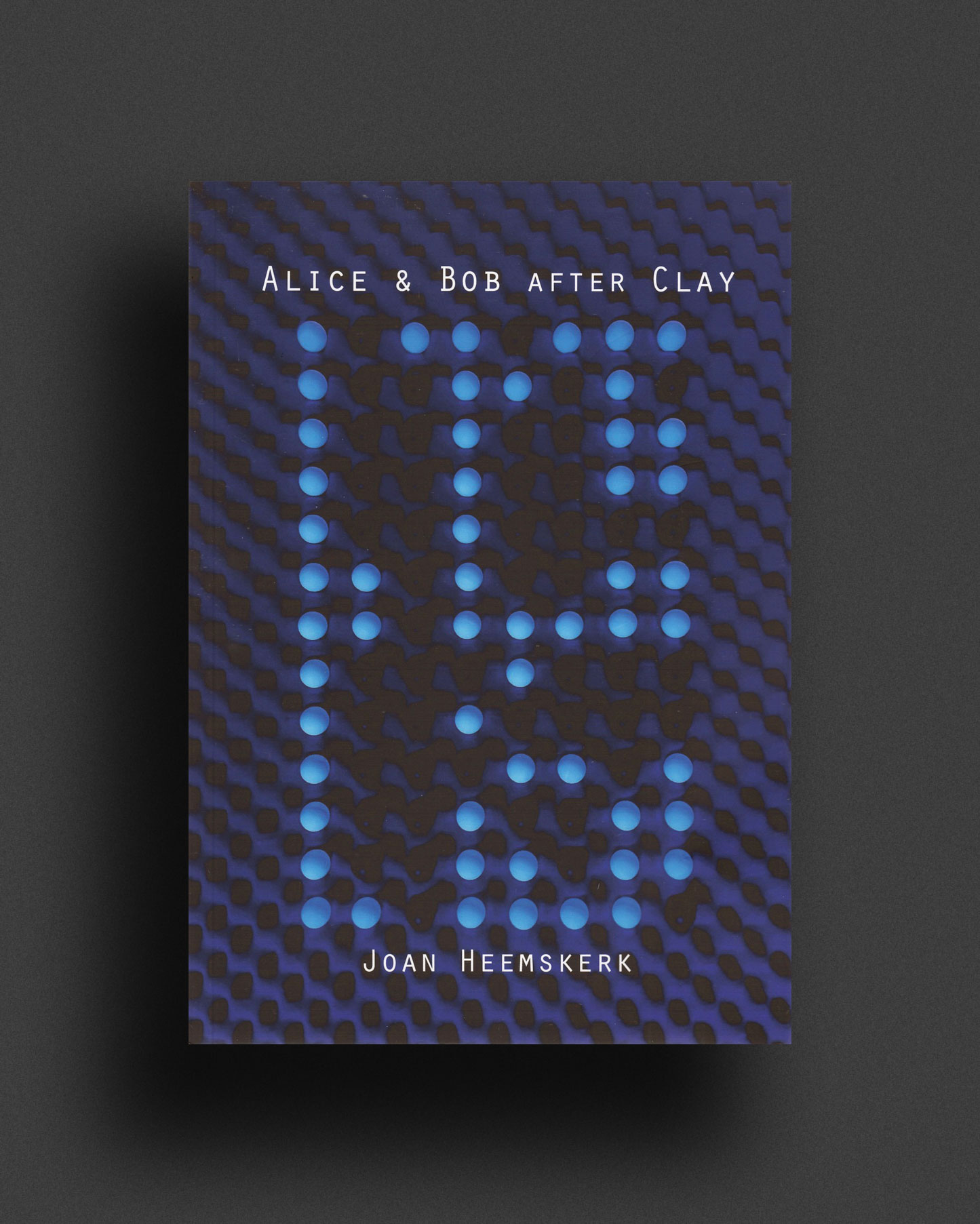
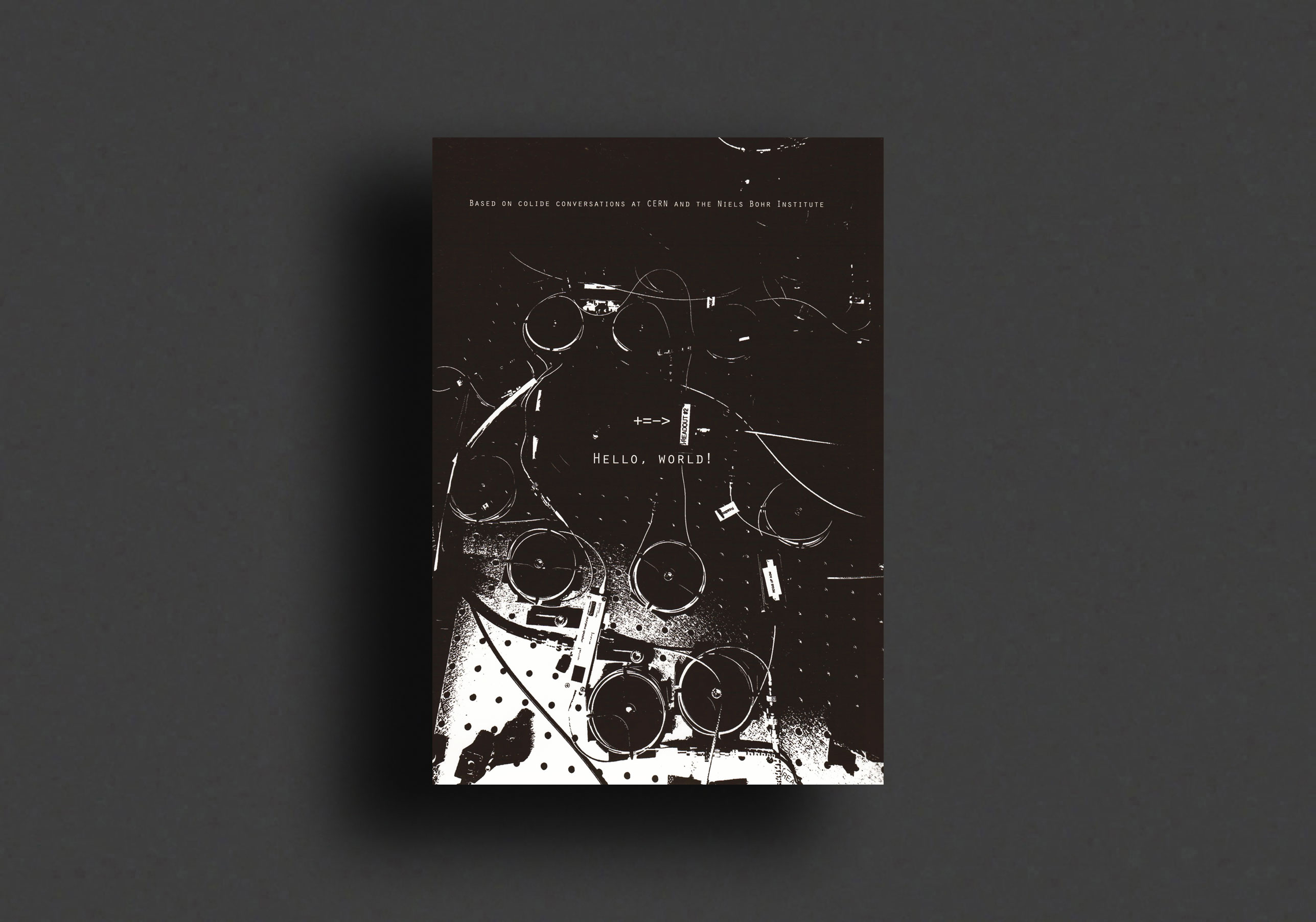
Here is a book by an influential net/media artist from the Netherlands! This was a result of Heemskerk’s research time at CERN in Geneva and the Niels Bohr Institute in Copenhagen, where she tried to find answers to her question: what if computer language was not binary but (following from quantum physics), instead of following dualism (on/off, 1/0) following quantum computing: what would that do to the output of computers, what would it mean to our way of exchanging information?
She asked these questions to a number of scientists (mostly physicists), reverting all the time to Alice and Bob as symbolic for A and B in an information system. Joan calls these “collide conversations”. “Clay” refers to the material where the information/output is stored. Throughout the book we read dialogues between Alice and Bob with phrases that were selected from the actual interviews.
The cover of the book shows an arrangement of ping pong balls on acoustic bubble foam, forming the phrase “Hello, World!” – a well known phrase being the default test output of computers, under ultraviolet light. UV light plays a significant role in quantum physics, impacting the location of particles.
With this book Heemskerk expresses her fascination for quantum computing and for language, building upon her decades-long work both individually and as half of the duo JODI (with Dirk Paesmans). They are well-known for their investigating and manipulating the Internet, computer programmes and video games already since the early 1990s.
1985, Japanese
Softcover (w. acetate dust jacket), 128 pages, 33 x 25 cm
1st Edition, Out of print title / used / good
Published by
Bijutsu Shuppan-sha / Japan
$90.00 - In stock -
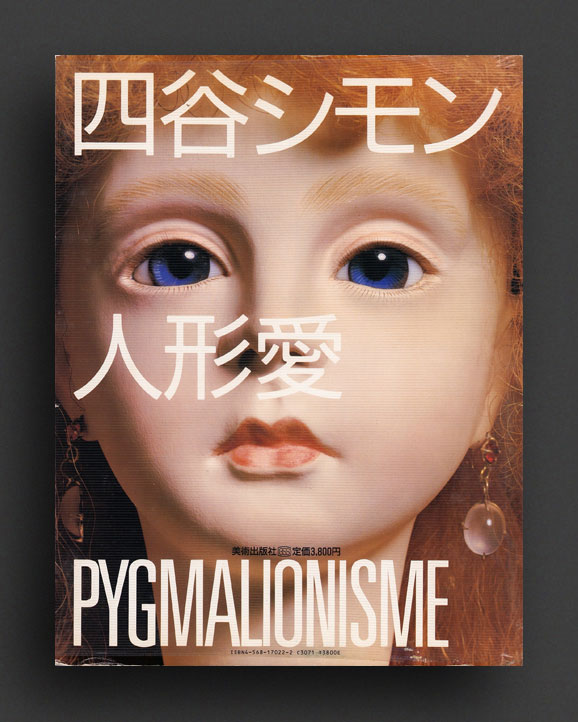
First edition of the incredible book of Japanese doll artist Simon Yotsuya, Doll Love / L'amour des Poupées, shot by Kishin Shinoyama, published in 1985 by Bijutsu Shuppan-sha, Tokyo. This stunning over-sized book is the finest photographic document of Simon's dolls created throughout his career, all dramatically shot by legendary Japanese photographer, and close friend of Yotsuya, Kishin Shinoyama, profusely illustrated in full colour gloss with each doll, including various angles, details, and display cases, accompanied by a section of Japanese texts by Tatsuhiko Shibusawa, Yoshiaki Tono, Minoruyoshioka, Shuzotakiguchi, and Kunio Iwaya, illustrated in b/w with portraits of Simon Yotsuya in his studio, his drawings and graphic works. Our favourite book on this magical artist.
Simon Yotsuya (b. 1944, Tokyo) started making dolls as a child, visiting exhibitions of dolls, and reads all the books he can find on the subject. In his mid-teens he visited Puppe Kawasaki, a doll maker and animator he greaty admired, devoting himself to the craft and becoming a poor high school student. In the early '60s, while working at a jazz coffee shop in Shinjuku, Yotsuya earned the nickname "Simon" (pronounced “Simone”), after his love for singer Nina Simone. He befriends Kuniyoshi Kaneko (painter) and Junko Koshino (fashion designer) and joins in the arts and literary scene. In 1965, he discovers the work of German Surrealist Hans Bellmer through an article authored by Tatsuhiko Shibusawa in the magazine “Shinfujin”, promptly abandoning his previous methods of doll-making to find his way as an artist, incorporating ball-joints into his dolls. Thereafter he becomes an admirer of Surrealism and immerses himself in the controversial Shibusawa's litterary works. In 1965, he also goes to see Tatsumi Hijikata's Butoh Performance for the first time. In the late 60s—early 70s Yotsuya pursued a parallel career to his doll-making as an actor and member of Juro Kara's legendary underground theater company Jokyo Gekijo, Situation Theater, regularly portraying a female doll. He appears in the movie "Diary of a Shinjuku Thief" directed by Nagisa Oshima with the actors of the Situation Theater, but by 1971 he leaves the stage to concentrate on his own work. Simon exhibited at Expo 1970 in Osaka, the Tokyo Biennale in 1974 and by the end of the decade had opened his own doll-making school in Harajuku.
Tatsuhiko Shibusawa (1928—1987), the author of the influential Bellmer article (and novelist, editor, art critic, and translator of Bataille and Marquis de Sade), become a life-long friend of Yotsuya's and his most important advocate, editing the first major book of Yotsuya's work, entitled Pygmalionisme, in 1985. Devastated by Shibusawa's death in 1987, Yotsuya found it impossible to work for nearly two years. He eventually found solace in the Eastern Orthodox Church and was inspired to make a series of angels, which he dedicated to Shibusawa, and straightforward images of Christ. Having carved out his own masterful and unique form of expression, today Yotsuya enjoys international renown as the first ball-jointed doll maker in Japan.
Good—Very Good copy with general wear to book and publisher's jacket shrinkage with age, some light foxing.
1988, English
Softcover, 162 pages, 21 x 14 cm
1st Edition, Out of print title / used / good
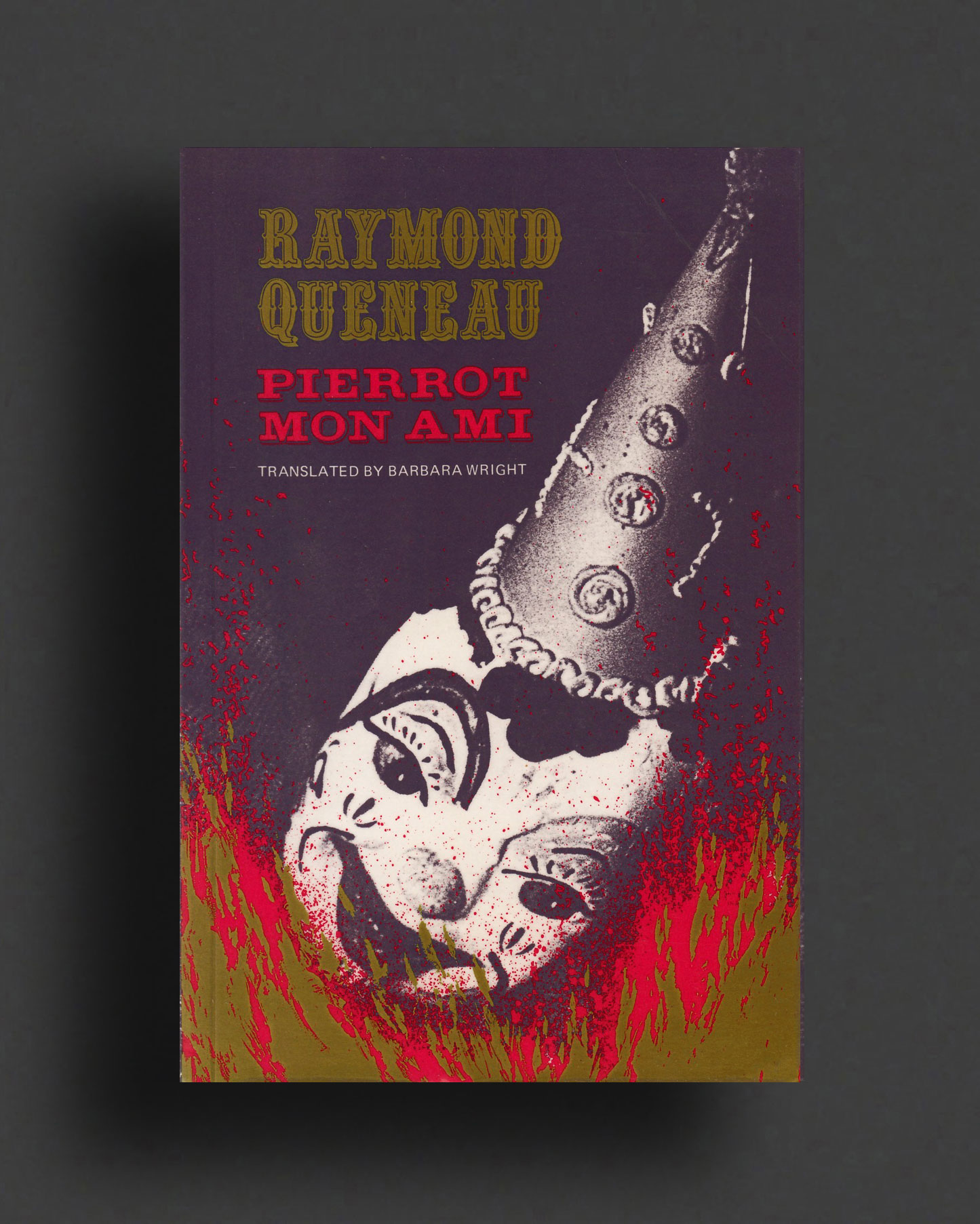
Published by
Atlas Press / London
$25.00 - In stock -
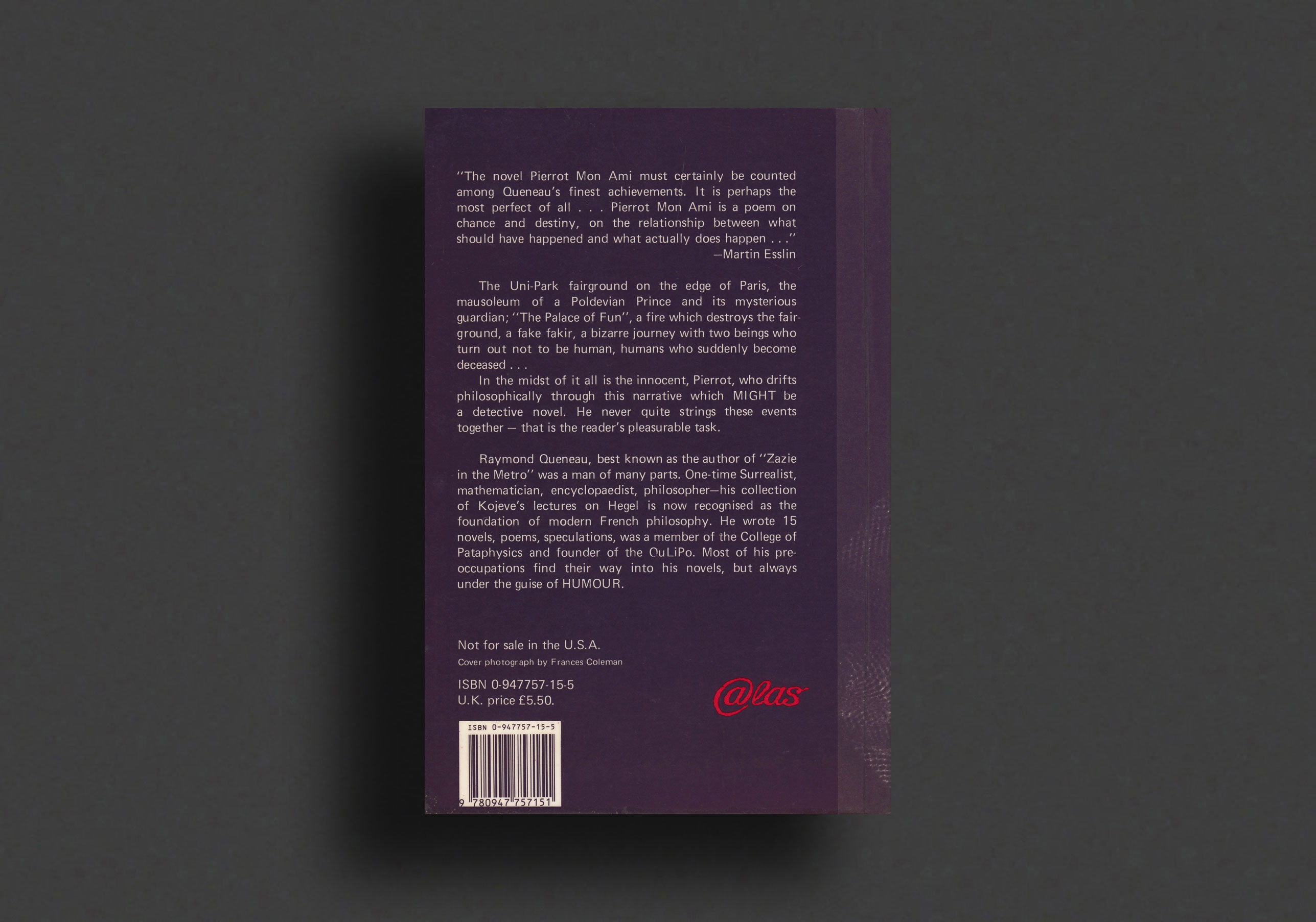
Scarce first 1988 Atlas Press edition. Long out–of–print.
"Pierrot Mon Ami was perhaps Queneau's masterpiece . . . This unlikely guru exerted a major influence on a new avant-garde (notably on Georges Perec, who was devoted to him). But if there was a sage in Queneau he never imparted his wisdom more touchingly than in Pierrot Mon Ami."—Times Literary Supplement
Pierrot Mon Ami, considered by many to be one of Raymond Queneau's finest achievements, is a quirky coming-of-age novel concerning a young man's initiation into a world filled with deceit, fraud, and manipulation. From his short-lived job at a Paris amusement park where he helps to raise women's skirts to the delight of an unruly audience, to his frustrated and unsuccessful love of Yvonne, to his failed assignment to care for the tomb of the shadowy Prince Luigi of Poldevia, Pierrot stumbles about, nearly immune to the effects of duplicity.
This "innocent" implies how his story, at almost every turn, undermines, upsets, and plays upon our expectations, leaving us with more questions than answers, and doing so in a gloriously skewed style (admirably re-created by Barbara Wright, Queneau's principle translator).
Average–Good copy: cover has been plastic contacted for protection. No library markings, likely protection for a private collection. Light wear to extremities/foxing.
1994, English
Softcover (w. die–cut cover)
Out of print title / used / very good
Published by
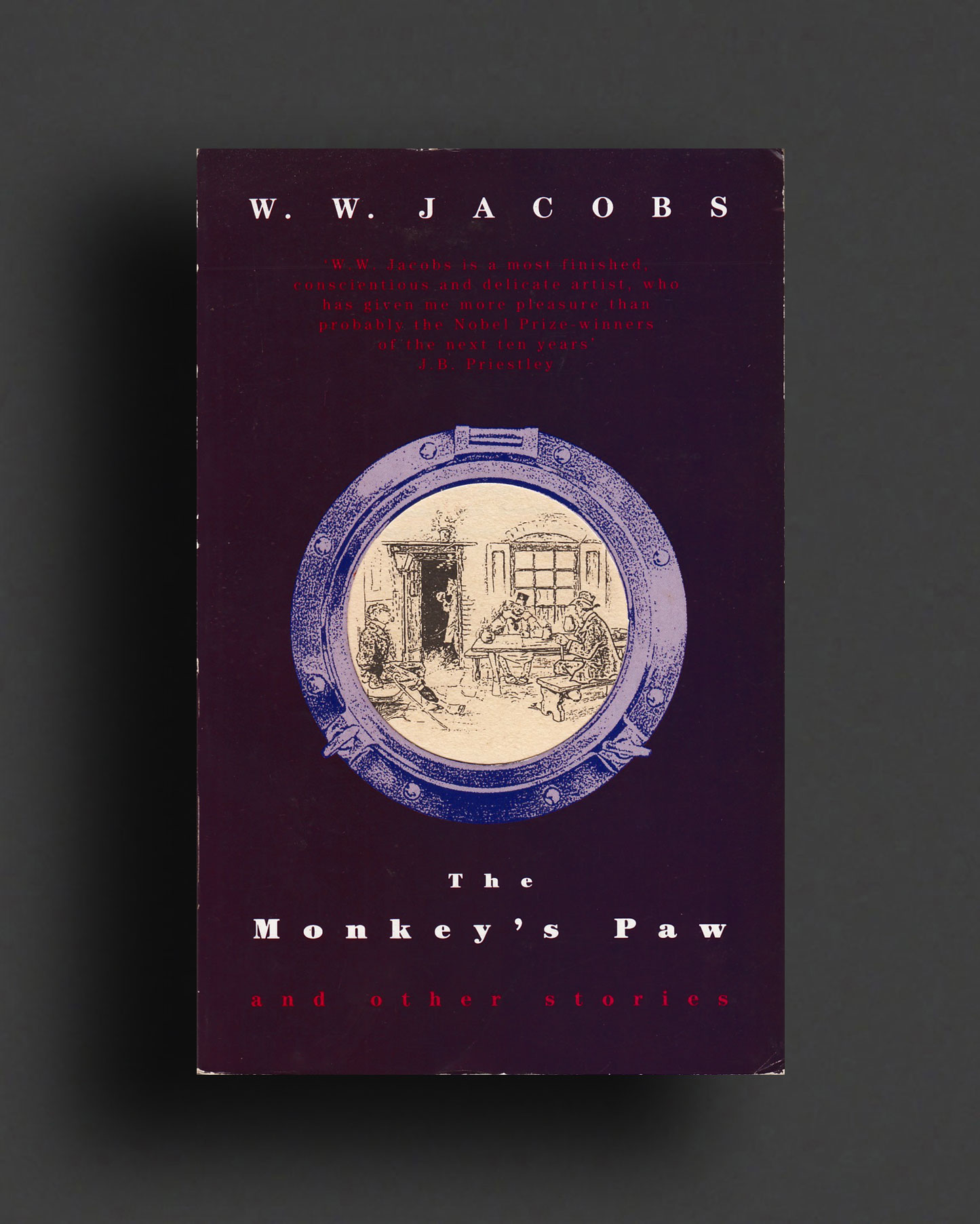
Robin Clark / London
$35.00 - Out of stock
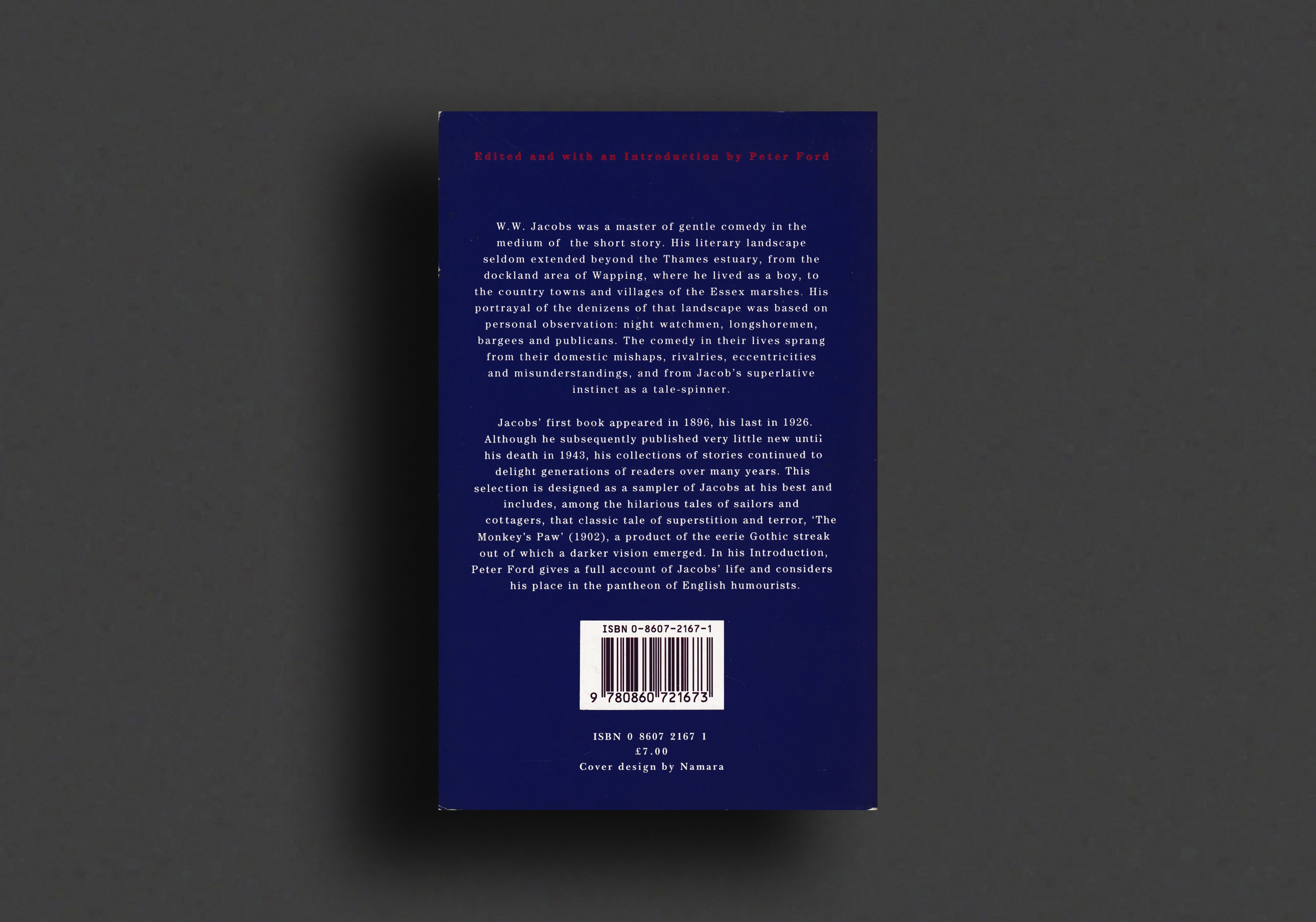
Scarce 1994 Robin Clark edition (with die–cut cover) of this classic 1902 horror tale by W.W. Jacobs about a mummified paw that grants three wishes, bringing dire consequences. Edited and with an Introduction by Peter Ford.
W.W. Jacobs was a master of gentle comedy in the medium of the short story. His literary landscape seldom extended beyond the Thames estuary, from the dockland area of Wapping, where he lived as a boy, to the country towns and villages of the Essex marshes. His portrayal of the denizens of that landscape was based on personal observation: night watchmen, longshoremen, bargees and publicans. The comedy in their lives sprang from their domestic mishaps, rivalries, eccentricities and misunderstandings, and from Jacob’s superlative instinct as a tale-spinner.
Jacobs’ first book appeared in 1896, his last in 1926. Although he subsequently published very little new until his death in 1943, his collections of stories continued to delight generations of readers over many years. This selection is designed as a sampler of Jacobs at his best and includes, among the hilarious tales of sailors and cottagers, that classic tale of superstition and terror, ‘The Monkey’s Paw’ (1902), a product of the eerie Gothic streak out of which a darker vision emerged. In his Introduction, Peter Ford gives a full account of Jacobs’ life and considers his place in the pantheon of English humourists.
VG copy, light wear to edges/light tanning.
1993, English
Softcover, 172 pages, 20.7 x 13.7 cm
Out of print title / used / good
Published by
Prentice Hall / New Jersey
$18.00 - Out of stock
Third edition. Edited and translated, with notes and introductions by Lewis White Beck.
Critique of Practical Reason by Immanuel Kant stands as a seminal text in moral philosophy. First published in 1788, it serves as the second of Kant’s three critiques and continues the examination of reason introduced in the first. This work primarily discusses the capacity of pure reason to determine the will independently of sensory input or desire, introducing the categorical imperative as the fundamental principle governing moral actions. Kant explores how reason alone can and should be the basis of moral legislation, emphasizing the autonomy of the will as the essence of ethical behavior.
Good copy. Some moisture rippling to top of block, otherwise VG.
1992, English
Softcover, 156 pages, 21 x 13.5 cm
1st Edition, Out of print title / used / good
Published by
Atlas Press / London
$80.00 - Out of stock
First English 1992 Atlas Press edition.
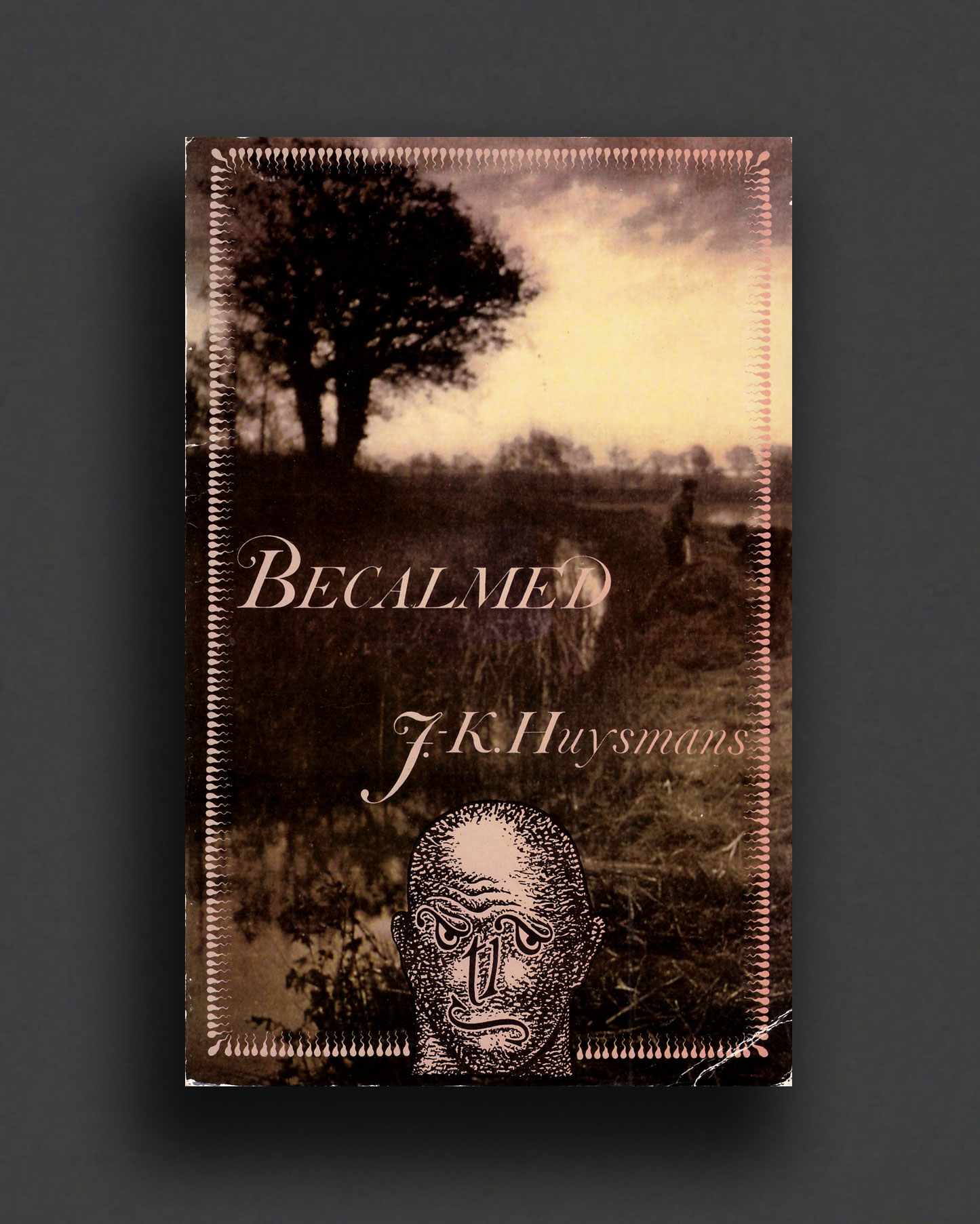
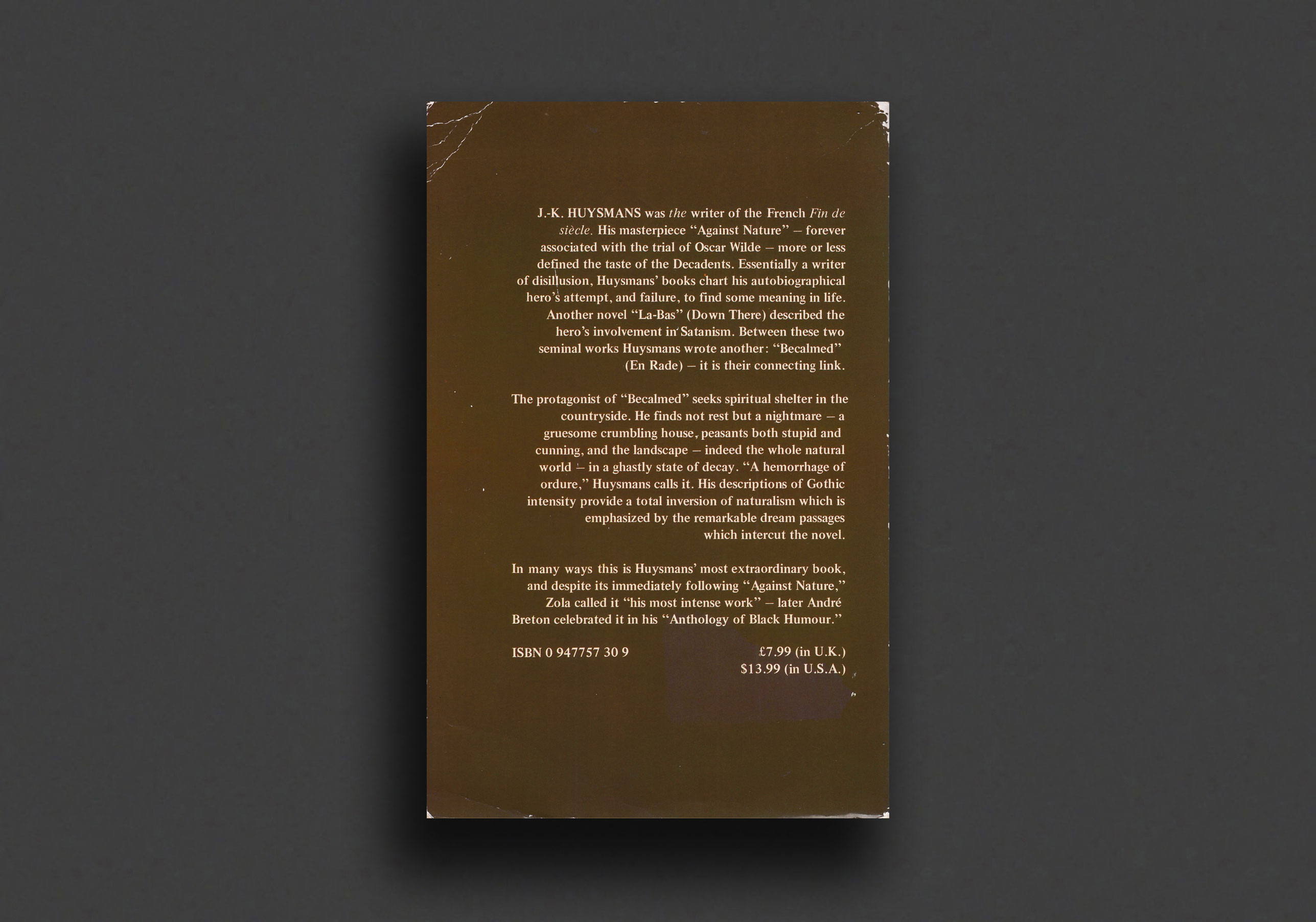
J.-K. Huysmans was the writer of the French fin de siècle. His masterpiece Against Nature — forever associated with the trial of Oscar Wilde — more or less defined the taste of the Decadents. Essentially a writer of disillusion, Huysmans’ books charts his autobiographical hero’s attempt, and failure, to find some meaning in life. Another novel La Bas (Down There) described the hero’s involvement in Satanism. Between these two seminal works Huysmans wrote another: Becalmed (En Rade) — it is their connecting link.
The protagonist of Becalmed seeks spiritual shelter in the countryside. He finds not rest but a nightmare — a gruesome crumbling house, peasants both stupid and cunning, and the landscape, indeed the whole natural world, in a ghastly state of decay. “A hemorrhage of ordure,” he calls it. His descriptions, of Gothic intensity, provide a total inversion of naturalism which is emphasized by the remarkable dream passages which intercut the novel.
In many ways this is Huysmans’ most extraordinary book, and despite its immediately following Against Nature, Zola called it “his most intense work”, and later André Breton celebrated it in his Anthology of Black Humour.
Good copy with light creasing and wear to cover extremities/corner, internally clean, very good copy with no spine creasing.
1985, Japanese
Softcover, 276 pages, 29.7 x 21 cm
1st Edition, Out of print title / used / very good
Published by
Camera Mainichi and The Mainichi Graphic / Japan
$80.00 - In stock -
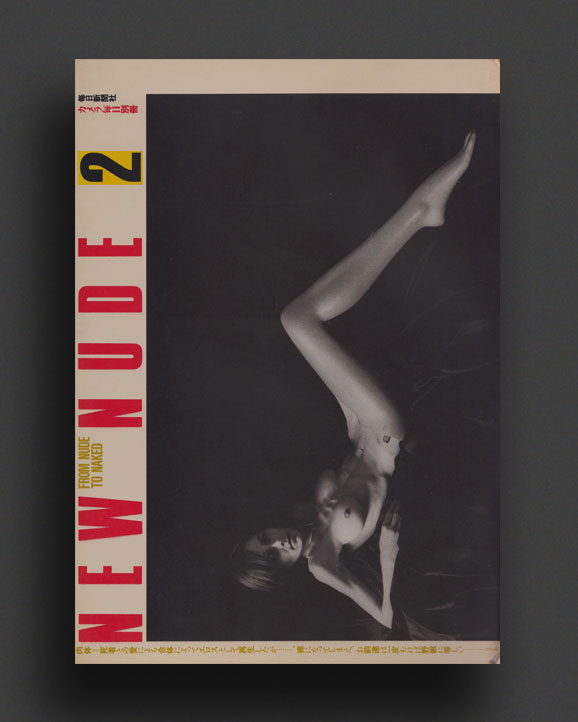
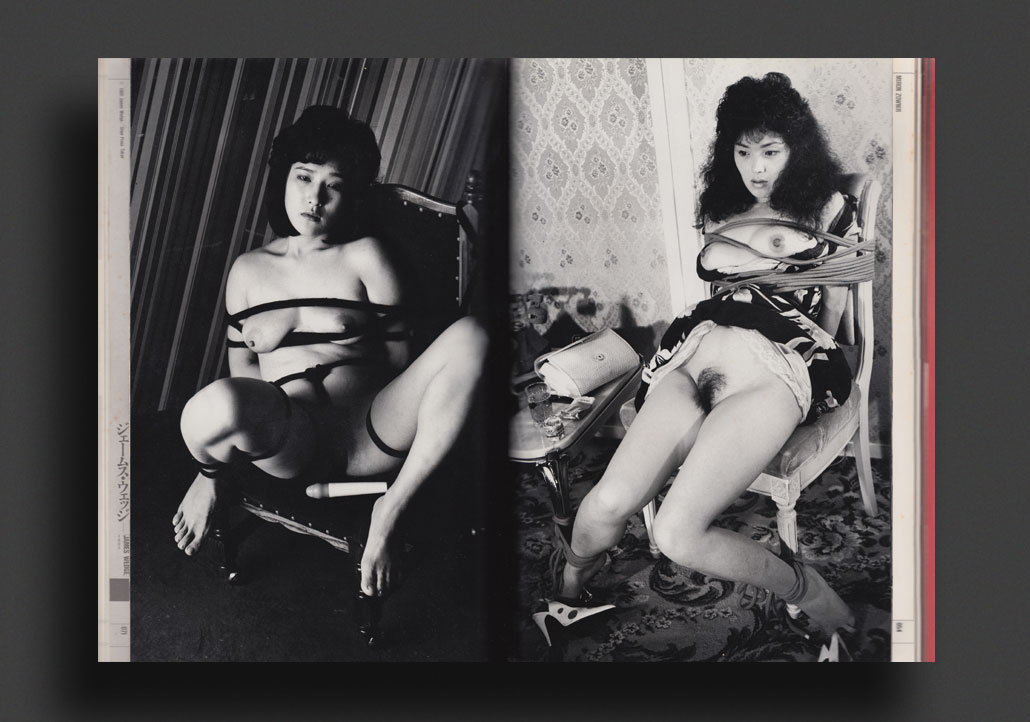
First printing of NEW NUDE 2, published in Japan in 1985 as part of a unique and short-lived book series published by the mighty Camera Mainchi house, showcasing leading photographers and artists on the subject of the nude. Opening with illustrated essays by photo critic Kōtarō Iizawa and others, this lovely volume, printed in Japan, presents works generously and sympathetically presented in colour and black-and-white across various paper-stocks. Includes the work of Masahisa Fukase, Hans Bellmer, Yoshiichi Hara, Masaaki Nakagawa, Nobuyoshi Araki, Lee Friedlander, Alice Odilon, E. J. Bellocq, Heinrich Zille, Donald Woodman, Florence Chevallier, Laurence Sackman, Joel Peter Witkin, Marie Bume, James Wedge, Franco Fontana, Lucas Samaras, Miron Zownir, Herlinde Koelbl, and others.
Good-Very Good copy. General wear, light foxing.
1981, Japanese
Softcover (w. dust jacket), 365 pages, 28.5 x 21 cm
1st Edition, Out of print title / used / very good
Published by
Kodansha Int / Tokyo
$180.00 - In stock -
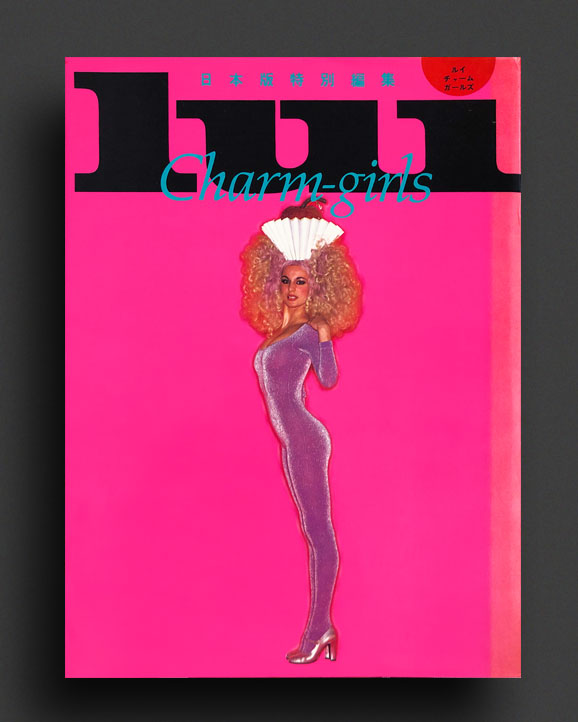
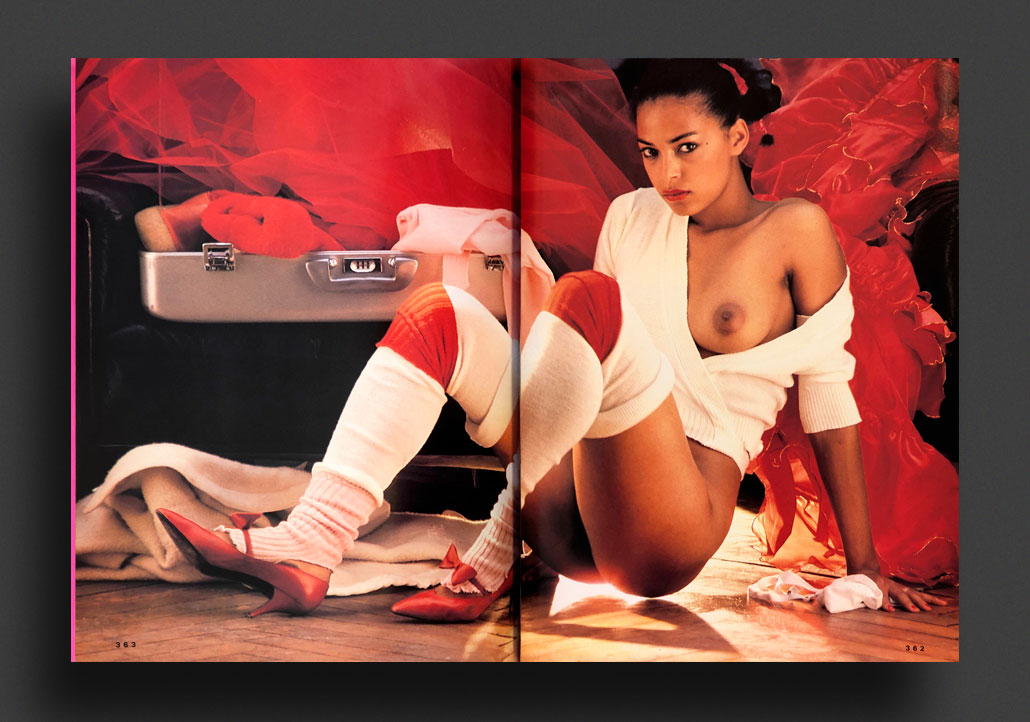
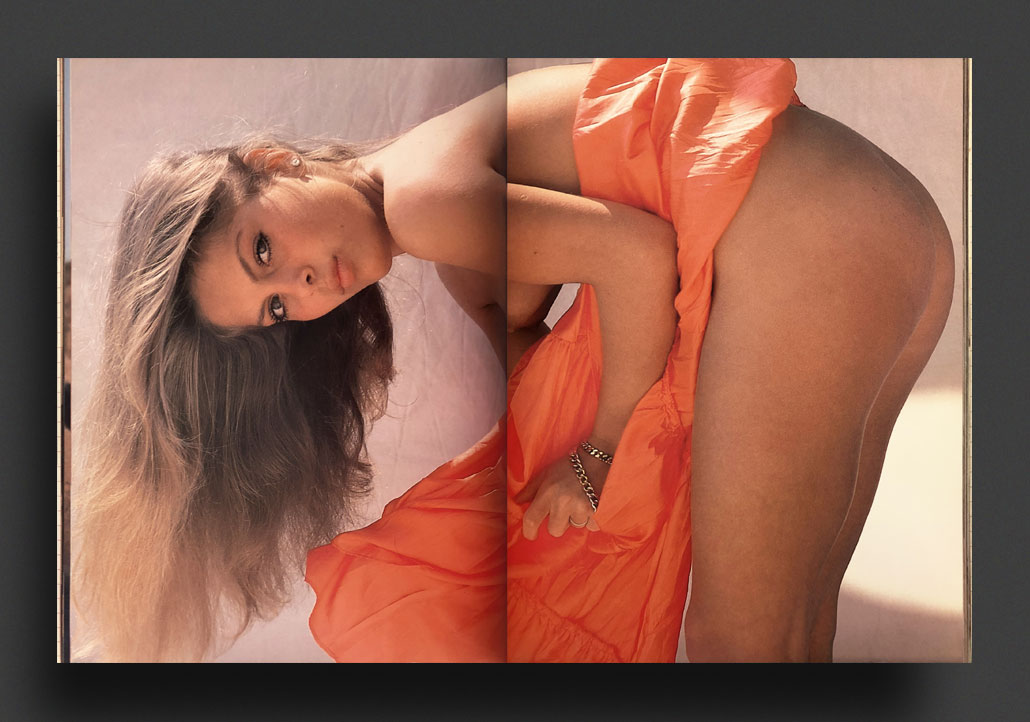
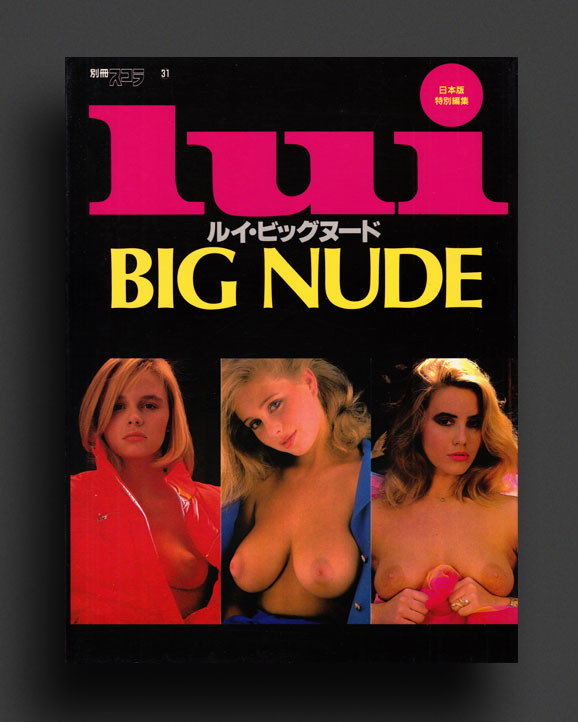
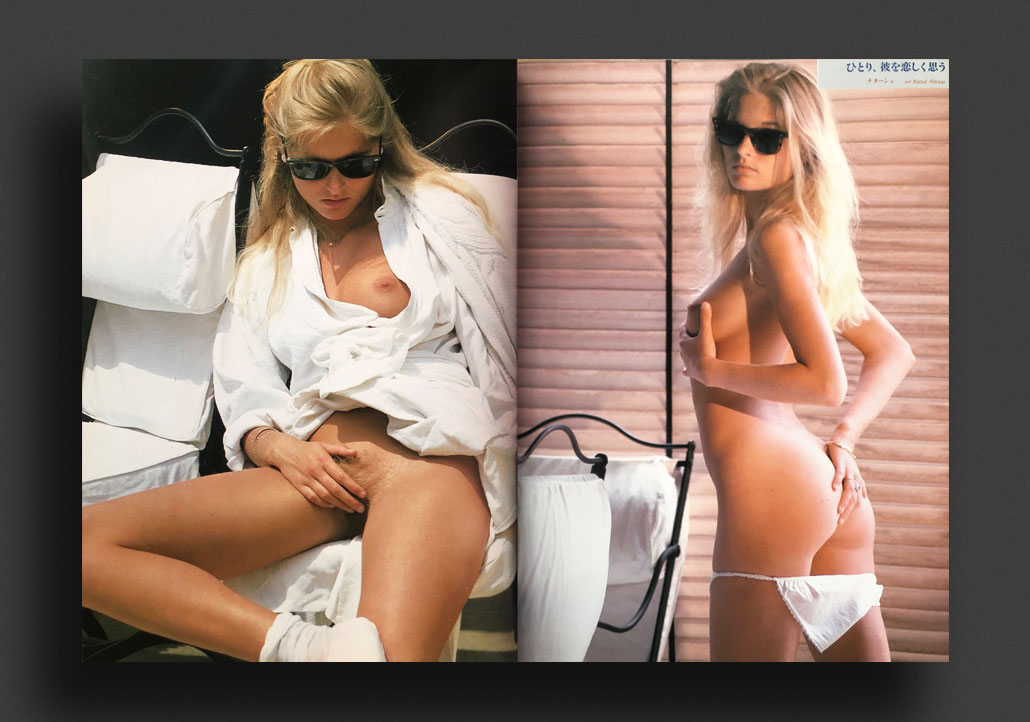
Huge photographic compendium of nudes direct from the pages of the famous French erotica magazine Lui, collected and published in Japan in 1981! Cover to cover, full-bleed, vivid colour reproductions of all the models featured in Lui spanning the mid(?) 1970s - start of the 1980s. All photographs, no articles (that excuse won't work here!)
Lui ("Him") was a French adult entertainment magazine founded in Paris in 1963 by fashion photographer turned publisher and Surrealist art collector, Daniel Filipacchi, with Jacques Lanzmann, a jack of all trades turned novelist, and Frank Ténot, a press agent, pataphysician and prominent jazz critic, with the objective to bring some charm "à la française" to the market of men's magazines. Each issue included in-depth interviews and cultural articles alongside its staple nude photography and erotic cartoons.
Very Good copy.
1986, English / Japanese
Softcover (w. dust jacket), 300 pages, 28.5 x 21 cm
1st Edition, Out of print title / used / very good
Published by
Kodansha Int / Tokyo
$140.00 - In stock -
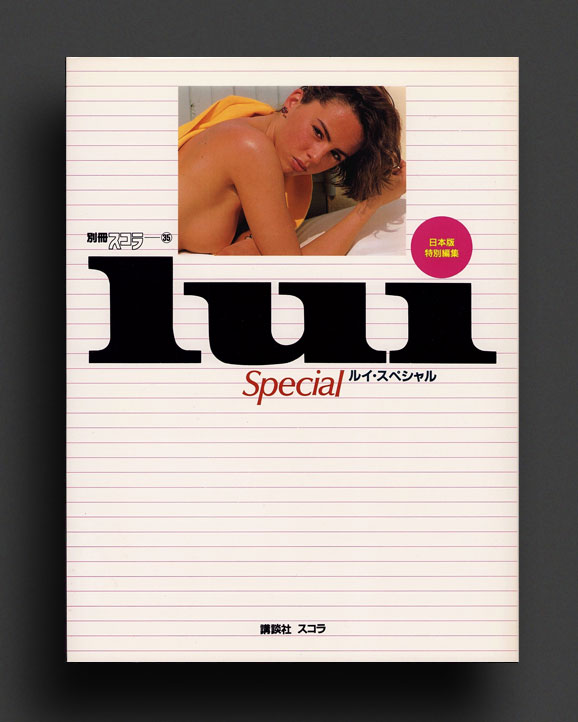
Huge photographic compendium of nudes direct from the pages of the famous French erotica magazine Lui, collected and published in Japan in 1986. Cover to cover, full-bleed, vivid colour reproductions of all the models featured in Lui in the early—mid 1980s. All photographs, no articles (that excuse won't work here!)
Lui ("Him") was a French adult entertainment magazine founded in Paris in 1963 by fashion photographer turned publisher and Surrealist art collector, Daniel Filipacchi, with Jacques Lanzmann, a jack of all trades turned novelist, and Frank Ténot, a press agent, pataphysician and prominent jazz critic, with the objective to bring some charm "à la française" to the market of men's magazines. Each issue included in-depth interviews and cultural articles alongside its staple nude photography and erotic cartoons.
Very Good copy.
1986, English / Japanese
Softcover (w. dust jacket), 300 pages, 28.5 x 21 cm
1st Edition, Out of print title / used / very good
Published by
Kodansha Int / Tokyo
$140.00 - In stock -
Huge photographic compendium of nudes direct from the pages of the famous French erotica magazine Lui, collected and published in Japan in 1986. Cover to cover, full-bleed, vivid colour reproductions of all the models featured in Lui spanning the mid(?) 1970s - mid 1980s. All photographs, no articles (that excuse won't work here!)
Lui ("Him") was a French adult entertainment magazine founded in Paris in 1963 by fashion photographer turned publisher and Surrealist art collector, Daniel Filipacchi, with Jacques Lanzmann, a jack of all trades turned novelist, and Frank Ténot, a press agent, pataphysician and prominent jazz critic, with the objective to bring some charm "à la française" to the market of men's magazines. Each issue included in-depth interviews and cultural articles alongside its staple nude photography and erotic cartoons.
Very Good copy.
1995, Japanese
Softcover (w. dust jacket), 164 pages, 21 x 14.8 cm
1st Edition, Out of print title / used / fine
Published by
World Comics / Japan
Kubo Shoten / Japan
$160.00 - In stock -
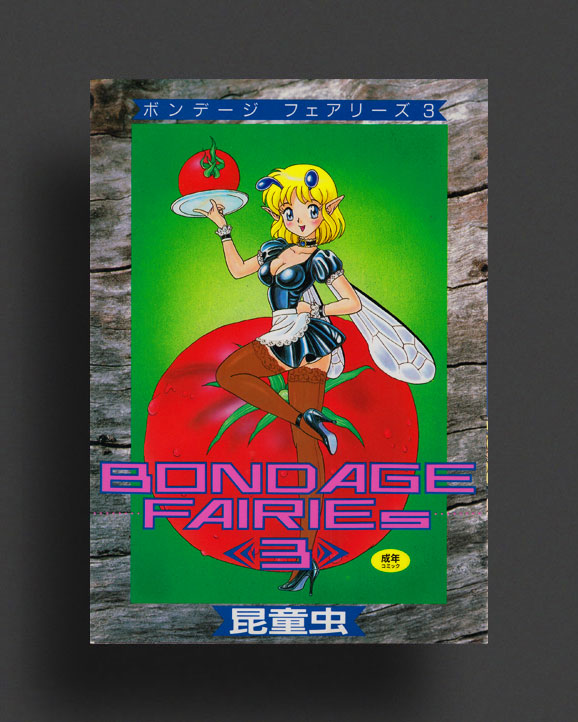
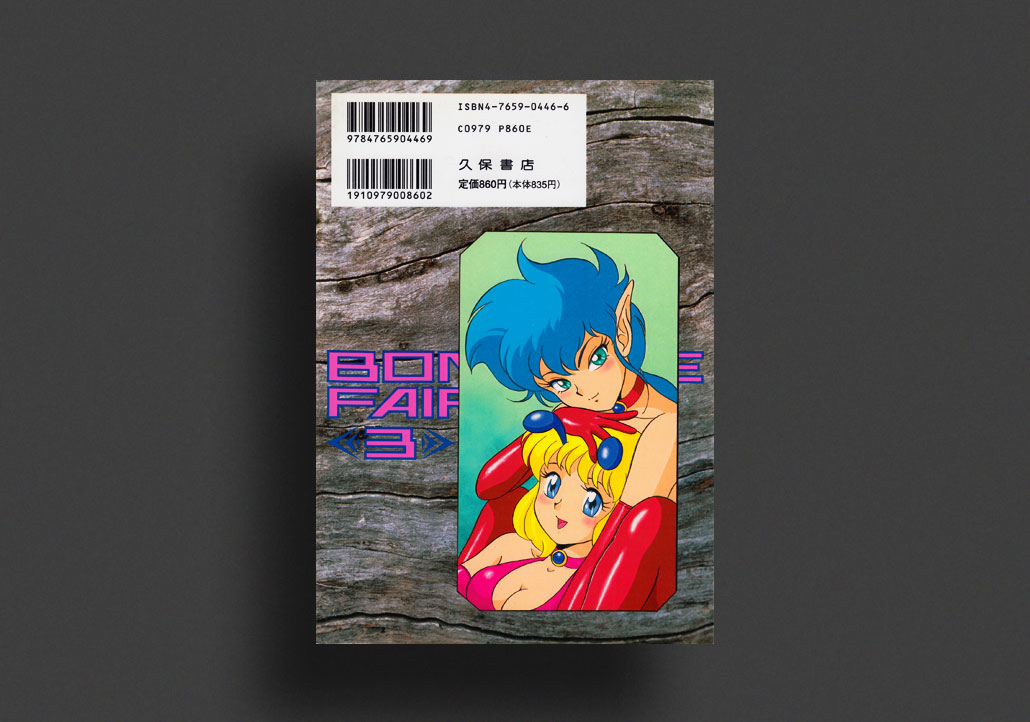
Very rare original first printing Volume 3 Japanese book collection of the infamous cult classic eromanga "Bondage Fairies" by Kondom, published by Kubo Shoten way back in 1995. Volume 3 of the first ever book collection bringing together over 160 pages of the the original series from the early 1990s, in the original Japanese language, as they appeared in the pages of Kubo Shoten's Young Lemon magazine for the first time as "Bondage Fairies". Includes colour artwork galleries.
Created by manga artist Teruo Kakuta under the pen name "Kondom", a multilingual pun, meaning "little insect" in Japanese and "condom" in English, Bondage Fairies is an erotic series about highly sexual female forest fairies, who work as police officers protecting the forest, whilst engaging in a wild array of anthropomorphized, inter-species sexual acts. The series began in Japan in 1990 as Insect Hunter, but it was quickly banned from sale by the Tokyo Metropolitan Ordinance. Under a new title, the manga was serialized in manga magazine Lemon Kids. The series is among the earliest sexually explicit manga (eromanga) commercially translated and published uncensored in the United States where the earliest editions date from 1994 (Venus Press). Eros Comix subsequently published a multi-volume series of the collected Bondage Fairies, and subsequent stories, now all very collectible. Translated to Swedish, German, French, and Italian, Bondage Fairies is one of the most popular underground adult Japanese comics outside Japan.
Near Fine copy in original NF dust jacket.
1992, English
Softcover, 288 pages, 14.6 x 22.3 cm
1st Edition, Out of print title / used / very good
Published by
Gay Men's Press / London
$160.00 - In stock -
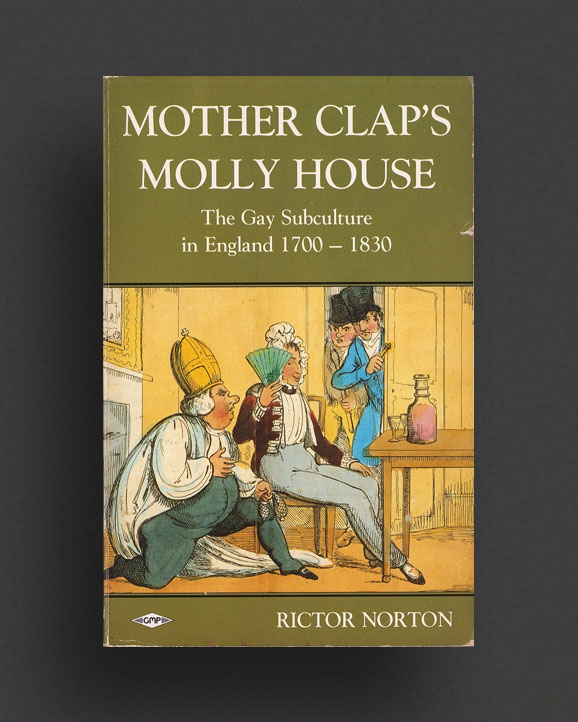
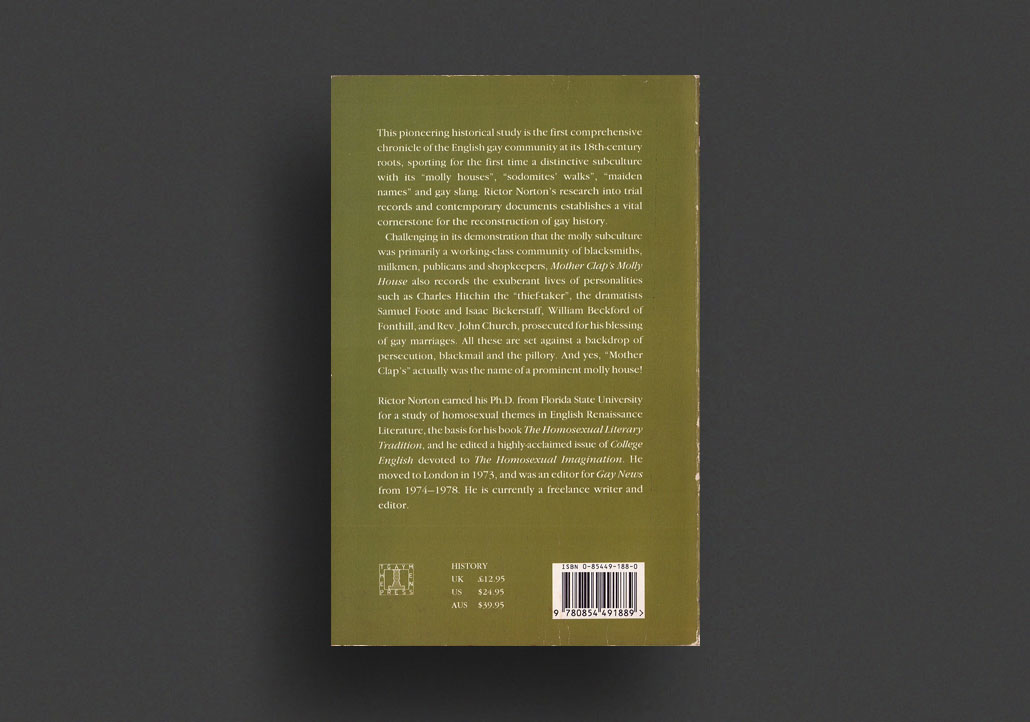
Very rare 1992 Gay Men's Press first printing of this pioneering historical study — the first comprehensive chronicle of the English gay community at its 18th-century roots, sporting for the first time a distinctive subculture with its "molly houses", "sodomites' walks", "maiden names" and gay slang. Rictor Norton's research into trial records and contemporary documents establishes a vital cornerstone for the reconstruction of gay history. Challenging in its demonstration that the molly subculture was primarily a working-class community of blacksmiths, milkmen, publicans and shopkeepers, Mother Clap's Molly House also records the exuberant lives of personalities such as Charles Hitchin the "thief-taker", the dramatists Samuel Foote and Isaac Bickerstaff, William Beckford of Fonthill, and Rev. John Church, prosecuted for his blessing of gay marriages. All these are set against a backdrop of persecution, blackmail and the pillory. And yes, "Mother Clap's" actually was the name of a prominent molly house!
Rictor Norton earned his Ph.D. from Florida State University for a study of homosexual themes in English Renaissance Literature, the basis for his book The Homosexual Literary Tradition, and he edited a highly-acclaimed issue of College English devoted to The Homosexual Imagination. He moved to London in 1973, and was an editor for Gay News from 1974-1978.
VG—Good copy with some light wear, tiny closed tear to cover right edge, foxing to endpapers and block edge, otherwise Very Good copy throughout, uncreased spine.
2007, English
Hardcover (w. dust jacket), 350 pages, 23.5 x 16 cm
1st Edition, Out of print title / used / fine
Published by
Science History Publications / USA
$160.00 - In stock -
Very rare first edition hardcover copy of Bruce T. Moran's 'Andreas Libavius and the Transformation of Alchemy: Separating Chemical Cultures with Polemical Fires'.
What lots of people called chymia in the early seventeenth century was a subject that the physician, alchemist, and schoolteacher Andreas Libavius believed needed sorting out. He called it "an art without an art." To establish what sort of thing chymia was would require rebuilding its definitions from the theoretical and practical ground up while cutting back the forest of obscure language and private meaning in which it existed.
Libavius took on the job, and in thousands of pages of toughly worded criticism ranging over alchemical, moral, medical, philosophical, and religious topics wielded a polemical blade to huge effect.
Libavius is one of the best remaining examples in the history of early modern chymistry of a figure forced to fit into descriptive historical spaces that were manifestly not his own. Beyond the book for which he is best known, the Alchemia (1597), many others (until now largely unknown and mostly ignored) provide a rich picture of the intellectual and cultural spaces within which he lived, quarrelled, and wrote. In these texts Libavius created moral arguments in defense of his own alchemically based version of chymia, used printed correspondence to collect and define the precise meanings of chemical terms and procedures, attacked and guarded views related to Scripture, clashed with physicians concerning alchemy and the preparation of chemical medicines, denounced the doctrines of Paracelsus, upheld the art of transmutation, and argued for the existence of powerful spirits and occult qualities in nature.
While philosophers must begin to understand the language and manual operations of craftsmen, artisans, Libavius proclaimed, needed to understand the causes and principles of natural philosophy.
When reason and practice combined, artisans and philosophers alike could then share a common physical and intellectual space where both played parts in making useful artefacts. The rational art involved in making things (joining philosophy with artisinal know-how) was, he declared, just as important in the labor of creating chemical compositions as in the work of controlling the health of the body (both personal and civic) and in the day to day exercise of cultivating moral virtue.
Bruce T. Moran is Professor of History at the University of Nevada, Reno where he teaches the history of early science and medicine. He is also the author of Distilling Knowledge: alchemy, chemistry, and the scientific revolution (Cambridge Mass.; London: Harvard University Press, 2005.
Fine copy in Fine dust jacket.
1928, English
Hardcover, 264 pages
1st Edition, Out of print title / used / very good
Published by
J.M. Dent & Sons / London
E P Dutton / New York
$720.00 - In stock -
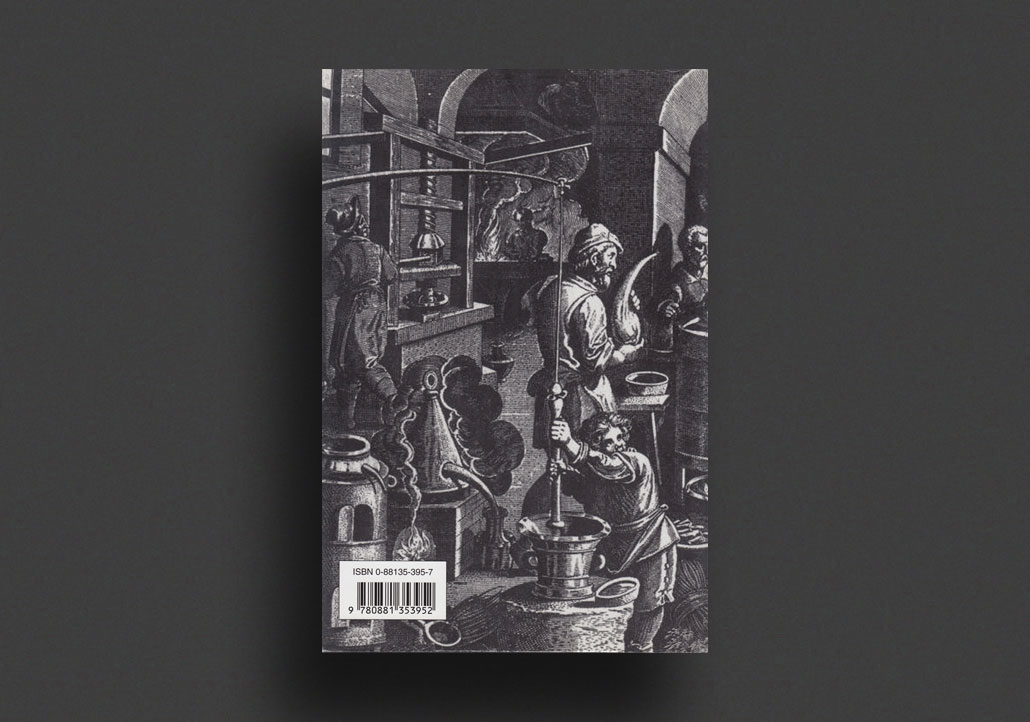
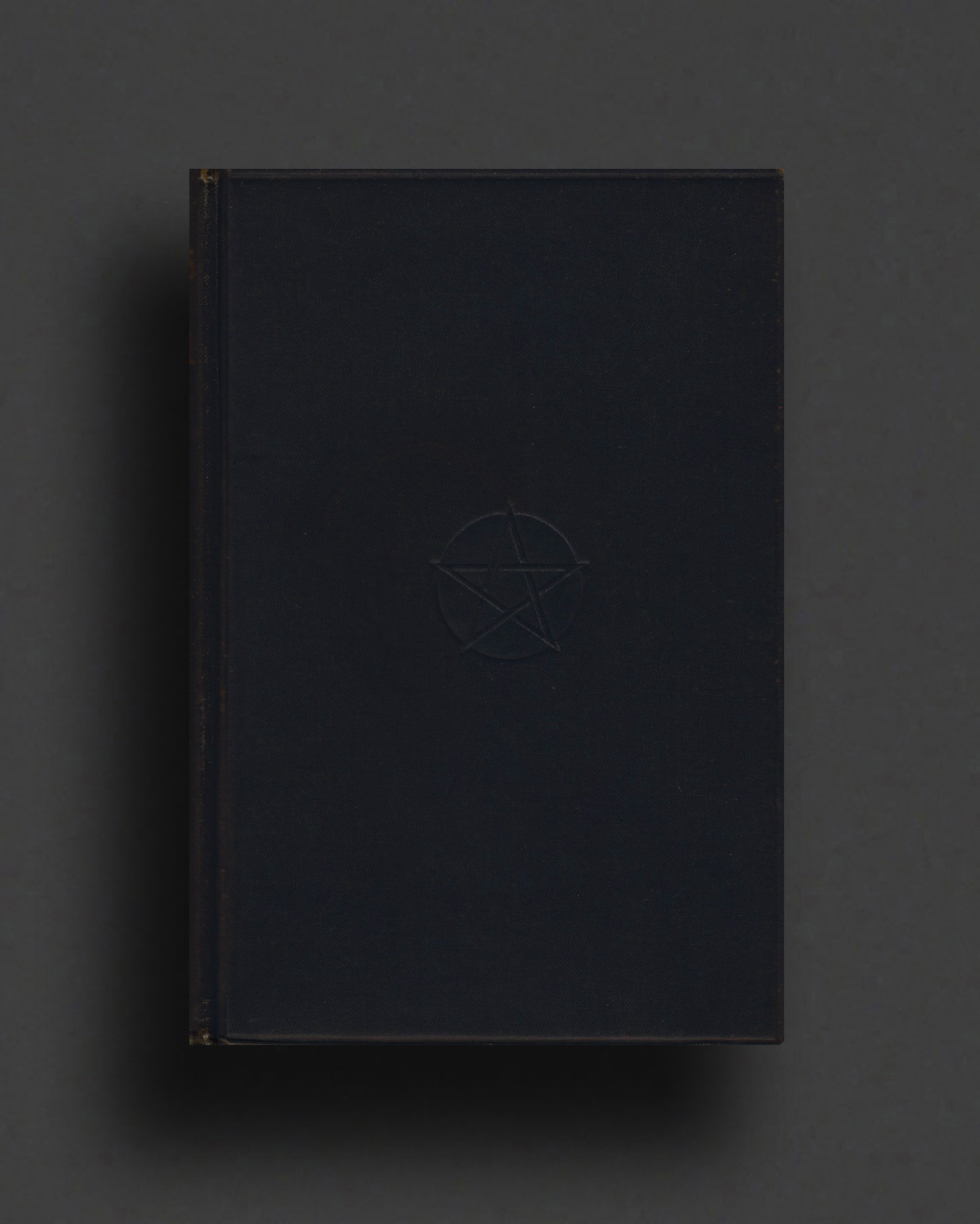
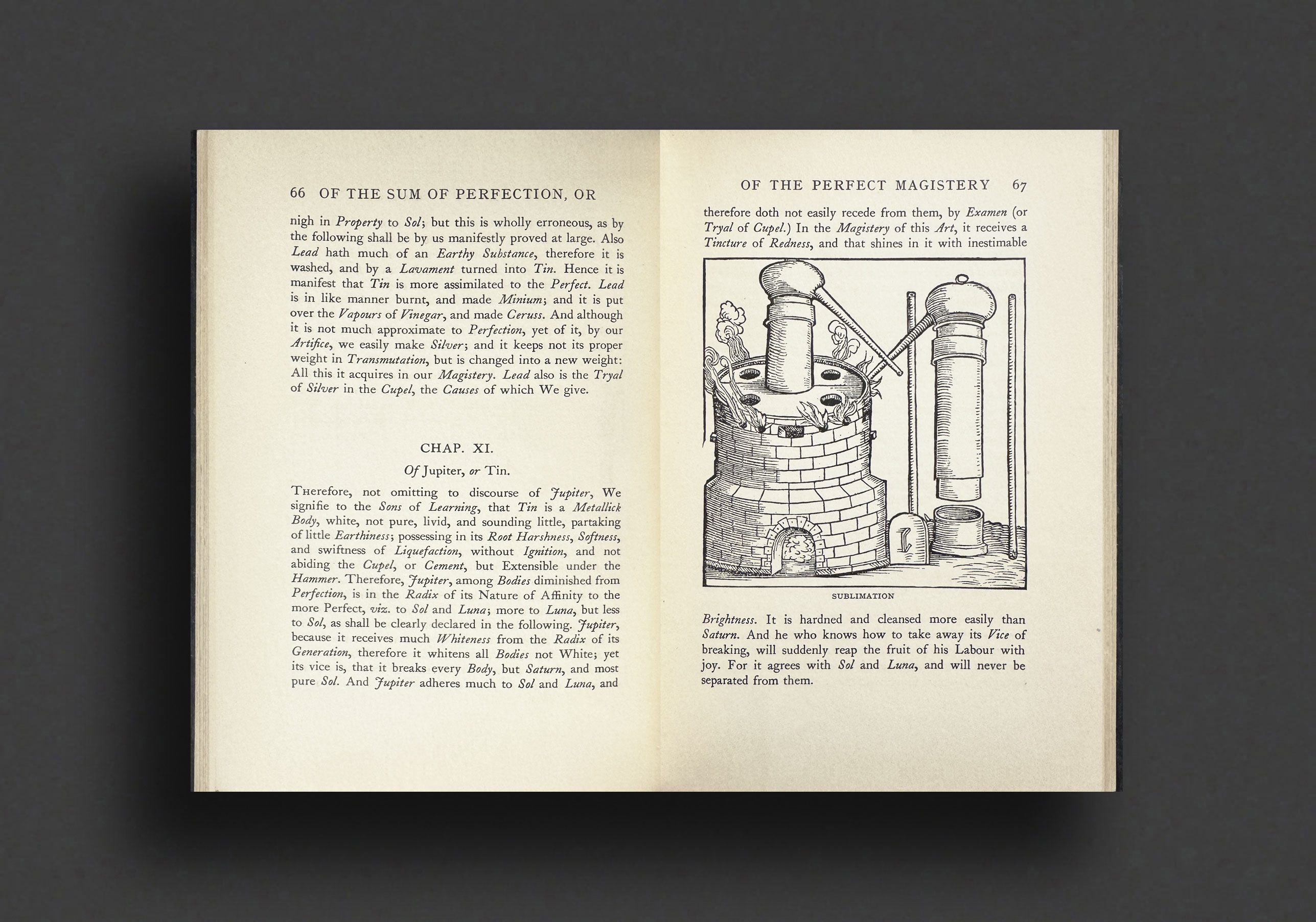
Exceptionally rare copy of the first 1928 hardcover English edition of The Works of Geber compiled by E. J. Holmyard, a comprehensive collection of the writings of the renowned Islamic alchemist, Abu Musa Jabir ibn Hayyan (died c. 806−816), also known as Geber. Published by J.M. Dent & Sons Ltd./E. P. Dutton & Co. Inc., London and Toronto/New York, 1928, this book contains a translation of Geber's most important works, including his famous treatise on alchemy, The Book of the Composition of Alchemy. This important antiquarian reference also includes a detailed introduction by the translator, which provides historical context and background information on Geber tracing back to original Jabirian writings and details his outstanding contributions to the field of alchemy and Islamic philosophy. This work is an essential resource for anyone interested in the history of alchemy, Islamic science, magic and the development of modern chemistry, shedding light on the mysterious life of one of the most fascinating thinkers in the Arab world. True to the original texts, the writings are accompanied by beautiful reproductions of some of the most historical etchings from the development of alchemical practice, including frontispiece "Title-Page of Berne Edition, 1545", with sixteen alchemical engravings throughout. Richard Russell's 1678 English translation remains the authoritative source of these historical texts in the Western world.
E. J. Holmyard (Eric John Holmyard, 1891–1959) was a prominent 20th-century British historian of science, renowned for his scholarly work on the history of chemistry and, specifically, alchemy. He played a pivotal role in changing the perception of alchemy from mere "occult pseudoscience" to a crucial precursor of modern chemistry.
Very Good—Near Fine copy of the first 1928 edition in debossed black hardcovers, cloth-sewn, with only light wear to extremities/spine tips. Lacks dust jacket. Previous owner's name to title page, neatly dated 1940. Interior handsomely preserved.
1983, English
Hardcover (w. dust jacket), 380 pages (approx), 36 x 24 cm
1st Edition, Out of print title / used / very good
Published by
Abbeville Press / New York
$650.00 - In stock -
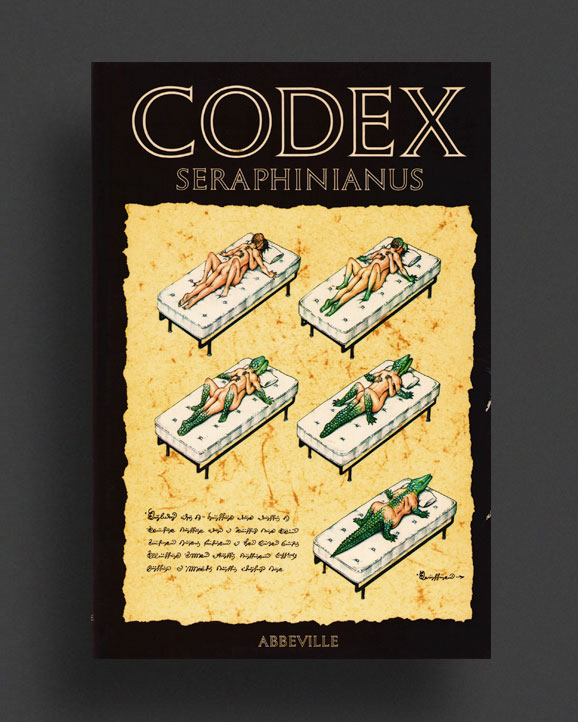
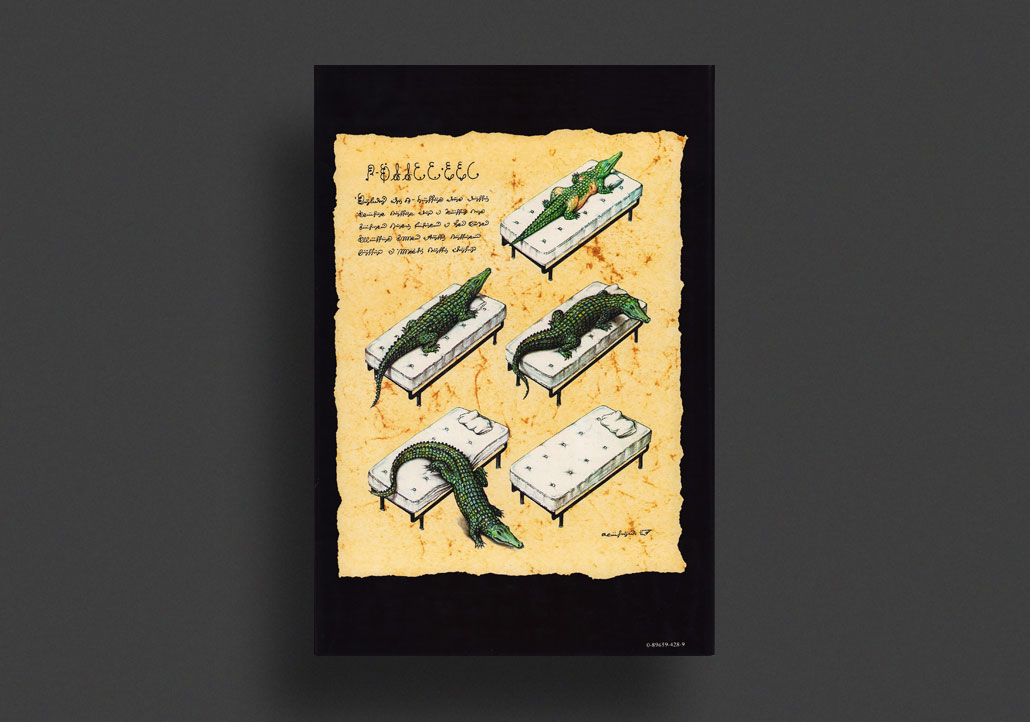
Very rare copy of the first 1983 Abbeville English hardcover edition of the ever mysterious Codex Seraphinianus by Italian artist and designer Luigi Serafini (1949—), a book like no-other. Ever since the Codex Seraphinianus was first published in Italy in limited edition by Franco Maria Ricci in 1981, the book has been recognized as one of the strangest and most beautiful art books ever made. This phantasmagorical visual encyclopedia of an unknown world written in an unknown language has fueled much debate over its meaning. Written for the information age and addressing the import of coding and decoding in genetics, literary criticism, and computer science, the Codex confused, fascinated, and enchanted a generation, including Roland Barthes and Italo Calvino. While its message may be unclear, its appeal is obvious: it is a most exquisite artifact. Blurring the distinction between art book and art object.
Very Good book in Very Good dust jacket with a couple of straches to edges and light wear, preserved in mylar wrap. Light wear to block edge on a few pages.
1984, Italian
Softcover (staplebound),
1st Edition, Out of print title / used / good
Published by
Libri Rizzoli / Milan
$15.00 - In stock -
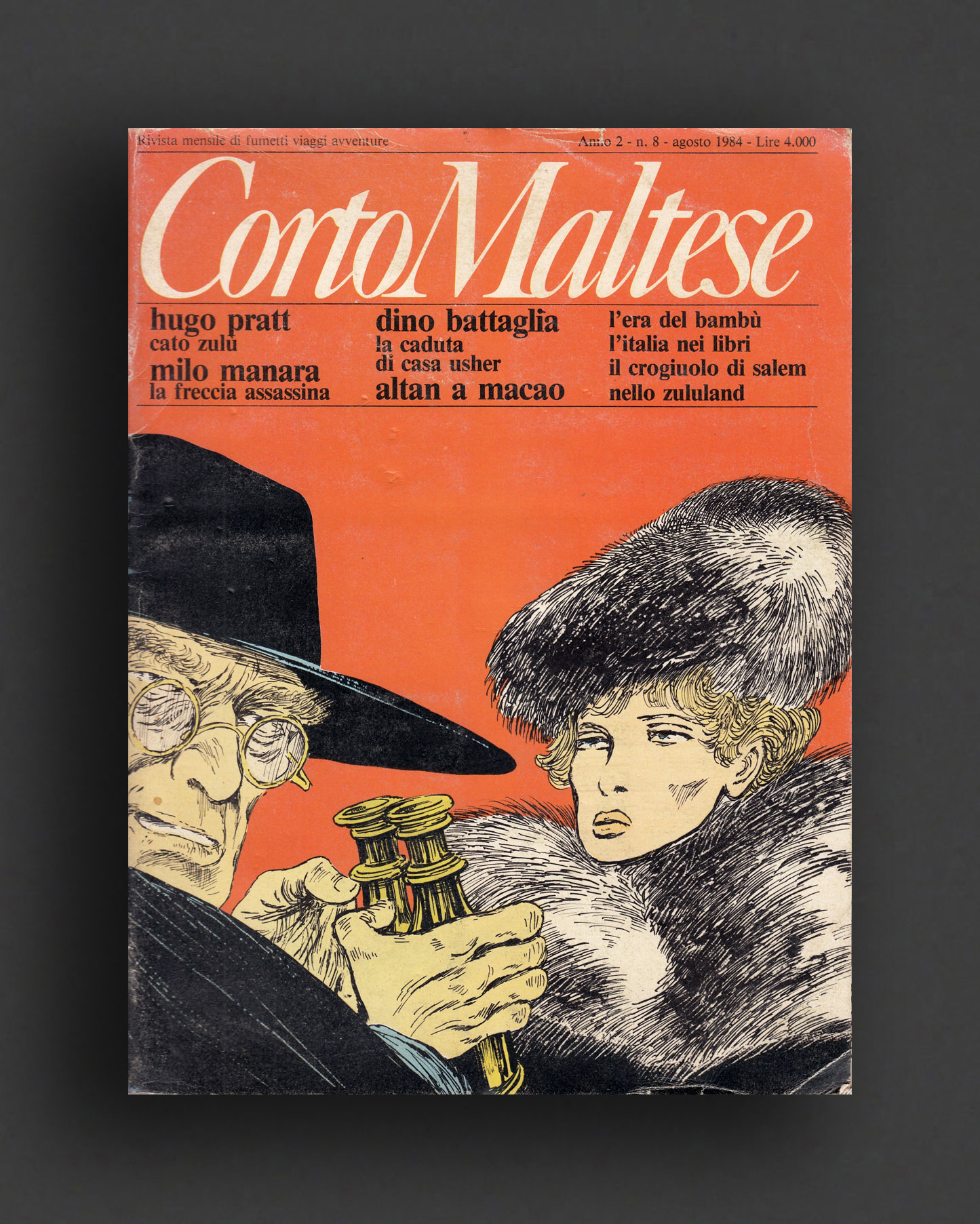
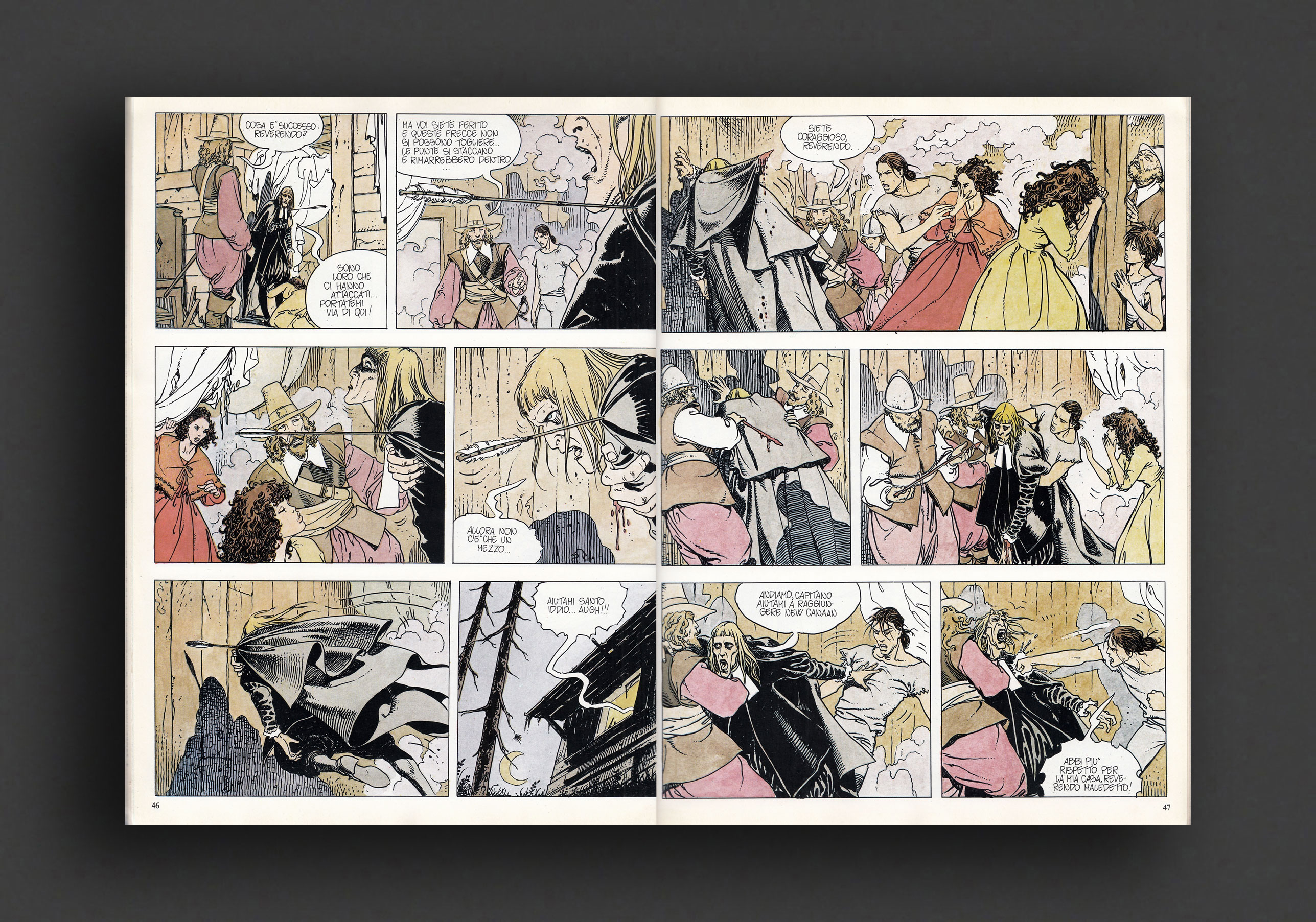
Vol. 2 No. 8 (1984) issue of Corto Maltese, an Italian Rivista mensile di fumetti viaggi avventure (Monthly comics magazine, travel, adventures) magazine, owing its name and content to the legendary Corto Maltese series of adventure comics by Italian comic book master Hugo Pratt. Beginning in 1967, Corto Maltese follows the adventures of an enigmatic sea captain who lives in the first three decades of the 20th century and are praised as some of the most artistic and literary graphic novels ever written, translated into numerous languages and adapted into several animated films. The Corto Maltese magazine takes its cue from Pratt's adventures, featuring the serial comics of some of the most talented and distinctive comic creators in Italy, this issue including works by Pratt himself, his regular collaborator Milo Manara, Guido Crepax, Dino Battaglia, Altan (Francesco Tullio-Atan) and others elevating the comic strip to the highest art form. Guido Crepax features on the cover.
Average—Good copy with general wear.
1977, German
Hardcover (w. dust jacket), 182 pages, 28 x 25 cm
1st UK Edition, Out of print title / used / very good
Published by
Edition Spangenberg / Münich
$55.00 - Out of stock
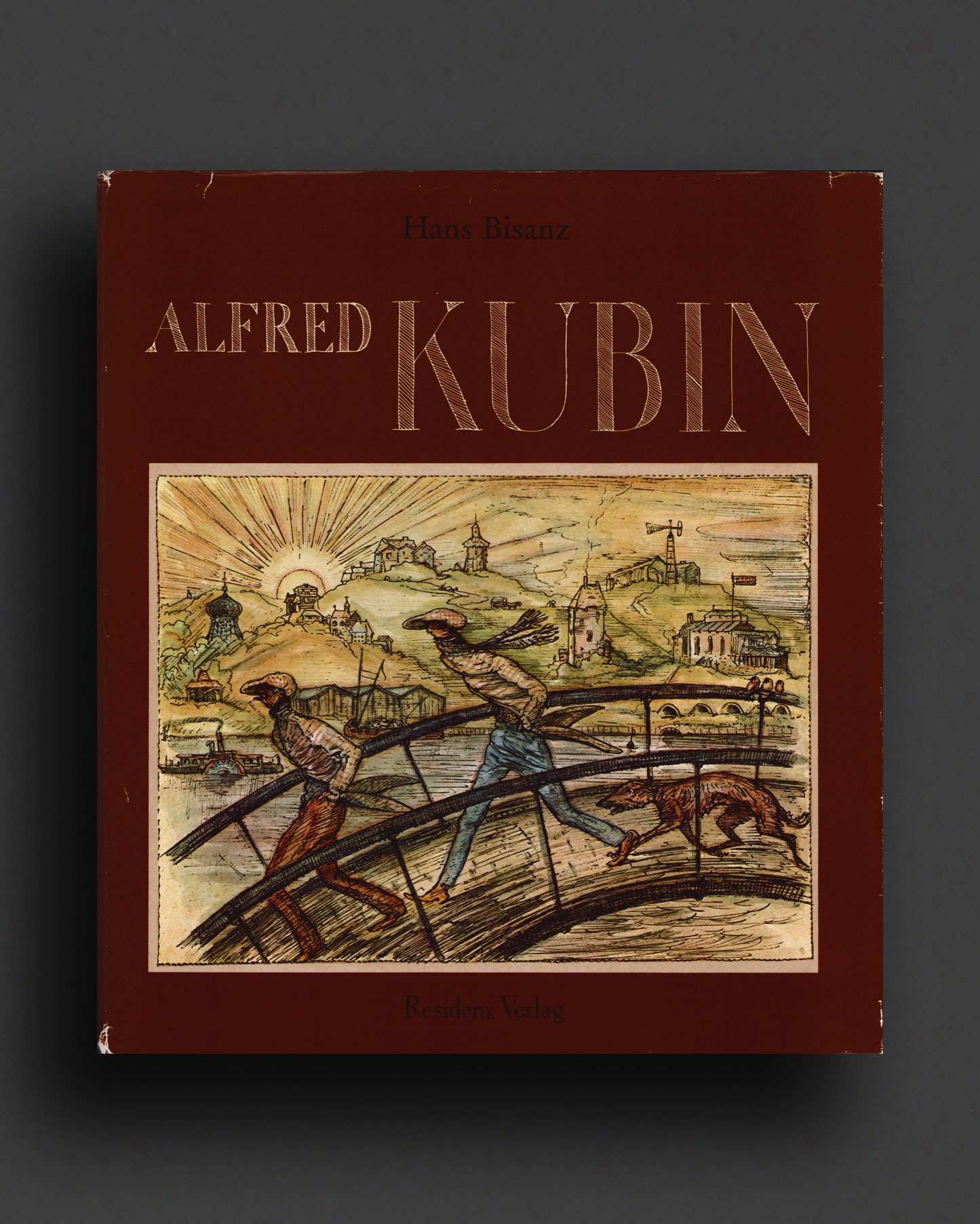
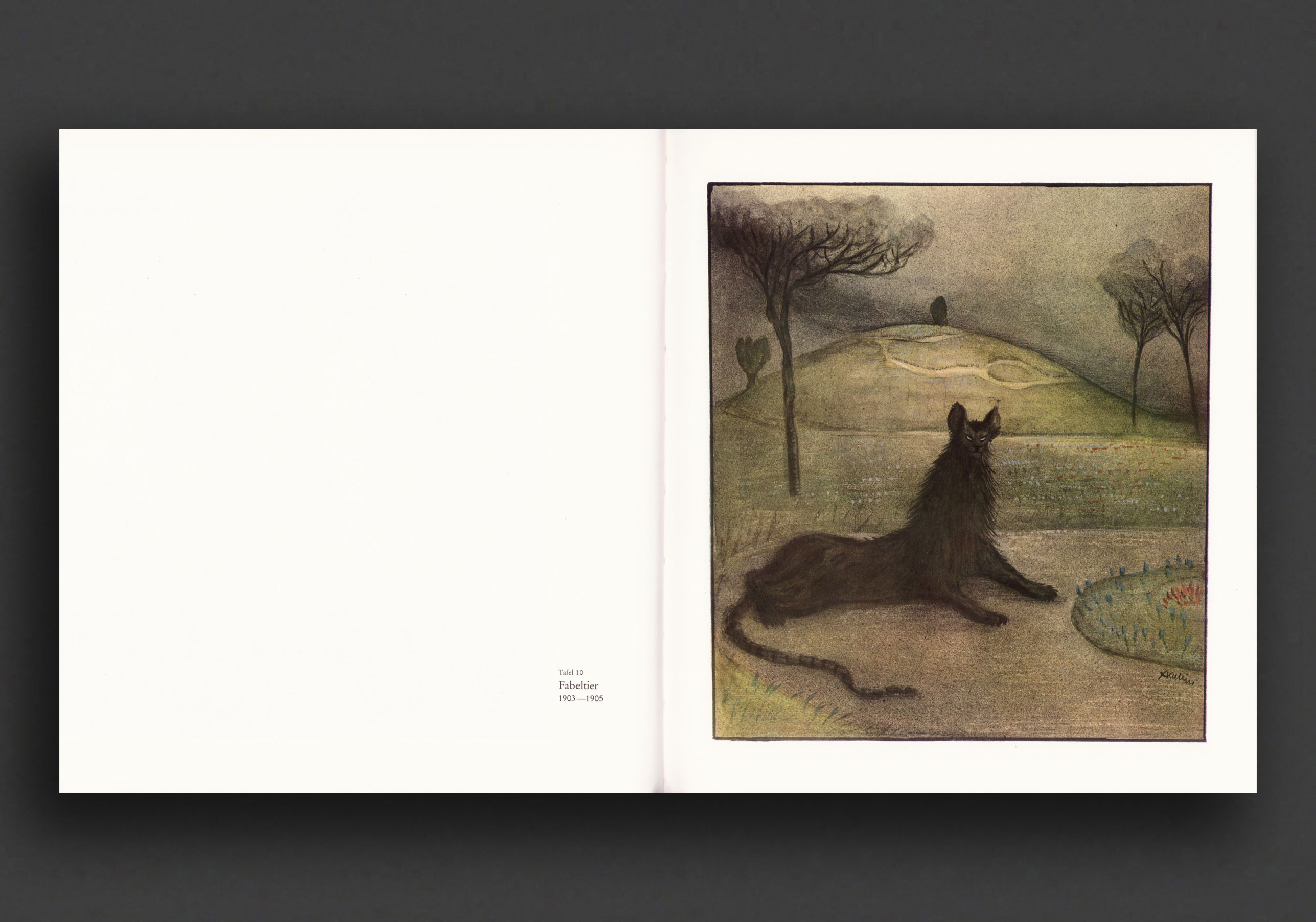
First 1977 hardcover edition of Hans Bisanz's monographic study of the great Austrian draftsman, illustrator and author Alfred Kubin (1877–1959), originator of the Austrian fantastic and bizarre achieving mastery in both literature and the visual arts. Alfred Kubin : Zeichner, Schriftsteller und Philosoph (Illustrator, Writer and Philosopher), published by Edition Spangenberg, Münich, is profusely illustrated throughout with colour and b/w plates covering the breadth of this magnificent artist's life and work, including biography with rare photographs.
Alfred Kubin, an accomplished draughtsman, was inspired by his fascination with the philosophies of Schopenhauer and Nietzsche; and influenced by the artists Goya, Klinger, Ensor, Redon, Rops and Munch. Kubin called his dreamlike imagery a vital "escape into the unreal": ghostly figures, hybrid creatures, variants of torture and self-torture, dream, vampirism, spiritualism, decadence, sex, death and birth. His extraordinary oeuvre comprises more than 20,000 drawings, a large part of it consist of pen drawings, portfolio pieces and illustrations from more than 70 books.
Very Good copy in VG dust jacket with some wear and small closed tears to edges, preserved in mylar wrap.
1977, English
Hardcover (w. dust jacket), 296 pages, 19.5 x 12.5 cm
1st Edition, Out of print title / used / very good
Published by
Allison & Busby / London
$140.00 - In stock -
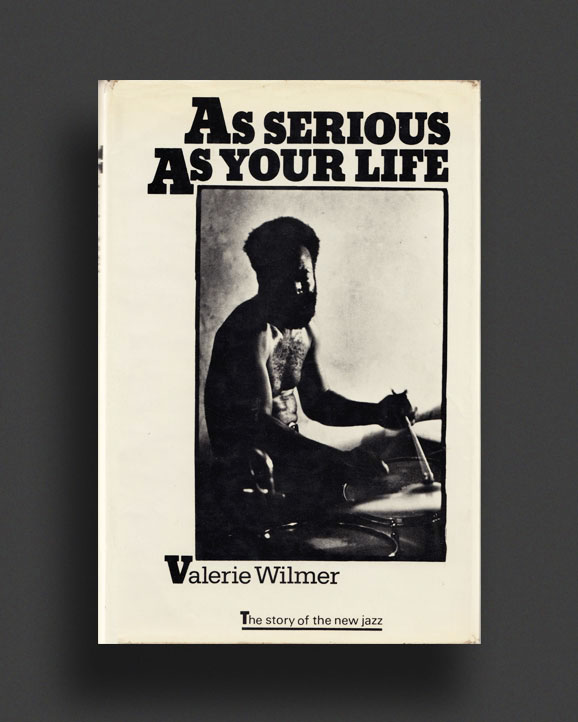
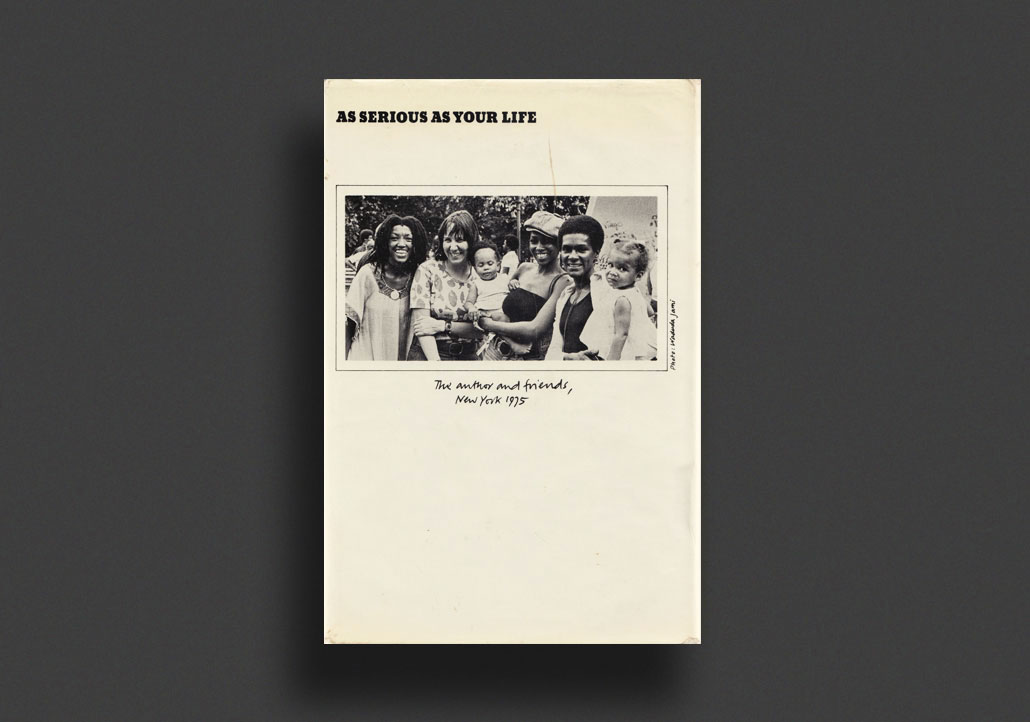
Very rare first 1977 hardcover edition of this essential masterpiece of jazz history by renowned photographer and music historian, Val Wilmer, published by Allison & Busby in London.
In this classic account of the new black music of the 1960s and 70s, celebrated photographer and jazz historian Val Wilmer tells the story of how a generation of revolutionary musicians established black music as the true vanguard of American culture. Placing the achievements of African-American artists such as Albert Ayler, Ornette Coleman, John Coltrane and Sun Ra in their broader political and social context, Wilmer evokes an era of extraordinary innovation and experimentation that continues to inspire musicians today. As vital now as when it was first published in 1977, As Serious As Your Life is the essential story of one of the most dynamic musical movements of the twentieth century.
Features : Marion Brown, Don Cherry, Andrew Cyrille, Milford Graves, Cecil Taylor, Mcoy Tyner, Rashied Ali, Dewey Redman, Anthony Braxton, Frank Lowe, Sonny Sharrock, Marshall Allen, Archie Shepp, Jimmy Lyons, Elvin Jones, Lester Bowie, Charlie Hayden, Albert Ayler, Ornette Coleman, John Coltrane, Sun Ra, and so many more....
Val Wilmer is an internationally acclaimed photographer, journalist, author and black music historian who has been documenting African-American music since 1959. In that time she has interviewed and photographed almost every significant figure in post-war jazz, blues and R&B, from Louis Armstrong and Thelonious Monk to Sun Ra and Albert Ayler via Muddy Waters and Aretha Franklin. As a photographer, her work features in the permanent collections of the British Library, the V&A Museum and the National Portrait Gallery; as a writer and historian, she has contributed to the Oxford Dictionary Of National Biography and the New Grove Dictionary Of Jazz. She lives in London.
Very Good with Very Good dust jacket (some light book block edge wear and marking, tanning)
2015, Japanese / English
Softcover (silkscreened cover), 40 pages, 21 x 30 cm
1st Edition, Out of print title / used / very good
Published by
Akio Nagasawa Gallery / Tokyo
$240.00 - Out of stock
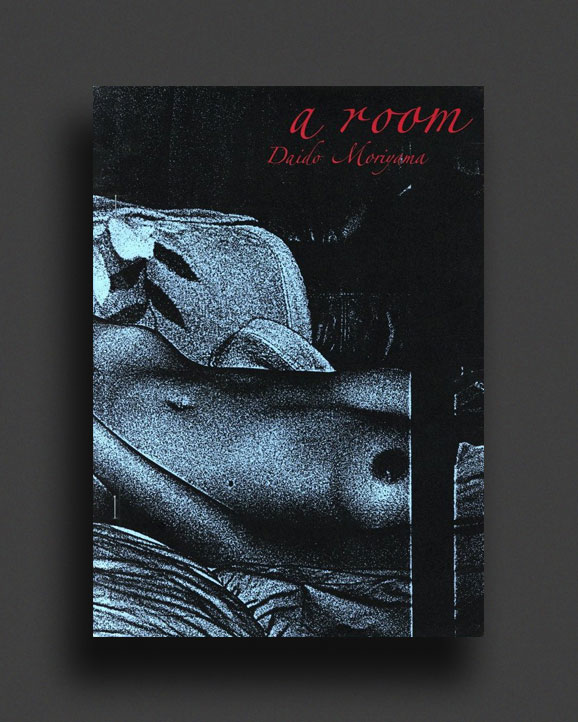
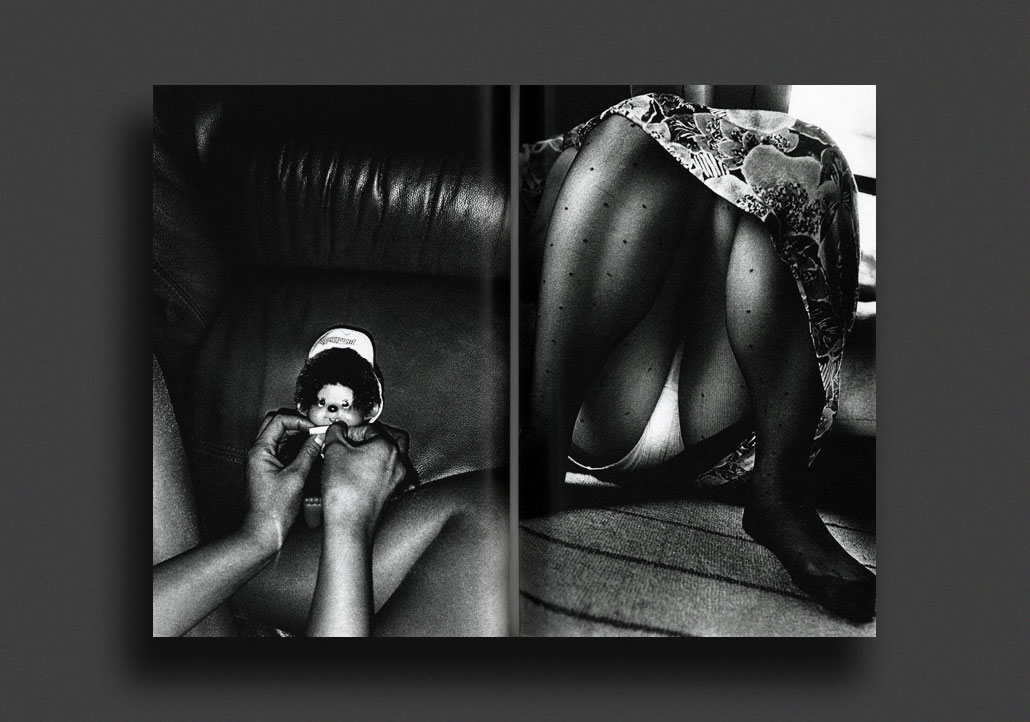
Signed limited edition of A Room by Daido Moriyama, published in 2015 by Akio Nagasawa Publishing. A very special photo book in variation. Created at a printing event at Akio Nagasawa Gallery in 2015, in homage to Moriyama's 1974 Printing Show performance, a selection of images were selected from a series of erotically charged photographs of female nudes and domestic items and assembled in various orders to create numerous page sequences for the print-runs. Features 2 different silkscreened covers that were available in a limited edition of 250 signed/numbered copies each. A lovely publication.
Daido Moriyama (Ikeda, Osaka, 1938) lives and works in Tokyo.He first trained in graphic design before taking up photography under Takeji Iwamiya and Eikoh Hosoe as an assistant.He became an independent photographer in 1964, publishing Nippon Gekijō Shashinchō (Japan Theater Photo Album) in 1968 and Shashin yo Sayounara (Farewell Photography) in 1972; the work showed the darker sides of urban life and the city.He has had a radical impact on the photographic and art world in both Japan and in the West, with his expressive style of 'are, bure, boke' (rough, blurred and out-of-focus) and of quick snapshots without looking in the viewfinder. Solo shows at New York's Metropolitan Museum of Art and the Fondation Cartier pour l'Art Contemporain in Paris solidified Moriyama's worldwide reputation, and in 2012, he became the first Japanese to be awarded in the category of Lifetime Achievement at the 28th Annual Infinity Awards hosted by the International Center of Photography (ICP) in New York.
Signed by Daido Moriyama.
1972, Japanese
Softcover (w. french-fold dust jacket and printed cardboard slipcase w. original obistrip), 246 pages, 13 x 19.5 cm
1st Edition, Out of print title / used / very good
Published by
Kodansha Int / Tokyo
$100.00 - In stock -
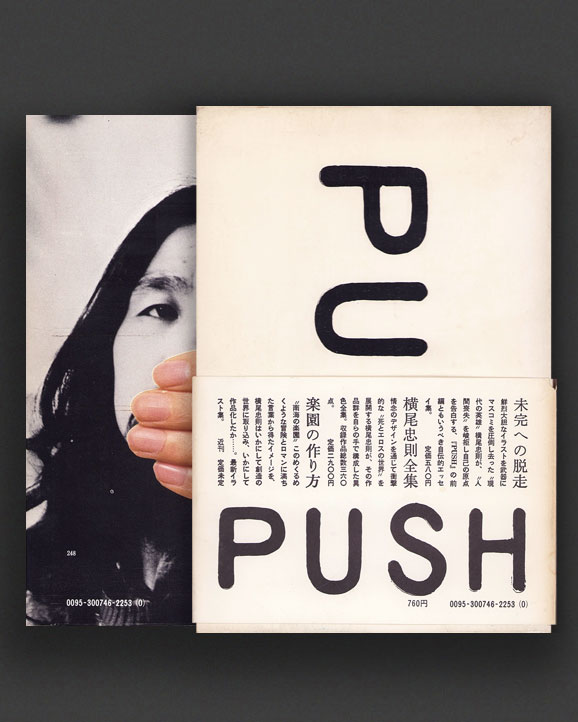
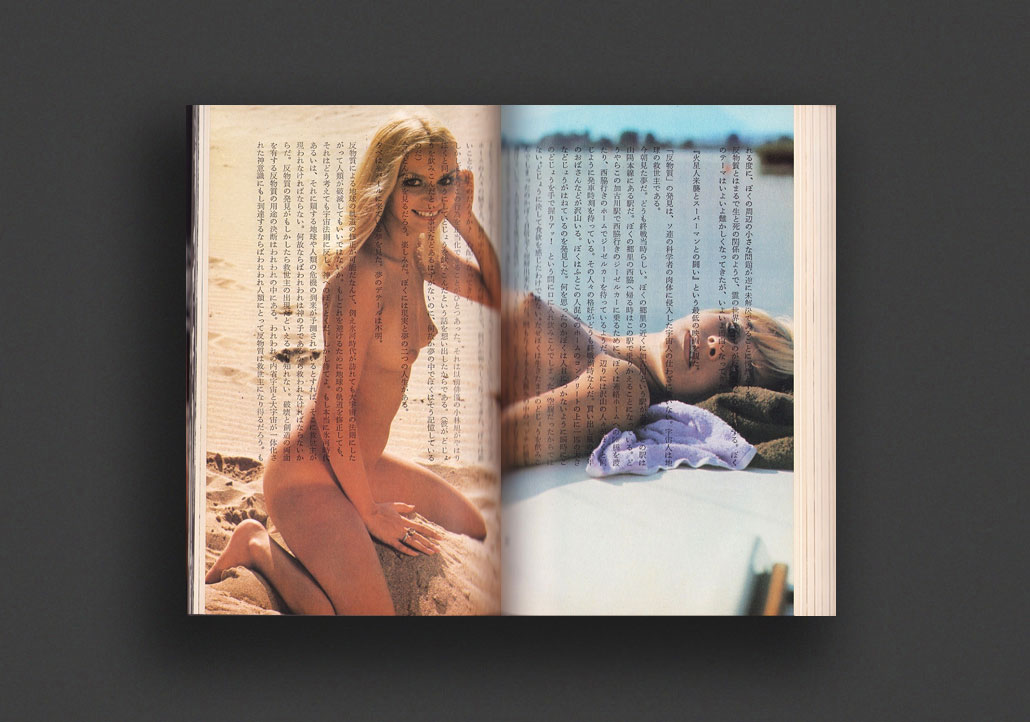
The wonderful PUSH by Tadanori Yokoo, published in 1972 and featuring photography by Kishin Shinoyama and Daido Moriyama.
After a car accident in 1972 Tadanori Yokoo decided to take a two year hiatus from work at the height of his fame. PUSH is a visually inventive dairy of this period beautifully designed by Yokoo himself with colour nude girl photographs and b/w self-portraits of the artist by none other than Kishin Shinoyama, Daido Moriyama and Tadashi Krahashi. A gorgeous and curious production with humorous over-printing and incredible design, housed in original printed slipcase with the original publisher's obi-strip.
Tadanori Yokoo (b. 1936) is one of Japan's most successful and internationally recognized graphic designers and artists, who began working with painting in 1966. In parallel, Yokoo’s early screenprints experimented with collage and illustration, combining found photographs with the influence of traditional Japanese ukiyo-e and pop art’s flat vibrant colours and overtly sexual and grotesque content, often reflecting on the rapid changes and Westernisation of Japan post-war society. His interests in mysticism and esotericism, deepened by travels to India, influenced his iconic posters with eclectic psychedelic imagery sharing the aesthetics of the underground counterculture he was associated with. In Tokyo, Yokoo worked as a stage designer for avant-garde theatre, collaborating extensively with Shūji Terayama and his experimental theater group Tenjō Sajiki. By the late 60s he had already achieved international recognition and in the early 1970s MoMA mounted a solo exhibition of his graphic work. His famous designs for The Beatles, Miles Davis, Carlos Santana and collaborations with friend and iconic Japanese fashion designer Issey Miyake are renowned the world over. He also starred as a protagonist in Nagisa Oshima's film Diary of a Shinjuku Thief in 1968.
Very Good copy, with only light wear and age. Very well preserved and complete.
1974, Japanese
Softcover (French-fold cover), 80 pages, 21 x 28.5 cm
1st Edition, Out of print title / used / very good
Published by
Mainichi Shinbun / Japan
$120.00 - In stock -
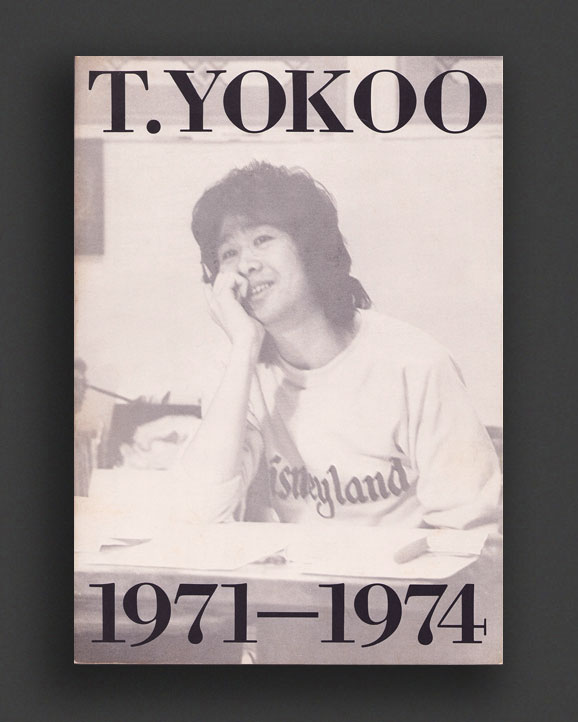
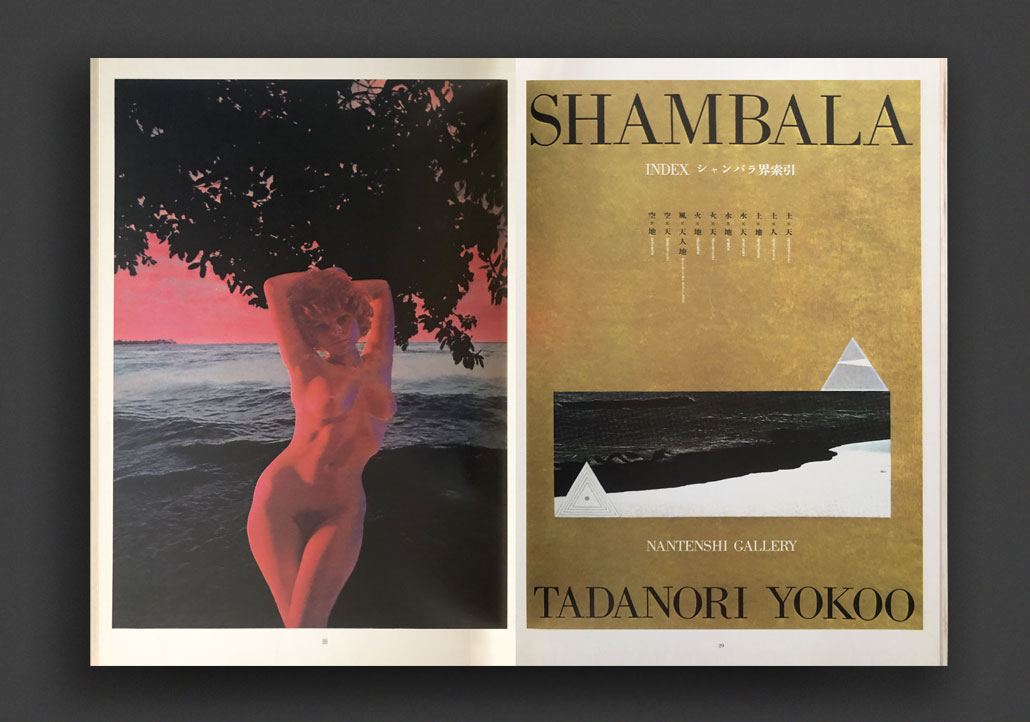
Rarely seen gorgeous book on the poster work of the legendary Japanese graphic artist Tadanori Yokoo at the height of his powers. Printed and published by Mainichi Shinbun in Japan in 1974, this volume carries very little text and is made up almost 100% with beautiful full-page reproductions of Yokoo's major poster works from the years 1971-1974, in which his iconic photo-montage and print-making had a distinct psychedelic, erotic and esoteric spirit rendered in his vivid pop colours. One of the nicest books on this period of his work, designed by Yokoo himself and adorned with adorable self-portrait in Disneyland sweater. Rare even in Japan.
Tadanori Yokoo (b. 1936) is one of Japan's most successful and internationally recognized graphic designers and artists, who began working with painting in 1966. In parallel, Yokoo’s early screenprints experimented with collage and illustration, combining found photographs with the influence of traditional Japanese ukiyo-e and pop art’s flat vibrant colours and overtly sexual and grotesque content, often reflecting on the rapid changes and Westernisation of Japan post-war society. His interests in mysticism and esotericism, deepened by travels to India, influenced his iconic posters with eclectic psychedelic imagery sharing the aesthetics of the underground counterculture he was associated with. In Tokyo, Yokoo worked as a stage designer for avant-garde theatre, collaborating extensively with Shūji Terayama and his experimental theater group Tenjō Sajiki. By the late 60s he had already achieved international recognition and in the early 1970s MoMA mounted a solo exhibition of his graphic work. His famous designs for The Beatles, Miles Davis, Carlos Santana and collaborations with friend and iconic Japanese fashion designer Issey Miyake are renowned the world over. He also starred as a protagonist in Nagisa Oshima's film Diary of a Shinjuku Thief in 1968.
Very Good copy with foxing to first blank page. Light corner/spine wear.
1984, English
Softcover (staple–bound), 40+56+64 pages, 20.7 x 14.8 cm
1st Edition, Out of print title / used / very good
Published by
Dark Press Publications / Penrith
$180.00 - In stock -
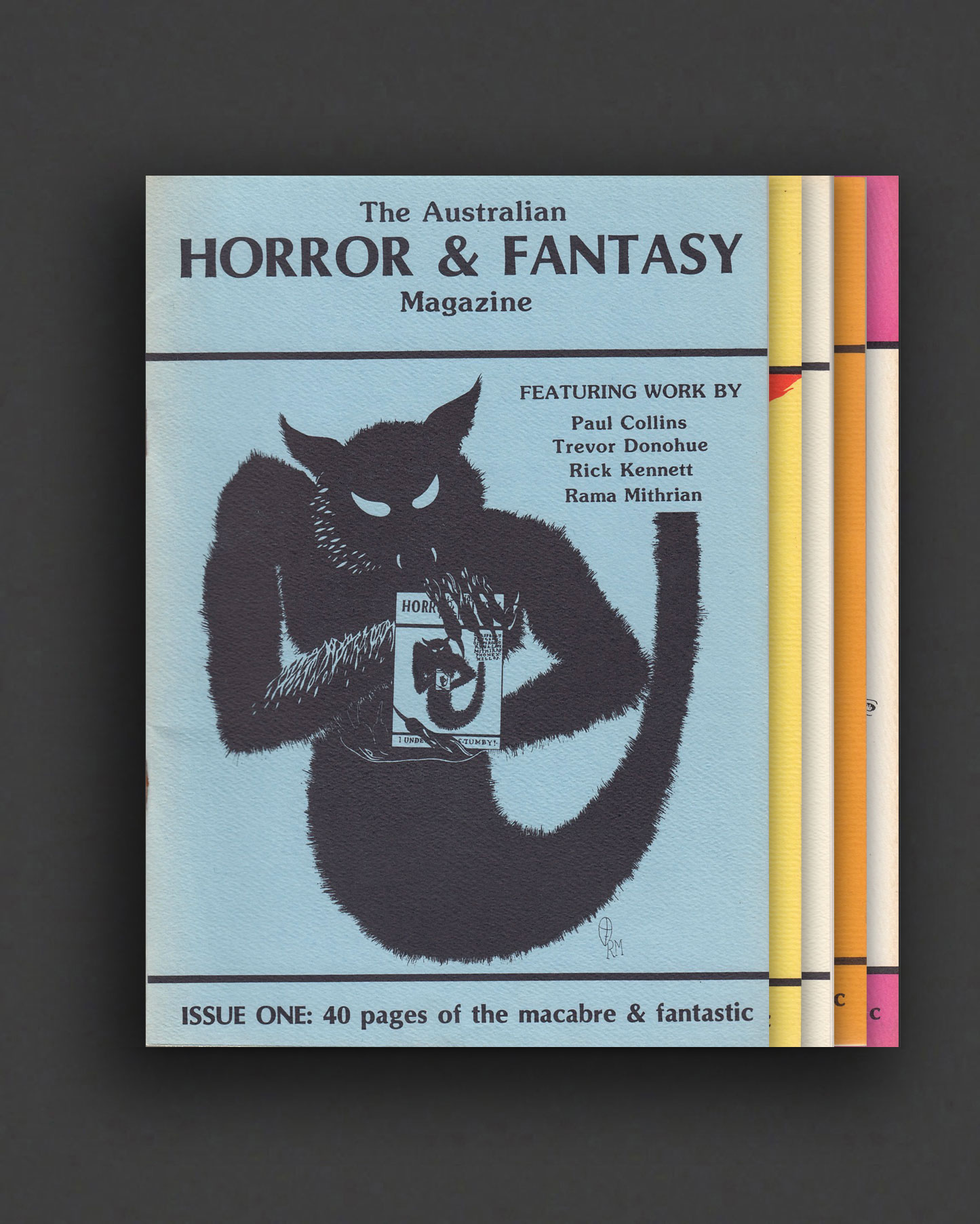
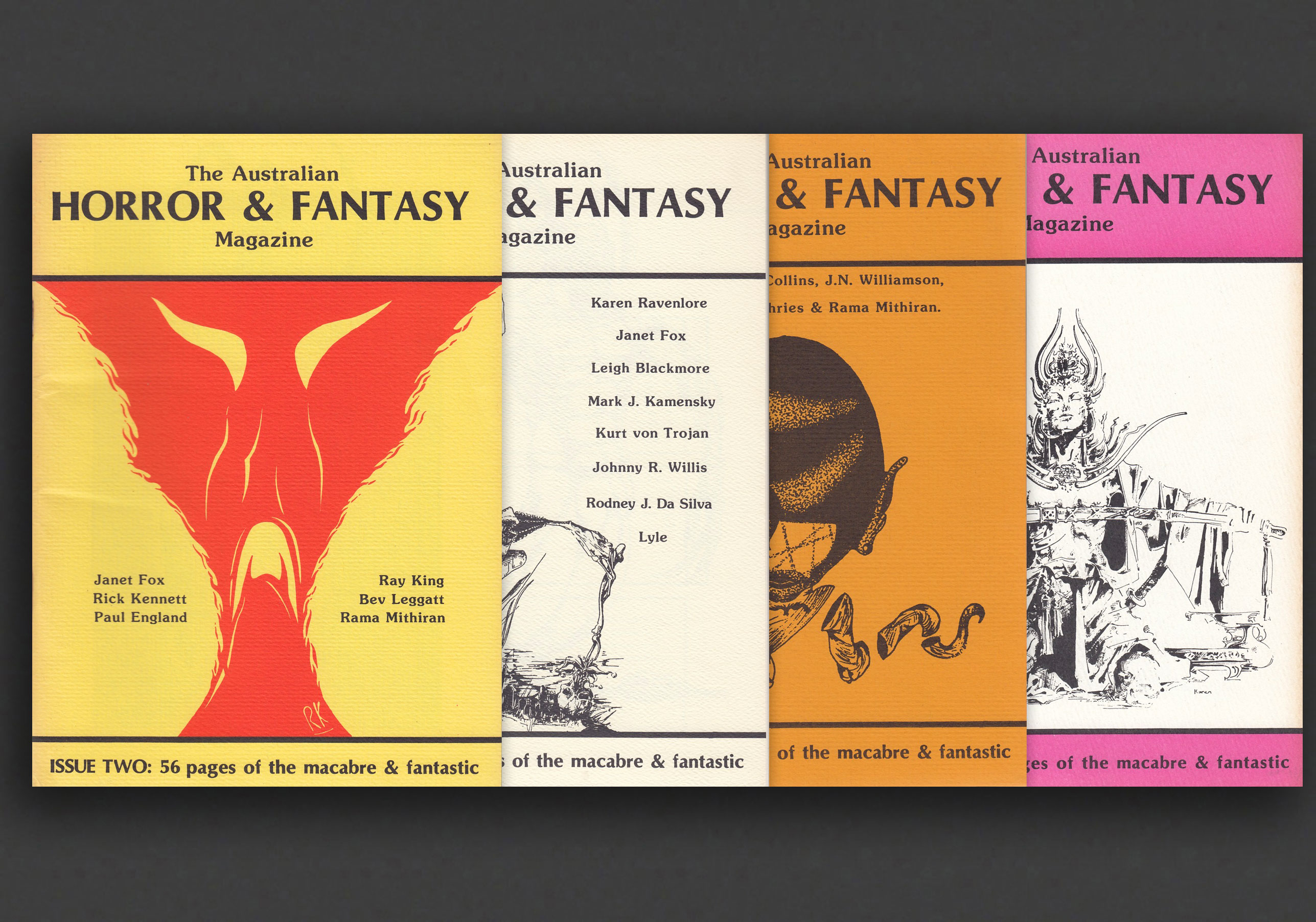
Entire collection of the short–lived Australian Horror & Fantasy Magazine (1984–86), edited by (Michael) Barry Radburn and Stephen Studach. The first Australian semi-professional publication devoted to the weird and the macabre, it was published by Radburn's imprint Dark Press. It ran six issues; Issues 1, 2 and 3 all appeared in 1984, issue 4 in 1985 and the last, issue being a double issue (5/6) which was co-edited by Carol Dobson and Nerida Radburn, 1986. It was the first specialist fantasy genre publication to emerge in the small-press field in Australia, though it concentrated mostly on horror, inspired by Weird Tales, publishing many local writers such as Rick Kennett and Leigh Blackmore who would go on to achieve lasting reputations, as well stories by American writers. Others, such as Paul Collins and Kurt von Trojan, have been prominent in Australian science fiction. In total the magazine published 31 original stories and 20 original poems, of which about half were contributed by Australian authors. From 1987, the magazine was continued under the editorship of Leigh Blackmore as Terror Australis magazine.
Editors Radburn and Stubach are both horror novelists and were contributors to such publications as Eldritch Tales, Crypt of Cthulhu, Arkham Sampler, Dark Dreams, Etchings and Odysseys, Footsteps, Haunts, and Doppelganger, during the 1980s.
All Very Good — Near Fine copies.
1988, English
Hardcover (w. dust jacket), 256 pages, 20 x 14 cm
1st Edition, Out of print title / used / good
Published by
Eridanos Press / Colorado
$70.00 - Out of stock
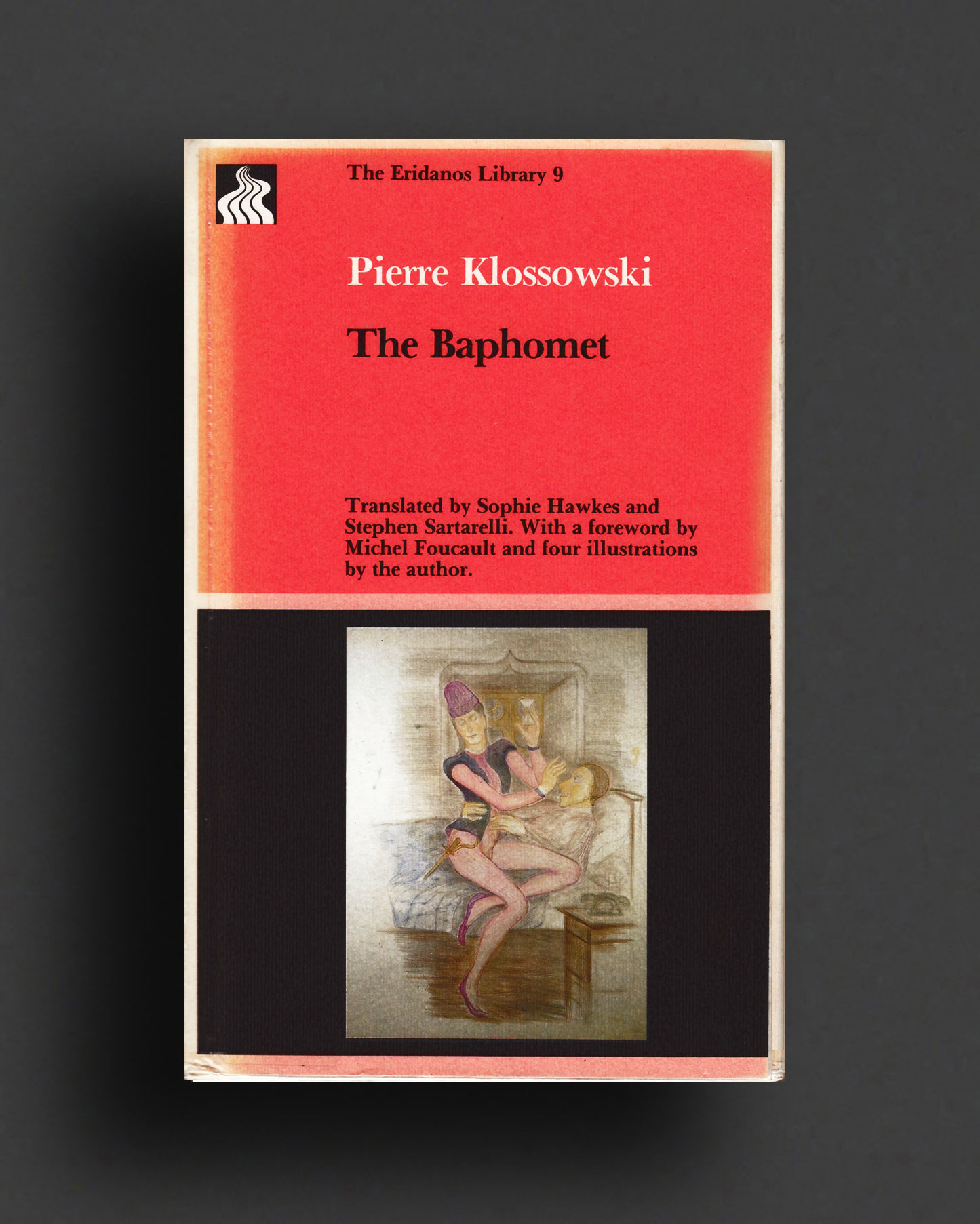
Rare first 1988 English translation of The Baphomet, Pierre Klossowski's last novel, considered by many to be his masterpiece, and awarded the Prix des Critique when first publsihed in France in 1965. Translation by Sophie Hawke and Stephen Sartorelli and published by Eridanos Press.
The author, who has written about Sade and Nietzsche as well as the Doctors of the Church, is a spirit particularly at ease with extremes. Of him it has been said that he never ceased to keep one foot in the seminary and the other in the brothel. The Baphomet is the perfect example of this. An experimental, non–linear, philosophical novel set in a Templar commandery, where the souls of martyred knights, or "pure breaths," gather to relive their final moments, engage in spirit possession of unwary animals and small children, and metaphysical debates on identity and divinity. Heavy with transgressive erotic subject matter, the plot involves the possession of a young page's body and includes figures such as the Grand Master, St. Teresa of Avila, and the figure of Friedrich Nietzsche, the "Antichrist," initially in the form of an anteater. The vignettes to follow are a commentary on eros, death, transgression and rejection of conventional morality. An intense and challenging novel blurring the lines between theology, Gnosticism, and esotericism, The Baphomet is recognized for its blend of the Gothic tale, Sadean eroticism and intense intellectual experimentation around the theme of "simulacrum"—the idea that life and memory are merely repeated performances of a theological nature.
Pierre Klossowski (1905—2001) was a French writer, translator and artist, widely recognized as a central figure in the contemporary French avant-garde. He was the eldest son of the artists Erich Klossowski and Baladine Klossowska, and his younger brother was the painter Balthus. As a writer, Pierre Klossowski wrote full length volumes on the Marquis de Sade and Friedrich Nietzsche, a number of essays on literary and philosophical figures, and five novels. Roberte Ce Soir (Roberte in the Evening) provoked controversy due to its graphic depiction of sexuality. He translated several important texts (by Virgil, Ludwig Wittgenstein, Martin Heidegger, Friedrich Hölderlin, Franz Kafka, Nietzsche, and Walter Benjamin) into French, worked on films and was also an artist, illustrating many of the scenes from his novels. Klossowski participated in most issues of George Bataille's review, Acéphale, in the late 1930s. His 1969 book, Nietzsche and the Vicious Circle, greatly influenced French philosophers such as Michel Foucault, Gilles Deleuze, and Jean-François Lyotard.
G—VG copy with previous owner's signature to title page, G—VG DJ with general light wear to edges, discolouration to spine edge, light rubbing.