World Food Books' programme is largely produced on Kulin Nation land. We acknowledge the Wurundjeri people of the Kulin Nation as the first and continuing custodians of this land, and pay respect to their Elders past, present, and emerging.
World Food Books is an arts and special interests bookshop in Naarm / Melbourne. Founded in 2010, World Food Books is devoted to the presentation of a rotating, hand-selection of international art, design, literary and counterculture publications with an emphasis on the anti-traditional, the experimental, the avant-garde, the heretic, the marginal.
Presenting new titles alongside rare and out-of-print books, catalogues and journals spanning the fields of modern and contemporary art, design, photography, illustration, film, literature, poetry, cultural theory, philosophy, sexuality, popular and underground culture in its many radical forms, World Food Books wishes to encourage adventurous, thoughtful and open-minded reading, looking, writing, and exchange of publishing and ideas, both current and historical.
As well as our bookshop, located in Melbourne's historical Nicholas Building, all of our inventory is available internationally via our online mail-order service.
World Food Books semi-regularly co-ordinates "Occasions", a programme of exhibits and events at the bookshop and in partnership with other hosts (such as museums and art galleries) that develop out of the activities, relationships and content of the bookshop itself.
World Food Books
The Nicholas Building
37 Swanston Street
Room 5, Level 6
Melbourne 3000
Australia
SHOP HOURS:
THU–SAT 12–6
WEB-SHOP OPEN 24/7
World Food Books
Postal Address:
PO Box 435
Flinders Lane
Victoria 8009
Australia
info@worldfoodbooks.com
Art
Theory / Essay
Architecture / Interior
Graphic Design / Typography
Photography
Fashion
Eros
LGBTQ+
Fiction / Poetry
Weird / Speculative / Science Fiction / Horror
Transgressive / Visceral / Abject
Symbolism / Decadence / Fin de siècle
Film / Video
Painting
Sculpture / Installation
Performance / Dance / Theater
Drawing
Sound / Music
Curatorial
Group Shows / Collections
Periodicals
Out-of-print / Rare
Posters / Ephemera / Discs
Signed Books
World Food Books Gift Voucher
World Food Book Bag
Australian Art
Australian Fiction
Australian Science Fiction / Speculative Fiction
Australian Poetry
Australian Photography
Japanese Photography
Conceptual Art
Minimal Art
Dada
'Pataphysics / Oulipo
Fluxus
Concrete Poetry
Pop Art
Surrealism
Arte Povera
Arte Informale / Haute Pâte / Tachism
Nouveau Réalisme / Zero / Kinetic
Situationism / Lettrism
Collage / Mail Art / Xerox Art
Art Brut / Folk / Visionary / Fantastic
Illustration / Graphic Art / Bandes Dessinées
Furniture
Italian Radical Design / Postmodernism
Textiles
Ceramics / Glass
Counterculture
Protest / Revolt
Philosophy
Psychoanalysis
Anthropology
Anarchism
Socialism / Anarchism / Communism / Capitalism
Literary Theory / Semiotics / Language
Feminism / Women's Studies
Gender Studies / Sexuality
Anthropology
Fetishism / BDSM
Drugs / Psychedelia
Crime / Violence
Animal Rights / Veganism
Occult / Esoterica
Ecology / Earth / Alternative Living
Whole Earth / Crafts
All prices in AUD (Australian dollars)
Pick-Ups
Pick-up orders can be collected in our bookshop during opening hours after order date. Please collect any Pick-up orders within 2 weeks of ordering as we have limited storage space. Orders will be released back into stock if not collected within this time. No refunds can be made for pick-ups left un-collected. If you cannot make it in to the bookshop in this time-frame, please choose postage option.
Return Policy
All sales are final. We do accept returns (for refund or exchange) for items received in error. All our orders are packed with special care using heavy-duty padding and cardboard book-mailers or bubble mailers (for smaller books), using reinforcement where required. We cannot take responsibility for any lost, stolen or damaged parcels.
Insurance
Should you wish to insure your package, please email us directly after placing your order and we can organise this at a small extra expense. Although all standard/express tracked packages are very safe and dependable, we cannot take responsibility for any lost, stolen or damaged parcels. We recommend insurance on valuable orders.
Interested in selling your old books, catalogues, journals, magazines, comics, fanzines, ephemera? We are always looking for interesting, unusual and out-of-print books to buy. We only buy books in our fields of interest and specialty, and that we feel we can resell.
We base these prices on desirability, market value, in-print prices, condition and our current stock levels. We offer cash, store credit, and can take stock on consignment. All
about 25% of the price we expect to get when we sell them, or 30% in store credit. We base these prices on desirability, market value, in-print prices, condition and our current stock levels.
Sell your books any day of the week. You can drop them off and return later. If you have a lot of books, we can visit your Sydney home.
We buy books that we feel we can resell. We offer about 25 % of the price we expect to get when we sell them, or 30% in store credit. We base these prices on desirability, market value, in-print prices, condition and our current stock levels.
Philadelphia Wireman
03 August - 01 September, 2018
World Food Books is proud to announce our next Occasion, the first presentation of sculptures by Philadelphia Wireman in Australia.
The Philadelphia Wireman sculptures were found abandoned in an alley off Philadelphia’s South Street on trash night in 1982. Their discovery in a rapidly-changing neighbourhood undergoing extensive renovation, compounded with the failure of all attempts to locate the artist, suggests that the works may have been discarded after the maker’s death. Dubbed the "Philadelphia Wireman" during the first exhibition of this work, in 1985, the maker’s name, age, ethnicity, and even gender remain uncertain. The entire collection totals approximately 1200 pieces, all intricately bound together with tightly-wound heavy-gauge wire (along with a few small, abstract marker drawings, reminiscent both of Mark Tobey and J.B. Murry). The dense construction of the work, despite a modest range of scale and materials, is singularly obsessive and disciplined in design: a wire armature or exoskeleton firmly binds a bricolage of found objects including plastic, glass, food packaging, umbrella parts, tape, rubber, batteries, pens, leather, reflectors, nuts and bolts, nails, foil, coins, toys, watches, eyeglasses, tools, and jewellery.
Heavy with associations—anthropomorphic, zoomorphic, and socio-cultural responses to wrapped detritus—the totemic sculptures by Philadelphia Wireman have been discussed in the context of work created to fulfil the shamanistic needs of alternative religions in American culture. Curators, collectors, and critics have variously compared certain pieces to sculpture from Classical antiquity, Native American medicine bundles, African-American memory jugs, and African fetish objects. Reflecting the artist’s prolific and incredibly focused scavenging impulse, and despite—or perhaps enhanced by—their anonymity, these enigmatic objects function as urban artefacts and arbiters of power, though their origin and purpose is unknown. Philadelphia Wireman, whatever their identity, possessed an astonishing ability to isolate and communicate the concepts of power and energy through the selection and transformation of ordinary materials. Over the course of the past two decades, this collection has come to be regarded as an important discovery in the field of self-taught art and vernacular art.
Presented in collaboration with Fleisher-Ollman Gallery, Philadelphia, and Robert Heald, Wellington.
Susan Te Kahurangi King
02 February - 10 March, 2018
Susan Te Kahurangi King (24 February 1951 - ) has been a confident and prolific artist since she was a young child, drawing with readily available materials - pencils, ballpoint pens and felt-tip markers, on whatever paper is at hand. Between the ages of four and six Susan slowly ceased verbal communication. Her grandparents William and Myrtle Murphy had developed a special bond with Susan so they took on caring responsibilities for extended periods. Myrtle began informally archiving her work, carefully collecting and storing the drawings and compiling scrapbooks. No drawing was insignificant; every scrap of paper was kept. The King family are now the custodians of a vast collection containing over 7000 individual works, from tiny scraps of paper through to 5 meter long rolls.
The scrapbooks and diaries reveal Myrtle to be a woman of great patience and compassion, seeking to understand a child who was not always behaving as expected. She encouraged Susan to be observant, to explore her environment and absorb all the sights and sounds. Myrtle would show Susan’s drawings to friends and people in her community that she had dealings with, such as shopkeepers and postal workers, but this was not simply a case of a grandmother’s bias. She recognised that Susan had developed a sophisticated and unique visual language and sincerely believed that her art deserved serious attention.
This was an unorthodox attitude for the time. To provide some context, Jean Dubuffet coined the term Art Brut in 1945 to describe work created by self-taught artists – specifically residents of psychiatric institutions and those he considered to be visionaries or eccentrics. In 1972 Roger Cardinal extended this concept by adopting the term Outsider Art to describe work made by non-academically trained artists operating outside of mainstream art networks through choice or circumstance. Susan was born in Te Aroha, New Zealand in 1951, far from the artistic hubs of Paris and London that Dubuffet and Cardinal operated in. That Myrtle fêted Susan as a self-taught artist who deserved to be taken seriously shows how progressive her attitudes were.
Susan’s parents Doug and Dawn were also progressive. Over the years they had consulted numerous health practitioners about Susan’s condition, as the medical establishment could not provide an explanation as to why she had lapsed into silence. Dawn educated herself in the field of homeopathy and went on to treat all twelve of her children using these principles – basing prescriptions on her observations of their physical, mental and emotional state.
Doug was a linguist with an interest in philosophy who devoted what little spare time he had to studying Maori language and culture. To some extent their willingness to explore the fringes of the mainstream made them outsiders too but it was their commitment to living with integrity and their respect for individuality that ensured Susan’s creativity was always encouraged.
Even though Susan’s family supported her artistic pursuits, some staff in schools and hospitals saw it as an impediment to her assimilation into the community and discouraged it in a variety of ways. Her family was not always aware of this and therefore did not fully understand why Susan stopped drawing in the early 1990s. However, rather than dwell on the challenges that Susan faced in pursuit of her artistic practice, they prefer to highlight her achievements. In 2008 Susan began drawing again in earnest, after an almost 20 year interruption, and her work is now shown in galleries around the world.
Susan grew up without television and has been heavily influenced by the comics she read as a child. She is absolutely fearless in the appropriation of recognizable characters, such as Donald Duck and Mickey Mouse, in her work. She twists their limbs, contorts their faces, compresses them together, blends them into complex patterned backgrounds - always imbuing them with an incredible energy. Although Susan often used pop culture characters in her work they are not naive or childlike. These are drawings by a brilliant self-taught artist who has been creating exceptional work for decades without an audience in mind.
Mladen Stilinović
"Various Works 1986 - 1999"
02 February 16 - September 10, 2016
Various works 1986 - 1999, from two houses, from the collections of John Nixon, Sue Cramer, Kerrie Poliness, Peter Haffenden and Phoebe Haffenden.
Including: Geometry of Cakes (various shelves), 1993; Poor People’s Law (black and white plate), 1993; White Absence (glasses, ruler, set square, silver spoon, silver ladel with skin photograph and wooden cubes), 1990-1996; Exploitation of the Dead (grey and red star painting, wooden painting, black spoon with red table, red plate), 1984-1990; Money and Zeros (zero tie, paintings made for friends in Australia (Sue, John, Kerrie), numbers painting), 1991-1992; Words - Slogans (various t-shirts) - “they talk about the death of art...help! someone is trying to kill me”, “my sweet little lamb”, “work is a disease - Karl Marx”; Various artist books, catalogues, monographs, videos; Poster from exhibition Insulting Anarchy; "Circular" Croatian - Australian edition; Artist book by Vlado Martek (Dostoyevsky); more.
Thanks to Mladen Stilinović and Branka Stipančić.
Jonathan Walker
Always Will Need To Wear Winter Shirt Blue + Ochre Small Check Pattern
21 August - 21 September, 2015
Untitled
I am not a great reader of poetry but I always return to the work of Melbourne poet, Vincent Buckley (1925- 1988). Perhaps I find his most tantalising piece to be not a finished poem but a fragment left on a scrap of paper discovered on his desk after the poet’s death.
The poetry gathers like oil
In the word-core, and spreads
It has its music meet,
Its music is in movement.
This fragment is more the shell left behind from a volatile thought than a finished poem. I find the last two lines honest but awkward whereas the first two lines work like an arrow. Most likely he could not find a resolution so it was left. Still, in its present form, it remains an eloquent testimony to the ultimate failure of a medium to express mobile thought and sensation, in Buckley’s case, through verbal language. It’s an important matter because this is something all artists have to deal with regardless of the medium.
I have never written a poem, however, I am forever copying fragments from books on paper scraps in a vain effort to fix certain notions in my head. At first, they function as bookmarks that are sometimes returned to when I open the book. But before long, as they accumulate, they fall out littering the table interspersed with A4 photocopies, bills, books and medications.
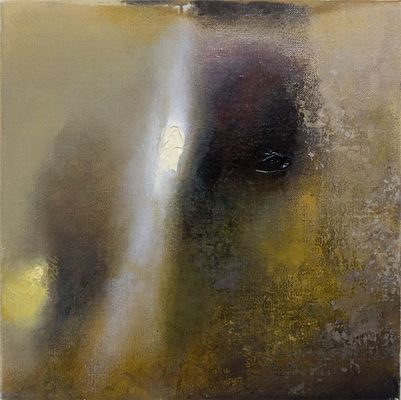
To return to Buckley’s fragment, the first two lines very much evoke how I paint nowadays. As you age, detail diminishes and patches of light become more luminous and float. I feel the most honest way of dealing with this is by smearing the oil paint on the canvas with the fingers and working close-up, blind. Only if the patches coalesce into an approaching image can the work gain a life.
-
Jonathan Walker was born in Melbourne, Australia and brought up on a dairy farm in Gippsland. In the 1970’s he studied painting at RMIT and won the Harold Wright Scholarship to the British Museum, London. During the 1980’s he exhibited at Pinacotheca Gallery, Richmond and had work shown at the NGV and Heidi City Art Gallery. Over the same period he designed the cover for the “Epigenesi” LP by Giancarlo Toniutti, Italy and conducted a mail exchange work with Achim Wollscheid, Germany. The work with artists through the post resulted in an article published in the bicentenary issue of Art and Australia 1988. He showed in artist run spaces such as WestSpace in the 90’s and 2000’s, and until 2012, taught painting at Victoria University, which is where we (Colleen Ahern and Lisa Radford) as organisers of the exhibition, among many others, had the privilege of being his student.
Walker’s knowledge was imparted to students through the careful selection of music, literature, and artists found in books that he himself had ordered for the library. Walker’s strategy was the generosity of sharing his vast knowledge with references specific to each student and their context.
Walker’s paintings share a similar focus and intimacy.
This exhibition presents a small selection of recent paintings alongside a publication that includes Walker’s writing. Observational and analytical, Walker’s work is a type of material notation — the time of day, colour and how it is blended, the both specific and fleeting location of a reflection on lino or the question of whether a chair leg should be included in a painting.
Please join us on Friday August 21 between 6-8pm to celebrate the opening of the exhibition.
Curated by Colleen Ahern and Lisa Radford.
B. Wurtz
Curated by Nic Tammens
March 26 - April 4, 2015
B.Wurtz works from a basement studio in his home on Manhattan’s Lower East Side.
This local fact is attested to by the plastic shopping bags and newsprint circulars that appear in his work. As formal objects, they don’t make loud claims about their origins but nonetheless transmit street addresses and places of business from the bottom of this long thin island. Like plenty of artists, Wurtz is affected by what is local and what is consumed. His work is underpinned by this ethic. It often speaks from a neighborhood or reads like the contents of a hamper:
“BLACK PLUMS $1.29 lb.”
“Food Bazaar”
“USDA Whole Pork Shoulder Picnic 99c lb.”
“RITE AID Pharmacy, with us it’s personal.”
“H. Brickman & Sons.”
“Sweet Yams 59c lb."
Most of the work in this exhibition was made while the artist was in residence at Dieu Donne, a workshop dedicated to paper craft in Midtown. Here Wurtz fabricated assemblages with paper and objects that are relatively lightweight, with the intention that they would be easily transportable to Australia. This consideration isn’t absolute in Wurtz’s work, but was prescriptive for making the current exhibition light and cheap. Packed in two boxes, these works were sent from a USPS post office on the Lower East Side and delivered to North Melbourne by Australia Post.
Wurtz appears courtesy of Metro Pictures, New York.
Thanks to Rob Halverson, Joshua Petherick, Sari de Mallory, Matt Hinkley, Helen Johnson, Fayen d'Evie, Ask Kilmartin, Lisa Radon, Ellena Savage, Yale Union, and "Elizabeth".
John Nixon
"Archive"
December 15 - January 20, 2014
The presentation of John Nixon's archive offered a rare showcase of this extensive collection of the artist's own publications, catalogues, posters, ephemera, editions and more, from the mid 1980s onwards, alongside a selection of his artworks.
Organized by John Nixon, Joshua Petherick and Matt Hinkley.
"Habitat"
at Minerva, Sydney (organised by Joshua Petherick and Matt Hinkley)
November 15 - December 20, 2014
Lupo Borgonovo, Janet Burchill & Jennifer McCamley,
Lewis Fidock, HR Giger, Piero Gilardi, Veit Laurent Kurz,
Cinzia Ruggeri, Michael E. Smith, Lucie Stahl, Daniel Weil, Wols
Press Release:
“...It contained seven objects. The slender fluted bone, surely formed for flight, surely from the wing of some large bird. Three archaic circuitboards, faced with mazes of gold. A smooth white sphere of baked clay. An age-blackened fragment of lace. A fingerlength segment of what she assumed was bone from a human wrist, grayish white, inset smoothly with the silicon shaft of a small instrument that must once have ridden flush with the surface of the skin - but the thing’s face was seared and blackened.”
William Gibson, “Count Zero”, 1986
"Autumn Projects Archive"
Curated by Liza Vasiliou
March 6 - March 15, 2014
World Food Books, in conjunction with the Virgin Australia Melbourne Fashion Festival 2014, presented the Autumn Projects archive, consisting of a selection of early examples in Australian fashion with a particular interest in collecting designers and labels from the period beginning in the 1980’s, who significantly influenced the discourse of Australian Fashion.
Curated by Liza Vasiliou, the exhibition provided a unique opportunity to view pieces by designers Anthea Crawford, Barbara Vandenberg, Geoff Liddell and labels CR Australia, Covers, Jag along with early experimental collage pieces by Prue Acton and Sally Browne’s ‘Fragments’ collection, suspended throughout the functioning World Food Books shop in Melbourne.
H.B. Peace
presented by CENTRE FOR STYLE
November 14, 2013
"Hey Blinky, you say chic, I say same"
Anon 2013
H.B. Peace is a clothing collaboration between great friends Blake Barns and Hugh Egan Westland. Their pieces explore the divergences between 'character’ and ‘personality’ in garments....etc
Special Thanks to Joshua Petherick and Matt Hinkley of WFB and Gillian Mears
and a Very Special Thank you to Audrey Thomas Hayes for her shoe collaboration.
Janet Burchill & Jennifer McCamley
"Aesthetic Suicide"
May 10 - June 8, 2013
The first of our occasional exhibitions in the World Food Books office/shop space in Melbourne, "Aesthetic Suicide" presented a body of new and older works together by artists Janet Burchill & Jennifer McCamley, including videos, prints, a wall work, and publications.
During shop open hours videos played every hour, on the hour.
1970, Japanese
Softcover, 170 pages, 25.5 x 18 cm
1st Edition, Out of print title / used / good
Published by
Shūkan Gendai / Tokyo
$50.00 - Out of stock
"Patriotic writer Yukio Mishima commits suicide!"
The special expanded December 1970 issue of Shūkan Gendai, entirely devoted to Japanese writer Yukio Mishima, one of the most important postwar stylists of the Japanese language. Kimitake Hiraoka (b. 1925), known by his pen name Yukio Mishima, was a Japanese author, poet, playwright, actor, model, Shintoist, ultranationalist, and the leader of an attempted coup d'état on 25th November 1970 that culminated in his own spectacular suicide, in a traditional seppuku (hara-kiri), or samurai ritual disemboweling. He was 45 years old. Published right after the news of his suicide, this special issue of the famous Shūkan Gendai magazine is packed with wonderful colour and monochrome photographs of the many faces of Mishima (on the stage, in the class-room, in the gym, the husband, the gay icon, the avant-garde, the militant), and brimming with political, cultural and biographical articles, interviews, and discussions about Mishima, his life and work, reproducing many of his written works, his essays and interviews, including the response to Mishima's death from 40 Japanese intellectuals, conversations with those closest to Mishima, the private and public, and Mishima's last words — his requests, orders, speeches, and his dying words. Hundreds of images throughout.
Good copy with wear and pinching to spine edge and cover extremities. Tanning to page edges.
?, Japanese
Softcover, unpaginated, 18 x 10.8 cm
1st Edition, Out of print title / used / very good
Published by
Circlesha / Tokyo
$380.00 - In stock -
One of the rarest photo book collections by Japanese photographer Ikko Kagari, undated, published in Tokyo by Circlesha. Kagari made a number of these extraordinary, extremely questionable, surreptitious infrared photography collections in the 1980's—1990's, featuring secret "close-up photography" documenting clandestine sexual activities in public places — groping and upskirt photographs taken on packed Tokyo Metro commuter trains, in nightclubs, on escalators, couples making it in public toilets, parked cars and in parks with infrared strobe techniques reminiscent of Kohei Yoshiyuki's incredible Document Park (the two often featured side-by-side in books and journals).
"Two shadows moving in the darkness
In the dark night with no stars
a couple
They embrace each other without making a sound
A man's fingers groping the hem of a woman's miniskirt
Accurately captures sensitive areas.
A woman's suppressed voice of excitement
The woman's arms are wrapped around the man's back
The joy of the two reaches its peak."
Fingers of Darkness is cover-to-cover monochrome reproductions of Kagari's grainy, blown-out infrared images that blur all lines between voyeur/participant and simulated/real, make for disorientating, sometimes claustrophobic, uneasy viewing. But they are also absolutely stunning, often tender, very revealing, and incredibly effective photo books that feel as conceptual as they do devious. Included are many photo stories by Kagari, particularly those in the Tokyo parks at night — his erotic Hanami photographs ("Cherry Blossom Hunting") when the public ecstasy of sakura season reaches climax, plus many of his unseen "chikan" photographs ala "Document Commuter Train" but transferred into dark cinemas and public bathrooms. As featured in The Photobook: Vol. III, by Parr & Badger, Kagari's fleeting in flagrante scenes capture erotic desire and criminal impulse engulfed by the soft folds of entangled garment fabrics with stunning hidden camera technique. Groping for intimacy in the cold metropolis. He went so far as to publish a how-to book for amateurs!
Very Good copy.
1980, Japanese
Softcover (w. dust jacket), 114 pages, 26 x 21 cm
1st Edition, Out of print title / used / very good
Published by
Seven Sha / Tokyo
$550.00 - In stock -
Rare first edition of Kohei Yoshiyuki's cult classic photo book, Document: The Park (Document Park), published in 1980 by Seven Sha, Tokyo. Yoshiyuki's voyeuristic masterpiece, The Park is like no other photo book. A controversial volume of 74 photographs taken by the photographer using a 35mm camera, infrared film, and flash, Yoshiyuki documented a secret community of lovers and voyeurs who gathered in Shinjuku Park and Yoyogi Park between 1971 and 1973. His pictures document the people who gathered in these parks for clandestine trysts under the cloak of darkness, as well as the many spectators lurking in the bushes who watched—and sometimes participated in—these couplings. With their raw, snapshot-like quality, these images not only uncover the hidden illicit sexual encounters of their subjects, both homosexual and heterosexual, but they also serve as a chronicle of a Japan we rarely see. As Martin Parr writes in The Photobook: A History, Volume II, The Park is "a brilliant piece of social documentation, capturing perfectly the loneliness, sadness and desperation that so often accompany sexual or human relationships in a big, hard metropolis like Tokyo."
A beautifully printed book, with original dust-jacket. Includes two conversations with Kohei Yoshiyuki with Kenichi Matsumoto and Nobuyoshi Araki.
Kohei Yoshiyuki (b. 1946—2022) came to recognition in 1972 when material from his photo project “The Park” was featured in magazine Shukan Shincho, and a year later, in respected photo journal Camera Mainichi. However, it was the 1979 photo exhibition “The Park” at Komai Gallery and 1980 photo book “Document: The Park” that established him within the contemporary photographic landscape. Since then, Yoshiyuki was a recurrent fixture in Japan debauchery journal Super Photo Magazine along photographers: Nobuyoshi Araki, Daido Moriyama, Keizo Kitajima and Seiji Kurata.
Very Good copy in Good dust jacket with usual tanning to spine edge, wear to extremities, and dj corner tear hidden inside jacket fold (blank black area, not affecting any content). Otherwise a well preserved copy.
1994, Japanese
Softcover (w. dust jacket), 29.5 x 21 cm
1st Edition, Out of print title / used / very good
Published by
Heart Deluxe / Tokyo
Outo Shobo / Tokyo
$400.00 - In stock -
Very rare photo book by Japanese photographer Ikko Kagari, published in 1994 in Tokyo. Kagari made a number of these extraordinary, extremely questionable, surreptitious infrared photography collections in the 1980's—1990's, featuring secret "close-up photography" documenting clandestine sexual activities in public places — groping and upskirt photographs taken on packed Tokyo Metro commuter trains, in nightclubs, on escalators, couples making it in public toilets, parked cars and in parks with infrared strobe techniques reminiscent of Kohei Yoshiyuki's incredible Document Park *the two often featured side-by-side in books and journals). Chikan Rush (Molester Rush) is entirely made up of the infamous rush hour train carriage photography, and has become one of the most sought after. Cover-to-cover b/w reproductions of Kagari's grainy, blown-out infrared images that blur all lines between voyeur/participant and simulated/real, make for disorientating, sometimes claustrophobic, uneasy viewing. But they are also absolutely stunning, effective photo books that feel as conceptual as they do devious. Including many selections from Kagari's "Document Commuter Train" (1982), as featured in The Photobook: Vol. III, by Parr & Badger, Kagari's fleeting in flagrante scenes capture erotic desire and criminal impulse engulfed by the soft folds of entangled garment fabrics with stunning technique. He went so far as to publish a how-to book for amateurs! Thankfully the 2000s saw the introduction of women-only carriages on the Tokyo Metro, relegating such expertise to history.
NF copy with VG dust jacket. Only a small pressure mark to the back cover, otherwise Near Fine, beautifully preserved copy.
1995, Japanese
Softcover (w. dust jacket), 29.8 x 21.5 cm
1st Edition, Out of print title / used / very good
Published by
Outo Shobo / Tokyo
$240.00 - In stock -
Very rare photo book by Japanese photographer Ikko Kagari, published in 1995 in Tokyo. Kagari made a number of these extraordinary, extremely questionable, surreptitious infrared photography collections in the 1980's—1990's, featuring secret "close-up photography" documenting clandestine sexual activities in public places — groping and upskirt photographs taken on packed Tokyo Metro commuter trains, in nightclubs, on escalators, couples making it in public toilets, parked cars and in parks with infrared strobe techniques reminiscent of Kohei Yoshiyuki's incredible Document Park. Cover-to-cover b/w reproductions of Kagari's grainy, blown-out infrared images that blur all lines between voyeur/participant and simulated/real, make for disorientating, sometimes claustrophobic, uneasy viewing. But they are also absolutely stunning, effective photo books that feel as conceptual as they do devious. Including selections from Kagari's "Document Commuter Train" (1982), as featured in The Photobook: Vol. III, by Parr & Badger, Kagari's fleeting in flagrante scenes capture erotic desire and criminal impulse engulfed by the soft folds of entangled garment fabrics, through foliage and grass, and across the cold darkness of the metropolis, with stunning technique. He went so far as to publish a how-to book for amateurs! Thankfully the 2000s saw the introduction of women-only carriages on the Tokyo Metro, relegating such expertise to history.
Very Good copy with VG dust jacket.
2001, English
Softcover, 158 pages, 21.5 x 13.5 cm
Out of print title / used / very good
Published by
Marion Boyars / London
$25.00 - In stock -
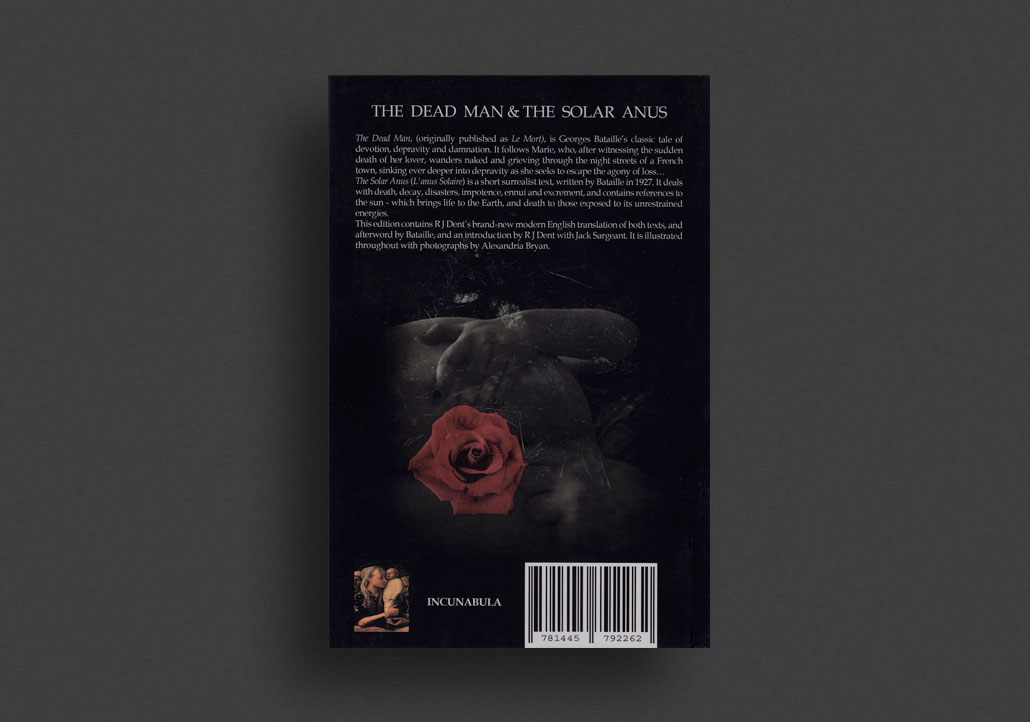
2001 English language edition of Bataille's L'ABBÉ C, translated by Philip A. Facey and published by Marion Boyars.
Told in a series of first person accounts, L'ABBÉ C is a startling narrative of the intense and terrifying relationship between twin brothers, Charles and Robert. Charles is a modern libertine dedicated to vice and depravity; Robert is a priest so devout that he is nicknamed 'L'Abbé'. As the story progresses, the suffocating atmosphere becomes increasingly permeated with illness, breakdown and eventual death. As in Blue of Noon and Story of the Eye, Bataille has succeeded in portraying the darkest and most profound aspects of human experience with amazing strength and dispassionate objectivity.
"Bataille speaks about man's condition, not his nature. Bataille has survived the death of God. In him, reality is conflict."—Jean-Paul Sartre
"Bataille is now recognized in France as one of the most challenging and original writers of our century. English translations of his work are long overdue, and one can only welcome the opportunity for English speaking readers to discover this major modern thinker."—Leo Bersani
"Essentially a psychological novel in which the emotions of the characters determine the movement of the story from beginning to end; explicit sex is absent. The style is crisp and this translation is quite remarkable... always faithful to the spirit."—New York Times Book Review
"The psychological intricacies display a graceful crisscrossing intensity."—Chicago Tribune
Georges Bataille was born in 1897 and died in 1962. He was a philosopher, novelist and critic whose startling and original ideas have influenced much modern literature and thought.
VG copy with previous owner sticker to inside front cover.
2004 / 1995, Japanese
Hardcover (w. dust jacket), 104 pages, 21.5 x 15.5 cm
Out of print title / used / very good
Published by
Treville / Tokyo
Pan-Exotica / Tokyo
$120.00 - In stock -
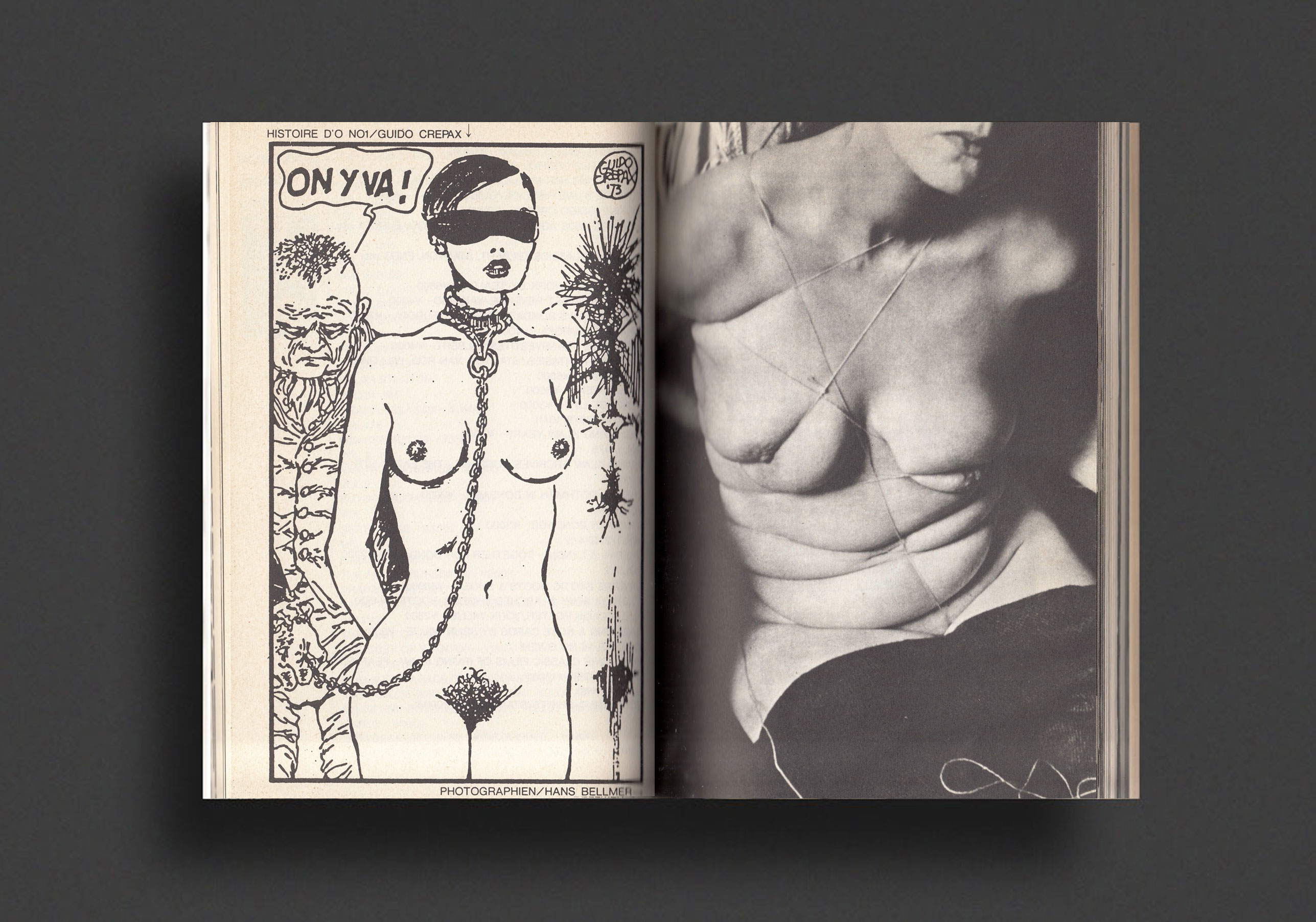
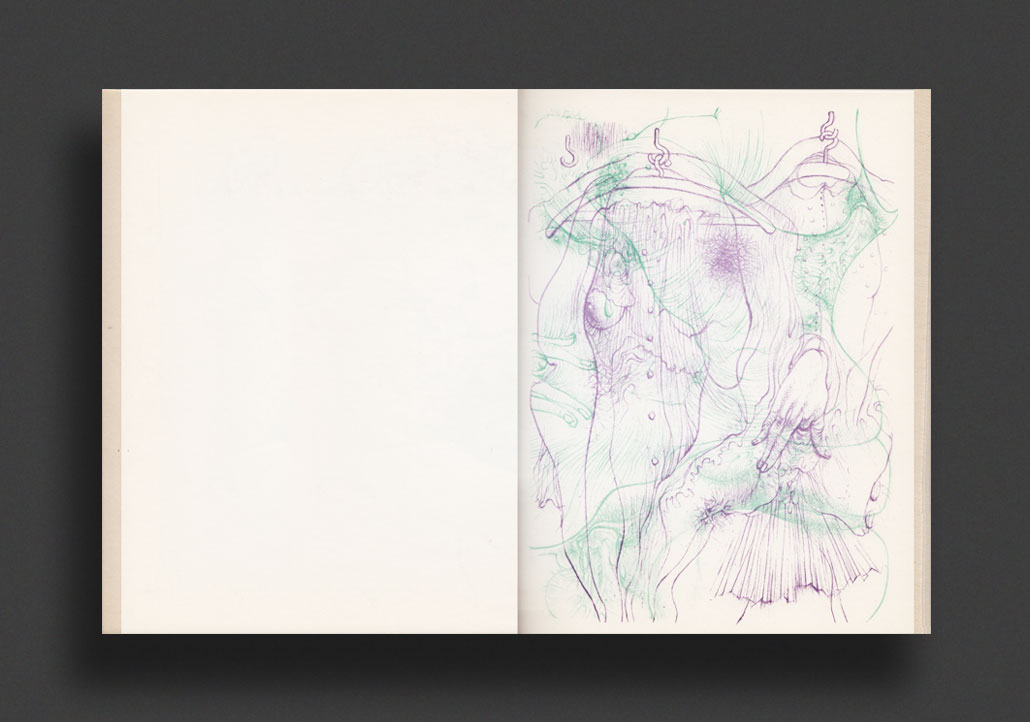
2004 edition of the 1995 Japanese book of Hans Bellmer's surrealist masterpiece, The Doll, a beautiful photo book published only in Japan, with both editions long out-of-print, comprised entirely of all the known photographic images of "La Poupee" — Hans Bellmer's articulated, anatomically amorphous Surrealist doll, reconfigured and captured through Bellmer's intimate hand-painted photographic images. "La Poupee" acquired iconic status as perhaps the purest exemplification of the Surrealist ideal of "convulsive beauty." Bellmer constructed his first doll in the early 1930s. André Breton and Paul Eluard described it as "the first and only Surrealist object with a universal, provocative power". Almost wordless, this lovely volume is photographs-only, reproduced in colour and black and white. Designed by Jun Takechi.
German artist Hans Bellmer (1902—1975) was one of the most subversive artists associated with Surrealism, famous—notorious, even—for his erotic engravings, objects and photographs. Many of Bellmer's works were inspired by the literary works of Comte de Lautréamont and Georges Bataille, amongst others.
Fine copy with VG dust jacket.
1969, Japanese
Hardcover (w. dust jacket) in slipcase, unpaginated, 22 x 16 cm
Signed and numbered edition,
Published by
Gentosha / Tokyo
$280.00 - In stock -
Extremely rare signed first 1969 edition of Japanese illustrator Ken Katayama's masterpiece artbook, Beautiful Days, in limited edition hardcover, numbered and slipcased. Beautiful Days is the most crystallised embodiment of one of the most unique artistic visions of fantasy illustration one could ever find, and the first collection ever published by the artist, when, after discovering the erotic works on the fringe of Surrealism he gave up becoming a painter and gave himself over to the obscene impulses of drawing. "There, so to speak, masturbation became a picture. Until then, I never thought that masturbation could become a painting"—excerpt from Ken Katayama's postscript. Katayama's magnificently, obsessive graphite-rendered world making is, like that of Lewis Carroll before him, made up almost entirely of children; children in states of blank-faced entrancement, possession and naked abandon; groping, lost and frozen in a psychosexual schoolhood theatre. Unlike anything else, aspects of Katayama's bewildering, often sadomasochistic, fairytale visions recall the tales of de Sade, Bataille, Klossowski, Carroll's Alice; the unconscious pictures of Balthus, Hans Bellmer, or Leonor Fini; the architectural dreamscapes of Delvaux or the Metaphysical painters; even the dark psychological renderings of fellow Japanese artist Yoshifumi Hayashi — a haunted landscape of eroticised adolescent memories with recurring motifs of free flowing urination and defecation, violently strewn newspapers, urinals, and apparitions of cat-people. Nothing like it! The work even inspired an experimental film of boyhood memories directed by the provocative film-maker Nakamura Masanobu in 1970.
Signed in 1969 by Katayama.
"If you
keep your hands in your pockets
in your pocket
what are you hiding
that's how I got it
darkness in my pocket, days of dust
I opened the old album and showed
beautiful days other days"
Virtually unknown outside his native Japan, Katayama (b. 1940, Tokyo) studied at the Musahino Art University and in the 1960s and 1970s begin contributing illustrations to underground art and literary magazines such as Black Notebook, Featured Story and fetish magazines such as SM Select, amongst many others. He published art books such as Angel Hour, Lost Child's Top, Match Taker, The Cat in Boots, and many more, and went on to become a successful children's story book illustrator, publishing many works throughout the 1980s—90s.
Very Good copy, beautifully preserved in Very Good slipcase. Signed and numbered first edition. The most complete, finest edition of this work.
2002, English
Softcover, 310 pages, 23 x 18 cm
1st Edition, Out of print title / used / very good
Published by
The MIT Press / Massachusetts
$100.00 - Out of stock
First 2002 paperback edition of this out-of-print study on Bellmer.
"The German-born surrealist Hans Bellmer (1902-1975), best known for his life-size pubescent dolls, devoted an artistic lifetime to creating sexualized images of the female body-distorted, dismembered, or menaced in sinister scenarios. In this book Sue Taylor draws on psychoanalytic theory to suggest why Bellmer was so driven by erotomania as well as a desire for revenge, suffering, and the safety of the womb. Tracing a repressed homoerotic attachment to his father, castration anxiety, and an unconscious sense of guilt, Taylor proposes that a feminine identification informs all the disquieting aspects of Bellmer's art.
Most scholarship to date has focused on Bellmer's work of the 1930s, especially the infamous dolls and the photographs he made of them. Taylor extends her discussion to the sexually explicit prints, drawings, paintings, and photographs he produced throughout the ensuing three decades. The book includes a color frontispiece and 121 black-and-white images (eight published here for the first time), as well as appendixes containing several significant texts by Bellmer previously unavailable in English.
Sue Taylor is Assistant Professor of Art History at Portland State University, Oregon.
"While ultimately subscribing to the conventional wisdom that the misogynist implications of Bellmer's many sinister images can never be altogether dismissed, [Taylor] insists that we look beyond their manifest content towards their latent meanings. Her tone and method is thus a long way from the punitive... literalism and crudity of much Bellmer criticism."—R. S. Short, Times Literary Supplement
"An impressive book by any standards. Every page displays intelligence, erudition and visual acuity."—Metapsychology
VG copy, light wear, very minor block buckling.
1975, English
Softcover, 64 pages, 18 x 11.5 cm
1st Edition, Out of print title / used / good
Published by
Thames and Hudson / London
$15.00 - In stock -
1975, profusely illustrated pocket-book survey of the many strands of contemporary art which have emerged since the appearance of Pop culture.
"Art after Pop, if not exactly uncharted territory, is only now beginning to turn into art history. This book sets out to disentangle the many strands which have appeared since Pop started the cult of cool in art. The Pop artists proved that figuration was not dead; and their Photo-Realist successors have carried the icy gloss finish to its limits. The Abstract Expressionists, too, have had successors, who proved that abstraction was not dead either; these were the Hard Edge artists, whose rejection of illusion was part of the trend towards the reduction of form and content to a minimum. With Minimal Art many people expected painting and sculpture to disappear altogether; this has not happened, but they have been joined by a number of would-be successors: Environments, Actions, Land art, photographic records, printed definitions, Conceptual art. The contact with popular culture, with the Rock underground, even with cybernetics and academic philosophy, has changed the physical appearance of art without changing the art world - and without diminishing the resources of creativity which mankind still puts into art."
John A. Walker is a critic of contemporary art and the author of a glossary of twentieth-century art terms.
Good—VG copy, general light wear/tanning/marking, previous owner's name to title page.
2024, English
Hardcover, 224 pages, 24.5 x 24.5 cm
Published by
Hatje Cantz / Berlin
Albertina Modern / Vienna
$90.00 - In stock -
Kubin's eerie, unsettling illustrations reveal his preoccupation with the world's evils
For Austrian artist Alfred Kubin (1877-1959), evil was intrinsic to his life and work. After a traumatic childhood growing up in Zell am See and subsequent mental crises, he began his artistic training in Munich in 1898. He processed his nightmares and obsessions in a large number of fantastical drawings. His subjects, perpetually pessimistic, remain relevant a century later: war, famine, pestilence, death and every horror in between. Kubin had a pronounced fear of the feminine, sexuality, night time and of being at the mercy of fate, all of which visited him in uncanny dreams. For Kubin, the aesthetic of evil proved to be the antithesis of the idyll: the deliberate suppression of a hideous reality.
Drawn from the Albertina Museum's collection of over 1,800 drawings by the artist, The Aesthetic of Evil displays Kubin's grotesque vision as well as his superb draftsmanship. Amid the violent, haunting atmosphere of his graphic works it is easy to see how Kubin became trapped in his dark visions, to the point where the inexhaustible, intangible specter of evil consumed his life. Essays by Elisabeth Dutz, Natalie Lettner and Brigitte Holzinger explore Kubin's cosmos of the sinister: his personal iconography of evil fueled by his nightmares and obsessions.
Highest recommendation.
1966, French
Hardcover (clothbound w. dustjacket), 110 pages, 20.5 x 30 cm
1st Edition, Out of print title / used / very good
Published by
Éditions Denoël / Paris
$160.00 - Out of stock
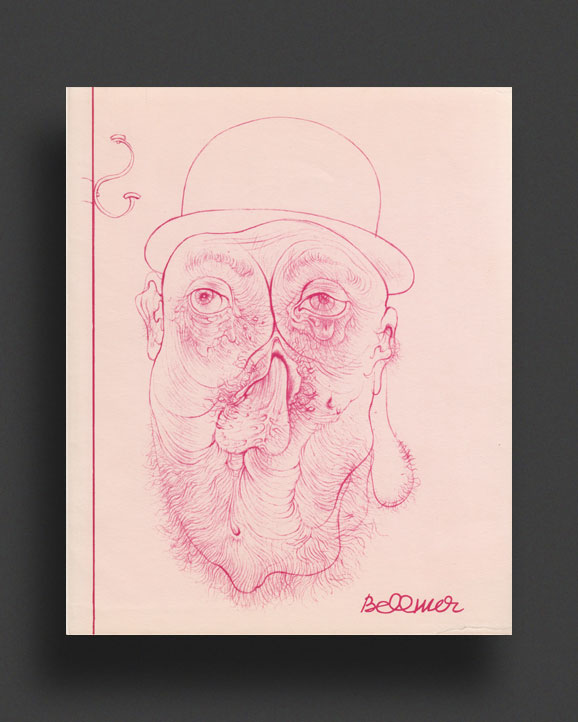
Beautifully produced, scarce French hardcover monographic volume dedicated entirely to reproductions of Surrealist visionary Hans Bellmer's incredible drawings. This is the very first edition, published by Éditions Denoël, Paris, in 1966. With an introduction by Constantin Jelenski. A stunning book, and a key title in the artist's oeuvre.
German artist Hans Bellmer (13 March 1902 – 23 February 1975), was best known for the life-sized pubescent female dolls he produced in the mid-1930s. "Bellmer was born in the city of Kattowitz, then part of the German Empire (now Katowice, Poland). Up until 1926, he'd been working as a draftsman for his own advertising company. He initiated his doll project to oppose the fascism of the Nazi Party by declaring that he would make no work that would support the new German state. Represented by mutated forms and unconventional poses, his dolls were directed specifically at the cult of the perfect body then prominent in Germany. Bellmer was influenced in his choice of art form by reading the published letters of Oskar Kokoschka (Der Fetisch, 1925)."
Very Good – (in original dust jacket and protected under plastic wrap)
1989, English
Softcover (staple-bound), 20 pages, 30 x 21 cm
1st Edition, Out of print title / used / very good
Published by
Eyeball / London
$20.00 - Out of stock
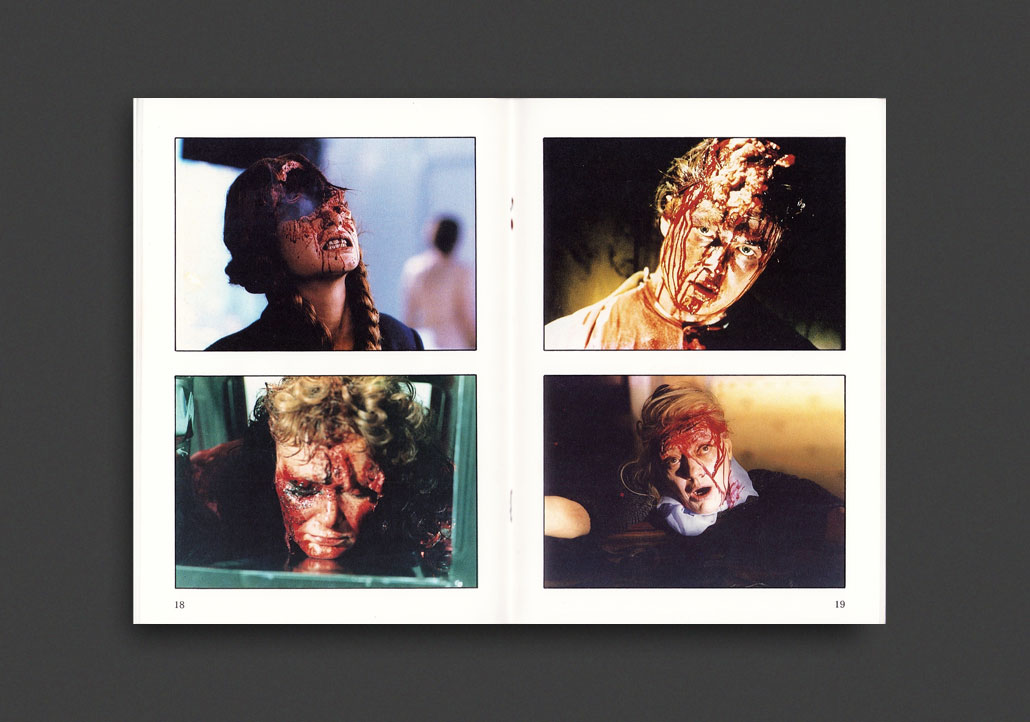
Inaugural Autumn 1989 issue of Eyeball fanzine, "The European Sex & Horror Review", edited by Stephen Thrower with contributions from by Shock Xpress editor and Skullflower/Ascension guitarist Stefan Jaworzyn, Ramsey Campbell, Mark Ashworth, and Charlie Phillips. Features interview with Italian horror director Michele Soavi (Stage Fright, The Church, Cemetery Man, etc.), legendary horror author Ramsey Campbell's "La Notte Bava", Two Films By Pupi Avati (giallo masterpieces, The House with Laughing Windows and Zeder), plus reviews of "Gestapo's Last Orgy", "Chaos Pervers", "Erotic Rites Of Frankenstein", "Five Dolls For An August Moon" and more!
A must for European cult cinema and Giallo film fans!
VG copy, light wear.
1993, English
Softcover, 50 pages, 28 x 21 cm
1st Edition, Out of print title / used / good
Published by
Draculina Publishing / Illinois
$20.00 - In stock -
Second 1993 issue of Draculina Fear Book, edited and published by Hugh Gallagher of Draculina Publishing, an independent publishing company that, inspired by Hammer horror movies, produced hundreds of magazines, comics and books devoted to the intersection of smut and gore, the beautiful women of horror, and the cinematic world of schlock/gore/trash/exploitation/transgression. Beyond the abundance of photographs of vixens, vampiresses, she-wolves, scream-queens and she-devils, is a goldmine of interviews with and features on Lamberto Bava (Demons, Inferno, A Blade in The Dark, Tenebre, etc) , Russ Meyer (Faster, Pussycat! Kill! Kill! Vixen!, Beyond the Valley of the Dolls, etc.), John Waters (Pink Flamingos, Polyester, etc.), Sean S. Cunningham (The Last House on the Left, Friday the 13th, House, etc.), Dyanne Thorne (Ilsa, She Wolf of the SS), Camille Keaton (I Spit on Your Grave), Barbara Crampton (From Beyond, The Reanimator, Chopping Mall, etc.), articles on "Sex, Succubae, and Surrealism" (Rollin, etc.), girl-on-girl cat fight entertainment, and much more.
Good copy with a couple of loose pages, general magazine reading wear.
2014, Japanese / English
Hardcover (w. hardcase + obi), 222 pages, 26.8 x 17.2 cm
1st Edition, Out of print title / used / very good
Published by
Toshokankokai / Tokyo
$460.00 - In stock -
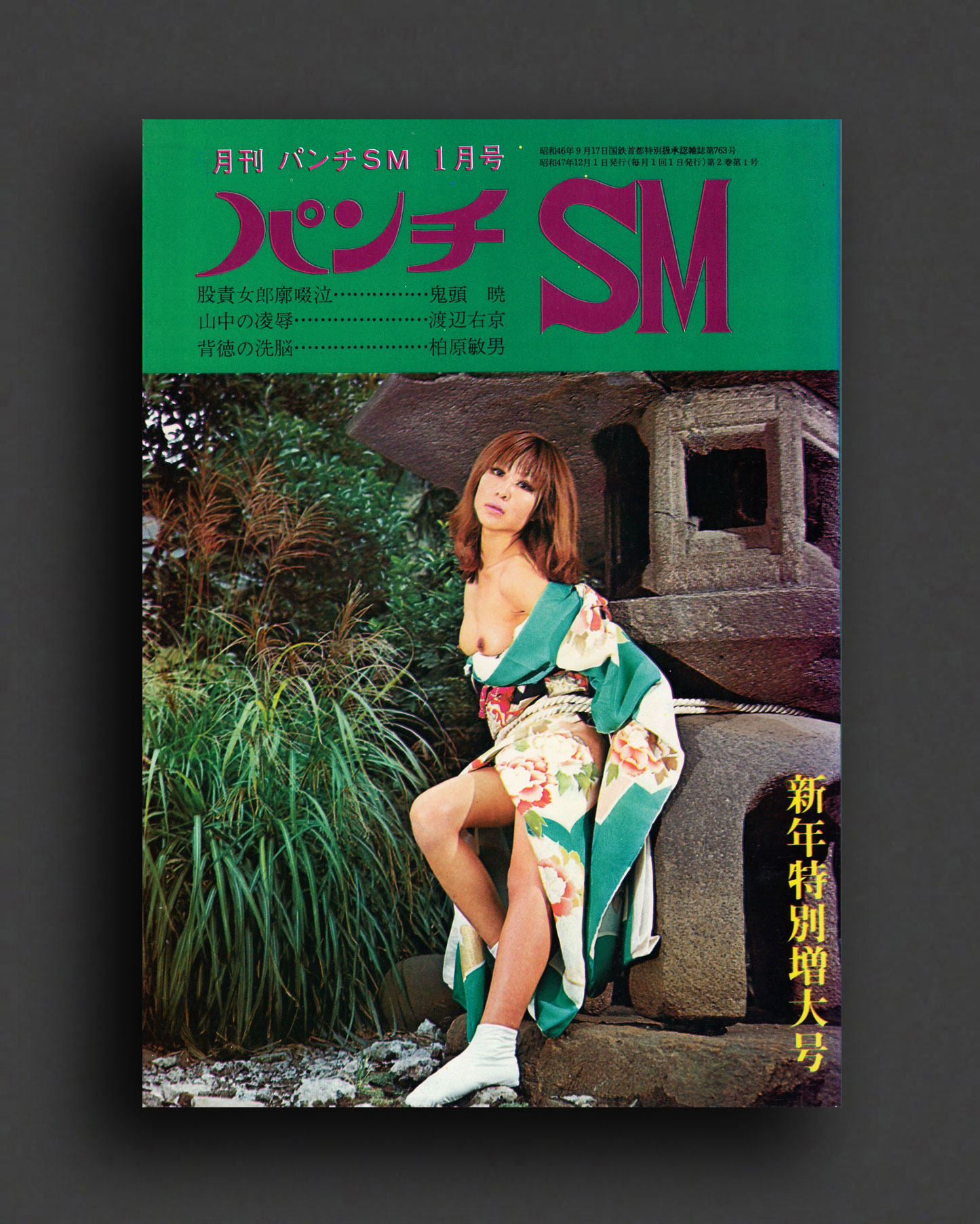
Now very rare out-of-print collection, and hands-down one of the best, "Yumenozoki (Glimpse of a Dream), The Art of Toshio Saeki" collects over 150 vividly coloured works of bewitching cruelty and gruesome beauty by Toshio Saeki, all of which were originally published in cult underground fetish magazine SM Select, between 1972—1984. Published only in Japanese in this hardcover and slipcased edition, includes two bilingual essays (Japanese / English) by Michiko Kitamura and Jun Miura, biography, and complete listing of artworks with original publication dates. An incredible volume of these important artworks that made Saeki a master in the Tokyo underground publishing scene, seen for the first time together, scaled-up and exquisitely reproduced in all their ero-guro glory. Highly recommended. First edition.
Toshio Saeki (1945—2019) was an illusive Japanese illustrator and painter, and icon of 1970s Tokyo counterculture, known for combining Japanese folklore, Yōkai spirits and elements of Western art with his own sophisticated aesthetics to create a unique, sensational world of eros, dark humour, and horror. Given the title “Erotic Engineer” by Timothy Leary, Saeki's provocative art broke all sexual taboos, questioned Japanese ideology and traditional views on love, desire and gender roles. Saeki’s surgically-precise graphic work is closely related to the Japanese cultural phenomenon ‘Erotic, Grotesque, Nonsense’ (ero, guro, nansensu).
“Toshio Saeki conjures death with a pen”—Shūji Terayama, 1969.
Very Good copy in VG slipcase w. VG obi.
1970, Japanese
Softcover (w. dust jacket), 200 pages approx, 21 x 15.4 cm
1st Edition, Out of print title / used / very good
Published by
Sogo Tosho / Tokyo
$120.00 - Out of stock
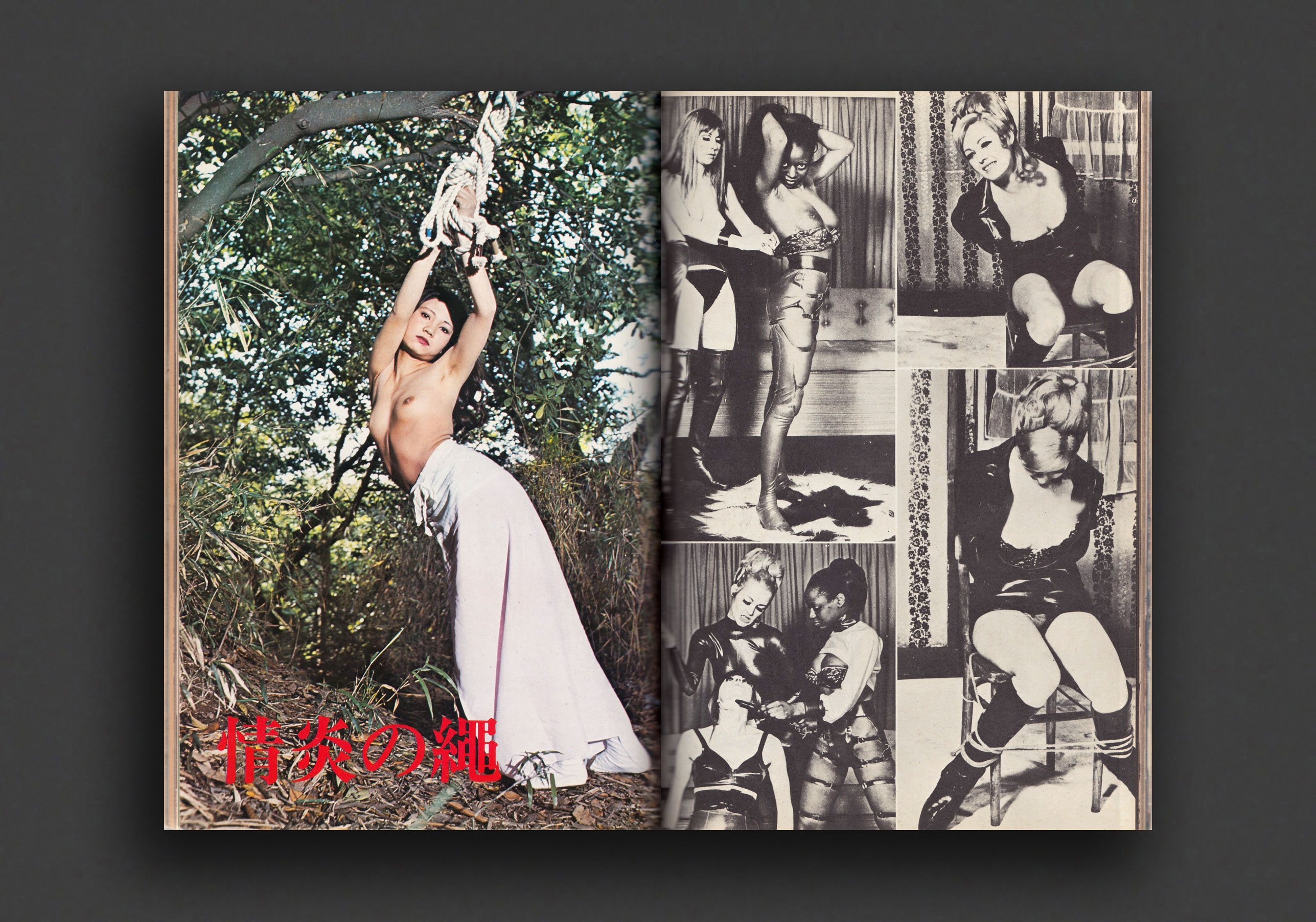
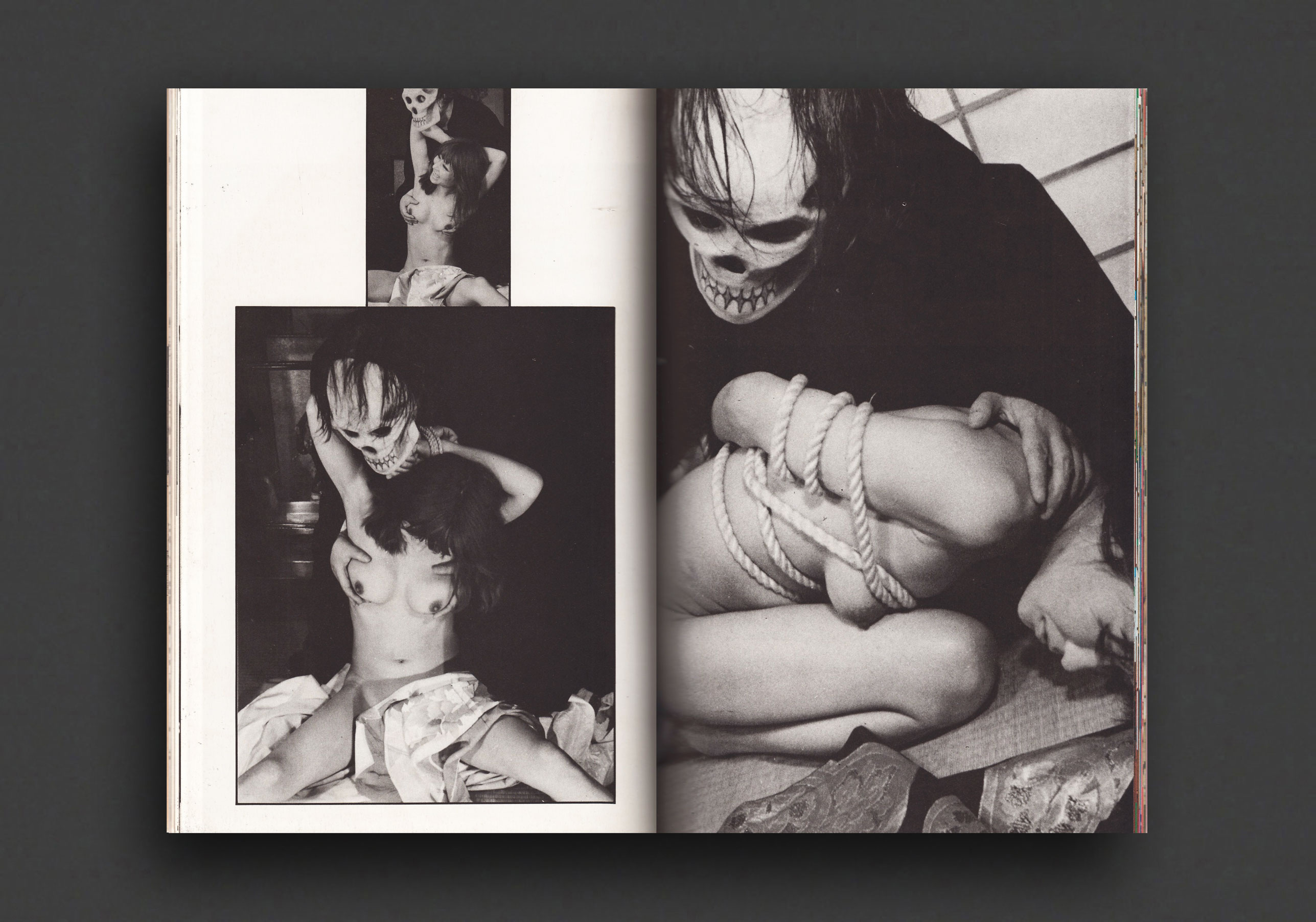
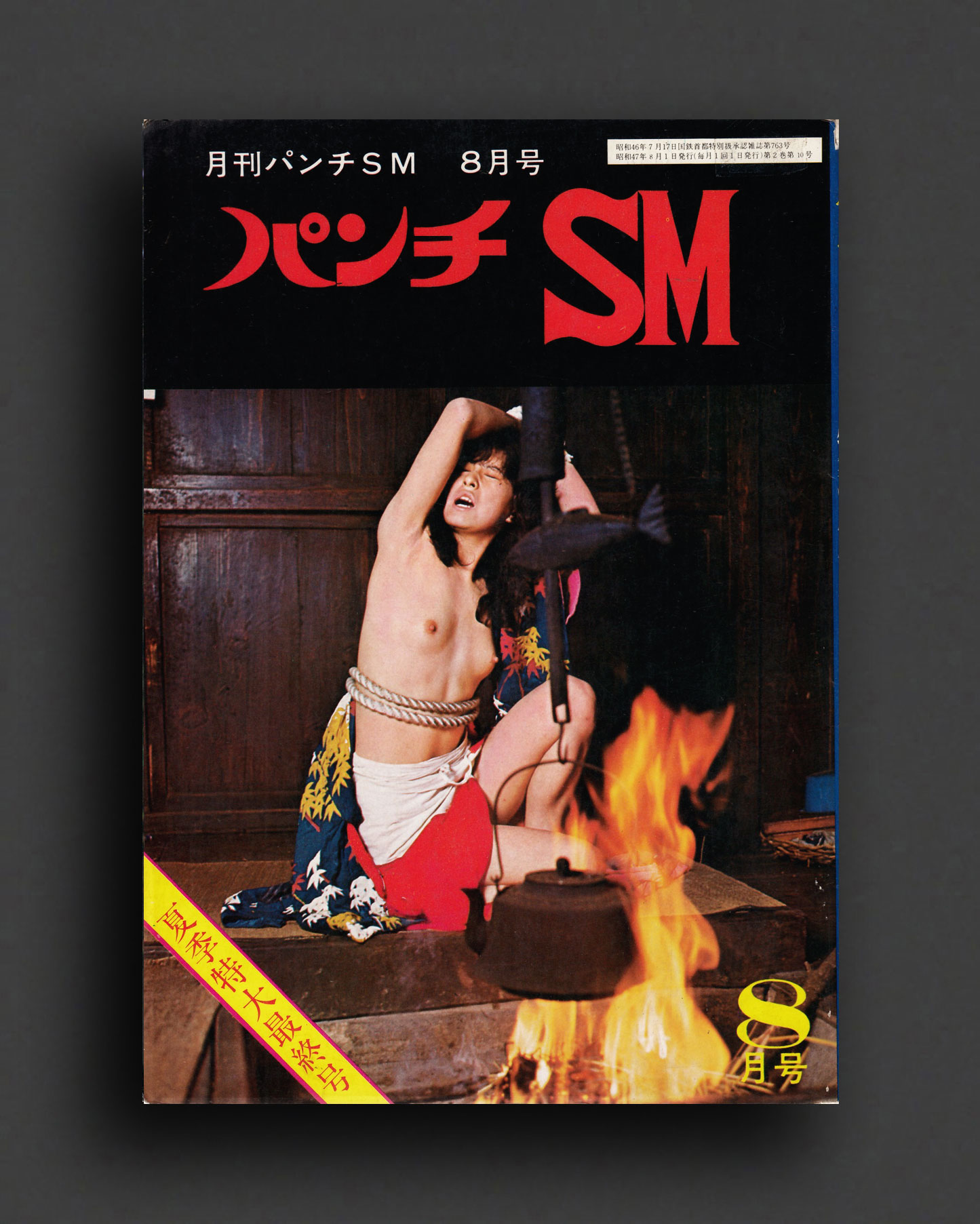
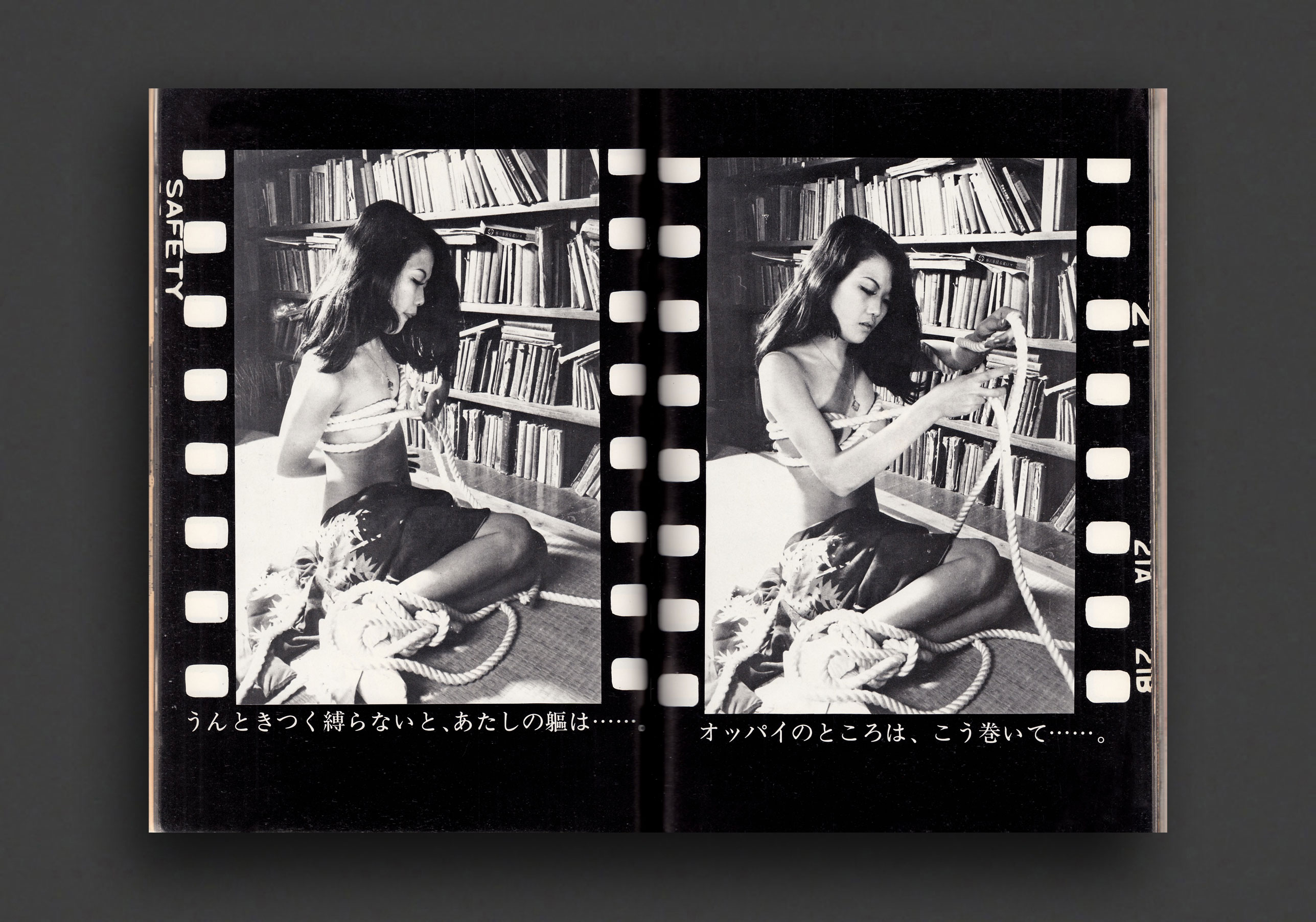
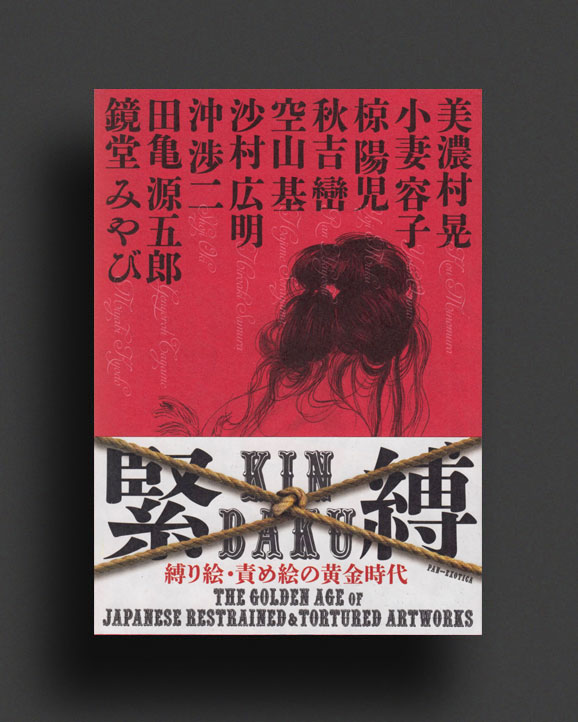
From the very rare six-volume collector's set of legendary SM Kinbaku anthology photo books edited by Japanese rope master, photographer, writer and editor, Ueda Seishiro, published by Sogo Tosho in 1970-71. Each volume features a striking cover by Ran Akiyoshi, one of the era’s most iconic artists and is filled with hundreds of photographs and nothing more. Released during the golden age of Japan’s kinbaku culture, this wonderful series documents the visual and subcultural evolution of SM photography in the 1960s through to 1970 with beautiful production and print quality, gloss colour and gravure b/w, these are some of the most important Japanese kinbaku photo works edited together by a modern master and young friend of the godfather of the movement, Seio Ito.
Alongside his associates Ito Seiu Ito, Dan Oniroku, Hiroshi Urado and Shigeru Kayama, Ueda Seishiro was at the forefront of SM publishing and modern kinbaku arts in Japan, as an editor and groundbreaking contributor who worked with magazines such as Kitan Club, Yomikiri Romance, Fuzoku Soushi, Fuzoku Kitan, SM PLAY, and True Stories and Secret Records, whilst serving as tight-binding advisor for Japanese Pink Films in the 1970s and 80s. Ueda was responsible for the rope-work in a special issue of Yomikiri Romance in the summer of 1952, regarded as ”the first commercial publication completely dedicated to shibari/kinbaku photography (…) a groundbreaking event in SM publishing”—The Beauty of Kinbaku.
Very Good copy, some buckling to block from storage, light age/wear. VG dust Jacket.
1971, Japanese
Softcover (w. dust jacket), 200 pages approx, 21 x 15.4 cm
1st Edition, Out of print title / used / very good
Published by
Sogo Tosho / Tokyo
$120.00 - Out of stock
From the very rare six-volume collector's set of legendary SM Kinbaku anthology photo books edited by Japanese rope master, photographer, writer and editor, Ueda Seishiro, published by Sogo Tosho in 1970-71. Each volume features a striking cover by Ran Akiyoshi, one of the era’s most iconic artists and is filled with hundreds of photographs and nothing more. Released during the golden age of Japan’s kinbaku culture, this wonderful series documents the visual and subcultural evolution of SM photography in the 1960s through to 1970 with beautiful production and print quality, gloss colour and gravure b/w, these are some of the most important Japanese kinbaku photo works edited together by a modern master and young friend of the godfather of the movement, Seio Ito.
Alongside his associates Ito Seiu Ito, Dan Oniroku, Hiroshi Urado and Shigeru Kayama, Ueda Seishiro was at the forefront of SM publishing and modern kinbaku arts in Japan, as an editor and groundbreaking contributor who worked with magazines such as Kitan Club, Yomikiri Romance, Fuzoku Soushi, Fuzoku Kitan, SM PLAY, and True Stories and Secret Records, whilst serving as tight-binding advisor for Japanese Pink Films in the 1970s and 80s. Ueda was responsible for the rope-work in a special issue of Yomikiri Romance in the summer of 1952, regarded as ”the first commercial publication completely dedicated to shibari/kinbaku photography (…) a groundbreaking event in SM publishing”—The Beauty of Kinbaku.
Very Good copy, some buckling to block from storage, light age/wear. VG dust Jacket.
1971, Japanese
Softcover (w. dust jacket), 200 pages approx, 21 x 15.4 cm
1st Edition, Out of print title / used / very good
Published by
Sogo Tosho / Tokyo
$120.00 - Out of stock
From the very rare six-volume collector's set of legendary SM Kinbaku anthology photo books edited by Japanese rope master, photographer, writer and editor, Ueda Seishiro, published by Sogo Tosho in 1970-71. Each volume features a striking cover by Ran Akiyoshi, one of the era’s most iconic artists and is filled with hundreds of photographs and nothing more. Released during the golden age of Japan’s kinbaku culture, this wonderful series documents the visual and subcultural evolution of SM photography in the 1960s through to 1970 with beautiful production and print quality, gloss colour and gravure b/w, these are some of the most important Japanese kinbaku photo works edited together by a modern master and young friend of the godfather of the movement, Seio Ito.
Alongside his associates Ito Seiu Ito, Dan Oniroku, Hiroshi Urado and Shigeru Kayama, Ueda Seishiro was at the forefront of SM publishing and modern kinbaku arts in Japan, as an editor and groundbreaking contributor who worked with magazines such as Kitan Club, Yomikiri Romance, Fuzoku Soushi, Fuzoku Kitan, SM PLAY, and True Stories and Secret Records, whilst serving as tight-binding advisor for Japanese Pink Films in the 1970s and 80s. Ueda was responsible for the rope-work in a special issue of Yomikiri Romance in the summer of 1952, regarded as ”the first commercial publication completely dedicated to shibari/kinbaku photography (…) a groundbreaking event in SM publishing”—The Beauty of Kinbaku.
Very Good copy, some buckling to block from storage, light age/wear. VG dust Jacket.
1971, Japanese
Softcover (w. dust jacket), 200 pages approx, 21 x 15.4 cm
1st Edition, Out of print title / used / very good
Published by
Sogo Tosho / Tokyo
$120.00 - Out of stock
From the very rare six-volume collector's set of legendary SM Kinbaku anthology photo books edited by Japanese rope master, photographer, writer and editor, Ueda Seishiro, published by Sogo Tosho in 1970-71. Each volume features a striking cover by Ran Akiyoshi, one of the era’s most iconic artists and is filled with hundreds of photographs and nothing more. Released during the golden age of Japan’s kinbaku culture, this wonderful series documents the visual and subcultural evolution of SM photography in the 1960s through to 1970 with beautiful production and print quality, gloss colour and gravure b/w, these are some of the most important Japanese kinbaku photo works edited together by a modern master and young friend of the godfather of the movement, Seio Ito.
Alongside his associates Ito Seiu Ito, Dan Oniroku, Hiroshi Urado and Shigeru Kayama, Ueda Seishiro was at the forefront of SM publishing and modern kinbaku arts in Japan, as an editor and groundbreaking contributor who worked with magazines such as Kitan Club, Yomikiri Romance, Fuzoku Soushi, Fuzoku Kitan, SM PLAY, and True Stories and Secret Records, whilst serving as tight-binding advisor for Japanese Pink Films in the 1970s and 80s. Ueda was responsible for the rope-work in a special issue of Yomikiri Romance in the summer of 1952, regarded as ”the first commercial publication completely dedicated to shibari/kinbaku photography (…) a groundbreaking event in SM publishing”—The Beauty of Kinbaku.
Very Good copy, some buckling to block from storage, light age/wear. VG dust Jacket.
2002, English
Softcover, 256 pages, 18 x 11.5 cm
Published by
Semiotext(e) / Los Angeles
$32.00 - Out of stock
"Leash is strong, compulsive, gripping reading, as morally complex as transgressive fiction gets. It goes places few—if any—books land, not only in terms of its arousing, sexually explicit candor, but also in its uncomfortable psychological honesty. Wise, provocative and completely absorbing, Leash has the horrifying simplicity of Kafka."—Bret Easton Ellis
Leash extends the logic of S&M to its inexorable and startling conclusion, darkly and hilariously revealing the masochistic impulse as the urge to disappear from the chores, obligations, and emotional vacuity of daily life.
No more jobs, no more taxes, no more checkbook, no more bills, no more credit cards, no more credit, no more money, no more mortgages, no more rent, no more savings, no more junk mail, no more junk, no more mail, no more phones, no more faxes, no more busy signals, no more computers, no more cars, no more drivers' licenses, no more traffic lights, no more airports, no more flying, no more tickets, no more packing, no more luggage, no more supermarkets, no more health clubs...
While her "current" spends the summer researching public housing in Stockholm, a moderately wealthy, object-oppressed, and terminally hip New York female of a certain age seeks adventure in the sedate dyke bars of lower Manhattan. Finding none, she answers a personal ad. She is ordered to put on a blindfold before the first meeting with the woman she knows only as "Sir." Not knowing what someone looks like turns out to be freeing, as do the escalating constraints that alienate her not just from her former life, but from her very conception of who she is.
Part Georges Bataille, part Fran Leibowitz, this is the Story of O told with a self-referentially perverse sense of humor. Leash extends the logic of S&M to its inexorable and startling conclusion, darkly and hilariously revealing the masochistic impulse as the urge to disappear from the chores, obligations, and emotional vacuity of daily life.
Jane DeLynn is the author of the widely acclaimed novels Leash, Real Estate, and Some Do. Her work has appeared in Paris Review, Mademoiselle, Glamour, Harper's Bazaar, the New York Times, New York Observer, and Tikkun, and she lived in Saudi Arabia as a correspondent for Mirabella and Rolling Stone during the Gulf War. Her novel Real Estate was named a New York Times Notable Book of the Year.
2018, English
Hardcover, 480 pages, 17.4 x 23.2 cm
Published by
Atlas Press / London
$74.00 - In stock -
Georges Bataille's secret society, long the stuff of legend, is now revealed in its texts, meditations, rules and prohibitions.
This book recounts what must be one of the most unusual intellectual journeys of modern times, in which the influential philosopher, cultural theorist and occasional pornographer Georges Bataille (1897-1962), having spent the early 1930s in far-left groups opposing the rise of fascism, abandoned that approach in order to transfer the struggle onto "the mythological plane."
In 1937, Bataille founded two groups in order to explore the combinations of power and the "sacred" at work in society. The first group, the College of Sociology, gave lectures that were intended to reveal the hidden undercurrents within a society on the verge of catastrophe. The second group was Acéphale, a genuine secret society and anti-religion whose emblem was a headless figure that, in part, represented the death of God. Until the discovery a few years ago of the group's internal papers (which include theoretical texts, meditations, minutes of meetings, rules and prohibitions and even a membership list), almost nothing was known of its activities.
This book is the first to collect a representative selection of the writings of Bataille, and of those close to him, in the years leading up to World War II. The texts published here comprise lectures given to the College of Sociology by Bataille, Roger Caillois and Michel Leiris, essays from the Acéphale journal and a large cache of the internal papers from the secret society. A desperate narrative unfolds, wherein Bataille risked all in a wholly unreasonable quest--with a few fellow travelers, he undertook what he later described as a "journey out of this world."
Additional texts by Roger Caillois, Pierre Klossowski, Michel Leiris, and by Georges Ambrosino, Pierre Andler, Michel Carrouges, Jacques Chavy, Jean Dautry, Henri Dobier, Henri Dussat, Imre Kelemen, Jean Rollin, Patrick Waldberg.
And with drawings by André Masson
Highest recommendation!
2025, Englush
Softcover, 96 pages, 7.6 x 10.5 cm
Published by
Hanuman Editions / US
$36.00 - In stock -
I LOVE THE PAIN. I TELL HER HOW WONDERFUL PAIN CAN BE. HOW SHE SHOULD USE IT ON ME. I'M RAVING. I'M TRIPPING. I'M COMING.
Since his on-screen 'death' by erogenous torture device in Nine Inch Nails’ notorious 'Happiness in Slavery' music video, writer and artist Bob Flanagan has been a looming legend in domains of art, pain and sex. First published by Hanuman Books in 1987, Fuck Journal chronicles Flanagan’s liaisons with his beloved romantic and artistic partner Sheree Rose over the course of a year. Composed at Rose’s prompting and anticipating Flanagan’s extraordinary Pain Journal, the volume is so direct in its account of the couple’s conjugal life that the Indian authorities tossed its original print run into the ocean before the books could ship from Chennai to New York. By luck, 300 copies which had traveled with the editors to the US remained in circulation: an origin story that chimes with Flanagan’s aura of irreverence. Fuck Journal is characterised by a transfixing rhythm of total divulsion, a document of union amid, and through, pain with resonances in current discourses around sadomasochistic desire, crip experience, gender politics and beyond.
With a foreword by Sheree Rose
Introduction by Johanna Hedva
Based in Southern California, Bob Flanagan (1952-1996) was an provocateur of the highest order, known for poems and performances centreing on BDSM activity and living with cystic fibrosis. Famously featured in censored videos for Danzig and Nine Inch Nails, Flanagan achieved a unique pitch of sexual spectacle and tender expression through visceral collaborations with the photographer, artist and dominatrix Sheree Rose. Flanagan’s published writings include Pain Journal (1996) and the anthology Fun to be dead: The Poems of Bob Flanagan (2024), edited by Sabrina Tarasoff.
The steward of Flanagan’s legacy and an icon in her own right, the photographer and performance artist Sheree Rose has been a leading figure in Los Angeles underground culture since the 1980s. Through her partnership with Flanagan and ongoing projects, Rose has brought to the fore a new form of heterosexual politics, an erotics of intimacy as it intersects with the personal and social.
Johanna Hedva is a Korean American writer, artist, and musician from Los Angeles. Their most recent essay collection is How To Tell When We Will Die: On Pain, Disability, and Doom. They are also the author of the novels Your Love Is Not Good and On Hell. Their art has been exhibited internationally, and their albums are Black Moon Lilith in Pisces in the 4th House and The Sun and the Moon.
2023, English
Softcover, 120 pages, 10.5 x 8 cm
Published by
Hanuman Editions / US
$36.00 - In stock -
Garden of Ashes, Cookie Mueller's second entry into the Hanuman Books canon (following 1988's Fan Mail, Frank Letters, and Crank Calls) brings together ten stories, autobiographical accounts of her ascent to cult-cinema superstardom, with tales dedicated to several of her fellow Dreamlanders, including "Edith Massey: A Star" and "Divine".
Cookie Mueller (1949–1989) was an American writer, actress, and advice columnist, best remembered as a regular cast member of some of the director John Waters's groundbreaking films, including Multiple Maniacs, Pink Flamingos, Female Trouble, and Desperate Living. She died from AIDS-related complications in 1989.
From the first series redux of Hanuman Books, the legendary and cult series of chapbooks that were printed in southern India and published out of the storied Chelsea Hotel in New York City between 1986 and 1993. Founded by American curator Raymond Foye and artist Francesco Celemente, Hanuman Books was dedicated mainly to the extreme deconstructive edge of the countercultural poetic, musical, and artistic currents of the 1960s and 1970s, spanning the era of the Cold War, the AIDS crisis, the Harlem Ballroom scene, the Beats, Warhol's Factory etc. Hanuman Books sought to marry the folk-minimal-artisanal with the cutting edge, playfully marketing their books as ‘secret’ documents of an avant-garde subculture, meant to be passed on covertly at street corners just as millenarian chapbooks of medieval times were supposed to have been. Printed in India, the small format is meant to mimic the chapbook form of the Hanuman Chalisa (a folk compendium of chants to the Hindu god Hanuman, sold very cheaply in the bazaars of India) that made them perfect for slipping illicitly into any pocket. Redux editions edited by Shruti Belliappa and Joshua Rothes.
2025, English
Softcover (staple-bound), 24 pages, 20.32 × 12.7 cm
Published by
Filthy Loot / Ames
$10.00 - In stock -
Spur is the latest chapbook of poetry by Robbie Coburn, Australian poet and author of And I Could Not Have Hurt You, which was on Dennis Cooper’s Mine For Yours: Favorites of 2023 list.
Design by Ira Rat.
Born in 1994, Coburn grew up on his family's farm in Woodstock, Victoria.
He is currently based in Melbourne.