World Food Books' programme is largely produced on Kulin Nation land. We acknowledge the Wurundjeri people of the Kulin Nation as the first and continuing custodians of this land, and pay respect to their Elders past, present, and emerging.
World Food Books is an arts and special interests bookshop in Naarm / Melbourne. Founded in 2010, World Food Books is devoted to the presentation of a rotating, hand-selection of international art, design, literary and counterculture publications with an emphasis on the anti-traditional, the experimental, the avant-garde, the heretic, the marginal.
Presenting new titles alongside rare and out-of-print books, catalogues and journals spanning the fields of modern and contemporary art, design, photography, illustration, film, literature, poetry, cultural theory, philosophy, sexuality, popular and underground culture in its many radical forms, World Food Books wishes to encourage adventurous, thoughtful and open-minded reading, looking, writing, and exchange of publishing and ideas, both current and historical.
As well as our bookshop, located in Melbourne's historical Nicholas Building, all of our inventory is available internationally via our online mail-order service.
World Food Books semi-regularly co-ordinates "Occasions", a programme of exhibits and events at the bookshop and in partnership with other hosts (such as museums and art galleries) that develop out of the activities, relationships and content of the bookshop itself.
World Food Books
The Nicholas Building
37 Swanston Street
Room 5, Level 6
Melbourne 3000
Australia
SHOP HOURS:
THU–SAT 12–6
WEB-SHOP OPEN 24/7
World Food Books
Postal Address:
PO Box 435
Flinders Lane
Victoria 8009
Australia
info@worldfoodbooks.com
Art
Theory / Essay
Architecture / Interior
Graphic Design / Typography
Photography
Fashion
Eros
LGBTQ+
Fiction / Poetry
Weird / Speculative / Science Fiction / Horror
Transgressive / Visceral / Abject
Symbolism / Decadence / Fin de siècle
Film / Video
Painting
Sculpture / Installation
Performance / Dance / Theater
Drawing
Sound / Music
Curatorial
Group Shows / Collections
Periodicals
Out-of-print / Rare
Posters / Ephemera / Discs
Signed Books
World Food Books Gift Voucher
World Food Book Bag
Australian Art
Australian Fiction
Australian Science Fiction / Speculative Fiction
Australian Poetry
Australian Photography
Japanese Photography
Conceptual Art
Minimal Art
Dada
'Pataphysics / Oulipo
Fluxus
Concrete Poetry
Pop Art
Surrealism
Arte Povera
Arte Informale / Haute Pâte / Tachism
Nouveau Réalisme / Zero / Kinetic
Situationism / Lettrism
Collage / Mail Art / Xerox Art
Art Brut / Folk / Visionary / Fantastic
Illustration / Graphic Art / Bandes Dessinées
Furniture
Italian Radical Design / Postmodernism
Textiles
Ceramics / Glass
Counterculture
Protest / Revolt
Philosophy
Psychoanalysis
Anthropology
Anarchism
Socialism / Anarchism / Communism / Capitalism
Literary Theory / Semiotics / Language
Feminism / Women's Studies
Gender Studies / Sexuality
Anthropology
Fetishism / BDSM
Drugs / Psychedelia
Crime / Violence
Animal Rights / Veganism
Occult / Esoterica
Ecology / Earth / Alternative Living
Whole Earth / Crafts
All prices in AUD (Australian dollars)
Pick-Ups
Pick-up orders can be collected in our bookshop during opening hours after order date. Please collect any Pick-up orders within 2 weeks of ordering as we have limited storage space. Orders will be released back into stock if not collected within this time. No refunds can be made for pick-ups left un-collected. If you cannot make it in to the bookshop in this time-frame, please choose postage option.
Return Policy
All sales are final. We do accept returns (for refund or exchange) for items received in error. All our orders are packed with special care using heavy-duty padding and cardboard book-mailers or bubble mailers (for smaller books), using reinforcement where required. We cannot take responsibility for any lost, stolen or damaged parcels.
Insurance
Should you wish to insure your package, please email us directly after placing your order and we can organise this at a small extra expense. Although all standard/express tracked packages are very safe and dependable, we cannot take responsibility for any lost, stolen or damaged parcels. We recommend insurance on valuable orders.
Interested in selling your old books, catalogues, journals, magazines, comics, fanzines, ephemera? We are always looking for interesting, unusual and out-of-print books to buy. We only buy books in our fields of interest and specialty, and that we feel we can resell.
We base these prices on desirability, market value, in-print prices, condition and our current stock levels. We offer cash, store credit, and can take stock on consignment. All
about 25% of the price we expect to get when we sell them, or 30% in store credit. We base these prices on desirability, market value, in-print prices, condition and our current stock levels.
Sell your books any day of the week. You can drop them off and return later. If you have a lot of books, we can visit your Sydney home.
We buy books that we feel we can resell. We offer about 25 % of the price we expect to get when we sell them, or 30% in store credit. We base these prices on desirability, market value, in-print prices, condition and our current stock levels.
Philadelphia Wireman
03 August - 01 September, 2018
World Food Books is proud to announce our next Occasion, the first presentation of sculptures by Philadelphia Wireman in Australia.
The Philadelphia Wireman sculptures were found abandoned in an alley off Philadelphia’s South Street on trash night in 1982. Their discovery in a rapidly-changing neighbourhood undergoing extensive renovation, compounded with the failure of all attempts to locate the artist, suggests that the works may have been discarded after the maker’s death. Dubbed the "Philadelphia Wireman" during the first exhibition of this work, in 1985, the maker’s name, age, ethnicity, and even gender remain uncertain. The entire collection totals approximately 1200 pieces, all intricately bound together with tightly-wound heavy-gauge wire (along with a few small, abstract marker drawings, reminiscent both of Mark Tobey and J.B. Murry). The dense construction of the work, despite a modest range of scale and materials, is singularly obsessive and disciplined in design: a wire armature or exoskeleton firmly binds a bricolage of found objects including plastic, glass, food packaging, umbrella parts, tape, rubber, batteries, pens, leather, reflectors, nuts and bolts, nails, foil, coins, toys, watches, eyeglasses, tools, and jewellery.
Heavy with associations—anthropomorphic, zoomorphic, and socio-cultural responses to wrapped detritus—the totemic sculptures by Philadelphia Wireman have been discussed in the context of work created to fulfil the shamanistic needs of alternative religions in American culture. Curators, collectors, and critics have variously compared certain pieces to sculpture from Classical antiquity, Native American medicine bundles, African-American memory jugs, and African fetish objects. Reflecting the artist’s prolific and incredibly focused scavenging impulse, and despite—or perhaps enhanced by—their anonymity, these enigmatic objects function as urban artefacts and arbiters of power, though their origin and purpose is unknown. Philadelphia Wireman, whatever their identity, possessed an astonishing ability to isolate and communicate the concepts of power and energy through the selection and transformation of ordinary materials. Over the course of the past two decades, this collection has come to be regarded as an important discovery in the field of self-taught art and vernacular art.
Presented in collaboration with Fleisher-Ollman Gallery, Philadelphia, and Robert Heald, Wellington.
Susan Te Kahurangi King
02 February - 10 March, 2018
Susan Te Kahurangi King (24 February 1951 - ) has been a confident and prolific artist since she was a young child, drawing with readily available materials - pencils, ballpoint pens and felt-tip markers, on whatever paper is at hand. Between the ages of four and six Susan slowly ceased verbal communication. Her grandparents William and Myrtle Murphy had developed a special bond with Susan so they took on caring responsibilities for extended periods. Myrtle began informally archiving her work, carefully collecting and storing the drawings and compiling scrapbooks. No drawing was insignificant; every scrap of paper was kept. The King family are now the custodians of a vast collection containing over 7000 individual works, from tiny scraps of paper through to 5 meter long rolls.
The scrapbooks and diaries reveal Myrtle to be a woman of great patience and compassion, seeking to understand a child who was not always behaving as expected. She encouraged Susan to be observant, to explore her environment and absorb all the sights and sounds. Myrtle would show Susan’s drawings to friends and people in her community that she had dealings with, such as shopkeepers and postal workers, but this was not simply a case of a grandmother’s bias. She recognised that Susan had developed a sophisticated and unique visual language and sincerely believed that her art deserved serious attention.
This was an unorthodox attitude for the time. To provide some context, Jean Dubuffet coined the term Art Brut in 1945 to describe work created by self-taught artists – specifically residents of psychiatric institutions and those he considered to be visionaries or eccentrics. In 1972 Roger Cardinal extended this concept by adopting the term Outsider Art to describe work made by non-academically trained artists operating outside of mainstream art networks through choice or circumstance. Susan was born in Te Aroha, New Zealand in 1951, far from the artistic hubs of Paris and London that Dubuffet and Cardinal operated in. That Myrtle fêted Susan as a self-taught artist who deserved to be taken seriously shows how progressive her attitudes were.
Susan’s parents Doug and Dawn were also progressive. Over the years they had consulted numerous health practitioners about Susan’s condition, as the medical establishment could not provide an explanation as to why she had lapsed into silence. Dawn educated herself in the field of homeopathy and went on to treat all twelve of her children using these principles – basing prescriptions on her observations of their physical, mental and emotional state.
Doug was a linguist with an interest in philosophy who devoted what little spare time he had to studying Maori language and culture. To some extent their willingness to explore the fringes of the mainstream made them outsiders too but it was their commitment to living with integrity and their respect for individuality that ensured Susan’s creativity was always encouraged.
Even though Susan’s family supported her artistic pursuits, some staff in schools and hospitals saw it as an impediment to her assimilation into the community and discouraged it in a variety of ways. Her family was not always aware of this and therefore did not fully understand why Susan stopped drawing in the early 1990s. However, rather than dwell on the challenges that Susan faced in pursuit of her artistic practice, they prefer to highlight her achievements. In 2008 Susan began drawing again in earnest, after an almost 20 year interruption, and her work is now shown in galleries around the world.
Susan grew up without television and has been heavily influenced by the comics she read as a child. She is absolutely fearless in the appropriation of recognizable characters, such as Donald Duck and Mickey Mouse, in her work. She twists their limbs, contorts their faces, compresses them together, blends them into complex patterned backgrounds - always imbuing them with an incredible energy. Although Susan often used pop culture characters in her work they are not naive or childlike. These are drawings by a brilliant self-taught artist who has been creating exceptional work for decades without an audience in mind.
Mladen Stilinović
"Various Works 1986 - 1999"
02 February 16 - September 10, 2016
Various works 1986 - 1999, from two houses, from the collections of John Nixon, Sue Cramer, Kerrie Poliness, Peter Haffenden and Phoebe Haffenden.
Including: Geometry of Cakes (various shelves), 1993; Poor People’s Law (black and white plate), 1993; White Absence (glasses, ruler, set square, silver spoon, silver ladel with skin photograph and wooden cubes), 1990-1996; Exploitation of the Dead (grey and red star painting, wooden painting, black spoon with red table, red plate), 1984-1990; Money and Zeros (zero tie, paintings made for friends in Australia (Sue, John, Kerrie), numbers painting), 1991-1992; Words - Slogans (various t-shirts) - “they talk about the death of art...help! someone is trying to kill me”, “my sweet little lamb”, “work is a disease - Karl Marx”; Various artist books, catalogues, monographs, videos; Poster from exhibition Insulting Anarchy; "Circular" Croatian - Australian edition; Artist book by Vlado Martek (Dostoyevsky); more.
Thanks to Mladen Stilinović and Branka Stipančić.
Jonathan Walker
Always Will Need To Wear Winter Shirt Blue + Ochre Small Check Pattern
21 August - 21 September, 2015
Untitled
I am not a great reader of poetry but I always return to the work of Melbourne poet, Vincent Buckley (1925- 1988). Perhaps I find his most tantalising piece to be not a finished poem but a fragment left on a scrap of paper discovered on his desk after the poet’s death.
The poetry gathers like oil
In the word-core, and spreads
It has its music meet,
Its music is in movement.
This fragment is more the shell left behind from a volatile thought than a finished poem. I find the last two lines honest but awkward whereas the first two lines work like an arrow. Most likely he could not find a resolution so it was left. Still, in its present form, it remains an eloquent testimony to the ultimate failure of a medium to express mobile thought and sensation, in Buckley’s case, through verbal language. It’s an important matter because this is something all artists have to deal with regardless of the medium.
I have never written a poem, however, I am forever copying fragments from books on paper scraps in a vain effort to fix certain notions in my head. At first, they function as bookmarks that are sometimes returned to when I open the book. But before long, as they accumulate, they fall out littering the table interspersed with A4 photocopies, bills, books and medications.
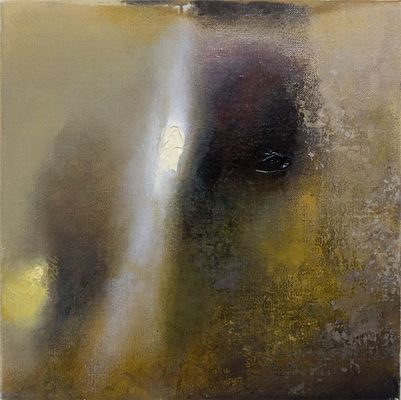
To return to Buckley’s fragment, the first two lines very much evoke how I paint nowadays. As you age, detail diminishes and patches of light become more luminous and float. I feel the most honest way of dealing with this is by smearing the oil paint on the canvas with the fingers and working close-up, blind. Only if the patches coalesce into an approaching image can the work gain a life.
-
Jonathan Walker was born in Melbourne, Australia and brought up on a dairy farm in Gippsland. In the 1970’s he studied painting at RMIT and won the Harold Wright Scholarship to the British Museum, London. During the 1980’s he exhibited at Pinacotheca Gallery, Richmond and had work shown at the NGV and Heidi City Art Gallery. Over the same period he designed the cover for the “Epigenesi” LP by Giancarlo Toniutti, Italy and conducted a mail exchange work with Achim Wollscheid, Germany. The work with artists through the post resulted in an article published in the bicentenary issue of Art and Australia 1988. He showed in artist run spaces such as WestSpace in the 90’s and 2000’s, and until 2012, taught painting at Victoria University, which is where we (Colleen Ahern and Lisa Radford) as organisers of the exhibition, among many others, had the privilege of being his student.
Walker’s knowledge was imparted to students through the careful selection of music, literature, and artists found in books that he himself had ordered for the library. Walker’s strategy was the generosity of sharing his vast knowledge with references specific to each student and their context.
Walker’s paintings share a similar focus and intimacy.
This exhibition presents a small selection of recent paintings alongside a publication that includes Walker’s writing. Observational and analytical, Walker’s work is a type of material notation — the time of day, colour and how it is blended, the both specific and fleeting location of a reflection on lino or the question of whether a chair leg should be included in a painting.
Please join us on Friday August 21 between 6-8pm to celebrate the opening of the exhibition.
Curated by Colleen Ahern and Lisa Radford.
B. Wurtz
Curated by Nic Tammens
March 26 - April 4, 2015
B.Wurtz works from a basement studio in his home on Manhattan’s Lower East Side.
This local fact is attested to by the plastic shopping bags and newsprint circulars that appear in his work. As formal objects, they don’t make loud claims about their origins but nonetheless transmit street addresses and places of business from the bottom of this long thin island. Like plenty of artists, Wurtz is affected by what is local and what is consumed. His work is underpinned by this ethic. It often speaks from a neighborhood or reads like the contents of a hamper:
“BLACK PLUMS $1.29 lb.”
“Food Bazaar”
“USDA Whole Pork Shoulder Picnic 99c lb.”
“RITE AID Pharmacy, with us it’s personal.”
“H. Brickman & Sons.”
“Sweet Yams 59c lb."
Most of the work in this exhibition was made while the artist was in residence at Dieu Donne, a workshop dedicated to paper craft in Midtown. Here Wurtz fabricated assemblages with paper and objects that are relatively lightweight, with the intention that they would be easily transportable to Australia. This consideration isn’t absolute in Wurtz’s work, but was prescriptive for making the current exhibition light and cheap. Packed in two boxes, these works were sent from a USPS post office on the Lower East Side and delivered to North Melbourne by Australia Post.
Wurtz appears courtesy of Metro Pictures, New York.
Thanks to Rob Halverson, Joshua Petherick, Sari de Mallory, Matt Hinkley, Helen Johnson, Fayen d'Evie, Ask Kilmartin, Lisa Radon, Ellena Savage, Yale Union, and "Elizabeth".
John Nixon
"Archive"
December 15 - January 20, 2014
The presentation of John Nixon's archive offered a rare showcase of this extensive collection of the artist's own publications, catalogues, posters, ephemera, editions and more, from the mid 1980s onwards, alongside a selection of his artworks.
Organized by John Nixon, Joshua Petherick and Matt Hinkley.
"Habitat"
at Minerva, Sydney (organised by Joshua Petherick and Matt Hinkley)
November 15 - December 20, 2014
Lupo Borgonovo, Janet Burchill & Jennifer McCamley,
Lewis Fidock, HR Giger, Piero Gilardi, Veit Laurent Kurz,
Cinzia Ruggeri, Michael E. Smith, Lucie Stahl, Daniel Weil, Wols
Press Release:
“...It contained seven objects. The slender fluted bone, surely formed for flight, surely from the wing of some large bird. Three archaic circuitboards, faced with mazes of gold. A smooth white sphere of baked clay. An age-blackened fragment of lace. A fingerlength segment of what she assumed was bone from a human wrist, grayish white, inset smoothly with the silicon shaft of a small instrument that must once have ridden flush with the surface of the skin - but the thing’s face was seared and blackened.”
William Gibson, “Count Zero”, 1986
"Autumn Projects Archive"
Curated by Liza Vasiliou
March 6 - March 15, 2014
World Food Books, in conjunction with the Virgin Australia Melbourne Fashion Festival 2014, presented the Autumn Projects archive, consisting of a selection of early examples in Australian fashion with a particular interest in collecting designers and labels from the period beginning in the 1980’s, who significantly influenced the discourse of Australian Fashion.
Curated by Liza Vasiliou, the exhibition provided a unique opportunity to view pieces by designers Anthea Crawford, Barbara Vandenberg, Geoff Liddell and labels CR Australia, Covers, Jag along with early experimental collage pieces by Prue Acton and Sally Browne’s ‘Fragments’ collection, suspended throughout the functioning World Food Books shop in Melbourne.
H.B. Peace
presented by CENTRE FOR STYLE
November 14, 2013
"Hey Blinky, you say chic, I say same"
Anon 2013
H.B. Peace is a clothing collaboration between great friends Blake Barns and Hugh Egan Westland. Their pieces explore the divergences between 'character’ and ‘personality’ in garments....etc
Special Thanks to Joshua Petherick and Matt Hinkley of WFB and Gillian Mears
and a Very Special Thank you to Audrey Thomas Hayes for her shoe collaboration.
Janet Burchill & Jennifer McCamley
"Aesthetic Suicide"
May 10 - June 8, 2013
The first of our occasional exhibitions in the World Food Books office/shop space in Melbourne, "Aesthetic Suicide" presented a body of new and older works together by artists Janet Burchill & Jennifer McCamley, including videos, prints, a wall work, and publications.
During shop open hours videos played every hour, on the hour.
2018, English
Hardcover, 432 pages, 25x 31 cm
Published by
Getty Publications / Los Angeles
$126.00 - Out of stock
Texts by Glenn Phillips, Doris Chon, Pietro Rigolo, Philipp Kaiser
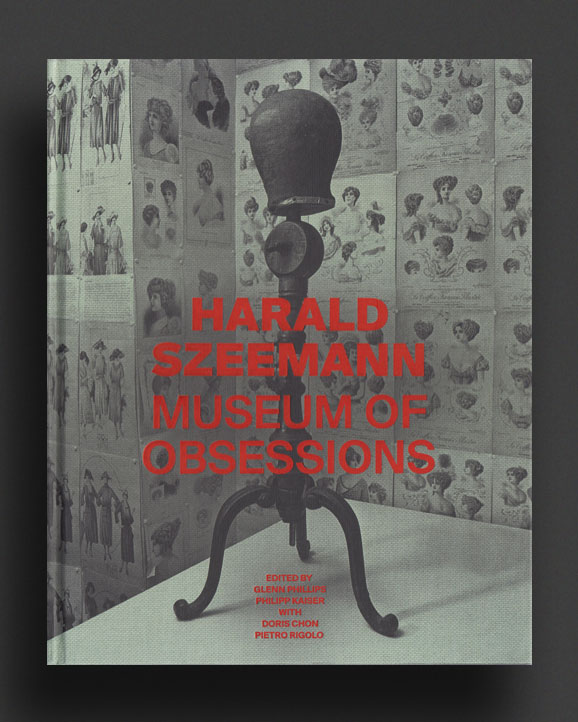
Harald Szeemann is associated with some of the most important artistic developments of the postwar era. A passionate advocate of avant-garde movements like conceptualism and post minimalism, he collaborated with artists such as Joseph Beuys, Bruce Nauman, Richard Serra, and Cy Twombly, developing new ways of presenting art that reflected his sweeping vision of contemporary culture.
Szeemann once stated that his goal as an exhibition maker was to create a "Museum of Obsessions." This richly illustrated volume is a virtual collection catalogue for that imaginary institution, tracing the evolution of his curatorial method through the materials he collected and produced while researching and organising his exhibitions, including letters, drawings, personal datebooks, installation plans, artists' books, posters, photographs, and handwritten notes.
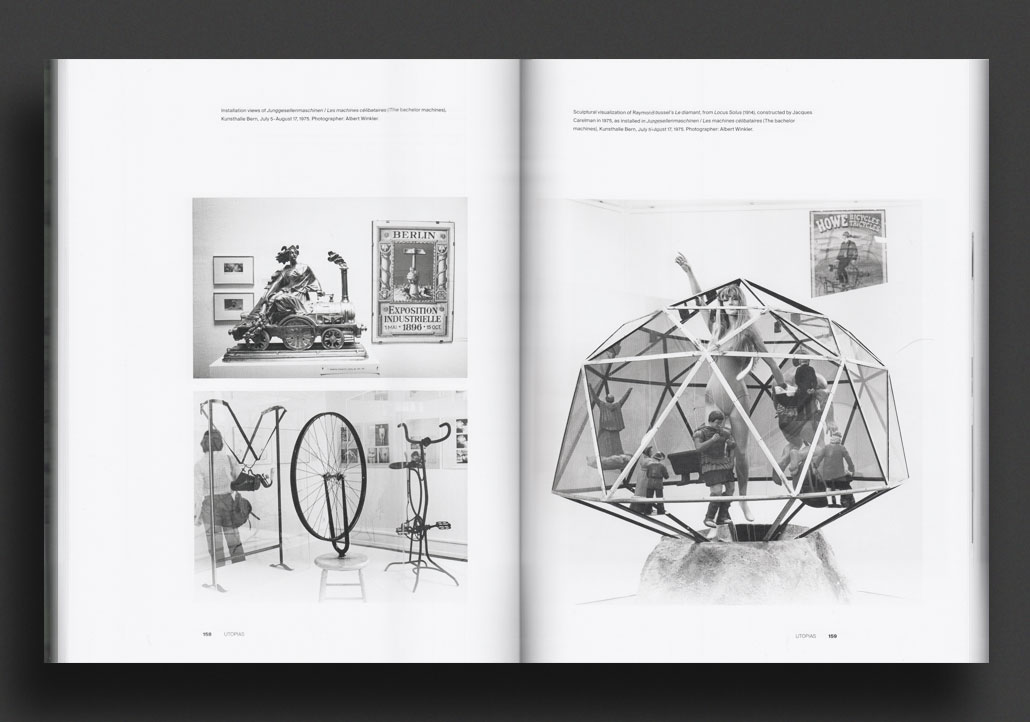
This book documents all phases of Szeemann's career, from his early stint as director of the Kunsthalle Bern, where he organized the seminal Live in Your Head: When Attitudes Become Form (1969); to documenta 5 (1972) and the intensely personal exhibition he staged in his own apartment using the belongings of his hairdresser grandfather (1974); to his reinvention as a freelance curator who realised projects on wide-ranging themes until his death in 2005.
The book contains essays exploring Szeemann's curatorial approach as well as interviews with collaborators. Its more than 350 illustrations include previously unpublished installation photographs and exhibition documents as well as many other materials from the curator's archive.
1970, English / German
Softcover, 300 pages, 23 x 15 cm
1st edition, Out of print title / used*,
Published by
Kölnischer Kunstverein / Köln
$85.00 - Out of stock
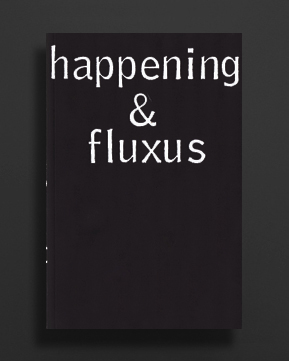
The great "Happening & Fluxus" book, published on the occasion of the exhibition of the same name at the Kölnischer Kunstverein in 1970, curated by Harald Szeemann.
This exhaustive Fluxus document is illustrated heavily throughout and broken into two important sections : 1. Chronology 1959-1970 (a detailed cataloguing of this incredible period of happenings, actions, concerts, meals, exhibitions and any related events, illustrated with photography along with dates, locations, those involved, and reproductions of the related ephemera), 2. Bibliography 1959-1970 (again heavily illustrated with detailed cataloguing of printed material about Fluxus and related actions, artists, exhibitions, performances, as well as a detailed listing for each featured artist of their publications, writings, art editions, etc). Book includes works by Wolf Vostell, Daniel Spoerri, Nam June Paik, Tetsumi Kudo, Tadeusz Kantor, Dick Higgins, George Brecht, Allan Kaprow, Yoko Ono, Claes Oldenburg, Alison Knowles, Robert Filliou, Stanley Brouwn, Bazon Brock, Joseph Beuys, Eric Anderson, Viennese Actionists, Charlotte Moorman, Günter Brus, Emmett Williams, Ben Vautier, Carolee Schneemann, Otto Muehl, Robert Watts, Al Hansen, Henry Flynt, Philip Corner, Henning Christiansen, Robert Rauschenberg, John Cage, and many more.
First major compilation of this material compiled by Harald Szeemann to accompany a now legendary exhibition.
"There is neither here nor in the exhibition, a fix-ready answer to the question: What is happening, what is Fluxus."
2018, English / German
Softcover, 240 pages, 23 x 16.5 cm
Published by
Texte Zur Kunst / Berlin
$32.00 - Out of stock
The September issue of Texte zur Kunst focuses on Amerika (U.S. America principally): the land, the idea, and all that seems to come with it. What is Amerika today other than a contradiction between brute political reality and a largely fictional self-image, where fiction says as much about fact as “alternative facts” say about the truth? Within this contradiction, this issue tries to imagine modes of engaging with the current political machinery without opting for the one-dimensional dive into micropolitics that has plagued much recent activist discourse. The Trump regime has introduced a new form of politics whose tactics are closer to artistic practice—inventing parallel truths and questioning facts—than anything like traditional governance. As such, those familiar with art are in a unique position to offer an analysis of the specific forms that define contemporary politics in Amerika. We have thus commissioned artists and critics to come up with new strategies for analyzing the rampant barbarism, resisting the urge to sink into paralysis and defeat in the face of the endless onslaught.
Issue No. 111 / September 2018 "America"
Table Of Contents :
Foreword
Prefaces
Colin Lang
- The Horror, Vacui
Ken Okiishi -
Liberty and Justice For All, Not Us
Aria Dean -
Trauma And Virtuality
Letter To A Friend In New York / By Isabelle Graw
The Golden Hoard / Conversation With Andrea Fraser
Sina Najaf - i
The American Dream State
Robert F. Reid-Pharr -
What We Dare Not Remember
New Development
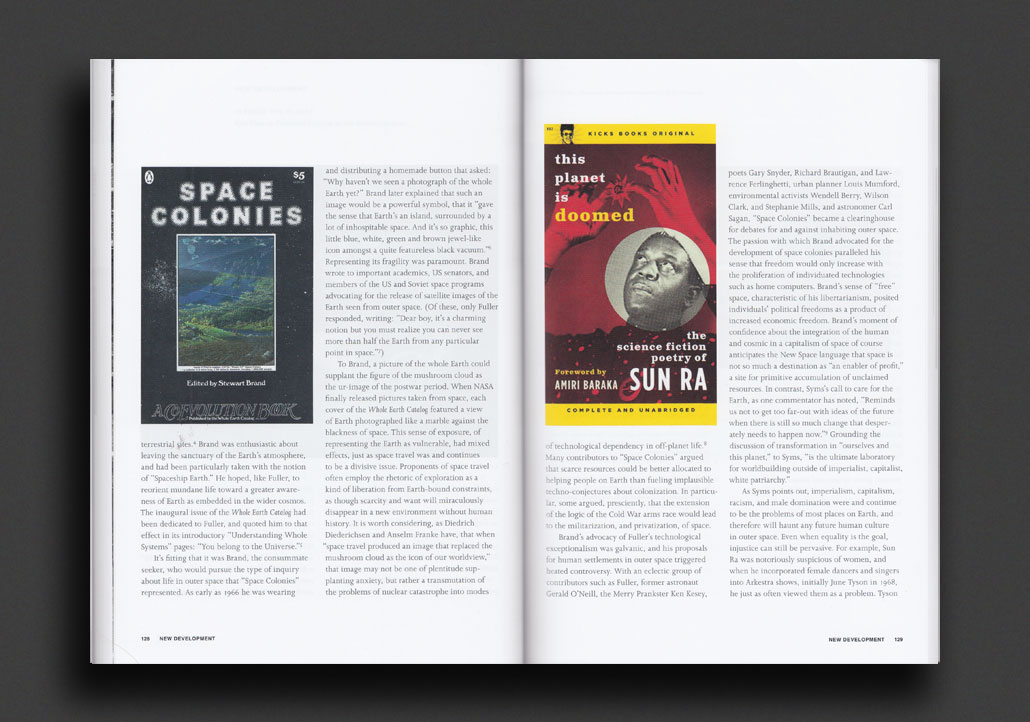
Is Space The Place? / Eva Díaz On Feminist Futures In The Anthropocene
Love Work Cinema
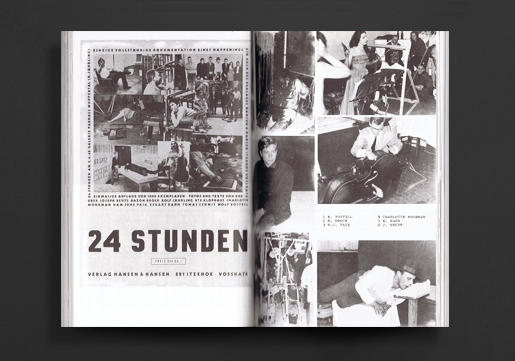
Between Bildersturm And Artistic Research / Rainer Bellenbaum About Films From The Years Around 1968 In The Historical Program Of The Kurzfilmtage Oberhausen
Reviews
Decolonialized Narrative In The National Art Temple / Susanne Von Falkenhausen On "Hello World" At Hamburger Bahnhof, Berlin
That Fluctuating Moment / Jesi Khadivi At The 10Th Berlin Biennale
The Silent Ship / Övül Ö. Durmusoglu On Manifesta 12 In Palermo
Love And Salt / Adrienne Rooney On Adrian Piper At The Museum Of Modern Art, New York
Tracks Of Disappearance / Tobi Maier About Bruce Nauman In The Schaulager, Basel
Man In The Mirror / Dan Kidner On "Picasso 1932 - Love, Fame, Tragedy" At Tate Modern, London
In The Bure Of The Circle / Marietta Kesting About Raster-Noton In The Kunstbau Lenbachhaus, Munich
Looking But Not Seeing? / Darla Migan On Faith Ring Gold At Weiss Berlin
Mad / Ame / Jenny Nachtigall About Jutta Koether At The Museum Brandhorst, Munich
If You Are Once Big / Nadja Abt About Philip Wiegard At Between Bridges, Berlin
Marked By Trade / Sven Lütticken On "Trade Markings" At The Van Abbemuseum, Eindhoven
Amazone Retired / Tina Schulz On Astrid Klein In The Falckenberg Collection, Hamburg
Born To Die / Colin Lang On Jeanette Mundt At Société, Berlin
Limitations Of Utopia / Christina Irrgang On Cyril Lachauer In The Berlinische Galerie, Berlin
Hereditary Peers / Saim Demircan On Luke Willis Thompson At Kunsthalle Basel
Zoology Of The Falls / Niklas Lichti On Peter Wächtler With Lars Friedrich, Berlin
Below The Surf / Steven Warwick On Georgie Nettell At The Kunstbunker Forum For Contemporary Art, Nuremberg
The Hour Of The Historics / Ariane Müller About Valie Export At The Neuer Berliner Kunstverein
Foreign Powers / Johanna Burton On Zoe Leonard At The Whitney Museum Of American Art
Committee Criteria / Kerstin Stakemeier On Henrike Naumann At The Museum Abteiberg, Mönchengladbach
Related Practices / Sandra Neugärtner On Anni Albers In The Kunstsammlung Nordrhein-Westfalen, Düsseldorf
Term (s) Of Endearment / Kathi Hofer On "Milieu" At After The Butcher, Berlin
Obituary
Claude Lanzmann (1925-2018)
Edition
Cecily Brown
Mark Leckey
2018, English
Hardcover (w. dust jacket), 356 pages, 22.8 x 26.8 cm
Published by
Walther König / Köln
MoMA / New York
$140.00 - Out of stock
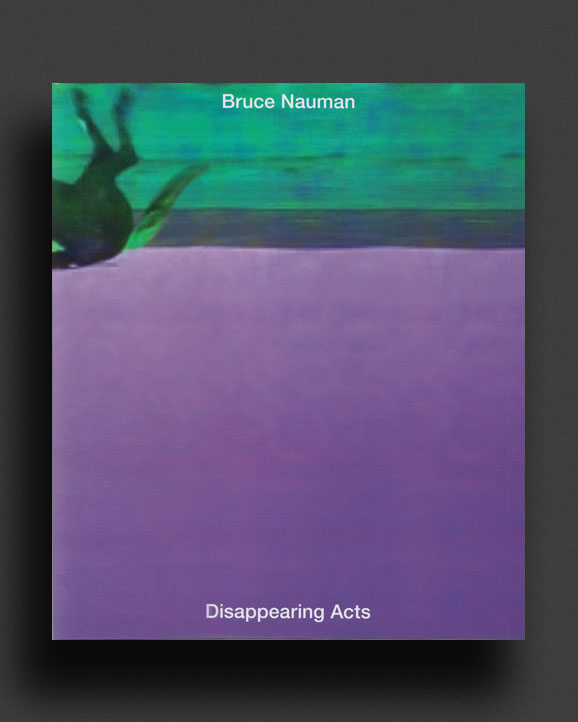
With a magician’s sleight of hand, Nauman’s art makes disappearance visible.
At 76 years old, Bruce Nauman is widely acknowledged as a central figure in contemporary art whose stringent questioning of values such as good and bad remains urgent today. Throughout his 50-year career, he has explored how mutable experiences of time, space, sound, movement and language provide an insecure foundation for our understanding of our place in the world.
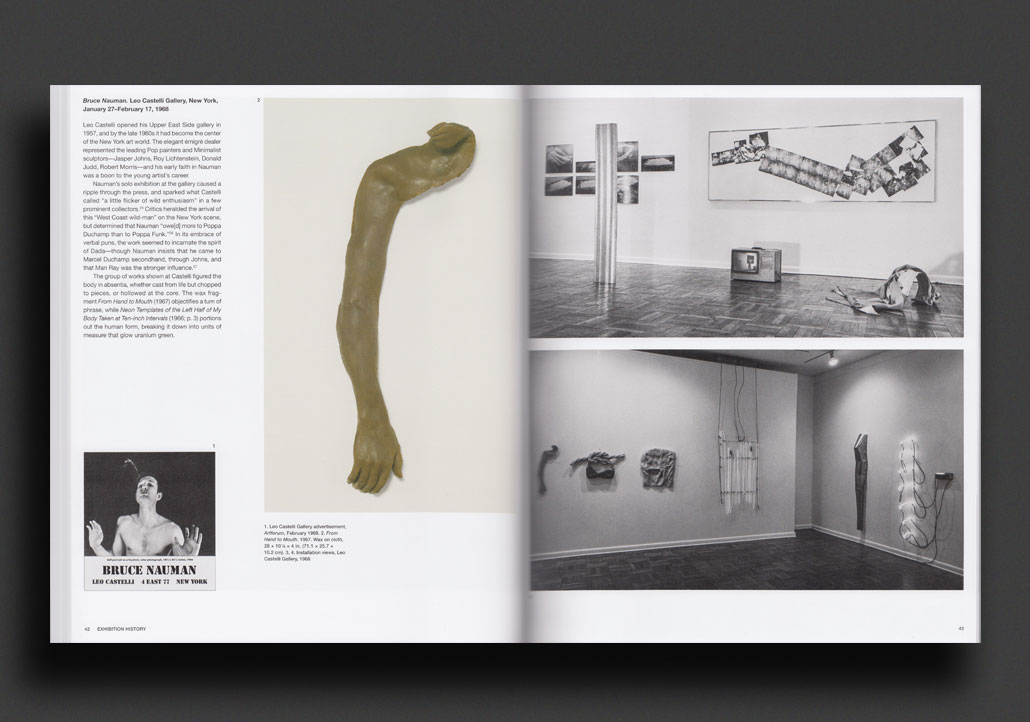
This richly illustrated catalog offers a comprehensive view of Nauman’s work in all mediums, spanning drawings across the decades; early fiberglass sculptures; sound environments; architecturally scaled, participatory constructions; rhythmically blinking neons; and the most recent 3D video that harks back to one of his earliest performances. A wide range of authors—curators, artists and historians of art, architecture and film—focus on topics that have been largely neglected, such as the architectural models that posit real or imaginary sites as models for ethical inquiry and mechanisms of control. An introductory essay explores Nauman’s many acts of disappearance, withdrawal and deflection as central formal and intellectual concerns. The 18 other contributions discuss individual objects or themes that persist throughout the artist’s career, including the first extensive essay on Nauman as a photographer and the first detailed treatment on the role of color in his work. A narrative exhibition history traces his reception, and features a number of rare or previously unpublished images.
Edited by Kathy Halbreich, Isabel Friedli, Heidi Naef, Magnus Schaefer, Taylor Walsh.
Text by Thomas Beard, Briony Fer, Nicolás Guagnini, Kathy Halbreich, Rachel Harrison, Ute Holl, Suzanne Hudson, Julia Keller, Liz Kotz, Ralph Lemon, Glenn Ligon, Catherine Lord, Roxana Marcoci, Magnus Schaefer, Felicity Scott, Martina Venanzoni, Taylor Walsh, Jeffrey Weiss.
Bruce Nauman was born in Indiana in 1941 and raised near Milwaukee, Wisconsin. He studied math, music and physics at the University of Wisconsin–Madison before switching his major to visual art, and received an MA in sculpture from the University of California, Davis, in 1966. In 1979 he moved to New Mexico, where he continues to reside. Nauman’s work has been the subject of two previous retrospectives, in 1972 and 1994. In 2009 he represented the United States at the Venice Biennale, where he won the Golden Lion.
2018, English
Softcover, 224 pages, 12.7 x 19.7 cm
Published by
Laurenz Foundation / Schaulager
$54.00 - Out of stock
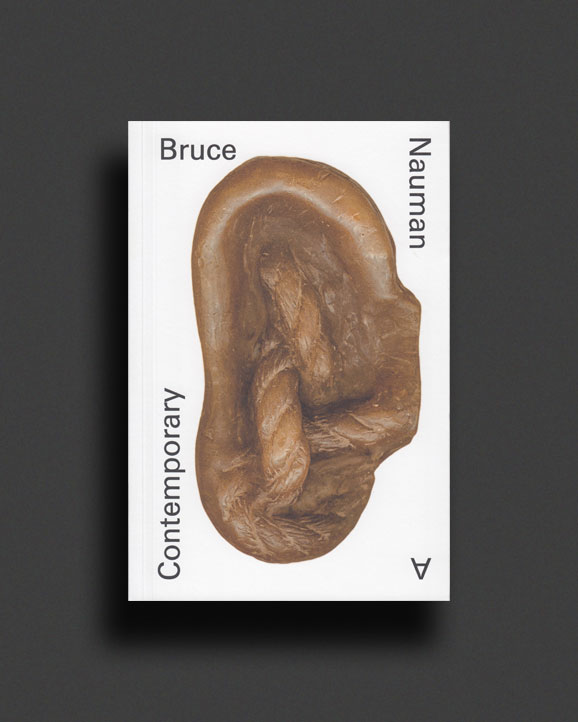
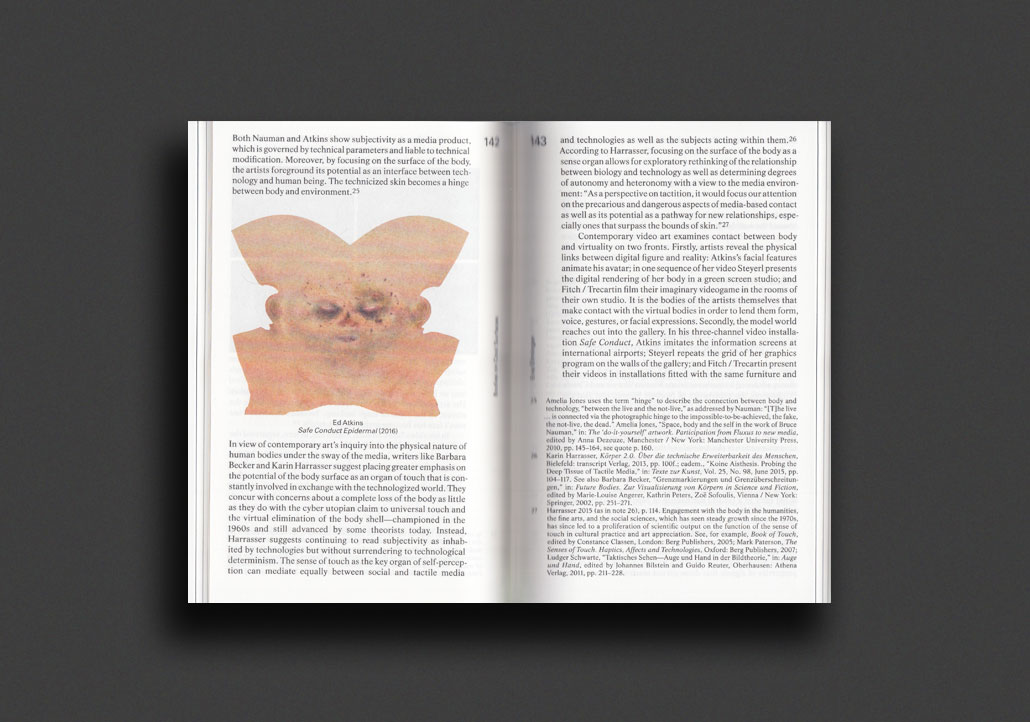
Bruce Nauman: A Contemporary presents the artist as contemporary in a double sense. First, the works of Nauman's 50-plus-year career are placed in the context of contemporary positions and discourses. Second, the publication analyses the extent to which Nauman's themes, media and forms have forged connections to the present, remaining of enduring importance for artists of subsequent generations. This publication seeks to counter the tendency to cast Bruce Nauman as an outstanding, solitary figure of postmodernism by putting the artist's work back in context. Nauman's early works were originally discussed in the context of contemporary practices and discourses, such as minimal music, postmodern dance, conceptual art, Gestalt therapy or the philosophy of language. But soon Nauman's reputation came to precede him, and his more recent work has largely been appraised independently of any artistic, social, historical or theoretical context. Critical consideration of Nauman's work has narrowed to a relatively small selection of the artist's works and ideas. Bruce Nauman: A Contemporary redresses this imbalance by focusing on thematic concerns shared by Nauman and his contemporaries. Scholarly essays explore how Nauman and his works enter contemporary conversations on the relationship of art and work, art and globalisation, and corporeality in the digital age.
2016, English
Softcover, 108 pages, 17.7 x 23.8 cm
Published by
Surpllus / Melbourne
$20.00 - In stock -
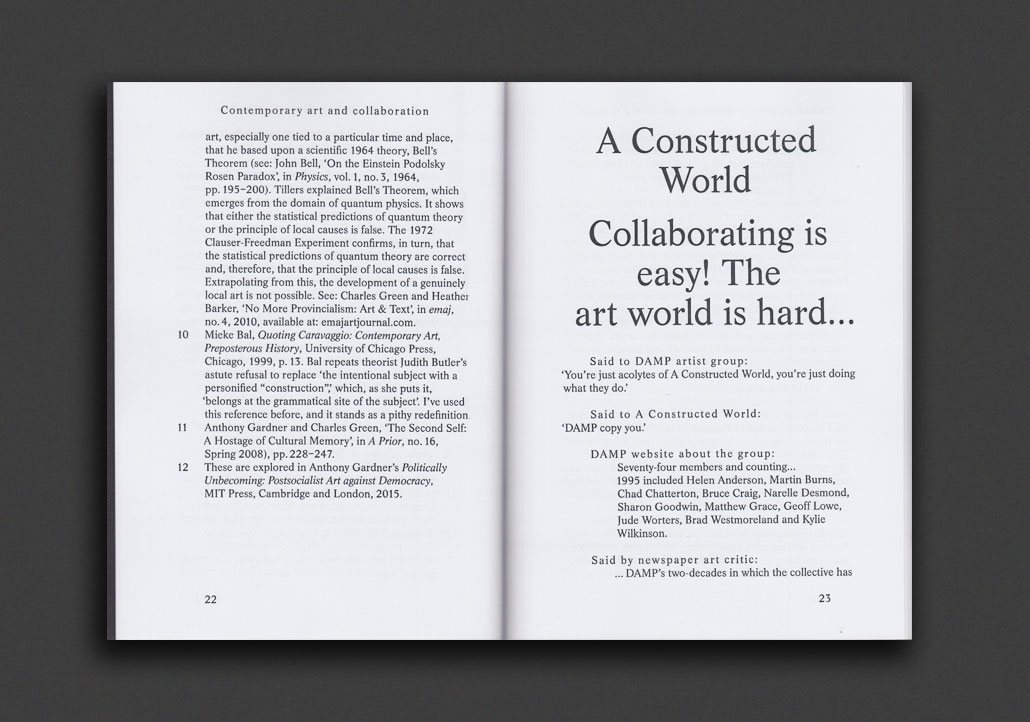
Concerted Efforts explores the nature and purpose of collaborative relationships in contemporary art. Edited by Samantha McCulloch and Christopher Williams-Wynn. Featuring contributions from A Constructed World, Basel Abbas and Ruanne Abou-Rahme, bomb collective, Catherine or Kate, Charles Green, Courtney Coombs, Critical Art Ensemble, Institute for New Feeling, neverhitsend, and Rachael Haynes.
Published by Melbourne publisher Surpllus.
2018, English
Softcover, 350 pages, 15 x 22 cm
Published by
Trapart / Stockholm
$63.00 - Out of stock
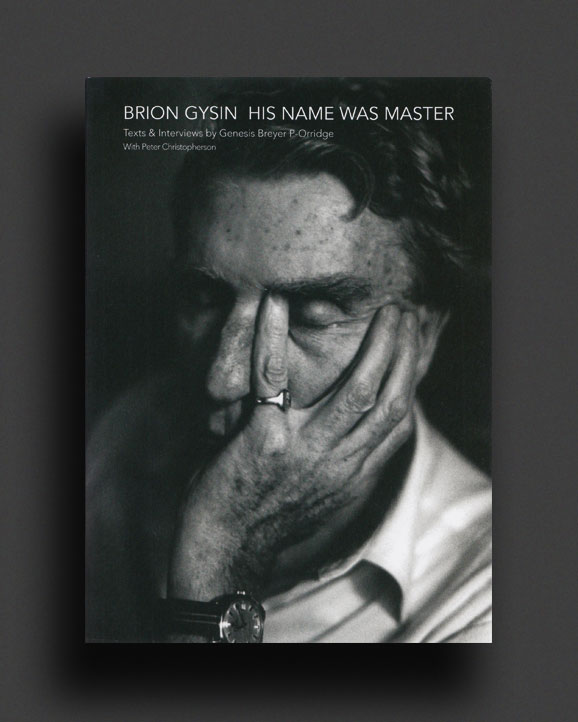
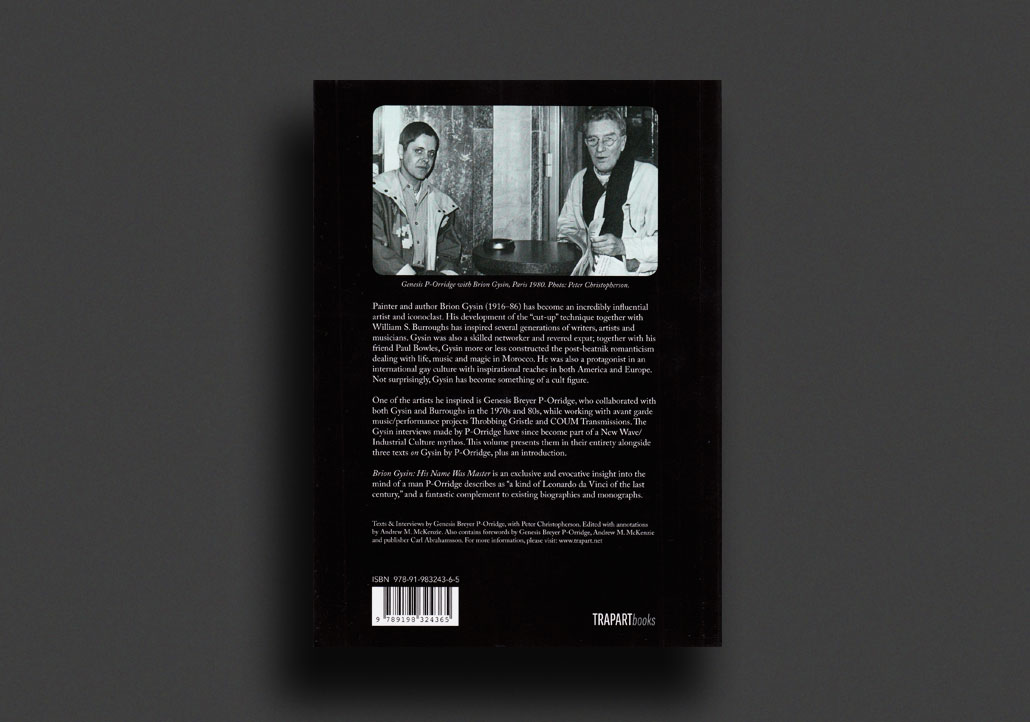
Texts and Interviews by Genesis Breyer P-Orridge, with Peter Christopherson. Edited with notes by Andrew M. McKenzie. Introductions by Genesis Breyer P-Orridge & Carl Abrahamsson.
Brion Gysin (1916–86) has been an incredibly influential artist and iconoclast: his development of the “cut-up” technique with William S. Burroughs has inspired generations of writers, artists and musicians. Gysin was also a skilled networker and revered expat: together with his friend Paul Bowles, he more or less constructed the post-beatnik romanticism for life and magic in Morocco, and was also a protagonist in an international gay culture with inspirational reaches in both America and Europe. Not surprisingly, Gysin has become something of a cult figure.
One of the artists he inspired is Genesis Breyer P-Orridge, who collaborated with both Gysin and Burroughs in the 1970s, during his work with Throbbing Gristle and COUM Transmissions. The interviews made by P-Orridge have since become part of a New Wave/Industrial mythos. This volume presents them in their entirety alongside three texts on Gysin by P-Orridge, plus an introduction. This book is an exclusive insight into the mind of a man P-Orridge describes as “a kind of Leonardo da Vinci of the last century,” and a fantastic complement to existing biographies and monographs.
2017, English
Softcover, 416 pages, 21 x 28 cm
Published by
Mousse / Milan
Walther König / Köln
$49.00 - Out of stock
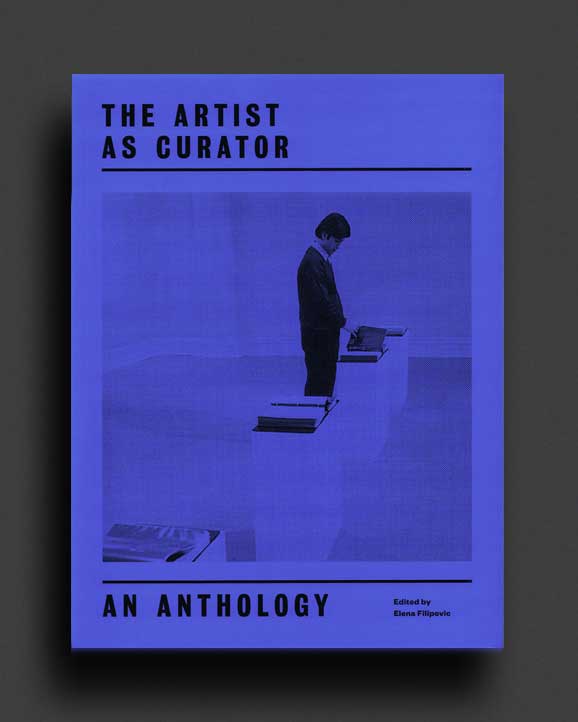
With texts by Alexander Alberro, Monica Amor and Carlos Basualdo, Biljana Ciric, Ekaterina Degot, Elena Filipovic, Claire Grace, Anthony Huberman, Dean Inkster, Alhena Katsof, William Krieger, Elisabeth Lebovici, Ana Longoni, James Meyer, Isabelle Moffat, Nina Möntmann, Natalie Musteata, Sandra Skurvida, Dirk Snauwaert, Lucy Steeds, Monika Szewczyk, and Kaelen Wilson-Goldie
Edited by Elena Filipovic.
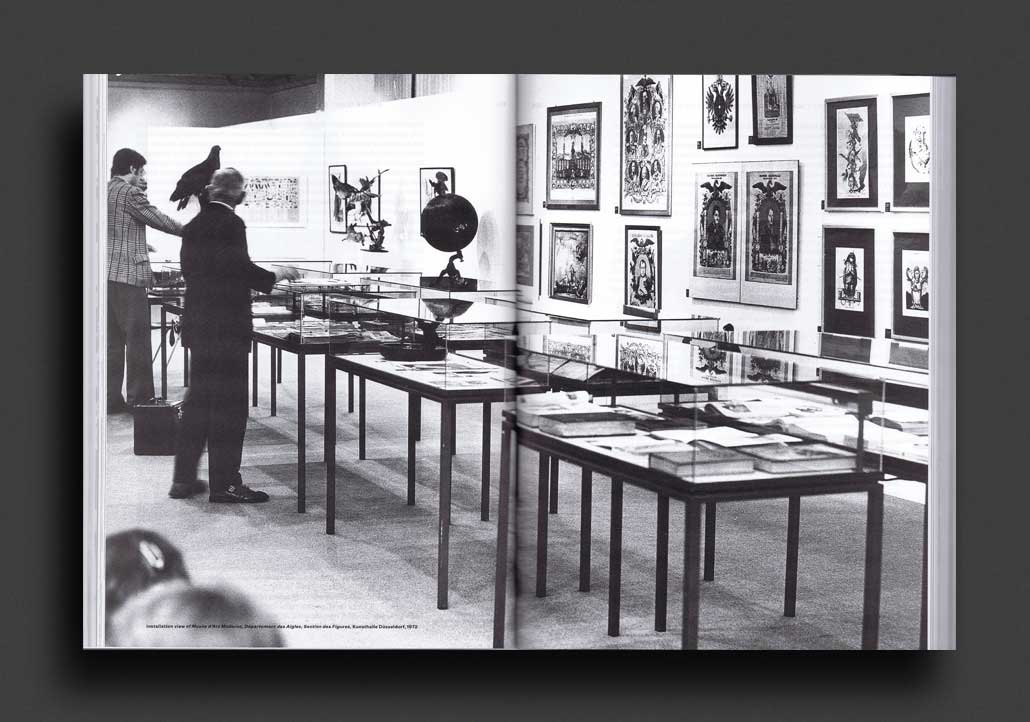
Taking that ontologically ambiguous thing we call “the exhibition” as a critical medium, artists have often radically rethought conventional forms of exhibition making. This anthology surveys seminal examples of such exhibitions from the postwar to the present, including rare documents and illustrations. It includes an introduction and the twenty essays that first appeared in Mousse, a newly commissioned afterword by Hans Ulrich Obrist, and two additional essays that appear here for the first time.
The publication focuses on the following artists: Avant-Garde, the Argentinean artist group - Mel Bochner - Marcel Broodthaers - Hank Bull, Shen Fan, Zhou Tiehai, Shi Yong, and Ding Yi - John Cage - Judy Chicago, Miriam Schapiro, and the CalArt's Feminist Art Program - Collaborative Projects Inc. (Colab) - Alice Creischer, Andreas Siekmann, and Max Jorge Hinderer - Liam Gillick and Philippe Parreno - Group Material - Richard Hamilton and Victor Pasmore - David Hammons - Martin Kippenberger - Mark Leckey - Goshka Macuga - Lucy McKenzie and Paulina Olowska - Hélio Oiticica - Walid Raad and Akram Zaatari - Martha Rosler - Avdey Ter-Oganyan - Philippe Thomas - Andy Warhol.
1997, English / Japanese
Hardcover (cardboard box covers w. glued in booklets, fold-outs, inserts), 84 pages plus fold-outs, 12.5 x 14 cm
1st edition, Out of print title / used*,
Published by
Wateri Museum of Contemporary Art / Tokyo
$90.00 - Out of stock
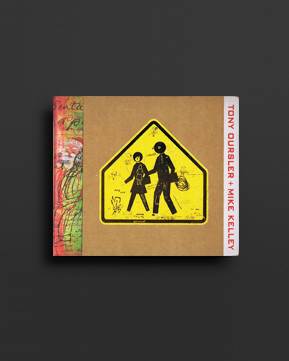
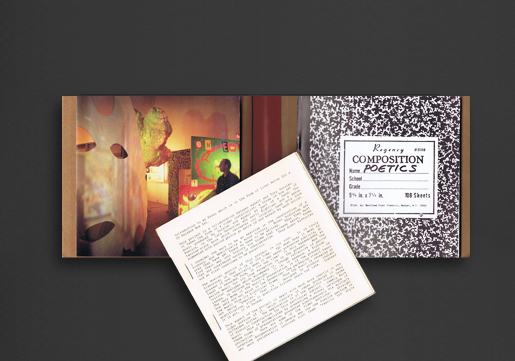
Very scarce Tony Oursler + Mike Kelley exhibition catalogue / artists' book published in conjunction with a major two-person exhibition held 1997 - 1998 in Tokyo. Includes colour installation images of the exhibition as installed at Documenta X, June 21 - September 28, 1997. "The ongoing 'Poetics Project' serves up a rich mix of visual and aural experiences, while inviting viewers to question the reliability of the shows as history. Artist Mike Kelley says, 'If you don't create your own history, someone else will." Kelley and Tony Oursler's the 'Poetics Project 1977-1997' is a retrospective work that draws from their collaborative efforts in painting, video, sculpture, drawing and music. Although the ostensible subject of this project is Kelley and Oursler's early experiences as performers in a loose-knit musical group called the Poetics, its broader concerns are the processes by which history is constructed, and the reciprocal relationship between the fine arts and popular culture. The conflation of past and present in the 'Poetics Project' makes it difficult at first for the viewer to penetrate the work. Video installations and taped interviews with visual artists, rock musicians and critics are intermingled with paintings, sculptures and stacks of drawings. A precise checklist and diagram prepared by Kelley and Oursler methodically pinpoint the authorship of each work, while serving as a serf-guided tour and critical record of the project. Only with this didactic help do viewers come to realize that the 'Poetics Project' is almost entirely made up of works created in 1997 and 1998, though based on what Kelley and Oursler tell us is a single notebook of sketches and a collection of audio recordings--some little more than notations for never-performed works--which date from the late 1970s and early '80s (the Poetics disbanded in 1983). Filled with irony and steeped in serf-reflexive practice, this work builds upon the radical autobiographical prose of William S. Burroughs and art works and performances by artists such as John Baldessari, Allan Kaprow and Andy Warhol. Reminiscent of Warhol's A:A Novel, which records one day in the life of the artist in 384 pages, the 'Poetics Project' is an expanding template of art works which explores how the past can be reconstructed to shed light on the present." -- Diane Shamash, Art in America, October 1998
First and only edition of this unique Japanese publication from these two American artists. Cardboard covers feature decal artwork reproducing the Oursler/Kelley collaborative artwork "Poetics Country", 1997.
2015, English
Softcover, 304 pages. 24 x 28 cm
Published by
Hatje Cantz / Berlin
$99.00 - Out of stock
Text by Sabine Breitwieser, Andrea Fraser, Shannon Jackson, Sven Lütticken.
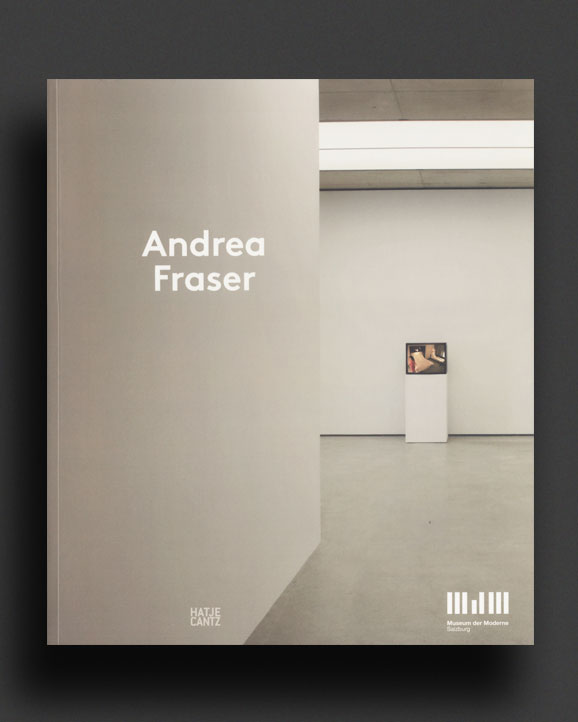
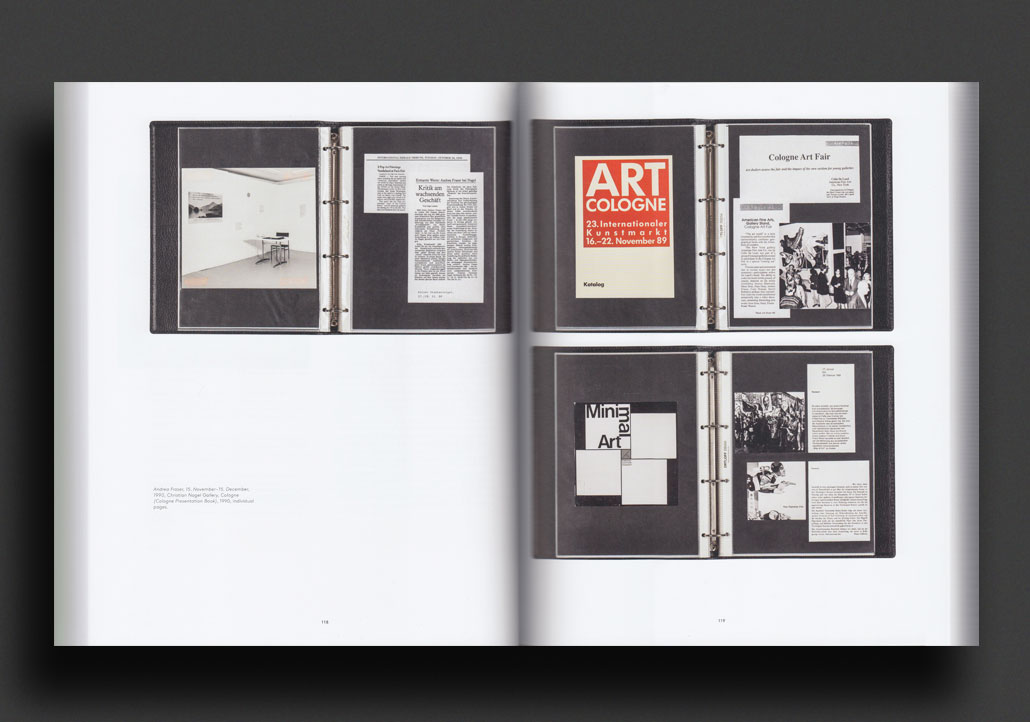
Controversial, provocative and poignantly humorous, American artist Andrea Fraser (born 1965) is one of the most influential and pioneering figures of her generation and has been captivating a devoted audience for more than 30 years. She employs a wide range of media, including prints, photographs, installations and performances as well as texts and videos, time and again reformulating the same fundamental questions: what do we want from art, how do we view it and how does the art market distribute it? Fraser's brand of performance during the 1990s popularized the institutional critique art movement, a loosely formed artistic practice meant to critique the very institutions that are involved in the sale, display, and commerce of art. Fraser's work typically comments on the politics, commerce, histories, and even the self-assuredness of the modern-day art museum, including the hierarchies and the exclusion mechanisms of art as an enterprise. Her performances, despite having serious undertones, are often presented in a humorous, ridiculous, or satirical manner. Fraser was a founding member of the feminist performance group, The V-Girls (1986-1996); the project-based artist initiative Parasite (1997-1998); and the cooperative art gallery Orchard (2005-2008). She was also co-organizer, with Helmut Draxler, of Services, a “working-group exhibition” that has been conceived at Kunstraum of Lüneburg University and toured to eight venues in Europe and the United States between 1994 and 2001.
This richly illustrated catalogue presents a full overview of the artist's career for the first time. It assembles the early Four Posters (1984) as well as her famous performances such as Museum Highlights (1989), Inaugural Speech (1997), Official Welcome (2001/03), and Untitled (2003) linking them with her most recent videos.
2018, English / German
Softcover, 272 pages, 23 x 16.5 cm
Published by
Texte Zur Kunst / Berlin
$30.00 - Out of stock
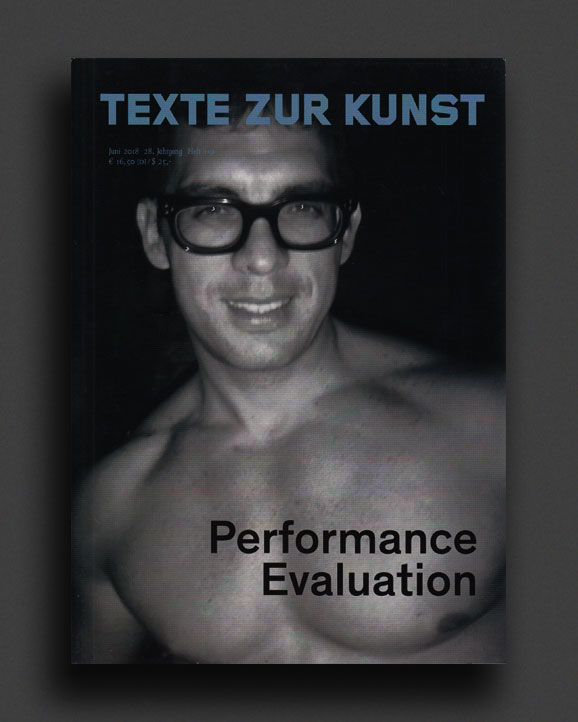
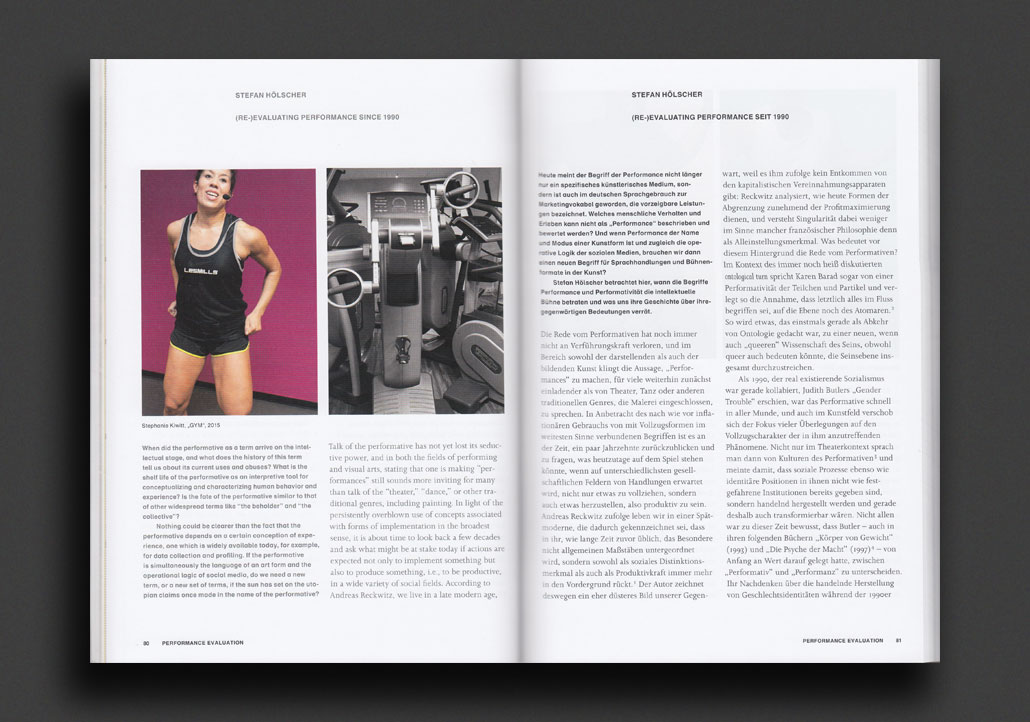
In the 18 years since Texte zur Kunst first turned its attention to the field of performance, a lot has happened, to say the least. Today, performance refers to almost any act, willing or forced, and is used by the institutions the world over whose aim is often to solicit performative acts from consumers, whether they are an audience at an art event or a user of social media. With performance today comes the inevitable system of evaluation—likes, ratings, grades, followers, etc.—a fact that has made separating performance as an art, and its popularity, from the overpowering influence of the culture of evaluation. For this issue of Texte zur Kunst, "Performance Evaluation," we investigate the overlapping definitions of performance, following their ubiquity and uses in particular, in order to evaluate what performance means today, and what we mean when we call something a "performance."
Issue No. 110 / June 2018 "Performance Evaluation"
Table Of Contents
Vorwort
Preface
Sabeth Buchmann
Feed Back: Performance In The Evaluation Society
Steffen Mau And Uwe Vormbusch
Likes And Performance / A Conversation Between Uwe Vormbusch And Steffen Mau On The Quantification Of The Social
Alexandra Pirici
Performance As Conjuring / Artist Statement
Stefan Hölscher
(Re-)Evaluating Performance Since 1990
Evelyn Annuss
On The Future Of The Volksbühne –
Failure Is An Option
Andreas Gelhard
Notes On The Competence Society
Working With Performance / A Conversation About Collaboration, Collectivity, And The Value Of Performance
New Development :
Amanda Schmitt
Miranda Warning
Rotation :
Nach Dem Metabolischen Bruch / Martin Müller Über „Molekulares Rot. Theorie Für Das Anthropozän“ Von Mckenzie Wark
Klang Körper
Äpfel Und Birnen / Wolfgang Seidel Über „Underground Und Improvisation. Alternative Musik Und Kunst Nach 1968“ In Der Akademie Der Künste, Berlin
Stunt / Anke Dyes Über Georgia Sagri Im Portikus Frankfurt/M.
Brighten The Corners / Colin Lang On “Res·O·Nant” At The Jewish Museum Berlin
Anke Dyes, Luisa Kleemann Und Tina Schulz
Über Das Gallery Weekend In Berlin
Reviews :
Endstation Selbstbezug / Hans-Christian Dany Über „Harald Szeemann: Museum Of Obsessions“ Und „Grandfather: A Pioneer Like Us“ Im Getty Center Und Ica In Los Angeles
Forward In This Generation / Eva Díaz On The New Museum Triennial
Archivarisch Verdichtet / Agnieszka Roguski Über „Left Performance Histories“
In Der Neuen Gesellschaft Für Bildende Kunst, Berlin
Broken Lineage / Gregory H. Williams On “Inventur: Art In Germany, 1943–55” At The Harvard Art Museums
Geld Ist Sein Pinsel / Verena Dengler Über Damien Hirst Bei Gagosian, Beverly Hills
Antipathy & Ecstasy / Kari Rittenbach On Ilya Lipkin At Svetlana, New York
Museum In Progress / Barbara Hess Über „Von Da An. Räume, Werke, Vergegenwärtigungen Des Antimuseums 1967–1978“ Im Museum Abteiberg, Mönchengladbach
Composition As Explanation / Annie Godfrey Larmon On Cally Spooner At The Centre D’art Contemporain Genève
Ikonisches Nachleben / Johannes Bennke Über James Benning Bei Neugerriem-Schneider, Berlin
Game Of Thrones / Chris Reitz On Geta Bratescu At Hauser & Wirth, Los Angeles
Park, Blicke / Benjamin Meyer-Krahmer Über Maya Schweizer Im Kunstverein Leipzig
Humanity’s Last Hopf / Mikael Brkic On Judith Hopf At Kunst-Werke Berlin
Memes, Schönheit Und Verfremdung / Jessica Aimufua Über Arthur Jafa In Der Julia Stoschek
Collection Berlin
Unendliche Arbeit / Hans-Jürgen Hafner Über Catherine Christer Hennix
Im Stedelijk Museum, Amsterdam
Relentless Applause / Carmen Gray On Katrina Daschner At The Neue Galerie Graz
Karikaturen Ohne Pointe / Michael Franz Und Franziska Ipfelkofer Über Matthias Noggler Bei Emanuel Layr, Wien
Administrativer Papierkram / Fiona Geuß Über „Paperwork“ In Der Sammlung Haubrok, Fahrbereitschaft, Berlin
Nachrufe :
Linda Nochlin (1931–2017)
Kynaston Mcshine (1935–2018)
Peter Gorsen (1933–2017)
Edition :
Tauba Auerbach
Eliza Douglas
Hans Haacke
2017, English
Softcover, 142 pages, 20 x 28.7 cm
Published by
Koenig Books / London
Museum of Contemporary Art / Antwerp
$54.00 - Out of stock
Edied by Antony Hudek
Joseph Beuys was captivated by Eurasia, the vast expanse connecting East and West. Through drawings, sculptures, installations, performances, films and multiples, Beuys sought to imagine the fluid contours of Eurasia, a space built upon history and myths yet firmly grounded in the present.
This book takes Beuys’ 1968 Eurasienstab action, performed with Henning Christiansen at the Wide White Space Gallery in Antwerp, as a starting point for a reflection on territories, real and imagined. It is through Beuys’ connections to the Wide White Space that he first met fellow artists Marcel Broodthaers and James Lee Byars.
2018, English & German
Hardcover, 416 pages, 26.3 x 31.5 cm
Published by
Walther König / Köln
$105.00 - In stock -
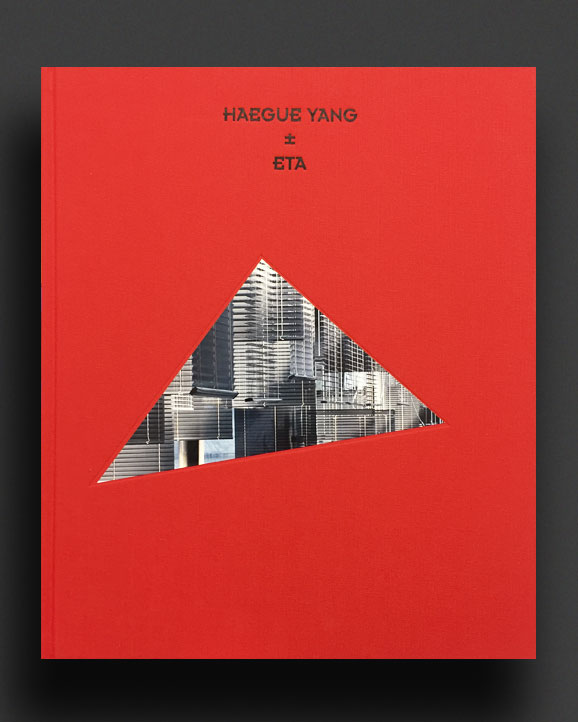
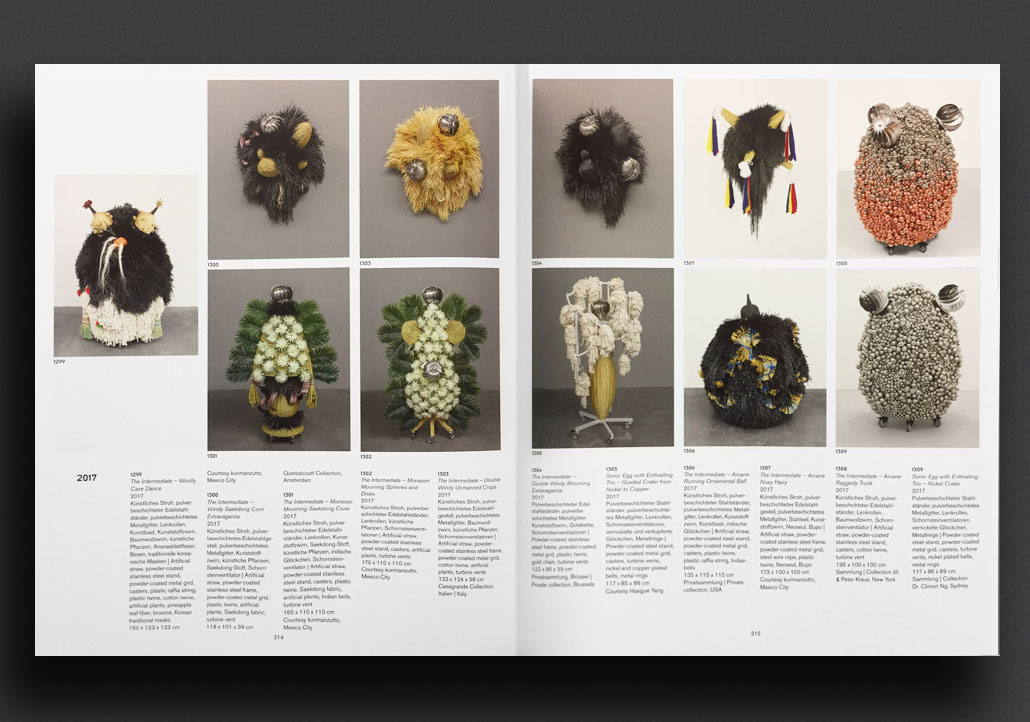
This large comprehensive hardcover catalogue raisonné documents and depicts Yangʼs entire oeuvre, from early action-based objects to lacquer paintings, photographs, works on paper and video, anthropomorphic sculptures, performative works, and large-scale installations with venetian blinds.
The abbreviation ETA is internationally recognized as meaning estimated time of arrival, among other things, and points to an artistic career in transit and the constant itineracy of an artist who has exhibited internationally since 1994.
Published to accompany the exhibition Haegue Yang: ETA 1994–2018. 2018 Wolfgang Hahn Prize, 18 Apr – 12 Aug 2018, Museum Ludwig, Cologne, Germany.
Haegue Yang’s (b. 1971 in Seoul, South Korea, lives and works in Berlin, Germany and Seoul) works are often recognised by their eclectic arrangement of utilitarian products – electric cables, artificial plants, synthetic straws, metal plated bells, turbine vents, light bulbs – and, perhaps most notably, venetian blinds, which entered her vocabulary in 2006. Treating these functional objects as Duchampian ready-mades, Yang arranges and reconfigures them into immersive installations with olfactory experiences that oscillate between abstraction and narration, freeing them from their conventional status.
2018, English / French
Softcover, 128 pages, 23.5 x 16 cm
Published by
Koenig Books / London
Yves Saint-Laurent Museum / Marrakech
$36.00 - Out of stock
Lebanese artists Etel Adnan and Simone Fattal, along with revered American theatre director Robert Wilson together create a universe where poetry, sound and sculpture overlap, as well as a framework that enables them to construct situations in which memories are transformed into objects, objects into memories, fiction into reality, and reality into fiction.
Garden of Memory is based on a succession of these shared memories and experiences, manifested in the form of a mental landscape, a non-linear narrative and a choreography filled with both immutable and variable elements. The thrust behind it all is the reading of a poem by Etel Adnan entitled, Surge.
This book includes poetry, essays, artworks and a conversation between Etel Adnan and Simone Fattal moderated by Mouna Mekouar.
Published on the occasion of the exhibition, Garden of Memory: Etel Adnan, Simone Fattal, Bob Wilson at Yves Saint-Laurent Museum, Marrakech (14 May – 16 September 2018).
English and French text.
2018, English
Hardcover (w. dust jacket), 164 pages, 135 x 190 cm
Published by
Prestel / Munich
$50.00 $20.00 - Out of stock
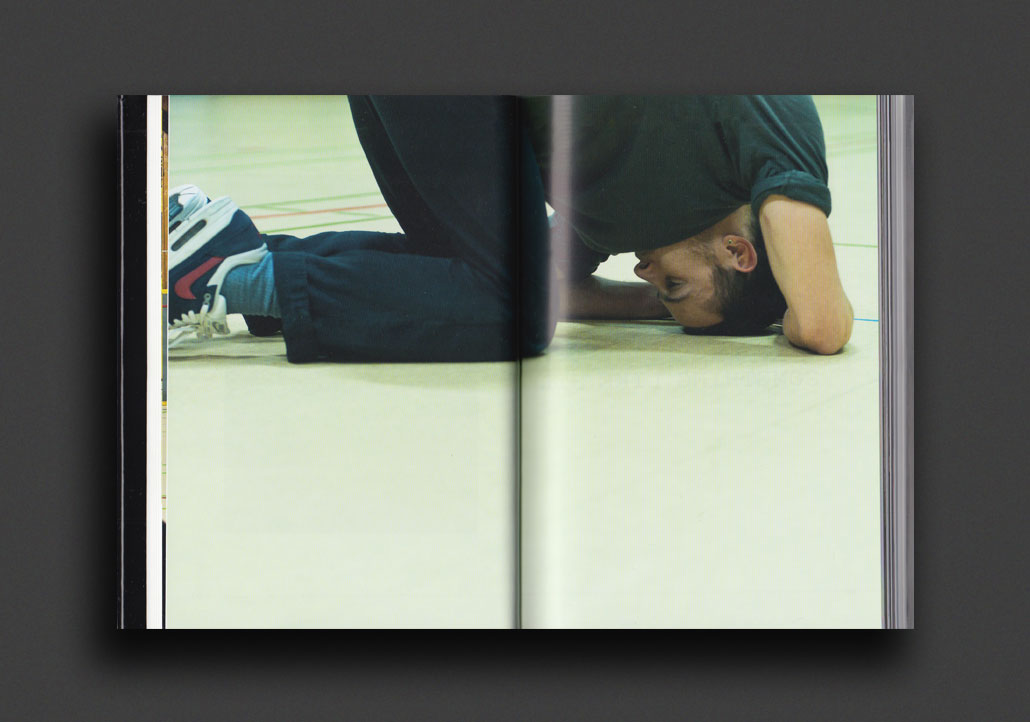
This monograph surveys the work of the Los Angeles-based choreographer and dancer Adam Linder, whose nuanced and highly evocative work offers a critical reflection on the nature of live performance and the role of dance within museums.
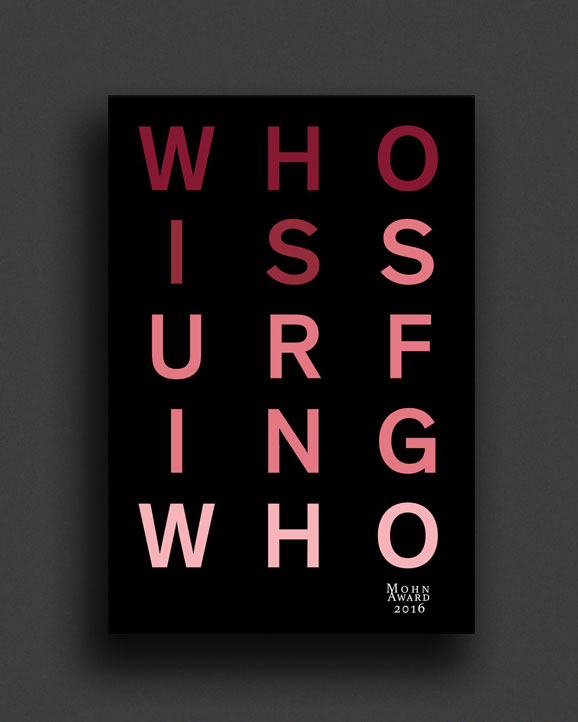
Every two years, on the occasion of the Made in L.A. biennial, the Hammer Museum honors artistic excellence by administering the Mohn Award to an artist whose presentation of work in the exhibition is exceptional. The 2016 winner was choreographer Adam Linder, whose performance and accompanying installation, "Kein Paradiso," premiered at the Hammer. This elegant monograph focuses on the stage works that Linder has produced to date. Starting with "Ma Ma Ma Materials" (2012) and concluding with "Kein Paradiso," the book presents five of Linder's stage works and includes photographs, printed ephemera, costumes, and excerpts of original scripts authored by Linder. In addition, the book features contextual essays written by an array of artists, curators, and choreographers
Contributions by Aram Moshayedi, Kirsty Bell, Sarah Lehrer-Graiwer, Henrik Olesen
2018, English
Softcover, 240 pages, 21 x 23 cm
Published by
The MIT Press / Massachusetts
Whitechapel / London
$49.00 - Out of stock
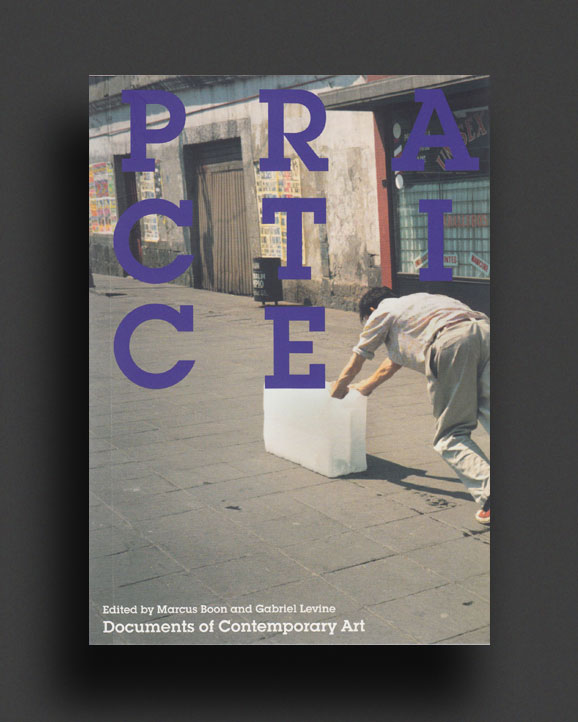
The first anthology to investigate what contemporary notions of practice mean for art, tracing their development and speculating on where this leads.
“Practice” is one of the key words of contemporary art, used in contexts ranging from artists' descriptions of their practice to curatorial practice, from social practice to practice-based research. This is the first anthology to investigate what contemporary notions of practice mean for art, tracing their development and speculating on where this leads.
Reframing the question of practice offers new ways of reading the history of art and of evaluating particular forms of practice-based art. Once used to denote “doing,” as distinct from thinking and making, today the term can convey associations of political action (praxis), professional activity, discipline, or rehearsal, and signal a shift away from the self-enclosed artwork or medium to open-ended actions, series, processes, and projects. Although the turn to practice might promise freedom from finality or eventfulness, it also reflects the neoliberal pressures to train oneself, to perform, and to rehearse a marketable set of skills. This book offers an indispensible guide to the art history and theoretical framework of art-as-practice, clarifying the complex issues at stake in thinking about and enacting practice.
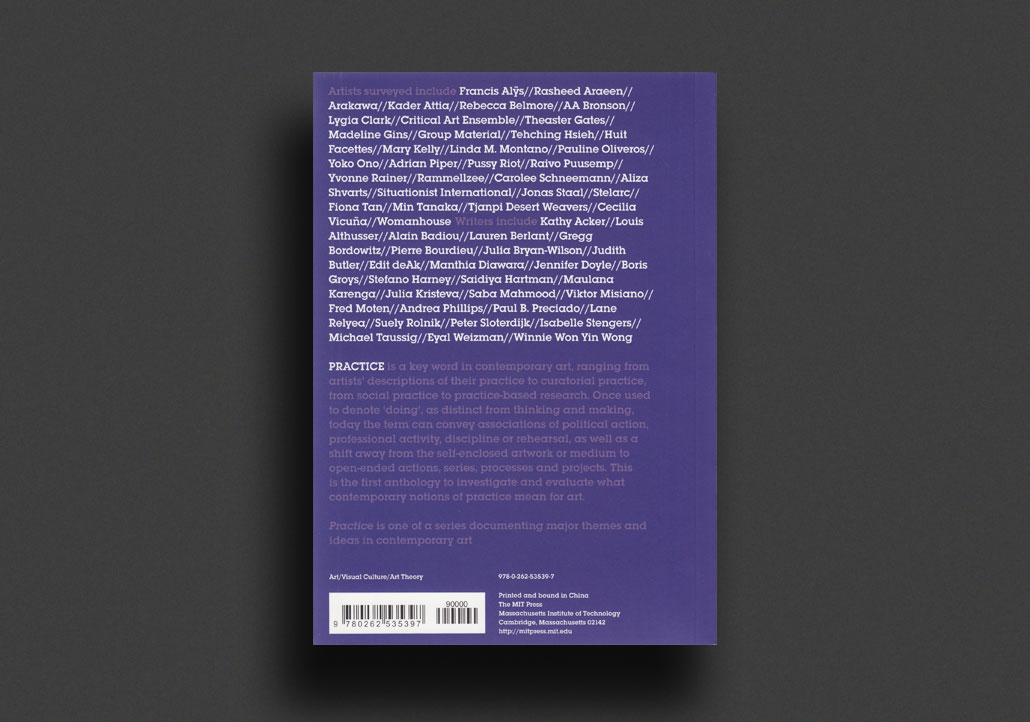
Artists surveyed include Francis Alys, Arakawa, Rebecca Belmore, AA Bronson, Judy Chicago, Lygia Clark, Andrea Fraser, Madeline Gins, Tehching Hsieh, Mary Kelly, Henri Michaux, Linda M. Montano, Pauline Oliveros, Yoko Ono, Adrian Piper, Raivo Puusemp, Rammellzee, Gerhard Richter, Miriam Schapiro, Carolee Schneemann, Gregory Sholette, Aliza Shvarts, Situationist International, Jonas Staal, Stelarc, Fiona Tan, Min Tanaka, Nadezhda Tolokonnikova, Cecilia Vicuña
Writers include Kathy Acker, Giorgio Agamben, Louis Althusser, Hannah Arendt, Alain Badiou, Lauren Berlant, Gregg Bordowitz, Pierre Bourdieu, Julia Bryan-Wilson, Judith Butler, Jennifer Doyle, Okwui Enwezor, Saidiya V. Hartman, Maulana Karenga, Julia Kristeva, Saba Mahmood, Viktor Misiano, Fred Moten, Paul B. Preciado, Lane Relyea, Suely Rolnik, Peter Sloterdijk, Isabelle Stengers, Winnie Won Yin Wong
Part of the Whitechapel Documents of Contemporary Art series
2017, English
Softcover, 240 pages, 21 x 23 cm
Published by
Whitechapel / London
The MIT Press / Massachusetts
$55.00 $30.00 - Out of stock
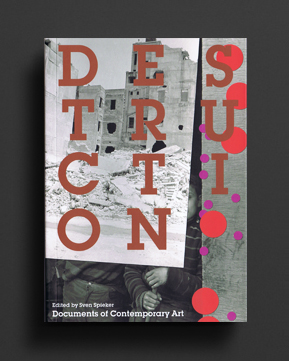
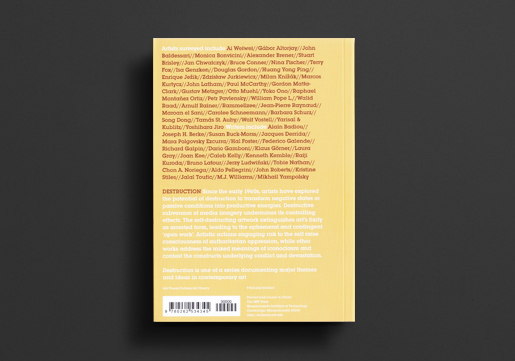
The effects and meanings of destruction are central to the work of many of our most influential artists. Since the early 1960s, artists have employed destruction to creative ends. Here destruction changes from a negative state or passive condition to a highly productive category. The destructive subversion of media imagery aims to release us from its controlling effects. The self-destructing artwork extinguishes art’s fixity as arrested form and ushers in the ephemeral and contingent "open work."
This anthology explores artworks that convey the threat of destruction an how they have disrupted the perceived integrity of built structures and institutions. Artistic acts of iconoclasm or risk to the self have raised consciousness of authoritarian oppression. More understated works explore the theme of destruction in armed conflict, media violence, and threats to the environment. These text make up the first collection to be focused systematically on destruction in modern and contemporary art.
Artists surveyed include
Ai Weiwei, John Baldessari, Monica Bonvicini, Alexander Brener, Stuart Brisley, Douglas Gordon, Huang Yong Ping, Enrique Jezik, Milan Knizak, Paul McCarthy, Piero Manzoni, Gordon Matta-Clark, Gustav Metzger, Otto Mühl, Yoko Ono, Raphael Montañez Ortiz, Petr Pavlensky, William Pope.L, Walid Raad, Arnulf Rainer, Robert Rauschenberg, Carolee Schneemann, Song Dong, Jean Tinguely, Wolf Vostell
Writers include
Alain Badiou, Walter Benjamin, Horst Bredekamp, Carolyn Christov-Bakargiev, Medina Cuauthémoc, Dario Gamboni, Richard Galpin, Caleb Kelly, Bruno Latour, Sven Lütticken, Antonio Negri, Sophie O’Brien, Kristine Stiles, Jennifer Walden
About the Editor
Sven Spieker is Professor of Germanic and Slavic Studies at the University of California, Santa Barbara, and editor of ARTmargins. His books include The Big Archive: Art from Bureaucracy (MIT Press).
2018, English
Softcover, 164 pages, 21.6 x 14 cm
Published by
Primary Information / New York
$38.00 - Out of stock
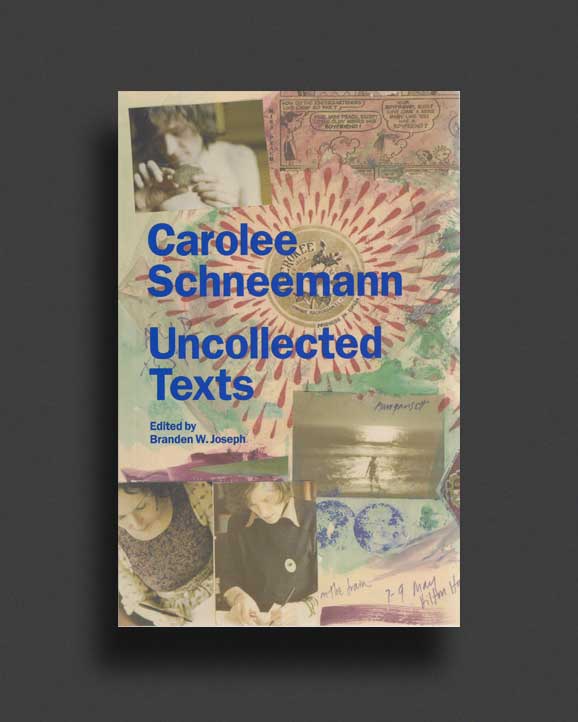
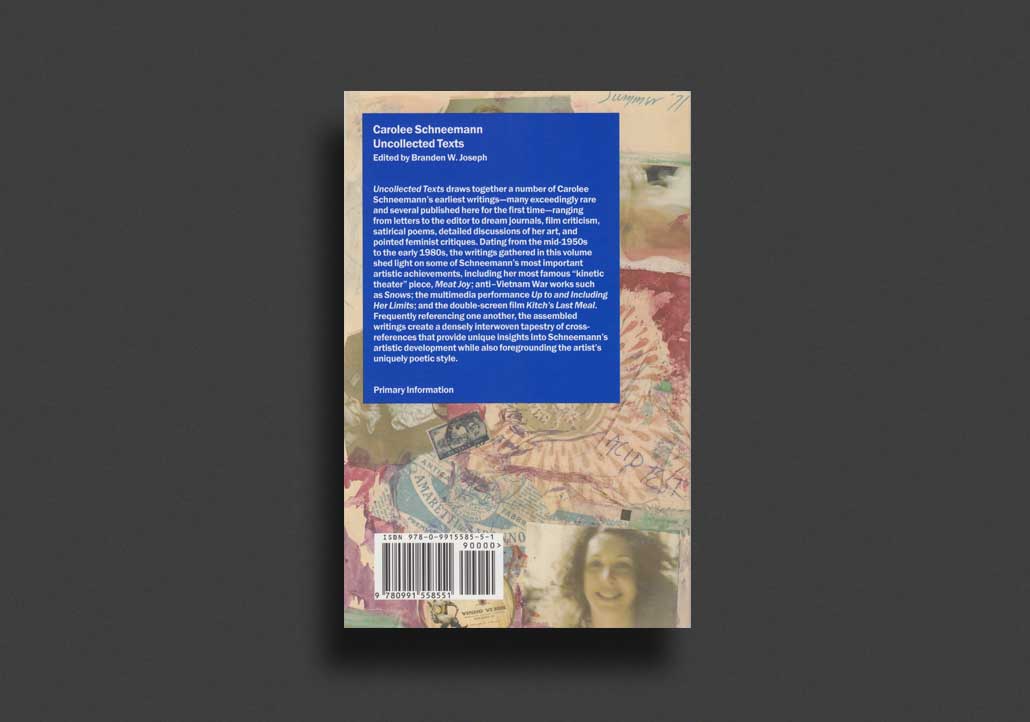
Uncollected Texts draws together a number of Carolee Schneemann’s earliest writings – many exceedingly rare and several that are published here for the first time – ranging from letters to the editor, dream journals, and film criticism, to satirical poems, detailed discussions of her art, and pointed feminist critiques. Edited by Branden W. Joseph, the book includes 30 texts by Carolee Schneemann written between 1956 and 1981, as well as an introduction by Joseph.
First published in short-run magazines like Caterpillar, Film Culture, The Fox, Manipulations, and Matter; academic journals such as Performing Arts Journal; and mainstream publications including The New York Times and The Village Voice, the writings gathered in this volume shed light on some of Schneemann’s most important artistic achievements. Schneemann writes about her most famous “kinetic theatre” piece, Meat Joy; anti-Vietnam War works such as Snows, Viet-Flakes, and Divisions and Rubble; the multimedia performance Up to and Including Her Limits; and the double-screen film Kitch’s Last Meal. Frequently referring to one another, the assembled writings produce a densely interwoven tapestry of cross-references that provide unique insights into Schneemann’s artistic development while also foregrounding the artist’s uniquely poetic style.
2016, English
Softcover, 200 pages, 31.5 x 24 cm
Published by
The Artist's Institute / New York
Walther König / Köln
$53.00 - Out of stock
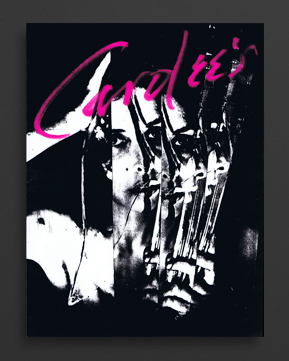
'Caroleeʼs' is the second issue of The Magazine of the Artistʼs Institute.
The first was 'Pierre's' by Pierre Huyghe.
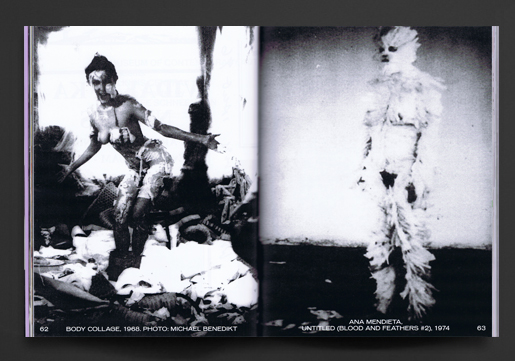
Dedicated to Carolee Schneemann, it features a previously unpublished image archive from Schneemannʼs studio that documents half a century of morphological connections between her work and other visual material, including art, advertising, and popular culture.
A new long-form profile of Schneemann by writer Maggie Nelson accompanies this project and considers the artistʼs relationship to the history of her reception and Schneemannʼs significant influence on subsequent generations of feminists.
1973, English / Japanese
Softcover (french-flaps), 100 pages, 25 x 25 cm
1st Edition, Out of print title / used / good
Published by
Bijutsu Shuppan Design Center / Japan
$120.00 - Out of stock
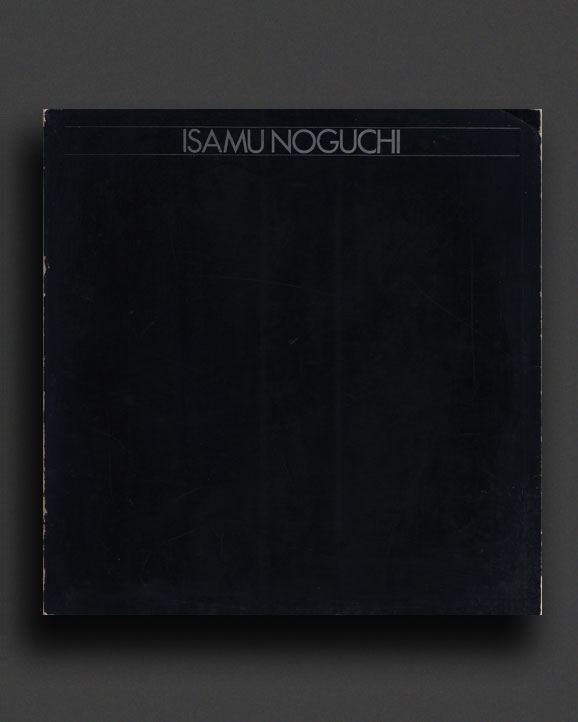
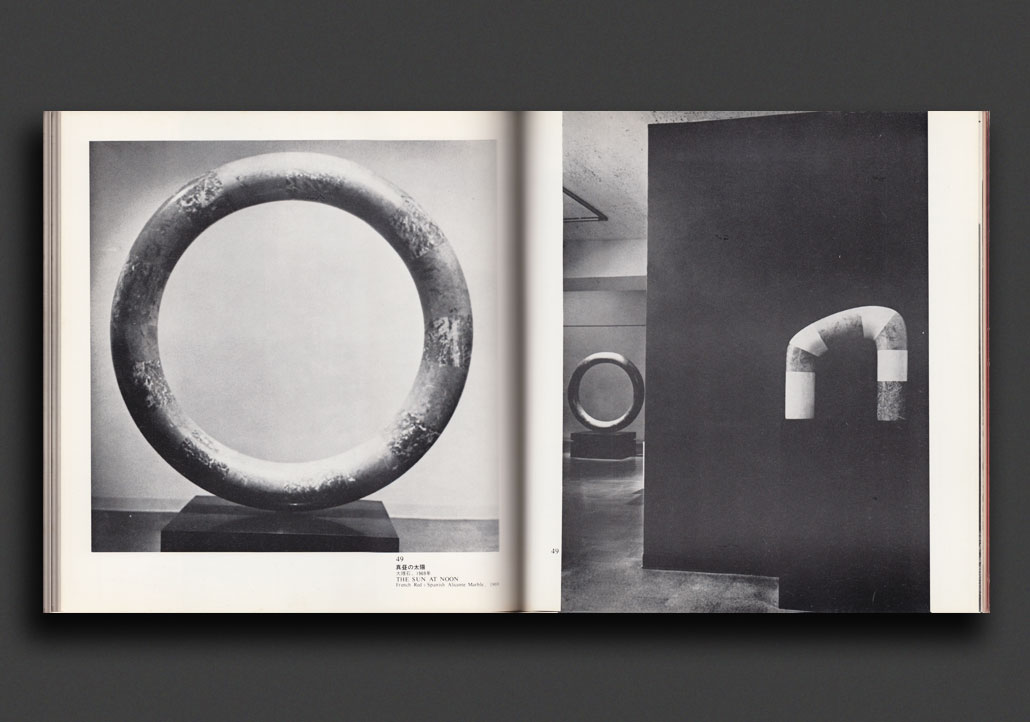
Very scarce catalogue published on the occasion of an important solo exhibition of Isamu Noguchi, "Sculptures by Isamu Noguchi", May 14-June 9, 1973, at Minami Gallery, introducing his sculptural works since 1945 to Japan. Profusely illustrated throughout with lush, saturated colour and black and white photography of Noguchi's sculptures, gardens, playgrounds, environments, reliefs, installations, exhibitions, and works for theatre. Includes the essay "My Sculpture" by Isamu Noguchi, as well as texts by Yoshiro Taniguchi, and Toru Takemitsu, plus list of works, chronology, exhibition history, and illustrated plans for Noguchi's then in-production fountain and plaza project in Detroit. All texts are in both English and Japanese.
Isamu Noguchi (November 17, 1904 – December 30, 1988) prominent Japanese American artist and landscape architect whose artistic career spanned six decades, from the 1920s onward. One of the greatest 20th-century sculptors, Noguchi is known for his sculpture and public works, creating innovative parks, plazas, playgrounds, fountains, gardens, and stage sets as well as sculpture of stone, metal, wood, and clay, and several mass-produced lamps and furniture pieces, some of which are still manufactured and sold. In 1947, Noguchi began a collaboration with the Herman Miller company, when he joined with George Nelson, Paul László and Charles Eames to produce a catalog containing what is often considered to be the most influential body of modern furniture ever produced, including the iconic Noguchi table which remains in production today.
First and only edition in french-fold black-on-black illustrated cover. Good copy with some wear to spine and general light wear/rubbing to covers, light tanning to page edges from age. Back cover has small tears to centre. Otherwise clean and tight throughout.
1968, English
Softcover, 448 pages, 20 x 13.5 cm
1st Edition, Out of print title / used / average
$30.00 - Out of stock
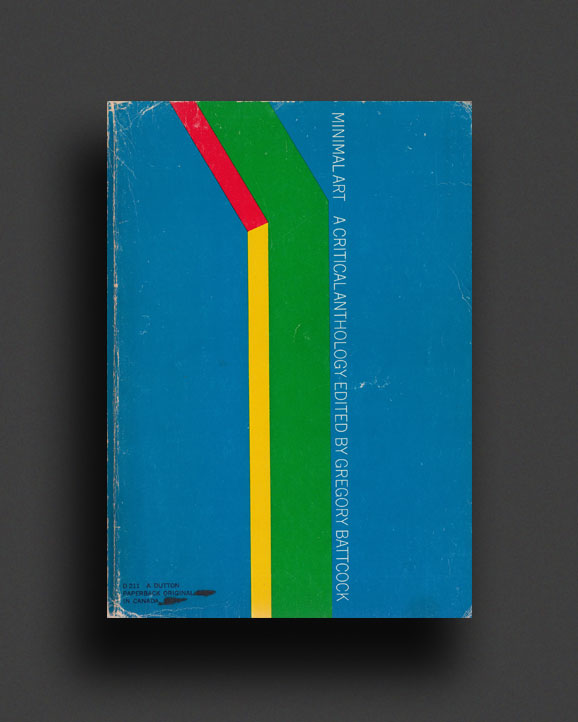
Battock's definitive 1968 collection of writings by and about the work of the 1960s minimalists, generously illustrated with photographs of paintings, sculpture, and performance, published by E. P. Dutton & Co. Inc., New York.
A collection of twenty-eight seminal essays by both critics and artists across over 400 pages, analyzing all aspects of Minimal Art at it's height in the late 1960s. Includes Lawrence Alloway (Systemic Painting), Mel Bochner (Serial Art, Systems, Solipsism), David Bourdon (The Razed Sites of Carl Andre), Nicolas Calas (Subject Matter in the Work of Barnett Newman), Bruce Glaser (Questions to Frank Stella and Donald Judd), Lucy R. Lippard (Eros Presumptive), John Perreault (Minimal Abstracts), Irving Sandler (Gesture and Non-Gesture in Recent Sculpture), Peter Hutchinson (Mannerism in the Abstract0, Willoughby Sharp (Luminism and Kineticism), Elayne Varian (Schemata 7), Richard Wollheim (Minimal Art), and texts by Martial Raysse, Michael Fried, Clement Greenberg, Dan Flavin, Robert Smithson, and more.
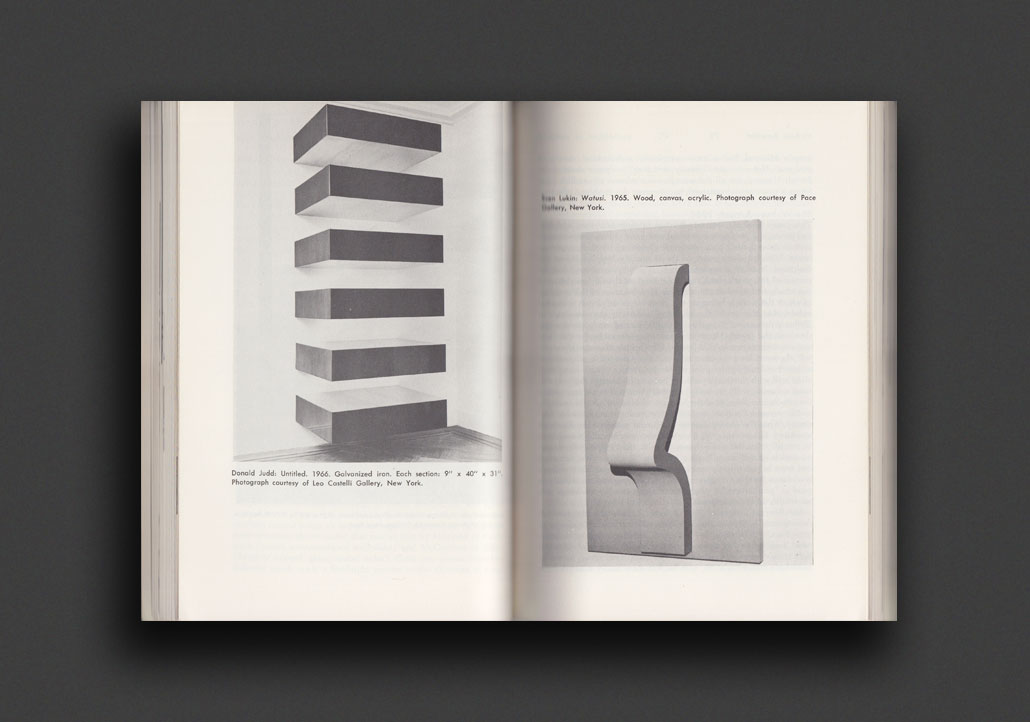
Heavily illustrated throughout with 170 photographs featuring the work of Sol LeWitt, Lee Bontecou, Donald Judd, Hanne Darboven, Carl Andre, Claes Oldenburg, Yves Klein, Jasper Johns, Robert Rauschenberg, John Chamberlain, Agnes Martin, Christo, Barnett Newman, Ellsworth Kelly, Edward Kienholz, Anne Truitt, Joseph Kosuth, Piet Mondrian, Richard Anuszkiewicz, Marcel Duchamp, Chryssa, Anthony Caro, Dan Flavin, Robert Smithson, Frank Stella, Robert Barry, Larry Bell, Carlo Belloli, William Anastasi, Richard Artschwager, Ronald Balden, John Cage, Walter De Maria, Stephen Antonakos, Walter Darby Bannard, Allan D'Arcangelo, Stuart Davis, Mark di Suvero, Helen Frankenthaler, Jim Dine, Al Held, Dan Graham, Robert Grosvenor, Hans Haacke, Ralph Humphrey, Eva Hesse, Douglas Huebler, Will Insley, Patricia Johanson, Allan Kaprow, Roy Lichtenstein, Morris Louis, Robert Mangold, Brice Marden, Yvonne Rainer, Julio Le Parc, David Smith, Richard Tuttle, Tony Smith, Keith Sonnier, James Raphael Soto, Clyfford Still, Les Levine, Victor Vasarely, Ad Reinhardt, John McCracken, Robert Morris, Kenneth Noland, Robert Whitman, Jules Olitski, Milton Resnick, Michelangelo Pistoletto, Jackson Pollock, Larry Poons, Jack Youngerman, George Rickey, Dorothea Rockburne, James Rosenquist, Edward Ruscha, Jan van Eyck, Andy Warhol, Tom Wesselmann, and many others.
Good with general wear and previous owner underlining / notation. Ex-library.
2018, English
Softcover, 400 pages, 20 x 26.5 cm
Published by
Vitra Design Museum / Weil am Rhein
$100.00 - Out of stock
The nightclub as avant-garde architecture: from Studio 54 to the Double Club
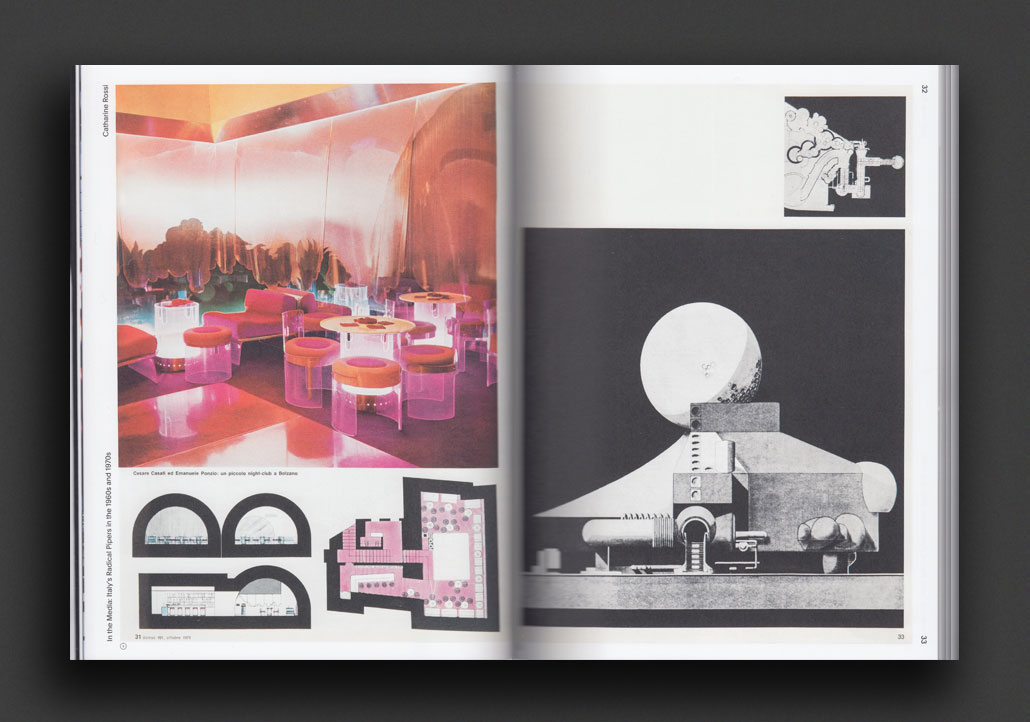
Nightclubs and discotheques are hotbeds of contemporary culture. Since the beginning of the twentieth century, they have been centres of the avantgarde that question social norms and experiment with different realities, merging interior and furniture design, graphics and art with sound, light, fashion, and special effects to create a modern Gesamtkunstwerk.
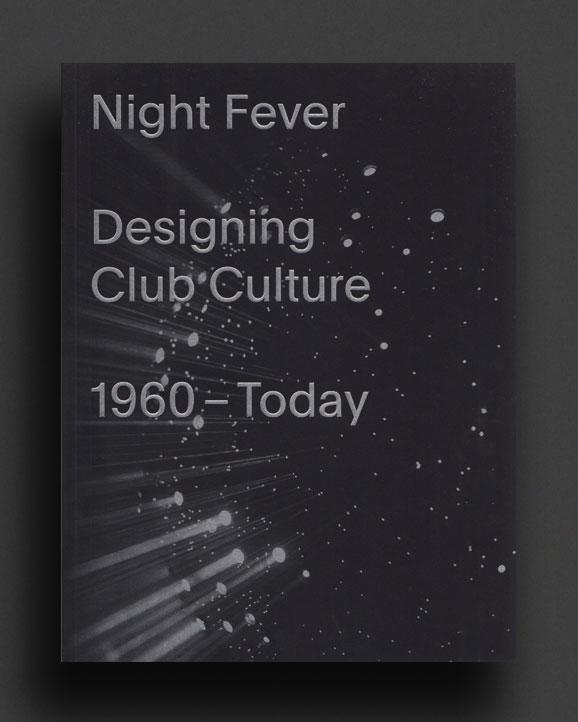
Night Fever. Designing Club Culture 1960 – Today is the first book to offer a comprehensive overview of the design history of the nightclub, examining its cultural context and international scope. Examples range from the Italian clubs of the 1960s created by the protagonists of Radical Design to the legendary Studio 54 where Andy Warhol was a regular and the Palladium in New York, designed by Arata Isozaki, as well as more recent concepts by architecture studio OMA for the Ministry of Sound II in London.
Featuring films and vintage photographs, posters, flyers, and fashion, Night Fever takes the reader on a fascinating journey through a world of glamour, subculture, and the search for the night that never ends.
Edited by Mateo Kries, Jochen Eisenbrand, Catharine Rossi, Katarina Serulus.
Texts by Jörg Heiser, Tim Lawrence, Ivan Lopez Munuera, Catharine Rossi, Sonnet Stanfill, Alice Twemlow, et al.
Interviews with Ben Kelly, Peter Saville, Ian Schrager, et al.
1975, English
Softcover, 220 pages, 27 x 22 cm
1st Edition, Out of print title / used / very good
Published by
E P Dutton / New York
$40.00 - Out of stock
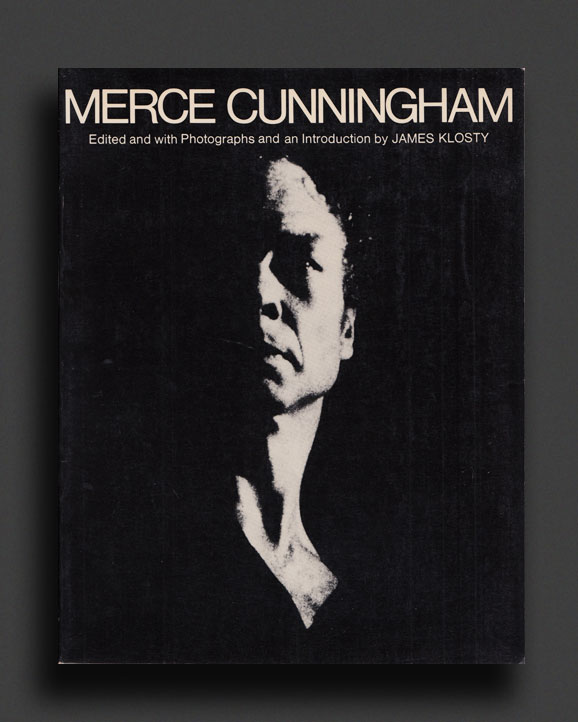
First 1975 edition of "Merce Cunningham", published by E P Dutton, New York.
Between 1967 and 1972, editor/photographer James Klosty traveled with and documented the Merce Cunningham Dance Company (MCDC). As the partner of dancer Carolyn Brown, he had unprecedented access to Cunningham, John Cage, and the Company as a whole, and his stunning photographs - first published here in his 1975 book - provide a unique, riveting, and intimate insight into both the work, and life on tour. Includes incredible documentation of the rehearsals, recitals and lives of Merce Cunningham Dance Company. Features contributions by Cunningham's close collaborators, dancers, composers, peers, including : Carolyn Brown, Viola Farber, Yvonne Rainer, Douglas Dunn, Paul Taylor, Richard Nelson, Lewis L Lloyd, John Cage, Gordon Mumma, Earle Brown, Pauline Oliveros, Christian Wolff, Robert Rauschenberg, Jasper Johns, Lincoln Kirstein, and Edwin Denby. Introduction by James Klosty.
A Very Good - Fine copy of the first edition.
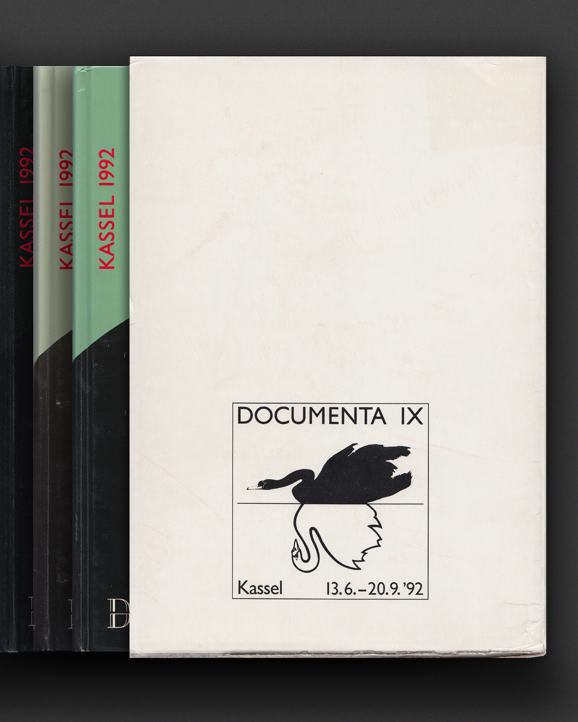
1992, German / English
Hardcover (in original slipcase), Vol. 1 : 255 pages; Vol. 2 : 310 pages; Vol. 3 : 619 pages, 18.5 x 27 cm
1st Edition, Out of print title / used / good
Published by
Hatje Cantz / Berlin
$120.00 - Out of stock
Hardcover edition, three volume exhibition catalogue published in conjunction with Documenta IX, Kassel, Germany, June 13 - September 9, 1992.
Documenta 9 is remembered as one of the most popular of all documenta exhibitions, thanks not least of all to the influence of its artistic director, the charismatic Belgian curator Jan Hoet. Hoet wanted to make the human being and our sensual, perceptual, agonized corporeality, which had been progressively displaced by the digitized, virtual world, the focus of attention at his exhibition. “From body to body to bodies” was the meaningful, poetic motto of documenta 9. Hoet described his curatorial mission in the following words: “At a time in which the human race is confronted more than ever with such dangers as AIDS and multinational wars, nuclear catastrophes, and global climate disasters, at a time in which threats are growing increasingly abstract and the fears more and more diffuse, I see reflection on the physical conditions of life as an appropriate answer.”
Texts by Jan Hoet, Denys Zacharopoulos, Bart de Baere, Pier Luigi Tazzi, Claudia Herstatt, Joyce Carol Oates, Jacques Roubaud, Cornelius Castoriadis, Heiner Müller, Paul Robbrecht, Hilde Daem.
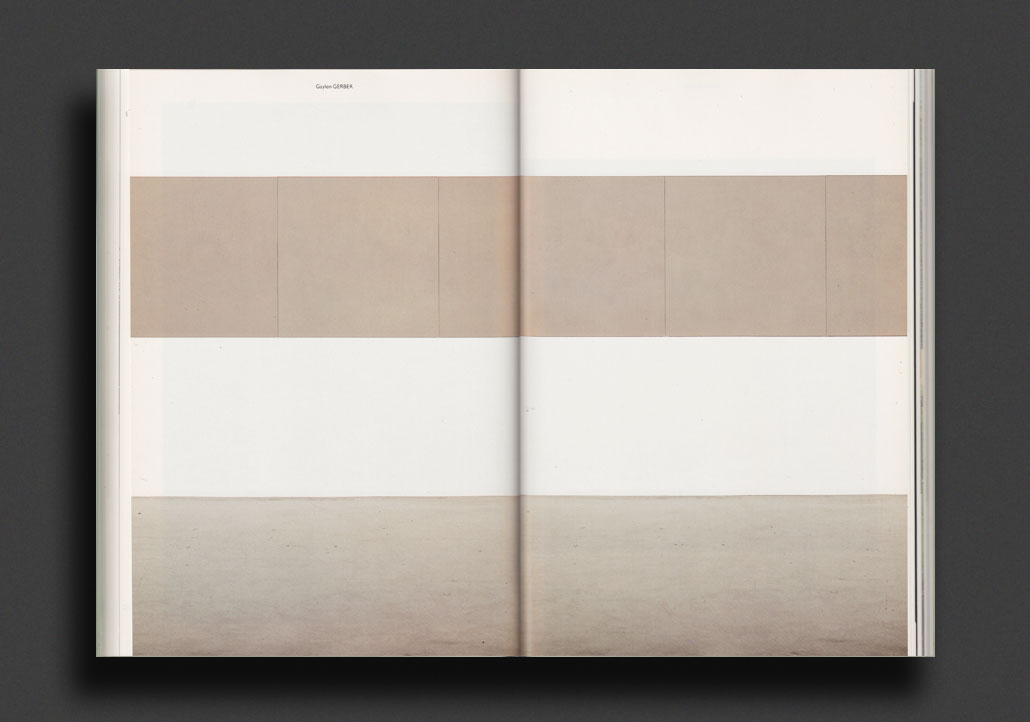
Artists include Marina Abramovic, Absalon, Richard Artschwager, Francis Bacon, Marco Bagnoli, Nicos Baikas, Miroslaw Balka, Matthew Barney, Jerry Barr, Lothar Baumgarten, Jean-Pierre Bertrand, Joseph Beuys, Michael Biberstein, Guillaume Bijl, Dara Birnbaum, Jonathan Borofsky, Louise Bourgeois, Herbert Brandl, Ricardo Brey, Tony Brown, Marie José Burki, Jean-Marc Bustamante, Michael Buthe, Pedro Cabrita Reis, Waltercio Caldas, Pier Paolo Calzolari, Ernst Caramelle, Lawrence Carroll, Saint Clair Cemin, Tomasz Ciecierski, Tony Clark, James Coleman, Tony Conrad, Patrick Corillon, Damian, Richard Deacon, Thierry De Cordier, Silvie Defraoui & Chérif Defraoui, Raoul De Keyser, Wim Delvoye, Braco Dimitrijevic, Eugenio Dittborn, Helmut Dorner, Stan Douglas, Marlene Dumas, Jimmie Durham, Mo Edoga, Jan Fabre, Luciano Fabro, Belu-Simion Fainaru, Peter Fend, Rose Finn-Kelcey, FLATZ, Fortuyn/O'Brien, Günther Förg, Erik A.Frandsen, Michel François, Vera Frenkel, Katsura Funakoshi, Isa Genzken, Gaylen Gerber, Robert Gober, Dan Graham, Rodney Graham, Angela Grauerholz, Michael Gross, George Hadjimichalis, David Hammons, Georg Herold, Gary Hill, Peter Hopkins, Rebecca Horn, Geoffrey James, Olav Christopher Jenssen, Tim Johnson, Andrej N. Joukov, Ilya Kabakov, Anish Kapoor, Kazuo Katase, Tadashi Kawamata, Mike Kelley, Ellsworth Kelly, Bhupen Khakhar, Per Kirkeby, Harald Klingelhöller, Kurt Kocherscheidt, Peter Kogler, Vladimir Kokolia, Joseph Kosuth, Mariusz Kruk, Guillermo Kuitca, Suzanne Lafont, Jonathan Lasker, Jac Leirner, Zoe Leonard, Eugène Leroy, Via Lewandowsky, Bernd Lohaus, Ingeborg Lüscher, Attila Richard Lukacs, James Lutes, Marcel Maeyer, Brice Marden, Cildo Meireles, Ulrich Meister, Thom Merrick, Gerhard Merz, Mario Merz, Marisa Merz, Meuser, Jürgen Meyer, Liliana Moro, Reinhard Mucha, Matt Mullican, Juan Muñoz, Christa Näher, Hidetoshi Nagasawa, Bruce Nauman, Max Neuhaus, Pekka Nevalainen, Nic Nicosia, Moshe Ninio, Jussi Niva, Cady Noland, Manuel Ocampo, Jean-Michel Othoniel, Tony Oursler, Panamarenko, Giulio Paolini, A. R. Penck, Michelangelo Pistoletto, Hermann Pitz, Stephen Prina, Richard Prince, Martin Puryear, Royden Rabinowitch, Rober Racine, Philip Rantzer, Charles Ray, Martial Raysse, readymades belong to everyone, José Resende, Gerhard Richter, Ulf Rollof, Erika Rothenberg, Susan Rothenberg, Ulrich Rückriem, Thomas Ruff, Stephan Runge, Edward Ruscha, Reiner Ruthenbeck, Remo Salvadori, Joe Scanlan, Eran Schaerf, Adrian Schiess, Thomas Schütte, Helmut Schweizer, Maria Serebriakova, Mariella Simoni, Susana Solano, Ousmane Sow, Ettore Spalletti, Haim Steinbach, Pat Steir, Wolfgang Strack, Thomas Struth, János Sugár, Yuji Takeoka, Robert Therrien, Frederic Matys Thursz, Niele Toroni, Thanassis Totsikas, Addo Lodovico Trinci, Mitja Tušek, Luc Tuymans, Micha Ullman, Juan Uslé, Bill Viola, Henk Visch, James Welling, Franz West, Rachel Whiteread, Christopher Wool, KeunByung Yook, Heimo Zobernig, Gilberto Zorio, and Constantin Zvezdochotov.
Very Good condition volumes in hardcover (much less common edition than usual softcover), preserved in their original illustrated slipcase (with common repaired splitting and bumping damage).