World Food Books' programme is largely produced on Kulin Nation land. We acknowledge the Wurundjeri people of the Kulin Nation as the first and continuing custodians of this land, and pay respect to their Elders past, present, and emerging.
World Food Books is an arts and special interests bookshop in Naarm / Melbourne. Founded in 2010, World Food Books is devoted to the presentation of a rotating, hand-selection of international art, design, literary and counterculture publications with an emphasis on the anti-traditional, the experimental, the avant-garde, the heretic, the marginal.
Presenting new titles alongside rare and out-of-print books, catalogues and journals spanning the fields of modern and contemporary art, design, photography, illustration, film, literature, poetry, cultural theory, philosophy, sexuality, popular and underground culture in its many radical forms, World Food Books wishes to encourage adventurous, thoughtful and open-minded reading, looking, writing, and exchange of publishing and ideas, both current and historical.
As well as our bookshop, located in Melbourne's historical Nicholas Building, all of our inventory is available internationally via our online mail-order service.
World Food Books semi-regularly co-ordinates "Occasions", a programme of exhibits and events at the bookshop and in partnership with other hosts (such as museums and art galleries) that develop out of the activities, relationships and content of the bookshop itself.
World Food Books
The Nicholas Building
37 Swanston Street
Room 5, Level 6
Melbourne 3000
Australia
SHOP HOURS:
THU–SAT 12–6
WEB-SHOP OPEN 24/7
World Food Books
Postal Address:
PO Box 435
Flinders Lane
Victoria 8009
Australia
info@worldfoodbooks.com
Art
Theory / Essay
Architecture / Interior
Graphic Design / Typography
Photography
Fashion
Eros
LGBTQ+
Fiction / Poetry
Weird / Speculative / Science Fiction / Horror
Transgressive / Visceral / Abject
Symbolism / Decadence / Fin de siècle
Film / Video
Painting
Sculpture / Installation
Performance / Dance / Theater
Drawing
Sound / Music
Curatorial
Group Shows / Collections
Periodicals
Out-of-print / Rare
Posters / Ephemera / Discs
Signed Books
World Food Books Gift Voucher
World Food Book Bag
Australian Art
Australian Fiction
Australian Science Fiction / Speculative Fiction
Australian Poetry
Australian Photography
Japanese Photography
Conceptual Art
Minimal Art
Dada
'Pataphysics / Oulipo
Fluxus
Concrete Poetry
Pop Art
Surrealism
Arte Povera
Arte Informale / Haute Pâte / Tachism
Nouveau Réalisme / Zero / Kinetic
Situationism / Lettrism
Collage / Mail Art / Xerox Art
Art Brut / Folk / Visionary / Fantastic
Illustration / Graphic Art / Bandes Dessinées
Furniture
Italian Radical Design / Postmodernism
Textiles
Ceramics / Glass
Counterculture
Protest / Revolt
Philosophy
Psychoanalysis
Anthropology
Anarchism
Socialism / Anarchism / Communism / Capitalism
Literary Theory / Semiotics / Language
Feminism / Women's Studies
Gender Studies / Sexuality
Anthropology
Fetishism / BDSM
Drugs / Psychedelia
Crime / Violence
Animal Rights / Veganism
Occult / Esoterica
Ecology / Earth / Alternative Living
Whole Earth / Crafts
All prices in AUD (Australian dollars)
Pick-Ups
Pick-up orders can be collected in our bookshop during opening hours after order date. Please collect any Pick-up orders within 2 weeks of ordering as we have limited storage space. Orders will be released back into stock if not collected within this time. No refunds can be made for pick-ups left un-collected. If you cannot make it in to the bookshop in this time-frame, please choose postage option.
Return Policy
All sales are final. We do accept returns (for refund or exchange) for items received in error. All our orders are packed with special care using heavy-duty padding and cardboard book-mailers or bubble mailers (for smaller books), using reinforcement where required. We cannot take responsibility for any lost, stolen or damaged parcels.
Insurance
Should you wish to insure your package, please email us directly after placing your order and we can organise this at a small extra expense. Although all standard/express tracked packages are very safe and dependable, we cannot take responsibility for any lost, stolen or damaged parcels. We recommend insurance on valuable orders.
Interested in selling your old books, catalogues, journals, magazines, comics, fanzines, ephemera? We are always looking for interesting, unusual and out-of-print books to buy. We only buy books in our fields of interest and specialty, and that we feel we can resell.
We base these prices on desirability, market value, in-print prices, condition and our current stock levels. We offer cash, store credit, and can take stock on consignment. All
about 25% of the price we expect to get when we sell them, or 30% in store credit. We base these prices on desirability, market value, in-print prices, condition and our current stock levels.
Sell your books any day of the week. You can drop them off and return later. If you have a lot of books, we can visit your Sydney home.
We buy books that we feel we can resell. We offer about 25 % of the price we expect to get when we sell them, or 30% in store credit. We base these prices on desirability, market value, in-print prices, condition and our current stock levels.
Philadelphia Wireman
03 August - 01 September, 2018
World Food Books is proud to announce our next Occasion, the first presentation of sculptures by Philadelphia Wireman in Australia.
The Philadelphia Wireman sculptures were found abandoned in an alley off Philadelphia’s South Street on trash night in 1982. Their discovery in a rapidly-changing neighbourhood undergoing extensive renovation, compounded with the failure of all attempts to locate the artist, suggests that the works may have been discarded after the maker’s death. Dubbed the "Philadelphia Wireman" during the first exhibition of this work, in 1985, the maker’s name, age, ethnicity, and even gender remain uncertain. The entire collection totals approximately 1200 pieces, all intricately bound together with tightly-wound heavy-gauge wire (along with a few small, abstract marker drawings, reminiscent both of Mark Tobey and J.B. Murry). The dense construction of the work, despite a modest range of scale and materials, is singularly obsessive and disciplined in design: a wire armature or exoskeleton firmly binds a bricolage of found objects including plastic, glass, food packaging, umbrella parts, tape, rubber, batteries, pens, leather, reflectors, nuts and bolts, nails, foil, coins, toys, watches, eyeglasses, tools, and jewellery.
Heavy with associations—anthropomorphic, zoomorphic, and socio-cultural responses to wrapped detritus—the totemic sculptures by Philadelphia Wireman have been discussed in the context of work created to fulfil the shamanistic needs of alternative religions in American culture. Curators, collectors, and critics have variously compared certain pieces to sculpture from Classical antiquity, Native American medicine bundles, African-American memory jugs, and African fetish objects. Reflecting the artist’s prolific and incredibly focused scavenging impulse, and despite—or perhaps enhanced by—their anonymity, these enigmatic objects function as urban artefacts and arbiters of power, though their origin and purpose is unknown. Philadelphia Wireman, whatever their identity, possessed an astonishing ability to isolate and communicate the concepts of power and energy through the selection and transformation of ordinary materials. Over the course of the past two decades, this collection has come to be regarded as an important discovery in the field of self-taught art and vernacular art.
Presented in collaboration with Fleisher-Ollman Gallery, Philadelphia, and Robert Heald, Wellington.
Susan Te Kahurangi King
02 February - 10 March, 2018
Susan Te Kahurangi King (24 February 1951 - ) has been a confident and prolific artist since she was a young child, drawing with readily available materials - pencils, ballpoint pens and felt-tip markers, on whatever paper is at hand. Between the ages of four and six Susan slowly ceased verbal communication. Her grandparents William and Myrtle Murphy had developed a special bond with Susan so they took on caring responsibilities for extended periods. Myrtle began informally archiving her work, carefully collecting and storing the drawings and compiling scrapbooks. No drawing was insignificant; every scrap of paper was kept. The King family are now the custodians of a vast collection containing over 7000 individual works, from tiny scraps of paper through to 5 meter long rolls.
The scrapbooks and diaries reveal Myrtle to be a woman of great patience and compassion, seeking to understand a child who was not always behaving as expected. She encouraged Susan to be observant, to explore her environment and absorb all the sights and sounds. Myrtle would show Susan’s drawings to friends and people in her community that she had dealings with, such as shopkeepers and postal workers, but this was not simply a case of a grandmother’s bias. She recognised that Susan had developed a sophisticated and unique visual language and sincerely believed that her art deserved serious attention.
This was an unorthodox attitude for the time. To provide some context, Jean Dubuffet coined the term Art Brut in 1945 to describe work created by self-taught artists – specifically residents of psychiatric institutions and those he considered to be visionaries or eccentrics. In 1972 Roger Cardinal extended this concept by adopting the term Outsider Art to describe work made by non-academically trained artists operating outside of mainstream art networks through choice or circumstance. Susan was born in Te Aroha, New Zealand in 1951, far from the artistic hubs of Paris and London that Dubuffet and Cardinal operated in. That Myrtle fêted Susan as a self-taught artist who deserved to be taken seriously shows how progressive her attitudes were.
Susan’s parents Doug and Dawn were also progressive. Over the years they had consulted numerous health practitioners about Susan’s condition, as the medical establishment could not provide an explanation as to why she had lapsed into silence. Dawn educated herself in the field of homeopathy and went on to treat all twelve of her children using these principles – basing prescriptions on her observations of their physical, mental and emotional state.
Doug was a linguist with an interest in philosophy who devoted what little spare time he had to studying Maori language and culture. To some extent their willingness to explore the fringes of the mainstream made them outsiders too but it was their commitment to living with integrity and their respect for individuality that ensured Susan’s creativity was always encouraged.
Even though Susan’s family supported her artistic pursuits, some staff in schools and hospitals saw it as an impediment to her assimilation into the community and discouraged it in a variety of ways. Her family was not always aware of this and therefore did not fully understand why Susan stopped drawing in the early 1990s. However, rather than dwell on the challenges that Susan faced in pursuit of her artistic practice, they prefer to highlight her achievements. In 2008 Susan began drawing again in earnest, after an almost 20 year interruption, and her work is now shown in galleries around the world.
Susan grew up without television and has been heavily influenced by the comics she read as a child. She is absolutely fearless in the appropriation of recognizable characters, such as Donald Duck and Mickey Mouse, in her work. She twists their limbs, contorts their faces, compresses them together, blends them into complex patterned backgrounds - always imbuing them with an incredible energy. Although Susan often used pop culture characters in her work they are not naive or childlike. These are drawings by a brilliant self-taught artist who has been creating exceptional work for decades without an audience in mind.
Mladen Stilinović
"Various Works 1986 - 1999"
02 February 16 - September 10, 2016
Various works 1986 - 1999, from two houses, from the collections of John Nixon, Sue Cramer, Kerrie Poliness, Peter Haffenden and Phoebe Haffenden.
Including: Geometry of Cakes (various shelves), 1993; Poor People’s Law (black and white plate), 1993; White Absence (glasses, ruler, set square, silver spoon, silver ladel with skin photograph and wooden cubes), 1990-1996; Exploitation of the Dead (grey and red star painting, wooden painting, black spoon with red table, red plate), 1984-1990; Money and Zeros (zero tie, paintings made for friends in Australia (Sue, John, Kerrie), numbers painting), 1991-1992; Words - Slogans (various t-shirts) - “they talk about the death of art...help! someone is trying to kill me”, “my sweet little lamb”, “work is a disease - Karl Marx”; Various artist books, catalogues, monographs, videos; Poster from exhibition Insulting Anarchy; "Circular" Croatian - Australian edition; Artist book by Vlado Martek (Dostoyevsky); more.
Thanks to Mladen Stilinović and Branka Stipančić.
Jonathan Walker
Always Will Need To Wear Winter Shirt Blue + Ochre Small Check Pattern
21 August - 21 September, 2015
Untitled
I am not a great reader of poetry but I always return to the work of Melbourne poet, Vincent Buckley (1925- 1988). Perhaps I find his most tantalising piece to be not a finished poem but a fragment left on a scrap of paper discovered on his desk after the poet’s death.
The poetry gathers like oil
In the word-core, and spreads
It has its music meet,
Its music is in movement.
This fragment is more the shell left behind from a volatile thought than a finished poem. I find the last two lines honest but awkward whereas the first two lines work like an arrow. Most likely he could not find a resolution so it was left. Still, in its present form, it remains an eloquent testimony to the ultimate failure of a medium to express mobile thought and sensation, in Buckley’s case, through verbal language. It’s an important matter because this is something all artists have to deal with regardless of the medium.
I have never written a poem, however, I am forever copying fragments from books on paper scraps in a vain effort to fix certain notions in my head. At first, they function as bookmarks that are sometimes returned to when I open the book. But before long, as they accumulate, they fall out littering the table interspersed with A4 photocopies, bills, books and medications.
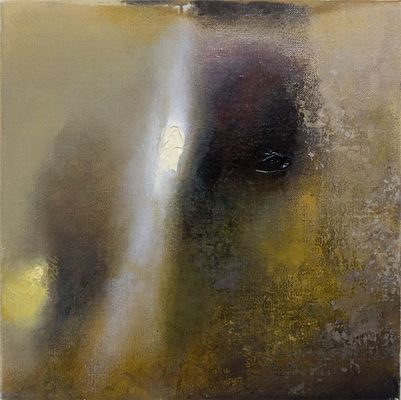
To return to Buckley’s fragment, the first two lines very much evoke how I paint nowadays. As you age, detail diminishes and patches of light become more luminous and float. I feel the most honest way of dealing with this is by smearing the oil paint on the canvas with the fingers and working close-up, blind. Only if the patches coalesce into an approaching image can the work gain a life.
-
Jonathan Walker was born in Melbourne, Australia and brought up on a dairy farm in Gippsland. In the 1970’s he studied painting at RMIT and won the Harold Wright Scholarship to the British Museum, London. During the 1980’s he exhibited at Pinacotheca Gallery, Richmond and had work shown at the NGV and Heidi City Art Gallery. Over the same period he designed the cover for the “Epigenesi” LP by Giancarlo Toniutti, Italy and conducted a mail exchange work with Achim Wollscheid, Germany. The work with artists through the post resulted in an article published in the bicentenary issue of Art and Australia 1988. He showed in artist run spaces such as WestSpace in the 90’s and 2000’s, and until 2012, taught painting at Victoria University, which is where we (Colleen Ahern and Lisa Radford) as organisers of the exhibition, among many others, had the privilege of being his student.
Walker’s knowledge was imparted to students through the careful selection of music, literature, and artists found in books that he himself had ordered for the library. Walker’s strategy was the generosity of sharing his vast knowledge with references specific to each student and their context.
Walker’s paintings share a similar focus and intimacy.
This exhibition presents a small selection of recent paintings alongside a publication that includes Walker’s writing. Observational and analytical, Walker’s work is a type of material notation — the time of day, colour and how it is blended, the both specific and fleeting location of a reflection on lino or the question of whether a chair leg should be included in a painting.
Please join us on Friday August 21 between 6-8pm to celebrate the opening of the exhibition.
Curated by Colleen Ahern and Lisa Radford.
B. Wurtz
Curated by Nic Tammens
March 26 - April 4, 2015
B.Wurtz works from a basement studio in his home on Manhattan’s Lower East Side.
This local fact is attested to by the plastic shopping bags and newsprint circulars that appear in his work. As formal objects, they don’t make loud claims about their origins but nonetheless transmit street addresses and places of business from the bottom of this long thin island. Like plenty of artists, Wurtz is affected by what is local and what is consumed. His work is underpinned by this ethic. It often speaks from a neighborhood or reads like the contents of a hamper:
“BLACK PLUMS $1.29 lb.”
“Food Bazaar”
“USDA Whole Pork Shoulder Picnic 99c lb.”
“RITE AID Pharmacy, with us it’s personal.”
“H. Brickman & Sons.”
“Sweet Yams 59c lb."
Most of the work in this exhibition was made while the artist was in residence at Dieu Donne, a workshop dedicated to paper craft in Midtown. Here Wurtz fabricated assemblages with paper and objects that are relatively lightweight, with the intention that they would be easily transportable to Australia. This consideration isn’t absolute in Wurtz’s work, but was prescriptive for making the current exhibition light and cheap. Packed in two boxes, these works were sent from a USPS post office on the Lower East Side and delivered to North Melbourne by Australia Post.
Wurtz appears courtesy of Metro Pictures, New York.
Thanks to Rob Halverson, Joshua Petherick, Sari de Mallory, Matt Hinkley, Helen Johnson, Fayen d'Evie, Ask Kilmartin, Lisa Radon, Ellena Savage, Yale Union, and "Elizabeth".
John Nixon
"Archive"
December 15 - January 20, 2014
The presentation of John Nixon's archive offered a rare showcase of this extensive collection of the artist's own publications, catalogues, posters, ephemera, editions and more, from the mid 1980s onwards, alongside a selection of his artworks.
Organized by John Nixon, Joshua Petherick and Matt Hinkley.
"Habitat"
at Minerva, Sydney (organised by Joshua Petherick and Matt Hinkley)
November 15 - December 20, 2014
Lupo Borgonovo, Janet Burchill & Jennifer McCamley,
Lewis Fidock, HR Giger, Piero Gilardi, Veit Laurent Kurz,
Cinzia Ruggeri, Michael E. Smith, Lucie Stahl, Daniel Weil, Wols
Press Release:
“...It contained seven objects. The slender fluted bone, surely formed for flight, surely from the wing of some large bird. Three archaic circuitboards, faced with mazes of gold. A smooth white sphere of baked clay. An age-blackened fragment of lace. A fingerlength segment of what she assumed was bone from a human wrist, grayish white, inset smoothly with the silicon shaft of a small instrument that must once have ridden flush with the surface of the skin - but the thing’s face was seared and blackened.”
William Gibson, “Count Zero”, 1986
"Autumn Projects Archive"
Curated by Liza Vasiliou
March 6 - March 15, 2014
World Food Books, in conjunction with the Virgin Australia Melbourne Fashion Festival 2014, presented the Autumn Projects archive, consisting of a selection of early examples in Australian fashion with a particular interest in collecting designers and labels from the period beginning in the 1980’s, who significantly influenced the discourse of Australian Fashion.
Curated by Liza Vasiliou, the exhibition provided a unique opportunity to view pieces by designers Anthea Crawford, Barbara Vandenberg, Geoff Liddell and labels CR Australia, Covers, Jag along with early experimental collage pieces by Prue Acton and Sally Browne’s ‘Fragments’ collection, suspended throughout the functioning World Food Books shop in Melbourne.
H.B. Peace
presented by CENTRE FOR STYLE
November 14, 2013
"Hey Blinky, you say chic, I say same"
Anon 2013
H.B. Peace is a clothing collaboration between great friends Blake Barns and Hugh Egan Westland. Their pieces explore the divergences between 'character’ and ‘personality’ in garments....etc
Special Thanks to Joshua Petherick and Matt Hinkley of WFB and Gillian Mears
and a Very Special Thank you to Audrey Thomas Hayes for her shoe collaboration.
Janet Burchill & Jennifer McCamley
"Aesthetic Suicide"
May 10 - June 8, 2013
The first of our occasional exhibitions in the World Food Books office/shop space in Melbourne, "Aesthetic Suicide" presented a body of new and older works together by artists Janet Burchill & Jennifer McCamley, including videos, prints, a wall work, and publications.
During shop open hours videos played every hour, on the hour.
2017, English
Paperback, 116 pages, 17 x 24 cm
Published by
CCA Wattis Institute for Contemporary Arts / San Francisco
$46.00 - In stock -
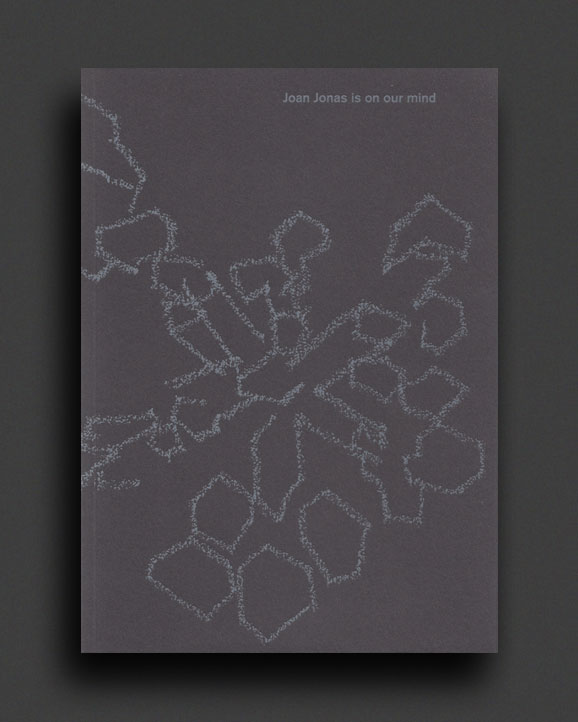
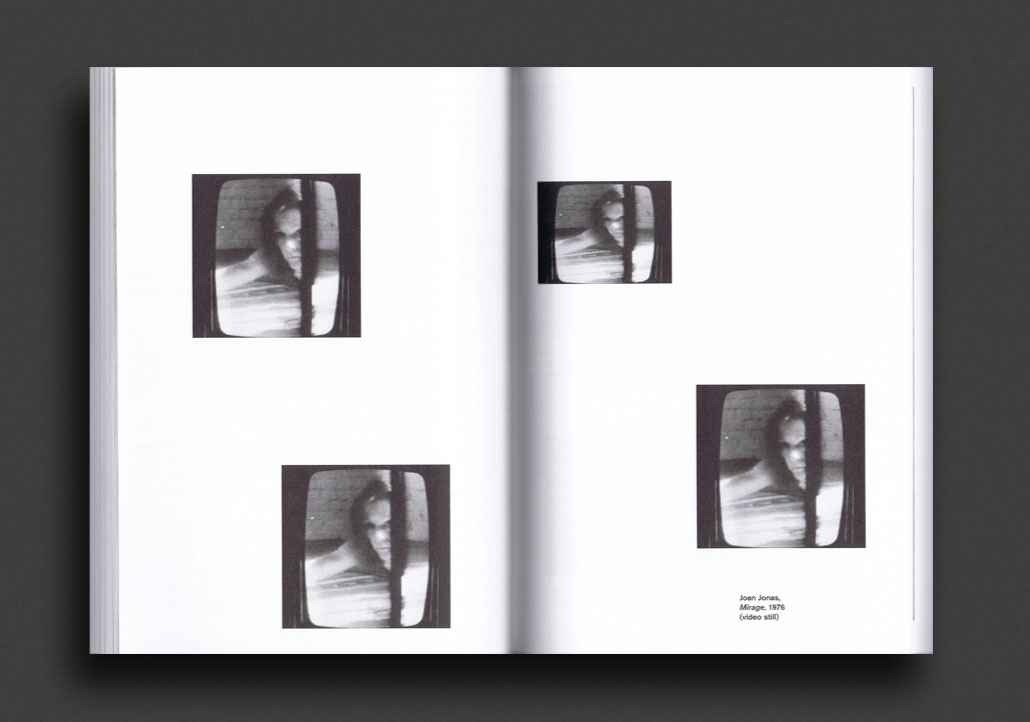
The CCA Wattis Institute in San Francisco dedicates year long seasons of discussions and public events to a single artist. In 2014–15, Joan Jonas was “on our mind.” This book brings together essays from writers, curators, art historians and artists that focus on a single work, from Jonas’ earliest films through her installation for the US Pavilion at the 56th Venice Biennale. The book also contains excerpts from readings and public lectures, and images by some of the other artists whose work was evoked in public and private conversation. Contributors include Jacqueline Francis, Renée Green, Quinn Latimer, Sarah Lehrer-Graiwer, Patricia Maloney, Elizabeth Mangini, Judith Rodenbeck and Lynne Tillman.
2007, English
Softcover, 112 pages, 15.2 x 21.6 cm
Published by
Afterall / London
The MIT Press / Massachusetts
$35.00 - Out of stock
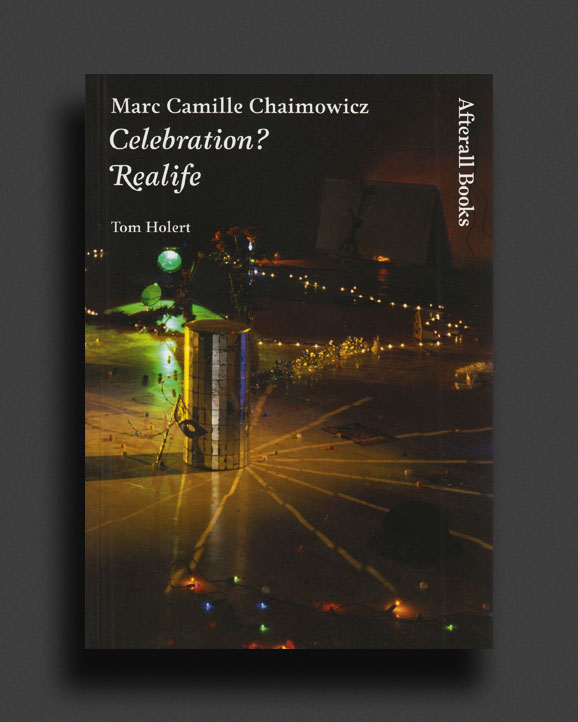
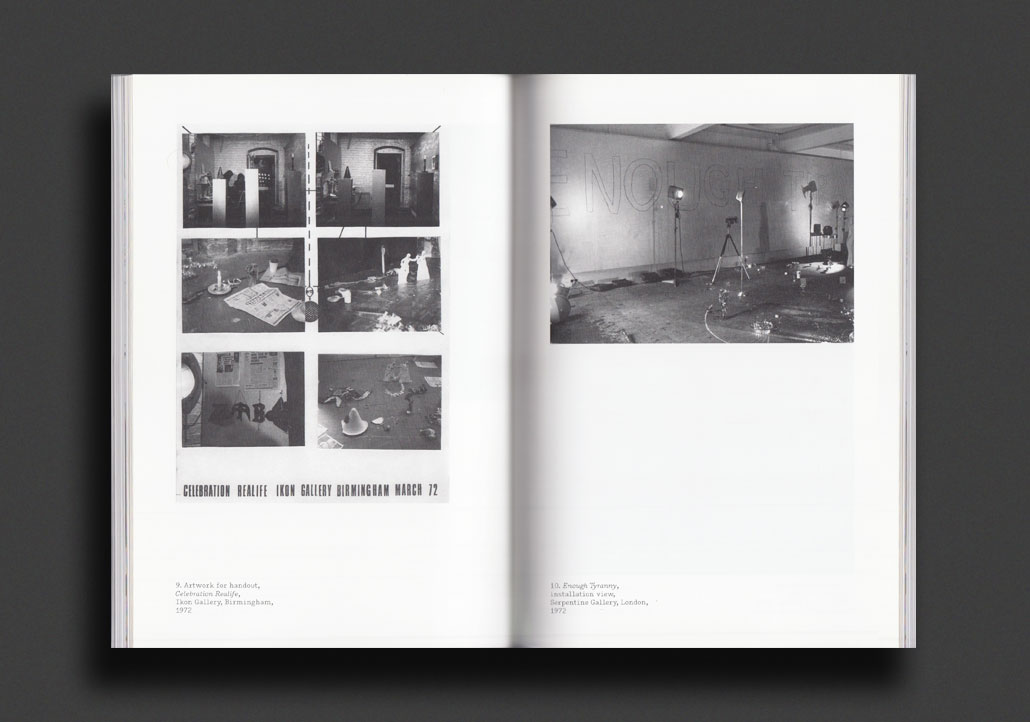
A richly illustrated study of Marc Chaimowicz's groundbreaking 1972 post-Pop installation-performance piece Celebration? Realife written by art historian Tom Holert.
Marc Camille Chaimowicz (born in 1947) was one of the first artists to merge the realms of performance and installation art. Chaimowicz distinguished himself in an era of stark minimalism by his unabashed pursuit of the beautiful, establishing himself in the 1970s with art that was playful and subtly seductive. Chaimowicz's post-Pop scatter environments owed as much to glam rock as to art practice and were informed by modern French literature (Gide, Cocteau, Proust, and Gênet) as well as by art theory. His important 1972 installation Celebration? Realife featured masks, mirrors, various small objects (including a pair of orange knickers and a white bra), a glitter ball, music by the Rolling Stones, David Bowie, and others—and the artist, serving tea and engaging visitors in conversation in an adjacent room. It raised questions about public/private dichotomies, art/design boundaries, and identifications based on gender, and recast the artist as a kind of art director and stage designer. This work's recent reinstallation (as Celebration? Realife Revisited 1972/2000) and the critical acclaim it inspired confirms Chaimowicz's importance and points to his relationships with artists as different and as difficult as Cerith Wyn Evans, Jutta Koether, Kai Althoff, and others. This richly illustrated study of Celebration? Realife, with many color images, uses Chaimowicz's installation to reconstruct that cultural moment in the 1970s when the role of the artist and the relationships of art, design, popular culture, and performance changed.
Performance artist Marc Camille Chaimowicz, born in Paris in 1947, teaches in the M.F.A. course at the University of Reading and is visiting consultant at L'Ecole Nationale des Beaux-Arts, Dijon. He is the author of Café du Réve.
Tom Holert is an art historian, independent scholar, and critic who has published widely in magazines including Artforum and Bookforum.
1996, English
Softcover, 371 pages, 25.5 x 20 cm
1st Edition, Out of print title / as new
Published by
The MIT Press / Massachusetts
$65.00 - Out of stock
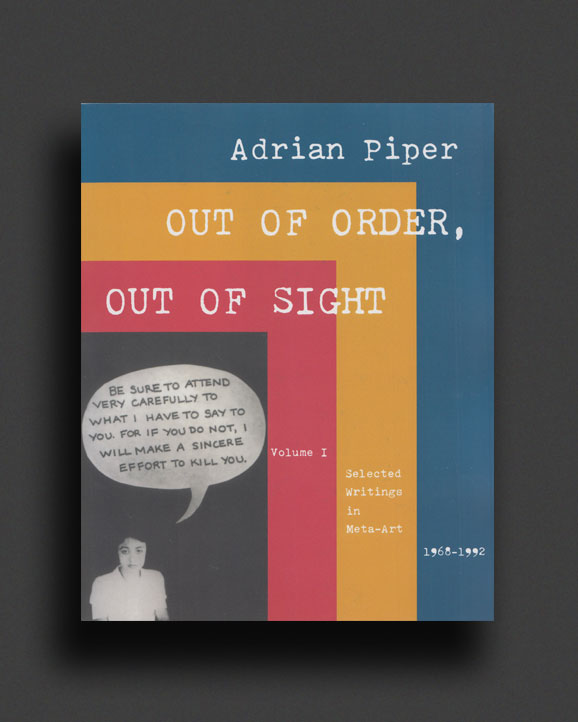
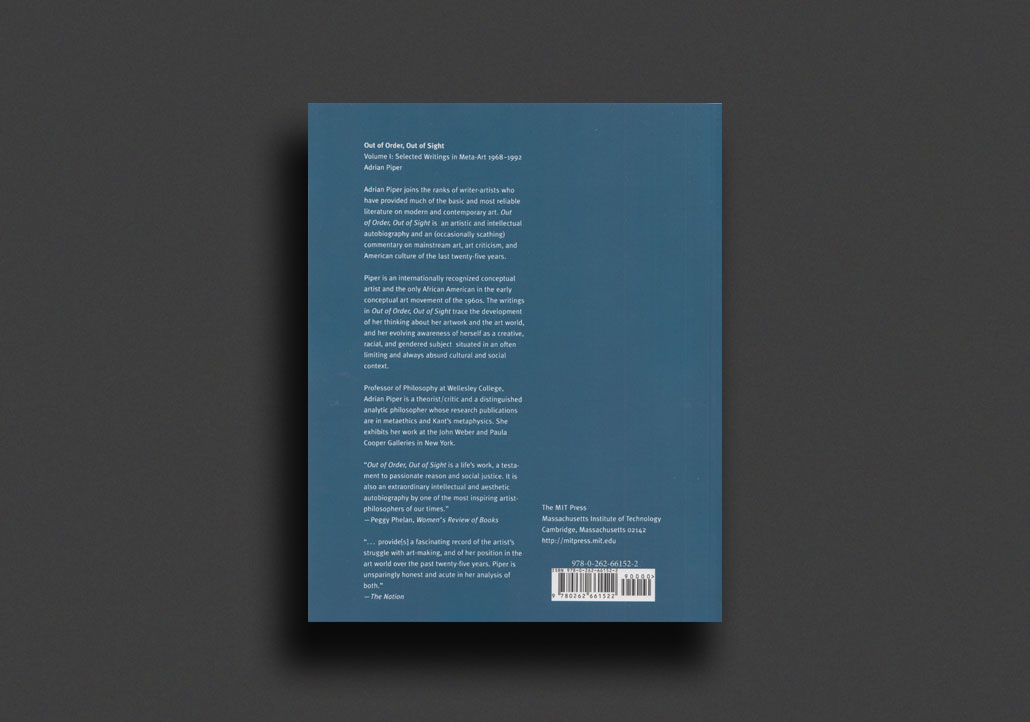
Adrian Piper joins the ranks of writer-artists who have provided much of the basic and most reliable literature on modern and contemporary art. Out of Order, Out of Sight is an artistic and intellectual autobiography and an (occasionally scathing) commentary on mainstream art, art criticism, and American culture of the last twenty-five years. Piper is an internationally recognized conceptual artist and the only African American in the early conceptual art movement of the 1960s. The writings in Out of Order, Out of Sight trace the development of her thinking about her artwork and the art world, and her evolving awareness of herself as a creative, racial, and gendered subject situated in an often limiting and always absurd cultural and social context. The meta-art essays in Volume I document and examine her artistic practice – often humorous, frequently disturbing.
This publication is now out-of-print.
1981, Japanese
Softcover (w. dust jacket), 240 pages, 15 x 21 cm
1st Edition, Out of print title / Used*,
Published by
? / Japan
$100.00 - Out of stock
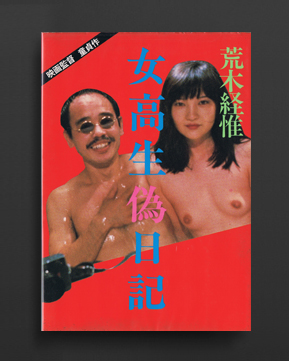
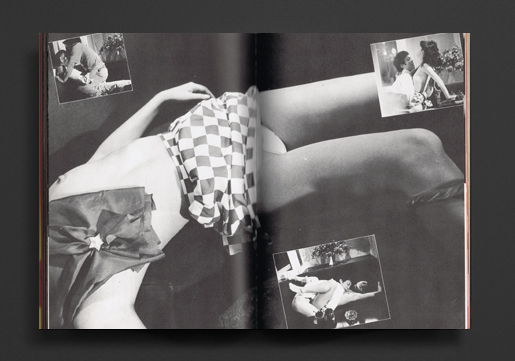
Very rare, early 1981 photo-book/diary by Japanese photographer Nobuyoshi Araki, who became an icon of photographic publishing and one of Japan's most celebrated and prolific photographers. This book was published as Araki's behind the scenes diary to High School Girl Fake Diary, a soft-core pink film, or pinku (a specific type of Japanese pornographic film made by independent studios) directed by Araki and released in 1981 by Nikkatsu movie studios under its Roman Porno genre – dramatised porn. The film was poorly received and disappointed fans of the genre and Araki himself, but the book, full of Araki's casual imagery on and off the set working and playing with the film's stars, technicians, composers and crew, became a sought-after oddity of Araki's publishing oeuvre. Not only is it a fine example of his famed early diary books, packed full of rarely seen Araki photographs, it also gives a rare and candid glimpse inside the world of independent film-making in Japan. Texts in Japanese.
Nobuyoshi Araki is a prolific Japanese photographer who has produced thousands of photographs over the course of his career. He became famous for “Un Voyage Sentimental” (1971), a series of photos depicting both banal and deeply intimate scenes of his wife and lifelong muse, essayist Aoki Yoko (whom the artist credits for making him a photographer), during their honeymoon. To date the 75 year old has produced 450 photo books and counting. With a repertoire that knows no boundaries, Araki's diaristic style of photography has captured the world around him (his cat Chiro, the people and landscapes of Japan and his travels, flowers, family), though it is Araki’s intensely sexual imagery that has elicited particular controversy and fascination throughout his career. Similarly to Helmut Newton, Araki has often addressed subversive themes — such as bondage in the Japanese style Kinbaku — in his provocative depictions of female nudes. He typically works in black-and-white photography, and his hallmark style is deliberately casual. “Rather than shooting something that looks like a professional photograph, I want my work to feel intimate, like someone in the subject’s inner circle shot them,” he says. Pushing against the world of commercialised photography, he is celebrated for his history of self-publishing and distributing his work, beginning with his Xerox Photo Albums of 1970. Amongst many others, Araki has collaborated with American photographer Nan Goldin and Icelandic musician Björk.
2017, English
Softcover, 240 pages, 145 x 210 mm
Published by
Whitechapel / London
The MIT Press / Massachusetts
$49.00 - Out of stock
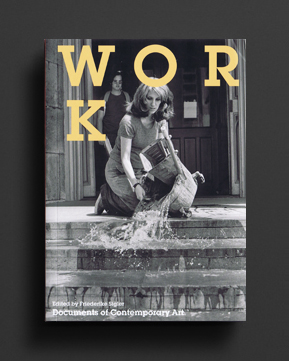
Warhol’s Factory of the 1960s, Minimalism’s assembly-line aesthetics, conceptual and feminist concern with workers’ conditions in the 1970s—these are among the antecedents of a renewed focus on the work of art: labor as artistic activity, as artistic method and as object of artistic engagement. In 2002, the “Work Ethic” exhibition curated by Helen Molesworth at the Baltimore Museum of Art took its cue from recent art to spotlight this earlier era of artistic practice in which activity became as valid as, and often dispensed with, object-production. Revealed through this prism was “dematerialized” art’s close and critical relation to the emergent information age’s criteria of management, production and skill.
By 2015, the Venice Biennale reflected artists’ wider concern with global economic and social crises, centered on exploitative and precarious worlds of employment. Yet while art increasingly engages with human travail, work’s significance in itself is seldom addressed by critics. This anthology explicitly investigates work in relation to contemporary art, surveying artistic strategies that grapple with the complexities of being an art worker in the new economy, a postproducer, a collaborator, a fabricator, a striker, an ethical campaigner, or would-be transformer of labor from oppression to liberation.
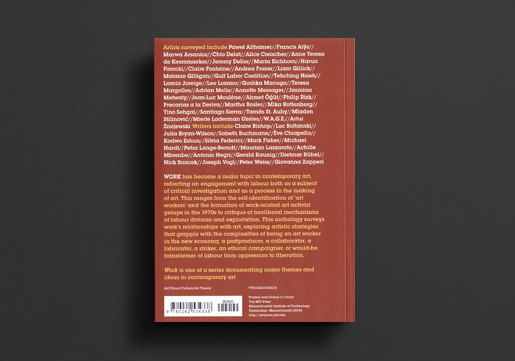
Artists surveyed include
Pawel Althamer, Francis Alÿs, Marwa Arsanios, Chto Delat, Alice Creischer, Ana de la Cueva, Anne Teresa De Keersmaeker, Jeremy Deller, Maria Eichhorn, Harun Farocki, Claire Fontaine, Andrea Fraser, Liam Gillick, Melanie Gilligan, Gulf Labour Coalition, Tehching Hsieh, Lamia Joreige, Lee Lozano, Goshka Macuga, Teresa Margolles, Adrian Melis, Annette Messager, Gustav Metzger, Jean-Luc Moulène, Ahmet Ögüt, Philip Rizk, Martha Rosler, Tino Sehgal, Santiago Sierra, Tamas St. Auby, Mladen Stilinovic, W.A.G.E., Artur Zmijewski
Writers include
Claire Bishop, Luc Boltanski, Julia Bryan-Wilson, Sabeth Buchmann, Ève Chiapello, Kodwo Eshun, Silvia Federici, Isabelle Graw, Maurizio Lazzarato, Achille Mbembe, Antonio Negri, Jacques Rancière, Gerald Raunig, Dietmar Rübel, Paolo Virno, Joseph Vogl
About the Editor
Friederike Sigler is a researcher and lecturer at the Hochschule für Bildende Künste, Dresden. She is the author of Work/Strike.
2018, English
Hardcover, 240 pages, 22 x 28 cm
Published by
Sternberg Press / Berlin
Para Site / Hong Kong
$110.00 $50.00 - Out of stock
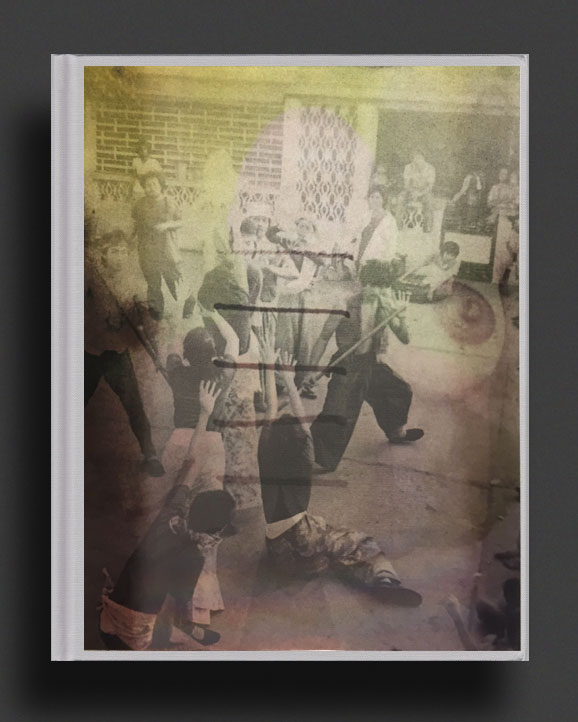
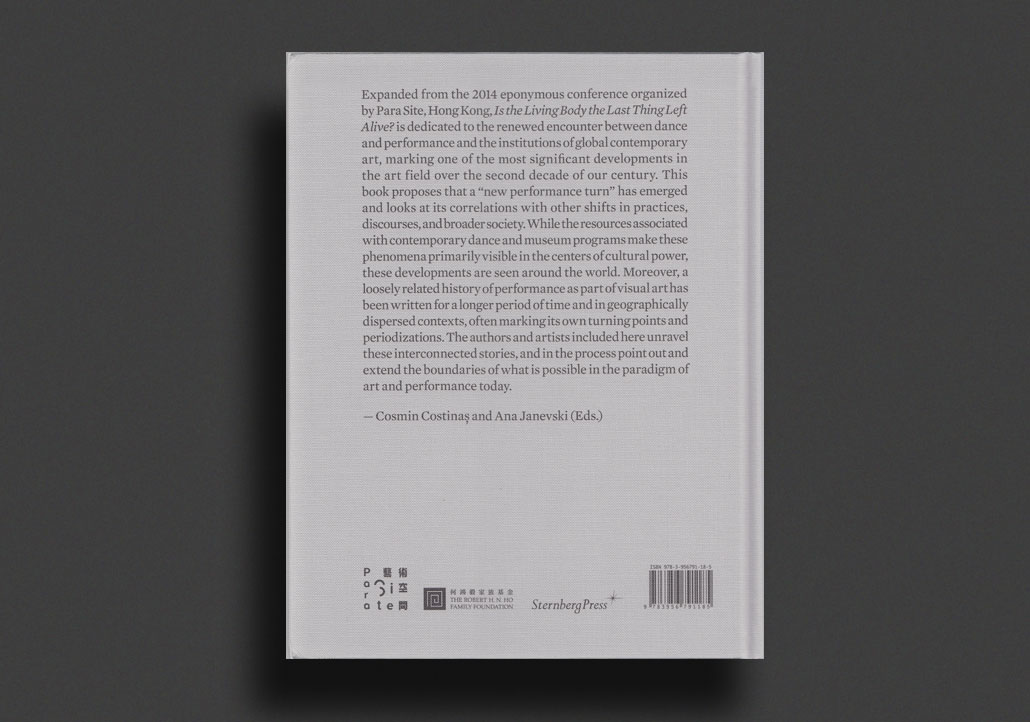
Contributions by Belkis Ayón, Claire Bishop, Boris Buden, Amy Cheng, Bojana Cvejić, Adrienne Edwards, Patrick D. Flores, Gauri Gill, Simryn Gill, Inti Guerrero, Tetsuya Ishida, Eisa Jocson, Firenze Lai, André Lepecki, Xavier Le Roy, Miguel A. López, Carol Yinghua Lu, Rabih Mroué, Ruth Noack, Fernanda Nogueira, Manuel Pelmuș, Goran Sergej Pristaš, Nelly Richard, David Riff, Emily Roysdon, Simon Soon, Mårten Spångberg, Catherine Wood, Yangjiang Group, Anthony Yung
The choreographic turn in the visual arts from 1958 to 1965 can be identified by the sudden emergence of works created by very different visual artists in very different places—artists such as Allan Kaprow, Robert Morris, Carolee Schneeman, and Robert Rauschenberg in the United States; Lygia Pape and Hélio Oiticica in Brazil; the Gutai group in Japan; and Yves Klein in France. Each explicitly or implicitly used dance or choreographic procedures to reinvent, reimagine, and reimage how the visual arts produced and conceived its images and objects—and therefore conceived itself both as practice and as discourse. Dedicated to the renewed encounter between dance and performance and the institutions of global contemporary art, Is the Living Body the Last Thing Left Alive? proposes that a “new performance turn” has emerged in the second decade of the century, and looks at its correlations with other shifts in practices, discourses, and broader society.
The new performance turn is closely related to, on one hand, the increasing tendency to bring contemporary dance into the museum, with more artists working in and around dance, and more museums, art centers, and biennials striving to deepen their commitment to performance in order to develop new aesthetic forms and new modes of production; on the other hand, this “turn” is also related to specific developments in dance and choreography that took place in the mid-1990s. This publication tries to think about performance as more than a medium, beyond its liveness and ephemerality, and rather as a series of questions and reflections about how art mediates social relations among people.
Is the Living Body the Last Thing Left Alive? is expanded from the eponymous 2014 conference organized by Para Site.
Design by Wkshps, New York
2018, English
Hardcover, 172 pages, 21.5 x 27 cm
Published by
Sternberg Press / Berlin
Muzeum Sztuki / Łódź
$125.00 $60.00 - Out of stock
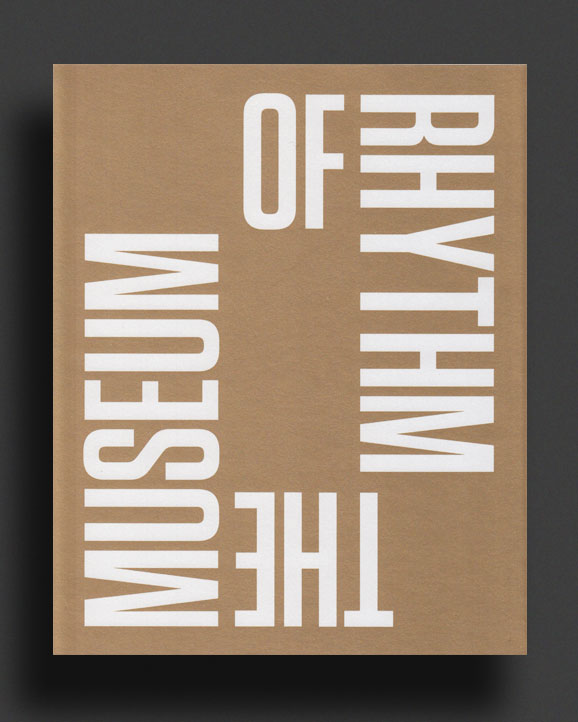
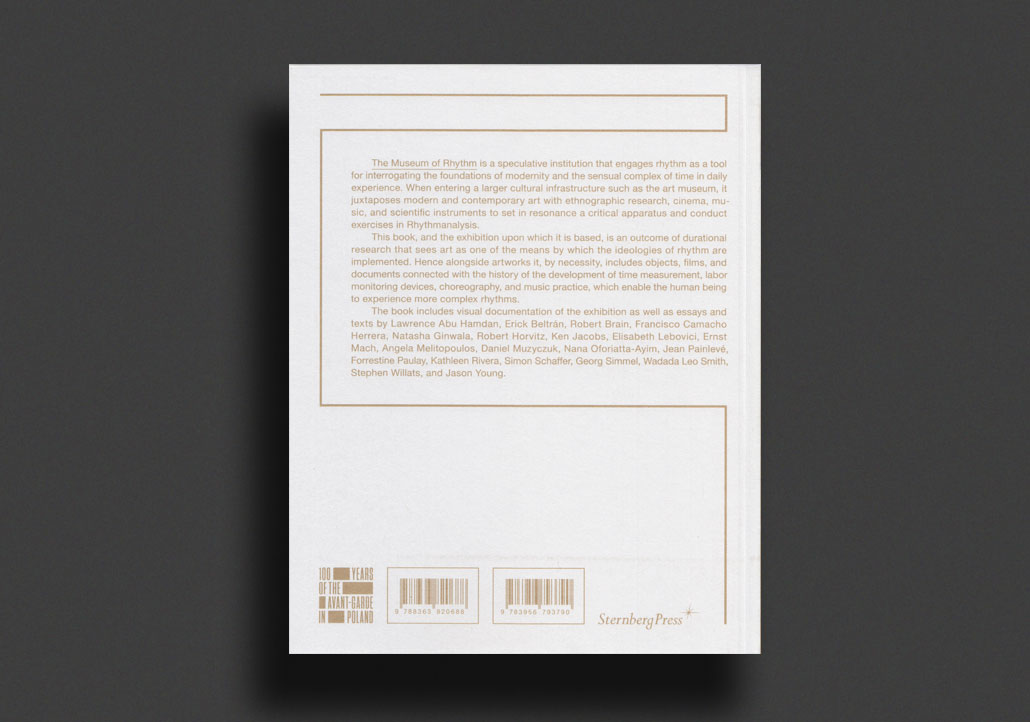
The Museum of Rhythm is a speculative institution that engages rhythm as a tool for interrogating the foundations of modernity and the sensual complex of time in daily experience. When entering a larger cultural infrastructure such as the art museum, it juxtaposes modern and contemporary art with ethnographic research, cinema, music, and scientific instruments to set in resonance a critical apparatus and conduct exercises in Rhythmanalysis.
This book, and the exhibition upon which it is based, is an outcome of durational research that sees art as one of the means by which the ideologies of rhythm are implemented. Hence alongside artworks it, by necessity, includes objects, films, and documents connected with the history of the development of time measurement, labor monitoring devices, choreography, and music practice, which enable the human being to experience more complex rhythms.
The book includes visual documentation of the exhibition as well as essays and texts by Lawrence Abu Hamdan, Erick Beltrán, Robert Brain, Francisco Camacho Herrera, Natasha Ginwala, Robert Horvitz, Ken Jacobs, Elisabeth Lebovici, Ernst Mach, Angela Melitopoulos, Daniel Muzyczuk, Nana Oforiatta-Ayim, Jean Painlevé, Forrestine Paulay, Kathleen Rivera, Simon Schaffer, Georg Simmel, Wadada Leo Smith, Stephen Willats, and Jason Young.
Design by Ryszard Bienert
2018, English
Softcover, 200 pages, 21 x 15 cm
Published by
Self-Published / Melbourne
$40.00 - Out of stock
In Sandra Bridie b. 19--, Eight Fictions, artist Sandra Bridie presents eight fictional artists who bear her own name, but with different birthdates, imagined into the Melbourne art landscape of the 20th and 21st centuries. The artists are presented via interviews and documentation of their artwork. The oeuvres of the eight artists represented here include: photography, conceptual art, sculpture, performance, crafting, curatorship and text-based work. The artists range in age and ability from emerging artists to a grand dame of Melbourne abstract art. By presenting often tragi-comic characters who have to deal with good fortune, destiny, disaster, boredom, malaise, envy, distractions and lack of faith, Sandra hopes to present the artist as a recognisable creature in a familiar locale or milieu.
Self published and designed by Yanni Florence.
2018, English
Softcover, 224 pages, 240mm x 300mm
Published by
common-editions / London
$67.00 - Out of stock
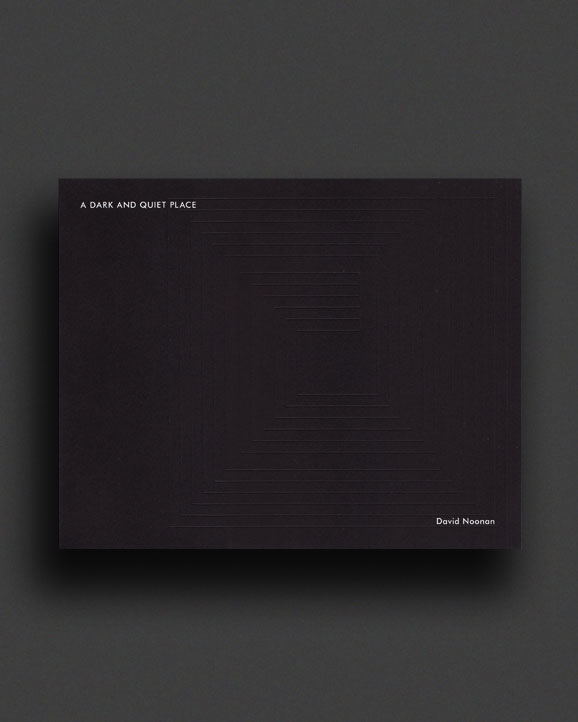
A Dark and Quiet Place accompanies a new moving image work of the same name by Australian artist, David Noonan. Both the film and this artist’s book present a meditation on performance, its associated apparatus, and the physical and imaginary domains they inhabit.
That this is Noonan’s first film work in over a decade is significant, as his practice since has frequently referenced both the material qualities of film and projection, and an ongoing interest in the slippages between figuration and pure abstraction.
For the book, the artist has worked closely with award-winning design studio A Practice for Everyday Life to disassemble the film work back into a rhythmic sequence of still images, employing both the language of design and Noonan’s characteristic strategies of layering and manipulation.
More than a series of film stills, the images that make up this book acquire their own intrinsic quality, proposing new spatial configurations and performative actions.
In response to the work, renowned author Brian Dillon presents a piece of fiction at once speculative and rigorously rational, in which geometric shapes become performers, diagrammatic grids become complex stage sets, and the supremacy of the body is thrown into doubt.
Noonan has had major solo shows at the Australian Centre for Contemporary Art, Melbourne (2009), Chisenhale Gallery, London (2008), and Palais de Tokyo, Paris (2007).
1979, English
Softcover, 64 pages, 28 × 36 cm
1st Edition, Out of print title / used / good
Published by
Art Official Inc. / Toronto
$75.00 - Out of stock
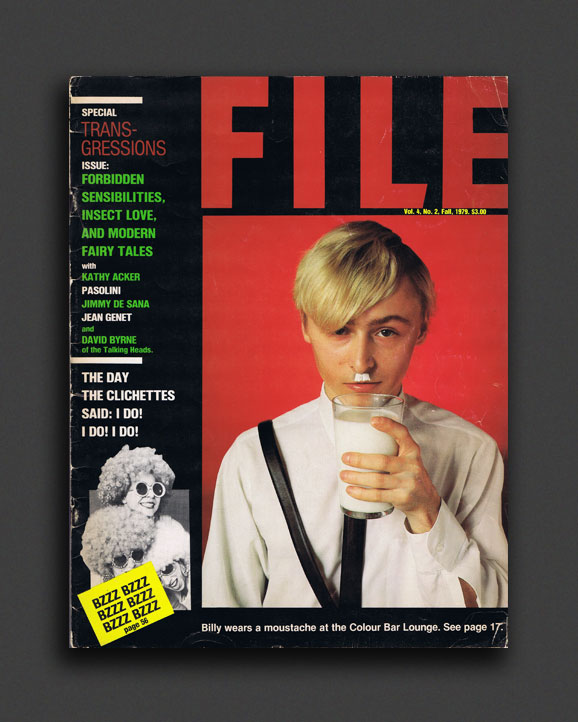
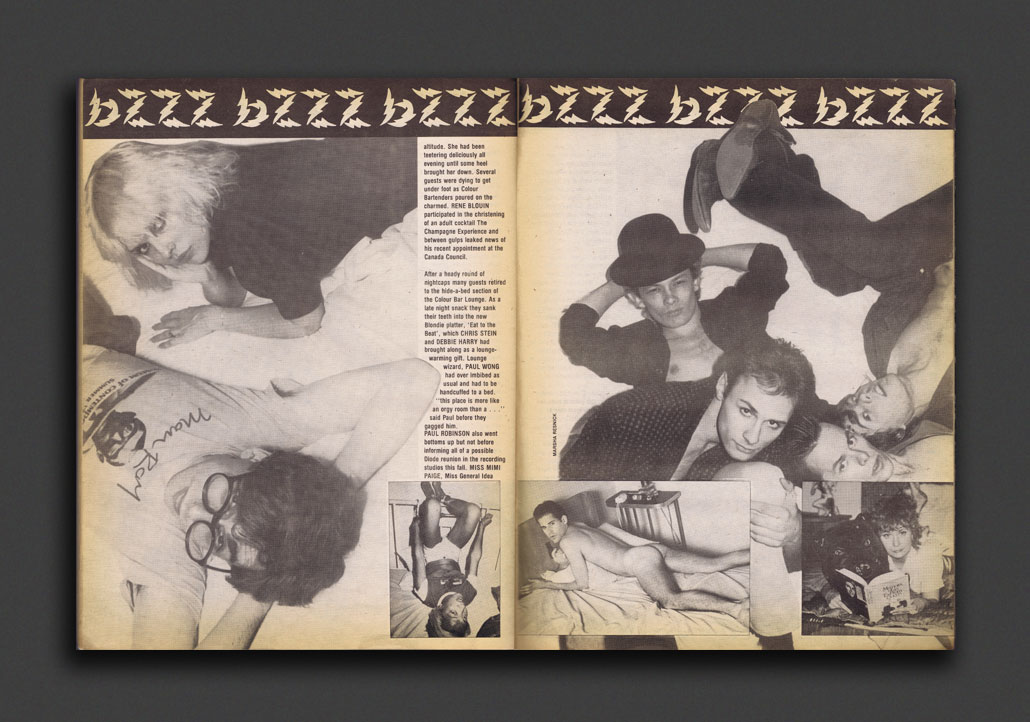
FILE Megazine (published 1972–1989) was a quarterly, then irregularly published art and culture magazine, written, edited and published primarily by members of General Idea (AA Bronson, Felix Partz, Jorge Zontal).
The visual design and identity of FILE Megazine was a deliberate appropriation of LIFE Magazine. FILE's initial logo was the white block letters on red rectangle of the LIFE logo, with the letters re-arranged. This corresponded with the group's desire that the magazine be a “parasite within the world of magazine distribution”. The familiarity of the format would entice a broad range of unsuspecting readers outside the art- or mail-art worlds (including LIFE readers) to pick it up from newsstands. Initially the magazine served a dual purpose. It was a record and site of activity for the international mail/correspondence-art movement - the first mail-art project in magazine format. It was also the mouthpiece of General Idea, with editorials for each issue written by the group, elaborating on the group's core conceptual principles. The writing style of these editorials is noteworthy for its heavily ironic use of language, a parody of advertising copy, laced with double-entendres. Over the years the focus of FILE Megazine broadened to include the wider arts, culture and entertainment world, as General Idea's founders moved increasingly among the New York downtown circles of the 70s and 80s.
This "TRANSGRESSIONS" issue (edited by General Idea and Rodney Werden) includes Kathy Acker, Guy Hocquenghem, David Byrne, Jean Genet, Pier Paolo Pasolini, Colin Campbell, Francesco Clemente, The Clichettes, Robert Mapplethorpe, Martha and the Muffins, and others. Features the famous Nazi Milk Glass cover by General Idea.
General Idea was a collective of three Canadian artists, Felix Partz, Jorge Zontal and AA Bronson, who were active from 1967 to 1994. As pioneers of early conceptual and media-based art, their collaboration became a model for artist-initiated activities and continues to be a prominent influence on subsequent generations of artists. General Idea's work inhabited and subverted forms of popular and media culture, including boutiques, television talk shows, trade fair pavilions, mass media, beauty pageants and publishing (they published the highly acclaimed FILE magazine). From 1987 through 1994 their work addressed the AIDS crisis, creating numerous public works and making some of their most iconic works of art. After publishing FILE Megazine for two years and amassing a large collection of artists books and multiples, General Idea founded Art Metropole in 1974, a non-profit space dedicated to contemporary art in multiple format: artists books, multiples, video, audio and electronic media. Both Partz and Zontal died of AIDS in 1994. Bronson continues to work and exhibit as an independent artist, and was the director of Printed Matter, Inc in New York between 2006 and 2011. The General Idea Archive now resides at the Library of the National Gallery of Canada.
Note: this issue has a few photographs of male and female genitals hand censored (with black marker) in a feature by Jim Dawson. Quite likely by the international distributor or Japanese vendor who originally sold this title. A common practice in Japan for imported publications at the time.
Good copy throughout, general wear for age/size.
2009, English
Hardcover, 512 pages (60 b&w ills), 178 x 229 mm
Published by
The MIT Press / Massachusetts
$105.00 $80.00 - Out of stock
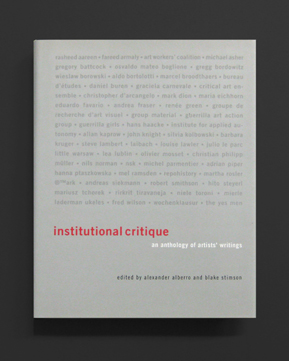
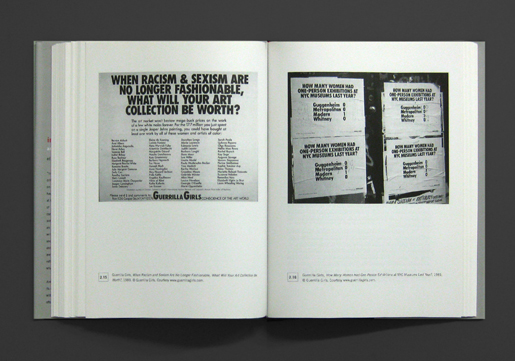
"Institutional critique" is an artistic practice that reflects critically on its own housing in galleries and museums and on the concept and social function of art itself. Such concerns have always been a part of modern art but took on new urgency at the end of the 1960s, when--driven by the social upheaval of the time and enabled by the tools and techniques of conceptual art--institutional critique emerged as a genre. This anthology traces the development of institutional critique as an artistic concern from the 1960s to the present by gathering writings and representative art projects of artists from across Europe and throughout the Americas who developed and extended the genre. The texts and artworks included are notable for the range of perspectives and positions they reflect and for their influence in pushing the boundaries of what is meant by institutional critique. Like Alberro and Stimson's Conceptual Art: A Critical Anthology this volume will shed new light on its subject through its critical and historical framing. Even readers already familiar with institutional critique will come away from this book with a greater and often redirected understanding of its significance.Artists represented include Wieslaw Borowski, Daniel Buren, Marcel Broodthaers, Groupe de Recherche d'Art Visuel, Hans Haacke, Robert Smithson, John Knight, Graciela Carnevale, Osvaldo Mateo Boglione, Guerilla Art Action Group, Art Workers' Coalition, Mierle Laderman Ukeles, Michael Asher, Mel Ramsden, Adrian Piper, The Guerrilla Girls, Laibach, Silvia Kolbowski, Andrea Fraser, Fred Wilson, Mark Dion, Maria Eichhorn, Critical Art Ensemble, Bureau d'Etudes, WochenKlausur, The Yes Men, Hito Steyerl, Andreas Siekmann.
1999, Japanese
Softcover (2 volumes in slipcase), 154 + 194 pages, 21 x 29 cm
1st edition, Out of print title / used*,
Published by
Museum of Contemporary Art / Tokyo
$140.00 - Out of stock
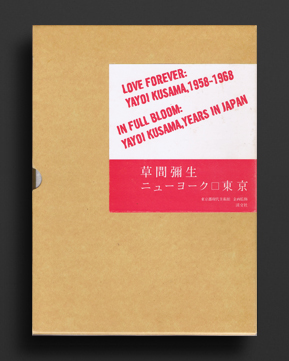
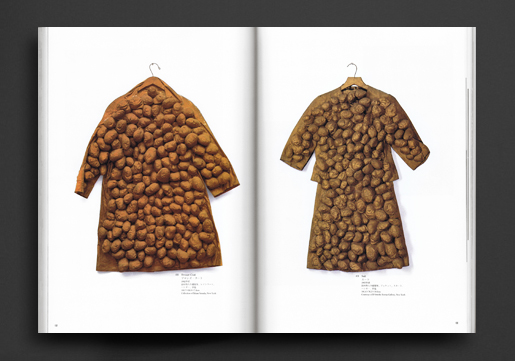
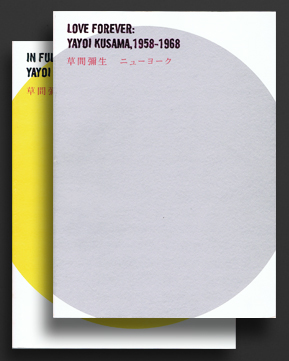
The original two-volume Japanese slipcase edition, published in conjunction with the exhibition "Love Forever: Yayoi Kusama, 1958-1968" which travelled between Japan and the US in 1999. This edition was available for the Museum of Contemporary Art Tokyo staging of the exhibition, and has been long out of print. Both volumes here are lavishly illustrated throughout with colour photographs of Yayoi Kusama's history of work - the first book ("Love Forever: Yayoi Kusama, 1958-1968") being a catalogue for the exhibition, featuring essays and documentation of the works in the exhibit spanning the years 1958-1968, including her New York happenings, whilst the second book ("In Full Bloom: Yayoi Kusama, Years in Japan") illuminates many rarely seen works outside of Japan. Accompanied by texts, an interview and an exhibition history, this book is broken into the sections 1945-1959, 1970-1999 and is densely illustrated with colour documentation of her work created in Japan. Together chronicling Kusama's life of creating work across painting, collage, soft sculpture, performance art, and environmental installations, of which most exhibit her thematic interest in psychedelic colours, repetition, and pattern, this comprehensive and collectable publication illustrates an extremely influential artist's life of work. Based in conceptual art, Kusama's work shows attributes of Feminism, Minimalism, Surrealism, Art Brut, Pop Art, Nouvelle Tendence (Op, Kinetic, etc.) and Abstract Expressionism, and is infused with autobiographical, psychological, and sexual content. Kusama is truly uncategorizable, and is celebrated as one of the most important living artists to come out of Japan, and an important voice of the avant-garde.
2017, English
Softcover, 320 pages, 24 × 19 cm
Published by
Mousse / Milan
Editions Lebeer Hossmann / Brussels
M HKA / Antwerp
$75.00 - Out of stock
Foreword by Anders Kreuger, essay by Irmeline Lebeer, translated transcript of conversation between Robert Filliou and Irmeline Lebeer
“The absolute secret of permanent creation: not deciding, not choosing, not wanting, not owning, aware of self, wide awake. SITTING QUIETLY DOING NOTHING.” — Robert Filliou.
Published to document the recent Filliou retrospective at M HKA, the Museum of Contemporary Art Antwerp, this book centres on the transcript of an extensive conversation between the French artist and the Brussels-based art critic Irmeline Lebeer, recorded on seven cassette tapes in August 1976 in Flayosc in Southern France. This conversation is structured as an abécédaire and touches on a variety of topics to do with Filliou’s art and thinking, from amitié (friendship) to zen. It was supposed to become an extensive monograph but was never published until now.
Robert Filliou: The Secret of Permanent Creation gives today’s reader direct insight into the mind and the practice of this extraordinary artist, whose influence on subsequent generations cannot be overestimated. Now, in the second decade of the twenty-first century, is the time to realise that Robert Filliou was one of the greatest artists of the twentieth century, apart from being a significant playwright and poet. This book helps contemporary readers grasp his significance. It contains many black-and-white illustrations and colour plates of nearly all the 192 works in the exhibition at M HKA.
Designed by Sara De Bondt
Copublished with M HKA, Antwerp, and Editions Lebeer Hossmann, Brussels
2017, English
Hardcover, 408 pages, 23.3 x 27.3 cm
Published by
Hammer / Los Angeles
Prestel / Munich
$96.00 - Out of stock
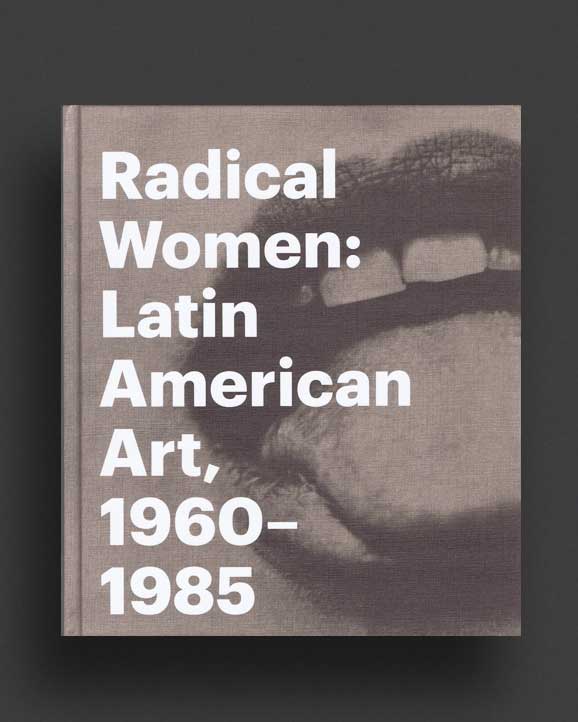
This stunning reappraisal offers long overdue recognition to the enormous contribution to the field of contemporary art of women artists in Latin America and those of Latino and Chicano heritage working during a pivotal time in history. Amidst the tumult and revolution that characterized the latter half of the 20th century in Latin America and the US, women artists were staking their claim in nearly every field. This wide ranging volume examines the work of more than 100 female artists with nearly 300 works in the fields of painting, sculpture, photography, video, performance art, and other experimental media. A series of thematic essays, arranged by country, address the cultural and political contexts in which these radical artists worked, while other essays address key issues such as feminism, art history, and the political body. Drawing its design and feel from the radical underground pamphlets, catalogs, and posters of the era, this is the first examination of a highly influential period in 20th-century art history.
About the editor:
CECILIA FAJARDO-HILL is an independent British-Venezuelan art historian and curator of modern and contemporary art, currently based in Southern California. ANDREA GIUNTA is a Buenos Aires-based writer, curator, Professor of Art History at the University of Buenos Aires, and Principal Researcher at CONICET, Argentina. She is also a visiting scholar at the University of Texas in Austin.
2017, English
Softcover, 144 pages, 11.5 x 18 cm
Published by
Sternberg Press / Berlin
A.P.E (Art Projects Era)
Kestner Gesellschaft / Hannover
$30.00 - Out of stock
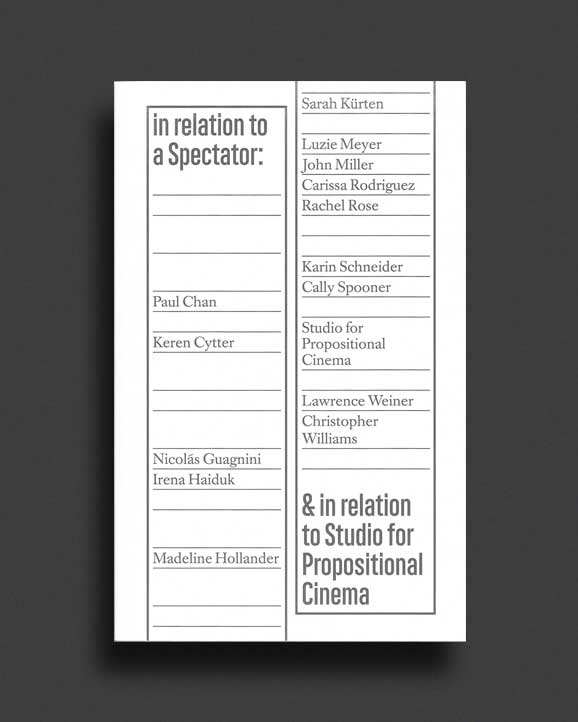
Contributions by Paul Chan, Keren Cytter, Nicolás Gaugnini, Irena Haiduk, Madeline Hollander, Sarah Kürten, Jordan Lord with Carissa Rodriguez, Luzie Meyer, John Miller, Rachel Rose, Karin Schneider, Cally Spooner, Studio for Propositional Cinema, Lawrence Weiner, Christopher Williams
A compendium of essays, scripts, poems, and proposals by various artists, in relation to a Spectator: was compiled by Studio for Propositional Cinema for their eponymous exhibition at the Kestner Gesellschaft in Hannover. In the opening text, Studio for Propositional Cinema—an artist collective founded in Düsseldorf in 2013—sets the context for the book’s investigations into notions of the script, staging, and the conditions of the exhibition itself. Other contributions include Keren Cytter’s rules and declarations for engaging life; Irena Haiduk and John Miller’s ruminations on the nature of the image and of the cinematic, respectively; a series of missives to Kevin Spacey from Cally Spooner; and an “open letter” by Christopher Williams detailing the labor and material conditions that have furnished the walls on which his exhibitions have hung.
This book is part of an ensemble of structures related to the nature of presentation in the Kestner Gesellschaft exhibition. Visually connected in their ultra-gloss white surfaces, they are meant to be seen as intertwined sites for the display of objects, the reproduction of images, the staging of performances, and the transmission language through talks and conversations.
Copublished with Kestner Gesellschaft and A.P.E. (Art Projects Era)
Design by Ronnie Fueglister
2017, English
Hardcover (w. dust jacket), 448 pages, 171 x 241 cm
Published by
The MIT Press / Massachusetts
New Museum / New York
$79.00 - Out of stock
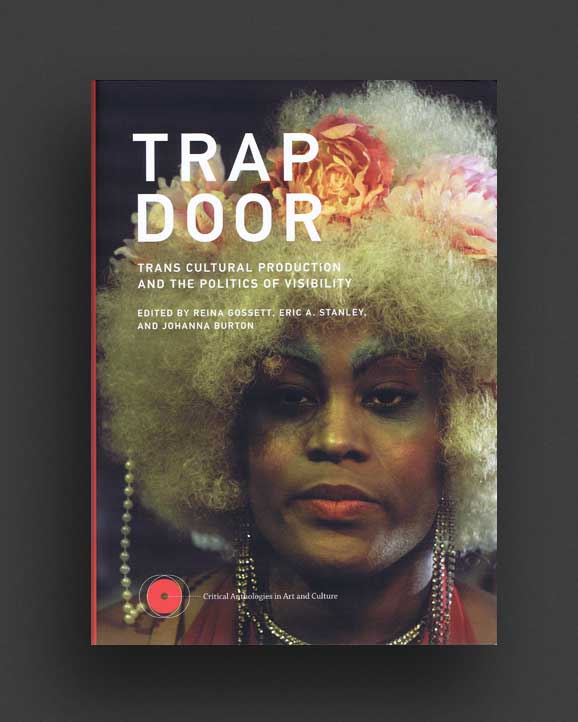
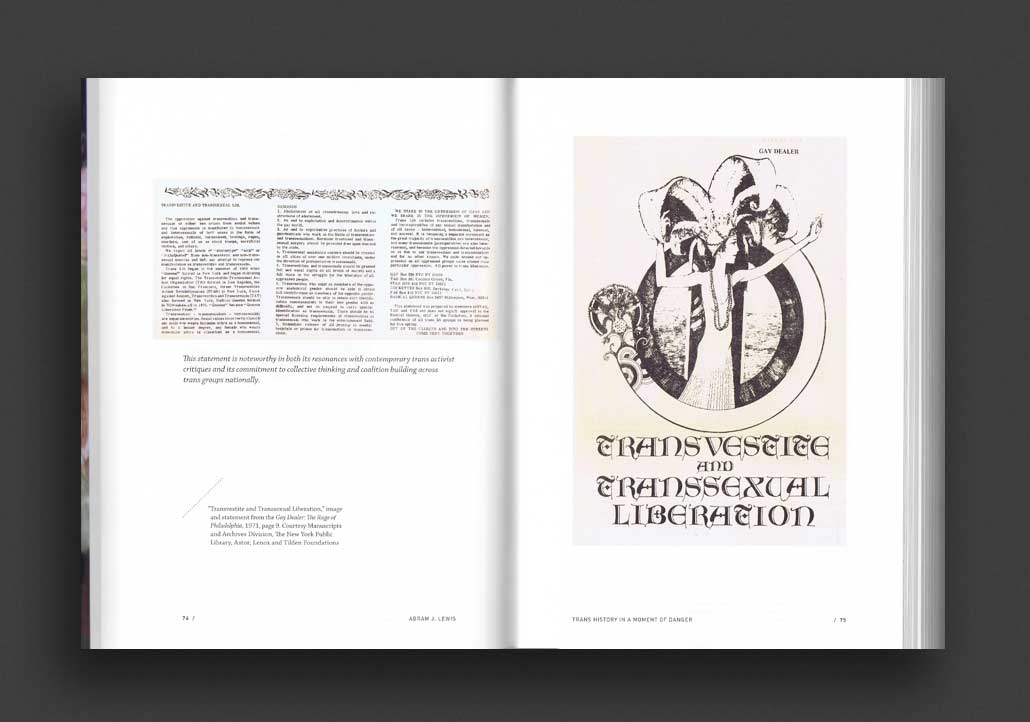
The increasing representation of trans identity throughout art and popular culture in recent years has been nothing if not paradoxical. Trans visibility is touted as a sign of a liberal society, but it has coincided with a political moment marked both by heightened violence against trans people (especially trans women of color) and by the suppression of trans rights under civil law. Trap Door grapples with these contradictions.
The essays, conversations, and dossiers gathered here delve into themes as wide-ranging yet interconnected as beauty, performativity, activism, and police brutality. Collectively, they attest to how trans people are frequently offered “doors”—entrances to visibility and recognition—that are actually “traps,” accommodating trans bodies and communities only insofar as they cooperate with dominant norms. The volume speculates about a third term, perhaps uniquely suited for our time: the trapdoor, neither entrance nor exit, but a secret passageway leading elsewhere. Trap Door begins a conversation that extends through and beyond trans culture, showing how these issues have relevance for anyone invested in the ethics of visual culture.
Contributors
Lexi Adsit, Sara Ahmed, Nicole Archer, Kai Lumumba Barrow, Johanna Burton, micha cárdenas, Mel Y. Chen, Grace Dunham, Treva Ellison, Sydney Freeland, Che Gossett, Reina Gossett, Stamatina Gregory, Miss Major Griffin-Gracy, Robert Hamblin, Eva Hayward, Juliana Huxtable, Yve Laris Cohen, Abram J. Lewis, Heather Love, Park McArthur, CeCe McDonald, Toshio Meronek, Fred Moten, Tavia Nyong’o, Morgan M. Page, Roy Pérez, Dean Spade, Eric A. Stanley, Jeannine Tang, Wu Tsang, Jeanne Vaccaro, Chris E. Vargas, Geo Wyeth, Kalaniopua Young, Constantina Zavitsanos
About the Editors
Reina Gossett is an artist, activist, and 2017 Activist in Residence at the Barnard Center for Research on Women. She directed The Personal Things (2016) and, with Sasha Wortzel, wrote, directed, and produced Happy Birthday, Marsha! (2017), a short film about legendary performer and activist Marsha P. Johnson.
Eric A. Stanley is Assistant Professor in the Department of Gender and Sexuality Studies at the University of California, Riverside, editor of Captive Genders: Trans Embodiment and the Prison Industrial Complex, and, with Chris E. Vargas, director of the films Homotopia (2006) and Criminal Queers (2016).
Johanna Burton is Director and Curator of Education and Public Engagement at the New Museum in New York and the series editor for the Critical Anthologies in Art and Culture.
2016, English
Hardcover (w. dust jacket), 304 pages, 29 x 24.5 cm
Published by
Art Yard / London
$110.00 - Out of stock
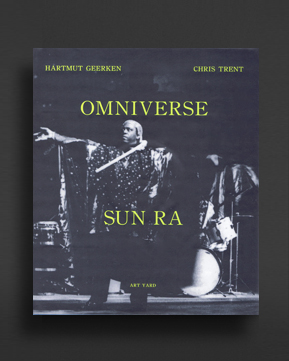
Revised and expanded second edition of Hartmut Geerken and Chris Trent’s comprehensive reference "Omniverse Sun Ra", originally published in 1994.
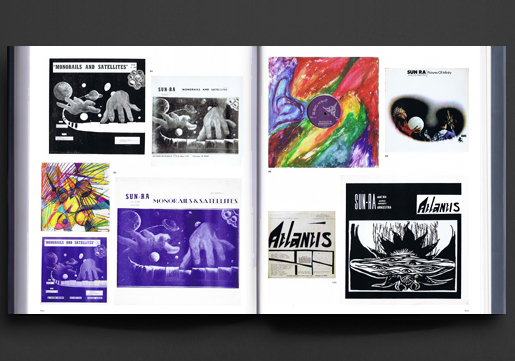
Omniverse Sun Ra features many previously unpublished photographs of Sun Ra and His Arkestra in New York in 1966 and Germany in 1979 by Val Wilmer, and Hartmut Geerken’s previously unpublished photographs from Heliopolis in Cairo, Egypt, in 1971, in addition to an updated comprehensive pictorial and annotated discography by Chris Trent, including chronological discography and alphabetical record title, composition, personnel, and record label indexes, as well as indexes of shellac 78RPM records, 45 RPM singles, jackets, and labels.
Also includes essays and photo documents by Hartmut Geerken, Chris Trent, Amiri Baraka, Robert L. Campbell, Chris Cutler, Gabi Geist, Sigrid Hauff, Karl Heinz Kessler, Robert Lax, and Salah Ragab.
2000, English
Plastic binder, 60 page catalogue/booklet, poster, brochure, press release, CD, 600 loose leaf A4 pages, 30.2 x 22 x 4 cm
Edition of 500,
1st Edition, Out of print title / as new
Published by
Museo Nacional Centro de Arte Reina Sofia - Palacio de Cristal - Parque del Retiro / Madrid
$2900.00 - Out of stock
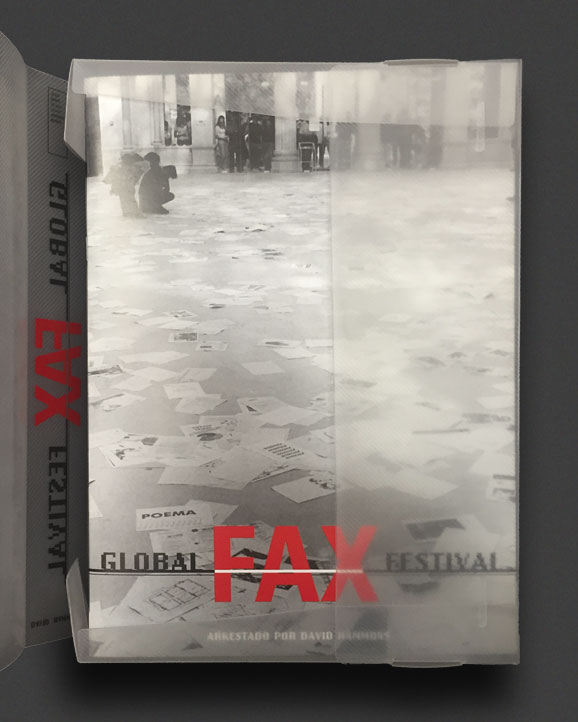
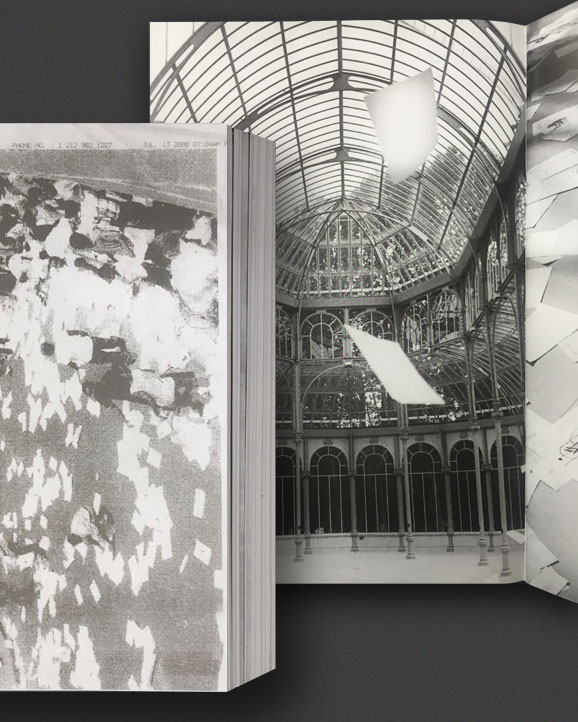
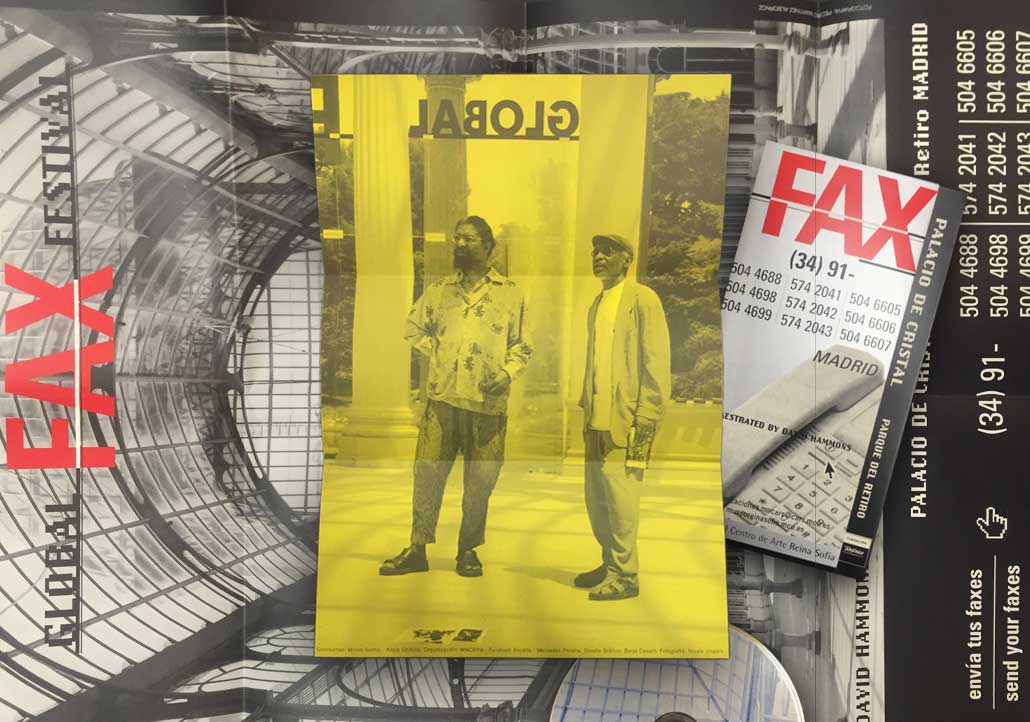
Incredible limited edition (500 copies) "Global Fax Festival" binder created by David Hammons on the occasion of the "Global Fax Festival - Arkestrated by David Hammons" exhibition at the Crystal Palace in Madrid (June 1 – November 6, 2000). This extraordinary edition contains a 60-page book of wonderful black-and-white photography documenting the exhibition and related events, the exhibition brochure, a large folded exhibition poster, press release, CD (Butch Morris "Conduction #113, Interflight), and a selection of six hundred faxes selected by David Hammons from the show. In this exhibition, in the Palacio de Cristal, Hammons provided the public with nine fax numbers corresponding to nine receivers installed in the ceiling of the Palacio. When messages sent from anywhere in the world are received they fall from the top of the space, progressively landing and filling up the floor. The project, Global Fax Festival, was used by Hammons to draw on the parallel between the surroundings, where the leaves of the trees in the Retiro park follow the same path. One of his intentions for the exhibition, created especially for the Palacio de Cristal, was to minimally involve the building's architecture, which he himself defines as being like “a sacred cathedral”. This sacrosanct dimension does not only belong to the spaces, but also the materials and objects and is a constant in his work.
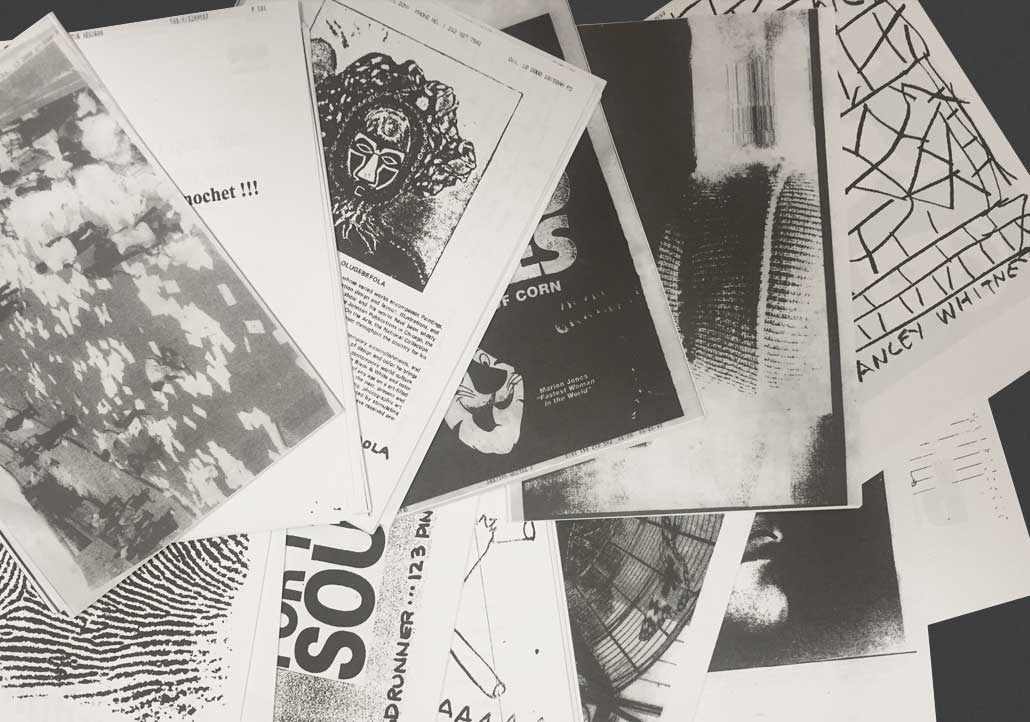
Among the faxes received over the five months of the exhibition, there are also newspaper stories, adverts, drawings, artist dossiers, obituaries, letters, declarations of love, collages, social statements, messages for David Hammons, instructions on origami techniques, famous phrases and proclamations, graphic humour, poems, short stories and book excerpts, music scores, photos of people, puzzles, slogans, etc., all of which demonstrate the boundless diversity of possible expression through paper. The sounds in the inside of the Pabellón de Cristal, the trill of the birds in the park, the noise of the fax machine and the falling paper, are equally part of the installation and fulfil the artist's intentions.
Moreover, five days before its official closure the exhibition includes a concert by Butch Morris, a preeminent figure in contemporary classical music, improvisation and jazz. The American composer performs an improvisation combining sampled recordings and the live sounds from the surroundings. One hour before sunset, the sounds are displaced, with all the musicians participating in the concert by playing collectively from their designated places until one hour after sundown, when they change their positions once more.
A true document of the exhibition and it's events, Hammons' selection of six hundred messages received over the course of the exhibition make up the rare catalogue edition of this example of Fax-Art, falling somewhere between Mail Art and Net-Art.
The work of artist David Hammons (Springfield, USA, 1943), which begins in the Seventies, has been characterised by its commitment towards civil rights and its link to the Black Power movement in the United States - the defence of the rights of black people. Hammons commonly questions the separation between public and private spaces through an aesthetic with influences from Minimalism, Arte Povera and the school of Zen.
A Fine / As New copy of this very rare, highly collectable title.
2017, English
Softcover, 64 pages, 14 × 21 cm
Published by
Edition Patrick Frey / Zürich
$35.00 - In stock -
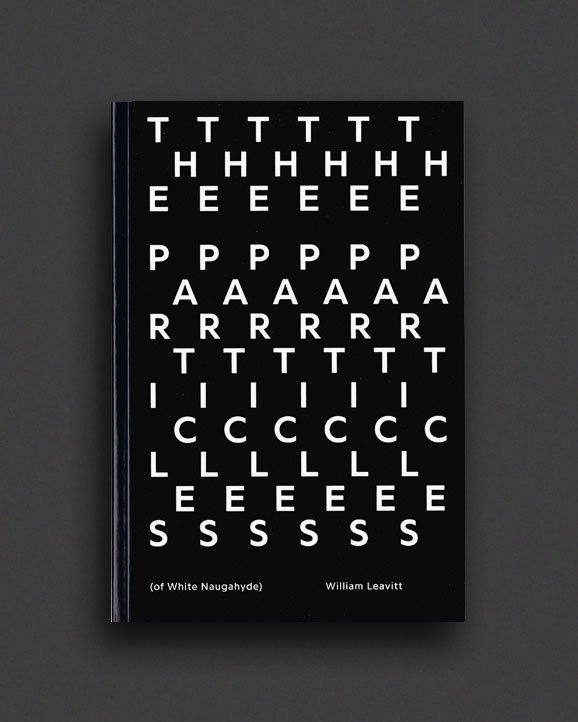
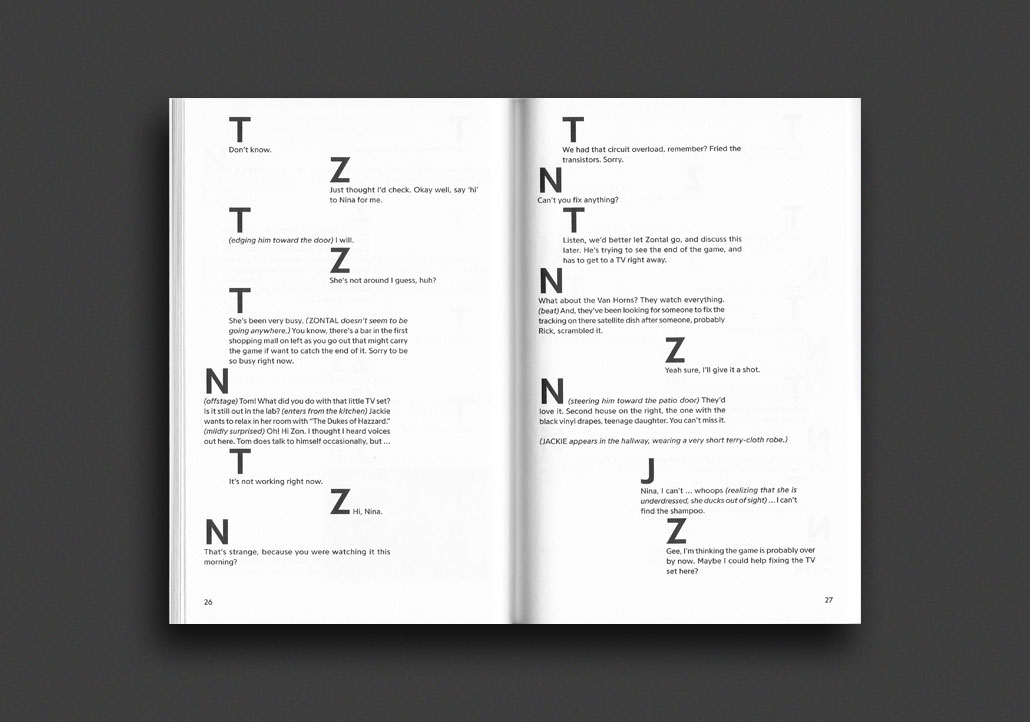
THE PARTICLES (of White Naugahyde) is the first publication of a play by William Leavitt (b. 1941). Leavitt is one of the pioneers of conceptual art in Los Angeles, helping significantly to establish the genre in the late 1960s and the 1970s. His works make use of narrative elements drawn from LA architecture and popular culture as well as from the movie and television industries. The artist works in various media, including sculpture, painting, drawing, photography and theatre.
Framed as a sitcom setting, the narrative of THE PARTICLES (of White Naugahyde) tells the story of a family auditioning for a NASA program, which sends them to a newly planned space colony. The demanding admission process makes them live in a security-free community in the desert together with other applicants. These two weeks in the desert result in anxiety and anti-social behavior among the participants.
Published in the series STUDIOLO / Edition Patrick Frey.
1969, English
Softcover, 240 pages, 21 x 22 cm
1st US Edition, Out of print title / used / very good
Published by
Praeger Publishers Inc. / New York
$200.00 - Out of stock
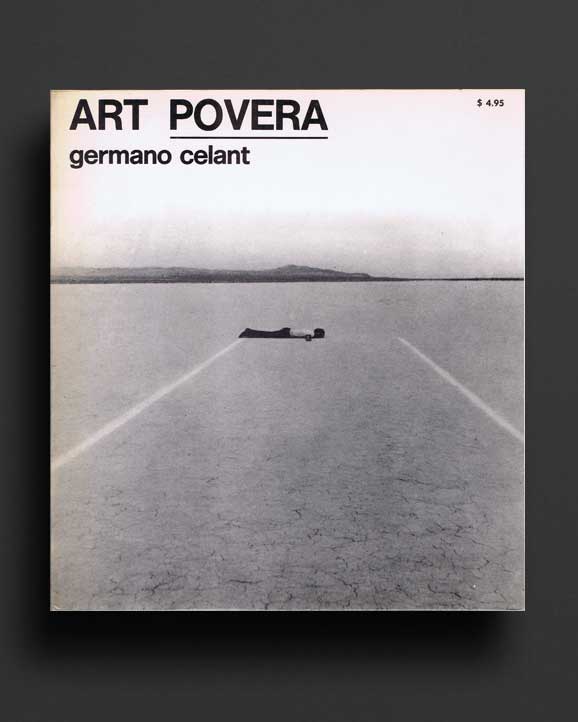
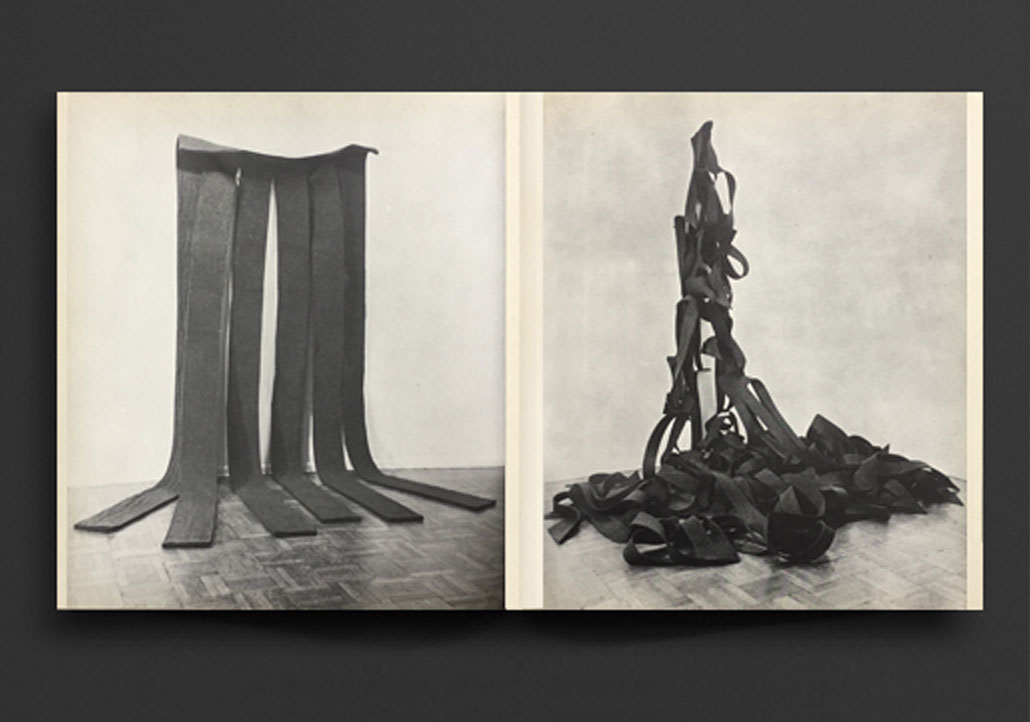
First US printing of "Art Povera", the now legendary critical/photographic book by Germano Celant (Italian art historian, critic and curator) documenting the so-called "Art Povera / Arte Povera" movement (meaning "poor art", coined by Celant in 1967) and published by Praeger, New York in 1969 and printed in Italy. A must!
Includes profiles of major artists of the movement, including a short text followed by pages of full-page photographs for each artist.
Artists featured: Walter de Maria, Michelangelo Pisteletto, Stephen Kaltenbach, Richard Long, Mario Merz, Douglas Huebler, Joseph Beuys, Eva Hesse, Michael Heizer, Ger van Elk, Lawrence Weiner, Luciano Fabro, Bruce Nauman, Joseph Kosuth, Jan Dibbets, Giovanni Anselmo, Robert Barry, Pier Paolo Calzolari, Dennis Oppenheim, Barry Flanagan, Robert Smithson, Giulio Paolini, Reiner Ruthenbeck, Alighiero Boetti, Giuseppe Penone, Franz Erhard Walther, Hans Haacke, Gilberto Zorio, Robert Morris, Marinus Boezem, Carl Andre, Emilio Prini, Richard Serra.
"This book does not aim at being an objective and general analysis of the phenomenon of art or life, but is rather an attempt to flank (both art and life) as accomplices of the changes and attitudes in the development of their daily becoming. This book does not attempt to be objective since the awareness of objectivity is false consciousness. The book, made up of photographs and written documents, bases its critical and editorial assumptions on the knowledge that criticism and iconographic documents give limited vision and partial perception of artistic work. The book, when it reproduces the documents of artistic work, refutes the linguistic mediation of photography. The book, even though it wants to avoid the logic of consumption, is a consumer's item. ... This book produces a collection of already old material. ... In this book there is no need to reflect in order to seek a unitary and reassuring value, immediately refuted by the the authors themselves, rather there is the necessity to look into it for the changes, limits, precariousness and instability of artistic work." -- text from Celant's introduction "Stating That."
Very good, well-preserved copy. Only light tanning.
2013, English / Italian
Hardcover (w. dustjacket), 782 pages, 22 x 29 cm
Published by
Fondazione Prada / Venice
$210.00 - Out of stock
Published by Fondazione Prada
Edited by Germano Celant. Introduction by Miuccia Prada. Preface by Miuccia Prada, Patrizio Bertelli. Text by Gwen L. Allen, Pierre Bal Blanc, Claire Bishop, Benjamin H.D. Buchloh, Charles Esche, Boris Groys, Jens Hoffmann, Chus Martínez, Glenn Phillips, Christian Rattemeyer, Dieter Roelstraete, Anne Rorimer, Terry Smith, Mary Anne Staniszewski, Francesco Stocchi, Jan Verwoert. Interviews with Thomas Demand, Rem Koolhaas.
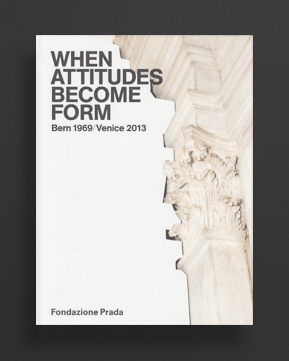
In a daring act of historical reconstruction, the curator Germano Celant, in dialogue with Thomas Demand and Rem Koolhaas, has recreated Harald Szeemann’s epochal "Live in Your Head: When Attitudes Become Form", held at the Bern Kunsthalle in 1969, and installed by Celant at the magnificent Ca’ Corner della Regina in Venice in June–November 2013. Szeemann’s show was a dialogue with the Bern Kunsthalle, and Celant has reprised its spirit by placing the works in dialogue with the Ca’ Corner della Regina--a very different building, in its Venetian grandeur, to the Kunsthalle.
This publication is divided into three parts: the first reproduces a complete collection of photo documentation of the original exhibit in 1969, many photographs previously unpublished, taken by photographers during the exhibition (Claudio Abate, Leonardo Bezzola, Balthasar Burkhard, Siegfried Kuhn, Dölf Preisig, Harry Shunk and Albert Winkler); the second compiles essays and interviews on Celant’s project (texts by Gwen L. Allen, Pierre Bal Blanc, Claire Bishop, Benjamin H.D. Buchloh, Charles Esche, Boris Groys, Jens Hoffmann, Chus Martínez, Glenn Phillips, Christian Rattemeyer, Dieter Roelstraete, Anne Rorimer, Terry Smith, Mary Anne Staniszewski, Francesco Stocchi, Jan Verwoert. Interviews with Thomas Demand, Rem Koolhaas) and the third includes the installation views of the show in Venice. The book is completed by a "Register" of works included in both shows.
A heavy, scientific volume of almost 800 pages that has become an invaluable reference for those interested in Conceptual Art, Minimalism, Art Povera, Land Art, Curatorial history, and much more.
It includes the work of artists:
1969: Carl Andre, Giovanni Anselmo, Richard Artschwager, Thomas Bang, Jared Bark, Robert Barry, Joseph Beuys, Alighiero Boetti, Mel Bochner, Marinus Boezem, Bill Bollinger, Michael Buthe, Pier Paolo Calzolari, Paul Cotton, Hanne Darboven, Walter de Maria, Jan Dibbets, Ger van Elk, Rafael Ferrer, Barry Flanagan, Ted Glass, Hans Haacke, Michael Heizer, Eva Hesse, Douglas Huebler, Paolo Icaro, Alain Jacquet, Neil Jenney, Stephen Kaltenbach, Jo Ann Kaplan, Edward Kienholz, Yves Klein, Joseph Kosuth, Jannis Kounellis, Gary B. Kuehn, Sol LeWitt, Bernd Lohaus, Richard Long, Roelof Louw, Bruce McLean, David Medalla, Mario Merz, Robert Morris, Bruce Nauman, Claes Oldenburg, Dennis Oppenheim, Panamarenko, Pino Pascali, Paul Pechter, Michelangelo Pistoletto, Emilio Prini, Markus Raetz, Allen Ruppersberg, Reiner Ruthenbeck, Robert Ryman, Frederick Lane Sandback, Alan Saret, Sarkis, Jean-Frédéric Schnyder, Richard Serra, Robert Smithson, Keith Sonnier, Richard Tuttle, Frank Lincoln Viner, Franz Erhard Walther, William G. Wegman, Lawrence Weiner, William T. Wiley, Gilberto Zorio.
2013: Carl Andre, Giovanni Anselmo, Richard Artschwager, Thomas Bang, Robert Barry, Joseph Beuys, Mel Bochner, Alighiero Boetti, Bill Bollinger, Marinus Boezem, Daniel Buren, Michael Buthe, Pier Paolo Calzolari, Paul Cotton (Adam II), Hanne Darboven, Walter De Maria, Jan Dibbets, Ger van Elk, Rafael Ferrer, Barry Flanagan, Philip Glass, Hans Haacke, Eva Hesse, Paolo Icaro, Alain Jacquet, Neil Jenney, Stephen Kaltenbach, Edward Kienholz and Jean Tinguely, Joseph Kosuth, Jannis Kounellis, Gary B. Kuehn, Sol LeWitt, Richard Long, Roelof Louw, Mario Merz, Robert Morris, Bruce Nauman, Claes Oldenburg, Dennis Oppenheim, Pino Pascali, Emilio Prini, Markus Raetz, Steve Reich, Allen Ruppersberg, Reiner Ruthenbeck, Robert Ryman, Frederick Lane Sandback, Alan Saret, Sarkis, Richard Serra, Robert Smithson, Michael Snow, Keith Sonnier, Richard Tuttle, Frank Lincoln Viner, Aldo Walker, Franz Erhard Walther, Lawrence Weiner, William T. Wiley, Gilberto Zorio.
2015, English
Softcover (w. printed plastic jacket), 464 pages, 18.5 x 24 cm
Out of print title / as new
Published by
Spector Books / Leipzig
$90.00 - Out of stock
Out-of-print English edition.
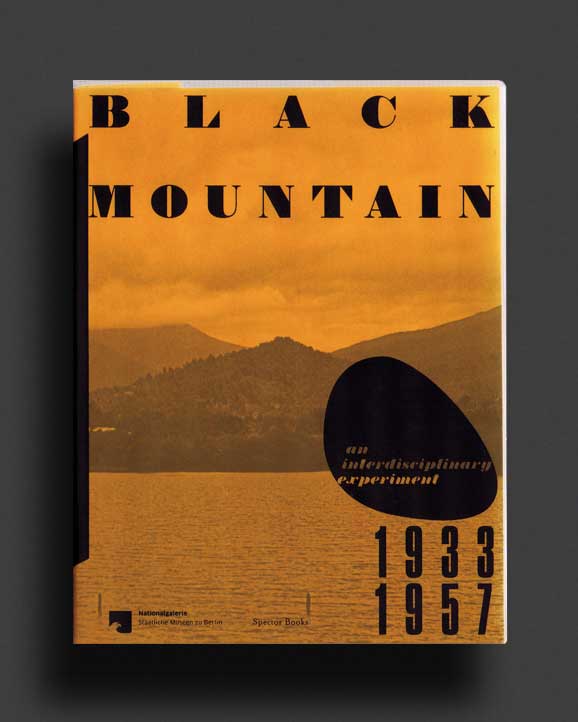
The interdisciplinary and experimental educational ideas espoused by Black Mountain College (BMC), founded in North Carolina in 1933, made it one of the most innovative schools in the first half of the twentieth century. Visual arts, economics, physics, dance, architecture, and music were all taught here on an equal footing, and teachers and students lived together in a democratically organized community. The first rector of the school was John Andrew Rice, and Josef Albers, John Cage, Walter Gropius, and Buckminster Fuller were among the many adepts to give courses here. In consequence, BMC witnessed the development of a range of avant-garde concepts. This richly illustrated book appeared in conjunction with a Black Mountain exhibition ( 5 June – 27 September 2015, Nationalgalerie im Hamburger Bahnhof – Museum für Gegenwart – Berlin). It is the first comprehensive publication on BMC in the German-speaking world and traces the key moments in the history of this legendary school.
2016, English
Hardcover, 288 pages, 25.4 x 30.5 cm
Published by
Rizzoli / New York
$70.00 - Out of stock
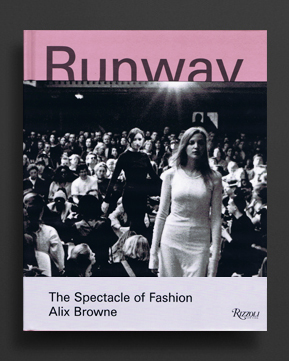
A stunning work on contemporary fashion spectacles, showcasing the most innovative, creative, and artistic high-fashion runway shows of the last twenty years.
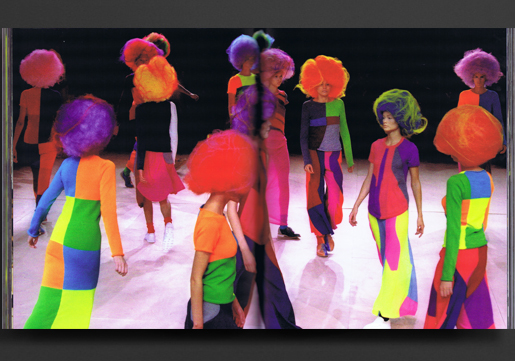
In recent years, as fashion shows have become a part of our collective imagination and an important part of contemporary culture, blockbuster productions have redefined the runway show as a form of entertainment and creativity on par with the clothes themselves. This book focuses on designers for whom fashion and the mode of presenting it have held equal significance: Alexander McQueen, Maison Martin Margiela, Susan Ciancialo, Issey Miyake, Bernadette Corporation, Ann Demeulemeester, Bernhard Willhelm, Gucci, Helmut Lang, Hussein Chalayan, Viktor & Rolf, Givenchy, Yohji Yamamoto, Comme des Garçons, Rick Owens, A.F. Vandevorst, Louis Vuitton, W<, X-Girl, Christian Dior, Prada, Yeezy, Marc Jacobs, Chanel, Raf Simons, Thom Browne, and Imitation of Christ, among them. From the performance art spectacles of the first Alexander McQueen collections in the mid-1990s and the high-art concept shows of Hussein Chalayan in the late 1990s to the lavish beauty of Chanel haute couture in 2012, author Alix Browne explores the highest pinnacles of fashion today. Runway gives the reader full access to the theatrical and creative aspects of the production, in both intimate, little-seen runway shows from the pre-Internet era many of the photographs here have never been published before as well as major productions with elaborate sets and full-blown narrative. Each show is presented through lush, full-bleed photography and many through fold-out four-page images - an index gives a blurb about each runway presentation with further images.
A thrilling, immersive, and inspiring look into the wide-ranging creativity of contemporary fashion, Runway is the most thorough book available on the subject. Featuring the most innovative fashion designers of the last twenty years, this book is a must for lovers of fashion and culture.
2004, English
Softcover, 87 pages, 18.5 x 12.7 cm
1st Edition, Out of print title / as new
Published by
ICA / Pennsylvania
$45.00 - Out of stock
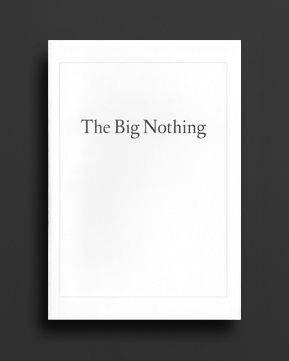
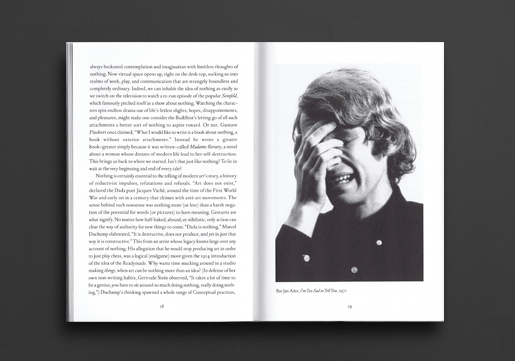
Conceptions of “nothing” are one of the driving themes of twentieth-century art. One thinks of Piet Mondrian's reductivist approach to abstraction, Marcel Duchamp's contention that art resides in ideas, not objects, Mark Rothko's painterly reach for the sublime, Andy Warhol's affirmations of the vacuity of Pop culture. The Big Nothing will focus on themes of nothing, nothingness and negation in contemporary art and culture, surveying the legacy of these and other manifestations of absence made manifest in contemporary art. Artist include Gareth James, Jutta Koether, Louise Lawler, Richard Prince, Yves Klein, Bernadette Corporation, John Miller and James Welling, among others. Given its broad connotations, “nothing” provides general audiences with immediate access to looking at and thinking about the art of today.
Exhibition catalogue published in conjunction with show held May 1 - August 1, 2004. Curated and with essays by Ingrid Schaffner, Bennett Simpson, and Tanya Leighton. Additional essay by Paula Marincola. Artists include: Bas Jan Ader, Richard Artschwager, Michael Asher, Michel Auder, Jo Baer, Robert Barry, Larry Bell, Bernadette Corporation, James Lee Byars, Maurizio Cattelan, Thomas Chimes, Bruce Conner, Day Without Art, Jessica Diamond, Roe Ethridge, Lili Fleury, Rene Gabri, Jack Goldstein, Dominique Gonzalez-Foerster, Nicolas Guagnini, David Hammons, Heavy Industries, Nancy Holt, Richard Hoeck, Roni Horn, Pierre Huyghe, Gareth James, Ray Johnson, Yves Klein, Joachim Koester, Jutta Koether, Yayoi Kusama, Louise Lawler, Gordon Matta-Clark, Allan McCollum, Patrick McMullen, John Miller, Matt Mullican, Eileen Neff, Gabriel Orozco, Raphael Ortiz, Charlemagne Palestine, Philippe Parreno, William Pope.L, Doris Salcedo, Karin Schneider, Allan Sekula, Arlene Shechet, Santiago Sierra, John Smith, Robert Smithson, Paul Swenbeck, Rirkrit Tiravanija, Andy Warhol, James Welling, John Wesley, and Steve Wolfe. Includes checklist of the exhibition.