World Food Books' programme is largely produced on Kulin Nation land. We acknowledge the Wurundjeri people of the Kulin Nation as the first and continuing custodians of this land, and pay respect to their Elders past, present, and emerging.
World Food Books is an arts and special interests bookshop in Naarm / Melbourne. Founded in 2010, World Food Books is devoted to the presentation of a rotating, hand-selection of international art, design, literary and counterculture publications with an emphasis on the anti-traditional, the experimental, the avant-garde, the heretic, the marginal.
Presenting new titles alongside rare and out-of-print books, catalogues and journals spanning the fields of modern and contemporary art, design, photography, illustration, film, literature, poetry, cultural theory, philosophy, sexuality, popular and underground culture in its many radical forms, World Food Books wishes to encourage adventurous, thoughtful and open-minded reading, looking, writing, and exchange of publishing and ideas, both current and historical.
As well as our bookshop, located in Melbourne's historical Nicholas Building, all of our inventory is available internationally via our online mail-order service.
World Food Books semi-regularly co-ordinates "Occasions", a programme of exhibits and events at the bookshop and in partnership with other hosts (such as museums and art galleries) that develop out of the activities, relationships and content of the bookshop itself.
World Food Books
The Nicholas Building
37 Swanston Street
Room 5, Level 6
Melbourne 3000
Australia
SHOP HOURS:
THU–SAT 12–6
WEB-SHOP OPEN 24/7
World Food Books
Postal Address:
PO Box 435
Flinders Lane
Victoria 8009
Australia
info@worldfoodbooks.com
Art
Theory / Essay
Architecture / Interior
Graphic Design / Typography
Photography
Fashion
Eros
LGBTQ+
Fiction / Poetry
Weird / Speculative / Science Fiction / Horror
Transgressive / Visceral / Abject
Symbolism / Decadence / Fin de siècle
Film / Video
Painting
Sculpture / Installation
Performance / Dance / Theater
Drawing
Sound / Music
Curatorial
Group Shows / Collections
Periodicals
Out-of-print / Rare
Posters / Ephemera / Discs
Signed Books
World Food Books Gift Voucher
World Food Book Bag
Australian Art
Australian Fiction
Australian Science Fiction / Speculative Fiction
Australian Poetry
Australian Photography
Japanese Photography
Conceptual Art
Minimal Art
Dada
'Pataphysics / Oulipo
Fluxus
Concrete Poetry
Pop Art
Surrealism
Arte Povera
Arte Informale / Haute Pâte / Tachism
Nouveau Réalisme / Zero / Kinetic
Situationism / Lettrism
Collage / Mail Art / Xerox Art
Art Brut / Folk / Visionary / Fantastic
Illustration / Graphic Art / Bandes Dessinées
Furniture
Italian Radical Design / Postmodernism
Textiles
Ceramics / Glass
Counterculture
Protest / Revolt
Philosophy
Psychoanalysis
Anthropology
Anarchism
Socialism / Anarchism / Communism / Capitalism
Literary Theory / Semiotics / Language
Feminism / Women's Studies
Gender Studies / Sexuality
Anthropology
Fetishism / BDSM
Drugs / Psychedelia
Crime / Violence
Animal Rights / Veganism
Occult / Esoterica
Ecology / Earth / Alternative Living
Whole Earth / Crafts
All prices in AUD (Australian dollars)
Pick-Ups
Pick-up orders can be collected in our bookshop during opening hours after order date. Please collect any Pick-up orders within 2 weeks of ordering as we have limited storage space. Orders will be released back into stock if not collected within this time. No refunds can be made for pick-ups left un-collected. If you cannot make it in to the bookshop in this time-frame, please choose postage option.
Return Policy
All sales are final. We do accept returns (for refund or exchange) for items received in error. All our orders are packed with special care using heavy-duty padding and cardboard book-mailers or bubble mailers (for smaller books), using reinforcement where required. We cannot take responsibility for any lost, stolen or damaged parcels.
Insurance
Should you wish to insure your package, please email us directly after placing your order and we can organise this at a small extra expense. Although all standard/express tracked packages are very safe and dependable, we cannot take responsibility for any lost, stolen or damaged parcels. We recommend insurance on valuable orders.
Interested in selling your old books, catalogues, journals, magazines, comics, fanzines, ephemera? We are always looking for interesting, unusual and out-of-print books to buy. We only buy books in our fields of interest and specialty, and that we feel we can resell.
We base these prices on desirability, market value, in-print prices, condition and our current stock levels. We offer cash, store credit, and can take stock on consignment. All
about 25% of the price we expect to get when we sell them, or 30% in store credit. We base these prices on desirability, market value, in-print prices, condition and our current stock levels.
Sell your books any day of the week. You can drop them off and return later. If you have a lot of books, we can visit your Sydney home.
We buy books that we feel we can resell. We offer about 25 % of the price we expect to get when we sell them, or 30% in store credit. We base these prices on desirability, market value, in-print prices, condition and our current stock levels.
Philadelphia Wireman
03 August - 01 September, 2018
World Food Books is proud to announce our next Occasion, the first presentation of sculptures by Philadelphia Wireman in Australia.
The Philadelphia Wireman sculptures were found abandoned in an alley off Philadelphia’s South Street on trash night in 1982. Their discovery in a rapidly-changing neighbourhood undergoing extensive renovation, compounded with the failure of all attempts to locate the artist, suggests that the works may have been discarded after the maker’s death. Dubbed the "Philadelphia Wireman" during the first exhibition of this work, in 1985, the maker’s name, age, ethnicity, and even gender remain uncertain. The entire collection totals approximately 1200 pieces, all intricately bound together with tightly-wound heavy-gauge wire (along with a few small, abstract marker drawings, reminiscent both of Mark Tobey and J.B. Murry). The dense construction of the work, despite a modest range of scale and materials, is singularly obsessive and disciplined in design: a wire armature or exoskeleton firmly binds a bricolage of found objects including plastic, glass, food packaging, umbrella parts, tape, rubber, batteries, pens, leather, reflectors, nuts and bolts, nails, foil, coins, toys, watches, eyeglasses, tools, and jewellery.
Heavy with associations—anthropomorphic, zoomorphic, and socio-cultural responses to wrapped detritus—the totemic sculptures by Philadelphia Wireman have been discussed in the context of work created to fulfil the shamanistic needs of alternative religions in American culture. Curators, collectors, and critics have variously compared certain pieces to sculpture from Classical antiquity, Native American medicine bundles, African-American memory jugs, and African fetish objects. Reflecting the artist’s prolific and incredibly focused scavenging impulse, and despite—or perhaps enhanced by—their anonymity, these enigmatic objects function as urban artefacts and arbiters of power, though their origin and purpose is unknown. Philadelphia Wireman, whatever their identity, possessed an astonishing ability to isolate and communicate the concepts of power and energy through the selection and transformation of ordinary materials. Over the course of the past two decades, this collection has come to be regarded as an important discovery in the field of self-taught art and vernacular art.
Presented in collaboration with Fleisher-Ollman Gallery, Philadelphia, and Robert Heald, Wellington.
Susan Te Kahurangi King
02 February - 10 March, 2018
Susan Te Kahurangi King (24 February 1951 - ) has been a confident and prolific artist since she was a young child, drawing with readily available materials - pencils, ballpoint pens and felt-tip markers, on whatever paper is at hand. Between the ages of four and six Susan slowly ceased verbal communication. Her grandparents William and Myrtle Murphy had developed a special bond with Susan so they took on caring responsibilities for extended periods. Myrtle began informally archiving her work, carefully collecting and storing the drawings and compiling scrapbooks. No drawing was insignificant; every scrap of paper was kept. The King family are now the custodians of a vast collection containing over 7000 individual works, from tiny scraps of paper through to 5 meter long rolls.
The scrapbooks and diaries reveal Myrtle to be a woman of great patience and compassion, seeking to understand a child who was not always behaving as expected. She encouraged Susan to be observant, to explore her environment and absorb all the sights and sounds. Myrtle would show Susan’s drawings to friends and people in her community that she had dealings with, such as shopkeepers and postal workers, but this was not simply a case of a grandmother’s bias. She recognised that Susan had developed a sophisticated and unique visual language and sincerely believed that her art deserved serious attention.
This was an unorthodox attitude for the time. To provide some context, Jean Dubuffet coined the term Art Brut in 1945 to describe work created by self-taught artists – specifically residents of psychiatric institutions and those he considered to be visionaries or eccentrics. In 1972 Roger Cardinal extended this concept by adopting the term Outsider Art to describe work made by non-academically trained artists operating outside of mainstream art networks through choice or circumstance. Susan was born in Te Aroha, New Zealand in 1951, far from the artistic hubs of Paris and London that Dubuffet and Cardinal operated in. That Myrtle fêted Susan as a self-taught artist who deserved to be taken seriously shows how progressive her attitudes were.
Susan’s parents Doug and Dawn were also progressive. Over the years they had consulted numerous health practitioners about Susan’s condition, as the medical establishment could not provide an explanation as to why she had lapsed into silence. Dawn educated herself in the field of homeopathy and went on to treat all twelve of her children using these principles – basing prescriptions on her observations of their physical, mental and emotional state.
Doug was a linguist with an interest in philosophy who devoted what little spare time he had to studying Maori language and culture. To some extent their willingness to explore the fringes of the mainstream made them outsiders too but it was their commitment to living with integrity and their respect for individuality that ensured Susan’s creativity was always encouraged.
Even though Susan’s family supported her artistic pursuits, some staff in schools and hospitals saw it as an impediment to her assimilation into the community and discouraged it in a variety of ways. Her family was not always aware of this and therefore did not fully understand why Susan stopped drawing in the early 1990s. However, rather than dwell on the challenges that Susan faced in pursuit of her artistic practice, they prefer to highlight her achievements. In 2008 Susan began drawing again in earnest, after an almost 20 year interruption, and her work is now shown in galleries around the world.
Susan grew up without television and has been heavily influenced by the comics she read as a child. She is absolutely fearless in the appropriation of recognizable characters, such as Donald Duck and Mickey Mouse, in her work. She twists their limbs, contorts their faces, compresses them together, blends them into complex patterned backgrounds - always imbuing them with an incredible energy. Although Susan often used pop culture characters in her work they are not naive or childlike. These are drawings by a brilliant self-taught artist who has been creating exceptional work for decades without an audience in mind.
Mladen Stilinović
"Various Works 1986 - 1999"
02 February 16 - September 10, 2016
Various works 1986 - 1999, from two houses, from the collections of John Nixon, Sue Cramer, Kerrie Poliness, Peter Haffenden and Phoebe Haffenden.
Including: Geometry of Cakes (various shelves), 1993; Poor People’s Law (black and white plate), 1993; White Absence (glasses, ruler, set square, silver spoon, silver ladel with skin photograph and wooden cubes), 1990-1996; Exploitation of the Dead (grey and red star painting, wooden painting, black spoon with red table, red plate), 1984-1990; Money and Zeros (zero tie, paintings made for friends in Australia (Sue, John, Kerrie), numbers painting), 1991-1992; Words - Slogans (various t-shirts) - “they talk about the death of art...help! someone is trying to kill me”, “my sweet little lamb”, “work is a disease - Karl Marx”; Various artist books, catalogues, monographs, videos; Poster from exhibition Insulting Anarchy; "Circular" Croatian - Australian edition; Artist book by Vlado Martek (Dostoyevsky); more.
Thanks to Mladen Stilinović and Branka Stipančić.
Jonathan Walker
Always Will Need To Wear Winter Shirt Blue + Ochre Small Check Pattern
21 August - 21 September, 2015
Untitled
I am not a great reader of poetry but I always return to the work of Melbourne poet, Vincent Buckley (1925- 1988). Perhaps I find his most tantalising piece to be not a finished poem but a fragment left on a scrap of paper discovered on his desk after the poet’s death.
The poetry gathers like oil
In the word-core, and spreads
It has its music meet,
Its music is in movement.
This fragment is more the shell left behind from a volatile thought than a finished poem. I find the last two lines honest but awkward whereas the first two lines work like an arrow. Most likely he could not find a resolution so it was left. Still, in its present form, it remains an eloquent testimony to the ultimate failure of a medium to express mobile thought and sensation, in Buckley’s case, through verbal language. It’s an important matter because this is something all artists have to deal with regardless of the medium.
I have never written a poem, however, I am forever copying fragments from books on paper scraps in a vain effort to fix certain notions in my head. At first, they function as bookmarks that are sometimes returned to when I open the book. But before long, as they accumulate, they fall out littering the table interspersed with A4 photocopies, bills, books and medications.
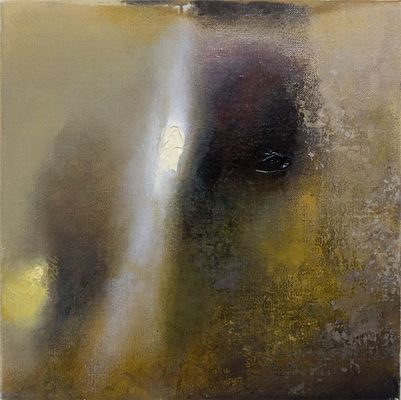
To return to Buckley’s fragment, the first two lines very much evoke how I paint nowadays. As you age, detail diminishes and patches of light become more luminous and float. I feel the most honest way of dealing with this is by smearing the oil paint on the canvas with the fingers and working close-up, blind. Only if the patches coalesce into an approaching image can the work gain a life.
-
Jonathan Walker was born in Melbourne, Australia and brought up on a dairy farm in Gippsland. In the 1970’s he studied painting at RMIT and won the Harold Wright Scholarship to the British Museum, London. During the 1980’s he exhibited at Pinacotheca Gallery, Richmond and had work shown at the NGV and Heidi City Art Gallery. Over the same period he designed the cover for the “Epigenesi” LP by Giancarlo Toniutti, Italy and conducted a mail exchange work with Achim Wollscheid, Germany. The work with artists through the post resulted in an article published in the bicentenary issue of Art and Australia 1988. He showed in artist run spaces such as WestSpace in the 90’s and 2000’s, and until 2012, taught painting at Victoria University, which is where we (Colleen Ahern and Lisa Radford) as organisers of the exhibition, among many others, had the privilege of being his student.
Walker’s knowledge was imparted to students through the careful selection of music, literature, and artists found in books that he himself had ordered for the library. Walker’s strategy was the generosity of sharing his vast knowledge with references specific to each student and their context.
Walker’s paintings share a similar focus and intimacy.
This exhibition presents a small selection of recent paintings alongside a publication that includes Walker’s writing. Observational and analytical, Walker’s work is a type of material notation — the time of day, colour and how it is blended, the both specific and fleeting location of a reflection on lino or the question of whether a chair leg should be included in a painting.
Please join us on Friday August 21 between 6-8pm to celebrate the opening of the exhibition.
Curated by Colleen Ahern and Lisa Radford.
B. Wurtz
Curated by Nic Tammens
March 26 - April 4, 2015
B.Wurtz works from a basement studio in his home on Manhattan’s Lower East Side.
This local fact is attested to by the plastic shopping bags and newsprint circulars that appear in his work. As formal objects, they don’t make loud claims about their origins but nonetheless transmit street addresses and places of business from the bottom of this long thin island. Like plenty of artists, Wurtz is affected by what is local and what is consumed. His work is underpinned by this ethic. It often speaks from a neighborhood or reads like the contents of a hamper:
“BLACK PLUMS $1.29 lb.”
“Food Bazaar”
“USDA Whole Pork Shoulder Picnic 99c lb.”
“RITE AID Pharmacy, with us it’s personal.”
“H. Brickman & Sons.”
“Sweet Yams 59c lb."
Most of the work in this exhibition was made while the artist was in residence at Dieu Donne, a workshop dedicated to paper craft in Midtown. Here Wurtz fabricated assemblages with paper and objects that are relatively lightweight, with the intention that they would be easily transportable to Australia. This consideration isn’t absolute in Wurtz’s work, but was prescriptive for making the current exhibition light and cheap. Packed in two boxes, these works were sent from a USPS post office on the Lower East Side and delivered to North Melbourne by Australia Post.
Wurtz appears courtesy of Metro Pictures, New York.
Thanks to Rob Halverson, Joshua Petherick, Sari de Mallory, Matt Hinkley, Helen Johnson, Fayen d'Evie, Ask Kilmartin, Lisa Radon, Ellena Savage, Yale Union, and "Elizabeth".
John Nixon
"Archive"
December 15 - January 20, 2014
The presentation of John Nixon's archive offered a rare showcase of this extensive collection of the artist's own publications, catalogues, posters, ephemera, editions and more, from the mid 1980s onwards, alongside a selection of his artworks.
Organized by John Nixon, Joshua Petherick and Matt Hinkley.
"Habitat"
at Minerva, Sydney (organised by Joshua Petherick and Matt Hinkley)
November 15 - December 20, 2014
Lupo Borgonovo, Janet Burchill & Jennifer McCamley,
Lewis Fidock, HR Giger, Piero Gilardi, Veit Laurent Kurz,
Cinzia Ruggeri, Michael E. Smith, Lucie Stahl, Daniel Weil, Wols
Press Release:
“...It contained seven objects. The slender fluted bone, surely formed for flight, surely from the wing of some large bird. Three archaic circuitboards, faced with mazes of gold. A smooth white sphere of baked clay. An age-blackened fragment of lace. A fingerlength segment of what she assumed was bone from a human wrist, grayish white, inset smoothly with the silicon shaft of a small instrument that must once have ridden flush with the surface of the skin - but the thing’s face was seared and blackened.”
William Gibson, “Count Zero”, 1986
"Autumn Projects Archive"
Curated by Liza Vasiliou
March 6 - March 15, 2014
World Food Books, in conjunction with the Virgin Australia Melbourne Fashion Festival 2014, presented the Autumn Projects archive, consisting of a selection of early examples in Australian fashion with a particular interest in collecting designers and labels from the period beginning in the 1980’s, who significantly influenced the discourse of Australian Fashion.
Curated by Liza Vasiliou, the exhibition provided a unique opportunity to view pieces by designers Anthea Crawford, Barbara Vandenberg, Geoff Liddell and labels CR Australia, Covers, Jag along with early experimental collage pieces by Prue Acton and Sally Browne’s ‘Fragments’ collection, suspended throughout the functioning World Food Books shop in Melbourne.
H.B. Peace
presented by CENTRE FOR STYLE
November 14, 2013
"Hey Blinky, you say chic, I say same"
Anon 2013
H.B. Peace is a clothing collaboration between great friends Blake Barns and Hugh Egan Westland. Their pieces explore the divergences between 'character’ and ‘personality’ in garments....etc
Special Thanks to Joshua Petherick and Matt Hinkley of WFB and Gillian Mears
and a Very Special Thank you to Audrey Thomas Hayes for her shoe collaboration.
Janet Burchill & Jennifer McCamley
"Aesthetic Suicide"
May 10 - June 8, 2013
The first of our occasional exhibitions in the World Food Books office/shop space in Melbourne, "Aesthetic Suicide" presented a body of new and older works together by artists Janet Burchill & Jennifer McCamley, including videos, prints, a wall work, and publications.
During shop open hours videos played every hour, on the hour.
1985, English
Softcover, 168 pages, 21 x 18.5 cm
Out of print title / used / good
Published by
Pluto Press / London-Sydney
$150.00 - Out of stock
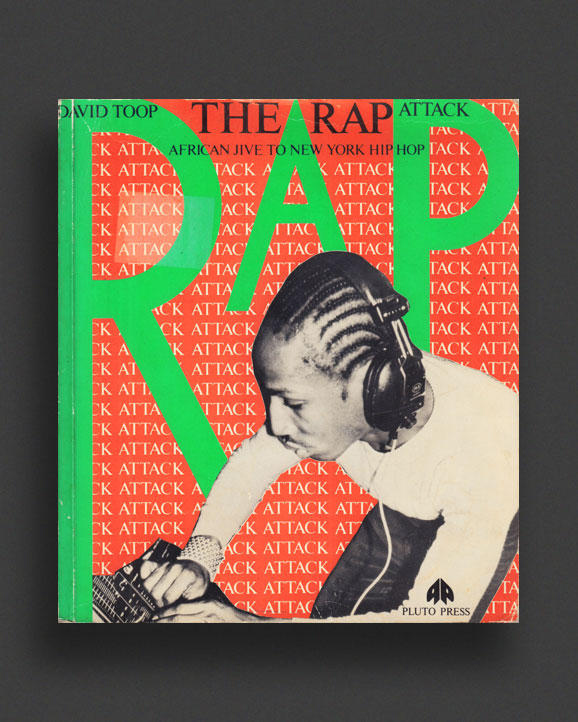
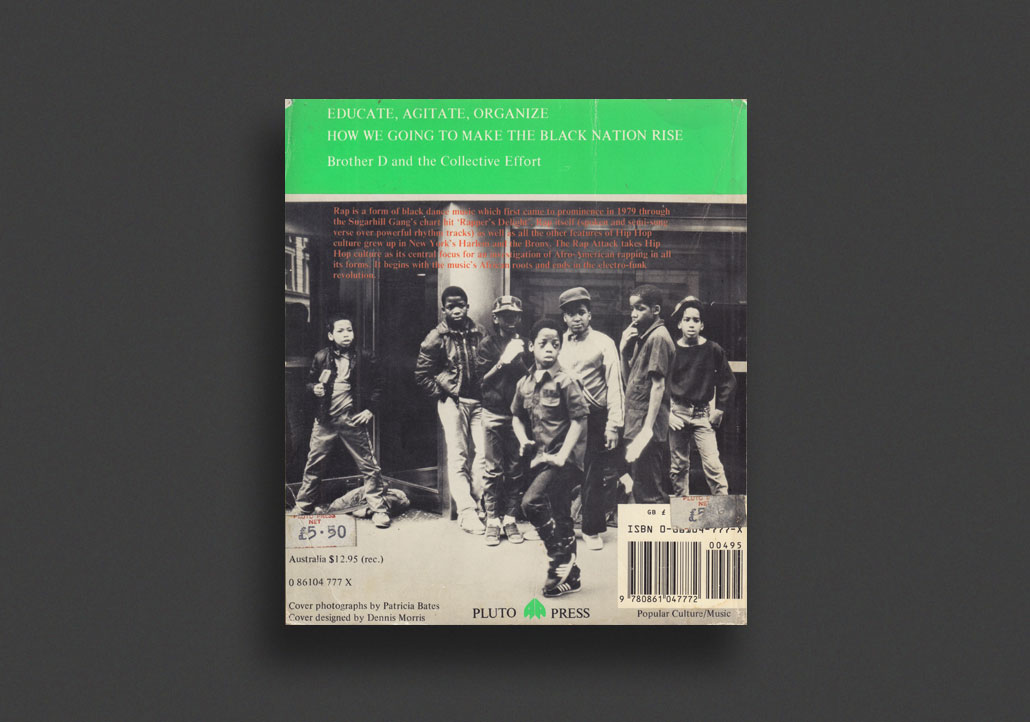
The Rap Attack : African Jive to New York Hip Hop, first published in Britain in 1984, is David Toop's seminal, super early and important account on the evolution of rap music and hip hop culture, exploring its roots and various manifestations, from the music's African heritage to the electro-funk revolution. Toop's ever intelligent and in depth overview of the culture goes a lot further than introducing the seminal artists, it studies the socio-political and diverse musical landscape that shaped one of the most innovative movements in sound. The clubs (Roxy, Danceteria, Funhouse, etc.), the radio stations, the record stores, the video arcades, Beat Bop, Jive, Doo Wop, it's all here. Full of references, quotes, bibliography, discography, lots of background information on countless pioneering artists, the mcs, djs, breakdancers, producers, Afrika Bambaata, Cold Crush Brothers, Jazzy Jay, Kool Herc, The Sequence, Sylvia Robinson, Grandmaster Flash, Melle Mel, Double Trouble..., complimented with superb black and white photographs throughout by Patricia Bates. There's even a vocabulary section compiled by Monica Lynch from Tommy Boy Records. A pioneering book on the rise of hip-hop culture, and very scarce in the original British edition with vivid Dennis Morris cover. This is the second print of this edition (1985).
Good copy with only light cover wear/ageing. Very Good interior throughout.
2021, English / German
Softcover, 224 pages, 23 x 16.5 cm
Published by
Texte Zur Kunst / Berlin
$38.00 - Out of stock
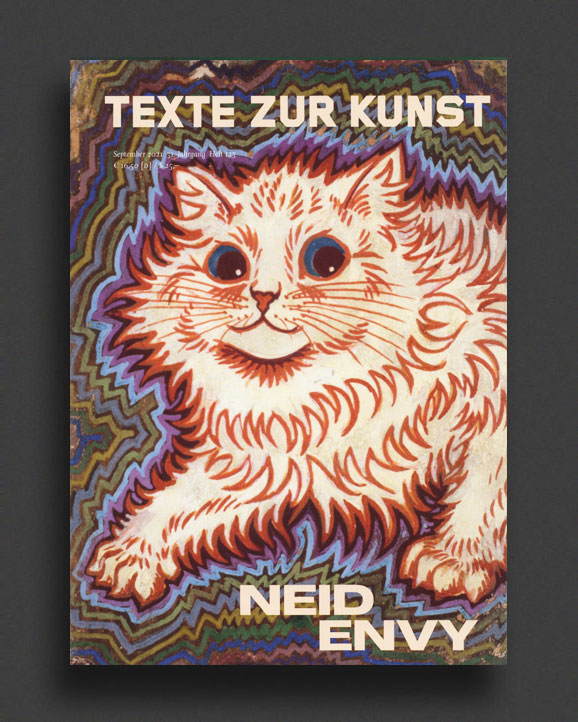
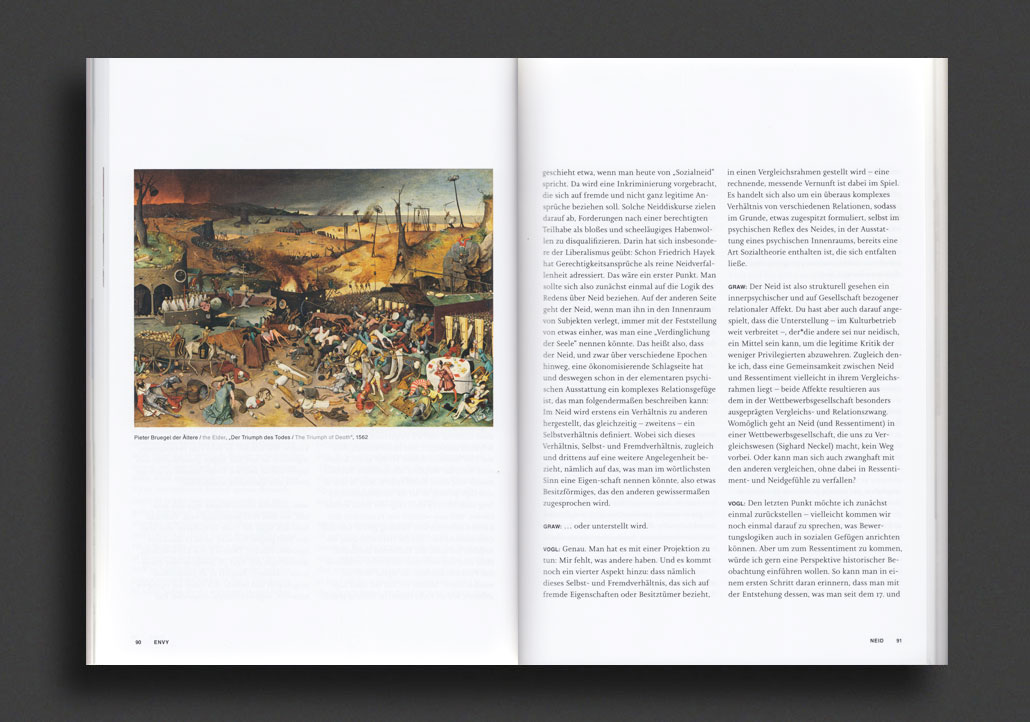
This September issue of Texte zur Kunst examines envy as the operating system of an art world based largely on networking, competition, and interdependencies. Envy, as understood here, develops when individuals orient and compare themselves to others. One could characterize the art world as a prototype for a competition-driven, envy-generating society; achievement in art is difficult to measure and counts less than success. Issue #123 takes a closer look at the productive as well as destructive potentials of envy in the field of art and examines the extent to which the diagnosis of envy plays into the competitive nature of work and life today. The specific social effects of contemporary forms of online communication are discussed here, as well as the political economy of envy with particular regard to art.
2017, English
Softcover, 256 pages, 14 x 19 cm
Published by
True Belief / Melbourne
$50.00 $20.00 - Out of stock
A publication instigated in response to perceived inadequacies in traditional artist monography conventions. A response to the practice of Melbourne based artist collective Open Spatial Workshop (Terri Bird, Bianca Hester, Scott Mitchell), this publication began as a manipulation of the monograph form.
Adam Cruickshank
Cruickshank is an artist and designer based in Melbourne. His work examines the foundational frameworks that structure understandings of artworks. Currently this revolves around publishing and design's relationship to exhibition making and its conventions of explication and archiving. He teaches at Monash University, has a Masters of Fine Art at Monash and is a current PhD candidate at RMIT University.
2017, English / Simplified Chinese
Hardcover (cloth binding), 204 pages, 16.7 x 23.4 cm
Published by
Sternberg Press / Berlin
Rockbund Art Museum (RAM) / Shanghai
$79.00 $15.00 - Out of stock
Edited by Li Qi
Texts by Larys Frogier, Heman Chong, Li Qi, Ken Liu, Xiaoyu Weng, Pauline J. Yao
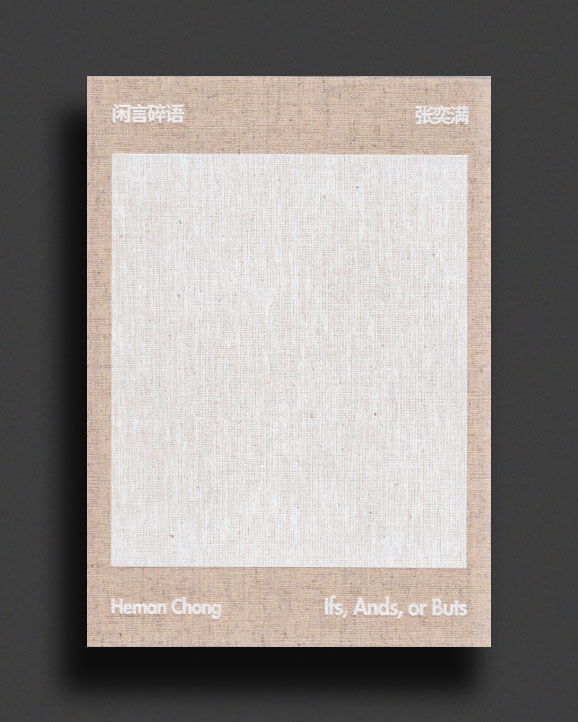
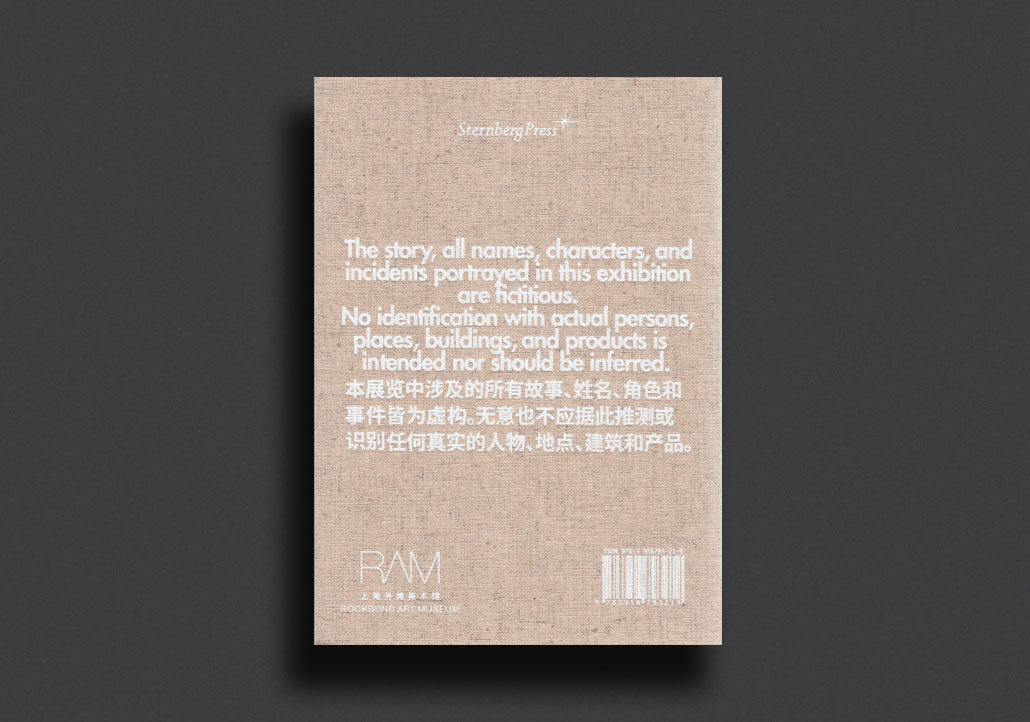
The catalogue for Heman Chong’s first solo museum exhibition in mainland China, at the Rockbund Art Museum, provides an insightful and critical look into the Singaporean artist’s recent practice. To address the centrality of language, books, and the act of reading in Chong’s oeuvre, this publication features newly commissioned texts from a variety of contributors: an introduction by museum director Larys Frogier, and essays by the exhibition’s curator Li Qi, Hong Kong–based curator and critic Pauline J. Yao, and New York–based curator Weng Xiaoyu. These are rounded out with a piece of semifiction by Ken Liu, Boston-based lawyer, science-fiction writer, and translator, who played a central role in realizing Legal Bookshop (Shanghai), one of the works featured in the exhibition.
Ifs, Ands, or Buts is illustrated with images of the entirety of works included in the show at Rockbund Art Museum reproduced alongside documentation of Chong’s correspondence and collaboration with Liu, as well as a section dedicated to the humorous tabloid stories from Chong’s work Papaya Daily.
Copublished by Sternberg Press with Rockbund Art Museum (RAM), Shanghai, on the occasion of the exhibition “Heman Chong: Ifs, Ands, or Buts,” January 23–May 3, 2016.
Design by Wang Jiayi
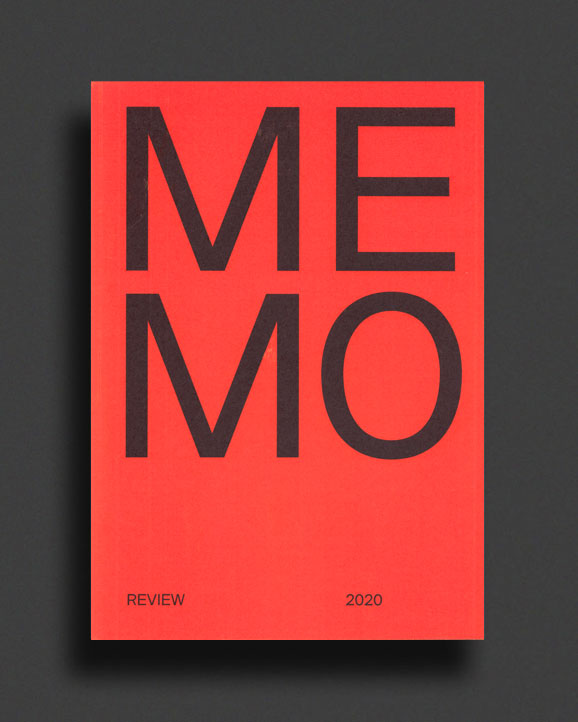
2020, English
Softcover, 241 pages, 25 x 17.5 cm
Published by
Monash Art Projects / Victoria
$25.00 - Out of stock
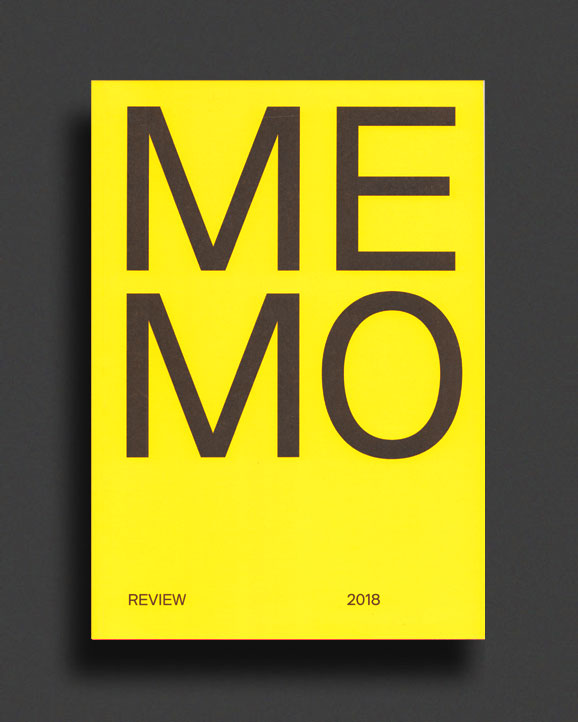
These are the reviews from 2018, the second year of Melbourne's Memo Review. Memo Review is Melbourne's only weekly art criticism, publishing reviews of "a broad variety of art exhibitions at public art museums, commercial galleries and smaller artist-run spaces in Melbourne, offering new critical perspectives from an up-and-coming younger generation of Australian art scholars, writers and artists."
As readers engage with this second year of reviews, they might see a group of art writers coming to grips with the particular limitations and opportunities of the weekly review format and even the particularities of its online delivery. Some will track the successive mentions of the same artist or gallery space, seeing what different writers make of them. Others will follow the progress of individual writers, finding and developing their own style and argument.
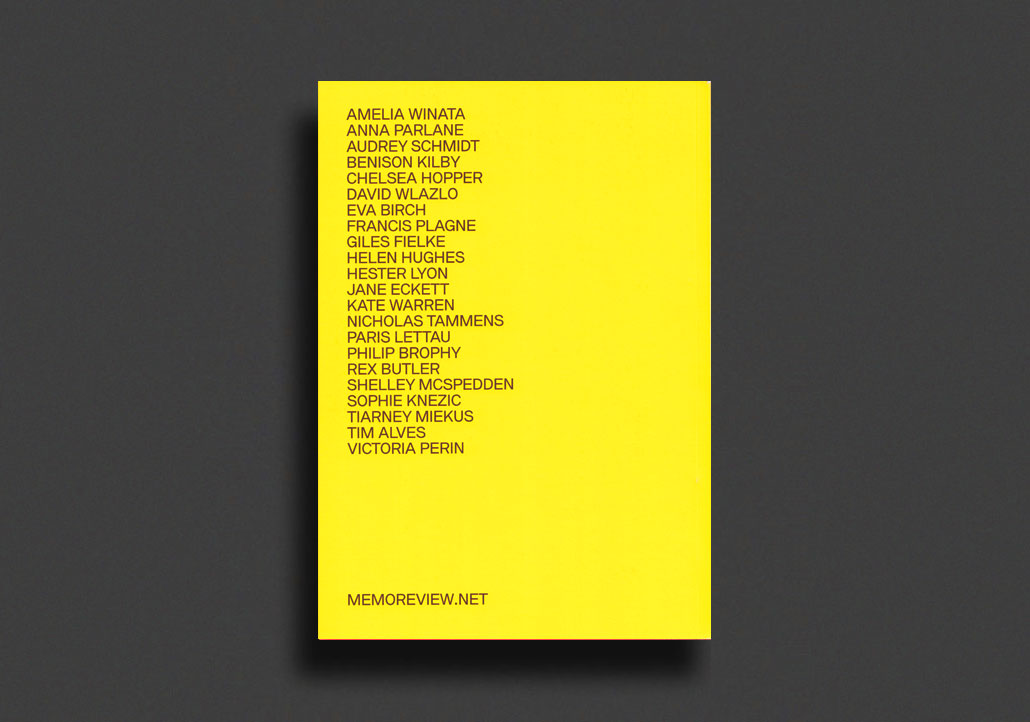
Contributions by Amelia Winata, Anna Parlane, Audrey Schmidt, Benison Kilby, Chelsea Hopper, David Wlazlo, Eva Birch, Francis Plagne, Giles Fielke, Helen Hughes, Hester Lyon, Jane Eckett, Kate Warren, Nicholas Tammens, Paris Lettau, Philip Brophy, Rex Butler, Shelley Mcspedden, Sophie Knezic, Tiarney Miekus, Tim Alves, Victoria Perin.
2020, English
Softcover, 241 pages, 25 x 17.5 cm
Published by
Monash Art Projects / Victoria
$25.00 - Out of stock
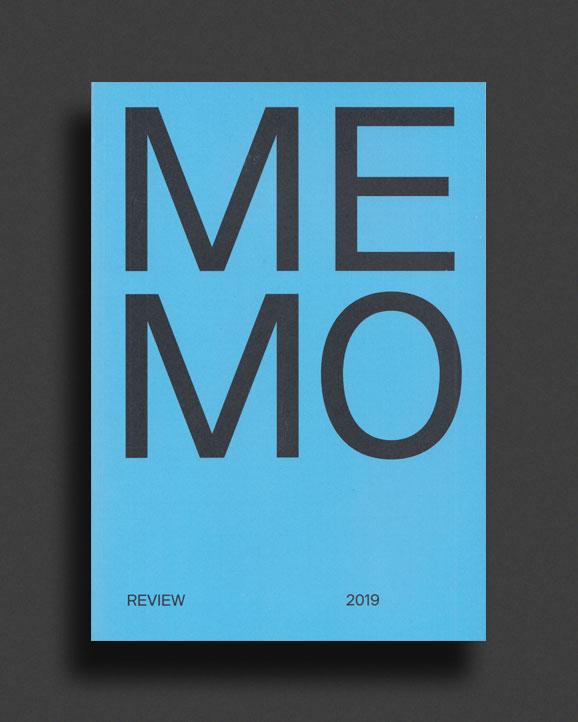
The third hardcopy Memo publication, collecting the 52 reviews from 2017 published by Melbourne's Memo Review. Memo Review is Melbourne's only weekly art criticism, publishing reviews of "a broad variety of art exhibitions at public art museums, commercial galleries and smaller artist-run spaces in Melbourne, offering new critical perspectives from an up-and-coming younger generation of Australian art scholars, writers and artists."
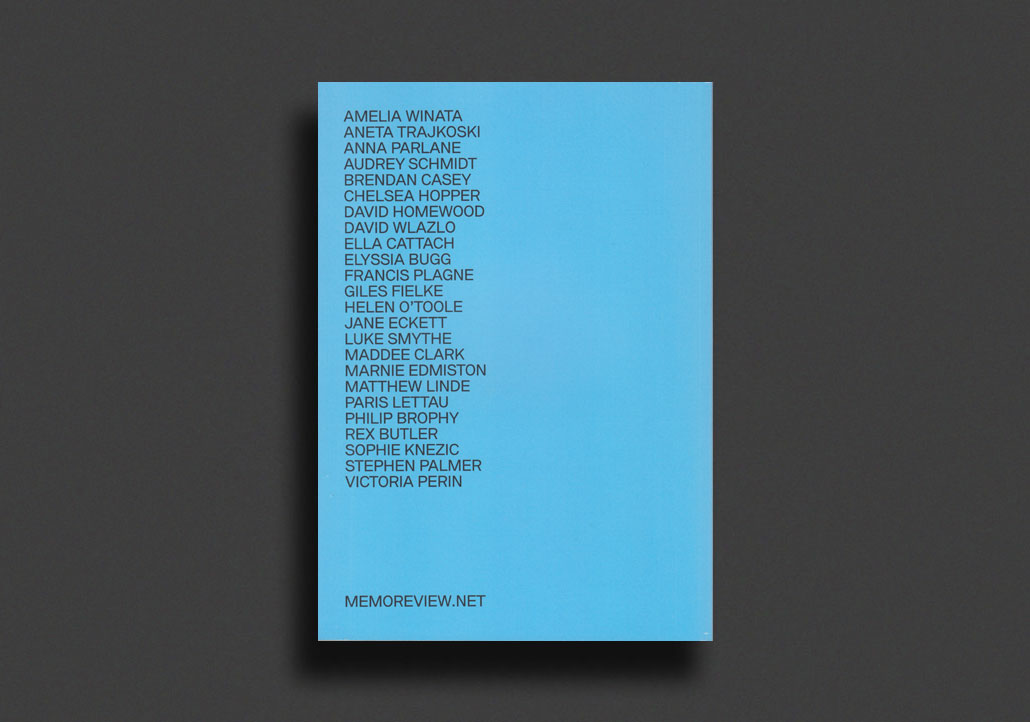
Contributions by Amelia Winata, Aneta Trajkoski, Anna Parlane, Audrey Schmidt, Brendan Casey, Chelsea Hopper, David Homewood, David Wlazlo, Ella Cattach, Elyssia Bugg, Francis Plagne, Giles Fielke, Helen O'toole, Jane Eckett, Luke Smythe, Maddee Clark, Marnie Edmiston, Matthew Linde, Paris Lettau, Philip Brophy, Rex Butler, Sophie Knezic, Stephen Palmer, Victoria Perin.
2020, English
Softcover, 269 pages, 25 x 17.5 cm
Published by
Monash Art Projects / Victoria
$25.00 - Out of stock
These are the reviews from 2020, the third year of Melbourne's Memo Review. Memo Review is Melbourne's only weekly art criticism, publishing reviews of "a broad variety of art exhibitions at public art museums, commercial galleries and smaller artist-run spaces in Melbourne, offering new critical perspectives from an up-and-coming younger generation of Australian art scholars, writers and artists."
"There is no getting around it: 2020 was the year of COVID. It was something that all kinds of cultural activities tried to make sense of. We could quote, to show it has all apparently happened before, Daniel Defoe’s A Journal of the Plague Year at you. Or, like everybody else, you could read some prominent philosopher or cultural theorist try to make sense of it. Slavoj Žižek wrote no fewer than two books on the subject during the year, which made us realise that at least he was doing what he usually does during lockdown."
"And we for our part at Memo Review also did what we usually do. Here are the forty-seven reviews we published during the year—a year when virtually every show we reviewed was only available online."
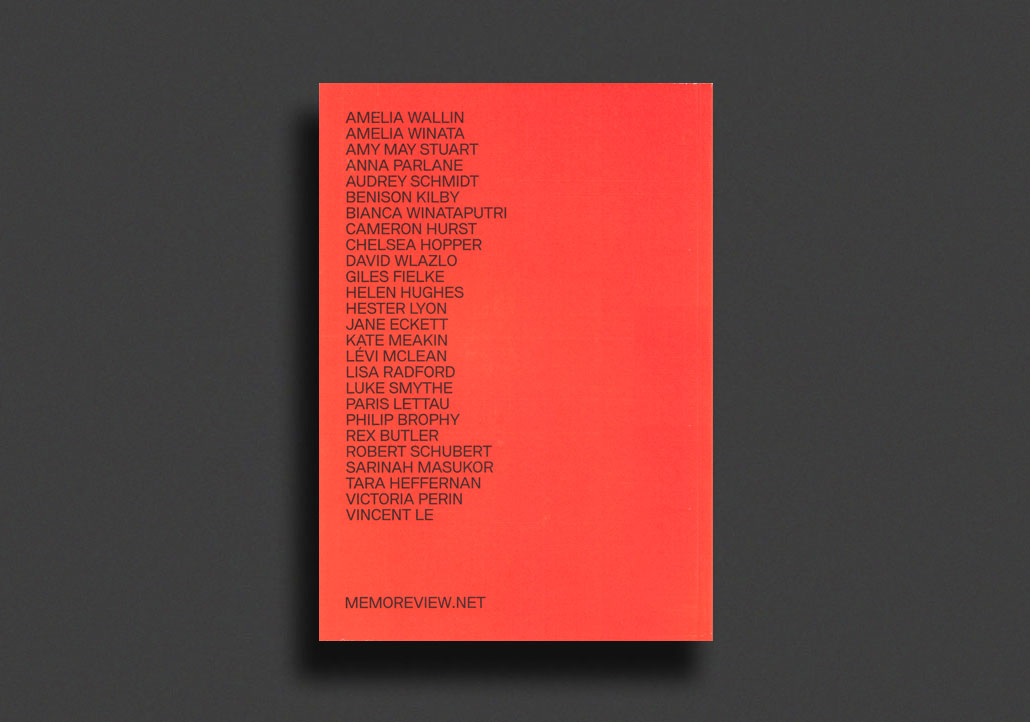
Contributions by Amelia Wallin, Amelia Winata, Amy May Stuart, Anna Parlane, Audrey Schmidt, Benison Kilby, Bianca Winataputri, Cameron Hurst, Chelsea Hopper, David Wlazlo, Giles Fielke, Helen Hughes, Hester Lyon, Jane Eckett, Kate Meakin, Levi Mclean, Lisa Radford, Luke Smythe, Paris Lettau, Philip Brophy, Rex Butler, Robert Schubert, Sarinah Masukor, Tara Heffernan, Victoria Perin, Vincent Le.
2021, English
Softcover, 264 pages, 13 x 20 cm
Published by
Archive Books / Berlin
$52.00 - Out of stock
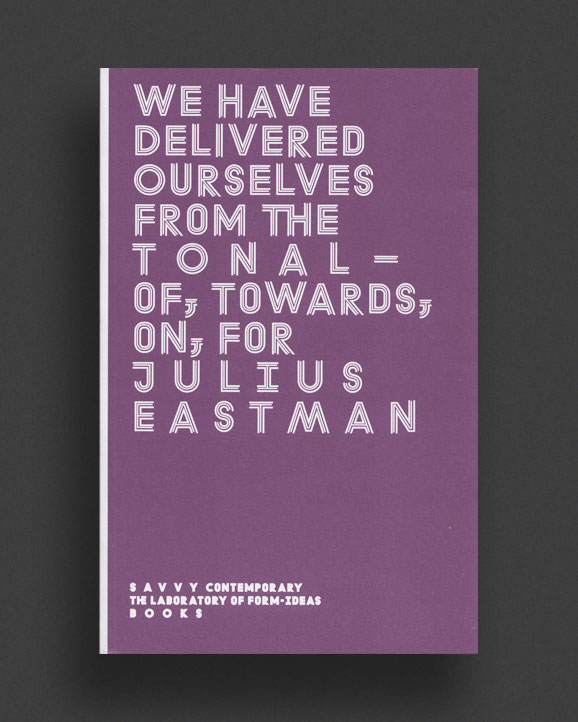
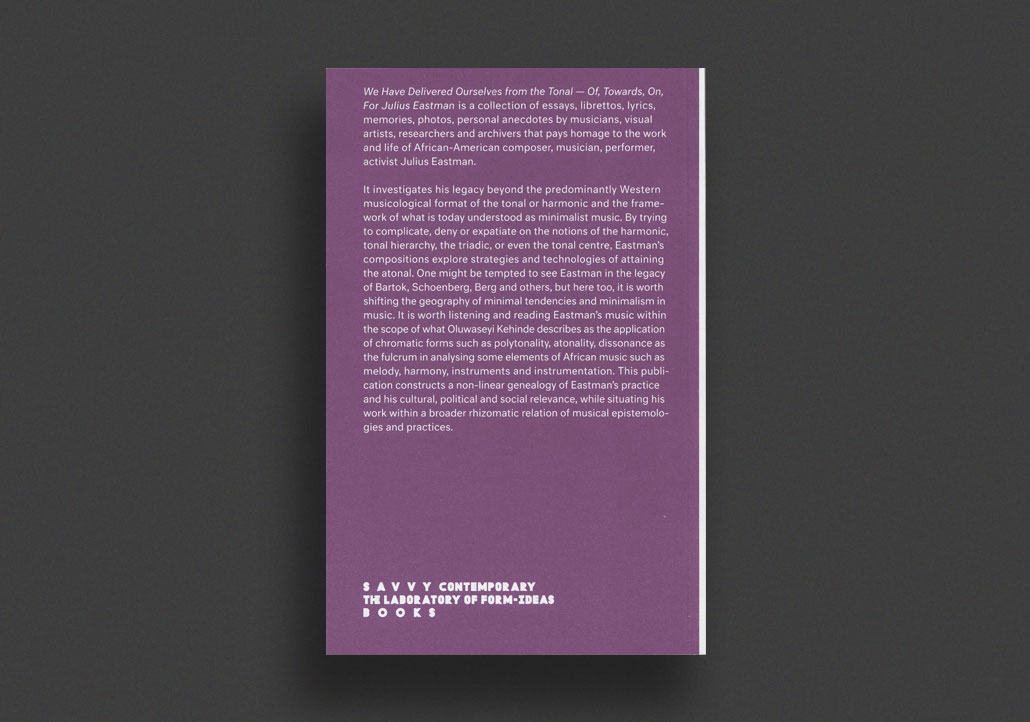
This publication presents a collection of essays, librettos, lyrics, memories, photos, personal anecdotes by musicians, visual artists, researchers and archivers that pays homage to the work and life of African-American composer, musician, performer, activist Julius Eastman, who was among the first composers to combine minimalist processes with elements of pop music. The book investigates his legacy beyond the predominantly Western musicological format of the tonal or harmonic and the framework of what is today understood as minimalist music. By trying to complicate, deny or expatiate on the notions of the harmonic, tonal hierarchy, the triadic, or even the tonal centre, Eastman's compositions explore strategies and technologies of attaining the atonal. One might be tempted to see Eastman in the legacy of Bartok, Schoenberg, Berg and others, but here too, it is worth shifting the geography of minimal tendencies and minimalism in music. It is worth listening and reading Eastman's music within the scope of what Oluwaseyi Kehinde describes as the application of chromatic forms such as polytonality, atonality, dissonance as the fulcrum in analysing some elements of African music such as melody, harmony, instruments and instrumentation. This publication constructs a non-linear genealogy of Eastman's practice and his cultural, political and social relevance, while situating his work within a broader rhizomatic relation of musical epistemologies and practices.
Julius Eastman (1940-1990) was an American composer, pianist, vocalist, and dancer whose work fell under minimalism. He was among the first composers to combine minimalist processes with elements of pop music. John Cage, Christian Wolff, and finally Morton Feldman, came from this school in New York. Only Julius Eastman remained outside, the last figure, the most solitary and enigmatic—undoubtedly also one of the most powerful. In the 1970s and 1980s, Eastman was one of the very few African-Americans to gain recognition in the New York avant-garde music scene. He was politically committed, a figure of queer culture and a solar and solitary poet whose melancholy influenced his genius as well as his tragic destiny: suffering from various addictions, declared missing, actually homeless. During Winter of 1981-82, he got deported from his apartment by the police, who destroyed most of what he owned—including scores and recordings. He was found dead in 1990, on the streets of Buffalo, after years of vagrancy.
Edited by Federica Bueti, Antonia Alampi, Bonaventure Soh Bejeng Ndikung.
Contributions by Antonia Alampi, Rocco Di Pietro, Kodwo Eshun, Federica Bueti, Sean Griffin, Sumanth Gopinath, Jean-Christophe Marti, Josh Kun, Elaine Mitchener, Malak Helmy, Bonaventure Soh Bejeng Ndikung, Marie Jane Leach, George E. Lewis, Berno Odo Polzer, Pungwe, Christine Rusiniak.
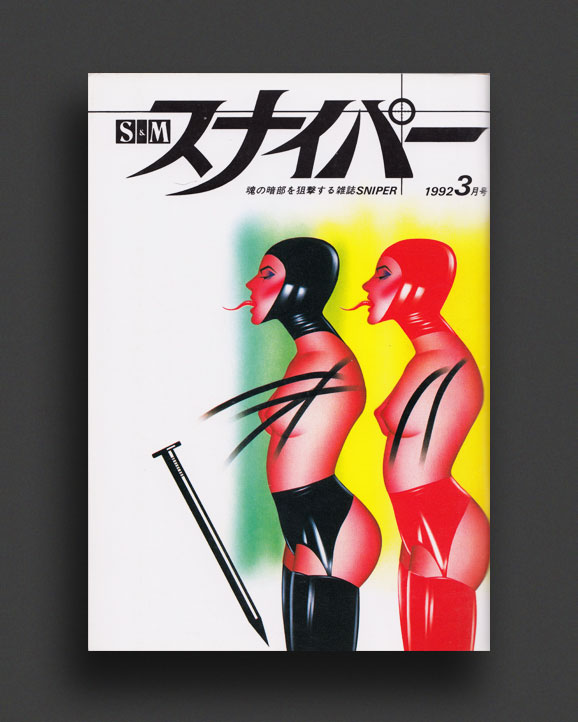
1992, Japanese
Softcover, 310 pages, 21 x 15 cm
1st Edition, Out of print title / used / very good
Published by
Million Publishing / Tokyo
$80.00 - Out of stock
March 1992 issue of S&M Sniper, the cult glossy fetish magazine published in Japan between 1979 - 2009 that, unlike previous SM magazines, didn't centre so much around professional kinbakushi, favouring instead the exploration of new innovations of fetish and underground sex culture and emphasising the work of the models, stylists, make-up artists, and fashions designers, as much as the writers or photographers. The "new wave" of SM culture, embedded in 1980s underground music, fashion and visual art culture in Japan. Explicitly and profusely illustrated, issues are packed from cover-to-cover with all manner of SM and fetish photoshoots, illustrations, comics, essays, diaries, reports, exhibitions, reviews, interviews, and included regular contributors such as Masami Akita (Merzbow), Kazuo Kamimura, Domu Kitahara, Makoto Orui, Kinichi Tanaka, Nobuhiko Ansai, Masaaki Toyoura... Each issue is also brimming with amazing Japanese advertisements and classifieds for the latest bondage clubs, boutiques, fashion, toys, video and publication catalogues, hook-ups, phone sex, and much more. This issue includes Nobuyoshi Araki, Tadao Chigusa, Kenichi Yamakawa, Sachiko Nakamura, Guido Crepax "Story of O" comic instalment, How to Tattoo, all the usual and more... Not for the faint of heart.
Very Good copy.
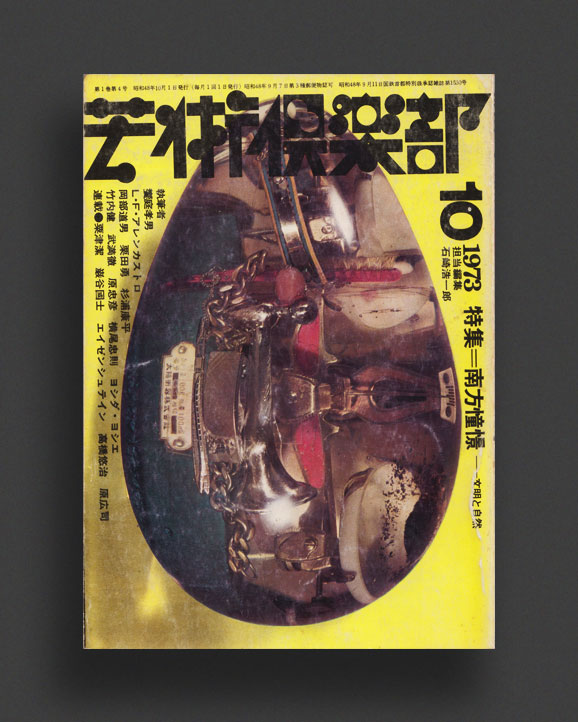
1973, Japanese
Softcover, 192 pages, 21 x 15 cm
1st Edition, Out of print title / used / good
Published by
Art Club Monthly / Japan
$90.00 - Out of stock
Scarce January 1973 issue of Japan's monthly periodical of art criticism, featuring a cover by Japanese avant garde artist Natsuyuki Nakanishi depicting one of his “Compact Objects”. This issue also features a coloured artwork section by Tadanori Yokoo, and contributions by/about director Michio Okabe, composer John Cage, director Sergei Eisenstein, Tenjō Sajiki / Shūji Terayama, critic Yoshida Yoshie, composer Yūji Takahashi, composer Tōru Takemitsu, art critic Isamu Kurita, and many more.
Good copy with some cover wear and tanning.
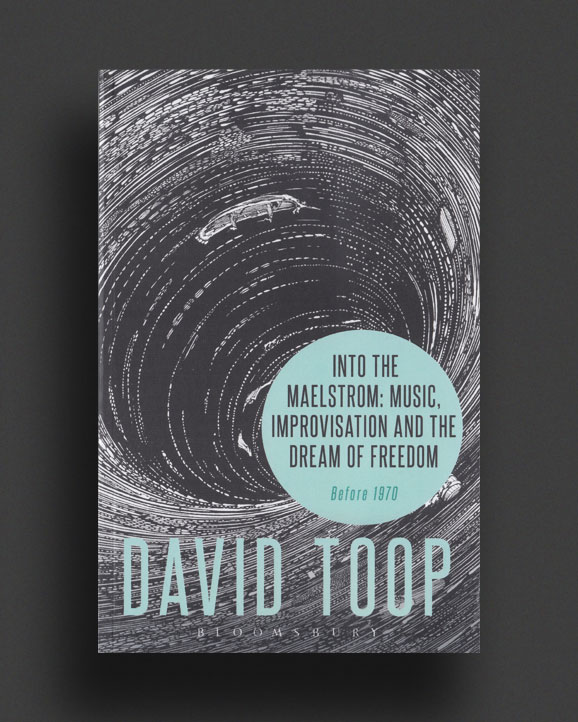
2016, English
Softcover, 336 pages, 21.6 x 14 cm
Published by
Bloomsbury Academic / London
$49.00 - Out of stock
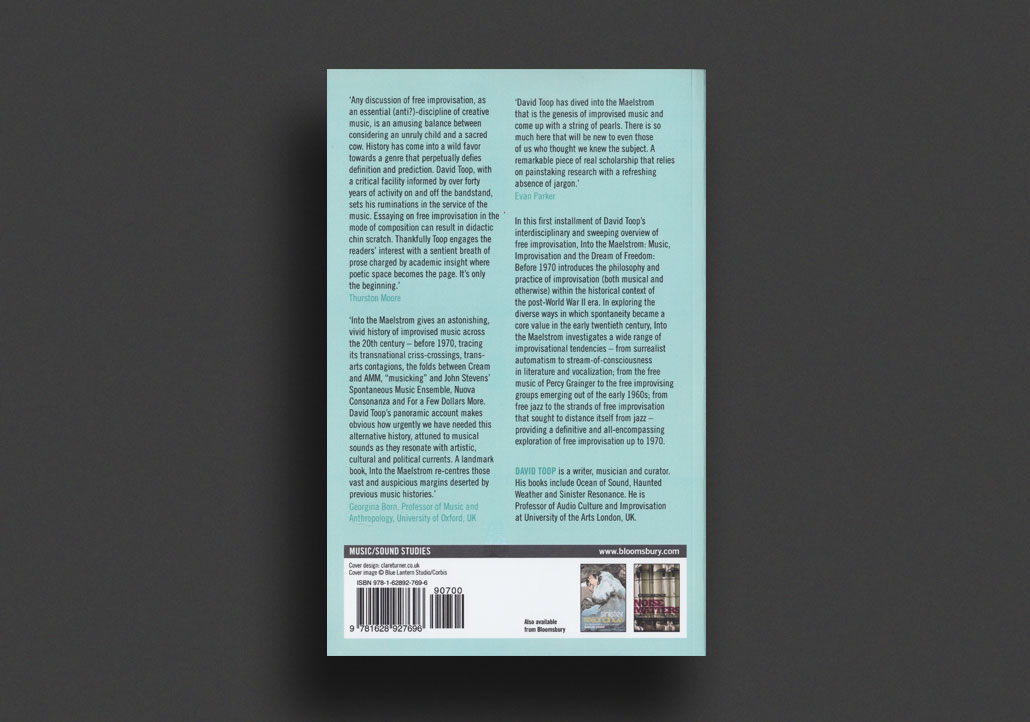
In this first instalment of acclaimed music writer David Toop's interdisciplinary and sweeping overview of free improvisation, Into the Maelstrom: Music, Improvisation and the Dream of Freedom: Before 1970 introduces the philosophy and practice of improvisation (both musical and otherwise) within the historical context of the post-World War II era. Neither strictly chronological, or exclusively a history, Into the Maelstrom investigates a wide range of improvisational tendencies: from surrealist automatism to stream-of-consciousness in literature and vocalization; from the free music of Percy Grainger to the free improvising groups emerging out of the early 1960s (Group Ongaku, Nuova Consonanza, MEV, AMM, the Spontaneous Music Ensemble); and from free jazz to the strands of free improvisation that sought to distance itself from jazz. In exploring the diverse ways in which spontaneity became a core value in the early twentieth century as well as free improvisation's connection to both 1960s rock (The Beatles, Cream, Pink Floyd) and the era of post-Cagean indeterminacy in composition, Toop provides a definitive and all-encompassing exploration of free improvisation up to 1970, ending with the late 1960s international developments of free music from Roscoe Mitchell in Chicago, Peter Brötzmann in Berlin and Han Bennink and Misha Mengelberg in Amsterdam.
“Maelstrom indeed ... [This] is an encyclopedic vortex of musicology, memoir and speculative extemporisation on the nature of improvisation and freedom in music ... crammed with detail and fascinating observations ... A captivating reading experience that perfectly embodies its subject in form.” – The Wire
“Any discussion of free improvisation, as an essential (anti?)-discipline of creative music, is an amusing balance between considering an unruly child and a sacred cow. History has come into a wild favor towards a genre that perpetually defies definition and prediction. David Toop, with a critical facility informed by over forty years of activity on and off the bandstand, sets his ruminations in the service of the music. Essaying on free improvisation in the mode of composition can result in didactic chin scratch. Thankfully Toop engages the readers interest with a sentient breath of prose charged by academic insight where poetic space becomes the page. It's only the beginning.” – Thurston Moore
“David Toop has dived into the Maelstrom that is the genesis of improvised music and come up with a string of pearls. There is so much here that will be new to even those of us who thought we knew the subject. A remarkable piece of real scholarship that relies on painstaking research with a refreshing absence of jargon.” – Evan Parker
“Into the Maelstrom gives an astonishing, vivid history of improvised music across the 20th century before 1970, tracing its transnational criss-crossings, trans-arts contagions, the folds between Cream and AMM, 'musicking' and John Stevens' Spontaneous Music Ensemble, Nuova Consonanza and For a Few Dollars More. David Toop's panoramic account makes obvious how urgently we have needed this alternative history, attuned to musical sounds as they resonate with artistic, cultural and political currents. A landmark book, Into the Maelstrom re-centres those vast and auspicious margins deserted by previous music histories.” – Georgina Born, Professor of Music and Anthropology, University of Oxford, UK
1974, English
Newspaper, 28 pages, 41 x 29 cm
1st Edition, Out of print title / used / very good
Published by
Incorporated Newsagencies / West Melbourne
$90.00 $60.00 - Out of stock
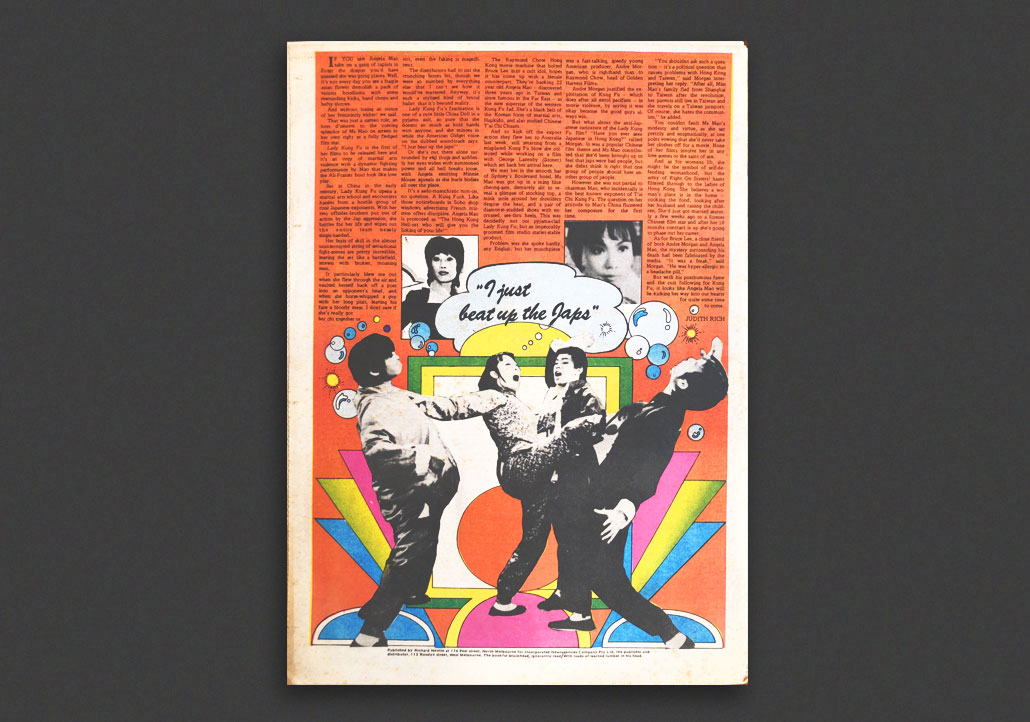
Rare February 1974 issue of The Living Daylights, a radical, riotous weekly counter-culture magazine out of North Melbourne in the 1970's, edited by Oz magazine founder Richard Neville, along with Terence Maher, Michael Morris, and graphic designer Laurel Olszewski, and published by Neville's fellow OZ colleague, Richard Walsh, between 1973-4. The Living Daylights was packed with all happening things in youth counter-culture, filled with articles, cartoons, artwork, sex, drugs, rock n roll and protest. A provocative, humorous and controversial anti-establishment bulletin in the tradition of Oz, regularly featuring the artwork of Martin Sharp, Michael Luenig, Dickie, and Neil McLean! This issue features 186 Years of Penal Outrage, activists against the closure of Lameroo "Free Beach" in Darwin, Bondi photography by Syd Shelton, dodgy Adelaide drug squad, Melbourne marijuana activists, Nimbin news, female singers, women's liberation and beauty trends by Margaret Smith, Confessions of a Working Class Shit Eater by poet Eric Beach, Taiwanese actress Angela Mao, Fritz the Cat, and so much more.
A wonderful, very seldom seen, historical piece of Australian counterculture publishing.
Very Good copy with light wear/tanning.
1974, English
Newspaper, 28 pages, 41 x 29 cm
1st Edition, Out of print title / used / very good
Published by
Incorporated Newsagencies / West Melbourne
$90.00 $60.00 - Out of stock
Rare March 1974 issue of The Living Daylights, a radical, riotous weekly counter-culture magazine out of North Melbourne in the 1970's, edited by Oz magazine founder Richard Neville, along with Terence Maher, Michael Morris, and graphic designer Laurel Olszewski, and published by Neville's fellow OZ colleague, Richard Walsh, between 1973-4. The Living Daylights was packed with all happening things in youth counter-culture, filled with articles, cartoons, artwork, sex, drugs, rock n roll and protest. A provocative, humorous and controversial anti-establishment bulletin in the tradition of Oz, regularly featuring the artwork of Martin Sharp, Michael Luenig, Dickie, and Neil McLean! This issue features Ian Stocks in conversation with science fiction legend Arthur C. Clarke, a guide to smuggling, Allen Ginsberg on cocaine and Abbie Hoffman, Heroin, Pentridge prison, Magic Mushrooms, police brutality against black Australians, Cherry Ripe on the pioneering drag queen anarchy of Sylvia and the Synthetics, meditation, Veronica Perry on the ecology of Shit, the Bitch newspaper, Miles Davis, and so much more.
A wonderful, very seldom seen, historical piece of Australian counterculture publishing.
Very Good copy with light wear/tanning.
2018, English
Softcover, 368 pages, 21.5 x 29 cm
Published by
Sternberg Press / Berlin
$69.00 $30.00 - Out of stock
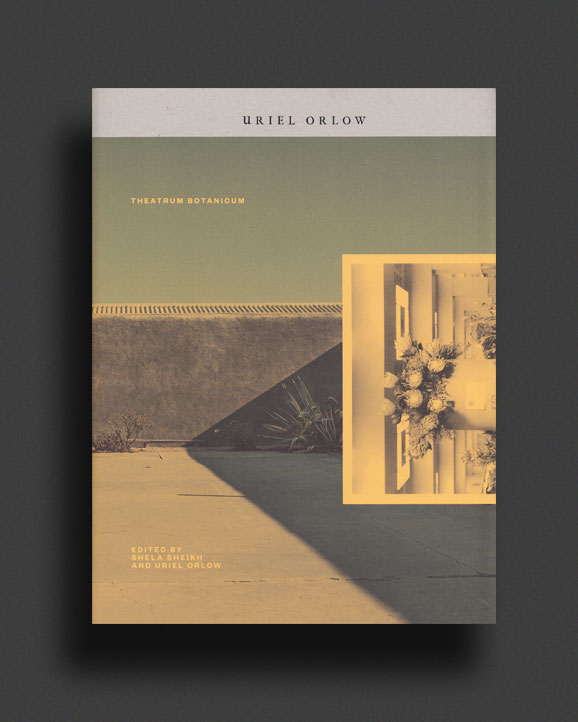
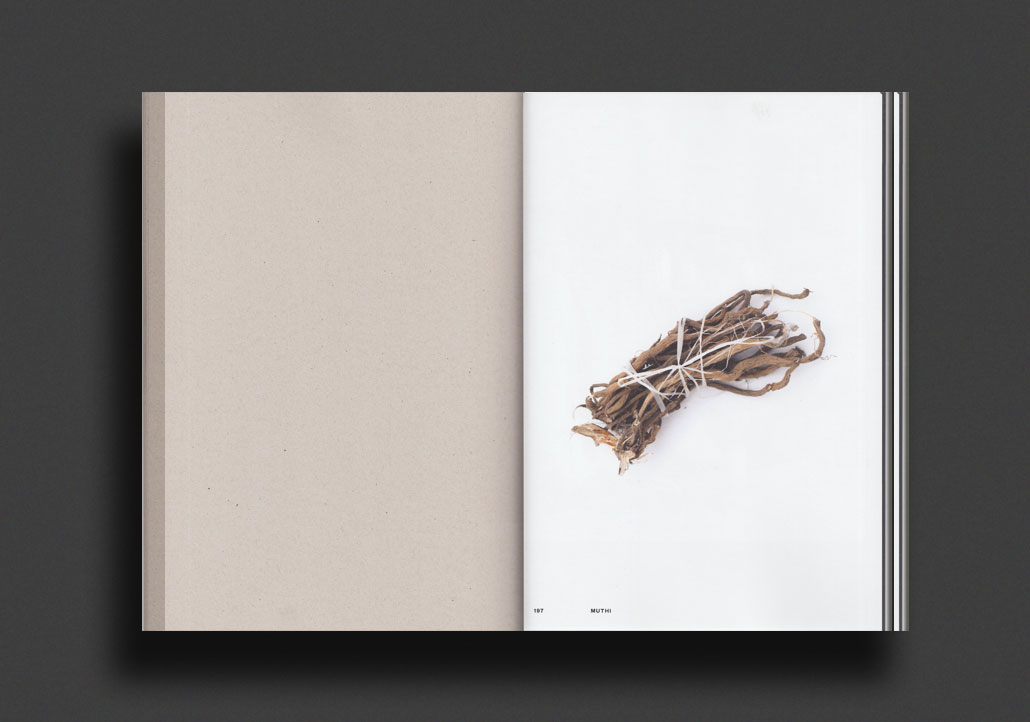
This publication emerges from Uriel Orlow’s Theatrum Botanicum (2015–18), a multi-faceted project encompassing film, sound, photography, and installation, which looks to the botanical world as a stage for politics. Working from the dual vantage points of South Africa and Europe, the project considers plants as both witnesses to, and dynamic agents in, history. It links nature and humans, rural and cosmopolitan medicine, tradition and modernity across different geographies, histories, and systems of knowledge—exploring the variety of curative, spiritual, and economic powers of plants. The project addresses “botanical nationalism” and “flower diplomacy” during apartheid; plant migration; the role and legacies of the imperial classification and naming of plants; bioprospecting and biopiracy; and the garden planted by Nelson Mandela and his fellow inmates at Robben Island prison.
This publication is made up of two intertwining books: one documents the works of Theatrum Botanicum, including the scripts for two films; the second is a compendium of brief, commissioned essays that aims to offer an accessible snapshot of the complex and multifaceted issues that inform and are raised by the artworks. The independent but interrelated essays, which either speak directly to the artworks or follow lines of inquiry alongside them, cover perspectives from postcolonial cultural studies; art criticism and art history; natural history, botany (including ethnobotany and economic botany), and conservation; jurisprudence and critical legal studies; and critical race studies.
Design by In the shade of a tree (Sophie Demay and Maël Fournier-Comte)
Edited by Shela Sheikh and Uriel Orlow
Contributions by Sita Balani, Melanie Boehi, Clelia Coussonnet, Karen Flint, Jason T. W. Irving, Nomusa Makhubu, Bettina Malcomess, Karin van Marle, Khadija von Zinnenburg Carroll
2018, English
Hardcover, 68 pages, 11 x 18 cm
Published by
Sternberg Press / Berlin
$32.00 $15.00 - Out of stock
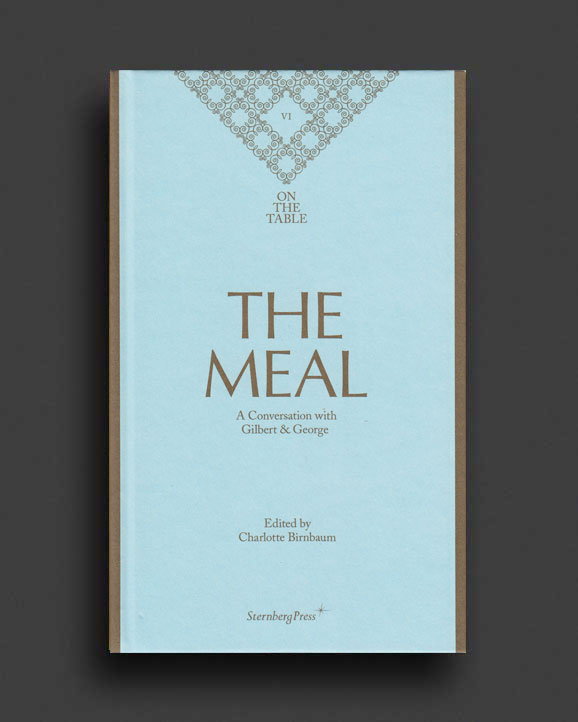
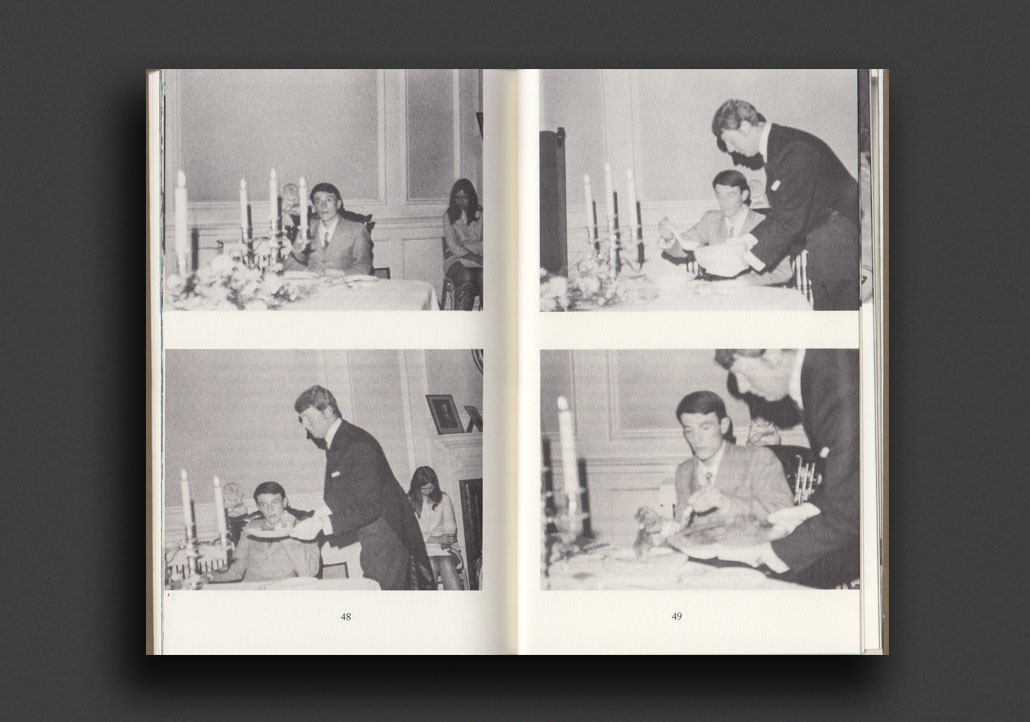
Gilbert & George never cook and always eat out. Back in 1969, however, the artist duo hosted The Meal, an elaborate dinner party that included thirteen guests, Princess Margaret’s butler, a chef who prepared a meal from a Victorian cookery manual, and the guest of honor, artist David Hockney. While the art world of the time was largely characterized by Pop art, Minimalism, and Conceptual art, Gilbert & George developed an entirely unique philosophy and combined their daily lives with their artistic vision; in short, their art and life are one! Charlotte Birnbaum took a trip to London’s East End to visit the immaculately dressed pair to discuss The Meal and other curious projects from their fifty-year collaboration. Also included here are photos and memorabilia from the singular event.
On the Table is a series of publications edited by Charlotte Birnbaum that explores the encounter between food and art.
Design by Harald Pridgar
2019, English
Softcover, 224 pages, 10.8 x 18 cm
Published by
Bergen Kunsthall / Norway
Sternberg Press / Berlin
$44.00 $15.00 - In stock -
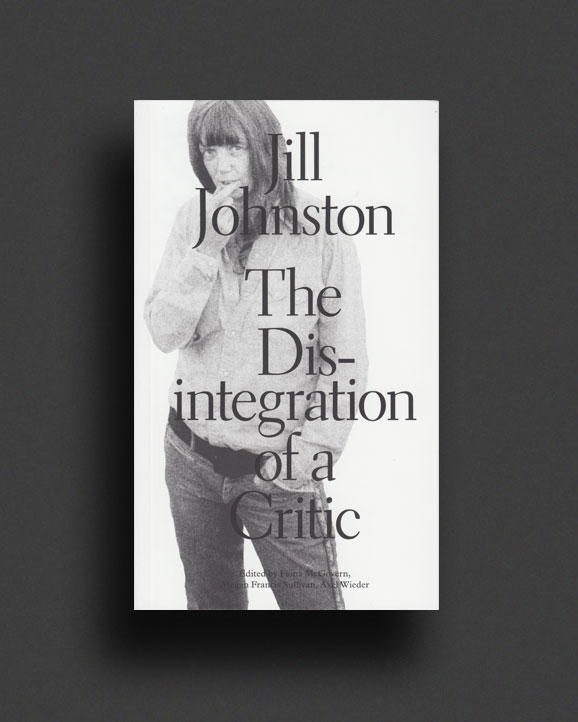
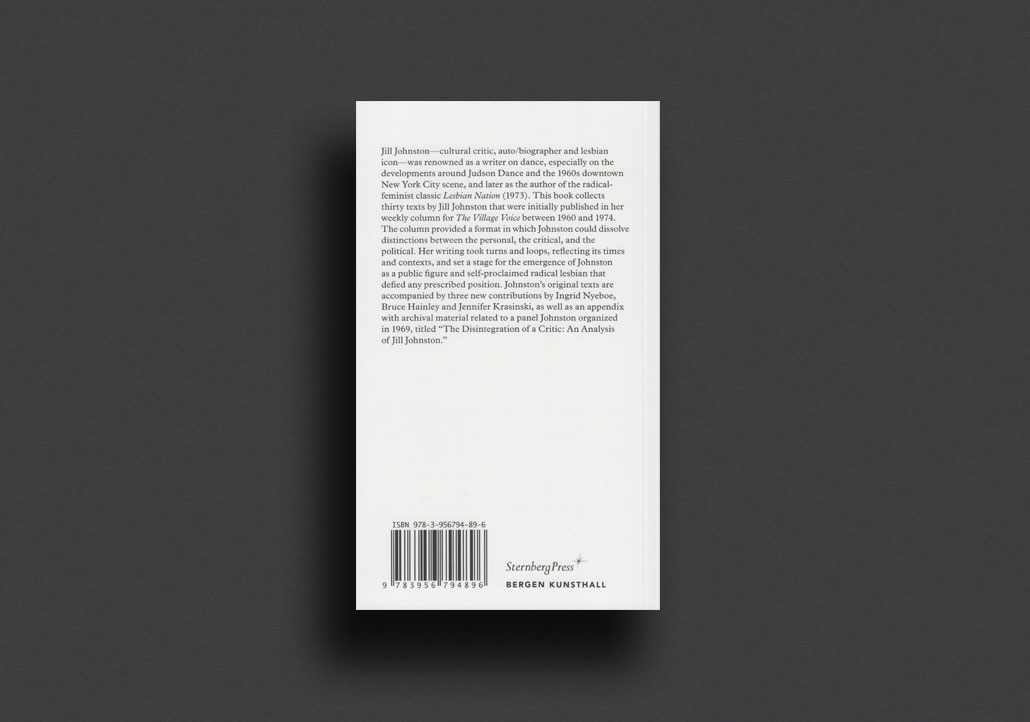
Jill Johnston—cultural critic, auto/biographer, and lesbian icon—was renowned as a writer on dance, especially on the developments around Judson Dance and the 1960s downtown New York City scene, and later as the author of the radical-feminist classic Lesbian Nation (1973). This book collects thirty texts by Jill Johnston that were initially published in her weekly column for The Village Voice between 1960 and 1974. The column provided a format in which Johnston could dissolve distinctions between the personal, the critical, and the political. Her writing took turns and loops, reflecting its times and contexts, and set a stage for the emergence of Johnston as a public figure and self-proclaimed radical lesbian that defied any prescribed position.
Johnston’s original texts are accompanied by three new contributions by Ingrid Nyeboe, Bruce Hainley, and Jennifer Krasinski, as well as an appendix with archival material related to a panel Johnston organized in 1969, titled “The Disintegration of a Critic: An Analysis of Jill Johnston.”
Edited by Fiona McGovern, Megan Francis Sullivan, Axel Wieder
Texts by Jill Johnston; contributions by Bruce Hainley, Jennifer Krasinski, Ingrid Nyeboe
Design by HIT
2014, English/German
Hardcover, 354 pages (172 b/w + 79 colour ill.), 18.5 x 24.5 cm
Published by
Generali Foundation / Vienna
Sternberg Press / Berlin
$110.00 $20.00 - Out of stock
Edited by Sabine Folie, Ilse Lafer
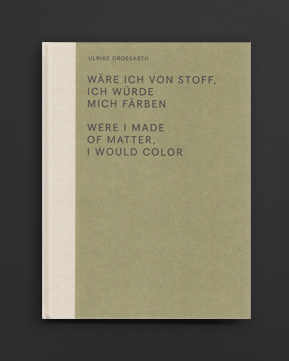
Texts by Mieke Bal, Rainer Borgemeister, Sabine Folie, Michael Glasmeier, Ulrike Grossarth, Dietrich Karner, Elliot R. Wolfson
This book is published on occasion of Ulrike Grossarth’s eponymous retrospective at the Generali Foundation in Vienna. Both the book and the exhibition trace the evolution of Gossarth’s practice, with a particular emphasis on her training as a dancer in the 1970s, to draw connections between the early years with her sculptural settings and actions and her most recent work, which engages with history more generally.
In her contributing essay, Ulrike Gossarth states that the title—Were I Made of Matter, I Would Color—is a counter-model to the fundamental Descartian formula “I think therefore I am,” a position which exists between consciousness and disembodiment, in a state of incompleteness. Rainer Borgemeister discusses the artist’s actions from 1978 to 1987, which were preceded by her critical engagement with modern dance. Further contributions from Mieke Bal, Michael Glasmeier, and Elliot R. Wolfson discuss Grossarth’s practice in relation to history, the body, and polymorphism.
Copublished with the Generali Foundation, Vienna
Design by Karin Holzfeind
2021, English
Softcover, 592 pages, 12 x 17.8 cm
Published by
Blank Forms / New York
$50.00 - Out of stock
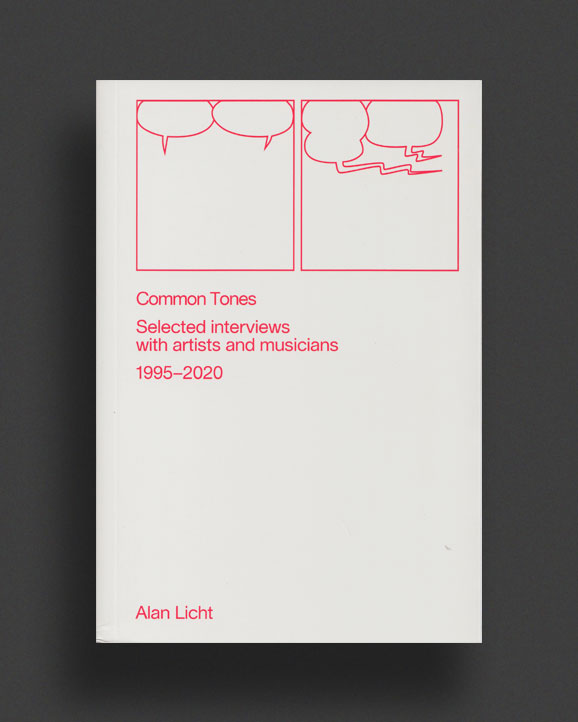
The collection of previously unpublished interviews and extended versions of Alan Licht's famous conversations with figures in the American art and music scene.
For the past thirty years, Alan Licht has been a performer, programmer, and chronicler of New York's art and music scenes. His dry wit, deep erudition, and unique perspective—informed by decades of experience as a touring and recording guitarist in the worlds of experimental music and underground rock—have distinguished him as the go-to writer for profiles of adventurous artists across genres. A precocious scholar and improvisor, by the time he graduated from Vassar College in 1990 Licht had already authored important articles on minimalist composers La Monte Young, Tony Conrad, and Charlemagne Palestine, and recorded with luminaries such as Rashied Ali and Thurston Moore. In 1999 he became a regular contributor to the British experimental music magazine The Wire while continuing to publish in a wide array of periodicals, ranging from the artworld glossies to underground fanzines.
Common Tones gathers a selection of never-before-published interviews, many conducted during the writing of Licht's groundbreaking profiles, alongside extended versions of his celebrated conversations with artists, previously un-transcribed public exchanges, and new dialogues held on the occasion of this collection. Even Lou Reed, a notoriously difficult interviewee also included here, was suitably impressed.
Alan Licht (born 1968) is a writer, musician, and curator based in New York City. He is equally known for his guitar work in the underground rock bands Run On and Lovechild and in the experimental groups the Blue Humans and Text of Light. He has released numerous solo guitar albums and duo and trio records of improvised music, collaborating with avant-garde musicians such as Jim O'Rourke, Loren Mazzacan Connors, Rudolf Grey, Lee Ranaldo and Aki Onda.
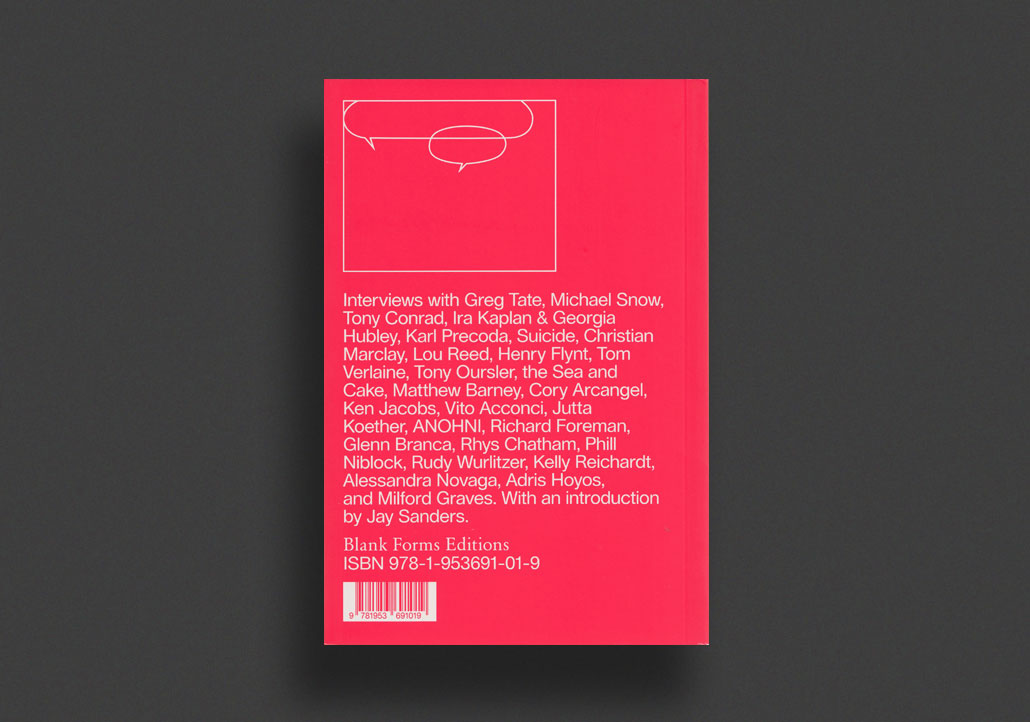
Introduction by Jay Sanders. Interviews by Alan Licht with Vito Acconci, ANOHNI, Cory Arcangel, Matthew Barney, Glenn Branca, Rhys Chatham, Tony Conrad, Karl Precoda (Dream Syndicate), Richard Foreman, Henry Flynt, Milford Graves, Adris Hoyos, Ken Jacobs, Jutta Koether, Christian Marclay, Phill Niblock, Alessandra Novaga, Stephanie Oursler, Kelly Reichardt, The Sea and Cake, Suicide, Michael Snow, Greg Tate, Tom Verlaine, Rudy Wurlitzer, Georgia Hubley and Ira Kaplan (Yo La Tengo).
2021, English
Hardcover, 360 pages, 19.5 x 25.2 cm
Published by
Faber & Faber / London
$52.00 - Out of stock
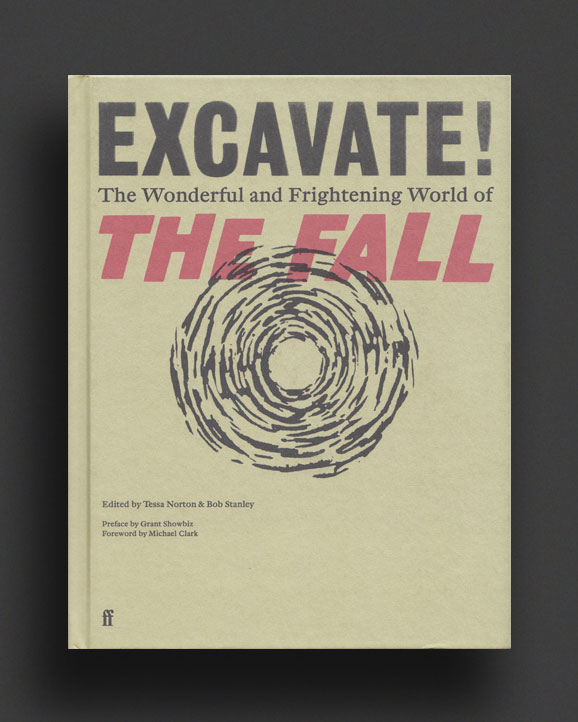
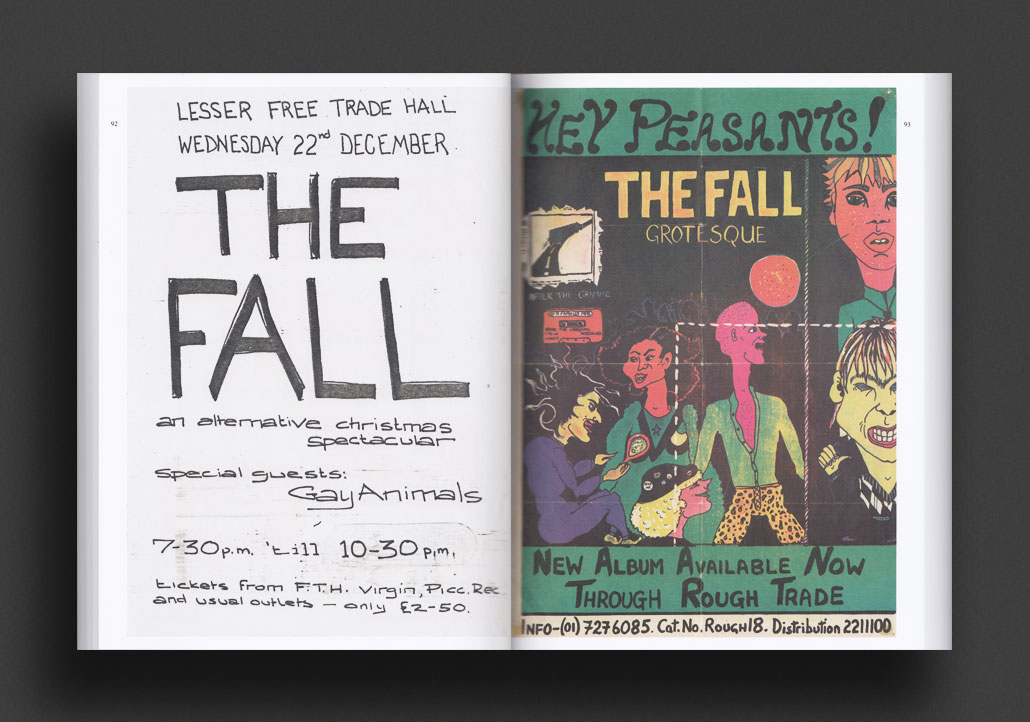
A definitive insight into the ever-influential world of Mark E. Smith and the Fall, featuring never-before published essays and ephemera from fans, collectors and the artist and band themselves.
This is not a book about a rock band. This is not even a book about Mark E Smith. This is a book about The Fall group - or more precisely, their world. Over a prolific forty-year career, the Fall created a world that was influential, idiosyncratic and fiercely original - and defied simple categorisation. Their frontman and lyricist Mark E. Smith spun opaque tales that resisted conventional understanding; the Fall's worldview was an education in its own right. Who wouldn't want to be armed with a working knowledge of M. R. James, shipping-dock procedures, contemporary dance, Manchester City and Can? The group inspired and shaped the lives of those who listened to and tried to make sense of their work.
Bringing together previously unseen artwork, rare ephemera and handwritten material, alongside essays by a slate of fans, EXCAVATE! is a vivid, definitive record - an illumination of the dark corners of the Fall's wonderful and frightening world.
This is a book about Mark E. Smith and The Fall - or more precisely, their ever-influential world. The Fall were so many things, so many worlds; if you got it (and not everyone did), they represented everything.
'To 50,000 Fall Fans: please buy this inspired & inspiring, profound & provocative, beautiful & bonkers Book of Revelations, choc-stock-full of loving Acts by true Apostles, simultaneously both the scrapbook you wished you'd kept and a portal to futures & pasts, known & unknown, & a Fantastic Celebration of this Nation's Saving Grace.' — DAVID PEACE
Contributions by : Elain Harwood, Ian Penman, Paul Wilson, Owen Hatherley, Mark Fisher, Mark Sinker, Michael Bracewell, Jon Wilde, Stuart Bertolotti-Bailey, Sian Pattenden, Dan Fox, Adelle Stripe, Scott King, Richard McKenna...
2021, English / French
Softcover, 336 pages, 15 x 21 cm
Published by
Octopus Notes / Paris
$48.00 $20.00 - Out of stock
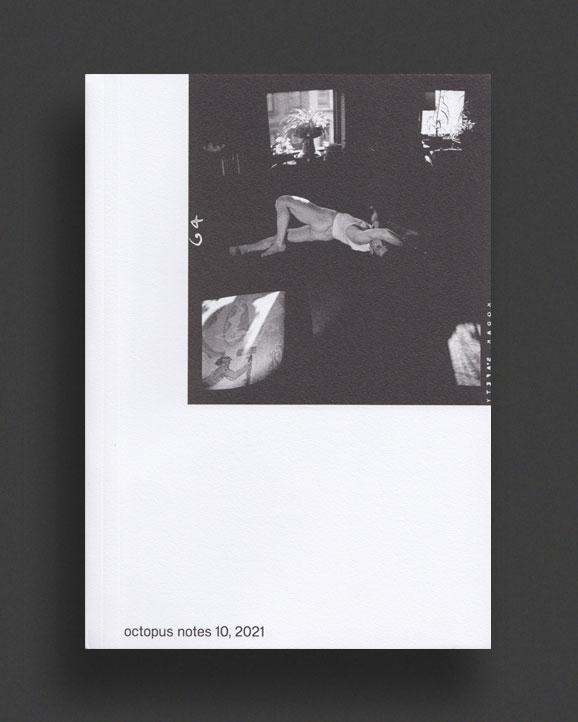
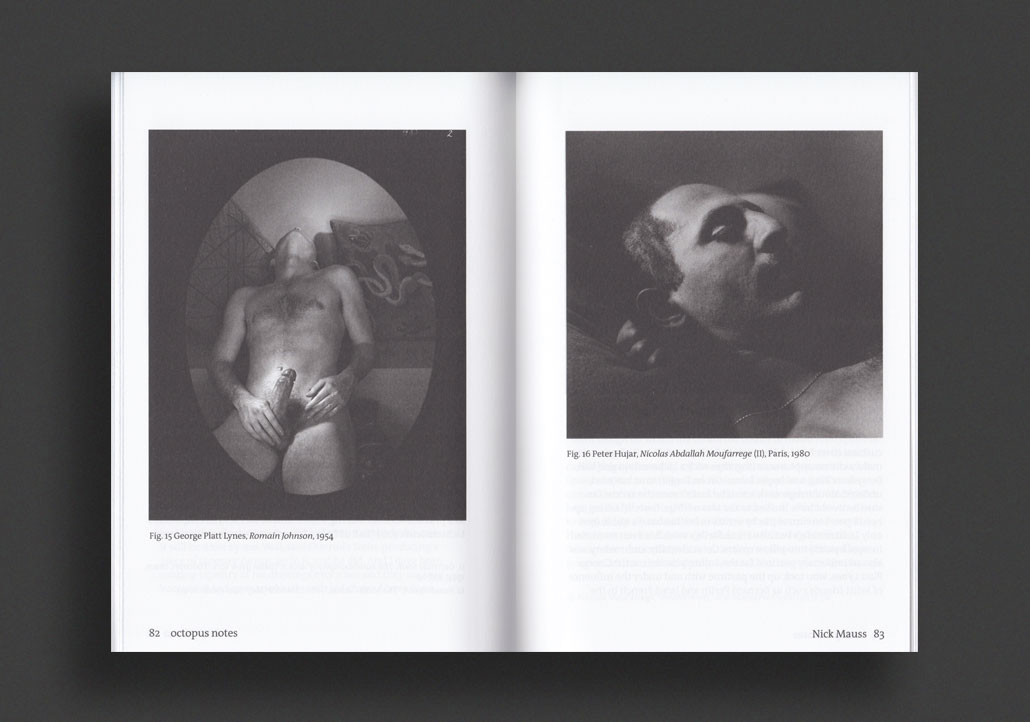
The tenth issue of the biannual journal-collection that brings together academic writings, interviews with artists, critical essays and artists’ interventions in the form of inserts.
With & about Sara de Chiara, Rafael Corcostegui, Moyra Davey, Pierre Dulieu, Guillaume Dustan, Jana Euler, Sylvie Fanchon, Jim Fletcher, Alexander García Düttmann, Jeanne Graff, Gary Haller, Alex Hay, Martin Laborde, Daniel Lentz, Mina Loy, Liz Magor, Nick Mauss, Nicolas Moufarrege, Baptiste Pinteaux, Richard Rezac, Clément Roussier, Edith Schloss, Albert Serra, Pierre Thévenin, Belén Uriel, Charles Veyron, Robin Waart, Emily Wardill, Román Yñán.
Edited by Alice Dusapin, Martin Laborde, Baptiste Pinteaux, Alice Pialoux.
Designed by Marc Touitou & Robert Milne.
2016, English
Softcover (w. dust jacket), 84 pages, 11.8 x 18 cm
Published by
Institut Kunst at the FHNW Academy of Art and Design / Basel
Sternberg Press / Berlin
$36.00 $10.00 - In stock -
“I’ve been writing these notes continuously for years but I never thought about publishing them. These pages gather some thoughts on artists who continue to be a source of motivation for me to invest in complexity and who also all possess a rare sense of humor. I write these texts mostly at the end of a working day or in the very early morning, which for me are not the hours for argumentation. They expose no foreseeable line of research or an unequivocal sequence of arguments. However, through continuous exchange with the students at the Institute of Art of the FHNW Academy of Arts and Design in Basel, I came to the conclusion that it would be useful to publish this peculiar research as a strange textbook. Its sole goal is to motivate the students to keep our conversation going and to further open this possibility up to others.
These pages attribute an incredible intensity to certain artistic practices; they entangle personal passages with an interest in artists I would love for you to fall for too: Melquiades Herrera (1949–2003), Pedro Pietri (1944–2004), Federico Manuel Peralta Ramos (1939–1992), Jorge Bonino (1935–1990), and many others who aren’t included, at least not yet…”
This book is the result of ongoing research into historical and current artistic practices that explore new paradigms of experience. It is the first volume in a series of books that focuses on what is happening both inside and outside of the art institute.
Copublished with Institut Kunst at the FHNW Academy of Art and Design, Basel
Design by Ana Domínguez
2011, English
Softcover, 80 pages, 15 x 22 cm
Published by
Badlands Unlimited / New York
$32.00 - Out of stock
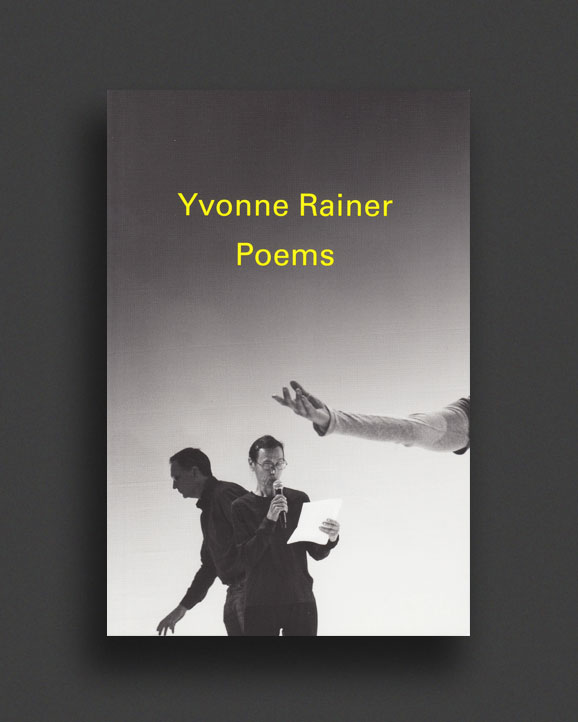
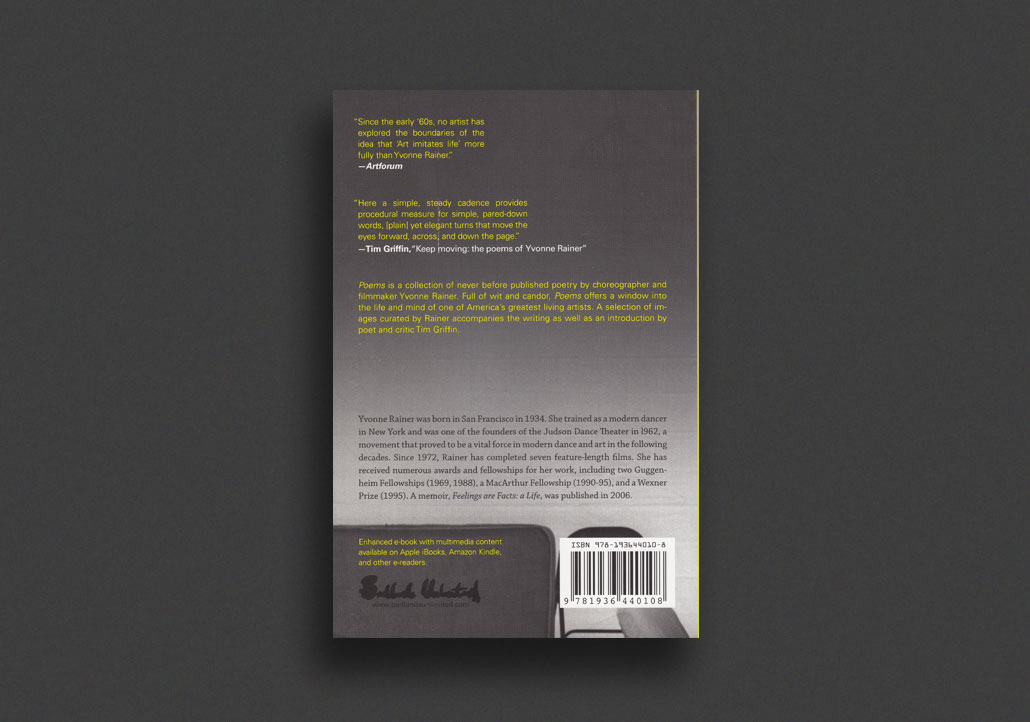
Poems is a collection of never before published poems by choreographer and filmmaker Yvonne Rainer. Full of wit and candor, they offer a window into the life and mind of one of America’s greatest living artists. Accompanying the poems is a selection of images curated by Rainer and an introduction by poet and critic Tim Griffin.
Yvonne Rainer was born in San Francisco in 1934. She trained as a modern dancer in New York and began to choreograph her own work in l960. She was one of the founders of the Judson Dance Theater in l962, a movement that proved to be a vital force in modern art and dance in the following decades. Since 1972, Rainer has completed seven feature-length films, beginning with Lives of Performers(1972) and more recently The Man Who Envied Women (1985), Privilege (1990), and MURDER and murder(1996). A memoir, Feelings are Facts: a Life, was published by MIT Press in 2006.
2021, English
Softcover, 264 pages, 20 x 13 cm
Published by
Sternberg Press / Berlin
$40.00 - Out of stock
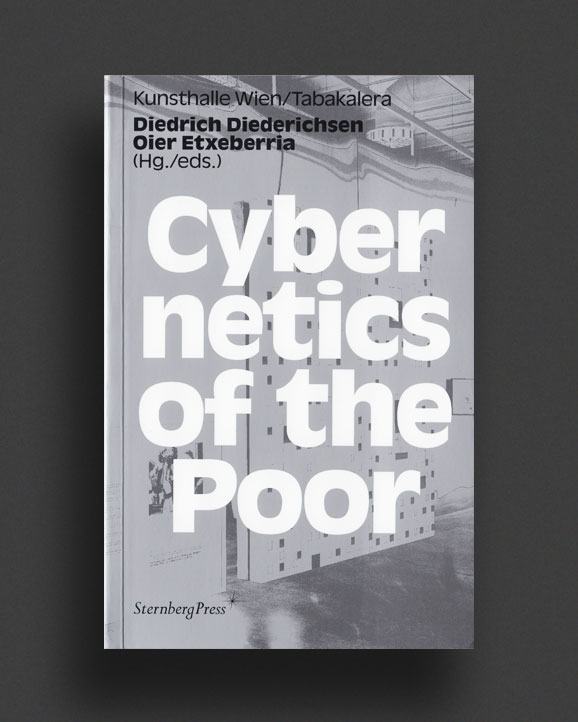
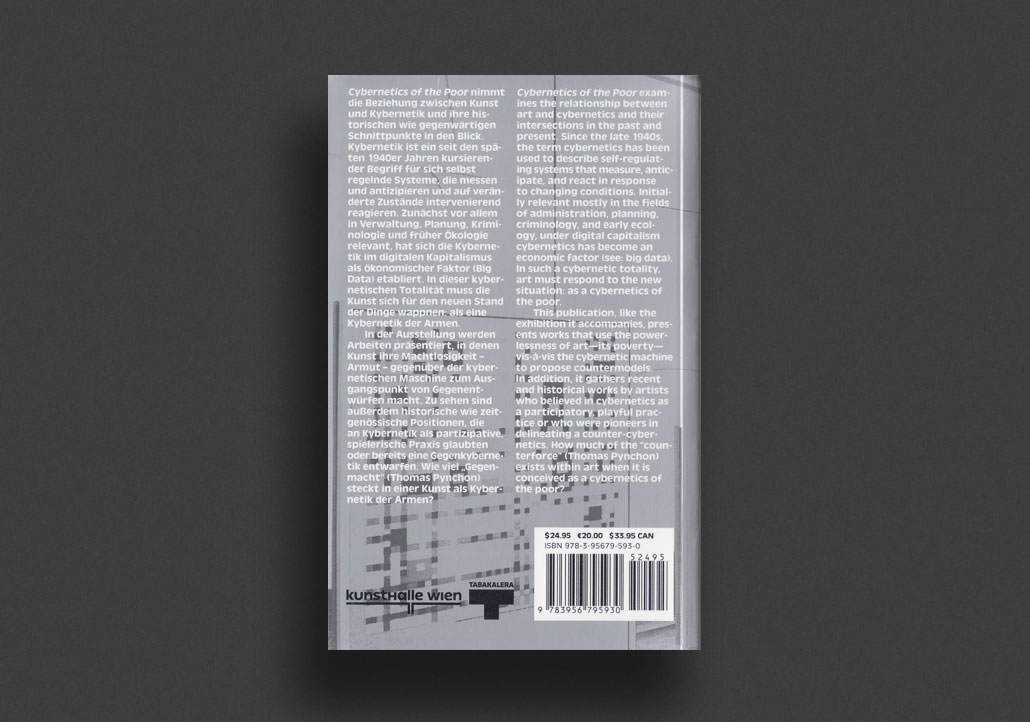
An examination of the relationship between art and cybernetics and their intersections, with works that uses the powerlessness of art.
Cybernetics of the Poor examines the relationship between art and cybernetics and their intersections in the past and present. From the late 1940s on, the term cybernetics began to be used to describe self-regulating systems that measure, anticipate, and react in order to intervene in changing conditions. Initially relevant mostly in the fields of administration, planning, criminology, and early ecology, under digital capitalism cybernetics has since become an economic factor (particularly in the realm of big data). In such a cybernetic totality, art must respond to a new situation: a cybernetics of the poor.
Cybernetics of the Poor presents work that uses the powerlessness of art—its poverty—vis-à-vis the cybernetic machine to propose countermodels: work that is both recent and historical by artists who believed in cybernetics as a participatory, playful practice or were pioneers in delineating a counter-cybernetics. How much of what Thomas Pynchon termed “counterforce” exists within art when it is conceived as a cybernetics of the poor?
Texts by Sabeth Buchmann, Mercedes Bunz, Diedrich Diederichsen, Oier Etxeberria, Harun Farocki
With artistic contributions by Agency, Ana De Almeida, Alicja Rogalska & Vanja Smiljanić, Eleanor Antin, Cory Arcangel, Elena Asins, Paolo Cirio, Coleman Collins, Hanne Darboven, Jon Mikel Euba, Michael Hakimi, Douglas Huebler, Gema Intxausti, Kameelah Janan Rasheed, Mike Kelley, Ferdinand Kriwet, Agnieszka Kurant, Mario Navarro, Adrian Piper, Lili Reynaud-Dewar, Heinrich Riebesehl, Pedro G. Romero, Constanze Ruhm, Jörg Schlick, Camila Sposati, Kathrin Stumreich, Isidoro Valcárcel Medina, Tanja Widmann, Robert Adrian X
Diedrich Diederichsen
Diedrich Diederichsen is a German author, music journalist, and cultural critic. He is one of Germany's most renowned intellectual writers at the crossroads of the arts, politics, and pop culture.
Oier Etxeberria
Oier Etxeberria is a Basque visual artist and musician. He is head of the Visual Arts at CICC Tabakalera.
1992, English / German
Hardcover, 104 pages, 21.5 x 28 mm
1st Edition, Out of print title / used / very good
Published by
Kunsthalle Basel / Basel
Edition Cantz / Stuttgart
$190.00 - Out of stock
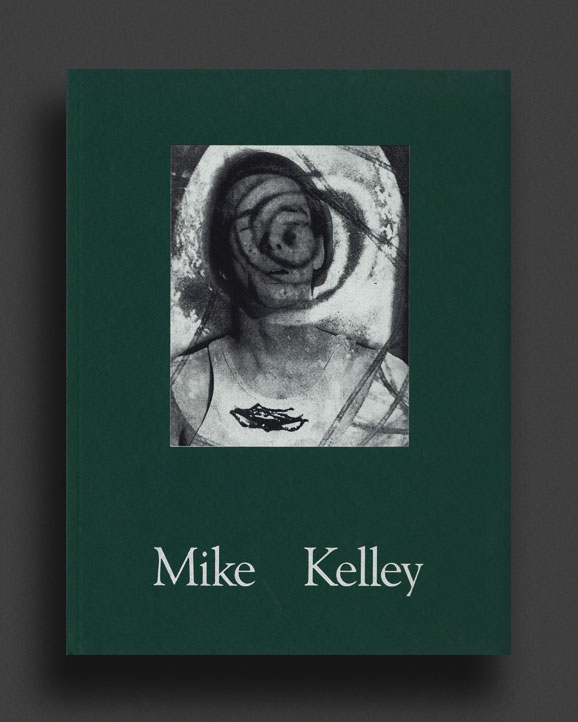
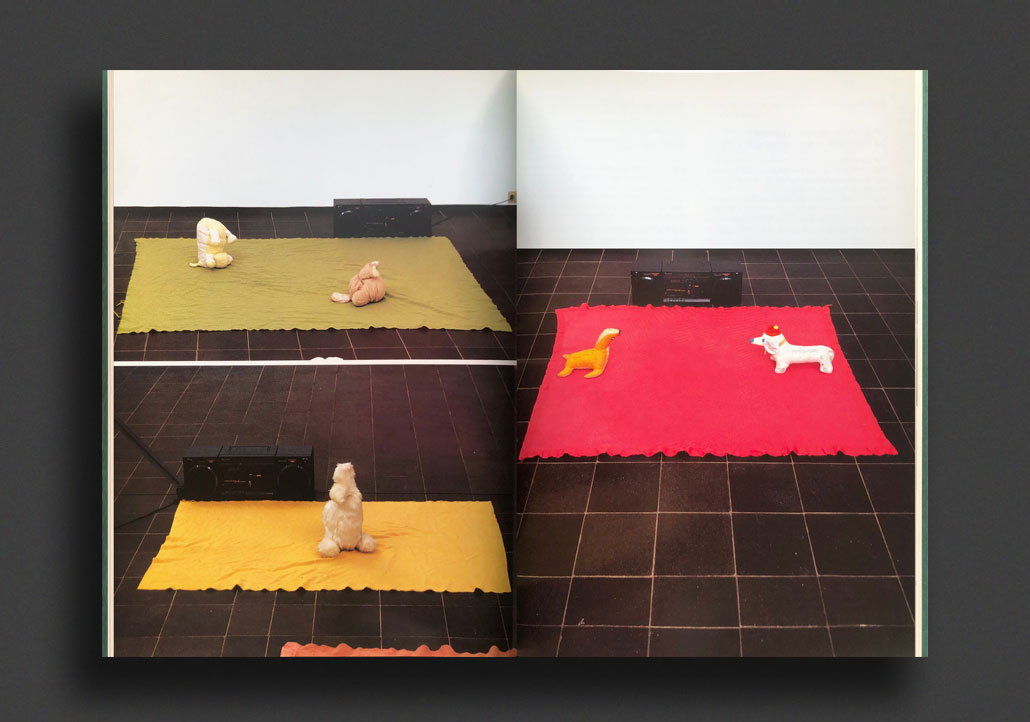
First 1992 hardcover edition of this wonderful monographic catalogue published to accompany American artist Mike Kelley's major travelling exhibition staged at Kunsthalle Basel; ICA, London, and Portikus, Frankfurt. Profusely illustrated throughout with beautiful documentation of Kelley's diverse works and installations, alongside texts in German and English, including many writings by Kelley himself, with additional texts by Colin Gardner, Christopher Knight, and conversations between Kelley and Paul Taylor, and Kelley and Ralph Rugoff. Edited by Thomas Kellein.
Mike Kelley (1954 – 2012) was one of the leading Californian artists of the 1990s; a proponent of abject or pathetic art, an anti-aesthetic, anti-heroic movement, which criticized social and artistic issues through banality and humour. His work involved found objects, textile banners, drawings, assemblage, collage, performance and video. He often worked collaboratively with artists such as Paul McCarthy, Tony Oursler, and John Miller, and was a member of the noise band Destroy All Monsters.
Very Good copy.