World Food Books' programme is largely produced on Kulin Nation land. We acknowledge the Wurundjeri people of the Kulin Nation as the first and continuing custodians of this land, and pay respect to their Elders past, present, and emerging.
World Food Books is an arts and special interests bookshop in Naarm / Melbourne. Founded in 2010, World Food Books is devoted to the presentation of a rotating, hand-selection of international art, design, literary and counterculture publications with an emphasis on the anti-traditional, the experimental, the avant-garde, the heretic, the marginal.
Presenting new titles alongside rare and out-of-print books, catalogues and journals spanning the fields of modern and contemporary art, design, photography, illustration, film, literature, poetry, cultural theory, philosophy, sexuality, popular and underground culture in its many radical forms, World Food Books wishes to encourage adventurous, thoughtful and open-minded reading, looking, writing, and exchange of publishing and ideas, both current and historical.
As well as our bookshop, located in Melbourne's historical Nicholas Building, all of our inventory is available internationally via our online mail-order service.
World Food Books semi-regularly co-ordinates "Occasions", a programme of exhibits and events at the bookshop and in partnership with other hosts (such as museums and art galleries) that develop out of the activities, relationships and content of the bookshop itself.
World Food Books
The Nicholas Building
37 Swanston Street
Room 5, Level 6
Melbourne 3000
Australia
SHOP HOURS:
THU–SAT 12–6
WEB-SHOP OPEN 24/7
World Food Books
Postal Address:
PO Box 435
Flinders Lane
Victoria 8009
Australia
info@worldfoodbooks.com
Art
Theory / Essay
Architecture / Interior
Graphic Design / Typography
Photography
Fashion
Eros
LGBTQ+
Fiction / Poetry
Weird / Speculative / Science Fiction / Horror
Transgressive / Visceral / Abject
Symbolism / Decadence / Fin de siècle
Film / Video
Painting
Sculpture / Installation
Performance / Dance / Theater
Drawing
Sound / Music
Curatorial
Group Shows / Collections
Periodicals
Out-of-print / Rare
Posters / Ephemera / Discs
Signed Books
World Food Books Gift Voucher
World Food Book Bag
Australian Art
Australian Fiction
Australian Science Fiction / Speculative Fiction
Australian Poetry
Australian Photography
Japanese Photography
Conceptual Art
Minimal Art
Dada
'Pataphysics / Oulipo
Fluxus
Concrete Poetry
Pop Art
Surrealism
Arte Povera
Arte Informale / Haute Pâte / Tachism
Nouveau Réalisme / Zero / Kinetic
Situationism / Lettrism
Collage / Mail Art / Xerox Art
Art Brut / Folk / Visionary / Fantastic
Illustration / Graphic Art / Bandes Dessinées
Furniture
Italian Radical Design / Postmodernism
Textiles
Ceramics / Glass
Counterculture
Protest / Revolt
Philosophy
Psychoanalysis
Anthropology
Anarchism
Socialism / Anarchism / Communism / Capitalism
Literary Theory / Semiotics / Language
Feminism / Women's Studies
Gender Studies / Sexuality
Anthropology
Fetishism / BDSM
Drugs / Psychedelia
Crime / Violence
Animal Rights / Veganism
Occult / Esoterica
Ecology / Earth / Alternative Living
Whole Earth / Crafts
All prices in AUD (Australian dollars)
Pick-Ups
Pick-up orders can be collected in our bookshop during opening hours after order date. Please collect any Pick-up orders within 2 weeks of ordering as we have limited storage space. Orders will be released back into stock if not collected within this time. No refunds can be made for pick-ups left un-collected. If you cannot make it in to the bookshop in this time-frame, please choose postage option.
Return Policy
All sales are final. We do accept returns (for refund or exchange) for items received in error. All our orders are packed with special care using heavy-duty padding and cardboard book-mailers or bubble mailers (for smaller books), using reinforcement where required. We cannot take responsibility for any lost, stolen or damaged parcels.
Insurance
Should you wish to insure your package, please email us directly after placing your order and we can organise this at a small extra expense. Although all standard/express tracked packages are very safe and dependable, we cannot take responsibility for any lost, stolen or damaged parcels. We recommend insurance on valuable orders.
Interested in selling your old books, catalogues, journals, magazines, comics, fanzines, ephemera? We are always looking for interesting, unusual and out-of-print books to buy. We only buy books in our fields of interest and specialty, and that we feel we can resell.
We base these prices on desirability, market value, in-print prices, condition and our current stock levels. We offer cash, store credit, and can take stock on consignment. All
about 25% of the price we expect to get when we sell them, or 30% in store credit. We base these prices on desirability, market value, in-print prices, condition and our current stock levels.
Sell your books any day of the week. You can drop them off and return later. If you have a lot of books, we can visit your Sydney home.
We buy books that we feel we can resell. We offer about 25 % of the price we expect to get when we sell them, or 30% in store credit. We base these prices on desirability, market value, in-print prices, condition and our current stock levels.
Philadelphia Wireman
03 August - 01 September, 2018
World Food Books is proud to announce our next Occasion, the first presentation of sculptures by Philadelphia Wireman in Australia.
The Philadelphia Wireman sculptures were found abandoned in an alley off Philadelphia’s South Street on trash night in 1982. Their discovery in a rapidly-changing neighbourhood undergoing extensive renovation, compounded with the failure of all attempts to locate the artist, suggests that the works may have been discarded after the maker’s death. Dubbed the "Philadelphia Wireman" during the first exhibition of this work, in 1985, the maker’s name, age, ethnicity, and even gender remain uncertain. The entire collection totals approximately 1200 pieces, all intricately bound together with tightly-wound heavy-gauge wire (along with a few small, abstract marker drawings, reminiscent both of Mark Tobey and J.B. Murry). The dense construction of the work, despite a modest range of scale and materials, is singularly obsessive and disciplined in design: a wire armature or exoskeleton firmly binds a bricolage of found objects including plastic, glass, food packaging, umbrella parts, tape, rubber, batteries, pens, leather, reflectors, nuts and bolts, nails, foil, coins, toys, watches, eyeglasses, tools, and jewellery.
Heavy with associations—anthropomorphic, zoomorphic, and socio-cultural responses to wrapped detritus—the totemic sculptures by Philadelphia Wireman have been discussed in the context of work created to fulfil the shamanistic needs of alternative religions in American culture. Curators, collectors, and critics have variously compared certain pieces to sculpture from Classical antiquity, Native American medicine bundles, African-American memory jugs, and African fetish objects. Reflecting the artist’s prolific and incredibly focused scavenging impulse, and despite—or perhaps enhanced by—their anonymity, these enigmatic objects function as urban artefacts and arbiters of power, though their origin and purpose is unknown. Philadelphia Wireman, whatever their identity, possessed an astonishing ability to isolate and communicate the concepts of power and energy through the selection and transformation of ordinary materials. Over the course of the past two decades, this collection has come to be regarded as an important discovery in the field of self-taught art and vernacular art.
Presented in collaboration with Fleisher-Ollman Gallery, Philadelphia, and Robert Heald, Wellington.
Susan Te Kahurangi King
02 February - 10 March, 2018
Susan Te Kahurangi King (24 February 1951 - ) has been a confident and prolific artist since she was a young child, drawing with readily available materials - pencils, ballpoint pens and felt-tip markers, on whatever paper is at hand. Between the ages of four and six Susan slowly ceased verbal communication. Her grandparents William and Myrtle Murphy had developed a special bond with Susan so they took on caring responsibilities for extended periods. Myrtle began informally archiving her work, carefully collecting and storing the drawings and compiling scrapbooks. No drawing was insignificant; every scrap of paper was kept. The King family are now the custodians of a vast collection containing over 7000 individual works, from tiny scraps of paper through to 5 meter long rolls.
The scrapbooks and diaries reveal Myrtle to be a woman of great patience and compassion, seeking to understand a child who was not always behaving as expected. She encouraged Susan to be observant, to explore her environment and absorb all the sights and sounds. Myrtle would show Susan’s drawings to friends and people in her community that she had dealings with, such as shopkeepers and postal workers, but this was not simply a case of a grandmother’s bias. She recognised that Susan had developed a sophisticated and unique visual language and sincerely believed that her art deserved serious attention.
This was an unorthodox attitude for the time. To provide some context, Jean Dubuffet coined the term Art Brut in 1945 to describe work created by self-taught artists – specifically residents of psychiatric institutions and those he considered to be visionaries or eccentrics. In 1972 Roger Cardinal extended this concept by adopting the term Outsider Art to describe work made by non-academically trained artists operating outside of mainstream art networks through choice or circumstance. Susan was born in Te Aroha, New Zealand in 1951, far from the artistic hubs of Paris and London that Dubuffet and Cardinal operated in. That Myrtle fêted Susan as a self-taught artist who deserved to be taken seriously shows how progressive her attitudes were.
Susan’s parents Doug and Dawn were also progressive. Over the years they had consulted numerous health practitioners about Susan’s condition, as the medical establishment could not provide an explanation as to why she had lapsed into silence. Dawn educated herself in the field of homeopathy and went on to treat all twelve of her children using these principles – basing prescriptions on her observations of their physical, mental and emotional state.
Doug was a linguist with an interest in philosophy who devoted what little spare time he had to studying Maori language and culture. To some extent their willingness to explore the fringes of the mainstream made them outsiders too but it was their commitment to living with integrity and their respect for individuality that ensured Susan’s creativity was always encouraged.
Even though Susan’s family supported her artistic pursuits, some staff in schools and hospitals saw it as an impediment to her assimilation into the community and discouraged it in a variety of ways. Her family was not always aware of this and therefore did not fully understand why Susan stopped drawing in the early 1990s. However, rather than dwell on the challenges that Susan faced in pursuit of her artistic practice, they prefer to highlight her achievements. In 2008 Susan began drawing again in earnest, after an almost 20 year interruption, and her work is now shown in galleries around the world.
Susan grew up without television and has been heavily influenced by the comics she read as a child. She is absolutely fearless in the appropriation of recognizable characters, such as Donald Duck and Mickey Mouse, in her work. She twists their limbs, contorts their faces, compresses them together, blends them into complex patterned backgrounds - always imbuing them with an incredible energy. Although Susan often used pop culture characters in her work they are not naive or childlike. These are drawings by a brilliant self-taught artist who has been creating exceptional work for decades without an audience in mind.
Mladen Stilinović
"Various Works 1986 - 1999"
02 February 16 - September 10, 2016
Various works 1986 - 1999, from two houses, from the collections of John Nixon, Sue Cramer, Kerrie Poliness, Peter Haffenden and Phoebe Haffenden.
Including: Geometry of Cakes (various shelves), 1993; Poor People’s Law (black and white plate), 1993; White Absence (glasses, ruler, set square, silver spoon, silver ladel with skin photograph and wooden cubes), 1990-1996; Exploitation of the Dead (grey and red star painting, wooden painting, black spoon with red table, red plate), 1984-1990; Money and Zeros (zero tie, paintings made for friends in Australia (Sue, John, Kerrie), numbers painting), 1991-1992; Words - Slogans (various t-shirts) - “they talk about the death of art...help! someone is trying to kill me”, “my sweet little lamb”, “work is a disease - Karl Marx”; Various artist books, catalogues, monographs, videos; Poster from exhibition Insulting Anarchy; "Circular" Croatian - Australian edition; Artist book by Vlado Martek (Dostoyevsky); more.
Thanks to Mladen Stilinović and Branka Stipančić.
Jonathan Walker
Always Will Need To Wear Winter Shirt Blue + Ochre Small Check Pattern
21 August - 21 September, 2015
Untitled
I am not a great reader of poetry but I always return to the work of Melbourne poet, Vincent Buckley (1925- 1988). Perhaps I find his most tantalising piece to be not a finished poem but a fragment left on a scrap of paper discovered on his desk after the poet’s death.
The poetry gathers like oil
In the word-core, and spreads
It has its music meet,
Its music is in movement.
This fragment is more the shell left behind from a volatile thought than a finished poem. I find the last two lines honest but awkward whereas the first two lines work like an arrow. Most likely he could not find a resolution so it was left. Still, in its present form, it remains an eloquent testimony to the ultimate failure of a medium to express mobile thought and sensation, in Buckley’s case, through verbal language. It’s an important matter because this is something all artists have to deal with regardless of the medium.
I have never written a poem, however, I am forever copying fragments from books on paper scraps in a vain effort to fix certain notions in my head. At first, they function as bookmarks that are sometimes returned to when I open the book. But before long, as they accumulate, they fall out littering the table interspersed with A4 photocopies, bills, books and medications.
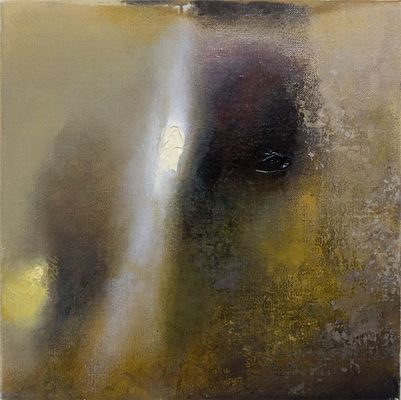
To return to Buckley’s fragment, the first two lines very much evoke how I paint nowadays. As you age, detail diminishes and patches of light become more luminous and float. I feel the most honest way of dealing with this is by smearing the oil paint on the canvas with the fingers and working close-up, blind. Only if the patches coalesce into an approaching image can the work gain a life.
-
Jonathan Walker was born in Melbourne, Australia and brought up on a dairy farm in Gippsland. In the 1970’s he studied painting at RMIT and won the Harold Wright Scholarship to the British Museum, London. During the 1980’s he exhibited at Pinacotheca Gallery, Richmond and had work shown at the NGV and Heidi City Art Gallery. Over the same period he designed the cover for the “Epigenesi” LP by Giancarlo Toniutti, Italy and conducted a mail exchange work with Achim Wollscheid, Germany. The work with artists through the post resulted in an article published in the bicentenary issue of Art and Australia 1988. He showed in artist run spaces such as WestSpace in the 90’s and 2000’s, and until 2012, taught painting at Victoria University, which is where we (Colleen Ahern and Lisa Radford) as organisers of the exhibition, among many others, had the privilege of being his student.
Walker’s knowledge was imparted to students through the careful selection of music, literature, and artists found in books that he himself had ordered for the library. Walker’s strategy was the generosity of sharing his vast knowledge with references specific to each student and their context.
Walker’s paintings share a similar focus and intimacy.
This exhibition presents a small selection of recent paintings alongside a publication that includes Walker’s writing. Observational and analytical, Walker’s work is a type of material notation — the time of day, colour and how it is blended, the both specific and fleeting location of a reflection on lino or the question of whether a chair leg should be included in a painting.
Please join us on Friday August 21 between 6-8pm to celebrate the opening of the exhibition.
Curated by Colleen Ahern and Lisa Radford.
B. Wurtz
Curated by Nic Tammens
March 26 - April 4, 2015
B.Wurtz works from a basement studio in his home on Manhattan’s Lower East Side.
This local fact is attested to by the plastic shopping bags and newsprint circulars that appear in his work. As formal objects, they don’t make loud claims about their origins but nonetheless transmit street addresses and places of business from the bottom of this long thin island. Like plenty of artists, Wurtz is affected by what is local and what is consumed. His work is underpinned by this ethic. It often speaks from a neighborhood or reads like the contents of a hamper:
“BLACK PLUMS $1.29 lb.”
“Food Bazaar”
“USDA Whole Pork Shoulder Picnic 99c lb.”
“RITE AID Pharmacy, with us it’s personal.”
“H. Brickman & Sons.”
“Sweet Yams 59c lb."
Most of the work in this exhibition was made while the artist was in residence at Dieu Donne, a workshop dedicated to paper craft in Midtown. Here Wurtz fabricated assemblages with paper and objects that are relatively lightweight, with the intention that they would be easily transportable to Australia. This consideration isn’t absolute in Wurtz’s work, but was prescriptive for making the current exhibition light and cheap. Packed in two boxes, these works were sent from a USPS post office on the Lower East Side and delivered to North Melbourne by Australia Post.
Wurtz appears courtesy of Metro Pictures, New York.
Thanks to Rob Halverson, Joshua Petherick, Sari de Mallory, Matt Hinkley, Helen Johnson, Fayen d'Evie, Ask Kilmartin, Lisa Radon, Ellena Savage, Yale Union, and "Elizabeth".
John Nixon
"Archive"
December 15 - January 20, 2014
The presentation of John Nixon's archive offered a rare showcase of this extensive collection of the artist's own publications, catalogues, posters, ephemera, editions and more, from the mid 1980s onwards, alongside a selection of his artworks.
Organized by John Nixon, Joshua Petherick and Matt Hinkley.
"Habitat"
at Minerva, Sydney (organised by Joshua Petherick and Matt Hinkley)
November 15 - December 20, 2014
Lupo Borgonovo, Janet Burchill & Jennifer McCamley,
Lewis Fidock, HR Giger, Piero Gilardi, Veit Laurent Kurz,
Cinzia Ruggeri, Michael E. Smith, Lucie Stahl, Daniel Weil, Wols
Press Release:
“...It contained seven objects. The slender fluted bone, surely formed for flight, surely from the wing of some large bird. Three archaic circuitboards, faced with mazes of gold. A smooth white sphere of baked clay. An age-blackened fragment of lace. A fingerlength segment of what she assumed was bone from a human wrist, grayish white, inset smoothly with the silicon shaft of a small instrument that must once have ridden flush with the surface of the skin - but the thing’s face was seared and blackened.”
William Gibson, “Count Zero”, 1986
"Autumn Projects Archive"
Curated by Liza Vasiliou
March 6 - March 15, 2014
World Food Books, in conjunction with the Virgin Australia Melbourne Fashion Festival 2014, presented the Autumn Projects archive, consisting of a selection of early examples in Australian fashion with a particular interest in collecting designers and labels from the period beginning in the 1980’s, who significantly influenced the discourse of Australian Fashion.
Curated by Liza Vasiliou, the exhibition provided a unique opportunity to view pieces by designers Anthea Crawford, Barbara Vandenberg, Geoff Liddell and labels CR Australia, Covers, Jag along with early experimental collage pieces by Prue Acton and Sally Browne’s ‘Fragments’ collection, suspended throughout the functioning World Food Books shop in Melbourne.
H.B. Peace
presented by CENTRE FOR STYLE
November 14, 2013
"Hey Blinky, you say chic, I say same"
Anon 2013
H.B. Peace is a clothing collaboration between great friends Blake Barns and Hugh Egan Westland. Their pieces explore the divergences between 'character’ and ‘personality’ in garments....etc
Special Thanks to Joshua Petherick and Matt Hinkley of WFB and Gillian Mears
and a Very Special Thank you to Audrey Thomas Hayes for her shoe collaboration.
Janet Burchill & Jennifer McCamley
"Aesthetic Suicide"
May 10 - June 8, 2013
The first of our occasional exhibitions in the World Food Books office/shop space in Melbourne, "Aesthetic Suicide" presented a body of new and older works together by artists Janet Burchill & Jennifer McCamley, including videos, prints, a wall work, and publications.
During shop open hours videos played every hour, on the hour.
1977, Japanese
Softcover, 390 pages, 11 x 18 cm
1st Edition, Out of print title / used / very good
Published by
Tokyo Sanseisha / Tokyo
$60.00 - Out of stock
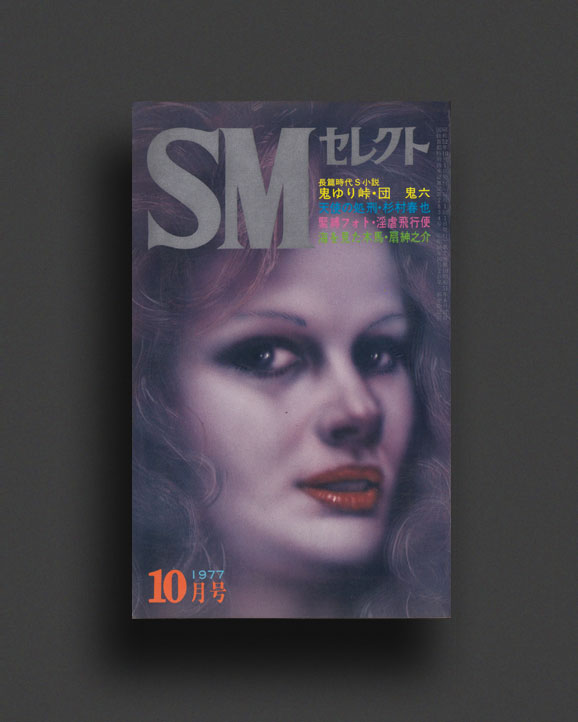
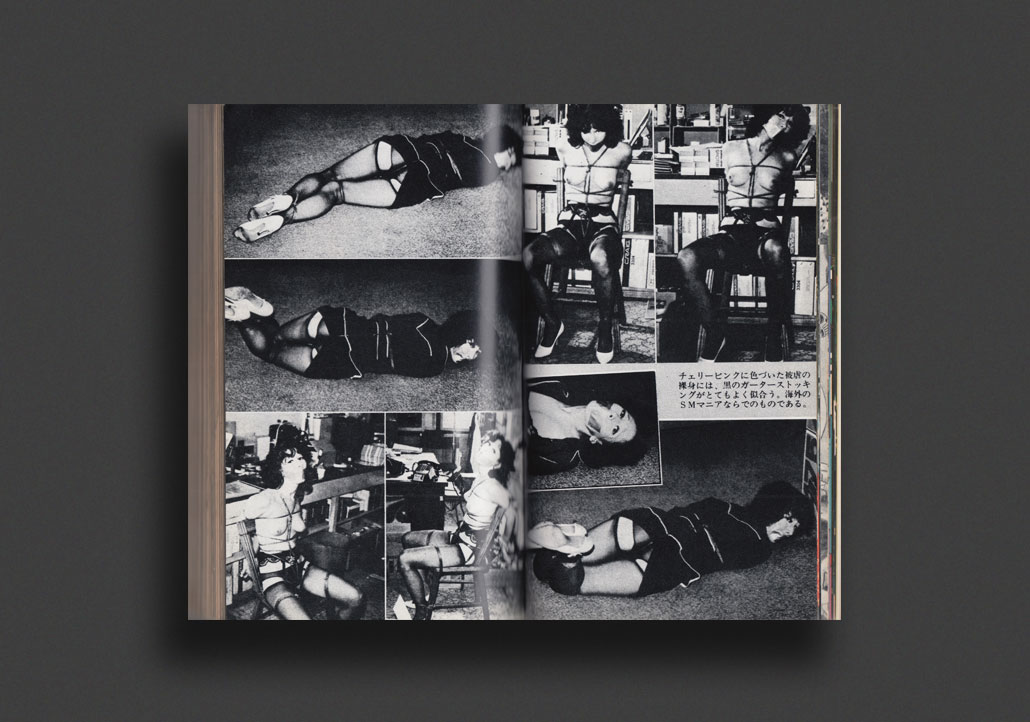
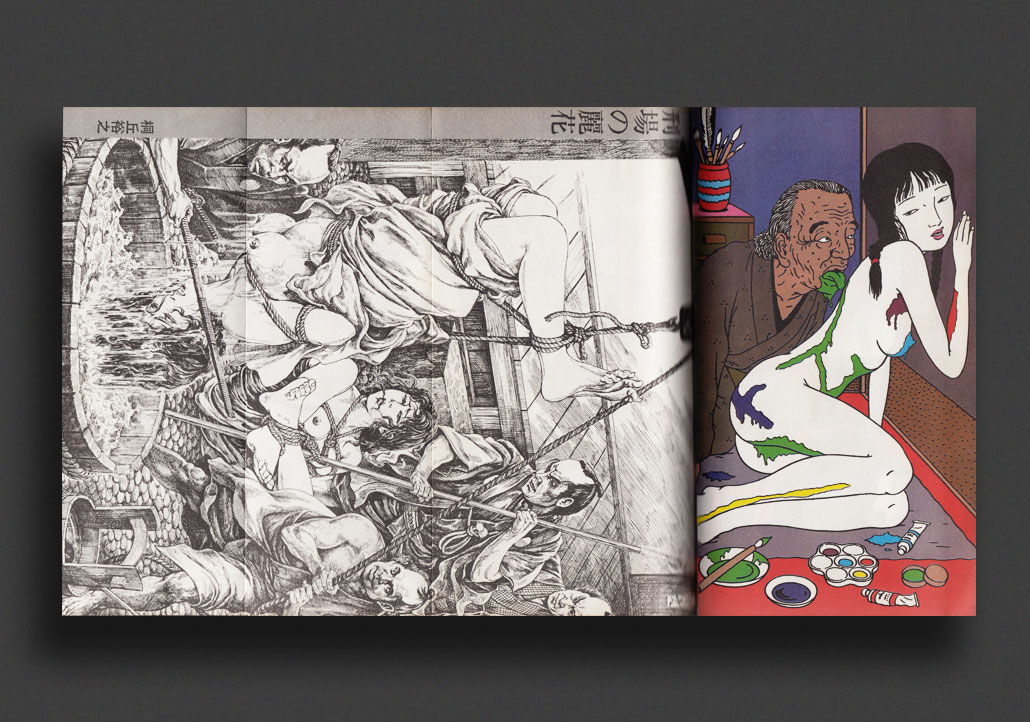
SM Select October 1977 Edition, published by Tokyo Sanseisha. This issue including work by Toshio Saeki, amongst many others, and one of the great 1970s Haruo Shinozaki airbrushed covers. Cult classic of vintage Japanese BDSM and Kinbaku (Japanese bondage), each issue of SM Select featured almost 400 pages of Japan's most depraved fetish fiction, littered with illustrations unseen elsewhere, including many historical pieces, plus full-colour glossy bondage photo-features, surreal erotic art and manga, fold-outs, reviews, letters, and much more. SM Select, alongside SM Fan, SM King, SM Top, etc. were often the first place to showcase the artwork and photography by some of Japan's biggest names in the field of erotic art, were often the first place to showcase the artwork and photography by some of Japan's biggest names in the field, including Namio Harukawa, Yoshifumi Hayashi, Toshio Saeki, and Ken Katayama, alongside the likes of masters such as Yoshitoshi Tsukioka.
Very Good with light wear.
1978, Japanese
Softcover, 390 pages, 11 x 18 cm
1st Edition, Out of print title / used / very good
Published by
Tokyo Sanseisha / Tokyo
$60.00 - Out of stock
SM Select January 1978 Edition, published by Tokyo Sanseisha. This issue including work by Toshio Saeki, amongst many others, and one of the great 1970s Haruo Shinozaki airbrushed covers. Cult classic of vintage Japanese BDSM and Kinbaku (Japanese bondage), each issue of SM Select featured almost 400 pages of Japan's most depraved fetish fiction, littered with illustrations unseen elsewhere, including many historical pieces, plus full-colour glossy bondage photo-features, surreal erotic art and manga, fold-outs, reviews, letters, and much more. SM Select, alongside SM Fan, SM King, SM Top, etc. were often the first place to showcase the artwork and photography by some of Japan's biggest names in the field of erotic art, were often the first place to showcase the artwork and photography by some of Japan's biggest names in the field, including Namio Harukawa, Yoshifumi Hayashi, Toshio Saeki, and Ken Katayama, alongside the likes of masters such as Yoshitoshi Tsukioka.
Very Good with light wear.
1972, Japanese
Softcover, 414 pages, 11 x 18 cm
1st Edition, Out of print title / used / very good
Published by
Tsukasa Shobo / Tokyo
$60.00 - Out of stock
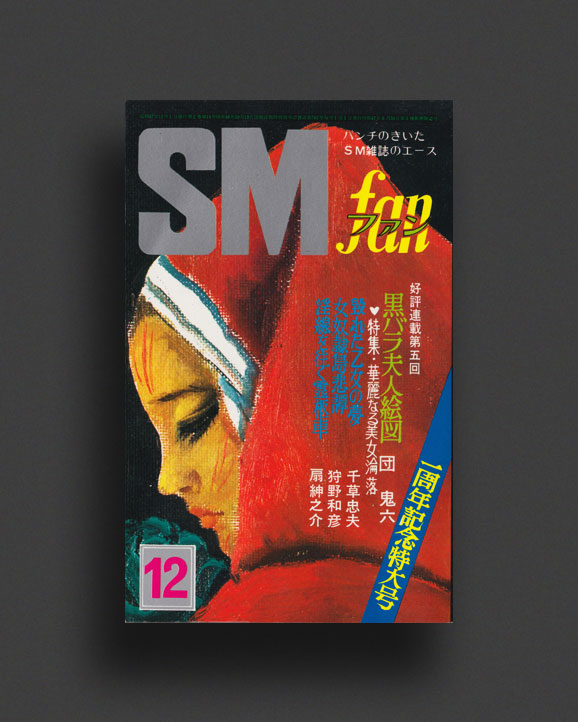
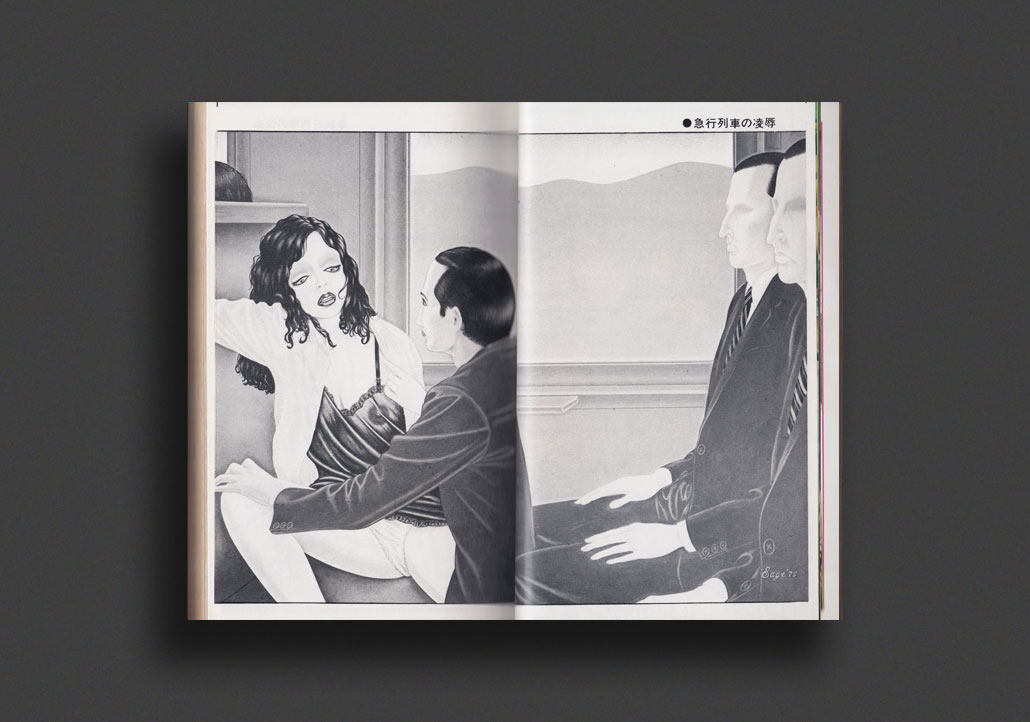
SM Fan 1972 December Edition, published by Tsukasa Shobo. Includes the art of Wataru Oki. Cult classic of vintage Japanese BDSM and Kinbaku (Japanese bondage), each issue of SM Fan featured almost 400 pages (this issue even more) of Japan's most depraved fetish fiction, littered with illustrations unseen elsewhere, including many historical pieces, plus full-colour glossy bondage photo-features, surreal erotic art and manga, fold-outs, reviews, letters, and much more. SM Fan, alongside SM Select, SM King, SM Top, etc. were often the first place to showcase the artwork and photography by some of Japan's biggest names in the field of erotic art, including Namio Harukawa, Yoshifumi Hayashi, Toshio Saeki, and Ken Katayama, alongside the likes of masters such as Yoshitoshi Tsukioka.
Very Good copy.
1973, Japanese
Softcover, 393 pages, 11 x 18 cm
1st Edition, Out of print title / used / very good
Published by
Tsukasa Shobo / Tokyo
$60.00 - Out of stock
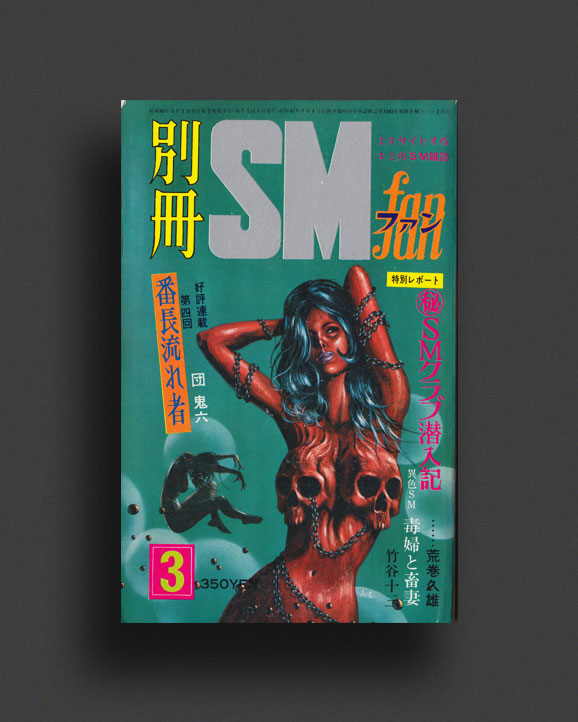
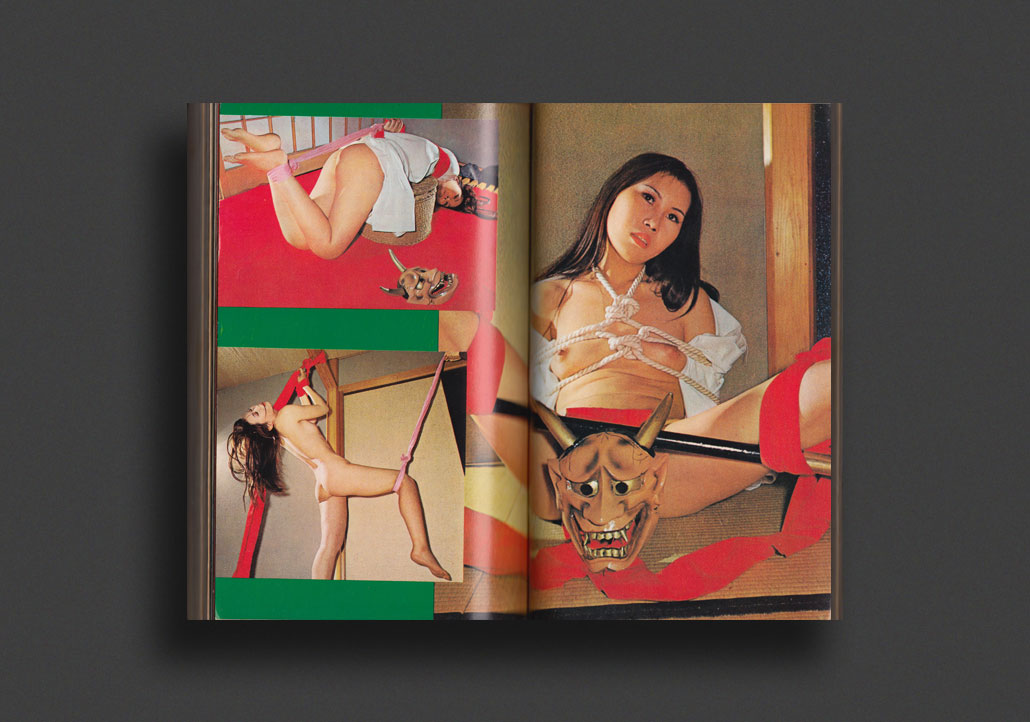
SM Fan 1973 March Edition, published by Tsukasa Shobo. Cult classic of vintage Japanese BDSM and Kinbaku (Japanese bondage), each issue of SM Fan featured almost 400 pages of Japan's most depraved fetish fiction, littered with illustrations unseen elsewhere, including many historical pieces, plus full-colour glossy bondage photo-features, surreal erotic art and manga, fold-outs, reviews, letters, and much more. SM Fan, alongside SM Select, SM King, SM Top, etc. were often the first place to showcase the artwork and photography by some of Japan's biggest names in the field of erotic art, including Namio Harukawa, Yoshifumi Hayashi, Toshio Saeki, and Ken Katayama, alongside the likes of masters such as Yoshitoshi Tsukioka.
Very Good copy.
2004, English
Softcover (staple-bound), 16 Pages, 14 x 20 cm
1st Edition, Out of print title / used / good
Published by
Nieves / Zurich
$35.00 $5.00 - Out of stock
Out-of-print photocopy zine published by Kyle Field and Nieves in 2004 in a limited numbered edition of 100 copies.
In the late 1990s in San Luis Obispo, California, Kyle Field formed the band Little Wings, of which he is the only permanent member. In the past, the band has had members Adam Selzer on drums, Rob Kieswetter on keyboards, Mark Leece as bassist and various others. As Little Wings, Field has released over a dozen albums, under the Walking and independent K Records labels. Field also has played with Grandaddy, Lee Baggett, André Herman Dune and Devendra Banhart throughout the 2000s. Field is also an acclaimed visual artist, having earned his BFA in 1997 from the University of California, Los Angeles. Kyle Field lives near San Francisco, California.
Good copy, some cover wear.
2005, English
Softcover (staple-bound), 24 Pages, 14 x 20 cm
1st Edition, Out of print title / used / good
Published by
Nieves / Zurich
$35.00 $5.00 - Out of stock
Out-of-print photocopy zine published by US artist Matt Leines with Nieves in 2005 in an edition of 100 hand-numbered copies.
From the dawn of this century, Matt Leines has produced a steady flow of fine art to delight and confound viewers–drawings and paintings rich in color and detail–exploring the kaleidoscope of memory and outer zones of imagination. He possesses a workmanlike approach to symbolism and surrealism, the poet’s ability to realize longed-for images and a passion for theatrical sports. The world moves in patterns, faces unfixed, lines dancing across pyramid walls. Perspective is subservient to unique modernist iconography; his characters operate in a kind of abstract epic or post-Columbian codex that blurs pure myth and daily life.
Observant, vibrant, obsessively intricate and rippling with gnostic strength and humor, Leines’ output reflects the 80’s pop culture of his New Jersey youth, highlights from the modern art playbook and a global range of graphic influences. He is master of lines and balance–the kind of kid born with a crayon gripped in his hand–who developed his talent through practice and study. This genius for drawing is supported by genuine sympathy for the mysteries of existing and an eye that ranges far and wide, past, present and future, real and unreal.
Leines lives and works in Brooklyn. He passed through other east coast visual centers, earned a degree from Rhode Island School of Design and spent a few years at Space 1026 in Philadelphia. Free News Projects published a retrospective monograph in 2008 titled, You Are Forgiven. His work has been shown at Deitch Projects, Clementine Gallery and The Hole in New York; Roberts and Tilton and New Image Art in Los Angeles; as well as international venues in Sweden, Italy, Spain, Greece and Japan.
Good copy with wear.
1977, French
Softcover, 60 pages, 28 x 22 cm
1st Edition, Out of print title / used / good
Published by
Éditions Dominique Leroy / Paris
$45.00 - Out of stock
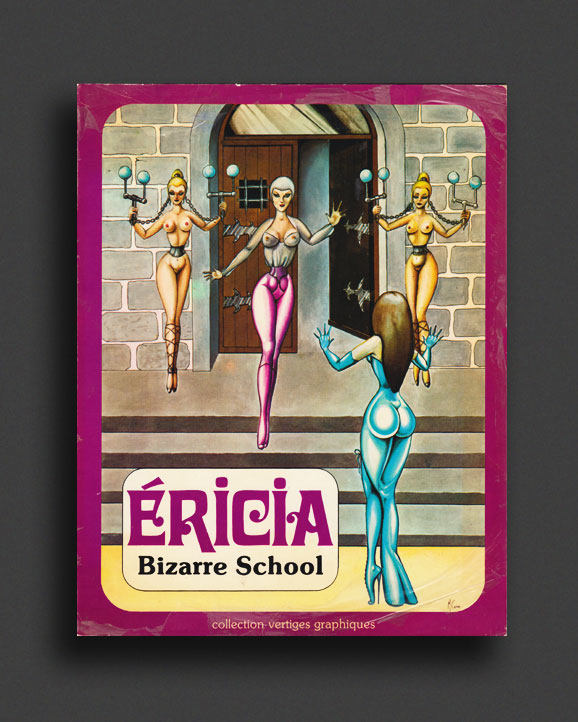
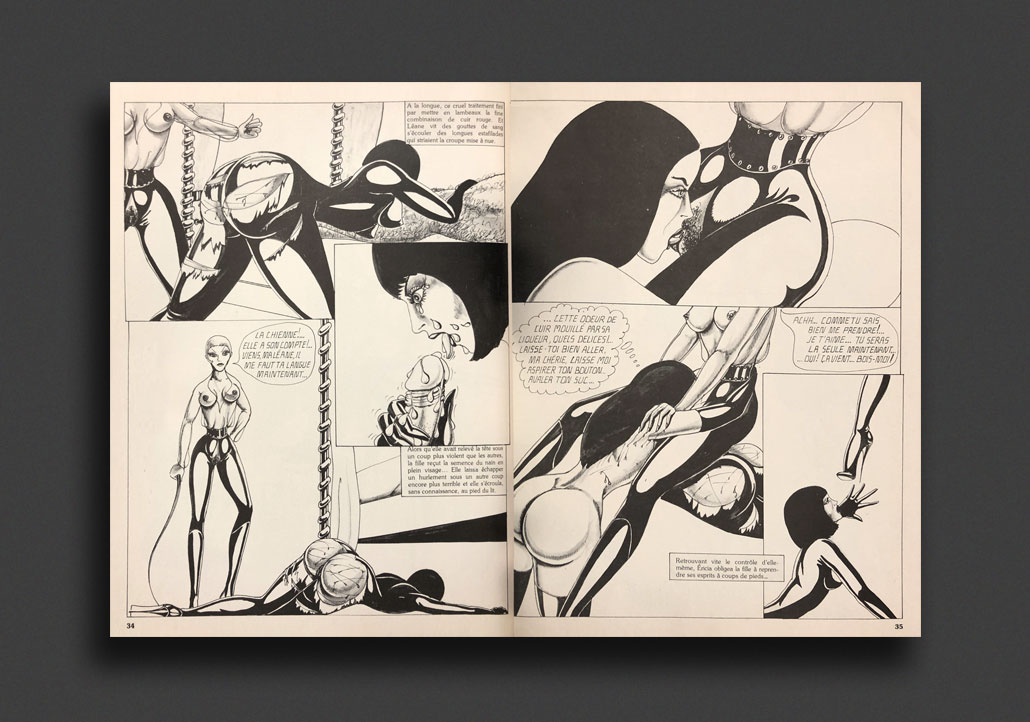
First edition of Ericia : Bizarre School, illustrated by Michaël Carm and published by Éditions Dominique Leroy, Paris, in 1977. Part of the Vertiges Graphiques Collection.
Good copy with tanning and laminate lifting to cover, edge wear.
2003, Japanese
Hardcover (w. dust jacket and obi strip), 27.2 x 23.6 cm
1st Edition, Out of print title / used / very good
Published by
Tokuma Shoten - Studio Ghibli / Japan
$140.00 - In stock -
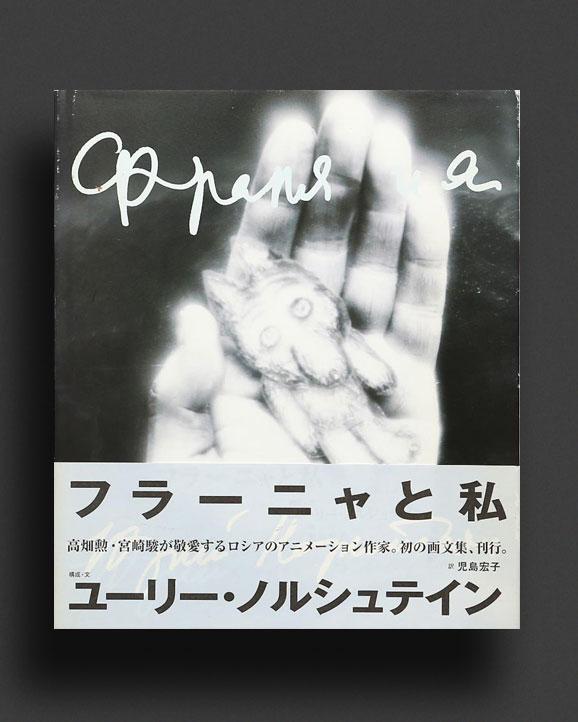
First hardcover edition of the world's first artist's book written by Russian animation artist Yuri Norstein, and published only in Japan by Isao Takahata and Hayao Miyazaki of Studio Ghibli.
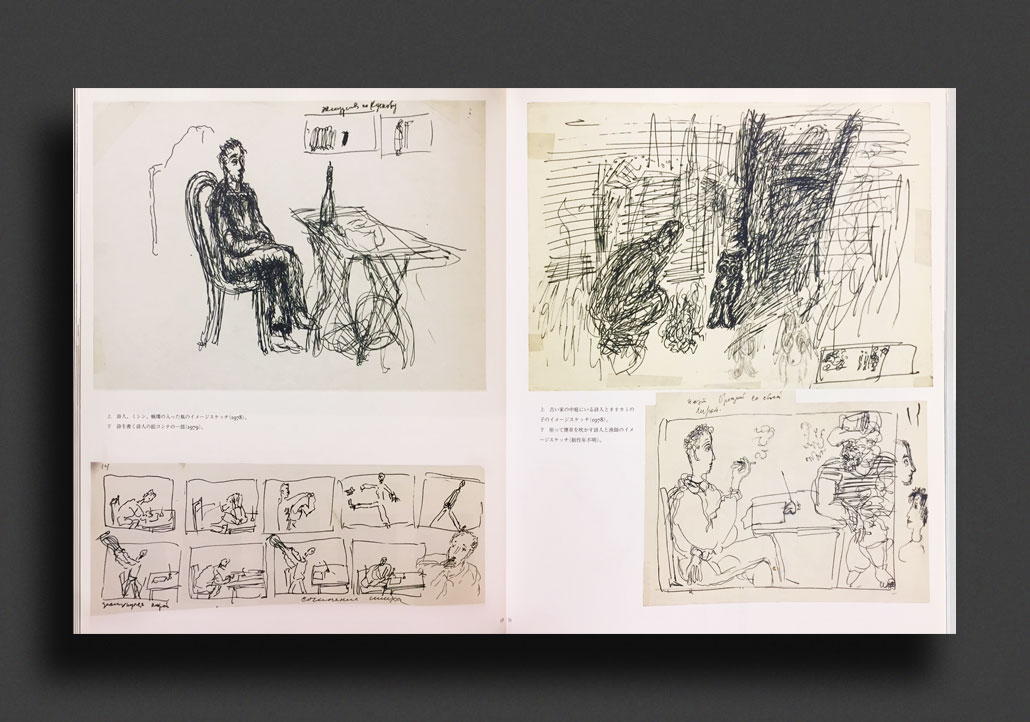
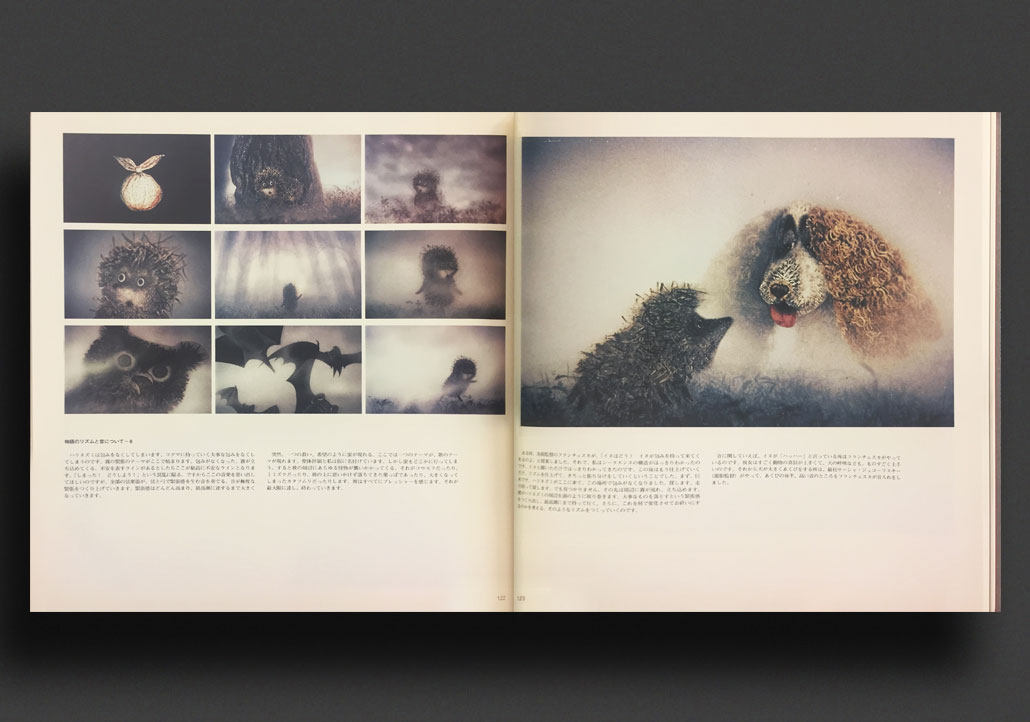
Translated by Hiroko Kojima, the title refers to the nickname of Norstein's wife, Russian artist Franchesca Yarbusova. It describes in Norstein's own words his childhood memories and his life with close-collaborator Yarbusova. The book reveals the secrets of the creation and process of his award-winning animations, including the landscapes and the people who became the models for the characters in his films. Lavishly illustrated throughout with countless drawings and paintings for his films "The Fox and the Hare" (1973), "The Heron and the Crane" (1974), "Hedgehog in The Fog" (1975), "Tale of Tales" (1979), and his unfinished masterpiece "The Overcoat", amongst others, the book weaves Norstein's film imagery, character studies, and photographs together with his deeply personal reflections and life experiences, alongside biographies of both Norstein and Franchesca Yarbusova. A very special book, heavily illustrated throughout.
Yuri Norstein (b. 1941) is a Soviet and Russian animator. Born to Jewish parents and raised in a Moscow suburb, Yuri Norstein painted as a hobby and trained as a carpenter before studying animation. He directed his first film in 1968 and made a series of short films notable for their attention to atmosphere and fine detail, using his sophisticated multiplane camera technique to create the illusion of shifting three-dimensional depth. Throughout the 1970s Norstein was prolific, working on many award-winning films including Hedgehog in the Fog (1975), one of the director's most widely known works, and his 1979 film Tale of Tales, acclaimed by animation experts as the best animated film of all time.
Very Good copy in Good dust jacket (with some very light edge wear), preserved with publisher's original obi-strip in mylar wrap.
2004, Japanese / English / Russian
Softcover (in card slipcase), 242 pages, 30.6 x 27.6 cm
1st Edition, Out of print title / used / fine
Published by
Fusion / Tokyo
$200.00 - Out of stock
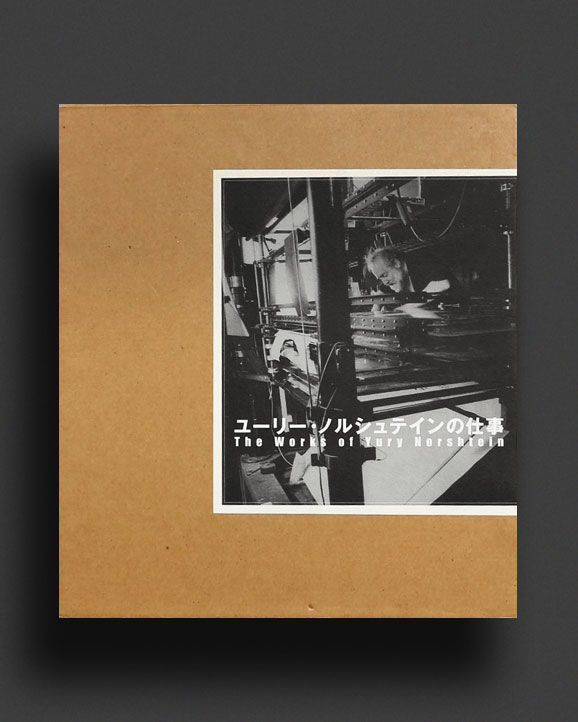
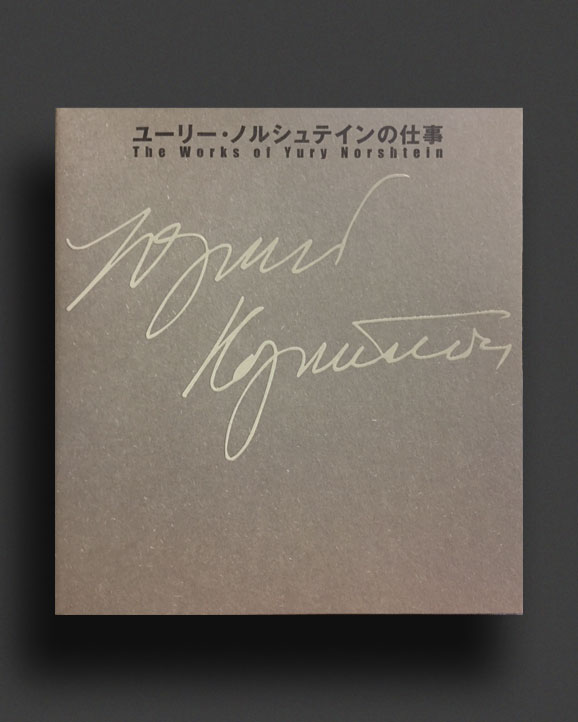
The best book ever made on the work of the great Soviet and Russian animator Yuri Norstein (b. 1941). Born to Jewish parents and raised in a Moscow suburb, Yuri Norstein painted as a hobby and trained as a carpenter before studying animation. He directed his first film in 1968 and made a series of short films notable for their attention to atmosphere and fine detail, using his sophisticated multiplane camera technique to create the illusion of shifting three-dimensional depth. Throughout the 1970s Norstein was prolific, working on many award-winning films including Hedgehog in the Fog (1975), one of the director's most widely known works, and his 1979 film, 'Tale of Tales', acclaimed by animation experts as the best animated film of all time.
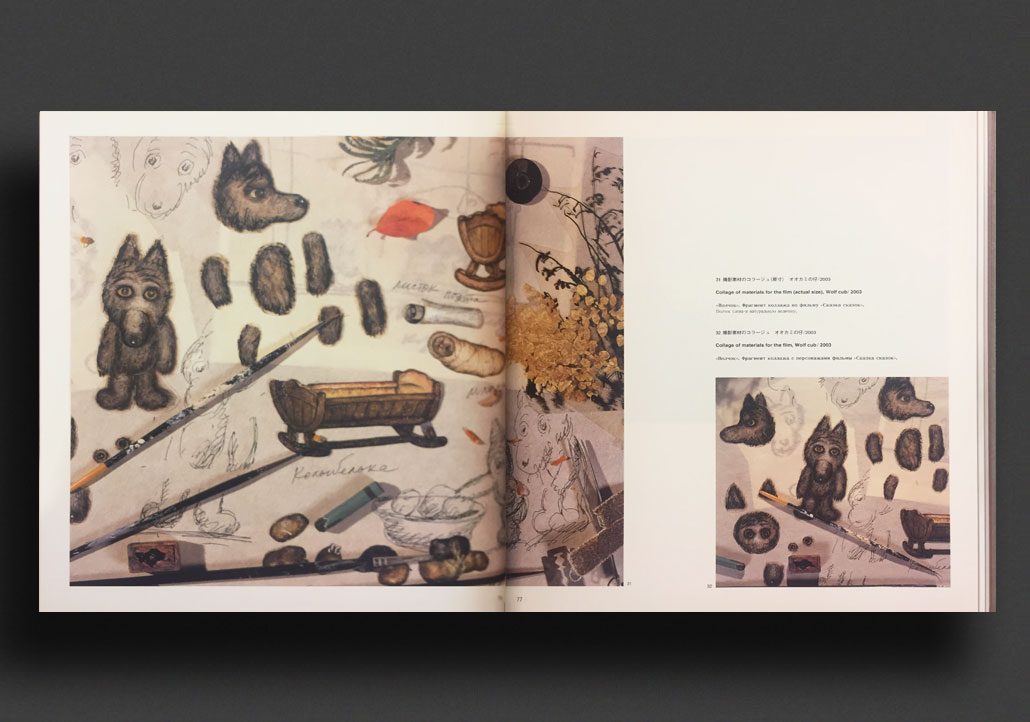
This stunning oversized book was published in Japan-only in 2004 (now long out-of-print) and looks at the entire history of Norstein's masterful film works, thoughtfully designed using various paper stocks including wax films to mimic the effects of Norstein's animations. Housed in the original publisher's cardboard slipcase, "The Works of Yuri Norstein" is profusely illustrated to give the most intimate, in-depth introduction to his unique production process, including to-scale reproductions of his working character cut-outs, storyboards, esquisses, countless film stills, working materials and paintings used in the films, technique diagrams, illustrations and photographs, studio and personal photographs, and copious drawings of Norstein's beloved characters. Also includes historical texts on Norstein's life and career, biographies of Norstein and his frequent collaborator and wife, the award winning Russian artist Franchesca Yarbusova, and work index, and additional essays (in Japanese). All image captions and blurbs throughout the book are in English, Russian and Japanese. Very highly recommended!
Very Good-Fine copy preserved in VG-fine slipcase.
1974, Japanese
Softcover, 104 pages, 29.4 x 21.9 cm
1st Edition, Out of print title / used / good
Published by
PARCO / Tokyo
$50.00 - Out of stock
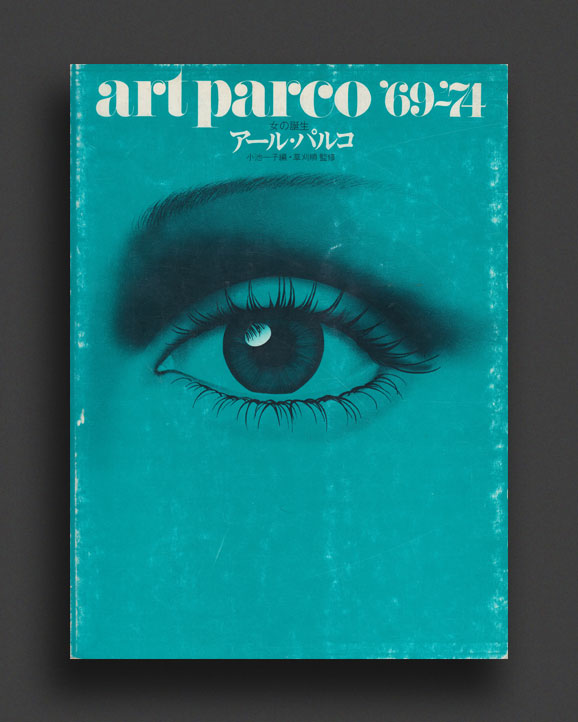
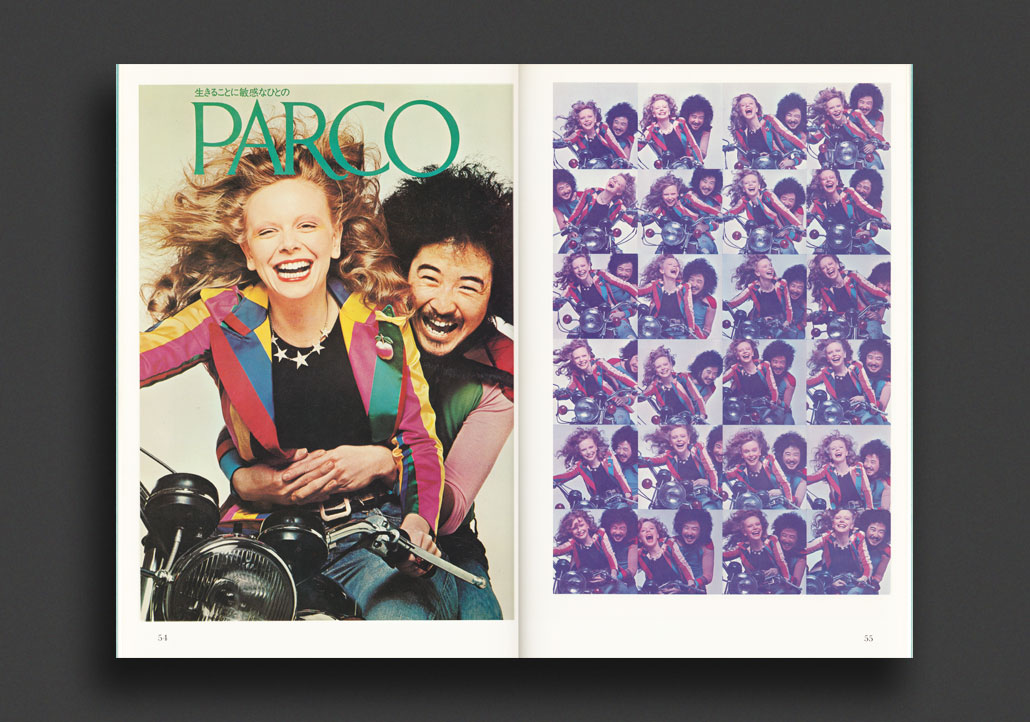
First edition of this slice of Japanese commercial design history documenting the art of Parco, Tokyo's department-store "Commercial Space" during these seminal years and the birth of the Parco girl of the 1970s. "...dedicated to those independent women who live and exist in the city and the men who lovingly watch over their way of living." With introductory text by author and curator Kazuko Koike, also responsible for the mighty Issey Miyake - East Meets West (1978), this book includes a series of illustrated short stories inspired by the graphics of Parco, conversations with two of the women behind the iconic visual language of Parco in the 1960s-1970s, airbrush artist Harumi Yamaguchi and legendary art director Eiko Ishioka, interviewed by photographer Shinpei Asai and iconic designer Shiro Kuramata, respectively. Includes a comprehensive, vividly illustrated chronicle of the art of Parco between '69 -'74, including all the iconic posters, campaigns, TV commercials, exhibitions, even shopping bags, featuring the work of many of Japan's leading graphic artists of the period. File beside Viva and Biba. Cover by Harumi Yamaguchi.
A modern department store dedicated to cutting edge fashion, Parco were also instrumental in exhibiting, publishing and promoting Japanese and international graphic artists and new pop culture throughout the 1960s-1990s.
Good copy with some shelf wear to covers. Otherwise Very Good throughout.
2020, English
Softcover (ring-binding), 368 pages, 24.5 x 33.5 cm
Published by
Spector Books / Leipzig
$99.00 - Out of stock
The mid-1960s witnessed a boom in underground and self-published works. Hectographs, mimeographs, and offset printing not only allowed for the production of small, low-cost print runs but also promoted a unique aesthetic: using wild mock-ups, 'messianic amateurs' combined typescript aesthetics, handwriting, scribbled drawings, assemblages of collaged visuals, porn photos, snapshots, and comic strips. The typography consciously frees itself, in parallel to a liberalization of linguistic and visual forms of expression in the name of a new 'sensibility'. This book is the first to present the underground and self-published works that came out of West Germany in such depth, while also showing the international context in which they emerged: not as an anecdotal history but as an attempt to tap into the aesthetic cosmos of a Do-It-Yourself rebellion, one that also challenges us to take a new look at the current boom in 'independent publishing', the risograph aesthetic, and so on.
An incredible collection and valuable volume for anyone interested in underground publishing history!
Finally reprinted.
2012, English
Softcover, 240 pages, 22.5 x 33.8 cm
Published by
Harry N. Abrams / New York
$76.00 - Out of stock
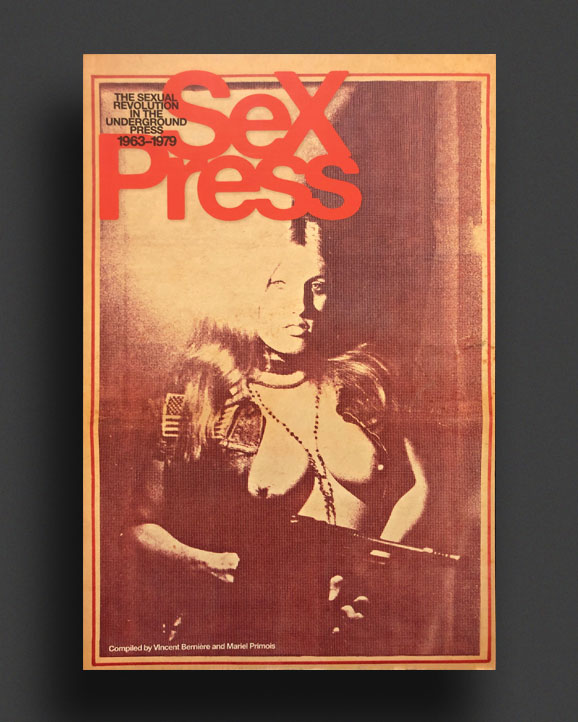
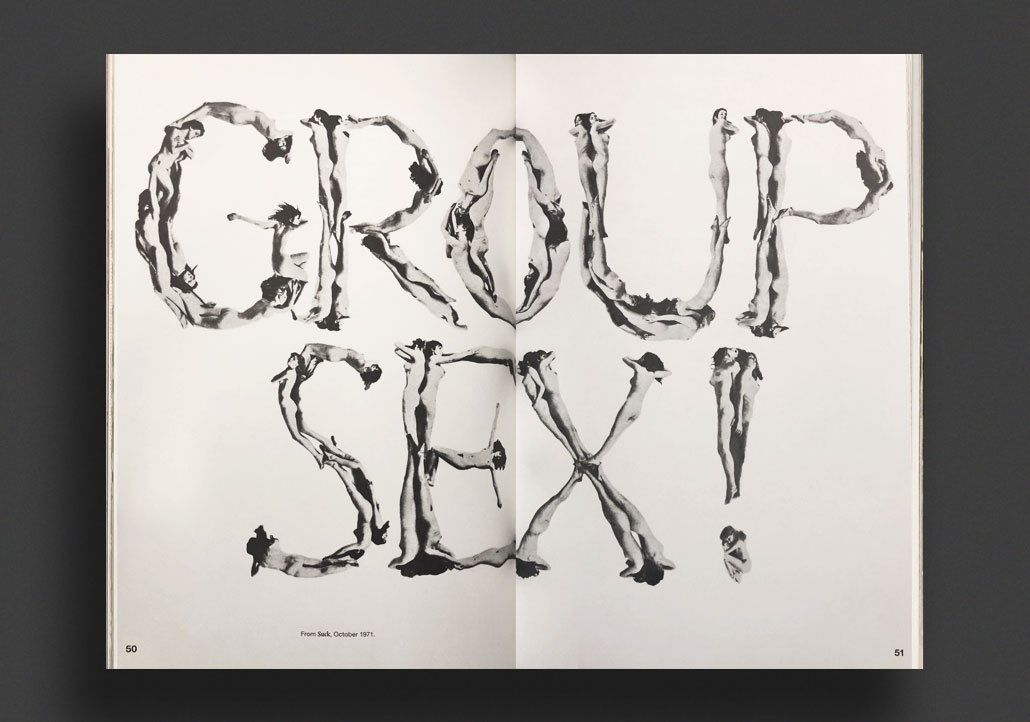
From 1965 to 1975, an array of journals, magazines, fanzines, and underground presses were the voice of a dramatic sexual revolution. In Europe and the United States, this "sex press" consisted of publications such as Other Scenes, Yellow Dog, Actuel, Suck, The Body, and Screw-some of which were fully dedicated to sex, while others also engaged with the time's most riveting topical issues, including politics, human rights, war, women's rights, and gay and lesbian rights. Showcasing art from the most revolutionary publications of the era, the book traces the exuberant sexual liberation of the 1960s and then moves into the mid-1970s, with its more codified form of pornography. Illustrated by a vivid collection of full-page facsimiles, Sex Press offers a compelling visual tour through an extraordinary period of experimentation, creativity, and sexual freedom.
2002, Japanese
Hardcover (w. obi strip), 64 pages, 25.5 x 19 cm
1st Edition, Out of print title / as new
Published by
Petit Grand / Tokyo
$45.00 - Out of stock
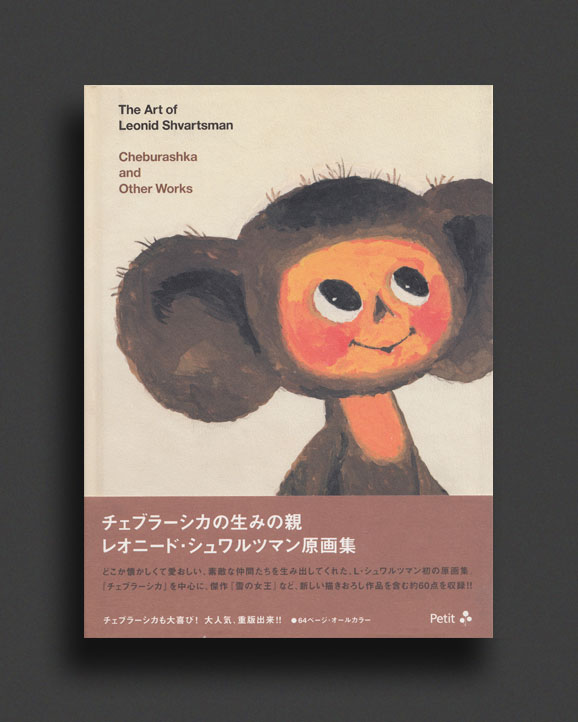
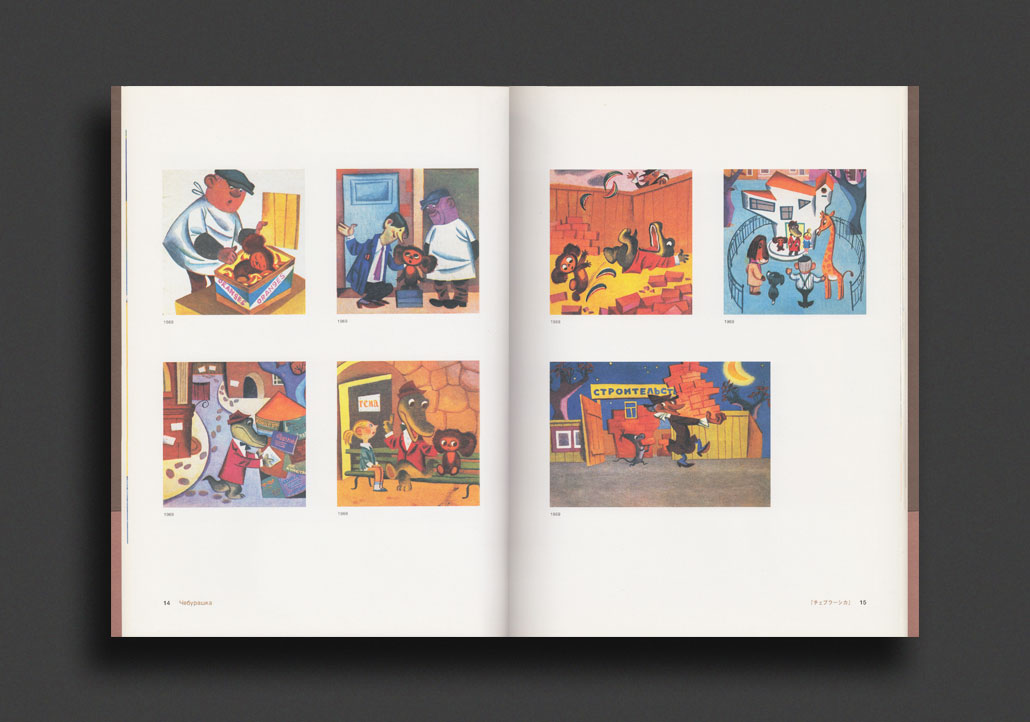
First edition Japanese monograph on the work of legendary Soviet and Russian animator Leonid Shvartsman (b. 1920), who celebrated his 100th birthday this year. Internationally famed for his popular work animating the iconic Russian character Cheburashka, this lovely hardcover book presents a selection of Shvartsman's paintings and illustrations, revisiting his most celebrated animated works throughout his career, as well as reproductions of earlier works from the late 1960s onward. Includes a biography and filmography. Texts in Japanese. Now out of print.
Leonid Aronovich Shvartsman (b. 1920, Minsk, BSSR) is a Soviet and Russian animator and artist. He spent most of his creative career at the Soyuzmultfilm Studio, in Moscow, where he served as art director. Generations of Soviet and Russian children grew up on his films about the adventures of Cheburashka, the crocodile Gena and their friends, the series of puppet films "38 parrots", films "A Kitten named Woof", "Mitten", "The Snow Queen" and many others. Shvartsman grew up in a Yiddish-speaking religious family in the city of Old Minsk. His father died prematurely when Shvartsman was just 13 years of age, and his mother and nephew starved to death in the Siege of Leningrad. Homeless, without parents or siblings, and being denied an art career, he sought out more marginal corners in the creative world. In 1945, he applied to the film institute, VGIK, and in 1951 when he graduated, secured the entry to Soyuzmultfilm, where he stayed his entire career. Shvartsman is credited on 70 films at the studio. He is known as the creator of the visual image of Cheburashka, an iconic character of children's literature from a 1966 story by Soviet writer Eduard Uspensky. Shvartsman sculpted and animated the character and his friends himself, first starring in stop-motion form in 1969. Shvartsman is beloved in America and Europe, and even has a cult following in Japan for creating the character. Hayao Miyazaki said he began to animate again once he saw his work on The Snow Queen (1957).
As New copy w. original illustrated obi strip.
1980-1990, Japanese
Softcover (staple-bound), 36 pages, 12.5 cm x 18 cm
1st Edition, Out of print title / used / very good
Published by
Fiction Inc. / Tokyo
$55.00 - Out of stock
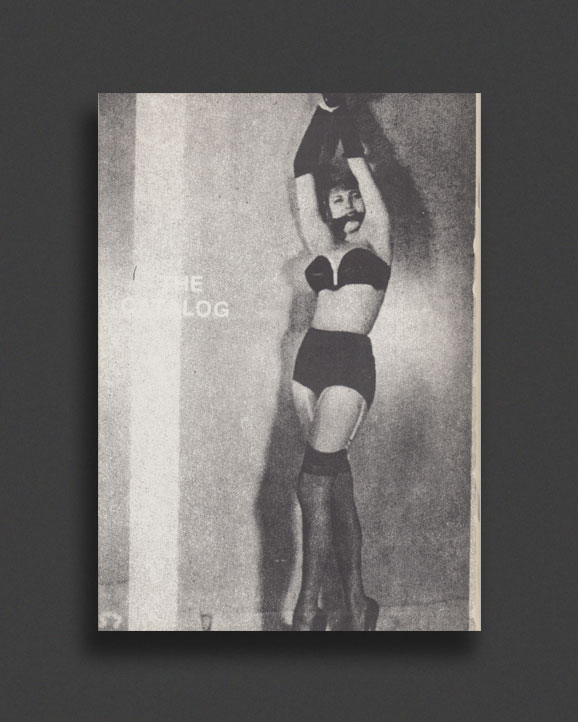
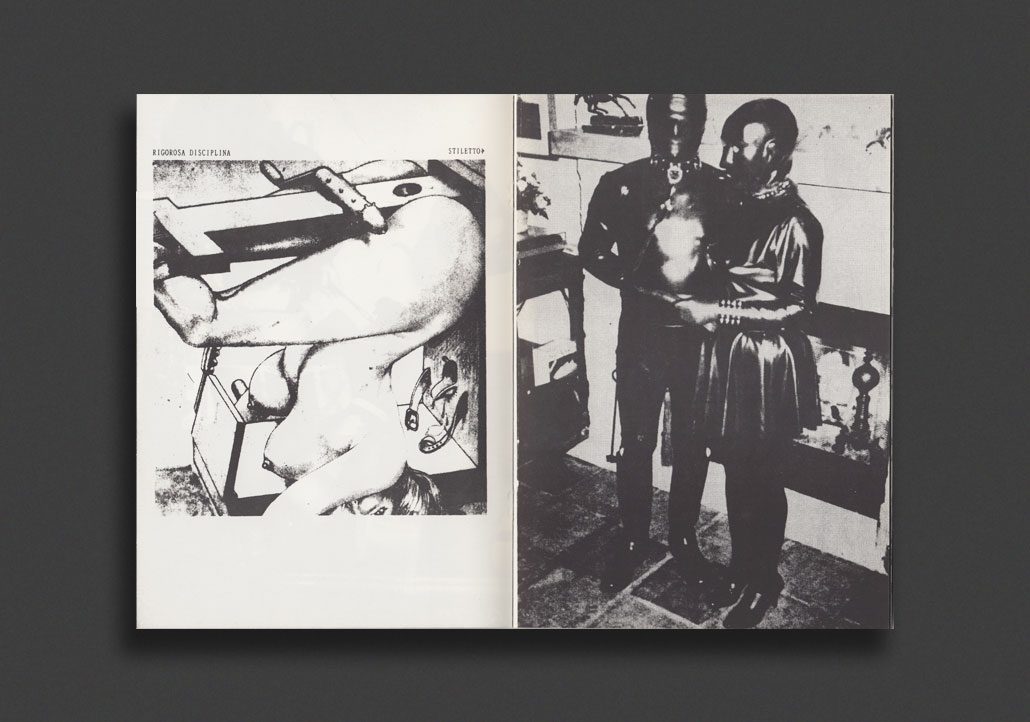
"The Catalog" published sometime in Japan in the 1980s-1990s by Fiction, Inc., a specialty shop and distributor/publisher of fetish and erotic books in Tokyo in the 1980-90s. This lovely catalogue-fanzine is mostly comprised of full-page reproductions sampling a cross-section of content from catalogue publications including the work of John Willie, Bill Ward, Guido Crepax, Eric Stanton, Eneg, Carlo, Simone Devon, Sally Roberts, Irving Claw, Betty Page, and periodicals such as Glamour International, Stiletto, Rigorosa Disciplina, Sweet Gwen, Bizarre Comix, Bizarre Classix, Bizarre Photo Treasures, Best of Bizarre, and much more... Very heavily illustrated throughout with erotic photography and artwork, all catalogue text in Japanese, map to Fiction, Inc. shop.
Very Good, light tanning. Well preserved.
1973, English
Softcover (staple-bound), 40 pages, 27 x 21 cm
1st Edition, Out of print title / used / very good
Published by
Rats / Carlton
$30.00 $10.00 - Out of stock
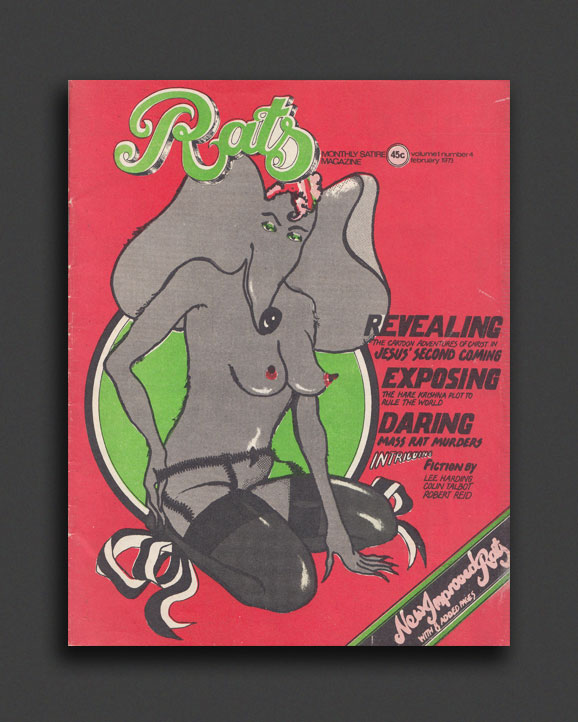
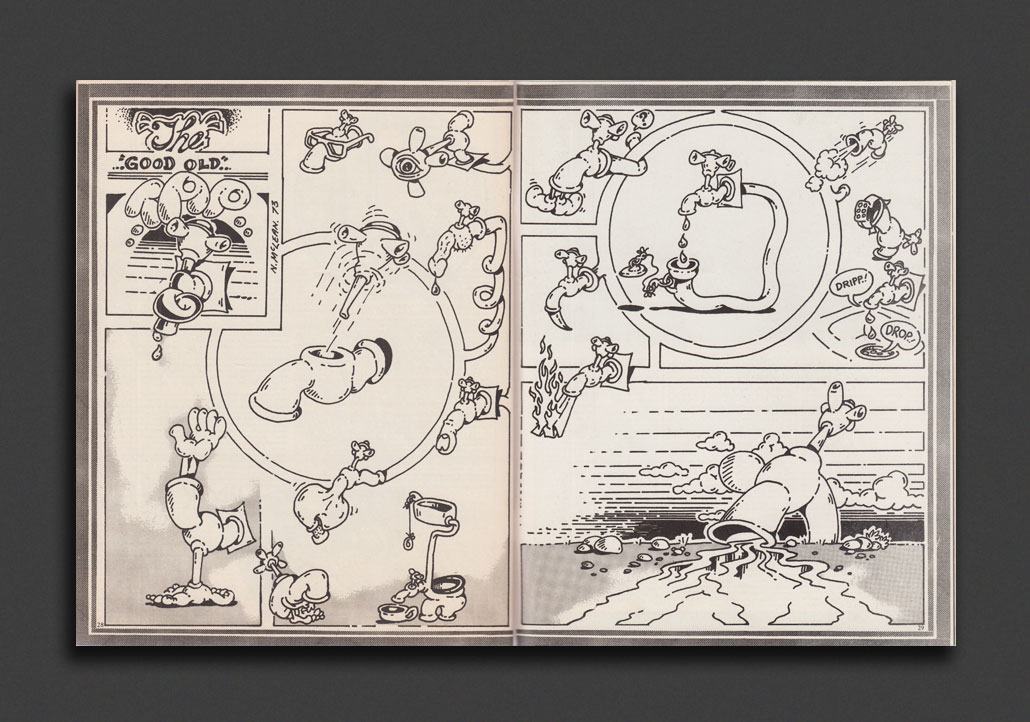
Super rare copy of the short-lived, little-known Australian satirical underground magazine "Rats", published out of Carlton in the early 1970s. "Rats smashes his way into Australian publishing history bringing you a magazine full of cartoons, science fiction and other bizarre trivia which no one in their right mind would bother reading." Edited by Piotr J. Olszewski, art directed by illustrator Laurel Olszewski, with contributions by Lee Harding, Colin Talbot, Robert Reid and others, this 1973 issue features an article on American underground artist Jim Franklin and a healthy dose of humour at the expense of conservative politics, government and religion. Comics, reviews, articles, wonderful Melbourne ads, Monty Python, etc.
Very Good, well preserved.
2011, English
Softcover, 256 pages, 30 x 25 cm
Published by
Melbourne Books / Melbourne
$50.00 $25.00 - Out of stock
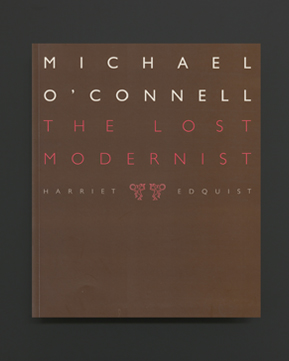
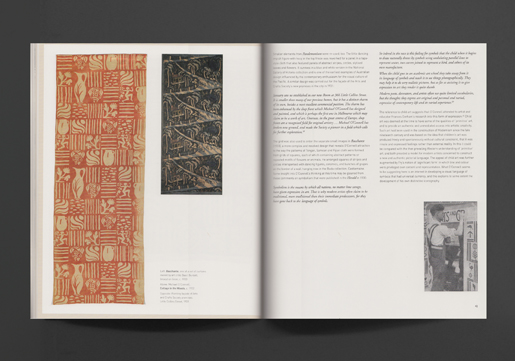
Michael O’Connell: The Lost Modernist documents the life and work of this major figure in AngloAustralian design history. Born in Cumbria in 1898 Michael O’Connell saw action on the Western Front in WWI before moving to Australia in 1920. Over the following 17 years he became a critical member of the burgeoning Modernist movement in Melbourne primarily through his innovative and dynamic textiles. First exhibited in 1930 his hand blockprinted fabrics revolutionised Australian textile design, which at the time was an entirely amateur affair, and laid the foundations of its future development. On his return to the UK in 1937, O’Connell became a key figure in contemporary textile design, producing fabrics for Edinburgh Weavers in 1938 and then for Heals during the 1940s and 1950s. He was involved in a number of progressive government-initiated projects for schools and public institutions in the optimistic years of post-war Britain, including the celebrated wall hangings for the Country Pavilion at the Festival of Britain in 1951. During the 1960s until his death in 1976 O’Connell kept pace with contemporary art practice from his studio-home in Perry Green Hertfordshire, producing large-scale, innovative ‘textile murals’ in his unique combination of batik and resist dyeing. The Lost Modernist illustrates and discusses over 100 works from Australian and British public and private collections within the context of 20th century design history and the framework of O’Connell’s life.
1995, Japanese
Softcover (w. dust jacket), 145 pages, 25 x 24 cm
1st Edition, Out of print title / used / very good
Published by
Chihiro Art Museum / Tokyo
$80.00 - Out of stock
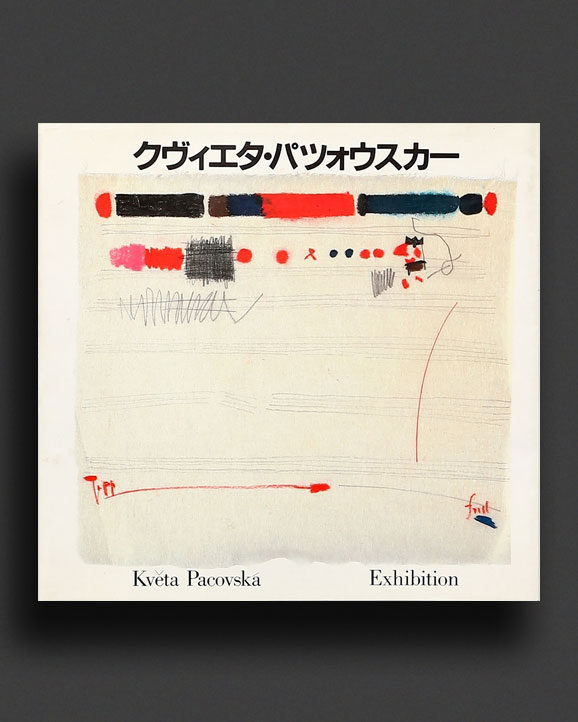
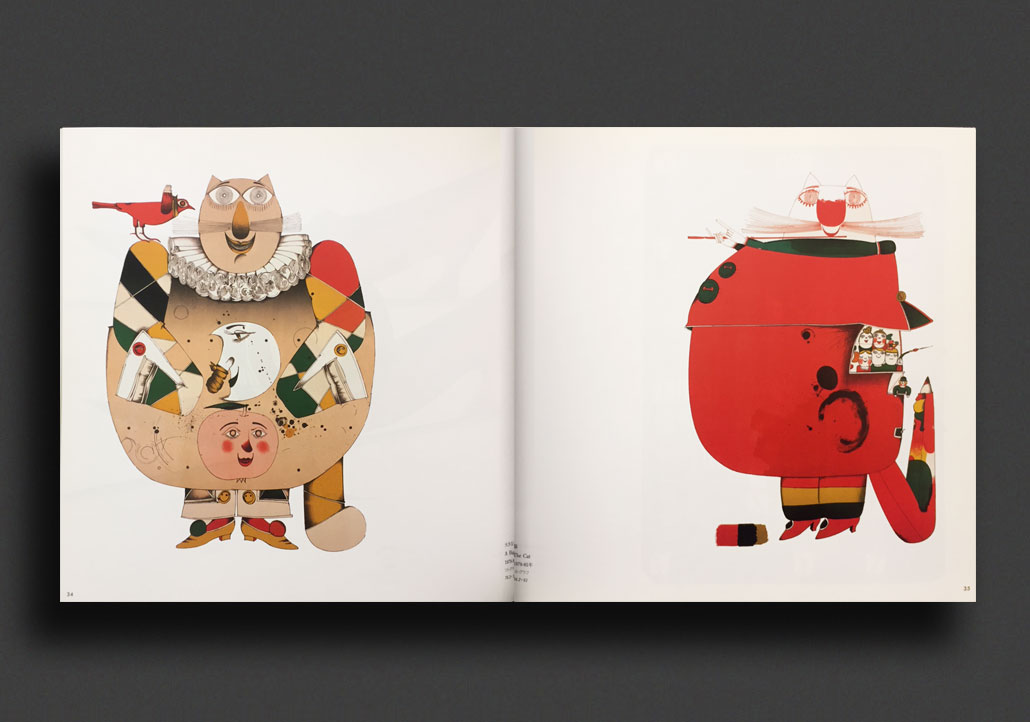
Scarce, first and only edition of what might be the only major publication and survey exhibition on the work of Czech artist and illustrator Květa Pacovská, published in Japan on the occasion of the retrospective at Chihiro Iwasaki Picture Book Museum, Tokyo, in 1995. Printed in Japan with various stocks, illustrated wax film overlays and metallic elements, this beautiful catalogue is lavishly illustrated throughout with Pacovská's drawings, lithographs, children's books, visual poetry, picture objects, designs and much more, accompanied by photographs, biography, list of exhibitions, list of authored and illustrated books, and much more, revealing so many seldom seen works. Texts in Japanese and English. A treasure for any fan!
Květa Pacovská (b. Prague 1928) is Czech artist and illustrator. She received the international Hans Christian Andersen Medal in 1992 for her "lasting contribution to children's literature". Pacovská was born in Prague and studied at its School of Applied Arts, where she mainly worked in graphic art, arts, conceptual art and artist book fields. For many years she developed a career as a graphic designer and participated in more than 50 exhibitions. In 1961 she started drawing picture books for her own children. Her work is characterised by the use of geometric forms and vibrant, saturated colours, mainly red.
Very Good copy in illustrated dust jacket. Some light tanning to edges/cover.
1978, Japanese
Softcover, 102 pages, 28 x 21 cm
Published by
PARCO / Tokyo
$40.00 - Out of stock
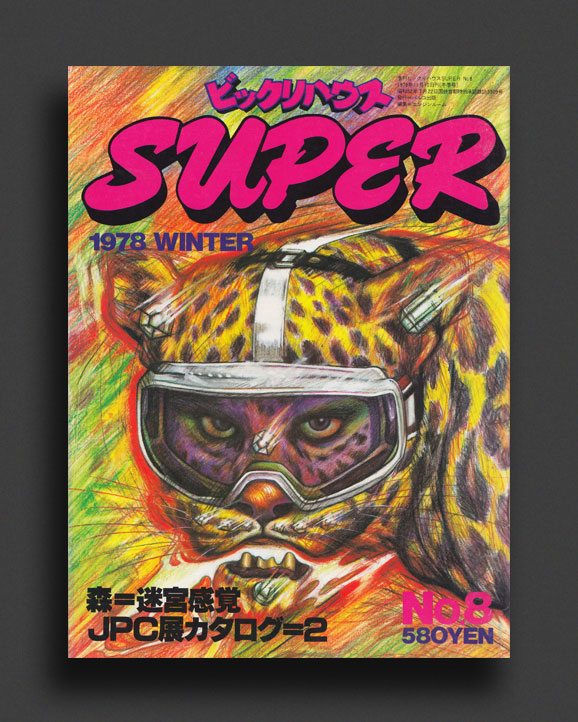
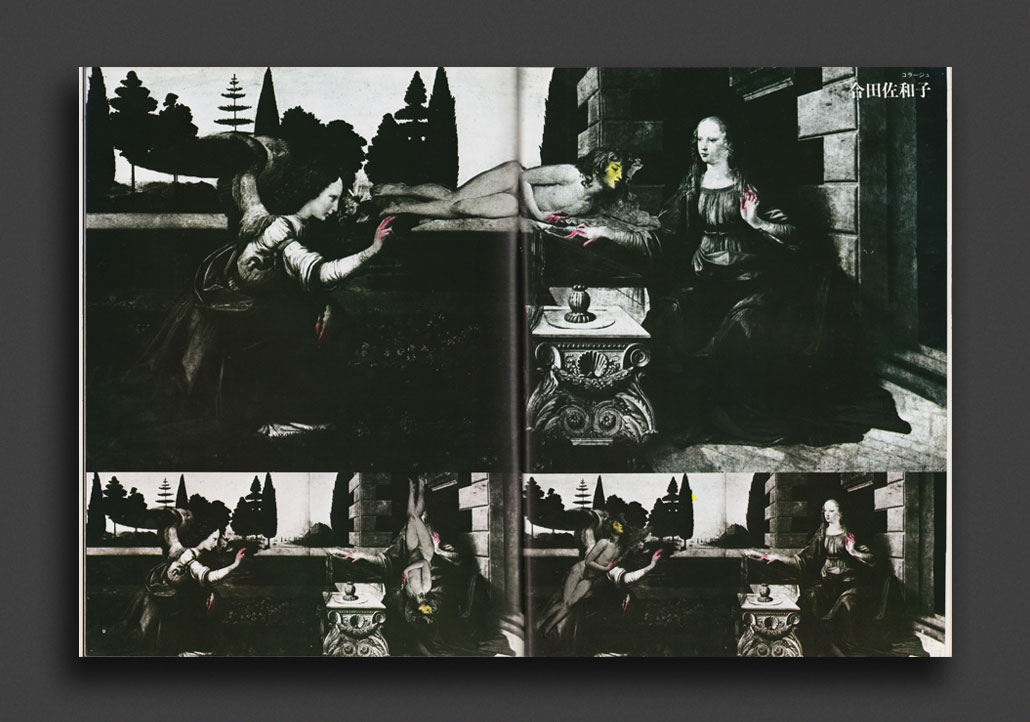
Somewhere between Fiorucci and National Lampoon, Surprise House SUPER was a live-fast, die young quarterly magazine from art director Ryōichi Enomoto and published by the mighty Parco gallery, imprint and department-store-like-no-other in Tokyo. With the theme of "parody", SUPER was a spin-off from the subculture magazine "Surprise House", also published by Parco/Enomoto, showcasing the wildest reaches of graphic art cultural parody - this 1978 issue centering around the 2nd Japan Advertising Parody competition! Hosted by leading Japanese graphic artists Shigeo Fukuda, Kiyoshi Awazu, Yoshitaka Amano, Harumi Yamaguchi, and moderated by Enomoto, this issue presents the endless stream of hectic appropriated and reimagined commercial poster advertisements from Japan at the time. Plus much other photo montage, collage madness.
Very Good copy.
1984, German / English / Spanish
Softcover, 80 pages, 30 x 24 cm
1st Edition, Out of print title / used / very good
$15.00 - Out of stock
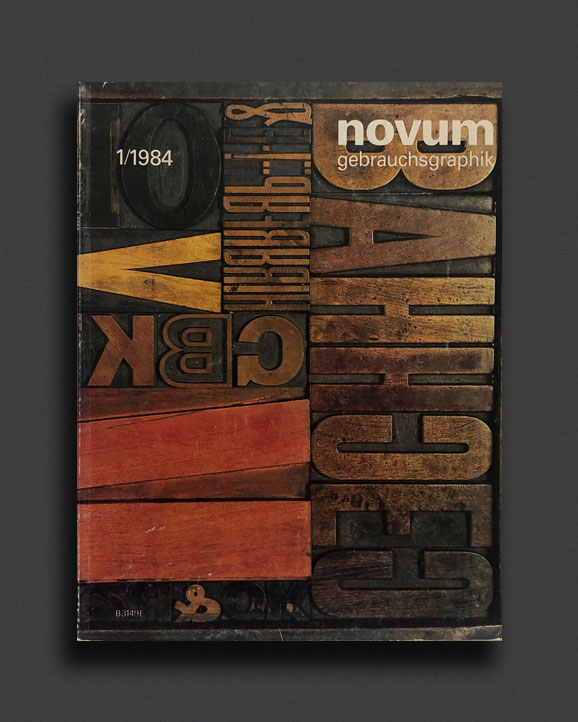
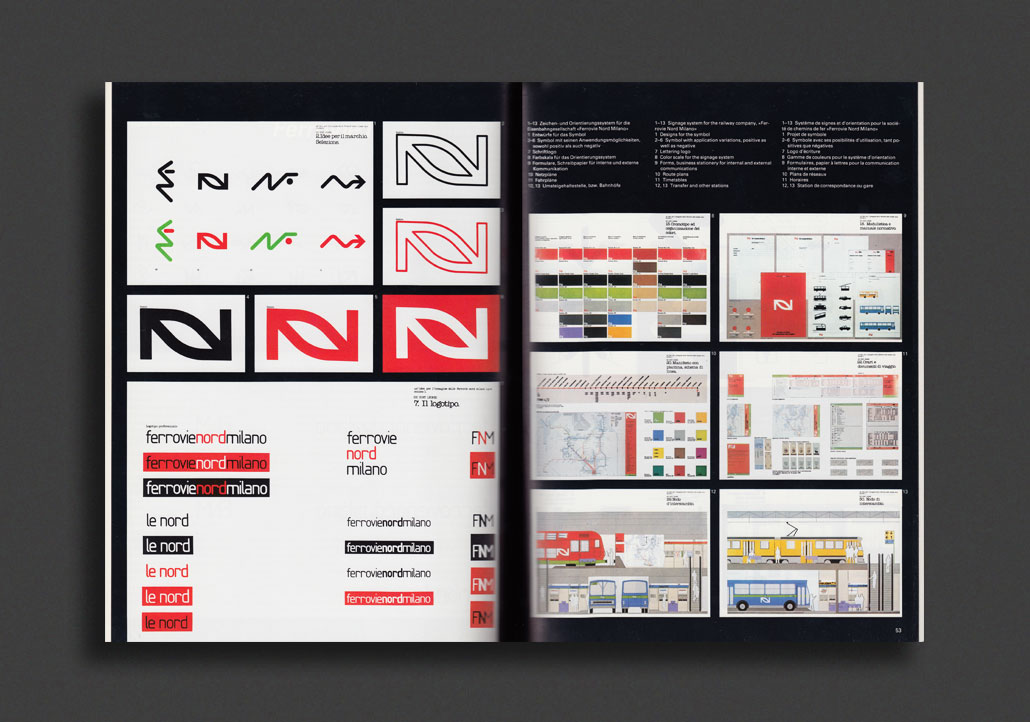
novum Gebrauchsgraphik issue 1/1984 features The Art Directors Club of New York, International Animted Film Festival Annency '83, space advertising for HI-FI, trademarks by Jim Donoahue, the identity of Ferrovie Nord Milano, and more.
novum was founded in Germany in 1924, under the name of Gebrauchsgraphik. The magazine quickly developed into the foremost journal of graphic design, valued widely at home and abroad as a source of inspiration. The magazine was founded by Prof. H. K. Frenzel and published by Phönix Berlin.
Very Good copy.
1985, English / German / French
Softcover, 92 pages, 30 x 24 cm
1st Edition, Out of print title / used / very good
Published by
The Graphis Press / Zürich
$20.00 $10.00 - Out of stock
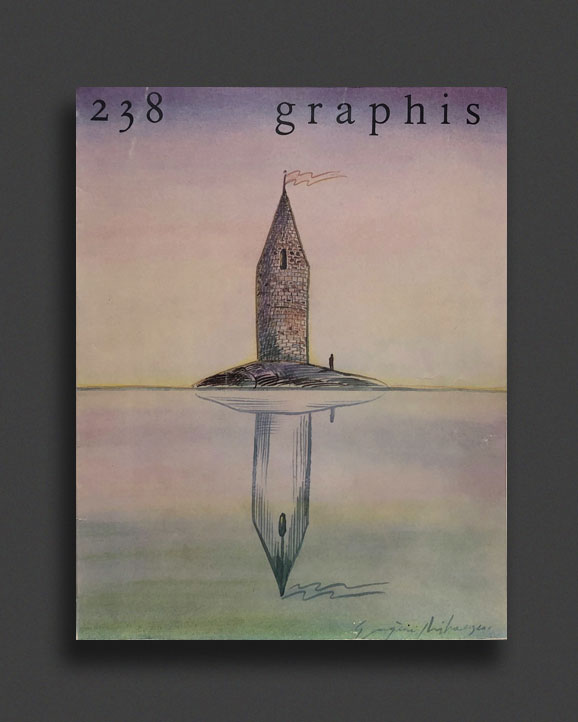
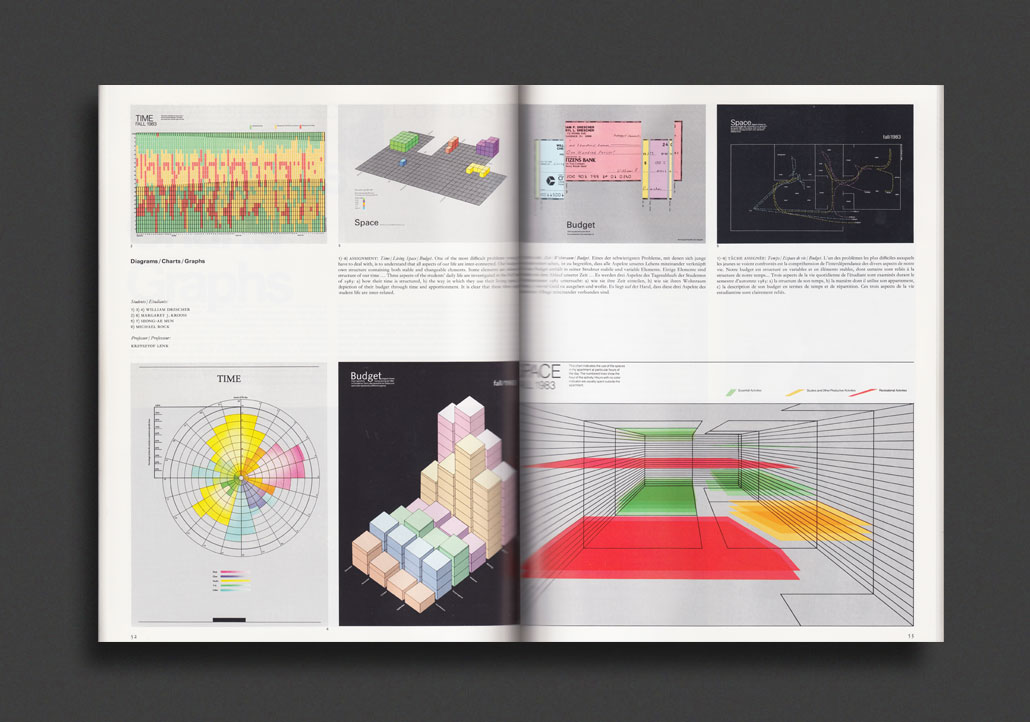
Graphis issue 238, July/August 1985, featuring the work of Swiss design agency GGK (Karl Gerstner, Paul Gredinger + Markus Kutter), the conceptual photography of Henry Wolf, New Yorker illustrator Eugène Mihaesco, Diagrams/Charts/Graphs, calendars, and more. Cover by Eugène Mihaesco.
Graphis is the world's foremost international publishers of books on communication design, presenting and promoting the best work in International Design, Advertising, Photography and Art/Illustration since it's founding in 1944 by Walter Herdeg and Dr. Walter Amstutz in Zurich, Switzerland. Graphis published over 350 issues of the highly-regarded, influential Graphis Magazine, along with hardcover Annuals including: Graphis Design Annual, Graphis Advertising Annual, Graphis Photography Annual, Graphis Annual Reports Annual, and Graphis Poster Annual.
Very Good copy.
1985, English / German / French
Softcover, 92 pages, 30 x 24 cm
1st Edition, Out of print title / used / very good
Published by
The Graphis Press / Zürich
$20.00 - Out of stock
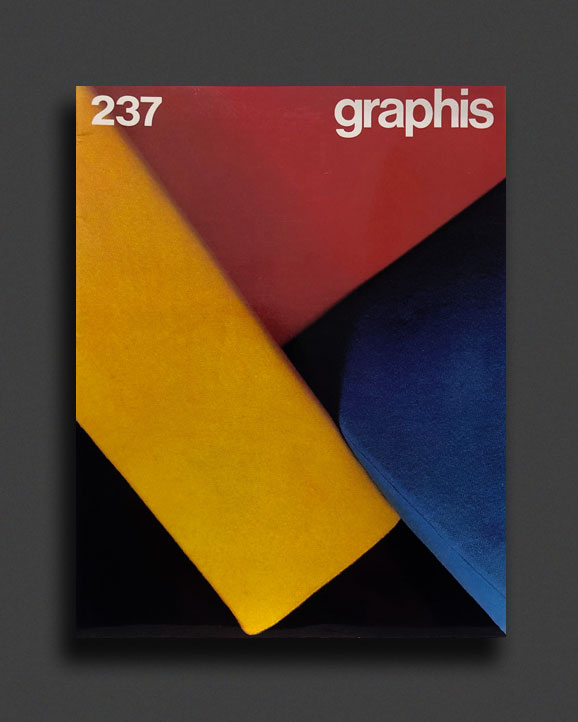
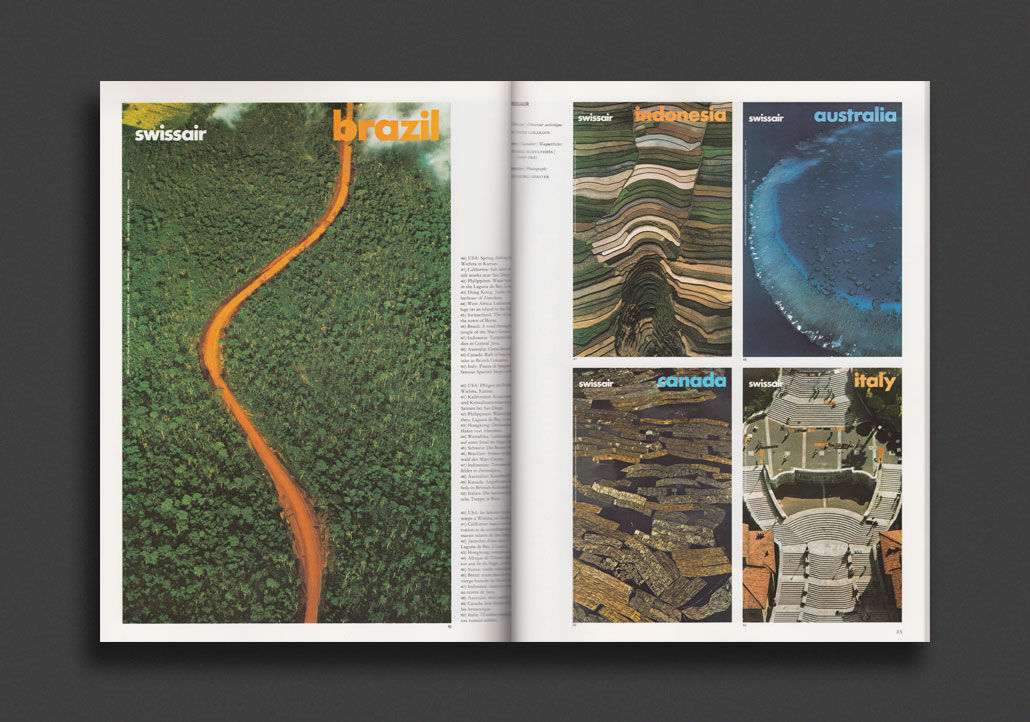
Graphis issue 237, May/June 1985, featuring the visual identity of Swissair, the graphic design of Knoll International, Swiss Posters 1984, Kodak '85, Roger Bezombes fantastic shoe creations for Bally, Hans Georg Raunch, and more. Cover by Rudolf Beck.
Graphis is the world's foremost international publishers of books on communication design, presenting and promoting the best work in International Design, Advertising, Photography and Art/Illustration since it's founding in 1944 by Walter Herdeg and Dr. Walter Amstutz in Zurich, Switzerland. Graphis published over 350 issues of the highly-regarded, influential Graphis Magazine, along with hardcover Annuals including: Graphis Design Annual, Graphis Advertising Annual, Graphis Photography Annual, Graphis Annual Reports Annual, and Graphis Poster Annual.
Very Good copy.
1979, English / German / French
Softcover, 92 pages, 30 x 24 cm
1st Edition, Out of print title / used / very good
Published by
The Graphis Press / Zürich
$40.00 - Out of stock
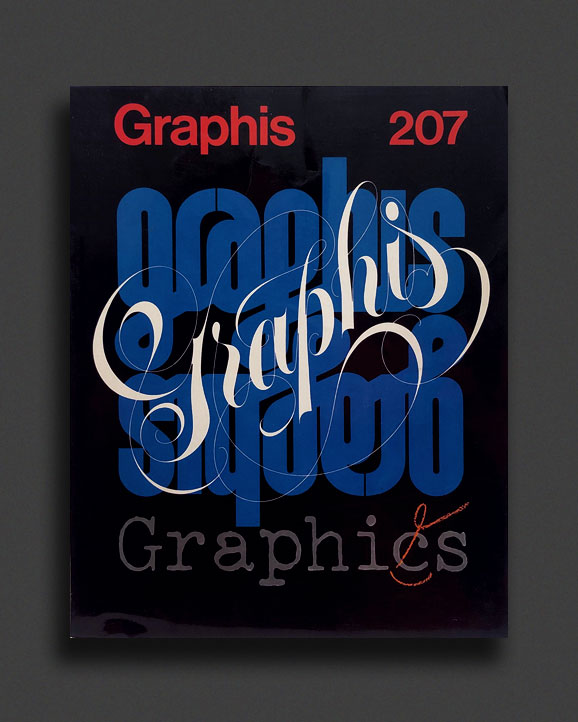
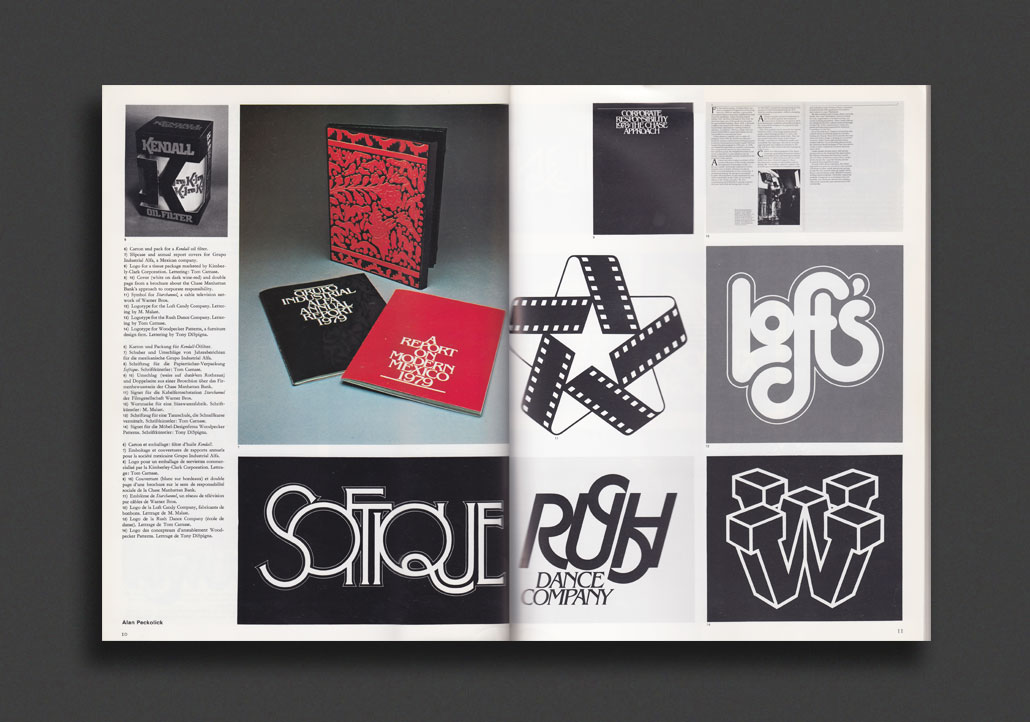
Graphis issue 207, 1979/80, featuring the work of Herb Lubalin's Associates (Alan Peckolick, Ernie Smith, Tony DiSpigna), Photographis '80, Jürgen Sohn's poster design, Swiss Posters 1979, Kodak calendar 1980, Elwood Smith, Chicago '79, Paul Degen, and more. Cover by Herb Lubalin's Associates (Alan Peckolick, Ernie Smith, Tony DiSpigna).
Graphis is the world's foremost international publishers of books on communication design, presenting and promoting the best work in International Design, Advertising, Photography and Art/Illustration since it's founding in 1944 by Walter Herdeg and Dr. Walter Amstutz in Zurich, Switzerland. Graphis published over 350 issues of the highly-regarded, influential Graphis Magazine, along with hardcover Annuals including: Graphis Design Annual, Graphis Advertising Annual, Graphis Photography Annual, Graphis Annual Reports Annual, and Graphis Poster Annual.
Very Good copy.
1988, English
Softcover, 56 pages, 27.5 x 21 cm
1st Edition, Out of print title / used / very good
Published by
Catalan Communications / New York
$60.00 - Out of stock
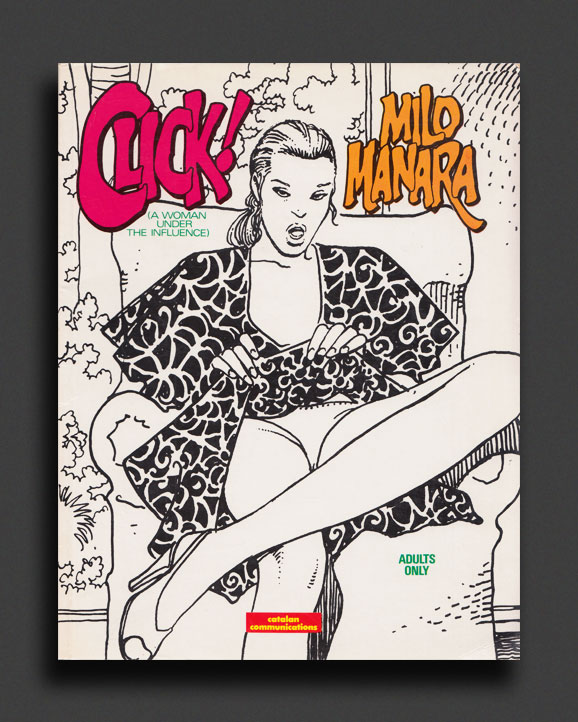
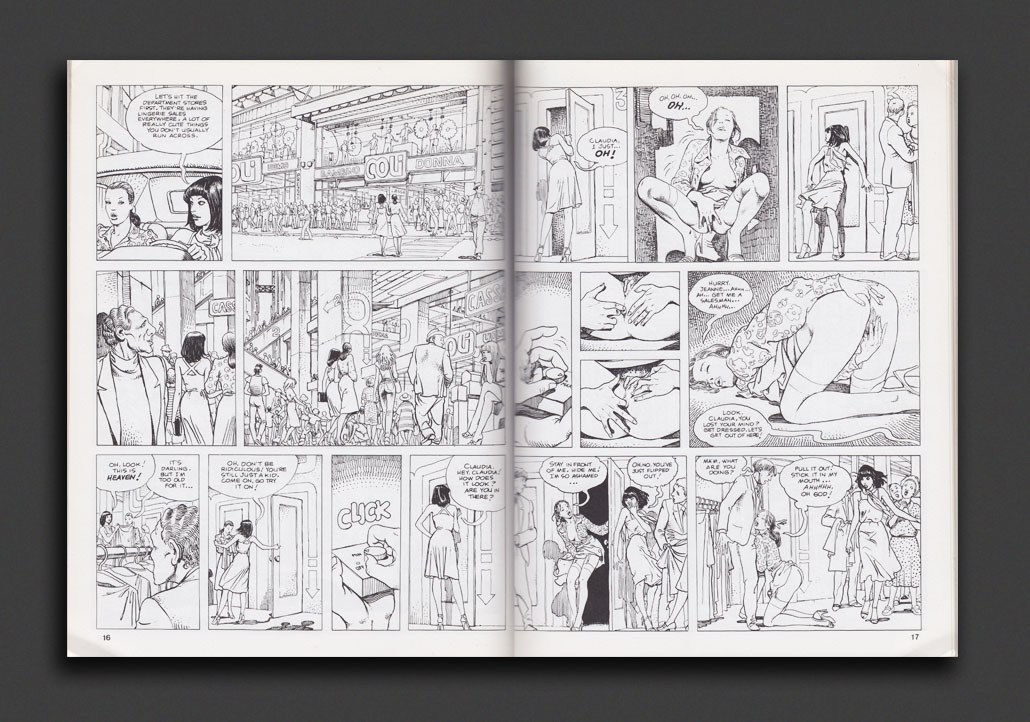
First English edition of Italian comic book artist Milo Manara's internationally acclaimed 'Click' ('Il Cioco' or 'Déclic'), initially published in Playmen in Italy and L'Écho des Savanes in France in 1983, it remains one of the most widely published erotic stories of our time. A master of storytelling and of the illustrated human form, Manara's 'Click' was (and still is) notorious for its erotic subject - a wealthy, beautiful but passionless woman is plunged into an scandalous, delirious sexual comedy when she is implanted with a remote-controlled chip able to unlock her inner lustfulness. But things are not as they seem. Manara's bacchanalian comic tale thumbs its nose at all manner of taboo in a way the likes of Walerian Borowczyk, Jess Franco or even Luis Buñuel did with cinema, whilst annihilating social graces and illusions of control through impeccable line-work.
Maurilio Manaro (b. 1945), known professionally as Milo Manara, is an Italian comic book writer and artist. His first work appeared in the 'Genius' pocket books in 1969, and in magazines like Terror, Telerompo, and the French magazines Alter-Linus and Charlie Mensuel. He also worked for various children's magazines, collaborating with Milo Milani. Manara illustrated five issues of the collection 'L'Histoire de France en Bandes Dessinées' for the French publisher Larousse between 1976 and 1978, and continued to work illustrating similar educational publications, such as 'La Découverte du Monde en Bandes Dessinées' (Larousse, 1979), 'L'Histoire de la Chine' (1980) and 'La Storia d'Italia a Fumetti' (Mondadori, 1978). Also in 1978, he cooperated with Alfredo Castelli on 'L'Uomo delle Nevi' for Cepim and he started with the series 'Giuseppe Bergman', the anti-hero graphic novels which are an ironic deconstruction of adventure stories and comic books as a medium. Manara briefly ventured into westerns with 'Quatre Doigts, L'Homme de Papier' in Pilote (1982), before establishing himself as one of the greatest creators of erotic comics. Manara's book 'Déclic' ('Il Cioco' or 'Click' in English, 1983), initially published in Playmen in Italy and L'Écho des Savanes in France, remains one of the most iconic, notorious and widely published erotic stories of our time. Throughout the 1980s and 1990s, Manara created a vast collection of erotic comic books, however he also kept on working in other genres. With the great Italian comic book artist Hugo Pratt, Manara worked on 'L'Été Indien' (in Corto Maltese) and 'El Gaucho' (in Il Grifo). Manara also worked with the film director Federico Fellini on 'Voyage à Tulum' (Corriere della Serra, 1986) and 'Le Voyage de G. Mastorna dit Fernet' (Il Grifo, 1992). In the 1990s-2000s Manara made books for Les Humanoïdes Associés, DC/Vertigo, Marvel Comics and teamed up with writer, film director Alejandro Jodorowsky.
Very Good copy.
1988, Italian
Hardcover (w. dust jacket), 94 pages, 23.5 x 31 cm
1st Edition, Out of print title / used / fine
Published by
Olympia / Rome
$70.00 - Out of stock
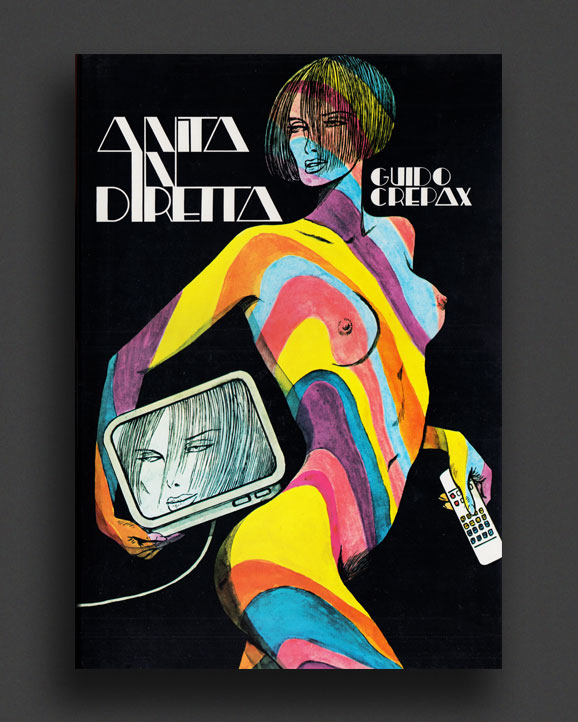
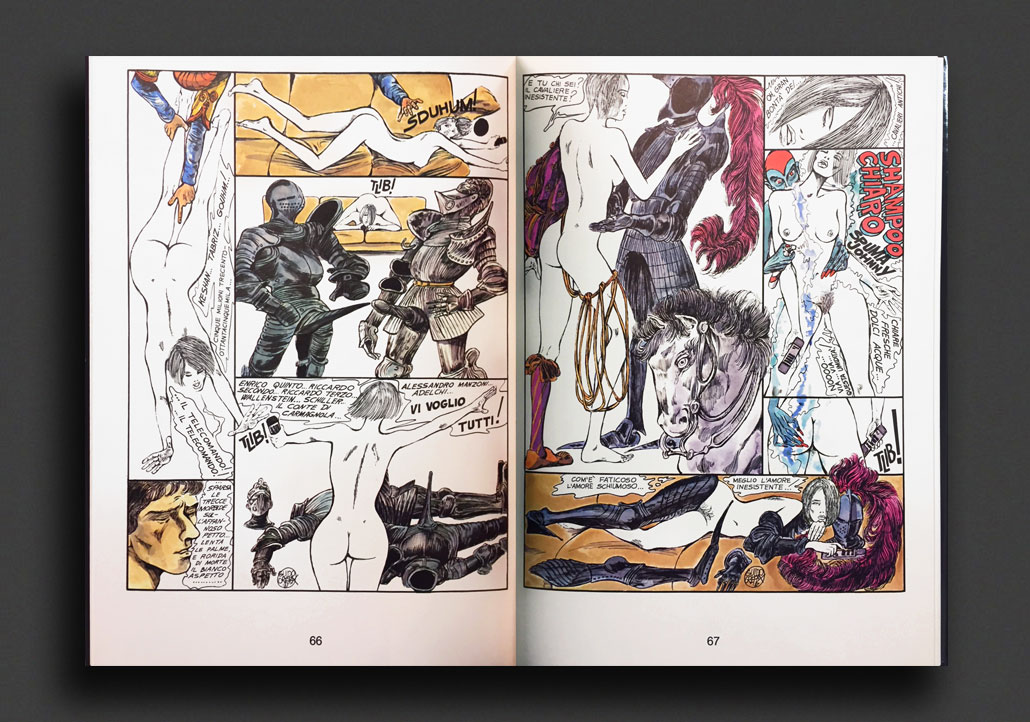
Wonderful large-format, hardcover 1988 edition of Guido Crepax's 'Anita in Diretta', one of the great Crepax books in all it's dizzying, rhythmic paneling and beautiful use of colour, compiling two complimentary Anita stories - 'Input Anita' (1986) and 'Anita Color' (1987). Here Crepax evokes two fantastic erotic "environments" that stem from the growing universe of technology in the 1980s and the world's new-found obsession with screens. In the first, Anita is swept into a vortex of mental delirium because she anthropomorphises the data of her computer and transforms into reality what appears on her screen. In the second, in parallel, Anita masturbates to her television, fantasising about the endless characters and scenarios that change with each flick of the remote. Anita meets-clashes in both cases with the magical surface of the unifying screen, a producer of cold imagination, which the individual transforms into a lived, private experience. This participation is strongly unconscious, and in Crepax's stories there is an unacknowledged denunciation of fantasy based on technology. The last step in each story is in fact the "dispossession" of Anita's personality by the fantasy machine, her fall into psychosis, demonstrating that the excess of empathy into the illusionary screen ends up producing a new, dangerous reality.
Guido Crepas (15 July 1933 in Milan - 31 July 2003 in Milan), better known by his nom de plume Guido Crepax, was an Italian comics artist. He studied at the School of Architecture at the University of Milan. After graduating, he made his debut in comic books in 1959 when he contributed his work to Tempo Medico. He joined the new magazine Linus in 1965 with a fantasy comic, 'Neutron', a superhero comic about an art critic with the mysterious power to stop humans or objects via his gaze. It featured a minor character called Valentina, a fashionable, communist Milanese photographer born in 1942, who quickly became Crepax's protagonist and his most famous creation. Valentina became an underground icon of 1960s culture. Crepax's work became noted for his very sophisticated expressionistic yet graphic drawing style, his truely innovative panel work and his unusual compositions that seemed to have more in common with modern art and film than comic strips. His psychedelic, dreamlike storylines were immersive, generally involving a strong dose of erotism and a predilection towards sadomasochism and the surreal. After 'Valentina', other titles followed, such as 'L'Astronave Pirata' (1968), 'La Casa Matta' (1969), 'La Calata di Mac Similiano' (1969), 'Belinda', 'Anita' and 'Bianca'. Crepax's illustrated adaptations of classic erotic stories like De Sade's 'Justine', Pauline Réage's 'Histoire d'O' and Sacher-Masoch's 'Venus in Furs' brought him further acclaim, especially to English audiences who had mostly only read translated Crepax through the pages of Heavy Metal magazine.