World Food Books' programme is largely produced on Kulin Nation land. We acknowledge the Wurundjeri people of the Kulin Nation as the first and continuing custodians of this land, and pay respect to their Elders past, present, and emerging.
World Food Books is an arts and special interests bookshop in Naarm / Melbourne. Founded in 2010, World Food Books is devoted to the presentation of a rotating, hand-selection of international art, design, literary and counterculture publications with an emphasis on the anti-traditional, the experimental, the avant-garde, the heretic, the marginal.
Presenting new titles alongside rare and out-of-print books, catalogues and journals spanning the fields of modern and contemporary art, design, photography, illustration, film, literature, poetry, cultural theory, philosophy, sexuality, popular and underground culture in its many radical forms, World Food Books wishes to encourage adventurous, thoughtful and open-minded reading, looking, writing, and exchange of publishing and ideas, both current and historical.
As well as our bookshop, located in Melbourne's historical Nicholas Building, all of our inventory is available internationally via our online mail-order service.
World Food Books semi-regularly co-ordinates "Occasions", a programme of exhibits and events at the bookshop and in partnership with other hosts (such as museums and art galleries) that develop out of the activities, relationships and content of the bookshop itself.
World Food Books
The Nicholas Building
37 Swanston Street
Room 5, Level 6
Melbourne 3000
Australia
SHOP HOURS:
THU–SAT 12–6
WEB-SHOP OPEN 24/7
World Food Books
Postal Address:
PO Box 435
Flinders Lane
Victoria 8009
Australia
info@worldfoodbooks.com
Art
Theory / Essay
Architecture / Interior
Graphic Design / Typography
Photography
Fashion
Eros
LGBTQ+
Fiction / Poetry
Weird / Speculative / Science Fiction / Horror
Transgressive / Visceral / Abject
Symbolism / Decadence / Fin de siècle
Film / Video
Painting
Sculpture / Installation
Performance / Dance / Theater
Drawing
Sound / Music
Curatorial
Group Shows / Collections
Periodicals
Out-of-print / Rare
Posters / Ephemera / Discs
Signed Books
World Food Books Gift Voucher
World Food Book Bag
Australian Art
Australian Fiction
Australian Science Fiction / Speculative Fiction
Australian Poetry
Australian Photography
Japanese Photography
Conceptual Art
Minimal Art
Dada
'Pataphysics / Oulipo
Fluxus
Concrete Poetry
Pop Art
Surrealism
Arte Povera
Arte Informale / Haute Pâte / Tachism
Nouveau Réalisme / Zero / Kinetic
Situationism / Lettrism
Collage / Mail Art / Xerox Art
Art Brut / Folk / Visionary / Fantastic
Illustration / Graphic Art / Bandes Dessinées
Furniture
Italian Radical Design / Postmodernism
Textiles
Ceramics / Glass
Counterculture
Protest / Revolt
Philosophy
Psychoanalysis
Anthropology
Anarchism
Socialism / Anarchism / Communism / Capitalism
Literary Theory / Semiotics / Language
Feminism / Women's Studies
Gender Studies / Sexuality
Anthropology
Fetishism / BDSM
Drugs / Psychedelia
Crime / Violence
Animal Rights / Veganism
Occult / Esoterica
Ecology / Earth / Alternative Living
Whole Earth / Crafts
All prices in AUD (Australian dollars)
Pick-Ups
Pick-up orders can be collected in our bookshop during opening hours after order date. Please collect any Pick-up orders within 2 weeks of ordering as we have limited storage space. Orders will be released back into stock if not collected within this time. No refunds can be made for pick-ups left un-collected. If you cannot make it in to the bookshop in this time-frame, please choose postage option.
Return Policy
All sales are final. We do accept returns (for refund or exchange) for items received in error. All our orders are packed with special care using heavy-duty padding and cardboard book-mailers or bubble mailers (for smaller books), using reinforcement where required. We cannot take responsibility for any lost, stolen or damaged parcels.
Insurance
Should you wish to insure your package, please email us directly after placing your order and we can organise this at a small extra expense. Although all standard/express tracked packages are very safe and dependable, we cannot take responsibility for any lost, stolen or damaged parcels. We recommend insurance on valuable orders.
Interested in selling your old books, catalogues, journals, magazines, comics, fanzines, ephemera? We are always looking for interesting, unusual and out-of-print books to buy. We only buy books in our fields of interest and specialty, and that we feel we can resell.
We base these prices on desirability, market value, in-print prices, condition and our current stock levels. We offer cash, store credit, and can take stock on consignment. All
about 25% of the price we expect to get when we sell them, or 30% in store credit. We base these prices on desirability, market value, in-print prices, condition and our current stock levels.
Sell your books any day of the week. You can drop them off and return later. If you have a lot of books, we can visit your Sydney home.
We buy books that we feel we can resell. We offer about 25 % of the price we expect to get when we sell them, or 30% in store credit. We base these prices on desirability, market value, in-print prices, condition and our current stock levels.
Philadelphia Wireman
03 August - 01 September, 2018
World Food Books is proud to announce our next Occasion, the first presentation of sculptures by Philadelphia Wireman in Australia.
The Philadelphia Wireman sculptures were found abandoned in an alley off Philadelphia’s South Street on trash night in 1982. Their discovery in a rapidly-changing neighbourhood undergoing extensive renovation, compounded with the failure of all attempts to locate the artist, suggests that the works may have been discarded after the maker’s death. Dubbed the "Philadelphia Wireman" during the first exhibition of this work, in 1985, the maker’s name, age, ethnicity, and even gender remain uncertain. The entire collection totals approximately 1200 pieces, all intricately bound together with tightly-wound heavy-gauge wire (along with a few small, abstract marker drawings, reminiscent both of Mark Tobey and J.B. Murry). The dense construction of the work, despite a modest range of scale and materials, is singularly obsessive and disciplined in design: a wire armature or exoskeleton firmly binds a bricolage of found objects including plastic, glass, food packaging, umbrella parts, tape, rubber, batteries, pens, leather, reflectors, nuts and bolts, nails, foil, coins, toys, watches, eyeglasses, tools, and jewellery.
Heavy with associations—anthropomorphic, zoomorphic, and socio-cultural responses to wrapped detritus—the totemic sculptures by Philadelphia Wireman have been discussed in the context of work created to fulfil the shamanistic needs of alternative religions in American culture. Curators, collectors, and critics have variously compared certain pieces to sculpture from Classical antiquity, Native American medicine bundles, African-American memory jugs, and African fetish objects. Reflecting the artist’s prolific and incredibly focused scavenging impulse, and despite—or perhaps enhanced by—their anonymity, these enigmatic objects function as urban artefacts and arbiters of power, though their origin and purpose is unknown. Philadelphia Wireman, whatever their identity, possessed an astonishing ability to isolate and communicate the concepts of power and energy through the selection and transformation of ordinary materials. Over the course of the past two decades, this collection has come to be regarded as an important discovery in the field of self-taught art and vernacular art.
Presented in collaboration with Fleisher-Ollman Gallery, Philadelphia, and Robert Heald, Wellington.
Susan Te Kahurangi King
02 February - 10 March, 2018
Susan Te Kahurangi King (24 February 1951 - ) has been a confident and prolific artist since she was a young child, drawing with readily available materials - pencils, ballpoint pens and felt-tip markers, on whatever paper is at hand. Between the ages of four and six Susan slowly ceased verbal communication. Her grandparents William and Myrtle Murphy had developed a special bond with Susan so they took on caring responsibilities for extended periods. Myrtle began informally archiving her work, carefully collecting and storing the drawings and compiling scrapbooks. No drawing was insignificant; every scrap of paper was kept. The King family are now the custodians of a vast collection containing over 7000 individual works, from tiny scraps of paper through to 5 meter long rolls.
The scrapbooks and diaries reveal Myrtle to be a woman of great patience and compassion, seeking to understand a child who was not always behaving as expected. She encouraged Susan to be observant, to explore her environment and absorb all the sights and sounds. Myrtle would show Susan’s drawings to friends and people in her community that she had dealings with, such as shopkeepers and postal workers, but this was not simply a case of a grandmother’s bias. She recognised that Susan had developed a sophisticated and unique visual language and sincerely believed that her art deserved serious attention.
This was an unorthodox attitude for the time. To provide some context, Jean Dubuffet coined the term Art Brut in 1945 to describe work created by self-taught artists – specifically residents of psychiatric institutions and those he considered to be visionaries or eccentrics. In 1972 Roger Cardinal extended this concept by adopting the term Outsider Art to describe work made by non-academically trained artists operating outside of mainstream art networks through choice or circumstance. Susan was born in Te Aroha, New Zealand in 1951, far from the artistic hubs of Paris and London that Dubuffet and Cardinal operated in. That Myrtle fêted Susan as a self-taught artist who deserved to be taken seriously shows how progressive her attitudes were.
Susan’s parents Doug and Dawn were also progressive. Over the years they had consulted numerous health practitioners about Susan’s condition, as the medical establishment could not provide an explanation as to why she had lapsed into silence. Dawn educated herself in the field of homeopathy and went on to treat all twelve of her children using these principles – basing prescriptions on her observations of their physical, mental and emotional state.
Doug was a linguist with an interest in philosophy who devoted what little spare time he had to studying Maori language and culture. To some extent their willingness to explore the fringes of the mainstream made them outsiders too but it was their commitment to living with integrity and their respect for individuality that ensured Susan’s creativity was always encouraged.
Even though Susan’s family supported her artistic pursuits, some staff in schools and hospitals saw it as an impediment to her assimilation into the community and discouraged it in a variety of ways. Her family was not always aware of this and therefore did not fully understand why Susan stopped drawing in the early 1990s. However, rather than dwell on the challenges that Susan faced in pursuit of her artistic practice, they prefer to highlight her achievements. In 2008 Susan began drawing again in earnest, after an almost 20 year interruption, and her work is now shown in galleries around the world.
Susan grew up without television and has been heavily influenced by the comics she read as a child. She is absolutely fearless in the appropriation of recognizable characters, such as Donald Duck and Mickey Mouse, in her work. She twists their limbs, contorts their faces, compresses them together, blends them into complex patterned backgrounds - always imbuing them with an incredible energy. Although Susan often used pop culture characters in her work they are not naive or childlike. These are drawings by a brilliant self-taught artist who has been creating exceptional work for decades without an audience in mind.
Mladen Stilinović
"Various Works 1986 - 1999"
02 February 16 - September 10, 2016
Various works 1986 - 1999, from two houses, from the collections of John Nixon, Sue Cramer, Kerrie Poliness, Peter Haffenden and Phoebe Haffenden.
Including: Geometry of Cakes (various shelves), 1993; Poor People’s Law (black and white plate), 1993; White Absence (glasses, ruler, set square, silver spoon, silver ladel with skin photograph and wooden cubes), 1990-1996; Exploitation of the Dead (grey and red star painting, wooden painting, black spoon with red table, red plate), 1984-1990; Money and Zeros (zero tie, paintings made for friends in Australia (Sue, John, Kerrie), numbers painting), 1991-1992; Words - Slogans (various t-shirts) - “they talk about the death of art...help! someone is trying to kill me”, “my sweet little lamb”, “work is a disease - Karl Marx”; Various artist books, catalogues, monographs, videos; Poster from exhibition Insulting Anarchy; "Circular" Croatian - Australian edition; Artist book by Vlado Martek (Dostoyevsky); more.
Thanks to Mladen Stilinović and Branka Stipančić.
Jonathan Walker
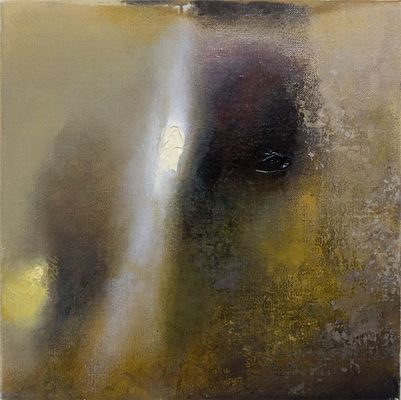
Always Will Need To Wear Winter Shirt Blue + Ochre Small Check Pattern
21 August - 21 September, 2015
Untitled
I am not a great reader of poetry but I always return to the work of Melbourne poet, Vincent Buckley (1925- 1988). Perhaps I find his most tantalising piece to be not a finished poem but a fragment left on a scrap of paper discovered on his desk after the poet’s death.
The poetry gathers like oil
In the word-core, and spreads
It has its music meet,
Its music is in movement.
This fragment is more the shell left behind from a volatile thought than a finished poem. I find the last two lines honest but awkward whereas the first two lines work like an arrow. Most likely he could not find a resolution so it was left. Still, in its present form, it remains an eloquent testimony to the ultimate failure of a medium to express mobile thought and sensation, in Buckley’s case, through verbal language. It’s an important matter because this is something all artists have to deal with regardless of the medium.
I have never written a poem, however, I am forever copying fragments from books on paper scraps in a vain effort to fix certain notions in my head. At first, they function as bookmarks that are sometimes returned to when I open the book. But before long, as they accumulate, they fall out littering the table interspersed with A4 photocopies, bills, books and medications.
To return to Buckley’s fragment, the first two lines very much evoke how I paint nowadays. As you age, detail diminishes and patches of light become more luminous and float. I feel the most honest way of dealing with this is by smearing the oil paint on the canvas with the fingers and working close-up, blind. Only if the patches coalesce into an approaching image can the work gain a life.
-
Jonathan Walker was born in Melbourne, Australia and brought up on a dairy farm in Gippsland. In the 1970’s he studied painting at RMIT and won the Harold Wright Scholarship to the British Museum, London. During the 1980’s he exhibited at Pinacotheca Gallery, Richmond and had work shown at the NGV and Heidi City Art Gallery. Over the same period he designed the cover for the “Epigenesi” LP by Giancarlo Toniutti, Italy and conducted a mail exchange work with Achim Wollscheid, Germany. The work with artists through the post resulted in an article published in the bicentenary issue of Art and Australia 1988. He showed in artist run spaces such as WestSpace in the 90’s and 2000’s, and until 2012, taught painting at Victoria University, which is where we (Colleen Ahern and Lisa Radford) as organisers of the exhibition, among many others, had the privilege of being his student.
Walker’s knowledge was imparted to students through the careful selection of music, literature, and artists found in books that he himself had ordered for the library. Walker’s strategy was the generosity of sharing his vast knowledge with references specific to each student and their context.
Walker’s paintings share a similar focus and intimacy.
This exhibition presents a small selection of recent paintings alongside a publication that includes Walker’s writing. Observational and analytical, Walker’s work is a type of material notation — the time of day, colour and how it is blended, the both specific and fleeting location of a reflection on lino or the question of whether a chair leg should be included in a painting.
Please join us on Friday August 21 between 6-8pm to celebrate the opening of the exhibition.
Curated by Colleen Ahern and Lisa Radford.
B. Wurtz
Curated by Nic Tammens
March 26 - April 4, 2015
B.Wurtz works from a basement studio in his home on Manhattan’s Lower East Side.
This local fact is attested to by the plastic shopping bags and newsprint circulars that appear in his work. As formal objects, they don’t make loud claims about their origins but nonetheless transmit street addresses and places of business from the bottom of this long thin island. Like plenty of artists, Wurtz is affected by what is local and what is consumed. His work is underpinned by this ethic. It often speaks from a neighborhood or reads like the contents of a hamper:
“BLACK PLUMS $1.29 lb.”
“Food Bazaar”
“USDA Whole Pork Shoulder Picnic 99c lb.”
“RITE AID Pharmacy, with us it’s personal.”
“H. Brickman & Sons.”
“Sweet Yams 59c lb."
Most of the work in this exhibition was made while the artist was in residence at Dieu Donne, a workshop dedicated to paper craft in Midtown. Here Wurtz fabricated assemblages with paper and objects that are relatively lightweight, with the intention that they would be easily transportable to Australia. This consideration isn’t absolute in Wurtz’s work, but was prescriptive for making the current exhibition light and cheap. Packed in two boxes, these works were sent from a USPS post office on the Lower East Side and delivered to North Melbourne by Australia Post.
Wurtz appears courtesy of Metro Pictures, New York.
Thanks to Rob Halverson, Joshua Petherick, Sari de Mallory, Matt Hinkley, Helen Johnson, Fayen d'Evie, Ask Kilmartin, Lisa Radon, Ellena Savage, Yale Union, and "Elizabeth".
John Nixon
"Archive"
December 15 - January 20, 2014
The presentation of John Nixon's archive offered a rare showcase of this extensive collection of the artist's own publications, catalogues, posters, ephemera, editions and more, from the mid 1980s onwards, alongside a selection of his artworks.
Organized by John Nixon, Joshua Petherick and Matt Hinkley.
"Habitat"
at Minerva, Sydney (organised by Joshua Petherick and Matt Hinkley)
November 15 - December 20, 2014
Lupo Borgonovo, Janet Burchill & Jennifer McCamley,
Lewis Fidock, HR Giger, Piero Gilardi, Veit Laurent Kurz,
Cinzia Ruggeri, Michael E. Smith, Lucie Stahl, Daniel Weil, Wols
Press Release:
“...It contained seven objects. The slender fluted bone, surely formed for flight, surely from the wing of some large bird. Three archaic circuitboards, faced with mazes of gold. A smooth white sphere of baked clay. An age-blackened fragment of lace. A fingerlength segment of what she assumed was bone from a human wrist, grayish white, inset smoothly with the silicon shaft of a small instrument that must once have ridden flush with the surface of the skin - but the thing’s face was seared and blackened.”
William Gibson, “Count Zero”, 1986
"Autumn Projects Archive"
Curated by Liza Vasiliou
March 6 - March 15, 2014
World Food Books, in conjunction with the Virgin Australia Melbourne Fashion Festival 2014, presented the Autumn Projects archive, consisting of a selection of early examples in Australian fashion with a particular interest in collecting designers and labels from the period beginning in the 1980’s, who significantly influenced the discourse of Australian Fashion.
Curated by Liza Vasiliou, the exhibition provided a unique opportunity to view pieces by designers Anthea Crawford, Barbara Vandenberg, Geoff Liddell and labels CR Australia, Covers, Jag along with early experimental collage pieces by Prue Acton and Sally Browne’s ‘Fragments’ collection, suspended throughout the functioning World Food Books shop in Melbourne.
H.B. Peace
presented by CENTRE FOR STYLE
November 14, 2013
"Hey Blinky, you say chic, I say same"
Anon 2013
H.B. Peace is a clothing collaboration between great friends Blake Barns and Hugh Egan Westland. Their pieces explore the divergences between 'character’ and ‘personality’ in garments....etc
Special Thanks to Joshua Petherick and Matt Hinkley of WFB and Gillian Mears
and a Very Special Thank you to Audrey Thomas Hayes for her shoe collaboration.
Janet Burchill & Jennifer McCamley
"Aesthetic Suicide"
May 10 - June 8, 2013
The first of our occasional exhibitions in the World Food Books office/shop space in Melbourne, "Aesthetic Suicide" presented a body of new and older works together by artists Janet Burchill & Jennifer McCamley, including videos, prints, a wall work, and publications.
During shop open hours videos played every hour, on the hour.
2000, Italian / French / English / Spanish
Hardcover, 60 pages, 32 x 24 cm
1st Edition, Out of print title / used / very good
Published by
BFB Editions / Paris
$65.00 $30.00 - Out of stock
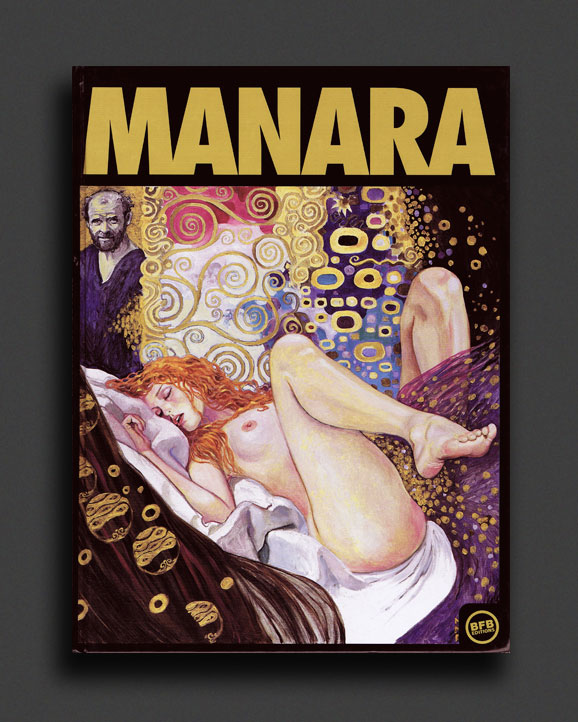
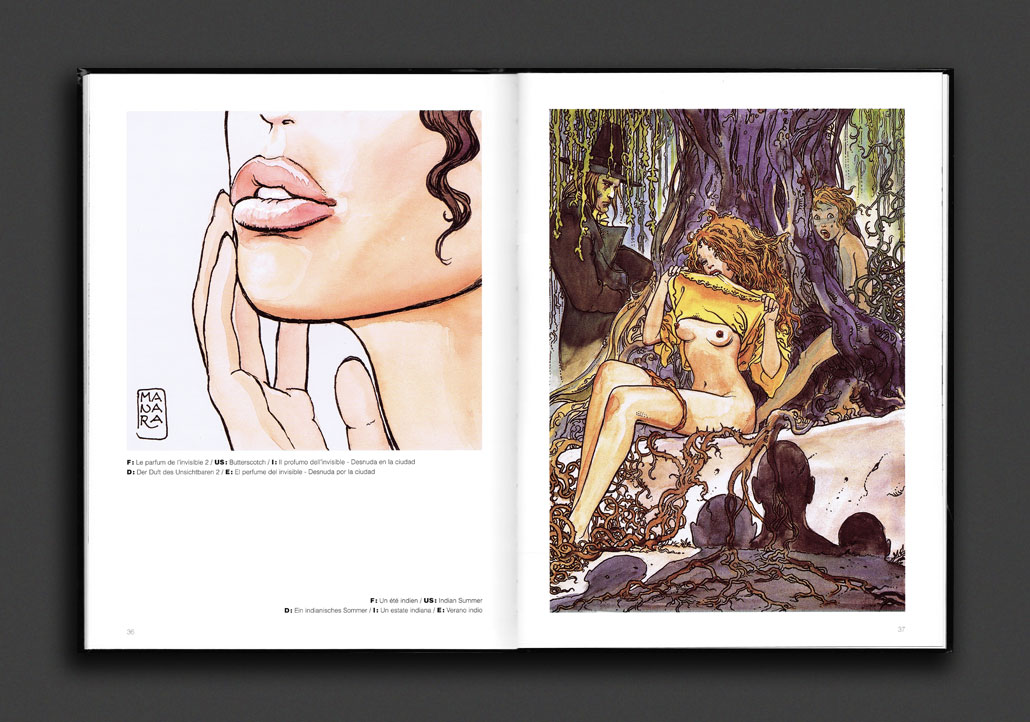
First hardcover edition of Milo Manara "Galerie of Covers", published in Italy in 2000. Lavishly illustrated throughout, "Galerie of Covers" exclusively showcases the full-colour painted original artwork of Manara's many comic book covers.
Maurilio Manaro (b. 1945), known professionally as Milo Manara, is an Italian comic book writer and artist. His first work appeared in the 'Genius' pocket books in 1969, and in magazines like Terror, Telerompo, and the French magazines Alter-Linus and Charlie Mensuel. He also worked for various children's magazines, collaborating with Milo Milani. Manara illustrated five issues of the collection 'L'Histoire de France en Bandes Dessinées' for the French publisher Larousse between 1976 and 1978, and continued to work illustrating similar educational publications, such as 'La Découverte du Monde en Bandes Dessinées' (Larousse, 1979), 'L'Histoire de la Chine' (1980) and 'La Storia d'Italia a Fumetti' (Mondadori, 1978). Also in 1978, he cooperated with Alfredo Castelli on 'L'Uomo delle Nevi' for Cepim and he started with the series 'Giuseppe Bergman', the anti-hero graphic novels which are an ironic deconstruction of adventure stories and comic books as a medium. Manara briefly ventured into westerns with 'Quatre Doigts, L'Homme de Papier' in Pilote (1982), before establishing himself as one of the greatest creators of erotic comics. Manara's book 'Déclic' ('Il Cioco' or 'Click' in English, 1983), initially published in Playmen in Italy and L'Écho des Savanes in France, remains one of the most iconic, notorious and widely published erotic stories of our time. Throughout the 1980s and 1990s, Manara created a vast collection of erotic comic books, however he also kept on working in other genres. With the great Italian comic book artist Hugo Pratt, Manara worked on 'L'Été Indien' (in Corto Maltese) and 'El Gaucho' (in Il Grifo). Manara also worked with the film director Federico Fellini on 'Voyage à Tulum' (Corriere della Serra, 1986) and 'Le Voyage de G. Mastorna dit Fernet' (Il Grifo, 1992). In the 1990s-2000s Manara made books for Les Humanoïdes Associés, DC/Vertigo, Marvel Comics and teamed up with writer, film director Alejandro Jodorowsky.
1984, English
Softcover (staple-bound), 96 pages, 28 x 20 cm
1st Edition, Out of print title / used / good
Published by
HM Communications / New York
$30.00 - Out of stock
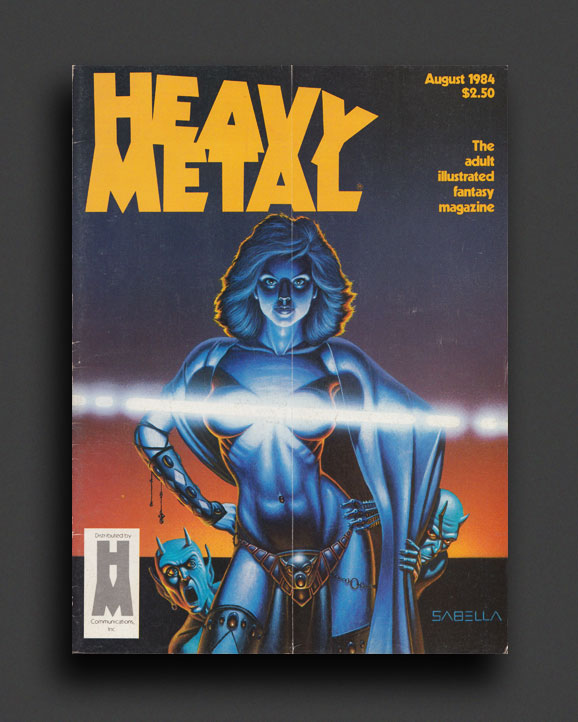
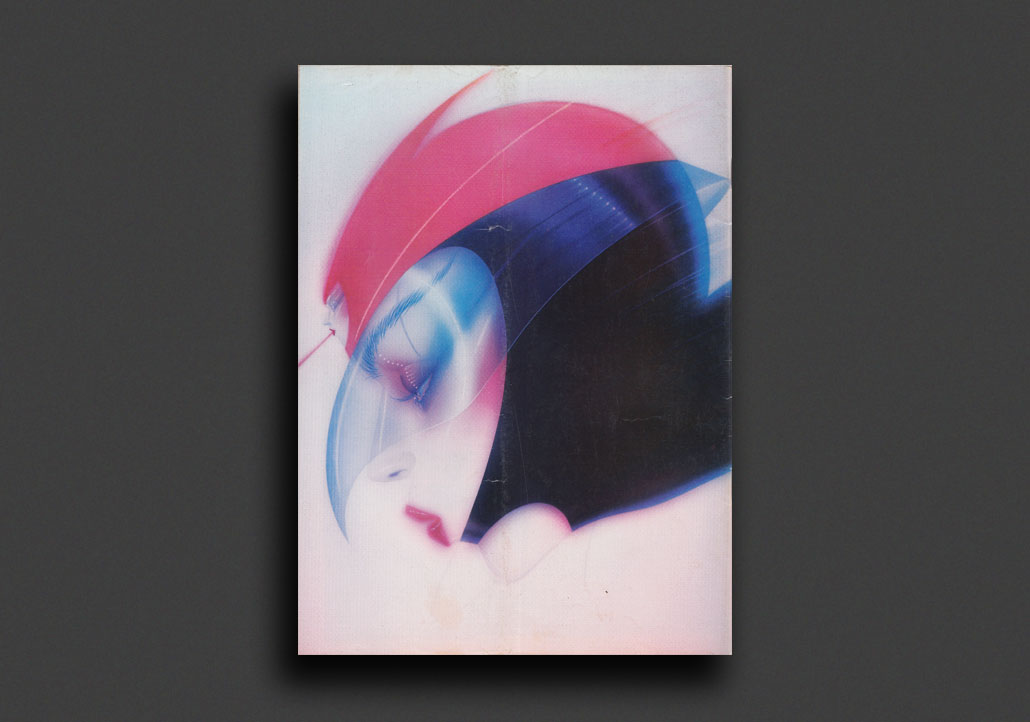
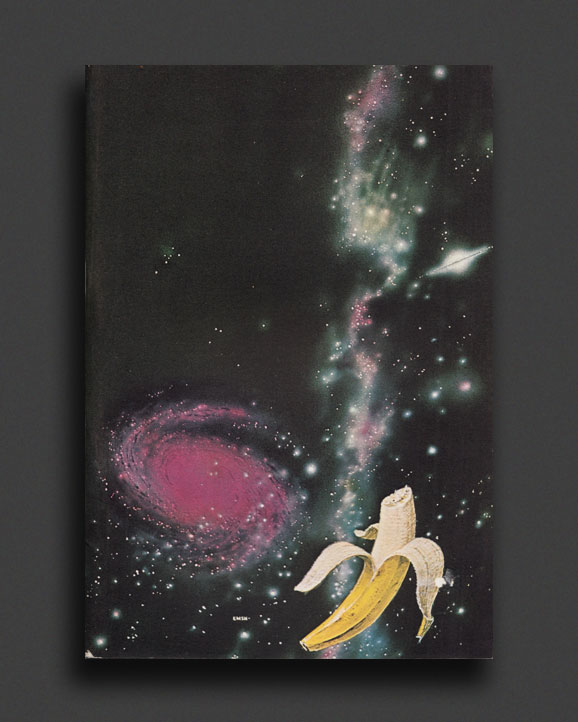
Heavy Metal August 1984 issue, featuring comic stories/art by Herikberto, Caza, Enki Bilal, Jean Torton, Frank Thorne, Philippe Druillet, Claude Renard, John Findley, and many more, plus the usual fare of sci-fi, movies, music... Cover art by Steven Sabella. Back cover by Peter Sato.
Heavy Metal is an American science fiction and fantasy comics magazine that exploded onto the publishing scene in 1977 and shaped a generation with its blend of dark fantasy/science fiction and erotica. Unlike the traditional American comic books of that time bound by the restrictive Comics Code Authority, Heavy Metal featured explicit content. The magazine started out as a licensed translation of the French science-fantasy magazine Métal Hurlant, including work by Enki Bilal, Philippe Caza, Guido Crepax, Philippe Druillet, Jean-Claude Forest, Jean Giraud (a.k.a. Moebius), Chantal Montellier, and Milo Manara. The magazine later ran Stefano Tamburini and Tanino Liberatore's ultra-violent RanXerox. Heavy Metal gradually evolved into a publication featuring North American contributors like Richard Corben, Matt Howarth, Stephen R. Bissette, Alex Ebel, John Holmstrom, Paul Kirchner, Terrance Lindall, Gray Morrow, Walt Simonson, Dan Steffan, Jim Steranko, John Shirley, Arthur Suydam, Bernie Wrightson, and Olivia De Berardinis.
Good copy with cover fold, light wear.
1983, English
Softcover (staple-bound), 96 pages, 28 x 20 cm
1st Edition, Out of print title / used / good
Published by
HM Communications / New York
$30.00 - Out of stock
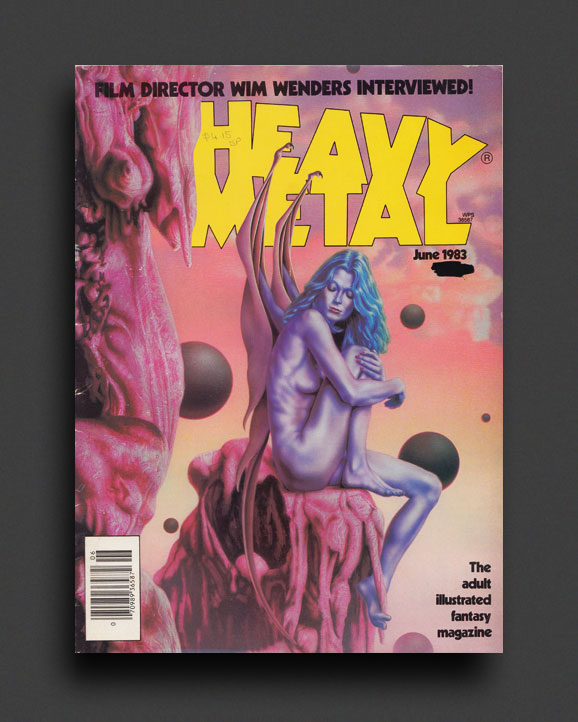
Heavy Metal June 1983 issue, featuring interview with director Wim Wenders, plus comic stories/art by Richard Corben, Guido Crepax, Enki Bilal, Jeff Jones, Caza, Michael Kaluta, Stephen R. Bissette, José Maria Martín Sauri, and many more, plus the usual fare of sci-fi, movies, music... Cover art by Barclay Shaw.
Heavy Metal is an American science fiction and fantasy comics magazine that exploded onto the publishing scene in 1977 and shaped a generation with its blend of dark fantasy/science fiction and erotica. Unlike the traditional American comic books of that time bound by the restrictive Comics Code Authority, Heavy Metal featured explicit content. The magazine started out as a licensed translation of the French science-fantasy magazine Métal Hurlant, including work by Enki Bilal, Philippe Caza, Guido Crepax, Philippe Druillet, Jean-Claude Forest, Jean Giraud (a.k.a. Moebius), Chantal Montellier, and Milo Manara. The magazine later ran Stefano Tamburini and Tanino Liberatore's ultra-violent RanXerox. Heavy Metal gradually evolved into a publication featuring North American contributors like Richard Corben, Matt Howarth, Stephen R. Bissette, Alex Ebel, John Holmstrom, Paul Kirchner, Terrance Lindall, Gray Morrow, Walt Simonson, Dan Steffan, Jim Steranko, John Shirley, Arthur Suydam, Bernie Wrightson, and Olivia De Berardinis.
Good copy, light general wear.
1982, English
Softcover (staple-bound), 96 pages, 28 x 20 cm
1st Edition, Out of print title / used / average
Published by
HM Communications / New York
$25.00 - Out of stock
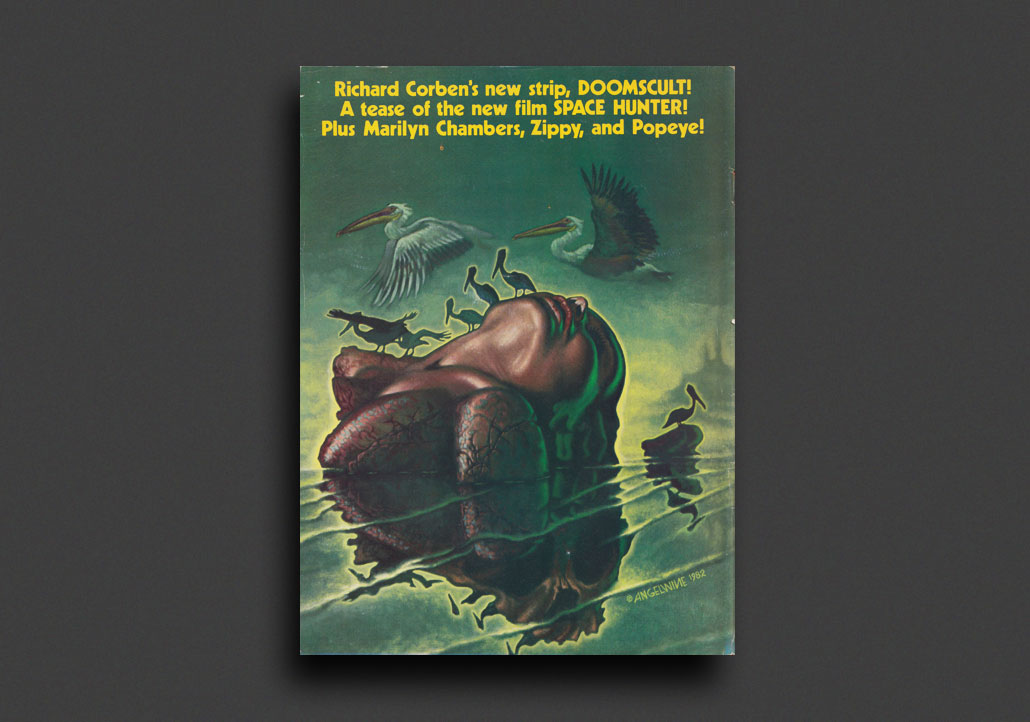
Heavy Metal August 1982 issue, featuring comic stories/art by Moebius, Milo Manara, Caza, Enki Bilal, Philippe Druillet, Nicole Claveloux, Dan O'Bannon, Gotlib (Marcel Gottlieb), Chris Foss, Richard Corben, Jeff Jones, Fernando Fernández, Bernie Wrightson, Jean-Claude Floch (Floc'h) and many more, plus the usual fare of sci-fi, movies, music... Cover art by Thomas Warkentin. Back cover by Christopher Mark Brennan.
Heavy Metal is an American science fiction and fantasy comics magazine that exploded onto the publishing scene in 1977 and shaped a generation with its blend of dark fantasy/science fiction and erotica. Unlike the traditional American comic books of that time bound by the restrictive Comics Code Authority, Heavy Metal featured explicit content. The magazine started out as a licensed translation of the French science-fantasy magazine Métal Hurlant, including work by Enki Bilal, Philippe Caza, Guido Crepax, Philippe Druillet, Jean-Claude Forest, Jean Giraud (a.k.a. Moebius), Chantal Montellier, and Milo Manara. The magazine later ran Stefano Tamburini and Tanino Liberatore's ultra-violent RanXerox. Heavy Metal gradually evolved into a publication featuring North American contributors like Richard Corben, Matt Howarth, Stephen R. Bissette, Alex Ebel, John Holmstrom, Paul Kirchner, Terrance Lindall, Gray Morrow, Walt Simonson, Dan Steffan, Jim Steranko, John Shirley, Arthur Suydam, Bernie Wrightson, and Olivia De Berardinis.
Good copy with re-attached(taped) cover, general light wear/tanning to page edges.
1985, English
Softcover, 14 pages, 21.5 x 13.5 cm
1st Edition, Out of print title / used / very good
Published by
Angus & Roberston / NSW
$150.00 - Out of stock
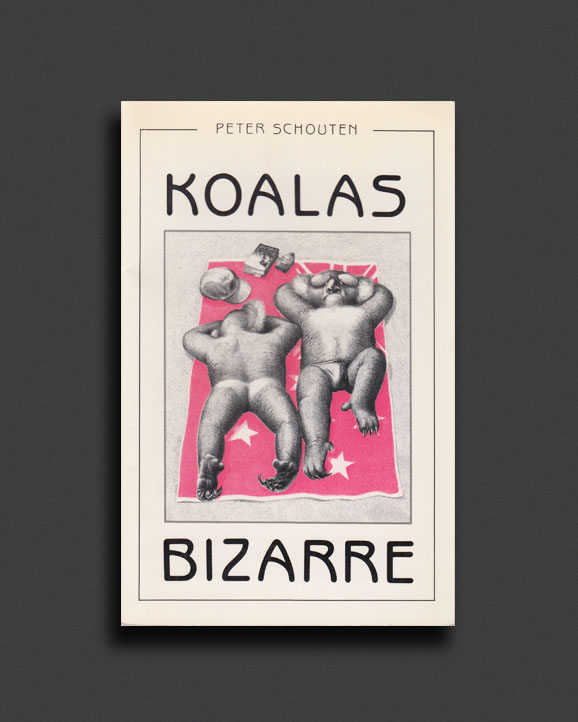
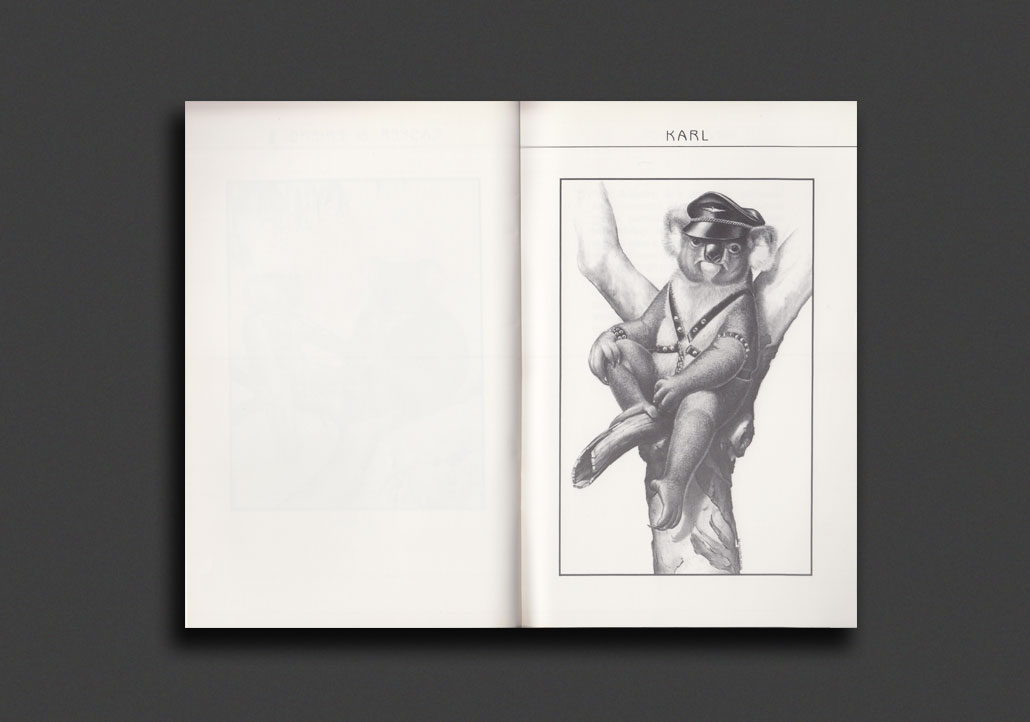
Absolute Oz cult classic. The extremely rare "Koalas Bizarre", published in 1985 and illustrated by self taught Australian wildlife illustrator and palaeontologist, Peter Schouten. This iconic adult-themed gem presents a series of beautifully graphite-rendered scenarios depicting the private (leather-clad, cruising, bound and gagged, BDSM) life of Koalas. File alongside Gene Bilbrew, Tom of Finland, and Blinky Bill.
"Curled up in a tree-fork, your average koala looks cuddly, sleepy and soft. Don't be deceived by appearances - all that cuteness is just a publicity gimmick, a carefully cultivated media image for children's books and travel brochures. As well-known wildlife artist Peter Schouten has discovered, all is not what it seems behind the leaves of a spreading gum tree."
Very Good - light cover tanning, otherwise clean and tight, excellent copy throughout.
1990, Japanese
Softcover (w. dust jacket), 160 pages, 21 x 14.8 cm
1st Edition, Out of print title / as new
Published by
Bell Comics / Tokyo
Tokyo Sanseisha / Tokyo
$25.00 - Out of stock
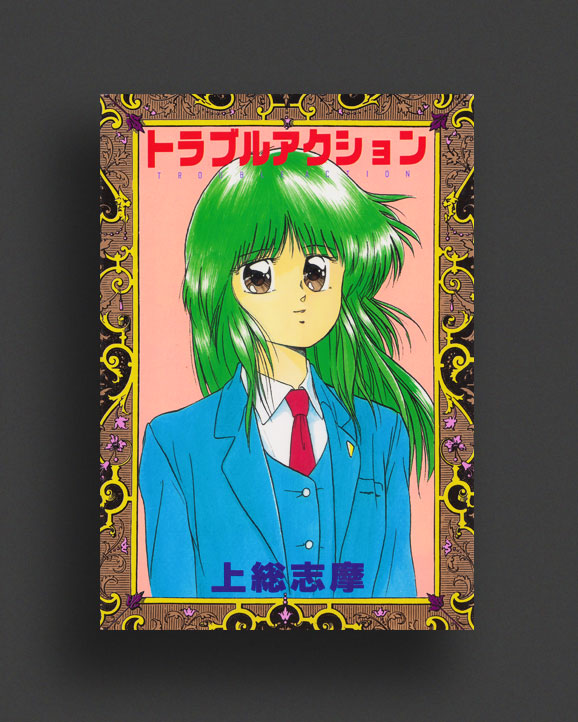
First edition from 1990, Trouble Action is a vintage manga / hentai comic book from Japanese illustrator Kazusa Shima, published by Tokyo Sanseisha (Bell Comics edition). An illustrated affair of sexual deviancy collected across multiple fantasy stories, in colour and b/w, wrapped in original illustrated dust jacket.
As New.
1968?, English
Softcover (staple-bound), 48 pages, 24 x 18.5 cm
Out of print title / used / good
Published by
Bootleg / Australia
$120.00 - Out of stock
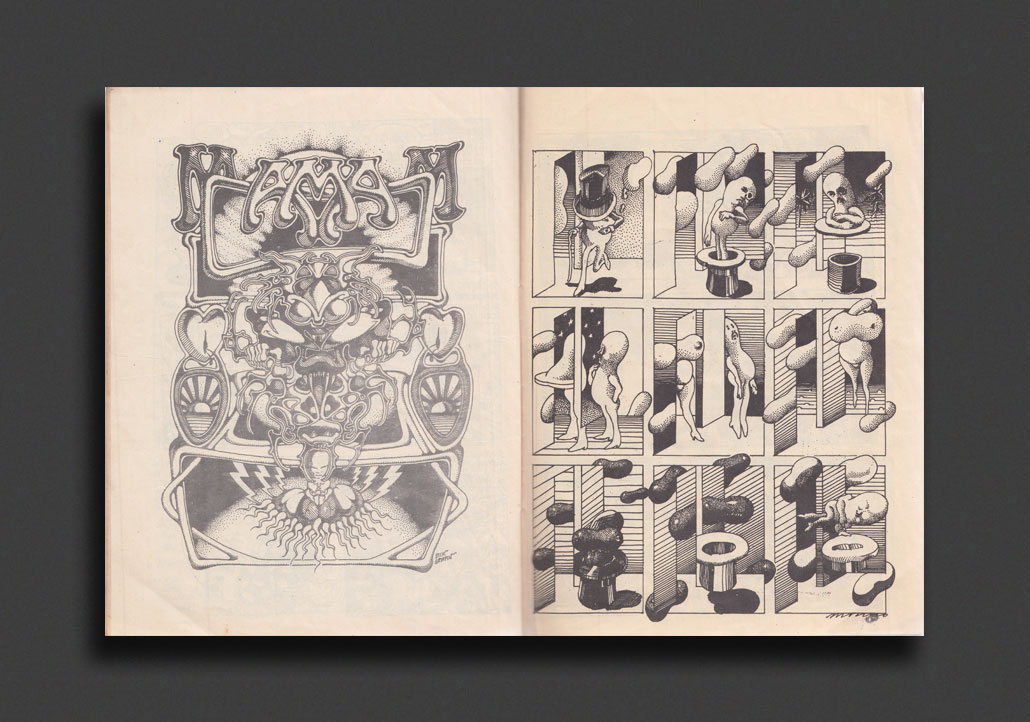
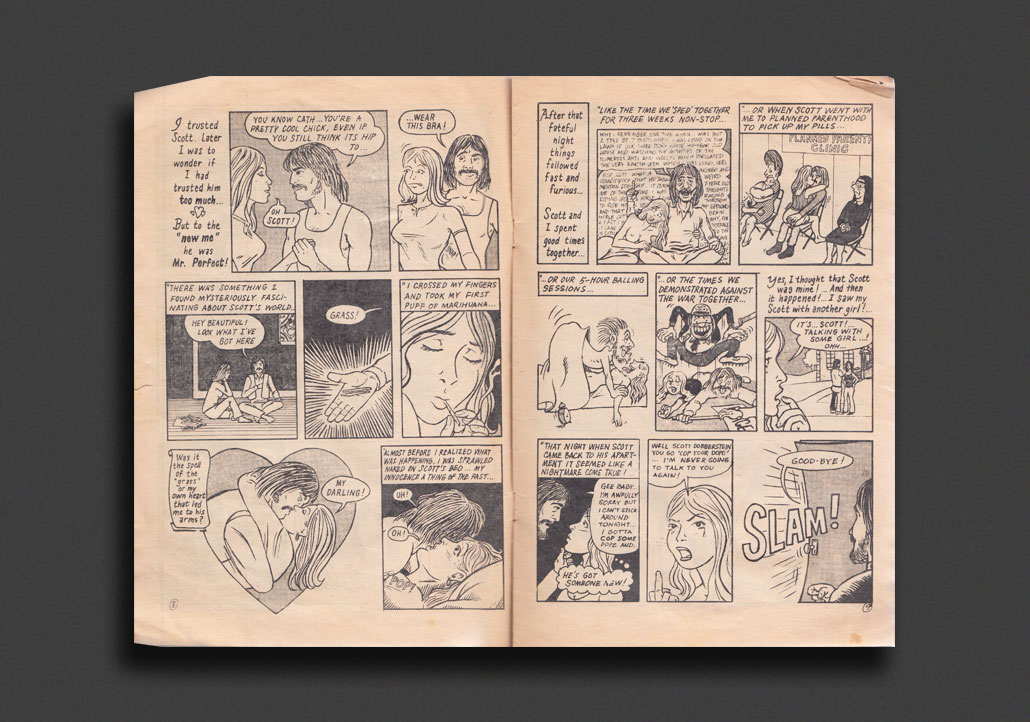
Super scarce Australian bootleg version of Zap Comix #2, featuring the work of Robert Crumb, Rick Griffin, Victor Moscoso, and S. Clay Wilson! Legend has it somewhere in the late 1960s/1970s first editions of US underground comix (such as Zap Comix, Freak Brothers, Bijou Funnies, Young Lust, Mean Bitch Thrills, Slow Death, Skull, etc.) were cheaply bootlegged here in Australia to give a broader distribution to titles that were not traveling this far across the waters (possibly by the late, great Bob Gould of Gould's Book Arcade or ex-pat comic collector Pat Woolley...). These are interesting publications in their unusual formats and colour variations from the authentic originals, mostly single colour reproductions on soft newsprint stock. With the cover prices also blanked out, they are crude, immediate and exquisite creations that seem to perfectly embody the spirit of underground press. These are some of the most unique and little-known variations on these classic underground comix out there.
Officially published by Apex Novelties, Zap Comix was an underground comix series and one of the most iconic of the late 1960s counterculture. While a few small-circulation self-published satirical comic books had been printed prior to this, Zap became the model for the "comix" movement that snowballed after its release. Premiering in early 1968 as a showcase for the work of Robert Crumb, Zap was unlike any comic book sensibility that had been seen before. The first issue of Zap was sold on the streets of Haight-Ashbury out of a baby stroller pushed by Crumb's wife Dana on the first day. In years to come, the comic's sales would be most closely linked with alternative venues such as head shops. After the success of the first issue, Crumb opened the pages of Zap to several other artists, including S. Clay Wilson, Robert Williams, "Spain" Rodriguez, Gilbert Shelton, and two artists with reputations as psychedelic poster designers, Victor Moscoso and Rick Griffin. This stable of artists, along with Crumb, remained mostly constant throughout the history of Zap.
Good considering. Some colouring added to the covers by previous owner with a red and green marker, decent spine and corner wear, damage to back cover, but all the more character for it! Interior is nicely kept. Features non-cropped "Head First" comic.
1970?, English
Softcover (staple-bound), 26 pages, 25 x 17 cm
Out of print title / used / good
Published by
Bootleg / Australia
$50.00 - Out of stock
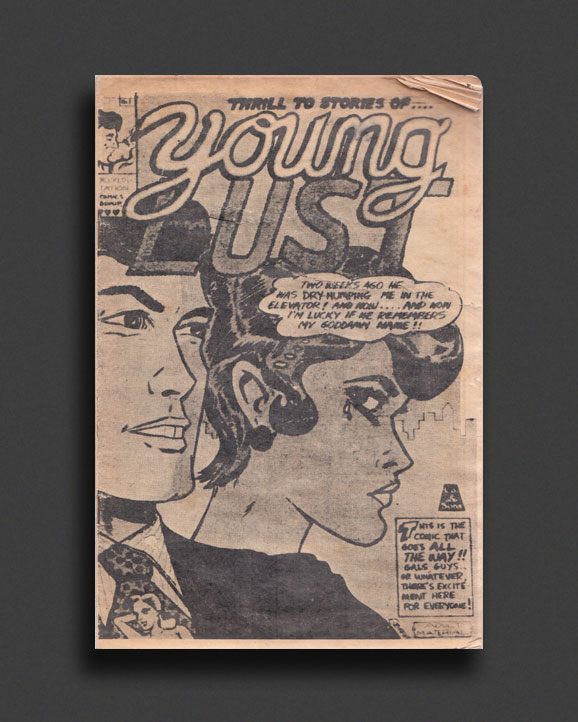
Super scarce Australian bootleg version of Young Lust #1, featuring the work of Bill Griffith, Jay Kinney, Art Spiegelman, and more! Legend has it somewhere in the late 1960s/1970s first editions of US underground comix (such as Zap Comix, Freak Brothers, Bijou Funnies, Young Lust, Mean Bitch Thrills, Slow Death, Skull, etc.) were cheaply bootlegged here in Australia to give a broader distribution to titles that were not traveling this far across the waters (possibly by the late, great Bob Gould of Gould's Book Arcade or ex-pat comic collector Pat Woolley...). These are interesting publications in their unusual formats and colour variations from the authentic originals, mostly single colour reproductions on soft newsprint stock. With the cover prices also blanked out, they are crude, immediate and exquisite creations that seem to perfectly embody the spirit of underground press. These are some of the most unique and little-known variations on these classic underground comix out there.
Officially published by Print Mint, Young Lust was an underground comix anthology published sporadically from 1970 to 1993. The title, which parodied 1950s romance comics such as Young Love, was noted for its explicit depictions of sex. Unlike many other sex-fueled underground comix, Young Lust was generally not perceived as misogynistic. Founding editors Bill Griffith and Jay Kinney gradually morphed the title into a satire of societal mores. According to Kinney, Young Lust "became one of the top three best-selling underground comix, along with Zap Comix and The Fabulous Furry Freak Brothers." Young Lust featured an all-star lineup of underground, and later alternative, cartoonists. Besides Griffith and Kinney, other frequent contributors included Justin Green, Roger Brand, Spain Rodriguez, Diane Noomin, Kim Deitch, Paul Mavrides, Michael McMillan, Ned Sonntag, Phoebe Gloeckner, and Harry S. Robins. In later years, the title was a showcase for female cartoonists like Gloeckner, M. K. Brown, Carol Lay, and Jennifer Camper; as well as rising alt-comics creators like Daniel Clowes, Charles Burns, Terry LaBan, and Lloyd Dangle.
Good considering. Decent creasing, tanning and general wear, but all the more character for it!
1972, English
Hardcover, 160 pages, 29 x 21 cm
Out of print title / used / very good
Published by
Jack Pollard / NSW
$65.00 - Out of stock
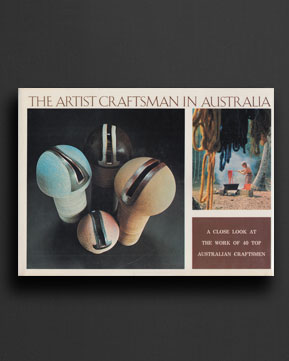
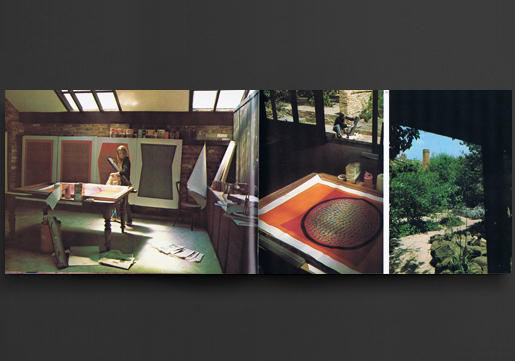
The great "Aspects of Sensibility" book from 1972, art directed and designed by textile artist-designer Fay Bottrell.
'Aspects of Sensibility' profiles 38 prominent designers, studio potters, textile artists, weavers, decorative artists, working in Australia in the 1960s and early '70s through full-bleed landscape spreads of photography by Wesley Stacey, capturing their working environments, details of their work and studios, and text reflections of these artists on their work.
Features Graham Bennett, Lillian Bosch, Douglas Annand, Sandra Leveson, Ken Leveson, Ian Sprague, Kat Bish, Bruce Arthur, Bernard Sahm, Janet Brereton, Kevin Brereton, Jutta Feddersen, Les Blakebrough, Rosalie Gascoigne, Elizabeth Vercoe, Albert Steen, Fay Bottrell, Pru Medlin, Mirka Mora, Peter Travis, Marea Gazzard, Helge Larsen, Darani Lewers, Milton Moon, Isabel Davies, Joan Campbell, Peter Rushforth, Mona Hessing, Hiroe Swen, John Mason, Ewa Pachucka, Victor Greenaway, Heather Dorrough, John Gilbert, Verlie Just, Silver Harris, Col Levy, Vivienne Pengilley, Weatherhead and Stitt.
A very unique and personal book reflecting on the lives of Australian artists and designers working in the early 1970s.
Very good copy, light wear, with Very good dust-jacket, 1974 edition with blue hardcovers.
1972/74, Japanese
Softcover (6 vols), 21 x 14.8 cm
1st Edition, Out of print title / used / good
Published by
Taiyo books / Japan
$140.00 - Out of stock
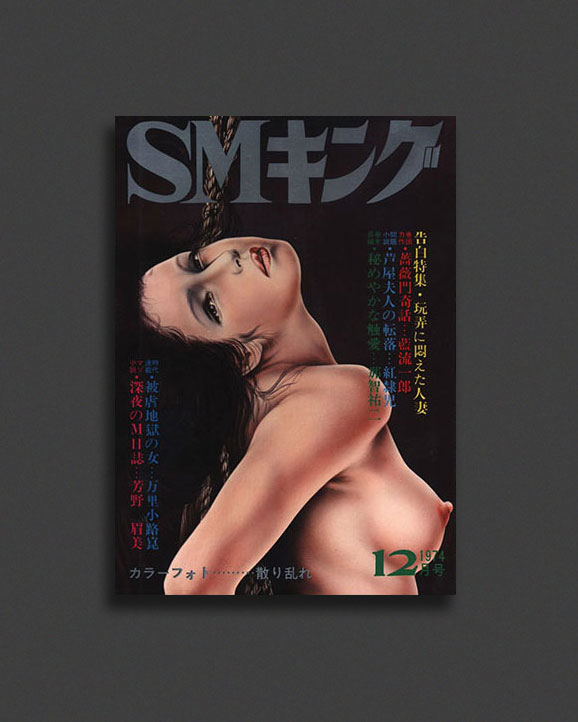
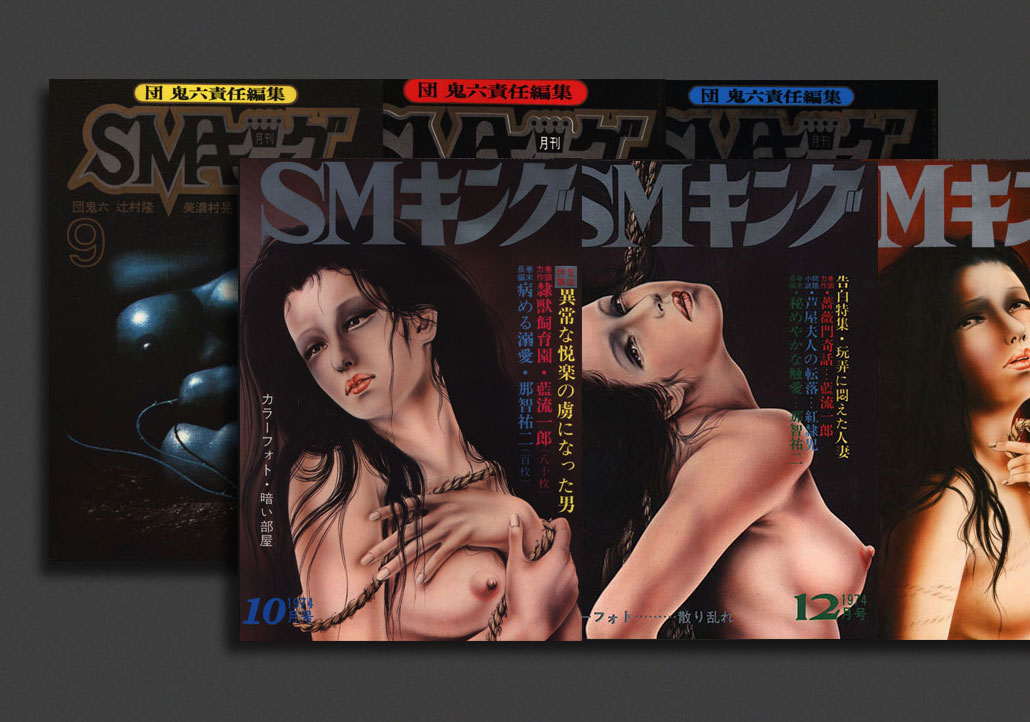
Lot of 6 issues of SM KING, 3 issues from1972, three from 1974. A legendary Japanese magazine in the world of BDSM, published exclusively in Japan by Taiyo books, with each issue featuring many colour and b/w photographs, illustrations, and stories on the subject of bondage in Japan. All texts in Japanese.
All issues Good-Very Good condition.
1977, Japanese
Hardcover (w. illustrated slipcase), 205 pages, 31.4 × 24.6 cm
1st Edition, Out of print title / used / very good
Published by
Kodansha Int / Tokyo
$140.00 - Out of stock
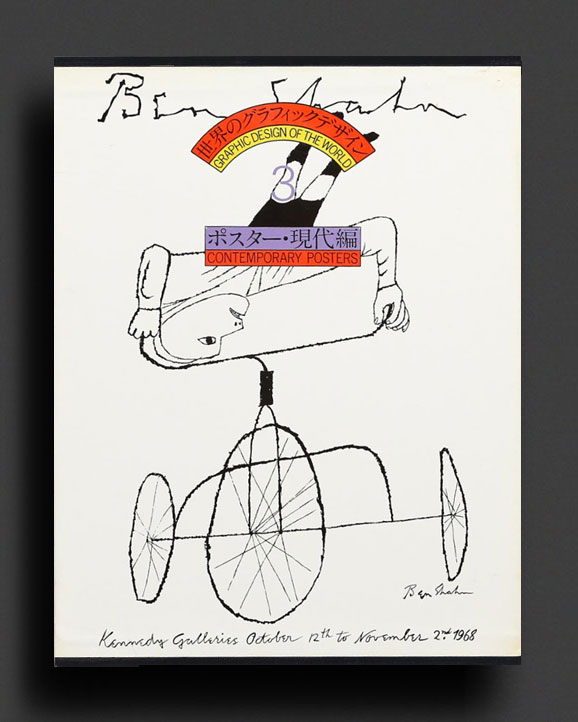
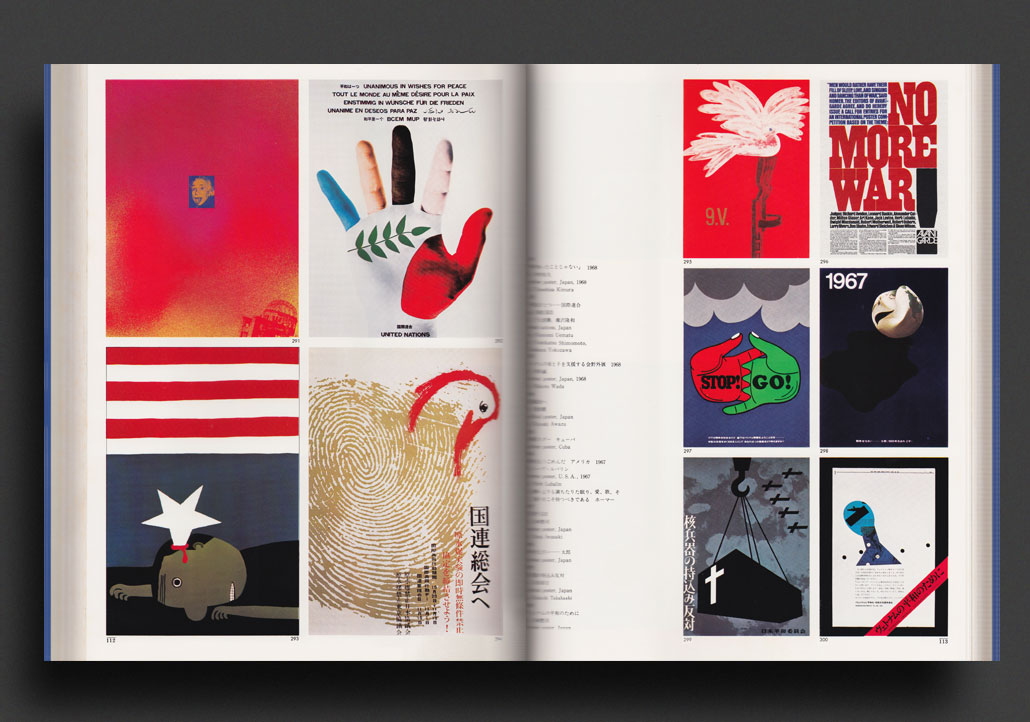
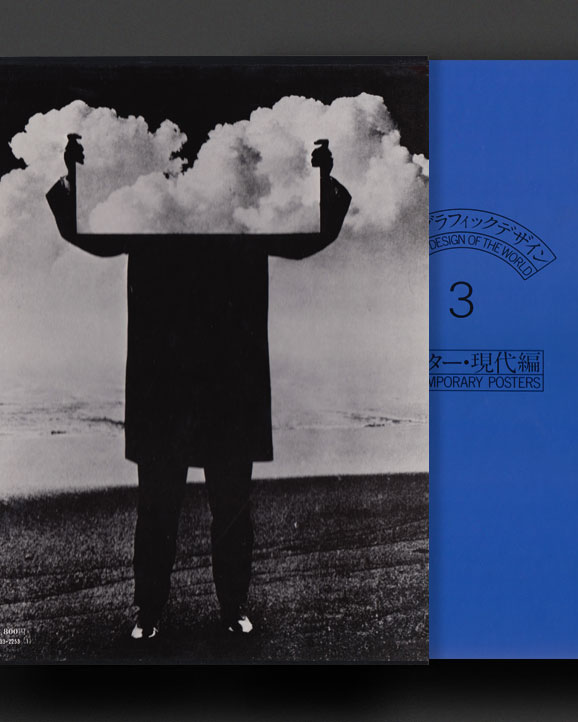
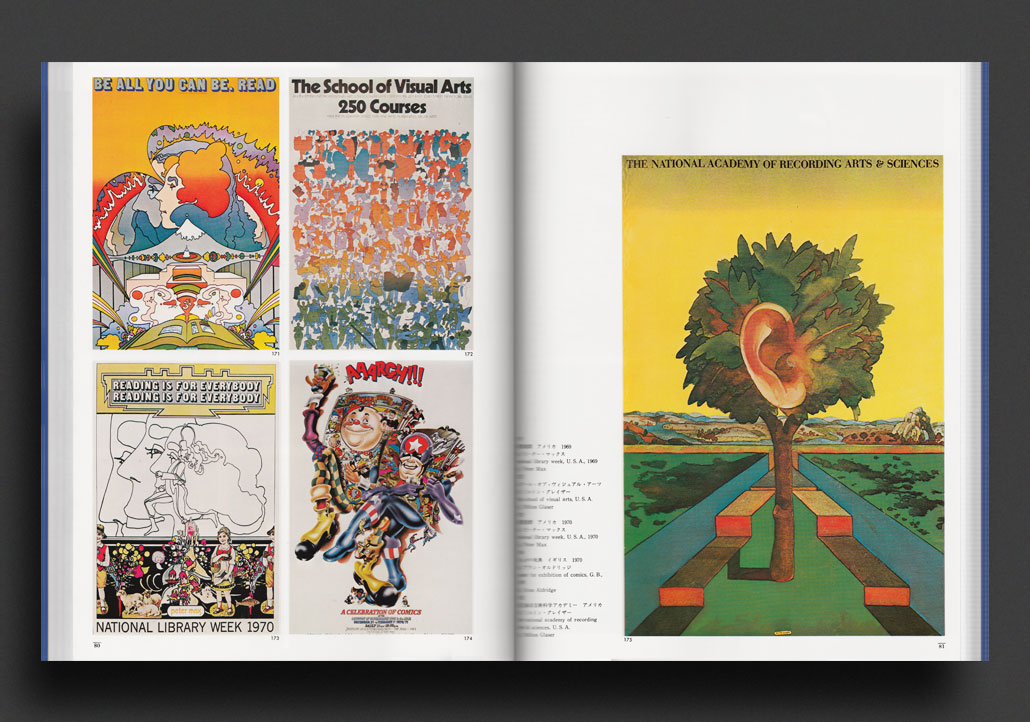
"Graphic Design of The World 3 : Contemporary Posters", was published in 1977 and edited by leading Japanese graphic designers Ikko Tanaka and Tadanori Yokoo. This, the 3rd annual volume of the great "Graphic Design of The World" series, was published in Japan by Kodansha in the 1970s. Each oversized hardcover, slipcased volume was edited by leading Japanese designers and presented a visually explosive international survey of design themes. Profusely illustrated in vivid, saturated colour, "Contemporary Posters" is one of the finest books on the subject. Bringing together the best examples of international modern posters from the end of the war to the early 1970s, including concert, theatre, film, anti-war, tourism, advertising, exhibition, and more. Includes the work of Milton Glaser, Joseph Müller-Brockman, Yoshio Hayakawa, Peter Max, Man Ray, Allen Jones, Maciej Urbaniec, Herb Lubalin, Jan Lenica, Seymour Chwast, Alan Aldridge, Roman Cieslewicz, Jean Michel Folon, Tomi Ungerer, Tadanori Yokoo, Shigeo Fukuda, Akira Uno, Massmimo Vignelli, Raymond Savignac, Push Pin Studios, Roland Topor, Ikko Tanaka, Shigeo Okamoto, Armando Testa, Franciszek Starowieyski, Saul Bass, Hans Erni, Karl Gerstner, Max Bill, Richard Avedon, Herbert Bayer, Alexander Calder, Otl Aicher, Paul Davis, Bob Gill, Hiromu Hara, Gan Hosoya, Robert Indiana, Sam Haskins, Kumi Sugai, Paul Rand, Willem Sandberg, Saul Steinberg, Andy Warhol, Ernest Trova, Pablo Picasso, James Rosenquist, Emil Ruder, Donald Brun, Herbert Leupin, Ryuichi Yamashiro, Franco Grignani, Yusaku Kamekura, Richard Lindner, Yoshitaro Isaka, Kiyoshi Awazu, and so many more! An incredible collection!
Very Good, beautifully preserved copy in Very Good slipcase.
1977, Japanese
Hardcover (w. illustrated slipcase), 205 pages, 31.4 × 24.6 cm
1st Edition, Out of print title / used / fine
Published by
Kodansha Int / Tokyo
$140.00 - Out of stock
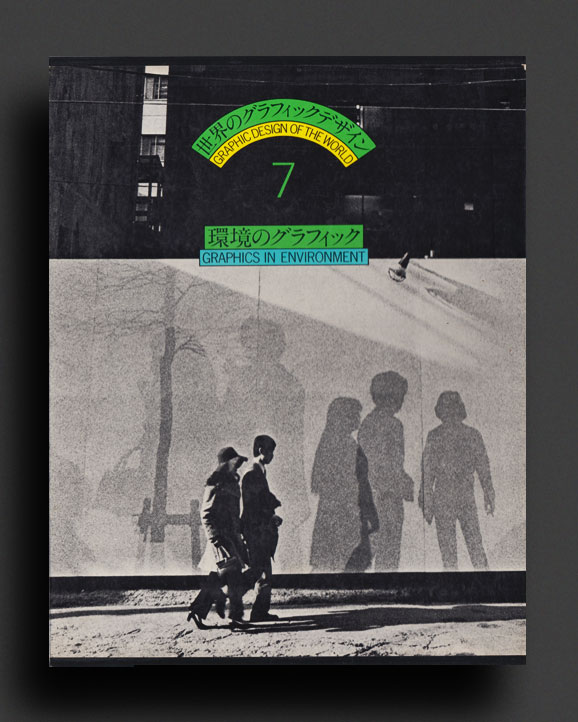
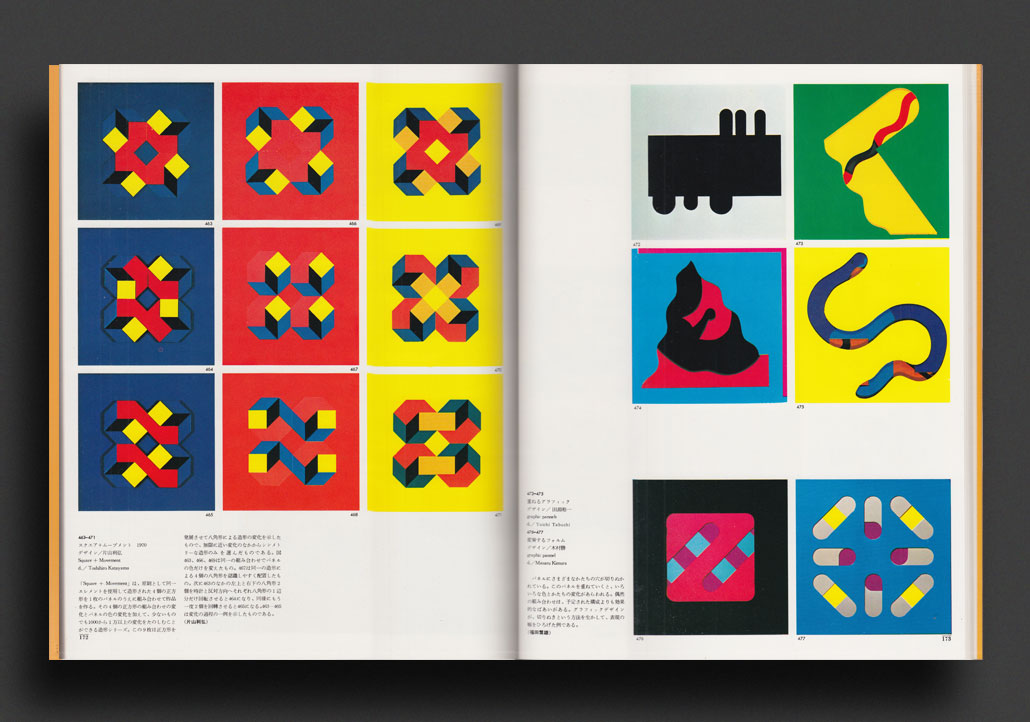
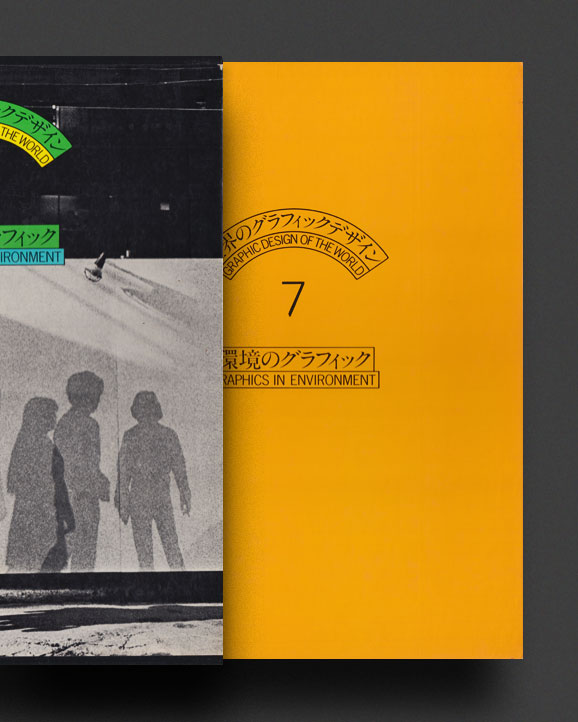
"Graphic Design of The World 7 : Graphics in Environment", was published in 1977 and edited by leading Japanese graphic designers Kiyoshi Awazu and Shigeo Fukuda, together with architect Shin Isozaki. This, the 7th (and final) annual volume of the great "Graphic Design of The World" series, was published in Japan by Kodansha in the 1970s. Each oversized hardcover, slipcased volume was edited by leading Japanese designers and presented a visually explosive international survey of design themes. Profusely illustrated in vivid, saturated colour, "Graphics in Environment" brings together examples of "Super Graphics" developed at the scale of the city and architecture, and also ceramics, textiles, playthings and other "graphics" of sizes corresponding to human systems. One of the most generous books on the subject of environmental design in the 1970s.
As new, beautifully preserved copy in Very Good slipcase.
1990, English
Softcover, 100 pages, 28 x 21 cm
Out of print title / used / good
Published by
Berkely Books / New York
$120.00 - Out of stock
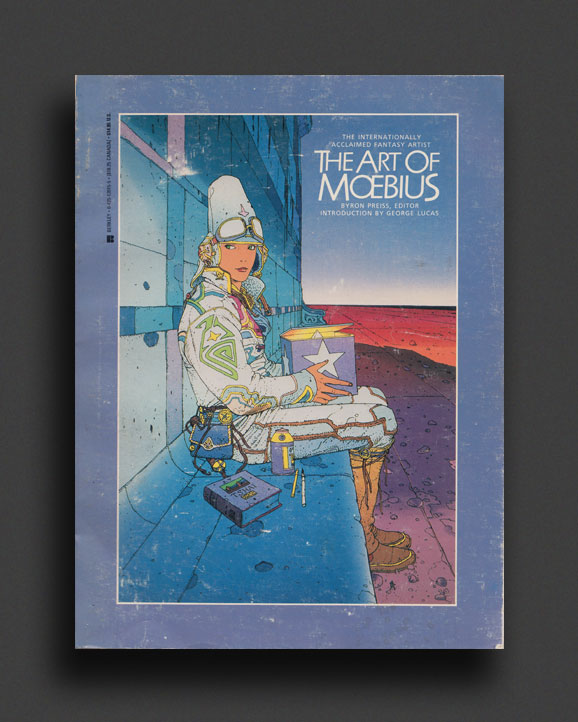
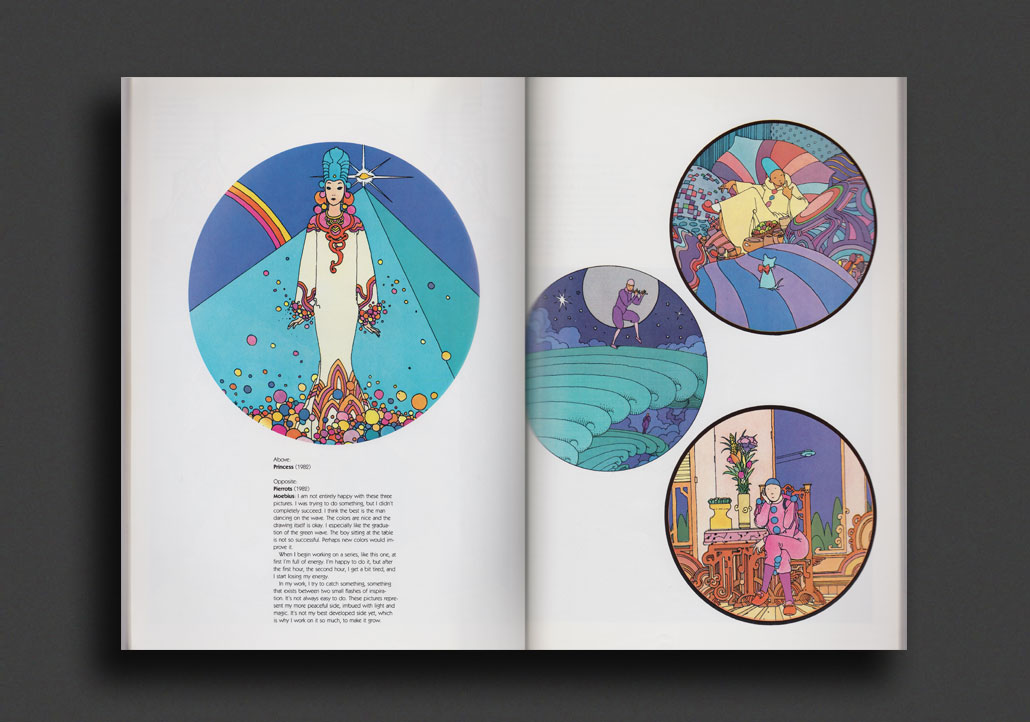
Super collectible 1990 edition of "The Art of Moebius", published by Berkely Books, New York. Edited by Byron Preiss with an introduction by George Lucas and afterword by Jean Giraud Mœbius, this is one of the first books in English showcasing the entire breadth of Jean Giraud Mœbius' extraordinary artistic work in rich colour and b/w, including his work for Arzach, Metal Hurlant/Heavy Metal, Starwatcher, The Incal, Little Nemo, Blueberry, and much more. Each illustration throughout the entire book is captioned by Moebius himself, giving an intimate introduction into his visionary universe.
Jean Henri Gaston Giraud (1938 – 2012) was a French artist, cartoonist and writer who worked in the Franco-Belgian bandes dessinées (BD) tradition. Giraud garnered worldwide acclaim under the pseudonym Moebius, esteemed by Federico Fellini, Stan Lee and Hayao Miyazaki among others, he has been described as the most influential bandes dessinées artist after Hergé. His most famous works include the series Blueberry, created with writer Jean-Michel Charlier, featuring one of the first anti-heroes in Western comics. As Mœbius he created a wide range of science fiction and fantasy comics in a highly imaginative, surreal, almost abstract style. These works include Arzach and the Airtight Garage of Jerry Cornelius. He also collaborated with avant-garde filmmaker Alejandro Jodorowsky for an unproduced adaptation of Dune and the comic book series The Incal. Mœbius also contributed storyboards and concept designs to numerous science fiction and fantasy films, such as Alien, Tron, The Fifth Element and The Abyss.
"In all his drawings, Moebius demonstrates a command of many disciplines in art. He is a master draftsman, a superb artist, and more: his vision is original and strong. Since first seeing the Moebius illustrations in "Heavy Metal" years ago, I have been impressed and affected by his keen and unusual sense of design, and the distinctive way in which he depicts the fantastic. Perhaps what strikes me most of all about his work is it's sheer beauty—a beauty that has always given me great pleasure." - George Lucas
Good copy, clean and tight throughout but with considerable shelf wear to cover and spine.
1996, Japanese
Softcover, 144 pages, 25.9 x 24.9 cm
1st Edition, Out of print title / used / fine
Published by
Asahi Shimbun / Japan
$80.00 - Out of stock
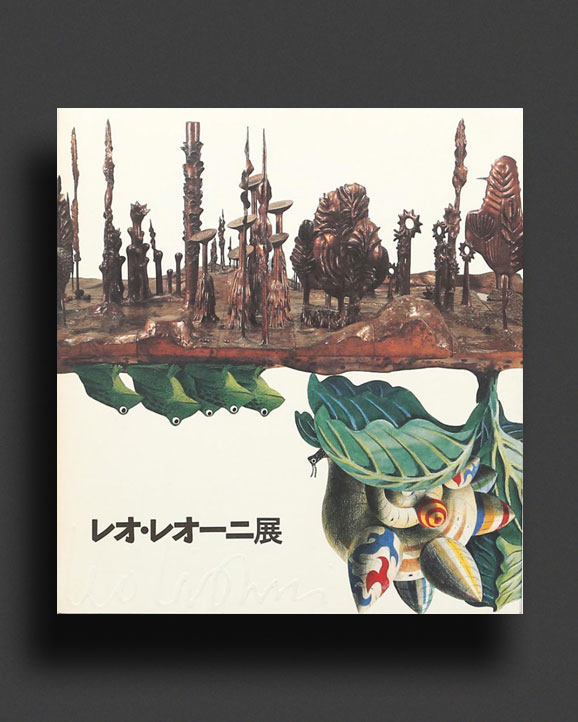
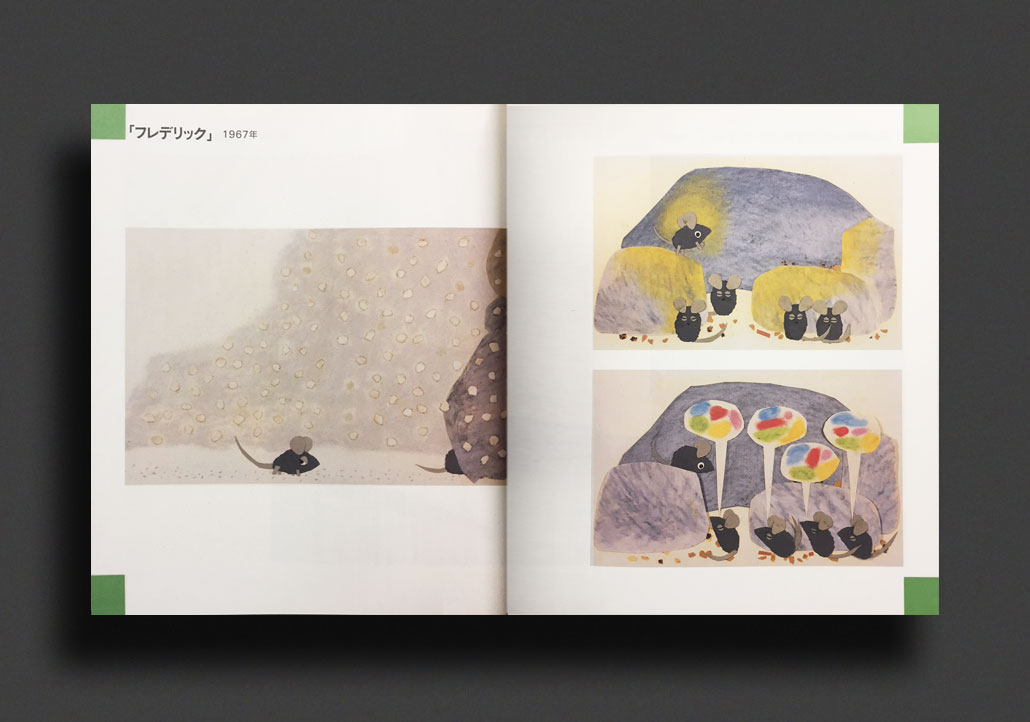
Scarce, first and only edition of this wonderful out-of-print Japanese Leo Lionni Retrospective catalogue, published on the occasion of a major survey exhibition of Lionni's work, curated by Paola Vassalli in 1996 in Japan. Famous for his "Frederick" and "Swimmy" books, this extensive and profusely illustrated book, edited by Kiyoko Matsuoka, showcases Lionni's innovative and diverse career as an artist, draftsman and designer. In addition to many illustrations from his award-winning picture books, presented here are his incredible Parallel Botany prints, illustrations, paintings, and sculptures, along with many other drawings, paintings, photographs, collages, mosaics, print graphics, along with a detailed biography and bibliography, and more. Also includes poetry by Shuntarō Tanikawa. A must for any fan.
Leo Lionni (May 5, 1910 – October 11, 1999) was an author and illustrator of children's books. Born in the Netherlands, he moved to Italy and lived there before moving to the United States in 1939, where he worked as an art director for several advertising agencies, and then for Fortune magazine. He returned to Italy in 1962 and started writing and illustrating children's books. Leo Lionni wrote and illustrated more than 40 highly acclaimed children’s books. He received the 1984 American Institute of Graphic Arts Gold Medal and was a four-time Caldecott Honor Winner.
Fine copy!
1989, English
Softcover, 96 pages, 31 x 28 cm
1st Edition, Out of print title / used / very good
Published by
Archives Szukalski / California
$500.00 - In stock -
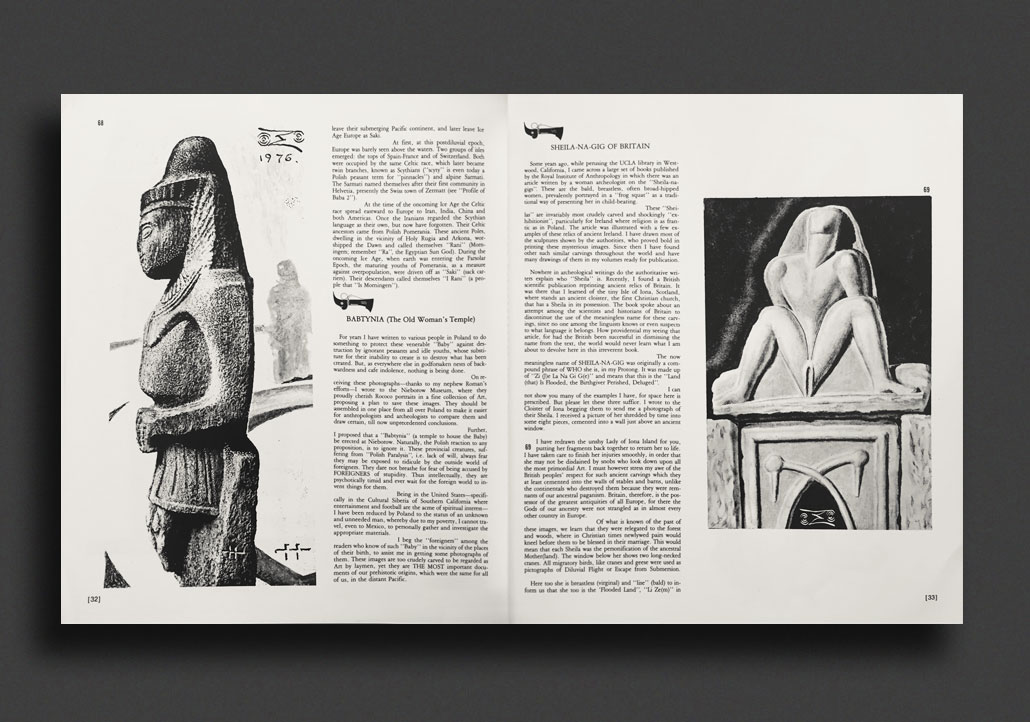
Extremely scarce first edition of the mighty "Behold!!! The Protong" by Stanislaw Szukalski, privately published in 1989 in this over-sized format by Archives Szukalski and edited by publisher Glenn Bray and Lena Zwalve.
Stanisław Szukalski (1893–1987) was a Polish-born sculptor, writer, graphic artist, and heretic. Highly regarded in both Poland and the US between the World Wars, becoming part of the Chicago Renaissance, he lapsed into obscurity, living and working in “America’s Cultural Siberia” (Southern California) until comic art collector Glenn Bray rediscovered him in 1973. For forty years, Szukalski had developed his all-encompassing science “Zermatism” about the origin of Man, laid down in 39 heavily illustrated volumes with subjects such as “Universal Pictography,” “The Flood Scumline,” and “Anthropolitical Motivations.” The work sets out to prove, among much else, that “Man-apes” make bad politicians, and that all Humanity stemmed from Easter Island, sharing a common protolanguage, “Protong” (bearing a striking resemblance to present-day Polish).
A classic and collectable Szukalski title (re-printed multiple times since this first edition), Behold!!! The Protong presents a selection from over 40,000 drawings in the Zermatism oeuvre, partially reprinted from "Troughful of Pearls; Behold!!! the Protong" which was first published in 1980 and now also highly collectible.
Good-Very Good copy.
1967, French
Softcover, 60 pages, 26 x 18 cm
1st Edition, Out of print title / used / very good
Published by
Musée des Arts Decoratifs / Paris
$80.00 - Out of stock
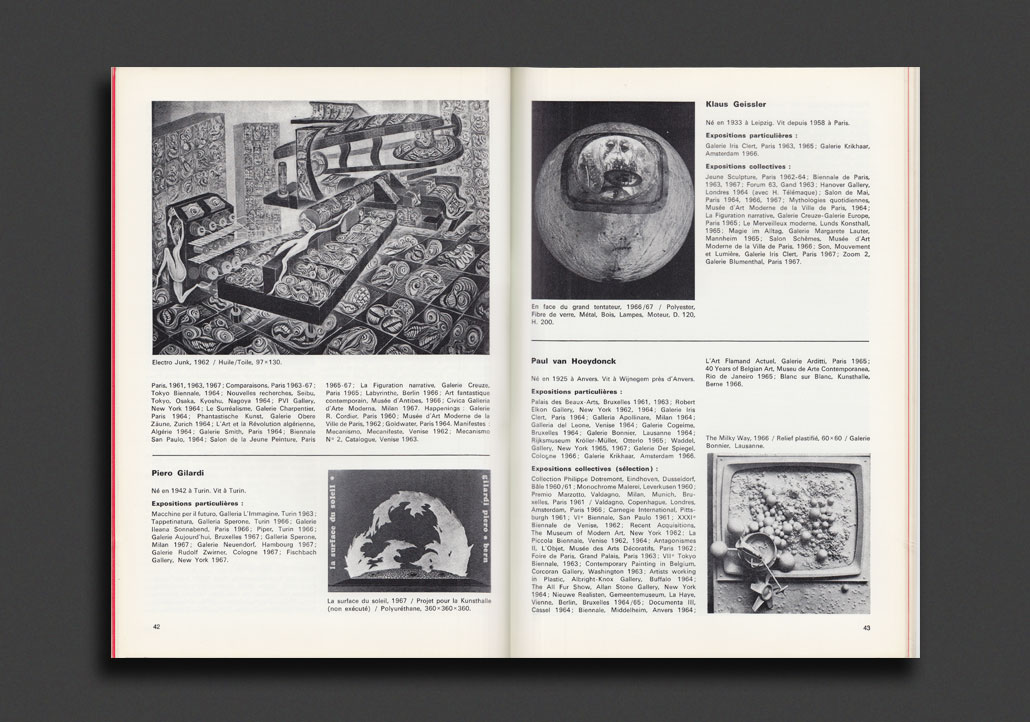
First edition of the iconic catalogue for the legendary Science-Fiction exhibition, curated by Harald Szeemann and presented as a touring show at Kunsthalle Bern, Musée des arts décoratifs Paris, and Städtische Kunsthalle Düsseldorf, 1967-1968. In the fashion of Szeemann's exhibition-making, Science-Fiction attracted record numbers of visitors whilst triggering controversial debate in the press. In institutions dedicated to the showcasing of contemporary art, Szeemann ventured to compile the unbelievable amount of around 3,000 objects from sociology, technology, science, art, comics, journalism, and literature, around the theme of Science-Fiction. The exhibits were presented in the show ordered in segments: modern spaceflight, art, film, literature, robots, UFOs, humour, toys, comics, as well as science fiction in the real world. Catalogue includes the work of Martial Raysse, Tetsumi Kudo, Roy Lichtenstein, Liliane Lijn, Robert Malaval, H. W. Muller, Bernard Rancillac, Markus Ratz, Shinkichi Tajiri, Edmund Alleyn, Piero Gilardi, Klaus Geissler, Paul van Hoeydonck, Piotr Kowalski, Yaacov Agam, Erró, Takis, Antonio Dias, Frank Franzetta, Guido Crepax, Wally Wood, Giovanni Scolari, Jean-Claude Forest, Al Williamson, and many more. Texts by Pierre Versins, Jacques Sadoul, Demètre Iokimidis, etc. in French. Includes the fold-out "Tableau chronologique de la S.F." compiled by French Science Fiction collector and scholar Pierre Versins.
Very Good copy.
2016, English
Softcover, 208 pages, 24.5cm×16.5cm
Ed. of 2000,
1st Edition, Out of print title / as new
Published by
Unit Editions / London
$90.00 - Out of stock
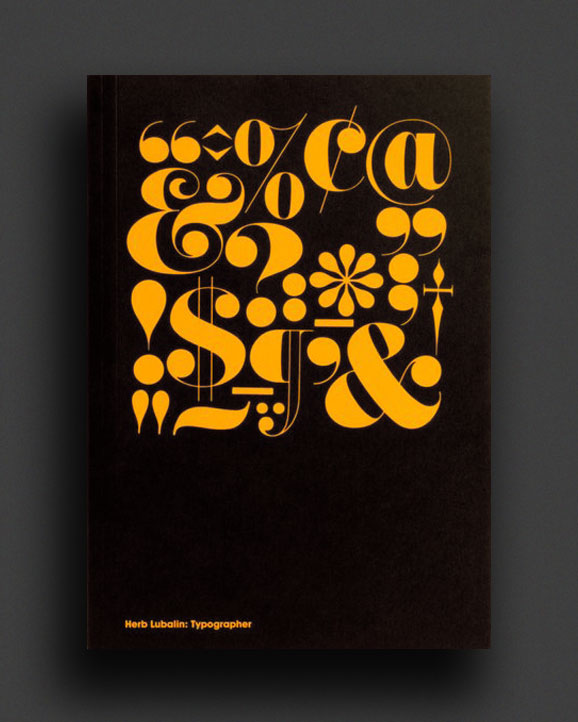
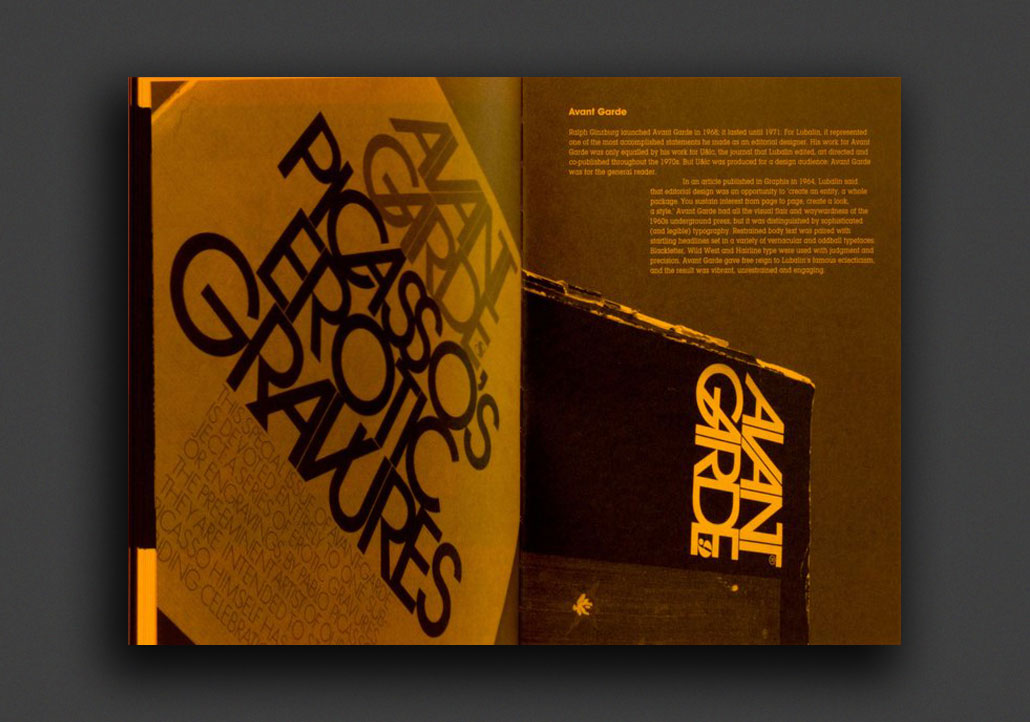
Herb Lubalin claimed not to be a great typographer. ‘In fact,’ he said, ‘I’m terrible, because I don’t follow the rules.’ This new book proves the opposite. On every page it features Lubalin’s typographic genius (logos, layouts, lettering and typefaces), and places him at the forefront of 20th century typographic innovation.
He even had names for what he did: he described it as ‘graphic expressionism’ or ‘conceptual typography’. Using his ability to adapt, merge and create new typographic forms, he was able to enhance and amplify meaning in ways that hadn’t been seen before.
Having published two books celebrating the genius of Herb Lubalin as a graphic designer working in many spheres, this new volume concentrates solely on Lubalin’s typography.
It comes with new texts, new design, new photography, and lots of previously unpublished material.
Edited by Adrian Shaughnessy & Tony Brook
Edition of 2000
Out-of-print
1960, English / Italian / French / German
Hardcover, 244 pages, 230 x 22 cm
1st Edition, Out of print title / used / good
Published by
Editrice L'Ufficio Moderno / Milan
$120.00 - Out of stock
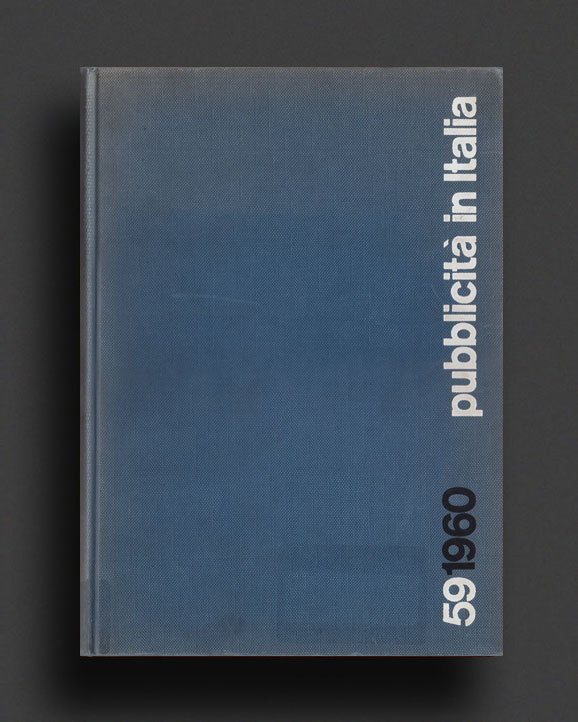
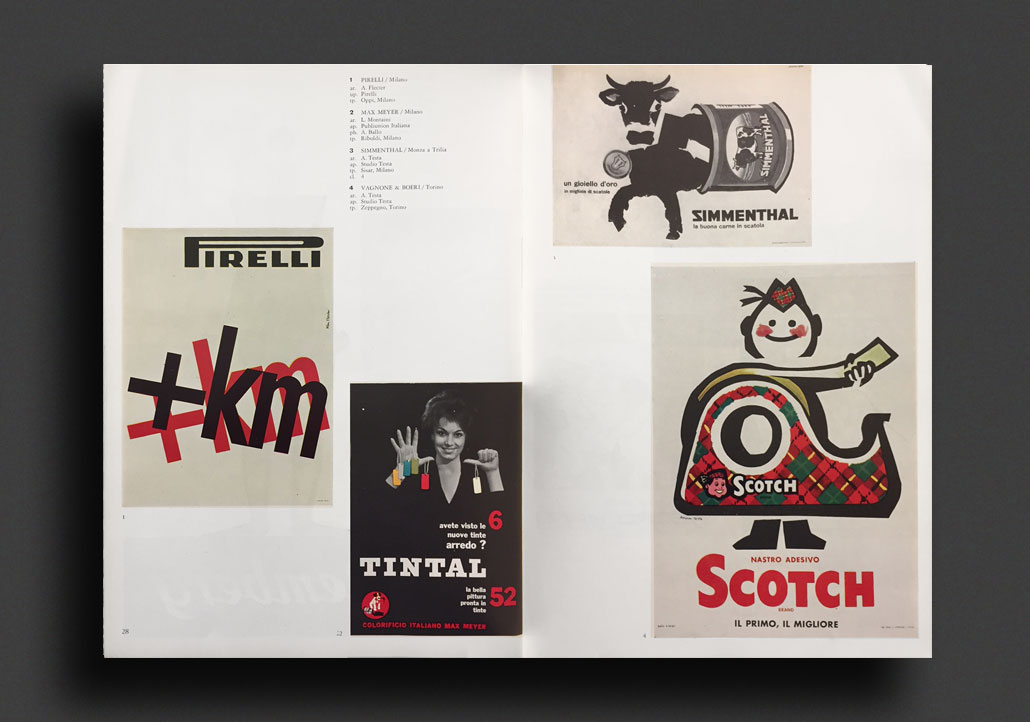
1959-60 edition of the very collectable "Pubblicita in Italia" published by Editrice L'Ufficio Moderno in Milan. The editors for this year's annual included Bruno Munari and Antonio Boggeri. Profusely illustrated throughout in colour and b/w with hundreds of illustrations of late 1950's Italian design. Essay by Italian poet Vittorio Sereni. Text in English, Italian, French and German.
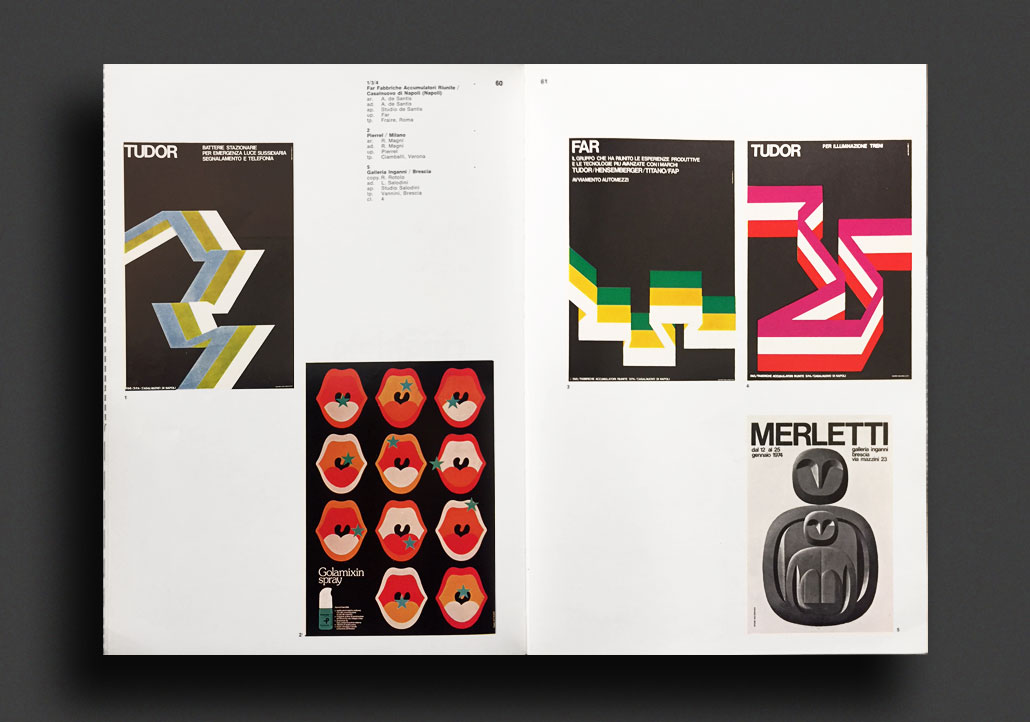
Pubblicita in Italia was an over-sized, hardcover annual that formed a comprehensive survey of contemporary advertising graphics and commercial design from Italy throughout the 1950-1980s, showcasing posters, shop windows, exhibition design, logos/trade-marks, packaging, book and record design, catalogues and brochures, television and film graphics, and so much more. Comparable to the "GRAPHIS" annuals, but exclusively Italian design, making these editions not only more scarce but the content seldom seen outside Italy in the period or anywhere since.
Good copy, with light ex-library markings not affecting content. Tanning/light wear to cloth. Without dust jacket.
1974, English / Italian / French / German
Hardcover (w. dust jacket), 300 pages, 230 x 22 cm
Out of print title / used / very good
Published by
Editrice L'Ufficio Moderno / Milan
$160.00 - Out of stock
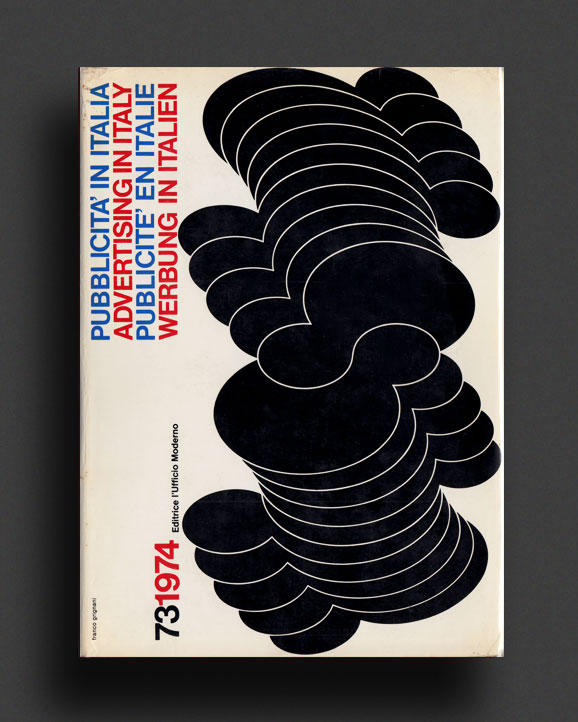
1973-74 edition of the very collectable "Pubblicita in Italia" published by Editrice L'Ufficio Moderno in Milan. Cover art and forward by Italian design and architect Franco Grignani. Profusely illustrated throughout in colour and b/w with hundreds of illustrations of late 1970's Italian design. Text in English, Italian, French and German.
Pubblicita in Italia was an over-sized, hardcover annual that formed a comprehensive survey of contemporary advertising graphics and commercial design from Italy throughout the 1950-1980s, showcasing posters, shop windows, exhibition design, logos/trade-marks, packaging, book and record design, catalogues and brochures, television and film graphics, and so much more. Comparable to the "GRAPHIS" annuals, but exclusively Italian design, making these editions not only more scarce but the content seldom seen outside Italy in the period.
Very Good copy, with Good dust jacket preserved under mylar wrap.
1975, English / Italian / French / German
Hardcover, 300 pages, 230 x 22 cm
1st Edition, Out of print title / used / very good
Published by
Editrice L'Ufficio Moderno / Milan
$160.00 - Out of stock
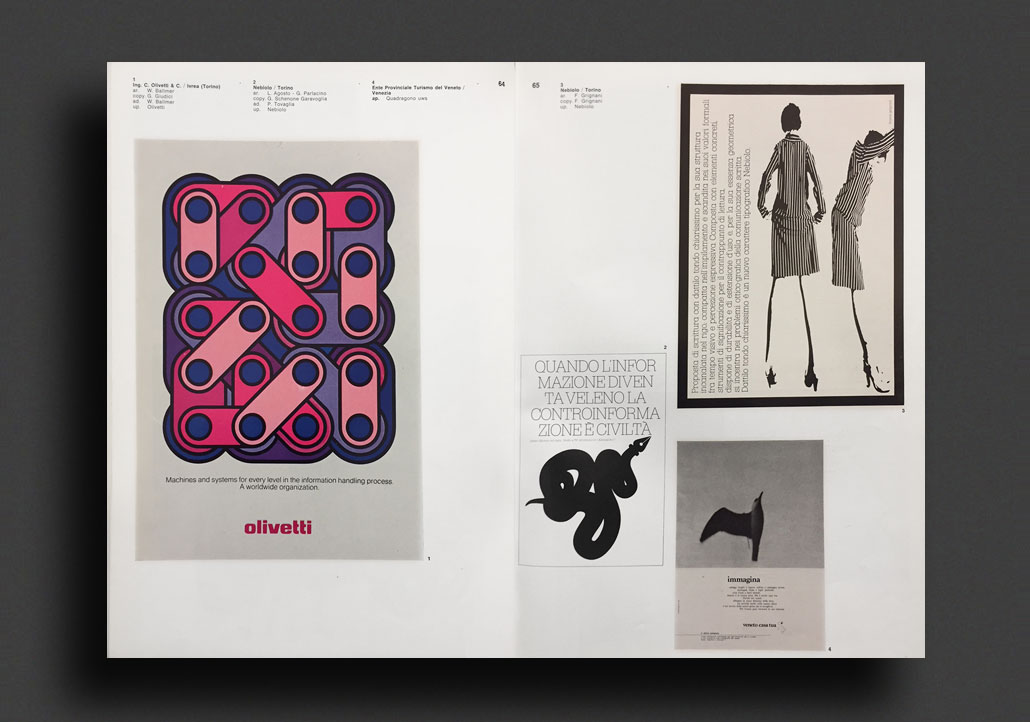
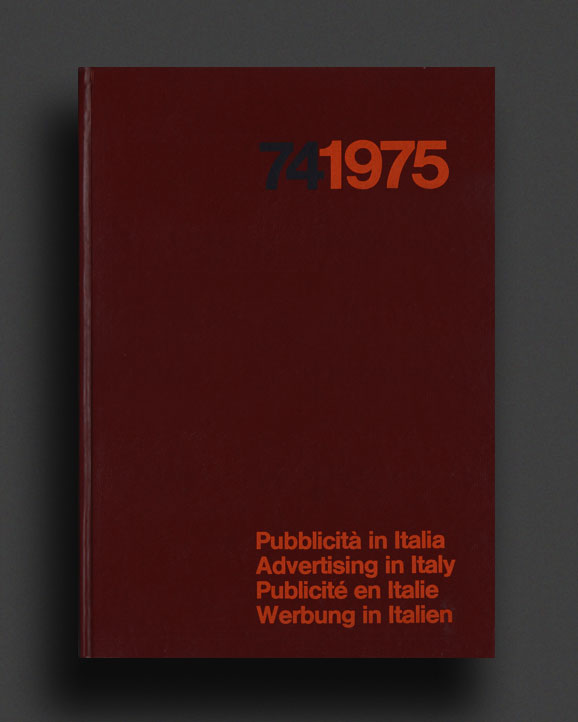
1974-75 edition of the very collectable "Pubblicita in Italia" published by Editrice L'Ufficio Moderno in Milan. Introduction by Guido Montana. Profusely illustrated throughout in colour and b/w with hundreds of illustrations of mid 1970's Italian design. Text in English, Italian, French and German.
Pubblicita in Italia was an over-sized, hardcover annual that formed a comprehensive survey of contemporary advertising graphics and commercial design from Italy throughout the 1950-1980s, showcasing posters, shop windows, exhibition design, logos/trade-marks, packaging, book and record design, catalogues and brochures, television and film graphics, and so much more. Comparable to the "GRAPHIS" annuals, but exclusively Italian design, making these editions not only more scarce but the content seldom seen outside Italy in the period.
Very Good copy but missing jacket.
1982, English / Italian / French / German
Hardcover (w. dust jakcet), 300 pages, 230 x 22 cm
1st Edition, Out of print title / used / very good
Published by
Editrice L'Ufficio Moderno / Milan
$140.00 - Out of stock
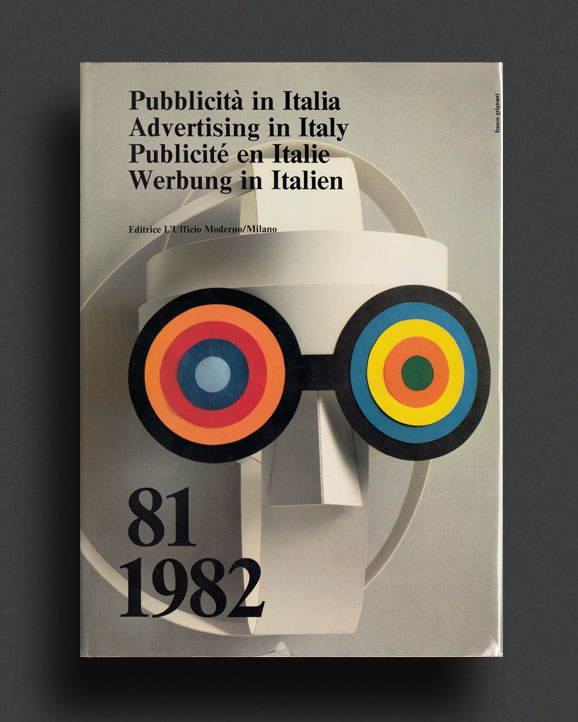
1981-82 edition of the very collectable "Pubblicita in Italia" published by Editrice L'Ufficio Moderno in Milan. Cover art by Italian design and architect Franco Grignani and forward by Italian designer Armando Testa. Profusely illustrated throughout in colour and b/w with hundreds of illustrations of early 1980's Italian design. Text in English, Italian, French and German.
Pubblicita in Italia was an over-sized, hardcover annual that formed a comprehensive survey of contemporary advertising graphics and commercial design from Italy throughout the 1950-1980s, showcasing posters, shop windows, exhibition design, logos/trade-marks, packaging, book and record design, catalogues and brochures, television and film graphics, and so much more. Comparable to the "GRAPHIS" annuals, but exclusively Italian design, making these editions not only more scarce but the content seldom seen outside Italy in the period.
Very Good copy, with Good dust jacket preserved under mylar wrap.
1968, German
Softcover, 42 pages, 23.5 x 13.5 cm
1st Edition, Out of print title / used / very good
Published by
Städtisches Museum / Leverkusen
$45.00 - Out of stock
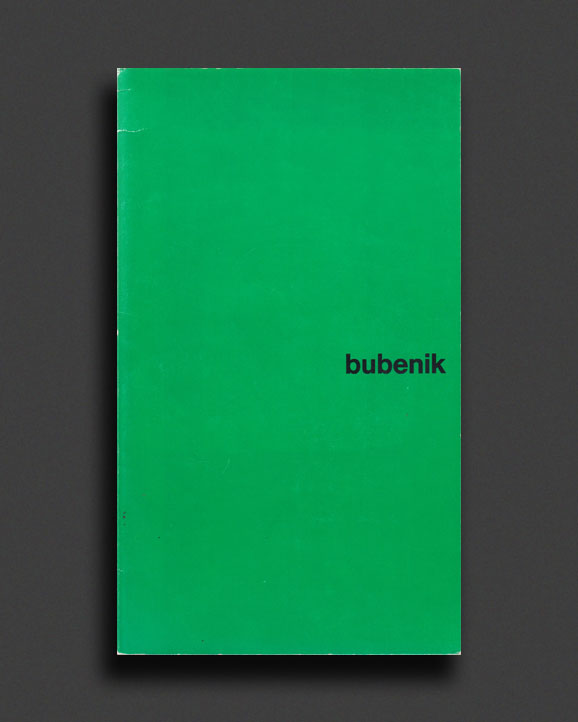
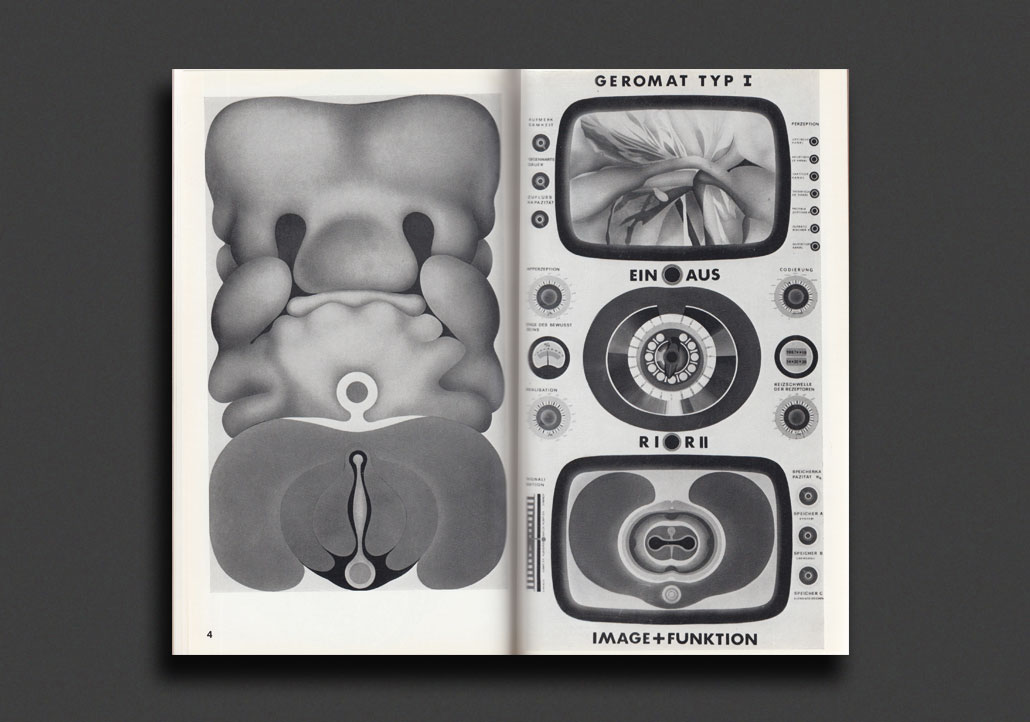
Wonderful early Gernot Bubenik catalogue published on the occasion of a solo exhibition in 1968 at Städtisches Museum Schloß Morsbroich, Leverkusen. With German texts by Bubenik, Rolf Wedewer, and Rolf Gunter Dienst, a biography of the artist, and full list of artworks on brown recycled stocks and illustrations of Bubenik's fantastic airbrush paintings throughout in vivid colour on gloss stock. Original gallery price-list inserted.
Gernot Bubenik (b. 1942) is a painter and printer whose work revolves around subjects of art, science and ecology. Bubenik became famous in the 60s with his airbrushed, metal graphic boards of idiosyncratic motifs of organic pop geometry and science fiction, receiving the German Critics' Award in 1967 and in 1968 the prize of the Graphic Biennale Tokyo. Since 1980 he has been producing body prints, coluor actions and light trails, and has maintained a workshop for ecology utilising worm compost to create colour actions with compostable colour masses. Between 1991 and 1995 he held a lectureship in experimental screenprinting at the Hochschule für Bildende Kunst Berlin, resulting in the development of a non-toxic, compostable screen printing ink and a child-friendly working technique for manual screen printing. From 1992 to 2005 he worked on the realization of the cultural youth project "Art and Ecology" in cooperation with the Kulturbüro Kreuzberg, with the participation of about 3000 children and adolescents.
Very Good copy.
1976, Czech
Hardcover,
Out of print title / used / good
Published by
Albatros / Prague
$28.00 - Out of stock
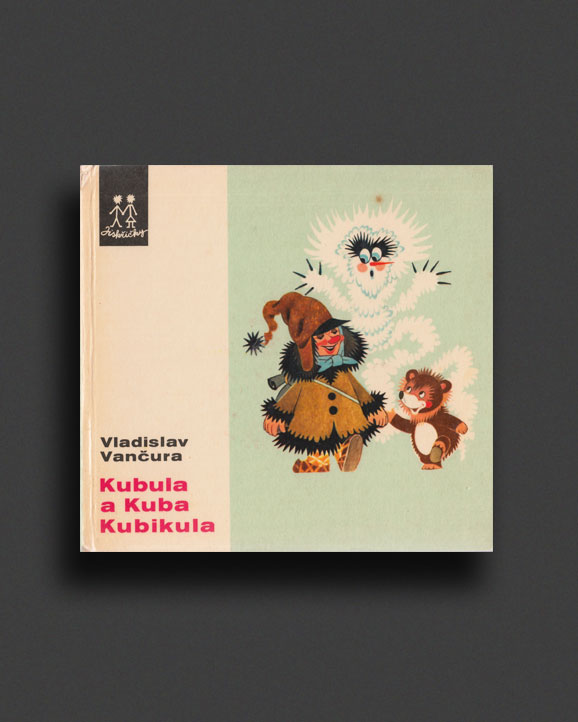
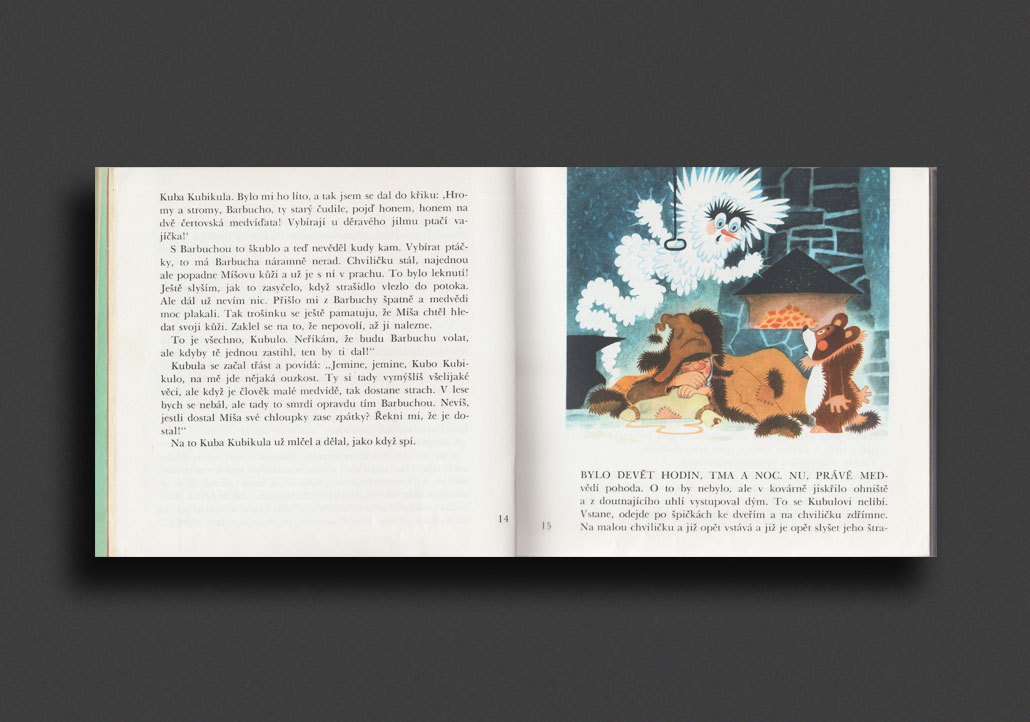
1976 hardcover edition of Kubula a Kuba Kubikula, the only fairy tale ever written by Vladislav Vančura, one of the most important Czech writers of the 20th century, and here illustrated by the great Czech animator Zdeněk Miler and published by Albatros in Prague. Kubula a Kuba Kubikula is a classic of Czech children's literature. First published in 1931, it has not lost any of his charm, individuality and wit. It is the story of the adventures of an unlikely trio - a boy, Kuba Kubikula, his naughty bear cub Kubula, and the bugbear (or bogeyman) Barbucha, who wander the winter countryside doing odd jobs to earn their keep.
Vladislav Vančura (1891 – 1942) was an important Bohemian (Czech) writer active in the 20th century, who was killed by the Nazis. He was also active as a film director, playwright and screenwriter.
Zdeněk Miler (1921 – 2011) was a Czech animator and illustrator best known for his Mole (Krtek or Krteček in original) character and its adventures spanning approximately 50 films.
1977, Czech
Softcover, 32 pages,
1st Edition, Out of print title / used / very good
Published by
National Gallery / Prague
$40.00 - Out of stock
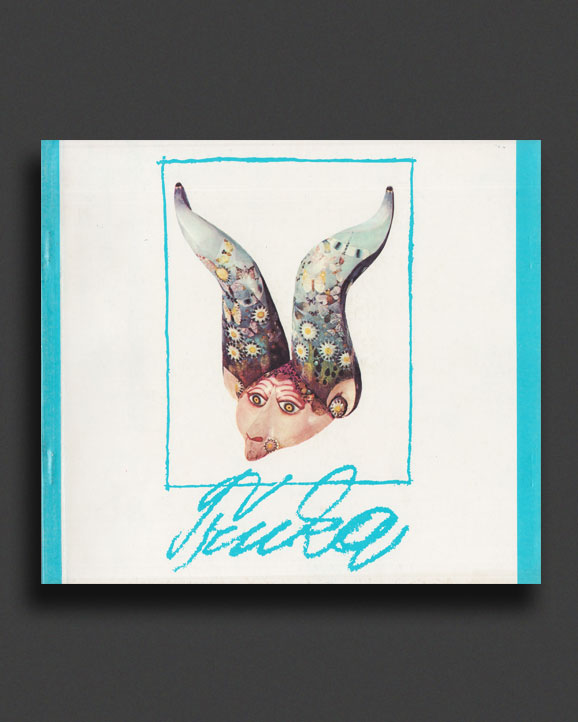
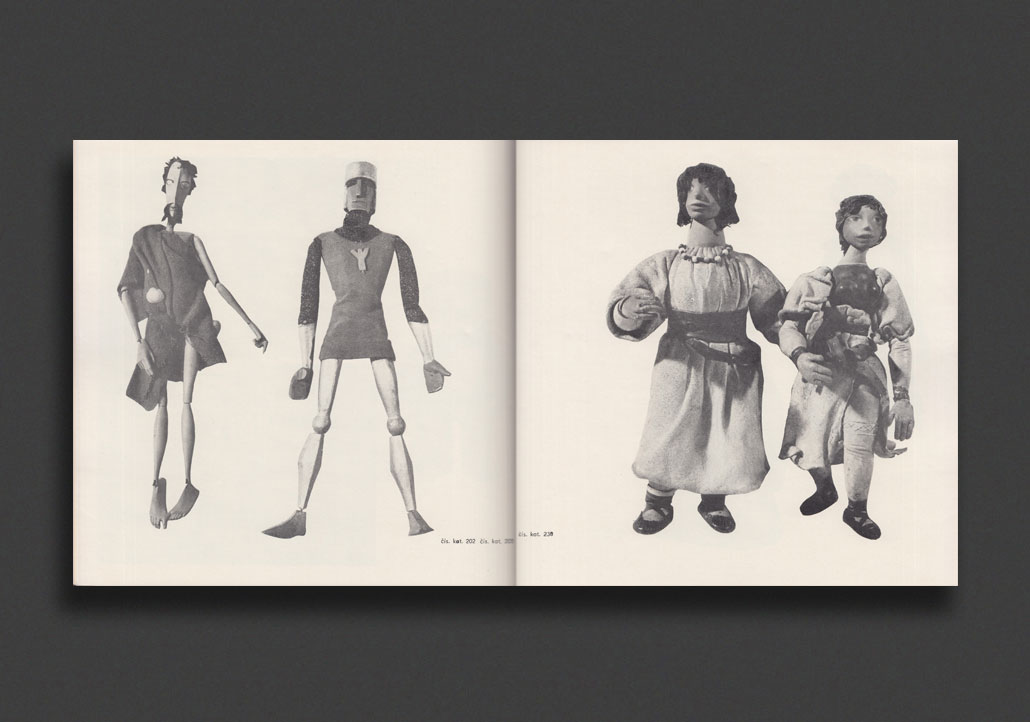
Lovely Czech catalogue from 1977 published on the occasion of an exhibition of the work of master animator, puppeteer and illustrator Jiří Trnka (1912-1969), held at the Národní Galerie, Praha (Prague National Gallery). Profusely illustrated throughout with examples of Trnka's puppets, drawings, and paintings.
Very Good copy.
Jiří Trnka (11912 – 1969) was a Czech puppet-maker, illustrator, motion-picture animator and film director. In addition to his extensive career as an illustrator, especially of children's books, he is best known for his work in animation with puppets, which began in 1946. Most of his movies were intended for adults and many were adaptations of literary works. Because of his prolific influence in animation, he was called "the Walt Disney of Eastern Europe", despite the great differences between their works. Throughout his life, he illustrated 130 works of literature, most of them for children, for which he received the international Hans Christian Andersen Medal for illustrators in 1968. Especially famous are his illustrations for the tales of the Brothers Grimm, as well as many collections of folktales from Czech authors such as Jiří Horák and Jan Páleníček. Of his many animated works, Trnka considered his greatest work to be his last film, the short Ruka (The Hand, 1965). In the words of animation historian Giannalberto Bendazzi, Ruka is "a kind of hymn to the creative freedom raging." In short, it is about a sculptor visited by a huge hand, which seeks the completion of a sculpture of itself. By rejecting the imposition, the artist is constantly pursued by the hand, ending with induced suicide and the hand officiating at his funeral. Ruka is considered a protest against the conditions imposed by the Czechoslovak communist state to artistic creation, and even some have seen in it an anticipation of the so-called Prague Spring. Although the film initially had no problems with censorship, after his death copies were confiscated and banned from public display in Czechoslovakia for two decades.