World Food Books' programme is largely produced on Kulin Nation land. We acknowledge the Wurundjeri people of the Kulin Nation as the first and continuing custodians of this land, and pay respect to their Elders past, present, and emerging.
World Food Books is an arts and special interests bookshop in Naarm / Melbourne. Founded in 2010, World Food Books is devoted to the presentation of a rotating, hand-selection of international art, design, literary and counterculture publications with an emphasis on the anti-traditional, the experimental, the avant-garde, the heretic, the marginal.
Presenting new titles alongside rare and out-of-print books, catalogues and journals spanning the fields of modern and contemporary art, design, photography, illustration, film, literature, poetry, cultural theory, philosophy, sexuality, popular and underground culture in its many radical forms, World Food Books wishes to encourage adventurous, thoughtful and open-minded reading, looking, writing, and exchange of publishing and ideas, both current and historical.
As well as our bookshop, located in Melbourne's historical Nicholas Building, all of our inventory is available internationally via our online mail-order service.
World Food Books semi-regularly co-ordinates "Occasions", a programme of exhibits and events at the bookshop and in partnership with other hosts (such as museums and art galleries) that develop out of the activities, relationships and content of the bookshop itself.
World Food Books
The Nicholas Building
37 Swanston Street
Room 5, Level 6
Melbourne 3000
Australia
SHOP HOURS:
THU–SAT 12–6
WEB-SHOP OPEN 24/7
World Food Books
Postal Address:
PO Box 435
Flinders Lane
Victoria 8009
Australia
info@worldfoodbooks.com
Art
Theory / Essay
Architecture / Interior
Graphic Design / Typography
Photography
Fashion
Eros
LGBTQ+
Fiction / Poetry
Weird / Speculative / Science Fiction / Horror
Transgressive / Visceral / Abject
Symbolism / Decadence / Fin de siècle
Film / Video
Painting
Sculpture / Installation
Performance / Dance / Theater
Drawing
Sound / Music
Curatorial
Group Shows / Collections
Periodicals
Out-of-print / Rare
Posters / Ephemera / Discs
Signed Books
World Food Books Gift Voucher
World Food Book Bag
Australian Art
Australian Fiction
Australian Science Fiction / Speculative Fiction
Australian Poetry
Australian Photography
Japanese Photography
Conceptual Art
Minimal Art
Dada
'Pataphysics / Oulipo
Fluxus
Concrete Poetry
Pop Art
Surrealism
Arte Povera
Arte Informale / Haute Pâte / Tachism
Nouveau Réalisme / Zero / Kinetic
Situationism / Lettrism
Collage / Mail Art / Xerox Art
Art Brut / Folk / Visionary / Fantastic
Illustration / Graphic Art / Bandes Dessinées
Furniture
Italian Radical Design / Postmodernism
Textiles
Ceramics / Glass
Counterculture
Protest / Revolt
Philosophy
Psychoanalysis
Anthropology
Anarchism
Socialism / Anarchism / Communism / Capitalism
Literary Theory / Semiotics / Language
Feminism / Women's Studies
Gender Studies / Sexuality
Anthropology
Fetishism / BDSM
Drugs / Psychedelia
Crime / Violence
Animal Rights / Veganism
Occult / Esoterica
Ecology / Earth / Alternative Living
Whole Earth / Crafts
All prices in AUD (Australian dollars)
Pick-Ups
Pick-up orders can be collected in our bookshop during opening hours after order date. Please collect any Pick-up orders within 2 weeks of ordering as we have limited storage space. Orders will be released back into stock if not collected within this time. No refunds can be made for pick-ups left un-collected. If you cannot make it in to the bookshop in this time-frame, please choose postage option.
Return Policy
All sales are final. We do accept returns (for refund or exchange) for items received in error. All our orders are packed with special care using heavy-duty padding and cardboard book-mailers or bubble mailers (for smaller books), using reinforcement where required. We cannot take responsibility for any lost, stolen or damaged parcels.
Insurance
Should you wish to insure your package, please email us directly after placing your order and we can organise this at a small extra expense. Although all standard/express tracked packages are very safe and dependable, we cannot take responsibility for any lost, stolen or damaged parcels. We recommend insurance on valuable orders.
Interested in selling your old books, catalogues, journals, magazines, comics, fanzines, ephemera? We are always looking for interesting, unusual and out-of-print books to buy. We only buy books in our fields of interest and specialty, and that we feel we can resell.
We base these prices on desirability, market value, in-print prices, condition and our current stock levels. We offer cash, store credit, and can take stock on consignment. All
about 25% of the price we expect to get when we sell them, or 30% in store credit. We base these prices on desirability, market value, in-print prices, condition and our current stock levels.
Sell your books any day of the week. You can drop them off and return later. If you have a lot of books, we can visit your Sydney home.
We buy books that we feel we can resell. We offer about 25 % of the price we expect to get when we sell them, or 30% in store credit. We base these prices on desirability, market value, in-print prices, condition and our current stock levels.
Philadelphia Wireman
03 August - 01 September, 2018
World Food Books is proud to announce our next Occasion, the first presentation of sculptures by Philadelphia Wireman in Australia.
The Philadelphia Wireman sculptures were found abandoned in an alley off Philadelphia’s South Street on trash night in 1982. Their discovery in a rapidly-changing neighbourhood undergoing extensive renovation, compounded with the failure of all attempts to locate the artist, suggests that the works may have been discarded after the maker’s death. Dubbed the "Philadelphia Wireman" during the first exhibition of this work, in 1985, the maker’s name, age, ethnicity, and even gender remain uncertain. The entire collection totals approximately 1200 pieces, all intricately bound together with tightly-wound heavy-gauge wire (along with a few small, abstract marker drawings, reminiscent both of Mark Tobey and J.B. Murry). The dense construction of the work, despite a modest range of scale and materials, is singularly obsessive and disciplined in design: a wire armature or exoskeleton firmly binds a bricolage of found objects including plastic, glass, food packaging, umbrella parts, tape, rubber, batteries, pens, leather, reflectors, nuts and bolts, nails, foil, coins, toys, watches, eyeglasses, tools, and jewellery.
Heavy with associations—anthropomorphic, zoomorphic, and socio-cultural responses to wrapped detritus—the totemic sculptures by Philadelphia Wireman have been discussed in the context of work created to fulfil the shamanistic needs of alternative religions in American culture. Curators, collectors, and critics have variously compared certain pieces to sculpture from Classical antiquity, Native American medicine bundles, African-American memory jugs, and African fetish objects. Reflecting the artist’s prolific and incredibly focused scavenging impulse, and despite—or perhaps enhanced by—their anonymity, these enigmatic objects function as urban artefacts and arbiters of power, though their origin and purpose is unknown. Philadelphia Wireman, whatever their identity, possessed an astonishing ability to isolate and communicate the concepts of power and energy through the selection and transformation of ordinary materials. Over the course of the past two decades, this collection has come to be regarded as an important discovery in the field of self-taught art and vernacular art.
Presented in collaboration with Fleisher-Ollman Gallery, Philadelphia, and Robert Heald, Wellington.
Susan Te Kahurangi King
02 February - 10 March, 2018
Susan Te Kahurangi King (24 February 1951 - ) has been a confident and prolific artist since she was a young child, drawing with readily available materials - pencils, ballpoint pens and felt-tip markers, on whatever paper is at hand. Between the ages of four and six Susan slowly ceased verbal communication. Her grandparents William and Myrtle Murphy had developed a special bond with Susan so they took on caring responsibilities for extended periods. Myrtle began informally archiving her work, carefully collecting and storing the drawings and compiling scrapbooks. No drawing was insignificant; every scrap of paper was kept. The King family are now the custodians of a vast collection containing over 7000 individual works, from tiny scraps of paper through to 5 meter long rolls.
The scrapbooks and diaries reveal Myrtle to be a woman of great patience and compassion, seeking to understand a child who was not always behaving as expected. She encouraged Susan to be observant, to explore her environment and absorb all the sights and sounds. Myrtle would show Susan’s drawings to friends and people in her community that she had dealings with, such as shopkeepers and postal workers, but this was not simply a case of a grandmother’s bias. She recognised that Susan had developed a sophisticated and unique visual language and sincerely believed that her art deserved serious attention.
This was an unorthodox attitude for the time. To provide some context, Jean Dubuffet coined the term Art Brut in 1945 to describe work created by self-taught artists – specifically residents of psychiatric institutions and those he considered to be visionaries or eccentrics. In 1972 Roger Cardinal extended this concept by adopting the term Outsider Art to describe work made by non-academically trained artists operating outside of mainstream art networks through choice or circumstance. Susan was born in Te Aroha, New Zealand in 1951, far from the artistic hubs of Paris and London that Dubuffet and Cardinal operated in. That Myrtle fêted Susan as a self-taught artist who deserved to be taken seriously shows how progressive her attitudes were.
Susan’s parents Doug and Dawn were also progressive. Over the years they had consulted numerous health practitioners about Susan’s condition, as the medical establishment could not provide an explanation as to why she had lapsed into silence. Dawn educated herself in the field of homeopathy and went on to treat all twelve of her children using these principles – basing prescriptions on her observations of their physical, mental and emotional state.
Doug was a linguist with an interest in philosophy who devoted what little spare time he had to studying Maori language and culture. To some extent their willingness to explore the fringes of the mainstream made them outsiders too but it was their commitment to living with integrity and their respect for individuality that ensured Susan’s creativity was always encouraged.
Even though Susan’s family supported her artistic pursuits, some staff in schools and hospitals saw it as an impediment to her assimilation into the community and discouraged it in a variety of ways. Her family was not always aware of this and therefore did not fully understand why Susan stopped drawing in the early 1990s. However, rather than dwell on the challenges that Susan faced in pursuit of her artistic practice, they prefer to highlight her achievements. In 2008 Susan began drawing again in earnest, after an almost 20 year interruption, and her work is now shown in galleries around the world.
Susan grew up without television and has been heavily influenced by the comics she read as a child. She is absolutely fearless in the appropriation of recognizable characters, such as Donald Duck and Mickey Mouse, in her work. She twists their limbs, contorts their faces, compresses them together, blends them into complex patterned backgrounds - always imbuing them with an incredible energy. Although Susan often used pop culture characters in her work they are not naive or childlike. These are drawings by a brilliant self-taught artist who has been creating exceptional work for decades without an audience in mind.
Mladen Stilinović
"Various Works 1986 - 1999"
02 February 16 - September 10, 2016
Various works 1986 - 1999, from two houses, from the collections of John Nixon, Sue Cramer, Kerrie Poliness, Peter Haffenden and Phoebe Haffenden.
Including: Geometry of Cakes (various shelves), 1993; Poor People’s Law (black and white plate), 1993; White Absence (glasses, ruler, set square, silver spoon, silver ladel with skin photograph and wooden cubes), 1990-1996; Exploitation of the Dead (grey and red star painting, wooden painting, black spoon with red table, red plate), 1984-1990; Money and Zeros (zero tie, paintings made for friends in Australia (Sue, John, Kerrie), numbers painting), 1991-1992; Words - Slogans (various t-shirts) - “they talk about the death of art...help! someone is trying to kill me”, “my sweet little lamb”, “work is a disease - Karl Marx”; Various artist books, catalogues, monographs, videos; Poster from exhibition Insulting Anarchy; "Circular" Croatian - Australian edition; Artist book by Vlado Martek (Dostoyevsky); more.
Thanks to Mladen Stilinović and Branka Stipančić.
Jonathan Walker
Always Will Need To Wear Winter Shirt Blue + Ochre Small Check Pattern
21 August - 21 September, 2015
Untitled
I am not a great reader of poetry but I always return to the work of Melbourne poet, Vincent Buckley (1925- 1988). Perhaps I find his most tantalising piece to be not a finished poem but a fragment left on a scrap of paper discovered on his desk after the poet’s death.
The poetry gathers like oil
In the word-core, and spreads
It has its music meet,
Its music is in movement.
This fragment is more the shell left behind from a volatile thought than a finished poem. I find the last two lines honest but awkward whereas the first two lines work like an arrow. Most likely he could not find a resolution so it was left. Still, in its present form, it remains an eloquent testimony to the ultimate failure of a medium to express mobile thought and sensation, in Buckley’s case, through verbal language. It’s an important matter because this is something all artists have to deal with regardless of the medium.
I have never written a poem, however, I am forever copying fragments from books on paper scraps in a vain effort to fix certain notions in my head. At first, they function as bookmarks that are sometimes returned to when I open the book. But before long, as they accumulate, they fall out littering the table interspersed with A4 photocopies, bills, books and medications.
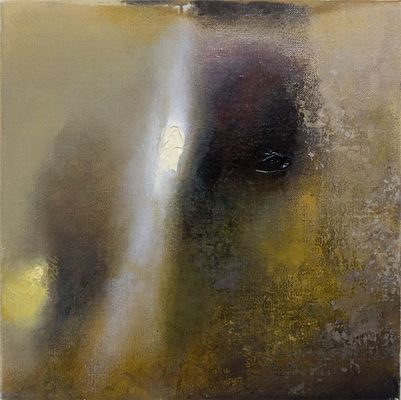
To return to Buckley’s fragment, the first two lines very much evoke how I paint nowadays. As you age, detail diminishes and patches of light become more luminous and float. I feel the most honest way of dealing with this is by smearing the oil paint on the canvas with the fingers and working close-up, blind. Only if the patches coalesce into an approaching image can the work gain a life.
-
Jonathan Walker was born in Melbourne, Australia and brought up on a dairy farm in Gippsland. In the 1970’s he studied painting at RMIT and won the Harold Wright Scholarship to the British Museum, London. During the 1980’s he exhibited at Pinacotheca Gallery, Richmond and had work shown at the NGV and Heidi City Art Gallery. Over the same period he designed the cover for the “Epigenesi” LP by Giancarlo Toniutti, Italy and conducted a mail exchange work with Achim Wollscheid, Germany. The work with artists through the post resulted in an article published in the bicentenary issue of Art and Australia 1988. He showed in artist run spaces such as WestSpace in the 90’s and 2000’s, and until 2012, taught painting at Victoria University, which is where we (Colleen Ahern and Lisa Radford) as organisers of the exhibition, among many others, had the privilege of being his student.
Walker’s knowledge was imparted to students through the careful selection of music, literature, and artists found in books that he himself had ordered for the library. Walker’s strategy was the generosity of sharing his vast knowledge with references specific to each student and their context.
Walker’s paintings share a similar focus and intimacy.
This exhibition presents a small selection of recent paintings alongside a publication that includes Walker’s writing. Observational and analytical, Walker’s work is a type of material notation — the time of day, colour and how it is blended, the both specific and fleeting location of a reflection on lino or the question of whether a chair leg should be included in a painting.
Please join us on Friday August 21 between 6-8pm to celebrate the opening of the exhibition.
Curated by Colleen Ahern and Lisa Radford.
B. Wurtz
Curated by Nic Tammens
March 26 - April 4, 2015
B.Wurtz works from a basement studio in his home on Manhattan’s Lower East Side.
This local fact is attested to by the plastic shopping bags and newsprint circulars that appear in his work. As formal objects, they don’t make loud claims about their origins but nonetheless transmit street addresses and places of business from the bottom of this long thin island. Like plenty of artists, Wurtz is affected by what is local and what is consumed. His work is underpinned by this ethic. It often speaks from a neighborhood or reads like the contents of a hamper:
“BLACK PLUMS $1.29 lb.”
“Food Bazaar”
“USDA Whole Pork Shoulder Picnic 99c lb.”
“RITE AID Pharmacy, with us it’s personal.”
“H. Brickman & Sons.”
“Sweet Yams 59c lb."
Most of the work in this exhibition was made while the artist was in residence at Dieu Donne, a workshop dedicated to paper craft in Midtown. Here Wurtz fabricated assemblages with paper and objects that are relatively lightweight, with the intention that they would be easily transportable to Australia. This consideration isn’t absolute in Wurtz’s work, but was prescriptive for making the current exhibition light and cheap. Packed in two boxes, these works were sent from a USPS post office on the Lower East Side and delivered to North Melbourne by Australia Post.
Wurtz appears courtesy of Metro Pictures, New York.
Thanks to Rob Halverson, Joshua Petherick, Sari de Mallory, Matt Hinkley, Helen Johnson, Fayen d'Evie, Ask Kilmartin, Lisa Radon, Ellena Savage, Yale Union, and "Elizabeth".
John Nixon
"Archive"
December 15 - January 20, 2014
The presentation of John Nixon's archive offered a rare showcase of this extensive collection of the artist's own publications, catalogues, posters, ephemera, editions and more, from the mid 1980s onwards, alongside a selection of his artworks.
Organized by John Nixon, Joshua Petherick and Matt Hinkley.
"Habitat"
at Minerva, Sydney (organised by Joshua Petherick and Matt Hinkley)
November 15 - December 20, 2014
Lupo Borgonovo, Janet Burchill & Jennifer McCamley,
Lewis Fidock, HR Giger, Piero Gilardi, Veit Laurent Kurz,
Cinzia Ruggeri, Michael E. Smith, Lucie Stahl, Daniel Weil, Wols
Press Release:
“...It contained seven objects. The slender fluted bone, surely formed for flight, surely from the wing of some large bird. Three archaic circuitboards, faced with mazes of gold. A smooth white sphere of baked clay. An age-blackened fragment of lace. A fingerlength segment of what she assumed was bone from a human wrist, grayish white, inset smoothly with the silicon shaft of a small instrument that must once have ridden flush with the surface of the skin - but the thing’s face was seared and blackened.”
William Gibson, “Count Zero”, 1986
"Autumn Projects Archive"
Curated by Liza Vasiliou
March 6 - March 15, 2014
World Food Books, in conjunction with the Virgin Australia Melbourne Fashion Festival 2014, presented the Autumn Projects archive, consisting of a selection of early examples in Australian fashion with a particular interest in collecting designers and labels from the period beginning in the 1980’s, who significantly influenced the discourse of Australian Fashion.
Curated by Liza Vasiliou, the exhibition provided a unique opportunity to view pieces by designers Anthea Crawford, Barbara Vandenberg, Geoff Liddell and labels CR Australia, Covers, Jag along with early experimental collage pieces by Prue Acton and Sally Browne’s ‘Fragments’ collection, suspended throughout the functioning World Food Books shop in Melbourne.
H.B. Peace
presented by CENTRE FOR STYLE
November 14, 2013
"Hey Blinky, you say chic, I say same"
Anon 2013
H.B. Peace is a clothing collaboration between great friends Blake Barns and Hugh Egan Westland. Their pieces explore the divergences between 'character’ and ‘personality’ in garments....etc
Special Thanks to Joshua Petherick and Matt Hinkley of WFB and Gillian Mears
and a Very Special Thank you to Audrey Thomas Hayes for her shoe collaboration.
Janet Burchill & Jennifer McCamley
"Aesthetic Suicide"
May 10 - June 8, 2013
The first of our occasional exhibitions in the World Food Books office/shop space in Melbourne, "Aesthetic Suicide" presented a body of new and older works together by artists Janet Burchill & Jennifer McCamley, including videos, prints, a wall work, and publications.
During shop open hours videos played every hour, on the hour.
1975, French
Softcover (staple-bound), 82 pages, 27 x 21.5 cm
1st Edition, Out of print title / used / very good
Published by
Les Humanoïdes Associés / Paris
$65.00 - Out of stock
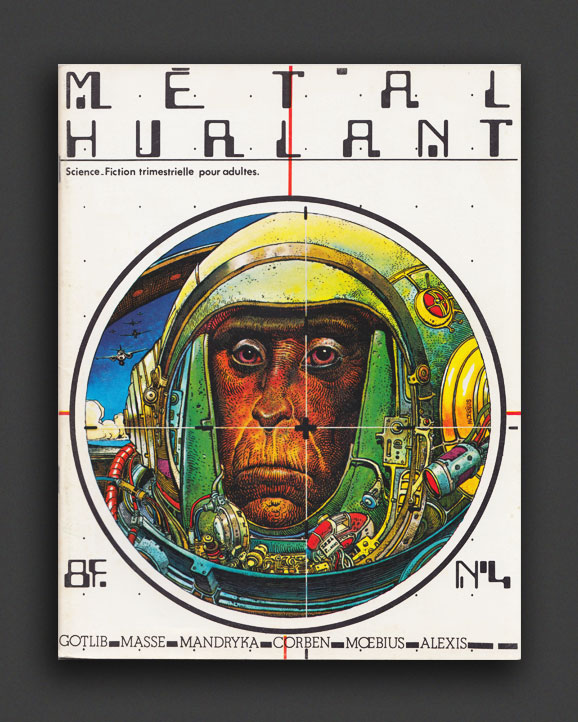
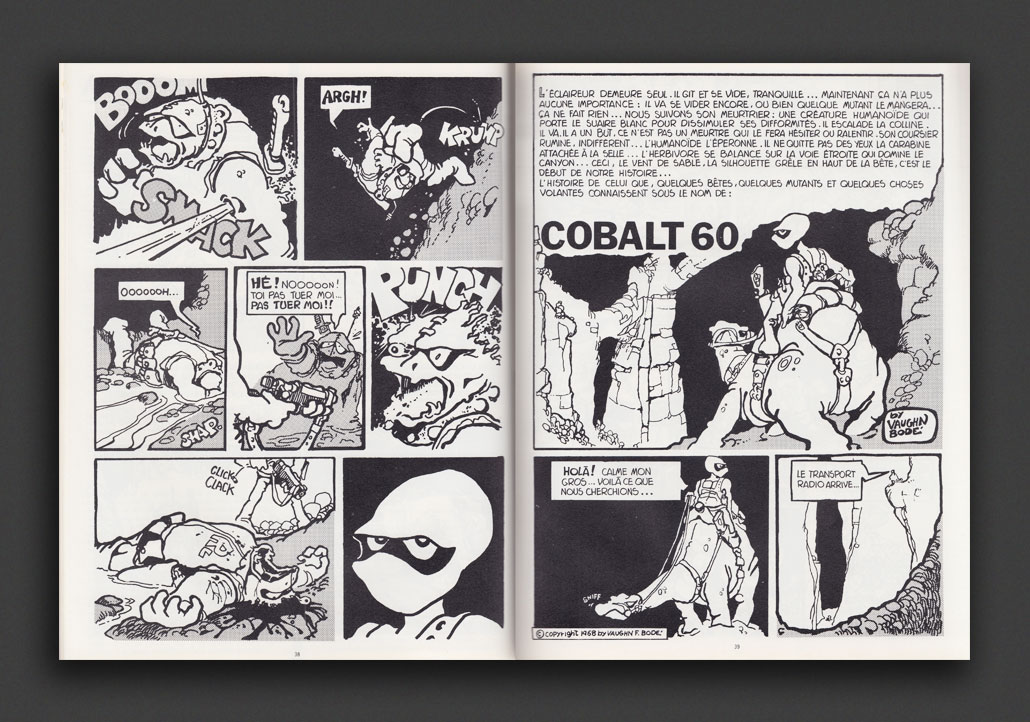
Metal Hurlant No. 4 1975 issue featuring comic stories/art by Moebius, Philippe Druillet, Vaughn Bodé, Richard Corben, Gotlib, Jean-Pierre Dionnet, Alain Voss, and many more, plus the usual fare of sci-fi, movies, music... Cover art by Moebius. Original French editions, very scarce outside Europe.
Métal Hurlant (literal translation: "Howling Metal") was a French comics anthology of science fiction and horror comics stories, created in December 1974 by comics artists Jean Giraud (better known as Mœbius) and Philippe Druillet together with journalist-writer Jean-Pierre Dionnet and financial director Bernard Farkas. The four were collectively known as "Les Humanoïdes Associés" (United Humanoids), which became the name of the publishing house releasing Métal Hurlant. English, German and Italian editions were also licensed, including Heavy Metal, published in the US by National Lampoon. Métal hurlant was originally released quarterly with contributors including Moebius and Druillet, depicting such iconic characters as Arzach and Lone Sloane for the first time, as well as work by Richard Corben, Guido Crepax, Alejandro Jodorowsky, Enki Bilal, Caza, Serge Clerc, Alain Voss, Berni Wrightson, Nicole Claveloux, Milo Manara, Frank Margerin, Masse, Chantal Montellier, and many others.
Good copy.
1976, French
Softcover (staple-bound), 66 pages, 28.5 x 20.5 cm
1st Edition, Out of print title / used / good
Published by
L'Echo des Savanes / Paris
$30.00 - Out of stock
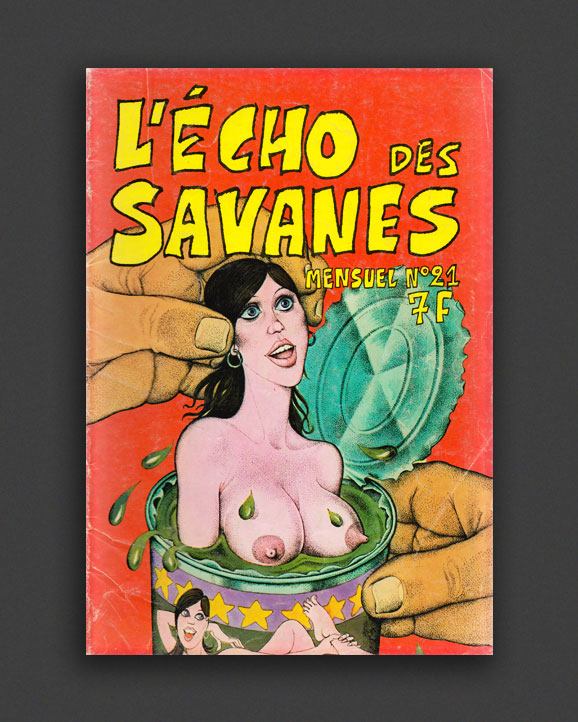
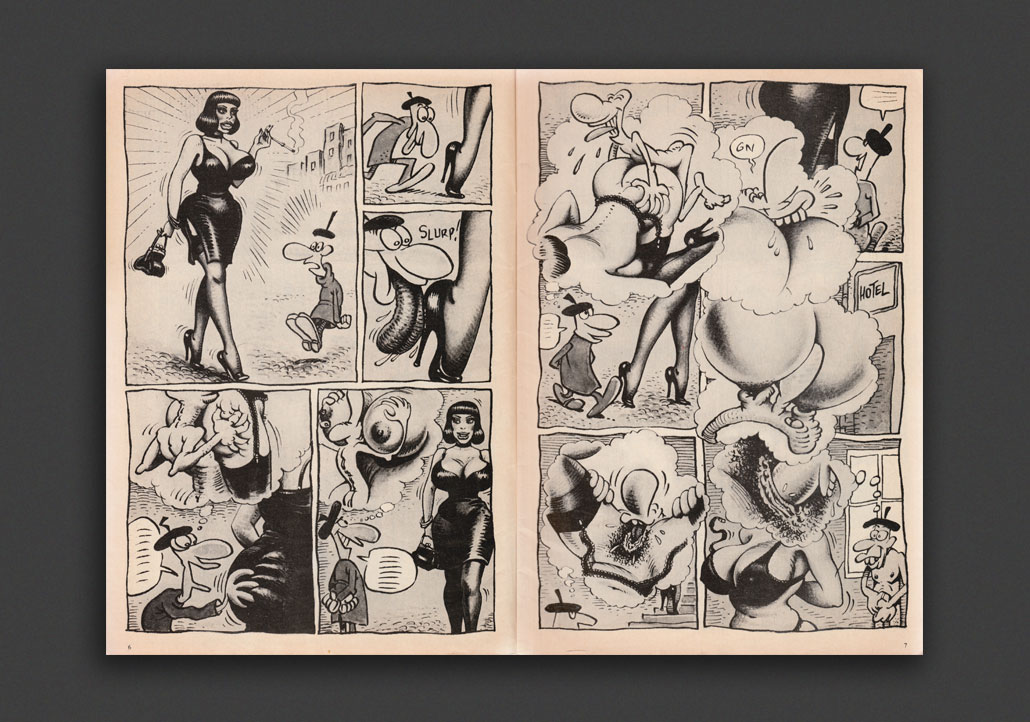
Issue 21 of L'Echo des Savanes Mensuel, published in 1976. Cover art by Georges Pichard. Features comics, artwork by Pichard, Jean Solé, Wallace Wood, Georges Wolinski, Gilbert Shelton, Dave Sheridan, Harvey Kurtzman, Nikita Mandryka, Jay Kinney, René Pétillon, Berbe, Philippe Marcelé, René Pétillon, alphabet by French novelist Georges Perec, more stories, cartoons, and much more...
L'Echo des Savanes Mensuel was a leading Franco-Belgian comics magazine founded in 1972 by Claire Bretécher, Marcel Gotlib and Nikita Mandryka. It featured many of the best of underground comic artists from around the world, particularly France and the US, every issue packed with parody of all sorts, often cartoons playfully taking the mickie out of other "popular" cartoons, and of course endless T & A and buffoonery. They were also book publishers of some excellence.
Good copy with general wear.
1978, French
Softcover (staple-bound), 82 pages, 28.5 x 20.5 cm
1st Edition, Out of print title / used / good
Published by
L'Echo des Savanes / Paris
$30.00 - Out of stock
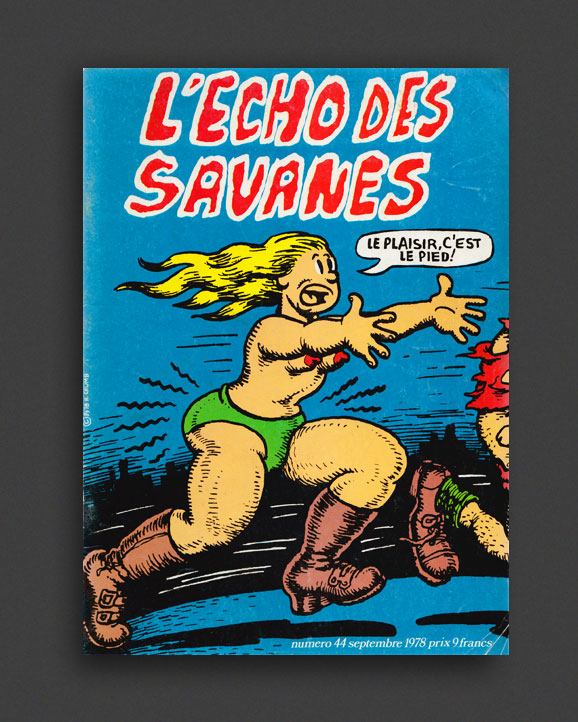
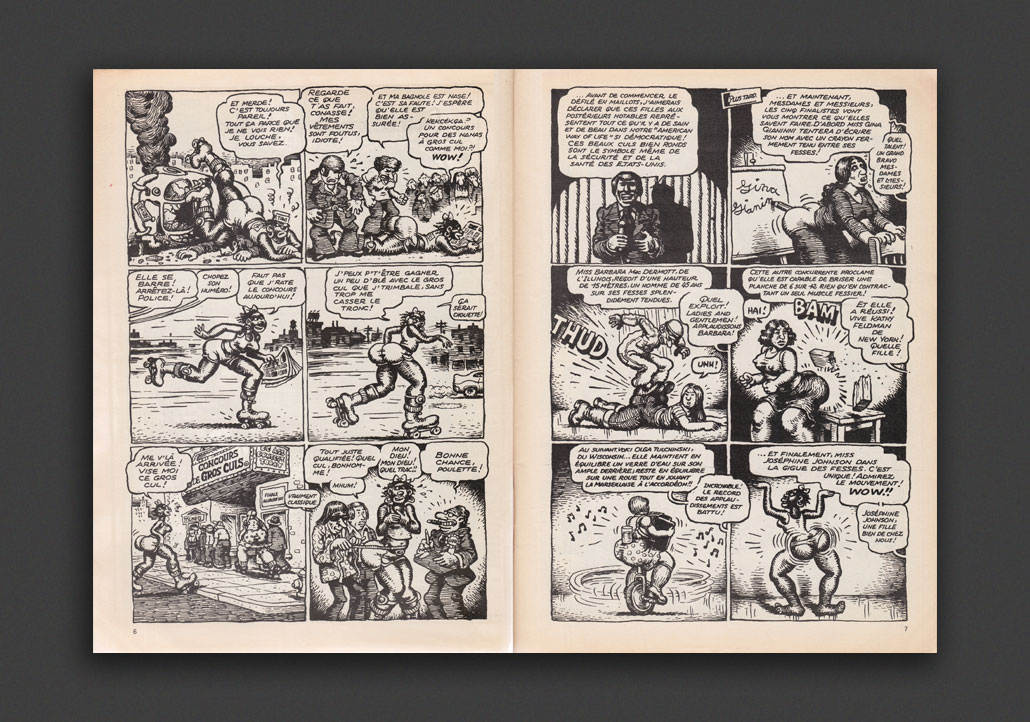
Issue 44 of L'Echo des Savanes Mensuel, published in 1978. Cover art by Robert Crumb. Features comics, artwork by Crumb, Saul Steinberg, Martin Veyron, Mel Graff, John Workman, Gene Day, Jean Teulé, Barbe, an article on MAD Magazine, more stories, cartoons, and much more...
L'Echo des Savanes Mensuel was a leading Franco-Belgian comics magazine founded in 1972 by Claire Bretécher, Marcel Gotlib and Nikita Mandryka. It featured many of the best of underground comic artists from around the world, particularly France and the US, every issue packed with parody of all sorts, often cartoons playfully taking the mickie out of other "popular" cartoons, and of course endless T & A and buffoonery. They were also book publishers of some excellence.
Good copy with general wear.
2006, Japanese
Hardcover (w. dust jacket and obi), 29.2 x 21.4 cm
Published by
King of Mountain / Tokyo
$65.00 $40.00 - Out of stock
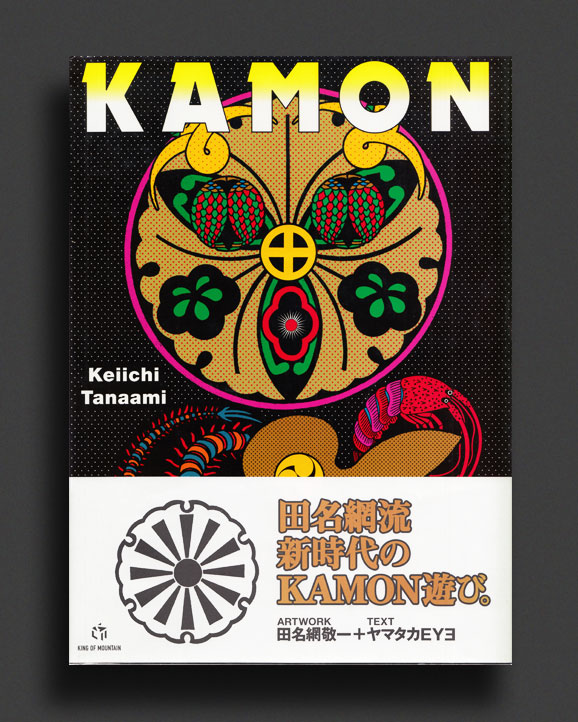
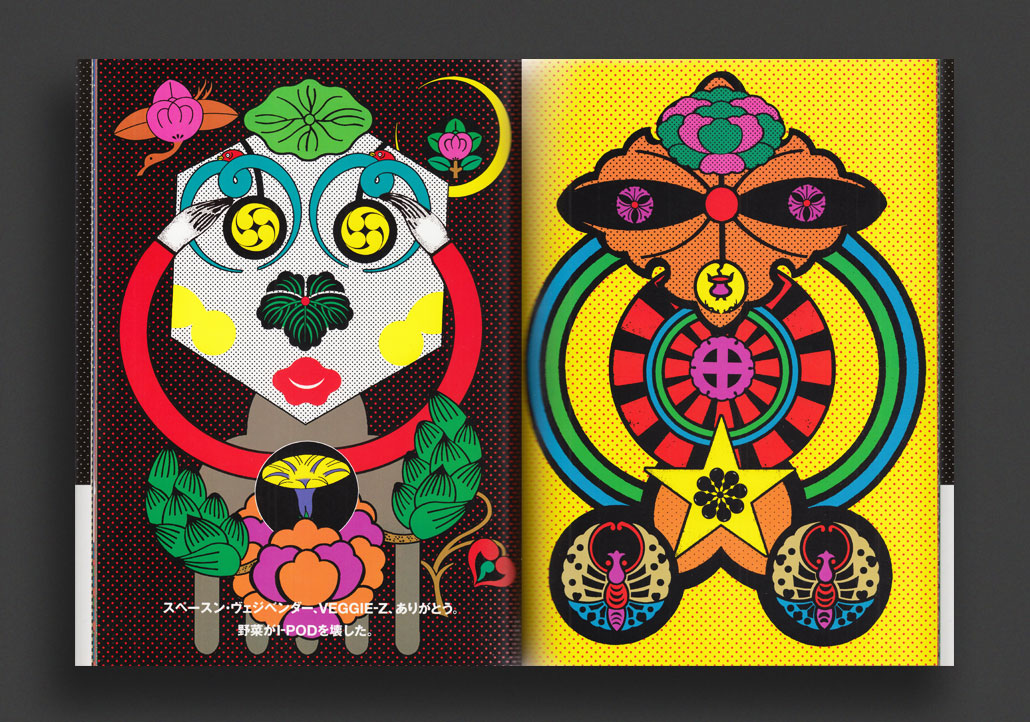
First hardcover edition of artists book "Kamon" by Keiichi Tanaami, published by King of Mountain in 2006, now out-of-print. The term "Kamon" refers to an ancient, heraldic crest used in Japan to indicate one's origins, ancestry. It is said that there are more than 20,000 distinct individual Kamon in Japan. Keiichi Tanaami has long used the Kamon as a graphic motif to synchronizes with his iconic world of psychedelia to create a new era of pop cultural heraldry. Illustrated in explosive colour throughout, with accompanying text by, most fittingly, Japanese artist and musician Yamantaka Eye (Boredoms).
Keiichi Tanaami (b. 1936 in Tokyo) is one of the leading pop artists of postwar Japan, and has been active as a multi-genre artist since the 1960s as a graphic designer, illustrator, video artist and fine artist.
1953, English
Hardcover (die-cut cover + pages), 24 pages, 28 x 21 cm
1st Edition, Out of print title / used / good
Published by
Ernest Benn / London
$400.00 - In stock -
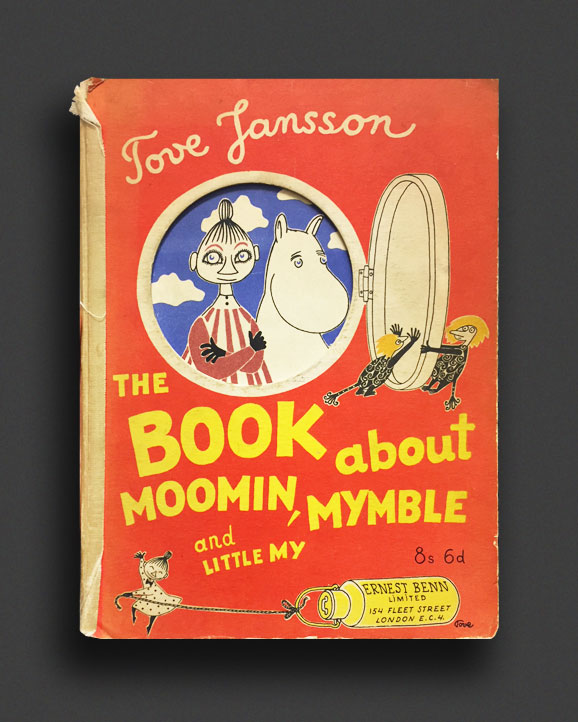
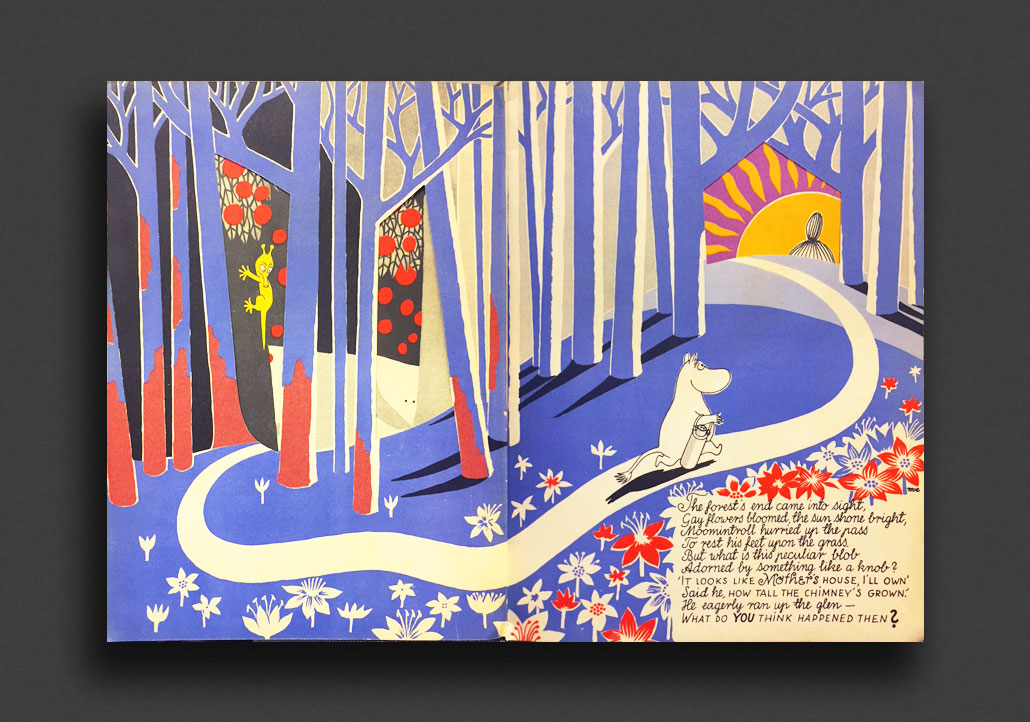
Stunning first English edition of the first ever Moomin picture book, Tove Jansson's "The Book About Moomin, Mymble and Little My", published in 1953 by Ernest Benn, London, and printed in Finland. Bound in the lovely heavy, die-cut board covers, these first editions have the most gorgeous printing throughout, with warm block colours and die-cut pages that allow the reader to glance through to the next scene of the story, all beautifully preserved throughout. The book won the Nils Holgersson plaque in 1953. Given by the Swedish Library Association to the author of the best children's book in the Swedish language, this was the first of Jansson's many literary prizes.
Very rare, especially so in such condition.
Tove Marika Jansson (1914 – 2001) was a Swedish-speaking Finnish author, novelist, painter, illustrator and comic strip author. Brought up by artistic parents, Jansson studied art from 1930 to 1938 in Stockholm, Helsinki and Paris. Her first solo art exhibition was in 1943. She continued to work as an artist and a writer for the rest of her life, and it was with the creation of her much-loved Moomin characters that she become known around the world. Jansson wrote the Moomin books for children, starting in 1945 with The Moomins and the Great Flood. Her books became international classics translated to 35 languages. For her work as a children's writer she received the Hans Christian Andersen Medal in 1966.
Good copy, with light wear/tanning and soft bumping to corners. Christmas note of previous owner's neatly marked on interior first page, also an ex-library stamp.
2015, English
Softcover, 256 pages, 21 x 29.7 cm
Published by
Sun Vision Press / New York
$50.00 - Out of stock
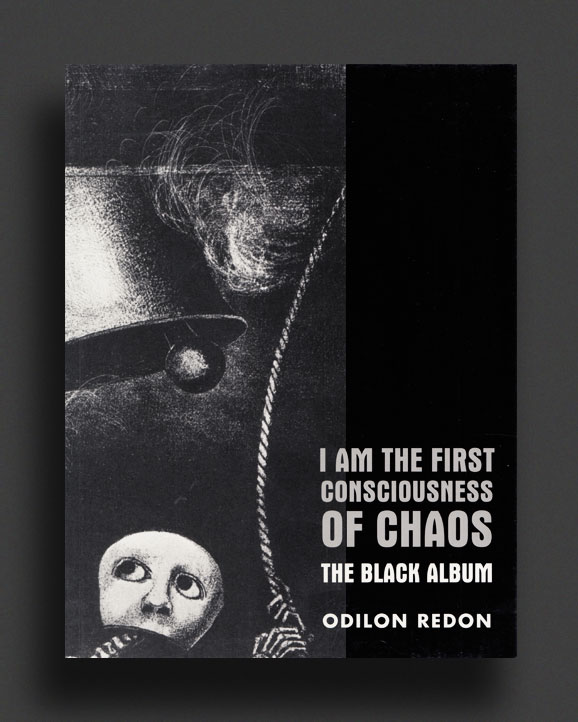
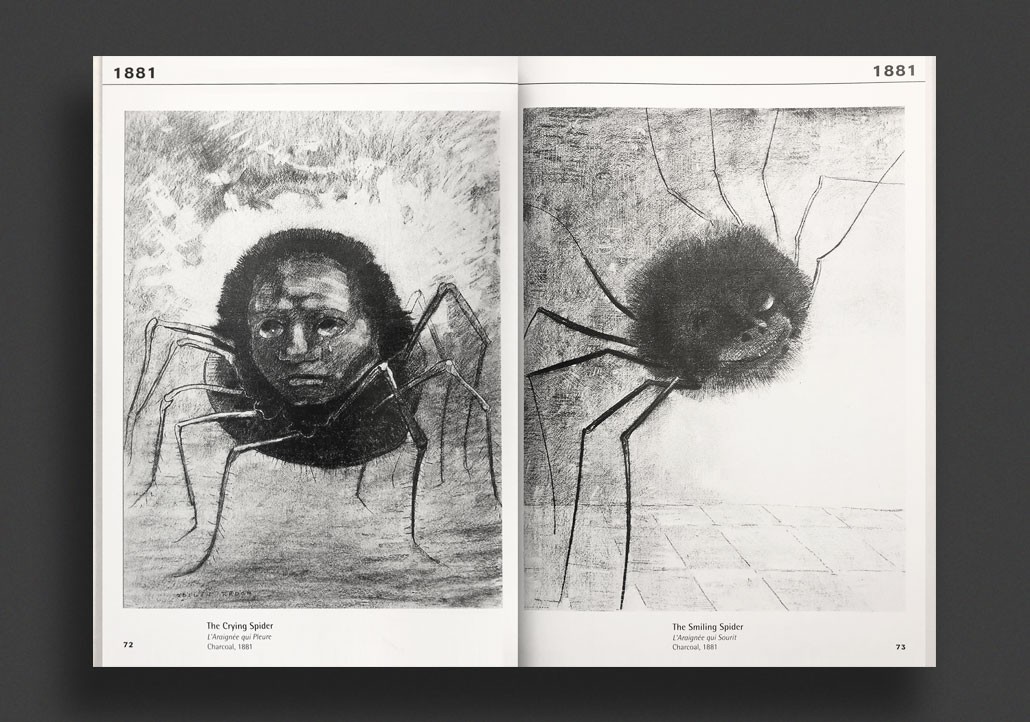
I Am the First Consciousness of Chaos collects the key noirs' (lithographs, etchings and charcoals) of Odilon Redon, perhaps the most enigmatic and esoteric figure in the artistic lineage that leads directly from Symbolism to Surrealism. Never previously available in a single trade volume, the majority of Redon’s noirs (over 250 illustrations) are finally collected here, including the illuminating excerpts from the decadent texts which inspired their creation. Authors featured include J-K Huysmans, Gustave Flaubert, Charles Baudelaire, Edgar Allan Poe and others.‘
1955, Japanese
Hardcover (w. dust jacket), 92 pages, 19 x 13.4 cm
1st Edition, Out of print title / used / good
Published by
Bungeishunju Shinsha / Japan
$120.00 - Out of stock
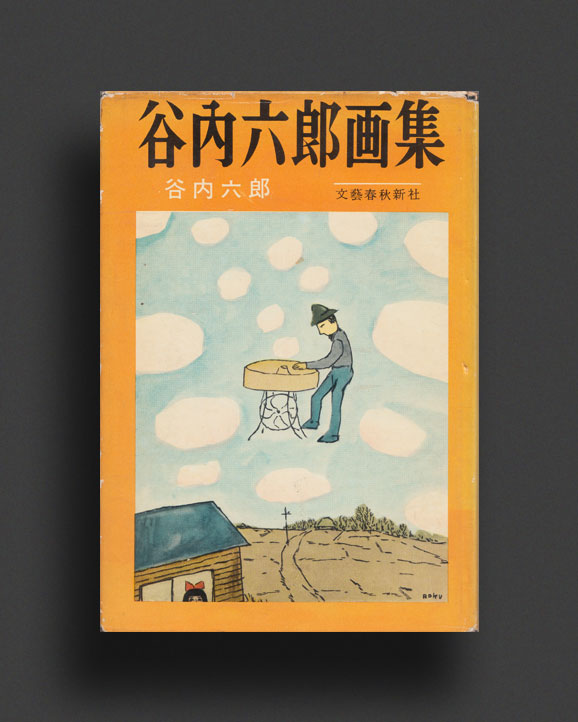
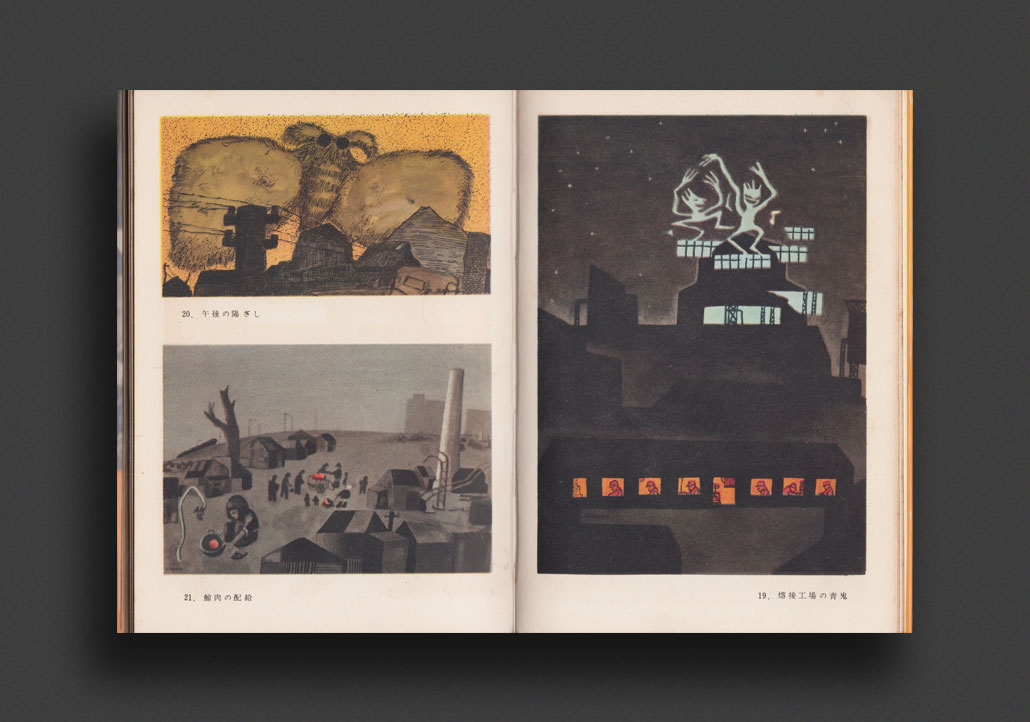
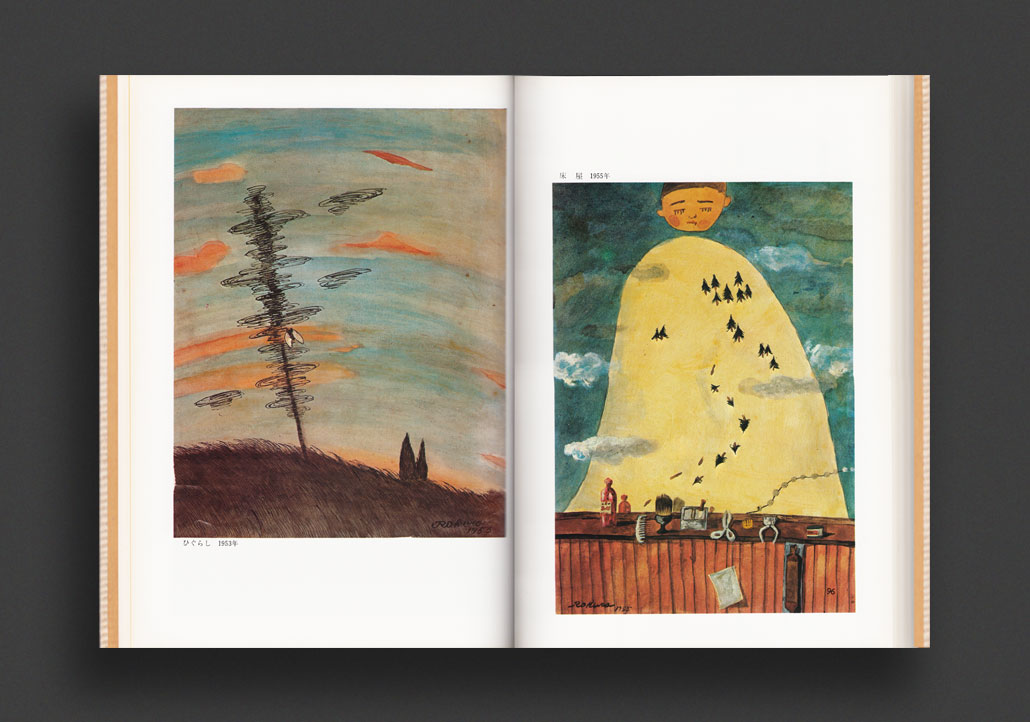
Rare first 1955 edition of the first monographic art book on the work of Japanese lyrical painter and illustrator Rokurō Taniuchi (1921–1981). A monumental, beautifully printed book that won the 1st Bungeishunju Manga Award, collecting the work of Taniuchi, an illustrator like no other. Lauded by Japanese artists, Taniuchi is little known outside of Japan, although visitors of Tokyo may have experienced the charm of his mosaic murals, "Most Star Hole of Umbrella" (1975) at the busy intersection of Omotesando and Aoyama-dori or “Sand Mountain” (1954) at Akabane-Iwabuchi, Kita. Taniuchi's unique, dream-like visions capture the nostalgic banality of everyday life in Shōwa period Japan, caught between folk tradition and modernisation. Chasing the Japanese seasons, Taniuchi's enchanted landscapes of factories on the outskirts of town, village streets and hillsides at dusk are littered with apparitions of dancing devils, leaf-people, ramune bottles, paper dolls and Lucky Strike cigarettes appearing before the child inhabitants, creating a sense of fantastic wonder and haunting melancholy. One of the great surrealists of the illustrated world.
Good copy in original dust jacket. Some wear to Good dust jacket.
1975 / 1979, Japanese
Hardcover (cloth) in hard illustrated slipcase, 124 pages, 27 x 19 cm
1st Edition, Out of print title / used / good
Published by
Shinchosha / Japan
$80.00 - Out of stock
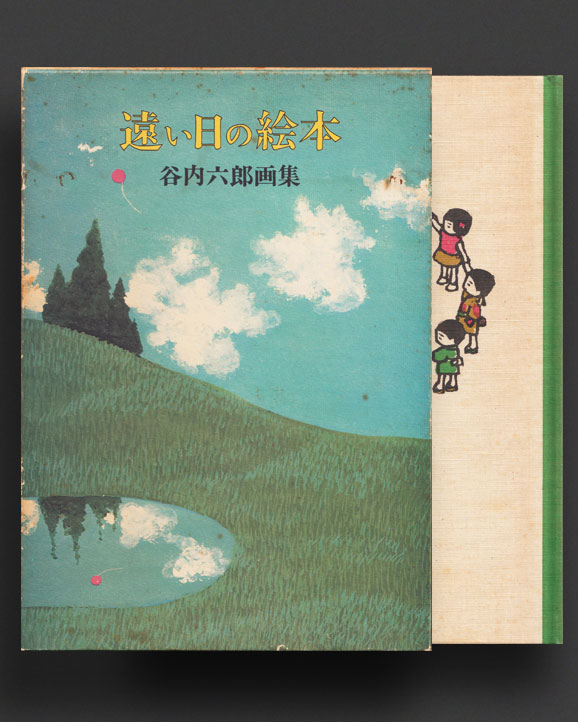
1979 edition of this monumental collection of works by Japanese lyrical painter and illustrator Rokurō Taniuchi (1921–1981), first issued in 1975. Illustrated throughout with Taniuchi's works of the seasons, alongside their original texts, as well as many earlier works and photographs. Lauded by Japanese artists, Taniuchi is little known outside of Japan, although visitors of Tokyo may have experienced the charm of his mosaic murals, "Most Star Hole of Umbrella" (1975) at the busy intersection of Omotesando and Aoyama-dori or “Sand Mountain” (1954) at Akabane-Iwabuchi, Kita. Taniuchi's unique, dream-like visions capture the nostalgic banality of everyday life in Shōwa period Japan, caught between folk tradition and modernisation. Chasing the Japanese seasons, Taniuchi's enchanted landscapes of factories on the outskirts of town, village streets and hillsides at dusk are littered with apparitions of dancing devils, ramune bottles, paper dolls and Lucky Strike cigarettes appearing before the child inhabitants, creating a sense of fantastic wonder and haunting melancholy. One of the great surrealists of the illustrated world.
Good copy in original illustrated slipcase. Some age spotting and wear to hard slipcase and cloth covers, VG book.
1988, Japanese
Softcover (w. dust jacket), 166 pages, 21 x 14.8 cm
1st Edition, Out of print title / as new
Published by
Tatsumi Comics / Tokyo
$25.00 - Out of stock
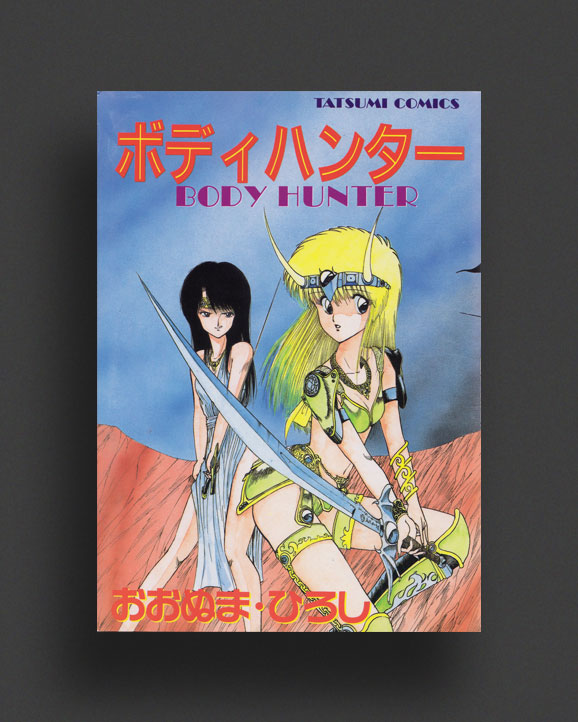
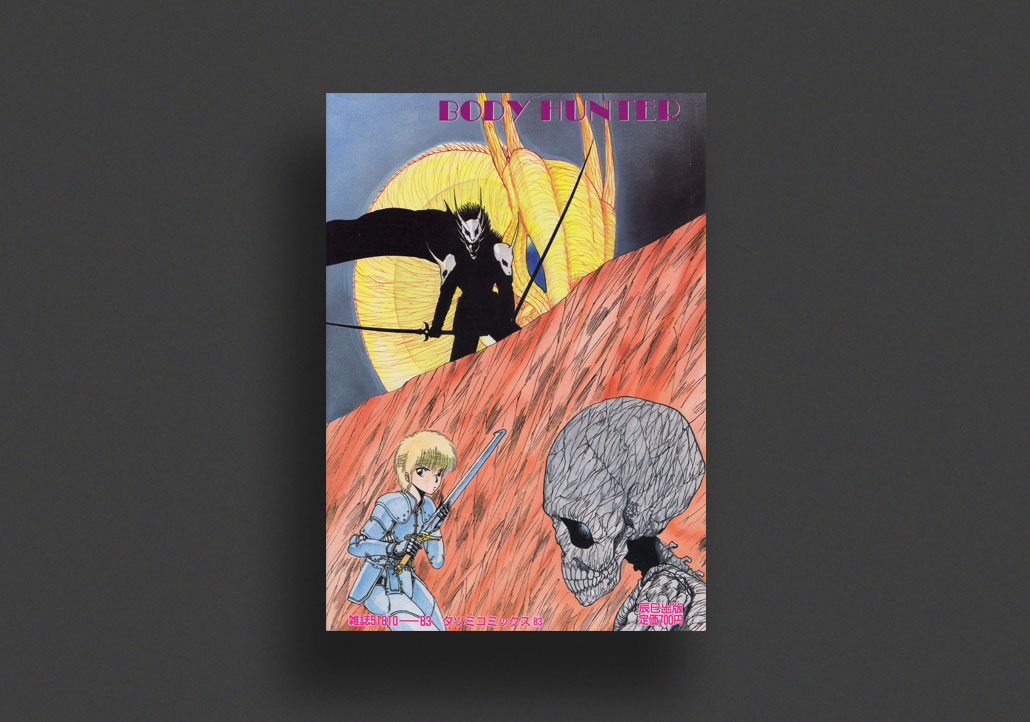
First edition from 1988, Body Hunter is a vintage manga / hentai comic book from Japanese fantasy illustrator Hiroshi Onuma, published by Tatsumi Comics. Illustrated fantasy erotica and sorcery in b/w and duotone, wrapped in original illustrated dust jacket.
As New.
2021, English
Softcover, 104 pages, 16.5 x 26.7 cm
Published by
Urbanomic / Cornwall
$45.00 - In stock -
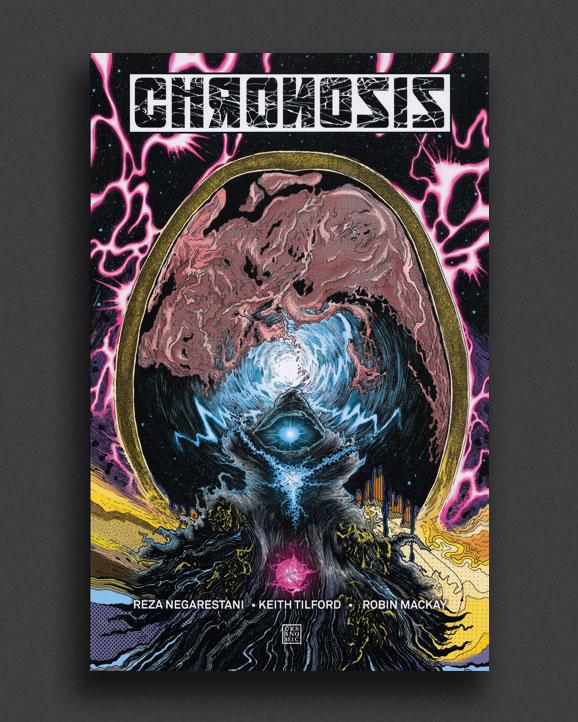
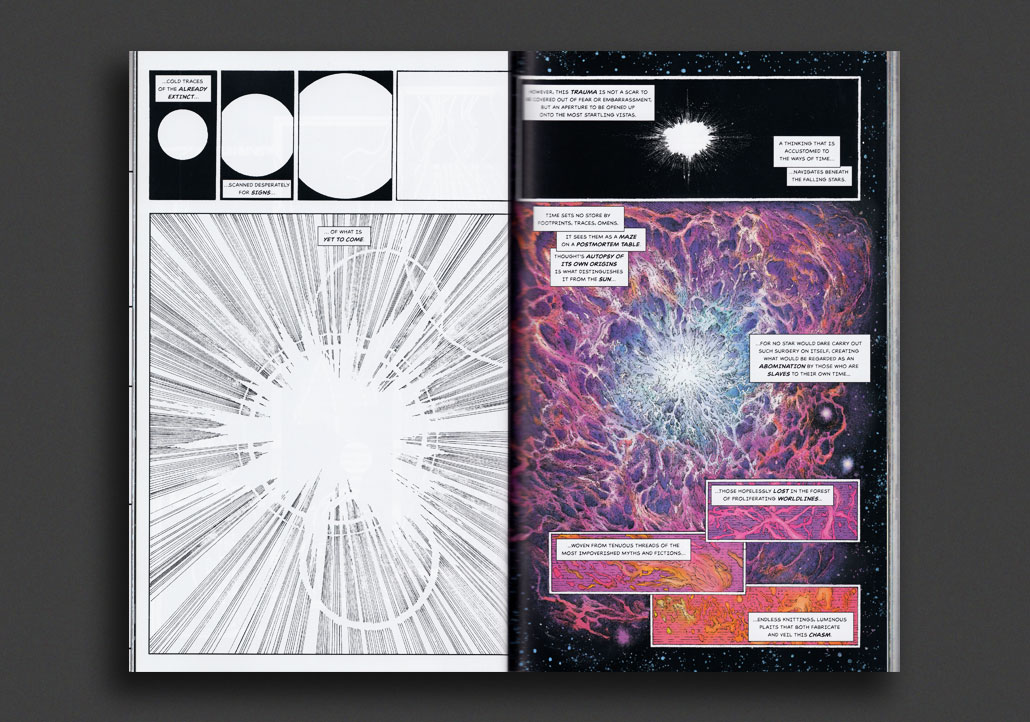
A unique fusion of comics culture and philosophical cogitation takes readers on a ride through time, space, and thought.
Approaching the comic medium as a supercollider for achieving maximum abstraction, in Chronosis artist Keith Tilford and philosopher Reza Negarestani create a graphically stunning and conceptually explosive universe in which the worlds of pop culture, modern art, philosophy, science fiction, and theoretical physics crash into one another.
Taking place after the catastrophic advent of the birth of time, Chronosis narrates the story of a sprawling multiverse at the center of which monazzeins, the monks of an esoteric time-cult, attempt to build bridges between the many fragmented tribes and histories of multiple possible worlds. Across a series of dizzying overlapping stories we glimpse worlds where time flows backward, where the universe can be recreated every five minutes, or where rigid facts are washed away by the tides of an infinite ocean of possibility.
A unique fusion of comics culture and philosophical cogitation, this conceptually and visually mind-expanding tale takes the reader on a dizzying rollercoaster ride through time, space, and thought.
This volume contains the entire Chronosis series in full color, along with additional background materials including early sketches, script notes, and alternative covers.
1970, English
Hardcover (w. dust jacket), 130 pages, 25 x 31 cm
1st Edition, Out of print title / used / good
Published by
Bodley Head / London
$35.00 - Out of stock
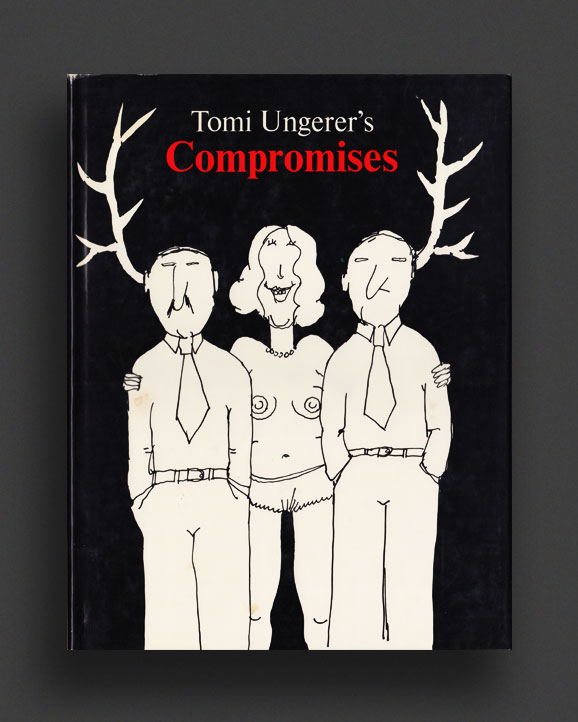
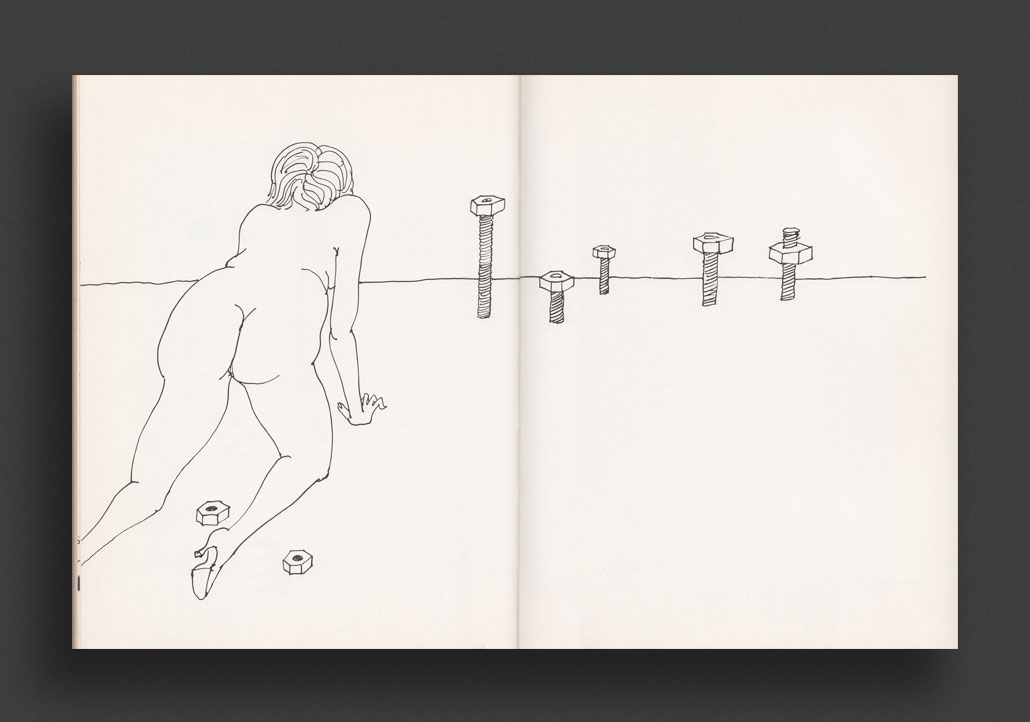
First English edition of Tomi Ungerer's "Comprimises", published in 1970 by Bodley Head in London and Farrar, Straus And Giroux in New York. "Comprimises" is a now classic collection of Ungerer's inimitable drawings spanning five years of the 1960's. An inexhaustibly prolific draughtsman, Tomi Ungerer's "Comprimises" captures the absurdist, often subversive, black humour that Ungerer produced so well through masterful line-work, at once a satire on the mechanised violence of human kind and a cutting parody of our body image and innermost desires.
Tomi Ungerer (1931—2019) is an award winning French illustrator and a writer in three languages. He has published over 140 books ranging from much loved children's books to controversial adult work and from the fantastic to the autobiographical. He is known for sharp social satire and witty aphorisms. He is renowned for his iconic Advertising campaigns and political posters against the Vietnam War and Racial Injustice which were representative of the burgeoning political consciousness in New York in the 1960’s. His political engagement has continued to this day in campaigns against Racism and Fascism, for Nuclear disarmament, Ecology and numerous Humanitarian causes.
Good copy.
2017, English
Softcover, 312 pages, 22 x 32cm
Ed. of 2000,
Published by
Unit Editions / London
$100.00 $70.00 - Out of stock
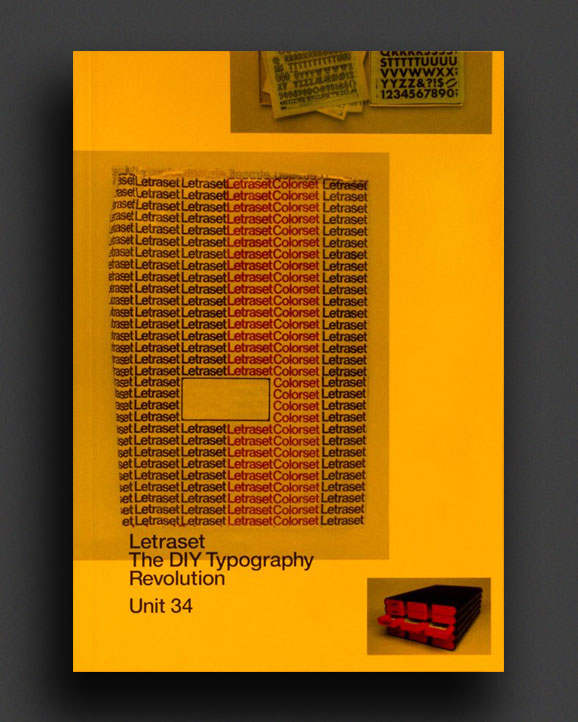
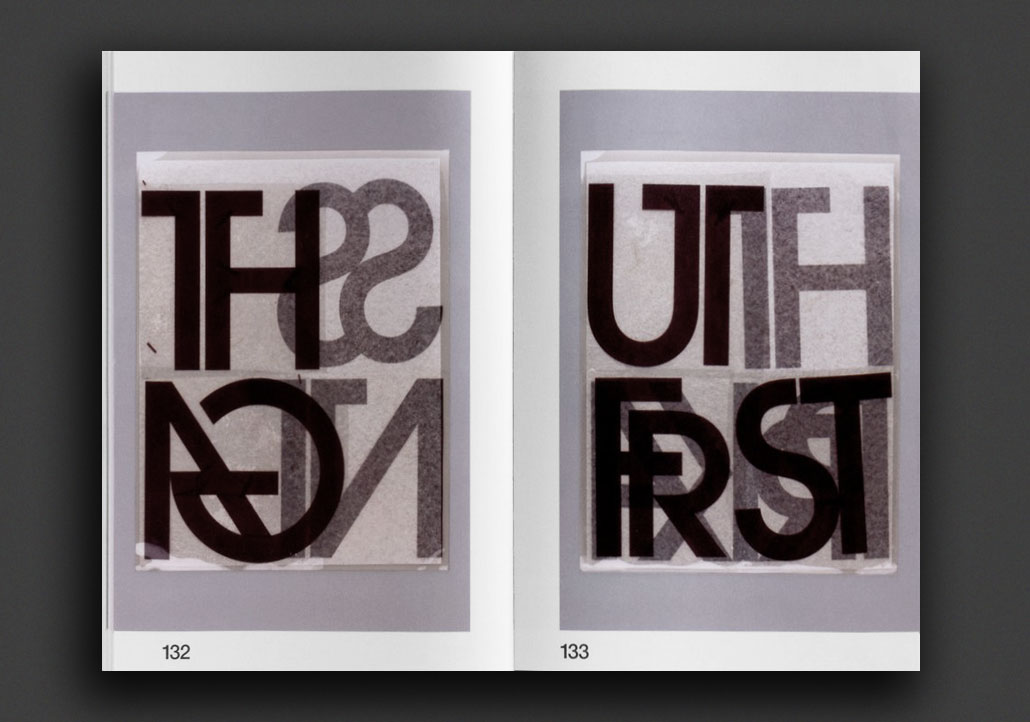
Four years in the making. Letraset: The DIY Typography Revolution is the first comprehensive history of Letraset, the rubdown lettering system that revolutionised typographic expression.
The book tells the Letraset story from its early days as a difficult-to-use wet system, to its glory years as the first truly democratic alternative to professional typesetting.
The book also looks at Letraset’s present-day revival amongst a new set of admirers who recognise the typographic excellence of the system’s typefaces.
The book comes with a gatefold Letraset timeline. It has an introduction by Malcolm Garrett, and features in-depth interviews with Mr Bingo, Erik Brandt, Aaron Marcus, David Quay, Dan Rhatigan, Freda Sack, Andy Stevens and Jon Wozencroft.
Essays by Colin Brignall, Dave Farey and Mike Daines – all key members of the Letraset team – provide expert insight into the rise of Letraset as a typographic and commercial powerhouse. A central essay by Adrian Shaughnessy examines the typographic and cultural impact of the system.
The book’s design is by the Spin team of Tony Brook and Claudia Klat. It uses many rare specimens from Letraset’s past – catalogues, press ads, mailers, storage units, and of course, sheets of classic Letraset typefaces.
Print: Four colour litho
Cover: Four colour litho plus Pantone
Edition of 2000.
2017, English
Softcover, 448 pages, 17 x 23.5 cm
Published by
Edition Skylight / Switzerland
$95.00 - Out of stock
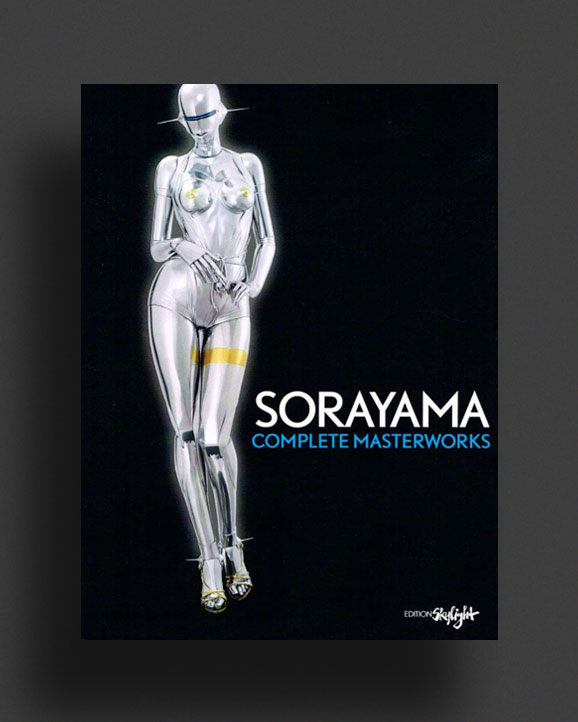
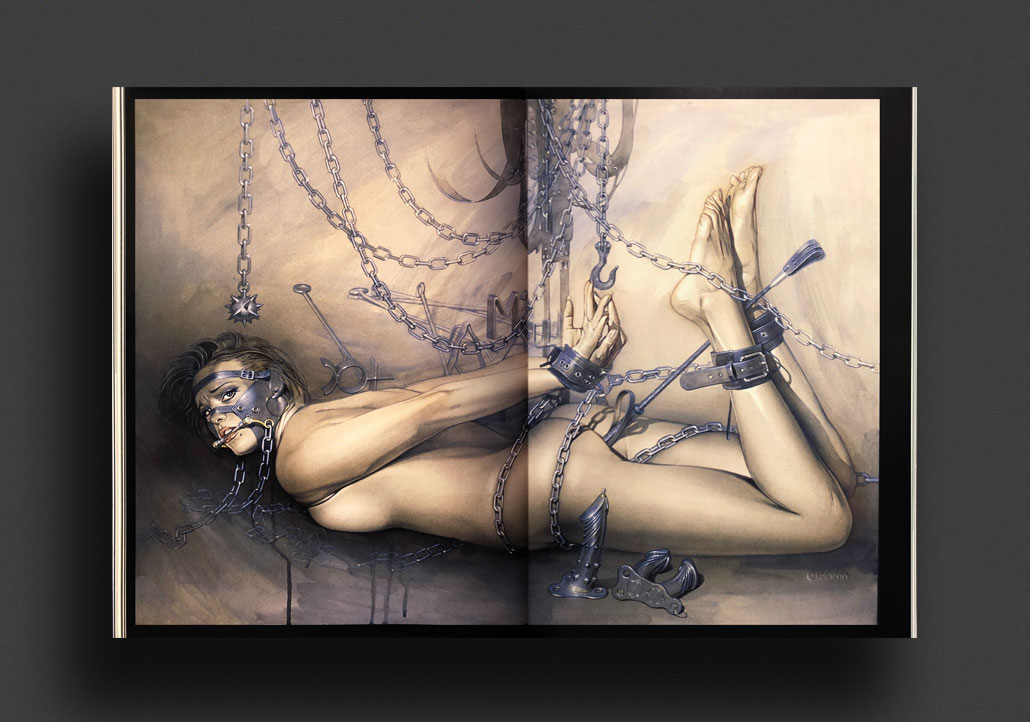
An absolute master of the airbrush, Japanese artist Hajime Sorayama's erotic, futuristic, hyper-realistic illustrations create a visual landscape that would be impossible to achieve in photography alone. Only Sorayama, equipped with boundless imagination, is able to achieve this, using pencil and brush, acrylic paint, and his airbrush. This thick tome of over 1000 illustrations is a comprehensive reference catalogue to Sorayama's rich and iconic work, including new, unpublished works. His Complete Masterworks speak of extraordinary talent, wondrous imagination, and impeccable skill.
Hajime Sorayama (b. 1947) is a Japanese illustrator known for his precisely detailed, erotic portrayals of feminine robots, along with his design work on the original Sony AIBO. He describes his highly detailed style as "superrealism", which he says "deals with the technical issue of how close one can get to one's object."
1981, Japanese
Hardcover (w. dust jacket and obi-strip), 80 pages, 28 x 22 cm
1st Edition, Out of print title / used / very good
Published by
Shueisha / Japan
$100.00 - Out of stock
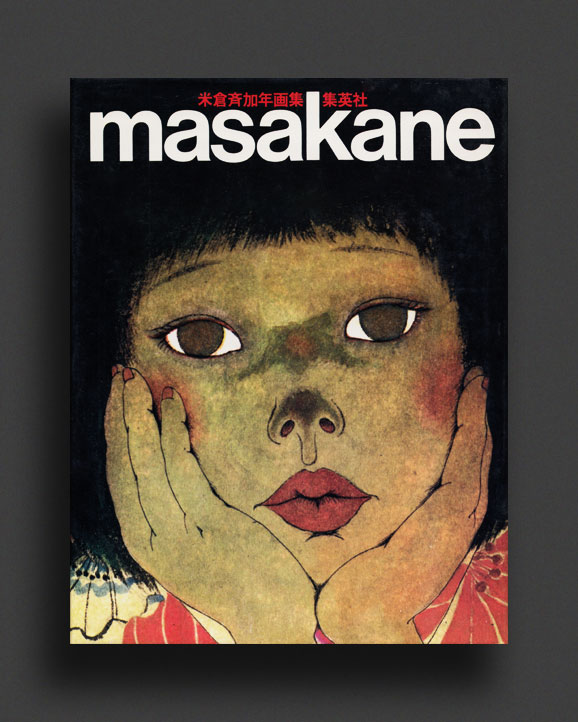
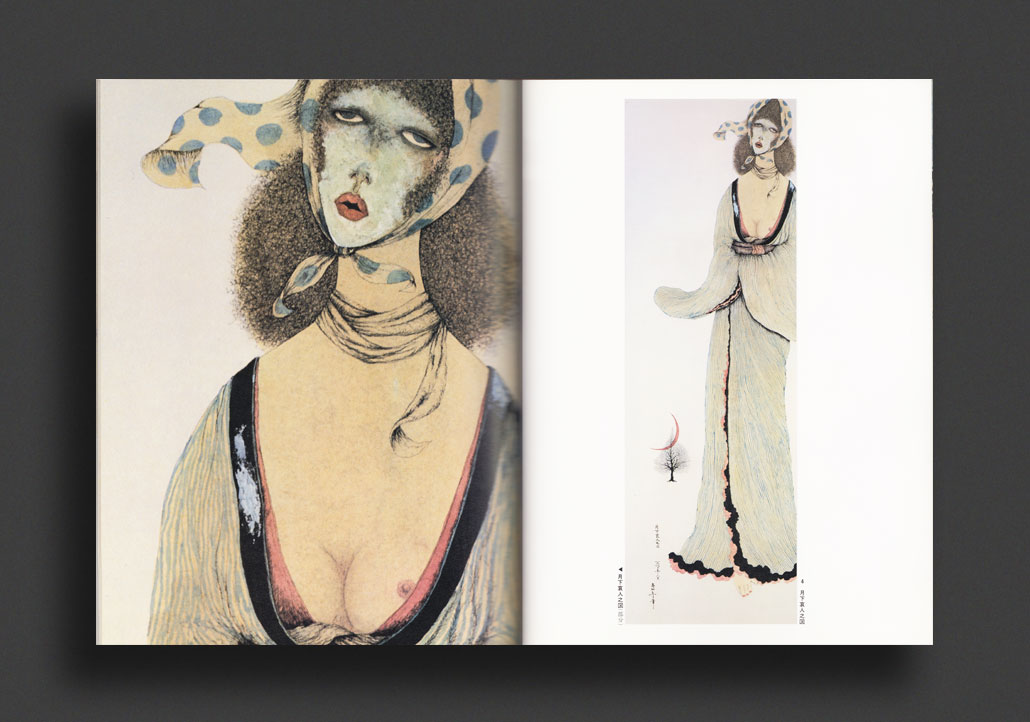
First edition of this wonderful, very rare monograph on the artwork of Masakane Yonekura, published in 1981. Heavily illustrated throughout, spanning the artist's oeuvre in drawing, paintings and print work. Masakane Yonekura (1934 - 2014) was a Japanese stage director, actor, author and illustrator who was one of the central members of the Gekidan Mingei theatre company. He is also known for his work known for his work in the films Belladonna of Sadness (1973), Zatoichi Meets Yojimbo (1970), Harukanaru sôro (1980) and Sanada fûunroku (1963). In 1976 he won an important prize at the Bologna International Children's Book Fair. His woodblock prints mainly depict bijin-ga in his own, very personal style, often reflecting the world of theatre through the drawn line.
Very Good copy in VG dust jacket with light wear and original obi-strip (not pictured).
1975, English
Hardcover (w. dust jacket), 105 pages,
Published by
Stanton Archives / New York
$100.00 - Out of stock
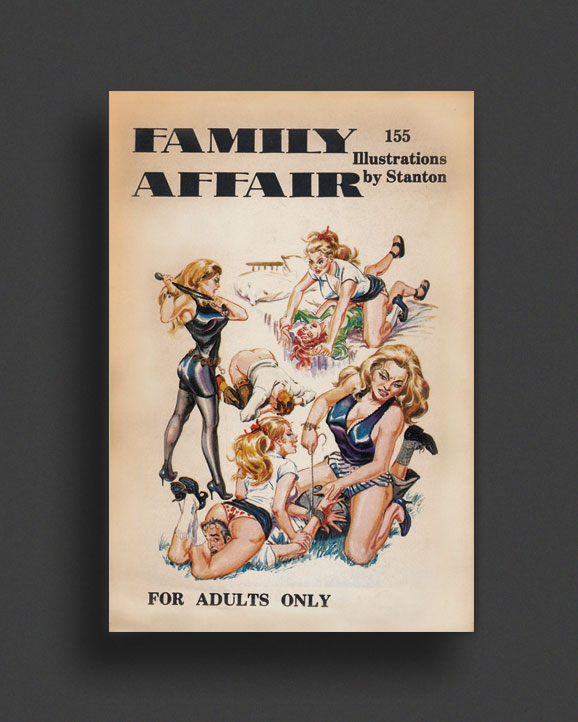
Scarce first hardcover edition of Family Affair from 1975, Eric Stanton's very first self-published hardcover book, and historically significant in that it was the very first book of erotic art ever to garner a Library of Congress number and 'stamp of approval. 155 gorgeous pencil illustrations by Stanton featuring his characteristic statuesque dominant females inspired by the fantasy of "a friend from Europe". Eric Stanton (1926 – 1999) was an American underground cartoonist and fetish art pioneer, who is regarded as the greatest erotic artist that ever lived. While Stanton began his career as a bondage fantasy artist for the famous Irving Klaw, the majority of his later work depicted gender role reversal and proto-feminist female dominance scenarios. In 1975 Stanton began to self-publish with the release of three books ("Family Affair;" "The Governess" and "The Punished Publisher"), but a falling-out between the printer and Stanton over payment led to their delivery for distribution with all copies lacking their dust covers. Only a small number of these books later acquired from the printer were complete with their wonderful colour illustrated dust jackets, the distributed copies sold without. All three self-published 1975 books by Stanton are today - a third of a century later - regarded by most Stanton aficionados as his greatest works.
Good copy with tanning to jacket edges and some bumping, wear.
1977, English
Softcover, 36 pages, 25.5 x 18 cm
1st Edition, Out of print title / used / very good
Published by
California Comics / San Jose
$65.00 - Out of stock
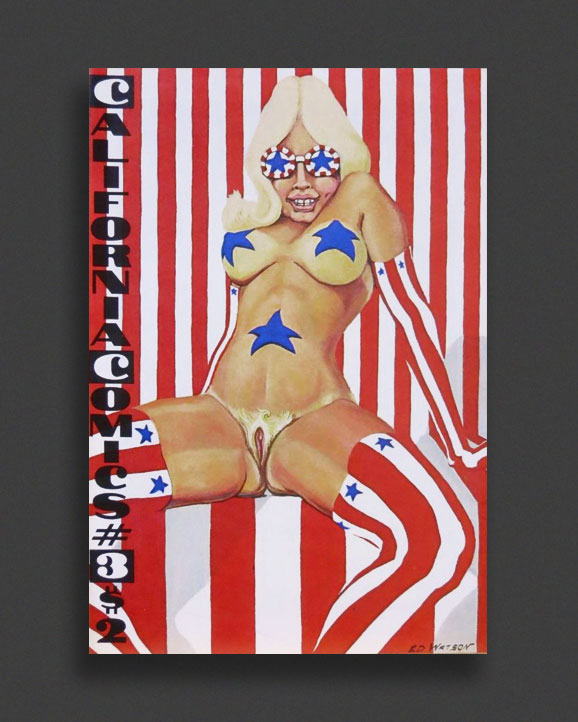
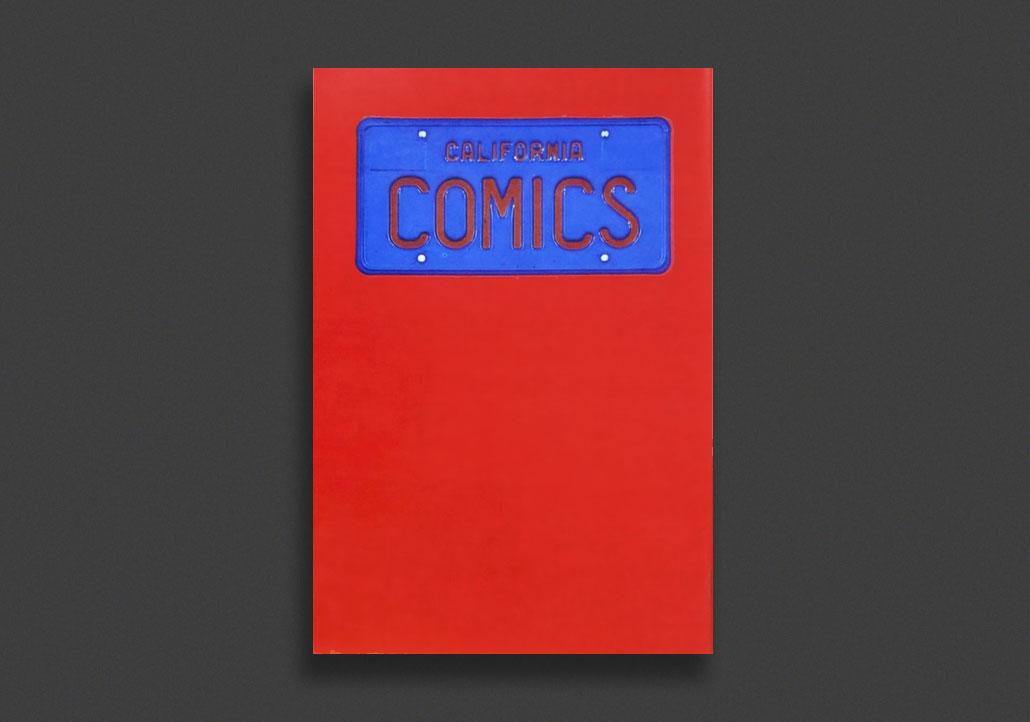
First edition of issue 3 of the great and short-lived (1974-1977) California Comics, published by Bob Sidebottom, who owned the legendary San Jose underground comic book shop, Comic Collector Shop, through the 1960s-1980s. This issue features excellent cover art by the great Ed Watson and a full-colour centerfold by Richard Corben, alongside further contributions from Ed Watson, Barney Steel, T-Bird, Bill Loudin, and others. Includes a continuation of Bob Sidebottom and Bill Loudin's comprehensive underground publishing checklist, "Comixography, The Comix Index". One of the great American underground comics.
Very Good copy.
1980, English
Softcover, 96 pages, 28 x 20.5 cm
1st Edition, Out of print title / used / very good
Published by
Thames and Hudson / London
$65.00 - Out of stock
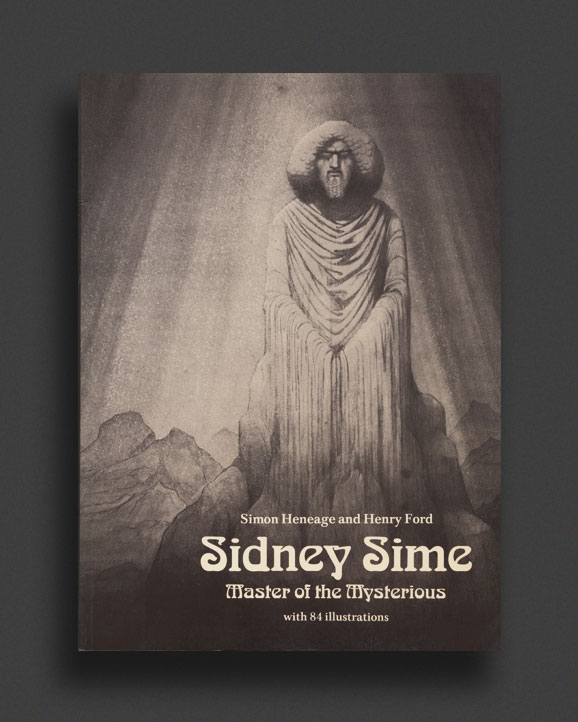
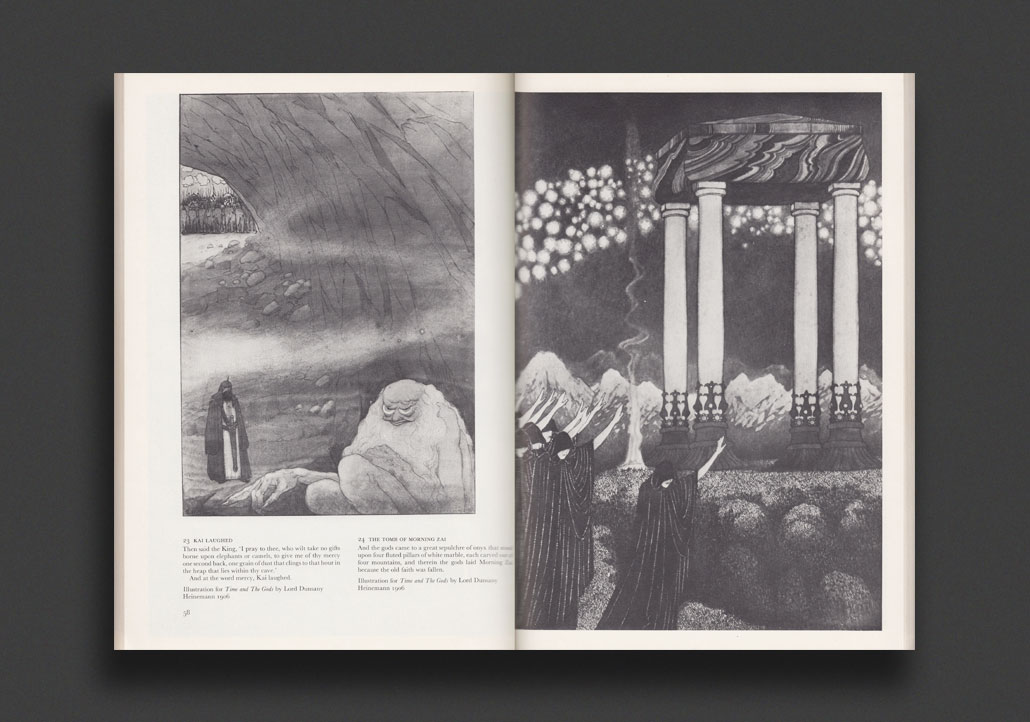
First edition of the long out-of-print monograph on the work of Sidney Sime (1867-1941), remembered for his fantastic and satirical artwork, especially his story illustrations for Irish author Lord Dunsany. Published in 1980, Master of the Mysterious collects Sime's incredible paintings, illustrations and graphic works, which are extremely hard to find documented anywhere today, alongside in-depth biographical texts by authors Simon Heneage and Henry Ford, tracing his entire life and career. Includes bibliography, published works, and a full index, making it the most comprehensive resource on the artist ever printed.
"Sidney Sime is probably the greatest imaginative English artist since Blake." — Hannen Swaffer, The Graphic, 1922
Sidney Sime (1867-1941) was an artist whose mysterious and fantastic illustrations were published in the well-known magazines of the turn of the century. He was also a graphic humorist, theatre designer and book illustrator whose imagery became inseparable from the new world of weird fiction and books of horror. Along with long and harmonious collaboration with Lord Dunsany, the Irish story-teller and playwright, a partnership without peer in the annals of fantasy illustration, Sime also provided illustrations to stories by William Hope Hodgson and Arthur Machen, amongst others. Mentioned in the same breath as Goya, Aubrey Beardsley, Arthur Rackham and Kay Nielsen, there is nothing quite like the mysterious works of Sime. Born in Manchester in poverty, Sime began his career working in the mines, before studying at the Liverpool School of Art. Sime had a meteoric career. He rose from pit-boy to artist in the space of a few years and made his name in London largely as an illustrator though he was also a painter of distinction. His abhorrence of Exhibitions (‘that last infirmity of senile kind’) and the effect of the First World War when artists tended to join movements and become socially conscious left the self-doubting individualist Sime somewhat isolated, becoming a recluse in his country house in Surrey. While his reputation languished and talent was neglected by a wider audience, his profound influence has been recorded in the work of writer H. P. Lovecraft and artist Roger Dean. One wouldn't be surprised if Sydney Sime's imagery was a precursor to worlds later created by Miyazaki, Dr. Seuss, and Moebius.
Very Good copy.
1970 / 1991, Japanese
Softcover (w. dust jacket), 100 pages, 26 x 18 cm
Out of print title / used / fine
Published by
Iwasaki Art Co. / Japan
$45.00 - Out of stock
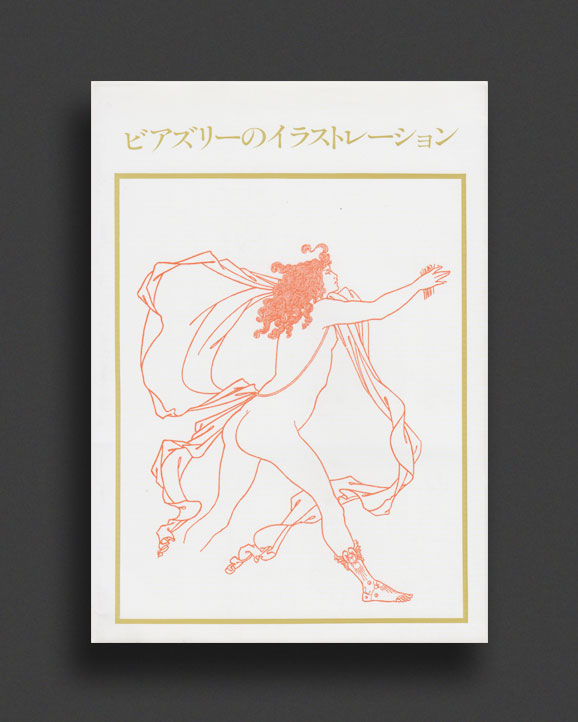
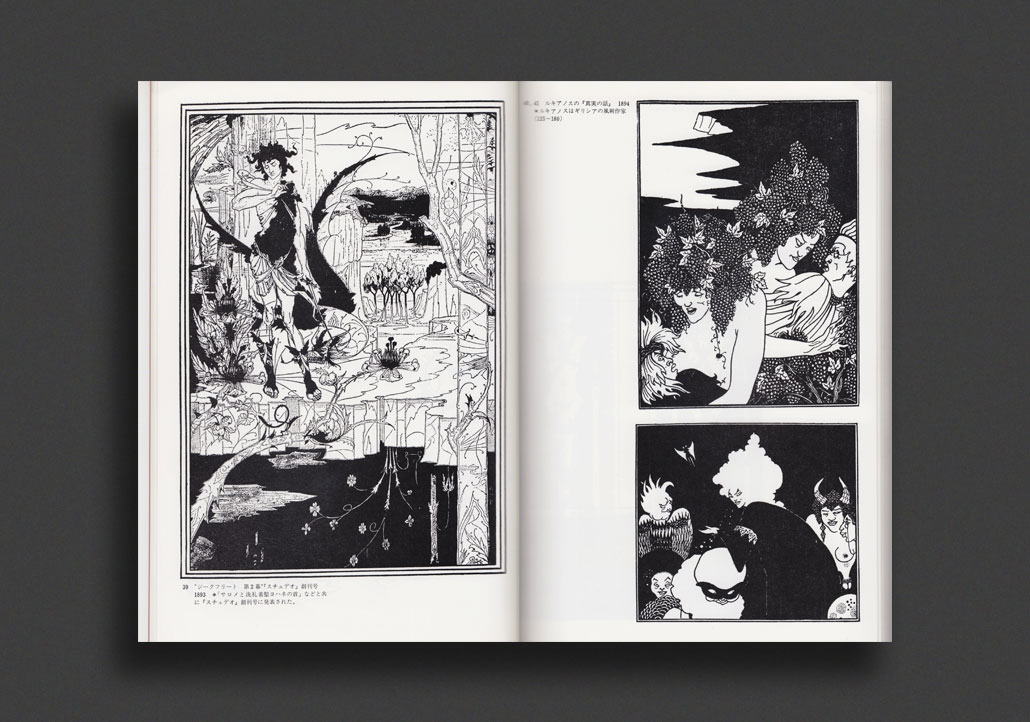
Lovely Japanese monograph on the work of Aubrey Beardsley, first published in 1970 and here in facsimile printed by Iwasaki Art Co. in 1991. Profusely illustrated throughout with 155 works, illustrated biography, biography and list of works. Texts by Tadayuki Omori.
Aubrey Vincent Beardsley (1872 – 1898) was an English illustrator and author. His black ink drawings were influenced by Japanese woodcuts, and emphasized the grotesque, the decadent, and the erotic. He was leading figure in the aesthetic movement, the British counterpart of Decadence and Symbolism. He produced extensive illustrations for books and magazines such as The Studio, The Yellow Book, and The Savoy. Beardsley was a public as well as private eccentric. He said "I have one aim—the grotesque. If I am not grotesque, I am nothing." Oscar Wilde said Beardsley had "a face like a silver hatchet, and grass green hair." Wilde's irreverent wit and work reflected the decadence of his era and his influence was enormous, despite his early death from tuberculosis at age 25. His influence is clearly visible in the work of the French Symbolists, the Poster Art Movement of the 1890s, the work of many later-period Art Nouveau artists such as Papé and Clarke and 20th fantasy illustration.
Fine crisp copy in Very Good original dust jacket.
2006, Japanese / English
Newspaper (folded, unbound with numbered obi and publisher's sleeve), 48 pages, 54 x 40cm
1st Edition, Out of print title / used / fine
Published by
Tokyo: Artbeat / Tokyo
$60.00 - Out of stock
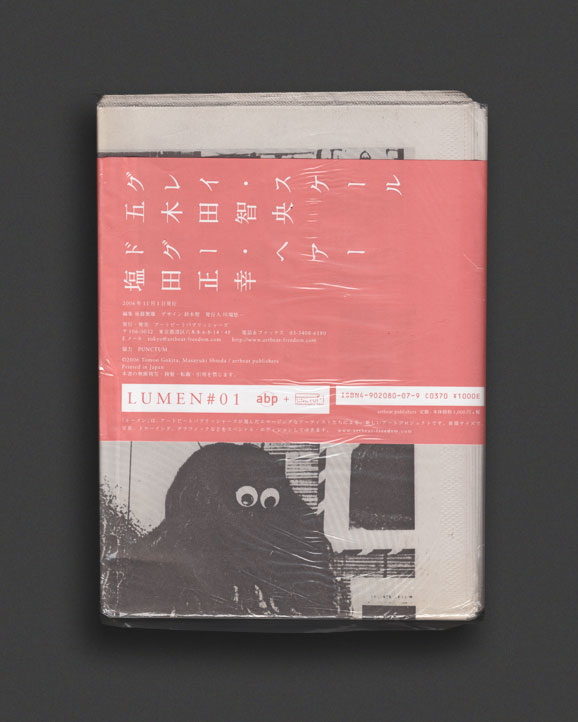
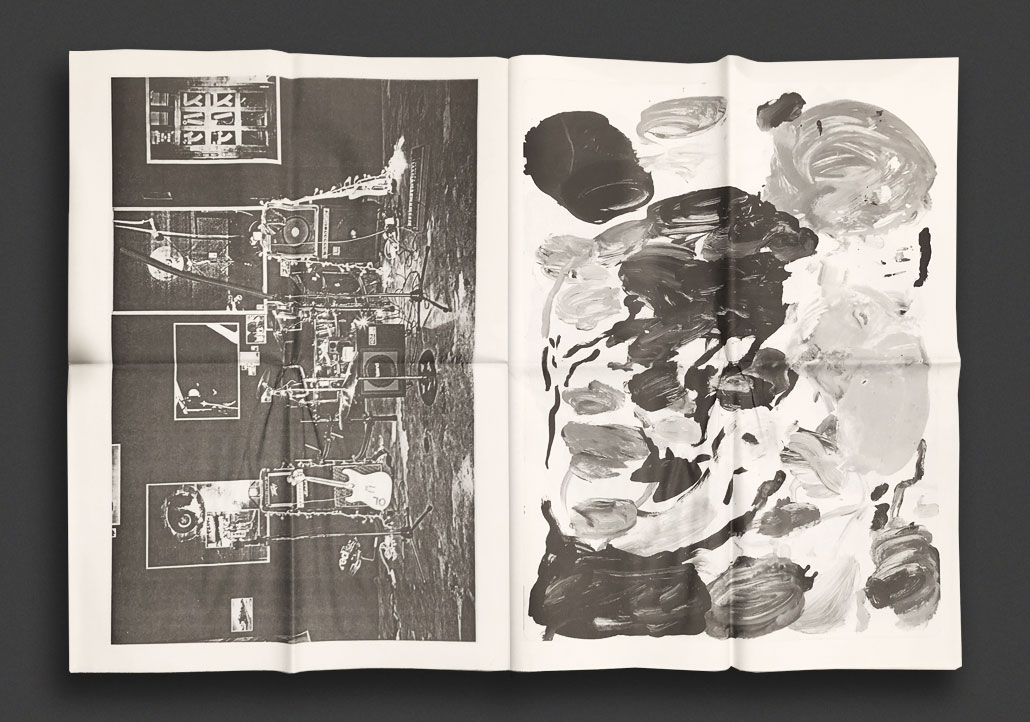
Tomoo Gokita & Masayuki Shioda's Grey Scale / Dogoo Hair, published in newspaper format (folded and unbound) by Tokyo: Artbeat in 2006 in a numbered limited edition of 1000 copies. Only available in Japan and now long out-of-print.
Tomoo Gokita is a Tokyo-based painter and leading Japanese contemporary artist on the international art scene. His deeply psychological grayscale monochrome abstract and figurative paintings and drawings present cultural archetypes with warped and concealed features in front of ambiguous backdrops. He describes himself as a lingerie wrestler or hardcore layouter. Also, he sometimes work as DJ.
Masayuki Shioda (b. 1973) is a Tokyo based artist. He began working as a photographer, primarily in the music scene, in the late 1990s. In 2000, his solo exhibition “NPEAKER” was held and in 2002, his first photo book of the same title was published. From April 2009 to March 2010, he also organized a monthly group exhibition titled “35MINUTESMEN” in Araiyakushi, Tokyo. His major publications include LIFE HUNTER (2005) and ANIMAL SPORTS PUZZLE (2008). He has also published a number of books through his own publishing imprint FLASH BOOKS. In 2019, he published “YAKITORI TELLER”, a work documenting Juergen Teller’s stay in Japan, in the inaugural issue of the magazine Moder-n.
Fine - As New copy numbered obi and publisher's sleeve.
2020, English / Japanese
Softcover (w. dust-jacket, poster, stickers), 108 pages, 26.5 x 36.5 cm
1st Edition, Out of print title / as new
Published by
PARCO / Tokyo
Kaleidoscope Press / Milan
$220.00 - Out of stock
First edition.
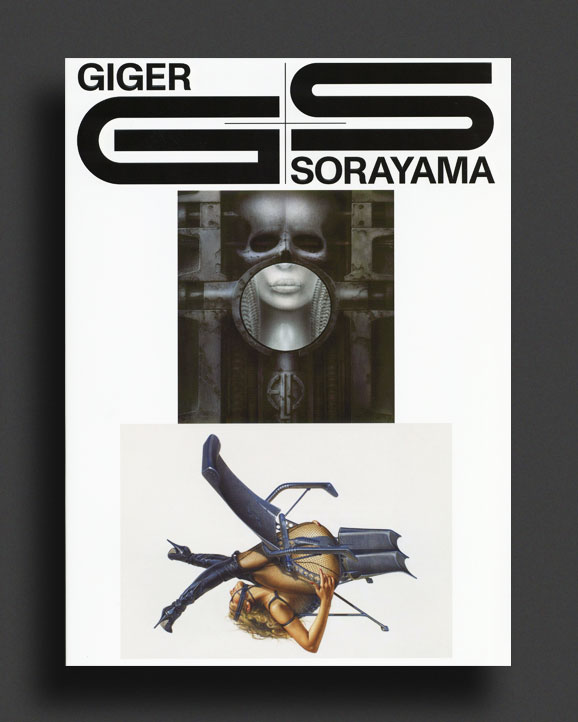
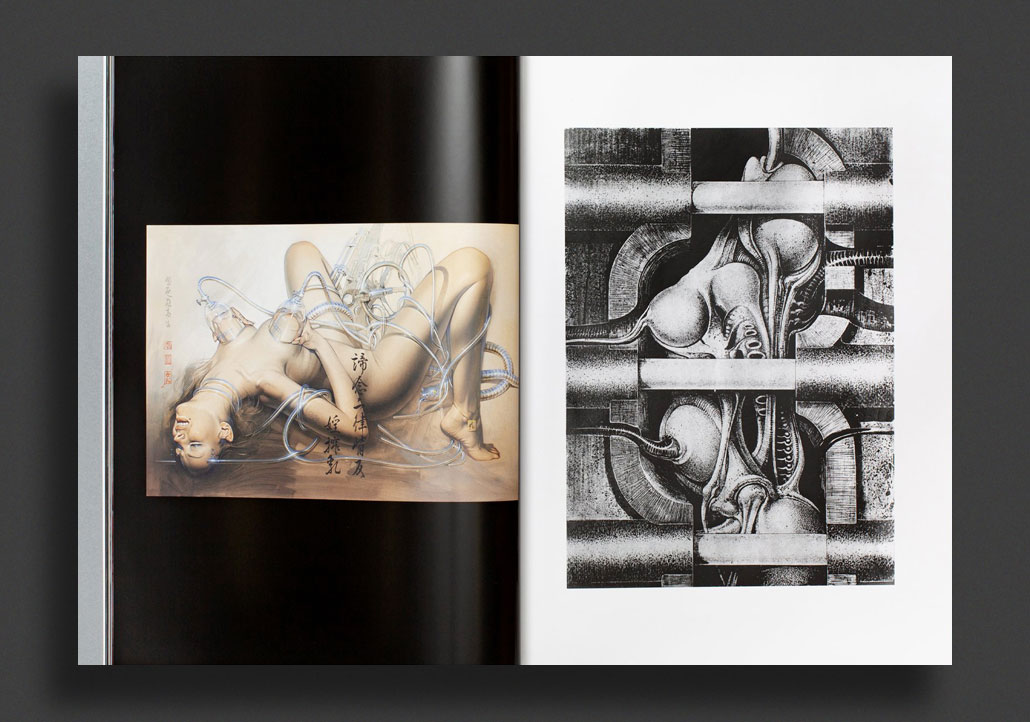
Sold out in one week, this super book published by Italian art publisher KALEIDOSCOPE accompanies a two-artist exhibition co-curated by Alessio Ascari and Shinji Nanzuka, bringing together for the very first time the work of Japanese artist Hajime Sorayama and Swiss artist HR Giger. Touring from PARCO Museum in Tokyo to PARCO Event Hall in Osaka between December 2020 and February 2021, the exhibition coincides with the 80th anniversary of Giger’s birth and features over 50 works ranging from the late 1960s to the present day.
The catalogue, designed by Swiss-based art direction firm Kasper-Florio with Samuel Bänziger, features a foreword by co-curator Alessio Ascari, a critical essay by Venus Lau, an interview with the late HR Giger by Hans Ulrich Obrist and Patrick Frey, and a recent interview with Sorayama by Ascari.
Lavishly illustrated throughout, this beautiful first edition also comes with a 50 x 70 cm two-sided poster, and two 20 cm die-cut stickers.
Born and trained at opposite ends of the world, Sorayama and Giger are apparently at odds—one’s bright colors are swallowed by the other’s dark chiaroscuro; one’s enthusiastic outlook on technology borders with the other’s nightmarish dystopia; one’s “super-realism” challenges the other’s surrealism—yet they share more than meets the eye. Both emerged in the 1970s and 1980s, becoming acknowledged masters of airbrush painting and influential creators beyond the boundaries of the traditional art world, blurring the relationship between commercial and personal work. But more importantly, at the very core of their practice lies a similar concern: an obsessive investigation of AI, eternal life, and the fusion of organic and apparatus. Gynoids (female androids) are predominant subjects, conjuring the post-human and the apotheosis of the woman to reveal an underlying tension between life, death, power and desire.
Hajime Sorayama (b. 1947 in Imabari, Ehime prefecture) has established his position as a legendary artist, both within Japan and internationally, for his extensive oeuvre that centers upon an ongoing pursuit for beauty in the human body and the machine. Best known for his precisely detailed, hand-painted portrayals of voluptuous women, obtained through an astoundingly artful use of a wide array of realistic expressional techniques, most prominently airbrush painting, the artist’s international recognition is inextricably tied to his signature series titled “Sexy Robot” (1978-) featuring erotic android figures clad in shiny chrome metal, and to AIBO, the award-winning robotic pet he designed for SONY in 1999.
Hans Ruedi Giger (1940–2014) was a Swiss surrealist painter, sculptor, and set designer known for his biomechanical creatures, extraterrestrial landscapes, and disturbing sexual machines. In a career that spanned more than five decades, he employed a staggering variety of media, including furniture, movie props, prints, paintings and sculptures, often creating exhibition displays and total environments with the immersive quality of a wunderkammer—including, most notably, the HR Giger Museum in Gruyères. In 1979, his concept design for Ridley Scott’s Alien (1979) won an Academy Award for Best Achievement in Visual Effects and catapulted to fame his daunting vision of death and futurism.
First (sold out) edition. As New.
1982, Japanese
Softcover (w. obi-strip), 128 pages, 32.5 x 25 cm
1st Edition, Out of print title / used / good
Published by
Bijutsu Shuppan-sha / Japan
$140.00 - Out of stock
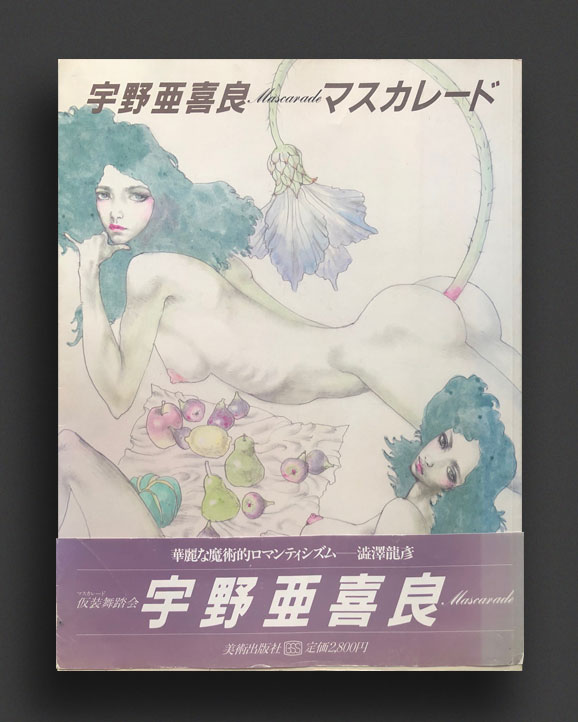
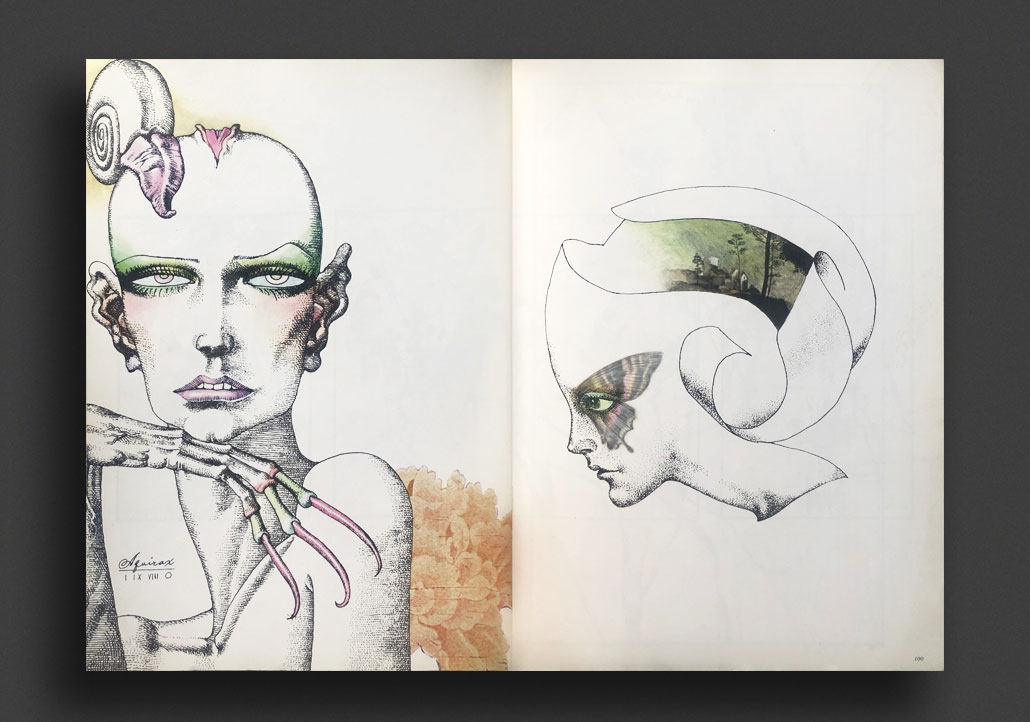
First 1982 edition of the great oversized collection "Masquerade" by Japanese graphic artist Aquirax Uno, published in Japan. Lavishly designed and directed by the artist himself, this beautiful album collects some of Uno's most stunning fantastical illustration and painting, alongside texts and photography of Uno in his atelier. Masquerade collates a cross-section of Uno's graphic work spanning his entire career, including many new, unpublished works and illustrations printed in large format across many full-colour fold-outs — a wonderful way to capture his decadent, stream of consciousness line work.
Aquirax Uno, also known as Akira Uno (b. 1934) is a Japanese graphic artist, illustrator and painter who was very influential in the 1960s and 1970s. His incredibly unique work is characterized by fantastic visuals, capricious and sensuous line flow, flamboyant (and occasionally grotesque) eroticism, and frequent use of collage and psychedelic bright colours. Uno was prominently involved with the Japanese underground art of the 1960s–1970s, and is particularly notable for his frequent collaborations with Shuji Terayama and his experimental theater Tenjo Sajiki.
Good copy with some wear, light creasing and light marking. Some edge tanning.
2002, English
Softcover, 17.9 x 11 cm
1st Edition, Out of print title / used / good
Published by
Magazine House / Tokyo
$140.00 $10.00 - Out of stock
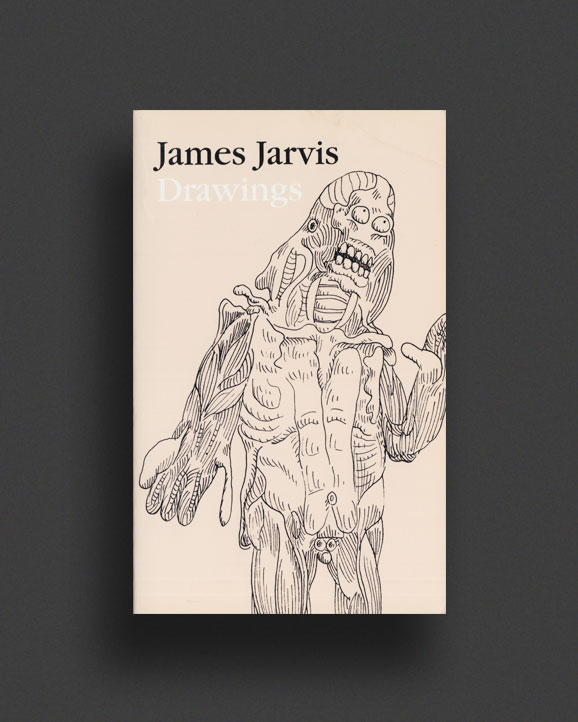
Very scarce first edition of the long out-of-print original "Drawings" book by British illustrator James Jarvis (b. 1970), issued only in Japan only in 2002 by Tokyo's Magazine House, publisher of Relax Magazine and their Relax Library series of books. Cover to cover black and white drawings from Jarvis' sketch books, "Drawings" chronologically collects drawings from the years 1995 to 2000 when he has working with London skate shop Slam City Skates and cult London street wear label Silas. It also introduces his iconic World of Pain and Amos characters for the very first time. A lovely book full of drawing studies.
Very Good copy throughout with crease to cover corner.
1966, English
Softcover, 140 pages, 28 x 22.5 cm
1st Edition, Out of print title / used / very good
Published by
Paragraphic Books / New York
$140.00 - Out of stock
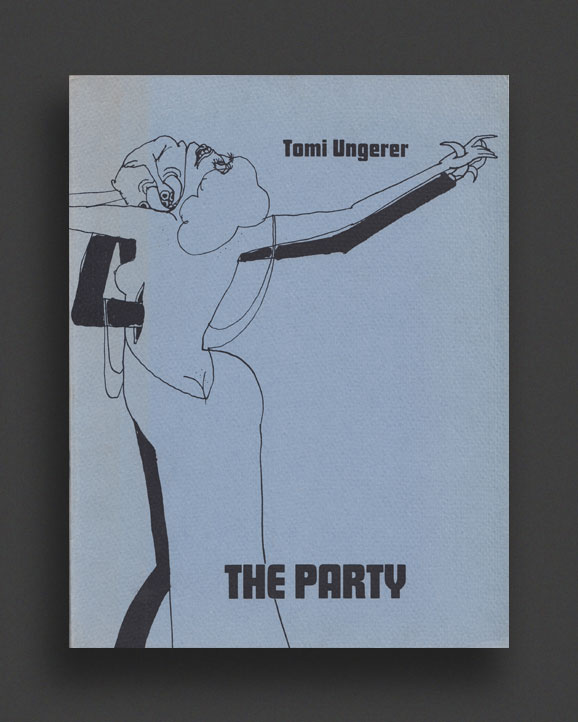
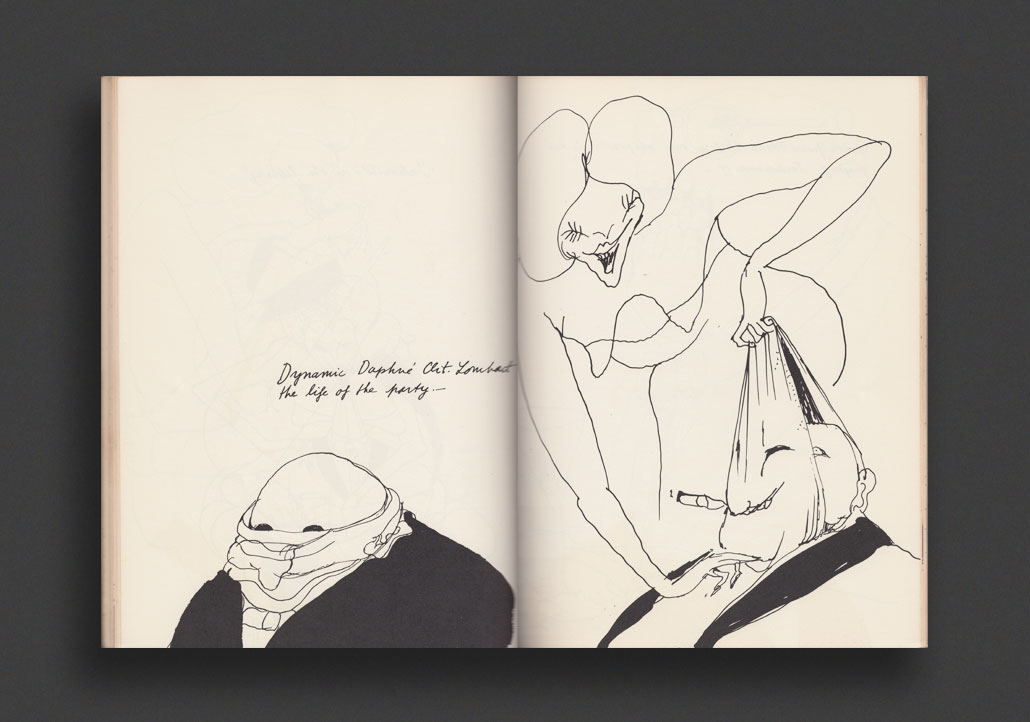
Rare first 1966 edition of one of the greatest, most biting illustrated satires of society, penned by the great Tomi Ungerer in the mid 1960s. Ungerer eviscerates the 1 percent in this series of cartoon vignettes that are unfortunately as relevant now as the time they were drawn and shall remain so forever and ever.
The Party takes place in the Hamptons, attended by captains of industry, tycoons, magnates, moguls, and various undistinguishable fat cats, luxuriating in their tuxedos, evening gowns, and prattling small talk. The depiction of one grotesquerie after another - often couples - cavorting through the haze of booze and caviar, with the occasional wanton display of sybaritically libidinal impulse. Ungerer accompanies each full-page image with a hilarious, hand-lettered caption, which provides the characters' names and a brief deadpan description of their social standings, creating a dissonance between image and text.
An absolute classic that would sit comfortably alongside the works of George Grosz, James Ensor, even H. R. Giger.
"This antiestablishment satirical masterpiece practically vibrates with class war rage and will resonate with similarly inclined contemporary readers." — Publishers Weekly
Tomi Ungerer (1931—2019) is an award winning French illustrator and a writer in three languages. He has published over 140 books ranging from much loved children's books to controversial adult work and from the fantastic to the autobiographical. He is known for sharp social satire and witty aphorisms. He is renowned for his iconic Advertising campaigns and political posters against the Vietnam War and Racial Injustice which were representative of the burgeoning political consciousness in New York in the 1960’s. His political engagement has continued to this day in campaigns against Racism and Fascism, for Nuclear disarmament, Ecology and numerous Humanitarian causes.
Very Good copy, wonderfully preserved copy.
1967, English
Softcover, 32 pages, 28 x 21 cm
1st Edition, Out of print title / used / good
Published by
Eurap / London
$35.00 - Out of stock
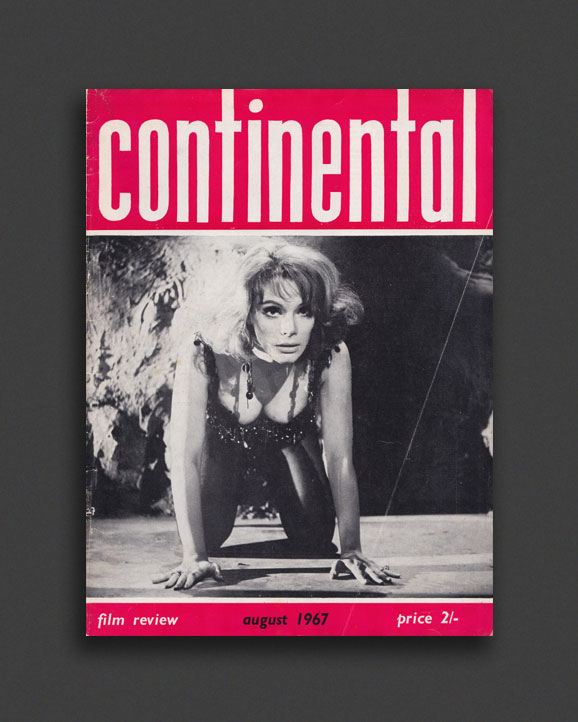
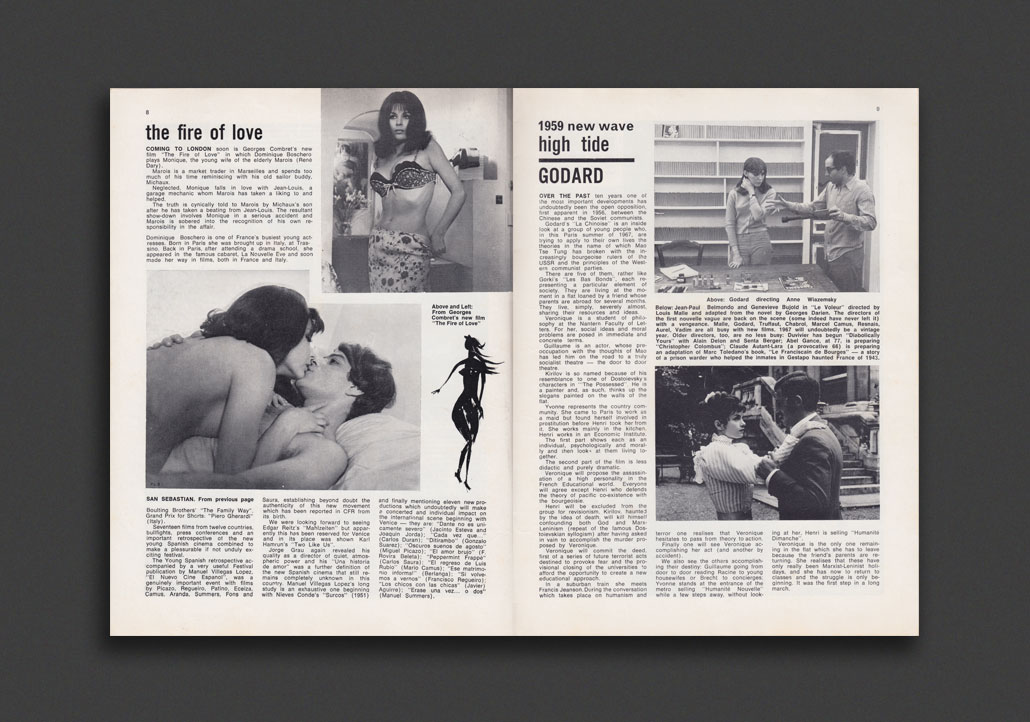
Continental Film Review, August 1967 issue, includes the films of Yoko Ono, Jean-Luc Godard, Eric Rohmer, Rodolfo Kuhn, Georges Combret, Francois Truffaut, Louis Malle, Ingmar Bergman, Jean-Louis Bastid, Evald Schorm, Jan Svankmeyer, Juraj Jakubisko, Hynek Bočan, Gianfranco Mingozzi, Michelangelo Antonioni, Alberto Lattuada, Jerzy Skolimowski, Ryszard Ber, and so many more. Heavily illustrated throughout.
Continental Film Review, founded in the UK in 1952, was an 'international' film magazine dedicated to foreign film, colloquially referred to in the UK and Australia as Continental Film. In its attitudes towards sex, art, politics and ethnic diversity, the Continental cinema audience anticipated the more widespread social and cultural changes that would transform society in the 1960s and 1970s. Continental Film Review purported to be a somewhat serious film journal devoted to the new cinema of the 1950-1980s, particularly European cinema, but clearly also had a prurient interest in the scantily-clad and often nude young actresses who starred the films of the era. That said, many of the new wave of directors and their films would be seldom documented anywhere else, making Continental Film Review a wonderful time-capsule of a more freely expressive time in film making.