World Food Books' programme is largely produced on Kulin Nation land. We acknowledge the Wurundjeri people of the Kulin Nation as the first and continuing custodians of this land, and pay respect to their Elders past, present, and emerging.
World Food Books is an arts and special interests bookshop in Naarm / Melbourne. Founded in 2010, World Food Books is devoted to the presentation of a rotating, hand-selection of international art, design, literary and counterculture publications with an emphasis on the anti-traditional, the experimental, the avant-garde, the heretic, the marginal.
Presenting new titles alongside rare and out-of-print books, catalogues and journals spanning the fields of modern and contemporary art, design, photography, illustration, film, literature, poetry, cultural theory, philosophy, sexuality, popular and underground culture in its many radical forms, World Food Books wishes to encourage adventurous, thoughtful and open-minded reading, looking, writing, and exchange of publishing and ideas, both current and historical.
As well as our bookshop, located in Melbourne's historical Nicholas Building, all of our inventory is available internationally via our online mail-order service.
World Food Books semi-regularly co-ordinates "Occasions", a programme of exhibits and events at the bookshop and in partnership with other hosts (such as museums and art galleries) that develop out of the activities, relationships and content of the bookshop itself.
World Food Books
The Nicholas Building
37 Swanston Street
Room 5, Level 6
Melbourne 3000
Australia
SHOP HOURS:
THU–SAT 12–6
WEB-SHOP OPEN 24/7
World Food Books
Postal Address:
PO Box 435
Flinders Lane
Victoria 8009
Australia
info@worldfoodbooks.com
Art
Theory / Essay
Architecture / Interior
Graphic Design / Typography
Photography
Fashion
Eros
LGBTQ+
Fiction / Poetry
Weird / Speculative / Science Fiction / Horror
Transgressive / Visceral / Abject
Symbolism / Decadence / Fin de siècle
Film / Video
Painting
Sculpture / Installation
Performance / Dance / Theater
Drawing
Sound / Music
Curatorial
Group Shows / Collections
Periodicals
Out-of-print / Rare
Posters / Ephemera / Discs
Signed Books
World Food Books Gift Voucher
World Food Book Bag
Australian Art
Australian Fiction
Australian Science Fiction / Speculative Fiction
Australian Poetry
Australian Photography
Japanese Photography
Conceptual Art
Minimal Art
Dada
'Pataphysics / Oulipo
Fluxus
Concrete Poetry
Pop Art
Surrealism
Arte Povera
Arte Informale / Haute Pâte / Tachism
Nouveau Réalisme / Zero / Kinetic
Situationism / Lettrism
Collage / Mail Art / Xerox Art
Art Brut / Folk / Visionary / Fantastic
Illustration / Graphic Art / Bandes Dessinées
Furniture
Italian Radical Design / Postmodernism
Textiles
Ceramics / Glass
Counterculture
Protest / Revolt
Philosophy
Psychoanalysis
Anthropology
Anarchism
Socialism / Anarchism / Communism / Capitalism
Literary Theory / Semiotics / Language
Feminism / Women's Studies
Gender Studies / Sexuality
Anthropology
Fetishism / BDSM
Drugs / Psychedelia
Crime / Violence
Animal Rights / Veganism
Occult / Esoterica
Ecology / Earth / Alternative Living
Whole Earth / Crafts
All prices in AUD (Australian dollars)
Pick-Ups
Pick-up orders can be collected in our bookshop during opening hours after order date. Please collect any Pick-up orders within 2 weeks of ordering as we have limited storage space. Orders will be released back into stock if not collected within this time. No refunds can be made for pick-ups left un-collected. If you cannot make it in to the bookshop in this time-frame, please choose postage option.
Return Policy
All sales are final. We do accept returns (for refund or exchange) for items received in error. All our orders are packed with special care using heavy-duty padding and cardboard book-mailers or bubble mailers (for smaller books), using reinforcement where required. We cannot take responsibility for any lost, stolen or damaged parcels.
Insurance
Should you wish to insure your package, please email us directly after placing your order and we can organise this at a small extra expense. Although all standard/express tracked packages are very safe and dependable, we cannot take responsibility for any lost, stolen or damaged parcels. We recommend insurance on valuable orders.
Interested in selling your old books, catalogues, journals, magazines, comics, fanzines, ephemera? We are always looking for interesting, unusual and out-of-print books to buy. We only buy books in our fields of interest and specialty, and that we feel we can resell.
We base these prices on desirability, market value, in-print prices, condition and our current stock levels. We offer cash, store credit, and can take stock on consignment. All
about 25% of the price we expect to get when we sell them, or 30% in store credit. We base these prices on desirability, market value, in-print prices, condition and our current stock levels.
Sell your books any day of the week. You can drop them off and return later. If you have a lot of books, we can visit your Sydney home.
We buy books that we feel we can resell. We offer about 25 % of the price we expect to get when we sell them, or 30% in store credit. We base these prices on desirability, market value, in-print prices, condition and our current stock levels.
Philadelphia Wireman
03 August - 01 September, 2018
World Food Books is proud to announce our next Occasion, the first presentation of sculptures by Philadelphia Wireman in Australia.
The Philadelphia Wireman sculptures were found abandoned in an alley off Philadelphia’s South Street on trash night in 1982. Their discovery in a rapidly-changing neighbourhood undergoing extensive renovation, compounded with the failure of all attempts to locate the artist, suggests that the works may have been discarded after the maker’s death. Dubbed the "Philadelphia Wireman" during the first exhibition of this work, in 1985, the maker’s name, age, ethnicity, and even gender remain uncertain. The entire collection totals approximately 1200 pieces, all intricately bound together with tightly-wound heavy-gauge wire (along with a few small, abstract marker drawings, reminiscent both of Mark Tobey and J.B. Murry). The dense construction of the work, despite a modest range of scale and materials, is singularly obsessive and disciplined in design: a wire armature or exoskeleton firmly binds a bricolage of found objects including plastic, glass, food packaging, umbrella parts, tape, rubber, batteries, pens, leather, reflectors, nuts and bolts, nails, foil, coins, toys, watches, eyeglasses, tools, and jewellery.
Heavy with associations—anthropomorphic, zoomorphic, and socio-cultural responses to wrapped detritus—the totemic sculptures by Philadelphia Wireman have been discussed in the context of work created to fulfil the shamanistic needs of alternative religions in American culture. Curators, collectors, and critics have variously compared certain pieces to sculpture from Classical antiquity, Native American medicine bundles, African-American memory jugs, and African fetish objects. Reflecting the artist’s prolific and incredibly focused scavenging impulse, and despite—or perhaps enhanced by—their anonymity, these enigmatic objects function as urban artefacts and arbiters of power, though their origin and purpose is unknown. Philadelphia Wireman, whatever their identity, possessed an astonishing ability to isolate and communicate the concepts of power and energy through the selection and transformation of ordinary materials. Over the course of the past two decades, this collection has come to be regarded as an important discovery in the field of self-taught art and vernacular art.
Presented in collaboration with Fleisher-Ollman Gallery, Philadelphia, and Robert Heald, Wellington.
Susan Te Kahurangi King
02 February - 10 March, 2018
Susan Te Kahurangi King (24 February 1951 - ) has been a confident and prolific artist since she was a young child, drawing with readily available materials - pencils, ballpoint pens and felt-tip markers, on whatever paper is at hand. Between the ages of four and six Susan slowly ceased verbal communication. Her grandparents William and Myrtle Murphy had developed a special bond with Susan so they took on caring responsibilities for extended periods. Myrtle began informally archiving her work, carefully collecting and storing the drawings and compiling scrapbooks. No drawing was insignificant; every scrap of paper was kept. The King family are now the custodians of a vast collection containing over 7000 individual works, from tiny scraps of paper through to 5 meter long rolls.
The scrapbooks and diaries reveal Myrtle to be a woman of great patience and compassion, seeking to understand a child who was not always behaving as expected. She encouraged Susan to be observant, to explore her environment and absorb all the sights and sounds. Myrtle would show Susan’s drawings to friends and people in her community that she had dealings with, such as shopkeepers and postal workers, but this was not simply a case of a grandmother’s bias. She recognised that Susan had developed a sophisticated and unique visual language and sincerely believed that her art deserved serious attention.
This was an unorthodox attitude for the time. To provide some context, Jean Dubuffet coined the term Art Brut in 1945 to describe work created by self-taught artists – specifically residents of psychiatric institutions and those he considered to be visionaries or eccentrics. In 1972 Roger Cardinal extended this concept by adopting the term Outsider Art to describe work made by non-academically trained artists operating outside of mainstream art networks through choice or circumstance. Susan was born in Te Aroha, New Zealand in 1951, far from the artistic hubs of Paris and London that Dubuffet and Cardinal operated in. That Myrtle fêted Susan as a self-taught artist who deserved to be taken seriously shows how progressive her attitudes were.
Susan’s parents Doug and Dawn were also progressive. Over the years they had consulted numerous health practitioners about Susan’s condition, as the medical establishment could not provide an explanation as to why she had lapsed into silence. Dawn educated herself in the field of homeopathy and went on to treat all twelve of her children using these principles – basing prescriptions on her observations of their physical, mental and emotional state.
Doug was a linguist with an interest in philosophy who devoted what little spare time he had to studying Maori language and culture. To some extent their willingness to explore the fringes of the mainstream made them outsiders too but it was their commitment to living with integrity and their respect for individuality that ensured Susan’s creativity was always encouraged.
Even though Susan’s family supported her artistic pursuits, some staff in schools and hospitals saw it as an impediment to her assimilation into the community and discouraged it in a variety of ways. Her family was not always aware of this and therefore did not fully understand why Susan stopped drawing in the early 1990s. However, rather than dwell on the challenges that Susan faced in pursuit of her artistic practice, they prefer to highlight her achievements. In 2008 Susan began drawing again in earnest, after an almost 20 year interruption, and her work is now shown in galleries around the world.
Susan grew up without television and has been heavily influenced by the comics she read as a child. She is absolutely fearless in the appropriation of recognizable characters, such as Donald Duck and Mickey Mouse, in her work. She twists their limbs, contorts their faces, compresses them together, blends them into complex patterned backgrounds - always imbuing them with an incredible energy. Although Susan often used pop culture characters in her work they are not naive or childlike. These are drawings by a brilliant self-taught artist who has been creating exceptional work for decades without an audience in mind.
Mladen Stilinović
"Various Works 1986 - 1999"
02 February 16 - September 10, 2016
Various works 1986 - 1999, from two houses, from the collections of John Nixon, Sue Cramer, Kerrie Poliness, Peter Haffenden and Phoebe Haffenden.
Including: Geometry of Cakes (various shelves), 1993; Poor People’s Law (black and white plate), 1993; White Absence (glasses, ruler, set square, silver spoon, silver ladel with skin photograph and wooden cubes), 1990-1996; Exploitation of the Dead (grey and red star painting, wooden painting, black spoon with red table, red plate), 1984-1990; Money and Zeros (zero tie, paintings made for friends in Australia (Sue, John, Kerrie), numbers painting), 1991-1992; Words - Slogans (various t-shirts) - “they talk about the death of art...help! someone is trying to kill me”, “my sweet little lamb”, “work is a disease - Karl Marx”; Various artist books, catalogues, monographs, videos; Poster from exhibition Insulting Anarchy; "Circular" Croatian - Australian edition; Artist book by Vlado Martek (Dostoyevsky); more.
Thanks to Mladen Stilinović and Branka Stipančić.
Jonathan Walker
Always Will Need To Wear Winter Shirt Blue + Ochre Small Check Pattern
21 August - 21 September, 2015
Untitled
I am not a great reader of poetry but I always return to the work of Melbourne poet, Vincent Buckley (1925- 1988). Perhaps I find his most tantalising piece to be not a finished poem but a fragment left on a scrap of paper discovered on his desk after the poet’s death.
The poetry gathers like oil
In the word-core, and spreads
It has its music meet,
Its music is in movement.
This fragment is more the shell left behind from a volatile thought than a finished poem. I find the last two lines honest but awkward whereas the first two lines work like an arrow. Most likely he could not find a resolution so it was left. Still, in its present form, it remains an eloquent testimony to the ultimate failure of a medium to express mobile thought and sensation, in Buckley’s case, through verbal language. It’s an important matter because this is something all artists have to deal with regardless of the medium.
I have never written a poem, however, I am forever copying fragments from books on paper scraps in a vain effort to fix certain notions in my head. At first, they function as bookmarks that are sometimes returned to when I open the book. But before long, as they accumulate, they fall out littering the table interspersed with A4 photocopies, bills, books and medications.
To return to Buckley’s fragment, the first two lines very much evoke how I paint nowadays. As you age, detail diminishes and patches of light become more luminous and float. I feel the most honest way of dealing with this is by smearing the oil paint on the canvas with the fingers and working close-up, blind. Only if the patches coalesce into an approaching image can the work gain a life.
-
Jonathan Walker was born in Melbourne, Australia and brought up on a dairy farm in Gippsland. In the 1970’s he studied painting at RMIT and won the Harold Wright Scholarship to the British Museum, London. During the 1980’s he exhibited at Pinacotheca Gallery, Richmond and had work shown at the NGV and Heidi City Art Gallery. Over the same period he designed the cover for the “Epigenesi” LP by Giancarlo Toniutti, Italy and conducted a mail exchange work with Achim Wollscheid, Germany. The work with artists through the post resulted in an article published in the bicentenary issue of Art and Australia 1988. He showed in artist run spaces such as WestSpace in the 90’s and 2000’s, and until 2012, taught painting at Victoria University, which is where we (Colleen Ahern and Lisa Radford) as organisers of the exhibition, among many others, had the privilege of being his student.
Walker’s knowledge was imparted to students through the careful selection of music, literature, and artists found in books that he himself had ordered for the library. Walker’s strategy was the generosity of sharing his vast knowledge with references specific to each student and their context.
Walker’s paintings share a similar focus and intimacy.
This exhibition presents a small selection of recent paintings alongside a publication that includes Walker’s writing. Observational and analytical, Walker’s work is a type of material notation — the time of day, colour and how it is blended, the both specific and fleeting location of a reflection on lino or the question of whether a chair leg should be included in a painting.
Please join us on Friday August 21 between 6-8pm to celebrate the opening of the exhibition.
Curated by Colleen Ahern and Lisa Radford.
B. Wurtz
Curated by Nic Tammens
March 26 - April 4, 2015
B.Wurtz works from a basement studio in his home on Manhattan’s Lower East Side.
This local fact is attested to by the plastic shopping bags and newsprint circulars that appear in his work. As formal objects, they don’t make loud claims about their origins but nonetheless transmit street addresses and places of business from the bottom of this long thin island. Like plenty of artists, Wurtz is affected by what is local and what is consumed. His work is underpinned by this ethic. It often speaks from a neighborhood or reads like the contents of a hamper:
“BLACK PLUMS $1.29 lb.”
“Food Bazaar”
“USDA Whole Pork Shoulder Picnic 99c lb.”
“RITE AID Pharmacy, with us it’s personal.”
“H. Brickman & Sons.”
“Sweet Yams 59c lb."
Most of the work in this exhibition was made while the artist was in residence at Dieu Donne, a workshop dedicated to paper craft in Midtown. Here Wurtz fabricated assemblages with paper and objects that are relatively lightweight, with the intention that they would be easily transportable to Australia. This consideration isn’t absolute in Wurtz’s work, but was prescriptive for making the current exhibition light and cheap. Packed in two boxes, these works were sent from a USPS post office on the Lower East Side and delivered to North Melbourne by Australia Post.
Wurtz appears courtesy of Metro Pictures, New York.
Thanks to Rob Halverson, Joshua Petherick, Sari de Mallory, Matt Hinkley, Helen Johnson, Fayen d'Evie, Ask Kilmartin, Lisa Radon, Ellena Savage, Yale Union, and "Elizabeth".
John Nixon
"Archive"
December 15 - January 20, 2014
The presentation of John Nixon's archive offered a rare showcase of this extensive collection of the artist's own publications, catalogues, posters, ephemera, editions and more, from the mid 1980s onwards, alongside a selection of his artworks.
Organized by John Nixon, Joshua Petherick and Matt Hinkley.
"Habitat"
at Minerva, Sydney (organised by Joshua Petherick and Matt Hinkley)
November 15 - December 20, 2014
Lupo Borgonovo, Janet Burchill & Jennifer McCamley,
Lewis Fidock, HR Giger, Piero Gilardi, Veit Laurent Kurz,
Cinzia Ruggeri, Michael E. Smith, Lucie Stahl, Daniel Weil, Wols
Press Release:
“...It contained seven objects. The slender fluted bone, surely formed for flight, surely from the wing of some large bird. Three archaic circuitboards, faced with mazes of gold. A smooth white sphere of baked clay. An age-blackened fragment of lace. A fingerlength segment of what she assumed was bone from a human wrist, grayish white, inset smoothly with the silicon shaft of a small instrument that must once have ridden flush with the surface of the skin - but the thing’s face was seared and blackened.”
William Gibson, “Count Zero”, 1986
"Autumn Projects Archive"
Curated by Liza Vasiliou
March 6 - March 15, 2014
World Food Books, in conjunction with the Virgin Australia Melbourne Fashion Festival 2014, presented the Autumn Projects archive, consisting of a selection of early examples in Australian fashion with a particular interest in collecting designers and labels from the period beginning in the 1980’s, who significantly influenced the discourse of Australian Fashion.
Curated by Liza Vasiliou, the exhibition provided a unique opportunity to view pieces by designers Anthea Crawford, Barbara Vandenberg, Geoff Liddell and labels CR Australia, Covers, Jag along with early experimental collage pieces by Prue Acton and Sally Browne’s ‘Fragments’ collection, suspended throughout the functioning World Food Books shop in Melbourne.
H.B. Peace
presented by CENTRE FOR STYLE
November 14, 2013
"Hey Blinky, you say chic, I say same"
Anon 2013
H.B. Peace is a clothing collaboration between great friends Blake Barns and Hugh Egan Westland. Their pieces explore the divergences between 'character’ and ‘personality’ in garments....etc
Special Thanks to Joshua Petherick and Matt Hinkley of WFB and Gillian Mears
and a Very Special Thank you to Audrey Thomas Hayes for her shoe collaboration.
Janet Burchill & Jennifer McCamley
"Aesthetic Suicide"
May 10 - June 8, 2013
The first of our occasional exhibitions in the World Food Books office/shop space in Melbourne, "Aesthetic Suicide" presented a body of new and older works together by artists Janet Burchill & Jennifer McCamley, including videos, prints, a wall work, and publications.
During shop open hours videos played every hour, on the hour.
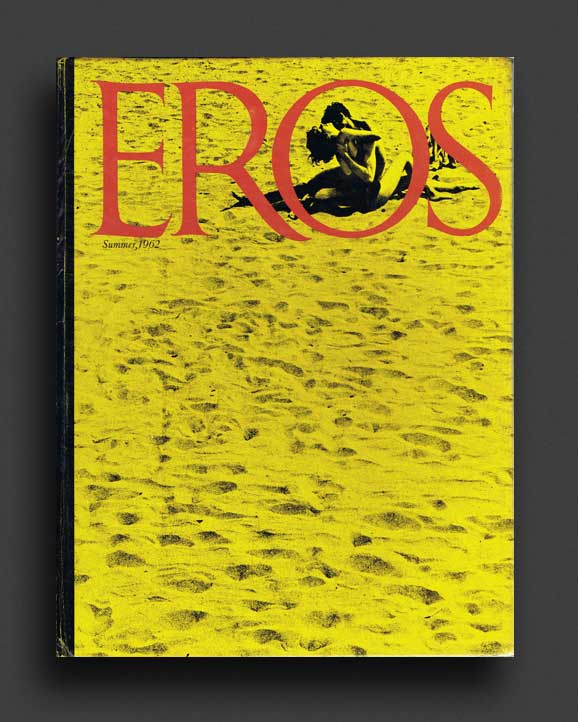
1962, English
Hardcover, 90 pages, 32.3 x 24.9 cm
Out of print title / used / very good
Published by
Eros Magazine / New York
$45.00 - Out of stock
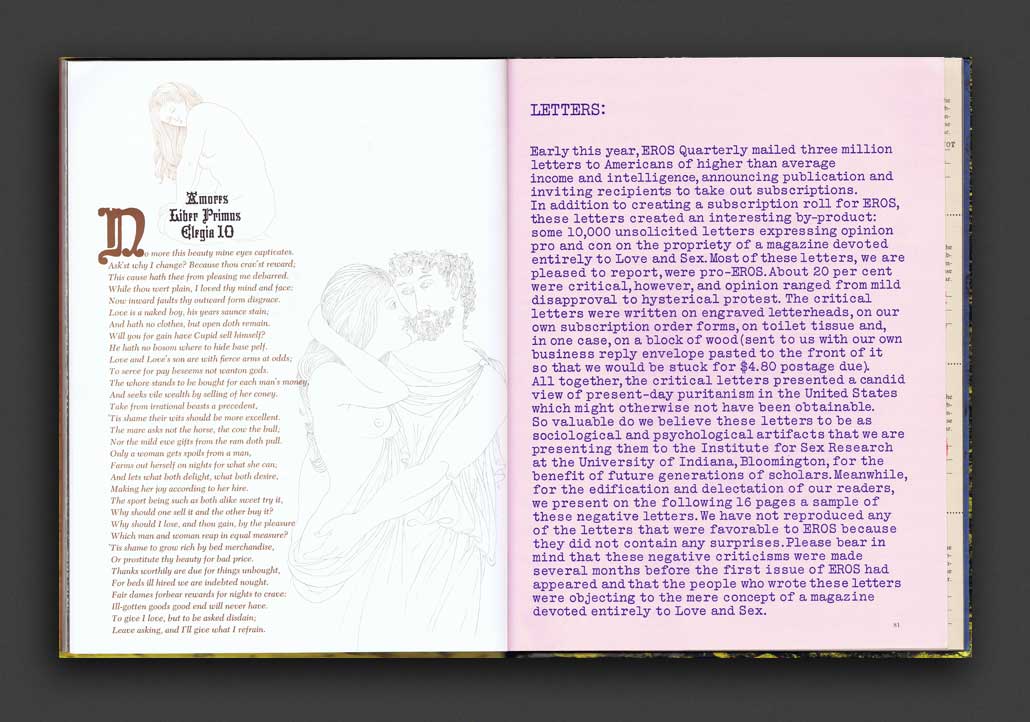
In 1962, American author, editor, publisher and photo-journalist Ralph Ginzburg together with art director and typographer Herb Lubalin began publication of the now legendary, Eros, a quarterly hardbound periodical containing articles and photo-essays on love and sex. Consistent in form with the other hardbound magazines published at that time – Venture, American Heritage and so on - its content was revolutionary. Besides the learned introductions and publication of classical erotica, Eros covered stories about sexual practices that were until then piously hidden from the public eye. Although there was hardly a hint of pornography in the journal, it was explicit enough to trigger fatally the puritanical reflexes rooted so deeply in American culture. Eros was beset by legal and financial problems. The magazine closed down after four issues, partly because it was so expensive to produce, but primarily because Ginsburg, as editor, was absurdly convicted under federal obscenity laws for the fourth issue, which featured a naked, bi-racial couple embracing.
Eros was one of a group of new publications created by Ginzberg and Lubalin in the 1960s-1970s, including fact: and Avant-Garde, that became iconic in the history of graphic design whilst ushering in a new generation of artistic publishing that was intelligent, humorous and caustically critical of American society and government.
Volume One, No. 2, was published in the Summer of 1962 and features photo essays about John F Kennedy, "Les Mesdemoiselles de la Rue St. Denis" (photographs by Marvin Newman), "Cigar Box Sirens", the erotic statues in India, the first publication in a magazine of Mark Twain's short story "1601", articles on the contraceptive industry, "an antique patent submission for a male chastity belt", a short story by Ray Bradbury, "The Scent of Love", "Ovid: Love Poems" and the wonderful "Letters End" - pages and pages of beautifully reproduced hatemail from early in 1962 when Ralph Ginsburg, using the genuine town of Intercourse, Pennsylvania as a mailing address, sent three million letters to Americans ‘of higher than average income and intelligence’ to announce the publication of his quarterly Eros, a magazine ‘entirely devoted to Love and Sex.’
Beautifully produced with a bold and sensitive typographical approach synonymous with the work of the great Lubalin, each volume of Eros is a piece of modern editorial design history.
Very good copy with only light wear to hardcovers.
2013, English
Hardcover (w. dust jacket), 400 pages, 24.2 x 29 cm
Published by
Prestel / Munich
$130.00 - Out of stock
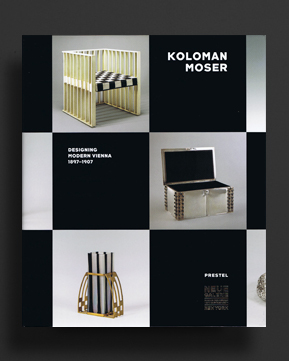
The incredible, comprehensive Koloman Moser reference book!
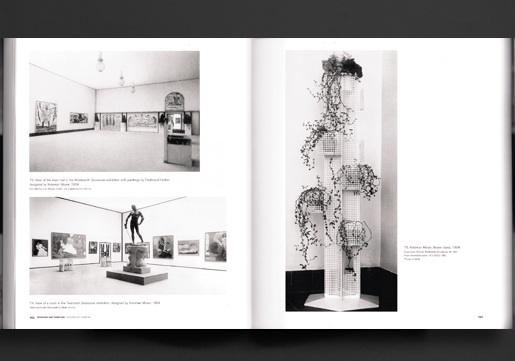
During his short career, Koloman Moser became a towering figure in Viennese culture. His varied work in interior and graphic design, furniture, textiles, jewellery, metalwork, glass and earthenware helped usher in the modern era.
This book surveys the entirety of Moser's oeuvre. It examines his work as a graphic designer and his involvement with the Vienna Secession, with special focus given to his role as an illustrator for the journal Ver Sacrum (Sacred Spring). Moser's forays into textile design and ceramic work are also introduced. The book features his designs for the Vienna Secession, Thonet Brothers and the Mautner family, among others that characterise his early modern style. The book also explores Moser's seminal role as a founding member of the Vienna Workshops, along with architect Josef Hoffman and patron Fritz Waerndorfer. Included are many reproductions of Moser's masterpieces, including the window of the Steinhof Chapel, his exhibition posters, postage stamps and currency and elegant samples from his design portfolio, "The Source."
2013, English
Softcover, 592 pages, 22 x 29 cm
Published by
Roma / Amsterdam
Vanity Press / London
$83.00 - Out of stock
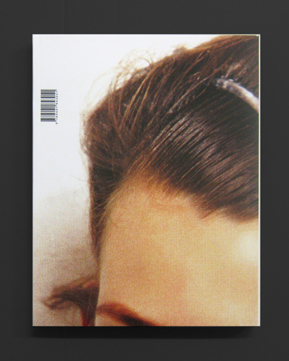
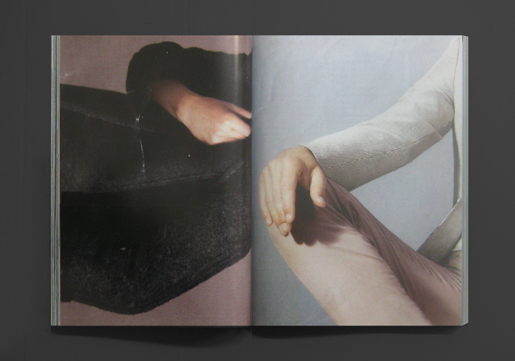
Artist's book by Paul Elliman. In a glossy volume approaching 600 pages, Elliman has collected images from a variety of sources – fashion magazines, glamour photography and pornography – cropping and arranging the clippings in a manner that especially emphasises the presence of hands, along with the many gestures of which they are capable. Also prevalent in the spectrum of clothed, semi-nude and nude human forms are limbs, feet, torsos and erogenous zones. Without any text or explanation, the series takes on a mesmerising aspect wherein the action of flipping through the pages becomes a kind of meditative contemplation of the fragmented human body.
Design: Julie Peters.
Roma Publication 210
2017, English
Softcover, 200 pages, 21 x 30 cm
Published by
Roma / Amsterdam
$60.00 $20.00 - In stock -
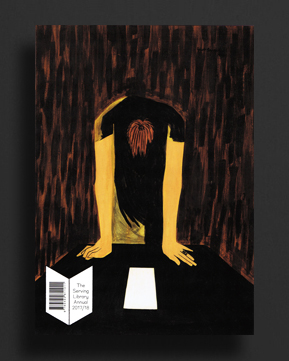
'The Serving Library Annual' comprises a number of individual “Bulletins” organized around a theme for an international audience of designers, artists, writers, and researchers. Newly published by ROMA Publications in a yearly format, this inaugural issue is realised in collaboration with Public Fiction, a journal and exhibition-maker based in Los Angeles. It deals with acts of civil disobedience and other forms of resistance, particularly in view of the relationship between entertainment and power. Contributors include Hilton Als, Tauba Auerbach, Anne Carson, Mark Leckey, Adrian Piper, Frances Stark, and Martine Syms.
1988, English / German
Softcover, 213 pages (396 ill.), 30 x 23 cm
1st edition, Out of print title / used*,
Published by
Taco / Berlin
$80.00 - Out of stock
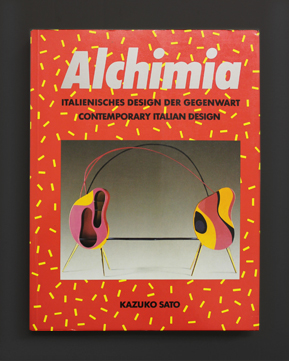
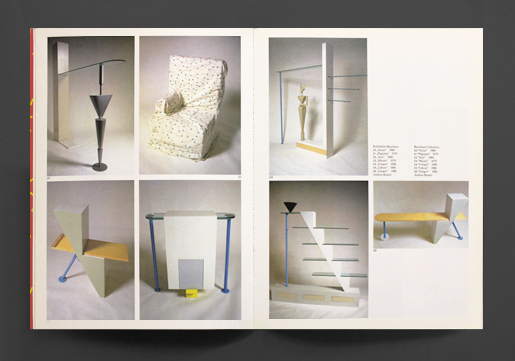
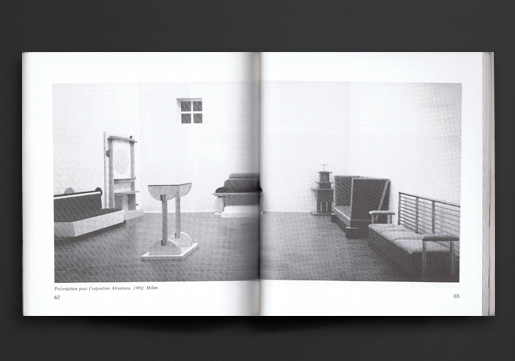
Studio Alchimia was an iconoclastic, radical design group founded in Italy in 1976 by the Italian Architect Alessandro Guerriero. The Studio Alchimia was composed of designers, whose aim was to design and manufacture exhibition pieces, rather than consumer orientated products. Their products were to be regarded as prototypes / one-offs, leading the way from the principles of modernist design to a bold, new, experimental design style. This style would lead to the formation and popularity of Italian design groups in the 1980's such as the Memphis Group and the new directions taken by the Alessi company.
This is truly THE book on the work of Studio Alchimia. Published in Germany in 1988 (also published in Japan) and lavishly illustrated throughout with colour photography and illustrations, this bilingual (English/German) volume features the history of Studio Alchimia, profiles of the Alchimia members (which included designers such as Alessandro Mendini, Andrea Branzi, Cinzia Ruggeri, Ettore Sottsass, UFO, Lapo Binazzi, Trix and Robert Hausmann, Michele De Lucchi, amongst many others) a full work index and bibliography, history and background (including Superstudio, Archizoom, UFO, Global Tools, Casabella) and more.
Contents: Introduction by Alessandro Mendini. I). Alchimia. 1). Redesigned cupboards. 2). Bauhaus I - II. II). Exhibition. 1). A phenomenon of design. 2). Banal objects. 3). Natural objects. 4). Blackout. 5). House of Newlyweds. III). Pilosophical expression and activity. 1). Unfinished furniture. 2). Cosmesi. 3). Juliet's house. 4). Carnival tower. 5). Bisexual architecture. 6). 'Nulla' - sounding garment. IV). Space design performance. 1). Furniture as clothing. 2). Mussolini's bathroom. 3). Sentimental robot. 4). Midsummer night's erotic dream. 5). Ambrogio's house. 6). Momentary environment. 7). Kitchen space. V). Architecture and interior. 1). Utopia in a test-tube. 2). Tender architecture. 3). Alchimia town. 4). Summer architecture. 5). An idea for the house. 6). House of falsity. 7). Café de Paris. 8). Colosseum/bank in Alcamo. 9). Mysterious bathing. 10). New bridge of Accademia. 11). Thodier house. 12). Alessi house. VI). Redesigning the Modern Movement. VII). New design. 1). Nuova Alchimia. 2). 1930s furniture. 3). Poetic objects. 4). Philosophical cupboards. 5). Monumental objects. 6). Timeless objects. 7). Human-life objects. 8). Architectural fashion. 9). Textile patterns. 10). The present age - the designer in the cage. 11). Design research on bicycles. VIII). Alchimia and industry. 1). 'Sans souci' tableware. 2). Product research on Neapolitan coffee-pots. 3). Post-modern designs. 4). Programme No. 6. 5). 'Renault super 5' decoration. 6). Domus. 7). Invention of a neutral surface. IX). Radical design. 1). The Forence group and Casabella. 2). Products of the Non-project period. 3). The Post-radicals.
First European edition, 1988.
*Condition: Very Good – All care is taken to provide accurate condition details of used books, photos available on request.
1965, English
Hardcover (cloth), 292 pages,
1st Edition, Out of print title / used / very good
Published by
Reinhold
New York
$110.00 - Out of stock
Stunning, large-format, cloth-covered first edition of "Trademarks and Symbols of the World" by Japanese designer/art director Yusaku Kamekura, published by Reinhold in 1965.
Opening with a preface by Paul Rand, this huge book includes 763 designs (many uncommon and undocumented elsewhere) designed between 1955-1965, including work by Saul Bass, Max Bill, Wim Crouwel, Robert Brownjohn, Otl Aicher, Ivan Chermayeff, Karl Gerstner, Max Huber, Lester Beall, John Buckland Wright, Chermayeff & Geismar, John Buckland Wright, Raymond Loewy, Paul Klee, and hundreds more. Lavishly designed (with the graphic entries arranged in a rhythm Kamekura hoped would create "a visual essay in an international language") and beautifully printed in Japan in b/w and colour. Largely wordless, the book places emphasis on the international visual language of the symbol. Includes detailed design credits as well as a full index of all designers and client featured. A beautiful production.
Born in the Niigata prefecture in Japan and a student of the Institute of New Architecture and Industrial Arts, Yusaku Kamekura started his design career at the publishing company Nippon Kaupapu, combining the influences of the Bauhaus with insight to his traditional heritage, his work was recognized for its colourfully minimalist approach.
He co-founded the Nippon Design Centre in 1960 with Ikko Tanaka and as its director succeeded in bringing together graphic designers and industry at a period when Japanese business was deeply influenced by Western ideas. He designed posters, books, magazines, corporate symbols, logos, street signs and packaging. His work is distinguished by its dynamic composition, technical expertise and visual inventiveness, making full use of photography, colour and geometric elements. Outside Japan, his best-known designs are his posters for the 1964 Tokyo Olympic Games and for Expo ‘70 in Osaka. , which won several national and international design awards.
2016, English
Softcover, 136 pages, 26 x 21.3 cm
Published by
Koenig Books / London
$49.00 - Out of stock
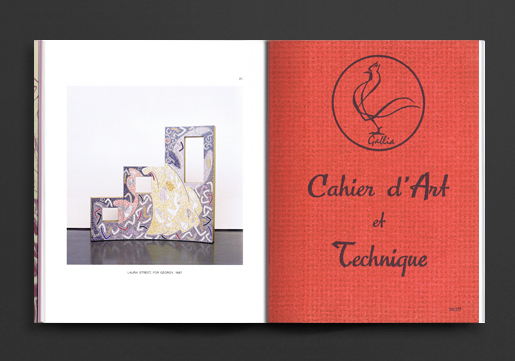
Chaimowicz is increasingly influential for younger generations of artists, his work explores the space between public and private, design and art, and includes painting, sculpture and photography with prototypes for everyday objects, furnishings and wallpapers.
A choreography of objects, images and colours, in his Serpentine Gallery installation the artist draws upon ideas of memory and place. This responds to the architecture, natural surroundings and history of the Serpentine which was converted from a 1930s park café to a gallery in 1970.
This unique hybrid between a catalogue and artist’s book is a personal exhibition journal that takes the form of a French cahier – a ‘book within a book’ which comprises a visual index of technical drawings and photographs relating to recent projects. Wrapped in a dust jacket featuring a new wallpaper design and including a number of installation and archival images.
Designed by Fraser Muggeridge studio and featuring texts by Michael Bracewell, Mason Leaver-Yap, and Stuart Morgan.
Published on the occasion of the exhibition Marc Camille Chaimowicz: An Autumn Lexicon at Serpentine Sackler Gallery, London, 29 September – 20 November 2016.
1972, English
Softcover, 122 pages, 31 x 26 cm
1st edition, Out of print title / used*,
Published by
Quadrangle Books / New York
$100.00 - Out of stock
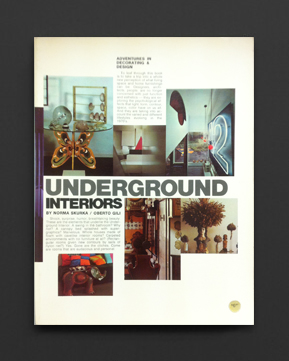
At the start of the 1970's, at the very beginning of renowned photographer Oberto Gili's professional career (Architectural Digest, Vogue, House & Garden, Town & Country), he moved to Milan to work for L’Esperto, a publishing company...
"... to shoot and produce a book that was to be called 'Crazy, Mad, Outrageous Interiors'. I traveled around the world for a year working on this book. L’Esperto dropped the project, but Norma Skurka, The New York Times interiors editor those days, took over and Quadrangle Books published the book in 1972. It was called 'Underground Interiors'."
First soft cover edition of this cult classic interior design book - the only one of its kind. This lavishly illustrated book features the deluxe photography of eclectic and inspired domestic settings from all over the world c. early 1970s: "Surrealist Interiors", "Environments", "Radical Chic", "Pop Culture", "Space Age Habitations"... An incredible piece of interior design history.
Includes the living spaces of Karl Lagerfeld, Derek Jarman, Zandra Rhodes, Marina Lante della Rovere, Nanda Vigo, Alan Buchsbaum, Julie Christie, to name only a handful.
"Not just another book on interior decoration with look-alike rooms, Underground Interiors is a fantastic mind-expanding experience into contemporary life styles."
2017, English
Softcover (ring-bound), 368 pages, 24 x 33 cm
1st Ed.,
Published by
Spector Books / Leipzig
$86.00 - Out of stock
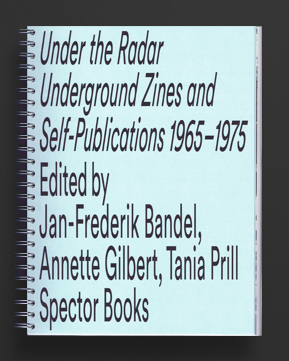
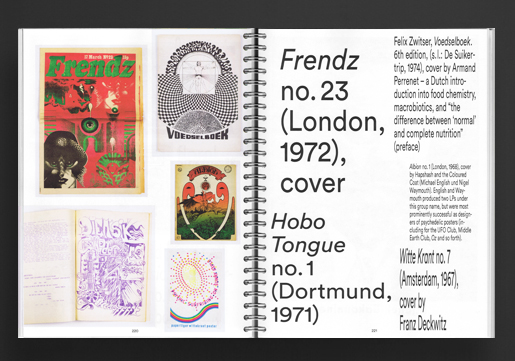
The mid-1960s witnessed a boom in underground and self-published works in West Germany. Hectographs, mimeographs and offset printing not only allowed for the production of small, low-cost print runs, but also promoted a unique aesthetic. Using wild mock-ups, these messianic amateurs combined typescript aesthetics, handwriting, scribbled drawings, assemblages of collaged visuals, porn photos, snapshots and comic strips, forging a new, wildly free, sensibility in the process. This book is the first to present the underground and self-published works that came out of West Germany in such depth, while also showing the international context in which they emerged – not as an anecdotal history but as an attempt to tap into the aesthetic cosmos of the Do-It-Yourself rebellion. Insomuch, Under the Radar also challenges us to take a new look at the current boom in independent publishing, the risograph aesthetic and more.
An incredible collection and valuable volume for anyone interested in underground publishing history!
1993, English
Softcover, 156 pages, 291 x 291 cm
Out of print title / used / very good
Published by
Pomegranate Artbooks / California
$65.00 - Out of stock
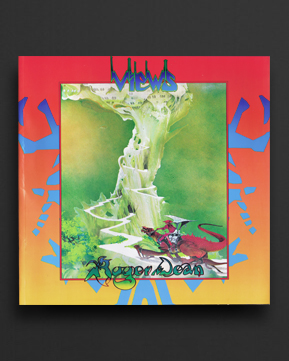
The first two volumes chronicling the unique art and design of Roger Dean met with huge critical and popular success. Views (1975) went straight to number one in the Sunday Times bestseller list and went on to sell over a million copies. Magnetic Storm (1984) sold over 650,000 copies. These new editions, reworked to accompany the publication of the third book in the trilogy, Dragon's Dream, showcase the instantly recognizable work of Roger Dean.
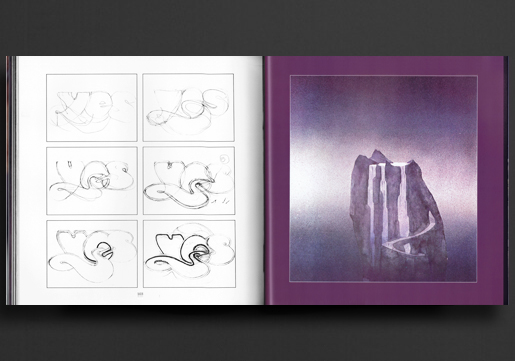
Views showcases the first seven years of Roger Dean's work after his graduation from the Royal College of Art in 1968. It includes paintings and graphics; branding such as the Yes typography and the first Virgin Records logo; groundbreaking stage sets; and album art including iconic early Yes covers such as the award-winning Tales From Topographic Oceans. The new edition streamlines the original square format and retains the combination of concept sketches and brilliantly displayed finished work. Featuring a new foreword, revised typography, and graphic openers and identifying icons, Views showcases and celebrates the art that defined an era.
Roger Dean is internationally acclaimed as an artist and designer whose evocative and visionary images created a new genre. Made popular through the medium of album covers and posters, his work has sold in excess of 100 million copies. Roger became widely known in the 1970s for his album cover designs for Yes—including the classic logo now in the Victoria & Albert Museum in London—and a poll of Rolling Stone readers selected five of his designs in the top twenty best album covers of all time.
2017, English
Softcover, 64 pages, 12 x 19 cm
Published by
Sternberg Press / Berlin
$28.00 $15.00 - In stock -
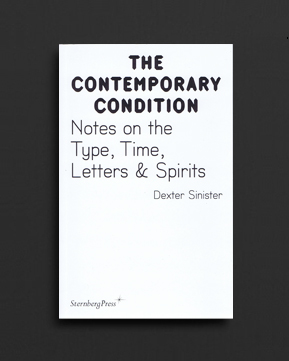
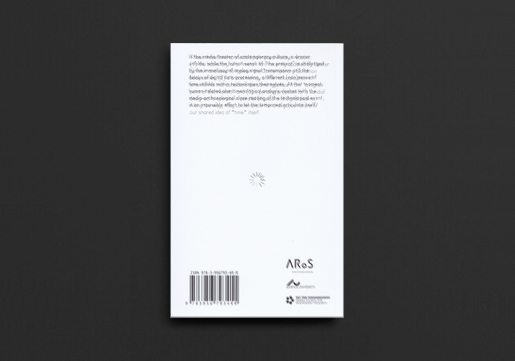
Three interconnected palimpsest essays recount (1) the backstory of a “meta” font recently updated by Dexter Sinister and used to typeset the Contemporary Condition book series, (2) a broad history of the rationalization of letterforms that considers the same typeface from “a higher point of disinterest,” and (3) a pending proposal for a sundial designed to operate in parallel physical and digital realms. Along the way they contemplate the ambiguous nature of our shared idea of time itself.
The Contemporary Condition series edited by Geoff Cox and Jacob Lund, Volume 06
Copublished by Sternberg Press, Aarhus University and ARoS Art Museum
Design by Dexter Sinister
2013, English
Softcover, 304 pages, 24 × 17 cm
Published by
Hyphen Press / London
$55.00 $30.00 - Out of stock
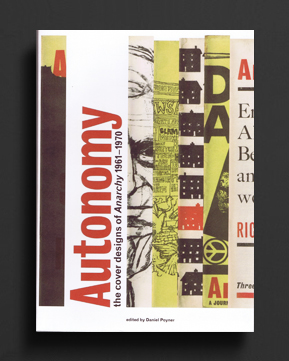
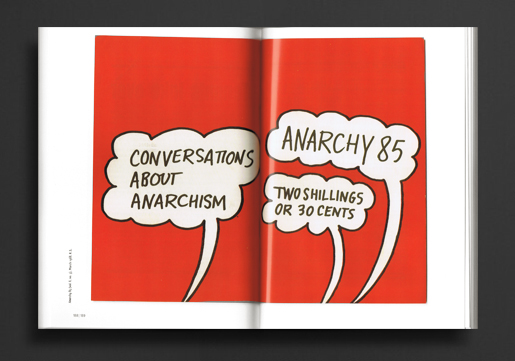
Anarchy was a journal of ideas published in London in the 1960s. Although its contributors were many and diverse, Anarchy was essentially the creation of one person, Colin Ward (1924–2010). With this journal, and throughout his work as a writer, editor, and activist, Ward proposed the idea that anarchist principles of mutual aid and autonomous organization outside a centralized state can be achieved here and now. This book gives attention for the first time to the covers of Anarchy, designed mostly by Rufus Segar. These little-known works provided the enticing entry to the plain text pages of the journal. The book reproduces all of the covers in a sequence that suggests, incidentally, something of the history of graphic design in Britain in those years. And it goes beyond the images, with an array of supporting texts that give a full picture of Anarchy and its context.
Contents
Daniel Poyner, Introduction
The covers of Anarchy
Raphael Samuel, ‘Utopian sociology’
Daniel Poyner, A conversation with Rufus Segar
Richard Hollis, ‘Anarchy and the 1960s’
Robin Kinross, An index to Anarchy
‘Autonomy’ doesn’t try to present Segar as some great innovator of graphic design. He wasn’t one and makes no claim to be. What the book sets out to do, and it succeeds magnificently without visual or verbal hyperbole, is to enrich and add nuance to our understanding of a 1960s graphic landscape we might think we know inside out by acquainting us with unfamiliar work that provided an important forward-thinking publication with its public face. Segar believed in the journal’s cause and 40 years later, he reports, he and his wife Sheila are still anarchists.
Rick Poynor, Creative Review, January 2013
1979, English
Softcover, 76 pages, 29.7 x 29.7 cm
2nd 1994 print, out of print title / used*,
Published by
Morpheus International / US
$65.00 - Out of stock
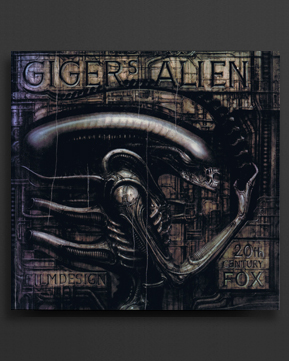
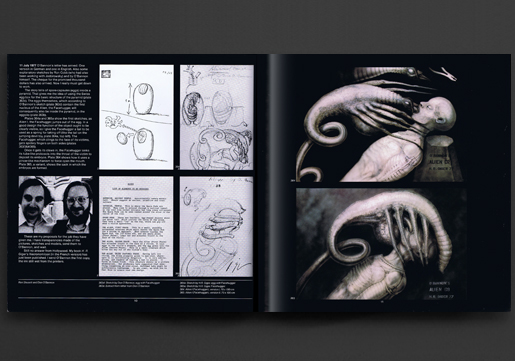
"Giger's Alien provides a complete record of the months and months of painstaking work that resulted in two hours of terrifying celluloid. Sketches, original paintings, photographs of scenery and the Alien under construction and scenes from the film are linked by Giger's detailed diary of his thoughts and actions at the time".
First published in 1979, here the Morpheus International second printing, "Giger's Alien" is a visually stunning and wonderfully insightful book for any fan of the art of H.R. Giger or in the production of science-fiction.
2017, English
Softcover, 240 pages, 12 x 19 cm
Published by
KW Institute for Contemporary Art / Berlin
Uh Books / Amsterdam
$20.00 - Out of stock
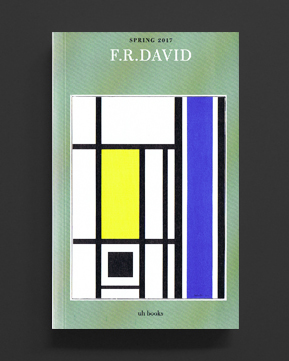
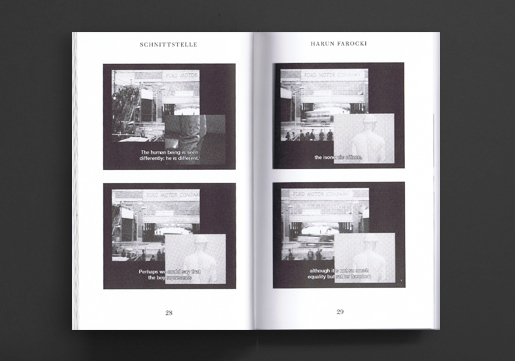
F.R.DAVID is a typographical journal, edited by Will Holder, dealing with the organisation of reading and writing in contemporary art practises. This 13th issue of F.R.DAVID is edited with Riet Wijnen, and has its origins in her Registry of Pseudonyms, an online database which accounts for who is who and why who is who. ‘Inverted Commas’ follows ‘pseudonym’ through names, naming, bodies, brains, self, author, other, reader, labour.
Includes: Michael Asher, Joan Didion, Harun Farocki, Sven Lütticken, Lucy Lippard, Barbara Guest, A.H. Nijhoff, Will Holder, Pauline Oliveros, and many more.
1st edition, Out of print title / used*
Hardcover, 34 pages, 15 x 15 cm
Published by
William Morrow and Co. / New York
$40.00 - Out of stock
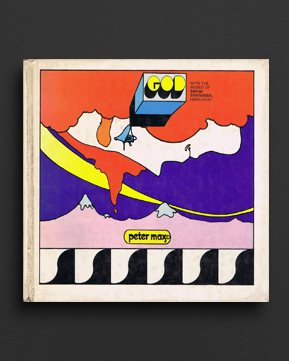
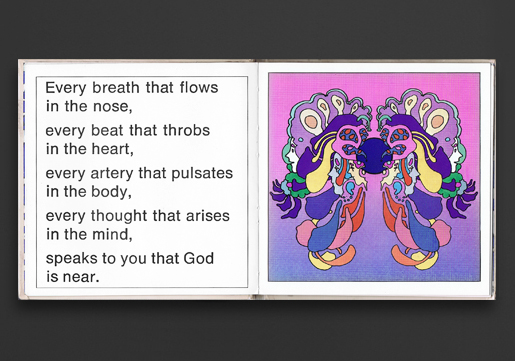
"God", published in 1970, from the iconic series of popular books illustrated by American graphic artist Peter Max with words of Swami Sivananda, Himalayas, who was a Hindu spiritual teacher and a proponent of Yoga and Vedanta. The 4 book series was made up of God/Thought/Peace/Love. Hardcover. First Edition.
"Peter Max (born Peter Max Finkelstein, October 19, 1937) is a German-born American illustrator and graphic artist, known for the use of psychedelic shapes and color palettes as well as spectra in his work. Max's art work was first identified as having been a popular part of the counter culture and psychedelic movements in graphic design during the late 1960s and early 1970s - works in this style appeared on posters and were seen on the walls of college dorms across America. In 1962, Max started a small Manhattan arts studio known as "The Daly & Max Studio," with friend Tom Daly. Daly and Max were joined by friend and mentor Don Rubbo, and the three worked as a group on books and advertising for which they received industry recognition. Much of their work incorporated antique photographic images as elements of collage. Max's interest in astronomy contributed to his self described "Cosmic '60s" period, which featured what became identified as psychedelic, counter culture imagery. Max's art was popularized nationally through TV commercials such as his 1968 "un cola" ad for the soft drink 7-UP. He is known for using bursts of color, often containing much or all of the visible spectrum. His work was both influenced by, as well as widely imitated by, others in the field of commercial illustration. Max then became fascinated with new printing techniques that allowed for four-color reproduction on product merchandise. In 1970, many of Max's products and posters were featured in the exhibition "The World of Peter Max," which opened at the M.H. de Young Memorial Museum in San Francisco. The United States Postal Service commissioned Max to create the 10-cent postage stamp to commemorate the Expo '74 World's Fair in Washington, and Max drew a colorful psychedelic scene with a "Cosmic Jumper" and a "Smiling Sage" against a backdrop of a cloud, sun rays and a ship at sea on the theme of "Preserve the Environment." Max's work has since been recognised through work with everyone from the 1994 World Cup, Yes, The World Series between the New York Yankees and Mets, and Taylor Swift."
1976, Japanese
Softcover (w. dust-jacket), 128 pages, 15 × 21cm
1st Edition, Out of print title / Used*,
Published by
PARCO / Tokyo
$140.00 - Out of stock
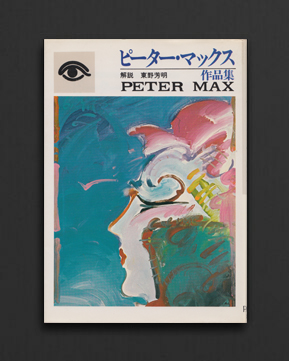
A strangely very scarce Peter Max book, published by PARCO in Tokyo, for a major exhibition held in Japan in 1976.
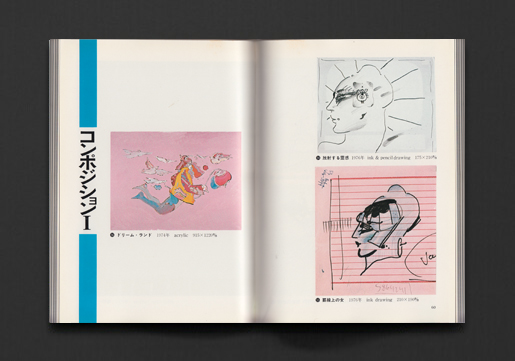
Spanning the 1960s-mid 1970s, this elegant publication is entirely made up of page after page of Max's vibrant paintings, sketches, prints and collages, so many of which have not been reproduced in any other book. The sketches in here are of particular interest. Many figurative studies, as well as flowers, fantastic landscapes and his famed "Cosmic Jumper", all in Max's distinct style. A modest, yet very generous and handsomely designed Japanese book on Max's iconic graphic and illustrative work.
"Peter Max (born Peter Max Finkelstein, October 19, 1937) is a German-born American illustrator and graphic artist, known for the use of psychedelic shapes and color palettes as well as spectra in his work. Max's art work was first identified as having been a popular part of the counter culture and psychedelic movements in graphic design during the late 1960s and early 1970s - works in this style appeared on posters and were seen on the walls of college dorms across America. In 1962, Max started a small Manhattan arts studio known as "The Daly & Max Studio," with friend Tom Daly. Daly and Max were joined by friend and mentor Don Rubbo, and the three worked as a group on books and advertising for which they received industry recognition. Much of their work incorporated antique photographic images as elements of collage. Max's interest in astronomy contributed to his self described "Cosmic '60s" period, which featured what became identified as psychedelic, counter culture imagery. Max's art was popularized nationally through TV commercials such as his 1968 "un cola" ad for the soft drink 7-UP. He is known for using bursts of color, often containing much or all of the visible spectrum. His work was both influenced by, as well as widely imitated by, others in the field of commercial illustration. Max then became fascinated with new printing techniques that allowed for four-color reproduction on product merchandise. In 1970, many of Max's products and posters were featured in the exhibition "The World of Peter Max," which opened at the M.H. de Young Memorial Museum in San Francisco. The United States Postal Service commissioned Max to create the 10-cent postage stamp to commemorate the Expo '74 World's Fair in Washington, and Max drew a colorful psychedelic scene with a "Cosmic Jumper" and a "Smiling Sage" against a backdrop of a cloud, sun rays and a ship at sea on the theme of "Preserve the Environment." Max's work has since been recognised through work with everyone from the 1994 World Cup, Yes, The World Series between the New York Yankees and Mets, and Taylor Swift."
1986, English / Italian
Softcover, 173 pages, 22 x 24 cm
1st edition, Out of print title / used*,
Published by
Electa / Milan
$180.00 - Out of stock
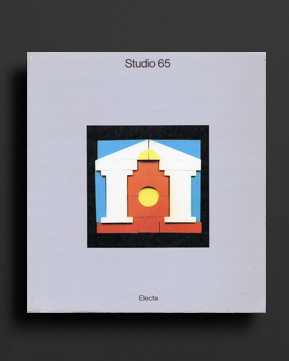
The incredible, rarely seen Electa Studio 65 monograph!
In 1965 Studio 65 was founded by Franco Audrito and Piero Gatti, architecture and art students in Turin, at a time in Italy covering the 1960s and 1970s, where radical design groups were establishing an opposition to the pure functionalism of the International Style of design. Their ironic adaptation of classical elements predates the historicist designs of such 1980s postmodernists as Robert Venturi and Michael Graves in America and Hans Hollein, Ricardo Bofill, and Aldo Rossi in Europe, and it also takes note of pop art developments of the period in ways which in turn influenced visual artists of the time.
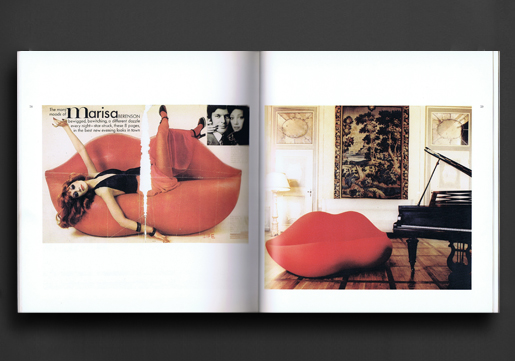
This valuable book encompasses their entire history of work, all densely illustrated in colour and black and white throughout with texts in both Italian and English discussing each project. Includes all their work across furniture design (including their iconic polyurethane foam pieces for Gufram, such as "Bocca" and "Capitello"), interior design, architecture, exhibition design, and much more. From designing discotheques to children's playgrounds, much of the content in this book is undocumented elsewhere in print.
Alongside a complete biographical history, interviews and essays, this great book visually captures Studio 65's place at the forefront of Italy's radical anti-design movement, transforming furniture, jewellery, accessories, and even architecture itself into objects of fantasy.
First and only edition.
1990, English / Japanese
Hardcover (w. dust-jacket), 96 pages, 24.5 x 31 cm
1st Edition, Out of print title / Used*,
Published by
Yamagiwa Art Foundation / Japan
$120.00 - Out of stock
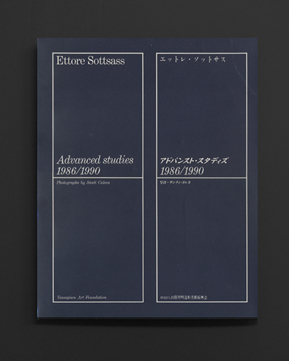
Scarce, beautifully designed hardcover book from 1990, published by the Yamagiwa Art Foundation in Japan to accompany the exhibition "Ettore Sottsass: Lighting Is Architecture".
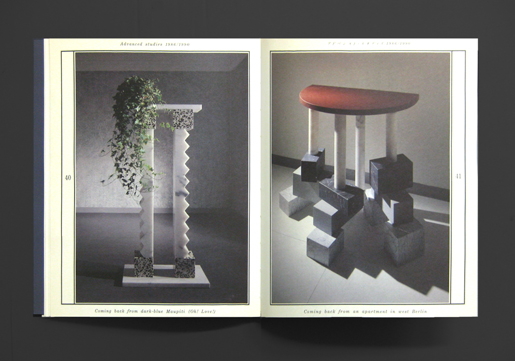
More than a simple catalogue of the exhibition, this book highlights a selection of Italian designer Ettore Sottsass' recent works from around this time (1986-1990), including furniture, glassware and lighting, much of which we've never seen documented before. All the objects are gloriously photographed in full-colour by Santi Caleca, alongside reproductions of Sottsass' product sketches and thoughtfully commissioned writings by Hyogo Konagaya, Riichi Miyake, Shiro Kuramata, Arata Isozaki, Martin Filler, and three texts by Sottsass himself.
This is a copy of the first printing and is in near new condition!
Italian designer Ettore Sottsass is celebrated intemationally for his contribution to architecture, industrial and furniture design, ceramics, jewellery, crafts, graphic design, and photography. In 1981 he founded the Memphis group, and through its startling, eclectic and irreverent aesthetic he dominated furniture and interior style for over a decade. Almost every area of modern design displays his influence.
1987, French
Softcover, 96 pages, 17 x 19 cm
1st edition, Out of print title / used*,
Published by
Rivages / Paris
$45.00 - Out of stock
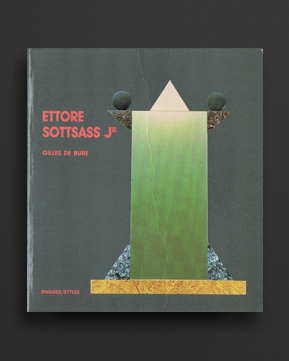
Small French monograph on the life and work of Italian designer and architect, Ettore Sottsass. First Edition. Illustrated throughout in black and white and colour with his work across furniture, glass, ceramic, jewellery, lighting, interior and architectural projects. Ettore Sottsass (14 September 1917 – 31 December 2007) was a founder of the highly influential Memphis group and Sottsass Associati, as well as designer with Alchimia, Alessi, Olivetti, Arredoluce, Poltronova, Fiorucci, Esprit, Knoll, and many others. All texts in French.
2001, Finnish / Swedish / English
Softcover, 192 pages, 21 x 25 cm
1st Edition, Out of print title / Used*,
Published by
Marimekko Oyj
$85.00 - Out of stock
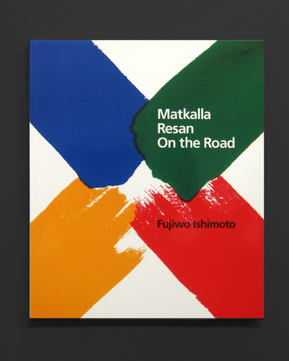
Published on the occasion of textile and ceramic designer Fujiwo Ishimoto's exhibition On the Road at the Amos Anderson Art Museum, Helsinki, 23 August - 7 October 2001.
Ishimoto moved to Finland from Japan in 1970 and has lived there ever since. He first worked for the company Decembre, set up by Ristomatti Ratia, son of Marimekko's founders Armi and Viljo Ratia. Ishimoto switched over to Marimekko in 1974. His highly personal style gave Marimekko a boost during the 1970s and 1980s with more mature and abstract designs than the playful 1960s styles which first had made Marimekko famous. Inspired by traditional Asian art and culture but also by Finnish traditions and nature, Ishimoto has continued to reinvent himself.
In total, he has made over 300 designs for Marimekko. Besides his work for Marimekko, he also creates unique ceramic works and was recently the subject of a large retrospective exhibition in Helsinki, of which this (now very rare) book is the accompanying publication. It is the most in-depth look at the work of Fujiwo Ishimoto to date.
1984, English
Hardcover, 48 pages, 23 x 19 cm
1st UK edition, Out of print title / used*,
Published by
Souvenir Press / London
$40.00 - Out of stock
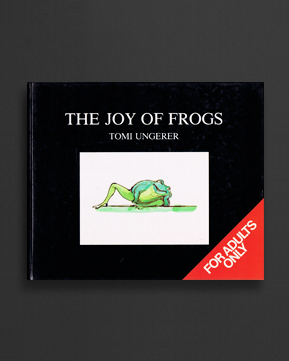
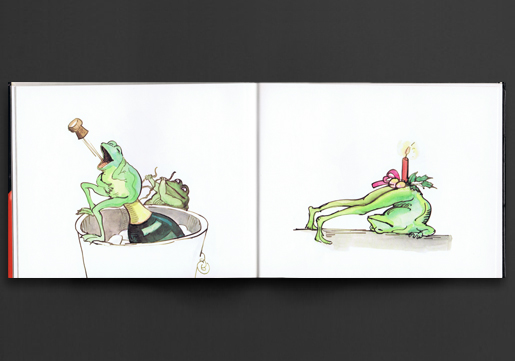
1st UK hardback edition of this wonderful collection of Tomi Ungerer's provocative frog watercolours from the early 1980's. The amphibious "Joy of Sex", this fabulous collection of frog erotica is one of Ungerer's incredible adult books, sitting alongside such classics as The Party (1966), Fornicon (1969) and Tomi Ungerer's Compromises (1970), Totempole (1976), amongst many others.
Tomi Ungerer (born 28 November 1931) is an award winning French illustrator and a writer in three languages. He has published over 140 books ranging from much loved children's books to controversial adult work and from the fantastic to the autobiographical. He is known for sharp social satire and witty aphorisms. He is renowned for his iconic Advertising campaigns and political posters against the Vietnam War and Racial Injustice which were representative of the burgeoning political consciousness in New York in the 1960’s. His political engagement has continued to this day in campaigns against Racism and Fascism, for Nuclear disarmament, Ecology and numerous Humanitarian causes.
2007, French
Hardcover (cloth), 296 pages (colour & b/w ill.), 250 x 310 mm
1st edition, Out of print title / As New,
Published by
HYX / France
$150.00 - Out of stock
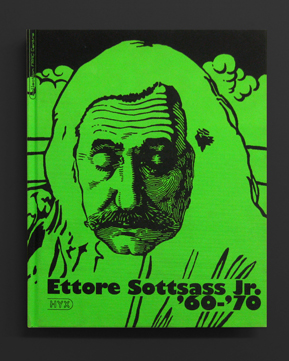
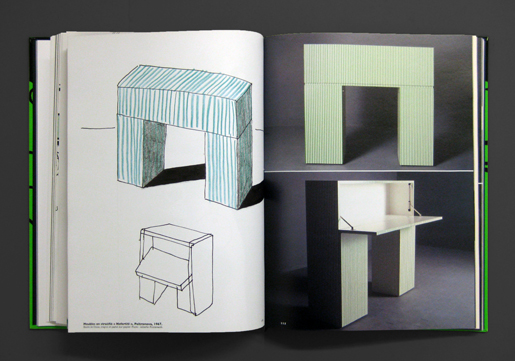
Gorgeous, out of print, huge book on the early work of Italian designer Ettore Sottsass. Drawing in part on the FRAC Centre collection, this book gathers together unique works and projects of Ettore Sottsass – drawings, furniture, objects, ceramics, jewellery, photographs, written works and architecture – wherein over a period of time Sottsass frees himself from the principles of functionalism and rationalism and moves towards the development of a new sensorial language. This heavy book lavishly illustrates the large body of experimental and commercial work Sottsass had produced that lead the way to his founding the Memphis Group in Italy, 1981.
Overflowing with beautifully reproduced full-page colour images and containing minimal French text, this deluxe cloth-bound publication allows for an fascinating insight into one of the most important designers of the 20th century.
2017, English / German
Softcover, 272 pages + DVD, 23 x 17 cm
Published by
Walther König / Köln
$45.00 - Out of stock
This is a long-awaited account of the work of the great publisher and designer Hansjörg Mayer in the fields of concrete poetry, typography, artist’s publications and ethnographic books over six decades. It includes the first bibliography of his works.
Identified as a print prodigy by Max Bense in the late 1950s, Mayers unique expertise and virtuosity with print technologies of the time allowed for the casting of works in various experimental formats which stretched, fragmented and expanded the concept of the poem.
He combined an interest in chance and randomness with a mathematically precise attention to use of graphic space, which makes his works now seem anticipatory of networked systems whilst holding a more modernist purity of form. His works made seminal explorations into the possibilities of concrete and computational convergence.
Mayer had a retrospective exhibition at Haags Gemeentemuseum in 1968 at the young age of 25. After this he concentrated on making experimental publications with artists.
Through his edition hansjörg mayer he issued publications of Dieter Roth, Richard Hamilton, Tom Phillips, André Thomkins and Emmett Williams.
From the late 1970s he also began to research, collect and publish an extraordinary series of books about vanishing cultures.
English and German text.
1987, English
Hardcover (w. dust jacket), 168 pages, 24 x 25 cm
1st edition, Out of print title / used*,
Published by
Trefoil / London
$35.00 - Out of stock
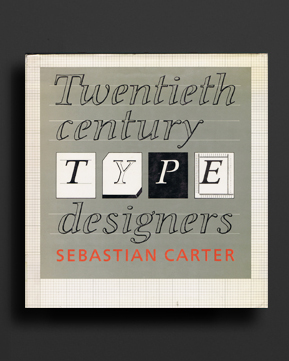
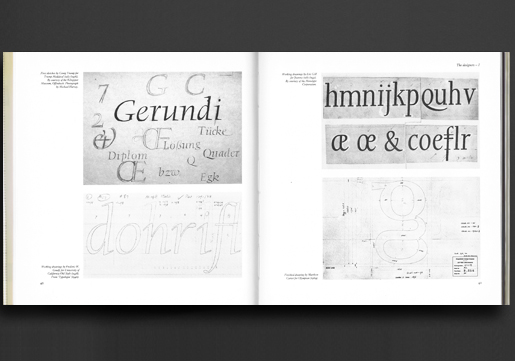
First edition of this reference compilation of biographies of the most famous type designers of the 20th century. A must for every type book collection.
Since its first publication in 1987, Twentieth Century Type Designers has become a standard reference work for typographers, designers and students alike.
This book serves as an introduction to the concept of typefaces and to some of the personalities who have created them--Goudy, Rogers, Koch, Gill, Morison, Van Krimpen, Trump, Tschichold, Frutiger, Zapf and others--and places them in the context of the enormous changes that have occurred in typography.
The introduction in the 1880s of the Linotype and Monotype hot-metal composing machines, and in particular the Benton pantographic punchcutter, revolutionized the manufacture of type, and caused a flood of new typefaces. More recently, filmsetting and digital typesetting have brought new opportunities--as well as new disciplines. This book examines the conflicts arising from these technological advances, which have pitted craftsmanship against commercial interests, and forced designers to come to terms with the new creative opportunities.
Whatever motivates type designers--whether it is the practical need to create new faces for machines, the ideal of producing the perfect letter-form for our age, or whether type is designed as an offshoot of other artistic activities--their work has had a far-reaching impact on our culture.
Designers featured:
Frederic Goudy, Bruce Rogers, Rudolf Koch, William Addison Dwiggins, Eric Gill, Victor Hammer, Stanley Morison, Hans (Giovanni) Mardersteig, Jan van Krimpen, Georg Trump, Joseph Blumenthal, Robert Hunter Middleton, Jan Tschichold, Berthold Wolpe, Roger Excoffon, Herman Zapf, Adrian Frutiger.