World Food Books' programme is largely produced on Kulin Nation land. We acknowledge the Wurundjeri people of the Kulin Nation as the first and continuing custodians of this land, and pay respect to their Elders past, present, and emerging.
World Food Books is an arts and special interests bookshop in Naarm / Melbourne. Founded in 2010, World Food Books is devoted to the presentation of a rotating, hand-selection of international art, design, literary and counterculture publications with an emphasis on the anti-traditional, the experimental, the avant-garde, the heretic, the marginal.
Presenting new titles alongside rare and out-of-print books, catalogues and journals spanning the fields of modern and contemporary art, design, photography, illustration, film, literature, poetry, cultural theory, philosophy, sexuality, popular and underground culture in its many radical forms, World Food Books wishes to encourage adventurous, thoughtful and open-minded reading, looking, writing, and exchange of publishing and ideas, both current and historical.
As well as our bookshop, located in Melbourne's historical Nicholas Building, all of our inventory is available internationally via our online mail-order service.
World Food Books semi-regularly co-ordinates "Occasions", a programme of exhibits and events at the bookshop and in partnership with other hosts (such as museums and art galleries) that develop out of the activities, relationships and content of the bookshop itself.
World Food Books
The Nicholas Building
37 Swanston Street
Room 5, Level 6
Melbourne 3000
Australia
SHOP HOURS:
THU–SAT 12–6
WEB-SHOP OPEN 24/7
World Food Books
Postal Address:
PO Box 435
Flinders Lane
Victoria 8009
Australia
info@worldfoodbooks.com
Art
Theory / Essay
Architecture / Interior
Graphic Design / Typography
Photography
Fashion
Eros
LGBTQ+
Fiction / Poetry
Weird / Speculative / Science Fiction / Horror
Transgressive / Visceral / Abject
Symbolism / Decadence / Fin de siècle
Film / Video
Painting
Sculpture / Installation
Performance / Dance / Theater
Drawing
Sound / Music
Curatorial
Group Shows / Collections
Periodicals
Out-of-print / Rare
Posters / Ephemera / Discs
Signed Books
World Food Books Gift Voucher
World Food Book Bag
Australian Art
Australian Fiction
Australian Science Fiction / Speculative Fiction
Australian Poetry
Australian Photography
Japanese Photography
Conceptual Art
Minimal Art
Dada
'Pataphysics / Oulipo
Fluxus
Concrete Poetry
Pop Art
Surrealism
Arte Povera
Arte Informale / Haute Pâte / Tachism
Nouveau Réalisme / Zero / Kinetic
Situationism / Lettrism
Collage / Mail Art / Xerox Art
Art Brut / Folk / Visionary / Fantastic
Illustration / Graphic Art / Bandes Dessinées
Furniture
Italian Radical Design / Postmodernism
Textiles
Ceramics / Glass
Counterculture
Protest / Revolt
Philosophy
Psychoanalysis
Anthropology
Anarchism
Socialism / Anarchism / Communism / Capitalism
Literary Theory / Semiotics / Language
Feminism / Women's Studies
Gender Studies / Sexuality
Anthropology
Fetishism / BDSM
Drugs / Psychedelia
Crime / Violence
Animal Rights / Veganism
Occult / Esoterica
Ecology / Earth / Alternative Living
Whole Earth / Crafts
All prices in AUD (Australian dollars)
Pick-Ups
Pick-up orders can be collected in our bookshop during opening hours after order date. Please collect any Pick-up orders within 2 weeks of ordering as we have limited storage space. Orders will be released back into stock if not collected within this time. No refunds can be made for pick-ups left un-collected. If you cannot make it in to the bookshop in this time-frame, please choose postage option.
Return Policy
All sales are final. We do accept returns (for refund or exchange) for items received in error. All our orders are packed with special care using heavy-duty padding and cardboard book-mailers or bubble mailers (for smaller books), using reinforcement where required. We cannot take responsibility for any lost, stolen or damaged parcels.
Insurance
Should you wish to insure your package, please email us directly after placing your order and we can organise this at a small extra expense. Although all standard/express tracked packages are very safe and dependable, we cannot take responsibility for any lost, stolen or damaged parcels. We recommend insurance on valuable orders.
Interested in selling your old books, catalogues, journals, magazines, comics, fanzines, ephemera? We are always looking for interesting, unusual and out-of-print books to buy. We only buy books in our fields of interest and specialty, and that we feel we can resell.
We base these prices on desirability, market value, in-print prices, condition and our current stock levels. We offer cash, store credit, and can take stock on consignment. All
about 25% of the price we expect to get when we sell them, or 30% in store credit. We base these prices on desirability, market value, in-print prices, condition and our current stock levels.
Sell your books any day of the week. You can drop them off and return later. If you have a lot of books, we can visit your Sydney home.
We buy books that we feel we can resell. We offer about 25 % of the price we expect to get when we sell them, or 30% in store credit. We base these prices on desirability, market value, in-print prices, condition and our current stock levels.
Philadelphia Wireman
03 August - 01 September, 2018
World Food Books is proud to announce our next Occasion, the first presentation of sculptures by Philadelphia Wireman in Australia.
The Philadelphia Wireman sculptures were found abandoned in an alley off Philadelphia’s South Street on trash night in 1982. Their discovery in a rapidly-changing neighbourhood undergoing extensive renovation, compounded with the failure of all attempts to locate the artist, suggests that the works may have been discarded after the maker’s death. Dubbed the "Philadelphia Wireman" during the first exhibition of this work, in 1985, the maker’s name, age, ethnicity, and even gender remain uncertain. The entire collection totals approximately 1200 pieces, all intricately bound together with tightly-wound heavy-gauge wire (along with a few small, abstract marker drawings, reminiscent both of Mark Tobey and J.B. Murry). The dense construction of the work, despite a modest range of scale and materials, is singularly obsessive and disciplined in design: a wire armature or exoskeleton firmly binds a bricolage of found objects including plastic, glass, food packaging, umbrella parts, tape, rubber, batteries, pens, leather, reflectors, nuts and bolts, nails, foil, coins, toys, watches, eyeglasses, tools, and jewellery.
Heavy with associations—anthropomorphic, zoomorphic, and socio-cultural responses to wrapped detritus—the totemic sculptures by Philadelphia Wireman have been discussed in the context of work created to fulfil the shamanistic needs of alternative religions in American culture. Curators, collectors, and critics have variously compared certain pieces to sculpture from Classical antiquity, Native American medicine bundles, African-American memory jugs, and African fetish objects. Reflecting the artist’s prolific and incredibly focused scavenging impulse, and despite—or perhaps enhanced by—their anonymity, these enigmatic objects function as urban artefacts and arbiters of power, though their origin and purpose is unknown. Philadelphia Wireman, whatever their identity, possessed an astonishing ability to isolate and communicate the concepts of power and energy through the selection and transformation of ordinary materials. Over the course of the past two decades, this collection has come to be regarded as an important discovery in the field of self-taught art and vernacular art.
Presented in collaboration with Fleisher-Ollman Gallery, Philadelphia, and Robert Heald, Wellington.
Susan Te Kahurangi King
02 February - 10 March, 2018
Susan Te Kahurangi King (24 February 1951 - ) has been a confident and prolific artist since she was a young child, drawing with readily available materials - pencils, ballpoint pens and felt-tip markers, on whatever paper is at hand. Between the ages of four and six Susan slowly ceased verbal communication. Her grandparents William and Myrtle Murphy had developed a special bond with Susan so they took on caring responsibilities for extended periods. Myrtle began informally archiving her work, carefully collecting and storing the drawings and compiling scrapbooks. No drawing was insignificant; every scrap of paper was kept. The King family are now the custodians of a vast collection containing over 7000 individual works, from tiny scraps of paper through to 5 meter long rolls.
The scrapbooks and diaries reveal Myrtle to be a woman of great patience and compassion, seeking to understand a child who was not always behaving as expected. She encouraged Susan to be observant, to explore her environment and absorb all the sights and sounds. Myrtle would show Susan’s drawings to friends and people in her community that she had dealings with, such as shopkeepers and postal workers, but this was not simply a case of a grandmother’s bias. She recognised that Susan had developed a sophisticated and unique visual language and sincerely believed that her art deserved serious attention.
This was an unorthodox attitude for the time. To provide some context, Jean Dubuffet coined the term Art Brut in 1945 to describe work created by self-taught artists – specifically residents of psychiatric institutions and those he considered to be visionaries or eccentrics. In 1972 Roger Cardinal extended this concept by adopting the term Outsider Art to describe work made by non-academically trained artists operating outside of mainstream art networks through choice or circumstance. Susan was born in Te Aroha, New Zealand in 1951, far from the artistic hubs of Paris and London that Dubuffet and Cardinal operated in. That Myrtle fêted Susan as a self-taught artist who deserved to be taken seriously shows how progressive her attitudes were.
Susan’s parents Doug and Dawn were also progressive. Over the years they had consulted numerous health practitioners about Susan’s condition, as the medical establishment could not provide an explanation as to why she had lapsed into silence. Dawn educated herself in the field of homeopathy and went on to treat all twelve of her children using these principles – basing prescriptions on her observations of their physical, mental and emotional state.
Doug was a linguist with an interest in philosophy who devoted what little spare time he had to studying Maori language and culture. To some extent their willingness to explore the fringes of the mainstream made them outsiders too but it was their commitment to living with integrity and their respect for individuality that ensured Susan’s creativity was always encouraged.
Even though Susan’s family supported her artistic pursuits, some staff in schools and hospitals saw it as an impediment to her assimilation into the community and discouraged it in a variety of ways. Her family was not always aware of this and therefore did not fully understand why Susan stopped drawing in the early 1990s. However, rather than dwell on the challenges that Susan faced in pursuit of her artistic practice, they prefer to highlight her achievements. In 2008 Susan began drawing again in earnest, after an almost 20 year interruption, and her work is now shown in galleries around the world.
Susan grew up without television and has been heavily influenced by the comics she read as a child. She is absolutely fearless in the appropriation of recognizable characters, such as Donald Duck and Mickey Mouse, in her work. She twists their limbs, contorts their faces, compresses them together, blends them into complex patterned backgrounds - always imbuing them with an incredible energy. Although Susan often used pop culture characters in her work they are not naive or childlike. These are drawings by a brilliant self-taught artist who has been creating exceptional work for decades without an audience in mind.
Mladen Stilinović
"Various Works 1986 - 1999"
02 February 16 - September 10, 2016
Various works 1986 - 1999, from two houses, from the collections of John Nixon, Sue Cramer, Kerrie Poliness, Peter Haffenden and Phoebe Haffenden.
Including: Geometry of Cakes (various shelves), 1993; Poor People’s Law (black and white plate), 1993; White Absence (glasses, ruler, set square, silver spoon, silver ladel with skin photograph and wooden cubes), 1990-1996; Exploitation of the Dead (grey and red star painting, wooden painting, black spoon with red table, red plate), 1984-1990; Money and Zeros (zero tie, paintings made for friends in Australia (Sue, John, Kerrie), numbers painting), 1991-1992; Words - Slogans (various t-shirts) - “they talk about the death of art...help! someone is trying to kill me”, “my sweet little lamb”, “work is a disease - Karl Marx”; Various artist books, catalogues, monographs, videos; Poster from exhibition Insulting Anarchy; "Circular" Croatian - Australian edition; Artist book by Vlado Martek (Dostoyevsky); more.
Thanks to Mladen Stilinović and Branka Stipančić.
Jonathan Walker
Always Will Need To Wear Winter Shirt Blue + Ochre Small Check Pattern
21 August - 21 September, 2015
Untitled
I am not a great reader of poetry but I always return to the work of Melbourne poet, Vincent Buckley (1925- 1988). Perhaps I find his most tantalising piece to be not a finished poem but a fragment left on a scrap of paper discovered on his desk after the poet’s death.
The poetry gathers like oil
In the word-core, and spreads
It has its music meet,
Its music is in movement.
This fragment is more the shell left behind from a volatile thought than a finished poem. I find the last two lines honest but awkward whereas the first two lines work like an arrow. Most likely he could not find a resolution so it was left. Still, in its present form, it remains an eloquent testimony to the ultimate failure of a medium to express mobile thought and sensation, in Buckley’s case, through verbal language. It’s an important matter because this is something all artists have to deal with regardless of the medium.
I have never written a poem, however, I am forever copying fragments from books on paper scraps in a vain effort to fix certain notions in my head. At first, they function as bookmarks that are sometimes returned to when I open the book. But before long, as they accumulate, they fall out littering the table interspersed with A4 photocopies, bills, books and medications.
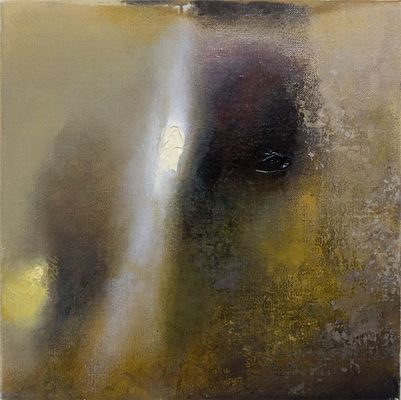
To return to Buckley’s fragment, the first two lines very much evoke how I paint nowadays. As you age, detail diminishes and patches of light become more luminous and float. I feel the most honest way of dealing with this is by smearing the oil paint on the canvas with the fingers and working close-up, blind. Only if the patches coalesce into an approaching image can the work gain a life.
-
Jonathan Walker was born in Melbourne, Australia and brought up on a dairy farm in Gippsland. In the 1970’s he studied painting at RMIT and won the Harold Wright Scholarship to the British Museum, London. During the 1980’s he exhibited at Pinacotheca Gallery, Richmond and had work shown at the NGV and Heidi City Art Gallery. Over the same period he designed the cover for the “Epigenesi” LP by Giancarlo Toniutti, Italy and conducted a mail exchange work with Achim Wollscheid, Germany. The work with artists through the post resulted in an article published in the bicentenary issue of Art and Australia 1988. He showed in artist run spaces such as WestSpace in the 90’s and 2000’s, and until 2012, taught painting at Victoria University, which is where we (Colleen Ahern and Lisa Radford) as organisers of the exhibition, among many others, had the privilege of being his student.
Walker’s knowledge was imparted to students through the careful selection of music, literature, and artists found in books that he himself had ordered for the library. Walker’s strategy was the generosity of sharing his vast knowledge with references specific to each student and their context.
Walker’s paintings share a similar focus and intimacy.
This exhibition presents a small selection of recent paintings alongside a publication that includes Walker’s writing. Observational and analytical, Walker’s work is a type of material notation — the time of day, colour and how it is blended, the both specific and fleeting location of a reflection on lino or the question of whether a chair leg should be included in a painting.
Please join us on Friday August 21 between 6-8pm to celebrate the opening of the exhibition.
Curated by Colleen Ahern and Lisa Radford.
B. Wurtz
Curated by Nic Tammens
March 26 - April 4, 2015
B.Wurtz works from a basement studio in his home on Manhattan’s Lower East Side.
This local fact is attested to by the plastic shopping bags and newsprint circulars that appear in his work. As formal objects, they don’t make loud claims about their origins but nonetheless transmit street addresses and places of business from the bottom of this long thin island. Like plenty of artists, Wurtz is affected by what is local and what is consumed. His work is underpinned by this ethic. It often speaks from a neighborhood or reads like the contents of a hamper:
“BLACK PLUMS $1.29 lb.”
“Food Bazaar”
“USDA Whole Pork Shoulder Picnic 99c lb.”
“RITE AID Pharmacy, with us it’s personal.”
“H. Brickman & Sons.”
“Sweet Yams 59c lb."
Most of the work in this exhibition was made while the artist was in residence at Dieu Donne, a workshop dedicated to paper craft in Midtown. Here Wurtz fabricated assemblages with paper and objects that are relatively lightweight, with the intention that they would be easily transportable to Australia. This consideration isn’t absolute in Wurtz’s work, but was prescriptive for making the current exhibition light and cheap. Packed in two boxes, these works were sent from a USPS post office on the Lower East Side and delivered to North Melbourne by Australia Post.
Wurtz appears courtesy of Metro Pictures, New York.
Thanks to Rob Halverson, Joshua Petherick, Sari de Mallory, Matt Hinkley, Helen Johnson, Fayen d'Evie, Ask Kilmartin, Lisa Radon, Ellena Savage, Yale Union, and "Elizabeth".
John Nixon
"Archive"
December 15 - January 20, 2014
The presentation of John Nixon's archive offered a rare showcase of this extensive collection of the artist's own publications, catalogues, posters, ephemera, editions and more, from the mid 1980s onwards, alongside a selection of his artworks.
Organized by John Nixon, Joshua Petherick and Matt Hinkley.
"Habitat"
at Minerva, Sydney (organised by Joshua Petherick and Matt Hinkley)
November 15 - December 20, 2014
Lupo Borgonovo, Janet Burchill & Jennifer McCamley,
Lewis Fidock, HR Giger, Piero Gilardi, Veit Laurent Kurz,
Cinzia Ruggeri, Michael E. Smith, Lucie Stahl, Daniel Weil, Wols
Press Release:
“...It contained seven objects. The slender fluted bone, surely formed for flight, surely from the wing of some large bird. Three archaic circuitboards, faced with mazes of gold. A smooth white sphere of baked clay. An age-blackened fragment of lace. A fingerlength segment of what she assumed was bone from a human wrist, grayish white, inset smoothly with the silicon shaft of a small instrument that must once have ridden flush with the surface of the skin - but the thing’s face was seared and blackened.”
William Gibson, “Count Zero”, 1986
"Autumn Projects Archive"
Curated by Liza Vasiliou
March 6 - March 15, 2014
World Food Books, in conjunction with the Virgin Australia Melbourne Fashion Festival 2014, presented the Autumn Projects archive, consisting of a selection of early examples in Australian fashion with a particular interest in collecting designers and labels from the period beginning in the 1980’s, who significantly influenced the discourse of Australian Fashion.
Curated by Liza Vasiliou, the exhibition provided a unique opportunity to view pieces by designers Anthea Crawford, Barbara Vandenberg, Geoff Liddell and labels CR Australia, Covers, Jag along with early experimental collage pieces by Prue Acton and Sally Browne’s ‘Fragments’ collection, suspended throughout the functioning World Food Books shop in Melbourne.
H.B. Peace
presented by CENTRE FOR STYLE
November 14, 2013
"Hey Blinky, you say chic, I say same"
Anon 2013
H.B. Peace is a clothing collaboration between great friends Blake Barns and Hugh Egan Westland. Their pieces explore the divergences between 'character’ and ‘personality’ in garments....etc
Special Thanks to Joshua Petherick and Matt Hinkley of WFB and Gillian Mears
and a Very Special Thank you to Audrey Thomas Hayes for her shoe collaboration.
Janet Burchill & Jennifer McCamley
"Aesthetic Suicide"
May 10 - June 8, 2013
The first of our occasional exhibitions in the World Food Books office/shop space in Melbourne, "Aesthetic Suicide" presented a body of new and older works together by artists Janet Burchill & Jennifer McCamley, including videos, prints, a wall work, and publications.
During shop open hours videos played every hour, on the hour.
1988, English
Softcover, 192 pages, 22 x 28 cm
1st Edition, Out of print title / Used*,
Published by
The Gay Men's Press (GMP) / London
Tom of Finland Foundation / Los Angeles
$140.00 - Out of stock
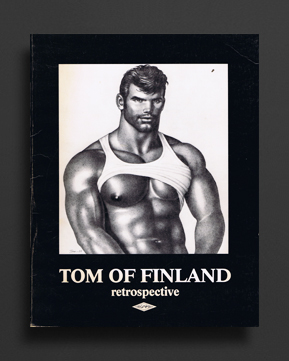
1st printing of one of the finest collections of the great Tom of Finland, published in 1988 by the Tom of Finland Foundation, Los Angeles, and The Gay Men's Press (GMP), London.
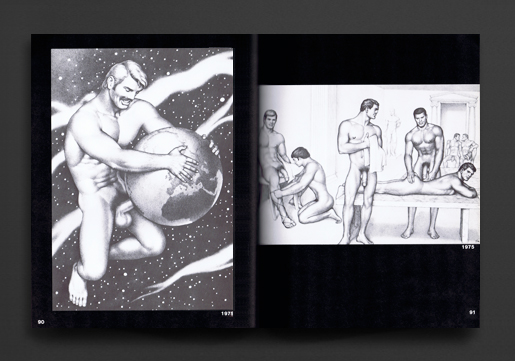
Preface by Tom of Finland with appreciation by Dennis Forbes and Fred Bisonnes. This book covers Tom of Finland's work from 1946 to 1987, depicting page by page throughout his iconic and impeccable erotic graphite drawings of macho leathermen, bikers, cowboys, cops, lumberjacks, hardhats, soldiers and sailors, all in all their glory.
Touko Valio Laaksonen (8 May 1920 – 7 November 1991), best known by his pseudonym Tom of Finland, was a Finnish artist known for his stylized highly masculine homoerotic fetish art, and his influence on late twentieth century gay culture. He has been called the "most influential creator of gay pornographic images" by cultural historian Joseph W. Slade. Over the course of four decades, he produced some 3500 illustrations.
1984, English / German
Softcover, 160 pages, 19 x 27 cm
1st Edition, Out of print title / Used*,
Published by
Galerie Wolkfgang Ketterer / Munich
$70.00 - Out of stock
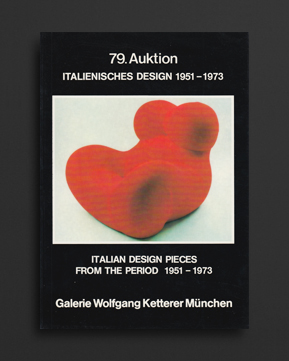
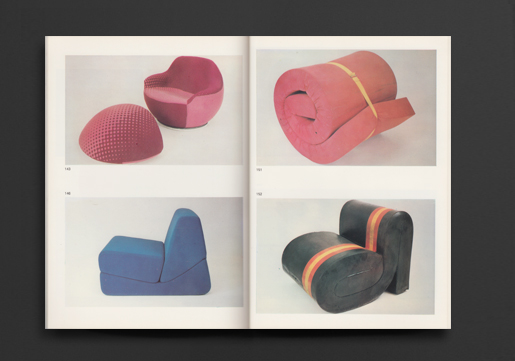
Fantastic and very informative, fully-illustrated auction catalogue from Galerie Wolkfgang Ketterer, 1984, for a major auction of "Italian Design Pieces from the Period 1951-1973". Design editions, one-off prototypes, lamps, furniture by Archizoom, Gae Aulenti, Sergio Asti, Osvaldo Borsani, Giorgio Ceretti, Studio 65, Joe Colombo, Guido Drocco, Piero Gilardi, Paolo Lomazzi, Raymond Hains, Ugo La Pietra, Enzo Mari, Mario Mare, Luigi Massoni, Sergio Mazza, Ettore Sottsass, Franco Mello, Gaetano Pesce, Gio Ponti, Giuseppe Raimondi, G. Reggiani, Rudy Righi, Superstudio, Vinicio Vianello, Marco Zanuso, and many more for Arflex, Gufram, Artemide, Fontana Arte, Artluce, B.B.B., C&B, Flos, Habitat, Galleria Il Sestante, Kartell, Poltronova, Tecno, Totem, and many more. Well-known and long lost, very obscure works in this valuable catalogue, all items photographed (in black and white and colour), with production details and a blurb on each piece in both English and German.
1975, Japanese
Softcover, 200 pages, 24 x 25 cm
1st edition, Out of print title / used*,
Published by
Bijutsu Shuppan Design Center / Japan
$45.00 - Out of stock
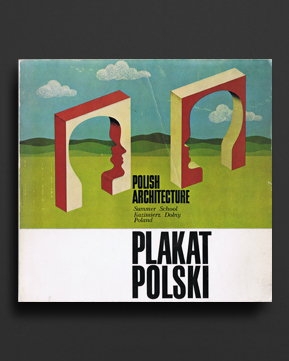
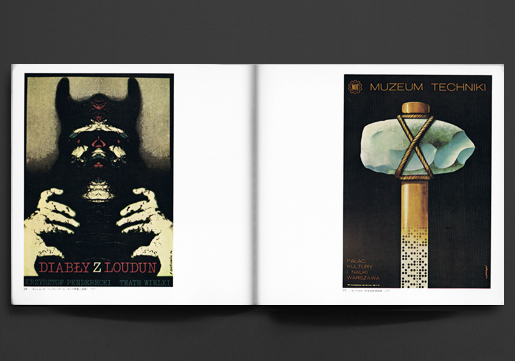
1st edition of this Japanese publication on Contemporary Polish Posters, published by the Bijutsu Shuppan Design Center in 1975.
Beginning in the 1950s and through the 1980s, the Polish School of Posters combined the aesthetics of painting with the succinctness and simple metaphor of the poster. It developed characteristics such as painterly gesture, linear quality, and vibrant colours, as well as a sense of individual personality, humour, and fantasy. It was in this way that the Polish poster was able to make the distinction between designer and artist less apparent. Posters of the Polish Poster School significantly influenced the international development of graphic design in poster art. Their major contribution is in their use of the power of suggestion through allusion. Using strong and vivid colours from folk art, they combine printed slogans, often hand-lettered, with popular symbols, to create a concise inventive metaphor. As a hybrid of words and images, these posters created a certain aesthetic tension that projected the art form in this period on European design. In addition to aesthetic aspects, these posters were able to reveal the artist's emotional involvement with the subject. They did not solely exist as an objective presentation, rather they were also the artist's interpretation and commentary on the subject and on society.
To this day, "Plakat Polski" remain as influential as ever on the world of graphic design, typography, illustration and even painting, and are widely collected and exhibited around the world.
Significant artists include Roman Cieślewicz, Wojciech Fangor, Mieczyslaw Gorowski, Tadeusz Jodlowski, Jan Lenica, Jan Mlodozeniec, Józef Mroszczak, Julian Pałka, Franciszek Starowieyski, Waldemar Świerzy, Henryk Tomaszewski, Maciej Urbaniec, Mieczyslaw Wasilewski, Bronisław Zerlek, Maks Bereski-Plakiat.
Illustrated throughout in colour and black and white with a vast array of the finest examples of Polish graphic art.
2017, English
Softcover, 550 pages, 21 × 28 cm
Published by
Novembre / Lausanne
$45.00 - Out of stock
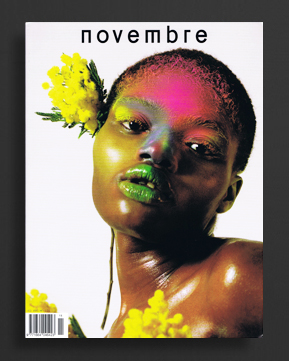
Novembre 11: Isa Genzken, Sanya Kantarovsky, Jessi Reaves, Thomas Hauser, Dan Hoy, Ib Kamara, Robert Kulisek, Corey Olsen, Olympia Scarry, Alexandra Bircken, Ada Sokol, Hans Ulrich Obrist, Danielle van Camp and many more.
Reinforcing Novembre as a collectible object, issue 11 presents outstanding visuals, exclusive poetry, typographic collaborations, and the leading fashion collections.
Under the candid caption “arts and fashion in Switzerland and the world”, Novembre activates intergenerational discussions, producing international content that explores the critical stakes inherent to the Swiss identity: its neutrality notably fortifies its supposed integrity and inviolability, whilst placing the Confederation in an extremely productive and influential position within the arts on a global level.
Through the organic association of fashion, design and art, Novembre highlights the products which proliferate in schools, studios, galleries, showrooms, institutions, trade shows, fairs, hotels and bank lobbies and living rooms – addressing issues of integration, independence, equality, and exchange.
Novembre is currently published and independently by Florence Tétier (Paris), Florian Joye (Lausanne), and Jeanne-Salomé Rochat (Berlin), who united after their graduation from ECAL University of Arts, Switzerland.
1980, English
Softcover, 120 pages, 24 x 22 cm
1st Edition, Out of print title / used*,
Published by
St. Martin's Press / New York
$70.00 - Out of stock
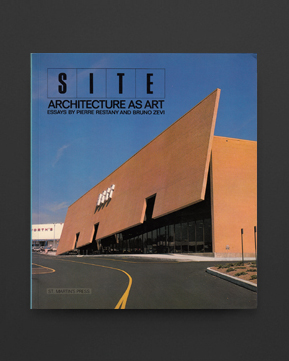
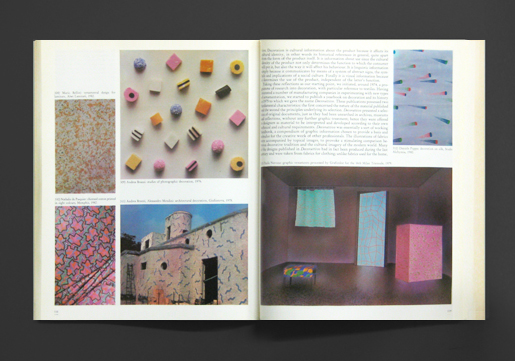
Great book from 1980 on the works of SITE, a multidisciplinary architecture and environmental art organization chartered in New York in 1970 for the purpose of exploring new concepts for the urban/suburban visual environmental.
Commonly aligned with radical architecture, anti-architecture or arch-art, SITE have described their philosophical position as "De-Architecture". Pierre Restany presented SITE as "a paradigm of humour & disorder, the perfect antidote against post-modernist, rationalist & structuralist conventions".
Contents include: SITE: Artists of Our Time by Pierre Restany (essay) / The Poetics of the Unfinished by Bruno Zevi (essay) / SITE - Description of the Organization / Notes on the philosophy of SITE / Lists of Buildings and Projects / Exhibitions / Bibliography / Selected Projects / Projects lllustrated / and heavily illustrated profiles (w. photographic documentation and plan drawings) on all of their major projects spanning 1969-1979, including their phenomenal designs for BEST Products.
2017, English
Softcover, 112 pages, 19.5 x 26.5 cm
Published by
La Loge / Brussels
Sternberg Press / Berlin
$22.00 $10.00 - Out of stock
Introduction by Mark Mann
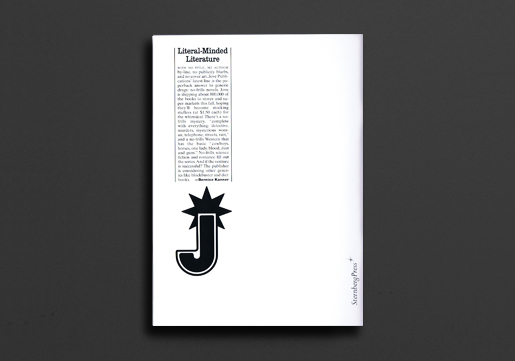
When first introduced, mass-market paperbacks sparked a publishing revolution. Critics despised them as lowbrow diversions, which did not impact their popularity. But the business model barely worked. Prices were so low, the books needed to sell in incredible numbers to make a profit. An industry norm emerged to pump up sales, whereby most of the novels were wrapped with images of women in provocative settings and states of undress. Many readers were duly provoked to purchase, but this recurring allure eventually lost its sway.
Simultaneously, an opposing theme of essentialism was asserting itself in grocery stores. The No Frills brand presented goods in unadorned packaging. It was as if the very intention to sell had been excised from the label’s straightforward design and terse declaration of contents—SALAD DRESSING, FRUIT PRESERVES, LAUNDRY DETERGENT. No Frills stripped the cloying appeal of traditional marketing and replaced it with a candid offering of canned beets and corned beef, pure and plain.
Inspired by this direct approach, Terry Bisson and art director Frank Kozelek developed the No-Frills book series in the early 1980s. Signature Strengths, conceived and edited by Boy Vereecken, reproduces in full the four books published in the series—Western, Mystery, Science Fiction, and Romance—as well as critical evaluations of the fascinating experimental endeavor in genre writing and mass-market publishing.
Copublished with La Loge, Brussels
Design by Boy Vereecken
2003, Japanese / English
Hardcover (w. dust jacket and obi-strip), 80 pages, 19 x 27 cm
Signed, 1st Edition, Out of print title / As New,
Published by
P-Vine Books / Tokyo
$150.00 - Out of stock
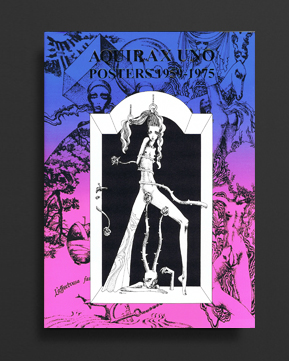
Very special Aquirax Uno signed copy of this fantastic hardcover collection of his poster work dating 1959-1975.
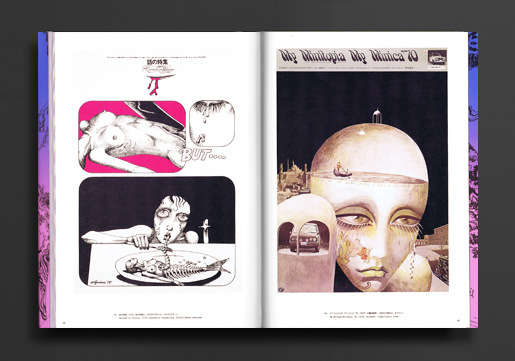
Aquirax Uno, also known as Akira Uno (born March 13, 1934) is a Japanese graphic artist, illustrator and painter who was very influential in the 1960s and 1970s. His incredibly unique work is characterized by fantastic visuals, capricious and sensuous line flow, flamboyant (and occasionally grotesque) eroticism, and frequent use of collage and bright colours. Uno was prominently involved with the Japanese underground art of the 1960s–1970s, and is particularly notable for his frequent collaborations with Shuji Terayama and his experimental theater Tenjo Sajiki.
Signed "Aquirax" in gold marker across black front endpaper.
First edition, in "as new" perfect condition w. dust jacket and obi-strip.
1969, Japanese
Hardcover (w. dust jacket), 144 pages, 19 x 27 cm
1st Edition, Out of print title / Used*,
Published by
Bijutsu Shuppan-sha / Japan
$70.00 - Out of stock
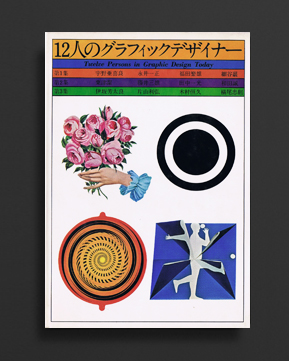
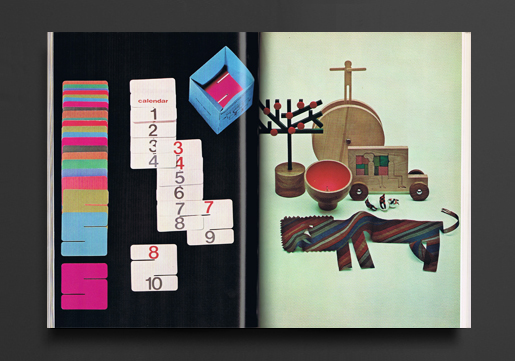
Volume 1 of the great 1969 hardcover series "Twelve Persons in Graphic Design Today", art directed by Gan Hosoya. Each of these collectable books showcase four Japanese graphic designers (of the total 12 across 3 books) practicing in the 1960s through a large selection of their works beautifully reproduced in full-colour and black and white. Volume 1 showcases Akira Uno, Kazumasa Nagai, Shigeo Fukuda, and Gan Hosoya. Texts in Japanese, but almost entirely a visual document.
First edition in original dust-jacket, protected by plastic wraps.
2014, English
Softcover, 160 pages (colour & bw ill.), 19 x 25 cm
Published by
Occasional Papers / London
$58.00 - Out of stock
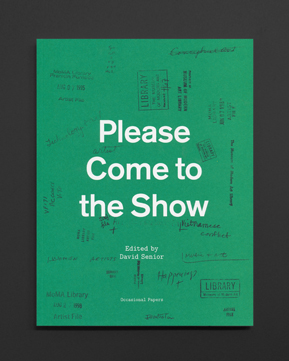
David Senior, bibliographer at the Museum of Modern Art Library in New York, selected a wide range of exhibition-related ephemera – invitations, flyers and posters from the 1960s to the present – and presents them here as an historically overlooked but integral aspect of exhibitions. Often the first point of contact between the audience and artist, such items form part of an essential lexicon for graphic designers, curators, art historians and anyone interested in the event-based nature of showing art. Filled with full-colour reproductions of numerous examples from the MoMA collection, the book includes new essays and analysis by Angie Keefer, Clive Phillpot and Will Holder, among others.
2016, English / German
Softcover, 490 pages, 32 x 24 cm
Published by
Chert Galerie / Berlin
Motto / Berlin
$95.00 - Out of stock
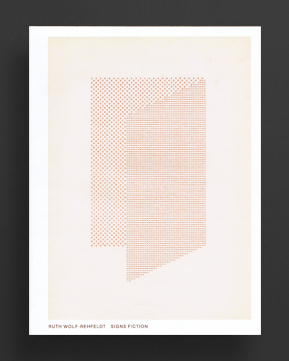
This impressive book aims to collect and present a comprehensive overview of the work of Ruth Wolf-Rehfeldt. It is the result of a long and intense immersion into the archive, and intends to establish the importance of this unique German artist – who did not have much recognition in the past – not only to the present day, but also to the precise political context and time to which she and her work belong.
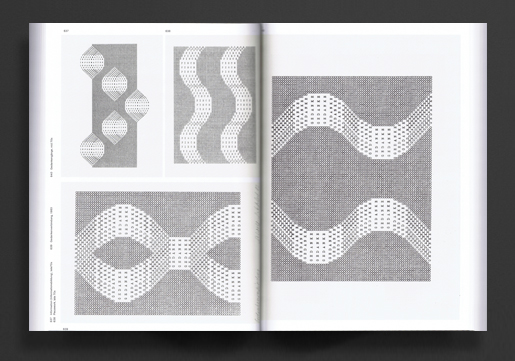
The book presents her typewritings series, all produced between the early 1970s (some of the earliest works are dated 1972) and 1989. Mail Art was her way to be in contact with the world outside the GDR, otherwise impossible to reach. After the fall of the Berlin Wall and the Reunification, the artist stopped producing any art: She felt her involvement was no longer “needed”.
At the beginning of 2015 an archive of Ruth Wolf-Rehfeldt’s work was established, discovering little by little an enormous and fascinating body of work, composed by more classic poetry, simple typewriting texts, visual poetry, concrete poetry, and abstraction.
This handsomely designed, enormous volume perfectly captures this life of work.
Ruth Wolf-Rehfeldt was born in Wurzen, saxony, in 1932.
In 1950 she moved to Berlin, where she still lives today. In 1954 she met the artist Robert Rehfeldt, who she married a year later. She was employed by the exhibitions department at the Academy of Arts, and spent her spare time making drawings. A few years later she started to develop what would become her typical typewriter graphics, and became an active participant in the international Mail art movement. She stopped making art after the fall of the Berlin Wall.
1997, English
Hardcover (w. dust jacket), 240 pages, 22 x 29 cm
1st edition, Out of print title / used*,
Published by
Rizzoli / New York
$65.00 - Out of stock
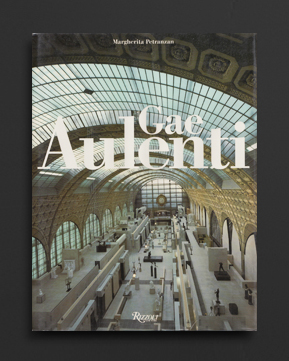
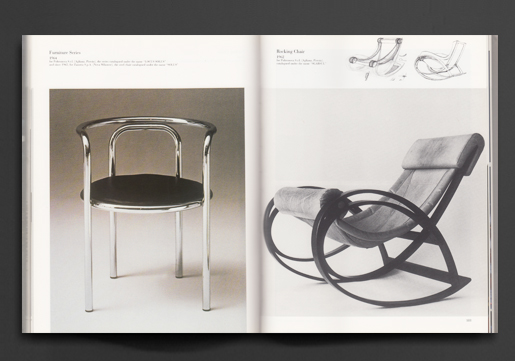
Gae Aulenti is one of the world's most prominent architects, and her prodigious output encompasses museum and theater design, industrial and exhibition design, furniture, graphics, urban planning, and architecture. This now out-of-print 1997 heavy monograph illustrates Aulenti's complete oeuvre and includes the world-famous Musée d'Orsay, stage designs for theater and opera, a villa in St. Tropez, exhibition designs for the 2001 Milan Triennale, her beautiful lamp works, furniture, glass vessels, and the remodeling of the Palazzo Grassi in Venice, among many other highly visible designs captured through gorgeous photography and Aulenti's own drawings.
2016, English / Korean
Softcover, 224 pages, 15 x 21 cm
Published by
Roma / Amsterdam
$35.00 - Out of stock
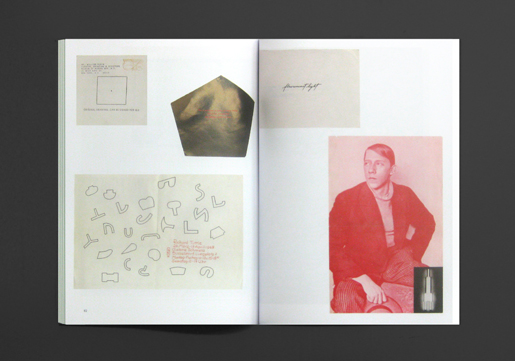
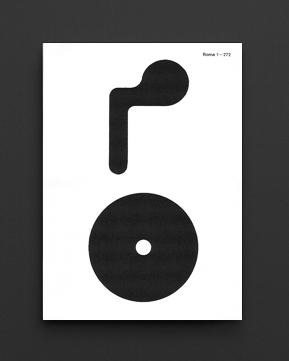
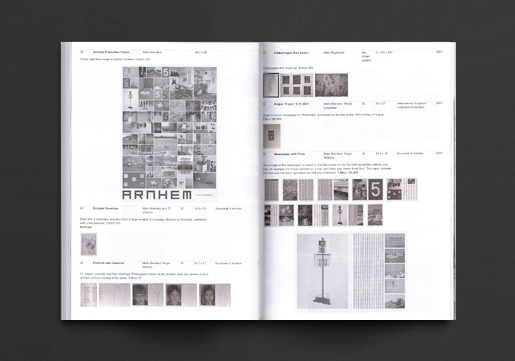
Catalogue published on the occasion of the exhibition Artists' Documents: Art, Typography and Collaboration at MMCA in Seoul (May 26 - August 31, 2016), organized by Roma Publications and mediabus. Besides exhibition views this books contains a complete and richly illustrated Roma Publications backlist from number 1, published in 1998, till this book (Roma 272), published in August 2016. Text in English and Korean, with contributions by Min Choi and LIM Kyung yong. Design: Na Kim and Roger Willems with a cover illustration by Karel Martens.
1984, English
Softcover, 156 pages (260 b/w & 140 colour ill.), 28.0 x 23.0 cm
Out of print title / Used*,
Published by
Thames and Hudson / London
$65.00 - Out of stock
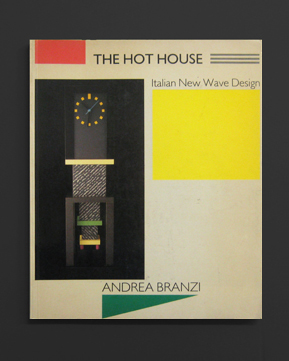
Edited by Andrea Branzi, The Hot House was one of the finest books published to trace the history of Italy's radical design studios from 1960 to the dawn of Memphis. Through academic texts and profuse visual documentation of the work of Alessandro Mendini, Gaetano Pesce, Superstudio, Ettore Sottsass, Natalie Du Pasquier, UFO Group, Enzo Mari, Alchymia, Michele De Lucchi, 9999, Archizoom Associati, Mattheo Thun, Memphis, and many others.
1990, English
Softcover, 90 pages, 23 x 23 cm
1st Edition, Out of print title / used*,
Published by
Architecture Design and Technology Press / London
$35.00 - Out of stock
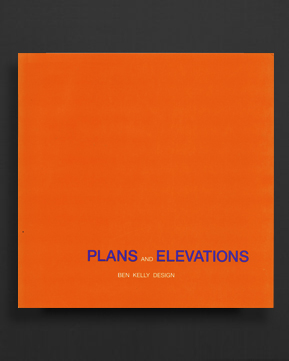
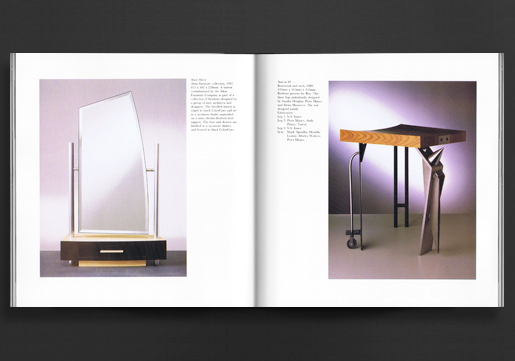
In the 1970s, manager Malcolm McLaren asked a young Ben Kelly to refurbish a basement rehearsal room for The Sex Pistols in Denmark Street, London, which McLaren had bought from Badfinger. Ben Kelly went on to become an enormously influential and original, independent designer whose work has included private houses, shops, nightclubs, showrooms and furnishings, established throughout the 1980s and 1990s in London. Among his best-known projects have been the much-imitated Manchester nightclub, the Haçienda, the Smile hairdressing salon in Chelsea, and the colourful entrance to the underground Gymbox in London. All show the obsessive attention to detail characteristic of the Kelly style, and which is also expressed in this book, art directed by Peter Saville, a collaborator on several award-winning graphic projects, including their record sleeve designs for Factory Records, whom Kelly worked for on many projects (the Haçienda of course being one of them).
Kelly uses this book to examine the way design evolves, to record the influences on his work, and to explore the relationship between art and design. Ben Kelly has twice won D&AD awards for graphics, and this book is another outstandingly designed object under the talented Peter Saville. It encapsulates a design practice at an important transitional period in British design, developing through Punk Rock via Post Modernism and into High-Tech, Industrial and beyond.
Catherine McDermott introduces Kelly, and provides a catalogue of his work.
First and only UK edition, published by Architecture, Design and Technology Press in London under their Design File series.
2017, English
Hardcover, 280 pages, 22 x 28 cm
Published by
Koenig Books / London
$60.00 - Out of stock
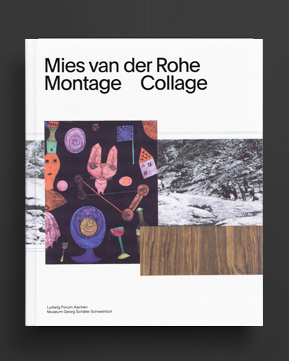
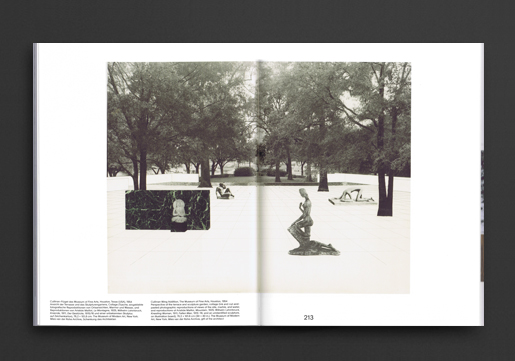
Between 1910 and 1965, influenced by Dada, Constructivism and De Stijl, the German-American modernist polymath Mies van der Rohe (1886-1969) created numerous montages and collages that endure as fascinating illustrations of the design principles of his architecture. However, these works--most of them large-format--are much more than sketches merely intended to assist his creative process as an architect. They are works of art in their own right that demonstrate van der Rohe's compositional vision in its purest form. Abrupt changes of viewpoint, freedom from perspective, place and time, montages of found elements and a focus on mixed media places him in the same context as his contemporaries Kurt Schwitters, Theo van Doesburg, Hans Richter and Laszlo Moholy-Nagy. This volume celebrates his lesser-known accomplishments in this medium.
1971, English / German / French
Hardcover (cloth-bound), 242 pages, 24 x 30.5 cm
Out of print title / used / very good
Published by
The Graphis Press / Zürich
$65.00 - Out of stock
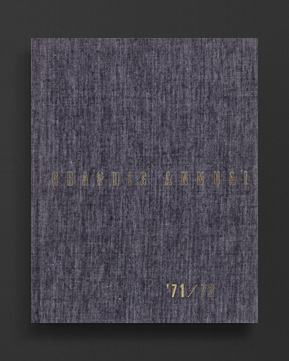
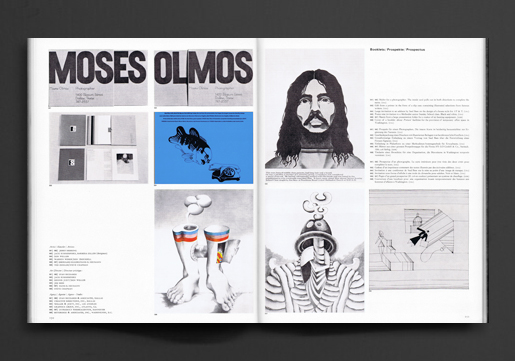
One of the best of the great Graphis Annual collection. Published in 1971/1972 by The Graphis Press in Zürich, this profusely illustrated, cloth-bound volume continues one of the world's leading design showcases. Each "International Annual of Advertising Graphics" profiles in colour and black and white the best design of everything from book jackets to record covers to television commercials to trade marks and letterheads. All texts are in English, German and French. Edited by Walter Herdeg, this edition features the works of Alan Aldridge, Saul Bass, Herb Lubalin, Push Pin Studio, Dick Bruna, Peter Bentley, Maciej Żbikowski, Raymond Bertrand, Jerzy Flisak, Salvador Dali, Jean-Michel Folon, Milton Glaser, Roy Lichtenstein, Enzo Mari, Peter Max, Pablo Picasso, Paul Rand, Raymond Savignac, Saul Steinberg, Tomi Ungerer, Tadanori Yokoo, Masamichi Oikawa, and hundreds more.
1970, English
Hardcover (w. dust jacket), 354 pages, 21 x 30 cm
1st UK Edition, Out of print title / Used*,
Published by
Crosby Lockwood Staples / London
$67.00 - Out of stock
First English edition, in hardcover.
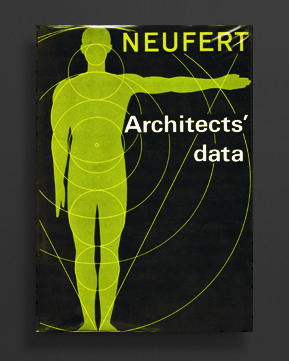
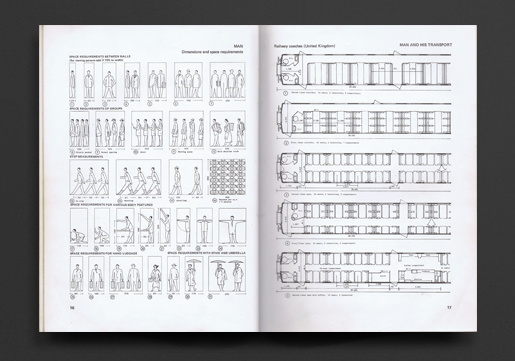
Architects' Data (German: Bauentwurfslehre), also simply known as the Neufert, is an essential reference book for spatial requirements in building design and site planning. First published in Germany in 1936 by Ernst Neufert, its 39 German editions and translations into 17 languages have sold over 500,000 copies. This first English version was published in 1970.
Ernst Neufert (15 March 1900 – 23 February 1986) was a German architect who was one of the first students of the Bauhaus, going on to become chief architect under Walter Gropius in one of the most prominent architecture studios of the Weimar Republic. In collaboration with Gropius, Neufert realized the new Bauhaus buildings in Dessau and the completion of the masters' houses for Muche, Klee, and Wassily Kandinsky. As well as being well known as the assistant of Walter Gropius, Neufert was an influential teacher in Weimar and member of various standardization organizations, and is especially known for his essential handbook Architects' Data, which became an architectural library standard across the world.
Architects' Data provides, in one concise volume, the core information needed to form the framework for the more detailed design and planning of any building project. Organised largely by building type, it covers the full range of preliminary considerations, and with over 6200 diagrams it provides a mass of data on spatial requirements. Most illustrations are dimensioned and each building type includes plans, sections, site layouts and design details. An extensive bibliography and a detailed set of metric/imperial conversion tables are included.
2016, English
Softcover, 170 pages, 12.5 x 20 cm
Published by
Sternberg Press / Berlin
$64.00 $30.00 - Out of stock
Contributions by Paola Antonelli, The Atlas Group (1989–2004), Alex Coles, Anthony Dunne, James Dyer, Umberto Eco, Experimental Jetset, Vilém Flusser, Verina Gfader, Huib Haye van der Werf, Will Holder, Sophie Krier, Carrie Lambert-Beatty, Lucas Maassen, Valle Medina, Philippe Morel, Rick Poynor, Fiona Raby, Benjamin Reynolds, Hiroko Shiratori, Bruce Sterling
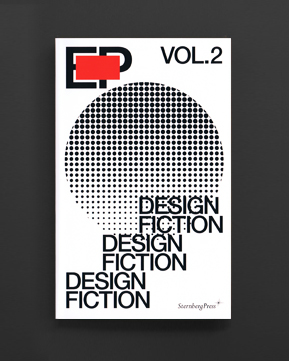
After the first EP volume on the activities of the early Italian avant-garde, the second volume in the series identifies the current fascination with fiction across art, design, and architecture. Practitioners and theorists explore this strategy by pushing the debate into both speculative and real-fictitious terrains. Newly commissioned interviews, artist projects, and essays shed light on topics such as parafiction and algorithmic ambiguity. Included in the volume is one of the final interviews to be published with novelist and semiotician Umberto Eco; a conversation with Bruce Sterling, in which the science-fiction author responds to designers who reference his writings; and design theorist Vilém Flusser’s 1966 essay “On Fiction,” in its first English translation.
The EP series fluidly moves between art, design, and architecture, and introduces the notion of the “extended play” into publishing, with thematically edited pocket books as median between popular magazines (“single play”) and academic journals (“long play”).
Design by Experimental Jetset
1993, English
Softcover, 224 pages, 26 x 33.5 cm
1st Edition, Out of print title / Used*,
Published by
Pavilion Books / London
$190.00 - Out of stock
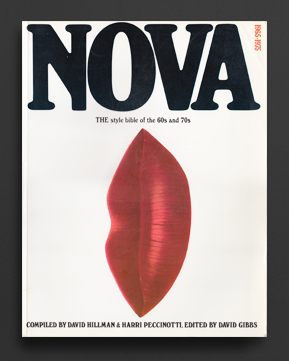
The now very collectable "Nova 1965-1975" was issued in 1993 by Pavilion, in London, and is a comprehensive celebration of the iconic and pioneering 1960-1970s British style magazine, Nova.
Features the work of Harry Peccinotti, Helmut Newton, Sarah Moon, Diane Arbus, Issey Miyake, Jeanloup Sieff, Hans Feurer, Zandra Rhodes, Bob Richardson, Jonvelle, Alan Aldridge, Terence Donovan, Kansai Yamamoto, Saul Leiter, Caroline Baker, David Hillman, and many more.
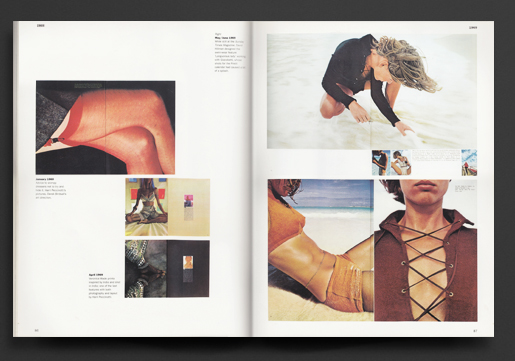
A product of the creative cauldron in "Swinging London", Nova was avant-garde in every aspect: its typography and layout, illustration and photography. It offered a mixture of daring and artistic imagery with unconstrained writing which had never been done before, and marked a period of real innovation in magazine design. This over-sized volume shows every Nova cover, and over 200 photographs and layouts of key features. The accompanying words tell the story of the magazine and the people who made it, how Nova influenced and was influenced by the times, and is complemented by a "time-line" of events, the signposts of the era. But the lavishly reproduced images, such as the groundbreaking "How to Undress in Front of Your Husband" speak largely for themselves. Not only of specialist interest to designers and artists, and nostalgic interest to avid subscribers, this is also a visual document of times of great change, of the political and cultural upheavals which brought us platform soles and flares, Mick Jagger and Ted Heath. David Hillman was art director for "Nova" from 1969 until it closed in 1975. He was also deputy editor during that time. Harry Peccinotti was the magazine's first art director and regular photographer throughout.
2012, English
Softcover, 304 pages, 15 x 23 cm
Published by
Valiz / Amsterdam
$50.00 - Out of stock
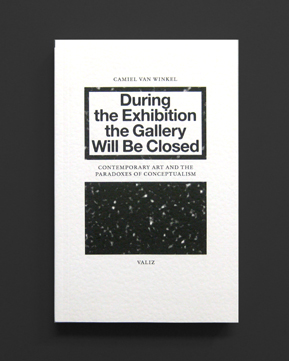
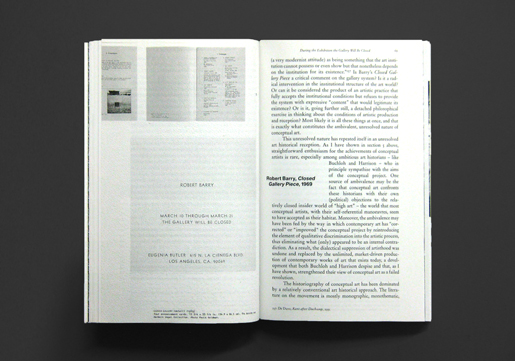
In this compilation of essays Camiel van Winkel uncovers the conceptual roots of contemporary art. He shows that the art of today as a whole is essentially ‘post-conceptual’. The production and reception of art are determined by circumstances and factors that conceptual artists in the years 1965-75 were the first to announce: the cultural dominance of information, the professionalisation of artistic practices, and the applicability of the criteria of ‘good design’.This post-conceptual perspective offers a new and revealing insight into the systematics of contemporary art and artisthood, in particular with regard to the relation between conceptual and visual aspects, the meaning of theoretical discourse, and the role of institutions and mediators.
Camiel van Winkel writes on contemporary art and occasionally curates exhibitions. Based in Amsterdam, he teaches art theory and art philosophy at Sint-Lukas University College of Art and Design in Brussels. He is advisor at the Rijksakademie, Amsterdam. He is the author of Moderne leegte. Over kunst en openbaarheid (1999), The Regime of Visibility (2005) and De mythe van het kunstenaarschap (2007). His latest book, based on his PhD dissertation, is titled During the Exhibition the Gallery Will Be Closed. Contemporary Art and the Paradoxes of Conceptualism (Valiz, 2012).Graphic Design: Sam de Groot
1986, English / Italian
Softcover (leporello-folded poster), 14 pages, 34 x 89 cm (full-spread)
1st edition, Out of print title / used*,
Published by
Memphis Milano / Milan
$80.00 - Out of stock
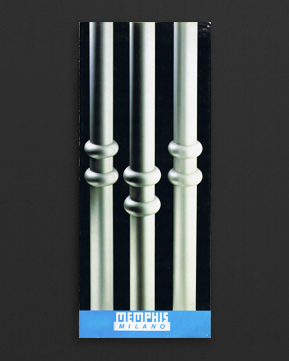
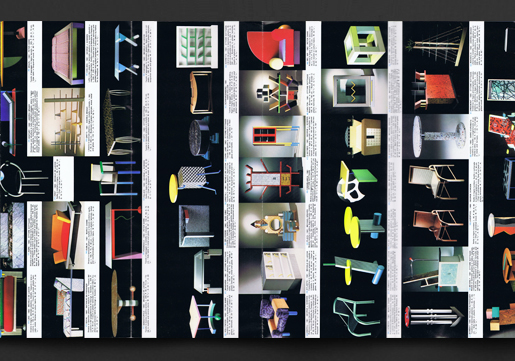
Original Memphis Milano leporello fold-out poster/catalogue from around 1986, showcasing all the iconic chairs, tables, lamps, lights, shelves, ceramic and porcelain wares, glass ware, tapestries, and much more by Ettore Sottsass, Michele de Lucchi, Nathalie du Pasquier, Andrea Branzi, Marco Zanini, Aldo Cibic, George J. Sowden, Martine Bedin, Peter Shire, Matteo Thun, Gerard Taylor, Shiro Kuramata, Michael Graves, Javier Mariscal, Maria Sanchez, Arquitectonica, Masanori Umeda and more. All listed across 14 pages with colour photography and titles/specs for each piece - all texts in English and Italian. Works spanning all of the 1980s for Memphis.
2016, English
Softcover, 48 pages, 12 x 19 cm
Published by
Sternberg Press / Berlin
$26.00 $15.00 - Out of stock
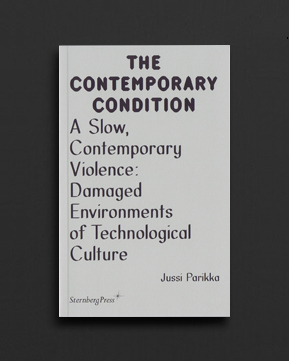
The contemporary moment is comprised of many overlapping speeds, rhythms, and periods of time. A central theme of Jussi Parikka’s book concerns slowness instead of acceleration: a different sort of a temporal horizon in order to understand some of the environmental temporalities that media and technological arts are involved in. This is approached through art and design practices that unfold this multiplicity of time, closely entwined with contemporary concerns in aesthetic theory, to understand and engage with the planetary time scales of slow environmental violence.
The third volume of the Contemporary Condition series continues the investigation into contemporaneity as a defining condition of our historical present. The series aims to question the formation of subjectivity and concept of temporality in the world now. It begins from the assumption that art, with its ability to investigate the present and make meaning from it, can lead to an understanding of wider developments within culture and society. Addressing a perceived gap in existing literature on the subject, the series focuses on three broad strands: the issue of temporality, the role of contemporary media and computational technologies, and how artistic practice makes epistemic claims.
The Contemporary Condition series edited by Geoff Cox and Jacob Lund, Volume 03
Copublished with Aarhus University and ARoS Art Museum
Design by Dexter Sinister
2012, English / Japanese
Softcover, 24 pages, 21 x 30 cm
Published by
Blind Gallery / Tokyo
$43.00 - Out of stock
This monograph of Dutch graphic designer and typographer Wim Crouwel highlights the posters he made between 1958-1971. Often produced for exhibitions of modern art at the Van Abbemuseum, Eindhoven, or the Stedelijk Museum, Amsterdam, the posters feature bold fields of colour and clear typography, both signatures of his style. The publication reproduces numerous posters, all of them in full colour, and includes a biography timeline of the artist as well.
Yusuke Nakajima (Ed.)
2013, Japanese / English
Softcover, 160 pages ( colour & bw ill.), 16 x 22 cm
Published by
Roma / Amsterdam
$52.00 - Out of stock
Comprising scores of photographs from inside the studio of the prolific Dutch graphic designer and educator Karel Martens, this book is a testament to the personal and experimental nature of his work. Although he can be placed in the tradition of Dutch modernism, Martens seems to maintain a certain distance from contemporary developments. The shelves of books and stacks of papers seen in these images are evocative of both his professional practice and work as an artist, which more recently entails making relief prints from found industrial artefacts. A fascinating and intimate creative portrait of this design community mentor, with texts by David Senior and Martens himself.