World Food Books' programme is largely produced on Kulin Nation land. We acknowledge the Wurundjeri people of the Kulin Nation as the first and continuing custodians of this land, and pay respect to their Elders past, present, and emerging.
World Food Books is an arts and special interests bookshop in Naarm / Melbourne. Founded in 2010, World Food Books is devoted to the presentation of a rotating, hand-selection of international art, design, literary and counterculture publications with an emphasis on the anti-traditional, the experimental, the avant-garde, the heretic, the marginal.
Presenting new titles alongside rare and out-of-print books, catalogues and journals spanning the fields of modern and contemporary art, design, photography, illustration, film, literature, poetry, cultural theory, philosophy, sexuality, popular and underground culture in its many radical forms, World Food Books wishes to encourage adventurous, thoughtful and open-minded reading, looking, writing, and exchange of publishing and ideas, both current and historical.
As well as our bookshop, located in Melbourne's historical Nicholas Building, all of our inventory is available internationally via our online mail-order service.
World Food Books semi-regularly co-ordinates "Occasions", a programme of exhibits and events at the bookshop and in partnership with other hosts (such as museums and art galleries) that develop out of the activities, relationships and content of the bookshop itself.
World Food Books
The Nicholas Building
37 Swanston Street
Room 5, Level 6
Melbourne 3000
Australia
SHOP HOURS:
THU–SAT 12–6
WEB-SHOP OPEN 24/7
World Food Books
Postal Address:
PO Box 435
Flinders Lane
Victoria 8009
Australia
info@worldfoodbooks.com
Art
Theory / Essay
Architecture / Interior
Graphic Design / Typography
Photography
Fashion
Eros
LGBTQ+
Fiction / Poetry
Weird / Speculative / Science Fiction / Horror
Transgressive / Visceral / Abject
Symbolism / Decadence / Fin de siècle
Film / Video
Painting
Sculpture / Installation
Performance / Dance / Theater
Drawing
Sound / Music
Curatorial
Group Shows / Collections
Periodicals
Out-of-print / Rare
Posters / Ephemera / Discs
Signed Books
World Food Books Gift Voucher
World Food Book Bag
Australian Art
Australian Fiction
Australian Science Fiction / Speculative Fiction
Australian Poetry
Australian Photography
Japanese Photography
Conceptual Art
Minimal Art
Dada
'Pataphysics / Oulipo
Fluxus
Concrete Poetry
Pop Art
Surrealism
Arte Povera
Arte Informale / Haute Pâte / Tachism
Nouveau Réalisme / Zero / Kinetic
Situationism / Lettrism
Collage / Mail Art / Xerox Art
Art Brut / Folk / Visionary / Fantastic
Illustration / Graphic Art / Bandes Dessinées
Furniture
Italian Radical Design / Postmodernism
Textiles
Ceramics / Glass
Counterculture
Protest / Revolt
Philosophy
Psychoanalysis
Anthropology
Anarchism
Socialism / Anarchism / Communism / Capitalism
Literary Theory / Semiotics / Language
Feminism / Women's Studies
Gender Studies / Sexuality
Anthropology
Fetishism / BDSM
Drugs / Psychedelia
Crime / Violence
Animal Rights / Veganism
Occult / Esoterica
Ecology / Earth / Alternative Living
Whole Earth / Crafts
All prices in AUD (Australian dollars)
Pick-Ups
Pick-up orders can be collected in our bookshop during opening hours after order date. Please collect any Pick-up orders within 2 weeks of ordering as we have limited storage space. Orders will be released back into stock if not collected within this time. No refunds can be made for pick-ups left un-collected. If you cannot make it in to the bookshop in this time-frame, please choose postage option.
Return Policy
All sales are final. We do accept returns (for refund or exchange) for items received in error. All our orders are packed with special care using heavy-duty padding and cardboard book-mailers or bubble mailers (for smaller books), using reinforcement where required. We cannot take responsibility for any lost, stolen or damaged parcels.
Insurance
Should you wish to insure your package, please email us directly after placing your order and we can organise this at a small extra expense. Although all standard/express tracked packages are very safe and dependable, we cannot take responsibility for any lost, stolen or damaged parcels. We recommend insurance on valuable orders.
Interested in selling your old books, catalogues, journals, magazines, comics, fanzines, ephemera? We are always looking for interesting, unusual and out-of-print books to buy. We only buy books in our fields of interest and specialty, and that we feel we can resell.
We base these prices on desirability, market value, in-print prices, condition and our current stock levels. We offer cash, store credit, and can take stock on consignment. All
about 25% of the price we expect to get when we sell them, or 30% in store credit. We base these prices on desirability, market value, in-print prices, condition and our current stock levels.
Sell your books any day of the week. You can drop them off and return later. If you have a lot of books, we can visit your Sydney home.
We buy books that we feel we can resell. We offer about 25 % of the price we expect to get when we sell them, or 30% in store credit. We base these prices on desirability, market value, in-print prices, condition and our current stock levels.
Philadelphia Wireman
03 August - 01 September, 2018
World Food Books is proud to announce our next Occasion, the first presentation of sculptures by Philadelphia Wireman in Australia.
The Philadelphia Wireman sculptures were found abandoned in an alley off Philadelphia’s South Street on trash night in 1982. Their discovery in a rapidly-changing neighbourhood undergoing extensive renovation, compounded with the failure of all attempts to locate the artist, suggests that the works may have been discarded after the maker’s death. Dubbed the "Philadelphia Wireman" during the first exhibition of this work, in 1985, the maker’s name, age, ethnicity, and even gender remain uncertain. The entire collection totals approximately 1200 pieces, all intricately bound together with tightly-wound heavy-gauge wire (along with a few small, abstract marker drawings, reminiscent both of Mark Tobey and J.B. Murry). The dense construction of the work, despite a modest range of scale and materials, is singularly obsessive and disciplined in design: a wire armature or exoskeleton firmly binds a bricolage of found objects including plastic, glass, food packaging, umbrella parts, tape, rubber, batteries, pens, leather, reflectors, nuts and bolts, nails, foil, coins, toys, watches, eyeglasses, tools, and jewellery.
Heavy with associations—anthropomorphic, zoomorphic, and socio-cultural responses to wrapped detritus—the totemic sculptures by Philadelphia Wireman have been discussed in the context of work created to fulfil the shamanistic needs of alternative religions in American culture. Curators, collectors, and critics have variously compared certain pieces to sculpture from Classical antiquity, Native American medicine bundles, African-American memory jugs, and African fetish objects. Reflecting the artist’s prolific and incredibly focused scavenging impulse, and despite—or perhaps enhanced by—their anonymity, these enigmatic objects function as urban artefacts and arbiters of power, though their origin and purpose is unknown. Philadelphia Wireman, whatever their identity, possessed an astonishing ability to isolate and communicate the concepts of power and energy through the selection and transformation of ordinary materials. Over the course of the past two decades, this collection has come to be regarded as an important discovery in the field of self-taught art and vernacular art.
Presented in collaboration with Fleisher-Ollman Gallery, Philadelphia, and Robert Heald, Wellington.
Susan Te Kahurangi King
02 February - 10 March, 2018
Susan Te Kahurangi King (24 February 1951 - ) has been a confident and prolific artist since she was a young child, drawing with readily available materials - pencils, ballpoint pens and felt-tip markers, on whatever paper is at hand. Between the ages of four and six Susan slowly ceased verbal communication. Her grandparents William and Myrtle Murphy had developed a special bond with Susan so they took on caring responsibilities for extended periods. Myrtle began informally archiving her work, carefully collecting and storing the drawings and compiling scrapbooks. No drawing was insignificant; every scrap of paper was kept. The King family are now the custodians of a vast collection containing over 7000 individual works, from tiny scraps of paper through to 5 meter long rolls.
The scrapbooks and diaries reveal Myrtle to be a woman of great patience and compassion, seeking to understand a child who was not always behaving as expected. She encouraged Susan to be observant, to explore her environment and absorb all the sights and sounds. Myrtle would show Susan’s drawings to friends and people in her community that she had dealings with, such as shopkeepers and postal workers, but this was not simply a case of a grandmother’s bias. She recognised that Susan had developed a sophisticated and unique visual language and sincerely believed that her art deserved serious attention.
This was an unorthodox attitude for the time. To provide some context, Jean Dubuffet coined the term Art Brut in 1945 to describe work created by self-taught artists – specifically residents of psychiatric institutions and those he considered to be visionaries or eccentrics. In 1972 Roger Cardinal extended this concept by adopting the term Outsider Art to describe work made by non-academically trained artists operating outside of mainstream art networks through choice or circumstance. Susan was born in Te Aroha, New Zealand in 1951, far from the artistic hubs of Paris and London that Dubuffet and Cardinal operated in. That Myrtle fêted Susan as a self-taught artist who deserved to be taken seriously shows how progressive her attitudes were.
Susan’s parents Doug and Dawn were also progressive. Over the years they had consulted numerous health practitioners about Susan’s condition, as the medical establishment could not provide an explanation as to why she had lapsed into silence. Dawn educated herself in the field of homeopathy and went on to treat all twelve of her children using these principles – basing prescriptions on her observations of their physical, mental and emotional state.
Doug was a linguist with an interest in philosophy who devoted what little spare time he had to studying Maori language and culture. To some extent their willingness to explore the fringes of the mainstream made them outsiders too but it was their commitment to living with integrity and their respect for individuality that ensured Susan’s creativity was always encouraged.
Even though Susan’s family supported her artistic pursuits, some staff in schools and hospitals saw it as an impediment to her assimilation into the community and discouraged it in a variety of ways. Her family was not always aware of this and therefore did not fully understand why Susan stopped drawing in the early 1990s. However, rather than dwell on the challenges that Susan faced in pursuit of her artistic practice, they prefer to highlight her achievements. In 2008 Susan began drawing again in earnest, after an almost 20 year interruption, and her work is now shown in galleries around the world.
Susan grew up without television and has been heavily influenced by the comics she read as a child. She is absolutely fearless in the appropriation of recognizable characters, such as Donald Duck and Mickey Mouse, in her work. She twists their limbs, contorts their faces, compresses them together, blends them into complex patterned backgrounds - always imbuing them with an incredible energy. Although Susan often used pop culture characters in her work they are not naive or childlike. These are drawings by a brilliant self-taught artist who has been creating exceptional work for decades without an audience in mind.
Mladen Stilinović
"Various Works 1986 - 1999"
02 February 16 - September 10, 2016
Various works 1986 - 1999, from two houses, from the collections of John Nixon, Sue Cramer, Kerrie Poliness, Peter Haffenden and Phoebe Haffenden.
Including: Geometry of Cakes (various shelves), 1993; Poor People’s Law (black and white plate), 1993; White Absence (glasses, ruler, set square, silver spoon, silver ladel with skin photograph and wooden cubes), 1990-1996; Exploitation of the Dead (grey and red star painting, wooden painting, black spoon with red table, red plate), 1984-1990; Money and Zeros (zero tie, paintings made for friends in Australia (Sue, John, Kerrie), numbers painting), 1991-1992; Words - Slogans (various t-shirts) - “they talk about the death of art...help! someone is trying to kill me”, “my sweet little lamb”, “work is a disease - Karl Marx”; Various artist books, catalogues, monographs, videos; Poster from exhibition Insulting Anarchy; "Circular" Croatian - Australian edition; Artist book by Vlado Martek (Dostoyevsky); more.
Thanks to Mladen Stilinović and Branka Stipančić.
Jonathan Walker
Always Will Need To Wear Winter Shirt Blue + Ochre Small Check Pattern
21 August - 21 September, 2015
Untitled
I am not a great reader of poetry but I always return to the work of Melbourne poet, Vincent Buckley (1925- 1988). Perhaps I find his most tantalising piece to be not a finished poem but a fragment left on a scrap of paper discovered on his desk after the poet’s death.
The poetry gathers like oil
In the word-core, and spreads
It has its music meet,
Its music is in movement.
This fragment is more the shell left behind from a volatile thought than a finished poem. I find the last two lines honest but awkward whereas the first two lines work like an arrow. Most likely he could not find a resolution so it was left. Still, in its present form, it remains an eloquent testimony to the ultimate failure of a medium to express mobile thought and sensation, in Buckley’s case, through verbal language. It’s an important matter because this is something all artists have to deal with regardless of the medium.
I have never written a poem, however, I am forever copying fragments from books on paper scraps in a vain effort to fix certain notions in my head. At first, they function as bookmarks that are sometimes returned to when I open the book. But before long, as they accumulate, they fall out littering the table interspersed with A4 photocopies, bills, books and medications.
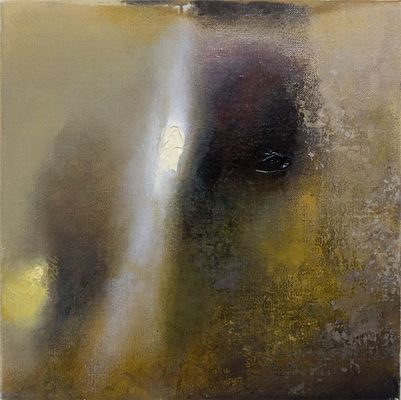
To return to Buckley’s fragment, the first two lines very much evoke how I paint nowadays. As you age, detail diminishes and patches of light become more luminous and float. I feel the most honest way of dealing with this is by smearing the oil paint on the canvas with the fingers and working close-up, blind. Only if the patches coalesce into an approaching image can the work gain a life.
-
Jonathan Walker was born in Melbourne, Australia and brought up on a dairy farm in Gippsland. In the 1970’s he studied painting at RMIT and won the Harold Wright Scholarship to the British Museum, London. During the 1980’s he exhibited at Pinacotheca Gallery, Richmond and had work shown at the NGV and Heidi City Art Gallery. Over the same period he designed the cover for the “Epigenesi” LP by Giancarlo Toniutti, Italy and conducted a mail exchange work with Achim Wollscheid, Germany. The work with artists through the post resulted in an article published in the bicentenary issue of Art and Australia 1988. He showed in artist run spaces such as WestSpace in the 90’s and 2000’s, and until 2012, taught painting at Victoria University, which is where we (Colleen Ahern and Lisa Radford) as organisers of the exhibition, among many others, had the privilege of being his student.
Walker’s knowledge was imparted to students through the careful selection of music, literature, and artists found in books that he himself had ordered for the library. Walker’s strategy was the generosity of sharing his vast knowledge with references specific to each student and their context.
Walker’s paintings share a similar focus and intimacy.
This exhibition presents a small selection of recent paintings alongside a publication that includes Walker’s writing. Observational and analytical, Walker’s work is a type of material notation — the time of day, colour and how it is blended, the both specific and fleeting location of a reflection on lino or the question of whether a chair leg should be included in a painting.
Please join us on Friday August 21 between 6-8pm to celebrate the opening of the exhibition.
Curated by Colleen Ahern and Lisa Radford.
B. Wurtz
Curated by Nic Tammens
March 26 - April 4, 2015
B.Wurtz works from a basement studio in his home on Manhattan’s Lower East Side.
This local fact is attested to by the plastic shopping bags and newsprint circulars that appear in his work. As formal objects, they don’t make loud claims about their origins but nonetheless transmit street addresses and places of business from the bottom of this long thin island. Like plenty of artists, Wurtz is affected by what is local and what is consumed. His work is underpinned by this ethic. It often speaks from a neighborhood or reads like the contents of a hamper:
“BLACK PLUMS $1.29 lb.”
“Food Bazaar”
“USDA Whole Pork Shoulder Picnic 99c lb.”
“RITE AID Pharmacy, with us it’s personal.”
“H. Brickman & Sons.”
“Sweet Yams 59c lb."
Most of the work in this exhibition was made while the artist was in residence at Dieu Donne, a workshop dedicated to paper craft in Midtown. Here Wurtz fabricated assemblages with paper and objects that are relatively lightweight, with the intention that they would be easily transportable to Australia. This consideration isn’t absolute in Wurtz’s work, but was prescriptive for making the current exhibition light and cheap. Packed in two boxes, these works were sent from a USPS post office on the Lower East Side and delivered to North Melbourne by Australia Post.
Wurtz appears courtesy of Metro Pictures, New York.
Thanks to Rob Halverson, Joshua Petherick, Sari de Mallory, Matt Hinkley, Helen Johnson, Fayen d'Evie, Ask Kilmartin, Lisa Radon, Ellena Savage, Yale Union, and "Elizabeth".
John Nixon
"Archive"
December 15 - January 20, 2014
The presentation of John Nixon's archive offered a rare showcase of this extensive collection of the artist's own publications, catalogues, posters, ephemera, editions and more, from the mid 1980s onwards, alongside a selection of his artworks.
Organized by John Nixon, Joshua Petherick and Matt Hinkley.
"Habitat"
at Minerva, Sydney (organised by Joshua Petherick and Matt Hinkley)
November 15 - December 20, 2014
Lupo Borgonovo, Janet Burchill & Jennifer McCamley,
Lewis Fidock, HR Giger, Piero Gilardi, Veit Laurent Kurz,
Cinzia Ruggeri, Michael E. Smith, Lucie Stahl, Daniel Weil, Wols
Press Release:
“...It contained seven objects. The slender fluted bone, surely formed for flight, surely from the wing of some large bird. Three archaic circuitboards, faced with mazes of gold. A smooth white sphere of baked clay. An age-blackened fragment of lace. A fingerlength segment of what she assumed was bone from a human wrist, grayish white, inset smoothly with the silicon shaft of a small instrument that must once have ridden flush with the surface of the skin - but the thing’s face was seared and blackened.”
William Gibson, “Count Zero”, 1986
"Autumn Projects Archive"
Curated by Liza Vasiliou
March 6 - March 15, 2014
World Food Books, in conjunction with the Virgin Australia Melbourne Fashion Festival 2014, presented the Autumn Projects archive, consisting of a selection of early examples in Australian fashion with a particular interest in collecting designers and labels from the period beginning in the 1980’s, who significantly influenced the discourse of Australian Fashion.
Curated by Liza Vasiliou, the exhibition provided a unique opportunity to view pieces by designers Anthea Crawford, Barbara Vandenberg, Geoff Liddell and labels CR Australia, Covers, Jag along with early experimental collage pieces by Prue Acton and Sally Browne’s ‘Fragments’ collection, suspended throughout the functioning World Food Books shop in Melbourne.
H.B. Peace
presented by CENTRE FOR STYLE
November 14, 2013
"Hey Blinky, you say chic, I say same"
Anon 2013
H.B. Peace is a clothing collaboration between great friends Blake Barns and Hugh Egan Westland. Their pieces explore the divergences between 'character’ and ‘personality’ in garments....etc
Special Thanks to Joshua Petherick and Matt Hinkley of WFB and Gillian Mears
and a Very Special Thank you to Audrey Thomas Hayes for her shoe collaboration.
Janet Burchill & Jennifer McCamley
"Aesthetic Suicide"
May 10 - June 8, 2013
The first of our occasional exhibitions in the World Food Books office/shop space in Melbourne, "Aesthetic Suicide" presented a body of new and older works together by artists Janet Burchill & Jennifer McCamley, including videos, prints, a wall work, and publications.
During shop open hours videos played every hour, on the hour.
1967, Japanese / English
Softcover, 120 pages, 29.5 x 22.7 cm
1st Edition, Out of print title / used / good
Published by
Seibundo-Shinkosha / Tokyo
$65.00 - Out of stock
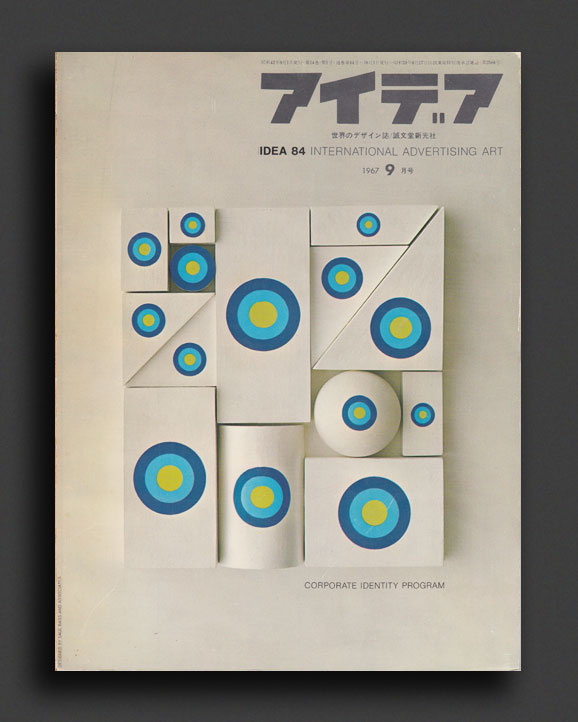
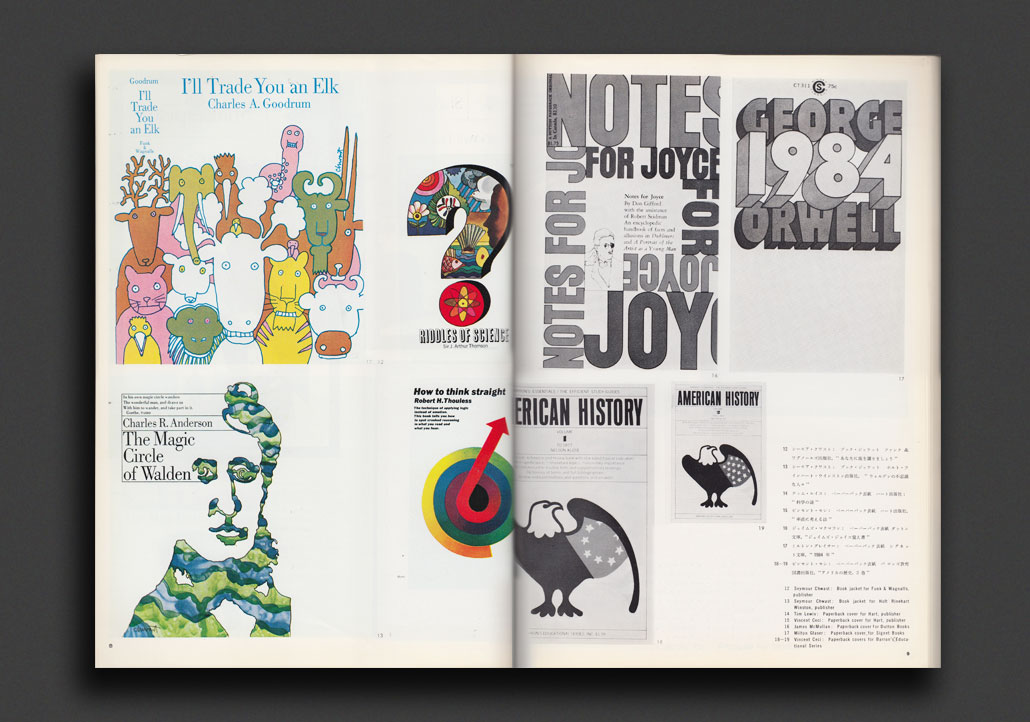
IDEA NO. 84
September 1967
International Graphic Art
Cover Design: Saul Bass
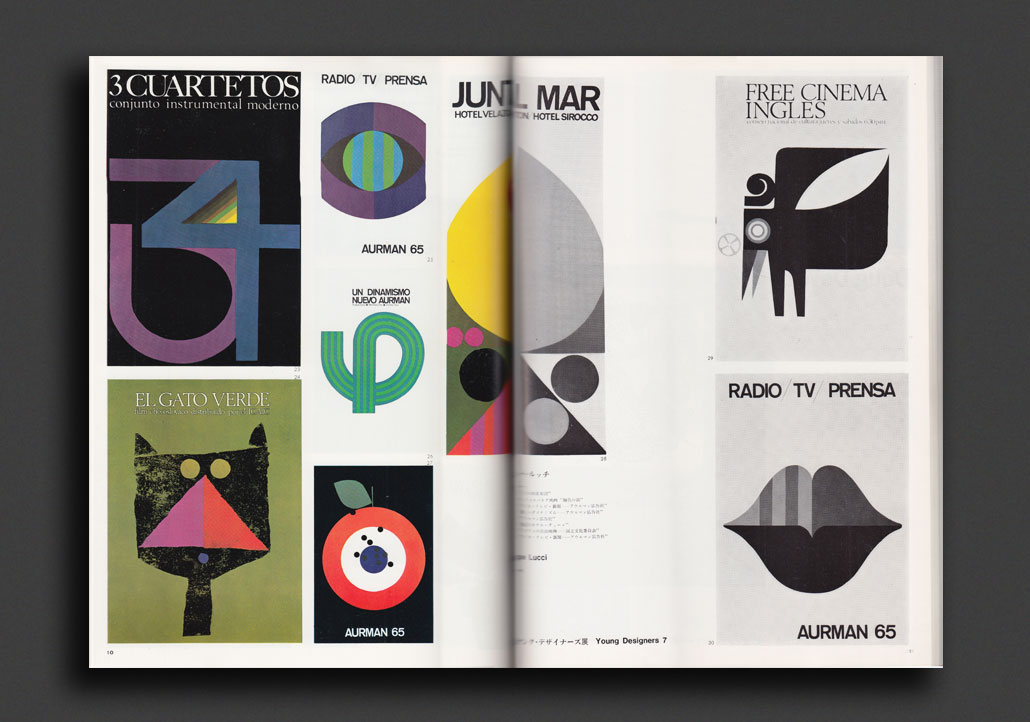
Young Designers Show – Number VII
Giuseppe Lucci
Doug DeWitt
John Sposato
Alan Peckolick
Poetci Illustrator, Eugene Karlin
Pim van Boxsel : "The Marvelous Adventures of Philomene”
Book Review “Posters in Japan 1860-1956”
The Work of Shigeo Fukuda
Exhibition of Illustrative Works by Tadashi Ohashi
Four Corporate Identity Programs by Saul Bass
Saul Bass
Born in N.Y. in 1929. He was a proprietor of Saul Bass/Herb Yager & Assoc., and graphic designer and ゙lm director. He designed numerous corporate identities and packages. He designed graphic symbols of over 60 motion pictures, including ‘Bonjour Tristesse’,’The Shining’ and create over 40 motion picture titles including ‘North by Northwest’.’Psyco’. He was also director of feature ゙lm and as that he recieved many prizes. Died in 1996 when he was 75.
1968, Japanese / English
Softcover, 122 pages, 29.5 x 22.7 cm
1st Edition, Out of print title / used / good
Published by
Seibundo-Shinkosha / Tokyo
$65.00 - Out of stock
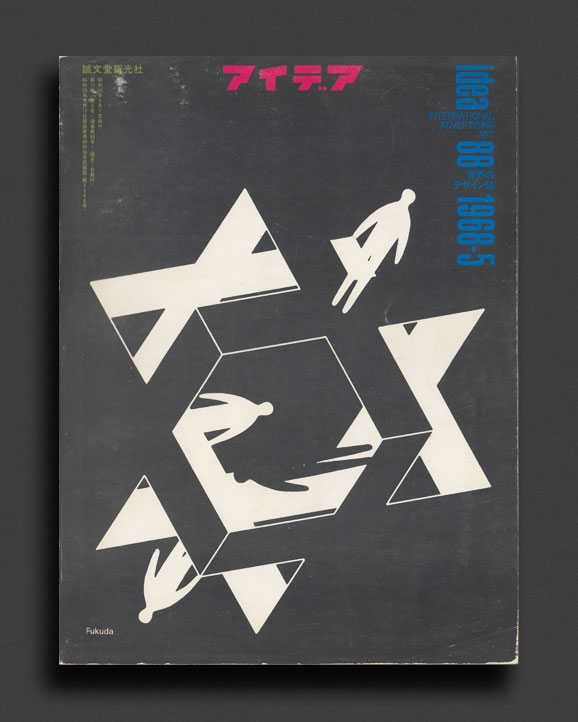
IDEA No. 88
International Graphic Art
May 1968
Cover Design : Shigeo Fukuda
Special feature : Push Pin Studios
Greeting card ’68
Portfolio: Robert Shore
Portfolio: Jack Endewelt
Portfolio: Bob Shein
Toys & things by Shigeo Fukuda
Objects count by Hiroshi Ohchi
Crosby/Fletcher/Forbes
Art Directors of New York by Tadahisa Nishio (Mutsuo Yasumura, William McCaffery)
Shigeo Fukuda
Born in Tokyo in 1932. Graduated from Tokyo National University of Fine Arts and Musuc. In 1969 he created the official poster for Osaka World Exposition. He recieved the Gold Prize at the International Poster Biennial in Warsaw, the First Prize at the International Poster Biennial in Moscow and so on. Now he is a member of AGI and visiting professor of Tokyo National University of Fine Arts and Music.
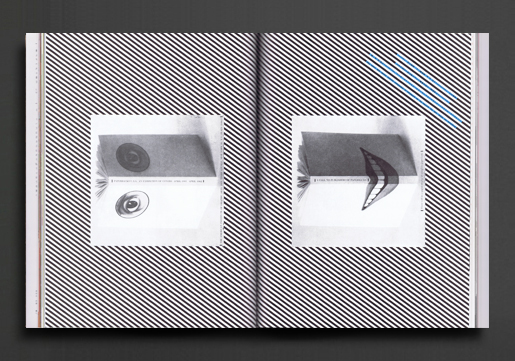
IDEA was founded in 1953 in Tokyo, Japan by the Seibundo-Shinkosha publishing company. It fast became, and remains to this day, one of the most important international graphic art, design and typography publications in the world and certainly the most significant forum on design criticism in Asia throughout the 1950s/60s/70s/80s/90s/2000s. The magazine offers rare insight into international and domestic designers and their work through historical analysis, criticism and examples of projects.
1969, Japanese / English
Softcover, 122 pages, 29.5 x 22.7 cm
1st Edition, Out of print title / used / good
Published by
Seibundo-Shinkosha / Tokyo
$65.00 - Out of stock
IDEA No. 93
International Graphic Art
March 1969
Cover Design: Tsunehisa Kimura
Pierre Boucher by Koen Shigemori
Ruiz / Mosquera / Shakespear
Piero Fornasetti
Type on Canvas by Bernard Weil
John Fraioli
Mexico 68 (Lance Wyman, Peter Murdoch)
Illustrator Ron Chereskin
Patrick V. Norado
On Kazumasa Nagai’s Exhibition by Ryuichi Yamashiro
Tsunehisa Kimura by Yusaku Kamekura
What happened to Volvo?
Tsunehisa Kimura
Born in Osaka, 1928. Graduated from Osaka City Kogei High School in 1948. After working for Toru Sawamura Studio, Yuasa Battery, entered Nippon Design Center in 1960. While his early works were of geometrical modern style, he shifted into photomontage from late ’60s under influence of John Hartfield. His works are known for their sarcastic style as well as those of cosmic. He is also know as critic with writings on advertisement and communication.
IDEA was founded in 1953 in Tokyo, Japan by the Seibundo-Shinkosha publishing company. It fast became, and remains to this day, one of the most important international graphic art, design and typography publications in the world and certainly the most significant forum on design criticism in Asia throughout the 1950s/60s/70s/80s/90s/2000s. The magazine offers rare insight into international and domestic designers and their work through historical analysis, criticism and examples of projects.
1969, Japanese / English
Softcover, 120 pages, 29.5 x 22.7 cm
1st Edition, Out of print title / used / good
Published by
Seibundo-Shinkosha / Tokyo
$65.00 - Out of stock
IDEA NO. 96
September 1969
International Graphic Art
Cover Design: Jacques Nathan-Garamond
Jacque Lathan-Garamond and His Works by Hiroshi Ohchi
Young & Rubicam interviewed by Tadahisa Nishio
Tomi Ungerer in His Beautiful World by Tadanori Yokoo & Yacco Takahashi
Exhibits on 7th Creativity on Paper Show by Hiromu Hara
Belgian Graphic Designers by Jacques Richez
Jitsuo Hoashi at Ben Rosen Associates Naoya Sugiki
Elite Designer Robert Banks
Jacques Nathan-Garamond
Born in Paris in 1910. Graphic artist, designer, painter, professor, lead in the same time some various activities: commercial creativity, visual communication and free Art: painting, engraving. He is founder of Alliance Graphique Internationale(A.G.I). His works had been reguraly reproduced in the most important international magazines of Graphic Art. Died in 2001.
1972, Japanese / English
Softcover, 128 pages, 29.5 x 22.7 cm
1st Edition, Out of print title / used / good
Published by
Seibundo-Shinkosha / Tokyo
$65.00 - Out of stock
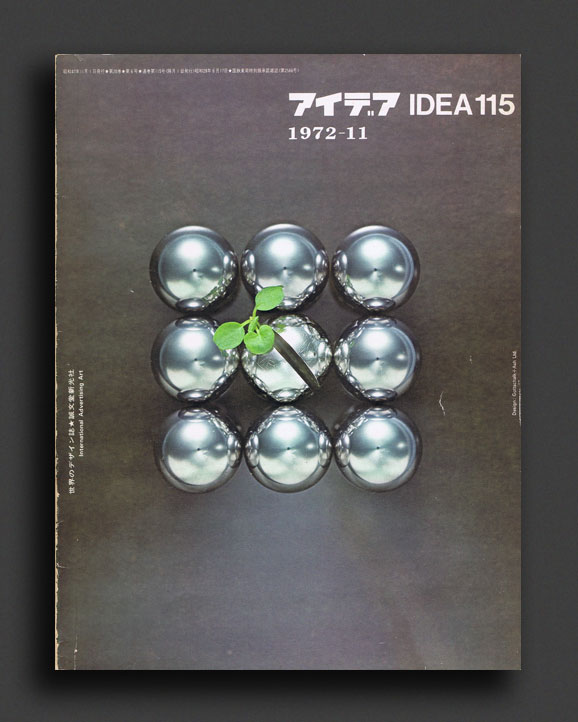
IDEA NO. 115
November 1972
International Graphic Art
Cover Design: Gottschalk+Ash Ltd.
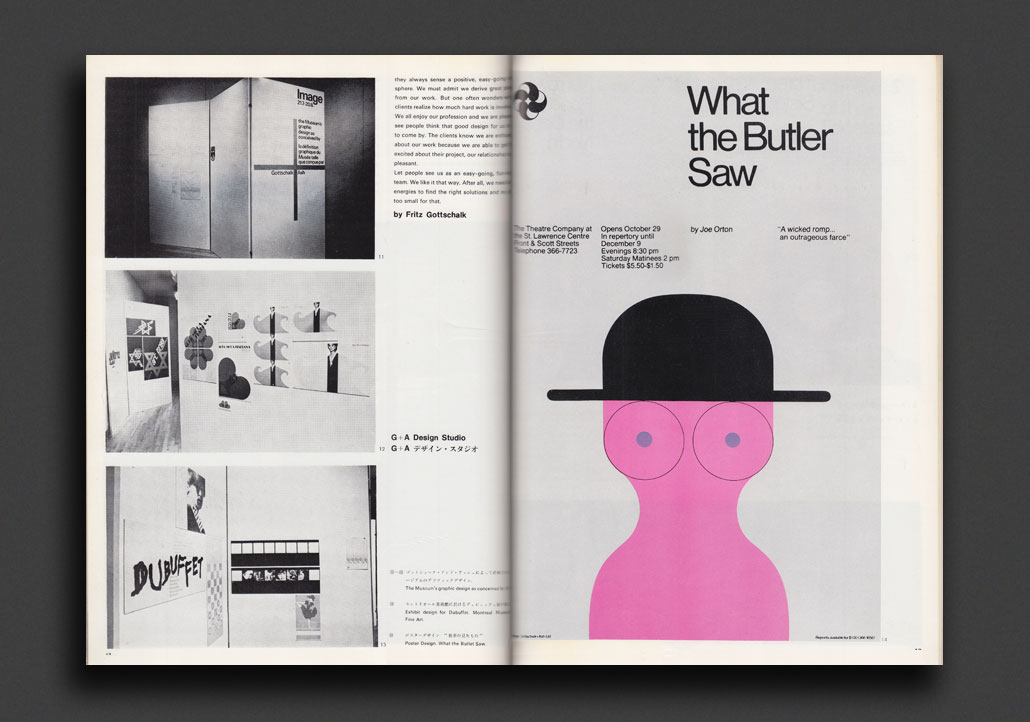
Gottschalk + Ash feature by Midori Imatake
Francois Colos
5th Biennale of Graphic Design Brno 1972 by Hiroshi Ohchi
16 Pictorial Poems for Air France by Raymond Pages by Georges Martina
Liber Amicorum, Steendrukkerij de Jong & Co
An Artist’s Progress, from Typographic design to Painting by Marcel Jacno
Art posters for the Munich Olympic Games by Contemporary Artists by Akiko Hyuga
Elements of idea “Shadow” by Shigeo Fukuda
Group Exhibition “MUDA”
Graphic image ’72 by Shin’ichi Segi
Exhibition of the threesome, N. Yabuki, H. Yamashita and S. Araii
“Images of Chinese Characters” of Katsuichi Ito – Funny, funny ideograph
U. G. Sato: “My Theory of Evolution” Show
Netting Illustration of K. Aoki
Formative Arts by K. Matsumoto
Picturebook “MEN’S WORLD” by Hisaki Hiramatsu
Design fot T-shirts by T. Kamijo
Gotthschalk + Ash Design Studio
Fritz Gottschalk born in Zurich and Stuart Ash born in Ontalio established Gotthschalk + Ash Design Studio in 1966. They have offices in Montreal and Tronto. They designed CI, exhibition, posters and package. Since they are originated from sound thoughts and structures in Switzerland, they enjoy gaining high reliability from every clients.
IDEA was founded in 1953 in Tokyo, Japan by the Seibundo-Shinkosha publishing company. It fast became, and remains to this day, one of the most important international graphic art, design and typography publications in the world and certainly the most significant forum on design criticism in Asia throughout the 1950s/60s/70s/80s/90s/2000s. The magazine offers rare insight into international and domestic designers and their work through historical analysis, criticism and examples of projects.
1977, Japanese / English
Softcover, 152 pages, 29.5 x 22.7 cm
1st Edition, Out of print title / used / good
Published by
Seibundo-Shinkosha / Tokyo
$70.00 - Out of stock
IDEA Extra Issue
TOKYO DESIGNERS SPACE 1977
Special issue of IDEA published in 1977 celebrating Tokyo Designers Space, in Aoyama, Tokyo. The issue forms an annual directory of illustrated profiles on leading graphic designers, art directors, illustrators, typographers, fashion designers, interior designers, furniture designers, photographers, etc. of the period, forming a profusely illustrated and informative overview of design in Japan in the 1970s. Also includes an illustrated listing of exhibitions at Tokyo Designers Space throughout 1977, profiles on members of the TDS, and essays on design in the 1970s (in English and Japanese).
Designers include: Masuteru Aoba, Takenobu Igarashi, Shin Matsunaga, Harumi Yamaguchi, Eiko lshioka, Nobuhiko Yabuki, Yosuke Kawamura, Shiro Tatsumi, Takahisa Kamijo, Teruhiko Yumura, Haruo Takino, Shigeo Katsuoka, Ryohei Kojima, Seitaro Kuroda, Keisuke Nagatomo, Ryuichi Yamashiro, lwao Miyanaga, Ikko Tanaka, Katsumi Asaba, Yusaku Kamekura, Makoto Nakamura, Gan Hosoya, Kazumasa Nagai, Tadahito Nadamoto, Renzo Yamazaki, Jun Tabohashi, Mitsuo Katsui, Kenji Itch, Etsushi Kiyohara, Jun Kusakari, Hiroshi Kojitani, Kiyoshi Awazu, Yoshio Hayakawa, Yutaka Sugita, Koichiro Inagaki, Kazuko Koike, Hiroshi Tanaka, Kan Sano, Ikuo Sakurai, Tadashi Ohashi, Yasaburo Kuwayama, Isamu Hanauchi, Kuni Kizawa, Tamotsu Ejima, Takushi Mizuno, Jiro Takasugi, Masayoshi Nakajo, Tetsuo Miyahara, Jo Murakoshi, Tadashi Masuda, Kuniomi Uematsu, Tatsu Matsumoto, Keisuke Konishi, Teruyuki Kunito, Kenji Iwasaki, Kazuyuki Gotoh, Tsunehiko Yanagimachi, Yoshiko Kitagawa, Keiko Hirohash, Hiroshi Tamura, Susumu Sakane, Shigeo Fukuda, Minoru Takahashi, Takeshi Kojima, Hachiro Suzuki, Kenji Ekuan, Souri Yanagi, Shiro Kuramata, Takamichi Itch, Naoto Yokoyama, Susumu Kitahara, Takashi Sakaizawa, Mitsuru Senda, Shigeru Uchida, Kei Takami, Toshio Mitsufuji, Shunsuke Mizurlo, Shinsaku Mizurlo, Hideo Mori, Masayuki Kurokawa, Masahiro Mori, Shoei Yoh, Takashi Sugimoto, Katsuo Matsumura, Daisaku Choh, Kazuo Motozawa, Hiroshi Awatsuji, Issey Miyake, Hanae Mori, Motoko Ishii...
IDEA was founded in 1953 in Tokyo, Japan by the Seibundo-Shinkosha publishing company. It fast became, and remains to this day, one of the most important international graphic art, design and typography publications in the world and certainly the most significant forum on design criticism in Asia throughout the 1950s/60s/70s/80s/90s/2000s. The magazine offers rare insight into international and domestic designers and their work through historical analysis, criticism and examples of projects.
1978, English / Japanese
Softcover, 22.5 x 29.7 cm
1st Edition, Out of print title / used / good
Published by
Seibundo-Shinkosha / Tokyo
$70.00 - Out of stock
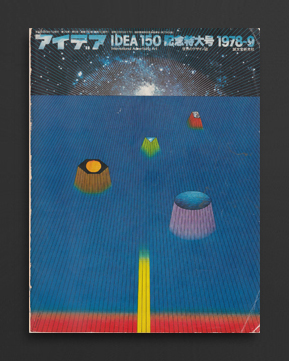
IDEA No.150
Special Issue 1978-9
Cover Design by Kazumasa Nagai
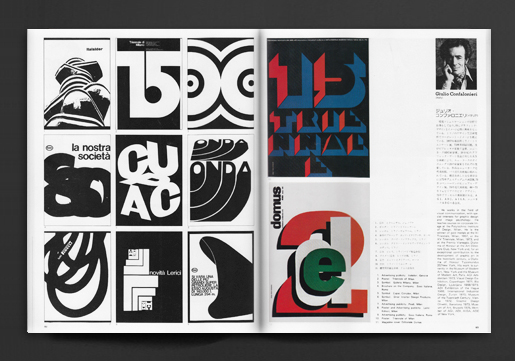
Features the work of: Anton Stankowski, F. H. K. Henrion, Frieder Grindler, Colin Forbes, Alan Fletche, Wim Crouwel, Adrian Frutiger, Jacques Richez, Silvio Coppola, George Him, Hermann Zapf, Karl Oskar Blase, Pieter Brattinga, Josef Müller-Brockmann, Stanislav LKovár, Gunther Kieser, Wolf D. Zimmermann, John Gorham, Heiri Steiner, Hans Hillmann, Jan van Toorn, Franvo Bassi, Bernard Villemot, Kurt Wirth, Hans Schleger, Emanuele Luzzati, Pino Tovaglia, Helmut Schmidt-Rhen, Allen Hurburt, Giulio Confalonieri, Michael Foreman, Giulio Confalonieri, Siegfried Odermatt, Roman Cieslewicz, Heinz Waibl, Jean Widmer, Flavio Costanitini, Pierre Boucher, Arnold Schwartzman, Gilles Fiszman, Ruedi Külling, Mark Zeugin, B. K. Wiese, David Pelham, Herbert W. Kapitzki, Franco Grignani, Georges Calame, Peter Megert, Waldemar Swierzy, Rosmarie Tissi, Mervyn Kurlansky, John McConnell, Jukka Veistola, Kurt Weidemann, Rambow, Lienemeyer, Van de Sand, Stuart Ash, Jean David, Heather Cooper, Makoto Nakamura, Ikko Tanaka, Tadanori Yokoo, Katsumi Asaba, Kazumasa Nagai, Yoshio Hayakawa, Yasaburo Kuwayama, Shigeo Fukuda, Kiyoshi, Awazu, Isao Nishijima, Yusaku Kamekura, U. G. Satoh, Shigeo Okamoto, Tadashi Ohashi, Takenobu Igarashi, Eiko Ishioka...
Contents:
Graphic Design in Europe : Colin Forbes
The main stream and branch of the graphic design for the latest 25 years in Europe : Anton Stankowski
Japanese design and European design : Shigeru Watano
Japan’s Present Graphic Design Situation : Shinichi Segi
Past 25 Years of Japanese Graphic Design : Kazumasa Nagai
List of Designers who appear in this issue
Index to Overseas Artists and their Works (from No. 1 to No. 149)
About the cover designer:
Kazumasa Nagai
Born in Osaka in 1929. In 1951 he withdrew from Tokyo National University of Fine Arts and Music, where he majored in sculpture. In 1960 he participated in organaizing the Nippon Design Center. On two occasions his designs were selected in competitions to serve as the official marks of major national events: the Sapporo Winter Olympic Games in 1966 and the Okinawa International Ocean Exposition in 1972. Now he is working mainly on posters.
IDEA was founded in 1953 in Tokyo, Japan by the Seibundo-Shinkosha publishing company. It fast became, and remains to this day, one of the most important graphic design and typography publication in the world and certainly the most significant forum on design criticism in Asia throughout the 1950s/60s/70s/80s/90s/2000s. The magazine offers rare insight into international and domestic designers and their work through historical analysis, criticism and examples of projects.
1979, English / Japanese
Softcover, 125 pages, 22.5 x 29.7 cm
1st Edition, Out of print title / used / good
Published by
Seibundo-Shinkosha / Tokyo
$70.00 - Out of stock
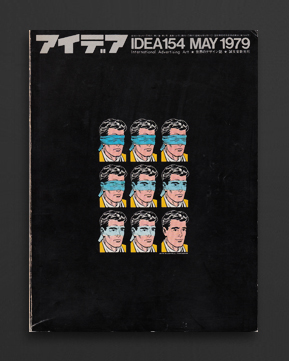
IDEA No.154
International Graphic Art
May 1979
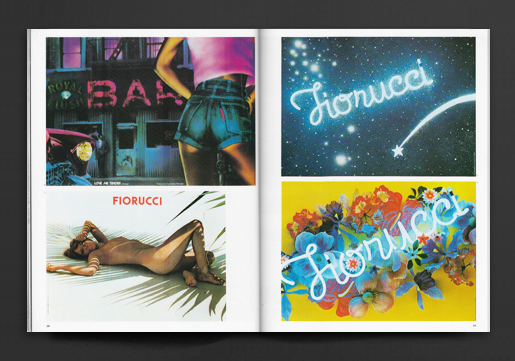
Special Feature: The Fiorucci Graphic Studio
Cover Design by John McConnell
Contents:
John McConnell : Shigeru Watano
The Fiorucci Graphic Studio : Harry Metzler and Naoko Nakayama
1979 Japan Calendar : Kazumasa Nagai
Jimes Lienhart : Yoshi Sekiguchi
Calligraphy by Ikko Tanaka : Ryuichi Yamashiro
Graphics of GK Industrial Design : Wim Crouwel
Karin Blume : Shigeru Watano
Contemporary Packaging in Japan : Koichi Nakai
Tsurunosuke Fujiyoshi’s Tableaux : Nobuaki Yujobo
The Art Directors Club Hall of Fame laureates for 1978 : Shinichiro Tora
The Meaning of “Exhibition of European Posters” : Shigeo Fukuda
Expressions of Walls, Windows and Larrices / by Tadashi Masuda, Teijiro Muramatsu
About the cover designer:
John McConnell
Born in London in 1939. He graduated from Maidstone College of Art. He entered advertising market in London in 1959. After working as a freelance designer, he became business associate of Pentagram in 1974. His designed for Clarks Shoes, Faber & Faber, Boots, Halfords, the British Museum, Face Imprint, and Penguin Books.
IDEA was founded in 1953 in Tokyo, Japan by the Seibundo-Shinkosha publishing company. It fast became, and remains to this day, one of the most important international graphic art, design and typography publication in the world and certainly the most significant forum on design criticism in Asia throughout the 1950s/60s/70s/80s/90s/2000s. The magazine offers rare insight into international and domestic designers and their work through historical analysis, criticism and examples of projects.
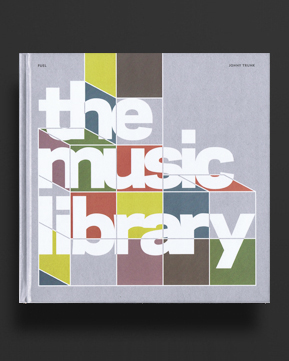
2016, English
Hardcover, 248 pages, 25.4 x 25.4 cm
Published by
Fuel / London
$75.00 - Out of stock
Expanded, new edition!
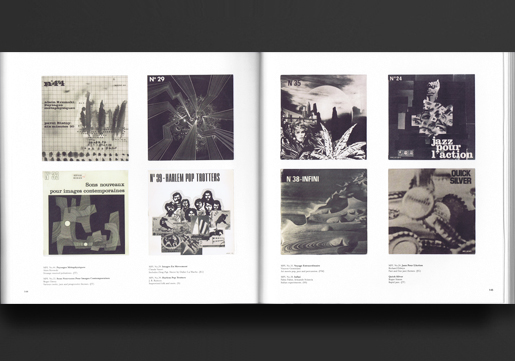
The first edition of The Music Library, published in 2005 and now out of print, brought together the designs of more than 325 record sleeves and relevant information about these rare and elusive albums. Quickly becoming known as the music library "bible," The Music Library represented a valuable reference and also sparked a resurgence of interest in the subject over the last ten years, with many new library labels and recordings coming to light. Library music--also known as source or mood music--was made for use in film, TV, advertising and radio. It was given to TV channels and producers who needed cheap, signature music for animations, advertisements and television programs. Never commercially available for sale to the public, this music was pressed from the 1950s onwards in limited quantities, and then sent directly for use in production houses and radio stations. These LPs were intended for purpose and function, not for pop charts, and as a result they look and sound like nothing else. Without the usual music industry constraints, the record sleeve designers had almost complete freedom of expression, with unprecedented results.
This new and expanded edition of The Music Library contains twice the content of the original book, featuring 625 rare sleeves from 230 music library companies of the 1960s, 1970s and early 1980s. The amazing cover designs of over 100 newly discovered library albums are beautifully reproduced (alongside all the sleeves contained in the first book) and accompanied by exhaustive, updated captions.
1985, English
Softcover, 96 pages, 30 x 21 cm
1st Edition, Out of print title / used / very good
Published by
Art Gallery of New South Wales / Sydney
$100.00 - Out of stock
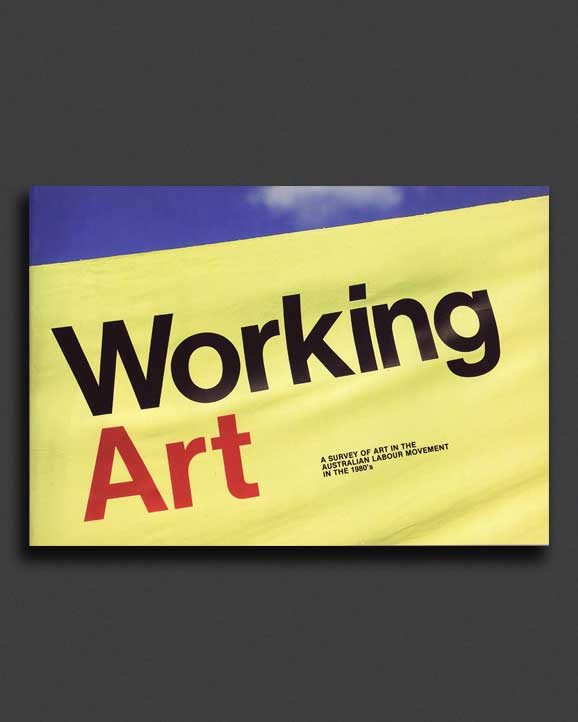
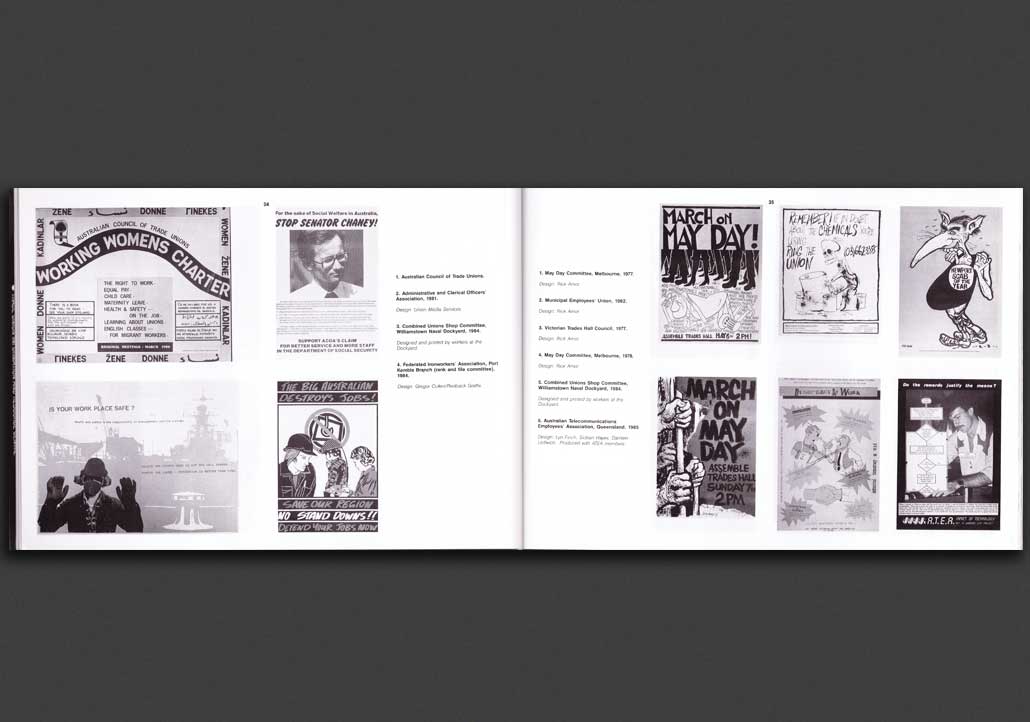
Very scarce catalogue and unique valuable resource published to accompany the exhibition "Working Art: A Survey of Art in The Australian Labour Movement in The 1980's", curated by Australian conceptual artist, curator and writer Ian Burn for the Art Gallery of New South Wales in 1985. Designed by Michael Davies of the Art Workers Union (AWU), this heavily illustrated (in colour and black and white) catalogue surveys the Banners, Posters, Graphics, Photographs, and Media of the Australian Labour movement during the 1980's, as well as a detailed "Historical Sketch" written and compiled by Ian Burn and Sandy Kirby that illustrates the rich history of the Arts in Australian unionism and communities. Alongside the many exhibited prints and textiles, there is photo documentation throughout of marches, performances, artist's at work, historical exhibitions, plus reproductions of newsletters, newspapers, cartoons, announcements, along with further accompanying introductory texts and a bibliography.
Includes inserted Trade Union Information Kit "Art and Working Life : The Victorian Trades Hall Council Arts Workshop" booklet that takes an illustrated look at the activities of the VTHC Workshop in the 1980s. A perfect accompaniment to this catalogue. Also, errata slip enclosed from the NSW catalogue.
Ian Burn (1939-1993) was an Australian conceptual artist, curator and writer who spent the first part of his career working in London and New York. It was here that he began working with Art & Language, a collaborative group who produced the publication Art-Language and whose members included artists Roger Cutforth, Joseph Kosuth and Mel Ramsden. Returning to Australia in 1977 Burn became involved in the Art Workers Union (AWU), a political and social platform that championed artists’ rights and helped change the landscape and expectations under which artists worked in Australia. From 1980 onwards, together with artist and social activist Ian Millis, he worked on a number of initiatives to further the cause of the labour movement, including Union Media Services and the Art and Working Life program. Burn died by accidental drowning in 1993.
A great copy of an important resource on Australia's cultural, industrial and political history, and also an important publication by Ian Burn.
Light general reading/handling creasing to oblong pages, otherwise tight and clean throughout. Previous owner's name penned to title page.
1981, English / French / German
Hardcover, 236 pages, 24 x 24 cm
Out of print title / used / fine
Published by
The Graphis Press / Zürich
$70.00 - Out of stock
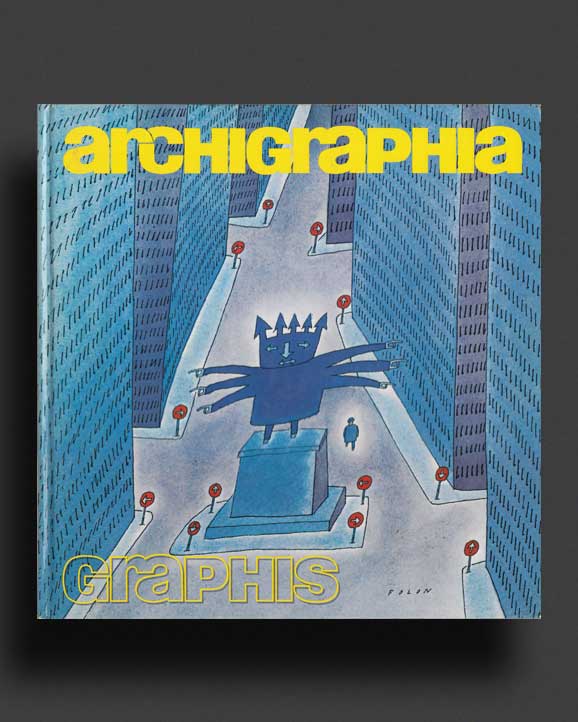
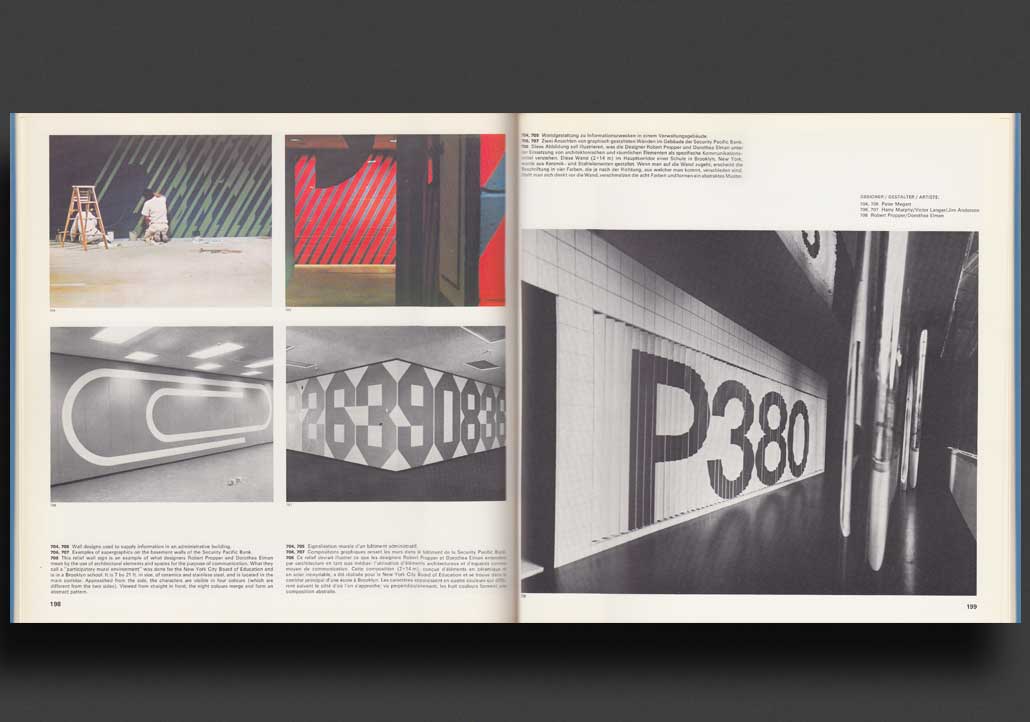
The great "Archigraphia : Architectural and Environmental Graphics", published in 1981 (first in 1978) by the legendary Graphis Press, Zürich. Bound in the iconic Jean-Michel Folon illustrated hardcover this landmark volume from the great Graphis "square books series", edited by Swiss graphic designer Walter Herdeg, forms an extensive international reference of architectural and environmental graphic design projects with chapters on: Traffic and Highway Signage, Pictograms, Visual Guidance Systems, Buildings and Shop Fronts, Supergraphics and Vehicle Graphics with Editor's foreword, chapter introductions, project profiles and a designer/artist/subject/architect index.
Profusely illustrated throughout with 823 b/w and colour examples, and, as per usual for Graphis publications, is handsomely designed and heavily researched, with all texts in English, German and French.
Essays by T. Geismar and P. Kneebone, Jock Kinneir, John Follis, Reinhart Braun, Klaus Herdeg and Stanley Mason.
Features the work of : Shigeo Fukuda, Herb Lubalin, Massimo Vignelli / Vignelli Associates, Design Research Unit, Saul Bass and Associates, Milton Glaser, Wim Crouwel, Masaru Katsumi, Les Mason, Paul Rand, Yoshiro Yamashita, John Follis, Chermayeff & Geismar, Lou Dorfsman, SITE, Georges Huel, William Golden, Gae Aulenti, Renzo Piano, Kenzo Tange, William Turnball, and so many others.
Walter Herdeg was a Swiss graphic designer, noted for his travel posters and work with Graphis Magazine, who was awarded an AIGA medal in 1986.
Very good copy with some wear and previous owners name on front blank page.
1969, English / Japanese
Hardcover (w. dust jacket), 120 pages, 19 x 27 cm
1st Edition, Out of print title / used / good
Published by
Bijutsu Shuppan-sha / Japan
$60.00 - Out of stock
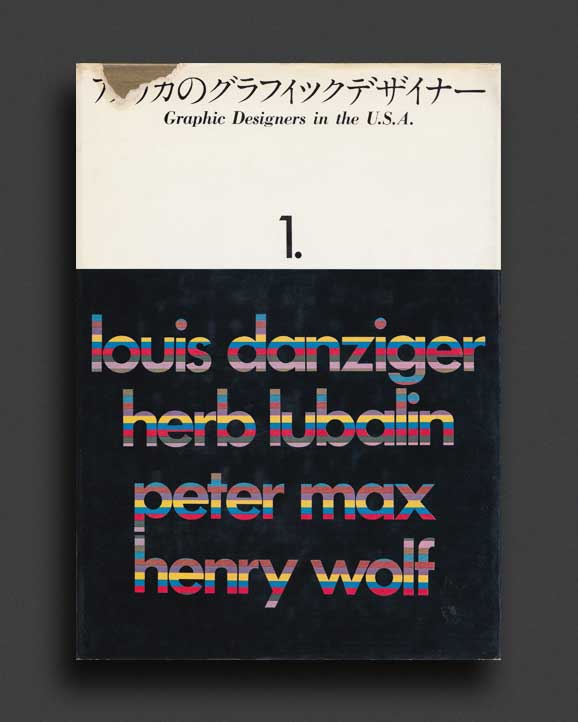
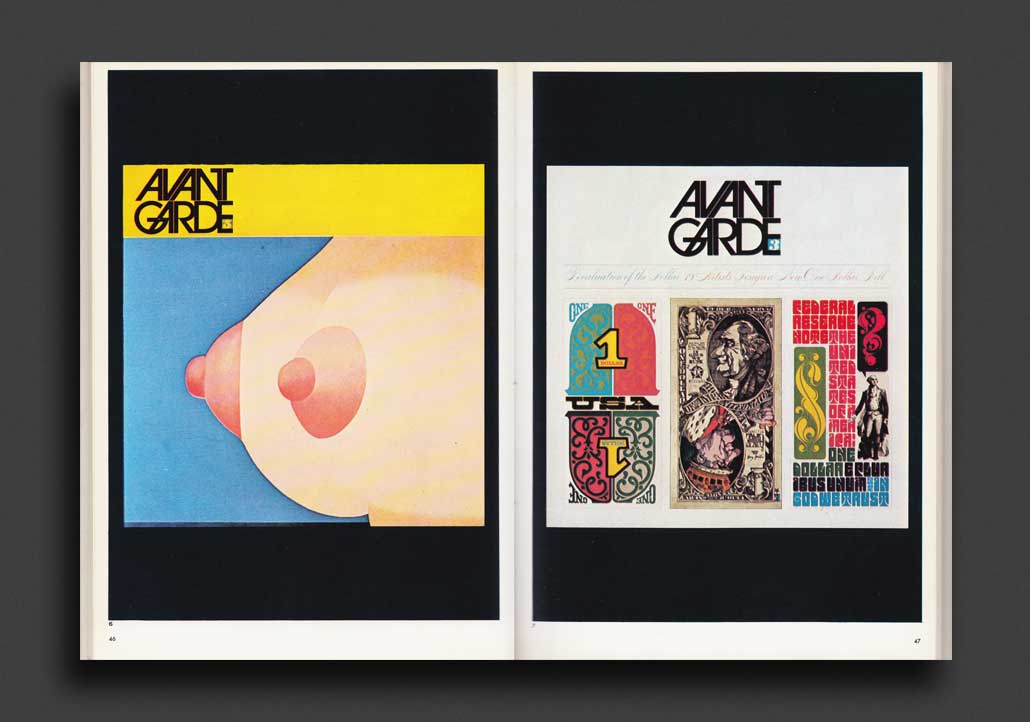
Volume 1 of the great 1969 hardcover series "Graphic Designers in the U.S.A.", art directed by Gan Hosoya. Each of these collectable books showcase four leading American graphic designers (of the total 12 across 3 books) practicing in the 1960s through a large selection of their works beautifully reproduced in full-colour and black and white (120 pages and 163 illustrations). Volume 1 showcases Louis Danziger, Herb Lubalin, Peter Max, and Henry Wolf. Each designer profile is introduced with an English text about their work. Some other texts in Japanese, but almost entirely a visual document.
First edition in original dust-jacket, embossed metallic cloth boards, some wear and chipping to jacket, book very good. Designed and printed in Japan.
2004, Japanese / English
Hardcover, (w. dustjacket), 121 pages, 22.5 x 29.7 cm
Published by
Idea / Tokyo
$85.00 - Out of stock
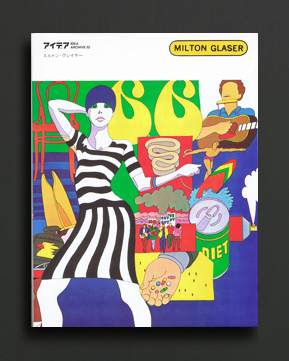
Milton Glaser is one of the world's most renowned designers and illustrators from the United States of the later half of the 20th century. In 1954, he co-founded Push Pin Studios, founded New York Magazine with Clay Felker, and established Milton Glaser, Inc. in 1974. His artwork has been featured in exhibits, and placed in permanent collections in many museums worldwide. Throughout his long career, Glaser has become widely celebrated for his many posters, paperback covers, magazines illustrations, record jackets and architectural designs. His logo “I ♥ NY,” as well as posters for Bob Dylan and other artists, have become some of the most recognised and appropriated graphics of our times. This book is a compilation of Glaser’s 60s graphic design work.
Originally published by Japan's great Idea Magazine as a special edition in 1968, this book is a hardcover re-print of this volume dedicated entirely to Glaser's work. In addition to contributions by three of Japan's greatest graphic designers Ikko Tanaka, Hiromu Hara, and Kiyoshi Awazu, an interview with Milton Glaser himself is included in the book. The art direction and layout by Tadanori Yokoo fully convey the atmosphere of the time and work of Glaser.
The 51th volume of Pushpin Graphic Magazine, which was dedicated to Georges Melies well-known for his movie “A Trip to the Moon,” is inserted as a supplement.
1981, English / Japanese
Hardcover, 112 pages, 26 x 36 cm
1st Edition, Out of print title / used / average
Published by
Kyuryo-Do Ltd. / Tokyo
$35.00 - Out of stock
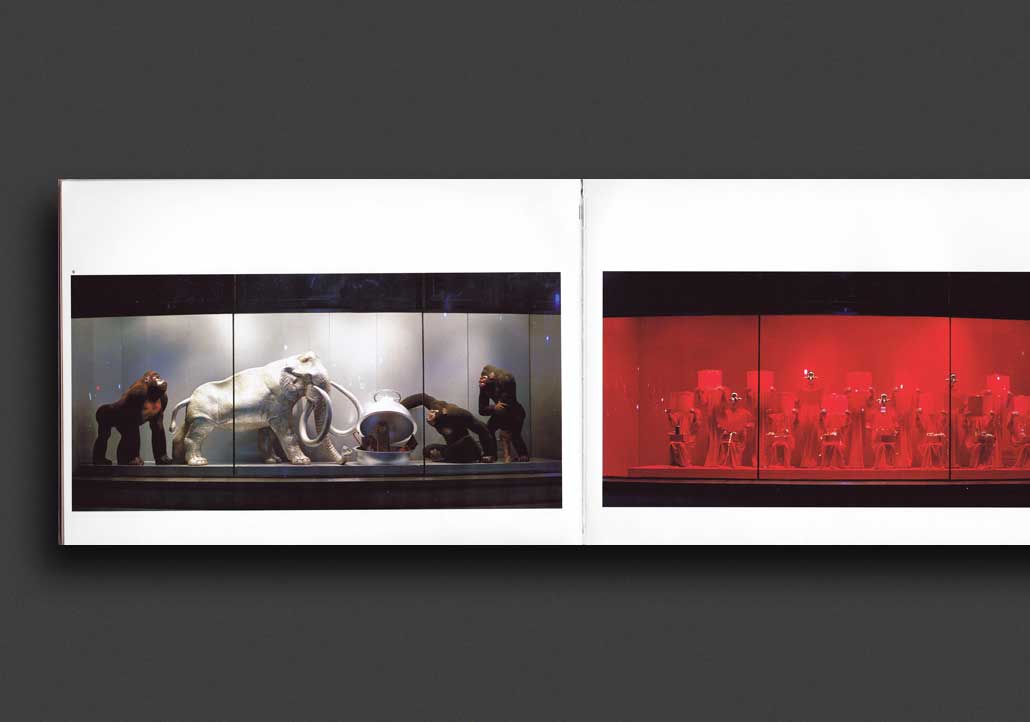
Published in 1981, this unique hardcover book was "aimed at looking back on the history of window display in our country (Japan) through Wako's past displays and at introducing the achievements of Wako as a business firm that has played the role of a pioneer in this particular field." Illustrated throughout the book's landscape format in lush saturated colours with intriguing reproductions of Wako's store window displays of dramatic textile and animatronic scenarios.
Text in English and Japanese.
Worn covers and spine, some chipping to spine and some light ex-library markings, otherwise bright and clean throughout interior.
2018, English / Dutch
Softcover, 416 pages, 17 x 24 cm
Published by
Roma / Amsterdam
$73.00 - Out of stock
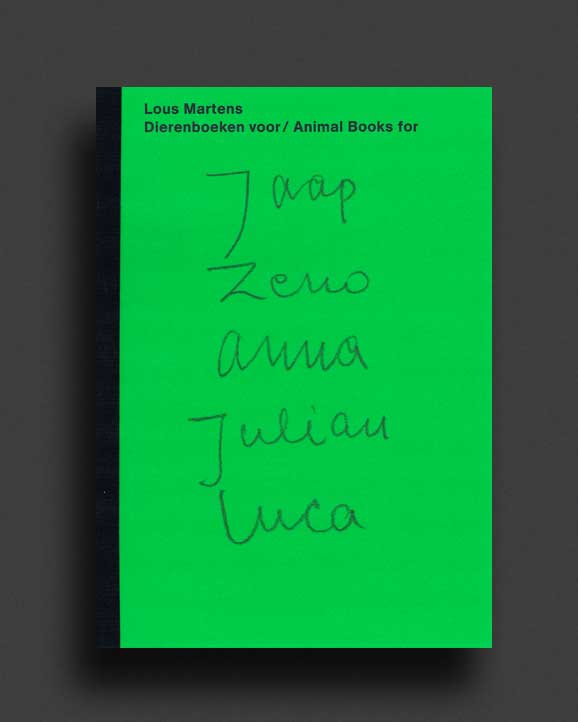
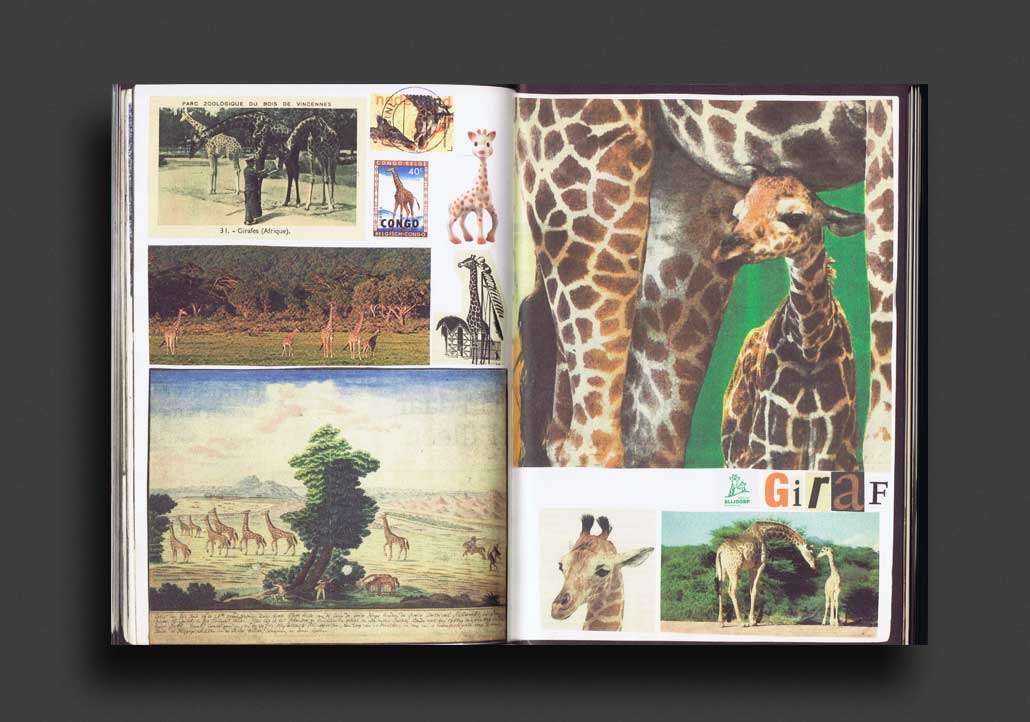
Lous Martens has five grandchildren – Jaap, Zeno, Anna, Julian, and Luca – and has begun making an animal scrapbook for each newcomer to the family. Although it is seventeen years since the first, Jaap, was born, none of the five books are finished yet. Consisting of loosely pasted pictures of animals that were clipped from newspapers and magazines about art, literature, and science, plus stamps and photographs from advertising brochures, the books are enjoyable for their small, ever-evolving changes as new material is added. Interestingly, the books were never intended to be published, but are now grouped into one big volume, an embodiment of familial love and dedication.
2017, English
Softcover (2 booklets w. jacket + obi-strip in wax bag), 32 pages + 20 pages, 12 x 20.5 cm
Published by
–zeug / Paris
$50.00 - Out of stock
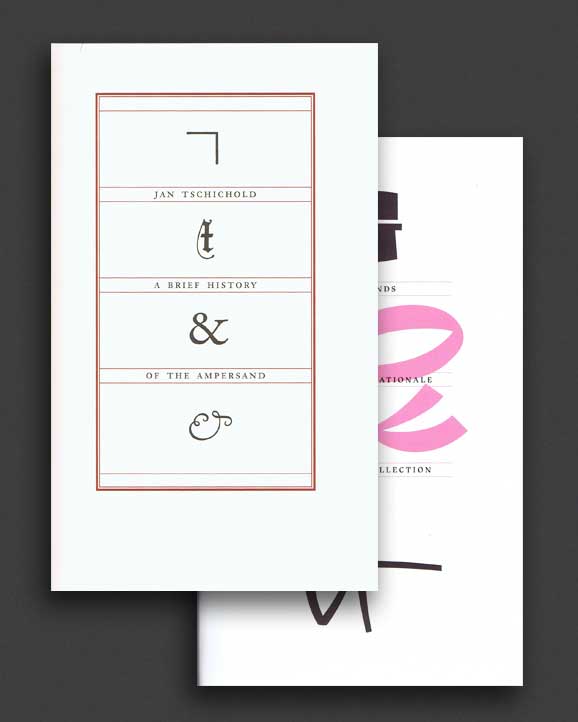
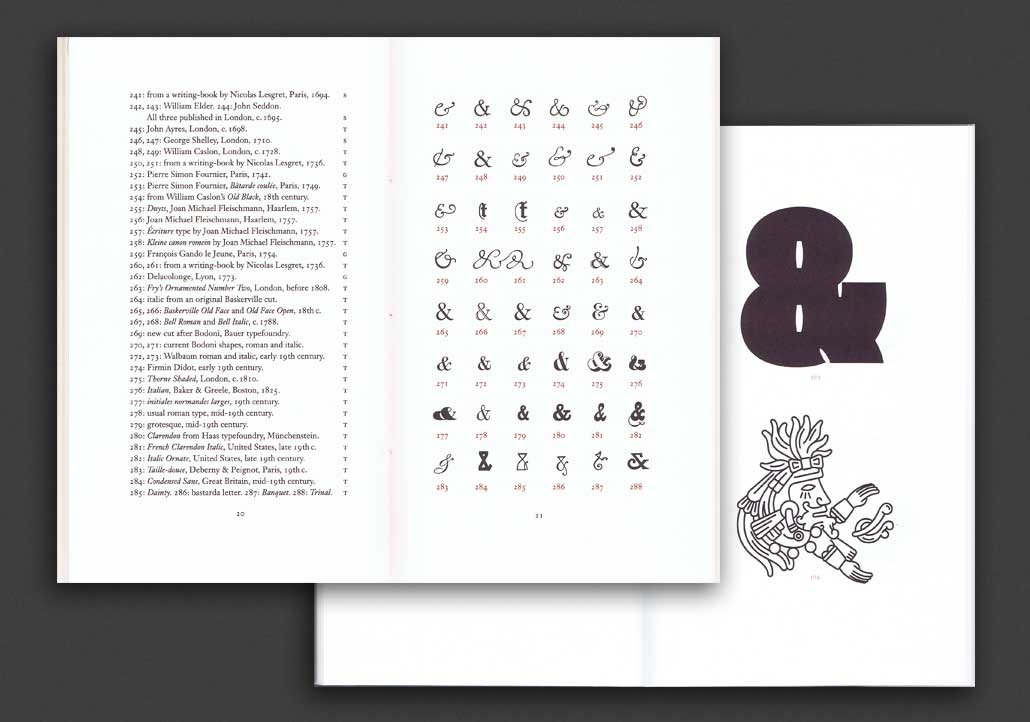
Jan Tschichold (1902-1974, typographer, theorician and teacher) published in 1953 Formenwandlungen der &-Zeichen, a short historical essay dealing with the successive designs of the ampersand glyph. This text constitutes a brief and concise introduction to the history of Western writing and typography. Long unavailable in English, this new translation by Jean-Marie Clarke is published in a facsimile version, faithful to the original design by the author. On the occasion of this translation, VTF and -zeug co-organised a type-design workshop and an international call for ampersand entries. The second booklet shelters the selection of 288 ampersand glyphs, selected, sorted and organised.
–zeug is a new French publishing house, whose main interests are design and typography.
2015, English
Softcover, 208 pages + 24 pages, 20 x 25 cm
Blue (second) edition (2500 copies),
Published by
Roma / Amsterdam
$63.00 - Out of stock
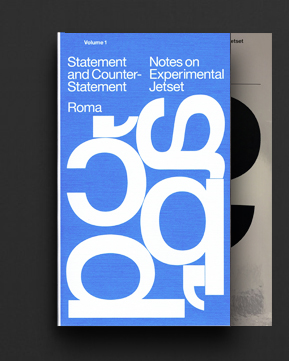
The first publication on the work of Experimental Jetset features almost two decades of graphic design praxis. Rather than a monolithic monograph, it is a very loose, personal archive, with essays by Linda van Deursen, Mark Owens, and Ian Svenonius, plus two photographic chapters with a selection of work by the studio, covering both printed matter and the documentation of site-specific pieces and installations. To conclude is a glossary-like anthology of texts (fragments of interviews, lectures, correspondence, etc.) previously written by Experimental Jetset, selected, edited, and structured by Jon Sueda.
Design: Experimental Jetset.
Blue (second) edition. This edition comes with "Automatically Arranged Alphabets". Stapled in a screenprinted silver cardboard cover, the zine (titled 'Automatically Arranged Alphabets') contains a typographic experiment involving software-generated compositions (part of a series of sketches made between 2014-2015).
Design: Experimental Jetset
2018, English
Softcover, 46 pages, 11 x 17.5 cm
Edition of 500,
Published by
Mode and Mode / Melbourne
$6.00 - Out of stock
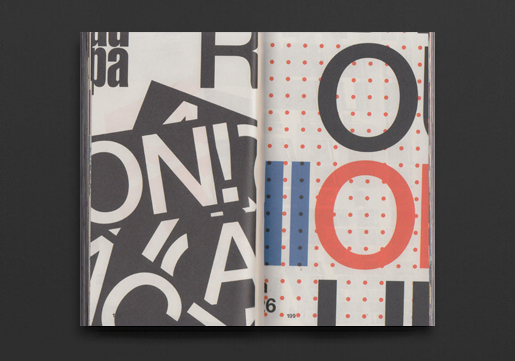
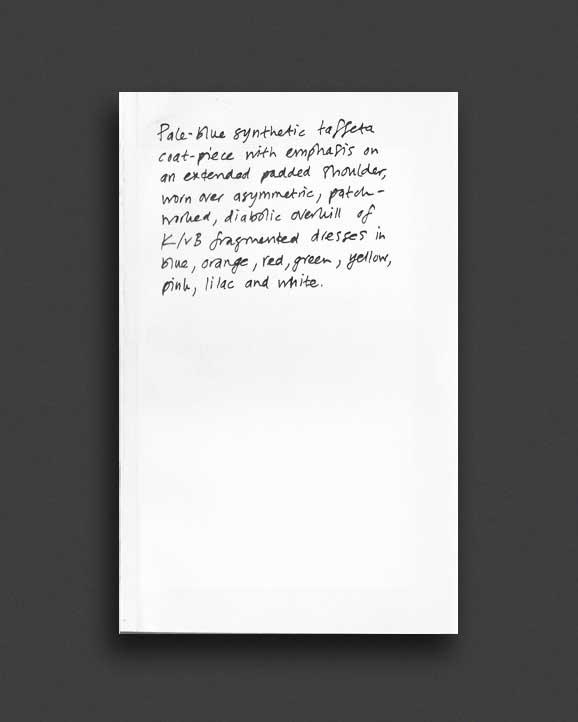
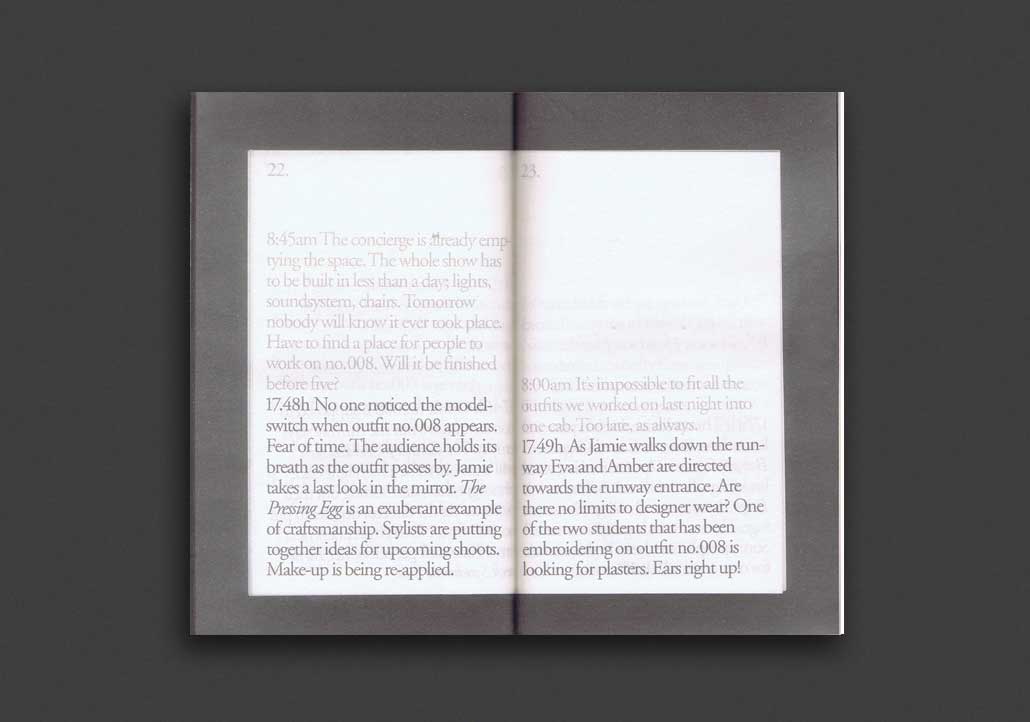
Mode and Mode 4, 'fashion without fashion', features Michiel Keuper of Keupr/van Bentm and presents a one-to-one reprint of the publication "Friction Parade 99", a project created by Keupr/van Benton (a collective between Dutch designers Michiel Keuper and Francisco van Benthum) in collaboration with Experimental Jetset (Marieke Stolk, Erwin Brinkers and Danny van den Dungen) from 1999. A publication as fashion.
Keupr/van Benton were a fictional haute couture brand operating between 1997 and 2001. Friction/Parade 1999 was published on the occasion, and in lieu of a collection of the same name for haute couture week in spring/summer 1999. Instead of producing garments that season, Keupr/van Benton participated through the material and textual narrative of a publication.
Mode and Mode is a periodical that addresses printed matter in fashion practice. Each issue explores experimental publishing in fashion with an interview around a print-based project — one that has critical effects to fashion as a discourse. In doing so, we reflect on the role of print and its potency to disrupt, or propel, fashion narratives.
2016, English
Softcover, 62 pages, 18 x 26.5 cm
Edition of 150,
Published by
Mode and Mode / Melbourne
$6.00 - Out of stock
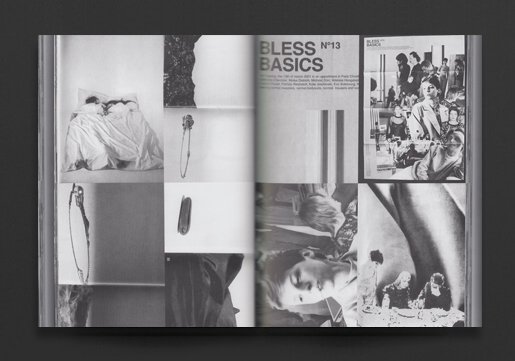
Mode and Mode 2 'a publication in a publication' features the Berlin/Paris-based fashion design practice of BLESS, Ines Kaag and Desiree Heiss, and their ongoing ‘lookbook collaborations’ project. Also featuring image contributions from Harriet Barrile, Ricarda Bigolin, Michael Bojkowski, Felix Burrichter, Tim Coster, Friedrich-Wilhelm Graf, Brad Haylock, Jared Leon and Johanna Heldebro, Thalea Michos-Vellis, Sophie Mörner, Alisa Närvänen, Virginia Overell, Manuel Raedar, Jerome Rigaud, Jason Schlabach and Annie Wu.
Mode and Mode is a periodical that addresses printed matter in fashion practice. Each issue explores experimental publishing in fashion with an interview around a print-based project — one that has critical effects to fashion as a discourse. In doing so, we reflect on the role of print and its potency to disrupt, or propel, fashion narratives.
2006, English
Softcover, 255 pages (196 colour and 300 b/w ill.), 18.5 x 25 cm
Out of print title / used / good
Published by
Sternberg Press / Berlin
$200.00 - Out of stock
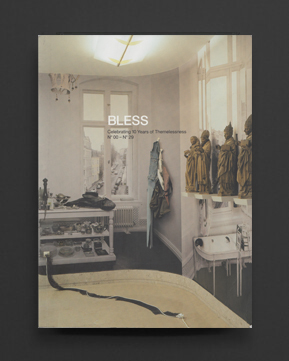
BLESS.
Celebrating Ten Years of Themelessness: N° 00 – N° 29
Desiree Heiss, Ines Kaag, Manuel Raeder (Eds.)
Texts by Thimo te Duits, Elein Fleiss, Nakako Hayashi, Stéphanie Moisdon, Ulf Poschardt, Pro qm, Adriano Sack, Barbara Steiner, Olivier Zahm
Interviews by Manuel Raeder with Nobuyoshi Tamura Shihan and by Jan Winkelmann with Bless
The now very sought-after, scarce, encyclopedic, ten-year survey monograph of Berlin's famed BLESS. Sternberg Press have published two "catalogue raisonné" volumes documenting the oeuvre of Bless, this being the first, long out-of-print volume, designed by Manuel Raeder and published in 2006, documenting everything from their beginnings in the late 1990's up until 2006.
Bless came to fame in the winter of ‘97/‘98, when the models of a Martin Margiela fashion show wore Bless wigs made out of fur. Heralded as one of fashion’s most innovative designers, the Paris and Berlin-based duo (Desiree Heiss and Ines Kaag) quickly refused to capitalize on one milieu. Constantly investigating the boundaries of style, Bless slides from fashion to beauty, interior decoration to art exhibition, collaboration with other brands to stylized advertising. Their production, which sits on the fine line between art object and design, high function and high fashion, is always unique and marked by the recycling and adaptation of unexpected items put to use in a totally new way. Objects such as customizable footwear, disposable T-shirts, chair covers, table mobiles, cable jewellery, and wallpapers, but also an “extended hotel service” range among the many products that have resulted from their manipulations of a garment or piece of furniture.
For author Barbara Steiner, “by addressing the fields of both fashion and art, including the overlapping zones, and once again confounding any attempt at classification, Bless reveals the contradictions and conflicts that underlie economic and artistic interests, and above all their reciprocal relationship. Ambiguity, contingency and instability become the constituents of a practice that is based on multiple focal points as a means of probing possibilities of external versus self-determination, commercial success versus critical reflection and incorporation versus resistance.”
Designed by Manuel Raeder, this fully illustrated book features for the first time the wide range of Bless’ activity and documents a unique mode of cultural production.
Bless have exhibited internationally at the 1st berlin biennale (1998/99), Musée d’Art Moderne de la Ville de Paris (1999), Centre Pompidou (2000), Manifesta 4 (2002), Palais de Tokyo (2003), Moderna Museet, Stockholm (2004), Stedelijk Museum Bureau Amsterdam (2003), Goethe-Institut, Tokyo (2005), and most recently at the Museum Boijmans Van Beuningen, Rotterdam (2006). Their collaborations with other brands range from Adidas to Levi’s, Nike, Mikli and Droog over to the jewellery designer Bucherer.
Good copy with only spine wear/cracking from reading, otherwise a bright, clean copy.
1969, Japanese
Hardcover (w. dust jacket), 144 pages, 19 x 27 cm
1st Edition, Out of print title / Used*,
Published by
Bijutsu Shuppan-sha / Japan
$70.00 - Out of stock
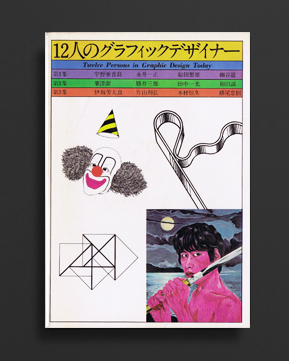
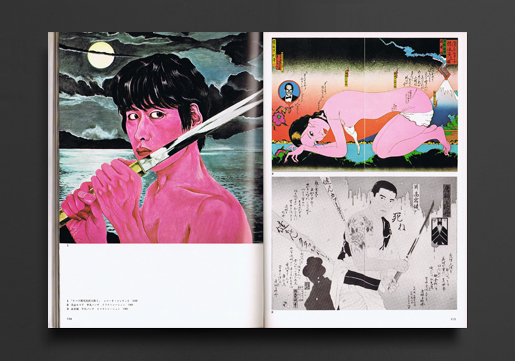
Volume 3 of the great 1969 hardcover series "Twelve Persons in Graphic Design Today", art directed by Gan Hosoya. Each of these collectable books showcase four Japanese graphic designers (of the total 12 across 3 books) practicing in the 1960s through a large selection of their works beautifully reproduced in full-colour and black and white. Volume 3 showcases Yoshitaro Isaka, Toshihiro Katayama, Tsunehisa Kimura and Tadanori Yokoo. Texts in Japanese, but almost entirely a visual document.
First edition in original dust-jacket, protected by plastic wraps.
2012, English
Softcover, 304 pages, black and white, 25 x 17.6 cm
Published by
Occasional Papers / London
$41.00 - Out of stock
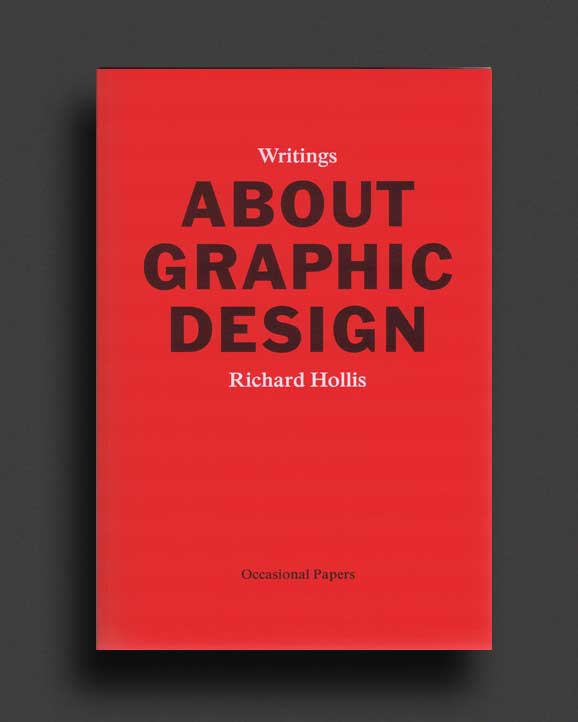
The book features a comprehensive selection of writings by renowned graphic designer, graphic design theorist and historian Richard Hollis, including interviews, essays, letters, articles, lectures and course outlines. About Graphic Design is densely illustrated with over 500 thumbnail images.Edited by Richard Hollis
Designed by Richard Hollis with Pedro Cid Proença
1997, English
Softcover, 128 pages, 13 x 19 cm
1st edition, Out of print title / used*,
Published by
Association Belle Haleine / Paris
Purple Institute / Paris
$60.00 - Out of stock
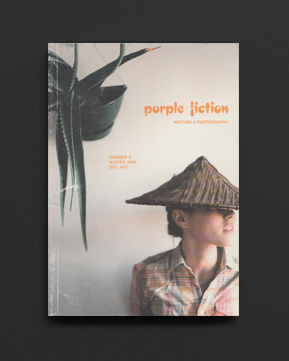
PURPLE FICTION ("Writing and Photography") Number 4, Winter 1998.
A very rare copy of this early edition of Purple Fiction, a literary/photography journal published by the people behind Purple in the 1990s, lasting for 4 issues. Edited by Elein Fleiss.
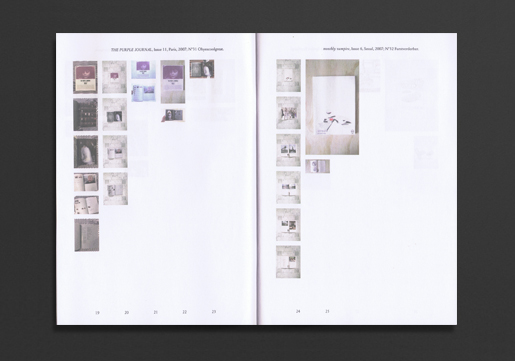
In 1992 Olivier Zahm and his partner Elein Fleiss printed the first issue of Purple Prose, a Parisian literary art zine that over the years has evolved into Purple Fashion Magazine. Soon after the birth of Purple Prose, Zahm and Fleiss created spin-off publications like les cahiers purple, Purple Sexe, Purple Fiction, and of course, Purple Fashion. Zahm aimed at fusing together his two worlds, fashion and art, in creating Purple Fashion.
2017, English
Hardcover, 192 pages, 241 x 318 cm
Published by
Rizzoli / New York
$70.00 - Out of stock
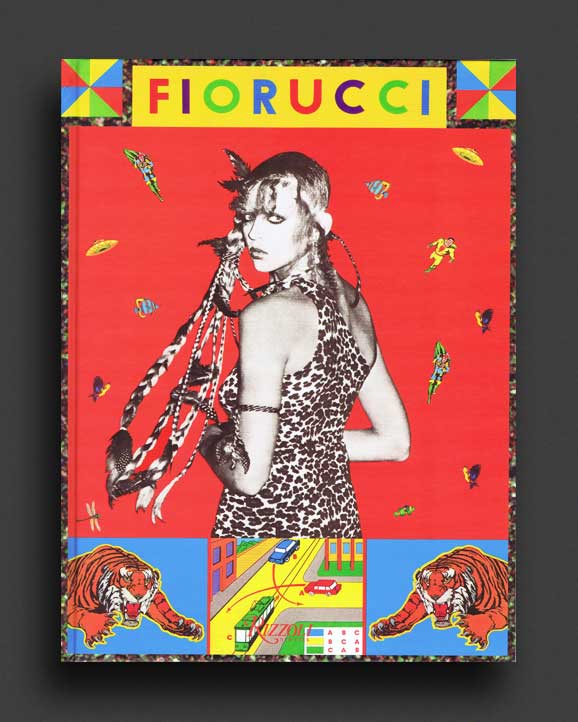
Fifty years after its founding by Elio Fiorucci in 1967, the iconic Milanese fashion label is entering a new phase of ingenuity. Published to coincide with the fiftieth anniversary of the label and the glittering unveiling of its new collection and retail stores, this book is a tribute to the history of a pioneering brand and a celebration of its colourful future.
Bright, colourful, sexy, and irreverent, Fiorucci came to define more than any other brand the fashion of the 1980s. Famous for scouring the world to bring vibrant elements of global underground culture into their designs, Fiorucci is responsible for defining the extravagant palette of the post-punk era, with neon and fluorescent tones, iridescent spandex and stretch denim, bringing the influences of pop art and pop culture to bear on fashion for the first time. Now relaunched under the direction of impresarios Janie and Stephen Schaffer, Fiorucci continues to surprise, shock, and impress. In the spirit of Fiorucci itself, this delightful book is a bright and intoxicating tour through everything from the first leopard-print patterns to the new designs defining the future of this iconic brand.
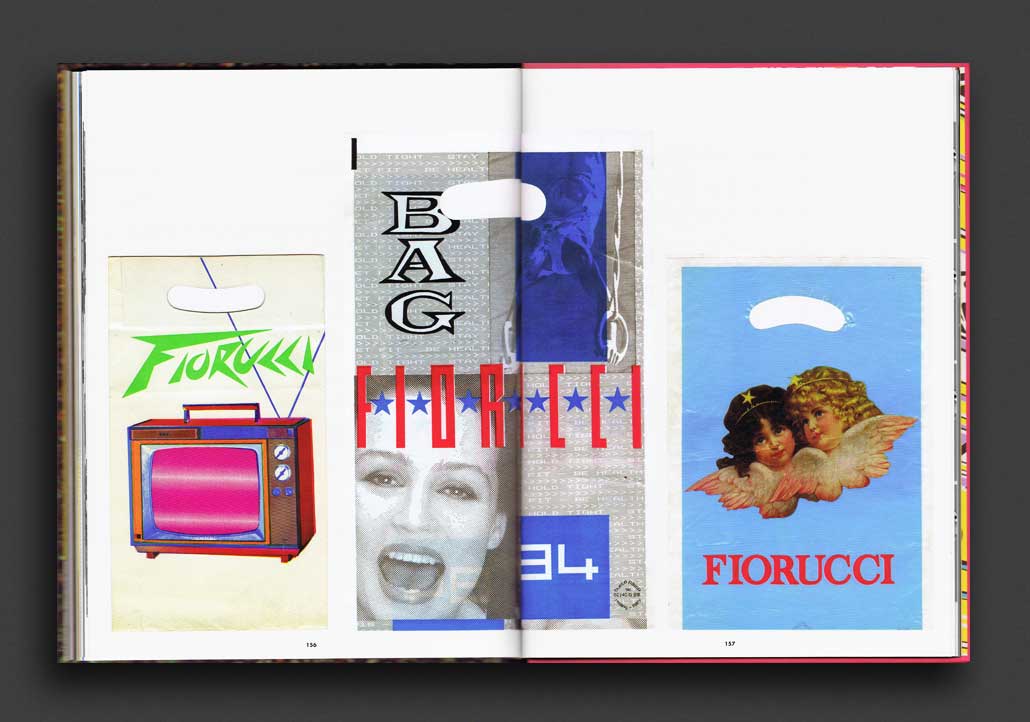
This lavish hardcover book has sections dedicated entirely to Fiorucci's posters, logos, graphics, stores, fanzines, and parties, and includes contributions by/interviews with Oliviero Toscani, Maripol, Douglas Coupland, Terry Jones, David Dewaele, Marc Jacobs, David Owen and edited by Sofia Coppola.