World Food Books' programme is largely produced on Kulin Nation land. We acknowledge the Wurundjeri people of the Kulin Nation as the first and continuing custodians of this land, and pay respect to their Elders past, present, and emerging.
World Food Books is an arts and special interests bookshop in Naarm / Melbourne. Founded in 2010, World Food Books is devoted to the presentation of a rotating, hand-selection of international art, design, literary and counterculture publications with an emphasis on the anti-traditional, the experimental, the avant-garde, the heretic, the marginal.
Presenting new titles alongside rare and out-of-print books, catalogues and journals spanning the fields of modern and contemporary art, design, photography, illustration, film, literature, poetry, cultural theory, philosophy, sexuality, popular and underground culture in its many radical forms, World Food Books wishes to encourage adventurous, thoughtful and open-minded reading, looking, writing, and exchange of publishing and ideas, both current and historical.
As well as our bookshop, located in Melbourne's historical Nicholas Building, all of our inventory is available internationally via our online mail-order service.
World Food Books semi-regularly co-ordinates "Occasions", a programme of exhibits and events at the bookshop and in partnership with other hosts (such as museums and art galleries) that develop out of the activities, relationships and content of the bookshop itself.
World Food Books
The Nicholas Building
37 Swanston Street
Room 5, Level 6
Melbourne 3000
Australia
SHOP HOURS:
THU–SAT 12–6
WEB-SHOP OPEN 24/7
World Food Books
Postal Address:
PO Box 435
Flinders Lane
Victoria 8009
Australia
info@worldfoodbooks.com
Art
Theory / Essay
Architecture / Interior
Graphic Design / Typography
Photography
Fashion
Eros
LGBTQ+
Fiction / Poetry
Weird / Speculative / Science Fiction / Horror
Transgressive / Visceral / Abject
Symbolism / Decadence / Fin de siècle
Film / Video
Painting
Sculpture / Installation
Performance / Dance / Theater
Drawing
Sound / Music
Curatorial
Group Shows / Collections
Periodicals
Out-of-print / Rare
Posters / Ephemera / Discs
Signed Books
World Food Books Gift Voucher
World Food Book Bag
Australian Art
Australian Fiction
Australian Science Fiction / Speculative Fiction
Australian Poetry
Australian Photography
Japanese Photography
Conceptual Art
Minimal Art
Dada
'Pataphysics / Oulipo
Fluxus
Concrete Poetry
Pop Art
Surrealism
Arte Povera
Arte Informale / Haute Pâte / Tachism
Nouveau Réalisme / Zero / Kinetic
Situationism / Lettrism
Collage / Mail Art / Xerox Art
Art Brut / Folk / Visionary / Fantastic
Illustration / Graphic Art / Bandes Dessinées
Furniture
Italian Radical Design / Postmodernism
Textiles
Ceramics / Glass
Counterculture
Protest / Revolt
Philosophy
Psychoanalysis
Anthropology
Anarchism
Socialism / Anarchism / Communism / Capitalism
Literary Theory / Semiotics / Language
Feminism / Women's Studies
Gender Studies / Sexuality
Anthropology
Fetishism / BDSM
Drugs / Psychedelia
Crime / Violence
Animal Rights / Veganism
Occult / Esoterica
Ecology / Earth / Alternative Living
Whole Earth / Crafts
All prices in AUD (Australian dollars)
Pick-Ups
Pick-up orders can be collected in our bookshop during opening hours after order date. Please collect any Pick-up orders within 2 weeks of ordering as we have limited storage space. Orders will be released back into stock if not collected within this time. No refunds can be made for pick-ups left un-collected. If you cannot make it in to the bookshop in this time-frame, please choose postage option.
Return Policy
All sales are final. We do accept returns (for refund or exchange) for items received in error. All our orders are packed with special care using heavy-duty padding and cardboard book-mailers or bubble mailers (for smaller books), using reinforcement where required. We cannot take responsibility for any lost, stolen or damaged parcels.
Insurance
Should you wish to insure your package, please email us directly after placing your order and we can organise this at a small extra expense. Although all standard/express tracked packages are very safe and dependable, we cannot take responsibility for any lost, stolen or damaged parcels. We recommend insurance on valuable orders.
Interested in selling your old books, catalogues, journals, magazines, comics, fanzines, ephemera? We are always looking for interesting, unusual and out-of-print books to buy. We only buy books in our fields of interest and specialty, and that we feel we can resell.
We base these prices on desirability, market value, in-print prices, condition and our current stock levels. We offer cash, store credit, and can take stock on consignment. All
about 25% of the price we expect to get when we sell them, or 30% in store credit. We base these prices on desirability, market value, in-print prices, condition and our current stock levels.
Sell your books any day of the week. You can drop them off and return later. If you have a lot of books, we can visit your Sydney home.
We buy books that we feel we can resell. We offer about 25 % of the price we expect to get when we sell them, or 30% in store credit. We base these prices on desirability, market value, in-print prices, condition and our current stock levels.
Philadelphia Wireman
03 August - 01 September, 2018
World Food Books is proud to announce our next Occasion, the first presentation of sculptures by Philadelphia Wireman in Australia.
The Philadelphia Wireman sculptures were found abandoned in an alley off Philadelphia’s South Street on trash night in 1982. Their discovery in a rapidly-changing neighbourhood undergoing extensive renovation, compounded with the failure of all attempts to locate the artist, suggests that the works may have been discarded after the maker’s death. Dubbed the "Philadelphia Wireman" during the first exhibition of this work, in 1985, the maker’s name, age, ethnicity, and even gender remain uncertain. The entire collection totals approximately 1200 pieces, all intricately bound together with tightly-wound heavy-gauge wire (along with a few small, abstract marker drawings, reminiscent both of Mark Tobey and J.B. Murry). The dense construction of the work, despite a modest range of scale and materials, is singularly obsessive and disciplined in design: a wire armature or exoskeleton firmly binds a bricolage of found objects including plastic, glass, food packaging, umbrella parts, tape, rubber, batteries, pens, leather, reflectors, nuts and bolts, nails, foil, coins, toys, watches, eyeglasses, tools, and jewellery.
Heavy with associations—anthropomorphic, zoomorphic, and socio-cultural responses to wrapped detritus—the totemic sculptures by Philadelphia Wireman have been discussed in the context of work created to fulfil the shamanistic needs of alternative religions in American culture. Curators, collectors, and critics have variously compared certain pieces to sculpture from Classical antiquity, Native American medicine bundles, African-American memory jugs, and African fetish objects. Reflecting the artist’s prolific and incredibly focused scavenging impulse, and despite—or perhaps enhanced by—their anonymity, these enigmatic objects function as urban artefacts and arbiters of power, though their origin and purpose is unknown. Philadelphia Wireman, whatever their identity, possessed an astonishing ability to isolate and communicate the concepts of power and energy through the selection and transformation of ordinary materials. Over the course of the past two decades, this collection has come to be regarded as an important discovery in the field of self-taught art and vernacular art.
Presented in collaboration with Fleisher-Ollman Gallery, Philadelphia, and Robert Heald, Wellington.
Susan Te Kahurangi King
02 February - 10 March, 2018
Susan Te Kahurangi King (24 February 1951 - ) has been a confident and prolific artist since she was a young child, drawing with readily available materials - pencils, ballpoint pens and felt-tip markers, on whatever paper is at hand. Between the ages of four and six Susan slowly ceased verbal communication. Her grandparents William and Myrtle Murphy had developed a special bond with Susan so they took on caring responsibilities for extended periods. Myrtle began informally archiving her work, carefully collecting and storing the drawings and compiling scrapbooks. No drawing was insignificant; every scrap of paper was kept. The King family are now the custodians of a vast collection containing over 7000 individual works, from tiny scraps of paper through to 5 meter long rolls.
The scrapbooks and diaries reveal Myrtle to be a woman of great patience and compassion, seeking to understand a child who was not always behaving as expected. She encouraged Susan to be observant, to explore her environment and absorb all the sights and sounds. Myrtle would show Susan’s drawings to friends and people in her community that she had dealings with, such as shopkeepers and postal workers, but this was not simply a case of a grandmother’s bias. She recognised that Susan had developed a sophisticated and unique visual language and sincerely believed that her art deserved serious attention.
This was an unorthodox attitude for the time. To provide some context, Jean Dubuffet coined the term Art Brut in 1945 to describe work created by self-taught artists – specifically residents of psychiatric institutions and those he considered to be visionaries or eccentrics. In 1972 Roger Cardinal extended this concept by adopting the term Outsider Art to describe work made by non-academically trained artists operating outside of mainstream art networks through choice or circumstance. Susan was born in Te Aroha, New Zealand in 1951, far from the artistic hubs of Paris and London that Dubuffet and Cardinal operated in. That Myrtle fêted Susan as a self-taught artist who deserved to be taken seriously shows how progressive her attitudes were.
Susan’s parents Doug and Dawn were also progressive. Over the years they had consulted numerous health practitioners about Susan’s condition, as the medical establishment could not provide an explanation as to why she had lapsed into silence. Dawn educated herself in the field of homeopathy and went on to treat all twelve of her children using these principles – basing prescriptions on her observations of their physical, mental and emotional state.
Doug was a linguist with an interest in philosophy who devoted what little spare time he had to studying Maori language and culture. To some extent their willingness to explore the fringes of the mainstream made them outsiders too but it was their commitment to living with integrity and their respect for individuality that ensured Susan’s creativity was always encouraged.
Even though Susan’s family supported her artistic pursuits, some staff in schools and hospitals saw it as an impediment to her assimilation into the community and discouraged it in a variety of ways. Her family was not always aware of this and therefore did not fully understand why Susan stopped drawing in the early 1990s. However, rather than dwell on the challenges that Susan faced in pursuit of her artistic practice, they prefer to highlight her achievements. In 2008 Susan began drawing again in earnest, after an almost 20 year interruption, and her work is now shown in galleries around the world.
Susan grew up without television and has been heavily influenced by the comics she read as a child. She is absolutely fearless in the appropriation of recognizable characters, such as Donald Duck and Mickey Mouse, in her work. She twists their limbs, contorts their faces, compresses them together, blends them into complex patterned backgrounds - always imbuing them with an incredible energy. Although Susan often used pop culture characters in her work they are not naive or childlike. These are drawings by a brilliant self-taught artist who has been creating exceptional work for decades without an audience in mind.
Mladen Stilinović
"Various Works 1986 - 1999"
02 February 16 - September 10, 2016
Various works 1986 - 1999, from two houses, from the collections of John Nixon, Sue Cramer, Kerrie Poliness, Peter Haffenden and Phoebe Haffenden.
Including: Geometry of Cakes (various shelves), 1993; Poor People’s Law (black and white plate), 1993; White Absence (glasses, ruler, set square, silver spoon, silver ladel with skin photograph and wooden cubes), 1990-1996; Exploitation of the Dead (grey and red star painting, wooden painting, black spoon with red table, red plate), 1984-1990; Money and Zeros (zero tie, paintings made for friends in Australia (Sue, John, Kerrie), numbers painting), 1991-1992; Words - Slogans (various t-shirts) - “they talk about the death of art...help! someone is trying to kill me”, “my sweet little lamb”, “work is a disease - Karl Marx”; Various artist books, catalogues, monographs, videos; Poster from exhibition Insulting Anarchy; "Circular" Croatian - Australian edition; Artist book by Vlado Martek (Dostoyevsky); more.
Thanks to Mladen Stilinović and Branka Stipančić.
Jonathan Walker
Always Will Need To Wear Winter Shirt Blue + Ochre Small Check Pattern
21 August - 21 September, 2015
Untitled
I am not a great reader of poetry but I always return to the work of Melbourne poet, Vincent Buckley (1925- 1988). Perhaps I find his most tantalising piece to be not a finished poem but a fragment left on a scrap of paper discovered on his desk after the poet’s death.
The poetry gathers like oil
In the word-core, and spreads
It has its music meet,
Its music is in movement.
This fragment is more the shell left behind from a volatile thought than a finished poem. I find the last two lines honest but awkward whereas the first two lines work like an arrow. Most likely he could not find a resolution so it was left. Still, in its present form, it remains an eloquent testimony to the ultimate failure of a medium to express mobile thought and sensation, in Buckley’s case, through verbal language. It’s an important matter because this is something all artists have to deal with regardless of the medium.
I have never written a poem, however, I am forever copying fragments from books on paper scraps in a vain effort to fix certain notions in my head. At first, they function as bookmarks that are sometimes returned to when I open the book. But before long, as they accumulate, they fall out littering the table interspersed with A4 photocopies, bills, books and medications.
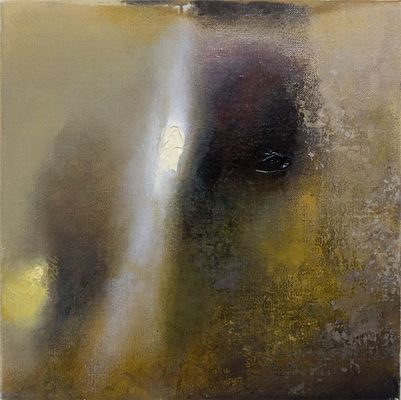
To return to Buckley’s fragment, the first two lines very much evoke how I paint nowadays. As you age, detail diminishes and patches of light become more luminous and float. I feel the most honest way of dealing with this is by smearing the oil paint on the canvas with the fingers and working close-up, blind. Only if the patches coalesce into an approaching image can the work gain a life.
-
Jonathan Walker was born in Melbourne, Australia and brought up on a dairy farm in Gippsland. In the 1970’s he studied painting at RMIT and won the Harold Wright Scholarship to the British Museum, London. During the 1980’s he exhibited at Pinacotheca Gallery, Richmond and had work shown at the NGV and Heidi City Art Gallery. Over the same period he designed the cover for the “Epigenesi” LP by Giancarlo Toniutti, Italy and conducted a mail exchange work with Achim Wollscheid, Germany. The work with artists through the post resulted in an article published in the bicentenary issue of Art and Australia 1988. He showed in artist run spaces such as WestSpace in the 90’s and 2000’s, and until 2012, taught painting at Victoria University, which is where we (Colleen Ahern and Lisa Radford) as organisers of the exhibition, among many others, had the privilege of being his student.
Walker’s knowledge was imparted to students through the careful selection of music, literature, and artists found in books that he himself had ordered for the library. Walker’s strategy was the generosity of sharing his vast knowledge with references specific to each student and their context.
Walker’s paintings share a similar focus and intimacy.
This exhibition presents a small selection of recent paintings alongside a publication that includes Walker’s writing. Observational and analytical, Walker’s work is a type of material notation — the time of day, colour and how it is blended, the both specific and fleeting location of a reflection on lino or the question of whether a chair leg should be included in a painting.
Please join us on Friday August 21 between 6-8pm to celebrate the opening of the exhibition.
Curated by Colleen Ahern and Lisa Radford.
B. Wurtz
Curated by Nic Tammens
March 26 - April 4, 2015
B.Wurtz works from a basement studio in his home on Manhattan’s Lower East Side.
This local fact is attested to by the plastic shopping bags and newsprint circulars that appear in his work. As formal objects, they don’t make loud claims about their origins but nonetheless transmit street addresses and places of business from the bottom of this long thin island. Like plenty of artists, Wurtz is affected by what is local and what is consumed. His work is underpinned by this ethic. It often speaks from a neighborhood or reads like the contents of a hamper:
“BLACK PLUMS $1.29 lb.”
“Food Bazaar”
“USDA Whole Pork Shoulder Picnic 99c lb.”
“RITE AID Pharmacy, with us it’s personal.”
“H. Brickman & Sons.”
“Sweet Yams 59c lb."
Most of the work in this exhibition was made while the artist was in residence at Dieu Donne, a workshop dedicated to paper craft in Midtown. Here Wurtz fabricated assemblages with paper and objects that are relatively lightweight, with the intention that they would be easily transportable to Australia. This consideration isn’t absolute in Wurtz’s work, but was prescriptive for making the current exhibition light and cheap. Packed in two boxes, these works were sent from a USPS post office on the Lower East Side and delivered to North Melbourne by Australia Post.
Wurtz appears courtesy of Metro Pictures, New York.
Thanks to Rob Halverson, Joshua Petherick, Sari de Mallory, Matt Hinkley, Helen Johnson, Fayen d'Evie, Ask Kilmartin, Lisa Radon, Ellena Savage, Yale Union, and "Elizabeth".
John Nixon
"Archive"
December 15 - January 20, 2014
The presentation of John Nixon's archive offered a rare showcase of this extensive collection of the artist's own publications, catalogues, posters, ephemera, editions and more, from the mid 1980s onwards, alongside a selection of his artworks.
Organized by John Nixon, Joshua Petherick and Matt Hinkley.
"Habitat"
at Minerva, Sydney (organised by Joshua Petherick and Matt Hinkley)
November 15 - December 20, 2014
Lupo Borgonovo, Janet Burchill & Jennifer McCamley,
Lewis Fidock, HR Giger, Piero Gilardi, Veit Laurent Kurz,
Cinzia Ruggeri, Michael E. Smith, Lucie Stahl, Daniel Weil, Wols
Press Release:
“...It contained seven objects. The slender fluted bone, surely formed for flight, surely from the wing of some large bird. Three archaic circuitboards, faced with mazes of gold. A smooth white sphere of baked clay. An age-blackened fragment of lace. A fingerlength segment of what she assumed was bone from a human wrist, grayish white, inset smoothly with the silicon shaft of a small instrument that must once have ridden flush with the surface of the skin - but the thing’s face was seared and blackened.”
William Gibson, “Count Zero”, 1986
"Autumn Projects Archive"
Curated by Liza Vasiliou
March 6 - March 15, 2014
World Food Books, in conjunction with the Virgin Australia Melbourne Fashion Festival 2014, presented the Autumn Projects archive, consisting of a selection of early examples in Australian fashion with a particular interest in collecting designers and labels from the period beginning in the 1980’s, who significantly influenced the discourse of Australian Fashion.
Curated by Liza Vasiliou, the exhibition provided a unique opportunity to view pieces by designers Anthea Crawford, Barbara Vandenberg, Geoff Liddell and labels CR Australia, Covers, Jag along with early experimental collage pieces by Prue Acton and Sally Browne’s ‘Fragments’ collection, suspended throughout the functioning World Food Books shop in Melbourne.
H.B. Peace
presented by CENTRE FOR STYLE
November 14, 2013
"Hey Blinky, you say chic, I say same"
Anon 2013
H.B. Peace is a clothing collaboration between great friends Blake Barns and Hugh Egan Westland. Their pieces explore the divergences between 'character’ and ‘personality’ in garments....etc
Special Thanks to Joshua Petherick and Matt Hinkley of WFB and Gillian Mears
and a Very Special Thank you to Audrey Thomas Hayes for her shoe collaboration.
Janet Burchill & Jennifer McCamley
"Aesthetic Suicide"
May 10 - June 8, 2013
The first of our occasional exhibitions in the World Food Books office/shop space in Melbourne, "Aesthetic Suicide" presented a body of new and older works together by artists Janet Burchill & Jennifer McCamley, including videos, prints, a wall work, and publications.
During shop open hours videos played every hour, on the hour.
1992, English
Hardcover (w. dust jacket), unpaginated, 23.5 x 19 cm
1st Edition, Out of print title / used / fine
Published by
Treville / Tokyo
$80.00 - Out of stock
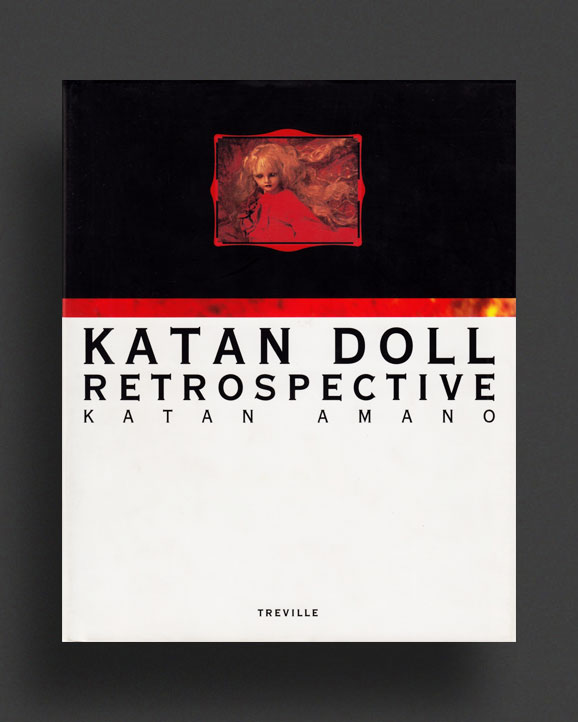
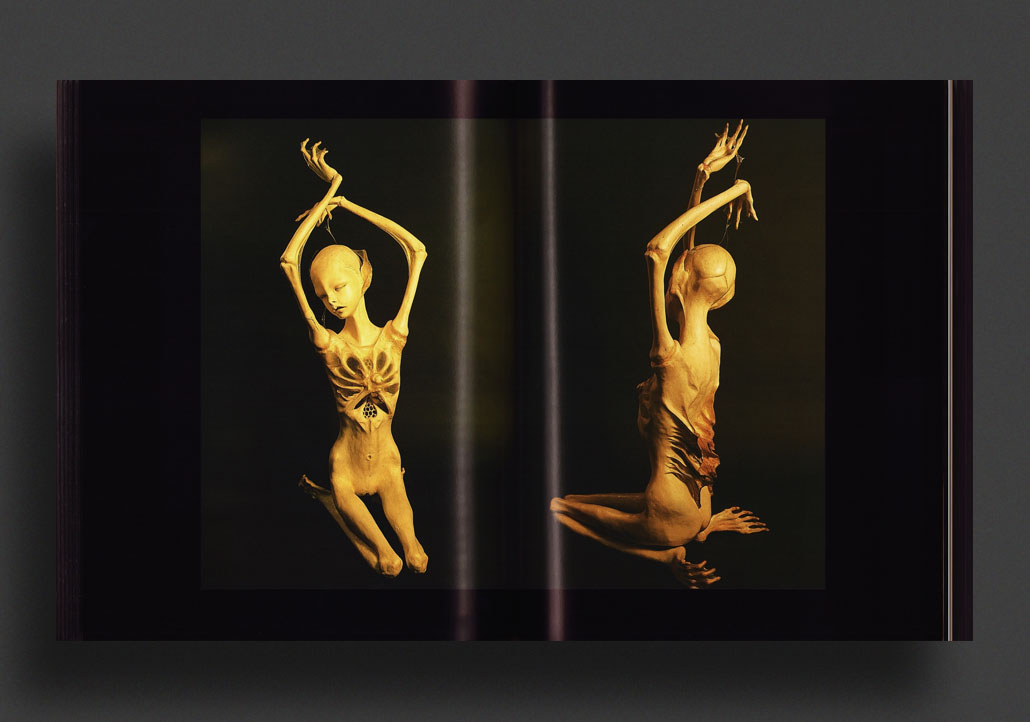
Scarce first hardcover edition of Katan Amano's collection of works, published by Treville in Japan in 1992. Japanese doll and puppet artist Katan Amano (1953—1990) is well known in Japan for her tender and haunting doll works. Amano was staff at Tokyo's Pygmalion Doll Studio in the 1980's and during her short life created a universe of Hans Bellmer and Alice inspired dolls. These elegantly beautiful, otherworldly ball-jointed children are Amano's vehicles for an arresting and primal vision. She died in 1990 in a motorcycle accident. This gorgeous book is lavishly illustrated with the finest examples of her award-winning dolls shot by her collaborator Ryoichi Yoshida. In addition to her incredible doll works, the book also features her Hieronymus Bosch and Lewis Carroll inspired sculptural creatures, grotesque-baroque objects and dark fantasy paintings, all lavishly reproduced on gloss stock. A small amount of text in Japanese.
Near Fine copy in NF dust jacket.
1973, English
Softcover, 366 pages, 20.5 x 14.5 cm
1st Edition, Out of print title / used / good
Published by
Dover / New York
$20.00 - Out of stock
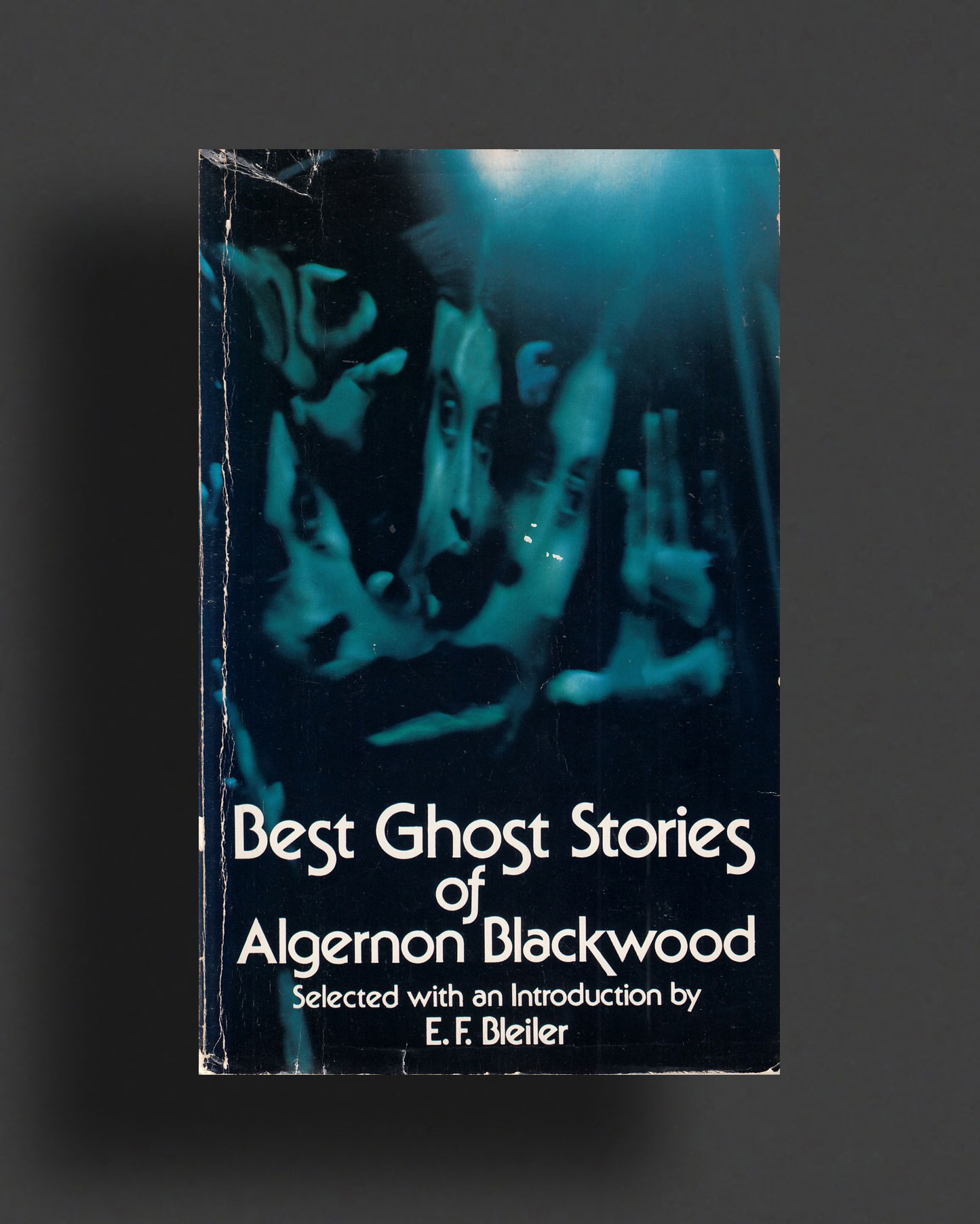
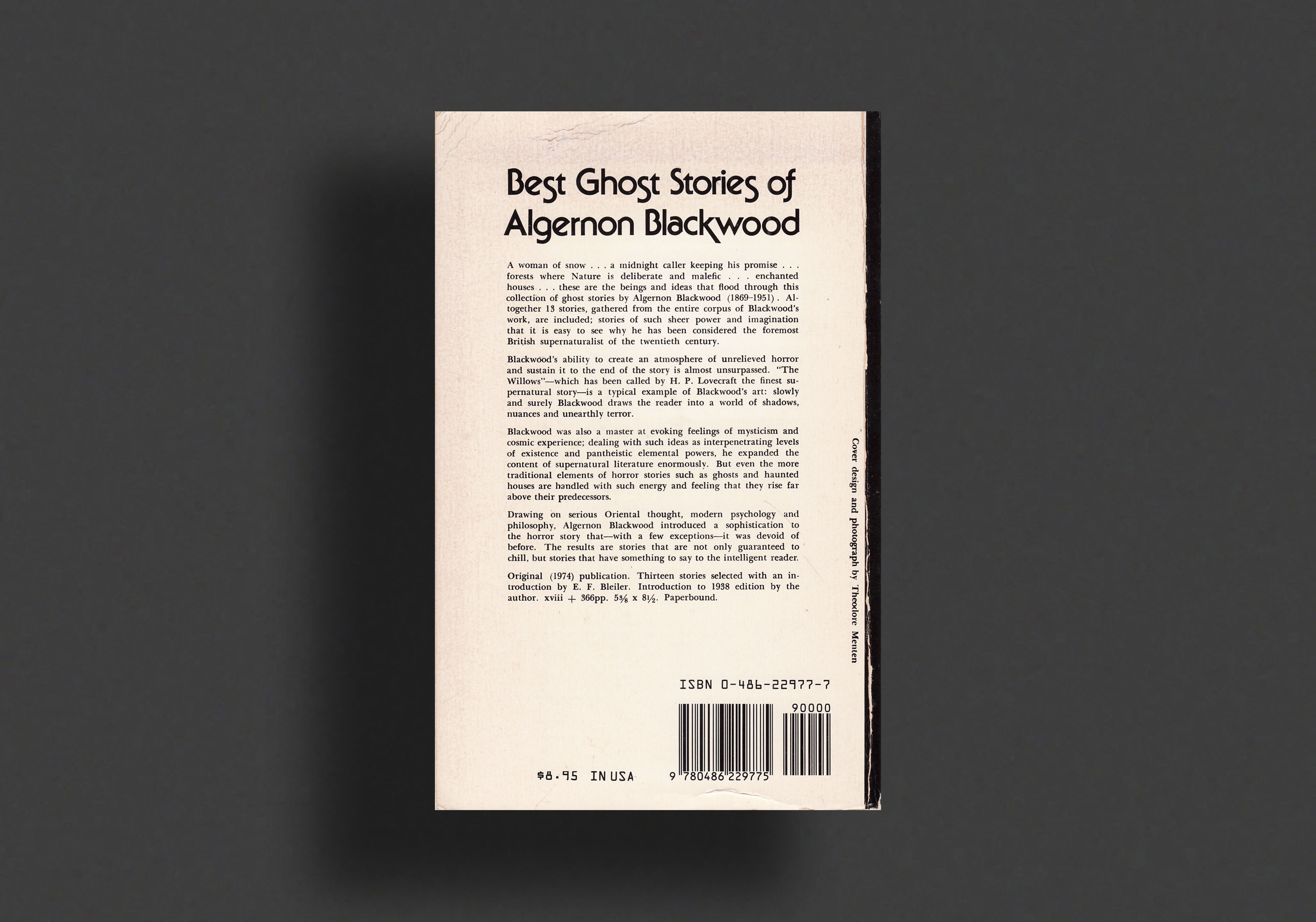
First 1973 Dover softcover collection of a master of supernatural fiction. Thirteen stories selected with an introduction by E. F. Bleiler. Introduction to 1938 edition by the author.
"A woman of snow ... a midnight caller keeping his promise ... forests where Nature is deliberate and malefic ... enchanted houses ... these are the beings and ideas that flood through this collection of ghost stories by Algernon Blackwood (1869-1951). Altogether 13 stories, gathered from the entire corpus of Blackwood's work, are included; stories of such sheer power and imagination that it is easy to see why he has been considered the foremost British supernaturalist of the twentieth century.
Blackwood's ability to create an atmosphere of unrelieved horror and sustain it to the end of the story is almost unsurpassed. "The Willows"—which has been called by H. P. Lovecraft the finest supernatural story—is a typical example of Blackwood's art: slowly and surely Blackwood draws the reader into a world of shadows, nuances and unearthly terror.
Blackwood was also a master at evoking feelings of mysticism and cosmic experience; dealing with such ideas as interpenetrating levels of existence and pantheistic elemental powers, he expanded the content of supernatural literature enormously. But even the more traditional elements of horror stories such as ghosts and haunted houses are handled with such energy and feeling that they rise far above their predecessors.
Drawing on serious Oriental thought, modern psychology and philosophy, Algernon Blackwood introduced a sophistication to the horror story that—with a few exceptions—it was devoid of before. The results are stories that are not only guaranteed to chill, but stories that have something to say to the intelligent reader.
Average-good copy, wear to cover extremities, some foxing to page edges.
English
Softcover,
1st Edition, Out of print title / used / very good
Published by
Gollancz / London
$20.00 - In stock -
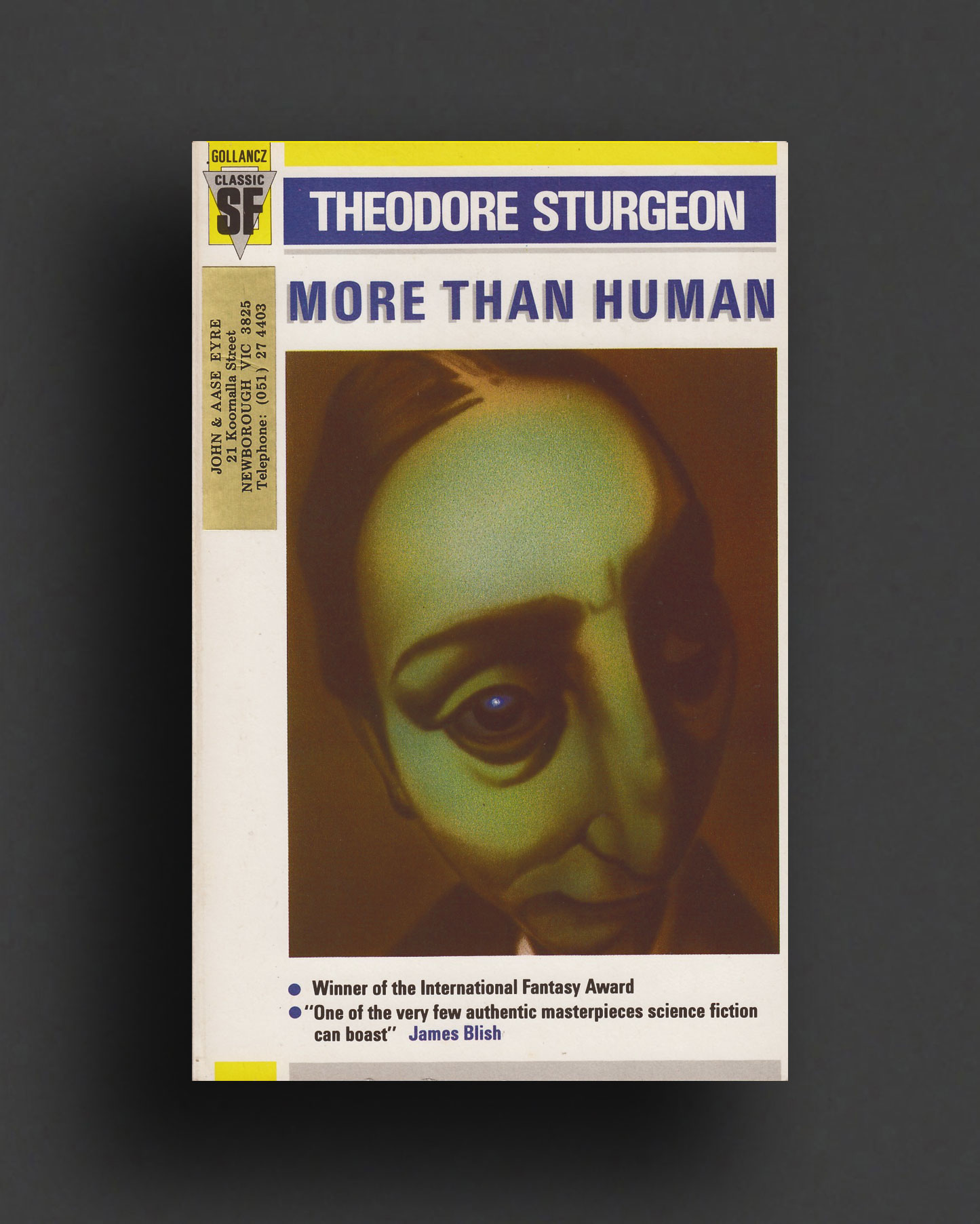
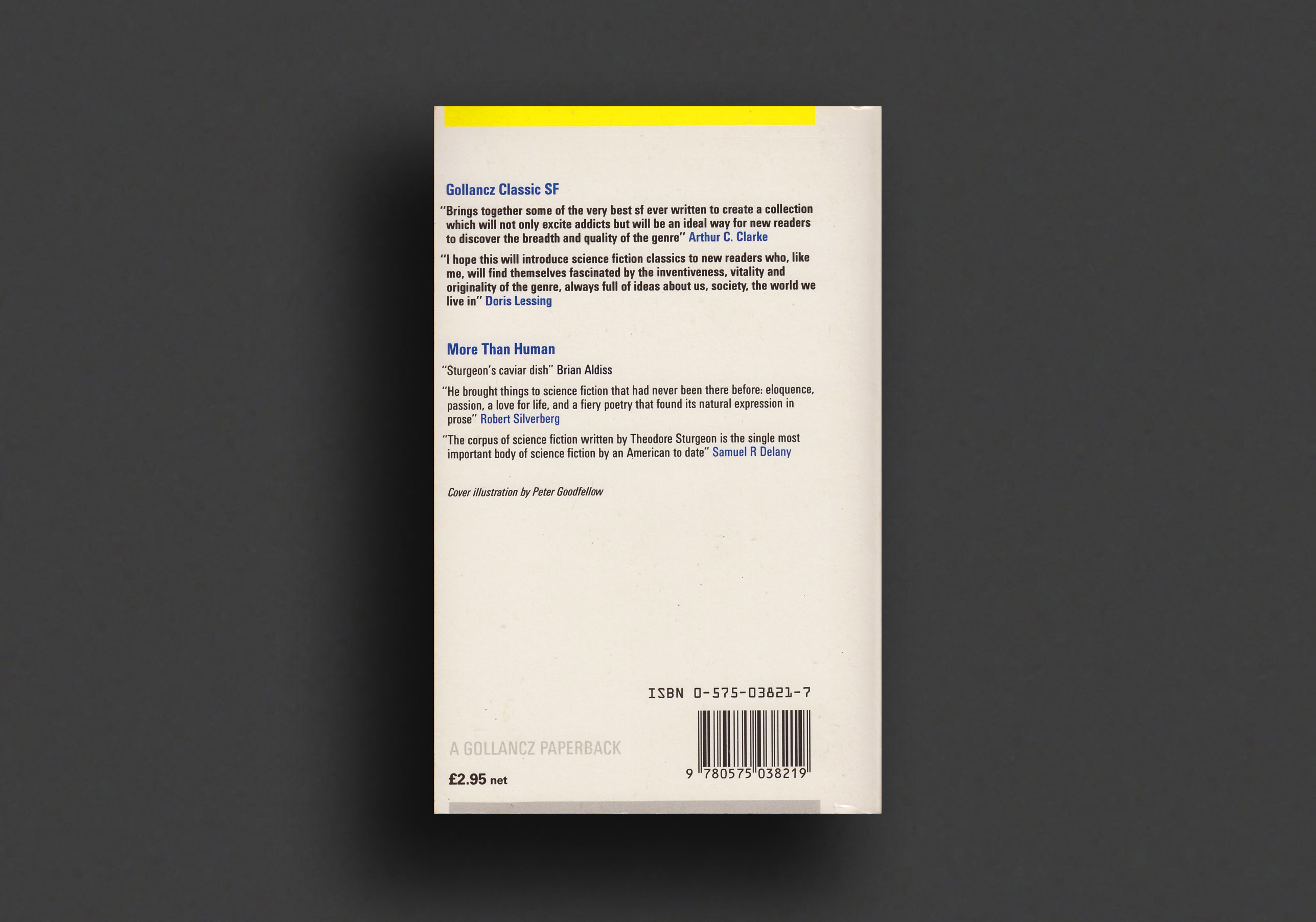
"The corpus of science fiction written by Theodore Sturgeon is the single most important body of science fiction by an American to date"—Samuel R Delany
1986 British Gollancz edition of More Than Human, a 1953 science fiction fix-up novel by American writer Theodore Sturgeon, one of the godfathers of contemporary science fiction and dark fantasy. It is a revision and expansion of his 1952 novella Baby Is Three, which is bracketed by two additional parts written for the novel, "The Fabulous Idiot" and "Morality". It won the 1954 International Fantasy Award, as well as winner of the Hugo and Nebula Awards.
In this genre-bending novel-among the first to have launched sci-fi into the arena of literature-one of the great imaginers of the twentieth century tells a story as mind-blowing as any controlled substance and as affecting as a glimpse into a stranger's soul.
There's Lone, the simpleton who can hear other people's thoughts and make a man blow his brains out just by looking at him. There's Janie, who moves things without touching them, and there are the teleporting twins, who can travel ten feet or ten miles. There's Baby, who invented an antigravity engine while still in the cradle, and Gerry, who has everything it takes to run the world except for a conscience. Separately, they are talented freaks. Together, they compose a single organism that may represent the next step in evolution, and the final chapter in the history of the human race.
As the protagonists of More Than Human struggle to find out who they are and whether they are meant to help humanity or destroy it, Theodore Sturgeon explores questions of power and morality, individuality and belonging, with suspense, pathos, and a lyricism rarely seen in science fiction.
"Sturgeon's caviar dish"—Brian Aldiss
"He brought things to science fiction that had never been there before: eloquence, passion, a love for life, and a fiery poetry that found its natural expression in prose"—Robert Silverberg
VG copy, general wear.
1973, English
Hardcover (w. dust jacket), 224 pages, 21 x 14 cm
1st Edition, Out of print title / used / very good
Published by
Farrar Straus & Giroux / New York
$300.00 - Out of stock
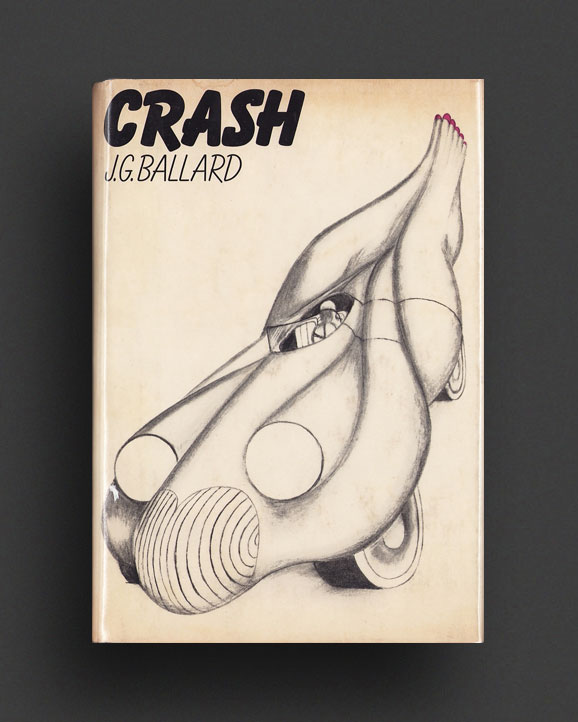
First US hardcover edition of English author J.G. Ballard's Crash, published in 1973 by Farrar Straus & Giroux, New York, in hardcover with dust jacket illustrated by Lawrence Ratzkin and portrait of Ballard (verso).
Crash is a story about symphorophilia; specifically car-crash sexual fetishism: its protagonists become sexually aroused by staging and participating in real car-crashes. It was a highly controversial novel: one publisher's reader returned the verdict "This author is beyond psychiatric help. Do Not Publish!". In 1996, the novel was made into a film of the same name by David Cronenberg.
Original jacket blurb :
"This brilliant, startlingly original novel opens with the narrator recovering in the hospital after a car crash in which he has killed the husband of a young woman doctor. In his pain-filled dreams he finds himself dominated by strange sexual fantasies, and he determines to find the real meaning of this horrific experience. When he leaves the hospital, he revisits the scene of the crash, and meets the woman doctor. During their affair they begin an exploration of the motorcar in all its forms, conducting a variety of sexual experiments on the motorways spreading around London. They meet a violent and aggressive figure called Vaughan, a "hoodlum scientist" who seems determined to die in a car crash with a famous film actress.
Terrified of Vaughan, and yet under his spell, the narrator joins his entourage of racing drivers, drug addicts, and airport prostitutes. They take part in stock-car races, watch test vehicles being crashed at the Road Research Laboratory, and all the time are being carried closer to the sinister climax of the novel, a disquieting vision of the future in which sex and technology form a nightmare marriage.
Violent and frightening, but always true to its subject, Crash is a visionary portrait of the brutal, erotic, and overlit future that beckons ever more powerfully from the margins of the technological landscape. Mr. Ballard has written a compulsively readable tour de force, as hypnotic and baleful in its own way as was A Clockwork Orange is."
Very Good copy in VG dust jacket some small chipping to spine tips, tiny closed tears. Tanning to cover edges, marking to book block edges, pages crisp and clean.
1998, German
Hardcover (w. dust jacket), 118 pages, 30.5 x 28.5 cm
1st Edition, Out of print title / used / very good
Published by
Taschen / Cologne
$70.00 - Out of stock
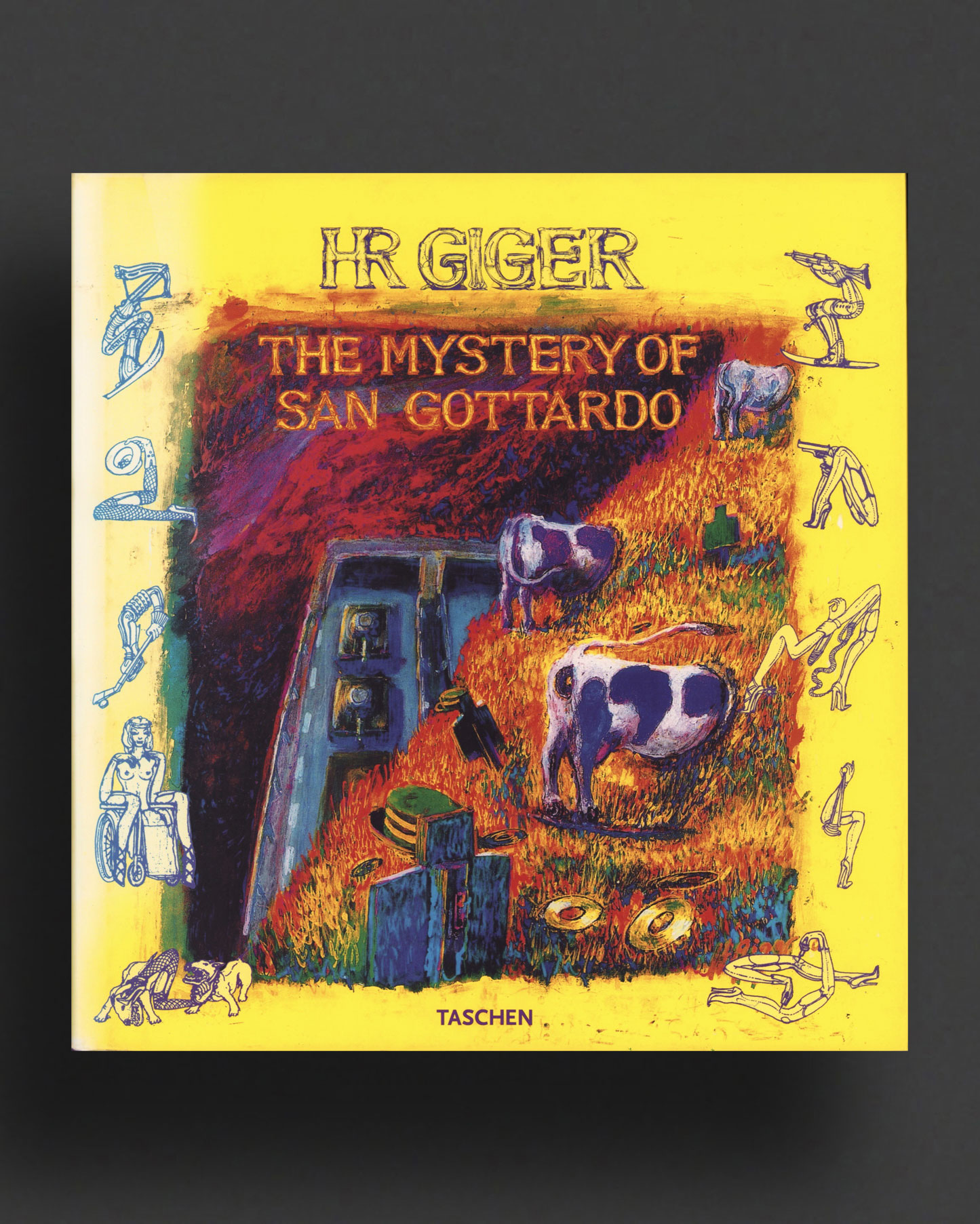
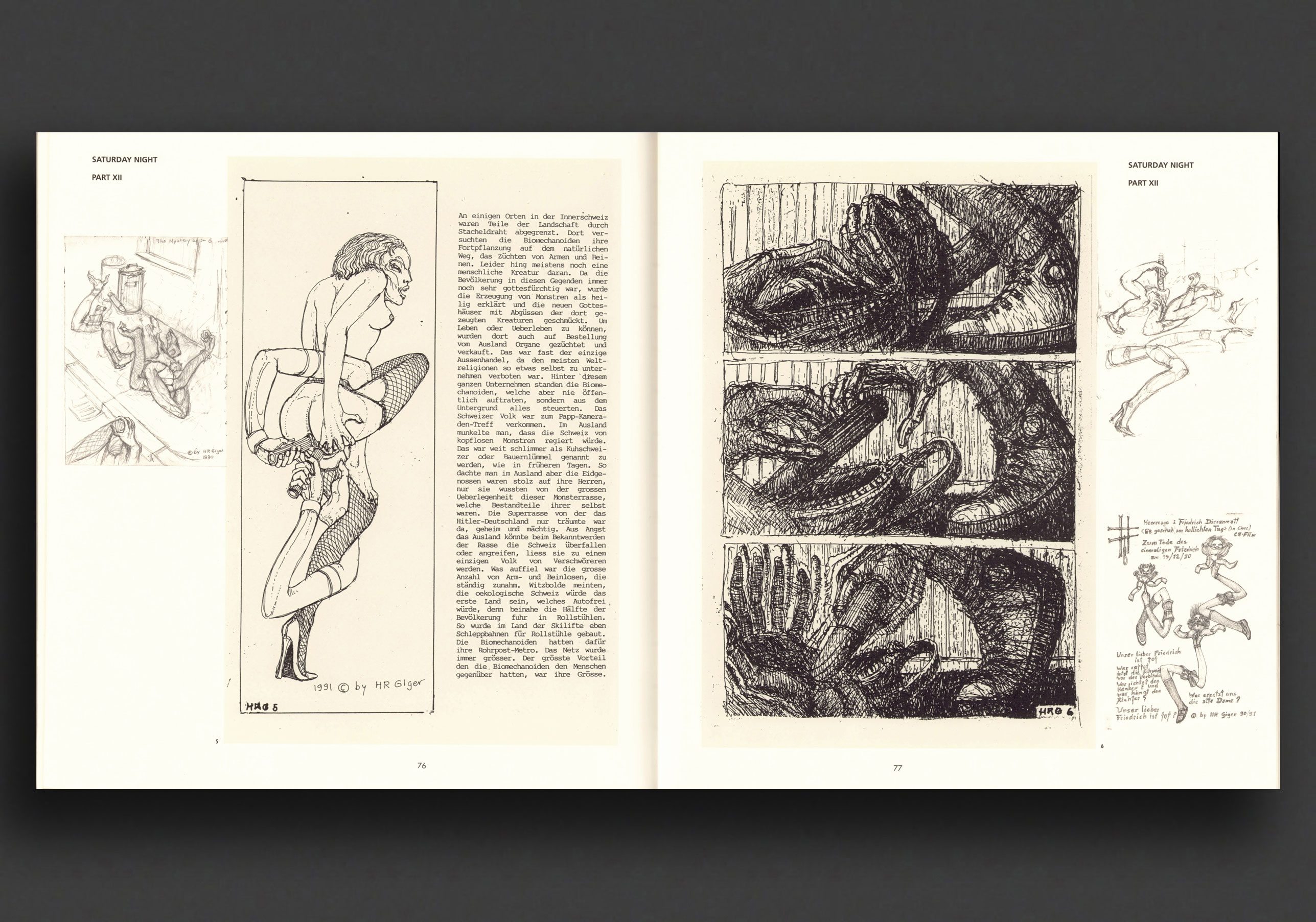
First 1998 hardcover edition of Giger's unrealised film masterpiece. The Mystery of San Gottardo exhaustively collates illustrations, texts, photographs, letters, and notes from a covert, personal project that Giger had been striving to realise for over three decades. “A unique love story… about a man and his love for a freak of nature, Armbeinda, which is really a sentient limb combining an arm and a leg. It is the further development of a recurring image in my work over the last 30 years”, a concept that stemmed from a 1963 creation called "The Beggar," Giger's very first sketch, featuring a leg and an arm holding a hat.
From the publisher:
"The dark king of the horrific, fantastic and bizarrely erotic, Swiss artist Giger might have languished in obscurity, such is the uncompromising vision of his work. However, in the late Seventies Hollywood came calling and his legendary designs for the Alien trilogy propelled him towards international fame and an Oscar. But Allen's Face-hugger, Chestburster and the reptilian Xenomorph are only a few visitors from Giger's monstrous universe. This latest book exhaustively collates illustrations, texts, photographs, letters, and notes from a covert, personal project that Giger has been striving to realise for over three decades. In a story mixing disturbing body horror and old-fashioned adventure tales, Giger illustrates the surreal science-fiction of a dystopian Switzerland where man is rendered into three bio-mechanical life-forms at the age of 60. The sexually insatiable arm-leg creature which rampages throughout this volume must rate as one of Giger's most grotesque creations. After being distracted by Hollywood for far too long, in this book Giger presents his latest outlandish and extraordinary visual excursion, a death-driving nightmare that will continue to unspool in your head long after you've closed the covers."
Highly recommended.
VG copy in G dust jacket with tanning to spine edge a ding to back.
2018, English
Softcover, 280 pages, 23 x 15.2 cm
Published by
Northwestern University Press / Evanston
$35.00 - Out of stock
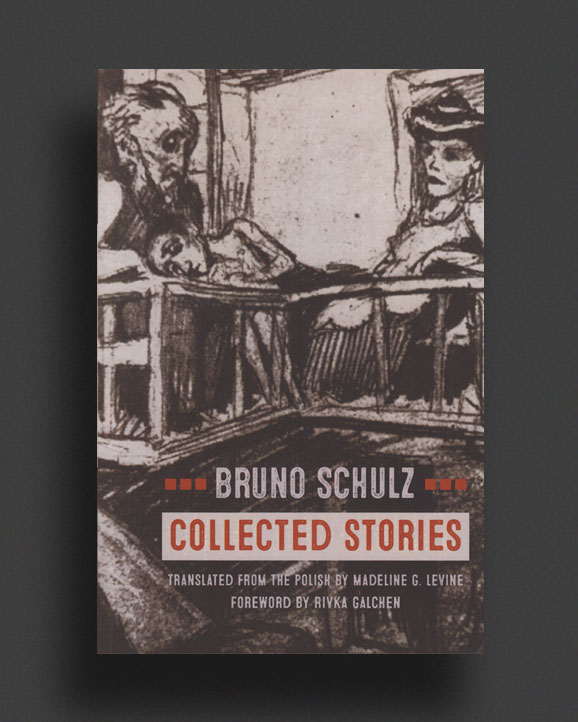
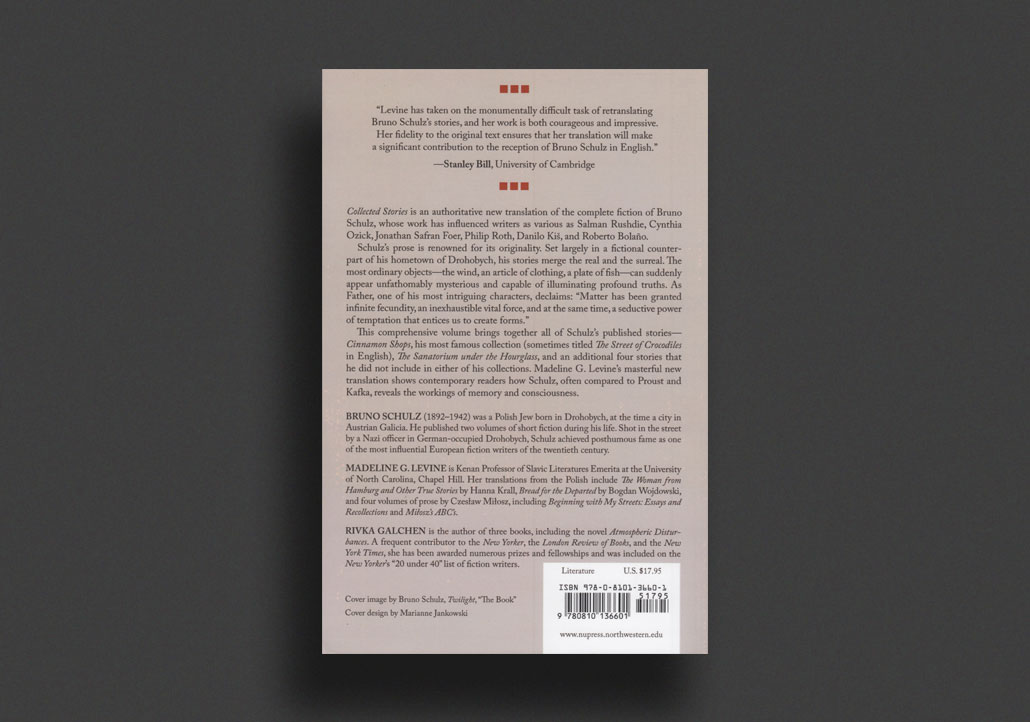
Collected Stories is an authoritative new translation of the complete fiction of Bruno Schulz, whose work has influenced writers as various as Salman Rushdie, Cynthia Ozick, Jonathan Safran Foer, Philip Roth, Danilo Kis, and Roberto Bolano.
Schulz's prose is renowned for its originality. Set largely in a fictional counterpart of his hometown of Drohobycz, his stories merge the real and the surreal. The most ordinary objects—the wind, an article of clothing, a plate of fish—can suddenly appear unfathomably mysterious and capable of illuminating profound truths. As "Father," one of his most intriguing characters, declaims: "Matter has been granted infinite fecundity, an inexhaustible vital force, and at the same time, a seductive power of temptation that entices us to create forms."
This comprehensive volume includes all of The Cinnamon Shops, restoring the original Polish title to Schulz's most famous collection (sometimes titled The Street of Crocodiles in English), and Sanatorium under the Hourglass. Also included are four previously uncollected short stories that pay tribute to Schulz's enduring genius. Madeline G. Levine's masterful new translation shows contemporary readers how Schulz, often compared to Proust and Kafka, reveals the workings of memory and consciousness.
Bruno Schulz (1892—1942) was a Polish Jewish writer, fine artist, literary critic and art teacher. He is regarded as one of the great Polish-language prose stylists of the 20th century. The author nurtured his extraordinary imagination in a swarm of identities and nationalities: a Jew who thought and wrote in Polish, was fluent in German, and immersed in Jewish culture though unfamiliar with the Yiddish language. Yet there was nothing cosmopolitan about him; his genius fed in solitude on specific local and ethnic sources. He preferred not to leave his provincial hometown, which over the course of his life belonged to four countries. His adult life was often perceived by outsiders as that of a hermit: uneventful and enclosed. In 1938, he was awarded the Polish Academy of Literature's prestigious Golden Laurel award. Several of Schulz's works were lost in the Holocaust, including short stories from the early 1940s and his final, unfinished novel The Messiah. Schulz was shot and killed by a German Nazi, a Gestapo officer, in 1942 while walking back home toward Drohobycz Ghetto with a loaf of bread.
2021, English
Hardcover, 192 pages, 17.2 x 19.8 cm
Published by
Atlas Press / London
$50.00 - In stock -
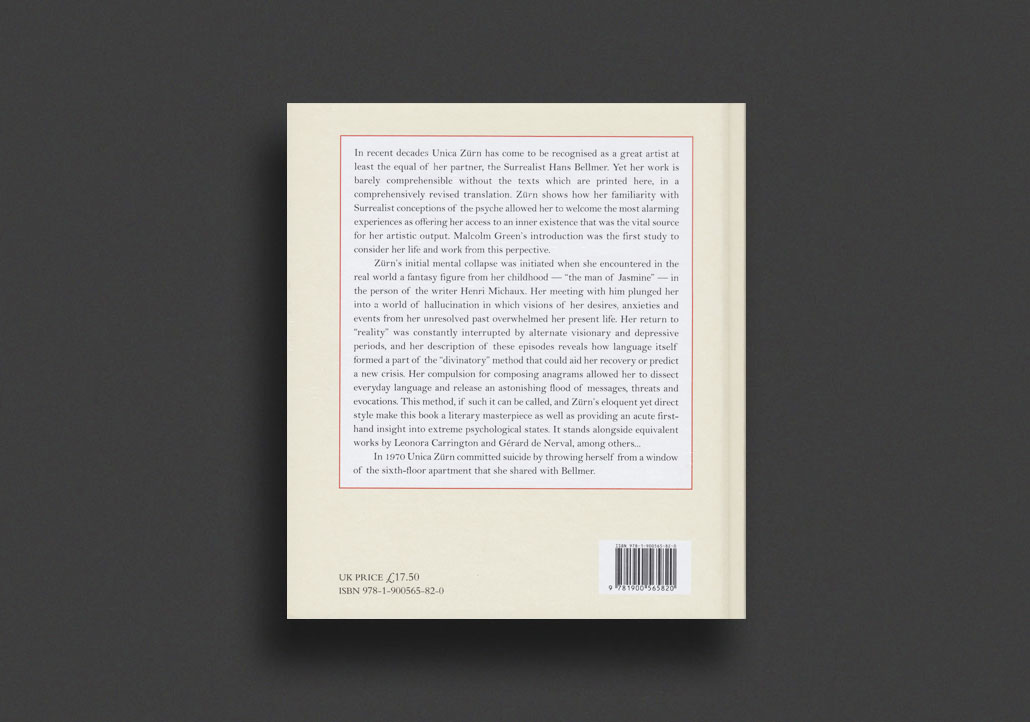
Unica Zürn’s celebrated autobiography, plus the greatest of her short fictional texts, edited and in a revised by translation by Malcolm Green.
In the 25 years since Atlas Press first published this account by Unica Zürn of her long history of mental crises, she has come to be recognised as a great artist at least the equal of her partner, the Surrealist Hans Bellmer.
Yet her work is barely comprehensible without the texts printed here, in which she demonstrates how her familiarity with Surrealist conceptions of the psyche allowed her to welcome the most alarming experiences as offering her access to an inner existence that was the vital source for her artistic output. The introduction here was the first study to consider her life and work from this perspective.
Zürn’s initial mental collapse was initiated when she encountered her fantasy figure “the man of Jasmine” in the real world in the person of the writer Henri Michaux. Her meeting with him plunged her into a world of hallucination in which visions of her desires, anxieties and events from her unresolved past overwhelmed her present life. Her return to “reality” was constantly interrupted by alternate visionary and depressive periods, and her description of these episodes reveals how language itself formed a part of the “divinatory” method that could aid her recovery or predict a new crisis. Her compulsion for composing anagrams allowed her to dissect everyday language so as to release from it an astonishing flood of messages, threats and evocations. This method, if such it can be called, and Zürn’s eloquent yet direct style make this book a masterpiece of literature as well as providing an acute first-hand insight into extreme psychological states.
In 1970 Unica Zürn committed suicide by throwing herself from the sixth-floor apartment that she shared with Bellmer.
2015, English
Softcover, 55 pages, 11.5 x 18 cm
Published by
Wakefield Press / Cambridge
$29.00 - In stock -
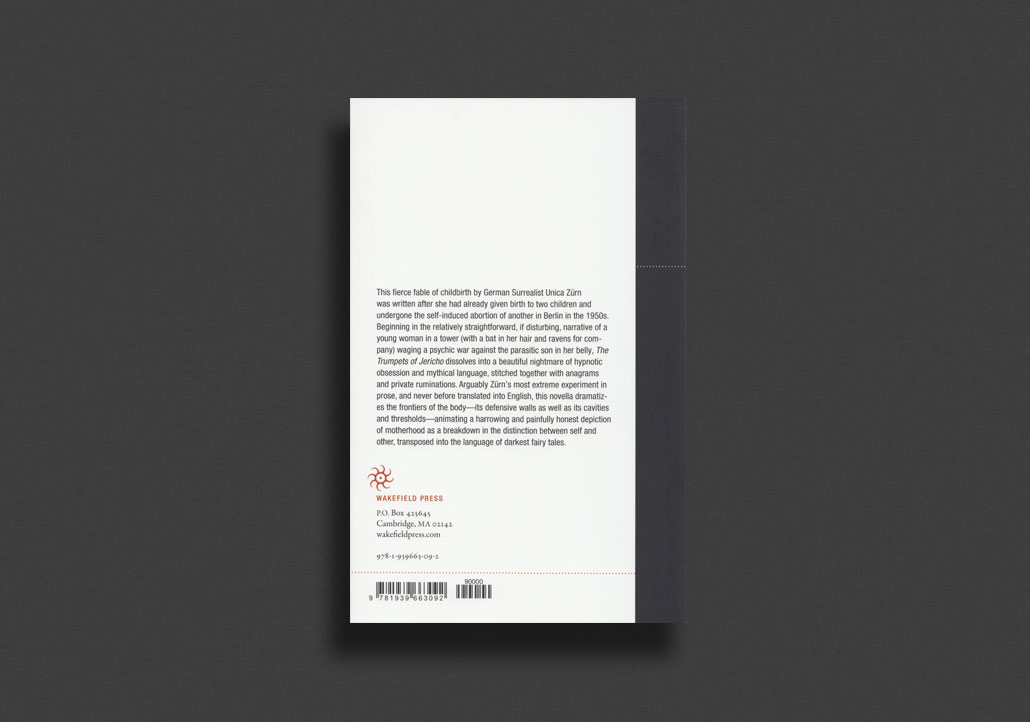
This fierce fable of childbirth by German Surrealist Unica Zorn was written after she had already given birth to two children and undergone the self-induced abortion of another in Berlin in the 1950s. Beginning in the relatively straightforward, if disturbing, narrative of a young woman in a tower (with a bat in her hair and ravens for company) engaged in a psychic war with the parasitic son in her belly, The Trumpets of Jericho dissolves into a beautiful nightmare of hypnotic obsession and mythical language, stitched together with anagrams and private ruminations. Arguably Zorn's most extreme experiment in prose, and never before translated into English, this novella dramatizes the frontiers of the body -- its defensive walls as well as its cavities and thresholds -- animating a harrowing and painfully, twistedly honest depiction of motherhood as a breakdown in the distinction between self and other, transposed into the language of darkest fairy tales.
Unica Zorn (1916-70) was born in Grunewald, Germany. Toward the end of World War II, she discovered the realities of the Nazi concentration camps -- a revelation which was to haunt and unsettle her for the rest of her life. After meeting Hans Bellmer in 1953, she followed him to Paris, where she became acquainted with the Surrealists and developed the body of drawings and writings for which she is best remembered: a series of anagram poems, hallucinatory accounts and literary enactments of the mental breakdowns from which she would suffer until her suicide in 1970.
1990 re-print, English
Softcover, 120 pages, 20.3 x 28 cm
Published by
RE/SEARCH / San Francisco
$48.00 - Out of stock
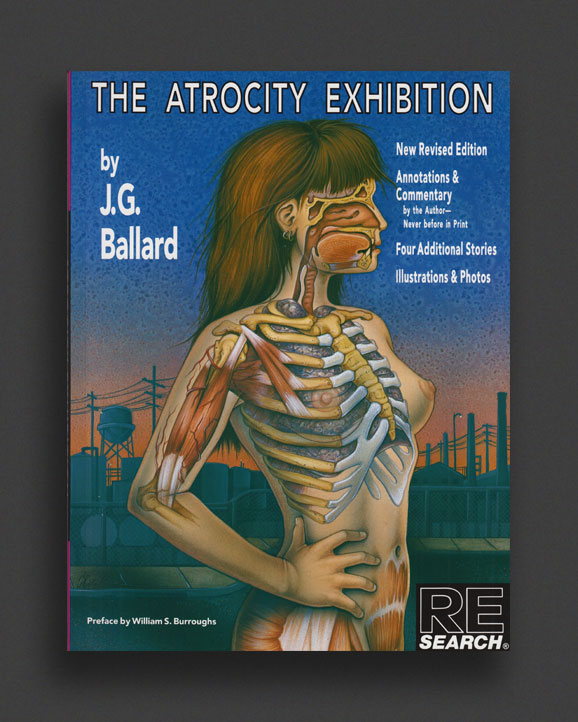
Revised, Expanded, Illustrated, and Annotated Edition of the author’s classic, published by RE/Search in 1990. Original text supplemented with Annotations, Commentary, and Four Additional Stories by J.G. Ballard.
Contains beautifully shocking Illustrations by Phoebe Gloeckner and Ana Barrado; design was conceived by V. Vale and executed at his typesetting shop. J.G. Ballard wrote the explanatory annotations for this RE/Search edition at Vale’s request.
Foreword by William S Burroughs, Introduction by V. Vale. First published in 1970 and widely regarded as a prophetic masterpiece, this is a groundbreaking experimental novel by the acclaimed author of “Crash” and “Super-Cannes”.
The 1970 First American Edition was banned by court order, forcing Doubleday to shred the entire print run. An experimental (rather than a conventional) novel, it has lost none of its awesome power to shock. Atrocity Exhibition is widely regarded as Ballard’s finest, most complex work…
The irrational, all-pervading violence of the modern world is the subject of this extraordinary tour de force. The central character’s dreams are haunted by images of John F. Kennedy and Marilyn Monroe, dead astronauts and car-crash victims as he traverses the screaming wastes of nervous breakdown. Seeking his sanity, he casts himself in a number of roles: H-bomber pilot, presidential assassin, crash victim, psychopath. Finally, through the black, perverse magic of violence he transcends his psychic turmoils to find the key to a bizarre new sexuality.
A “must-have” edition for J. G. Ballard collectors.
1998, English
Softcover, 158 pages, 21 x 15 cm
1st Edition, Out of print title / used / average
Published by
Altair / Blackwood
$35.00 - In stock -
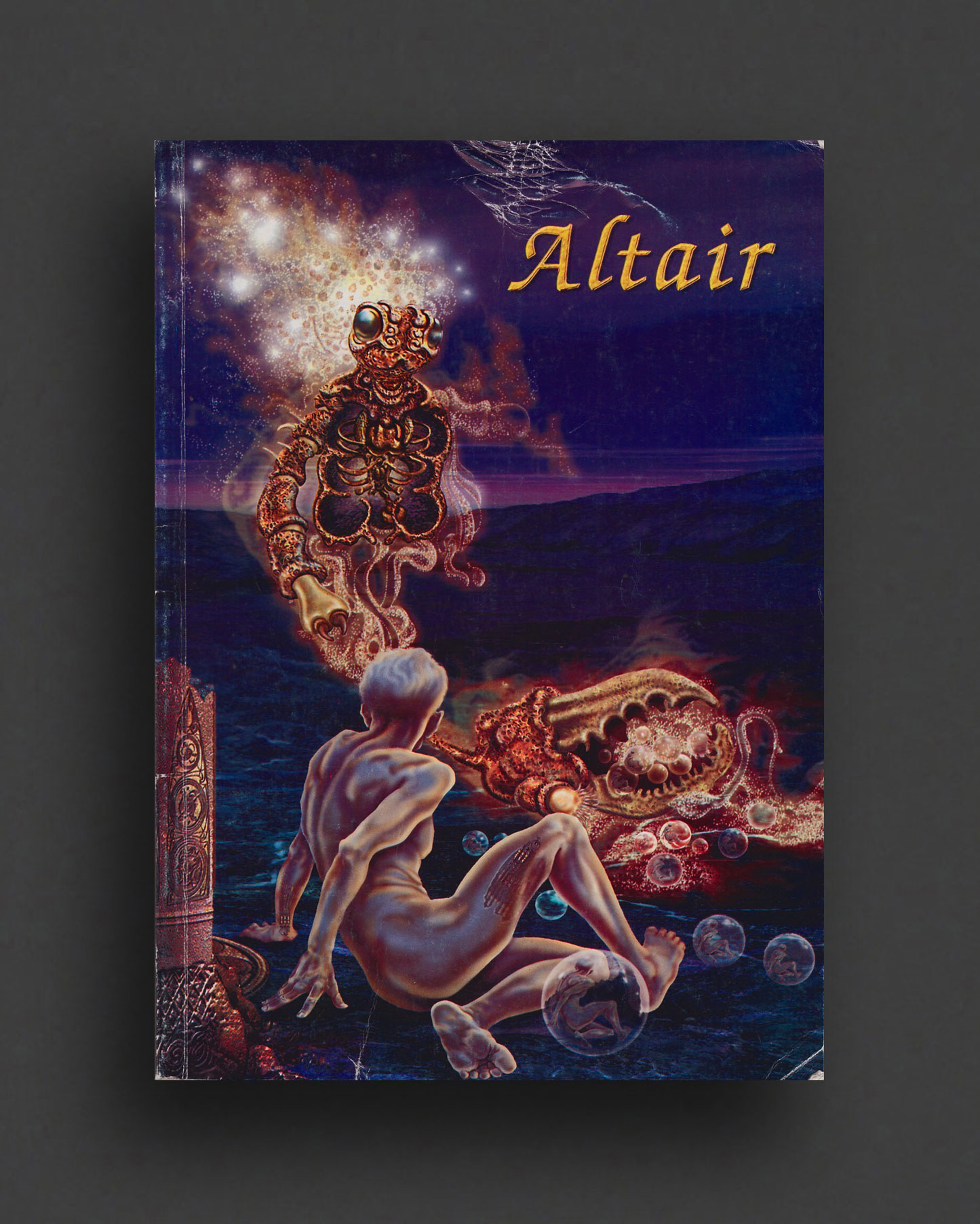
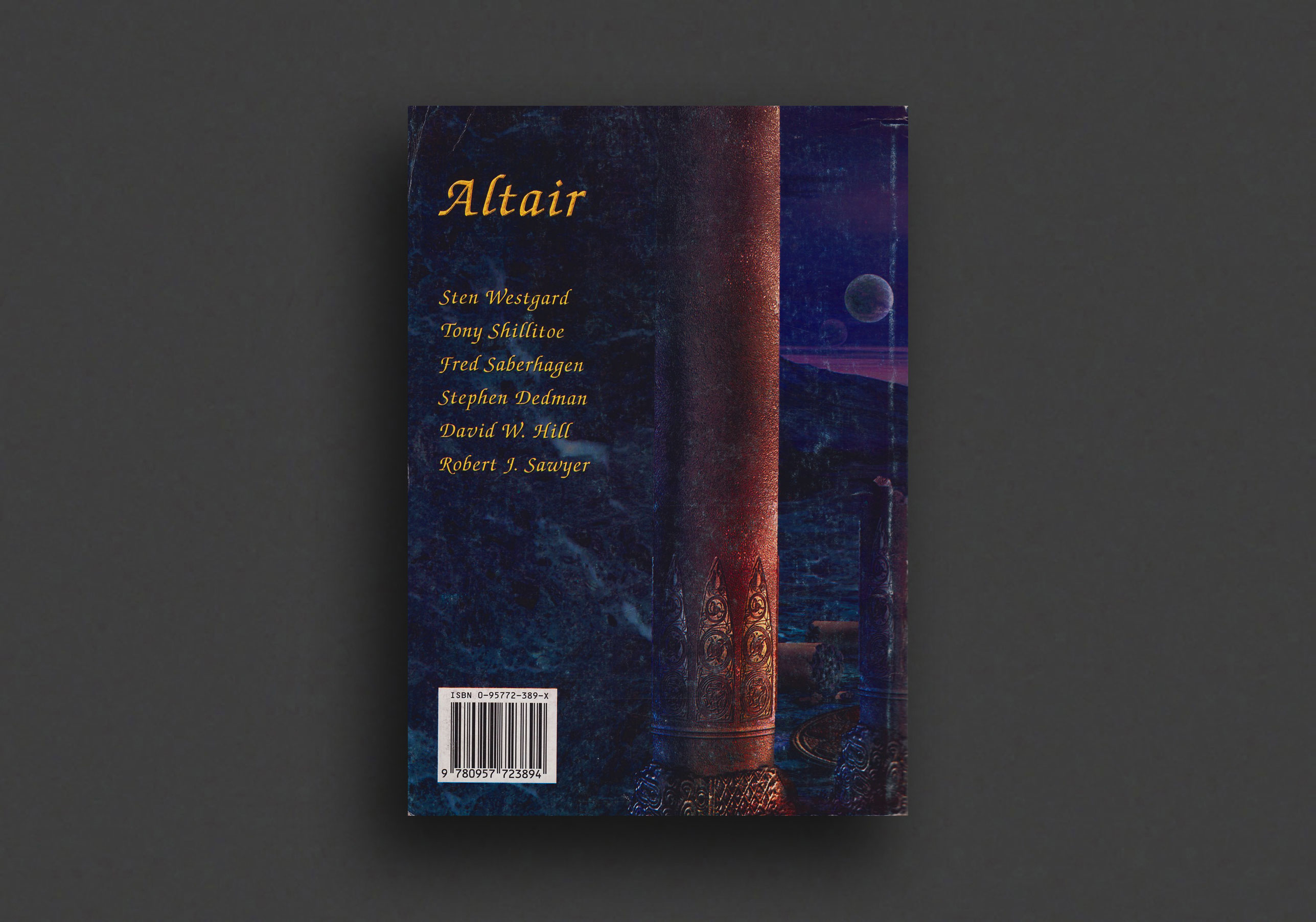
Rare copy of the fifth issue of Altair, the short-lived, semi-annual speculative fiction magazine founded in 1998 by writer/editor/anthologist Robert N. Stephenson and published out of Blackwood, South Australia, until 2000, later becoming Altair Australia Books, a publishing venture which releases novels, anthologies and poetry collections. It's manifesto is 'to bring to light some of the lesser known works of Australia's and the World's leading writers in Science Fiction, Fantasy and Horror; be it short stories or commentary.' Much the same can be said about the origins as the Altair journal, featuring short science fiction and speculative fiction, Fantasy, Horror, essays, poetry and illustrations.
Altair V, edited by Robert N. Stephenson, Andrew Collings and Jim Deed, features written contributions from: Stephen Dedman, Karen Jordan Allen, Kain Massin, Joe Murphy, David Wesley Hill, Kurt von Trojan, Sten Westgard, Fred Saberhagen, Tony Shillitoe, Baryon Tensor Posadas, Lyn Nichols and Ron Collins, Sir Arthur C. Clarke, Andrew Collings, Robert J. Sawyer, Roberto de Sousa Causo, Liz Martin; illustrations by Adam Oehlers, Carol McLean-Carr, and others.
Average-Good copy with wear and damage to covers, internally Very Good throughout.
2005, English
Softcover, 268 pages, 20.5 x 13.5 cm
Dedication from author,
1st Edition, Out of print title / used / very good
Published by
MirrorDance Books / Parramatta
$35.00 - In stock -
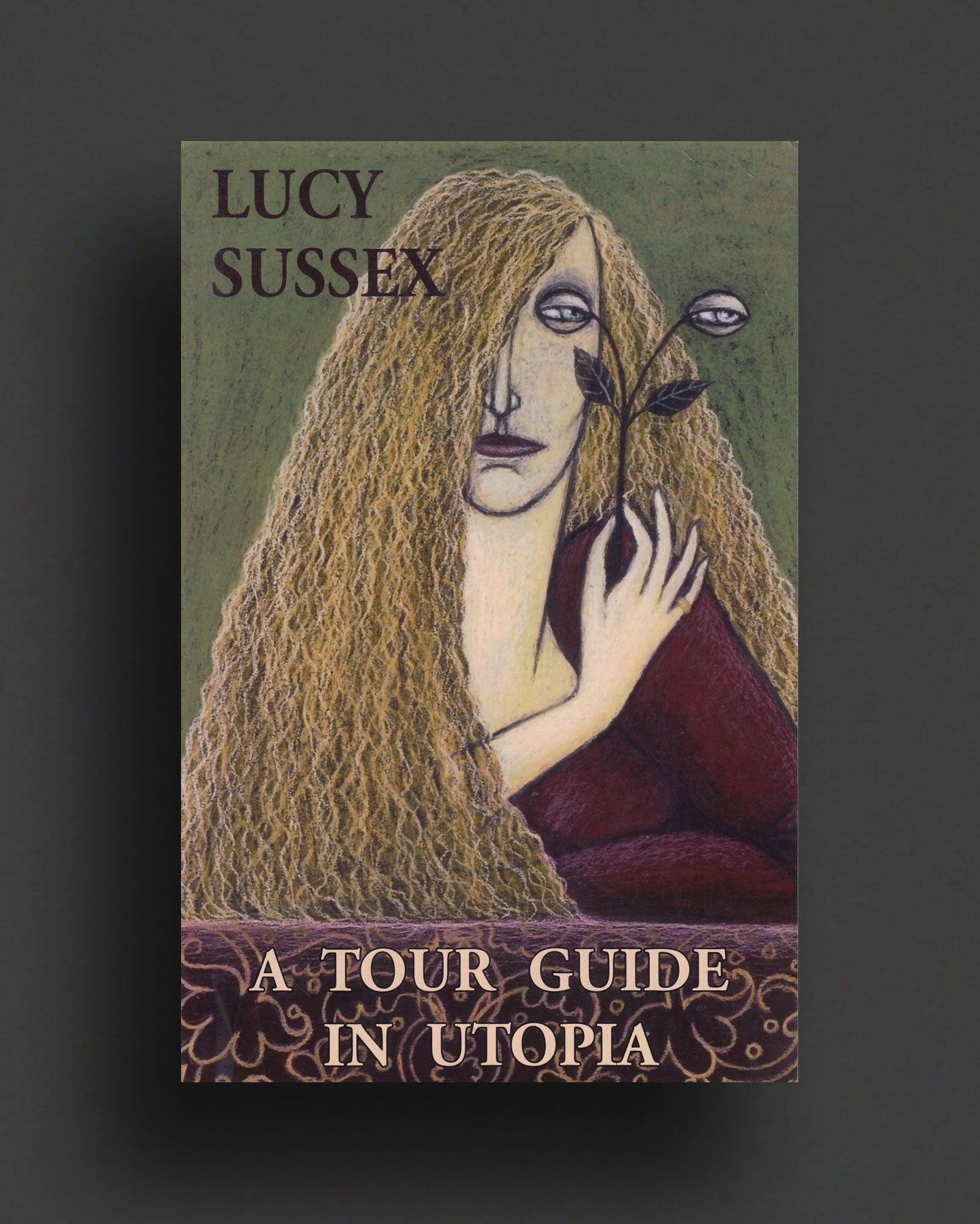
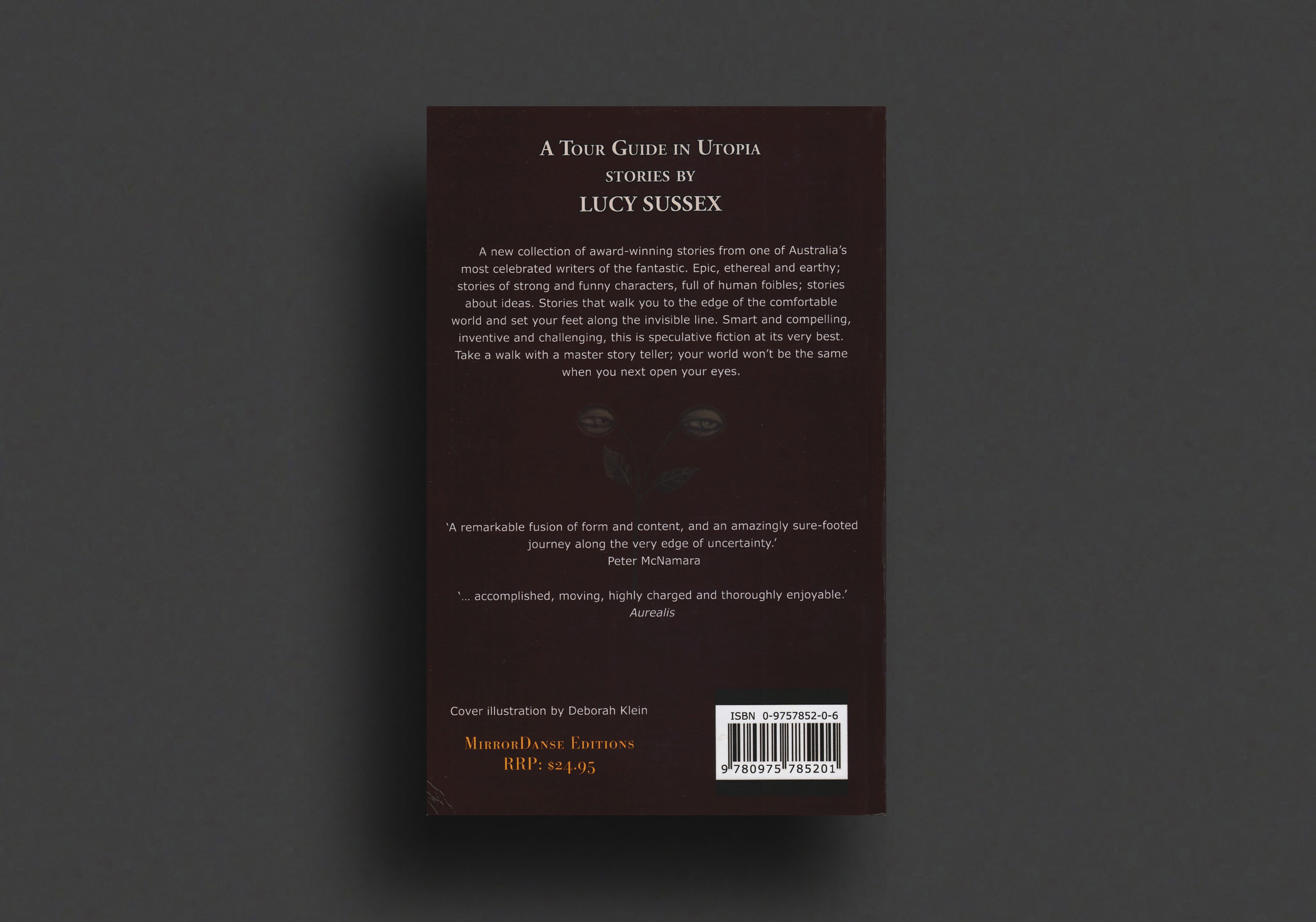
Rare copy of this long out-of-print 2005 collection of award-winning stories from one of Australia's most celebrated writers of the fantastic. Epic, ethereal and earthy; stories of strong and funny characters, full of human foibles; stories about ideas. Stories that walk you to the edge of the comfortable world and set your feet along the invisible line. Smart and compelling, inventive and challenging, this is speculative fiction at its very best.
Take a walk with a master story teller; your world won't be the same when you next open your eyes.
"A remarkable fusion of form and content, and an amazingly sure-footed journey along the very edge of uncertainty."—Peter McNamara
"... accomplished, moving, highly charged and thoroughly enjoyable."—Aurealis
Signed by author with dedication to title page. VG copy with mild corner wear.
1990, English
Softcover, 362 pages, 21.6 x 24 cm
Reprint,
Out of print title / used / good
Published by
Feral House / Los Angeles
$45.00 - In stock -
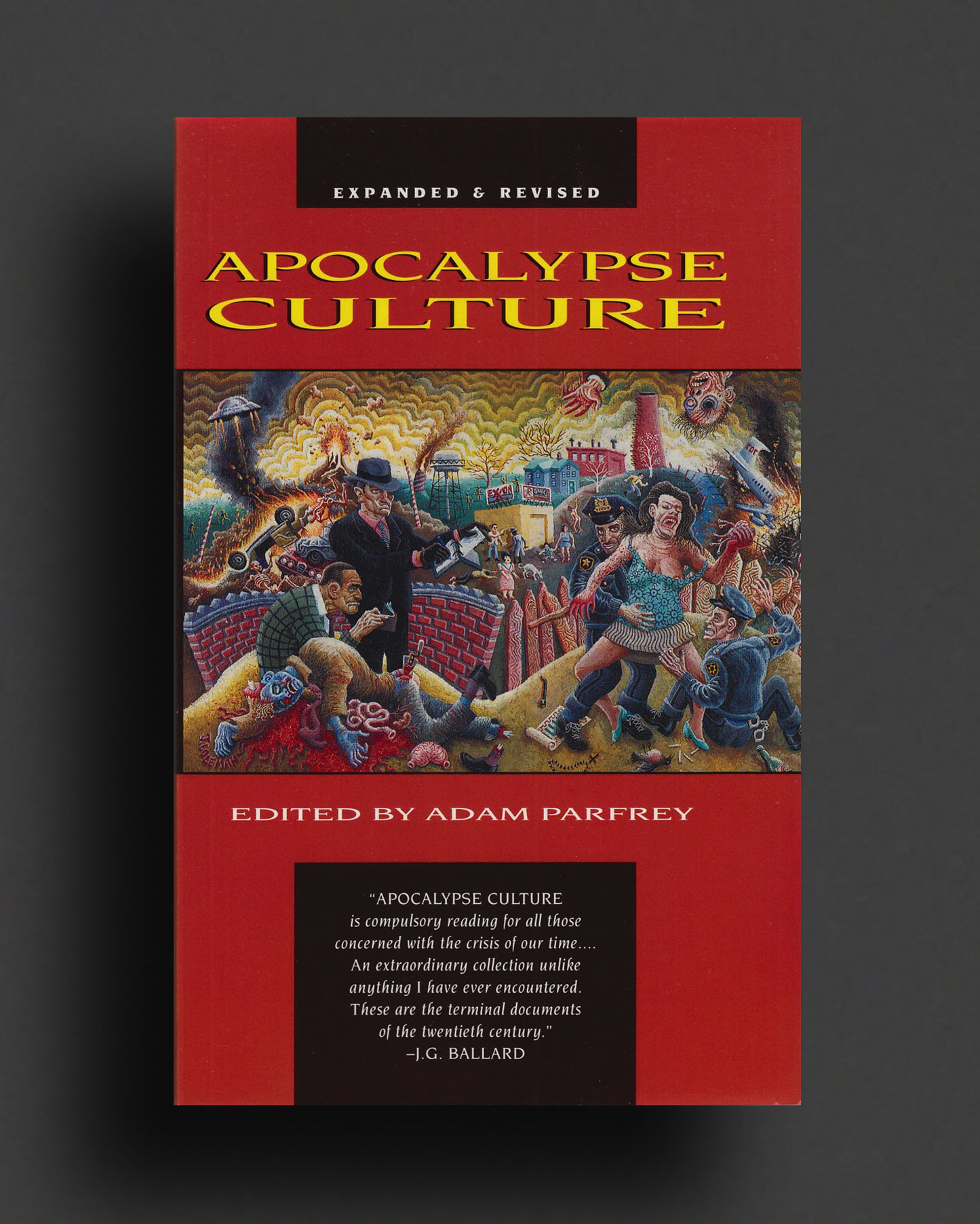
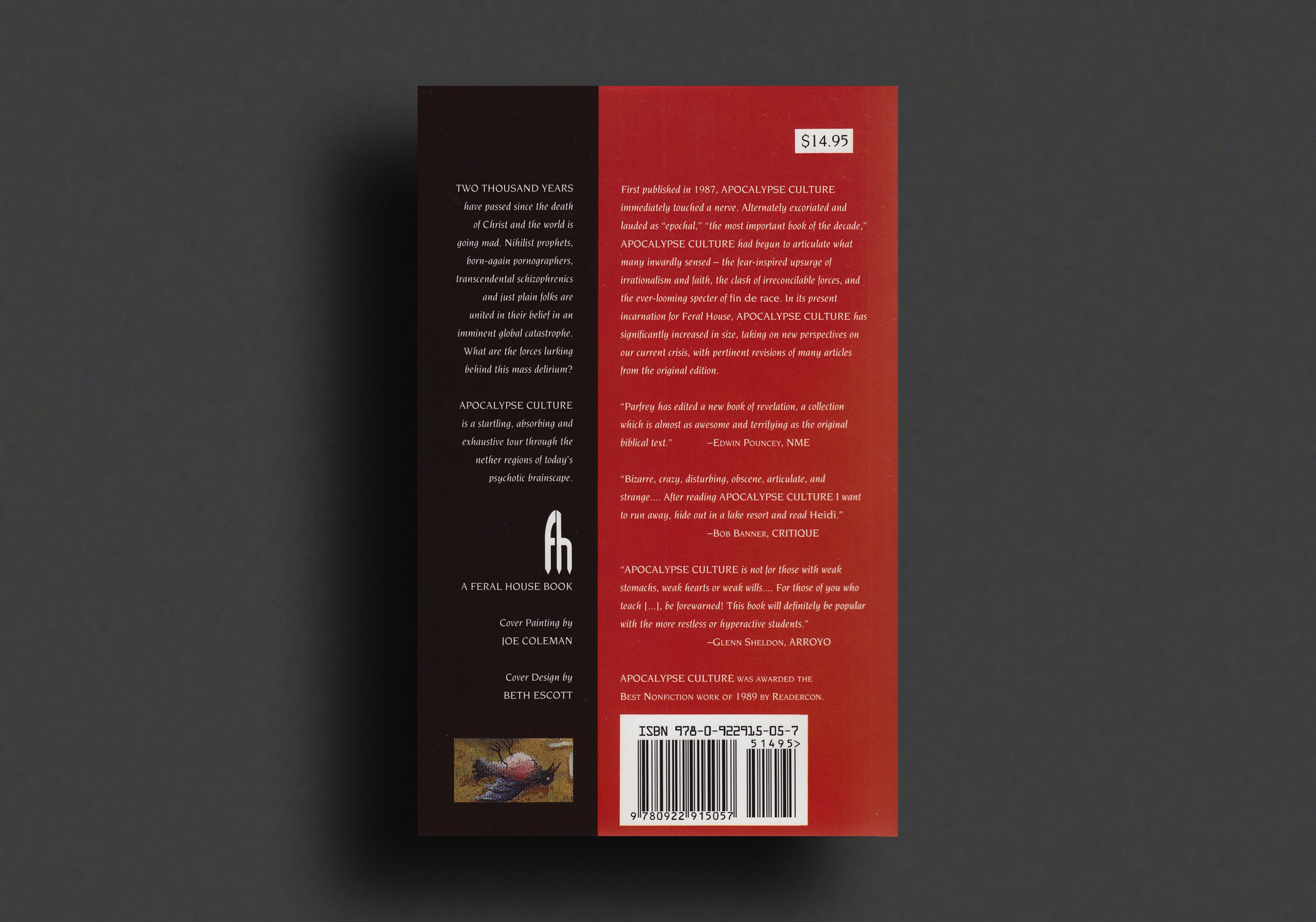
"Apocalypse Culture is compulsory reading for all those concerned with the crisis of our times. An extraordinary collection unlike anything I have ever encountered. These are the terminal documents of the twentieth century."—J.G. Ballard
Two thousand years have passed since the death of Christ and the world is going mad. Nihilist prophets, born-again pornographers, transcendental schizophrenics and just plain folks are united in their belief in an imminent global catastrophe. What are the forces lurking behind this mass delirium?
APOCALYPSE CULTURE is a startling, absorbing and exhaustive tour through the nether regions of today’s psychotic brainscape.
First published in 1987, APOCALYPSE CULTURE immediately touched a nerve. Alternately excoriated and lauded as “epochal”, “the most important book of the decade,” APOCALYPSE CULTURE had begun to articulate what many inwardly sensed — the-fear inspired irrationalism and faith, the clash of irreconcilable forces, and the ever-looming specter of fin de race. In its present incarnation for Feral House, APOCALYPSE CULTURE has significantly increased in size, taking on new perspectives on our current crisis, with pertinent revisions of many articles from the original edition.—burb from this expanded and revised 1990 edition.
As New.
2020, English
Softcover, 256 pages, 20.6 x 13.72 cm
Published by
Wakefield Press / Cambridge
$36.00 - Out of stock
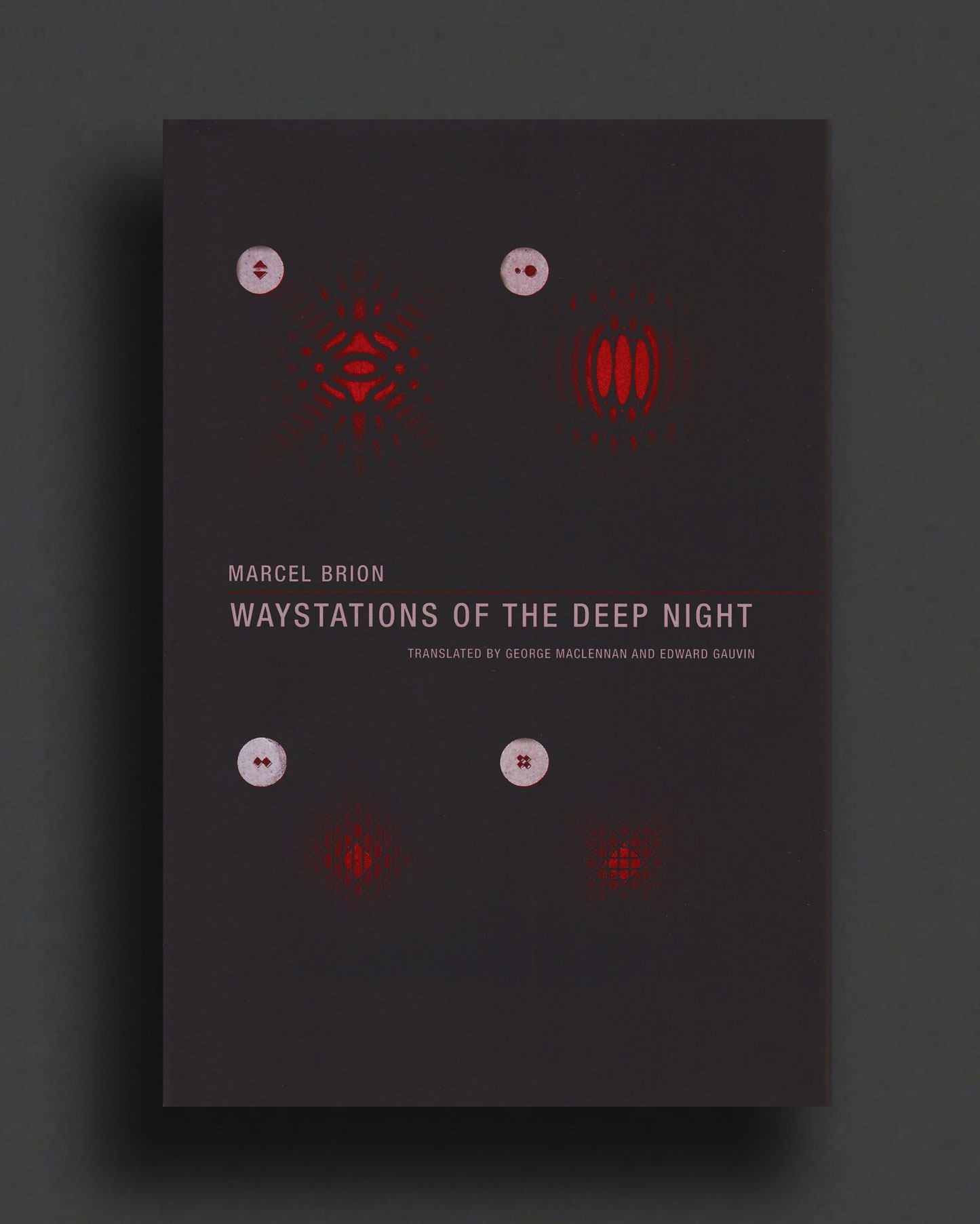
A canonical gem of the nocturnal fantastic, in the tradition of German Romantics such as E.T.A. Hoffmann and Novalis.
Translated by George MacLennan and Edward Gauvin, with an introduction by George MacLennan.
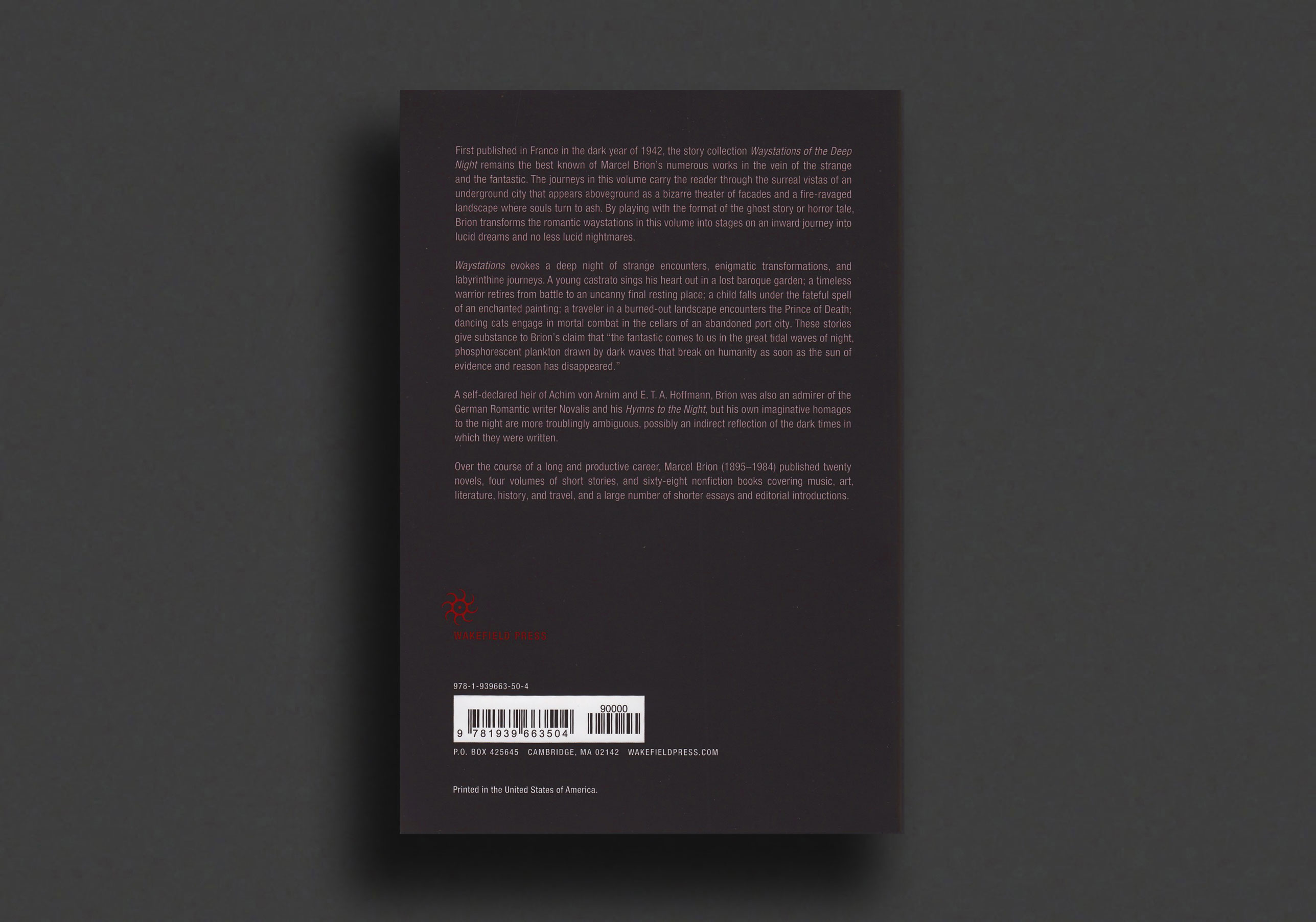
First published in France in the dark year of 1942, the story collection Waystations of the Deep Night remains the best-known of Marcel Brion's numerous novels and stories in the vein of the strange and the fantastic. The journeys in this volume carry the reader through the surreal vistas of an underground city that appears aboveground as a bizarre theater of facades and a fire-ravaged landscape where souls turn to ash. A young castrato sings his heart out in a lost baroque garden; a child falls under the fateful spell of an enchanted painting; a traveler in a burned-out landscape encounters the Prince of Death; and dancing cats engage in mortal combat in the cellars of an abandoned port city.
A self-declared heir of Achim von Arnim and E.T.A. Hoffmann, Brion was also an admirer of the German Romantic writer Novalis and his sequence of Hymns to the Night, but his own imaginative homages to the night are more troublingly ambiguous, possibly an indirect reflection of the dark times in which they were written.
Born in Marseille in 1895, Marcel Brion was a freelance writer and critic. In 1964 he was elected to the Académie française in recognition of both his critical and creative writing, Over the course of a long and productive career he published 20 novels, four volumes of short stories and some 68 nonfiction books covering music, art, literature, history and travel. He died in Paris in 1984.
2017, English
Softcover, 578 pages, 21.59 x 13.97 cm
Published by
Tracy R. Twyman / US
$160.00 - In stock -
BOW DOWN TO THE NEWBORN SUN
Can a perverted sex magic ritual, performed in an ancient temple in the heart of modern London, destroy the very foundations of both Heaven and Earth?
London: March 2018. Pamela Auger has received an invitation to give a lecture at a prestigious private club regarding her arcane historical research into the mysteries of the Knights Templar. But as she is about to learn, when opportunity knocks, it is best to ask for ID before opening the door.
TRIGGER WARNING: This book contains scenes of rape, torture, and murder of people, including children, that any sane person will find disturbing. Note: While several of the characters in this story have certain aspects based on known, powerful figures in the modern world, I make no claim that these people are involved in any nefarious deeds such as those depicted here, nor is it my intention to malign them. These characteristics were borrowed for artistic purposes only.
2015, English
Hardcover (w. dust jacket), 628 pages, 20.5 x 13 cm
Published by
Tracy R. Twyman / US
$110.00 - In stock -
For seven centuries, the enigma of Baphomet has mystified both scholars and the general public. Did the Knights Templar really worship a demonic idol of that name? If so, what does the word mean? What is the origin of this figure? What was the nature of the rituals that the Templars performed in secret? What were their covert beliefs? Why, if the Templars initially described their idol as a mummified severed head, is this figure now represented as a hermaphrodite human with the head of a goat?
Authors Tracy R. Twyman and Alexander Rivera have dived head-first into the bottomless abyss of this mystery and returned with some astounding wisdom to share. Here for the first time they reveal the genesis of these symbols, showing how they relate to the Witches' Sabbath, traditions of Sufi Islam, alchemy, Gnosticism, cabalism, the teachings of Hermes Trismegistus, and so much more.
Learn why the Templars and their beloved severed head are frequently associated with John the Baptist, and how this connects to his student, Simon Magus. Discover the real facts about things like the Chinon Parchment, The Book of the Baptism of Fire, the Templar Abraxas seals, and newly-found documents which claim that the Templars discovered the real Temple of Solomon during a secret trip to Mecca.
Join Twyman and Rivera on this exciting adventure into the unknown. Immerse yourself in this knowledge, if your heart has the strength. It is certain that your mind will never be the same.
1985, English
Softcover (staple-bound), 96 pages, 29.5 x 21 cm
1st Edition, Out of print title / used / very good
Published by
S.C.A.S.A. / Glebe
$100.00 - In stock -
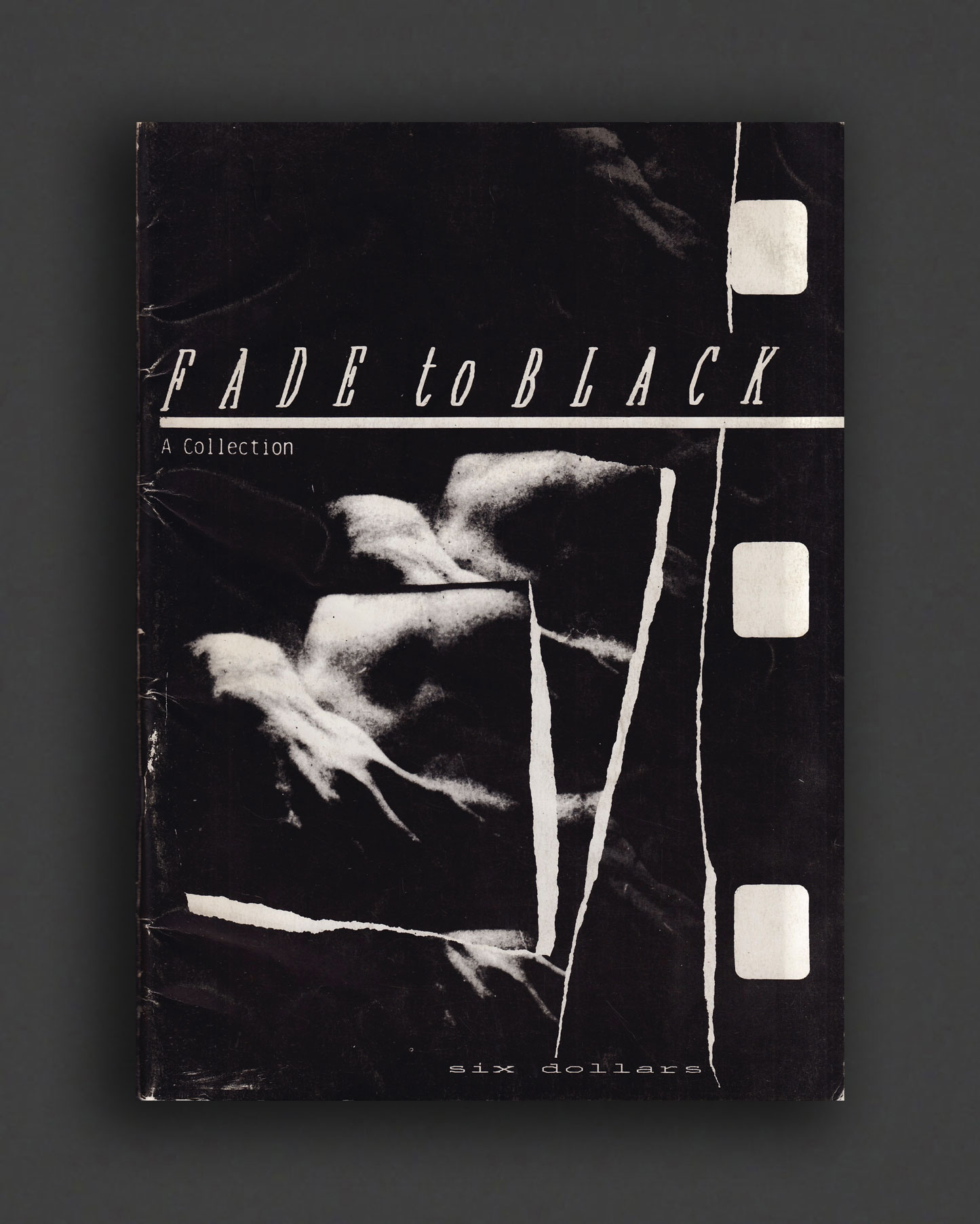
Seldom seen copy of Sydney's "Fade To Black: A Collection", published by Sydney College of the Arts Film Group, edited by Stephen Cummins, Toula Anastas, Peter Handsaker, Gretta Kool and Mary Temelovski, with cover featuring stills from editor Steve Cummins' 1984 student film "Breathbeat". Stephen Cummins (1960-1994) was an Australian filmmaker, photographer and curator who left an indelible mark on the independent queer film scene.
With bold, high-contrast b/w art direction by Gretta Kool and Mary Temelovski throughout, the magazine opens with imagery from Catherine Lowing's 1985 film about the Sydney Lesbian S&M scene, "Knife in the Head, Spooky", followed by notes and quotes on film from Straub, Landow, Eisenstein, Barthes, Hitchcock, Godard, Fellini, Lesley Stern, Adrian Martin, and many more, before the feature contents (interviews, essays, reviews, artist pages, etc), as follows: "Framing the Film Still" Ross Gibson, "All the Glitters" Robyn Outram, "Transported" - Virginia Hillyard, "Mojave Moon" - Renee Romeril, "Roadscript" - Andrew Martin, "To Render the Body Ecstatic" - Anna Rodrigo interviews Laleen Jayamanne, "Doppelganger in Blue" - Steve Cummins, "Carmen" Louise Burchill, "Where None" - Toula Anastas, "Between Kitsch and Fascism" - Interview with Dieter Schidor, "Kanahooka Day Trip" - Kate Richards, "On Movement" - an essay in screenstudy - Chris Tuckfield, "Vluku Vlk" - Ken Heyes, "Hot Minutes" - Andrew Donaldson, "Lost in Space" - Ross Harley, "The Super 8 Film Group - More than Informative" - Michael Hutak, "And the Winner is ..." Anne Zahalka, "Psychotherapy and the Cinema" - Ben Crawford, "Little Hans Rides Again (a film still)" - Kurt Brereton, "Broken Mirrors Feminist Horror" - Ruby Davies, "Why have there been no great women ventriloquists - or what are they talking about" - Shan Short, "Imitation of Life" - Mark Titmarsh, "Sorry Wong Number" - Claudia Shaw, "Two Scenes from an untitled film" Ken Orchard, "Pieces of Freedom" - Melissa Smith, "Frameup" - Karen Borger, "Android" - Rosemary Johnson, "Staring at Helene and Pete" - Debra Thorsen, "What Price Culture" - Paola Talbert. A wonderful time-capsule of the film arts and film criticism in mid-80's Oz.
Good-Very Good copy with minor spine pinches and rubbing to black card covers.
1991, Japanese
Softcover, unpaginated, 26 x 21 cm
1st Edition, Out of print title / used / very good
Published by
Fiction Inc. / Tokyo
$140.00 - Out of stock
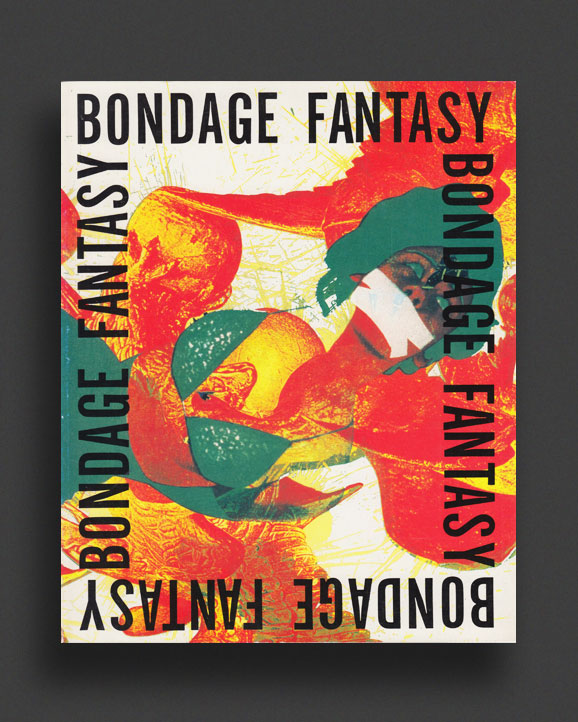
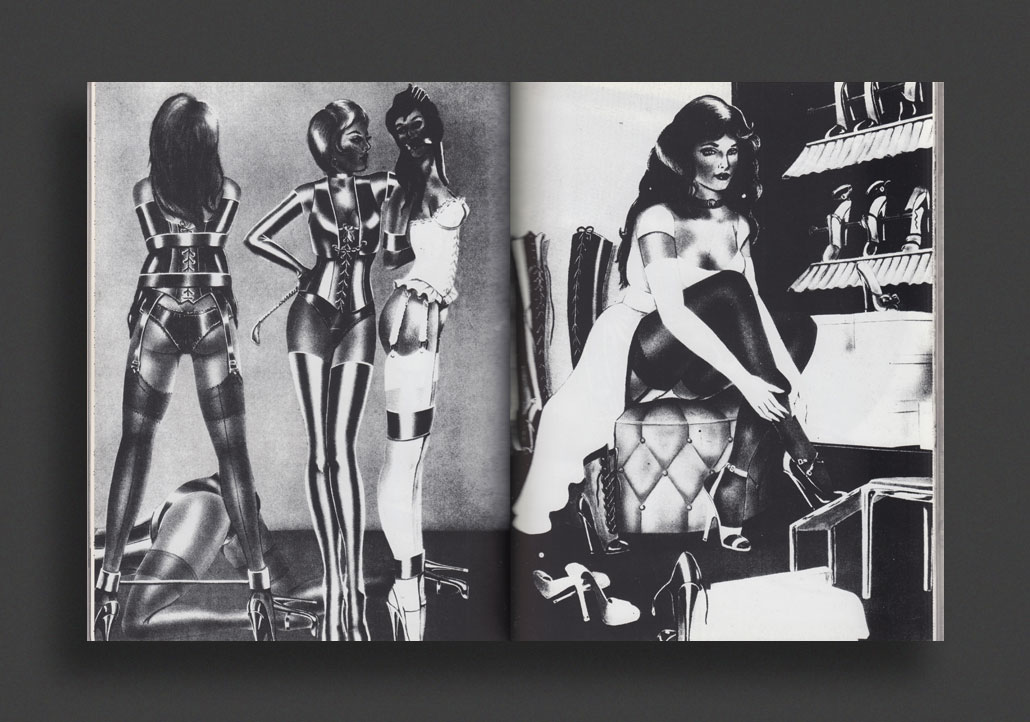
Stunning special ocer-sized edition of the great SALE2 periodical from Tokyo Japan, dedicated to the theme of Bondage Fantasy. With cover design by Tadanori Yokoo and design by Makoto Ohrui and edited by Japanese novelist Mari Akasaka, this 1991 volume is profusely illustrated throughout showcasing the erotic illustration and photography of artists John Willie, Irving Klaw, Eric Stanton, ENEG, Jim, Bill Ward, Jay, Tealdo, Europa, Gilles Berquet, Wolfgang Eicher. Perfectly compiled in the way SALE2 did so well, with elegant scrapbook style, dense with imagery, blown-up, full-bleed reproductions from many publications, and although a primarily visual volume packed cover-to-cover with illustrations, it also features a number of interviews with the artists in Japanese. Highly recommended!
Published regularly as a sort-of fanzine/journal/catalogue/pocket-book by Fiction, Inc., a specialty shop and publisher of fetish and erotica in Tokyo in the 1980-90s. Each issue covers different themes and features, heavy on fetishism.
Mari Akasaka (b. 1964) is a Japanese novelist born in Suginami, Tokyo, and studied Politics in the Law Department at Keio University. In 1999 her novel Vibrator was nominated for the Akutagawa Prize, which was adapted into a 2003 film directed by Ryūichi Hiroki. She was again nominated for the Akutagawa prize in 2000 for her novel, Muse, and won the Noma Literary Prize for New Writers for the same novel.
Very Good copy, well preserved.
1985, English
Softcover (staple-bound), 96 pages, 28 x 20 cm
1st Edition, Out of print title / used / very good
Published by
HM Communications / New York
$25.00 - Out of stock
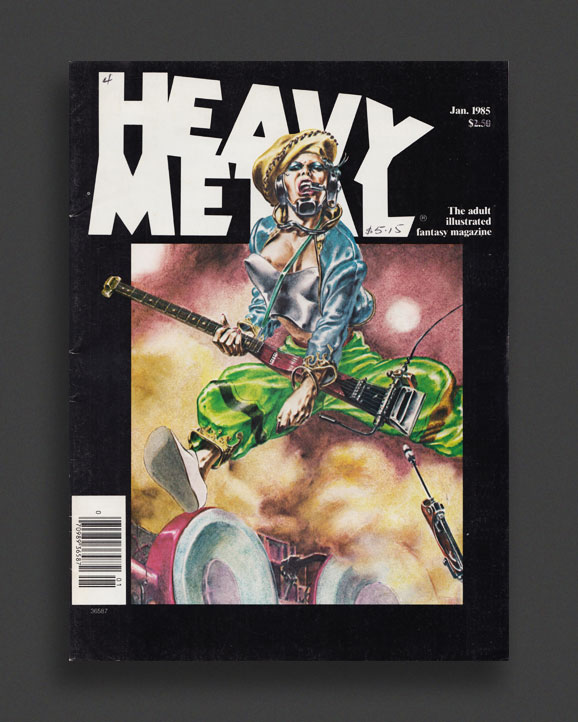
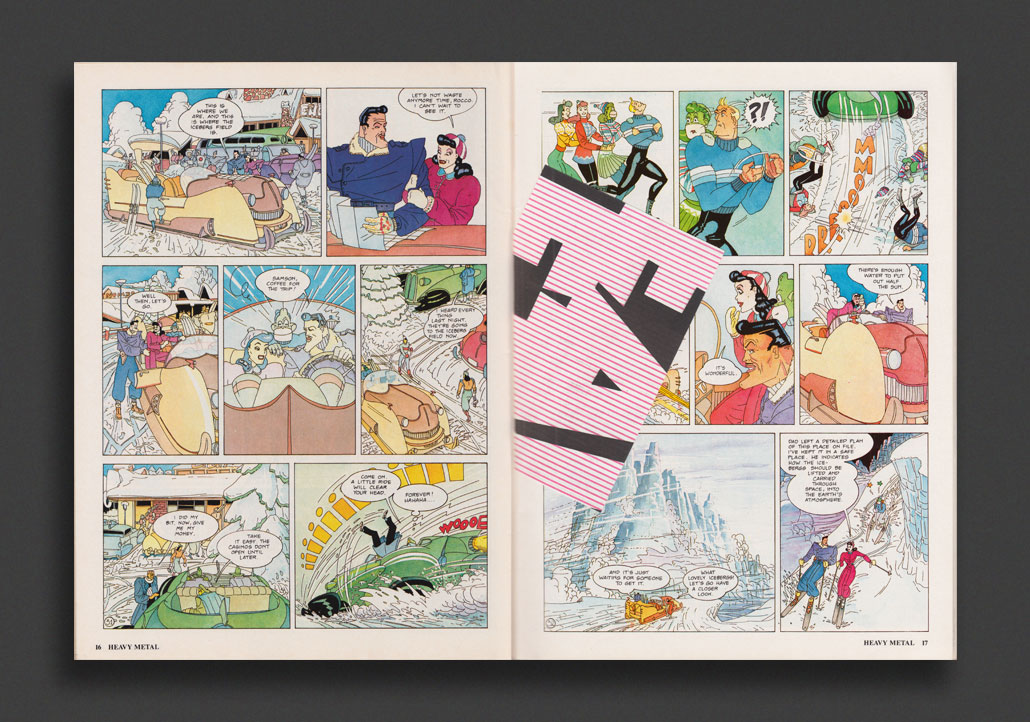
Heavy Metal January 1985 issue, featuring comic stories/art by Milo Manara, Tanino Liberatore, Beppe Madaulo, Enki Bilal, Daniel Torres, Charles Burns, Paul Kirchner, John Findley, Rod Kierkegaard Jr, Ugo Bertotti, and many more, plus interview with Timothy Leary and all the usual fare of sci-fi, movies, music... Cover art by Tanino Liberatore (front) and Mark Hannon (back).
Heavy Metal is an American science fiction and fantasy comics magazine that exploded onto the publishing scene in 1977 and shaped a generation with its blend of dark fantasy/science fiction and erotica. Unlike the traditional American comic books of that time bound by the restrictive Comics Code Authority, Heavy Metal featured explicit content. The magazine started out as a licensed translation of the French science-fantasy magazine Métal Hurlant, including work by Enki Bilal, Philippe Caza, Guido Crepax, Philippe Druillet, Jean-Claude Forest, Jean Giraud (a.k.a. Moebius), Chantal Montellier, and Milo Manara. The magazine later ran Stefano Tamburini and Tanino Liberatore's ultra-violent RanXerox. Heavy Metal gradually evolved into a publication featuring North American contributors like Richard Corben, Matt Howarth, Stephen R. Bissette, Alex Ebel, John Holmstrom, Paul Kirchner, Terrance Lindall, Gray Morrow, Walt Simonson, Dan Steffan, Jim Steranko, John Shirley, Arthur Suydam, Bernie Wrightson, and Olivia De Berardinis.
Very Good copy. Light wear and price markings to cover.
1960, English
Softcover, 256 pages, 18.5 x 12 cm
Out of print title / used / good
Published by
Paul Elek Limited / London
$25.00 - Out of stock
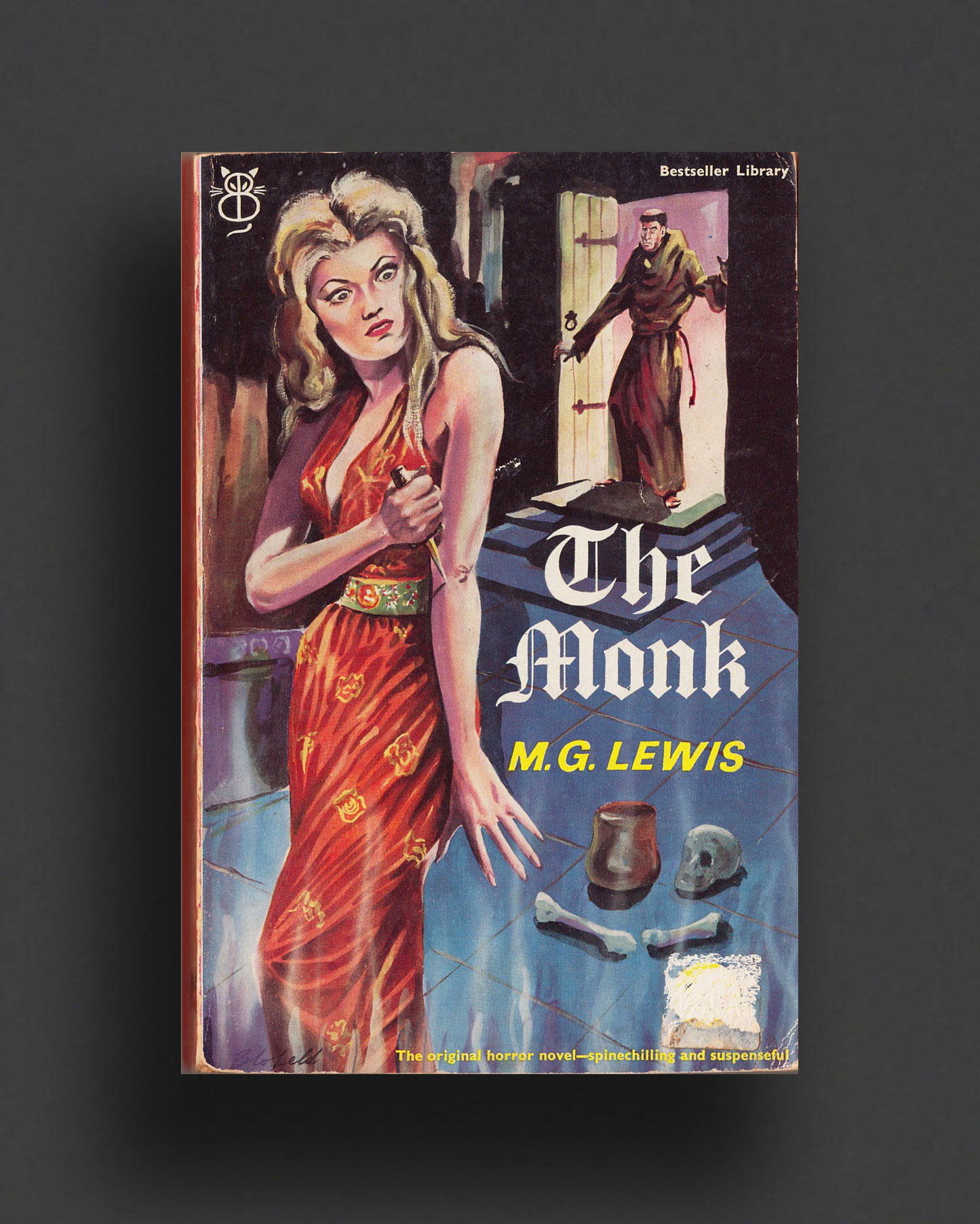
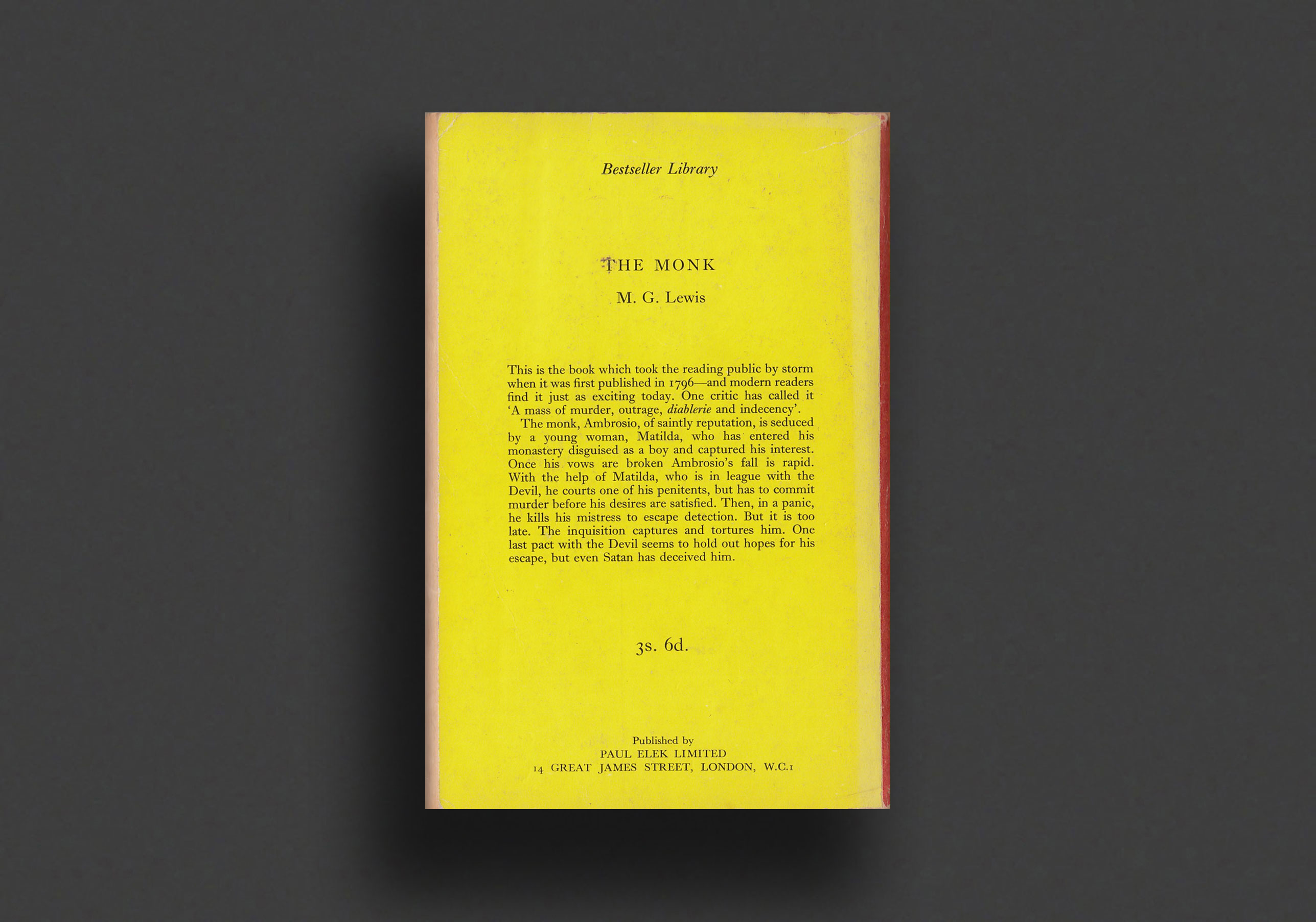
Lovely 1960 paperback edition of The Monk, a gothic classic by Matthew Gregory Lewis, first published in 1796. It tells the story of Ambrosio, a highly respected monk whose descent into depravity is triggered by lust and culminates in murder, rape, and other atrocities. The novel is known for its sensational and shocking content, including elements of the supernatural, and is considered a landmark work in the Gothic fiction genre.
"This is the book which took the reading public by storm when it was first published in 1796 and modern readers find it just as exciting today. One critic has called it 'A mass of murder, outrage, diablerie and indecency'. The monk, Ambrosio, of saintly reputation, is seduced by a young woman, Matilda, who has entered his monastery disguised as a boy and captured his interest. Once his vows are broken Ambrosio's fall is rapid. With the help of Matilda, who is in league with the Devil, he courts one of his penitents, but has to commit murder before his desires are satisfied. Then, in a panic, he kills his mistress to escape detection. But it is too late. The inquisition captures and tortures him. One last pact with the Devil seems to hold out hopes for his escape, but even Satan has deceived him."
Good copy with some sticker damage to cover and general tanning/age.
1998 / 2008, English
Hardcover (w. dust jacket), 72 pages, 32 x 24.5 cm
1st Edition, Out of print title / used / very good
Published by
Morpheus International / US
$140.00 - In stock -
"Beksinski's powerfully unique paintings are such as I have never before seen"—H.R. Giger
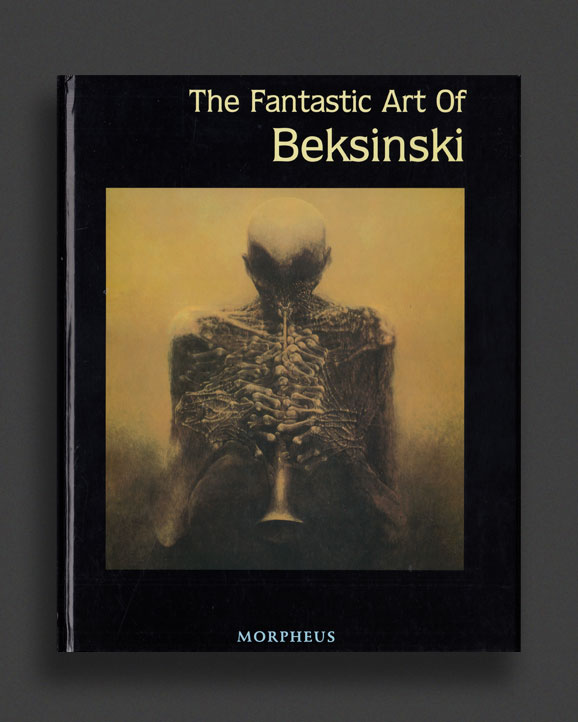
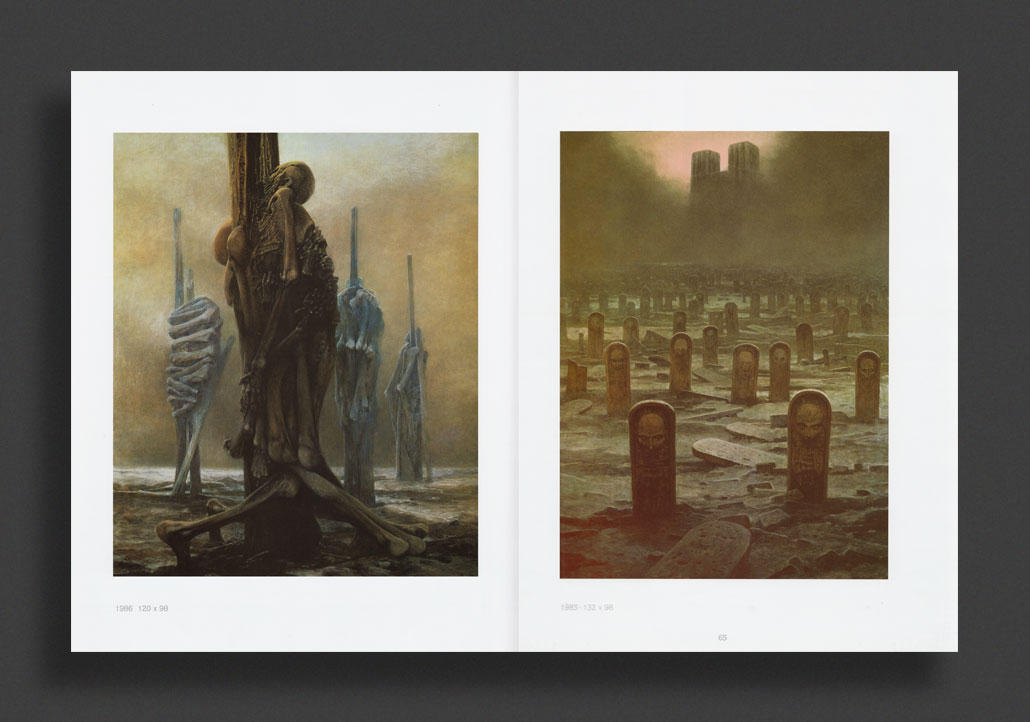
Wonderful, scarce and collectible monograph capturing 30 years of the work of the great Polish painter Zdzisław Beksiński, published by Galerie Morpheus in Las Vegas. First issued in 1998, this lavishly illustrated hardcover monograph reproduces Beksiński's surreal dystopian paintings spanning his entire career, alongside an introduction by James Cowen, texts by Tadeusz Nyczek, and great quotes and reflections throughout by Beksiński himself.
Zdzisław Beksiński (1929 – 2005) was a Polish painter, photographer and sculptor. Beksiński had no formal training as an artist. Born in Sanok, he studied architecture in Kraków and worked as a construction site supervisor before turning to his passion for art, sculpting with construction site materials for his medium. His early photography would be a precursor to his paintings, often referred to as dystopian surrealism. Beksiński claimed, "I wish to paint in such a manner as if I were photographing dreams". Beksiński undertook painting with a passion, working intensely whilst listening to classical music and quickly becoming a leading figure in contemporary Polish art. In the late 1960s, Beksiński entered what he himself called his "fantastic period", which lasted up to the mid-1980s, during which he created his famed images of desolate, surrealistic landscapes with intricate depictions of anxious, abstracted figures and architecture in states of decay, mutation and decomposition. Although Beksiński's art was often dark, he himself was known to be a pleasant person with a keen sense of humour. Modest and somewhat shy, he avoided public events such as the openings of his own exhibitions and almost never visited museums or exhibitions in general. He always credited music as his main source of inspiration. Beksiński avoided concrete analysis of the content of his work, saying "I cannot conceive of a sensible statement on painting". Beksiński was stabbed to death at his Warsaw apartment in February 2005 by a 19-year-old acquaintance from Wołomin, reportedly because he refused to lend the teenager money.
"In the medieval tradition, Beksinski seems to believe art to be a forewarning about the fragility of the flesh – whatever pleasures we know are doomed to perish – thus, his paintings manage to evoke at once the process of decay and the ongoing struggle for life. They hold within them a secret poetry, stained with blood and rust." — Guillermo del Toro, Mexican film director
Very Good copy of the later expanded edition, now long out-of-print. With VG—Fine dust jacket, light wear.
2025, English
Softcover, 80 pages, 17.8 x 11.4 cm
Published by
Wakefield Press / Cambridge
$28.00 - In stock -
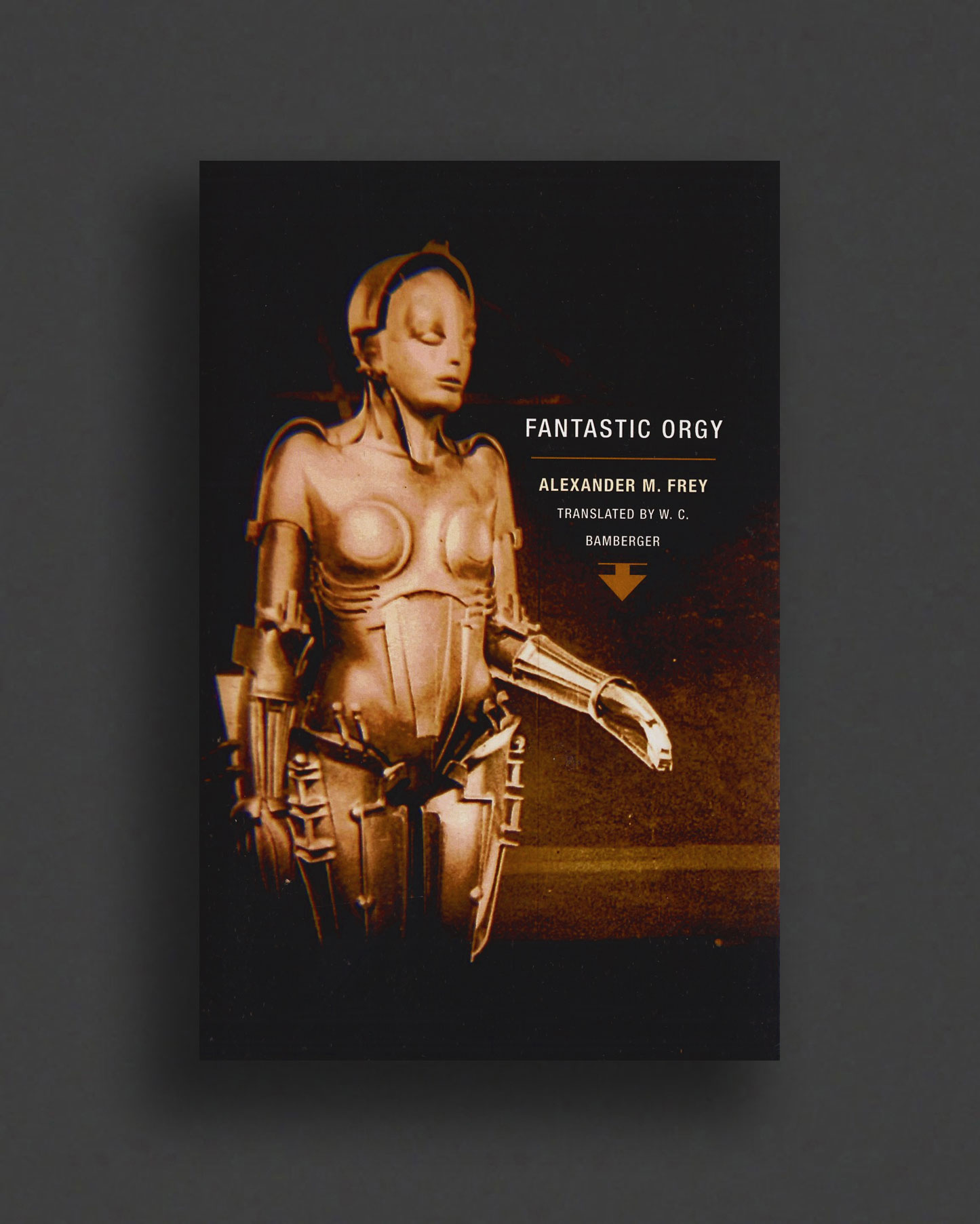
Translated, with an introduction, by W. C. Bamberger
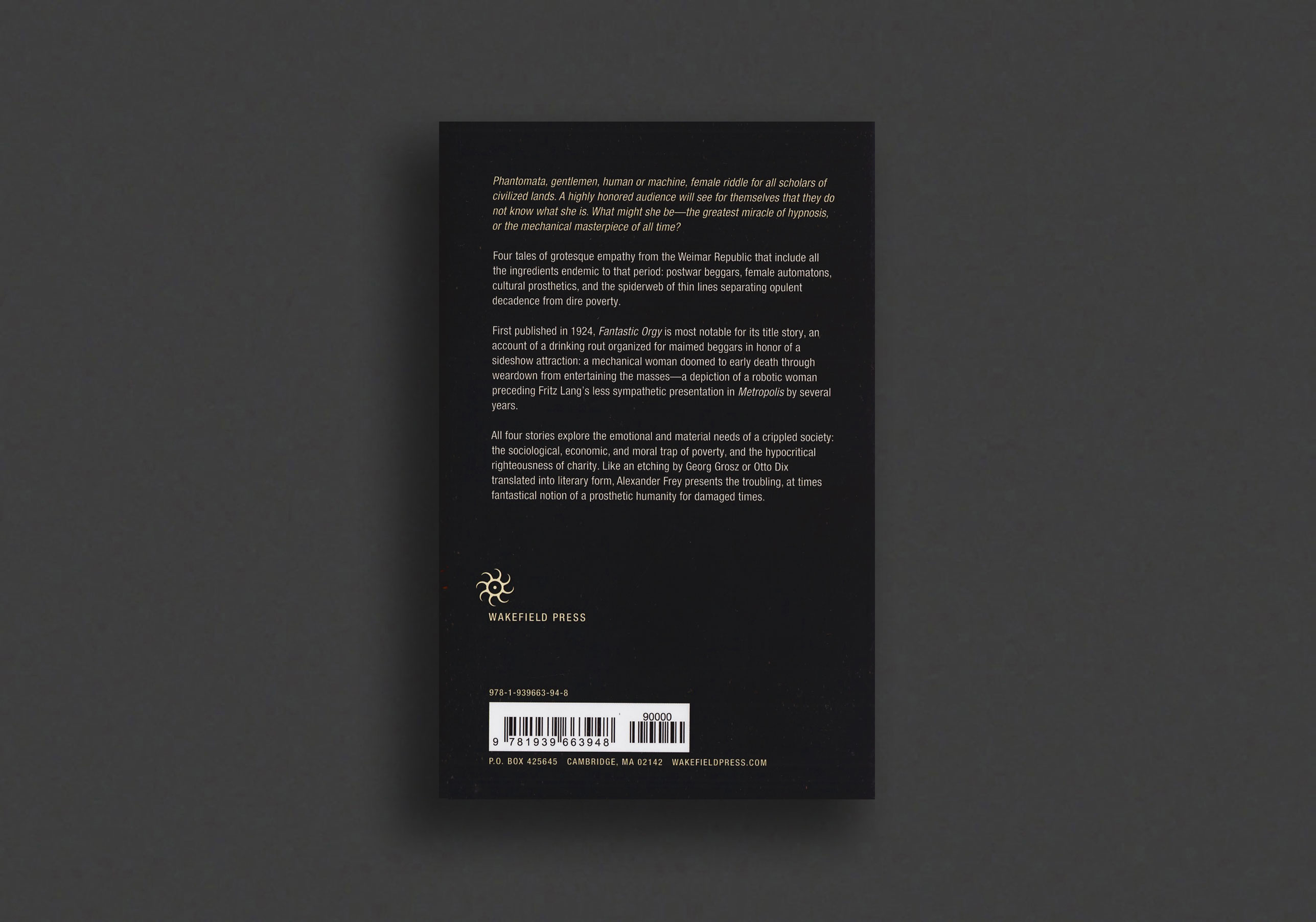
Phantomata, gentlemen, human or machine, female riddle for all scholars of civilized lands. A highly honored audience will see for themselves that they do not know what she is. What might she be—the greatest miracle of hypnosis, or the mechanical masterpiece of all time?
Four tales of grotesque empathy from the Weimar Republic that include all the ingredients endemic to that period: maimed beggars, female automatons, cultural prosthetics, and the spiderweb of thin lines separating everyone from opulent decadence and dire poverty.
First published in 1924, Fantastic Orgy is most notable for its title story, an account of a drinking rout organized for maimed beggars in honor of a sideshow attraction: a mechanical woman doomed to early death through weardown from entertaining the masses—a depiction of a robotic woman preceding Fritz Lang’s less sympathetic presentation in Metropolis by several years.
All four stories explore the emotional and material needs of a crippled society: the sociological, economic, and moral trap of poverty, and the hypocritical righteousness of charity. Like an etching by Georg Grosz or Otto Dix translated into literary form, Alexander Frey presents the troubling, at times fantastical notion of a prosthetic humanity for damaged times.
Alexander M. Frey (1881–1957) was a German author whose antiwar novel Die Pflasterkästen (published in English as The Cross Bearers) is considered by some critics to be superior to Erich Maria Remarque’s All Quiet on the Western Front. A lifelong friend of Thomas Mann, Frey refused to join the National Socialist Party, despite having served as a medic in the trenches of World War I alongside dispatcher Adolf Hitler, and would later need to escape Germany into exile as his books were burned by the Nazis. He spent the last twenty years of his life in Switzerland, though without being granted legal status until a few days before his death.
1977, French
Softcover (staple-bound), 98 pages, 27 x 21.5 cm
1st Edition, Out of print title / used / very good
Published by
Les Humanoïdes Associés / Paris
$35.00 - Out of stock
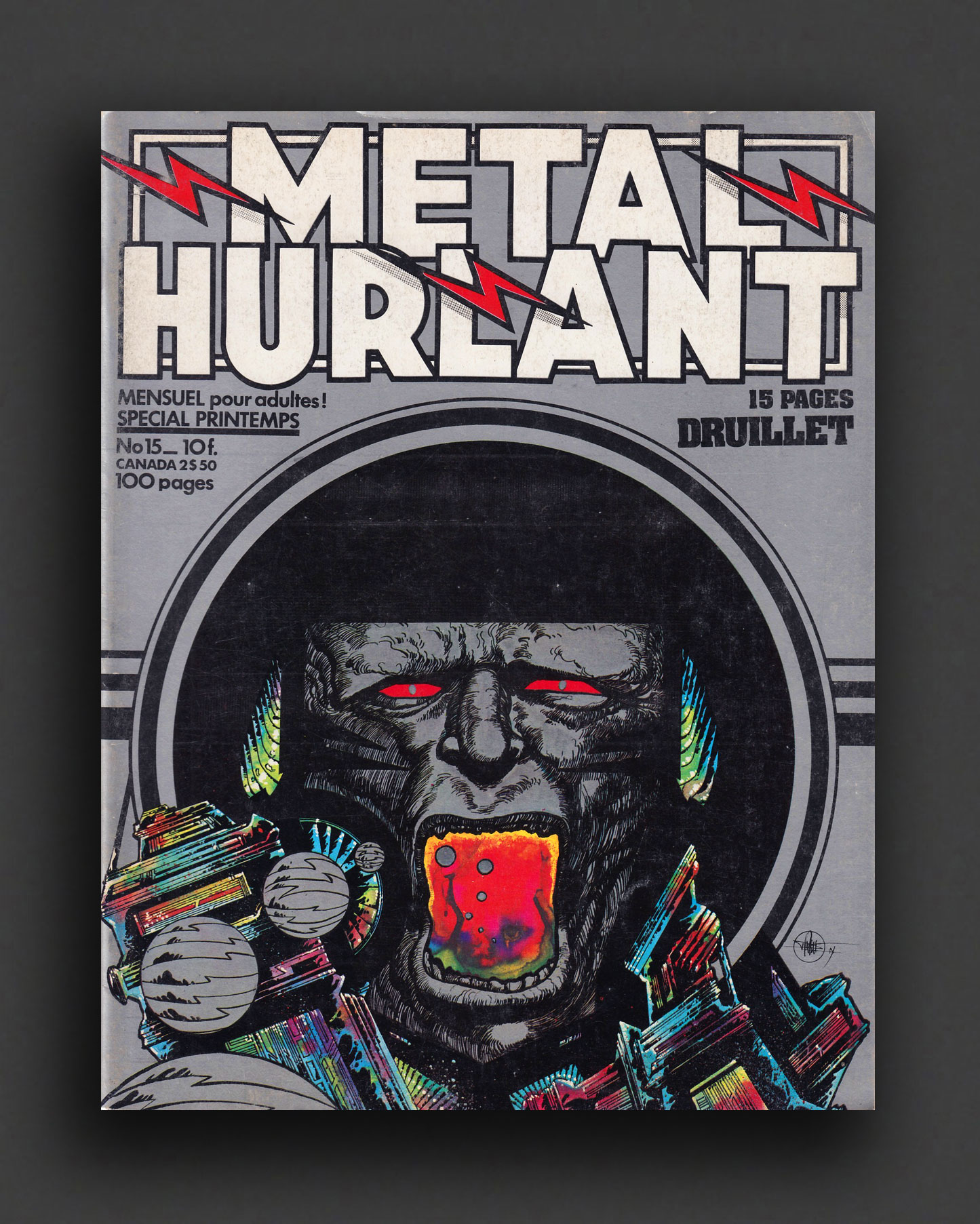
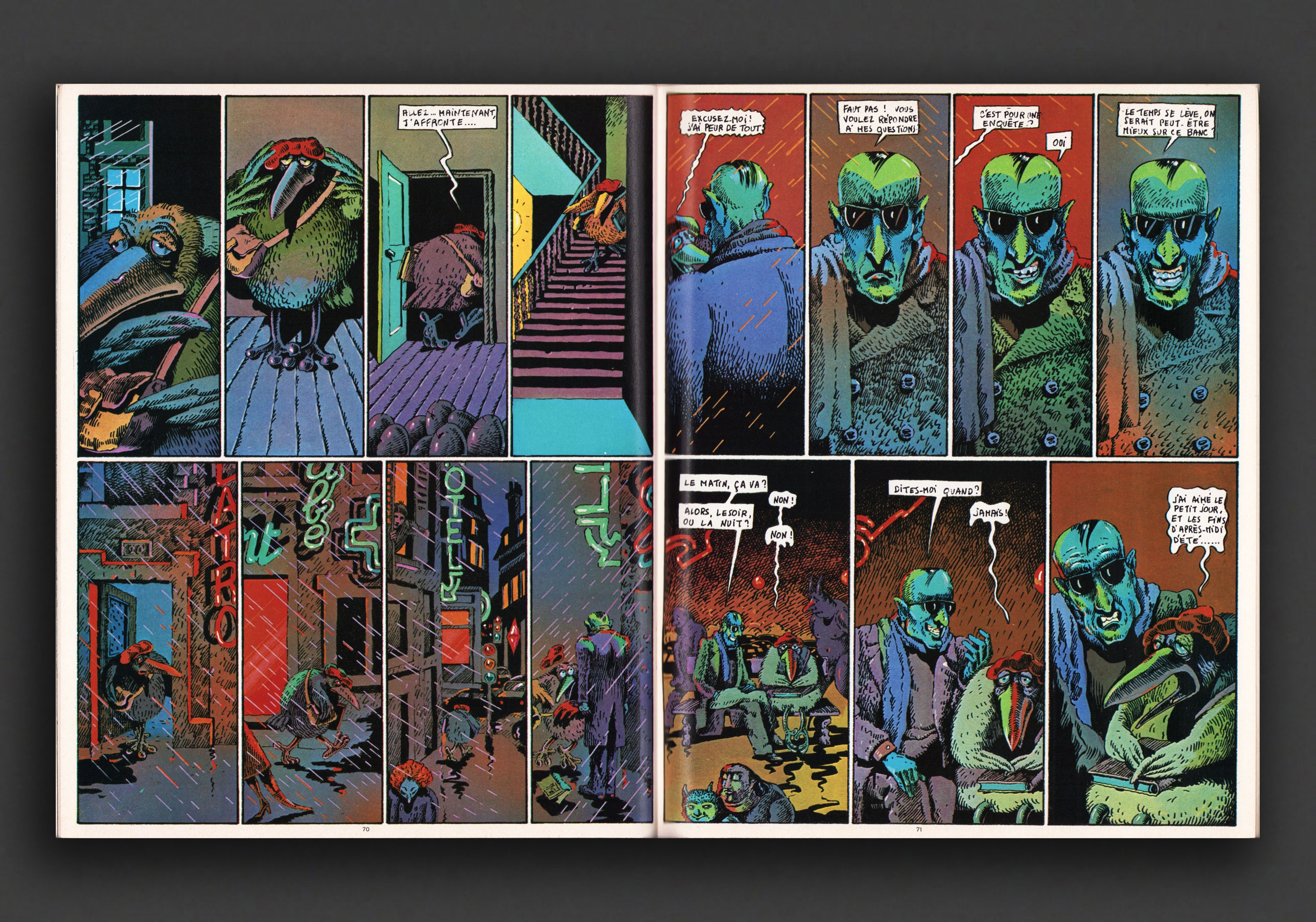
Metal Hurlant No. 15, March 1977 issue featuring comic stories/art by Nicole Claveloux, Moebius, Enki Bilal, Philippe Druillet, Jacques Lob, Cortman, Chantal Montellier, Edmund Dulac, Richard Dadd, and many more, plus the usual fare of sci-fi, movies, music... Cover art by Philippe Druillet. Original French editions, very scarce outside Europe.
Métal Hurlant (literal translation: "Howling Metal") was a French comics anthology of science fiction and horror comics stories, created in December 1974 by comics artists Jean Giraud (better known as Mœbius) and Philippe Druillet together with journalist-writer Jean-Pierre Dionnet and financial director Bernard Farkas. The four were collectively known as "Les Humanoïdes Associés" (United Humanoids), which became the name of the publishing house releasing Métal Hurlant. English, German and Italian editions were also licensed, including Heavy Metal, published in the US by National Lampoon. Métal hurlant was originally released quarterly with contributors including Moebius and Druillet, depicting such iconic characters as Arzach and Lone Sloane for the first time, as well as work by Richard Corben, Guido Crepax, Alejandro Jodorowsky, Enki Bilal, Caza, Serge Clerc, Alain Voss, Berni Wrightson, Nicole Claveloux, Milo Manara, Frank Margerin, Masse, Chantal Montellier, and many others.
Very Good copy, general light wear, rubbing.
1980, French
Softcover (staple-bound), 98 pages, 27 x 21.5 cm
1st Edition, Out of print title / used / good
Published by
Les Humanoïdes Associés / Paris
$35.00 - In stock -
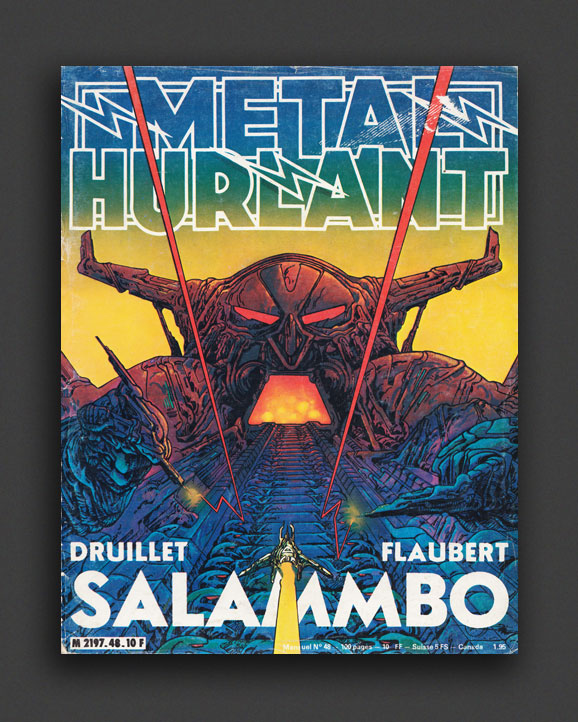
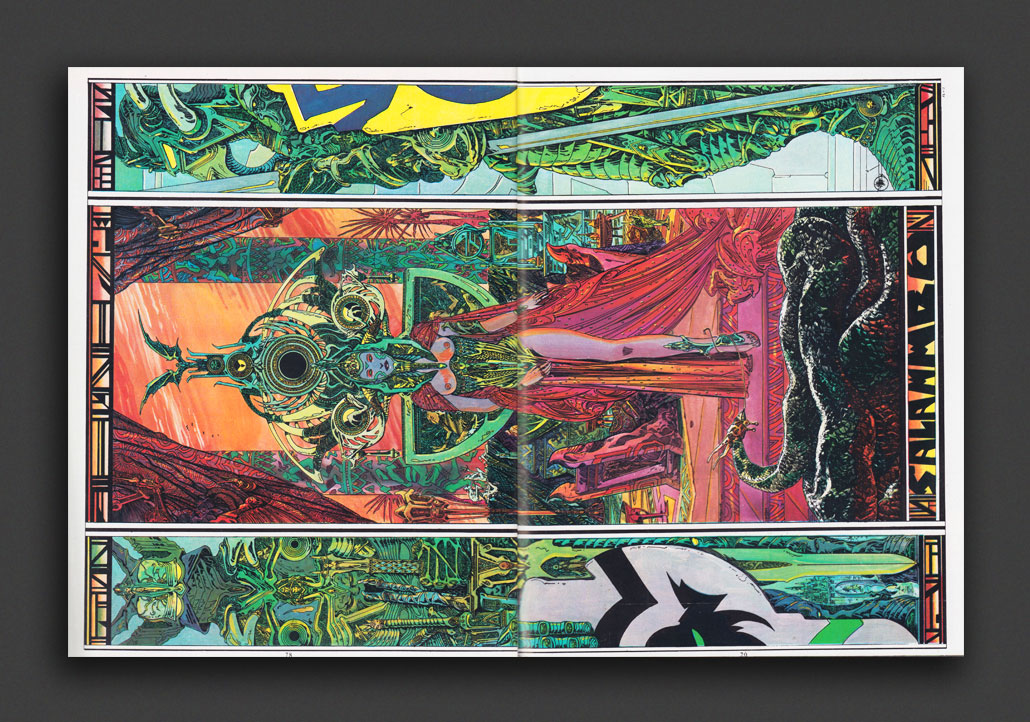
Metal Hurlant No. 48, February 1980 issue featuring comic stories/art by Moebius, Jano (Jean Leguay), Jacques Lob, Georges Pichard, Baron Staff, Richard Corban, Chantal Montellier, Philippe Druillet, and many more, plus the usual fare of sci-fi, movies, music... Cover art by Philippe Druillet. Original French editions, very scarce outside Europe.
Métal Hurlant (literal translation: "Howling Metal") was a French comics anthology of science fiction and horror comics stories, created in December 1974 by comics artists Jean Giraud (better known as Mœbius) and Philippe Druillet together with journalist-writer Jean-Pierre Dionnet and financial director Bernard Farkas. The four were collectively known as "Les Humanoïdes Associés" (United Humanoids), which became the name of the publishing house releasing Métal Hurlant. English, German and Italian editions were also licensed, including Heavy Metal, published in the US by National Lampoon. Métal hurlant was originally released quarterly with contributors including Moebius and Druillet, depicting such iconic characters as Arzach and Lone Sloane for the first time, as well as work by Richard Corben, Guido Crepax, Alejandro Jodorowsky, Enki Bilal, Caza, Serge Clerc, Alain Voss, Berni Wrightson, Nicole Claveloux, Milo Manara, Frank Margerin, Masse, Chantal Montellier, and many others.
Good copy but cover disconnected from staples.
1979, France
Softcover (staple-bound), 100 pages, 27 x 21.5 cm
1st Edition, Out of print title / used / good
Published by
Les Humanoïdes Associés / Paris
$35.00 - In stock -
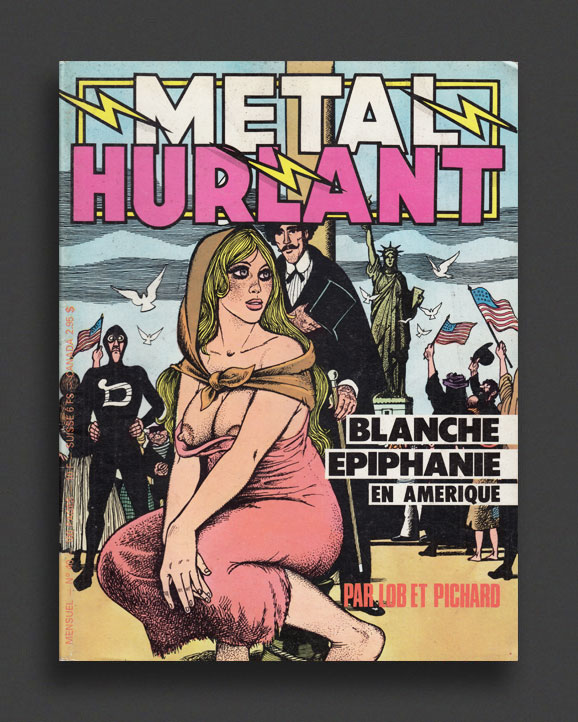
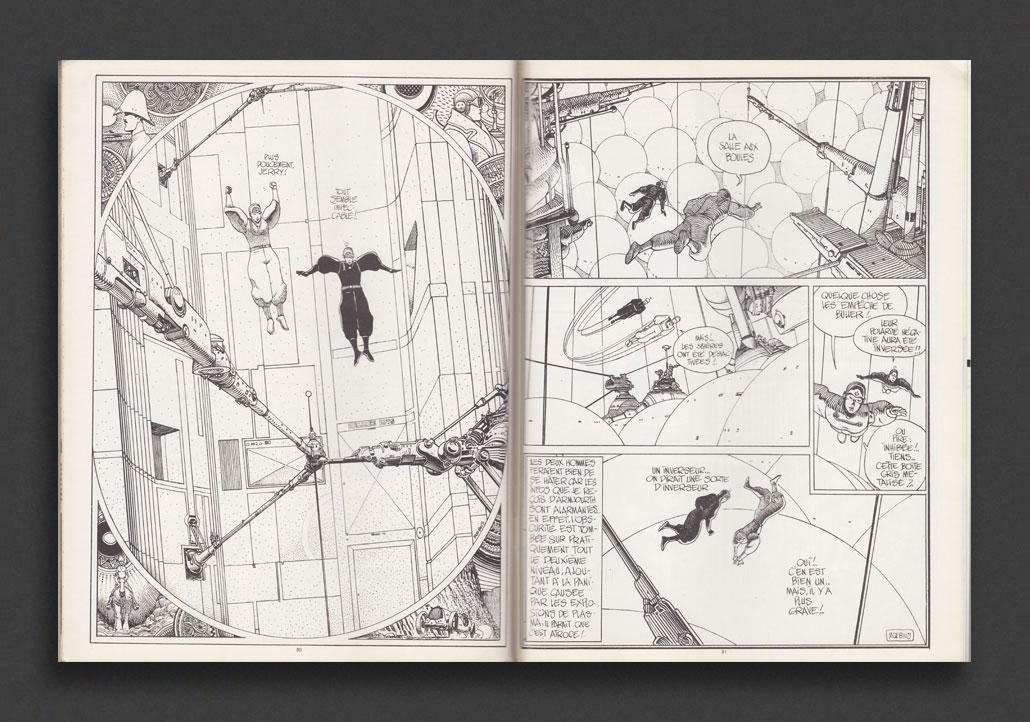
Metal Hurlant No. 40, April 1979 issue featuring comic stories/art by Georges Pichard, Moebius, Alain Voss, Jacques Lob, Frank Margerin, Chantal Montellier, and many more, plus the usual fare of sci-fi, movies, music... Cover art by Georges Pichard. Original French editions, very scarce outside Europe.
Métal Hurlant (literal translation: "Howling Metal") was a French comics anthology of science fiction and horror comics stories, created in December 1974 by comics artists Jean Giraud (better known as Mœbius) and Philippe Druillet together with journalist-writer Jean-Pierre Dionnet and financial director Bernard Farkas. The four were collectively known as "Les Humanoïdes Associés" (United Humanoids), which became the name of the publishing house releasing Métal Hurlant. English, German and Italian editions were also licensed, including Heavy Metal, published in the US by National Lampoon. Métal hurlant was originally released quarterly with contributors including Moebius and Druillet, depicting such iconic characters as Arzach and Lone Sloane for the first time, as well as work by Richard Corben, Guido Crepax, Alejandro Jodorowsky, Enki Bilal, Caza, Serge Clerc, Alain Voss, Berni Wrightson, Nicole Claveloux, Milo Manara, Frank Margerin, Masse, Chantal Montellier, and many others.