World Food Books' programme is largely produced on Kulin Nation land. We acknowledge the Wurundjeri people of the Kulin Nation as the first and continuing custodians of this land, and pay respect to their Elders past, present, and emerging.
World Food Books is an arts and special interests bookshop in Naarm / Melbourne. Founded in 2010, World Food Books is devoted to the presentation of a rotating, hand-selection of international art, design, literary and counterculture publications with an emphasis on the anti-traditional, the experimental, the avant-garde, the heretic, the marginal.
Presenting new titles alongside rare and out-of-print books, catalogues and journals spanning the fields of modern and contemporary art, design, photography, illustration, film, literature, poetry, cultural theory, philosophy, sexuality, popular and underground culture in its many radical forms, World Food Books wishes to encourage adventurous, thoughtful and open-minded reading, looking, writing, and exchange of publishing and ideas, both current and historical.
As well as our bookshop, located in Melbourne's historical Nicholas Building, all of our inventory is available internationally via our online mail-order service.
World Food Books semi-regularly co-ordinates "Occasions", a programme of exhibits and events at the bookshop and in partnership with other hosts (such as museums and art galleries) that develop out of the activities, relationships and content of the bookshop itself.
World Food Books
The Nicholas Building
37 Swanston Street
Room 5, Level 6
Melbourne 3000
Australia
SHOP HOURS:
THU–SAT 12–6
WEB-SHOP OPEN 24/7
World Food Books
Postal Address:
PO Box 435
Flinders Lane
Victoria 8009
Australia
info@worldfoodbooks.com
Art
Theory / Essay
Architecture / Interior
Graphic Design / Typography
Photography
Fashion
Eros
LGBTQ+
Fiction / Poetry
Weird / Speculative / Science Fiction / Horror
Transgressive / Visceral / Abject
Symbolism / Decadence / Fin de siècle
Film / Video
Painting
Sculpture / Installation
Performance / Dance / Theater
Drawing
Sound / Music
Curatorial
Group Shows / Collections
Periodicals
Out-of-print / Rare
Posters / Ephemera / Discs
Signed Books
World Food Books Gift Voucher
World Food Book Bag
Australian Art
Australian Fiction
Australian Science Fiction / Speculative Fiction
Australian Poetry
Australian Photography
Japanese Photography
Conceptual Art
Minimal Art
Dada
'Pataphysics / Oulipo
Fluxus
Concrete Poetry
Pop Art
Surrealism
Arte Povera
Arte Informale / Haute Pâte / Tachism
Nouveau Réalisme / Zero / Kinetic
Situationism / Lettrism
Collage / Mail Art / Xerox Art
Art Brut / Folk / Visionary / Fantastic
Illustration / Graphic Art / Bandes Dessinées
Furniture
Italian Radical Design / Postmodernism
Textiles
Ceramics / Glass
Counterculture
Protest / Revolt
Philosophy
Psychoanalysis
Anthropology
Anarchism
Socialism / Anarchism / Communism / Capitalism
Literary Theory / Semiotics / Language
Feminism / Women's Studies
Gender Studies / Sexuality
Anthropology
Fetishism / BDSM
Drugs / Psychedelia
Crime / Violence
Animal Rights / Veganism
Occult / Esoterica
Ecology / Earth / Alternative Living
Whole Earth / Crafts
All prices in AUD (Australian dollars)
Pick-Ups
Pick-up orders can be collected in our bookshop during opening hours after order date. Please collect any Pick-up orders within 2 weeks of ordering as we have limited storage space. Orders will be released back into stock if not collected within this time. No refunds can be made for pick-ups left un-collected. If you cannot make it in to the bookshop in this time-frame, please choose postage option.
Return Policy
All sales are final. We do accept returns (for refund or exchange) for items received in error. All our orders are packed with special care using heavy-duty padding and cardboard book-mailers or bubble mailers (for smaller books), using reinforcement where required. We cannot take responsibility for any lost, stolen or damaged parcels.
Insurance
Should you wish to insure your package, please email us directly after placing your order and we can organise this at a small extra expense. Although all standard/express tracked packages are very safe and dependable, we cannot take responsibility for any lost, stolen or damaged parcels. We recommend insurance on valuable orders.
Interested in selling your old books, catalogues, journals, magazines, comics, fanzines, ephemera? We are always looking for interesting, unusual and out-of-print books to buy. We only buy books in our fields of interest and specialty, and that we feel we can resell.
We base these prices on desirability, market value, in-print prices, condition and our current stock levels. We offer cash, store credit, and can take stock on consignment. All
about 25% of the price we expect to get when we sell them, or 30% in store credit. We base these prices on desirability, market value, in-print prices, condition and our current stock levels.
Sell your books any day of the week. You can drop them off and return later. If you have a lot of books, we can visit your Sydney home.
We buy books that we feel we can resell. We offer about 25 % of the price we expect to get when we sell them, or 30% in store credit. We base these prices on desirability, market value, in-print prices, condition and our current stock levels.
Philadelphia Wireman
03 August - 01 September, 2018
World Food Books is proud to announce our next Occasion, the first presentation of sculptures by Philadelphia Wireman in Australia.
The Philadelphia Wireman sculptures were found abandoned in an alley off Philadelphia’s South Street on trash night in 1982. Their discovery in a rapidly-changing neighbourhood undergoing extensive renovation, compounded with the failure of all attempts to locate the artist, suggests that the works may have been discarded after the maker’s death. Dubbed the "Philadelphia Wireman" during the first exhibition of this work, in 1985, the maker’s name, age, ethnicity, and even gender remain uncertain. The entire collection totals approximately 1200 pieces, all intricately bound together with tightly-wound heavy-gauge wire (along with a few small, abstract marker drawings, reminiscent both of Mark Tobey and J.B. Murry). The dense construction of the work, despite a modest range of scale and materials, is singularly obsessive and disciplined in design: a wire armature or exoskeleton firmly binds a bricolage of found objects including plastic, glass, food packaging, umbrella parts, tape, rubber, batteries, pens, leather, reflectors, nuts and bolts, nails, foil, coins, toys, watches, eyeglasses, tools, and jewellery.
Heavy with associations—anthropomorphic, zoomorphic, and socio-cultural responses to wrapped detritus—the totemic sculptures by Philadelphia Wireman have been discussed in the context of work created to fulfil the shamanistic needs of alternative religions in American culture. Curators, collectors, and critics have variously compared certain pieces to sculpture from Classical antiquity, Native American medicine bundles, African-American memory jugs, and African fetish objects. Reflecting the artist’s prolific and incredibly focused scavenging impulse, and despite—or perhaps enhanced by—their anonymity, these enigmatic objects function as urban artefacts and arbiters of power, though their origin and purpose is unknown. Philadelphia Wireman, whatever their identity, possessed an astonishing ability to isolate and communicate the concepts of power and energy through the selection and transformation of ordinary materials. Over the course of the past two decades, this collection has come to be regarded as an important discovery in the field of self-taught art and vernacular art.
Presented in collaboration with Fleisher-Ollman Gallery, Philadelphia, and Robert Heald, Wellington.
Susan Te Kahurangi King
02 February - 10 March, 2018
Susan Te Kahurangi King (24 February 1951 - ) has been a confident and prolific artist since she was a young child, drawing with readily available materials - pencils, ballpoint pens and felt-tip markers, on whatever paper is at hand. Between the ages of four and six Susan slowly ceased verbal communication. Her grandparents William and Myrtle Murphy had developed a special bond with Susan so they took on caring responsibilities for extended periods. Myrtle began informally archiving her work, carefully collecting and storing the drawings and compiling scrapbooks. No drawing was insignificant; every scrap of paper was kept. The King family are now the custodians of a vast collection containing over 7000 individual works, from tiny scraps of paper through to 5 meter long rolls.
The scrapbooks and diaries reveal Myrtle to be a woman of great patience and compassion, seeking to understand a child who was not always behaving as expected. She encouraged Susan to be observant, to explore her environment and absorb all the sights and sounds. Myrtle would show Susan’s drawings to friends and people in her community that she had dealings with, such as shopkeepers and postal workers, but this was not simply a case of a grandmother’s bias. She recognised that Susan had developed a sophisticated and unique visual language and sincerely believed that her art deserved serious attention.
This was an unorthodox attitude for the time. To provide some context, Jean Dubuffet coined the term Art Brut in 1945 to describe work created by self-taught artists – specifically residents of psychiatric institutions and those he considered to be visionaries or eccentrics. In 1972 Roger Cardinal extended this concept by adopting the term Outsider Art to describe work made by non-academically trained artists operating outside of mainstream art networks through choice or circumstance. Susan was born in Te Aroha, New Zealand in 1951, far from the artistic hubs of Paris and London that Dubuffet and Cardinal operated in. That Myrtle fêted Susan as a self-taught artist who deserved to be taken seriously shows how progressive her attitudes were.
Susan’s parents Doug and Dawn were also progressive. Over the years they had consulted numerous health practitioners about Susan’s condition, as the medical establishment could not provide an explanation as to why she had lapsed into silence. Dawn educated herself in the field of homeopathy and went on to treat all twelve of her children using these principles – basing prescriptions on her observations of their physical, mental and emotional state.
Doug was a linguist with an interest in philosophy who devoted what little spare time he had to studying Maori language and culture. To some extent their willingness to explore the fringes of the mainstream made them outsiders too but it was their commitment to living with integrity and their respect for individuality that ensured Susan’s creativity was always encouraged.
Even though Susan’s family supported her artistic pursuits, some staff in schools and hospitals saw it as an impediment to her assimilation into the community and discouraged it in a variety of ways. Her family was not always aware of this and therefore did not fully understand why Susan stopped drawing in the early 1990s. However, rather than dwell on the challenges that Susan faced in pursuit of her artistic practice, they prefer to highlight her achievements. In 2008 Susan began drawing again in earnest, after an almost 20 year interruption, and her work is now shown in galleries around the world.
Susan grew up without television and has been heavily influenced by the comics she read as a child. She is absolutely fearless in the appropriation of recognizable characters, such as Donald Duck and Mickey Mouse, in her work. She twists their limbs, contorts their faces, compresses them together, blends them into complex patterned backgrounds - always imbuing them with an incredible energy. Although Susan often used pop culture characters in her work they are not naive or childlike. These are drawings by a brilliant self-taught artist who has been creating exceptional work for decades without an audience in mind.
Mladen Stilinović
"Various Works 1986 - 1999"
02 February 16 - September 10, 2016
Various works 1986 - 1999, from two houses, from the collections of John Nixon, Sue Cramer, Kerrie Poliness, Peter Haffenden and Phoebe Haffenden.
Including: Geometry of Cakes (various shelves), 1993; Poor People’s Law (black and white plate), 1993; White Absence (glasses, ruler, set square, silver spoon, silver ladel with skin photograph and wooden cubes), 1990-1996; Exploitation of the Dead (grey and red star painting, wooden painting, black spoon with red table, red plate), 1984-1990; Money and Zeros (zero tie, paintings made for friends in Australia (Sue, John, Kerrie), numbers painting), 1991-1992; Words - Slogans (various t-shirts) - “they talk about the death of art...help! someone is trying to kill me”, “my sweet little lamb”, “work is a disease - Karl Marx”; Various artist books, catalogues, monographs, videos; Poster from exhibition Insulting Anarchy; "Circular" Croatian - Australian edition; Artist book by Vlado Martek (Dostoyevsky); more.
Thanks to Mladen Stilinović and Branka Stipančić.
Jonathan Walker
Always Will Need To Wear Winter Shirt Blue + Ochre Small Check Pattern
21 August - 21 September, 2015
Untitled
I am not a great reader of poetry but I always return to the work of Melbourne poet, Vincent Buckley (1925- 1988). Perhaps I find his most tantalising piece to be not a finished poem but a fragment left on a scrap of paper discovered on his desk after the poet’s death.
The poetry gathers like oil
In the word-core, and spreads
It has its music meet,
Its music is in movement.
This fragment is more the shell left behind from a volatile thought than a finished poem. I find the last two lines honest but awkward whereas the first two lines work like an arrow. Most likely he could not find a resolution so it was left. Still, in its present form, it remains an eloquent testimony to the ultimate failure of a medium to express mobile thought and sensation, in Buckley’s case, through verbal language. It’s an important matter because this is something all artists have to deal with regardless of the medium.
I have never written a poem, however, I am forever copying fragments from books on paper scraps in a vain effort to fix certain notions in my head. At first, they function as bookmarks that are sometimes returned to when I open the book. But before long, as they accumulate, they fall out littering the table interspersed with A4 photocopies, bills, books and medications.
To return to Buckley’s fragment, the first two lines very much evoke how I paint nowadays. As you age, detail diminishes and patches of light become more luminous and float. I feel the most honest way of dealing with this is by smearing the oil paint on the canvas with the fingers and working close-up, blind. Only if the patches coalesce into an approaching image can the work gain a life.
-
Jonathan Walker was born in Melbourne, Australia and brought up on a dairy farm in Gippsland. In the 1970’s he studied painting at RMIT and won the Harold Wright Scholarship to the British Museum, London. During the 1980’s he exhibited at Pinacotheca Gallery, Richmond and had work shown at the NGV and Heidi City Art Gallery. Over the same period he designed the cover for the “Epigenesi” LP by Giancarlo Toniutti, Italy and conducted a mail exchange work with Achim Wollscheid, Germany. The work with artists through the post resulted in an article published in the bicentenary issue of Art and Australia 1988. He showed in artist run spaces such as WestSpace in the 90’s and 2000’s, and until 2012, taught painting at Victoria University, which is where we (Colleen Ahern and Lisa Radford) as organisers of the exhibition, among many others, had the privilege of being his student.
Walker’s knowledge was imparted to students through the careful selection of music, literature, and artists found in books that he himself had ordered for the library. Walker’s strategy was the generosity of sharing his vast knowledge with references specific to each student and their context.
Walker’s paintings share a similar focus and intimacy.
This exhibition presents a small selection of recent paintings alongside a publication that includes Walker’s writing. Observational and analytical, Walker’s work is a type of material notation — the time of day, colour and how it is blended, the both specific and fleeting location of a reflection on lino or the question of whether a chair leg should be included in a painting.
Please join us on Friday August 21 between 6-8pm to celebrate the opening of the exhibition.
Curated by Colleen Ahern and Lisa Radford.
B. Wurtz
Curated by Nic Tammens
March 26 - April 4, 2015
B.Wurtz works from a basement studio in his home on Manhattan’s Lower East Side.
This local fact is attested to by the plastic shopping bags and newsprint circulars that appear in his work. As formal objects, they don’t make loud claims about their origins but nonetheless transmit street addresses and places of business from the bottom of this long thin island. Like plenty of artists, Wurtz is affected by what is local and what is consumed. His work is underpinned by this ethic. It often speaks from a neighborhood or reads like the contents of a hamper:
“BLACK PLUMS $1.29 lb.”
“Food Bazaar”
“USDA Whole Pork Shoulder Picnic 99c lb.”
“RITE AID Pharmacy, with us it’s personal.”
“H. Brickman & Sons.”
“Sweet Yams 59c lb."
Most of the work in this exhibition was made while the artist was in residence at Dieu Donne, a workshop dedicated to paper craft in Midtown. Here Wurtz fabricated assemblages with paper and objects that are relatively lightweight, with the intention that they would be easily transportable to Australia. This consideration isn’t absolute in Wurtz’s work, but was prescriptive for making the current exhibition light and cheap. Packed in two boxes, these works were sent from a USPS post office on the Lower East Side and delivered to North Melbourne by Australia Post.
Wurtz appears courtesy of Metro Pictures, New York.
Thanks to Rob Halverson, Joshua Petherick, Sari de Mallory, Matt Hinkley, Helen Johnson, Fayen d'Evie, Ask Kilmartin, Lisa Radon, Ellena Savage, Yale Union, and "Elizabeth".
John Nixon
"Archive"
December 15 - January 20, 2014
The presentation of John Nixon's archive offered a rare showcase of this extensive collection of the artist's own publications, catalogues, posters, ephemera, editions and more, from the mid 1980s onwards, alongside a selection of his artworks.
Organized by John Nixon, Joshua Petherick and Matt Hinkley.
"Habitat"
at Minerva, Sydney (organised by Joshua Petherick and Matt Hinkley)
November 15 - December 20, 2014
Lupo Borgonovo, Janet Burchill & Jennifer McCamley,
Lewis Fidock, HR Giger, Piero Gilardi, Veit Laurent Kurz,
Cinzia Ruggeri, Michael E. Smith, Lucie Stahl, Daniel Weil, Wols
Press Release:
“...It contained seven objects. The slender fluted bone, surely formed for flight, surely from the wing of some large bird. Three archaic circuitboards, faced with mazes of gold. A smooth white sphere of baked clay. An age-blackened fragment of lace. A fingerlength segment of what she assumed was bone from a human wrist, grayish white, inset smoothly with the silicon shaft of a small instrument that must once have ridden flush with the surface of the skin - but the thing’s face was seared and blackened.”
William Gibson, “Count Zero”, 1986
"Autumn Projects Archive"
Curated by Liza Vasiliou
March 6 - March 15, 2014
World Food Books, in conjunction with the Virgin Australia Melbourne Fashion Festival 2014, presented the Autumn Projects archive, consisting of a selection of early examples in Australian fashion with a particular interest in collecting designers and labels from the period beginning in the 1980’s, who significantly influenced the discourse of Australian Fashion.
Curated by Liza Vasiliou, the exhibition provided a unique opportunity to view pieces by designers Anthea Crawford, Barbara Vandenberg, Geoff Liddell and labels CR Australia, Covers, Jag along with early experimental collage pieces by Prue Acton and Sally Browne’s ‘Fragments’ collection, suspended throughout the functioning World Food Books shop in Melbourne.
H.B. Peace
presented by CENTRE FOR STYLE
November 14, 2013
"Hey Blinky, you say chic, I say same"
Anon 2013
H.B. Peace is a clothing collaboration between great friends Blake Barns and Hugh Egan Westland. Their pieces explore the divergences between 'character’ and ‘personality’ in garments....etc
Special Thanks to Joshua Petherick and Matt Hinkley of WFB and Gillian Mears
and a Very Special Thank you to Audrey Thomas Hayes for her shoe collaboration.
Janet Burchill & Jennifer McCamley
"Aesthetic Suicide"
May 10 - June 8, 2013
The first of our occasional exhibitions in the World Food Books office/shop space in Melbourne, "Aesthetic Suicide" presented a body of new and older works together by artists Janet Burchill & Jennifer McCamley, including videos, prints, a wall work, and publications.
During shop open hours videos played every hour, on the hour.
2014, English
Softcover, 112 pages, 28 x 21.59 cm
Published by
Creation Books / London
$48.00 - Out of stock
The modern era of underground doll-making in Japan began in the late 1960s, with the experiments of Simon Yotsuya and Nori Doi. Directly inspired by the Surrealist Doll constructed by Hans Bellmer in 1932, Simon Yotsuya created a series of ball-jointed, life-sized dolls which featured in his ground-breaking "Eve In The Past And The Future" exhibition in Tokyo, in 1973.
Simon Yotsuya's work inspired a new wave of avant-garde Japanese doll-making, headed by artists such as Ryo Yoshida and Katan Amano, which has continued to flourish to the present day. SECRET DOLL UNDERGROUND, presented by Yuichi Konno, features dolls by fifteen artists, from Simon Yotsuya onwards, with over 80 full-sized colour photographs never before published outside Japan. It also includes Konno's introductory history of the underground doll in Japan.
Yuichi Konno is the editor of Yaso, an independent arts and culture publication founded in 1979.
1977, Japanese
Softcover, 56 pages, 26 x 18.5 cm
1st Edition, Out of print title / used / very good
Published by
Gallery 8 / Tokyo
$80.00 - In stock -
Very scarce Japanese publication on German painter and photographer Alfred Otto Wolfgang Schulze, known as Wols, published by Fuji Television Co. in 1977 on the occasion of an exhibition at Gallery 8, Tokyo. Beautifully illustrated throughout in colour and b/w with over 40 works, including chronology, exhibitions history, and bibliography. Exhibition work-list inserted.
Wols was the pseudonym of Alfred Otto Wolfgang Schulze (27 May 1913, Berlin – 1 September 1951, Paris), a German painter and photographer predominantly active in France. Though broadly unrecognized in his lifetime, he is considered a pioneer of Lyrical Abstraction, one of the most influential artists of the Tachisme movement. He is the author of a book on art theory entitled Aphorismes de Wols.
Near Fine copy.
1995, English
Softcover, 224 pages, 21.5 x 13.5 cm
1st Edition, Out of print title / used / fine
Published by
Marion Boyars / London
$60.00 - Out of stock
1995 first English softcover edition of the Marion Boyars Bataille collection of My Mother / Madame Edwarda / The Dead Man, translated by Austryn Wainhouse, with an introductory essay by Yukio Mishima. These three short pieces of erotic prose by Bataille fuse elements of sex and spirituality in a highly personal vision of the flesh. They present a world of sensation in which the holy horrors of sex and the anguish of heightened awareness struggle against a stultifying world of reason and social order. This volume also contains Bataille's own introductions to the texts as well as an essay by Ken Hollings examining Bataille's philosophy on the nature of sexual experience.
Novelist and critic Georges Bataille's startling and original ideas not only had a vital influence on French literature and thought, but also prefigures much later work on the politics of sexuality and desire.
'My Mother is a unique Bildungsroman of a young man's sexual initiation and corruption by his mother.'—Publishers Weekly
'Heaves with necrophiliac undercurrents.'—The Observer
'One of the most challenging and original writers of this century?'—Leo Bersani
'Bataille speaks about man's condition, not his nature. Bataille has survived the death of God. In him, reality is conflict.'—Jean-Paul Sartre
'Bataille is one of the most important writers of the century. He broke with traditional narrative to tell us what has never been told before.'—Michel Foucault
Near Fine copy.
1985, Japanese
Softcover (w. dust jacket), 60 pages, 26 x 17 cm
1st Edition, Out of print title / used / very good
Published by
Gakutokan / Japan
$180.00 - In stock -
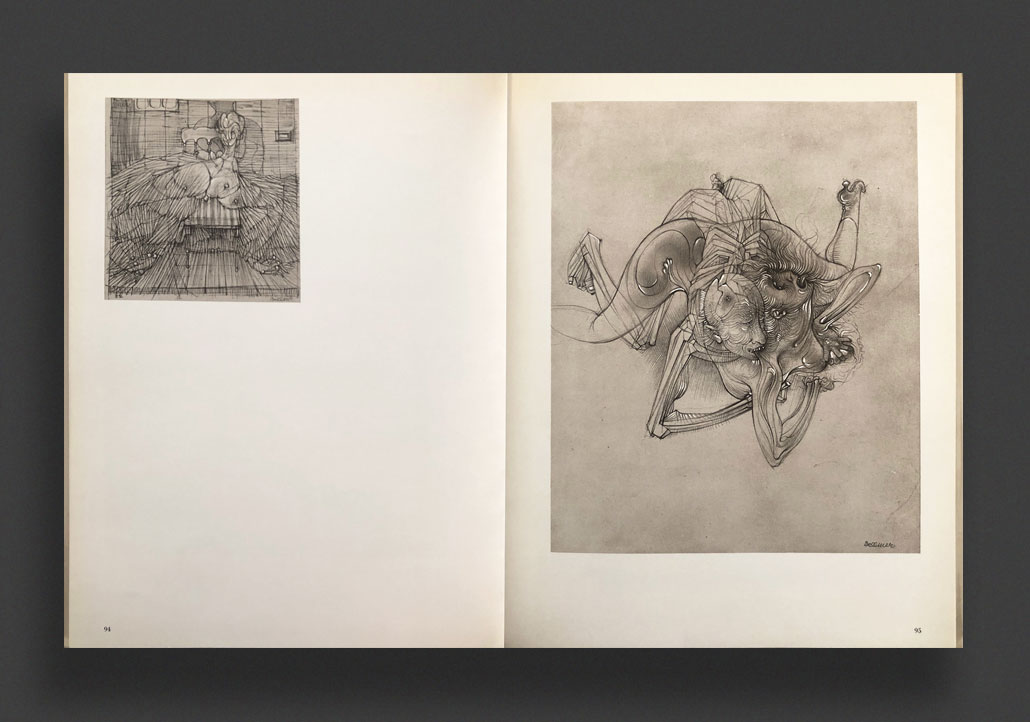
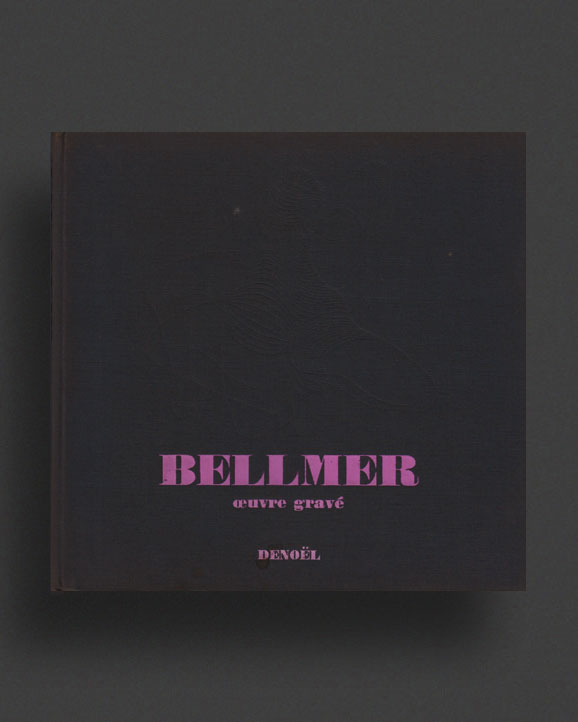
Beautiful 1985 Japanese edition of Georges Bataille's Madame Edwarda, illustrated throughout with all the original illustrations by Hans Bellmer. Madame Edwarda first appeared in Paris under Georges Bataille's pseudonym Pierre Angelique in two small underground editions in 1941 and 1945. It was finally published under Bataille's own name by the publishing house of Jacques Pauvert in 1956. Translated here by Kosaku Ikuta, all illustrations by German artist Hans Bellmer, complete with inserted preface booklet by Georges Bataille and additional insert of publisher's catalogue.
In Madame Edwarda, a man becomes erotically obsessed with an old whore who turns out to be God. Bataille's erotic prose fuses elements of sex and spirituality in a highly personal vision of the flesh. A world of sensation in which only the vaulting demands of disruptive excess and the anguish of heightened awareness can combat the stultifying world of reason and social order. Intoxication and insanity are so carefully delineated by the author that it seems to infect the reader.
"Madame Edwarda's truth consists in confronting us with an obvious scandal that we wouldn't even know where to place. We could incriminate her words: there have never been such rigorous ones; or the circumstances, the fact that Madame Edwarda is a brothel whore, but this, indeed, it could be reassuring; or even that certain details, which must be said to be obscene, are so with a necessity that ennobles them and makes them inevitable, not so much in the name of art, but for a perhaps moral, perhaps fundamental need. (...) That the most incongruous of books, as Georges Bataille defines it in his preface, is also the most beautiful book, and perhaps the most tender, is above all scandalous."—Maurice Blanchot
Very Good copy throughout, only light cover wear/tanning.
1972, English
Hardcover (w. dust jacket), 138 pages, 20.5 x 13.5 cm
1st Edition, Out of print title / used / very good
Published by
Jonathan Cape / London
$120.00 - Out of stock
Rare 1972 hardcover first edition of Georges Bataille's My Mother, published by Jonathan Cape, London, translated to English from the French by Austryn Wainhouse. Ma Mère was the first of Bataille's novels to appear in Britain. My Mother is a frank and intense depiction of a young man's sexual initiation and corruption by his mother, where the profane becomes sacred, and intense experience is shown as the only way to transcend the boundaries of society and morality. Georges Bataille was obsessed by the paradox contained in passion, the presence of joy in terror, pleasure in suffering and compulsion in repulsion. His dark and anguished study is a minor erotic masterpiece.
Georges Bataille (1897—1962) was a French philosopher, essayist and novelist, often called the "metaphysician of evil." Born in Billom, France, he converted to Catholicism, then later to Marxism. Bataille was involved on the fringes of Surrealism, f1972ounding the Surrealist magazine Documents in 1929, and editing the literary review Critique from 1946 until his death. Leading a simple life as the curator of a municipal library, Bataille wrote some of France's most famous forbidden books, and has become known as a forefather the "literature of transgression". Interested in sex, death, degradation, mysticism and the power and potential of the obscene, he rejected traditional literature and considered that the ultimate aim of all intellectual, artistic, or religious activity should be the annihilation of the rational individual in a violent, transcendental act of communion. Fascinated by human sacrifice, he founded a secret society, Acéphale, alongside André Masson, Pierre Klossowski, Roger Caillois, and others. Roland Barthes, Julia Kristeva, and Philippe Sollers have all written enthusiastically about Bataille's work.
Very Good copy in VG dust jacket with minor wear and tear.
1998, German
Hardcover (w. dust jacket), 118 pages, 30.5 x 28.5 cm
1st Edition, Out of print title / used / very good
Published by
Taschen / Cologne
$70.00 - Out of stock
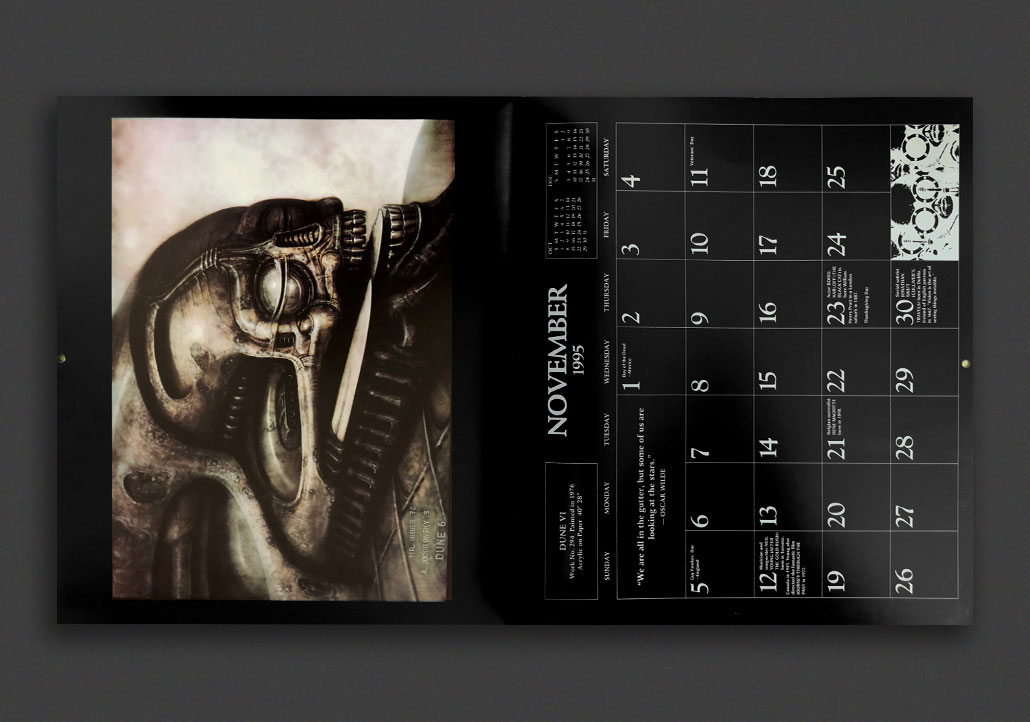
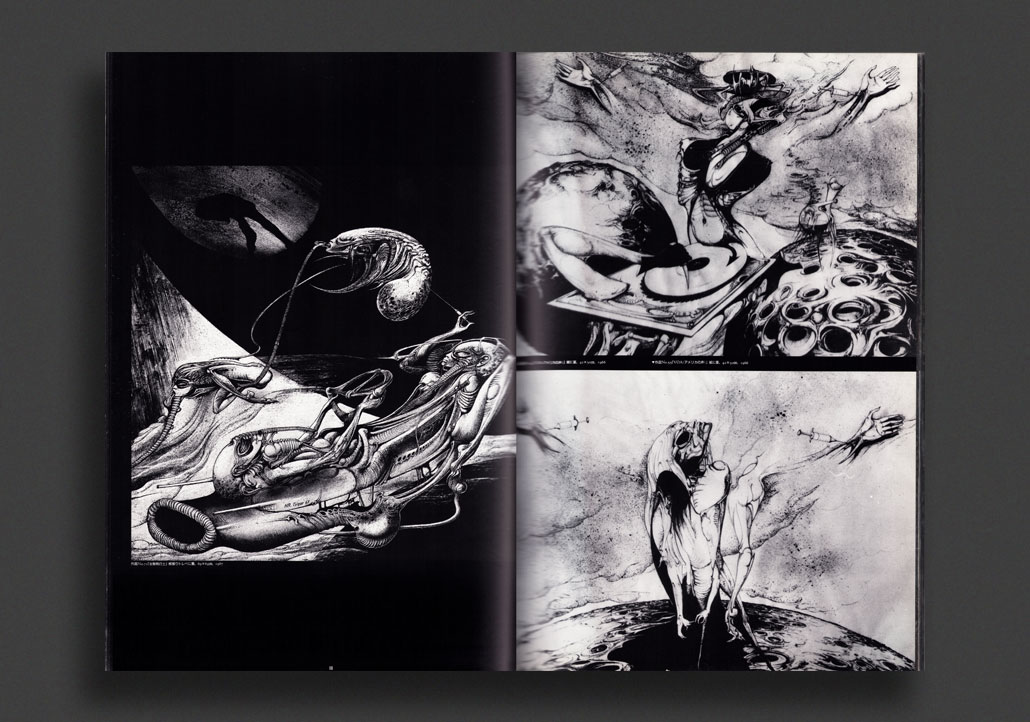
First 1998 hardcover edition of Giger's unrealised film masterpiece. The Mystery of San Gottardo exhaustively collates illustrations, texts, photographs, letters, and notes from a covert, personal project that Giger had been striving to realise for over three decades. “A unique love story… about a man and his love for a freak of nature, Armbeinda, which is really a sentient limb combining an arm and a leg. It is the further development of a recurring image in my work over the last 30 years”, a concept that stemmed from a 1963 creation called "The Beggar," Giger's very first sketch, featuring a leg and an arm holding a hat.
From the publisher:
"The dark king of the horrific, fantastic and bizarrely erotic, Swiss artist Giger might have languished in obscurity, such is the uncompromising vision of his work. However, in the late Seventies Hollywood came calling and his legendary designs for the Alien trilogy propelled him towards international fame and an Oscar. But Allen's Face-hugger, Chestburster and the reptilian Xenomorph are only a few visitors from Giger's monstrous universe. This latest book exhaustively collates illustrations, texts, photographs, letters, and notes from a covert, personal project that Giger has been striving to realise for over three decades. In a story mixing disturbing body horror and old-fashioned adventure tales, Giger illustrates the surreal science-fiction of a dystopian Switzerland where man is rendered into three bio-mechanical life-forms at the age of 60. The sexually insatiable arm-leg creature which rampages throughout this volume must rate as one of Giger's most grotesque creations. After being distracted by Hollywood for far too long, in this book Giger presents his latest outlandish and extraordinary visual excursion, a death-driving nightmare that will continue to unspool in your head long after you've closed the covers."
Highly recommended.
VG copy in G dust jacket with tanning to spine edge a ding to back.
1974, English
Softcover, 256 pages, 17.8 x 12.7 cm
1st Edition, Out of print title / used / good
Published by
Pelican / London
$30.00 - In stock -
First 1974 edition of Film And Reality: A Historical Survey by Roy Armes.
"Most contemporary film criticism does not take into account the relationship between artistic achievement and the historical context. Film and Reality sets out to redress the balance by offering both a broad outline of the cinema's development and a framework within which critical judgements can be made. Roy Armes explores in this book the varying relationships between image and reality in films from Lumière to the present.
The author first looks at film realism - from the early documentaries of Vertov and Flaherty to cinema-verité - and at the progress of fictional realism - from Stroheim's silent masterpiece, Greed, to the films of Renoir, Rossellini and the television work of Kenneth Loach. In the second part of his book he considers Hollywood and film illusion, showing how The work of Griffith and Chaplin finally gave place to a formalized system of studios, stars and genres. The book concludes with a discussion about the growth of film modernism and demonstrates how film, as a new and important twentieth-century art form closely related to such movements as Expressionism and Surrealism, has found its place as a genuinely new form of expression alongside the novel and the theatre."
The cover shows a still from Buñuel's 'Un Chien Andalou'
Roy Armes (b. 1937) is a British professor emeritus and film scholar who has written numerous books on the history of filmmaking and select filmmakers. He wrote a treatise on the film Omar Gatlato and books on Alain Robbe-Grillet and Alain Resnais.
Good copy, average wear to covers and spine, toning to pages.
1975, English
Softcover, 208 pages, 24 x 16 cm
1st Edition, Out of print title / used / good
Published by
New York Graphic Society / Boston
$25.00 - Out of stock
First major English-language monographic study on the brilliant Man Ray, by close friend Roland Penrose, published by the New York Graphic Society in Boston, 1975.
Since before World War I, Man Ray has stood at the center of European and American modernismas a painter, conjurer of magical and poetic objects, inventor, and photographer. Few contemporary artists have played such a vital role in the creation of imaginative visual realities.
Although Man Ray was born in America, he has lived most of his adult life in France, and as a result, he is generally thought of as a European artist, especially since he was a central figure in the Surrealist movement. He is, however, an essential precursor of contemporary American art.
Man Ray has always been a pioneering artist: in combining photography and painting, something later taken up by such artists as Rauschenberg and Warhol; in his creation of enigmatic and mysterious, humorous and unpretentious surrealist objects; in anticipating Abstract Expressionism with his "drip" paintings; in manipulating scale, echoed today in the work of Oldenburg; in his "wrapped objects," done a half century before Christo's works.
The influence of Man Ray continues to increase. Its most important aspects transcend individual paintings, objects, or photographs. Its virtue lies not only in the new techniques he has mastered but also in his subtle and disturbing probes into the very nature of life and in the directness and surprise of his inventions. His genius is a kind of liberating poetry he instills into the heart of artistic activity.
Roland Penrose has been a close friend of the artist for almost fifty years. This is the first major monograph ever published on Man Ray, and for it Penrose has created an absorbing narrative about the life of his friend, about his work and about his steady presence at the flash point of twentieth-century contemporary art. As the organizer of the International Surrealist Exhibition in London, in 1936, where Man Ray's work was shown in England for the first time, and as a Surrealist painter himself, Roland Penrose writes from a unique vantage point of the work and life of a modern genius.
Good—VG copy, with general light wear/toning/marking with age.
?, Japanese
Softcover, 72 pages, 20 x 20 cm
1st Edition, Out of print title / used / very good
Published by
Art Space Mireiju / Tokyo
$70.00 - In stock -
Scarce Japanese exhibition catalogue published by Art Space Mireiju, in Shibuya, on the occasion of a major exhibition of French Surrealist artist Pierre Molinier's fetishistic gender-bending paintings, photomontages, and drawings. Alongside b/w reproductions of many of his works are many texts in Japanese, a testimony from Emmanuel Arson, hommages from Japanese artists and poets inspired by Molinier, Breton translations from French, chronology, bibliography, and more. Contributions from master Japanese doll artist Simon Yotsuya in discussion with the book's editor Kunio Iwaya, a Japanese art critic and scholar specializing in surrealism and fairy tales, who also contributed a major essay, and an introduction by Japanese novelist, art critic, translator of French literature and student of demonology, Tatsuhiko Shibusawa.
Pierre Molinier (1900—1976) was a French painter, photographer and a forerunner of gender performance art and Body Art (Art corporel). Molinier spent much of his artistic life working in isolation in Bordeaux, exiled from local and national art scenes. Born in Agen, nothing had predestined Molinier to a life as an artist. Self-taught, from a working-class background, he followed in his father’s footsteps and started out as a house painter. He got married and had two children. Tired of his infidelities and provocative behaviour, his wife left their marital home an in 1950 and Molinier begun photographing himself seriously, staging his own death and erecting a fake gravestone proudly declaring himself ‘a man without morals’. He was thrown out of the Bordeaux Salon des Indépendants as early as 1951 amidst controversy over his orgiastic painting of the same year, Le Grand Combat. Stirring up an obsessive correspondence with the anarchic poet-founder of Surrealism, André Breton, Molinier was soon integrated into the Surrealist group with a solo exhibition at Breton’s Paris gallery in 1956. Molinier’s anti-moral project appealed to the group’s interest in repressed desires, fetishism, and the transgression of bourgeois morals. In 1959, he exhibited at the Exposition International du Surrealism in Paris. From the mid-1960s Molinier chronicled the exploration of his subconscious transsexual desires in "Cent Photographies Erotiques": graphically detailed images of pain and pleasure. Cut-up, reassembled, and manipulated, Molinier painstakingly created elaborate and sensual photomontages in which he assumed the roles of dominatrix and succuba previously taken by the women of his paintings. Either alone with doll-like mannequins or with female models such as German sadomasochist Hanel Koeck, Molinier, who considered himself fundamentally androgynous, appears as a transvestite, employing his body and that of his acquaintances to create visions of hybrid identity, where stockinged multi-limbed, multi-sexed beings imitate pagan figures, Hindu gods, and Masonic symbols, in a rejection of a Christian tradition which he argued, had repressed androgyny. Designed to shock, Molinier’s artwork represented a very intimate disclosure about his own sexual ambiguity, inviting the viewer to bring to the images his or her own response of excitement or disgust. The degree of his artistic perversity and blasphemous tendencies was deemed too much for the French cultural elite, and the man Breton dubbed the “magician of erotic art” was shunned from the art world. Molinier did not participate in the 1965 International Surrealist Exhibition. For the last 11 years of his life Molinier played out his own most profound moments in the 'theatre' of his Bordeaux 'boudoir – atelier'. He committed suicide in 1976, shooting himself with a pistol, something he had foreshadowed in his artwork, time and again. Essentially a leg fetishist, but also considering himself as a shaman, facetious and provocative, anti-bourgeois and anti-religious, Molinier enjoyed transgressing gender identification : his outstanding photographs greatly influenced the European and North American Body Art in the 1970s and continue to fascinate artists today.
Very Good copy with some spine tanning.
1969, French
Hardcover (w. dust jacket), 92 pages, 20 x 19 cm
1st Edition, Out of print title / used / very good
Published by
Jean-Jacques Pauvert / Paris
$70.00 - In stock -
Excellent copy of the first monograph ever published on the work of Pierre Molinier, published by the great Jean-Jacques Pauvert in Paris, 1969. The only book published on his work while Molinier was alive. Profusely illustrated throughout in colour and b/w with Molinier's fetishistic gender-bending paintings, photomontages, drawings, and much more. Features texts by Andre Breton and Emmanuelle Arsan, also bibliography and biography. Texts in French.
Pierre Molinier (1900—1976) was a French painter, photographer and a forerunner of gender performance art and Body Art (Art corporel). Molinier spent much of his artistic life working in isolation in Bordeaux, exiled from local and national art scenes. Born in Agen, nothing had predestined Molinier to a life as an artist. Self-taught, from a working-class background, he followed in his father’s footsteps and started out as a house painter. He got married and had two children. Tired of his infidelities and provocative behaviour, his wife left their marital home an in 1950 and Molinier begun photographing himself seriously, staging his own death and erecting a fake gravestone proudly declaring himself ‘a man without morals’. He was thrown out of the Bordeaux Salon des Indépendants as early as 1951 amidst controversy over his orgiastic painting of the same year, Le Grand Combat. Stirring up an obsessive correspondence with the anarchic poet-founder of Surrealism, André Breton, Molinier was soon integrated into the Surrealist group with a solo exhibition at Breton’s Paris gallery in 1956. Molinier’s anti-moral project appealed to the group’s interest in repressed desires, fetishism, and the transgression of bourgeois morals. In 1959, he exhibited at the Exposition International du Surrealism in Paris. From the mid-1960s Molinier chronicled the exploration of his subconscious transsexual desires in "Cent Photographies Erotiques": graphically detailed images of pain and pleasure. Cut-up, reassembled, and manipulated, Molinier painstakingly created elaborate and sensual photomontages in which he assumed the roles of dominatrix and succuba previously taken by the women of his paintings. Either alone with doll-like mannequins or with female models such as German sadomasochist Hanel Koeck, Molinier, who considered himself fundamentally androgynous, appears as a transvestite, employing his body and that of his acquaintances to create visions of hybrid identity, where stockinged multi-limbed, multi-sexed beings imitate pagan figures, Hindu gods, and Masonic symbols, in a rejection of a Christian tradition which he argued, had repressed androgyny. Designed to shock, Molinier’s artwork represented a very intimate disclosure about his own sexual ambiguity, inviting the viewer to bring to the images his or her own response of excitement or disgust. The degree of his artistic perversity and blasphemous tendencies was deemed too much for the French cultural elite, and the man Breton dubbed the “magician of erotic art” was shunned from the art world. Molinier did not participate in the 1965 International Surrealist Exhibition. For the last 11 years of his life Molinier played out his own most profound moments in the 'theatre' of his Bordeaux 'boudoir – atelier'. He committed suicide in 1976, shooting himself with a pistol, something he had foreshadowed in his artwork, time and again. Essentially a leg fetishist, but also considering himself as a shaman, facetious and provocative, anti-bourgeois and anti-religious, Molinier enjoyed transgressing gender identification : his outstanding photographs greatly influenced the European and North American Body Art in the 1970s and continue to fascinate artists today.
Very Good copy in VG dust jacket, preserved under mylar wrap.
2010, English
Hardcover, 400 pages, 24 x 31 cm
Published by
Les Presses Du Reel / Paris
Mennour / Paris
$150.00 - In stock -
The Molinier bible! A mammoth, crucial 400 page book on the method and genesis of Pierre Molinier's provocative, gender-bending photos and artwork. Beautifully printed and prodigiously illustrated with over 800 pictures, mostly unpublished, numerous documents, manuscripts and letters, a complete (nearly 100-page) chronology, a critical biography, and a text by Jean-Luc Mercié.Molinier. Essential publication on Molinier, the most comprehensive to date, and a must for any fan.
Rare English edition translated from the French by Edward Penwarden.
Pierre Molinier is an unknown of worldwide renown. Every book and every exhibition on the body, gender confusion or sexual excess seems to feature at least one work by this artist whose “genius” was acclaimed by André Breton in a memorable text published in 1956. But the bulk of his work has remained inaccessible. A number of pictures have never been shown and a corpus of only 160 prints has been published. The ensemble revealed by the artist's archives is much more extensive. It includes numerous proofs made to prepare his photomontages and working prints given to friends, but also notebooks and personal letters. Here, precise links emerge between his paintings, photographs and scandalous life. The myth carefully constructed by the artist begins to crumble before the reality of the work.
An inveterate seducer, thoroughgoing fetishist, unrepentant transvestite and inadvertent bisexual, to the very last Molinier remained haunted by two obsessions: pleasure, meaning immediate access to la petite mort, and “leaving a trace in the infinity of time.” This book charts the aesthetic incarnation of his passions. Its 819 photographs, most of them never published before, reveal the method, shed light on the procedures and give details of the origin and alchemy of his latent or composed images. Finally, an exhaustive chronology offers a new biography of Molinier, based on his letters: for it is in the intimacy of these writings that the shaman's heart beats closest to the truth.
In a career shared between the university (fifteen years) and publishing (twenty) Jean-Luc Mercié has written widely on painting and photography. This monograph is his fourth book about Pierre Molinier, the master from Bordeaux.
Born 1900 in Agen (France), Pierre Molinier, surrealistic painter and photographer, a precursor to body art, died in 1976 after having thought out radical and pornographic artwork.
1979, English
Softcover, 72 pages, 30 x 24 cm
1st Edition, Out of print title / used / average
Published by
Editions Filipacchi / Paris
$45.00 - In stock -
First 1979 softcover English-edition of the great Editions Filipacchi monograph on artist Dorothea Tanning. Profusely illustrated with Tanning's incredible paintings in colour and b/w, accompanied by photography, biography and texts in English by author Gilles Plazy.
Dorothea Tanning (1910–2012) was born in the United States in the town of Galesburg, Illinois to Swedish émigré parents. Largely self-taught as an artist, Tanning moved to New York in 1935 where she began working as a freelance illustrator, creating advertisement designs for Macy’s department store and other clients. In 1936 she visited the ground-breaking MoMA exhibition Fantastic Art, Dada, Surrealism. Surrealism had a profound effect on her. Travelling to France in July 1939, she found a country on the brink of war and Paris empty of the artists with whom she had hoped to be acquainted. Refugees from Nazi occupied France, she would meet the surrealists back in New York through her first art dealer, Julien Levy. Late in 1942 Max Ernst visited her studio, saw a painting, (Birthday), and stayed to play chess. In a double wedding with artist Man Ray and dancer Juliet P. Browner, Tanning and Ernst married in October 1946. They would have 34 years together, moving to the town of Sedona, Arizona, to build a house set within a group of huge red rocks in the Verde Valley. Sedona captivated Tanning’s imagination. Here she would continue to write and paint her enigmatic versions of life on the inside, looking out. By 1956 Max and Dorothea had moved to France. Around 1955 Tanning’s paintings moved away from meticulously rendered figurative dreamscapes, increasingly employing confident gestural flow and movement in the wake of her work as a costume and stage designer for the ballets of the Russian choreographer George Blanchine – Night Shadow (1946), The Witch (1950) and Bayou (1952). In the late 1960s Tanning’s practice shifted once again, moving from drawing, design and painting to three-dimensional sculptural works fashioned from soft textiles and found items. When Ernst died in Paris in 1976, Tanning was bereft. ‘There is no light in the studio,’ she wrote, ‘nothing moves and the colored jokes are fading fast. The disorder is grievous. (Is the heart condemned to break each day?)'. In 1979 Tanning began her return to New York, where she gave full rein to her long felt compulsion to write. Her published works include two memoirs, Birthday and Between Lives, a collection of poems, A Table of Content, and a novel, Chasm. Tanning died in New York on 21 January 2012, aged 101.
Average—Good copy with cover laminate slightly separating at the extremities and upon any creases. Bump to top right corner, light tanning/foxing.
2021, English
Hardcover, 192 pages, 17.2 x 19.8 cm
Published by
Atlas Press / London
$50.00 - In stock -
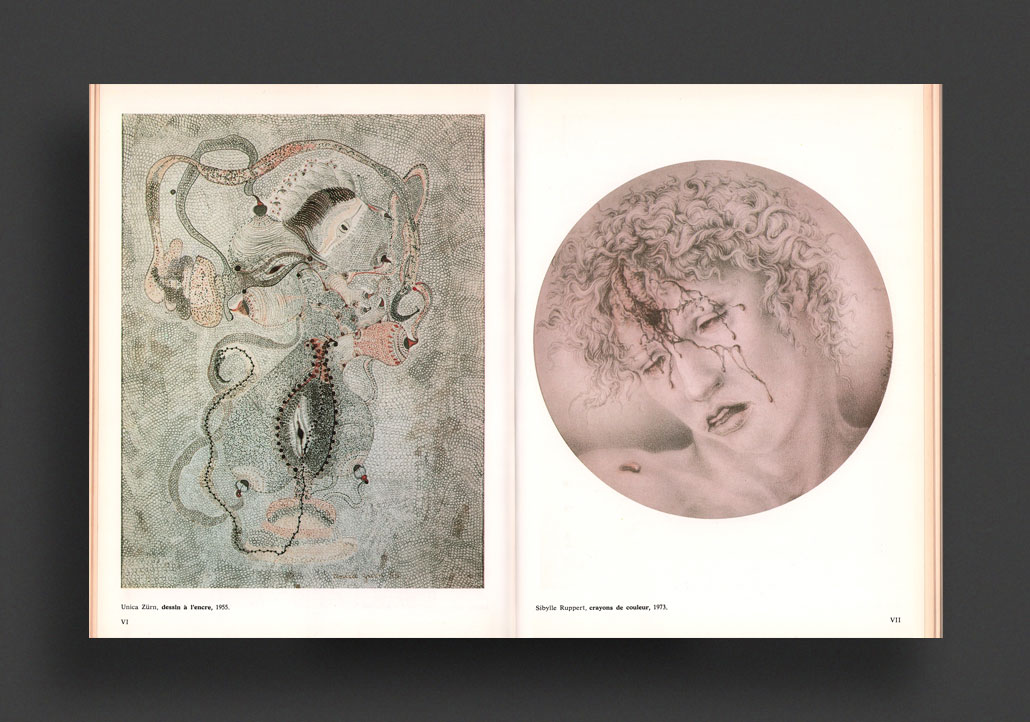
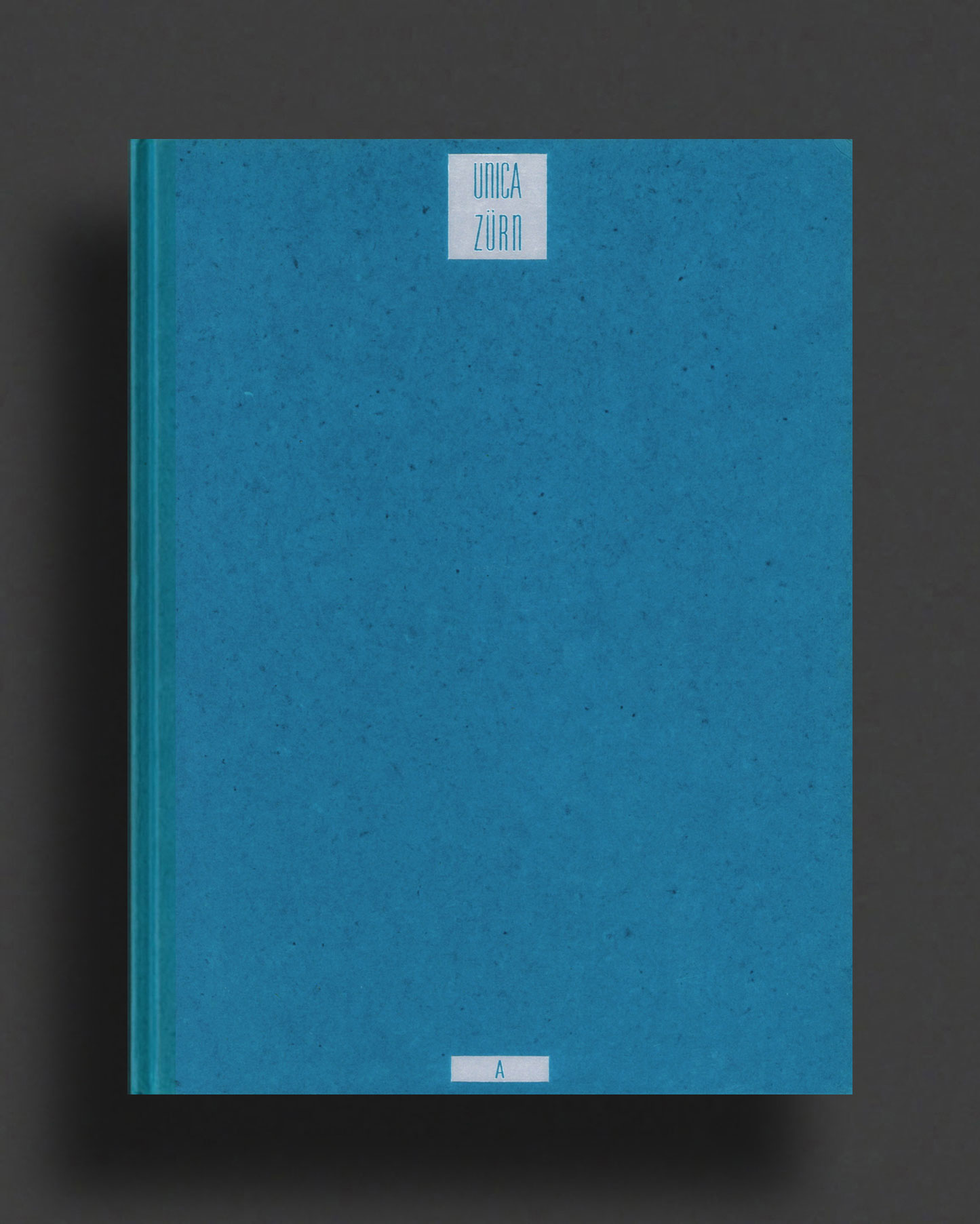
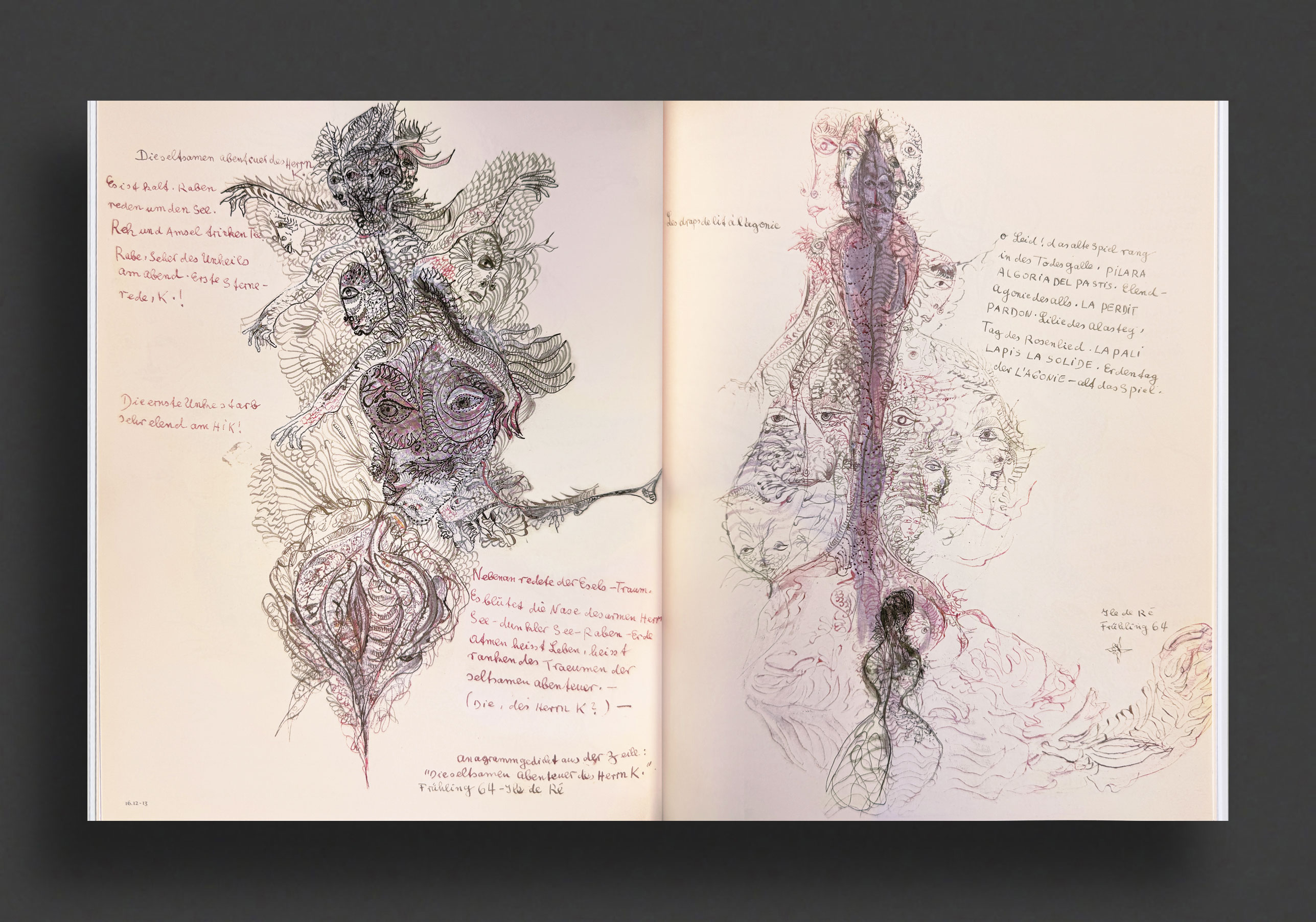
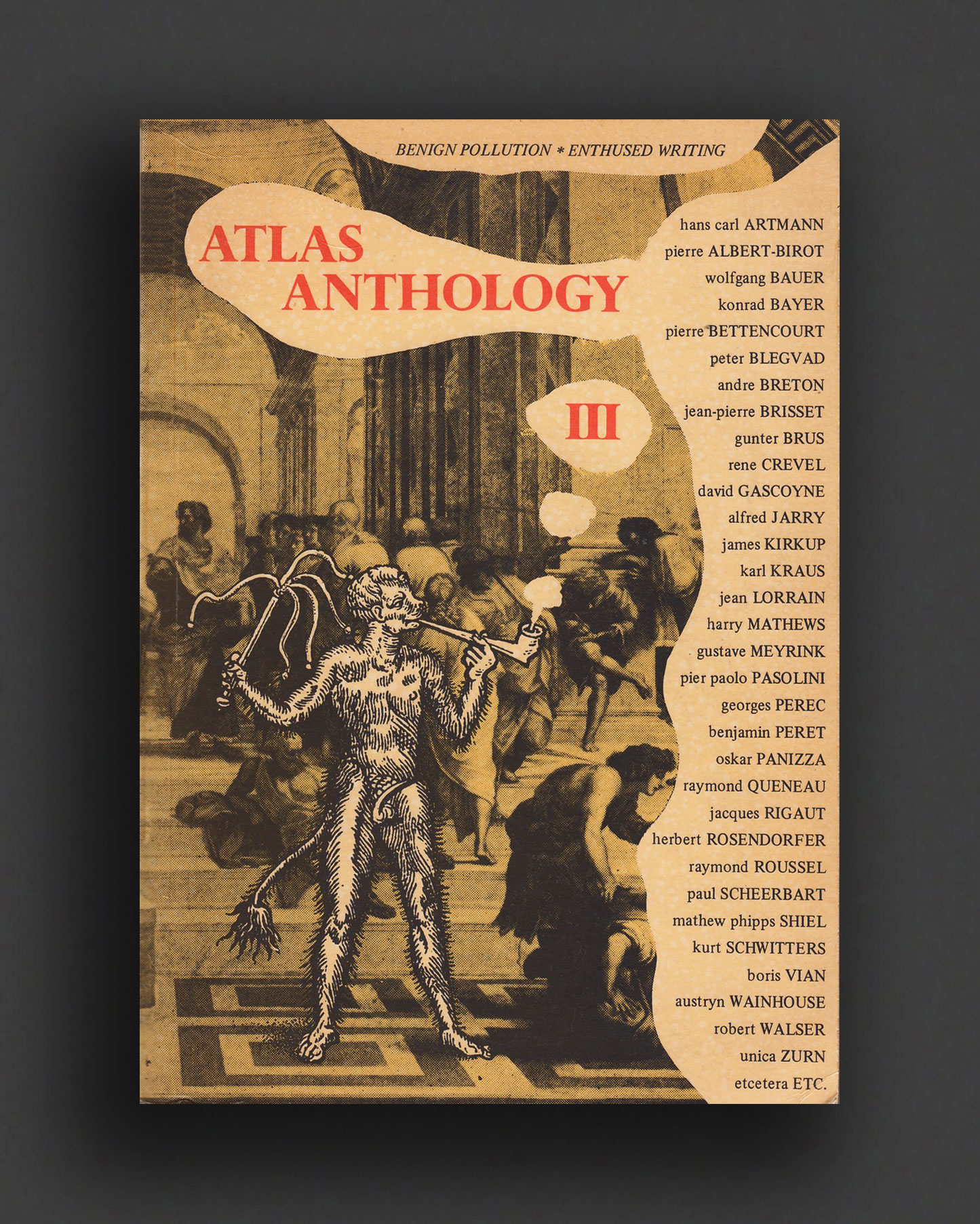
Unica Zürn’s celebrated autobiography, plus the greatest of her short fictional texts, edited and in a revised by translation by Malcolm Green.
In the 25 years since Atlas Press first published this account by Unica Zürn of her long history of mental crises, she has come to be recognised as a great artist at least the equal of her partner, the Surrealist Hans Bellmer.
Yet her work is barely comprehensible without the texts printed here, in which she demonstrates how her familiarity with Surrealist conceptions of the psyche allowed her to welcome the most alarming experiences as offering her access to an inner existence that was the vital source for her artistic output. The introduction here was the first study to consider her life and work from this perspective.
Zürn’s initial mental collapse was initiated when she encountered her fantasy figure “the man of Jasmine” in the real world in the person of the writer Henri Michaux. Her meeting with him plunged her into a world of hallucination in which visions of her desires, anxieties and events from her unresolved past overwhelmed her present life. Her return to “reality” was constantly interrupted by alternate visionary and depressive periods, and her description of these episodes reveals how language itself formed a part of the “divinatory” method that could aid her recovery or predict a new crisis. Her compulsion for composing anagrams allowed her to dissect everyday language so as to release from it an astonishing flood of messages, threats and evocations. This method, if such it can be called, and Zürn’s eloquent yet direct style make this book a masterpiece of literature as well as providing an acute first-hand insight into extreme psychological states.
In 1970 Unica Zürn committed suicide by throwing herself from the sixth-floor apartment that she shared with Bellmer.
2015, English
Softcover, 55 pages, 11.5 x 18 cm
Published by
Wakefield Press / Cambridge
$29.00 - In stock -
This fierce fable of childbirth by German Surrealist Unica Zorn was written after she had already given birth to two children and undergone the self-induced abortion of another in Berlin in the 1950s. Beginning in the relatively straightforward, if disturbing, narrative of a young woman in a tower (with a bat in her hair and ravens for company) engaged in a psychic war with the parasitic son in her belly, The Trumpets of Jericho dissolves into a beautiful nightmare of hypnotic obsession and mythical language, stitched together with anagrams and private ruminations. Arguably Zorn's most extreme experiment in prose, and never before translated into English, this novella dramatizes the frontiers of the body -- its defensive walls as well as its cavities and thresholds -- animating a harrowing and painfully, twistedly honest depiction of motherhood as a breakdown in the distinction between self and other, transposed into the language of darkest fairy tales.
Unica Zorn (1916-70) was born in Grunewald, Germany. Toward the end of World War II, she discovered the realities of the Nazi concentration camps -- a revelation which was to haunt and unsettle her for the rest of her life. After meeting Hans Bellmer in 1953, she followed him to Paris, where she became acquainted with the Surrealists and developed the body of drawings and writings for which she is best remembered: a series of anagram poems, hallucinatory accounts and literary enactments of the mental breakdowns from which she would suffer until her suicide in 1970.
2011, Japanese / Czech
Softcover (w. dust jacket), 180 pages, 23 x 21 cm
1st Edition, Out of print title / used / fine
Published by
Access / Japan
$90.00 - In stock -
Scarce exhibition catalogue surveying the work of Czech Surrealist artists Jan and Eva Švankmajer, published to accompany a major retrospective in Japan in 2011. Eva Švankmajerová (1940 – 2005, b. Eva Dvořáková in Kostelec nad Černými lesy), was a renowned painter, ceramicist, and writer active in the Czech and Slovak Surrealist Group who's poetry and prose regularly appeared in the journal Analogon. Švankmajerová was married to the Surrealist filmmaker Jan Švankmajer (b. Prague, 1934) and collaborated on many of his award-winning animated masterpieces, including Alice (1988), Faust (1994), Conspirators of Pleasure (1996) and Otesánek (2000). Lavishly illustrated throughout, this catalogue includes chapters on Jan and Eva Švankmajer's independent and collaborative works, spanning painting, objects, collage, ceramics, poetry, graphics, and their highly acclaimed animated film works. Also includes Jan Švankmajer's collaboration with Japanese photographer Eikoh Hosoe. Includes detailed history, list of works and accompanying texts, alongside production insights and studio photography.
As New copy.
2011, English
Softcover, 72 pages, 14.7 x 22.4 cm
Published by
Graywolf Press / Washington
$38.00 - In stock -
Still later, when I was more in touch with
the world, they told me, "You have a future."
I thought that over. Even if I believed them,
what did my little future, whatever that was,
have to do with the real thing, whatever that is?
—from "Waiting"
In this second daring collection, Coming to That, the centenarian painter and poet Dorothea Tanning illuminates our understanding of creativity, the impulse to make, and the longevity of art. Her unique wit and candor radiate through every poem, every line, and her inquisitive mind is everywhere alive and restless. As she writes in one poem, "If Art would only talk it would, at last, reveal / itself for what it is, what we all burn to know."
"[Coming to That] is playful and unrestrained, each poem containing a spontaneous logic of its own. . . . Tanning's poems take the reader on unexpected journeys that stray far from their beginnings, moving with the momentum of sheer joy and restless artistic energy. Pulsing underneath are larger questions, sometimes almost bittersweet, sometimes daunting." —Publishers Weekly (starred review)
"Tanning's poems are beautifully created, filled with rich rhythms and imagery. . . . Often ironic and often filled with wisdom and humor, a Tanning poem asks readers to believe in her artistic vision. These are poems of beginnings and choices, of marriage and aging, and of creation--poems still filled with wondering." —Library Journal
"Dorothea Tanning, who has had a long and marvelous life as a visual artist, is our most surprising new poet." —Edward Hirsch, The Washington Post Book World
"Dorothea Tanning's verbal wizardry is a constant surprise, an abiding delight." —J. D. McClatchy
1989, Japanese
Softcover, 208 pages, 13 x 18 cm
1st Edition, Out of print title / used / very good
Published by
Fiction Inc. / Tokyo
$70.00 - In stock -
Issue No.36 of the great SALE2 periodical from Tokyo Japan, founded in 1984 by Makoto Orui, who later became art director for Purple magazine in France and Rockin’on magazine in Japan. SALE2 was active for about 14 years during the 1980s—1990s, published regularly as a sort-of fanzine/journal/catalogue/pocket-book by Fiction, Inc., a specialty shop and publisher of fetish and erotica in Tokyo in the 1980-90s. With Orui's distinct design SALE2 developed an exclusive curated editorial set on ‘erotisism and its spiritual philosophy’, with each issue exploring different themes and features, heavy on fetishism and erotic art.
Issue No.36, the "Female Foot Fetishism Special Issue" with the wonderful wraparound Pierre Molinier cover is packed with imagery and essays around the theme of "Foot and Fetish Heel" throughout history, literature, film and fetish publishing, etc. profusely illustrated with drawings, photography, bondage illustrations, film stills, catalogue clippings, and artworks, including works by Bill Ward, Pierre Molinier, Nobuyoshi Araki, and so many more. It also features the Fiction, Inc. section that samples a cross-section of content from catalogue publications including the work of John Willie, Bill Ward, Carlo, Eric Stanton, Irving Claw, Betty Page, and periodicals such as Rubber Magazine, Amateur Bondage, Bizarre Comix, Bizarre Classix, Bizarre Fotos, Stiletto, and much more... Very heavily illustrated throughout with erotic photography and artwork, all texts in Japanese.
Very Good copy.
2001, English
Softcover, 208 pages, 22 x 13.5 cm
Out of print title / used / very good
Published by
Marion Boyars / London
$25.00 - Out of stock
'Bataille intellectualizes the erotic, as he eroticizes the intellect . . . reading him can be a disturbing kind of game'—The New York Times
'Literature is not innocent,' stated Georges Bataille in this extraordinary 1957 collection of essays, arguing that only by acknowledging its complicity with the knowledge of evil can literature communicate fully and intensely. These literary profiles of eight authors and their work, including Emily Brontë's Wuthering Heights, Baudelaire's Les Fleurs du Mal and the writings of De Sade, Kafka, Blake, Genet, Michelet, Proust and Sartre, explore subjects such as violence, eroticism, childhood, myth and transgression, in a work of rich allusion and powerful argument.
Translated by Alastair Hamilton.
'Bataille is one of the most important writers of the twentieth century'—Michel Foucault
VG copy.
1993, English / German
Softcover (french-folds), 296 pages, 22.5 x 15.5 cm
1st Edition, Out of print title / used / fine
Published by
Verlag Ritter Klagenfurt / Austria
$50.00 - In stock -
Scarce 1993 book compendium of critical theory edited by Georg Schöllhammer and Christian Kravagna, designed by Heimo Zobernig and Florian Pumhösl, featuring texts by Richard Rorty, Paul Freyerabend, Francisco J. Varela, Robert W. Witkin, Barbara Jaffee, Teresa de Lauretis, Jacqueline Rose, Amy Winter, Silvia Eiblmayr, Peter Gorsen, and Douglas Crimp. Text in English and German.
"REAL TEXT forms, so to speak, the "discursive bracket" between the individual parts of the exhibition (REAL SEX, REAL REAL, REAL AIDS). But it is also a separate exhibition part that, with a view to the consequences for art and aesthetics, outlines the philosophical, art historical and epistemological problem horizon of determining the self between the phantasm of identity and absorption into the structures of our highly differentiated society."—(From the foreword by Georg Schöllhammer and Christian Kravagna)
In bi-lingual English/German, contents include:
Richard Rorty: Trotsky and the Wild Orchids; Paul Feyerabend: Art as a natural product; Francisco J. Varela: The body thinks; Robert W. Witkin: From the touch of the ancients to the gaze of modern times; Barbara Jaffee: Modernity and the Promise of Autonomy; Teresa de Lauretis: drive and habit; Jacqueline Rose: Sexuality in View; Amy Winter: The Surrealismus, Lacan, and the metaphor of the woman without a head; Silvia Eiblmayr: The SurrealIstian eroticism with Hans Bellmer; Peter Gorsen: Hans Bellmer-Pierre Molinier; Douglas Crimp: Portraits of people with AIDS.
VG/NF copy.
2025, English
Softcover, 256 pages, 21.6 x 15.24 cm
Published by
City Lights Books / San Francisco
$36.00 - In stock -
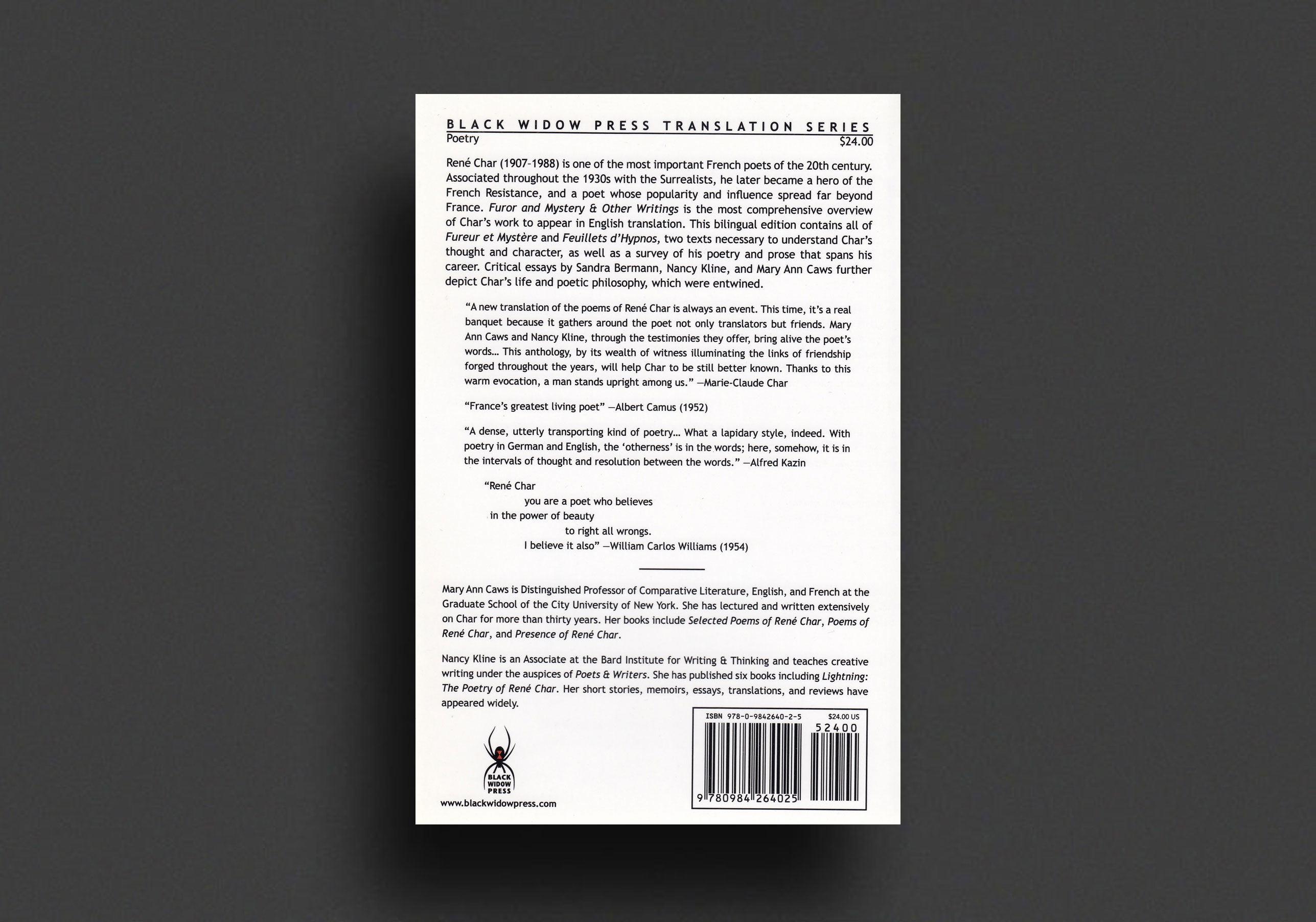
The final book by the founder of Surrealism, translated into English for the first time.
"Cavalier Perspective shows us the lion in winter, Andre Breton near the end of his life, trying to reconcile all the contradictions of his extraordinary career. It is unexpectedly moving to watch him wrestling with his ghosts, aiming for magic, fitting himself uneasily into the new alien landscape of the 1960s."—Lucy Sante, author of I Heard Her Call My Name: A Memoir of Transition
As leader and chief theoretician of Surrealism, director of myriad publications from the 1920s through the 1960s, poet Andre Breton was a prolific writer of prose. Author of numerous books, essays, and manifestoes, Breton periodically collected his most significant short essays into carefully arranged volumes. His last such collection, Cavalier Perspective, appeared posthumously in 1970; in it, editor Marguerite Bonnet assembled "articles, prefaces, responses to surveys, interviews," written between 1952 and 1966. Modeled on its predecessors, Cavalier Perspective is considered Breton's final book.
Over 50 years after its initial publication, its appearance in English today is a crucial cultural event; here we encounter Breton writing on topics nearest to our present day and most relevant to current social and political issues. Cavalier Perspective finds Breton steadfastly pursuing his anti-fascist, anti-colonialist revolutionary aims in the age of weapons of mass destruction, climate change, and space exploration, concerns largely unknown during Surrealism's more notorious interwar period. Far from conceding the movement's claim to contemporary relevance, and pointedly refusing the imposition of "strict temporal limits," Breton insists on Surrealism's dynamic and dialectical position in the book's titular manifesto, asserting its continuity through its perpetual capacity to respond to the needs of the hour.
More than simply a poet and theoretician, Breton is best considered an "inaugurator of discourse" on the level of a Marx or Freud, and Cavalier Perspective is an essential capstone to his lifetime as the guiding hand behind the worldwide surrealist movement.
"Cavalier Perspective ranges over the final phase of André Breton's career; more than just essays, the book collects assorted reportage, interviews, survey responses, and letters--including a number of forewords and prefaces written for other writers' books, offering a balanced portrait of the man who founded and sustained one of the twentieth century's most influential arts movements."—Eric Bies, Asymptote
"Forty essays are shared here, wildly ranging in subject and theme, from prefaces to books by friends, lectures presented at symposiums, ruminations on magic, communism, astrology, the language of stones, the feverish visions of Robert Desnos and Antonin Artaud and everything else in between. Anyone interested in understanding how Dada morphed into Surrealism and how Surrealism morphed into Fluxus, then into pop art, then into conceptual art, and beyond, would be well served by picking up Monsieur Breton's fabulous guided tour to the avant-garde cultural map of the last century."—Donald Brackett, Embodied Meanings: The Brackett Newsletter
"Breton died two years short of May '68 but his principles were under every paving stone. Whether he is citing Aime Césaire's Discourse on Colonialism as a 'pure source' in the struggle against empire, or reasserting his faith that dreams are 'guiding instructions, ' Breton is clearer than ever here. Cavalier Perspective also contains my favorite Breton quote about writing: 'in relation to everything that could be considered aberrant and unbearable, it should from the outset demonstrate a desire to intervene.'"—Sasha Frere-Jones, author of Earlier
"Cavalier Perspective is André Breton's last book, sensitively assembled by his friend Marguerite Bonnet from occasional texts written during the final decade and a half of his life. It shows him as a significant chronicler of his age, one who was fully engaged with the issues of his time, many of which are still of relevance and vital importance for us today."—Michael Richardson, general editor of The International Encyclopedia of Surrealism
"Addressing all the major themes that preoccupied Breton throughout his career—from Trotskyism and anti-colonialism to anti-rationalism, the role of the marvelous, and the 'complete liberation of poetry and, through it, of life'—these late essays amount to the last word of one of the most influential aesthetic minds of the 20th century. They also give us a vivid portrait of an age drawn through the arts and artists that so profoundly marked it. Austin Carder has performed a monster feat of translation here, catching every nuance of Breton's sinuous, faceted thinking, and Garrett Caples' substantial introduction draws on his extensive scholarship to give the reader the historical, political, and social background necessary to grasp its intricacies and impact."—Cole Swensen, author of And And And
"André Breton within his penultimate range of living issued fumes from a monument of orchids sans Metropolitan concrete and anguish. Via Cavalier Perspective (this belatedly translated voltage) he thrives within waves of his immeasurable aural spell. The latter by means of a blinding convoluted majestic that simultaneously transmutes by means of interior eddy. Within this mesmeric conjointment he powerfully witnesses Artaud, magnifying their mutually thriving poetic identity not unlike magically etched lightning by psychically seeded weather. This interior tenor pervades Cavalier Perspective as it persists by inner lingual leap, always hailing beyond tendentious rationality, the latter charred by delimited lingual essence. Within its refracted state of fractional detritus, its intent is infected by fossilized tenor weighed as it is by linear clotting. Thus the latter state attempts to retain its lostness vis-á-vis instillment by magnification as history."—Will Alexander, author of Divine Blue Light (For John Coltrane)
Founder, leader, and chief theoretician of the surrealist movement, the poet Andre Breton with Philippe Soupault and Louis Aragon, and helped form a French contingent of Dada under the leadership of Tristan Tzara. But already Breton and his friends were moving beyond the absolute negation of Dada to Surrealism, a movement rooted in pure psychic automatism, desire, chance, poetry, and the marvelous. Under Breton's leadership, Surrealism became the most vital European avant-garde of interwar high modernism, its influence extending to Egypt, Japan, and the Caribbean. Exiled to the United States during the Second World War, due to the Nazi occupation, Breton would return to Paris in 1945 and continue to lead the movement until his death in 1966.
1980, Japanese / French
Softcover (w. dust jacket + lithograph + appendix), unpaginated, 25.5 x 17.6 cm
1st Edition, Out of print title / used / fine
Published by
Gakutokan / Japan
$200.00 - Out of stock
Rare 1980 hand-numbered, limited edition of Pierre Molinier's Studio, an exquisite book of Molinier's fetishistic gender-bending paintings, photomontages, and drawings, with texts by André Breton, translated from French to Japanese by Kosaku Ikuta, imagery from "Molinier" (1966) film by Raymond Borde, beautifully designed and printed in Japan where Molinier's artworks had a particular resonance. This hand-numbered edition (of 970 copies) features inlayed plate to dust-jacket, added appendix booklet, and the very rare lithographic insert of Molinier's "Réveil de l'Ange" etching, just as the first copies of André Breton and Raymond Borde's book published in 1964 by Terrain Vague included (dimension: (25.2 x 16.6 cm).
Pierre Molinier (1900—1976) was a French painter, photographer and a forerunner of gender performance art and Body Art (Art corporel). Molinier spent much of his artistic life working in isolation in Bordeaux, exiled from local and national art scenes. Born in Agen, nothing had predestined Molinier to a life as an artist. Self-taught, from a working-class background, he followed in his father’s footsteps and started out as a house painter. He got married and had two children. Tired of his infidelities and provocative behaviour, his wife left their marital home an in 1950 and Molinier begun photographing himself seriously, staging his own death and erecting a fake gravestone proudly declaring himself ‘a man without morals’. He was thrown out of the Bordeaux Salon des Indépendants as early as 1951 amidst controversy over his orgiastic painting of the same year, Le Grand Combat. Stirring up an obsessive correspondence with the anarchic poet-founder of Surrealism, André Breton, Molinier was soon integrated into the Surrealist group with a solo exhibition at Breton’s Paris gallery in 1956. Molinier’s anti-moral project appealed to the group’s interest in repressed desires, fetishism, and the transgression of bourgeois morals. In 1959, he exhibited at the Exposition International du Surrealism in Paris. From the mid-1960s Molinier chronicled the exploration of his subconscious transsexual desires in "Cent Photographies Erotiques": graphically detailed images of pain and pleasure. Cut-up, reassembled, and manipulated, Molinier painstakingly created elaborate and sensual photomontages in which he assumed the roles of dominatrix and succuba previously taken by the women of his paintings. Either alone with doll-like mannequins or with female models such as German sadomasochist Hanel Koeck, Molinier, who considered himself fundamentally androgynous, appears as a transvestite, employing his body and that of his acquaintances to create visions of hybrid identity, where stockinged multi-limbed, multi-sexed beings imitate pagan figures, Hindu gods, and Masonic symbols, in a rejection of a Christian tradition which he argued, had repressed androgyny. Designed to shock, Molinier’s artwork represented a very intimate disclosure about his own sexual ambiguity, inviting the viewer to bring to the images his or her own response of excitement or disgust. The degree of his artistic perversity and blasphemous tendencies was deemed too much for the French cultural elite, and the man Breton dubbed the “magician of erotic art” was shunned from the art world. Molinier did not participate in the 1965 International Surrealist Exhibition. For the last 11 years of his life Molinier played out his own most profound moments in the 'theatre' of his Bordeaux 'boudoir – atelier'. He committed suicide in 1976, shooting himself with a pistol, something he had foreshadowed in his artwork, time and again. Essentially a leg fetishist, but also considering himself as a shaman, facetious and provocative, anti-bourgeois and anti-religious, Molinier enjoyed transgressing gender identification : his outstanding photographs greatly influenced the European and North American Body Art in the 1970s and continue to fascinate artists today.
Very Good—Near Fine copy in VG dust jacket with VG-NF lithograph and appendix.
1989, Japanese
Softcover (w. dust jacket and original plastic wrap), 80 pages, 22.8 x 16.3 cm
1st Edition, Out of print title / used / very good
Published by
Gakutokan / Japan
$90.00 - Out of stock
First edition of The World of Pierre Molinier, published in 1989 in Japan. An exquisite book of Molinier's fetishistic gender-bending paintings, photomontages, and drawings, fittingly wrapped in "stocking" dust jacket, with texts by André Breton, translated from French to Japanese by Kosaku Ikuta, imagery from "Molinier" (1966) film by Raymond Borde, beautifully designed and printed in Japan where Molinier's artworks had a particular resonance.
Pierre Molinier (1900—1976) was a French painter, photographer and a forerunner of gender performance art and Body Art (Art corporel). Molinier spent much of his artistic life working in isolation in Bordeaux, exiled from local and national art scenes. Born in Agen, nothing had predestined Molinier to a life as an artist. Self-taught, from a working-class background, he followed in his father’s footsteps and started out as a house painter. He got married and had two children. Tired of his infidelities and provocative behaviour, his wife left their marital home an in 1950 and Molinier begun photographing himself seriously, staging his own death and erecting a fake gravestone proudly declaring himself ‘a man without morals’. He was thrown out of the Bordeaux Salon des Indépendants as early as 1951 amidst controversy over his orgiastic painting of the same year, Le Grand Combat. Stirring up an obsessive correspondence with the anarchic poet-founder of Surrealism, André Breton, Molinier was soon integrated into the Surrealist group with a solo exhibition at Breton’s Paris gallery in 1956. Molinier’s anti-moral project appealed to the group’s interest in repressed desires, fetishism, and the transgression of bourgeois morals. In 1959, he exhibited at the Exposition International du Surrealism in Paris. From the mid-1960s Molinier chronicled the exploration of his subconscious transsexual desires in "Cent Photographies Erotiques": graphically detailed images of pain and pleasure. Cut-up, reassembled, and manipulated, Molinier painstakingly created elaborate and sensual photomontages in which he assumed the roles of dominatrix and succuba previously taken by the women of his paintings. Either alone with doll-like mannequins or with female models such as German sadomasochist Hanel Koeck, Molinier, who considered himself fundamentally androgynous, appears as a transvestite, employing his body and that of his acquaintances to create visions of hybrid identity, where stockinged multi-limbed, multi-sexed beings imitate pagan figures, Hindu gods, and Masonic symbols, in a rejection of a Christian tradition which he argued, had repressed androgyny. Designed to shock, Molinier’s artwork represented a very intimate disclosure about his own sexual ambiguity, inviting the viewer to bring to the images his or her own response of excitement or disgust. The degree of his artistic perversity and blasphemous tendencies was deemed too much for the French cultural elite, and the man Breton dubbed the “magician of erotic art” was shunned from the art world. Molinier did not participate in the 1965 International Surrealist Exhibition. For the last 11 years of his life Molinier played out his own most profound moments in the 'theatre' of his Bordeaux 'boudoir – atelier'. He committed suicide in 1976, shooting himself with a pistol, something he had foreshadowed in his artwork, time and again. Essentially a leg fetishist, but also considering himself as a shaman, facetious and provocative, anti-bourgeois and anti-religious, Molinier enjoyed transgressing gender identification : his outstanding photographs greatly influenced the European and North American Body Art in the 1970s and continue to fascinate artists today.
Very Good copy in original plastic jacket.
1989, German
Hardcover, 136 pages, 25.5 x 21.5 cm
1st Edition, Out of print title / used / very good
Published by
Ex Pose Verlag / Berlin
$90.00 - In stock -
First edition of the out-of-print hardcover monograph on the work of Czech Surrealist photographer Vilém Reichmann, published on the occasion of a major survey exhibition at the Museum Bochum in 1989 and the Austrian Photo Archive in the Museum of Modern Art, Vienna in 1990. Extensive documentation of Reichmann's photographic works, including his incredible experimental photogram works. Includes portrait, biography, bibliography and texts by Antonín Dufek and Peter Spielmann in German.
Vilém Reichmann (1908-1991) was one of the premiere Czech surrealist photographers. Reichmann comes from the German-Jewish community in Brno and began photographing in 1930, whilst working as a graphic artist for numerous left-wing magazines in Czechoslovakia. Influenced by the Depression and war years, he developed a Surrealist style modelled on lyrical interpretations of reality through visual metaphors. After World War II he became a member of ‘Ra’, a Czech Surrealist art group, and his work shows the influence of textural abstraction and absurdist humor. Antonín Dufek, an erudite specialist in the field of the Czech photography, confirms Reichmann’s fundamental position in the history of the Czech photography, especially its surrealist movement.
Very Good copy, only very light wear to spine ends, cover, internally perfect.
1985, German
Hardcover, 184 pages, 27.5 x 21.5 cm
1st Edition, Out of print title / used / good
Published by
Kölnischer Kunstverein / Köln
$45.00 - In stock -
Lovely 1985 hardcover catalogue published on the occasion of the exhibition of the same name at the Kölnischer Kunstverein, March 23—June 2, 1985, curated by German art historian and curator Wulf Herzogenrath, featuring Josef Albers, Joseph Beuys, John Cage, Carl Gustav Carus, Marcel Duchamp, Jannis Kounellis, René Magritte, Kasimir Malevich, La Monte Young / Marian Zazeela, Barnett Newman, Nam June Paik, Arnulf Rainer, Odilon Redon, Mark Rothko, Reiner Ruthenbeck, and Georges Seurat. Heavily illustrated in colour and b/w with accompanying texts in German.
Good copy with some rubbing/flaking to silkscreened carbon black hardcovers, otherwise Very Good throughout. Previous owner's name to title page (that of Melbourne artist Bernhard Sachs).