World Food Books' programme is largely produced on Kulin Nation land. We acknowledge the Wurundjeri people of the Kulin Nation as the first and continuing custodians of this land, and pay respect to their Elders past, present, and emerging.
World Food Books is an arts and special interests bookshop in Naarm / Melbourne. Founded in 2010, World Food Books is devoted to the presentation of a rotating, hand-selection of international art, design, literary and counterculture publications with an emphasis on the anti-traditional, the experimental, the avant-garde, the heretic, the marginal.
Presenting new titles alongside rare and out-of-print books, catalogues and journals spanning the fields of modern and contemporary art, design, photography, illustration, film, literature, poetry, cultural theory, philosophy, sexuality, popular and underground culture in its many radical forms, World Food Books wishes to encourage adventurous, thoughtful and open-minded reading, looking, writing, and exchange of publishing and ideas, both current and historical.
As well as our bookshop, located in Melbourne's historical Nicholas Building, all of our inventory is available internationally via our online mail-order service.
World Food Books semi-regularly co-ordinates "Occasions", a programme of exhibits and events at the bookshop and in partnership with other hosts (such as museums and art galleries) that develop out of the activities, relationships and content of the bookshop itself.
World Food Books
The Nicholas Building
37 Swanston Street
Room 5, Level 6
Melbourne 3000
Australia
SHOP HOURS:
SHOP CLOSED FOR SUMMER
RE—OPEN JAN 2
WEB-SHOP OPEN 24/7
World Food Books
Postal Address:
PO Box 435
Flinders Lane
Victoria 8009
Australia
info@worldfoodbooks.com
Art
Theory / Essay
Architecture / Interior
Graphic Design / Typography
Photography
Fashion
Eros
LGBTQ+
Fiction / Poetry
Weird / Speculative / Science Fiction / Horror
Transgressive / Visceral / Abject
Symbolism / Decadence / Fin de siècle
Film / Video
Painting
Sculpture / Installation
Performance / Dance / Theater
Drawing
Sound / Music
Curatorial
Group Shows / Collections
Periodicals
Out-of-print / Rare
Posters / Ephemera / Discs
Signed Books
World Food Books Gift Voucher
World Food Book Bag
Australian Art
Australian Fiction
Australian Science Fiction / Speculative Fiction
Australian Poetry
Australian Photography
Japanese Photography
Conceptual Art
Minimal Art
Dada
'Pataphysics / Oulipo
Fluxus
Concrete Poetry
Pop Art
Surrealism
Arte Povera
Arte Informale / Haute Pâte / Tachism
Nouveau Réalisme / Zero / Kinetic
Situationism / Lettrism
Collage / Mail Art / Xerox Art
Art Brut / Folk / Visionary / Fantastic
Illustration / Graphic Art / Bandes Dessinées
Furniture
Italian Radical Design / Postmodernism
Textiles
Ceramics / Glass
Counterculture
Protest / Revolt
Philosophy
Psychoanalysis
Anthropology
Anarchism
Socialism / Anarchism / Communism / Capitalism
Literary Theory / Semiotics / Language
Feminism / Women's Studies
Gender Studies / Sexuality
Anthropology
Fetishism / BDSM
Drugs / Psychedelia
Crime / Violence
Animal Rights / Veganism
Occult / Esoterica
Ecology / Earth / Alternative Living
Whole Earth / Crafts
All prices in AUD (Australian dollars)
Pick-Ups
Pick-up orders can be collected in our bookshop during opening hours after order date. Please collect any Pick-up orders within 2 weeks of ordering as we have limited storage space. Orders will be released back into stock if not collected within this time. No refunds can be made for pick-ups left un-collected. If you cannot make it in to the bookshop in this time-frame, please choose postage option.
Return Policy
All sales are final. We do accept returns (for refund or exchange) for items received in error. All our orders are packed with special care using heavy-duty padding and cardboard book-mailers or bubble mailers (for smaller books), using reinforcement where required. We cannot take responsibility for any lost, stolen or damaged parcels.
Insurance
Should you wish to insure your package, please email us directly after placing your order and we can organise this at a small extra expense. Although all standard/express tracked packages are very safe and dependable, we cannot take responsibility for any lost, stolen or damaged parcels. We recommend insurance on valuable orders.
Interested in selling your old books, catalogues, journals, magazines, comics, fanzines, ephemera? We are always looking for interesting, unusual and out-of-print books to buy. We only buy books in our fields of interest and specialty, and that we feel we can resell.
We base these prices on desirability, market value, in-print prices, condition and our current stock levels. We offer cash, store credit, and can take stock on consignment. All
about 25% of the price we expect to get when we sell them, or 30% in store credit. We base these prices on desirability, market value, in-print prices, condition and our current stock levels.
Sell your books any day of the week. You can drop them off and return later. If you have a lot of books, we can visit your Sydney home.
We buy books that we feel we can resell. We offer about 25 % of the price we expect to get when we sell them, or 30% in store credit. We base these prices on desirability, market value, in-print prices, condition and our current stock levels.
Philadelphia Wireman
03 August - 01 September, 2018
World Food Books is proud to announce our next Occasion, the first presentation of sculptures by Philadelphia Wireman in Australia.
The Philadelphia Wireman sculptures were found abandoned in an alley off Philadelphia’s South Street on trash night in 1982. Their discovery in a rapidly-changing neighbourhood undergoing extensive renovation, compounded with the failure of all attempts to locate the artist, suggests that the works may have been discarded after the maker’s death. Dubbed the "Philadelphia Wireman" during the first exhibition of this work, in 1985, the maker’s name, age, ethnicity, and even gender remain uncertain. The entire collection totals approximately 1200 pieces, all intricately bound together with tightly-wound heavy-gauge wire (along with a few small, abstract marker drawings, reminiscent both of Mark Tobey and J.B. Murry). The dense construction of the work, despite a modest range of scale and materials, is singularly obsessive and disciplined in design: a wire armature or exoskeleton firmly binds a bricolage of found objects including plastic, glass, food packaging, umbrella parts, tape, rubber, batteries, pens, leather, reflectors, nuts and bolts, nails, foil, coins, toys, watches, eyeglasses, tools, and jewellery.
Heavy with associations—anthropomorphic, zoomorphic, and socio-cultural responses to wrapped detritus—the totemic sculptures by Philadelphia Wireman have been discussed in the context of work created to fulfil the shamanistic needs of alternative religions in American culture. Curators, collectors, and critics have variously compared certain pieces to sculpture from Classical antiquity, Native American medicine bundles, African-American memory jugs, and African fetish objects. Reflecting the artist’s prolific and incredibly focused scavenging impulse, and despite—or perhaps enhanced by—their anonymity, these enigmatic objects function as urban artefacts and arbiters of power, though their origin and purpose is unknown. Philadelphia Wireman, whatever their identity, possessed an astonishing ability to isolate and communicate the concepts of power and energy through the selection and transformation of ordinary materials. Over the course of the past two decades, this collection has come to be regarded as an important discovery in the field of self-taught art and vernacular art.
Presented in collaboration with Fleisher-Ollman Gallery, Philadelphia, and Robert Heald, Wellington.
Susan Te Kahurangi King
02 February - 10 March, 2018
Susan Te Kahurangi King (24 February 1951 - ) has been a confident and prolific artist since she was a young child, drawing with readily available materials - pencils, ballpoint pens and felt-tip markers, on whatever paper is at hand. Between the ages of four and six Susan slowly ceased verbal communication. Her grandparents William and Myrtle Murphy had developed a special bond with Susan so they took on caring responsibilities for extended periods. Myrtle began informally archiving her work, carefully collecting and storing the drawings and compiling scrapbooks. No drawing was insignificant; every scrap of paper was kept. The King family are now the custodians of a vast collection containing over 7000 individual works, from tiny scraps of paper through to 5 meter long rolls.
The scrapbooks and diaries reveal Myrtle to be a woman of great patience and compassion, seeking to understand a child who was not always behaving as expected. She encouraged Susan to be observant, to explore her environment and absorb all the sights and sounds. Myrtle would show Susan’s drawings to friends and people in her community that she had dealings with, such as shopkeepers and postal workers, but this was not simply a case of a grandmother’s bias. She recognised that Susan had developed a sophisticated and unique visual language and sincerely believed that her art deserved serious attention.
This was an unorthodox attitude for the time. To provide some context, Jean Dubuffet coined the term Art Brut in 1945 to describe work created by self-taught artists – specifically residents of psychiatric institutions and those he considered to be visionaries or eccentrics. In 1972 Roger Cardinal extended this concept by adopting the term Outsider Art to describe work made by non-academically trained artists operating outside of mainstream art networks through choice or circumstance. Susan was born in Te Aroha, New Zealand in 1951, far from the artistic hubs of Paris and London that Dubuffet and Cardinal operated in. That Myrtle fêted Susan as a self-taught artist who deserved to be taken seriously shows how progressive her attitudes were.
Susan’s parents Doug and Dawn were also progressive. Over the years they had consulted numerous health practitioners about Susan’s condition, as the medical establishment could not provide an explanation as to why she had lapsed into silence. Dawn educated herself in the field of homeopathy and went on to treat all twelve of her children using these principles – basing prescriptions on her observations of their physical, mental and emotional state.
Doug was a linguist with an interest in philosophy who devoted what little spare time he had to studying Maori language and culture. To some extent their willingness to explore the fringes of the mainstream made them outsiders too but it was their commitment to living with integrity and their respect for individuality that ensured Susan’s creativity was always encouraged.
Even though Susan’s family supported her artistic pursuits, some staff in schools and hospitals saw it as an impediment to her assimilation into the community and discouraged it in a variety of ways. Her family was not always aware of this and therefore did not fully understand why Susan stopped drawing in the early 1990s. However, rather than dwell on the challenges that Susan faced in pursuit of her artistic practice, they prefer to highlight her achievements. In 2008 Susan began drawing again in earnest, after an almost 20 year interruption, and her work is now shown in galleries around the world.
Susan grew up without television and has been heavily influenced by the comics she read as a child. She is absolutely fearless in the appropriation of recognizable characters, such as Donald Duck and Mickey Mouse, in her work. She twists their limbs, contorts their faces, compresses them together, blends them into complex patterned backgrounds - always imbuing them with an incredible energy. Although Susan often used pop culture characters in her work they are not naive or childlike. These are drawings by a brilliant self-taught artist who has been creating exceptional work for decades without an audience in mind.
Mladen Stilinović
"Various Works 1986 - 1999"
02 February 16 - September 10, 2016
Various works 1986 - 1999, from two houses, from the collections of John Nixon, Sue Cramer, Kerrie Poliness, Peter Haffenden and Phoebe Haffenden.
Including: Geometry of Cakes (various shelves), 1993; Poor People’s Law (black and white plate), 1993; White Absence (glasses, ruler, set square, silver spoon, silver ladel with skin photograph and wooden cubes), 1990-1996; Exploitation of the Dead (grey and red star painting, wooden painting, black spoon with red table, red plate), 1984-1990; Money and Zeros (zero tie, paintings made for friends in Australia (Sue, John, Kerrie), numbers painting), 1991-1992; Words - Slogans (various t-shirts) - “they talk about the death of art...help! someone is trying to kill me”, “my sweet little lamb”, “work is a disease - Karl Marx”; Various artist books, catalogues, monographs, videos; Poster from exhibition Insulting Anarchy; "Circular" Croatian - Australian edition; Artist book by Vlado Martek (Dostoyevsky); more.
Thanks to Mladen Stilinović and Branka Stipančić.
Jonathan Walker
Always Will Need To Wear Winter Shirt Blue + Ochre Small Check Pattern
21 August - 21 September, 2015
Untitled
I am not a great reader of poetry but I always return to the work of Melbourne poet, Vincent Buckley (1925- 1988). Perhaps I find his most tantalising piece to be not a finished poem but a fragment left on a scrap of paper discovered on his desk after the poet’s death.
The poetry gathers like oil
In the word-core, and spreads
It has its music meet,
Its music is in movement.
This fragment is more the shell left behind from a volatile thought than a finished poem. I find the last two lines honest but awkward whereas the first two lines work like an arrow. Most likely he could not find a resolution so it was left. Still, in its present form, it remains an eloquent testimony to the ultimate failure of a medium to express mobile thought and sensation, in Buckley’s case, through verbal language. It’s an important matter because this is something all artists have to deal with regardless of the medium.
I have never written a poem, however, I am forever copying fragments from books on paper scraps in a vain effort to fix certain notions in my head. At first, they function as bookmarks that are sometimes returned to when I open the book. But before long, as they accumulate, they fall out littering the table interspersed with A4 photocopies, bills, books and medications.
To return to Buckley’s fragment, the first two lines very much evoke how I paint nowadays. As you age, detail diminishes and patches of light become more luminous and float. I feel the most honest way of dealing with this is by smearing the oil paint on the canvas with the fingers and working close-up, blind. Only if the patches coalesce into an approaching image can the work gain a life.
-
Jonathan Walker was born in Melbourne, Australia and brought up on a dairy farm in Gippsland. In the 1970’s he studied painting at RMIT and won the Harold Wright Scholarship to the British Museum, London. During the 1980’s he exhibited at Pinacotheca Gallery, Richmond and had work shown at the NGV and Heidi City Art Gallery. Over the same period he designed the cover for the “Epigenesi” LP by Giancarlo Toniutti, Italy and conducted a mail exchange work with Achim Wollscheid, Germany. The work with artists through the post resulted in an article published in the bicentenary issue of Art and Australia 1988. He showed in artist run spaces such as WestSpace in the 90’s and 2000’s, and until 2012, taught painting at Victoria University, which is where we (Colleen Ahern and Lisa Radford) as organisers of the exhibition, among many others, had the privilege of being his student.
Walker’s knowledge was imparted to students through the careful selection of music, literature, and artists found in books that he himself had ordered for the library. Walker’s strategy was the generosity of sharing his vast knowledge with references specific to each student and their context.
Walker’s paintings share a similar focus and intimacy.
This exhibition presents a small selection of recent paintings alongside a publication that includes Walker’s writing. Observational and analytical, Walker’s work is a type of material notation — the time of day, colour and how it is blended, the both specific and fleeting location of a reflection on lino or the question of whether a chair leg should be included in a painting.
Please join us on Friday August 21 between 6-8pm to celebrate the opening of the exhibition.
Curated by Colleen Ahern and Lisa Radford.
B. Wurtz
Curated by Nic Tammens
March 26 - April 4, 2015
B.Wurtz works from a basement studio in his home on Manhattan’s Lower East Side.
This local fact is attested to by the plastic shopping bags and newsprint circulars that appear in his work. As formal objects, they don’t make loud claims about their origins but nonetheless transmit street addresses and places of business from the bottom of this long thin island. Like plenty of artists, Wurtz is affected by what is local and what is consumed. His work is underpinned by this ethic. It often speaks from a neighborhood or reads like the contents of a hamper:
“BLACK PLUMS $1.29 lb.”
“Food Bazaar”
“USDA Whole Pork Shoulder Picnic 99c lb.”
“RITE AID Pharmacy, with us it’s personal.”
“H. Brickman & Sons.”
“Sweet Yams 59c lb."
Most of the work in this exhibition was made while the artist was in residence at Dieu Donne, a workshop dedicated to paper craft in Midtown. Here Wurtz fabricated assemblages with paper and objects that are relatively lightweight, with the intention that they would be easily transportable to Australia. This consideration isn’t absolute in Wurtz’s work, but was prescriptive for making the current exhibition light and cheap. Packed in two boxes, these works were sent from a USPS post office on the Lower East Side and delivered to North Melbourne by Australia Post.
Wurtz appears courtesy of Metro Pictures, New York.
Thanks to Rob Halverson, Joshua Petherick, Sari de Mallory, Matt Hinkley, Helen Johnson, Fayen d'Evie, Ask Kilmartin, Lisa Radon, Ellena Savage, Yale Union, and "Elizabeth".
John Nixon
"Archive"
December 15 - January 20, 2014
The presentation of John Nixon's archive offered a rare showcase of this extensive collection of the artist's own publications, catalogues, posters, ephemera, editions and more, from the mid 1980s onwards, alongside a selection of his artworks.
Organized by John Nixon, Joshua Petherick and Matt Hinkley.
"Habitat"
at Minerva, Sydney (organised by Joshua Petherick and Matt Hinkley)
November 15 - December 20, 2014
Lupo Borgonovo, Janet Burchill & Jennifer McCamley,
Lewis Fidock, HR Giger, Piero Gilardi, Veit Laurent Kurz,
Cinzia Ruggeri, Michael E. Smith, Lucie Stahl, Daniel Weil, Wols
Press Release:
“...It contained seven objects. The slender fluted bone, surely formed for flight, surely from the wing of some large bird. Three archaic circuitboards, faced with mazes of gold. A smooth white sphere of baked clay. An age-blackened fragment of lace. A fingerlength segment of what she assumed was bone from a human wrist, grayish white, inset smoothly with the silicon shaft of a small instrument that must once have ridden flush with the surface of the skin - but the thing’s face was seared and blackened.”
William Gibson, “Count Zero”, 1986
"Autumn Projects Archive"
Curated by Liza Vasiliou
March 6 - March 15, 2014
World Food Books, in conjunction with the Virgin Australia Melbourne Fashion Festival 2014, presented the Autumn Projects archive, consisting of a selection of early examples in Australian fashion with a particular interest in collecting designers and labels from the period beginning in the 1980’s, who significantly influenced the discourse of Australian Fashion.
Curated by Liza Vasiliou, the exhibition provided a unique opportunity to view pieces by designers Anthea Crawford, Barbara Vandenberg, Geoff Liddell and labels CR Australia, Covers, Jag along with early experimental collage pieces by Prue Acton and Sally Browne’s ‘Fragments’ collection, suspended throughout the functioning World Food Books shop in Melbourne.
H.B. Peace
presented by CENTRE FOR STYLE
November 14, 2013
"Hey Blinky, you say chic, I say same"
Anon 2013
H.B. Peace is a clothing collaboration between great friends Blake Barns and Hugh Egan Westland. Their pieces explore the divergences between 'character’ and ‘personality’ in garments....etc
Special Thanks to Joshua Petherick and Matt Hinkley of WFB and Gillian Mears
and a Very Special Thank you to Audrey Thomas Hayes for her shoe collaboration.
Janet Burchill & Jennifer McCamley
"Aesthetic Suicide"
May 10 - June 8, 2013
The first of our occasional exhibitions in the World Food Books office/shop space in Melbourne, "Aesthetic Suicide" presented a body of new and older works together by artists Janet Burchill & Jennifer McCamley, including videos, prints, a wall work, and publications.
During shop open hours videos played every hour, on the hour.
2013, English
Hardcover, 112 pages (96 colour ill.), 285mm x 210mm
Published by
Darren Knight Gallery / Sydney
Stuart Shave Modern Art / London
$47.00 - Out of stock
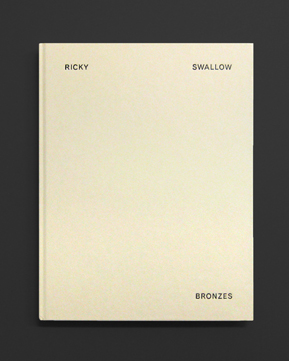
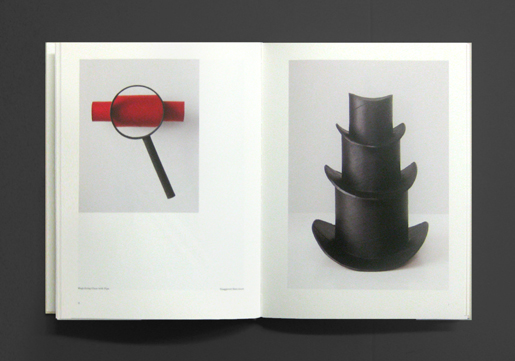
Ricky Swallow is known for intricately and attentively crafted sculptural works, often combining contemporary imagery with art historical references, and the traditional notion of nature morte. His current bronze works extend this practice while reflecting the more recent influences of 20th century design, studio ceramics and the inventiveness of folk art.
This new publication surveys Ricky Swallow's ongoing body of bronze sculpture made since 2010, and features an essay by Michael Ned Holte, designed by A Practice for Everyday Life.
Softcover, 160 pages, (57 colour ill.), 25.4 x 19 cm
Published by
Taka Ishii Gallery / Tokyo
$70.00 - Out of stock
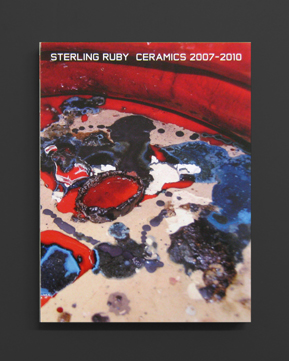
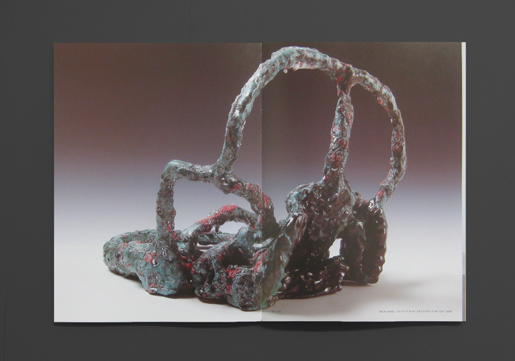
Sterling Ruby (born 1972) is an American artist, who lives and works in Los Angeles, California.
2011, French
Softcover, 160 pages, 15 x 21 cm
Published by
Les Presses Du Reel / Paris
$30.00 - In stock -
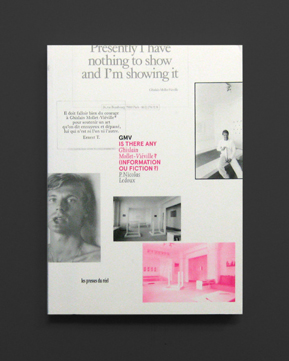
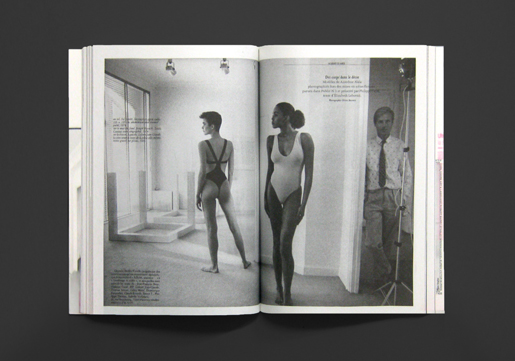
A unique project, between the artist's book and the book on art history, juxtaposing, through a succession of personal documents, the history of different art movements (minimal, conceptual, relational...) and Ghislain Mollet-Viéville's own history.
Features the work of André Cadere, Carl Andre, Daniel Buren, Donald Judd, Joseph Kosuth, Lawrence Weiner, On Kawara, Robert Barry, Sol Lewitt, Olivier Mosset, and many more.
2013, English / German
Softcover, 128 pages (100 colour ill.), 300 x 230mm
Published by
Bonner Kunstverein / Bonn
Walther König / Köln
$36.00 - Out of stock
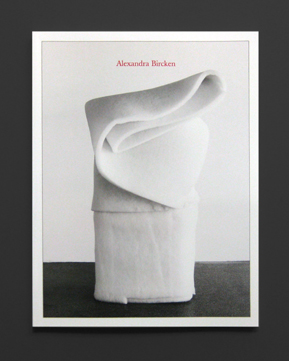
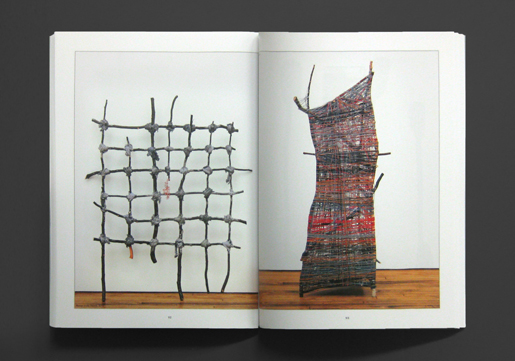
In Alexandra Bircken’s sculptures it is often 'poor' remnants or classical construction materials that take on new functions through craftwork. Alongside materials such as wool, textiles and mortar, she also uses found material from nature and the everyday world. Artificial and natural, hard and soft are connected with one another. In this way the textile spiderweb of a diversity of objects such as children’s toys, items of clothing or twigs and stones becomes a frequent motif in her works.
This catalogue brings together the new works from 2009 to 2012 on full-page installation views from the exhibitions in Bonn (Alexandra Bircken at Bonner Kunstverein, 17 April - 25 November 2012) and Hamburg (Alexandra Bircken: Hausrat at Kunstverein in Hamburg, 12 May - 2 September 2012).
English and German text.
2008, English
Softcover, 164 pages (100 colour ill.), 220 x 280 mm
Published by
Walther König / Köln
$33.00 - Out of stock
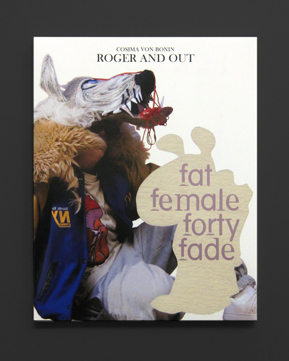
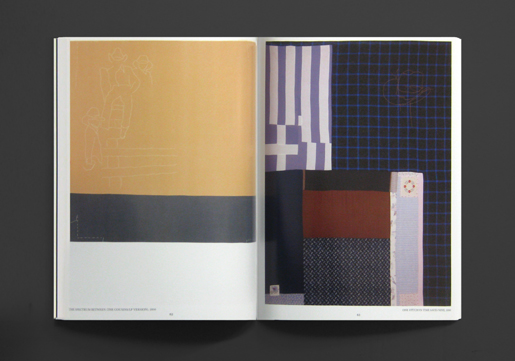
One of the most influential and compelling artists working in Germany today, Cologne-based artist Cosima von Bonin (b. 1962, Mombasa, Kenya) has, over the last 15 years, worked in a wide range of mediaincluding sculpture, photography, textile paintings, installation, performance, film, video, and musicoften combined together in large-scale installations. Drawing freely from a broad range of sourcessuch as the work of other artists, popular and vernacular culture, television, fashion, and Hip-Hop and Techno musicher art explores these different forms of cultural expression in an open, fluid approach that embraces both relationships and contradictions. Von Bonin constructs a community of social relations in her artwork using role-playing, collaboration, appropriation, and the transformation of the commonplace. Her works touch upon ideas of play and indoctrination, structure and improvisation, cultural and gender representations, identity, and self-reflectionwith both absurdity and humor.
This book was produced to accompany an exhibition (09.16.07 - 01.07.08) organized by The Museum of Contemporary Art, Los Angeles, and curated by MOCA Senior Curator Ann Goldstein - the artists first solo museum exhibition in the United States. It presented a survey of work created since 1990, including new pieces produced on the occasion of the exhibition.
The book features texts by Ann Goldstein, Manfred Hermes, Bennett Simpson, and Isabella Graw.
2013, English
Softcover, 172 pages (colour and b&w ill. throughout), 297 x 210mm
Published by
Walther König / Köln
$43.00 - Out of stock
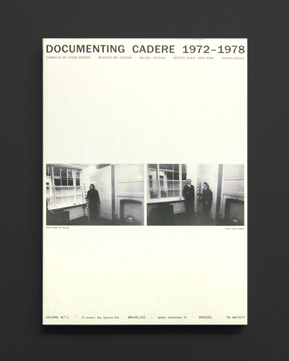
Compiled and edited by curator and art historian Lynda Morris, this title offers an original and highly personal perspective on Cadere’s place in the Conceptual Art world of the 1970s, and the continuing relevance of his ideas around ‘space and politics’.
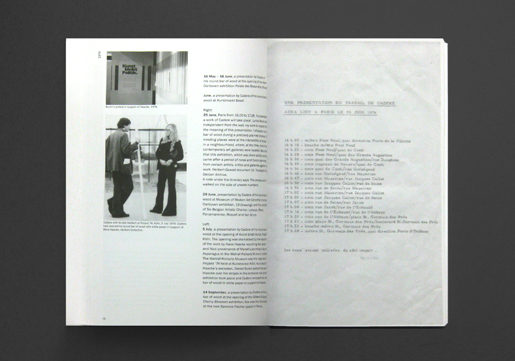
At the centre of the publication is Morris’ chronology of Cadere’s exhibitions, appearances, walks and lectures during the last six years of his life.
This major piece of research shifts the focus away from the ‘round bars of wood’ as objects, and instead focuses on the meaning contained in the printed documents (gallery invitations, notices of lectures, debates and mailings) that record Cadere’s actions, movements and social relationships.
These archival documents come predominantly from two sources – the archive of Lynda Morris and the Herbert Collection, Ghent.
The publication contains new translations of lectures given by Cadere (Leuven, 1974), as well as reproducing an interview with the artist.
Published on the occasion of the exhibition Documenting Cadere, 1972–1978 at Modern Art Oxford; Mu.ZEE, Ostend, and Artists Space, New York, in 2012–13.
2013, English
Softcover, 68 pages (6 b/w and 17 color ills.), 18 x 24 cm
Published by
Kunsthalle Wien / Vienna
M HKA / Antwerp
Sternberg Press / Berlin
$23.00 - Out of stock
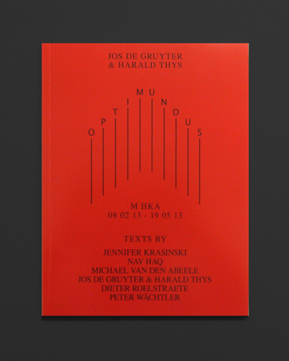
Edited by Nav Haq
With texts by Nav Haq, Jennifer Krasinski, Dieter Roelstraete, Michael Van den Abeele, Peter Wächtler
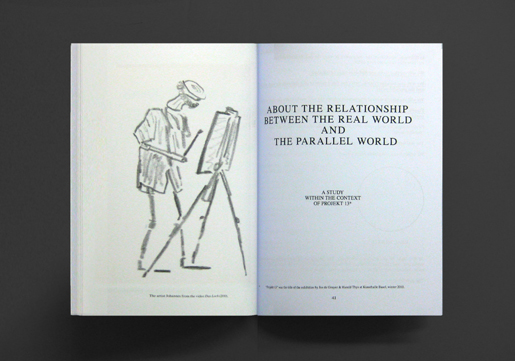
Jos de Gruyter & Harald Thys’s art casts a merciless perspective on reality. Through their numerous artistic approaches—including installations, video, drawing, sculpture, performance, and photographs—the artist duo visualize their imaginings of the parallel world inherent within the modern human psyche, along with how it manifests itself in the everyday aspects of life and civic conformity. Everything from work, leisure, and family, to social class, masculinity, and marginalization are envisaged through convening an unlikely cast of nonprofessional actors, family members, friends, beards, objects, and mannequins alike, often in banal, homespun settings rife with awkward power dynamics.
This book accompanies their major exhibition at M HKA of the same title—the term they use for their particular conception of the parallel world. Narratives and criticism by Michael Van den Abeele, Nav Haq, Jennifer Krasinksi, Dieter Roelstraete, and artist Peter Wächtler are presented along with photos, drawings, and text illustrating the unsteady barriers and tense contact between “Optimundus” and the real world.
Copublished with M HKA and Kunsthalle Wien
2007, English
Hardcover, 400 pages, 235 x 263 mm
Published by
The MIT Press / Massachusetts
The Museum of Contemporary Art / Los Angeles
$88.00 - Out of stock
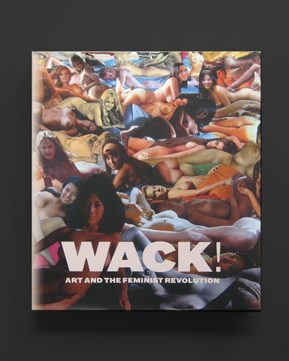
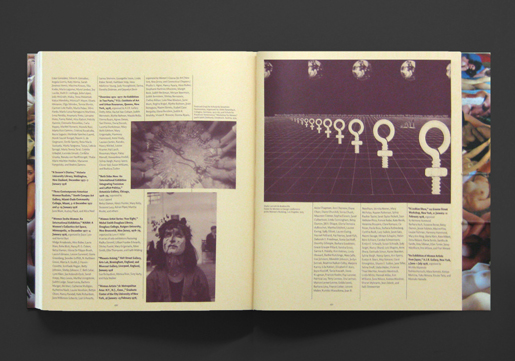
There had never been art like the art produced by women artists in the 1970s ;and there has never been a book with the ambition and scope of this one about that groundbreaking era. WACK! documents and illustrates the impact of the feminist revolution on art made between 1965 and 1980, featuring pioneering and influential works by artists who came of age during that period ;Chantal Akerman, Lynda Benglis, Theresa Hak Kyung Cha, Valie Export, Mary Heilmann, Sanja Ivekovič, Ana Mendieta, Annette Messager, and others ;as well as important works made in those years by artists whose whose careers were already well established, including Louise Bourgeois, Judy Chicago, Sheila Levrant de Bretteville, Lucy Lippard, Alice Neel, and Yoko Ono.The art surveyed in WACK! includes work by more than 120 artists, in all media ;from painting and sculpture to photography, film, installation, and video ;arranged not by chronology but by theme: Abstraction, "Autophotography," Body as Medium, Family Stories, Gender Performance, Knowledge as Power, Making Art History, and others. WACK!, which accompanies the first international museum exhibition to showcase feminist art from this revolutionary era, contains more than 400 color images. Highlights include the figurative paintings of Joan Semmel; the performance and film collaborations of Sally Potter and Rose English; the untitled film stills of Cindy Sherman; and the large-scale, craft-based sculptures of Magdalena Abakanowicz. Written entries on each artist offer key biographical and descriptive information and accompanying essays by leading critics, art historians, and scholars offer new perspectives on feminist art practice. The topics ;including the relationship between American and European feminism, feminism and New York abstraction, and mapping a global feminism ;provide a broad social context for the artworks themselves. WACK! is both a definitive visual record and a long-awaited history of one of the most important artistic movements of the twentieth century.
Essays by: Cornelia Butler, Judith Russi Kirshner, Catherine Lord, Marsha Meskimmon, Richard Meyer, Helen Molesworth, Peggy Phelan, Nelly Richard, Valerie Smith, Abigail Solomon-Godeau, Jenni Sorkin.
Artists include: Marina Abramovič, Chantal Akerman, Lynda Benglis, Dara Birnbaum, Louise Bourgeois, Judy Chicago, Lygia Clark, Jay DeFeo, Mary Beth Edelson, Valie Export, Barbara Hammer, Susan Hiller, Joan Jonas, Mary Kelly, Maria Lassnig, Linda Montano, Alice Neel, Senga Nengudi, Lorraine O'Grady, Pauline Oliveros, Yoko Ono, Orlan, Howardena Pindell, Yvonne Rainer, Faith Ringgold, Ketty La Rocca, Ulrike Rosenbach, Martha Rosler, Betye Saar, Miriam Schapiro, Carolee Schneemann, Cindy Sherman, and Hannah Wilke.
Due to the weight of this volume, your order will likely incur additional postage costs. We will contact you with the best shipping advice upon your order, or alternatively, please email us in advance. Thank you for understanding.
2001, English
Hardcover, 90 pages ( 80 colour ill.), 90.8 x 30.5 cm
Published by
Walther König / Köln
$120.00 - Out of stock
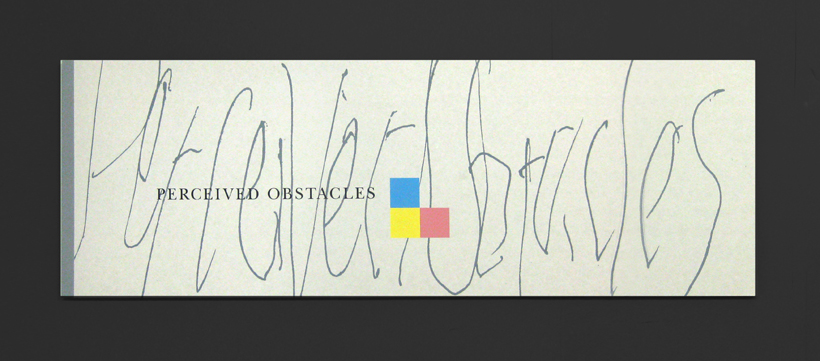
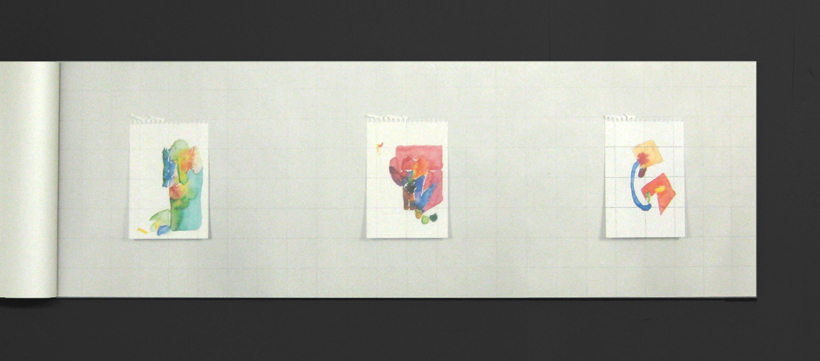
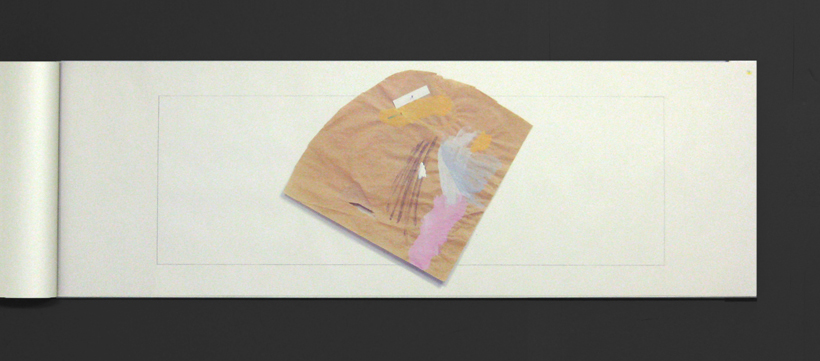
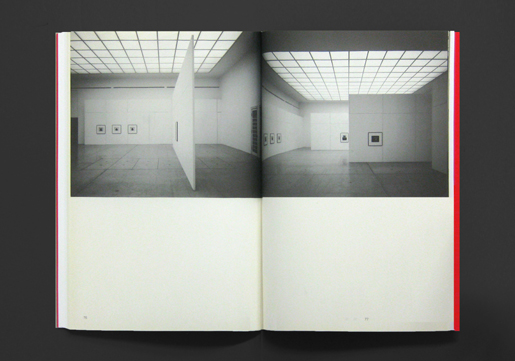
Over three feet wide, Perceived Obstacles presents Richard Tuttle's series of drawings and assemblages at actual size, as they were hung in the gallery. This artist's book radically re-proposes the format of the book as a kind of exhibition--the time taken to literally turn the page being equivalent to the time taken to move from piece to piece in the show--and is printed so exquisitely that Tuttle's sensuous combinations leap off the page in high definition.
Due to the weight of this volume, your order will likely incur additional postage costs. We will contact you with the best shipping advice upon your order, or alternatively, please email us in advance. Thank you for understanding.
2012, English
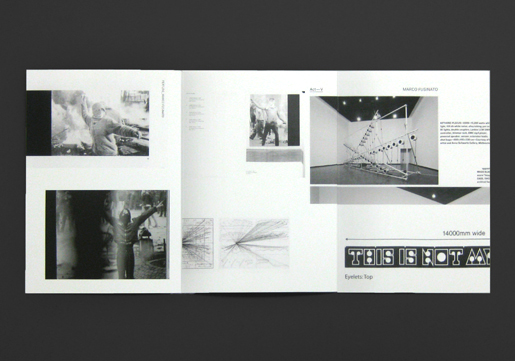
Softcover (concertina fold-out), 6 pages, 21 x 14.8 cm
1st Edition, Out of print title / as new
Published by
Artspace / Sydney
IMA / Brisbane
$5.00 - In stock -
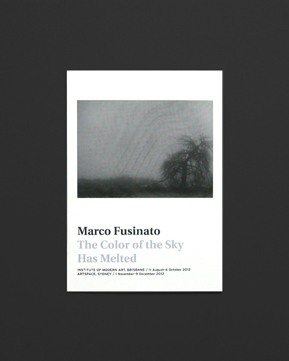
Published on the occasion of Marco Fusinato’s The Color of the Sky Has Melted, a major solo exhibition of the artist’s recent projects at the Institute of Modern Art, Brisbane and Artspace, Sydney in 2012.
2012, Dutch / English
Softcover, 232 pages (colour & bw ill.), 14 x 19 cm
Published by
De Hallen / Haarlem
$40.00 - In stock -
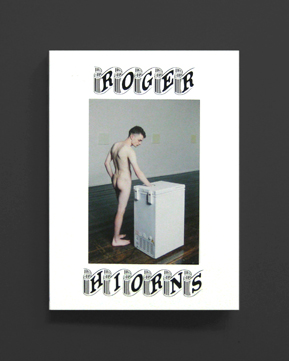
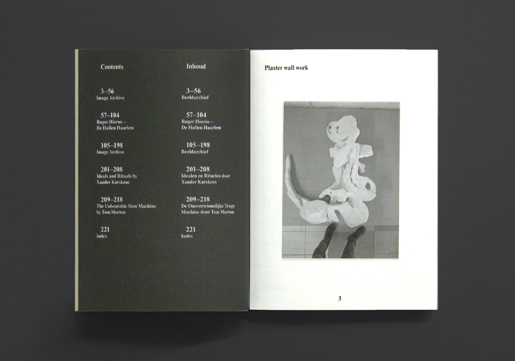
British artist Roger Hiorns uses materials and convolutions to affect transformations on found objects, social encounters and urban situations. In his work, fictional scenarios become reality, crystals colonise industrial objects, and naked youths contemplate fire. The duality of physical and spiritual is often a significant aspect within the works – something which was apparent in the exhibition at De Hallen Haarlem, for which this compact but richly informative catalogue was published. Filled with numerous examples of the artist’s work, as well as his short textual explanations and inspirations, the book also includes critical texts by Xander Karskens and Tom Morton.
2006, German / English
Softcover, 96 pages, 21 x 30 cm
Published by
Walther König / Köln
$20.00 - Out of stock
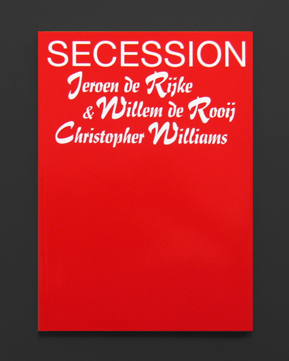
At the invitation of the Secession, de Rijke/de Rooij and Christopher Williams developed a joint exhibition to be shown in all three of the gallery's spaces. Their independent positions entered into a dialog that revealed both the similarities between their approaches and the differences in their implementation.
The exhibition was accompanied by a catalog in two volumes that are designed separately as artist's books and which enter into a many-faceted dialog with one another via repetition, variation, and distinctiveness in their image sequences, text and paratexts. The graphical concept for the invitation cards, posters, and catalogs was developed by Mathias Poledna.
2012, English
Softcover, 192 pages, 24 x 18.5 cm
Published by
Aspen Art Museum / Aspen
$51.00 - Out of stock
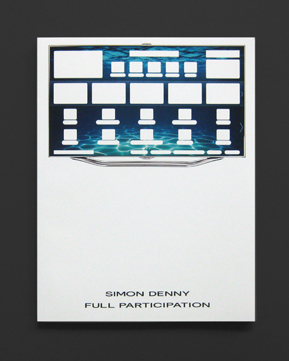
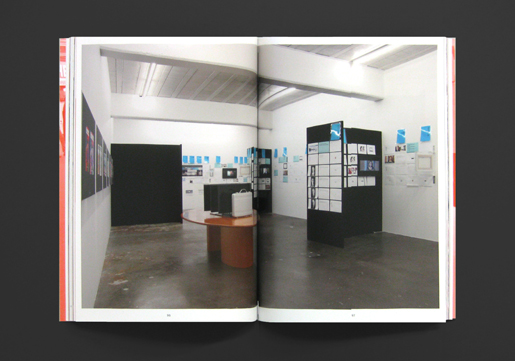
Through a variety of media, including photographs, sculpture, video and printed ephemera, New Zealand artist Simon Denny (born 1982) invites us to reflect on the evolution of television and video as both technology and cultural construct. Denny’s recent works have included investigations into the “architecture” of the TV set itself, the genre conventions of documentary and the myriad processes by which content is translated from one medium to another, be it in television program stills woven into beach towels or video montages derived from outdated trade magazines. This catalogue emphasises projects realized since 2009--including Denny's 2012 exhibition at the Aspen Art Museum--and features essays by curator Jacob Proctor, critic Pablo Larios and conservator Hanna Hölling; a conversation between Denny and three artistic peers; and illustrations throughout.
2012, English
Hardcover, 192 pages (95 color / 10 b/w ill.), 240 x 295 mm
Published by
JRP Ringier / Zürich
Kunstverein Braunschweig / Germany
Swiss Institute / New York
$52.00 $20.00 - Out of stock
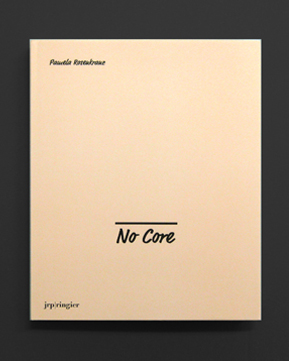
For the past decade, Pamela Rosenkranz (*1979, Sils-Maria, lives in Berlin) has sought to collapse the meaning of the artwork into the meaninglessness of pure materiality. In challenging these conditions of art, she activates a contemporary form of nihilism. From paintings produced from the foil of emergency blankets or Ralph Lauren-branded latex paint and soft drinks, to plastic water bottles filled with skin- or urine-hued liquids, to a monitor featuring an approximation of and challenge to Yves Klein blue, Rosenkranz’s artworks take aim at the empty centers of history, politics, and our contemporary culture as a whole. Her adept engagement with the homogenous surfaces of our consumerist societies reveals them to be not just objects of desire but parts of a natural order. In so doing, and by unraveling mystified notions of art that has as its core the artist’s subjectivity, Rosenkranz incorporates questions about a “self” that insistently appears to be at the absolute center of cultural attention.
“No Core” is the first monograph on Rosenkranz’s increasingly celebrated oeuvre. Beautifully designed by Yvonne Quirmbach, the book features an overview of the work that Rosenkranz developed in three recent institutional solo exhibitions in Geneva, New York, and Braunschweig, Germany. The monograph, edited by Katya García-Antón, Gianni Jetzer, Quinn Latimer, and Hilke Wagner presents contributions by the art historian and writer Alex Kitnick and philosophers Robin Mackay and Reza Negarestani, alongside extensive visual documentation. Taken together, the compelling essays and images that comprise “No Core” offer profound insights into Rosenkranz’s unique work and thinking.
Published with the Centre d’art Contemporain Geneva, Swiss Institute Contemporary Art, New York and Kunstverein Braunschweig.
2012, English / German
Hardcover, 104 pages (107 color & 8 b/w ill.), 238 x 306 mm
Published by
Hauser & Wirth / Zurich
JRP Ringier / Zürich
$65.00 - Out of stock
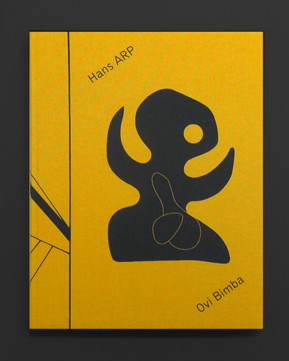
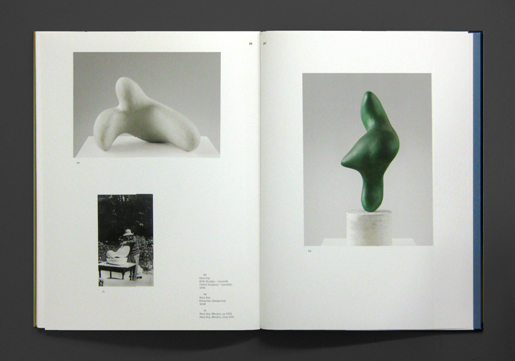
Hans Arp was one of the most innovative and influential artists of the 20th century. With a playful hand and a multifaceted practice that included sculpture, relief, painting, collage and poetry, Arp juggled the dominant art currents of Cubism, Surrealism, and Constructivism, combining seemingly contradictory geometric and organic formal idioms with the artistic "-isms" of his epoch.
In 1916, Arp was invited by Hugo Ball to take part in the Cabaret Voltaire at Spiegelgasse 1 in Zurich. The now iconic event marked the birth of Dadaism and the beginnings of a long overdue breakthrough for Arp. "Ovi Bimba" is a revelatory publication exploring these early years of Arp’s practice, focusing on his time in Zurich during the birth of Dada to his sculptures in the 1940s and 1950s.
The publication positions these diverse pieces alongside those of Arp's fellow artists, including his wife, Sophie Taeuber-Arp.
Featuring texts by renowned Dada scholar, Juri Steiner, and over eighty beautifully reproduced colour plates.
Published with Hauser & Wirth, Zurich/London/New York.
2011, English
Hardcover, 64 pages (56 color / 2 b/w), 205 x 286 mm
Published by
JRP Ringier / Zürich
$35.00 - Out of stock
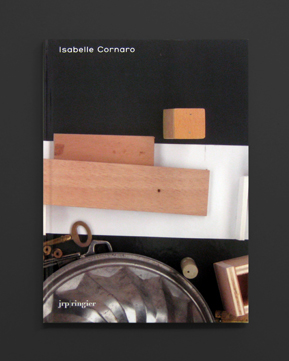
Isabelle Cornaro (b. 1974, France) investigates the relationship between objects—especially decorative objects—value, and art, through the issues of representation, perceptual experience, and reproduction. She is also exploring how to translate forms and languages, for example an old master painting into a 3D installation, a film into a graphic score, or the vocabulary of Minimalism into a more emotional language. She mines ambiguity by setting up a tension between the analytical, symbolic, lyrical, and anecdotal, addressing how our way of looking constructs the world and its uses. She works with various media such as installation, painting, sculpture, video, and drawing.
To accompany the first publication on Isabelle Cornaro's works, this book brings together a comprehensive essay by art historian and critic Vivian Sky Rehberg, an interview with London-based Raven Row deputy director Alice Motard, and an examination of her relationship with decorative arts by Glenn Adamson, Deputy Head of Research and Head of Graduate Studies at the Victoria and Albert Museum.
Published with the Centre national des arts plastiques, Paris; the Parc culturel de Rentilly; the Centre d'art contemporain / Passages, Troyes; the Fondation d’entreprise Ricard (Isabelle Cornaro is laureate of the Prix Ricard 2011), Paris; Le Magasin, Grenoble; and the Kunsthalle Bern.
2012, English
Softcover, 296 pages, 13 x 21 cm
Published by
Sternberg Press / Berlin
$32.00 - Out of stock
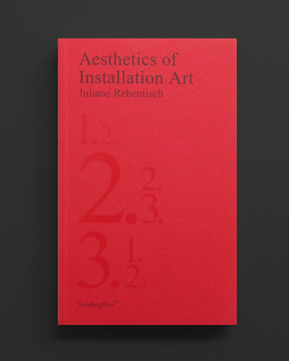
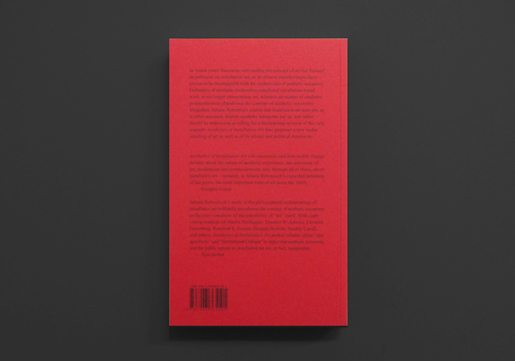
In recent years, debates surrounding the concept of art have focused in particular on installation art, as its diverse manifestations have proven to be incompatible with the modern idea of aesthetic autonomy. Defenders of aesthetic modernism repudiated installation-based work as no longer autonomous art, whereas advocates of aesthetic postmodernism abandoned the concept of aesthetic autonomy altogether. Juliane Rebentisch asserts that installation art does not, as is often assumed, dispute aesthetic autonomy per se, and rather should be understood as calling for a fundamental revision of this very concept. Aesthetics of Installation Art thus proposes a new understanding of art as well as of its ethical and political dimension.
"Aesthetics of Installation Art will rejuvenate and irrevocably change debates about the nature of aesthetic experience, the autonomy of art, modernism and postmodernism, and, through all of these, about installation art—certainly, in Juliane Rebentisch’s expanded definition of the genre, the most important form of art since the 1960s."
—Douglas Crimp
"Juliane Rebentisch’s study of the philosophical underpinnings of installation art brilliantly reevaluates the concept of aesthetic autonomy as the very condition of the possibility of 'art' itself. With captivating readings of Martin Heidegger, Theodor W. Adorno, Clement Greenberg, Rosalind E. Krauss, Jacques Derrida, Stanley Cavell, and others, Aesthetics of Installation Art pushes debates about 'site specificity' and 'Institutional Critique' to argue that aesthetic autonomy and the public sphere in installation art are, in fact, inseparable."
—Tom Holert
1992, English
Softcover, 64 pages, 22 x 25 cm
Published by
A.R.T. Press / New York
$30.00 - Out of stock
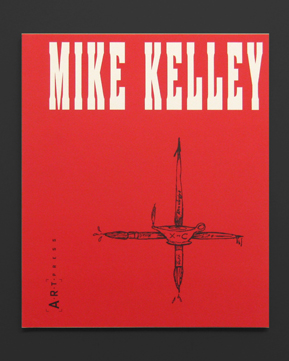
Mike Kelley interviewed by John Miller
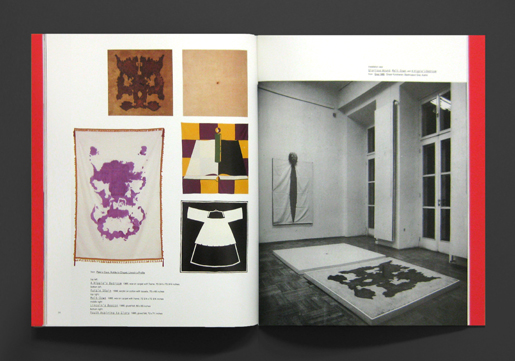
Mike Kelley's iconoclastic artwork assails the sunshine fantasy of the "normal" family. In an extended and intelligent interview profusely illustrated with performance stills, reproductions, and installation shots, Kelley discusses the development of his work, his interest in pop culture, and the influence of crafts on his work.
Kelley: “I really hate when an artwork is open to all interpretations. I like interpretations to be limited so that the process is problematized. Not just any interpretation is good; there’s a certain range of interpretations that are allowed. Then the interpretation becomes a problem – I like that”.
2012, English
Printed acrylic hardcover (ring-bound)
Published by
Pace / New York
$40.00 - Out of stock
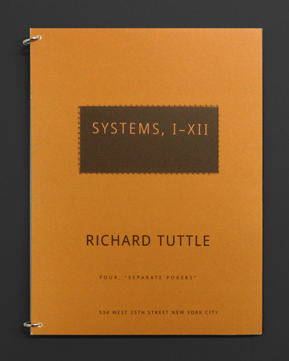
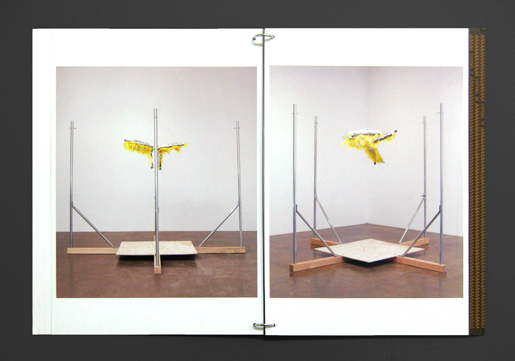
Full-color, illustrated catalogue published to accompany the exhibition "Richard Tuttle - Systems, VIII-XII", Sept 07 – Oct 13, 2012 at Pace Gallery New York. The exhibition featured five of Tuttle's recent large free-standing sculptures, called “Systems”, alongside new works that pair delicate drawings and intimate wall-mounted sculptural elements.
This stunning new ring-bound publication, designed by the artist himself, includes poems written by Richard for each of his twelve "Systems" created to date.
2012, English
Softcover, 544 pages (225 colour ill.), 18 x 23 cm
Published by
Yale University Press / New Haven
$55.00 - Out of stock
Helen Molesworth; With essays by Johanna Burton, William Horrigan, Elisabeth Lebovici, Kobena Mercer, Sarah Schulman, and Frazer Ward.
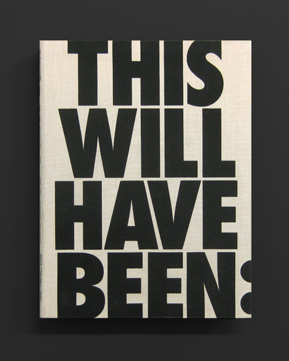
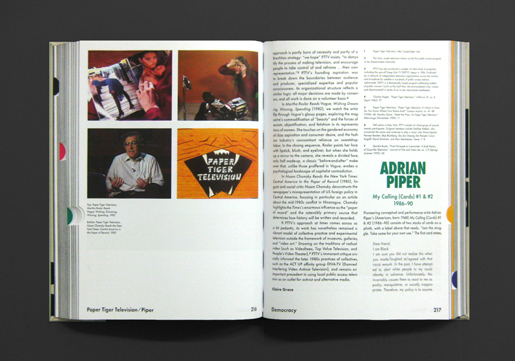
Art of the 1980s oscillated between radical and conservative, capricious and political, socially engaged and art historically aware. Published in association with the Museum of Contemporary Art, Chicago, this fascinating book chronicles canonical as well as nearly forgotten works of the 1980s, arguing that what has often been dismissed as cynical or ironic should be viewed as a struggle on the part of artists to articulate their needs and desires in an increasingly commodified world. The major developments of the decade—the rise of the commercial art market, the politicization of the AIDS crisis, the increased visibility of women and gay artists and artists of color, and the ascension of new media—are illuminated in works by Sophie Calle, Nan Goldin, Jeff Koons, Lorna Simpson, Leigh Bowery, Jimmy De Sana, Carroll Dunham, Jimmie Durham, Alex Garry, Robert Gober, Nan Goldin, Mike Kelley, Paul McCarthy, Annette Messager, Cady Noland, Albert Oehlen, Richard Prince, Cindy Sherman, Julian Schnabel, Rosemarie Trockel, Jeff Wall, Charlie Ahearn, Gretchen Bender, Black Audio Film Collective, Jennifer Bolande, Gregg Bordowitz, Eugenio Dittborn, Gran Fury, Group Material, Guerrilla Girls, Hans Haacke, David Hammons, Jenny Holzer, Alfredo Jaar, Barbara Kruger, Louise Lawler, Donald Moffett, Lorraine O’Grady, Paper Tiger Television, Adrian Piper, Lari Pittman, Tim Rollins and K.O.S., Christy Rupp, Doris Salcedo, Juan Sánchez, Tseng Kwong Chi and Keith Haring, Carrie Mae Weems, Christopher Williams, Krzystof Wodiczko, Judith Barry, Ashley Bickerton, Deborah Bright, Marlene Dumas, Felix Gonzales-Torres, Peter Hujar, G. B. Jones, Isaac Julian, Rotimi Fani Kayode, Mary Kelly, Silvia Kolbowski, Louise Lawler, Sherrie Levine, Jack Leirner, Robert Mapplethorpe, Richard Prince, Marlon Riggs, David Robbins, Laurie Simmons, Haim Steinbach, David Wojnarowicz, Dotty Attie, Robert Colescott, General Idea, Robert Gober, Jack Goldstein, Pater Halley, Mary Heilmann, Candy Jernigan, Mike Kelley, Martin Kippenberger, Louise Lawler, Sherrie Levine, Christian Marclay, Allan McCollum, Peter Nagy, Raymond Pettibon, Stephen Prina, Martin Puryear, Gerhard Richter, David Salle, Doug + Mike Starn, Tony Tasset, James Welling, and Christopher Wool, among others. Essays by leading scholars provide unique perspectives on the decade's competing factions and seemingly contradictory elements, from counterculture to the mainstream, radicalism to democracy and historical awareness, conservatism to feminist politics.
Complete with critical texts on each work, This Will Have Been brings into focus the full impact of the art, artists, and political and cultural ruptures of this paradigm-shifting decade. More than 200 full-color reproductions of works in a range of media, including drawing, painting, photography, and sculpture, illustrate this ambitious guide to a period of artistic transformation.
2011, English
Softcover, 127 pages, 14 x 21.5 cm
Published by
Sternberg Press / Berlin
$29.00 - Out of stock
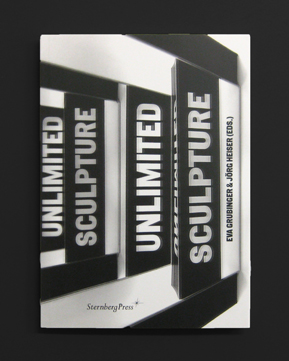
Eva Grubinger, Jörg Heiser (Eds.)
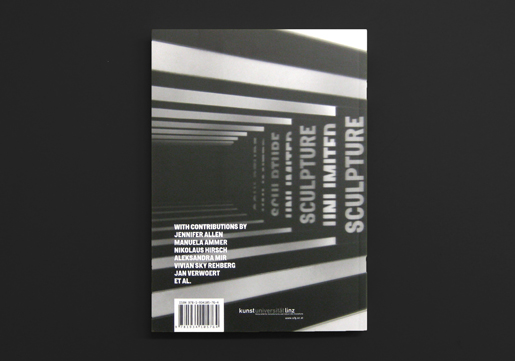
With texts by Jennifer Allen, Nikolaus Hirsch, Aleksandra Mir, Vivian Sky Rehberg, and Jan Verwoert
Based on a symposium at the Department of Sculpture – Transmedial Space, University of Art and Design, Linz, Austria, Sculpture Unlimited captures the breadth of the contemporary discussion around sculpture. Against the historical backdrop of expansions of the notion of sculpture—from Auguste Rodin to Rosalind Krauss and beyond—one could think that the discipline has become defined by its near arbitrary malleability, since practically anything can be construed as sculpture. Yet interest in the history of sculpture seems to be experiencing a revival, including traditional techniques and production methods, which often appear appealing, even radical, in the age of the Internet and social media. The book probes into recent developments in the field, and asks, what potentials does that history hold for responding to current environments? How can the contemporary field of sculpture be defined in a useful and stimulating manner?
This book was made possible through the generous support of BAWAG P.S.K., Kulturland Oberösterreich, and Kunstuniversität Linz.
2012, English
Softcover, 372 pages, 12.9 x 19.8 cm
Published by
Sternberg Press / Berlin
$36.00 - Out of stock
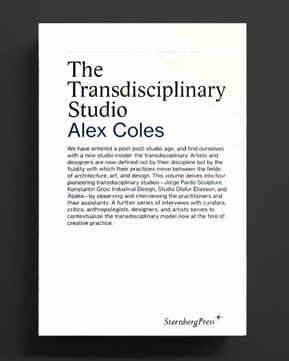
We have entered a post-post-studio age, and find ourselves with a new studio model: the transdisciplinary. Artists and designers are now defined not by their discipline but by the fluidity with which their practices move between the fields of architecture, art, and design. This volume delves into four pioneering transdisciplinary studios—Jorge Pardo Sculpture, Konstantin Grcic Industrial Design, Studio Olafur Eliasson, and Åbäke—by observing and interviewing the practitioners and their assistants. A further series of interviews with curators, critics, anthropologists, designers, and artists serves to contextualize the transdisciplinary model now at the fore of creative practice.
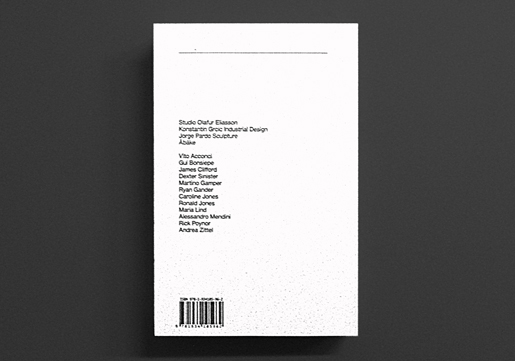
Including interviews with Jorge Pardo, Konstantin Grcic, Olafur Eliasson, and Åbäke; and Vito Acconci, Gui Bonsiepe, James Clifford, Dexter Sinister, Martino Gamper, Ryan Gander, Caroline Jones, Ronald Jones, Maria Lind, Alessandro Mendini, Rick Poynor, and Andrea Zittel.
The Transdisciplinary Studio is the first volume of a series of books by Alex Coles on the expanded studio model and contemporary praxis.
Design by Surface, Frankfurt am Main/Berlin
2012, English
Softcover, 176 pages (47 colour, 100 b&w ill.), 210 x 270 mm
Published by
Walther König / Köln
$50.00 - Out of stock
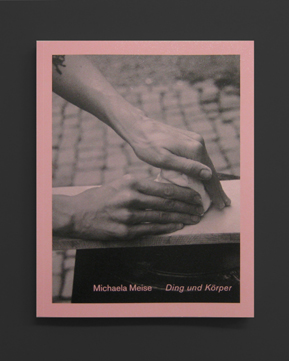
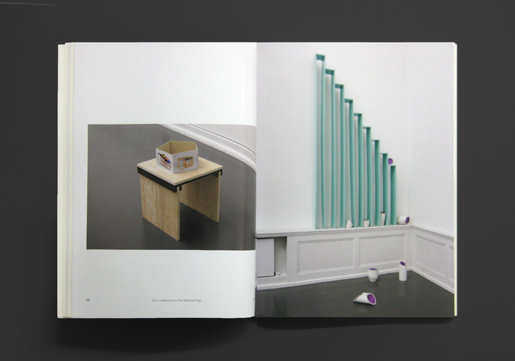
German artist Michaela Meise's first monograph, "Ding und Korper" focuses on two groups of work which address respectively the inanimate object and the human body. Working with the formats of video, drawing, performance and sculpture, Meise examines the principles of sculptural and architectural ordering, both from the perspective of their creative execution as well as in relation to their political and social context. Minimalist-style sculptures investigate the purpose and meaning of objects and tools, and in a series of self-portrait photographs Meise pays homage to artist Valie Export.
2012, English/German
Softcover, 168 pages, 215 x 273 mm
Published by
Walther König / Köln
$44.00 - Out of stock
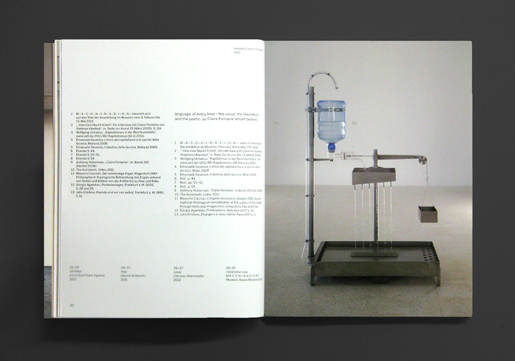
In this publication Claire Fontaine show both old and new works that deal with economic structures as a closed and irrational system that is intent on defending the status quo using any necessary means and at any price. The artist collective Claire Fontaine was formed in Paris in 2004. The name is taken from a well-known French manufacturer of school notebooks and writing paper. Claire Fontaine describe themselves as "ready-made-artists" who work with existing forms and materials. They analyse the crisis of individuality in contemporary art using video, installation, sculpture and text, denouncing the passivity of politics in the process.