World Food Books' programme is largely produced on Kulin Nation land. We acknowledge the Wurundjeri people of the Kulin Nation as the first and continuing custodians of this land, and pay respect to their Elders past, present, and emerging.
World Food Books is an arts and special interests bookshop in Naarm / Melbourne. Founded in 2010, World Food Books is devoted to the presentation of a rotating, hand-selection of international art, design, literary and counterculture publications with an emphasis on the anti-traditional, the experimental, the avant-garde, the heretic, the marginal.
Presenting new titles alongside rare and out-of-print books, catalogues and journals spanning the fields of modern and contemporary art, design, photography, illustration, film, literature, poetry, cultural theory, philosophy, sexuality, popular and underground culture in its many radical forms, World Food Books wishes to encourage adventurous, thoughtful and open-minded reading, looking, writing, and exchange of publishing and ideas, both current and historical.
As well as our bookshop, located in Melbourne's historical Nicholas Building, all of our inventory is available internationally via our online mail-order service.
World Food Books semi-regularly co-ordinates "Occasions", a programme of exhibits and events at the bookshop and in partnership with other hosts (such as museums and art galleries) that develop out of the activities, relationships and content of the bookshop itself.
World Food Books
The Nicholas Building
37 Swanston Street
Room 5, Level 6
Melbourne 3000
Australia
SHOP HOURS:
SHOP CLOSED FOR SUMMER
RE—OPEN JAN 2
WEB-SHOP OPEN 24/7
World Food Books
Postal Address:
PO Box 435
Flinders Lane
Victoria 8009
Australia
info@worldfoodbooks.com
Art
Theory / Essay
Architecture / Interior
Graphic Design / Typography
Photography
Fashion
Eros
LGBTQ+
Fiction / Poetry
Weird / Speculative / Science Fiction / Horror
Transgressive / Visceral / Abject
Symbolism / Decadence / Fin de siècle
Film / Video
Painting
Sculpture / Installation
Performance / Dance / Theater
Drawing
Sound / Music
Curatorial
Group Shows / Collections
Periodicals
Out-of-print / Rare
Posters / Ephemera / Discs
Signed Books
World Food Books Gift Voucher
World Food Book Bag
Australian Art
Australian Fiction
Australian Science Fiction / Speculative Fiction
Australian Poetry
Australian Photography
Japanese Photography
Conceptual Art
Minimal Art
Dada
'Pataphysics / Oulipo
Fluxus
Concrete Poetry
Pop Art
Surrealism
Arte Povera
Arte Informale / Haute Pâte / Tachism
Nouveau Réalisme / Zero / Kinetic
Situationism / Lettrism
Collage / Mail Art / Xerox Art
Art Brut / Folk / Visionary / Fantastic
Illustration / Graphic Art / Bandes Dessinées
Furniture
Italian Radical Design / Postmodernism
Textiles
Ceramics / Glass
Counterculture
Protest / Revolt
Philosophy
Psychoanalysis
Anthropology
Anarchism
Socialism / Anarchism / Communism / Capitalism
Literary Theory / Semiotics / Language
Feminism / Women's Studies
Gender Studies / Sexuality
Anthropology
Fetishism / BDSM
Drugs / Psychedelia
Crime / Violence
Animal Rights / Veganism
Occult / Esoterica
Ecology / Earth / Alternative Living
Whole Earth / Crafts
All prices in AUD (Australian dollars)
Pick-Ups
Pick-up orders can be collected in our bookshop during opening hours after order date. Please collect any Pick-up orders within 2 weeks of ordering as we have limited storage space. Orders will be released back into stock if not collected within this time. No refunds can be made for pick-ups left un-collected. If you cannot make it in to the bookshop in this time-frame, please choose postage option.
Return Policy
All sales are final. We do accept returns (for refund or exchange) for items received in error. All our orders are packed with special care using heavy-duty padding and cardboard book-mailers or bubble mailers (for smaller books), using reinforcement where required. We cannot take responsibility for any lost, stolen or damaged parcels.
Insurance
Should you wish to insure your package, please email us directly after placing your order and we can organise this at a small extra expense. Although all standard/express tracked packages are very safe and dependable, we cannot take responsibility for any lost, stolen or damaged parcels. We recommend insurance on valuable orders.
Interested in selling your old books, catalogues, journals, magazines, comics, fanzines, ephemera? We are always looking for interesting, unusual and out-of-print books to buy. We only buy books in our fields of interest and specialty, and that we feel we can resell.
We base these prices on desirability, market value, in-print prices, condition and our current stock levels. We offer cash, store credit, and can take stock on consignment. All
about 25% of the price we expect to get when we sell them, or 30% in store credit. We base these prices on desirability, market value, in-print prices, condition and our current stock levels.
Sell your books any day of the week. You can drop them off and return later. If you have a lot of books, we can visit your Sydney home.
We buy books that we feel we can resell. We offer about 25 % of the price we expect to get when we sell them, or 30% in store credit. We base these prices on desirability, market value, in-print prices, condition and our current stock levels.
Philadelphia Wireman
03 August - 01 September, 2018
World Food Books is proud to announce our next Occasion, the first presentation of sculptures by Philadelphia Wireman in Australia.
The Philadelphia Wireman sculptures were found abandoned in an alley off Philadelphia’s South Street on trash night in 1982. Their discovery in a rapidly-changing neighbourhood undergoing extensive renovation, compounded with the failure of all attempts to locate the artist, suggests that the works may have been discarded after the maker’s death. Dubbed the "Philadelphia Wireman" during the first exhibition of this work, in 1985, the maker’s name, age, ethnicity, and even gender remain uncertain. The entire collection totals approximately 1200 pieces, all intricately bound together with tightly-wound heavy-gauge wire (along with a few small, abstract marker drawings, reminiscent both of Mark Tobey and J.B. Murry). The dense construction of the work, despite a modest range of scale and materials, is singularly obsessive and disciplined in design: a wire armature or exoskeleton firmly binds a bricolage of found objects including plastic, glass, food packaging, umbrella parts, tape, rubber, batteries, pens, leather, reflectors, nuts and bolts, nails, foil, coins, toys, watches, eyeglasses, tools, and jewellery.
Heavy with associations—anthropomorphic, zoomorphic, and socio-cultural responses to wrapped detritus—the totemic sculptures by Philadelphia Wireman have been discussed in the context of work created to fulfil the shamanistic needs of alternative religions in American culture. Curators, collectors, and critics have variously compared certain pieces to sculpture from Classical antiquity, Native American medicine bundles, African-American memory jugs, and African fetish objects. Reflecting the artist’s prolific and incredibly focused scavenging impulse, and despite—or perhaps enhanced by—their anonymity, these enigmatic objects function as urban artefacts and arbiters of power, though their origin and purpose is unknown. Philadelphia Wireman, whatever their identity, possessed an astonishing ability to isolate and communicate the concepts of power and energy through the selection and transformation of ordinary materials. Over the course of the past two decades, this collection has come to be regarded as an important discovery in the field of self-taught art and vernacular art.
Presented in collaboration with Fleisher-Ollman Gallery, Philadelphia, and Robert Heald, Wellington.
Susan Te Kahurangi King
02 February - 10 March, 2018
Susan Te Kahurangi King (24 February 1951 - ) has been a confident and prolific artist since she was a young child, drawing with readily available materials - pencils, ballpoint pens and felt-tip markers, on whatever paper is at hand. Between the ages of four and six Susan slowly ceased verbal communication. Her grandparents William and Myrtle Murphy had developed a special bond with Susan so they took on caring responsibilities for extended periods. Myrtle began informally archiving her work, carefully collecting and storing the drawings and compiling scrapbooks. No drawing was insignificant; every scrap of paper was kept. The King family are now the custodians of a vast collection containing over 7000 individual works, from tiny scraps of paper through to 5 meter long rolls.
The scrapbooks and diaries reveal Myrtle to be a woman of great patience and compassion, seeking to understand a child who was not always behaving as expected. She encouraged Susan to be observant, to explore her environment and absorb all the sights and sounds. Myrtle would show Susan’s drawings to friends and people in her community that she had dealings with, such as shopkeepers and postal workers, but this was not simply a case of a grandmother’s bias. She recognised that Susan had developed a sophisticated and unique visual language and sincerely believed that her art deserved serious attention.
This was an unorthodox attitude for the time. To provide some context, Jean Dubuffet coined the term Art Brut in 1945 to describe work created by self-taught artists – specifically residents of psychiatric institutions and those he considered to be visionaries or eccentrics. In 1972 Roger Cardinal extended this concept by adopting the term Outsider Art to describe work made by non-academically trained artists operating outside of mainstream art networks through choice or circumstance. Susan was born in Te Aroha, New Zealand in 1951, far from the artistic hubs of Paris and London that Dubuffet and Cardinal operated in. That Myrtle fêted Susan as a self-taught artist who deserved to be taken seriously shows how progressive her attitudes were.
Susan’s parents Doug and Dawn were also progressive. Over the years they had consulted numerous health practitioners about Susan’s condition, as the medical establishment could not provide an explanation as to why she had lapsed into silence. Dawn educated herself in the field of homeopathy and went on to treat all twelve of her children using these principles – basing prescriptions on her observations of their physical, mental and emotional state.
Doug was a linguist with an interest in philosophy who devoted what little spare time he had to studying Maori language and culture. To some extent their willingness to explore the fringes of the mainstream made them outsiders too but it was their commitment to living with integrity and their respect for individuality that ensured Susan’s creativity was always encouraged.
Even though Susan’s family supported her artistic pursuits, some staff in schools and hospitals saw it as an impediment to her assimilation into the community and discouraged it in a variety of ways. Her family was not always aware of this and therefore did not fully understand why Susan stopped drawing in the early 1990s. However, rather than dwell on the challenges that Susan faced in pursuit of her artistic practice, they prefer to highlight her achievements. In 2008 Susan began drawing again in earnest, after an almost 20 year interruption, and her work is now shown in galleries around the world.
Susan grew up without television and has been heavily influenced by the comics she read as a child. She is absolutely fearless in the appropriation of recognizable characters, such as Donald Duck and Mickey Mouse, in her work. She twists their limbs, contorts their faces, compresses them together, blends them into complex patterned backgrounds - always imbuing them with an incredible energy. Although Susan often used pop culture characters in her work they are not naive or childlike. These are drawings by a brilliant self-taught artist who has been creating exceptional work for decades without an audience in mind.
Mladen Stilinović
"Various Works 1986 - 1999"
02 February 16 - September 10, 2016
Various works 1986 - 1999, from two houses, from the collections of John Nixon, Sue Cramer, Kerrie Poliness, Peter Haffenden and Phoebe Haffenden.
Including: Geometry of Cakes (various shelves), 1993; Poor People’s Law (black and white plate), 1993; White Absence (glasses, ruler, set square, silver spoon, silver ladel with skin photograph and wooden cubes), 1990-1996; Exploitation of the Dead (grey and red star painting, wooden painting, black spoon with red table, red plate), 1984-1990; Money and Zeros (zero tie, paintings made for friends in Australia (Sue, John, Kerrie), numbers painting), 1991-1992; Words - Slogans (various t-shirts) - “they talk about the death of art...help! someone is trying to kill me”, “my sweet little lamb”, “work is a disease - Karl Marx”; Various artist books, catalogues, monographs, videos; Poster from exhibition Insulting Anarchy; "Circular" Croatian - Australian edition; Artist book by Vlado Martek (Dostoyevsky); more.
Thanks to Mladen Stilinović and Branka Stipančić.
Jonathan Walker
Always Will Need To Wear Winter Shirt Blue + Ochre Small Check Pattern
21 August - 21 September, 2015
Untitled
I am not a great reader of poetry but I always return to the work of Melbourne poet, Vincent Buckley (1925- 1988). Perhaps I find his most tantalising piece to be not a finished poem but a fragment left on a scrap of paper discovered on his desk after the poet’s death.
The poetry gathers like oil
In the word-core, and spreads
It has its music meet,
Its music is in movement.
This fragment is more the shell left behind from a volatile thought than a finished poem. I find the last two lines honest but awkward whereas the first two lines work like an arrow. Most likely he could not find a resolution so it was left. Still, in its present form, it remains an eloquent testimony to the ultimate failure of a medium to express mobile thought and sensation, in Buckley’s case, through verbal language. It’s an important matter because this is something all artists have to deal with regardless of the medium.
I have never written a poem, however, I am forever copying fragments from books on paper scraps in a vain effort to fix certain notions in my head. At first, they function as bookmarks that are sometimes returned to when I open the book. But before long, as they accumulate, they fall out littering the table interspersed with A4 photocopies, bills, books and medications.
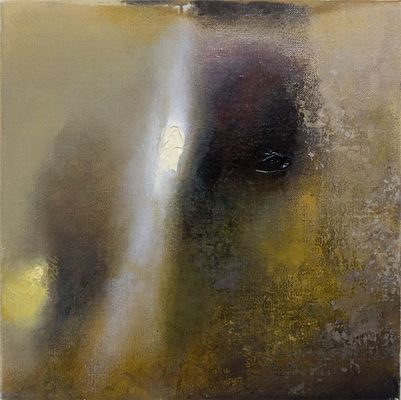
To return to Buckley’s fragment, the first two lines very much evoke how I paint nowadays. As you age, detail diminishes and patches of light become more luminous and float. I feel the most honest way of dealing with this is by smearing the oil paint on the canvas with the fingers and working close-up, blind. Only if the patches coalesce into an approaching image can the work gain a life.
-
Jonathan Walker was born in Melbourne, Australia and brought up on a dairy farm in Gippsland. In the 1970’s he studied painting at RMIT and won the Harold Wright Scholarship to the British Museum, London. During the 1980’s he exhibited at Pinacotheca Gallery, Richmond and had work shown at the NGV and Heidi City Art Gallery. Over the same period he designed the cover for the “Epigenesi” LP by Giancarlo Toniutti, Italy and conducted a mail exchange work with Achim Wollscheid, Germany. The work with artists through the post resulted in an article published in the bicentenary issue of Art and Australia 1988. He showed in artist run spaces such as WestSpace in the 90’s and 2000’s, and until 2012, taught painting at Victoria University, which is where we (Colleen Ahern and Lisa Radford) as organisers of the exhibition, among many others, had the privilege of being his student.
Walker’s knowledge was imparted to students through the careful selection of music, literature, and artists found in books that he himself had ordered for the library. Walker’s strategy was the generosity of sharing his vast knowledge with references specific to each student and their context.
Walker’s paintings share a similar focus and intimacy.
This exhibition presents a small selection of recent paintings alongside a publication that includes Walker’s writing. Observational and analytical, Walker’s work is a type of material notation — the time of day, colour and how it is blended, the both specific and fleeting location of a reflection on lino or the question of whether a chair leg should be included in a painting.
Please join us on Friday August 21 between 6-8pm to celebrate the opening of the exhibition.
Curated by Colleen Ahern and Lisa Radford.
B. Wurtz
Curated by Nic Tammens
March 26 - April 4, 2015
B.Wurtz works from a basement studio in his home on Manhattan’s Lower East Side.
This local fact is attested to by the plastic shopping bags and newsprint circulars that appear in his work. As formal objects, they don’t make loud claims about their origins but nonetheless transmit street addresses and places of business from the bottom of this long thin island. Like plenty of artists, Wurtz is affected by what is local and what is consumed. His work is underpinned by this ethic. It often speaks from a neighborhood or reads like the contents of a hamper:
“BLACK PLUMS $1.29 lb.”
“Food Bazaar”
“USDA Whole Pork Shoulder Picnic 99c lb.”
“RITE AID Pharmacy, with us it’s personal.”
“H. Brickman & Sons.”
“Sweet Yams 59c lb."
Most of the work in this exhibition was made while the artist was in residence at Dieu Donne, a workshop dedicated to paper craft in Midtown. Here Wurtz fabricated assemblages with paper and objects that are relatively lightweight, with the intention that they would be easily transportable to Australia. This consideration isn’t absolute in Wurtz’s work, but was prescriptive for making the current exhibition light and cheap. Packed in two boxes, these works were sent from a USPS post office on the Lower East Side and delivered to North Melbourne by Australia Post.
Wurtz appears courtesy of Metro Pictures, New York.
Thanks to Rob Halverson, Joshua Petherick, Sari de Mallory, Matt Hinkley, Helen Johnson, Fayen d'Evie, Ask Kilmartin, Lisa Radon, Ellena Savage, Yale Union, and "Elizabeth".
John Nixon
"Archive"
December 15 - January 20, 2014
The presentation of John Nixon's archive offered a rare showcase of this extensive collection of the artist's own publications, catalogues, posters, ephemera, editions and more, from the mid 1980s onwards, alongside a selection of his artworks.
Organized by John Nixon, Joshua Petherick and Matt Hinkley.
"Habitat"
at Minerva, Sydney (organised by Joshua Petherick and Matt Hinkley)
November 15 - December 20, 2014
Lupo Borgonovo, Janet Burchill & Jennifer McCamley,
Lewis Fidock, HR Giger, Piero Gilardi, Veit Laurent Kurz,
Cinzia Ruggeri, Michael E. Smith, Lucie Stahl, Daniel Weil, Wols
Press Release:
“...It contained seven objects. The slender fluted bone, surely formed for flight, surely from the wing of some large bird. Three archaic circuitboards, faced with mazes of gold. A smooth white sphere of baked clay. An age-blackened fragment of lace. A fingerlength segment of what she assumed was bone from a human wrist, grayish white, inset smoothly with the silicon shaft of a small instrument that must once have ridden flush with the surface of the skin - but the thing’s face was seared and blackened.”
William Gibson, “Count Zero”, 1986
"Autumn Projects Archive"
Curated by Liza Vasiliou
March 6 - March 15, 2014
World Food Books, in conjunction with the Virgin Australia Melbourne Fashion Festival 2014, presented the Autumn Projects archive, consisting of a selection of early examples in Australian fashion with a particular interest in collecting designers and labels from the period beginning in the 1980’s, who significantly influenced the discourse of Australian Fashion.
Curated by Liza Vasiliou, the exhibition provided a unique opportunity to view pieces by designers Anthea Crawford, Barbara Vandenberg, Geoff Liddell and labels CR Australia, Covers, Jag along with early experimental collage pieces by Prue Acton and Sally Browne’s ‘Fragments’ collection, suspended throughout the functioning World Food Books shop in Melbourne.
H.B. Peace
presented by CENTRE FOR STYLE
November 14, 2013
"Hey Blinky, you say chic, I say same"
Anon 2013
H.B. Peace is a clothing collaboration between great friends Blake Barns and Hugh Egan Westland. Their pieces explore the divergences between 'character’ and ‘personality’ in garments....etc
Special Thanks to Joshua Petherick and Matt Hinkley of WFB and Gillian Mears
and a Very Special Thank you to Audrey Thomas Hayes for her shoe collaboration.
Janet Burchill & Jennifer McCamley
"Aesthetic Suicide"
May 10 - June 8, 2013
The first of our occasional exhibitions in the World Food Books office/shop space in Melbourne, "Aesthetic Suicide" presented a body of new and older works together by artists Janet Burchill & Jennifer McCamley, including videos, prints, a wall work, and publications.
During shop open hours videos played every hour, on the hour.
1981, English
Softcover, 144 pages, 22 x 27 cm
1st Edition, Out of print title / Used*,
Published by
Whitney Museum / New York
University of Washington Press / Washington
$38.00 - Out of stock
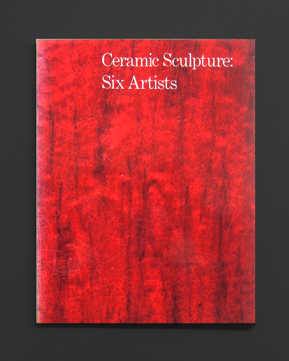
Out of print catalogue from the exhibition "Ceramic Sculpture: Six Artists", Whitney Museum of American, 9 Dec 1981 - 7 Feb, 1982; SF MOMA, 8 Apr - 27 Jun 1982.
Features the great ceramic work of Peter Voulkos, John Mason, Kenneth Price, Robert Arneson, David Gilhooly and Richard Shaw.
Included the texts: "Ceramic Sculpture in California: An Overview" by Suzanne Foley and "Ceramic Sculpture: Six Artists" by Richard Marshall.
1978, English
Softcover, 112 pages (94 ill.)
1st Edition, Out of print title / Used*,
Published by
Whitney Museum of American Art / New York
$26.00 - Out of stock
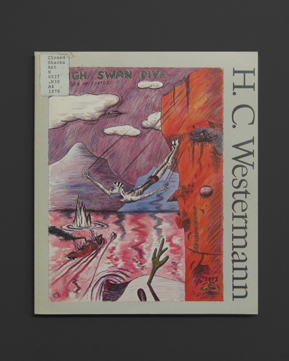
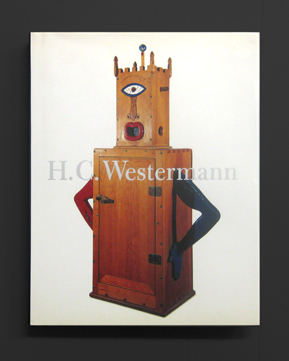
Published on the occasion of the major H.C. Westermann traveling exhibition from The Whitney Museum of American Art, New York NY (May 17-July 16, 1978); New Orleans Museum of Art, New Orleans LA (August 25-October 15, 1978); Des Moines Art Center, Des Moines IA (November 13-December 25, 1978); Seattle Art Museum, Seattle WA (January 17-February 25, 1979) and the San Francisco Museum of Modern Art, San Francisco CA (March 30-May 20, 1979).
H. C. Westermann (Horace Clifford "Cliff" Westermann) (11 December 1922 – 3 November 1981) was an American printmaker and sculptor whose art constituted a scathing commentary on militarism and materialism. His sculptures frequently incorporated traditional carpentry and marquetry techniques. Westermann resisted providing interpretation of his works of art. In one interview, when asked what an object meant, Westermann replied "It puzzles me too."
In 1967, he was one of the celebrities featured on the cover of the Beatles' album, Sgt. Pepper's Lonely Hearts Club Band.
In 1978 he was given a retrospective at the Whitney Museum of American Art in New York.
2001, English
Hardcover (w. dust jacket), 192 pages, 24 x 31 cm
1st Edition, Out of print title / Used*,
Published by
Harry N. Abrams / New York
$55.00 - Out of stock
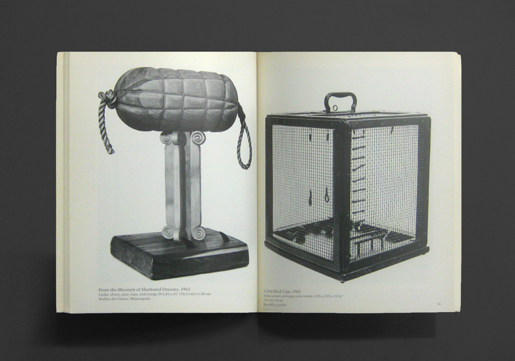
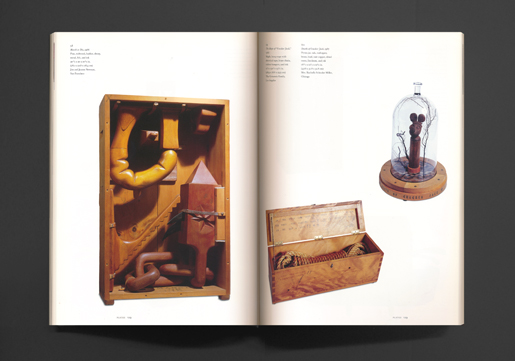
The irony and antic sense of humor that animate the work of H. C. Westermann (1922–1981) and make it so accessible are evident on every page of this volume, the first comprehensive study of the artist in over 20 years. Published on the occasion of a traveling exhibition of Westermann's sculpture, the book looks at how defining themes central to 20th-century America—the horror and disillusionment of war, the mythology of the American utopia, and Hollywood and mass media—shaped his thought and his art.
Magnificent color illustrations accompany essays by Robert Storr, who evaluates Westermann in the context of 20th-century art; Lynne Warren, who looks at his years in Chicago in the 1950s; Dennis Adrian, a longtime friend, who surveys the artist’s entire oeuvre; and Michael Rooks, who examines his most elaborate achievement, the house and studio in Connecticut that the artist designed and built by hand from 1969 to 1981.
H. C. Westermann (Horace Clifford "Cliff" Westermann) (11 December 1922 – 3 November 1981) was an American printmaker and sculptor whose art constituted a scathing commentary on militarism and materialism. His sculptures frequently incorporated traditional carpentry and marquetry techniques. Westermann resisted providing interpretation of his works of art. In one interview, when asked what an object meant, Westermann replied "It puzzles me too."
In 1967, he was one of the celebrities featured on the cover of the Beatles' album, Sgt. Pepper's Lonely Hearts Club Band.
In 1978 he was given a retrospective at the Whitney Museum of American Art in New York.
1980, English
Softcover, 56 pages, 18 x 20 cm
1st Edition, Out of print title / Used*,
Published by
Ernest Benn / London
$26.00 - Out of stock
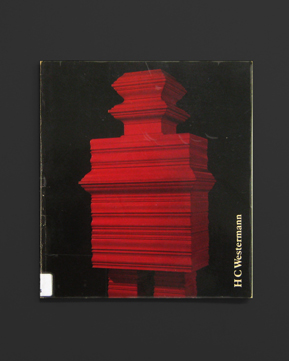
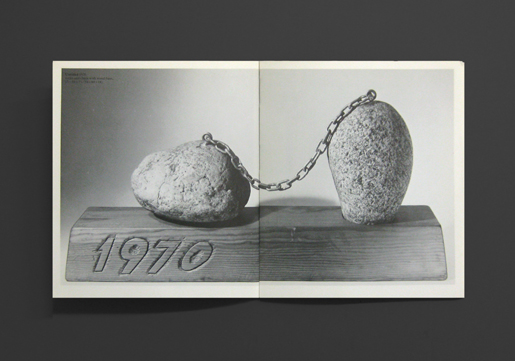
Published by Ernest Benn, London, to accompany an exhibition held December 1980 - February 1981 at the Serpentine Gallery. Profusely illustrated with the details 108 exhibitions, a text by Dennis Adrian, and a text by the artist himself.
H. C. Westermann (Horace Clifford "Cliff" Westermann) (11 December 1922 – 3 November 1981) was an American printmaker and sculptor whose art constituted a scathing commentary on militarism and materialism. His sculptures frequently incorporated traditional carpentry and marquetry techniques. Westermann resisted providing interpretation of his works of art. In one interview, when asked what an object meant, Westermann replied "It puzzles me too."
In 1967, he was one of the celebrities featured on the cover of the Beatles' album, Sgt. Pepper's Lonely Hearts Club Band.
In 1978 he was given a retrospective at the Whitney Museum of American Art in New York.
2013, English
Softcover, 328 pages (183 color and 41 b/w ills.), 17.5 x 23 cm
Published by
Sternberg Press / Berlin
$50.00 - Out of stock
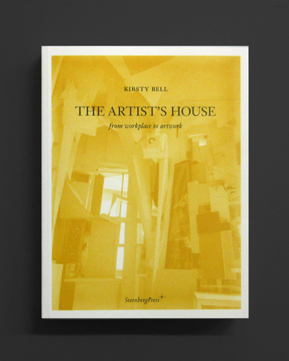
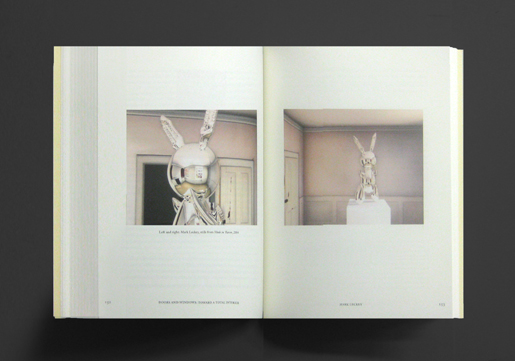
The artist’s house is a prism through which to view not only the artistic practice of its inhabitant, but also to apprehend broader developments in sculpture and contemporary art in relation to domestic architecture and interior space. Based on a series of interviews and site visits with living artists about the role of their home in relation to their work, Kirsty Bell looks at the house as receptacle, vehicle, model, theater, or dream space. In-depth analyses of these contemporary examples—including Jorge Pardo, Mirosław Bałka, Danh Vo, Gregor Schneider, Frances Stark, Marc Camille Chaimowicz, Dominique Gonzalez-Foerster, Paweł Althamer, Mark Leckey, Monika Sosnowska, Gabriel Orozco, Rirkrit Tiravanija, and Andrea Zittel—are contextualized by key artists of the twentieth century such as Kurt Schwitters, Alice Neel, Edward Krasiński, Carlo Mollino, and Louise Bourgeois. A two-way flow from the domestic arena to the exhibition space becomes apparent, in which the everyday has a significant role to play in the merging of such developments as installation art, relational aesthetics, expanded collage, and performance art.
Design by Joseph Logan
2010, English
Softcover, 132 pp. (b&w ill.), 21.7 x 16.5 cm.
Published by
Overduin and Kite / Los Angeles
$20.00 - Out of stock
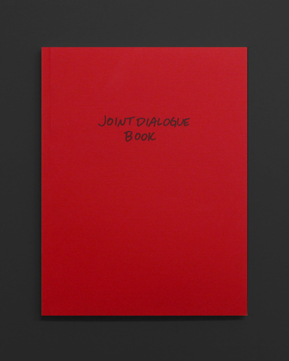
Catalogue produced on the occasion of "Joint Dialogue - Lozano/Graham/Kaltenbach" curated by Sarah Lehrer-Graiwer at Overduin and Kite, Los Angeles, January 31st-March 13th, 2010.
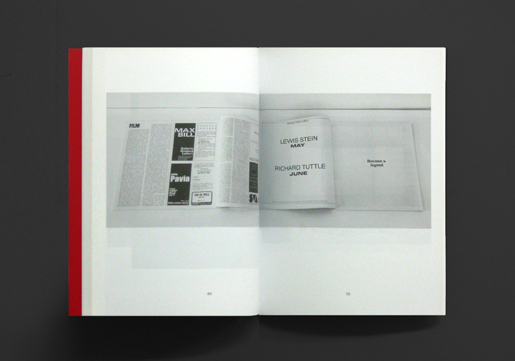
“Joint Dialogue” investigates the intersecting material histories of Lozano, Graham and Kaltenbach at the end of the 1960s in New York. It’s about close personal relationships between artists and the way ideas are traded down forking paths of influence to become variously manifest, suppressed, and rerouted in art. It’s about three related but divergent models of how being an artist dictates an extreme experience of consciousness, one in which the self is constantly lost and refound, or, as Lozano put it, a total revolution simultaneously personal and public. It’s about a transformative time in these artists’ overlapping practices that is reflective of the explosive historical period of rapid experimentation in conceptual art. It’s about real stakes- and the profundity of humor. It’s about trying to process the still astounding after-effects of Lozano’s absent body through the presence of Graham’s and Kaltenbach’s.
Motivated by Lozano’s Dialogue Piece (1969), in which stoned socializing and conversations about ideas were prioritized over art making, the structure of “Joint Dialogue” is split into two dialogues linked by Lozano, the joint. In one room, the juxtaposition of eight related and contemporaneous works establishes a conversation about drugs, sex, and money between Graham and Lozano, who were intimate friends during the time these works were made. A dialogue between Lozano and Kaltenbach, another close friend, takes place in a second room where several related works from the late 60s are joined by two never before seen time capsules by Kaltenbach and two previously unknown pieces by Lozano, remembered here by Kaltenbach.
“Joint Dialogue” is an ongoing project of personal investigation and investment for the curator who privately documents the many discoveries made throughout. The project continues to feed back great quantities of info.
Lee Lozano, Dan Graham and Stephen Kaltenbach lived and worked near each other in New York City during the late 1960s. Kaltenbach left for California in 1970. Lozano dropped out of the scene around 1972. Graham continues to live and work in New York.
Sarah Lehrer-Graiwer is a writer and curator who lives and works in Los Angeles. She is the publisher of the journal Pep-Talk.
Catalogue features texts by Sarah Lehrer-Graiwer, Dan Graham, and Stephen Kaltenbach.
2009, English
softcover, 128 pages, 21 x 15 cm
Published by
Artspace / Sydney
IMA / Brisbane
$40.00 - Out of stock
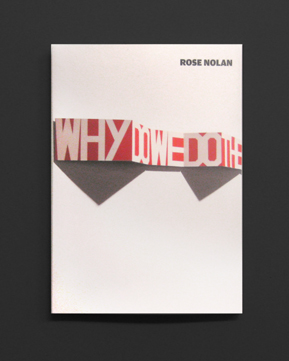
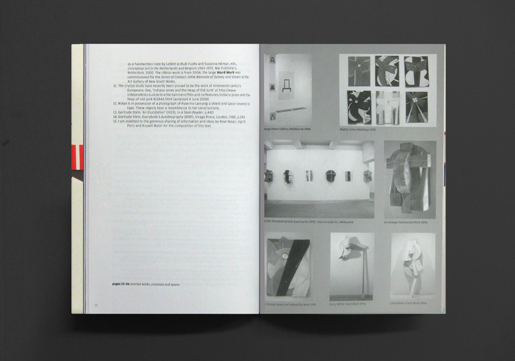
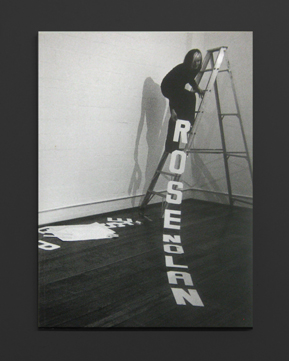
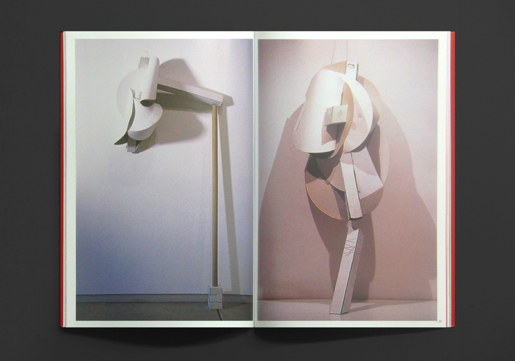
Published on the occasion of the exhibitions "Rose Nolan: Why Do We Do The Things We Do" at Artspace Visual Arts Centre, Sydney, 9 May - 7 June 2008, and Institute of Modern Art, Brisbane, 28 June - 16 August 2008
2001, English
Softcover, 65 pages, 30 x 21 cm
1st edition, Out of print title / As new,
Published by
Self-Published
$50.00 - Out of stock
Survey catalogue published in 2001 illustrating the work of Australian artist Rose Nolan. Featured in full-colour and b/w photography are her Banners, Constructed Work, Flat Work, Homework, Word Work spanning many exhibition installations throughout the 1990s and early 2000s.
Essay by Max Delaney.
2002, English
Softcover, 61 pages, 30 x 21 cm
1st edition, Out of print title / As new,
Published by
Self-Published
$50.00 - In stock -
Catalogue of an exhibition held at the Artist-in-Residence Studio, Elam School of Fine Arts, University of Auckland, 2002.
2002, English
Softcover, 61 pages, 30 x 21 cm
1st edition w/ colour insert, Out of print title / As new,
Published by
Self-Published
$60.00 - Out of stock
Catalogue of an exhibition held at the Artist-in-Residence Studio, Elam School of Fine Arts, University of Auckland, 2002. (limited edition with colour insert)
2012, English
Softcover, 220 x 293 mm
Published by
Kaleidoscope Press / Milan
$18.00 - Out of stock
Kaleidoscope 16 – Fall 2012
Kaleidoscope is an international quarterly of contemporary art and culture. Distributed worldwide on a seasonal basis, it offers a timely guide to the present (but also to the past and possible futures) with an interdisciplinary and unconventional approach.
HIGHLIGHTS
Aleksandra Domanovic by Pablo Larios; The High Line Art by Piper Marshall; Tri Angle Reocrdsa by Ruth Saxelby; Desire Machine Collective by Ulrich Baer and Sandhini Poddar; Sylvia Sleigh by Joanna Fiduccia.
DRAWINGS by Ken Price
MAIN THEME – Human After All
Part A) Prisoner of Flesh by Michele D’Aurizio; Part B) Talking to Machines by Jason Brown and Brody Condon introduces by DIS Magazine; Part C) David Altmejd by Karen Archey; Part D) Possibility Spaces by Manuel de Landa and Timur Si-Qin.
STICKERS by Alistair Frost
MONO – Frank Benson
Essay by Alessandro Rabottini; Interview by Matt Keegan.
IMAGES by Karthik Pandian
REGULARS
Futura: Liz Magic Laser by Hans Ulrich Obrist; Panorama: Marseille by Dorothée Dupuis; Souvenir D’Italie: Alberto Garutti by Luca Cerizza; Producers: Ariane Beyn by Carson Chan.
2011, English
Softcover, 220 x 293 mm
Published by
Kaleidoscope Press / Milan
$18.00 - Out of stock
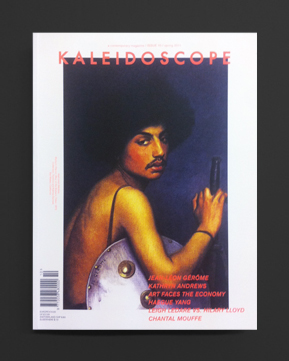
Kaleidoscope 10 – Spring 2011
Kaleidoscope is an international quarterly of contemporary art and culture. Distributed worldwide on a seasonal basis, it offers a timely guide to the present (but also to the past and possible futures) with an interdisciplinary and unconventional approach.
HIGHLIGHTS
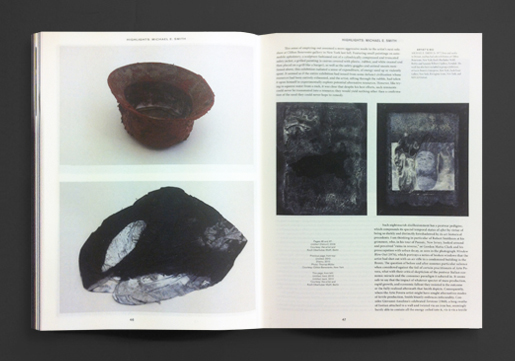
Michael E. Smith by Chris Sharp; Jean-Léon Gérome by Marie de Brugerolle; Kathryn Andrews by Michael Ned Holte; Criticism as Fiction? by Vincenzo Latronico; John Divola by Chris Wiley.
MAIN THEME – Art Faces the Economy
Superflex by Marina Vishmidt; Charles Esche and Maria Lind in conversation; Current Account by Nav Haq; Zachary Formwalt by Binna Choi
MONO – Haegue Yang
Essay by Bart van der Heide; Focus by Joanna Fiduccia; Special project by Haegue Yang; Interview by Yasmil Raymond.
REGULARS
Pionners: Absalon by Simone Menegoi; Futura: Raumlabor by Hans Ulrich Obrist; Mapping the Studio: Heimo Zobernig by Luca Cerizza; Vis à vis: Leigh Ledare and Hilary Lloyd by Elena Filipovic; Critical Space: Chantal Mouffe by Markus Miessen; Last Question by Alessandro Pessoli.
2013, English
Softcover, 200 pages, 21.5 x 28.5 cm
Published by
Walther König / Köln
$45.00 - Out of stock
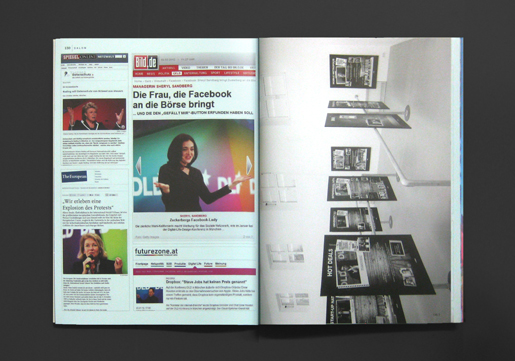
For this project, Denny utilised the example of the conference Digital Life Design DLD – a platform for the exchange of ideas between digital media, the sciences and culture – as a way to view the recent past within a rapidly developing high-tech digital economy.
Through access to original material from DLD'S 2012 conference, the artist presented the entire content of the event from beginning to end in a large-scale installation.
In the manner of appropriation, Denny has re-used existing copies of a publication that DLD produced for 2012 to insert new content in between its pages.
1988, English
Softcover, 208 pages (colour/b&w ill. throughout)
Out of print title / used*,
Published by
Thames and Hudson / London
$32.00 - Out of stock
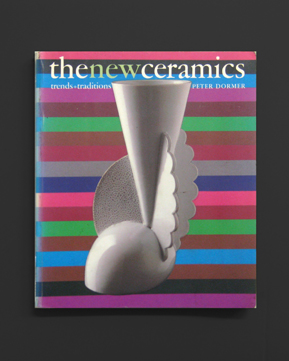
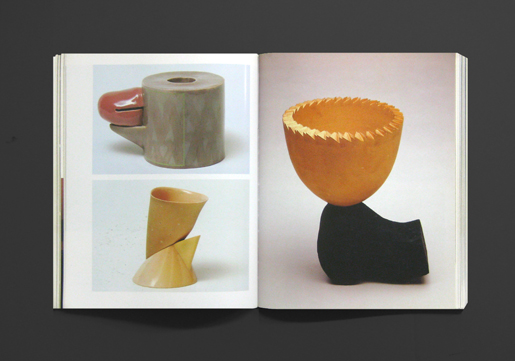
The most popular of all the decorative arts, pottery has established itself as a modern art, form universal in its appeal and language. This presentation of ceramics worldwide has been updated to reflect the latest developments in a fast-evolving field, revealing a blend of tradition with new ideas, and spectacular use of ornament and colour. Dormer discusses the nature and roots of today's trends, and examines form and decoration in an authoritative compilation.
2013, English
Hardcover (cloth-bound), 208 pages (193 b/w ills.) + photograph insert, 219 x 313 mm
Edition of 25 (signed and numbered),
Published by
Rainoff / Sydney / New York
$200.00 - Out of stock
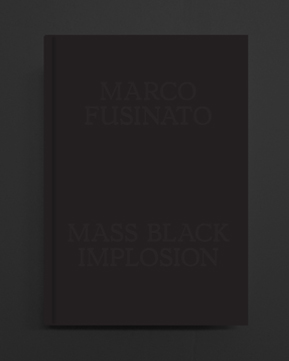
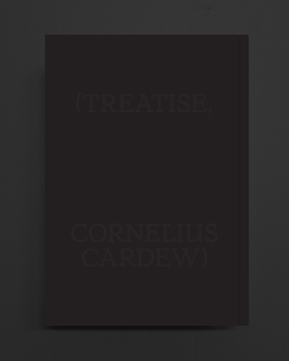
Mass Black Implosion (Treatise, Cornelius Cardew) by Marco Fusinato has been published by Rainoff to coincide with the exhibition of the same title held at Anna Schwartz Gallery, Melbourne, 9th October – 16th November, 2013.
In his ongoing series Mass Black Implosion (2007–) Marco Fusinato takes scores by avant-garde composers, drawing lines from every original note to an arbitrarily chosen point as propositions for new noise compositions, or moments of extreme consolidation and intensity, as if every note were played at once.
Mass Black Implosion (Treatise, Cornelius Cardew) is a large-scale work based on seminal composition Treatise by the English experimental music composer Cornelius Cardew (1936 – 1981). This canonical work of modern Western music comprises 193 pages of graphic score: lines, symbols, and various geometric shapes that eschew conventional musical notation. It has been described as the most significant graphic score of the Twentieth Century.
This limited hardcover publication has been produced in an edition of 25 copies (signed and numbered) and presents all 193 parts of this monumental work by Marco Fusinato. Each score has been reproduced at 65% of its original size and is accompanied by a loose colour photograph documenting the installation.
Mass Black Implosion (Treatise, Cornelius Cardew) will be launched on 8th October, 2013 to coincide with the exhibition opening at Anna Schwartz Gallery and is available directly from Rainoff and World Food Books.
2013, English / German
Softcover, 240 pages
Published by
Walther König / Köln
$44.00 - Out of stock
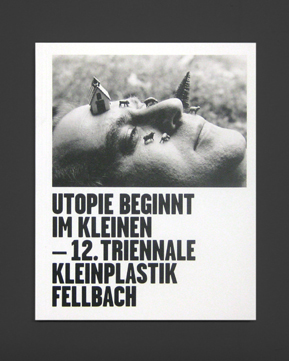
Utopie beginnt im Kleinen / Utopia starts small
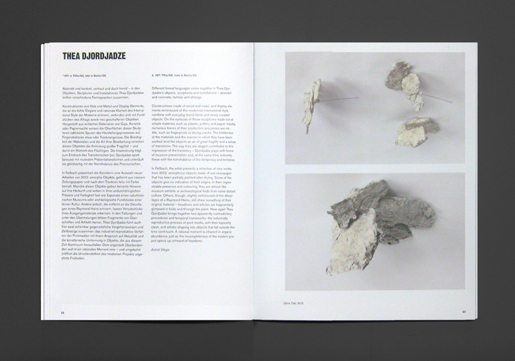
Catalogue publication to accompany the 12th Fellbach Triennial of Small Scale Sculpture 2013, featuring the work of Armando Andrade Tudela, Leonor Antunes, Ei Arakawa & Nikolas Gambaroff, Anna Artaker, Vojin Bakic´, Neïl Beloufa, Bless, Arno Brandlhuber, Teresa Burga, Luis Camnitzer, Nina Canell, Lygia Clark, Nathan Coley, Thea Djordjadze, Maria Eichhorn, Michaela Eichwald, Felix Ensslin & Studierende, Geoffrey Farmer, Yona Friedman, Meschac Gaba, Carlos Garaicoa, Isa Genzken, Konstantin Grcic, Günter Haese, Diango Hernández, Judith Hopf, Iman Issa, Christian Jankowski & Studierende, Rachel Khedoori, Bodys Isek Kingelez, Jakob Kolding, Moshekwa Langa, Manuela Leinhoß, Anita Leisz, Anna Maria Maiolino, Victor Man, Cildo Meireles, Michaela Melián, Michele Di Menna, Charlotte Moth, Timo Nasseri, Manfred Pernice, Pratchaya Phinthong, Falke Pisano, Erwin Piscator, Rita Ponce de León, Vjenceslav Richter, Yorgos Sapountzis, Jochen Schmith, Nora Schultz, Eckhard Schulze-Fielitz, Yutaka Sone, Ettore Sottsass, Pascale, Marthine Tayou, Joëlle Tuerlinckx, Danh Võ and Haegue Yang.
With contributions by Yilmaz Dziewior, Angelika Nollert, Dieter Roelstraete, Thomas Schölderle, Kerstin Stakemeier, et al.
Edited by Kulturamt der Stadt Fellbach, Angelika Nollert, Yilmaz Dziewior
240 pages with numerous colour illustrations
Beyond the bounds of the visual arts, this accompanying publication also examines approaches from architecture, theatre and design by means of examples. Alongside historical positions, the focus is placed in particular on contemporary, young artists, whose works has frequently been created in situations of radical change in Eastern Europe, Latin America and Asia. As well as texts on the exhibiting artists, the accompanying catalogue includes four academic essays that deal with the sociopolitical meaning of utopia through its historical development, the thematization and development of utopian models in art as well as the aesthetics of the small.
2013, English
Softcover, 194 pages (14 b/w ills.), 12 x 20 cm
Published by
Sternberg Press / Berlin
$29.00 - Out of stock
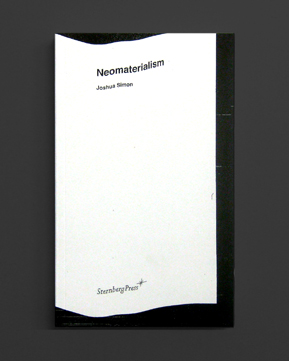
After a short period of “unbearable lightness of being,” the social gravitation begins to be felt again. In his book Joshua Simon describes and analyzes the growing weight of the technical, economic, material basis of our society. The author’s sensibility for today’s Zeitgeist is at the same time entertaining and precise.
—Boris Groys
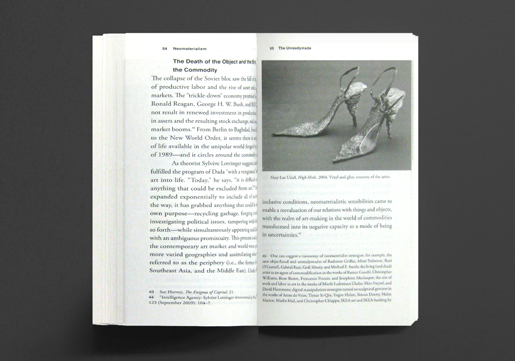
Since the so-called dematerialization of currencies and art practices in the late 1960s and early 1970, we have witnessed a move into what Joshua Simon calls an economy of neomaterialism. With this, several shifts have occurred: the focus of labor has moved from production to consumption, the commodity has become the historical subject, and symbols now behave like materials.
Neomaterialism explores the meaning of the world of commodities, and reintroduces various notions of dialectical materialism into the conversation on the subjectivity and vitalism of things. Here, Simon advocates for the unreadymade, sentimental value, and the promise of the dividual as a means for a vocabulary in this new economy of meaning.
Reflecting on general intellect as labor and the subjugation of an overqualified generation to the neofeudal order of debt finance—with a particular focus on dispossession and rent economy, post-appropriation display strategies and negation, the barricade and capital’s technocratic fascisms—Neomaterialism merges traditions of epic communism with the communism that is already here.
Design by Avi Bohbot
2013, English / French
Hardcover, 184 pages, 190 x 240 mm
Published by
Editions Dilecta / France
Walther König / Köln
$57.00 - Out of stock
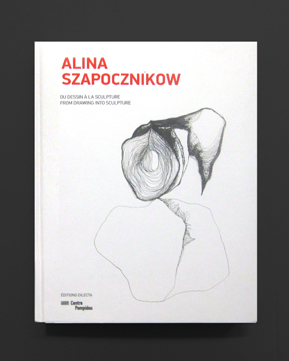
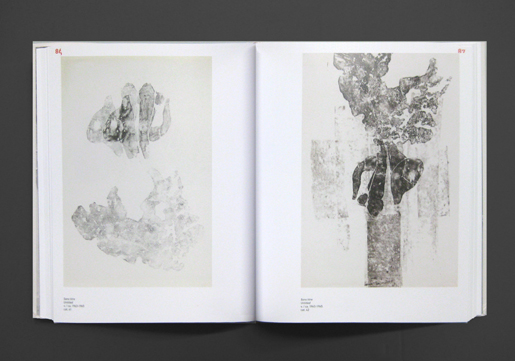
Alina Szapocznikow is one of the first to use materials such as polyurethane foam and polyester resin, If she is better known for her sculpture, the high quality and abundance of her drawings, however, more than merit further consideration. 40 years after her death, her work is now being rediscovered by the most regarded museums around the world. Felt-tip, ballpoint, crayons, ink, watercolours and monotypes help revealing Alina Szapocznikow's fantasy, her reflection on the body, as well as a universed marked by humour, sexuality and dizziness. These drawings reflects the work of an artist, who can at the same time be considered a heiress of Auguste Rodin, of surrealism and a foreboding of Pop Art.
2013, English
Softcover, 208 pages (350 color and b/w ills.), 26 x 35 cm
Published by
Sternberg Press / Berlin
$39.00 - Out of stock
With contributions by Sabeth Buchmann, Mercedes Bunz, Diedrich Diederichsen, Kodwo Eshun, Anselm Franke, Erich Hörl, Norman M. Klein, Maurizio Lazzarato, Flora Lysen, Eva Meyer, John Palmesino, Laurence Rickels, Bernd M. Scherer, Fred Turner
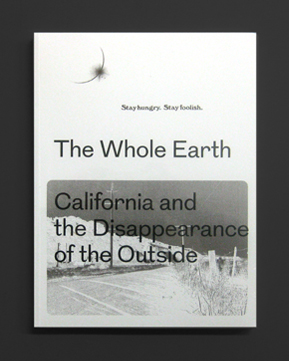
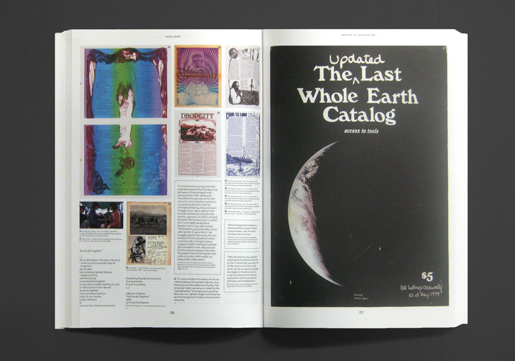
In the year 1966, a young man named Stewart Brand handed out buttons in San Francisco reading: “Why haven’t we seen a photograph of the whole Earth yet?” Two years later, the NASA photograph of the “blue planet” appeared on the cover of the Whole Earth Catalog. In creating the catalogue, frequently described as the analogue forerunner of Google, Brand had founded one of the most influential publications of recent decades. It mediated between cyberneticists and hippies, nature romantics and technology geeks, psychedelia and computer culture, and thus triggered defining impulses for the environmentalist movement and the rise of the digital network culture.
The photo of the blue planet developed a sphere of influence like almost no other image: it stands not only for ecological awareness and crisis but also for a new sense of unity and globalization. The universal picture of “One Earth” hence anticipated an image of the end of the Cold War, whose expansion into space it accompanied, and overwrote or neutralized political lines of conflict by transferring classical politics and criticism of it to other categories, such as cybernetic management or ecology.
The exhibition “The Whole Earth” is an essay composed of cultural-historical materials and artistic positions that critically address the rise of the image of “One Earth” and the ecological paradigm associated with it. The accompanying publication includes image-rich visual essays that explore key themes: “Universalism,” “Whole Systems,” “Boundless Interior,” and “Apocalypse, Babylon, Simulation,” among others. These are surrounded by critical essays that shed light onto 1960s California and the networked culture that emerged from it.
Artists: Nabil Ahmed, Ant Farm, Eleanor Antin, Martin Beck, Jordan Belson, Ashley Bickerton, Dara Birnbaum, Erik Bulatov, Angela Bulloch, Bruce Conner, Öyvind Fahlström, Robert Frank, Jack Goldstein, Nancy Holt and Robert Smithson, Lawrence Jordan, Silvia Kolbowski, Philipp Lachenmann, David Lamelas, Sharon Lockhart, Piero Manzoni, Raymond Pettibon, Adrian Piper, Robert Rauschenberg, Ira Schneider, Richard Serra, Alex Slade, Jack Smith, Josef Strau, The Center for Land Use Interpretation, The Otolith Group, Suzanne Treister, Andy Warhol, Bruce Yonemoto, et al.
Copublished with Haus der Kulturen der Welt
Design by Studio Matthias Görlich
2013, English
Softcover, 164 pages (colour & b/w ill.), 15 x 23 cm
Published by
The Drawing Center / New York
$38.00 - Out of stock
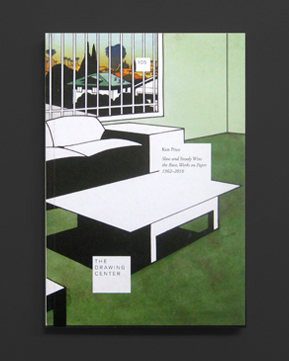
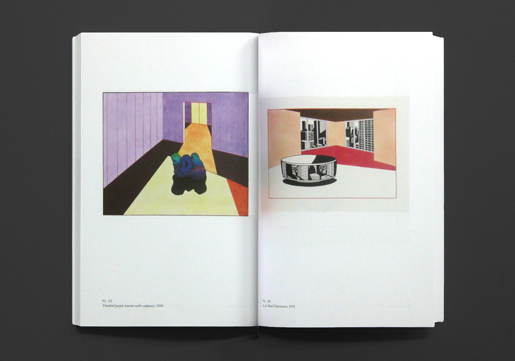
This publication accompanies the first survey of drawings by Los Angeles artist Ken Price (1935–2013), best known for his abstract, brightly colored ceramic sculptures. Price’s work was only widely exhibited later in his life, but scholars have long admired his highly original forms. As early as 1966, Lucy Lippard commented: “No one else on the East or West Coast is working like Kenneth Price.” Like his better-known sculptures, these drawings feature an idiosyncratic array of amorphous shapes. The book includes an in-depth 44-page illustrated essay by exhibition curator Douglas Dreishpoon, a 20-page section detailing a rarely seen large-scale scroll drawing from 1962, and color plates of all of the nearly 70 works in the exhibition, tracking the evolution of Price’s drawings over 48 years and demonstrating a wide range of characters and techniques.
2009, English
Softcover (stapled), 16 pages (colour ill. throughout), 220 x 145 mm
Out of print title / used*,
Published by
Matthew Marks gallery / New York
$35.00 - Out of stock
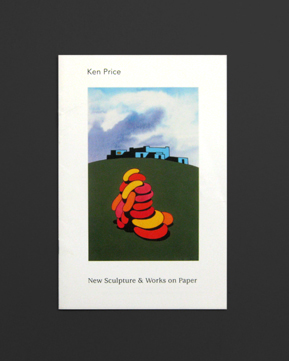
This brightly illustrated publication accompanied the exhibition Ken Price: New Sculpture & Works on Paper at the Art Dealers Association of America Art Show, February 19-23, 2009 at the Park Avenue Armory. Features photographs of many new sculptural works and drawings. Very scarce catalogue.
2013, English
Loose-leaf collection of Y3K ephemera (folded A3 exhibition posters, plus A4 inserts), 21 x 29.7 cm
Edition of 100,
Published by
Y3K / Melbourne
$25.00 - Out of stock
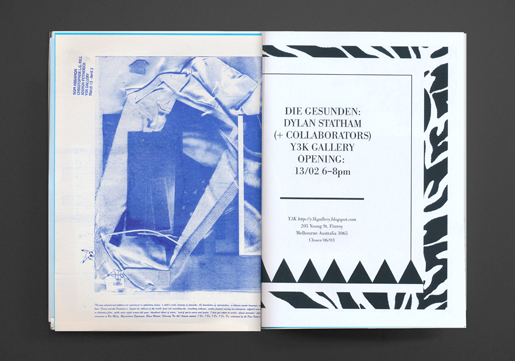
Y3K was a two-year (2009-2011) proposition initiated by James Deutsher and Christopher L G Hill, a gallery practice as-an-extension-of an art practice and-in-support-of a wider art and design community in Melbourne and Internationally.
Over two-years Y3K exhibited World Food Books, BLESS, Christopher L.G. Hill, Emmeleine deMooij, Jota Castro, Kinga Kielczynska, Melanie Bonaj, fabrics interseason, ffiXXed, Heinz Peter Knes, James Deutsher, Matt Hinkley, Olivia Barrett, Pat Foster, Jen Berean, Rob McKenzie, SIBLING, Slow and Steady Wins the Race, Jon Campbell, LOST Projects, Alex Vivian, Daniel du Bern, Nick Selenitsch, Kain Picken, Next Wave, A Constructed World, Joshua Petherick, Helen Johnson, Bianca Hester, Misha Hollenbach, David Griggs, Sam Kiyoumarsi, Robert Langenegger, Nick Mangan, Matt Griffin, Masato Takasaka, Fiona Connor, Tahi Moore, Ida Ekblad, Art Centre Ongoing, Kit Lee, Kate Newby, Sriwhana Spong, Dylan Statham, Simon Taylor, Sophia Mitchell, Rowan Mcnaught, MM Yu. Ilia Farah Rosli, Marco Fusinato, TATE Modern, Marie Gaultier, Anna Hess, Veronica Kent, Jarrod Rawlins, Keith Al-Hasani, Ruby Lowe, Justin Clemens, Daniel Munn, Simon Denny, Dan Arps, Andrew Barber, Structural Integrity, Marco Fusinato, Rose Nolan, Dan Bell, Kate Smith, Ardi Gunawan, Nikos Pantazopoulos, Ben Tankard, Steve Kado, Virginia Overell, Mateo Tannatt, Sean Peoples, Inri Cristo, Tara Rawlins, Chateau 2F, Oscar Yanez, Hany Armanious, Ash Kilmartin, Elizabeth Gower, Lizzy Newman, Nina Sers, Maria Kozic, Ellen Pittman, Juan Davila, Janet Burchill, Jennifer McCarthy, Constanze Zikos, Hao Guo, Pow Martinez, Carissa Rodriguez, Tobias Kaspar, Piotr Łakomy, Natalie Rognsøy, Katherine Huang, Taree McKenzie, Ester Partegas, Mikala Dwyer and John Spiteri and more.
Each exhibition was accompanied by an A3 double sided unique limited edition poster designed by the artists and gallerists. These posters now form the basis for the Y3K publication.
Included in this publication, and on the occasion of it's launch to the public two years after the cessation of the Y3K gallery space, is an accompanying text from
Fayen D’Evie.
The Y3K publication is a limited edition of 100, and is available from World Food Books.
2013, English
Softcover(w. loose leaf inserts), 244 pages (colour & b/w ill.), 30 x 23 cm
Ed. of 1000,
Published by
Discipline / Melbourne
$30.00 - Out of stock
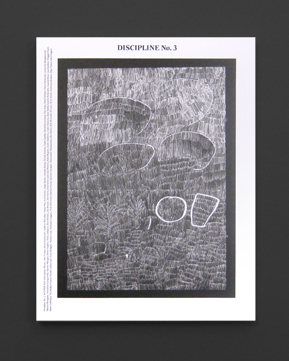
Discipline is a Melbourne-based journal of contemporary art. It has a focus on artist pages by, and longer, research-based essays on Australian artists.
No. 3 (Winter 2013)
Edited by Nicholas Croggon and Helen Hughes and guest edited section by Raimundas Malasauskas.
Features essays by Adrian Martin on film, art and the support-surface; Anusha Kenny on Anastasia Klose; David Homewood on Dale Hickey’s cups; David Wlazlo on Ian Burn; Helen Johnson on Hany Armanious’s new sculpture for the MCA; Huw Hallam on Nikos Papasteriadis’s book Culture and Cosmopolitanism (2012); Jan Bryant on TJ Clark and the contemporary; Justin Clemens on contemporary art-as-minimal domination; Lauren Bliss on A Constructed World and Speech and What Archive; Lisa Radford on Geoff Newton; Maggie Finch on Simryn Gill; interview with Mattin by Joel Stern and Andrew McLellan; Quentin Sprague on Nyapanyapa Yunupingu’s Light Painting; Rex Butler on John Nixon: A Communist Artist; Terry Smith in response to Nikos Papastergiadis’s review of his two books What is Contemporary Art? (2009) and Contemporary Art: World Currents (2011), published in Discipline 2 (2012); and the third and final instalment of ST Lore’s serialised novel.
It also includes artist pages by: Alex Vivian, Alicia Frankovich, Brook Andrew, Claire Lambe, Dan Arps, Gabriella Mangano and Silvana Mangano, Harriet Morgan, Justin Andrews, Kate Smith, Lauren Berkowitz, The Mulka Project, Narelle Jubelin and Jacky Redgate, Nathan Gray, Nick Selenitsch, Patrick Pound, Rob McLeish, and Zoe Croggon.
And a guest-edited supplement by Raimundas Malasauskas, curator of the Lithuanian Pavilion at the 2013 Venice Biennale.
Designed by Annie Wu and Ziga Testen.
2013, English / German
Softcover, 72 pages, 210 × 297mm
Published by
Bom Dia Boa Tarde Boa Noite / Berlin
$38.00 - Out of stock
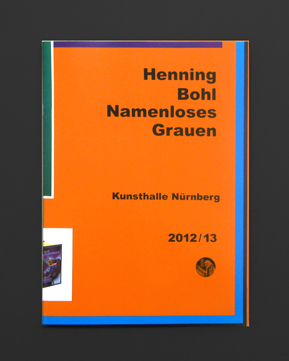
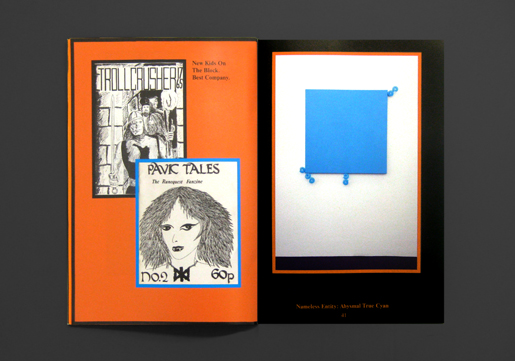
Includes works shown at Kunsthalle Nürnberg, Pro Choice / L'Ocean Licker, Galerie Meyer Kainer, Casey Kaplan. Published on the occasion of the exhibition by Henning Bohl held at Kunsthalle Nürnberg 2012 / 2013
Texts by Henning Bohl and Dirk von Lowtzow.