World Food Books' programme is largely produced on Kulin Nation land. We acknowledge the Wurundjeri people of the Kulin Nation as the first and continuing custodians of this land, and pay respect to their Elders past, present, and emerging.
World Food Books is an arts and special interests bookshop in Naarm / Melbourne. Founded in 2010, World Food Books is devoted to the presentation of a rotating, hand-selection of international art, design, literary and counterculture publications with an emphasis on the anti-traditional, the experimental, the avant-garde, the heretic, the marginal.
Presenting new titles alongside rare and out-of-print books, catalogues and journals spanning the fields of modern and contemporary art, design, photography, illustration, film, literature, poetry, cultural theory, philosophy, sexuality, popular and underground culture in its many radical forms, World Food Books wishes to encourage adventurous, thoughtful and open-minded reading, looking, writing, and exchange of publishing and ideas, both current and historical.
As well as our bookshop, located in Melbourne's historical Nicholas Building, all of our inventory is available internationally via our online mail-order service.
World Food Books semi-regularly co-ordinates "Occasions", a programme of exhibits and events at the bookshop and in partnership with other hosts (such as museums and art galleries) that develop out of the activities, relationships and content of the bookshop itself.
World Food Books
The Nicholas Building
37 Swanston Street
Room 5, Level 6
Melbourne 3000
Australia
SHOP HOURS:
THU–SAT 12–6
WEB-SHOP OPEN 24/7
World Food Books
Postal Address:
PO Box 435
Flinders Lane
Victoria 8009
Australia
info@worldfoodbooks.com
Art
Theory / Essay
Architecture / Interior
Graphic Design / Typography
Photography
Fashion
Eros
LGBTQ+
Fiction / Poetry
Weird / Speculative / Science Fiction / Horror
Transgressive / Visceral / Abject
Symbolism / Decadence / Fin de siècle
Film / Video
Painting
Sculpture / Installation
Performance / Dance / Theater
Drawing
Sound / Music
Curatorial
Group Shows / Collections
Periodicals
Out-of-print / Rare
Posters / Ephemera / Discs
Signed Books
World Food Books Gift Voucher
World Food Book Bag
Australian Art
Australian Fiction
Australian Science Fiction / Speculative Fiction
Australian Poetry
Australian Photography
Japanese Photography
Conceptual Art
Minimal Art
Dada
'Pataphysics / Oulipo
Fluxus
Concrete Poetry
Pop Art
Surrealism
Arte Povera
Arte Informale / Haute Pâte / Tachism
Nouveau Réalisme / Zero / Kinetic
Situationism / Lettrism
Collage / Mail Art / Xerox Art
Art Brut / Folk / Visionary / Fantastic
Illustration / Graphic Art / Bandes Dessinées
Furniture
Italian Radical Design / Postmodernism
Textiles
Ceramics / Glass
Counterculture
Protest / Revolt
Philosophy
Psychoanalysis
Anthropology
Anarchism
Socialism / Anarchism / Communism / Capitalism
Literary Theory / Semiotics / Language
Feminism / Women's Studies
Gender Studies / Sexuality
Anthropology
Fetishism / BDSM
Drugs / Psychedelia
Crime / Violence
Animal Rights / Veganism
Occult / Esoterica
Ecology / Earth / Alternative Living
Whole Earth / Crafts
All prices in AUD (Australian dollars)
Pick-Ups
Pick-up orders can be collected in our bookshop during opening hours after order date. Please collect any Pick-up orders within 2 weeks of ordering as we have limited storage space. Orders will be released back into stock if not collected within this time. No refunds can be made for pick-ups left un-collected. If you cannot make it in to the bookshop in this time-frame, please choose postage option.
Return Policy
All sales are final. We do accept returns (for refund or exchange) for items received in error. All our orders are packed with special care using heavy-duty padding and cardboard book-mailers or bubble mailers (for smaller books), using reinforcement where required. We cannot take responsibility for any lost, stolen or damaged parcels.
Insurance
Should you wish to insure your package, please email us directly after placing your order and we can organise this at a small extra expense. Although all standard/express tracked packages are very safe and dependable, we cannot take responsibility for any lost, stolen or damaged parcels. We recommend insurance on valuable orders.
Interested in selling your old books, catalogues, journals, magazines, comics, fanzines, ephemera? We are always looking for interesting, unusual and out-of-print books to buy. We only buy books in our fields of interest and specialty, and that we feel we can resell.
We base these prices on desirability, market value, in-print prices, condition and our current stock levels. We offer cash, store credit, and can take stock on consignment. All
about 25% of the price we expect to get when we sell them, or 30% in store credit. We base these prices on desirability, market value, in-print prices, condition and our current stock levels.
Sell your books any day of the week. You can drop them off and return later. If you have a lot of books, we can visit your Sydney home.
We buy books that we feel we can resell. We offer about 25 % of the price we expect to get when we sell them, or 30% in store credit. We base these prices on desirability, market value, in-print prices, condition and our current stock levels.
Philadelphia Wireman
03 August - 01 September, 2018
World Food Books is proud to announce our next Occasion, the first presentation of sculptures by Philadelphia Wireman in Australia.
The Philadelphia Wireman sculptures were found abandoned in an alley off Philadelphia’s South Street on trash night in 1982. Their discovery in a rapidly-changing neighbourhood undergoing extensive renovation, compounded with the failure of all attempts to locate the artist, suggests that the works may have been discarded after the maker’s death. Dubbed the "Philadelphia Wireman" during the first exhibition of this work, in 1985, the maker’s name, age, ethnicity, and even gender remain uncertain. The entire collection totals approximately 1200 pieces, all intricately bound together with tightly-wound heavy-gauge wire (along with a few small, abstract marker drawings, reminiscent both of Mark Tobey and J.B. Murry). The dense construction of the work, despite a modest range of scale and materials, is singularly obsessive and disciplined in design: a wire armature or exoskeleton firmly binds a bricolage of found objects including plastic, glass, food packaging, umbrella parts, tape, rubber, batteries, pens, leather, reflectors, nuts and bolts, nails, foil, coins, toys, watches, eyeglasses, tools, and jewellery.
Heavy with associations—anthropomorphic, zoomorphic, and socio-cultural responses to wrapped detritus—the totemic sculptures by Philadelphia Wireman have been discussed in the context of work created to fulfil the shamanistic needs of alternative religions in American culture. Curators, collectors, and critics have variously compared certain pieces to sculpture from Classical antiquity, Native American medicine bundles, African-American memory jugs, and African fetish objects. Reflecting the artist’s prolific and incredibly focused scavenging impulse, and despite—or perhaps enhanced by—their anonymity, these enigmatic objects function as urban artefacts and arbiters of power, though their origin and purpose is unknown. Philadelphia Wireman, whatever their identity, possessed an astonishing ability to isolate and communicate the concepts of power and energy through the selection and transformation of ordinary materials. Over the course of the past two decades, this collection has come to be regarded as an important discovery in the field of self-taught art and vernacular art.
Presented in collaboration with Fleisher-Ollman Gallery, Philadelphia, and Robert Heald, Wellington.
Susan Te Kahurangi King
02 February - 10 March, 2018
Susan Te Kahurangi King (24 February 1951 - ) has been a confident and prolific artist since she was a young child, drawing with readily available materials - pencils, ballpoint pens and felt-tip markers, on whatever paper is at hand. Between the ages of four and six Susan slowly ceased verbal communication. Her grandparents William and Myrtle Murphy had developed a special bond with Susan so they took on caring responsibilities for extended periods. Myrtle began informally archiving her work, carefully collecting and storing the drawings and compiling scrapbooks. No drawing was insignificant; every scrap of paper was kept. The King family are now the custodians of a vast collection containing over 7000 individual works, from tiny scraps of paper through to 5 meter long rolls.
The scrapbooks and diaries reveal Myrtle to be a woman of great patience and compassion, seeking to understand a child who was not always behaving as expected. She encouraged Susan to be observant, to explore her environment and absorb all the sights and sounds. Myrtle would show Susan’s drawings to friends and people in her community that she had dealings with, such as shopkeepers and postal workers, but this was not simply a case of a grandmother’s bias. She recognised that Susan had developed a sophisticated and unique visual language and sincerely believed that her art deserved serious attention.
This was an unorthodox attitude for the time. To provide some context, Jean Dubuffet coined the term Art Brut in 1945 to describe work created by self-taught artists – specifically residents of psychiatric institutions and those he considered to be visionaries or eccentrics. In 1972 Roger Cardinal extended this concept by adopting the term Outsider Art to describe work made by non-academically trained artists operating outside of mainstream art networks through choice or circumstance. Susan was born in Te Aroha, New Zealand in 1951, far from the artistic hubs of Paris and London that Dubuffet and Cardinal operated in. That Myrtle fêted Susan as a self-taught artist who deserved to be taken seriously shows how progressive her attitudes were.
Susan’s parents Doug and Dawn were also progressive. Over the years they had consulted numerous health practitioners about Susan’s condition, as the medical establishment could not provide an explanation as to why she had lapsed into silence. Dawn educated herself in the field of homeopathy and went on to treat all twelve of her children using these principles – basing prescriptions on her observations of their physical, mental and emotional state.
Doug was a linguist with an interest in philosophy who devoted what little spare time he had to studying Maori language and culture. To some extent their willingness to explore the fringes of the mainstream made them outsiders too but it was their commitment to living with integrity and their respect for individuality that ensured Susan’s creativity was always encouraged.
Even though Susan’s family supported her artistic pursuits, some staff in schools and hospitals saw it as an impediment to her assimilation into the community and discouraged it in a variety of ways. Her family was not always aware of this and therefore did not fully understand why Susan stopped drawing in the early 1990s. However, rather than dwell on the challenges that Susan faced in pursuit of her artistic practice, they prefer to highlight her achievements. In 2008 Susan began drawing again in earnest, after an almost 20 year interruption, and her work is now shown in galleries around the world.
Susan grew up without television and has been heavily influenced by the comics she read as a child. She is absolutely fearless in the appropriation of recognizable characters, such as Donald Duck and Mickey Mouse, in her work. She twists their limbs, contorts their faces, compresses them together, blends them into complex patterned backgrounds - always imbuing them with an incredible energy. Although Susan often used pop culture characters in her work they are not naive or childlike. These are drawings by a brilliant self-taught artist who has been creating exceptional work for decades without an audience in mind.
Mladen Stilinović
"Various Works 1986 - 1999"
02 February 16 - September 10, 2016
Various works 1986 - 1999, from two houses, from the collections of John Nixon, Sue Cramer, Kerrie Poliness, Peter Haffenden and Phoebe Haffenden.
Including: Geometry of Cakes (various shelves), 1993; Poor People’s Law (black and white plate), 1993; White Absence (glasses, ruler, set square, silver spoon, silver ladel with skin photograph and wooden cubes), 1990-1996; Exploitation of the Dead (grey and red star painting, wooden painting, black spoon with red table, red plate), 1984-1990; Money and Zeros (zero tie, paintings made for friends in Australia (Sue, John, Kerrie), numbers painting), 1991-1992; Words - Slogans (various t-shirts) - “they talk about the death of art...help! someone is trying to kill me”, “my sweet little lamb”, “work is a disease - Karl Marx”; Various artist books, catalogues, monographs, videos; Poster from exhibition Insulting Anarchy; "Circular" Croatian - Australian edition; Artist book by Vlado Martek (Dostoyevsky); more.
Thanks to Mladen Stilinović and Branka Stipančić.
Jonathan Walker
Always Will Need To Wear Winter Shirt Blue + Ochre Small Check Pattern
21 August - 21 September, 2015
Untitled
I am not a great reader of poetry but I always return to the work of Melbourne poet, Vincent Buckley (1925- 1988). Perhaps I find his most tantalising piece to be not a finished poem but a fragment left on a scrap of paper discovered on his desk after the poet’s death.
The poetry gathers like oil
In the word-core, and spreads
It has its music meet,
Its music is in movement.
This fragment is more the shell left behind from a volatile thought than a finished poem. I find the last two lines honest but awkward whereas the first two lines work like an arrow. Most likely he could not find a resolution so it was left. Still, in its present form, it remains an eloquent testimony to the ultimate failure of a medium to express mobile thought and sensation, in Buckley’s case, through verbal language. It’s an important matter because this is something all artists have to deal with regardless of the medium.
I have never written a poem, however, I am forever copying fragments from books on paper scraps in a vain effort to fix certain notions in my head. At first, they function as bookmarks that are sometimes returned to when I open the book. But before long, as they accumulate, they fall out littering the table interspersed with A4 photocopies, bills, books and medications.
To return to Buckley’s fragment, the first two lines very much evoke how I paint nowadays. As you age, detail diminishes and patches of light become more luminous and float. I feel the most honest way of dealing with this is by smearing the oil paint on the canvas with the fingers and working close-up, blind. Only if the patches coalesce into an approaching image can the work gain a life.
-
Jonathan Walker was born in Melbourne, Australia and brought up on a dairy farm in Gippsland. In the 1970’s he studied painting at RMIT and won the Harold Wright Scholarship to the British Museum, London. During the 1980’s he exhibited at Pinacotheca Gallery, Richmond and had work shown at the NGV and Heidi City Art Gallery. Over the same period he designed the cover for the “Epigenesi” LP by Giancarlo Toniutti, Italy and conducted a mail exchange work with Achim Wollscheid, Germany. The work with artists through the post resulted in an article published in the bicentenary issue of Art and Australia 1988. He showed in artist run spaces such as WestSpace in the 90’s and 2000’s, and until 2012, taught painting at Victoria University, which is where we (Colleen Ahern and Lisa Radford) as organisers of the exhibition, among many others, had the privilege of being his student.
Walker’s knowledge was imparted to students through the careful selection of music, literature, and artists found in books that he himself had ordered for the library. Walker’s strategy was the generosity of sharing his vast knowledge with references specific to each student and their context.
Walker’s paintings share a similar focus and intimacy.
This exhibition presents a small selection of recent paintings alongside a publication that includes Walker’s writing. Observational and analytical, Walker’s work is a type of material notation — the time of day, colour and how it is blended, the both specific and fleeting location of a reflection on lino or the question of whether a chair leg should be included in a painting.
Please join us on Friday August 21 between 6-8pm to celebrate the opening of the exhibition.
Curated by Colleen Ahern and Lisa Radford.
B. Wurtz
Curated by Nic Tammens
March 26 - April 4, 2015
B.Wurtz works from a basement studio in his home on Manhattan’s Lower East Side.
This local fact is attested to by the plastic shopping bags and newsprint circulars that appear in his work. As formal objects, they don’t make loud claims about their origins but nonetheless transmit street addresses and places of business from the bottom of this long thin island. Like plenty of artists, Wurtz is affected by what is local and what is consumed. His work is underpinned by this ethic. It often speaks from a neighborhood or reads like the contents of a hamper:
“BLACK PLUMS $1.29 lb.”
“Food Bazaar”
“USDA Whole Pork Shoulder Picnic 99c lb.”
“RITE AID Pharmacy, with us it’s personal.”
“H. Brickman & Sons.”
“Sweet Yams 59c lb."
Most of the work in this exhibition was made while the artist was in residence at Dieu Donne, a workshop dedicated to paper craft in Midtown. Here Wurtz fabricated assemblages with paper and objects that are relatively lightweight, with the intention that they would be easily transportable to Australia. This consideration isn’t absolute in Wurtz’s work, but was prescriptive for making the current exhibition light and cheap. Packed in two boxes, these works were sent from a USPS post office on the Lower East Side and delivered to North Melbourne by Australia Post.
Wurtz appears courtesy of Metro Pictures, New York.
Thanks to Rob Halverson, Joshua Petherick, Sari de Mallory, Matt Hinkley, Helen Johnson, Fayen d'Evie, Ask Kilmartin, Lisa Radon, Ellena Savage, Yale Union, and "Elizabeth".
John Nixon
"Archive"
December 15 - January 20, 2014
The presentation of John Nixon's archive offered a rare showcase of this extensive collection of the artist's own publications, catalogues, posters, ephemera, editions and more, from the mid 1980s onwards, alongside a selection of his artworks.
Organized by John Nixon, Joshua Petherick and Matt Hinkley.
"Habitat"
at Minerva, Sydney (organised by Joshua Petherick and Matt Hinkley)
November 15 - December 20, 2014
Lupo Borgonovo, Janet Burchill & Jennifer McCamley,
Lewis Fidock, HR Giger, Piero Gilardi, Veit Laurent Kurz,
Cinzia Ruggeri, Michael E. Smith, Lucie Stahl, Daniel Weil, Wols
Press Release:
“...It contained seven objects. The slender fluted bone, surely formed for flight, surely from the wing of some large bird. Three archaic circuitboards, faced with mazes of gold. A smooth white sphere of baked clay. An age-blackened fragment of lace. A fingerlength segment of what she assumed was bone from a human wrist, grayish white, inset smoothly with the silicon shaft of a small instrument that must once have ridden flush with the surface of the skin - but the thing’s face was seared and blackened.”
William Gibson, “Count Zero”, 1986
"Autumn Projects Archive"
Curated by Liza Vasiliou
March 6 - March 15, 2014
World Food Books, in conjunction with the Virgin Australia Melbourne Fashion Festival 2014, presented the Autumn Projects archive, consisting of a selection of early examples in Australian fashion with a particular interest in collecting designers and labels from the period beginning in the 1980’s, who significantly influenced the discourse of Australian Fashion.
Curated by Liza Vasiliou, the exhibition provided a unique opportunity to view pieces by designers Anthea Crawford, Barbara Vandenberg, Geoff Liddell and labels CR Australia, Covers, Jag along with early experimental collage pieces by Prue Acton and Sally Browne’s ‘Fragments’ collection, suspended throughout the functioning World Food Books shop in Melbourne.
H.B. Peace
presented by CENTRE FOR STYLE
November 14, 2013
"Hey Blinky, you say chic, I say same"
Anon 2013
H.B. Peace is a clothing collaboration between great friends Blake Barns and Hugh Egan Westland. Their pieces explore the divergences between 'character’ and ‘personality’ in garments....etc
Special Thanks to Joshua Petherick and Matt Hinkley of WFB and Gillian Mears
and a Very Special Thank you to Audrey Thomas Hayes for her shoe collaboration.
Janet Burchill & Jennifer McCamley
"Aesthetic Suicide"
May 10 - June 8, 2013
The first of our occasional exhibitions in the World Food Books office/shop space in Melbourne, "Aesthetic Suicide" presented a body of new and older works together by artists Janet Burchill & Jennifer McCamley, including videos, prints, a wall work, and publications.
During shop open hours videos played every hour, on the hour.
2000, English
Softcover, 64 pages, 28 x 22 cm
1st Edition, Out of print title / as new
Published by
Drill Hall Gallery / Canberra
$45.00 - Out of stock
Catalogue published on the occasion of the exhibition From the studio of From the studio of Rosalie Gascoigne : the Australian National University, Drill Hall Gallery, 5 September—8 October 2000, curated by Mary Eagle.
Now out-of-print, the catalogue (like the exhibition) is a unique and personal look into the world of New Zealand-born Australian sculptor and assemblage artist Rosalie Gascoigne, beginning with the many works from her home and studio—finished, unfinished, exhibited and never exhibited—that were brought to light along with many other pieces from the Gascoigne estate, including correspondence, rare photographs, and other items that shed a rare light on the way that Rosalie lived and worked. Edited in close collaboration with family members, studio assistants, friends and colleagues, the catalogue, profusely illustrated throughout the many texts with artworks and archival photographs, includes a major text by New Zealand-born optical astronomer and husband of Rosalie Gascoigne, Sidney Charles Bartholemew "Ben" Gascoigne AO (1915— 2010), on her studio life, chapters on the equipment in the studio, conversations with Peter Vandermark (Rosalie Gascoigne's studio assistant throughout the 1990s) with painter Marie Hagerty and curator Mary Eagle, letters to Martin (Rosalie's son) 1971—1980 : extracts selected and edited by Mary Eagle, list of works in the exhibition, and more.
Rosalie Norah King Gascoigne AM (1917—1999) was a New Zealand-born Australian sculptor and assemblage artist. Gascoigne is renowned for her sculptural assemblages of great clarity, simplicity and poetic power. Using natural or manufactured objects, sourced from collecting forays, that evoke the lyrical beauty of the Monaro region of New South Wales, her work radically reformulated the ways in which the Australian landscape is perceived. She showed at the Venice Biennale in 1982, becoming the first female artist to represent Australia there. In 1994, she was appointed a Member of the Order of Australia for her services to the arts.
Out-of-print, As New copies.
2022, English
Softcover (
w. screen printed PVC dust jacket), 60 + 44 pages, 18 x 25.5 cm
Published by
Drill Hall Gallery / Canberra
$35.00 - Out of stock
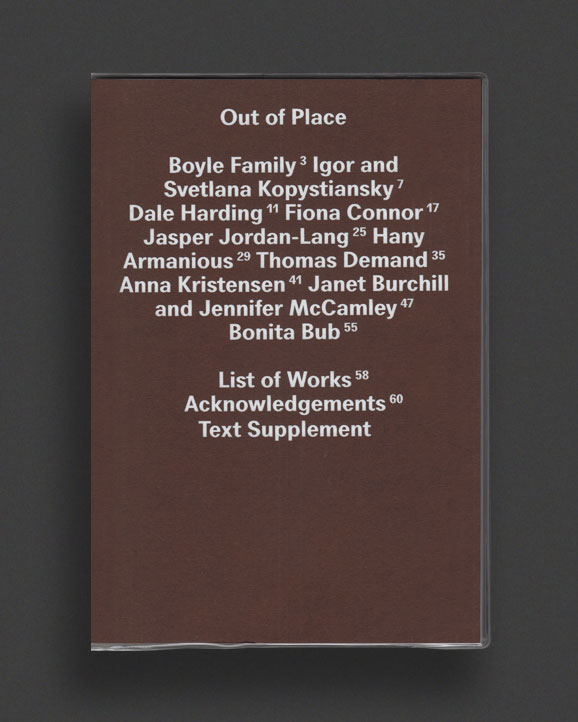
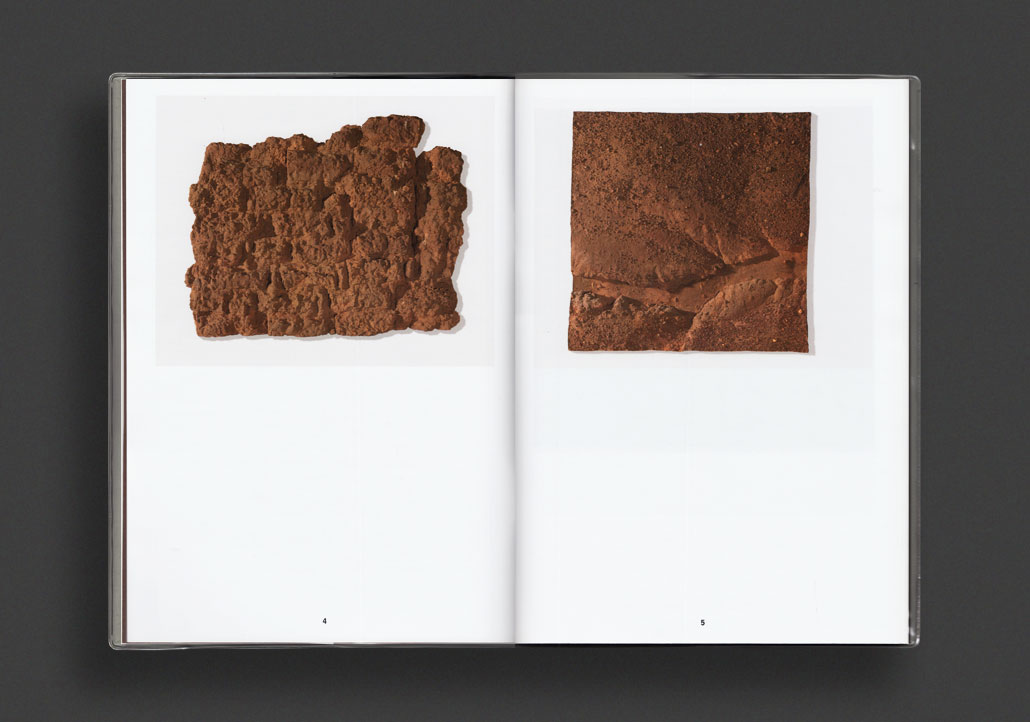
Catalogue published on the occasion of the exhibition Out of Place, curated by Oscar Capezio. Features the work of Hany Armanious, Boyle Family, Bonita Bub, Janet Burchill and Jennifer McCamley, Fiona Connor, Thomas Demand, Dale Harding, Anna Kristensen, Igor and Svetlana Kopystiansky, and Jasper Jordan-Lang.
"Reflecting on our increasingly precarious notions of place and belonging, this exhibition examines ways in which contemporary artworks embody, transpose and reconfigure a sense of locality in a globalised world. Through dislocated fragments and figures, re-materialised objects and textures, stains and other obscure impressions, artists in this exhibition [...] map specific relationships of adjacency and imbalance, tracking the uneven conditions that assemble and define distances, to highlight the powerful dissonance between site and identity, place and authority."
Texts by Oscar Capezio, Helen Ennis, Tom Melick, and Terence Maloon.
Designed by Small Tasks.
Edition of 200.
1983, English
Softcover (staple-bound), 16 pages, 25.5 x 20.5 cm
1st Edition, Out of print title / used / very good
Published by
Geelong Art Gallery / Victoria
$25.00 - Out of stock
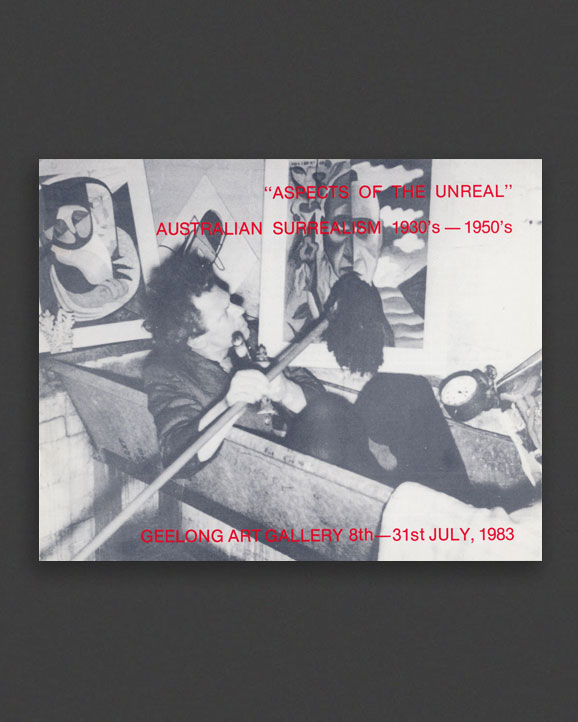
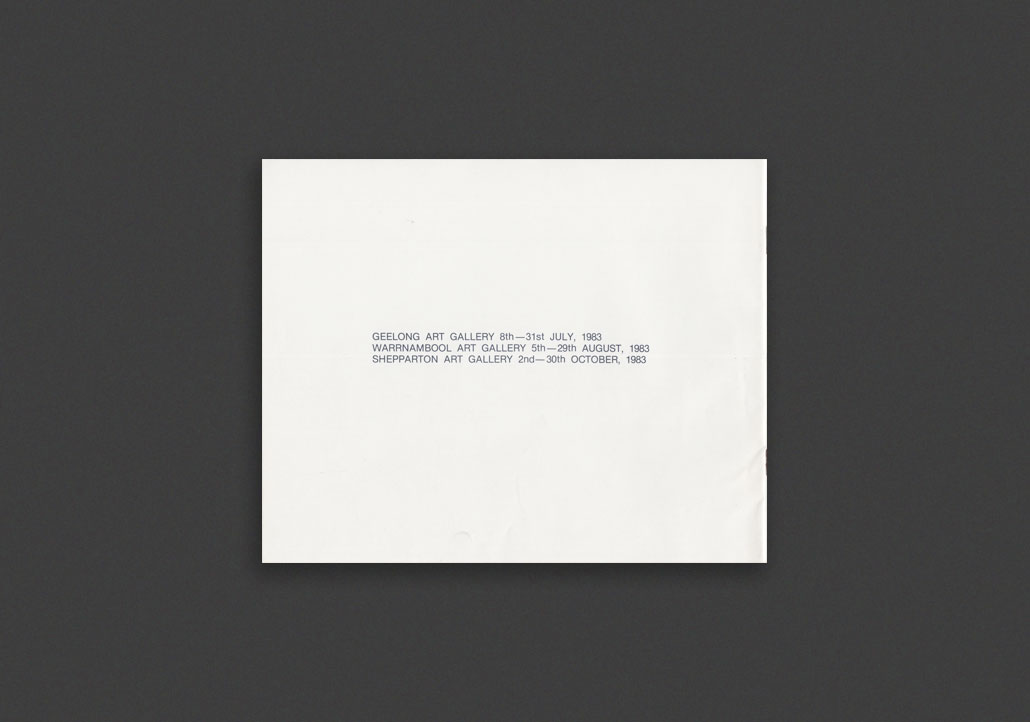
Rare catalogue published on the occasion of the travelling 1983 exhibition, Aspects of the unreal : Australian surrealism 1930s—1950s, that travelled between Geelong Art Gallery, Warrnambool Art Gallery, and Shepparton Art Gallery, curated by W. J. Pascoe. Text-based catalogue of works and biographies, along with curator's text and gallery director's introduction. A rare exhibit to survey the influence of Surrealism in the work of modern Australian artists from the 1940s onward, including David Edgar Strachan, John Joseph Wardell Power, Eric Thake, Sydney Nolan, Roy Opie, Jeffrey Smart, Peter Purves-Smith, Carl Olaf Plate, James Montgomery Cant, Vincent Brown, Roy Dalgarno, Donald Friend, James Gleeson, Vincent Brown, Bernard Boles, Oswald Hall, Danila Vassilieff.
Very Good copy, light wear.
1992, English
Softcover, 24 x 29.7 cm
1st Edition, Out of print title / used / very good
Published by
Kunstmuseum Den Haag / Netherlands
$140.00 - Out of stock
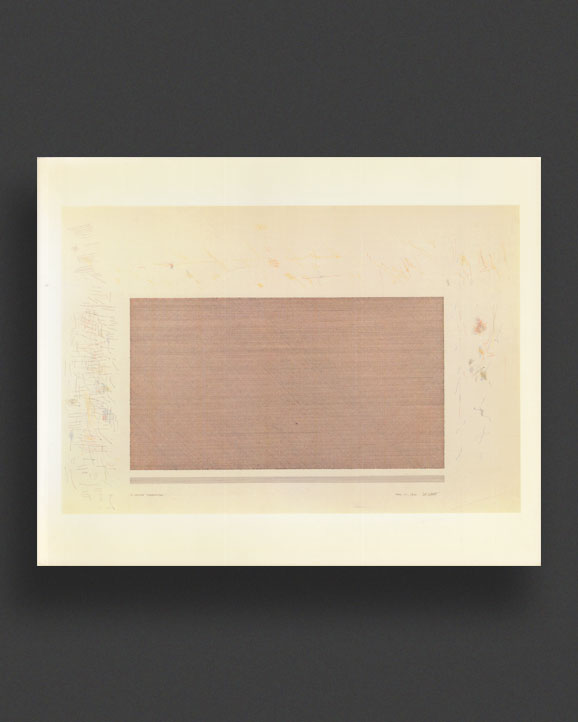
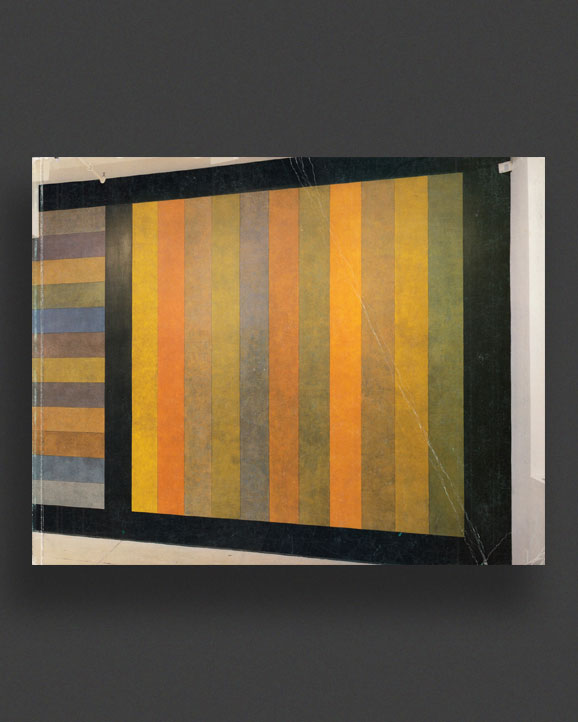
Lovely over-sized landscape exhibition catalogue designed by Sol LeWitt and published in conjunction with his exhibition of drawings, 1958—1992, held at Haags Gemeentemuseum, The Hague, 1992. Profusely illustrated throughout in colour and b/w, accompanied by texts by Rudi Fuchs, Franz W. Kaiser, Trevor Fairbrother. All texts in English. Includes 270 works illustrated, and checklist of the exhibition. Edited by Susanna Singer. This major survey exhibition later traveled to the UK, Germany, Switzerland, France, Spain and the USA between 1993—1995.
Very Good copy. Light cover tanning.
1992, English
Softcover, 222 pages, 23.2 x 29.2 cm
Out of print title / used / good
Published by
Kunsthalle Bern / Bern
Sala Recalde / Bilbao
$120.00 - Out of stock
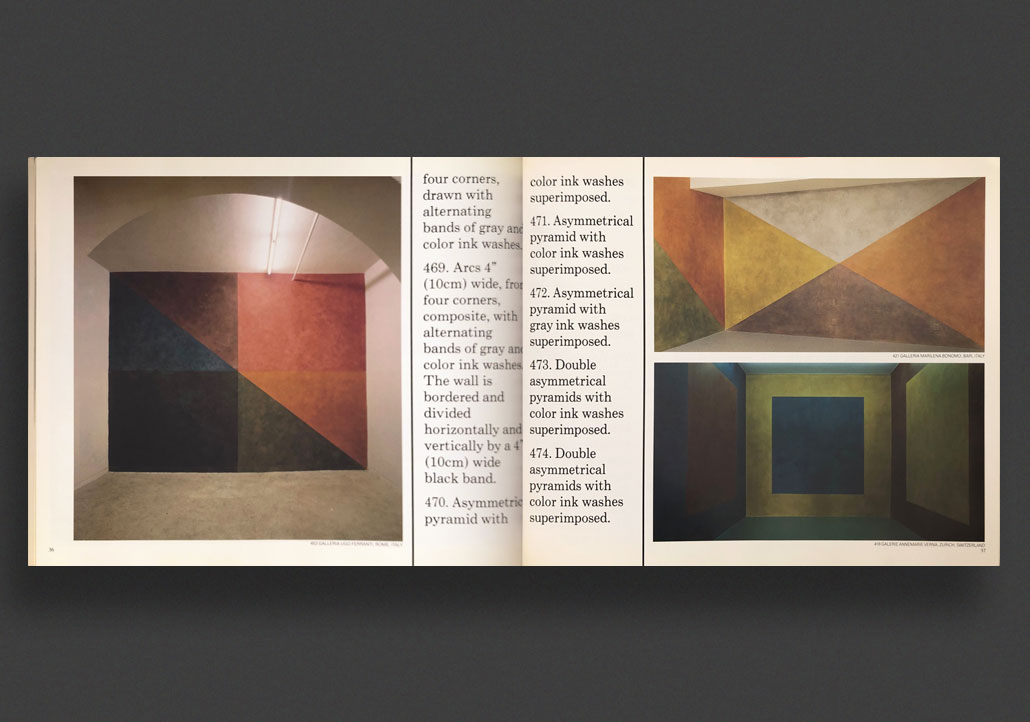
Wonderful over-sized landscape catalogue raisonné designed by Sol LeWitt and of his wall drawings, 1984—1992, originally published in conjunction with show held at Kunsthalle Bern, January 27 - March 12, 1989. Republished in this third revised, expanded and most complete edition, in conjunction with show held at Sala Recalde, Bilbao, Spain, 1992. Traveled to the Addison Gallery of American Art, Phillips Academy, Andover, Massachusetts, 1993. Profusely illustrated throughout in colour and b/w illustrations extensively documenting the wall drawings by Sol LeWitt executed between 1984 and 1992. Edited by Susanna Singer, translated by Margaret Joss with text by Ulrich Loock. Catalogue raisonné by Susanna Singer of Sol LeWitt's wall drawings numbered 410 to 701. Text in English and German.
Good—VG copy, tight and clean internally with one crease to cover and light shelf wear to covers.
2023, English
Hardcover (w. dust jacket), 288 pages, 25.4 x 19 cm
Published by
Princeton University Press / New York
$89.00 - Out of stock
How California's counterculture of the 1960s to 1980s profoundly shaped—and was shaped by—West Coast artists.
The 1960s exert a special fascination in modern art. But most accounts miss the defining impact of the period's youth culture, largely incubated in California, on artists who came of age in that decade. As their prime exemplar, Bruce Conner, reminisced, "I did everything that everybody did in 1967 in the Haight-Ashbury. . . . I would take peyote and walk out in the streets." And he vividly channeled those experiences into his art, while making his mark on every facet of the psychedelic movement—from the mountains of Mexico with Timothy Leary to the rock ballrooms of San Francisco to the gilded excesses of the New Hollywood. In The Artist in the Counterculture, Thomas Crow tells the story of California art from the 1960s to the 1980s—some of the strongest being made anywhere at the time—and why it cannot be understood apart from the new possibilities of thinking and feeling unleashed by the rebels of the counterculture.
Crow reevaluates Conner and other key figures—from Catholic activist Corita Kent to Black Panther Emory Douglas to ecological witness Bonnie Ora Sherk—as part of a generational cohort galvanized by resistance to war, racial oppression, and environmental degradation. Younger practitioners of performance and installation carried the mindset of rebellion into the 1970s and 1980s, as previously excluded artists of color moved to the forefront in Los Angeles. Mike Kelley, their contemporary, remained unwaveringly true to the late countercultural flowering he had witnessed at the dawn of his career.
The result is a major new account of the counterculture's enduring influence on modern art.
2009, English / French
Softcover (+ audio CD), 320 pages, 22.5 x 24.5 cm
1st Edition, Out of print title / as new
Published by
Les Presses Du Reel / Paris
$45.00 - In stock -
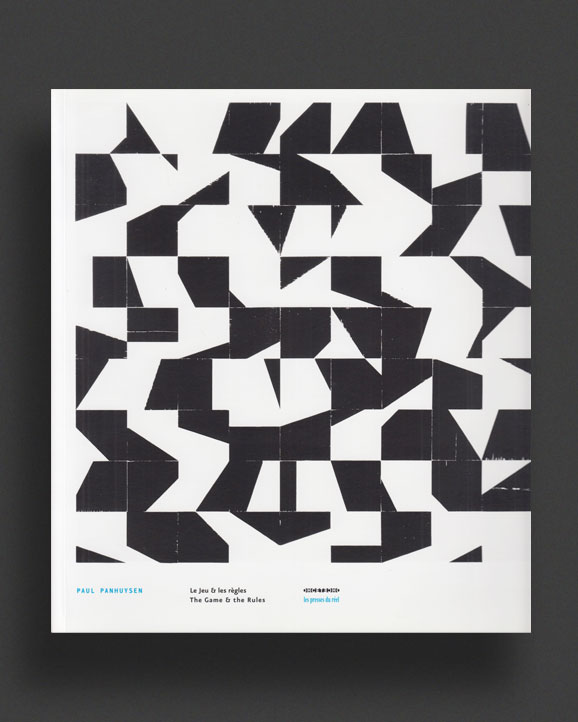
This publication is the first monograph on the artist, musician, performer, organiser, attempting to disclose the complex articulations between multiples activities and to introduce sound and contextual art problematic.
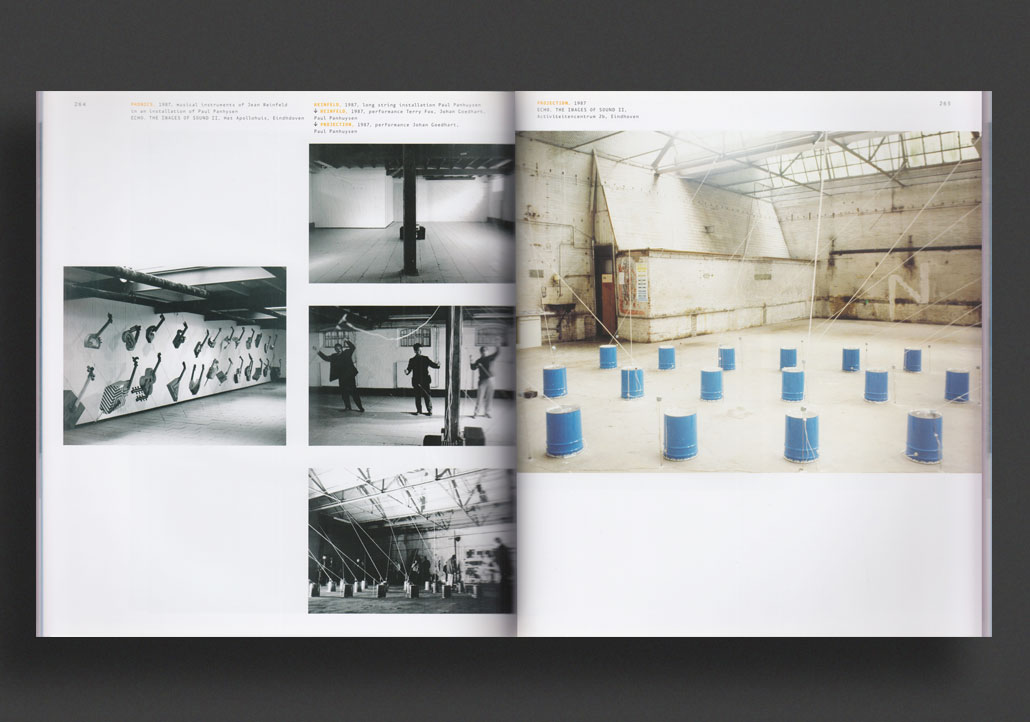
The texts present various approaches and activities of Paul Panhuysen, a general introduction, archives, music installations, paintings, in situ installations, games, Het Apolohuis activities and theoretical positions. The pictures illustrate different projects of Panhuysen's work (in situ installations, technical plan, exhibitions views), collected in different classifications: sound installation with long fine wire, installation with bird, game, painting... and the graphic design couch with different colour and form.
The audio CD Small Samples, Many Pieces is made up of small samples and a variety of sound art works. It presents sounds produced by musicians, animals and objects, composed music and improvisations, acoustical, amplified and electronic sounds. There are pieces based on calculus, but on intuition as well. In many works image and sound go together. This multitude and variety of impulses are typical for the artist Paul Panhuysen.
"A beautiful looking and sounding survey of a key European art and music figure."—Alan Licht, The Wire
Artist, musician, performer, organizer, Paul Panhuysen (1934, Borgharen—2015), after having studied painting and monumental design at the Jan van Eyck Academy in Maastricht, and art sociology at the University of Utrecht, was, successively, the director of the Fine Arts Academy in Leeuwarden, and a curator and head of education and public relations for the Den Haag City Museum and for the Van Abbe Museum in Eindhoven. In addition, he continued to paint and make collages. In 1965 he founded the artist group “De Bende van de Blauwe Hand.” This group, which was closely related to Fluxus, presented exhibitions, environments and happenings in museums and galleries. Starting in 1965, he presented “situations” meant to involve the audience, and in 1968, he started the Maciunas Quartet, who are still making experimental music as the Maciunas Ensemble. In the early seventies, Panhuysen worked as an advisory artist with urban development teams (o.a. in Zoetermeer, Lunetten, Maaspoort) and developed systematic ordering systems and mathematical series that he has continued to use in his work as an artist. In addition, Panhuysen's work shows a predilection for found objects and the element of chance. To an increasing degree, Panhuysen has been concentrating on sound art, which has come to occupy an important place in his visual art work. He has presented his Long String Installations, which are played in concerts personally and in exhibitions as automats, worldwide in festivals since 1982 . These installations are set-up in indoor or outdoor spaces for anywhere from 1 to 40 days, using specific properties and architectural prospects of the location. Since 1989 Panhuysen developed artworks in which he confronts the audience with the creativity, intelligence and communicational skills of animals, especially of birds.
In 1980, Panhuysen founded Het Apollohuis, and since then till 1997, he has been the director of this internationally oriented podium where artists from divergent disciplines did present their work. In 1996 he received the Cultural Award of Noord-Brabant and in1998 he became Companion of the Order of the Dutch Lion. In 2004 Panhuysen received in the category Digital Musics from PrixArs Electronica an Honory Mention for the composition A Magic Square of 5 to Look at / A Magic Square of 5 to Listen to.
Edited by Yvan Etienne.
Texts by Paul Panhuysen, Jaap Bremer, Yvan Etienne, Michel Giroud, Rahma Khazam, Paul Kuypers, Helga de la Motte-Haber, Rene van Peer, Rolf Sachsse, Louis Ucciani.
2002, English / German
Softcover w. audio cd, 208 pages, 21.2 x 28 cm
1st Edition, Out of print title / used / fine
Published by
Schirn Kunsthalle / Frankfurt
Hatje Cantz / Berlin
$30.00 - Out of stock
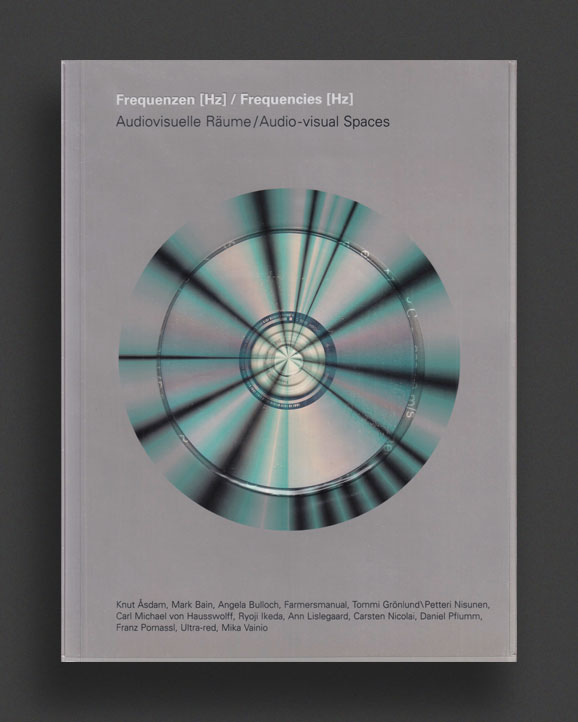
The fast out-of-print hardcover catalogue with CD published to accompany the unique exhibition Frequenzen (Hz) / Frequencies (Hz): Audiovisuelle Raume / Audio-Visual Spaces, at Schirn Kunsthalle, Frankfurt/Main February 8—March 28, 2002. Edited by Max Hollein and Jesper N. Jørgensen, with texts by Daniel Birnbaum, Nicolas Bourriaud, Will Bradley, Diedrich Diederichsen, Jesper N. Jørgensen, Blazenka Perica, and Martin Pesch.
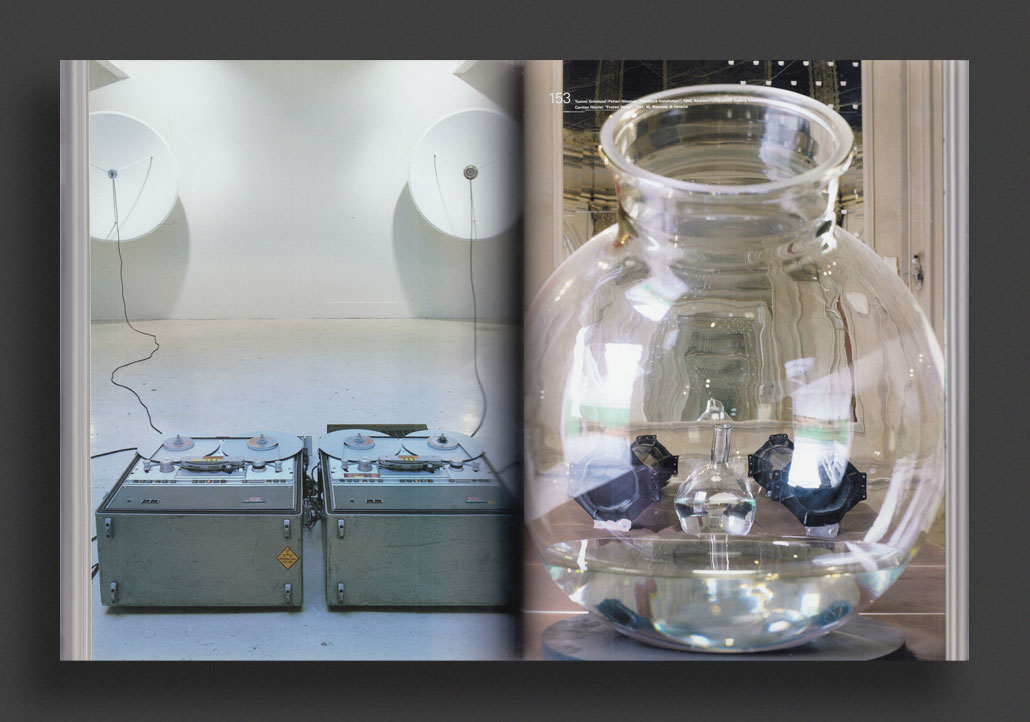
Frequencies [Hz] presents current positions of contemporary artists who work with sound within the context of visual art. The publication features works of sculptural and visual art alongside specific, often "minimalistic" installations and interventions in which employ sounds or electronic experiments with sound that impact upon the perception of architecture or otherwise influence the social components of individual experience. Beyond the scope of the defining non-material characteristics of sound, sound becomes a formal material, a kind of audible sculpture accompanied by discourse on its constructive, societal, philosophical, and emotional aspects. The use of sound in visual art is closely linked with the development of strategies involved in sculpture, installations, and interdisciplinary art forms. It profits from the technology of the new media. Thus the participating artists reflect not only upon the influence of new technological media on visual art and culture but upon the institutional context and the situation that evolves between the work of art and the viewer.
The artists: Knut Åsdam, Mark Bain, Angela Bulloch, Farmersmanual, Tommi Grönlund, Petteri Nisunen, Carl Michael von Hausswolff, Ryoji Ikeda, Ann Lislegaard, Carsten Nicolai, Daniel Pflumm, Franz Pomassl, Ultra-red, Mika Vainio.
Texts in English and German.
2022, English
Hardcover, 352 pages, 22 x 28 cm
Published by
Yale University Press / New Haven
Barbican Art Gallery / London
$80.00 - Out of stock
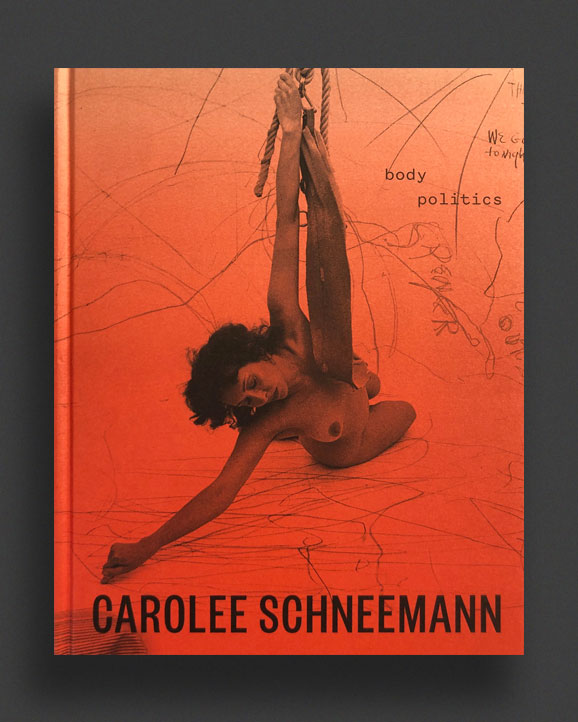
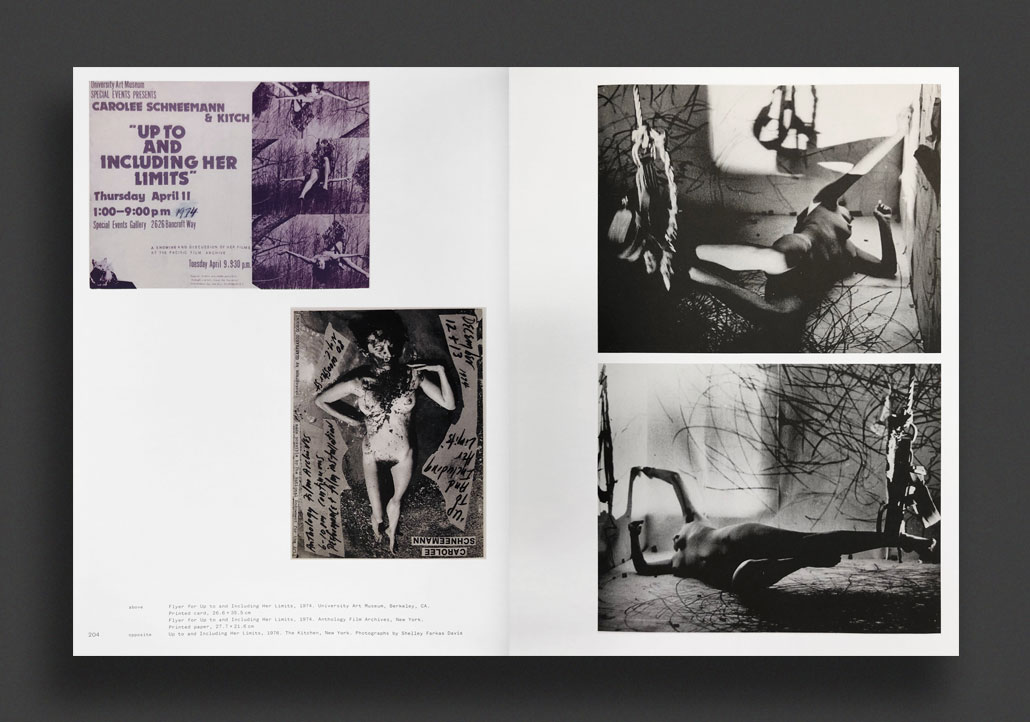
Traces the feminist icon Carolee Schneemann's prolific six-decade output, spanning her remarkably diverse, transgressive, and interdisciplinary expression.
Edited by Lotte Johnson and Chris Bayley.
Contributions by Jo Applin, Karen Di Franco, Jennifer Doyle, Elena Gorfinkel, Alison Green, Emily LaBarge, Thomas (T.) Jean Lax, Eileen Myles, Melissa Ragona, Amy Sillman and Kenneth White
Carolee Schneemann (1939-2019) was one of the most experimental artists of the twentieth and early twenty-first centuries. This book traces six decades of the feminist icon's diverse, transgressive and interdisciplinary expression through Schneemann's experimental early paintings, sculptural assemblages and kinetic works; rarely seen photographs of her radical performances; her pioneering films; and groundbreaking multi-media installations. Contributors shed new light on Schneemann's work, which addressed urgent topics from sexual expression and the objectification of women to human suffering and the violence of war. An artist who was concerned with the precarious lived experience of both humans and animals, this book positions Schneemann as one of the most relevant, provocative and inspiring artists in recent years.
Published by Yale in association with Barbican Art Gallery.
2022, English
Hardcover (clothbound), 96 pages, 20 x 25 cm
Published by
Hatje Cantz / Berlin
$58.00 - Out of stock
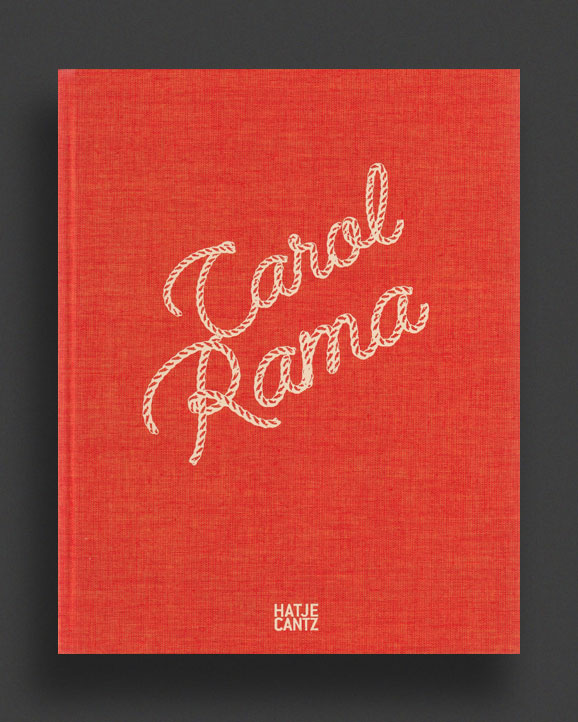
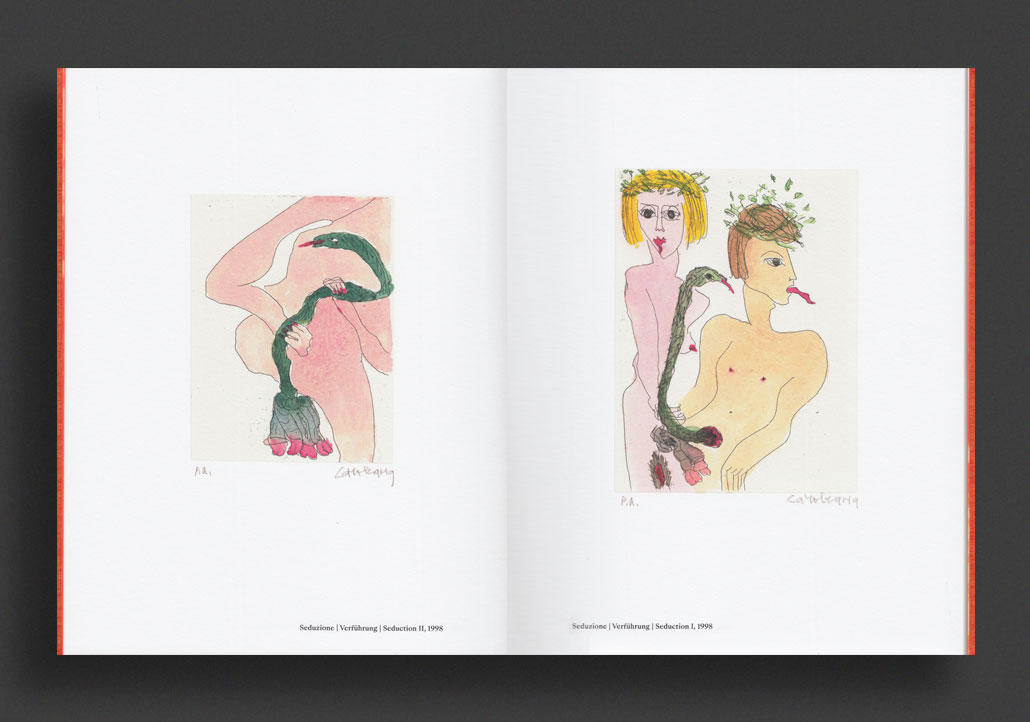
Carol Rama is one of the most exciting artistic rediscoveries of the 20th century. Her creative period spanned more than 70 years - tirelessly testing different materials, styles, and media. Among other things, the artist created a body of graphic works and unique watercolors that will be presented at Berlin's Gutshaus Steglitz. This overview publication on the work of the self-taught artist is being published at the same time. The Italian artist received attention for her unique oeuvre only at an advanced age and posthumously. In the 1940s, Rama caused a sensation with the permissive and, at the time, progressive portrayal of her protagonists. In her late work she returned to the depictions of her youth.
1999, English
Softcover, 248 pages, 21 x 27 cm
Published by
Charta / Milan
$50.00 - In stock -
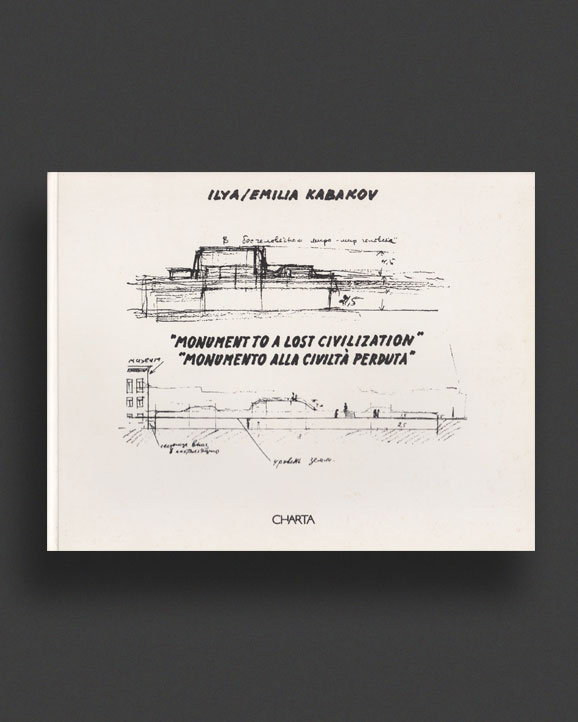
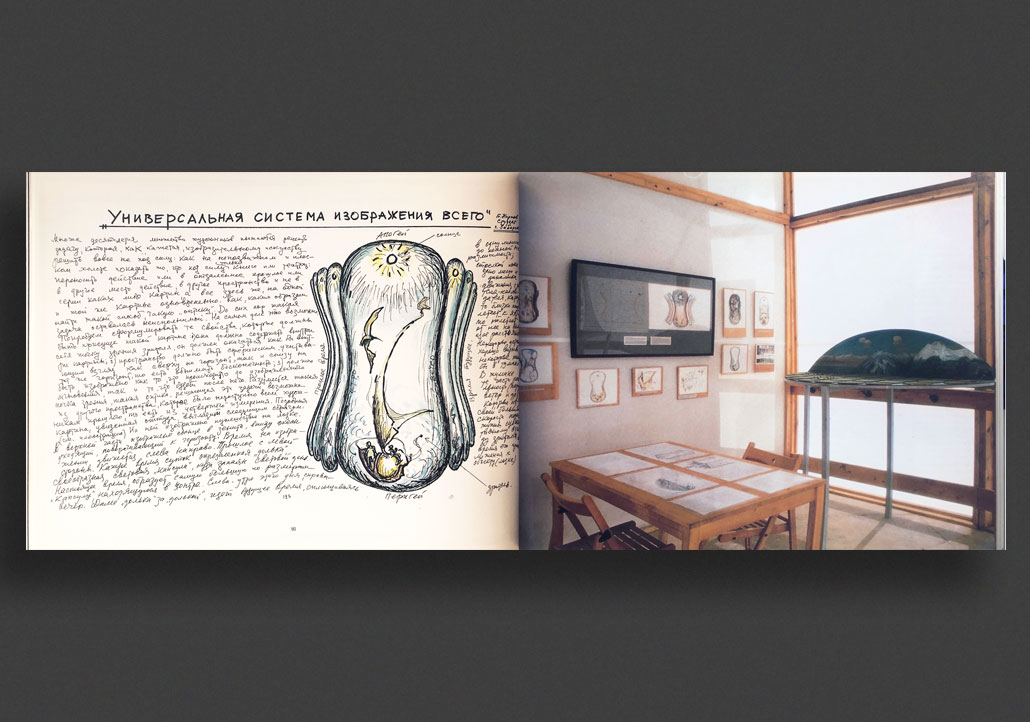
First edition of Ilya and Emilia Kabakov's "Monument to a Lost Civilization" / "Monumento alla Civilità Perduta", the gorgeous, comprehensive catalogue/artist's book published the occasion of major art installation at the Cantieri Culturali alla Zisa in Palermo, curated by Chiara Bertola and Paolo Falcone, 16 April—27 June 1999. "The presence of the Kabakovs in Palermo is something more than a passage. Their creative universe, which the installation at the Cantieri represents in a unique composition, is an extraordinary opportunity of reflection: the relationship with memory; the traces of daily life, of biographies, of environments: the memory of the dissolution of a society that was all the more surprising the more unshakeable and immutable it appeared." Profusely illustrated with drawings, paintings, photographs, alongside texts by the artists, biography, bibliography. Bi-lingual English / Italian facing text.
Ilya and Emilia Kabakov are amongst the most celebrated artists of their generation, widely known as pioneers of installation art. Ilya Kabakov was born in 1933 in Dnepropetrovsk (now Dnipro) in Ukraine, formerly part of the Soviet Union. When he was eight, he moved to Moscow with his mother. He studied at the Art School of Moscow, and at the V.I. Surikov Art Institute. Artists in the Soviet Union were obliged to follow the officially approved style, Socialist Realism. Wanting to retain his independence, Ilya supported himself as a children’s book illustrator from 1955 to 1987, while continuing to make his own paintings and drawings. As an ‘unofficial artist’, he worked in the privacy of his Moscow attic studio, showing his art only to a close circle of artists and intellectuals. Ilya was not permitted to travel outside the Soviet Union until 1987, when he was offered a fellowship at the Graz Kunstverein, Austria. The following year he visited New York, and resumed contact with Emilia Lekach. Born in 1945, Emilia trained as a classical pianist at Music College in Irkutsk, and studied Spanish Language and Literature at Moscow University before emigrating to the United States in 1973. Ilya and Emilia began their artistic partnership in the late 1980s, and were married in 1992. Together, they have produced a prolific output of immersive installations and other conceptual works addressing ideas of utopia, dreams and fear, to reflect on the universal human condition.
Very Good copy.
1999, English
Softcover, 128 pages, 21 x 27 cm
1st Edition, Out of print title / used / very good
Published by
Charta / Milan
$45.00 - Out of stock
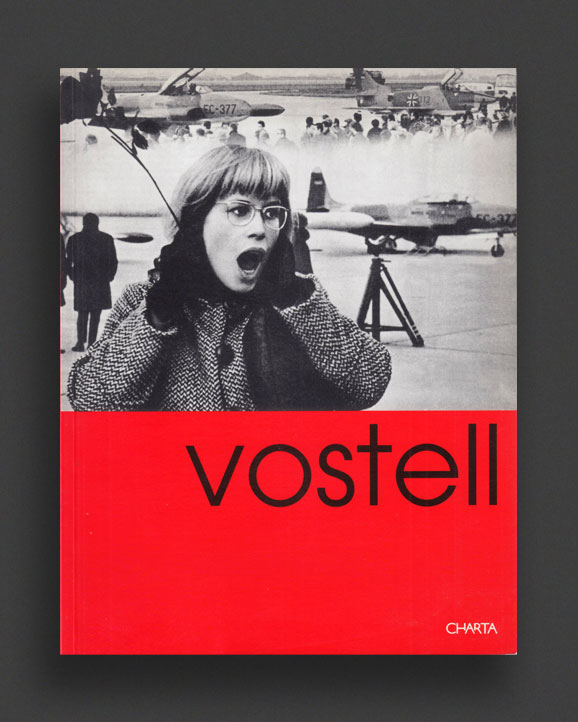
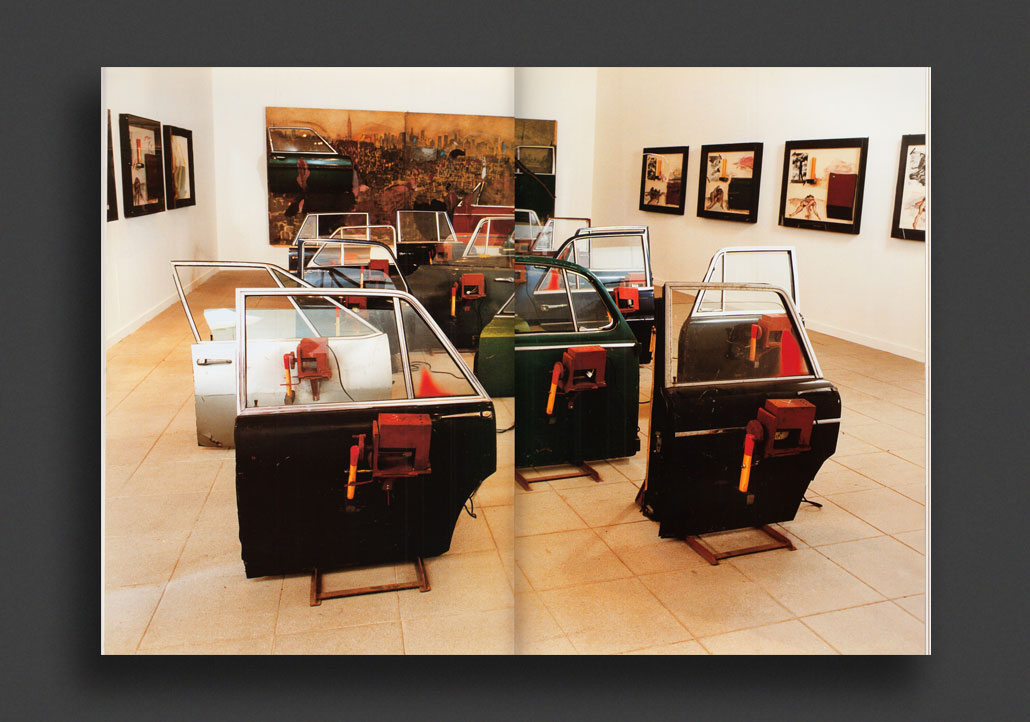
This exhibition catalogue presents over 50 works of art that are representative of Wolf Vostell's artistic commitment in the social and political sphere. This wonderful selection of works by Vostell, a central member of the Fluxus movement, is taken from the late 1950s to the mid-1990s, the entire period of his artistic production. Disasters of Peace, which refers to Goya's "The Disasters of War", a benchmark for any artist who wishes to confront history and whose lover Vostell was, focuses on contemporary tragedies such as the Holocaust, the Wall of Berlin, Vietnam, the Gulf War or Sarajevo. Of particular significance is a work entitled "6 TV - de-coll/age" (1963); it was the first video installation shown in the US in which Vostell predicted the negative effects of television. An interview between the artist and his wife complements this catalogue. Includes an illustrated chronology of his artistic activities.
Very Good copy with light wear/age, bump to lower spine corner.
2015, English
Hardcover, 192 pages, 22.86 x 3.18 x 31.12 cm
1st Edition, Out of print title / as new
Published by
National Portrait Gallery / London
$150.00 - Out of stock
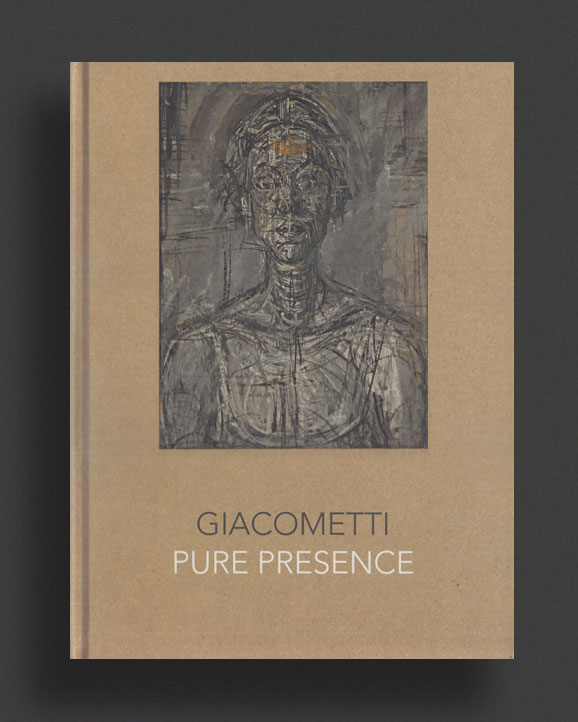
First edition hardcover catalogue — an acclaimed book published to accompany an acclaimed exhibition held at the National Portrait Gallery, London, in 2015.
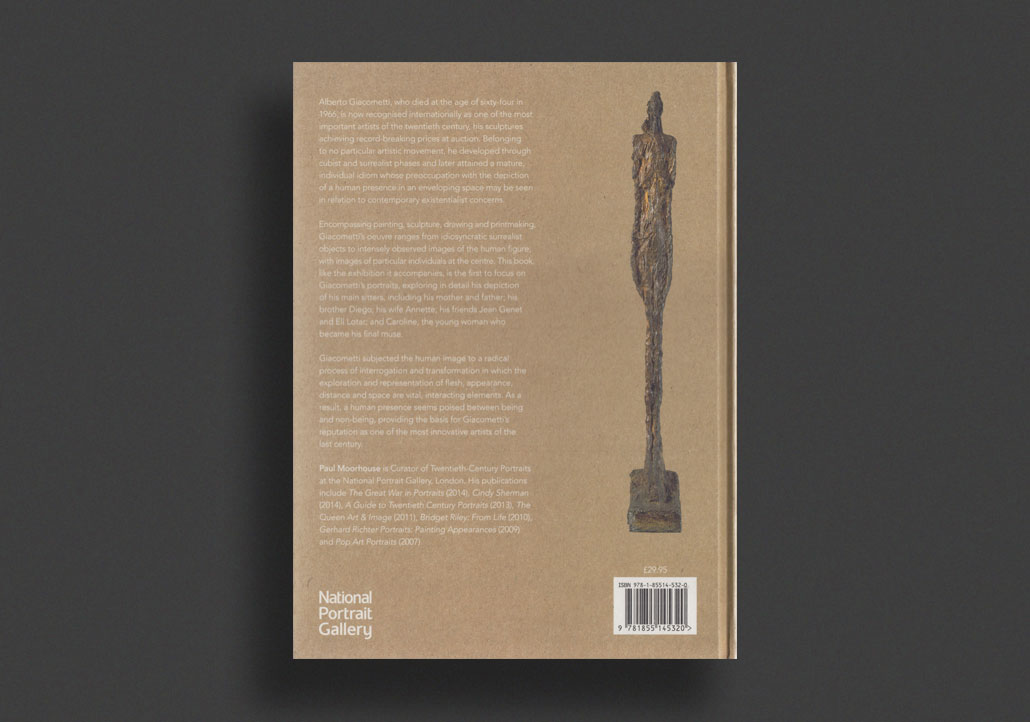
Since his death at the age of sixty-four in 1966, Alberto Giacometti has become recognised internationally as one of the most important artists of the twentieth century and sales of his sculptures now achieve record-breaking prices. Belonging to no particular artistic movement, he developed through cubist and surrealist phases and later attained a mature, individual idiom whose preoccupation with the depiction of a human presence in an enveloping space may be seen in relation to contemporary existentialist concerns with defining the place and purpose of man in a godless universe.
Taking its title from Jean-Paul Sartre, who described Giacometti's endeavor to give "sensible expression" to "pure presence," this book explores the artist's work in relation to existentialist ideas. Spanning painting, sculpture, drawing and printmaking, Giacometti's oeuvre ranges from surrealist objects to images of the human figure, with portraits of particular individuals at the center.
This book looks at the various phases of the artist's career and explores in detail his depiction of his main sitters, including his mother; Diego his brother; his wife Annette; Jean Genet the playwright; Caroline, a prostitute; and his friends Yanaihara and Lotar. Early drawings, paintings and sculptures of family members and his own image demonstrate Giacometti's awareness of Post-Impressionist and Divisionist styles.
From 1946 Giacometti resumed painting and depicting individuals became central to his work. After 1954, when he began making sculpture from life, his portraits expressed a dialogue between painting and sculpture.
As New copy, first edition, out-of-print.
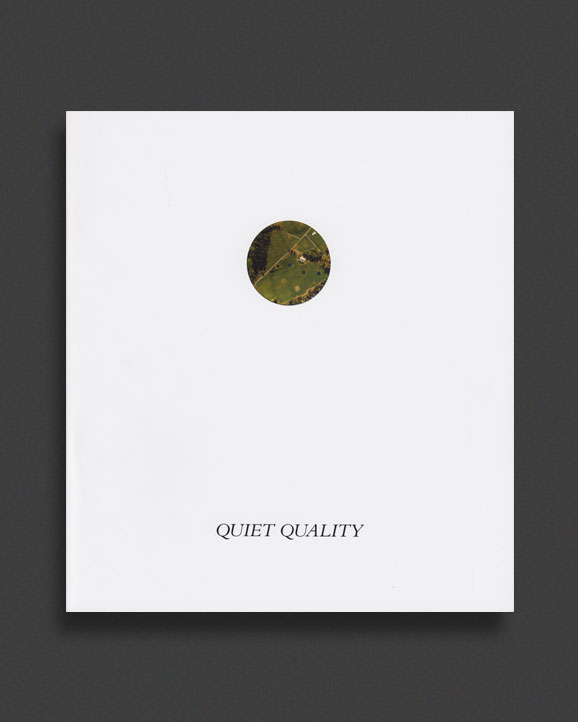
2013, English
Softcover (staple-bound, die-cut cover), 32 pages, 23 x 20 cm
Ed. of 1000,
Published by
Cabinet Gallery / London
$55.00 - In stock -
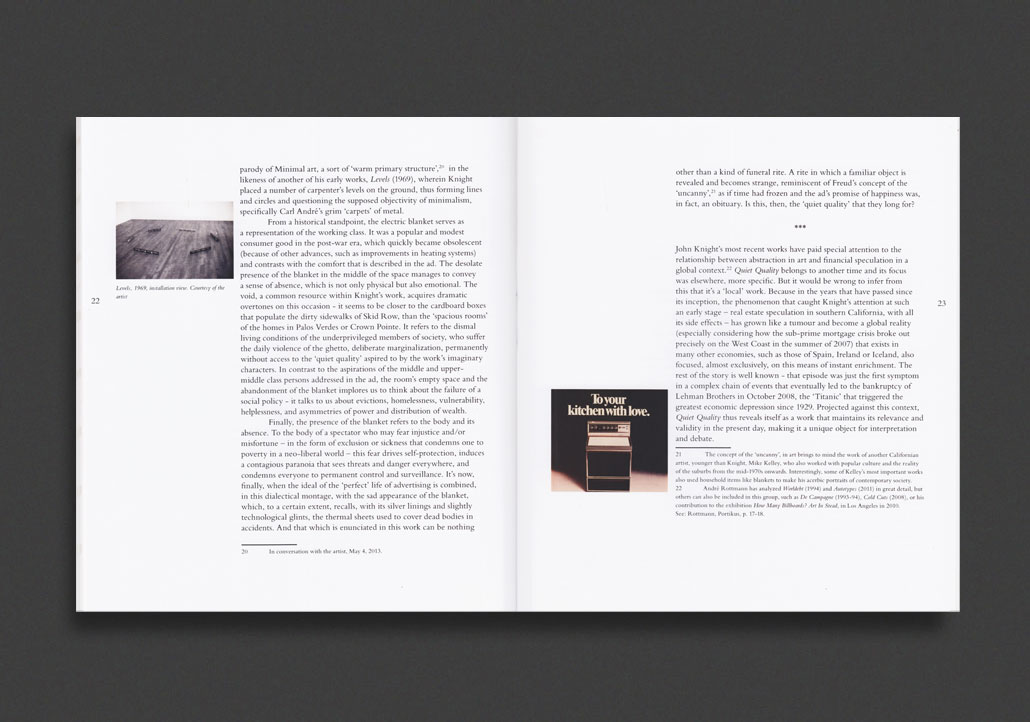
Catalogue published on the occasion of the exhibition John Knight, Quiet Quality, which took place in two sites, Cabinet Gallery, London, 10 October - 17 November, 2012 and the Frieze Art Fair, London, 11 - 14 October, 2012. Illustrated with texts by Ray McKenzie and Paedro de Llano, plus bibliography.
John Knight (b. 1945) is a conceptual artist in Los Angeles, California who works in situ. Since the 1960s, Knight has made pioneering works grounded in site-specificity and institutional critique, works that interrogate underlying economic systems.
2018, English
Softcover (staple-bound, die-cut cover), 32 pages, 23 x 20 cm
Ed. of 1000,
Published by
Cabinet Gallery / London
Galerie Neu / Berlin
$55.00 - In stock -
Catalogue published on the occasion of the exhibition John Knight, Bohemian Grove, Galerie Neu / MD 72, Berlin 2013. Illustrated with text by Marta Fontolan and Isabelle Graw, plus bibliography.
John Knight (b. 1945) is a conceptual artist in Los Angeles, California who works in situ. Since the 1960s, Knight has made pioneering works grounded in site-specificity and institutional critique, works that interrogate underlying economic systems.
2016, English
Softcover (staple-bound, die-cut cover), 32 pages, 20 x 22.8 cm
Ed. of 1000,
Published by
Cabinet Gallery / London
$45.00 - In stock -
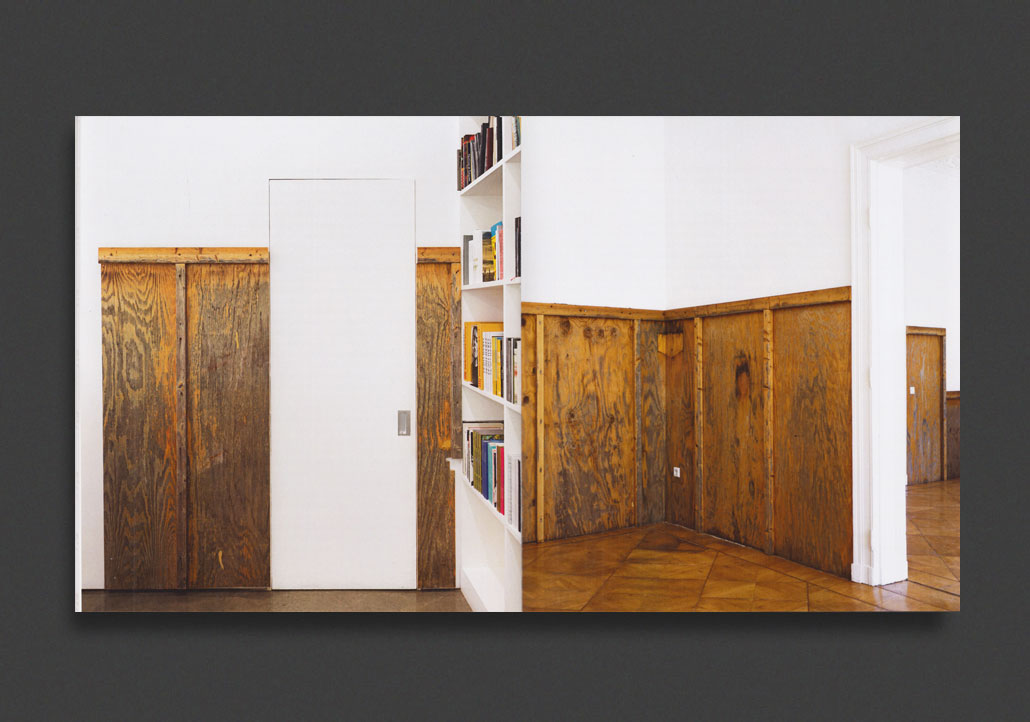
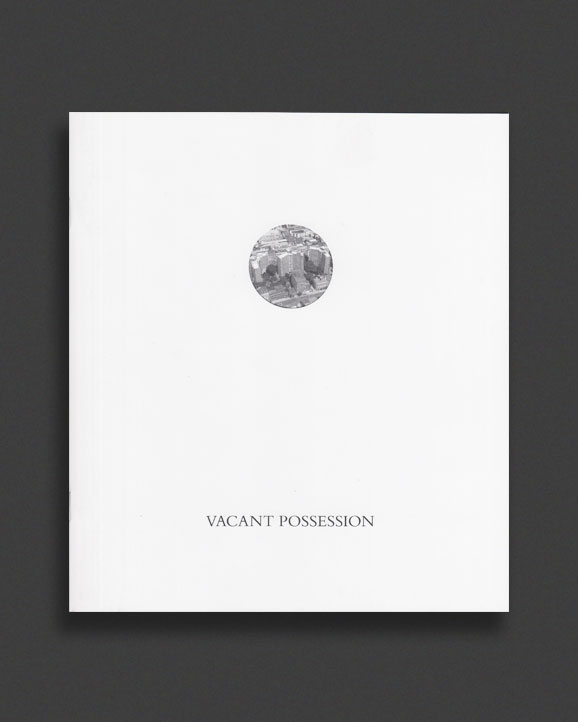
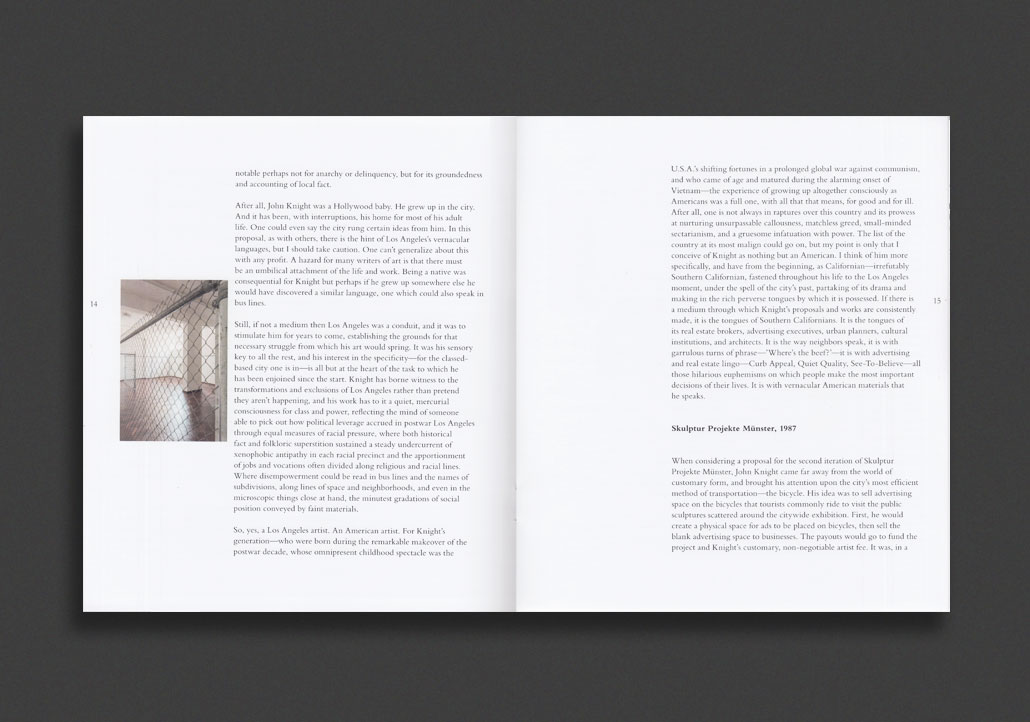
Artist's book / catalogue by John Knight and Robert Snowden, published on the occasion of John Knight's Vacant Possession exhibition at Cabinet London in 2016.
"It was an exhibition at Cabinet Gallery in 2016, a formerly unrealized proposal, which caused John Knight and I to descend into his filing cabinets, where not in haste we brought a number of unmade ideas, brilliant and uncirculated as they say of certain coins, nearly all out on the table".—RS
The catalogue text becomes an enquiry into the unrealised projects in the archive of the artist, and a reflection on the nature of the unmade, of memory and material evidence.
John Knight (b. 1945) is a conceptual artist in Los Angeles, California who works in situ. Since the 1960s, Knight has made pioneering works grounded in site-specificity and institutional critique, works that interrogate underlying economic systems.
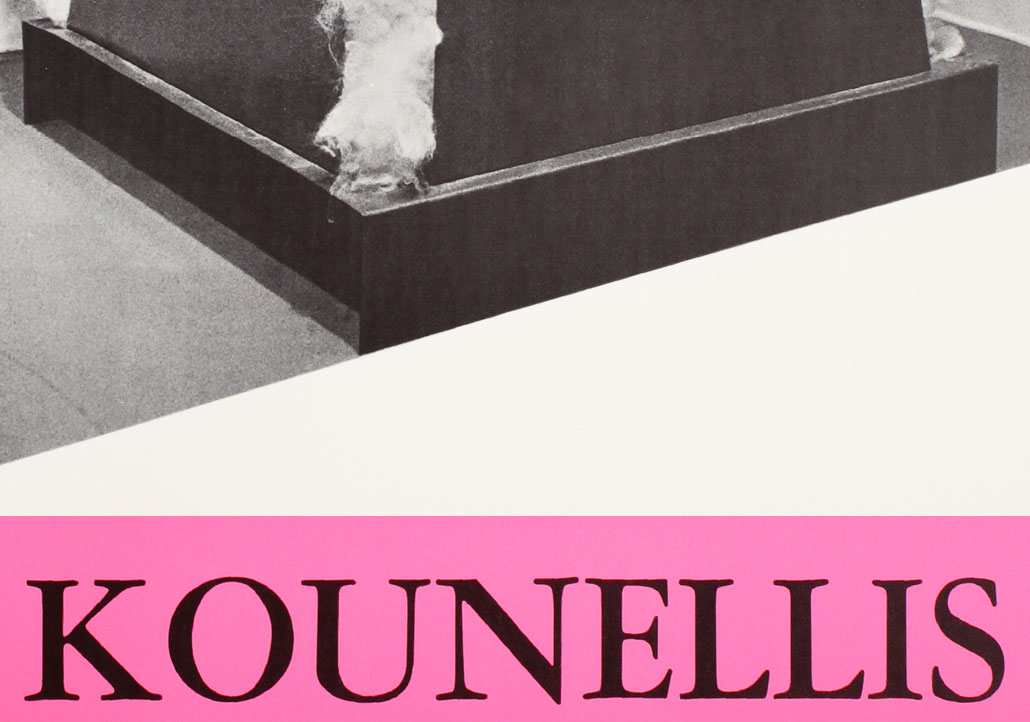
1968,
Silkscreen and offset print (85 x 46 cm)
1st Edition, Out of print title / used / very good
Published by
Galleria Alexandre Iolas / Rome
$1000.00 - Out of stock
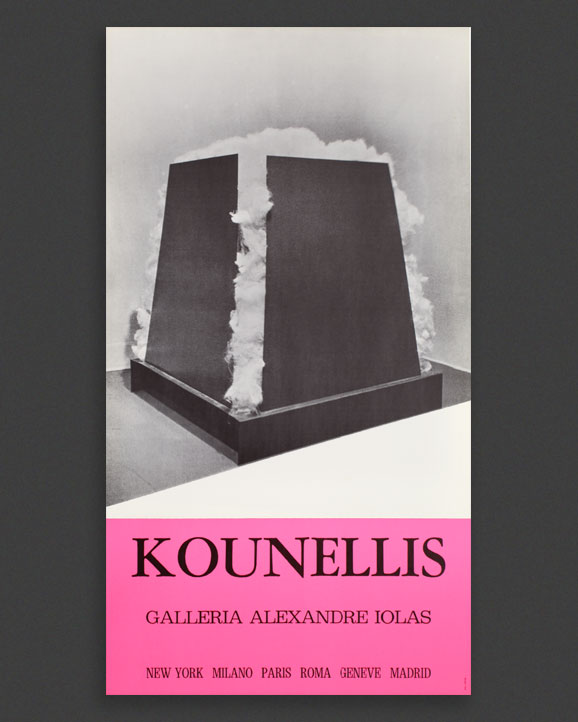
Stunning, extremely rare early Jannis Kounellis (1936—2017) exhibition poster, published on the occasion of one of his most iconic early solo exhibitions at Galleria Alexandre Iolas, Rome, 1968. A piece of printed history of the forefather of the Arte Povera movement, issued by the legendary Galleria Alexandre Iolas and published by Sergio Tosi Editore. Gorgeous silkscreen and offset print. Since the 1960s Greek—Italian artist Kounellis investigated the alienation inherent in contemporary society, juxtaposing the materials of mass urban and industrial civilization with symbols and values of the pre-industrial world.
A stunning collector's item, ready to frame.
Dimensions : 85 x 46 cm
Very Good condition, well preserved.
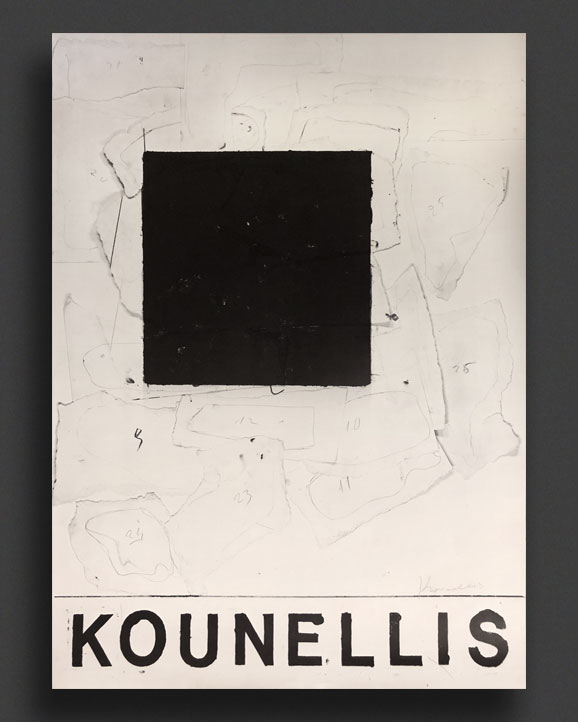
Signed offset printed poster (80 x 59 cm)
1st Edition, Out of print title / used / very good
$900.00 - In stock -
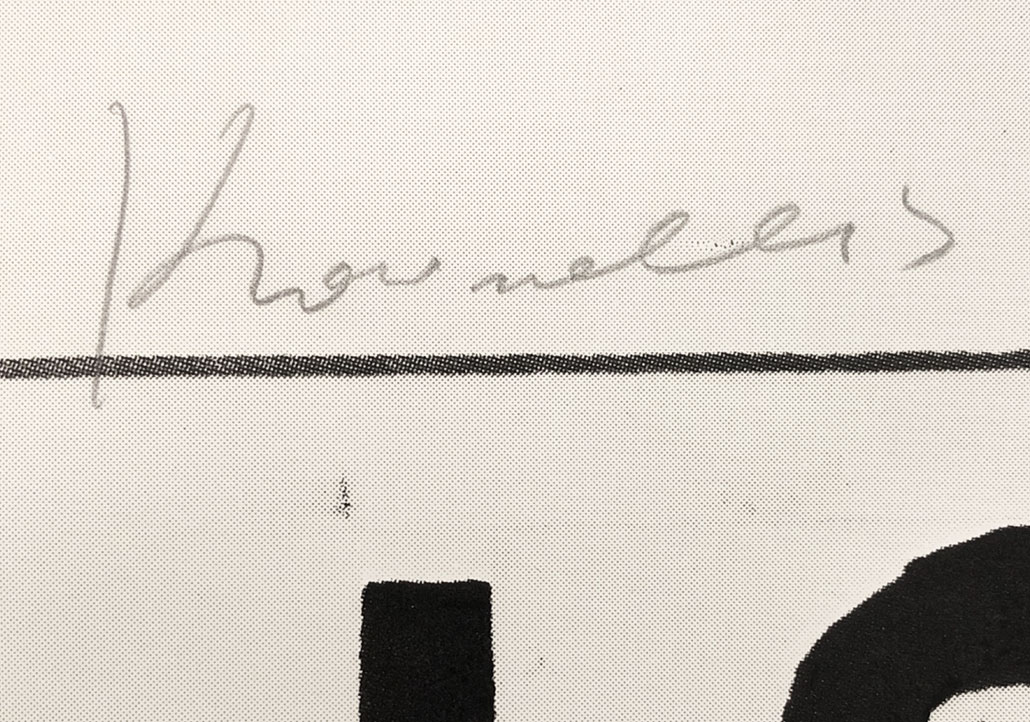
Rare and signed vintage Jannis Kounellis (1936—2017) litho/serigraph print poster. Possibly an Italian museum artist's edition, although we have never seen another like it available. Beautifully large print in offset halftone with over-print of black square and "KOUNELLIS". Hand signed in pencil in the lower right by Jannis Kounellis, Greek Italian artist and forefather of the Arte Povera movement. Since the 1960s Kounellis investigated the alienation inherent in contemporary society, juxtaposing the materials of mass urban and industrial civilization with symbols and values of the pre-industrial world.
A stunning collector's item, ready to frame.
Dimensions : 80 x 59 cm.
Very Good condition, well preserved.
1994, English
Hardcover (w. dust jacket), 392 pages, 30.5 x 23.5 cm
Edition of 1000,
1st Edition, Out of print title / used / very good
Published by
D.A.P. / New York
Walker Art Centre / Minneapolis
$460.00 - In stock -
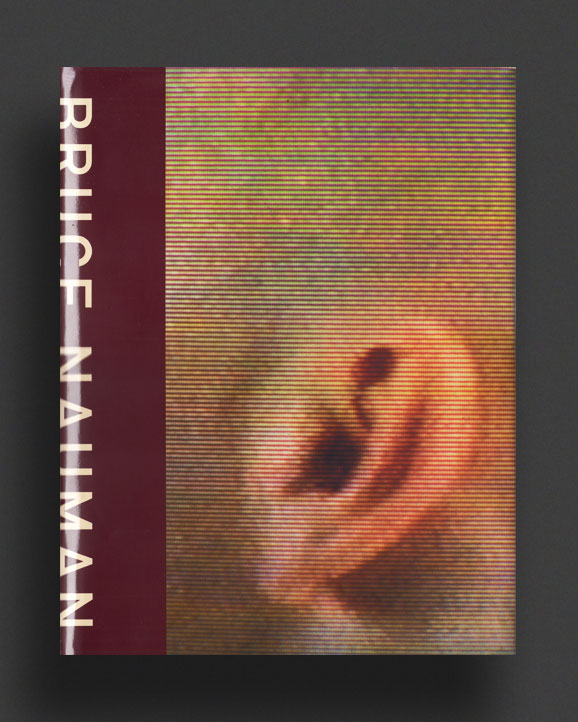
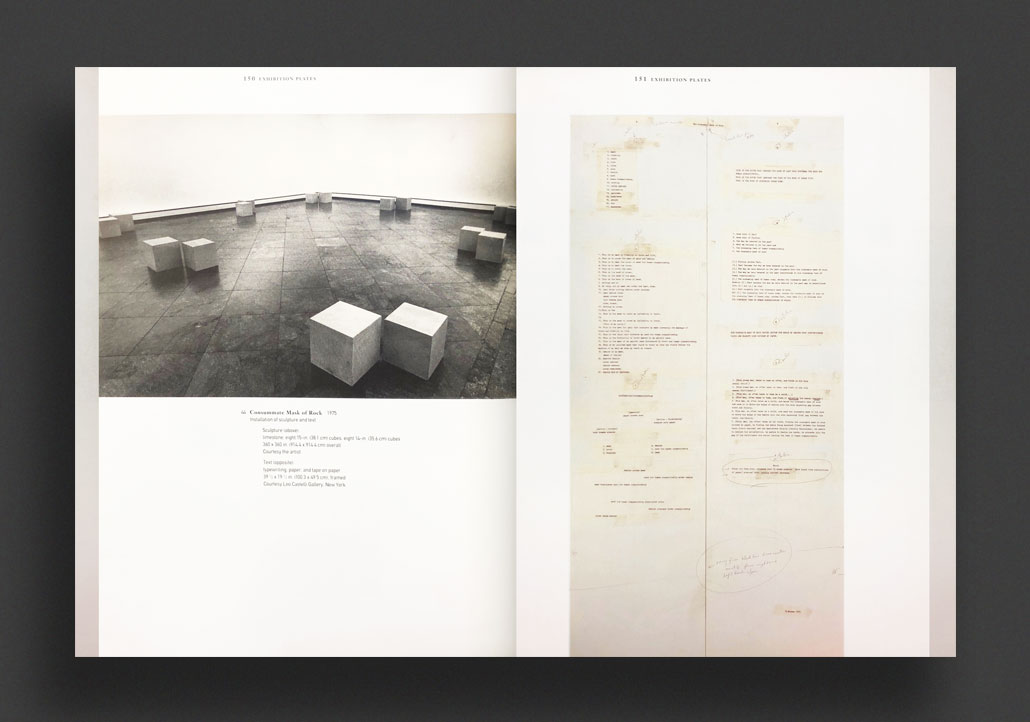
Very rare, first 1994 limited deluxe hardcover edition catalogue raisonné of American artist Bruce Nauman, published on the occasion of the major 1994-1995 touring retrospective that stunned critics by bringing together the full and largely underrated range of Bruce Naman's work, first held at Nuseo Nacioal Centro de Arte Rena Sofía, Madrid, before travelling to the Walker Art Center, Minneapolis; Museum of Contemporary Art, Los Angeles; Hirshhorn Museum, Washington; and the Museum of Modern Art, New York.
A most vital reference on the artist's oeuvre, this deluxe hardbound version of the exhibition catalogue was issued in limited edition (1000 copies), almost doubling in page-count to contain the full illustrated catalogue raisonné of over five hundred works created (and in some instances destroyed) by the artist between 1965 and 1993. With provenance and notes for each, the work spans sculptures, films, videos, performances, drawings, neons, holograms, texts, installations, photographic pieces, et al. Profusely illustrated throughout with enlarged exhibition plates, along with a full exhibition checklist, chronology, exhibition history and bibliography, alongside texts by Neal Benezra, Kathy Halbreich, Paul Schimmel, Robert Storr, Laurie Haycock Makela and Kristen McDougal. Edited by Joan Simon and designed by Laurie Haycock Makela and Kristen McDougall. Still the most valuable published reference on Nauman.
Very Good copy only with minimal unobtrusive ex-libris stamps to preliminary pages, not affecting content. No library markings to outside, spine or edges. Very Good throughout with Very Good dust jacket protected under removable mylar wrap.
1997, English
Softcover, 86 pages,
1st Edition, Out of print title / used / very good
Published by
The Aldrich Museum of Contemporary Art / Connecticut
$55.00 $30.00 - Out of stock
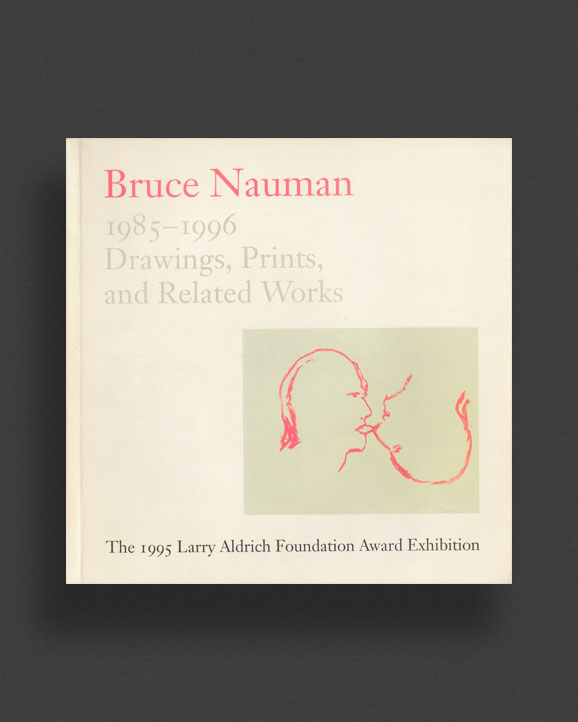
First 1997 edition of Bruce Nauman 1985—1996 Drawings, Prints, and Relate Works, published on the occasion of an exhibition held May 4 to Aug. 31, 1997 at Aldrich Museum of Contemporary Art and the Cleveland Center for Contemporary Art February 27-April 19, 1998. Illustrated throughout in colour an b/w with many of Nauman's works accompanied by a prologue by Jill Snyder and with a sixteen-page essay by Ingrid Shaffner, "Circling Oblivion/Bruce Naumann through Samuel Beckett", plus a checklist of all works.
Good—Very Good copy.
2000, English
Hardcover, 221 pages, 23 x 16 cm
1st Edition, Out of print title / used / fine
Published by
Harwood Academic Publishers / UK
$180.00 - Out of stock
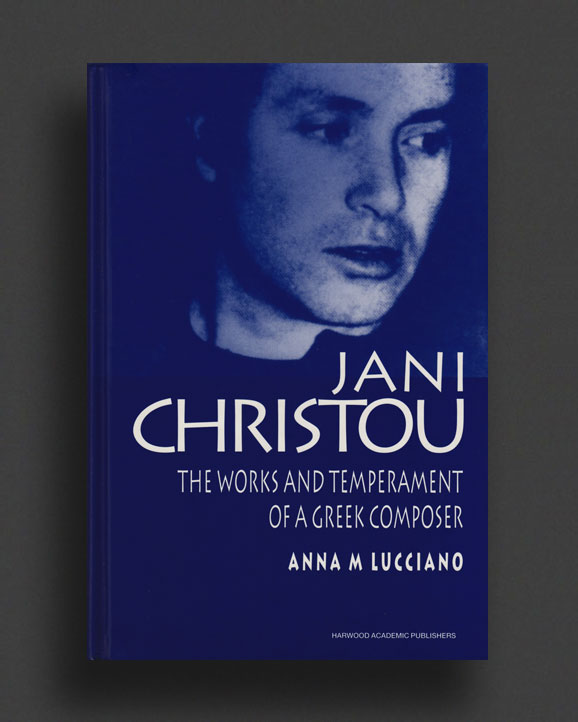
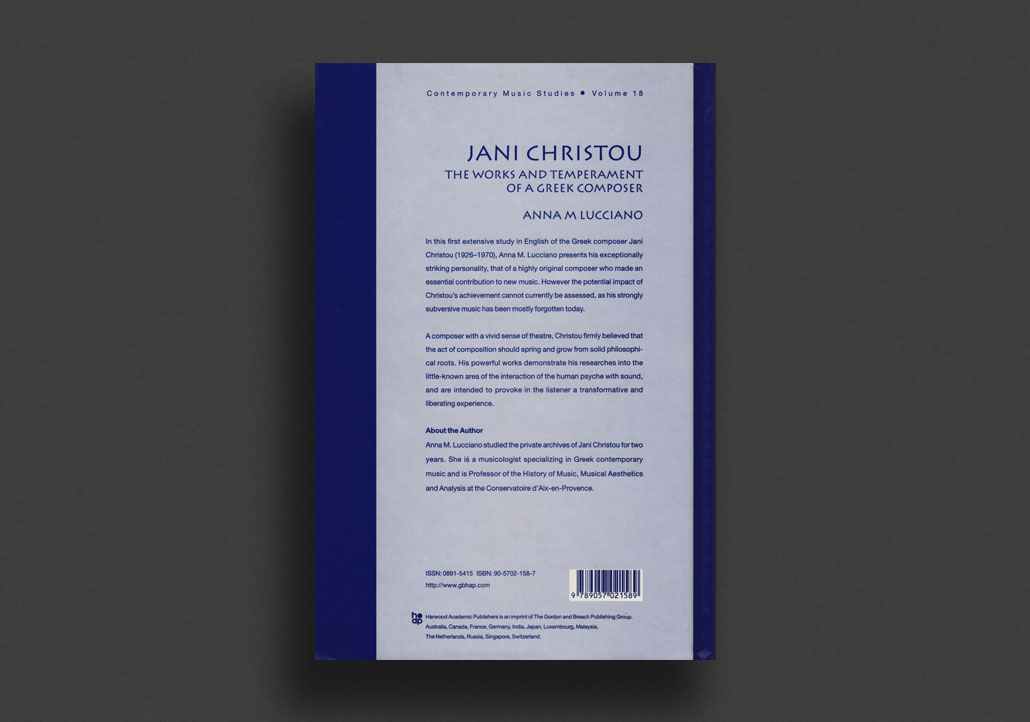
Impossibly rare, first edition of this first extensive study in English of the Greek composer Jani Christou (1926—1970), Anna M. Lucciano presents his exceptionally striking personality, that of a highly original composer who made an essential contribution to new music. Anna M. Lucciano has long studied the private archives of Jani Christou. She is a musicologist specializing in Greek contemporary music and is Professor of the History of Music, Musical Aesthetics and Analysis at the Conservatoire d'Aix-en Provence.
"Lucciaino provides important insights into the music of a Greek composer whose works are not widely known or performed at the current time....These texts contribute greatly toward the understanding not only of the composer's compositional techniques but also his artistic temperament....Uniquely and effectively organized....Recommended for all serious collections of 20th-century music."—CHOICE
Jani Christou was born in Cairo, Egypt in 1926 and died in a car accident in Athens, Greece in 1970. In 1945 he went to England to study at Cambridge, where he read philosophy with Ludwig Wittgenstein and Bertrand Russell. In 1948 he gained an MA in philosophy. During this period Christou studied composition privately with H. F. Redlich, and in 1949 he travelled to Rome to study orchestration with F. Lavagnino. Later in Zurich he attended lectures in psychology with Carl Jung. In 1951 he returned to Alexandria where he married Theresia Horemi. Already at an early age his works displayed an inclination towards the mystical and the ecstatic. This tendency culminated during his last years (1965-1970) producing, next to incidental music for the staging of ancient Greek dramas, his works Mysterion, Praxis for 12, The Strychnine Lady, Enantiodromia, Anaparastasis I & Anaparastasis III and Epicycle that share a strong ritual feel, an exploration of primeval acts and of the state of trance plus an urge to unleash powers and behaviours that go beyond the self (a state Christou had named metapraxis).
Very Good—Fine copy, almost As New, light shelf wear to boards.
1995, English / Italian
Softcover, 16 pages, 25 x 21.5 cm
1st Edition, Out of print title / used / very good
Published by
Studio Castoli / Milan
$65.00 - In stock -
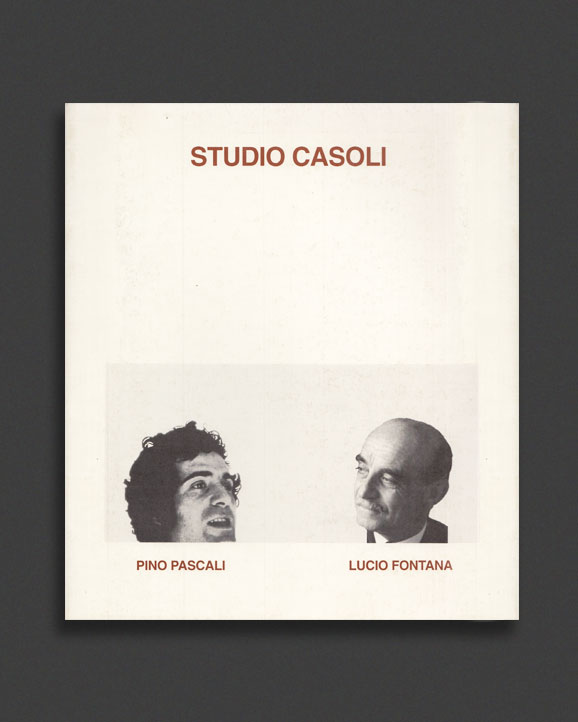
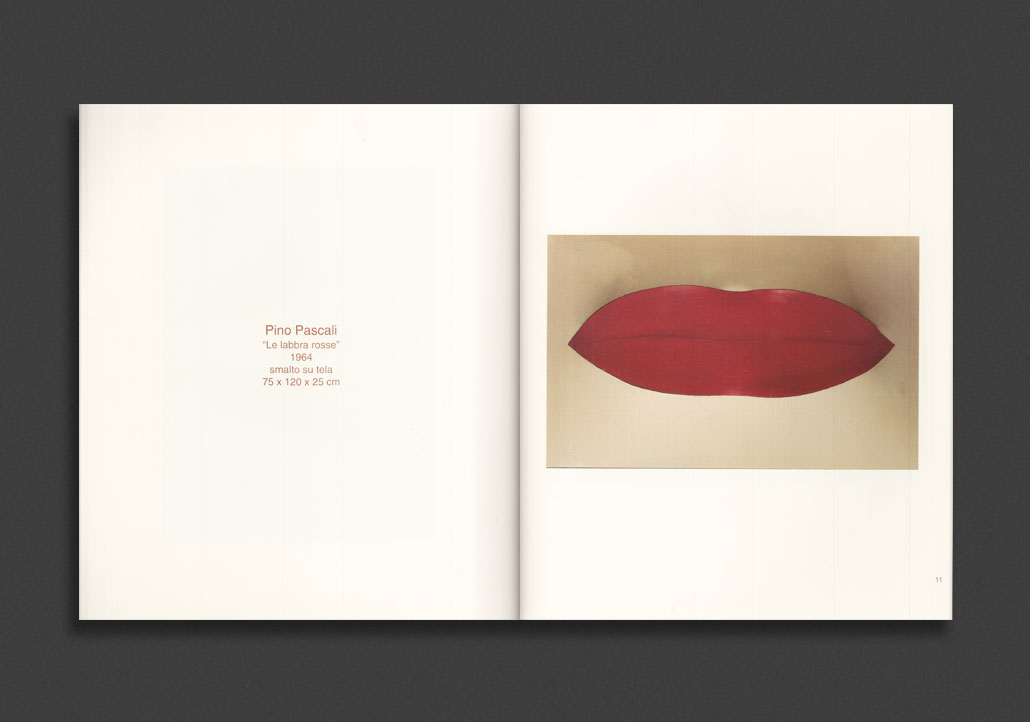
Very scarce catalogue from Milan published on the occasion of a two-person exhibition of works by Italian artists Lucio Fontana and Pino Pascali, held at Studio Castoli in 1995. Introductory text by Italian art critic Angela Vettese, with colour and b/w reproductions of works by each artist.
Very Good copy.
1969, Italian
Softcover, 84 pages, 24 x 21 cm
1st Edition, Out of print title / used / very good
Published by
De Luca Editori D'arte / Rome
$300.00 - Out of stock
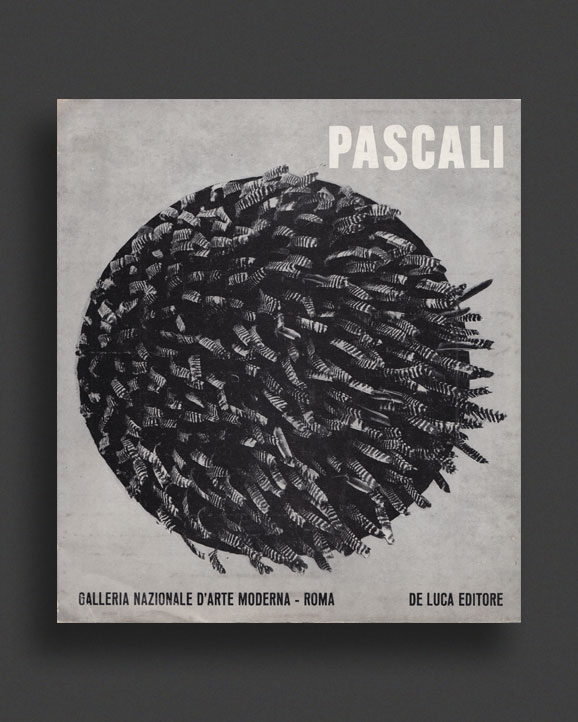
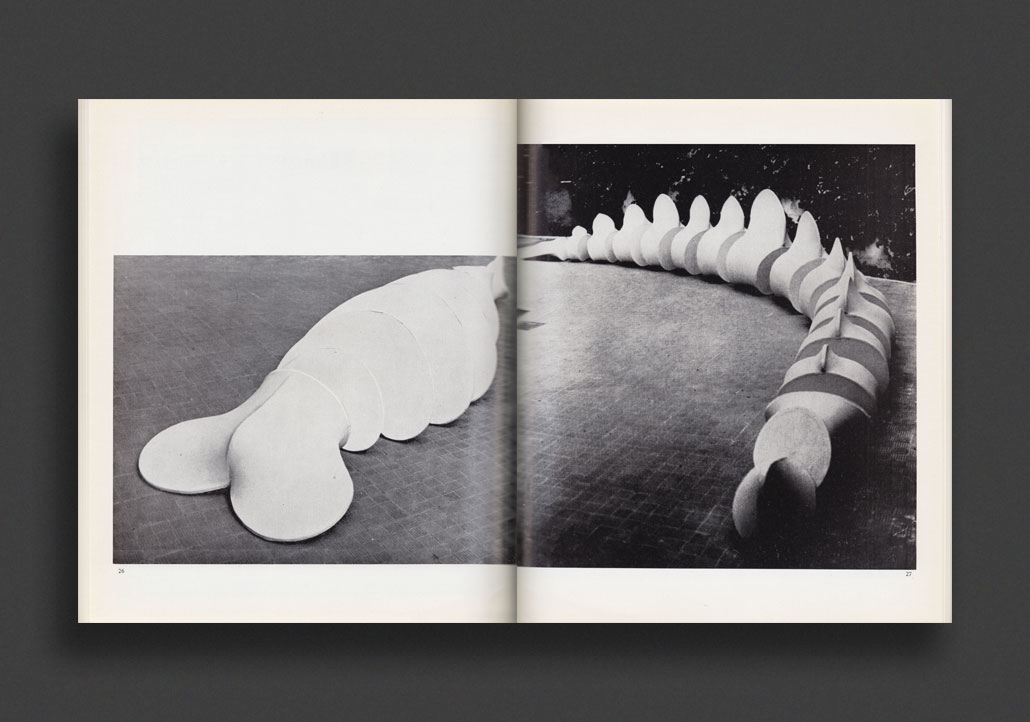
Extremely rare catalogue of Pino Pascali to accompany the first retrospective exhibition of his work, organized by Palma Bucarelli, 7 months after the tragic death of the artist on 11 September 1968. Presented at the Galleria Nazionale d'Arte Moderna, Roma, Valle Giulia 31 maggio - 27 giugno 1969, this accompanying catalogue is illustrated with 60 monochrome pages of Pascali's work and portraits of the artist himself, biography and full exhibition history, accompanied by text by curator and museum director Palma Bucarelli. A stunning and historical publication.
Pino Pascali (b. Bari, 1935—1968), in the late 1950s, whilst working as a set designer, graphic designer, scriptwriter, and creative writer for television advertising, met fellow Arte Povera artist Jannis Kounellis. In 1965, Pascali first exhibited his “fake sculptures,” a series of shaped-canvases that first appear to be solid sculptures but are actually paintings presenting abstract forms that suggest animals, plants and landscapes. During his brief activity as a sculptor at the height of Pop Art, Pascali, considered a key artist of the Arte Povera movement, produced no more than 149 works, many of which are true icons of twentieth-century Italian art. The day of his untimely death at the age of 32, following a tragic motorcycle accident on 11 September 1968, coincided with the moment of his greatest public recognition (his presentation at the Venice Biennale and the posthumous awarding of the Sculpture Grand Prix). His short, enigmatic career has served as an important, almost mythological, contribution to post-war European art.
Palma Bucarelli (1910—1998) was an Italian art historian, curator and administrator, mostly known for her tenure as director of the Galleria Nazionale d'Arte Moderna (GNAM) in Rome from 1942—1975.
Very Good copy with some light handling wear/ageing.
1969, French
Softcover, 96 pages, 20.5 cm x 21 cm
1st Edition, Out of print title / used / very good
Published by
Musée des Arts Decoratifs / Paris
$150.00 - Out of stock
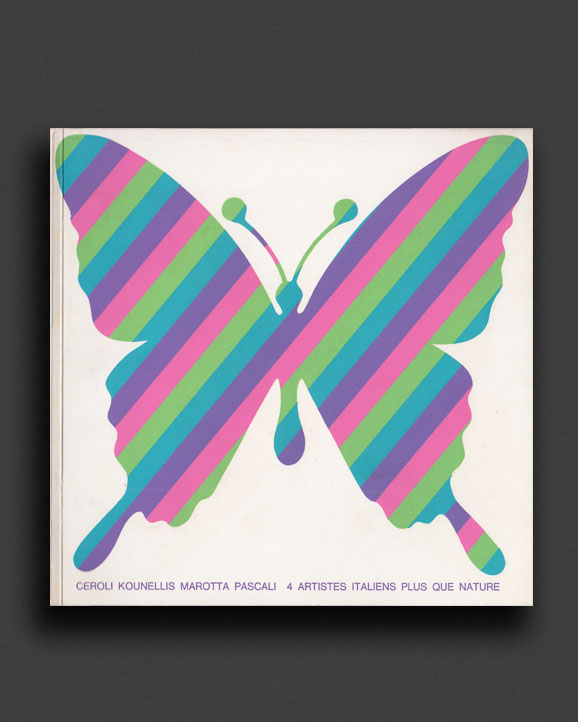
Beautiful, scarce catalogue published on the occasion of the exhibition "Ceroli Kounellis Marotta Pascali : 4 Artistes Italiens Plus Que Nature" at Musée des Arts Decoratifs, Paris, in 1969.
"Four of the most representative artists of the last season of Italian art, four artists in full activity except, unfortunately, Pino Pascali, who died last year. Despite the brevity of his career, Pascali has given an international contribution to the artistic research of today. It is arbitrary to look for traits and points in common among these artists, even if they are more or less the same trend, so I preferred to draw separate portraits ... " (M. Calvesi, 1969)
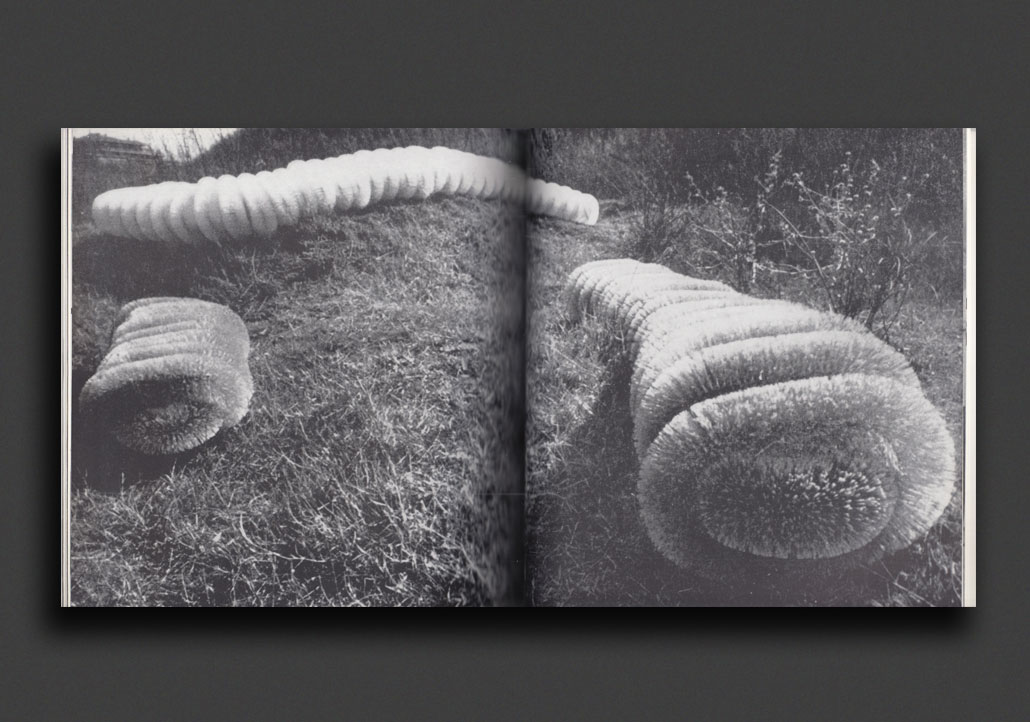
Each artist has a profusely illustrated section dedicated to their work, each divided by printed wax title pages, introduced (in French) by Maurizio Calvesi, and closed with an exhibition history and list of works. Blakc and white photography throughout by Gianni Berengo Gardin, Ugo Mulas, Adele Macchi, Claudio Abate, Andrea Taverna, and silkscreened covers.
Included in ARTE POVERA 1966-1980. LIBRI E DOCUMENTI / BOOKS AND DOCUMENTS, the critical catalogue raisonné of artist's books from the Arte Povera movement 1966-1980, compiled by Giorgio Maffei.