World Food Books' programme is largely produced on Kulin Nation land. We acknowledge the Wurundjeri people of the Kulin Nation as the first and continuing custodians of this land, and pay respect to their Elders past, present, and emerging.
World Food Books is an arts and special interests bookshop in Naarm / Melbourne. Founded in 2010, World Food Books is devoted to the presentation of a rotating, hand-selection of international art, design, literary and counterculture publications with an emphasis on the anti-traditional, the experimental, the avant-garde, the heretic, the marginal.
Presenting new titles alongside rare and out-of-print books, catalogues and journals spanning the fields of modern and contemporary art, design, photography, illustration, film, literature, poetry, cultural theory, philosophy, sexuality, popular and underground culture in its many radical forms, World Food Books wishes to encourage adventurous, thoughtful and open-minded reading, looking, writing, and exchange of publishing and ideas, both current and historical.
As well as our bookshop, located in Melbourne's historical Nicholas Building, all of our inventory is available internationally via our online mail-order service.
World Food Books semi-regularly co-ordinates "Occasions", a programme of exhibits and events at the bookshop and in partnership with other hosts (such as museums and art galleries) that develop out of the activities, relationships and content of the bookshop itself.
World Food Books
The Nicholas Building
37 Swanston Street
Room 5, Level 6
Melbourne 3000
Australia
SHOP HOURS:
Thu–Fri 12–6, Sat 12–5
WEB-SHOP OPEN 24/7
World Food Books
Postal Address:
PO Box 435
Flinders Lane
Victoria 8009
Australia
Art
Theory / Essay
Architecture / Interior
Graphic Design / Typography
Photography
Fashion
Eros
LGBTQ+
Fiction / Poetry
Weird / Speculative / Science Fiction / Horror
Transgressive / Visceral / Abject
Symbolism / Decadence / Fin de siècle
Film / Video
Painting
Sculpture / Installation
Performance / Dance / Theater
Drawing
Sound / Music
Curatorial
Group Shows / Collections
Periodicals
Out-of-print / Rare
Posters / Ephemera / Discs
Signed Books
World Food Books Gift Voucher
World Food Book Bag
Australian Art
Australian Fiction
Australian Science Fiction / Speculative Fiction
Australian Poetry
Australian Photography
Japanese Photography
Conceptual Art
Minimal Art
Dada
'Pataphysics / Oulipo
Fluxus
Concrete Poetry
Pop Art
Surrealism
Arte Povera
Arte Informale / Haute Pâte / Tachism
Nouveau Réalisme / Zero / Kinetic
Situationism / Lettrism
Collage / Mail Art / Xerox Art
Art Brut / Folk / Visionary / Fantastic
Illustration / Graphic Art / Bandes Dessinées
Furniture
Italian Radical Design / Postmodernism
Textiles
Ceramics / Glass
Counterculture
Protest / Revolt
Philosophy
Psychoanalysis
Anthropology
Anarchism
Socialism / Anarchism / Communism / Capitalism
Literary Theory / Semiotics / Language
Feminism / Women's Studies
Gender Studies / Sexuality
Anthropology
Fetishism / BDSM
Drugs / Psychedelia
Crime / Violence
Animal Rights / Veganism
Occult / Esoterica
Ecology / Earth / Alternative Living
Whole Earth / Crafts
All prices in AUD (Australian dollars)
Pick-Ups
Pick-up orders can be collected in our bookshop during opening hours after order date. Please collect any Pick-up orders within 2 weeks of ordering as we have limited storage space. Orders will be released back into stock if not collected within this time. No refunds can be made for pick-ups left un-collected. If you cannot make it in to the bookshop in this time-frame, please choose postage option.
Return Policy
All sales are final. We do accept returns (for refund or exchange) for items received in error. All our orders are packed with special care using heavy-duty padding and cardboard book-mailers or bubble mailers (for smaller books), using reinforcement where required. We cannot take responsibility for any lost, stolen or damaged parcels.
Insurance
Should you wish to insure your package, please email us directly after placing your order and we can organise this at a small extra expense. Although all standard/express tracked packages are very safe and dependable, we cannot take responsibility for any lost, stolen or damaged parcels. We recommend insurance on valuable orders.
Interested in selling your old books, catalogues, journals, magazines, comics, fanzines, ephemera? We are always looking for interesting, unusual and out-of-print books to buy. We only buy books in our fields of interest and specialty, and that we feel we can resell.
We base these prices on desirability, market value, in-print prices, condition and our current stock levels. We offer cash, store credit, and can take stock on consignment. All
about 25% of the price we expect to get when we sell them, or 30% in store credit. We base these prices on desirability, market value, in-print prices, condition and our current stock levels.
Sell your books any day of the week. You can drop them off and return later. If you have a lot of books, we can visit your Sydney home.
We buy books that we feel we can resell. We offer about 25 % of the price we expect to get when we sell them, or 30% in store credit. We base these prices on desirability, market value, in-print prices, condition and our current stock levels.
Philadelphia Wireman
03 August - 01 September, 2018
World Food Books is proud to announce our next Occasion, the first presentation of sculptures by Philadelphia Wireman in Australia.
The Philadelphia Wireman sculptures were found abandoned in an alley off Philadelphia’s South Street on trash night in 1982. Their discovery in a rapidly-changing neighbourhood undergoing extensive renovation, compounded with the failure of all attempts to locate the artist, suggests that the works may have been discarded after the maker’s death. Dubbed the "Philadelphia Wireman" during the first exhibition of this work, in 1985, the maker’s name, age, ethnicity, and even gender remain uncertain. The entire collection totals approximately 1200 pieces, all intricately bound together with tightly-wound heavy-gauge wire (along with a few small, abstract marker drawings, reminiscent both of Mark Tobey and J.B. Murry). The dense construction of the work, despite a modest range of scale and materials, is singularly obsessive and disciplined in design: a wire armature or exoskeleton firmly binds a bricolage of found objects including plastic, glass, food packaging, umbrella parts, tape, rubber, batteries, pens, leather, reflectors, nuts and bolts, nails, foil, coins, toys, watches, eyeglasses, tools, and jewellery.
Heavy with associations—anthropomorphic, zoomorphic, and socio-cultural responses to wrapped detritus—the totemic sculptures by Philadelphia Wireman have been discussed in the context of work created to fulfil the shamanistic needs of alternative religions in American culture. Curators, collectors, and critics have variously compared certain pieces to sculpture from Classical antiquity, Native American medicine bundles, African-American memory jugs, and African fetish objects. Reflecting the artist’s prolific and incredibly focused scavenging impulse, and despite—or perhaps enhanced by—their anonymity, these enigmatic objects function as urban artefacts and arbiters of power, though their origin and purpose is unknown. Philadelphia Wireman, whatever their identity, possessed an astonishing ability to isolate and communicate the concepts of power and energy through the selection and transformation of ordinary materials. Over the course of the past two decades, this collection has come to be regarded as an important discovery in the field of self-taught art and vernacular art.
Presented in collaboration with Fleisher-Ollman Gallery, Philadelphia, and Robert Heald, Wellington.
Susan Te Kahurangi King
02 February - 10 March, 2018
Susan Te Kahurangi King (24 February 1951 - ) has been a confident and prolific artist since she was a young child, drawing with readily available materials - pencils, ballpoint pens and felt-tip markers, on whatever paper is at hand. Between the ages of four and six Susan slowly ceased verbal communication. Her grandparents William and Myrtle Murphy had developed a special bond with Susan so they took on caring responsibilities for extended periods. Myrtle began informally archiving her work, carefully collecting and storing the drawings and compiling scrapbooks. No drawing was insignificant; every scrap of paper was kept. The King family are now the custodians of a vast collection containing over 7000 individual works, from tiny scraps of paper through to 5 meter long rolls.
The scrapbooks and diaries reveal Myrtle to be a woman of great patience and compassion, seeking to understand a child who was not always behaving as expected. She encouraged Susan to be observant, to explore her environment and absorb all the sights and sounds. Myrtle would show Susan’s drawings to friends and people in her community that she had dealings with, such as shopkeepers and postal workers, but this was not simply a case of a grandmother’s bias. She recognised that Susan had developed a sophisticated and unique visual language and sincerely believed that her art deserved serious attention.
This was an unorthodox attitude for the time. To provide some context, Jean Dubuffet coined the term Art Brut in 1945 to describe work created by self-taught artists – specifically residents of psychiatric institutions and those he considered to be visionaries or eccentrics. In 1972 Roger Cardinal extended this concept by adopting the term Outsider Art to describe work made by non-academically trained artists operating outside of mainstream art networks through choice or circumstance. Susan was born in Te Aroha, New Zealand in 1951, far from the artistic hubs of Paris and London that Dubuffet and Cardinal operated in. That Myrtle fêted Susan as a self-taught artist who deserved to be taken seriously shows how progressive her attitudes were.
Susan’s parents Doug and Dawn were also progressive. Over the years they had consulted numerous health practitioners about Susan’s condition, as the medical establishment could not provide an explanation as to why she had lapsed into silence. Dawn educated herself in the field of homeopathy and went on to treat all twelve of her children using these principles – basing prescriptions on her observations of their physical, mental and emotional state.
Doug was a linguist with an interest in philosophy who devoted what little spare time he had to studying Maori language and culture. To some extent their willingness to explore the fringes of the mainstream made them outsiders too but it was their commitment to living with integrity and their respect for individuality that ensured Susan’s creativity was always encouraged.
Even though Susan’s family supported her artistic pursuits, some staff in schools and hospitals saw it as an impediment to her assimilation into the community and discouraged it in a variety of ways. Her family was not always aware of this and therefore did not fully understand why Susan stopped drawing in the early 1990s. However, rather than dwell on the challenges that Susan faced in pursuit of her artistic practice, they prefer to highlight her achievements. In 2008 Susan began drawing again in earnest, after an almost 20 year interruption, and her work is now shown in galleries around the world.
Susan grew up without television and has been heavily influenced by the comics she read as a child. She is absolutely fearless in the appropriation of recognizable characters, such as Donald Duck and Mickey Mouse, in her work. She twists their limbs, contorts their faces, compresses them together, blends them into complex patterned backgrounds - always imbuing them with an incredible energy. Although Susan often used pop culture characters in her work they are not naive or childlike. These are drawings by a brilliant self-taught artist who has been creating exceptional work for decades without an audience in mind.
Mladen Stilinović
"Various Works 1986 - 1999"
02 February 16 - September 10, 2016
Various works 1986 - 1999, from two houses, from the collections of John Nixon, Sue Cramer, Kerrie Poliness, Peter Haffenden and Phoebe Haffenden.
Including: Geometry of Cakes (various shelves), 1993; Poor People’s Law (black and white plate), 1993; White Absence (glasses, ruler, set square, silver spoon, silver ladel with skin photograph and wooden cubes), 1990-1996; Exploitation of the Dead (grey and red star painting, wooden painting, black spoon with red table, red plate), 1984-1990; Money and Zeros (zero tie, paintings made for friends in Australia (Sue, John, Kerrie), numbers painting), 1991-1992; Words - Slogans (various t-shirts) - “they talk about the death of art...help! someone is trying to kill me”, “my sweet little lamb”, “work is a disease - Karl Marx”; Various artist books, catalogues, monographs, videos; Poster from exhibition Insulting Anarchy; "Circular" Croatian - Australian edition; Artist book by Vlado Martek (Dostoyevsky); more.
Thanks to Mladen Stilinović and Branka Stipančić.
Jonathan Walker
Always Will Need To Wear Winter Shirt Blue + Ochre Small Check Pattern
21 August - 21 September, 2015
Untitled
I am not a great reader of poetry but I always return to the work of Melbourne poet, Vincent Buckley (1925- 1988). Perhaps I find his most tantalising piece to be not a finished poem but a fragment left on a scrap of paper discovered on his desk after the poet’s death.
The poetry gathers like oil
In the word-core, and spreads
It has its music meet,
Its music is in movement.
This fragment is more the shell left behind from a volatile thought than a finished poem. I find the last two lines honest but awkward whereas the first two lines work like an arrow. Most likely he could not find a resolution so it was left. Still, in its present form, it remains an eloquent testimony to the ultimate failure of a medium to express mobile thought and sensation, in Buckley’s case, through verbal language. It’s an important matter because this is something all artists have to deal with regardless of the medium.
I have never written a poem, however, I am forever copying fragments from books on paper scraps in a vain effort to fix certain notions in my head. At first, they function as bookmarks that are sometimes returned to when I open the book. But before long, as they accumulate, they fall out littering the table interspersed with A4 photocopies, bills, books and medications.
To return to Buckley’s fragment, the first two lines very much evoke how I paint nowadays. As you age, detail diminishes and patches of light become more luminous and float. I feel the most honest way of dealing with this is by smearing the oil paint on the canvas with the fingers and working close-up, blind. Only if the patches coalesce into an approaching image can the work gain a life.
-
Jonathan Walker was born in Melbourne, Australia and brought up on a dairy farm in Gippsland. In the 1970’s he studied painting at RMIT and won the Harold Wright Scholarship to the British Museum, London. During the 1980’s he exhibited at Pinacotheca Gallery, Richmond and had work shown at the NGV and Heidi City Art Gallery. Over the same period he designed the cover for the “Epigenesi” LP by Giancarlo Toniutti, Italy and conducted a mail exchange work with Achim Wollscheid, Germany. The work with artists through the post resulted in an article published in the bicentenary issue of Art and Australia 1988. He showed in artist run spaces such as WestSpace in the 90’s and 2000’s, and until 2012, taught painting at Victoria University, which is where we (Colleen Ahern and Lisa Radford) as organisers of the exhibition, among many others, had the privilege of being his student.
Walker’s knowledge was imparted to students through the careful selection of music, literature, and artists found in books that he himself had ordered for the library. Walker’s strategy was the generosity of sharing his vast knowledge with references specific to each student and their context.
Walker’s paintings share a similar focus and intimacy.
This exhibition presents a small selection of recent paintings alongside a publication that includes Walker’s writing. Observational and analytical, Walker’s work is a type of material notation — the time of day, colour and how it is blended, the both specific and fleeting location of a reflection on lino or the question of whether a chair leg should be included in a painting.
Please join us on Friday August 21 between 6-8pm to celebrate the opening of the exhibition.
Curated by Colleen Ahern and Lisa Radford.
B. Wurtz
Curated by Nic Tammens
March 26 - April 4, 2015
B.Wurtz works from a basement studio in his home on Manhattan’s Lower East Side.
This local fact is attested to by the plastic shopping bags and newsprint circulars that appear in his work. As formal objects, they don’t make loud claims about their origins but nonetheless transmit street addresses and places of business from the bottom of this long thin island. Like plenty of artists, Wurtz is affected by what is local and what is consumed. His work is underpinned by this ethic. It often speaks from a neighborhood or reads like the contents of a hamper:
“BLACK PLUMS $1.29 lb.”
“Food Bazaar”
“USDA Whole Pork Shoulder Picnic 99c lb.”
“RITE AID Pharmacy, with us it’s personal.”
“H. Brickman & Sons.”
“Sweet Yams 59c lb."
Most of the work in this exhibition was made while the artist was in residence at Dieu Donne, a workshop dedicated to paper craft in Midtown. Here Wurtz fabricated assemblages with paper and objects that are relatively lightweight, with the intention that they would be easily transportable to Australia. This consideration isn’t absolute in Wurtz’s work, but was prescriptive for making the current exhibition light and cheap. Packed in two boxes, these works were sent from a USPS post office on the Lower East Side and delivered to North Melbourne by Australia Post.
Wurtz appears courtesy of Metro Pictures, New York.
Thanks to Rob Halverson, Joshua Petherick, Sari de Mallory, Matt Hinkley, Helen Johnson, Fayen d'Evie, Ask Kilmartin, Lisa Radon, Ellena Savage, Yale Union, and "Elizabeth".
John Nixon
"Archive"
December 15 - January 20, 2014
The presentation of John Nixon's archive offered a rare showcase of this extensive collection of the artist's own publications, catalogues, posters, ephemera, editions and more, from the mid 1980s onwards, alongside a selection of his artworks.
Organized by John Nixon, Joshua Petherick and Matt Hinkley.
<a href=http://wfb.public-office.info/artist/john-nixon>All titles by John Nixon
"Habitat"
at Minerva, Sydney (organised by Joshua Petherick and Matt Hinkley)
November 15 - December 20, 2014
Lupo Borgonovo, Janet Burchill & Jennifer McCamley,
Lewis Fidock, HR Giger, Piero Gilardi, Veit Laurent Kurz,
Cinzia Ruggeri, Michael E. Smith, Lucie Stahl, Daniel Weil, Wols
Press Release:
“...It contained seven objects. The slender fluted bone, surely formed for flight, surely from the wing of some large bird. Three archaic circuitboards, faced with mazes of gold. A smooth white sphere of baked clay. An age-blackened fragment of lace. A fingerlength segment of what she assumed was bone from a human wrist, grayish white, inset smoothly with the silicon shaft of a small instrument that must once have ridden flush with the surface of the skin - but the thing’s face was seared and blackened.”
William Gibson, “Count Zero”, 1986
"Autumn Projects Archive"
Curated by Liza Vasiliou
March 6 - March 15, 2014
World Food Books, in conjunction with the Virgin Australia Melbourne Fashion Festival 2014, presented the Autumn Projects archive, consisting of a selection of early examples in Australian fashion with a particular interest in collecting designers and labels from the period beginning in the 1980’s, who significantly influenced the discourse of Australian Fashion.
Curated by Liza Vasiliou, the exhibition provided a unique opportunity to view pieces by designers Anthea Crawford, Barbara Vandenberg, Geoff Liddell and labels CR Australia, Covers, Jag along with early experimental collage pieces by Prue Acton and Sally Browne’s ‘Fragments’ collection, suspended throughout the functioning World Food Books shop in Melbourne.
H.B. Peace
presented by CENTRE FOR STYLE
November 14, 2013
"Hey Blinky, you say chic, I say same"
Anon 2013
H.B. Peace is a clothing collaboration between great friends Blake Barns and Hugh Egan Westland. Their pieces explore the divergences between 'character’ and ‘personality’ in garments....etc
Special Thanks to Joshua Petherick and Matt Hinkley of WFB and Gillian Mears
and a Very Special Thank you to Audrey Thomas Hayes for her shoe collaboration.
Janet Burchill & Jennifer McCamley
"Aesthetic Suicide"
May 10 - June 8, 2013
The first of our occasional exhibitions in the World Food Books office/shop space in Melbourne, "Aesthetic Suicide" presented a body of new and older works together by artists Janet Burchill & Jennifer McCamley, including videos, prints, a wall work, and publications.
During shop open hours videos played every hour, on the hour.
1990, French
Softcover, 232 pages, 27 x 24 cm
1st Edition, Out of print title / used / very good
Published by
Centre Georges Pompidou / Paris
Musée Picasso / Antibes
$70.00 - Out of stock
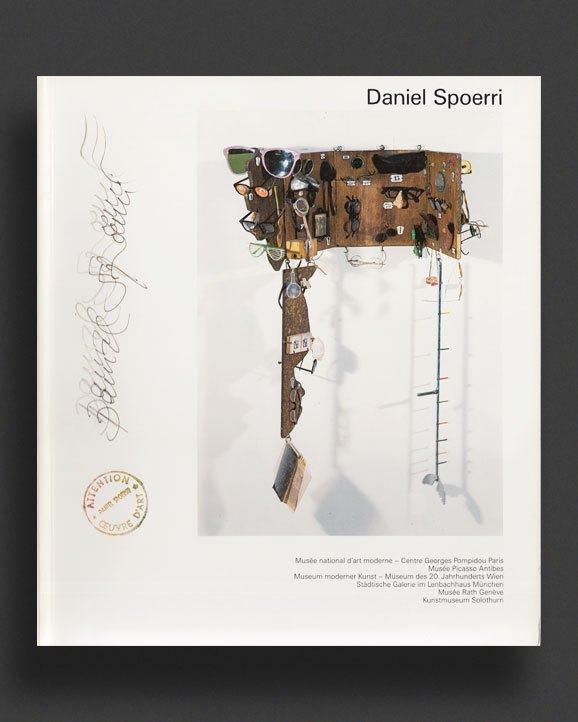
One of the best and most comprehensive books on the great Swiss artist, Daniel Spoerri, beautifully put together to accompany a travelling exhibition of his work in 1990/1991 in Paris, Antibes, Wien, München, Genève, Solothurn. Profusely illustrated with Spoerri's incredible artistic history of installations, performances, studio photos, editions, and other activities across important associations with Fluxus, Nouveau réalisme and Eat Art; works across sculpture, assemblage, action, and relief, including a great number of his iconic "snare works". Includes an exhibition history, bibliography and essays (in French). Highly recommended book, long out-of-print.
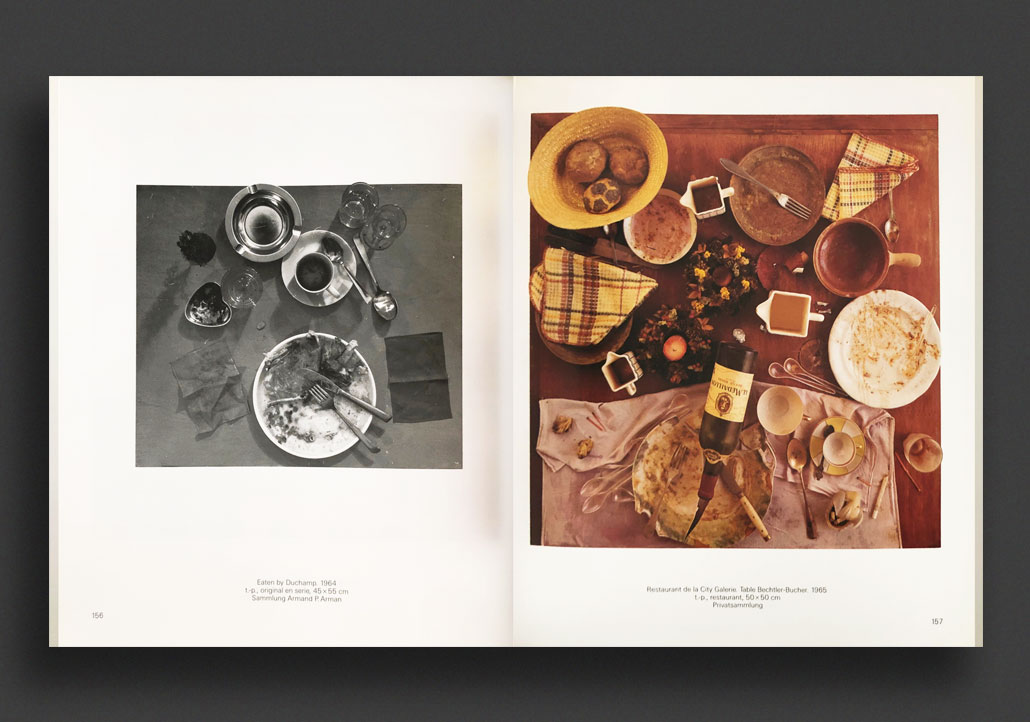
Daniel Spoerri (b. 1930) is a Swiss artist and writer born in Romania. Spoerri is best known for his "snare-pictures". In 1960, Spoerri made his first "snare-picture": "objects found in chance positions, in order or disorder (on tables, in boxes, drawers, etc.) are fixed (‘snared’) as they are. Only the plane is changed: since the result is called a picture, what was horizontal becomes vertical. Example: remains of a meal are fixed to the table at which the meal was consumed and the table hung on the wall." His first "snare-picture", Kichka's Breakfast was created from his girlfriend's leftover breakfast. The piece is now in the collection in the Museum of Modern Art in New York. One snare-picture, made in 1964, consists of the remains of a meal eaten by Marcel Duchamp. He also is widely acclaimed for his book, Topographie Anécdotée* du Hasard (An Anecdoted Topography of Chance), a literary analog to his snare-pictures, in which he mapped all the objects located on his table at a particular moment, describing each with his personal recollections evoked by the object, with illustrations by the great Roland Topor. In the 1950s he was active in dance, studying classical dance with Olga Preobrajenska and in 1954 becoming the lead dancer at the State Opera of Bern, Switzerland. He later staged several avant-garde plays including Ionesco's The Bald Soprano and Picasso's surrealist Desire Trapped by the Tail. During that period he met a number of Surrealist artists, including Meret Oppenheim, Jean Tinguely, Marcel Duchamp and Man Ray, and also a number of artists subsequently associated with the Fluxus movement, including Robert Filliou, Dieter Roth and Emmett Williams. Closely associated with the Fluxus art movement, a movement "characterized by a strongly Dadaist attitude, [whose] participants were a divergent group of individualists whose most common theme was their delight in spontaneity and humor." It has been said that his Anecdoted Topography of Chance "seems perfectly to embody aspects of its spirit." Spoerri was also one of the original signers of the manifesto creating the Nouveau réalisme (New Realism) art movement, which involved artists such as Yves Klein, Arman, Martial Raysse, Pierre Restany, Niki de Saint Phalle, César, Jean Tinguely, Mimmo Rotella, Gérard Deschamps, and the Ultra-Lettrists, Francois Dufrêne, Raymond Hains, Jacques de la Villeglé, an avant garde endeavor begun in 1960. His use of everyday life as the main subject-matter of his art reflects his involvement in the New Realism movement. A major theme of Spoerri's artwork is food, and he has called this aspect of his work "Eat Art." This is seen not only in his snare-pictures of eaten meals, but in restaurant performance pieces, for which he cooks for guests and art-critics take on the role of waiters, playing on the idea of the critic bringing the art to the consumers and giving them an understanding of the work.
Very Good, preserved copy.
2025, English
Hardcover, 320 pages, 30 x 24 cm
Published by
Fulgur Press / UK
$165.00 - In stock -
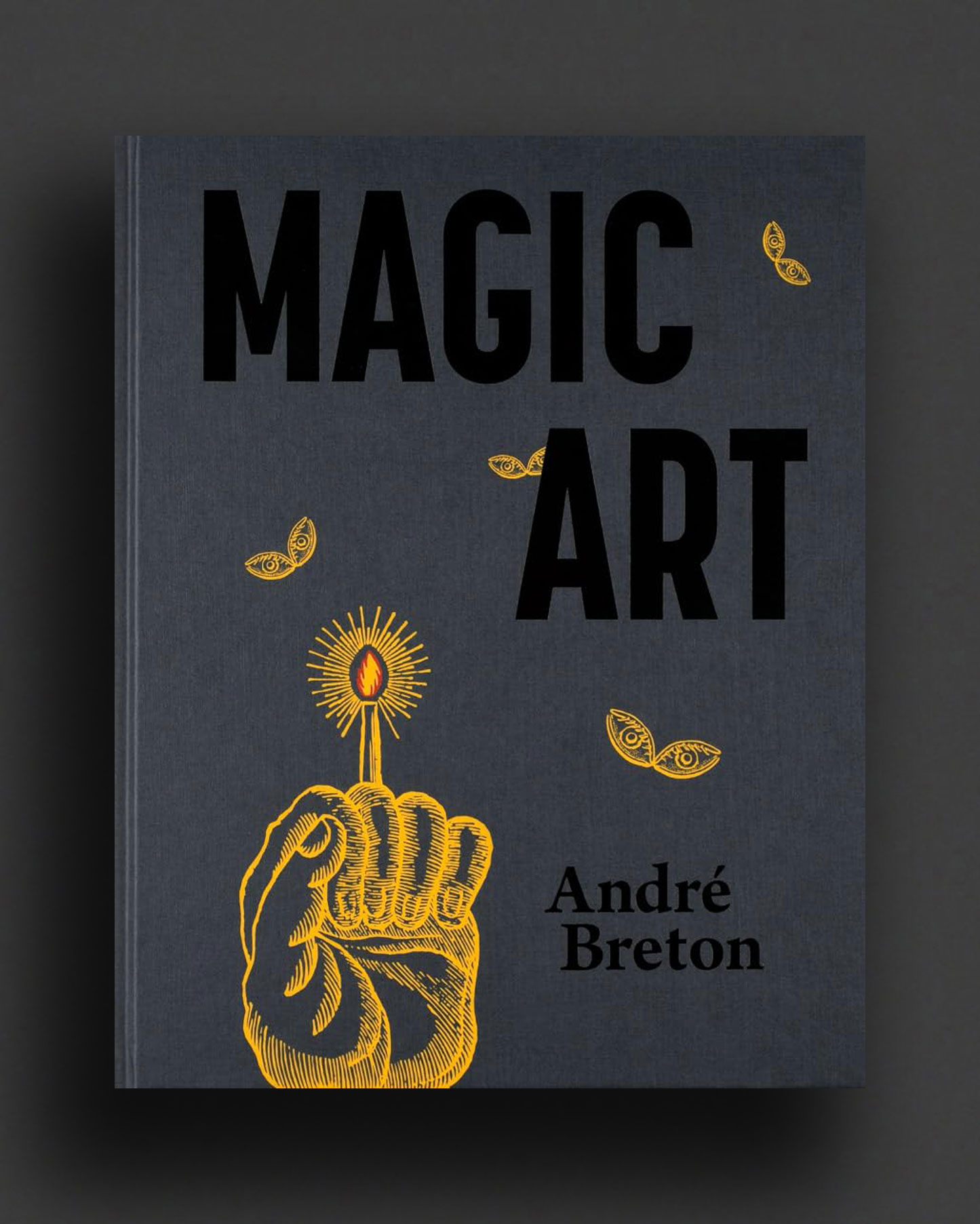
Breton's late treatise on magic and art appears for the first time in English, complete with citations, commentaries and a bibliography.
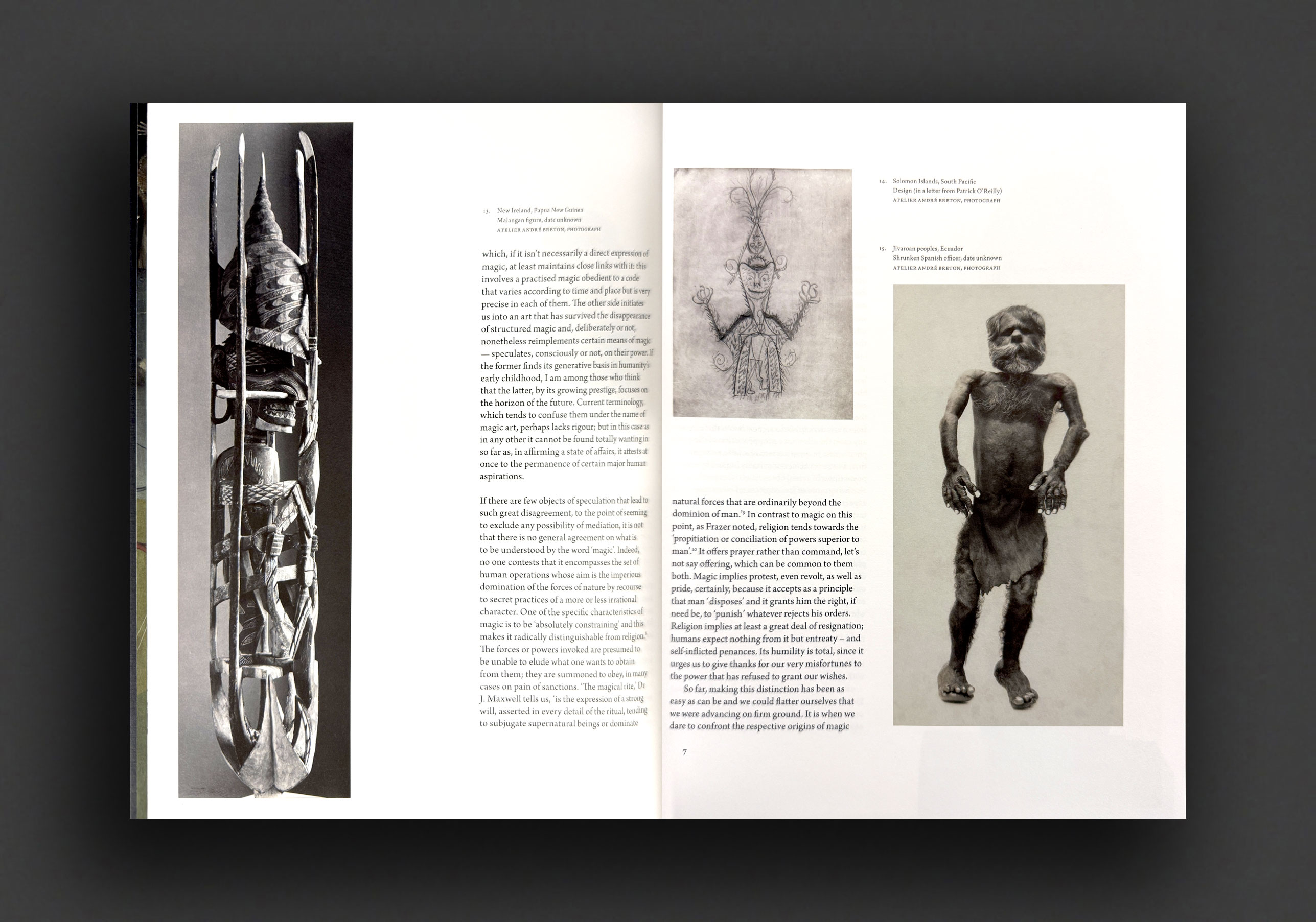
What is “Magic Art”? In 1953, André Breton, founder of the Surrealist movement, was invited by a prestigious French publisher to explore answers to this question. His resulting analysis is wide-ranging and evocative. Beginning with a literary review of magic and art, Breton draws upon Novalis and Baudelaire before considering the prehistoric rock art of Spain and France, the native art of the Pacific Northwest, the magical grimoires and alchemical symbolism of the Middle Ages, and the work of Hieronymus Bosch, Antoine Caron, Paolo Uccello, Gustav Moreau, Paul Gauguin and the Surrealists. Through these and other diverse sources, Breton traces a mystery that lies at the heart of our timeless fascination with otherness and seeks to place Surrealism as a successor to a magical sensibility that began with art itself.
First published in 1957 as L’Art magique, this important text is offered here as an English translation for the first time. Working from manuscript notes for the original project, this edition presents the iconographic content as Breton intended, together with more than 300 new citations and a comprehensive bibliography that emphasizes sources found in Breton’s own library.
André Breton (1896–1966) was one of the founders and most controversial exponents of Surrealism, defining the movement in his first Surrealist Manifesto as “pure psychic automatism.” Fleeing from Europe during World War II, Breton traveled throughout North America staging Surrealist exhibitions and lending his voice to several political movements.
With contributions by Gérard Legrand, Robert Shehu-Ansell, Merlin Cox, Krzysztof Fijalkowski, Dawn Ades, Anne Egger, Kristoffer Noheden.
2013, English
Hardcover (w. dust jacket), 376 pages, 16.5 x 22.9 cm
Published by
Yale University Press / New Haven
$120.00 - In stock -
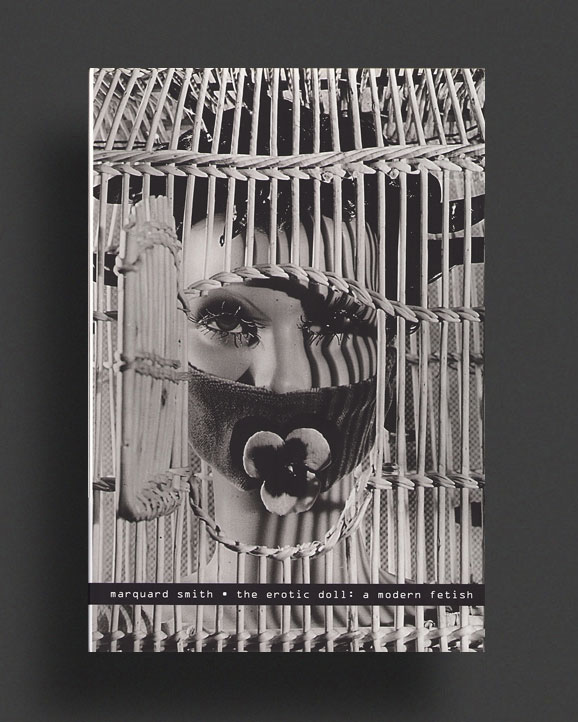
ince the 19th century, dolls have served as toys but also as objects of obsession, love, and lust. That century witnessed the emergence of the term "heterosexual" and of modern concepts of fetishism, perversity, and animism. Their convergence, and the demands of a growing consumer society resulted in a proliferation of waxworks, shop-window dummies, and customized love dolls, which also began to appear in art. Oskar Kokoschka commissioned a life-sized doll of his former lover Alma Mahler; Hans Bellmer crafted poupées; and Marcel Duchamp fabricated a nude figure in his environmental tableau Etant donnés. The Erotic Doll is the first book to explore men's complex relationships with such inanimate forms from historical, theoretical, and phenomenological perspectives. Challenging our commonsense grasp of the relations between persons and things, Marquard Smith examines these erotically charged human figures by interweaving art history, visual culture, gender, and sexuality studies with the medical humanities, offering startling insights into heterosexual masculinity and its discontents.
‘Ladies and gents, welcome to the museum of the erotic doll. Step right up and feast your eyes on modern man’s curious contraptions. If the saucy blow-up doll makes you squeamish, brace yourself for the Dutch Wife (a sailor’s delight!), lubricating robot ladies, surrealist brides stripped bare, state-of-the-art RealDolls, and the iDollators who love them. Marquard Smith is the curator of this collection of men's dolls, rendered in a lavishly illustrated volume.’—Laura Frost, Times Higher Education
'This book is platypus-like, unclassifiable.'—Marina Warner, London Review of Books
“[An] intriguing book . . . Smith teases out the history of these sex objects to provide a thorough genealogy of today’s erotic mannequins.”—Shelly Ronen, Public Books
1992, English
Softcover (french-folds), 144 pages, 28 x 22 cm
1st Edition, Out of print title / used / good
Published by
FAE Musee d'Art Contemporaine Pully / Lausanne
$160.00 - Out of stock
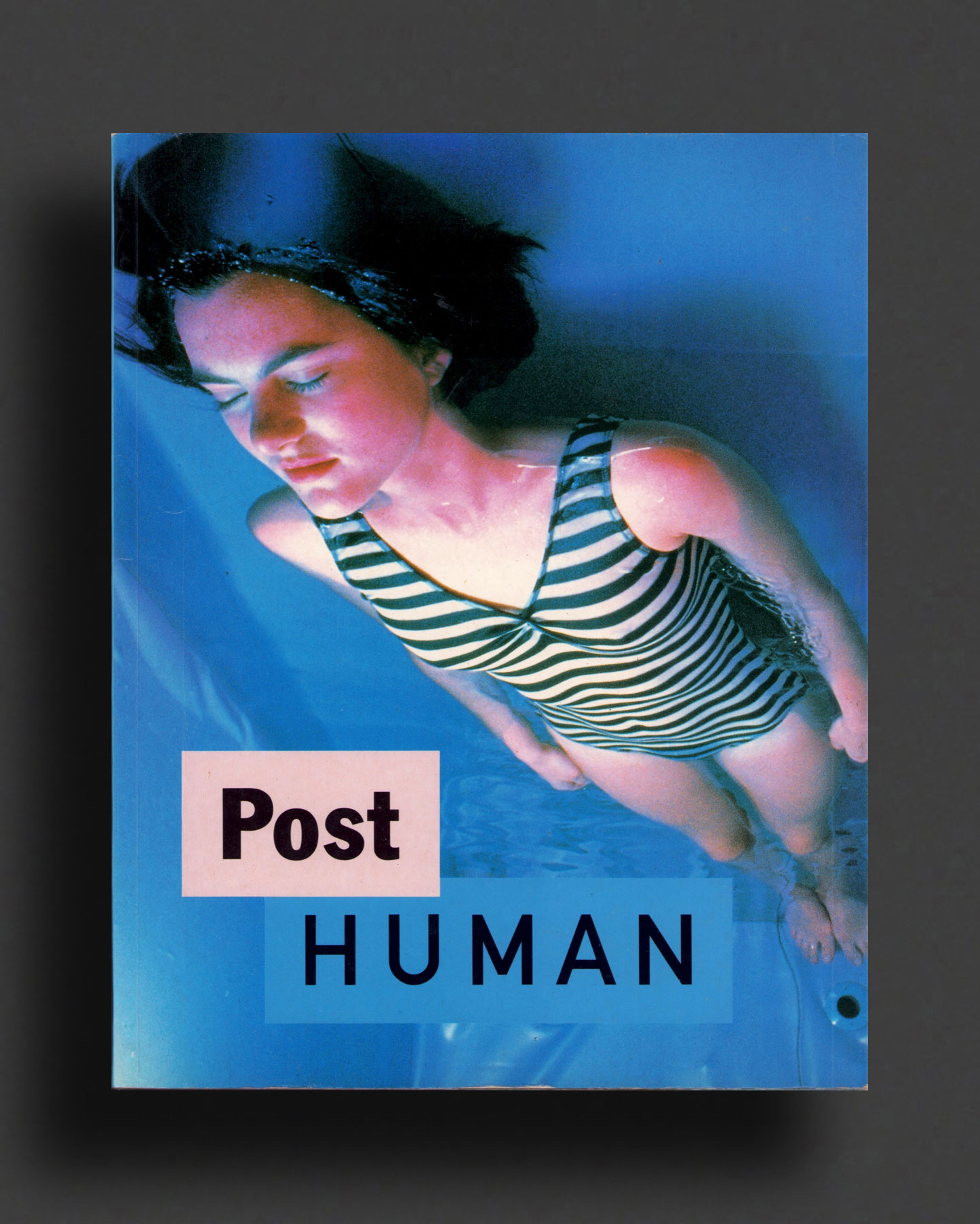
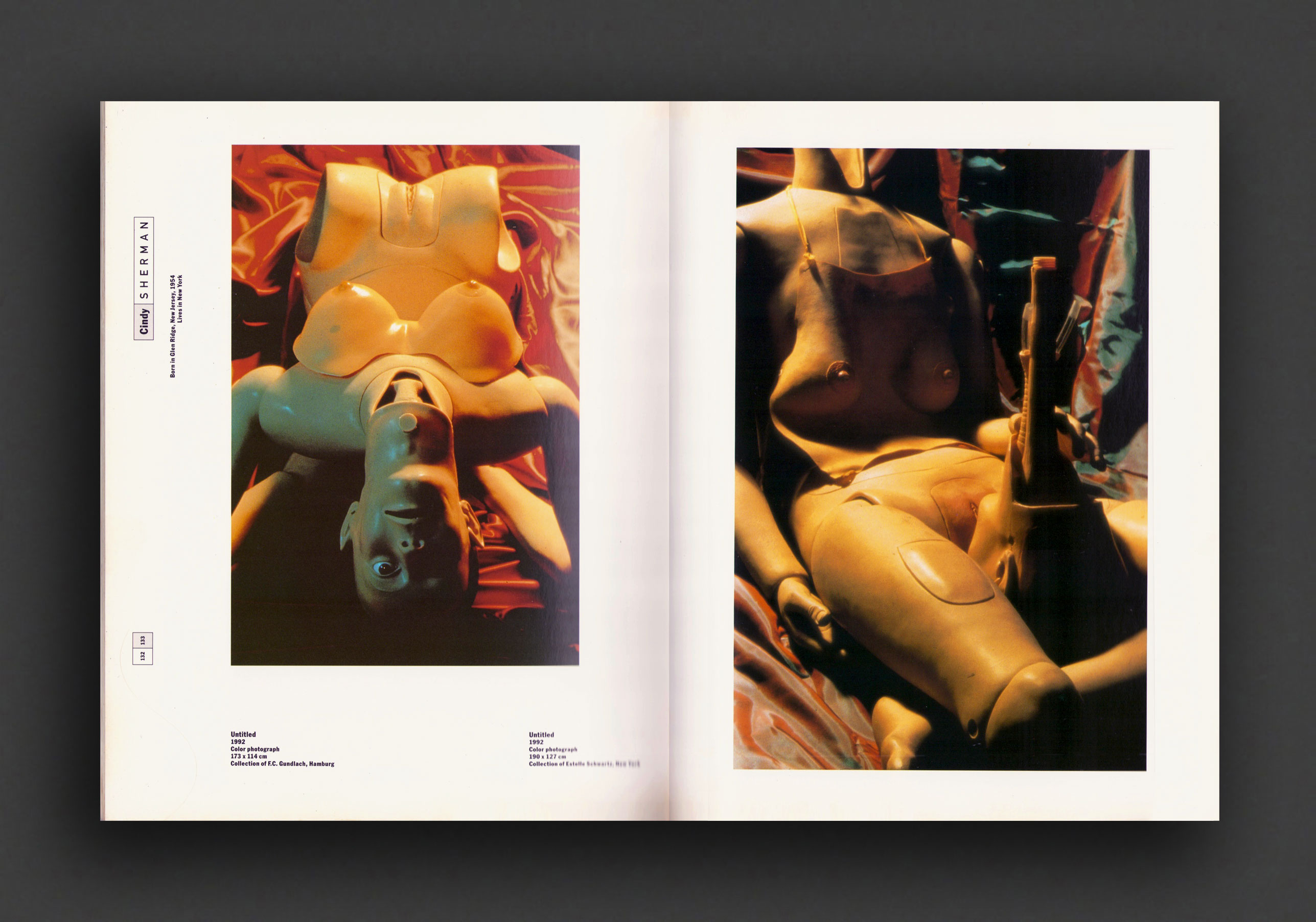
First 1992 English edition of the legendary Post Human exhibition catalogue, published on the occasion of the touring exhibition curated by Jeffrey Deitch, June 1992—October 1993. Post Human brought together the work of leading young international artists confronting a new artificial “real” world; a new figuration. The participating artists examine the media’s obsession with the “virtual reality” of the body beautiful through works that reveal the neuroses that plague contemporary society. In Deitch's words, this lavishly designed catalogue "explores the implications of genetic engineering, plastic surgery, mind expansion, and other forms of body alteration, to ask whether our society is developing a new model of the human being. It poses the question of whether our society is creating a new kind of post-human person that replaces previous constructions of the self. Images from the new technological and consumer culture and the new, conceptually oriented figurative art of thirty-six young artists will endeavor to give us a glimpse of the coming post-human world."
Featuring the work of Dennis Adams, Janine Antoni, John M Armleder, Stephan Balkenhol, Matthew Barney, Ashley Bickerton, Taro Chiezo, Clegg & Guttmann, Wim Delvoye, Suzan Etkin, Fischli / Weiss, Slyvie Fleury, Robert Gober, Felix Gonzalez-Torres, Damien Hirst, Martin Honert, Mike Kelley, Karen Kilimnik, Martin Kippenberger, Jeff Koons, George Lappas, Annette Lemieux, Christian Marclay, Paul McCarthy, Yasumasa Morimura, Kodai Nakahara, Cady Noland, Daniel Oates, Pruitt & Early, Charles Ray, Thomas Ruff, Cindy Sherman, Kiki Smith, Pia Stadtbäumer, Meyer Vaisman, Jeff Wall.
"Post Human was virtually a manifesto trumpeting a new art for a new breed of human. As Deitch’s text explained in the fragmented mottos that punctuated the billboard-style graphics of Dan Friedman’s catalogue design, “It is becoming routine for people to try to alter their appearance, their behavior, and their consciousness beyond what was once thought possible.” And we go on to read, “With the embrace of artificiality, Realism as we used to know it may no longer be possible.” The glossy color plates spoke volumes, whether the illustrations came from art or from “life.” The catalogue was to become something of a cult item that triggered the imaginations of many younger artists. Here was a permanent anthology of the “posthumanity” that surrounds us not only in galleries but on television, in magazines, even in real life, where the friendly androids among us chatter on about Botox and face-lifts. In the catalogue pages, one could see, for instance, four photos of Jane Fonda in four completely different but equally synthetic guises; Pat Buchanan being made up by a cosmetician for a TV appearance; computer morphs of once- human faces; before-and-after bellies and buttocks; and dead center, a profile view of Michael Jackson, clearly the sun god of this new solar system, who would later be deified by Jeff Koons.
This pure plastic environment, whether peopled by Ivana Trump or Barbie, set the stage for the artists in the show, whose works played perfectly in this parallel universe that was quickly replacing that old-fashioned thing called Nature. The result was a complete reshuffling of the contemporary-art deck, with an international mix of thirty-six artists (singles and pairs) that embraced Thomas Ruff and Jeff Wall, Clegg & Gutmann and Pruitt/Early, Damien Hirst and Cindy Sherman, Matthew Barney and Yasumasa Morimura, Charles Ray and Martin Kippenberger. A new dynasty had installed itself, and this ruling class demanded fitting ancestry."—Robert Rosenblum, Artforum (October 2004)
"Looked at from the point of view of being difficult cultural issues to a broader public than usual, the project Post Human could not have come about at a better time. (…) Deitch’s central thesis—that the voluntary manipulation of the human body through surgery, cosmetics and exercise, combined with recent technologies allowing us to simulate the experience of reality, have produced a culture in which the body no longer serves as a cohesive, organic reference point—fits well in an age in which pop starts, politicians and even artists themselves seem to delight in changing their physical identities to suit their purposes. No longer the domain of privacy and difference, the body has become a public crossroads where the merging of real and artificial, organic and synthetic, and even good and evil, is taking place right before our very (ahem) eyes."—Dan Cameron, Frieze (September–October 1992)
Good—Very Good copy of the sought after English language edition (the catalogue was produced in five languages) some wear to extremities, light light knocking/creasing to boards and spine, but overall a handsome copy.
2006, German
Hardcover (w. dust jacket), 280 pages, 28.5 x 23.7 cm
1st Edition, Out of print title / used / fine
Published by
Hatje Cantz / Berlin
$180.00 - Out of stock
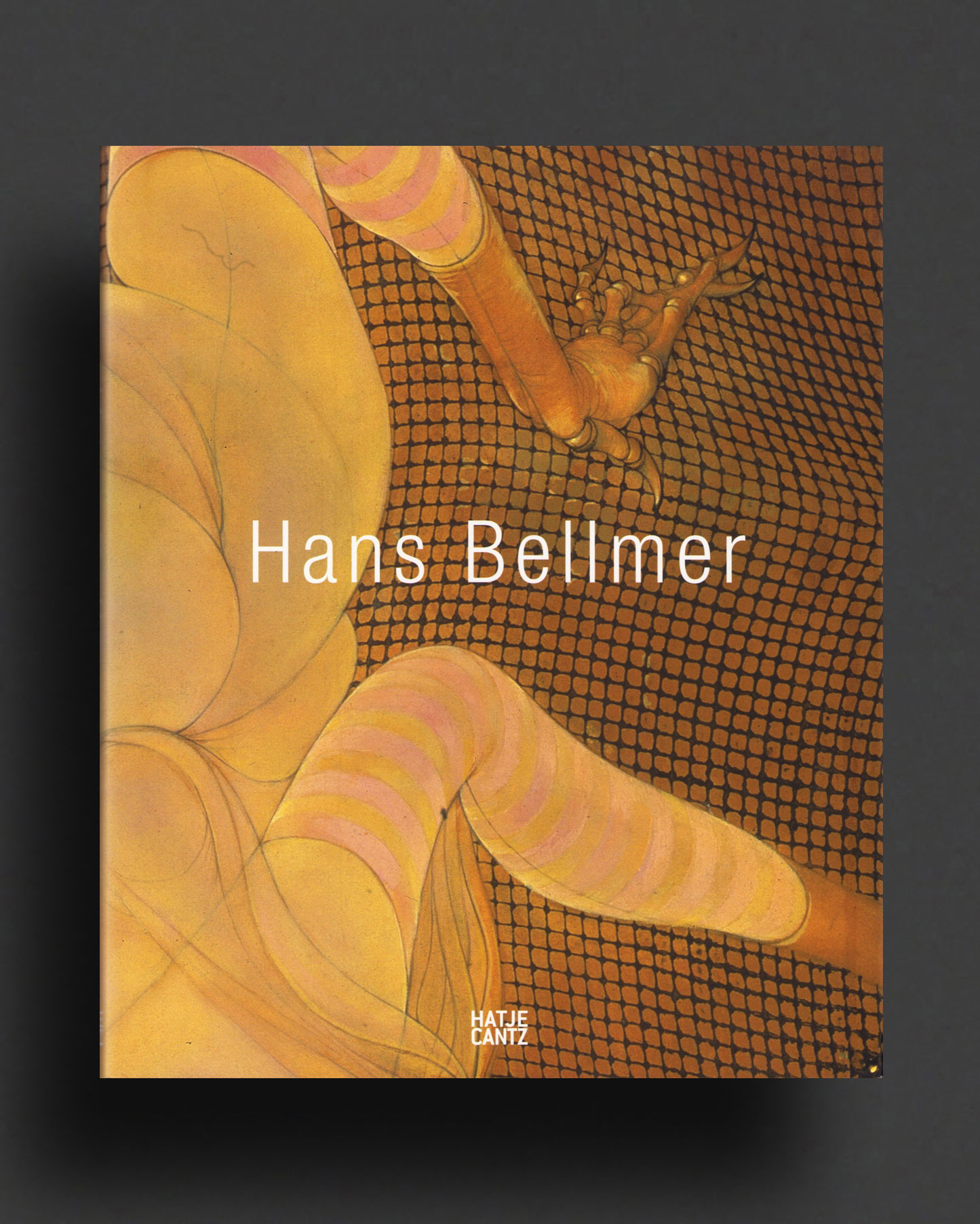
"If the origin of my work is scandalous, it is because, for me, the world is a scandal."—Hans Bellmer
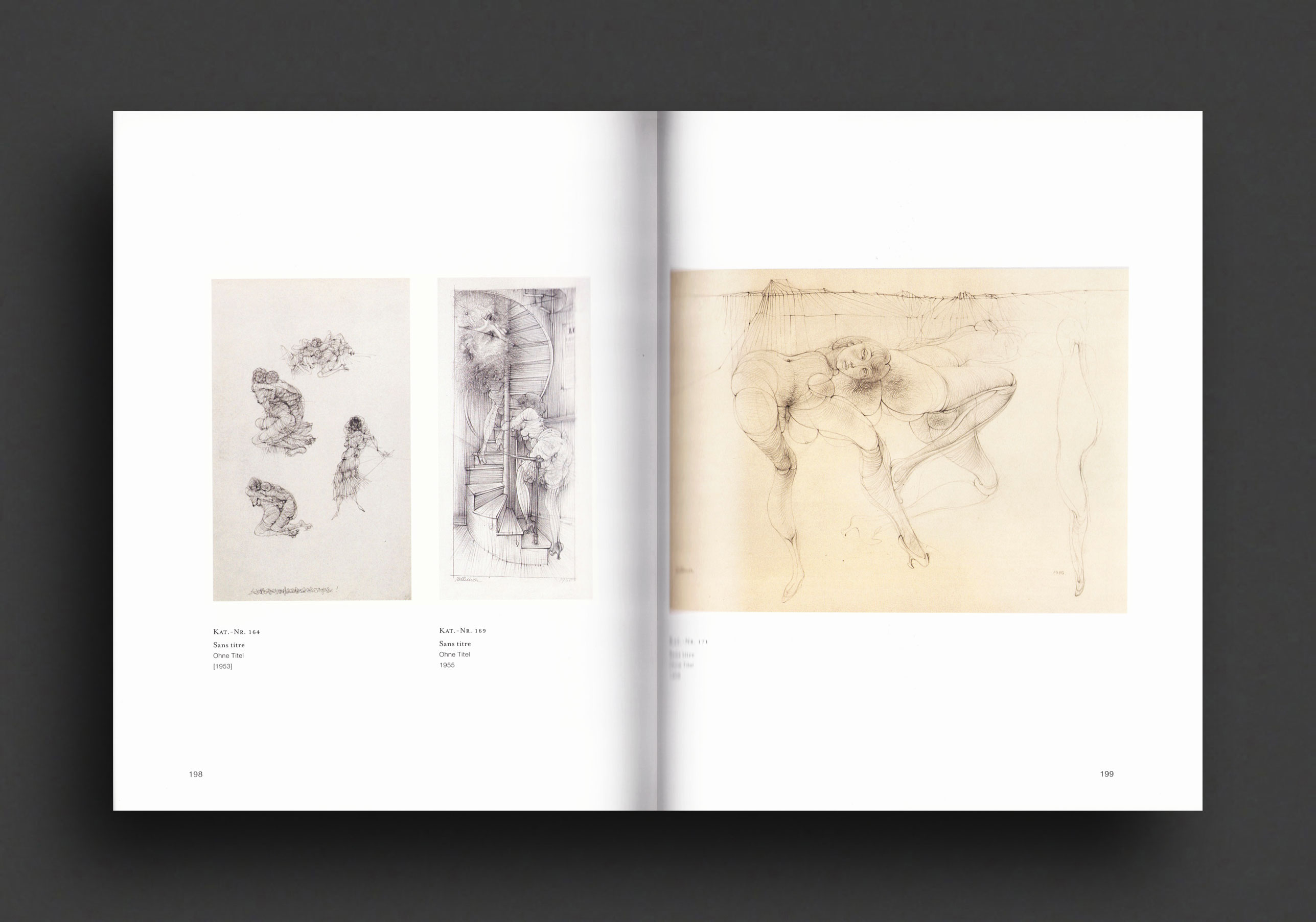
First hardcover edition of this lavish monograph on Hans Bellmer edited by Dr. Michael Semff and Anthony Spira to accompany the major retrospective exhibition at the Centre Georges Pompidou, Paris, March 1-May 22, 2006 · Staatliche Graphische Sammlung München, Munich, June 29-August 27, 2006·· Whitechapel Art Gallery, London, September 20-November 19, 2006.
The Surrealists' fascination for dolls and machines resembling humans is especially evident in the work of Hans Bellmer (1902-1975), the subject of this comprehensive monograph. Rejecting the Nazis' Aryan ideals, the artist began in 1933 to create disturbing dolls out of wax, wood, flax, plaster, and glue, equipped with wigs and glass eyes. Photographs of these fetishistic objects were published in Minotaure, the Surrealists' magazine, and eagerly supported by members of André Breton's circle. After emmigrating to Paris, Bellmer developed his erotic obsessions through art, influenced by the writings of the Marquis de Sade and Georges Bataille, and collaborated with his companion, the German artist Unica Zürn. Deeply involved in Freudian discourse, his drawings, lithographs, and photographs investigate psychoanalytical theories around hysteria and transference, and reveal a singular exploration into the relationship between language and body.
Fine copy of the German edition.
2026, English
Softcover, 118 pages, 24.1 x 29.8 cm
Published by
Gagosian / New York
$130.00 - In stock -
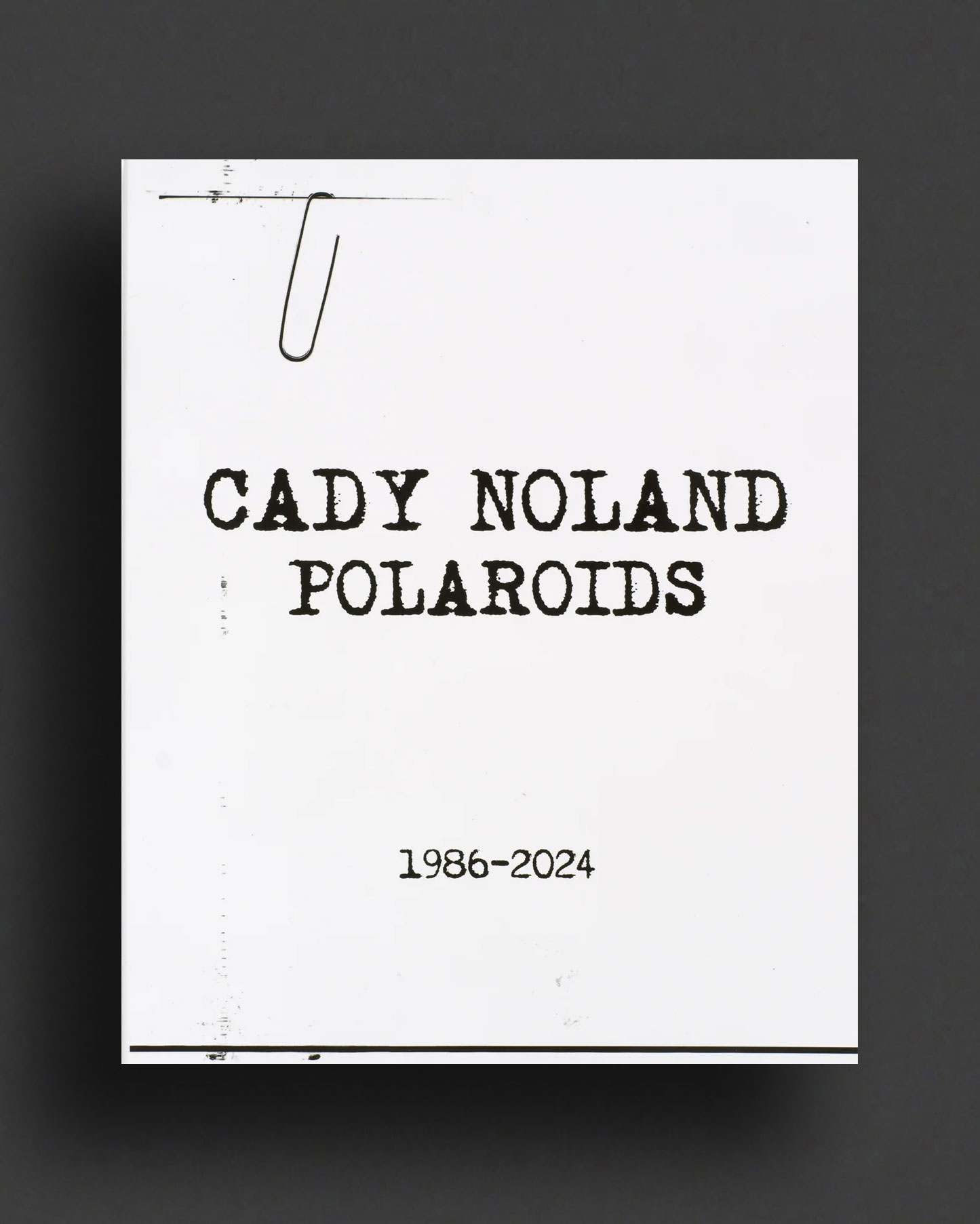
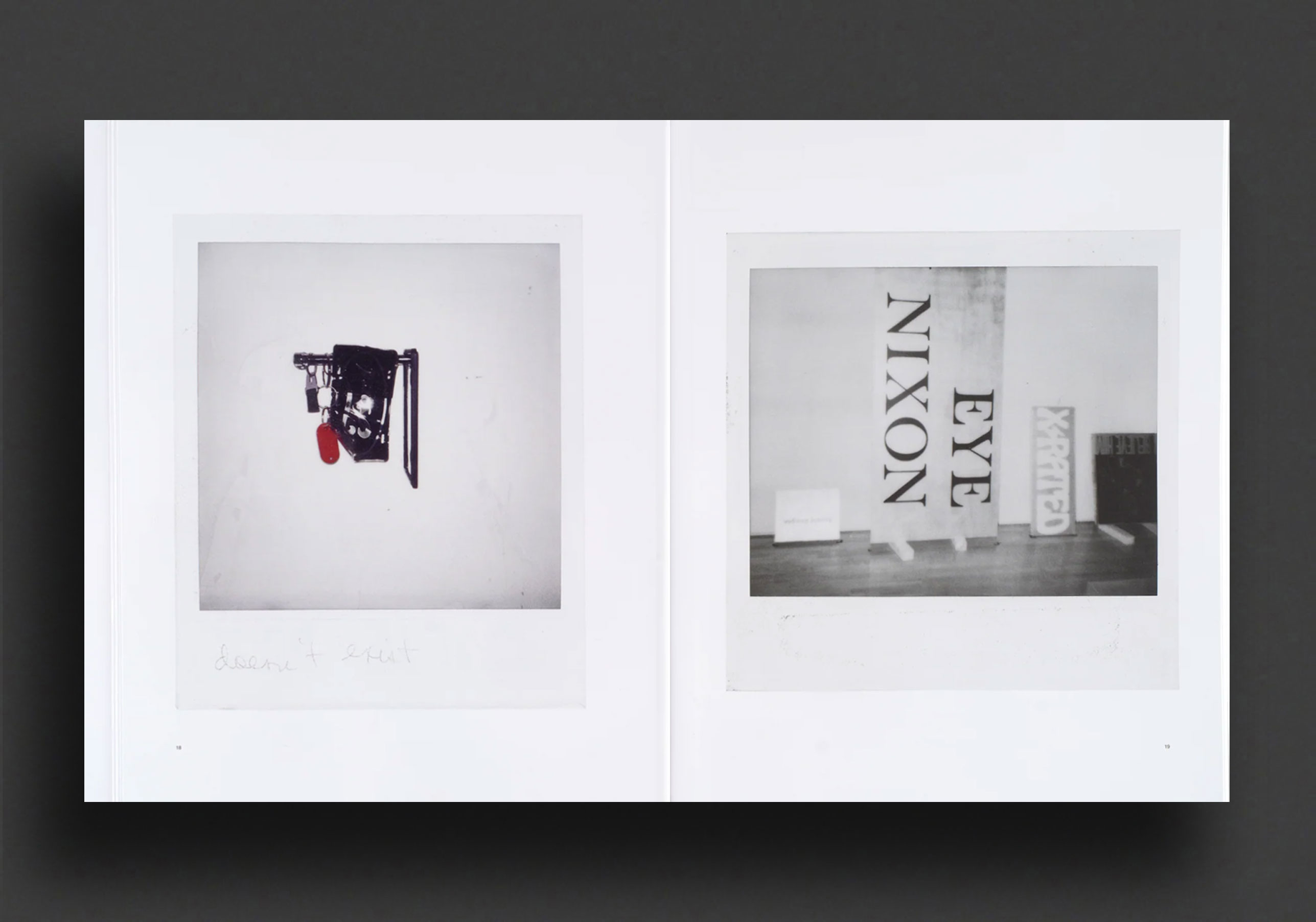
Conceived, designed, and edited by the artist, Cady Noland: Polaroids 1986–2024 is devoted to Polaroid photographs taken by Noland in the process of developing her sculptures and exhibitions. Published to coincide with a solo show of Noland’s new work at Gagosian, 555 West 24th Street, New York, this artist’s book reproduces nearly one hundred previously unpublished Polaroids from the course of her career, providing unique insight into her sculptural practice.
2021, English / Italian
Softcover, 288 pages, 32 x 24 cm
1st Edition, Out of print title / as new
Published by
Mousse / Milan
$120.00 - In stock -
Out-of-print. A half-century of multimedia works from a protagonist of Italy's Radical Architecture movement.
Gianni Pettena was a founding member of the Radical architecture movement in the late 1960s, which included names like Archizoom, Remo Buti, 9999, UFO, Superstudio, and Zziggurat. Besides critiquing modernist functionalism, the self-proclaimed “anarchitect” became noted for a purposeful reluctance to actually design. The uniqueness of Pettena’s prolific career is informed by his rejection of discipline-based roles or methodologies, creating temporary works while constantly seeking alliances with radical design in other countries, as well as conceptual art, Land Art, and experimental music. This book covers almost all of his works, supported by an extensive anthology of his writings.
Edited by Luca Cerizza
Texts by Gianni Pettena, Stefano Pezzato, Christiane Rekade, Elisabetta Trincherini, and a conversation between Gianni Pettena, Hans Ulrich Obrist, and Luca Cerizza
“Gianni Pettena (born 1940, Bolzano, Italy) was a central figure in research regarding the boundary between architecture and art in the later 1960s—a movement Germano Celant dubbed “radical architecture.” Together with the Florentine groups Archizoom, Superstudio, and UFO, and Turinese groups like the Gruppo Strum, Pettena helped expand and redefine the limits of what could be described as architecture, making a fundamental contribution to the ferment that animated, at an international level, city planning debates in those years. Independently of his fellow radicals in Florence, Pettena took an anarchic and ironic attitude toward authority, whether exercised in politics, progress, or planning. Through an extraordinary variety of means, including installation, performance, photography, video, and design, he has remained “on strike out of his love of architecture” for more than fifty years. Rather than practice the discipline, he has chosen to challenge it through the language of art, critical and expository writing, and the medium of teaching. Within a practice filled with implications, attention to a respectful relationship with nature and its resources has been a constant characteristic of his work, and remains a crucial lesson in the context of the current environmental crisis.”—Luca Cerizza
As New.
2021, English
Hardcover, 200 pages, 30 x 22 cm
Published by
Walther König / Köln
Kunstforum / Vienna
$85.00 - In stock -
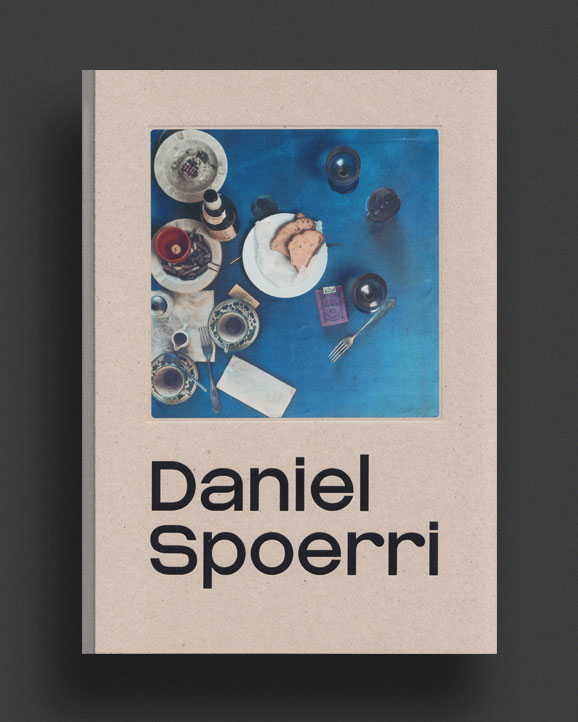
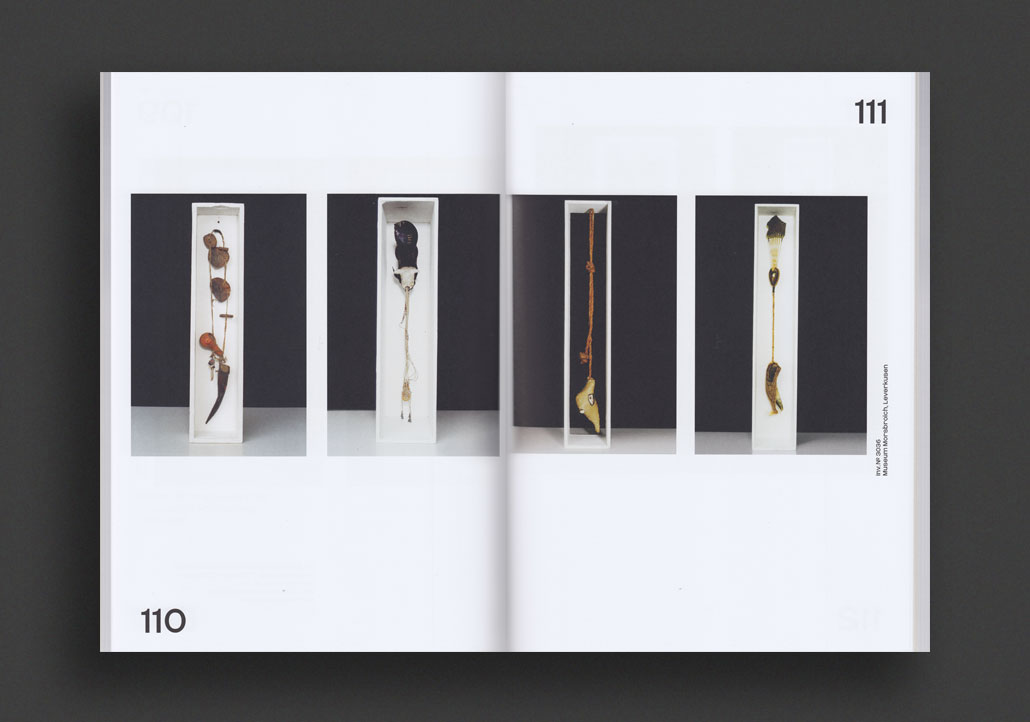
This extensive hardcover overview of Swiss Romanian artist Daniel Spoerri's (b. 1930) 60-year-long career, presents reproductions of archival material as well as rarely seen artworks from Spoerri's incredible artistic history of installations, assemblages, (including his famous "snare works"), performances, editions, and other activities as a protagonist of Fluxus, Nouveau réalisme and Eat Art. Includes texts by Ingried Brugger, Veronika Rudorfer, Hans Peter Hahn, Barbara Räderscheidt, Daniel Spoerri, Katerina Vatsella.
1998, German
Hardover (w. dust jacket), 140 pages, 30 x 23 cm
1st Edition, Out of print title / used / good
Published by
Prestel / Munich
$70.00 - In stock -
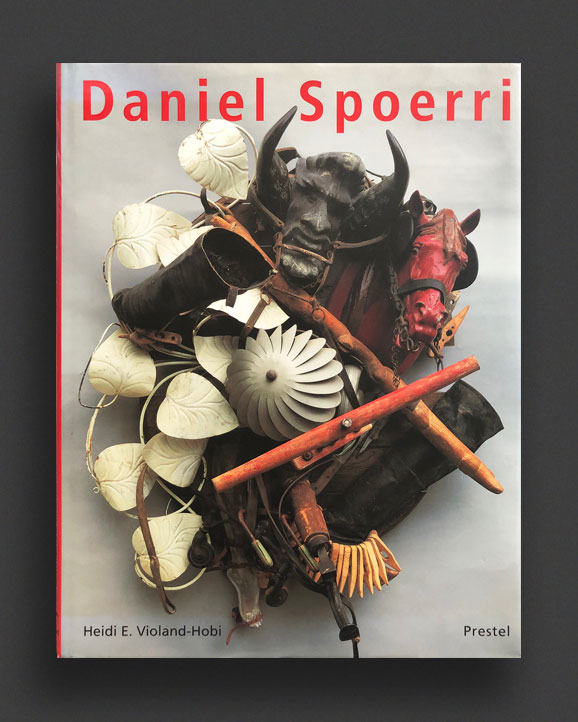
First edition of this excellent first German monograph on Swiss artist Daniel Spoerri, published by Prestel in 1998. Profusely illustrated with Spoerri's incredible artistic history of installations, performances, studio photos, editions, and other activities across important associations with Fluxus, Nouveau réalisme and Eat Art; works across sculpture, assemblage, action, and relief, including a great number of his iconic "snare works". Includes an exhibition history, bibliography and extensive text in German by Heidi E. Violand-Hobi.
Daniel Spoerri (b. 1930) is a Swiss artist and writer born in Romania. Spoerri is best known for his "snare-pictures". In 1960, Spoerri made his first "snare-picture": "objects found in chance positions, in order or disorder (on tables, in boxes, drawers, etc.) are fixed (‘snared’) as they are. Only the plane is changed: since the result is called a picture, what was horizontal becomes vertical. Example: remains of a meal are fixed to the table at which the meal was consumed and the table hung on the wall." His first "snare-picture", Kichka's Breakfast was created from his girlfriend's leftover breakfast. The piece is now in the collection in the Museum of Modern Art in New York. One snare-picture, made in 1964, consists of the remains of a meal eaten by Marcel Duchamp. He also is widely acclaimed for his book, Topographie Anécdotée* du Hasard (An Anecdoted Topography of Chance), a literary analog to his snare-pictures, in which he mapped all the objects located on his table at a particular moment, describing each with his personal recollections evoked by the object, with illustrations by the great Roland Topor. In the 1950s he was active in dance, studying classical dance with Olga Preobrajenska and in 1954 becoming the lead dancer at the State Opera of Bern, Switzerland. He later staged several avant-garde plays including Ionesco's The Bald Soprano and Picasso's surrealist Desire Trapped by the Tail. During that period he met a number of Surrealist artists, including Meret Oppenheim, Jean Tinguely, Marcel Duchamp and Man Ray, and also a number of artists subsequently associated with the Fluxus movement, including Robert Filliou, Dieter Roth and Emmett Williams. Closely associated with the Fluxus art movement, a movement "characterized by a strongly Dadaist attitude, [whose] participants were a divergent group of individualists whose most common theme was their delight in spontaneity and humor." It has been said that his Anecdoted Topography of Chance "seems perfectly to embody aspects of its spirit." Spoerri was also one of the original signers of the manifesto creating the Nouveau réalisme (New Realism) art movement, which involved artists such as Yves Klein, Arman, Martial Raysse, Pierre Restany, Niki de Saint Phalle, César, Jean Tinguely, Mimmo Rotella, Gérard Deschamps, and the Ultra-Lettrists, Francois Dufrêne, Raymond Hains, Jacques de la Villeglé, an avant garde endeavor begun in 1960. His use of everyday life as the main subject-matter of his art reflects his involvement in the New Realism movement. A major theme of Spoerri's artwork is food, and he has called this aspect of his work "Eat Art." This is seen not only in his snare-pictures of eaten meals, but in restaurant performance pieces, for which he cooks for guests and art-critics take on the role of waiters, playing on the idea of the critic bringing the art to the consumers and giving them an understanding of the work.
Good—Very Good copy with light wear and light fading to dust jacket edges.
2002, English
Softcover (glue-bound w. fold-out pages), 96 pages, 21 x 25 cm
1st Edition, Out of print title / used / very good
Published by
ICA / Philadelphia
$80.00 - In stock -
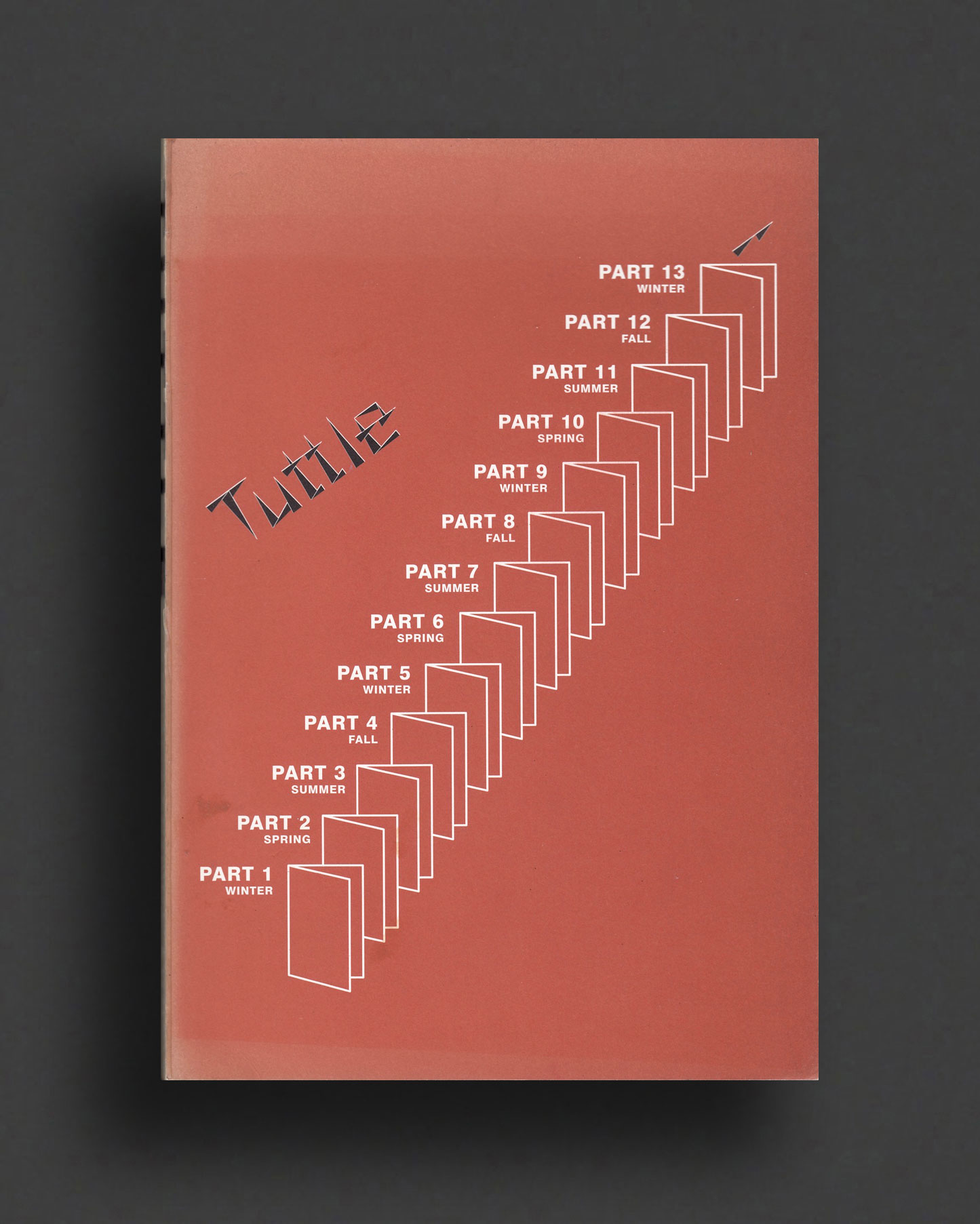
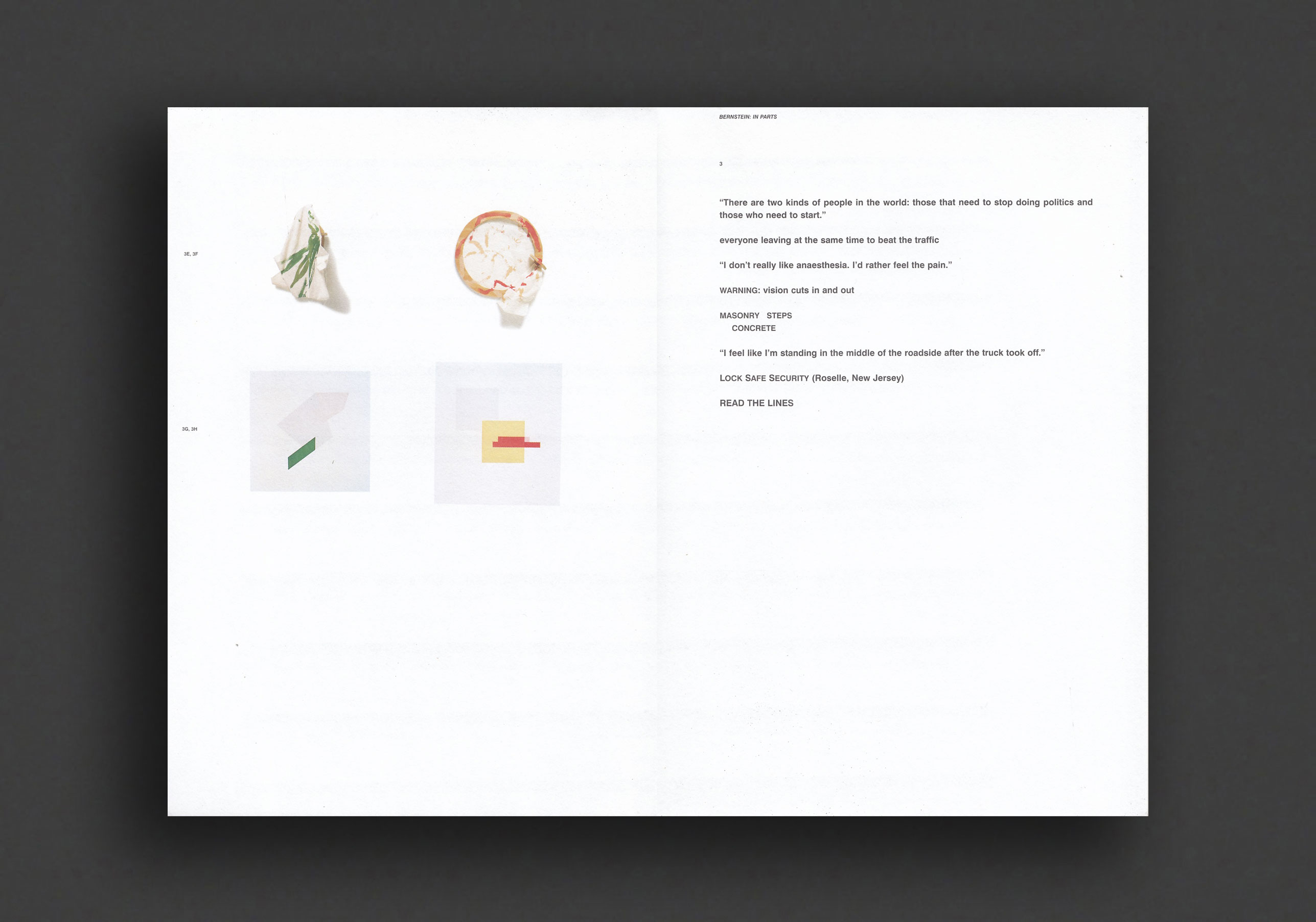
Scarce copy of the elaborate "In Parts: 1998-2001", wherein Richard Tuttle draws on 13 discrete bodies of work dating from 1998 to the early 2000s. This fully illustrated catalogue (with fold-out poster pages that capture details of Tuttle's work close-up with surrounding interiors and objects), expertly designed in collaboration with the Purtill Family Business, also includes an essay by Ingrid Schaffner, Senior Adjunct Curator at the Institute of Contemporary Art, and text by the poet Charles Bernstein, a frequent collaborator with Tuttle.
Very Good, light foxing to top edge, light tanning to boards.
1995, English / Japanese
Softcover (w. Frenchfolds), 156 pages, 23 x 16 cm
1st Edition, Out of print title / used / fine
Published by
Sezon Museum of Art / Tokyo
$160.00 - In stock -
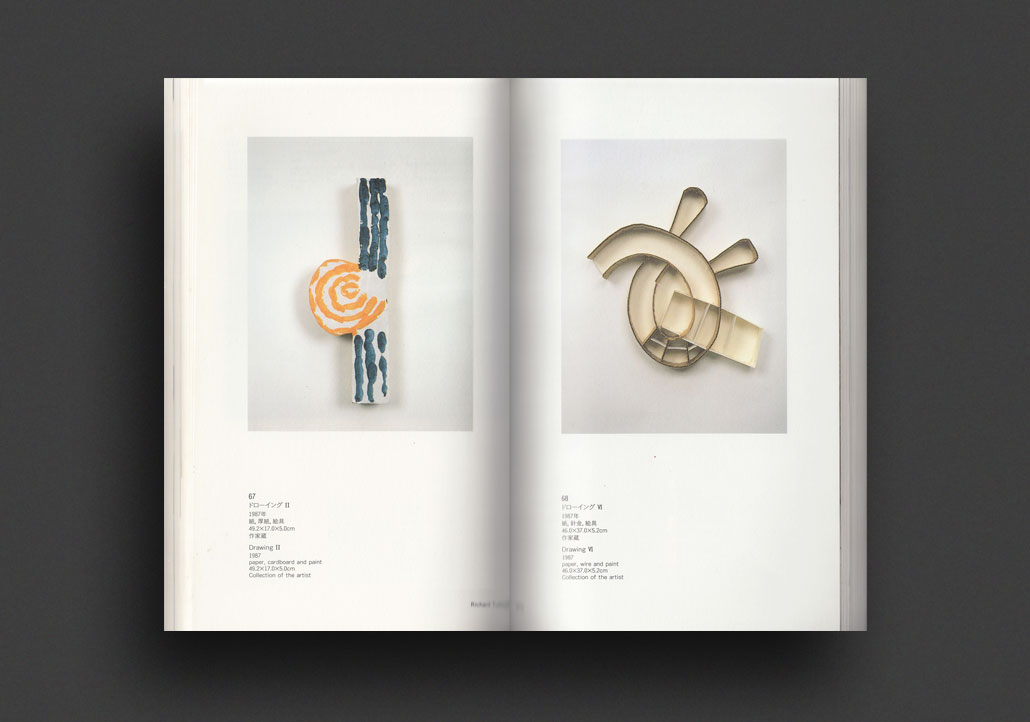
First edition of this fantastic, and very scarce Richard Tuttle catalogue. Published on the occasion of the solo exhibition of Richard Tuttle, September 7—October 10, 1995 at Sezon Museum of Art, Tokyo, this densely-packed and profusely illustrated book, surveys Tuttles career to date, reproducing many great sculptural works with fabric, on paper, reliefs and paintings, made by Tuttle between 1964 and 1994. Features an essay by Richard Tuttle alongside texts by Gerhard Mack and Shigemi Oka, the exhibition curator. All texts in both Japanese and English.
A great and rare Japanese book on the work of American artist, Richard Tuttle.
Fine copy with light age.
2006, English
Hardcover, 288 pages, 21 x 26 cm
1st Edition, Out of print title / used / fine
Published by
Yale University Press / New Haven
The Drawing Center / New York
$150.00 - Out of stock
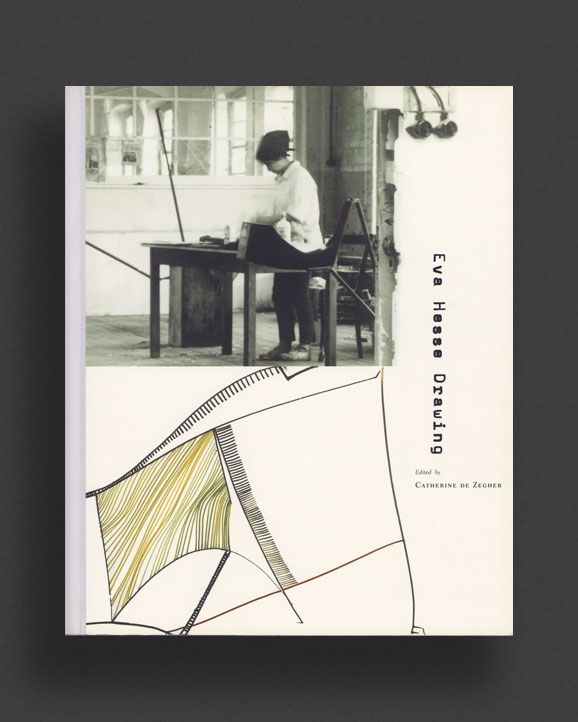
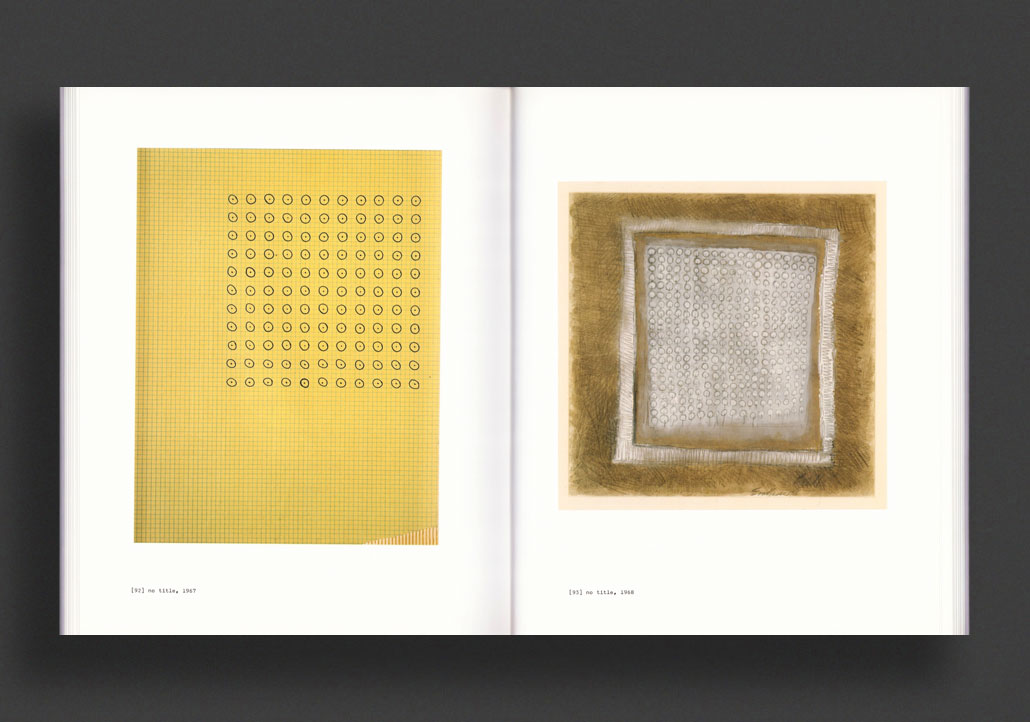
First hardcover edition of this out-of-print volume on Eva Hesse's drawing practice. Hesse (1936—1970) was a highly experimental artist who continually challenged the conventions of her time. For Hesse, drawing played a unique role, providing the nexus between her works in all media. Eva Hesse Drawing is the first book to explore her drawing process, following her work from drawing to painting and sculpture, and always back to drawing. The book features important, recently rediscovered “working drawings,” providing an intimate look at Hesse’s everyday practice and methodology.
An accomplished draftswoman, Hesse began to develop her wandering, tentative line while studying at Yale University in the late 1950s. Her early 1960s works on paper engaged with visual vocabularies from geometry to biomorphic abstraction. In 1965, Hesse combined her tactile sensibility for materials with her stringlike line to achieve a breakthrough: her astonishing reliefs, which began to bridge the space between two and three dimensions. Balancing the disembodiment of line with its intensified materialization, Hesse went on to develop one of the most innovative oeuvres of the twentieth century, anticipating the hybridization of media and crossing borderlines linking one impossible space to another.
Very Good—Near Fine copy.
2022, English
Softcover, 344 pages, 26.8 x 35.5 cm
Published by
Skira / Milan
$110.00 $70.00 - In stock -
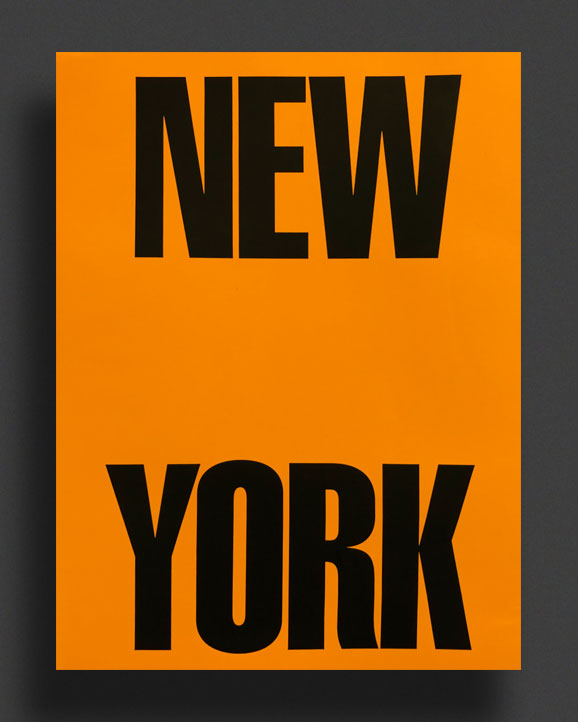
Charting the three momentous years in which New York became the global capital of art.
The radical cultural transformations that occurred in New York in the three years between January 1962 and December 1964 ramified across the world. In addition to a whole host of creative innovations across disciplines, the period also saw a shift in the center of artistic gravity from Europe to the United States and the rise of a new leadership in the arts—curators, gallerists and other impresarios.
Modeled on the scale and format of Life magazine (one of the most widely read publications of the era), this lavishly illustrated oversized paperback traces a detailed itinerary of artists and curators, experimental exhibitions and museums, as well as historical and political events that transformed society during this explosive moment. From the New Realists exhibition at Sidney Janis Gallery in 1962 to Robert Rauschenberg's unexpected win of the International Grand Prize in Painting at the 1964 Venice Biennale, every groundbreaking event from this incredible three-year period is documented.
Organized chronologically, the book is teeming with images of artworks and archival photographs, and artist interviews conducted by the late great curator Germano Celant.
Artists include: Diane Arbus, Lee Bontecou, Chryssa, Merce Cunningham, Jim Dine, Melvin Edwards, Dan Flavin, Lee Friedlander, Nancy Grossman, Jasper Johns, Donald Judd, Ellsworth Kelly, Yayoi Kusama, Norman Lewis, Roy Lichtenstein, Marisol, Agnes Martin, Louise Nevelson, Isamu Noguchi, Claes Oldenburg, Yvonne Rainer, Robert Rauschenberg, Faith Ringgold, Larry Rivers, James Rosenquist, Miriam Schapiro, Carolee Schneemann, George Segal, Jack Smith, Harold Stevenson, Marjorie Strider, Mark di Suvero, Bob Thompson and Andy Warhol.
Conceived by Germano Celant. Edited with text by Sam Sackeroff, Lerman-Neubauer Associate Curator at the Jewish Museum. Preface by Claudia Gould, Helen Goldsmith Menschel Director at the Jewish Museum. Introduction by Michael Rock. Interviews by Germano Celant with Christo and Jim Dine. Text by Claudia Gould, Michael Rock, Sam Sackeroff, Emily Bauman, Ninotchka D. Bennahum, Jennifer G. Buonocore-Nedrelow, Olivia Casa, Laura Conconi, J. English Cook, Maria Corti, Michaëla de Lacaze Mohrmann, Joshua B. Guild, Liz Hirsch, Hiroko Ikegami, Susan Murray, Kristina Parsons, Benjamin Serby, Jennifer Sichel, Robert Slifkin.
2011, English
Hardcover, 228 pages, 23.3 x 27 cm
1st Edition, Out of print title / used / very good
Published by
MoMA / New York
$100.00 $80.00 - In stock -
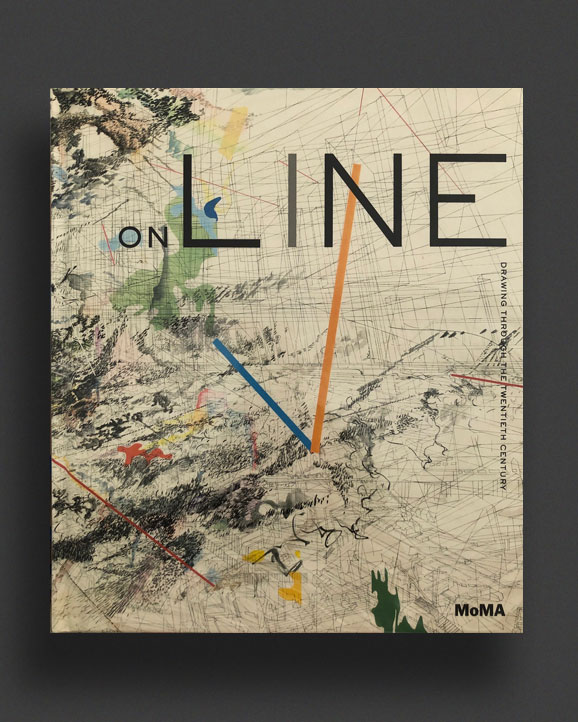
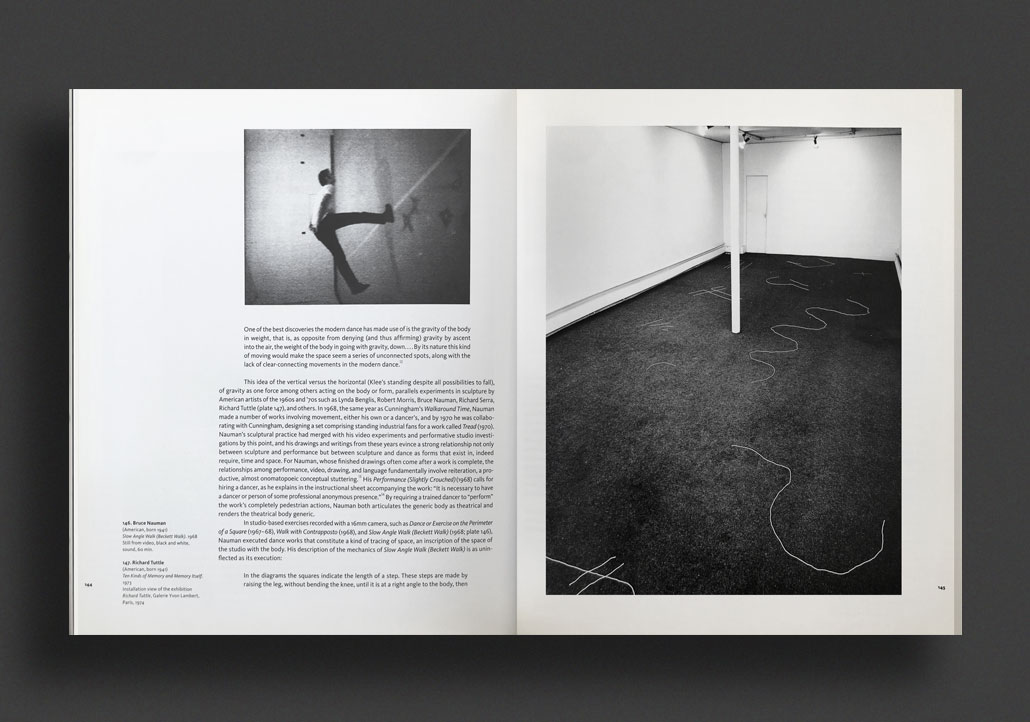
First edition of long out-of-print important catalogue published to accompany the exhibition On Line: Drawing Through the Twentieth Century, The Museum of Modern Art, New York, 21 Nov. 2010—7 Feb. 2011. On Line: Drawing through the Twentieth Century explores a radical transformation of drawing that began over a century ago and continues as a vital impulse in art today. In a revolutionary departure from traditional ideas of drawing, and from the reliance on paper as the medium's fundamental support, artists have pushed the line of drawing into real space, expanding its relationship to gesture and form and invigorating its links with painting and sculpture, photography and film, and, particularly notably, dance and performance. Through works by over 100 artists, and through essays by Cornelia Butler and Catherine de Zegher that illuminate both broad themes and individual practices, On Line presents a groundbreaking history of an art form. The great, recognized art movements, from Cubism and Futurism at the beginning of the twentieth century through Abstract Expressionism, Neo-Concretism, arte povera, Conceptualism, and many other approaches up to the diverse present, are shown from a new perspective, and are joined by a host of less familiar artworks that properly claim a place in this differently defined field. The exhibition and catalogue includes works by a wide range of artists, both familiar and relatively unknown, from different eras of the past century and from many nations, including Aleksandr Rodchenko, Alexander Calder, Karel Malich, Eva Hesse, Anna Maria Maiolino, Richard Tuttle, Mona Hatoum, and Monika Grzymala.
Very Good / As New copy.
2009, English
Hardcover, 550 pages, 22 x 28 cm
1st Edition, Out of print title / used / very good
Published by
The MIT Press / Massachusetts
$380.00 - Out of stock
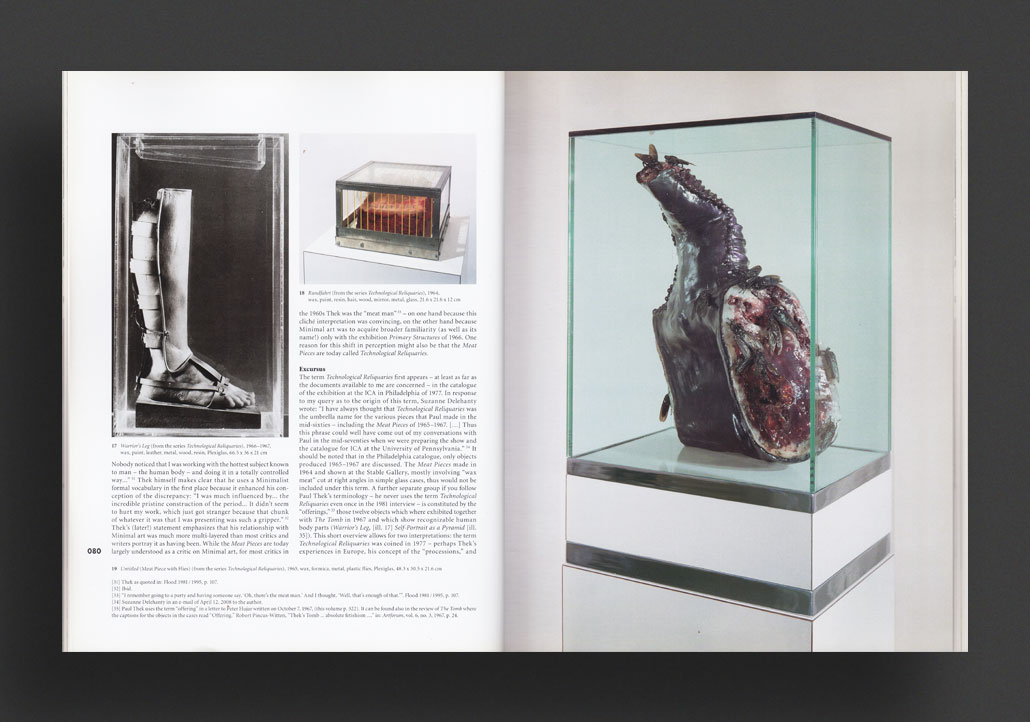
First edition of the scarce, highly sought after, and most comprehensive book ever published on American artist Paul Thek, published in 2009 by MIT Press. Edited by Harald Falckenberg and Peter Weibel, this enormous 550 page monograph contains more than 300 works by this groundbreaking artist, documenting his journey from legendary outsider to central figure in many contemporary art movements.
Paul Thek occupied a place between high art and low art, between the epic and the everyday. During his brief life (1933-1988), he went against the grain of art world trends, humanizing the institutional spaces of art with the force of his humor, spirituality, and character. Twenty years after Thek's death from AIDS, we can now recognize his influence on contemporary artists ranging from Vito Acconci and Bruce Nauman to Matthew Barney, Mike Kelley, and Paul McCarthy, as well as Kai Althoff, Jonathan Meese, and Thomas Hirschhorn. This book brings together more than 300 of Thek's works—many of which are published here for the first time—to offer the most comprehensive display of his work yet seen. The book, which accompanies an exhibition at ZKM ? Museum of Contemporary Art presenting Thek's work in dialogue with contemporary art by young artists, includes painting, sculpture, drawing, and installation work, as well as photographs documenting the room-size environments into which Thek incorporated elements from art, literature, theater, and religion. These works chart Thek's journey from legendary outsider to foundational figure in contemporary art. In their antiheroic diversity, Thek's works embody the art revolution of the 1960s; indeed, Susan Sontag dedicated her classic Against Interpretation to him. Thek's treatment of the body in such works as “Technological Reliquaries,” with their castings and replicas of human body parts, tissue, and bones, both evoke the aura of Christian relics and anticipate the work of Damien Hirst. The book, with more than 500 images (300 in colour) and nineteen essays by art historians, curators, collectors, and artists, investigates Thek's work on its own terms, and as a starting point for understanding the work of the many younger artists Thek has influenced.
Essays by Jean-Christophe Ammann, Margrit Brehm, Bazon Brock, Suzanne Delehanty, Harald Falckenberg, Marietta Franke, Stefan Germer, Kim Gordon, Roland Groenenboom, Axel Heil, Gregor Jansen, Mike Kelley, John Miller, Susanne Neubauer, Kenny Schachter, Harald Szeemann, Annette Tietenberg, Peter Weibel, Ann Wilson.
Very Good copy.
1993, English
Softcover, 256 pages, 24 x 16.5 cm
1st Edition, Out of print title / used / very good
Published by
Whitney Museum / New York
Harry N. Abrams / New York
$300.00 - In stock -
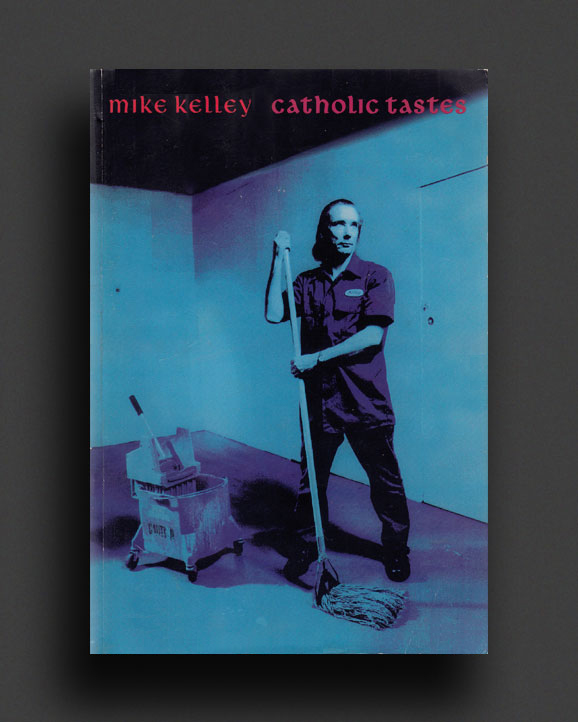
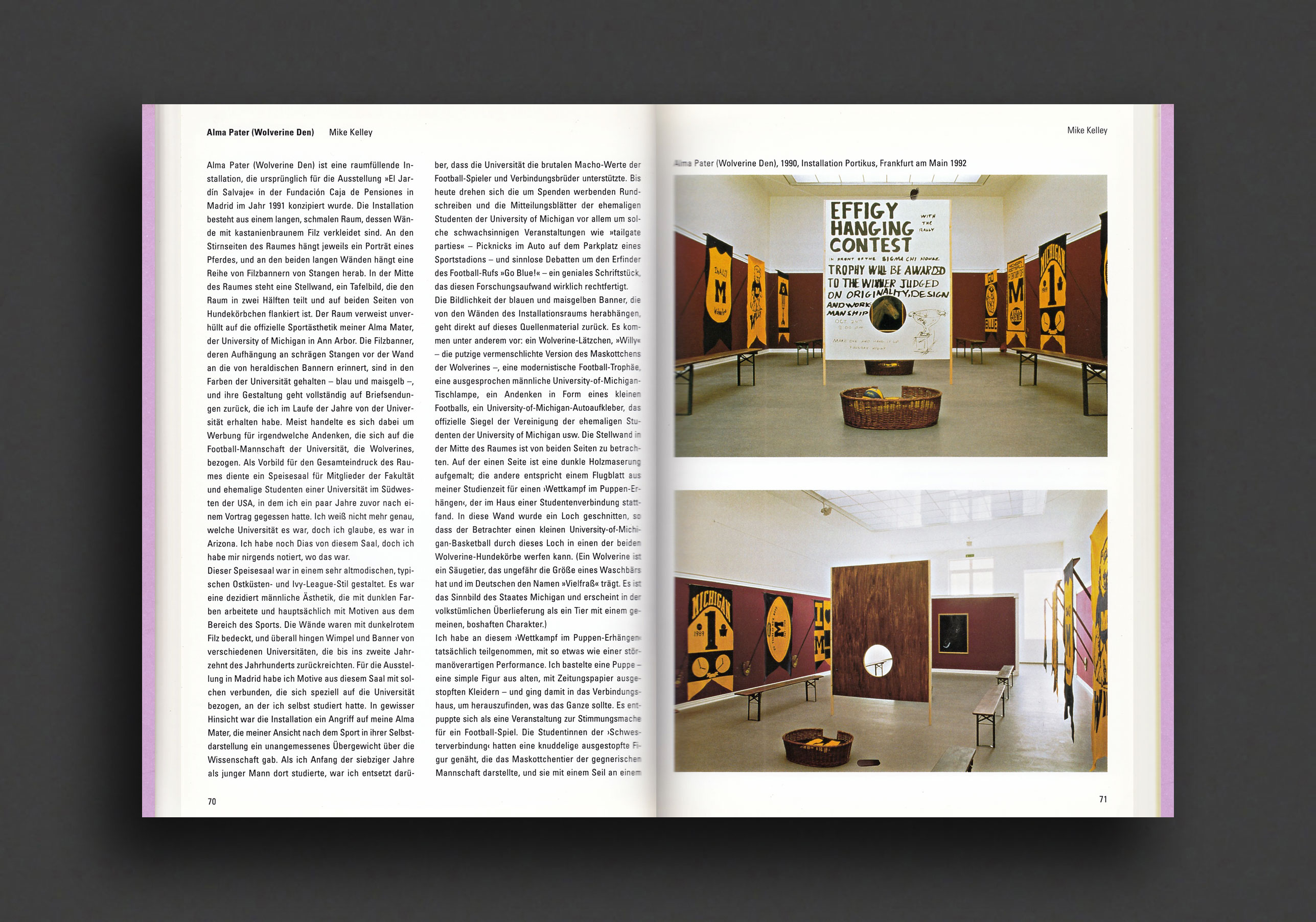
Still, and will probably always be, the best book on Mike Kelley. First edition, now very collectible. This definitive survey was published in 1993 in conjunction with "Mike Kelley", a travelling exhibition held at Whitney Museum of American Art, New York; Los Angeles County Museum of Art, LA; and Moderna Museet, Stockholm, throughout 1994. Mike Kelley, one of the leading Californian artists of the 1990s, was a proponent of abject or pathetic art, an anti-aesthetic, anti-heroic movement, which criticized social and artistic issues through banality and humour. Exploring the work of this great and controversial performance artist and sculptor at the mid-way point in his career, this dense book presents thirteen essays, plus an introduction, discussing Kelley's projects, performances, and the ideas and diverse influences that motivate his work - contemporary art, rock and roll, social commentary and pop culture. Profusely illustrated throughout in colour and black and white, with texts by Elizabeth Sussman, David Marsh, Richard Armstrong, Timothy Martin, Howard Singerman, Colin Gardner, Dennis Cooper & Casey McKinney, John Miller, Ralph Rugoff, Kim Gordon, Howard N. Fox, Diedrich Diederichsen, Jutta Koether, Martin Prinzhorn, Paul Schimmel, John G. Hanhardt. No less! Includes a bibliography and exhibition history. Catalogue designed by Lorraine Wild and ReVerb.
Highly recommended.
Good—Very Good copy, with some general light wear to covers/spine.
2000, English / German
Hardcover, 136 pages, 24.5 x 17 cm
1st Edition, Out of print title / used / very good
Published by
Sammlung Goetz / Münich
$65.00 - Out of stock
First edition hardcover catalogue published on the occasion of the Mike Kelley - Peter Fischli, David Weiss at Sammlung Goetz, June 13 to November 4, 2000. This volume considers the work of Mike Kelley alongside the collaborations of Peter Fischli and David Weiss. Kelley's works are firmly anchored in an ironic, detached attitude towards his Irish Catholic upbringing; he makes use of the pictorial language of specific subcultures and the aesthetics of ‘low culture,’ to probe such concerns as the representation of childhood and the social construction of sexual behavior and cultural identification. Peter Fischli and David Weiss have been making art together since 1979, addressing various theoretical and philosophical explanations of the world with their subtle and humorous manipulations of common objects. The work of the American Kelley and the Swiss Fischli and Weiss resonate with each other in curious ways, most significantly in their exploration of everyday consciousness and ‘low' materials. This publication documents the work of Peter Fischli and David Weiss in the Goetz Collection during a recent exhibition, along with interviews, essays and two texts by Kelley himself. Profusely illustrated throughout with essay contributions by Bice Curiger, Patrick Frey, Boris Groys, and Daniel Kothenschulte in bi-lingual English and German.
Very Good copy.
1985, English
Hardcover (w. dust jacket), 300 pages, 27.5 x 21 cm
1st Edition, Out of print title / used / very good
Published by
Quartet Books / London
$150.00 - Out of stock
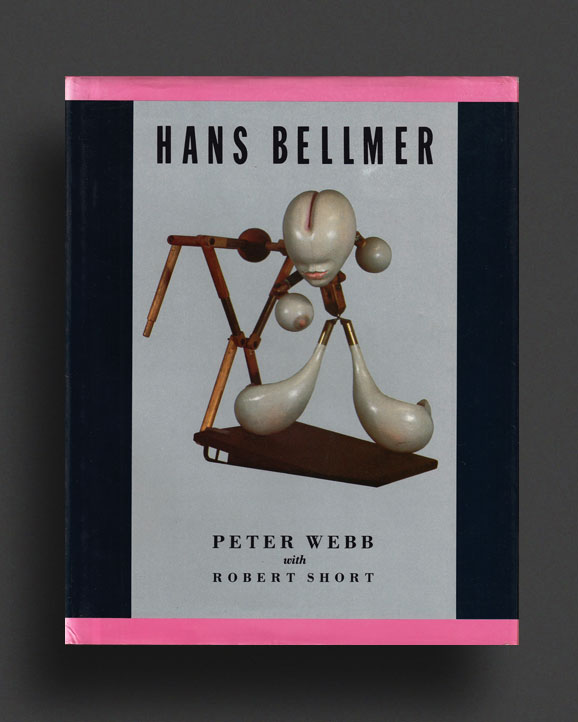
First 1985 hardcover edition of the first fundamental and comprehensive study of Hans Bellmer (1902—1975), the most provocative representative of Surrealism, authored by Peter Webb with Robert Short and published by Quartet in London. English edition. Heavily illustrated throughout with many rare images, in colour and b/w, many photographs and artworks, with bibliography, catalogue and references.
"Surrealism was one of the most exciting and influential of twentieth century art movements and much has been written about it since its great flowering in the 1930s. The lives and work of its leading figures (Ernst, Magritte, Dali and Miró) have been extensively researched, but Hans Bellmer, perhaps the most controversial and misunderstood of all the surrealists, has until now remained a mystery. Peter Webb, who interviewed Bellmer shortly before his death, has spent two years unravelling the story of this photographer, sculptor, painter, engraver and writer, and his book provides the first opportunity to evaluate Bellmer's considerable artistic achievement."—book jacket blurb
Very Good copy in VG dust jacket.
1985, German
Hardcover, 184 pages, 27.5 x 21.5 cm
1st Edition, Out of print title / used / good
Published by
Kölnischer Kunstverein / Köln
$40.00 - In stock -
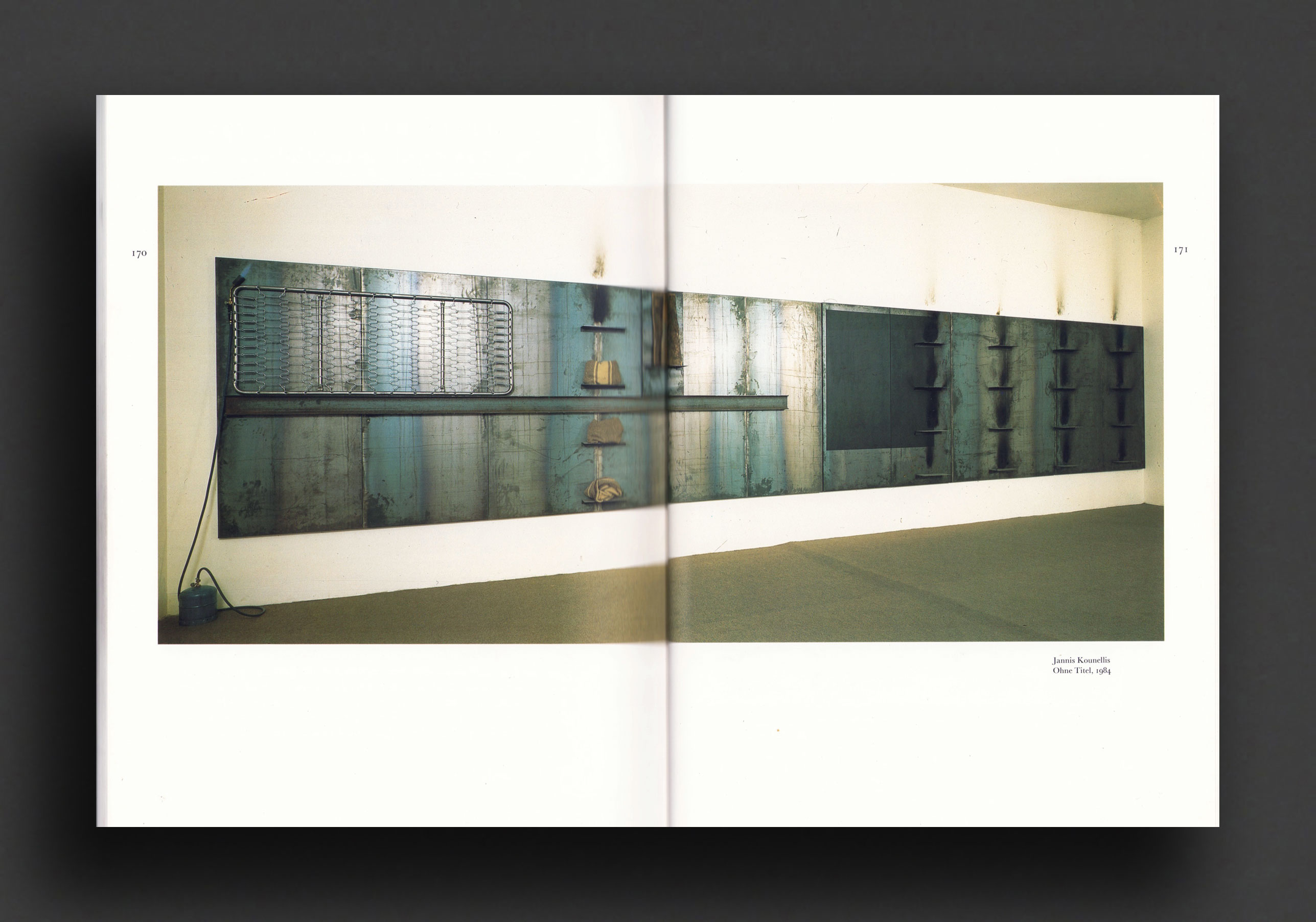
Lovely 1985 hardcover catalogue published on the occasion of the exhibition of the same name at the Kölnischer Kunstverein, March 23—June 2, 1985, curated by German art historian and curator Wulf Herzogenrath, featuring Josef Albers, Joseph Beuys, John Cage, Carl Gustav Carus, Marcel Duchamp, Jannis Kounellis, René Magritte, Kasimir Malevich, La Monte Young / Marian Zazeela, Barnett Newman, Nam June Paik, Arnulf Rainer, Odilon Redon, Mark Rothko, Reiner Ruthenbeck, and Georges Seurat. Heavily illustrated in colour and b/w with accompanying texts in German.
Good copy with some rubbing/flaking to silkscreened carbon black hardcovers, otherwise Very Good throughout. Previous owner's name to title page (that of Melbourne artist Bernhard Sachs).
1985, German
Hardcover, unpaginated, 28 x 25 cm
1st Edition, Out of print title / used / good
Published by
Kunst und Gesellschaft / Berlin
$45.00 - In stock -
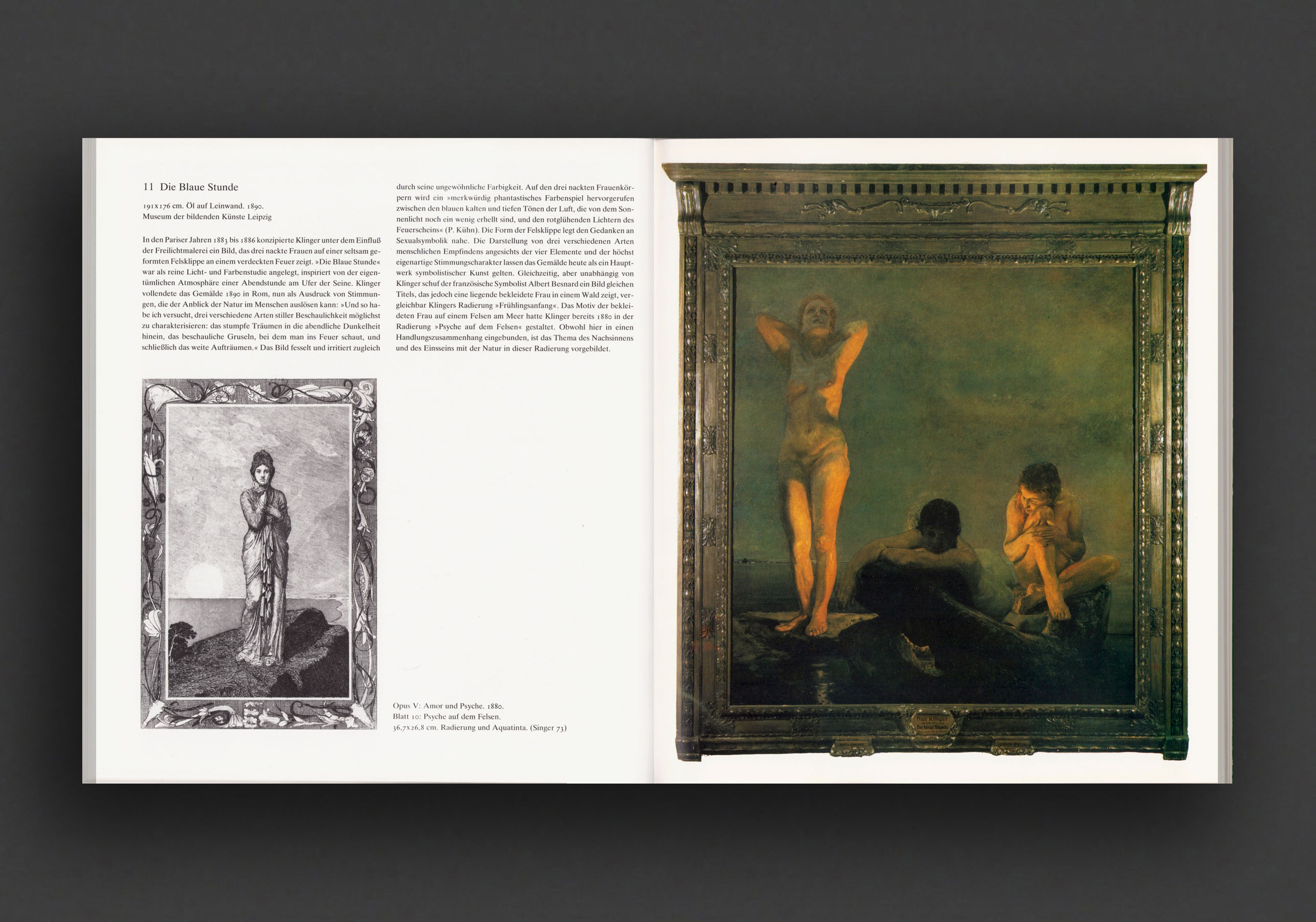
Hardcover monograph on German artist Max Klinger (1857—1920) published by Kunst und Gesellschaft, Berlin in 1985. Profusely illustrated throughout with Klinger's incredible engravings, paintings and sculptures, reproduced in colour and b/w, accompanied by text in German by Renate Hartleb.
Max Klinger was a German artist known for his Symbolist paintings, prints, and sculptures. Influenced by the work of Francisco Goya, Arnold Böcklin, and the Italian Renaissance, Klinger’s art often focused on romantic yearning, eerie figures, and a sense of mystery, while his earliest work leaned towards the socio-critical. His series titled Paraphrase on the Finding of a Glove (1881) earned him recognition for his skill in illustrating elaborate narratives of modern life. It was after the publication of the more dark, mystic work A Life (1884)—depicting a young woman abandoned, forced into prostitution, and rejected by bourgeois society—that he dedicated himself to more experimental, imaginative subjects, exploring dreamlike space. Born on February 18, 1857 in Leipzig, Germany, Klinger began his training at the Karlsuhe Art School under social Realist painter Karl Gussow, whom he followed to Berlin. In Berlin, Klinger studied at the Royal Academy of Fine Arts and became acquainted with Japanese woodblock prints at the Kupferstichkabinett. The artist later moved to Paris, where in 1891 he self-published Painting and Drawing, marking the merit of the graphic arts as a medium suited to original expression and experimentation. Klinger’s work had a profound influence on the Metaphysical painter Giorgio de Chirico, the Surrealists, and a generation of German graphic artists. Seven years after his death on July 5, 1920 in Naumburg, Germany, a high school in his hometown of Leipzig was named the Max Klinger Schule. The artist’s works are in the collections of the Art Institute of Chicago, the Musée d’Orsay in Paris, and the National Gallery of Art in Washington, D.C., among many others.
Good—VG copy with only notable damage some chipping to top of spine, otherwise VG only light age.
1970, German
Softcover (printed cloth), 154 pages, 23 x 23.5 cm
1st Edition, Out of print title / used / fine
Published by
Württembergischer Kunstverein / Stuttgart
$65.00 - In stock -
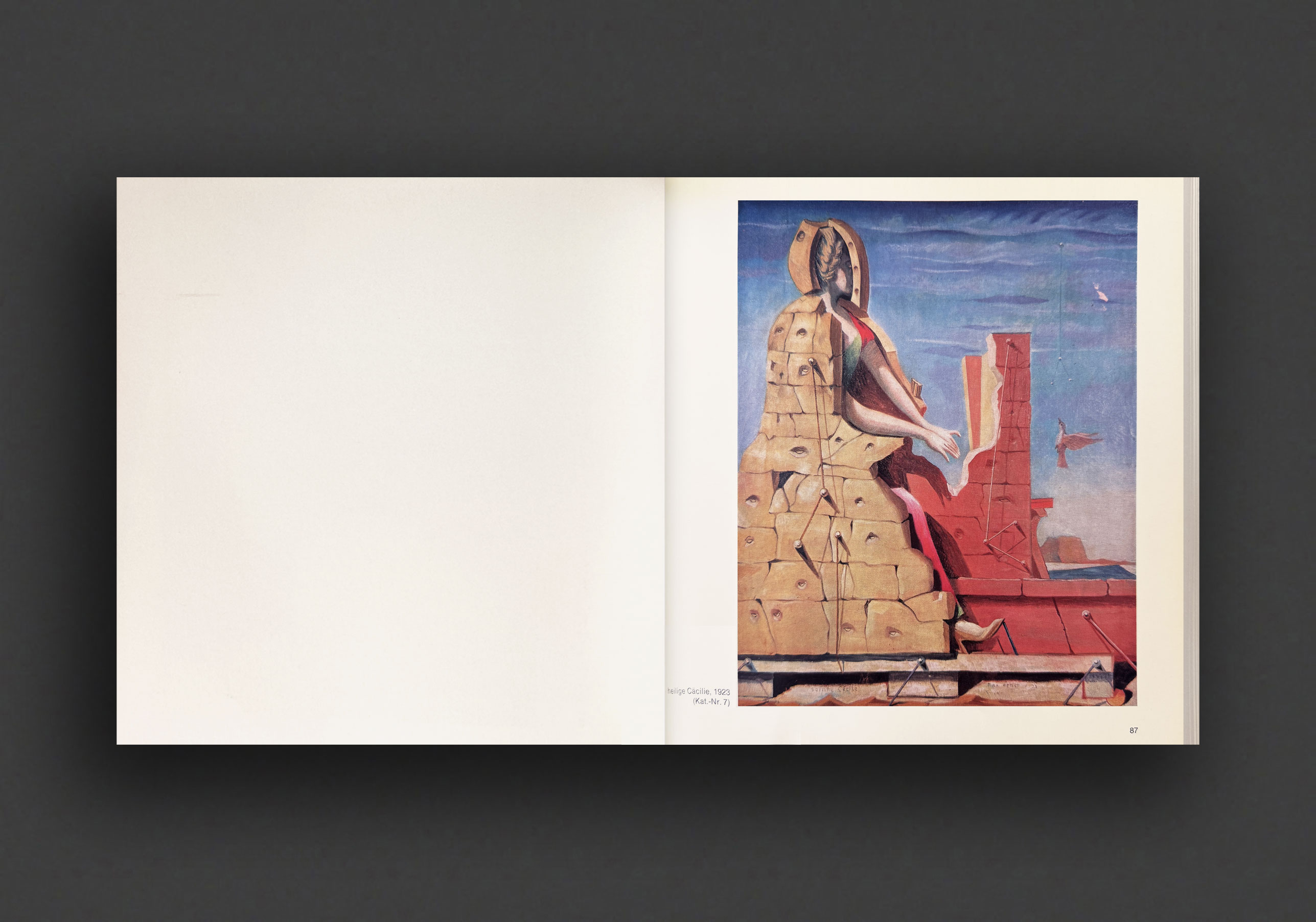
First printing of this wonderful cloth-covered, 1970 monographic catalogue on the work of German artist Max Ernst, published to accompany his solo exhibition at Württembergischer Kunstverein, in Stuttgart in 1970.
Max Ernst "Gemälde, Plastiken, Collagen, Frottagen, Bücher" ("Paintings, Sculptures, Collages, Frottage, Books") is a handsomely designed and profusely illustrated book covering much of his astounding career of work in full-colour and black and white plates. Includes a chronology (1909-1968), bibliography, list of works, and texts by Werner Spies, Lothar Pretzell, Helmut R. Leppien, Uwe M. Schneede, and a series of texts by Max Ernst himself, covering topics of Dada, Nature, Collage, Surrealism, etc. All texts in German.
Max Ernst (1891–1976) was a German painter, sculptor, graphic artist, and poet. A prolific artist, Ernst was a primary pioneer of the Dada movement and Surrealism, and among the most original artists of the 20th century.
Very Good—Near Fine, well preserved and clean copy.
2004, English
Hardcover (clothbound w. illustrated obi strip), 160 pages, 22 x 30 cm
1st Edition, Out of print title / used / very good
Published by
Petit Gras / Japan
$220.00 - Out of stock
First edition of the long out-of-print 2004 hardcover monograph on the work of New York fashion designer/artist Susan Cianciolo. This extensive, profusely illustrated book features a photographic archive of Cianciolo's RUN collections, workshops, performances, exhibitions, collaborations and workshops from the mid 1990s into the early 2000s. An artist who expresses the DIY spirit in all mediums, this wonderful document is a must for any fan. Edited by Taka Kawauchi, includes texts by Aaron Rose.
For the past twenty years, Susan Cianciolo has moved between fields and formats including fashion, performance, installation and filmmaking. After working as an assistant for X-Girl led by Kim Gordon, she produced her critically acclaimed and commercially successful RUN collection (1995–2001), a fashion line of hand crafted clothing made from found or recycled garments and textiles. Cianciolo collections are regularly featured in museums and galleries internationally; her designs, artworks, and films have been included in recent solo exhibitions at Yale Union in Portland, Oregon, 356 Mission Road in Los Angeles, California, and Bridget Donahue in New York, as well as in group exhibitions at White Columns, Lisa Cooley, and MoMA PS1, among others. Cianciolo identifies as "a designer who also makes art, and a conceptual artist who occasionally designs clothes".
Very Good copy with original illustrated obi-strip, some light marking and wear to cloth and edges.
1983, Japanese
Hardcover (clothbound w. dustjacket), 152 pages, 20.5 x 30 cm
1st Edition, Out of print title / used / very good
Published by
Orion Press / Tokyo
$150.00 - In stock -
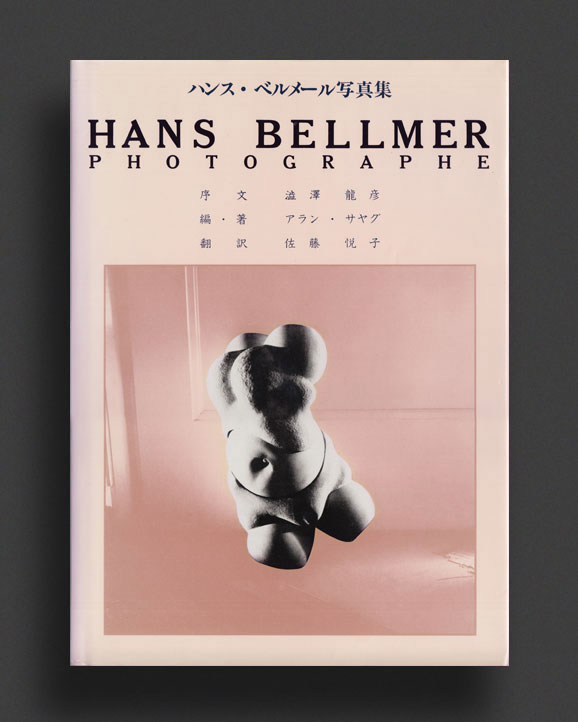
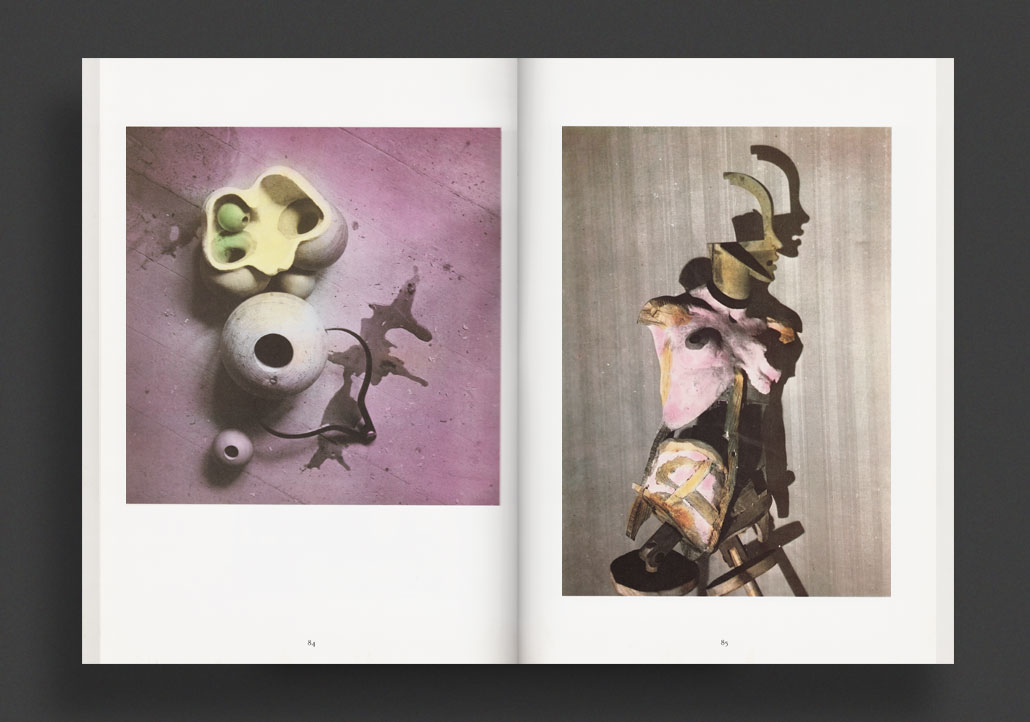
Exquisitely designed and produced book dedicated entirely to the photography of the German artist Hans Bellmer (1902—1975). Produced in French by Editions Filipacchi, Centre Georges Pompidou, and Musee National D'art Moderne in Paris in 1983, this scarce Japanese hardcover printing (produced and printed in Japan that same year) features a different cover, with translations to the Japanese language of the introductory essay and texts. A beautiful photo book densely illustrated with colour and black and white reproductions of Bellmer's infamous doll photography, his many studies of the female nude (including those of his wife, artist Unica Zürn), and rare photography of his objects and sculptural assemblages, his studio, and more, this volume captures an important Surrealist visionary and one of the most daring artists of the 20th century through his stunning photography. Features the wonderful "La Poupee" — Hans Bellmer's articulated, anatomically amorphous Surrealist doll, reconfigured and captured through Bellmer's intimate hand-painted photographic images. "La Poupee" acquired iconic status as perhaps the purest exemplification of the Surrealist ideal of "convulsive beauty." Bellmer constructed his first doll in the early 1930s. André Breton and Paul Eluard described it as "the first and only Surrealist object with a universal, provocative power".
German artist Hans Bellmer (1902—1975) was one of the most subversive artists associated with Surrealism, famous—notorious, even—for his erotic engravings, objects and photographs. Many of Bellmer's works were inspired by the literary works of Comte de Lautréamont, Marquis de Sade and Georges Bataille, amongst others.
Very Good copy in VG dust jacket with light wear/light foxing.
1962, German
Softcover, 190 pages, 21 x 16.8 cm
1st Edition, Out of print title / used / very good
Published by
Gerhardt Verlag / Berlin
$300.00 - Out of stock
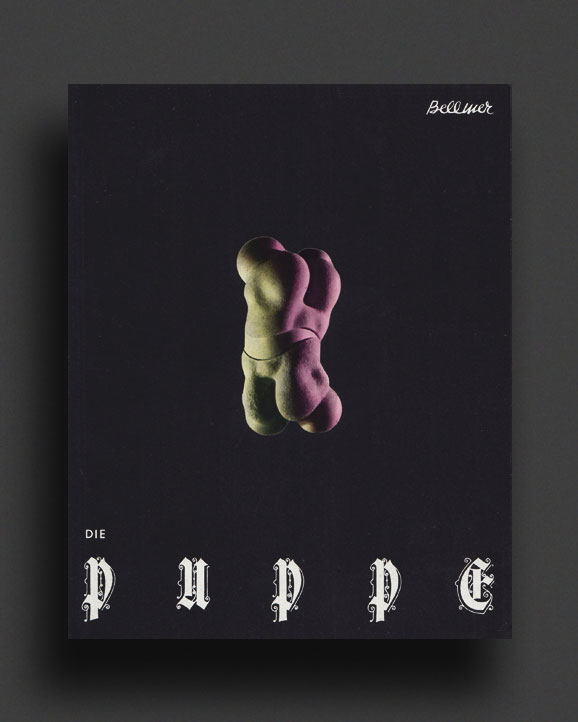
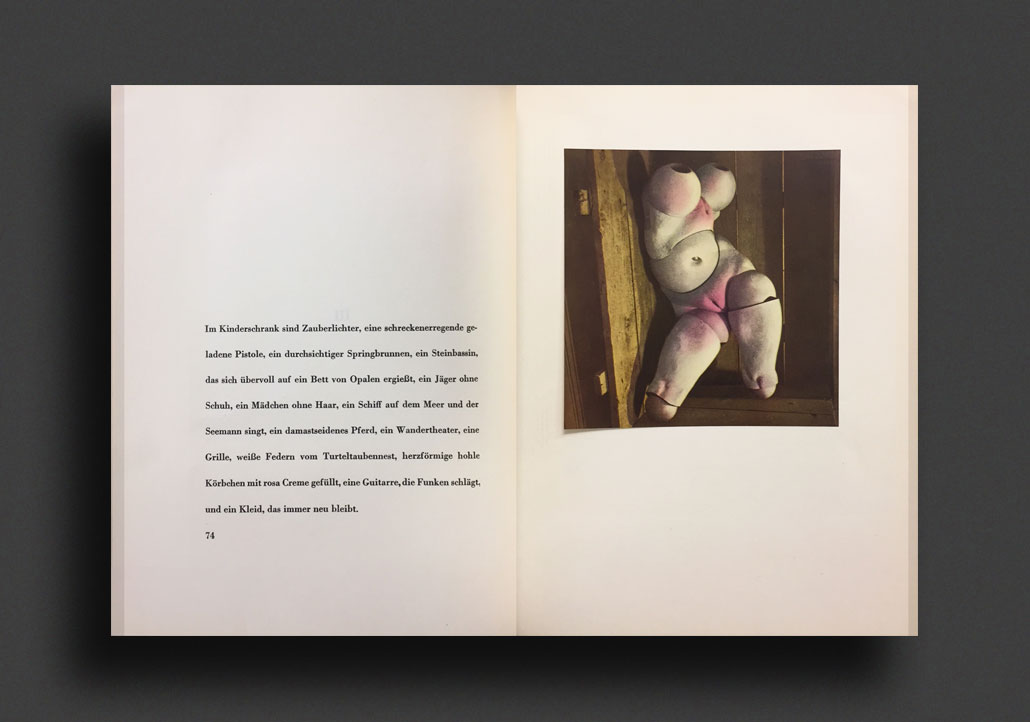
Rare 1962 edition of Bellmer's "Die Puppe", published by Gerhardt Verlag in Berlin. German artist Hans Bellmer (1902-1975) was one of the most subversive artists associated with Surrealism, famous—notorious, even--for his erotic engravings, objects and photographs. This collectable first edition of Die Puppe (The Doll) comprises a series of Bellmer's hand-painted photographs in the form of 10 monochrome and 15 coloured tipped-in plates accompanying his remarkable texts, here published for the first time. Bellmer's hand-coloured photographs subsequently acquired an iconic status as perhaps the purest exemplification of the Surrealist ideal of "convulsive beauty." Bellmer weaves a remarkably disparate set of concepts and intuitions—from fields as diverse as mathematics, morphology, optics and psychology—into a theory of eroticism that provides a totally unexpected rationale for his uncompromising art. His ideas are, in the words of poet Joë Bousquet, a "scandal to reason." The book also contains many b/w drawings by Bellmer along with prose poems by Paul Eluard. A book like no other!
Very Good—Near Fine preserved copy of this stunning edition with the die-cut decal cover. Light corner bump, light block shelf wear.