World Food Books' programme is largely produced on Kulin Nation land. We acknowledge the Wurundjeri people of the Kulin Nation as the first and continuing custodians of this land, and pay respect to their Elders past, present, and emerging.
World Food Books is an arts and special interests bookshop in Naarm / Melbourne. Founded in 2010, World Food Books is devoted to the presentation of a rotating, hand-selection of international art, design, literary and counterculture publications with an emphasis on the anti-traditional, the experimental, the avant-garde, the heretic, the marginal.
Presenting new titles alongside rare and out-of-print books, catalogues and journals spanning the fields of modern and contemporary art, design, photography, illustration, film, literature, poetry, cultural theory, philosophy, sexuality, popular and underground culture in its many radical forms, World Food Books wishes to encourage adventurous, thoughtful and open-minded reading, looking, writing, and exchange of publishing and ideas, both current and historical.
As well as our bookshop, located in Melbourne's historical Nicholas Building, all of our inventory is available internationally via our online mail-order service.
World Food Books semi-regularly co-ordinates "Occasions", a programme of exhibits and events at the bookshop and in partnership with other hosts (such as museums and art galleries) that develop out of the activities, relationships and content of the bookshop itself.
World Food Books
The Nicholas Building
37 Swanston Street
Room 5, Level 6
Melbourne 3000
Australia
SHOP HOURS:
Thu–Fri 12–6, Sat 12–5
WEB-SHOP OPEN 24/7
World Food Books
Postal Address:
PO Box 435
Flinders Lane
Victoria 8009
Australia
Art
Theory / Essay
Architecture / Interior
Graphic Design / Typography
Photography
Fashion
Eros
LGBTQ+
Fiction / Poetry
Weird / Speculative / Science Fiction / Horror
Transgressive / Visceral / Abject
Symbolism / Decadence / Fin de siècle
Film / Video
Painting
Sculpture / Installation
Performance / Dance / Theater
Drawing
Sound / Music
Curatorial
Group Shows / Collections
Periodicals
Out-of-print / Rare
Posters / Ephemera / Discs
Signed Books
World Food Books Gift Voucher
World Food Book Bag
Australian Art
Australian Fiction
Australian Science Fiction / Speculative Fiction
Australian Poetry
Australian Photography
Japanese Photography
Conceptual Art
Minimal Art
Dada
'Pataphysics / Oulipo
Fluxus
Concrete Poetry
Pop Art
Surrealism
Arte Povera
Arte Informale / Haute Pâte / Tachism
Nouveau Réalisme / Zero / Kinetic
Situationism / Lettrism
Collage / Mail Art / Xerox Art
Art Brut / Folk / Visionary / Fantastic
Illustration / Graphic Art / Bandes Dessinées
Furniture
Italian Radical Design / Postmodernism
Textiles
Ceramics / Glass
Counterculture
Protest / Revolt
Philosophy
Psychoanalysis
Anthropology
Anarchism
Socialism / Anarchism / Communism / Capitalism
Literary Theory / Semiotics / Language
Feminism / Women's Studies
Gender Studies / Sexuality
Anthropology
Fetishism / BDSM
Drugs / Psychedelia
Crime / Violence
Animal Rights / Veganism
Occult / Esoterica
Ecology / Earth / Alternative Living
Whole Earth / Crafts
All prices in AUD (Australian dollars)
Pick-Ups
Pick-up orders can be collected in our bookshop during opening hours after order date. Please collect any Pick-up orders within 2 weeks of ordering as we have limited storage space. Orders will be released back into stock if not collected within this time. No refunds can be made for pick-ups left un-collected. If you cannot make it in to the bookshop in this time-frame, please choose postage option.
Return Policy
All sales are final. We do accept returns (for refund or exchange) for items received in error. All our orders are packed with special care using heavy-duty padding and cardboard book-mailers or bubble mailers (for smaller books), using reinforcement where required. We cannot take responsibility for any lost, stolen or damaged parcels.
Insurance
Should you wish to insure your package, please email us directly after placing your order and we can organise this at a small extra expense. Although all standard/express tracked packages are very safe and dependable, we cannot take responsibility for any lost, stolen or damaged parcels. We recommend insurance on valuable orders.
Interested in selling your old books, catalogues, journals, magazines, comics, fanzines, ephemera? We are always looking for interesting, unusual and out-of-print books to buy. We only buy books in our fields of interest and specialty, and that we feel we can resell.
We base these prices on desirability, market value, in-print prices, condition and our current stock levels. We offer cash, store credit, and can take stock on consignment. All
about 25% of the price we expect to get when we sell them, or 30% in store credit. We base these prices on desirability, market value, in-print prices, condition and our current stock levels.
Sell your books any day of the week. You can drop them off and return later. If you have a lot of books, we can visit your Sydney home.
We buy books that we feel we can resell. We offer about 25 % of the price we expect to get when we sell them, or 30% in store credit. We base these prices on desirability, market value, in-print prices, condition and our current stock levels.
Philadelphia Wireman
03 August - 01 September, 2018
World Food Books is proud to announce our next Occasion, the first presentation of sculptures by Philadelphia Wireman in Australia.
The Philadelphia Wireman sculptures were found abandoned in an alley off Philadelphia’s South Street on trash night in 1982. Their discovery in a rapidly-changing neighbourhood undergoing extensive renovation, compounded with the failure of all attempts to locate the artist, suggests that the works may have been discarded after the maker’s death. Dubbed the "Philadelphia Wireman" during the first exhibition of this work, in 1985, the maker’s name, age, ethnicity, and even gender remain uncertain. The entire collection totals approximately 1200 pieces, all intricately bound together with tightly-wound heavy-gauge wire (along with a few small, abstract marker drawings, reminiscent both of Mark Tobey and J.B. Murry). The dense construction of the work, despite a modest range of scale and materials, is singularly obsessive and disciplined in design: a wire armature or exoskeleton firmly binds a bricolage of found objects including plastic, glass, food packaging, umbrella parts, tape, rubber, batteries, pens, leather, reflectors, nuts and bolts, nails, foil, coins, toys, watches, eyeglasses, tools, and jewellery.
Heavy with associations—anthropomorphic, zoomorphic, and socio-cultural responses to wrapped detritus—the totemic sculptures by Philadelphia Wireman have been discussed in the context of work created to fulfil the shamanistic needs of alternative religions in American culture. Curators, collectors, and critics have variously compared certain pieces to sculpture from Classical antiquity, Native American medicine bundles, African-American memory jugs, and African fetish objects. Reflecting the artist’s prolific and incredibly focused scavenging impulse, and despite—or perhaps enhanced by—their anonymity, these enigmatic objects function as urban artefacts and arbiters of power, though their origin and purpose is unknown. Philadelphia Wireman, whatever their identity, possessed an astonishing ability to isolate and communicate the concepts of power and energy through the selection and transformation of ordinary materials. Over the course of the past two decades, this collection has come to be regarded as an important discovery in the field of self-taught art and vernacular art.
Presented in collaboration with Fleisher-Ollman Gallery, Philadelphia, and Robert Heald, Wellington.
Susan Te Kahurangi King
02 February - 10 March, 2018
Susan Te Kahurangi King (24 February 1951 - ) has been a confident and prolific artist since she was a young child, drawing with readily available materials - pencils, ballpoint pens and felt-tip markers, on whatever paper is at hand. Between the ages of four and six Susan slowly ceased verbal communication. Her grandparents William and Myrtle Murphy had developed a special bond with Susan so they took on caring responsibilities for extended periods. Myrtle began informally archiving her work, carefully collecting and storing the drawings and compiling scrapbooks. No drawing was insignificant; every scrap of paper was kept. The King family are now the custodians of a vast collection containing over 7000 individual works, from tiny scraps of paper through to 5 meter long rolls.
The scrapbooks and diaries reveal Myrtle to be a woman of great patience and compassion, seeking to understand a child who was not always behaving as expected. She encouraged Susan to be observant, to explore her environment and absorb all the sights and sounds. Myrtle would show Susan’s drawings to friends and people in her community that she had dealings with, such as shopkeepers and postal workers, but this was not simply a case of a grandmother’s bias. She recognised that Susan had developed a sophisticated and unique visual language and sincerely believed that her art deserved serious attention.
This was an unorthodox attitude for the time. To provide some context, Jean Dubuffet coined the term Art Brut in 1945 to describe work created by self-taught artists – specifically residents of psychiatric institutions and those he considered to be visionaries or eccentrics. In 1972 Roger Cardinal extended this concept by adopting the term Outsider Art to describe work made by non-academically trained artists operating outside of mainstream art networks through choice or circumstance. Susan was born in Te Aroha, New Zealand in 1951, far from the artistic hubs of Paris and London that Dubuffet and Cardinal operated in. That Myrtle fêted Susan as a self-taught artist who deserved to be taken seriously shows how progressive her attitudes were.
Susan’s parents Doug and Dawn were also progressive. Over the years they had consulted numerous health practitioners about Susan’s condition, as the medical establishment could not provide an explanation as to why she had lapsed into silence. Dawn educated herself in the field of homeopathy and went on to treat all twelve of her children using these principles – basing prescriptions on her observations of their physical, mental and emotional state.
Doug was a linguist with an interest in philosophy who devoted what little spare time he had to studying Maori language and culture. To some extent their willingness to explore the fringes of the mainstream made them outsiders too but it was their commitment to living with integrity and their respect for individuality that ensured Susan’s creativity was always encouraged.
Even though Susan’s family supported her artistic pursuits, some staff in schools and hospitals saw it as an impediment to her assimilation into the community and discouraged it in a variety of ways. Her family was not always aware of this and therefore did not fully understand why Susan stopped drawing in the early 1990s. However, rather than dwell on the challenges that Susan faced in pursuit of her artistic practice, they prefer to highlight her achievements. In 2008 Susan began drawing again in earnest, after an almost 20 year interruption, and her work is now shown in galleries around the world.
Susan grew up without television and has been heavily influenced by the comics she read as a child. She is absolutely fearless in the appropriation of recognizable characters, such as Donald Duck and Mickey Mouse, in her work. She twists their limbs, contorts their faces, compresses them together, blends them into complex patterned backgrounds - always imbuing them with an incredible energy. Although Susan often used pop culture characters in her work they are not naive or childlike. These are drawings by a brilliant self-taught artist who has been creating exceptional work for decades without an audience in mind.
Mladen Stilinović
"Various Works 1986 - 1999"
02 February 16 - September 10, 2016
Various works 1986 - 1999, from two houses, from the collections of John Nixon, Sue Cramer, Kerrie Poliness, Peter Haffenden and Phoebe Haffenden.
Including: Geometry of Cakes (various shelves), 1993; Poor People’s Law (black and white plate), 1993; White Absence (glasses, ruler, set square, silver spoon, silver ladel with skin photograph and wooden cubes), 1990-1996; Exploitation of the Dead (grey and red star painting, wooden painting, black spoon with red table, red plate), 1984-1990; Money and Zeros (zero tie, paintings made for friends in Australia (Sue, John, Kerrie), numbers painting), 1991-1992; Words - Slogans (various t-shirts) - “they talk about the death of art...help! someone is trying to kill me”, “my sweet little lamb”, “work is a disease - Karl Marx”; Various artist books, catalogues, monographs, videos; Poster from exhibition Insulting Anarchy; "Circular" Croatian - Australian edition; Artist book by Vlado Martek (Dostoyevsky); more.
Thanks to Mladen Stilinović and Branka Stipančić.
Jonathan Walker
Always Will Need To Wear Winter Shirt Blue + Ochre Small Check Pattern
21 August - 21 September, 2015
Untitled
I am not a great reader of poetry but I always return to the work of Melbourne poet, Vincent Buckley (1925- 1988). Perhaps I find his most tantalising piece to be not a finished poem but a fragment left on a scrap of paper discovered on his desk after the poet’s death.
The poetry gathers like oil
In the word-core, and spreads
It has its music meet,
Its music is in movement.
This fragment is more the shell left behind from a volatile thought than a finished poem. I find the last two lines honest but awkward whereas the first two lines work like an arrow. Most likely he could not find a resolution so it was left. Still, in its present form, it remains an eloquent testimony to the ultimate failure of a medium to express mobile thought and sensation, in Buckley’s case, through verbal language. It’s an important matter because this is something all artists have to deal with regardless of the medium.
I have never written a poem, however, I am forever copying fragments from books on paper scraps in a vain effort to fix certain notions in my head. At first, they function as bookmarks that are sometimes returned to when I open the book. But before long, as they accumulate, they fall out littering the table interspersed with A4 photocopies, bills, books and medications.
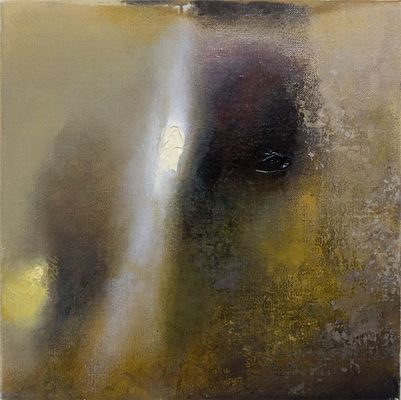
To return to Buckley’s fragment, the first two lines very much evoke how I paint nowadays. As you age, detail diminishes and patches of light become more luminous and float. I feel the most honest way of dealing with this is by smearing the oil paint on the canvas with the fingers and working close-up, blind. Only if the patches coalesce into an approaching image can the work gain a life.
-
Jonathan Walker was born in Melbourne, Australia and brought up on a dairy farm in Gippsland. In the 1970’s he studied painting at RMIT and won the Harold Wright Scholarship to the British Museum, London. During the 1980’s he exhibited at Pinacotheca Gallery, Richmond and had work shown at the NGV and Heidi City Art Gallery. Over the same period he designed the cover for the “Epigenesi” LP by Giancarlo Toniutti, Italy and conducted a mail exchange work with Achim Wollscheid, Germany. The work with artists through the post resulted in an article published in the bicentenary issue of Art and Australia 1988. He showed in artist run spaces such as WestSpace in the 90’s and 2000’s, and until 2012, taught painting at Victoria University, which is where we (Colleen Ahern and Lisa Radford) as organisers of the exhibition, among many others, had the privilege of being his student.
Walker’s knowledge was imparted to students through the careful selection of music, literature, and artists found in books that he himself had ordered for the library. Walker’s strategy was the generosity of sharing his vast knowledge with references specific to each student and their context.
Walker’s paintings share a similar focus and intimacy.
This exhibition presents a small selection of recent paintings alongside a publication that includes Walker’s writing. Observational and analytical, Walker’s work is a type of material notation — the time of day, colour and how it is blended, the both specific and fleeting location of a reflection on lino or the question of whether a chair leg should be included in a painting.
Please join us on Friday August 21 between 6-8pm to celebrate the opening of the exhibition.
Curated by Colleen Ahern and Lisa Radford.
B. Wurtz
Curated by Nic Tammens
March 26 - April 4, 2015
B.Wurtz works from a basement studio in his home on Manhattan’s Lower East Side.
This local fact is attested to by the plastic shopping bags and newsprint circulars that appear in his work. As formal objects, they don’t make loud claims about their origins but nonetheless transmit street addresses and places of business from the bottom of this long thin island. Like plenty of artists, Wurtz is affected by what is local and what is consumed. His work is underpinned by this ethic. It often speaks from a neighborhood or reads like the contents of a hamper:
“BLACK PLUMS $1.29 lb.”
“Food Bazaar”
“USDA Whole Pork Shoulder Picnic 99c lb.”
“RITE AID Pharmacy, with us it’s personal.”
“H. Brickman & Sons.”
“Sweet Yams 59c lb."
Most of the work in this exhibition was made while the artist was in residence at Dieu Donne, a workshop dedicated to paper craft in Midtown. Here Wurtz fabricated assemblages with paper and objects that are relatively lightweight, with the intention that they would be easily transportable to Australia. This consideration isn’t absolute in Wurtz’s work, but was prescriptive for making the current exhibition light and cheap. Packed in two boxes, these works were sent from a USPS post office on the Lower East Side and delivered to North Melbourne by Australia Post.
Wurtz appears courtesy of Metro Pictures, New York.
Thanks to Rob Halverson, Joshua Petherick, Sari de Mallory, Matt Hinkley, Helen Johnson, Fayen d'Evie, Ask Kilmartin, Lisa Radon, Ellena Savage, Yale Union, and "Elizabeth".
John Nixon
"Archive"
December 15 - January 20, 2014
The presentation of John Nixon's archive offered a rare showcase of this extensive collection of the artist's own publications, catalogues, posters, ephemera, editions and more, from the mid 1980s onwards, alongside a selection of his artworks.
Organized by John Nixon, Joshua Petherick and Matt Hinkley.
<a href=http://wfb.public-office.info/artist/john-nixon>All titles by John Nixon
"Habitat"
at Minerva, Sydney (organised by Joshua Petherick and Matt Hinkley)
November 15 - December 20, 2014
Lupo Borgonovo, Janet Burchill & Jennifer McCamley,
Lewis Fidock, HR Giger, Piero Gilardi, Veit Laurent Kurz,
Cinzia Ruggeri, Michael E. Smith, Lucie Stahl, Daniel Weil, Wols
Press Release:
“...It contained seven objects. The slender fluted bone, surely formed for flight, surely from the wing of some large bird. Three archaic circuitboards, faced with mazes of gold. A smooth white sphere of baked clay. An age-blackened fragment of lace. A fingerlength segment of what she assumed was bone from a human wrist, grayish white, inset smoothly with the silicon shaft of a small instrument that must once have ridden flush with the surface of the skin - but the thing’s face was seared and blackened.”
William Gibson, “Count Zero”, 1986
"Autumn Projects Archive"
Curated by Liza Vasiliou
March 6 - March 15, 2014
World Food Books, in conjunction with the Virgin Australia Melbourne Fashion Festival 2014, presented the Autumn Projects archive, consisting of a selection of early examples in Australian fashion with a particular interest in collecting designers and labels from the period beginning in the 1980’s, who significantly influenced the discourse of Australian Fashion.
Curated by Liza Vasiliou, the exhibition provided a unique opportunity to view pieces by designers Anthea Crawford, Barbara Vandenberg, Geoff Liddell and labels CR Australia, Covers, Jag along with early experimental collage pieces by Prue Acton and Sally Browne’s ‘Fragments’ collection, suspended throughout the functioning World Food Books shop in Melbourne.
H.B. Peace
presented by CENTRE FOR STYLE
November 14, 2013
"Hey Blinky, you say chic, I say same"
Anon 2013
H.B. Peace is a clothing collaboration between great friends Blake Barns and Hugh Egan Westland. Their pieces explore the divergences between 'character’ and ‘personality’ in garments....etc
Special Thanks to Joshua Petherick and Matt Hinkley of WFB and Gillian Mears
and a Very Special Thank you to Audrey Thomas Hayes for her shoe collaboration.
Janet Burchill & Jennifer McCamley
"Aesthetic Suicide"
May 10 - June 8, 2013
The first of our occasional exhibitions in the World Food Books office/shop space in Melbourne, "Aesthetic Suicide" presented a body of new and older works together by artists Janet Burchill & Jennifer McCamley, including videos, prints, a wall work, and publications.
During shop open hours videos played every hour, on the hour.
1990, English
Softcover (staple–bound), 56 pages, 30 x 21 cm
1st Edition, Out of print title / used / good
Published by
Electronic Media Arts Ltd. / NSW
$25.00 - In stock -
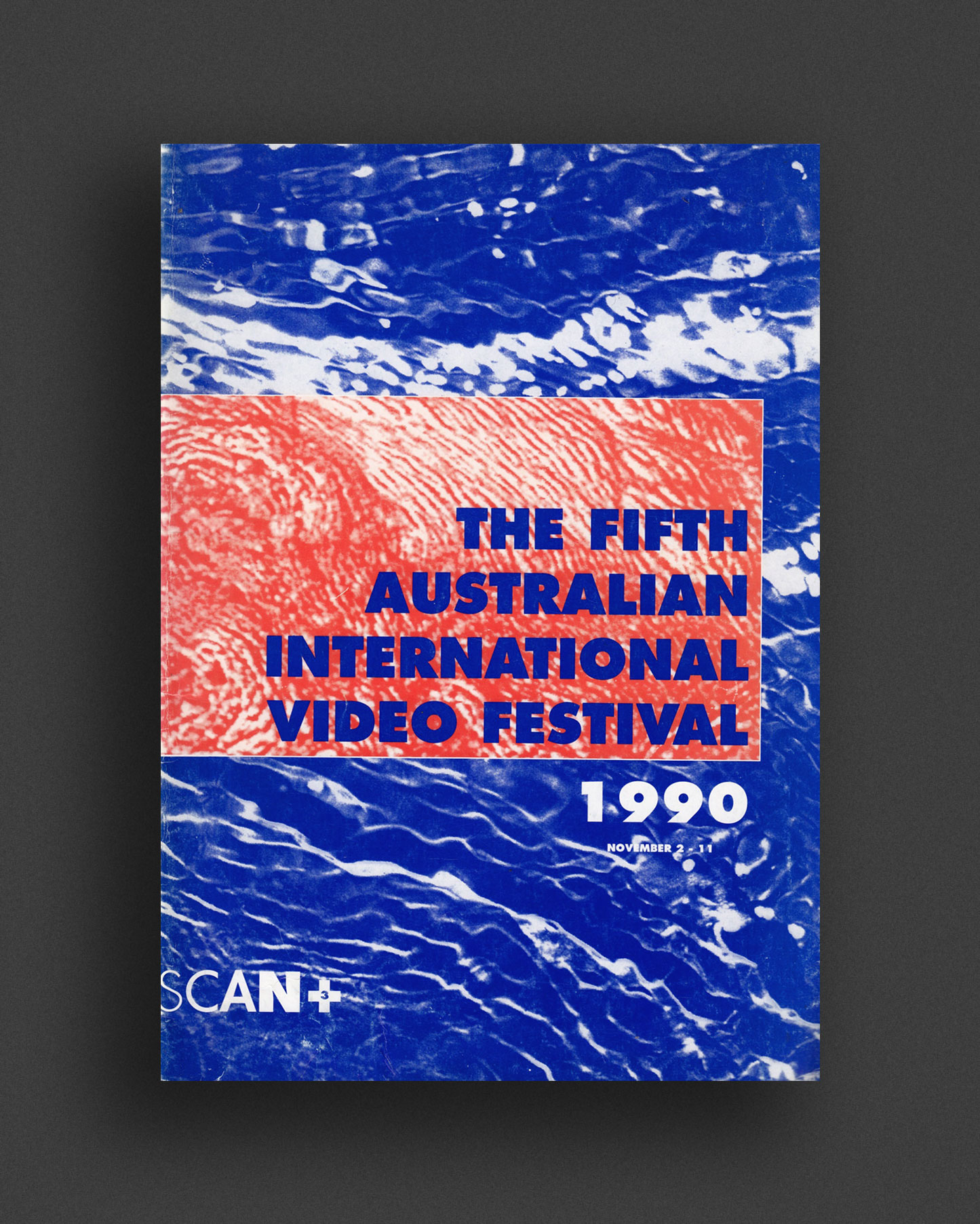
Catalogue published on the occasion of SCAN+ 3: The Fifth Australian International Video Festival, 1990, November 2–11, directed by Brian Langer and presented by Electronic Media Arts Ltd. Illustrated throughout with essays by David Dunn and Bohuslav Woody Vasulka, an interview with Nam June Paik by Nicholas Zurbrugg, the retrospective of early video art pioneers, Steina and Woody Vasulka, by Roy Durfee, Mckenzie Wark on Peter Callas, Ulrike Rosenbach's installaion, Bill Seaman, New Video from Japan by Carl E. Loeffler, and more, a full Videoteque Directory of international and local works screening in the festival, and much more.
Biran Langer was the Artistic Director of the Australian International Video Festival from 1988 to 1992 and Executive Director of Electronic Media Arts Ltd from 1990 to 1992.
Good copy with light wear to boards/corners.
2025, English
Softcover, 64 pages, 17.5 x 10.7 cm
Published by
UTS Gallery / Sydney
$25.00 - In stock -
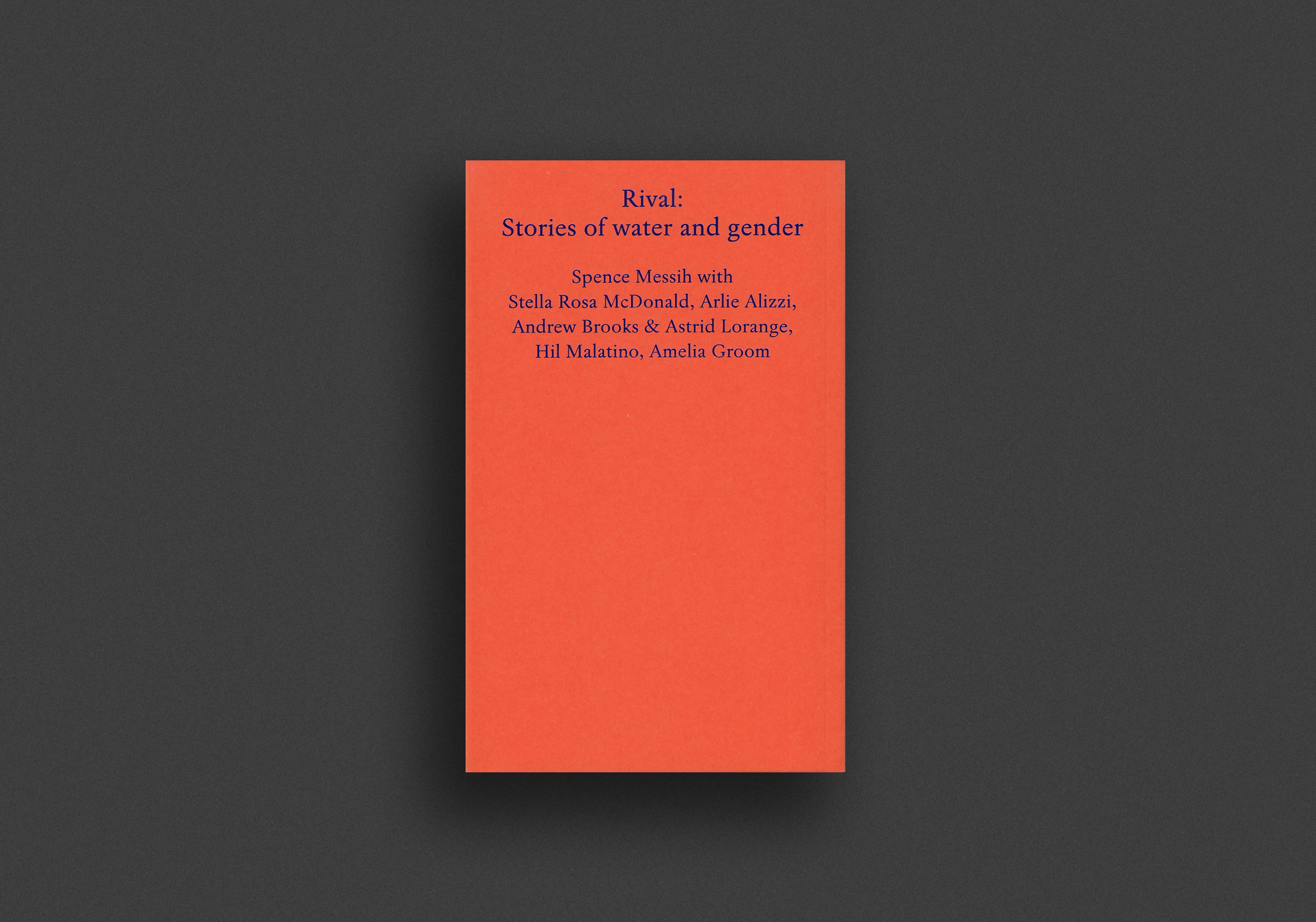
Published on the occasion of Spence Messih's exhibition A river runs through (UTS Gallery 2026) Rival: Stories of water and gender brings together perspectives on water and gender from the fields of political ecology and trans studies. Rival opens a wider field of reflection around Messih's body of work, attending to what the artist describes as "the excess" of water and gender. Foregrounded by the shared pressures and porosities that shape both bodies and environments, contributing writers Astrid Lorange and Andrew Brooks, Amelia Groom, Arlie Alizzi, and Hil Malatino explore questions of embodiment, extraction, labour, legibility, kinship, and contamination.
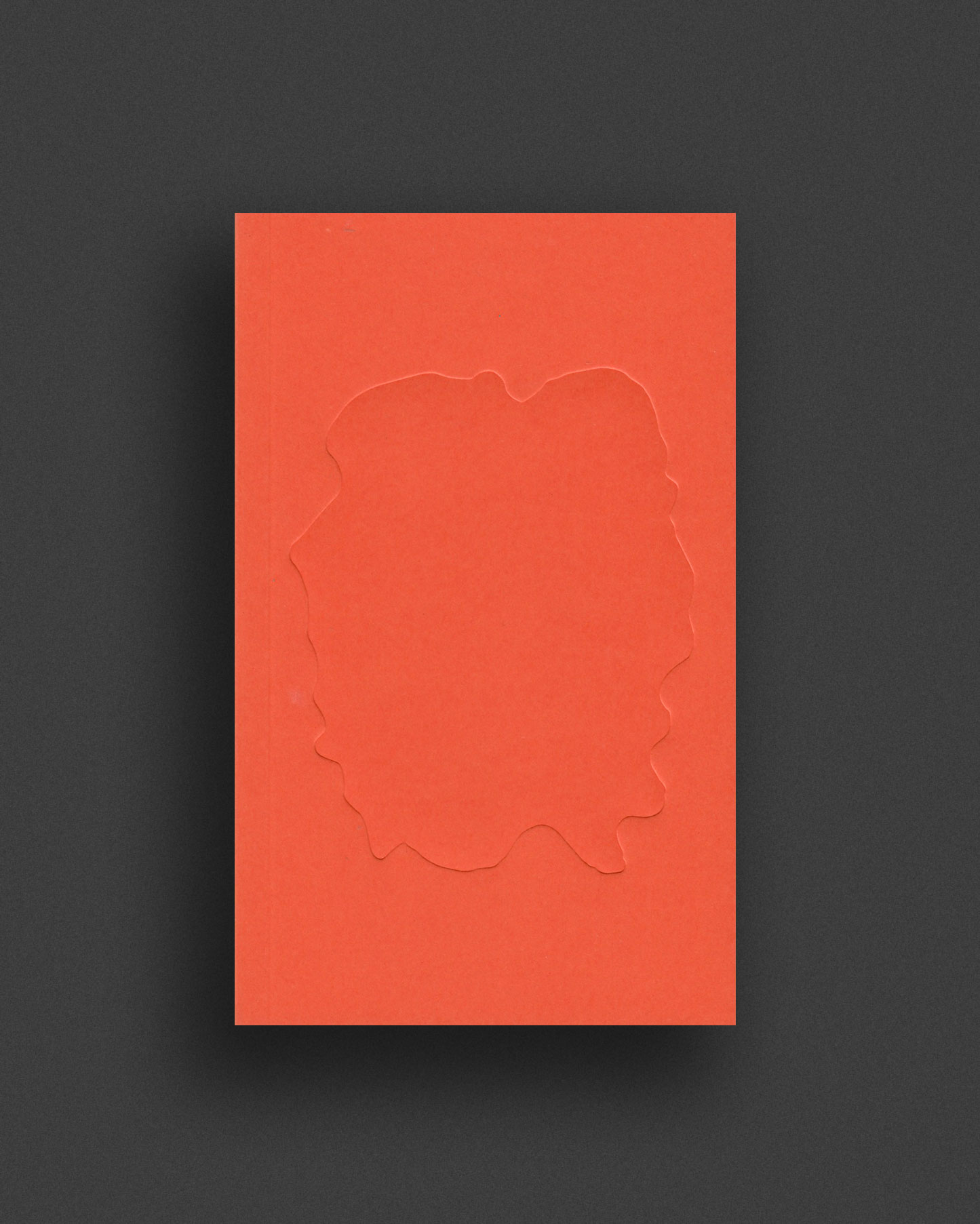
The book moves through writings by invited contributors and includes one-colour reproductions of Messih’s photogravure print Hiddener abode I–VII (2025). The debossed outline on the cover recalls the shape of the feral goat hides Messih uses in his body of work, alluding to the figure of the scapegoat.
Design by Zenobia Ahmed
Print by Gunn & Taylor
Authors: Spence Messih; Stella Rosa McDonald; Arlie Alizzi; Andrew Brooks and Astrid Lorange; Hil Malatino; Amelia Groom
Commissioning editors: Stella Rosa McDonald and Spence Messih
1981, English
Softcover (staple–bound), 88 pages, 30 x 21 cm
1st Edition, Out of print title / used / very good
Published by
RMIT University / Melbourne
$100.00 - In stock -
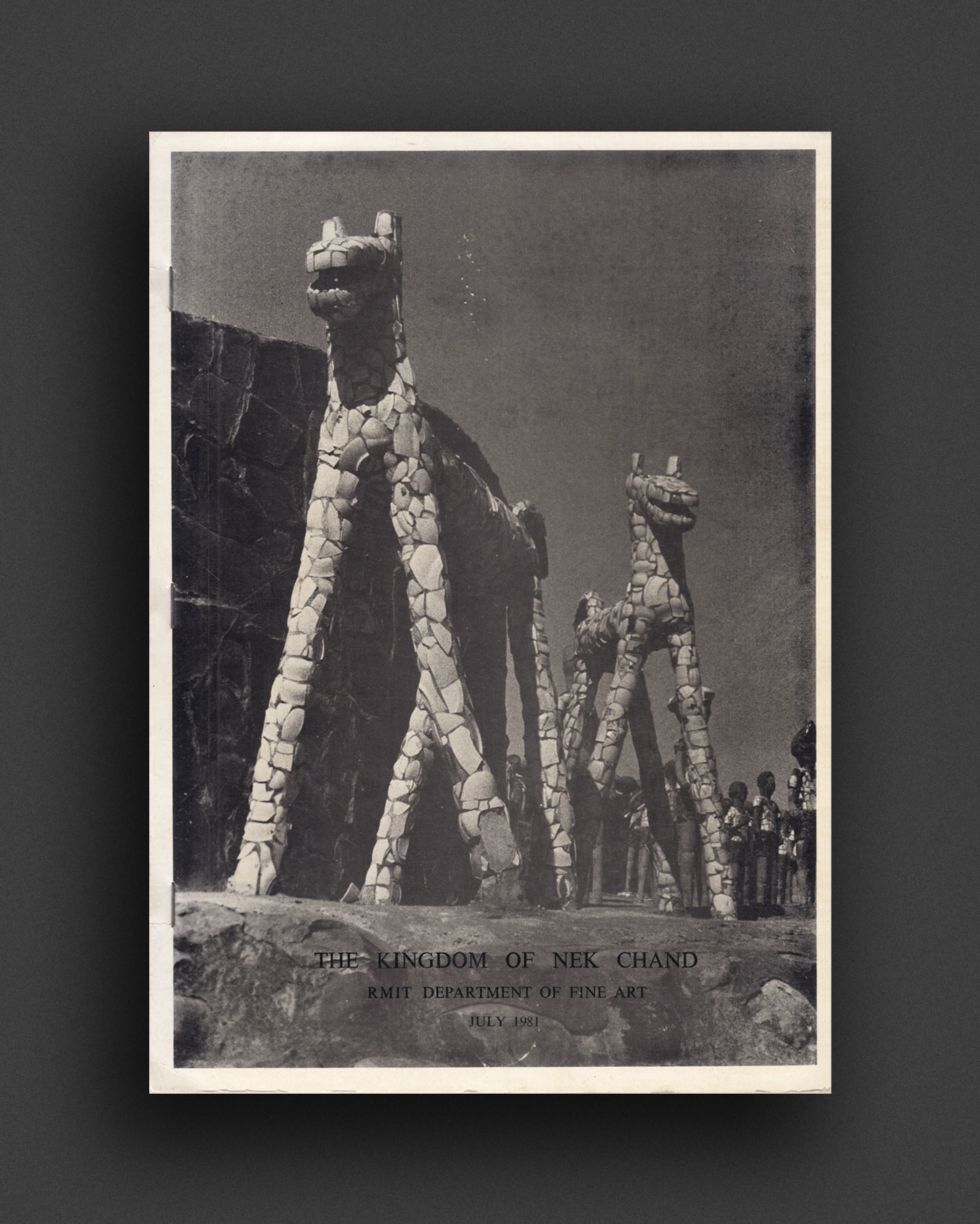
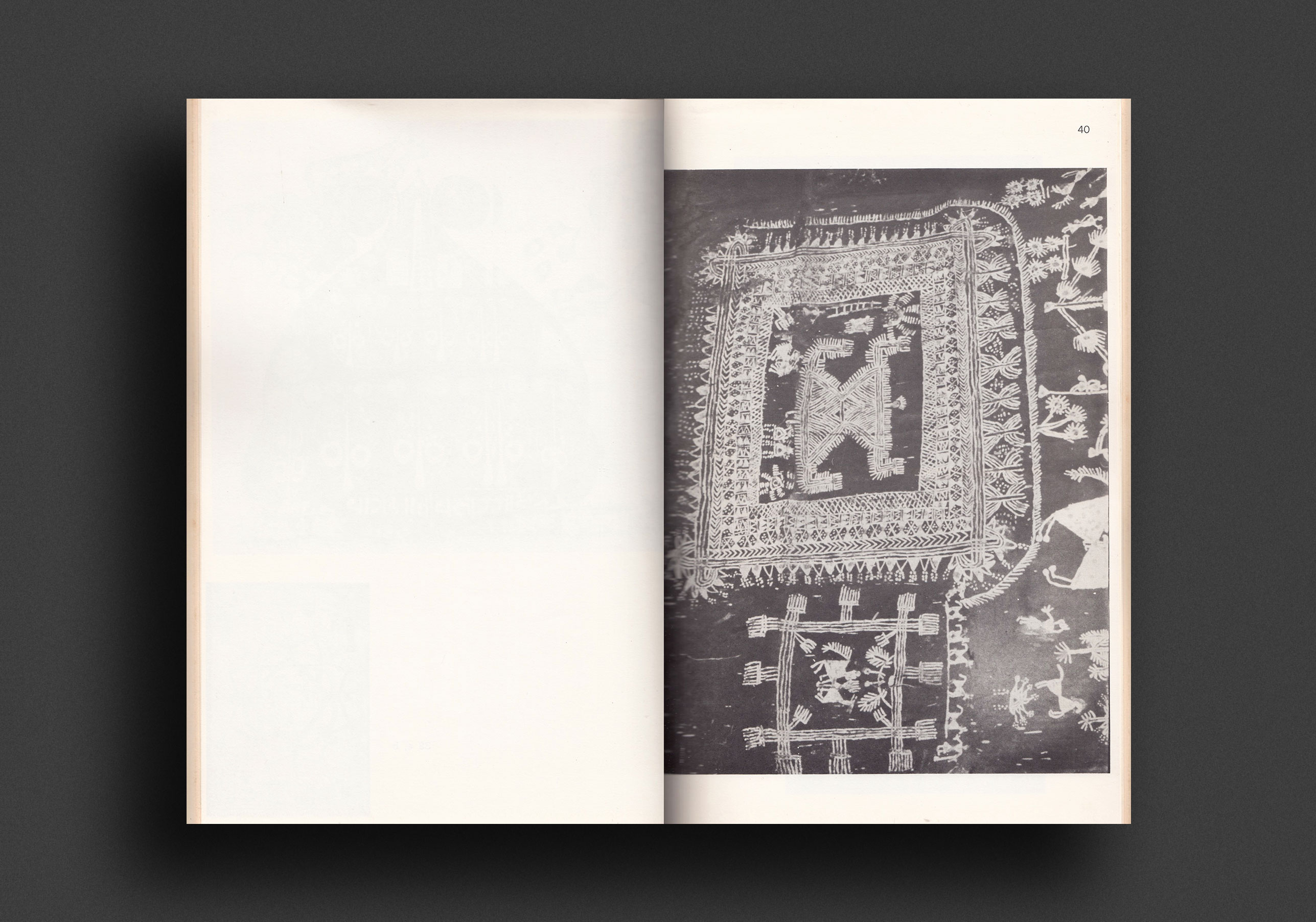
Very rare copy of this catalogue published to accompany 'The Kingdom of Nek Chand: Exhibition of Photographs and Film', RMIT Department of Art, July 1981. The Kingdom of Nek Chand is a 1980/1981 Australian documentary film by Ulli Beier and Paul Cox about Nek Chand Saini (1924–2015) a self-taught Indian artist who built the Rock Garden of Chandigarh, an eighteen-acre sculpture garden made of waste materials in the city of Chandigarh, one of the most famous sites in India. Essay contributions from many local and international historians, critics and artists mimeographed on single–sided pages followed by a gallery of plates on heavy paper stock. A lovely publication.
Chief Horst Ulrich Beier, commonly known as Ulli Beier (1922–2011), was a German editor, writer and scholar who had a pioneering role in developing the Western world's understanding of literature, drama and poetry in Nigeria, as well as in Papua New Guinea.
Paulus Henrique Benedictus Cox (1940–2016), known as Paul Cox, was a highly acclaimed Dutch-born Australian filmmaker, widely considered the "father of Australian independent cinema" and one of the country's most prolific auteurs.
Contents:
Jenny Zimmer, Introduction; Suzi Gablik, Extract from 'Report From India', Art In America, Sept., 1979; Ulli Beier, The Kingdom of Nek Chand; Nek Chand, From an Interview with Ulli Beier and Paul Cox; Janet Andrews, Art Brut; Ulli Beier, On the Arrangements for an Exhibition of 'New Art of India' at the University of Bayreuth, West Germany. From an Interview with Jenny Zimmer; Andrew Sibley, Impressions of India. From an Interview with Jenny Zimmer; Ulli Beier, Soma Mase and Other Warli Painters.
Very Good copy. Small inscription to title page.
2024, English
Softcover (staple–bound w. dust jacket), 52 pages, 20 x 18.5 cm
Published by
UTS Gallery / Sydney
IMA / Brisbane
Adelaide Contemporary Experimental / Adelaide
$25.00 - In stock -
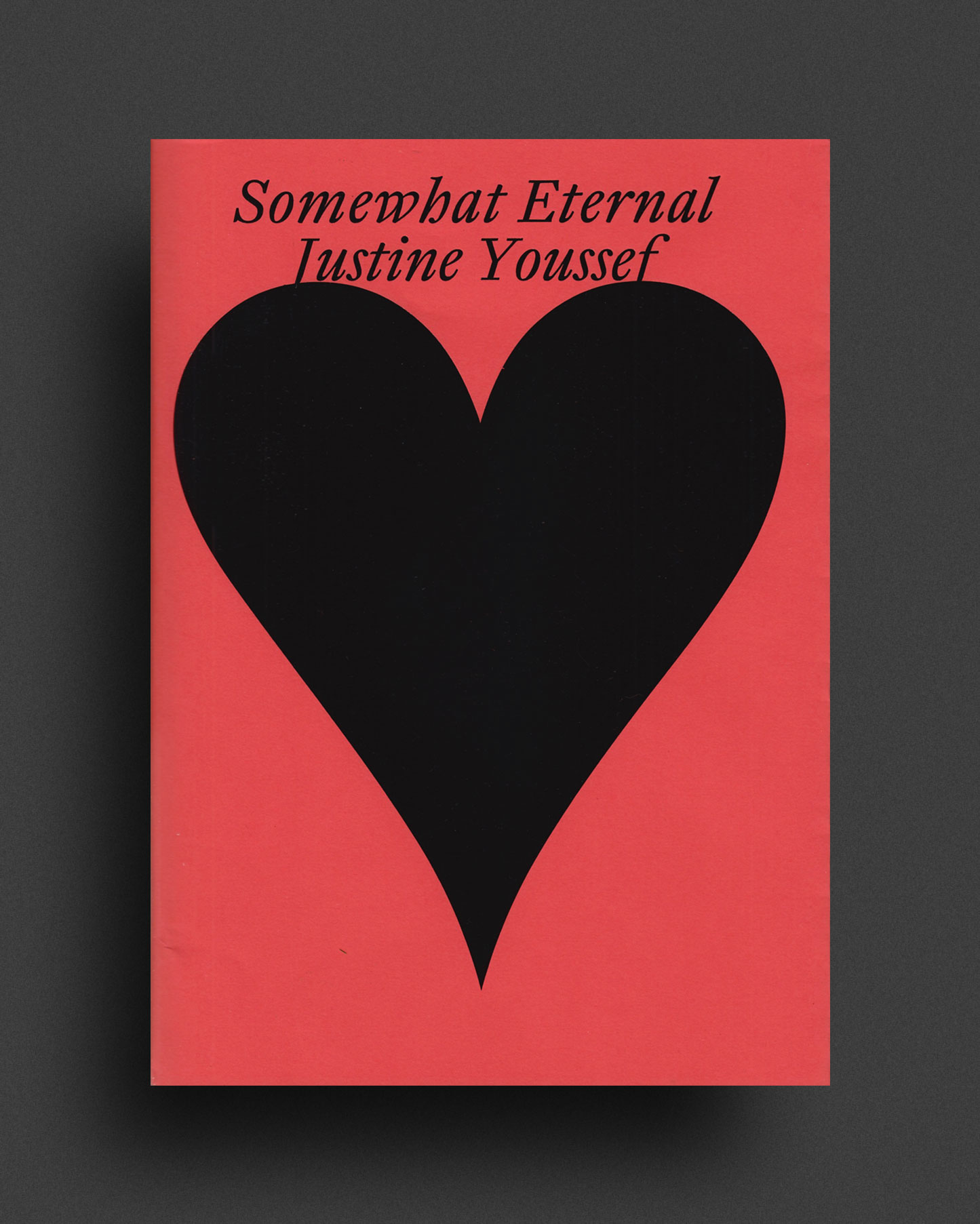
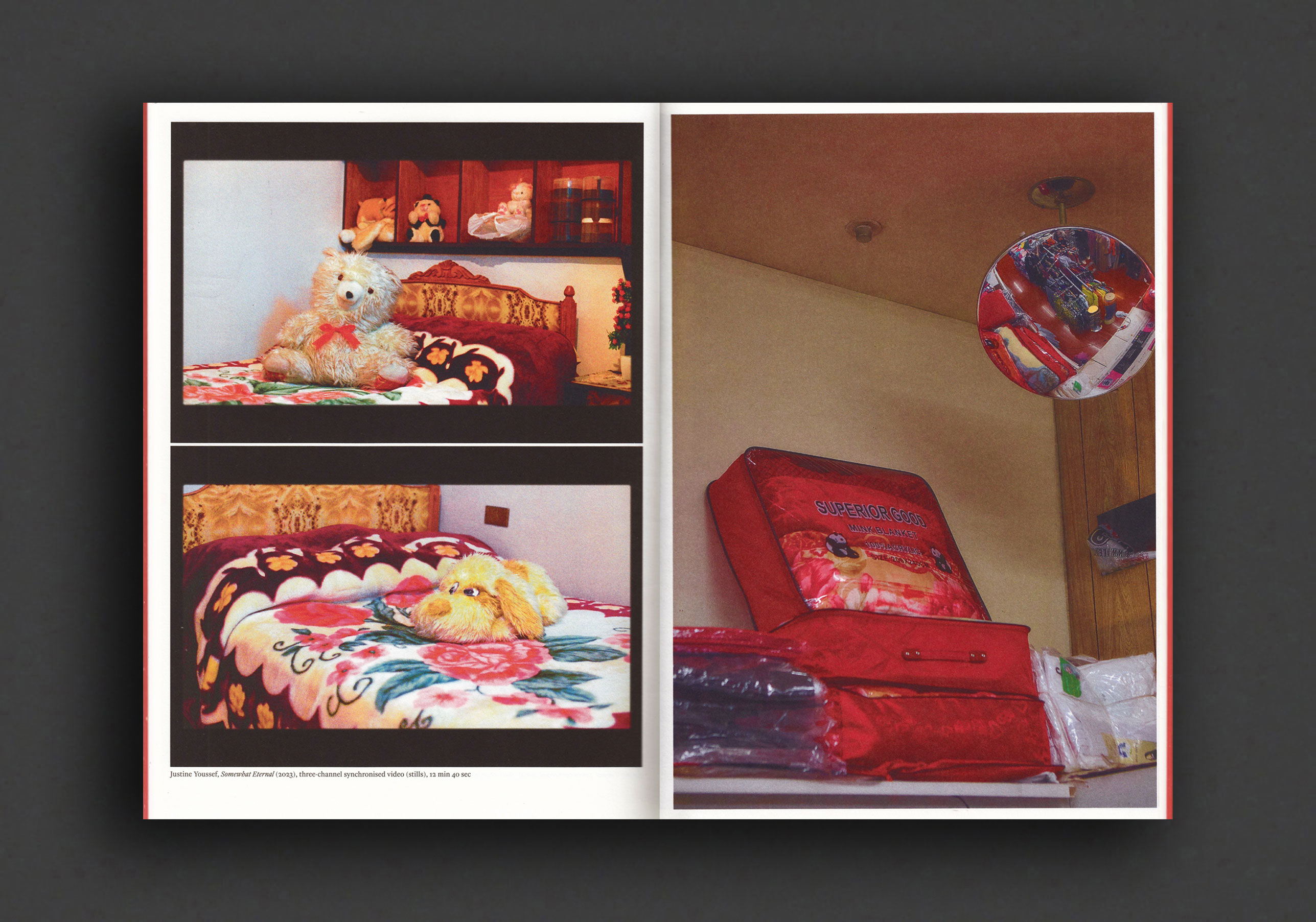
Somewhat Eternal is a major publication documenting the works and practice of artist Justine Youssef, produced on the occasion of her landmark exhibition Somewhat Eternal. The publication considers Youssef’s new and recent works, exploring the interconnected impacts of displacement and finding hope in acts of ritual and preservation.
Three commissioned texts reflect on the solidarities and postcolonial discourse Youssef’s practice engages with. Latoya Rule—a Wiradjuri/Te Ātiawa, takatāpu/queer writer, poet, and campaigner—writes of solidarity between Aboriginal, Lebanese, and Palestinian communities in Australia. Filmmaker and writer Chi Tran considers Youssef’s metaphysical connections to the world as a form of resistance against colonial regimes. Dr Mykaela Saunders—a Koori/Goori and Lebanese writer and editor, teacher, and researcher—bridges the distances implicit in Youssef’s inheritances. An essay by the exhibition curators Stella Rosa McDonald, Tulleah Pearce, and Patrice Sharkey and an introductory text by IMA Director Robert Leonard situates Youssef’s new and recent work.
Designed by Žiga Testen and Sunny Lai
Authors: Robert Leonard; Stella Rosa McDonald; Tulleah Pearce; Latoya Rule; Mykaela Saunders; Patrice Sharkey; Chi Tran
Editors: Stella Rosa McDonald, Tulleah Pearce and Patrice Sharkey
1985, Japanese
Softcover (w. acetate dust jacket), 128 pages, 33 x 25 cm
1st Edition, Out of print title / used / good
Published by
Bijutsu Shuppan-sha / Japan
$90.00 - In stock -
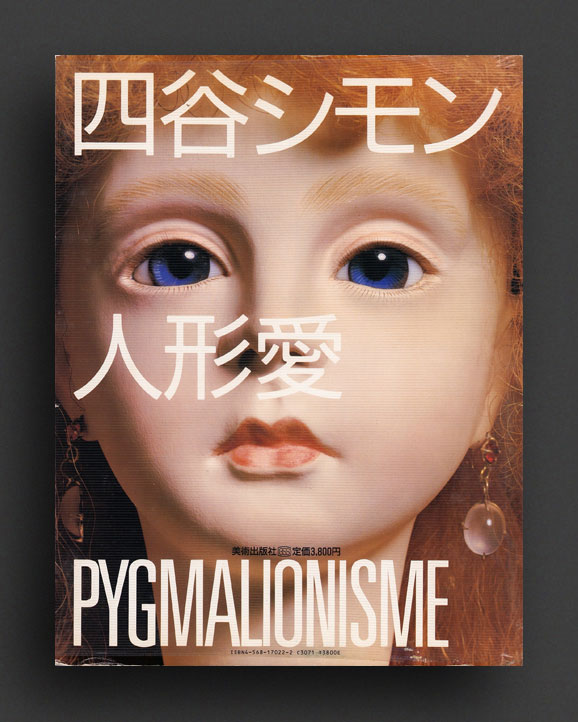
First edition of the incredible book of Japanese doll artist Simon Yotsuya, Doll Love / L'amour des Poupées, shot by Kishin Shinoyama, published in 1985 by Bijutsu Shuppan-sha, Tokyo. This stunning over-sized book is the finest photographic document of Simon's dolls created throughout his career, all dramatically shot by legendary Japanese photographer, and close friend of Yotsuya, Kishin Shinoyama, profusely illustrated in full colour gloss with each doll, including various angles, details, and display cases, accompanied by a section of Japanese texts by Tatsuhiko Shibusawa, Yoshiaki Tono, Minoruyoshioka, Shuzotakiguchi, and Kunio Iwaya, illustrated in b/w with portraits of Simon Yotsuya in his studio, his drawings and graphic works. Our favourite book on this magical artist.
Simon Yotsuya (b. 1944, Tokyo) started making dolls as a child, visiting exhibitions of dolls, and reads all the books he can find on the subject. In his mid-teens he visited Puppe Kawasaki, a doll maker and animator he greaty admired, devoting himself to the craft and becoming a poor high school student. In the early '60s, while working at a jazz coffee shop in Shinjuku, Yotsuya earned the nickname "Simon" (pronounced “Simone”), after his love for singer Nina Simone. He befriends Kuniyoshi Kaneko (painter) and Junko Koshino (fashion designer) and joins in the arts and literary scene. In 1965, he discovers the work of German Surrealist Hans Bellmer through an article authored by Tatsuhiko Shibusawa in the magazine “Shinfujin”, promptly abandoning his previous methods of doll-making to find his way as an artist, incorporating ball-joints into his dolls. Thereafter he becomes an admirer of Surrealism and immerses himself in the controversial Shibusawa's litterary works. In 1965, he also goes to see Tatsumi Hijikata's Butoh Performance for the first time. In the late 60s—early 70s Yotsuya pursued a parallel career to his doll-making as an actor and member of Juro Kara's legendary underground theater company Jokyo Gekijo, Situation Theater, regularly portraying a female doll. He appears in the movie "Diary of a Shinjuku Thief" directed by Nagisa Oshima with the actors of the Situation Theater, but by 1971 he leaves the stage to concentrate on his own work. Simon exhibited at Expo 1970 in Osaka, the Tokyo Biennale in 1974 and by the end of the decade had opened his own doll-making school in Harajuku.
Tatsuhiko Shibusawa (1928—1987), the author of the influential Bellmer article (and novelist, editor, art critic, and translator of Bataille and Marquis de Sade), become a life-long friend of Yotsuya's and his most important advocate, editing the first major book of Yotsuya's work, entitled Pygmalionisme, in 1985. Devastated by Shibusawa's death in 1987, Yotsuya found it impossible to work for nearly two years. He eventually found solace in the Eastern Orthodox Church and was inspired to make a series of angels, which he dedicated to Shibusawa, and straightforward images of Christ. Having carved out his own masterful and unique form of expression, today Yotsuya enjoys international renown as the first ball-jointed doll maker in Japan.
Good—Very Good copy with general wear to book and publisher's jacket shrinkage with age, some light foxing.
2006, English
Softcover, 336 pages, 26 x 21.5 cm
1st Edition, Out of print title / used / very good
Published by
Center for Curatorial Studies Bard College / New York
$300.00 - Out of stock
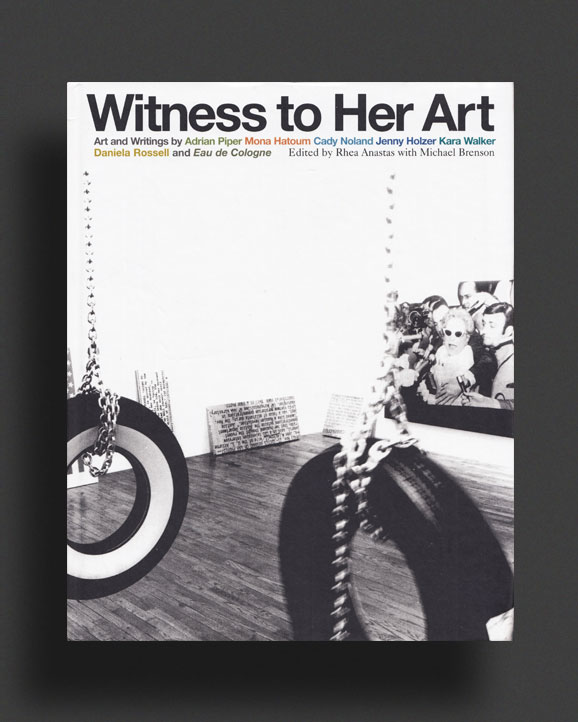
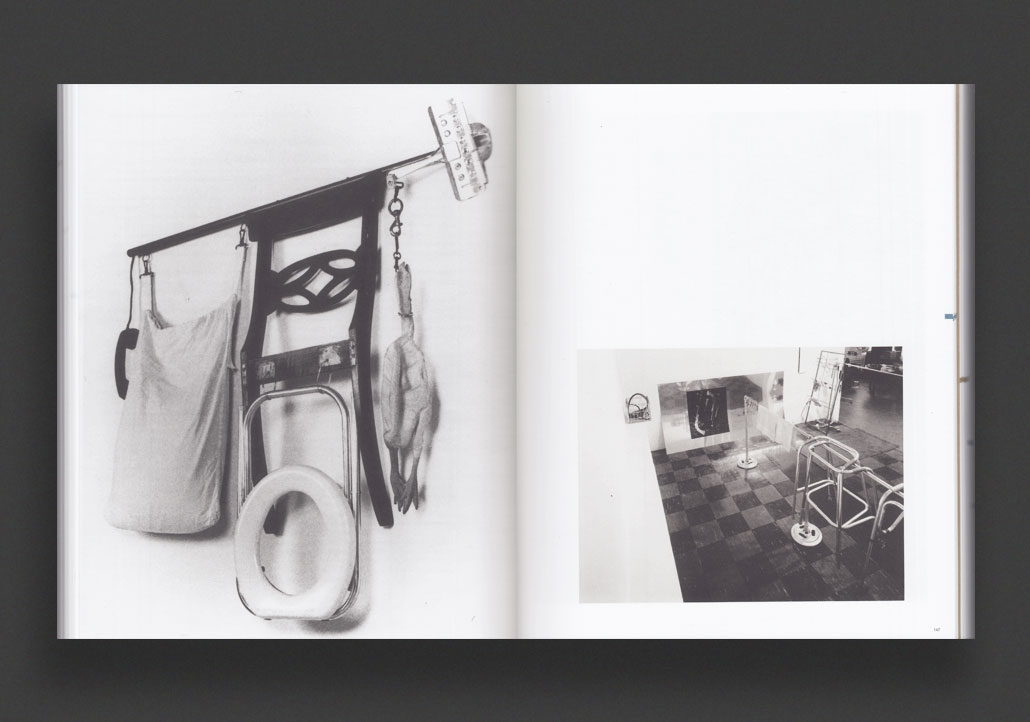
First edition of this very special, now very rare catalogue published in 2006 on the occasion of the major survey exhibition Witness To Her Art, featuring the work of Adrian Piper, Mona Hatoum, Cady Noland, Jenny Holzer, Kara Walker, Daniela Rossell and the seminal magazine Eau de Cologne, published by gallerist Monika Sprüth between 1985 and 1989. Profusely illustrated throughout with artworks by all artists, reproductions of important artist publications, installation views, and many works by other related artists, alongside texts by Adrian Piper, Kara Walker, Daniela Rossell, Mona Hatoum, Cady Noland, Jenny Holzer, Monika Sprüth, Rhea Anastas, Michael Brenson, Norton Batkin, Johanna Burton, Aruna D’Souza, Pamela Franks, Janet Kraynak, David Levi Strauss, Cuauhtémoc Medina, Ann Reynolds, Hamza Walker, and many more.
Publisher's blurb:
"This radical new study aims to change the way that some of the most influential artists of the past 40 years are seen—all of them women. Emphasizing questions of autonomy, critical intelligence and artistic intention, "Witness to Her Art" presents works by Adrian Piper, Mona Hatoum, Cady Noland, Jenny Holzer, Kara Walker, Daniela Rossell and "Eau de Cologne," a magazine published by gallerist Monika Sprüth. The artworks are accompanied by original writings by the artists, contemporaneous criticism and newly commissioned essays by Pamela Franks, Aruna D'Souza, Johanna Burton, David Levi Strauss, Hamza Walker and Cuauhtémoc Medina. The ambitious works presented and interpreted herein invite us to consider the impact of the feminist revolution across generations while rendering obsolete any stigma associated with shows or catalogues limited to women artists. Taking its lead from Conceptualism, feminism, and from its included artists, "Witness to Her Art" reaches for art history's capacity as a medium of world-making."
Highly recommended. Very Good copy with light edge wear/rounding to stiff overlay boards.
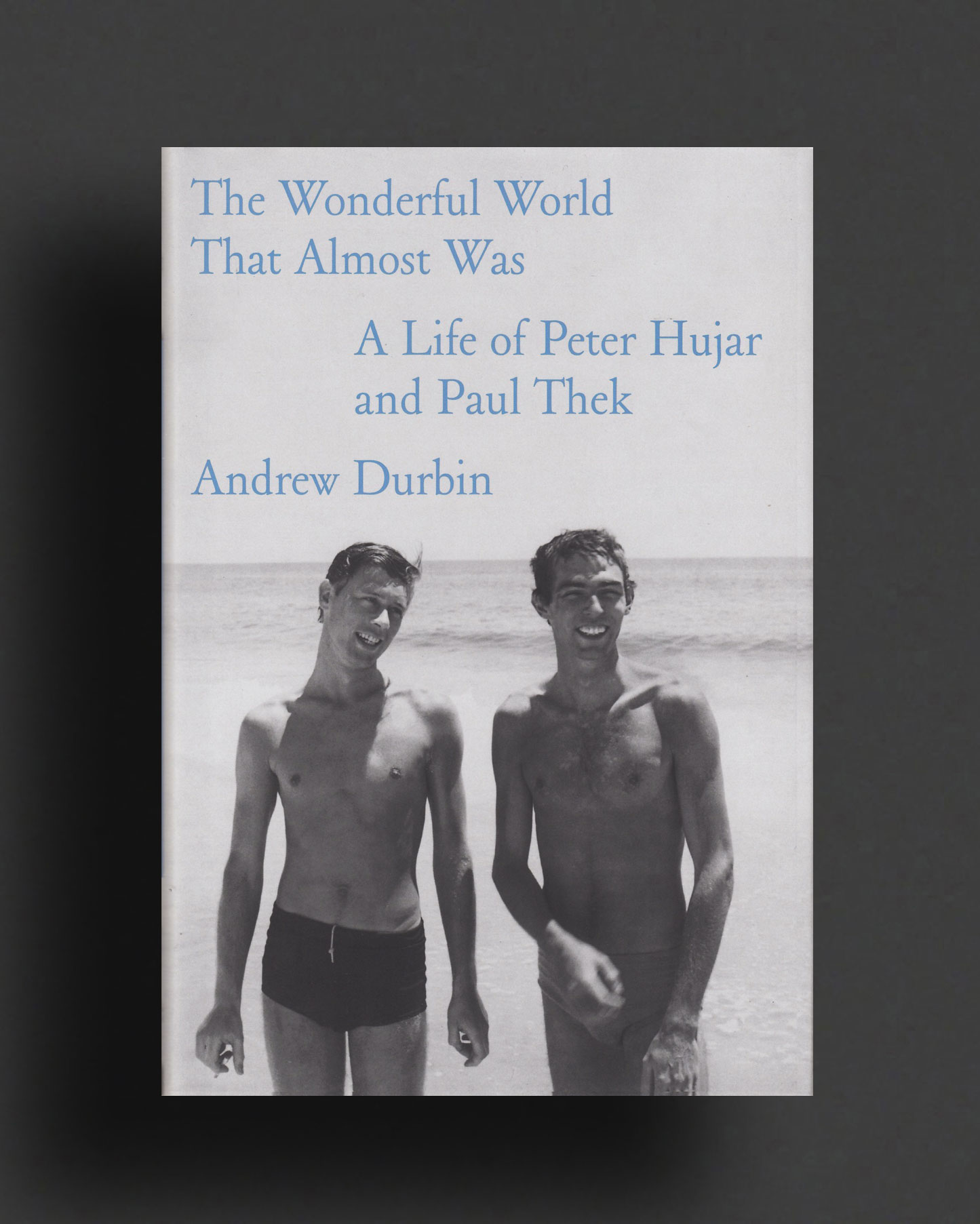
2026, English
Hardcover (w. dust jacket), 480 pages, 24 x 16 cm
Published by
Farrar Straus & Giroux / New York
$62.00 - In stock -
US hardcover edition.
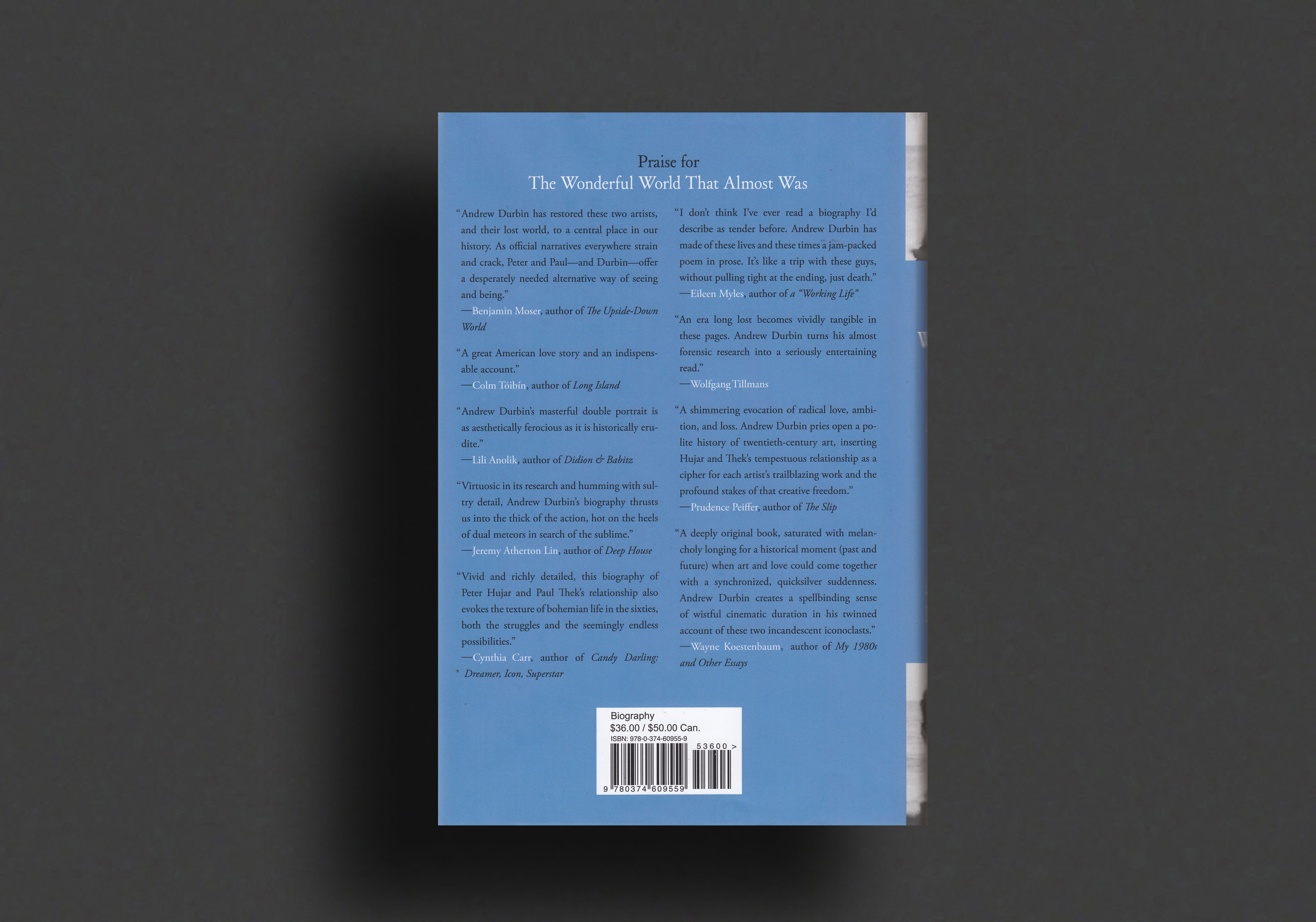
"As official narratives everywhere strain and crack, Peter and Paul—and Durbin—offer a desperately needed alternative way of seeing and being."—Benjamin Moser, author of Susan Sontag: Her Life and Work, winner of the Pulitzer Prize
"A deeply original book, saturated with melancholy longing for a historical moment (past and future) when art and love could come together with a synchronized, quicksilver suddenness. Andrew Durbin creates a spellbinding sense of wistful cinematic duration in his twinned account of these two incandescent iconoclasts."—Wayne Koestenbaum
"[Andrew Durbin] has made of these lives and these times a jam-packed poem in prose. It's like a trip with these guys, without pulling tight at the ending, just death."—Eileen Myles, author of A "Working Life"
The cinematic, never-before-told story of two intimately entangled artists who redefined queer art.
When Paul Thek met Peter Hujar in the winter of 1956 in Coral Gables, Florida, a slow-simmering connection began to burn. Thek, twenty-three and living in Miami, was handsome and itching to make it as a painter; in the twenty-two-year-old Hujar, a shy, sensual photographer, he'd found a kindred spirit. By 1960, they were dating and living in New York, beginning decades of sex, love, competition, and reconciliation—an entanglement that changed American art forever.
Surrounded by a robust creative scene populated by Susan Sontag, Andy Warhol, Fran Lebowitz, John Waters, and David Wojnarowicz, Thek and Hujar's profoundly influential careers, from the early 1960s through the late 1980s, differed as much as the men themselves. The unpredictable and often overlooked Thek crafted visceral installations and sculptures, while Hujar, celebrated and sociable, took penetrating portraits of his world, queer and otherwise. Yet even at their most estranged, and even after their deaths from AIDS, both men were united by a pursuit of liberation—from artistic and sexual limits, from anything short of changing the world.
Andrew Durbin's The Wonderful World That Almost Was unravels, for the first time, the intertwined stories and work of two boundaryburning, paradigm-tilting, never more relevant American artists. Weaving together deft art criticism with moving portraits of both men's inner lives, and assembled with exhaustive research, Durbin's book is an ode to a lost but still-living world—and two men who defined it.
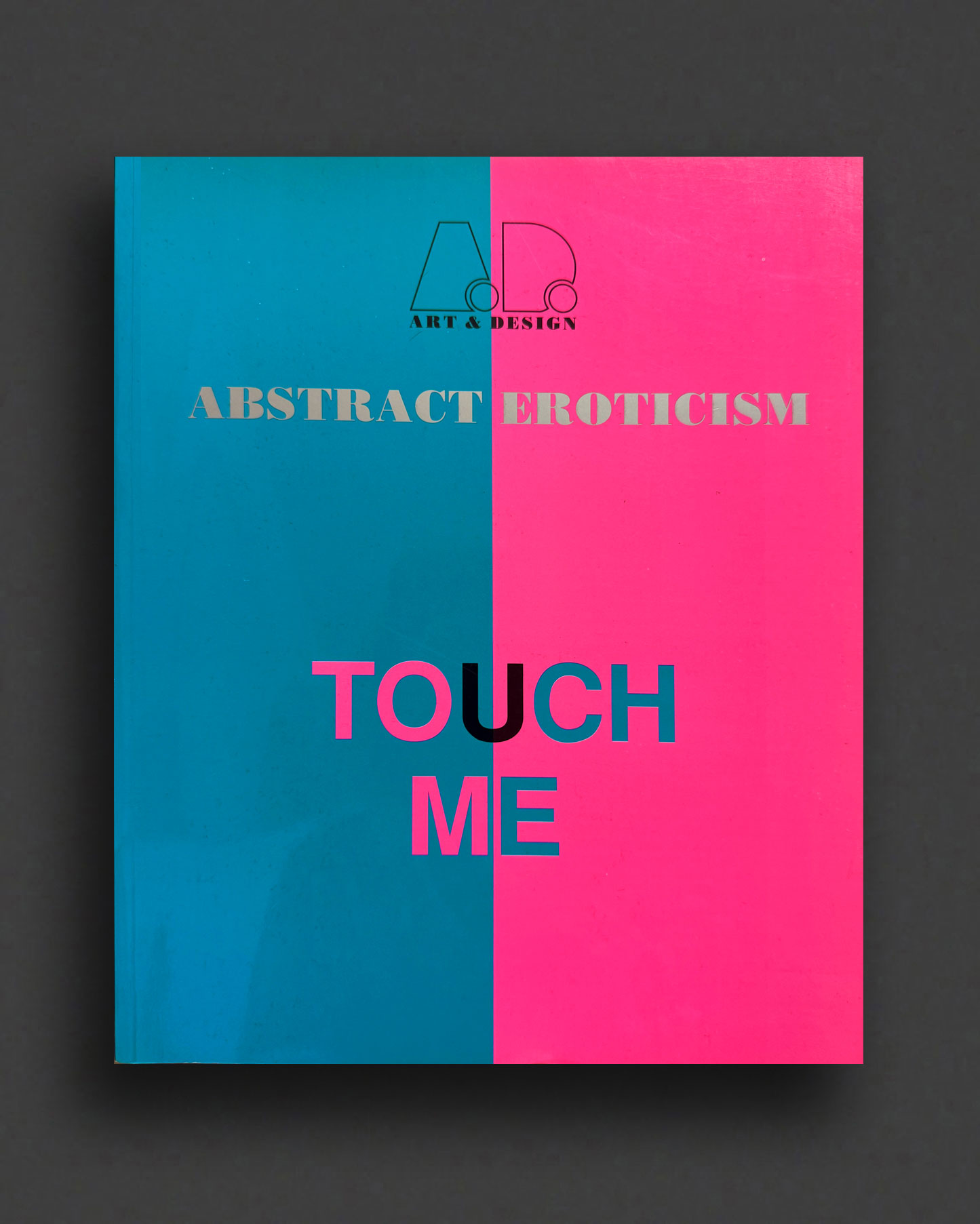
1996, English
Softcover, 102 pages, 30.5 x 25.2 cm
1st Edition, Out of print title / used / very good
Published by
Academy Editions / London
$50.00 - In stock -
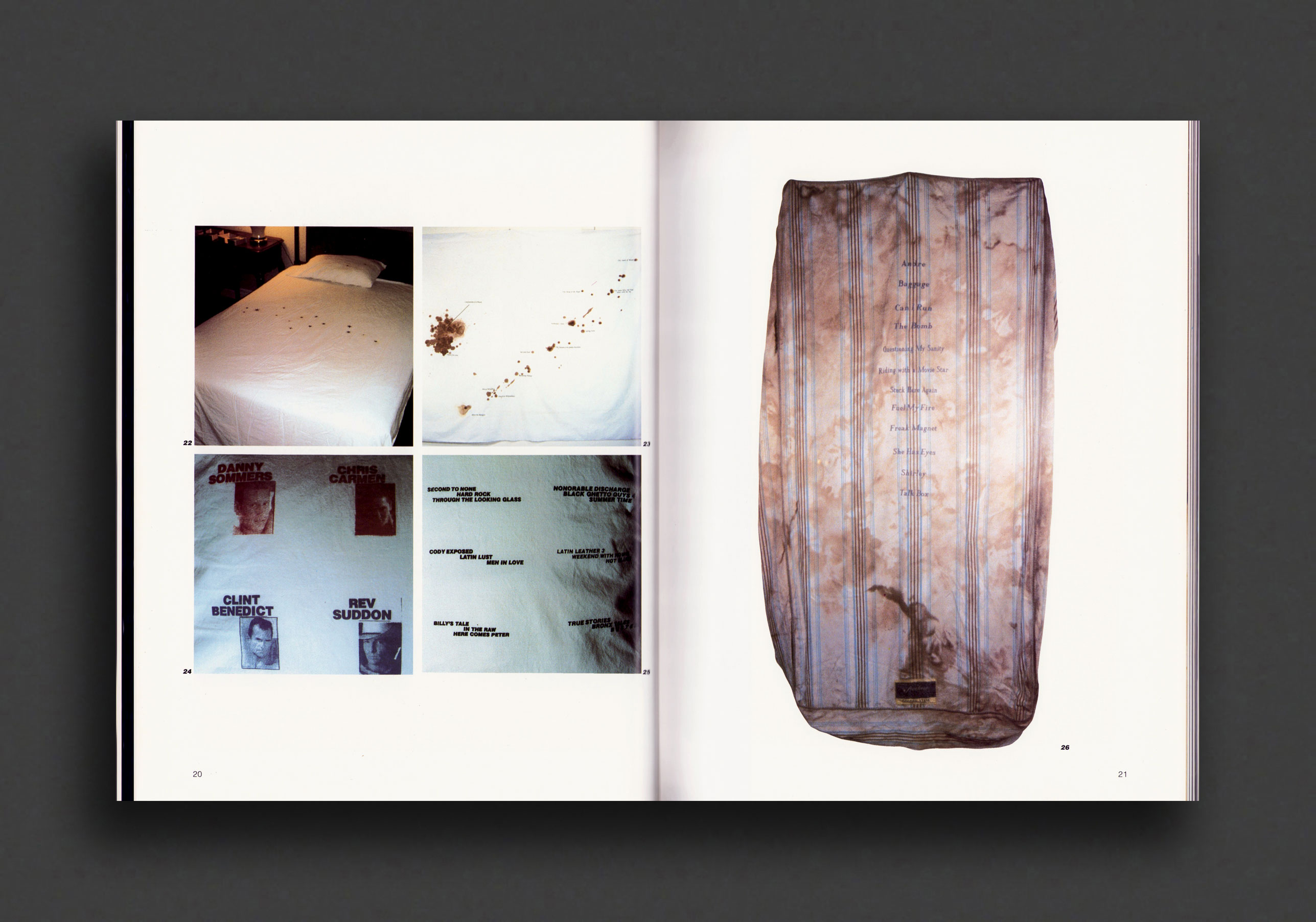
ABSTRACT EROTICISM issue of London's A.D. (Art & Design Profiles) magazine from 1996, this issue guest-edited by Michael Petry and featuring the artwork of Robert Gober, Fiona Pitt-Kethley, Angela de la Cruz, Misha Hoekstra, Peter Ackroyd, Louise Sudell, William Hartman, Charles Taylor, Kraettli Lepperson, Leo Flynn, Nicolas de Oliveira, Juliane Jung, Felix Gonzalez-Torres, Kate Smith, Helen Chadwick, Micah Lexier, Jeanne Dunning, Charles Ray, Judy Bamber, LouAnne Greenwald, Christina Berry, Eric Magnuson, Gary Hill, John McLachlin, Rebecca Scott, John Lindell, Charles LaBelle, Rachel Lachowicz, Keith Boadwee, Bernard Living, Angela de la Cruz, Ken Kelly, Mickey Cuddihy, Patrick Xavier, Tomas Nakada, Michael Gabriel, Kevin Wolff, Ross Bleckner, Richard Graville, Moira Dryer, Osvaldo Macia, Jeanne Patterson, Tracey Emin, Bruce Nauman, Mona Hatoum, Nicola Oxley, Janine Antoni, Sylvie Fleury, Art2Go (James Barrett and Robin Forster), Hazel White, Judie Bamber, Christina Berry, Michel François, Hermione Wiltshire, Robert Taylor, Ariane Lopez-Huici, Christine Duyt, Kiki Smith, Millie Wilson, Michael Petry.
Very Good copy.
1980, Japanese
Softcover, 200 pages (plus poster insert), 21 x 15 cm
1st Edition, Out of print title / used / very good
Published by
Night Vision / Japan
$80.00 - In stock -
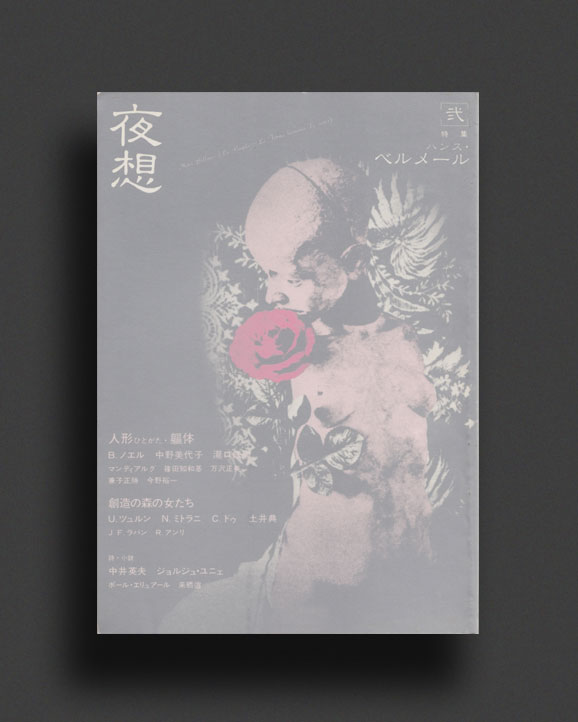
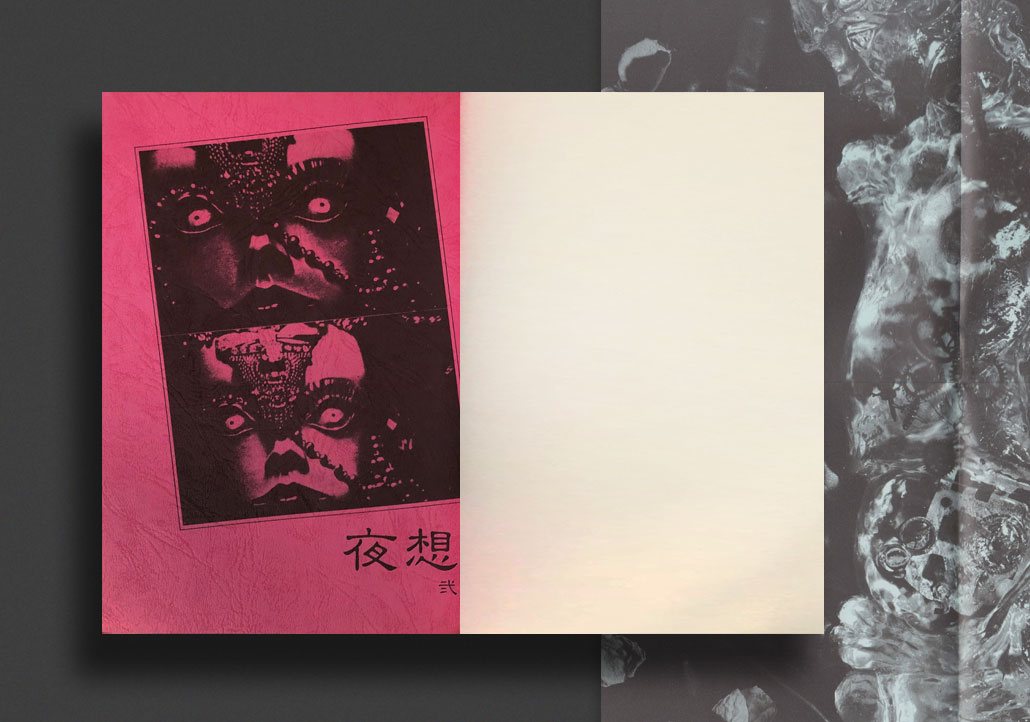
First 1980 edition of cult Japanese underground magazine Night Vision, a special edition dedicated to the work of German artist Hans Bellmer (1902-1975). ("the doll = the human form - the body"). Nowhere in the world has Bellmer's "Die Puppe" has such a lasting effect than in Japan. This volume compiles many of the artist's texts, translated to Japanese, with many illustrations of Bellmer's graphic works, drawings nad photography, alongside contributions by Miyoko Nakano, Yuichi Konno, Shuzo Takiguchi, Hideo Nakai and others. This book also comes with an inserted copy of Japanese doll artist Nori Doi's four-fold poster
German artist Hans Bellmer (1902-1975) was one of the most subversive artists associated with Surrealism, famous--notorious, even--for his erotic engravings, objects and photographs. Best known for the life-sized pubescent female dolls he produced in the mid-1930s. "Bellmer was born in the city of Kattowitz, then part of the German Empire (now Katowice, Poland). Up until 1926, he'd been working as a draftsman for his own advertising company. He initiated his doll project to oppose the fascism of the Nazi Party by declaring that he would make no work that would support the new German state. Represented by mutated forms and unconventional poses, his dolls were directed specifically at the cult of the perfect body then prominent in Germany. Bellmer was influenced in his choice of art form by reading the published letters of Oskar Kokoschka (Der Fetisch, 1925)."
Very Good copy.
2017, English
Hardcover (clothbound), 230 pages, 32 x 24.5 cm
1st Edition, Out of print title / used / fine
Published by
Koenig Books / London
$55.00 - In stock -
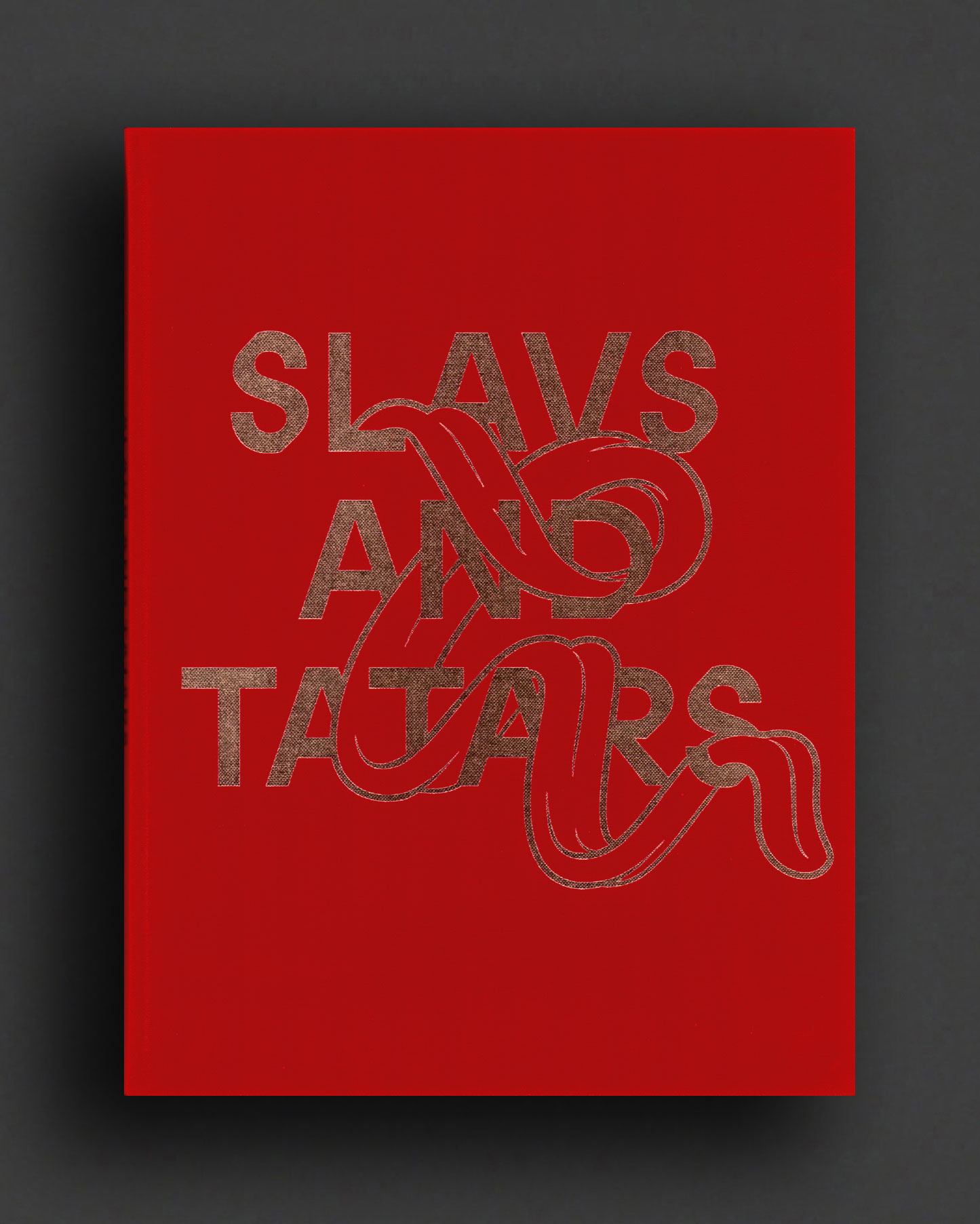
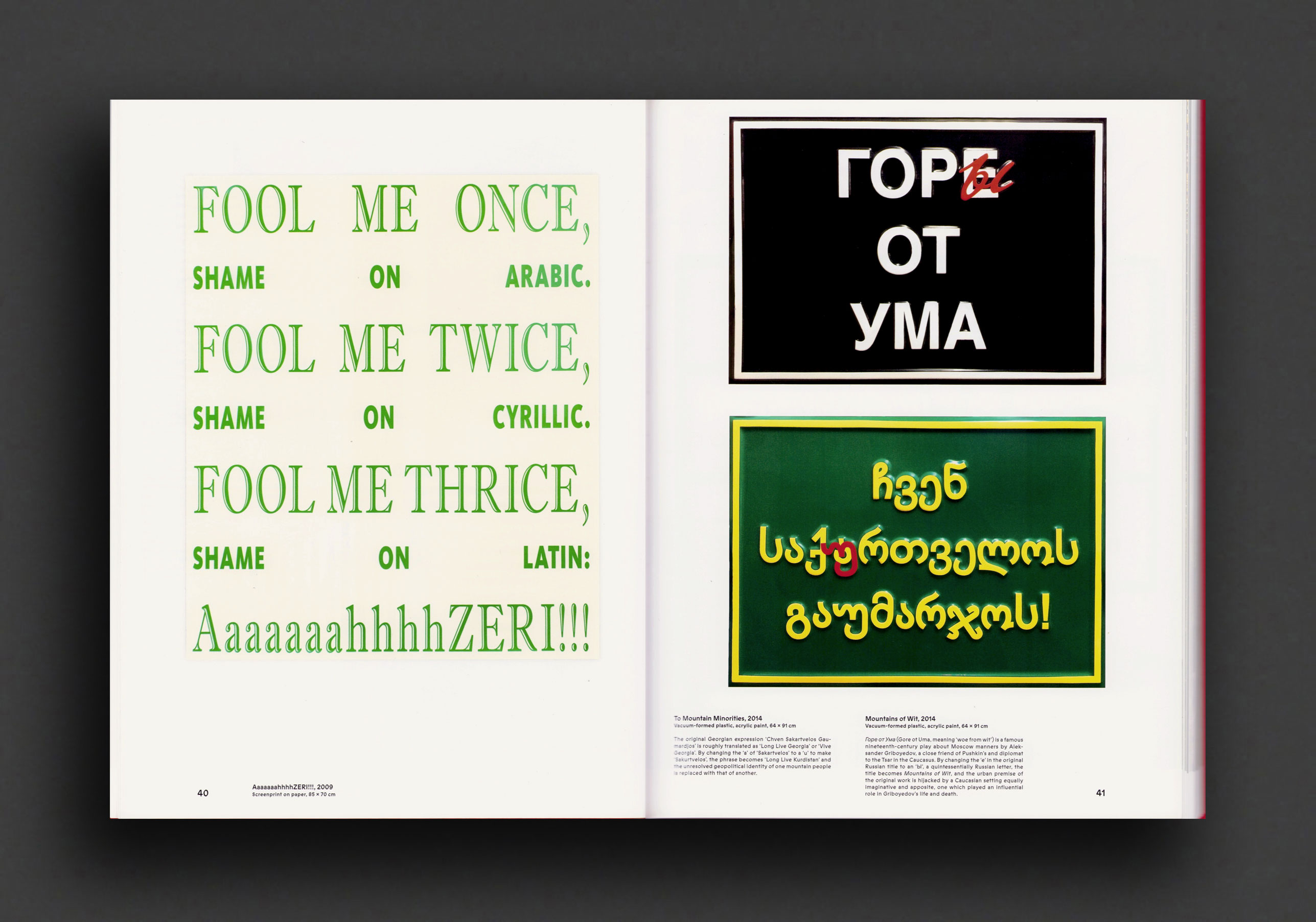
On the occasion of a mid-career survey presented in Warsaw, Tehran, Istanbul and Vilnius, Mouth to Mouth is the first monograph on the collective, with documentation of all eight cycles of work. This monograph offers a critical inventory of Slavs and Tatars’ lecture-performances, exhibitions and publications across ten years of activity. Edited by Pablo Larios with essays by Susan Babaie, Jörg Haiser, and David Joselit.
NF—As New copy.
1994—1997, Japanese
Softcover, various page count, 29.7 x 22.2 cm
1st Edition, Out of print title / used / very good
Published by
SDI nets / Tokyo
$200.00 - In stock -
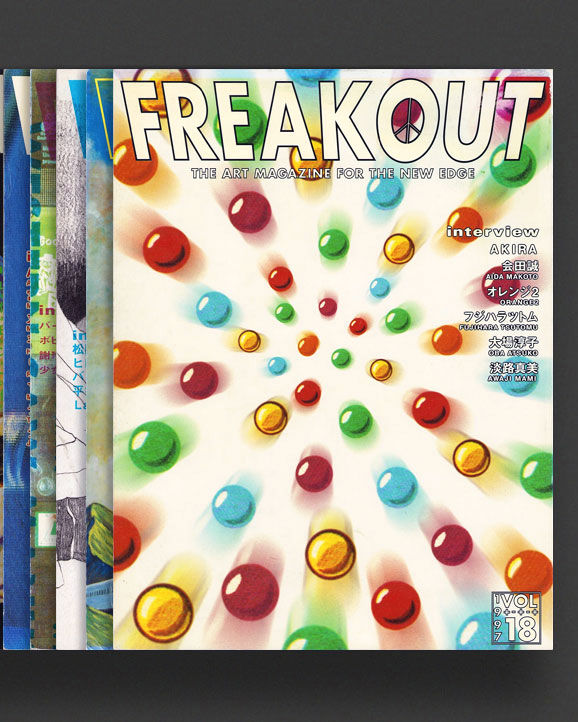
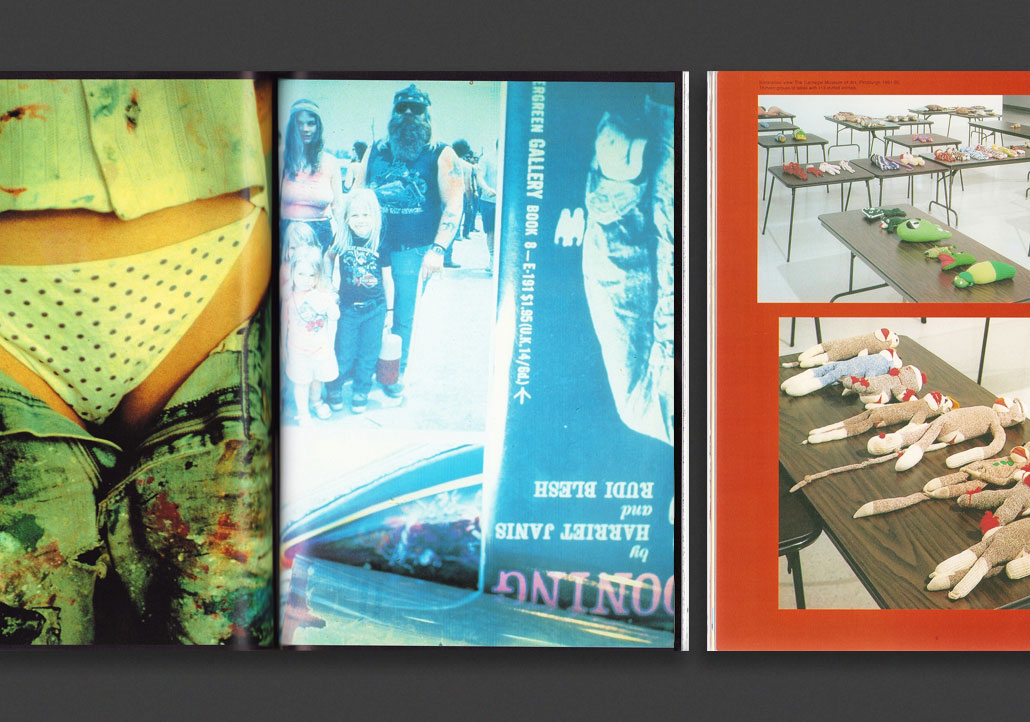
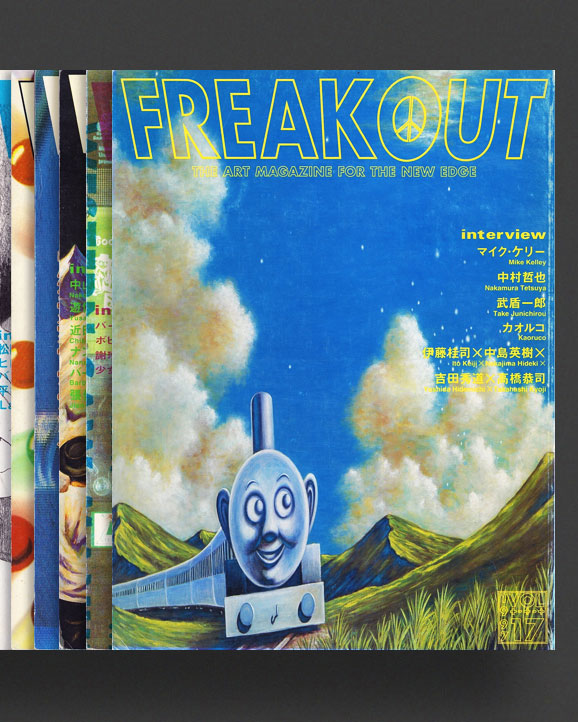
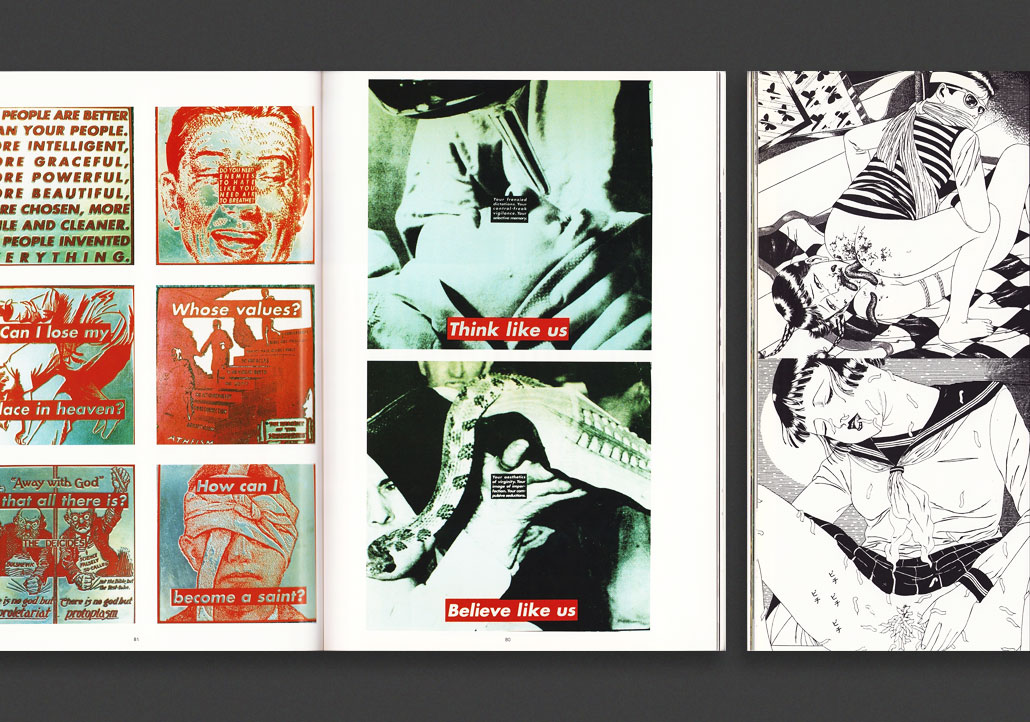
Rare lot of eight issues of the short-lived and now seldom seen 1990's Shibuya-kei / art subculture magazine from Japan, FREAKOUT, published between 1994—1997. Like a hysterical teenage pop fanzine version of Raygun, FREAKOUT ("The Art Magazine for the New Edge"), packed as much sugar-coated 90's nihilism into the little-known magazine's short life-span as possible. Showcasing a new generation of provocative international artists alongside their Japanese pop (counter)culture counterparts, filled with illustrations, manga, and early vector-art kitsch psychedelia — in short, a demonic embodiment of Shibuya-kei aesthetics — these issues include exclusive interviews and artist features, galleries and articles on Mike Kelley, Barbara Kruger, Suehiro Maruo, Richard Prince, Jenny Holzer, Kyoji Takahashi, Janine Antoni, Noritoshi Hirakawa, Matthew Barney, Nakamura Tetsuya, Manuel Ocampo, Miyamae Masaki, Akira, Junichiro Take, Nancy Burson, Makoto Aida, Jean-Michel Basquiat, KAORUKO, Richard Nonas, and much more... from doll-house TV gore to restroom portraiture.
Includes issue 4, 5, 17, 18, 19, 20, 21, 22 (1994—1997)
All Very Good copies, light cover wear.
1982, English / Italian
Softcover, 342 pages, 20.5 x 13.5 cm
1st Edition, Out of print title / used / very good
Published by
Sellerio Editore / Palermo
$45.00 - In stock -
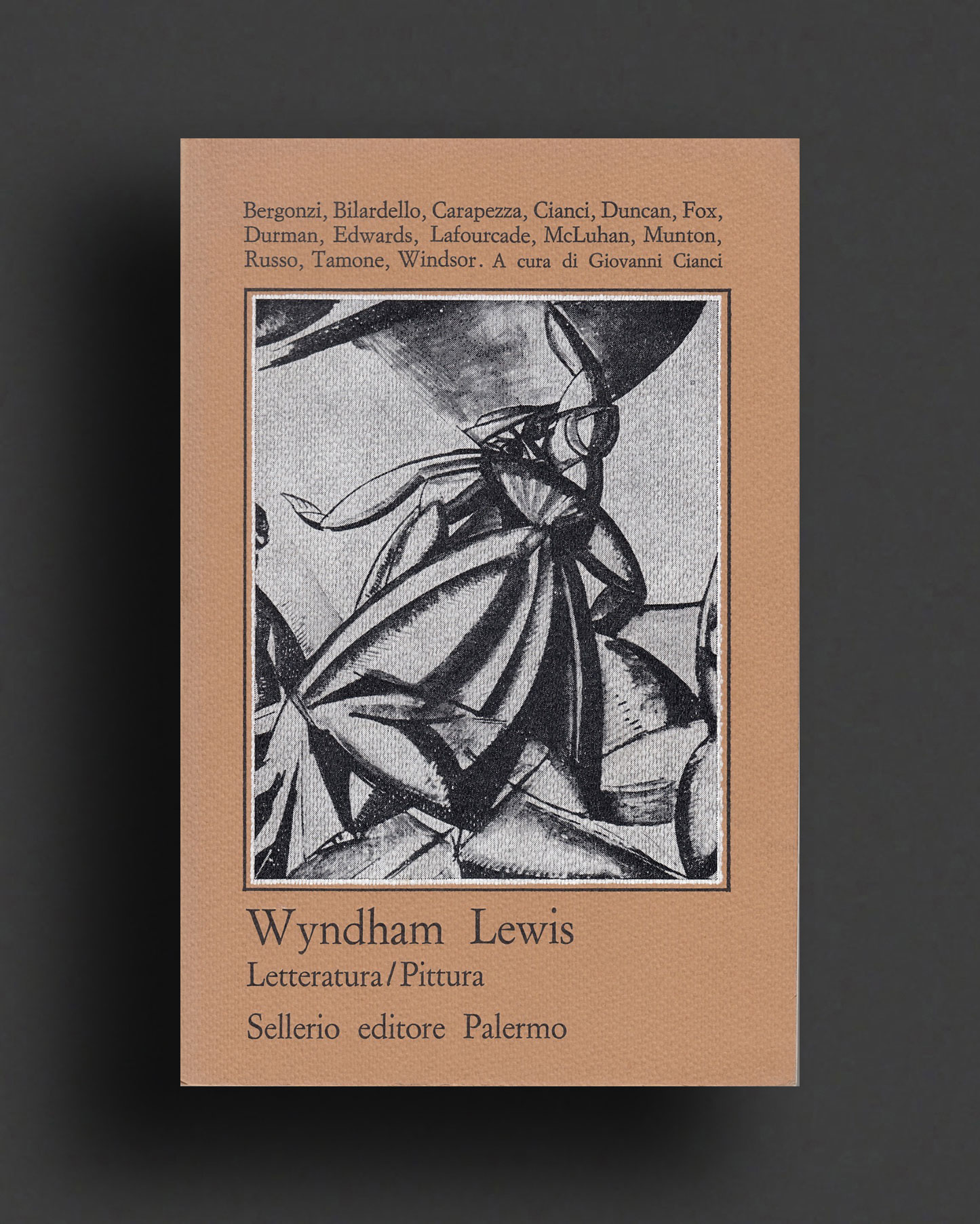
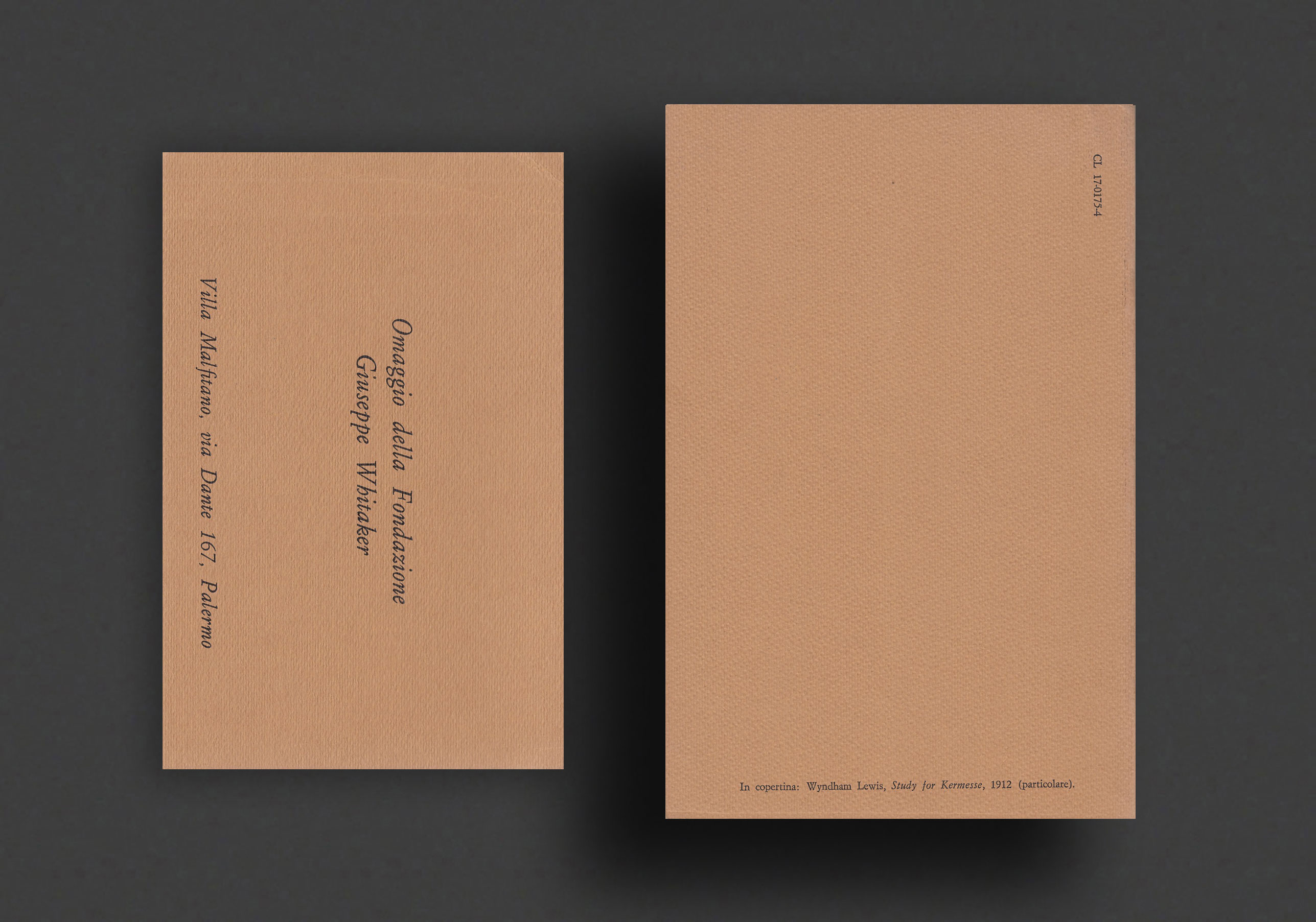
Lovely book published in Palermo, Italy to commemorate the centenary of the birth of Wyndham Lewis (Amherst 1882–London 1957) – writer, painter, essayist and pamphleteer, and the leading figure in the English experimental adventure of 1912-1915. He was co-founder of the Vorticist movement, remembered for his war paintings and for his ferocious and dehumanizing style.
Edited by Giovanni Cianci, the book is illustrated throughout with the work of Lewis, including a colour plate section, this original writings, and contributions in the original language (Italian and English) by Bernard Bergonzi, Enzo Bilardello, Attilio Carapezza, Giovanni Cianci, Ian Duncan, Michael Durman, Paul Edwards, CJ Fox, Bernard Lafourcade, Marshall McLuhan, Alan Munton, John Paul Russo, Sara Tamone, Alan Windsor.
Very Good copy.
2010, Japanese
Softcover, 208 pages, 24 x 18.5 cm
1st Edition, Out of print title / used / good
Published by
Atelier Peyotl / Tokyo
$55.00 - In stock -
Incredible Hans Bellmer special feature Issue of cult Japanese underground magazine Yaso, published in 2010, edited by Yuichi Konno and Atelier Peyotl (publishers of Night Vision/Yaso/Peyotl/Wave/Silvester Club...). Being a magazine specialising in the doll arts it was only natural that they would dedicate an entire issue to the ground-breaking work of German Surrealist Hans Bellmer and the development of his dolls, and pay homage to his immense influence on Japanese doll artists by discussing his work with them. Heavily illustrated with reproductions of Bellmer's iconic doll photography and drawings, alongside reproduced and translated original texts, extensive chronology of Bellmer and Unica Zürn, the drawing and anagram work of his partner Zürn, an invaluable bibliography of publications related to Bellmer to date, and many portraits of the artist. There is an extensive chronicle of doll history and development stretching from 1902—2010 and a large part of the issue is made up of heavily illustrated exclusive interviews with Japanese artists influenced by the legacy of Bellmer, including Simon Yotsuya, Nori Doi, Ryo Yoshida, Tatsumi Hijikata, Makoto Onozuka, Kishin Shinoyama, Minori Nawata, and more, surveys contemporary doll artists Volks, PEACH-PIT, naruto, Hizuki, Tari Nakagawa, Minori Nawata, Os, Akihiko Aono, mican, Ayumi, Masanao, Katan Amano, Nishioka Bro. & Sis., and many more, and includes essays by Sue Taylor, Alice Mahon, Kumi Ogata... absolutely packed with content and a valuable Bellmer reference in the context of his Japanese influence on the arts.
Good copy woth knock/crease to top–right corner, light wear.
1979, German
Softcover, 419 pages, 28 x 22 cm
1st Edition, Out of print title / used / very good
Published by
Kunsthaus Zürich / Zürich
Bentelli Verlag / Bern
$60.00 - In stock -
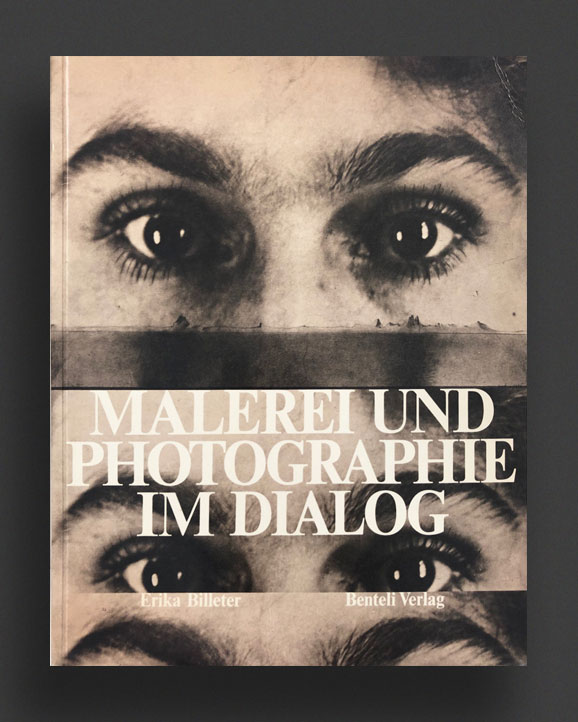
Wonderful over-sized catalogue published on the occasion of the exhibition Malerei und Photographie im Dialog / Painting and Photography in Dialogue, Kunsthaus Zürich, May 13 to July 24, 1977. Profusely illustrated, this heavy volume documents this historical survey of the relationship between photography and painting from 1840 to the present (late 1970s); with a full catalogue of works, artists' biographies, bibliography. Edited by Erika Billeter with texts throughout by art historian Josef A. Schmoll. Includes the work of Edvard Munch, Urs Lüthi, Wols, Vito Acconci, John Baldessari, Eadweard Muybridge, Hannah Höch, Raoul Hausmann, Hans-Peter Feldmann, Oskar Schlemmer, Francis Bacon, Hilla and Bernd Becher, Les Levine, Constant Puyo, Clarence Hudson White, Jan Groover, Jochen Gerz, Duane Michels, Mario Merz, Giulio Paolini, Ruth Francken, Theo Von Doesburg, Kurt Schwitters, Ferdinand Hodler, Herbert Bayer, Marcel Duchamp, Gertrude Käsebier, Edward Steichen, Alighiero Boetti, Klaus Rinke, Giuseppe Penone, Pierre Bonnard, Paul Klee, Gerhard Richter, Monika Baumgartl, Yves Klein, Wolf Vostell, Heinrich Kühn, Georges Mathieu, Peter Roehr, Sarkis, Jiro Takamatsu, Michael Heizer, Umberto Boccioni, Hans Bellmer, William Wegman, Raoul Ubac, Margrit Jäggli, André Kertész, Jiri Kolar, Kasimir Malevich, Henri de Toulouse-Lautrec, Dennis Oppenheim, Christian Boltanski, Dan Graham, Jan Dibbets, Jürgen Klauke, Bruce Nauman, Jean Tinguely, Vettor Pisani, Max Ernst, Joseph Cornell, Allen Kaprow, Arnulf Rainer, Mieczyslaw Berman, Jim Dine, George Brecht, Man Ray, Paul Wunderlich, Karin Székessy, Tom Wesselmann, Chuck Close, Eugène Delacroix, Duane Hanson, Heinrich Zille, Félix Vallotton, Carl Durheim, Gilbert and George, Joseph Beuys, Thomas Eakins, Robert Rauschenberg, Édouard Vuillard, Carlo Carrà, Alphonse Mucha, Les Krims, Albert Steiner, Giorgio de Chirico, Keiji Uematsu, Ernst Ludwig Kirchner, Heinrich Zille, Franco Fontana, Richard Long, Ben Shahn, Edmund Kesting, László Moholy-Nagy, Anton Stankowski, Paul Nash, Rene Magritte, Paul T. Frankl, John Heartfield, El Lissitzky, Georges Hugnet, Gordon Matta-Clark....
Very Good copy, crease to top cover corner.
2025, English
Hardcover, 304 pages, 29 x 22 cm
Published by
Hatje Cantz / Berlin
$105.00 - In stock -
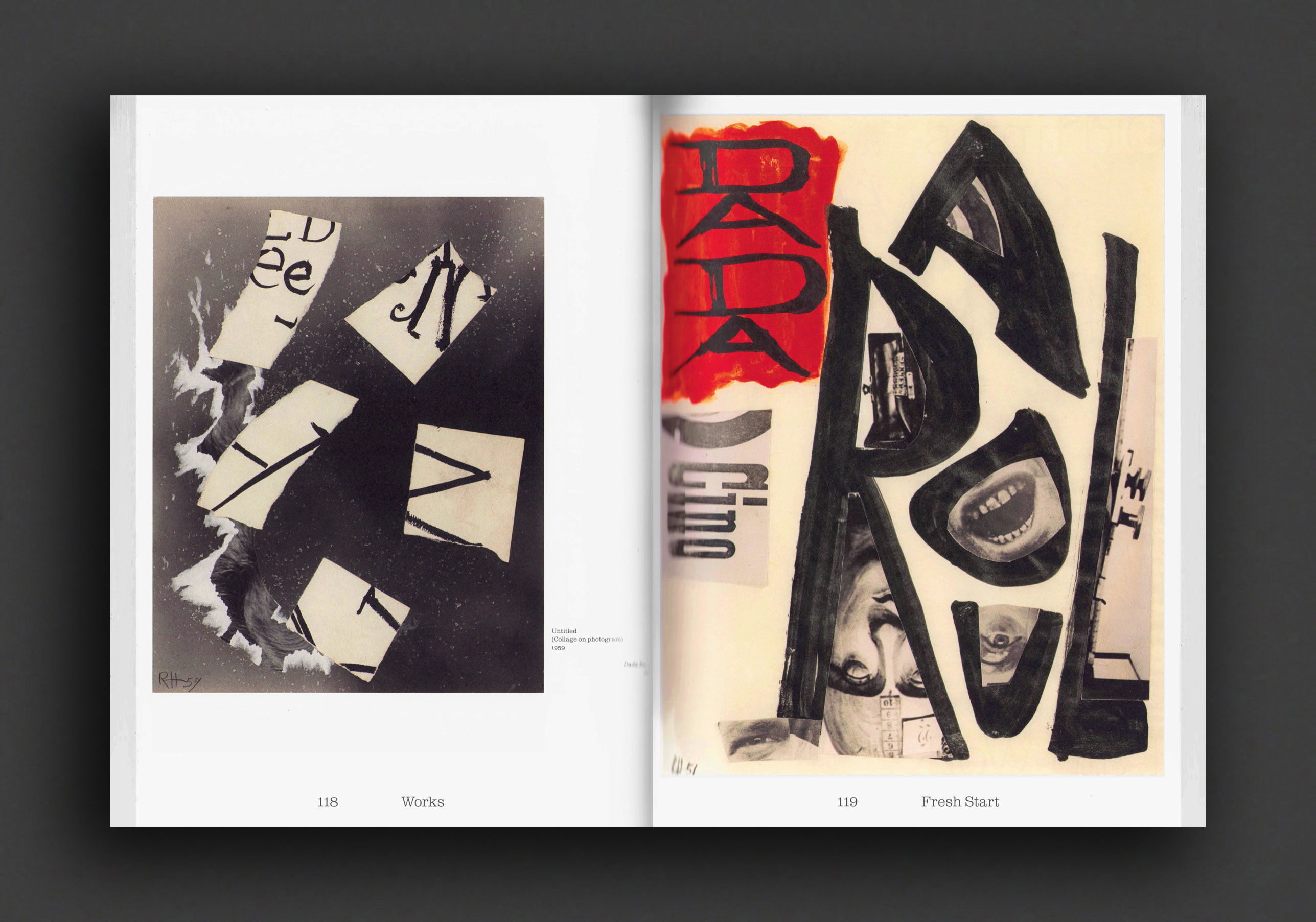
A spectacular appraisal of one of the most innovative avant-garde artists of the Dada scene
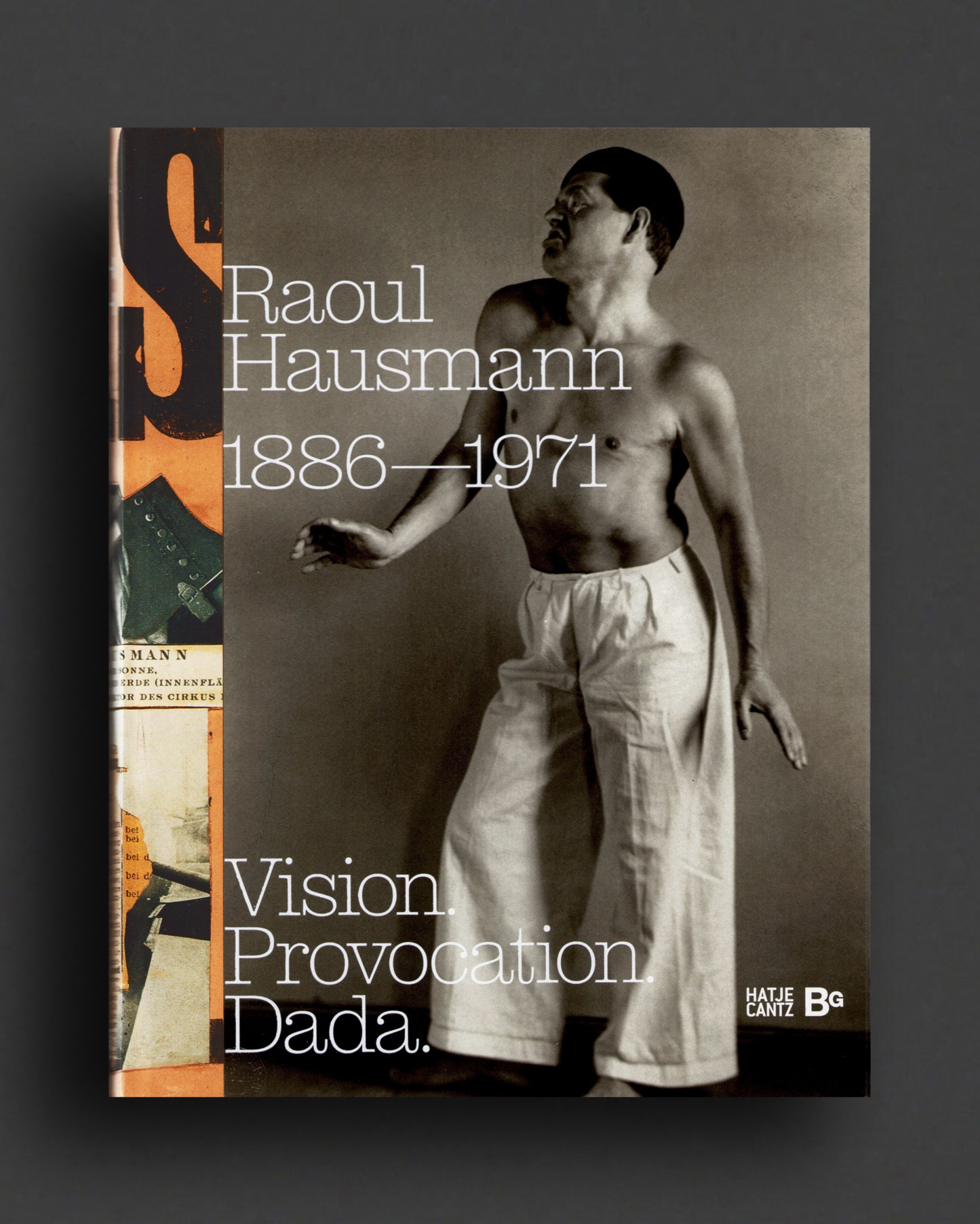
Raoul Hausmann fought convention all his life. Radically resolved to be "unscrupulously honest" in both art and life, the Dadaist was a multimedia activist of the first hour and a sharp-tongued critic of society. Now his visionary output can be enjoyed in all its breadth. With more than 300 illustrations, this catalogue from the Berlinische Galerie traces his path: the early Expressionist works, gems of Dada from the Berlin years, Hausmann's photography, but also fashion, dance and literature, and the artist's lesser-known productivity in exile. Twelve essays by international experts in the history of art and literature, media studies, and psychoanalysis examine the multilayered oeuvre to offer a multifaceted panorama of Hausmann's astonishing significance—even today. Another appealing feature of the catalogue is its attractive, artistic design.
Raoul Hausmann (1886-1971) was an exceptionally innovative avant-garde artist. He co-invented collage, explored body, words, and space in early happenings, merged the visual with the haptic, and translated sound into images. In and beyond art, the provocative "Dadasoph" called out the establishment.
Edited by: Ralf Burmeister, Thomas Köhler
Graphic Design: Gregor Schreiter
Texts by: Hanne Bergius, Peter Bexte, Ralf Burmeister, Amélie Castellanet, Annina Guntli, Nadine Hartmann, Thomas Köhler, Annelie Lütgens, Agatha Mareuge, Nils Philippi, Bernd Stiegler, Hélène Thiérard, Timm Ulrichs, Michael White
2025, English
Hardcover, 128 pages, 24.2 x 17.2 cm
Published by
Magic Hour Press / New York
$90.00 - In stock -
Edited by Francis Schichtel, Jordan Weitzman, Nan Goldin.
Text by Hilton Als.
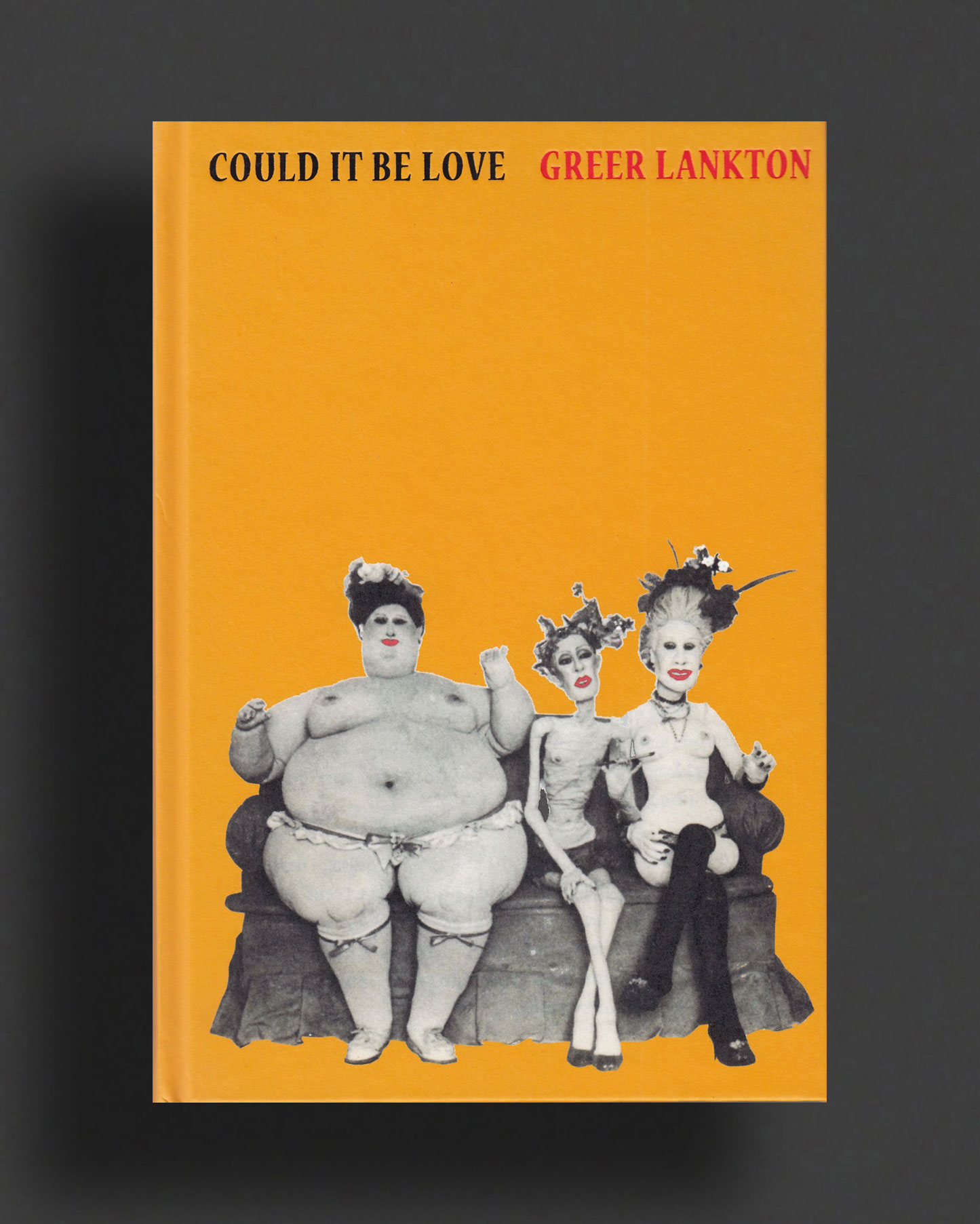
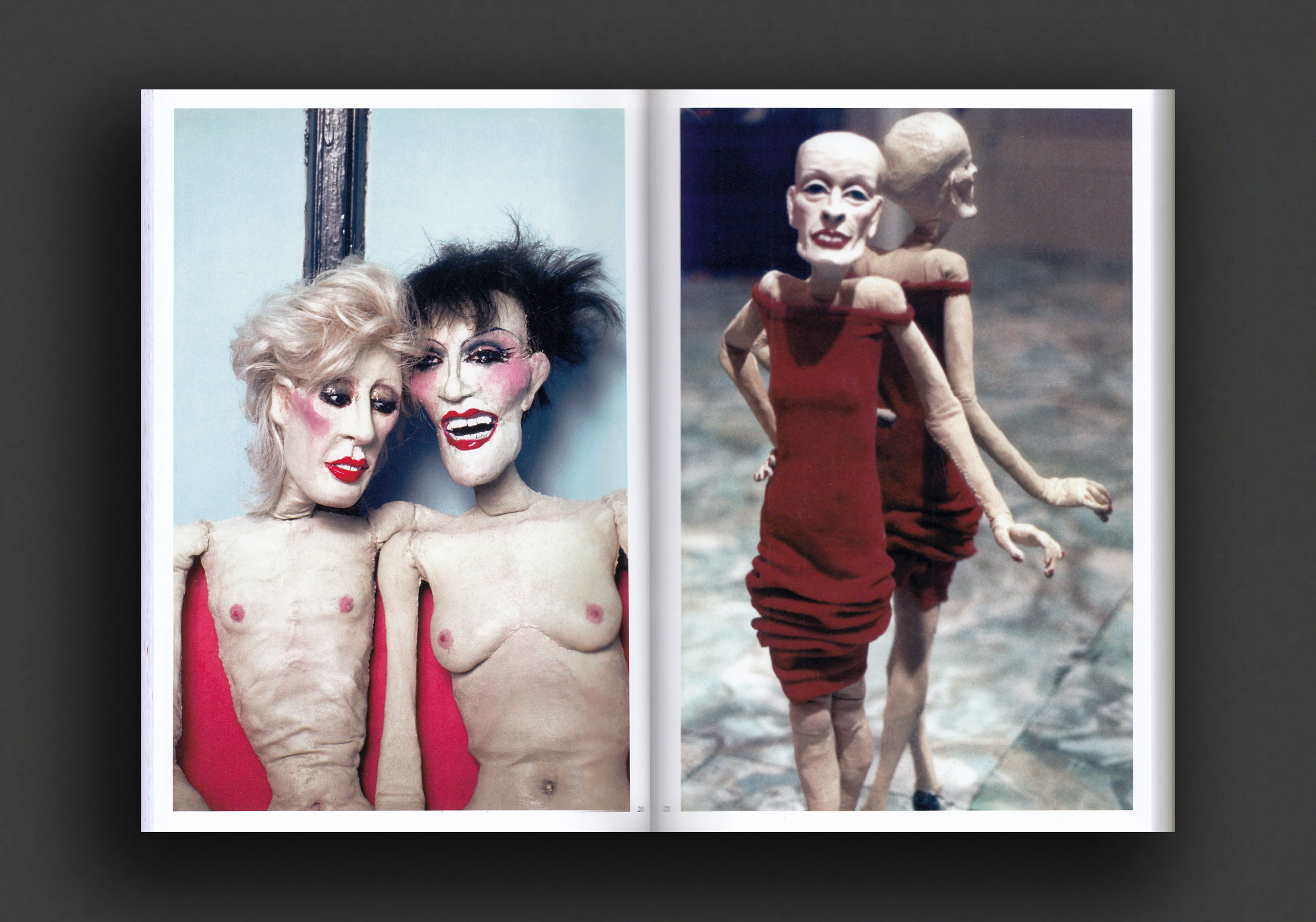
Lankton's iconic and startling doll sculptures as we have never seen them before: through her own eyes
This is the first monograph on the trans visionary artist Greer Lankton (1958–96), whose lifelike doll sculptures shocked 1980s New York. Lankton's dolls, which she began making as a child and produced obsessively until her death at age 38, were a means to explore her fraught relationship with the human body. In the book's 100 photographs, all shot by Lankton herself, these figures take on a life of their own, kvetching at a party, strolling along a beach, or lounging on a stoop in the East Village. Among this extraordinary cast of oddballs—usually femme, often freakish, always radiating a glamorous confidence—we find characters of Lankton's own invention alongside well-known icons such as Divine, Coco Chanel, Andy Warhol and even Lankton herself.
Born in 1958 to a Presbyterian minister in Michigan, Greer Lankton moved to New York in 1978 and became a rising star of the downtown scene. There, her deviant elegance was immortalized in photographs by Peter Hujar, David Armstrong and Lankton's close friend Nan Goldin, who described her as "one of the luminaries of the East Village renaissance: beautiful, glamorous, wild and hysterically funny." Lankton's work was a neighborhood fixture, in exhibitions at the gallery Civilian Warfare and in regular window displays at Einstein's Boutique, and was also celebrated farther afield, in era-defining group shows at PS1 and the Venice Biennale. Her final work, an immersive installation created for the Mattress Factory in 1996, remains on permanent view.
“Now I’m completely bowled over. Greer Lankton has got to be a genius…these are her dolls at her best... One scene is a birthday party for a ninety year old woman of culture and taste. I can’t describe anything that is going on in this scenario because I could actually write a complete novel about the party and the party people…. What a celebration! Hallelujah!!! —Cookie Mueller
“Greer Lankton’s dolls are entire biographies on legs, whole movies, three-dimensional Alice Neels. And they’re all self-projections, all of her contradictory impulses--abjection and eminence, dissipation and what comes after, gender fixed or fluid--examined lovingly and pitilessly. She could locate variously aged and battered versions of herself on the street, in a movie, at a party, alone on a park bench--with her eye she could see herself from outer space, sub speciae aeternitatis. And her taste and her skills were impeccably suited to her unique medium. Why did we have to lose her?”—Lucy Sante
“I found my first encounters with Greer Lankton’s grotesque dolls shocking. My cohort of 80’s artists challenged authorship and valued detachment and did not warm to raw displays of intimacy (and god forbid craft) that were the core of Greer’s prescient, messy battle with beauty and pain. Current culture is hungry for exactly what Greer’s art serves up - the exploration of gender, imperfection, self-expression and authenticity.”—Laurie Simmons
“Lankton’s creatures live in a psychic interline where genitals and gender identity are scrambled in the play of appearances, and reveal an exacerbated, possibly mutilated sexuality as the trigger of personality. Like Theodora Skiptare’s housewife automata that vomit and menstruate, Lankton’s ambisexual dolls wear faces of crumbling self-assurance, or even moronic friendliness and self-contentment, while breathing pain in and out through their pores."—Gary Indiana, Art in America, 1984
“Of course, to say that a doll by Greer Lankton is “just a doll” is absurd. Lankton’s dolls are like no other dolls, and no Lankton doll is like any of her dolls. For that matter many Lankton dolls weren’t even like themselves from one moment to the next. Lankton constantly reworked them ‘changing their gender, identities, sizes and clothes.’ But some…change by being photographed from different angles, using different lighting and backgrounds. Simple as the photographs are, they manage to bring the dolls to life, give them a story.”—Douglas Crimp
“She has become, to this young community what Rimbaud must have been to Paris in the 1920's. She has been compared to Hans Bellmar and to Frida Kahlo, for both have created highly self referential imagery affected heavily by events which have changed the course of their lives.”—Dean Savard, co-founder of Civilian Warfare
2012, English / German
Softcover, 104 pages, 20.3 x 24.8 cm
1st Edition, Out of print title / as new
Published by
Walther König / Köln
Collection de l'Art Brut / Lausanne
$110.00 - In stock -
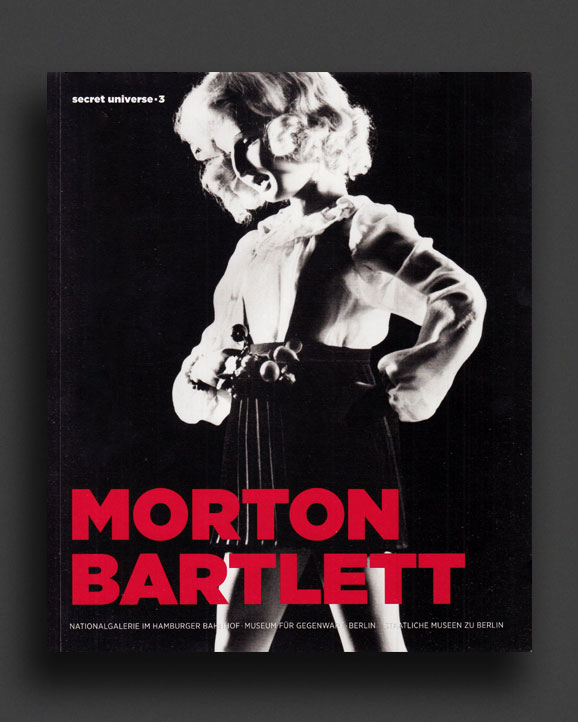
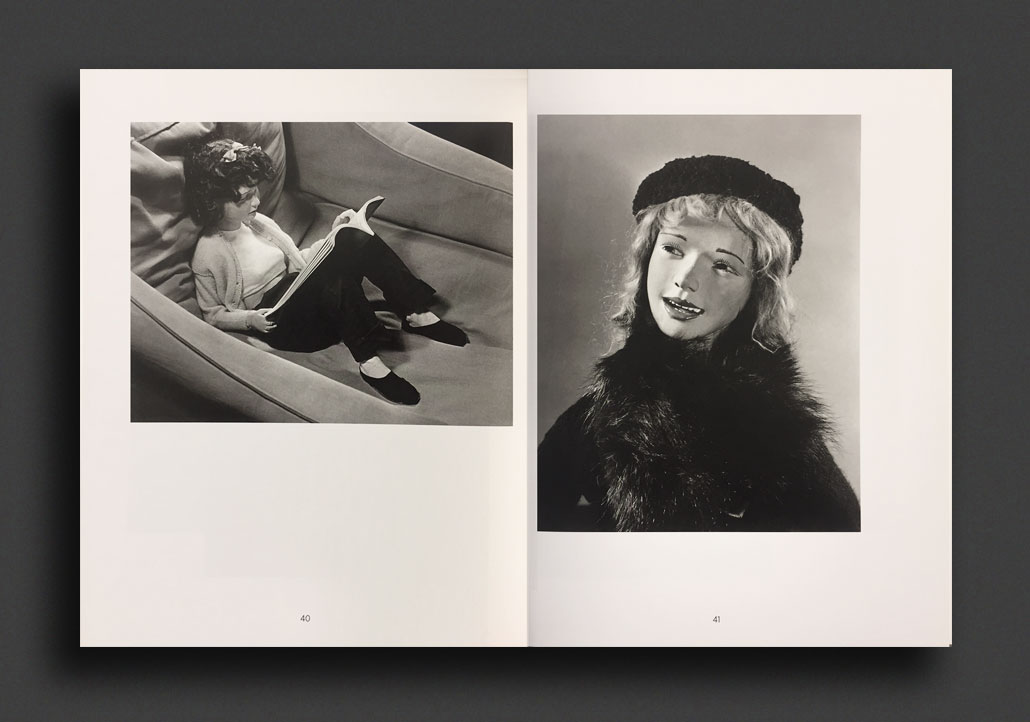
Scarce out-of-print monograph on the work of Morton Bartlett, one of only a couple of books on the artist, published by Collection de l'Art Brut Lausanne and Walther Koenig in 2012 and quickly sold out.
When the freelance photographer and graphic designer Morton Bartlett (1909–1992) died at the age of 83, his relatives found 15 chests among his possessions. Each chest contained a half-life-size doll and its accessories: 12 girls and three boys, a wardrobe of hand-sewn clothes, black-and-white photographs of each doll as well as countless studies and archival materials. Bartlett began designing these dolls in the mid-1930s, studying anatomy books and histories of costume, and learning to sew and mold with clay to make them as true to life as possible. Each doll entailed a huge amount of labor, taking up to a year to complete; Bartlett created costumes and wigs for each one and then staged them in lifelike scenarios and photographed them, documenting a family he had never had and creating a body of work that would remain unexhibited during his lifetime. The third installment in the Bahnhof Museum’s series on outsider artists, this volume examines Bartlett’s extraordinary lifelong obsession.
Edited and with foreword by Udo Kittelmann, Claudia Dichter. Text by Lee Kogan.
As New copy.
2024, English / French
Softcover, 272 pages, 22 x 28 cm
Published by
JRP Ringier / Zürich
MUDAM / Luxembourg
$78.00 - In stock -
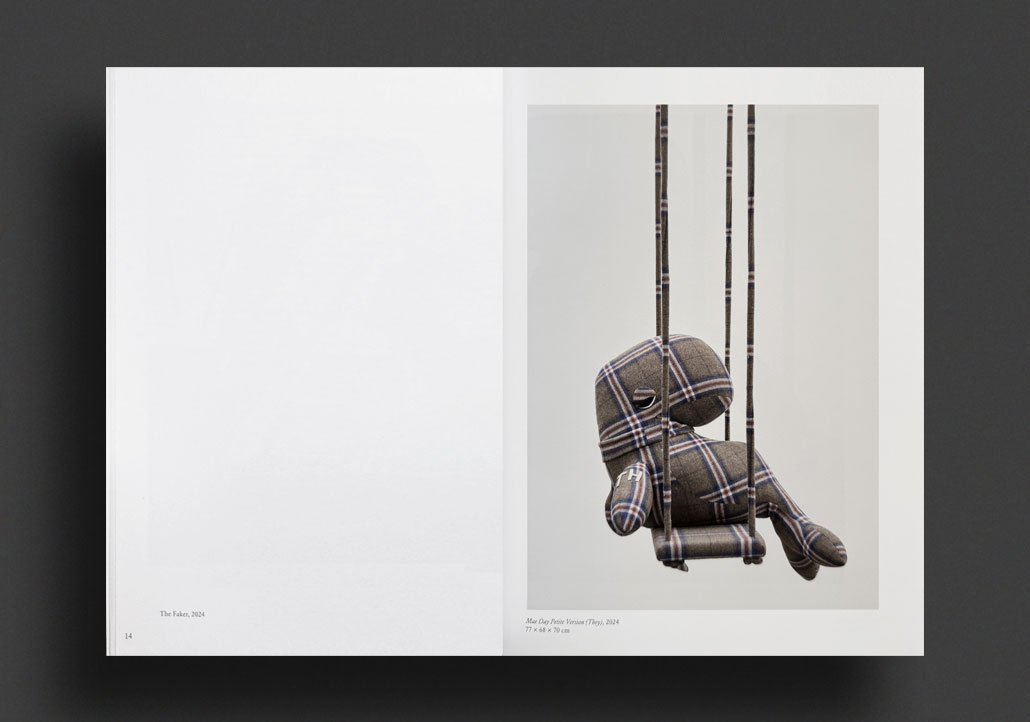
A book spanning Cosima von Bonin's work of the last decade, and a personal journey into her private world and references.
Published to accompany the German artist's comprehensive exhibition at Mudam Luxembourg (October 2024–March 2025), Cosima von Bonin's new monograph Songs for Gay Dogs is both a book spanning her work of the last decade, and a personal journey into her private world and references, designed by her long-time friend and collaborator Yvonne Quirmbach.
Introduced by Mudam Director Bettina Steinbrügge, it assembles a play by Australian writer and art critic Estelle Hoy that brings to life Cosima von Bonin's recurring characters, an essay by Mudam curator Clémentine Proby about the carnivalesque in her work, a contribution by Pop journalist and Cologne figure Clara Dreschler, and a "Privato" chapter comprising images, texts, and documentation from the artist's personal archive. The book includes 200 illustrations, previously unseen images, and pictures of Cosima von Bonin's newly commissioned installation in Mudam's Grand Hall.
Cosima von Bonin (born 1962 in Mombasa, lives in Cologne) began her career in the early 1990s, following in the footsteps of Martin Kippenberger. A prolific artist, she produced oversized stuffed animals and other fantastical creatures, as well as pseudo-Minimalist sculptures using comedy, cartoons, and pop culture to question social constructions and relations. She explores the relationship of the individual to work, the capitalist production system, and leisure society. She uses knitted and woven fabrics to create objects that enable her to mock industrial means of production, which she feels infantilize the individual. By advocating a life of dolce far niente, of carefree idleness, von Bonin is proposing a form of resistance against the consumerist regime. Her exhibitions include the Schirn Kunsthalle Frankfurt and Mudam Luxembourg, both 2024; Magasin III Jaffa, Tel Aviv (2019); CCS Bard, Annandale-on-Hudson (2018); and Sculpture Center, New York (2016). She participated in the 59th Biennale di Venezia (2022); Skulptur Projekte Münster (2017); Glasgow International (2016); MUMOK, Vienna (2014); Artipelag, Sweden (2013); Mildred Lane Kemper Art Museum, St. Louis (2011); Arnolfini, Bristol (2011); Musée d'Art Moderne et Contemporain, Geneva (2011); Museum Ludwig, Cologne (2011); Kunsthaus Bregenz, Austria (2010); Museum of Contemporary Art, Los Angeles (2008); and Documenta, Kassel (2007 & 1982).
Edited by Clémentine Proby and Cosima von Bonin.
Texts by Bettina Steinbrügge, Clara Dreschler, Clémentine Proby, Estelle Hoy.
1999, English
Hardcover (w. dust jacket), 256 pages, 26 x 21 cm
1st Edition, Out of print title / used / very good
Published by
Yale University Press / New Haven
$55.00 - Out of stock
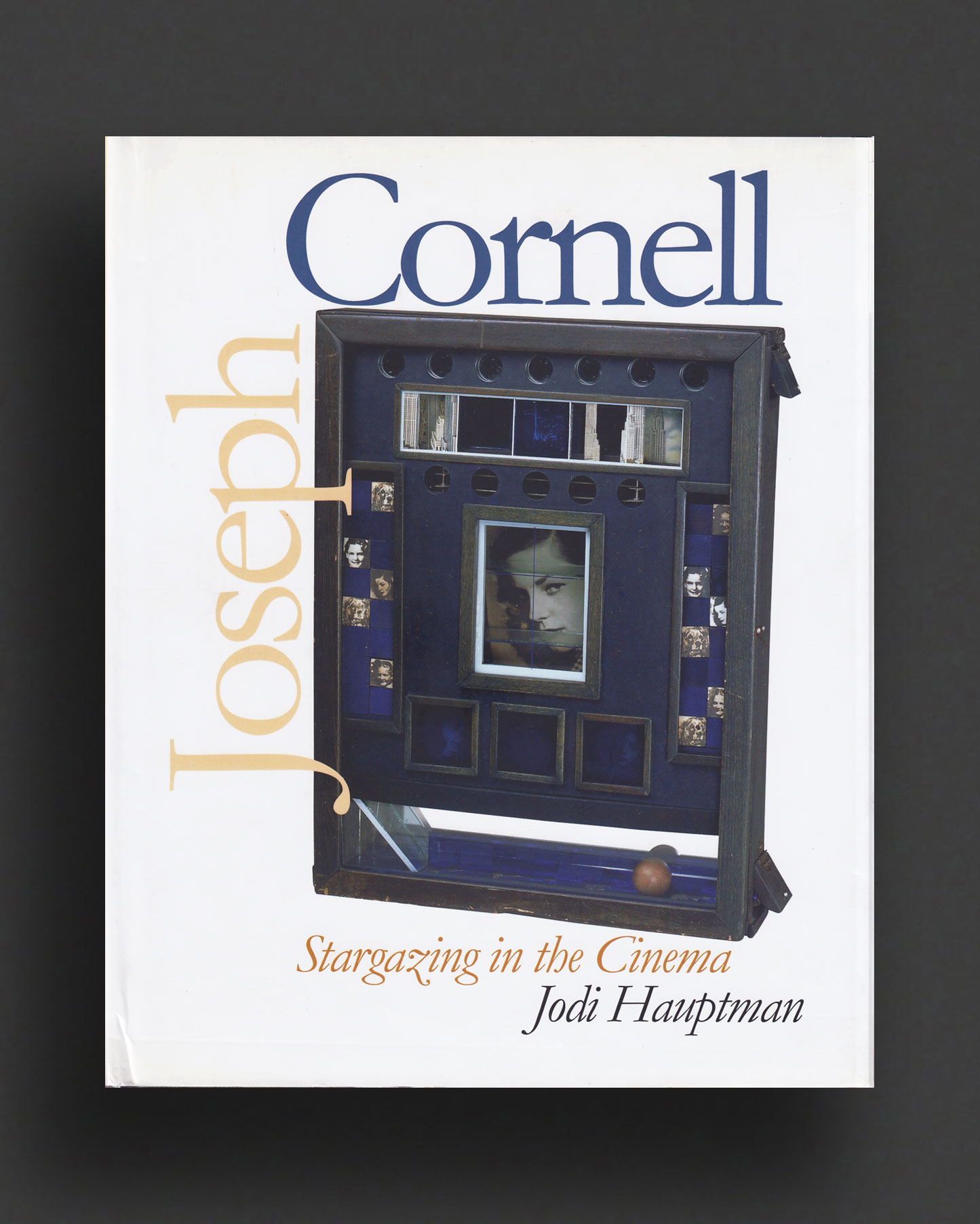
Published in 1999 and now out-of-print, Joseph Cornell - Stargazing in the Cinema is the first study devoted exclusively to Cornell's relationship with the cinema, examining his "portrait-hommages" to female movies stars, including Greta Garbo, Lauren Bacall, Hedy Lamarr, and Jennifer Jones. The elusive Cornell (1903-1972) was an American visual artist and filmmaker, one of the pioneers and most celebrated exponents of assemblage. Influenced by the Surrealists, he was also an avant-garde experimental filmmaker. Romantic, obsessive and shy, Cornell never moved out of his mother’s house, yet his strange, exquisite art brought him fame and friendships with Duchamp, Dalí and Warhol. Jodi Hauptman here discusses the artist's "cinematic imagination" and the ways he adapted techniques of accumulation and juxtaposition to the art of portrayal, arguing that Cornell's movie star portraits are his most emblematic works. Hauptman explores the links between collection and desire, contending that Cornell is both surrealist and historian.
VG in VG dust jacket.
2007, English
Softcover, 160 pages, 20.5 x 15.5 cm
Published by
Atlas Press / London
$34.00 - In stock -
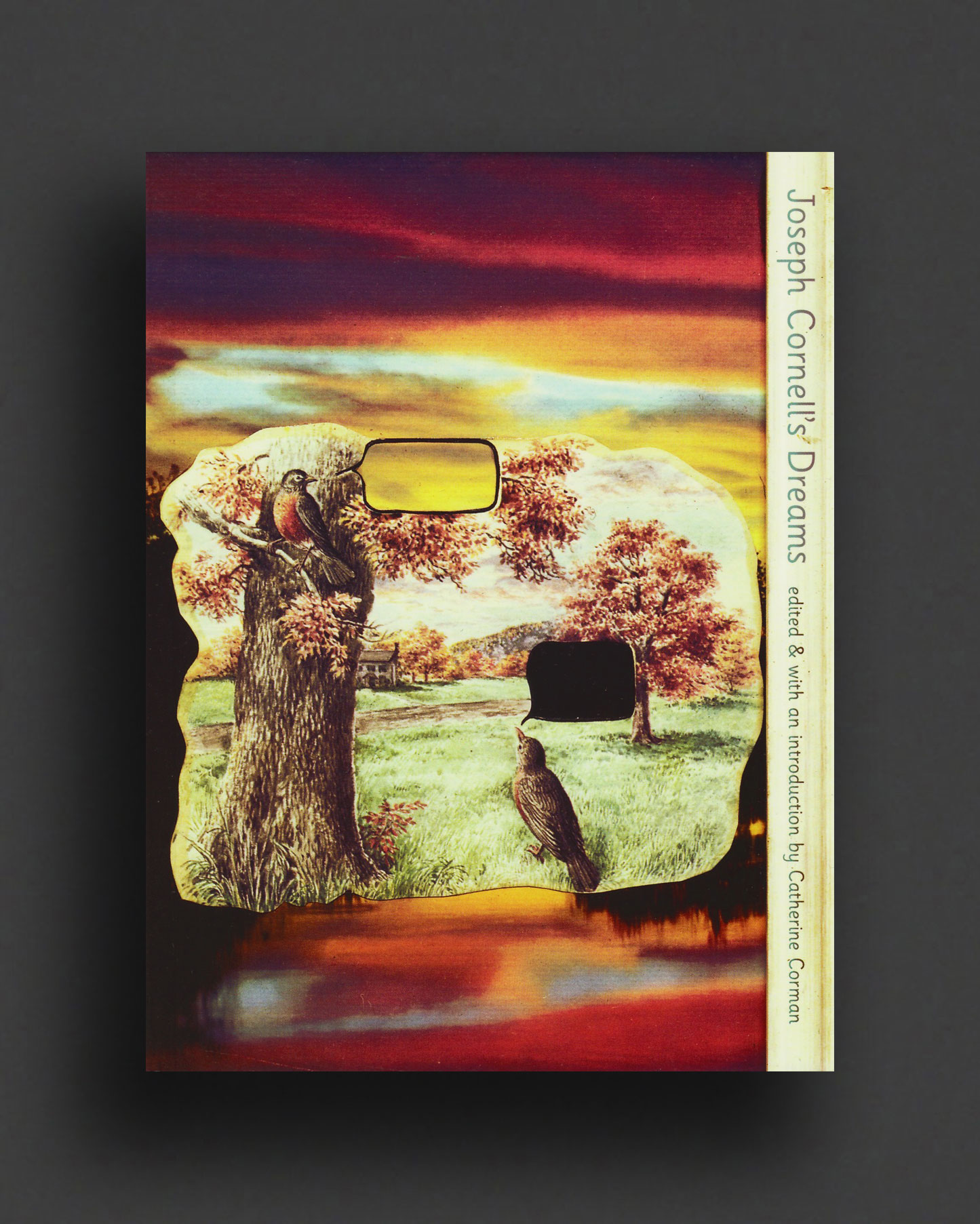
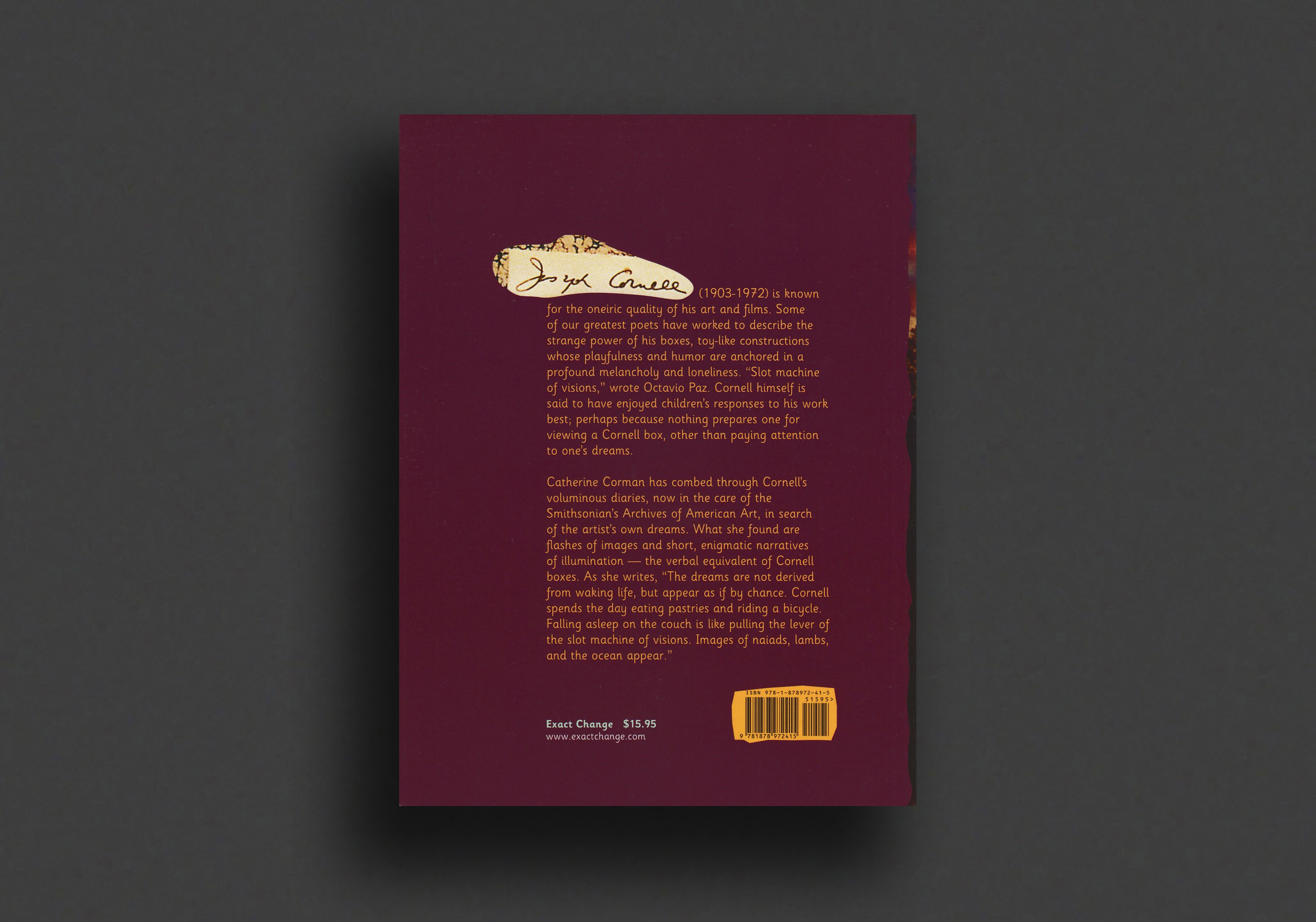
Joseph Cornell is well known for the oneiric quality of his art and films. Many have tried, often in vain, to put into words the strange power of his boxes—toy-like constructions whose playfulness and humor are anchored in a profound melancholy and loneliness. "Slot machines of visions," said Octavio Paz. Cornell himself is said to have enjoyed children's responses to his work; perhaps because nothing prepares one better for viewing a Cornell box than having an unbiased mind. Catherine Corman has combed through the voluminous diaries that Cornell kept throughout his life, now in the care of the Smithsonian's Archives of American Art, in search of the artist's own dreams. What she found are brief flashes of images, and short, enigmatic narratives of illumination -- the verbal equivalent of Cornell boxes.
In 1993, Mary Ann Caws edited a large portion of Cornell's diaries for publication by Thames & Hudson, an invaluable sourcebook for Cornell studies. This new, shorter volume is a poetic addition to that literature, equally indispensible to those interested in Cornell as it contains previously unpublished writings, but also because it is as intriguing and mysterious to the uninitiated as the magical boxes themselves.
1986, English
Softcover, 319 pages, 175 x 229 mm
1st Edition, Out of print title / used / very good
Published by
The MIT Press / Massachusetts
$45.00 - Out of stock
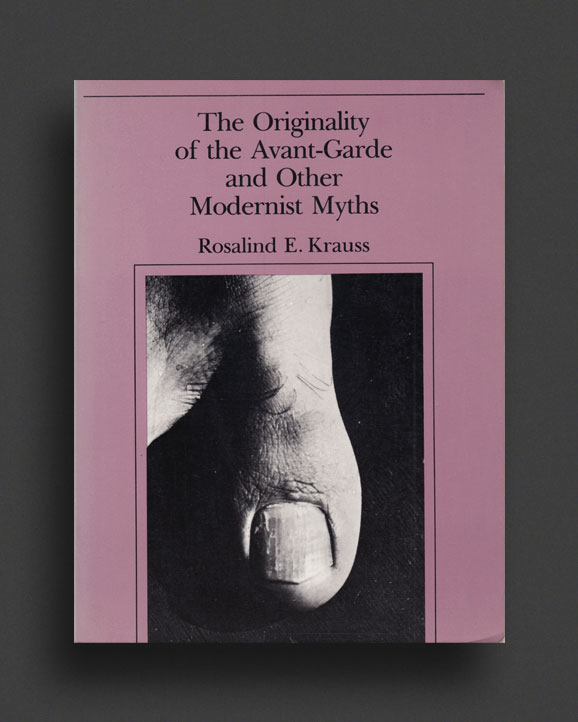
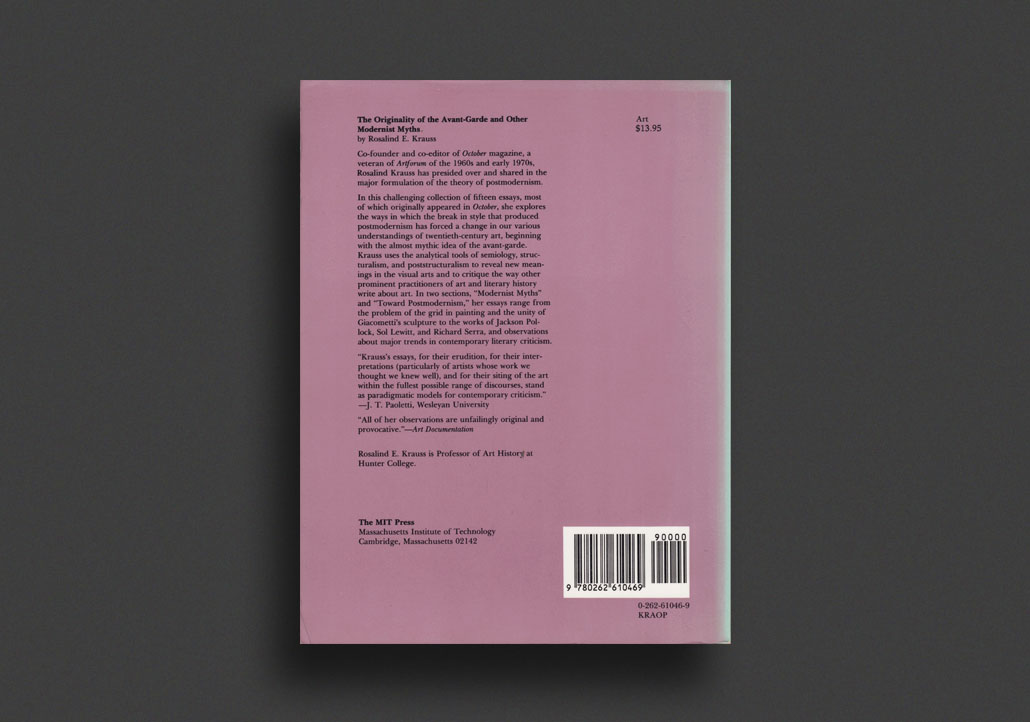
Co-founder and co-editor of October magazine, a veteran of Artforum of the 1960s and early 1970s, Rosalind Krauss has presided over and shared in the major formulation of the theory of postmodernism. In this challenging collection of fifteen essays, most of which originally appeared in October, she explores the ways in which the break in style that produced postmodernism has forced a change in our various understandings of twentieth-century art, beginning with the almost mythic idea of the avant-garde. Krauss uses the analytical tools of semiology, structuralism, and poststructuralism to reveal new meanings in the visual arts and to critique the way other prominent practitioners of art and literary history write about art. In two sections, "Modernist Myths" and "Toward Postmodernism," her essays range from the problem of the grid in painting and the unity of Giacometti's sculpture to the works of Jackson Pollock, Sol Lewitt, and Richard Serra, and observations about major trends in contemporary literary criticism.
Rosalind E. Krauss, University Professor at Columbia University and an editor and cofounder of October magazine, is the author of The Originality of the Avant-Garde and Other Modernist Myths (1985), The Optical Unconscious (1993), The Picasso Papers (1999), and Bachelors (1999), all published by the MIT Press, and coauthor (with Yve-Alain Bois) of Formless: A User's Guide (Zone Books, 1997).
"All of her observations are unfailingly original and provocative."—Art Documentation
Very Good copy of original 1986 edition, 1993 printing.
2006, English
Softcover, 118 pages, 23.5 x 16.5 cm
1st Edition, Out of print title / used / very good
Published by
Hayward Gallery Publishing / London
$25.00 - In stock -
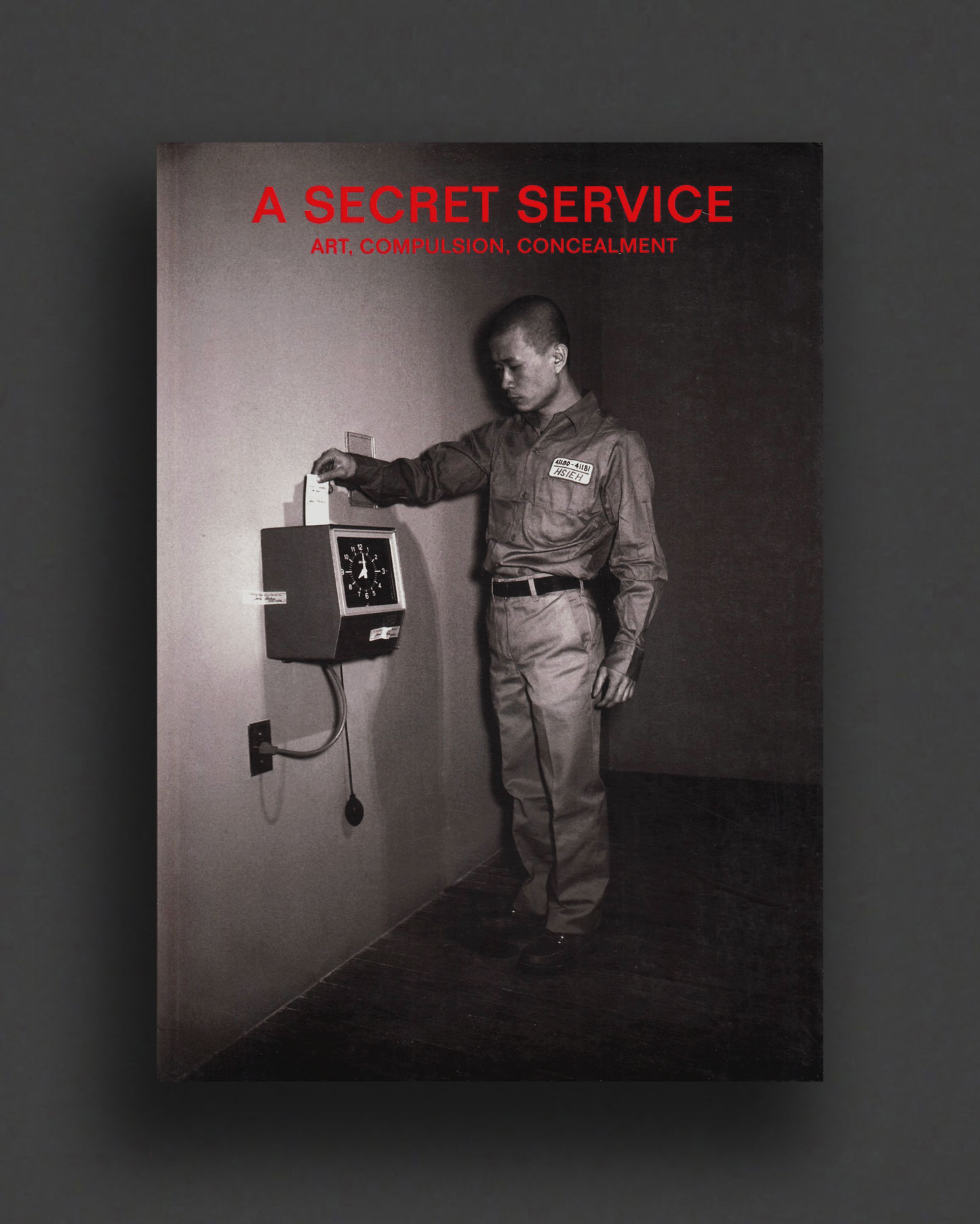
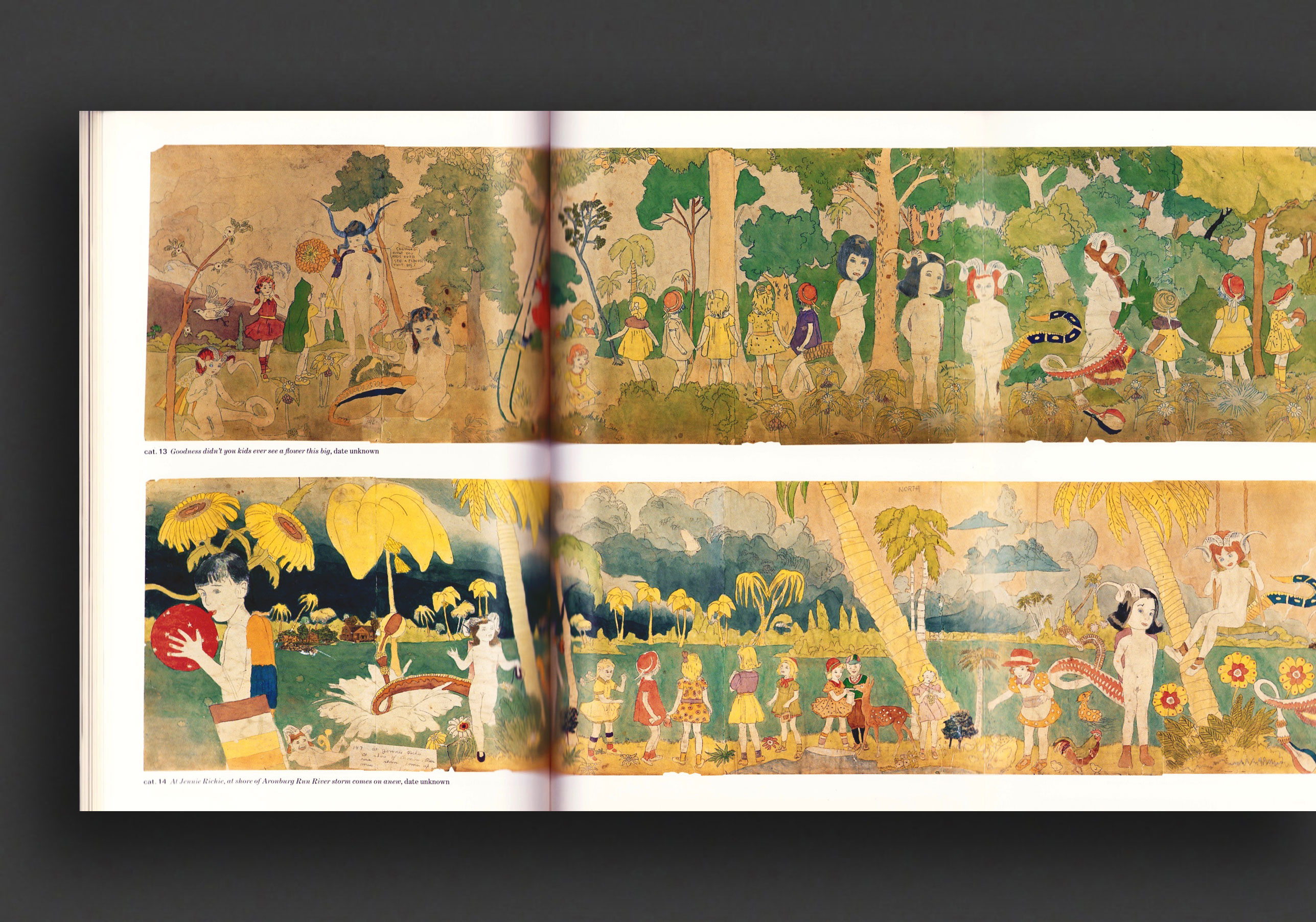
Published in 2006 on the occasion of this Hayward Gallery touring group exhibition, 'A Secret Service: Art, Compulsion, Concealment' explores the work of fifteen international artists and groups whose practices centre on the creation of secret worlds or the exposure of hidden facts and images. Key figures of Modern art, established and emerging contemporary artists and 'outsiders' together address numerous aspects of secrecy: magic, alchemy, sexuality, dreams, religion, political conspiracy, assumed identity and the covert workings of the State. Essays by Richard Grayson, Clare Carolin, and Roger Cardinal, accompany biographies and lavish, full-colour galleries of works by all featured artists: Sophie Calle, Roberto Cuoghi, Henry Darger, Gedewon, Susan Hiller, Tehching Hsieh, Kataryzna Józefowicz, Joachim Koester & Adrian Dannatt, Paul Étienne Lincoln, Mark Lombardi, Mike Nelson, Kurt Schwitters, The Speculative Archive, Jeffrey Vallance, Oskar Voll.
Very Good copy with light wear to covers.
1989, French
Softcover, 120 pages, 27.5 x 20.5 cm
1st Edition, Out of print title / used / very good
$45.00 - In stock -
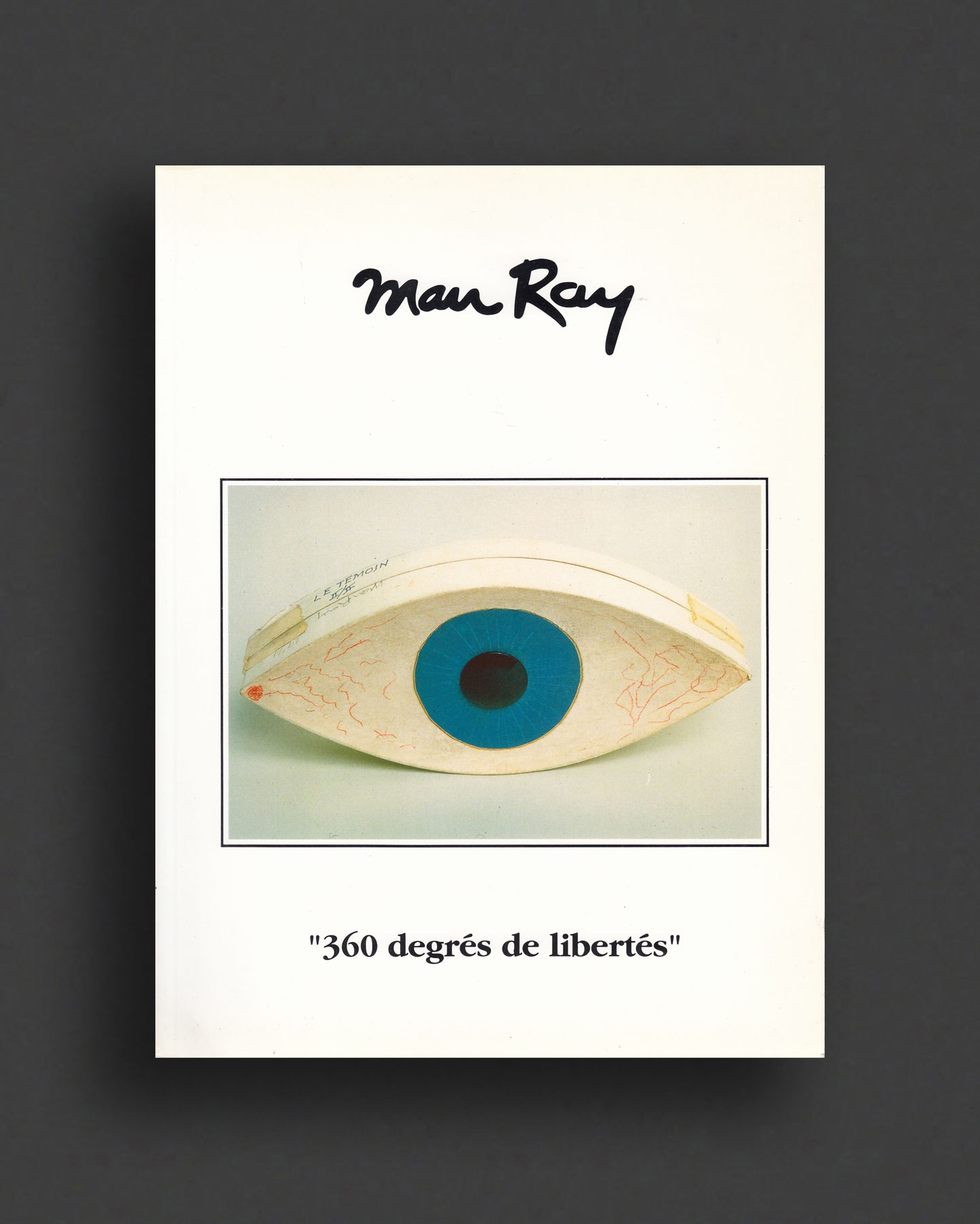
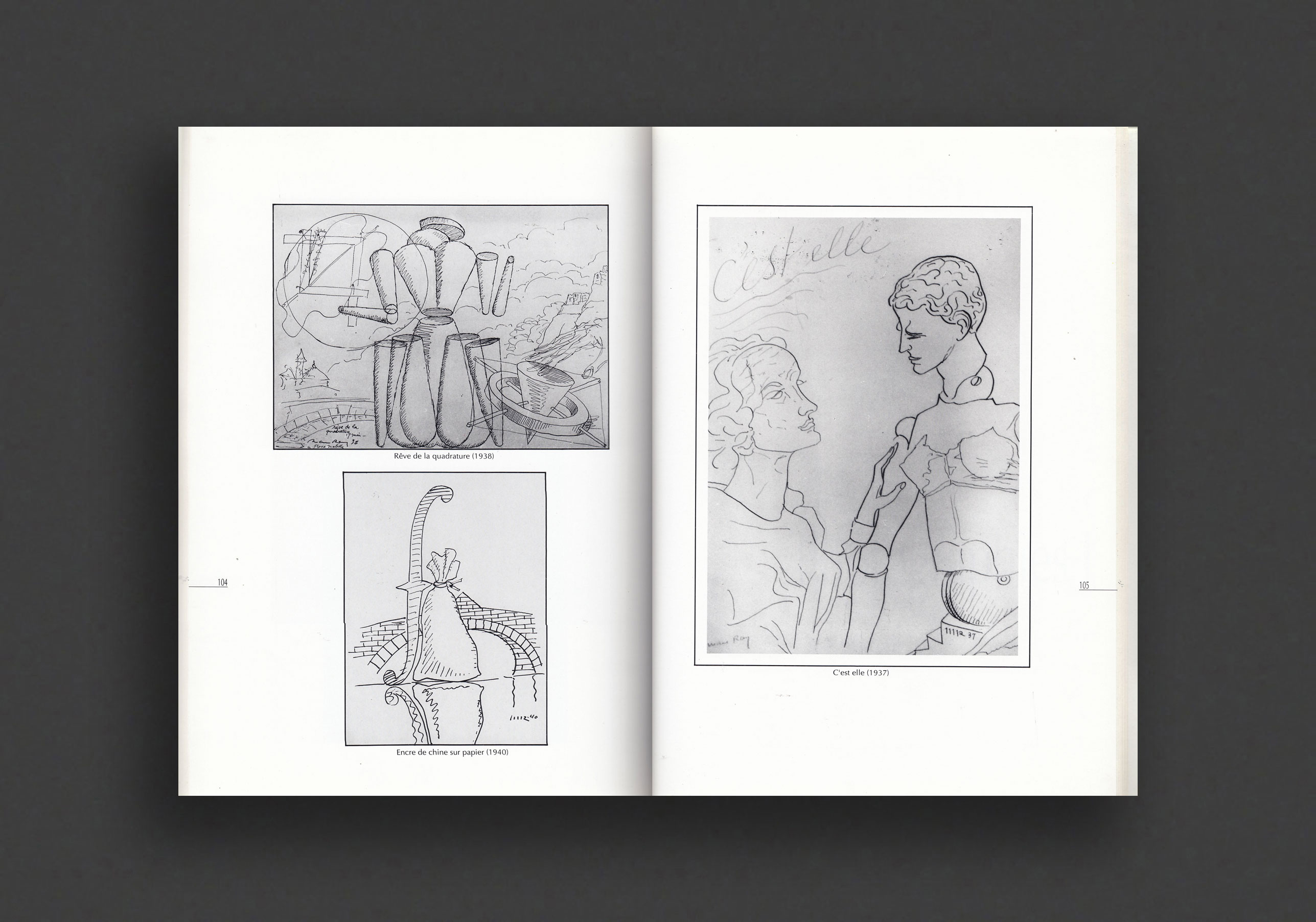
Scarce Man Ray catalogue published on the occasion of the exhibition at the City of Paris from March-June, 1989 at the Trianon de Bagatelle - Route de Sèvres - Bois de Boulogne, curated by Carla Arigoni. Heavily illustrated throughout with many examples of Man Ray's works spanning chapters spanning objects, paintings, drawings, photographs, all reproduced in colour and b/w. Includes biography, bibliography, exhibition history, texts from Man Ray, Tristan Tzara, André Breton, Max Ernst, Pierre Bourgeade, and many more.
Very Good—NF copy.
1993, English / Japanese
Hardcover, 74 pages, 19.5 x 13 cm
1st Edition, Out of print title / used / very good
Published by
Treville / Tokyo
$90.00 - In stock -
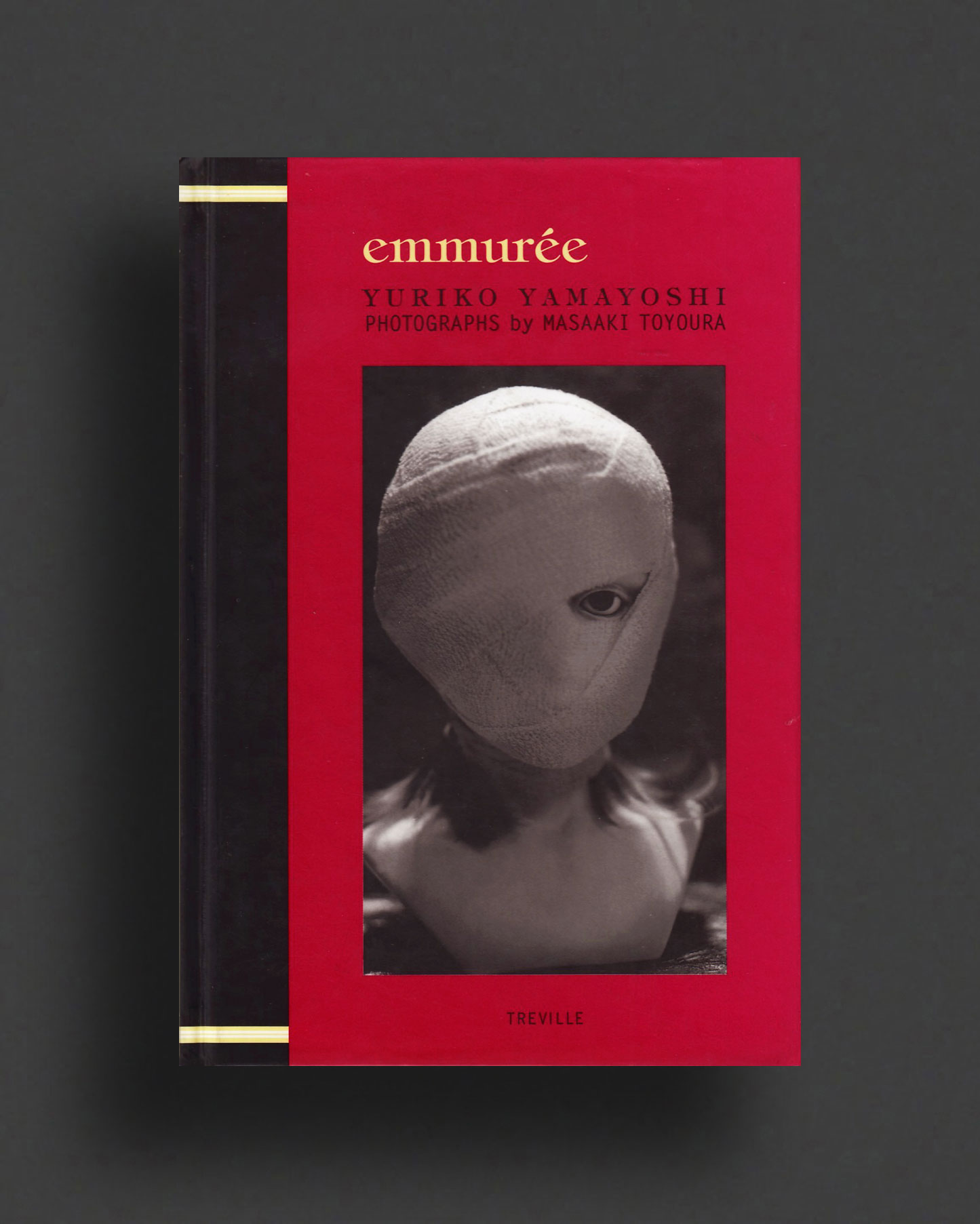
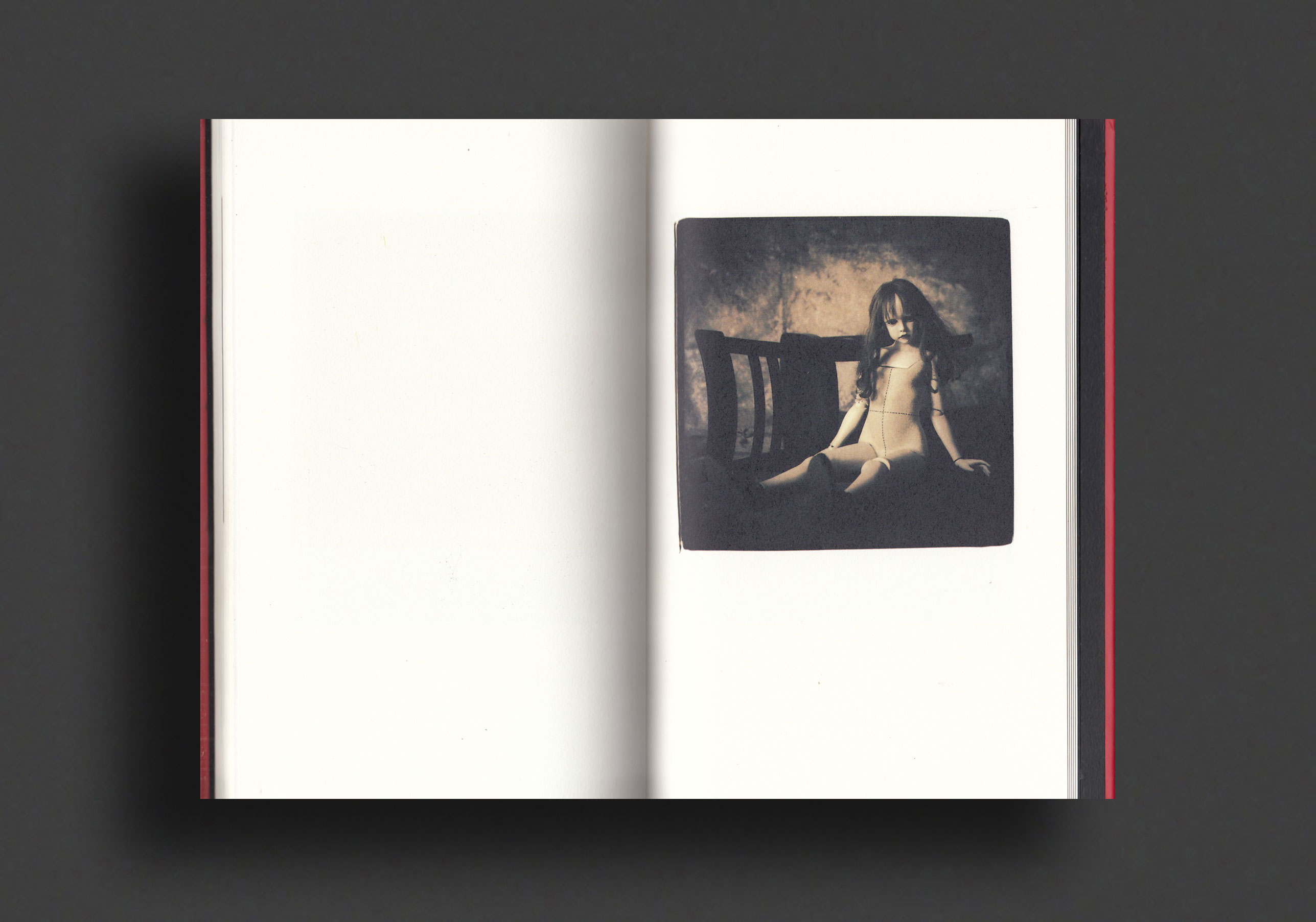
Scarce first 1993 hardcover edition, first printing of emmurée, a stunning photo book by Japanese doll artist Yuriko Yamayoshi, whose hauntingly beautiful ball-jointed dolls are photographed by Masaaki Toyoura with an afterword by the dollmaker herself (in Japanese). Beautifully designed and brilliantly shot in sepia and melancholic muted tones, Toyoura depicts Yamayoshi's distressed, angelic dolls in macabre scenarios and poses — forlorn fantasies in shadow. The finest book of Yamayoshi's gothic creations.
Very Good copy, light corner wear to covers, otherwise Near Fine.