World Food Books' programme is largely produced on Kulin Nation land. We acknowledge the Wurundjeri people of the Kulin Nation as the first and continuing custodians of this land, and pay respect to their Elders past, present, and emerging.
World Food Books is an arts and special interests bookshop in Naarm / Melbourne. Founded in 2010, World Food Books is devoted to the presentation of a rotating, hand-selection of international art, design, literary and counterculture publications with an emphasis on the anti-traditional, the experimental, the avant-garde, the heretic, the marginal.
Presenting new titles alongside rare and out-of-print books, catalogues and journals spanning the fields of modern and contemporary art, design, photography, illustration, film, literature, poetry, cultural theory, philosophy, sexuality, popular and underground culture in its many radical forms, World Food Books wishes to encourage adventurous, thoughtful and open-minded reading, looking, writing, and exchange of publishing and ideas, both current and historical.
As well as our bookshop, located in Melbourne's historical Nicholas Building, all of our inventory is available internationally via our online mail-order service.
World Food Books semi-regularly co-ordinates "Occasions", a programme of exhibits and events at the bookshop and in partnership with other hosts (such as museums and art galleries) that develop out of the activities, relationships and content of the bookshop itself.
World Food Books
The Nicholas Building
37 Swanston Street
Room 5, Level 6
Melbourne 3000
Australia
SHOP HOURS:
THU–SAT 12–6
WEB-SHOP OPEN 24/7
World Food Books
Postal Address:
PO Box 435
Flinders Lane
Victoria 8009
Australia
info@worldfoodbooks.com
Art
Theory / Essay
Architecture / Interior
Graphic Design / Typography
Photography
Fashion
Eros
LGBTQ+
Fiction / Poetry
Weird / Speculative / Science Fiction / Horror
Transgressive / Visceral / Abject
Symbolism / Decadence / Fin de siècle
Film / Video
Painting
Sculpture / Installation
Performance / Dance / Theater
Drawing
Sound / Music
Curatorial
Group Shows / Collections
Periodicals
Out-of-print / Rare
Posters / Ephemera / Discs
Signed Books
World Food Books Gift Voucher
World Food Book Bag
Australian Art
Australian Fiction
Australian Science Fiction / Speculative Fiction
Australian Poetry
Australian Photography
Japanese Photography
Conceptual Art
Minimal Art
Dada
'Pataphysics / Oulipo
Fluxus
Concrete Poetry
Pop Art
Surrealism
Arte Povera
Arte Informale / Haute Pâte / Tachism
Nouveau Réalisme / Zero / Kinetic
Situationism / Lettrism
Collage / Mail Art / Xerox Art
Art Brut / Folk / Visionary / Fantastic
Illustration / Graphic Art / Bandes Dessinées
Furniture
Italian Radical Design / Postmodernism
Textiles
Ceramics / Glass
Counterculture
Protest / Revolt
Philosophy
Psychoanalysis
Anthropology
Anarchism
Socialism / Anarchism / Communism / Capitalism
Literary Theory / Semiotics / Language
Feminism / Women's Studies
Gender Studies / Sexuality
Anthropology
Fetishism / BDSM
Drugs / Psychedelia
Crime / Violence
Animal Rights / Veganism
Occult / Esoterica
Ecology / Earth / Alternative Living
Whole Earth / Crafts
All prices in AUD (Australian dollars)
Pick-Ups
Pick-up orders can be collected in our bookshop during opening hours after order date. Please collect any Pick-up orders within 2 weeks of ordering as we have limited storage space. Orders will be released back into stock if not collected within this time. No refunds can be made for pick-ups left un-collected. If you cannot make it in to the bookshop in this time-frame, please choose postage option.
Return Policy
All sales are final. We do accept returns (for refund or exchange) for items received in error. All our orders are packed with special care using heavy-duty padding and cardboard book-mailers or bubble mailers (for smaller books), using reinforcement where required. We cannot take responsibility for any lost, stolen or damaged parcels.
Insurance
Should you wish to insure your package, please email us directly after placing your order and we can organise this at a small extra expense. Although all standard/express tracked packages are very safe and dependable, we cannot take responsibility for any lost, stolen or damaged parcels. We recommend insurance on valuable orders.
Interested in selling your old books, catalogues, journals, magazines, comics, fanzines, ephemera? We are always looking for interesting, unusual and out-of-print books to buy. We only buy books in our fields of interest and specialty, and that we feel we can resell.
We base these prices on desirability, market value, in-print prices, condition and our current stock levels. We offer cash, store credit, and can take stock on consignment. All
about 25% of the price we expect to get when we sell them, or 30% in store credit. We base these prices on desirability, market value, in-print prices, condition and our current stock levels.
Sell your books any day of the week. You can drop them off and return later. If you have a lot of books, we can visit your Sydney home.
We buy books that we feel we can resell. We offer about 25 % of the price we expect to get when we sell them, or 30% in store credit. We base these prices on desirability, market value, in-print prices, condition and our current stock levels.
Philadelphia Wireman
03 August - 01 September, 2018
World Food Books is proud to announce our next Occasion, the first presentation of sculptures by Philadelphia Wireman in Australia.
The Philadelphia Wireman sculptures were found abandoned in an alley off Philadelphia’s South Street on trash night in 1982. Their discovery in a rapidly-changing neighbourhood undergoing extensive renovation, compounded with the failure of all attempts to locate the artist, suggests that the works may have been discarded after the maker’s death. Dubbed the "Philadelphia Wireman" during the first exhibition of this work, in 1985, the maker’s name, age, ethnicity, and even gender remain uncertain. The entire collection totals approximately 1200 pieces, all intricately bound together with tightly-wound heavy-gauge wire (along with a few small, abstract marker drawings, reminiscent both of Mark Tobey and J.B. Murry). The dense construction of the work, despite a modest range of scale and materials, is singularly obsessive and disciplined in design: a wire armature or exoskeleton firmly binds a bricolage of found objects including plastic, glass, food packaging, umbrella parts, tape, rubber, batteries, pens, leather, reflectors, nuts and bolts, nails, foil, coins, toys, watches, eyeglasses, tools, and jewellery.
Heavy with associations—anthropomorphic, zoomorphic, and socio-cultural responses to wrapped detritus—the totemic sculptures by Philadelphia Wireman have been discussed in the context of work created to fulfil the shamanistic needs of alternative religions in American culture. Curators, collectors, and critics have variously compared certain pieces to sculpture from Classical antiquity, Native American medicine bundles, African-American memory jugs, and African fetish objects. Reflecting the artist’s prolific and incredibly focused scavenging impulse, and despite—or perhaps enhanced by—their anonymity, these enigmatic objects function as urban artefacts and arbiters of power, though their origin and purpose is unknown. Philadelphia Wireman, whatever their identity, possessed an astonishing ability to isolate and communicate the concepts of power and energy through the selection and transformation of ordinary materials. Over the course of the past two decades, this collection has come to be regarded as an important discovery in the field of self-taught art and vernacular art.
Presented in collaboration with Fleisher-Ollman Gallery, Philadelphia, and Robert Heald, Wellington.
Susan Te Kahurangi King
02 February - 10 March, 2018
Susan Te Kahurangi King (24 February 1951 - ) has been a confident and prolific artist since she was a young child, drawing with readily available materials - pencils, ballpoint pens and felt-tip markers, on whatever paper is at hand. Between the ages of four and six Susan slowly ceased verbal communication. Her grandparents William and Myrtle Murphy had developed a special bond with Susan so they took on caring responsibilities for extended periods. Myrtle began informally archiving her work, carefully collecting and storing the drawings and compiling scrapbooks. No drawing was insignificant; every scrap of paper was kept. The King family are now the custodians of a vast collection containing over 7000 individual works, from tiny scraps of paper through to 5 meter long rolls.
The scrapbooks and diaries reveal Myrtle to be a woman of great patience and compassion, seeking to understand a child who was not always behaving as expected. She encouraged Susan to be observant, to explore her environment and absorb all the sights and sounds. Myrtle would show Susan’s drawings to friends and people in her community that she had dealings with, such as shopkeepers and postal workers, but this was not simply a case of a grandmother’s bias. She recognised that Susan had developed a sophisticated and unique visual language and sincerely believed that her art deserved serious attention.
This was an unorthodox attitude for the time. To provide some context, Jean Dubuffet coined the term Art Brut in 1945 to describe work created by self-taught artists – specifically residents of psychiatric institutions and those he considered to be visionaries or eccentrics. In 1972 Roger Cardinal extended this concept by adopting the term Outsider Art to describe work made by non-academically trained artists operating outside of mainstream art networks through choice or circumstance. Susan was born in Te Aroha, New Zealand in 1951, far from the artistic hubs of Paris and London that Dubuffet and Cardinal operated in. That Myrtle fêted Susan as a self-taught artist who deserved to be taken seriously shows how progressive her attitudes were.
Susan’s parents Doug and Dawn were also progressive. Over the years they had consulted numerous health practitioners about Susan’s condition, as the medical establishment could not provide an explanation as to why she had lapsed into silence. Dawn educated herself in the field of homeopathy and went on to treat all twelve of her children using these principles – basing prescriptions on her observations of their physical, mental and emotional state.
Doug was a linguist with an interest in philosophy who devoted what little spare time he had to studying Maori language and culture. To some extent their willingness to explore the fringes of the mainstream made them outsiders too but it was their commitment to living with integrity and their respect for individuality that ensured Susan’s creativity was always encouraged.
Even though Susan’s family supported her artistic pursuits, some staff in schools and hospitals saw it as an impediment to her assimilation into the community and discouraged it in a variety of ways. Her family was not always aware of this and therefore did not fully understand why Susan stopped drawing in the early 1990s. However, rather than dwell on the challenges that Susan faced in pursuit of her artistic practice, they prefer to highlight her achievements. In 2008 Susan began drawing again in earnest, after an almost 20 year interruption, and her work is now shown in galleries around the world.
Susan grew up without television and has been heavily influenced by the comics she read as a child. She is absolutely fearless in the appropriation of recognizable characters, such as Donald Duck and Mickey Mouse, in her work. She twists their limbs, contorts their faces, compresses them together, blends them into complex patterned backgrounds - always imbuing them with an incredible energy. Although Susan often used pop culture characters in her work they are not naive or childlike. These are drawings by a brilliant self-taught artist who has been creating exceptional work for decades without an audience in mind.
Mladen Stilinović
"Various Works 1986 - 1999"
02 February 16 - September 10, 2016
Various works 1986 - 1999, from two houses, from the collections of John Nixon, Sue Cramer, Kerrie Poliness, Peter Haffenden and Phoebe Haffenden.
Including: Geometry of Cakes (various shelves), 1993; Poor People’s Law (black and white plate), 1993; White Absence (glasses, ruler, set square, silver spoon, silver ladel with skin photograph and wooden cubes), 1990-1996; Exploitation of the Dead (grey and red star painting, wooden painting, black spoon with red table, red plate), 1984-1990; Money and Zeros (zero tie, paintings made for friends in Australia (Sue, John, Kerrie), numbers painting), 1991-1992; Words - Slogans (various t-shirts) - “they talk about the death of art...help! someone is trying to kill me”, “my sweet little lamb”, “work is a disease - Karl Marx”; Various artist books, catalogues, monographs, videos; Poster from exhibition Insulting Anarchy; "Circular" Croatian - Australian edition; Artist book by Vlado Martek (Dostoyevsky); more.
Thanks to Mladen Stilinović and Branka Stipančić.
Jonathan Walker
Always Will Need To Wear Winter Shirt Blue + Ochre Small Check Pattern
21 August - 21 September, 2015
Untitled
I am not a great reader of poetry but I always return to the work of Melbourne poet, Vincent Buckley (1925- 1988). Perhaps I find his most tantalising piece to be not a finished poem but a fragment left on a scrap of paper discovered on his desk after the poet’s death.
The poetry gathers like oil
In the word-core, and spreads
It has its music meet,
Its music is in movement.
This fragment is more the shell left behind from a volatile thought than a finished poem. I find the last two lines honest but awkward whereas the first two lines work like an arrow. Most likely he could not find a resolution so it was left. Still, in its present form, it remains an eloquent testimony to the ultimate failure of a medium to express mobile thought and sensation, in Buckley’s case, through verbal language. It’s an important matter because this is something all artists have to deal with regardless of the medium.
I have never written a poem, however, I am forever copying fragments from books on paper scraps in a vain effort to fix certain notions in my head. At first, they function as bookmarks that are sometimes returned to when I open the book. But before long, as they accumulate, they fall out littering the table interspersed with A4 photocopies, bills, books and medications.
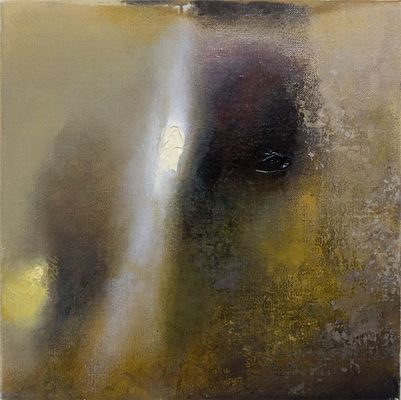
To return to Buckley’s fragment, the first two lines very much evoke how I paint nowadays. As you age, detail diminishes and patches of light become more luminous and float. I feel the most honest way of dealing with this is by smearing the oil paint on the canvas with the fingers and working close-up, blind. Only if the patches coalesce into an approaching image can the work gain a life.
-
Jonathan Walker was born in Melbourne, Australia and brought up on a dairy farm in Gippsland. In the 1970’s he studied painting at RMIT and won the Harold Wright Scholarship to the British Museum, London. During the 1980’s he exhibited at Pinacotheca Gallery, Richmond and had work shown at the NGV and Heidi City Art Gallery. Over the same period he designed the cover for the “Epigenesi” LP by Giancarlo Toniutti, Italy and conducted a mail exchange work with Achim Wollscheid, Germany. The work with artists through the post resulted in an article published in the bicentenary issue of Art and Australia 1988. He showed in artist run spaces such as WestSpace in the 90’s and 2000’s, and until 2012, taught painting at Victoria University, which is where we (Colleen Ahern and Lisa Radford) as organisers of the exhibition, among many others, had the privilege of being his student.
Walker’s knowledge was imparted to students through the careful selection of music, literature, and artists found in books that he himself had ordered for the library. Walker’s strategy was the generosity of sharing his vast knowledge with references specific to each student and their context.
Walker’s paintings share a similar focus and intimacy.
This exhibition presents a small selection of recent paintings alongside a publication that includes Walker’s writing. Observational and analytical, Walker’s work is a type of material notation — the time of day, colour and how it is blended, the both specific and fleeting location of a reflection on lino or the question of whether a chair leg should be included in a painting.
Please join us on Friday August 21 between 6-8pm to celebrate the opening of the exhibition.
Curated by Colleen Ahern and Lisa Radford.
B. Wurtz
Curated by Nic Tammens
March 26 - April 4, 2015
B.Wurtz works from a basement studio in his home on Manhattan’s Lower East Side.
This local fact is attested to by the plastic shopping bags and newsprint circulars that appear in his work. As formal objects, they don’t make loud claims about their origins but nonetheless transmit street addresses and places of business from the bottom of this long thin island. Like plenty of artists, Wurtz is affected by what is local and what is consumed. His work is underpinned by this ethic. It often speaks from a neighborhood or reads like the contents of a hamper:
“BLACK PLUMS $1.29 lb.”
“Food Bazaar”
“USDA Whole Pork Shoulder Picnic 99c lb.”
“RITE AID Pharmacy, with us it’s personal.”
“H. Brickman & Sons.”
“Sweet Yams 59c lb."
Most of the work in this exhibition was made while the artist was in residence at Dieu Donne, a workshop dedicated to paper craft in Midtown. Here Wurtz fabricated assemblages with paper and objects that are relatively lightweight, with the intention that they would be easily transportable to Australia. This consideration isn’t absolute in Wurtz’s work, but was prescriptive for making the current exhibition light and cheap. Packed in two boxes, these works were sent from a USPS post office on the Lower East Side and delivered to North Melbourne by Australia Post.
Wurtz appears courtesy of Metro Pictures, New York.
Thanks to Rob Halverson, Joshua Petherick, Sari de Mallory, Matt Hinkley, Helen Johnson, Fayen d'Evie, Ask Kilmartin, Lisa Radon, Ellena Savage, Yale Union, and "Elizabeth".
John Nixon
"Archive"
December 15 - January 20, 2014
The presentation of John Nixon's archive offered a rare showcase of this extensive collection of the artist's own publications, catalogues, posters, ephemera, editions and more, from the mid 1980s onwards, alongside a selection of his artworks.
Organized by John Nixon, Joshua Petherick and Matt Hinkley.
"Habitat"
at Minerva, Sydney (organised by Joshua Petherick and Matt Hinkley)
November 15 - December 20, 2014
Lupo Borgonovo, Janet Burchill & Jennifer McCamley,
Lewis Fidock, HR Giger, Piero Gilardi, Veit Laurent Kurz,
Cinzia Ruggeri, Michael E. Smith, Lucie Stahl, Daniel Weil, Wols
Press Release:
“...It contained seven objects. The slender fluted bone, surely formed for flight, surely from the wing of some large bird. Three archaic circuitboards, faced with mazes of gold. A smooth white sphere of baked clay. An age-blackened fragment of lace. A fingerlength segment of what she assumed was bone from a human wrist, grayish white, inset smoothly with the silicon shaft of a small instrument that must once have ridden flush with the surface of the skin - but the thing’s face was seared and blackened.”
William Gibson, “Count Zero”, 1986
"Autumn Projects Archive"
Curated by Liza Vasiliou
March 6 - March 15, 2014
World Food Books, in conjunction with the Virgin Australia Melbourne Fashion Festival 2014, presented the Autumn Projects archive, consisting of a selection of early examples in Australian fashion with a particular interest in collecting designers and labels from the period beginning in the 1980’s, who significantly influenced the discourse of Australian Fashion.
Curated by Liza Vasiliou, the exhibition provided a unique opportunity to view pieces by designers Anthea Crawford, Barbara Vandenberg, Geoff Liddell and labels CR Australia, Covers, Jag along with early experimental collage pieces by Prue Acton and Sally Browne’s ‘Fragments’ collection, suspended throughout the functioning World Food Books shop in Melbourne.
H.B. Peace
presented by CENTRE FOR STYLE
November 14, 2013
"Hey Blinky, you say chic, I say same"
Anon 2013
H.B. Peace is a clothing collaboration between great friends Blake Barns and Hugh Egan Westland. Their pieces explore the divergences between 'character’ and ‘personality’ in garments....etc
Special Thanks to Joshua Petherick and Matt Hinkley of WFB and Gillian Mears
and a Very Special Thank you to Audrey Thomas Hayes for her shoe collaboration.
Janet Burchill & Jennifer McCamley
"Aesthetic Suicide"
May 10 - June 8, 2013
The first of our occasional exhibitions in the World Food Books office/shop space in Melbourne, "Aesthetic Suicide" presented a body of new and older works together by artists Janet Burchill & Jennifer McCamley, including videos, prints, a wall work, and publications.
During shop open hours videos played every hour, on the hour.
1986, French
Hardcover (w. dust jacket), 104 pages, 32.5 x 30.5 cm
1st Edition, Out of print title / used / good
Published by
Contrejour / Paris
$450.00 $350.00 - In stock -
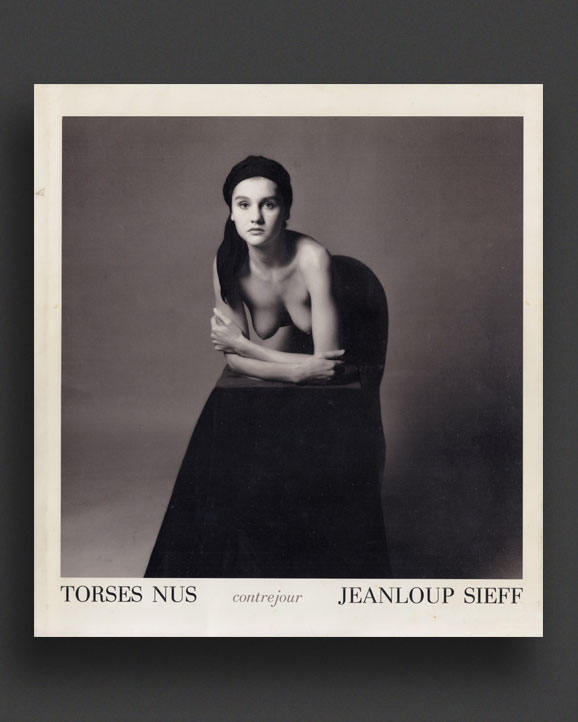
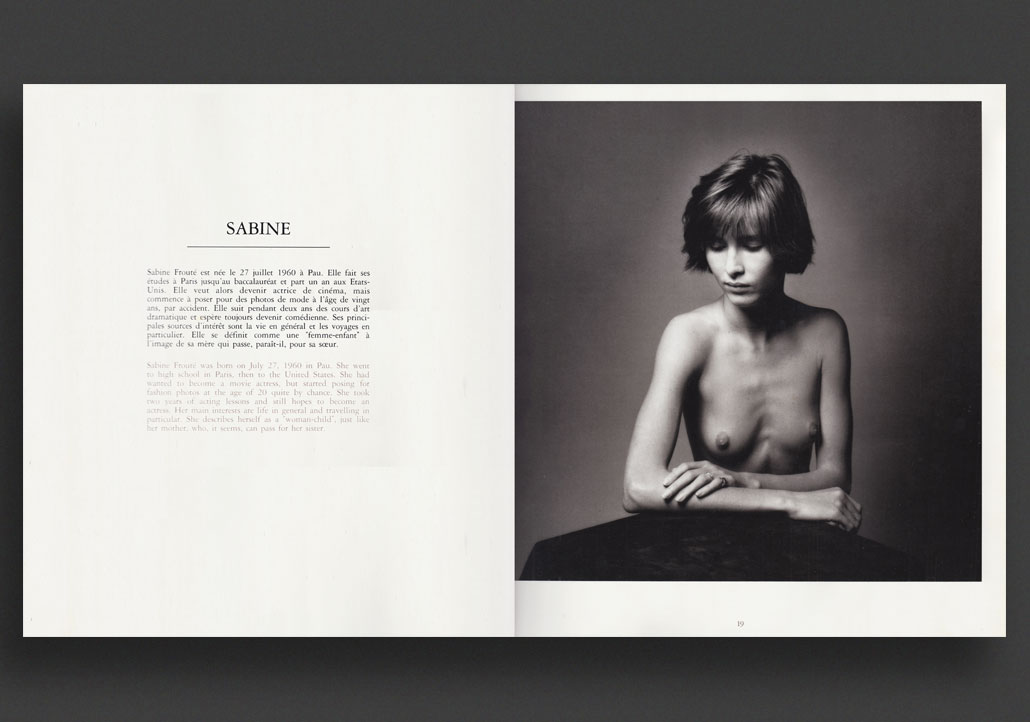
Rare first French hardcover edition of Jeanloup Sieff's 1986 classic photobook, Torses Nus, signed by the legendary French photographer that same year. Published by Contrejour, this beautiful over-sized hardcover edition was the first print of Torses Nus, an extraordinary series of nude portraits and Jeanloup Sieff at his finest. Torses Nus is a collection of 48 beautifully-toned black-and-white photographs, primarily featuring (as the title indicates) women (and a few men) show with nude torsos. These almost classical portrait images embrace the beauty of the human form while taking in the unique personality of each person. Sieff's models include Isabelle Huppert, Emmanuelle Sallet, Jane Birkin, Tierney Gearon, Isabelle Weingarten, Sylvie Guillem, Bess Stonehouse, Yasmine Haury, Florence Dauchez. Larrio Ekson, Charlotte Rampling, and many more. Each is accompanied by a short text with biographical information by Sieff. Includes an introduction by Sieff, with all texts in both French and English.
Jeanloup Sieff (1933 – 2000) was a French photographer. He was born in Paris to Polish parents. He was a photography student of Gertrude Fehr. After working for Elle magazine and the Magnum agency, he lived and worked in New York from 1961 to 1966. Once back in Paris, his work appeared frequently in Vogue, Harper's Bazaar, as well as, in many other publications. He worked mainly in black and white and in fashion. Many do not know that he was a master darkroom technician, who printed his own images. Sieff used different focal length lenses, but is known as the master of the 21.
This copy signed in pen to the title page by Jeanloup Sieff on "23.09.1986".
Good copy but with light foxing to dust jacket, endpapers and a few pages, heavy foxing to title page. Light wear to dj.
1987, French
Softcover (w. dust jacket), 84 pages, 26.7 x 25 cm
1st Edition, Out of print title / used / fine
Published by
Contrejour / Paris
$400.00 $280.00 - Out of stock
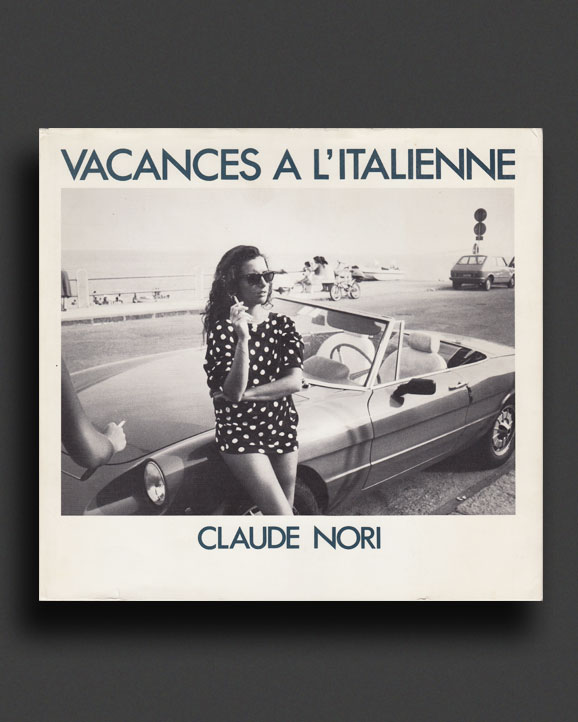
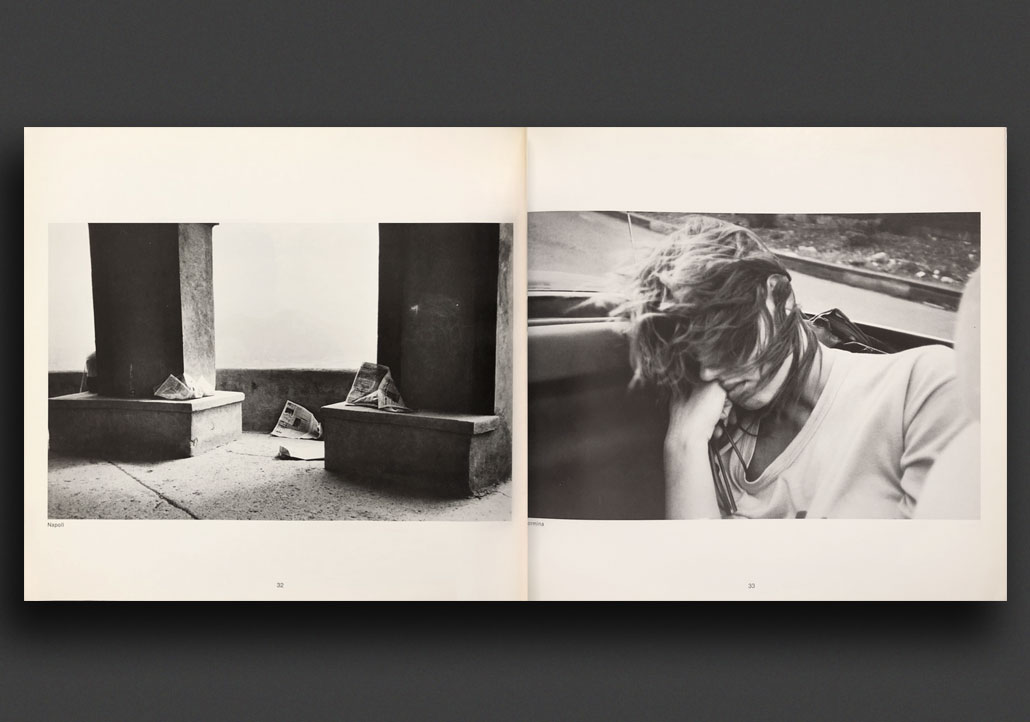
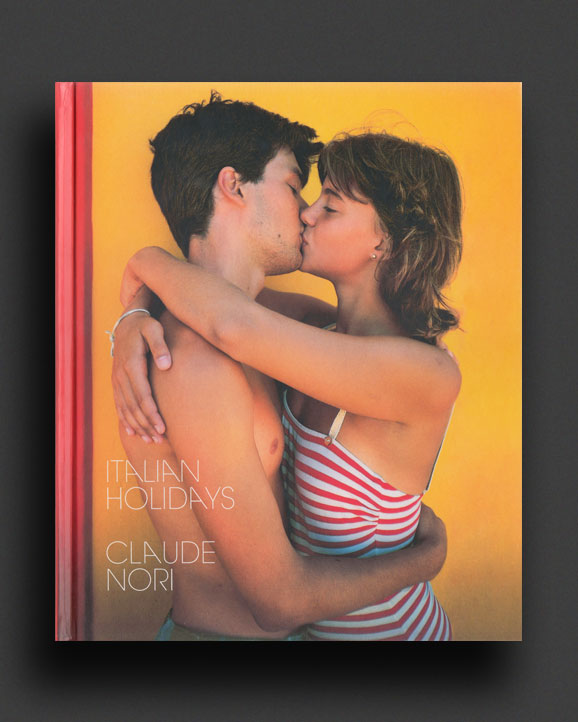
First edition of the very rare and beautiful Vacances à l'Italienne by French photographer Claude Nori, published in 1987 by Contrejour, Paris.
Inspired by his travels and short trips along the Italian coastline with fellow photographer Luigi Ghirri in the late 1970's, French photographer Claude Nori decided in 1982 to record images around Italian beaches. He was interested in capturing the annual rituals of this uniquely Mediterranean passage of time, the joyful exuberance of youthful cliques seeking to experience everything life has to offer in those short few weeks during summer.
"Mothers begged me to take photos of their daughters, who asked me in turn to shoot a portrait of their boyfriends to whom they dedicated their beauty to. I imagined love stories between boys and girls who just wanted to be filmed and photographed together, between fiction and reality, lovers for a day or a summer."
This timeless collection of atmospheric photos bear the imprint of a fascinated, passionate observer and storyteller. Claude Nori succeeds masterfully in capturing that mixture of Mediterranean lifestyle and carefree holiday spirit that awakens memories and longings in us all.
B. 1949 in Toulouse to parents who emigrated from Italy, Claude Nori discovered photography during the May ’68 events at a time when he thought he would become a director. In 1974, he left Toulouse for Paris and there established Contrejour: a newspaper, an editing house, and a gallery in Montparnasse. It quickly became the spot for meetings and promotion of new forms of photography. Contrejour has been publishing artist’s books by photographers such as: Luigi Ghirri, Guy le Querrec, Bernard Plossu, Sebastiao Salgado, Pierre and Gilles, Edouard Boubat, Robert Doisneau, and Willy Ronis. In 1984, he co-founded the magazine Camera International. He is a Mediterranean photographer, par excellence. He’s given us many books, among them Vacances a l’Italienne (“Italian Holidays”) and Stromboli.
Very Good-Fine copy in original VG-Fine dust jacket.
2018, English
Hardcover, 176 pages, 23 x 28 cm
Ed. of 1000,
1st Edition, Out of print title / as new
Published by
Sturm & Drang / Zürich
$150.00 - In stock -
Rare, first edition, fast out-of-print in both the English and French editions. This copy the more sought after English, As New.
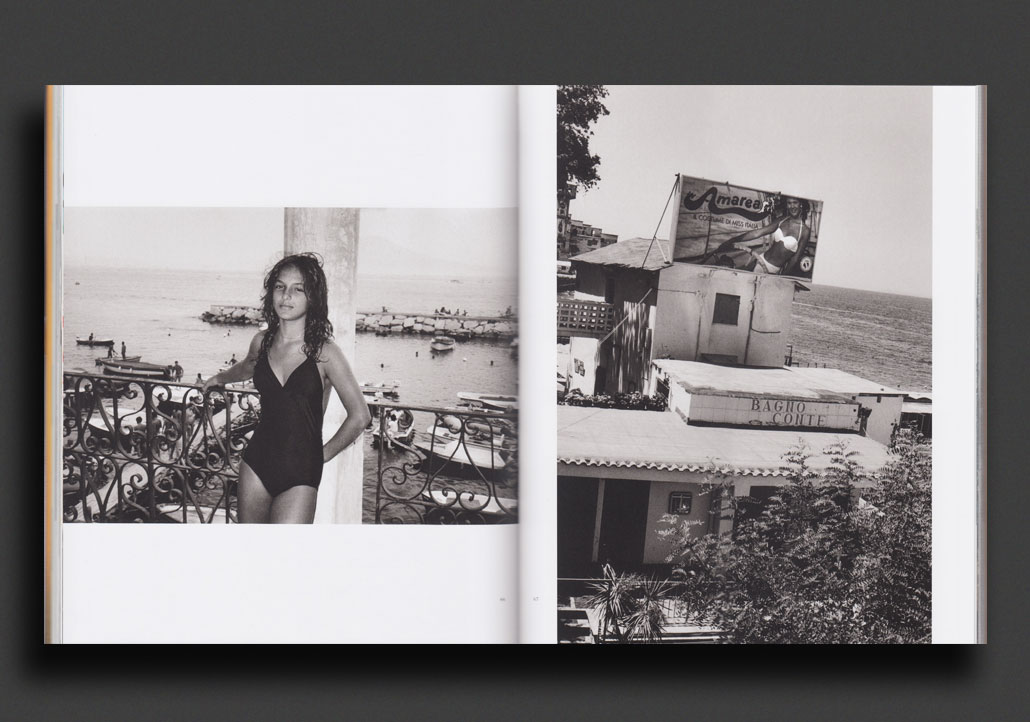
Inspired by his travels and short trips along the Italian coastline with fellow photographer Luigi Ghirri in the late 1970's, French photographer Claude Nori decided in 1982 to record images around Italian beaches. He was interested in capturing the annual rituals of this uniquely Mediterranean passage of time. An atmosphere of joyful beach games, first kisses, swimming and the joyful exuberance of youthful cliques seeking to experience everything life has to offer in those short few weeks during summer.
"Mothers begged me to take photos of their daughters, who asked me in turn to shoot a portrait of their boyfriends to whom they dedicated their beauty to. I imagined love stories between boys and girls who just wanted to be filmed and photographed together, between fiction and reality, lovers for a day or a summer."
Captured mostly in rich black and white images and some colorful splashes of yellow walls, red italian cars and green bikinis these atmospheric photos bear the imprint of a fascinated, passionate observer and stroyteller. Claude Nori succeeds masterfully in capturing that mixture of Mediterranean lifestyle and carefree holiday spirit that awakens memories and longings in us all. You can almost hear the jukebox hits of yesteryear in your head and smell the peculiar mix of sunscreen and the salty air.
Born in 1949 in Toulouse to parents who emigrated from Italy, Claude Nori discovered photography during the May ’68 events at a time when he thought he would become a director.
In 1974, he left Toulouse for Paris and there established Contrejour: a newspaper, an editing house, and a gallery in Montparnasse. It quickly became the spot for meetings and promotion of new forms of photography. Contrejour has been publishing artist’s books by photographers such as: Luigi Ghirri, Guy le Querrec, Bernard Plossu, Sebastiao Salgado, Pierre and Gilles, Edouard Boubat, Robert Doisneau, and Willy Ronis.
In 1984, he co-founded the magazine Camera International. He is a Mediterranean photographer, par excellence. He’s given us many books, among them Vacances a l’Italienne (“Italian Holidays”) and Stromboli.
As New.
2020, English / German
Hardcover, 120 pages, 26 x 24.1 cm
Published by
Walther König / Köln
$120.00 $80.00 - Out of stock
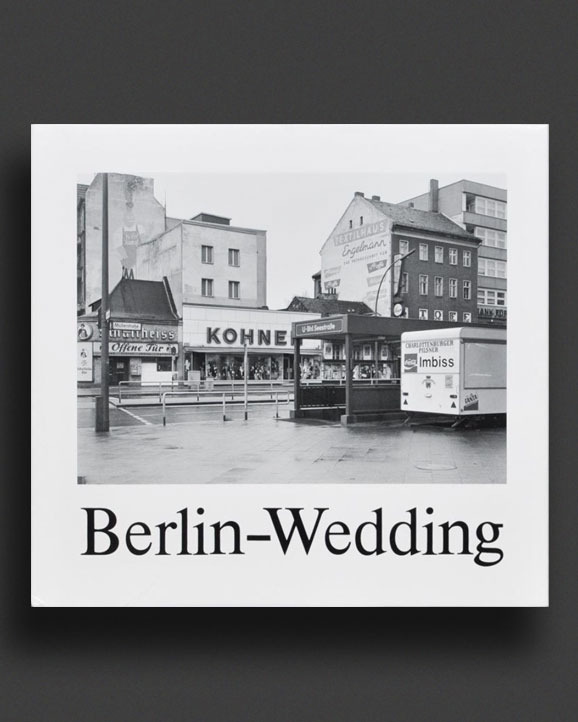
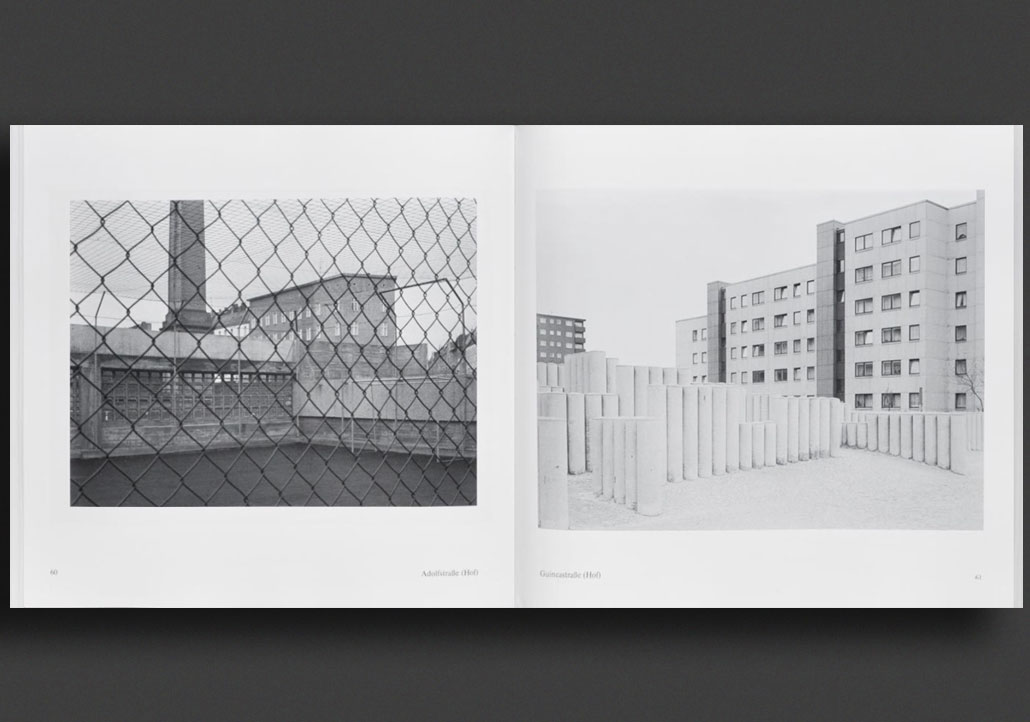
After the reissue of Michael Schmidt’s legendary photobook, Waffenruhe (1987) comes a second edition of the artist’s book, Berlin-Wedding from 1978 that has long been out of print.
In it, Schmidt photographed the district of Berlin-Wedding in a documentary style. Although the project was the result of an assignment from the district authority, Schmidt formulated his artistic vision of the city and its inhabitants.
Part of the realisation is the conscious composition of the black-and-white photographs in a broad palette of grey tones. This trait of the original photographs and the first edition of Berlin-Wedding is also realised in the reissue.
Michael Schmidt commented on this: “Pushing the pictures into immeasurable grey, so that black and white no longer even appear in them, was a completely conscious step […] I thought the world can not be clearly defined, but presents itself in many nuances.”
Features texts by renowned art critic and author, Heinz Ohff (1922-2006), and Chief Curator of the Haus der Kunst in Munich, Thomas Weski.
English and German text.
2018, English
Softcover, 22 pages, 24.8 x 19.6 cm
Published by
Galerie Buchholz / Köln
$40.00 $25.00 - In stock -
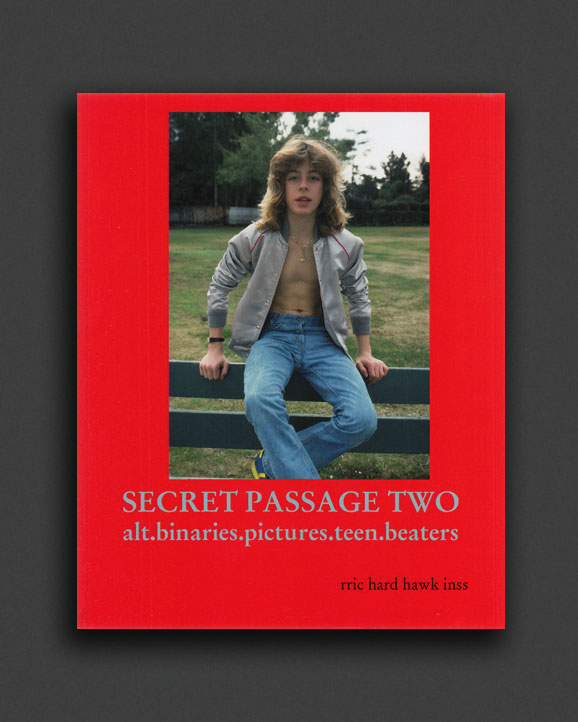
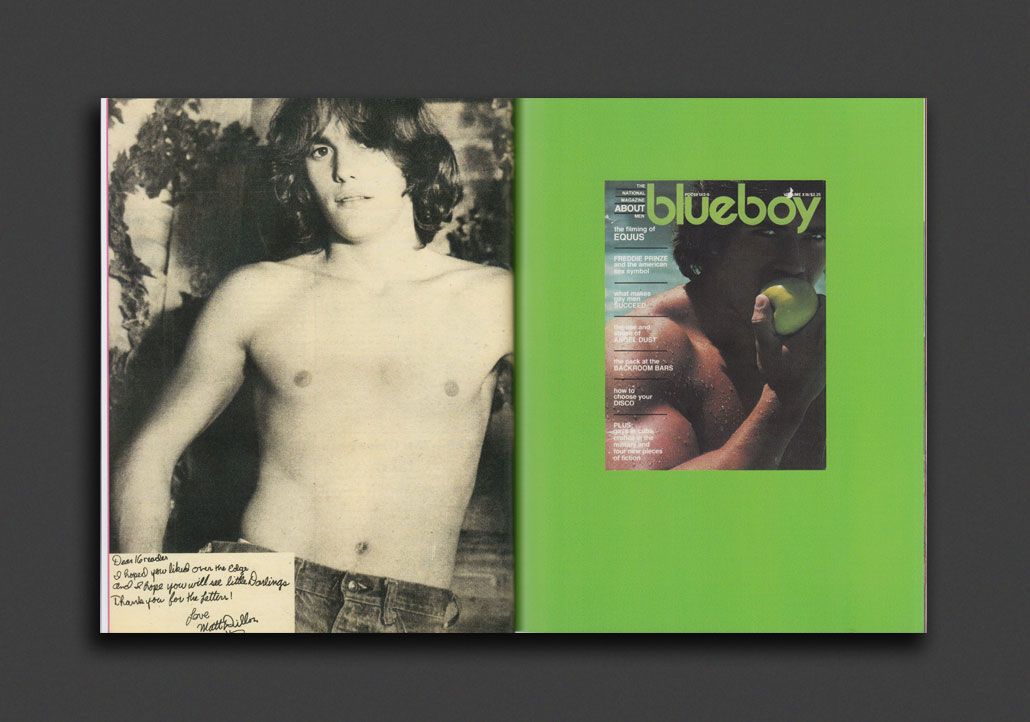
matt dillon, michael jackson's bedroom, various freeway killers, blueboy magazine, heartthrobs and Wm S Burroughs.... SECRET PASSAGE #2 by artist Richard Hawkins is "an assembly of found images d'loaded from alt.binaries.pictures.teenidols in 1998 & which incorporate all the artist's dreamy teenage pleasures, cringing inevitabilities & fore-doomed eventualities circa 1979"
Self-published 2018 richard hawkins & Galerie Buchholz
2018, English
Hardcover, 850 pages, 28.2 x 34.5 cm
1st Edition, Out of print title / as new
Published by
Walther König / Köln
$450.00 $280.00 - Out of stock
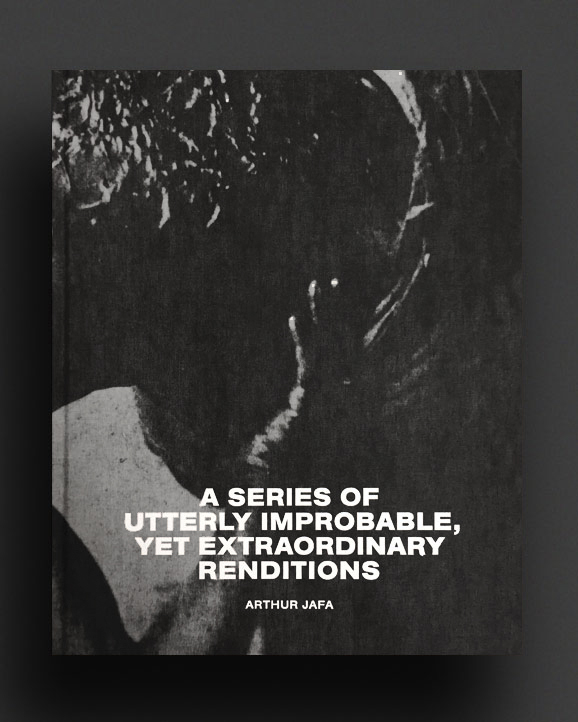
First, only edition of the absolutely epic, award winning and now extremely rare 850 page Arthur Jafa book. Very quickly out-of-print.
Across three decades the American artist and cinematographer, Arthur Jafa (b. 1960, Tupelo, USA) has developed a dynamic, multidisciplinary practice ranging from films and installations to lecture-performances and happenings that tackle, challenge and question prevailing cultural assumptions about identity and race.
Jafa’s work is driven by a recurrent question: how might one identify and develop specifically Black visual aesthetics equal to the ‘power, beauty and alienation’ of Black music in American culture?
Building upon Jafa’s image-based practice, this enormous (over 840 pages) and now out-of-print volume comprises a series of visual sequences that are cut and juxtaposed across its pages. The artist has been collecting and working from a set of source books since the 1990s, seeking to trace and map unwritten histories and narratives relating to black life.
Punctuating this visual material is a series of commissioned texts partnered with a rich compendium of essays, short stories and poetry that has informed Jafa’s artistic practice and which together form an unprecedented resource.
Jafa's imagery is placed in conversation with texts by over 30 outstanding contributors including Hilton Als, Jean Baudrillard, Amiri Baraka, Judith Butler, Samuel R. Delany, Gilles Deleuze and Felix Guattari, Fred Moten, Dave Hickey, John Akomfrah, Tina Campt, Hans Ulrich Obrist, and Cecil Taylor. Edited by Joseph Constable and Amira Gad.
Published after the exhibition, Arthur Jafa: A Series of Utterly Improbable, Yet Extraordinary Renditions at Serpentine Galleries, London (8 June – 10 September 2017), and at the Julia Stoschek Collection, Berlin (11 February – 25 November 2018).
Fine - In pristine new condition
2015, English
Softcover, 260 pages, 30 x 23 cm
1st Edition, Out of print title / used / fine
Published by
Bergen Kunsthall / Norway
$100.00 $50.00 - In stock -
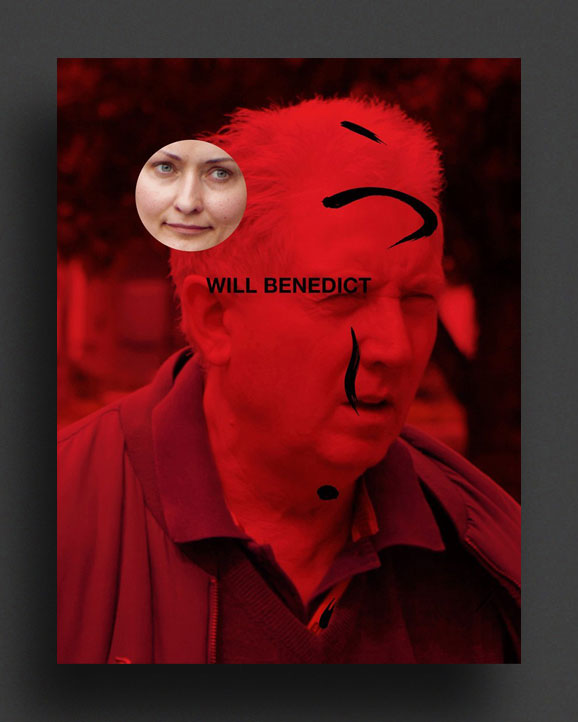
First edition, long out-of-print. Published on the occasion of the first major institutional show by American artist Will Benedict, held at the Bergen Kunsthall in Norway, 31 October–14 December 2014, this heavy, visually-encompassing volume documents this exhibition along with many exhibits across the last few years. All designed by Will and Theodoros Gennitsakis, edited by Martin Clark and Steiner Sekkingstad.
Corruption Feeds is Will Benedict’s largest and most ambitious exhibition to date. It demonstrates the full breadth of his practice as an artist, curator and, most recently, filmmaker. Dividing the galleries at Bergen Kunsthall into a solo exhibition and a curated group show, his own works are brought into dialogue with an eclectic selection of found visual material, as well as works by a number of artists invited by Benedict, including Wolfgang Breuer, Clegg & Guttmann, Howard Finster, Gaylen Gerber,Tom Humphrey, Inventory, Fredrik Kolstø, David Leonard, Michele Di Menna, Pentti Monkkonen, Puppies Puppies, Lin May Saeed, Lucie Stahl, Anders Svarstad, Sergei Tcherepnin, Paul Theriault and Karl Uchermann.
Across the various different aspects of the exhibition, Benedict addresses themes of global distribution, agriculture, marketing and trade. The group section of the exhibition includes a new video, commissioned by Bergen Kunsthall and made by Benedict in collaboration with the artist and journalist David Leonard. Shot in various locations in France, Norway, India and the USA, it explores the transnational politics of food distribution through reportage, interviews and analysis, with various protagonists featuring a talking dolphin, giant rats and human rain. Other works in this section of the show further develop these ideas, and go on to address the marketing and advertising languages of the last three decades, revealing the symbiotic, or perhaps cannibalistic, relationship between contemporary art and commercial design and advertising—a space which Benedict’s own work frequently inhabits and explores.
Will Benedict (b. 1978) lives and works in Paris.
New copies, NF—VG only storage wear.
2022, English
Softcover, 336 pages, 27.5 x 20.8 cm
Published by
Walther König / Köln
$90.00 $40.00 - In stock -
An artist's book of fungal portraiture.
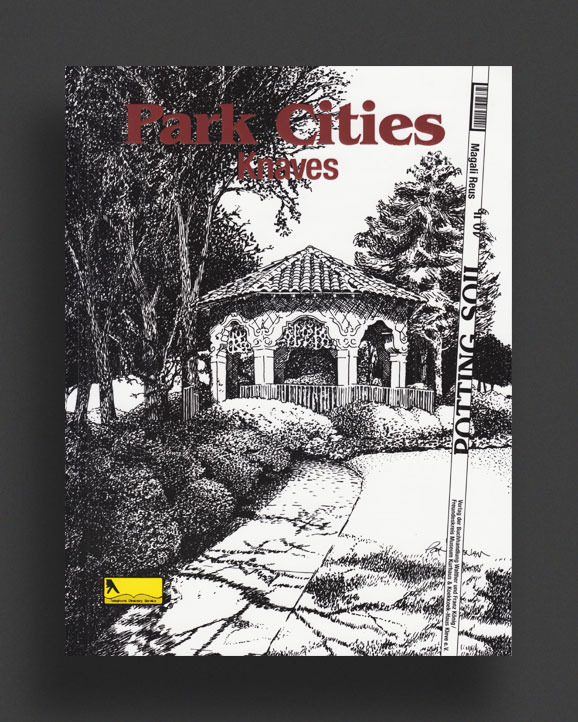
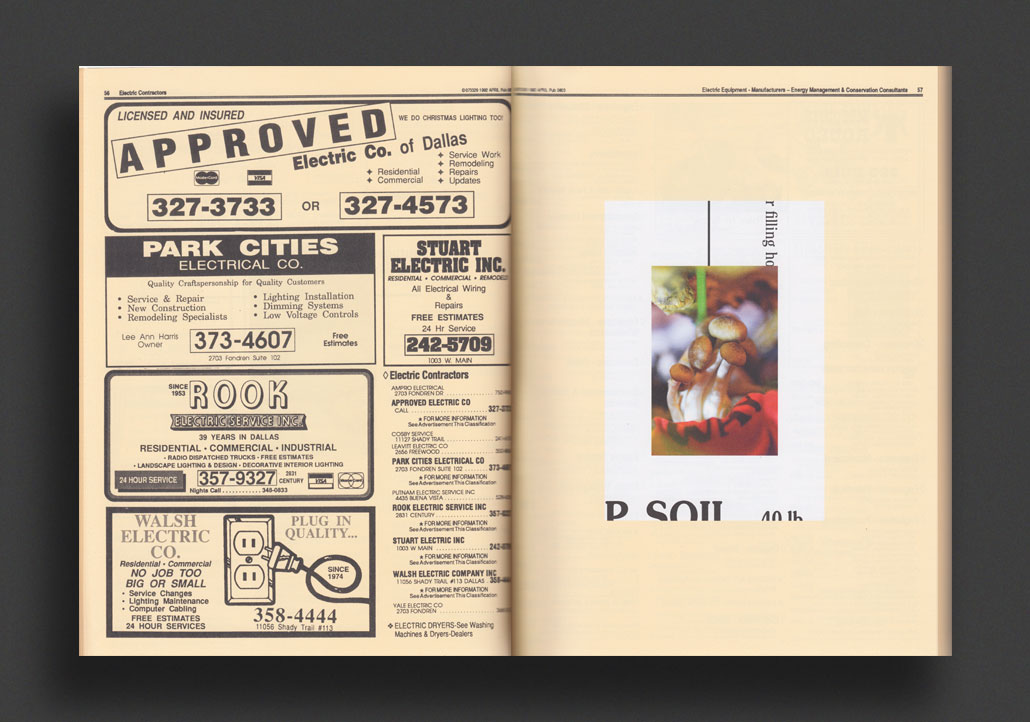
Dutch artist Magali Reus’ (b. 1981) new photographic series, Knaves documents an array of mushrooms in headshot-like close up. As though in an al fresco portrait studio, the fungi are posed against backdrops of colourful vintage t-shirts – synthetic intrusions into the natural landscape. This beautifully designed artist book sets images from the series within the sepia-tinted pages of a 1990s telephone directory for Park Cities – an area of Dallas whose name acts as shorthand for the way in which urban design domesticates nature for ease of human use. Novelist, Kathryn Scanlan’s text zooms in on a series of fleeting quotidian dramas, mobilising a cast of evocatively named characters that, like Reus’ fungal protagonists, bloom and then disappear.
2016, English
Softcover, 68 pages, 23.5 x 30 cm
Published by
3-Ply / Victoria
Centre for Style / Melbourne
$25.00 $5.00 - In stock -
Edited by Fayen d’Evie, Matthew Linde, Spencer Lai and Jake Swinson
Design by Toby Tam
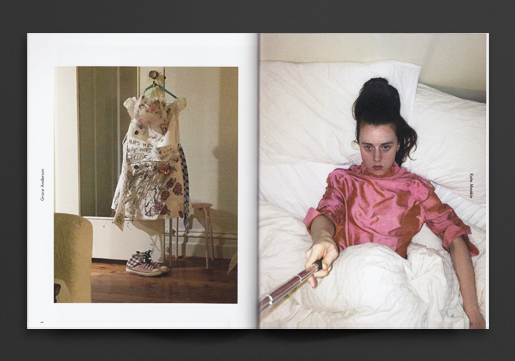
Contents include a feature text “The Banquet” by Monicas’s Gallery with Jessie Kiely, and image contributions from: Adam Wood, Anna-Sophie Berger, Aurelia Guo, Brendan Morris, Bror August, Caley Feeney, Chloé Elizabeth Maratta, Claire Barrow, D&K, Dara Allen, Eric Mack, Galen Erickson thanks to Matthew Drury, Callum Hawke, Oscar Khan and Arthur Marie, George Egerton-Warbuton, Giovanna Flores, Grace Anderson, H.B. Peace, Hamishi Farah, Hana Earles, Harry Burke, Jake Levy, Jessie Kiely, Joseph Geagan, Josey Kidd-Crowe, Kate Meakin, Kulisek-Lieske, Laura Fanning, Matty Bovan, Mel Paget, Milo Conroy, Misty Pollen, Nora Slade and Peter Guffield Linden, Rafael Delacruz, Rare Candy, Richard Malone,Ruth O’Leary, Ryohei Kawanishi, Sasha Geyer, Shahan Assadourian, Sophie Hardeman, Spencer Lai, Stefan Schwartzman, and Wiley Guillot.
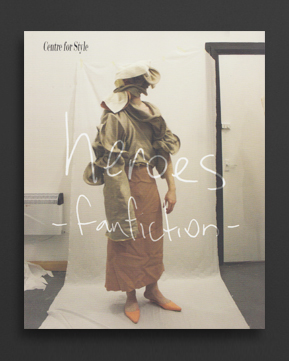
Initiated by 3-ply and Centre for Style, HEROES conflates the artist book and the fashion magazine. The ‘hero look’ is a term used to describe the penultimate outfit of a designer’s collection. Often the most conceptually-driven moment of the runway, the hero outfit serves as a signpost for a designer’s signature style, not quotidian wearability. For this inaugural issue of HEROES, contributors were invited to approach the act of fashion design as a narrative of fanfiction, identifying as readers and fans of their own canon to generate a character or caricature of their personal style. With timeframes restricted to a day, techniques of assemblage and improvisation were privileged, as contributors constructed visceral manifestations of subjectivity through self-fashioned hero looks.
HEROES/Fanfiction includes a feature text “The Banquet” written by Monica’s Gallery with Jessie Kiely, that opens: “ACT I. It was within the candle-lit caverns beneath the wondrous castle bestowed upon The Fat Baron Oörif that the banquet took place. The air thick with magic…” Appropriating the fanfiction trope as a codified lookbook, the text weaves elaborate descriptions of characters and fantastical sub-plots, over the course of a banquet hosted for fifteen guests by a former trade tycoon, within his castle of soft provincial feel. Spiralling through philosophical, intersubjective and social commentary, this parallel universe lookbook interlaces acute reflections on meta-trends, personal freedoms and nested human artefacts.
Edition of 1000
2015, English / German
Softcover, 104 pages, 21 x 30 cm
Published by
Camera Austria / Vienna
$30.00 $10.00 - In stock -
Camera Austria #131
Guest editor/cover artist Annette Kelm.
features the work of:
Annette Kelm, Shannon Ebner, Morgan Fisher, Jan Groover, Hans Hansen, Louis Ducos du Hauron, Judith Hopf, Horst P. Horst, Barbara Kasten, David Lieske, Dirk von Lowtzow, Maren Lübbke-Tidow, Henrik Olesen, Arthur Ou, Josephine Pryde, Sabine Reitmaier, Michael Schmidt, Hendrik Schwantes, Sylvia Sleigh, Lucie Stahl, Herbert Tobias, Christopher Williams and much more.
1996, English
Softcover (staple bound), unpaginated, 30 x 21 cm
1st Edition, Out of print title / as new
Published by
A Constructed World / St. Kilda
$10.00 - In stock -
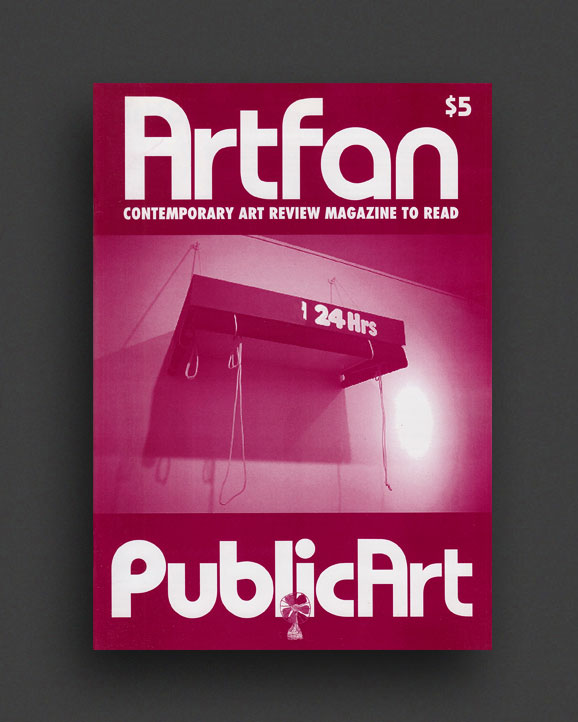
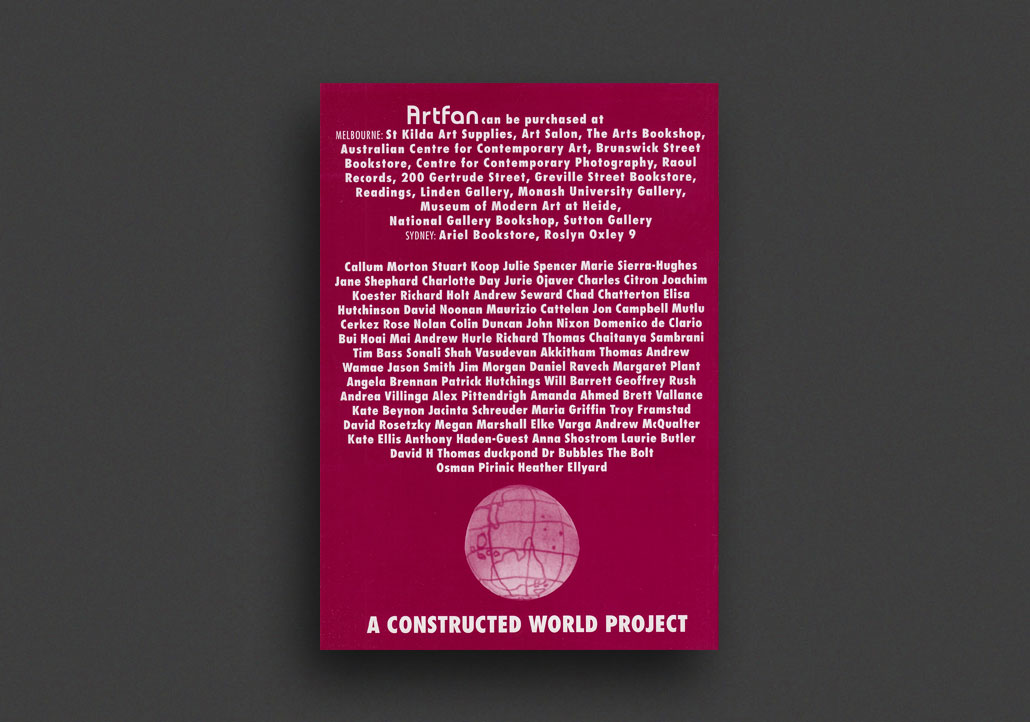
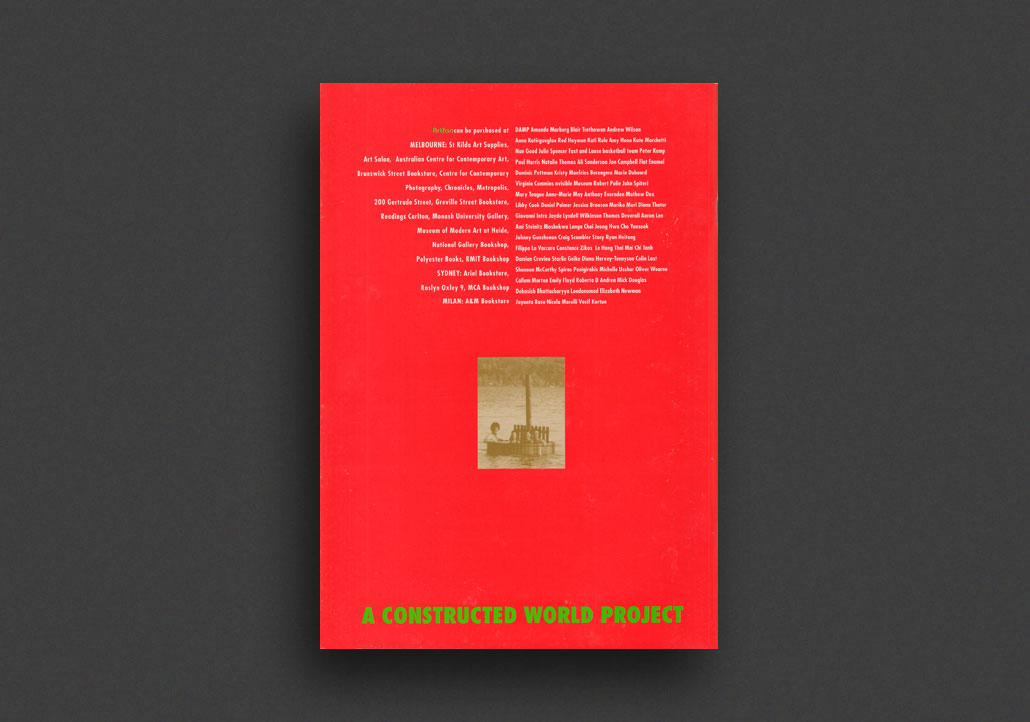
Artfan No. 5 (Autumn 1996) — "Public Art" issue. Features contributions by Callum Morton, Rose Nolan, Mutlu Çerkez, John Nixon, Eliza Hutchison and David Noonan, Charlotte Day, Jon Campbell, and many others. "The global is often represented as an oppressive culturally controlling influence yet it has often been known to relieve oppression from overly uniform and diminishing alternatives. Apart from audience, Public Art is usually, in some way, about place and in this issue of Artfan there are contributions from many places including Estonia, India, New York, Sydney, Melbourne, Sweden, Jordan, and Israel.”—From the editors (Jacqueline Riva, Geoff Lowe, D. H. Thomas)
Artfan (Contemporary Art Review Magazine to Read) is a magazine published by artists Geoff Lowe and Jacqueline Riva in St. Kilda, Melbourne, who have been working together as A Constructed World since 1993 when they founded the magazine. Each issue is an international collaboration between the contributing editors, filled with artworks and texts, the magazine is largely centred around illustrated exhibition reviews by artists and writers, and many memories of a bygone Melbourne.
A Constructed World is the collaborative project, founded in 1993, of Geoff Lowe and Jacqueline Riva, based in Paris, France. ACW believe in the notion of collectivity. Their practice is concerned with the multiple narratives we use to construct and understand our world. They encourage the exchange of ideas and embrace the idea of chaos. Influenced by post-structuralism and relational aesthetics, ACW explores how reality is perceived through cultural models.
As New.
1998, English
Softcover (staple bound), unpaginated, 30 x 21 cm
1st Edition, Out of print title / as new
Published by
Artfan / Melbourne
A Constructed World / St. Kilda
$10.00 - In stock -
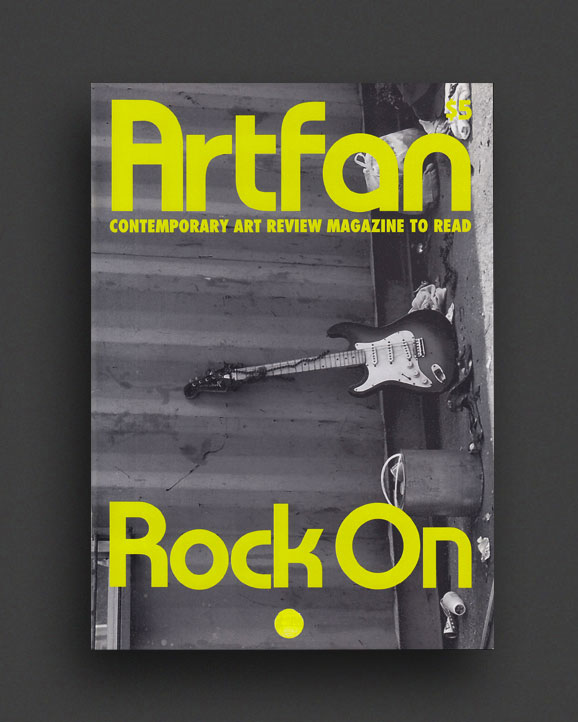
Artfan No. 7 (Autumn 1998) — "Rock On" issue. Features artworks by Callum Morton, Marco Fuscinato, Stephen Prina, Mutlu Çerkez, and many others. "Rock and Roll’s utopian drive, charged by solid state and valve technology, sexuality, pleasure and drugs, has powered a global sense of desire and community since the 50’s. Artfan 7 is a collaboration between contributing editors, Callum Morton (Melbourne), Sarah Seager (Los Angeles), and Terry Urbahn (Wellington). Using Rock On as the point of entry, artists from three countries tell something about their recent history, vinyl, unfulfilled desires, and other sexy stuff."
Artfan (Contemporary Art Review Magazine to Read) is a magazine published by artists Geoff Lowe and Jacqueline Riva in St. Kilda, Melbourne, who have been working together as A Constructed World since 1993 when they founded the magazine. Each issue is an international collaboration between the contributing editors, filled with artworks and texts, the magazine is largely centred around illustrated exhibition reviews by artists and writers, and many memories of a bygone Melbourne.
A Constructed World is the collaborative project, founded in 1993, of Geoff Lowe and Jacqueline Riva, based in Paris, France. ACW believe in the notion of collectivity. Their practice is concerned with the multiple narratives we use to construct and understand our world. They encourage the exchange of ideas and embrace the idea of chaos. Influenced by post-structuralism and relational aesthetics, ACW explores how reality is perceived through cultural models.
As New.
1999, English
Softcover (staple bound), unpaginated, 30 x 21 cm
1st Edition, Out of print title / as new
Published by
A Constructed World / St. Kilda
$10.00 - In stock -
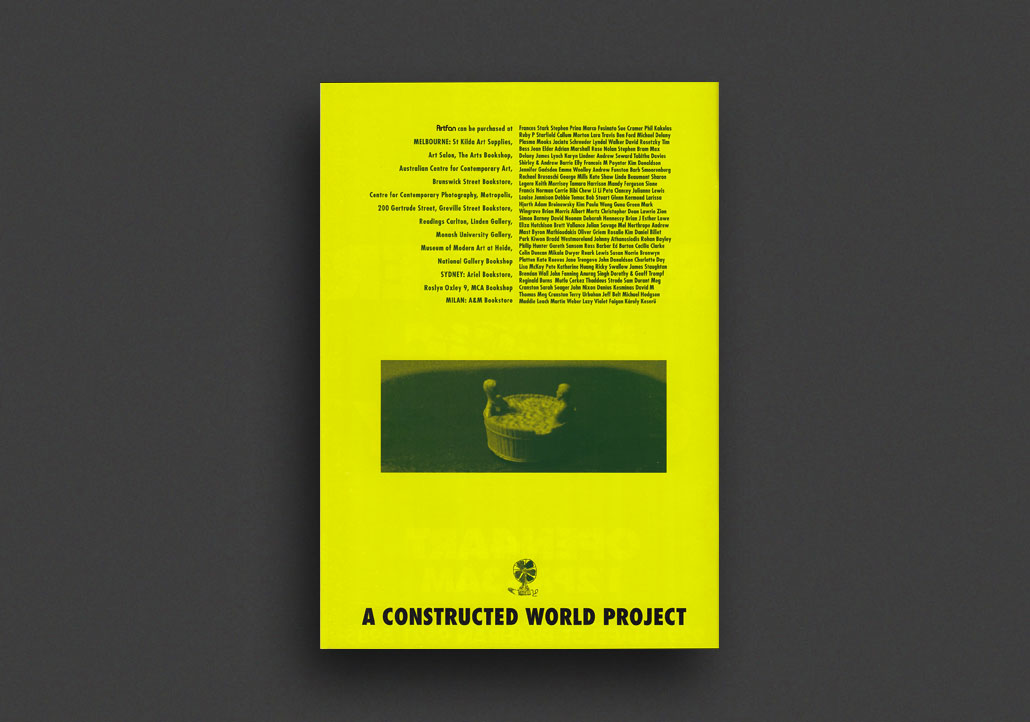
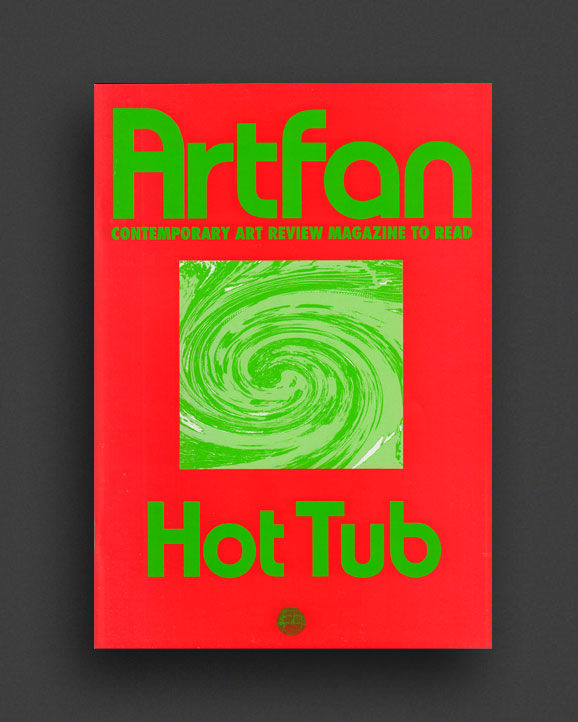
Artfan No. 9 (Autumn 1999) — "Hot Tub" issue. Features contributions by Constance Zikos, Sharon Goodwin, John Wolseley, and many others. "This issue of Artfon began with ACW's involvement in the XXIV Sao Paulo Bienal in Brazil 1998. Its theme of cannibalism - a sprawling hymn to a practice we haven't seen and yet know about - is celebrated in a Hot Tub insert and Q&A that anticipate the dangers and pleasures of cultural cannibalism."—The Editors (Jacqueline Riva, Geoff Lowe)
Artfan (Contemporary Art Review Magazine to Read) is a magazine published by artists Geoff Lowe and Jacqueline Riva in St. Kilda, Melbourne, who have been working together as A Constructed World since 1993 when they founded the magazine. Each issue is an international collaboration between the contributing editors, filled with artworks and texts, the magazine is largely centred around illustrated exhibition reviews by artists and writers, and many memories of a bygone Melbourne.
A Constructed World is the collaborative project, founded in 1993, of Geoff Lowe and Jacqueline Riva, based in Paris, France. ACW believe in the notion of collectivity. Their practice is concerned with the multiple narratives we use to construct and understand our world. They encourage the exchange of ideas and embrace the idea of chaos. Influenced by post-structuralism and relational aesthetics, ACW explores how reality is perceived through cultural models.
As New.
2020, English
Hardcover, 112 pages, 25 x 26 cm
Published by
MoMA / New York
$80.00 - Out of stock
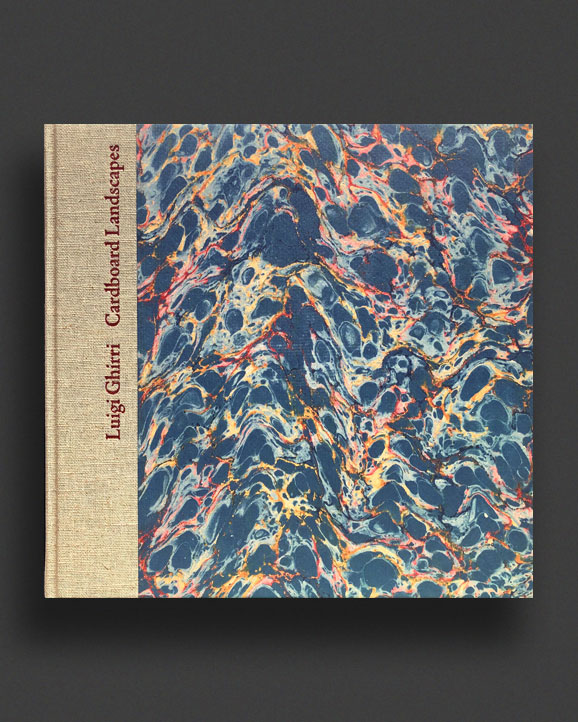
A handsome facsimile of conceptualist Luigi Ghirri’s poetic narrative of 1970s pop culture
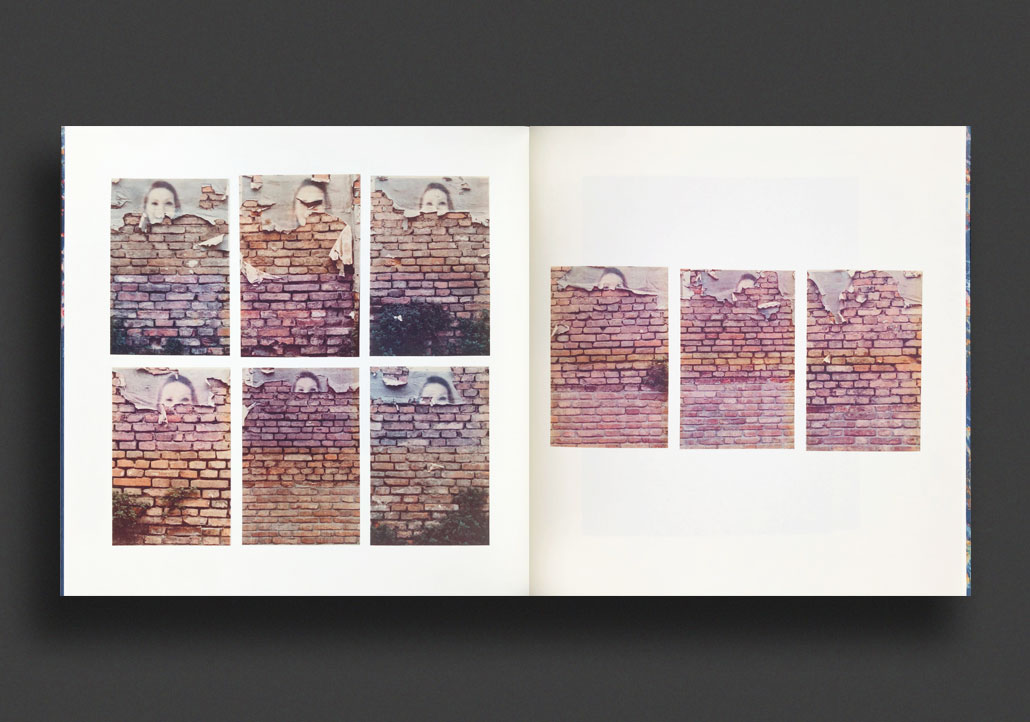
Italian photographer Luigi Ghirri (1943–92) made Cardboard Landscapes (Paesaggi di cartone) during his travels around Europe, coining the term “sentimental geography” to describe his unique artistic approach of examining the ordinary to prove it remarkable. The original handmade album features over 100 chromogenic color prints pasted onto the pages of a blank book, and was gifted by Ghirri to John Szarkowski, then the Director of the Department of Photography at the Museum of Modern Art, in the 1970s.
A singular work of art, Cardboard Landscapes is now being published for the first time. The collection is an anomaly within Ghirri’s overall oeuvre, as it prioritizes complex composition rather than the sweeping tableaux for which he is best known. In this series of works, he regards the printed image as the subject, framing a kaleidoscope of photographs and advertisements to tell a poetic visual narrative that reflects at once regional, personal and popular culture, revealing a fascinating impulse to investigate his role within his own medium.
Luigi Ghirri (1943–92) was a celebrated Italian artist and photographer known for his color photographs of landscape and architecture. He published his first photography book, Kodachrome, in 1978, and continued to utilize a conceptual framework to interrogate the line between fiction and reality.
1998, English / French
Softcover, 380 pages, 15.5 x 21 cm
1st Edition, Out of print title / used / very good
Published by
Purple Institute / Paris
$390.00 - In stock -
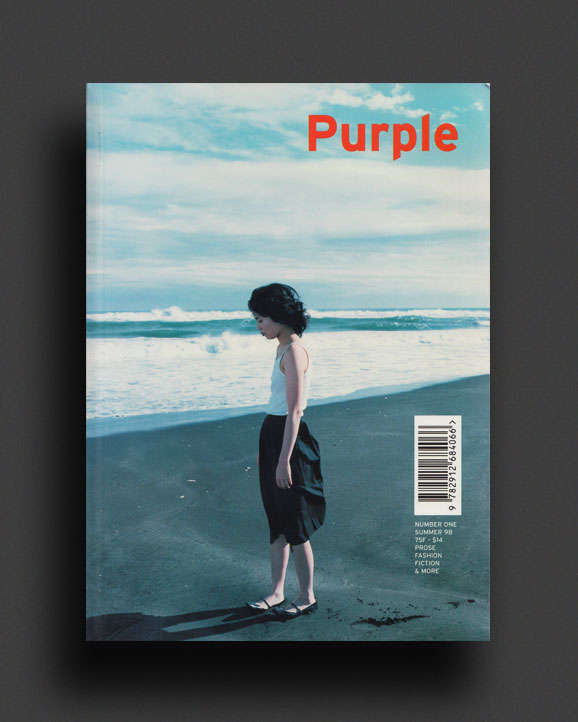
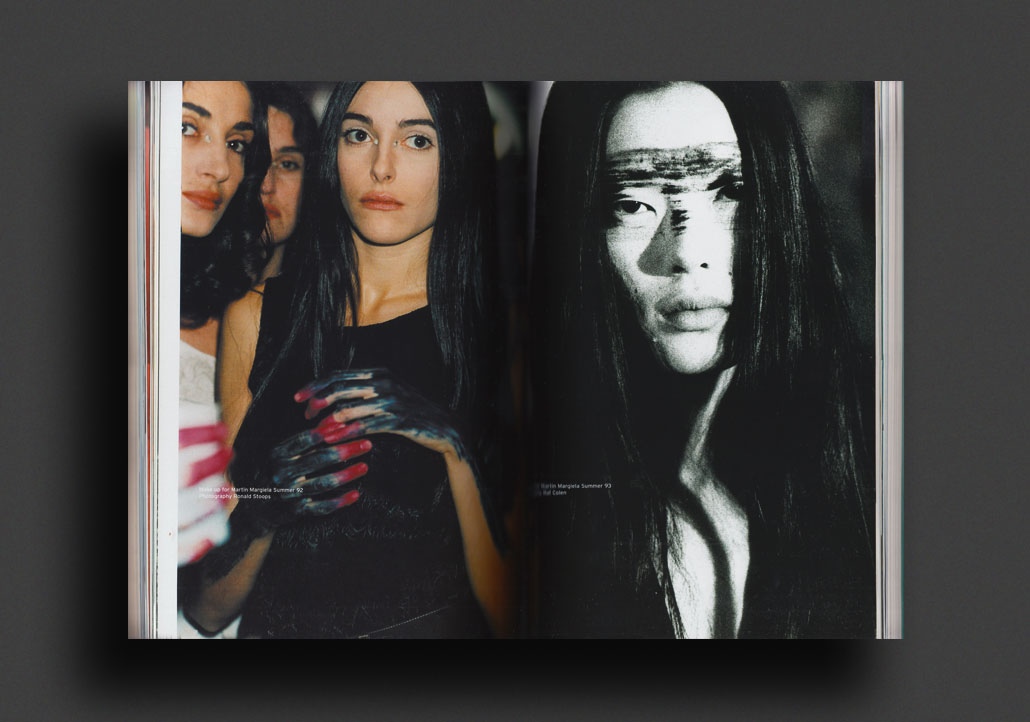
Very rare copy of the first issue of Purple. Edited by Elein Fleiss and Olivier Zahm, with Jeff Rian, this wonderful issue features work and words by: Maison Martin Margiela, Zoe Leonard, Mark Borthwick, Jutta Koether, Lee Ranaldo, Dike Blair, Thurston Moore, Dominique Gonzalez-Foerster, Mitchell Algus, Rudolf Stingel, Wolfgang Tillmans, Maurizio Cattalan, David Robbins, Antek Walzcak, Karl Holmqvist, Calvin Klein, Takashi Homma, Veronique Branquinho, Laetitia Benat, Jeff Rian, Y's, Anders Edstrom, Tobjorn Rodland, Doug Aitken, Comme des Garcons, Nathaniel Goldberg, Helmut Lang, Susan Cianciolo, Terry Richardson, Takashi Noguchi, Camille Vivier, Katja Rahlwes, Junya Watanabe, Hussein Chalayan, Kostas Murkudis, Viviane Sassen, and many many more....
In 1992 Olivier Zahm and his partner Elein Fleiss printed the first issue of Purple Prose, a Parisian literary art zine that over the years has evolved into Purple Fashion Magazine. Soon after the birth of Purple Prose, Zahm and Fleiss created spin-off publications like les cahiers purple, Purple Sexe, Purple Fiction, and of course, Purple Fashion. Zahm aimed at fusing together his two worlds, fashion and art, in creating Purple.
Very Good copy, some light edge/cover wear, single spine crease, binding still great.
2001, English
Softcover, 224 pages, 27 x 20 cm
1st Edition, Out of print title / used / very good
Published by
Purple Institute / Paris
$240.00 - Out of stock
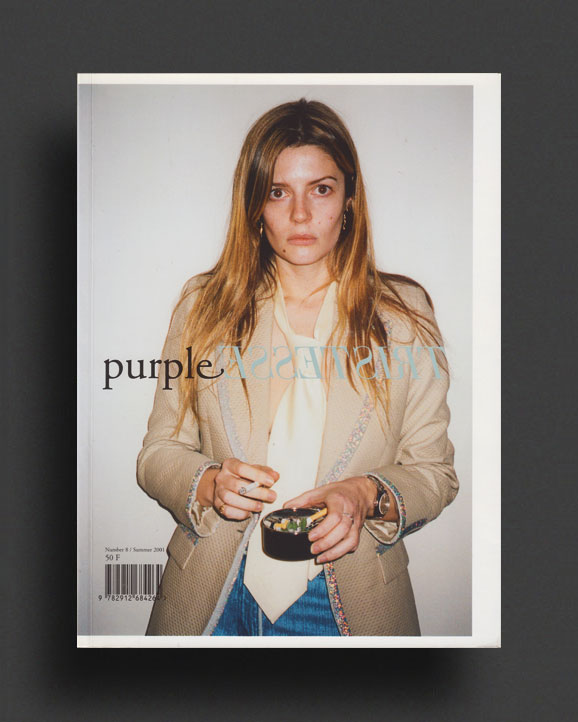
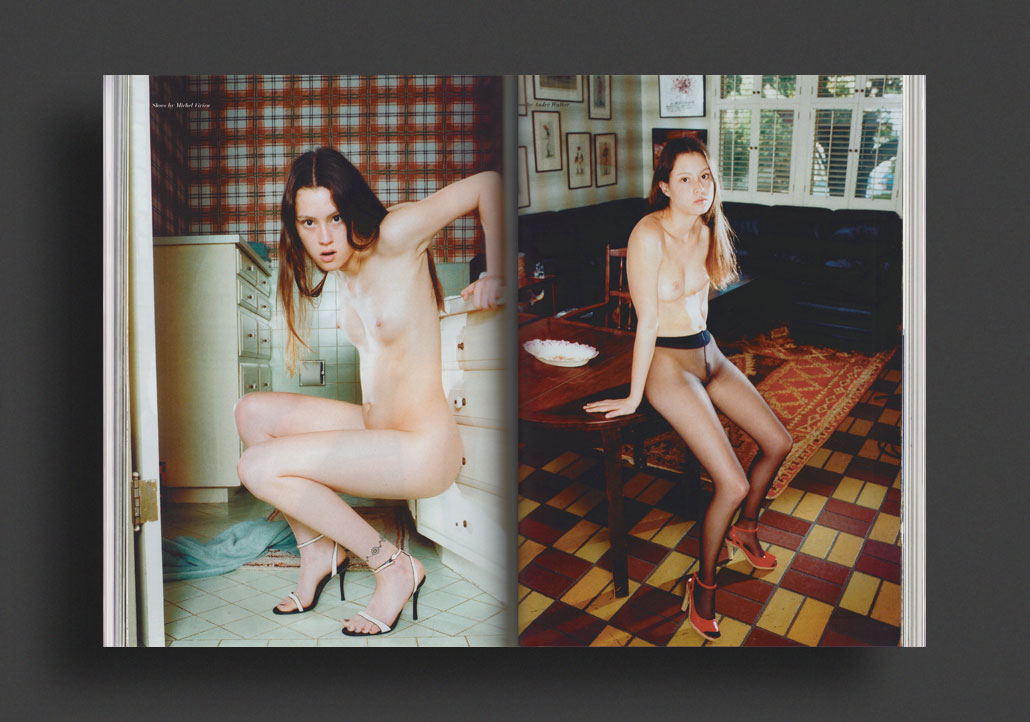
A very rare copy of the eighth issue of Purple, edited by Olivier Zahm, art directed by Makoto Ohru, featuring Chiara Mastroianni on the cover. One of the best issues, featuring Mark Borthwick, Roe thridge, Richard Kern, Katja Rahlwes, Terry Richardson, Wolfgang Tillmans, Chloë Sevigny, Henry Roy, Colin de Land, Bruce Benderson, Anders Edström, Jutta Koether, Kate Moss, Maison Martin Margiela, Takashi Homma, Chloë Sevigny, Kim Gordon, Antek Walczak, Hermés, Masafumi Sanai, Dike Blair, Comme des Garçons, Balenciaga, Nakako Hayashi, Jeff Rian, Dominique Gonzales Foerster, Bless, Experimental Jetset, Bob Nickas, Ann Demeuelemeester, Claude Closky, Kyoji Takahashi, Michael Smith, Matt Sweeney, John Kelsey, Helmut Lang, Bennett Simpson, Gareth James, Miu Miu, Vanina Sorrenti, Cedrick Eymenier, Andreas Larsson, Mark Kingwell, Bernard Joisten, Laetitia Benat, Anaïd Demir, Costume National, Michel Sumpf, Alex Antitch, Giasco Bertoli, Jeremy Blake, Ola Rindal, and many more....
In 1992, Elein Fleiss and Olivier Zahm started the magazine Purple Prose as a reaction against the superficial glamour of the 1980s; much as a part of the global counterculture at the time, inspired by magazines like Interview, Ray Gun, Nova, and Helmut Newton's Illustrated, but with the aesthetics of what usually is referred to as anti-fashion. Based on their personal interests and views; Purple was, and in a sense still is, made much in the same spirit of the fanzine. Started "without any means, and without any experience, because we wanted to make a magazine that was radically different. We wanted to support the artists around us that no one else supported, much less talked about."—Olivier Zahm. The magazine became associated with the "realism" of the new fashion photography of the 1990s, with names like Juergen Teller, Terry Richardson, Wolfgang Tillmans, Mark Borthwick, Corinne Day, and Mario Sorrenti. Soon after the birth of Purple Prose, Zahm and Fleiss created spin-off publications such as les cahiers purple, Purple Sexe, Purple Fiction, and of course, Purple Fashion, in which Zahm aimed at fusing together his two worlds, fashion and art. Now one of the most iconic and influential fashion magazines in history.
Very Good copy.
1985, English
Softcover (staple-bound), 64 pages, 40 x 26 cm
1st Edition, Out of print title / used / very good
Published by
Monika Sprüth / Cologne
$800.00 - Out of stock
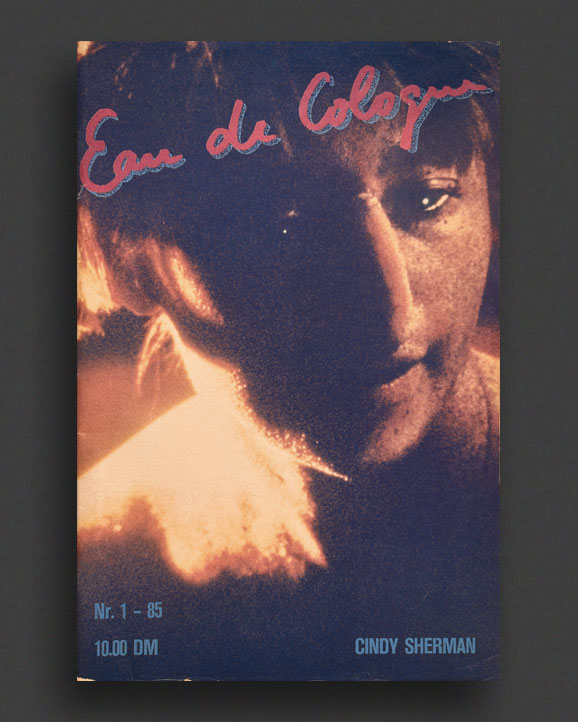
Very rare, inaugural issue of the iconic and enormously influential magazine published and edited by Cologne-based gallery owner Monika Sprüth, who opened her first gallery in 1983 with a focus on female artists. Emblematic of this perspective, Sprüth launched Eau de Cologne, an “effervescent, shape-shifting magazine, featuring almost exclusively women artists and art practitioners.” Three issues were published between 1985 and 1989, along with accompanying exhibitions, representing an international female discourse on art. With early cover artwork by Cindy Sherman, this first issue was published on the occasion of an all-female exhibition presentation of the same name, held by Monika Sprüth Galerie in Cologne in 1985, featuring the work of Ina Barfuss, Jenny Holzer, Barbara Kruger, Cindy Sherman, Rosemarie Trockel, and Anne Loch. Combining theoretical discourse with visual practice, the large-format magazine was created in collaboration with the artists Jenny Holzer, Barbara Kruger, Louise Lawler, Cindy Sherman, and Rosemarie Trockel, featuring artist pages, essays, interviews, texts, quotes, portraits by an incredible list of contributors including Louise Bourgeois, Hanne Darboven, Cady Noland, Dominique Gonzalez Foerster, Ileana Sonnabend, Annette Messager, Susan Hiller, Ulrike Rosenbach, Elaine Sturtevant, Kathe Burkhart, Marian Goodman, Mary Boone, Georgia O'Keefe, Marisa Merz, Astrid Klein, Jutta Koether, Jenny Holzer, Maria Lassnig, Holly Solomon, Nancy Spero, Jo-Anna Isaak, Hilary Lloyd, Holly Solomon, Bärbel Grässlin, Annina Nosei, Tanja Grunert, Pat Hearn, Bice Curiger, Edit DeAk, Rosalind Krauss, Isabelle Graw, Linda Nochlin, Ingrid Oppenheim, Barbara Gladstone, and many more. Texts in German and English. It really doesn't get much better!
“The exhibition and the catalogue “Eau de Cologne” fulfil the claim of my gallery to show the most interesting aspects of contemporaneous art. This exhibition presents five female artists: Ina Barfuss, Jenny Holzer, Barbara Kruger, Cindy Sherman and Rosemarie Trockel, and the catalogue which includes many more young and older female artists, writers, critics and art-dealers want to show art in its social context. I see this exhibition as an example. According to my subjective observation and based on the experiences and contacts of almost three years work as art-dealer I have made a selection. The time of working on this catalogue was limited, too, and it is for these reasons that some artists, curators and art-critics are not mentioned. I approve of realizing this “idea” now, 1985.”—from introduction by Monika Sprüth
Very Good copy with light wear and age to extremities, small chip to back-cover edge.
1996, English
Softcover, 98 pages, 30 x 23 cm
1st Edition, Out of print title / used / very good
Published by
i-D / London
$160.00 - Out of stock
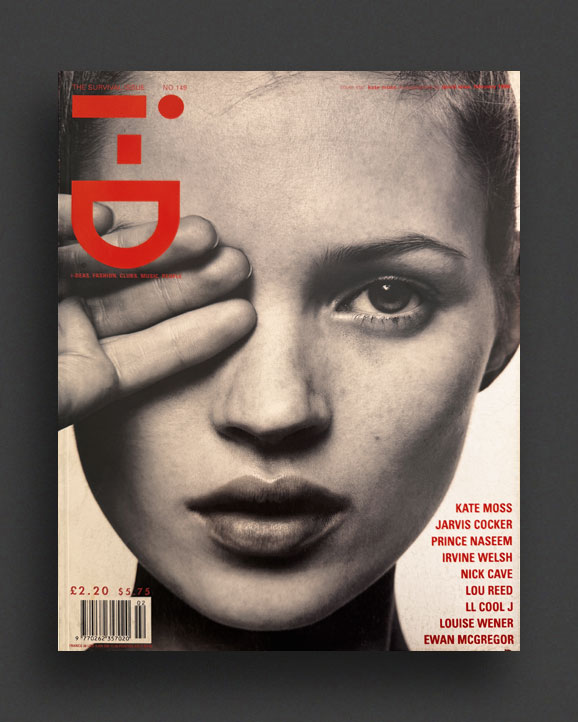
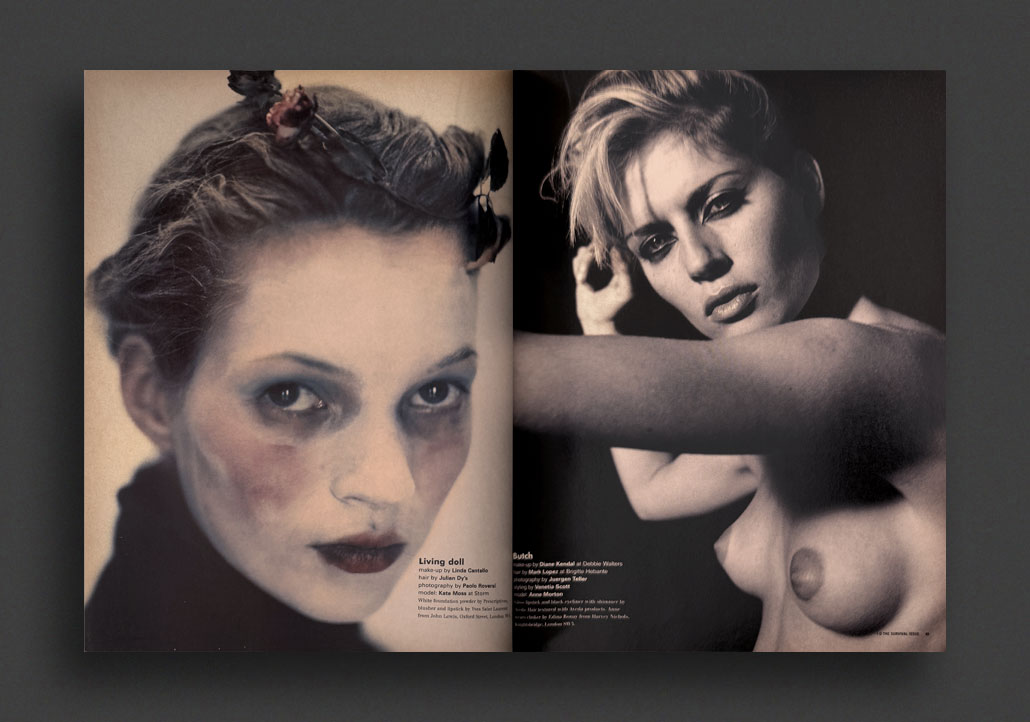
i.D. No. 149 from February 1996, with iconic early Kate Moss cover shot by David Sims. The now very collectible "Survival" issue, this issue is quite a perfect encapsulation of i.D. at its 90's peak, featuring further photoshoots with Kate Moss inside, by David Sims (styled by Anna Cockburn) and Paolo Roversi, Lou Reed shot by Terry Richardson (w. interview), Carolyn Murphy shot by Ellen von Unwerth, Annie Morton styled by Venetia Scott and shot by Juergen Teller, Chandra North shot by Terry Richardson, Kirsten Owen shot by Craig McDean, Milla Jovovich shot by Mario Sorrenti, there the very rare Q&A with "badboy" Alexander McQueen (w. portrait), i-D's Essential Guide to Clubwear — models in the latest club looks by W<, Moschino and Anna Sui etc., Trainspotting, Brit Pop, Post Rock (Tortoise, etc.), retro fashion, Jarvis Cocker, Nick Cave, Mark Borthwick, and much more. And a (just as iconic) back cover — Miu Miu ad with Chloë Sevigny shot by Juergen Teller (styled by Joe Mckenna).
Founded in 1980 by former Vogue art director Terry Jones as an alternative to traditional fashion magazines. In the 1990's i.D. really hit its stride, documenting the latest youth culture shifts and, alongside Purple and Self Service, showcased the best new fashion/anti-fashion photographers such as Juergen Teller, Wolfgang Tillmans, David Sims, Mario Sorrenti, Collier Schorr, Craig McDean, and Terry Richardson.
Very Good copy, with light wear to cover extremities and spine. Tiny chip to cover bottom right.
2024, English
Softcover, 200 pages 21 x 14.7 cm
Ed. of 350,
1st Edition, Out of print title / as new
Published by
SMUT Press / London
$65.00 - Out of stock
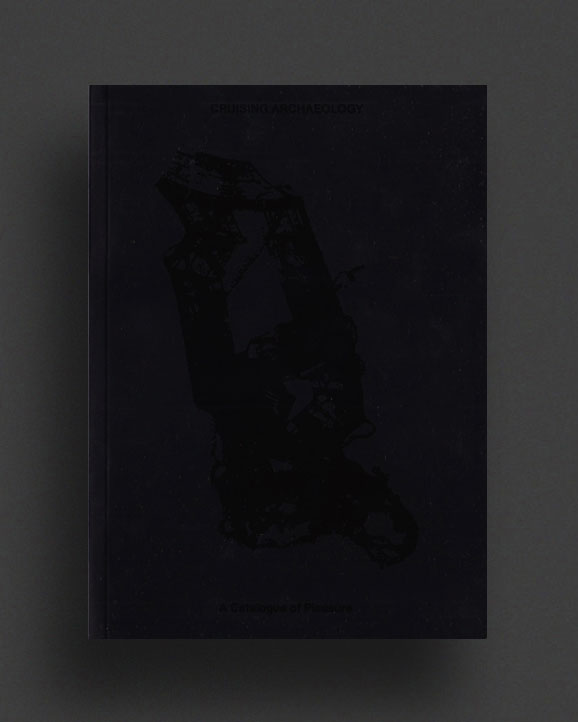
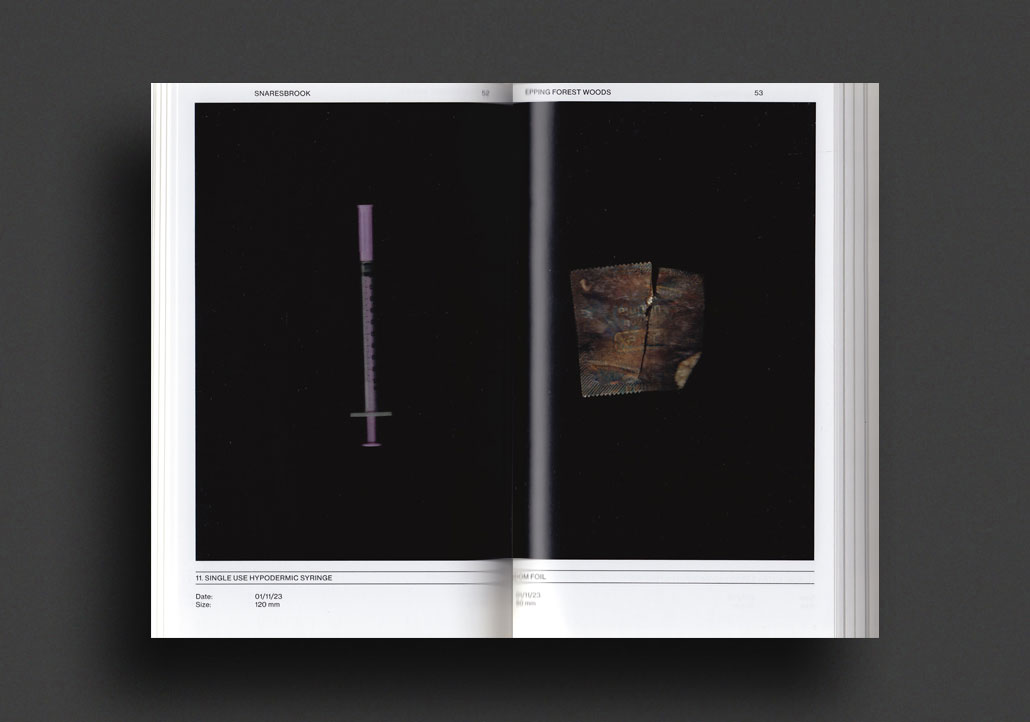
Initially born from an Instagram account bearing the same name, this project is a careful process of selection and curation that sees the anonymous artist reconstitute detritus and debris discarded in over half a dozen renowned cruising locations around London into cultural artefacts. Positioning archaeology as its point of departure, over 100 unique relics not only uncover and investigate the types of sex and pleasure that happen in cruising areas through a material culture lens, but also serve as a testimonial to the often invisible sexual practice.
Accompanying the series of scanned objects is a foreword by Marcus McCann, author of ‘Park Cruising: What Happens When We Wander Off Path’ (2023) as well as an interview with OWL, a volunteer litter-picking group in one of the cruising sites and a report on ‘Jurassic’ a renowned local cruising site in Medellín by academic David Edgar.
The soft-cover 200 page publication is purposely pocket sized, intended to be utilised as a nu-hunter’s-guide for those who cruise. The book’s design has been thoughtfully researched and assembled by London based designer Marco Cacioni.
Edition of 350
1999 + 2000, English / Japanese
2 Vols. (softcover + hardcover), unpaginated, 15.5 x 11.5 cm / 18.5 x 13.5 cm
1st Edition, Out of print title / used / fine
Published by
Little More / Tokyo
$300.00 - Out of stock
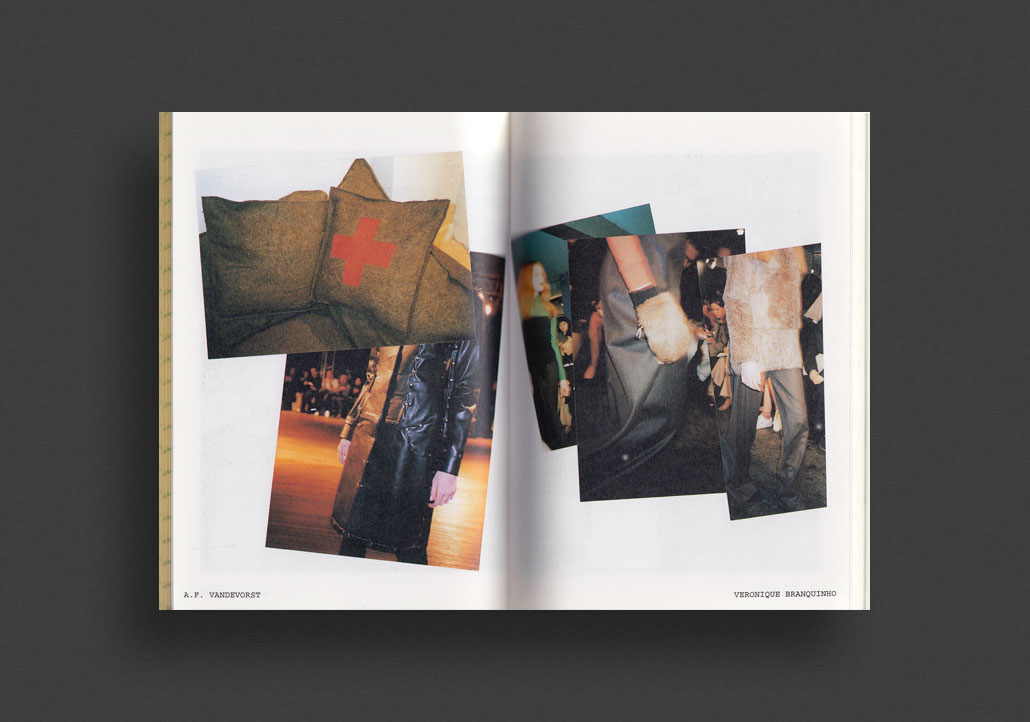
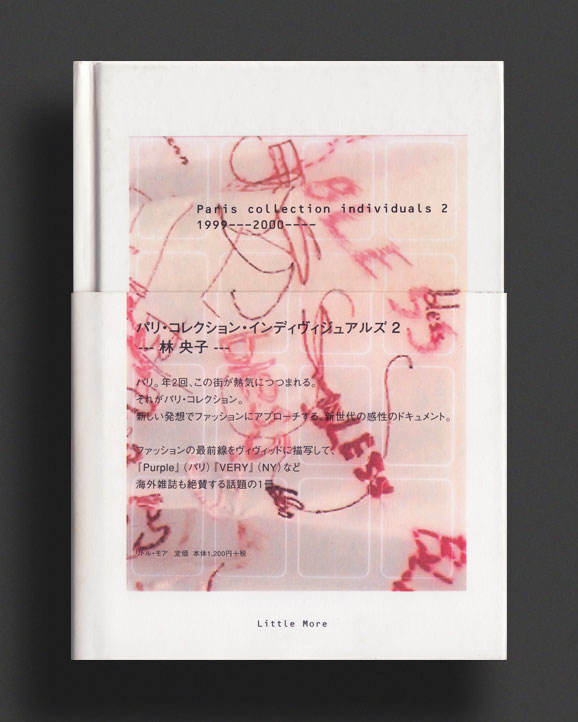
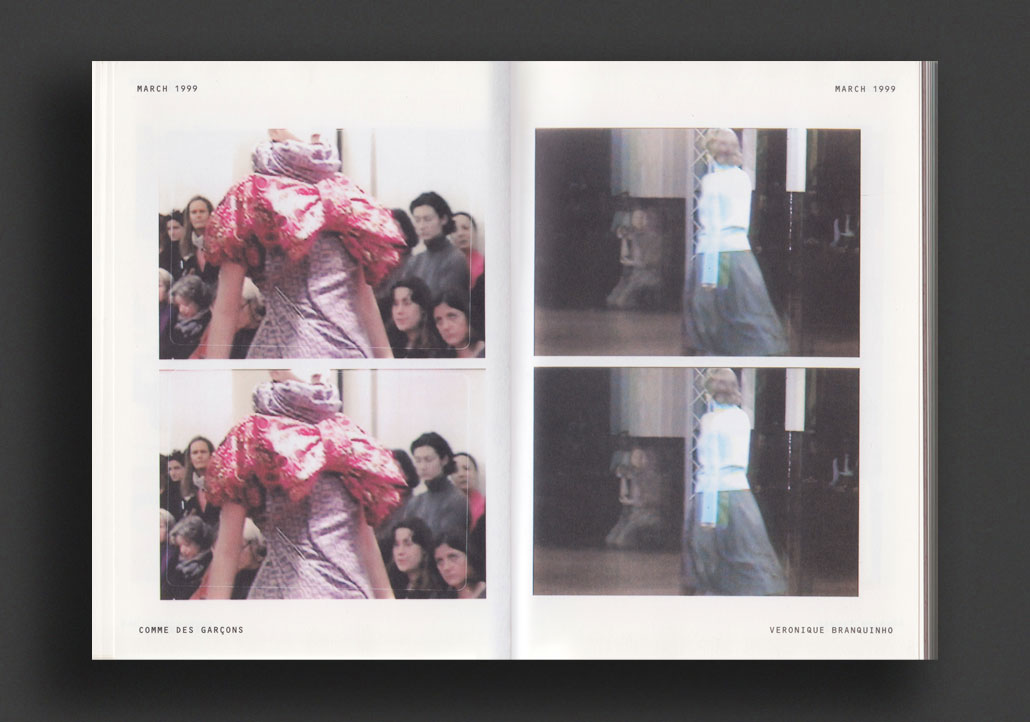
Complete set of the 2 volumes of this wonderful pocket fashion journal/photo book published in 1999 and 2000, respectively, by Tokyo's Little More, documenting the 1998—1999 and 1999—2000 Paris fashion weeks through the travels and relationships of Nakako Hayashi, artist and editor of the great Here and There journal and fashion and art contributor to Purple, Hanatsubaki, Ryu-ko-tsu-shin, and more. Naturally, this publication has all the feeling of Here and There and early issues of Purple, and includes intimate collaborations with most of the key contributors to those magazines, all friends of Hayashi's, plus documentation of the long lost galleries and hot-spots of Paris, London, New York, and Tokyo — Colette, Purple Institute, The Pineal Eye, The Deep Gallery, Purple Cafe, Alleged Galleries... rare photo documentation of fashion graduate catwalks in Arnhem and Antwerp, artist ads and pages... An excellent time-capsule of 1990's anti-fashion world at its peak. Volume 1 includes a sticker sheet of Susan Cianciolo's Run7 collection!
Contributions and documentation of work by Susan Cianciolo, Mark Borthwick, BLESS, Elein Fleiss, Comme des Garçons, Maison Martin Margiela, A.F. Vandevorst, Veronique Branquinho, Jerome Dreyfuss, Gaspard Yurkievich, Junya Watanabe, Martine Sitbon, Colette, Purple, Takashi Homma, Mike Mills, Olivier Theyskens, Andre Walker, Jeremy Scott, Niels Klavers, Dick Page, Bernadette Van-Huy, Dorothee Perret, Carol Christian Poell, Keupr/van Bentum, Patrick van Ommeslaeghe, Wendy & Jim, Anne Daems, Fergadelic, Walter Pfeiffer, Bernadette Corporation, Mark Gonzales, Sofia Coppola, Jurgi Persoons, Walter Van Beirendonck, Melanie Rozema & Jeroen Teunissen, Benoit Meleard, Marcha Hüskes, Oscar Süleyman, and many more.
Texts in English and Japanese.
Near Fine, most complete copies both, with NF obi strips and dust jacket.
1981, Italian
Hardcover (w. dust jacket), 565 pages, 23 x 23 cm
1st Edition, Out of print title / used / very good
Published by
Theorema Edizioni / Roma
$220.00 - In stock -
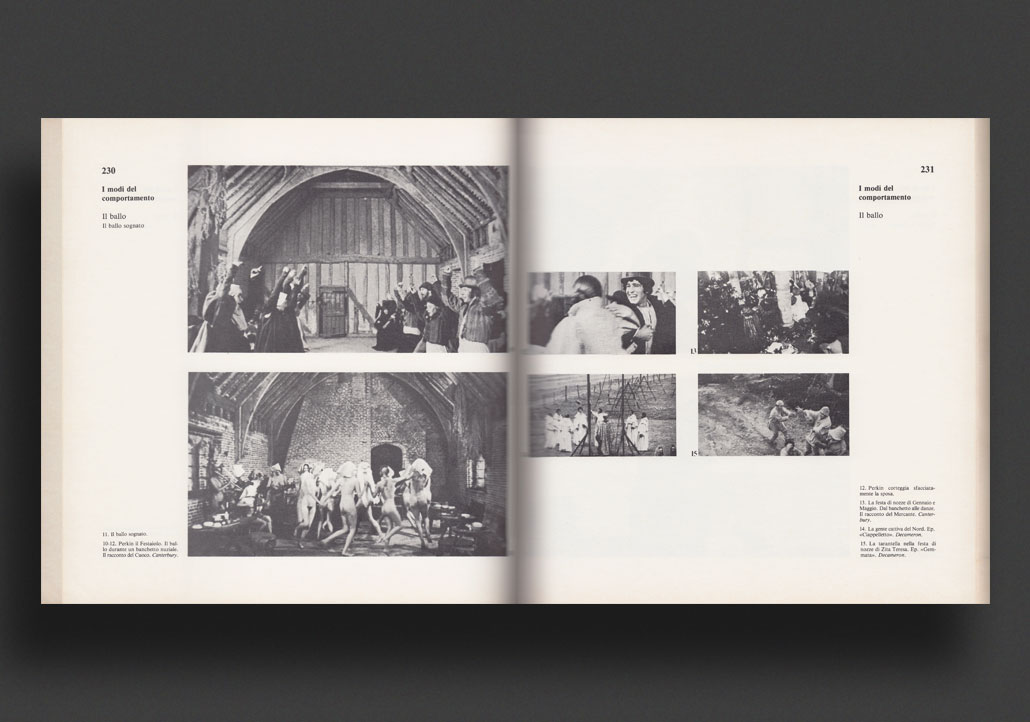
Rare first edition of the colossal hardcover volume on Pasolini's cinematographic oeuvre; the legendary Corpi e Luoghi (Bodies and Places), published in Rome in 1981, starting from hypotheses expressed by Pier Paolo Pasolini in his archive of unpublished writings (1968-73) published here alongside the editors Michele Mancini and Giuseppe Perella's comprehensive atlas/analysis of 1734 reproductions of stills from his films. A book like no other.
For Pasolini, cinema was the art of discovering, indeed rediscovering, the sacred of bodies and places, their mythical content, lost in the desert of modernity.
Around 1980 in Rome, a small cooperative around film critics Michele Mancini and Giuseppe Perrella produced a mysterious, elaborate and yet effortless looking 565-page book of black-and-white photographs entitled Pier Paolo Pasolini: Corpi e Luoghi (Theorema 1981). According to some reviews of the time this is the most Pasolinian publication to date (Alberto Farrasino), an indispensable tool for future research (Tullio Kezich), not just an illustrated book but a unique model of critique (Adriano Aprà).
With its relentless and yet playful classification of some 2,000 film stills ranged under the categories of “bodies” and “places”, whatever page we turn to, Mancini and Perrella stage an ever-shifting space. With a hidden reference to Walter Benjamin and a correspondingly revolutionary attitude, quotation here is understood as a form of “appropriation”, as a practical use of an archive.
In keeping with the great filmmaker’s credo, Pier Paolo Pasolini: Corpi e Luoghi is a colossal attempt to take this enormous amount of material, in book form, where it wants to go. In the introduction, Mancini and Perrella describe their approach similar to the «analytic field» that they see in the film set: «Through film Pasolini is able to elicit out that sort of unconscious, never talked about code through which in daily life we operate and relate to the world. He makes visible a miscellany of aphasic and hidden practices, a ‹primitive› realm normally concealed from our ‹enlightened› societies.» Mancini and Perrella introduce their compilation of quoted images with a compilation of texts by Pasolini where he describes his own research of bodies and places for his films. These text were unpublished prior to Corpi e Luoghi.
All texts in Italian.
A Very Good copy of this historical book - a must for any fan of Pasolini. In Very Good original dust jacket.
1977, English
Softcover (staple-bound), 47 pages, 27.7 x 20.5 cm
1st Edition, Out of print title / used / average
Published by
Art Metropole / Toronto
$180.00 - In stock -
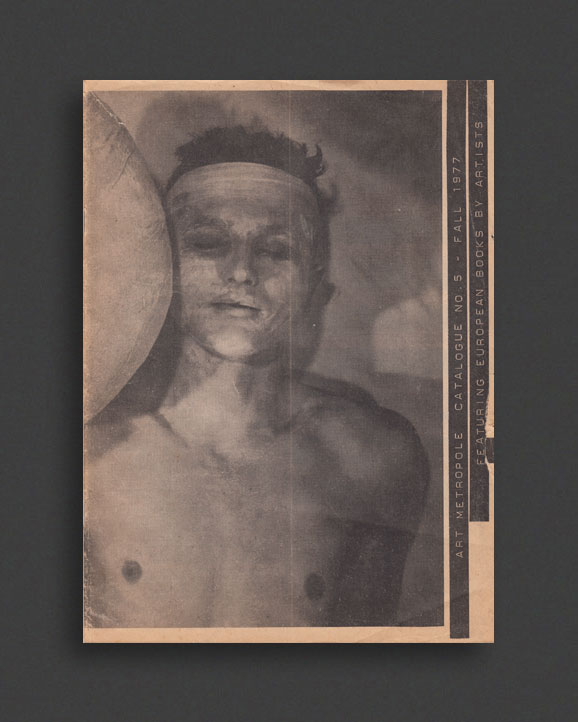
Exceptionally rare, excellent reference work on artists' publications issued in 1977 by Art Metropole in Toronto, the first large-scale distributor of artists' books and publications in North America. This valuable catalogue, featuring "European titles, publications, periodicals, records, special editions, videos and films", offers works by European and American artists such as Beuys, Rainer, Polke, Art & Language, Hans Haacke, Terry Riley, Lamonte Young, Marian Zazeela, Douglas Huebler, Broodthaers, Kaprow, Piper, Buren, Reich, Cage, Snow, Darboven, Matta-Clark, Dibbets, Brion Gysin, Simone Forti, General Idea, Claes Oldenburg, Jimmy De Sana, Vito Acconci, Gilbert & George, Robert Filliou, Sol Lewitt, Ehrenberg, Filliou, Fulton, Graham, Rebecca Horn, Mel Bochner, William Burroughs, Ugo La Pietra, Urs Luthi, Hansjörg Mayer, Merz, Robert Cumming, Willats, Al Hansen, Richard Long, Philip Glass, George Brecht, Image Bank, Robert Barry, Nannucci, Donald Judd, Maria Reiche, Dennis Oppenheim, Dieter Rot, Kurt Schwitters, Giorgio Ciam, Daniel Spoerri, Ed Ruscha, Ray Johnson, Philip Corner, Bob Cobbing, Lawrence Weiner, Klaus Rinke, Les Levine, Lea Vergine, Baldessari, Ant Farm, Emmett Williams, Robert Wilson, UFO Group, Vostell, etc. with each item concisely described, and for the books, essential bibliographical information is provided. Publications from Art Metropole, periodicals, records, and videos are also listed for sale, with prices. Cover artwork features Viennese actionist Rudolf Schwarzkogler's Portfolio of the 3rd Action, which is among the selections of European artists' books. Selected b/w illustrations throughout of items listed, and full-page ads for Art Metropole's "FETISH" t-shirt and General Idea's FILE magazine.
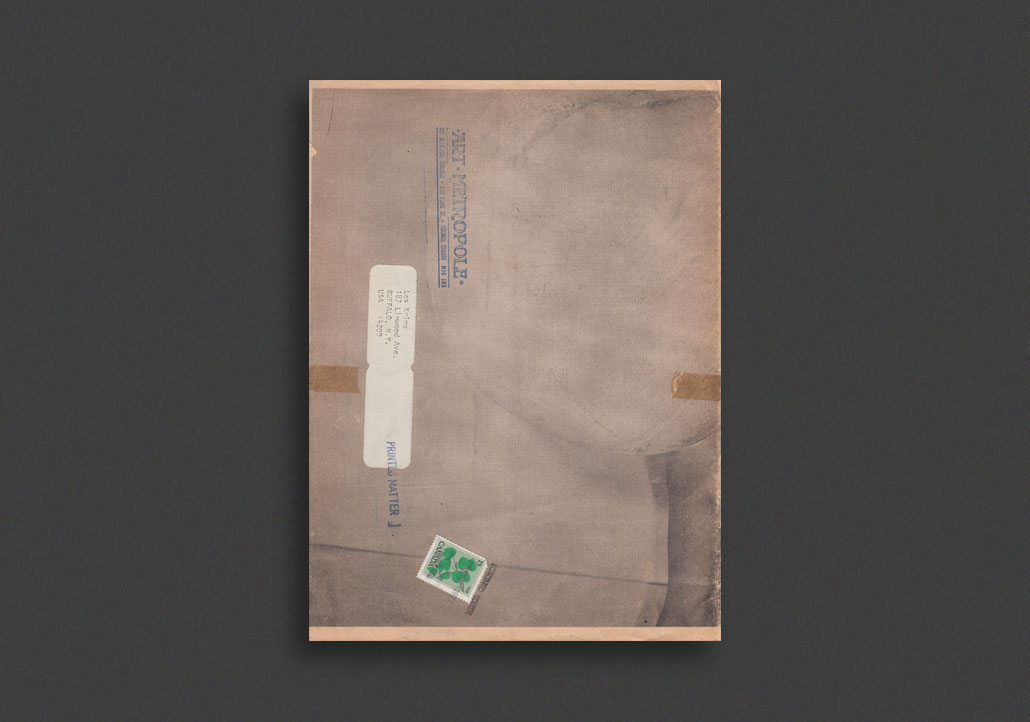
Issued privately as a mail-out catalogue, this copy includes the AM ink stamp and Canadian postage stamp on the verso, posted in 1977 to American conceptualist photographer Les Krim, in Buffalo, New York.
Average—Good copy, some chipping to extremities, small closed tear to top-left corner of cover, generally tanned/aged newsprint.
1989, English
Softcover (loose-leaf tabloid), 40 pages, 40 x 29 cm
1st Edition, Out of print title / used / very good
Published by
Agenda / Parkville
$70.00 - In stock -
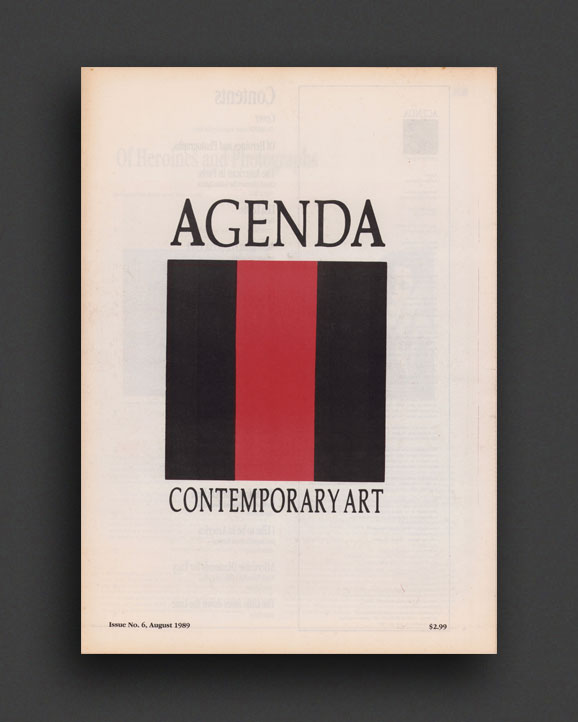
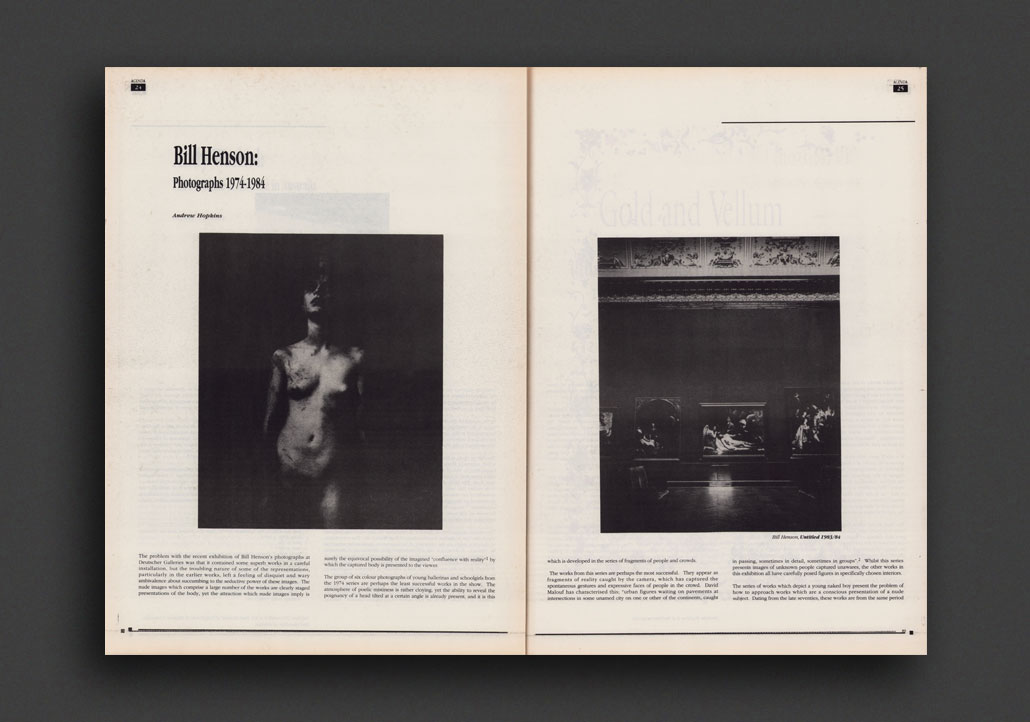
Issue No. 6, August 1989 of Melbourne's contemporary arts newspaper, Agenda, edited by the great artistic director, curator and writer, Juliana Engberg. An incredible issue with cover artwork by John Nixon, with heavily illustrated articles by contributors McKenzie Wark, Deb Ely, Jacqueline Riva, May Lam, Juliana Engberg, Nicholas Baume, Harriet Edquist, Virginia Trioli, Leon van Schaik, Stuart Koop, Stephen O'Connell, Andrew Hopkins, Alex Selenitsch, Anna Clabburn, James Hurley, covering Bill Henson, Chantal Akerman, Robin Boyd, Melbourne gallery Store 5, Wes Placek, Jon Campbell, the Andy Warhol Collection, Graeme Hare, Tolarno Gallery, Lisa Lewis, Australian Perspecta 1989, and much more. Published with the assistance of the great George Paton Gallery, Melbourne House, Melbourne University.
Very Good copy with light aging.
1991, English
Softcover (loose-leaf tabloid), 32 pages, 43 x 29 cm
1st Edition, Out of print title / used / very good
Published by
Broadsheet / Adelaide
$50.00 - Out of stock
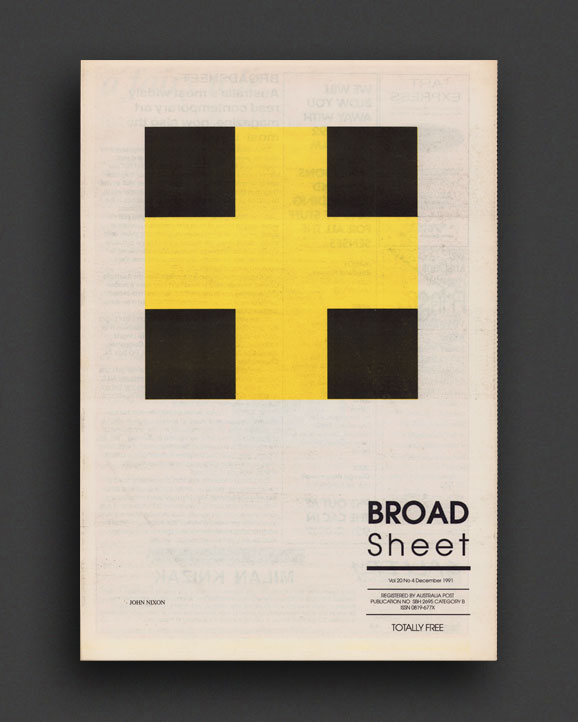
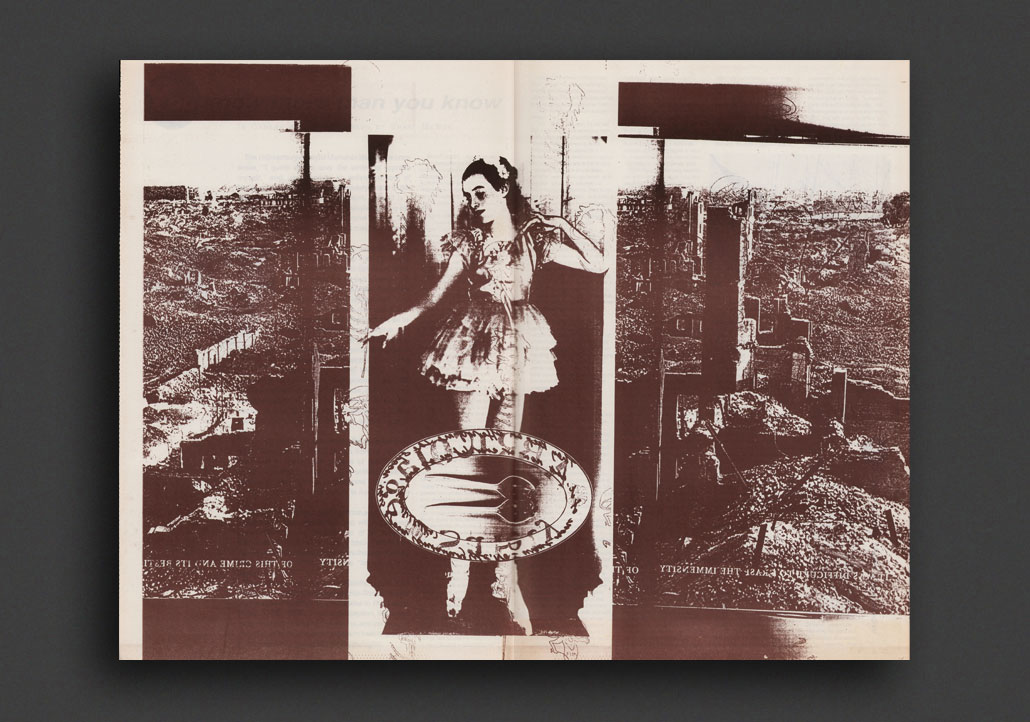
Vol. 20 No. 4, December 1991, of Broadsheet. Not the crappy Melbourne yuppy consumer guide, the 90's Adelaide arts newspaper, founded in the late 1980's to run throughout the 1990's. With cover artwork by John Nixon and centre-spread collage artwork by Bronia Iwanczak. Heavily illustrated (and uncensored) articles and reviews throughout, this issue features contributors Catherine Lumby, Kevin Murray, Shane McNeill, Leon Marvel, Leonie Neilson, Manne Schulze, John McConchie, Michelle Prak, Carolyn Barnes, Louise Dauth, and others covering Juan Davila, the exhibition history of Melbourne's Store 5, Georges Bataille, Archeology of Gnostic cinema, Gareth Samson, Jeff Koons' collaborations with Cicciolina (Ilona Staller), Australia's first Museum of Modern Art, the new Mitsubishi Magna, Australian film maker Ross Gibson, Adelaide's Critical City Project, and much more.
Very Good copy with light aging.