World Food Books' programme is largely produced on Kulin Nation land. We acknowledge the Wurundjeri people of the Kulin Nation as the first and continuing custodians of this land, and pay respect to their Elders past, present, and emerging.
World Food Books is an arts and special interests bookshop in Naarm / Melbourne. Founded in 2010, World Food Books is devoted to the presentation of a rotating, hand-selection of international art, design, literary and counterculture publications with an emphasis on the anti-traditional, the experimental, the avant-garde, the heretic, the marginal.
Presenting new titles alongside rare and out-of-print books, catalogues and journals spanning the fields of modern and contemporary art, design, photography, illustration, film, literature, poetry, cultural theory, philosophy, sexuality, popular and underground culture in its many radical forms, World Food Books wishes to encourage adventurous, thoughtful and open-minded reading, looking, writing, and exchange of publishing and ideas, both current and historical.
As well as our bookshop, located in Melbourne's historical Nicholas Building, all of our inventory is available internationally via our online mail-order service.
World Food Books semi-regularly co-ordinates "Occasions", a programme of exhibits and events at the bookshop and in partnership with other hosts (such as museums and art galleries) that develop out of the activities, relationships and content of the bookshop itself.
World Food Books
The Nicholas Building
37 Swanston Street
Room 5, Level 6
Melbourne 3000
Australia
SHOP HOURS:
THU–SAT 12–6
WEB-SHOP OPEN 24/7
World Food Books
Postal Address:
PO Box 435
Flinders Lane
Victoria 8009
Australia
info@worldfoodbooks.com
Art
Theory / Essay
Architecture / Interior
Graphic Design / Typography
Photography
Fashion
Eros
LGBTQ+
Fiction / Poetry
Weird / Speculative / Science Fiction / Horror
Transgressive / Visceral / Abject
Symbolism / Decadence / Fin de siècle
Film / Video
Painting
Sculpture / Installation
Performance / Dance / Theater
Drawing
Sound / Music
Curatorial
Group Shows / Collections
Periodicals
Out-of-print / Rare
Posters / Ephemera / Discs
Signed Books
World Food Books Gift Voucher
World Food Book Bag
Australian Art
Australian Fiction
Australian Science Fiction / Speculative Fiction
Australian Poetry
Australian Photography
Japanese Photography
Conceptual Art
Minimal Art
Dada
'Pataphysics / Oulipo
Fluxus
Concrete Poetry
Pop Art
Surrealism
Arte Povera
Arte Informale / Haute Pâte / Tachism
Nouveau Réalisme / Zero / Kinetic
Situationism / Lettrism
Collage / Mail Art / Xerox Art
Art Brut / Folk / Visionary / Fantastic
Illustration / Graphic Art / Bandes Dessinées
Furniture
Italian Radical Design / Postmodernism
Textiles
Ceramics / Glass
Counterculture
Protest / Revolt
Philosophy
Psychoanalysis
Anthropology
Anarchism
Socialism / Anarchism / Communism / Capitalism
Literary Theory / Semiotics / Language
Feminism / Women's Studies
Gender Studies / Sexuality
Anthropology
Fetishism / BDSM
Drugs / Psychedelia
Crime / Violence
Animal Rights / Veganism
Occult / Esoterica
Ecology / Earth / Alternative Living
Whole Earth / Crafts
All prices in AUD (Australian dollars)
Pick-Ups
Pick-up orders can be collected in our bookshop during opening hours after order date. Please collect any Pick-up orders within 2 weeks of ordering as we have limited storage space. Orders will be released back into stock if not collected within this time. No refunds can be made for pick-ups left un-collected. If you cannot make it in to the bookshop in this time-frame, please choose postage option.
Return Policy
All sales are final. We do accept returns (for refund or exchange) for items received in error. All our orders are packed with special care using heavy-duty padding and cardboard book-mailers or bubble mailers (for smaller books), using reinforcement where required. We cannot take responsibility for any lost, stolen or damaged parcels.
Insurance
Should you wish to insure your package, please email us directly after placing your order and we can organise this at a small extra expense. Although all standard/express tracked packages are very safe and dependable, we cannot take responsibility for any lost, stolen or damaged parcels. We recommend insurance on valuable orders.
Interested in selling your old books, catalogues, journals, magazines, comics, fanzines, ephemera? We are always looking for interesting, unusual and out-of-print books to buy. We only buy books in our fields of interest and specialty, and that we feel we can resell.
We base these prices on desirability, market value, in-print prices, condition and our current stock levels. We offer cash, store credit, and can take stock on consignment. All
about 25% of the price we expect to get when we sell them, or 30% in store credit. We base these prices on desirability, market value, in-print prices, condition and our current stock levels.
Sell your books any day of the week. You can drop them off and return later. If you have a lot of books, we can visit your Sydney home.
We buy books that we feel we can resell. We offer about 25 % of the price we expect to get when we sell them, or 30% in store credit. We base these prices on desirability, market value, in-print prices, condition and our current stock levels.
Philadelphia Wireman
03 August - 01 September, 2018
World Food Books is proud to announce our next Occasion, the first presentation of sculptures by Philadelphia Wireman in Australia.
The Philadelphia Wireman sculptures were found abandoned in an alley off Philadelphia’s South Street on trash night in 1982. Their discovery in a rapidly-changing neighbourhood undergoing extensive renovation, compounded with the failure of all attempts to locate the artist, suggests that the works may have been discarded after the maker’s death. Dubbed the "Philadelphia Wireman" during the first exhibition of this work, in 1985, the maker’s name, age, ethnicity, and even gender remain uncertain. The entire collection totals approximately 1200 pieces, all intricately bound together with tightly-wound heavy-gauge wire (along with a few small, abstract marker drawings, reminiscent both of Mark Tobey and J.B. Murry). The dense construction of the work, despite a modest range of scale and materials, is singularly obsessive and disciplined in design: a wire armature or exoskeleton firmly binds a bricolage of found objects including plastic, glass, food packaging, umbrella parts, tape, rubber, batteries, pens, leather, reflectors, nuts and bolts, nails, foil, coins, toys, watches, eyeglasses, tools, and jewellery.
Heavy with associations—anthropomorphic, zoomorphic, and socio-cultural responses to wrapped detritus—the totemic sculptures by Philadelphia Wireman have been discussed in the context of work created to fulfil the shamanistic needs of alternative religions in American culture. Curators, collectors, and critics have variously compared certain pieces to sculpture from Classical antiquity, Native American medicine bundles, African-American memory jugs, and African fetish objects. Reflecting the artist’s prolific and incredibly focused scavenging impulse, and despite—or perhaps enhanced by—their anonymity, these enigmatic objects function as urban artefacts and arbiters of power, though their origin and purpose is unknown. Philadelphia Wireman, whatever their identity, possessed an astonishing ability to isolate and communicate the concepts of power and energy through the selection and transformation of ordinary materials. Over the course of the past two decades, this collection has come to be regarded as an important discovery in the field of self-taught art and vernacular art.
Presented in collaboration with Fleisher-Ollman Gallery, Philadelphia, and Robert Heald, Wellington.
Susan Te Kahurangi King
02 February - 10 March, 2018
Susan Te Kahurangi King (24 February 1951 - ) has been a confident and prolific artist since she was a young child, drawing with readily available materials - pencils, ballpoint pens and felt-tip markers, on whatever paper is at hand. Between the ages of four and six Susan slowly ceased verbal communication. Her grandparents William and Myrtle Murphy had developed a special bond with Susan so they took on caring responsibilities for extended periods. Myrtle began informally archiving her work, carefully collecting and storing the drawings and compiling scrapbooks. No drawing was insignificant; every scrap of paper was kept. The King family are now the custodians of a vast collection containing over 7000 individual works, from tiny scraps of paper through to 5 meter long rolls.
The scrapbooks and diaries reveal Myrtle to be a woman of great patience and compassion, seeking to understand a child who was not always behaving as expected. She encouraged Susan to be observant, to explore her environment and absorb all the sights and sounds. Myrtle would show Susan’s drawings to friends and people in her community that she had dealings with, such as shopkeepers and postal workers, but this was not simply a case of a grandmother’s bias. She recognised that Susan had developed a sophisticated and unique visual language and sincerely believed that her art deserved serious attention.
This was an unorthodox attitude for the time. To provide some context, Jean Dubuffet coined the term Art Brut in 1945 to describe work created by self-taught artists – specifically residents of psychiatric institutions and those he considered to be visionaries or eccentrics. In 1972 Roger Cardinal extended this concept by adopting the term Outsider Art to describe work made by non-academically trained artists operating outside of mainstream art networks through choice or circumstance. Susan was born in Te Aroha, New Zealand in 1951, far from the artistic hubs of Paris and London that Dubuffet and Cardinal operated in. That Myrtle fêted Susan as a self-taught artist who deserved to be taken seriously shows how progressive her attitudes were.
Susan’s parents Doug and Dawn were also progressive. Over the years they had consulted numerous health practitioners about Susan’s condition, as the medical establishment could not provide an explanation as to why she had lapsed into silence. Dawn educated herself in the field of homeopathy and went on to treat all twelve of her children using these principles – basing prescriptions on her observations of their physical, mental and emotional state.
Doug was a linguist with an interest in philosophy who devoted what little spare time he had to studying Maori language and culture. To some extent their willingness to explore the fringes of the mainstream made them outsiders too but it was their commitment to living with integrity and their respect for individuality that ensured Susan’s creativity was always encouraged.
Even though Susan’s family supported her artistic pursuits, some staff in schools and hospitals saw it as an impediment to her assimilation into the community and discouraged it in a variety of ways. Her family was not always aware of this and therefore did not fully understand why Susan stopped drawing in the early 1990s. However, rather than dwell on the challenges that Susan faced in pursuit of her artistic practice, they prefer to highlight her achievements. In 2008 Susan began drawing again in earnest, after an almost 20 year interruption, and her work is now shown in galleries around the world.
Susan grew up without television and has been heavily influenced by the comics she read as a child. She is absolutely fearless in the appropriation of recognizable characters, such as Donald Duck and Mickey Mouse, in her work. She twists their limbs, contorts their faces, compresses them together, blends them into complex patterned backgrounds - always imbuing them with an incredible energy. Although Susan often used pop culture characters in her work they are not naive or childlike. These are drawings by a brilliant self-taught artist who has been creating exceptional work for decades without an audience in mind.
Mladen Stilinović
"Various Works 1986 - 1999"
02 February 16 - September 10, 2016
Various works 1986 - 1999, from two houses, from the collections of John Nixon, Sue Cramer, Kerrie Poliness, Peter Haffenden and Phoebe Haffenden.
Including: Geometry of Cakes (various shelves), 1993; Poor People’s Law (black and white plate), 1993; White Absence (glasses, ruler, set square, silver spoon, silver ladel with skin photograph and wooden cubes), 1990-1996; Exploitation of the Dead (grey and red star painting, wooden painting, black spoon with red table, red plate), 1984-1990; Money and Zeros (zero tie, paintings made for friends in Australia (Sue, John, Kerrie), numbers painting), 1991-1992; Words - Slogans (various t-shirts) - “they talk about the death of art...help! someone is trying to kill me”, “my sweet little lamb”, “work is a disease - Karl Marx”; Various artist books, catalogues, monographs, videos; Poster from exhibition Insulting Anarchy; "Circular" Croatian - Australian edition; Artist book by Vlado Martek (Dostoyevsky); more.
Thanks to Mladen Stilinović and Branka Stipančić.
Jonathan Walker
Always Will Need To Wear Winter Shirt Blue + Ochre Small Check Pattern
21 August - 21 September, 2015
Untitled
I am not a great reader of poetry but I always return to the work of Melbourne poet, Vincent Buckley (1925- 1988). Perhaps I find his most tantalising piece to be not a finished poem but a fragment left on a scrap of paper discovered on his desk after the poet’s death.
The poetry gathers like oil
In the word-core, and spreads
It has its music meet,
Its music is in movement.
This fragment is more the shell left behind from a volatile thought than a finished poem. I find the last two lines honest but awkward whereas the first two lines work like an arrow. Most likely he could not find a resolution so it was left. Still, in its present form, it remains an eloquent testimony to the ultimate failure of a medium to express mobile thought and sensation, in Buckley’s case, through verbal language. It’s an important matter because this is something all artists have to deal with regardless of the medium.
I have never written a poem, however, I am forever copying fragments from books on paper scraps in a vain effort to fix certain notions in my head. At first, they function as bookmarks that are sometimes returned to when I open the book. But before long, as they accumulate, they fall out littering the table interspersed with A4 photocopies, bills, books and medications.
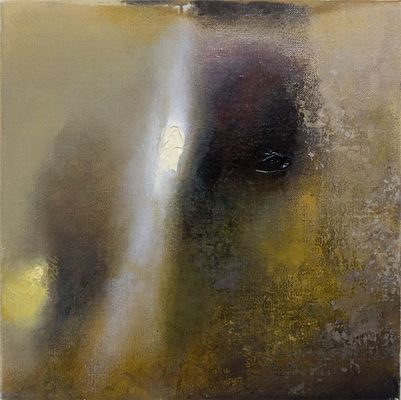
To return to Buckley’s fragment, the first two lines very much evoke how I paint nowadays. As you age, detail diminishes and patches of light become more luminous and float. I feel the most honest way of dealing with this is by smearing the oil paint on the canvas with the fingers and working close-up, blind. Only if the patches coalesce into an approaching image can the work gain a life.
-
Jonathan Walker was born in Melbourne, Australia and brought up on a dairy farm in Gippsland. In the 1970’s he studied painting at RMIT and won the Harold Wright Scholarship to the British Museum, London. During the 1980’s he exhibited at Pinacotheca Gallery, Richmond and had work shown at the NGV and Heidi City Art Gallery. Over the same period he designed the cover for the “Epigenesi” LP by Giancarlo Toniutti, Italy and conducted a mail exchange work with Achim Wollscheid, Germany. The work with artists through the post resulted in an article published in the bicentenary issue of Art and Australia 1988. He showed in artist run spaces such as WestSpace in the 90’s and 2000’s, and until 2012, taught painting at Victoria University, which is where we (Colleen Ahern and Lisa Radford) as organisers of the exhibition, among many others, had the privilege of being his student.
Walker’s knowledge was imparted to students through the careful selection of music, literature, and artists found in books that he himself had ordered for the library. Walker’s strategy was the generosity of sharing his vast knowledge with references specific to each student and their context.
Walker’s paintings share a similar focus and intimacy.
This exhibition presents a small selection of recent paintings alongside a publication that includes Walker’s writing. Observational and analytical, Walker’s work is a type of material notation — the time of day, colour and how it is blended, the both specific and fleeting location of a reflection on lino or the question of whether a chair leg should be included in a painting.
Please join us on Friday August 21 between 6-8pm to celebrate the opening of the exhibition.
Curated by Colleen Ahern and Lisa Radford.
B. Wurtz
Curated by Nic Tammens
March 26 - April 4, 2015
B.Wurtz works from a basement studio in his home on Manhattan’s Lower East Side.
This local fact is attested to by the plastic shopping bags and newsprint circulars that appear in his work. As formal objects, they don’t make loud claims about their origins but nonetheless transmit street addresses and places of business from the bottom of this long thin island. Like plenty of artists, Wurtz is affected by what is local and what is consumed. His work is underpinned by this ethic. It often speaks from a neighborhood or reads like the contents of a hamper:
“BLACK PLUMS $1.29 lb.”
“Food Bazaar”
“USDA Whole Pork Shoulder Picnic 99c lb.”
“RITE AID Pharmacy, with us it’s personal.”
“H. Brickman & Sons.”
“Sweet Yams 59c lb."
Most of the work in this exhibition was made while the artist was in residence at Dieu Donne, a workshop dedicated to paper craft in Midtown. Here Wurtz fabricated assemblages with paper and objects that are relatively lightweight, with the intention that they would be easily transportable to Australia. This consideration isn’t absolute in Wurtz’s work, but was prescriptive for making the current exhibition light and cheap. Packed in two boxes, these works were sent from a USPS post office on the Lower East Side and delivered to North Melbourne by Australia Post.
Wurtz appears courtesy of Metro Pictures, New York.
Thanks to Rob Halverson, Joshua Petherick, Sari de Mallory, Matt Hinkley, Helen Johnson, Fayen d'Evie, Ask Kilmartin, Lisa Radon, Ellena Savage, Yale Union, and "Elizabeth".
John Nixon
"Archive"
December 15 - January 20, 2014
The presentation of John Nixon's archive offered a rare showcase of this extensive collection of the artist's own publications, catalogues, posters, ephemera, editions and more, from the mid 1980s onwards, alongside a selection of his artworks.
Organized by John Nixon, Joshua Petherick and Matt Hinkley.
"Habitat"
at Minerva, Sydney (organised by Joshua Petherick and Matt Hinkley)
November 15 - December 20, 2014
Lupo Borgonovo, Janet Burchill & Jennifer McCamley,
Lewis Fidock, HR Giger, Piero Gilardi, Veit Laurent Kurz,
Cinzia Ruggeri, Michael E. Smith, Lucie Stahl, Daniel Weil, Wols
Press Release:
“...It contained seven objects. The slender fluted bone, surely formed for flight, surely from the wing of some large bird. Three archaic circuitboards, faced with mazes of gold. A smooth white sphere of baked clay. An age-blackened fragment of lace. A fingerlength segment of what she assumed was bone from a human wrist, grayish white, inset smoothly with the silicon shaft of a small instrument that must once have ridden flush with the surface of the skin - but the thing’s face was seared and blackened.”
William Gibson, “Count Zero”, 1986
"Autumn Projects Archive"
Curated by Liza Vasiliou
March 6 - March 15, 2014
World Food Books, in conjunction with the Virgin Australia Melbourne Fashion Festival 2014, presented the Autumn Projects archive, consisting of a selection of early examples in Australian fashion with a particular interest in collecting designers and labels from the period beginning in the 1980’s, who significantly influenced the discourse of Australian Fashion.
Curated by Liza Vasiliou, the exhibition provided a unique opportunity to view pieces by designers Anthea Crawford, Barbara Vandenberg, Geoff Liddell and labels CR Australia, Covers, Jag along with early experimental collage pieces by Prue Acton and Sally Browne’s ‘Fragments’ collection, suspended throughout the functioning World Food Books shop in Melbourne.
H.B. Peace
presented by CENTRE FOR STYLE
November 14, 2013
"Hey Blinky, you say chic, I say same"
Anon 2013
H.B. Peace is a clothing collaboration between great friends Blake Barns and Hugh Egan Westland. Their pieces explore the divergences between 'character’ and ‘personality’ in garments....etc
Special Thanks to Joshua Petherick and Matt Hinkley of WFB and Gillian Mears
and a Very Special Thank you to Audrey Thomas Hayes for her shoe collaboration.
Janet Burchill & Jennifer McCamley
"Aesthetic Suicide"
May 10 - June 8, 2013
The first of our occasional exhibitions in the World Food Books office/shop space in Melbourne, "Aesthetic Suicide" presented a body of new and older works together by artists Janet Burchill & Jennifer McCamley, including videos, prints, a wall work, and publications.
During shop open hours videos played every hour, on the hour.
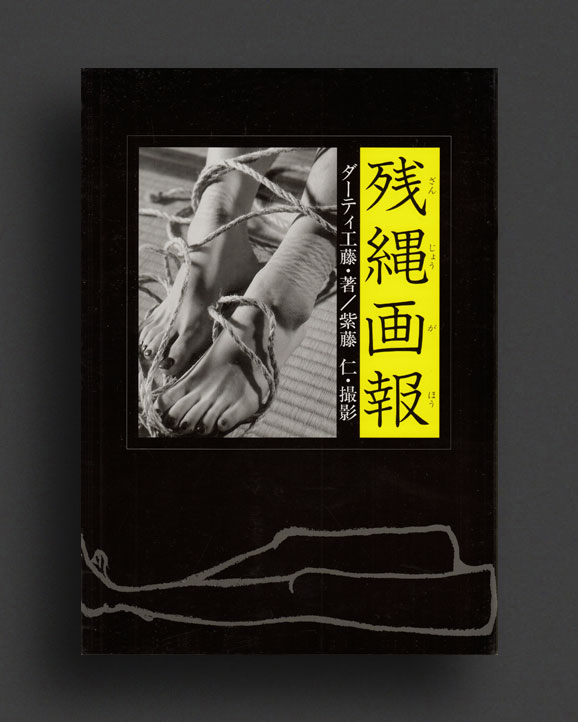
1998, Jpaanese
Softcover (w. dust jacket), 86 pages, 25.7 x 18.2 cm
1st Edition, Out of print title / used / fine
Published by
Wides Shuppan / Tokyo
$160.00 - Out of stock
"For bondage fetishists, the moment of ultimate ecstasy is when they become intoxicated with the beautiful yet cruel harmony created by the rope and the female body, a unique expression known as "the beauty of tight binding (kinbaku-bi)." Furthermore, by selecting and arranging the dozens, or even hundreds, of different ways to tie a body, it is possible to subtly change the boiling point of ecstasy. This delicacy and attention to detail is what makes bondage a unique form of fetishism.
However, one can only be called a true bondage fetishist if he or she is just as particular about the "rope marks" left on the soft skin of a bound woman as he or she is about the bondage itself. Because the rope marks are like the lingering scent of sex, and are extremely fetishistic"—from the Introduction
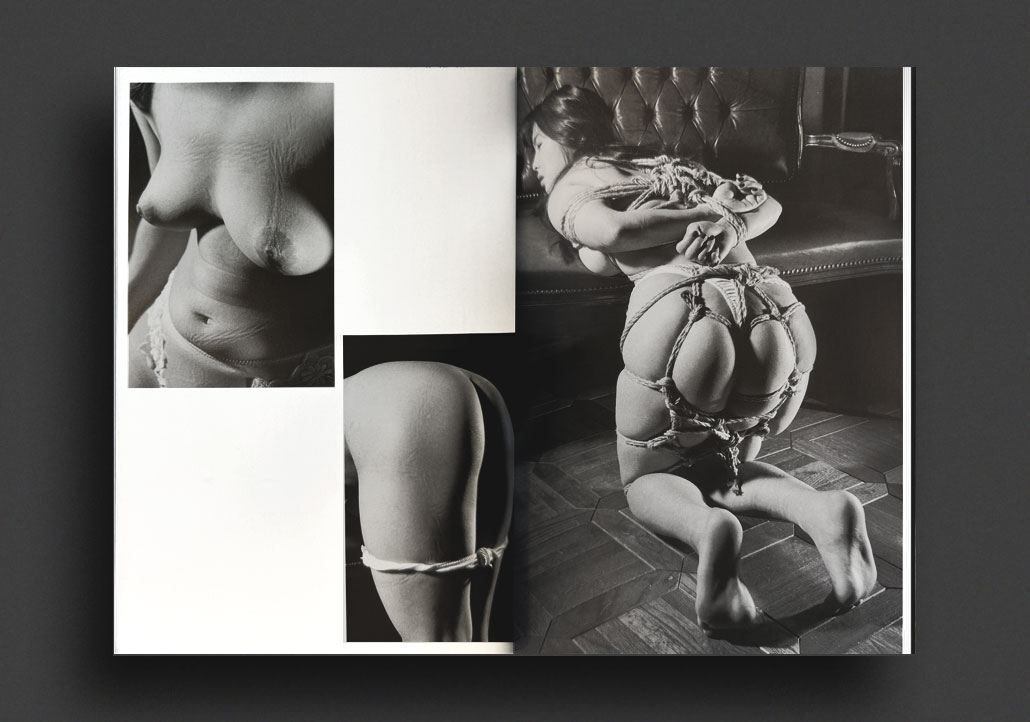
Rare 1998 Japanese photo book collecting a unique "impression" of kinbaku (Japanese rope bondage), made in collaboration between bondage artist, director, and film critic, Dirty Kudou (Koichi Kudo, b. 1954) and photographer Jin Shito (b. 1967). Rather than introducing the many ways of rope binding, this beautifully shot collection of erotic photographs focuses on the eroticism of rope marks — the impressions that remain on the body after binding. Shot in b/w with wonderful use of light to cast shadow on the skin impressions, the bondage master uses a rough hemp rope for binding, at times recalling the pioneering work of bondage master Seitu Ito. Very course yet naturally elastic, hemp, particularly the use of twisted manila hemp, is used to leave dramatic impressions that recall "rawa-me marks", the patterns made by rope on the surface of ancient Jōmon earthenware. The book is also filled with photographic documentation of the many variations of bindings that are applied to leave the depicted "traces of the rope".
Near Fine copy in NF dust jacket (preserved in archival mylar wrap).
1979, English
Softcover, 138 pages, 23.5 x 18.5 cm
1st Edition, Out of print title / used / good
Published by
Bill Owens / Livermore
$40.00 - In stock -
Fascinating insight to world of self-publishing photo-books c. 1979, written, designed and self-published by self-taught Californian photographer, Bill Owens, whose renowned books include Suburbia (1973), one of the 100 seminal photography books of the 20th century, Our Kind of People (1975), and Working (1977), amongst others.
"As an author of four photographic books I have felt the need to complete the photographic process by publishing my own book. I have dealt with enough publishers to know their strengths and weaknesses. I want to have control over the printing of my book and more important want to control the publicity, distribution and get a larger share of the money to be earned in publishing."
An in-depth, fully illustrated, wealth of experience shared with rare candor, documenting the entire process — the how-tos, the whys, the people, the contacts, the figures, and the impressive and insightful letters contributed by other self-publishing photographers regarding their books — Richard Misrach's debut book Telegraph 3 A.M and Mike Mandel and Larry Sultan's landmark Evidence.
Good—VG copy with some wear to the red cover edges.
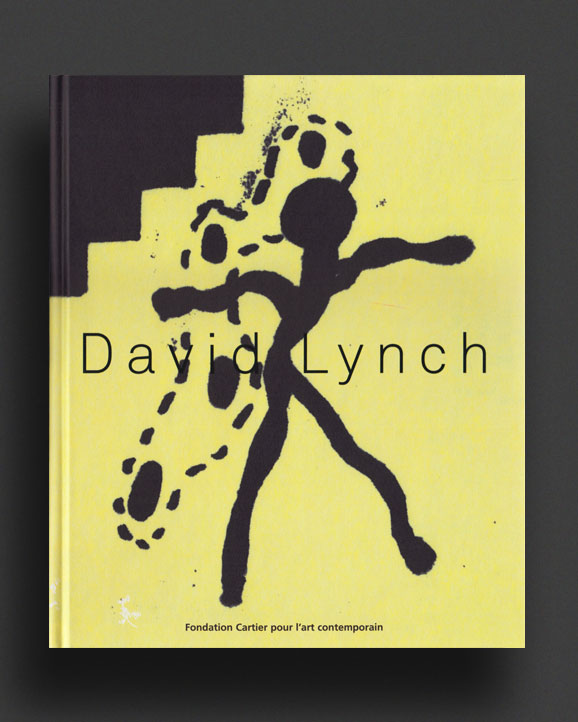
2007, English
Hardcover (w/ 2 cd), 452 pages, 23 x 28 cm
1st Edition, Out of print title / used / very good
Published by
Fondation Cartier pour l’art contemporain / Paris
Éditions Xavier Barral / Paris
$500.00 - Out of stock
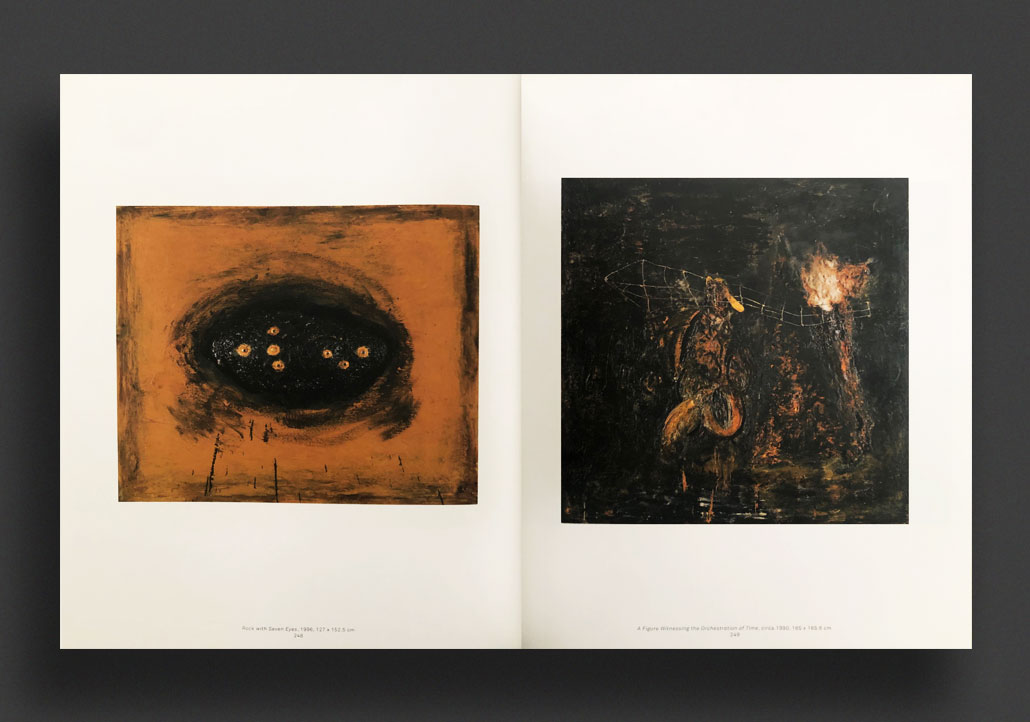
The first major collection of artwork by the acclaimed movie director David Lynch. Rare English-language first hardcover edition of this long out-of-print, comprehensive book, complete with double-CD accompaniment — an interview with David Lynch in which the artist provides a veritable commentary on his works.
Spanning a period of forty years, David Lynch's widely respected films and television series include Eraserhead, The Elephant Man, Blue Velvet, Twin Peaks, Lost Highway, and Mulholland Drive. However, his prolific visual art production, which began even before his films, has rarely been seen.
In 2007, the Fondation Cartier pour l’art contemporain presented The Air is on Fire, an expansive retrospective exhibition portraying the multiple facets of David Lynch’s art. It was the first time that the artist exhibited such an extensive number of paintings, photographs, drawings, experimental films, and sound creations.
This lavishly illustrated, deluxe volume unveils David Lynch’s little known yet highly prolific artistic production — a reference work that covers the artist’s different fields of creation: painting, photography, drawing, and motion pictures. His visual creations are aesthetic echoes of his films that offer a new look at his work and the opportunity to plunge deeper into his personal world. Includes many texts and an interview with Lynch. The book is accompanied by the seldom present 2 x audio commentary cds.
Very Good—Near Fine copy. Only some storage buckling and a tiny bit of light wear to the lower front cover, otherwise As New and complete. This is the original printing from the museum, in the English version, scarcer still.
2019, Japanese / English
Softcover, 80 pages, 18.3 x 30 cm
Signed and numbered edition of 850,
1st Edition, Out of print title / as new
Published by
Akio Nagasawa Publishing / Tokyo
$290.00 - Out of stock
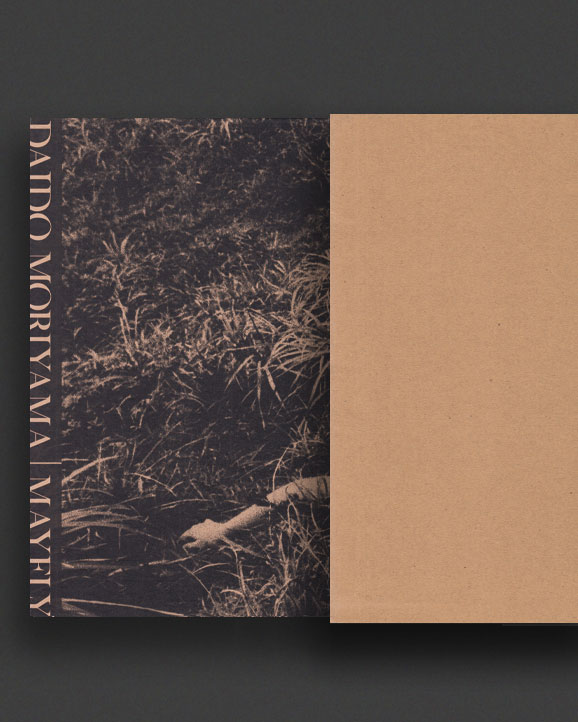
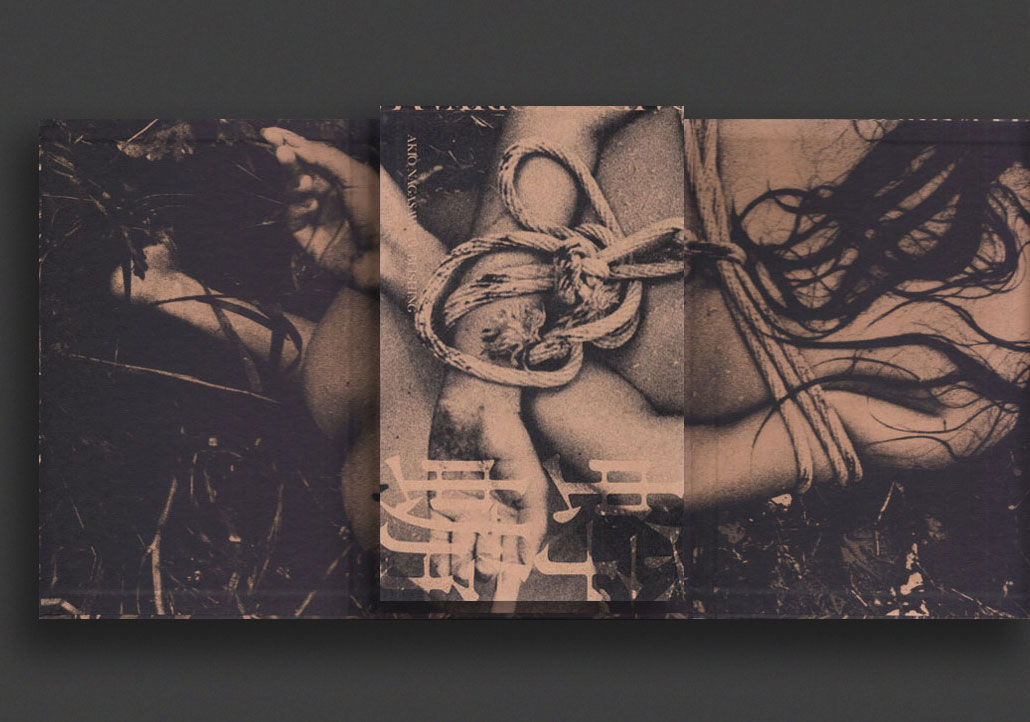
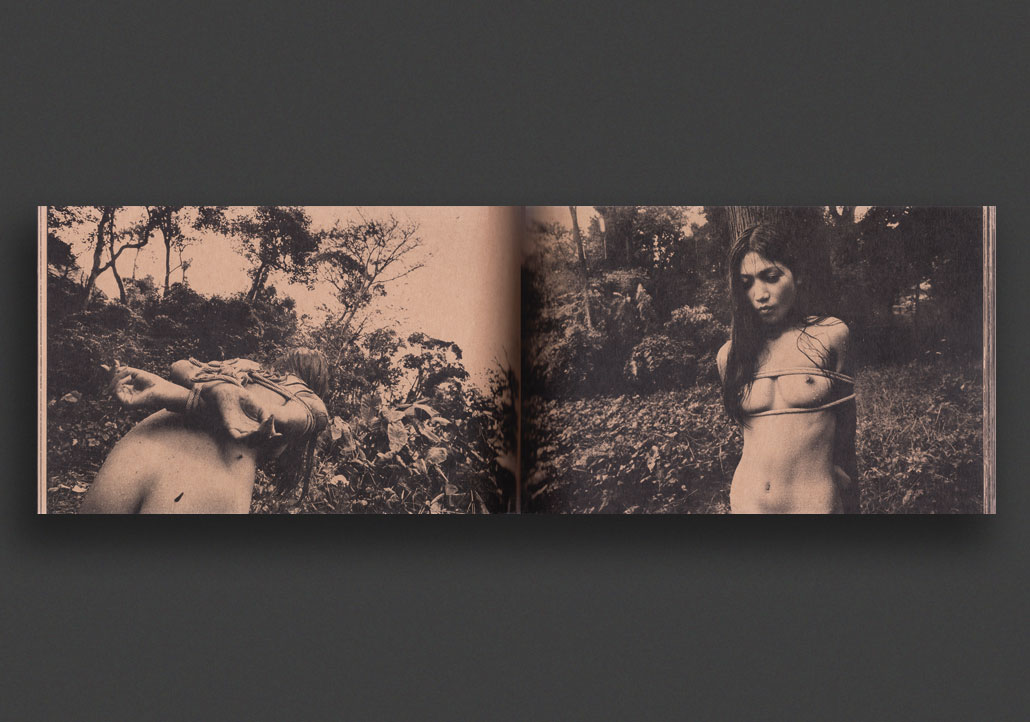
Beautiful limited edition of Mayfly, signed and numbered by Moriyama. Originally published in 1972 under the title Kagero, Mayfly is Daido Moriyama’s sole commission to produce a series of erotica. Mayfly is a series of Moriyama's "Kinbaku" photos that came about as a result of a collaboration with Dan Oniroku (1931—2011), legendary author of S/M fiction whose books were often adapted into "pink" films produced by Nikkatsu studios, Japan’s oldest film studio. Kagero can be viewed as an extension of Provoke #2: Eros, an early landmark publication in Moriyama’s storied career.
"Traveling down memory lane and going back 50 years in time, I arrived at a small and nameless village at the cape of a certain peninsula. What I found there were five naked women, all equally tied up with ropes, and with dazed looks on their faces. So I got out my camera and spontaneously began to take photographs. It was a strange day; a day like an ephemeral vision."— Afterword by Daido Moriyama
"While at a glance the work recalls the bondage photography of Nobuyoshi Araki, here runs perhaps a more sinister vein. This is not without reason, as Moriyama intended his pictures to represent the sadism of masculinity—clearly seen in scenes where male assistants tie their models in traditional Japanese bondage rope—and the inferiority complexes that often accompany such demands of domination. Here, Moriyama draws parallels between madness, libido, and ultimately, death. With these considerations in mind, the images have much in common with Hans Bellmer’s sculpture and drawings, and also sounds a resounding resonance with Marcel Duchamp’s final work, Étant Donnés. The parallel between nature and death remains constant, and it is without coincidence that the mayfly has often been used historically as a symbol of the ephemeral nature of life due to the insect’s extremely short lifespan. In this connection with both the pastoral and decay, Kagero bears some similarity to Sally Mann’s What Remains, an unsentimental observation of violence, death, and nature’s reclamation of the former." — publisher's blurb
Limited edition of 850 copies, this stunning edition comes wrapped in a card slipcase, within it a printed clamshell slipcase that opens to reveal 2 full pictures of 80 cm, housing the book, signed and numbered by Moriyama. Stunning.
As New.
1998, English
Softcover, 192 pages, 24.5 x 17 com
1st Edition, Out of print title / used / very good
Published by
Creation Books / London
The Tears Corporation / London
$40.00 - Out of stock
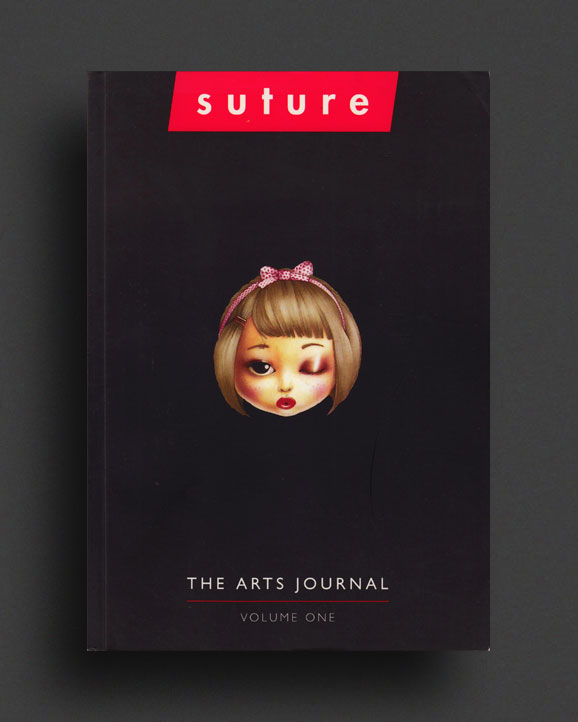
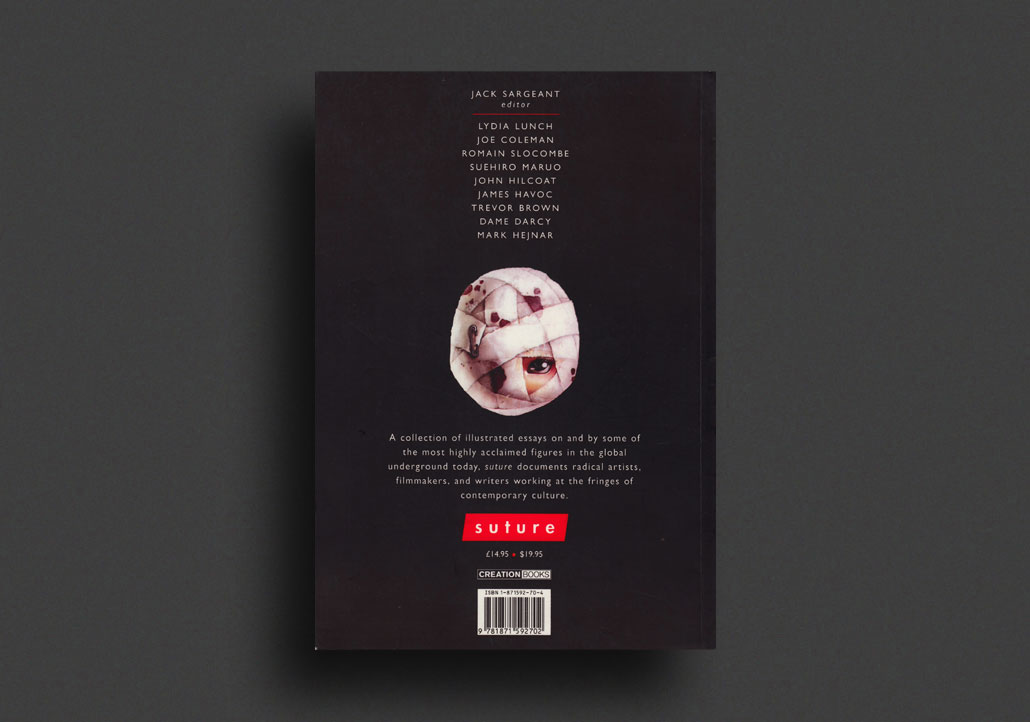
Long out-of-print, and only issued in one volume, Suture was a "collection of illustrated essays on and by some of the most highly acclaimed figures in the global underground today" (c. 1998). Edited by Jack Sargeant, Suture documents radical artists, filmmakers, and writers working at the fringes of contemporary culture, including: Lydia Lunch, Joe Coleman, Romain Slocombe, Suehiro Maruo, John Hilcoat, James Havoc, Trevor Brown, Dame Darcy, Mark Hejnar.
Jack Sargeant (b. 1968) is a British writer specialising in cult film, underground film, and independent film, as well as subcultures, true crime, and other aspects of the unusual. In addition he is a film programmer, curator, academic and photographer. He has appeared in underground films and performances.
Very Good copy, light corner, cover wear.
1968, English
Softcover (stapled), 20 pages, 20.4 x 20.2 cm
Edition of 1000,
1st Edition, Out of print title / used / good
Published by
Seth Siegelaub / New York
$340.00 - In stock -
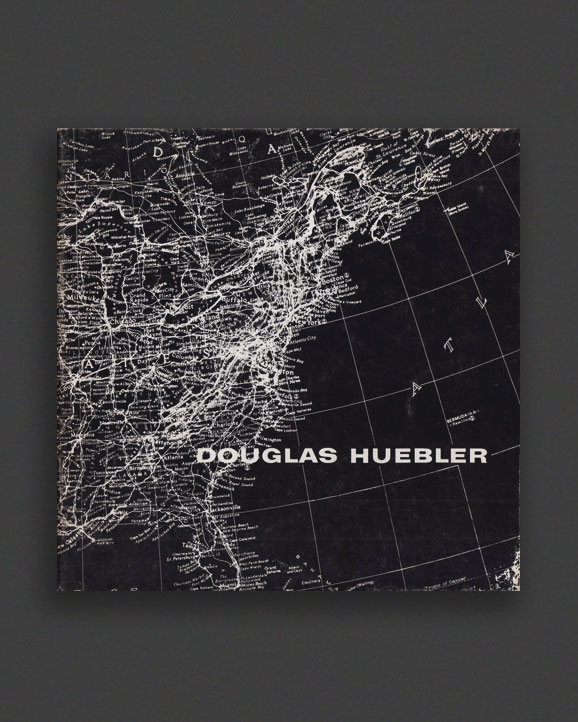
Very rare artist book by Douglas Huebler, published in 1968 by Seth Siegelaub, New York. This important historical catalog is the 1st for a show in which the catalog was the show itself.
First and only printing, in an edition of 1000 copies.
“The existence of each sculpture is documented by it’s documentation.
The documentation takes the form of photographs, maps, drawings and descriptive language.
The marker “material“ and the shape described by the location of the markers have no special significance, other than tot o demark the limits of the piece.
The permanence and destiny oft he markers have no special significance.
The duration pieces exist only in the documentation of the marker’s destiny within a selected period of time.
The proposed projects do not differ from the other pieces as idea, but do differ to he extent of their material substance." - from introduction by Douglas Huebler.
Very Good copy with light wear to covers, rubbing to bottom right corner.
1970, Japanese
Hardcover, 108 pages, 26 x 26 cm
1st Edition, Out of print title / used / good
Published by
Sankei-Shinbunsha / Tokyo
$70.00 - In stock -
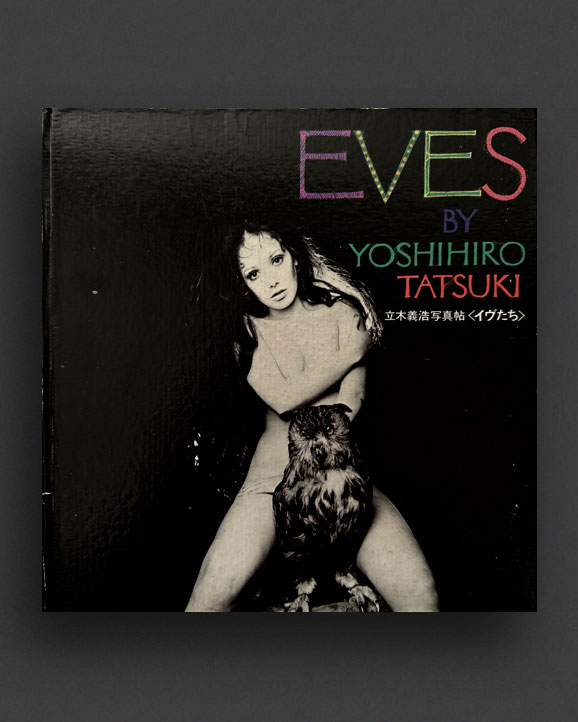
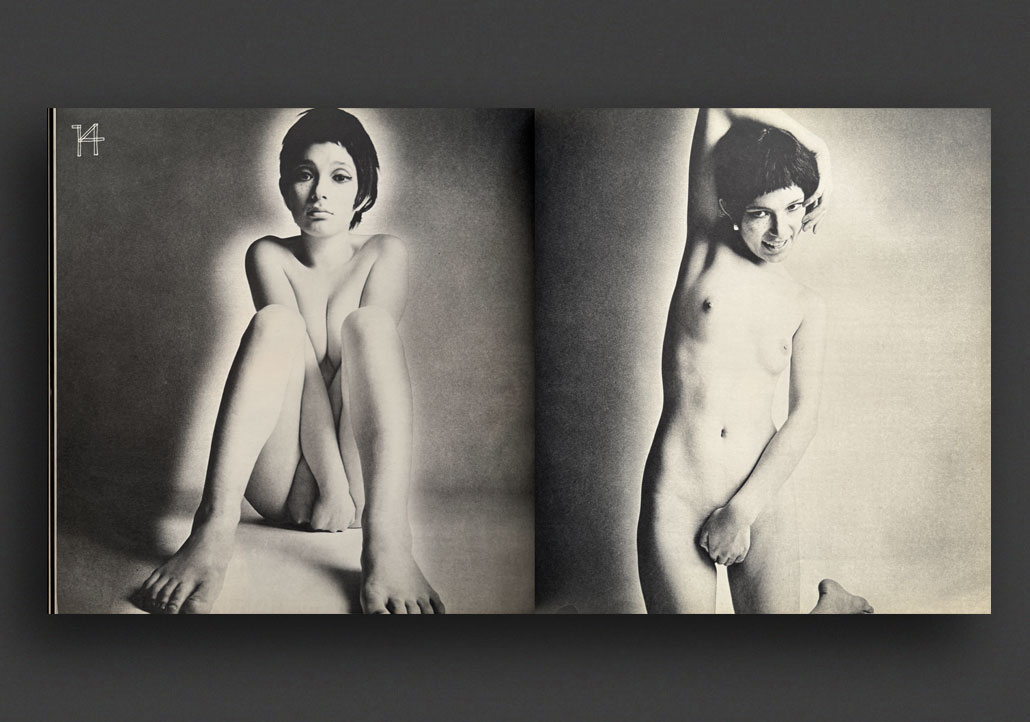
First 1970 hardcover edition of this classic photobook by Tatsuki. Eves, designed by Makoto Wada, counts among the mythical Japanese nude photobooks of the 1960s—70s, alongside Kishin Shinoyama's "28 Girls" or Shunji Okura's "Emma". It's iconic design houses a striking series of 22 monochrome nudes of dancers, models and actresses, including Mari Atsumi, that certainly deserve their renown and reference in books such as 328 Outstanding Japanese Photographers (2000), The History of Japanese Contemporary Photography 1945-1970 (1975), Books of Nudes. A. Bertolotti (2007), amongst others. A must for any erotic photo book collection.
Tatsuki was born into a family that operated an photographic portrait studio. While at Tokyo junior College of Photography, he exhibited photographs of his family at the Fuji Photo Salon. After graduation, he began working as a photographer at Ad Center under the art direction of graphic designer Seiichi Horiuchi. Tatsuki’s name entered the limelight when he was just 26 years old with the publication of "A Fallen Angel", an astonishing 56 pages feature of his photographs shots for Camera Mainichi. Since starting as a freelance photographer in 1969, he has worked on the front lines of the advertising, magazine, publishing, and motion picture industries. He has published a number of celebrated photo books on female subjects and is best-known for works such as GIRL, EVES, Private (Mariko Kaga), Aoi Toki, My America, and Portrait of Family.
Good copy with general cover wear to black printed hardcover/spine extremities and light rippling toward binding edge of pages (all very common conditions of this title).
1970, Japanese
Offset poster, 51.5 (w) x 36 (h) cm
1st Edition, Out of print title / used / average
Published by
Takashimaya / Tokyo
$90.00 - In stock -
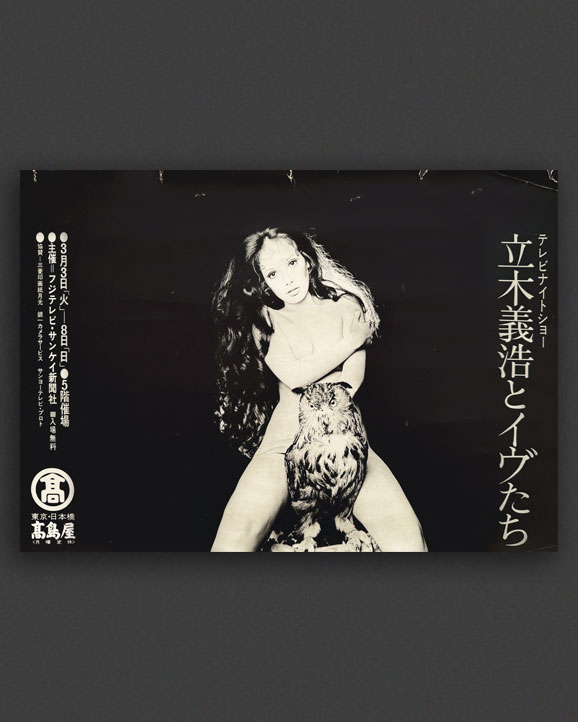
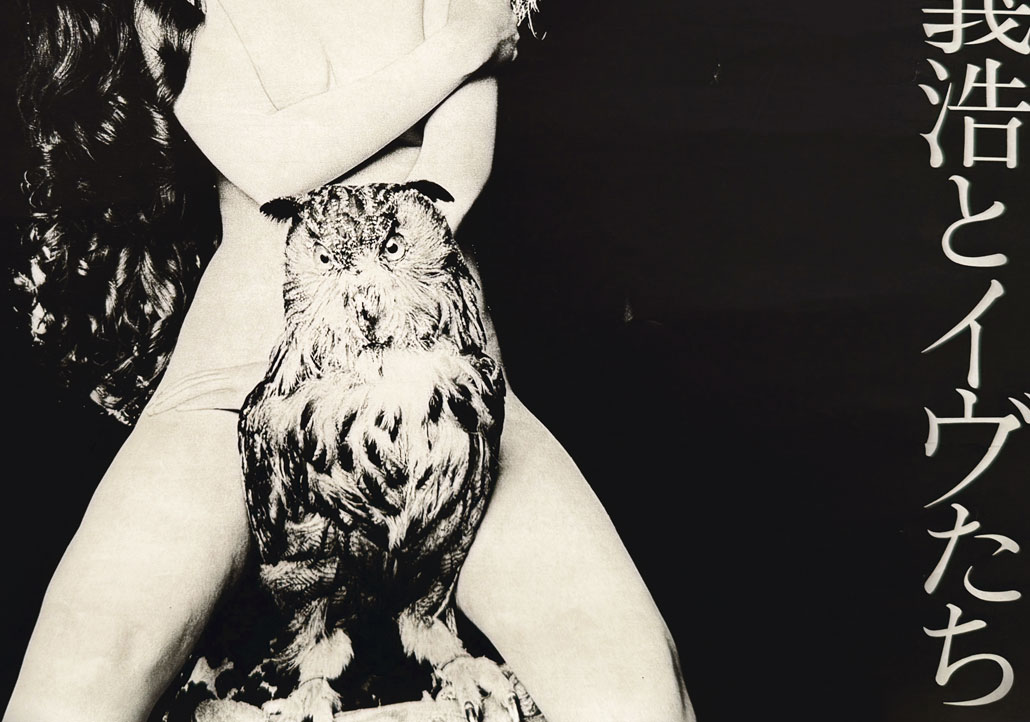
Very rare vintage exhibition poster from 1970 to accompany the release of Yoshihiro Tatsuki's classic photobook, Eves, and a presentation of the series at Nihombashi Takashimaya Department Store in March that year. Gorgeous photogravure print of the iconic Eves cover photograph by Tatsuki, one of Japan's leading photographers of the 1960s—1970s. Eves counts among the mythical Japanese nude photobooks of the period.
Tatsuki was born into a family that operated an photographic portrait studio. While at Tokyo junior College of Photography, he exhibited photographs of his family at the Fuji Photo Salon. After graduation, he began working as a photographer at Ad Center under the art direction of graphic designer Seiichi Horiuchi. Tatsuki’s name entered the limelight when he was just 26 years old with the publication of "A Fallen Angel", an astonishing 56 pages feature of his photographs shots for Camera Mainichi. Since starting as a freelance photographer in 1969, he has worked on the front lines of the advertising, magazine, publishing, and motion picture industries. He has published a number of celebrated photo books on female subjects and is best-known for works such as GIRL, EVES, Private (Mariko Kaga), Aoi Toki, My America, and Portrait of Family.
Dimensions: 51.5 (w) x 36 (h) cm
Average—Good copy of this rare poster. Small pin-up tears along the top edge and some light creasing.
1989, Japanese
Softcover (w. dust jacket and obi), 120 pages, 30 x 21 cm
1st Edition, Out of print title / used / fine
Published by
Kawade Shobo Shinsha / Tokyo
$650.00 - In stock -
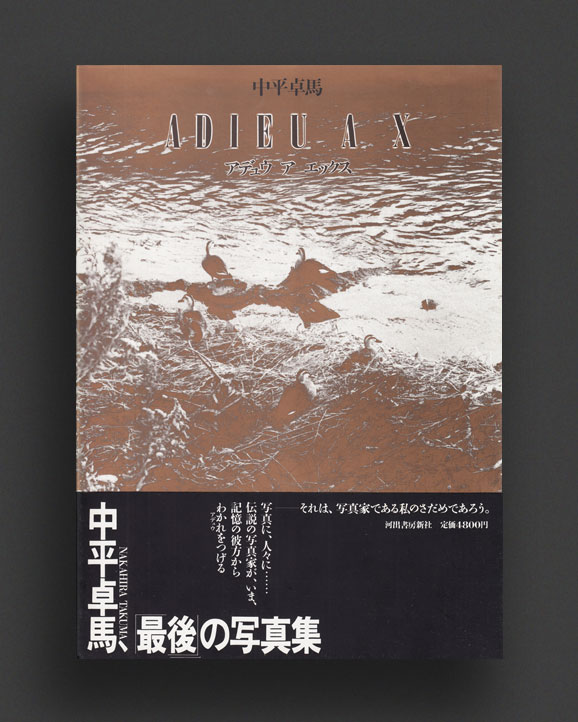
Very rare first edition, first printing of Takuma Nakahira's classic photo book Adieu à X, published by Kawade Shobo Shinsha, Tokyo, in 1989. Profusely illustrated throughout with Nakahira's stunning imagery; beautifully reproduced in full-bleed, these celebrated works by the iconic photographer exemplify the aesthetic and wide-ranging subject matter of the Provoke movement, which he co-founded in Tokyo in 1968 alongside Daido Moriyama, Takahiko Okada, Yutaka Takanashi, and Koji Taki. Takuma Nakahira (1938–2015) alongside the Provoke photographers revolutionized post-war Japanese photography with his dark, expressionistic photographs that captured the uncertainty, exhilaration, and tumult of life in the decades following World War II. As well as a critically acclaimed photographer, Nakahira is a writer, critic, and political activist, whose groundbreaking ideas and essays about visual expression led to the publication of Provoke: Provocative Materials for Thought (first published 1968), a radical, short-lived journal that nevertheless had a profound impact on visual culture in Japan. Nakahira and his contemporaries introduced what became known as the are, bure, boke (rough, blurred, out-of-focus) style of photography, pushing the camera well beyond its previous use as a documentary or propaganda tool. Stark and suggestive, his photographs show fragmented scenes of urban life as he experienced it—imbued with pathos, grit, and potential.
VG-Fine original edition in gold printed photographic dust jacket with rare original publisher's obi. Preserved in mylar wrap.
2019, Dutch / English
Softcover (foldout cover, cloth tape binding), 112 pages, 21 x 30 cm
1st Edition, Out of print title / used / fine
Published by
Roma / Amsterdam
$220.00 - In stock -
First, only edition, out-of-print.
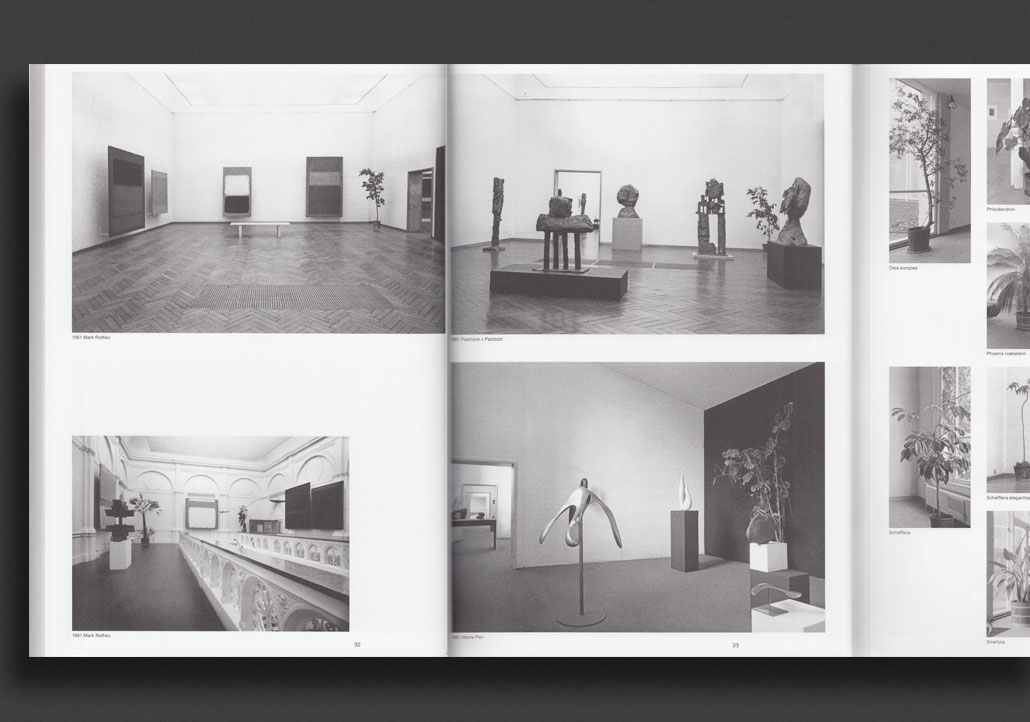
When Willem Sandberg, the newly appointed director of Amsterdam’s Stedelijk Museum, held an exhibition in 1946 in honour of Piet Mondrian, he did something quite remarkable. He placed a Swiss cheese plant next to Mondrian’s paintings. For Sandberg, the aesthetic placement of a plant in the museum made a statement. No longer would the Stedelijk be an elite temple for art; rather, he wanted the public to become accustomed to contemporary art in a familiar, domestic environment. Artist Inge Meijer investigated the vanished and subsequently forgotten vegetation in the museum during the 1945–1983 period for this book, rendering its history once again visible.
Near Fine—As New.
2024, English
Softcover, 112 pages, 21 x 30 cm
Published by
Roma / Amsterdam
$80.00 - Out of stock
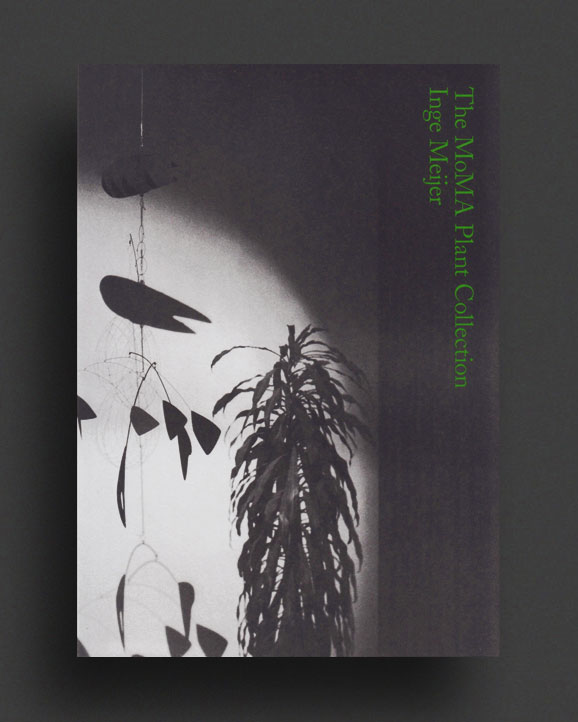
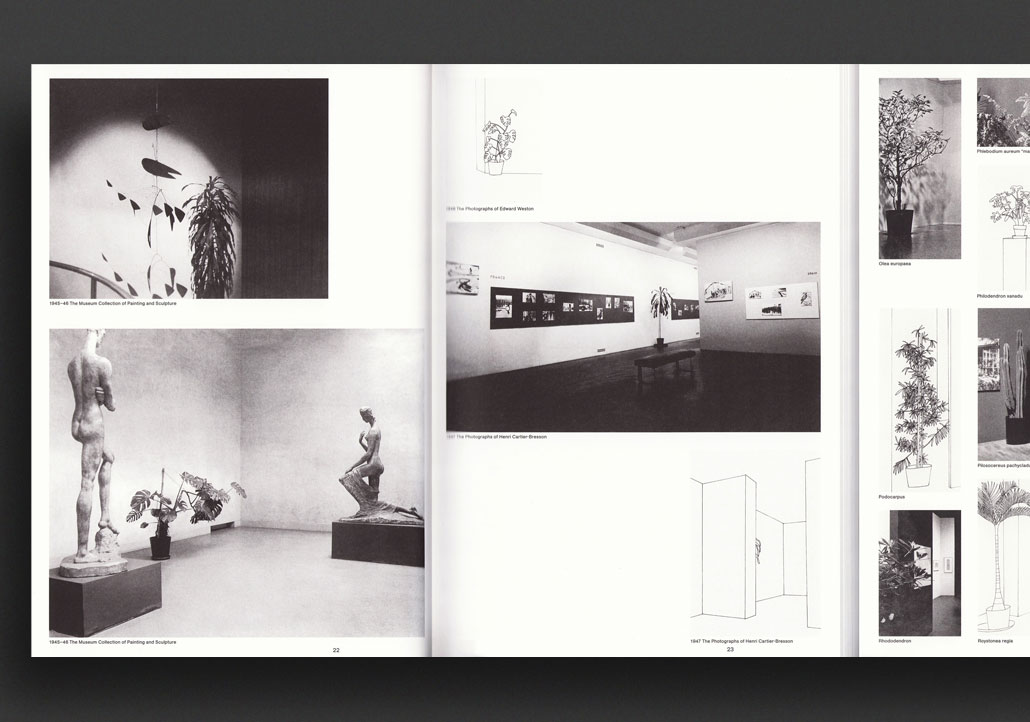
'The MoMA Plant Collection' displays the tradition of including plant life in the Museum of Modern Art NY. The book presents 340 photographs and drawings that pay tribute to the pairing of plants with art. What can the placement of greenery next to the works of Mark Rothko, Henri Matisse, and many others tell us about the relationship between culture and nature? A question that Meijer started to investigate in her first artist's book, 'The Plant Collection' (ROMA, 2019), on plants in the Stedelijk Museum in Amsterdam, and continues at this museum in New York.
1990, Japanese
Softcover (w. dust jacket), 112 pages, 25.7 x 18.4 cm
Out of print title / used / fine
Published by
Haga Bookstore / Japan
$70.00 - Out of stock
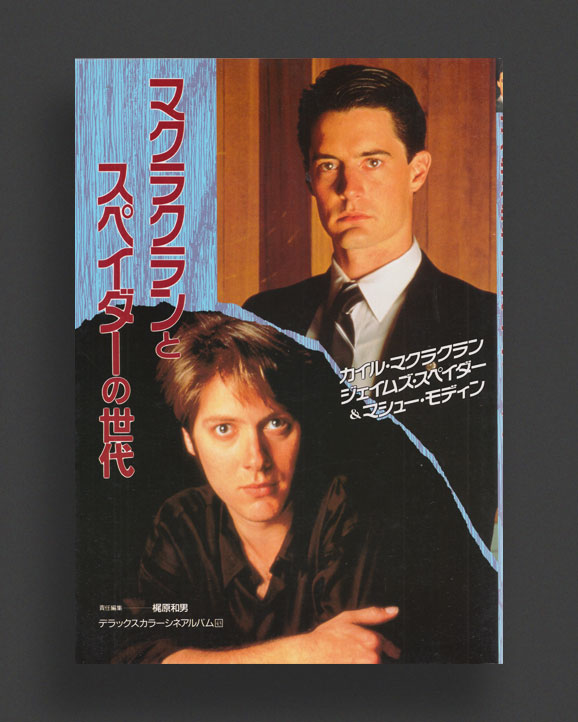
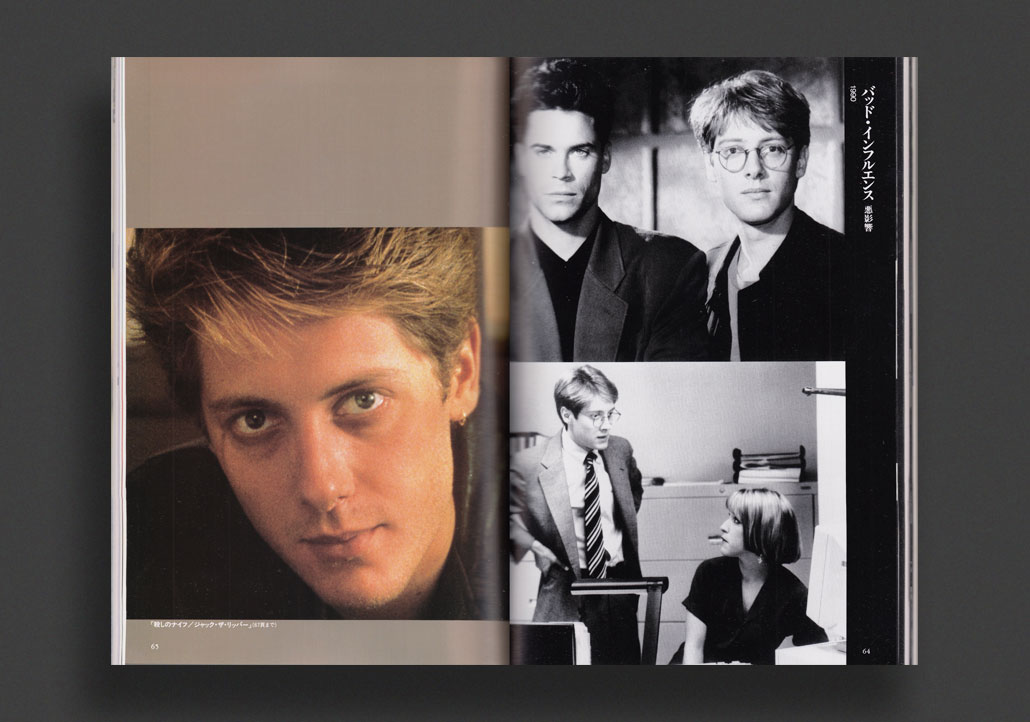
Only in Japan c. 1990 would you be lucky enough to find a book entirely made up of photographs of Kyle MacLachlan, James Spader and Matthew Modine. The wonderful Japanese photo-book / "Cine Album" "Generation of McLachlan, Spader and Modine", captures three of Hollywoods greats at the height of their popularity at the break of the 90's, all in the one place. Profusely illustrated with film stills, press photos, behind the scenes shots, and movie posters to accompany filmographies for each actor, all reproduced in vivd colour and b/w gloss. Published by the great Haga Bookstore imprint.
Fine copy in dust jacket.
2024, English
Softcover (staple-bound), 144 pages, 26 x 20 cm
Published by
Sex / New York
$35.00 - Out of stock
New issue of Sex Magazine, a sporadic print publication edited by Asher Penn, featuring: Million Dollar Extreme, Ivy Wolk, EvilGiane, Lucy, Tommy Malekoff, bod [包家巷], Malibu, Elena Velez, Carole Methot, Elijah Dow & Sophia Álvarez, David Lucas, Jet Neptune, Walter Kirn, Honor Levy, Tan Lin, Peter Vack & Betsey Brown.
2024, English
Softcover, 72 pages, 24 x 16.5 cm
Published by
Grim Roar / UK
$66.00 - Out of stock
This publication is offered for sale to adults only!
Our new ultra-limited edition full-color perfect bound book zine of pure uncensored filth.
Is Pornography addictive? Some say, “yes” others say, “hell no”. Here at GrimRoar & S:.S:.S:. Books, we say “who fuckin’ cares?” It may rot your brain and incite ravenous lust in your loins. However, smut is NOT cut with Fentanyl. It is healthier for your soul than GHB, and we are sitting on a goldmine of the dankest supply of vintage erotica on the planet.
So, in celebration we’re increasing the dose! More hardcore action for the discerning lover of vintage erotica. Quality infernal content. That filth you crave. 100% pure uncut depravity from a bygone era. The golden age of the adult bookstore may be far behind, but luckily, we have a massive stash to keep you hooked and begging for more.
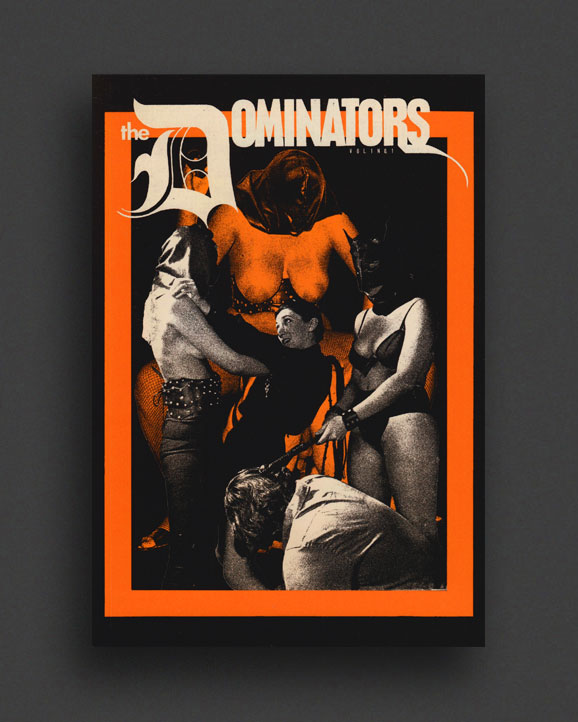
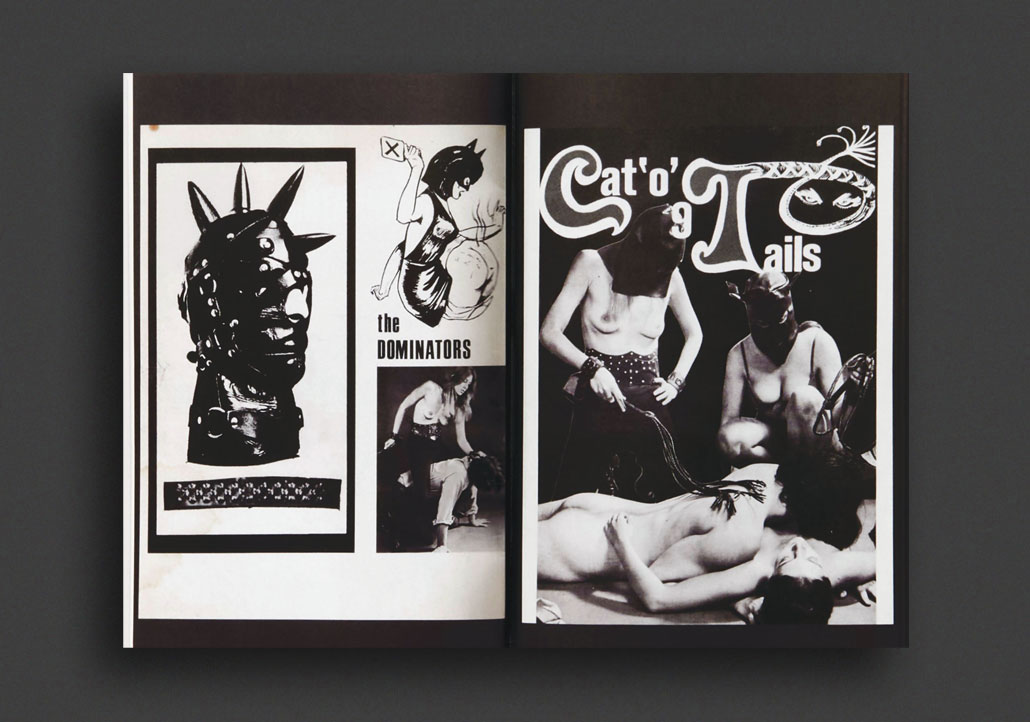
The Dominators Vol. 1 No. 1 features the Satanic Queens of Blood in Cat o Nine Tails – a Chronicle of Cruelty and Painful Pleasures. See what happens when the twin den mothers of Troupe #69, out to punish hippies, captures Captain Acid and Mistress Mescaline and lots more surreal mind-bending smut and bondage depravity.
Edited by Roar E. Haze and published by GrimRoar.
1971, Japanese
Softcover (staple-bound), 160 pages, 21.5 x 15 cm
1st Edition, Out of print title / used / good
Published by
Lemon Inc. / Tokyo
$90.00 - Out of stock
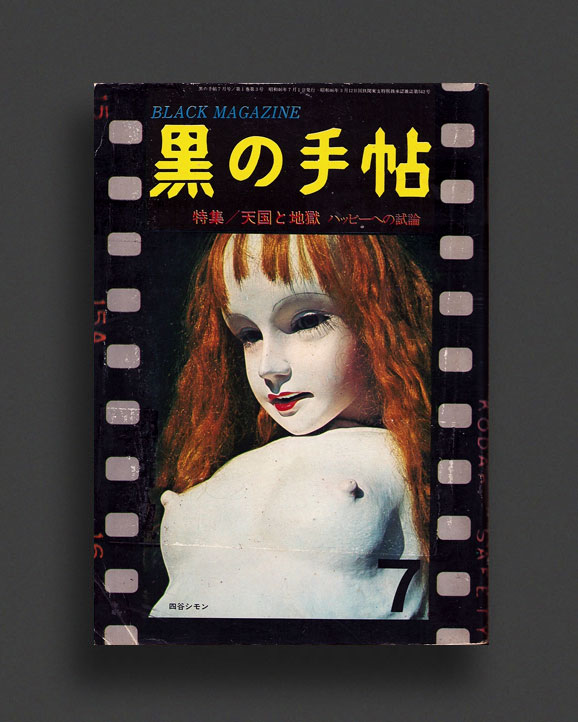
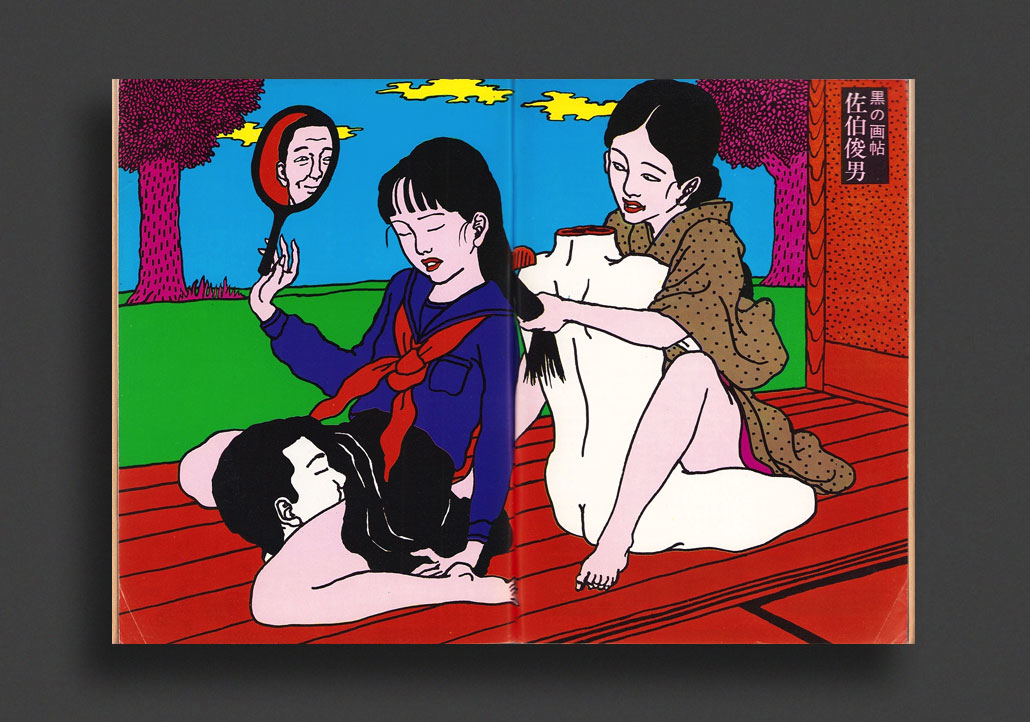
July 1971 (w. Simon Yotsuya cover) issue of legendary Japanese underground arts periodical, Black Magazine (or Black Notebook), a taboo-shattering vehicle of the 1970s subculture in Tokyo. A magazine like no-other, each issue, "a paradise of 1970's heretical culture", was a who's who of non-conformity, introducing a new wave of illustrators, painters, doll-makers and photographers, "taboo" sexuality and fetish culture, avant-garde comics, sadistic literature, radical criticism, queer poetry, activism, black humour, underground film and theatre, and all manner of transgressive, esoteric and erotic material, new and historical. Black Magazine featured the work of Yukio Mishima, Toshio Saeki, Izumi Suzuki, Simon Yotsuya, Shūji Terayama, Ken Katayama, Nobuyoshi Araki, Genpei Akasegawa, Keiichi Tanaami, Kikuji Yamashita, Aoi Fujimoto, Tadanori Yokoo, Hiroshi Nakamura, and so many others. It was also where Japanese photographer Satomi Nihongi's Tokyo Transgender photographs were first printed. Black Magazine was heavy with queer and trans content, and Nihongi's "The Most Beautifuls" was a regular photo-feature in its pages. A lot of great things started in the pages of this unique magazine. A highly recommended publication!
This third issue, themed "Heaven and Hell", features incredible cover by renowned Japanese doll artist (and female doll actor) Simon Yotsuya, and contributions by ero guro master Toshio Saeki, artist Genpei Akasegawa, art critic Junzo Ishiko, "Funeral Parade of Roses" director Toshio Matsumoto, Butoh dancer Natsu Nakajima, poet and critic Akiko Baba, photographer Masatoshi Naitō, manga artist Ryuzan Aki, literary critic Katsutarō Isogai, illustrator Akechi Goro, writer Masaki Umehara, author Utagawa Taiga, literary critic Nobuo Kasahara, essayist Shinichi Kusamori, critic Hidetomo Kanaoka, illustrator (Flower Travellin' Band) Shinobu Ishimaru, manga artist Shigeru Sugiura, scholar Aoi Suenaga, artist Takahashi Shōtei, illustrator Yosuke Inoue, and many more. A lot of great things started in the pages of this unique magazine. A highly recommended publication!
2020, English / Italian
Softcover (w. booklet), 300 pages, 24 x 17 cm
Published by
Danilo Montanari Editore / Ravenna
$80.00 $40.00 - In stock -
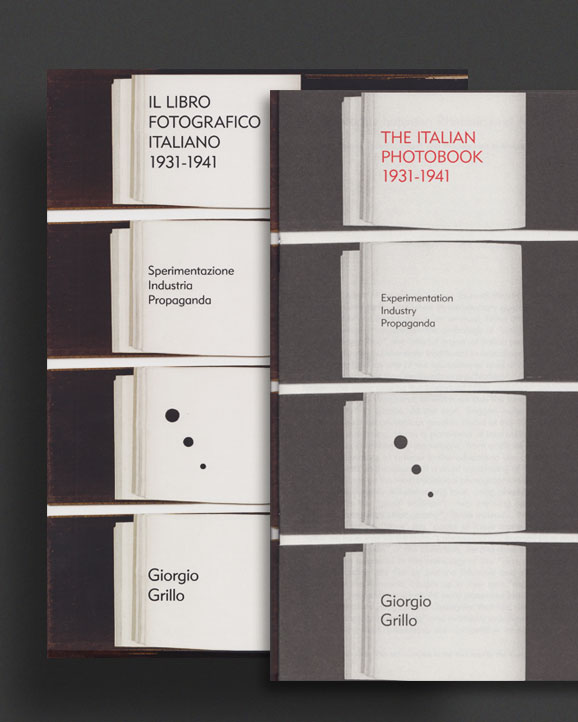
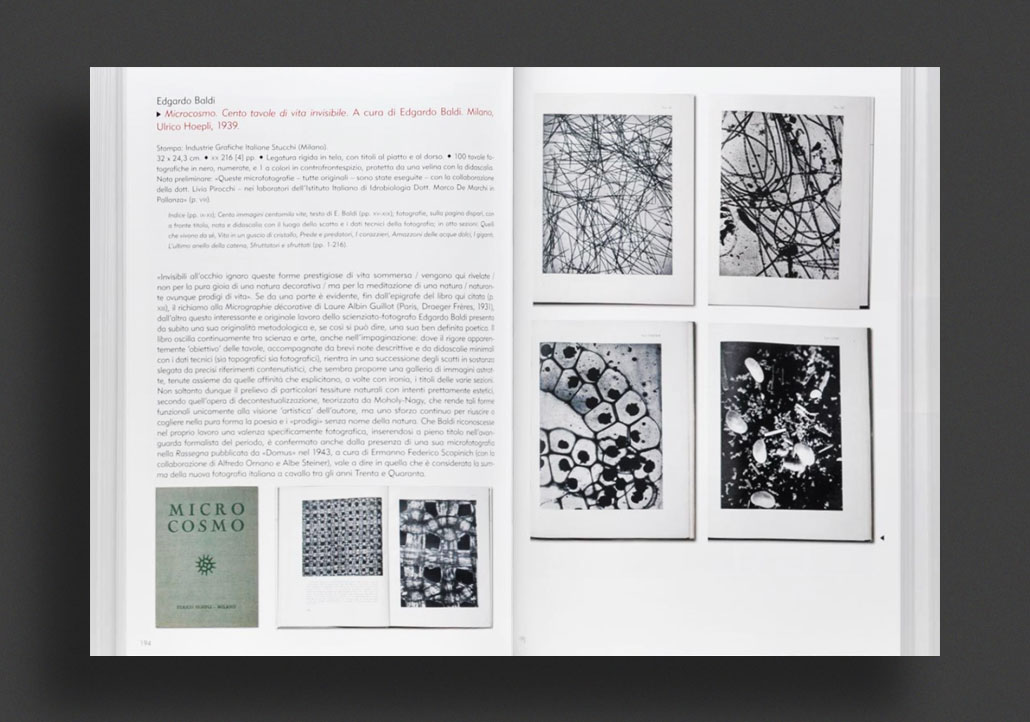
The volume examines the most interesting and innovative photographic books that appeared in Italy in the decade in which "modern" photography developed in our country. A boundary publishing industry, which oscillates between autonomous visual research (starting from the rediscovered experimentalism in the futurist field) and a 'functional' use of photographic illustration, in the two parallel and often crossed fields of advertising and propaganda.
The large Italian companies (Olivetti, Fiat, Snia Viscosa, Montecatini, etc.) recognized in those years the importance of linking their image to innovative graphic projects, in which photography plays a much more effective role than drawing; at the same time the fascist regime, having concluded its first phase of expansion and consolidation, discovers the power of photography and avant-garde techniques, especially photomontage, in the context of those promotional and self-celebrating practices which it increasingly needs to drive and maintain consent.
The book collects and illustrates about one hundred works, which emerge from an almost forgotten (if not removed), but conspicuous and often high-level editorial production, many of which due to the work of leading artists of the period, including Antonio Boggeri, Erberto Carboni, Franco Grignani, Bruno Munari, Giuseppe Pagano, Luigi Veronesi: tracing, we can say, the brief and intense history of graphic and photographic modernism in Italy.
Giorgio Grillo lives and works in Florence. He has dealt with Italian literature of the twentieth century, including the critical edition of Dino Campana's Canti Orfici. For some time he has been collecting photographs and photographic books, with particular attention to the photography of the origins and the historical avant-gardes of the last century.
2024, English / French
Softcover, 208 pages + 32 page insert, 21 x 27 cm
Published by
Mousse / Milan
$85.00 - In stock -
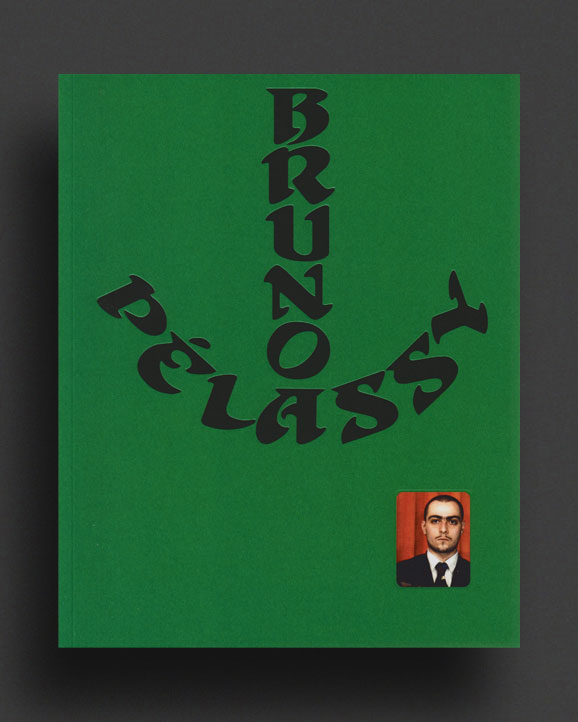
The very first monograph dedicated to the work of Bruno Pélassy (1966–2002), featuring all his works, installation views, and a vast range of materials from his unpublished personal archive.
Also available in English edition.
"In 1987, while finishing his training as a tailor, Bruno Pélassy was living in a studio apartment in Paris, amidst dark clutter and a cascade of needles, lace and fur that his mother used to bring him from Nice. On his cathode-ray television, his VHS tapes played on repeat: The Exorcist (1973), Female Trouble (1974), and The Law of the Strongest (1975). Sometimes he would turn the volume down to play his vinyl records along with the images: "Madame Butterfly" by Malcolm McLaren (1984), the recording of Ingrid Caven at Le Pigall's (1978), anything by Madonna. On a pine shelf, a Chanel perfume bag and the beginnings of a library: La Nuit juste avant les forêts (1977), Dans la solitude des champs de coton (1985) and Le Retour au désert (1988). Like Koltès, the author of these books, Pelassy was gay, born into a Catholic family, with a military father and a housewife mother." As it turns out from the words of Baptiste Pinteaux, throughout his life Bruno Pélassy embodied a multifaceted and gleaming persona, one of a rampant collector whose subversive and sensual oeuvre rejects pigeonholing. His work, which spans over a decade (1990s–2000s), range from sculptures and bijoux to drawings and films, incorporating motifs from both haute couture and the second-hand cultures of a throwaway society, addressing both the issues of adornment and those of technology.
Pélassy was born in 1966 in Vientiane, Laos, where his father worked as a mechanic in the air force, and he grew up amid the souvenirs his parents brought back with them: lengths of fabrics bought at markets, photographs of Khmer temples, and stories of Buddhist funeral rites.
In the early 1990s, he began drawing and making his first jewelry pieces, mixing glass beads and black leather, and he started to collaborate occasionally with Swarovski. His first solo exhibition was held in 1993 at the Galerie Art Concept in Nice, where he presented a series of reliquaries, including a memorable bleached denim jacket adorned with huge red glass beads. He produced a series of drawings entitled We gonna have a good time which combine images from a classic 1970s hairdressing book with those from a medical textbook on facial diseases. With the same biting humor, he also created his first Bestioles ("Beasties"): a series of wigs concealing toy robots that animate them in a jerky manner. One of his most iconic work is Sans titre, Sang titre, Cent titres (1995), a feature-length film entirely made up of pirated fragments of movies and television excerpts. He continued sculpting with glass beads, crafting beautiful, ever-erect phalluses.
Pélassy died in 2002 in Nice from complications related to AIDS at the age of thirty-six. As he became weaker, he surrounded himself with a crowd of small creatures made of pearls, silk, and silicone—a "freaky pet shop" installed in the comfort of his own home. His last solo exhibition was held at the Galerie Vigna in Nice and is beautifully entitled Shim. Double gender.
Edited by Ilaria Bombelli, Florence Bonnefous, Alice Dusapin, Anna Gritz.
Texts by Florence Bonnefous, Marie Canet, Laura Cottingham, Baptiste Pinteaux.
2024, English
Hardcover, 208 pages, 24 x 30 cm
Published by
National Portrait Gallery / London
$75.00 - Out of stock
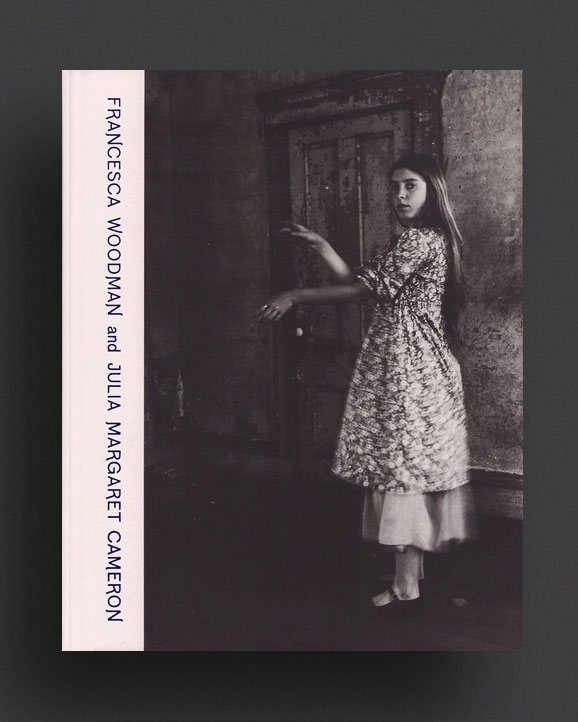
Enticing, ethereal photographs from two visionaries who used portraiture as an exploration of the “dream space”. Francesca Woodman and Julia Margaret Cameron: Portraits to Dream In draws parallels between two of the most significant practitioners in the history of photography, presenting fresh research, rare vintage prints, and previously unseen archival works.
‘I feel that photographs can either document and record reality or they can offer images as an alternative to everyday life: places for the viewer to dream in.’ – Francesca Woodman, 1980
Living and working over a century apart, Julia Margaret Cameron (1815-1879) and Francesca Woodman (1958-1981) experienced vastly different ways of making and understanding images. Yet the two share more similarities than expected. Both artists had brief careers lasting less than 15 years; while neither enjoyed popularity and success during their lives, they have posthumously received widespread acclaim. Their portraits feature ethereal, experimental qualities that connect them soundly across time.
The beautifully illustrated catalog, accompanying the exhibition of the same name at the National Portrait Gallery, London, includes Woodman’s and Cameron’s best-known photographs as well as less familiar images. The book begins with three feature essays that consider Cameron and Woodman simultaneously and moves on to 10 thematic sections interspersing works by the two artists. Portraits to Dream In makes new connections between the work of two innovative photographers who pushed the boundaries of the photographic medium and experimented with ideas of beauty, symbolism, transformation and storytelling to produce some of art history’s most compelling and admired images.
Edited by Magdalene Keaney. Contributions by Helen Ennis, Katarina Jerinic.
Julia Margaret Cameron (1815–79) took up photography in the 1860s and was soon elected to both the Photographic Society of London and the Photographic Society of Scotland. She photographed her friends and family as well as notable figures of Victorian England, including Charles Darwin, Ellen Terry and Alfred, Lord Tennyson.
Francesca Woodman (1958–81) worked in both the United States and Italy and made her first mature photograph at the age of 13. Her lifetime exhibitions include the Addison Gallery of American Art, Andover, Massachusetts (1976); Galleria Ugo Ferrante, Rome (1978); and the Alternative Museum, New York (1980). Her artist’s book, Some Disordered Interior Geometries, was published by Synapse Press in 1981.
2023, English
Embossed hardcover (Japanese paper w. tipped-in image), 416 pages, 24.5 x 30 cm
Published by
MACK / London
$169.00 - In stock -
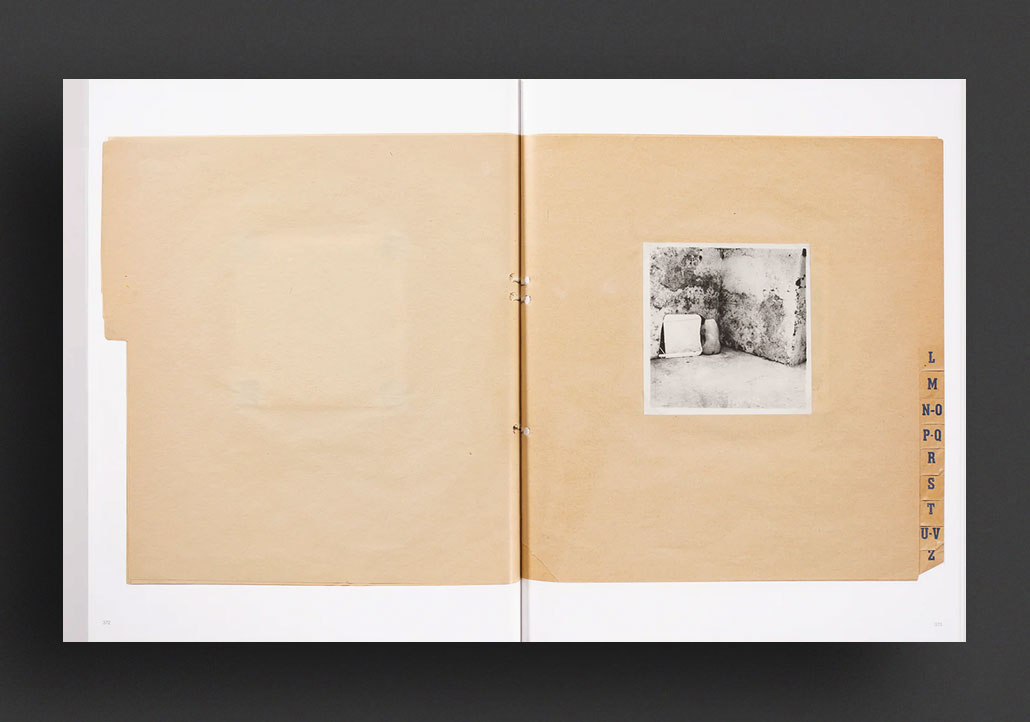
Francesca Woodman made her first mature photographs at the age of thirteen and went on to create a body of work that has been critically acclaimed for its singularity of style and innovative approach to photography. Despite her lifetime accomplishments – which included solo and group exhibitions and the publication of one of her books – and her work being celebrated widely in the years since her untimely death in 1981, very little has been published about her remarkable series of artist’s books until now.
Francesca Woodman: The Artist’s Books collects for the first time every page of all eight of Francesca Woodman’s unique artist’s books in one comprehensive volume, including two newly discovered books which have never been seen before, alongside better-known titles such as Some Disordered Interior Geometries. The basis of these works is in tattered nineteenth- and early-twentieth-century journals and notebooks that Woodman collected from bookshops and flea markets in Rome in the late 1970s. She later transformed these found volumes, attaching her prints, transparencies, and written annotations to their evocative pages. These books demonstrate a sophisticated relationship to narrative and sequence and offer a new understanding of the scope of Woodman’s engagement with the book form.
1992, Japanese
Softcover (w. dust jacket), 208 pages, 21 x 14.8 cm
Out of print title / used / fine
Published by
Haga Bookstore / Japan
$80.00 $55.00 - In stock -
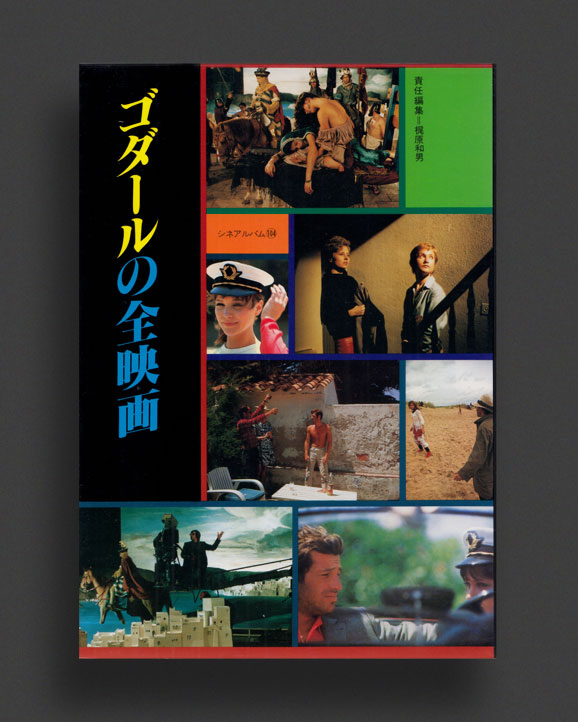
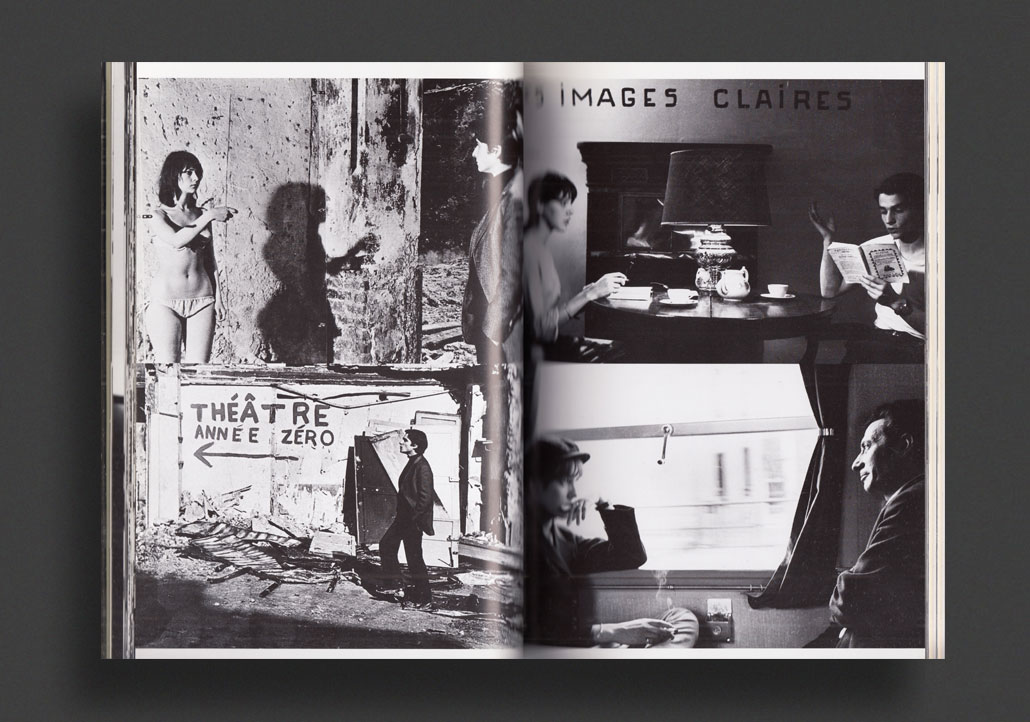
The wonderful Japanese photo-book / "Cine Album" that documents Jean-Luc Godard's film works through to 1983, from "Tous les garçons s'appellent Patrick" (1957 w. Eric Rohmer) to "Lettre à Freddy Buache" (1982), each film chapter profusely illustrated with lush colour and b/w photographs summarising the scenes of the film, and including behind the scenes images, photofiles on all Godard's "stars", everyone is here — Anna, Isabelle, Jean-Paul, Brigitte, Chantal, Jean-Pierre, Anne, Hanna, Mick, Eddie, Marina, Nathalie, Macha... Absolutely exploding with hundreds of images crammed into over 200 pages. Published by the great Haga Bookstore imprint.
Fine copy in dust jacket.
?, French / Japanese
Hardcover, 48 pages (all heavy board), 18.5 x 10.5 cm
1st Edition, Out of print title / used / very good
Published by
? / Japan
$90.00 $65.00 - In stock -
First and only edition of the Japanese Jean-Luc Godard "MADE IN U.S.A." film book. This photo souvenir book is printed on thick board pages and made up of full-colour stills from Godard's 1966 classic "MADE IN U.S.A.", starring Anna Karina, Jean-Pierre Léaud, László Szabó, Yves Afonso, and Marianne Faithfull. Includes text/dialogue fragments throughout in French; profiles on the actors, Godard, cinematographer Raoul Coutard, producer Georges de Beauregard; lyrics to Marianne Faithfull's featured "As Tears Go By"; comic strip; and other texts in Japanese and French.
A very special collectable Godard book.
"With its giddily complex noir plot and color-drenched widescreen images, Made in U.S.A was a final burst of exuberance from Jean-Luc Godard’s early sixties barrage of delirious movie-movies. Yet this chaotic crime thriller and acidly funny critique of consumerism—starring Anna Karina as the most brightly dressed private investigator in film history, searching for a former lover who might have been assassinated—also points toward the more political cinema that would come to define Godard. Featuring characters with names such as Richard Nixon, Robert McNamara, David Goodis, and Doris Mizoguchi, and appearances by a slapstick Jean-Pierre Léaud and a sweetly singing Marianne Faithfull, this piece of pop art is like a Looney Tunes rendition of The Big Sleep gone New Wave."
Very Good copy with some faint foxing/dustiness to pages.
2020, English / Italian
Hardcover (w. tipped-in image), 128 pages, 22 x 27cm
Published by
MACK / London
$89.00 - In stock -
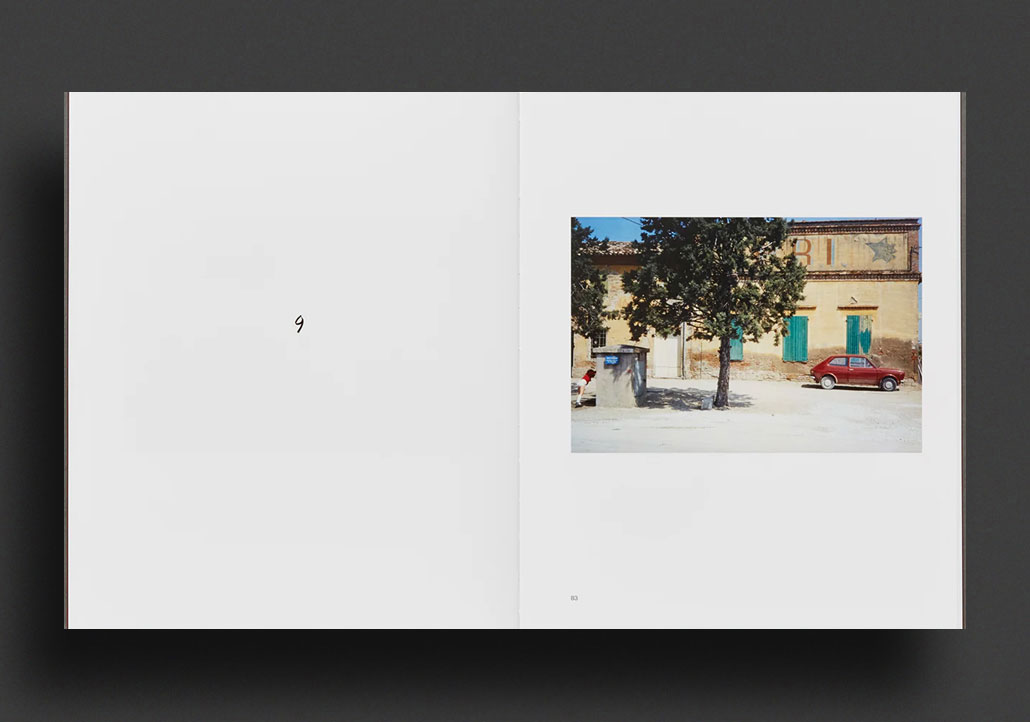
Selected from Guido Guidi's archive by Marcello Galvani, this book presents 94 colour photographs made with small-format cameras between 1976 and 1981. Mostly unpublished, these images form an ideal link between two phases of Guidi's work that are already well known. After the irreverent black and white snapshots of the early 1970s, this series marks Guidi's progressive shift toward the colour work he began to investigate in the early 1980s with a large format 8x10 camera. Here we already see the photographer's growing fascination with his quotidian landscape, including vernacular buildings, ordinary people, and visual accidents, yet caught with a quick, peripatetic eye that questions the possibility of grasping the flux of experience and the notion of photographic time. "Tra l'altro" – which translates as incidentally, by the way, or among other things – acts as an historical moment of transition in Guidi's visual thinking, but also, in his own words, as "passing observations" and a way to "make contact" with the outside world.
Hardcover with tipped-in image
Bilingual text (English, Italian)
22 x 27cm, 128 pages
ISBN 978-1-912339-85-3
August 2020
€40 £35 $45
ABOUT THE SIGNED EDITION
The signed edition includes a slip signed by the artist and bound into the inside back cover.
2014, English
Softcover, 172 pages 24 x 32 cm
1st Edition, Out of print title / as new
Published by
MACK / London
$380.00 $240.00 - Out of stock
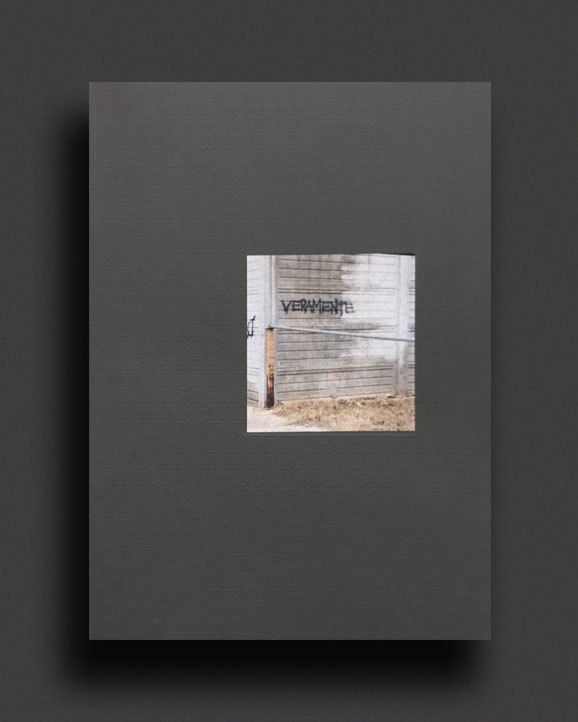
Veramente encompasses Italian photographer Guido Guidi’s entire oeuvre, bringing together excerpts of his series from 1959 to the present day to illuminate the distinctive photographic language he has forged over a 40-year career.
Guidi, a pioneer of new Italian landscape photography, was influenced by architectural history, neorealist Italian film, and conceptual art. Using photography as a process and an experience of understanding, Guidi’s body of work frames a visual discourse that revolves around what it means to see, or what it may mean to offer up an image.
Veramente is published to accompany a touring exhibition of the same name opening at the Fondation Henri Cartier-Bresson in January 2014, and then moving to Huis Marseille Museum voor Fotografie, Amsterdam in June and the Museo d’Arte della Città, Ravenna in October.
Guido Guidi was born in Cesena, Italy, in 1941. He studied in Venice at the University Institute of Architecture (now IUAV), where he followed the courses of Bruno Zevi, Carlo Scarpa and Mario De Luigi, and at the Advanced Course in Industrial Design with Italo Zannier and Luigi Veronesi.
Now out of print. New copy.
1969, English
Softcover, 66 pages, 29 x 22.5 cm
1st UK Edition, Out of print title / used / very good
Published by
C. J. Bucher Ltd. / Lucerne
$50.00 $30.00 - In stock -
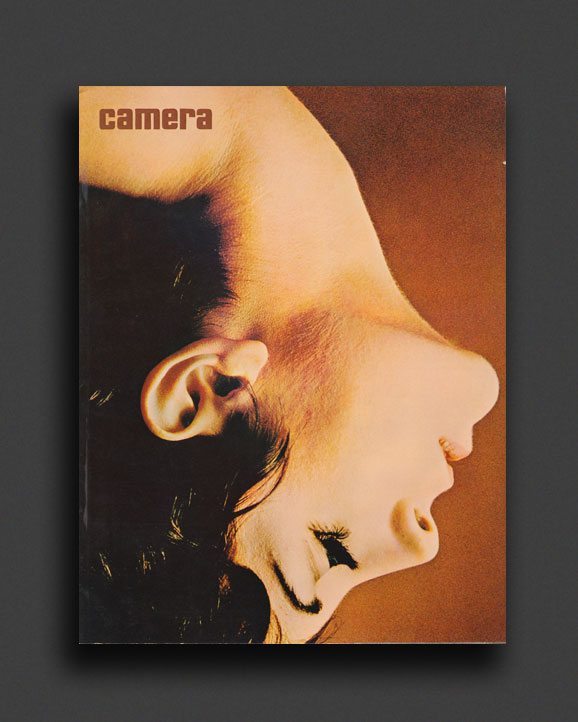
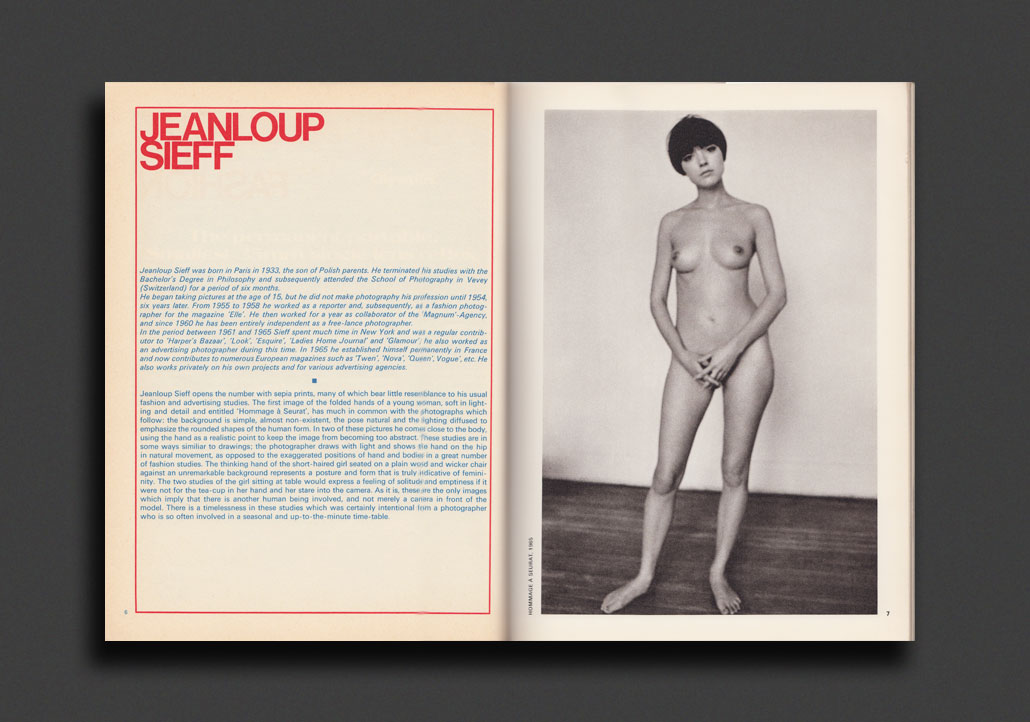
First English edition of the April 1969 issue of Switzerland's legendary Camera - International Magazine of Photography and Cinematography. Wonderful issue with the topic of the month being "Out of Fashion", featuring the photographic work of Jeanloup Sieff, Sam Haskins, Will McBride, Kishin Shinoyama, John Pfahl, and William Larson.
Very good copy with creases to back cover only, common light curling to both glossy covers.