World Food Books' programme is largely produced on Kulin Nation land. We acknowledge the Wurundjeri people of the Kulin Nation as the first and continuing custodians of this land, and pay respect to their Elders past, present, and emerging.
World Food Books is an arts and special interests bookshop in Naarm / Melbourne. Founded in 2010, World Food Books is devoted to the presentation of a rotating, hand-selection of international art, design, literary and counterculture publications with an emphasis on the anti-traditional, the experimental, the avant-garde, the heretic, the marginal.
Presenting new titles alongside rare and out-of-print books, catalogues and journals spanning the fields of modern and contemporary art, design, photography, illustration, film, literature, poetry, cultural theory, philosophy, sexuality, popular and underground culture in its many radical forms, World Food Books wishes to encourage adventurous, thoughtful and open-minded reading, looking, writing, and exchange of publishing and ideas, both current and historical.
As well as our bookshop, located in Melbourne's historical Nicholas Building, all of our inventory is available internationally via our online mail-order service.
World Food Books semi-regularly co-ordinates "Occasions", a programme of exhibits and events at the bookshop and in partnership with other hosts (such as museums and art galleries) that develop out of the activities, relationships and content of the bookshop itself.
World Food Books
The Nicholas Building
37 Swanston Street
Room 5, Level 6
Melbourne 3000
Australia
SHOP HOURS:
THU–SAT 12–6
WEB-SHOP OPEN 24/7
World Food Books
Postal Address:
PO Box 435
Flinders Lane
Victoria 8009
Australia
info@worldfoodbooks.com
Art
Theory / Essay
Architecture / Interior
Graphic Design / Typography
Photography
Fashion
Eros
LGBTQ+
Fiction / Poetry
Weird / Speculative / Science Fiction / Horror
Transgressive / Visceral / Abject
Symbolism / Decadence / Fin de siècle
Film / Video
Painting
Sculpture / Installation
Performance / Dance / Theater
Drawing
Sound / Music
Curatorial
Group Shows / Collections
Periodicals
Out-of-print / Rare
Posters / Ephemera / Discs
Signed Books
World Food Books Gift Voucher
World Food Book Bag
Australian Art
Australian Fiction
Australian Science Fiction / Speculative Fiction
Australian Poetry
Australian Photography
Japanese Photography
Conceptual Art
Minimal Art
Dada
'Pataphysics / Oulipo
Fluxus
Concrete Poetry
Pop Art
Surrealism
Arte Povera
Arte Informale / Haute Pâte / Tachism
Nouveau Réalisme / Zero / Kinetic
Situationism / Lettrism
Collage / Mail Art / Xerox Art
Art Brut / Folk / Visionary / Fantastic
Illustration / Graphic Art / Bandes Dessinées
Furniture
Italian Radical Design / Postmodernism
Textiles
Ceramics / Glass
Counterculture
Protest / Revolt
Philosophy
Psychoanalysis
Anthropology
Anarchism
Socialism / Anarchism / Communism / Capitalism
Literary Theory / Semiotics / Language
Feminism / Women's Studies
Gender Studies / Sexuality
Anthropology
Fetishism / BDSM
Drugs / Psychedelia
Crime / Violence
Animal Rights / Veganism
Occult / Esoterica
Ecology / Earth / Alternative Living
Whole Earth / Crafts
All prices in AUD (Australian dollars)
Pick-Ups
Pick-up orders can be collected in our bookshop during opening hours after order date. Please collect any Pick-up orders within 2 weeks of ordering as we have limited storage space. Orders will be released back into stock if not collected within this time. No refunds can be made for pick-ups left un-collected. If you cannot make it in to the bookshop in this time-frame, please choose postage option.
Return Policy
All sales are final. We do accept returns (for refund or exchange) for items received in error. All our orders are packed with special care using heavy-duty padding and cardboard book-mailers or bubble mailers (for smaller books), using reinforcement where required. We cannot take responsibility for any lost, stolen or damaged parcels.
Insurance
Should you wish to insure your package, please email us directly after placing your order and we can organise this at a small extra expense. Although all standard/express tracked packages are very safe and dependable, we cannot take responsibility for any lost, stolen or damaged parcels. We recommend insurance on valuable orders.
Interested in selling your old books, catalogues, journals, magazines, comics, fanzines, ephemera? We are always looking for interesting, unusual and out-of-print books to buy. We only buy books in our fields of interest and specialty, and that we feel we can resell.
We base these prices on desirability, market value, in-print prices, condition and our current stock levels. We offer cash, store credit, and can take stock on consignment. All
about 25% of the price we expect to get when we sell them, or 30% in store credit. We base these prices on desirability, market value, in-print prices, condition and our current stock levels.
Sell your books any day of the week. You can drop them off and return later. If you have a lot of books, we can visit your Sydney home.
We buy books that we feel we can resell. We offer about 25 % of the price we expect to get when we sell them, or 30% in store credit. We base these prices on desirability, market value, in-print prices, condition and our current stock levels.
Philadelphia Wireman
03 August - 01 September, 2018
World Food Books is proud to announce our next Occasion, the first presentation of sculptures by Philadelphia Wireman in Australia.
The Philadelphia Wireman sculptures were found abandoned in an alley off Philadelphia’s South Street on trash night in 1982. Their discovery in a rapidly-changing neighbourhood undergoing extensive renovation, compounded with the failure of all attempts to locate the artist, suggests that the works may have been discarded after the maker’s death. Dubbed the "Philadelphia Wireman" during the first exhibition of this work, in 1985, the maker’s name, age, ethnicity, and even gender remain uncertain. The entire collection totals approximately 1200 pieces, all intricately bound together with tightly-wound heavy-gauge wire (along with a few small, abstract marker drawings, reminiscent both of Mark Tobey and J.B. Murry). The dense construction of the work, despite a modest range of scale and materials, is singularly obsessive and disciplined in design: a wire armature or exoskeleton firmly binds a bricolage of found objects including plastic, glass, food packaging, umbrella parts, tape, rubber, batteries, pens, leather, reflectors, nuts and bolts, nails, foil, coins, toys, watches, eyeglasses, tools, and jewellery.
Heavy with associations—anthropomorphic, zoomorphic, and socio-cultural responses to wrapped detritus—the totemic sculptures by Philadelphia Wireman have been discussed in the context of work created to fulfil the shamanistic needs of alternative religions in American culture. Curators, collectors, and critics have variously compared certain pieces to sculpture from Classical antiquity, Native American medicine bundles, African-American memory jugs, and African fetish objects. Reflecting the artist’s prolific and incredibly focused scavenging impulse, and despite—or perhaps enhanced by—their anonymity, these enigmatic objects function as urban artefacts and arbiters of power, though their origin and purpose is unknown. Philadelphia Wireman, whatever their identity, possessed an astonishing ability to isolate and communicate the concepts of power and energy through the selection and transformation of ordinary materials. Over the course of the past two decades, this collection has come to be regarded as an important discovery in the field of self-taught art and vernacular art.
Presented in collaboration with Fleisher-Ollman Gallery, Philadelphia, and Robert Heald, Wellington.
Susan Te Kahurangi King
02 February - 10 March, 2018
Susan Te Kahurangi King (24 February 1951 - ) has been a confident and prolific artist since she was a young child, drawing with readily available materials - pencils, ballpoint pens and felt-tip markers, on whatever paper is at hand. Between the ages of four and six Susan slowly ceased verbal communication. Her grandparents William and Myrtle Murphy had developed a special bond with Susan so they took on caring responsibilities for extended periods. Myrtle began informally archiving her work, carefully collecting and storing the drawings and compiling scrapbooks. No drawing was insignificant; every scrap of paper was kept. The King family are now the custodians of a vast collection containing over 7000 individual works, from tiny scraps of paper through to 5 meter long rolls.
The scrapbooks and diaries reveal Myrtle to be a woman of great patience and compassion, seeking to understand a child who was not always behaving as expected. She encouraged Susan to be observant, to explore her environment and absorb all the sights and sounds. Myrtle would show Susan’s drawings to friends and people in her community that she had dealings with, such as shopkeepers and postal workers, but this was not simply a case of a grandmother’s bias. She recognised that Susan had developed a sophisticated and unique visual language and sincerely believed that her art deserved serious attention.
This was an unorthodox attitude for the time. To provide some context, Jean Dubuffet coined the term Art Brut in 1945 to describe work created by self-taught artists – specifically residents of psychiatric institutions and those he considered to be visionaries or eccentrics. In 1972 Roger Cardinal extended this concept by adopting the term Outsider Art to describe work made by non-academically trained artists operating outside of mainstream art networks through choice or circumstance. Susan was born in Te Aroha, New Zealand in 1951, far from the artistic hubs of Paris and London that Dubuffet and Cardinal operated in. That Myrtle fêted Susan as a self-taught artist who deserved to be taken seriously shows how progressive her attitudes were.
Susan’s parents Doug and Dawn were also progressive. Over the years they had consulted numerous health practitioners about Susan’s condition, as the medical establishment could not provide an explanation as to why she had lapsed into silence. Dawn educated herself in the field of homeopathy and went on to treat all twelve of her children using these principles – basing prescriptions on her observations of their physical, mental and emotional state.
Doug was a linguist with an interest in philosophy who devoted what little spare time he had to studying Maori language and culture. To some extent their willingness to explore the fringes of the mainstream made them outsiders too but it was their commitment to living with integrity and their respect for individuality that ensured Susan’s creativity was always encouraged.
Even though Susan’s family supported her artistic pursuits, some staff in schools and hospitals saw it as an impediment to her assimilation into the community and discouraged it in a variety of ways. Her family was not always aware of this and therefore did not fully understand why Susan stopped drawing in the early 1990s. However, rather than dwell on the challenges that Susan faced in pursuit of her artistic practice, they prefer to highlight her achievements. In 2008 Susan began drawing again in earnest, after an almost 20 year interruption, and her work is now shown in galleries around the world.
Susan grew up without television and has been heavily influenced by the comics she read as a child. She is absolutely fearless in the appropriation of recognizable characters, such as Donald Duck and Mickey Mouse, in her work. She twists their limbs, contorts their faces, compresses them together, blends them into complex patterned backgrounds - always imbuing them with an incredible energy. Although Susan often used pop culture characters in her work they are not naive or childlike. These are drawings by a brilliant self-taught artist who has been creating exceptional work for decades without an audience in mind.
Mladen Stilinović
"Various Works 1986 - 1999"
02 February 16 - September 10, 2016
Various works 1986 - 1999, from two houses, from the collections of John Nixon, Sue Cramer, Kerrie Poliness, Peter Haffenden and Phoebe Haffenden.
Including: Geometry of Cakes (various shelves), 1993; Poor People’s Law (black and white plate), 1993; White Absence (glasses, ruler, set square, silver spoon, silver ladel with skin photograph and wooden cubes), 1990-1996; Exploitation of the Dead (grey and red star painting, wooden painting, black spoon with red table, red plate), 1984-1990; Money and Zeros (zero tie, paintings made for friends in Australia (Sue, John, Kerrie), numbers painting), 1991-1992; Words - Slogans (various t-shirts) - “they talk about the death of art...help! someone is trying to kill me”, “my sweet little lamb”, “work is a disease - Karl Marx”; Various artist books, catalogues, monographs, videos; Poster from exhibition Insulting Anarchy; "Circular" Croatian - Australian edition; Artist book by Vlado Martek (Dostoyevsky); more.
Thanks to Mladen Stilinović and Branka Stipančić.
Jonathan Walker
Always Will Need To Wear Winter Shirt Blue + Ochre Small Check Pattern
21 August - 21 September, 2015
Untitled
I am not a great reader of poetry but I always return to the work of Melbourne poet, Vincent Buckley (1925- 1988). Perhaps I find his most tantalising piece to be not a finished poem but a fragment left on a scrap of paper discovered on his desk after the poet’s death.
The poetry gathers like oil
In the word-core, and spreads
It has its music meet,
Its music is in movement.
This fragment is more the shell left behind from a volatile thought than a finished poem. I find the last two lines honest but awkward whereas the first two lines work like an arrow. Most likely he could not find a resolution so it was left. Still, in its present form, it remains an eloquent testimony to the ultimate failure of a medium to express mobile thought and sensation, in Buckley’s case, through verbal language. It’s an important matter because this is something all artists have to deal with regardless of the medium.
I have never written a poem, however, I am forever copying fragments from books on paper scraps in a vain effort to fix certain notions in my head. At first, they function as bookmarks that are sometimes returned to when I open the book. But before long, as they accumulate, they fall out littering the table interspersed with A4 photocopies, bills, books and medications.
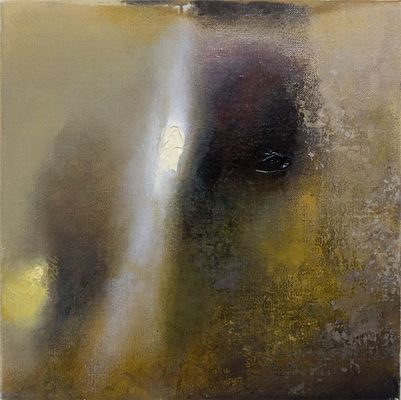
To return to Buckley’s fragment, the first two lines very much evoke how I paint nowadays. As you age, detail diminishes and patches of light become more luminous and float. I feel the most honest way of dealing with this is by smearing the oil paint on the canvas with the fingers and working close-up, blind. Only if the patches coalesce into an approaching image can the work gain a life.
-
Jonathan Walker was born in Melbourne, Australia and brought up on a dairy farm in Gippsland. In the 1970’s he studied painting at RMIT and won the Harold Wright Scholarship to the British Museum, London. During the 1980’s he exhibited at Pinacotheca Gallery, Richmond and had work shown at the NGV and Heidi City Art Gallery. Over the same period he designed the cover for the “Epigenesi” LP by Giancarlo Toniutti, Italy and conducted a mail exchange work with Achim Wollscheid, Germany. The work with artists through the post resulted in an article published in the bicentenary issue of Art and Australia 1988. He showed in artist run spaces such as WestSpace in the 90’s and 2000’s, and until 2012, taught painting at Victoria University, which is where we (Colleen Ahern and Lisa Radford) as organisers of the exhibition, among many others, had the privilege of being his student.
Walker’s knowledge was imparted to students through the careful selection of music, literature, and artists found in books that he himself had ordered for the library. Walker’s strategy was the generosity of sharing his vast knowledge with references specific to each student and their context.
Walker’s paintings share a similar focus and intimacy.
This exhibition presents a small selection of recent paintings alongside a publication that includes Walker’s writing. Observational and analytical, Walker’s work is a type of material notation — the time of day, colour and how it is blended, the both specific and fleeting location of a reflection on lino or the question of whether a chair leg should be included in a painting.
Please join us on Friday August 21 between 6-8pm to celebrate the opening of the exhibition.
Curated by Colleen Ahern and Lisa Radford.
B. Wurtz
Curated by Nic Tammens
March 26 - April 4, 2015
B.Wurtz works from a basement studio in his home on Manhattan’s Lower East Side.
This local fact is attested to by the plastic shopping bags and newsprint circulars that appear in his work. As formal objects, they don’t make loud claims about their origins but nonetheless transmit street addresses and places of business from the bottom of this long thin island. Like plenty of artists, Wurtz is affected by what is local and what is consumed. His work is underpinned by this ethic. It often speaks from a neighborhood or reads like the contents of a hamper:
“BLACK PLUMS $1.29 lb.”
“Food Bazaar”
“USDA Whole Pork Shoulder Picnic 99c lb.”
“RITE AID Pharmacy, with us it’s personal.”
“H. Brickman & Sons.”
“Sweet Yams 59c lb."
Most of the work in this exhibition was made while the artist was in residence at Dieu Donne, a workshop dedicated to paper craft in Midtown. Here Wurtz fabricated assemblages with paper and objects that are relatively lightweight, with the intention that they would be easily transportable to Australia. This consideration isn’t absolute in Wurtz’s work, but was prescriptive for making the current exhibition light and cheap. Packed in two boxes, these works were sent from a USPS post office on the Lower East Side and delivered to North Melbourne by Australia Post.
Wurtz appears courtesy of Metro Pictures, New York.
Thanks to Rob Halverson, Joshua Petherick, Sari de Mallory, Matt Hinkley, Helen Johnson, Fayen d'Evie, Ask Kilmartin, Lisa Radon, Ellena Savage, Yale Union, and "Elizabeth".
John Nixon
"Archive"
December 15 - January 20, 2014
The presentation of John Nixon's archive offered a rare showcase of this extensive collection of the artist's own publications, catalogues, posters, ephemera, editions and more, from the mid 1980s onwards, alongside a selection of his artworks.
Organized by John Nixon, Joshua Petherick and Matt Hinkley.
"Habitat"
at Minerva, Sydney (organised by Joshua Petherick and Matt Hinkley)
November 15 - December 20, 2014
Lupo Borgonovo, Janet Burchill & Jennifer McCamley,
Lewis Fidock, HR Giger, Piero Gilardi, Veit Laurent Kurz,
Cinzia Ruggeri, Michael E. Smith, Lucie Stahl, Daniel Weil, Wols
Press Release:
“...It contained seven objects. The slender fluted bone, surely formed for flight, surely from the wing of some large bird. Three archaic circuitboards, faced with mazes of gold. A smooth white sphere of baked clay. An age-blackened fragment of lace. A fingerlength segment of what she assumed was bone from a human wrist, grayish white, inset smoothly with the silicon shaft of a small instrument that must once have ridden flush with the surface of the skin - but the thing’s face was seared and blackened.”
William Gibson, “Count Zero”, 1986
"Autumn Projects Archive"
Curated by Liza Vasiliou
March 6 - March 15, 2014
World Food Books, in conjunction with the Virgin Australia Melbourne Fashion Festival 2014, presented the Autumn Projects archive, consisting of a selection of early examples in Australian fashion with a particular interest in collecting designers and labels from the period beginning in the 1980’s, who significantly influenced the discourse of Australian Fashion.
Curated by Liza Vasiliou, the exhibition provided a unique opportunity to view pieces by designers Anthea Crawford, Barbara Vandenberg, Geoff Liddell and labels CR Australia, Covers, Jag along with early experimental collage pieces by Prue Acton and Sally Browne’s ‘Fragments’ collection, suspended throughout the functioning World Food Books shop in Melbourne.
H.B. Peace
presented by CENTRE FOR STYLE
November 14, 2013
"Hey Blinky, you say chic, I say same"
Anon 2013
H.B. Peace is a clothing collaboration between great friends Blake Barns and Hugh Egan Westland. Their pieces explore the divergences between 'character’ and ‘personality’ in garments....etc
Special Thanks to Joshua Petherick and Matt Hinkley of WFB and Gillian Mears
and a Very Special Thank you to Audrey Thomas Hayes for her shoe collaboration.
Janet Burchill & Jennifer McCamley
"Aesthetic Suicide"
May 10 - June 8, 2013
The first of our occasional exhibitions in the World Food Books office/shop space in Melbourne, "Aesthetic Suicide" presented a body of new and older works together by artists Janet Burchill & Jennifer McCamley, including videos, prints, a wall work, and publications.
During shop open hours videos played every hour, on the hour.
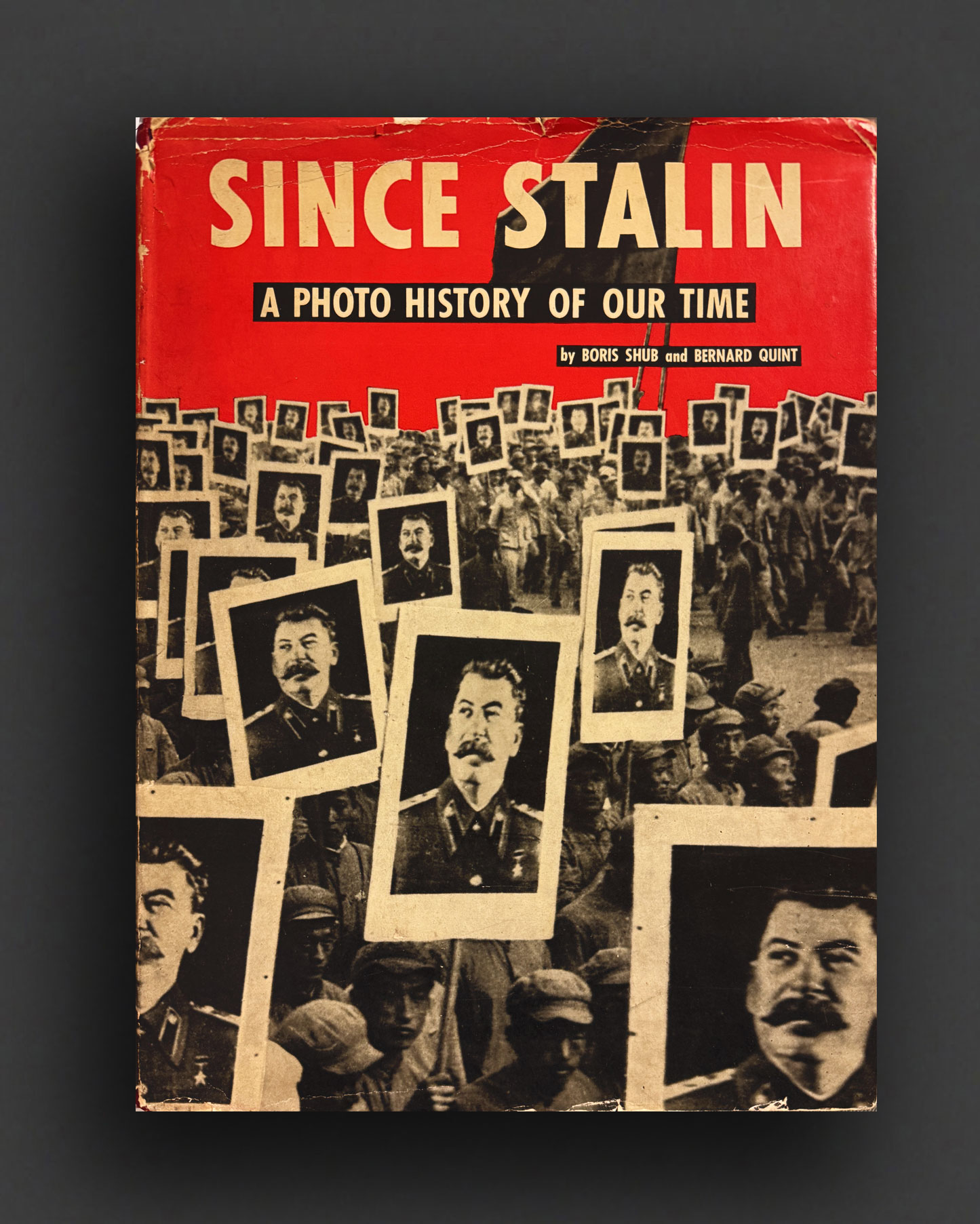
1951, English
Hardcover (w. dust jacket), 184 pages, 32 x 24 cm
1st Edition, Out of print title / used / good
Published by
Swen Publications / New York
$25.00 - In stock -
1951 hardcover first edition.
"SINCE STALIN is a history of Communism.
SINCE STALIN is a contemporary history. The dark birth, the bloody adolescence, the sordid maturity of Communism are bracketed in our own lifetime.
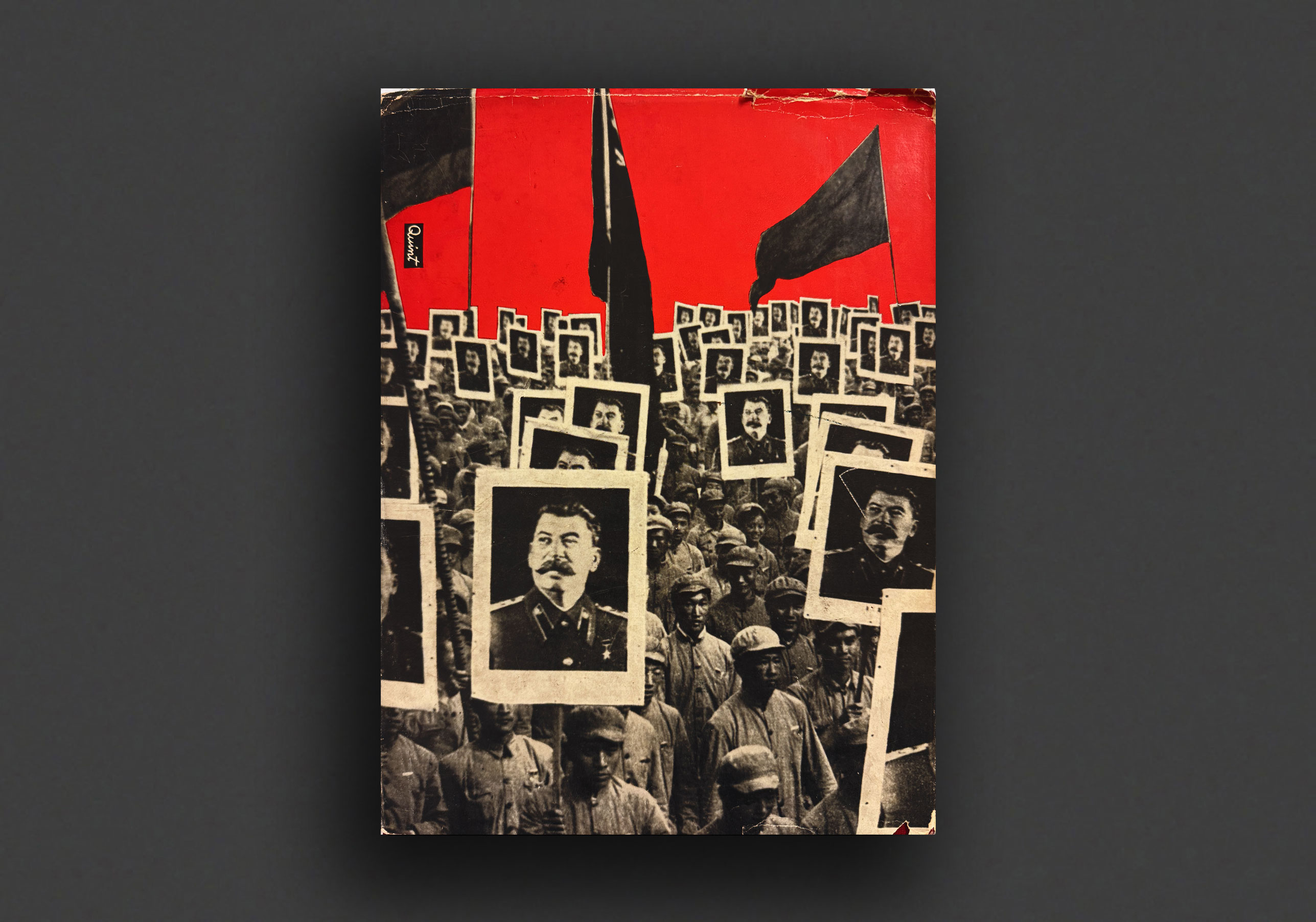
SINCE STALIN is a true history. It traces the road of Communism with the original milestones re-stored, not as they have been shifted or shattered by the Kremlin's hacks and apologists. A complete bibliography-index cites the varied sources of the text, and each of the 425 photographs-many of them rare, some of them hitherto suppressed— has been painstakingly authenticated."
Good—VG copy in Average—Good dust jacket with wear to edges.
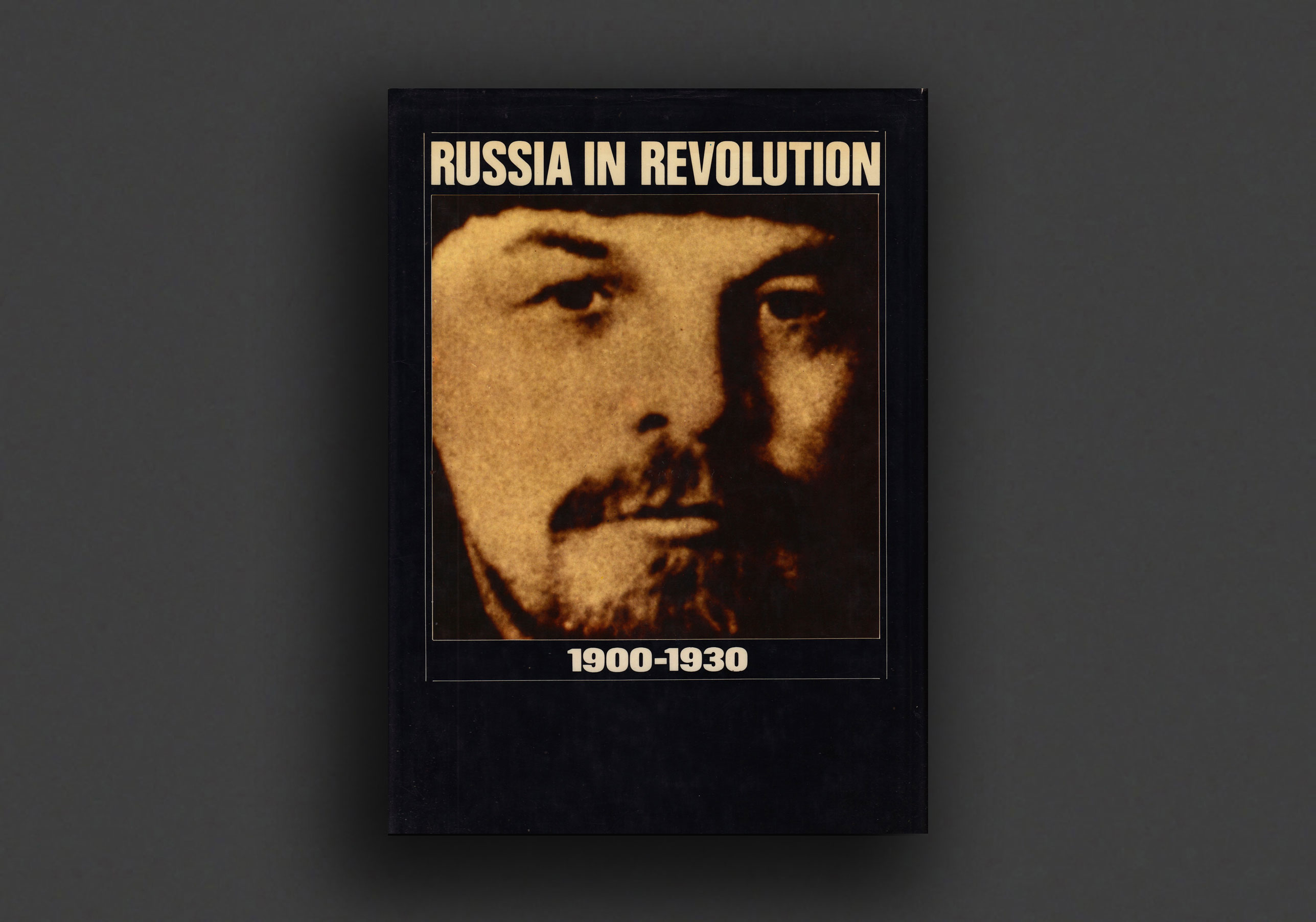
1978, English
Hardcover (w dust jacket), 286 pages, 22 x 31 cm
1st Edition, Out of print title / used / very good
Published by
Holt Rinehart & Winston / Chicago
$20.00 - In stock -
First 1978 hardcover edition of Russia in Revolution, 1900-1930, Salisbury's narrative and pictorial portrait of the political and artistic upheaval that changed the course of Russian history and culture during the first three decades of the century. Profusely illustrated with photographic documents and graphics.
VG in G—VG dust jacket.
1957 / 1984, Polish / English / French / German
Hardcover (w. dust jacket and slipcase), 319 pages, 25 x 34 cm
Out of print title / used / very good
Published by
PAX / Warsaw
$100.00 - In stock -
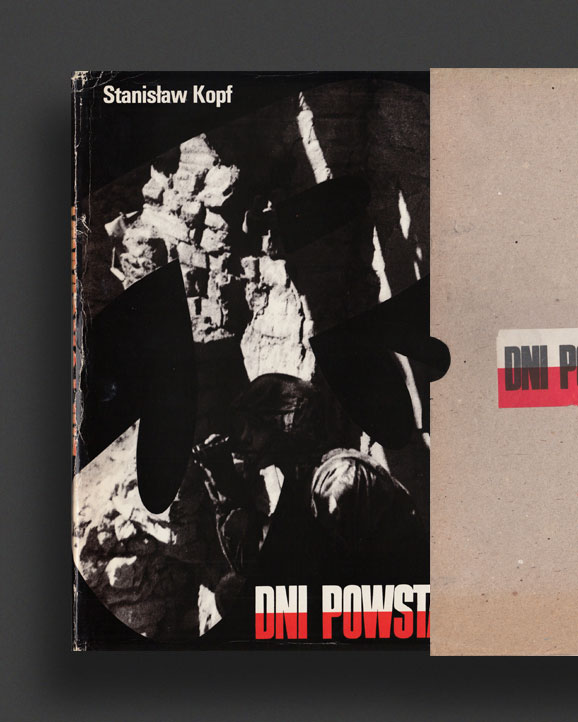
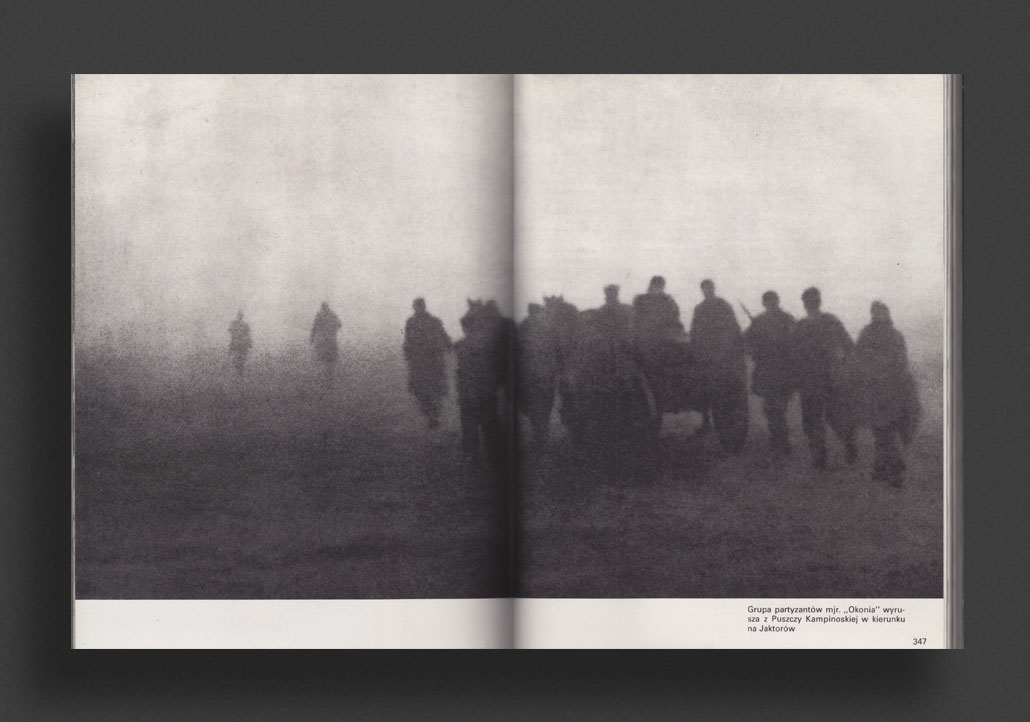
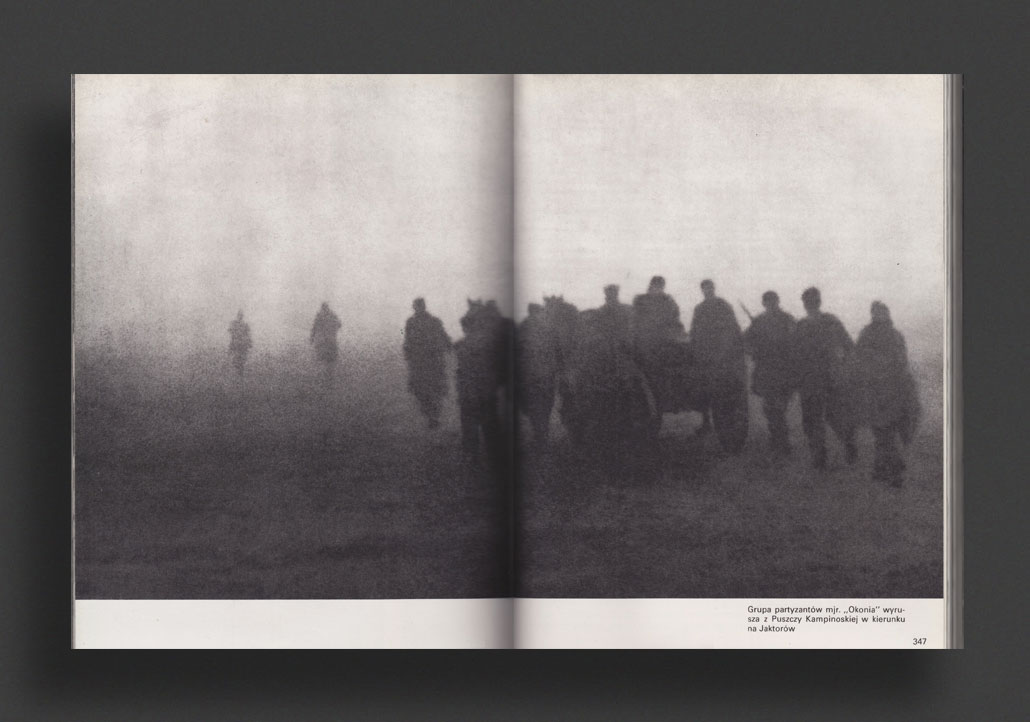
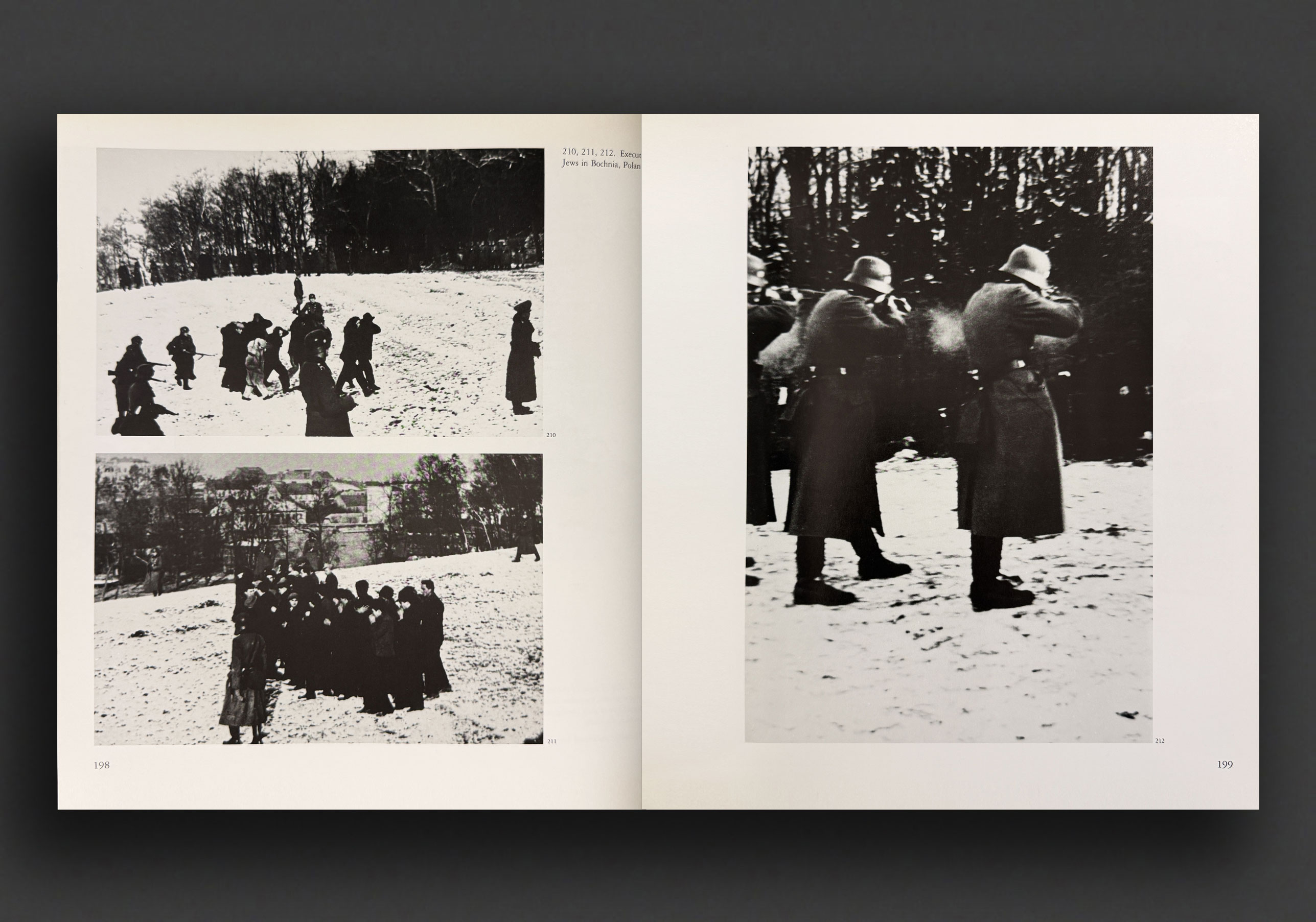
Stunning 1984 hardcover, slip-cased re-print of 1957's Dni Powstania, a gripping pictorial account of the 1944 Warsaw Insurrection, profusely illustrated with b/w reproductions of photographs taken by Polish soldiers. "This album illustrates the struggle waged during those sixty three days. Unfortunately, the picture is incomplete. Difficult fighting conditions often made it impossible to photograph some of the most important scenes and actions, in spite of the heroic efforts of the photographers. A number of pictures were destroyed when their authors met their death or were taken prisoners. But even those photographs that survived destruction and are now being shown in this collection serve as evidence of what the Warsaw Insurrection stood for, and record the heroism of its soldiers. This album is being published so that their memory may live forever."
The Warsaw Uprising was a major World War II operation by the Polish underground resistance to liberate Warsaw from German occupation. It occurred in the summer of 1944, and it was led by the Polish resistance Home Army. The uprising was timed to coincide with the retreat of the German forces from Poland ahead of the Soviet advance. While approaching the eastern suburbs of the city, the Red Army temporarily halted combat operations, enabling the Germans to regroup and defeat the Polish resistance and to destroy the city in retaliation. The Uprising was fought for 63 days with little outside support. It was the single largest military effort taken by any European resistance movement during World War II.
Incredible book, seldom seen outside Poland.
Text in Polish. Summary in English, French and German.
Very Good copy book in heavy black debossed and red ink stamped boards, Good—VG dust jacket with edge scuff wear, particularly to the spine edges, Good—VG slipcase with printed paste-on, light edge tanning/wear.
1957, Polish / English / French / German
Hardcover (clothbound), 319 pages, 25 x 34 cm
1st Edition, Out of print title / used / good
Published by
PAX / Warsaw
$70.00 - In stock -
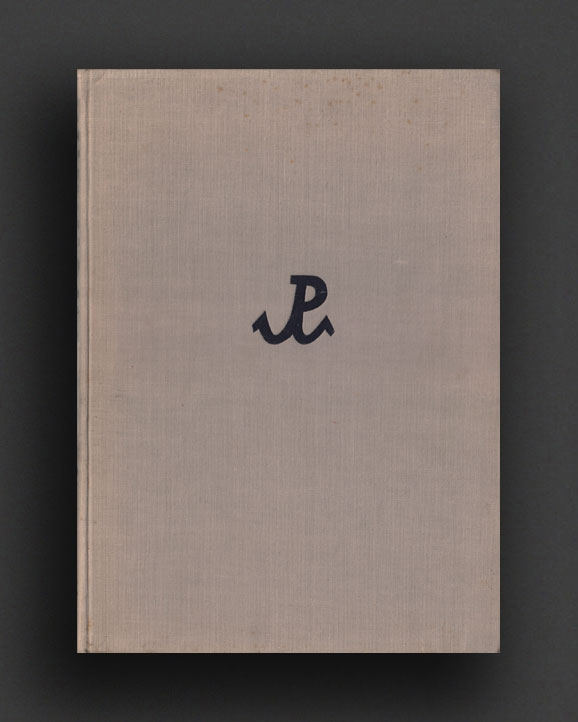
First 1957 hardcover edition of Dni Powstania, a gripping pictorial account of the 1944 Warsaw Insurrection, profusely illustrated with b/w reproductions of photographs taken by Polish soldiers. "This album illustrates the struggle waged during those sixty three days. Unfortunately, the picture is incomplete. Difficult fighting conditions often made it impossible to photograph some of the most important scenes and actions, in spite of the heroic efforts of the photographers. A number of pictures were destroyed when their authors met their death or were taken prisoners. But even those photographs that survived destruction and are now being shown in this collection serve as evidence of what the Warsaw Insurrection stood for, and record the heroism of its soldiers. This album is being published so that their memory may live forever."
The Warsaw Uprising was a major World War II operation by the Polish underground resistance to liberate Warsaw from German occupation. It occurred in the summer of 1944, and it was led by the Polish resistance Home Army. The uprising was timed to coincide with the retreat of the German forces from Poland ahead of the Soviet advance. While approaching the eastern suburbs of the city, the Red Army temporarily halted combat operations, enabling the Germans to regroup and defeat the Polish resistance and to destroy the city in retaliation. The Uprising was fought for 63 days with little outside support. It was the single largest military effort taken by any European resistance movement during World War II.
Incredible book, seldom seen outside Poland.
Text in Polish. Summary in English, French and German.
Good copy with foxing, marked and dusty cloth, edge wear, particularly to the spine edges, tanning.
1992, English
Softcover, 396 pages, 25.5 x 25.5 cm
1st Edition, Out of print title / used / very good
Published by
Macmillan / New York
$60.00 - Out of stock
First 1992 edition of The Pictorial History of the Holocaust by Yitzhak Arad, an unbelievably vivid chronicle of the Nazi "Final Solution", with more than 400 photographs. "Although many books chronicling the Holocaust contain pictures ... there has never before been one as expansive as this. These photographs demonstrate in the most powerful way the depths to which mankind can sink".—Booklist.
VG copy with some light wear and spine creasing.
1986, English
Hardcover (w. dust jacket), 184 pages, 25.5 x 19.5 cm
1st Edition, Out of print title / used / very good
Published by
Weidenfeld & Nicholson / London
$25.00 - In stock -
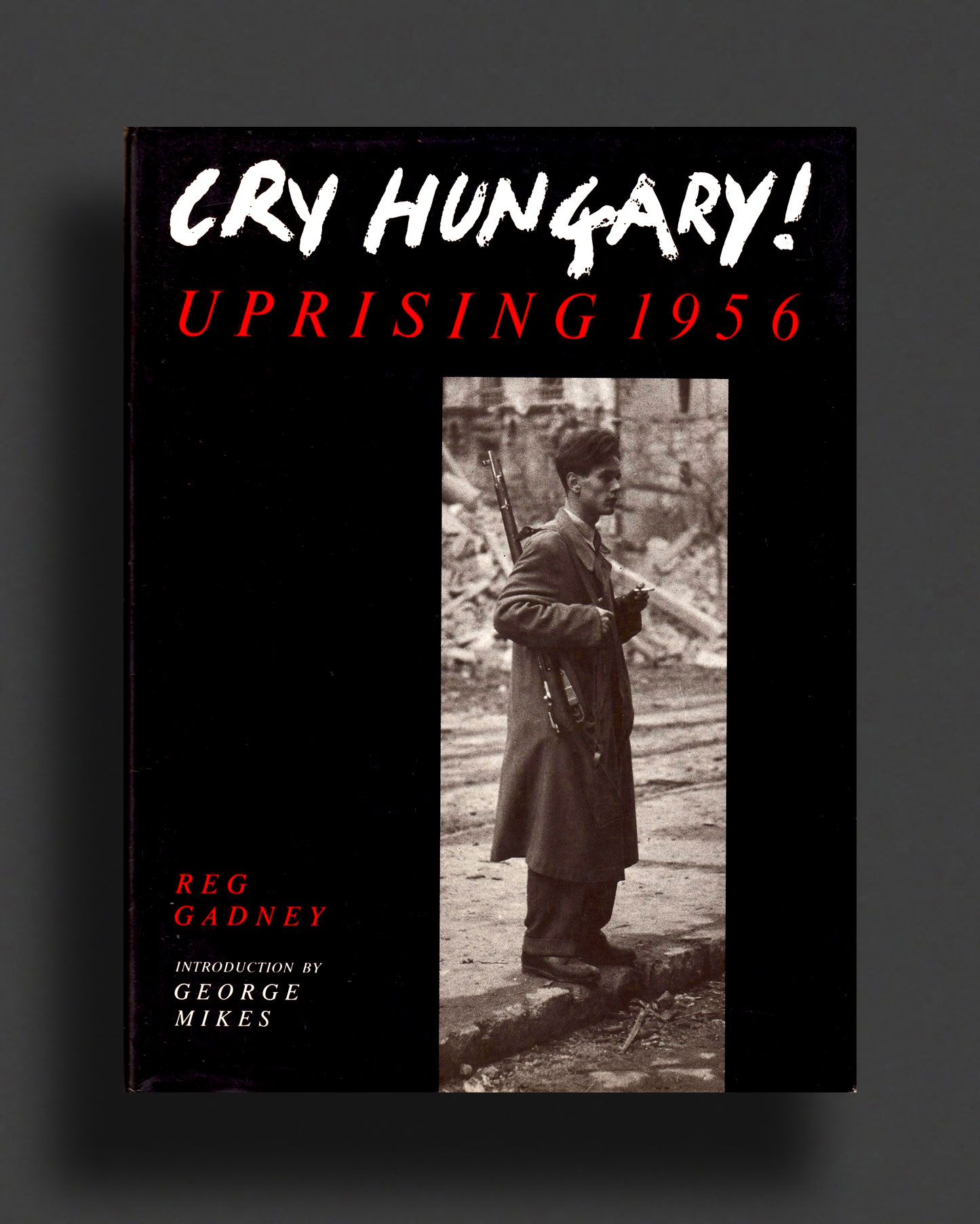
First 1986 hardcover edition.
"Reg Gadney's chronicle of the Hungarian revolution of 1956 brings to life with accuracy the drama of that extraordinary event, which still today has the power in this book to move me to tears?"—Michael Korda, author of Charmed Lives
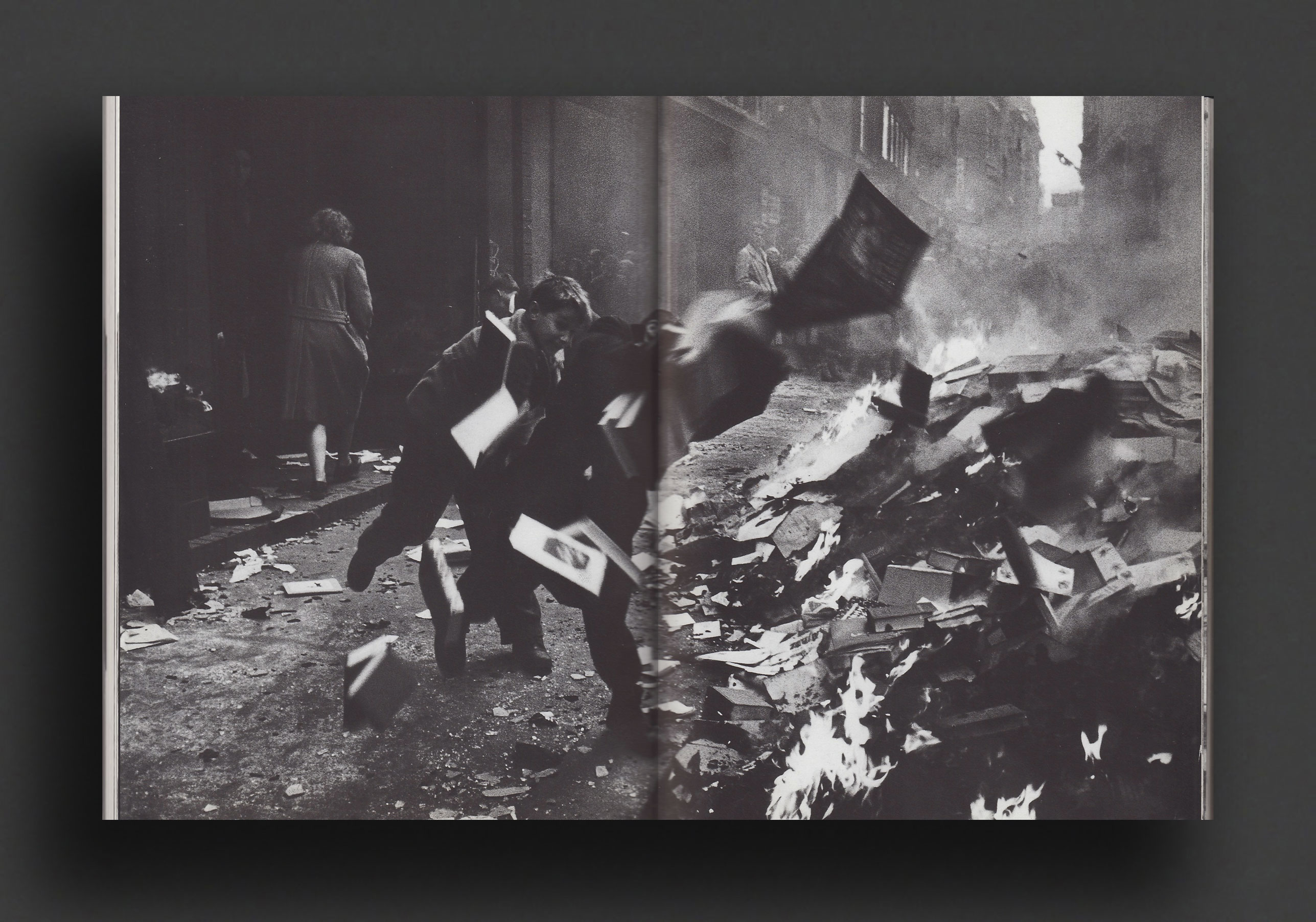
CRY HUNGARY! takes us straight back to those thirteen days in October, 1956, when the Hungarian people rose up against the crushing Soviet occupation of their country. It was a spontaneous people's uprising: Hungarians from every class and occupation banded together. Workers and intellectuals, in the capital Budapest, and in the provinces, demonstrated for freedom. Stalin's great statue was torn down and broken up in the streets; members of the hated secret police were hunted out and killed. The Hungarian army refused to act against their compatriots and politicians responded to their people's demands.
At first the Russians retreated, but when they saw that there was nothing to fear from the West but fine words, their tanks rolled back into Budapest. A frantic defence ensued, but the Hungarian people had no weapons to match the steel might of the USSR, and finally they were forced to admit that Russian imperial power would never be relaxed.
This tragic but inspiring story is told by Reg Gadney in a dramatic narrative that draws on radio transcripts and eyewitness accounts and is illustrated by the many starkly moving and memorable photographs taken by the great photo-journalists who were in Budapest that October. Today, as George Mikes in his introduction records, a prosperous and not altogether oppressed Hungary wishes to forget the blood and suffering of an older generation, but for the refugees who fled to Western Europe and to the United States, CRY HUNGARY! will provide a unique record of a tale of glorious victory and bitter defeat.
VG book VG DJ
1983, Japanese
Softcover (w. dust jacket in slipcase), 158 pages, 30.5 x 23 cm
1st Edition, Out of print title / used / very good
Published by
Canon / Tokyo
$140.00 $100.00 - In stock -
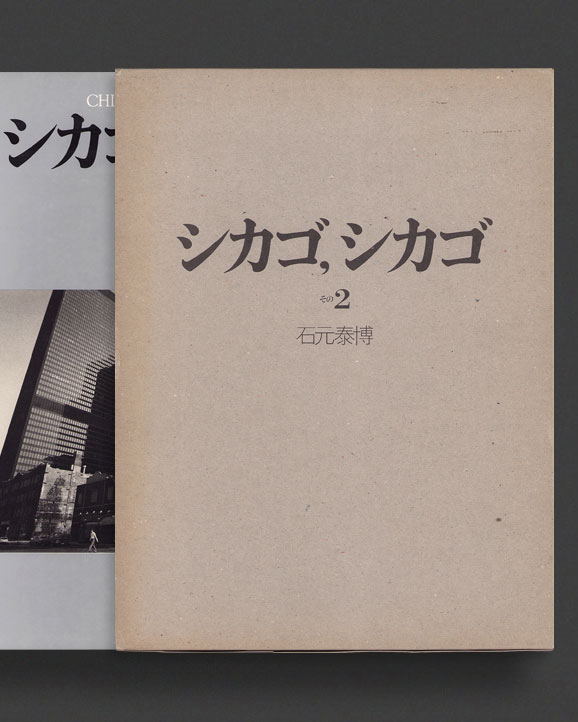
First 1983 Japanese slipcased edition of this remarkable photo collection by American-born Japanese photographer Yasuhiro Ishimoto (1921—2012). A student of Harry Callahan and Aaron Siskind, and graduate of the New Bauhaus in 1952, Ishimoto was an important figure in the cross-pollination of photographic ideas and styles between American and Japanese photography. After graduating he lived in Japan, then returned and stayed in Chicago from 1958—1961, and in 1969, published his acclaimed photo book "Chicago, Chicago", a collection of photographs taken during his two stays during his student days and after graduation. His portrait of a city is a rich study of time and place — his photographs of streetscapes and ordinary people captured the candor, anxiety, paradoxes, and joy of modern urban life through a sensitive and deliberate lens. It is highly regarded as a masterpiece in the history of Japanese photography, and featured in Parr/Badger Photobook History Volume I. In addition to incredible unpublished photographs from the first book collection, "Chicago, Chicago 2", published by Canon in 1983, contains photographs taken when visiting Chicago again in 1982. Ishimoto’s work was exhibited widely in the United States and Japan during his lifetime, and two of his photographs were featured in the monumental 1955 Museum of Modern Art exhibition "The Family of Man".
Very Good copy preserved in original publisher's slipcase, light wear and tanning to spine edge.
1952, German
Hardcover (Vol. I w. dust jacket, clothbound), 272 + 272 pages, 30 x 22 cm
1st Edition, Out of print title / used / good
Published by
Burda Druck und Verlag / Baden
$90.00 - In stock -
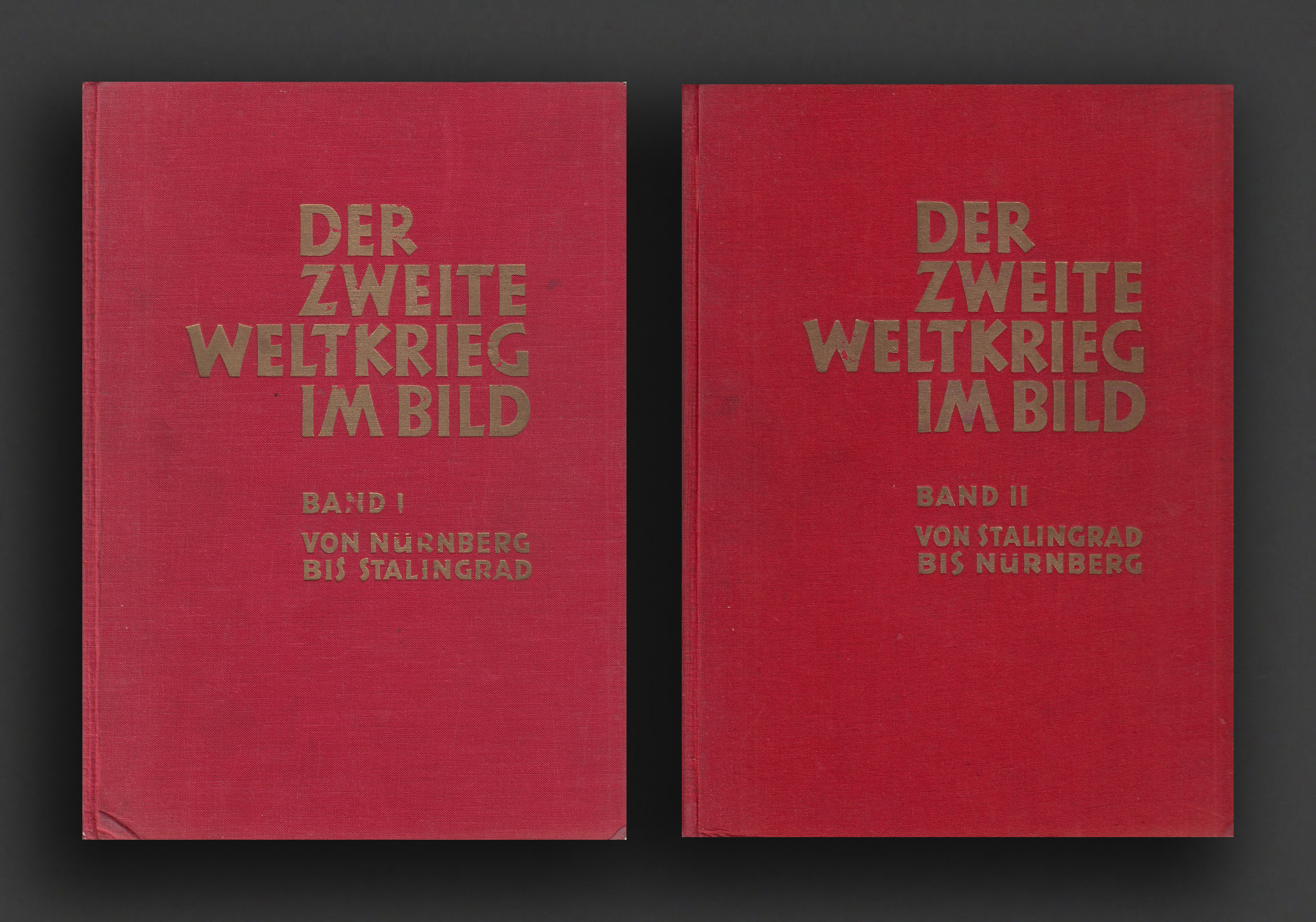
Both volumes of The Second World War in Pictures / Der zweite Weltkrieg im Bild, Vol I — From Nürnberg to Stalingrad + Vol II — From Stalingrad to Nürnberg, clothbound and gilded hardcovers, published in 1952 by Burda Druck und Verlag, Baden. 544 pages of over 1200 gravure photographs with commentary documenting everything from the 1938 Nazi Party days to the Nuremberg trials. Many of the photos (German war photos and photos taken by the Allies) were never published before and none were sanitized, so readers would be confronted with every horrifying aspect of World War II. Incredible and harrowing imagery with beautiful printing.
Der Zweite Weltkrieg im Bild Volume I has coverage of the great triumphs and victories of the Third Reich. Nazi dignitaries admiring the might of the Wehrmacht at Reichsparteitag 1938, the September 1938 Munich Agreement, the Nazi invasion of Poland, the establishment of the first Jewish ghettos, the Wehrmacht in Norway, the victorious battle on the west front in 1940, U-Boot battle at Scapa Flow, air victories over England, the Italian entry into WW2, the Axis Agreement, the start of the war in the Balkans and Greece, the DAK in North Africa, the start of Operation Barbarossa, heavy fighting in Ukraine, Pearl Harbor, to the first defeat on the east front.
Der Zweite Weltkrieg im Bild Volume II shows the grim “Total War” in Germany. Defeat on the battlefield in the Soviet Union and Crimea, and destroyed Kriegsmarine ships and submarines at sea, the American entry in the war in North Africa, the D-Day invasion of Normandy and Allied landings in the south of France, the 20 July 1944 plot to kill Hitler, Allied air raids on German cities, the Battle of the Bulge, the Red Army in East Prussia, Silesia and Pomerania, the battle for Berlin, Hitler’s death, Hermann Goering’s capture, Mussolini’s end, German capitulation, the Potsdam Conference, all the way to the Nuernberg Trials.
Average—Good copies, volume I with poor dust jacket (creased and torn), both copies with with tanned page edges, rubbed/dusty cloth and wear to board extremities.
1979, English
Hardcover (w. dust jacket), 274 pages, 23.5 x 22 cm
1st Edition, Out of print title / used / very good
Published by
Wydawnictwo Literackie / Kraków
$140.00 - In stock -
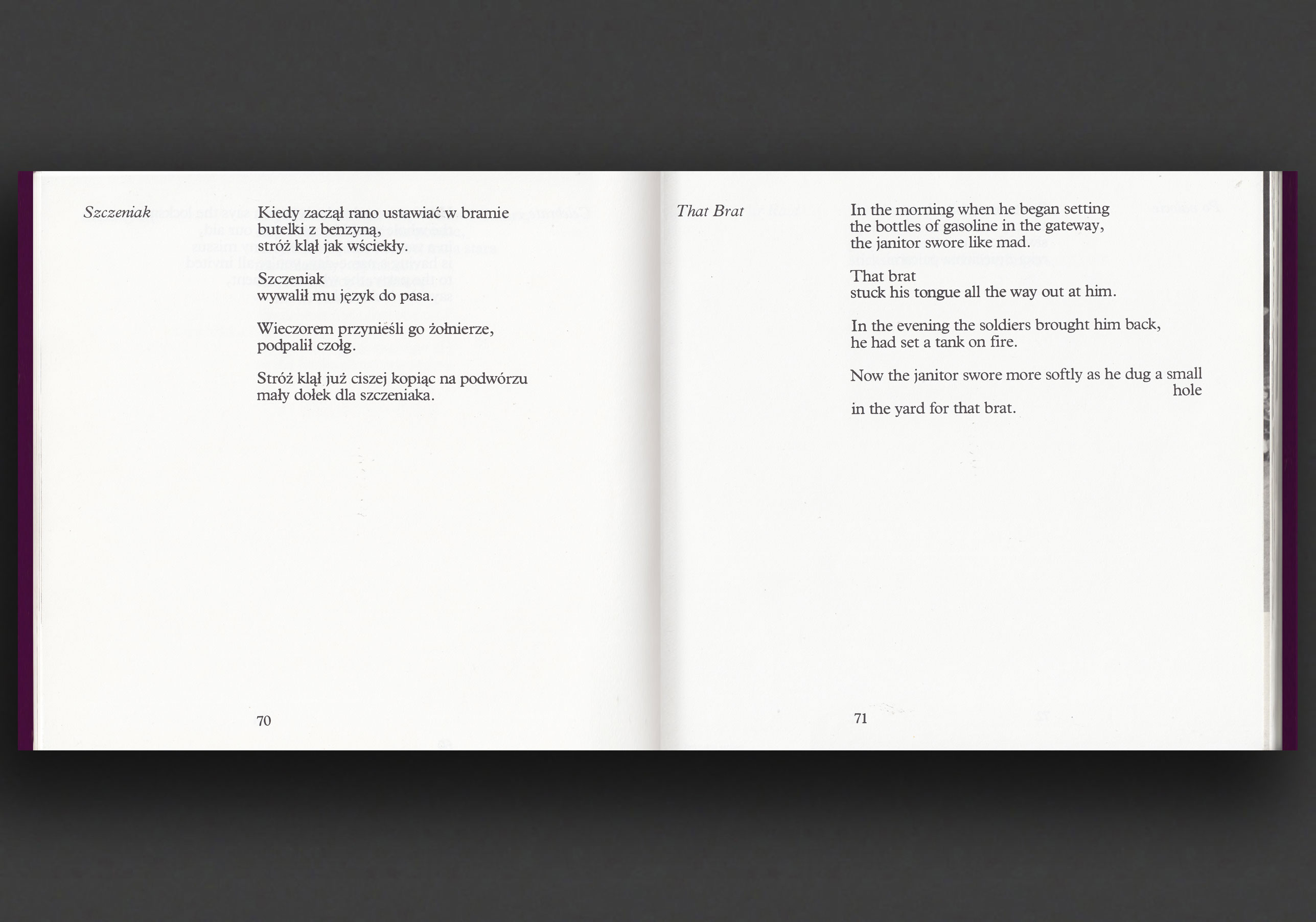
Rare first 1979 hardcover bi-lingual (Polish/English) edition of "Building the Barricade" a seminal collection of poetry of witness by the Polish poet Anna Świrszczyńska (1909-1984), a confronting document of Świrszczyńska’s experience as a military nurse and member of the Polish Resistance during the sixty-three days of the 1944 Warsaw Uprising — the Polish underground's resistance to liberate Warsaw from Nazi German occupation. In this original translated edition published by Wydawnictwo Literackie, Kraków, the poems are accompanied by the photography of Jerzy Tomaszewski (1924– 2016), who fought and was wounded in the Warsaw Uprising of 1944, which he also covered as an official photo-reporter. He is the author of many photographic albums which brought him wide acclaim. The photographs which illustrate this volume (some of them partially damaged) come from a collection which had been lost for over thirty years. Their recent discovery in the 1970s was an important historical and artistic event.
“Anna Świrszczyńska's elemental, extractive accountings of the Warsaw Uprising present a history of pain and of personhood so irremediable and unembellished that neither can be stripped from even the dead. Building the Barricade, harrowing and demanding, here takes its place in English among the twentieth century's master works of war-witness.”—Jane Hirshfield
"'War made me another person,' said Anna Świrszczyńska. Building the Barricade is the outcome of that change in that it took thirty years for these experiences to find their way into language. But the poem is also, undoubtedly, an agent of change, for us as well as her. Stanza by stanza we see the speaker transformed, stripped of anything but the terrible truths she is recording."—Eavan Boland
Anna Świrszczyńska, born in Warsaw, Poland, in 1909, is one of the most significant Polish poets and playwrights of the entire postwar period. She attended Warsaw University where she studied medieval and baroque Polish literature. She began publishing poems in the 1930s. During the Nazi occupation of Poland, Świrszczyńska joined the Polish Resistance and was a military nurse during the Warsaw Uprising. Anna Świrszczyńska died in Krakow of cancer in 1984.
Translations by Magnus J. Krynski, Professor of Slavic Literatures at Duke University and author of many essays on contemporary Polish literature, and Robert A. Maguire, Professor of Russian Literature at Columbia University.
Anna Swirszczynska is one of the most significant Polish poets and playwrights of the entire postwar period. Among the works that gained her this position are the volumes of poetry Wind, I Am Female, Happy as a Dog's Tail and the plays Gunfire on Dluga Street and Conversation with My Own Foot. The first of these plays is set in Nazi occupied Warsaw while the second takes up the theme of a potentital nuclear destruction of the world.
Magnus J. Krynski, Professor of Slavic
Literatures at Duke University, is the author of many essays on contemporary Polish literature. Robert A. Maguire is Professor of Russian Literature at Columbia University.
His books include Red Virgin Soil and Gogol from the Twentieth Century. Krynski and Maguire are the translators of a selection of Tadeusz Rózewicz's poetry, The Survivor and Other Poems, published by Princeton University Press. Their translations were most favourably received by critics. At present they are preparing a volume of Wislawa Szymborska's poems in English.
Jerzy Tomaszewski fought and was wounded in the Warsaw Uprising of 1944, which he also covered as an official photo-reporter. He is the author of many photographic albums which brought him wide acclaim. The photographs which illustrate this volume (some of them partialy damaged) come from a collection which had been lost for over thirty thirty years. Their recent discovery was an important historical and artistic event.
Building the Barricade - Anna Świrszczyńska - translated by Piotr Florczyk - Introduction by Eavan Boland
$20.00 - ISBN 978-1-945680-68-7
Building the Barricade, a volume of poems by the Polish poet Anna Świrszczyńska (1909-1984), is a seminal collection of poetry of witness. Divided into three sections, the poems document Świrszczyńska’s experience as a military nurse during the sixty-three days of the 1944 Warsaw Uprising.
In a statement regarding the publication of Building the Barricade Świrszczyńska wrote: “Life in Warsaw during the Uprising was a nightmare. The city was deprived of water, electricity, gas, and food supplies. For the most part, the sewer system did not function; the hospitals had no medicines or clean water. Day and night German bombers raged over the capital, burying the living beneath the rubble.”
“Anna Świrszczyńska's elemental, extractive accountings of the Warsaw Uprising present a history of pain and of personhood so irremediable and unembellished that neither can be stripped from even the dead. Building the Barricade, harrowing and demanding, here takes its place in English among the twentieth century's master works of war-witness.”—Jane Hirshfield
"'War made me another person,' said Anna Świrszczyńska. Building the Barricade is the outcome of that change in that it took thirty years for these experiences to find their way into language. But the poem is also, undoubtedly, an agent of change, for us as well as her. Stanza by stanza we see the speaker transformed, stripped of anything but the terrible truths she is recording."—Eavan Boland
Very Good copy in G—VG dust jacket with some edge wear esp to spine corners, preserved under archival mylar wrap.
1997, Japanese
Hardcover (w. dust jacket), 228 pages, 22.5 x 16 cm
1st Edition, Out of print title / used / very good
Published by
Yudachi-sha / Tokyo
$70.00 - In stock -
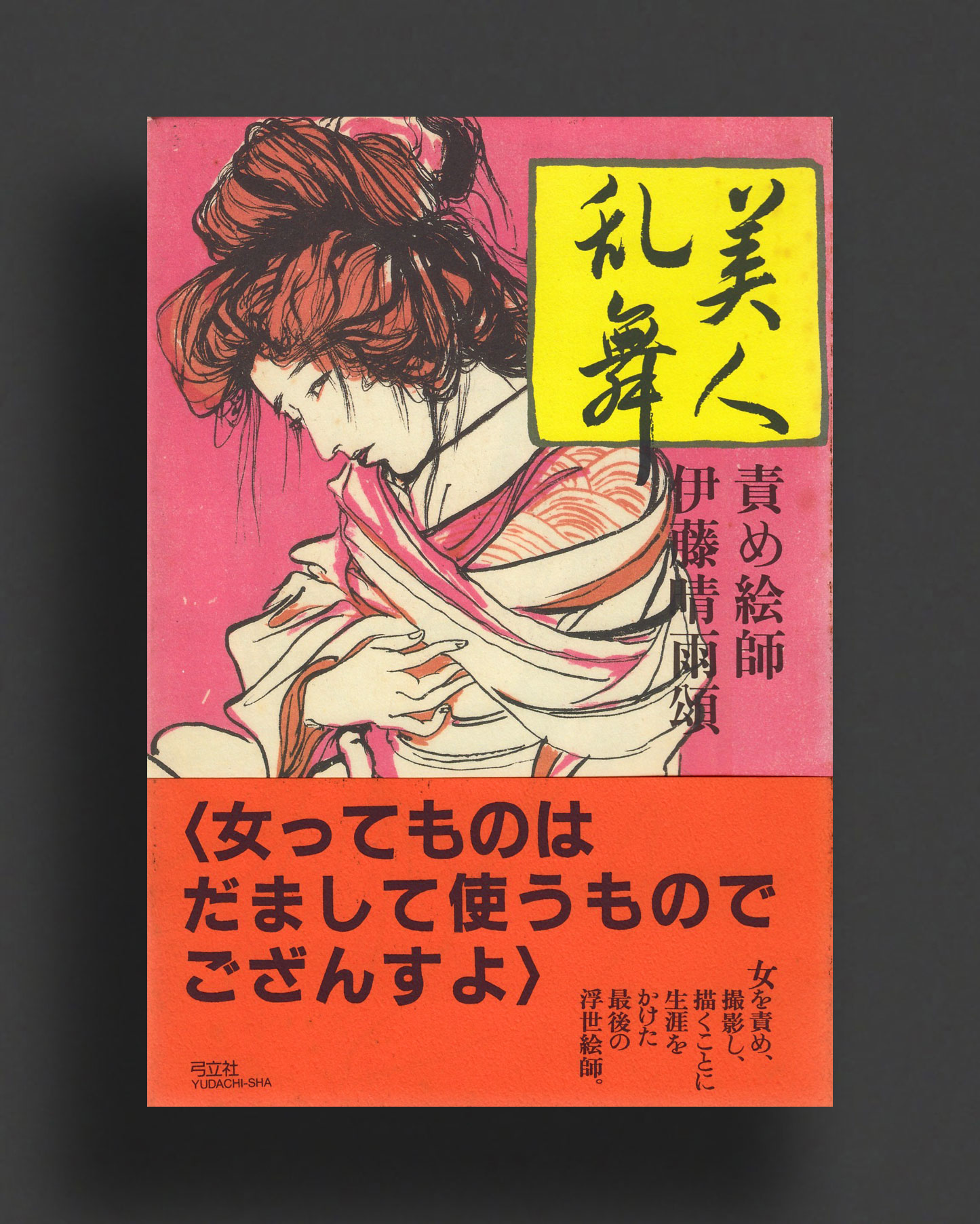
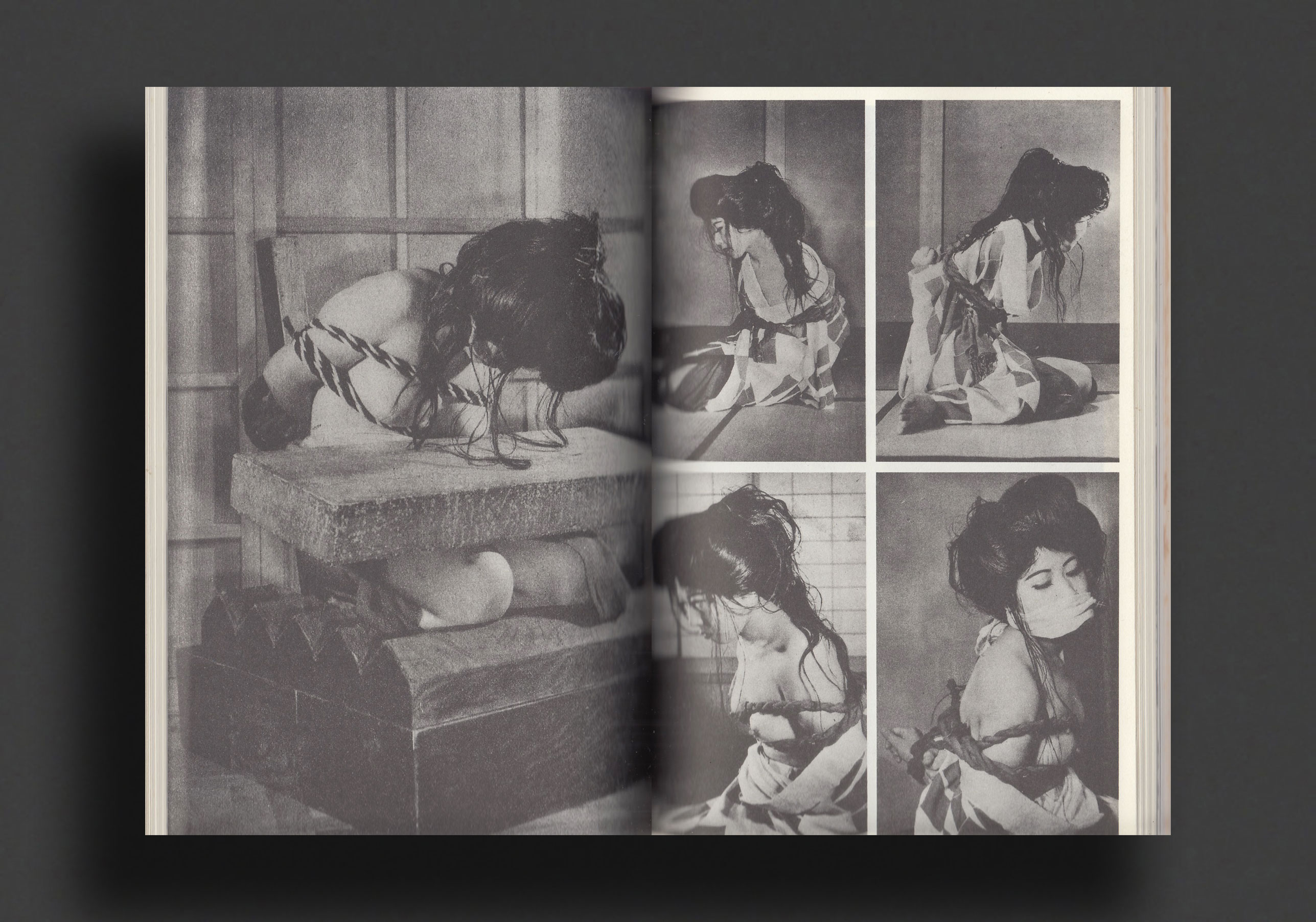
First 1997 hardcover edition of this important reference monograph/biography of Japanese Ukiyo-e blame artist, Seiu Ito, "the father of modern kinbaku", published by Yudachi-sha, Tokyo. Beautiful Maiden Dance: An ode to the Torture Artist Seiu Ito is an art and photography book that beautifully presents Ito's most famous painting and print collections in full, alongside his original writings, sketches, rare photo documents, and accompanying studies.
Seiu Ito (1891—1960) Seiu Ito, also romanised as Seiyu Itoh, was a Japanese painter, recognised today as "the father of modern kinbaku". Ito's life was the subject of director Noboru Tanaka's 1977 Nikkatsu Roman porno film Beauty's Exotic Dance: Torture!, the final entry in his "Showa Era trilogy". Ito uses his skilful technique to draw realistic torture pictures, and as a master of these paintings, he has many fans and has written masterpieces such as "The Story of Blame." On the other hand, he not only left behind many masterpieces of ghost paintings, but also loved the street customs of Edo and wrote books about Edo customs.
Very Good copy in Good—VG dust jacket and obi, some foxing and rubbing/tanning.
1982, Japanese
Softcover (w. obi), 198 pages, 21.2 x 14.7 cm
1st Edition, Out of print title / used / very good
Published by
JICC Publishing Bureau / Japan
$200.00 - In stock -
Very rare copy of the 1982 Japanese-only LONDON BOOK, researched and photographed by Naoya Nakamura, published in Japan by JICC shuppan. Wrapped in bi-lingual cover adorned with Annabella Lwin of Bow Wow Wow, the London Book is a rare time capsule and guide-book of photographs and interviews (Derek Jarman, Anton Corbijin, Malcolm McLaren, etc.) covering the London post punk scene, divided in various essential categories — film, music, fashion, art, drugs, sex — introducing all the record stores, fashion boutiques, sex shops, night clubs, pubs, markets, cafes, magazines, etc. (Rough Trade, Club for Heroes, World's End, Frisco...) and snapping all the shop assistants, punters, protagonists and London youth, from Oxford Street, Hackney, Notting Hill.... Packed with clippings, archival artwork, advertising, behind the scene photographs (shop interiors, design studios...), maps and directories.
Very Good copy with light tanning/discolouration with rarely preserved publisher's obi (Good with some spine wear and fading)
1987, Japanese
Softcover (w. dust jacket), 320 pages, 18.5 x 13 cm
1st Edition, Out of print title / used / good
Published by
CBS / Tokyo
$500.00 - In stock -
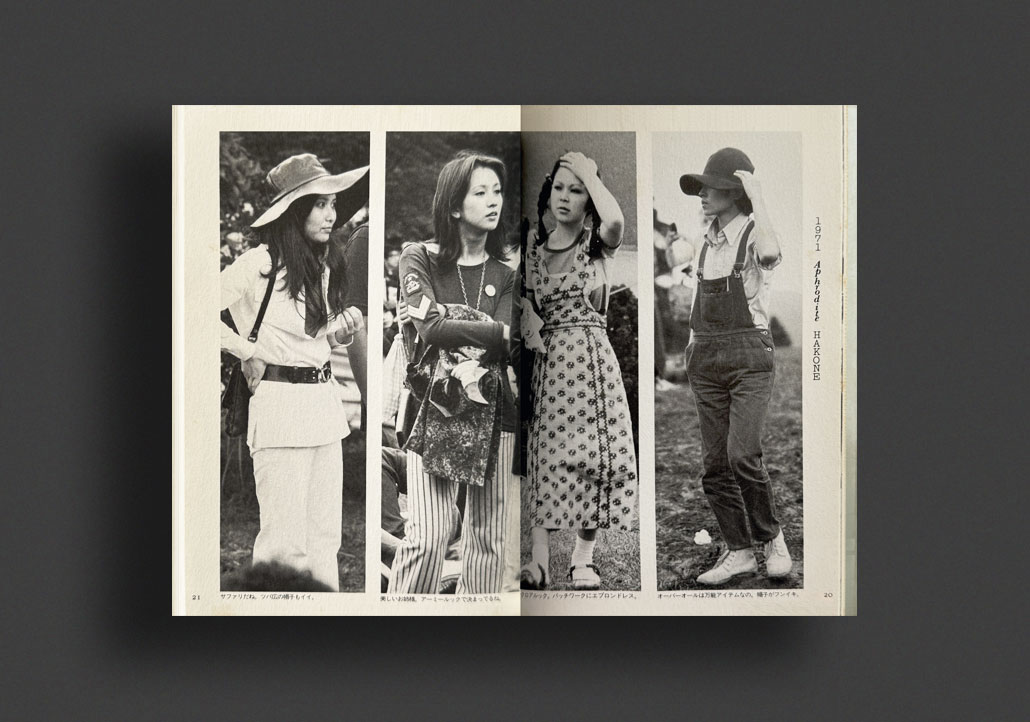
Long before FRUiTS and STREET, Japanese photographer Nobumi Kurimoto paid homage to the self-expression of Japanese girls in this ultimate time-capsule of teen style, published in Tokyo in 1987 and now virtually impossible to find. Girl's Fashion 1970-1988 is a visual reference book like no other. At over 1500 photographs spanning 320 pages, Kurimoto has obsessively documented the personal style of girls in the streets of Tokyo, Kyoto, Osaka, Yokohama, Matsuyama, Hiroshima, etc., chronologically arranged by year and roughly grouped by style, creating an exhaustive wealth of material that quietly charts the nuanced history of youth fashion in Japan from a time before people were so self aware in front of a camera. A brilliant and charming book that only gets better with age. It is also a testament to the timeless relevance of Snoopy!
Good—Very Good copy. Some spotting to block edges and kinking to body, overall very well preserved throughout, inc. spine. G—VG metallic dust jacket with minor age wear/spotting. Now preserved in mylar wrap.
1985, Japanese
Softcover, 246 pages, 29.7 x 21 cm
1st Edition, Out of print title / used / good
Published by
Camera Mainichi and The Mainichi Graphic / Japan
$120.00 $80.00 - Out of stock
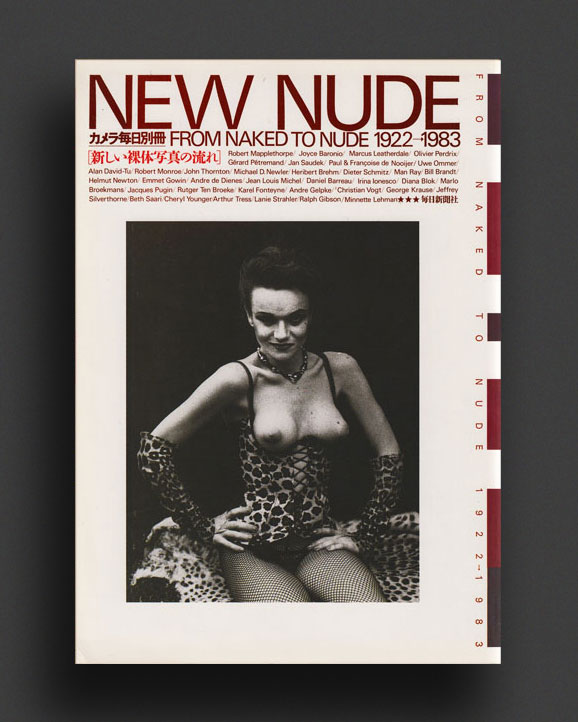
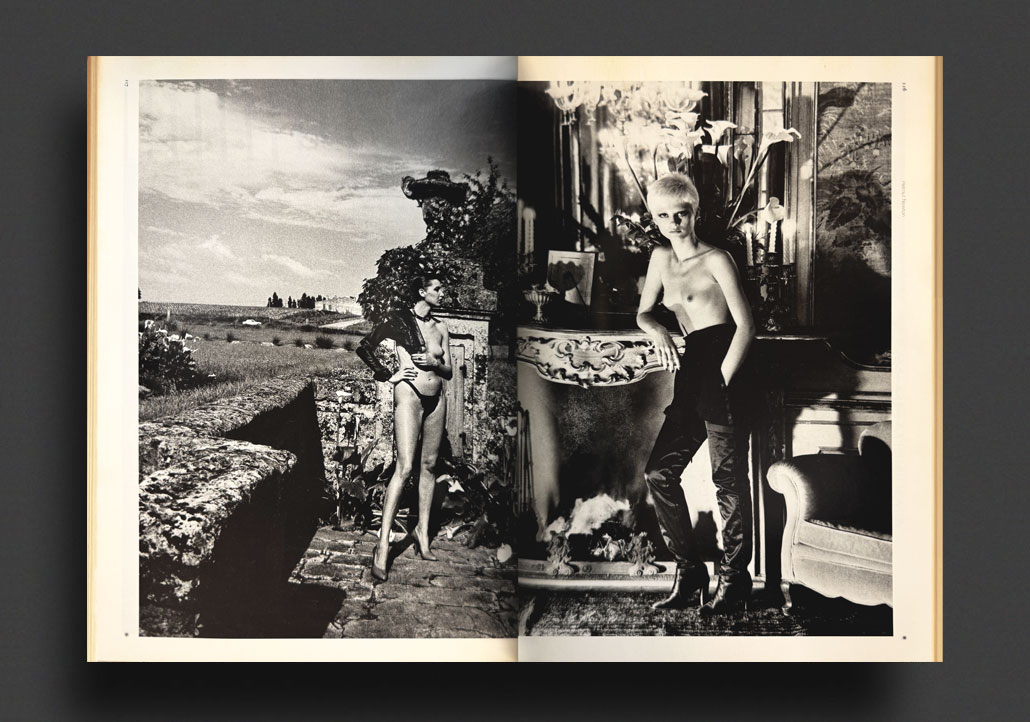
First printing of NEW NUDE 1, published in Japan in 1985 as part of a unique and short-lived book series published by the mighty Camera Mainchi house, showcasing leading photographers and artists on the subject of the nude. Opening with illustrated essays by photo critic Kōtarō Iizawa and others, this lovely volume, printed in Japan, presents works generously and sympathetically presented in colour and black-and-white across various paper-stocks. Includes the work of Joyce Baronio, Jan Saudek, Irina Ionesco, Bill Brandt, Robert Mapplethorpe, Helmut Newton, Man Ray, Dieter Schmitz, Diana Blok, Ralph Gibson, Marcus Leatherdale, Arthur Tress, Christian Vogt, and many others.
Good-VG copy with light general wear/tanning, foxing to inside of covers.
1971, Japanese
Softcover, 106 pages, 25.7 x 29.6 cm
1st Edition, Out of print title / used / very good
Published by
Mainichi Shimbun / Tokyo
$180.00 - In stock -
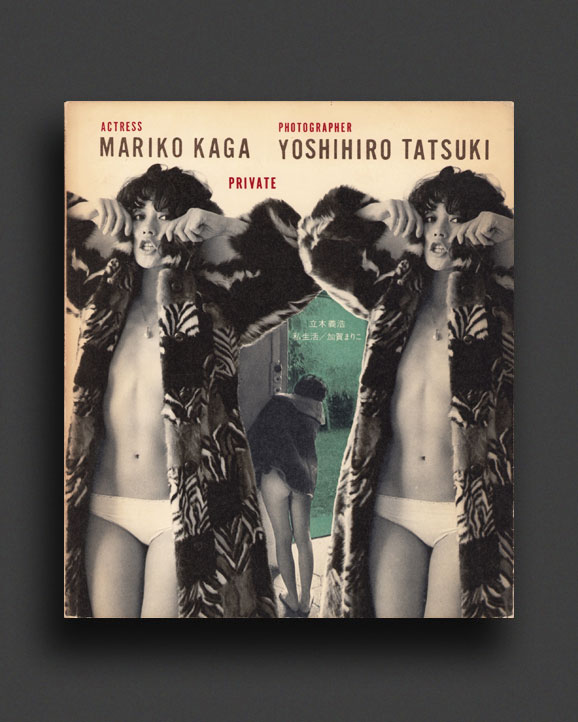
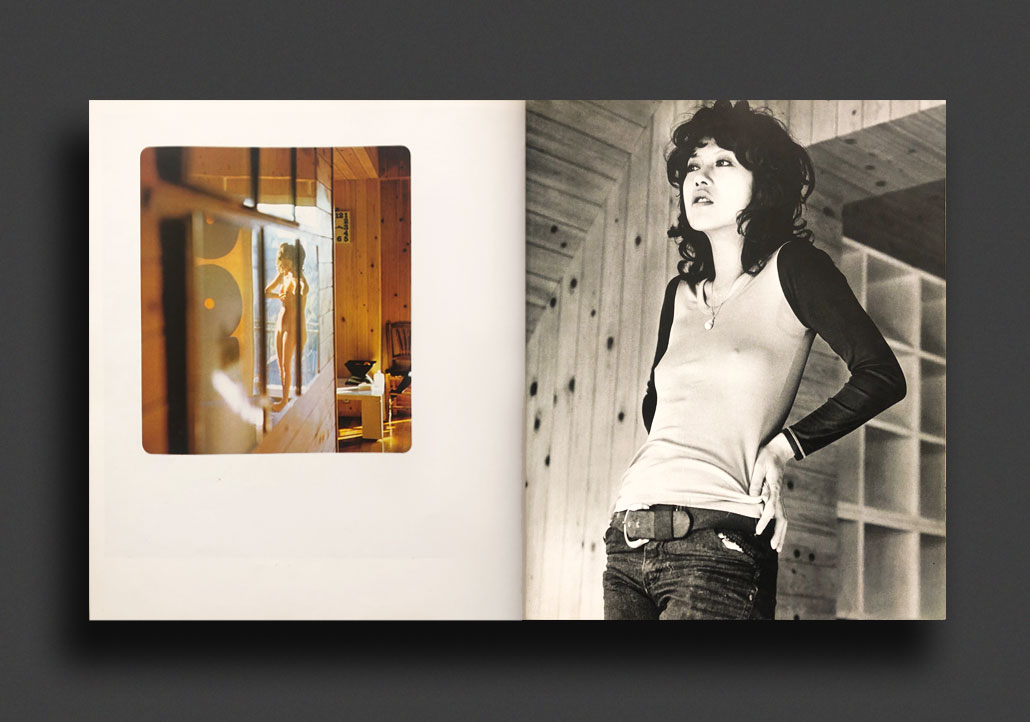
Scarce first edition of Japanese photographer Yoshihiro Tatsuki's wonderful photobook "Private", published in 1971 by Mainichi Shinbun. Mariko "Private" is a beautiful collection of intimate colour and black and white photos taken in Tokyo, Karuizawa, California and Paris, with popular Japanese actress Mariko Kaga as the subject. This famed collection of joyful and touching portraits was published as a special issue of the great Camera Mainichi, edited by critic Shōji Yamagishi, with cover by printmaker Masuo Ikeda and features commentary by Toshiro Mayuzumi, Kazumi Yasui and others. Highly recommended.
Number 1 in Camera Mainichi's Private series.
Tatsuki was born into a family that operated an photographic portrait studio. While at Tokyo junior College of Photography, he exhibited photographs of his family at the Fuji Photo Salon. After graduation, he began working as a photographer at Ad Center under the art direction of graphic designer Seiichi Horiuchi. Tatsuki’s name entered the limelight when he was just 26 years old with the publication of "A Fallen Angel", an astonishing 56 pages feature of his photographs shots for Camera Mainichi. Since starting as a freelance photographer in 1969, he has worked on the front lines of the advertising, magazine, publishing, and motion picture industries. He has published a number of celebrated photo books on female subjects and is best-known for works such as GIRL, EVES, Private (Mariko Kaga), Aoi Toki, My America, and Portrait of Family.
Good—Very Good copy of a book difficult to find in such nice condition. Usual light tanning to stock edges/spine, general light wear/age.
2012, English
Softcover, 120 pages, 28 x 21.59 cm
Published by
Creation Books / London
$65.00 - Out of stock
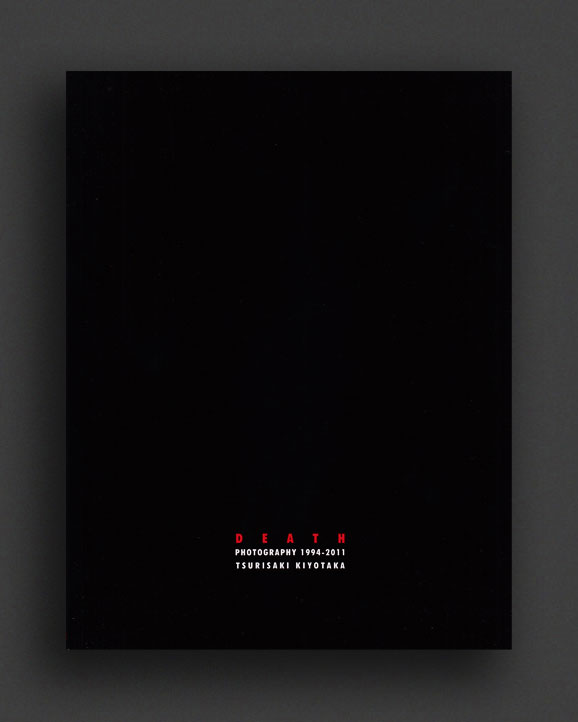
DEATH is the first major retrospective of the work of Japanese photographer Tsurisaki Kiyotaka, whose images of death and conflict from global "hot-spots" have earned him a reputation as a leading underground photographer. This deluxe, full-sized book contains over 100 full-colour images shot between 1994 and 2011, culminating with poignant scenes of death and destruction from the recent Fukushima disaster in Japan. Also included is a new introduction by Tsurisaki, in which he provides an overview of the philosophy behind his unusual career.
Self-styled "corpse photographer", film director and writer Tsurisaki Kiyotaka was born 1966 in Toyama Prefecture, Japan. He graduated from the Faculty of Letters, Keio University and became a photographer after a brief career as a porno director in 1994. His first solo exhibition was held at NG Gallery (Ikejiri, Tokyo) in 1995. He has shot over 1,000 scenes of death in some of the world's most unregulated and lawless areas and conflict zones, including Thailand, Colombia, Mexico, Russia, and Palestine. He is also known for his autopsy documentary OROZCO THE EMBALMER.
2013, English
Hardcover (w. dust jacket), 376 pages, 16.5 x 22.9 cm
Published by
Yale University Press / New Haven
$120.00 - In stock -
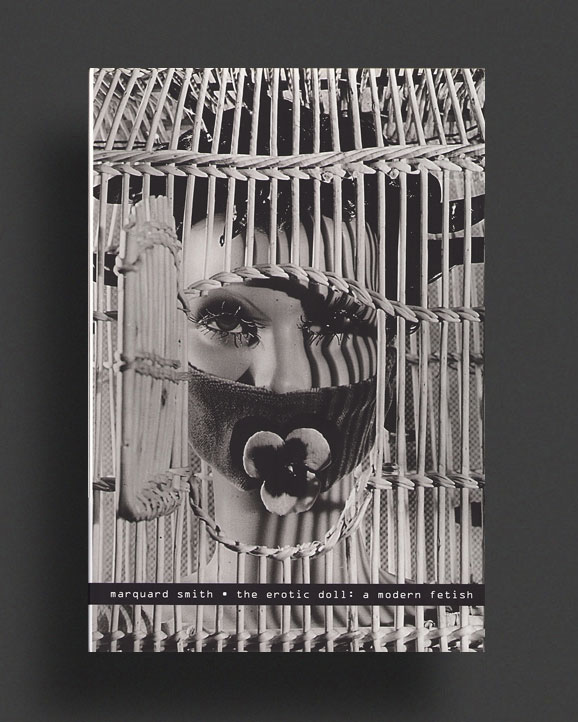
ince the 19th century, dolls have served as toys but also as objects of obsession, love, and lust. That century witnessed the emergence of the term "heterosexual" and of modern concepts of fetishism, perversity, and animism. Their convergence, and the demands of a growing consumer society resulted in a proliferation of waxworks, shop-window dummies, and customized love dolls, which also began to appear in art. Oskar Kokoschka commissioned a life-sized doll of his former lover Alma Mahler; Hans Bellmer crafted poupées; and Marcel Duchamp fabricated a nude figure in his environmental tableau Etant donnés. The Erotic Doll is the first book to explore men's complex relationships with such inanimate forms from historical, theoretical, and phenomenological perspectives. Challenging our commonsense grasp of the relations between persons and things, Marquard Smith examines these erotically charged human figures by interweaving art history, visual culture, gender, and sexuality studies with the medical humanities, offering startling insights into heterosexual masculinity and its discontents.
‘Ladies and gents, welcome to the museum of the erotic doll. Step right up and feast your eyes on modern man’s curious contraptions. If the saucy blow-up doll makes you squeamish, brace yourself for the Dutch Wife (a sailor’s delight!), lubricating robot ladies, surrealist brides stripped bare, state-of-the-art RealDolls, and the iDollators who love them. Marquard Smith is the curator of this collection of men's dolls, rendered in a lavishly illustrated volume.’—Laura Frost, Times Higher Education
'This book is platypus-like, unclassifiable.'—Marina Warner, London Review of Books
“[An] intriguing book . . . Smith teases out the history of these sex objects to provide a thorough genealogy of today’s erotic mannequins.”—Shelly Ronen, Public Books
1994, English
Softcover, 56 pages, 28 x 20 cm
1st Edition, Out of print title / used / fine
Published by
Museum of New Zealand / Te Papa Tongarewa
Govett-Brewster Art Gallery / New Plymouth
$40.00 - Out of stock
Scarce 1994 New Zealand touring exhibition catalogue published on the occasion of Power Works, selected by New Zealand curator Robert Leonard, comprising works from the 1980s by Australian and international artists. Rather than seeking to impose a theme, Leonard selected key works from the MCA Collection allowing commonalities to naturally emerge.
With artist sections, colour artwork plates and accompanying texts for each artist by a selection of writers, plus a further section for the additional exhibition, Peter Tyndall: Postcards, curated by Sue Cramer, illustrated with installations and a conversation between Cramer and Tyndall.
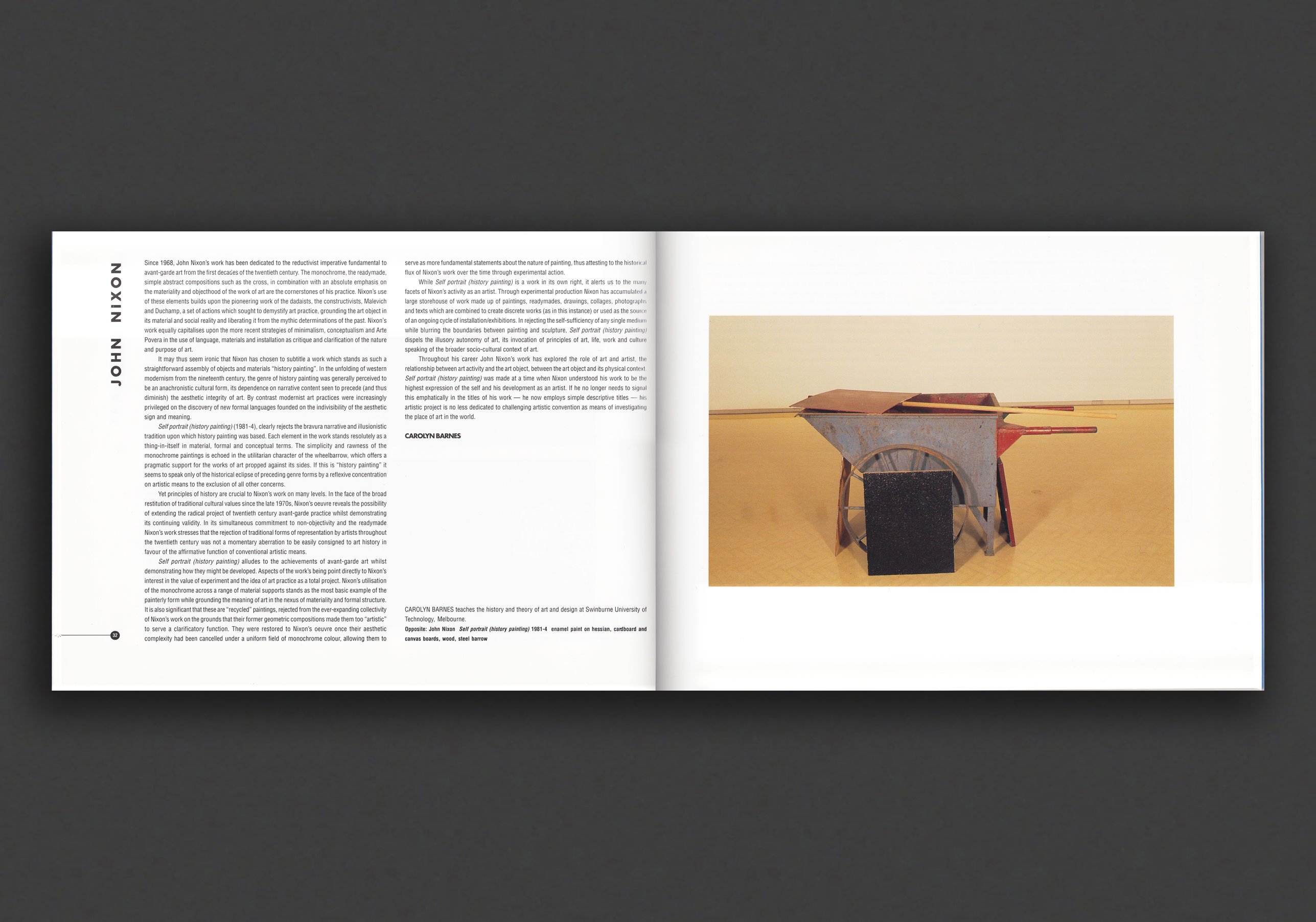
Artists featured: Sandro Chia, Peter Cripps, Juan Davila, Eugenio Dittborn, Katharina Fritsch, Gilbert & George, Keith Haring, Richard Kileen, Barbara Kruger, Robert Longo, David Daymirringu Malangi, Tracey Moffatt, John Nixon, Mike Parr, Sigmar Polke, Cindy Sherman, Imants Tillers, Peter Tyndall, Jenny Watson, Boyd Webb. Writers featured: Charles Green, Linda Michael, Stephen O'Connell, Julie Ewington, Sue Cramer, Stuart Mckenzie, Thomas W. Sokolowski, Anna Miles, Adrian Martin, Lawrence McDonald, Djon Mundine, Ingid Periz, Carolyn Barnes, Graham Coulter-Smith, Christina Davidson, Robyn Mckenzie, Wystan Curnow, Robert Leonard, Ben Curnow. The exhibition toured Museum of New Zealand / Te Papa Tongarewa – 19 Feb 1994 - 15 May 1994; Govett-Brewster Art Gallery – 09 Jul 1994 - 28 Aug 1994; Waikato Museum of Art & History – 10 Sep 1994 - 04 Dec 1994; Dunedin Public Art Gallery– 01 Jan 1995 -31 Mar 1995; Museum of Contemporary Art (MCA) – 26 May 1995 - 03 Dec 1995
Fine copy.
2025, English
Softcover + compact disc, 92 pages, 25 x 17 cm
Published by
Self Published / Melbourne
$50.00 - In stock -
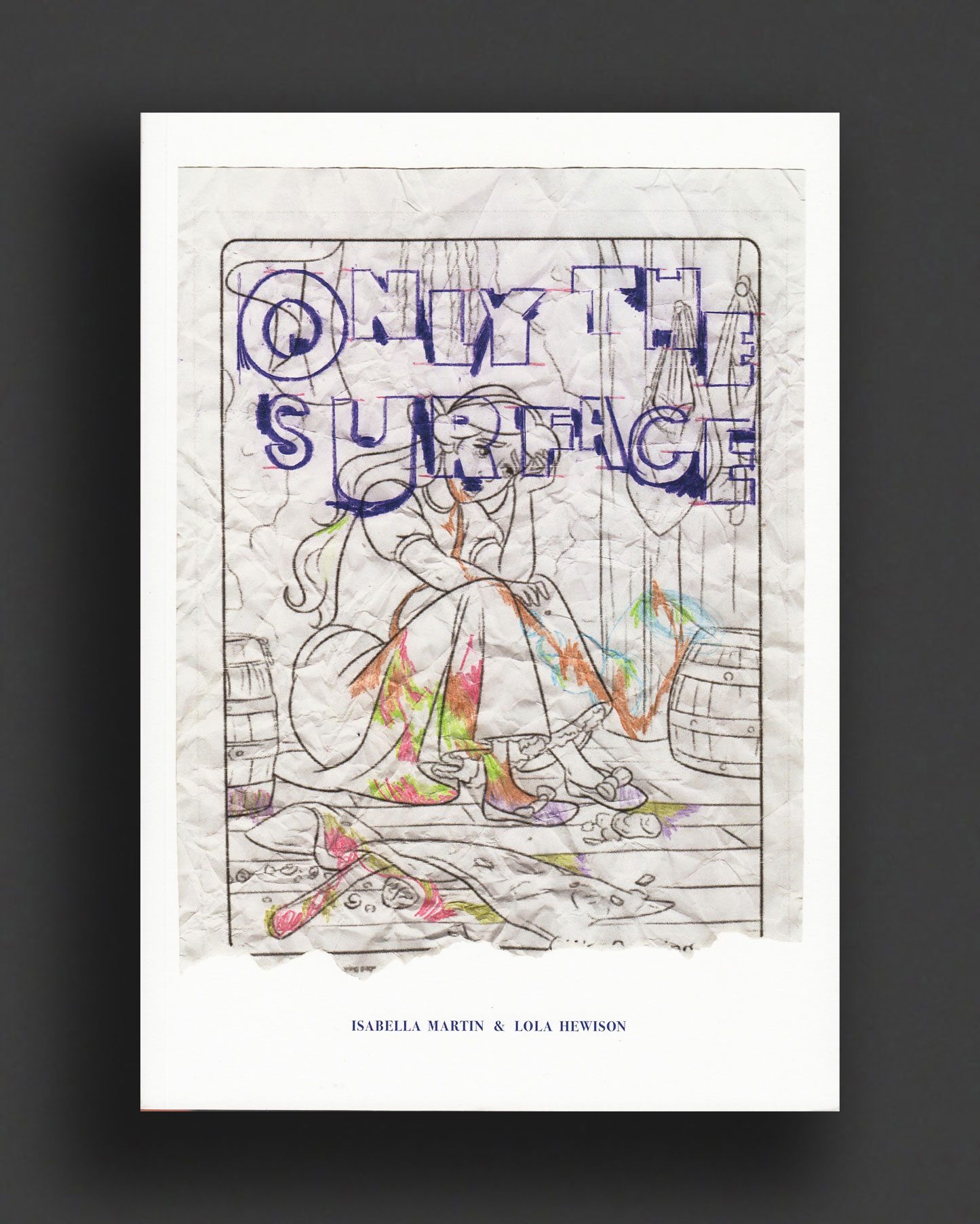
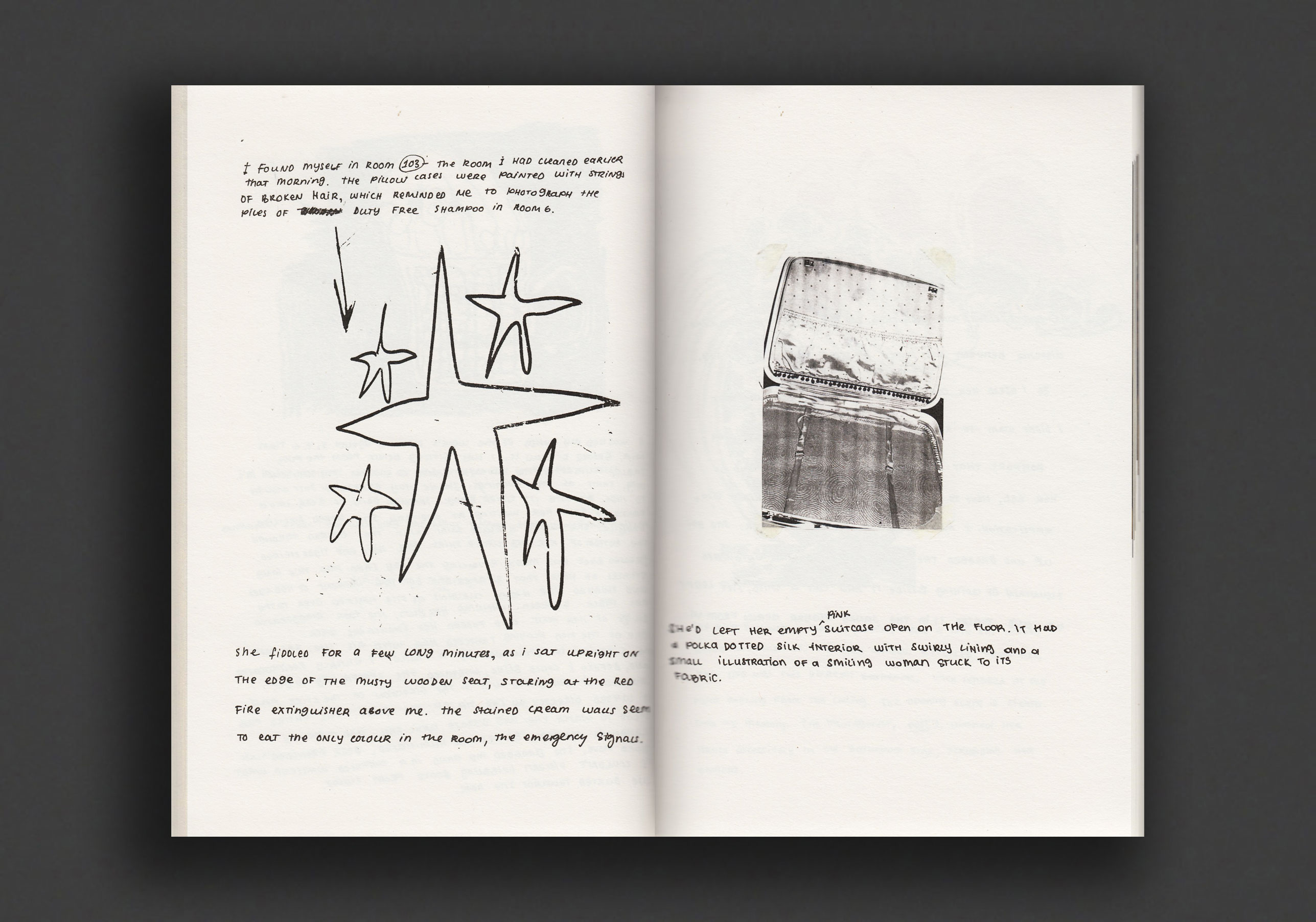
A white motel on a stretching red dirt bordered highway, its edges are rounded and key lime curtains are trimmed with 90’s lint. I wish she was wearing a light blue midi linen skirt and white collared boxed sleeve shirt, hidden by a simple white apron, but really, Kmart leggings and a daily washed flannel shirt. At night, before 4 pints of Carlton she rustles her tired legs into a mini skirt and slips freshly rinsed feet into the leather upper sole of pumps borrowed from the lovely box blonde in Room 203.
Just borrowing, borrowing a few other things too.
She is paid to clean and wipe and dust but she is drawn to a kind of collecting, a hoarding of whatever information can be found in the salmon silk lining of a businessman’s suitcase.
—Text by Lili Ward
𝑆𝑒𝑡 𝑖𝑛 𝑎 𝑚𝑜𝑡𝑒𝑙 𝑖𝑛 𝑟𝑒𝑔𝑖𝑜𝑛𝑎𝑙 𝐴𝑢𝑠𝑡𝑟𝑎𝑙𝑖𝑎, 𝑂𝑛𝑙𝑦 𝑡ℎ𝑒 𝑆𝑢𝑟𝑓𝑎𝑐𝑒 𝑖𝑠 𝑎 𝑐𝑜𝑙𝑙𝑒𝑐𝑡𝑖𝑜𝑛 𝑜𝑓 𝑗𝑜𝑢𝑟𝑛𝑎𝑙 𝑒𝑛𝑡𝑟𝑖𝑒𝑠, 𝑖𝑙𝑙𝑢𝑠𝑡𝑟𝑎𝑡𝑖𝑜𝑛𝑠 𝑎𝑛𝑑 𝑓𝑖𝑙𝑚 𝑠𝑡𝑖𝑙𝑙𝑠 𝑏𝑦 𝑎𝑛 𝑢𝑛𝑛𝑎𝑚𝑒𝑑 𝑐𝑙𝑒𝑎𝑛𝑒𝑟. 𝑇ℎ𝑟𝑜𝑢𝑔ℎ 𝑎 𝑠𝑒𝑟𝑖𝑒𝑠 𝑜𝑓 𝑓𝑟𝑎𝑛𝑘 𝑣𝑖𝑔𝑛𝑒𝑡𝑡𝑒𝑠, 𝑡ℎ𝑒 ℎ𝑜𝑡𝑒𝑙 𝑏𝑒𝑐𝑜𝑚𝑒𝑠 𝑎 𝑐𝑜𝑛𝑑𝑢𝑖𝑡 𝑓𝑜𝑟 ℎ𝑒𝑟 𝑖𝑛𝑛𝑒𝑟 𝑤𝑜𝑟𝑙𝑑, ℎ𝑖𝑔ℎ𝑙𝑖𝑔ℎ𝑡𝑖𝑛𝑔 𝑡ℎ𝑒 𝑡𝑒𝑛𝑑𝑒𝑛𝑐𝑦 𝑡𝑜 𝑛𝑎𝑟𝑟𝑎𝑡𝑖𝑣𝑖𝑠𝑒 𝑜𝑢𝑟 𝑙𝑖𝑣𝑒𝑠 𝑎𝑛𝑑 𝑡ℎ𝑒 𝑙𝑖𝑣𝑒𝑠 𝑜𝑓 𝑜𝑡ℎ𝑒𝑟𝑠 𝑡ℎ𝑟𝑜𝑢𝑔ℎ 𝑜𝑏𝑗𝑒𝑐𝑡𝑠. 𝑇ℎ𝑟𝑜𝑢𝑔ℎ 𝑎 𝑐ℎ𝑎𝑛𝑐𝑒 𝑒𝑛𝑐𝑜𝑢𝑛𝑡𝑒𝑟 𝑤𝑖𝑡ℎ 𝑜𝑛𝑒 𝑜𝑓 𝑡ℎ𝑒 𝑔𝑢𝑒𝑠𝑡𝑠, 𝑠ℎ𝑒 𝑤𝑎𝑡𝑐ℎ𝑒𝑠 𝑎 𝑓𝑖𝑙𝑚 𝑡ℎ𝑎𝑡 𝑎𝑙𝑡𝑒𝑟𝑠 ℎ𝑒𝑟 𝑝𝑒𝑟𝑠𝑝𝑒𝑐𝑡𝑖𝑣𝑒. 𝑇ℎ𝑒 𝑗𝑜𝑢𝑟𝑛𝑎𝑙 𝑎𝑐𝑡𝑠 𝑎𝑠 𝑎 𝑡𝑟𝑎𝑐𝑒𝑎𝑏𝑙𝑒 𝑚𝑎𝑝 𝑜𝑓 𝑢𝑛𝑐𝑜𝑛𝑠𝑐𝑖𝑜𝑢𝑠 𝑠𝑦𝑚𝑏𝑜𝑙𝑠 𝑎𝑛𝑑 𝑠𝑦𝑛𝑐ℎ𝑟𝑜𝑛𝑖𝑐𝑖𝑡𝑦.
Book by Isabella Martin and Lola Hewison
Includes accompanying limited edition compact disc of imagined soundtrack to the film in the book by Fin Healy, Raven Mahon, Lola Hewison, Isabella Martin; Mastered by Raven Mahon and Mikey Young.
1970, Japanese
Softcover, 60 pages, 38.5 x 25.5 cm
1st Edition, Out of print title / used / very good
Published by
Gendaishin-sha / Tokyo
$120.00 - Out of stock
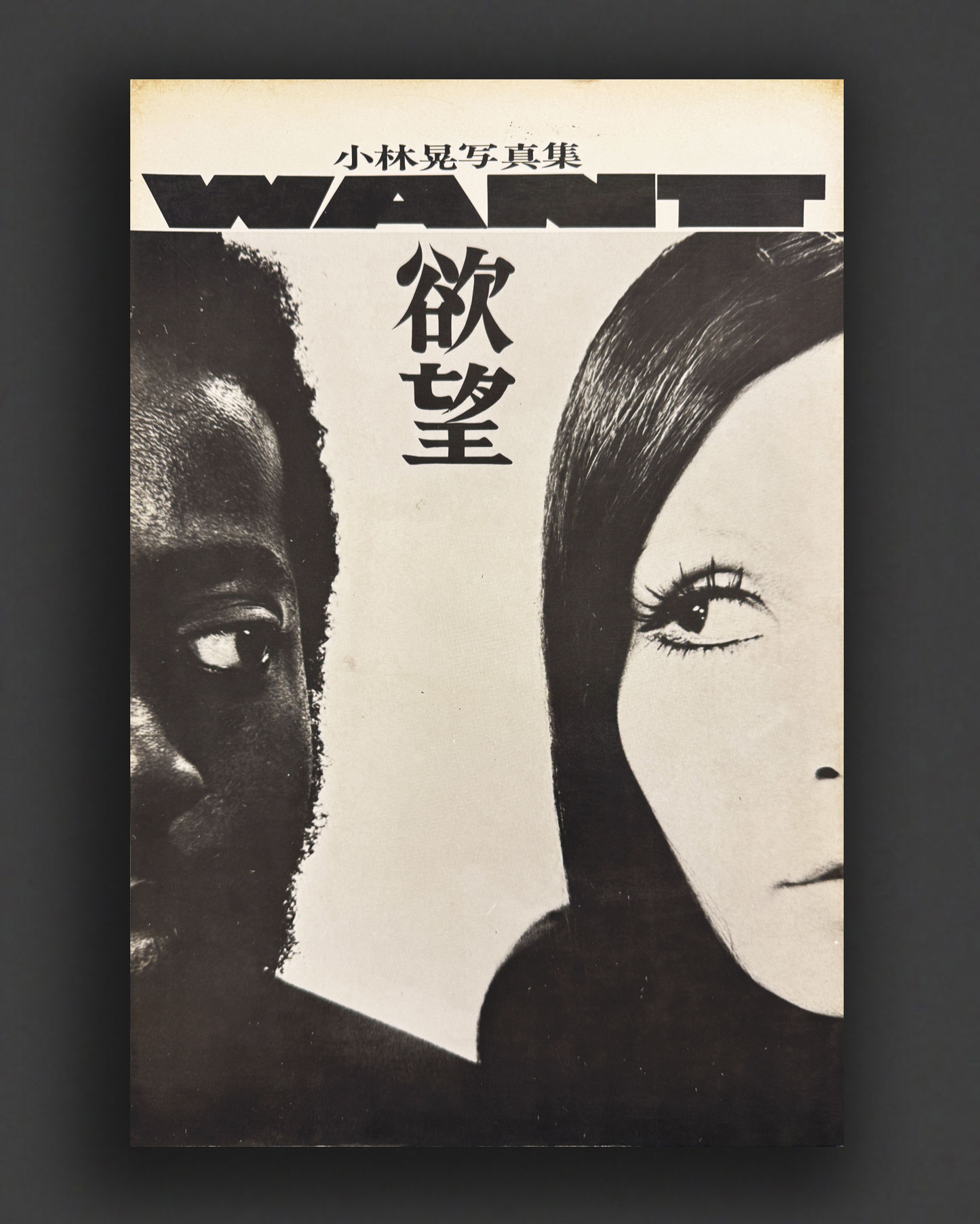
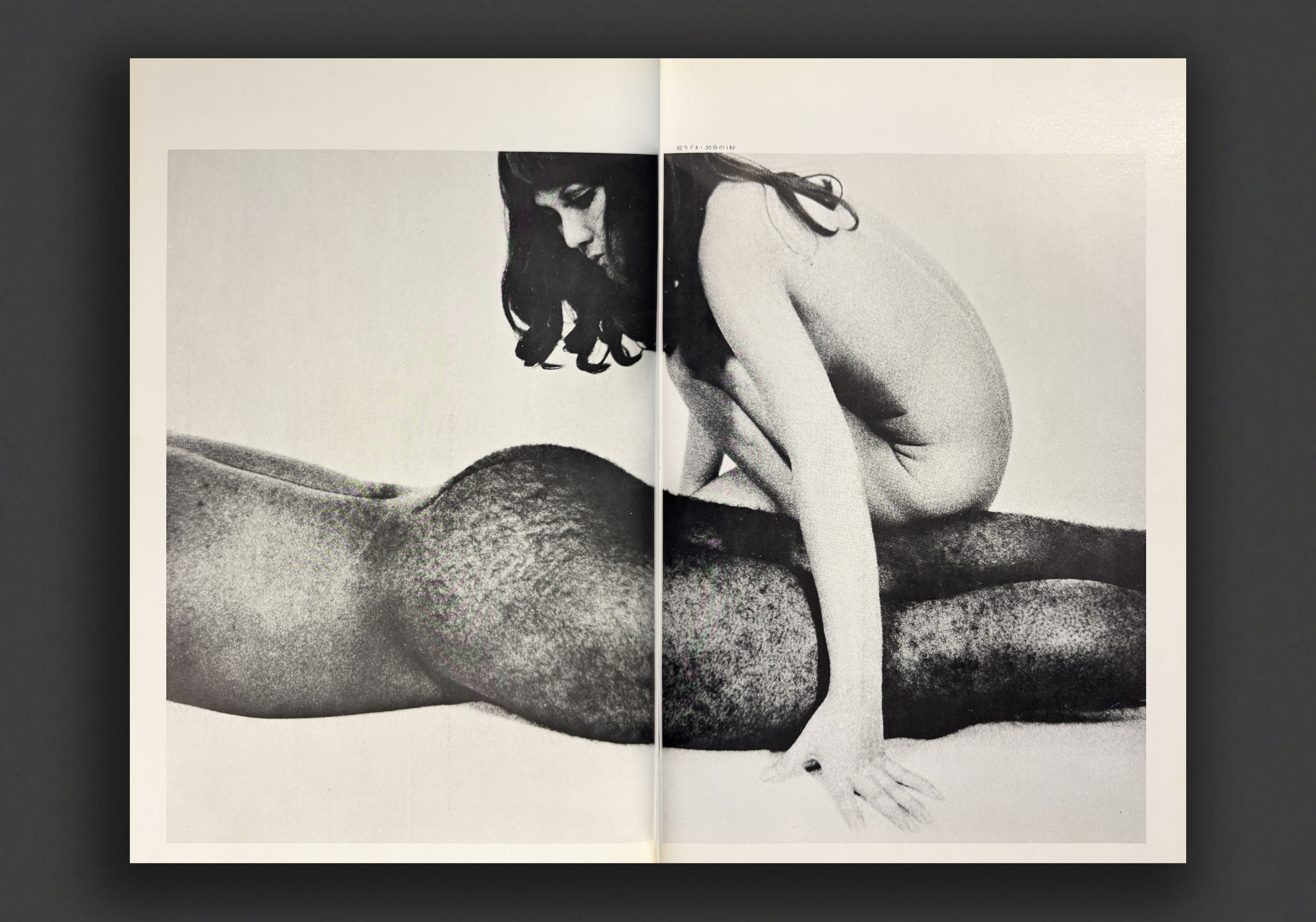
Gorgeous over-sized 1970 Japanese erotic photo book by Akira Kobayashi, an rare early document from his move from Tokyo to California in the late 1960’s. A striking collection of very-1970s, grainy monochrome photos reproduced in full-page and double-page spread of African-American / Japanese nudes, wonderfully designed and edited into this seldom seen oversized volume published by Gendaishin-sha in Tokyo.
Born in Tokyo in 1940, Akira Kobayashi studied photography as an apprentice to several eminent photographers, including Elliott Erwitt during his Japanese tour, before his career found its defining path in 1965. After coming across Lawrence Lipton's book "The Holy Barbarians" and its intimate portrayal of the Beat Generation, Akira became fascinated by one particular subject; the Californian town of Venice West. In 1969 he took the plunge and moved to California, lived in a van and traveled across the continental United States, covering 6,000 miles round trip, intimately capturing his countercultural wanderings with his camera. Kobayashi photographed the surfers, the hippies, the beatniks, the Hell's Angels, Malibu, Venice Beach, Santa Monica, Huntington, the relics POP (Pacific Ocean Park), New York, and later 1980’s London.
Very Good—Near Fine copy.
1992, Japanese
Softcover, 192 pages, 13 x 18 cm
1st Edition, Out of print title / used / very good
Published by
Fiction Inc. / Tokyo
$80.00 - In stock -
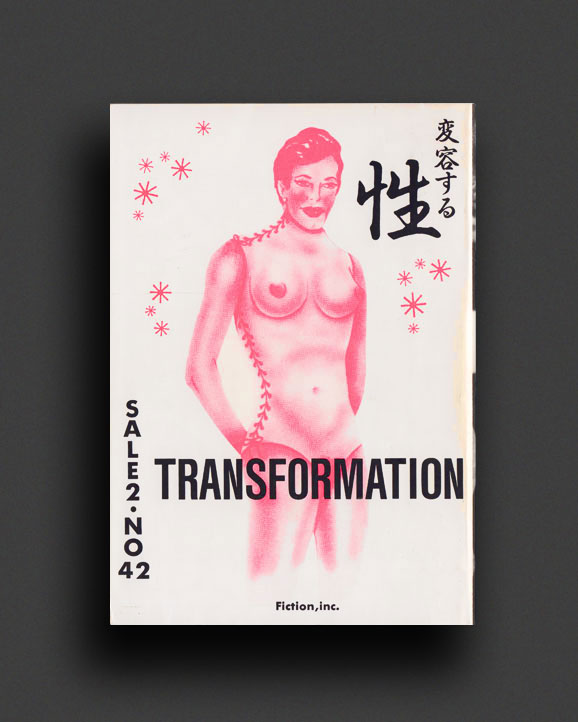
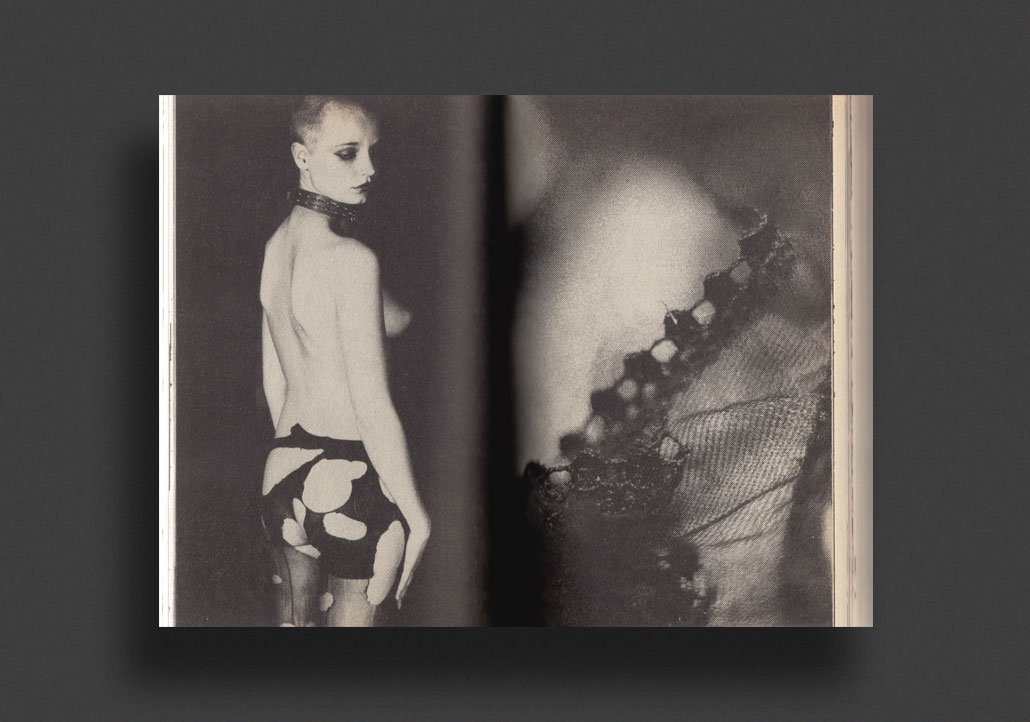
Issue No.42 of the great SALE2 periodical from Tokyo Japan, founded in 1984 by Makoto Orui, who later became art director for Purple magazine in France and Rockin’on magazine in Japan. SALE2 was active for about 14 years during the 1980s—1990s, published regularly as a sort-of fanzine/journal/catalogue/pocket-book by Fiction, Inc., a specialty shop and publisher of fetish and erotica in Tokyo in the 1980-90s. With Orui's distinct design SALE2 developed an exclusive curated editorial set on ‘erotisism and its spiritual philosophy’, with each issue exploring different themes and features, heavy on fetishism and erotic art.
Issue No.42, the "Transformation" issue features collected writings and images around the themes of body transformation, transsexuality, including Pierre Molinier, Mari Akasaka, Kyoko Okazaki, Toyen, Hans Bellmer and Unica Zürn, Henri Maccheroni, Robert Chouraqui, Greybuck's The Equestrians illustrations, Sophia Lamar, plus loads of other images/catalogues of bondage and fetish related arts, and much more...
Very heavily illustrated throughout with erotic photography and artwork, all texts in Japanese.
Very Good copy with tanning to pages.
1998, German
Softcover, 36 pages, 22 x 24 cm
1st Edition, Out of print title / used / very good
Published by
Sprengel Museum / Hannover
$25.00 - Out of stock
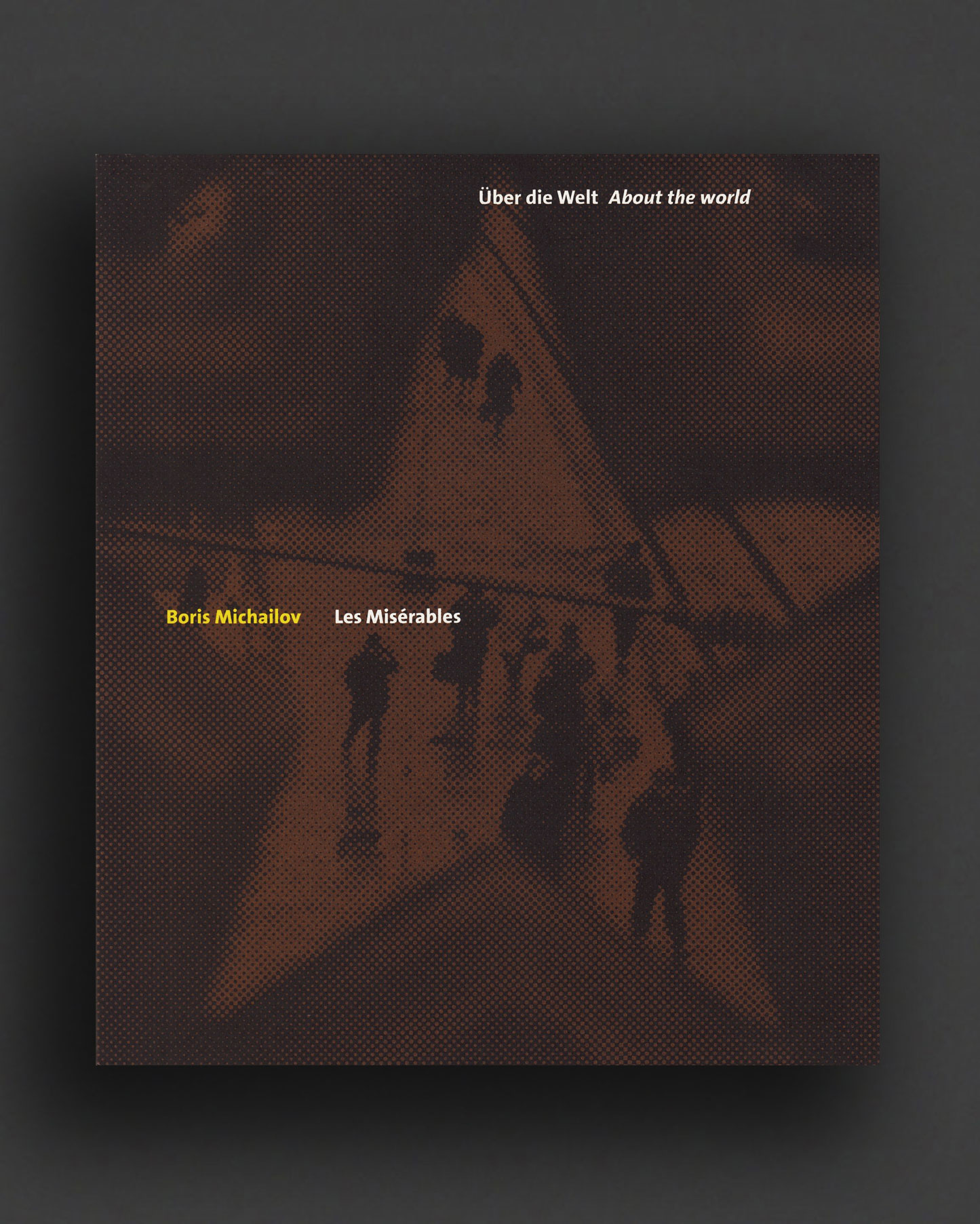
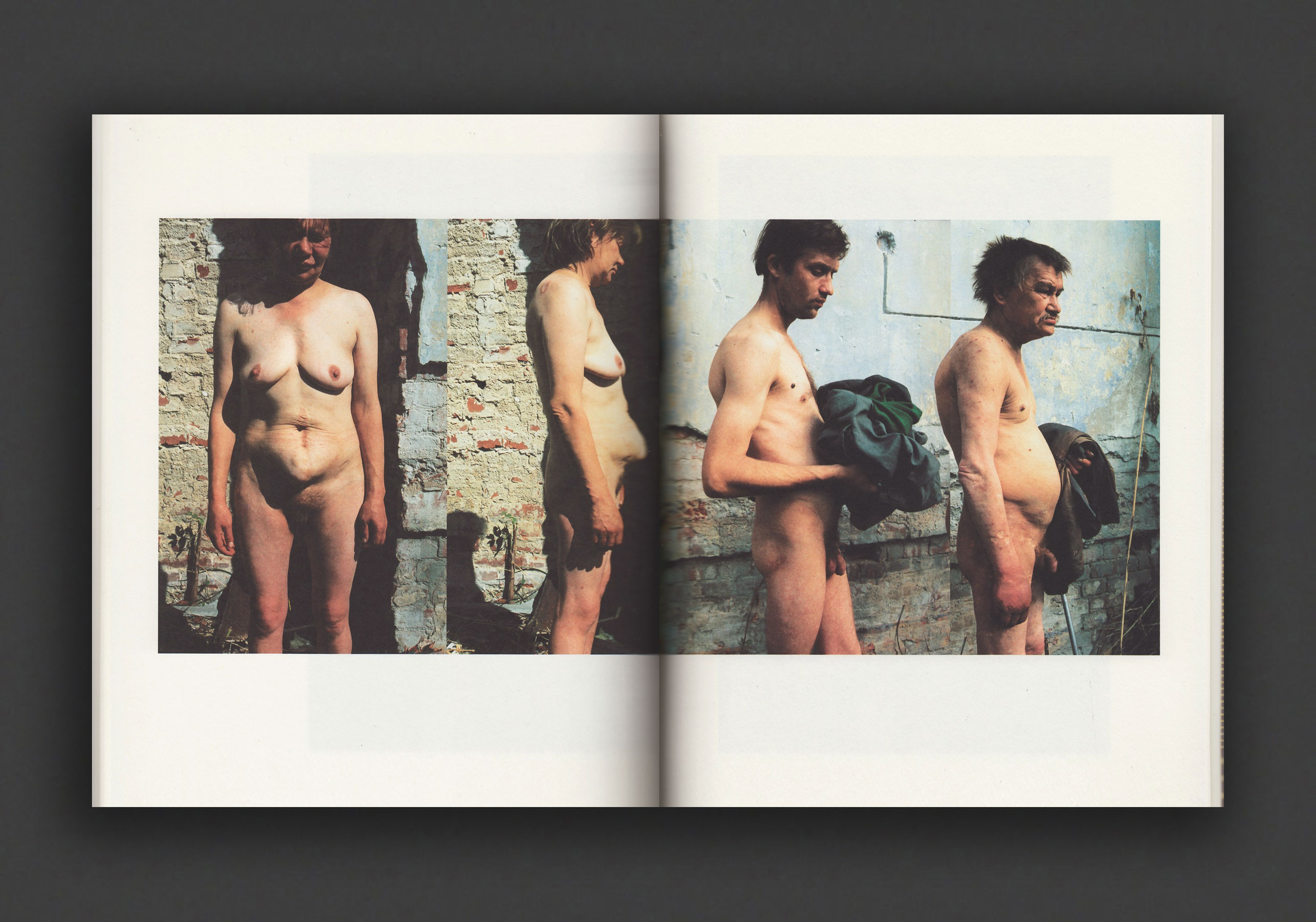
German catalogue of Ukrainian photographer Boris Mikhailov, published on the occasion of the exhibition at Sprengel Museum Hannover, 1998. Illustrated with Mikhailov's photography in colour with accompanying texts in German.
Ukrainian-born Boris Mikhailov is one of the leading photographers from the former Soviet Union. For over 30 years, he has explored the position of the individual within the historical mechanisms of public ideology, touching on such subjects as Ukraine under Soviet rule, the living conditions in post-communist Eastern Europe, and the fallen ideals of the Soviet Union. Although deeply rooted in a historical context, Mikhailov’s work also incorporates profoundly engaging and personal narratives of humor, lust, vulnerability, aging, and death.
Very Good copy.
2025, English
Softcover, 480 pages, 20.3 x 15.2 cm
Published by
Exact Change / Boston
$69.00 - Out of stock
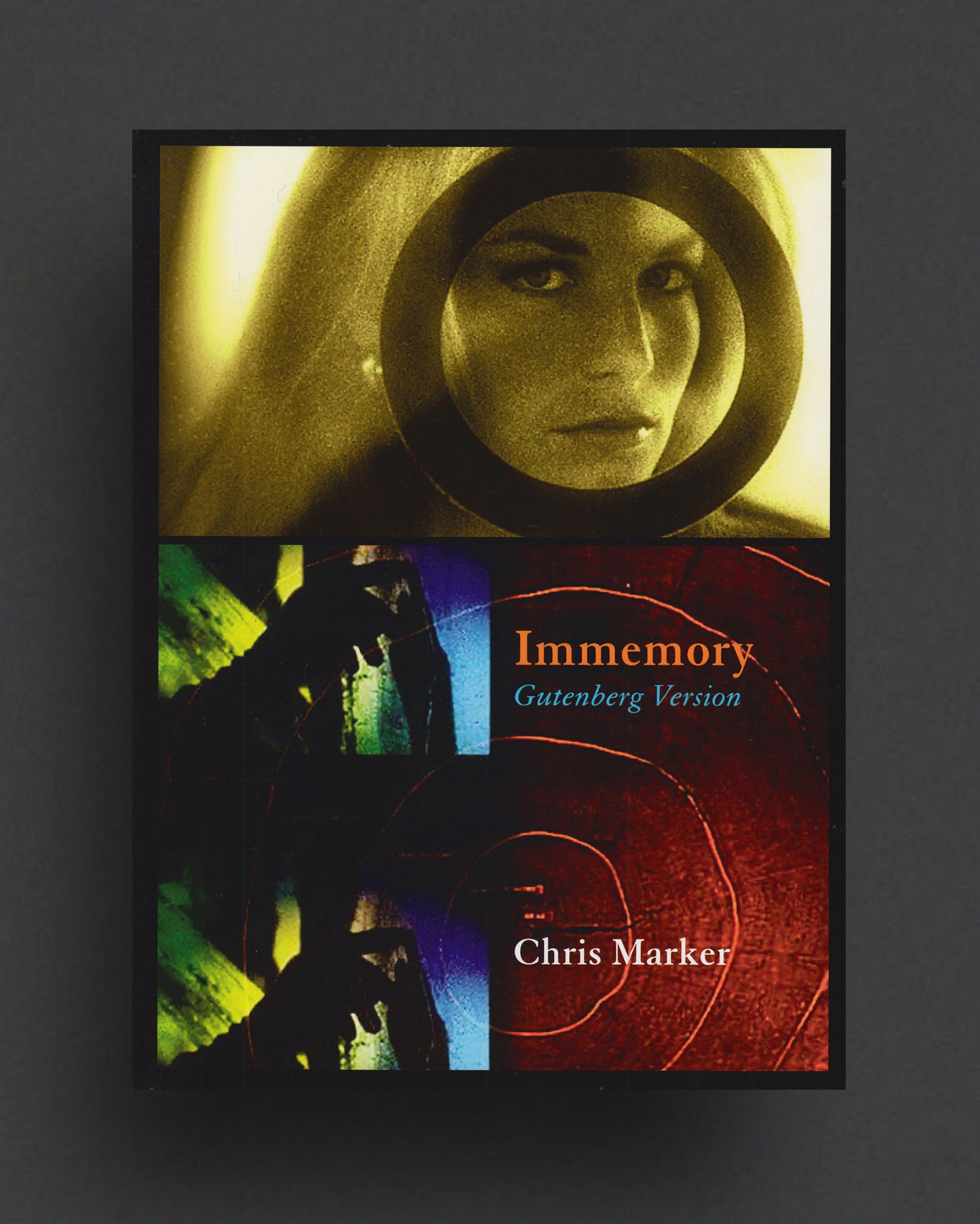
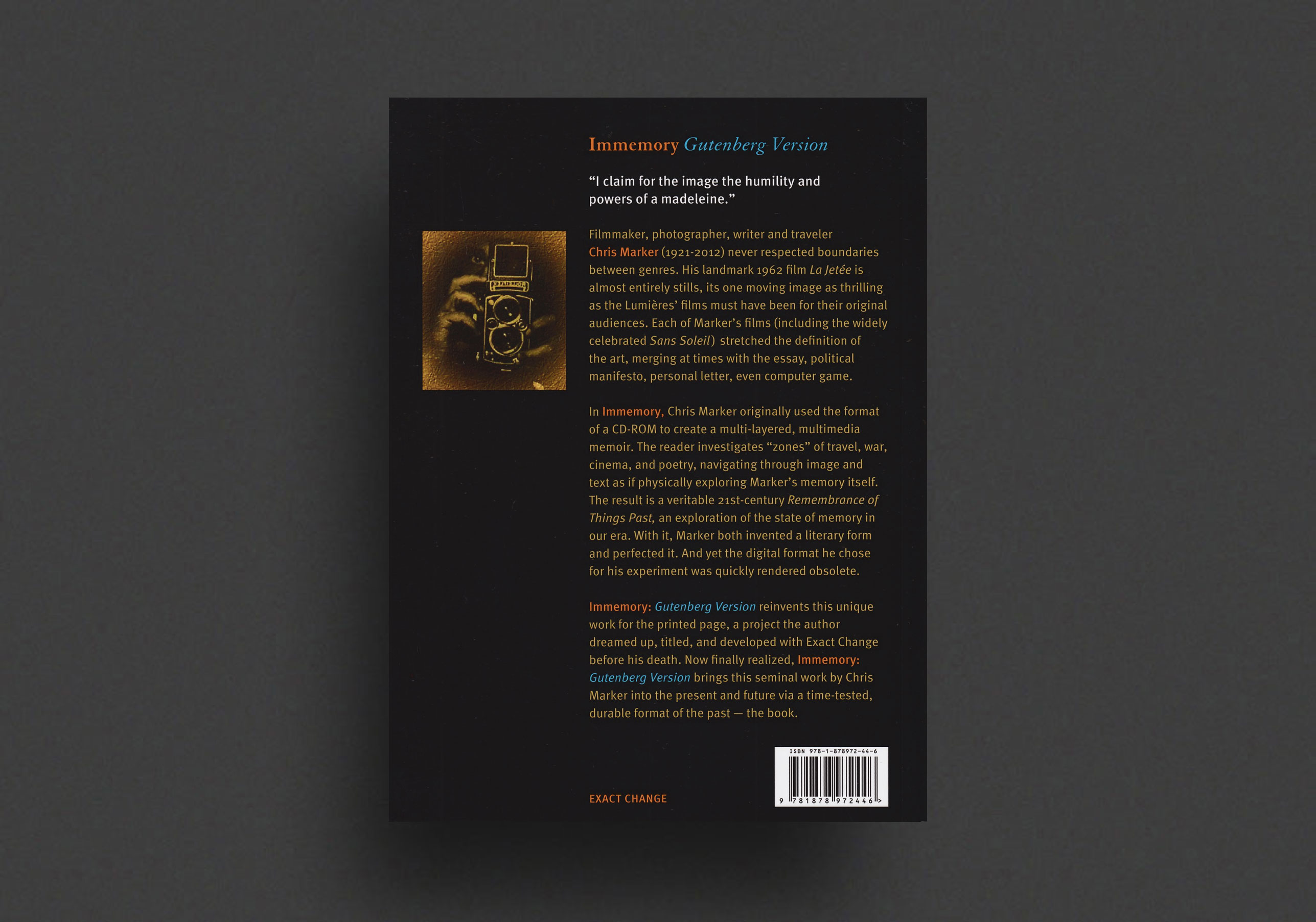
Immemory was first published by filmmaker Chris Marker in 1998 (French) and 2002 (English), using a CD-ROM to create a multi-layered, mixed-media memoir. The reader investigates "zones" of travel, war, cinema and poetry, navigating through image and text as if physically exploring Marker's memory itself. This publication reinvents this unique work for the printed page, a project the author dreamed up, titled, and began working on with Exact Change before his death.
The result is a veritable 21st-century Remembrance of Things Past, an exploration of the state of memory in our era. With it, Marker both invented a literary form and perfected it, just before the digital format he chose for the experiment was quickly rendered obsolete.Filmmaker, photographer and writer Chris Marker never adhered to the conventions of a particular art form. Each of his films pushes the boundaries of its medium, merging at times with the essay, political manifesto, personal letter, art installation and even, finally, a computer game.
Chris Marker (1921–2012) served in the French Resistance, and then the US Air Force, during World War II and worked as a journalist while honing his film career. He received international acclaim with La Jetée in 1962, and became a critical voice in film theory and production as well as a widely admired “cult” artist, a filmmaker's filmmaker.
2010, English
Softcover, 448 pages, 26 x 18.5 x 26 cm
1st Edition, Out of print title / used / fine
Published by
Lars Müller / Zürich
$350.00 - In stock -
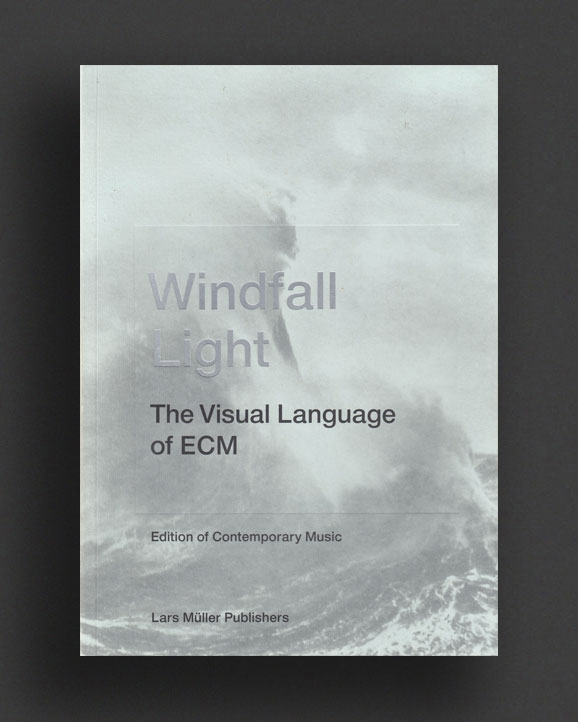
Very rare copy of the first edition of Windfall Light: The Visual Language, edited by Lars Müller and published in 2010.
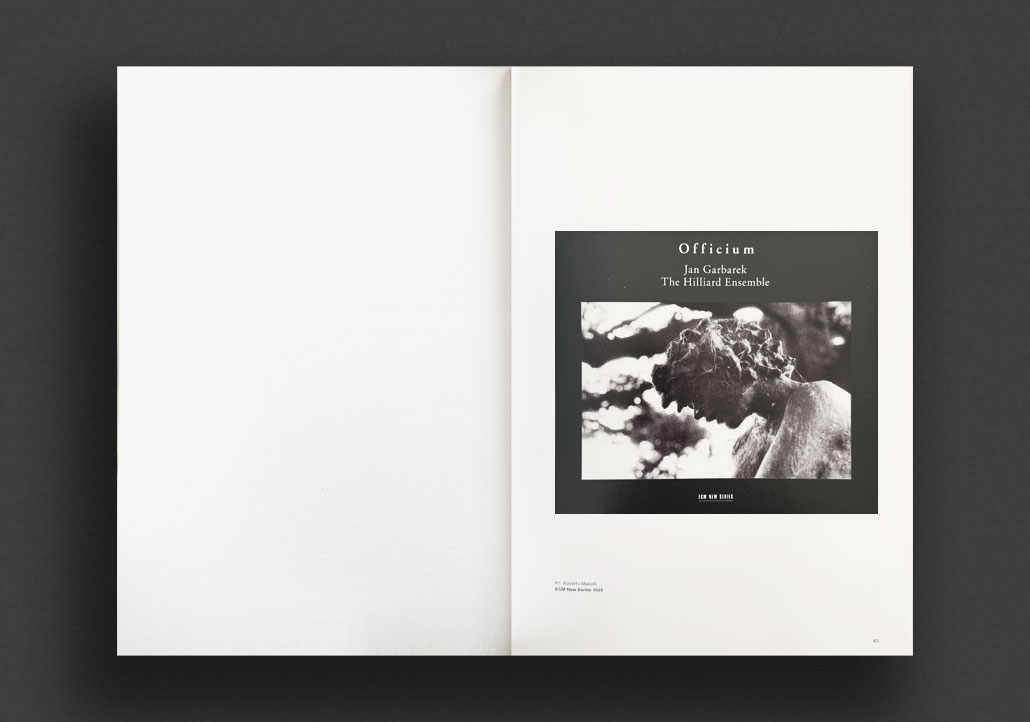
ECM Since its founding in 1969, ECM has been dedicated primarily to jazz and contemporary classical music and is a leading international label in both these fields. ECM has also received acclaim for its unique cover designs, which have always been an integral part of its productions. Over the years, the collaboration between Manfred Eicher, the label's founder and producer, and designers including Barbara Wojirsch, Dieter Rehm and Sascha Kleis has produced an aesthetic of the cover that initiates a dialogue between the photographic image and the music. After the highly acclaimed “Sleeves of Desire” of 1996, which offered an overview of ECM cover art, this volume presents the covers that have been created since then. These covers are arranged here in the form of a visual score that invites personal interpretations and individual discoveries. The entire collection of ECM cover art chronicles a program that has written modern music history — it is also a manifesto declaring the congruence of the visible and the audible in the form of the CD.
A veritable art book, beautifully designed and printed, “Windfall Light” is an insightful exploration of ECM’s visual aesthetics. This 448 page soft-cover book includes approximately 1300 colour and black and white illustrations, as well as penetrating essays by leading writers.
The volume includes a fully-illustrated catalogue of all of ECM's releases to date, incorporating all of the artwork featured in “Sleeves of Desire”, and offering an invaluable resource to collector's and enthusiasts of one of the world's most significant record labels.
Near Fine copy.
2017, English / Japanese
Softcover (w. dust jacket and obi), 21 x 30 cm
1st Edition, Out of print title / used / very good
Published by
Treville / Tokyo
$130.00 - In stock -
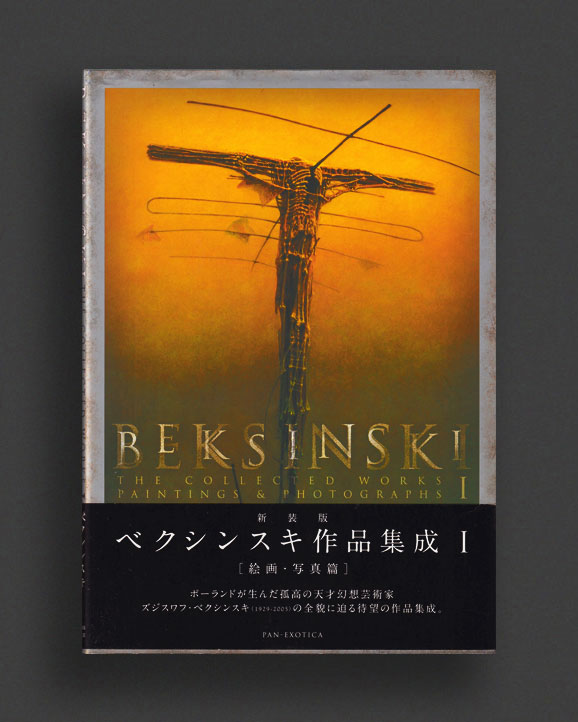
"Beksinski's powerfully unique paintings are such as I have never before seen" — H.R. Giger
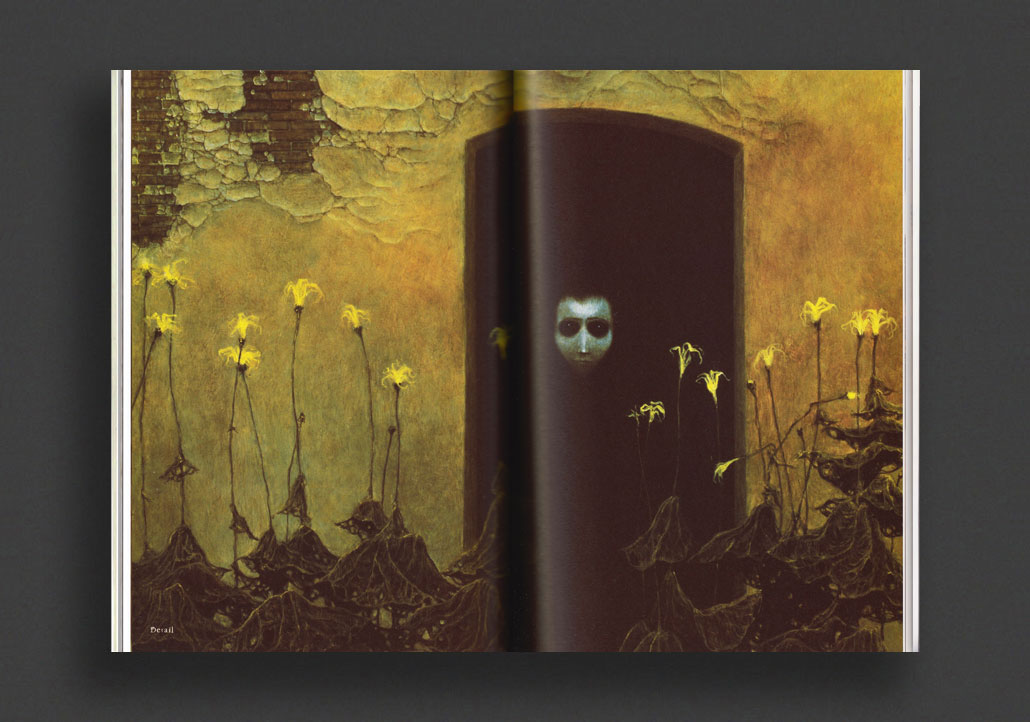
Comprehensive collection Zdzisław Beksiński's apocalyptic fantastic paintings and photographs, many never published before with many full-bleed painting details, issued in Japan as part of Treville's series of volumes on the Polish master of introvert fantasy. Profusely illustrated in colour and b/w, accompanied by texts in English and Japanese. This is the first volume in the series.
Zdzisław Beksiński (1929 – 2005) was a Polish painter, photographer and sculptor. Beksiński had no formal training as an artist. Born in Sanok, he studied architecture in Kraków and worked as a construction site supervisor before turning to his passion for art, sculpting with construction site materials for his medium. His early photography would be a precursor to his paintings, often referred to as dystopian surrealism. Beksiński claimed, "I wish to paint in such a manner as if I were photographing dreams". Beksiński undertook painting with a passion, working intensely whilst listening to classical music and quickly becoming a leading figure in contemporary Polish art. In the late 1960s, Beksiński entered what he himself called his "fantastic period", which lasted up to the mid-1980s, during which he created his famed images of desolate, surrealistic landscapes with intricate depictions of anxious, abstracted figures and architecture in states of decay, mutation and decomposition. Although Beksiński's art was often dark, he himself was known to be a pleasant person with a keen sense of humour. Modest and somewhat shy, he avoided public events such as the openings of his own exhibitions and almost never visited museums or exhibitions in general. He always credited music as his main source of inspiration. Beksiński avoided concrete analysis of the content of his work, saying "I cannot conceive of a sensible statement on painting". Beksiński was stabbed to death at his Warsaw apartment in February 2005 by a 19-year-old acquaintance from Wołomin, reportedly because he refused to lend the teenager money.
"In the medieval tradition, Beksinski seems to believe art to be a forewarning about the fragility of the flesh – whatever pleasures we know are doomed to perish – thus, his paintings manage to evoke at once the process of decay and the ongoing struggle for life. They hold within them a secret poetry, stained with blood and rust." — Guillermo del Toro, Mexican film director
As New copy of the first 2017 edition.