World Food Books' programme is largely produced on Kulin Nation land. We acknowledge the Wurundjeri people of the Kulin Nation as the first and continuing custodians of this land, and pay respect to their Elders past, present, and emerging.
World Food Books is an arts and special interests bookshop in Naarm / Melbourne. Founded in 2010, World Food Books is devoted to the presentation of a rotating, hand-selection of international art, design, literary and counterculture publications with an emphasis on the anti-traditional, the experimental, the avant-garde, the heretic, the marginal.
Presenting new titles alongside rare and out-of-print books, catalogues and journals spanning the fields of modern and contemporary art, design, photography, illustration, film, literature, poetry, cultural theory, philosophy, sexuality, popular and underground culture in its many radical forms, World Food Books wishes to encourage adventurous, thoughtful and open-minded reading, looking, writing, and exchange of publishing and ideas, both current and historical.
As well as our bookshop, located in Melbourne's historical Nicholas Building, all of our inventory is available internationally via our online mail-order service.
World Food Books semi-regularly co-ordinates "Occasions", a programme of exhibits and events at the bookshop and in partnership with other hosts (such as museums and art galleries) that develop out of the activities, relationships and content of the bookshop itself.
World Food Books
The Nicholas Building
37 Swanston Street
Room 5, Level 6
Melbourne 3000
Australia
SHOP HOURS:
THU–SAT 12–6
WEB-SHOP OPEN 24/7
World Food Books
Postal Address:
PO Box 435
Flinders Lane
Victoria 8009
Australia
info@worldfoodbooks.com
Art
Theory / Essay
Architecture / Interior
Graphic Design / Typography
Photography
Fashion
Eros
LGBTQ+
Fiction / Poetry
Weird / Speculative / Science Fiction / Horror
Transgressive / Visceral / Abject
Symbolism / Decadence / Fin de siècle
Film / Video
Painting
Sculpture / Installation
Performance / Dance / Theater
Drawing
Sound / Music
Curatorial
Group Shows / Collections
Periodicals
Out-of-print / Rare
Posters / Ephemera / Discs
Signed Books
World Food Books Gift Voucher
World Food Book Bag
Australian Art
Australian Fiction
Australian Science Fiction / Speculative Fiction
Australian Poetry
Australian Photography
Japanese Photography
Conceptual Art
Minimal Art
Dada
'Pataphysics / Oulipo
Fluxus
Concrete Poetry
Pop Art
Surrealism
Arte Povera
Arte Informale / Haute Pâte / Tachism
Nouveau Réalisme / Zero / Kinetic
Situationism / Lettrism
Collage / Mail Art / Xerox Art
Art Brut / Folk / Visionary / Fantastic
Illustration / Graphic Art / Bandes Dessinées
Furniture
Italian Radical Design / Postmodernism
Textiles
Ceramics / Glass
Counterculture
Protest / Revolt
Philosophy
Psychoanalysis
Anthropology
Anarchism
Socialism / Anarchism / Communism / Capitalism
Literary Theory / Semiotics / Language
Feminism / Women's Studies
Gender Studies / Sexuality
Anthropology
Fetishism / BDSM
Drugs / Psychedelia
Crime / Violence
Animal Rights / Veganism
Occult / Esoterica
Ecology / Earth / Alternative Living
Whole Earth / Crafts
All prices in AUD (Australian dollars)
Pick-Ups
Pick-up orders can be collected in our bookshop during opening hours after order date. Please collect any Pick-up orders within 2 weeks of ordering as we have limited storage space. Orders will be released back into stock if not collected within this time. No refunds can be made for pick-ups left un-collected. If you cannot make it in to the bookshop in this time-frame, please choose postage option.
Return Policy
All sales are final. We do accept returns (for refund or exchange) for items received in error. All our orders are packed with special care using heavy-duty padding and cardboard book-mailers or bubble mailers (for smaller books), using reinforcement where required. We cannot take responsibility for any lost, stolen or damaged parcels.
Insurance
Should you wish to insure your package, please email us directly after placing your order and we can organise this at a small extra expense. Although all standard/express tracked packages are very safe and dependable, we cannot take responsibility for any lost, stolen or damaged parcels. We recommend insurance on valuable orders.
Interested in selling your old books, catalogues, journals, magazines, comics, fanzines, ephemera? We are always looking for interesting, unusual and out-of-print books to buy. We only buy books in our fields of interest and specialty, and that we feel we can resell.
We base these prices on desirability, market value, in-print prices, condition and our current stock levels. We offer cash, store credit, and can take stock on consignment. All
about 25% of the price we expect to get when we sell them, or 30% in store credit. We base these prices on desirability, market value, in-print prices, condition and our current stock levels.
Sell your books any day of the week. You can drop them off and return later. If you have a lot of books, we can visit your Sydney home.
We buy books that we feel we can resell. We offer about 25 % of the price we expect to get when we sell them, or 30% in store credit. We base these prices on desirability, market value, in-print prices, condition and our current stock levels.
Philadelphia Wireman
03 August - 01 September, 2018
World Food Books is proud to announce our next Occasion, the first presentation of sculptures by Philadelphia Wireman in Australia.
The Philadelphia Wireman sculptures were found abandoned in an alley off Philadelphia’s South Street on trash night in 1982. Their discovery in a rapidly-changing neighbourhood undergoing extensive renovation, compounded with the failure of all attempts to locate the artist, suggests that the works may have been discarded after the maker’s death. Dubbed the "Philadelphia Wireman" during the first exhibition of this work, in 1985, the maker’s name, age, ethnicity, and even gender remain uncertain. The entire collection totals approximately 1200 pieces, all intricately bound together with tightly-wound heavy-gauge wire (along with a few small, abstract marker drawings, reminiscent both of Mark Tobey and J.B. Murry). The dense construction of the work, despite a modest range of scale and materials, is singularly obsessive and disciplined in design: a wire armature or exoskeleton firmly binds a bricolage of found objects including plastic, glass, food packaging, umbrella parts, tape, rubber, batteries, pens, leather, reflectors, nuts and bolts, nails, foil, coins, toys, watches, eyeglasses, tools, and jewellery.
Heavy with associations—anthropomorphic, zoomorphic, and socio-cultural responses to wrapped detritus—the totemic sculptures by Philadelphia Wireman have been discussed in the context of work created to fulfil the shamanistic needs of alternative religions in American culture. Curators, collectors, and critics have variously compared certain pieces to sculpture from Classical antiquity, Native American medicine bundles, African-American memory jugs, and African fetish objects. Reflecting the artist’s prolific and incredibly focused scavenging impulse, and despite—or perhaps enhanced by—their anonymity, these enigmatic objects function as urban artefacts and arbiters of power, though their origin and purpose is unknown. Philadelphia Wireman, whatever their identity, possessed an astonishing ability to isolate and communicate the concepts of power and energy through the selection and transformation of ordinary materials. Over the course of the past two decades, this collection has come to be regarded as an important discovery in the field of self-taught art and vernacular art.
Presented in collaboration with Fleisher-Ollman Gallery, Philadelphia, and Robert Heald, Wellington.
Susan Te Kahurangi King
02 February - 10 March, 2018
Susan Te Kahurangi King (24 February 1951 - ) has been a confident and prolific artist since she was a young child, drawing with readily available materials - pencils, ballpoint pens and felt-tip markers, on whatever paper is at hand. Between the ages of four and six Susan slowly ceased verbal communication. Her grandparents William and Myrtle Murphy had developed a special bond with Susan so they took on caring responsibilities for extended periods. Myrtle began informally archiving her work, carefully collecting and storing the drawings and compiling scrapbooks. No drawing was insignificant; every scrap of paper was kept. The King family are now the custodians of a vast collection containing over 7000 individual works, from tiny scraps of paper through to 5 meter long rolls.
The scrapbooks and diaries reveal Myrtle to be a woman of great patience and compassion, seeking to understand a child who was not always behaving as expected. She encouraged Susan to be observant, to explore her environment and absorb all the sights and sounds. Myrtle would show Susan’s drawings to friends and people in her community that she had dealings with, such as shopkeepers and postal workers, but this was not simply a case of a grandmother’s bias. She recognised that Susan had developed a sophisticated and unique visual language and sincerely believed that her art deserved serious attention.
This was an unorthodox attitude for the time. To provide some context, Jean Dubuffet coined the term Art Brut in 1945 to describe work created by self-taught artists – specifically residents of psychiatric institutions and those he considered to be visionaries or eccentrics. In 1972 Roger Cardinal extended this concept by adopting the term Outsider Art to describe work made by non-academically trained artists operating outside of mainstream art networks through choice or circumstance. Susan was born in Te Aroha, New Zealand in 1951, far from the artistic hubs of Paris and London that Dubuffet and Cardinal operated in. That Myrtle fêted Susan as a self-taught artist who deserved to be taken seriously shows how progressive her attitudes were.
Susan’s parents Doug and Dawn were also progressive. Over the years they had consulted numerous health practitioners about Susan’s condition, as the medical establishment could not provide an explanation as to why she had lapsed into silence. Dawn educated herself in the field of homeopathy and went on to treat all twelve of her children using these principles – basing prescriptions on her observations of their physical, mental and emotional state.
Doug was a linguist with an interest in philosophy who devoted what little spare time he had to studying Maori language and culture. To some extent their willingness to explore the fringes of the mainstream made them outsiders too but it was their commitment to living with integrity and their respect for individuality that ensured Susan’s creativity was always encouraged.
Even though Susan’s family supported her artistic pursuits, some staff in schools and hospitals saw it as an impediment to her assimilation into the community and discouraged it in a variety of ways. Her family was not always aware of this and therefore did not fully understand why Susan stopped drawing in the early 1990s. However, rather than dwell on the challenges that Susan faced in pursuit of her artistic practice, they prefer to highlight her achievements. In 2008 Susan began drawing again in earnest, after an almost 20 year interruption, and her work is now shown in galleries around the world.
Susan grew up without television and has been heavily influenced by the comics she read as a child. She is absolutely fearless in the appropriation of recognizable characters, such as Donald Duck and Mickey Mouse, in her work. She twists their limbs, contorts their faces, compresses them together, blends them into complex patterned backgrounds - always imbuing them with an incredible energy. Although Susan often used pop culture characters in her work they are not naive or childlike. These are drawings by a brilliant self-taught artist who has been creating exceptional work for decades without an audience in mind.
Mladen Stilinović
"Various Works 1986 - 1999"
02 February 16 - September 10, 2016
Various works 1986 - 1999, from two houses, from the collections of John Nixon, Sue Cramer, Kerrie Poliness, Peter Haffenden and Phoebe Haffenden.
Including: Geometry of Cakes (various shelves), 1993; Poor People’s Law (black and white plate), 1993; White Absence (glasses, ruler, set square, silver spoon, silver ladel with skin photograph and wooden cubes), 1990-1996; Exploitation of the Dead (grey and red star painting, wooden painting, black spoon with red table, red plate), 1984-1990; Money and Zeros (zero tie, paintings made for friends in Australia (Sue, John, Kerrie), numbers painting), 1991-1992; Words - Slogans (various t-shirts) - “they talk about the death of art...help! someone is trying to kill me”, “my sweet little lamb”, “work is a disease - Karl Marx”; Various artist books, catalogues, monographs, videos; Poster from exhibition Insulting Anarchy; "Circular" Croatian - Australian edition; Artist book by Vlado Martek (Dostoyevsky); more.
Thanks to Mladen Stilinović and Branka Stipančić.
Jonathan Walker
Always Will Need To Wear Winter Shirt Blue + Ochre Small Check Pattern
21 August - 21 September, 2015
Untitled
I am not a great reader of poetry but I always return to the work of Melbourne poet, Vincent Buckley (1925- 1988). Perhaps I find his most tantalising piece to be not a finished poem but a fragment left on a scrap of paper discovered on his desk after the poet’s death.
The poetry gathers like oil
In the word-core, and spreads
It has its music meet,
Its music is in movement.
This fragment is more the shell left behind from a volatile thought than a finished poem. I find the last two lines honest but awkward whereas the first two lines work like an arrow. Most likely he could not find a resolution so it was left. Still, in its present form, it remains an eloquent testimony to the ultimate failure of a medium to express mobile thought and sensation, in Buckley’s case, through verbal language. It’s an important matter because this is something all artists have to deal with regardless of the medium.
I have never written a poem, however, I am forever copying fragments from books on paper scraps in a vain effort to fix certain notions in my head. At first, they function as bookmarks that are sometimes returned to when I open the book. But before long, as they accumulate, they fall out littering the table interspersed with A4 photocopies, bills, books and medications.
To return to Buckley’s fragment, the first two lines very much evoke how I paint nowadays. As you age, detail diminishes and patches of light become more luminous and float. I feel the most honest way of dealing with this is by smearing the oil paint on the canvas with the fingers and working close-up, blind. Only if the patches coalesce into an approaching image can the work gain a life.
-
Jonathan Walker was born in Melbourne, Australia and brought up on a dairy farm in Gippsland. In the 1970’s he studied painting at RMIT and won the Harold Wright Scholarship to the British Museum, London. During the 1980’s he exhibited at Pinacotheca Gallery, Richmond and had work shown at the NGV and Heidi City Art Gallery. Over the same period he designed the cover for the “Epigenesi” LP by Giancarlo Toniutti, Italy and conducted a mail exchange work with Achim Wollscheid, Germany. The work with artists through the post resulted in an article published in the bicentenary issue of Art and Australia 1988. He showed in artist run spaces such as WestSpace in the 90’s and 2000’s, and until 2012, taught painting at Victoria University, which is where we (Colleen Ahern and Lisa Radford) as organisers of the exhibition, among many others, had the privilege of being his student.
Walker’s knowledge was imparted to students through the careful selection of music, literature, and artists found in books that he himself had ordered for the library. Walker’s strategy was the generosity of sharing his vast knowledge with references specific to each student and their context.
Walker’s paintings share a similar focus and intimacy.
This exhibition presents a small selection of recent paintings alongside a publication that includes Walker’s writing. Observational and analytical, Walker’s work is a type of material notation — the time of day, colour and how it is blended, the both specific and fleeting location of a reflection on lino or the question of whether a chair leg should be included in a painting.
Please join us on Friday August 21 between 6-8pm to celebrate the opening of the exhibition.
Curated by Colleen Ahern and Lisa Radford.
B. Wurtz
Curated by Nic Tammens
March 26 - April 4, 2015
B.Wurtz works from a basement studio in his home on Manhattan’s Lower East Side.
This local fact is attested to by the plastic shopping bags and newsprint circulars that appear in his work. As formal objects, they don’t make loud claims about their origins but nonetheless transmit street addresses and places of business from the bottom of this long thin island. Like plenty of artists, Wurtz is affected by what is local and what is consumed. His work is underpinned by this ethic. It often speaks from a neighborhood or reads like the contents of a hamper:
“BLACK PLUMS $1.29 lb.”
“Food Bazaar”
“USDA Whole Pork Shoulder Picnic 99c lb.”
“RITE AID Pharmacy, with us it’s personal.”
“H. Brickman & Sons.”
“Sweet Yams 59c lb."
Most of the work in this exhibition was made while the artist was in residence at Dieu Donne, a workshop dedicated to paper craft in Midtown. Here Wurtz fabricated assemblages with paper and objects that are relatively lightweight, with the intention that they would be easily transportable to Australia. This consideration isn’t absolute in Wurtz’s work, but was prescriptive for making the current exhibition light and cheap. Packed in two boxes, these works were sent from a USPS post office on the Lower East Side and delivered to North Melbourne by Australia Post.
Wurtz appears courtesy of Metro Pictures, New York.
Thanks to Rob Halverson, Joshua Petherick, Sari de Mallory, Matt Hinkley, Helen Johnson, Fayen d'Evie, Ask Kilmartin, Lisa Radon, Ellena Savage, Yale Union, and "Elizabeth".
John Nixon
"Archive"
December 15 - January 20, 2014
The presentation of John Nixon's archive offered a rare showcase of this extensive collection of the artist's own publications, catalogues, posters, ephemera, editions and more, from the mid 1980s onwards, alongside a selection of his artworks.
Organized by John Nixon, Joshua Petherick and Matt Hinkley.
"Habitat"
at Minerva, Sydney (organised by Joshua Petherick and Matt Hinkley)
November 15 - December 20, 2014
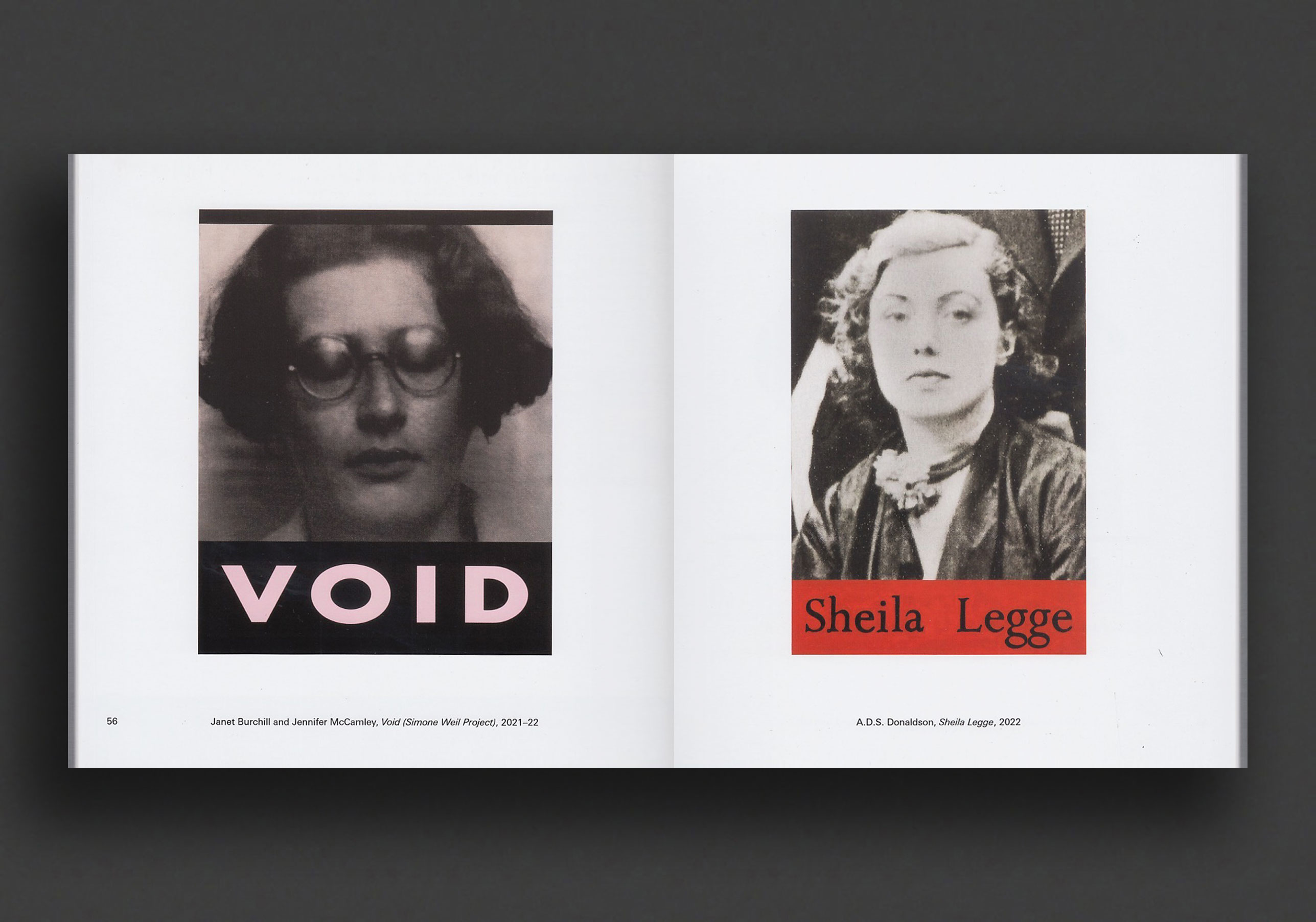
Lupo Borgonovo, Janet Burchill & Jennifer McCamley,
Lewis Fidock, HR Giger, Piero Gilardi, Veit Laurent Kurz,
Cinzia Ruggeri, Michael E. Smith, Lucie Stahl, Daniel Weil, Wols
Press Release:
“...It contained seven objects. The slender fluted bone, surely formed for flight, surely from the wing of some large bird. Three archaic circuitboards, faced with mazes of gold. A smooth white sphere of baked clay. An age-blackened fragment of lace. A fingerlength segment of what she assumed was bone from a human wrist, grayish white, inset smoothly with the silicon shaft of a small instrument that must once have ridden flush with the surface of the skin - but the thing’s face was seared and blackened.”
William Gibson, “Count Zero”, 1986
"Autumn Projects Archive"
Curated by Liza Vasiliou
March 6 - March 15, 2014
World Food Books, in conjunction with the Virgin Australia Melbourne Fashion Festival 2014, presented the Autumn Projects archive, consisting of a selection of early examples in Australian fashion with a particular interest in collecting designers and labels from the period beginning in the 1980’s, who significantly influenced the discourse of Australian Fashion.
Curated by Liza Vasiliou, the exhibition provided a unique opportunity to view pieces by designers Anthea Crawford, Barbara Vandenberg, Geoff Liddell and labels CR Australia, Covers, Jag along with early experimental collage pieces by Prue Acton and Sally Browne’s ‘Fragments’ collection, suspended throughout the functioning World Food Books shop in Melbourne.
H.B. Peace
presented by CENTRE FOR STYLE
November 14, 2013
"Hey Blinky, you say chic, I say same"
Anon 2013
H.B. Peace is a clothing collaboration between great friends Blake Barns and Hugh Egan Westland. Their pieces explore the divergences between 'character’ and ‘personality’ in garments....etc
Special Thanks to Joshua Petherick and Matt Hinkley of WFB and Gillian Mears
and a Very Special Thank you to Audrey Thomas Hayes for her shoe collaboration.
Janet Burchill & Jennifer McCamley
"Aesthetic Suicide"
May 10 - June 8, 2013
The first of our occasional exhibitions in the World Food Books office/shop space in Melbourne, "Aesthetic Suicide" presented a body of new and older works together by artists Janet Burchill & Jennifer McCamley, including videos, prints, a wall work, and publications.
During shop open hours videos played every hour, on the hour.
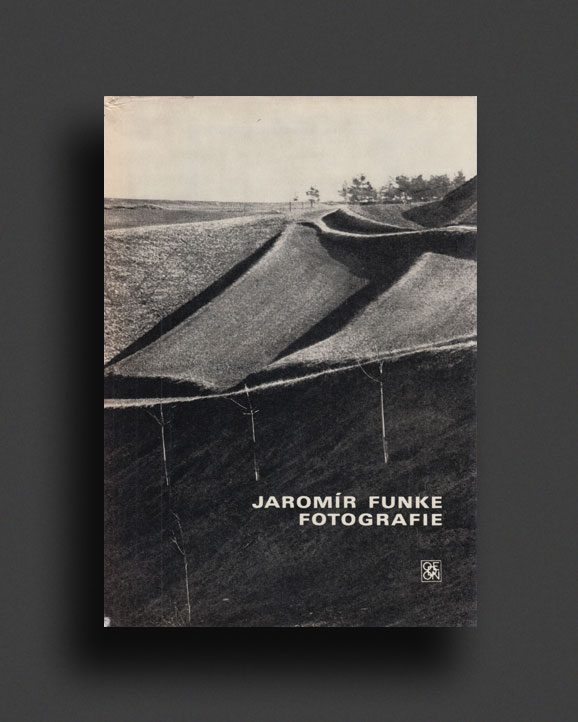
1970, Czech
Hardcover (w. dust jacket), 172 pages, 17 x 24 cm
1st Edition, Out of print title / used / very good
Published by
Odeon / Prague
$120.00 - Out of stock
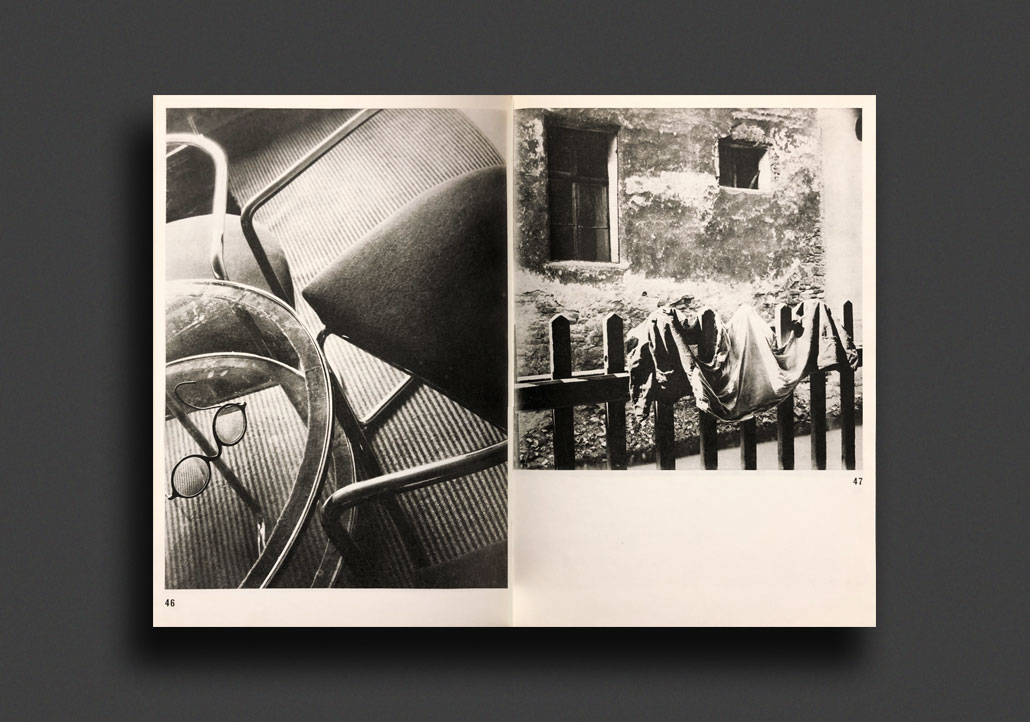
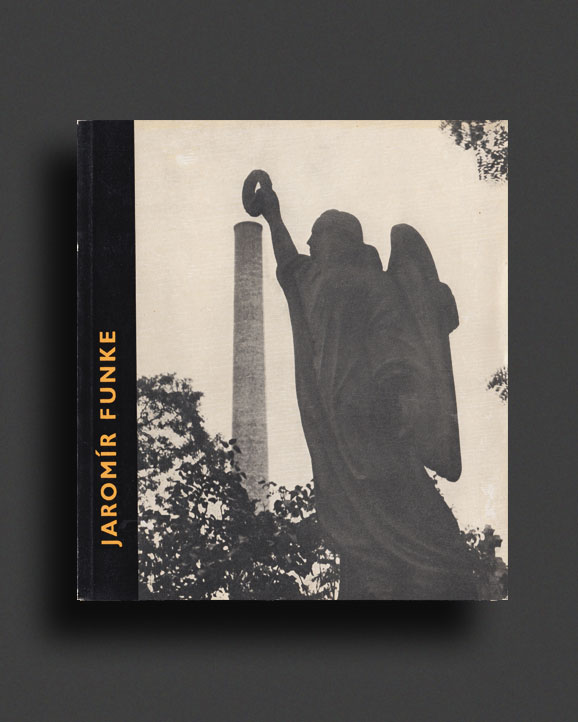
First edition of this major, long out-of-print hardcover monograph on Czech photographer Jaromír Funke, published by the great Prague publishing house Odeon in 1970. Profusely illustrated with 132 beautiful photo-gravure reproductions, includes some of the best known photographs from this important Czech photographer, presented alongside a text by Ludvik Soucek.
Jaromír Funke (1896–1945) was a Czech photographer. Funke was a leading figure in Czech photography during the 1920s and 1930s. Although his earliest imagery was influenced by Pictorialism, Funke quickly turned to a more sharp-focus, documentary style. Abstract images of shadows and organic forms made in the early twenties evolved into more objective representations of objects by the end of the decade. In 1924 he cofounded the Czech Photographic Society with Josef Sudek and Adolf Schneeberger. Two years later he produced a series of Surrealist images of store windows originally titled Glass and Reflection, based on the photographs of Eugène Atget. Also influential as a teacher, Funke served for several years as editor of the journal Fotograficky obzor (Photographic Horizons).
Very Good copy in Good dust jacket with some wear.
1982, Czech / English / French / German
Hardcvoer (w. dust jacket), 182 pages, 28 x 24.5 cm
1st Edition, Out of print title / used / fine
Published by
Panorama / Prague
$100.00 - Out of stock
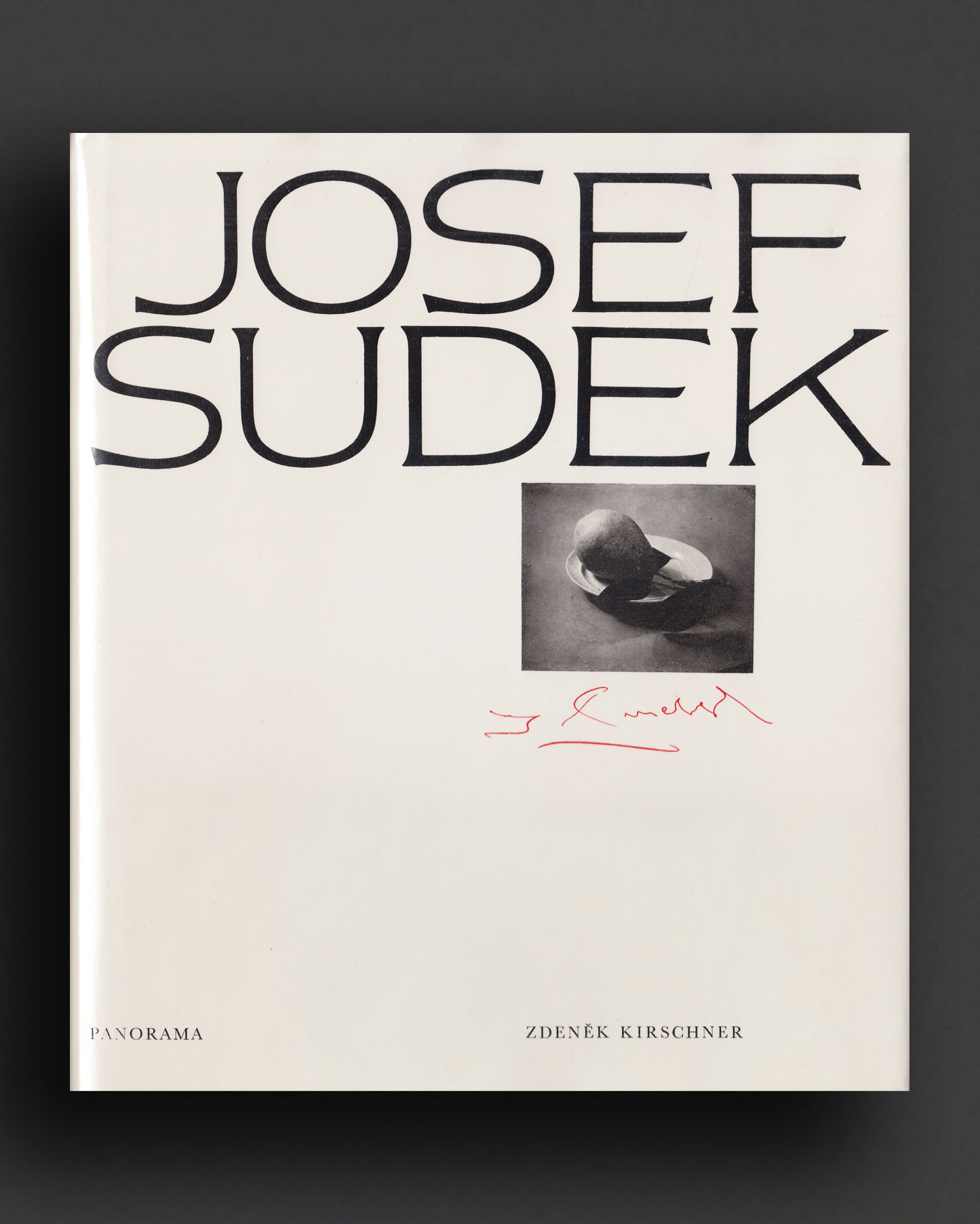
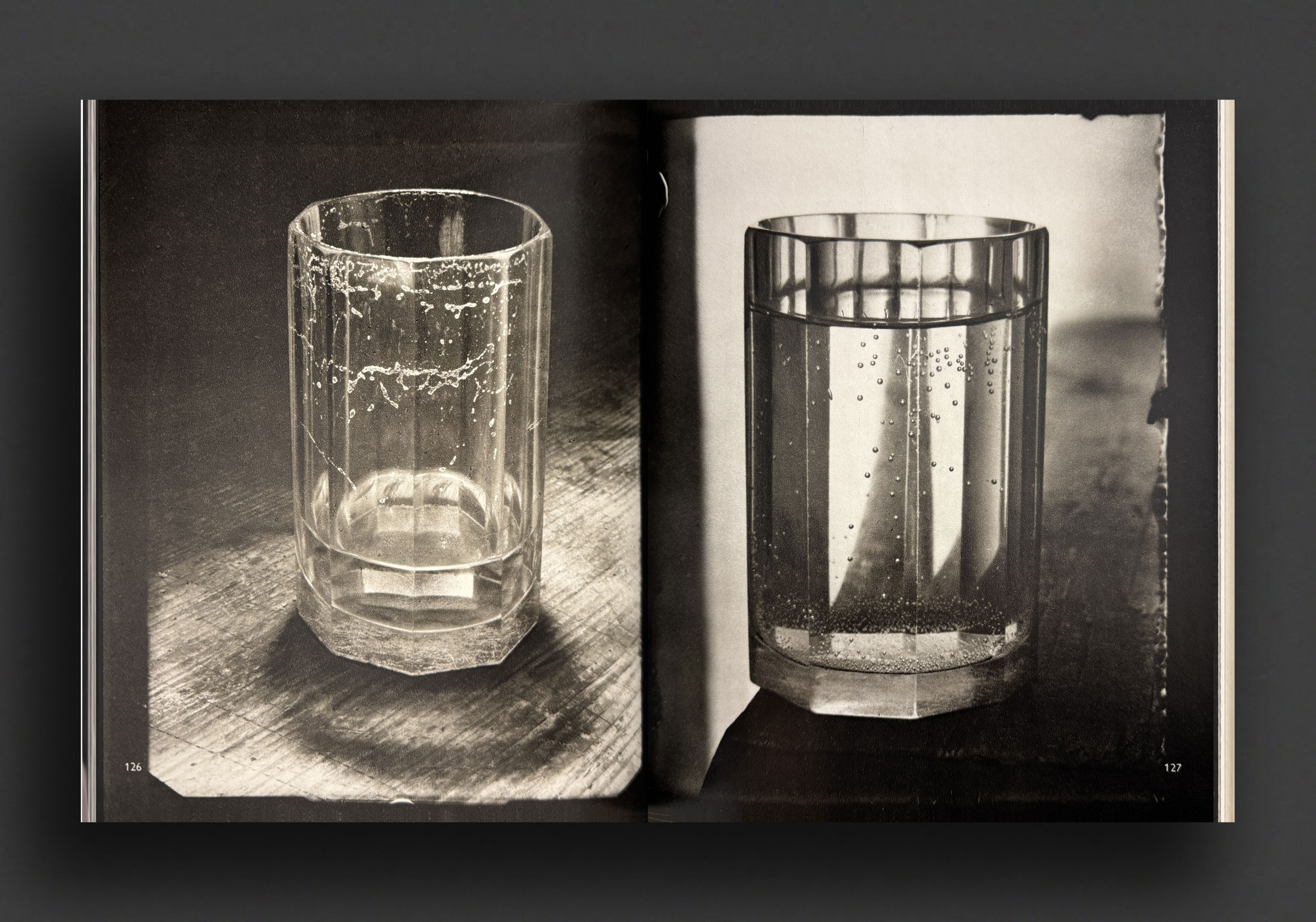
First 1982 hardcover edition of this beautifully produced retrospective survey of legendary Czech photographer Josef Sudek (1896 – 1976), famous for his haunting images photographs of Prague, where this volume was published by Panorama. Comprising almost entirely full-page reproductions of Sudek's wonderful photographs, introduced by an opening essay by biographer Zdeněk Kirschner and chaptered expanded caption sections on the works throughout with summary and resume in Czech, English, French and German.
Dubbed the "Poet of Prague," Josef Sudek became well known around the streets and concert halls of his city. A poor student, Sudek decided to become a bookbinder, receiving his certificate at age seventeen, while his younger sister became a photographer. At the same time Sudek began to experiment with a box camera and was particularly fond of self-portraits. During active service in World War I, he brought his camera to the front and subsequently produced three albums of photographs.
After the war Sudek turned his attention more fully to photography and became friendly with photographer Jaromir Funke, who introduced him to artists and intellectuals in Prague. In 1921 Sudek applied to the State School of Graphic Arts and soon after was admitted to the Bohemian Amateur Photography Association. After graduating, Sudek and Funke cofounded the Czech Photographic Society in 1924. From the beginning, Sudek met with great commercial success; he leased a studio in 1927 and prospered there for more than thirty years.
Fine copy in Fine DJ preserved under archival mylar wrap.
1960, Czech
Softcover, 126 pages, 17.5 x 15.5 cm
1st Edition, Out of print title / used / very good
Published by
SNKLU / Prague
$120.00 - Out of stock
Wonderful and long out-of-print Jaromír Funke monograph, published in Prague in 1960 as part of the distinctive series of Czech monographs on photographers published by SNKLU, a wing of the great Odeon publishing house. With introductory text by theorist Lubomír Linhart, this beautifully printed book presents a selection of 96 of Funke's photographs printed in gorgeous gravure.
Jaromír Funke (1896–1945) was a Czech photographer. Funke was a leading figure in Czech photography during the 1920s and 1930s. Although his earliest imagery was influenced by Pictorialism, Funke quickly turned to a more sharp-focus, documentary style. Abstract images of shadows and organic forms made in the early twenties evolved into more objective representations of objects by the end of the decade. In 1924 he cofounded the Czech Photographic Society with Josef Sudek and Adolf Schneeberger. Two years later he produced a series of Surrealist images of store windows originally titled Glass and Reflection, based on the photographs of Eugène Atget. Also influential as a teacher, Funke served for several years as editor of the journal Fotograficky obzor (Photographic Horizons).
Very Good copy. Light edge wear and tanning.
2024, English
Hardcover (w. dust jacket), 334 pages, 32 x 22 cm
Published by
Centre Pompidou / Paris
$110.00 - In stock -
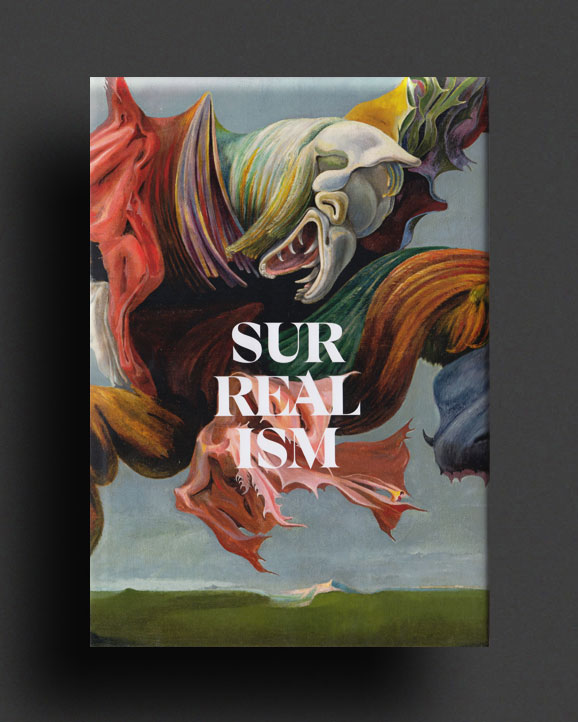
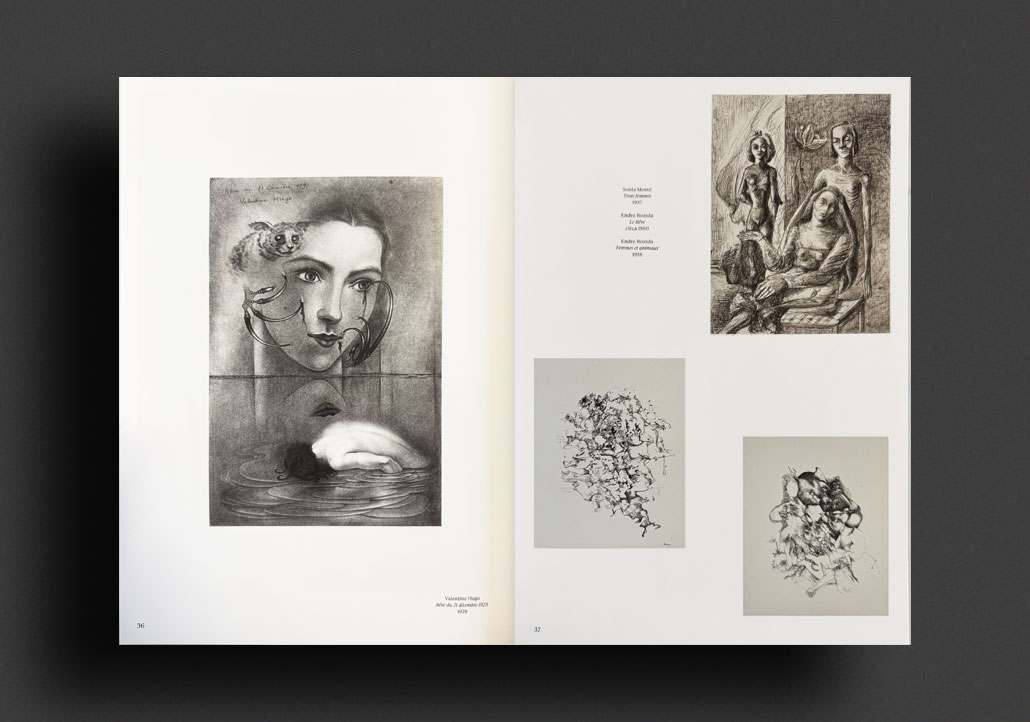
The defining book for the centenary of Surrealism. From September 2024 to January 2025, the Centre Pompidou will celebrate the 100th anniversary of André Breton's Surrealist Manifesto. For the next two years, their unprecedented Surrealist exhibition will tour the art galleries of the world, accompanied by this special catalogue.
Perhaps more than any other artistic movement, Surrealism had a cataclysmic effect on the modern mind, changing forever the way we think about experiencing the world. By rejecting the gross linearity that typified several centuries of preceding artworks, the legendary Surrealists Magritte, Ernst, Carrington, Dali, Tanning and so many others reached beyond the facade of that which is patently visible and found something more. Featuring original essays from leading academics and excerpts from the Surrealist Manifesto itself, this stands among the most essential Surrealist catalogues ever published.
1994, Japanese
Hardcover (w. dust jacket), unpaginated, 32 x 23 cm
1st Edition, Out of print title / used / very good
Published by
? / Japan
$90.00 - In stock -
Lovely rare 1994 Japanese erotic photo book by photographer Seiichi Nomura of Japanese singer, actress and AV idol Natsuki Ozawa (b. 1972). Colour and monochrome heavy gloss imagery throughout of Ozawa at the age of 22 in various erotic poses and scenarios.
Very Good copy in VG dust jacket.
1971, Japanese
Hardcover (w. dust jacket), 96 pages, 38 x 26.5 cm
1st Edition, Out of print title / used / very good
Published by
Shashin Hyoron-Sha / Tokyo
$350.00 - In stock -
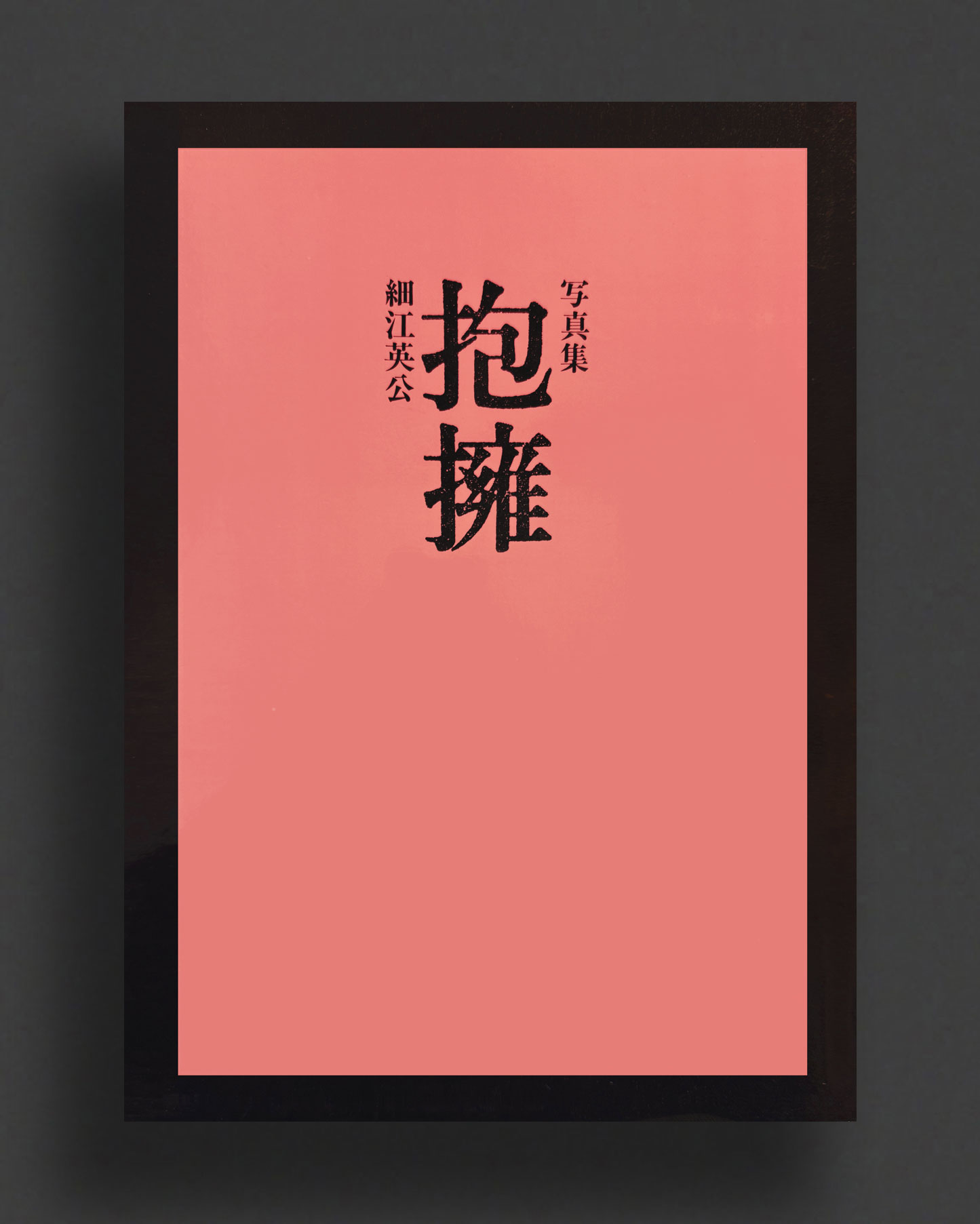
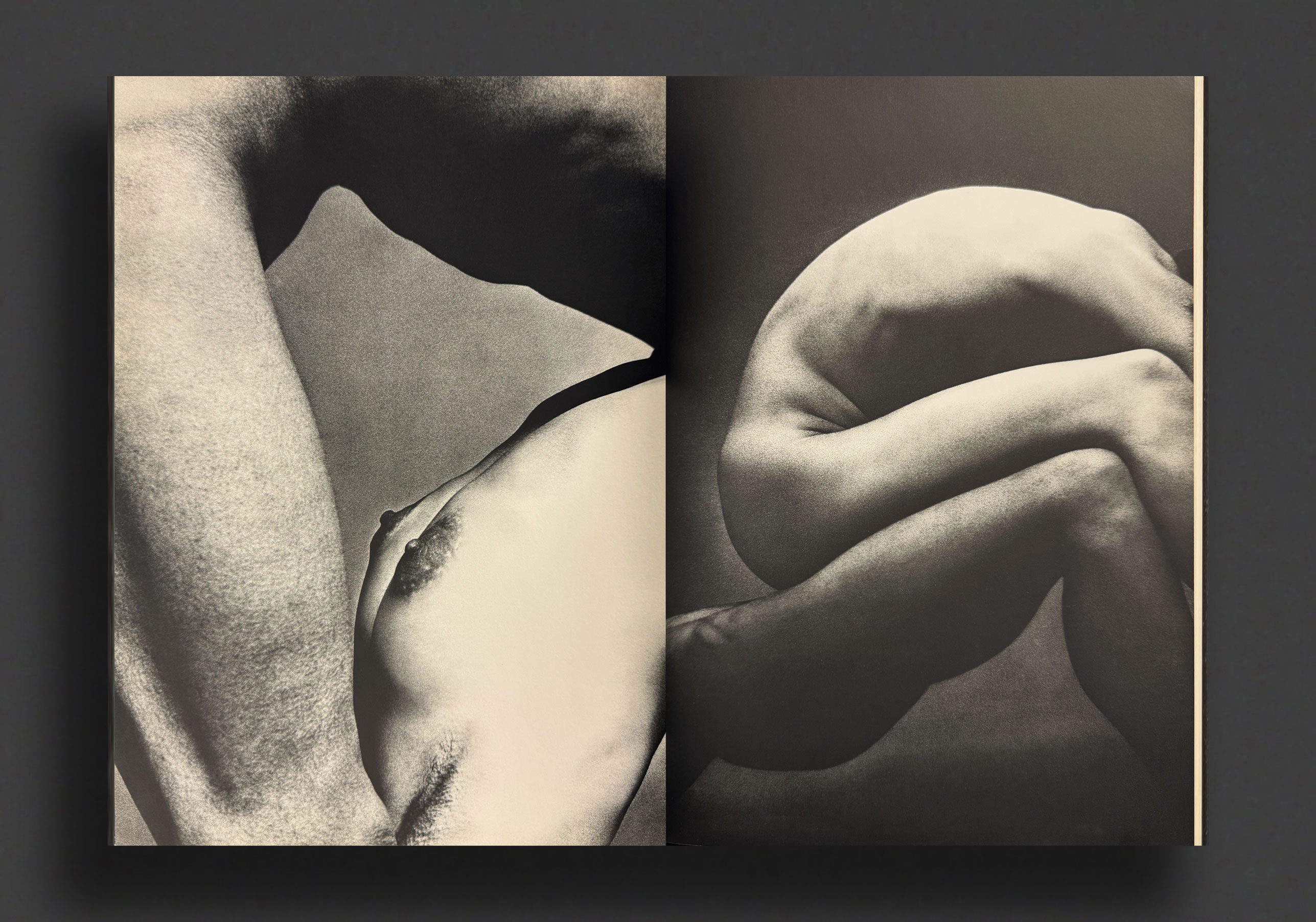
First 1971 edition of Eikoh Hosoe's celebrated work "Embrace", published by Shashin Hyoronsha Publishing House. 6 years later it would be republished in the collection of Japanese photographers by Asahi Sonorama. This beautiful oversized original hardcover edition by legendary Japanese photographer Eikoh Hosoe, builds upon the approach of his much celebrated earlier project, Man and Woman (1961). Featuring a preface by Yukio Mishima, "Embrace" is a wonderful collection of photographs of human bodies studio shot in abstract detail using high exposure, Hosoe creating dramatic contrasts that emphasise the dynamism and physicality of these bodies that have become some of his most iconic images. Rich black and white gravure printing, a gorgeous book.
VG—NF copy in VG—NF dust jacket. This copy lacks the publisher's shipping box.
1982, French
Softcover, 28 pages, 37.5 x 28.5 cm
1st Edition, Out of print title / used / good
Published by
Créatis / Paris
$50.00 - In stock -
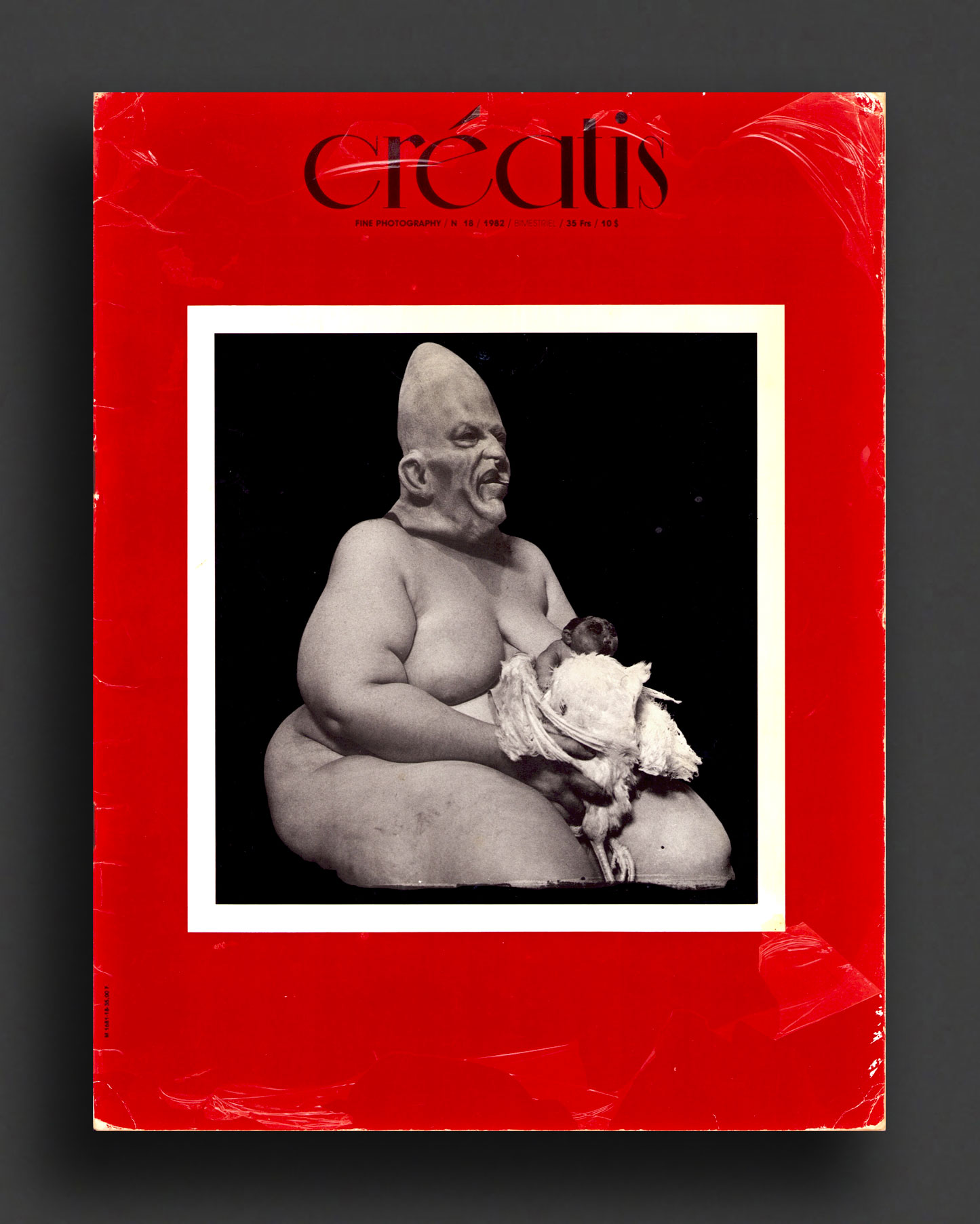
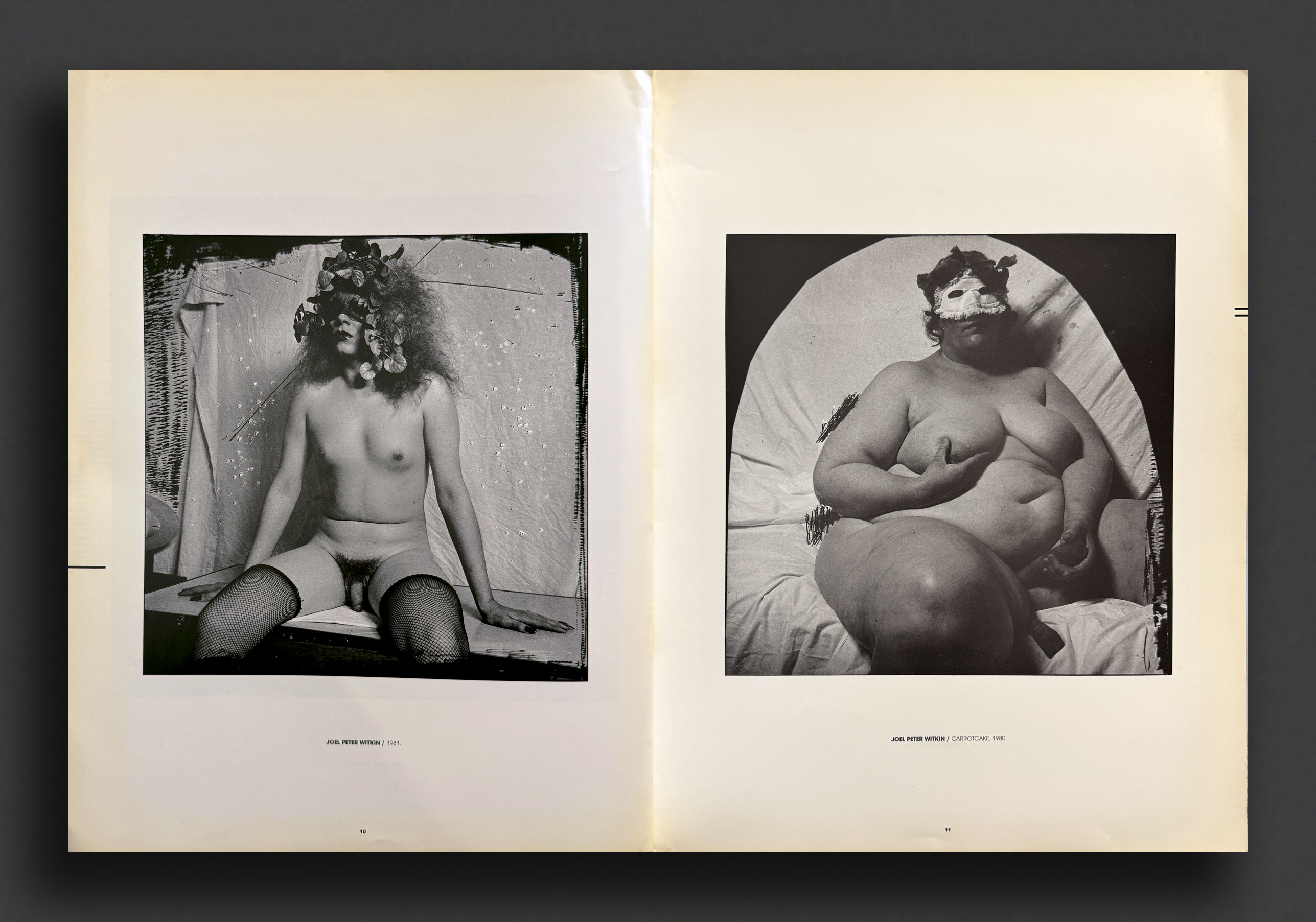
Issue no. 18 of Créatis, June 1982, the wonderful French photographic art magazine published in Paris, founded in 1979 by Albert Champeau and Jean-Pierre Renard. This issue features Christer Strömholm, Joel-Peter Witkin, Alain Bergala, Jeff Silverthorne, Pierre Boucher, William Klein, Roland Barthes, and more.
Average—Good copy due to gloss laminate covers peeling to edges, some pinching to spine, tanning to edges.
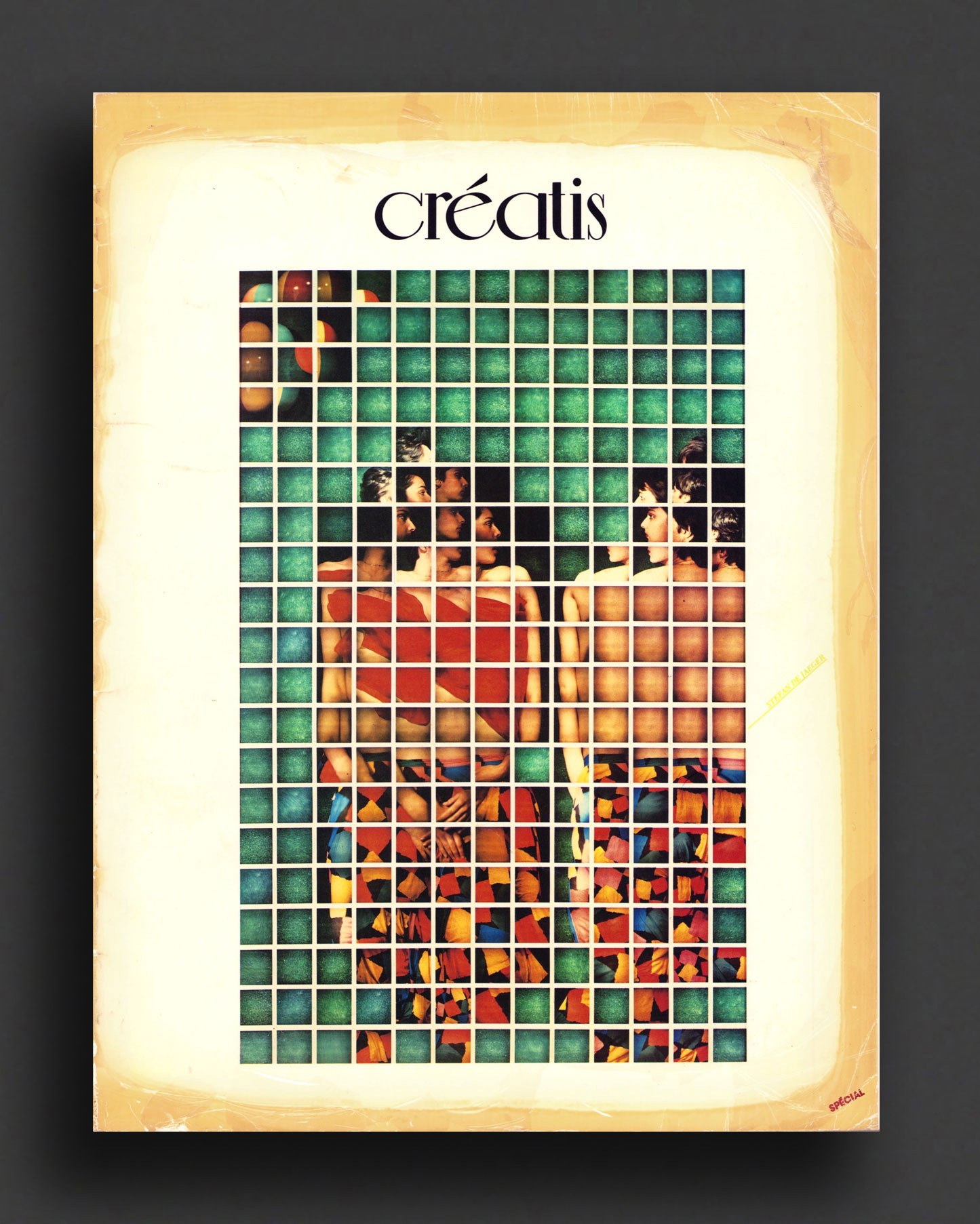
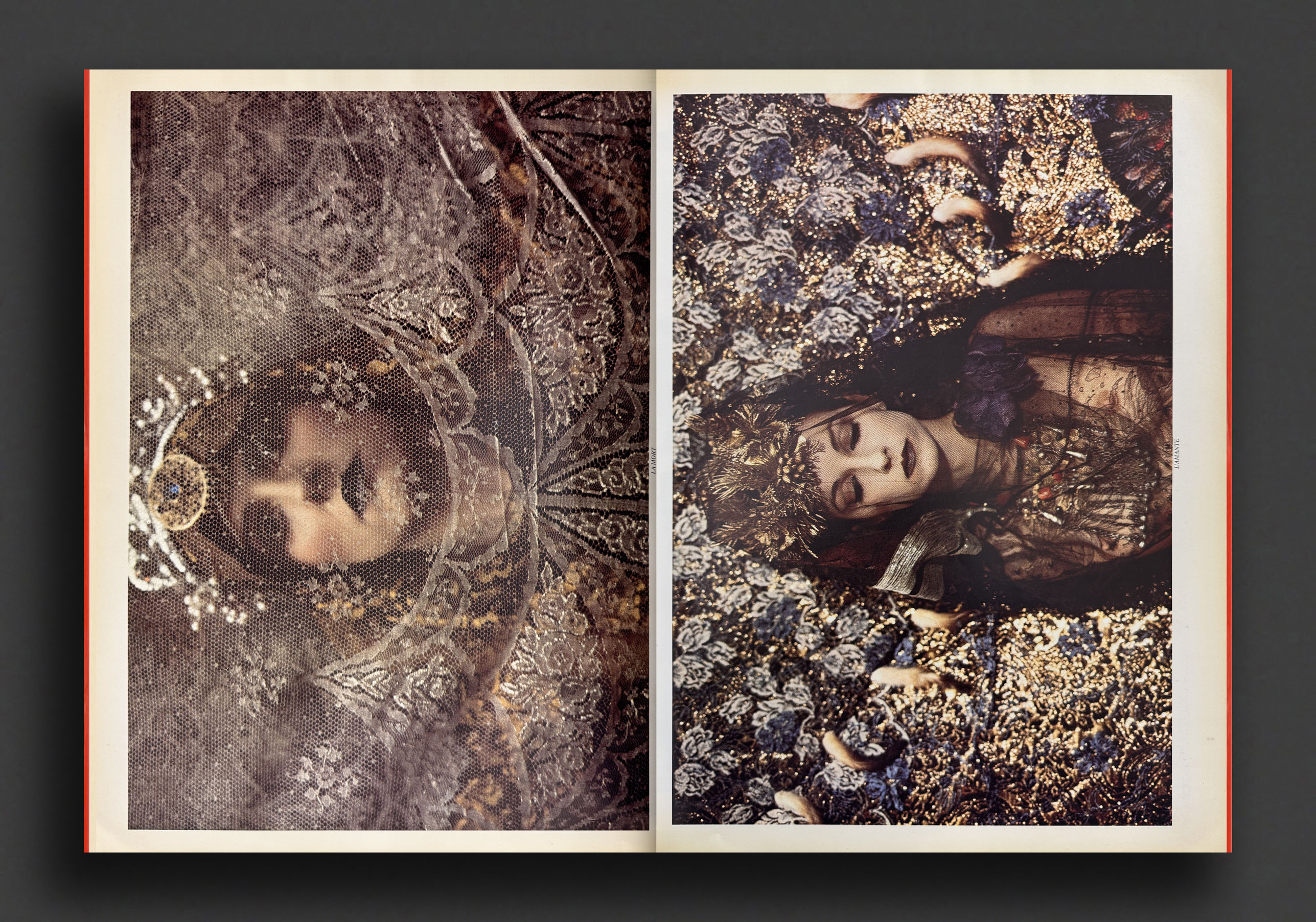
1982, French
Softcover, 50 pages, 37.5 x 28.5 cm
1st Edition, Out of print title / used / average
Published by
Créatis / Paris
$40.00 - In stock -
Special double issue (19 & 20) of Créatis, Autumn/Winter 1982, the wonderful French photographic art magazine published in Paris, founded in 1979 by Albert Champeau and Jean-Pierre Renard. This issue features Irina Ionesco, Alfred Stieglitz, Jean Dieuzaide, Stefan de Jaeger, Peter Hujar, Susan Sontag, Corinne Bronfman, Edgar Degas, Douglas Crimp, Raúl Beceyro, Charles Gatewood, Didier Gaillard, Lynn Davis, and more.
Average copy due to gloss laminate covers peeling to edges and resultant tanning, some pinching to spine, tanning to edges.
1994, English
Softcover, 632 pages, 23 x 15.5 cm
1st Edition, Out of print title / used / very good
Published by
University of California Press / Berkley
$35.00 - Out of stock
First 1994 edition.
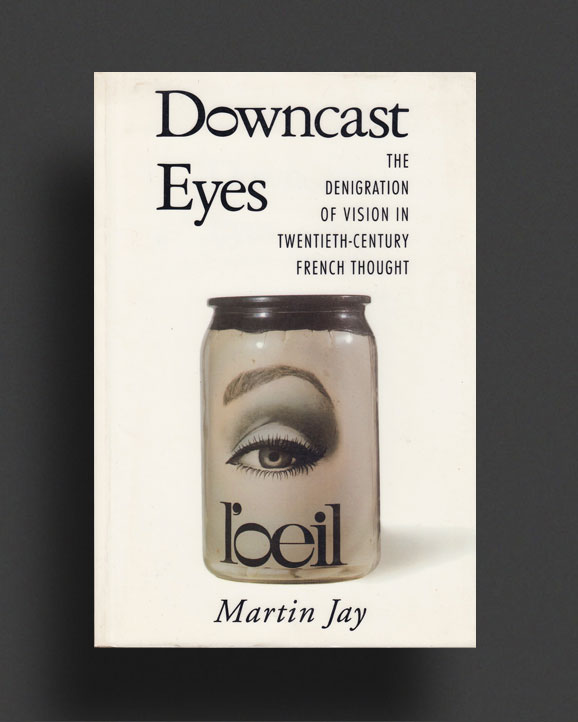
Long considered "the noblest of the senses," vision has increasingly come under critical scrutiny by a wide range of thinkers who question its dominance in Western culture. These critics of vision, especially prominent in twentieth-century France, have challenged its allegedly superior capacity to provide access to the world. They have also criticized its supposed complicity with political and social oppression through the promulgation of spectacle and surveillance.
Martin Jay turns to this discourse surrounding vision and explores its often contradictory implications in the work of such influential figures as Jean-Paul Sartre, Maurice Merleau-Ponty, Michel Foucault, Jacques Lacan, Louis Althusser, Guy Debord, Luce Irigaray, Emmanuel Levinas, and Jacques Derrida. Jay begins with a discussion of the theory of vision from Plato to Descartes, then considers its role in the French Enlightenment before turning to its status in the culture of modernity. From consideration of French Impressionism to analysis of Georges Bataille and the Surrealists, Roland Barthes's writings on photography, and the film theory of Christian Metz, Jay provides lucid and fair-minded accounts of thinkers and ideas widely known for their difficulty.
His book examines the myriad links between the interrogation of vision and the pervasive antihumanist, antimodernist, and counter-enlightenment tenor of much recent French thought. Refusing, however, to defend the dominant visual order, he calls instead for a plurality of "scopic regimes." Certain to generate controversy and discussion throughout the humanities and social sciences, Downcast Eyes will consolidate Jay's reputation as one of today's premier cultural and intellectual historians.
Martin Jay is Sidney Hellman Ehrman Professor Emeritus of History at the University of California, Berkeley. His books include Force Fields (1992), Marxism and Totality (California, 1984), Adorno (1984), and The Dialectical Imagination (1973).
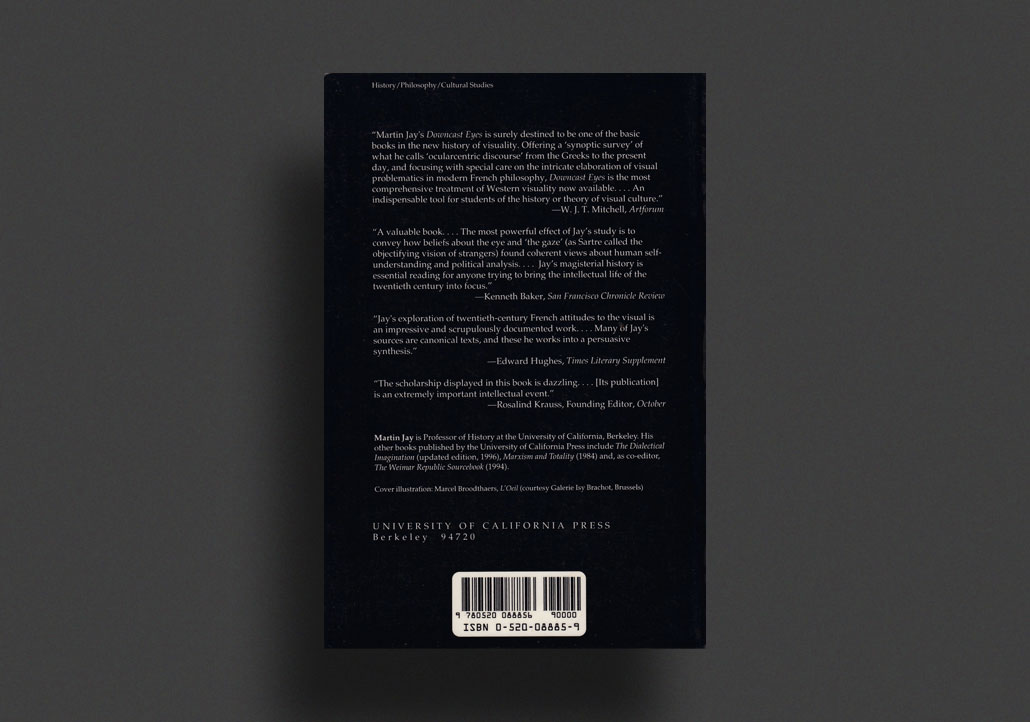
Good—VG copy with common rippling of laminate separation to gloss boards, light handling wear. Sample image only.
1999, English
Softcover, unpaginated, 18.5 x 18.5 cm
Out of print title / used / very good
Published by
Charta / Milan
$100.00 - Out of stock
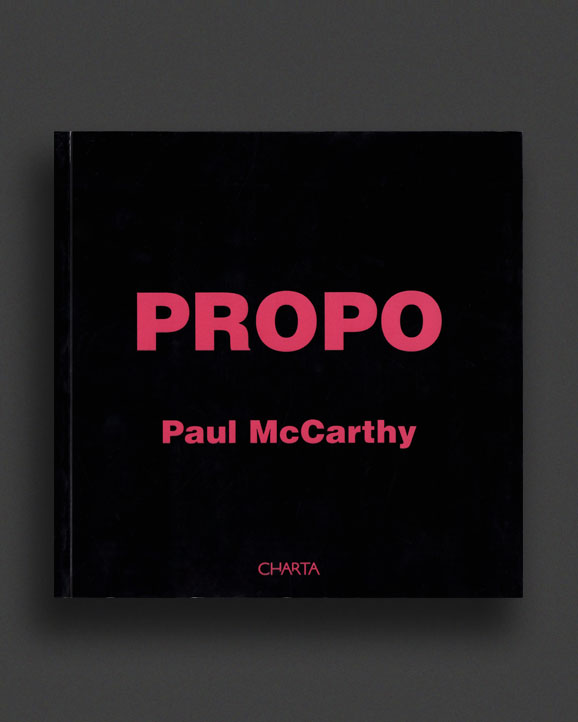
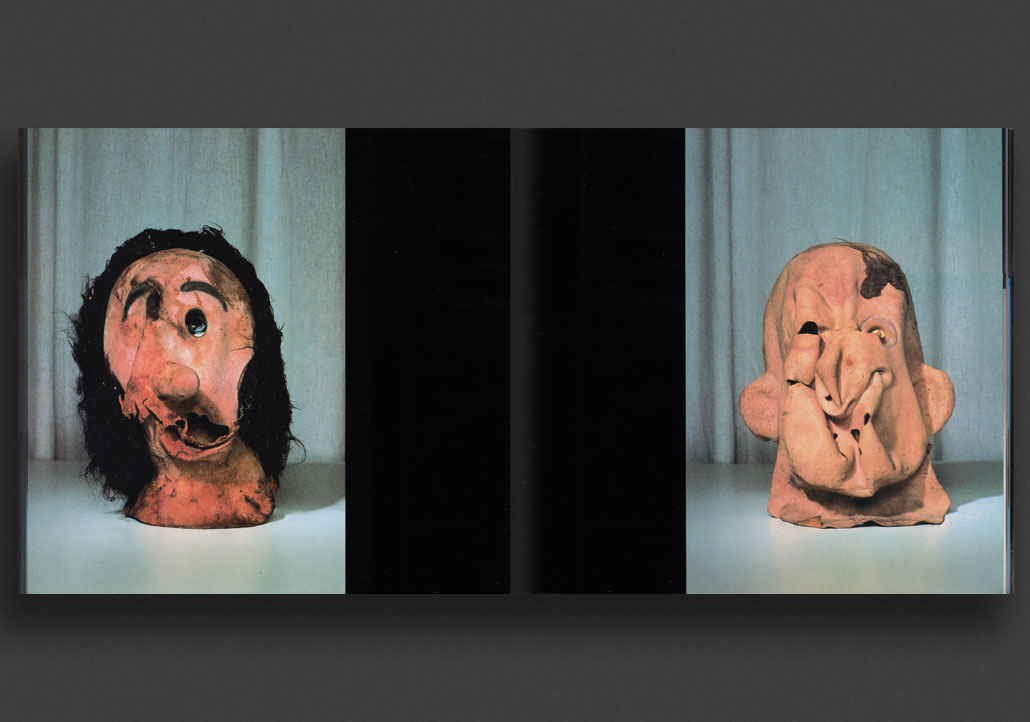
The great Propo artist's book by Paul McCarthy, published by Charta in 1999. Comprised entirely of photos of everyday objects, soiled, dirtied and ruined, shot against colourful backdrops that contrast with the mysterious nature of the decontextualized objects. Children's toys, condiment bottles, latex masks, dolls ... these objects are in fact props from McCarthy's legendary performances, and their visual inventory here reads like a book of modernity's detritus. A photo book document of residual sculptural objects of performance. One of his best books, like no other!
Born in Salt Lake City in 1945, Paul McCarthy has lived and worked in the Los Angeles area since 1970. Originally formally trained as a painter, McCarthy's main interest lies in everyday activities and the mess created by them. Much of his work in the late 1960s, such as Mountain Bowling (1969) and Hold an Apple in Your Armpit (1970), are similar to the work of Happenings founder Allan Kaprow, with whom McCarthy had a professional relationship. From 1982 to 2002 he taught performance, video, installation, and performance art history at the University of California, Los Angeles. McCarthy currently works mainly in video and sculpture. His work has been widely exhibited throughout Europe and the U.S. including the Museum of Contemporary Art, Los Angeles; the Whitney Museum of American Art and The Museum of Modern Art; and the Centre Georges Pompidou, Paris.
Very Good copy with only light wear.
1972, Japanese / English
Softcover (w. french folds and fold-out spreads), 160 pages, 22.8 x 29.8 cm
1st Edition, Out of print title / used / very good
Published by
Ad Angen / Japan
$100.00 - Out of stock
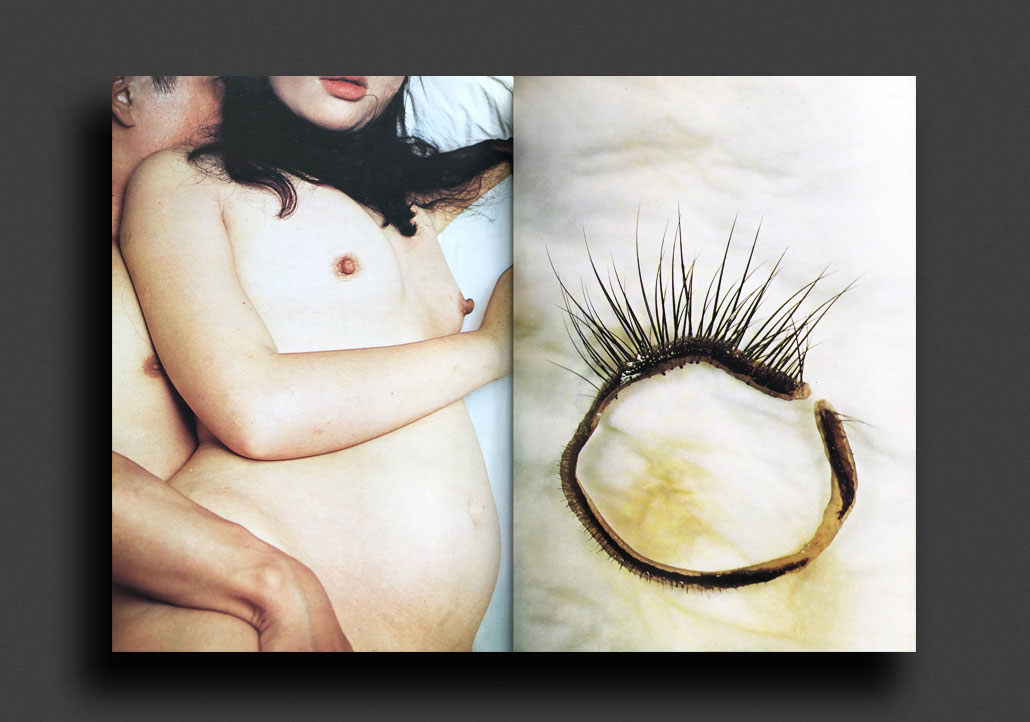
First 1972 edition of this erotic anthology from three important and provocative Japanese photographers from the time they were creating their most inspired work. Tatsuki is famous for his books Eves, Private (Mariko Kaga) and Girl (from the famous Chuo Koronsha series). Kanoh is famous for his books Shunga and the banned Fuck. Ichimura is famous for Salome and Come Up. All of these seminal works in Japanese photography were published in 1970 or 1971, as was this book, a collection that includes moments from some of the aforementioned works. The title indicates the uniting theme of the book - couples (and groups) in erotic scenes. Experts of the nude, the invited photographers here express Ukiyo-e's spring paintings through their own photographic visions of sexuality. Saturated and hypnotic, these psychedelic and dreamlike collections are joyous and occasionally confronting, surrealistic and occasionally grotesque, all vividly reproduced throughout with many gate-fold spreads. A great book.
Very Good copy.
2002, English
Hardcover, 288 pages, 27 x 22 cm
1st Edition, Out of print title / used / very good
Published by
Arena Editions / New Mexico
$280.00 - Out of stock
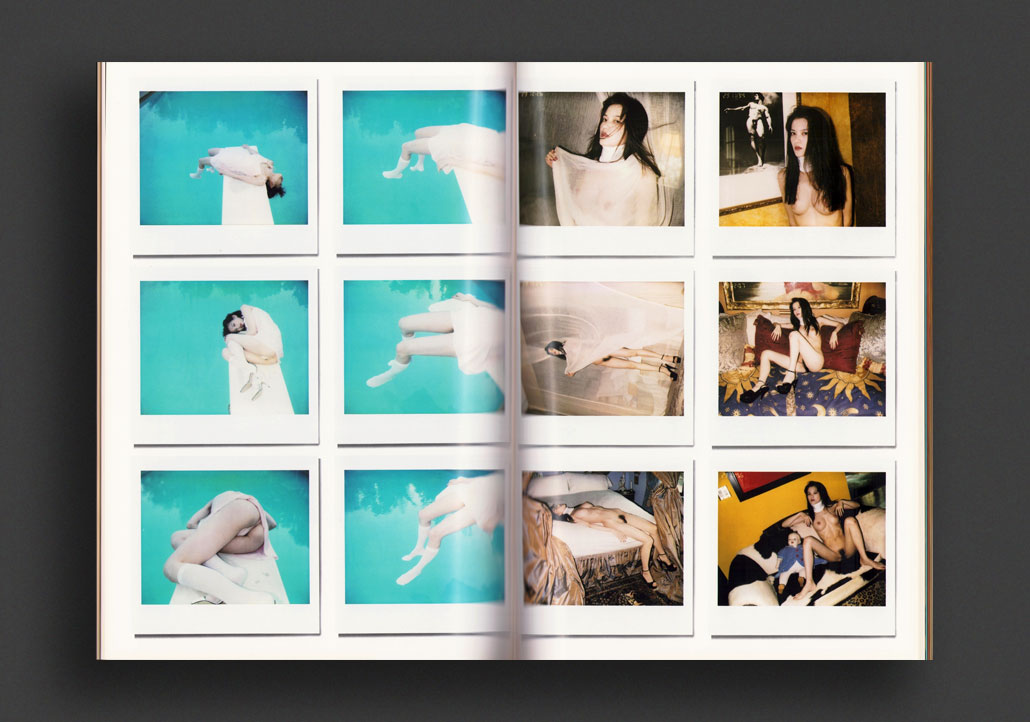
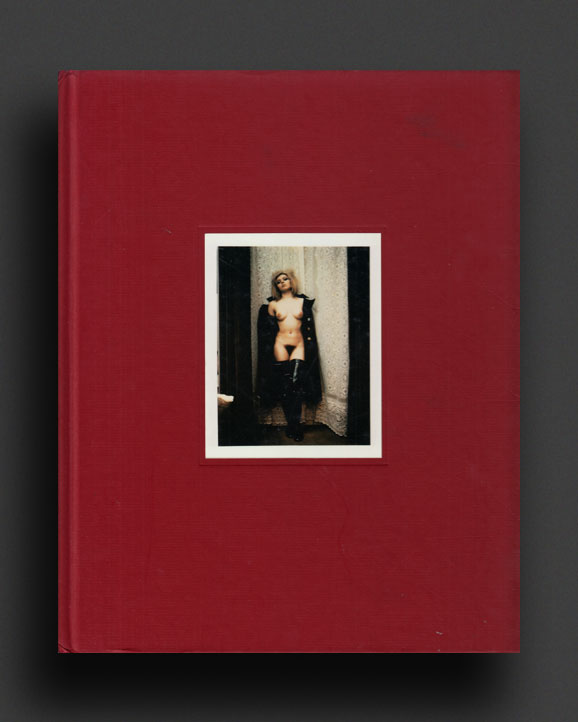
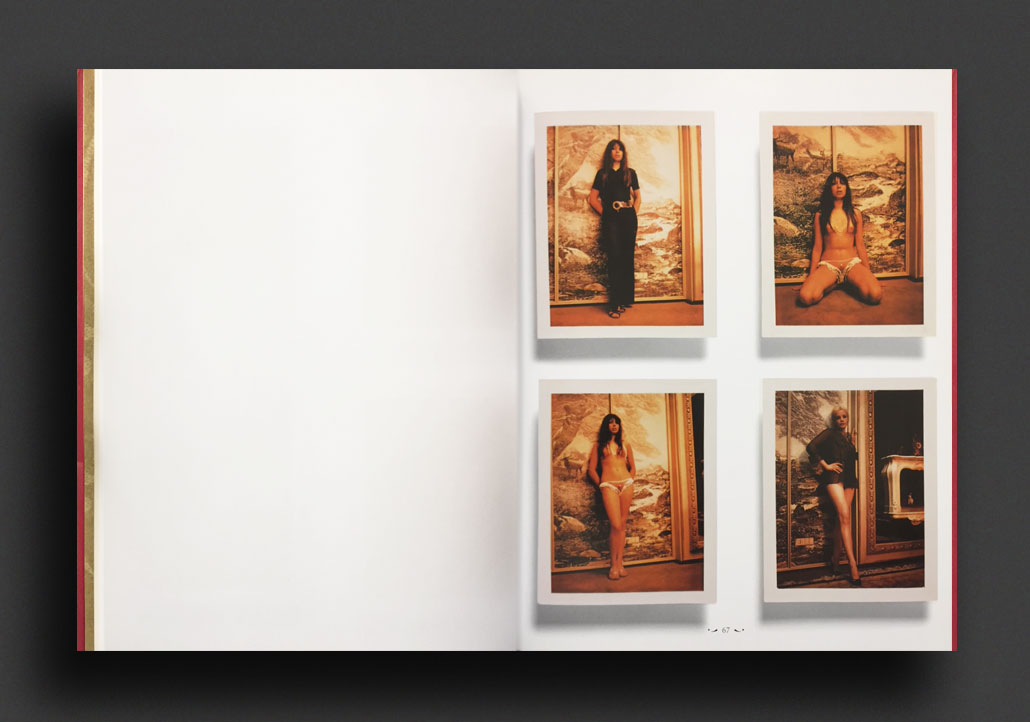
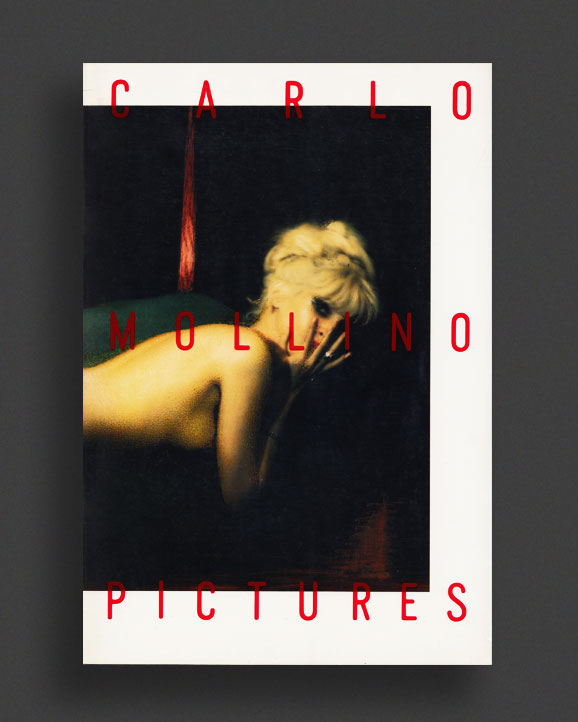
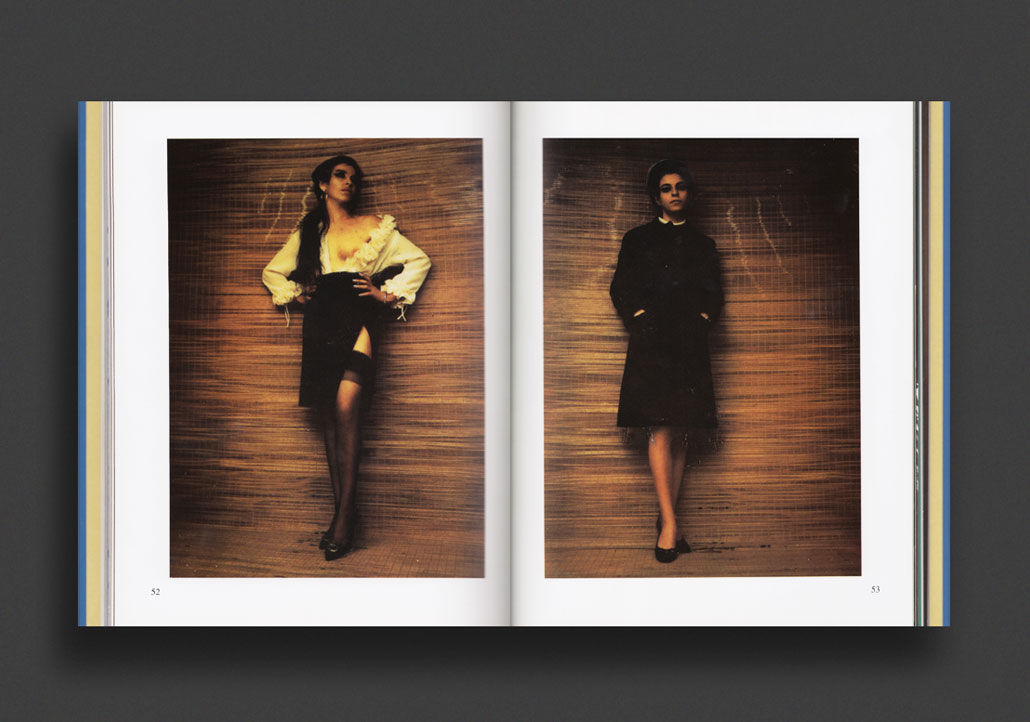
First hardcover edition of the beautiful Carlo Mollino Polaroids book, published in 2002 by Arena Editions. Now highly collectable, Carlo Mollino Polaroids is the first published book of the famed Italian designer's "decadent and hermetic" erotic photographs, selected from the roughly 1200 surviving Polaroids, never exhibited during his life, which were found following his death in 1973. This book represented the first comprehensive look at these polaroids, exquisitely reproducing over 250 examples collected within a lovely gilt, photo-inlayed cloth hardcover.
Carlo Mollino (1905–73) was an architect, designer, photographer, writer, skier, racing driver and stunt pilot. In a career that spanned more than four decades, Mollino designed buildings, homes, furniture, cars and aircraft. One of the most dashing figures of mid-century Italy, Mollino was famed for his design finesse and his elegant organicism. In 1949 he published an important book on photography: Message from the Darkroom. Sometime around 1960, he began to seek out women - mostly dancers - in his native Turin, inviting them to his villa for late-night modeling sessions. The models would pose against extraordinary backdrops, designed by Mollino, in clothing, wigs and accessories that he had carefully selected. Finally, having printed the Polaroids, Mollino would painstakingly amend them with an extremely fine brush, to attain his idealized vision of the female form. The pictures, which totalled around 1,200, remained a secret until after his death, in 1973. Only a few were ever publicly shown, until this acclaimed first edition was published by James Crump in 2002. Reviewing this book, The New Yorker declared, "This lavish selection of several hundred Polaroids preserves the essential mystery of a project both decadent and hermetic. Though clearly the product of a deep obsession, the photographs are deliberately impersonal, each baroque detail an invitation for the viewer to imagine Mollino's encounters with the women."
Very Good copy!
1991, English / Japanese
Softcover (w. acetate dust jacket), 56 pages, 30 x 20.5 cm
1st Edition, Out of print title / used / very good
Published by
Fiction Inc. / Tokyo
$160.00 - In stock -
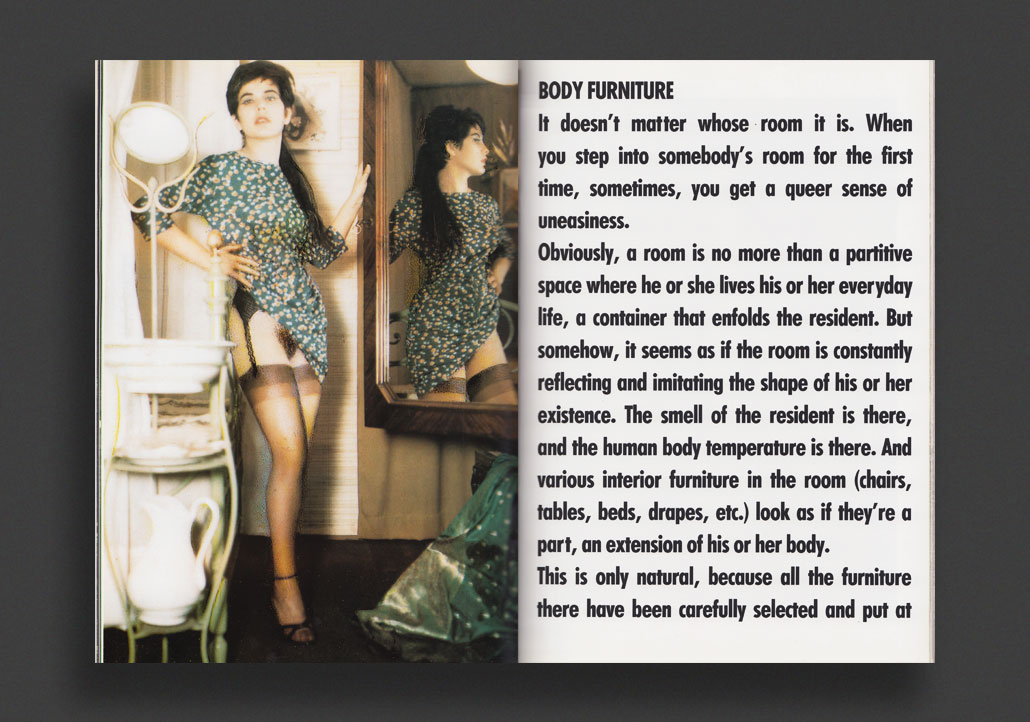
One of the best and earliest publications dedicated entirely to the "decadent and hermetic" erotic photography of Italian designer Carlo Mollino, this wonderful book was published by Fiction Inc. in Tokyo in 1991. Very scarce, this volume comes wrapped in printed acetate dust jacket, and is illustrated in colour throughout with Mollino's private erotic glamour photos accompanied by the essay "Body Furniture" by photography critic and founder of Déjà-vu magazine Kohtaro Iizawa. This special over-sized glossy format benefits viewing the minute details of Mollino's paint-brush edits to the photographs rarely so easily seen in other books by enlarging them dramatically from the original polaroids. Selected from the roughly 1200 surviving Polaroids, never exhibited during his life, which were found following his death in 1973, all re-touched and/or partially coloured by hand by Mollino. Also includes interior photographs.
Carlo Mollino (1905–73) was an architect, designer, photographer, writer, skier, racing driver and stunt pilot. In a career that spanned more than four decades, Mollino designed buildings, homes, furniture, cars and aircraft. One of the most dashing figures of mid-century Italy, Mollino was famed for his design finesse and his elegant organicism. In 1949 he published an important book on photography: Message from the Darkroom. Sometime around 1960, he began to seek out women - mostly dancers - in his native Turin, inviting them to his villa for late-night modeling sessions. The models would pose against extraordinary backdrops, designed by Mollino, in clothing, wigs and accessories that he had carefully selected. Finally, having printed the Polaroids, Mollino would painstakingly amend them with an extremely fine brush, to attain his idealized vision of the female form. The pictures, which totalled around 1,200, remained a secret until after his death, in 1973. Only a few were ever publicly shown, until this acclaimed first edition was published by James Crump in 2002. Reviewing this book, The New Yorker declared, "This lavish selection of several hundred Polaroids preserves the essential mystery of a project both decadent and hermetic. Though clearly the product of a deep obsession, the photographs are deliberately impersonal, each baroque detail an invitation for the viewer to imagine Mollino's encounters with the women."
Very Good copy with only light wear to plastic jacket.
1994, English
Hardcover, 96 pages, 22 x 18 cm
1st Edition, Out of print title / used / very good
Published by
Taschen / Cologne
$100.00 - In stock -
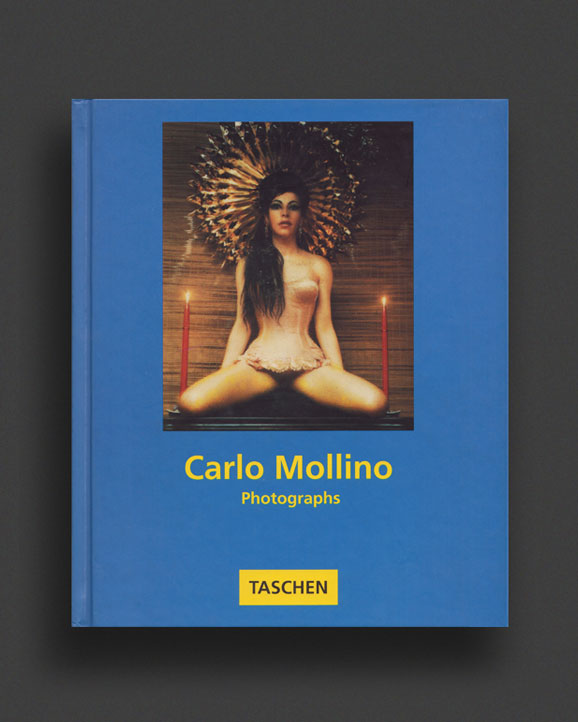
First English edition of the early hardcover monograph dedicated entirely to the "decadent and hermetic" erotic photography of Italian designer Carlo Mollino, published by Taschen in 1994 and long out-of-print. Profusely illustrated throughout in colour and b/w, with accompanying quotes and texts from the designer, illustrated essay by Falvio Ferrari, plus illustrated biography of Mollino.
Carlo Mollino (1905–73) was an architect, designer, photographer, writer, skier, racing driver and stunt pilot. In a career that spanned more than four decades, Mollino designed buildings, homes, furniture, cars and aircraft. One of the most dashing figures of mid-century Italy, Mollino was famed for his design finesse and his elegant organicism. In 1949 he published an important book on photography: Message from the Darkroom. Sometime around 1960, he began to seek out women - mostly dancers - in his native Turin, inviting them to his villa for late-night modeling sessions. The models would pose against extraordinary backdrops, designed by Mollino, in clothing, wigs and accessories that he had carefully selected. Finally, having printed the Polaroids, Mollino would painstakingly amend them with an extremely fine brush, to attain his idealized vision of the female form. The pictures, which totalled around 1,200, remained a secret until after his death, in 1973. Only a few were ever publicly shown, until this acclaimed first edition was published by James Crump in 2002. Reviewing this book, The New Yorker declared, "This lavish selection of several hundred Polaroids preserves the essential mystery of a project both decadent and hermetic. Though clearly the product of a deep obsession, the photographs are deliberately impersonal, each baroque detail an invitation for the viewer to imagine Mollino's encounters with the women."
Very Good copy
2024, English
Hardcover (w. dust jacket), 100 pages, 26.42 x 28.96 cm
Published by
Liveright / US
$120.00 - Out of stock
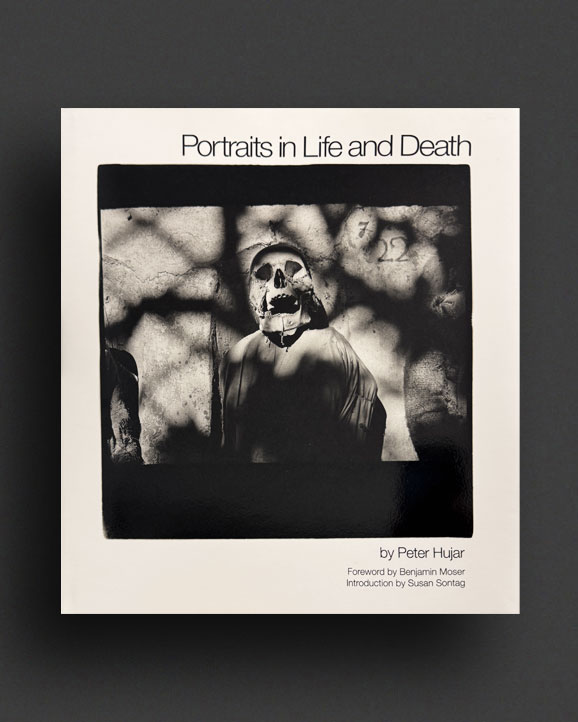
Foreword by Benjamin Moser, With an Introduction by Susan Sontag
A new edition of the cult classic photography book by the legendary Peter Hujar, featuring a foreword by Pulitzer Prize winner Benjamin Moser
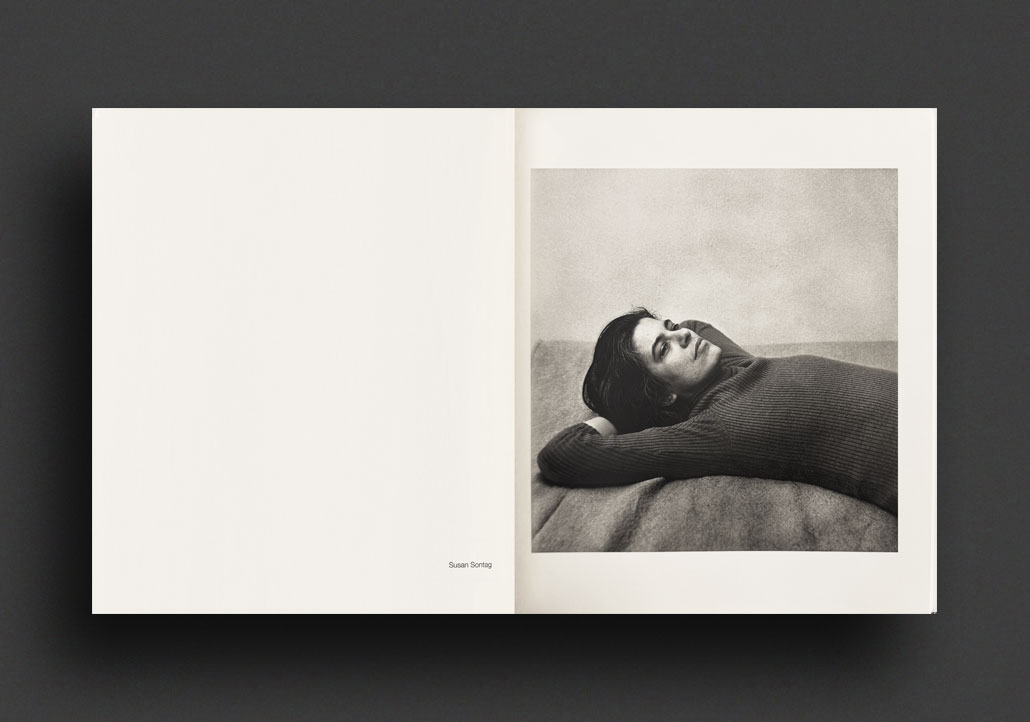
The 1976 publication of Peter Hujar’s Portraits in Life and Death, with an introduction by Susan Sontag, “was and remains one of the most somberly beautiful and influential photography collections of its era” (Holland Cotter, senior art critic of The New York Times). When Hujar passed away in 1987, his work was relatively unknown except for a small following. The importance and artistic mastery of Hujar’s photography, its tender gravity and intimacy, became recognised and canonical only after his death. The republication of this collection is composed of the original introduction by Susan Sontag and preceded by a new foreword by Benjamin Moser, with photographs presented in two sequences. A stirring ode to the flourishing downtown scene of the 1970s, this collection remains a deeply moving artefact of post-Stonewall New York City.
"As his posthumous fame only increases, this tightly curated collection of photographs of Hujar’s friends and peers (Paul Thek, Anne Waldman, John Waters and Robert Wilson among them), paired with a haunting series of 1963 photographs of the dead in the Capuchin Catacombs of Palermo, will remind fans of what makes him such a singular and original American artist."—Andrew Durbin, Frieze
"[A] stunning new edition… Sensuous and sensitive, this is a real masterwork."—Olivia Laing, The Observer
2025, English
Hardcover (clothbound), 124 pages, 23 x 23 cm
Published by
Drill Hall Gallery / Canberra
$45.00 - In stock -
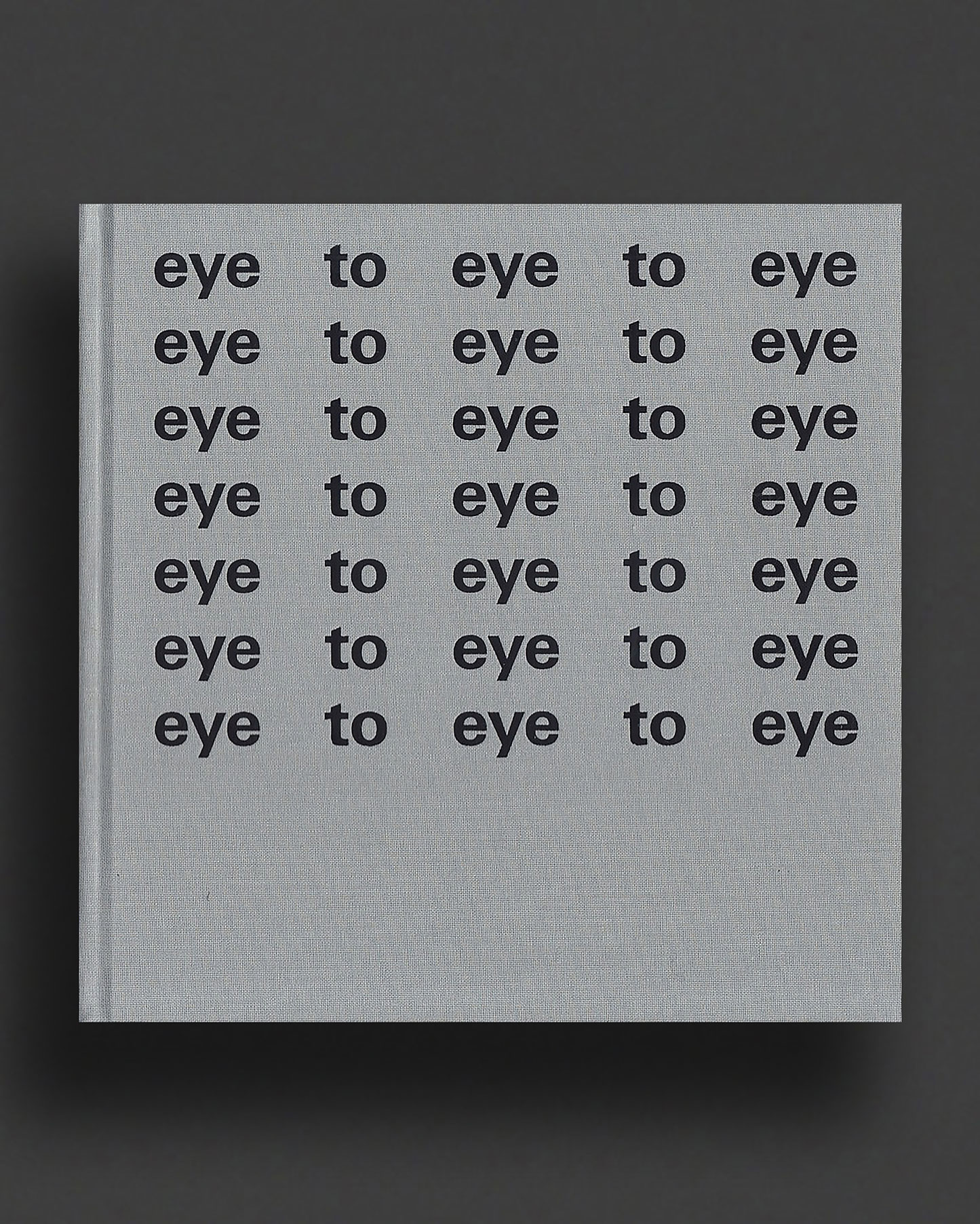
This title brings the collection of Canberra couple Susan Taylor and Peter Jones into focus on the advent of its 25th anniversary. Seeded from an initial interest in mid-century modern design and early twentieth century avant-gardes, the collection blossomed into an embrace of non-objective and abstract art. Artists featured include General Idea, Maria Kozic, Peter Maloneyi, Elizabeth Newman, John Nixon, Robert Rooney, Janet Burchill, Jennifer McCamley and many more.It has grown to revel in the intersections between conceptual art, geometric abstraction, seriality, non-objective painting, photography, contemporary jewellery and poetics to develop conjunctions across time, place and materiality.
The publication accompanies the exhibition curated by Peter Jones at the Drill Hall Gallery, Australian National University, 19 April – 15 June 2025.
Eye to Eye delves into several of the collection’s multi-faceted and revelatory cross-sections. In his essay Peter Jones explores how the couple’s interests have been refined and extended by the art they love and the people that surround that art. In an interview with Drill Hall Gallery director Tony Oates, Susan Taylor discusses the correlations between sustainable fashion and conceptual art with a focus on jewellery. National Gallery of Australia’s curator of photography, Shaune Lakin, traces developments in local conceptual photography from the 1960s as they play out across the Taylor Jones collection. Acclaimed writer Quentin Sprague offers illuminating insight into the work of Robert Rooney and John Nixon, two stalwarts in the Taylor Jones collection. The publication touches on a vast array of local and international art historically significant developments, revealing the power of the private collection to expose perspectives that may go unnoticed in larger, public collections.
2025, English
Softcover, 208 pages, 23 x 16.6 cm
Published by
Memo Review / Naarm
$35.00 - Out of stock
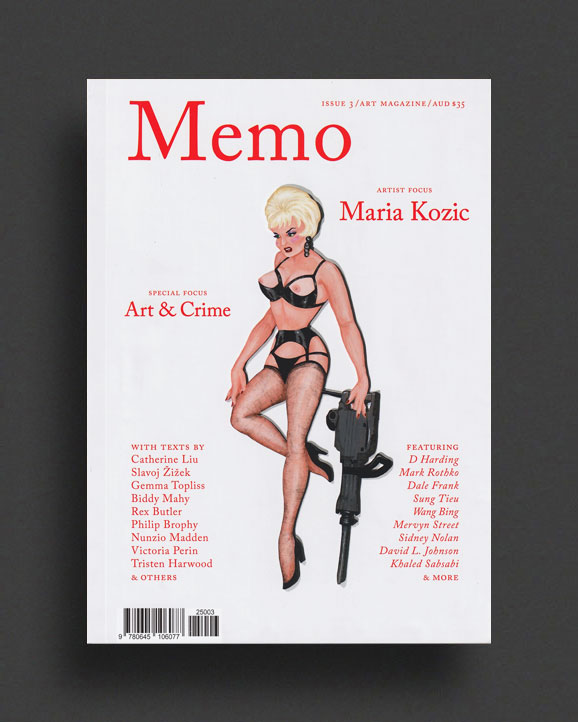
What happens when political art becomes indistinguishable from marketing? Catherine Liu calls it “the highest form of kitsch” — where liberal good intentions become another elite commodity. Vincent Lê sees Apple’s crushingly smooth aesthetics not as mere flattening, but as capitalism’s natural logic of “creative destruction” at work: art compressed into commodity pixels; culture remade through self-improving competition. Either way, we’ve reached peak kitsch. Slavoj Žižek spots it: Trump’s AI-generated Gaza fantasy isn’t just tasteless satire; it’s political kitsch perfected. Call it hasbara via hyperpop.
Meanwhile, Isobel D’Cruz Barnes shows how artists on Narrm’s subculture music scene recognise that the real stage isn’t sound — it’s Instagram, TikTok, and every surface of aesthetic performance. Emerging now is culture as costume, rebellion reimagined as self-design, “lazy representation politics and identity capitalism” countered by their acceleration. And maybe that is just fine.
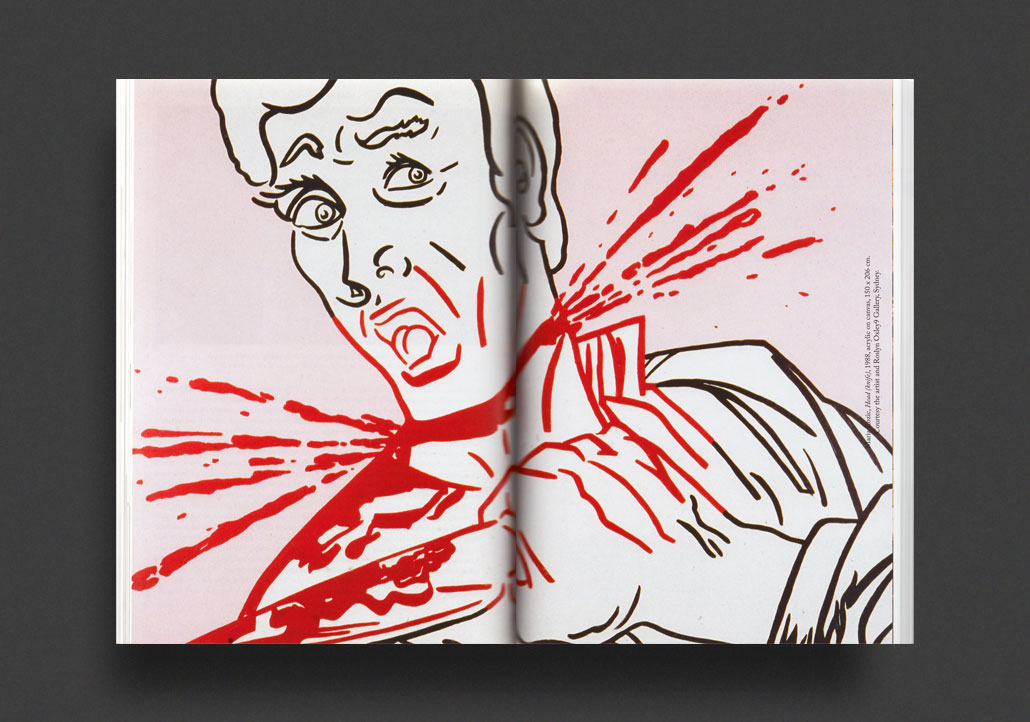
But no one slices open this tension between image and impact like artist Maria Kozic, whose visceral pop provocations twist kitsch into something uncomfortable, even violent—like Warhol thrown into a meat-grinder. Here kitsch doesn’t comfort but “pops.”
Khaled Sabsabi’s Venice controversy crystallises the stakes: Creative Australia recoiled from his political ambiguities, preferring art to neatly market their own virtue. Adorno (via Benjamin and Greenberg) knew all along: kitsch is the aestheticisation of politics. Or was it fascism? Or is art best when it risks being misunderstood or ambivalent, or, even better, wrong?
1997, English
Hardcover (w. dust jacket), 198 pages, 33 x 27 cm
1st Edition, Out of print title / used / very good
Published by
Taschen / Cologne
$70.00 - Out of stock
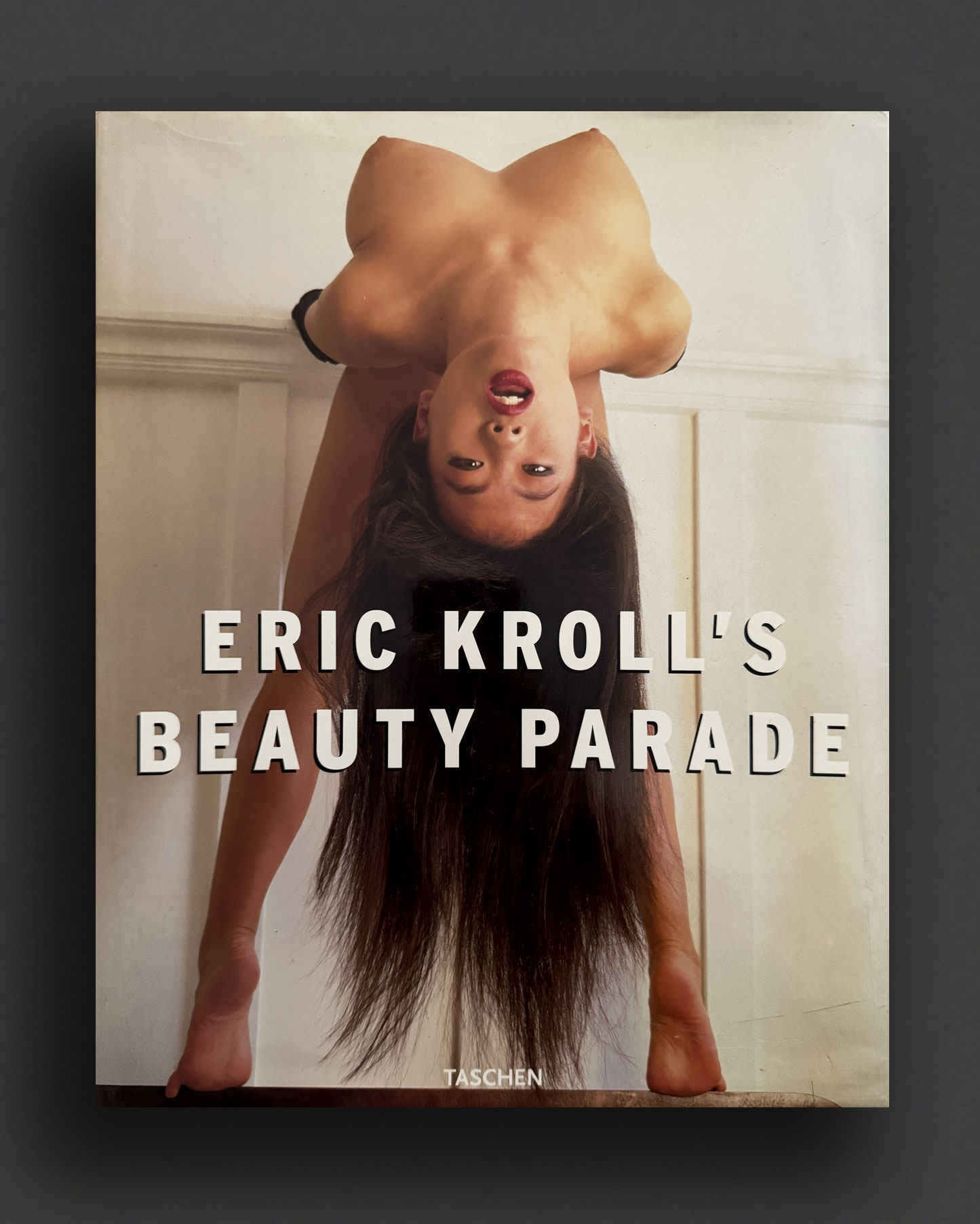
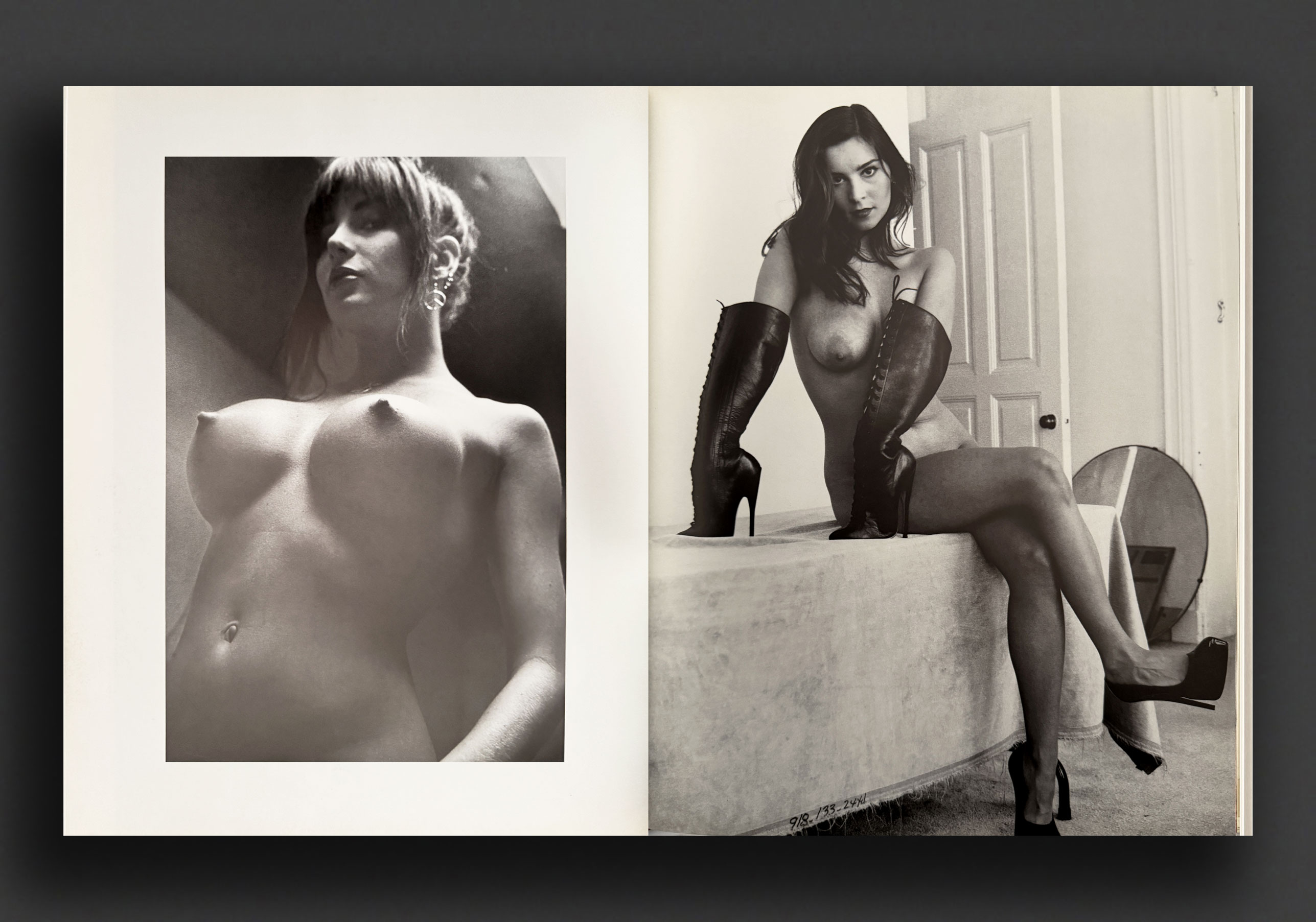
First 1997 over-sized hardcover edition of "Beauty Parade" by American fetish photographer, erotica historian, photojournalist, and book editor, Eric Kroll (b. 1946, New York). Beauty Parade is an incredible collection of his 1990's erotic photographs, ranking among the absolute classics of fetishistic imagery. Rising from the downtown New York art and fashion scene of the 1970s and 80s, shooting for Elle Magazine, Vogue, The New York Times and Der Spiegel, Kroll published his first book, "Sex Objects" in 1976 with a grant from the New York State Council of the Arts, a book documenting sex workers across America. "Beauty Parade" follows on from his best-seller "Fetish Girls" (1994), full of powerful women and drawing one into a world of bizarre fantasies and sadomasochistic desires while retaining a sense of irony and surreal humour. Many of Kroll's photographs refer to and pay homage to his predecessors Weegee and Bunny Yeager as well as Eric Stanton and John Willie, while being grounded in the conceptual influences of artists such as Man Ray, and Marcel Duchamp. Text in English, German and French. Wonderful introduction by Kroll.
Very Good copy in VG dust jacket, light wear.
1996, English
Softcover, 328 pages, 18 x 22.2 cm
1st Edition, Out of print title / used / very good
Published by
The MIT Press / Massachusetts
$55.00 - Out of stock
First 1996 edition printing, not the contemporary digital re-print.
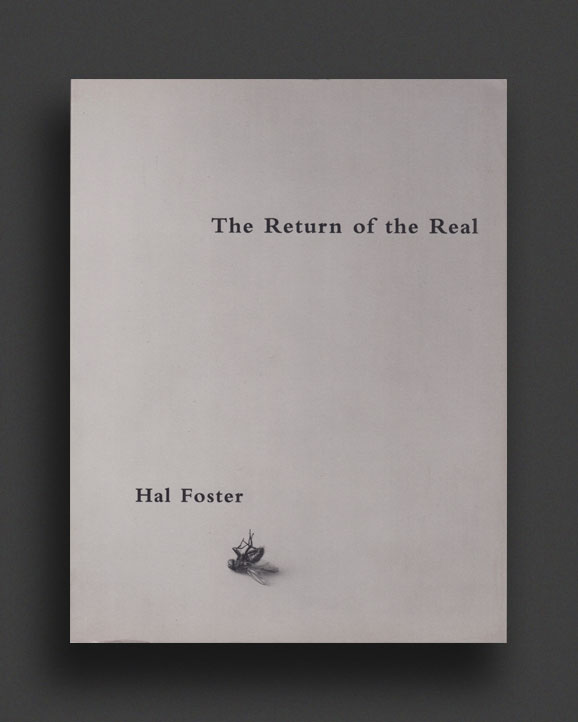
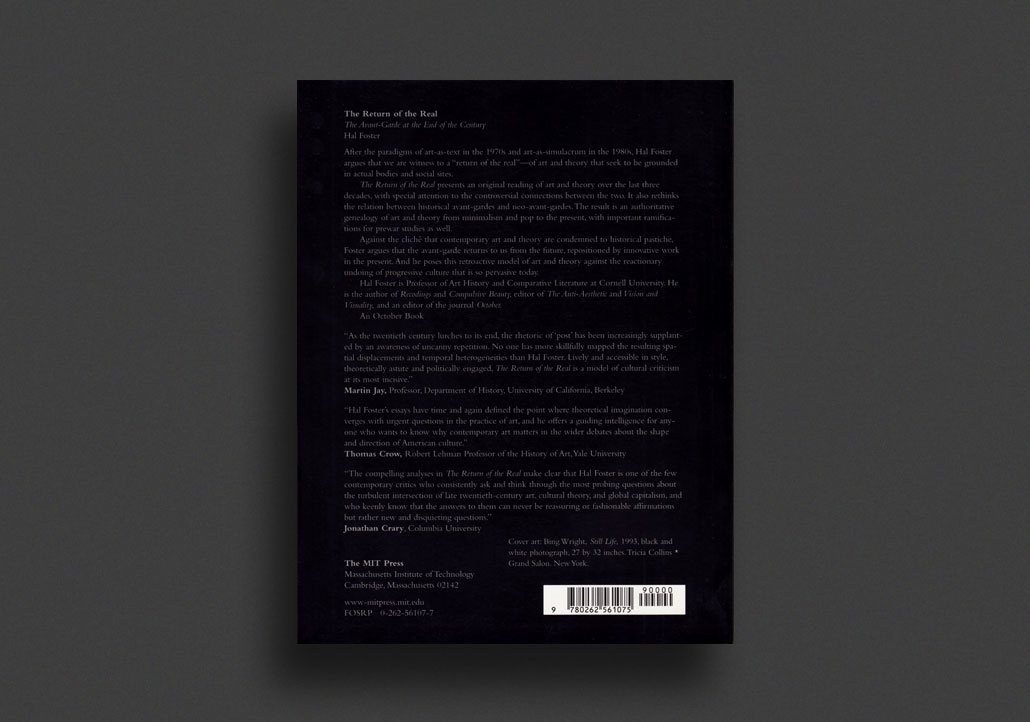
In The Return of the Real Hal Foster discusses the development of art and theory since 1960, and reorders the relation between prewar and postwar avant-gardes. Opposed to the assumption that contemporary art is somehow belated, he argues that the avant-garde returns to us from the future, repositioned by innovative practice in the present. And he poses this retroactive model of art and theory against the reactionary undoing of progressive culture that is pervasive today. After the models of art-as-text in the 1970s and art-as-simulacrum in the 1980s, Foster suggests that we are now witness to a return to the real -- to art and theory grounded in the materiality of actual bodies and social sites. If The Return of the Real begins with a new narrative of the historical avant-garde, it concludes with an original reading of this contemporary situation -- and what it portends for future practices of art and theory, culture and politics.
Includes the work of David Hammons, Robert Gober, Mike Kelley, Marcel Duchamp, Alexander Rodchenko, Vladimir Tatlin, Dan Flavin, Carl Andre, Jasper Johns, Daniel Buren, Marcel Broodthaers, Michael Asher, Hans Haacke, Fred Wilson, Silvia Kolbowski, Larry Bell, Sol Lewitt, Richard Serra, Eva Hesse, Donald Judd, Tony Smith, Robert Morris, Robert Smithson, Jeff Koons, Haim Steinbach, Peter Halley, Ashley Bickerton, Ross Bleckner, Barbara Kruger, Sherrie Levine, Vito Acconci, Bruce Nauman, Gordon Matta-Clark, Frank Stella, Robert Rauschenberg, Andy Warhol, Allan McCollum, Gerhard Richter, Richard Estes, Richard Prince, Cindy Sherman, Kiki Smith, John Miller, Zoe Leonard, Gran Fury, Renée Green, Dan Graham, Martha Rosler, Allan Sekula, Mary Kelly, Silvia Kolbowski, Lothar Baumgarten, Fred Wilson, Jimmie Durham, and many more.
Very Good copy, light tanning to edges, ex-owner's name to title page.
1994, Japanese / English
Hardcover (w. corflute envelope slipcase), 196 pages, 32.5 x 23.5 cm
1st Edition, Out of print title / used / very good
Published by
Sequoia / Tokyo
$220.00 - In stock -
"I dedicate this book to all lives"
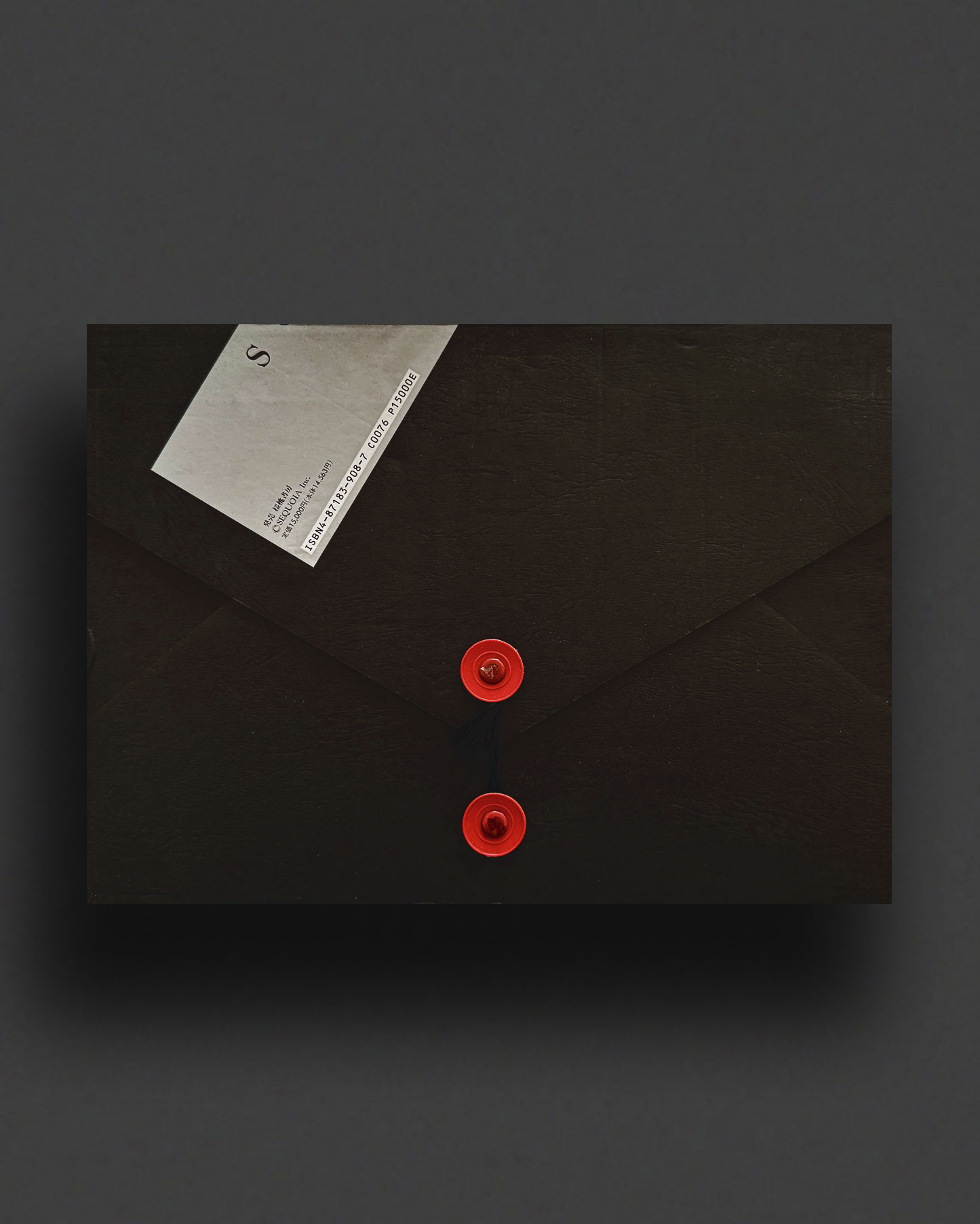
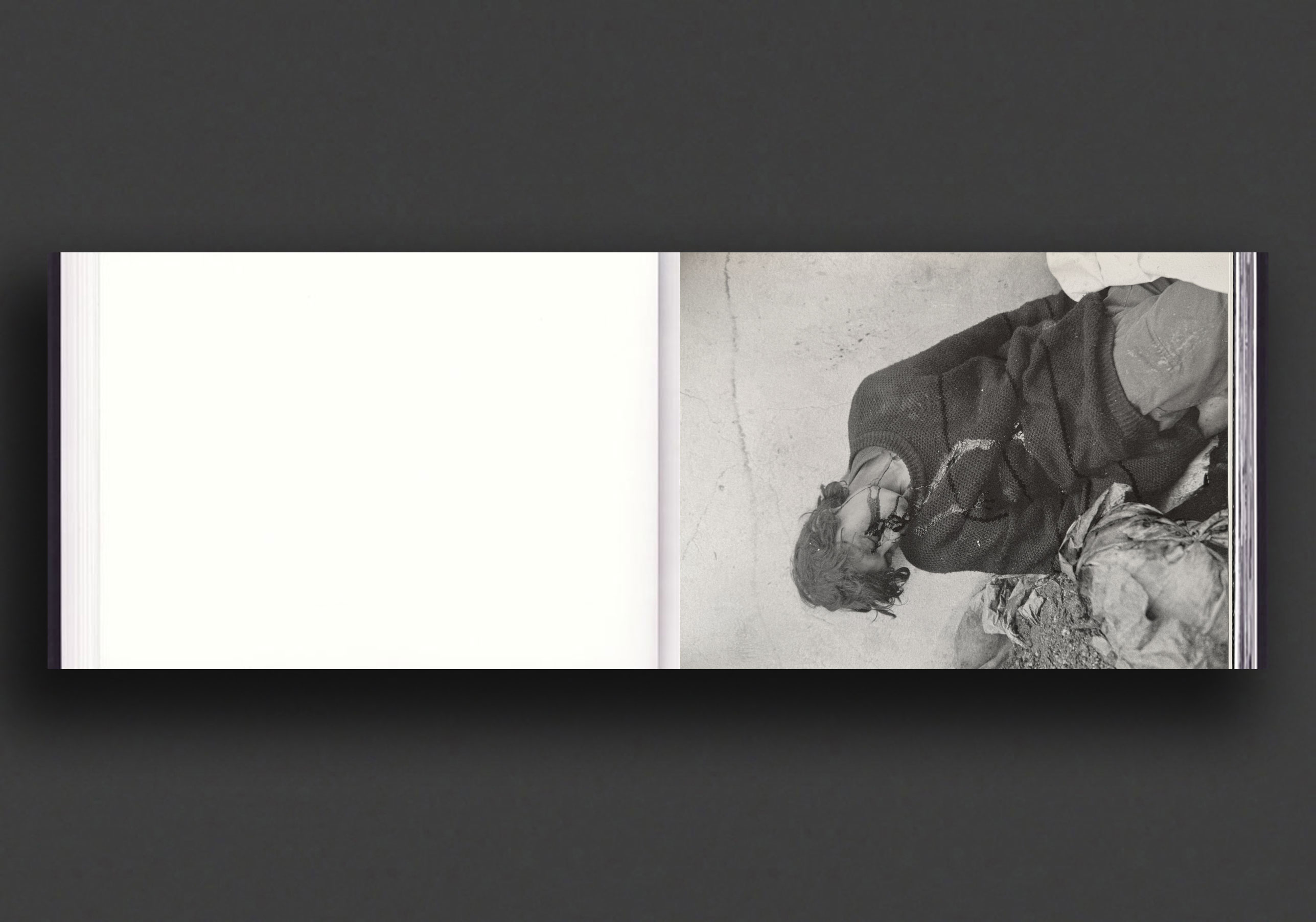
Very rare, first volume of the highly collectible cult classic two-volume death photo book series, SCENE, published in 1994 in Japan only. A lavish hardcover production filled with high-quality monochrome reproductions of anonymous, uncredited corpse photography, seemingly sociopolitical photo-journalism of human massacre stripped of text/language as a confronting stream of vivid and graphic images in conceptual photo book form. SCENE presents an unwavering, unapologetic exploration of a world usually hidden from view — the dead and death. Not for the faint of heart. Compiled by Kunio Shimizu and Yoichi Shibata for publisher Hirofumi Nagashima, SCENE is housed in an elaborate black button-and-tie-bound corflute envelope. Select plates have been featured in the pages of Kotaro Kobayshi’s underground publications TOO NEGATIVE and ULTRA NEGATIVE from the same period.
Fine copy with only standard storage wear from button-bind pressure to envelopes/wear to button metal.
2025, English
Softcover, 72 pages, 29.2 x 24.8 cm
Ed. of 500,
Published by
Karma / New York
$75.00 - Out of stock
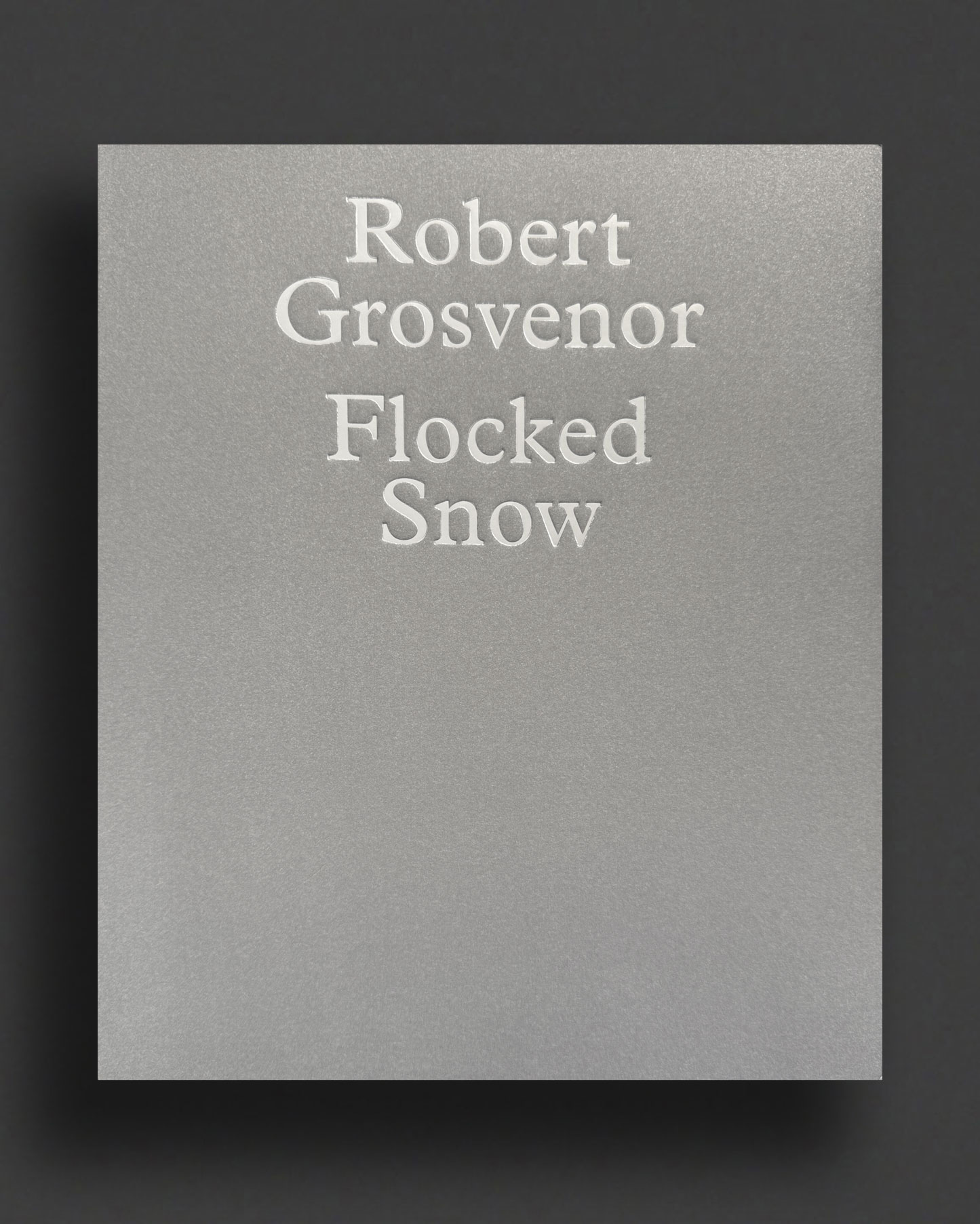
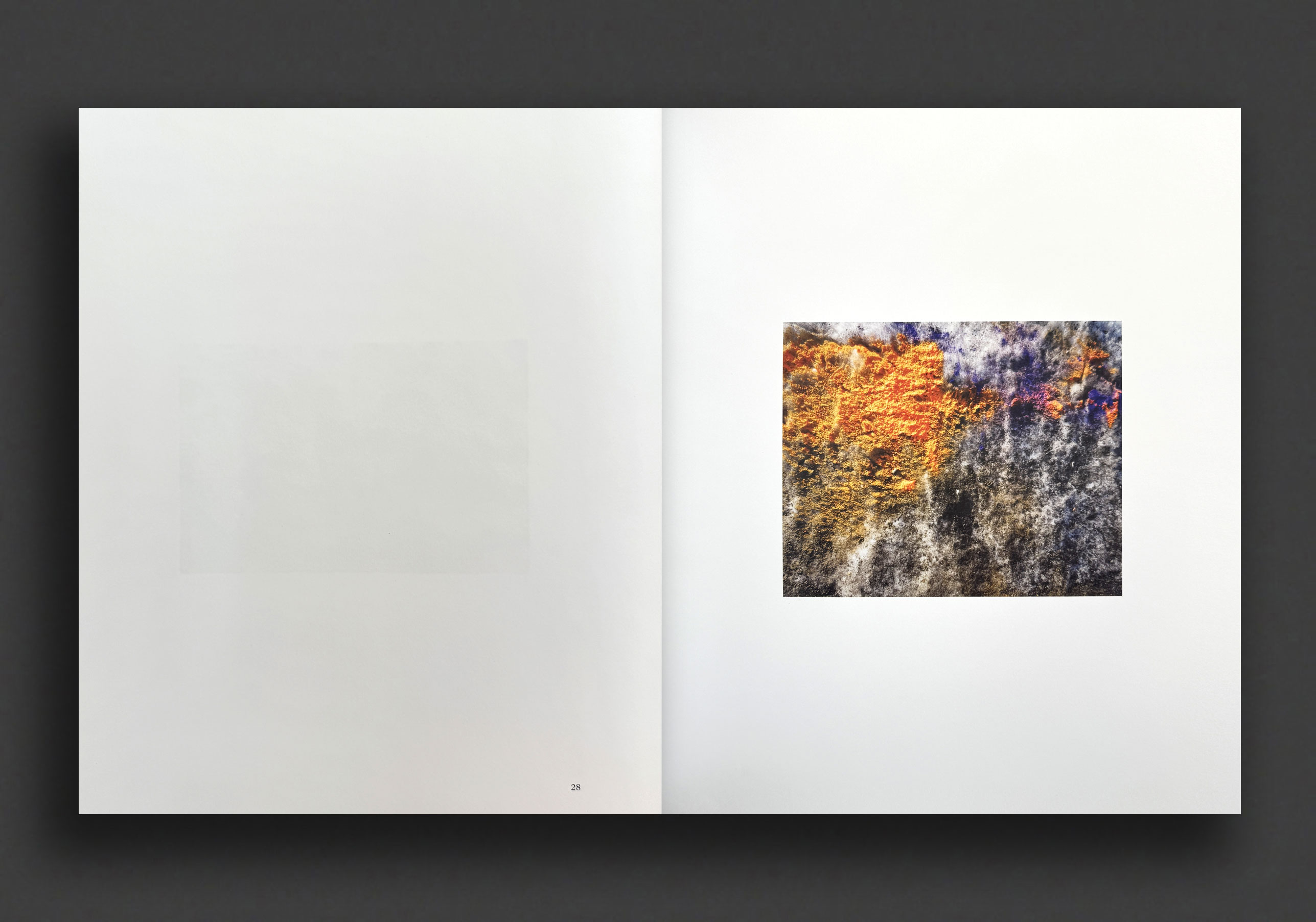
Grosvenor's photographs of color-coated snow investigate the stakes of altering the world around us.
In a Patchogue, New York, parking lot, Robert Grosvenor (born 1937) photographed brightly colored flocking dropped into mounds of snow. Known for his subtle adjustments to readymade objects, Grosvenor makes the resulting images insistently abstract, depicting the aftermath of an action.
Texts by Rob Teeters and Matilde Guidelli-Guidi.
Edition of 500 copies.
Robert Grosvenor (b. 1937, New York, NY) is an American sculptor and photographer known for his surreal captures of vernacular architecture and modernist retrofuturisms. Grosvenor’s monumental sculptures transform a bevy of mid-century technologies, structures, and cultural lores into simple, streamlined forms. These idiosyncratic forms challenge the sculptural conventions of weight, line, movement, and inertia. Grosvenor was included in the historic 1966 Primary Structures survey exhibition at the Jewish Museum, which famously introduced Minimalist art to a broader public. Although his work builds on the aesthetic program of Minimalism, Grosvenor playfully resists the cool austerity emblematic of the genre. Rather he explores the sensuousness of his materials and the nostalgic qualities of their color and design.
2025, English
Softcover, 72 pages. 22.2 x 17.1 cm
Published by
Magic Hour Press / New York
$60.00 - Out of stock
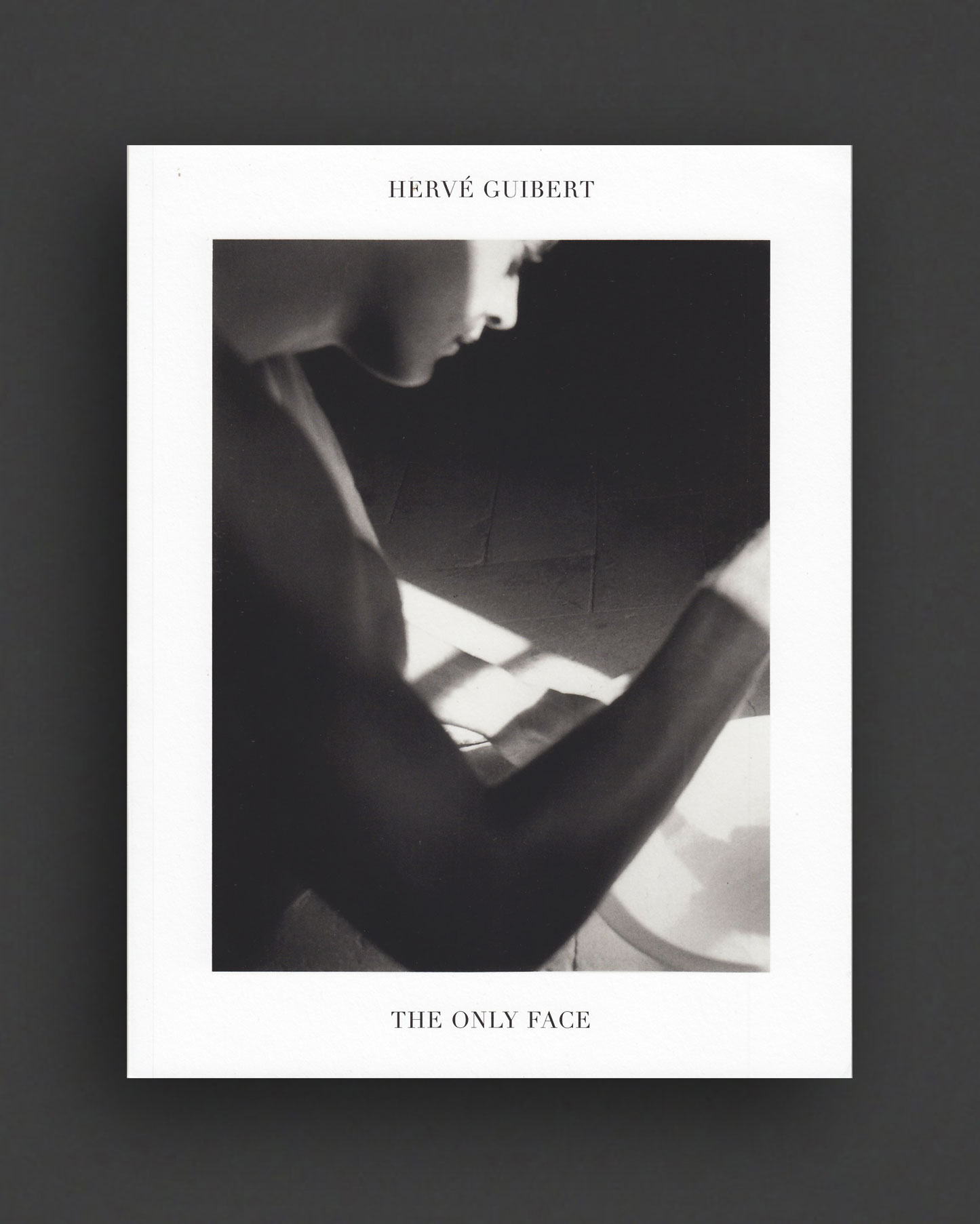
This photobook, one of two from Hervé Guibert published in his lifetime, is filled with characters, settings and mystery. It starts with bodies – their faces either eclipsed or out of frame – before unleashing a bravura sequence of portraits: friends, lovers, family and Guibert himself. As the book approaches its finale, his subjects are obscured and then disappear completely, leaving behind the objects they touched, until even those vanish, leaving only light.
Most of the photographs in The Only Face were taken on Guibert’s European and American travels, but their settings are, with few exceptions, small private interiors. The effect is an inwardness that communicates Guibert’s deep affinity with his subjects.
The Only Face, originally published in Paris in 1984, is the second and final photobook Guibert published in his lifetime (preceded by the photo-novel Suzanne and Louise, also reissued in English by Magic Hour Press). This new edition presents Guibert’s photographs in their original sequence, with his titles and introductory text translated by Christine Pichini and a new cover by the artist Marc Hundley.
French writer and photographer Hervé Guibert (1955–91) was the author of 25 books, beginning with Propaganda Death (1977), a fictional memoir in the tradition of Georges Bataille, Jean Genet and the Marquis de Sade. His best-selling novel To the Friend Who Did Not Save My Life (1990) was inspired by his long friendship with Michel Foucault and the two men’s experiences living with AIDS, which tragically ended Guibert’s life at the age of 36.
2023, Czech / English / German
Softcover, 256 pages, 24 x 33 cm
Published by
Edizioni Periferia / Lucerne
$175.00 - In stock -
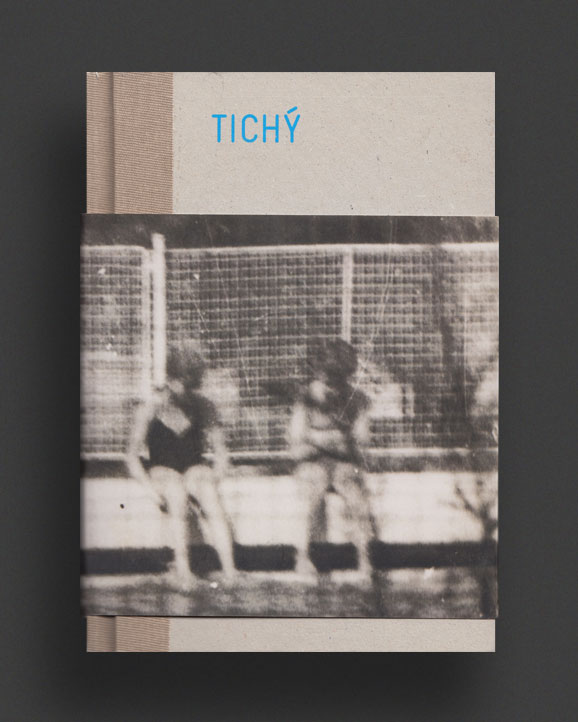
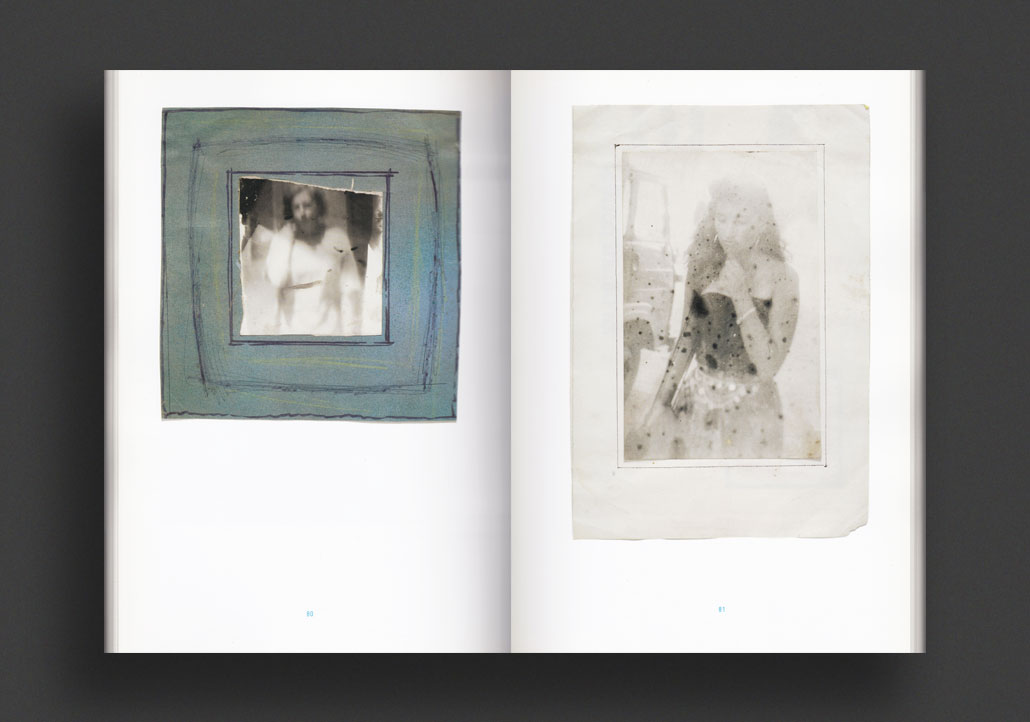
Despite his art education, Czech painter and photographer Miroslav Tichý (1926–2011) was considered an outsider due to his unconventional approach to photography that revealed a voyeuristic fascination for the female body. His analogue photography shows traces and errors he deliberately sought out by building his own cameras and telephoto lenses. In the 1970s and ’80s, Tichý regularly took pictures of his television screen. Because he lived close to the Austrian border, he was able to circumvent the censorship of Eastern Bloc media and watch the more permissive films and late night shows from the West. Many of his seemingly surreptitious screenshots appear in this book.
2008, English
Hardcover (w. obi-strip), 220 pages, 23 x 16 cm
1st Edition, Out of print title / used / very good
Published by
Walther König / Köln
$160.00 - Out of stock
First edition of this beautiful hardcover monograph on the work of Miroslav Tichý, published in 2008 by Walther König and quickly out of print. Profusely illustrated throughout with Tichý's works alongside informative background about the artist and his work by contributors Harald Szeemann, Carolyn Christov-Bakargiev, Clint Burnham, Roman Buxbaum.
After studying at the Academy of Arts in Prague, Miroslav Tichý, born in 1926 in the former Czechoslovakia, withdrew to a life of isolation in his hometown of Kyjov. In the late 1950s, he stopped painting and, during his daily walks, began to take photographs of women with cameras he made by hand. He mounted his prints on handmade frames and added finishing touches in pencil, shifting from photography to drawing. Disregarding the rules of photography, for four decades Tichý created a large oeuvre of poetic, dreamlike views of female beauty.
A former neighbor, Roman Buxbaum, discovered Tichý's hidden work in the 1980s and has been documenting and collecting it ever since. In 2004, the esteemed international curator Harald Szeemann mounted the first solo exhibition of the nearly 80-year-old artist. That same year, Tichý was given the Rencontres d'Arles Photographie Discovery Award and the Kunsthaus Zurich organized a large retrospective. Solo exhibitions at the Centre Pompidou in Paris and the Museum of Modern Art (MMK) Frankfurt followed in 2008. Tichý does not see his exhibitions, for he no longer leaves his house. This beautifully produced, thorough volume collects the work — perfectly.
Very Good copy with light wear. With original illustrated publisher's obi-strip.