World Food Books' programme is largely produced on Kulin Nation land. We acknowledge the Wurundjeri people of the Kulin Nation as the first and continuing custodians of this land, and pay respect to their Elders past, present, and emerging.
World Food Books is an arts and special interests bookshop in Naarm / Melbourne. Founded in 2010, World Food Books is devoted to the presentation of a rotating, hand-selection of international art, design, literary and counterculture publications with an emphasis on the anti-traditional, the experimental, the avant-garde, the heretic, the marginal.
Presenting new titles alongside rare and out-of-print books, catalogues and journals spanning the fields of modern and contemporary art, design, photography, illustration, film, literature, poetry, cultural theory, philosophy, sexuality, popular and underground culture in its many radical forms, World Food Books wishes to encourage adventurous, thoughtful and open-minded reading, looking, writing, and exchange of publishing and ideas, both current and historical.
As well as our bookshop, located in Melbourne's historical Nicholas Building, all of our inventory is available internationally via our online mail-order service.
World Food Books semi-regularly co-ordinates "Occasions", a programme of exhibits and events at the bookshop and in partnership with other hosts (such as museums and art galleries) that develop out of the activities, relationships and content of the bookshop itself.
World Food Books
The Nicholas Building
37 Swanston Street
Room 5, Level 6
Melbourne 3000
Australia
SHOP HOURS:
THU–SAT 12–6
WEB-SHOP OPEN 24/7
World Food Books
Postal Address:
PO Box 435
Flinders Lane
Victoria 8009
Australia
info@worldfoodbooks.com
Art
Theory / Essay
Architecture / Interior
Graphic Design / Typography
Photography
Fashion
Eros
LGBTQ+
Fiction / Poetry
Weird / Speculative / Science Fiction / Horror
Transgressive / Visceral / Abject
Symbolism / Decadence / Fin de siècle
Film / Video
Painting
Sculpture / Installation
Performance / Dance / Theater
Drawing
Sound / Music
Curatorial
Group Shows / Collections
Periodicals
Out-of-print / Rare
Posters / Ephemera / Discs
Signed Books
World Food Books Gift Voucher
World Food Book Bag
Australian Art
Australian Fiction
Australian Science Fiction / Speculative Fiction
Australian Poetry
Australian Photography
Japanese Photography
Conceptual Art
Minimal Art
Dada
'Pataphysics / Oulipo
Fluxus
Concrete Poetry
Pop Art
Surrealism
Arte Povera
Arte Informale / Haute Pâte / Tachism
Nouveau Réalisme / Zero / Kinetic
Situationism / Lettrism
Collage / Mail Art / Xerox Art
Art Brut / Folk / Visionary / Fantastic
Illustration / Graphic Art / Bandes Dessinées
Furniture
Italian Radical Design / Postmodernism
Textiles
Ceramics / Glass
Counterculture
Protest / Revolt
Philosophy
Psychoanalysis
Anthropology
Anarchism
Socialism / Anarchism / Communism / Capitalism
Literary Theory / Semiotics / Language
Feminism / Women's Studies
Gender Studies / Sexuality
Anthropology
Fetishism / BDSM
Drugs / Psychedelia
Crime / Violence
Animal Rights / Veganism
Occult / Esoterica
Ecology / Earth / Alternative Living
Whole Earth / Crafts
All prices in AUD (Australian dollars)
Pick-Ups
Pick-up orders can be collected in our bookshop during opening hours after order date. Please collect any Pick-up orders within 2 weeks of ordering as we have limited storage space. Orders will be released back into stock if not collected within this time. No refunds can be made for pick-ups left un-collected. If you cannot make it in to the bookshop in this time-frame, please choose postage option.
Return Policy
All sales are final. We do accept returns (for refund or exchange) for items received in error. All our orders are packed with special care using heavy-duty padding and cardboard book-mailers or bubble mailers (for smaller books), using reinforcement where required. We cannot take responsibility for any lost, stolen or damaged parcels.
Insurance
Should you wish to insure your package, please email us directly after placing your order and we can organise this at a small extra expense. Although all standard/express tracked packages are very safe and dependable, we cannot take responsibility for any lost, stolen or damaged parcels. We recommend insurance on valuable orders.
Interested in selling your old books, catalogues, journals, magazines, comics, fanzines, ephemera? We are always looking for interesting, unusual and out-of-print books to buy. We only buy books in our fields of interest and specialty, and that we feel we can resell.
We base these prices on desirability, market value, in-print prices, condition and our current stock levels. We offer cash, store credit, and can take stock on consignment. All
about 25% of the price we expect to get when we sell them, or 30% in store credit. We base these prices on desirability, market value, in-print prices, condition and our current stock levels.
Sell your books any day of the week. You can drop them off and return later. If you have a lot of books, we can visit your Sydney home.
We buy books that we feel we can resell. We offer about 25 % of the price we expect to get when we sell them, or 30% in store credit. We base these prices on desirability, market value, in-print prices, condition and our current stock levels.
Philadelphia Wireman
03 August - 01 September, 2018
World Food Books is proud to announce our next Occasion, the first presentation of sculptures by Philadelphia Wireman in Australia.
The Philadelphia Wireman sculptures were found abandoned in an alley off Philadelphia’s South Street on trash night in 1982. Their discovery in a rapidly-changing neighbourhood undergoing extensive renovation, compounded with the failure of all attempts to locate the artist, suggests that the works may have been discarded after the maker’s death. Dubbed the "Philadelphia Wireman" during the first exhibition of this work, in 1985, the maker’s name, age, ethnicity, and even gender remain uncertain. The entire collection totals approximately 1200 pieces, all intricately bound together with tightly-wound heavy-gauge wire (along with a few small, abstract marker drawings, reminiscent both of Mark Tobey and J.B. Murry). The dense construction of the work, despite a modest range of scale and materials, is singularly obsessive and disciplined in design: a wire armature or exoskeleton firmly binds a bricolage of found objects including plastic, glass, food packaging, umbrella parts, tape, rubber, batteries, pens, leather, reflectors, nuts and bolts, nails, foil, coins, toys, watches, eyeglasses, tools, and jewellery.
Heavy with associations—anthropomorphic, zoomorphic, and socio-cultural responses to wrapped detritus—the totemic sculptures by Philadelphia Wireman have been discussed in the context of work created to fulfil the shamanistic needs of alternative religions in American culture. Curators, collectors, and critics have variously compared certain pieces to sculpture from Classical antiquity, Native American medicine bundles, African-American memory jugs, and African fetish objects. Reflecting the artist’s prolific and incredibly focused scavenging impulse, and despite—or perhaps enhanced by—their anonymity, these enigmatic objects function as urban artefacts and arbiters of power, though their origin and purpose is unknown. Philadelphia Wireman, whatever their identity, possessed an astonishing ability to isolate and communicate the concepts of power and energy through the selection and transformation of ordinary materials. Over the course of the past two decades, this collection has come to be regarded as an important discovery in the field of self-taught art and vernacular art.
Presented in collaboration with Fleisher-Ollman Gallery, Philadelphia, and Robert Heald, Wellington.
Susan Te Kahurangi King
02 February - 10 March, 2018
Susan Te Kahurangi King (24 February 1951 - ) has been a confident and prolific artist since she was a young child, drawing with readily available materials - pencils, ballpoint pens and felt-tip markers, on whatever paper is at hand. Between the ages of four and six Susan slowly ceased verbal communication. Her grandparents William and Myrtle Murphy had developed a special bond with Susan so they took on caring responsibilities for extended periods. Myrtle began informally archiving her work, carefully collecting and storing the drawings and compiling scrapbooks. No drawing was insignificant; every scrap of paper was kept. The King family are now the custodians of a vast collection containing over 7000 individual works, from tiny scraps of paper through to 5 meter long rolls.
The scrapbooks and diaries reveal Myrtle to be a woman of great patience and compassion, seeking to understand a child who was not always behaving as expected. She encouraged Susan to be observant, to explore her environment and absorb all the sights and sounds. Myrtle would show Susan’s drawings to friends and people in her community that she had dealings with, such as shopkeepers and postal workers, but this was not simply a case of a grandmother’s bias. She recognised that Susan had developed a sophisticated and unique visual language and sincerely believed that her art deserved serious attention.
This was an unorthodox attitude for the time. To provide some context, Jean Dubuffet coined the term Art Brut in 1945 to describe work created by self-taught artists – specifically residents of psychiatric institutions and those he considered to be visionaries or eccentrics. In 1972 Roger Cardinal extended this concept by adopting the term Outsider Art to describe work made by non-academically trained artists operating outside of mainstream art networks through choice or circumstance. Susan was born in Te Aroha, New Zealand in 1951, far from the artistic hubs of Paris and London that Dubuffet and Cardinal operated in. That Myrtle fêted Susan as a self-taught artist who deserved to be taken seriously shows how progressive her attitudes were.
Susan’s parents Doug and Dawn were also progressive. Over the years they had consulted numerous health practitioners about Susan’s condition, as the medical establishment could not provide an explanation as to why she had lapsed into silence. Dawn educated herself in the field of homeopathy and went on to treat all twelve of her children using these principles – basing prescriptions on her observations of their physical, mental and emotional state.
Doug was a linguist with an interest in philosophy who devoted what little spare time he had to studying Maori language and culture. To some extent their willingness to explore the fringes of the mainstream made them outsiders too but it was their commitment to living with integrity and their respect for individuality that ensured Susan’s creativity was always encouraged.
Even though Susan’s family supported her artistic pursuits, some staff in schools and hospitals saw it as an impediment to her assimilation into the community and discouraged it in a variety of ways. Her family was not always aware of this and therefore did not fully understand why Susan stopped drawing in the early 1990s. However, rather than dwell on the challenges that Susan faced in pursuit of her artistic practice, they prefer to highlight her achievements. In 2008 Susan began drawing again in earnest, after an almost 20 year interruption, and her work is now shown in galleries around the world.
Susan grew up without television and has been heavily influenced by the comics she read as a child. She is absolutely fearless in the appropriation of recognizable characters, such as Donald Duck and Mickey Mouse, in her work. She twists their limbs, contorts their faces, compresses them together, blends them into complex patterned backgrounds - always imbuing them with an incredible energy. Although Susan often used pop culture characters in her work they are not naive or childlike. These are drawings by a brilliant self-taught artist who has been creating exceptional work for decades without an audience in mind.
Mladen Stilinović
"Various Works 1986 - 1999"
02 February 16 - September 10, 2016
Various works 1986 - 1999, from two houses, from the collections of John Nixon, Sue Cramer, Kerrie Poliness, Peter Haffenden and Phoebe Haffenden.
Including: Geometry of Cakes (various shelves), 1993; Poor People’s Law (black and white plate), 1993; White Absence (glasses, ruler, set square, silver spoon, silver ladel with skin photograph and wooden cubes), 1990-1996; Exploitation of the Dead (grey and red star painting, wooden painting, black spoon with red table, red plate), 1984-1990; Money and Zeros (zero tie, paintings made for friends in Australia (Sue, John, Kerrie), numbers painting), 1991-1992; Words - Slogans (various t-shirts) - “they talk about the death of art...help! someone is trying to kill me”, “my sweet little lamb”, “work is a disease - Karl Marx”; Various artist books, catalogues, monographs, videos; Poster from exhibition Insulting Anarchy; "Circular" Croatian - Australian edition; Artist book by Vlado Martek (Dostoyevsky); more.
Thanks to Mladen Stilinović and Branka Stipančić.
Jonathan Walker
Always Will Need To Wear Winter Shirt Blue + Ochre Small Check Pattern
21 August - 21 September, 2015
Untitled
I am not a great reader of poetry but I always return to the work of Melbourne poet, Vincent Buckley (1925- 1988). Perhaps I find his most tantalising piece to be not a finished poem but a fragment left on a scrap of paper discovered on his desk after the poet’s death.
The poetry gathers like oil
In the word-core, and spreads
It has its music meet,
Its music is in movement.
This fragment is more the shell left behind from a volatile thought than a finished poem. I find the last two lines honest but awkward whereas the first two lines work like an arrow. Most likely he could not find a resolution so it was left. Still, in its present form, it remains an eloquent testimony to the ultimate failure of a medium to express mobile thought and sensation, in Buckley’s case, through verbal language. It’s an important matter because this is something all artists have to deal with regardless of the medium.
I have never written a poem, however, I am forever copying fragments from books on paper scraps in a vain effort to fix certain notions in my head. At first, they function as bookmarks that are sometimes returned to when I open the book. But before long, as they accumulate, they fall out littering the table interspersed with A4 photocopies, bills, books and medications.
To return to Buckley’s fragment, the first two lines very much evoke how I paint nowadays. As you age, detail diminishes and patches of light become more luminous and float. I feel the most honest way of dealing with this is by smearing the oil paint on the canvas with the fingers and working close-up, blind. Only if the patches coalesce into an approaching image can the work gain a life.
-
Jonathan Walker was born in Melbourne, Australia and brought up on a dairy farm in Gippsland. In the 1970’s he studied painting at RMIT and won the Harold Wright Scholarship to the British Museum, London. During the 1980’s he exhibited at Pinacotheca Gallery, Richmond and had work shown at the NGV and Heidi City Art Gallery. Over the same period he designed the cover for the “Epigenesi” LP by Giancarlo Toniutti, Italy and conducted a mail exchange work with Achim Wollscheid, Germany. The work with artists through the post resulted in an article published in the bicentenary issue of Art and Australia 1988. He showed in artist run spaces such as WestSpace in the 90’s and 2000’s, and until 2012, taught painting at Victoria University, which is where we (Colleen Ahern and Lisa Radford) as organisers of the exhibition, among many others, had the privilege of being his student.
Walker’s knowledge was imparted to students through the careful selection of music, literature, and artists found in books that he himself had ordered for the library. Walker’s strategy was the generosity of sharing his vast knowledge with references specific to each student and their context.
Walker’s paintings share a similar focus and intimacy.
This exhibition presents a small selection of recent paintings alongside a publication that includes Walker’s writing. Observational and analytical, Walker’s work is a type of material notation — the time of day, colour and how it is blended, the both specific and fleeting location of a reflection on lino or the question of whether a chair leg should be included in a painting.
Please join us on Friday August 21 between 6-8pm to celebrate the opening of the exhibition.
Curated by Colleen Ahern and Lisa Radford.
B. Wurtz
Curated by Nic Tammens
March 26 - April 4, 2015
B.Wurtz works from a basement studio in his home on Manhattan’s Lower East Side.
This local fact is attested to by the plastic shopping bags and newsprint circulars that appear in his work. As formal objects, they don’t make loud claims about their origins but nonetheless transmit street addresses and places of business from the bottom of this long thin island. Like plenty of artists, Wurtz is affected by what is local and what is consumed. His work is underpinned by this ethic. It often speaks from a neighborhood or reads like the contents of a hamper:
“BLACK PLUMS $1.29 lb.”
“Food Bazaar”
“USDA Whole Pork Shoulder Picnic 99c lb.”
“RITE AID Pharmacy, with us it’s personal.”
“H. Brickman & Sons.”
“Sweet Yams 59c lb."
Most of the work in this exhibition was made while the artist was in residence at Dieu Donne, a workshop dedicated to paper craft in Midtown. Here Wurtz fabricated assemblages with paper and objects that are relatively lightweight, with the intention that they would be easily transportable to Australia. This consideration isn’t absolute in Wurtz’s work, but was prescriptive for making the current exhibition light and cheap. Packed in two boxes, these works were sent from a USPS post office on the Lower East Side and delivered to North Melbourne by Australia Post.
Wurtz appears courtesy of Metro Pictures, New York.
Thanks to Rob Halverson, Joshua Petherick, Sari de Mallory, Matt Hinkley, Helen Johnson, Fayen d'Evie, Ask Kilmartin, Lisa Radon, Ellena Savage, Yale Union, and "Elizabeth".
John Nixon
"Archive"
December 15 - January 20, 2014
The presentation of John Nixon's archive offered a rare showcase of this extensive collection of the artist's own publications, catalogues, posters, ephemera, editions and more, from the mid 1980s onwards, alongside a selection of his artworks.
Organized by John Nixon, Joshua Petherick and Matt Hinkley.
"Habitat"
at Minerva, Sydney (organised by Joshua Petherick and Matt Hinkley)
November 15 - December 20, 2014
Lupo Borgonovo, Janet Burchill & Jennifer McCamley,
Lewis Fidock, HR Giger, Piero Gilardi, Veit Laurent Kurz,
Cinzia Ruggeri, Michael E. Smith, Lucie Stahl, Daniel Weil, Wols
Press Release:
“...It contained seven objects. The slender fluted bone, surely formed for flight, surely from the wing of some large bird. Three archaic circuitboards, faced with mazes of gold. A smooth white sphere of baked clay. An age-blackened fragment of lace. A fingerlength segment of what she assumed was bone from a human wrist, grayish white, inset smoothly with the silicon shaft of a small instrument that must once have ridden flush with the surface of the skin - but the thing’s face was seared and blackened.”
William Gibson, “Count Zero”, 1986
"Autumn Projects Archive"
Curated by Liza Vasiliou
March 6 - March 15, 2014
World Food Books, in conjunction with the Virgin Australia Melbourne Fashion Festival 2014, presented the Autumn Projects archive, consisting of a selection of early examples in Australian fashion with a particular interest in collecting designers and labels from the period beginning in the 1980’s, who significantly influenced the discourse of Australian Fashion.
Curated by Liza Vasiliou, the exhibition provided a unique opportunity to view pieces by designers Anthea Crawford, Barbara Vandenberg, Geoff Liddell and labels CR Australia, Covers, Jag along with early experimental collage pieces by Prue Acton and Sally Browne’s ‘Fragments’ collection, suspended throughout the functioning World Food Books shop in Melbourne.
H.B. Peace
presented by CENTRE FOR STYLE
November 14, 2013
"Hey Blinky, you say chic, I say same"
Anon 2013
H.B. Peace is a clothing collaboration between great friends Blake Barns and Hugh Egan Westland. Their pieces explore the divergences between 'character’ and ‘personality’ in garments....etc
Special Thanks to Joshua Petherick and Matt Hinkley of WFB and Gillian Mears
and a Very Special Thank you to Audrey Thomas Hayes for her shoe collaboration.
Janet Burchill & Jennifer McCamley
"Aesthetic Suicide"
May 10 - June 8, 2013
The first of our occasional exhibitions in the World Food Books office/shop space in Melbourne, "Aesthetic Suicide" presented a body of new and older works together by artists Janet Burchill & Jennifer McCamley, including videos, prints, a wall work, and publications.
During shop open hours videos played every hour, on the hour.
2020, English
Softcover, 150 pages, 21 x 29.7
Ed. of 100,
Published by
Endless Lonely Planet / Melbourne
$25.00 - In stock -
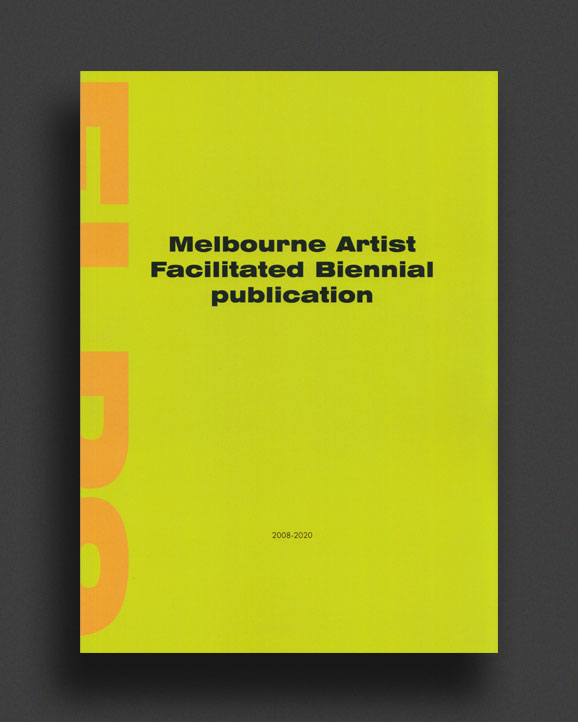
Melbourne Artist Facilitated Biennial publication by Melbourne artist Christopher LG Hill is both the ninth issue of his ongoing publishing imprint Endless Lonely Planet, and a major survey art book marking the end of his 12 year artist facilitated biennale project, spanning 2008-2020.
"Multiple sites and moments, artist facilitated biennials extending on structures and limitations set by Signs of life: Melbourne International Biennial 1999. Abstracting and bringing new meaning to the form of a biennial as a more casual and independent entity, the project has seen many participants and collaborators over the last 12 years. This book hopes to document some of these moments, but more so to be a catalyst for different modes and models that it may inspire." — publisher
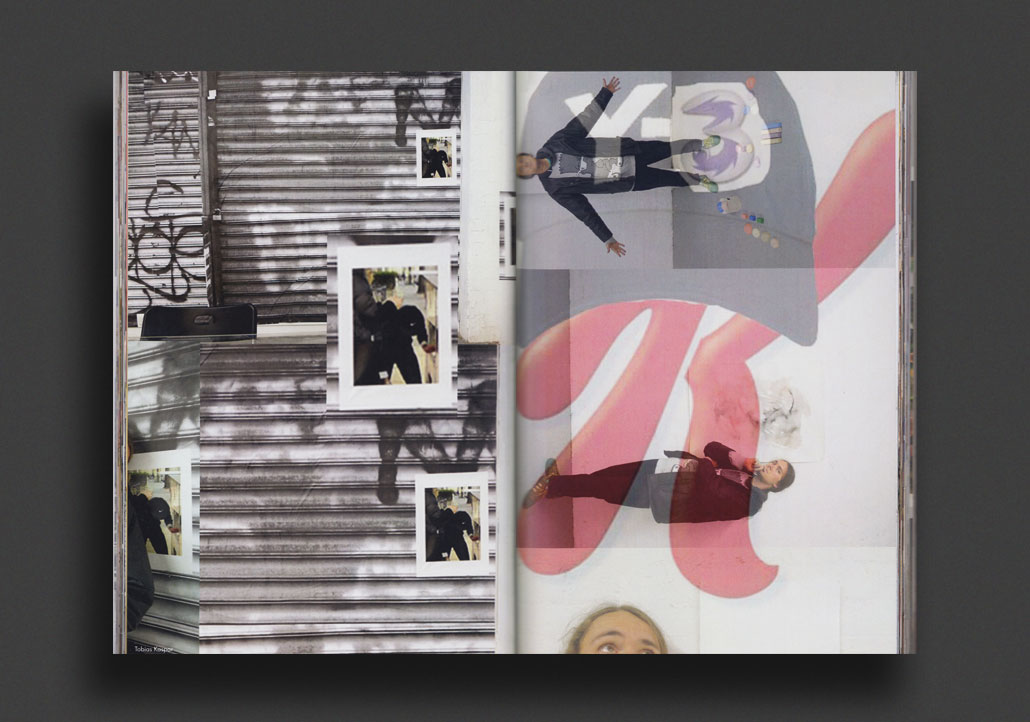
Includes extensive photographic documentation of The (self initiated, Artist funded) second (fourth) Y2K Melbourne Biennial of Art (& Design), TCB art inc., 2008; The First & Final Y3K Second (third) Inaugural Melbourne Biennial of International Arts, Y3K, 2011 (curated by Joshua Petherick, James Deutsher, and Christopher L G Hill); Third/Fourth Melbourne Biennial, Margaret Lawrence Gallery, 2013; 4th/5th Melbourne Artist Facilitated Biennial, TarraWarra Museum of Art, 2016 (as part of TarraWarra Biennial 2016: Endless Circulation curated by Victoria Lynn and Helen Hughes/Discipline); 5th/6th final Melbourne Artist Facilitated Biennial, Dec 2018 -Dec 2020 (co-facilitated by Virginia Overell and Christopher L G Hill in their apartment/ the ex-Telecom building that was the site of the Melbourne International Biennial 1999)
Includes the work of ACW, Liz Allen, Animal Charm, Dan Arps, Sean Bailey, Liv Barrett, Matthew Brown, Ruth Buchannan, Jon Campbell, Jane Caught, Xin Cheng, Fiona Connor, Ying Lan Dann, James Deutsher, Daniel du Bern, Ida Ekblad, ffiXXed, Pat Foster & Jen Berean, Justin K Fuller, Matt Griffin, Ardi Gunawan, Hao Guo, Bianca Hester, Christopher L G Hill, Matt Hinkley, Helen Johnson, Lisa Kelly, Devin Kenny, Taree Mackenzie, Simon McGlinn, Rob Mckenzie, Nick Mangan, Scott Mitchell, Tahi Moore, Kate Newby, Geoff Newton, John Nixon, OSW, Alexander Ouchtomsky, Damon Packard, Spiros Panigriakis, Sean Peoples/ Cheese Peoples, Joshua Petherick, Kain Picken, Janneke Raaphorst, Nick Selenitsch, Christopher Schueler & Matthew Hopkins, Gregory P Sharp, Kate Smith, Sriwhana Spong, Dylan Statham, Masato Takasaka, Ben Tankard, Simon Taylor, Alex Vivian, Annie Wu, Hany Armanious, Andreas Banderas, Mikala Dwyer, Katherine Huang, Tobias Kaspar, Piotr Łakomy, Taree Mackenzie, Tahi Moore, Michael O’Connell, Ester Partegas, Natalie Rognsoy, John Spiteri, Dan Arps, Sean Bailey, Olivia Barrett, Matthew Benjamin, Jon Campbell, Trevelyan Clay, Fiona Connor and Michala Paludan, James Deutsher, DoubleFly, George Egerton-Warburton, Endless Lonely Planet, ffiXXed, Alicia Frankovich, Justin K Fuller, Marco Fusinato, Greatest Hits, Ardi Gunawan, Hao Guo, Christopher L G Hill, Matt Hinkley, David Homewood, Matthew Hopkins, Lou Hubbard, Renee Jaeger, Helen Johnson, Kenneth Biennale (curated by Kenny Pittock and Amy May Stuart: Chris Clarke, Christo Crocker, Christina Hayes, Chris L G Hill, Christine Pittock, Christopher Sciuto), Legendary Hearts (Kieran Hegarty and Andrew Cowie), S.T. Lore, Patrick Lundberg, Carrie McGrath, Rob McKenzie, Taree McKenzie, Nick Mangan, Gian Manik, Kate Meakin, Adelle Mills, Tahi Moore, Kate Newby, Elizabeth Newman, Virginia Overell, Sean Peoples, Joshua Petherick, Kain Picken, Lisa Radford and Sam George, Nick Selenitsch, Kate Smith, Studio Masatotectures, Sydney (Esther Edquist), Masato Takasaka and Madeline Kidd, Ben Tankard, Alex Vivian, Nicki Wynnychuk, y3k, Lauren Burrow, Counterfeitnessfirst, James Deutsher, Laurel Doody, George Egerton-Warburton, ELP3 Vine, Endless Lonely Planet, Lewis Fidock, Aurelia Guo, Christopher L G Hill, Lou Hubbard, Lucina Lane, Kate Meakin, Tahi Moore, Elizabeth Newman, Liam Osborne, Virginia Overell, Joshua Petherick, Lisa Radford, Zac Segbedzi, Nick Selenitsch, Nicholas Tammens, Alex Vivian, Rudi Williams, Gavin Bell, Jarrah de Kuijer and Simon McGlinn, Candida ((Gian Manik and Ricarda Bigolin) in collaboration with Agnieszka Chabros, Samuel Heatley and Jaala Jensen), Xin Cheng, Fiona Connor, Renee Cosgrave, Christo Crocker, Ying Lan Dann, Endless Lonely Planet, Richard Frater, Aurelia Guo, HB Peace, Hoggle, Lou Hubbard, Olivia Koh, Spencer Lai, Laurel Doody Library Supply, Patrick Lundberg, Kate Meakin, Olivia O’Donnell, Jason Willers, and more...
More info at http://www.christopherlghill.com
2009, English
Softcover, 224 pages, 22.5 x 14 cm
1st Edition, Out of print title / as new
Published by
The Everyday Press / London
$70.00 - In stock -
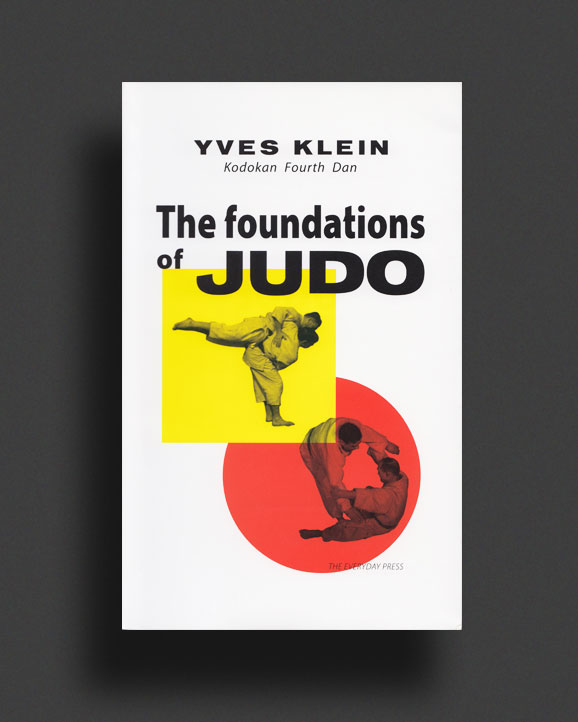
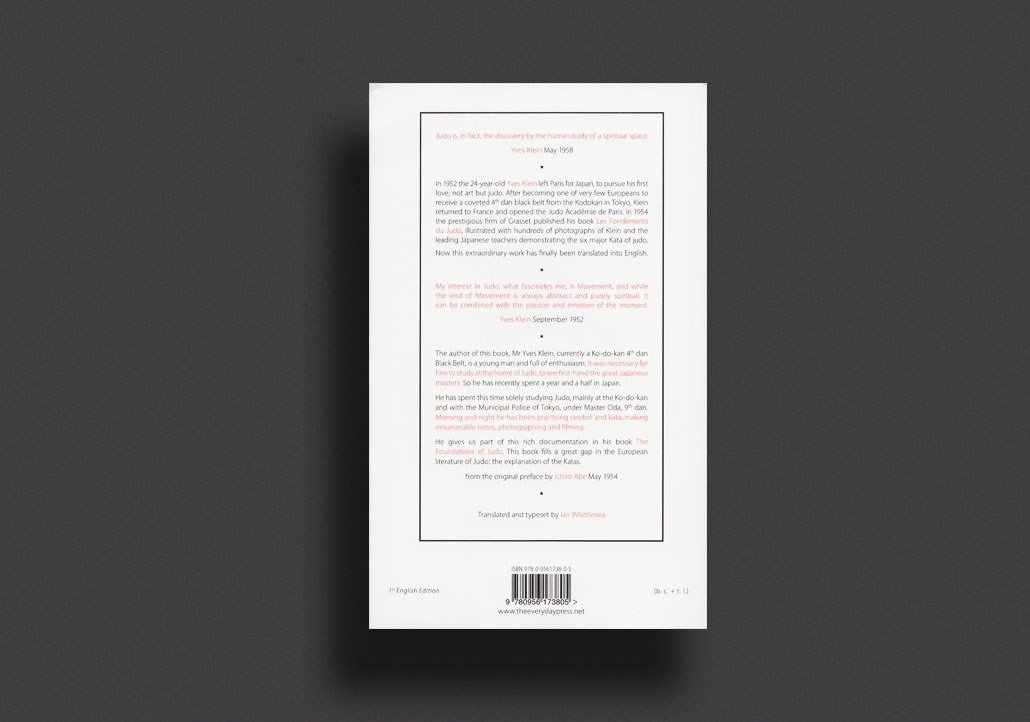
"In 1952 the 24-year-old Yves Klein left Paris for Japan to pursue his first love; not art but judo. After becoming one of very few Europeans to receive a coveted 4th dan black belt fro the Kodokan in Tokyo, Klein returned to France and opened the Judo Académie de Paris. In 1954 the prestigious firm of Grasset published his book Les Fondements du Judo, illustrated with hundreds of photographs of Klein and the leading Japanese teachers demonstrating the six major Kata of judo. Now this extraordinary work has finally been translated into English."
Yves Klein (1928 – 1962) was a French artist and an important figure in post-war European art. He was a leading member of the French artistic movement of Nouveau réalisme founded in 1960 by art critic Pierre Restany. Klein was a pioneer in the development of performance art, and is seen as an inspiration to and as a forerunner of minimal art, as well as pop art.
First and only English edition, published by The Everyday Press, now long out-of-print. Last copies.
2020, English
Hardcover, 328 pages, 21.3 x 28.2 cm
Published by
MASP / São Paulo
$100.00 - Out of stock
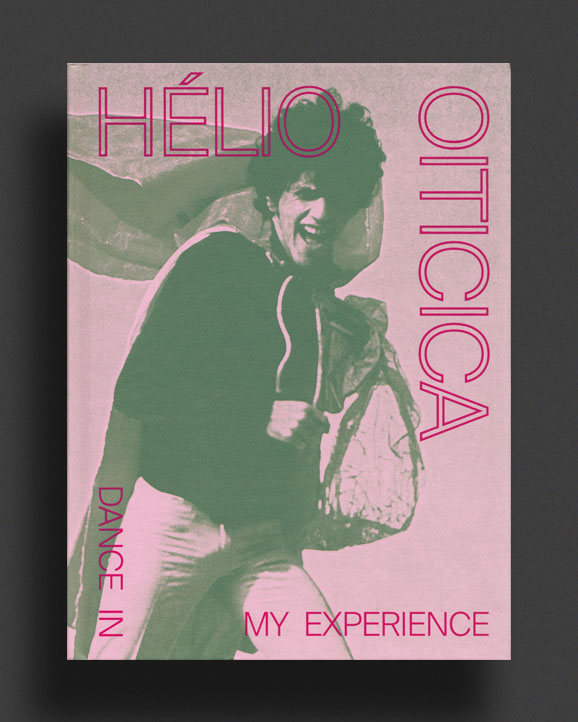
One of the most radical and joyful artists of the 20th century, Hélio Oiticica (1937-80) helped lead the charge in Brazilian art’s unique transition from abstract concrete art to performative objects and collective performance.
As MoMA’s 2019 exhibition Sur Moderno demonstrated, one of Oiticica’s most revolutionary projects was the Parangolé, wearable sculptures made from fabric, plastic or paper. The Parangolé is meant to be worn, inhabited and danced by a participant, lending a physical spontaneity to the piece that entirely blurs the boundaries between the art object and those who experience it.
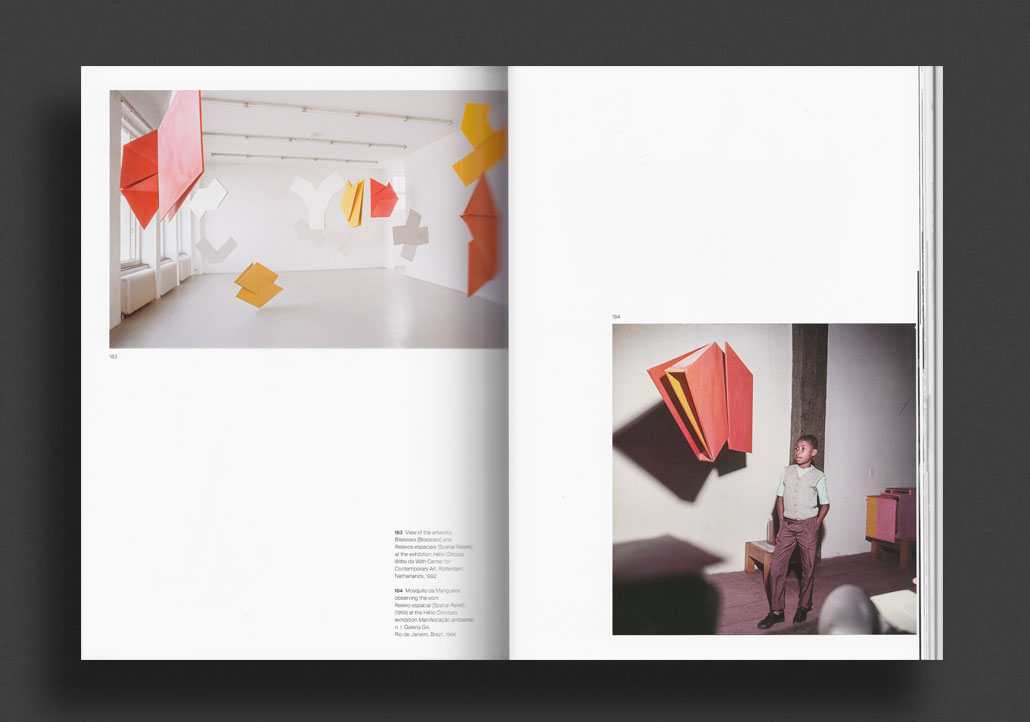
Dance in My Experience traces the genealogy of this theme within the artist’s oeuvre, identifying rhythmic, choreographic and dance elements throughout his trajectory, from his first Metaesquemas through the Spatial Reliefs, Nuclei and Bólides, culminating in the Parangolés. Texts by Oiticica and numerous scholars.
Edited with text by Adriano Pedrosa, Tomás Toledo. Text by Adrian Anagnost, Cristina Ricupero, Evan Moffitt, Fernanda Lopes, Fernando Cocchiarale, Sergio Delgado Moya, Tania Rivera, Vivian A. Crockett, Hélio Oiticica.
2020, English
Hardcover, 240 pages, 18.3 x 25.4 cm
Published by
MASP / São Paulo
$85.00 - Out of stock
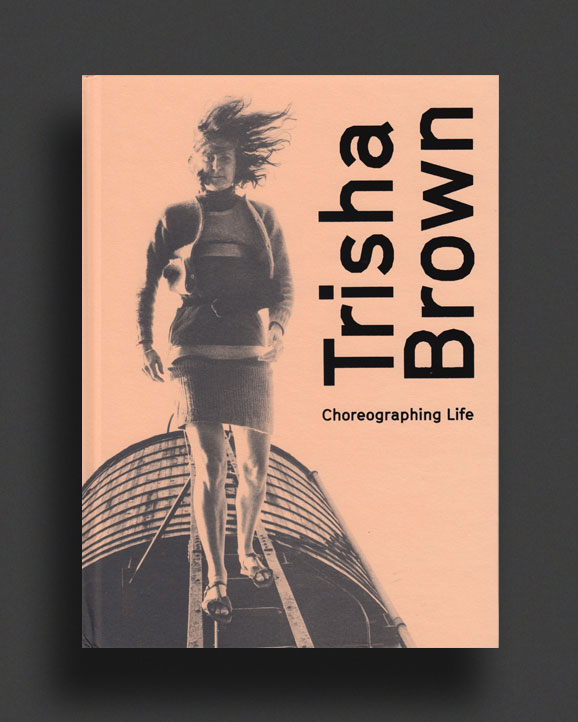
A comprehensive tribute to one of the central figures of postmodern dance in America. Edited with text by André Mesquita. Texts by Adriana Banana, David M. Sperling, Susan Rosenberg, Babette Mangolte, Yvonne Rainer, Trisha Brown.
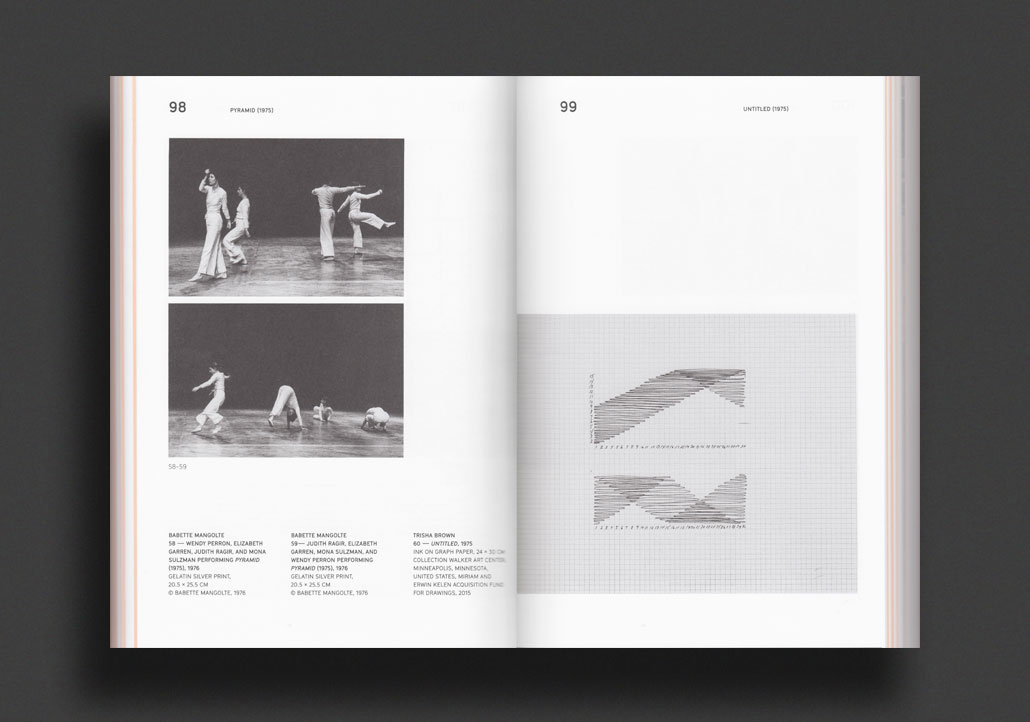
A founding member of the legendary Judson Dance Theater, American choreographer and dancer Trisha Brown (1936-2017) helped build the tenets of postmodern dance and is now considered one of the most influential figures in American choreography. Trisha Brown: Choreographing Life presents a sizable archive of Brown’s career, with photographs, drawings and video stills that illustrate her lifelong contributions to the world of contemporary dance.
Brown established her own dance company in 1970 and continued to dance until 2008, during which time she created over 100 dances and six operas. One of her most famous pieces was the product of a creative partnership with artists Laurie Anderson and Robert Rauschenberg; after the 1983 premiere of Set and Reset at the Brooklyn Academy of Music’s Next Wave Festival, Brown was launched into international acclaim. Brown’s choreography demonstrates an unparalleled cognizance of space and visuality, as indicated by the artistic process apparent in the drawings and diagrams included in this publication. Her work conveys the extent to which movement is an artistic language reflective of the complex relationship between body and mind.
1984, English
Softcover, 90 pages, 29 x 21 cm
1st Edition, Out of print title / used / very good
Published by
LAICA / Los Angeles
$70.00 - Out of stock
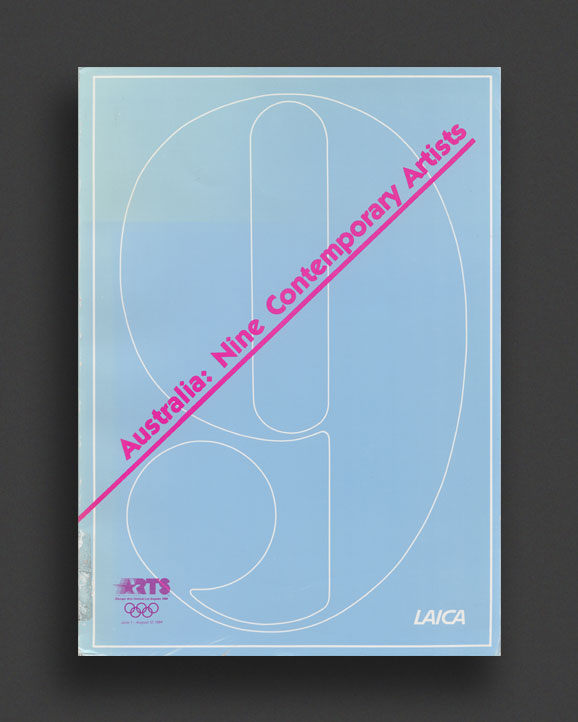
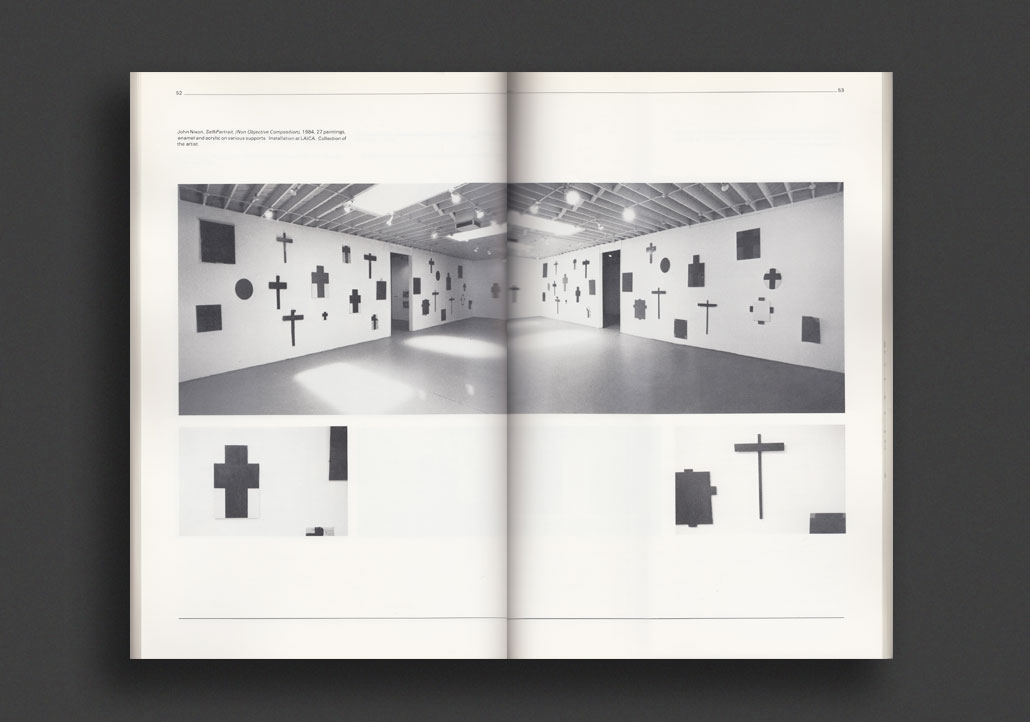
Scarce catalogue published on the occasion of the exhibition "Australia: Nine Contemporary Artists" at Los Angeles Institute of Contemporary Art, June 30 - August 14, 1984. To coincide with the 1984 Summer Olympics in Los Angeles, LAICA director Robert Smith invited nine Australian artists (John Davis, John Dunkley-Smith, Marr Grounds, Lyndal Jones, John Nixon, Mike Parr, Redback Graphix, Stelarc) to create site-specific installations at the gallery. This generous catalogue profiles the work of each artist with reproductions of past works, artist writings, and document of their various outcomes in Los Angeles. Includes biographies.
Very Good copy with some tanning to covers and sticker residue to bottom of spine/front. Sticker on verso reading "Exhibitions Australia".
2017, English
Softcover, 512 pages, 15.3 x 23.4 cm
Published by
Faber & Faber / London
$35.00 - Out of stock
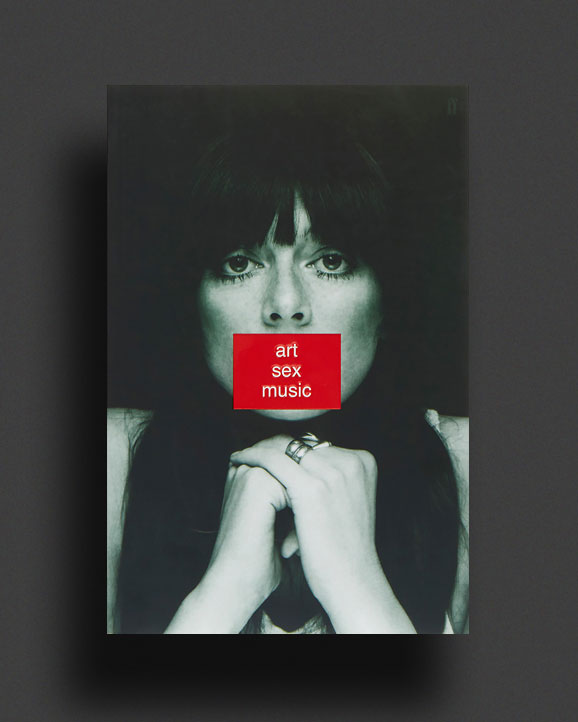
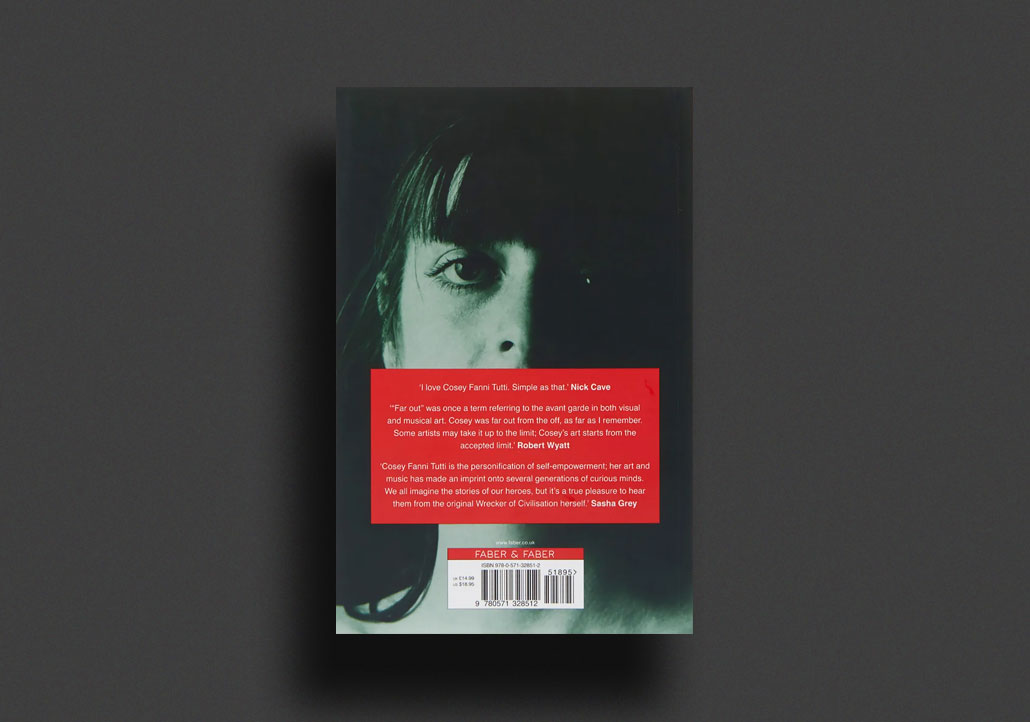
Art Sex Music is the wise, shocking and elegant autobiography of Cosey Fanni Tutti.
Art Sex Music is the autobiography of a musician who, as a founding member of the avant-garde group Throbbing Gristle and electronic pioneers Chris & Cosey, has consistently challenged the boundaries of music over the past four decades.
It is the account of an artist who, as part of COUM Transmissions, represented Britain at the IXth Biennale de Paris, whose Prostitution show at the ICA in 1976 caused the Conservative MP Nicholas Fairbairn to declare her, COUM and Throbbing Gristle 'Wreckers of Civilisation'...shortly before he was arrested for indecent exposure, and whose work continues to be held at the vanguard of contemporary art.
And it is the story of her work as a pornographic model and striptease artiste which challenged assumptions about morality, erotica and art.
2020, English
Softcover, 272 pages, 17 x 24 cm
Published by
Mousse / Milan
Ujazdowski Castle Centre for Contemporary Art / Warsaw
$65.00 - Out of stock
The publication is an anthology of both newly commissioned and reprinted essays, as well as interviews and fiction that reflect on performance today. It is structured around four major sections that investigate the new performance phenomenologies by looking at artistic institutions, curatorial practices, and exhibition formats, as well as the technological turn and performative fiction. Over recent decades, the definition of performance has changed. Performance Works examines changes taking place in the traditional exhibition format, which has recently taken a back seat to hybrid forms that link the visual arts with the performing arts, literature, and music. The book reflects on the changing role of the viewer, who increasingly has become a performer and active participant. Authors also analyze the role of the performer’s body and the work that is involved in extended performative exhibitions. Additionally, Performance Works presents the research outcomes linked to the performance program launched in 2016 at Ujazdowski Castle Centre for Contemporary Art in Warsaw, which examined the performative turn in visual arts and its consequences for art institutions, as well as artistic and curatorial practices.
Edited by Joanna Zielińska
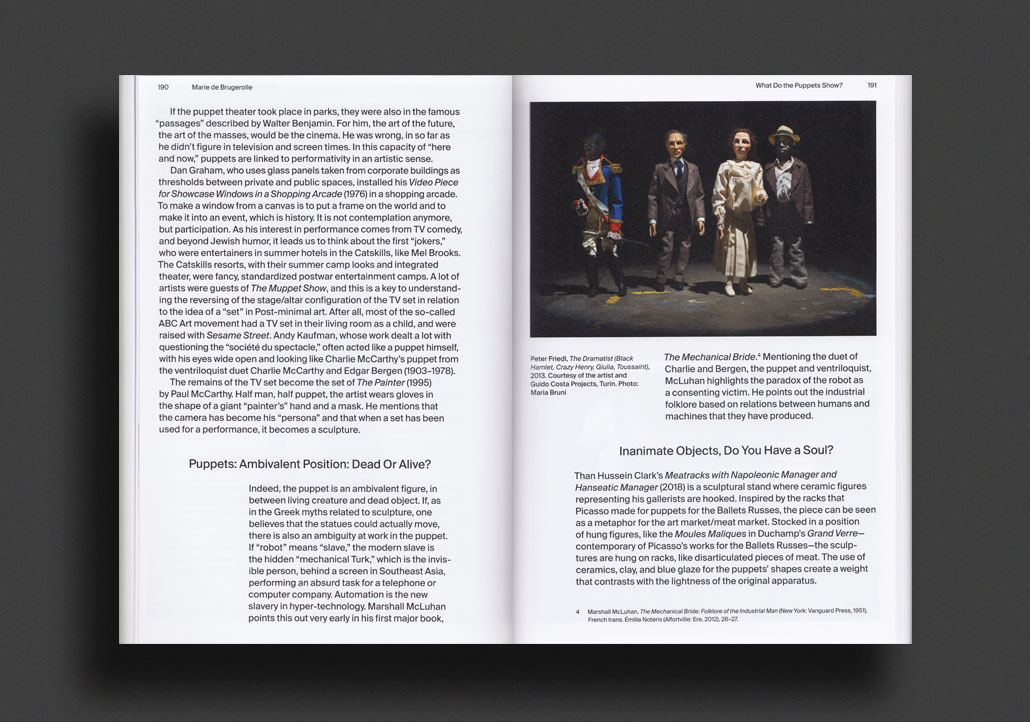
Texts by Oreet Ashery, Pierre Bal-Blanc, Claire Bishop, Marie de Brugerolle, Yann Chateigné, Korina Giaxoglou, Michał Grzegorzek, Shannon Jackson, Eliel Jones, Chris Kraus, Laura Lima, David Maroto, Ingo Niermann, Kathy Noble, Johannes Paul Raether, Mark von Schlegell, Agnieszka Sosnowska, Ana Teixeira Pinto, Transformella, and Joanna Zielińska
2020, English
Softcover, 240 pages, 13 x 22 cm
Published by
Valiz / Amsterdam
$50.00 - Out of stock
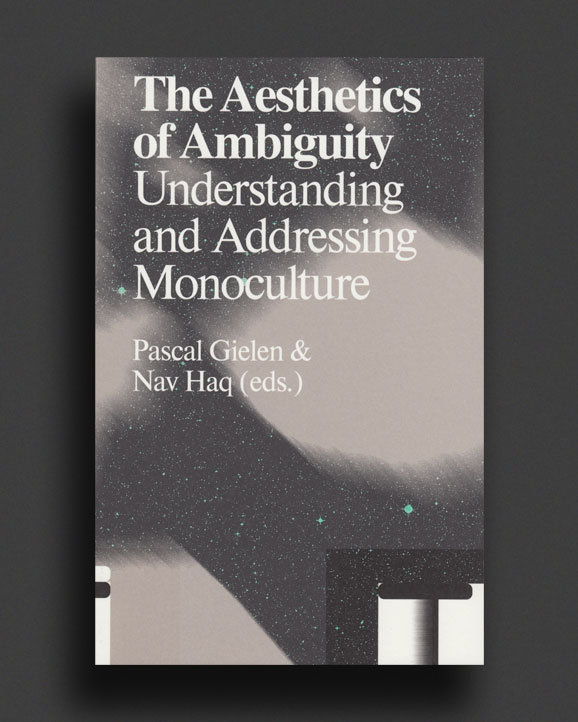
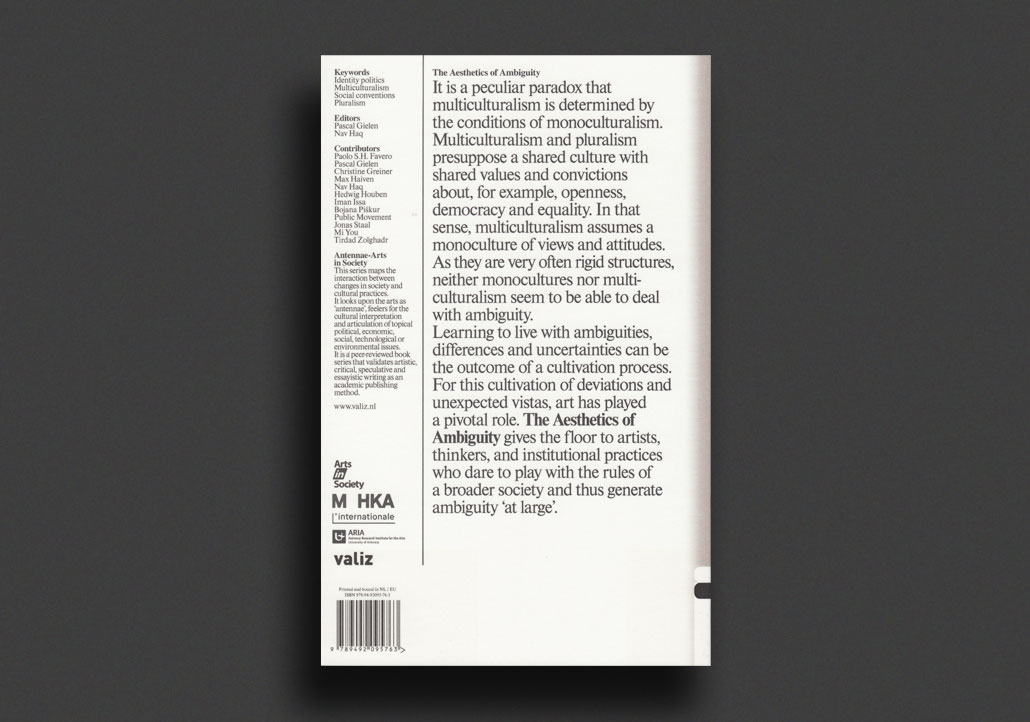
In The Aesthetics of Ambiguity: Understanding and Addressing Monoculture Pascal Gielen and Nav Haq argue that multiculturalism is paradoxically based on monocultural thinking. The publication explores this paradox by exploring monoculture in a variety of contemporary contexts. The book sets out to analyse monoculture using a multifaceted approach, by bringing together historical, social, cultural and ideological perspectives, using the dual role of art as tool for reconciliation and division in societies. The Aesthetics of Ambiguity gives stage to artists, thinkers and institutional practices who dare to play with the rules of a broader society and thus generate ambiguity ‘at large’. The book represents a quest for (more) ambiguity in order to avoid rigid borders or black-and-white polarities between cultures, as well as between practices of art and scientific thinking. By doing so, the artists, activists and researchers featured in this book plea for a politics and aesthetics of ambiguity to deal with the complexity of our living together on Earth.
Contributors: Paolo S.H. Favero, Pascal Gielen, Christine Greiner, Max Haiven, Nav Haq, Hedwig Houben, Iman Issa, Bojana Piškur, Public Movement, Jonas Staal, Mi You and Tirdad Zolghadr
Design: Metahaven
Pascal Gielen is professor of sociology of culture and politics. He is based at the Antwerp Research Institute for the Arts (ARIA) of Antwerp University. There he leads the research group Culture Commons Quest Office (CCQO). He is editor of the international book series Antennae-Arts in Society, published by Valiz.
Nav Haq is Associate Director at M HKA, responsible for the development of its artistic programme. At M HKA he co-curated Don’t You Know Who I Am? Art After Identity Politics (2014). He was previously Exhibitions Curator at Arnolfini, Bristol and Curator at Gasworks, London. Haq has organized numerous monographic exhibitions and in 2012 he was the recipient of the Independent Vision Award for Curatorial Achievement, awarded by Independent Curators International, New York.
2020, English
Softcover, 242 pages, 15 x 20.2 cm
Published by
Blank Forms / New York
$44.00 - Out of stock
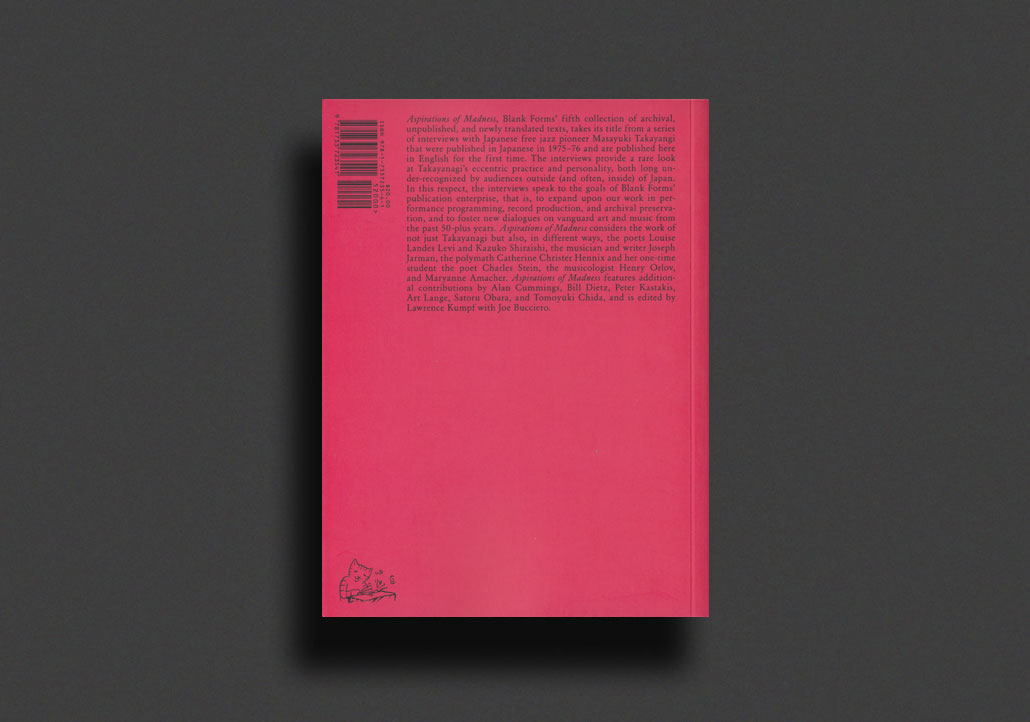
Edited by Lawrence Kumpf with Joe Bucciero.
Contributors and featured artists include Masayuki Takayanagi, Louise Landes Levi, Joseph Jarman, Catherine Christer Hennix, Charles Stein, Henry Orlov, Maryanne Amacher, Alan Cummings, Bill Dietz, Peter Kastakis, Art Lange, Leo Svirsky, Satoru Obara, and Tomoyuki Chida.
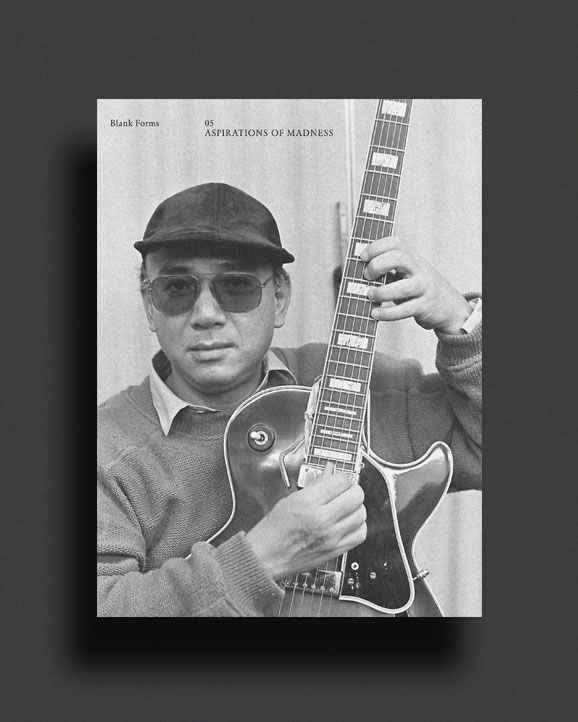
Aspirations of Madness, Blank Forms’ fifth collection of archival, unpublished, or newly translated texts, takes its title from a series of interviews with Japanese free jazz pioneer Masayuki Takayangi that were published in Japanese in 1975–76 and are published here in English for the first time. The interviews provide a rare look at Takayanagi’s eccentric practice and personality, both long under-recognized by audiences outside (and often, inside) of Japan. In this respect, the interviews speak to the goals of Blank Forms’ publication enterprise, that is, to expand upon our work in performance programming, record production, and archival preservation, and to foster new dialogues on vanguard art and music from the past 50-plus years.
Aspirations of Madness considers the work of Masayuki Takayanagi, the poet Louise Landes Levi, musician and writer Joseph Jarman, polymath Catherine Christer Hennix and her one-time student the poet Charles Stein, Russian musicologist Henry Orlov, and Maryanne Amacher—brilliant and overlooked artists whose work Blank Forms will continue to champion in a variety of contexts. Aspirations of Madness features additional contributions by Alan Cummings, Bill Dietz, Peter Kastakis, Art Lange, Leo Svirsky, Satoru Obara, and Tomoyuki Chida, and is edited by Lawrence Kumpf with Joe Bucciero.
1989, English
Softcover (single fold-out card), 210 x 297
1st Edition, Out of print title / used / fine
Published by
200 Gertrude Street / Melbourne
$10.00 - Out of stock
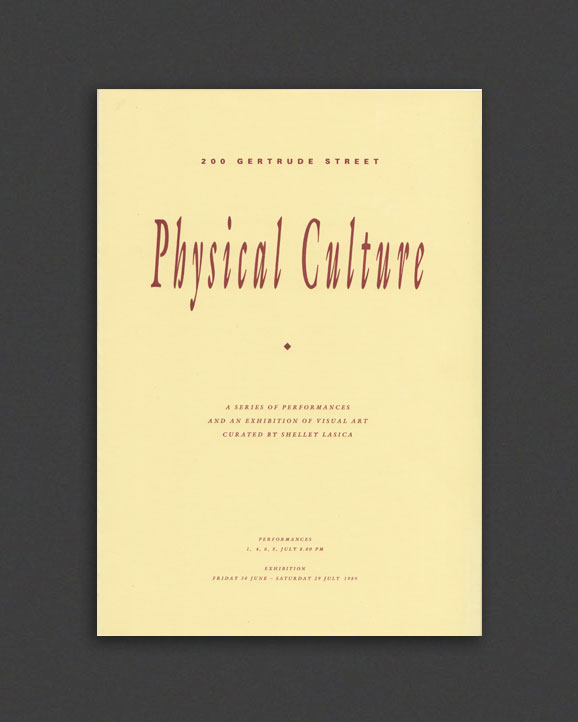
Scarce catalogue published on the occasion of the exhibition Physical Culture: A Series Of Performances And An Exhibition Of Visual Culture, curated by Shelley Lasica, at 200 Gertrude Street in 1989. Introductory text by Lasica alongside a full list of performance and exhibited works by Stephen Bram, Elizabeth Newman, Louise Forthun, Mutlu Hassan, Melbourne Research Group, John De Silentio and Aleks Danko, Rosslynd Piggott, Shiralee Saul, Trevor Patrick, Teresa Blake and Dan Wilton, Jacqui Rutten, Sarah Ritson, Andrew Browne, Richard Todd.
Fine copy.
1986, Japanese
Softcover (folded cardboard card w. inserted press clippings), 21 x 30 cm
1st edition, Out of print title / used*,
Published by
Gallery Kobayashi / Tokyo
$80.00 - In stock -
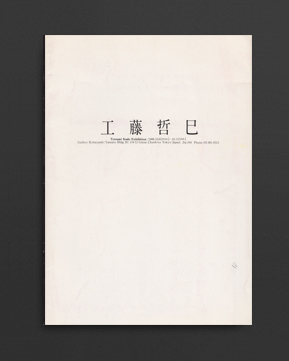
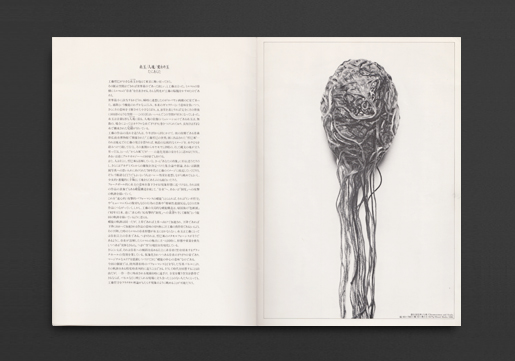
Very scarce Tetsumi Kudo exhibition card/publication produced on the occasion of his solo exhibition at Gallery Kobayashi in Ginza, Tokyo, in 1986. Alongside a detail shot of one of Kudo's "Chromosomes and Souls", and a text in Japanese, inserted into the folded card are copies of press clippings from Japanese newspapers relating to the exhibition.
Born in Osaka, Japan, in 1935 Kudo first gained notoriety in the Tokyo art scene of the late 50s. He began exhibiting his work at the Salon of Independents, Yomiuri and had his first solo exhibition at the Galerie Blanche, Tokyo. He was awarded the Grand Prize and a travel grant to Paris through his painting participation in the 1962 Second International Young Artists Exhibition in Tokyo. Immigrating to Paris, he immediately started working in a range of media--objects, sculpture, installation, drawing and painting--and presenting numerous Happenings and performances. Kudo's work and activities intersect with many important postwar artistic trends--including French Nouveau Realisme, Fluxus, Pop art, 60s anti-art tendencies and 80s Postmodernism. Throughout his life and career, Kudo remained particularly Japanese while his art and vision were consistently and uniquely transcultural, internationalist and cosmopolitan. His work made international appearances at the Stedelijk Museum, Amsterdam (1972), Kunstverein für die Rheinlande und Westfalen, Düsseldorf, Germany, (1970), Venice Biennial (1976), and the Biennial São Paulo (1977, awarded a special mention) while also appearing frequently in museums and galleries throughout Japan and France, with a growing recognition in the Netherlands.
1994, Japanese / French
Softcover, 199 pages, 29.5 x 21 cm
1st Edition, Out of print title / as new
Published by
The National Museum of Art / Osaka
$100.00 - Out of stock
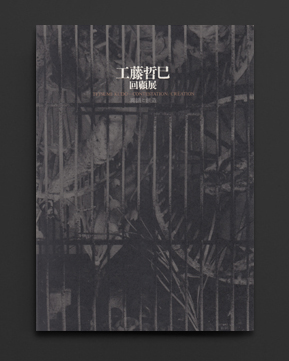
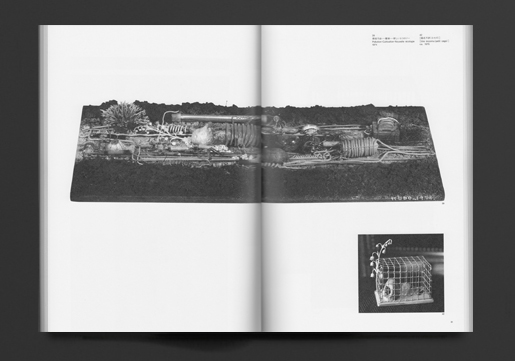
Wonderful, scarce, out of print monographic catalogue published in conjunction with a show of Tetsumi Kudo's work, held at the National Museum of Art in Osaka, October 6 - November 29, 1994.
Heavily illustrated with text by Keiji Nakamura and Didier Semin. Includes list of works in the exhibition, biography, and bibliography. Black-and-white and colour images throughout.
Text in Japanese and French.
As New copies.
Born in Osaka, Japan, in 1935 Kudo first gained notoriety in the Tokyo art scene of the late 50s. He began exhibiting his work at the Salon of Independents, Yomiuri and had his first solo exhibition at the Galerie Blanche, Tokyo. He was awarded the Grand Prize and a travel grant to Paris through his painting participation in the 1962 Second International Young Artists Exhibition in Tokyo. Immigrating to Paris, he immediately started working in a range of media--objects, sculpture, installation, drawing and painting--and presenting numerous Happenings and performances. Kudo's work and activities intersect with many important postwar artistic trends--including French Nouveau Realisme, Fluxus, Pop art, 60s anti-art tendencies and 80s Postmodernism. Throughout his life and career, Kudo remained particularly Japanese while his art and vision were consistently and uniquely transcultural, internationalist and cosmopolitan. His work made international appearances at the Stedelijk Museum, Amsterdam (1972), Kunstverein für die Rheinlande und Westfalen, Düsseldorf, Germany, (1970), Venice Biennial (1976), and the Biennial São Paulo (1977, awarded a special mention) while also appearing frequently in museums and galleries throughout Japan and France, with a growing recognition in the Netherlands.
2020, English
Softcover, 350 pages, 15 x 23 cm
Published by
Sternberg Press / Berlin
$50.00 - In stock -
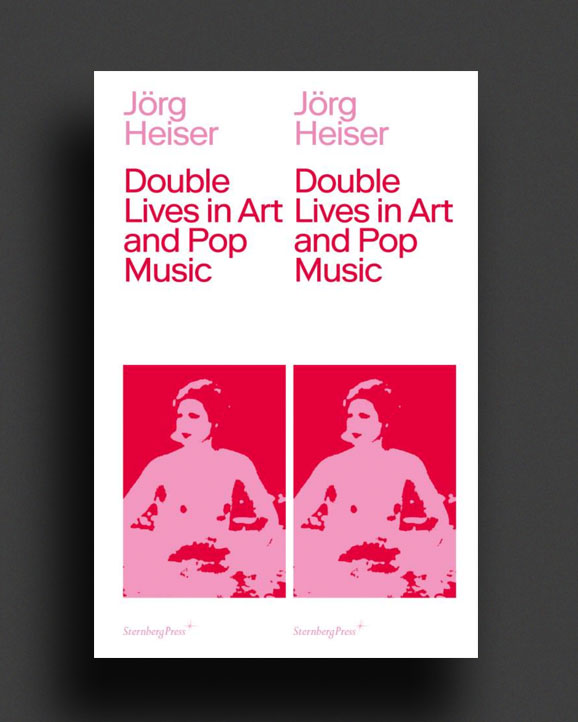
Exploring the relationship between art and pop music over the last fifty years.
Why did Andy Warhol decide to enter the music business by producing the Velvet Underground, and what did the band expect to gain in return? What made Yoko Ono use the skills she developed in the artistic avant-garde in pop music, and what drew John Lennon, in turn, to visual art? Why, in 1982, did Joseph Beuys record the pop single “Sonne statt Reagan,” and why, around the same time did, West German artists such as Michaela Melián move into pop music?
In Double Lives in Art and Pop Music, Jörg Heiser argues that context shifting between art and pop music is an attempt to find solutions for contradictions faced in one field of cultural production. Heiser looks closely at the careers of artists and pop musicians who work in both fields professionally. The seeming acceptance and effortlessness today of current border crossings can be deceptive, since they might be serving vested economic or ideological interests. Exploring a pop and art history of more than fifty years, Heiser shows that those leading double lives in art and pop music may often be best able to detect these vested interests while he points toward radical alternatives.
2018, English
Hardcover, 372 pages, 29.7 x 24.9 cm
Published by
Walther König / Köln
$120.00 - In stock -
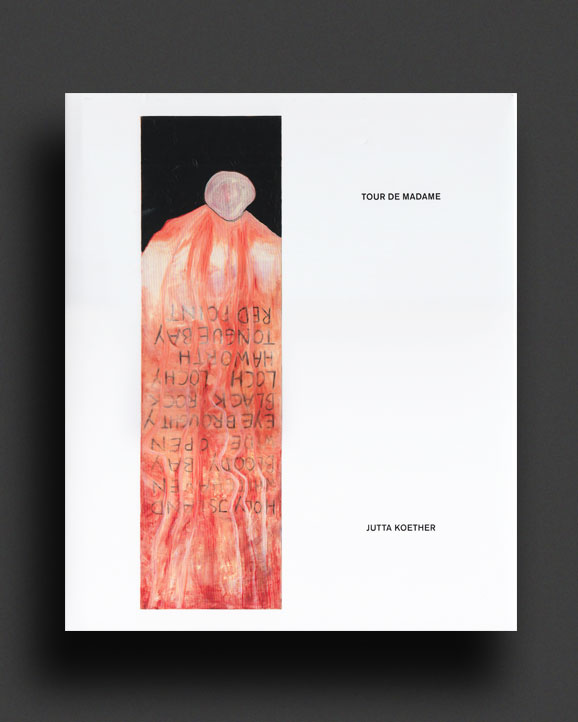
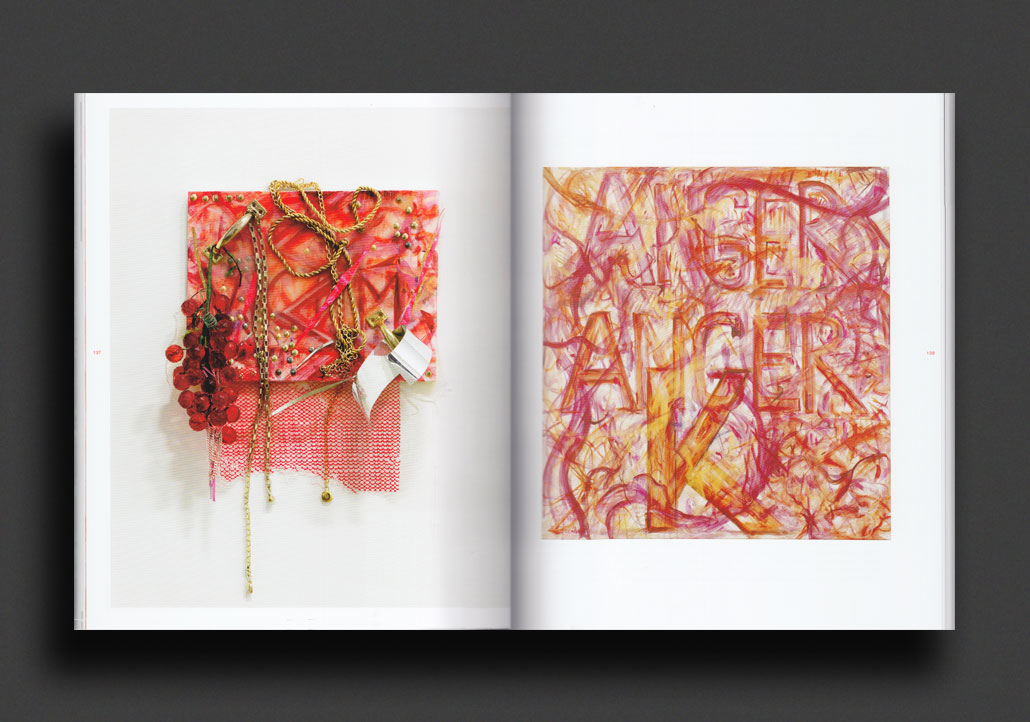
This extensive, over-sized hardcover catalogue offers a systematic and chronological overview of the multifaceted oeuvre of German artist, Jutta Koether. It goes back to her beginnings in the context of Neo Expressionism in Cologne in the early and mid-1980s, and her subsequent exploration of the colour red as an expressive device – presenting a response to the cliché of male painters. After moving to New York in the early 1990s, Koether began making breathtakingly intense and colourful large-scale paintings that layer motifs from pop culture, literature and art history in dense painterly gestures. In the early 2000s, the artist’s approach became increasingly involved with performance and music, culminating in inky black canvases and assemblage paintings incorporating devotional objects from Punk and ‘noise culture’. The final chapter of this retrospective is dedicated to Koetherʼs eccentric turn to history painting and her latest appropriations from art historyʼs visual memory.
Published on the occasion of the exhibition, Jutta Koether: Tour de Madame at Museum Brandhorst, Munich (18 May – 21 Oct 2018), and at Mudam Luxembourg, 2019.
2018, English
Softcover, 268 pages, 11.7 x 18.7 cm
Published by
Sternberg Press / Berlin
Ujazdowski Castle Centre for Contemporary Art / Warsaw
$49.00 $10.00 - Out of stock
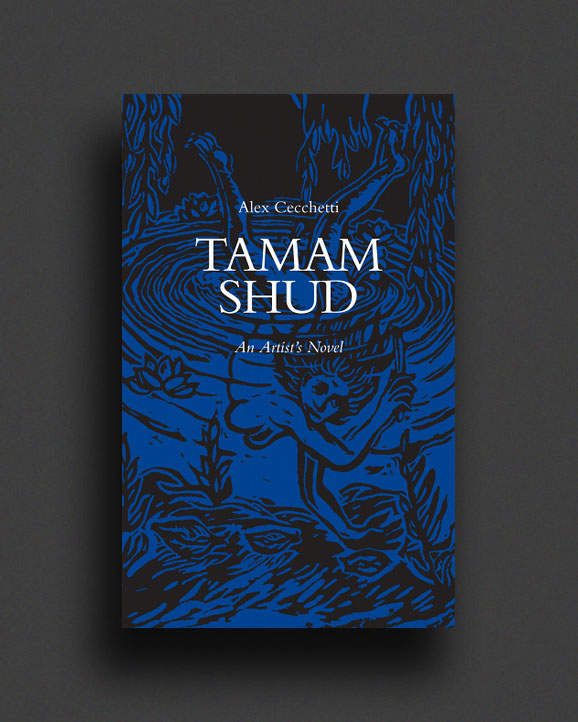
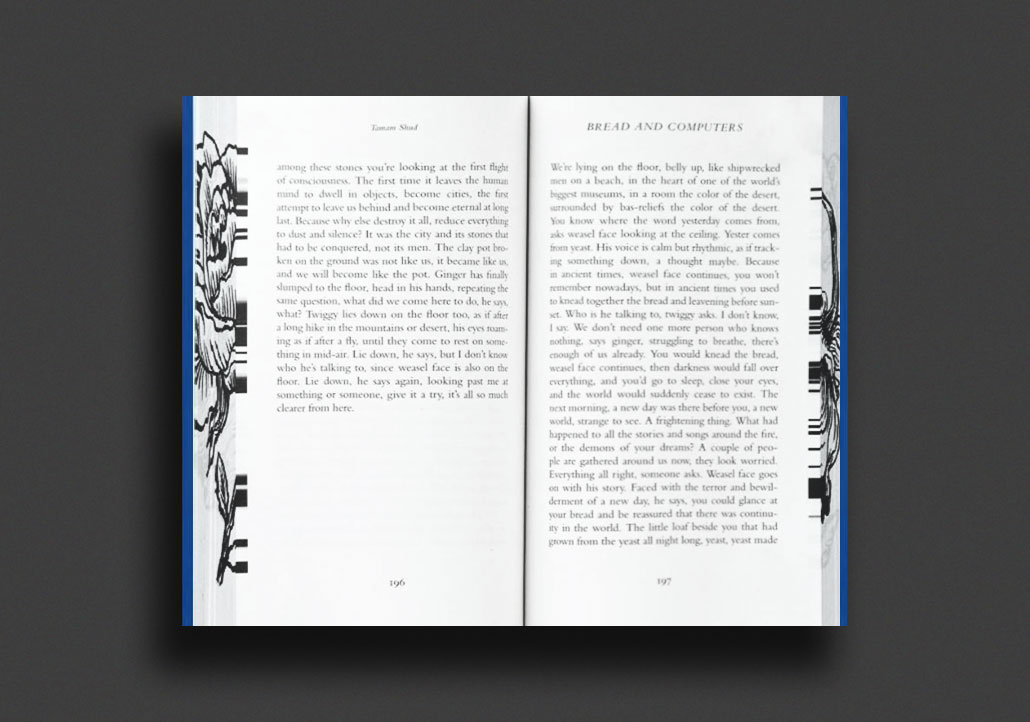
“I am dead. Homicide, assassination, accident, suicide, the detectives have come up with nothing. The labels in my clothes, my fingerprints, my shoe size, everything has been unstitched, erased, wiped away, blanched, bleached, and consigned to oblivion. As the only clue, in a secret pocket sewn into my trousers, the detectives found a flimsy slip of paper torn from the pages of a book. On that folded bit of paper just two words, Tamam Shud, ‘this is the end.’ Experts, antiquarians, and opium smokers have been consulted, and all agree that these are the last two words in the Rubaiyat, an ancient collection of esoteric poems written by a Persian poet named Omar Khayyam. What the hell do I have to do with poetry, Persia, and hidden pockets? I can’t even sew on a button. My identity is still unknown and not even I remember much. This is why I have decided to investigate my own death.”
The Tamam Shud narrative emerged through a series of episodic performances and an exhibition by Alex Cecchetti at the Ujazdowski Castle Centre for Contemporary Art, Warsaw. For two years the writing process and the artistic process were interwoven, feeding each other as they evolved. The art project and the artist’s novel are linked together as much as the life of the victim is connected to the piece of paper found in his pocket.
1969, German
Softcover (stapled), 41 pages, 21 x 20.5 cm
1st edition, Out of print title / used*,
Published by
Felix Handschin Galerie / Basel
$40.00 $20.00 - Out of stock
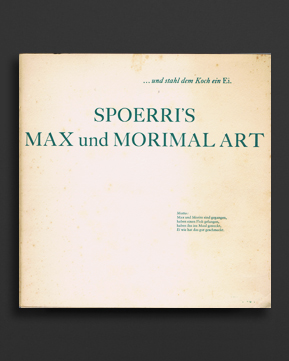
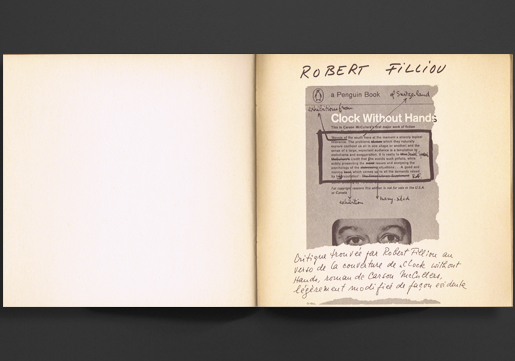
Quite a rare Daniel Spoerri catalogue published for the exhibition of the same name (Spoerri's Max and Morimal Art ...und stahl dem Koch ein Ei (And stole an egg from the cook)) at Felix Handschin Galerie, Basel, 1969. No works by Spoerri are shown in this catalog, instead, very much in Spoerri's character, he has friends and colleagues (artists, poets, collectors) contribute the contents: letters, texts, drawings by Ben Vautier, Robert Filliou, George Brecht, Bernhard luginbühl, Arturo Schwarz, Wolfgang Hahn, Klaus Honnef, Ingeborg Lüscher, Jürg Federspiel, Andre Thomkins, Carlo Schröter, Hanspeter Ricklin etc. Introduction by Spoerri. Texts in German.
Daniel Spoerri (born 27 March 1930 in Galați) is a Swiss artist and writer born in Romania. Spoerri is best known for his “snare-pictures,” a type of assemblage or object art, in which he captures a group of objects, such as the remains of meals eaten by individuals, including the plates, silverware and glasses, all of which are fixed to the table or board, which is then displayed on a wall. He also is widely acclaimed for his book, Topographie Anécdotée* du Hasard (An Anecdoted Topography of Chance), a literary analog to his snare-pictures, in which he mapped all the objects located on his table at a particular moment, describing each with his personal recollections evoked by the object, with illustrations by the great Roland Topor. In the 1950s he was active in dance, studying classical dance with Olga Preobrajenska and in 1954 becoming the lead dancer at the State Opera of Bern, Switzerland. He later staged several avant-garde plays including Ionesco’s The Bald Soprano and Picasso’s surrealist Desire Trapped by the Tail. During that period he met a number of Surrealist artists, including Meret Oppenheim, Jean Tinguely, Marcel Duchamp and Man Ray, and also a number of artists subsequently associated with the Fluxus movement, including Robert Filliou, Dieter Roth and Emmett Williams. Closely associated with the Fluxus art movement, a movement “characterized by a strongly Dadaist attitude, [whose] participants were a divergent group of individualists whose most common theme was their delight in spontaneity and humor.” It has been said that his Anecdoted Topography of Chance “seems perfectly to embody aspects of its spirit.” Spoerri was also one of the original signers of the manifesto creating the Nouveau réalisme (New Realism) art movement, which involved artists such as Yves Klein, Arman, Martial Raysse, Pierre Restany, Niki de Saint Phalle, César, Jean Tinguely, Mimmo Rotella, Gérard Deschamps, and the Ultra-Lettrists, Francois Dufrêne, Raymond Hains, Jacques de la Villeglé, an avant garde endeavor begun in 1960. His use of everyday life as the main subject-matter of his art reflects his involvement in the New Realism movement.
A major theme of Spoerri’s artwork is food, and he has called this aspect of his work “Eat Art.” This is seen not only in his snare-pictures of eaten meals, but in a variety of other contexts. For example, in 1961 he sold in an art-gallery in Copenhagen store-bought canned food which he had signed and rubber-stamped “Attention: Work of Art.” In 1963, he enacted a sort of performance art called Restaurant de la Galerie J in Paris, for which he cooked on several evenings. Art-critics took over the role of waiters, playing on the idea of the critic bringing the art to the consumers and giving them an understanding of the work. On June 18, 1968, Spoerri opened the Restaurant Spoerri in Düsseldorf, and on September 18, 1970, he opened the Eat-Art-Gallery upstairs.He also published in 1970 a diary of his life on the Greek island of Symi, in which he included numerous recipes of the dishes he ate there. Originally titled A Gastronomic Itinerary, it was later republished under the title Mythology & Meatballs.
1981, English
Softcover, 208 pages, 27.5 x 21.5 cm
1st Edition, Out of print title / used / average
Published by
SFMOMA / San Francisco
$50.00 $20.00 - Out of stock
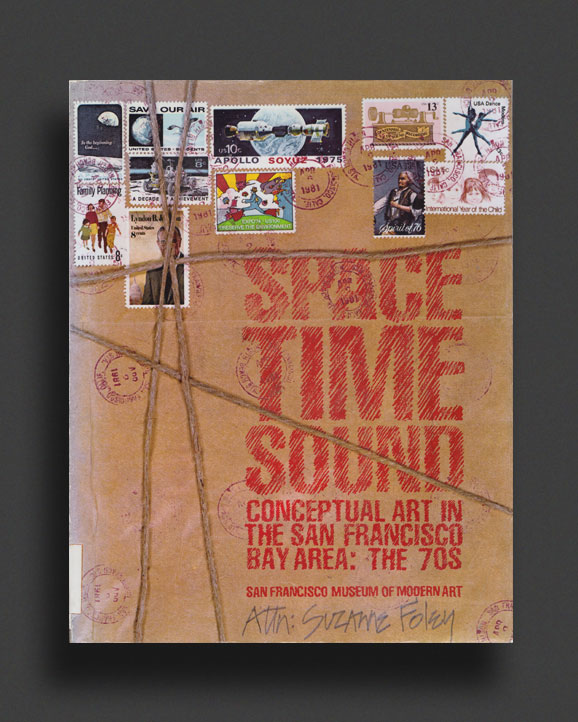
Scarce and important exhibition catalogue published in conjunction with the survey exhibition held at the San Francisco Museum of Modern Art, December 21, 1979 - February 10, 1980. Edited by Suzanne Foley, this important publication traces a decade of conceptual art activity in the Bay Area, encompassing the artists, activities, spaces, performances, and periodicals, accompanied by texts and a chronology by Constance Lewallen. Includes the work of 21 artists including Lynn Hershman, Terry Fox, Paul Kos, Jim Melchert, Bonnie Sherk, Ant Farm, Tom Marioni, Howard Fried, Linda Montano, Peter D'Agostino and many other individuals and organizations. Documents the spaces Richmond Art Center, University of California at Davis, University Art Museum at Berkeley, Reese Palley Gallery, Museum of Conceptual Art, 80 Langton Street, The Floating Museum, Site, La Mamelle, and many more.
Good withdrawn ex-library copy with some associated markings and plastic covering. Some tanning and wear.
2011, English/German
Softcover, 112 pages, 21 x 16 cm
Edition of 500,
Published by
Künsterhaus Bethanien / Berlin
$20.00 - In stock -
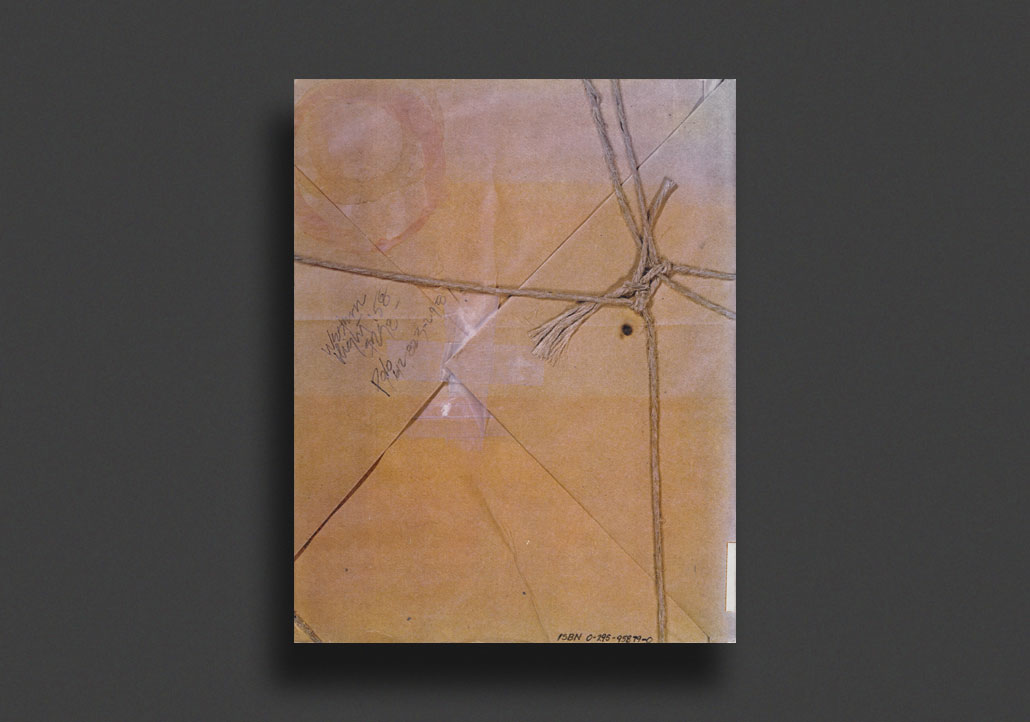
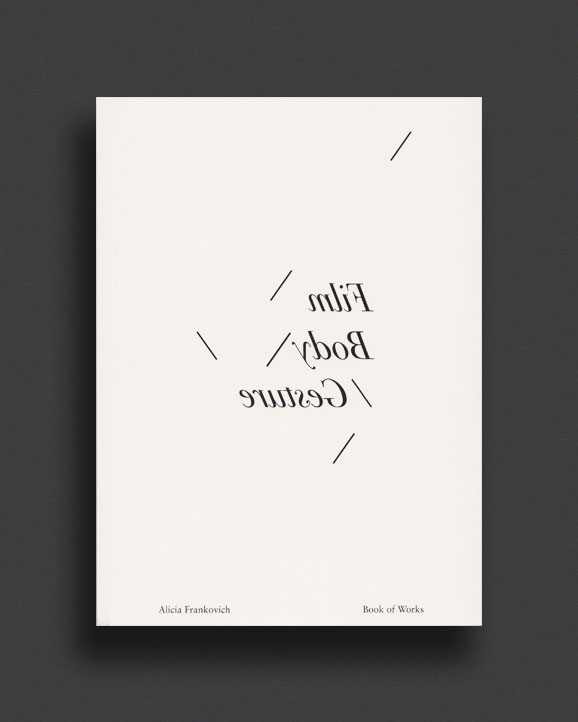
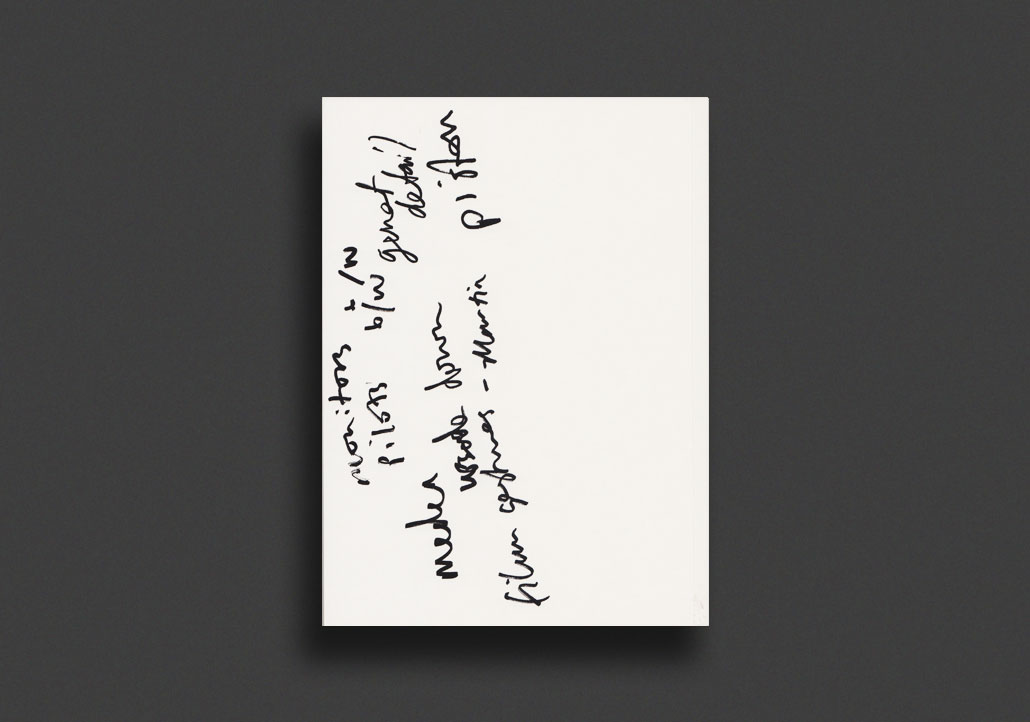
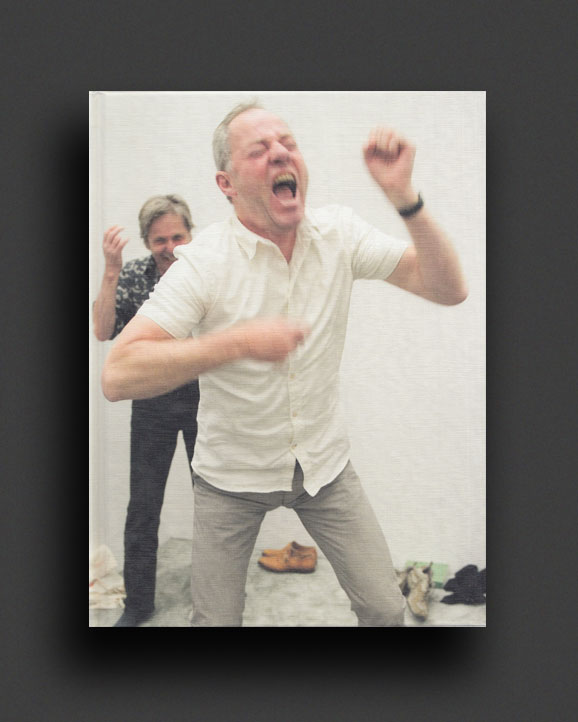
Published by the Künstlerhaus Bethanien following Alicia Frankovich's 12 month Berlin residency, Film/Body/Gesture: Book of Works is the first major survey of New Zealand-born artist Alicia Frankovich. Many works (predominantly in performance, sculpture and film) are illustrated throughout, alongside a text by Dominic Eichler and an interview by Francesca Boenzi, both in German and English.
Designed by Alicia Frankovich and Bijan Dawallu and published in an edition of 500.
2014, English
Hardcover, 155 pages, 18 x 23 cm
Published by
IMA / Brisbane
MUMA / Victoria
$25.00 - In stock -
First major monograph on the work of Australian artist Stuart Ringholt, published by Monash University Museum of Art and The Institute of Modern Art.
As part of his diverse artistic practice, Stuart Ringholt leads audiences on naturist gallery tours, anger workshops, and participatory performances that invoke embarrassment, fear, laughter, and love. He also makes videos, absurdist sculptures, painted mirrors, and collages.
Ringholt has had solo exhibitions at institutions such as Monash University Museum of Art, Melbourne; the Australian Centre for Contemporary Art, Melbourne; and Club Laundromat, New York. His major group exhibitions include Melbourne Now, National Gallery of Victoria, Melbourne (2014); The Last Laugh, apexart, New York (2013); and dOCUMENTA 13, Kassel, Germany (2013). He is currently a PhD candidate at Monash University and is represented by Milani Gallery, Brisbane.
Kraft features contributions by Amelia Barikin, Aileen Burns, Carolyn Christov-Bakargiev, Charlotte Day Robert Leonard, Johan Lundh, and Stuart Ringholt.
2017, English
Softcover, 614 pages, 14 x 21.5 cm
Published by
Un / Melbourne
$40.00 - In stock -
A new book celebrating ten years of un Magazine.
A compendium of articles, essays, reviews and artist pages selected from a decade of publishing, un Anthology offers a unique take on Australia's independent contemporary art scene. Featuring hundreds of artists and writers from un Magazine's archive plus new commissions from Lily Hibberd and Kelly Fliedner, Anthony Gardner, Justin Clemens, Bianca Hester, and Lisa Radford, the book is co-edited by Ulanda Blair, Rosemary Forde and Phip Murray.
2017, English / German
Softcover, 280 pages, 24 x 32 cm
Published by
Centre d’Art Contemporain / Genève
Musée régional d’art contemporain Occitanie / Pyrénées-Méditerrannée
Spike Island / Bristol
Sternberg Press / Berlin
$99.00 $20.00 - Out of stock
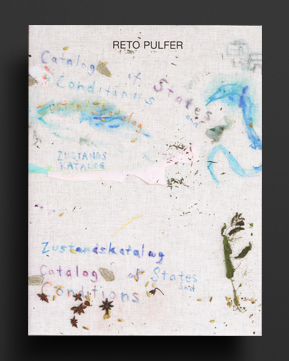
Edited by Reto Pulfer, Nikola Dietrich
Texts by Anselm Franke, Benoît Maire, Reto Pulfer
In the style of a catalogue raisonné, Reto Pulfer’s comprehensive monograph, Zustandskatalog: Catalog of States and Conditions, follows the artist’s work over the past fifteen years. Excerpts from the artist’s novels as well as insightful texts by Anselm Franke and Benoît Maire are juxtaposed with 475 documentary photographs of Pulfer’s technical drawings, one-off exhibitions, large-scale installations, and performances. Categories such as living ceramics, food advice, ghostology, synesthesia, and transformation are woven throughout the book, giving unique insight into the ideas and imagination that are part of the work itself.
Published in collaboration with Centre d’Art Contemporain Genève; Musée régional d’art contemporain Occitanie / Pyrénées-Méditerrannée, Sérignan; Spike Island, Bristol; Centre international d’art et du paysage de l’île de Vassivière; Fórum Eugénio de Almeida, Évora
Design by HIT
2016, English
Softcover, 128 pages, 15.5 x 24 cm
Published by
Sternberg Press / Berlin
$59.00 - In stock -
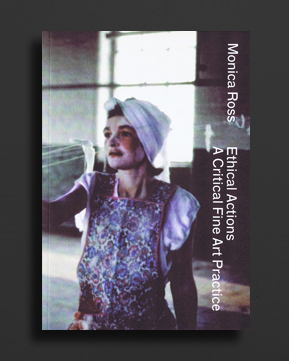
Edited by Susan Hiller, Suzanne Treister
Texts by Jorn Ebner, Eric Levi Jacobson, Alexandra M. Kokoli, Esther Leslie, Yve Lomax, Denise Robinson, Monica Ross; photographic documentation by Bernard G. Mills
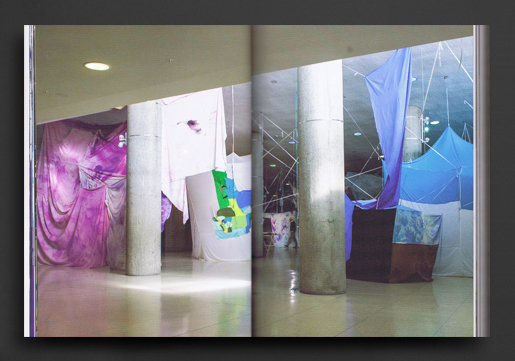
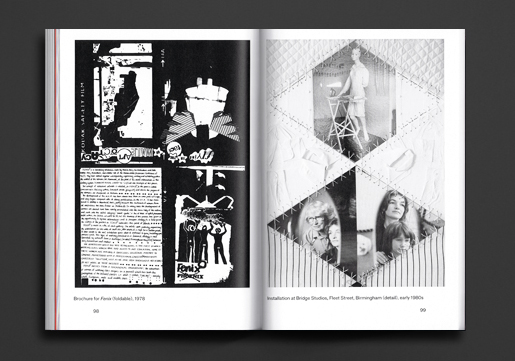
British artist Monica Ross (1950–2013) left behind forty years of socially engaged, feminist, and performative artwork, which has had a deep effect on contemporary art and society. This fully illustrated publication documents Ross’s works from 1970 to 2013, including early feminist collaborative works, drawings made at the Greenham Common Women’s Peace Camp in the 1980s, poster designs for the antinuclear movement, works relating to the writings of Walter Benjamin, and documentation from the sixty performances of Anniversary—an act of memory (2008–13), solo, collective, and multilingual recitations from memory of the Universal Declaration of Human Rights, which concluded with a final collaborative performance at the UN in Geneva on the day of Ross’s death. With essays by Esther Leslie, Eric Levi Jacobson, Alexandra M. Kokoli, Denise Robinson, and Yve Lomax, this book is a valuable art-historical document.
Design by Julia
1974, English
Softcover, 96 pages, 21 x 21 cm
1st Edition, Out of print title / used / good
Published by
The Tate Gallery / London
$35.00 $15.00 - Out of stock
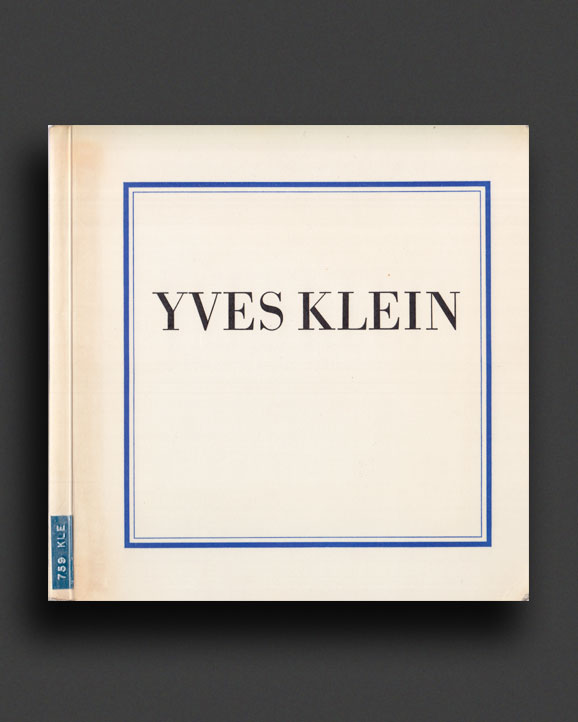
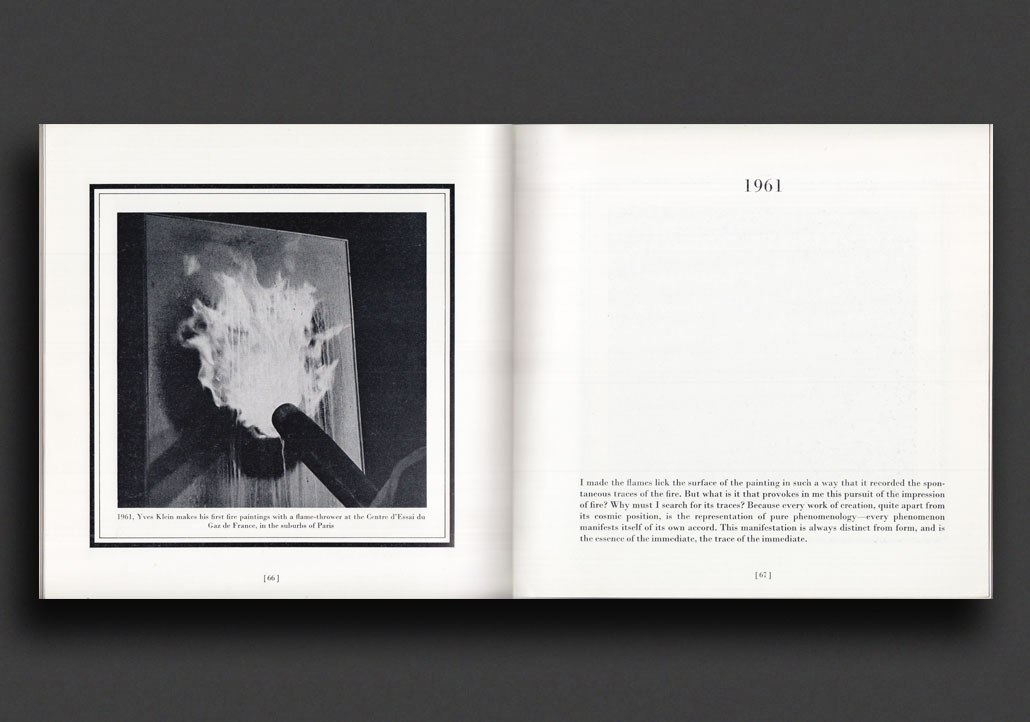
First 1974 edition of this collection of writings of Yves Klein, published by The Tate Gallery, on the occasion of an exhibition of the artist's work that same year. The catalogue includes an introduction by Michael Compton and writings by Klein (accompanied by photographs throughout), together with a Chronology and a Catalogue of the works in the exhibition.
Yves Klein (1928 – 1962) was a French artist and an important figure in post-war European art. He was a leading member of the French artistic movement of Nouveau réalisme founded in 1960 by art critic Pierre Restany. Klein was a pioneer in the development of performance art, and is seen as an inspiration to and as a forerunner of minimal art, as well as pop art.
Ex-library copy with some internal stamps/marks not affecting content. Otherwise good throughout.
2013, English
Softcover, 120 pages, 15.2 x 21.6 cm
Published by
Afterall / London
The MIT Press / Massachusetts
$40.00 - Out of stock
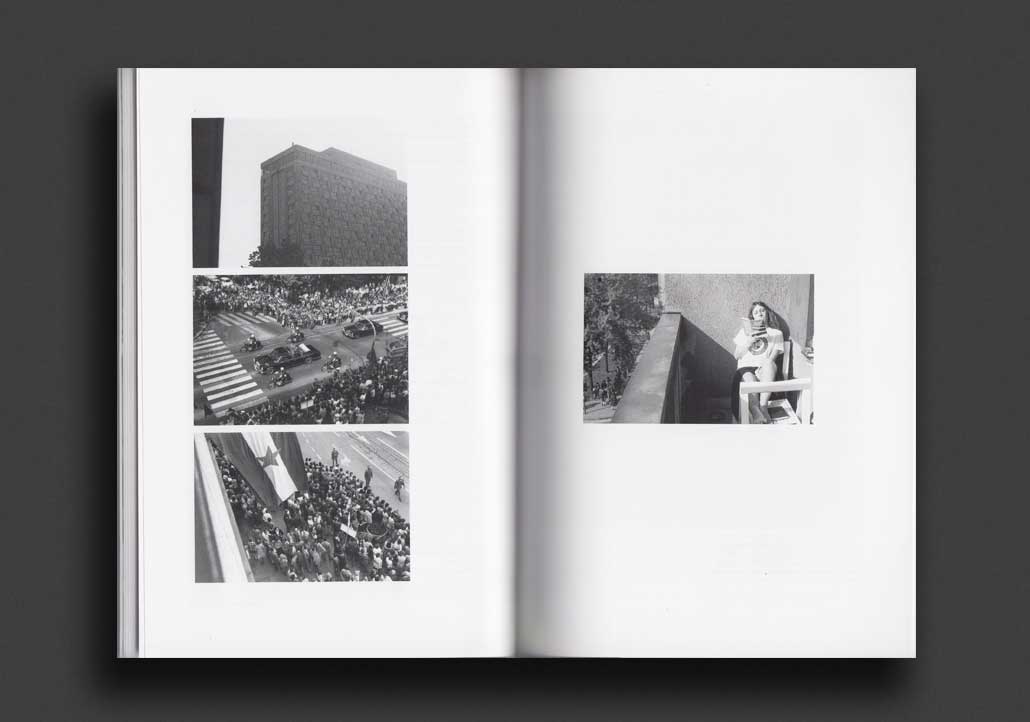
In Sanja Iveković’s Triangle (Trokut, 1979), four black-and-white photographs and written text capture an eighteen-minute performance from May 10, 1979. On that date, a motorcade carrying Josip Broz Tito, then president of Yugoslavia, drove through the streets of downtown Zagreb. As the President’s limousine passed beneath her apartment, Ivokevic began simulating masturbation on her balcony. Although she could not be seen from the street, she knew that the surveillance teams on the roofs of neighboring buildings would detect her presence. Within minutes, a policeman appeared at her door ordered her inside. Not only did Ivekovic's action expose government repression and call attention to the rights of women, it also called attention to the relationship of gender to power, and to the particular experience of political dissidence under communist rule in Eastern Europe. Triangle is considered one of Iveković’s key works and yet, despite Iveković’s stature as one of the leading artists of the former Yugoslavia, it has received little direct attention. With this book, Ruth Noack offers the first sustained examination of Iveković’s widely exhibited, now canonical artwork.
After a detailed analysis of the work's formal qualities, Noack considers its position in the context of artistic production and political history in socialist Yugoslavia. She looks closely at the genesis of the performance and its documentation as a work of art, and relates the making of the work and the politics of canon-making to issues pertaining to the former East-West divide. She discusses the artistic language and meaning-making in relation to conceptualism and performance and to the position of women in Tito’s Yugoslavia and in society at large, and investigates the notion that Iveković’s work of this period is participating in citizenship, shifting the focus from the artist’s subversive act to her capacity to shape the terms through which we order our world.
About the Author
Ruth Noack, an art historian, critic, and curator, has taught at art schools and universities in Vienna, Lüneburg, and Kassel. She co-curated Documenta 12 (2007).