World Food Books' programme is largely produced on Kulin Nation land. We acknowledge the Wurundjeri people of the Kulin Nation as the first and continuing custodians of this land, and pay respect to their Elders past, present, and emerging.
World Food Books is an arts and special interests bookshop in Naarm / Melbourne. Founded in 2010, World Food Books is devoted to the presentation of a rotating, hand-selection of international art, design, literary and counterculture publications with an emphasis on the anti-traditional, the experimental, the avant-garde, the heretic, the marginal.
Presenting new titles alongside rare and out-of-print books, catalogues and journals spanning the fields of modern and contemporary art, design, photography, illustration, film, literature, poetry, cultural theory, philosophy, sexuality, popular and underground culture in its many radical forms, World Food Books wishes to encourage adventurous, thoughtful and open-minded reading, looking, writing, and exchange of publishing and ideas, both current and historical.
As well as our bookshop, located in Melbourne's historical Nicholas Building, all of our inventory is available internationally via our online mail-order service.
World Food Books semi-regularly co-ordinates "Occasions", a programme of exhibits and events at the bookshop and in partnership with other hosts (such as museums and art galleries) that develop out of the activities, relationships and content of the bookshop itself.
World Food Books
The Nicholas Building
37 Swanston Street
Room 5, Level 6
Melbourne 3000
Australia
SHOP HOURS:
THU–SAT 12–6
WEB-SHOP OPEN 24/7
World Food Books
Postal Address:
PO Box 435
Flinders Lane
Victoria 8009
Australia
info@worldfoodbooks.com
Art
Theory / Essay
Architecture / Interior
Graphic Design / Typography
Photography
Fashion
Eros
LGBTQ+
Fiction / Poetry
Weird / Speculative / Science Fiction / Horror
Transgressive / Visceral / Abject
Symbolism / Decadence / Fin de siècle
Film / Video
Painting
Sculpture / Installation
Performance / Dance / Theater
Drawing
Sound / Music
Curatorial
Group Shows / Collections
Periodicals
Out-of-print / Rare
Posters / Ephemera / Discs
Signed Books
World Food Books Gift Voucher
World Food Book Bag
Australian Art
Australian Fiction
Australian Science Fiction / Speculative Fiction
Australian Poetry
Australian Photography
Japanese Photography
Conceptual Art
Minimal Art
Dada
'Pataphysics / Oulipo
Fluxus
Concrete Poetry
Pop Art
Surrealism
Arte Povera
Arte Informale / Haute Pâte / Tachism
Nouveau Réalisme / Zero / Kinetic
Situationism / Lettrism
Collage / Mail Art / Xerox Art
Art Brut / Folk / Visionary / Fantastic
Illustration / Graphic Art / Bandes Dessinées
Furniture
Italian Radical Design / Postmodernism
Textiles
Ceramics / Glass
Counterculture
Protest / Revolt
Philosophy
Psychoanalysis
Anthropology
Anarchism
Socialism / Anarchism / Communism / Capitalism
Literary Theory / Semiotics / Language
Feminism / Women's Studies
Gender Studies / Sexuality
Anthropology
Fetishism / BDSM
Drugs / Psychedelia
Crime / Violence
Animal Rights / Veganism
Occult / Esoterica
Ecology / Earth / Alternative Living
Whole Earth / Crafts
All prices in AUD (Australian dollars)
Pick-Ups
Pick-up orders can be collected in our bookshop during opening hours after order date. Please collect any Pick-up orders within 2 weeks of ordering as we have limited storage space. Orders will be released back into stock if not collected within this time. No refunds can be made for pick-ups left un-collected. If you cannot make it in to the bookshop in this time-frame, please choose postage option.
Return Policy
All sales are final. We do accept returns (for refund or exchange) for items received in error. All our orders are packed with special care using heavy-duty padding and cardboard book-mailers or bubble mailers (for smaller books), using reinforcement where required. We cannot take responsibility for any lost, stolen or damaged parcels.
Insurance
Should you wish to insure your package, please email us directly after placing your order and we can organise this at a small extra expense. Although all standard/express tracked packages are very safe and dependable, we cannot take responsibility for any lost, stolen or damaged parcels. We recommend insurance on valuable orders.
Interested in selling your old books, catalogues, journals, magazines, comics, fanzines, ephemera? We are always looking for interesting, unusual and out-of-print books to buy. We only buy books in our fields of interest and specialty, and that we feel we can resell.
We base these prices on desirability, market value, in-print prices, condition and our current stock levels. We offer cash, store credit, and can take stock on consignment. All
about 25% of the price we expect to get when we sell them, or 30% in store credit. We base these prices on desirability, market value, in-print prices, condition and our current stock levels.
Sell your books any day of the week. You can drop them off and return later. If you have a lot of books, we can visit your Sydney home.
We buy books that we feel we can resell. We offer about 25 % of the price we expect to get when we sell them, or 30% in store credit. We base these prices on desirability, market value, in-print prices, condition and our current stock levels.
Philadelphia Wireman
03 August - 01 September, 2018
World Food Books is proud to announce our next Occasion, the first presentation of sculptures by Philadelphia Wireman in Australia.
The Philadelphia Wireman sculptures were found abandoned in an alley off Philadelphia’s South Street on trash night in 1982. Their discovery in a rapidly-changing neighbourhood undergoing extensive renovation, compounded with the failure of all attempts to locate the artist, suggests that the works may have been discarded after the maker’s death. Dubbed the "Philadelphia Wireman" during the first exhibition of this work, in 1985, the maker’s name, age, ethnicity, and even gender remain uncertain. The entire collection totals approximately 1200 pieces, all intricately bound together with tightly-wound heavy-gauge wire (along with a few small, abstract marker drawings, reminiscent both of Mark Tobey and J.B. Murry). The dense construction of the work, despite a modest range of scale and materials, is singularly obsessive and disciplined in design: a wire armature or exoskeleton firmly binds a bricolage of found objects including plastic, glass, food packaging, umbrella parts, tape, rubber, batteries, pens, leather, reflectors, nuts and bolts, nails, foil, coins, toys, watches, eyeglasses, tools, and jewellery.
Heavy with associations—anthropomorphic, zoomorphic, and socio-cultural responses to wrapped detritus—the totemic sculptures by Philadelphia Wireman have been discussed in the context of work created to fulfil the shamanistic needs of alternative religions in American culture. Curators, collectors, and critics have variously compared certain pieces to sculpture from Classical antiquity, Native American medicine bundles, African-American memory jugs, and African fetish objects. Reflecting the artist’s prolific and incredibly focused scavenging impulse, and despite—or perhaps enhanced by—their anonymity, these enigmatic objects function as urban artefacts and arbiters of power, though their origin and purpose is unknown. Philadelphia Wireman, whatever their identity, possessed an astonishing ability to isolate and communicate the concepts of power and energy through the selection and transformation of ordinary materials. Over the course of the past two decades, this collection has come to be regarded as an important discovery in the field of self-taught art and vernacular art.
Presented in collaboration with Fleisher-Ollman Gallery, Philadelphia, and Robert Heald, Wellington.
Susan Te Kahurangi King
02 February - 10 March, 2018
Susan Te Kahurangi King (24 February 1951 - ) has been a confident and prolific artist since she was a young child, drawing with readily available materials - pencils, ballpoint pens and felt-tip markers, on whatever paper is at hand. Between the ages of four and six Susan slowly ceased verbal communication. Her grandparents William and Myrtle Murphy had developed a special bond with Susan so they took on caring responsibilities for extended periods. Myrtle began informally archiving her work, carefully collecting and storing the drawings and compiling scrapbooks. No drawing was insignificant; every scrap of paper was kept. The King family are now the custodians of a vast collection containing over 7000 individual works, from tiny scraps of paper through to 5 meter long rolls.
The scrapbooks and diaries reveal Myrtle to be a woman of great patience and compassion, seeking to understand a child who was not always behaving as expected. She encouraged Susan to be observant, to explore her environment and absorb all the sights and sounds. Myrtle would show Susan’s drawings to friends and people in her community that she had dealings with, such as shopkeepers and postal workers, but this was not simply a case of a grandmother’s bias. She recognised that Susan had developed a sophisticated and unique visual language and sincerely believed that her art deserved serious attention.
This was an unorthodox attitude for the time. To provide some context, Jean Dubuffet coined the term Art Brut in 1945 to describe work created by self-taught artists – specifically residents of psychiatric institutions and those he considered to be visionaries or eccentrics. In 1972 Roger Cardinal extended this concept by adopting the term Outsider Art to describe work made by non-academically trained artists operating outside of mainstream art networks through choice or circumstance. Susan was born in Te Aroha, New Zealand in 1951, far from the artistic hubs of Paris and London that Dubuffet and Cardinal operated in. That Myrtle fêted Susan as a self-taught artist who deserved to be taken seriously shows how progressive her attitudes were.
Susan’s parents Doug and Dawn were also progressive. Over the years they had consulted numerous health practitioners about Susan’s condition, as the medical establishment could not provide an explanation as to why she had lapsed into silence. Dawn educated herself in the field of homeopathy and went on to treat all twelve of her children using these principles – basing prescriptions on her observations of their physical, mental and emotional state.
Doug was a linguist with an interest in philosophy who devoted what little spare time he had to studying Maori language and culture. To some extent their willingness to explore the fringes of the mainstream made them outsiders too but it was their commitment to living with integrity and their respect for individuality that ensured Susan’s creativity was always encouraged.
Even though Susan’s family supported her artistic pursuits, some staff in schools and hospitals saw it as an impediment to her assimilation into the community and discouraged it in a variety of ways. Her family was not always aware of this and therefore did not fully understand why Susan stopped drawing in the early 1990s. However, rather than dwell on the challenges that Susan faced in pursuit of her artistic practice, they prefer to highlight her achievements. In 2008 Susan began drawing again in earnest, after an almost 20 year interruption, and her work is now shown in galleries around the world.
Susan grew up without television and has been heavily influenced by the comics she read as a child. She is absolutely fearless in the appropriation of recognizable characters, such as Donald Duck and Mickey Mouse, in her work. She twists their limbs, contorts their faces, compresses them together, blends them into complex patterned backgrounds - always imbuing them with an incredible energy. Although Susan often used pop culture characters in her work they are not naive or childlike. These are drawings by a brilliant self-taught artist who has been creating exceptional work for decades without an audience in mind.
Mladen Stilinović
"Various Works 1986 - 1999"
02 February 16 - September 10, 2016
Various works 1986 - 1999, from two houses, from the collections of John Nixon, Sue Cramer, Kerrie Poliness, Peter Haffenden and Phoebe Haffenden.
Including: Geometry of Cakes (various shelves), 1993; Poor People’s Law (black and white plate), 1993; White Absence (glasses, ruler, set square, silver spoon, silver ladel with skin photograph and wooden cubes), 1990-1996; Exploitation of the Dead (grey and red star painting, wooden painting, black spoon with red table, red plate), 1984-1990; Money and Zeros (zero tie, paintings made for friends in Australia (Sue, John, Kerrie), numbers painting), 1991-1992; Words - Slogans (various t-shirts) - “they talk about the death of art...help! someone is trying to kill me”, “my sweet little lamb”, “work is a disease - Karl Marx”; Various artist books, catalogues, monographs, videos; Poster from exhibition Insulting Anarchy; "Circular" Croatian - Australian edition; Artist book by Vlado Martek (Dostoyevsky); more.
Thanks to Mladen Stilinović and Branka Stipančić.
Jonathan Walker
Always Will Need To Wear Winter Shirt Blue + Ochre Small Check Pattern
21 August - 21 September, 2015
Untitled
I am not a great reader of poetry but I always return to the work of Melbourne poet, Vincent Buckley (1925- 1988). Perhaps I find his most tantalising piece to be not a finished poem but a fragment left on a scrap of paper discovered on his desk after the poet’s death.
The poetry gathers like oil
In the word-core, and spreads
It has its music meet,
Its music is in movement.
This fragment is more the shell left behind from a volatile thought than a finished poem. I find the last two lines honest but awkward whereas the first two lines work like an arrow. Most likely he could not find a resolution so it was left. Still, in its present form, it remains an eloquent testimony to the ultimate failure of a medium to express mobile thought and sensation, in Buckley’s case, through verbal language. It’s an important matter because this is something all artists have to deal with regardless of the medium.
I have never written a poem, however, I am forever copying fragments from books on paper scraps in a vain effort to fix certain notions in my head. At first, they function as bookmarks that are sometimes returned to when I open the book. But before long, as they accumulate, they fall out littering the table interspersed with A4 photocopies, bills, books and medications.
To return to Buckley’s fragment, the first two lines very much evoke how I paint nowadays. As you age, detail diminishes and patches of light become more luminous and float. I feel the most honest way of dealing with this is by smearing the oil paint on the canvas with the fingers and working close-up, blind. Only if the patches coalesce into an approaching image can the work gain a life.
-
Jonathan Walker was born in Melbourne, Australia and brought up on a dairy farm in Gippsland. In the 1970’s he studied painting at RMIT and won the Harold Wright Scholarship to the British Museum, London. During the 1980’s he exhibited at Pinacotheca Gallery, Richmond and had work shown at the NGV and Heidi City Art Gallery. Over the same period he designed the cover for the “Epigenesi” LP by Giancarlo Toniutti, Italy and conducted a mail exchange work with Achim Wollscheid, Germany. The work with artists through the post resulted in an article published in the bicentenary issue of Art and Australia 1988. He showed in artist run spaces such as WestSpace in the 90’s and 2000’s, and until 2012, taught painting at Victoria University, which is where we (Colleen Ahern and Lisa Radford) as organisers of the exhibition, among many others, had the privilege of being his student.
Walker’s knowledge was imparted to students through the careful selection of music, literature, and artists found in books that he himself had ordered for the library. Walker’s strategy was the generosity of sharing his vast knowledge with references specific to each student and their context.
Walker’s paintings share a similar focus and intimacy.
This exhibition presents a small selection of recent paintings alongside a publication that includes Walker’s writing. Observational and analytical, Walker’s work is a type of material notation — the time of day, colour and how it is blended, the both specific and fleeting location of a reflection on lino or the question of whether a chair leg should be included in a painting.
Please join us on Friday August 21 between 6-8pm to celebrate the opening of the exhibition.
Curated by Colleen Ahern and Lisa Radford.
B. Wurtz
Curated by Nic Tammens
March 26 - April 4, 2015
B.Wurtz works from a basement studio in his home on Manhattan’s Lower East Side.
This local fact is attested to by the plastic shopping bags and newsprint circulars that appear in his work. As formal objects, they don’t make loud claims about their origins but nonetheless transmit street addresses and places of business from the bottom of this long thin island. Like plenty of artists, Wurtz is affected by what is local and what is consumed. His work is underpinned by this ethic. It often speaks from a neighborhood or reads like the contents of a hamper:
“BLACK PLUMS $1.29 lb.”
“Food Bazaar”
“USDA Whole Pork Shoulder Picnic 99c lb.”
“RITE AID Pharmacy, with us it’s personal.”
“H. Brickman & Sons.”
“Sweet Yams 59c lb."
Most of the work in this exhibition was made while the artist was in residence at Dieu Donne, a workshop dedicated to paper craft in Midtown. Here Wurtz fabricated assemblages with paper and objects that are relatively lightweight, with the intention that they would be easily transportable to Australia. This consideration isn’t absolute in Wurtz’s work, but was prescriptive for making the current exhibition light and cheap. Packed in two boxes, these works were sent from a USPS post office on the Lower East Side and delivered to North Melbourne by Australia Post.
Wurtz appears courtesy of Metro Pictures, New York.
Thanks to Rob Halverson, Joshua Petherick, Sari de Mallory, Matt Hinkley, Helen Johnson, Fayen d'Evie, Ask Kilmartin, Lisa Radon, Ellena Savage, Yale Union, and "Elizabeth".
John Nixon
"Archive"
December 15 - January 20, 2014
The presentation of John Nixon's archive offered a rare showcase of this extensive collection of the artist's own publications, catalogues, posters, ephemera, editions and more, from the mid 1980s onwards, alongside a selection of his artworks.
Organized by John Nixon, Joshua Petherick and Matt Hinkley.
"Habitat"
at Minerva, Sydney (organised by Joshua Petherick and Matt Hinkley)
November 15 - December 20, 2014
Lupo Borgonovo, Janet Burchill & Jennifer McCamley,
Lewis Fidock, HR Giger, Piero Gilardi, Veit Laurent Kurz,
Cinzia Ruggeri, Michael E. Smith, Lucie Stahl, Daniel Weil, Wols
Press Release:
“...It contained seven objects. The slender fluted bone, surely formed for flight, surely from the wing of some large bird. Three archaic circuitboards, faced with mazes of gold. A smooth white sphere of baked clay. An age-blackened fragment of lace. A fingerlength segment of what she assumed was bone from a human wrist, grayish white, inset smoothly with the silicon shaft of a small instrument that must once have ridden flush with the surface of the skin - but the thing’s face was seared and blackened.”
William Gibson, “Count Zero”, 1986
"Autumn Projects Archive"
Curated by Liza Vasiliou
March 6 - March 15, 2014
World Food Books, in conjunction with the Virgin Australia Melbourne Fashion Festival 2014, presented the Autumn Projects archive, consisting of a selection of early examples in Australian fashion with a particular interest in collecting designers and labels from the period beginning in the 1980’s, who significantly influenced the discourse of Australian Fashion.
Curated by Liza Vasiliou, the exhibition provided a unique opportunity to view pieces by designers Anthea Crawford, Barbara Vandenberg, Geoff Liddell and labels CR Australia, Covers, Jag along with early experimental collage pieces by Prue Acton and Sally Browne’s ‘Fragments’ collection, suspended throughout the functioning World Food Books shop in Melbourne.
H.B. Peace
presented by CENTRE FOR STYLE
November 14, 2013
"Hey Blinky, you say chic, I say same"
Anon 2013
H.B. Peace is a clothing collaboration between great friends Blake Barns and Hugh Egan Westland. Their pieces explore the divergences between 'character’ and ‘personality’ in garments....etc
Special Thanks to Joshua Petherick and Matt Hinkley of WFB and Gillian Mears
and a Very Special Thank you to Audrey Thomas Hayes for her shoe collaboration.
Janet Burchill & Jennifer McCamley
"Aesthetic Suicide"
May 10 - June 8, 2013
The first of our occasional exhibitions in the World Food Books office/shop space in Melbourne, "Aesthetic Suicide" presented a body of new and older works together by artists Janet Burchill & Jennifer McCamley, including videos, prints, a wall work, and publications.
During shop open hours videos played every hour, on the hour.
1994, English
Softcover (staple-bound), 36 pages, 27 x 21.5 cm
1st Edition, Out of print title / used / very good
Published by
The University of Melbourne Museum of Art / Melbourne
$35.00 $25.00 - In stock -
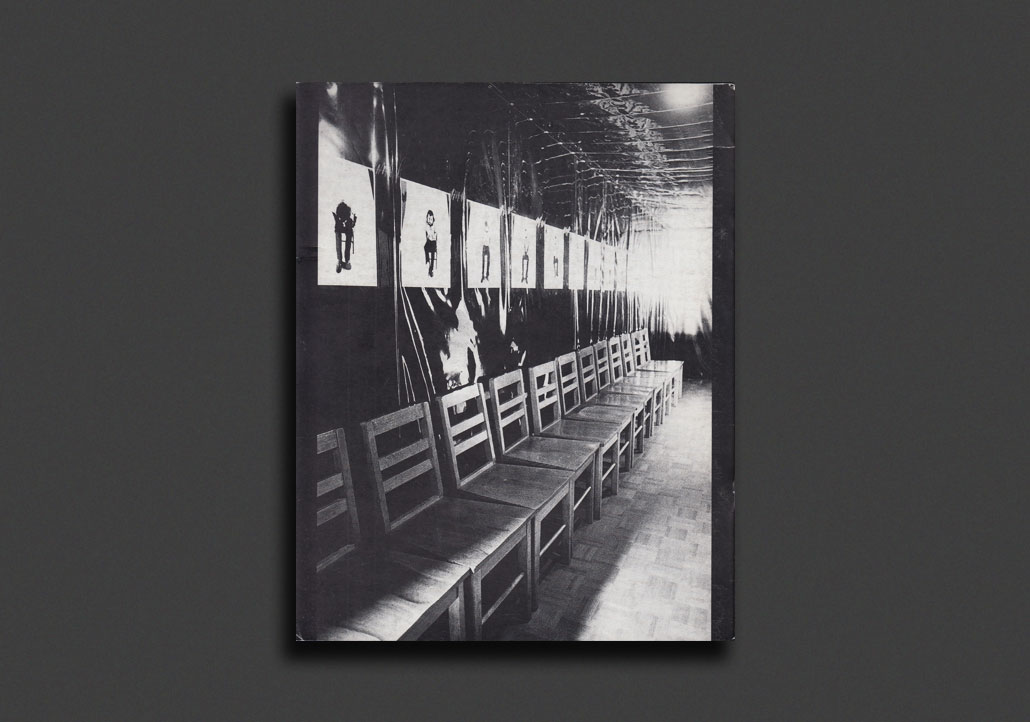
Catalogue published on the occasion of Australian artist Aleks Danko's exhibition at Ian Potter Gallery, 18 May-18 June 1994; volume #1 in "The Artist and the Museum" series curated by Merryn Gates. A timeline of works spanning the bottom half of each page throughout the catalogue traces Danko's history of works across sculpture, installation, video, performance, editions, books, etc. from 1970-1994, accompanied by texts by Charles Green, Jacqueline Thomas, Jackie Dunn, and Merryn Gates occupying the top half of each page. Also includes "Lafart" Manifesto - 18/3/1975 written by Danko and Mike Parr!
Aleks Danko (b. 1950) is an Australian performance artist and sculptor. The son of Ukrainian migrants, he was born in Adelaide, and educated at the South Australian School of Art and the Hawthorn Institute of Education. He started exhibiting in Adelaide in 1970. Aleks Danko’s career spans more than 5 decades and encompasses diverse media, from sculpture and installation to text and language-based works. Drawing actively on Australia’s political and cultural history, his work is infused with satirical humour and a subtle critique of contemporary social values.
Very Good copy.
2015, English
Softcover (w. french flaps), 176 pages, 26 x 21 cm
Published by
Heide Museum of Modern Art / Victoria
Museum of Contemporary Art / Sydney
$35.00 - Out of stock
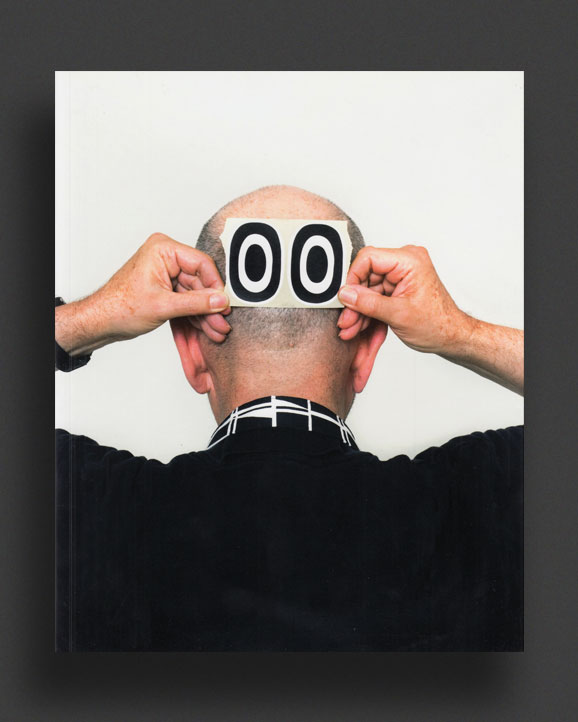
Major survey catalogue of Australian artist Aleks Danko, published by Hiede Museum of Modern Art and MCA in 2015. First held at Heide, 7 November 2015—21 February 2016, MY FELLOW AUS-TRA-ALIENS presented artworks spanning nearly five decades of the long career of Victorian-based, Adelaide-born artist Aleks Danko, from his earliest exhibitions in the late 1960s through to his recent installations. Profusely illustrated with accompanying texts by curators Lesley Harding and Glenn Barkley.
Aleks Danko (b. 1950) is an Australian performance artist and sculptor. The son of Ukrainian migrants, he was born in Adelaide, and educated at the South Australian School of Art and the Hawthorn Institute of Education. He started exhibiting in Adelaide in 1970. Aleks Danko’s career spans more than 5 decades and encompasses diverse media, from sculpture and installation to text and language-based works. Drawing actively on Australia’s political and cultural history, his work is infused with satirical humour and a subtle critique of contemporary social values.
2004, English
Softcover, 30cm x 21cm. 48 pages
1st Edition, Out of print title / used / very good
Published by
NGV (National Gallery of Victoria) / Victoria
$35.00 $25.00 - In stock -
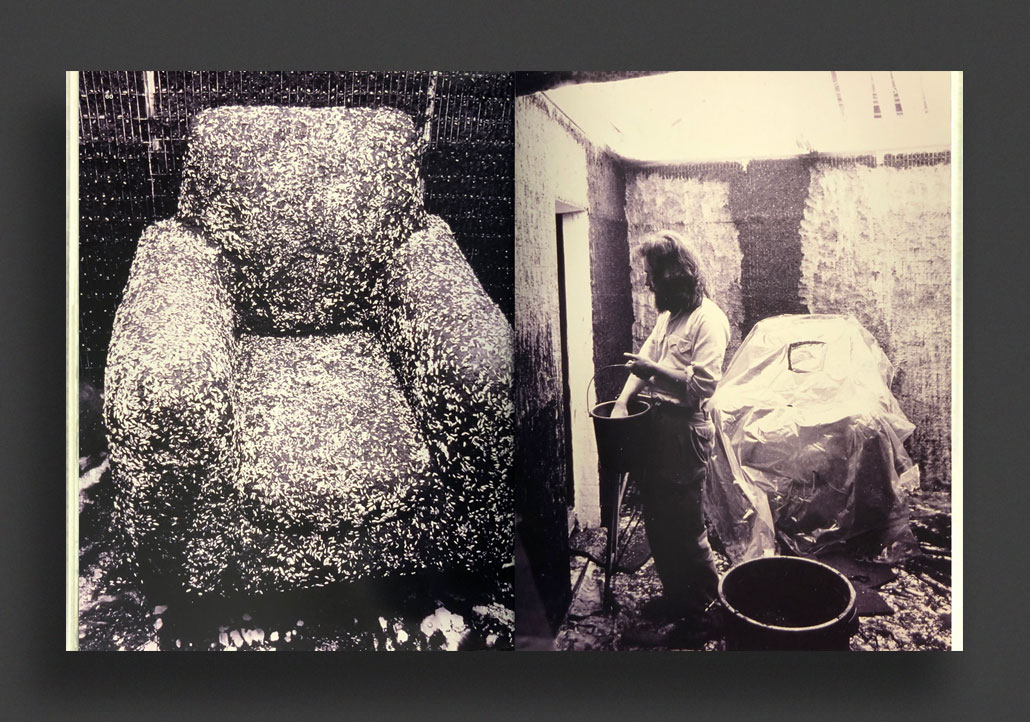
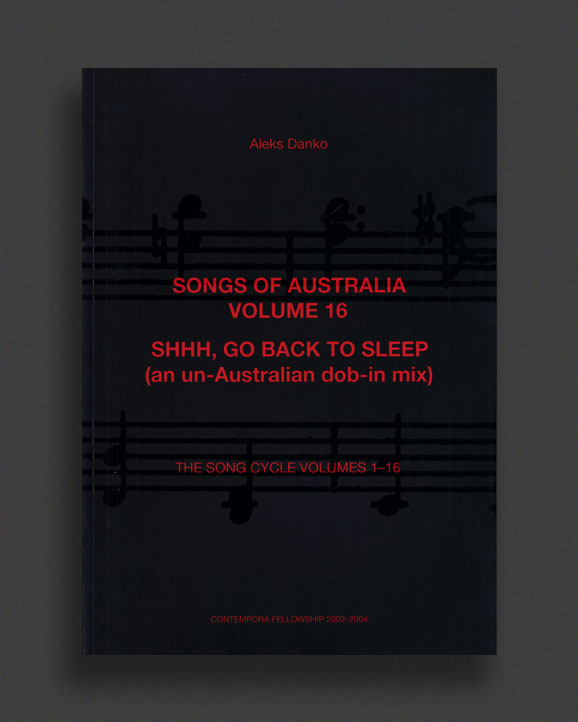
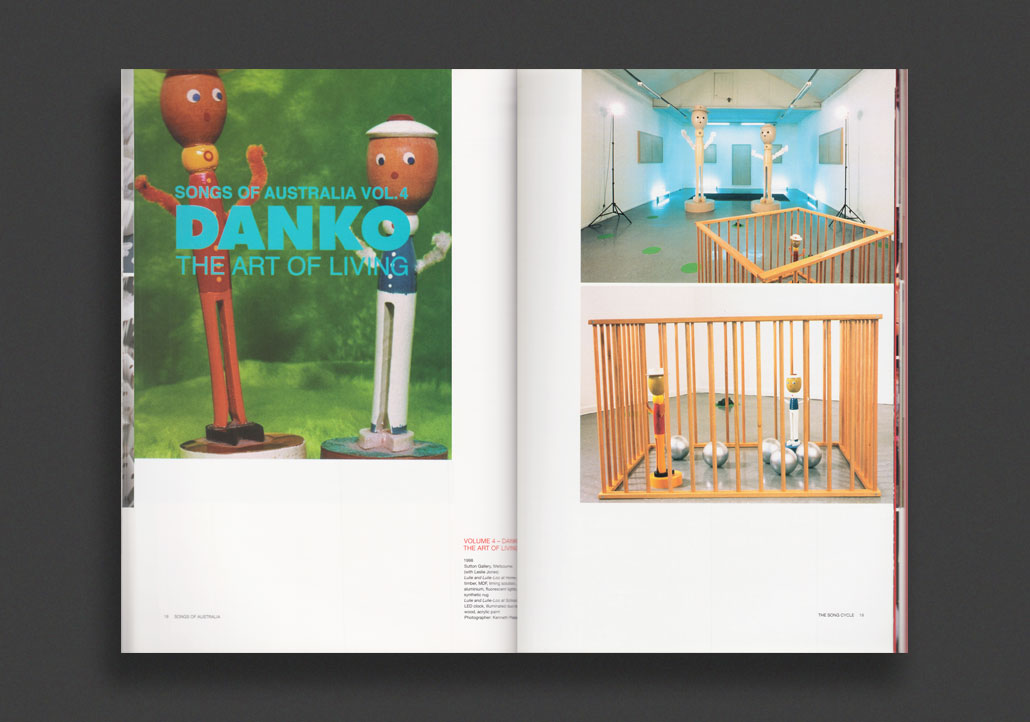
Exhibition catalogue published on the occasion of the major National Gallery of Victoria travelling exhibition Aleks Danko — Songs of Australia Volume 16: Shhh, Go Back To Sleep (an un-Australian dob-in mix) in 2004. Presenting "The Song Cycle Volumes 1—16" this profusely illustrated catalogue documents many of Danko's major installations in glossy colour, alongside texts, including those by the artist, exhibition history, bibliography.
Aleks Danko (b. 1950) is an Australian performance artist and sculptor. The son of Ukrainian migrants, he was born in Adelaide, and educated at the South Australian School of Art and the Hawthorn Institute of Education. He started exhibiting in Adelaide in 1970. Aleks Danko’s career spans more than 5 decades and encompasses diverse media, from sculpture and installation to text and language-based works. Drawing actively on Australia’s political and cultural history, his work is infused with satirical humour and a subtle critique of contemporary social values.
Very Good copy.
1989, English
Softcover (single, double-sided card), 21 x 29.7 cm
1st UK Edition, Out of print title / used / fine
Published by
200 Gertrude Street / Melbourne
$10.00 - In stock -
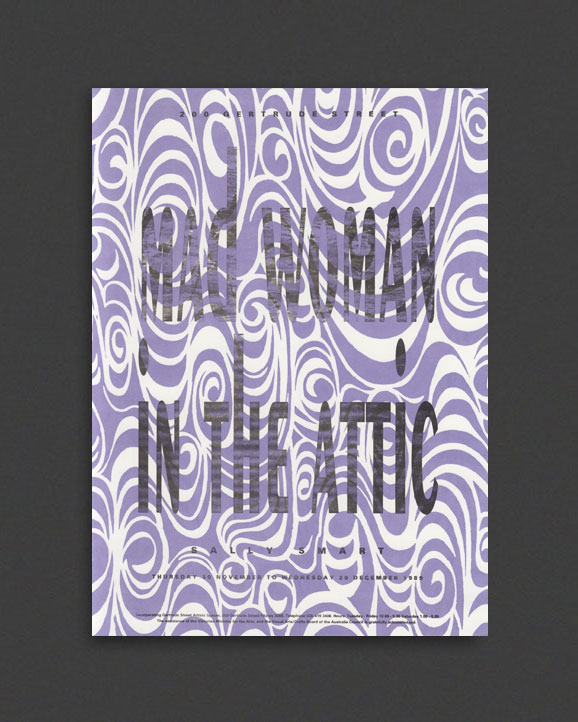
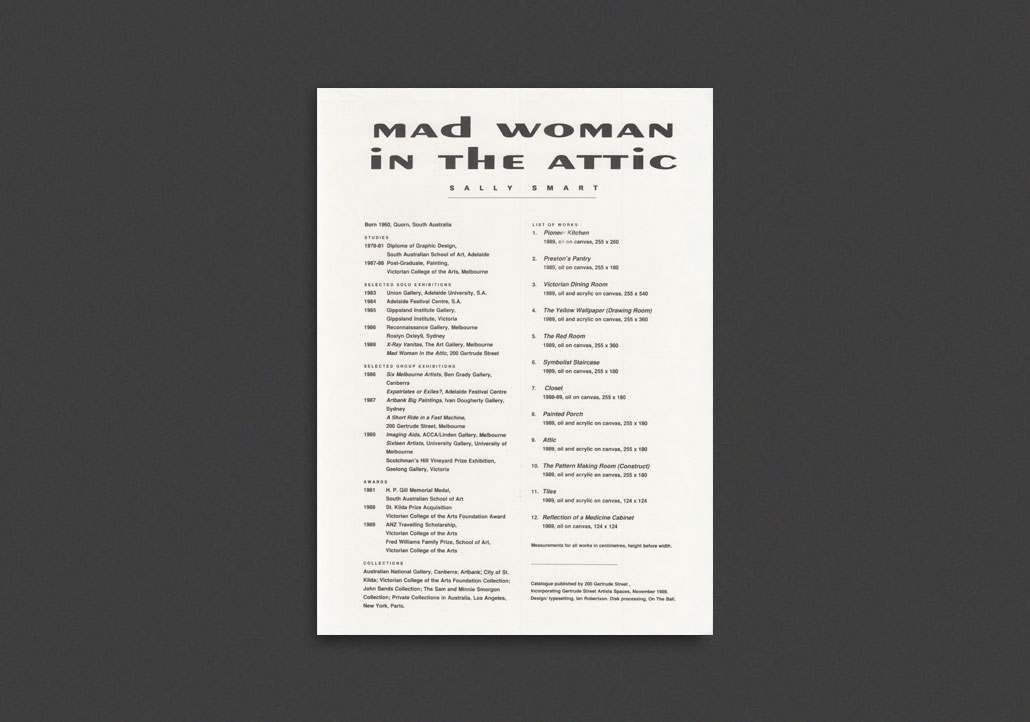
Scarce catalogue published on the occasion of the exhibition Sally Smart — Mad Woman In The Attic, December, 1989. Illustrated offset printed double-sided card with artist C.V. on verso.
Sally Smart (b. 1960) is an Australian contemporary artist known for her large-scale assemblage installations that incorporate a range of media, including felt cut-outs, painted canvas, drawings, screen-printing, printed fabric and photography, performance and video. Her art addresses gender and identity politics and questions the relationships between body and culture, including trans-national ideas that shaped cultural history. She has exhibited widely throughout Australia and internationally, and her works are held in major galleries in Australia and around the world.
Fine copy.
2022, English
Softcover, 256 pages, 17.5 x 11.5 cm
Published by
Urbanomic / Cornwall
$35.00 - In stock -
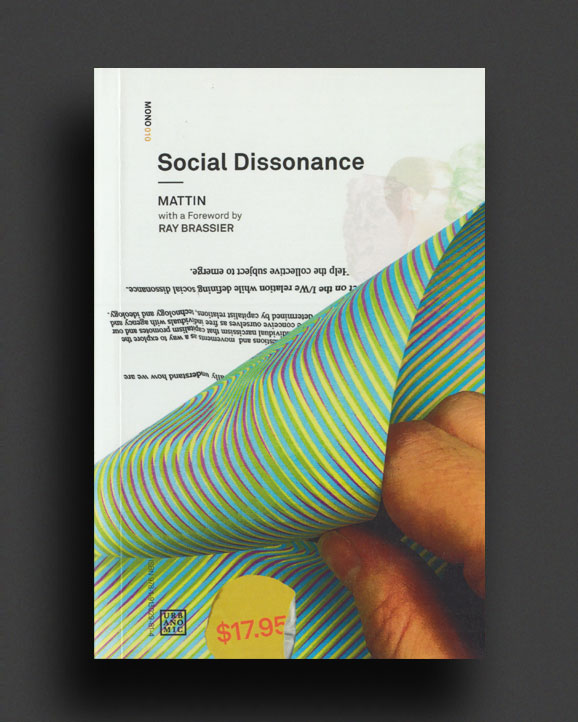
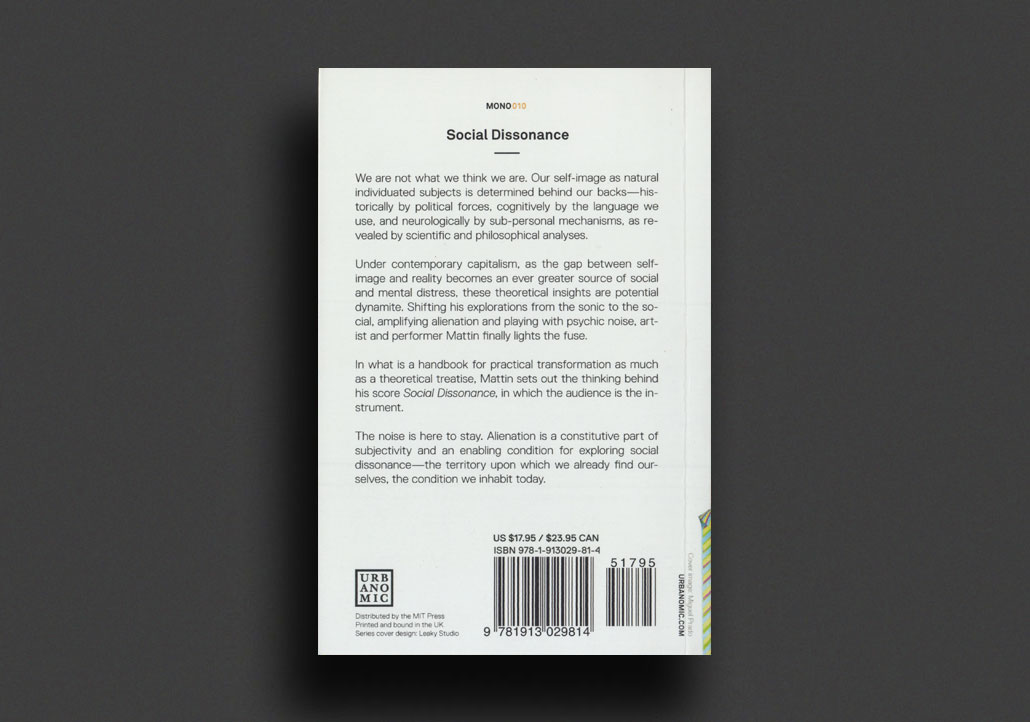
An argument that by amplifying alienation in performance, we can shift the emphasis from the sonic to the social.
We are not what we think we are. Our self-image as natural individuated subjects is determined behind our backs—historically by political forces, cognitively by the language we use, and neurologically by sub-personal mechanisms, as revealed by scientific and philosophical analyses.
Under contemporary capitalism, as the gap between self-image and reality becomes an ever greater source of social and mental distress, these theoretical insights are potential dynamite. Shifting his explorations from the sonic to the social, amplifying alienation and playing with psychic noise, artist and performer Mattin finally lights the fuse.
In what is a handbook for practical transformation as much as a theoretical treatise, Mattin sets out the thinking behind his score Social Dissonance, in which the audience is the instrument.
The noise is here to stay. Alienation is a constitutive part of subjectivity and an enabling condition for exploring social dissonance—the territory upon which we already find ourselves, the condition we inhabit today.
1983, English
Single-sheet (folded into 8-panels, double-sided), 64 x 29 cm
1st Edition, Out of print title / as new
Published by
Monash University Exhibition Gallery / Victoria
$120.00 - Out of stock
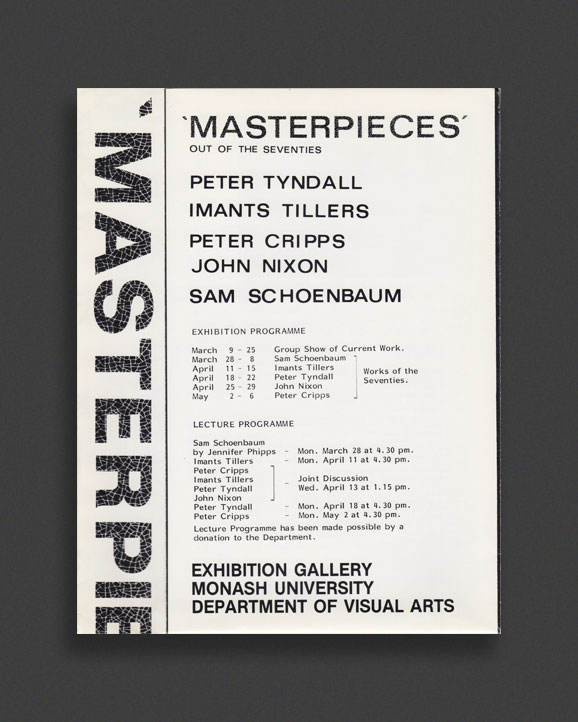
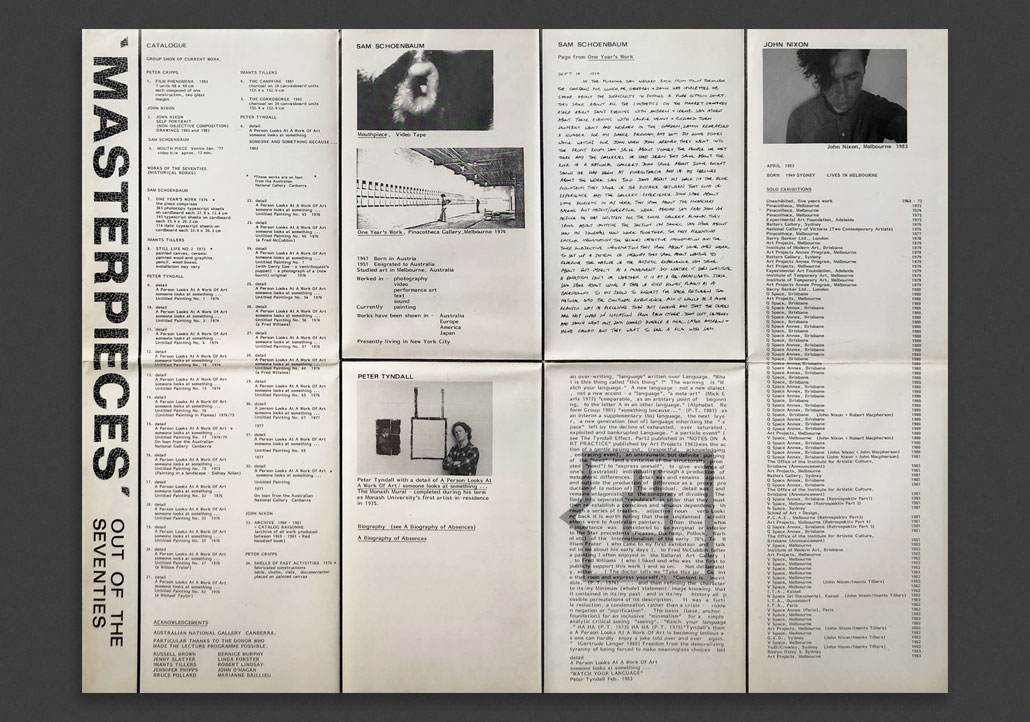
Excellent, rare, over-sized single sheet/poster catalogue published on the occasion of the exhibition and lecture series, 'Masterpieces' out of the Seventies, at the Exhibition Gallery, Monash University Department of Visual Arts, curated and designed by artist Peter Cripps in 1983, featuring the work of Peter Tyndall, Imants Tillers, Peter Cripps, John Nixon, and Sam Schoenbaum. In what could easily be the precursor to Cripps' wonderful "Recession Art & Other Strategies" (1986), 'Masterpieces' out of the Seventies, as Cripps states in his catalogue text, "locates an approach which emerged in this period (but which has yet to be acknowledged) and attempts to show how it informs the new Australian Art of the Eighties. The essence of this new approach was in its reformulation of the idea of what could constitute the 'parts' of a work. "Masterpieces" is thus not only an exhibition composed of parts but also an exhibition about 'parts'. There are 5 artists in the exhibition and they are represented by works produced 7 to 10 years ago as well as by more recent works. The first 21 weeks of the 8-week exhibition are devoted to contemporary works, followed by 1 'historical' work by each artist per week for the remaining 5 weeks."
Illustrated with documentation of some of the works alongside texts by the artists, portraits, drawings, full exhibition catalogue, biographies...
First, only edition of this rare historical piece, As New copy with light tanning and wear.
2012, English / German
Softcover (silkscreened), 48 pages, 21.3 x 22.5 cm
Ed. of 800,
Published by
Galerie Buchholz / Köln
$33.00 - In stock -
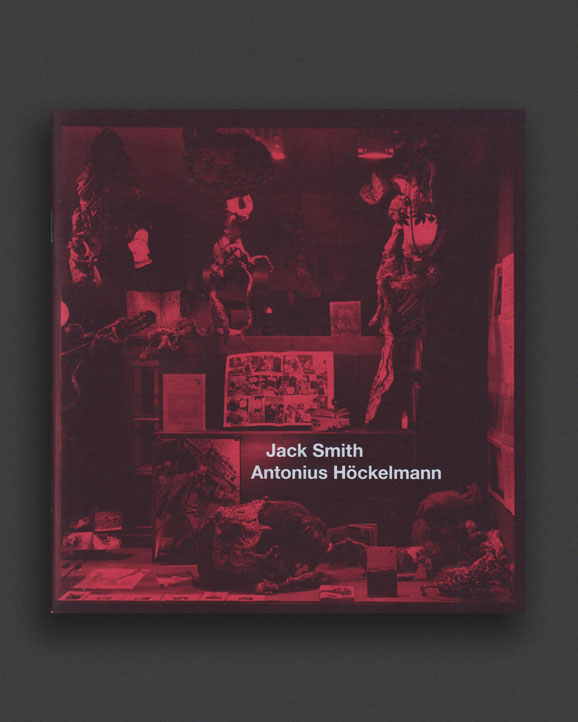
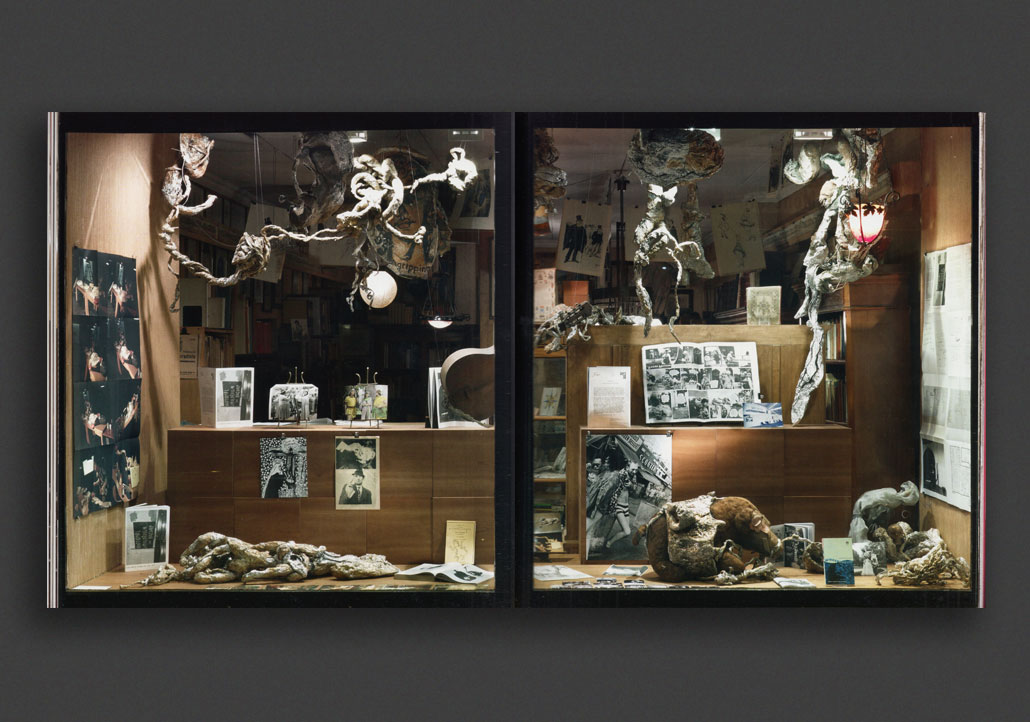
Wonderful publication documenting an exhibition that took place in 2010 in the window of Galerie Buchholz's antiquarian bookstore in Cologne, Germany. Michael Krebber presented here, in collaboration with Sebastian Höckelmann, works by artists Antonius Höckelmann and Jack Smith.
Produced in an edition of 800.
Antonius Höckelmann (1937 – 2000) was a German postwar artist. Höckelmann trained as a wood sculptor from 1951 to 1957 in his native city of Oelde, and studied from 1957 to 1961 at the College of Fine Arts in Berlin with Karl Hartung. In 1977 he participated in the documenta 6, and in 1982 at documenta 7 in Kassel. Many of his works combine sculpture and painting. Wooden sculptures and sculptures made of other materials (bronze, silver foil, straw) were often completely painted.
Jack Smith (1932 – 1989) was an American filmmaker, artist, actor, and pioneer of underground cinema. He is generally acclaimed as a founding father of American performance art, and has been critically recognized as a master photographer, though his photographic works are rare and remain largely unknown. Apart from appearing in his own work, including the legendary Flaming Creatures (1963), Smith played the lead in Andy Warhol's unfinished film Batman Dracula, Ken Jacobs's Blonde Cobra, and appeared in several theater productions by Robert Wilson.
2022, English
Softcover, 376 pages, 31 x 22 cm
Published by
Dashwood Books / New York
Cultural Traffic / UK
$160.00 - Out of stock
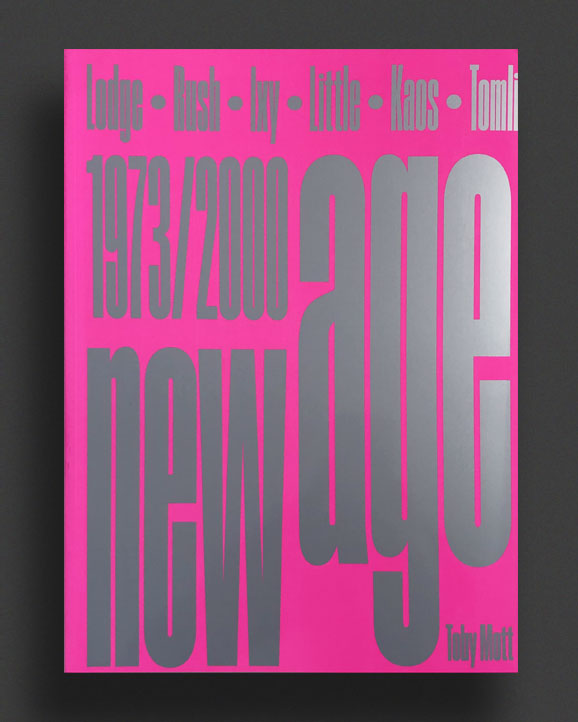
New Age: Stonehenge to Jungle is a comprehensive collection of iconic UK rave, jungle, sound system and warehouse party flyers dating from the early 1973s to 2000.
The book is sourced and curated from the Mott Collection – an extensive archive that gathers paper ephemera of British popular culture from punk to rave – curated by artist and collector Toby Mott.
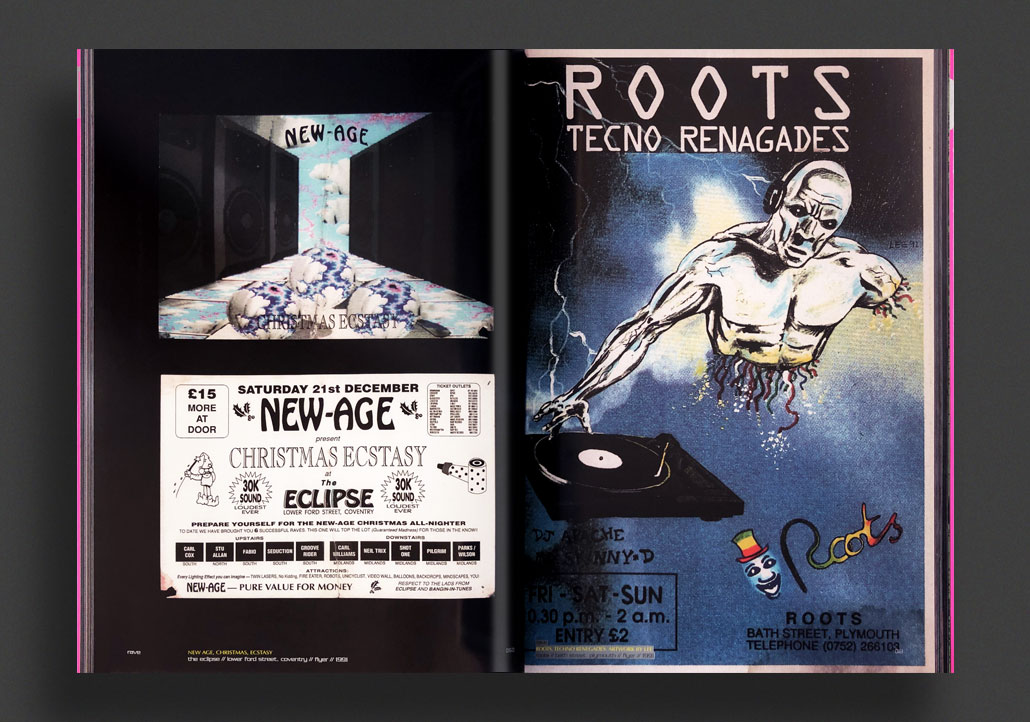
Crammed full of 575 entries of flyers and other collectables, New Age is a visual feast that charts the origins and progress of a series of youth rebellions that were to last for a generation. The book looks beyond the music into the fantastical visual language that propelled this subculture, offering a global perspective on how British party culture shifted through the decades.
New Age opens with an extensive array of iconic flyers created for the early 1970s free festivals of Stonehenge and Windsor. It then moves into the 1980s, when the boom of illegal London warehouse parties gave birth to acid house – visually embodied by its iconic smiley face, then evolved into sound system and dub clashes. As rave culture takes over, the designs of the flyers become more complex, unveiling a craving for dystopian experiences and surrealistic universes forged by the vision of masters of flyer art, the likes of Pez and Junior Tomlin – also known as the Salvador Dalí of Rave.
The book traces the rise of jungle music and more widely the aesthetic of the 1990s, digging into its Jamaican roots and bringing together reggae, rave and sound system culture, giving insight into the profound, and yet often overlooked, impact of the Black British community on rave music.
Featuring interviews with influential flyer designers such as Pez, Kaos, Junior Tomlin, and Dave Little.
Published by Corina Manu, Cultural Traffic and Dashwood Books 2022
Art and Design Direction: Jamie Reid Studio
2022, English
Softcover, 408 pages, 21 x 28 cm
Published by
Lenz Press / Milan
$85.00 - In stock -
This major new catalogue is published to accompany Marco Fusinato’s DESASTRES presentation at the Venice Biennale 2022, curated by Alexie Glass-Kantor, running from April 23 to November 27, 2022. DESASTRES is an experimental noise project that synchronises sound with image and takes the form of a durational solo performance as installation. The artist will be performing during the opening hours of the Biennale—a total of 200 days. The presentation will be the first time the Australian Pavilion, located in the historic Giardini della Biennale, has been the site for a live durational performance.
Originally from the Veneto region in Italy, Marco Fusinato’s parents migrated to Australia where he was born. He currently lives and works in Naarm/Melbourne. Fusinato (b. 1964) is a contemporary artist and noise-musician whose work takes the form of installation, photographic reproduction, design, performance and recording. DESASTRES is a culmination of his interests in noise/experimental music, underground culture, mass media images and art history. He uses an electric guitar as a signal generator into mass amplification to improvise slabs of noise, saturated feedback and discordant intensities that trigger a deluge of images onto a freestanding floor-to-ceiling LED wall. The images are sourced via a stream of words that have been put into an open search across multiple online platforms. There is no theme as such, rather the immersion of sound and image is open for the audience to interpret and make sense of. The intent is to create some kind of hallucination, elation in disorientation and exhaustion from confusion. The work is an invitation for audiences to come together within a high-intensity concentration of energy. What can’t be seen, can be felt: sound as physical matter which creates a transformative experience.
This expansive publication features a new essay by Branden W. Joseph, professor of art history at Columbia University and an extensive interview by curator Alexie Glass-Kantor with Marco Fusinato. It also includes texts by critical theorist and filmmaker Elizabeth Povinelli, AI researcher and author Kate Crawford, writer and curator Chus Martínez, and musicians/outre-guitarists Thurston Moore (Sonic Youth), Stephen O’Malley (SUNN O)))) and Bruce Russell (Dead C).
Marco Fusinato (b. 1964) is an Australian contemporary artist and noise-musician based in Naarm/Melbourne whose work takes the form of installation, photographic reproduction, design, performance and recording.
As an artist, he conceives his work as a succession of interrelated projects, some of which continue across numerous iterations. Within these projects the works are almost always serial and use specific frameworks for experimentation, as if demonstrating a thesis. Working across disciplines and cultural fields, Fusinato explores the tensions and contradictions of opposing forces: underground culture/institutions, noise/silence, minimalism/maximalism, purity/contamination. He creates dynamic situations in which these energies are captured by combining allegorical appropriation with an interest in the intensity of a gesture or event.
Fusinato's work has been presented in many international exhibitions, including All the World's Futures, 56th International Art Exhibition of La Biennale di Venezia (2015); The Imminence of Poetics, 30th Sao Paulo Biennale (2012); SUPERPOSITION: Art of Equilibrium and Engagement, 21st Biennale of Sydney (2018); and Australia: Antipodean Stories, Padiglione d'Arte Contemporanea, Milan (2019). His work was also included in Soundings: A Contemporary Score, the first ever exhibition of sound at the Museum of Modern Art, New York (2013) and Sonic Youth etc.: Sensational Fix (2008–10), a European travelling exhibition of artists who have collaborated with the New York rock band, Sonic Youth.
1993, German / English
Softcover, 32 pages, 29 x 27 cm
1st Edition, Out of print title / used / fine
Published by
Stockhausen-Verlag / Kürten
$80.00 - Out of stock
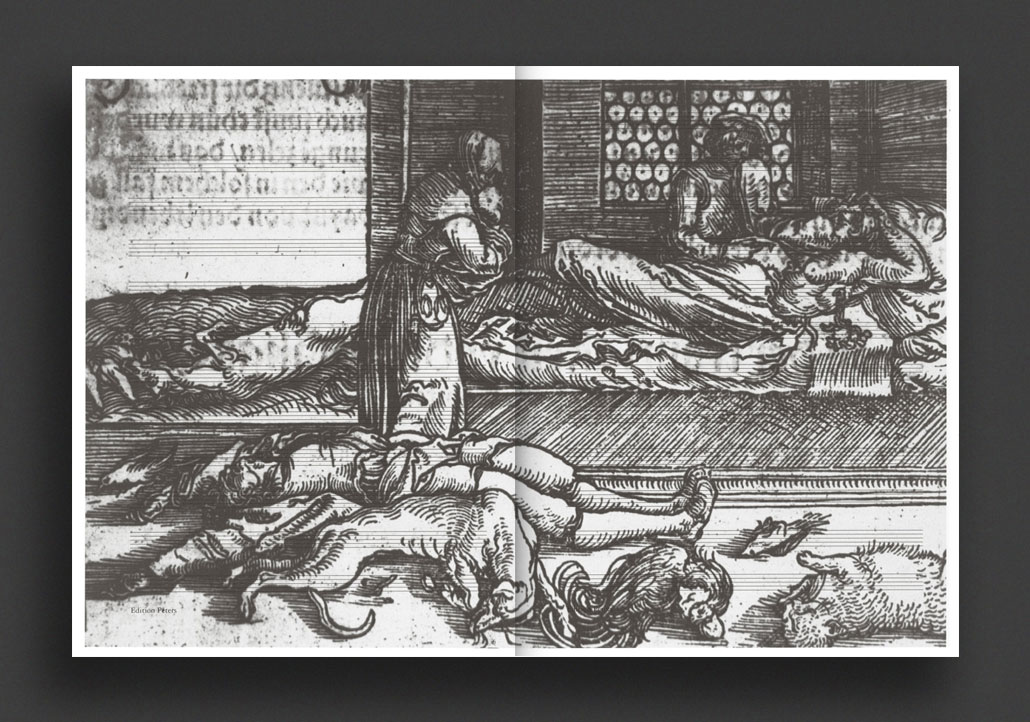
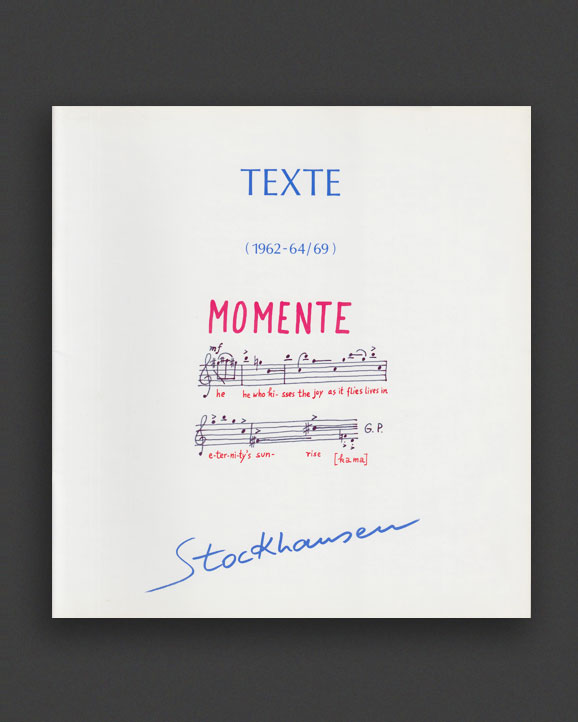
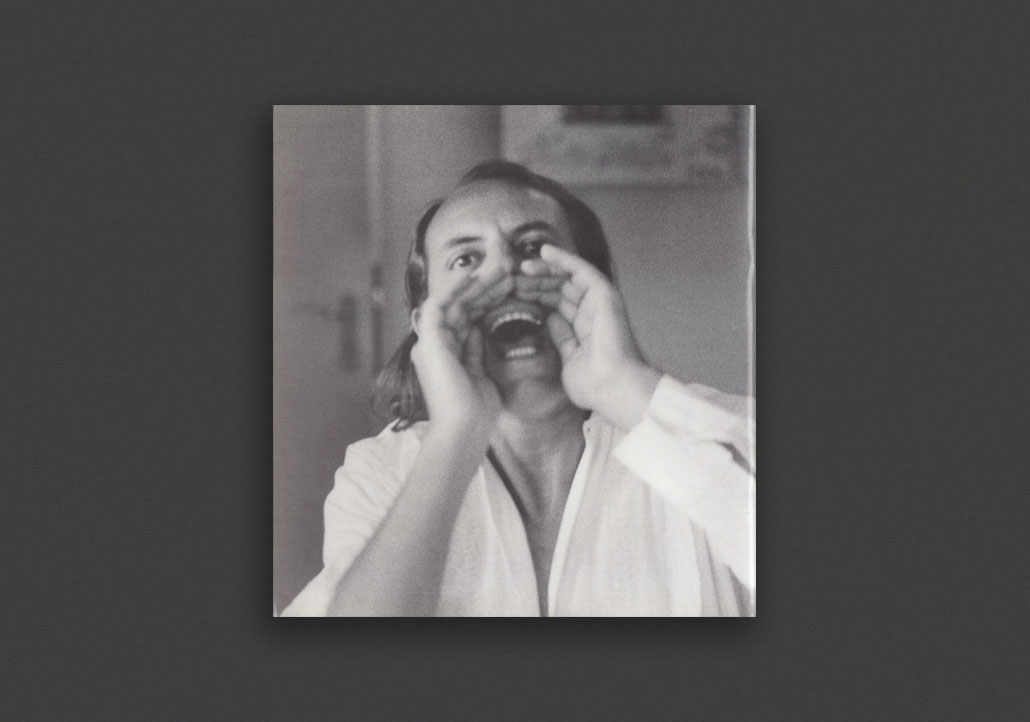
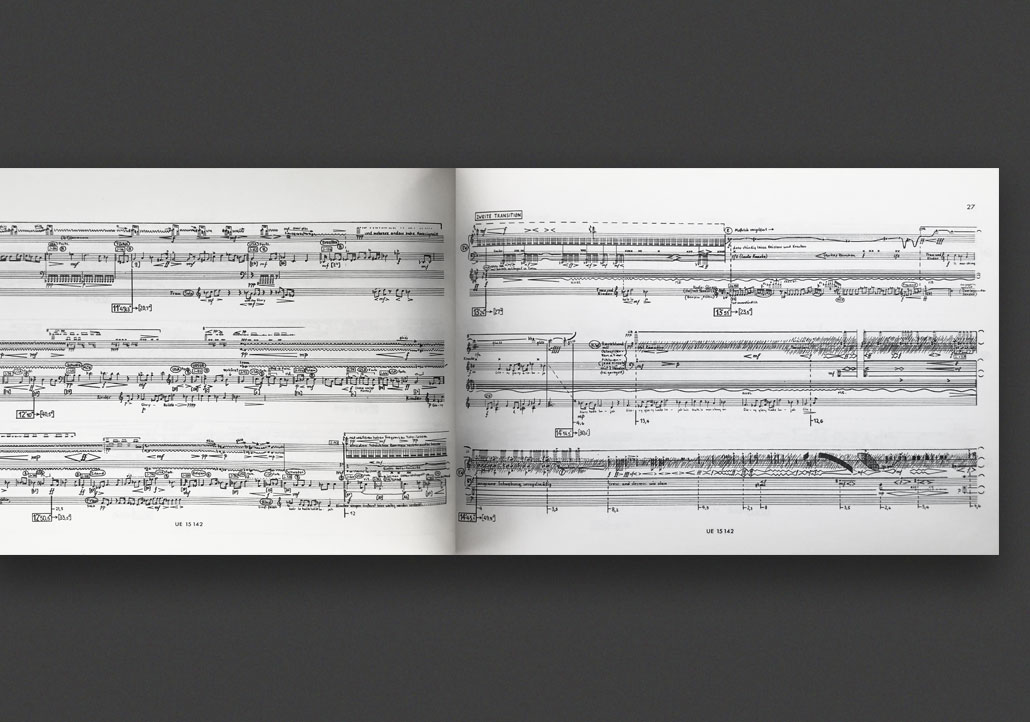
First edition of Texte der MOMENTE : für Solosopran, 4 Chorgrupppen und 13 Instrumentalisten (for solo soprano, 4 choir groups and 13 instrumentalists); Europa Version 1972, published in 1993 by Stockhausen Verlag, Kürten, Germany. Introduction in English and German, score and original manuscript primarily in German, with some English words. Long out of print.
Momente (Moments) is a work by the German composer Karlheinz Stockhausen, written between 1962 and 1969, scored for solo soprano, four mixed choirs, and thirteen instrumentalists (four trumpets, four trombones, three percussionists, and two electric keyboards). A "cantata with radiophonic and theatrical overtones", it is described by the composer as "practically an opera of Mother Earth surrounded by her chicks". It was Stockhausen's first piece composed on principles of modular transposability, and his first musical form to be determined from categories of sensation or perception rather than by numerical units of musical terminology, which marks a significant change in the composer's musical approach from the abstract forms of the 1950s.
Karlheinz Stockhausen (1928 – 2007) was a German composer, widely acknowledged by critics as one of the most important but also controversial composers of the 20th and early 21st centuries. He is known for his groundbreaking work in electronic music, for introducing controlled chance (aleatory techniques) into serial composition, and for musical spatialization.
Very Good-Fine copy.
1977, English / German / French
Softcover, 72 pages, 31 x 23.4 cm
Out of print title / used / very good
Published by
Universal Edition / Vienna
$140.00 - Out of stock
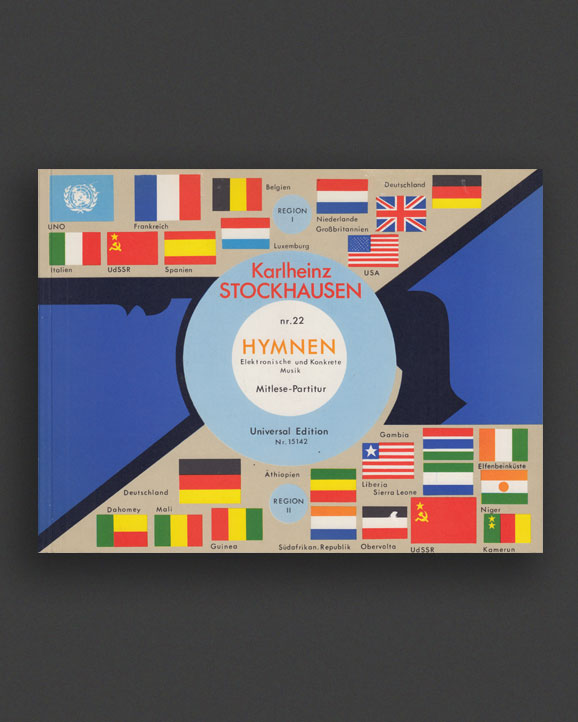
Very rare original published score accompaniment to Karlheinz Stockhausen's (1928—2007) Hymnen : Elektronische und Konkrete Musik, "intended to be read while listening to the tape or the record"—Introduction. First edition, second issue, published in 1977 by Viennese Universal Edition, and printed in Vienna from Stockhausen's manuscript — the transcription of the tape was made by Stockhausen using earphones, piano and a stopwatch. Texts in English, German, and French, including programme notes from the world premiere in Cologne in 1967, disposition, supplementary commentary for the DGG record, August 1968, and the complete score. English translations by Australian musicologist and a former teaching assistant to Karlheinz Stockhausen, Richard Toop. Long out of print.
Hymnen (German for "Anthems") is an electronic and concrete work, with optional live performers, by Karlheinz Stockhausen, composed in 1966–67, and elaborated in 1969. In the composer's catalog of works, it is No. 22. Hymnen is a massive tape soundscape based on samples of 40 national anthems, various field recordings of public events, a few dialogue "inserts", shortwave radio noise and synthesized sound (from sine and pulse generators) to create a kind of "portrait of humanity" as it melts together, bursts apart, and then is reborn as a new utopian entity.
Karlheinz Stockhausen (1928 – 2007) was a German composer, widely acknowledged by critics as one of the most important but also controversial composers of the 20th and early 21st centuries. He is known for his groundbreaking work in electronic music, for introducing controlled chance (aleatory techniques) into serial composition, and for musical spatialization.
Very Good copy.
2022, English
Softcover, 128 pages, 12.1 x 19.1 cm
Published by
Diaphanes / Zürich
$32.00 - Out of stock
Translated by Stephen Barber and Clayton Eshleman
With a foreword by Ros Murray
To end GOD’S JUDGEMENT
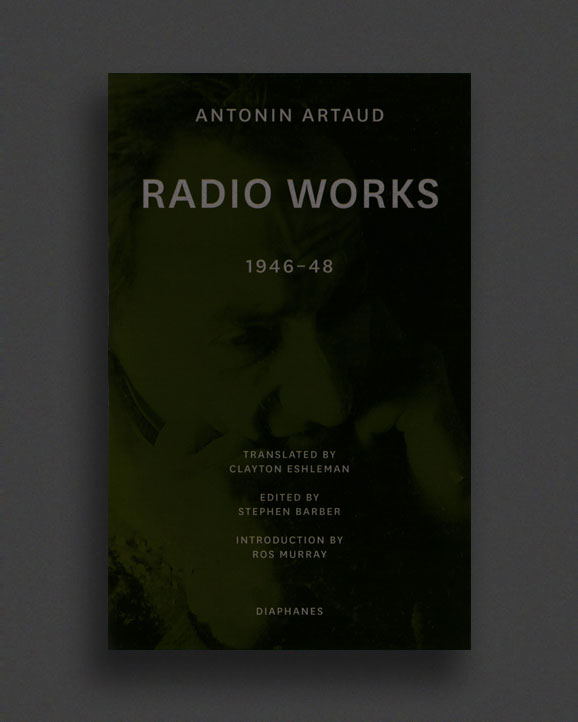
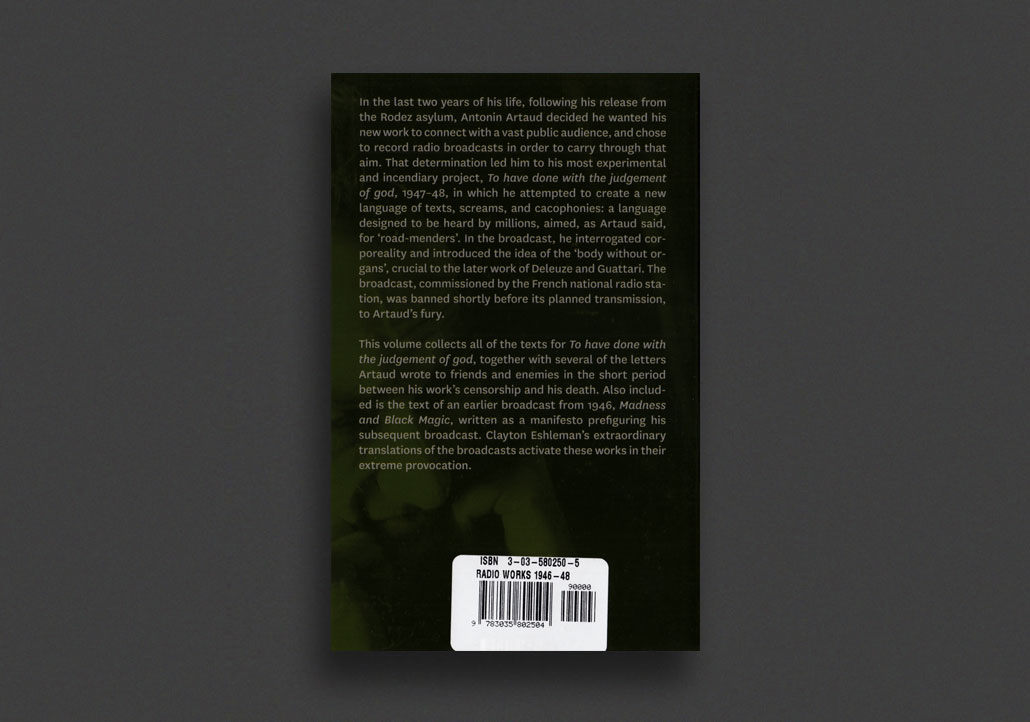
In the last two years of his life, following his release from the Rodez asylum, Antonin Artaud decided he wanted his new work to connect with a vast public audience, and chose to record radio broadcasts in order to carry through that aim. That determination led him to his most experimental and incendiary project, To have done with the judgement of god, 1947-48, in which he attempted to create a new language of texts, screams, and cacophonies: a language designed to be heard by millions, aimed, as Artaud said, for ‘road-menders’. In the broadcast, he interrogated corporeality and introduced the idea of the ‘body without organs’, crucial to the later work of Deleuze and Guattari. The broadcast, commissioned by the French national radio station, was banned shortly before its planned transmission, to Artaud’s fury.
This volume collects all of the texts for To have done with the judgement of god, together with several of the letters Artaud wrote to friends and enemies in the short period between his work’s censorship and his death. Also included is the text of an earlier broadcast from 1946, Madness and Black Magic, written as a manifesto prefiguring his subsequent broadcast. Clayton Eshleman’s extraordinary translations of the broadcasts activate these works in their extreme provocation.
2020, English / French
Softcover, 136 pages, 12 x 19 cm
Published by
Diaphanes / Zürich
$32.00 - In stock -
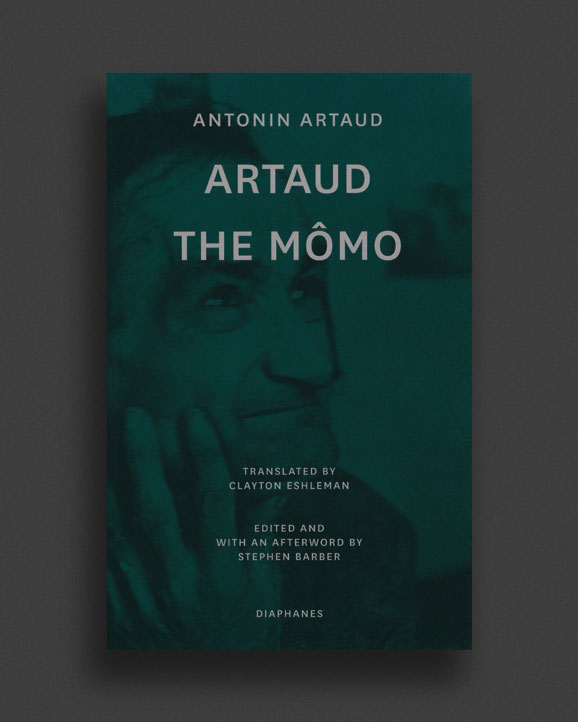
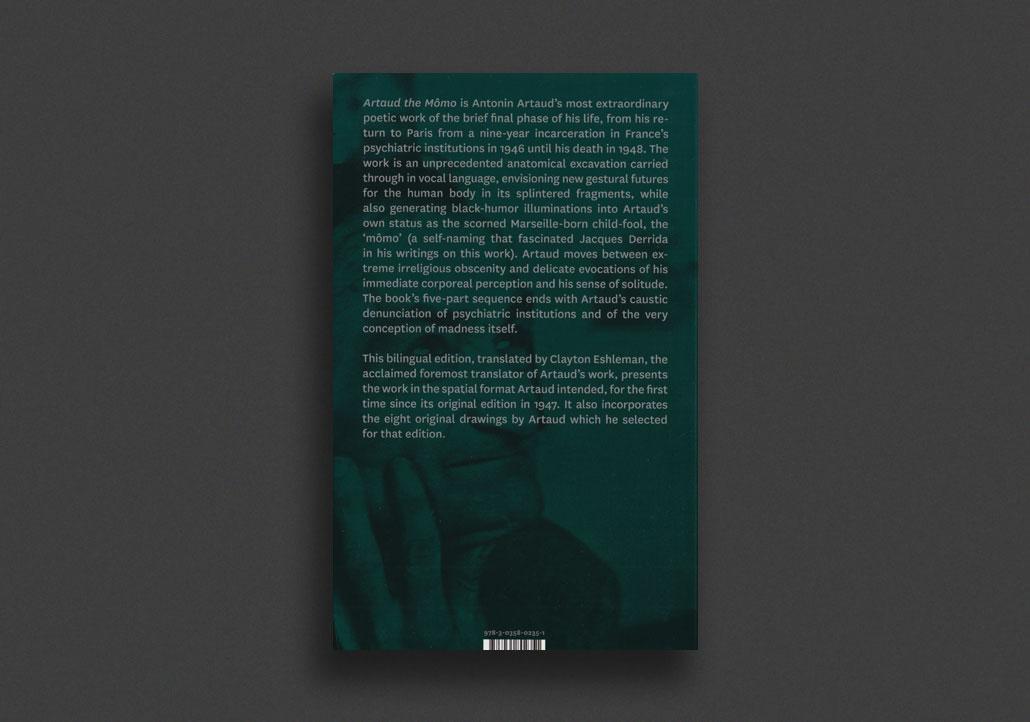
English translation of Artaud le Mômo, edited in the spatial format Artaud intended, for the first time since its original edition in 1947. Includes eight original drawings by the French poet.
Artaud the Mômo is Antonin Artaud's most extraordinary poetic work of the brief final phase of his life, from his return to Paris from a nine-year incarceration in France's psychiatric institutions in 1946 until his death in 1948. The work is an unprecedented anatomical excavation carried through in vocal language, envisioning new gestural futures for the human body in its splintered fragments, while also generating black-humor illuminations into Artaud's own status as the scorned Marseille-born child-fool, the “mômo” (a self-naming that fascinated Jacques Derrida in his writings on this work). Artaud moves between extreme irreligious obscenity and delicate evocations of his immediate corporeal perception and his sense of solitude. The book's five-part sequence ends with Artaud's caustic denunciation of psychiatric institutions and of the very conception of madness itself.
This edition, translated by Clayton Eshleman—the acclaimed foremost translator of Artaud's work—presents the work in the spatial format Artaud intended, for the first time since its original edition in 1947. It also incorporates the eight original drawings by Artaud—showing reconfigured bodies, weapons of resistance and assault—which he selected for that edition, having initially attempted to persuade Picasso to collaborate with him.
The editorial material draws on Artaud's previously unknown manuscript letters of 1946-48 to the book's publisher, Pierre Bordas, which give unique insights into the work from its origins to its publication.
Antonin Artaud (1896-1948) was a French dramatist, poet, essayist, actor, and theater director, widely recognized as one of the major figures of twentieth-century theater and the European literary avant-garde.
2019, English
Softcover, 80 pages, 12 x 19 cm
Published by
Diaphanes / Zürich
$29.00 - In stock -
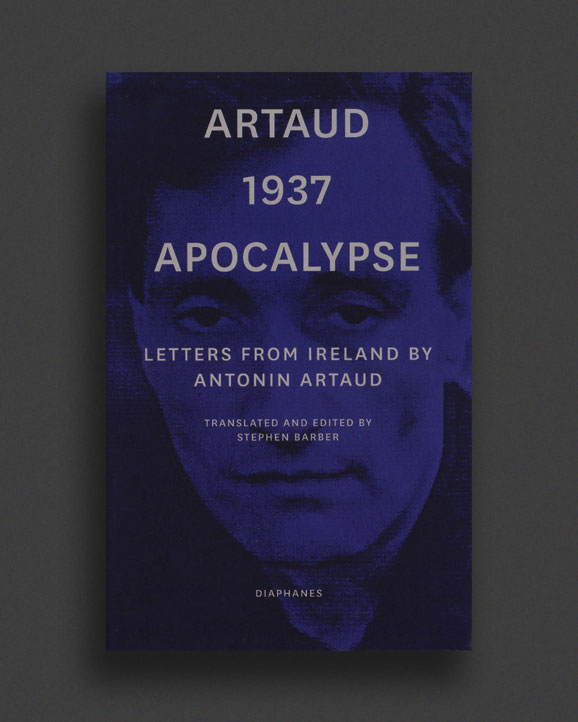
First English translation of Antonin Artaud's writings from his apocalyptic journey to Ireland in 1937.
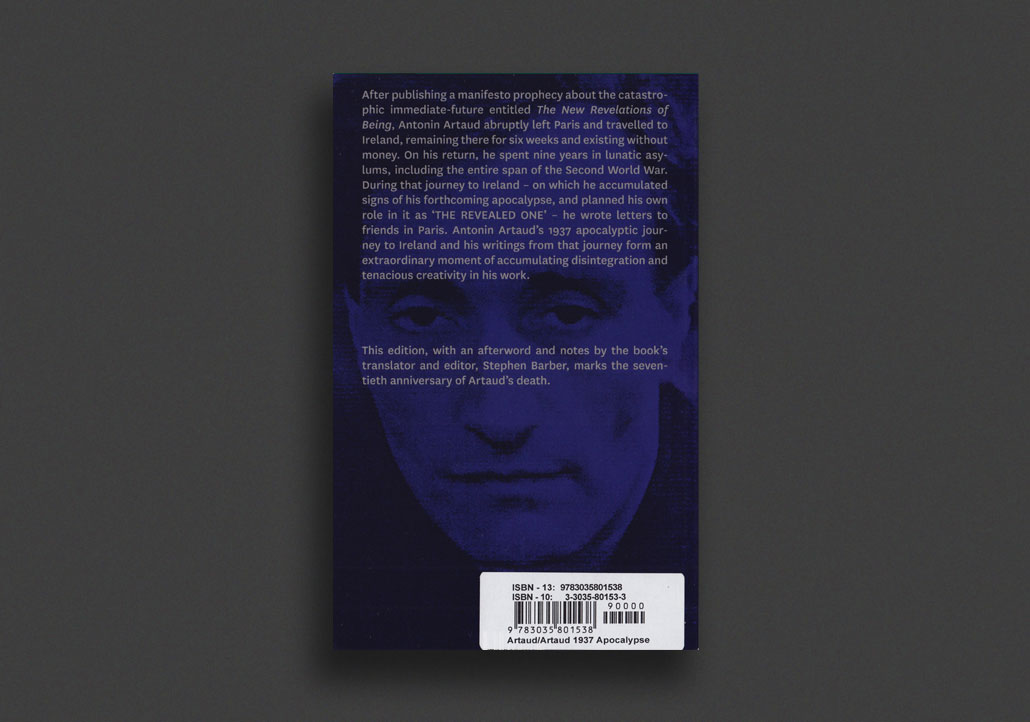
Antonin Artaud's 1937 apocalyptic journey to Ireland and his writings from that journey form an extraordinary moment of accumulating disintegration and tenacious creativity in his work. After publishing a manifesto prophecy about the catastrophic immediate—future entitled The New Revelations of Being, Artaud abruptly left Paris and travelled to Ireland, remaining there for six weeks and existing without money, travelling first to the isolated island of Inishmore off Ireland's western coast, then to Galway, and finally to Dublin, where he was arrested as an undesirable alien, beaten by the police, and summarily deported back to France. On his return, he spent nine years in lunatic asylums, including the entire span of the Second World War. During that journey to Ireland—on which he accumulated signs of his forthcoming apocalypse, and planned his own role in it as “THE REVEALED ONE”—Artaud wrote letters to friends in Paris and also created several magic spells, intended to curse his enemies and to protect his friends from Paris's forthcoming incineration and the Antichrist's appearance at the Deux Magots cafe. To André Breton, he wrote: “It's the Unbelievable—yes, the Unbelievable— it's the Unbelievable which is the truth.” Many of his writings from Ireland were lost, and this book collects all of his surviving letters, drawn together from archives and private collections, together with photographs of the locations he travelled through.
This edition, with an afterward and notes by the book's translator/editor, Stephen Barber, marks the seventieth anniversary of Artaud's death.
Antonin Artaud (1896-1948) was a French dramatist, poet, essayist, actor, and theater director, widely recognized as one of the major figures of twentieth-century theater and the European literary avant-garde.
2009, English
Softcover, 348 pages, 23 x 31 cm
Published by
MOCA / Los Angeles
The MIT Press / Massachusetts
$85.00 - Out of stock
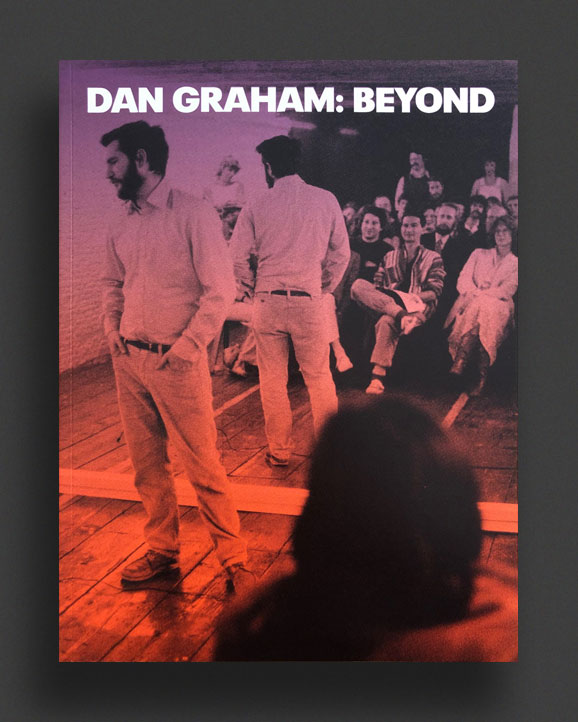
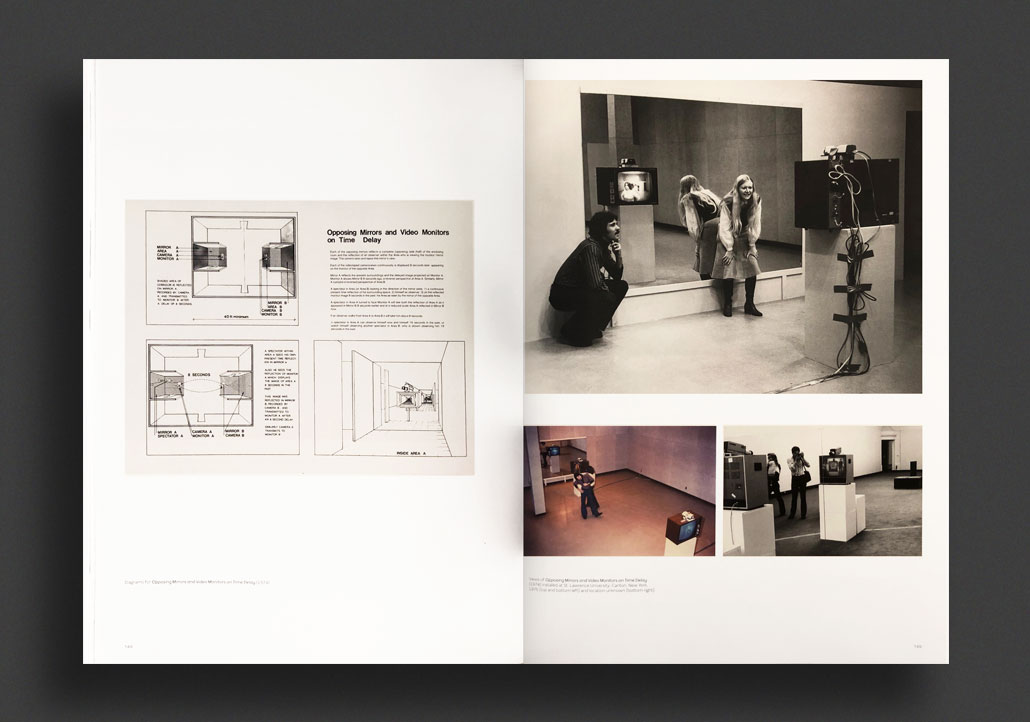
Dan Graham is one of the most significant figures to emerge from the 1960s moment of Conceptual art, with a practice that pioneered a range of art forms, modes, and ideas that are now fundamental to contemporary art. The thrust of his practice has always pointed beyond: beyond the art object, beyond the studio, beyond the medium, beyond the gallery, beyond the self. Beyond all these categories and into the realm of the social, the public, the democratic, the mass produced, the architectural, the anarchic, the humorous. Graham's early work, Homes for America--a series of snapshots of suburban New Jersey tract housing accompanied by short parodic texts, made as a page layout for Arts magazine--announced a critical art grounded in the everyday, and it merged the artist's interest in cultural commentary with art's most advanced visual modes. His 1984 "video-essay" Rock My Religion traced a continuum of separatism and collective ecstasy from the American religious sect the Shakers to hard-core punk music.
This volume, which accompanied a major retrospective organized by the Museum of Contemporary Art, Los Angeles, offers the first comprehensive survey of Graham's work. The book's design evokes magazine format and style, after Graham's important conceptual work from the 1960s in that medium. Generously illustrated in color and black and white, Dan Graham: Beyond features eight new essays, two new interviews with the artist, a section of reprints of Graham's own writing, and an animated manga-style "life of Dan Graham" narrative. It examines Graham's entire body of work, which includes designs for magazine pages, drawing, photographs, film and video, and architectural models and pavilions.
Essays : Chrissie Iles on Graham's performance work; Bennett Simpson on Graham's interest and works in rock music; Beatriz Colomina on Graham's architectural pavilions; Rhea Anastas on Graham's early formation and short-lived operation of the John Daniels Gallery; Mark von Schlegell on Graham's interest in science fiction; Mark Francis on Graham's Public Space/Two Audiences (1976); Alexandra Midal on Graham's conceptual works for magazine pages and magazine design; Philippe Vergne on Graham's puppet opera Don't Trust Anyone Over Thirty (2004); Kim Gordon interview with Graham on their collaborations and music; Rodney Graham interview with Graham on jokes and humor in art.
1997, English
Softcover (wire-bound), 12 pages, 21.5 x 14 cm
1st Edition, Out of print title / used / good
Published by
Unique Ancient Tavern / San Francisco
$25.00 - Out of stock
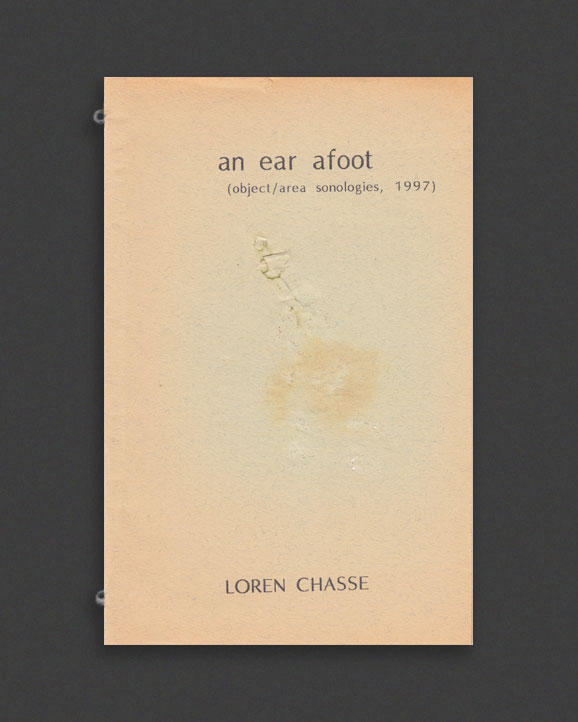
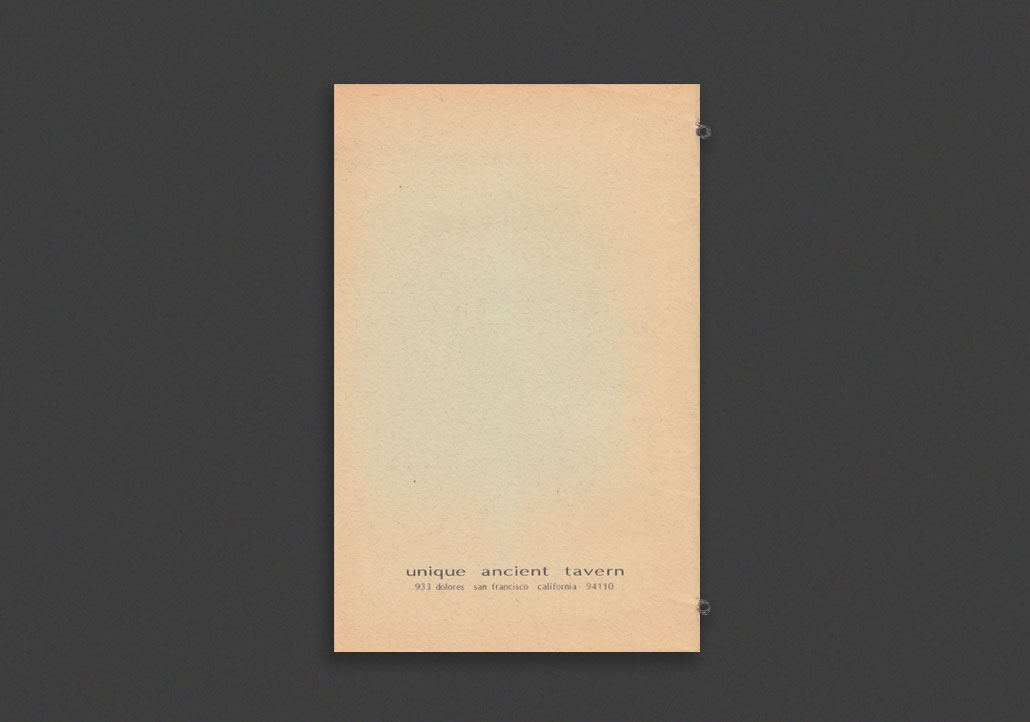
Very rare copy of Loren Chasse's "an ear afoot", a very early publication of "object/area sonologies", published in 1997 in an unknown small edition by Unique Ancient Tavern in San Francisco. We cannot locate another copy. Lovely hand-made publication of Chasse's drawings and writings, bound with thin wire. Loren Chasse is an American musician, sound artist, field recordist and teacher, most notable for his association with Jewelled Antler and his work with Thuja, The Blithe Sons, The Child Readers, Of and many others.
Good copy with some wear and tanning to raw stock covers. Bound by light wire, traces of something organic possibly once attached to cover.
1993, German
Softcover, 20 pages + CD, 29 x 17.5 cm
1st Edition, Out of print title / used / very good
Published by
Verlag Das Beispiel GmbH Darmstadt / Darmstadt
$140.00 $90.00 - In stock -
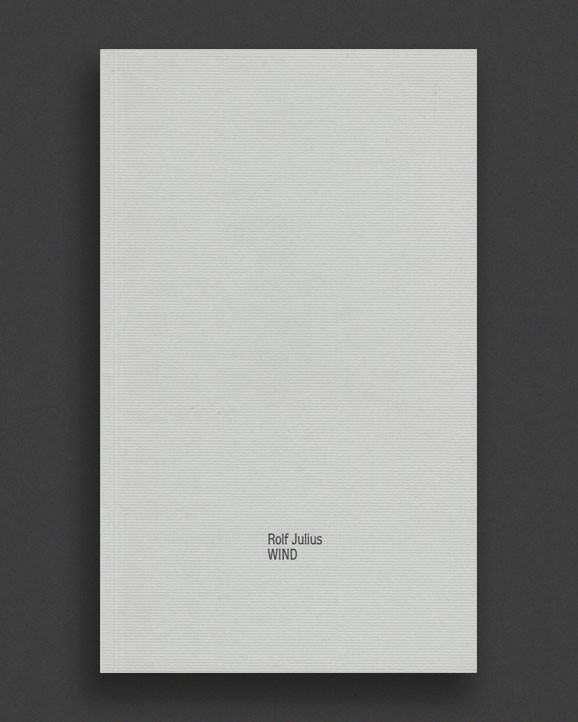
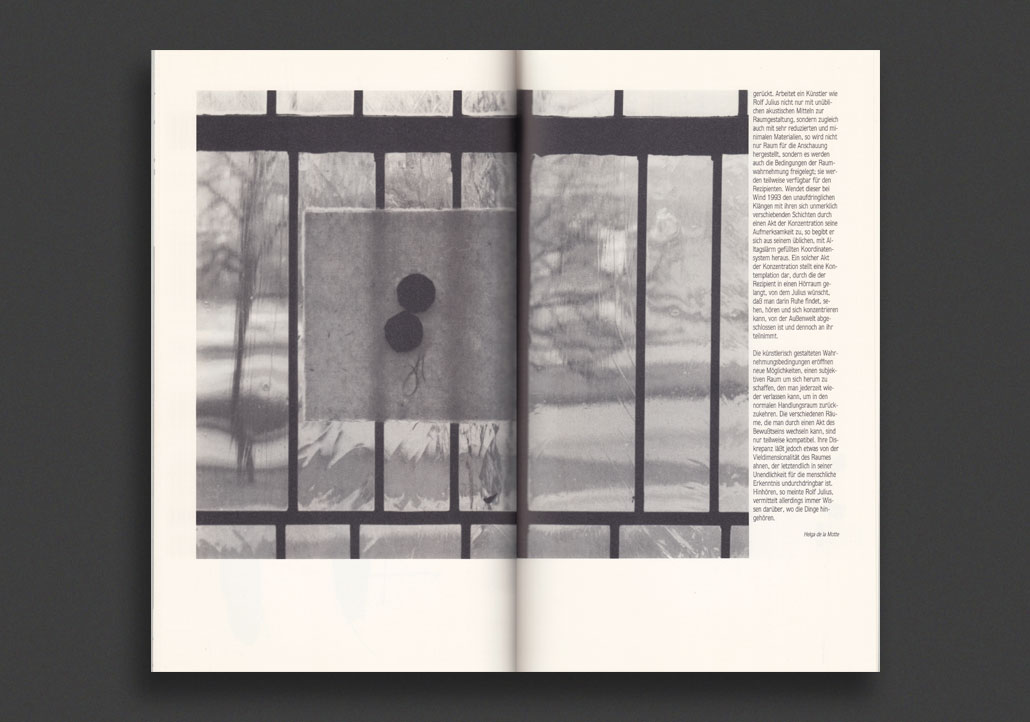
Rare first, only edition of Rolf Julius – Wind, beautiful artist book published with accompanying CD by Verlag Das Beispiel GmbH Darmstadt in 1993. Includes book with texts (score) by sound artist Rolf Julius (1939 — 2011), and Helga de la Motte-Haber (essay), and b/w illustrations (drawings and photographs) throughout. CD includes the pieces : Sommerstück (Belèm) - 1993 and Neues Klavierkonzert - 1992.
Rolf Julius has frequently been compared to John Cage for his attempts of integrating the world of common noises into the realm of sounds. "The surface of a sound interests me. Is it round or angled, grinding and raw, or smooth, etc." Julius thus creates extraordinary sound installations which can be described as "music for the eyes" and have secured him an unmistakeable place in the spectrum of contemporary art. An important book for anyone interested in Julius or Cage's concept of "Small Music" or ambient/field recording in general.
Very Good copy.
1996, English / German
Softcover, 256 pages, 16 x 24 cm
1st Edition, Out of print title / used / very good
Published by
Kehrer Verlag / Heidelberg
$100.00 - Out of stock
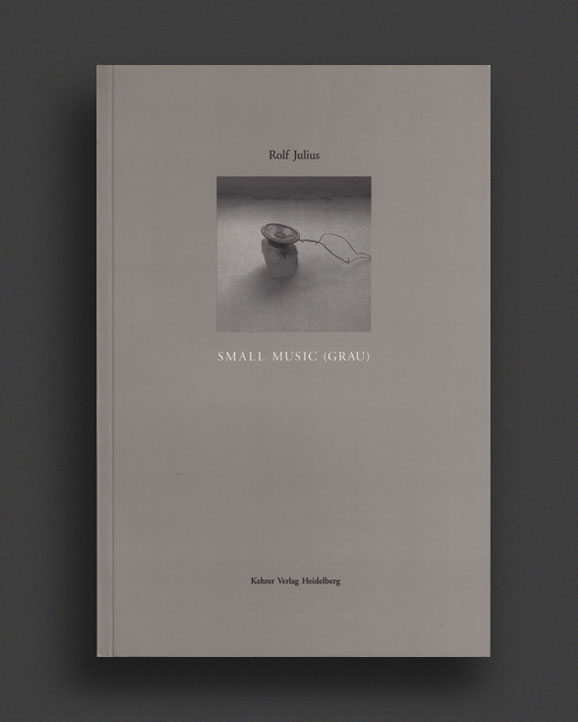
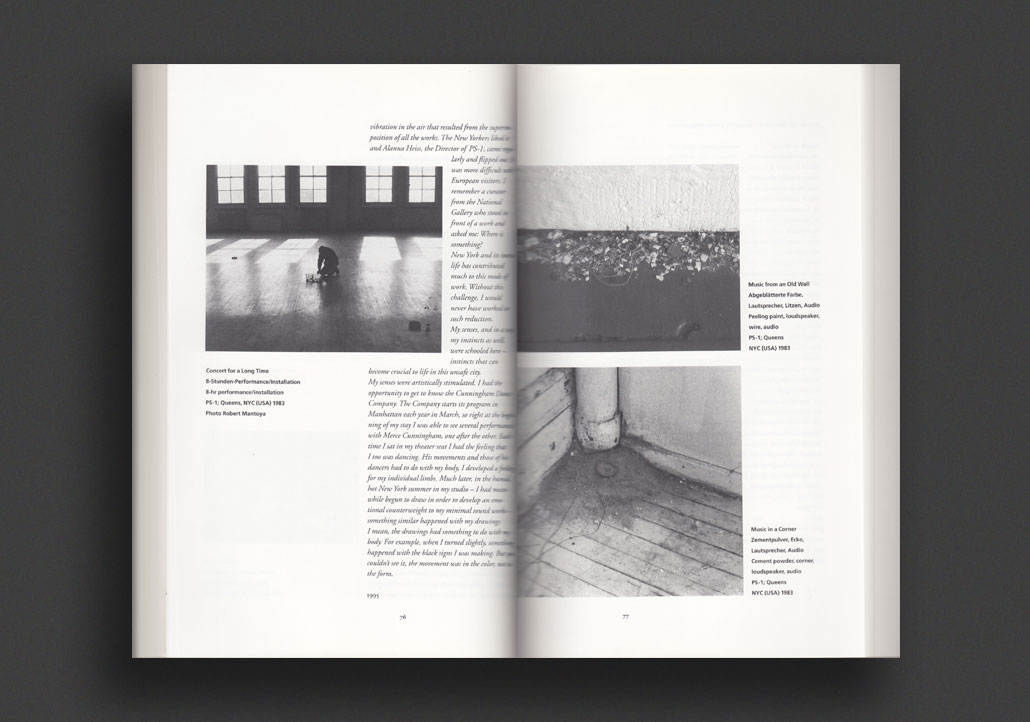
Rare first edition of Small Music (Grau), the first major documentation on the work of sound artist Rolf Julius (1939 — 2011) who operated in the border area between music and visual arts. Published in 1996 to accompany the exhibitions in Heidelberg, Saarbrücken, and Heilbronn, 1995—1996, and since long out-of-print. Heavily illustrated throughout with many texts by Julius and accompanying essays. Rolf Julius has frequently been compared to John Cage for his attempts of integrating the world of common noises into the realm of sounds. "The surface of a sound interests me. Is it round or angled, grinding and raw, or smooth, etc." Julius thus creates extraordinary sound installations which can be described as "music for the eyes" and have secured him an unmistakeable place in the spectrum of contemporary art. An important book for anyone interested in Julius or Cage's concept of "Small Music" or ambient/field recording in general.
Very Good copy.
2013, English
Hardcover, 576 pages, 30 x 24 cm
Published by
Museum of Modern Art / Warsaw
ERSTE Foundation / Vienna
The KwieKulik Archive / Warsaw
JRP Ringier / Zürich
$130.00 - In stock -
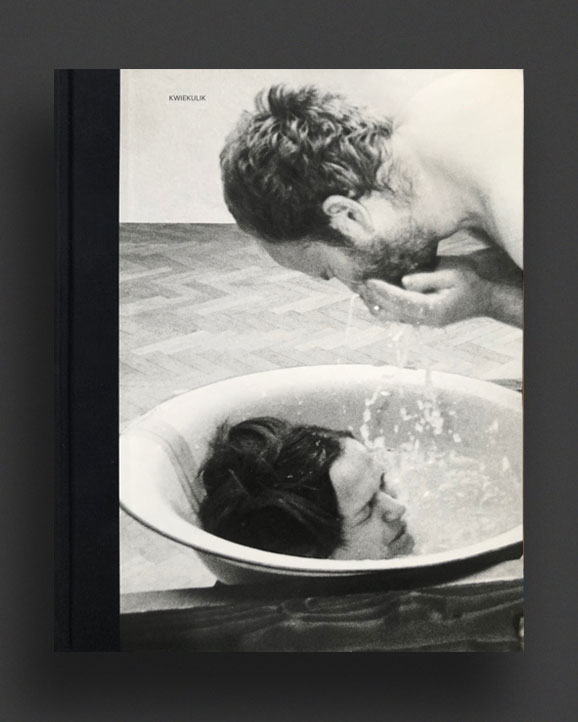
Since the 1970s Zofia Kulik and Przemyslaw Kwiek (KwieKulik) have pioneered the transformation of artistic practice into social experimentation. KwieKulik sought to reconcile artistic praxis with everyday life, essentially based on the premise that form is a fact of society. The couple’s pioneering approach to film, photography, and multi-screen slide projection epitomises their unique variation of expanded cinema.
This comprehensive monograph documents their collective works from 1971 to 1987, illuminating the radically unique position of the artists in the history of neo-avant-garde in Central Europe. The book covers and documents more than 200 events, and includes a ‘KwieKulik Glossary’, the collection of concepts introduced and applied by the artists.
Published with the Museum of Modern Art, Warsaw, BWA Wroclaw-Galleries of Contemporary Art, ERSTE Foundation and The KwieKulik Archive, Warsaw-Lomianki.
Edited by Lukasz Ronduda and Georg Schöllhammer.
Texts by Jacek Dobrowolski, Maciej Gdula, Klara Kemp-Welch, Zofia Kulik, Przemyslaw Kwie, Ewa Majewska, Pawel Moscicki, Luiza Nader, Maryla Sitkowska, Tomasz Zaluski.
1970, English
Softcover, 96 pages, 28 x 21 cm
1st Edition, Out of print title / used / good
Published by
Evergreen Review Inc. / New York
Ever
$20.00 - Out of stock
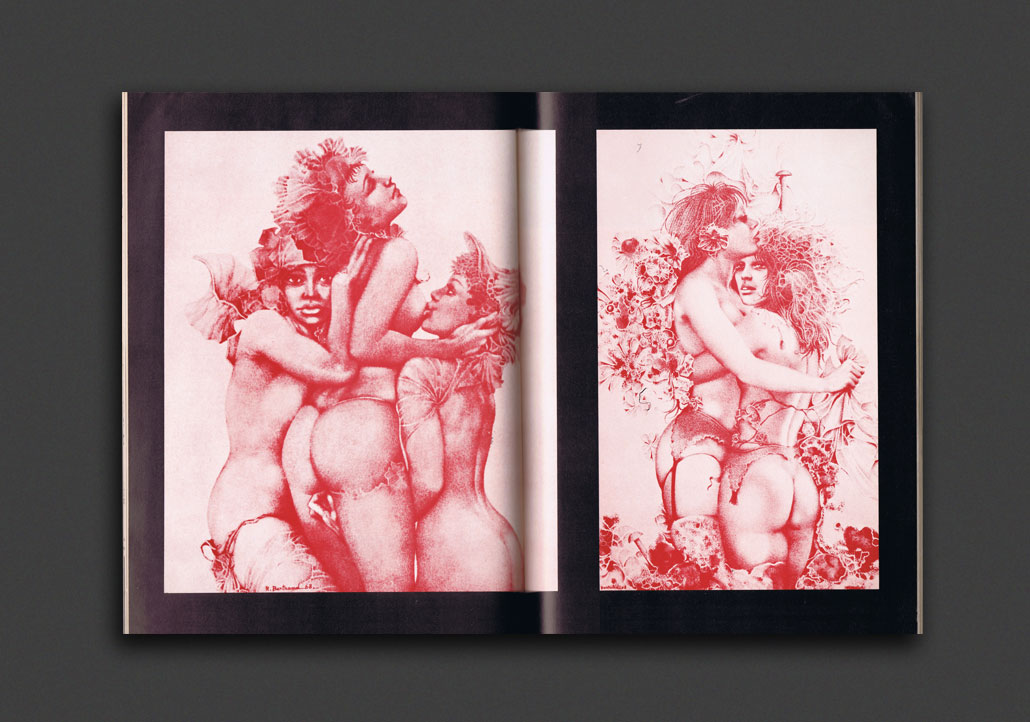
Vol. 14 No. 76 March 1970 issue of Evergreen Review. This issue features Kay Boyle (Long Walk from San Francisco), Bill Amidon (short Story), Michael Rumaker (For Charles Olson, a poem), Nat Hentoff (The Joke), Antonin Liehm (Interview with Jaromil Jires), Al Young (Poem), Ed Sanders (short story), Raymond Bertrand (Erotic Drawings), Roy L. Walford (Original Irreplaceable Vision), Richard Brautigan (short Story, The Betrayed Kingdom), Strong & Sterling (Frank Fleet and His Electronic Sex Machine), John Lahr (Putting Shakespeare in a New Environment), plus regular features, illustrations and much more.
The Evergreen Review was a U.S. based literary magazine founded by Barney Rosset, publisher of Grove Press, and editor Don Allen and Fred Jordan in 1957. It existed in print form until 1973. Evergreen Review debuted pivotal works by Samuel Beckett, Jorge Luis Borges, Charles Bukowski, William S. Burroughs, Marguerite Duras, Jean Genet, Allen Ginsberg, Günter Grass, Jack Kerouac, Norman Mailer, Henry Miller, Pablo Neruda, Vladimir Nabokov, Frank O’Hara, Kenzaburō Ōe, Octavio Paz, Harold Pinter, Susan Sontag, Tom Stoppard, Derek Walcott and Malcolm X. United States Supreme Court Justice William O. Douglas wrote a controversial piece for the magazine in 1969. Kerouac and Ginsberg regularly had their writing published in the magazine. "Evergreen published writing that was literally counter to the culture, and if it was sexy, so much the better. In the context of the time, sex was politics, and the powers-that-be made the suppression of sexuality a political issue. The court battles that Grove Press fought for the legal publication of Lady Chatterly's Lover, Tropic of Cancer, and Naked Lunch, and for the legal distribution of the film I Am Curious: Yellow, spilled onto the pages of Evergreen Review, and in 1964, an issue of Evergreen itself was confiscated in New York State by the Nassau County District Attorney on obscenity charges...
1969, English
Softcover, 96 pages, 28 x 21 cm
1st Edition, Out of print title / used / good
Published by
Evergreen Review Inc. / New York
$20.00 - Out of stock
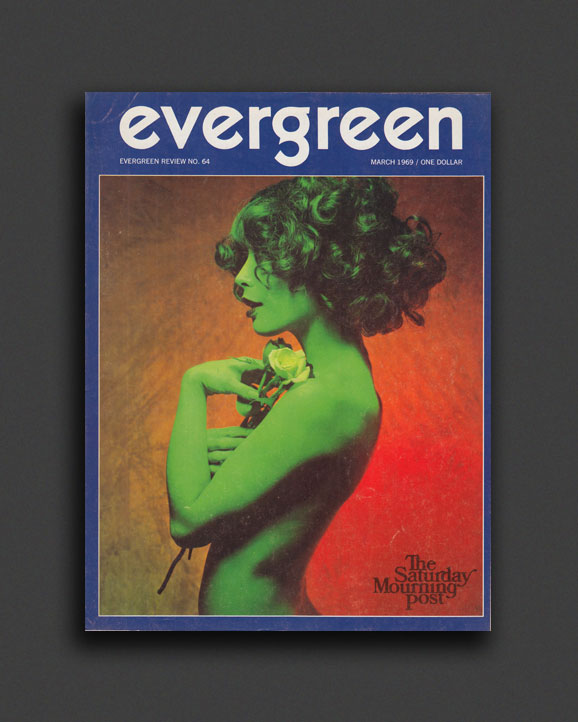
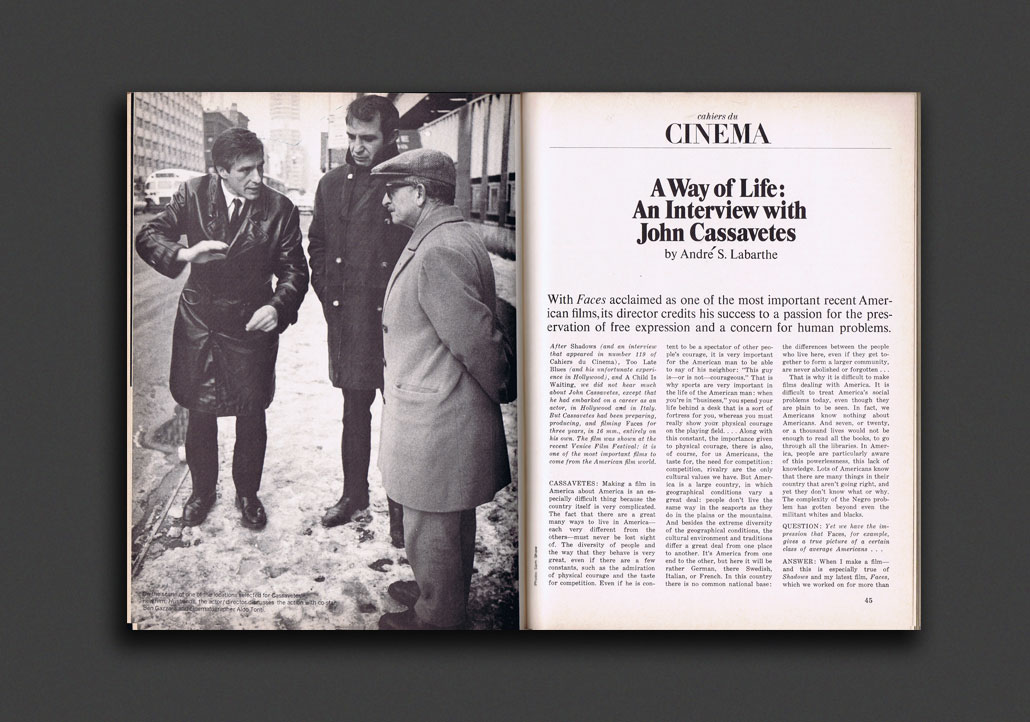
Vol. 13 No. 64 March 1969 issue of Evergreen Review. With a cover photography by Kishin Shinoyama, this issue features "Leo in Jerusalem: diary by Leo Skir"; short stories by Aki Tanino, Joseph Skvorecky and Herbert Gold, poems by David Myers and Charles Plymell, The Dimensions of Community Control by Nat Hentoff, an interview with film director John Cassavetes, plus regular features, illustrations and much more.
The Evergreen Review was a U.S. based literary magazine founded by Barney Rosset, publisher of Grove Press, and editor Don Allen and Fred Jordan in 1957. It existed in print form until 1973. Evergreen Review debuted pivotal works by Samuel Beckett, Jorge Luis Borges, Charles Bukowski, William S. Burroughs, Marguerite Duras, Jean Genet, Allen Ginsberg, Günter Grass, Jack Kerouac, Norman Mailer, Henry Miller, Pablo Neruda, Vladimir Nabokov, Frank O’Hara, Kenzaburō Ōe, Octavio Paz, Harold Pinter, Susan Sontag, Tom Stoppard, Derek Walcott and Malcolm X. United States Supreme Court Justice William O. Douglas wrote a controversial piece for the magazine in 1969. Kerouac and Ginsberg regularly had their writing published in the magazine. "Evergreen published writing that was literally counter to the culture, and if it was sexy, so much the better. In the context of the time, sex was politics, and the powers-that-be made the suppression of sexuality a political issue. The court battles that Grove Press fought for the legal publication of Lady Chatterly's Lover, Tropic of Cancer, and Naked Lunch, and for the legal distribution of the film I Am Curious: Yellow, spilled onto the pages of Evergreen Review, and in 1964, an issue of Evergreen itself was confiscated in New York State by the Nassau County District Attorney on obscenity charges...
1968, English
Softcover, 96 pages, 28 x 21 cm
1st Edition, Out of print title / used / good
Published by
Evergreen Review Inc. / New York
$20.00 - Out of stock
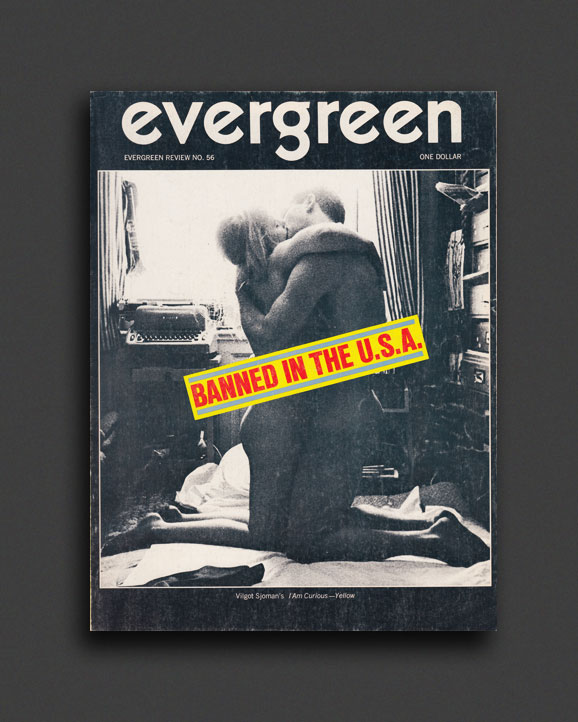
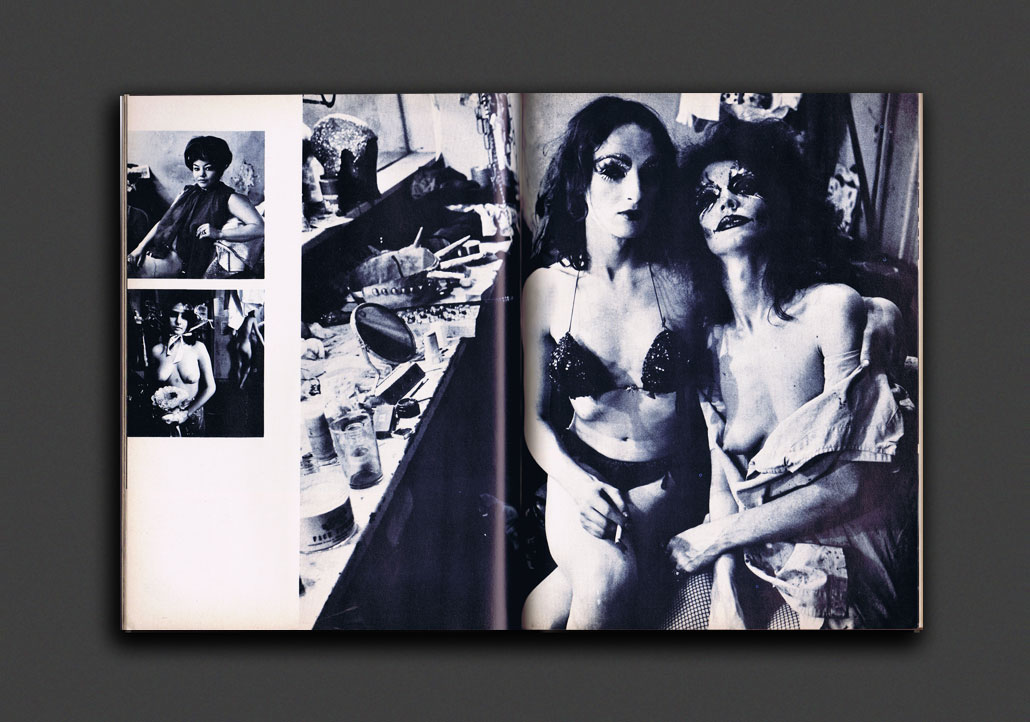
Vol. 12 No. 56 July 1968 issue of Evergreen Review. This issue features "I Was Curious" diary by Vilgot Sjoman, Timothy Leary, John Lahr and Vilgot Sjoman interview on Sex and Politics, Tom Stoppard, Nat Hentoff, story by Aki Tanino, three poems by Tam Fiofori, story by Goffredo Parise, "Psychedelic Burlesque!" pictorial by Mary Ellen Mark, A conversation with "Abu Amar" by Abdullah Schleifer, Jean-Luc Godard's "La Chinoise", plus regular features, illustrations and much more.
The Evergreen Review was a U.S. based literary magazine founded by Barney Rosset, publisher of Grove Press, and editor Don Allen and Fred Jordan in 1957. It existed in print form until 1973. Evergreen Review debuted pivotal works by Samuel Beckett, Jorge Luis Borges, Charles Bukowski, William S. Burroughs, Marguerite Duras, Jean Genet, Allen Ginsberg, Günter Grass, Jack Kerouac, Norman Mailer, Henry Miller, Pablo Neruda, Vladimir Nabokov, Frank O’Hara, Kenzaburō Ōe, Octavio Paz, Harold Pinter, Susan Sontag, Tom Stoppard, Derek Walcott and Malcolm X. United States Supreme Court Justice William O. Douglas wrote a controversial piece for the magazine in 1969. Kerouac and Ginsberg regularly had their writing published in the magazine. "Evergreen published writing that was literally counter to the culture, and if it was sexy, so much the better. In the context of the time, sex was politics, and the powers-that-be made the suppression of sexuality a political issue. The court battles that Grove Press fought for the legal publication of Lady Chatterly's Lover, Tropic of Cancer, and Naked Lunch, and for the legal distribution of the film I Am Curious: Yellow, spilled onto the pages of Evergreen Review, and in 1964, an issue of Evergreen itself was confiscated in New York State by the Nassau County District Attorney on obscenity charges...
2022, English
Softcover, 300 pages, 25 x 17.5 cm
Published by
Monash Art Projects / Victoria
$25.00 - In stock -
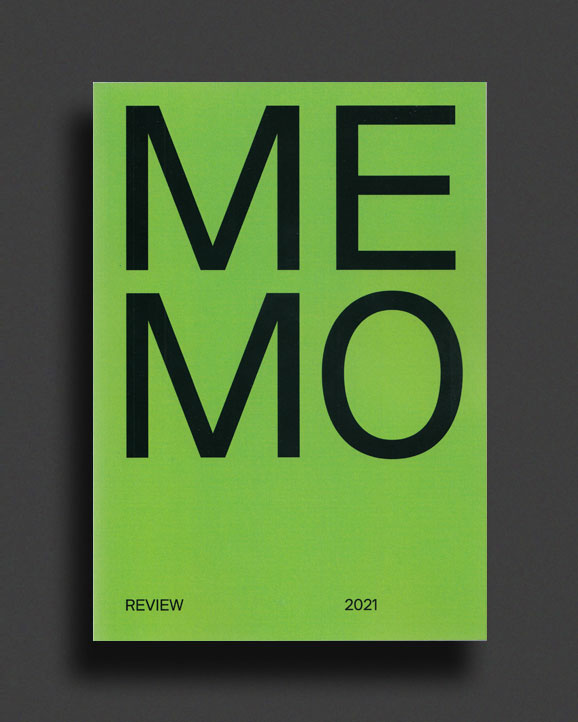
What is it like to make art the way the world is today? What is it to write about art? Every review you read in 2022 will attempt to answer these questions, whether it knows it or not. You can see it if you look hard enough. And in thinking about this we perhaps hold a candle to the darkness, or perhaps these questions are the light that allows us to see the darkness around us. Thank you for reading Memo lit by the world’s candlelight.
These are the reviews from 2021, the fourth year of Melbourne's Memo Review. Memo Review is Melbourne's only weekly art criticism, publishing reviews of "a broad variety of art exhibitions at public art museums, commercial galleries and smaller artist-run spaces in Melbourne, offering new critical perspectives from an up-and-coming younger generation of Australian art scholars, writers and artists."
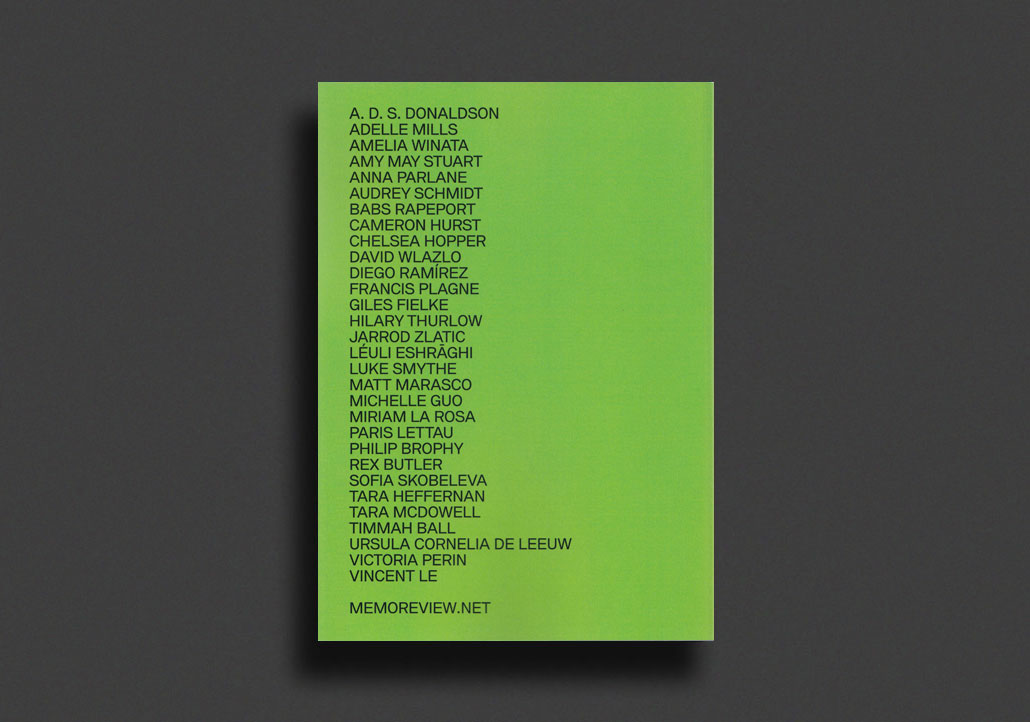
Featuring contributions by A. D. S. Donaldson, Adelle Mills, Amelia Winata, Amy May Stuart, Anna Parlane, Audrey Schmidt, Babs Rapeport, Cameron Hurst, Chelsea Hopper, David Wlazlo, Diego Ramírez, Francis Plagne, Giles Fielke, Hilary Thurlow, Jarrod Zlatic, Léuli Eshrāghi, Luke Smythe, Matt Marasco, Michelle Guo, Miriam La Rosa, Paris Lettau, Philip Brophy, Rex Butler Sofia Skobeleva, Tara Heffernan, Tara Mcdowell, Timmah Ball, Ursula Cornelia De Leeuw, Victoria Perin, and Vincent Le.
2022, English
2 softcover books in hard slipcase, 954 pages, 21.6 × 14 cm
Published by
Primary Information / New York
$60.00 - Out of stock
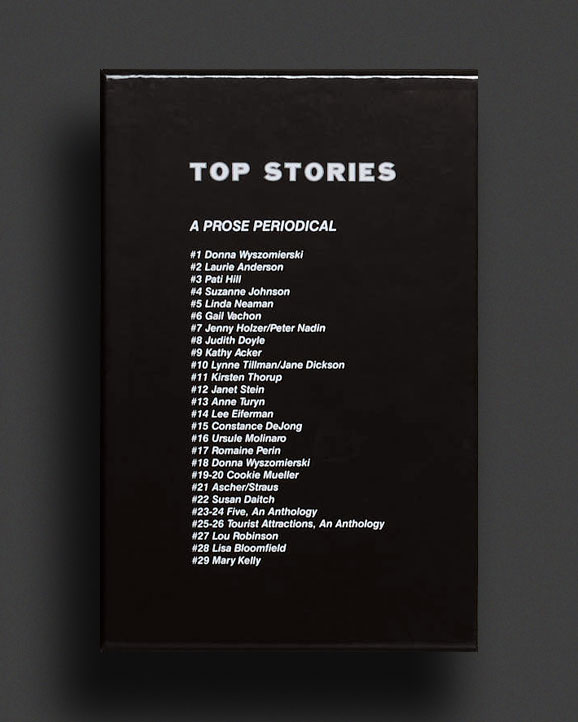
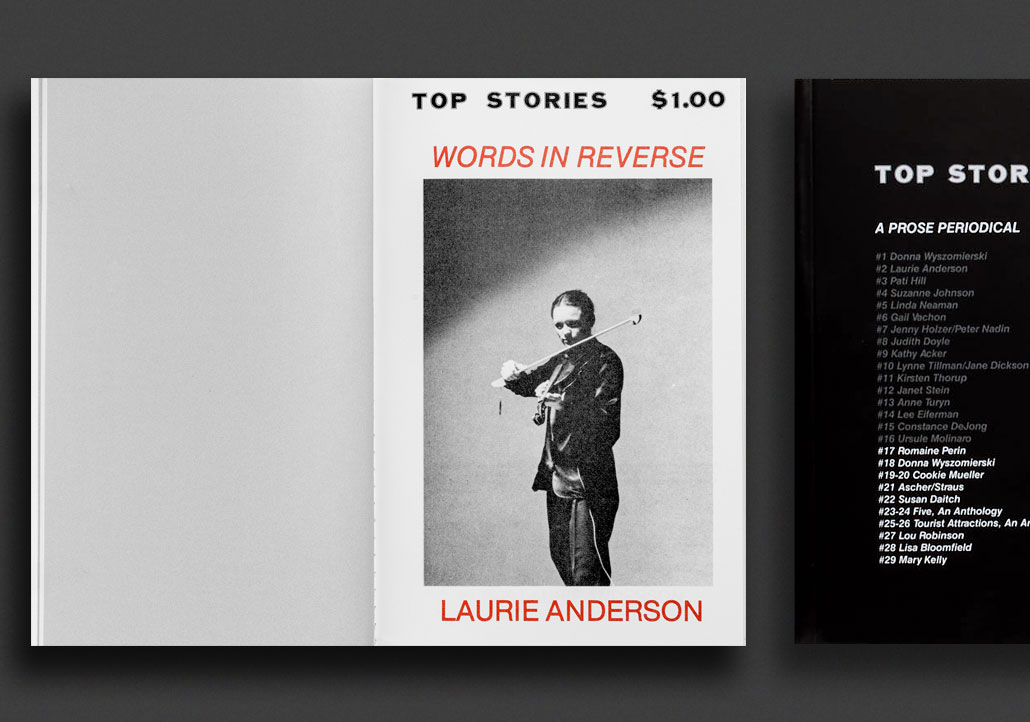
An essential anthology of fiction, art and more from the experimental, punk-feminist 1980s downtown journal, with work by Kathy Acker, Constance DeJong, Cookie Mueller and more.
Published between 1978 and 1991, Top Stories was a prose periodical specializing in experimental writing with a collaborative, punk-feminist ethos, edited by New York–based photographer Anne Turyn (born 1954). Turyn founded the publication in Buffalo, New York, before moving the operation to Chelsea in the 1980s, where issues were produced in Chinatown, distributed by mail order and through Printed Matter, and printed in runs between 500 and 2,000. With 29 issues in total, the publication played a key historical role in the development of the group of artists and writers who helped define the “downtown” scene of the 1980s.
All 29 issues of the periodical are collected in this anthology, which compiles experimental fiction, art, photography and graphic design.
Primary contributors include Kathy Acker, Laurie Anderson, Sheila Ascher, Douglas Blau, Lisa Bloomfield, Linda L. Cathcart, Cheryl Clarke, Susan Daitch, Constance DeJong, Jane Dickson, Judith Doyle, Lee Eiferman, Robert Fiengo, Joe Gibbons, Pati Hill, Jenny Holzer, Gary Indiana, Tama Janowitz, Suzanne Jackson, Suzanne Johnson, Caryl Jones-Sylvester, Mary Kelly, Judy Linn, Micki McGee, Ursule Molinaro, Cookie Mueller, Peter Nadin, Linda Neaman, Glenn O’Brien, Romaine Perin, Richard Prince, Lou Robinson, Janet Stein, Dennis Straus, Sekou Sundiata, Leslie Thornton, Kirsten Thorup, Lynne Tillman, Anne Turyn, Gail Vachon, Brian Wallis, Jane Warrick, and Donna Wyszomierski.
David Armstrong, Nan Goldin, JT Hryvniak, Peter Hujar, Nancy Linn, Trish McAdams, Linda Neaman, Marcia Resnick, Michael Sticht, and Aja Thorup all make appearances as well, contributing artwork for the covers or as illustrations.