World Food Books' programme is largely produced on Kulin Nation land. We acknowledge the Wurundjeri people of the Kulin Nation as the first and continuing custodians of this land, and pay respect to their Elders past, present, and emerging.
World Food Books is an arts and special interests bookshop in Naarm / Melbourne. Founded in 2010, World Food Books is devoted to the presentation of a rotating, hand-selection of international art, design, literary and counterculture publications with an emphasis on the anti-traditional, the experimental, the avant-garde, the heretic, the marginal.
Presenting new titles alongside rare and out-of-print books, catalogues and journals spanning the fields of modern and contemporary art, design, photography, illustration, film, literature, poetry, cultural theory, philosophy, sexuality, popular and underground culture in its many radical forms, World Food Books wishes to encourage adventurous, thoughtful and open-minded reading, looking, writing, and exchange of publishing and ideas, both current and historical.
As well as our bookshop, located in Melbourne's historical Nicholas Building, all of our inventory is available internationally via our online mail-order service.
World Food Books semi-regularly co-ordinates "Occasions", a programme of exhibits and events at the bookshop and in partnership with other hosts (such as museums and art galleries) that develop out of the activities, relationships and content of the bookshop itself.
World Food Books
The Nicholas Building
37 Swanston Street
Room 5, Level 6
Melbourne 3000
Australia
SHOP HOURS:
THU–SAT 12–6
WEB-SHOP OPEN 24/7
World Food Books
Postal Address:
PO Box 435
Flinders Lane
Victoria 8009
Australia
info@worldfoodbooks.com
Art
Theory / Essay
Architecture / Interior
Graphic Design / Typography
Photography
Fashion
Eros
LGBTQ+
Fiction / Poetry
Weird / Speculative / Science Fiction / Horror
Transgressive / Visceral / Abject
Symbolism / Decadence / Fin de siècle
Film / Video
Painting
Sculpture / Installation
Performance / Dance / Theater
Drawing
Sound / Music
Curatorial
Group Shows / Collections
Periodicals
Out-of-print / Rare
Posters / Ephemera / Discs
Signed Books
World Food Books Gift Voucher
World Food Book Bag
Australian Art
Australian Fiction
Australian Science Fiction / Speculative Fiction
Australian Poetry
Australian Photography
Japanese Photography
Conceptual Art
Minimal Art
Dada
'Pataphysics / Oulipo
Fluxus
Concrete Poetry
Pop Art
Surrealism
Arte Povera
Arte Informale / Haute Pâte / Tachism
Nouveau Réalisme / Zero / Kinetic
Situationism / Lettrism
Collage / Mail Art / Xerox Art
Art Brut / Folk / Visionary / Fantastic
Illustration / Graphic Art / Bandes Dessinées
Furniture
Italian Radical Design / Postmodernism
Textiles
Ceramics / Glass
Counterculture
Protest / Revolt
Philosophy
Psychoanalysis
Anthropology
Anarchism
Socialism / Anarchism / Communism / Capitalism
Literary Theory / Semiotics / Language
Feminism / Women's Studies
Gender Studies / Sexuality
Anthropology
Fetishism / BDSM
Drugs / Psychedelia
Crime / Violence
Animal Rights / Veganism
Occult / Esoterica
Ecology / Earth / Alternative Living
Whole Earth / Crafts
All prices in AUD (Australian dollars)
Pick-Ups
Pick-up orders can be collected in our bookshop during opening hours after order date. Please collect any Pick-up orders within 2 weeks of ordering as we have limited storage space. Orders will be released back into stock if not collected within this time. No refunds can be made for pick-ups left un-collected. If you cannot make it in to the bookshop in this time-frame, please choose postage option.
Return Policy
All sales are final. We do accept returns (for refund or exchange) for items received in error. All our orders are packed with special care using heavy-duty padding and cardboard book-mailers or bubble mailers (for smaller books), using reinforcement where required. We cannot take responsibility for any lost, stolen or damaged parcels.
Insurance
Should you wish to insure your package, please email us directly after placing your order and we can organise this at a small extra expense. Although all standard/express tracked packages are very safe and dependable, we cannot take responsibility for any lost, stolen or damaged parcels. We recommend insurance on valuable orders.
Interested in selling your old books, catalogues, journals, magazines, comics, fanzines, ephemera? We are always looking for interesting, unusual and out-of-print books to buy. We only buy books in our fields of interest and specialty, and that we feel we can resell.
We base these prices on desirability, market value, in-print prices, condition and our current stock levels. We offer cash, store credit, and can take stock on consignment. All
about 25% of the price we expect to get when we sell them, or 30% in store credit. We base these prices on desirability, market value, in-print prices, condition and our current stock levels.
Sell your books any day of the week. You can drop them off and return later. If you have a lot of books, we can visit your Sydney home.
We buy books that we feel we can resell. We offer about 25 % of the price we expect to get when we sell them, or 30% in store credit. We base these prices on desirability, market value, in-print prices, condition and our current stock levels.
Philadelphia Wireman
03 August - 01 September, 2018
World Food Books is proud to announce our next Occasion, the first presentation of sculptures by Philadelphia Wireman in Australia.
The Philadelphia Wireman sculptures were found abandoned in an alley off Philadelphia’s South Street on trash night in 1982. Their discovery in a rapidly-changing neighbourhood undergoing extensive renovation, compounded with the failure of all attempts to locate the artist, suggests that the works may have been discarded after the maker’s death. Dubbed the "Philadelphia Wireman" during the first exhibition of this work, in 1985, the maker’s name, age, ethnicity, and even gender remain uncertain. The entire collection totals approximately 1200 pieces, all intricately bound together with tightly-wound heavy-gauge wire (along with a few small, abstract marker drawings, reminiscent both of Mark Tobey and J.B. Murry). The dense construction of the work, despite a modest range of scale and materials, is singularly obsessive and disciplined in design: a wire armature or exoskeleton firmly binds a bricolage of found objects including plastic, glass, food packaging, umbrella parts, tape, rubber, batteries, pens, leather, reflectors, nuts and bolts, nails, foil, coins, toys, watches, eyeglasses, tools, and jewellery.
Heavy with associations—anthropomorphic, zoomorphic, and socio-cultural responses to wrapped detritus—the totemic sculptures by Philadelphia Wireman have been discussed in the context of work created to fulfil the shamanistic needs of alternative religions in American culture. Curators, collectors, and critics have variously compared certain pieces to sculpture from Classical antiquity, Native American medicine bundles, African-American memory jugs, and African fetish objects. Reflecting the artist’s prolific and incredibly focused scavenging impulse, and despite—or perhaps enhanced by—their anonymity, these enigmatic objects function as urban artefacts and arbiters of power, though their origin and purpose is unknown. Philadelphia Wireman, whatever their identity, possessed an astonishing ability to isolate and communicate the concepts of power and energy through the selection and transformation of ordinary materials. Over the course of the past two decades, this collection has come to be regarded as an important discovery in the field of self-taught art and vernacular art.
Presented in collaboration with Fleisher-Ollman Gallery, Philadelphia, and Robert Heald, Wellington.
Susan Te Kahurangi King
02 February - 10 March, 2018
Susan Te Kahurangi King (24 February 1951 - ) has been a confident and prolific artist since she was a young child, drawing with readily available materials - pencils, ballpoint pens and felt-tip markers, on whatever paper is at hand. Between the ages of four and six Susan slowly ceased verbal communication. Her grandparents William and Myrtle Murphy had developed a special bond with Susan so they took on caring responsibilities for extended periods. Myrtle began informally archiving her work, carefully collecting and storing the drawings and compiling scrapbooks. No drawing was insignificant; every scrap of paper was kept. The King family are now the custodians of a vast collection containing over 7000 individual works, from tiny scraps of paper through to 5 meter long rolls.
The scrapbooks and diaries reveal Myrtle to be a woman of great patience and compassion, seeking to understand a child who was not always behaving as expected. She encouraged Susan to be observant, to explore her environment and absorb all the sights and sounds. Myrtle would show Susan’s drawings to friends and people in her community that she had dealings with, such as shopkeepers and postal workers, but this was not simply a case of a grandmother’s bias. She recognised that Susan had developed a sophisticated and unique visual language and sincerely believed that her art deserved serious attention.
This was an unorthodox attitude for the time. To provide some context, Jean Dubuffet coined the term Art Brut in 1945 to describe work created by self-taught artists – specifically residents of psychiatric institutions and those he considered to be visionaries or eccentrics. In 1972 Roger Cardinal extended this concept by adopting the term Outsider Art to describe work made by non-academically trained artists operating outside of mainstream art networks through choice or circumstance. Susan was born in Te Aroha, New Zealand in 1951, far from the artistic hubs of Paris and London that Dubuffet and Cardinal operated in. That Myrtle fêted Susan as a self-taught artist who deserved to be taken seriously shows how progressive her attitudes were.
Susan’s parents Doug and Dawn were also progressive. Over the years they had consulted numerous health practitioners about Susan’s condition, as the medical establishment could not provide an explanation as to why she had lapsed into silence. Dawn educated herself in the field of homeopathy and went on to treat all twelve of her children using these principles – basing prescriptions on her observations of their physical, mental and emotional state.
Doug was a linguist with an interest in philosophy who devoted what little spare time he had to studying Maori language and culture. To some extent their willingness to explore the fringes of the mainstream made them outsiders too but it was their commitment to living with integrity and their respect for individuality that ensured Susan’s creativity was always encouraged.
Even though Susan’s family supported her artistic pursuits, some staff in schools and hospitals saw it as an impediment to her assimilation into the community and discouraged it in a variety of ways. Her family was not always aware of this and therefore did not fully understand why Susan stopped drawing in the early 1990s. However, rather than dwell on the challenges that Susan faced in pursuit of her artistic practice, they prefer to highlight her achievements. In 2008 Susan began drawing again in earnest, after an almost 20 year interruption, and her work is now shown in galleries around the world.
Susan grew up without television and has been heavily influenced by the comics she read as a child. She is absolutely fearless in the appropriation of recognizable characters, such as Donald Duck and Mickey Mouse, in her work. She twists their limbs, contorts their faces, compresses them together, blends them into complex patterned backgrounds - always imbuing them with an incredible energy. Although Susan often used pop culture characters in her work they are not naive or childlike. These are drawings by a brilliant self-taught artist who has been creating exceptional work for decades without an audience in mind.
Mladen Stilinović
"Various Works 1986 - 1999"
02 February 16 - September 10, 2016
Various works 1986 - 1999, from two houses, from the collections of John Nixon, Sue Cramer, Kerrie Poliness, Peter Haffenden and Phoebe Haffenden.
Including: Geometry of Cakes (various shelves), 1993; Poor People’s Law (black and white plate), 1993; White Absence (glasses, ruler, set square, silver spoon, silver ladel with skin photograph and wooden cubes), 1990-1996; Exploitation of the Dead (grey and red star painting, wooden painting, black spoon with red table, red plate), 1984-1990; Money and Zeros (zero tie, paintings made for friends in Australia (Sue, John, Kerrie), numbers painting), 1991-1992; Words - Slogans (various t-shirts) - “they talk about the death of art...help! someone is trying to kill me”, “my sweet little lamb”, “work is a disease - Karl Marx”; Various artist books, catalogues, monographs, videos; Poster from exhibition Insulting Anarchy; "Circular" Croatian - Australian edition; Artist book by Vlado Martek (Dostoyevsky); more.
Thanks to Mladen Stilinović and Branka Stipančić.
Jonathan Walker
Always Will Need To Wear Winter Shirt Blue + Ochre Small Check Pattern
21 August - 21 September, 2015
Untitled
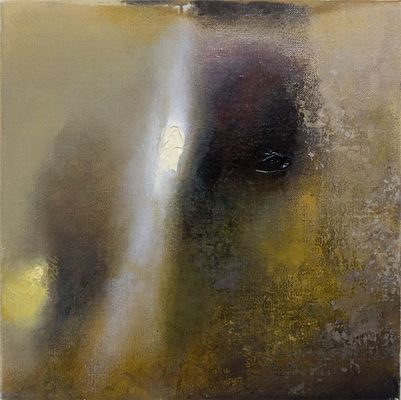
I am not a great reader of poetry but I always return to the work of Melbourne poet, Vincent Buckley (1925- 1988). Perhaps I find his most tantalising piece to be not a finished poem but a fragment left on a scrap of paper discovered on his desk after the poet’s death.
The poetry gathers like oil
In the word-core, and spreads
It has its music meet,
Its music is in movement.
This fragment is more the shell left behind from a volatile thought than a finished poem. I find the last two lines honest but awkward whereas the first two lines work like an arrow. Most likely he could not find a resolution so it was left. Still, in its present form, it remains an eloquent testimony to the ultimate failure of a medium to express mobile thought and sensation, in Buckley’s case, through verbal language. It’s an important matter because this is something all artists have to deal with regardless of the medium.
I have never written a poem, however, I am forever copying fragments from books on paper scraps in a vain effort to fix certain notions in my head. At first, they function as bookmarks that are sometimes returned to when I open the book. But before long, as they accumulate, they fall out littering the table interspersed with A4 photocopies, bills, books and medications.
To return to Buckley’s fragment, the first two lines very much evoke how I paint nowadays. As you age, detail diminishes and patches of light become more luminous and float. I feel the most honest way of dealing with this is by smearing the oil paint on the canvas with the fingers and working close-up, blind. Only if the patches coalesce into an approaching image can the work gain a life.
-
Jonathan Walker was born in Melbourne, Australia and brought up on a dairy farm in Gippsland. In the 1970’s he studied painting at RMIT and won the Harold Wright Scholarship to the British Museum, London. During the 1980’s he exhibited at Pinacotheca Gallery, Richmond and had work shown at the NGV and Heidi City Art Gallery. Over the same period he designed the cover for the “Epigenesi” LP by Giancarlo Toniutti, Italy and conducted a mail exchange work with Achim Wollscheid, Germany. The work with artists through the post resulted in an article published in the bicentenary issue of Art and Australia 1988. He showed in artist run spaces such as WestSpace in the 90’s and 2000’s, and until 2012, taught painting at Victoria University, which is where we (Colleen Ahern and Lisa Radford) as organisers of the exhibition, among many others, had the privilege of being his student.
Walker’s knowledge was imparted to students through the careful selection of music, literature, and artists found in books that he himself had ordered for the library. Walker’s strategy was the generosity of sharing his vast knowledge with references specific to each student and their context.
Walker’s paintings share a similar focus and intimacy.
This exhibition presents a small selection of recent paintings alongside a publication that includes Walker’s writing. Observational and analytical, Walker’s work is a type of material notation — the time of day, colour and how it is blended, the both specific and fleeting location of a reflection on lino or the question of whether a chair leg should be included in a painting.
Please join us on Friday August 21 between 6-8pm to celebrate the opening of the exhibition.
Curated by Colleen Ahern and Lisa Radford.
B. Wurtz
Curated by Nic Tammens
March 26 - April 4, 2015
B.Wurtz works from a basement studio in his home on Manhattan’s Lower East Side.
This local fact is attested to by the plastic shopping bags and newsprint circulars that appear in his work. As formal objects, they don’t make loud claims about their origins but nonetheless transmit street addresses and places of business from the bottom of this long thin island. Like plenty of artists, Wurtz is affected by what is local and what is consumed. His work is underpinned by this ethic. It often speaks from a neighborhood or reads like the contents of a hamper:
“BLACK PLUMS $1.29 lb.”
“Food Bazaar”
“USDA Whole Pork Shoulder Picnic 99c lb.”
“RITE AID Pharmacy, with us it’s personal.”
“H. Brickman & Sons.”
“Sweet Yams 59c lb."
Most of the work in this exhibition was made while the artist was in residence at Dieu Donne, a workshop dedicated to paper craft in Midtown. Here Wurtz fabricated assemblages with paper and objects that are relatively lightweight, with the intention that they would be easily transportable to Australia. This consideration isn’t absolute in Wurtz’s work, but was prescriptive for making the current exhibition light and cheap. Packed in two boxes, these works were sent from a USPS post office on the Lower East Side and delivered to North Melbourne by Australia Post.
Wurtz appears courtesy of Metro Pictures, New York.
Thanks to Rob Halverson, Joshua Petherick, Sari de Mallory, Matt Hinkley, Helen Johnson, Fayen d'Evie, Ask Kilmartin, Lisa Radon, Ellena Savage, Yale Union, and "Elizabeth".
John Nixon
"Archive"
December 15 - January 20, 2014
The presentation of John Nixon's archive offered a rare showcase of this extensive collection of the artist's own publications, catalogues, posters, ephemera, editions and more, from the mid 1980s onwards, alongside a selection of his artworks.
Organized by John Nixon, Joshua Petherick and Matt Hinkley.
"Habitat"
at Minerva, Sydney (organised by Joshua Petherick and Matt Hinkley)
November 15 - December 20, 2014
Lupo Borgonovo, Janet Burchill & Jennifer McCamley,
Lewis Fidock, HR Giger, Piero Gilardi, Veit Laurent Kurz,
Cinzia Ruggeri, Michael E. Smith, Lucie Stahl, Daniel Weil, Wols
Press Release:
“...It contained seven objects. The slender fluted bone, surely formed for flight, surely from the wing of some large bird. Three archaic circuitboards, faced with mazes of gold. A smooth white sphere of baked clay. An age-blackened fragment of lace. A fingerlength segment of what she assumed was bone from a human wrist, grayish white, inset smoothly with the silicon shaft of a small instrument that must once have ridden flush with the surface of the skin - but the thing’s face was seared and blackened.”
William Gibson, “Count Zero”, 1986
"Autumn Projects Archive"
Curated by Liza Vasiliou
March 6 - March 15, 2014
World Food Books, in conjunction with the Virgin Australia Melbourne Fashion Festival 2014, presented the Autumn Projects archive, consisting of a selection of early examples in Australian fashion with a particular interest in collecting designers and labels from the period beginning in the 1980’s, who significantly influenced the discourse of Australian Fashion.
Curated by Liza Vasiliou, the exhibition provided a unique opportunity to view pieces by designers Anthea Crawford, Barbara Vandenberg, Geoff Liddell and labels CR Australia, Covers, Jag along with early experimental collage pieces by Prue Acton and Sally Browne’s ‘Fragments’ collection, suspended throughout the functioning World Food Books shop in Melbourne.
H.B. Peace
presented by CENTRE FOR STYLE
November 14, 2013
"Hey Blinky, you say chic, I say same"
Anon 2013
H.B. Peace is a clothing collaboration between great friends Blake Barns and Hugh Egan Westland. Their pieces explore the divergences between 'character’ and ‘personality’ in garments....etc
Special Thanks to Joshua Petherick and Matt Hinkley of WFB and Gillian Mears
and a Very Special Thank you to Audrey Thomas Hayes for her shoe collaboration.
Janet Burchill & Jennifer McCamley
"Aesthetic Suicide"
May 10 - June 8, 2013
The first of our occasional exhibitions in the World Food Books office/shop space in Melbourne, "Aesthetic Suicide" presented a body of new and older works together by artists Janet Burchill & Jennifer McCamley, including videos, prints, a wall work, and publications.
During shop open hours videos played every hour, on the hour.
2025, English
Softcover, 160 pages, 30.5 x 22.6 cm
Published by
Richardson / New York
$77.00 - In stock -
New "California" themed issue of of Richardson magazine, the cult magazine that navigates the murky boundaries between art and obscenity, edited by Andrew Richardson (of Richardson label, fashion stylist w. Supreme, CK, Valentino, etc.) and art direction by Laura Genninger of STUDIO 191 (designer of AnOther Magazine, etc.). Featuring Sky Bri, Photographed by Harley Weir. With additional work by Frances Stark, Mario Ayala, Andy Capper, Bruce Wagner, Ed Ruscha, Bruce LaBruce, Chivas Clem, Alex Kekesi, Delicious Tacos, Jack Mason, Kazumi, Karley Sciortino, Noah Kumin, Taylor Lorenz, Weirdo Dave / Fuck This Life, William E. Jones, Scarlett Kapella, Stewart Home, Rosie Marks, A. Kircher, Anna Khachiyan, and Dasha Nekrasova.
2010, English
Softcover, 128 pages, 30.5 x 22.5 cm
1st Edition, Out of print title / used / very good
Published by
Richardson / New York
$220.00 - In stock -
Incredible fourth issue ("The Female Gaze Issue") of Richardson magazine, the cult magazine that navigates the murky boundaries between art and obscenity, edited by Andrew Richardson (of Richardson label, fashion stylist w. Supreme, CK, Valentino, etc.) and art direction by Laura Genninger of STUDIO 191 (designer of AnOther Magazine, etc.). This fourth issue (The Female Gaze Issue) features the Sasha Grey cover photographed by Glen Luchford (w. continued photo feature inside), and featuring work by Carolee Schneemann, Valie Export, Genesis P-Orridge, GB Jones, Alex Needham, Amy Kellner, Kira Jolliffe, Bunny Yeager, Tristan Taormino, Michelle Maccarone, Mila Djordjevic, Gunter Rambow, V. Vale/ Re/Search, Simon Ford, Clara Herve & Eugene Krafft, Carol Bove, Sue Williams, Tracy Emin, Carolin Kunst & Sunje Todt, Kotaro Iizawa, and much more. Riddled with bans and confiscations due to explicit un-censored imagery by Japanese censorship standards.
Very Good copy.
1998, English / Japanese
Softcover, 128 pages, 30.5 x 22.5 cm
1st Edition, Out of print title / used / very good
Published by
Little More / Tokyo
Richardson / New York
$250.00 - Out of stock
Controversial inaugural (December 1998) issue of Richardson magazine, the cult 1990's art/sex magazine published by Little More in Japan, edited by Andrew Richardson (of Richardson label, fashion stylist w. Supreme, CK, Valentino, etc.) and art direction by Laura Genninger of STUDIO 191 (designer of AnOther Magazine, etc.). Navigating the murky boundaries between art and obscenity, an honourable pursuit in Japan, this first issue features the double-cover (censored and non-censored) of adult film star Jenna Jameson shot by Glen Luchford, along with J.J. photo feature and interview, Richard Prince’s “Spiritual America” text and photography/artworks inc. the infamous 11-year-old Brooke Shields piece, "Be Broken" erotic artwork gallery by Harmony Korine, "Love Letter to Amerika" from Takashi Homma, Terry Richardson photography, "Cunt" fiction by Stewart Home, photos by French cinematographer (Gummo, Ulysse, Boy Meets Girl, etc.) Jean-Yves Escoffier, Japanese V-Cinema and pink star Nao Saejima, Stewart Home on Cosey Fanni Tutti, many works of photography and text by American photojournalist and writer Erika Langley, erotic photography by skater Ed Templeton of photographer and wife Deanna Templeton, vintage erotica collection by photographer Bela Borsodi, poetry and more! Riddled with bans and confiscations due to explicit un-censored imagery by Japanese censorship standards.
Texts in both English and Japanese.
Very Good copy.
2025, English
Softcover (staple-bound), 12 pages, 13.4 x 13.6 cm
Limited Edition,
Published by
Oriette Wood / Naarm
$40.00 - In stock -
"Comic Trials" is a new small edition hand silk-screen and assembled graphic zine from Oriette Wood.
"A homage to the golden age of comics, this screen printed publication is an exercise of drawing and half-toning in colour, formatted like a comic panel. Like a lot of my work these pages are scenes of love, kink, femininity, and something other."—Oriette Wood
Silkscreened in very limited edition
2025, English
Softcover, 16 silk-screened pages, 14 x 16 cm
Edition of 30,
Published by
Oriette Wood / Naarm
$70.00 - In stock -
"'Insect Smut' is a small edition graphic zine made up of 14 collages. These are made by abstracting references from my personal archive of smut, kink, and comics. It's a homage to the vibrant scene of French graphic zines in the 1980's to 90's. Printed and bound at Troppo Print Studio over a three week period."—Oriette Wood
Silkscreened edition of 30
2024, English
Softcover (w. dust jacket), 256 pages, 22 x 17 cm
Published by
Thin Man Press / London
$74.00 - In stock -
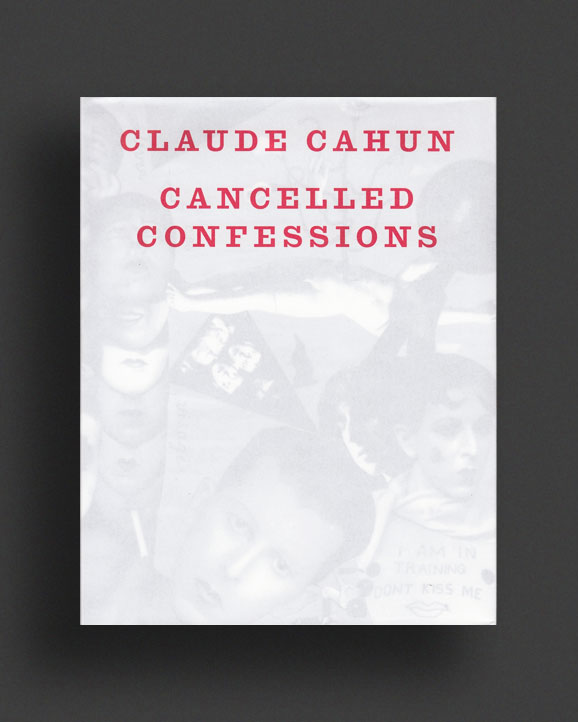
Cancelled Confessions reveals Claude Cahun to be a major surrealist writer and pioneering queer theorist almost a century ahead of her time.
"The re-appearance of this glittering and dissenting semi-lost epic is a gift… Cahun’s writing is stylish, playful and prescient, peopled with angel slang, flowering disavowals, God’s lipstick and an infinite layering of masks."—Daisy Lafarge, author.
In 1930, Claude Cahun (born Lucy Schwob) and her partner, artist Marcel Moore (born Suzanne Malherbe) published their surrealist masterpiece, Aveux non Avenus, translated here as Cancelled Confessions and available in English for the first time in twenty years. Susan de Muth’s revised translation of Cancelled Confessions has a new introduction by art historian Amelia Groom which contextualizes it within contemporary queer discourse.
"It’s a surrealist, trans, queer, autofiction, (anti)memoir, and also none of those things. It’s a text, and a life, felt as connection and at the same time completely singular."—McKenzie Wark, author.
'The kaleidoscopic text is pieced together from diverse fragments… there are philosophical and subversive theological musings, aphorisms and fables, letters and dialogues, dreams and hymns, nightmares and jokes,' writes Groom. The book’s nine sections are prefaced by dreamlike photomontages (reproduced in high definition here) which reflect, illuminate and converse with the verbal content. Upon publication, Aveux non Avenus simply baffled all but a few of Cahun’s friends and admirers, leading Cahun to describe herself as, ‘An unwanted Cassandra’. Now, however, is the time of the remarkably prescient Cahun and Moore.
"Cahun was a pioneer of gender-bending role-playing…eerily ahead of her time she has attracted an almost cult-like following."—The late David Bowie
Cahun and Moore’s appeal is wide and universal. They were adventurers in life as in art. Cahun famously terrified Andre Breton in the 1920s when she appeared in a Paris café with her head shaved and painted gold. Having moved to Jersey in 1938, Cahun and Moore waged a mischievous two-person resistance campaign against the occupying Nazi forces from 1940. Finally caught and imprisoned in 1944, they were sentenced to death in 1945, saved at the very last moment by the armistice.
2025, English
Hardcover, 128 pages, 24.2 x 17.2 cm
Published by
Magic Hour Press / New York
$90.00 - Out of stock
Edited by Francis Schichtel, Jordan Weitzman, Nan Goldin.
Text by Hilton Als.
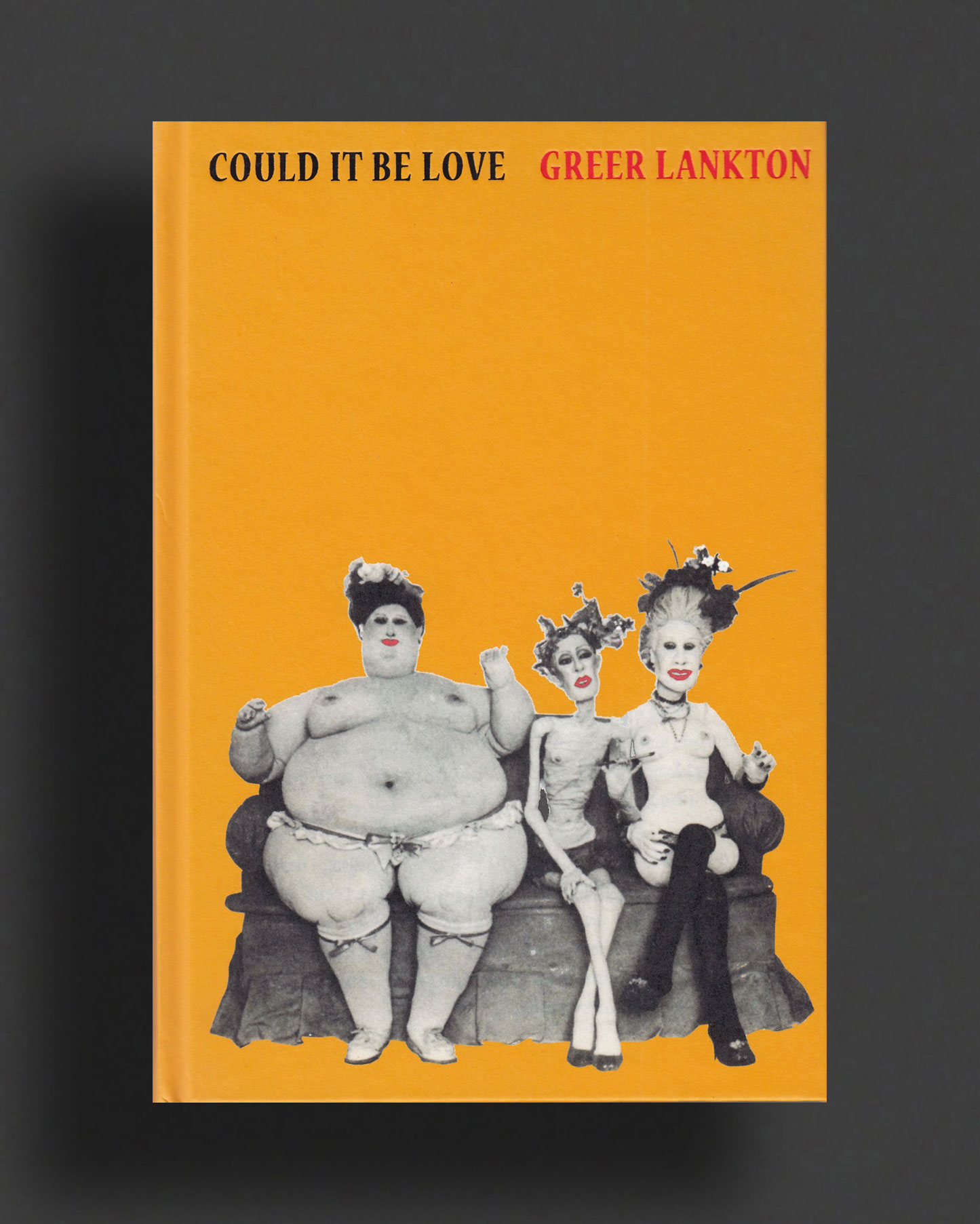
Lankton's iconic and startling doll sculptures as we have never seen them before: through her own eyes
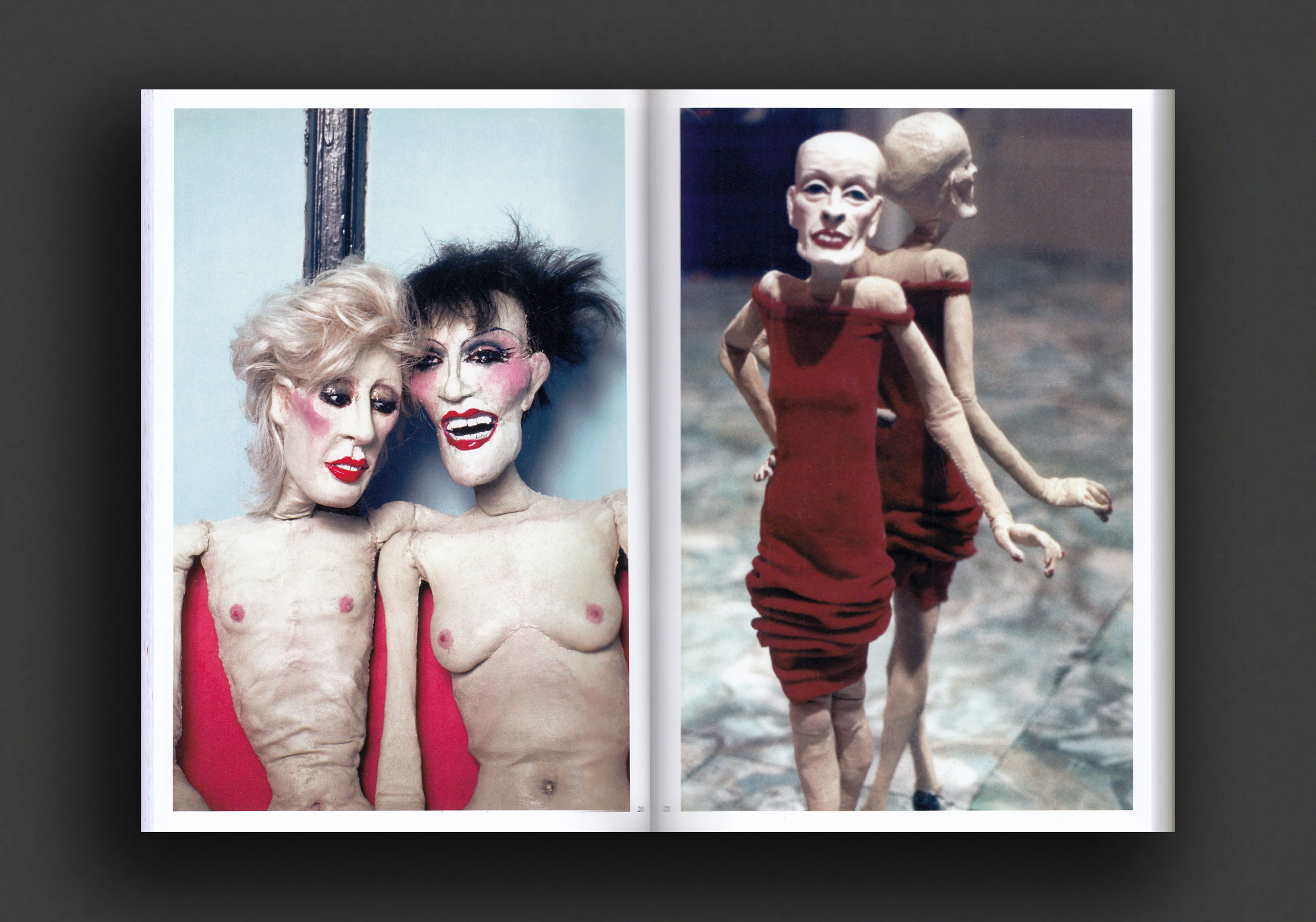
This is the first monograph on the trans visionary artist Greer Lankton (1958–96), whose lifelike doll sculptures shocked 1980s New York. Lankton's dolls, which she began making as a child and produced obsessively until her death at age 38, were a means to explore her fraught relationship with the human body. In the book's 100 photographs, all shot by Lankton herself, these figures take on a life of their own, kvetching at a party, strolling along a beach, or lounging on a stoop in the East Village. Among this extraordinary cast of oddballs—usually femme, often freakish, always radiating a glamorous confidence—we find characters of Lankton's own invention alongside well-known icons such as Divine, Coco Chanel, Andy Warhol and even Lankton herself.
Born in 1958 to a Presbyterian minister in Michigan, Greer Lankton moved to New York in 1978 and became a rising star of the downtown scene. There, her deviant elegance was immortalized in photographs by Peter Hujar, David Armstrong and Lankton's close friend Nan Goldin, who described her as "one of the luminaries of the East Village renaissance: beautiful, glamorous, wild and hysterically funny." Lankton's work was a neighborhood fixture, in exhibitions at the gallery Civilian Warfare and in regular window displays at Einstein's Boutique, and was also celebrated farther afield, in era-defining group shows at PS1 and the Venice Biennale. Her final work, an immersive installation created for the Mattress Factory in 1996, remains on permanent view.
“Now I’m completely bowled over. Greer Lankton has got to be a genius…these are her dolls at her best... One scene is a birthday party for a ninety year old woman of culture and taste. I can’t describe anything that is going on in this scenario because I could actually write a complete novel about the party and the party people…. What a celebration! Hallelujah!!! —Cookie Mueller
“Greer Lankton’s dolls are entire biographies on legs, whole movies, three-dimensional Alice Neels. And they’re all self-projections, all of her contradictory impulses--abjection and eminence, dissipation and what comes after, gender fixed or fluid--examined lovingly and pitilessly. She could locate variously aged and battered versions of herself on the street, in a movie, at a party, alone on a park bench--with her eye she could see herself from outer space, sub speciae aeternitatis. And her taste and her skills were impeccably suited to her unique medium. Why did we have to lose her?”—Lucy Sante
“I found my first encounters with Greer Lankton’s grotesque dolls shocking. My cohort of 80’s artists challenged authorship and valued detachment and did not warm to raw displays of intimacy (and god forbid craft) that were the core of Greer’s prescient, messy battle with beauty and pain. Current culture is hungry for exactly what Greer’s art serves up - the exploration of gender, imperfection, self-expression and authenticity.”—Laurie Simmons
“Lankton’s creatures live in a psychic interline where genitals and gender identity are scrambled in the play of appearances, and reveal an exacerbated, possibly mutilated sexuality as the trigger of personality. Like Theodora Skiptare’s housewife automata that vomit and menstruate, Lankton’s ambisexual dolls wear faces of crumbling self-assurance, or even moronic friendliness and self-contentment, while breathing pain in and out through their pores."—Gary Indiana, Art in America, 1984
“Of course, to say that a doll by Greer Lankton is “just a doll” is absurd. Lankton’s dolls are like no other dolls, and no Lankton doll is like any of her dolls. For that matter many Lankton dolls weren’t even like themselves from one moment to the next. Lankton constantly reworked them ‘changing their gender, identities, sizes and clothes.’ But some…change by being photographed from different angles, using different lighting and backgrounds. Simple as the photographs are, they manage to bring the dolls to life, give them a story.”—Douglas Crimp
“She has become, to this young community what Rimbaud must have been to Paris in the 1920's. She has been compared to Hans Bellmar and to Frida Kahlo, for both have created highly self referential imagery affected heavily by events which have changed the course of their lives.”—Dean Savard, co-founder of Civilian Warfare
2025, English
Hardcover (w. slipcase), 192 pages, 31.6 x 26.6 cm
Published by
Monacelli Press / New York
$140.00 - Out of stock
A lavish portfolio of never-before-seen erotic drawings by celebrated twentieth-century American artist and gay icon, Paul Cadmus.
Paul Cadmus entered the art scene in the 1930s with paintings of dream-like urban demi-mondes: roiling tableaux of beatniks, sailors, and prostitutes. Undergirding his work has always been the artist’s masterful draftsmanship, seen in hundreds of drawings of nude male models, chief among them his long-time lover and muse, Jon Anderson. Paul Cadmus: 49 Drawings collects these never-before-seen drawings for the first time, presenting a singular body of work that exemplifies Cadmus’s classical proficiency, channeled into an obsessive emphasis of his model’s erotic zones.
Packaged in a stamped portfolio envelope, this is a landmark collection of queer art by a twentieth-century master, its images complemented by an introduction by Graham Steele that details the significance of Paul Cadmus to his career in the art world, plus an essay by leading queer-art scholar Richard Meyer, as well as a momentous discussion with painters Nash Glynn, Doron Langberg, and Oscar yi Hou, moderated by curator and critic Jarrett Earnest.
This elegant book, sumptuously produced to reflect the eminence of this newly revealed body of work, and the intimacy of its subject matter, represents a rare exposé of a significant body of unknown work from a major twentieth-century artist, and a substantial contribution to the study and legacy of queer art.
Graham Steele is founder of Graham Steele, Inc., a Los Angeles-based private art dealership.
Richard Meyer is the Robert and Ruth Halperin Professor in Art History at Stanford University.
Jarrett Earnest is a critic and curator whose books includeWhat it Means to Write About Art: Interviews with Art Critics andThe Young and Evil: Queer Modernism in New York, 1930-1955.
2025, English
Softcover, 460 pages, 17.8 x 11 cm
Published by
Verdurin / London
$48.00 - In stock -
"Be a bad gay. Be a very bad gay! Read Inversion! This pugnacious book seeks to undermine the new identitarian hegemony of 'queer,' with its alphabet soup nomenclature. The essayists in Inversion survey a culture-war-torn, dystopian landscape wrecked by mindless conformity, rampant atomization, politically correct cancel culture gone mad, sexual puritanism (I never thought I'd see the day!), circular firing squads, victim Olympics, micro-aggression regression, anti-class-consciousness, and yes, even the (arguably) inherent misogyny of drag!" If you're a faggot who is mad as hell and not going to take it anymore, this is the book for you! Guaranteed to trigger, or your money back!"—Bruce LaBruce, director of The Raspberry Reich
With contributions by Blake Smith, Roger Lancaster, David Moulton, Stephen Adubato, Amir Naaman, Ran Heilbrunn, Pierre d'Alancaisez, Travis Jeppesen, Oliver Davis, Yotam Feldman, and Marcas Lancaster.
Today’s world of PrEP, Pride parades, and gay marriage eclipses the wildest dreams of the sexual revolution. While it was formerly deviant to promote gay lifestyles, it is now ‘problematic’ to suggest that not all departures from the norm are in the homosexual’s best interest. Amidst this excess, a new wave of discontent rises among the once-keenest proponents of sexual progress: gay men.
What happened in the transition from inversion to homosexuality, gayness, and queerness? Why do some gay men lament the freedoms afforded to them by sexual and social acceptance? Bold and daring, the essays in Inversion reflect on the vicious cycle of debasement, acceptance, sacrifice, and liberation that homosexuality has been stuck in for longer than it wishes to acknowledge.
As gay culture fails to confront its history, it adopts hollow narratives of struggle. Some gay men fear losing their freedoms, some advocate for sexual restraint, while others, lost in the ever-expanding LGBTQIA+ ‘community,’ continue to make maximalist ideological demands of those outside. These responses mark a fracture in gay life. If there is some essence to homosexual desire, how is it being served by today’s gay culture and queer politics? Has the gay man — homosexual, queer, or inverted — rendered himself obsolete?
Bringing together contributions by eleven leading thinkers, theorists, and critics who examine the consequences of pink-washing history, denial of sexual realities, and the memetic nature of desire, Inversion reclaims homosexuality’s lost depth in an era of profound discontent.
Fearless in its critique and challenging in its proposals, Inversion considers the cultural and political aspects of gay life after homosexuality as it battles with queerness and the allure of a reactionary return, pharmacologically fueled sexual degeneration, and existential dread.
2005, English
Softcover, 304 pages, 15 x 21.1 cm
Published by
Grove Press / New York
$40.00 - Out of stock
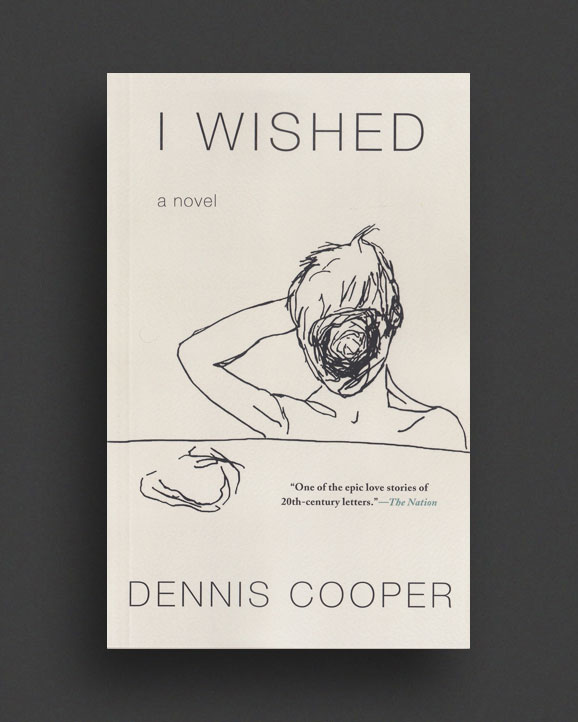
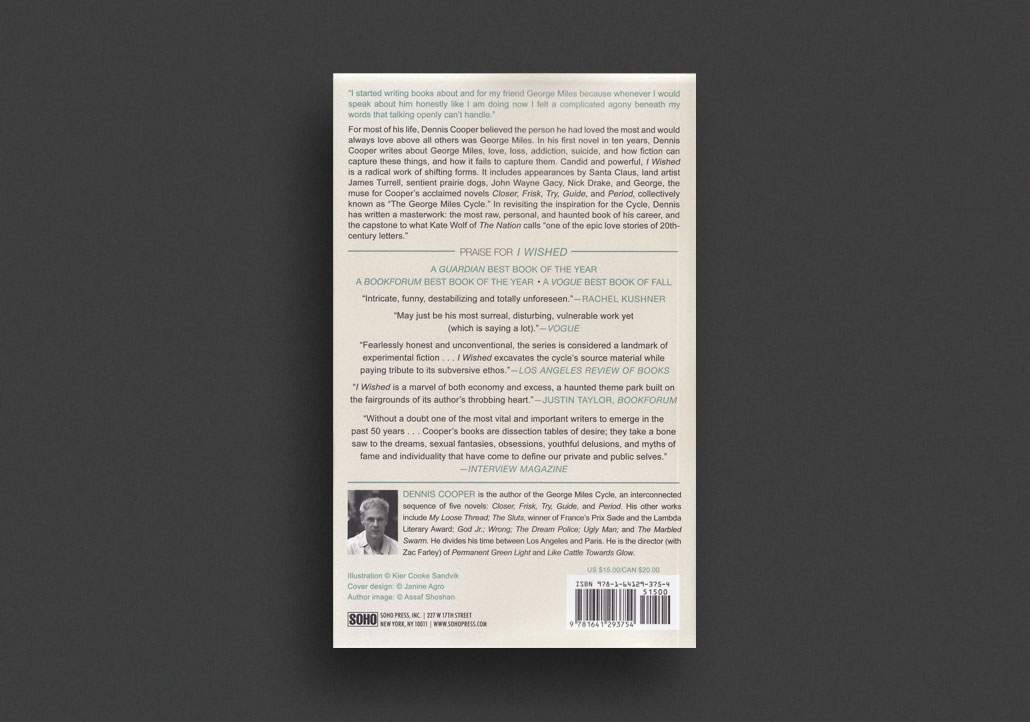
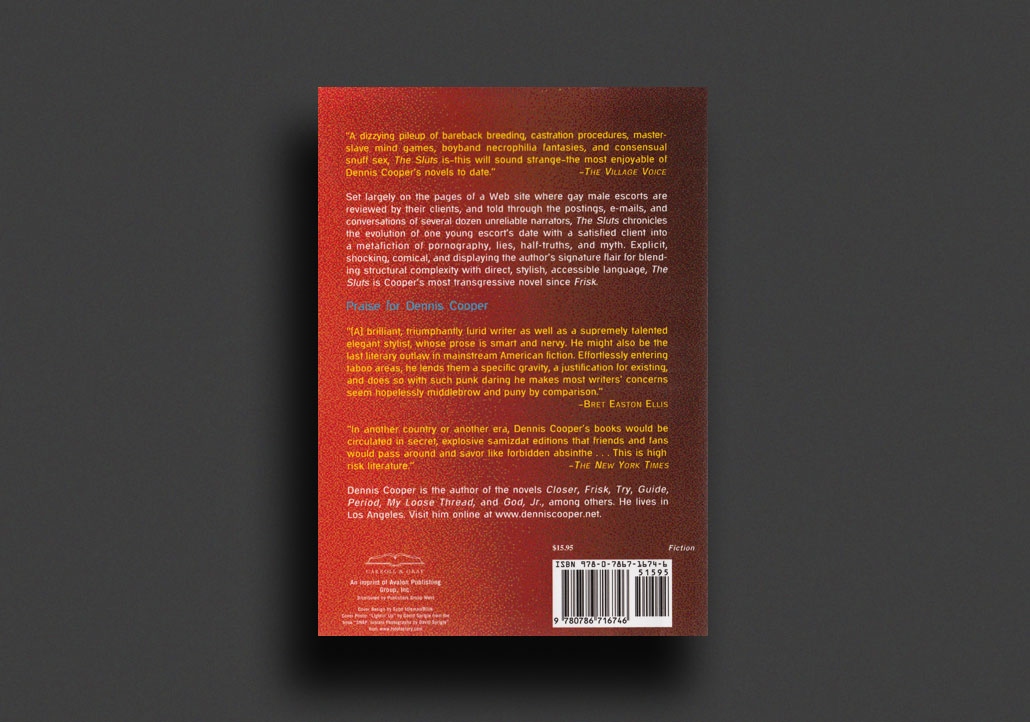
Set largely on the pages of a website where gay male escorts are reviewed by their clients, and told through the postings, emails, and conversations of several dozen unreliable narrators, The Sluts chronicles the evolution of one young escort's date with a satisfied client into a metafiction of pornography, lies, half-truths, and myth. Explicit, shocking, comical, and displaying the author's signature flair for blending structural complexity with direct, stylish, accessible language, The Sluts is Cooper's most transgressive novel since Frisk, and one of his most innovative works of fiction to date.
Dennis Cooper (born 1953) is an American novelist, poet, critic, editor and performance artist who grew up in the Southern California. In 1976, he founded Little Caesar Magazine and Press, which he ran until 1982. In 1985, he moved to Amsterdam for two and a half years, where he began his ten year long project, The George Miles Cycle, an interconnected sequence of five novels that includes Closer, Frisk, Try, Guide, and Period. His post-George Miles Cycle novels include My Loose Thread, The Sluts and God, Jr. Other works include the short-story collections Wrong and Ugly Man, poetry collections The Dream Police and The Weaklings, as well as the recent Smothered in Hugs: Essays, Interviews, Feedback, and Obituaries.
Dennis Cooper currently spends his time between Los Angeles and Paris.
"Dennis Cooper, God help him, is a born writer"—William Burroughs
"Cooper’s language is at first intense, nearly minimal, then suddenly, it ascends into vision"—Kathy Acker
1994, English
Softcover, 144 pages , 14 x 21 cm
Published by
Grove Press / New York
$34.00 - Out of stock
First published in 1994.
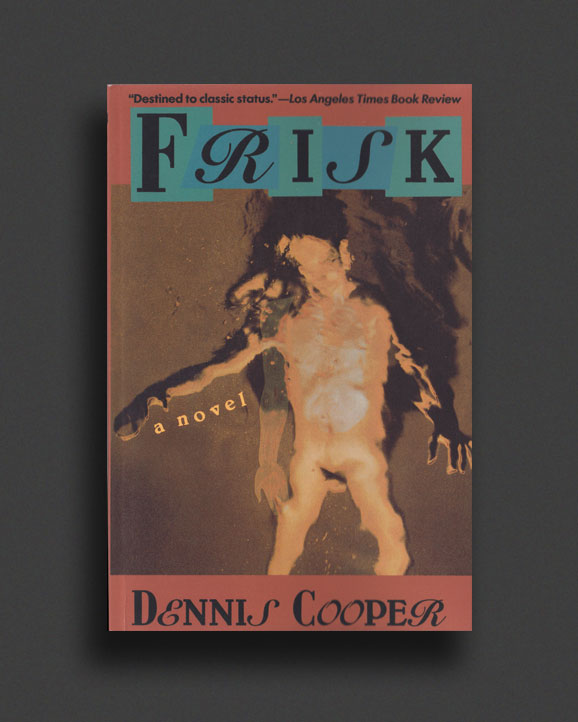
Physically beautiful and strangely passive, George Miles attracts his fellow students with a mysterious promise, like a wallet lying on the street. One after another, his teenage friends rifle through George, ransacking him for love or anything else they could trust in the mindlessness of middle America. What they find is a vision of nightmare intensity, in a novel that assaults the senses as it engages the mind.
Closer follows the links of desire and value that drag George into the arms of men like John, an artist who drains his portraits of humanity in order to find what lies beneath; Alex, fascinated by splatter films and pornography; and Steve, an underground entrepreneur who turns his parents’ garage into a nightclub. These and others pass George from hand to hand, hoping to feel even one emotion clear and uncorrupted by society, but George remains a blurry ghost until he is picked up by two men in their forties. Tom and Philippe think they can find reality in the sharp outlines of bones and the bright red of blood; obsessed with the beauty of death, they find in George the perfect object for their passion.
In brutally frank prose that exposes euphemism, cliché, and evasion, Dennis Cooper stares unflinchingly at the horror of a society without values, and his vision makes its enormity all too real. It is a world in which pain is an undeniable reality, the inevitable companion of truth, and a test of our commitment to life. Dennis Cooper explores the limits of experience, and while he sharpens our understanding of the life around us, he leaves no escape from what he finds.
“Closer translates the moments and feelings for which we don’t really have a vocabulary. Cooper taps the ineffable, the murky underside of sexual and human relations.” –Lynne Tillman
“An incredibly beautiful and daring book. Cooper’s language is at first intense, nearly minimal, then suddenly, it ascends into vision.” –Kathy Acker
Dennis Cooper (born 1953) is an American novelist, poet, critic, editor and performance artist who grew up in the Southern California. In 1976, he founded Little Caesar Magazine and Press, which he ran until 1982. In 1985, he moved to Amsterdam for two and a half years, where he began his ten year long project, The George Miles Cycle, an interconnected sequence of five novels that includes Closer, Frisk, Try, Guide, and Period. His post-George Miles Cycle novels include My Loose Thread, The Sluts and God, Jr. Other works include the short-story collections Wrong and Ugly Man, poetry collections The Dream Police and The Weaklings, as well as the recent Smothered in Hugs: Essays, Interviews, Feedback, and Obituaries. Dennis Cooper currently spends his time between Los Angeles and Paris.
"Dennis Cooper, God help him, is a born writer" - William Burroughs
1995, English
Softcover, 199 pages, 14 x 21 cm
Published by
Grove Press / New York
$34.00 - In stock -
“Written in Mr. Cooper’s taut, chillingly ironic prose. . . Try is about a world under severe emotional repression–a fascistic world of pure sadistic power. . . . As improbable as it may seem, Dennis Cooper has written a love story, all the more poignant because it is so brutally crushed.” –The New York Times Book Review
Simultaneously deadpan and queasily raw, Try is the story of Ziggy, the adopted teenaged son of two sexually abusive fathers whose failed experiment at nuclear-family domesticity has left him stranded with one and increasingly present in the fantasies of the other. He turns from both of these men to his uncle, who sells pornographic videos on the black market, and to his best friend, a junkie whose own vulnerability inspires in Ziggy a fierce and awkward devotion.
Terminally insecure and yet inured to sexual brutality, Ziggy questions his two fathers, his uncle, his drug dealer, his friends, and himself in an attempt to isolate and define the vagaries and boundaries of sexuality, attraction, and abuse, compiling their responses into a magazine that he calls I Apologize.
In prose that is taut, rhythmic, charged, chillingly precise, and beautifully controlled, Cooper examines his characters’ motivations not as the product of cultural coercion but as the emanations of something hungry and amoral and essentially human. Try explores “that buried need to go all the way and really possess someone,” that place where desire disintegrates into the irrational. He illuminates with utter clarity the need to claim the desirable, to possess wholly something that will fulfill the profound emptiness of the human soul.
With Try, Cooper has produced a novel even more complex than his previous books, dangerously innovative and with the startling familiarity of truth in its examination of love, obsession, devotion, and the depths of human need.
Dennis Cooper (born 1953) is an American novelist, poet, critic, editor and performance artist who grew up in the Southern California. In 1976, he founded Little Caesar Magazine and Press, which he ran until 1982. In 1985, he moved to Amsterdam for two and a half years, where he began his ten year long project, The George Miles Cycle, an interconnected sequence of five novels that includes Closer, Frisk, Try, Guide, and Period. His post-George Miles Cycle novels include My Loose Thread, The Sluts and God, Jr. Other works include the short-story collections Wrong and Ugly Man, poetry collections The Dream Police and The Weaklings, as well as the recent Smothered in Hugs: Essays, Interviews, Feedback, and Obituaries.
Dennis Cooper currently spends his time between Los Angeles and Paris.
"Dennis Cooper, God help him, is a born writer" - William Burroughs
"Cooper’s language is at first intense, nearly minimal, then suddenly, it ascends into vision" - Kathy Acker
2001, English
Softcover, 128 pages, 14 x 20.9 cm
Published by
Grove Press / New York
$34.00 - In stock -
The stunning conclusion to Dennis Cooper's five-book cycle, Period earned its author the accolade "a disquieting genius" by Vanity Fair and praise for his "elegant prose and literary lawlessness" by The New York Times.
The culmination of Cooper's explorations into sex and death, youth culture, and the search for the ineffable object of desire, Period is a breathtaking, mesmerizing final statement to the five-book cycle it completes. Cooper has taken his familiar themes - strangely irresistible and interchangeable young men, passion that crosses into murder, the lure of drugs, the culpabilities of authorship, and the inexact, haunting communication of feeling - and melded them into a novel of flawless form and immense power. Set in a spare, smoke-and-mirror-filled world of secret Web sites, Goth bands, Satanism, pornography, and outsider art, Period is a literary disappearing act as mysterious as it is logical. Obsessive, beautiful, and darkly comic, Period is a stunning achievement from one of America's finest writers.
Dennis Cooper (born 1953) is an American novelist, poet, critic, editor and performance artist who grew up in the Southern California. In 1976, he founded Little Caesar Magazine and Press, which he ran until 1982. In 1985, he moved to Amsterdam for two and a half years, where he began his ten year long project, The George Miles Cycle, an interconnected sequence of five novels that includes Closer, Frisk, Try, Guide, and Period. His post-George Miles Cycle novels include My Loose Thread, The Sluts and God, Jr. Other works include the short-story collections Wrong and Ugly Man, poetry collections The Dream Police and The Weaklings, as well as the recent Smothered in Hugs: Essays, Interviews, Feedback, and Obituaries.
Dennis Cooper currently spends his time between Los Angeles and Paris.
"Dennis Cooper, God help him, is a born writer" - William Burroughs
"Cooper’s language is at first intense, nearly minimal, then suddenly, it ascends into vision" - Kathy Acker
1998, English
Softcover, 176 pages, 14.6 x 21 cm
Published by
Avalon Travel Publishing / Chicago
$34.00 - In stock -
This title explores the psyches of four young gay men who are trying to alter their existence with drugs, violent erotic experiences, and love.
Dennis Cooper (born 1953) is an American novelist, poet, critic, editor and performance artist who grew up in the Southern California. In 1976, he founded Little Caesar Magazine and Press, which he ran until 1982. In 1985, he moved to Amsterdam for two and a half years, where he began his ten year long project, The George Miles Cycle, an interconnected sequence of five novels that includes Closer, Frisk, Try, Guide, and Period. His post-George Miles Cycle novels include My Loose Thread, The Sluts and God, Jr. Other works include the short-story collections Wrong and Ugly Man, poetry collections The Dream Police and The Weaklings, as well as the recent Smothered in Hugs: Essays, Interviews, Feedback, and Obituaries.
Dennis Cooper currently spends his time between Los Angeles and Paris.
1992, English
Softcover, 190 pages, 18 x 11.5 cm
1st Edition, Out of print title / used / good
Published by
Semiotext(e) / Los Angeles
$25.00 - Out of stock
First 1992 Semiotext(e) Foreign Agents edition of "Sick Burn Cut (At Last the Reappearance of Our Lady of the Ugly Ones in Spokane, Washington)" by Deran Ludd.
"Mary is a 31-year-old man with a revolver in a cheap cotton dress."
Good copy with age/light wear to block edge/cover edges.
1997, Japanese
Softcover, 32 pages, 25.5 x 18.2 cm
1st Edition, Out of print title / used / very good
Published by
G.I. Joe Collectors Club of Japan / Tokyo
$30.00 - In stock -
First issue of G.I. Joe Collector, the official fanzine of the G.I. Joe Collectors Club of Japan, a glossy newsletter published in 1997 for club members. All things devoted to the classic American action figure created by Hasbro in 1964, G.I. Joe Collector was the primary source of reference for collectors in Japan, with this issue launching the club, featuring a Joe convention report, illustrated articles on the history of many specific figures including G.I. Nurse and G.I. Jane, lots of uniform research, tripwire figures, G.I. Joe customs, and much more. Very heavily illustrated throughout in colour and b/w with texts in Japanese.
Very Good—Near Fine copy, light wear to edges, tightly bound and preserved.
1991, Japanese
Softcover (w. dust jacket), 130 pages, 25.5 x 18 cm
1st Edition, Out of print title / used / very good
Published by
Haga Bookstore / Japan
$90.00 - In stock -
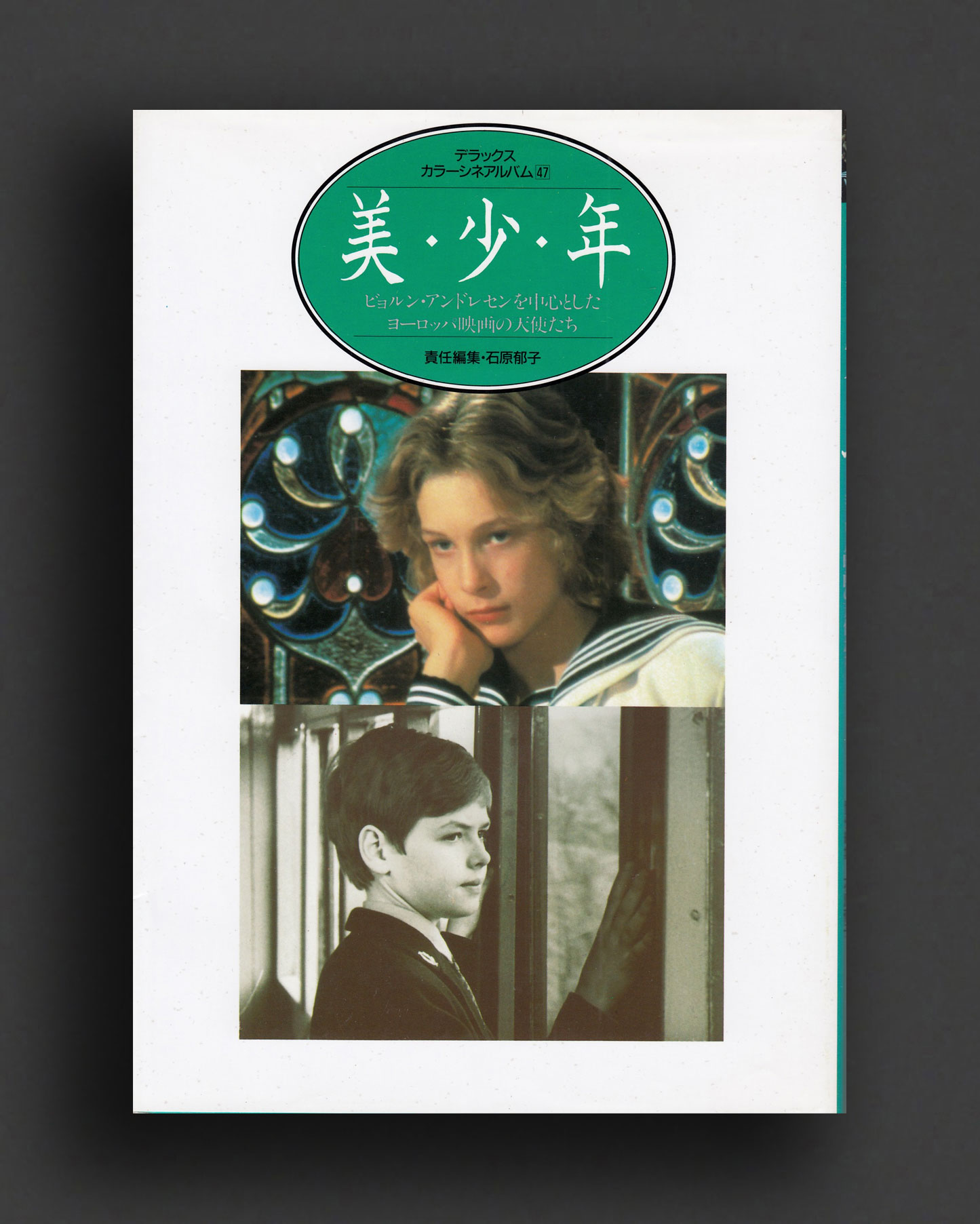
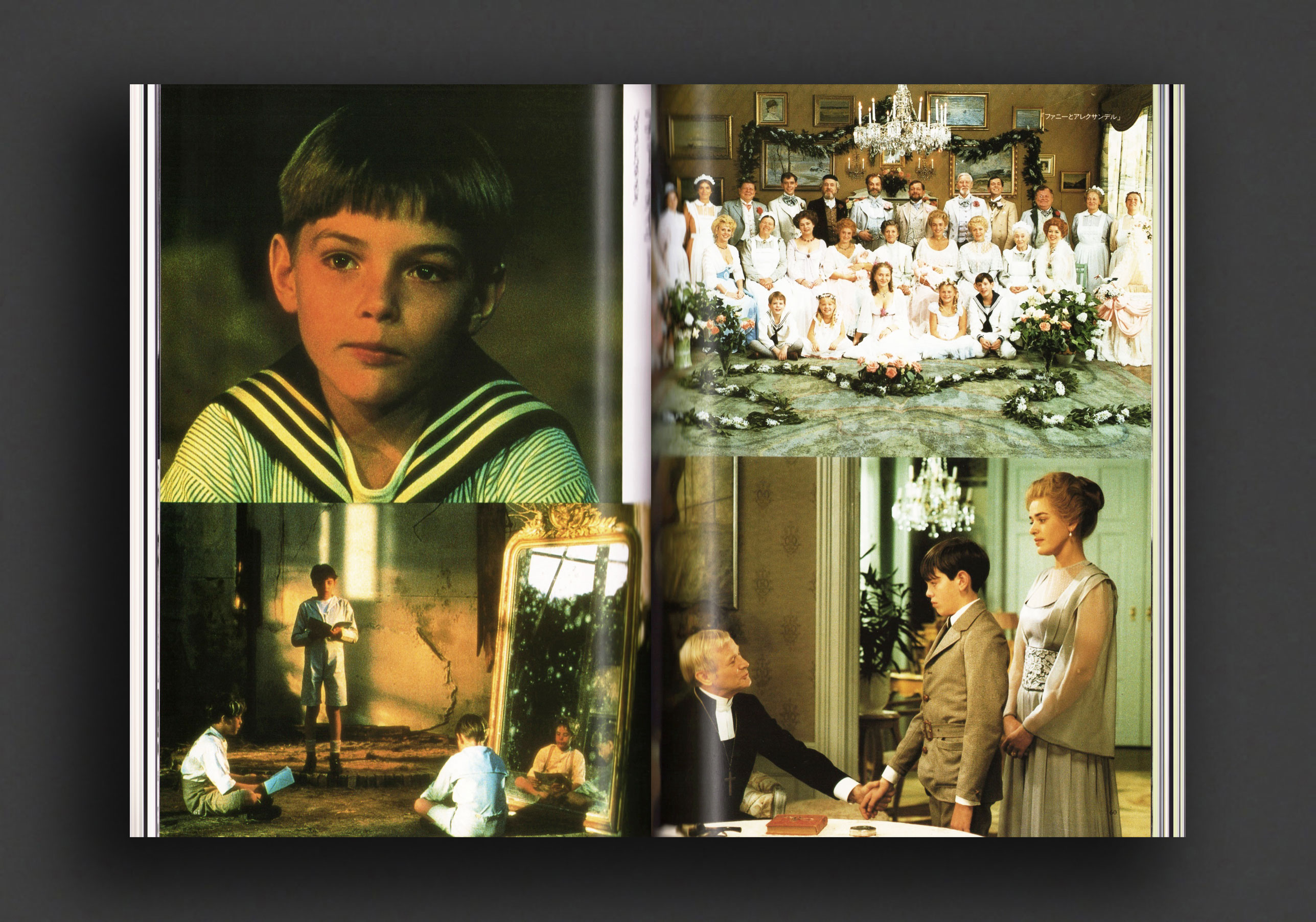
First edition published only in Japan in 19... 'Beautiful Boy: Angels of European Cinema', is centred around young Swedish actor Björn Andrésen (1955—2025) whose role as the "most beautiful boy", the fourteen-year-old Tadzio in Luchino Visconti's 1970 film adaptation of the 1912 Thomas Mann novella Death in Venice, led to his poster boy status in the Japanese "Bishōnen" (beautiful boy) aesthetic. Bishōnen is a Japanese term for a "beautiful boy" or "pretty boy," describing an androgynous aesthetic of a young man whose beauty transcends traditional gender boundaries. This deluxe "Cine Album" edited by Ikuko Ishihara, author of 'The Trans Sexual Movies,' is absolutely packed with full colour and b/w photographs and film stills of the "Angels of European Cinema", male child and adolescent actors, including Andrésen, Didier Haudepin (Delannoy's "This Special Friendship"...), John Moulder-Brown ("First Love"...), Mark Lester ("Oliver!"...), Leonard Whiting (Zeffirelli's "Romeo and Juliet"...), Bertil Guve (Bergman's "Fanny and Alexander"...), Mathieu Lacaille ("Bastien, Bastienne"), Adam Tønsberg, Edmund Moeschke (Rossellini's "Germany Year Zero"), Nikolai Burlyayev ( Tarkovsky's "Ivan's Childhood"...), Mathieu Carrière ("Young Törless"...), Dominic Guard ("The Go-Between..."), Stefano Colagrande ("Misunderstood"), Matthew Barry (Bertolucci's "Luna"), David Eberts ("Burning Secret"), Gaël Seguin ("Jeux d'artifices"), and many more. Includes illustrated essays on Truffaut, etc., plus portrait profiles and filmographies on all young actors featured.
Very Good copy.
Born: 26 January 1955, Stockholm, Sweden
Died: 25 October 2025
Edited by Ikuko Ishihara
Deluxe Color Cine Album 47
Beauty/Boy/Year
Angels of European Cinema Centered Around Bjorn Andresen
Editor-in-chief: Ikuko Ishihara
1998, English / Japanese
Softcover (in card slipcase), 130 pages, 26.8 x 19.8 cm
1st Edition, Out of print title / used / very good
Published by
Korinsha Press / Kyoto
$180.00 - In stock -
Rare first 1998 edition, first printing of one of the finest surveys of Nan Godin's photographic works, published only in Japan by Korinsha Press, Kyoto, and long out-of-print. Wrapped in illustrated card slipcase, designed by Hiroshi Ohmizo, this lavishly illustrated collection of striking photographs of couples, studies of friends, and nudes from the lens of the renowned photographer Nan Goldin, with text commentary from Goldin in English and Japanese, brings together images that span Goldin's career and reveals the social drama of alienation and the strange beauty that is at the heart of her vision. Edited by Nan Goldin and Taka Kawachi, Couples and Loneliness is wonderful array of her most moving images from her friendship circle of 1980's New York, The Ballad of Sexual Dependency, the AIDS crisis, the Cookie Mueller portfolio, Goldin's travels in Japan, Italy, Germany, Switzerland...
"My work is about letting life be what it is and not trying to make it more or less, or altered. What I'm interested in is capturing life as it's being lived, and the flavor of the smell of it, and maintaining that in pictures."—Nan Goldin
Very Good copy in VG slipcase, only light wear/toning. Rare in this 1998 first print. A larger second print run was produced in 1999.
1986, English
Hardcover (w. dust jacket), 144 pages, 22.9 x 25.1 cm
1st Edition, Out of print title / used / very good
Published by
Aperture / New York
$550.00 - In stock -
First 1986 hardcover edition of Nan Goldin’s classic photo book, The Ballad of Sexual Dependency, published by Aperture, New York. A landmark work in the field of raw sociological reportage, The Ballad of Sexual Dependency is a visual diary chronicling the struggles for intimacy and understanding among the friends and lovers whom Goldin describes as her “tribe.” These photographs described a lifestyle that was visceral, charged and seething with a raw appetite for living, and the book soon became the swan song for an era that reached its peak in the early 1980s. Through an accurate and detailed record of Goldin’s life, The Ballad of Sexual Dependency records a personal odyssey as well as a more universal understanding of the different languages men and women speak. All these years later, Goldin’s lush color photography and candid style still demand that the viewer encounter their profound intensity head-on. The book’s influence on photography and other aesthetic realms continues to grow, making it a classic of contemporary photography.
From Goldin's introduction: "I sometimes don't know how I feel about someone until I take his or her picture. I want the people in my pictures to stare back. I want to show exactly what my world looks like, without glamorization, without glorification."
"Nan Goldin’s Ballad of Sexual Dependency is a beggar’s opera of recent times. Here were real thieves and unexpected heroes, and a sense that some things in life might still be worth a brawl."—Artforum
Nan Goldin was born in Washington, D.C., in 1953, and grew up in Lexington, Massachusetts. Her first solo show was held in Boston in 1973. She moved to New York in 1979, where she began documenting the city’s gay and transvestite scenes and developed the informal snapshot aesthetic for which she is celebrated today. Goldin was the 2007 recipient of the Hasselblad Award.
Very Good—Near Fine copy with VG dust jacket. Definite 1986 first edition in the original unclipped ($39.95) dust jacket, designed by Keith Davis.
2025, English
Hardcover, 208 pages, 28 x 24 cm
Published by
Skira / Milan
$95.00 - In stock -
Edited by Antonio Sergio Bessa
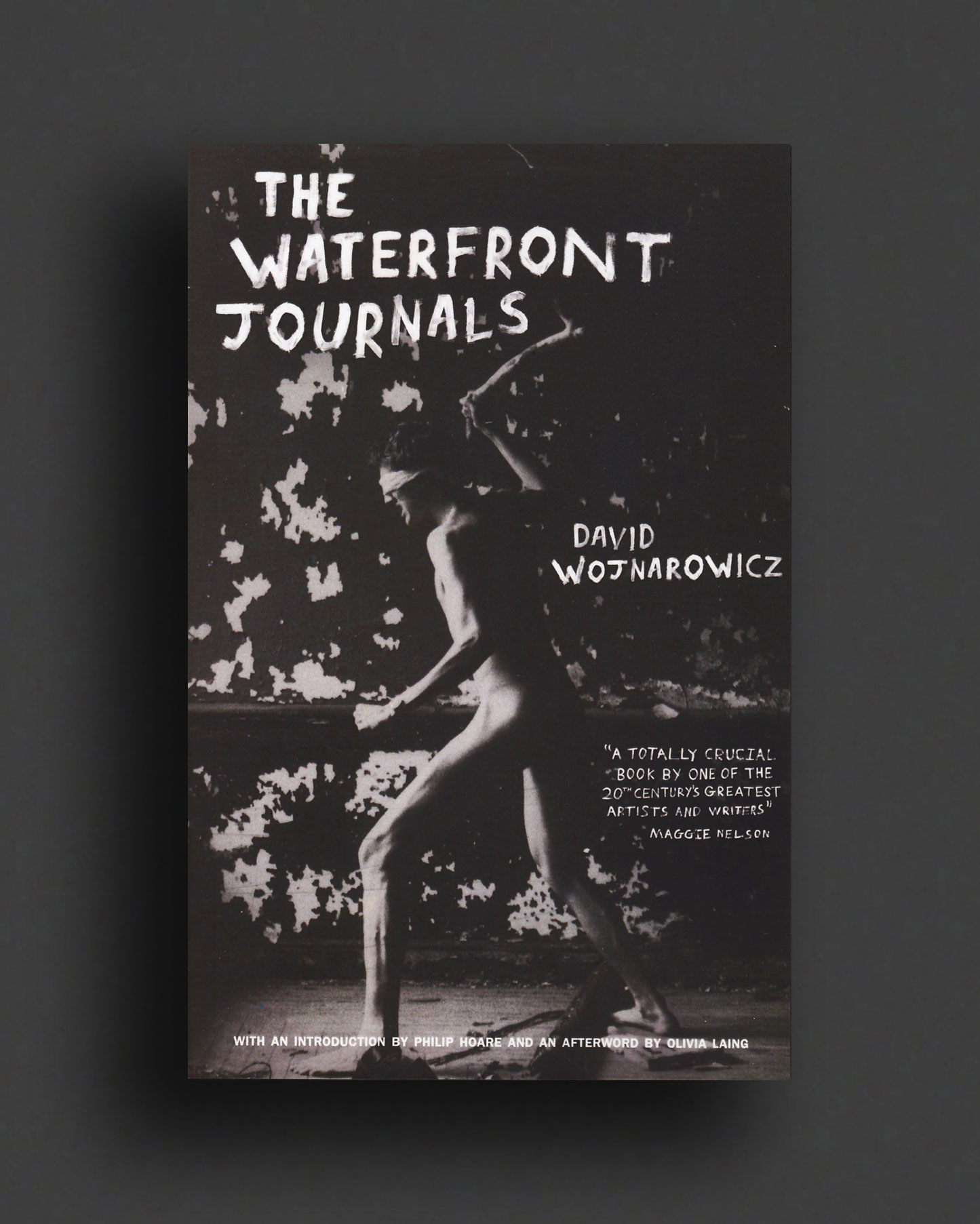
One of David Wojnarowicz's few incursions into photography is a testimony of urban, social and political change in New York in the late 1970s.
In 1978 and 1979, David Wojnarowicz took a series of photographs of a man wearing a paper mask bearing the visage of Arthur Rimbaud, the French poet equally known for his fervid verse and dramatic life. Rimbaud was the instantiation, and perhaps the inventor, of the idea of the young gay hustler of genius.
Presenting a selection of photographs by Wojnarowicz, this amply illustrated volume features an introductory essay by Antonio Sergio Bessa contextualizing the series within a foundation of other works across literature, photography and performance. Nicholas Martin explores Wojnarowicz's practice in the context of the rise of the punk movement in downtown Manhattan in the late 1970s. Craig Dworkin explores Rimbaud's years as a runaway youth in Paris during the Commune, and his acquaintances with the city's bohemia. Marguerite Van Cook contributes an essay about her experiences with the London and New York music and art scenes throughout the 1970s and 1980s. Phillip Aarons offers a personal account of his engagement as a collector of Wojnarowicz's work. The book also features an interview with photographer Allen Frame, who produced several performances of Wojnarowicz's monologues in the early 1980s in New York's Lower East Side, Berlin and Brooklyn.
Painter, photographer, writer, filmmaker, performance artist, songwriter and activist David Wojnarowicz was born in Red Bank, New Jersey, in 1954 and died from AIDS-related illness in New York in 1992. He authored a few books, most famously Close to the Knives. Wojnarowicz attained national prominence as a writer and advocate for AIDS awareness and for his stance against censorship.
1970, Japanese
Softcover (staple-bound w. 2 x flexi-disc), 16 pages, 24.5 x 20.5 cm
1st Edition, Out of print title / used / very good
Published by
Asahi Sonorama / Tokyo
$150.00 - Out of stock
The Death of Yukio Mishima! is a special edition "Sounds Magazine" published in 1970 by Asahi Sonorama in Tokyo to commemorate the sudden, shocking death of Japanese writer Yukio Mishima, one of the most important postwar stylists of the Japanese language. Kimitake Hiraoka (b. 1925), known by his pen name Yukio Mishima, was a Japanese author, poet, playwright, actor, model, Shintoist, ultranationalist, and the leader of an attempted coup d'état on 25th November 1970 that culminated in his own spectacular suicide, in a traditional seppuku (hara-kiri), or samurai ritual disemboweling. He was 45 years old.
This commemorative magazine is entirely devoted to Mishima, published right after the news of his suicide, presenting two 7" flexi-discs compiling alarming, moment by moment audio recordings from the 25th November 1970 — announcements from the scene by the self-defense forces and the chief-of-police; the Shield Society members arrested for intruding; right-wing group salute to Mishima's spirit; Mishima's speech about his motivation for founding The Tatenokai (Shield Society) – a private militia dedicated to traditional Japanese values and veneration of the Emperor, his training in kendo and bodybuilding, the Japanese language; audio of Mishima's mentor and friend, Nobel Prize-winning novelist Yasunari Kawabata, rushing to the scene of the incident; nationalist politician and writer Shintaro Ishihara talks about Mishima’s death; a discussion about the life and death of Mishima at the Tokyo University; and more. The publication is full of photographs of Mishima performing and training, giving his speech on Nov 25, and a shocking crime scene image after the incident. It also reproduces the full text of his shield society manifesto.
VG copy, light wear to cover corners/edges, light page toning, flexi-discs likely unplayed.
1970, Japanese
Softcover, 170 pages, 25.5 x 18 cm
1st Edition, Out of print title / used / good
Published by
Shūkan Gendai / Tokyo
$50.00 - Out of stock
"Patriotic writer Yukio Mishima commits suicide!"
The special expanded December 1970 issue of Shūkan Gendai, entirely devoted to Japanese writer Yukio Mishima, one of the most important postwar stylists of the Japanese language. Kimitake Hiraoka (b. 1925), known by his pen name Yukio Mishima, was a Japanese author, poet, playwright, actor, model, Shintoist, ultranationalist, and the leader of an attempted coup d'état on 25th November 1970 that culminated in his own spectacular suicide, in a traditional seppuku (hara-kiri), or samurai ritual disemboweling. He was 45 years old. Published right after the news of his suicide, this special issue of the famous Shūkan Gendai magazine is packed with wonderful colour and monochrome photographs of the many faces of Mishima (on the stage, in the class-room, in the gym, the husband, the gay icon, the avant-garde, the militant), and brimming with political, cultural and biographical articles, interviews, and discussions about Mishima, his life and work, reproducing many of his written works, his essays and interviews, including the response to Mishima's death from 40 Japanese intellectuals, conversations with those closest to Mishima, the private and public, and Mishima's last words — his requests, orders, speeches, and his dying words. Hundreds of images throughout.
Good copy with wear and pinching to spine edge and cover extremities. Tanning to page edges.
1971, English
Hardcover (w. dust jacket), 104 pages, 20.5 x 13.5 cm
1st Edition, Out of print title / used / very good
Published by
Secker & Warburg / London
$450.00 - In stock -
Rare first English hardcover edition of Yukio Mishima's Sun and Steel, a masterpiece of modern Japanese literature, translated by John Bester, and published by Secker & Warburg, London, in 1971. With the iconic book jacket designed by Yukio Mishima.
In this fascinating document, one of Japan's best known-and controversial-writers created what might be termed a new literary form. Sun and Steel: Art, Action and Ritual Death (Japanese: 太陽と鉄, Hepburn: Taiyō to Tetsu) is an autobiographical essay, a memoir of the author's relationship to his body. It is new because it combines elements of many existing types of writing, yet in the end fits into none of them.
At one level, it may be read as an account of how a puny, bookish boy discovered the importance of his own physical being; the "sun and steel" of the title are themselves symbols respectively of the cult of the open air and the weights used in bodybuilding. At another level, it is a discussion by a major novelist of the relation between action and art, and his own highly polished art in particular. More personally, it is an account of one individual's search for identity and self-integration. Or again, the work could be seen as a demonstration of how an intensely individual preoccupation can be developed into a profound philosophy of life.
All these elements are woven together by Mishima's complex yet polished and supple style. The confession and the self-analysis, the philosophy and the poetry combine in the end to create something that is in itself perfect and self-sufficient. It is a piece of literature that is as carefully fashioned as Mishima's novels, and at the same time provides an indispensable key to the understanding of them as art.
The road Mishima took to salvation is a highly personal one. Yet here, ultimately, one detects the unmistakable tones of a self transcending the particular and attaining to a poetic vision of the universal. The book is therefore a moving document, and is highly significant as a pointer to the future development of one of the most interesting novelists of modern times.
"One of the twentieth century's outstanding statements of literary and personal purpose."—Library Journal
"Had we [read this before his suicide], the extravagant events surrounding his death would have been more readily comprehensible."—Sunday Times
YUKIO MISHIMA, one of the most spectacularly gifted writers in modern Japan, was born into a samurai family in 1925. Yukio Mishima was a Japanese author, poet, playwright, actor, model, Shintoist, nationalist, and founder of the Tatenokai ("Shield Society"), an unarmed civilian militia. Mishima is considered one of the most important Japanese authors of the 20th century. He was considered for the Nobel Prize in Literature in 1968. His works include the novels Confessions of a Mask and The Temple of the Golden Pavilion. Mishima's work is characterized by "its luxurious vocabulary and decadent metaphors, its fusion of traditional Japanese and modern Western literary styles, and its obsessive assertions of the unity of beauty, eroticism and death", according to author Andrew Rankin. In November 1970 he and his Tatenokai forced their way into a Self-Defense Force headquarters in Tokyo, where Mishima, after reading out a proclamation, committed ritual suicide with a young follower in the commanding officer's room. On the morning of his death, the last volume of Mishima's tetralogy, The Sea of Fertility (The Spring Snow, Runaway Horses, The Temple of Dawn, The Decay of the Angel) was delivered to his publisher.
The Translator, JOHN BESTER, born and educated in England, is one of the foremost translators of Japanese fiction. Among his translations are Masuji Ibuse's Black Rain, Kenzaburo Oe's The Silent Cry, Fumiko Enchi's The Waiting Years, and Junnosuke Yoshiyuki's The Dark Room. He received the 1990 Noma Award for the Translation.
Very Good copy in VG dust jacket. Light tanning, spots and edge wear. Well preserved copy.
1967 / 1974, English
Softcover (french-fold boards), 76 pages, 26.5 x 19 cm
1st Edition, Out of print title / used / fine
Published by
John Weatherhill / Tokyo
$290.00 - In stock -
Rare 1974 English edition of the first 1967 edition of Young Samurai: Bodybuilders of Japan, which was planned, designed and produced by John Weatherhill publishers in Tokyo in both Japanese (with original Japanese title "Taido (The Way of the Body)") and English language editions, preceding the more common Grove Press US re-print of 1967.
Japanese physique photography by one of Japan’s most noted photographers of homoerotic imagery, Tamotsu Yatō. For this celebrated collection of bodybuilding photographs, novelist Yukio Mishima not only contributed the introduction, in which he describes this as “the first collection of photographs of Japanese bodybuilders ever published”, but also modelled for some of the most memorable photographs. This was Yatō's first photo book.
"…for the past ten years and more there has been a group of young men in Japan who, privately, sweating silently, and with barbells for companions, have developed sturdy, well-proportioned physiques such as earlier Japanese never imagined even in dreams. The present book is eloquent testimony to their success. As the well-known essayist Michio Takeyama has written, it is amazing how faithfully the bodies of Japanese youths conform to the aesthetic standards of ancient Greece, and I am reminded of Lafcadio Hearn's having called the Japanese 'the Greeks of the Orient.'"
Includes an essay by Hitoshi Tamari, Managing Director of the Japan Bodybuilding Association.
Near Fine copy, beautifully preserved copy of the original publisher's English edition, printed in Japan.