World Food Books' programme is largely produced on Kulin Nation land. We acknowledge the Wurundjeri people of the Kulin Nation as the first and continuing custodians of this land, and pay respect to their Elders past, present, and emerging.
World Food Books is an arts and special interests bookshop in Naarm / Melbourne. Founded in 2010, World Food Books is devoted to the presentation of a rotating, hand-selection of international art, design, literary and counterculture publications with an emphasis on the anti-traditional, the experimental, the avant-garde, the heretic, the marginal.
Presenting new titles alongside rare and out-of-print books, catalogues and journals spanning the fields of modern and contemporary art, design, photography, illustration, film, literature, poetry, cultural theory, philosophy, sexuality, popular and underground culture in its many radical forms, World Food Books wishes to encourage adventurous, thoughtful and open-minded reading, looking, writing, and exchange of publishing and ideas, both current and historical.
As well as our bookshop, located in Melbourne's historical Nicholas Building, all of our inventory is available internationally via our online mail-order service.
World Food Books semi-regularly co-ordinates "Occasions", a programme of exhibits and events at the bookshop and in partnership with other hosts (such as museums and art galleries) that develop out of the activities, relationships and content of the bookshop itself.
World Food Books
The Nicholas Building
37 Swanston Street
Room 5, Level 6
Melbourne 3000
Australia
SHOP HOURS:
THU–SAT 12–6
WEB-SHOP OPEN 24/7
World Food Books
Postal Address:
PO Box 435
Flinders Lane
Victoria 8009
Australia
info@worldfoodbooks.com
Art
Theory / Essay
Architecture / Interior
Graphic Design / Typography
Photography
Fashion
Eros
LGBTQ+
Fiction / Poetry
Weird / Speculative / Science Fiction / Horror
Transgressive / Visceral / Abject
Symbolism / Decadence / Fin de siècle
Film / Video
Painting
Sculpture / Installation
Performance / Dance / Theater
Drawing
Sound / Music
Curatorial
Group Shows / Collections
Periodicals
Out-of-print / Rare
Posters / Ephemera / Discs
Signed Books
World Food Books Gift Voucher
World Food Book Bag
Australian Art
Australian Fiction
Australian Science Fiction / Speculative Fiction
Australian Poetry
Australian Photography
Japanese Photography
Conceptual Art
Minimal Art
Dada
'Pataphysics / Oulipo
Fluxus
Concrete Poetry
Pop Art
Surrealism
Arte Povera
Arte Informale / Haute Pâte / Tachism
Nouveau Réalisme / Zero / Kinetic
Situationism / Lettrism
Collage / Mail Art / Xerox Art
Art Brut / Folk / Visionary / Fantastic
Illustration / Graphic Art / Bandes Dessinées
Furniture
Italian Radical Design / Postmodernism
Textiles
Ceramics / Glass
Counterculture
Protest / Revolt
Philosophy
Psychoanalysis
Anthropology
Anarchism
Socialism / Anarchism / Communism / Capitalism
Literary Theory / Semiotics / Language
Feminism / Women's Studies
Gender Studies / Sexuality
Anthropology
Fetishism / BDSM
Drugs / Psychedelia
Crime / Violence
Animal Rights / Veganism
Occult / Esoterica
Ecology / Earth / Alternative Living
Whole Earth / Crafts
All prices in AUD (Australian dollars)
Pick-Ups
Pick-up orders can be collected in our bookshop during opening hours after order date. Please collect any Pick-up orders within 2 weeks of ordering as we have limited storage space. Orders will be released back into stock if not collected within this time. No refunds can be made for pick-ups left un-collected. If you cannot make it in to the bookshop in this time-frame, please choose postage option.
Return Policy
All sales are final. We do accept returns (for refund or exchange) for items received in error. All our orders are packed with special care using heavy-duty padding and cardboard book-mailers or bubble mailers (for smaller books), using reinforcement where required. We cannot take responsibility for any lost, stolen or damaged parcels.
Insurance
Should you wish to insure your package, please email us directly after placing your order and we can organise this at a small extra expense. Although all standard/express tracked packages are very safe and dependable, we cannot take responsibility for any lost, stolen or damaged parcels. We recommend insurance on valuable orders.
Interested in selling your old books, catalogues, journals, magazines, comics, fanzines, ephemera? We are always looking for interesting, unusual and out-of-print books to buy. We only buy books in our fields of interest and specialty, and that we feel we can resell.
We base these prices on desirability, market value, in-print prices, condition and our current stock levels. We offer cash, store credit, and can take stock on consignment. All
about 25% of the price we expect to get when we sell them, or 30% in store credit. We base these prices on desirability, market value, in-print prices, condition and our current stock levels.
Sell your books any day of the week. You can drop them off and return later. If you have a lot of books, we can visit your Sydney home.
We buy books that we feel we can resell. We offer about 25 % of the price we expect to get when we sell them, or 30% in store credit. We base these prices on desirability, market value, in-print prices, condition and our current stock levels.
Philadelphia Wireman
03 August - 01 September, 2018
World Food Books is proud to announce our next Occasion, the first presentation of sculptures by Philadelphia Wireman in Australia.
The Philadelphia Wireman sculptures were found abandoned in an alley off Philadelphia’s South Street on trash night in 1982. Their discovery in a rapidly-changing neighbourhood undergoing extensive renovation, compounded with the failure of all attempts to locate the artist, suggests that the works may have been discarded after the maker’s death. Dubbed the "Philadelphia Wireman" during the first exhibition of this work, in 1985, the maker’s name, age, ethnicity, and even gender remain uncertain. The entire collection totals approximately 1200 pieces, all intricately bound together with tightly-wound heavy-gauge wire (along with a few small, abstract marker drawings, reminiscent both of Mark Tobey and J.B. Murry). The dense construction of the work, despite a modest range of scale and materials, is singularly obsessive and disciplined in design: a wire armature or exoskeleton firmly binds a bricolage of found objects including plastic, glass, food packaging, umbrella parts, tape, rubber, batteries, pens, leather, reflectors, nuts and bolts, nails, foil, coins, toys, watches, eyeglasses, tools, and jewellery.
Heavy with associations—anthropomorphic, zoomorphic, and socio-cultural responses to wrapped detritus—the totemic sculptures by Philadelphia Wireman have been discussed in the context of work created to fulfil the shamanistic needs of alternative religions in American culture. Curators, collectors, and critics have variously compared certain pieces to sculpture from Classical antiquity, Native American medicine bundles, African-American memory jugs, and African fetish objects. Reflecting the artist’s prolific and incredibly focused scavenging impulse, and despite—or perhaps enhanced by—their anonymity, these enigmatic objects function as urban artefacts and arbiters of power, though their origin and purpose is unknown. Philadelphia Wireman, whatever their identity, possessed an astonishing ability to isolate and communicate the concepts of power and energy through the selection and transformation of ordinary materials. Over the course of the past two decades, this collection has come to be regarded as an important discovery in the field of self-taught art and vernacular art.
Presented in collaboration with Fleisher-Ollman Gallery, Philadelphia, and Robert Heald, Wellington.
Susan Te Kahurangi King
02 February - 10 March, 2018
Susan Te Kahurangi King (24 February 1951 - ) has been a confident and prolific artist since she was a young child, drawing with readily available materials - pencils, ballpoint pens and felt-tip markers, on whatever paper is at hand. Between the ages of four and six Susan slowly ceased verbal communication. Her grandparents William and Myrtle Murphy had developed a special bond with Susan so they took on caring responsibilities for extended periods. Myrtle began informally archiving her work, carefully collecting and storing the drawings and compiling scrapbooks. No drawing was insignificant; every scrap of paper was kept. The King family are now the custodians of a vast collection containing over 7000 individual works, from tiny scraps of paper through to 5 meter long rolls.
The scrapbooks and diaries reveal Myrtle to be a woman of great patience and compassion, seeking to understand a child who was not always behaving as expected. She encouraged Susan to be observant, to explore her environment and absorb all the sights and sounds. Myrtle would show Susan’s drawings to friends and people in her community that she had dealings with, such as shopkeepers and postal workers, but this was not simply a case of a grandmother’s bias. She recognised that Susan had developed a sophisticated and unique visual language and sincerely believed that her art deserved serious attention.
This was an unorthodox attitude for the time. To provide some context, Jean Dubuffet coined the term Art Brut in 1945 to describe work created by self-taught artists – specifically residents of psychiatric institutions and those he considered to be visionaries or eccentrics. In 1972 Roger Cardinal extended this concept by adopting the term Outsider Art to describe work made by non-academically trained artists operating outside of mainstream art networks through choice or circumstance. Susan was born in Te Aroha, New Zealand in 1951, far from the artistic hubs of Paris and London that Dubuffet and Cardinal operated in. That Myrtle fêted Susan as a self-taught artist who deserved to be taken seriously shows how progressive her attitudes were.
Susan’s parents Doug and Dawn were also progressive. Over the years they had consulted numerous health practitioners about Susan’s condition, as the medical establishment could not provide an explanation as to why she had lapsed into silence. Dawn educated herself in the field of homeopathy and went on to treat all twelve of her children using these principles – basing prescriptions on her observations of their physical, mental and emotional state.
Doug was a linguist with an interest in philosophy who devoted what little spare time he had to studying Maori language and culture. To some extent their willingness to explore the fringes of the mainstream made them outsiders too but it was their commitment to living with integrity and their respect for individuality that ensured Susan’s creativity was always encouraged.
Even though Susan’s family supported her artistic pursuits, some staff in schools and hospitals saw it as an impediment to her assimilation into the community and discouraged it in a variety of ways. Her family was not always aware of this and therefore did not fully understand why Susan stopped drawing in the early 1990s. However, rather than dwell on the challenges that Susan faced in pursuit of her artistic practice, they prefer to highlight her achievements. In 2008 Susan began drawing again in earnest, after an almost 20 year interruption, and her work is now shown in galleries around the world.
Susan grew up without television and has been heavily influenced by the comics she read as a child. She is absolutely fearless in the appropriation of recognizable characters, such as Donald Duck and Mickey Mouse, in her work. She twists their limbs, contorts their faces, compresses them together, blends them into complex patterned backgrounds - always imbuing them with an incredible energy. Although Susan often used pop culture characters in her work they are not naive or childlike. These are drawings by a brilliant self-taught artist who has been creating exceptional work for decades without an audience in mind.
Mladen Stilinović
"Various Works 1986 - 1999"
02 February 16 - September 10, 2016
Various works 1986 - 1999, from two houses, from the collections of John Nixon, Sue Cramer, Kerrie Poliness, Peter Haffenden and Phoebe Haffenden.
Including: Geometry of Cakes (various shelves), 1993; Poor People’s Law (black and white plate), 1993; White Absence (glasses, ruler, set square, silver spoon, silver ladel with skin photograph and wooden cubes), 1990-1996; Exploitation of the Dead (grey and red star painting, wooden painting, black spoon with red table, red plate), 1984-1990; Money and Zeros (zero tie, paintings made for friends in Australia (Sue, John, Kerrie), numbers painting), 1991-1992; Words - Slogans (various t-shirts) - “they talk about the death of art...help! someone is trying to kill me”, “my sweet little lamb”, “work is a disease - Karl Marx”; Various artist books, catalogues, monographs, videos; Poster from exhibition Insulting Anarchy; "Circular" Croatian - Australian edition; Artist book by Vlado Martek (Dostoyevsky); more.
Thanks to Mladen Stilinović and Branka Stipančić.
Jonathan Walker
Always Will Need To Wear Winter Shirt Blue + Ochre Small Check Pattern
21 August - 21 September, 2015
Untitled
I am not a great reader of poetry but I always return to the work of Melbourne poet, Vincent Buckley (1925- 1988). Perhaps I find his most tantalising piece to be not a finished poem but a fragment left on a scrap of paper discovered on his desk after the poet’s death.
The poetry gathers like oil
In the word-core, and spreads
It has its music meet,
Its music is in movement.
This fragment is more the shell left behind from a volatile thought than a finished poem. I find the last two lines honest but awkward whereas the first two lines work like an arrow. Most likely he could not find a resolution so it was left. Still, in its present form, it remains an eloquent testimony to the ultimate failure of a medium to express mobile thought and sensation, in Buckley’s case, through verbal language. It’s an important matter because this is something all artists have to deal with regardless of the medium.
I have never written a poem, however, I am forever copying fragments from books on paper scraps in a vain effort to fix certain notions in my head. At first, they function as bookmarks that are sometimes returned to when I open the book. But before long, as they accumulate, they fall out littering the table interspersed with A4 photocopies, bills, books and medications.
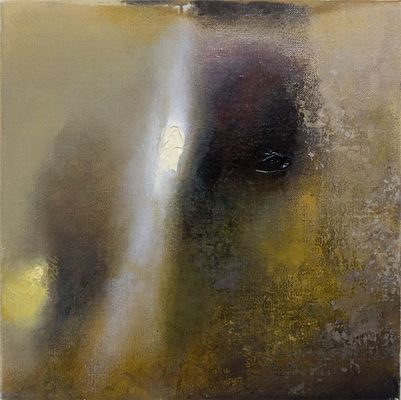
To return to Buckley’s fragment, the first two lines very much evoke how I paint nowadays. As you age, detail diminishes and patches of light become more luminous and float. I feel the most honest way of dealing with this is by smearing the oil paint on the canvas with the fingers and working close-up, blind. Only if the patches coalesce into an approaching image can the work gain a life.
-
Jonathan Walker was born in Melbourne, Australia and brought up on a dairy farm in Gippsland. In the 1970’s he studied painting at RMIT and won the Harold Wright Scholarship to the British Museum, London. During the 1980’s he exhibited at Pinacotheca Gallery, Richmond and had work shown at the NGV and Heidi City Art Gallery. Over the same period he designed the cover for the “Epigenesi” LP by Giancarlo Toniutti, Italy and conducted a mail exchange work with Achim Wollscheid, Germany. The work with artists through the post resulted in an article published in the bicentenary issue of Art and Australia 1988. He showed in artist run spaces such as WestSpace in the 90’s and 2000’s, and until 2012, taught painting at Victoria University, which is where we (Colleen Ahern and Lisa Radford) as organisers of the exhibition, among many others, had the privilege of being his student.
Walker’s knowledge was imparted to students through the careful selection of music, literature, and artists found in books that he himself had ordered for the library. Walker’s strategy was the generosity of sharing his vast knowledge with references specific to each student and their context.
Walker’s paintings share a similar focus and intimacy.
This exhibition presents a small selection of recent paintings alongside a publication that includes Walker’s writing. Observational and analytical, Walker’s work is a type of material notation — the time of day, colour and how it is blended, the both specific and fleeting location of a reflection on lino or the question of whether a chair leg should be included in a painting.
Please join us on Friday August 21 between 6-8pm to celebrate the opening of the exhibition.
Curated by Colleen Ahern and Lisa Radford.
B. Wurtz
Curated by Nic Tammens
March 26 - April 4, 2015
B.Wurtz works from a basement studio in his home on Manhattan’s Lower East Side.
This local fact is attested to by the plastic shopping bags and newsprint circulars that appear in his work. As formal objects, they don’t make loud claims about their origins but nonetheless transmit street addresses and places of business from the bottom of this long thin island. Like plenty of artists, Wurtz is affected by what is local and what is consumed. His work is underpinned by this ethic. It often speaks from a neighborhood or reads like the contents of a hamper:
“BLACK PLUMS $1.29 lb.”
“Food Bazaar”
“USDA Whole Pork Shoulder Picnic 99c lb.”
“RITE AID Pharmacy, with us it’s personal.”
“H. Brickman & Sons.”
“Sweet Yams 59c lb."
Most of the work in this exhibition was made while the artist was in residence at Dieu Donne, a workshop dedicated to paper craft in Midtown. Here Wurtz fabricated assemblages with paper and objects that are relatively lightweight, with the intention that they would be easily transportable to Australia. This consideration isn’t absolute in Wurtz’s work, but was prescriptive for making the current exhibition light and cheap. Packed in two boxes, these works were sent from a USPS post office on the Lower East Side and delivered to North Melbourne by Australia Post.
Wurtz appears courtesy of Metro Pictures, New York.
Thanks to Rob Halverson, Joshua Petherick, Sari de Mallory, Matt Hinkley, Helen Johnson, Fayen d'Evie, Ask Kilmartin, Lisa Radon, Ellena Savage, Yale Union, and "Elizabeth".
John Nixon
"Archive"
December 15 - January 20, 2014
The presentation of John Nixon's archive offered a rare showcase of this extensive collection of the artist's own publications, catalogues, posters, ephemera, editions and more, from the mid 1980s onwards, alongside a selection of his artworks.
Organized by John Nixon, Joshua Petherick and Matt Hinkley.
"Habitat"
at Minerva, Sydney (organised by Joshua Petherick and Matt Hinkley)
November 15 - December 20, 2014
Lupo Borgonovo, Janet Burchill & Jennifer McCamley,
Lewis Fidock, HR Giger, Piero Gilardi, Veit Laurent Kurz,
Cinzia Ruggeri, Michael E. Smith, Lucie Stahl, Daniel Weil, Wols
Press Release:
“...It contained seven objects. The slender fluted bone, surely formed for flight, surely from the wing of some large bird. Three archaic circuitboards, faced with mazes of gold. A smooth white sphere of baked clay. An age-blackened fragment of lace. A fingerlength segment of what she assumed was bone from a human wrist, grayish white, inset smoothly with the silicon shaft of a small instrument that must once have ridden flush with the surface of the skin - but the thing’s face was seared and blackened.”
William Gibson, “Count Zero”, 1986
"Autumn Projects Archive"
Curated by Liza Vasiliou
March 6 - March 15, 2014
World Food Books, in conjunction with the Virgin Australia Melbourne Fashion Festival 2014, presented the Autumn Projects archive, consisting of a selection of early examples in Australian fashion with a particular interest in collecting designers and labels from the period beginning in the 1980’s, who significantly influenced the discourse of Australian Fashion.
Curated by Liza Vasiliou, the exhibition provided a unique opportunity to view pieces by designers Anthea Crawford, Barbara Vandenberg, Geoff Liddell and labels CR Australia, Covers, Jag along with early experimental collage pieces by Prue Acton and Sally Browne’s ‘Fragments’ collection, suspended throughout the functioning World Food Books shop in Melbourne.
H.B. Peace
presented by CENTRE FOR STYLE
November 14, 2013
"Hey Blinky, you say chic, I say same"
Anon 2013
H.B. Peace is a clothing collaboration between great friends Blake Barns and Hugh Egan Westland. Their pieces explore the divergences between 'character’ and ‘personality’ in garments....etc
Special Thanks to Joshua Petherick and Matt Hinkley of WFB and Gillian Mears
and a Very Special Thank you to Audrey Thomas Hayes for her shoe collaboration.
Janet Burchill & Jennifer McCamley
"Aesthetic Suicide"
May 10 - June 8, 2013
The first of our occasional exhibitions in the World Food Books office/shop space in Melbourne, "Aesthetic Suicide" presented a body of new and older works together by artists Janet Burchill & Jennifer McCamley, including videos, prints, a wall work, and publications.
During shop open hours videos played every hour, on the hour.
2012, English / French / German
Softcover, 21 × 28 cm
Published by
Novembre / Lausanne
$33.00 - Out of stock
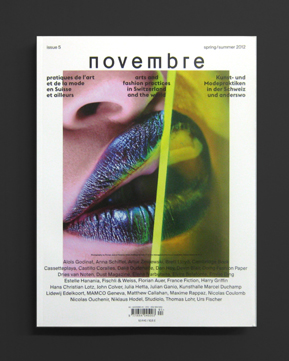
Arts and Fashion Practices from Switzerland and The World.
Novembre 5: Alexandra Rhodes, Alois Godinat, Aloïs Godinat, Anja Schori, Anna Schiffel, Antoine Seiter, Artur Z?mijewski, Belinda Hall, Benedicte Cazau, Benjamin Egger, Brett Lloyd, Castillo Coralles, Charlotte Cobler, Chloé Briand, Ciara O Shea, Clémence Cahu, Cosima Gadient, Daisy Goddard, Dan Hoy, Danielle Van Camp, David Giroire, Devin Blair, dis magazine, doing fashion paper, Dries Van Noten, dust magazine, Eddy Martin, Elvira Belafonte, Emilie Ding, ensemble babel, Estelle Hanania, Florence Jung, Florence Tétier, Florian Joye, France Fiction, Franziska Bieri, Georg Gisel, Gilles Degivry, Gilles Furtwängler, Hans-Christian Lotz, Ian Jeffries, James Grant, Jennifer Gadient, Jo Beckett, John Barker, John Colver, John Mccarty, Joseph Pujalte, Joshua Gibson, Julia Hetta, Julian Ganio, Julie B, Kaisa Riisager, Kazuko Kitaoka, kunsthalle marcel duchamp, Lee Machin, Luc Andrié, Luca Guarini, Luci Ellis, Luigi Vi, Luke Raymond, Lundlund Agency, M. Kitchell, Machu Picchu, Magdalena Siwicka, Maia Flore, mamco, Marco Jann, Marie Duhart, Mark Hampton, Marlen Keller, Martin Conrads, Martin Conrads, Mauricio Nardi, Maxime Ballesteros, Maxime Rappaz, Me?lissa Fernandez, Mélanie Skriabine, Mélissa Fernandez, Michael Blatter, Natalie Estève, Natalie Yuksel, Nathalie Nobs, Nicolas Coulomb, Nicolas Mur, Nicolas Ouchenir, Niklaus Hodel, Nine Yamamoto Masson, Peter Fingleton, Peter Fischli & David Weiss, Rachel Hailickman, Ritchell & Rongrong, Sandrine Pelletier, Sophear Van, Teddy Bellil, Thierry Chomel, Thomas Lohr, Urs Fischer, www.sandy-brown.com, Xavier Callahan.....
Born in Lausanne (Switzerland) in 2010, Novembre takes an active role in reformulating the perceptions and experiences of its native country.
Under the candid caption "arts and fashion in Switzerland and the world", Novembre activates intergenerational discussions, producing international content that explores the critical stakes inherent to the Swiss identity: its neutrality notably fortifies its supposed integrity and inviolability, whilst placing the Confederation in an extremely productive and influential position within the arts on a global level.
Through the organic association of fashion, design and art, Novembre highlights the products which proliferate in schools, studios, galleries, showrooms, institutions, trade shows, fairs, hotels and bank lobbies and living rooms – addressing issues of integration, independence, equality, and exchange.
Novembre is currently published and independently by Florence Tétier (Paris), Florian Joye (Lausanne), and Jeanne-Salomé Rochat (Berlin), who united after their graduation from ECAL University of Arts, Switzerland.
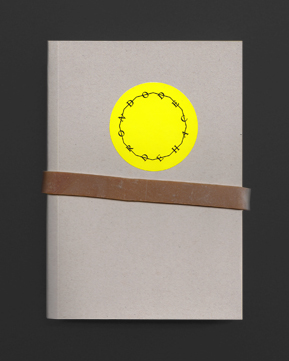
2012, English
Softcover (two books bound in rubber band), 100 pages (total), 14 x 20 cm
Edition of 190 copies.,
Published by
True Belief / Melbourne
$20.00 - Out of stock
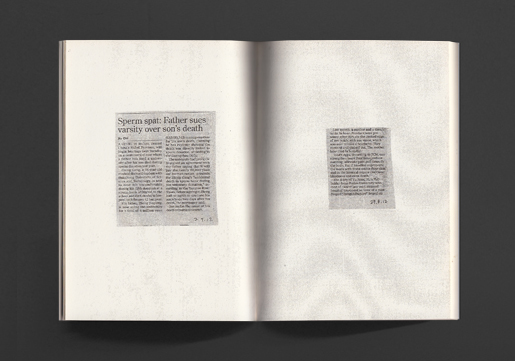
Dodecatalogue was released concurrently with the exhibition Dodecahedron at Platform Contemporary Art Spaces in Melbourne, October 2012. Dodecahedron comprises the work of Damiano Bertoli, Zoe Croggon, Adam Cruickshank, Tony Garifilakis, Stuart Geddes, Agatha Gothe-Snape, Brad Haylock, Joshua Petherick, John Warwicker, Dexter Sinister, Oliver Van Der Lugt, Annie Wu.
Dodecatalogue features work from all the above artists and designers plus contributions from: Terri Bird, Nic Dowse, Nathan Gray, Christopher LG Hill, Spiros Panigirakis, Tom Polo, Dell Stewart, Masato Takasaka, Nat Thomas, Anna Varendorf.Each copy of Dodecatalogue comes with an accompanying dummy book of the same dimensions and page count from Stuart Geddes.Dodecatalogue: A5, riso-printed, 100 pages, perfect bound. Edition: 190 only.
1983, English / Italian
Softcover (w. invitation card for the exhibition)
1st edition, Out of print title / used*,
Published by
ARC 74 / Milan
$140.00 - Out of stock
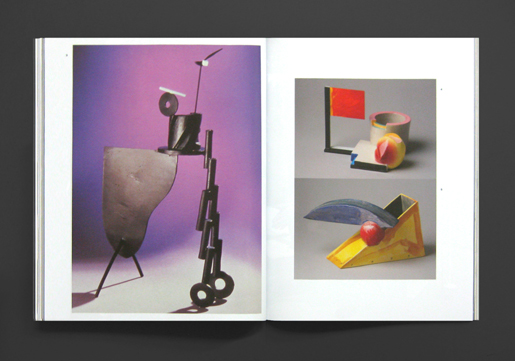
Very scarce catalogue from 1983 from Italian manfacturer ARC 74.
This catalogue showcases the series Objects for an Electronic Age, initiated and designed by George Sowden and Nathalie du Pasquier in 1983. The premise of the series was to mark the transition between mechanically and electronically based designs. The key argument of Sowden and du Pasquier was: 'electronic age objects will be anything'. Sowden claimed: 'If mechanical design is about function, then electronic objects will be about decoration'. According to Sowden and du Pasquier mechanical devices have shapes that must be housed in an exterior shell while an electronic device can become any shape. Both made 12 objects for the series. These objects included clocks, lamps and fruit bowls (some of which are now housed in the V&A collection).
Du Pasquier and Sowden met in Milan at the inception of the Memphis design group of which they were both core founding members, and subsequently married. The series showcased in this catalogue, Objects for an Electronic Age, was the couples own project for Italian manufacturer ARC 74. The series employs many distinctive features pioneered by the Memphis group: the use of plastic laminate and painted steel to create a colourful, patterned surface, the use of ornament, and a departure from obvious functionality in favour of a vivid sculptural form. The micro-architectural composition is reminiscent of this group of associated designers in Italy, surrounding Memphis, Studio Alchimia, etc.
This beautifully designed and printed catalogue also comes with an original invitation to the exhibition launch of Objects for an Electronic Age at the ARC 74 design showroom in Milan. The invitation features an illustration by Nathalie du Pasquier (not pictured).
1984, Dutch
Softcover, 80 pages, 21 x 30 cm
1st edition, Out of print title / used*,
Published by
Kruithuis / Den Bosch
$140.00 - Out of stock
Extremely rare, wonderfully designed Dutch catalogue from a survey exhibition on the Italian design group Memphis Milano in the Kruithuis, Den Bosch, in 1984.
Lavishly illustrated with colour and black and white photographs, plus features profiles on each of Memphis' key designers (Ettore Sottsass, Andra Branzi, Shiro Kuramata, George Sowden, Michele de Lucchi, Nathalie du Pasquier, Peter Shire, Matteo Thun, Marco Zanini, Aldo Cibic, Martine Bedin, Gerard Taylor...), and essays by Ghislain Kieft and Peter van Kester.
1988, English
Softcover, 208 pages (colour/b&w ill. throughout)
Out of print title / used*,
Published by
Thames and Hudson / London
$32.00 - Out of stock
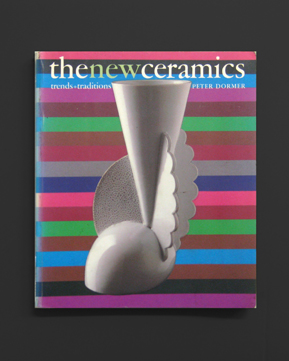
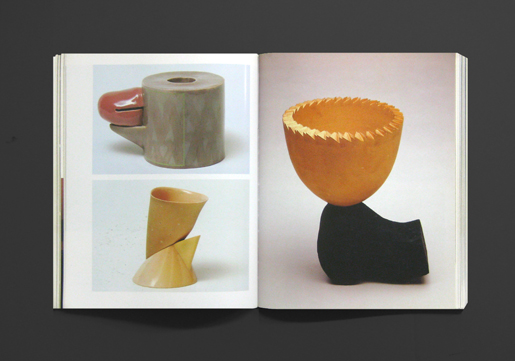
The most popular of all the decorative arts, pottery has established itself as a modern art, form universal in its appeal and language. This presentation of ceramics worldwide has been updated to reflect the latest developments in a fast-evolving field, revealing a blend of tradition with new ideas, and spectacular use of ornament and colour. Dormer discusses the nature and roots of today's trends, and examines form and decoration in an authoritative compilation.
2013, English
Softcover, 152 pages (44 b/w ill.), 16.5 x 23.5 cm
Published by
Sternberg Press / Berlin
Dexter Sinister / New York
The Serving Library / New York
$23.00 $10.00 - Out of stock
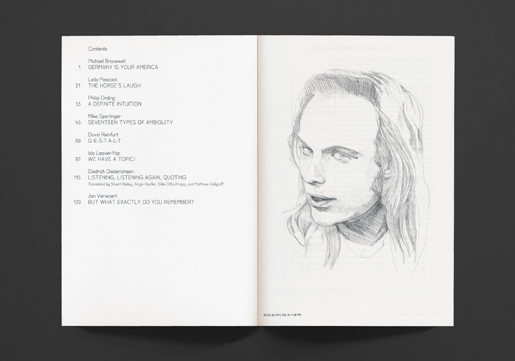
Contributions by Michael Bracewell, Diedrich Diederichsen, Isla Leaver-Yap, Philip Ording, Leila Peacock, David Reinfurt, Mike Sperlinger, Jan Verwoert
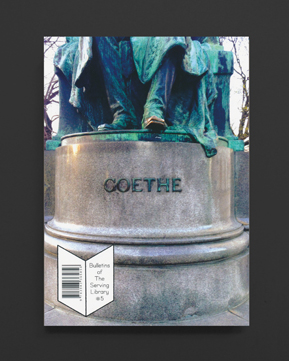
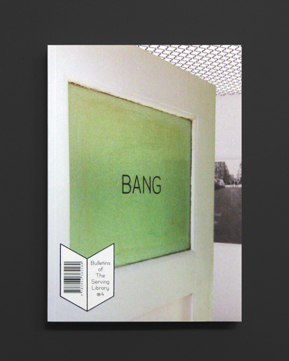
Conceived while in residency at the library of the Goethe-Institut New York, this issue of Bulletins of The Serving Library used the context of the hosting institution as a thematic starting point.
Contemplating this theme as both foreigners and German citizens, many of the contributors present theses that reach deep into the realm of the personal. Jan Verwoert, for example, discusses the communication within his family as a lexicon “somewhere between speech and speechlessness”; while Leila Peacock, as a native English speaker learning German, explores the liminal space between language and translation. Diedrich Diederichsen, together with a list of editors and translators, co-translates his essay “Hören, Wiederhören, Zitieren,” published in the 1997 January issue of Spex. Diederichsen’s discussion of the pop quotation in music highlights the genre’s proximity to language, as the pop quotation “refers to what is absent in the present, and therefore points towards the semiotic nature of any music.”
1991, English / Japanese
Softcover (w. original silk-screened plastic sleeve), oversized, loose-leaf pages, 42 x 29.7 cm
1st edition, Out of print title / used*,
Published by
Comme des Garçons / Tokyo
$220.00 - Out of stock
The very final issue of Comme des Garçons 'Six' magazine (#8, 1991) features American sculptor Louise Nevelson on the cover. Also featured are Debbie Harry, Farida Khelfa, Andy Warhol and Dennis Hopper, plus photography from Javier Vallhonrat, Juergen Teller and Peter Lindbergh.
Between 1988 and 1991, Comme des Garçons explored the theme of the sixth sense via eight special biannual oversized, unstapled magazines titled 'Six'. These magazines were launched to coincide with Comme des Garçons fashion collections and were privately distributed at the time. The magazine visually represented the brand in a way that no other fashion company had before. Rei Kawakubo invited Tsuguya Inoue to art direct and Atsuko Kozasu to edit the issues, whilst contributions came from different designers and artists.
Issues of Comme des Garçons 'Six' have become very sought after collectors items.
*Condition: Very good in original silkscreened Comme des Garçons plastic sleeve (general wear to protective sleeve, magazine is bright and clean, die-cut holes in perfect condition) – All care is taken to provide accurate condition details of used books, photos available on request.
2013, English
Softcover, 172 pages, ills colour & bw, 23 x 28 cm
Published by
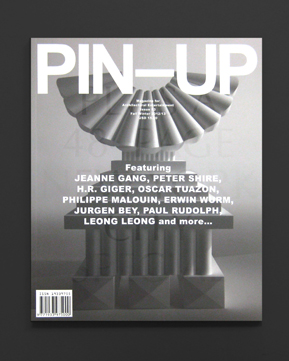
PIN-UP MAGAZINE
$25.00 - Out of stock
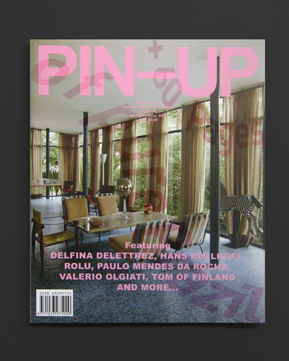
PIN–UP is a magazine that captures an architectural spirit, rather than focusing on technical details of design, by featuring interviews with architects, designers, and artists, and presenting work as an informal work in progress – a fun assembly of ideas, stories and conversations, all paired with cutting-edge photography and artwork. Both raw and glossy, the magazine is a nimble mix of genres and themes, finding inspiration in the high and the low by casting a refreshingly playful eye on rare architectural gems, amazing interiors, smart design, and that fascinating area where those areas connect with contemporary art. In short, PIN–UP is pure architectural entertainment!
Issue 14 features:
Paulo Mendes Da Rocha, ROLU, Delfina Delettrez, Hans Kollhoff, PLUS a 60-page BRAZIL SPECIAL including a portfolio by Wolfgang Tillmans on the city São Paulo; a cinematic portrait of Rio by the artist Sarah Morris; a Hans Ulrich Obrist-led tour of Lina Bo Bardi’s luminous domestic masterpiece and former residence, the Casa de Vidro; and an insightful new take on Brasilia’s genesis and legacy by Richard Williams with photographs by Marcelo Krasilcic. As well as conversations with established and up-and-coming architects, artists and designers from all over Brazil, including an introduction to ten of the most exciting contemporary Brazilian architects.
Also:
An ethereal tour of Valerio Olgiati’s unbuilt wonders, a visit to legendary gay artist Tom of Finland’s Los Angeles sanctuary, a look inside Michael Capo’s auction house treasure palace, and a trip to Mozambique to revisit the life and work of the unbelievably prolific Portuguese architect Pancho Guedes. Also in the issue, Kate McCollough trawls Second Life cataloging traditional stair typologies and PIN–UP’s recommendations for the contemporary corporate environment. Plus a 15-page PIN–UP Board showcase including the PIN–UP Book Club, Norman Foster, Jerszy Seymour, Ken Price, Horrace Gifford, OMA for Knoll, FAUX/real, Adeline André, and so much more.
2013, English
Softcover, 224 pages (42 color, 39 b/w ill.), 13.1 x 20.6 cm
Published by
Sternberg Press / Berlin
$36.00 - Out of stock
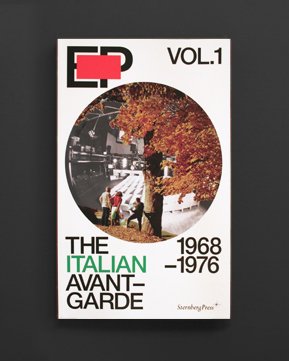
With contributions by Paola Antonelli, Pier Vittorio Aureli, Andrea Branzi, Carlo Caldini, Alison J. Clarke, Experimental Jetset, Verina Gfader, Martino Gamper, Joseph Grima, Alessandro Mendini, Antonio Negri, Paola Nicolin, Michelangelo Pistoletto, Catharine Rossi, Vera Sacchetti, Libby Sellers, Studio Formafantasma, and Ettore Vitale.
EP is the first critically underpinned series of publications that fluidly move between art, design, and architecture. The series creates a discursive platform between popular magazines (“single play”) and academic journals (“long play”) by introducing the notion of the “extended play” into publishing: with thematically edited pocket books as median.
The first volume is devoted to the activities of the Italian avant-garde between 1968 and 1976. While emphasizing the multiple correspondences between collectives and groups like Arte Povera, Archizoom, Superstudio, and figures such as Ettore Sottsass and Alessandro Mendini, The Italian Avant-Garde: 1968–1976 also highlights previously overlooked spaces, works, and performances generated by Zoo, Gruppo 9999, and Cavart. Newly commissioned interviews and essays by historians and curators shed light on the era, while contemporary practitioners discuss its complex legacy.
Design by Experimental Jetset
1988, German
Softcover, 263 pages, 24 x 31 cm
Out of print title / used*,
Published by
DVA / Stuttgart
$60.00 - Out of stock
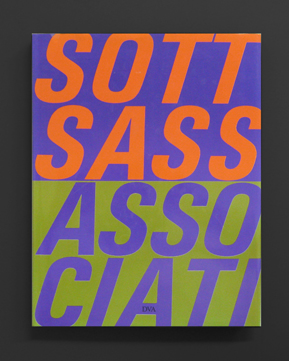
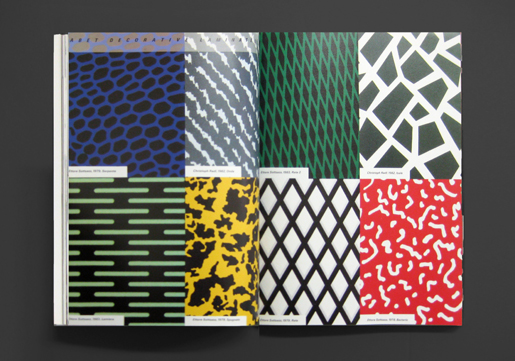
This large, lavishly illustrated book examines the diverse array of projects by Italian design group, Sottsass Associati - a partnership formed in Milan in 1980 between Ettore Sottsass, Marco Zanini, Matteo Thun, Aldo Cibic, and Marco Marabelli. Each of their major projects, traversing architecture, interior design, textiles, graphic design, product design, exhibition design, furniture design, etc. are documented here in full-colour photography and illustrations, including projects for Brionvega, Olivetti, Esprit, Fiorucci, Memphis Group, Knoll, Alessi, Driade, and many others.
Essays by Ettore Sottsass, Barbara Radice, Jean Pigozzi, Herbert Muschamp, Philippe Thome, Doug Tompkins, Luciano Torri, and Marco Zanini.
*Condition: Very Good, some shelf wear, otherwise tight copy – All care is taken to provide accurate condition details of used books, photos available on request.
Due to the weight of this volume, your order will possibly incur additional postage costs. We will contact you with the best shipping advice upon your order, or alternatively, please email us in advance. Thank you for understanding.
2010, Italian
Softcover, 80 pages, 17 x 21 cm
Published by
Silvana / Milan
$25.00 - Out of stock
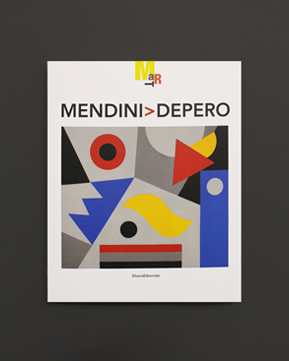
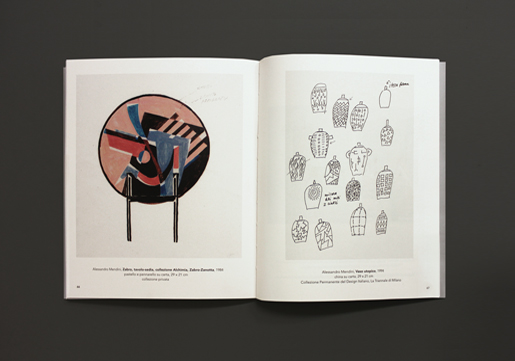
Alessandro Mendini - architect, designer, artist and critic, recognized protagonist of contemporary Italian culture - pays tribute to the futurist movement and, in particular, to Fortunato Depero (Funds 1892 - Rovereto 1960), with a series of works on display at the House Futurist Art of Rovereto, documented in this volume.
Furniture and tapestries inspired by the creativity of Depero and made especially for this occasion by Mendini, dialogue with the works of futurist master on display in this museum house, where the Mart continues its study and research to deepen the extraordinary creative adventure the great artist.
A combination, one of the works of Depero and Mendini, which leaves emerge combinations evocative and fascinating links between them, giving each the opportunity to be educated in a new light.
2006, French / English
Softcover, 192 pages, 18 x 25 cm
Published by
HYX / France
$65.00 - Out of stock
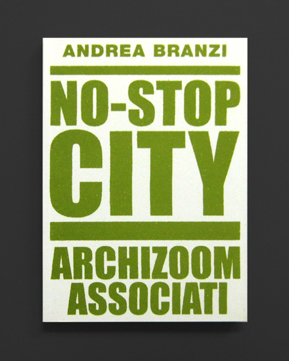
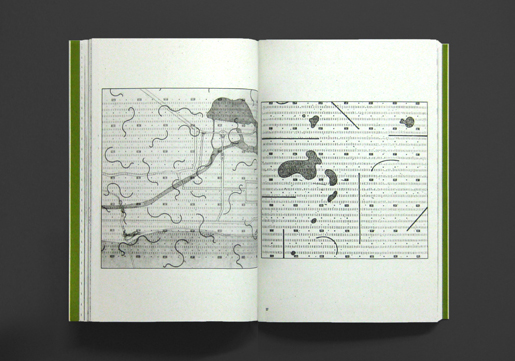
In 1969, the Archizoom group, while carrying out an experimental work in the field of design, also undertook a research project on environment, mass culture and the city, which led to the project No-Stop City'. For the very first time, the whole of this founding project of 1970s radical architecture is presented together in this publication. Designed by Andrea Branzi, this unique document provides a political reflection on ideas about urbanism and architecture that has influenced a whole generation of architects.
2011, English / French
Softcover (stapled), 75 x 60 cm
Published by
Encens / Paris
$20.00 - Out of stock
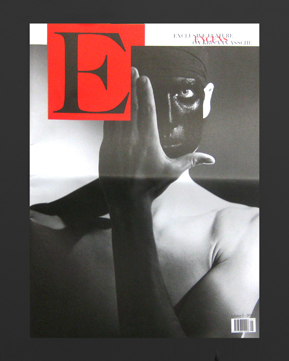
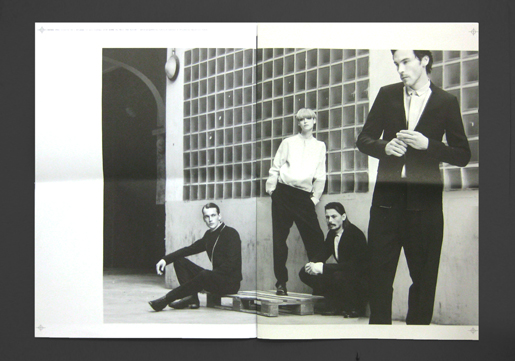
A broadsheet dedicated exclusively to the Belgian menswear designer, Kris Van Assche, from the Encens publishing house in France.
2013, English
Softcover, 450 pages, (colour & bw ills.), 23 x 30 cm
Published by
Purple Institute / Paris
$33.00 - Out of stock
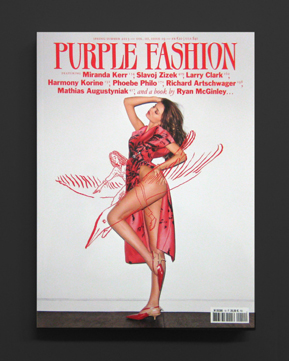
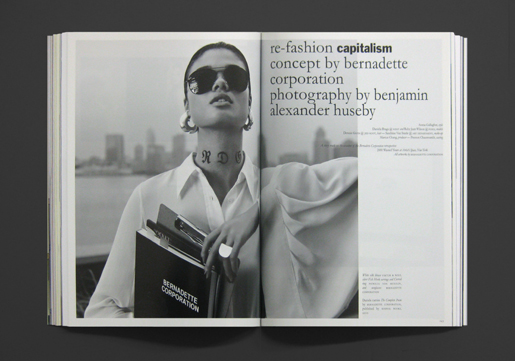
Purple Fashion S/S 2013 features Bernadette Corporation, Miranda Kerr, Slavoj Zizek, Rosemarie Trockel, Larry Clark, Phoebe Philo, Juergen Teller, Richard Artschwager, a booklet by Ryan McGinley, plus much more.
Due to the weight of this volume, your order will likely incur additional postage costs. We will contact you with the best shipping advice upon your order, or alternatively, please email us in advance. Thank you for understanding.
2012, English
Hardcover, 288 pages, 213 x 300 mm
Published by
Walther König / Köln
$49.00 - Out of stock
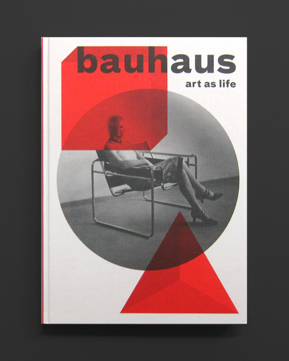
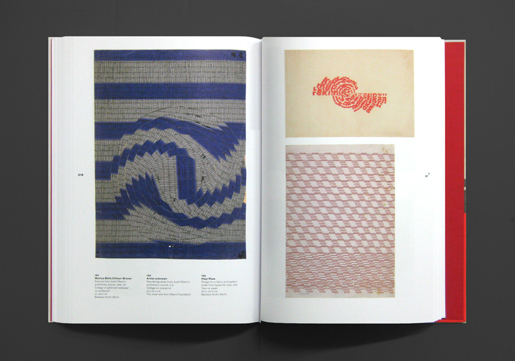
"Bauhaus: Art as Life" explores the diverse artistic production and turbulent 14-year history of the modern world's most famous art school. Accompanying the biggest Bauhaus exhibition in the United Kingdom in more than 40 years, this catalogue features a rich array of painting, sculpture, design, architecture, film, photography, textiles, ceramics, theatre and installation, ranging from the school's Expressionist beginnings to its pioneering utopian model of uniting art and technology in order to change society in the aftermath of the First World War. Exemplary works from such Bauhaus masters as Josef and Anni Albers, Marianne Brandt, Marcel Breuer, Walter Gropius, Johannes Itten, Wassily Kandinsky, Paul Klee, Hannes Meyer, Laszlo Moholy-Nagy, Ludwig Mies van der Rohe and Gunta Stolzl are presented alongside works by lesser-known artist masters and Bauhaus students. Through a range of specially commissioned essays, "Bauhaus" traces the life of the school from its founding by Walter Gropius in Weimar in 1919 to its relocation to its newly built campus in Dessau in 1925 under the direction of Gropius and then Hannes Meyer, and finally its brief period in Berlin, under the leadership of Ludwig Mies van der Rohe and through its dramatic closure in 1933 by the Nazis. The catalogue also includes a series of original writings by Bauhaus artists, drawn from previously published texts and personal correspondence.
NOTE: Due to the weight of this volume, your order will likely incur additional postage costs. We will contact you with the best shipping advice upon your order, or alternatively, please email us in advance. Thank you for understanding.
2013, English
Paperback, 252 pages, 310 x 230mm
Published by
Walther König / Köln
$82.00 - Out of stock
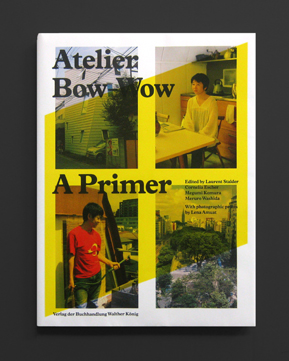
Atelier Bow-Wow is counted among the most diverse architecture firms of today. The firm boasts over 40 residential houses, public buildings and numerous installations to its name, in addition to a substantial body of urban design studies and theoretical essays.
This major first-time publication unifies Atelier Bow-Wow's architectural and theoretical work and places it critically in its context. In a chronological order all projects from 1994–2012 are documented by texts, sketches, plans and images, followed by a photographic essay by photographer Lena Amuat.
Atelier Bow-Wow (Yoshiharu Tsukamoto and Momoyo Kaijima) is part of a generation of architects that took the recession in early 1990s Japan as an opportunity to develop a new design practice in response to changed planning and social conditions.
The firm's first studies focused on anonymous Tokyo buildings and highlighted the ways in which they met the requirements of residents and visitors whilst also complying with infrastructure and planning regulations.
Published on the occasion of the exhibition at ETH Zurich (Institute for the History and Theory of Architecture), 28 February – 18 April 2013.
2013, English
Softcover, 144 pages (colour ill.), 24.1 x 34.5 cm
Published by
Hayward Gallery Publishing / London
$35.00 - Out of stock
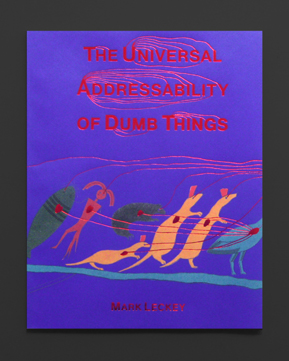
Turner Prize-winning artist Mark Leckey presents the latest in Hayward Touring's celebrated series of artist-curated exhibitions. "The Universal Addressibility of Dumb Things" will explore the theme of transformative technology, a kind of techno-animism, where the inanimate comes to life, and no distinction is drawn between things mental and things material, the sacred and the profane. Contemporary works of art, mechanical objects, historical material from science and archaeological museums, factory prototypes and imagery from internet sites will coexist in the pages of this book, creating 'a colossal body across time and space'. The artist also intends this to be a book in which the greatest thinkers and writers in this field are brought together - as well as his own introductory text, fiction, cultural criticism and the history of technology will be brought together in three unique, authoritative new texts.
www.youtube.com/watch?v=c8QWrLt2ePI&feature=player_embedded
2012, English
Softcover, 200 pages, 16.5 x 23.5 cm
Published by
Dexter Sinister / New York
Sternberg Press / Berlin
The Serving Library / New York
$23.00 - Out of stock
Contributions by Albert Angelo, Mark Beasley, Rhea Dall and Charlotte Johannesson, Dexter Bang Sinister, Diedrich Diederichsen, The Digital Theatre, Hollis Frampton, Lars Bang Larsen, Francis McKee, Malcolm Mooney and Jan Verwoert, Rob Giampietro
This bulletin annotates a projected wall text (shown on the cover) that introduced the research program “Dexter Bang Sinister” at Kunsthal Charlottenborg, Copenhagen. Devised by Stuart Bailey, Lars Bang Larsen, Angie Keefer, and David Reinfurt, the program, like this bulletin, was based on Larsen’s just-completed PhD dissertation at the University of Copenhagen, A History of Irritated Material: Psychedelic Concepts in Neo-Avantgarde Art. The idea was to contrive a popular version of his academic thesis by editing it psychedelically.
This might sound simple, or at least simple-minded, as a textual exercise in psychedelia’s familiar imperatives: Jimi Hendrix’s “Are you experienced?,” Ken Kesey’s “Did you pass the Acid Test?,” or Timothy Leary’s “Turn on, tune in, drop out.” But the irony of psychedelic essences and injunctions should be lost on no one. It’s the self-contradictory voice of the psychedelic police, and on this beat you’ll always find a policeman who enforces a multicolored patriarchal law: “LSD ID, please—we need to check how free you really are ...” This is hardly a new nor a very profound observation, just transgression’s age-old contradiction: the necessity of invoking the law in order to sin against it.
The real irony, though, is how the law returns to psychedelia in the form of categorical imperatives, platitudes, and pigeonholes. If we strip away the usual clichés of psychedelic representation—excess, overload, rainbows, tie-dye—what’s left? What’s worth keeping? What does a hollowed-out, desaturated, low-grade, root-level, emphatically black-and-white psychedelia look and feel like? The closer we looked, the more it became apparent that such austere gears had been the psychedelic movement’s means all along—and so black and white seemed an even more pertinent point of return from which to usefully depart once more. From this vantage, how might that look and feel be put to proper use—that’s to say, transformed—artistically and socially today? This brings us back to the immediate question: what could it mean to edit a thesis on psychedelia psychedelically, without recourse to drugs? How does the TRIP translate to METHOD?
2012, English
Softcover, 144 pages (63 b/w ills.), 20.5 x 26.8 cm
Published by
Sternberg Press / Berlin
$26.00 - Out of stock
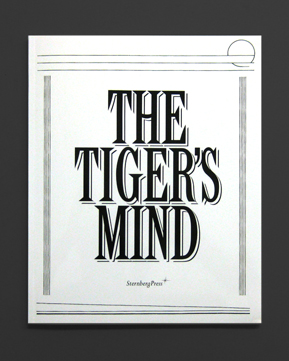
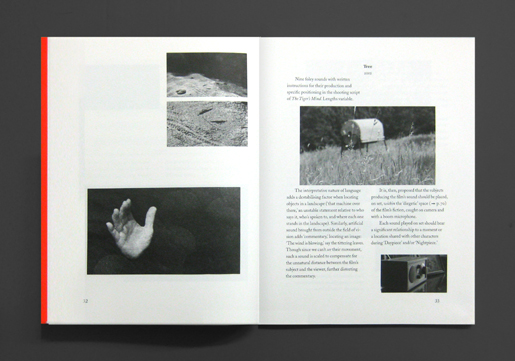
In 2010, a production process was instigated by filmmaker Beatrice Gibson and typographer Will Holder, with the intention of using British composer Cornelius Cardew’s musical score The Tiger’s Mind as a means of producing speech. Since the score concerns the changing relations between six characters in production, practitioners from other fields (musicians and visual artists) were invited to three conversations at Künstlerhaus Stuttgart, Kunstverein in Amsterdam, and CAC Brétigny.
After each conversation, a printed document was made and distributed amongst the characters, to serve as a score for subsequent conversations. Any other ends would be found in conversation. After some time it became clear that a film would be made: Beatrice
Gibson’s The Tiger’s Mind. This book is a document of its making.
2013, English
Softcover, 240 pages (colour & b/w ill.), 19.1 x 12 cm
Published by
De Appel / Amsterdam
$18.00 - Out of stock
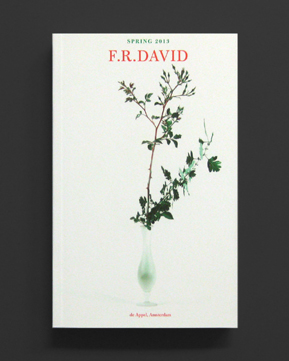
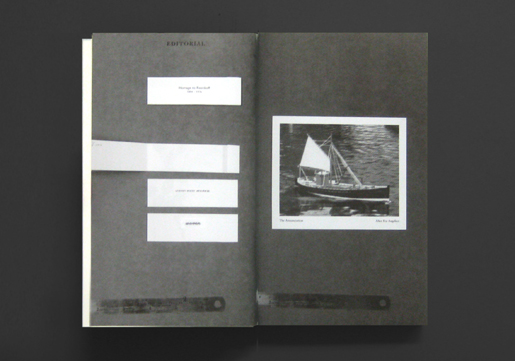
The tenth issue of F.R.DAVID is "…for single mothers." It presents a heterosexual man who takes the liberty to representing some universal views of humanity, typically expressed by women and homosexuals.
"If the critical suggestion I am making in this book is that people tell their stories (which they do not know or cannot speak) through others’ stories, then the very force of insight of this critical suggestion was at once born out and actively enacted, put in motion, by the process of my writing, which was driven, in effect, by the ways in which I was precisely missing my own implication in the texts before me." Shoshana Felman, "What Does A Woman Want?"
With contributions by:
Jean-Philippe Antoine, Robert Ashley, Cornelius Cardew, Thomas A. Clark, Emily Critchley, Elizabeth Crocker, e.e.cummings, Helen DeWitt, Julia Feyrer & Tamara Henderson, Kenneth Goldsmith & Beth Anderson, Ian Hamilton Finlay, Sharon Hayes, Carolyn Heilbrun, Chris Kraus, Léa Lagasse, Clarice Lispector, Rita McBride, Nour Mobarak, Alice Notley, Christian Oldham, Adam Pendleton, Charlotte Prodger, John Russell and Amy Sillman and more.
2012, English
Paperback, 192 pages (colour & b/w il..), 18.5 x 26.5cm
Published by
Occasional Papers / London
$65.00 - Out of stock
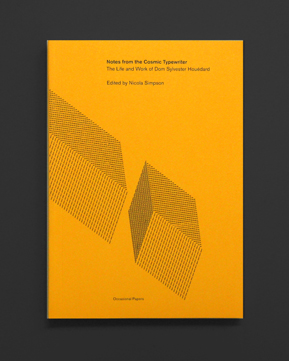
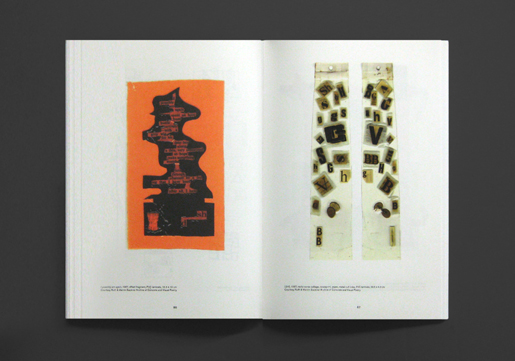
This book is the first since the early 1970s devoted to the extraordinary British Benedictine monk, scholar, translator, concrete poet and artist Dom Sylvester Houédard (1924–92). Edited by Nicola Simpson, with new essays by Gustavo Grandal Montero, Rick Poynor, David Toop and Charles Verey, Notes from the Cosmic Typewriter offers a broad and richly illustrated introduction to this major artistic and theological figure.
Besides many of Houédard’s ‘typestracts’ – the concrete poems produced entirely with his Olivetti typewriter – this book also includes examples of his lesser-known ‘poem-objects’, a selection of key texts, as well as never-before-published performance scores. In both his spiritual views and artistic output, Houédard stands out as a model of insatiable curiosity, building around him a vast network of enlightened poets, visual artists, performers, musicians and thinkers of all faiths and walks of life.
2002, English
Hardcover, 193 pages (colour ill.), 20 x 28 cm
Published by
Skira / Milan
$24.00 - Out of stock
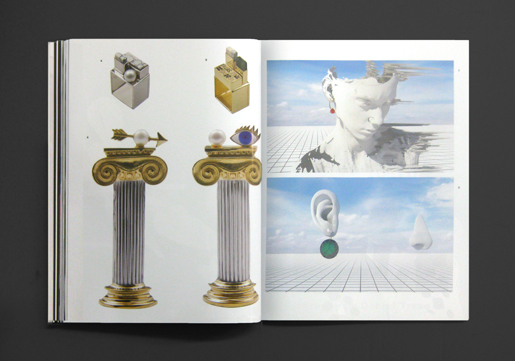
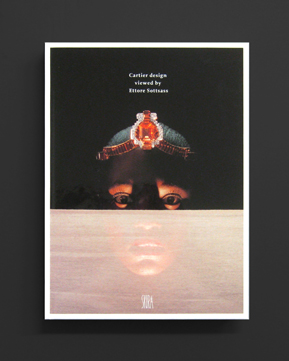
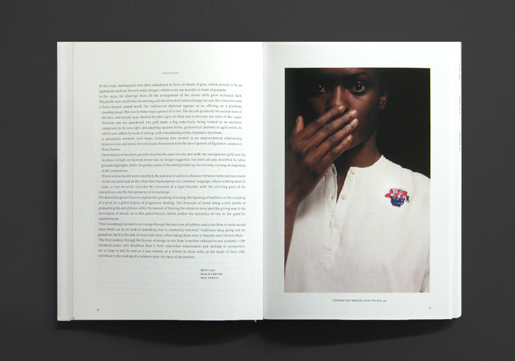
Richly illustrated, this catalogue accompanies an international jewelry exhibition. Ettore Sottsass presents the Collection Art de Cartier in a brilliant new manner, viewing the collection as a reflection of form and design, while understanding its function and relation with the surrounding space and the bodies it adorns. For this impressive project Ettore Sottsass has selected over 200 jewels, watches and accessories following his personal and intuitive taste forgoing epochs and fashion trends, and creates and highlights the ties amongst the materials, style and colour. To emphasize his vision, for each piece Sottsass creates a decorative element meant to contain the object as a shrine located in a cosmic space.
Due to the weight of this volume, your order will likely incur additional postage costs. We will contact you with the best shipping advice upon your order, or alternatively, please email us in advance. Thank you for understanding.
2012, English
Softcover, 172 pages, ills colour & bw, 23 x 28 cm
Published by
PIN-UP MAGAZINE
$22.00 $10.00 - Out of stock
Pin-Up is a biannual magazine for 'architectural entertainment'.
Issue #13 : JEANNE GANG, PETER SHIRE, OSCAR TUAZON, PHILIPPE MALOUIN, PLUS a 48-page NEW YORK CITY SPECIAL including the fascinating story of the Dia Foundation’s role in a downtown mosque, a week at Paul Rudolph’s Beekman Place penthouse, an exclusive glimpse at the Metropolitan Opera Club, the rise and fall of one of America’s most important fashion designers and his extravagant Fifth Avenue office, the history of the adventure playground in New York City, and a portfolio by young New York architects Leong Leong. Also: A visit to Ricardo Bofill’s Les Espaces d’Abraxas under cover of darkness, an immersion into the nightmarish dream world of Swiss designer H.R. Giger, and a chimeric architectural fantasy rendered in polystyrene and celluloid. Austrian artist Erwin Wurm composes an absurdist architectural reprise, and four design curators present a material portfolio in marble, leather, metal, and wood. Murray Moss gives a behind-the-scenes look at how an unprecedented art and design auction is challenging traditional and disciplinary boundaries, and Dutch designer Jurgen Bey talks about dreams and realities in design education and practice. Also in the issue is an investigation into the resurgent interest in Brutalism, and an examination of the ways in which spaces of political assembly give shape to discourse. Plus a PIN–UP Board showcase featuring architecture for dogs, exciting young Arab architecture practices, Bjarne Melgaard’s Snøhetta-designed house to die in, Shanzhai Biennial, two young Beijing architects’ hardcore inclinations, Jean Prouvé meets Simon Starling, Carlo Scarpa’s legacy with Venetian glass, Richard Neutra, and so much more.
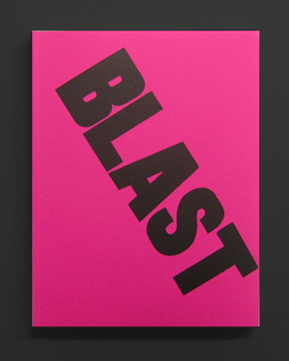
1914 / 2009, English
Softcover, 168 pages, 230 x 305 mm
Published by
Gingko Press / Berkeley
$38.00 - Out of stock
New introduction by Paul Edwards
Facsimile edition edited by Wyndham Lewis
“. . . the Vortex of Lewis: sun, energy, sombre emotion,
clean-drawing, disgust, penetrating analysis . . . ” — T. S. Eliot
In December 1913, Ezra Pound wrote to William Carlos Williams calling the London art/literary scene “The Vortex.” Wyndham Lewis in turn appropriated the term to christen his budding movement in the arts, “Vorticism.” Vorticism was baptized on June 20, 1914 in the first issue of BLAST, A Review of the Great English Vortex — Lewis’s revolutionary magazine.
BLAST is now considered one of this century’s examples of modernist expression and typography, both historically indispensable and a milestone in modern thought. To the artistic audience of its time, the first issue of BLAST came as a brutal shock (Lewis’s plan was to create a “battering ram),” a quality that has been preserved in this first facsimile edition.
Described by Lewis as “violent pink,” but by some others as the “puce monster,” the large format magazine displays radical typography and design, features a "Vorticist Manifesto," and bares eye-popping lists of items to be “Blessed” and “Blasted.”
This new edition of BLAST documents in its original format the raw energy, violent humor, and graphic inventiveness.