World Food Books' programme is largely produced on Kulin Nation land. We acknowledge the Wurundjeri people of the Kulin Nation as the first and continuing custodians of this land, and pay respect to their Elders past, present, and emerging.
World Food Books is an arts and special interests bookshop in Naarm / Melbourne. Founded in 2010, World Food Books is devoted to the presentation of a rotating, hand-selection of international art, design, literary and counterculture publications with an emphasis on the anti-traditional, the experimental, the avant-garde, the heretic, the marginal.
Presenting new titles alongside rare and out-of-print books, catalogues and journals spanning the fields of modern and contemporary art, design, photography, illustration, film, literature, poetry, cultural theory, philosophy, sexuality, popular and underground culture in its many radical forms, World Food Books wishes to encourage adventurous, thoughtful and open-minded reading, looking, writing, and exchange of publishing and ideas, both current and historical.
As well as our bookshop, located in Melbourne's historical Nicholas Building, all of our inventory is available internationally via our online mail-order service.
World Food Books semi-regularly co-ordinates "Occasions", a programme of exhibits and events at the bookshop and in partnership with other hosts (such as museums and art galleries) that develop out of the activities, relationships and content of the bookshop itself.
World Food Books
The Nicholas Building
37 Swanston Street
Room 5, Level 6
Melbourne 3000
Australia
SHOP HOURS:
THU–SAT 12–6
WEB-SHOP OPEN 24/7
World Food Books
Postal Address:
PO Box 435
Flinders Lane
Victoria 8009
Australia
info@worldfoodbooks.com
Art
Theory / Essay
Architecture / Interior
Graphic Design / Typography
Photography
Fashion
Eros
LGBTQ+
Fiction / Poetry
Weird / Speculative / Science Fiction / Horror
Transgressive / Visceral / Abject
Symbolism / Decadence / Fin de siècle
Film / Video
Painting
Sculpture / Installation
Performance / Dance / Theater
Drawing
Sound / Music
Curatorial
Group Shows / Collections
Periodicals
Out-of-print / Rare
Posters / Ephemera / Discs
Signed Books
World Food Books Gift Voucher
World Food Book Bag
Australian Art
Australian Fiction
Australian Science Fiction / Speculative Fiction
Australian Poetry
Australian Photography
Japanese Photography
Conceptual Art
Minimal Art
Dada
'Pataphysics / Oulipo
Fluxus
Concrete Poetry
Pop Art
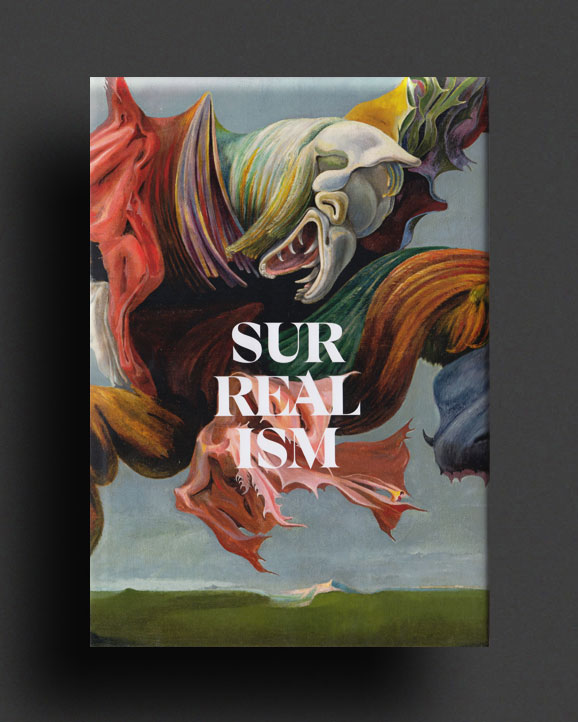
Surrealism
Arte Povera
Arte Informale / Haute Pâte / Tachism
Nouveau Réalisme / Zero / Kinetic
Situationism / Lettrism
Collage / Mail Art / Xerox Art
Art Brut / Folk / Visionary / Fantastic
Illustration / Graphic Art / Bandes Dessinées
Furniture
Italian Radical Design / Postmodernism
Textiles
Ceramics / Glass
Counterculture
Protest / Revolt
Philosophy
Psychoanalysis
Anthropology
Anarchism
Socialism / Anarchism / Communism / Capitalism
Literary Theory / Semiotics / Language
Feminism / Women's Studies
Gender Studies / Sexuality
Anthropology
Fetishism / BDSM
Drugs / Psychedelia
Crime / Violence
Animal Rights / Veganism
Occult / Esoterica
Ecology / Earth / Alternative Living
Whole Earth / Crafts
All prices in AUD (Australian dollars)
Pick-Ups
Pick-up orders can be collected in our bookshop during opening hours after order date. Please collect any Pick-up orders within 2 weeks of ordering as we have limited storage space. Orders will be released back into stock if not collected within this time. No refunds can be made for pick-ups left un-collected. If you cannot make it in to the bookshop in this time-frame, please choose postage option.
Return Policy
All sales are final. We do accept returns (for refund or exchange) for items received in error. All our orders are packed with special care using heavy-duty padding and cardboard book-mailers or bubble mailers (for smaller books), using reinforcement where required. We cannot take responsibility for any lost, stolen or damaged parcels.
Insurance
Should you wish to insure your package, please email us directly after placing your order and we can organise this at a small extra expense. Although all standard/express tracked packages are very safe and dependable, we cannot take responsibility for any lost, stolen or damaged parcels. We recommend insurance on valuable orders.
Interested in selling your old books, catalogues, journals, magazines, comics, fanzines, ephemera? We are always looking for interesting, unusual and out-of-print books to buy. We only buy books in our fields of interest and specialty, and that we feel we can resell.
We base these prices on desirability, market value, in-print prices, condition and our current stock levels. We offer cash, store credit, and can take stock on consignment. All
about 25% of the price we expect to get when we sell them, or 30% in store credit. We base these prices on desirability, market value, in-print prices, condition and our current stock levels.
Sell your books any day of the week. You can drop them off and return later. If you have a lot of books, we can visit your Sydney home.
We buy books that we feel we can resell. We offer about 25 % of the price we expect to get when we sell them, or 30% in store credit. We base these prices on desirability, market value, in-print prices, condition and our current stock levels.
Philadelphia Wireman
03 August - 01 September, 2018
World Food Books is proud to announce our next Occasion, the first presentation of sculptures by Philadelphia Wireman in Australia.
The Philadelphia Wireman sculptures were found abandoned in an alley off Philadelphia’s South Street on trash night in 1982. Their discovery in a rapidly-changing neighbourhood undergoing extensive renovation, compounded with the failure of all attempts to locate the artist, suggests that the works may have been discarded after the maker’s death. Dubbed the "Philadelphia Wireman" during the first exhibition of this work, in 1985, the maker’s name, age, ethnicity, and even gender remain uncertain. The entire collection totals approximately 1200 pieces, all intricately bound together with tightly-wound heavy-gauge wire (along with a few small, abstract marker drawings, reminiscent both of Mark Tobey and J.B. Murry). The dense construction of the work, despite a modest range of scale and materials, is singularly obsessive and disciplined in design: a wire armature or exoskeleton firmly binds a bricolage of found objects including plastic, glass, food packaging, umbrella parts, tape, rubber, batteries, pens, leather, reflectors, nuts and bolts, nails, foil, coins, toys, watches, eyeglasses, tools, and jewellery.
Heavy with associations—anthropomorphic, zoomorphic, and socio-cultural responses to wrapped detritus—the totemic sculptures by Philadelphia Wireman have been discussed in the context of work created to fulfil the shamanistic needs of alternative religions in American culture. Curators, collectors, and critics have variously compared certain pieces to sculpture from Classical antiquity, Native American medicine bundles, African-American memory jugs, and African fetish objects. Reflecting the artist’s prolific and incredibly focused scavenging impulse, and despite—or perhaps enhanced by—their anonymity, these enigmatic objects function as urban artefacts and arbiters of power, though their origin and purpose is unknown. Philadelphia Wireman, whatever their identity, possessed an astonishing ability to isolate and communicate the concepts of power and energy through the selection and transformation of ordinary materials. Over the course of the past two decades, this collection has come to be regarded as an important discovery in the field of self-taught art and vernacular art.
Presented in collaboration with Fleisher-Ollman Gallery, Philadelphia, and Robert Heald, Wellington.
Susan Te Kahurangi King
02 February - 10 March, 2018
Susan Te Kahurangi King (24 February 1951 - ) has been a confident and prolific artist since she was a young child, drawing with readily available materials - pencils, ballpoint pens and felt-tip markers, on whatever paper is at hand. Between the ages of four and six Susan slowly ceased verbal communication. Her grandparents William and Myrtle Murphy had developed a special bond with Susan so they took on caring responsibilities for extended periods. Myrtle began informally archiving her work, carefully collecting and storing the drawings and compiling scrapbooks. No drawing was insignificant; every scrap of paper was kept. The King family are now the custodians of a vast collection containing over 7000 individual works, from tiny scraps of paper through to 5 meter long rolls.
The scrapbooks and diaries reveal Myrtle to be a woman of great patience and compassion, seeking to understand a child who was not always behaving as expected. She encouraged Susan to be observant, to explore her environment and absorb all the sights and sounds. Myrtle would show Susan’s drawings to friends and people in her community that she had dealings with, such as shopkeepers and postal workers, but this was not simply a case of a grandmother’s bias. She recognised that Susan had developed a sophisticated and unique visual language and sincerely believed that her art deserved serious attention.
This was an unorthodox attitude for the time. To provide some context, Jean Dubuffet coined the term Art Brut in 1945 to describe work created by self-taught artists – specifically residents of psychiatric institutions and those he considered to be visionaries or eccentrics. In 1972 Roger Cardinal extended this concept by adopting the term Outsider Art to describe work made by non-academically trained artists operating outside of mainstream art networks through choice or circumstance. Susan was born in Te Aroha, New Zealand in 1951, far from the artistic hubs of Paris and London that Dubuffet and Cardinal operated in. That Myrtle fêted Susan as a self-taught artist who deserved to be taken seriously shows how progressive her attitudes were.
Susan’s parents Doug and Dawn were also progressive. Over the years they had consulted numerous health practitioners about Susan’s condition, as the medical establishment could not provide an explanation as to why she had lapsed into silence. Dawn educated herself in the field of homeopathy and went on to treat all twelve of her children using these principles – basing prescriptions on her observations of their physical, mental and emotional state.
Doug was a linguist with an interest in philosophy who devoted what little spare time he had to studying Maori language and culture. To some extent their willingness to explore the fringes of the mainstream made them outsiders too but it was their commitment to living with integrity and their respect for individuality that ensured Susan’s creativity was always encouraged.
Even though Susan’s family supported her artistic pursuits, some staff in schools and hospitals saw it as an impediment to her assimilation into the community and discouraged it in a variety of ways. Her family was not always aware of this and therefore did not fully understand why Susan stopped drawing in the early 1990s. However, rather than dwell on the challenges that Susan faced in pursuit of her artistic practice, they prefer to highlight her achievements. In 2008 Susan began drawing again in earnest, after an almost 20 year interruption, and her work is now shown in galleries around the world.
Susan grew up without television and has been heavily influenced by the comics she read as a child. She is absolutely fearless in the appropriation of recognizable characters, such as Donald Duck and Mickey Mouse, in her work. She twists their limbs, contorts their faces, compresses them together, blends them into complex patterned backgrounds - always imbuing them with an incredible energy. Although Susan often used pop culture characters in her work they are not naive or childlike. These are drawings by a brilliant self-taught artist who has been creating exceptional work for decades without an audience in mind.
Mladen Stilinović
"Various Works 1986 - 1999"
02 February 16 - September 10, 2016
Various works 1986 - 1999, from two houses, from the collections of John Nixon, Sue Cramer, Kerrie Poliness, Peter Haffenden and Phoebe Haffenden.
Including: Geometry of Cakes (various shelves), 1993; Poor People’s Law (black and white plate), 1993; White Absence (glasses, ruler, set square, silver spoon, silver ladel with skin photograph and wooden cubes), 1990-1996; Exploitation of the Dead (grey and red star painting, wooden painting, black spoon with red table, red plate), 1984-1990; Money and Zeros (zero tie, paintings made for friends in Australia (Sue, John, Kerrie), numbers painting), 1991-1992; Words - Slogans (various t-shirts) - “they talk about the death of art...help! someone is trying to kill me”, “my sweet little lamb”, “work is a disease - Karl Marx”; Various artist books, catalogues, monographs, videos; Poster from exhibition Insulting Anarchy; "Circular" Croatian - Australian edition; Artist book by Vlado Martek (Dostoyevsky); more.
Thanks to Mladen Stilinović and Branka Stipančić.
Jonathan Walker
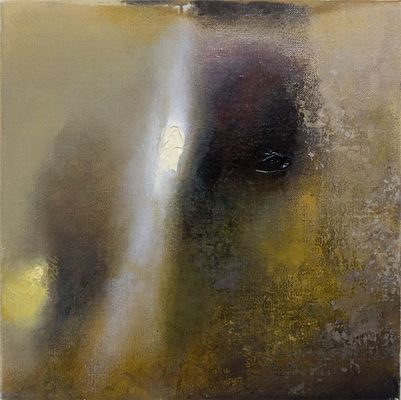
Always Will Need To Wear Winter Shirt Blue + Ochre Small Check Pattern
21 August - 21 September, 2015
Untitled
I am not a great reader of poetry but I always return to the work of Melbourne poet, Vincent Buckley (1925- 1988). Perhaps I find his most tantalising piece to be not a finished poem but a fragment left on a scrap of paper discovered on his desk after the poet’s death.
The poetry gathers like oil
In the word-core, and spreads
It has its music meet,
Its music is in movement.
This fragment is more the shell left behind from a volatile thought than a finished poem. I find the last two lines honest but awkward whereas the first two lines work like an arrow. Most likely he could not find a resolution so it was left. Still, in its present form, it remains an eloquent testimony to the ultimate failure of a medium to express mobile thought and sensation, in Buckley’s case, through verbal language. It’s an important matter because this is something all artists have to deal with regardless of the medium.
I have never written a poem, however, I am forever copying fragments from books on paper scraps in a vain effort to fix certain notions in my head. At first, they function as bookmarks that are sometimes returned to when I open the book. But before long, as they accumulate, they fall out littering the table interspersed with A4 photocopies, bills, books and medications.
To return to Buckley’s fragment, the first two lines very much evoke how I paint nowadays. As you age, detail diminishes and patches of light become more luminous and float. I feel the most honest way of dealing with this is by smearing the oil paint on the canvas with the fingers and working close-up, blind. Only if the patches coalesce into an approaching image can the work gain a life.
-
Jonathan Walker was born in Melbourne, Australia and brought up on a dairy farm in Gippsland. In the 1970’s he studied painting at RMIT and won the Harold Wright Scholarship to the British Museum, London. During the 1980’s he exhibited at Pinacotheca Gallery, Richmond and had work shown at the NGV and Heidi City Art Gallery. Over the same period he designed the cover for the “Epigenesi” LP by Giancarlo Toniutti, Italy and conducted a mail exchange work with Achim Wollscheid, Germany. The work with artists through the post resulted in an article published in the bicentenary issue of Art and Australia 1988. He showed in artist run spaces such as WestSpace in the 90’s and 2000’s, and until 2012, taught painting at Victoria University, which is where we (Colleen Ahern and Lisa Radford) as organisers of the exhibition, among many others, had the privilege of being his student.
Walker’s knowledge was imparted to students through the careful selection of music, literature, and artists found in books that he himself had ordered for the library. Walker’s strategy was the generosity of sharing his vast knowledge with references specific to each student and their context.
Walker’s paintings share a similar focus and intimacy.
This exhibition presents a small selection of recent paintings alongside a publication that includes Walker’s writing. Observational and analytical, Walker’s work is a type of material notation — the time of day, colour and how it is blended, the both specific and fleeting location of a reflection on lino or the question of whether a chair leg should be included in a painting.
Please join us on Friday August 21 between 6-8pm to celebrate the opening of the exhibition.
Curated by Colleen Ahern and Lisa Radford.
B. Wurtz
Curated by Nic Tammens
March 26 - April 4, 2015
B.Wurtz works from a basement studio in his home on Manhattan’s Lower East Side.
This local fact is attested to by the plastic shopping bags and newsprint circulars that appear in his work. As formal objects, they don’t make loud claims about their origins but nonetheless transmit street addresses and places of business from the bottom of this long thin island. Like plenty of artists, Wurtz is affected by what is local and what is consumed. His work is underpinned by this ethic. It often speaks from a neighborhood or reads like the contents of a hamper:
“BLACK PLUMS $1.29 lb.”
“Food Bazaar”
“USDA Whole Pork Shoulder Picnic 99c lb.”
“RITE AID Pharmacy, with us it’s personal.”
“H. Brickman & Sons.”
“Sweet Yams 59c lb."
Most of the work in this exhibition was made while the artist was in residence at Dieu Donne, a workshop dedicated to paper craft in Midtown. Here Wurtz fabricated assemblages with paper and objects that are relatively lightweight, with the intention that they would be easily transportable to Australia. This consideration isn’t absolute in Wurtz’s work, but was prescriptive for making the current exhibition light and cheap. Packed in two boxes, these works were sent from a USPS post office on the Lower East Side and delivered to North Melbourne by Australia Post.
Wurtz appears courtesy of Metro Pictures, New York.
Thanks to Rob Halverson, Joshua Petherick, Sari de Mallory, Matt Hinkley, Helen Johnson, Fayen d'Evie, Ask Kilmartin, Lisa Radon, Ellena Savage, Yale Union, and "Elizabeth".
John Nixon
"Archive"
December 15 - January 20, 2014
The presentation of John Nixon's archive offered a rare showcase of this extensive collection of the artist's own publications, catalogues, posters, ephemera, editions and more, from the mid 1980s onwards, alongside a selection of his artworks.
Organized by John Nixon, Joshua Petherick and Matt Hinkley.
"Habitat"
at Minerva, Sydney (organised by Joshua Petherick and Matt Hinkley)
November 15 - December 20, 2014
Lupo Borgonovo, Janet Burchill & Jennifer McCamley,
Lewis Fidock, HR Giger, Piero Gilardi, Veit Laurent Kurz,
Cinzia Ruggeri, Michael E. Smith, Lucie Stahl, Daniel Weil, Wols
Press Release:
“...It contained seven objects. The slender fluted bone, surely formed for flight, surely from the wing of some large bird. Three archaic circuitboards, faced with mazes of gold. A smooth white sphere of baked clay. An age-blackened fragment of lace. A fingerlength segment of what she assumed was bone from a human wrist, grayish white, inset smoothly with the silicon shaft of a small instrument that must once have ridden flush with the surface of the skin - but the thing’s face was seared and blackened.”
William Gibson, “Count Zero”, 1986
"Autumn Projects Archive"
Curated by Liza Vasiliou
March 6 - March 15, 2014
World Food Books, in conjunction with the Virgin Australia Melbourne Fashion Festival 2014, presented the Autumn Projects archive, consisting of a selection of early examples in Australian fashion with a particular interest in collecting designers and labels from the period beginning in the 1980’s, who significantly influenced the discourse of Australian Fashion.
Curated by Liza Vasiliou, the exhibition provided a unique opportunity to view pieces by designers Anthea Crawford, Barbara Vandenberg, Geoff Liddell and labels CR Australia, Covers, Jag along with early experimental collage pieces by Prue Acton and Sally Browne’s ‘Fragments’ collection, suspended throughout the functioning World Food Books shop in Melbourne.
H.B. Peace
presented by CENTRE FOR STYLE
November 14, 2013
"Hey Blinky, you say chic, I say same"
Anon 2013
H.B. Peace is a clothing collaboration between great friends Blake Barns and Hugh Egan Westland. Their pieces explore the divergences between 'character’ and ‘personality’ in garments....etc
Special Thanks to Joshua Petherick and Matt Hinkley of WFB and Gillian Mears
and a Very Special Thank you to Audrey Thomas Hayes for her shoe collaboration.
Janet Burchill & Jennifer McCamley
"Aesthetic Suicide"
May 10 - June 8, 2013
The first of our occasional exhibitions in the World Food Books office/shop space in Melbourne, "Aesthetic Suicide" presented a body of new and older works together by artists Janet Burchill & Jennifer McCamley, including videos, prints, a wall work, and publications.
During shop open hours videos played every hour, on the hour.
1997, English
Softcover, 358 pages, 23 x 15.5 cm
1st Edition, Out of print title / used / fine
Published by
Routledge / London
$35.00 - In stock -
First 1997 Edition.
"What happens when white people look at non-whites? What happens when the gaze is returned? Looking for the Other responds to criticisms leveled at white feminist film theory of the 1970s and 1980s for its neglect of issues to do with race. It focuses attention on the male gaze across cultures, as illustrated by women filmmakers of color whose films deal with travel.
Looking relations are determined by history, tradition, myth; by national identity, power hierarchies, politics, economics, geographical and other environment. Travel implicitly involves looking at, and looking relations with, peoples different from oneself. Featured films include Birth of a Nation, The Cat People, Home of the Brave, Black Narcissus, Chocolat, and Warrior Marks. Featured filmmakers include D.W.Griffith, Jacques Tourneur, Michael Powell, Julie Dash, Pratibha Parmar, Trinh T. Min-ha, and Claire Denis."
Fine—As New copy.
1990, English
Softcover, 230 pages, 21.5 x 13.5 cm
1st Edition, Out of print title / used / average
Published by
Routledge / London
$20.00 - In stock -
First 1990 Ed.
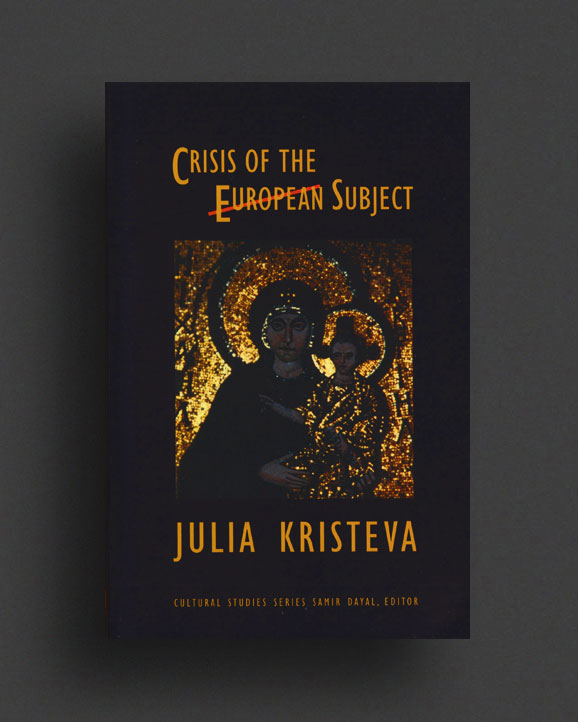
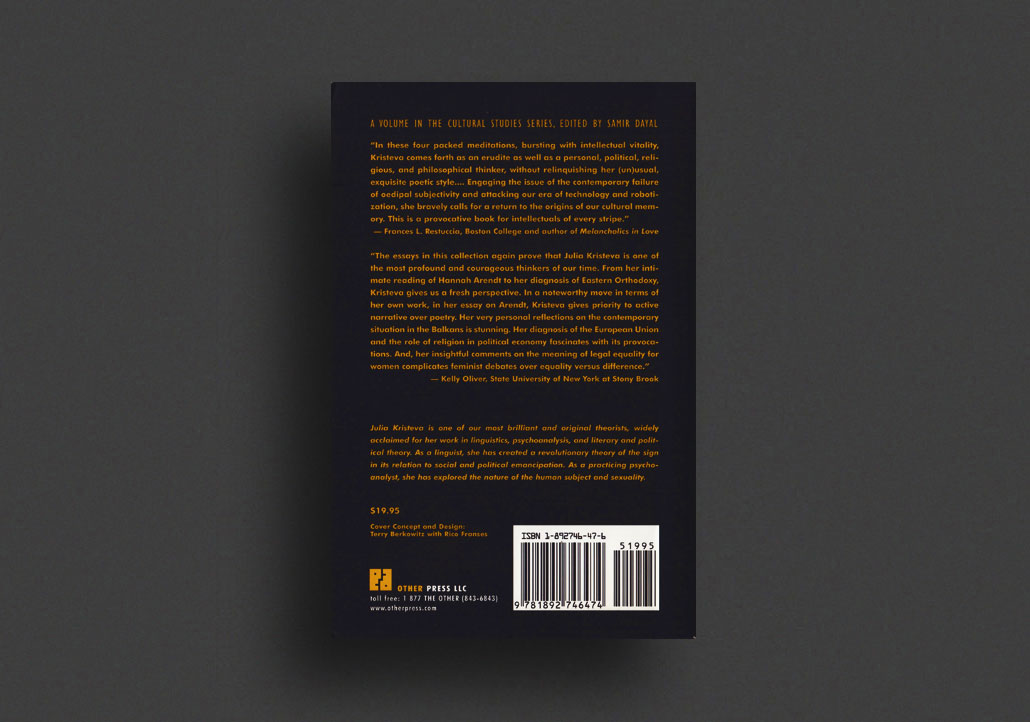
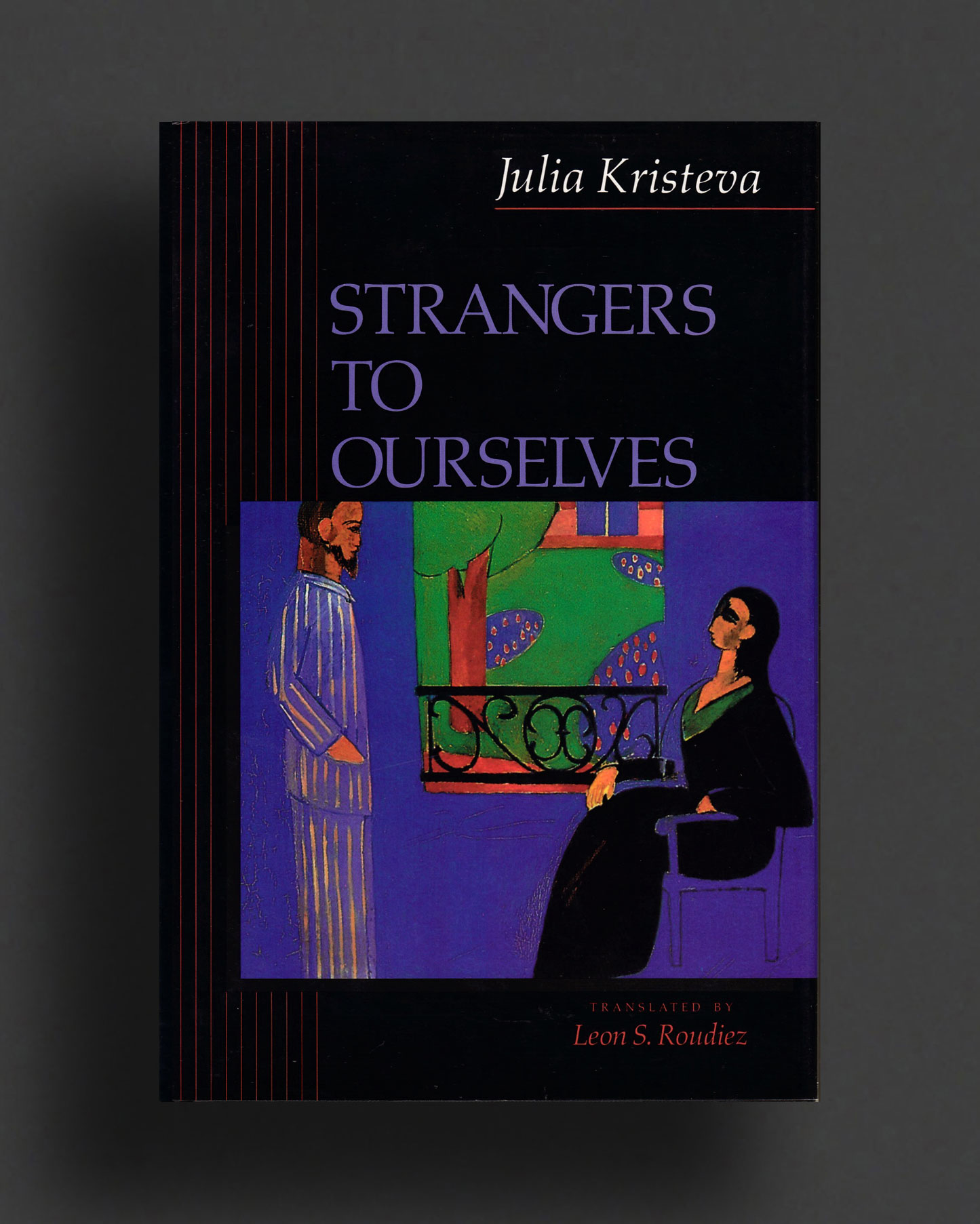
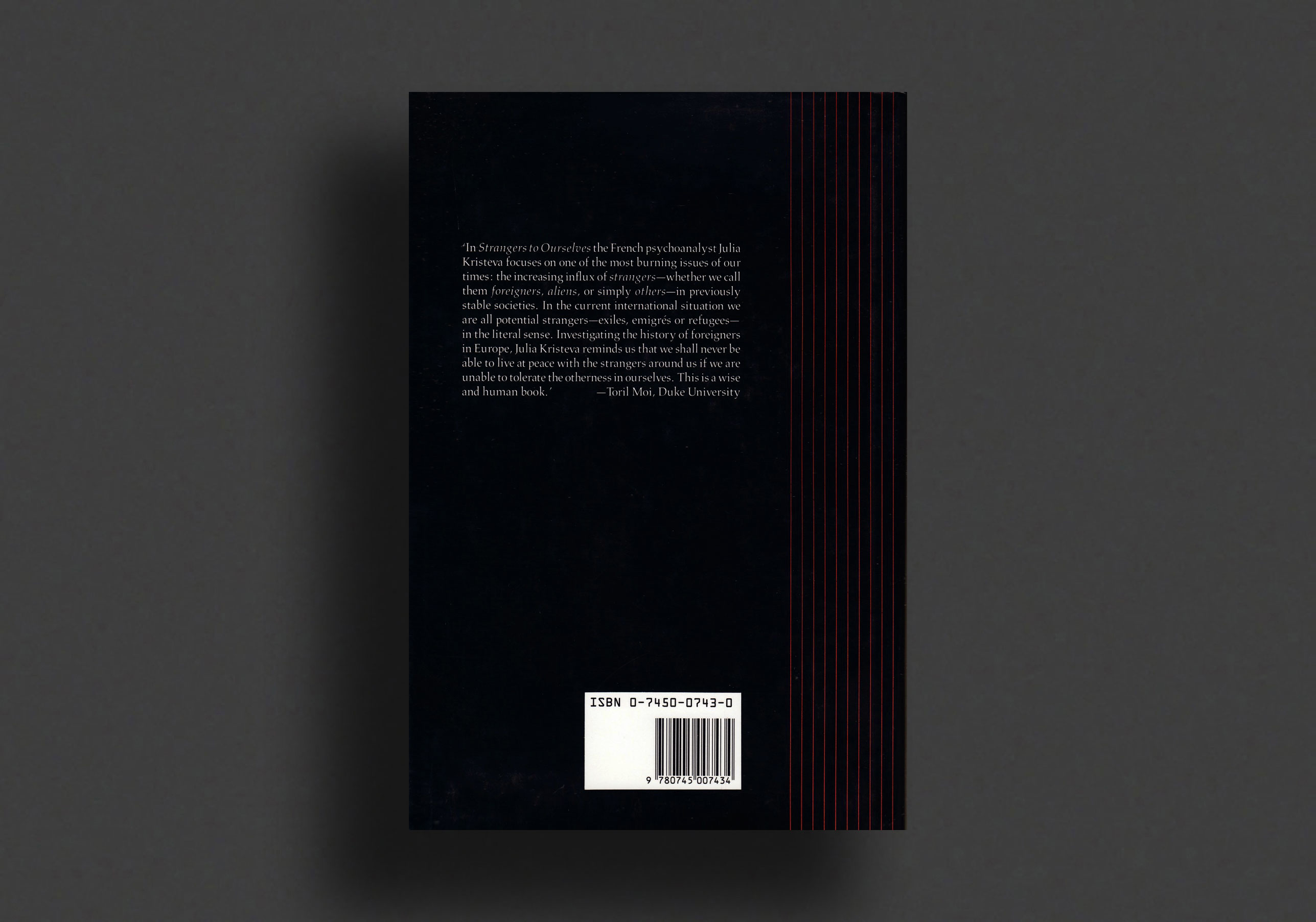
Why is Julia Kristeva widely regarded as one of the most significant french thinkers writing today?
What is her special importance for feminism and postmodernism?
This up-to-date survey of Julia Kristeva's work outlines her intellectual development, from her work on Bakhtin and the logic of poetic language in the 1960s, through her influential theories of the 'symbolic' and the 'semiotic' in the 1970s, to her analyses of horror, love, and melancholy in the 1980s. It gives an invaluable insight into the intel- lectual and historical background to Kristeva's thought, and includes an illuminating overall assessment of Kristeva's work and its importance for western society.
Essential reading for all those who wish to extend their understanding of an important thinker, this first full- length study of Kristeva's work will be of interest to students of literature, sociology, critical theory, feminist theory, French studies, and psychoanalysis.
A former student of Julia Kristeva, John Lechte is Tutor in Sociology at Macquarie University, Australia.
Average copy with wear to cover extremities and spine, eraser-able lead pencil notation.
1989 / 1991, English
Softcover, 204 pages, 21.5 x 13.5 cm
Out of print title / used / very good
Published by
Marion Boyars / London
$25.00 - Out of stock
"Julia Kristeva, one of France's leading philosophers, offers in About Chinese Women some original glimpses through the veil of mystery which has hung between the Orient and the Occident for well over two thousand years. Combining a study of Chinese history, literature, religion and politics with her own penetrating insights, Kristeva analyses aspects of a country in which the role of women has evolved and been transformed with startling consequences.
Surveying first the place of women in the social order of the capitalist West, she moves on to examine the family in ancient China, and provides a fascinating account of the Chinese feminist movement of the early twentieth century.
She explores the idea that, because of its Confucian antecedents, the Chinese revolution had to take on an anti-patriarchal character-and was therefore more fundamentally a 'women's revolution' than others elsewhere, before or since.
Born in Rumania, Julia Kristeva has lived in France for many years. She is co-editor of the prestigious journal L'Infini. She has published many books in the fields of philosophy, linguistics and psychoanalysis."
"The book's value lies in its bold perspective... Provocative."—Library Journal
an invaluable and readable account of aspects of China that have received little attention. Brilliant...subtle."—Germaine Bree
"A vivid and imaginative discussion of the surface and the subterranean of Chinese society and specifically of Chinese women."—Spare Rib
Very Good copy. 1991 reprint of 1989 English Marion Boyars edition.
2025, English
Softcover, 228 pages, 20 x 13.5 cm
Published by
Semiotext(e) / Los Angeles
$42.00 - Out of stock
Short stories set among the disappeared and darkened sectors of New York City, about characters who fall prey to an increasingly bureaucratized poverty.
After they raised her dose to 42 mg. of Trilafon, Lucy very nearly fainted. She felt a rush of bad sensation comparable to her mental telepathy when her grandmother died... But there was a good aspect to fainting too. As she was about to lose consciousness, she felt an overwhelming relief. The black velvety edges of the swoon. If only she could faint all the way, black out, and never wake up again...
Shulamith Firestone was twenty-five years old when she published The Dialectic of Sex, her classic and groundbreaking manifesto of radical feminism, in 1970. Disillusioned and burned out by the fragmented infighting within the New York City radical feminist groups she'd helped to found, when her book hit the bestseller lists, Firestone decided against pursuing a career as a “professional feminist.” Instead, she returned to making visual art, the profession that she'd trained for. She wouldn't publish anything again until Airless Spaces, in 1998.
Long before her first hospitalization for paranoid schizophrenia in 1987, Firestone had fallen off the grid and into precarity and poverty. For the next decade, she would move in and out of public psychiatric wards and institutions. Conceived as a series of vignettes about institutions and identity, Airless Spaces is a subtle and deeply literary work. Embedded as a participant-observer, Firestone moves beyond the spectacular and frightening surfaces of institutional life to record individual lives and acts of cruelty and kindness. The existence that she depicts is a microcosm of the world beyond.
Shulamith Firestone (1945–2012) was born in Ottawa, Canada, and grew up in St. Louis, MO. After receiving a BA from Washington University in St. Louis and a BFA from the Art Institute of Chicago, she moved to New York City. There she founded some of the first—and foremost—radical feminist organizations in the United States. In 1970, at the age of twenty-five, she published The Dialectic of Sex, one of the most widely discussed books of the second-wave feminist movement. Semiotext(e) published Airless Spaces, her second book, in 1998.
"This book comes out of a long lonely adventure. A season in hell. The result is a series of devastating observations made entirely without rhetoric. It operates like a parable—deceptively simple and stark, almost imagistic as little pieces fit together with little pieces, pretending to be about small outcast lives when in fact it is an encyclopedia of our age—a harrowing record of what really goes on among us where the wounds of life bring on the invasion of institutions which inflict still more suffering—a stifling atmosphere of isolations where souls are automatically and needlessly lost. This is a prophetic book with enormous consequences since the airless spaces multiply now and begin to take over."—Kate Millett
"In the century I’m most familiar with, the twentieth, the explosion was never-ending, the pieces tinier and tinier. Shulamith Firestone, in her radical insider’s tale, informs us repeatedly like lightly pelting rain that all of us are vanishing in a century of institutions that take and take until everyone has gone away and there’s no one left to shut the door."—Eileen Myles
2024, English
Softcover, 208 pages, 22.86 x 15.24 cm
Published by
Duke University Press / North Carolina
$49.00 - Out of stock
Susan Stryker is a foundational figure in trans studies. When Monsters Speak showcases the development of Stryker’s writing from the 1990s to the present. It combines canonical pieces, such as “My Words to Victor Frankenstein,” with her hard to find earlier work published in zines and newsletters. Brought together, they ground Stryker’s thought in 1990s San Francisco and its innovative queer, trans, and S/M cultures. The volume includes an introduction by editor McKenzie Wark, who highlights Stryker’s connections to developments in queer theory, media studies, and autotheory while foregrounding Stryker’s innovative writing style and scholarly methods. When Monsters Speak is an authoritative and essential collection by one of the most important and influential intellectuals of our time.
Susan Stryker is Professor Emerita of Gender and Women’s Studies at the University of Arizona. She is the author of Transgender History and coeditor of The Transgender Studies Reader.
McKenzie Wark is Professor of Culture and Media at The New School and the author of several books, including Raving and Philosophy for Spiders: On the Low Theory of Kathy Acker, both also published by Duke University Press.
“Whenever Susan Stryker speaks, I listen. Stryker’s career is one of those that has altered the way that those of us who came after her think—and live our lives. We are so lucky to now have a collection that allows us to trace her thoughts over her own life.”—Torrey Peters, author of Detransition, Baby
“Decades ago, the monster demanded a word with its creator, and thus was trans studies born. In these pages, trace years of intellectual labor without an academic job in queer San Francisco. Study the obligate fiction of a field’s birth. And surrender to the fear, then the pleasure, of challenging the surgeon in your head. Chase the experience, half psychedelic twinkle, half S/M ripple, of enacting theory in the flesh. Reading Susan Stryker, we are gloriously transformed.”—Jules Gill-Peterson, author of Histories of the Transgender Child
"Stryker provides a bracing assessment of frictions within the LGBTQ movement, criticizing cis gay and lesbian individuals who seek to secure a place in mainstream society by excluding trans people. . . . The result is a striking introduction to the work of an essential queer thinker."—Publishers Weekly
"In this slim volume, McKenzie Wark has collected some of Susan Stryker’s most prominent pieces, both fiction and nonfiction. Wark provides a robust introduction, setting the stage for this and subsequent generations to fully grasp the importance and context of her work."—Karla Strand, Ms. Magazine
1989, English
Softcover, 300 pages, 21 x 13.5 cm
1st Edition, Out of print title / used / good
Published by
Columbia University Press / New York
$45.00 - Out of stock
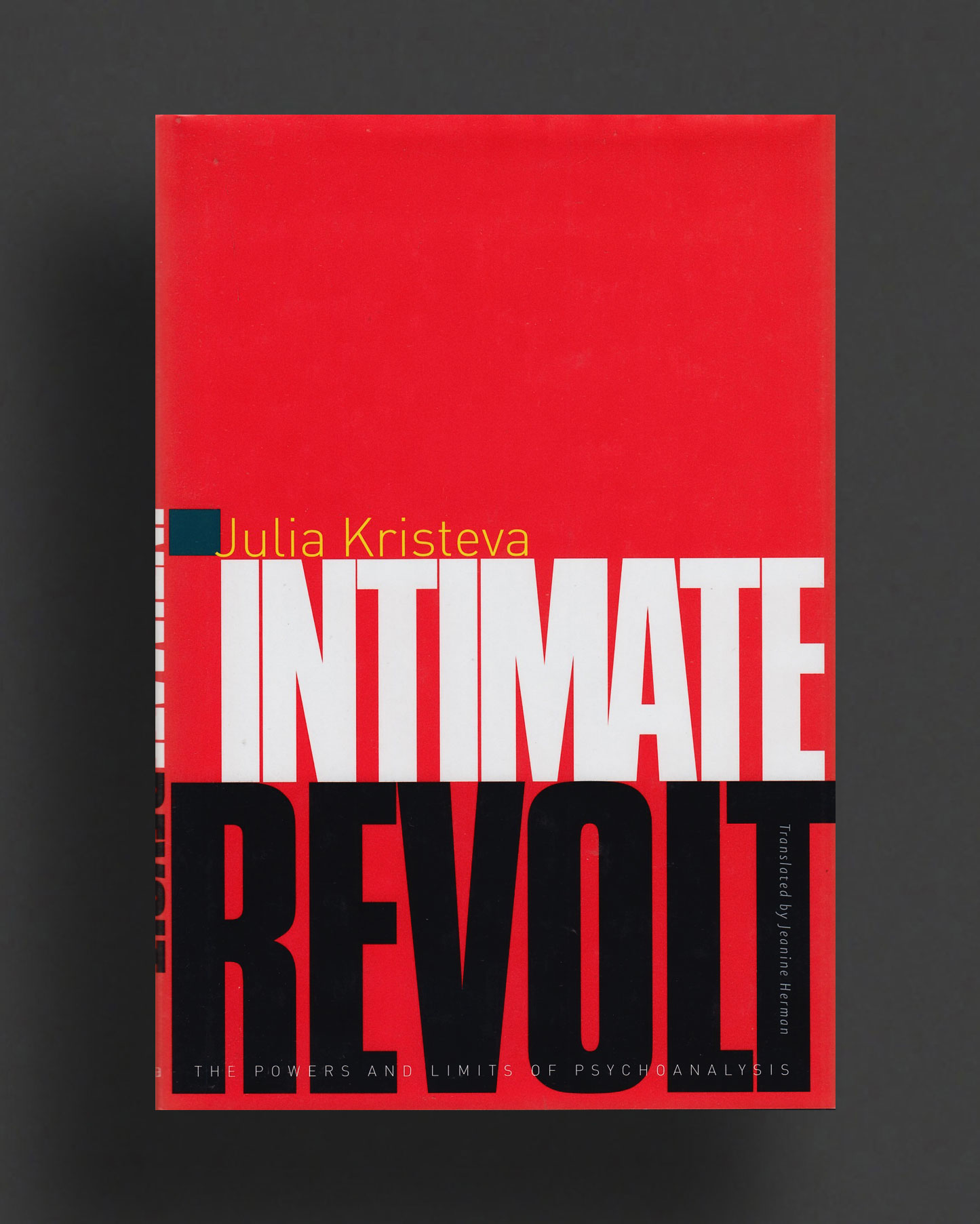
In Black Sun, Julia Kristeva addresses the subject of melancholia, examining this phenomenon in the context of art, literature, philosophy, the history of religion and culture, as well as psychoanalysis. She describes the depressive as one who perceives the sense of self as a crucial pursuit and a nearly unattainable goal and explains how the love of a lost identity of attachment lies at the very core of depression's dark heart.
In her discussion she analyzes Holbein's controversial 1522 painting "The Body of the Dead Christ in the Tomb," and has revealing comments on the works of Marguerite Duras, Dostoyevsky and Nerval. Black Sun takes the view that depression is a discourse with a language to be learned, rather than strictly a pathology to be treated.
Translated by Leon S. Roudiez
Julia Kristeva is a professor of linguistics at the Université de Paris VII. She is the author of many highly respected books (most published in English by Columbia University Press) and a practicing psychoanalyst.
Good copy with some wear and (erasable) pencil marginalia from previous owner.
1992, English
Softcover, 154 pages, 19.5 x 13 cm
Out of print title / used / good
Published by
Virago / London
$20.00 - In stock -
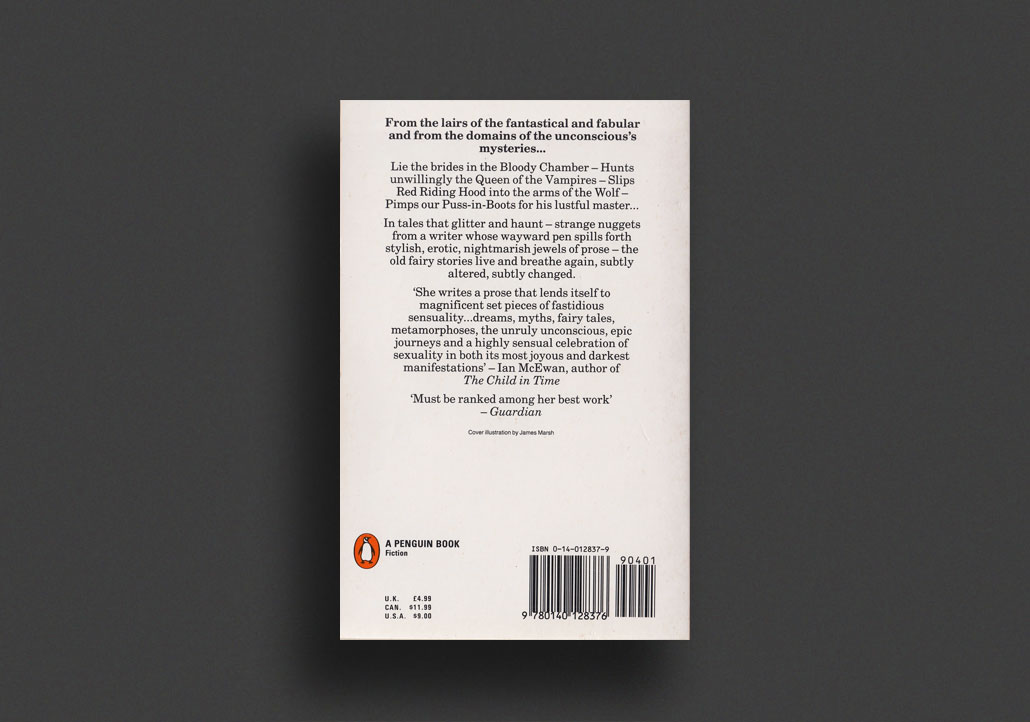
1987 Virago paperback edition of Angela Carter's 1979 classic, The Sadeian Woman, with Clovis Trouille artwork.
'Sexuality is power' says the Marquis de Sade, philosophe and pornographer extraordinary. His Justine keeps to th rules laid down by men, her reward rape and humiliatios Juliette, her monstrous antithesis, viciously exploits he sexuality in a world where all tenderness is false, all beds are minefields.
But in Angela Carter, Sade has met his match. With wit and genius, she takes on these outrageous figments of his extreme imagination, and transforms them into the symbols of our time - the Hollywood sex goddesses, mothers and daughters, pornography, even the sacred shrines of sex and marriage. With the precision of a surgeon, Angela Carter delves into the viscera of our distorted sexuality and reveals a vision of love which admits neither of conqueror nor of conquered.
"The boldest of English women writers"—Lorna Sage
"The most stylish English prose writer of her generation"—John Mortimer
Angela Olive Pearce (formerly Carter, 1940—1992), who published under the name Angela Carter, was an English novelist, short story writer, poet, and journalist, known for her feminist, magical realism, and picaresque works. She is mainly known for her book The Bloody Chamber (1979). In 1984, her short story "The Company of Wolves" was adapted into a film of the same name. In 2008, The Times ranked Carter tenth in their list of "The 50 greatest British writers since 1945"
Good copy with general wear and age.
1988, English
Softcover (staple-bound), 64 pages, 29 x 24 cm
1st Edition, Out of print title / used / very good
Published by
Middlesex Polytechnic / UK
$75.00 - Out of stock
Block magazine was founded in 1979 by a small group of lecturers at Middlesex Polytechnic and ran for eleven years. Block was a hugely influential journal in the developing fields of Visual and Cultural Studies. Edited by Jon Bird, Barry Curtis, Melinda Mash, Tim Putnam, George Robertson and Lisa Tickner, Block “attempted to address the problem of the social, economic and ideological dimensions of the arts in society, and offered a challenge to a conventional understanding of art history.” Block featured important conceptual artists and contemporary cultural theorists including Terry Atkinson, Lucy Lippard, Mary Kelly, Art & Language, Allen Jones, John Berger, Susan Hiller, Martha Rosler, Paul Virilio, Jean Baudrillard, Conrad Atkinson, Terry Smith, amongst others. Despite the small scale of its operation, the magazine had a wide distribution in art colleges and was avidly read by lecturers looking for ways to incorporate new theoretical, often Marxist, anarchist, feminist, situationist, poststructuralist, perspectives into their teaching.
This issue features Paul Virilio, Jean Baudrillard, Stuart Hall, Guy Debord, Meaghan Morris, George Robertson, Phil Hayward, John Tagg, and many more.
Very Good copy, light wear/age.
1985, English
Softcover (staple-bound), 64 pages, 40 x 26 cm
1st Edition, Out of print title / used / very good
Published by
Monika Sprüth / Cologne
$800.00 - Out of stock
Very rare, inaugural issue of the iconic and enormously influential magazine published and edited by Cologne-based gallery owner Monika Sprüth, who opened her first gallery in 1983 with a focus on female artists. Emblematic of this perspective, Sprüth launched Eau de Cologne, an “effervescent, shape-shifting magazine, featuring almost exclusively women artists and art practitioners.” Three issues were published between 1985 and 1989, along with accompanying exhibitions, representing an international female discourse on art. With early cover artwork by Cindy Sherman, this first issue was published on the occasion of an all-female exhibition presentation of the same name, held by Monika Sprüth Galerie in Cologne in 1985, featuring the work of Ina Barfuss, Jenny Holzer, Barbara Kruger, Cindy Sherman, Rosemarie Trockel, and Anne Loch. Combining theoretical discourse with visual practice, the large-format magazine was created in collaboration with the artists Jenny Holzer, Barbara Kruger, Louise Lawler, Cindy Sherman, and Rosemarie Trockel, featuring artist pages, essays, interviews, texts, quotes, portraits by an incredible list of contributors including Louise Bourgeois, Hanne Darboven, Cady Noland, Dominique Gonzalez Foerster, Ileana Sonnabend, Annette Messager, Susan Hiller, Ulrike Rosenbach, Elaine Sturtevant, Kathe Burkhart, Marian Goodman, Mary Boone, Georgia O'Keefe, Marisa Merz, Astrid Klein, Jutta Koether, Jenny Holzer, Maria Lassnig, Holly Solomon, Nancy Spero, Jo-Anna Isaak, Hilary Lloyd, Holly Solomon, Bärbel Grässlin, Annina Nosei, Tanja Grunert, Pat Hearn, Bice Curiger, Edit DeAk, Rosalind Krauss, Isabelle Graw, Linda Nochlin, Ingrid Oppenheim, Barbara Gladstone, and many more. Texts in German and English. It really doesn't get much better!
“The exhibition and the catalogue “Eau de Cologne” fulfil the claim of my gallery to show the most interesting aspects of contemporaneous art. This exhibition presents five female artists: Ina Barfuss, Jenny Holzer, Barbara Kruger, Cindy Sherman and Rosemarie Trockel, and the catalogue which includes many more young and older female artists, writers, critics and art-dealers want to show art in its social context. I see this exhibition as an example. According to my subjective observation and based on the experiences and contacts of almost three years work as art-dealer I have made a selection. The time of working on this catalogue was limited, too, and it is for these reasons that some artists, curators and art-critics are not mentioned. I approve of realizing this “idea” now, 1985.”—from introduction by Monika Sprüth
Very Good copy with light wear and age to extremities, small chip to back-cover edge.
2022, English
Softcover, 364 pages, 14.2 x 21.8 cm
Published by
Divided Publishing / London
$46.00 - Out of stock
Recorded and transcribed throughout the 1960s, Carla Lonzi’s Self-portrait ruptures the narration of post-war modern art in Italy and beyond. Artmaking struck Lonzi as an invitation to be together in a ‘humanly satisfying way’, and this experiment in art-historical writing is a testament to her belief. Lonzi abolishes the role of the critic, her own, seeking change over self-preservation by theorising against the act of theorising.
The life and work of Carla Lonzi (1931–1982) is inseparable from the cultural, political, and social history of Italy in the decades following the Second World War; she occupies a singular position, which today merits reevaluation. A reputed art critic of the 1960s artistic scene, both friend and collaborator of such figures as Carla Accardi, Luciano Fabro, Giulio Paolini, and Jannis Kounellis, she wrote “Autoportrait” in 1969, a “love letter” to the artists and to creation, but also a farewell chorus to art criticism and the art world. The following year she founded Rivolta Femminile, an active feminist collective, thus becoming the central figure of Italian feminism.
Interviews with Carla Accardi, Getulio Alviani, Enrico Castellani, Pietro Consagra, Luciano Fabro, Lucio Fontana, Jannis Kounellis, Mario Nigro, Guilio Paolini, Pino Pascali, Mimmo Rotella, Salvatore Scarpita, Guilio Turcato, Cy Twombly.
Afterword by Claire Fontaine.
Translated by Allison Grimaldi Donahue.
"Before she spurred everyone to spit on Hegel, Carla Lonzi arranged her Self-portrait in the form of a dialogue recorded with friends – artists – with whom she had been in conversation for years. She wanted to feel less alienated, to figure out a way for art to be a part of living, not a stupid contrivance to be consumed. Soon after the book was published, in order to continue to ‘live life in a creative way, not in obedience with the models that society proposes over and over’, she abandoned art criticism, but not art – and never life." —Bruce Hainley
“The volume underscores the genderedness of its genre. Yet, it also pokes holes in the enterprise of art criticism more broadly and proves original precisely in its author’s intermittent passivity...”—Frieze Magazine
The life and work of Carla Lonzi (1931–1982) is inseparable from the cultural, political, and social history of Italy in the decades following the Second World War; she occupies a singular position, which today merits reevaluation. A reputed art critic of the 1960s artistic scene, both friend and collaborator of such figures as Carla Accardi, Luciano Fabro, Giulio Paolini, and Jannis Kounellis, she wrote “Autoportrait” in 1969, a “love letter” to the artists and to creation, but also a farewell chorus to art criticism and the art world. The following year she founded Rivolta Femminile, an active feminist collective, thus
2024, English
Softcover, 256 pages. 20 x 13 cm
Published by
Silver Press / London
$37.00 - In stock -
With contributions from: Sara Ahmed, Ximena Alarcón, Svetlana Alexievich, Ain Bailey & Frances Morgan, Anna Barham, Xenia Benivolski, Leanne Betasamosake Simpson & Kite, Elena Biserna, Karen Barad & Black Quantum Futurism, Anne Bourne, Daniela Cascella, Theresa Hak Kyung Cha, Maria Chávez, Don Mee Choi, Carson Cole Arthur, Petero Kalulé & AM Kanngieser, Lindsay Cooper, Julia Eckhardt, Lucia Farinati & Claudia Firth, Ella Finer, Annie Goh, Louise Gray, Christina Hazboun, Johanna Hedva, Sarah Hennies, Tomoko Hojo, IONE, Lee Ingleton, Hannah Catherine Jones, Christine Sun Kim, Nat Lall, Cathy Lane, Jeanne Lee & Lona Foote, Marysia Lewandowska, Annea Lockwood & Jennifer Lucy Allan, Cannach MacBride, Elaine Mitchener & Hannah Kendall, Alison O'Daniel, Naomi Okabe, Pauline Oliveros, Daphne Oram, Gascia Ouzounian, Holly Pester, Roy Claire Potter, Anna Raimondo, Tara Rodgers, Aura Satz & Barbara London, Shortwave Collective, Sisters of the Order of Celestial Nephology, Sop, Syma Tariq, Marie Thompson, Trinh T. Minh-ha & Stoffel Debuysere, Salomé Voegelin
‘I am concerned with the power of sound! and what it can do to the body and the mind,’ wrote composer Pauline Oliveros. In the body, histories and politics come together with sound and listening, memory and feeling. Bodies of Sound offers a resonant exploration of feminist sonic cultures and radical listening in over fifty contributions. In this book of echoes, a variety of forms – from essays to text scores to art, fiction and memoir – speak across gender, ways of knowing, witnessing, sounding and voicing, translation, displacement, violence and peace.
2023, English
Softcover, 212 pages, 19.8 x 12.9 cm
Published by
Silver Press / London
$35.00 - Out of stock
This title brings together for the first time celebrated author Ursula K. Le Guin’s writings on feminism and gender. Witness to the twentieth century’s rebellions and upheavals, including women’s liberation, the civil rights movement and anti-war and environmental activism, Le Guin continued to fight for social and environmental justice throughout her life. The book shows the development of Le Guin’s expansive, multilayered and deeply radical feminist consciousness.
Famous for her experiments in imagining society where gender is irrelevant in novels such as The Left Hand of Darkness, Le Guin’s feminism kept ahead of the times to reimagine gender in a non-essentialising way. Her feminism developed from its roots in her ecological, anti-war and anti-nuclear activism, to her self-education about racism and her writing about ageing.
2019, English
Softcover, 230 pages, 20 x 12.5 cm
Published by
Silver Press / London
$35.00 - Out of stock
Translated by Daniella Shreir
With an Introduction by Eileen Myles and Afterword by Frances Morgan
And there were other girls who were odd ones too and that was how it was. We loved each other and that was that. I was 18 in May 1968 and it seemed as though my style was becoming popular and that everything was going back to normal, if I dare use the word because I really don’t like the word normal. I prefer the word abnormal but only just, because in the word abnormal you can still hear the word normal and that’s a word I really don't want to hear.
In 2013, the filmmaker Chantal Akerman's mother was dying. She flew back from New York to Brussels to care for her, and between dressing her, feeding her and putting her to bed, she wrote. She wrote about her childhood, the escape her mother made from Auschwitz but didn't talk about, the difficulty of loving her girlfriend, C., her fear of what she would do when her mother did die. Among these imperfectly perfect fragments of writing about her life, she placed stills from her films. My Mother Laughs is both the distillation of the themes Akerman pursued throughout her creative life, and a version of the simplest and most complicated love story of all: that between a mother and a daughter.
PEN Translates 2018 award-winner
1991, English
Softcover, 736 pages, 25.3 x 16.5 cm
Published by
Vintage / UK
$42.00 - Out of stock
Here is the fiery, provocative, and unparalleled work of feminist art criticism that launched Camille Paglia's exceptional career as one of our most important public intellectuals. Is Emily Dickinson the female Sade? Is Donatello's David a bit of pedophile pornography? What is the secret kinship between Byron and Elvis Presley, between Medusa and Madonna? How do liberals and feminists as well as conservatives fatally misread human nature?
This audacious and omnivorously learned work of guerrilla scholarship offers nothing less than a unified-field theory of Western culture, high and low, since Egyptians invented beauty making a persuasive case for all art as a pagan battleground between male and female, form and chaos, civilization and daemonic nature.
Includes 47 photographs.
Camille Paglia is the University Professor of Humanities and Media Studies at the University of the Arts in Philadelphia. A regular contributor to Salon.com, she is the author of Glittering Images; Break, Blow, Burn; Sexual Personae; Sex, Art, and American Culture; and Vamps & Tramps.
"A remarkable book, at once outrageous and compelling, fanatical and brilliant. . . . One must be awed by [Paglia's] vast energy, erudition and wit."—The Washington Post
"Sexual Personae [is] an enormous sensation of a book, in all the better senses of 'sensation.' There is no book comparable in scope, stance, design or insight."—Harold Bloom
"The ability to infuriate both antagonists in an ideological struggle is often a sign of a first-rate book. . . . [Paglia] is a conspicuously gifted writer . . . and an admirably close reader with a hard core of common sense."—The New York Times Book Review
"Paglia marshals a vast array of . . . cultural materials with an authorial voice derived from sixties acid-rock lead guitar. . . . Close to poetry."—Greil Marcus, author of Lipstick Traces
"This book is a red comet in a smog-filled sky. . . . Brilliant."—The Nation
1988, English
Softcover, 230 pages, 21 x 14 cm
1st Edition, Out of print title / used / good
Published by
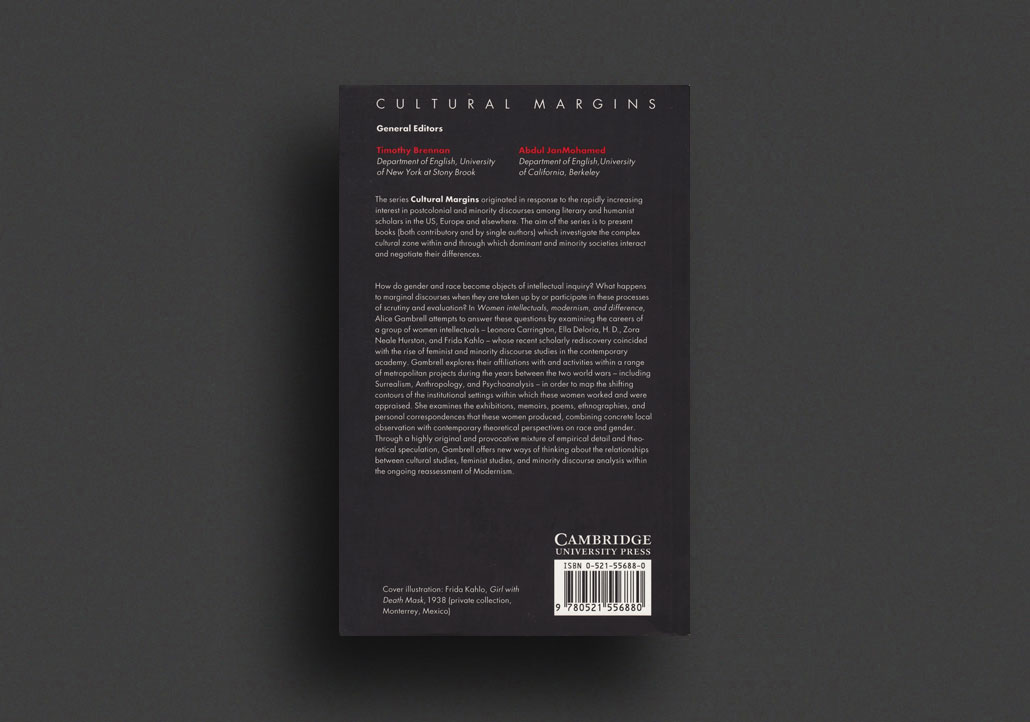
Cambridge University Press / Cambridge
$20.00 - In stock -
First 1988 edition.
Images of Australian identity, and of Australian nationhood, are social and cultural constructs. There are several dominant themes and elements, one of the most pervasive being the Australian bushman confronting a vast and barren landscape. This is a specifically Australian conception of the battle between Man and Nature. Throughout the myths, traditions and literary creations of Australia are underlying assumptions about gender and sexual difference: assumptions about masculinity and femininity within the nationalist tradition, which affect perceptions today. In this new critique, Kay Schaffer applies the insights of feminist scholarship and of literary analysis to examine the national character. She looks at how the concept of 'the typical Australian', and the woman who stands in relation to him, has evolved across a range of cultural forms, including historical and literary texts, film and the media. She concentrates in particular on the writings of Henry Lawson and of Barbara Bayton. The circulation of ideas about these writers, their contribution to a national mythology, and the different ways their importance has been represented to modern readers, is explored and discussed. This thoughtful and provocative study will interest readers concerned with Australian literary and cultural history, as well as the broader questions of Australia's changing self-image. It will be of particular value to those interested in feminist approaches to culture and society.
Average—Good copy with some storage cocking to body, foxing to block edges and tanning to premilminaries. Some erasable pencil notation.
1973, English
Softcover, 309 pages, 20.5 x 13.5 cm
1st Edition, Out of print title / used / good
Published by
Princeton University Press / New York
$25.00 - In stock -
The Swiss thinker J. J. Bachofen is most often connected with his theory of matriarchy, or “mother right,” but that concept is only a small part of his contribution to our understanding of cultural history. This book includes an autobiographical essay and selections from An Essay on Ancient Mortuary Symbolism, Mother Right, and The Myth of Tanaquil.
Johann Jakob Bachofen (1815—1887) was a Swiss antiquarian, jurist, philologist, anthropologist, and professor for Roman law at the University of Basel from 1841 to 1845. Bachofen is most often connected with his theories surrounding prehistoric matriarchy, or Das Mutterrecht, the title of his seminal 1861 book Mother Right: an investigation of the religious and juridical character of matriarchy in the Ancient World. Bachofen assembled documentation demonstrating that motherhood is the source of human society, religion, morality, and decorum. He postulated an archaic "mother-right" within the context of a primeval Matriarchal religion or Urreligion.
Bachofen became an important precursor of 20th-century theories of matriarchy, such as the Old European culture postulated by Marija Gimbutas from the 1950s, and the field of feminist theology and "matriarchal studies" in 1970s feminism.
Good copy with some light wear.
1991, English
Softcover, 240 pages, 22 x 28 cm
1st Edition, Out of print title / used / very good
Published by
RE/SEARCH / San Francisco
$65.00 - Out of stock
“Anger is an emotion which must be reclaimed and legitimised as Woman’s rightful, healthy expression – anger can be a source of power, strength and clarity as well as a creative force,”—Andrea Juno and V. Vale in the introduction.
First 1991 edition of this amazing issue of San Francisco's RE/Search. Full of punk black-and-white photographs and illustrations, Angry Women pushed the boundaries of what feminism could look like in the early 1990s – 16 cutting-edge performance artists discuss a wide range of topics including menstruation, masturbation, racism, S&M, vibrators, failed utopias and the death of the Sixties. Armed with total contempt for dogma, stereotype and cliche, these creative visionaries probe deep into our social foundation of taboos, beliefs and totalitarian linguistic contradictions from whence spring (as well as thwart) our theories, imaginings, behaviour and dreams... features exclusive, long-form interviews with feminist theorist bell hooks, avant-garde writer Kathy Acker, pioneering performance artists Carolee Schneemann and Valie Export, musicians Lydia Lunch and Diamanda Galas, and many other female figureheads.
"How can you have a revolutionary feminism that encompasses wild sex, humor, beauty and spirituality plus radical politics?"—blurb
Very Good copy.
1998, English
Softcover, 232 pages, 21 x 14 cm
1st Edition, Out of print title / used / good
Published by
Stanford University Press / Palo Alto
$50.00 - In stock -
First 1997 edition. Out-of-print.
As a form of power, subjection is paradoxical. To be dominated by a power external to oneself is a familiar and agonizing form power takes. To find, however, that what one is, one's very formation as a subject, is dependent upon that very power is quite another. If, following Foucault, we understand power as forming the subject as well, it provides the very condition of its existence and the trajectory of its desire. Power is not simply what we depend on for our existence but that which forms reflexivity as well. Drawing upon Hegel, Nietzsche, Freud, Foucault, and Althusser, this challenging and lucid work offers a theory of subject formation that illuminates as ambivalent the psychic effects of social power.
If we take Hegel and Nietzsche seriously, then the inner life of consciousness and, indeed, of conscience, not only is fabricated by power, but becomes one of the ways in which power is anchored in subjectivity. The author considers the way in which psychic life is generated by the social operation of power, and how that social operation of power is concealed and fortified by the psyche that it produces. Power is no longer understood to be internalized by an existing subject, but the subject is spawned as an ambivalent effect of power, one that is staged through the operation of conscience.
To claim that power fabricates the psyche is also to claim that there is a fictional and fabricated quality to the psyche. The figure of a psyche that turns against itself is crucial to this study, and offers an alternative to describing power as internalized. Although most readers of Foucault eschew psychoanalytic theory, and most thinkers of the psyche eschew Foucault, the author seeks to theorize this ambivalent relation between the social and the psychic as one of the most dynamic and difficult effects of power.
This work combines social theory, philosophy, and psychoanalysis in novel ways, offering a more sustained analysis of the theory of subject formation implicit in such other works of the author as Bodies That Matter: On the Discursive Limits of Sex and Gender Trouble: Feminism and the Subversion of Identity.
Good copy with some light marginal notes in erasable pencil, light wear.
1990, English
Softcover (w. dust jacket), 512 pages, 29.5 x 23 cm
1st Edition, Out of print title / used / very good
Published by
Biennale of Sydney / Sydney
$120.00 - In stock -
First edition of the incredible (huge) catalogue published to accompany the 8th Biennale of Sydney 1990 "The Readymade Boomerang: Certain Relations in 20th Century Art", held 11 April-3 June 1990 in Sydney across various venues. The eighth Biennale began from ‘a trio of Dada originators’: Marcel Duchamp, Man Ray and Francis Picabia. A large number of artists across generations joined these key figures in Artistic Director René Block’s exploration of the ‘readymade’ in twentieth-century art, which aimed to highlight ‘its invention and pure use by Duchamp, to its resurgence in Nouveau Realism, Pop Art, and Fluxus of the 60s, all the way to new versions by young contemporary artists’. Pop, fluxus and conceptual artists such as Andy Warhol, Richard Hamilton, Marcel Broodthaers, Joseph Beuys, John Cage, Alison Knowles, César, George Brecht, Nam Jun Paik and Piero Manzoni were shown alongside Rosemarie Trockel, John Nixon, Ian Burn, Mel Ramsden, Janet Burchill, Peter Tyndall, Robert Rooney, Rosalie Gascoigne, Cindy Sherman, Bruce Nauman, Hans Haacke, Rebecca Horn, Sophie Calle, Jeff Koons, Allan Kaprow, Jenny Holzer, Robert Gober, Jill Scott, Bill Culbert, Stanley Brouwn, Peter Cripps, Terry Fox, Ian Hamilton Finlay, Fischli & Weiss, KP Brehmer, Sigmar Polke, Dieter Rot, Hanne Darboven, Robert MacPherson, Jackie Redgate, Ed Ruscha, Barbara Bloom, Oyvind Fahlstrom, amongst so many others. The industrial Bond Store at Millers Point featured site-specific works by artists such as Olaf Metzel and Simone Mangos, and several works were created on-site in Sydney, amplifying Block’s notion of the Biennale as a ‘workshop’. A comprehensive satellite program of music, performance, lectures, symposia, workshops and exhibitions at various Sydney venues complemented the exhibition, with Carles Santos’ piano recital on a barge in Sydney Harbour a highlight. Five satellite exhibitions included On Kawara, Joseph Beuys, Alain Fleischer, Fluxus and Broken Record, which featured artist’s experimentations with audio recordings, vinyl and album artwork – from John Cage’s 33 1/3 composition for 12 record players to Milan Knížák’s record-collages.
An incredible Sydney biennale, captured here across over 500 pages conceived and realised by René Block and Jennifer Cook - profusely illustrated with examples of all artists works and accompanying texts throughout by Lynne Cooke, Bernice Murphy, Anne Marie Freybourg, Dick Higgins, René Block and Jennifer Cook. Very Good copy with only general wear/ageing. Bright and clean, includes tanned original dust jacket now preserved under plastic wrap.
Having represented Beuys, Richter and Polke, German gallery owner, art publisher, art collector and curator René Block (born 1942) ranks among the central figures of the 1960s avant-garde.
Very Good copy with original dust jacket. Common tanning to dust jacket spine, now preserved under mylar wrap.
2024, English
Softcover, 448 pages, 27.2 x 20 cm
Published by
Brooklyn Museum / Brooklyn
Phaidon / London
$90.00 - Out of stock
The first publication dedicated to artists' zines in North America, a revelatory exploration of an unexamined but thriving aesthetic practice
Copy Machine Manifestos captures the rich history of artists' zines as never before, placing them in the lineage of the visual arts and exploring their vibrant growth over the past five decades. Fully illustrated with hundreds of zine covers and interiors, alongside work in other media, such as painting, photography, film, video, and performance, the book also features brief biographies for more than 100 zine-makers including Beverly Buchanan, Mark Gonzales, G.B. Jones, Miranda July, Bruce LaBruce, Terence Koh, LTTR, Ari Marcopoulos, Mark Morrisroe, Raymond Pettibon, Brontez Purnell, Paul Mpagi Sepuya, and Kandis Williams. Accompanying a major exhibition at the Brooklyn Museum, this expansive book, bound as a paperback with a separate jacket, focuses on zines from North America, celebrating how artists have harnessed the medium's essential role in community building and transforming material and conceptual approaches to making art across all media since 1970.
2021, English
Hardcover (w. dust jacket), 408 pages, 28 x 23 cm
Published by
University of Pittsburgh Press / Pittsburgh
$220.00 - Out of stock
A New Interdisciplinary Study of Czech Gender-Fluid Artist Toyen.
Part art book and part biography, Magnetic Woman examines the life and work of the artist Toyen (Marie Cerminova, 1902—1980), a founding member of the Prague surrealist group, and focuses on her construction of gender and eroticism. Toyen's early life in Prague enabled her to become a force in three avant-garde groups - Devetsil, Prague surrealism, and Paris surrealism — yet, unusually for a female artist of her generation, Toyen presented both her gender and sexuality as ambiguous and often emphasised erotic themes in her work. Despite her importance and ground-breaking work, Toyen has been notoriously difficult to study. Using primary sources gathered from disparate disciplines and studies of the artist's own work, Magnetic Woman is organized both chronologically and thematically, moving through Toyen's career with attention to specific historical circumstances and intellectual developments approximately as they entered her life. Karla Huebner offers a re-evaluation of surrealism, the Central European contribution to modernism, and the role of female artists in the avant-garde, along with a complex and nuanced view of women's roles in and treatment by the surrealist movement.
"The first English-language monograph on this major female twentieth century painter in her Prague and Paris milieux, Magnetic Woman is not only a scrupulously researched art-historical detective story but a sensitive and insightful exploration of issues of gender, sexuality, and erotic expression in modernist and surrealist art. Art historians owe Karla Huebner a considerable debt for this pioneering study."—Derek Sayer, University of Alberta
2014, English
2 volume Softcover (in hardcover slip case), 240 pages, 25.4 x 17.8 cm
Published by
Semiotext(e) / Los Angeles
$95.00 - Out of stock
The legendary 1975 “Schizo-Culture” conference, conceived by the early Semiotext(e) collective, began as an attempt to introduce the then-unknown radical philosophies of post-’68 France to the American avant-garde. The event featured a series of seminal papers, from Deleuze’s first presentation of the concept of the “rhizome” to Foucault’s introduction of his History of Sexuality project. The conference was equally important on a political level, and brought together a diverse group of activists, thinkers, patients, and ex-cons in order to address the challenge of penal and psychiatric institutions. The combination proved to be explosive, but amid the fighting and confusion “Schizo-Culture” revealed deep ruptures in left politics, French thought, and American culture.
The “Schizo-Culture” issue of the Semiotext(e) journal came three years later. Designed by a group of artists and filmmakers including Kathryn Bigelow and Denise Green, it documented the chaotic creativity of an emerging downtown New York scene, and offered interviews with artists, theorists, writers, and No Wave and pre-punk musicians together with new texts from Deleuze, Foucault, R. D. Laing, and other conference participants.
This slip-cased edition includes The Book: 1978, a facsimile reproduction of the original Schizo-Culture publication; and The Event: 1975, a previously unpublished and comprehensive record of the conference that set it all off. It assembles many previously unpublished texts, including a detailed selection of interviews reconstructing the events, and features Félix Guattari, William Burroughs, Kathy Acker, Michel Foucault, Sylvère Lotringer, Guy Hocquenghem, Gilles Deleuze, John Rajchman, Robert Wilson, Joel Kovel, Jack Smith, Jean-Fran?ois Lyotard, Ti-Grace Atkinson, François Peraldi, and John Cage.
1995, English
Softcover, 75 pages, 14 x 22 cm
1st Edition, Out of print title / used / good
Published by
AK Press / Edinburgh
$50.00 - Out of stock
"If one day, a bad girl named Dante met a mean dyke called Hieronymous Bosch, this is the book they'd make." — Jenny Livingstone, director, Paris Burning.
First 1995 edition from AK Press.
Kathy Acker holds a unique place among American novelists, as a writer who constantly pushes at the frontiers of modern fiction, with each new work advancing further into uncharted territory. Pussycat Fever is a hallucinatory amalgam of emotion and desire. Join Pussycat and the anonymous narrator on a journey filled with sex and dangerous liaisons. Coming of age was never like this! Kathy's words are complemented by the artwork of Diane DiMassa —best known for her long running comic book series Hothead Paisan—and the intriguing collages of famed artist Freddie Baer.
Good copy, only light wear.
1991, English
Softcover, 143 pages, 27 x 27 cm
1st Edition, Out of print title / used / very good
Published by
Hillwood Art Gallery / New York
$120.00 - Out of stock
First edition of this monographic book on the incredible work of American artist, Nancy Grossman. Grossman is best known for her wood and leather heads, using the leather, as well as straps, zippers, and string, to create sculptures that appear bound and restrained. She describes her work as autobiographical, and while others have reviewed her work as seemingly sexual and reminiscent of sadism and masochism, Grossman says her work challenges the ideas of gender identity and gender fluidity and refer to her "bondage in childhood". She is also well known for her mixed-media wall assemblages, drawings, collages and paintings, all of which are illustrated throughout this catalogue of her work from the late 1960s-early 1990s. Produced to accompany the first comprehensive survey of Grossman's extensive provocative career that opened at the Hillwood Art Museum in 1991, this book also features texts throughout by feminist art historian, author, critic, educator, curator and co-founder of the Feminist Studio Workshop, Arlene Raven.
Good—VG copy. Some general wear.