World Food Books' programme is largely produced on Kulin Nation land. We acknowledge the Wurundjeri people of the Kulin Nation as the first and continuing custodians of this land, and pay respect to their Elders past, present, and emerging.
World Food Books is an arts and special interests bookshop in Naarm / Melbourne. Founded in 2010, World Food Books is devoted to the presentation of a rotating, hand-selection of international art, design, literary and counterculture publications with an emphasis on the anti-traditional, the experimental, the avant-garde, the heretic, the marginal.
Presenting new titles alongside rare and out-of-print books, catalogues and journals spanning the fields of modern and contemporary art, design, photography, illustration, film, literature, poetry, cultural theory, philosophy, sexuality, popular and underground culture in its many radical forms, World Food Books wishes to encourage adventurous, thoughtful and open-minded reading, looking, writing, and exchange of publishing and ideas, both current and historical.
As well as our bookshop, located in Melbourne's historical Nicholas Building, all of our inventory is available internationally via our online mail-order service.
World Food Books semi-regularly co-ordinates "Occasions", a programme of exhibits and events at the bookshop and in partnership with other hosts (such as museums and art galleries) that develop out of the activities, relationships and content of the bookshop itself.
World Food Books
The Nicholas Building
37 Swanston Street
Room 5, Level 6
Melbourne 3000
Australia
SHOP HOURS:
THU–SAT 12–6
WEB-SHOP OPEN 24/7
World Food Books
Postal Address:
PO Box 435
Flinders Lane
Victoria 8009
Australia
info@worldfoodbooks.com
Art
Theory / Essay
Architecture / Interior
Graphic Design / Typography
Photography
Fashion
Eros
LGBTQ+
Fiction / Poetry
Weird / Speculative / Science Fiction / Horror
Transgressive / Visceral / Abject
Symbolism / Decadence / Fin de siècle
Film / Video
Painting
Sculpture / Installation
Performance / Dance / Theater
Drawing
Sound / Music
Curatorial
Group Shows / Collections
Periodicals
Out-of-print / Rare
Posters / Ephemera / Discs
Signed Books
World Food Books Gift Voucher
World Food Book Bag
Australian Art
Australian Fiction
Australian Science Fiction / Speculative Fiction
Australian Poetry
Australian Photography
Japanese Photography
Conceptual Art
Minimal Art
Dada
'Pataphysics / Oulipo
Fluxus
Concrete Poetry
Pop Art
Surrealism
Arte Povera
Arte Informale / Haute Pâte / Tachism
Nouveau Réalisme / Zero / Kinetic
Situationism / Lettrism
Collage / Mail Art / Xerox Art
Art Brut / Folk / Visionary / Fantastic
Illustration / Graphic Art / Bandes Dessinées
Furniture
Italian Radical Design / Postmodernism
Textiles
Ceramics / Glass
Counterculture
Protest / Revolt
Philosophy
Psychoanalysis
Anthropology
Anarchism
Socialism / Anarchism / Communism / Capitalism
Literary Theory / Semiotics / Language
Feminism / Women's Studies
Gender Studies / Sexuality
Anthropology
Fetishism / BDSM
Drugs / Psychedelia
Crime / Violence
Animal Rights / Veganism
Occult / Esoterica
Ecology / Earth / Alternative Living
Whole Earth / Crafts
All prices in AUD (Australian dollars)
Pick-Ups
Pick-up orders can be collected in our bookshop during opening hours after order date. Please collect any Pick-up orders within 2 weeks of ordering as we have limited storage space. Orders will be released back into stock if not collected within this time. No refunds can be made for pick-ups left un-collected. If you cannot make it in to the bookshop in this time-frame, please choose postage option.
Return Policy
All sales are final. We do accept returns (for refund or exchange) for items received in error. All our orders are packed with special care using heavy-duty padding and cardboard book-mailers or bubble mailers (for smaller books), using reinforcement where required. We cannot take responsibility for any lost, stolen or damaged parcels.
Insurance
Should you wish to insure your package, please email us directly after placing your order and we can organise this at a small extra expense. Although all standard/express tracked packages are very safe and dependable, we cannot take responsibility for any lost, stolen or damaged parcels. We recommend insurance on valuable orders.
Interested in selling your old books, catalogues, journals, magazines, comics, fanzines, ephemera? We are always looking for interesting, unusual and out-of-print books to buy. We only buy books in our fields of interest and specialty, and that we feel we can resell.
We base these prices on desirability, market value, in-print prices, condition and our current stock levels. We offer cash, store credit, and can take stock on consignment. All
about 25% of the price we expect to get when we sell them, or 30% in store credit. We base these prices on desirability, market value, in-print prices, condition and our current stock levels.
Sell your books any day of the week. You can drop them off and return later. If you have a lot of books, we can visit your Sydney home.
We buy books that we feel we can resell. We offer about 25 % of the price we expect to get when we sell them, or 30% in store credit. We base these prices on desirability, market value, in-print prices, condition and our current stock levels.
Philadelphia Wireman
03 August - 01 September, 2018
World Food Books is proud to announce our next Occasion, the first presentation of sculptures by Philadelphia Wireman in Australia.
The Philadelphia Wireman sculptures were found abandoned in an alley off Philadelphia’s South Street on trash night in 1982. Their discovery in a rapidly-changing neighbourhood undergoing extensive renovation, compounded with the failure of all attempts to locate the artist, suggests that the works may have been discarded after the maker’s death. Dubbed the "Philadelphia Wireman" during the first exhibition of this work, in 1985, the maker’s name, age, ethnicity, and even gender remain uncertain. The entire collection totals approximately 1200 pieces, all intricately bound together with tightly-wound heavy-gauge wire (along with a few small, abstract marker drawings, reminiscent both of Mark Tobey and J.B. Murry). The dense construction of the work, despite a modest range of scale and materials, is singularly obsessive and disciplined in design: a wire armature or exoskeleton firmly binds a bricolage of found objects including plastic, glass, food packaging, umbrella parts, tape, rubber, batteries, pens, leather, reflectors, nuts and bolts, nails, foil, coins, toys, watches, eyeglasses, tools, and jewellery.
Heavy with associations—anthropomorphic, zoomorphic, and socio-cultural responses to wrapped detritus—the totemic sculptures by Philadelphia Wireman have been discussed in the context of work created to fulfil the shamanistic needs of alternative religions in American culture. Curators, collectors, and critics have variously compared certain pieces to sculpture from Classical antiquity, Native American medicine bundles, African-American memory jugs, and African fetish objects. Reflecting the artist’s prolific and incredibly focused scavenging impulse, and despite—or perhaps enhanced by—their anonymity, these enigmatic objects function as urban artefacts and arbiters of power, though their origin and purpose is unknown. Philadelphia Wireman, whatever their identity, possessed an astonishing ability to isolate and communicate the concepts of power and energy through the selection and transformation of ordinary materials. Over the course of the past two decades, this collection has come to be regarded as an important discovery in the field of self-taught art and vernacular art.
Presented in collaboration with Fleisher-Ollman Gallery, Philadelphia, and Robert Heald, Wellington.
Susan Te Kahurangi King
02 February - 10 March, 2018
Susan Te Kahurangi King (24 February 1951 - ) has been a confident and prolific artist since she was a young child, drawing with readily available materials - pencils, ballpoint pens and felt-tip markers, on whatever paper is at hand. Between the ages of four and six Susan slowly ceased verbal communication. Her grandparents William and Myrtle Murphy had developed a special bond with Susan so they took on caring responsibilities for extended periods. Myrtle began informally archiving her work, carefully collecting and storing the drawings and compiling scrapbooks. No drawing was insignificant; every scrap of paper was kept. The King family are now the custodians of a vast collection containing over 7000 individual works, from tiny scraps of paper through to 5 meter long rolls.
The scrapbooks and diaries reveal Myrtle to be a woman of great patience and compassion, seeking to understand a child who was not always behaving as expected. She encouraged Susan to be observant, to explore her environment and absorb all the sights and sounds. Myrtle would show Susan’s drawings to friends and people in her community that she had dealings with, such as shopkeepers and postal workers, but this was not simply a case of a grandmother’s bias. She recognised that Susan had developed a sophisticated and unique visual language and sincerely believed that her art deserved serious attention.
This was an unorthodox attitude for the time. To provide some context, Jean Dubuffet coined the term Art Brut in 1945 to describe work created by self-taught artists – specifically residents of psychiatric institutions and those he considered to be visionaries or eccentrics. In 1972 Roger Cardinal extended this concept by adopting the term Outsider Art to describe work made by non-academically trained artists operating outside of mainstream art networks through choice or circumstance. Susan was born in Te Aroha, New Zealand in 1951, far from the artistic hubs of Paris and London that Dubuffet and Cardinal operated in. That Myrtle fêted Susan as a self-taught artist who deserved to be taken seriously shows how progressive her attitudes were.
Susan’s parents Doug and Dawn were also progressive. Over the years they had consulted numerous health practitioners about Susan’s condition, as the medical establishment could not provide an explanation as to why she had lapsed into silence. Dawn educated herself in the field of homeopathy and went on to treat all twelve of her children using these principles – basing prescriptions on her observations of their physical, mental and emotional state.
Doug was a linguist with an interest in philosophy who devoted what little spare time he had to studying Maori language and culture. To some extent their willingness to explore the fringes of the mainstream made them outsiders too but it was their commitment to living with integrity and their respect for individuality that ensured Susan’s creativity was always encouraged.
Even though Susan’s family supported her artistic pursuits, some staff in schools and hospitals saw it as an impediment to her assimilation into the community and discouraged it in a variety of ways. Her family was not always aware of this and therefore did not fully understand why Susan stopped drawing in the early 1990s. However, rather than dwell on the challenges that Susan faced in pursuit of her artistic practice, they prefer to highlight her achievements. In 2008 Susan began drawing again in earnest, after an almost 20 year interruption, and her work is now shown in galleries around the world.
Susan grew up without television and has been heavily influenced by the comics she read as a child. She is absolutely fearless in the appropriation of recognizable characters, such as Donald Duck and Mickey Mouse, in her work. She twists their limbs, contorts their faces, compresses them together, blends them into complex patterned backgrounds - always imbuing them with an incredible energy. Although Susan often used pop culture characters in her work they are not naive or childlike. These are drawings by a brilliant self-taught artist who has been creating exceptional work for decades without an audience in mind.
Mladen Stilinović
"Various Works 1986 - 1999"
02 February 16 - September 10, 2016
Various works 1986 - 1999, from two houses, from the collections of John Nixon, Sue Cramer, Kerrie Poliness, Peter Haffenden and Phoebe Haffenden.
Including: Geometry of Cakes (various shelves), 1993; Poor People’s Law (black and white plate), 1993; White Absence (glasses, ruler, set square, silver spoon, silver ladel with skin photograph and wooden cubes), 1990-1996; Exploitation of the Dead (grey and red star painting, wooden painting, black spoon with red table, red plate), 1984-1990; Money and Zeros (zero tie, paintings made for friends in Australia (Sue, John, Kerrie), numbers painting), 1991-1992; Words - Slogans (various t-shirts) - “they talk about the death of art...help! someone is trying to kill me”, “my sweet little lamb”, “work is a disease - Karl Marx”; Various artist books, catalogues, monographs, videos; Poster from exhibition Insulting Anarchy; "Circular" Croatian - Australian edition; Artist book by Vlado Martek (Dostoyevsky); more.
Thanks to Mladen Stilinović and Branka Stipančić.
Jonathan Walker
Always Will Need To Wear Winter Shirt Blue + Ochre Small Check Pattern
21 August - 21 September, 2015
Untitled
I am not a great reader of poetry but I always return to the work of Melbourne poet, Vincent Buckley (1925- 1988). Perhaps I find his most tantalising piece to be not a finished poem but a fragment left on a scrap of paper discovered on his desk after the poet’s death.
The poetry gathers like oil
In the word-core, and spreads
It has its music meet,
Its music is in movement.
This fragment is more the shell left behind from a volatile thought than a finished poem. I find the last two lines honest but awkward whereas the first two lines work like an arrow. Most likely he could not find a resolution so it was left. Still, in its present form, it remains an eloquent testimony to the ultimate failure of a medium to express mobile thought and sensation, in Buckley’s case, through verbal language. It’s an important matter because this is something all artists have to deal with regardless of the medium.
I have never written a poem, however, I am forever copying fragments from books on paper scraps in a vain effort to fix certain notions in my head. At first, they function as bookmarks that are sometimes returned to when I open the book. But before long, as they accumulate, they fall out littering the table interspersed with A4 photocopies, bills, books and medications.
To return to Buckley’s fragment, the first two lines very much evoke how I paint nowadays. As you age, detail diminishes and patches of light become more luminous and float. I feel the most honest way of dealing with this is by smearing the oil paint on the canvas with the fingers and working close-up, blind. Only if the patches coalesce into an approaching image can the work gain a life.
-
Jonathan Walker was born in Melbourne, Australia and brought up on a dairy farm in Gippsland. In the 1970’s he studied painting at RMIT and won the Harold Wright Scholarship to the British Museum, London. During the 1980’s he exhibited at Pinacotheca Gallery, Richmond and had work shown at the NGV and Heidi City Art Gallery. Over the same period he designed the cover for the “Epigenesi” LP by Giancarlo Toniutti, Italy and conducted a mail exchange work with Achim Wollscheid, Germany. The work with artists through the post resulted in an article published in the bicentenary issue of Art and Australia 1988. He showed in artist run spaces such as WestSpace in the 90’s and 2000’s, and until 2012, taught painting at Victoria University, which is where we (Colleen Ahern and Lisa Radford) as organisers of the exhibition, among many others, had the privilege of being his student.
Walker’s knowledge was imparted to students through the careful selection of music, literature, and artists found in books that he himself had ordered for the library. Walker’s strategy was the generosity of sharing his vast knowledge with references specific to each student and their context.
Walker’s paintings share a similar focus and intimacy.
This exhibition presents a small selection of recent paintings alongside a publication that includes Walker’s writing. Observational and analytical, Walker’s work is a type of material notation — the time of day, colour and how it is blended, the both specific and fleeting location of a reflection on lino or the question of whether a chair leg should be included in a painting.
Please join us on Friday August 21 between 6-8pm to celebrate the opening of the exhibition.
Curated by Colleen Ahern and Lisa Radford.
B. Wurtz
Curated by Nic Tammens
March 26 - April 4, 2015
B.Wurtz works from a basement studio in his home on Manhattan’s Lower East Side.
This local fact is attested to by the plastic shopping bags and newsprint circulars that appear in his work. As formal objects, they don’t make loud claims about their origins but nonetheless transmit street addresses and places of business from the bottom of this long thin island. Like plenty of artists, Wurtz is affected by what is local and what is consumed. His work is underpinned by this ethic. It often speaks from a neighborhood or reads like the contents of a hamper:
“BLACK PLUMS $1.29 lb.”
“Food Bazaar”
“USDA Whole Pork Shoulder Picnic 99c lb.”
“RITE AID Pharmacy, with us it’s personal.”
“H. Brickman & Sons.”
“Sweet Yams 59c lb."
Most of the work in this exhibition was made while the artist was in residence at Dieu Donne, a workshop dedicated to paper craft in Midtown. Here Wurtz fabricated assemblages with paper and objects that are relatively lightweight, with the intention that they would be easily transportable to Australia. This consideration isn’t absolute in Wurtz’s work, but was prescriptive for making the current exhibition light and cheap. Packed in two boxes, these works were sent from a USPS post office on the Lower East Side and delivered to North Melbourne by Australia Post.
Wurtz appears courtesy of Metro Pictures, New York.
Thanks to Rob Halverson, Joshua Petherick, Sari de Mallory, Matt Hinkley, Helen Johnson, Fayen d'Evie, Ask Kilmartin, Lisa Radon, Ellena Savage, Yale Union, and "Elizabeth".
John Nixon
"Archive"
December 15 - January 20, 2014
The presentation of John Nixon's archive offered a rare showcase of this extensive collection of the artist's own publications, catalogues, posters, ephemera, editions and more, from the mid 1980s onwards, alongside a selection of his artworks.
Organized by John Nixon, Joshua Petherick and Matt Hinkley.
"Habitat"
at Minerva, Sydney (organised by Joshua Petherick and Matt Hinkley)
November 15 - December 20, 2014
Lupo Borgonovo, Janet Burchill & Jennifer McCamley,
Lewis Fidock, HR Giger, Piero Gilardi, Veit Laurent Kurz,
Cinzia Ruggeri, Michael E. Smith, Lucie Stahl, Daniel Weil, Wols
Press Release:
“...It contained seven objects. The slender fluted bone, surely formed for flight, surely from the wing of some large bird. Three archaic circuitboards, faced with mazes of gold. A smooth white sphere of baked clay. An age-blackened fragment of lace. A fingerlength segment of what she assumed was bone from a human wrist, grayish white, inset smoothly with the silicon shaft of a small instrument that must once have ridden flush with the surface of the skin - but the thing’s face was seared and blackened.”
William Gibson, “Count Zero”, 1986
"Autumn Projects Archive"
Curated by Liza Vasiliou
March 6 - March 15, 2014
World Food Books, in conjunction with the Virgin Australia Melbourne Fashion Festival 2014, presented the Autumn Projects archive, consisting of a selection of early examples in Australian fashion with a particular interest in collecting designers and labels from the period beginning in the 1980’s, who significantly influenced the discourse of Australian Fashion.
Curated by Liza Vasiliou, the exhibition provided a unique opportunity to view pieces by designers Anthea Crawford, Barbara Vandenberg, Geoff Liddell and labels CR Australia, Covers, Jag along with early experimental collage pieces by Prue Acton and Sally Browne’s ‘Fragments’ collection, suspended throughout the functioning World Food Books shop in Melbourne.
H.B. Peace
presented by CENTRE FOR STYLE
November 14, 2013
"Hey Blinky, you say chic, I say same"
Anon 2013
H.B. Peace is a clothing collaboration between great friends Blake Barns and Hugh Egan Westland. Their pieces explore the divergences between 'character’ and ‘personality’ in garments....etc
Special Thanks to Joshua Petherick and Matt Hinkley of WFB and Gillian Mears
and a Very Special Thank you to Audrey Thomas Hayes for her shoe collaboration.
Janet Burchill & Jennifer McCamley
"Aesthetic Suicide"
May 10 - June 8, 2013
The first of our occasional exhibitions in the World Food Books office/shop space in Melbourne, "Aesthetic Suicide" presented a body of new and older works together by artists Janet Burchill & Jennifer McCamley, including videos, prints, a wall work, and publications.
During shop open hours videos played every hour, on the hour.
1976, English
Softcover, 46 pages, 28 x 22 cm
1st Edition, Out of print title / used / very good
Published by
Tao Productions / Hollywood
$45.00 - Out of stock
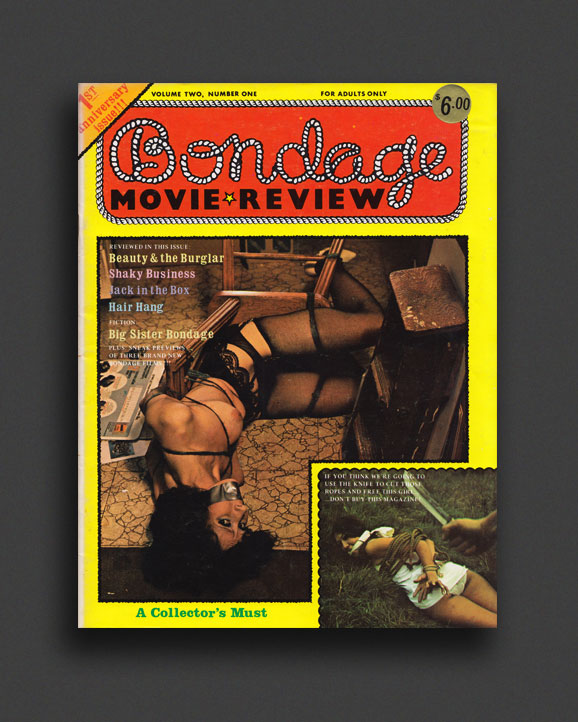
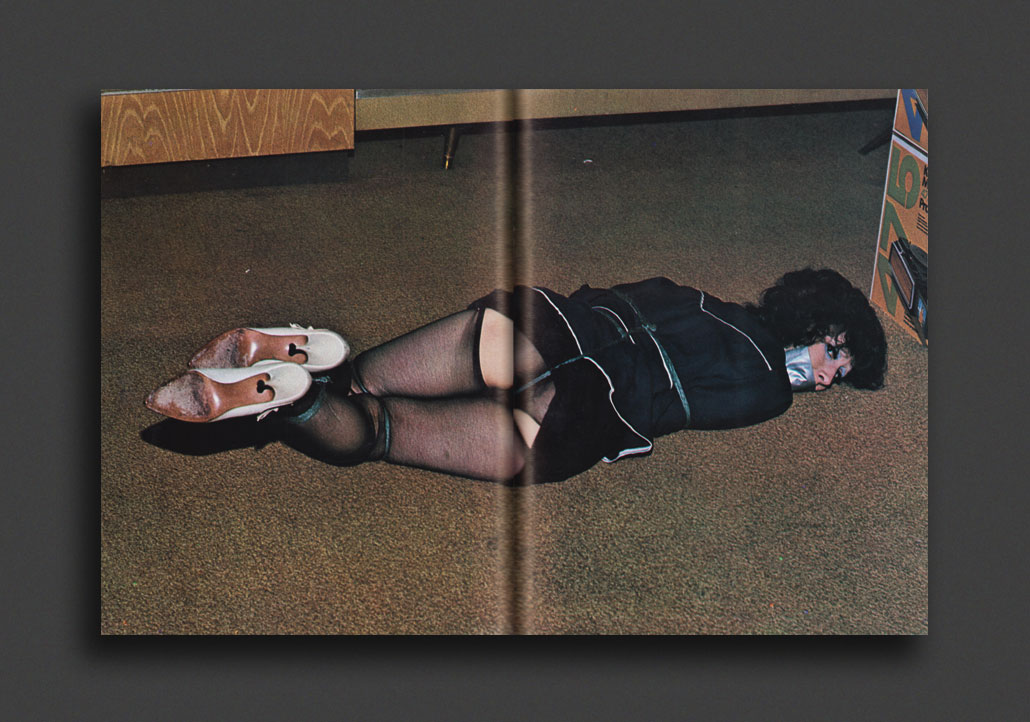
Bondage Movie Review Volume 2 No. 1, the collector's 1st Anniversary issue published by Tao Productions of Hollywood in 1976. Heavily illustrated throughout with b/w and colour bondage photographs, featuring many stills and photographs from Tao Productions films including "Hair Hung", "Jack in The Box", "Return of The Doctor", "Beauty and The Burglar", "The Visitor", "Shaky Business", "The Teat and The Pendulum", plus letters, fiction ("Big Sister Bondage"), illustrated catalogues of Bondage photographs and 8mm films, Bondage marketplace and Tao publications, and more. Includes colour centre spread from "Beauty and The Burglar".
Very Good copy with tanning to spine.
2013, English
Hardcover (w. dust jacket), 84 pages, 26 x 31 cm
1st Edition, Out of print title / used / very good
Published by
D.A.P. / New York
$400.00 $100.00 - In stock -
First edition of California Surfing and Climbing in the Fifties, published in 2013, immediately out of print and now highly sought after in this first edition. (This title was reprinted later in the now common edition, due to demand).
Visually stunning slice of American cultural history told in (mostly) black and white photography, California Surfing and Climbing in the Fifties takes place against the backdrop of postwar America: Truman and Eisenhower, the Korean War, the Cold War and the Red Scare; Elvis Presley, Jack Kerouac, Marlon Brando et al. It traces the popularization of surfing along the California coast, as traditional, heavy balsawood boards were replaced with lightweight polyurethane foam, fiberglass, and resin; at the same time, ambitious climbers were developing equipment that would go on to set new technique and safety standards, using their own homemade gear to descend Tahquitz Rock in the south, Yosemite Valley to the north. This volume is packed with images of legendary surfers (Joe Quigg, Tom Zahn, Dale Velzy and Renny Yater) and famous climbers (Warren Harding, Royal Robbins and Wayne Merry among others), their groundbreaking adventures, photographed by legends like Bob Swift, Alan Steck, Jerry Gallwas, and Frank Hoover.
Soaked in surf, sun and adrenaline, the photographs in California Surfing and Climbing in the Fifties depict the birth of an era and an exhilarating moment in Californian history, whilst incidentally becoming a highly desired style reference.
Text by Yvon Chouinard, Steve Pezman, Steve Roper.
Fine. New copy but with some light shelf wear to the thick, publisher-issued frosted transparent jacket.
1971, English
Softcover, 192 pages, 20 x 28 cm
Out of print title / used / good
Published by
Collier Books / New York
$70.00 - Out of stock
1971 edition of the classic photobook documentary of "Communal Life in New America", The Alternative by William Hedgepeth and photoessayist Dennis Stock, first published in 1970 and all editions long out-of-print.
"Hedgepeth and Stock offer a sensitive and astute penetration in depth into the new commune culture of the 1970s, from its roots among young dropouts in Haight-Ashbury to its current outcroppings in the form of half-hidden youth communities throughout the American countryside. The Alternative is an exploration into a thriving netherworld of revolution-minded persons who are turning tribal en masse and reverting to "primitive" conditions of survival as part of their serious search for the most viable shape that human life must take in days to come. Whether you view the new communal movement as an adventure or as a threat ultimately depends on your own personal view of the future."
William Hedgepeth is a dedicated Animalarian, veteran journalist, editor and author, who at the time of creating The Alternative was a senior editor and bureau chief for LOOK magazine. He lives deep in the forests of Appalachian Georgia with his journalist wife and a loyal battalion of beasts.
Dennis Stock was a celebrated American photographer, noted for his photo essays. His portfolio had a massive range and included many timeless pieces of work such as the free love movement of California, jazz, nature, and portrait work of icons such as James Dean and Billie Holiday. His photography has been exhibited all over the world, and his photos are part of many major museum collections. In the 1970s and 1980s he focused on color photography of nature and landscape, and returned to his urban roots in the 1990s focusing on architecture and modernism. In 2006, Stock married writer Susan Richards. They lived in Woodstock, New York, with their four dogs. Stock passed away in 2010.
Good copy but with some old water staining and edge wear/tanning.
2019, English
Softcover, 110 pages, 23 x 28 cm
Published by
Anthology Editions / Brooklyn
$69.00 - Out of stock
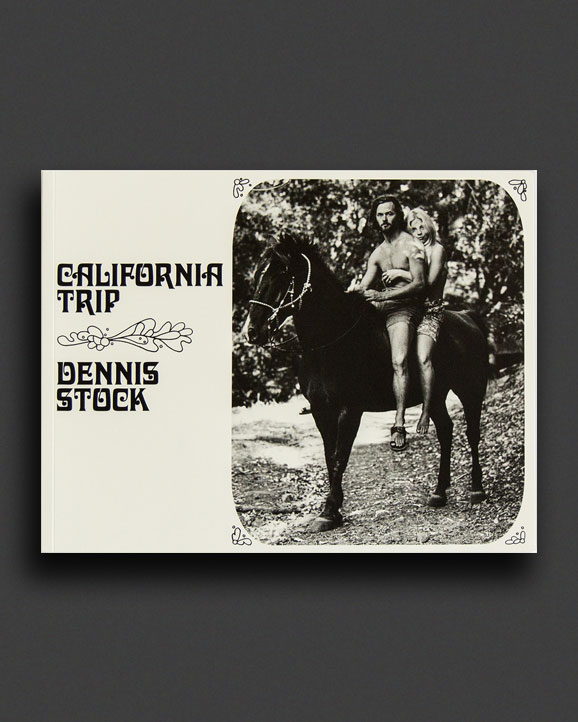
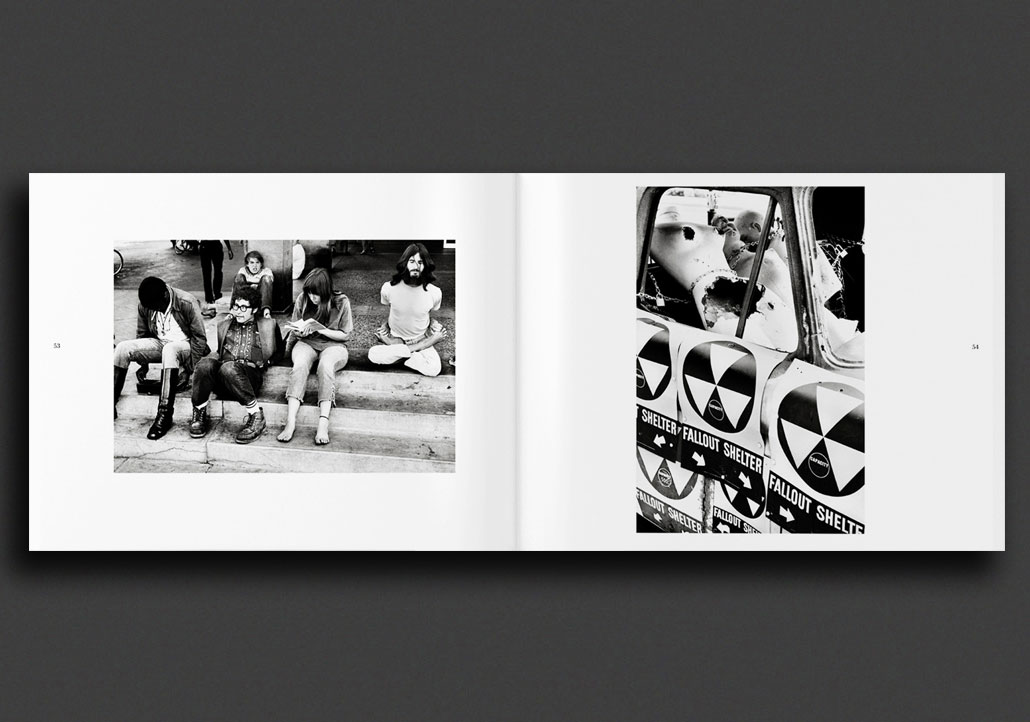
In 1968, Magnum photographer Dennis Stock took a five-week road trip along the California highways, documenting the height of the counterculture hippie scene. These black and white photos were compiled to create California Trip, originally published in 1970, and became an emblem of the free love movement that continued to inspire throughout the decades. In print for the first time since its 1970 publication, California Trip is a faithful reproduction of Stock’s timeless work.
Dennis Stock was a celebrated American photographer, noted for his photo essays. His portfolio had a massive range and included many timeless pieces of work such as the free love movement of California, jazz, nature, and portrait work of icons such as James Dean and Billie Holiday. His photography has been exhibited all over the world, and his photos are part of many major museum collections. He won first prize in both Life’s Young Photographers Contest in 1951 and the International Photo Competition in Poland in 1962. Stock passed away in 2010.
2020, English
Softcover (ring-binding), 368 pages, 24.5 x 33.5 cm
Published by
Spector Books / Leipzig
$99.00 - Out of stock
The mid-1960s witnessed a boom in underground and self-published works. Hectographs, mimeographs, and offset printing not only allowed for the production of small, low-cost print runs but also promoted a unique aesthetic: using wild mock-ups, 'messianic amateurs' combined typescript aesthetics, handwriting, scribbled drawings, assemblages of collaged visuals, porn photos, snapshots, and comic strips. The typography consciously frees itself, in parallel to a liberalization of linguistic and visual forms of expression in the name of a new 'sensibility'. This book is the first to present the underground and self-published works that came out of West Germany in such depth, while also showing the international context in which they emerged: not as an anecdotal history but as an attempt to tap into the aesthetic cosmos of a Do-It-Yourself rebellion, one that also challenges us to take a new look at the current boom in 'independent publishing', the risograph aesthetic, and so on.
An incredible collection and valuable volume for anyone interested in underground publishing history!
Finally reprinted.
2012, English
Softcover, 240 pages, 22.5 x 33.8 cm
Published by
Harry N. Abrams / New York
$76.00 - Out of stock
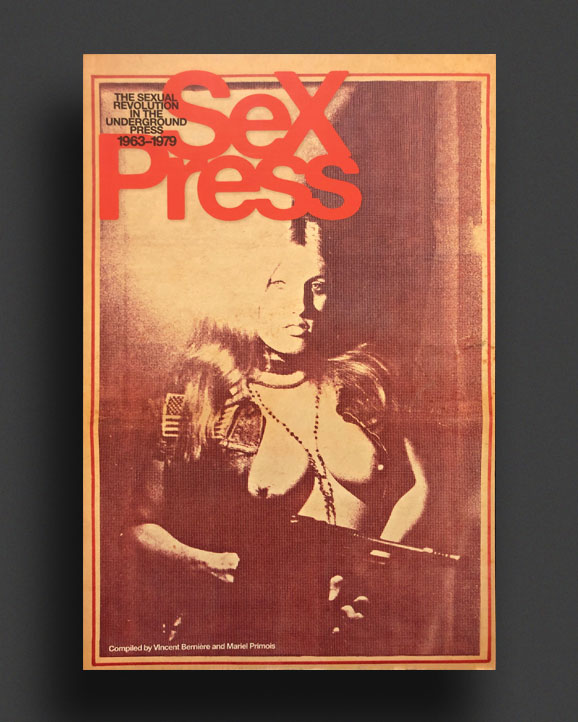
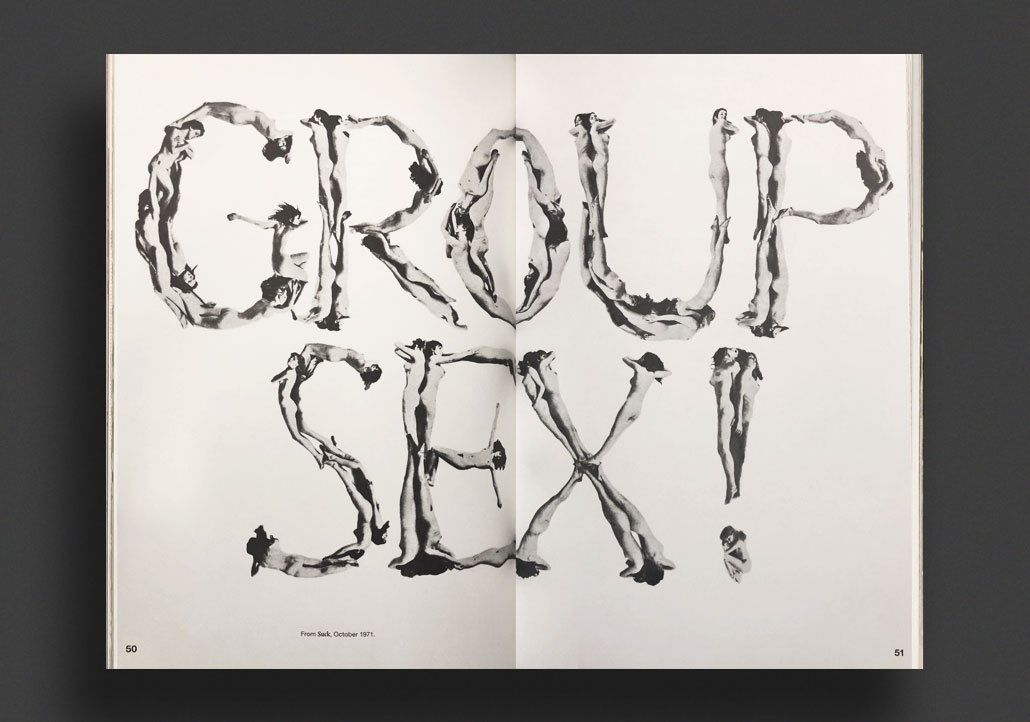
From 1965 to 1975, an array of journals, magazines, fanzines, and underground presses were the voice of a dramatic sexual revolution. In Europe and the United States, this "sex press" consisted of publications such as Other Scenes, Yellow Dog, Actuel, Suck, The Body, and Screw-some of which were fully dedicated to sex, while others also engaged with the time's most riveting topical issues, including politics, human rights, war, women's rights, and gay and lesbian rights. Showcasing art from the most revolutionary publications of the era, the book traces the exuberant sexual liberation of the 1960s and then moves into the mid-1970s, with its more codified form of pornography. Illustrated by a vivid collection of full-page facsimiles, Sex Press offers a compelling visual tour through an extraordinary period of experimentation, creativity, and sexual freedom.
1994, English
Softcover (staple-bound), 68 pages, 28 x 21.5 cm
1st Edition, Out of print title / used / very good
Published by
Feature Inc. / New York
$300.00 - Out of stock
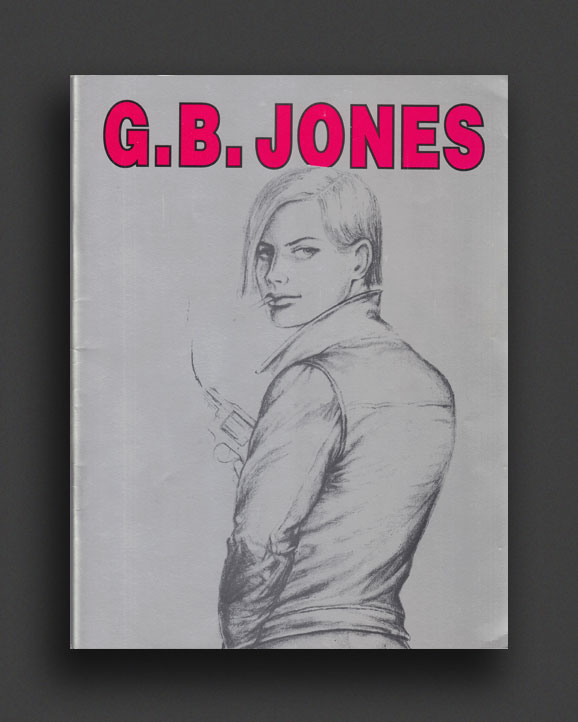
The rarely seen, first edition of G.B. Jones' artist book, published in the US in 1994 and seized at the border and officially banned in Jones’ native Canada.
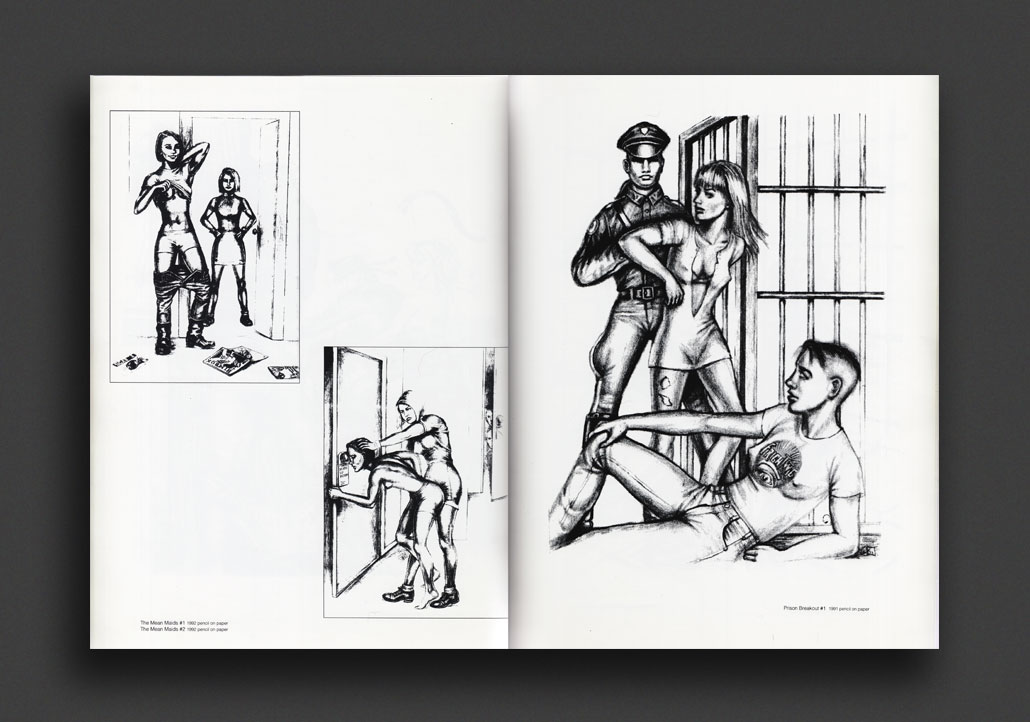
G.B. Jones (b. 1965) is a Canadian artist, filmmaker, and founding member of Canadian queer punk band Fifth Column (K Records/Outpunk/Kill Rock Stars/et al). She published legendary queercore fanzine J.D.s (Juvenile Delinquents) with fellow queer filmmaker Bruce LaBruce, which regularly featured her iconic Tom Girl drawings. According to novelist Dodie Bellamy, G.B. Jones' drawing "co-opts the male-on-male objectifying gaze of gay erotica and converts it to a female-on-female gaze." Depicting autonomous women through fantasies of bikers, punks and degenerates in the style of and situations similar to those drawn by Tom of Finland, her Tom Girls are "unapologetic, thrillingly anti-assimilationist." Compiling a scrapbook curriculum vitae of her work to date, this wonderful book presents the Tom Girl series of drawings alongside stills from videos, excerpts from J.D.s zines, gig flyers, photos and essays and commentaries by Dennis Cooper, Vaginal Davis, Dodie Bellamy, Kevin Killian, Caroline Azar, Johnny Noxzema, and others. The essential book on the artist.
Very Good, beautiful copy of the very first banned edition. Possibly in 1996 more were printed (also barely exist), but this is definitely the original 1994 print, exceptionally rare.
2020, English
Softcover, 196 pages, 14.6 x 20.3 cm
Published by
Strange Attractor / London
$44.00 - Out of stock
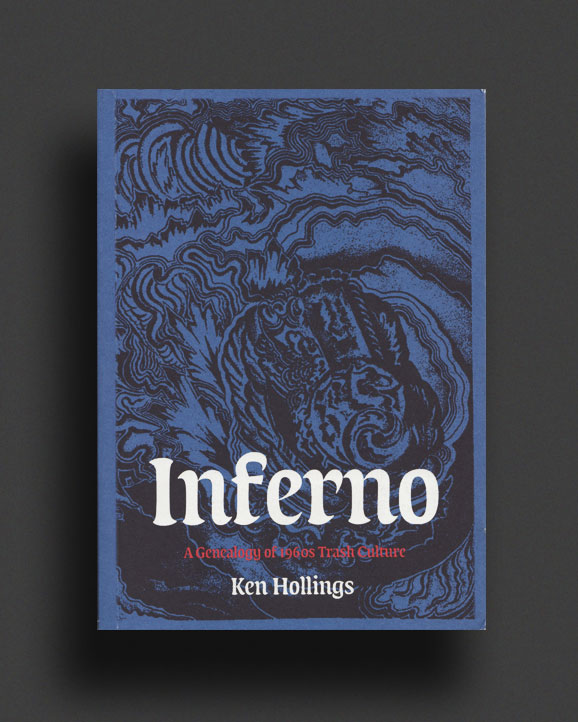
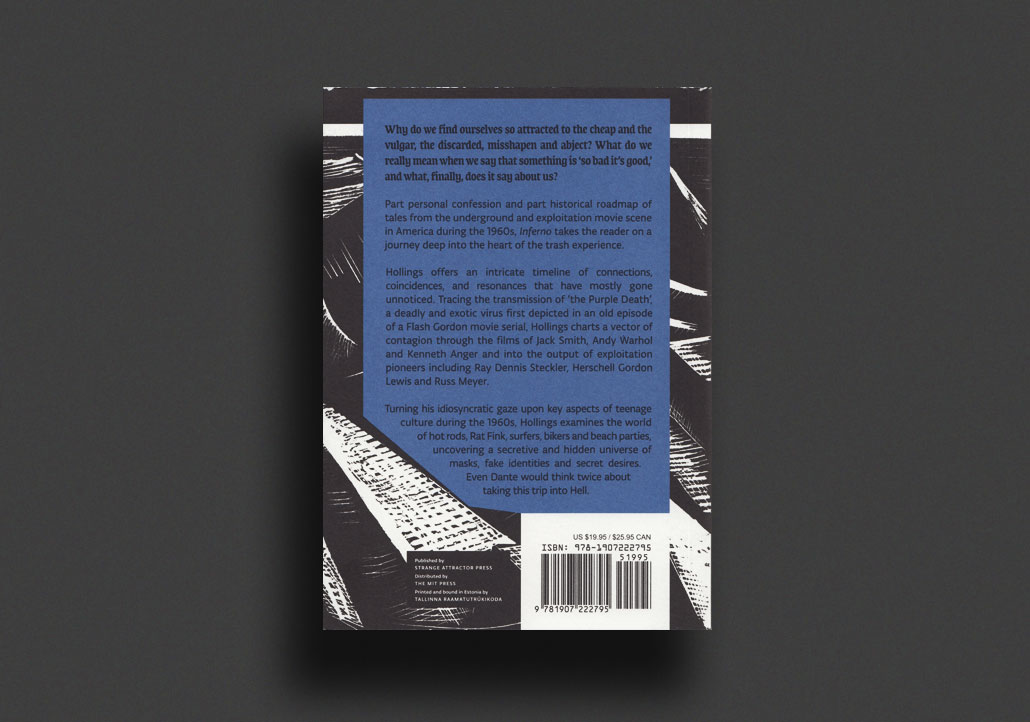
A journey deep into the heart of the trash experience: tales from the underground and
exploitation movie scene in America during the 1960s.
“Trash has always served me well—over the years it has become the outer form and material expression of my dreams: of tomorrow, of life in space, of the blissful alienation from this world that I have always craved.”—from Inferno
So begins the first part of this personal inquiry into the world of trash by writer and theorist Ken Hollings. Why do we find ourselves so attracted to the cheap and vulgar, the discarded, the misshapen and the abject? What do we really mean when we say that something is “so bad it’s good,” and what finally does it say about us? Part personal confession and part historical roadmap of tales from the underground and exploitation movie scene in America during the 1960s, Inferno takes the reader on a journey deep into the heart of the trash experience.
With Inferno, Hollings offers a complex and intricate timeline of connections, coincidences, and resonances that have mostly gone unnoticed. He traces the transmission of “the Purple Death,” a deadly and exotic virus first depicted in an old episode of a Flash Gordon movie serial, through the films of Jack Smith, Andy Warhol, and Kenneth Anger and into the output of such exploitation pioneers as Ray Dennis Steckler, Hershel Gordon Lewis, and Russ Meyer. Hollings also turns his idiosyncratic gaze upon key aspects of teenage culture during the 1960s, including hot rods, “Rat Fink,” surfers, bikers, and beach parties, uncovering a secretive and hidden universe of masks, fake identities, and secret desires. Even Dante would think twice about taking this trip into Hell.
1983 / 1986 Ed., English
Softcover, 96 pages, 20.5 x 22 cm
Out of print title / used / very good
Published by
Currey O'Neil / Melbourne
$190.00 - In stock -
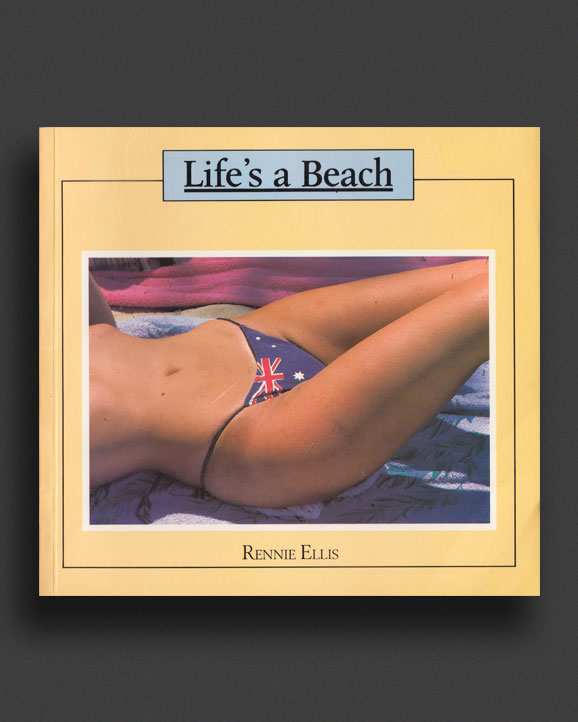
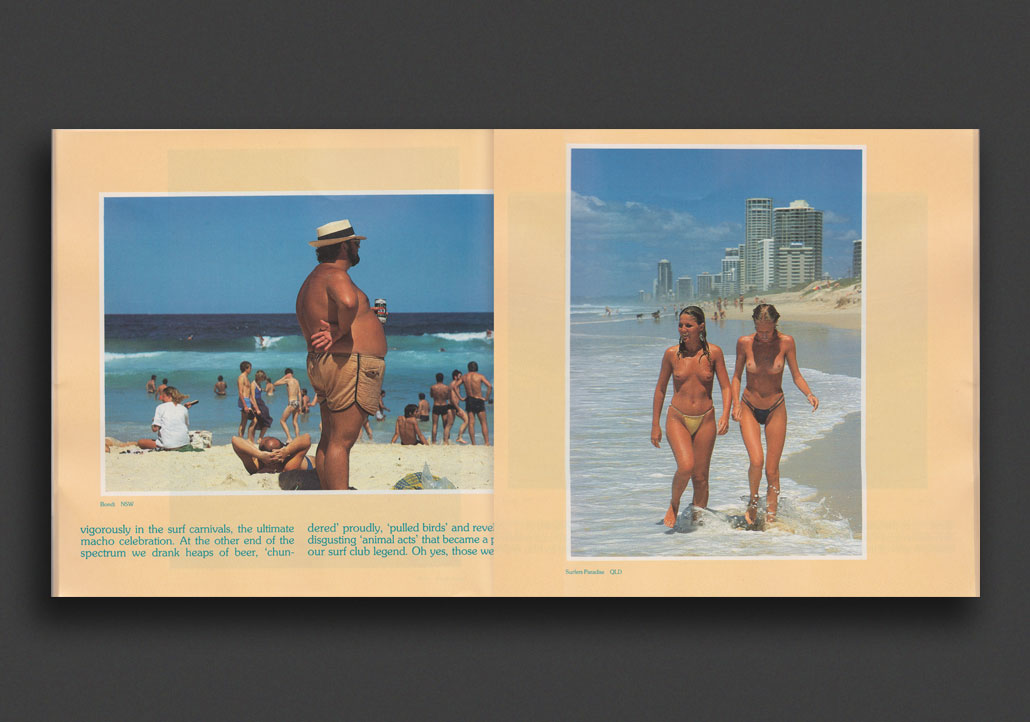
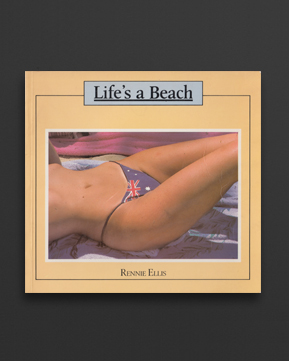
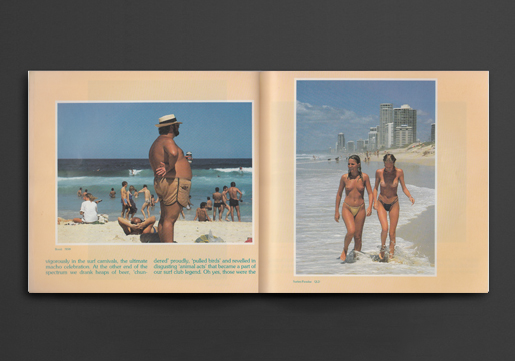
Award winning Australian photographer Rennie Ellis' cult classic photo-book, "Life's A Beach", first published in Melbourne in 1983. Steeped in beach lore since his early days as a lifesaver and surfer, Ellis put together this vivid collection of quintessential images of Australian beach life with great affection and insight. These early 1980's photographs shimmer with summer light and a graceful, infectious sensuality - the greatest photographic collection of Australian beach culture put to paper.
"On the beach we chuck away our clothes, our status and our inhibitions and engage in rituals of sun-worship and baptism. It's a retreat to our primal needs." Rennie Ellis
No other photographer has documented Australian society in such depth and with such insight into the human condition as Rennie Ellis. Active from the 1970s until his death in 2003, Rennie Ellis' non-judgmental approach was his 'access-to-all-areas' pass. Ellis used his camera as a key to open the doors to the social arenas of the rich and famous and to enter the underbelly of the nightclubs, bearing witness to the indulgences and excesses. In today's post-Henson era, these captured moments offer an intimate access to an Australia tantalisingly, but sadly, now almost out of reach.
As New copy except for light creasing to covers. Otherwise a perfectly kept unread deadstock copy.
1988, English
Softcover (staple-bound), 10 pages, 15 x 21 cm
Out of print title / Used*,
Published by
E.G. Smith Press / Ohio
$10.00 - Out of stock
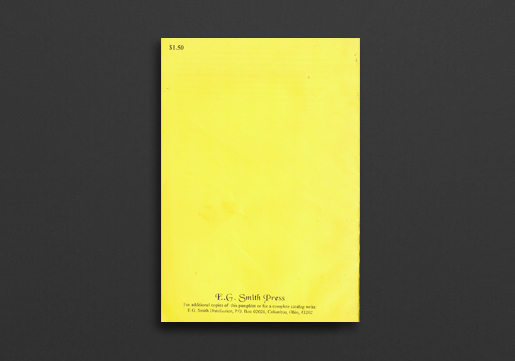
Written at the end of the 1980's, and since published by Ohio's E.G. Smith Press, this pamphlet presents the personal account of French-Canadian Yves Bourque's account of prison "From Outisde" and "From the Inside".
1990, Japanese
Softcover, 112 pages, 30 x 22.5 cm
1st Edition, Out of print title / used / good
Published by
Studio Voice / Tokyo
$30.00 - Out of stock
1990 ACID AGE issue of Japan's esteemed "multi-media mix" magazine STUDIO VOICE, a cultural magazine dedicated to the cutting-edge of music, fashion, technology, the arts, film, video games, and literature. Cover feature is a primer on ACID through the ages, 1960-1990, the music, philosophy, literature, art, drugs, fashion... from William S. Burroughs, Philip K. Dick, KLF, Syd Barrett, DAF, Timothy Leary, Manuel Göttsching, Antwerp 6, Throbbing Gristle, Kraftwerk, Detroit Techno, etc., also the work of fashion designer Mitsuhiro Matsuda, musician Susumu Hirasawa, photographer Javier Vallhonrat, Amy Arbus, Studio V, and more.
Good copy.
1968?, English
Softcover (staple-bound), 48 pages, 24 x 18.5 cm
Out of print title / used / good
Published by
Bootleg / Australia
$120.00 - Out of stock
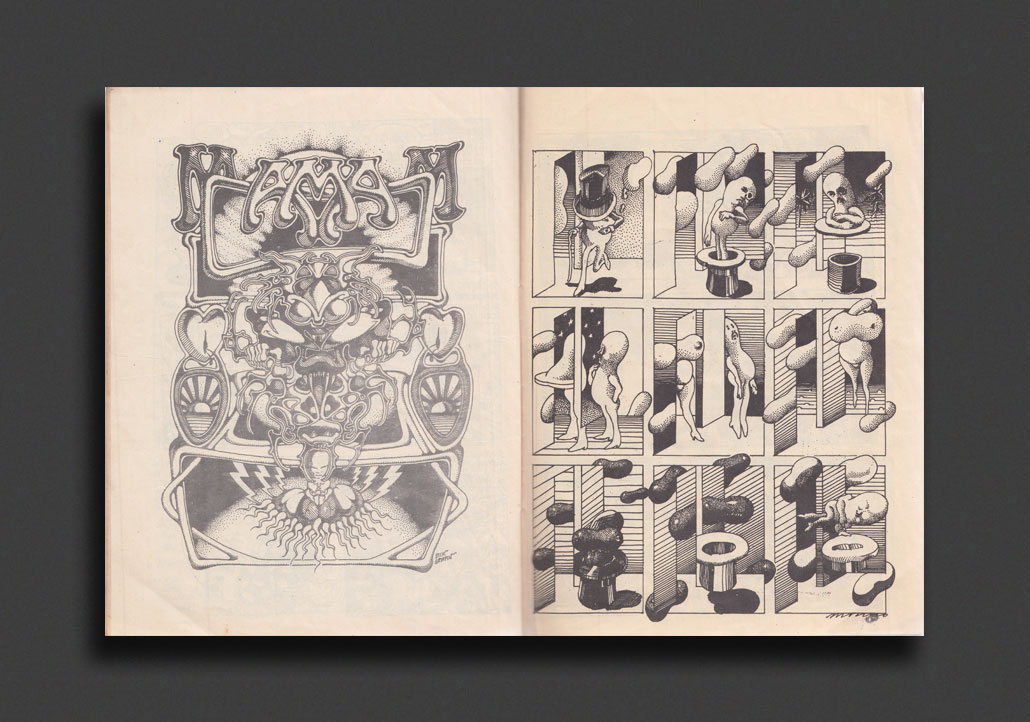
Super scarce Australian bootleg version of Zap Comix #2, featuring the work of Robert Crumb, Rick Griffin, Victor Moscoso, and S. Clay Wilson! Legend has it somewhere in the late 1960s/1970s first editions of US underground comix (such as Zap Comix, Freak Brothers, Bijou Funnies, Young Lust, Mean Bitch Thrills, Slow Death, Skull, etc.) were cheaply bootlegged here in Australia to give a broader distribution to titles that were not traveling this far across the waters (possibly by the late, great Bob Gould of Gould's Book Arcade or ex-pat comic collector Pat Woolley...). These are interesting publications in their unusual formats and colour variations from the authentic originals, mostly single colour reproductions on soft newsprint stock. With the cover prices also blanked out, they are crude, immediate and exquisite creations that seem to perfectly embody the spirit of underground press. These are some of the most unique and little-known variations on these classic underground comix out there.
Officially published by Apex Novelties, Zap Comix was an underground comix series and one of the most iconic of the late 1960s counterculture. While a few small-circulation self-published satirical comic books had been printed prior to this, Zap became the model for the "comix" movement that snowballed after its release. Premiering in early 1968 as a showcase for the work of Robert Crumb, Zap was unlike any comic book sensibility that had been seen before. The first issue of Zap was sold on the streets of Haight-Ashbury out of a baby stroller pushed by Crumb's wife Dana on the first day. In years to come, the comic's sales would be most closely linked with alternative venues such as head shops. After the success of the first issue, Crumb opened the pages of Zap to several other artists, including S. Clay Wilson, Robert Williams, "Spain" Rodriguez, Gilbert Shelton, and two artists with reputations as psychedelic poster designers, Victor Moscoso and Rick Griffin. This stable of artists, along with Crumb, remained mostly constant throughout the history of Zap.
Good considering. Some colouring added to the covers by previous owner with a red and green marker, decent spine and corner wear, damage to back cover, but all the more character for it! Interior is nicely kept. Features non-cropped "Head First" comic.
1970?, English
Softcover (staple-bound), 26 pages, 25 x 17 cm
Out of print title / used / good
Published by
Bootleg / Australia
$50.00 - Out of stock
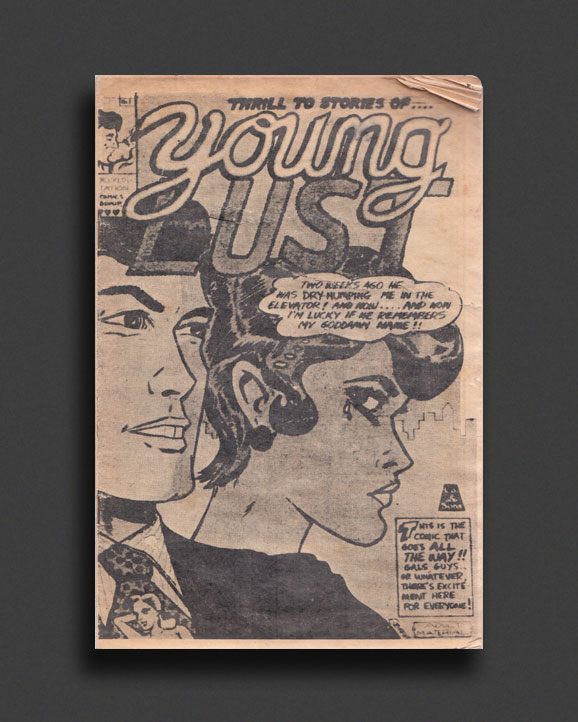
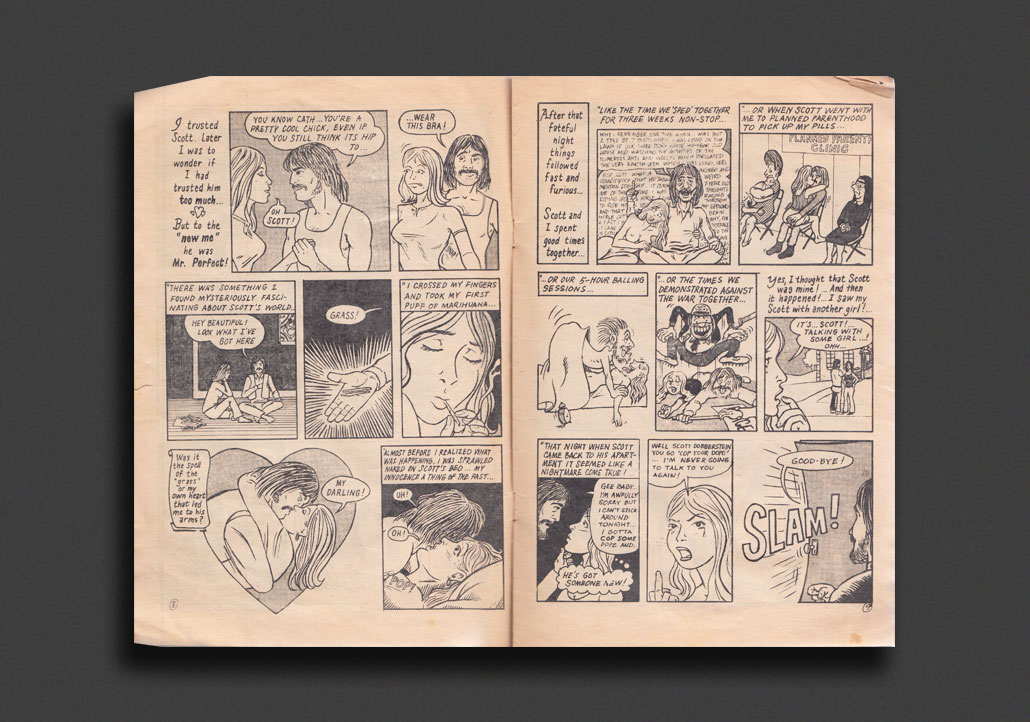
Super scarce Australian bootleg version of Young Lust #1, featuring the work of Bill Griffith, Jay Kinney, Art Spiegelman, and more! Legend has it somewhere in the late 1960s/1970s first editions of US underground comix (such as Zap Comix, Freak Brothers, Bijou Funnies, Young Lust, Mean Bitch Thrills, Slow Death, Skull, etc.) were cheaply bootlegged here in Australia to give a broader distribution to titles that were not traveling this far across the waters (possibly by the late, great Bob Gould of Gould's Book Arcade or ex-pat comic collector Pat Woolley...). These are interesting publications in their unusual formats and colour variations from the authentic originals, mostly single colour reproductions on soft newsprint stock. With the cover prices also blanked out, they are crude, immediate and exquisite creations that seem to perfectly embody the spirit of underground press. These are some of the most unique and little-known variations on these classic underground comix out there.
Officially published by Print Mint, Young Lust was an underground comix anthology published sporadically from 1970 to 1993. The title, which parodied 1950s romance comics such as Young Love, was noted for its explicit depictions of sex. Unlike many other sex-fueled underground comix, Young Lust was generally not perceived as misogynistic. Founding editors Bill Griffith and Jay Kinney gradually morphed the title into a satire of societal mores. According to Kinney, Young Lust "became one of the top three best-selling underground comix, along with Zap Comix and The Fabulous Furry Freak Brothers." Young Lust featured an all-star lineup of underground, and later alternative, cartoonists. Besides Griffith and Kinney, other frequent contributors included Justin Green, Roger Brand, Spain Rodriguez, Diane Noomin, Kim Deitch, Paul Mavrides, Michael McMillan, Ned Sonntag, Phoebe Gloeckner, and Harry S. Robins. In later years, the title was a showcase for female cartoonists like Gloeckner, M. K. Brown, Carol Lay, and Jennifer Camper; as well as rising alt-comics creators like Daniel Clowes, Charles Burns, Terry LaBan, and Lloyd Dangle.
Good considering. Decent creasing, tanning and general wear, but all the more character for it!
1994, English
Softcover (staple-bound), 24 pages, 21 x 15 cm
1st UK Edition, Out of print title / used / very good
Published by
Temple Press Limited / Brighton
$75.00 - Out of stock
First UK expanded edition of Brion Gysin's instructional manual to create what is "probably the first visual device to be viewed with your eyes closed", his famed Dreamachine. Published by Temple Press Limited in Brighton, Sussex.
From the Introduction : "The Dreamachine was devised by Brion Gysin, artist, traveller, writer and alchemist; one of the unsung English painters of the 20th Century, expelled by Breton from the Surrealists, and the seminal influence who introduced William Burroughs to the use of permutations and cut-ups in writing... The Dreamachine arose from his observations of the effects of passing rapidly through a vale of trees, the flickering of sunlight causing him to enter into an altered state of consciousness." [...]
The Dreamachine (or Dream Machine) is a stroboscopic flicker device that produces visual stimuli. In its original form, a Dreamachine is made from a cylinder with slits cut in the sides. The cylinder is placed on a record turntable and rotated at 78 or 45 revolutions per minute. A light bulb is suspended in the center of the cylinder and the rotation speed allows the light to come out from the holes at a constant frequency of between 8 and 13 pulses per second. This frequency range corresponds to alpha waves, electrical oscillations normally present in the human brain while relaxing.
Brion Gysin (1916–86) has been an incredibly influential artist and iconoclast: his development of the “cut-up” technique with William S. Burroughs has inspired generations of writers, artists and musicians. Gysin was also a skilled networker and revered expat: together with his friend Paul Bowles, he more or less constructed the post-beatnik romanticism for life and magic in Morocco, and was also a protagonist in an international gay culture with inspirational reaches in both America and Europe. Not surprisingly, Gysin has become something of a cult figure.
Good condition, light spine creasing to stapled red and black printed wraps, otherwise very good throughout.
2019, English
Hardcover, 256 pages, 24 x 29 cm
Published by
Lecturis / Eindhoven
$80.00 - Out of stock
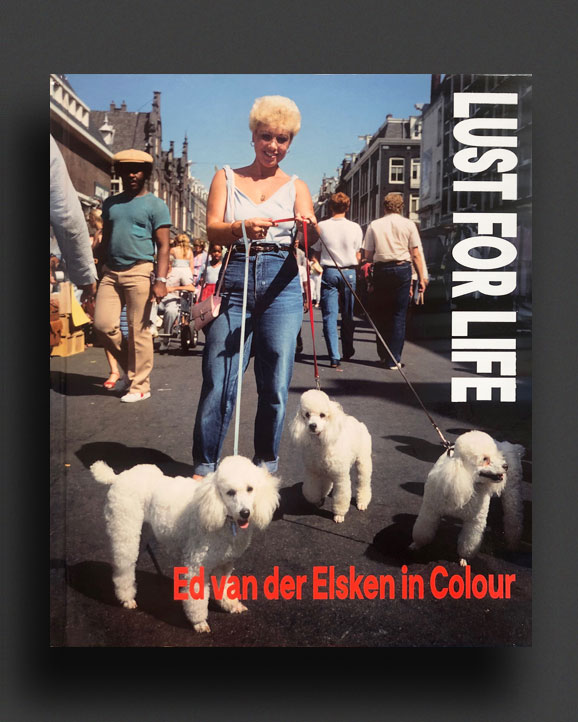
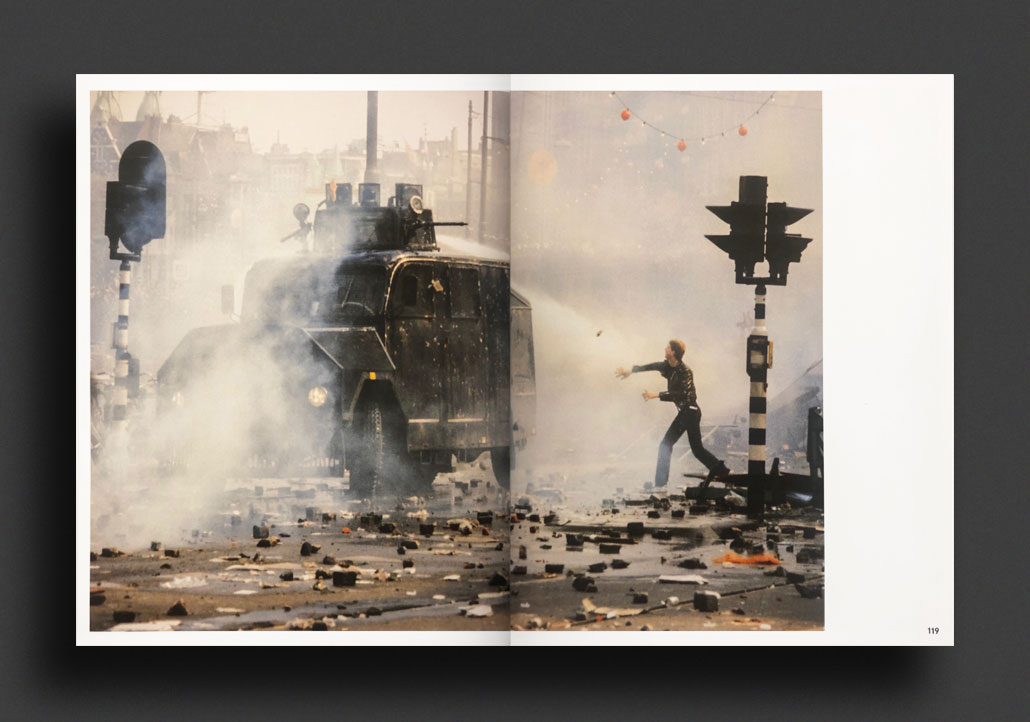
This is the first complete overview of Ed van der Elsken’s work in colour. Although the Dutch photographer became world-renowned for his black-and-white images, much of his body of work was actually made in colour. He began with colour photos in the early 1950s in Paris, and by the late ’60s he almost exclusively took pictures in colour, such as for his travel reportages. ‘Lust for Life’ follows Van der Elsken’s evolution as a “colour photographer” and places this work in an art historical context. Besides relatively unknown and previously unpublished images, it also details the massive, two-year project to restore Van der Elsken’s slides by the Nederlands Fotomuseum.
1969, German
Hardcover (w. dust jacket), 200 pages, 20.5 x 20.5 cm
1st Edition, Out of print title / used / very good
Published by
Büchergilde Gutenberg / Frankfurt
$200.00 - Out of stock
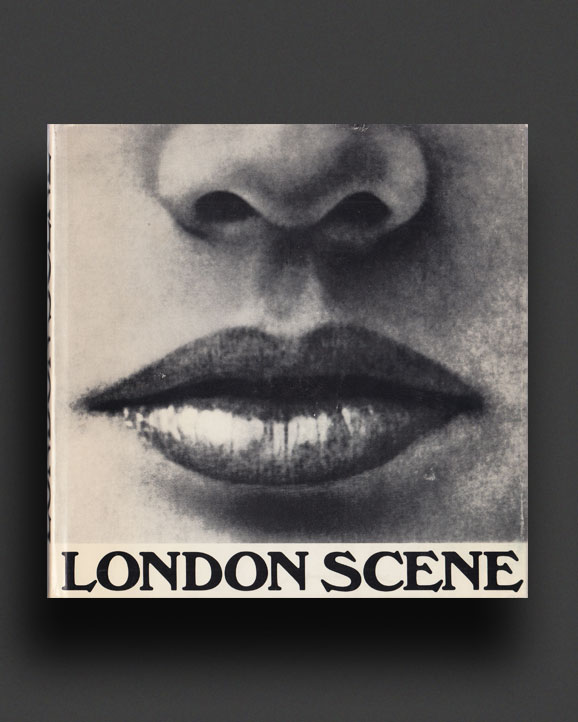
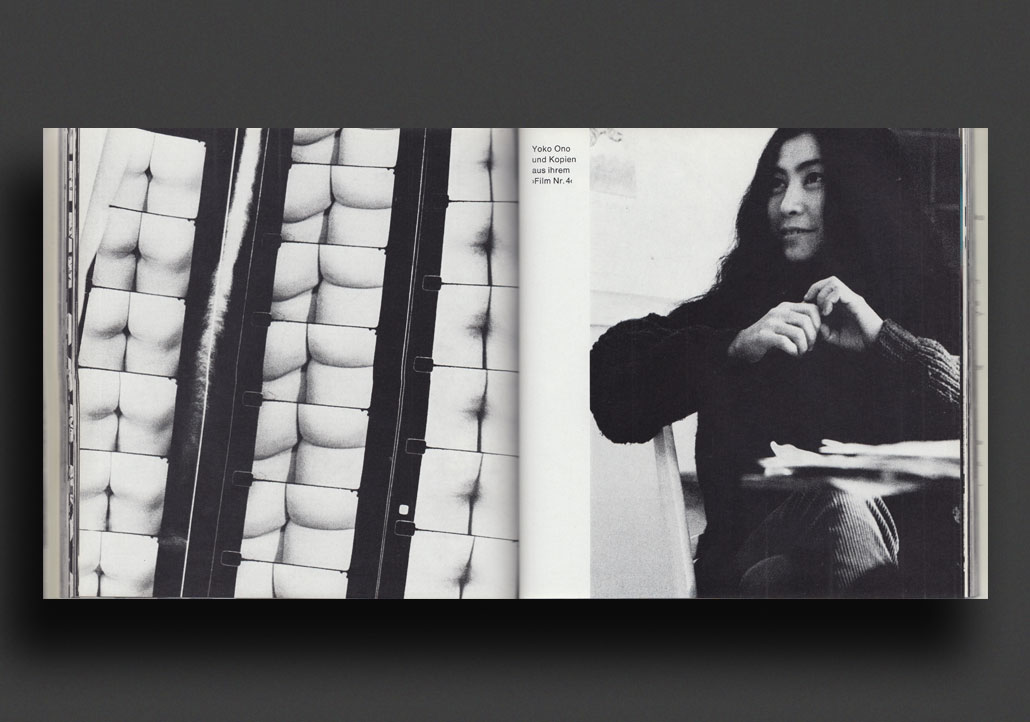
Scarce first hardcover edition of the cult "London Scene" photo-book from 1969. Beautifully documented through hundreds of black and white photographs, this German book captured the atmosphere, fashion, politics and day-to-day life of London's counterculture (from OZ to Yoko Ono to The UFO Club) in the radically changing climate of 1960s Britain. "The adventure of a new generation: long hair, short skirts, pearl necklaces and large-flowered shirts are not everything. The phenomenon of hippie subculture eludes scholarly generalizations" - from publisher's blurb. Includes quotes throughout from British alternative press, politicians, literary figures and pop stars alike (Lennon, John Peel, Churchill, Oscar Wilde, etc.), plus German introductory texts by the authors, and a glossary of terms, hippie slang, and clubs in London.
Very Good copy in Very Good dust jacket.
1983, English
Softcover, 96 pages, 20.5 x 22 cm
1st Edition, Out of print title / used / good
Published by
Currey O'Neil / Melbourne
$140.00 - Out of stock
First 1983 edition of award winning Australian photographer Rennie Ellis' cult classic photo-book, "Life's A Beach", published in Melbourne in 1983. Steeped in beach lore since his early days as a lifesaver and surfer, Ellis put together this vivid collection of quintessential images of Australian beach life with great affection and insight. These early 1980's photographs shimmer with summer light and a graceful, infectious sensuality - the greatest photographic collection of Australian beach culture put to paper.
"On the beach we chuck away our clothes, our status and our inhibitions and engage in rituals of sun-worship and baptism. It's a retreat to our primal needs." Rennie Ellis
No other photographer has documented Australian society in such depth and with such insight into the human condition as Rennie Ellis. Active from the 1970s until his death in 2003, Rennie Ellis' non-judgmental approach was his 'access-to-all-areas' pass. Ellis used his camera as a key to open the doors to the social arenas of the rich and famous and to enter the underbelly of the nightclubs, bearing witness to the indulgences and excesses. In today's post-Henson era, these captured moments offer an intimate access to an Australia tantalisingly, but sadly, now almost out of reach.
Good-Very Good copy.
Some spotting and light crease to back cover and pages.
1973-74, English
Softcover, 500 plus pages, 28 x 21 cm
1st Edition, Out of print title / used / very good
Published by
Earth Garden / Balmain
$200.00 - Out of stock
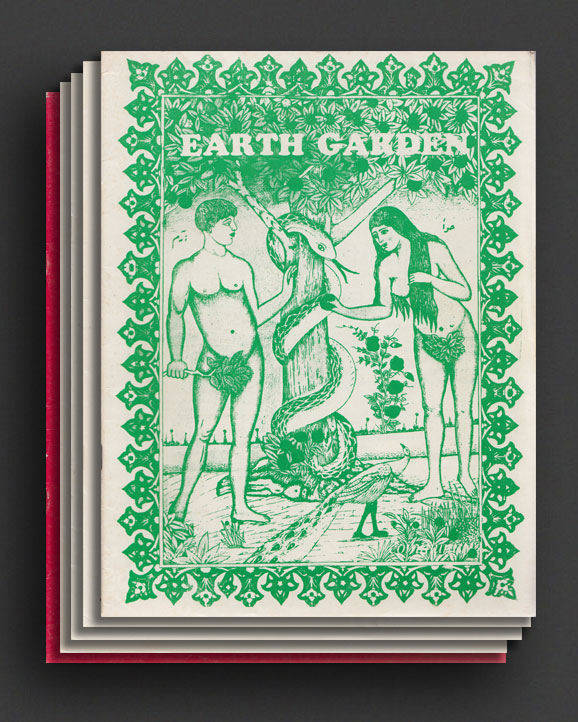
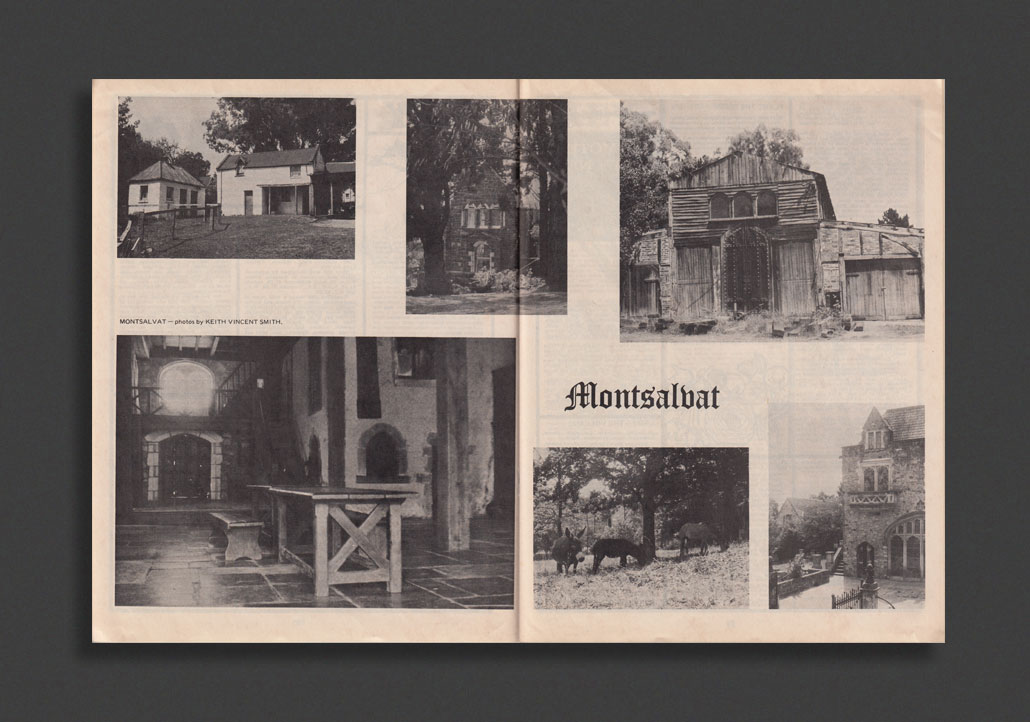
A tool-box and a time-capsule; complete set of issues 1-10 of the amazing Earth Garden magazine, edited by Keith Vincent Smith and Irene Smith and published in Balmain NSW between 1972-1974. The Australian Whole Earth!
"EARTH GARDEN presents a range of natural life-styles. It is intended as a key to sources, practical ideas and alternatives to the nine-to-five drag. EARTH GARDEN is concerned with the back-to-the-earth movement, surviving in the city, living in the country, organic gardening, community, outdoors, food and diet, living more with less, and the inner changes which follow when you are in tune with Nature. Let us lead you up EARTH GARDEN'S path to the good life. There are no advertisements in EARTH GARDEN, books, places and products recommended are those we think relevant."
The combined 500-plus pages of these 10 issues cover everything, including dome building, bush foraging, sun cults, edible flowers, Montsalvat, hydroponics, mud building, food co-ops, natural dyes, bee-lore and bee-keeping, raku firing, Australian communes, Robert Rodale, suburban farms, planting charts, wholefoods, the Feedwell Family, macrobiotics, fruit wines, Neil Douglas, veganism, fallout shelters, goats, Nimbin, Clifton Pugh, bamboo flutes, animal care, mushrooms, A-frames, school farms, bio-dynamics/Rudolf Steiner, Shalom, banana-gas, weaving, solar and wind power, pottery, clothing, cooking... you get the idea - just the surface. Articles, guides, stories and interviews with so many Australian practitioner's of harmonious living, all heavily illustrated with photographs and drawings. A real treasure and more important than ever!
All very good with only light wear/ageing.
1985, English
Softcover, 64 pages, 24.5 x 16.5 cm
1st Edition, Out of print title / used / good
Published by
IWD Press / Sydney
$45.00 - Out of stock
"A History of International Women's Day (in Words and Images)" by Joyce Stevens was published in Sydney in 1985 by IWD Press. This great publication documents the history of International Women's Day, tracing its origins (around 1910) and development across the world throughout the generations since, with particular focus on the 1950s-1980s and detailed information on activities in and around Sydney, Australia, where the author was based. Heavily illustrated throughout with photographs documenting IWD marches, protests, concerts, theatre, benefits, posters, ephemera, and much more. A wonderful resource.
"Over the years, International Women's Day (IWD) has taken to the streets, sparked off a revolution, met cosily at luncheons and concerts, rubbed shoulders with Premiers, Prime Ministers and Mayors, demonstrated at the doors of newspapers and welfare institutions, occupied empty houses intent on gaining shelter for homeless women and has ushered in reform legislation.
The history of IWD dates back to 1910 internationally and, in Australia, to 1928. But socialist women in the United States organised the first national Women's Day in 1908 and helped to inspire the international event.
The day has been variously seen as a time for asserting women's political and social rights, for reviewing the progress that women have made, or as a day for celebration. In keeping with its early radical traditions, Lena Lewis, U S. socialist, declared in 1910 that it was not a time for celebrating anything, but rather a day for anticipating all the struggles to come when" we may eventually and forever stamp out the last vestige of male egotism and his desire to dominate over women""
Joyce Stevens (1928–2014) was a prominent Australian activist and writer in the left, union and feminist movements. Stevens was an historian of the Women’s Movement, authoring three major publications ("A History of International Women's Day" (1985), "Taking the Revolution Home – Work Among Women in the Communist Party of Australia – 1920-1945" (1987), "Lightening the Load: Women at Work – A History of WEAC 1982-1989" (1991)) and helping to produce the first Women's Liberation newspaper in Australia, Mejane and Australia's first socialist-feminist magazine, Scarlet Woman. Her contribution, influence and impact were enormous.She helped set up the Control Abortion Referral Service which established the first two women's health centres in Sydney - at Leichhardt and Liverpool. She worked for the Women's Employment Action Centre (WEAC) on its register of women in non-traditional jobs and in their attempts to establish a comparable worth case between pay rates in traditional female and male occupations. Joyce became part of that section of the CPA which was working for a renewal of its "socialist vision" drawing on feminist, environmental, Aboriginal and multicultural aspirations. In 1991 she supported the dissolution of the CPA believing that new forces and forms of organisation were needed for the renewal of left politics.
In 1996 Joyce received an Order of Australia (AM) for "service to social justice for women as an activist and writer"
Good copy with light general wear, foxing, creasing to covers, light tanning.
2019, English
Hardcover, 144 pages, 23 x 33 cm
Published by
Fulgur Press / UK
$115.00 - In stock -
Between 1968 and 1971, in a loft on New York's Jefferson Street, the poet, photographer and filmmaker Ira Cohen created some of the most mythic images of the late 1960s. Inspired by his friends Jack Smith and Bill Devore, Cohen’s initial experiments with black light developed into an experimental ritual space he termed the Mylar Chamber—a simple room of hinged boards hung with reflective Mylar film. Through his extended network, and with the support of artist and set designer Robert LaVigne, Cohen invited visitors to play another self within this small theater, among them Jimi Hendrix, William Burroughs, Vali Myers, Jack Smith, Angus MacLise, Alejandro Jodorowsky, Lionel Ziprin, Ching Ho Cheng, Petra Vogt, Charles Ludlam, John McLaughlin and the rock group Spirit.
In December 1969, in a summary of the past decade, Life magazine declared that “few came as close to explaining the euphoric distortions of hallucinogenics” as Cohen through his Mylar Chamber photographs, but the full story draws upon much deeper ideas surrounding identity and the power of the image.
This is the first book to explore Cohen’s iconic Mylar Chamber photographs. Published on the 50th anniversary of the Life magazine feature, and with several gatefolds, it includes more than 70 images from this intensely creative period, each digitally restored from the original negatives by Cohen’s friend and collaborator, Ira Landgarten. It also includes an interview with Cohen, excerpts from his poetry, critical writing from Allan Graubard and Ian MacFadyen and further reflections from Timothy Baum, Alice Farley and Thurston Moore.
Ira Cohen was born in the Bronx in 1935. A countercultural renaissance man, Cohen made films, photographs and poetry, edited the magazine Gnaoua and authored The Hashish Cookbook. Cohen became well known for his 1968 movie using the Mylar technique, The Invasion of Thunderbolt Pagoda, soundtracked by Angus MacLise, the original drummer of the Velvet Underground. In 2008 Nina Zivancevic, writing in NY Arts magazine, described Cohen’s life as “a sort of white magic produced by an alchemist who turned his back on the establishment in order to find God, art and poetry.” He died in 2011.
“Looking at your pictures is like looking through butterfly wings.” – Jimi Hendrix
1971, English
Hardcover, 82 pages, 29 x 21 cm
1st Edition, Out of print title / used / good
Published by
Thomas Nelson / Melbourne
$100.00 - Out of stock
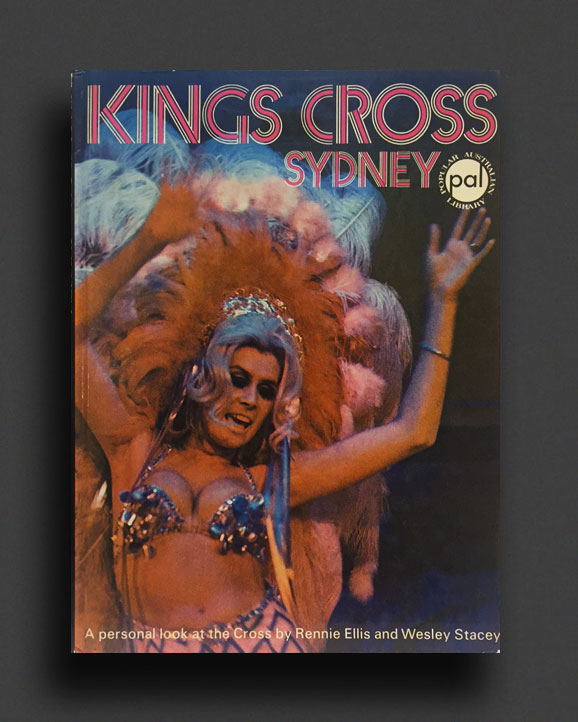
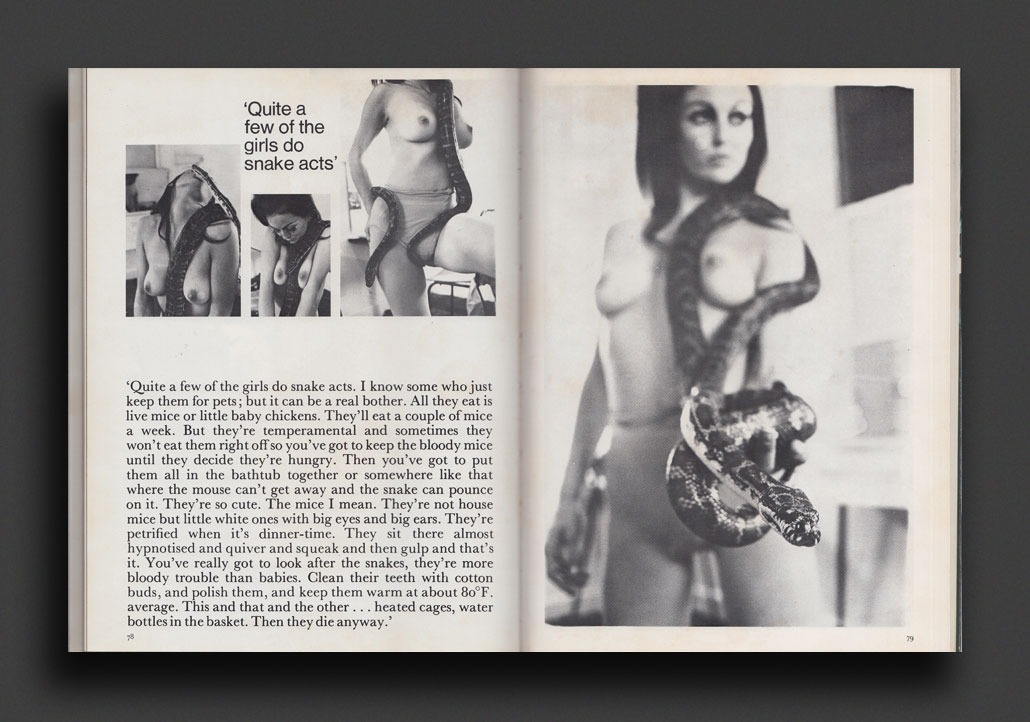
First hardcover edition of this Australian photo-book classic. In 1971, photographer Rennie Ellis and co-photographer and close friend, Wesley Stacey, published Kings Cross Sydney, which, as Ellis puts it "examines the surface glitter and underground guts of the Cross". An intimate look at the height of Kings Cross, before gentrification and controversial lock-out laws had their way with it. Illustrated throughout with black and white and colour photographs alongside quotes and stories from/about local residents (inc. the "Witch of Kings Cross", Rosaleen Norton), workers, businesses, controversies, and politics of Kings Cross. Colloquially known as The Cross, The Kings Cross district was Sydney's bohemian heartland from the early decades of the 20th century, known for its music halls and grand theatres and home to a large number of artists, writers, poets and journalists. From the 1960s onwards Kings Cross came to serve as the city's red-light district and entertainment mecca.
"Between the time when work was begun on this book and its appearance in the shops, Kings Cross has continued in its haphazard state of flux. The park at the El Alamein Fountain has been paved, the 'full
reveal' has become standard in the strip clubs, several night spots have gone out of existence and others
have opened in their places, Rose the Flower Seller has died, as have Tilly Devine, Chips Rafferty and
Kenneth Slessor, Sammy Lee has grown a moustache, and many more old buildings have crumbled under
the wreckers' hammers. Yet, the book remains a valid statement about the changing society it reflects because its images freeze moments in time that will forever remain symbols of the unusual character of the Cross. With their cameras Rennie Ellis and Wesley Stacey have penetrated the slick veneer of life at Kings Cross and revealed the beauty and the pathos, as well as the seaminess, which lurk beneath the tinsel glitter. The affinity which the authors feel for the place, the people, and their attitudes, has resulted in
an honest appraisal which may sadden, amuse, shock or repel, but never fair to intrigue those who read or look at the book."
"Over a period of six months the authors made frequent forays into the Cross armed with their cameras
and tape recorder. It was only by becoming known to the locals that they were able to record some of
the remarkable scenes in this book. Nevertheless, there is much that they learned about the Cross
which can only be hinted The laws of libel and the threats of bashings ensure a diplomatic silence. As
one of the authors put it: 'When a guy pulls a pistol on you and says that he's going to shoot you, you know
that it's time to put away your camera and retire gracefully.'"
Good copy with some edge wear and light spotting.
1978, English
Softcover, 24 x 21.5 cm
1st Edition, Out of print title / used / very good
Published by
Harmony Books / New York
$300.00 - Out of stock
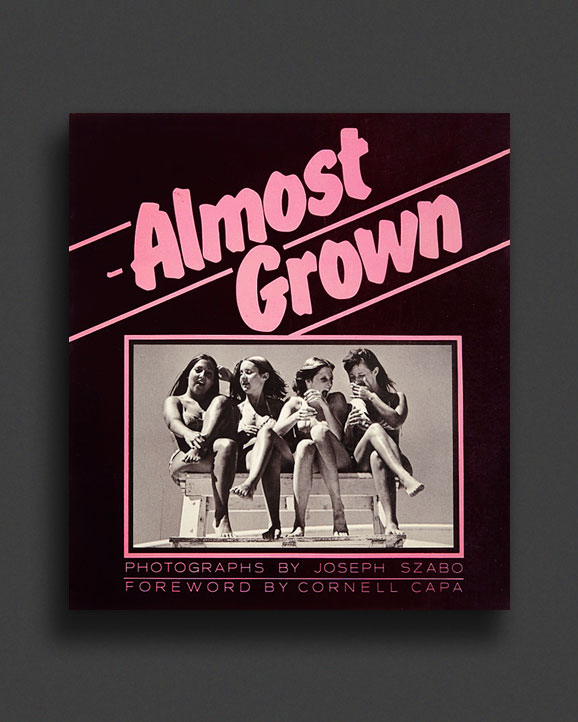
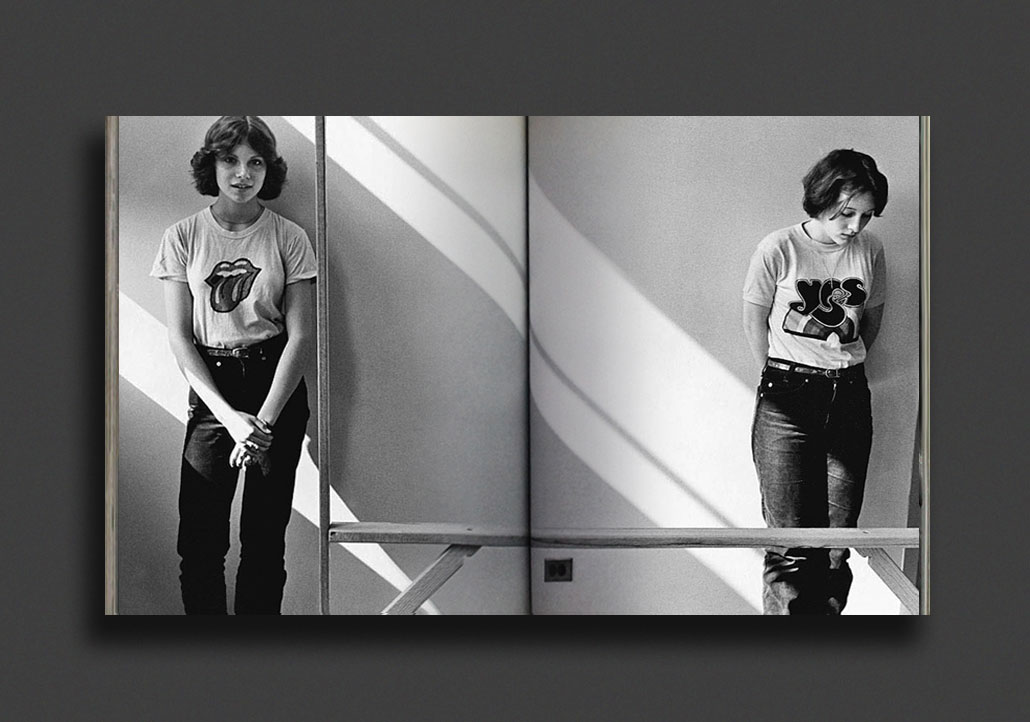
Very scarce copy of the only printing of American photographer Joseph Szabo's 1978 cult photo-book "Almost Grown". A masterpiece of intimate photographs capturing a time of innocence and blossoming sexuality, of tenderness and raucousness. Almost Grown celebrates in photographs and poetry the joys and uncertainties of that paradoxical time when we are no longer children and yet are not quite adults. "... an unusual collaboration between teacher and teenager, a funny and romantic look at teenagers looking at themselves. Theirs is a world rarely witnessed by parents. Here is what kids do together - at the beach or the drive-in, during and after school - what they themselves describe as "doing nothing" because it is neither work nor play. In ninety photographs and twenty-five poems written by teenagers in Alan Ziegler's writing workshops, Almost Grown dramatizes and clarifies adolescence, making it familiar, sensual, and charged with the shock of recognition." - Joseph Szabo
Foreword by Cornell Capa. Poetry collected by Alan Ziegler. Designed by Bea Feitler
Joseph Szabo is a teacher, photographer and author. He taught photography and art at Malverne High School on Long Island for 27 years and for over 20 years at the International Center of Photography in Manhattan. His 1978 book, “Almost Grown,” featured many of his students and was acclaimed as one of the “Best Books of the Year” by the American Library Association. In the book’s forward, legendary photojournalist and Founder of the International Center of Photography Cornell Capa, wrote that “…in Szabo’s hands, the camera is magically there, the light is always available, the moment is perceived, seen, and caught.”
Throughout the 80s and 90s, “Almost Grown” attained cult classic status in the fashion world, prompting Vogue editor Grace Coddington to notice that “all the young fashion photographers were looking at Joe’s photographs as their bible.”
First edition. Very Good copy, with light edge wear and previous owner's name to first blank.
1977, English
Softcover, 56 pages, 23 x 18 cm
1st Edition, Out of print title / used / good
Published by
NFS Press / San Francisco
$600.00 - Out of stock
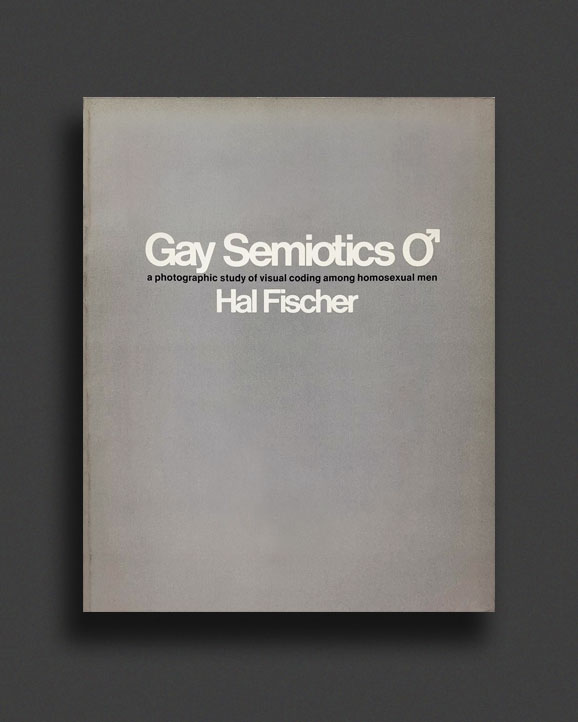
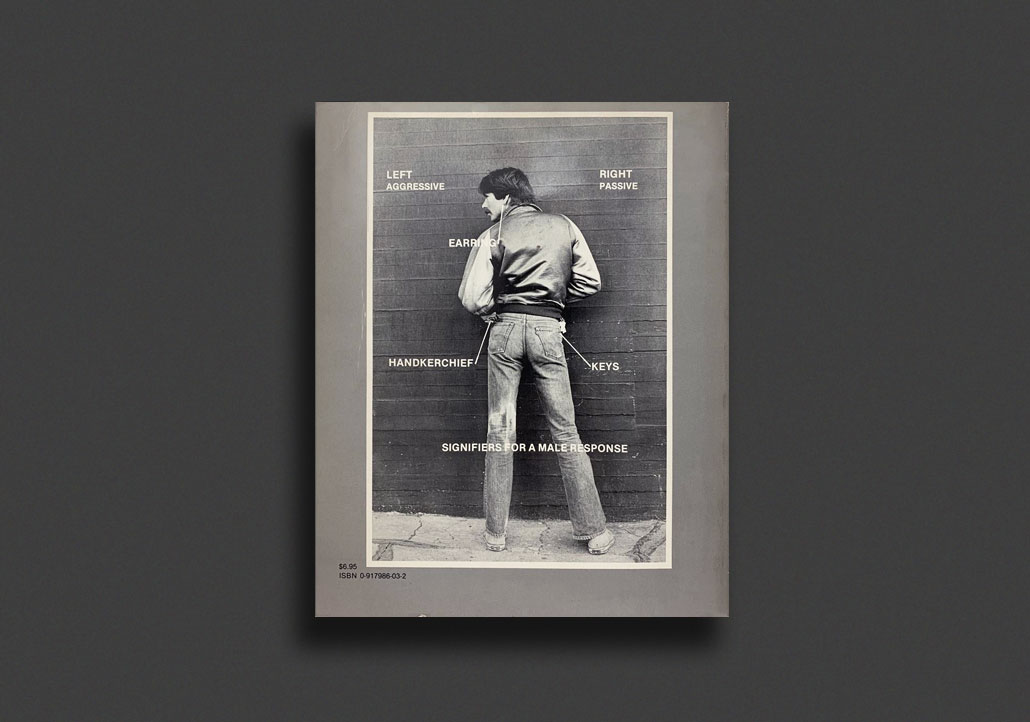
Very scarce first 1977 edition of Hal Fischer's Gay Semiotics: A Photographic Study of Visual Coding Among Homosexual Men (1977), one of the most important publications associated with California conceptual photography in the 1970s. The photographs in Gay Semiotics present the codes of sexual orientation and identification Fischer saw in San Francisco's Castro and Haight Ashbury districts, ranging from such sexual signifiers as handkerchiefs and keys to depictions of the gay fashion "types" of that era--from "basic gay" to "hippie" and "jock." Gay Semiotics also features Fischer's critical essay, which is marked by the same wry, anthropological tone found in the image/text configurations. Fischer's book circulated widely, finding a worldwide audience in both the gay and conceptual art communities. Fischer's insistence on the visual equivalence of word and image is a hallmark of the loose photography and language group that included Fischer, Lutz Bacher, Lew Thomas and others working in the San Francisco Bay Area. First published as an artist's book in 1978 by NFS Press, at a time when gay people had been forced to both evaluate and defend their lifestyles, Gay Semiotics earned substantial critical and public recognition. Thirty-seven years later, the book remains a proactive statement from a voice within the gay community from a moment in history just before the devastation wrought by AIDS.
Hal Fischer (born 1950) grew up in Highland Park, Illinois. He arrived in San Francisco in 1975 to pursue an MA in photography at San Francisco State. He was soon featured in the important group exhibition Photography and Language. Through his work as an art reviewer and photographer, he soon became embedded in the Bay Area's artistic and intellectual scene. He continues to live and work in San Francisco.
First edition, Good copy with general light wear and tanning to page/cover edges.
1985, English
Softcover, 96 pages, 20.5 x 22 cm
1st Edition, Out of print title / used / good
Published by
Currey O'Neil / Melbourne
$80.00 - Out of stock
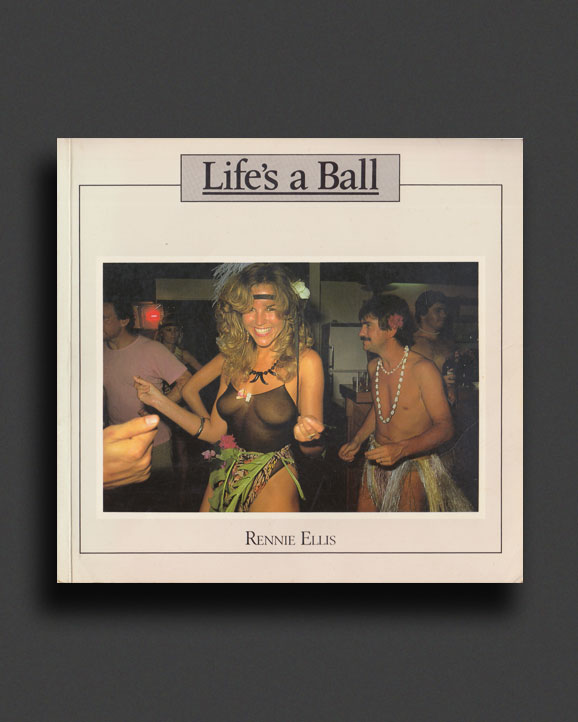
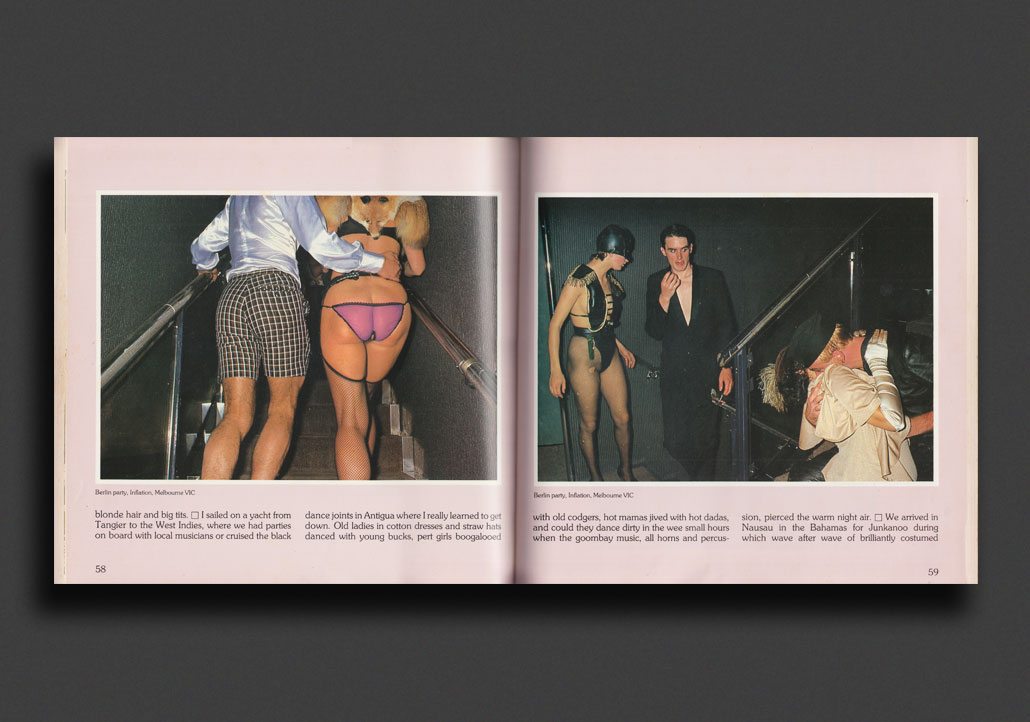
First edition of award winning Australian photographer Rennie Ellis' cult classic photo-book, "Life's A Ball", published in Melbourne in 1985, shortly after his "Life's a Beach" and "Life's a Beer". A book entirely dedicated to the ecstatic and delirious world of (mostly) Melbourne parties in the 1980s. "You will probably see more flesh than you can stand in this paean of pulchritude, this fanfare of fun, this roll call of rort, this ... ah well, this collection from an apparently inexhaustible supply of eye-popping pictures". As always, a joyous time-capsule of Australian society and culture.
No other photographer has documented Australian society in such depth and with such insight into the human condition as Rennie Ellis. Active from the 1970s until his death in 2003, Rennie Ellis' non-judgmental approach was his 'access-to-all-areas' pass. Ellis used his camera as a key to open the doors to the social arenas of the rich and famous and to enter the underbelly of the nightclubs, bearing witness to the indulgences and excesses. In today's post-Henson era, these captured moments offer an intimate access to an Australia tantalisingly, but sadly, now almost out of reach.
Good copy with some spotting to title pages, light wear to covers.