World Food Books' programme is largely produced on Kulin Nation land. We acknowledge the Wurundjeri people of the Kulin Nation as the first and continuing custodians of this land, and pay respect to their Elders past, present, and emerging.
World Food Books is an arts and special interests bookshop in Naarm / Melbourne. Founded in 2010, World Food Books is devoted to the presentation of a rotating, hand-selection of international art, design, literary and counterculture publications with an emphasis on the anti-traditional, the experimental, the avant-garde, the heretic, the marginal.
Presenting new titles alongside rare and out-of-print books, catalogues and journals spanning the fields of modern and contemporary art, design, photography, illustration, film, literature, poetry, cultural theory, philosophy, sexuality, popular and underground culture in its many radical forms, World Food Books wishes to encourage adventurous, thoughtful and open-minded reading, looking, writing, and exchange of publishing and ideas, both current and historical.
As well as our bookshop, located in Melbourne's historical Nicholas Building, all of our inventory is available internationally via our online mail-order service.
World Food Books semi-regularly co-ordinates "Occasions", a programme of exhibits and events at the bookshop and in partnership with other hosts (such as museums and art galleries) that develop out of the activities, relationships and content of the bookshop itself.
World Food Books
The Nicholas Building
37 Swanston Street
Room 5, Level 6
Melbourne 3000
Australia
SHOP HOURS:
SHOP CLOSED FOR SUMMER
RE—OPEN JAN 2
WEB-SHOP OPEN 24/7
World Food Books
Postal Address:
PO Box 435
Flinders Lane
Victoria 8009
Australia
info@worldfoodbooks.com
Art
Theory / Essay
Architecture / Interior
Graphic Design / Typography
Photography
Fashion
Eros
LGBTQ+
Fiction / Poetry
Weird / Speculative / Science Fiction / Horror
Transgressive / Visceral / Abject
Symbolism / Decadence / Fin de siècle
Film / Video
Painting
Sculpture / Installation
Performance / Dance / Theater
Drawing
Sound / Music
Curatorial
Group Shows / Collections
Periodicals
Out-of-print / Rare
Posters / Ephemera / Discs
Signed Books
World Food Books Gift Voucher
World Food Book Bag
Australian Art
Australian Fiction
Australian Science Fiction / Speculative Fiction
Australian Poetry
Australian Photography
Japanese Photography
Conceptual Art
Minimal Art
Dada
'Pataphysics / Oulipo
Fluxus
Concrete Poetry
Pop Art
Surrealism
Arte Povera
Arte Informale / Haute Pâte / Tachism
Nouveau Réalisme / Zero / Kinetic
Situationism / Lettrism
Collage / Mail Art / Xerox Art
Art Brut / Folk / Visionary / Fantastic
Illustration / Graphic Art / Bandes Dessinées
Furniture
Italian Radical Design / Postmodernism
Textiles
Ceramics / Glass
Counterculture
Protest / Revolt
Philosophy
Psychoanalysis
Anthropology
Anarchism
Socialism / Anarchism / Communism / Capitalism
Literary Theory / Semiotics / Language
Feminism / Women's Studies
Gender Studies / Sexuality
Anthropology
Fetishism / BDSM
Drugs / Psychedelia
Crime / Violence
Animal Rights / Veganism
Occult / Esoterica
Ecology / Earth / Alternative Living
Whole Earth / Crafts
All prices in AUD (Australian dollars)
Pick-Ups
Pick-up orders can be collected in our bookshop during opening hours after order date. Please collect any Pick-up orders within 2 weeks of ordering as we have limited storage space. Orders will be released back into stock if not collected within this time. No refunds can be made for pick-ups left un-collected. If you cannot make it in to the bookshop in this time-frame, please choose postage option.
Return Policy
All sales are final. We do accept returns (for refund or exchange) for items received in error. All our orders are packed with special care using heavy-duty padding and cardboard book-mailers or bubble mailers (for smaller books), using reinforcement where required. We cannot take responsibility for any lost, stolen or damaged parcels.
Insurance
Should you wish to insure your package, please email us directly after placing your order and we can organise this at a small extra expense. Although all standard/express tracked packages are very safe and dependable, we cannot take responsibility for any lost, stolen or damaged parcels. We recommend insurance on valuable orders.
Interested in selling your old books, catalogues, journals, magazines, comics, fanzines, ephemera? We are always looking for interesting, unusual and out-of-print books to buy. We only buy books in our fields of interest and specialty, and that we feel we can resell.
We base these prices on desirability, market value, in-print prices, condition and our current stock levels. We offer cash, store credit, and can take stock on consignment. All
about 25% of the price we expect to get when we sell them, or 30% in store credit. We base these prices on desirability, market value, in-print prices, condition and our current stock levels.
Sell your books any day of the week. You can drop them off and return later. If you have a lot of books, we can visit your Sydney home.
We buy books that we feel we can resell. We offer about 25 % of the price we expect to get when we sell them, or 30% in store credit. We base these prices on desirability, market value, in-print prices, condition and our current stock levels.
Philadelphia Wireman
03 August - 01 September, 2018
World Food Books is proud to announce our next Occasion, the first presentation of sculptures by Philadelphia Wireman in Australia.
The Philadelphia Wireman sculptures were found abandoned in an alley off Philadelphia’s South Street on trash night in 1982. Their discovery in a rapidly-changing neighbourhood undergoing extensive renovation, compounded with the failure of all attempts to locate the artist, suggests that the works may have been discarded after the maker’s death. Dubbed the "Philadelphia Wireman" during the first exhibition of this work, in 1985, the maker’s name, age, ethnicity, and even gender remain uncertain. The entire collection totals approximately 1200 pieces, all intricately bound together with tightly-wound heavy-gauge wire (along with a few small, abstract marker drawings, reminiscent both of Mark Tobey and J.B. Murry). The dense construction of the work, despite a modest range of scale and materials, is singularly obsessive and disciplined in design: a wire armature or exoskeleton firmly binds a bricolage of found objects including plastic, glass, food packaging, umbrella parts, tape, rubber, batteries, pens, leather, reflectors, nuts and bolts, nails, foil, coins, toys, watches, eyeglasses, tools, and jewellery.
Heavy with associations—anthropomorphic, zoomorphic, and socio-cultural responses to wrapped detritus—the totemic sculptures by Philadelphia Wireman have been discussed in the context of work created to fulfil the shamanistic needs of alternative religions in American culture. Curators, collectors, and critics have variously compared certain pieces to sculpture from Classical antiquity, Native American medicine bundles, African-American memory jugs, and African fetish objects. Reflecting the artist’s prolific and incredibly focused scavenging impulse, and despite—or perhaps enhanced by—their anonymity, these enigmatic objects function as urban artefacts and arbiters of power, though their origin and purpose is unknown. Philadelphia Wireman, whatever their identity, possessed an astonishing ability to isolate and communicate the concepts of power and energy through the selection and transformation of ordinary materials. Over the course of the past two decades, this collection has come to be regarded as an important discovery in the field of self-taught art and vernacular art.
Presented in collaboration with Fleisher-Ollman Gallery, Philadelphia, and Robert Heald, Wellington.
Susan Te Kahurangi King
02 February - 10 March, 2018
Susan Te Kahurangi King (24 February 1951 - ) has been a confident and prolific artist since she was a young child, drawing with readily available materials - pencils, ballpoint pens and felt-tip markers, on whatever paper is at hand. Between the ages of four and six Susan slowly ceased verbal communication. Her grandparents William and Myrtle Murphy had developed a special bond with Susan so they took on caring responsibilities for extended periods. Myrtle began informally archiving her work, carefully collecting and storing the drawings and compiling scrapbooks. No drawing was insignificant; every scrap of paper was kept. The King family are now the custodians of a vast collection containing over 7000 individual works, from tiny scraps of paper through to 5 meter long rolls.
The scrapbooks and diaries reveal Myrtle to be a woman of great patience and compassion, seeking to understand a child who was not always behaving as expected. She encouraged Susan to be observant, to explore her environment and absorb all the sights and sounds. Myrtle would show Susan’s drawings to friends and people in her community that she had dealings with, such as shopkeepers and postal workers, but this was not simply a case of a grandmother’s bias. She recognised that Susan had developed a sophisticated and unique visual language and sincerely believed that her art deserved serious attention.
This was an unorthodox attitude for the time. To provide some context, Jean Dubuffet coined the term Art Brut in 1945 to describe work created by self-taught artists – specifically residents of psychiatric institutions and those he considered to be visionaries or eccentrics. In 1972 Roger Cardinal extended this concept by adopting the term Outsider Art to describe work made by non-academically trained artists operating outside of mainstream art networks through choice or circumstance. Susan was born in Te Aroha, New Zealand in 1951, far from the artistic hubs of Paris and London that Dubuffet and Cardinal operated in. That Myrtle fêted Susan as a self-taught artist who deserved to be taken seriously shows how progressive her attitudes were.
Susan’s parents Doug and Dawn were also progressive. Over the years they had consulted numerous health practitioners about Susan’s condition, as the medical establishment could not provide an explanation as to why she had lapsed into silence. Dawn educated herself in the field of homeopathy and went on to treat all twelve of her children using these principles – basing prescriptions on her observations of their physical, mental and emotional state.
Doug was a linguist with an interest in philosophy who devoted what little spare time he had to studying Maori language and culture. To some extent their willingness to explore the fringes of the mainstream made them outsiders too but it was their commitment to living with integrity and their respect for individuality that ensured Susan’s creativity was always encouraged.
Even though Susan’s family supported her artistic pursuits, some staff in schools and hospitals saw it as an impediment to her assimilation into the community and discouraged it in a variety of ways. Her family was not always aware of this and therefore did not fully understand why Susan stopped drawing in the early 1990s. However, rather than dwell on the challenges that Susan faced in pursuit of her artistic practice, they prefer to highlight her achievements. In 2008 Susan began drawing again in earnest, after an almost 20 year interruption, and her work is now shown in galleries around the world.
Susan grew up without television and has been heavily influenced by the comics she read as a child. She is absolutely fearless in the appropriation of recognizable characters, such as Donald Duck and Mickey Mouse, in her work. She twists their limbs, contorts their faces, compresses them together, blends them into complex patterned backgrounds - always imbuing them with an incredible energy. Although Susan often used pop culture characters in her work they are not naive or childlike. These are drawings by a brilliant self-taught artist who has been creating exceptional work for decades without an audience in mind.
Mladen Stilinović
"Various Works 1986 - 1999"
02 February 16 - September 10, 2016
Various works 1986 - 1999, from two houses, from the collections of John Nixon, Sue Cramer, Kerrie Poliness, Peter Haffenden and Phoebe Haffenden.
Including: Geometry of Cakes (various shelves), 1993; Poor People’s Law (black and white plate), 1993; White Absence (glasses, ruler, set square, silver spoon, silver ladel with skin photograph and wooden cubes), 1990-1996; Exploitation of the Dead (grey and red star painting, wooden painting, black spoon with red table, red plate), 1984-1990; Money and Zeros (zero tie, paintings made for friends in Australia (Sue, John, Kerrie), numbers painting), 1991-1992; Words - Slogans (various t-shirts) - “they talk about the death of art...help! someone is trying to kill me”, “my sweet little lamb”, “work is a disease - Karl Marx”; Various artist books, catalogues, monographs, videos; Poster from exhibition Insulting Anarchy; "Circular" Croatian - Australian edition; Artist book by Vlado Martek (Dostoyevsky); more.
Thanks to Mladen Stilinović and Branka Stipančić.
Jonathan Walker
Always Will Need To Wear Winter Shirt Blue + Ochre Small Check Pattern
21 August - 21 September, 2015
Untitled
I am not a great reader of poetry but I always return to the work of Melbourne poet, Vincent Buckley (1925- 1988). Perhaps I find his most tantalising piece to be not a finished poem but a fragment left on a scrap of paper discovered on his desk after the poet’s death.
The poetry gathers like oil
In the word-core, and spreads
It has its music meet,
Its music is in movement.
This fragment is more the shell left behind from a volatile thought than a finished poem. I find the last two lines honest but awkward whereas the first two lines work like an arrow. Most likely he could not find a resolution so it was left. Still, in its present form, it remains an eloquent testimony to the ultimate failure of a medium to express mobile thought and sensation, in Buckley’s case, through verbal language. It’s an important matter because this is something all artists have to deal with regardless of the medium.
I have never written a poem, however, I am forever copying fragments from books on paper scraps in a vain effort to fix certain notions in my head. At first, they function as bookmarks that are sometimes returned to when I open the book. But before long, as they accumulate, they fall out littering the table interspersed with A4 photocopies, bills, books and medications.
To return to Buckley’s fragment, the first two lines very much evoke how I paint nowadays. As you age, detail diminishes and patches of light become more luminous and float. I feel the most honest way of dealing with this is by smearing the oil paint on the canvas with the fingers and working close-up, blind. Only if the patches coalesce into an approaching image can the work gain a life.
-
Jonathan Walker was born in Melbourne, Australia and brought up on a dairy farm in Gippsland. In the 1970’s he studied painting at RMIT and won the Harold Wright Scholarship to the British Museum, London. During the 1980’s he exhibited at Pinacotheca Gallery, Richmond and had work shown at the NGV and Heidi City Art Gallery. Over the same period he designed the cover for the “Epigenesi” LP by Giancarlo Toniutti, Italy and conducted a mail exchange work with Achim Wollscheid, Germany. The work with artists through the post resulted in an article published in the bicentenary issue of Art and Australia 1988. He showed in artist run spaces such as WestSpace in the 90’s and 2000’s, and until 2012, taught painting at Victoria University, which is where we (Colleen Ahern and Lisa Radford) as organisers of the exhibition, among many others, had the privilege of being his student.
Walker’s knowledge was imparted to students through the careful selection of music, literature, and artists found in books that he himself had ordered for the library. Walker’s strategy was the generosity of sharing his vast knowledge with references specific to each student and their context.
Walker’s paintings share a similar focus and intimacy.
This exhibition presents a small selection of recent paintings alongside a publication that includes Walker’s writing. Observational and analytical, Walker’s work is a type of material notation — the time of day, colour and how it is blended, the both specific and fleeting location of a reflection on lino or the question of whether a chair leg should be included in a painting.
Please join us on Friday August 21 between 6-8pm to celebrate the opening of the exhibition.
Curated by Colleen Ahern and Lisa Radford.
B. Wurtz
Curated by Nic Tammens
March 26 - April 4, 2015
B.Wurtz works from a basement studio in his home on Manhattan’s Lower East Side.
This local fact is attested to by the plastic shopping bags and newsprint circulars that appear in his work. As formal objects, they don’t make loud claims about their origins but nonetheless transmit street addresses and places of business from the bottom of this long thin island. Like plenty of artists, Wurtz is affected by what is local and what is consumed. His work is underpinned by this ethic. It often speaks from a neighborhood or reads like the contents of a hamper:
“BLACK PLUMS $1.29 lb.”
“Food Bazaar”
“USDA Whole Pork Shoulder Picnic 99c lb.”
“RITE AID Pharmacy, with us it’s personal.”
“H. Brickman & Sons.”
“Sweet Yams 59c lb."
Most of the work in this exhibition was made while the artist was in residence at Dieu Donne, a workshop dedicated to paper craft in Midtown. Here Wurtz fabricated assemblages with paper and objects that are relatively lightweight, with the intention that they would be easily transportable to Australia. This consideration isn’t absolute in Wurtz’s work, but was prescriptive for making the current exhibition light and cheap. Packed in two boxes, these works were sent from a USPS post office on the Lower East Side and delivered to North Melbourne by Australia Post.
Wurtz appears courtesy of Metro Pictures, New York.
Thanks to Rob Halverson, Joshua Petherick, Sari de Mallory, Matt Hinkley, Helen Johnson, Fayen d'Evie, Ask Kilmartin, Lisa Radon, Ellena Savage, Yale Union, and "Elizabeth".
John Nixon
"Archive"
December 15 - January 20, 2014
The presentation of John Nixon's archive offered a rare showcase of this extensive collection of the artist's own publications, catalogues, posters, ephemera, editions and more, from the mid 1980s onwards, alongside a selection of his artworks.
Organized by John Nixon, Joshua Petherick and Matt Hinkley.
"Habitat"
at Minerva, Sydney (organised by Joshua Petherick and Matt Hinkley)
November 15 - December 20, 2014
Lupo Borgonovo, Janet Burchill & Jennifer McCamley,
Lewis Fidock, HR Giger, Piero Gilardi, Veit Laurent Kurz,
Cinzia Ruggeri, Michael E. Smith, Lucie Stahl, Daniel Weil, Wols
Press Release:
“...It contained seven objects. The slender fluted bone, surely formed for flight, surely from the wing of some large bird. Three archaic circuitboards, faced with mazes of gold. A smooth white sphere of baked clay. An age-blackened fragment of lace. A fingerlength segment of what she assumed was bone from a human wrist, grayish white, inset smoothly with the silicon shaft of a small instrument that must once have ridden flush with the surface of the skin - but the thing’s face was seared and blackened.”
William Gibson, “Count Zero”, 1986
"Autumn Projects Archive"
Curated by Liza Vasiliou
March 6 - March 15, 2014
World Food Books, in conjunction with the Virgin Australia Melbourne Fashion Festival 2014, presented the Autumn Projects archive, consisting of a selection of early examples in Australian fashion with a particular interest in collecting designers and labels from the period beginning in the 1980’s, who significantly influenced the discourse of Australian Fashion.
Curated by Liza Vasiliou, the exhibition provided a unique opportunity to view pieces by designers Anthea Crawford, Barbara Vandenberg, Geoff Liddell and labels CR Australia, Covers, Jag along with early experimental collage pieces by Prue Acton and Sally Browne’s ‘Fragments’ collection, suspended throughout the functioning World Food Books shop in Melbourne.
H.B. Peace
presented by CENTRE FOR STYLE
November 14, 2013
"Hey Blinky, you say chic, I say same"
Anon 2013
H.B. Peace is a clothing collaboration between great friends Blake Barns and Hugh Egan Westland. Their pieces explore the divergences between 'character’ and ‘personality’ in garments....etc
Special Thanks to Joshua Petherick and Matt Hinkley of WFB and Gillian Mears
and a Very Special Thank you to Audrey Thomas Hayes for her shoe collaboration.
Janet Burchill & Jennifer McCamley
"Aesthetic Suicide"
May 10 - June 8, 2013
The first of our occasional exhibitions in the World Food Books office/shop space in Melbourne, "Aesthetic Suicide" presented a body of new and older works together by artists Janet Burchill & Jennifer McCamley, including videos, prints, a wall work, and publications.
During shop open hours videos played every hour, on the hour.
2015, English
Softcover, 336 pages, 21 x 14 cm
Published by
Other Press / US
$40.00 - In stock -
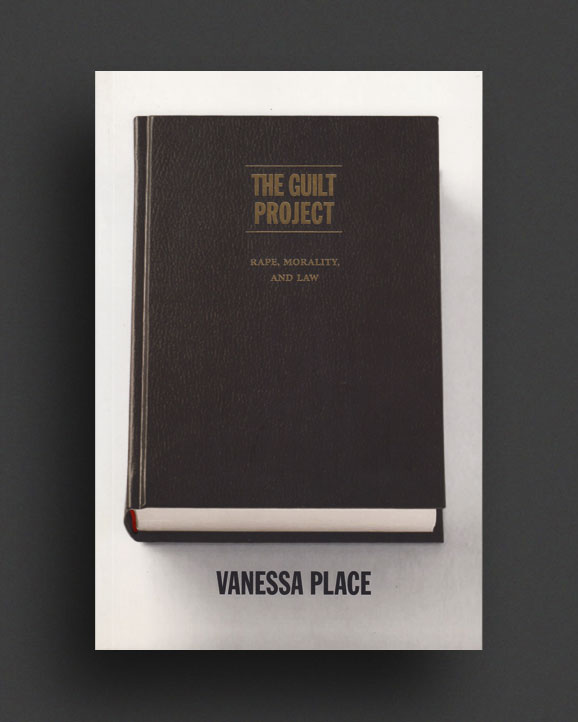
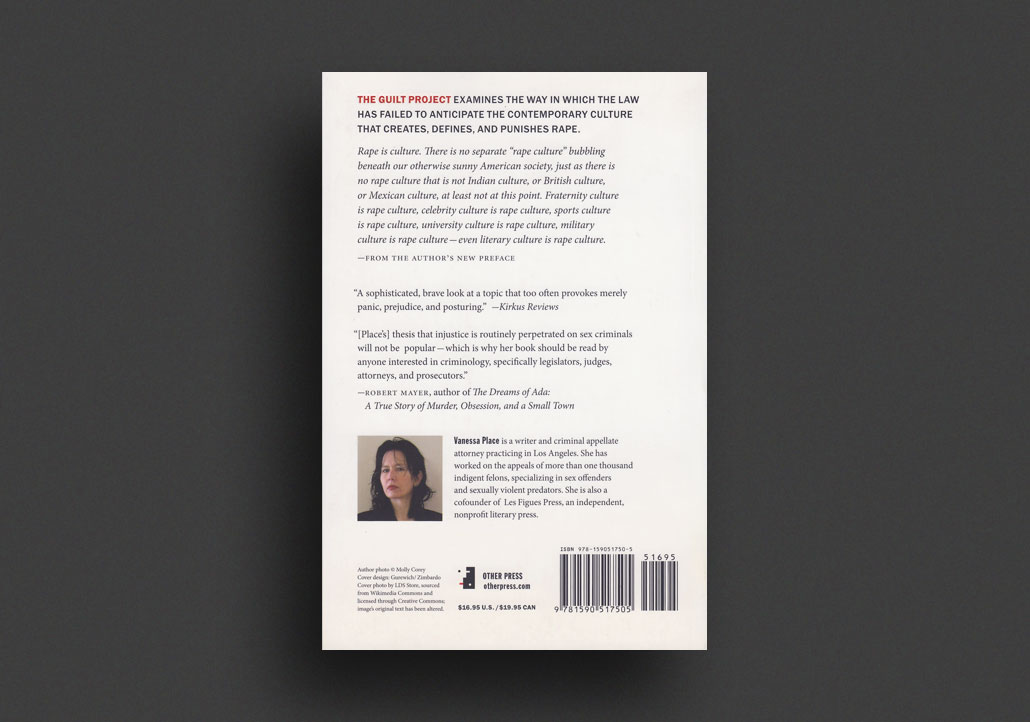
The Guilt Project examines the way in which the law has failed to anticipate the contemporary culture that creates, defines, and punishes rape.
"Rape is culture. There is no separate "rape culture" bubbling beneath our otherwise sunny American society, just as there is no rape culture that is not Indian culture, or British culture, or Mexican culture, at least not at this point. Fraternity culture is rape culture, celebrity culture is rape culture, sports culture is rape culture, university culture is rape culture, military culture is rape culture - even literary culture is rape culture."—from the author's new preface
"A sophisticated, brave look at a topic that too often provokes merely panic, prejudice, and posturing."—Kirkus Reviews
An English court in 1736 described rape as an accusation “easily to be made and hard to be proved, and harder to be defended by the party accused, though never so innocent.” To prove the crime, the law required a woman to physically resist, to put up a “hue and cry,” as evidence of her unwillingness. Beginning in the 1970s, however, feminist and victim-advocacy groups began changing attitudes toward rape so the crime is now seen as violent in itself: the legal definition of rape now includes everything from the sadistic serial rapist to the eighteen-year-old who has consensual sex with a fourteen-year-old.
This inclusiveness means there are now more rapists among us. And more of rape’s camp followers: the prison-makers, the community watchdogs, law-and-order politicians, and the real-crime/real-time entertainment industry. Vanessa Place examines the ambiguity of rape law by presenting cases where guilt lies, but lies uneasily, and leads into larger ethical questions of what defines guilt, what is justice, and what is considered just punishment. Assuming a society can and must be judged by the way it treats its most despicable members, The Guilt Project looks at the way the American legal system defines, prosecutes, and punishes sex offenders, how this Dateline NBC justice has transformed our conception of who is guilty and how they ought to be treated, and how this has come to undo our deeper humanity.
Vanessa Place is an artist, poet, author and criminal appellate attorney practicing in Los Angeles. She has worked on the appeals of more than one thousand indigent felons, specializing in sex offenders and sexually violent predators. She is also a cofounder of Les Figues Press, an independent, nonprofit literary press. Vanessa Place was the first poet to perform in the Whitney Biennial, and has published numerous books of poetry and prose. She is the author of Dies: A Sentence, La Medusa, Exposé des Faits, Statement of Facts, and, with coauthor Robert Fitterman, Notes on Conceptualisms. Her performance venues include the Getty Villa (Los Angeles); Museum of Modern Art (New York); Museum of Contemporary Art (Los Angeles); Detroit Museum of Contemporary Art; Mestno Musej (Ljubljana, Slovenia); New Holland (Saint Petersburg, Russia); Garage Museum (Moscow); Kunstverein, (Köln, Germany); Swiss Institute (New York); Silencio (Paris); and Whitechapel Gallery (London). Her art work has been exhibited at MAK Center/Schindler House (Los Angeles); Denver Museum of Contemporary Art; the Broad Museum (East Lansing, MI); the Kitchen (New York), Cage Gallery (New York), and Various Small Fires (Los Angeles).
2008, English
Softcover, 616 pages, 23 x 15.2 cm
Published by
The University of Alabama Press / Alabama
$60.00 - Out of stock
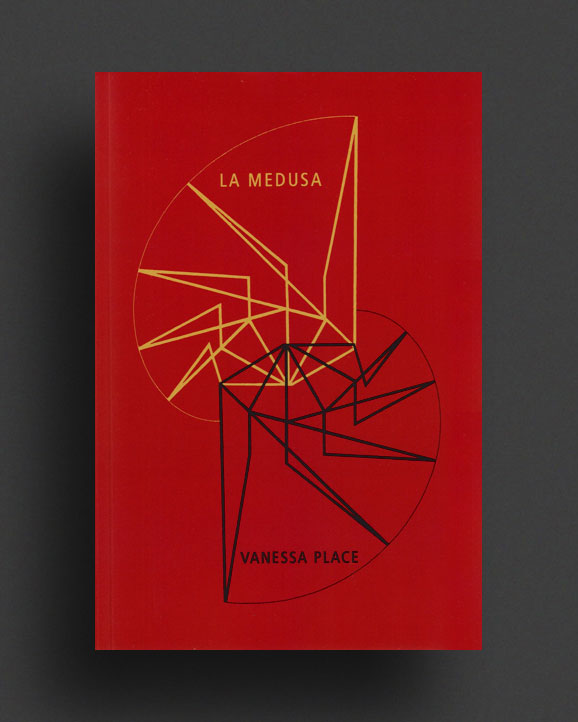
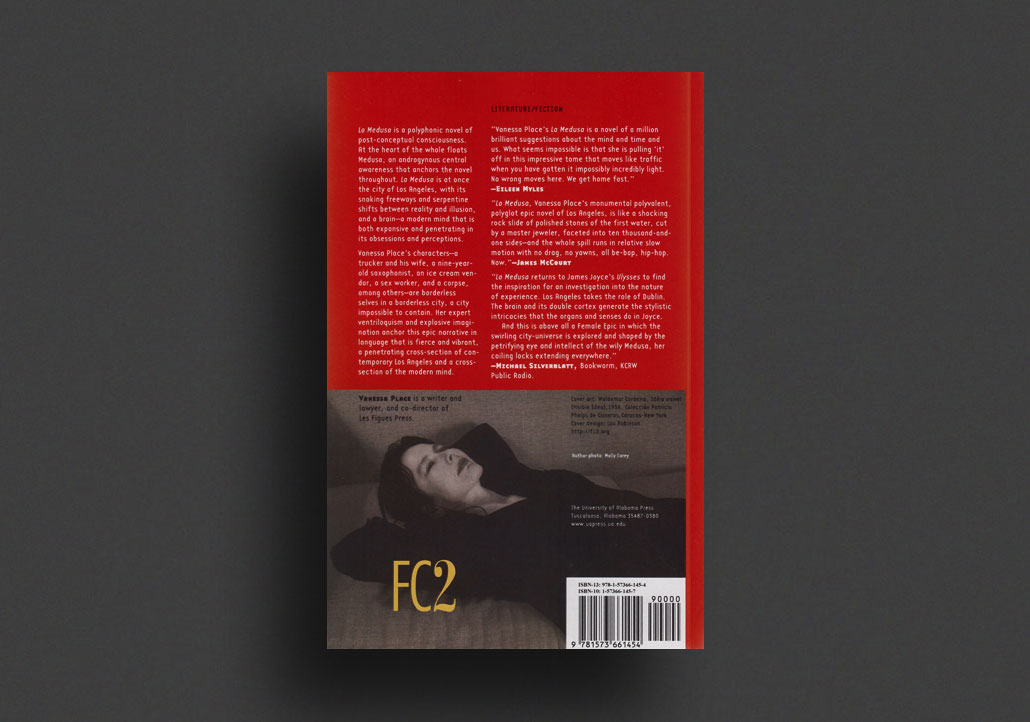
La Medusa is a polyphonic novel of post-conceptual consciousness. At the heart of the whole floats Medusa, an androgynous central awareness that anchors the novel throughout. La Medusa is at once the city of Los Angeles, with its snaking freeways and serpentine shifts between reality and illusion, and a brain—a modern mind that is both expansive and penetrating in its obsessions and perceptions.
Vanessa Place’s characters—a trucker and his wife, a nine-year-old saxophonist, an ice cream vendor, a sex worker, and a corpse, among others—are borderless selves in a borderless city, a city impossible to contain. Her expert ventriloquism and explosive imagination anchor this epic narrative in language that is fierce and vibrant, a penetrating a cross-section of contemporary Los Angeles and a cross-section of the modern mind.
Vanessa Place is an artist, poet, author and criminal appellate attorney practicing in Los Angeles. She has worked on the appeals of more than one thousand indigent felons, specializing in sex offenders and sexually violent predators. She is also a cofounder of Les Figues Press, an independent, nonprofit literary press. Vanessa Place was the first poet to perform in the Whitney Biennial, and has published numerous books of poetry and prose. She is the author of Dies: A Sentence, La Medusa, Exposé des Faits, Statement of Facts, and, with coauthor Robert Fitterman, Notes on Conceptualisms. Her performance venues include the Getty Villa (Los Angeles); Museum of Modern Art (New York); Museum of Contemporary Art (Los Angeles); Detroit Museum of Contemporary Art; Mestno Musej (Ljubljana, Slovenia); New Holland (Saint Petersburg, Russia); Garage Museum (Moscow); Kunstverein, (Köln, Germany); Swiss Institute (New York); Silencio (Paris); and Whitechapel Gallery (London). Her art work has been exhibited at MAK Center/Schindler House (Los Angeles); Denver Museum of Contemporary Art; the Broad Museum (East Lansing, MI); the Kitchen (New York), Cage Gallery (New York), and Various Small Fires (Los Angeles).
2024, English
Softcover, 176 pages, 20.2 x 12.7 cm
Published by
Clash Books / US
$32.00 - In stock -
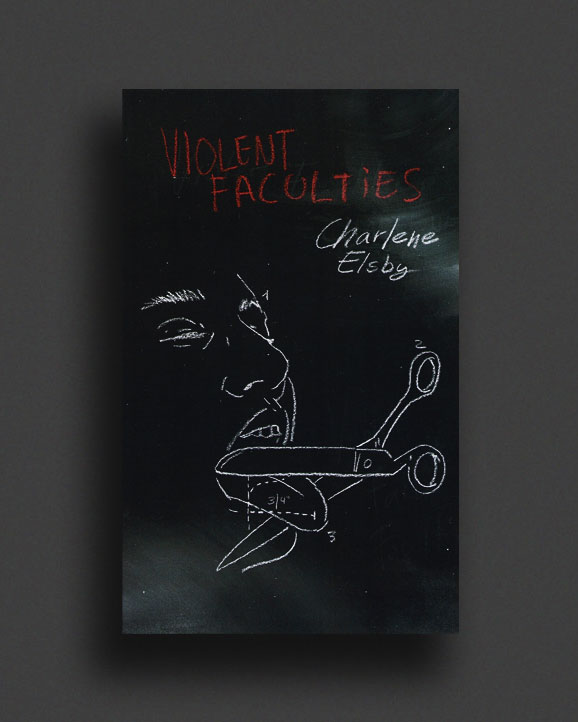
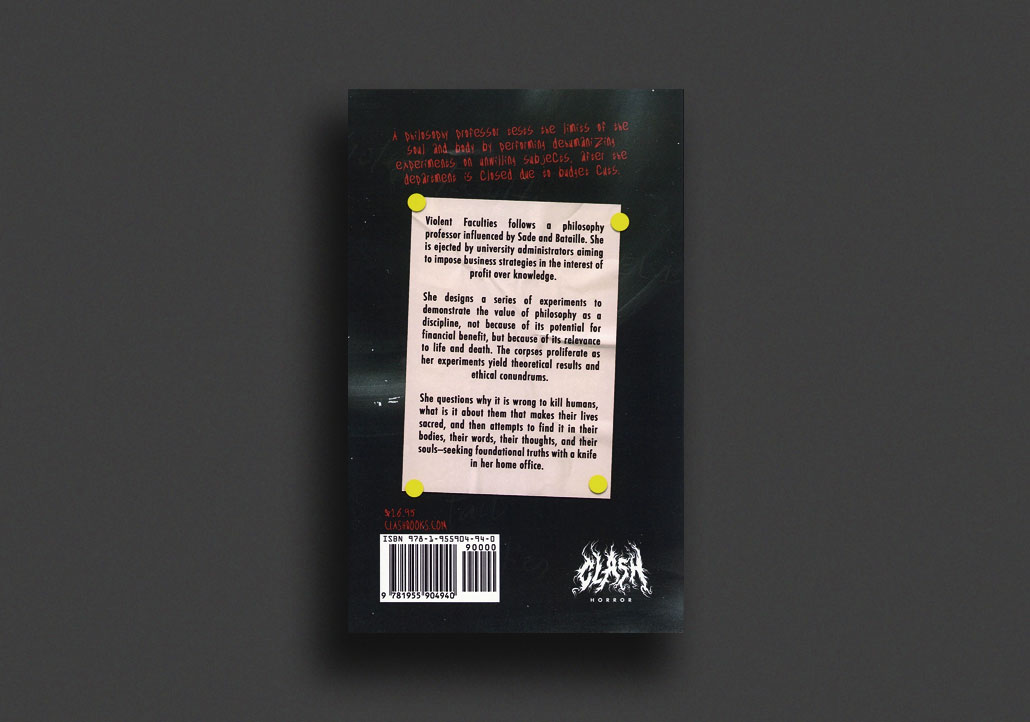
A philosophy professor tests the limits of the soul and body by performing dehumanizing experiments on unwilling subjects, after the department is closed due to budget cuts.
Violent Faculties follows a philosophy professor influenced by Sade and Bataille. She is ejected by university administrators aiming to impose business strategies in the interest of profit over knowledge.
She designs a series of experiments to demonstrate the value of philosophy as a discipline, not because of its potential for financial benefit, but because of its relevance to life and death. The corpses proliferate as her experiments yield theoretical results and ethical conundrums.
She questions why it is wrong to kill humans, what is it about them that makes their lives sacred, and then attempts to find it in their bodies, their words, their thoughts, and their souls-seeking foundational truths with a knife in her home office.
2023, English
Softcover, 146 pages, 20.32 x 12.7 cm
Published by
Contra Mundum Press / New York
$34.00 - Out of stock
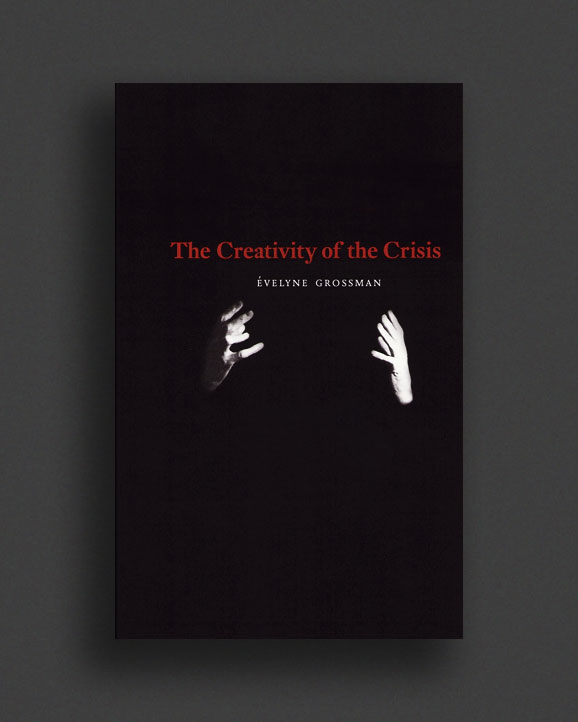
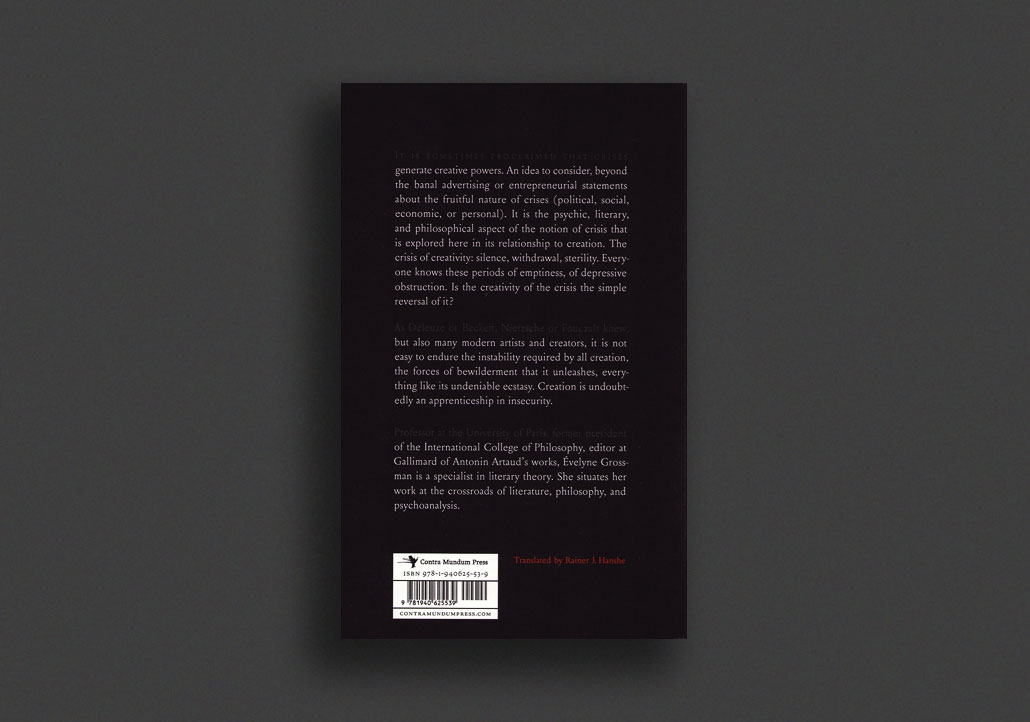
It is sometimes proclaimed that crises generate creative powers. An idea to consider, beyond the banal advertising or entrepreneurial statements about the fruitful nature of crises (political, social, economic, or personal). It is the psychic, literary, and philosophical aspect of the notion of crisis that is explored here in its relationship to creation. The crisis of creativity: silence, withdrawal, sterility. Everyone knows these periods of emptiness, of depressive obstruction. Is the creativity of the crisis the simple reversal of it?
As Deleuze or Beckett, Nietzsche or Foucault knew, but also many modern artists and creators, it is not easy to endure the instability required by all creation, the forces of bewilderment that it unleashes, everything like its undeniable ecstasy. Creation is undoubtedly an apprenticeship in insecurity.
Professor at the University of Paris, former president of the International College of Philosophy, editor at Gallimard of Antonin Artaud’s works, Évelyne Grossman is a specialist in literary theory. She situates her work at the crossroads of literature, philosophy, and psychoanalysis.
Translated by Rainer J. Hanshe
2023, English
Softcover, 198 pages, 20.4 x 12.7 cm
Published by
Snuggly Books / UK
$40.00 - In stock -
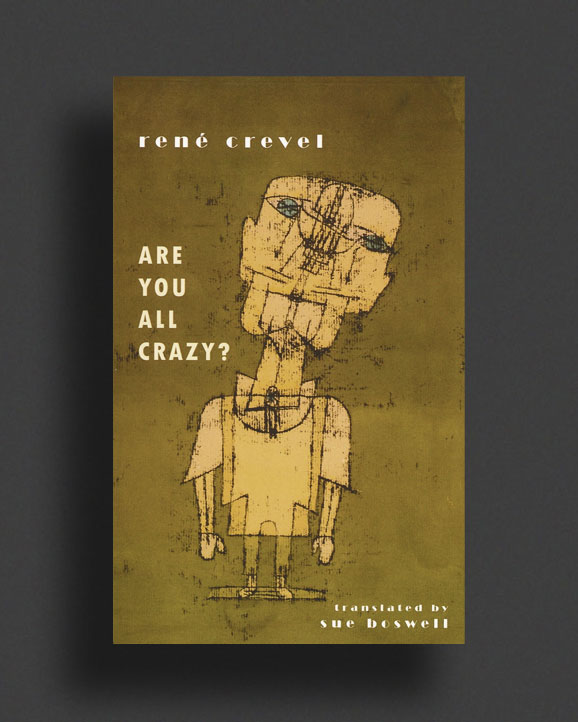
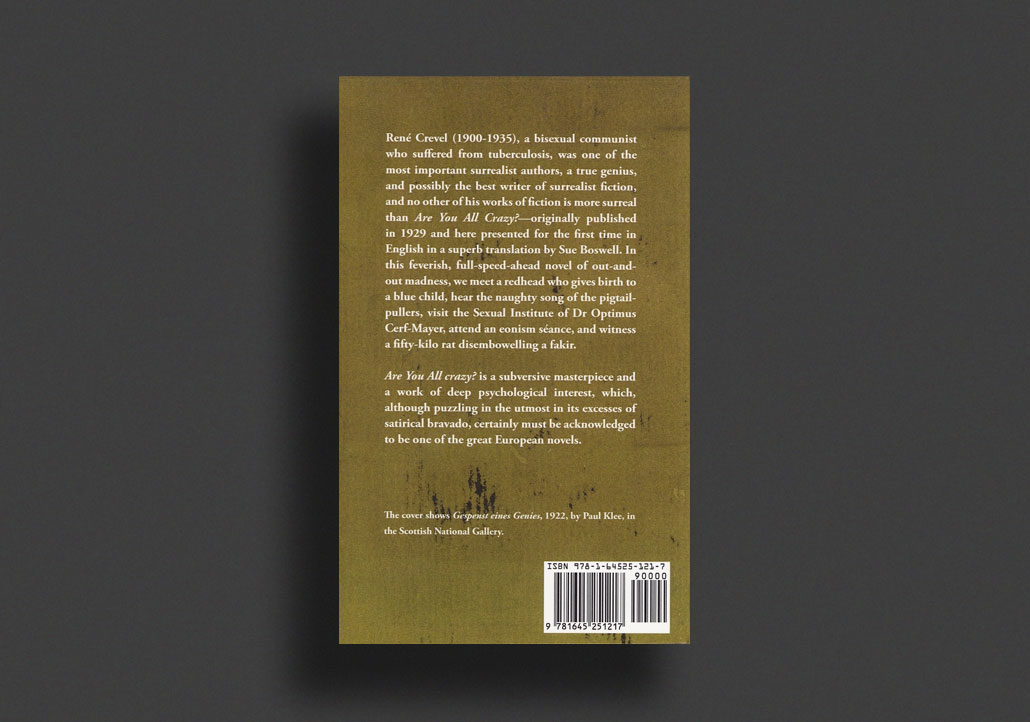
René Crevel (1900-1935), a bisexual communist who suffered from tuberculosis, was one of the most important surrealist authors, a true genius, and possibly the best writer of surrealist fiction, and no other of his works of fiction is more surreal than Are You All Crazy?-originally published in 1929 and here presented for the first time in English in a superb translation by Sue Boswell. In this feverish, full-speed-ahead novel of out-and-out madness, we meet a redhead who gives birth to a blue child, hear the naughty song of the pigtail-pullers, visit the Sexual Institute of Dr Optimus Cerf-Mayer, attend an eonism séance, and witness a fifty-kilo rat disembowelling a fakir.
Are You All crazy? is a subversive masterpiece and a work of deep psychological interest, which, although puzzling in the utmost in its excesses of satirical bravado, certainly must be acknowledged to be one of the great European novels.
2023, English
Softcover, 266 pages, 21.6 x 13.8 cm
Published by
Snuggly Books / UK
$46.00 - Out of stock
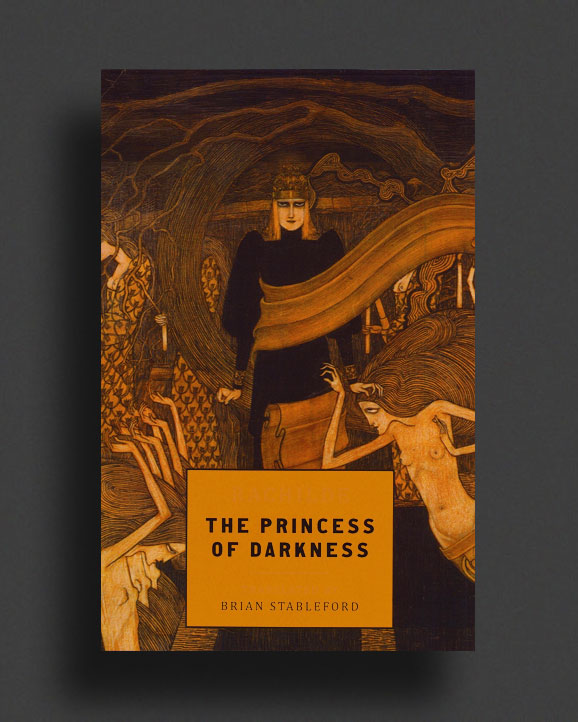
Translated by Brian Stableford
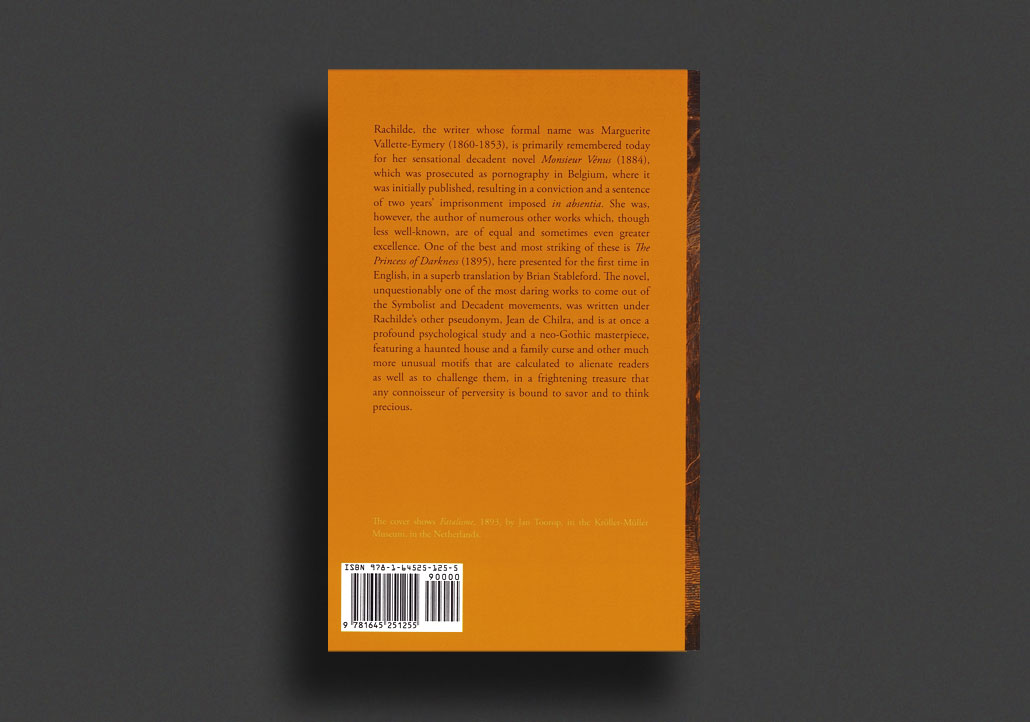
Rachilde, the writer whose formal name was Marguerite Vallette-Eymery (1860-1853), is primarily remembered today for her sensational decadent novel Monsieur Vénus (1884), which was prosecuted as pornography in Belgium, where it was initially published, resulting in a conviction and a sentence of two years’ imprisonment imposed in absentia. She was, however, the author of numerous other works which, though less well-known, are of equal and sometimes even greater excellence.
One of the best and most striking of these is The Princess of Darkness (1895), here presented for the first time in English, in a superb translation by Brian Stableford. The novel, unquestionably one of the most daring works to come out of the Symbolist and Decadent movements, was written under Rachilde’ s other pseudonym, Jean de Chilra, and is at once a profound psychological study and a neo-Gothic masterpiece, featuring a haunted house and a family curse and other much more unusual motifs that are calculated to alienate readers as well as to challenge them, in a frightening treasure that any connoisseur of perversity is bound to savor and to think precious.
Rachilde was the pen name and preferred identity of novelist and playwright Marguerite Vallette-Eymery (11 February 1860 – 4 April 1953). Born near Périgueux, Dordogne, Aquitaine, France during the Second French Empire, Rachilde went on to become a symbolist author and the most prominent women in literature associated with the Decadent Movement of fin de siècle France.
A diverse and challenging author, Rachilde's most famous work includes the darkly erotic novels Monsieur Vénus (1884), La Marquise de Sade (1887), and La Jongleuse (1900). She also wrote a 1928 monograph on gender identity, Pourquoi je ne suis pas féministe ("Why I am not a Feminist"). Her work was noted for being frank, fantastical, and always with a suggestion of autobiography underlying questions of gender, sexuality, and identity.
She said of herself, "I always acted as an individual, not thinking to found a society or to upset the present one."
2020, English
Softcover, 290 pages, 21.6 x 14 cm
Published by
Snuggly Books / UK
$44.00 - Out of stock
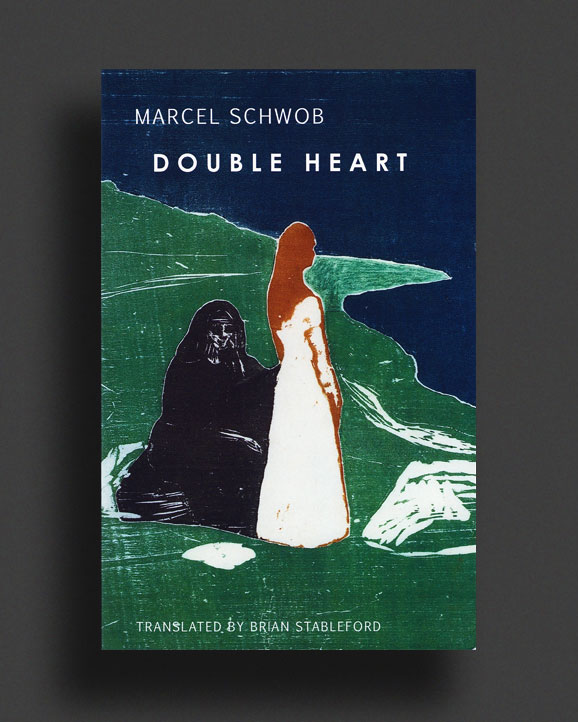
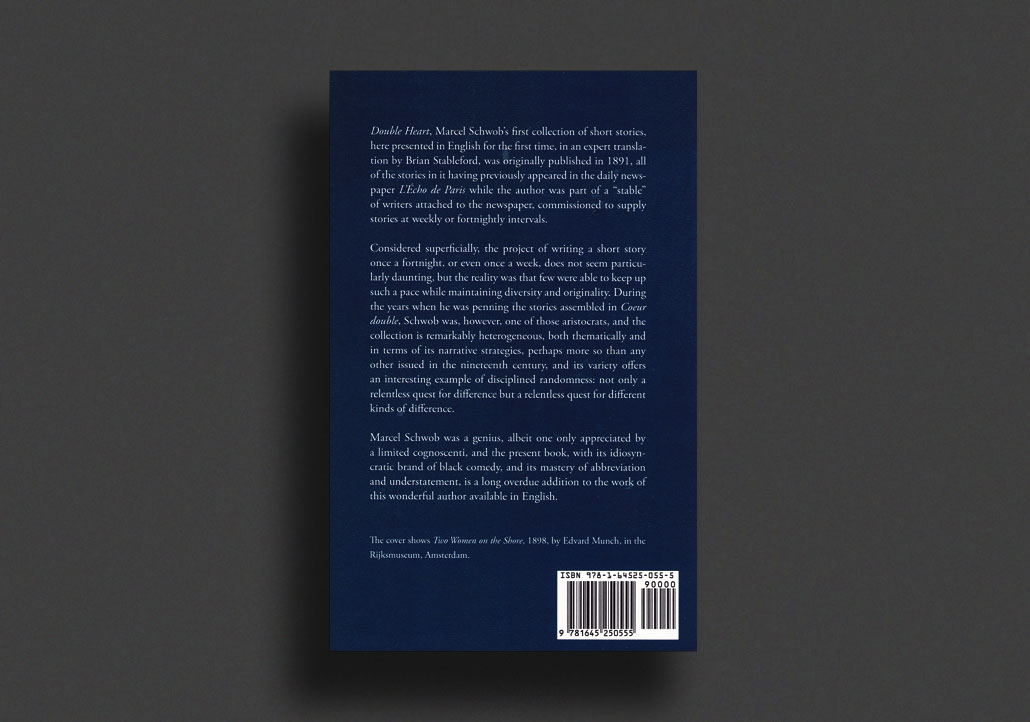
Double Heart, Marcel Schwob's first collection of short stories, here presented in English for the first time, in an expert translation by Brian Stableford, was originally published in 1891, all of the stories in it having previously appeared in the daily newspaper L'Echo de Paris while the author was part of a "stable" of writers attached to the newspaper, commissioned to supply stories at weekly or fortnightly intervals.
Considered superficially, the project of writing a short story once a fortnight, or even once a week, does not seem particularly daunting, but the reality was that few were able to keep up such a pace while maintaining diversity and originality. During the years when he was penning the stories assembled in Coeur double, Schwob was, however, one of those aristocrats, and the collection is remarkably heterogeneous, both thematically and in terms of its narrative strategies, perhaps more so than any other issued in the nineteenth century, and its variety offers an interesting example of disciplined randomness: not only a relentless quest for difference but a relentless quest for different kinds of difference.
Marcel Schwob was a genius, albeit one only appreciated by a limited cognoscenti, and the present book, with its idiosyncratic brand of black comedy, and its mastery of abbreviation and understatement, is a long overdue addition to the work of this wonderful author available in English.
2023, English
Softcover, 284 pages, 23.5 x 15.7 cm
Published by
Routledge / London
$90.00 - Out of stock
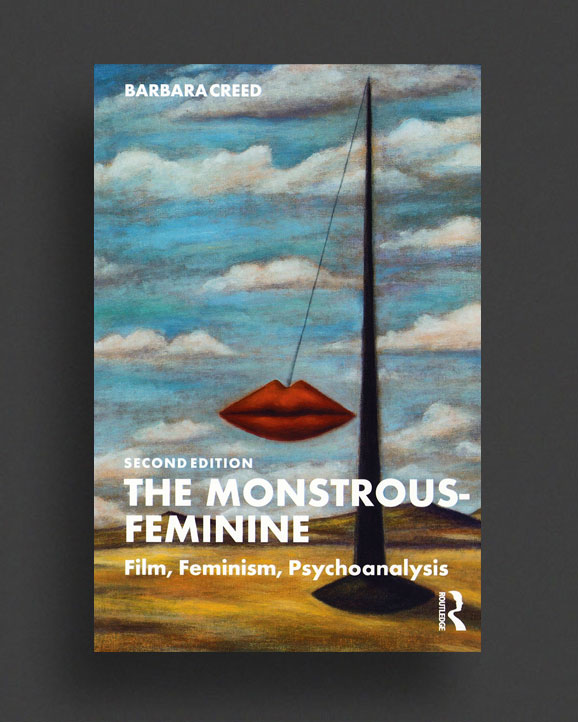
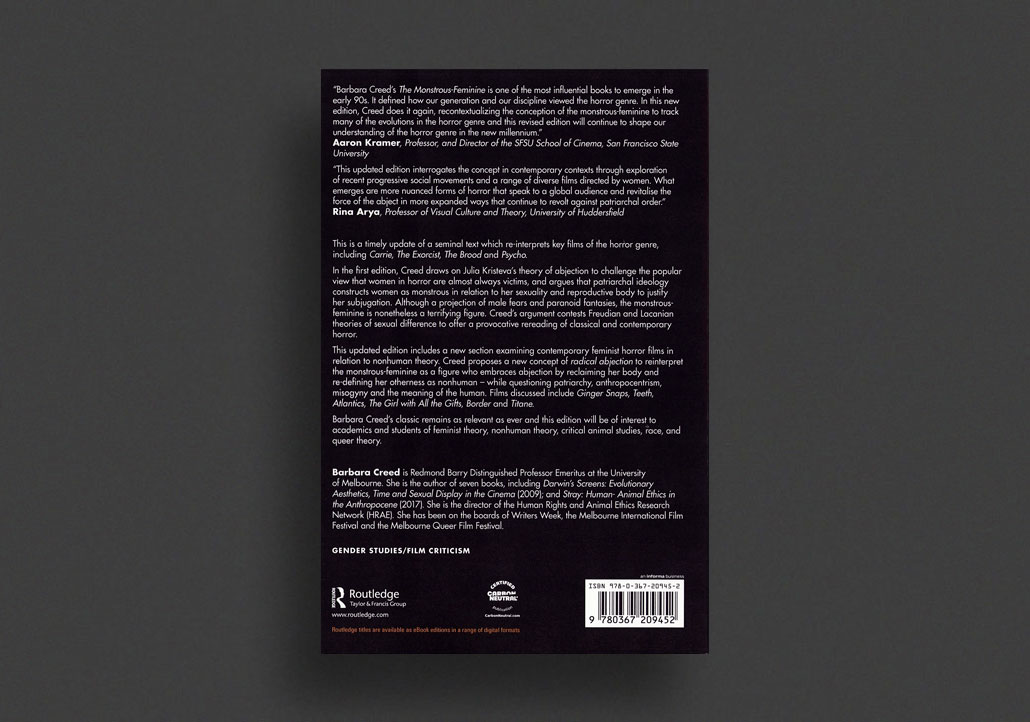
This is a timely update of a seminal text which re-interprets key films of the horror genre, including Carrie, The Exorcist, The Brood and Psycho.
In the first edition, Creed draws on Julia Kristeva’s theory of abjection to challenge the popular view that women in horror are almost always victims, and argues that patriarchal ideology constructs women as monstrous in relation to her sexuality and reproductive body to justify her subjugation. Although a projection of male fears and paranoid fantasies, the monstrous-feminine is nonetheless a terrifying figure. Creed’s argument contests Freudian and Lacanian theories of sexual difference to offer a provocative rereading of classical and contemporary horror.
This updated edition includes a new section examining contemporary feminist horror films in relation to nonhuman theory. Creed proposes a new concept of radical abjection to reinterpret the monstrous-feminine as a figure who embraces abjection by reclaiming her body and re-defining her otherness as nonhuman – while questioning patriarchy, anthropocentrism, misogyny and the meaning of the human. Films discussed include Ginger Snaps, Teeth, Atlantics, The Girl with All the Gifts, Border and Titane.
Barbara Creed’s classic remains as relevant as ever and this edition will be of interest to academics and students of feminist theory, nonhuman theory, critical animal studies, race, and queer theory.
Barbara Creed is Redmond Barry Distinguished Professor Emeritus at the University of Melbourne. She is the author of seven books, including Darwin’s Screens: Evolutionary Aesthetics, Time and Sexual Display in the Cinema (2009); and Stray: Human- Animal Ethics in the Anthropocene (2017). She is the director of the Human Rights and Animal Ethics Research Network (HRAE). She has been on the boards of Writers Week, the Melbourne International Film Festival and the Melbourne Queer Film Festival.
2024, English
Softcover, 216 pages, 15.4 x 23 cm
Published by
Semiotext(e) / Los Angeles
$34.00 - Out of stock
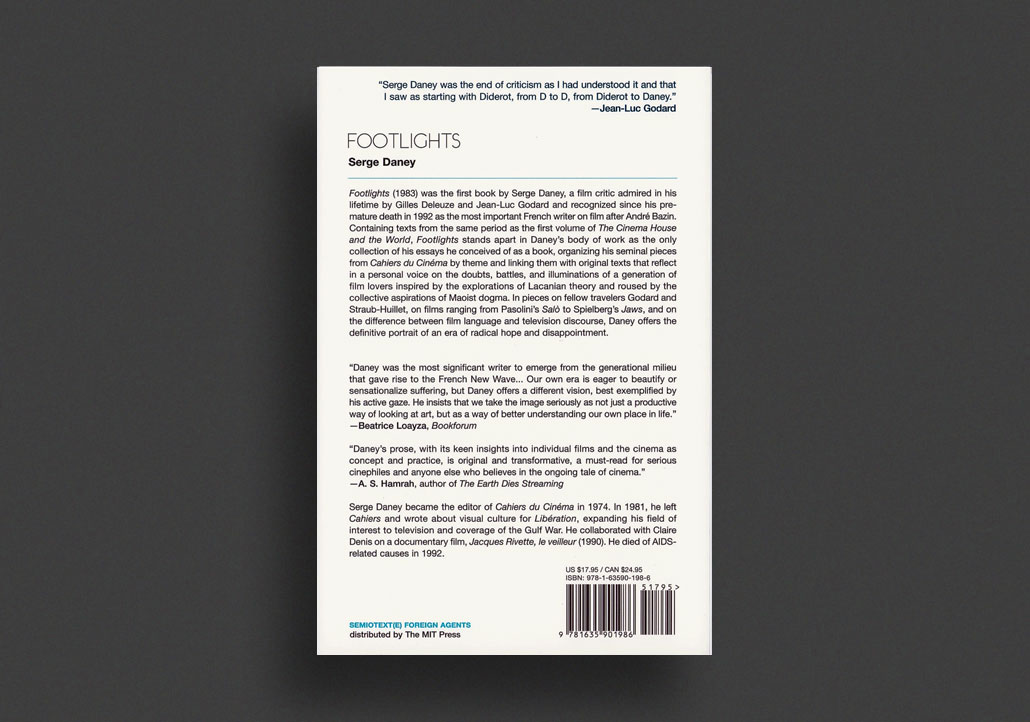
The early essays of the most influential French film critic of the post-68 period.
The Footlights (1983) was the first book by Serge Daney, a film critic admired in his lifetime by Gilles Deleuze and Jean-Luc Godard and recognized since his premature death in 1992 as the most important French writer on film after André Bazin. The Footlights stands apart in Daney's body of work as the only collection of his essays he conceived of as a book, organizing his seminal pieces from Cahiers du Cinéma by theme and linking them with original texts that reflect in a personal voice on the doubts, battles, and illuminations of a generation of film lovers inspired by the explorations of Lacanian theory and roused by the collective aspirations of Maoist dogma. In pieces on fellow travelers Godard and Straub/Huillet, on films ranging from Pasolini's Saló to Spielberg's Jaws, and on the difference between film language and television discourse, Daney offers a definitive portrait of an era of radical hope and disappointment.
Translated by Nicholas Elliott
2021, English
Softcover, 84 pages, 15 x 12 cm
Published by
Ex Film / Melbourne
$15.00 - In stock -
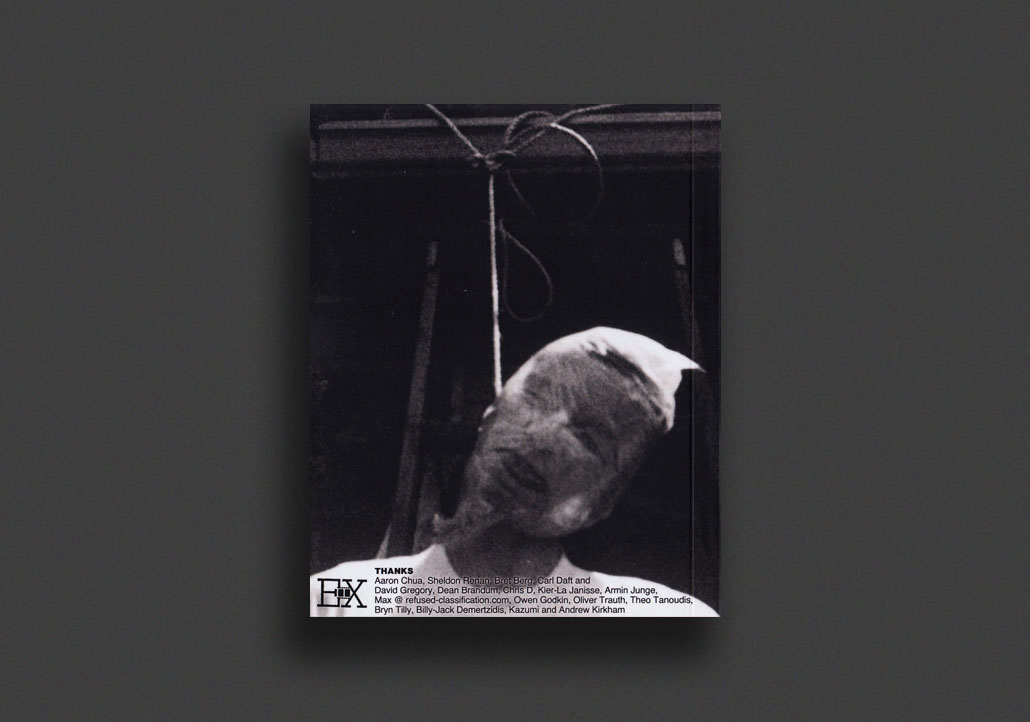
Leonard Schrader and Sheldon Renan's 1981 documentary on violence in American society was never released for almost 40 years in the country which it profiles, such was its visceral impact and blunt force message. The film was a major success in Australia, running for 3 weeks at Melbourne's Capitol theatre and huge sales on home video. For people of a certain generation, viewing was a rite of passage - an assemblage of various real-life footage in the peak era of the US serial killer, political assassinations and the post-Vietnam mayhem of American society.
Ex Film's Australian Blu-ray restoration and release was accompanied by this 84 page perfect-bound booklet containing liner notes by Dean Brandum (Technicolor Yawn) and Chris Desjardins (The Flesh Eaters, Slash magazine) accompanied by years of archival material collected from years of research, including, ad mats, theatrical and home video art and Japanese promotional material translated into English for the first time.
2023, English
Softcover, 196 pages, 19 x 14 cm
Published by
Pilot Press / London
$40.00 - Out of stock
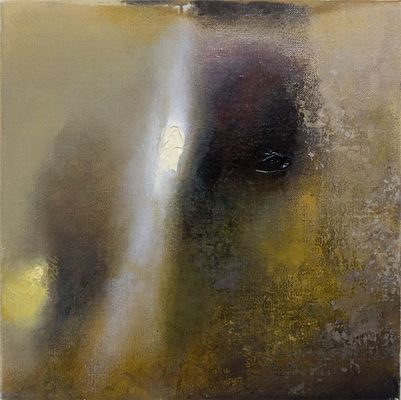
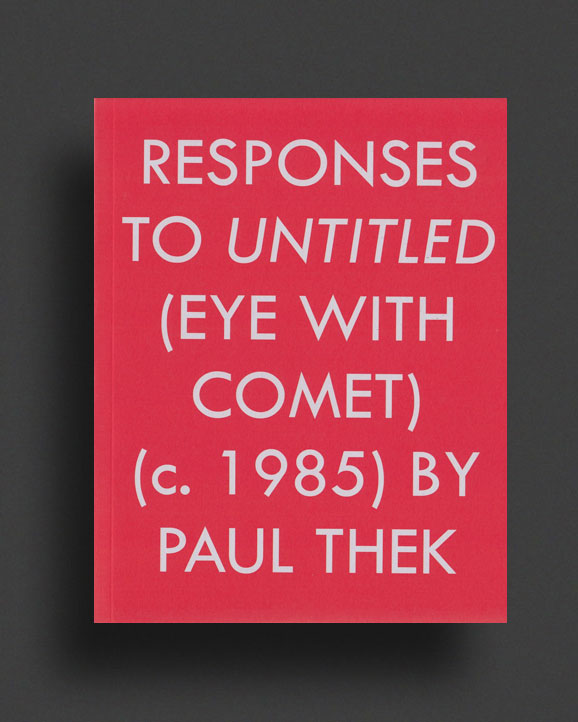
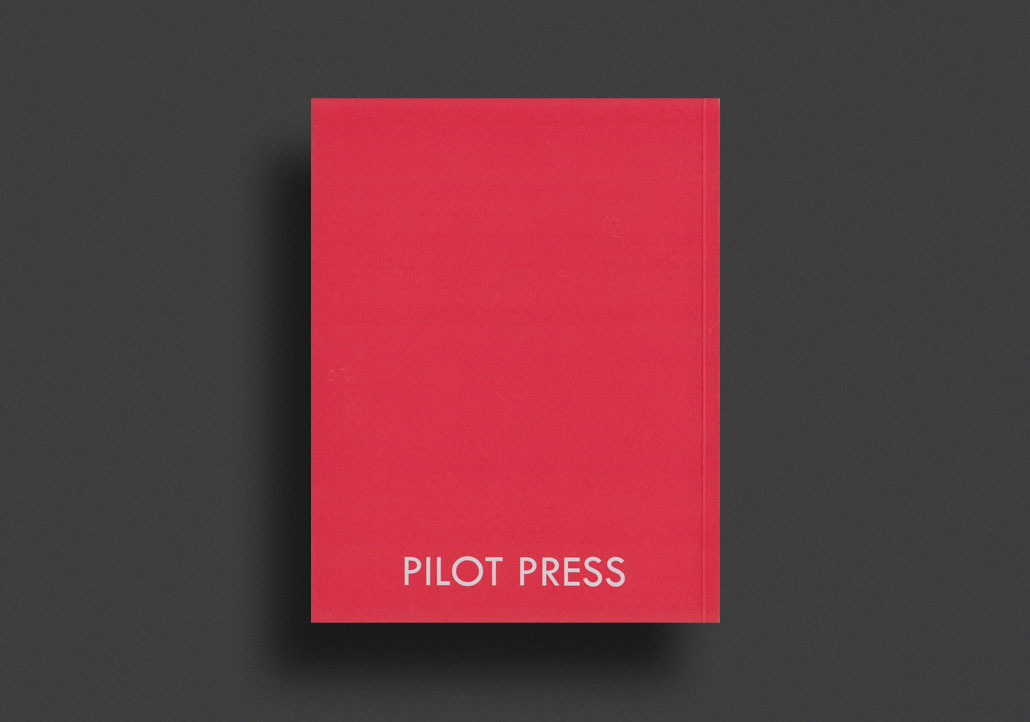
For this volume of Pilot Press' Responses series, responses were sought to the painting Untitled (eye with comet) by Paul Thek. The work was found in his storage after his death from AIDS in 1988.
Contributors: E.R. De Siqueira, Ben Estes, João Motta Guedes, Lucy Swan, Jon Rainford, Louis Shankar, Amy Evans Bauer, Hattie Morrison, Sammy Paloma, AN Grace, James Horton, Nick Wood, Sophie Paul, Jae Vail, Elizabeth Zvonar, Lars Meijer, Clay AD, Michel Kessler, Pablo Miguel Martínez, Emma Harris, Dylan McNulty-Holmes, Kitya Mark, Katherine Franco, Ainslie Templeton, Alistair McCartney, John Brooks, Jesse Howarth, jimmy cooper, Felix Pilgrim, Nicholas Chittenden Morgan, Murphy O’Neir, Rachel Cattle, Isabel Nolan, Susan Finlay, Ted Simonds, Brooke Palmieri, Kate Morgan, Ashleigh A. Allen, Diogo Gama, JP Seabright, Hugo Hagger, Amanda Kraley, Brendan Cook, Matt Bailey, Charlotte Flint, Rodney Schreiner, Lucy Price, Morgan Melhuish, Jordan Weitzman, Jaakko Pallasvuo, Alex Fiorentino, Harald Smart, Marguerite Carson, loll jung, Richard Porter. Nicholas Kalinoski, Hedi El Kholti, Edmund Francis English, Ted Bonin
2017—2018, English
Softcover (staple-bound) pamphlets, various pagination, 42 x 20.4 cm
1st Edition, Out of print title / used / very good
Published by
Comme des Garçons / Tokyo
$320.00 - Out of stock
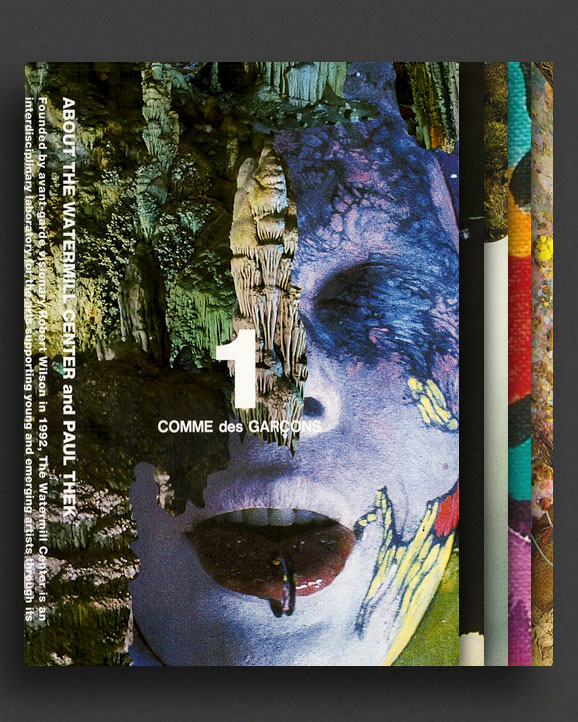
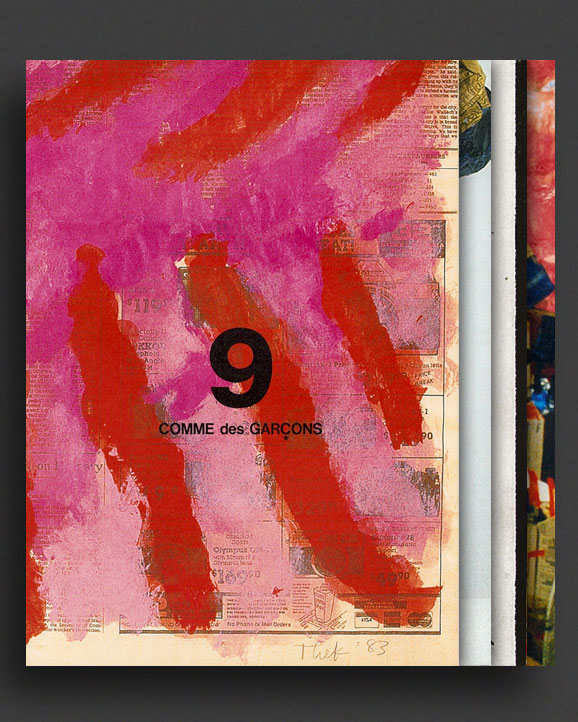
Large lot of the printed collaboration between Rei Kawakubo's Comme des Garçons and the estate of American artist Paul Thek. Issued as mail-outs privately by Comme to announce the arrival of each of their 2017—18 collections, and not commercially available, these gorgeous, over-sized, elaborate fold-out leaflets designed by CDG showcase Thek's artworks (paintings, installations, drawings, sculptures, photography, etc) in a series of graphic collaged publications, made possible by Robert Wilson's Watermill Centre and Alexander and Bonin. Very Good, preserved copies, issued and collected individually, now very scarce. A couple with original b/w CDG mailers/envelopes included (not pictured). Included are the publications/posters numbered #1, #2, #5, #9, #10, #12, #16, #21, #23.
American artist Paul Thek (1933-1988) was an elusive sculptor, painter, and one of the first artists to create environments or installations, who came to recognition showing his sculpture in New York galleries in the 1960s. The first works exhibited, which he began making in 1964 and called “meat pieces” as they were meant to resemble flesh, were encased in Plexiglas boxes that recall Minimal sculptures. At the end of the sixties, Thek left for Europe, where he created extraordinary environments, incorporating elements from art, literature, theater, and religion, often employing fragile and ephemeral substances, including wax and latex. His work was presented at documenta 4 and 5 in Kassel (1968, 1972), the Stedelijk Museum in Amsterdam (1969), the Moderna Museet in Stockholm (1971), and the Kunstmuseum in Lucerne (1973). He was supported in particular by Harald Szeemann and Jean-Christophe Ammann. In 1977, Suzanne Delehanty curated Processions at the Institute of Contemporary Art in Philadelphia, marking the first solo exhibition of Paul Thek's work in an American institution. At the close of the 1970's Thek changed direction, moved back to New York, and turned to the making of small, sketch-like paintings on canvas, although he continued to create environments in key international exhibitions. With his frequent use of highly perishable materials, Thek accepted the ephemeral nature of his art works—and was aware, as writer Gary Indiana has noted, of “a sense of our own transience and that of everything around us.” Following his death in 1988, his work was mainly shown in Europe (Castello di Rivara, Witte de With, etc). In 2008, the ZKM in Karlsruhe programmed Paul Thek Artist's Artist, which also explored how Thek's work has resonated in the contemporary scene. On the other side of the Atlantic, it wasn't until 2010 that the Whitney Museum in New York dedicated a remarkable retrospective to Thek, whose title, Paul Thek: Diver, emphasized the artist's passion for the sea.
Very Good copies each.
2014, English / Japanese
Softcover (staple-bound), various pagination, 28.5 x 20.5 cm
1st Edition, Out of print title / used / fine
Published by
Comme des Garçons / Tokyo
$70.00 - Out of stock
Lot of six copies of the amazing printed collaboration between Rei Kawakubo's Comme des Garçons and Raw Vision, the world's foremost magazine on Outsider Art, Art Brut, and Contemporary Folk Art, founded by John Maizels in 1989. Issued as mail-outs privately by Comme to announce the arrival of their 2014 Spring—Summer and 2014—2015 Autumn—Winter collection, and not commercially available, these gorgeous, elaborate leaflets designed by CDG showcase the diverse array of artists featured in Raw Vision magazine alongside Comme photographs by Kosuke Okahara commissioned by Rei Kawakubo to document the 2013 Paris Fashion Week, Fall / Winter collection, photographs by Hiromi Nagakura, Daisuke ITO, and Andrew Houston in a series of graphic collages, with many fold-out spreads. Near Fine, preserved copies of six volumes (issued separately), now very scarce. Artists throughout include Pavel Leonov, Daniel Johnston, Maura Holden, Joe Gatta, Malcolm McKesson, William Hawkins, Joe Coleman, Renaldo Kuhler, Freddie Brice, Anne Grgich, Ken Grimes, and many more.
Near Fine all.
2013, English / Japanese
Softcover (staple-bound), various pagination, 28.5 x 20.5 cm
1st Edition, Out of print title / used / fine
Published by
Comme des Garçons / Tokyo
$220.00 - Out of stock
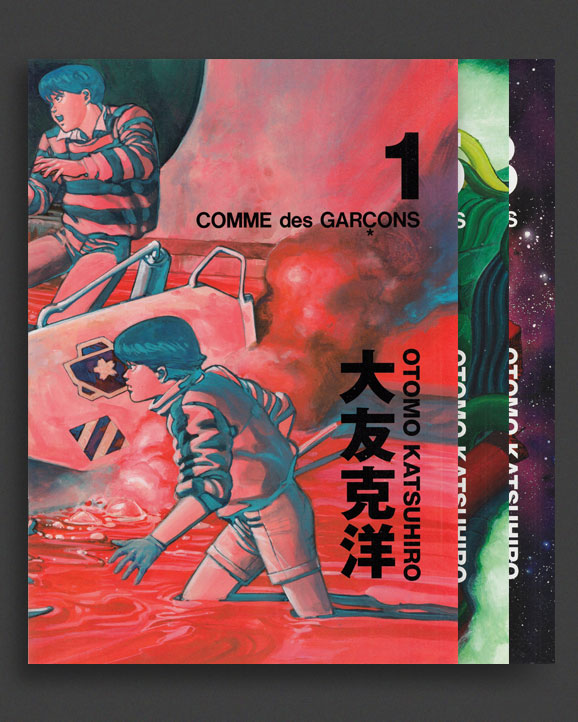
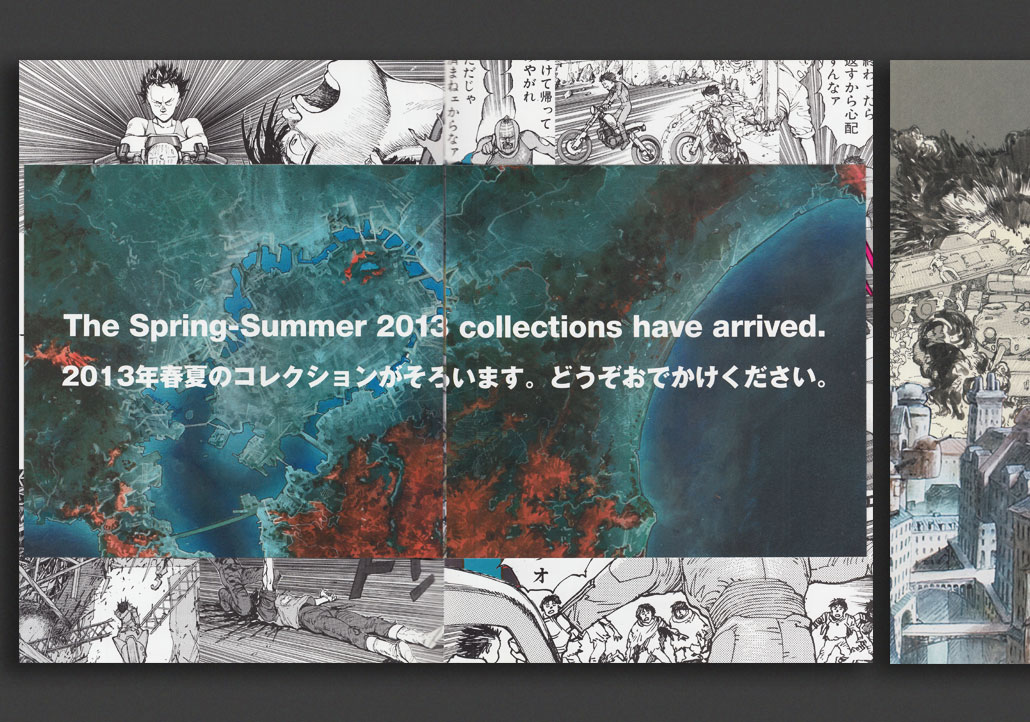
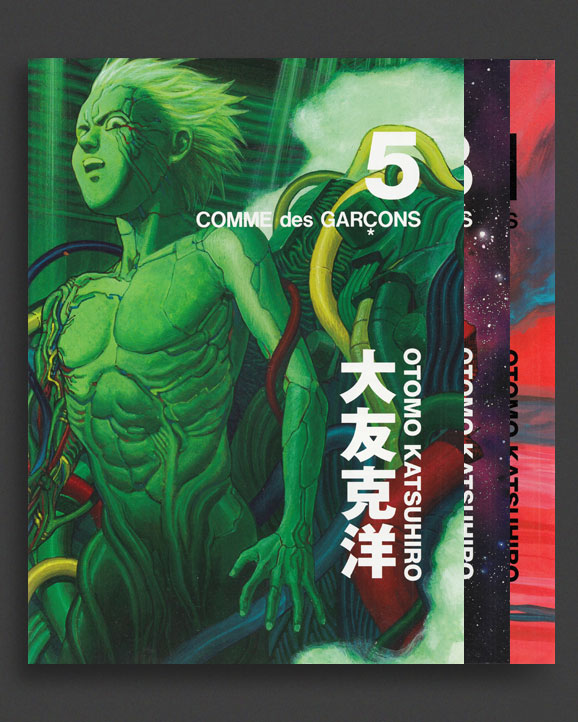
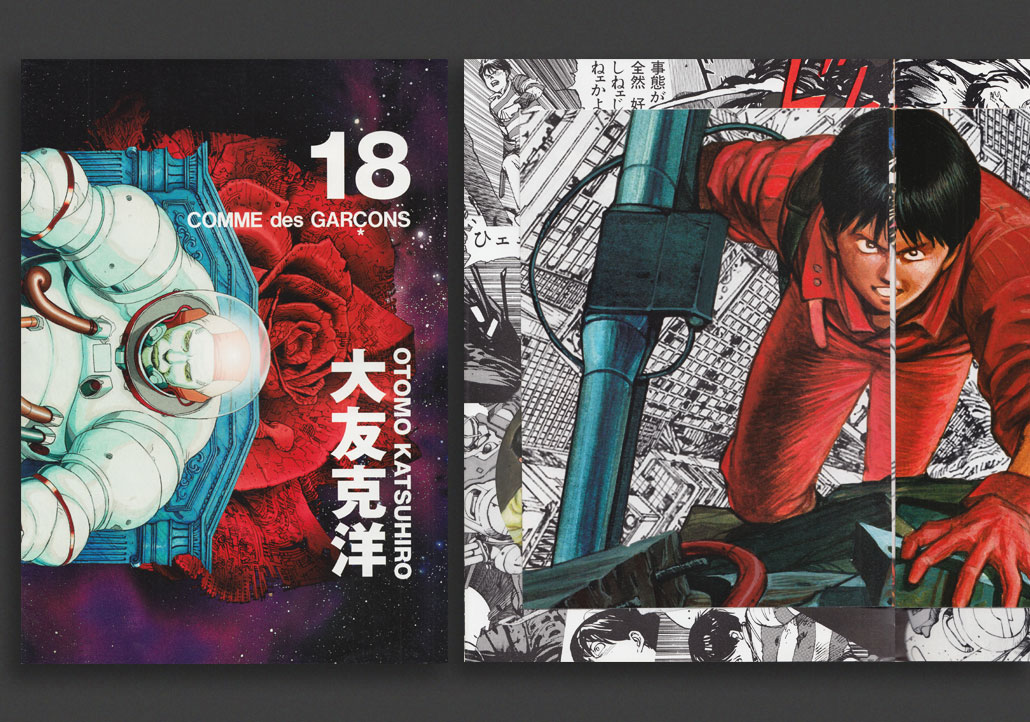
Copies of the infamous printed collaboration between Rei Kawakubo's Comme des Garçons and legendary manga artist Katsuhiro Otomo, best known as the creator of Akira, both the original 1982 manga series and the 1988 animated film adaptation. Issued as mail-outs privately by Comme to announce the arrival of their 2013—14 Autumn—Winter collection, and not commercially available, these gorgeous, elaborate leaflets designed by CDG founder Rei Kawakubo, showcase Otomo’s Akira artwork in a series of collages put together and coloured by Kawakubo herself, with fold-outs, inserts and die-cut illustrations have become highly desirable, for obvious reasons. Surprisingly Otomo is the first Japanese artist to feature in Comme’s mail outs, so this collaboration was very special for fans of both. Very Good, preserved copies of three of the best of 28 volumes (issued separately) as they all feature Otomo's artwork on the covers (many others feature other artist mash-ups from Otomo-related NoBrow magazine, and now becoming very scarce.
2012, English / French
Softcover, 324 pages, 21 x 29.7 cm
Published by
CAPC / Bordeaux
$78.00 - In stock -
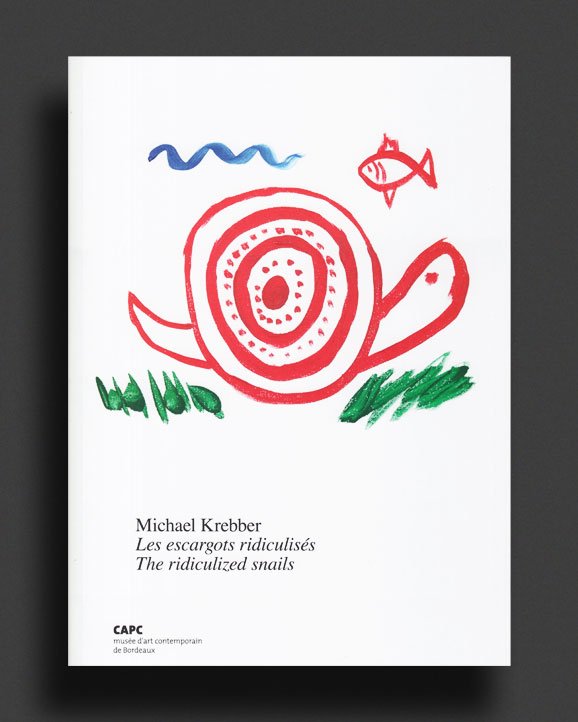
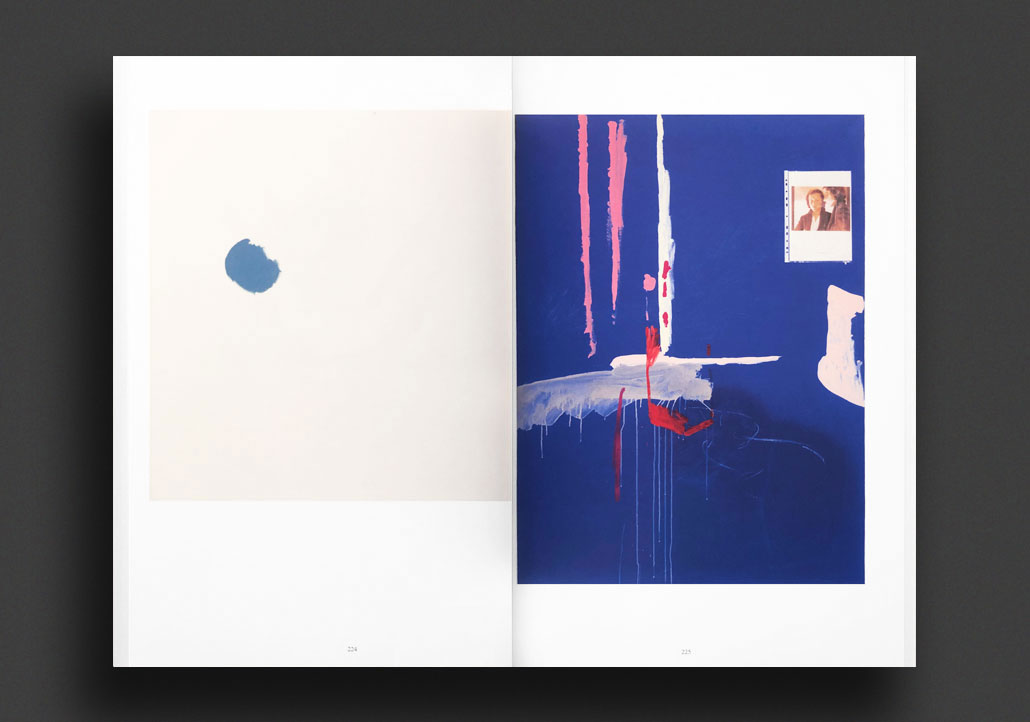
Published on the occasion of his retrospective at CAPC, Bordeaux, in 2012-2013, this book is the first major reference monograph published on the German artist Michael Krebber. This comprehensive volume is heavily illustrated with colour photographs of his works spanning from the 1980's to today.
Michael Krebber (born 1954, lives and works in Cologne) is currently considered to be one of the most emblematic personalities of the international contemporary art scene. Having had a major influence on the art scene in Cologne during the 80's and 90's and ever since, Michael Krebber has a conceptual approach to painting that he explores beyond all pictorial conventions. His practice is marked by ambivalence, subversion, intransigence, and a feigned body language. Krebber is a dandy painter.
Although he appears to be a discreet character, both perplexed and ambivalent about the very nature of his practice, he nevertheless remains an influential first-class smuggler into the world of art on both the theoretical and economic levels. The dialogue that he maintains with his students at the Staatliche Hochschule in Frankfurt, sets him up as a “literary character,” the implementer of his very own process, which has fascinated the emerging generation.
Highly recommended.
Edited by Michael Krebber and Alexis Vaillant.
Texts by Catherine Chevalier and Magnus Schäfer.
Graphic design: Surface.
2013, English
Hardcover (in slipcase), 420 pages, 28.5 x 25.5 cm
1st Edition, Out of print title / used / fine
Published by
Skira / Milan
Rizzoli / New York
Munchmuseet / Oslo
$390.00 - In stock -
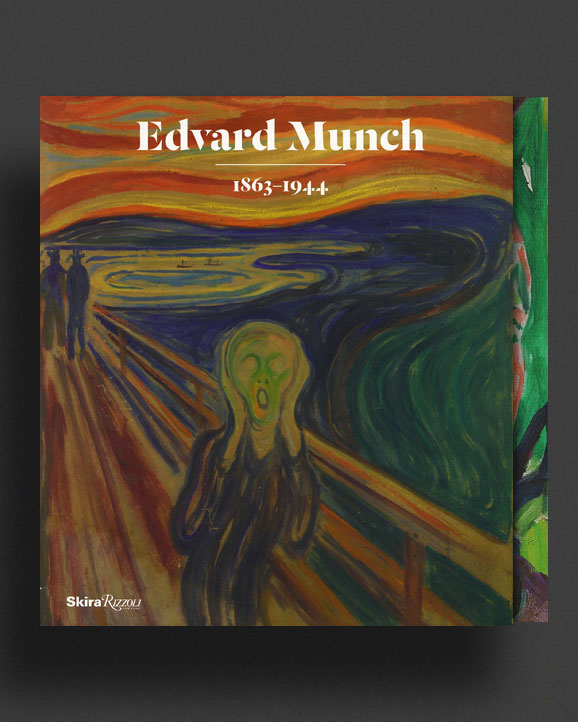
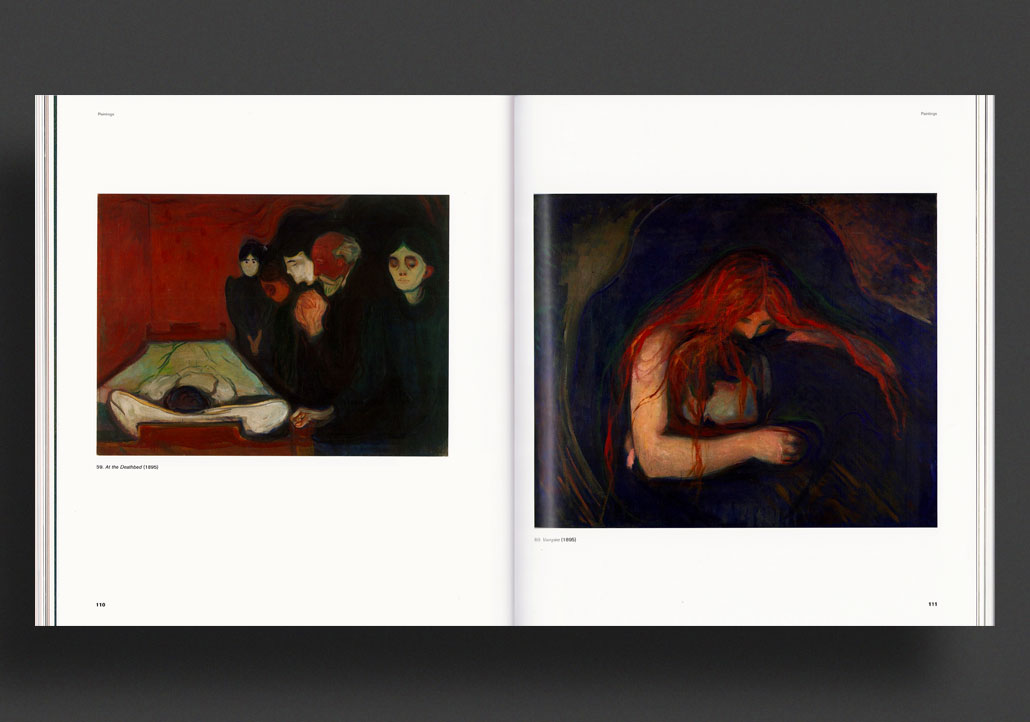
First hardcover, slipcased edition of this now very rare, beautifully illustrated comprehensive book published on the occasion of the 150th anniversary of the birth of Edvard Munch (1863-1944) in 2013, for which a once-in-a-lifetime exhibition was organized by the Munch Museum and the National Museum of Art, Architecture and Design in Oslo.
This major new book is the most comprehensive and ambitious full-scale retrospective of Munch's artistic oeuvre ever presented. It includes an exceptional number of renowned masterpieces as well as many lesser-known works from public and private collections worldwide. With some 350 illustrations, the volume beautifully illustrates the entire development of Munch's art from the 1880s to his death in 1944, including paintings, prints, and drawings. Texts by important scholars cover various aspects of the artist's work: self-presentation and self-portraiture, places and perception, visual rhetoric, The Frieze of Life series as a lifelong project, Munch and public life, narration and abstraction, figure and representation, and the staging of gender. With texts reflecting the most recent Munch scholarship as well as a timeline, a biography, and an index of names and places, this comprehensive book provides a new understanding of Munch's groundbreaking contribution to modernist painting.
Edvard Munch was one of Modernism's most significant artists. His tenacious experimentation within painting, graphic art, drawing, sculpture, photo and film has given him a unique position in Norwegian as well as international art history.
Fine copy in Near Fine illustrated slipcase with some light shelf wear.
1986, English
Hardcover (clothbound w. dust jacket), 320 pages, 26 x 26 cm
1st Edition, Out of print title / used / very good
Published by
University of Nebraska Press / Lincoln
$140.00 - In stock -
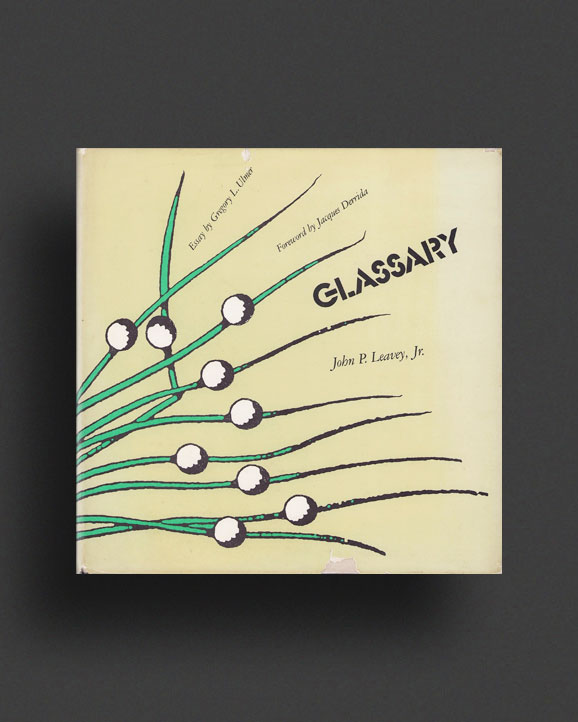
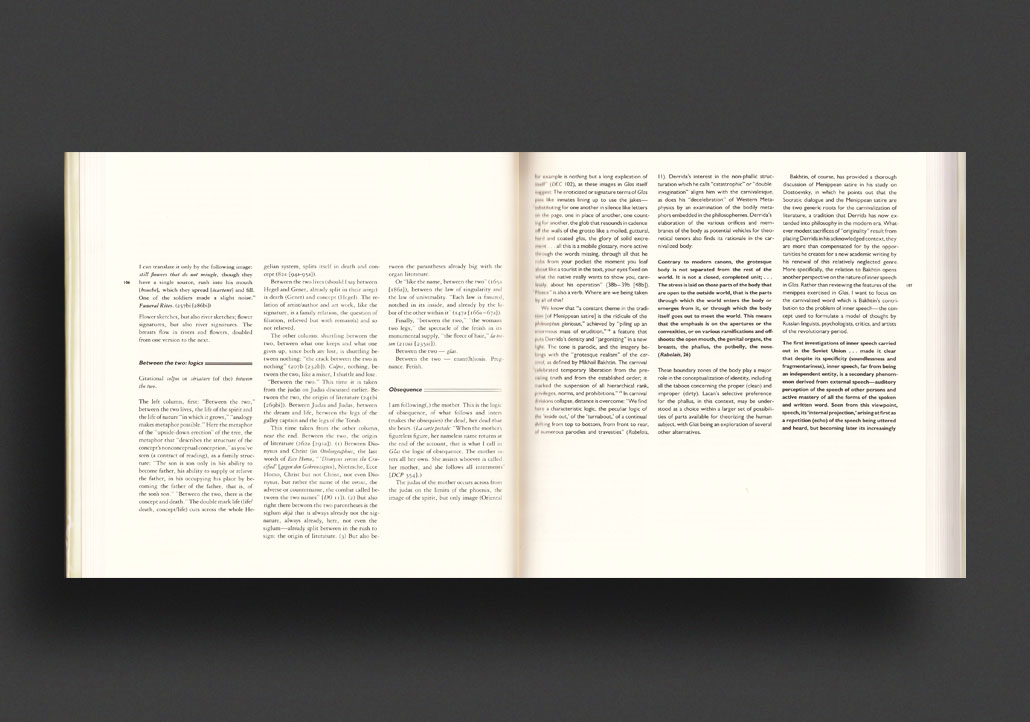
First, long out-of-print and sought after deluxe hardcover 1986 edition of Glassary by John P. Leavey, the ulimate English companion volume to Derrida's masterwork, Glas. Glas is a 1974 book by the French philosopher Jacques Derrida. It combines a reading of Georg Wilhelm Friedrich Hegel's philosophical works and of Jean Genet's autobiographical writing. "One of Derrida's more inscrutable books," its form and content invite a reflection on the nature of literary genre and of writing.
Glassary is a companion volume to Glas. It offers English readers fuller access to the masterwork of Jacques Derrida, the leading philosopher in France. Derrida is important for his investigations of language, philosophy, and writing. He has perforated the boundaries between academic disciplines, has demonstrated the theological underpinnings of apparently atheological philosophies, and has thrown into question traditional notions about the "ownership" of ideas. Glas exemplifies Derrida's methodology of reading and his central philosophical and literary concerns. The reader fascinated by its complexities will appreciate the assistance of Glassary.
Written by the chief translator of Glas, John P. Leavey, Jr., it includes an essay by Gregory Ulmer and a foreword by Jacques Derrida. The book provides all of the apparatus a reader of Glas might immediately desire, including notes on difficult or ambiguous passages, identifications of allusions and puns, locations of citations, and translations of passages in languages other than French. But Leavey does not stop there. He includes a glossary of use to readers of Glas in any language and essays that relate it to Derrida's texts and to the modern French critical enterprise as a whole. Leavey's essay focuses on Glas and literature and philosophy; Ulmer's on Glas and psychoanalysis.
John P. Leavey, Jr., who with Richard Rand translated Glas into English, has translated two other books by Derrida. He teaches at the University of Florida. His colleague, Gregory L. Ulmer, is the author of Applied Grammatology: Post(e)-Pedagogy from Jacques Derrida to Joseph Beuys (1985).
Very Good copy in Good dust jacket with a few chips/tears to edges/tanning, now preserved under mylar wrap. Book in excellent condition.Clothbound HC book in excellent condition.
2001, Japanese
Softcover (w. dust jacket), 128 pages, 28 x 21 cm
1st Edition, Out of print title / used / very good
Published by
Hon no Tomosha / Japan
$100.00 - Out of stock
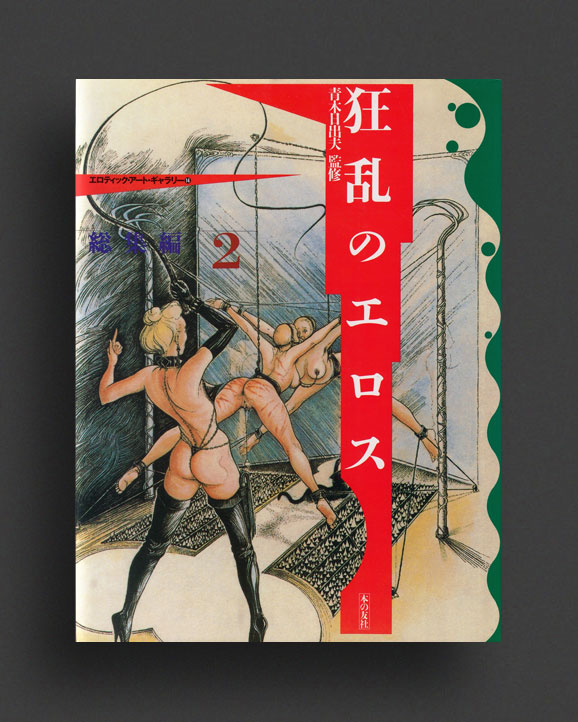
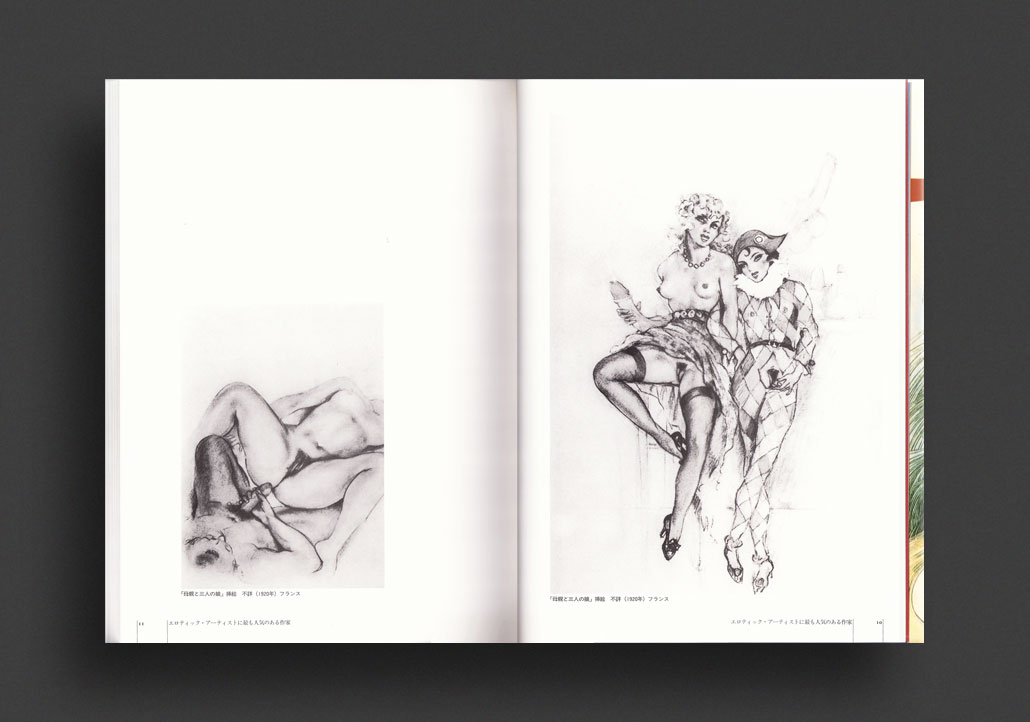
Volume 14.2, "Frenzied Eros", of the Erotic Art Library collection, edited by Hideo Aoki and issued in Japan only as a survey of the history of Erotic art and published by Hon no Tomosha in 2000—2001 in a 14 volume set. This volume with cover artwork by Lynn Paula Russell, and one of the best of the series. Profusely illustrated throughout in colour and b/w this volume focusses on examples of 20th century European and British erotic illustrations by Pierre Louis, Ernst Gerhard, Jean Duruc, Louis Icard, and many naughty unknowns, with many reproductions of rare portfolios. Especially notable for the large sections devoted to the artwork of Lynn Paula Russell and Tom Poulton.
Very Good copy.
2021, English
Hardcover, 148 pages, 16.5 x 23.5 cm
1st Edition, Out of print title / as new
Published by
Mousse / Milan
$180.00 - Out of stock
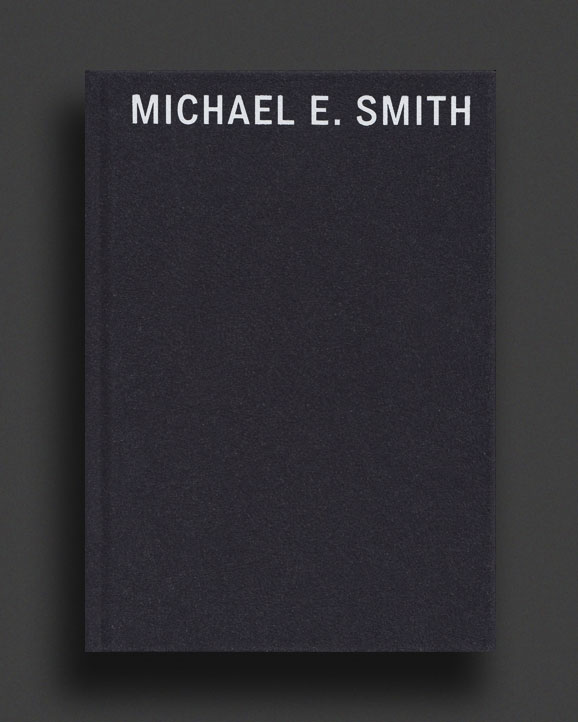
First, only edition of the immediately out-of-print monograph on American sculptor Michael E. Smith.
“Smith is the sound music makes as it collapses.”—Anthony Huberman
A fishing hat, caked with red, heat-resistant rubber, nailed crown-flush to a wall; a pair of gnarled black safety goggles, melted into unrecognizability; a thin, boomerang-shaped piece of translucent yellow plastic in which two animal snouts have been imbedded; the seat of a prisoner transport van; birdhouses; boilers; children’s clothes; diving accessories; old doors; animal scrotums; artificial hearts; grill covers; forklifts. Michael E. Smith’s (b. 1977, Detroit) works are not found or lost objects but sculptural collages originating from a strategy of emptying, “a reduction until arriving at a semantic point zero,” writes Martin Germann. Spare gestures in the exhibition spaces emerge out of the dimness thanks to the absence of artificial light. Accumulated traces of human experience conjure up a brink beyond which things and their attributes disintegrate and form a new constellation that seems to “betoken a funeral solemnity, as if [it] were the result of some kind of vigil or ritual,” as Chris Sharp states.
Initially conceived to document three solo shows at de Appel in Amsterdam (2015), Kunstverein Hannover (2015), and S.M.A.K. in Ghent (2017), this major publication also gathers new commissioned texts and a reprint that shed light on the artist’s decade-plus practice. Martin Germann’s text centers on the phenomenology of Smith’s installation process, revealing the role of context, craftsmanship, and improvisation for his creative act. Chris Sharp attends to the artist’s work from the early days, tackling core concepts of horror, postapocalyptic sublime, and non-signification, and how his installations are to be read as attempts to deepen loss and exhaustion by way of working through them, thereby “disarm[ing] the trauma.” Anthony Huberman captures the struggle of translating Smith’s work into language by reading it through the lens of music. As the artist himself states, his art may be “like listening to a cheap cassette player running low on batteries slugging along ‘T.B. Sheets’ by Van Morrison while working as a dishwasher.”
Highly recommended.
2020, English
Softcover, 188 pages, 20 x 13 cm
Published by
Amphetamine Sulphate / Austin
$36.00 - Out of stock
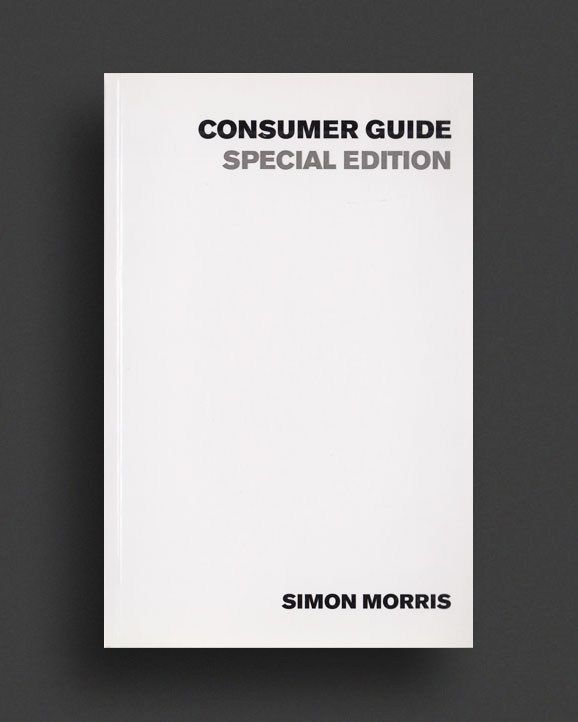
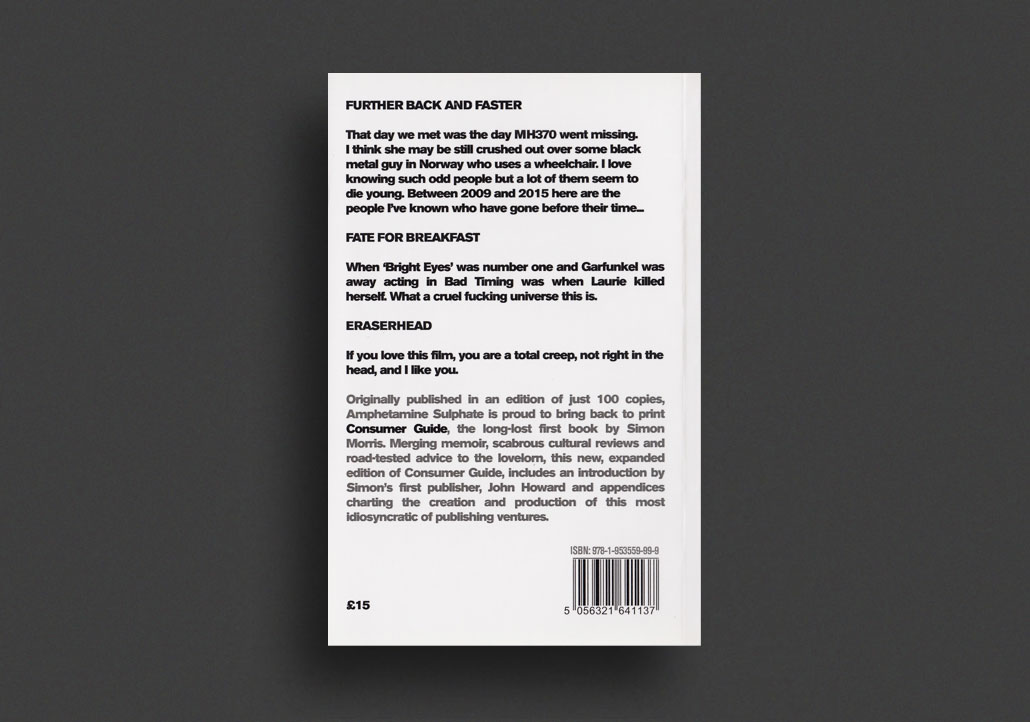
Originally published in an edition of just 100 copies, Amphetamine Sulphate is proud to bring back to print Consumer Guide, the long-lost first book by Simon Morris. Merging memoir, scabrous cultural reviews and road-tested advice to the lovelorn, this new, expanded edition of Consumer Guide, includes an introduction by Simon’s first publisher, John Howard and appendices charting the creation and production of this most idiosyncratic of publishing ventures.
FURTHER BACK AND FASTER
That day we met was the day MH370 went missing. I think she may be still crushed out over some black metal guy in Norway who uses a wheelchair. I love knowing such odd people but a lot of them seem to die young. Between 2009 and 2015 here are the people I've known who have gone before their time —
FATE FOR BREAKFAST
When 'Bright Eyes' was number one and Garfunkel was away acting in Bad Timing was when Laurie killed herself. What a cruel fucking universe this is.
ERASERHEAD
If you love this film, you are a total creep, not right in the head, and I like you.
Originally published in an edition of just 100 copies, Amphetamine Sulphate is proud to bring back to print Consumer Guide, the long-lost first book by Simon Morris. Merging memoir, scabrous cultural reviews and road-tested advice to the lovelorn, this new, expanded edition of Consumer Guide, includes an introduction by Simon's first publisher, John Howard and appendices charting the creation and production of this most idiosyncratic of publishing ventures.
2020, English
Softcover, 88 pages, 21 x 14 cm
Published by
Amphetamine Sulphate / Austin
$34.00 - Out of stock
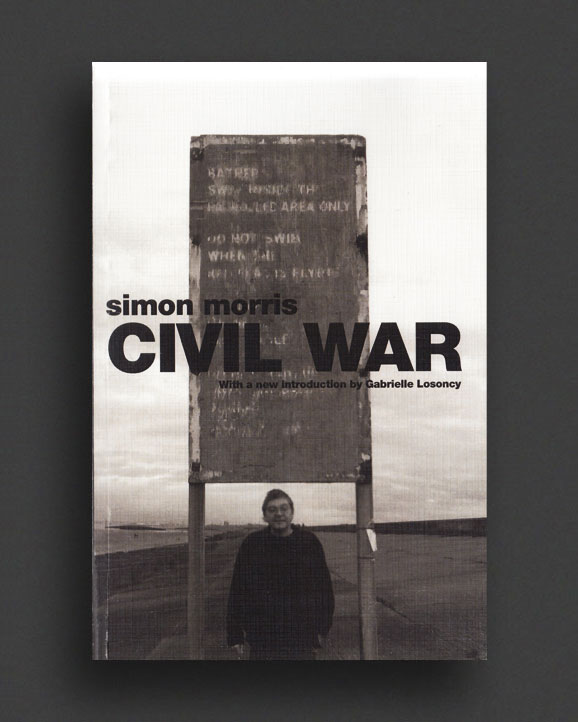
With a new introduction by Gabrielle Losoncy.
“People have told me that heroin is the very best cure for anxiety, and when anxiety is so constant that it really is clearly mental illness, you have to decide whether being a mental patient or being an addict is more socially excluding. I’ve known some good people who take heroin and good people who are mental patients, and even a few decent people who are neither.”
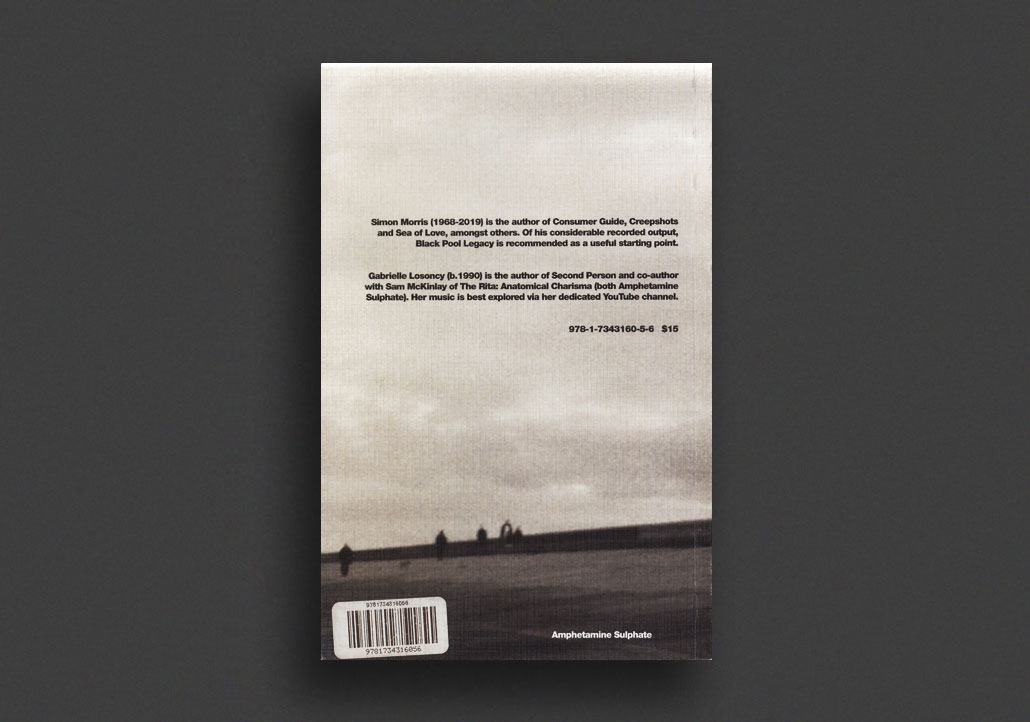
Simon Morris (1968-2019) is the author of Consumer Guide, Creepshots and Sea of Love, amongst others. Of his considerable recorded output, Black Pool Legacy is recommended as a useful starting point.
Gabrielle Losoncy (b.1990) is the author of Second Person and co-author with Sam McKinlay of The Rita: Anatomical Charisma (both Amphetamine Sulphate). Her music is best explored via her dedicated YouTube channel.
2023, English / Dutch
Softcover, 512 pages, 21 × 29.7 cm
Published by
Nai010 Publishers / Rotterdam
$160.00 - In stock -
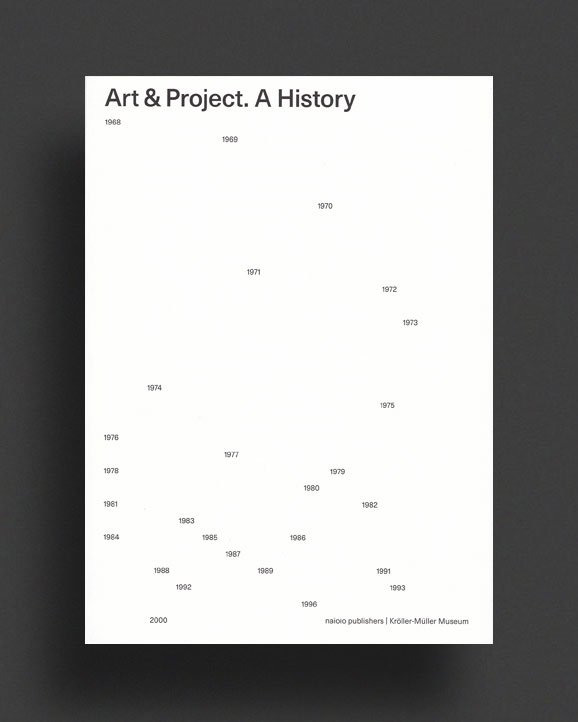
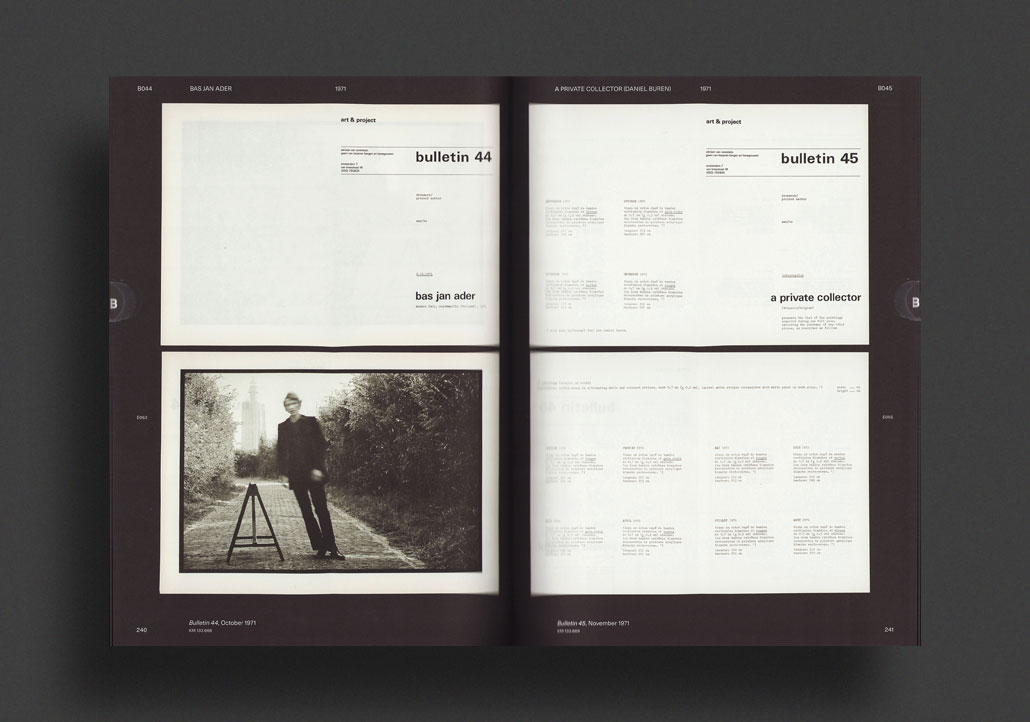
A comprehensive volume on the influential Dutch gallery that united American and European conceptualism For more than 33 years, the Amsterdam gallery Art & Project (1968-2001) played a pivotal role in the development of contemporary art within the Netherlands and beyond. Founders Adriaan van Ravesteijn (1938-2015) and Geert van Beijeren (1933-2005) presented a pioneering program of work by both national and international artists, including Marinus Boezem, Stanley Brouwn, Jan Dibbets, Charlotte Posenenske, Gilbert & George, Lawrence Weiner and Sol LeWitt, among many others. The cofounders published a total of 156 bulletins to draw attention to their exhibitions, and the bulletins quickly evolved into an experimental medium—from carriers of conceptual artists' ideas to conceptual artworks themselves.
Art & Project: A History examines the gallery's exhibitions, bulletins, social networks and international legacy. Replete with extensive research and previously unpublished visual material, this massive book provides an indispensable overview of the history of conceptual art in the Netherlands.
Text by Jip Hinten, Isabelle Bisseling, Ton Geerts, Regine Ehleither.
Already out-of-print at source.
2023, English / Spanish
Softcover, 164 pages, 215 x 27.5 cm
Published by
Bom Dia Boa Tarde Boa Noite / Berlin
$59.00 - Out of stock
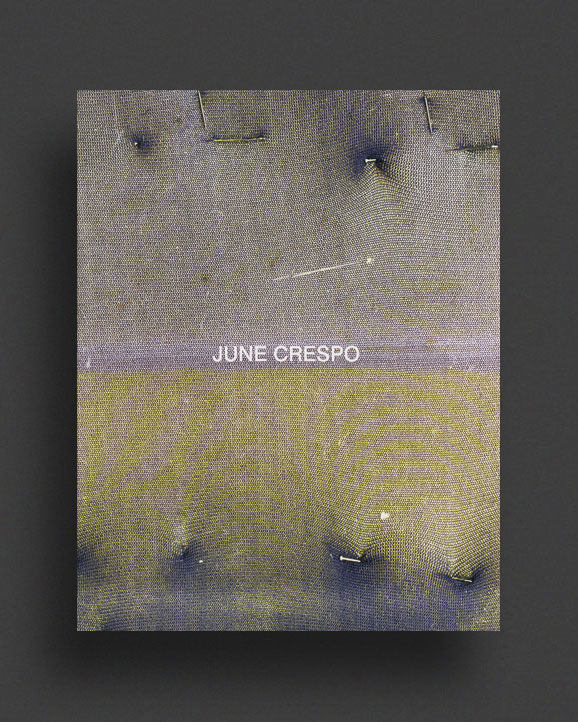
An indepth survey to June Crespo's artistic practice.
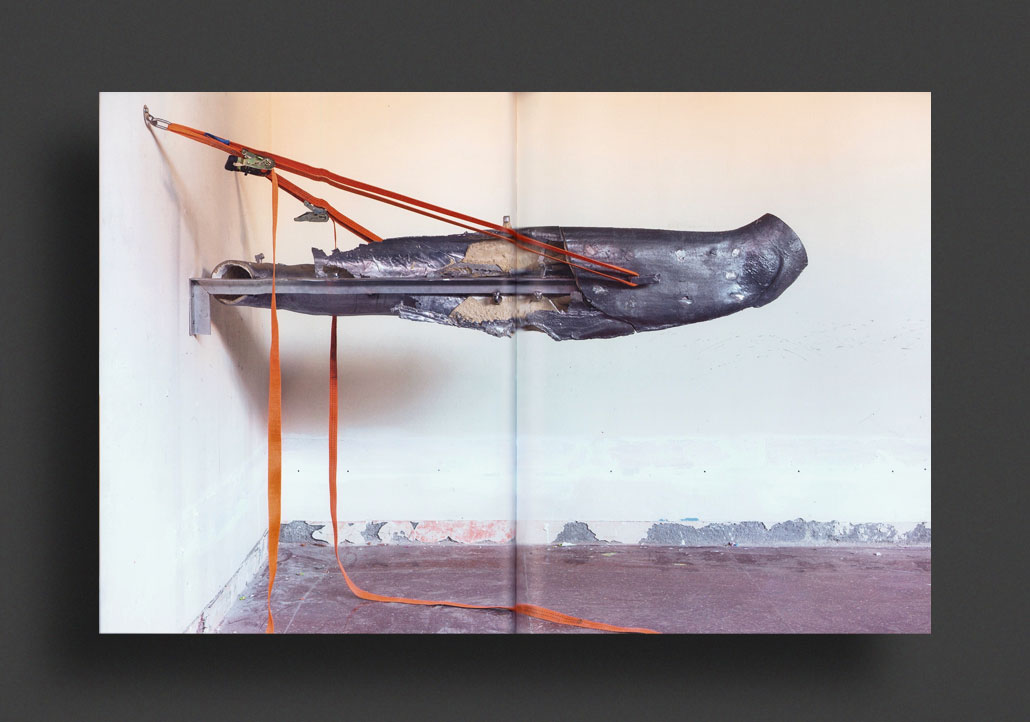
Through an unconventional use of casting and molding techniques, June Crespo has developed a sculptural language that questions the attributes, narratives and genealogies associated to materials such as concrete, steel or bronze. In her recent works, the references to the human body and the presence of architectural and botanical motifs respond to a precise mandate: to put into question the distinction between the structural elements and the ornament.
Published on the occasion of the exhibition Vieron su casa hacerse campo at the Museo CA2M – Centro de Arte Dos de Mayo in 2023, this publication presents an indepth survey to June Crespo's artistic practice and unravels the particular spatial and material relationships that her work brings into play. In addition to graphic documentation of the exhibition, the publication includes documentation of other recent projects, graphic materials specifically produced for this book, and a series of essays written by Aimar Arriola, Sylvia Lavin, Julia Spínola and Marc Navarro, curator of the exhibition.
June Crespo (born 1982 in Pamplona, lives and works in Bilbao) understands sculpture as an exercise that enables her to bring together seemingly opposed qualities. Her works partake equally of the petrean and the perishable, the mechanised and the manual, the abject and the sensuous. The convergence between materials and motifs creates a vocabulary that seems interpretable as a contradiction. On the one hand, certain motifs are taken from industrially produced objects, bearing in mind aspects like ergonomics and formal organicity. On the other, plant and organic motifs appear as the result of highly technical systems of production and representation. Both respond to the exploration of a transitional body-object that, having been fragmented and recomposed, forsakes its original form and meanings. Thus, stalks, busts and conduits are abstracted into channels and carcases that trace a network of connections ranging from the tectonic to the physiological and associated with the domestic sphere and its design as an extension of the body. In this way, notions like human scale, void and gravity are used to establish analogies with the body and to influence the intrinsically spatial, that is, physical, nature of sculpture.
Edited by Marc Navarro.
Texts by Aimar Arriola, Sylvia Lavin, Marc Navarro, Julia Spínola.
Graphic design: Studio Manuel Raeder (Manuel Raeder and Louise Borinski).
1999, English / Japanese
Softcover, unpaginated, 11.5 x 15.5 cm
1st Edition, Out of print title / used / very good
Published by
Little More / Tokyo
$150.00 - Out of stock
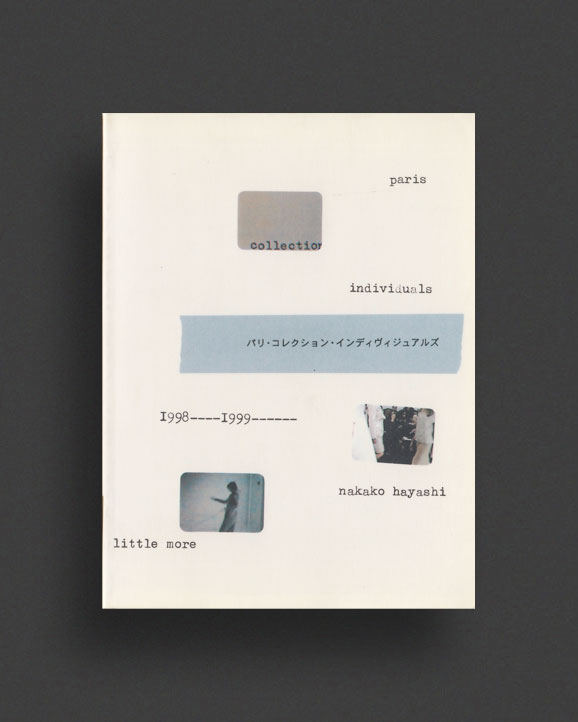
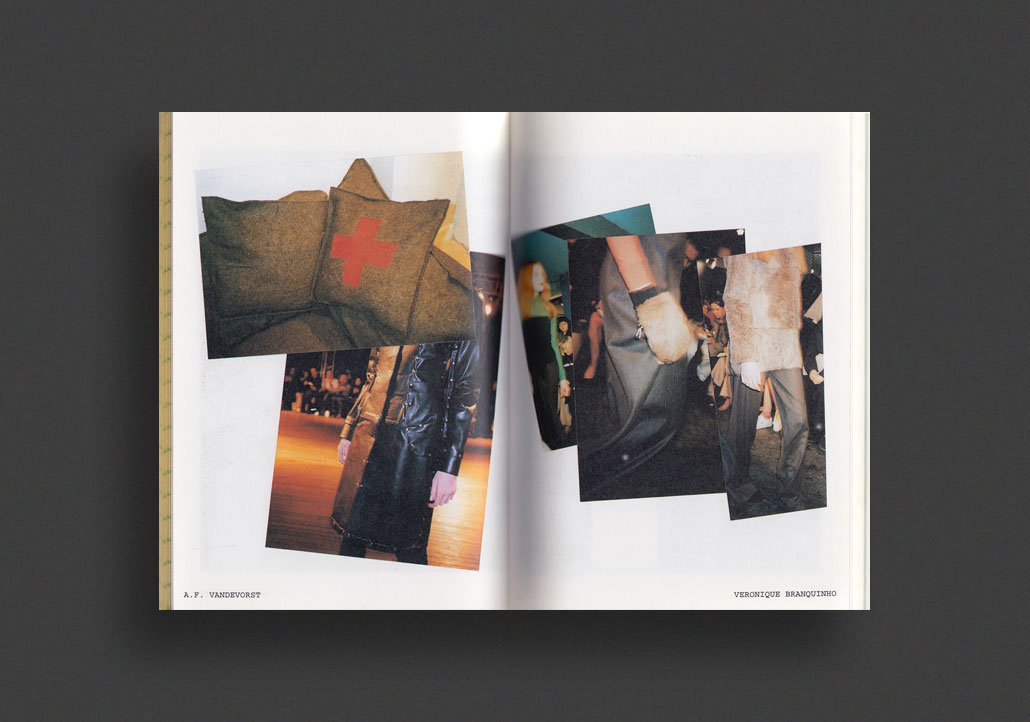
Wonderful pocket journal photo book published in 1999 by Tokyo's Little More books, documenting the 1998 and 1999 Paris fashion weeks through the travels and relationships of Nakako Hayashi, artist and editor of the great Here and There journal and fashion and art contributor to Purple, Hanatsubaki, Ryu-ko-tsu-shin, and more. Naturally, this publication has all the feeling of Here and There and early issues of Purple, and includes many of the key contributors to those magazines — all friends of Hayashi's, plus documentation of the long lost galleries and hot-spots of Paris, London, and Japan — Colette, Purple Institute, The Pineal Eye, The Deep Gallery, Purple Cafe... An excellent time-capsule of 1990's anti-fashion world at its peak. Includes a sticker sheet of Susan Cianciolo's Run7 collection!
Contributions and documentation of work by Susan Cianciolo, Mark Borthwick, BLESS, Elein Fleiss, Comme des Garçons, Maison Martin Margiela, A.F. Vandevorst, Veronique Branquinho, Jerome Dreyfuss, Gaspard Yurkievich, Junya Watanabe, Martine Sitbon, Colette, Purple, Takashi Homma, Mike Mills, Olivier Theyskens, Andre Walker, Jeremy Scott, Niels Klavers, Dick Page, and more.
Texts in English and Japanese.
Very Good copy.