World Food Books' programme is largely produced on Kulin Nation land. We acknowledge the Wurundjeri people of the Kulin Nation as the first and continuing custodians of this land, and pay respect to their Elders past, present, and emerging.
World Food Books is an arts and special interests bookshop in Naarm / Melbourne. Founded in 2010, World Food Books is devoted to the presentation of a rotating, hand-selection of international art, design, literary and counterculture publications with an emphasis on the anti-traditional, the experimental, the avant-garde, the heretic, the marginal.
Presenting new titles alongside rare and out-of-print books, catalogues and journals spanning the fields of modern and contemporary art, design, photography, illustration, film, literature, poetry, cultural theory, philosophy, sexuality, popular and underground culture in its many radical forms, World Food Books wishes to encourage adventurous, thoughtful and open-minded reading, looking, writing, and exchange of publishing and ideas, both current and historical.
As well as our bookshop, located in Melbourne's historical Nicholas Building, all of our inventory is available internationally via our online mail-order service.
World Food Books semi-regularly co-ordinates "Occasions", a programme of exhibits and events at the bookshop and in partnership with other hosts (such as museums and art galleries) that develop out of the activities, relationships and content of the bookshop itself.
World Food Books
The Nicholas Building
37 Swanston Street
Room 5, Level 6
Melbourne 3000
Australia
SHOP HOURS:
SHOP CLOSED FOR SUMMER
RE—OPEN JAN 2
WEB-SHOP OPEN 24/7
World Food Books
Postal Address:
PO Box 435
Flinders Lane
Victoria 8009
Australia
info@worldfoodbooks.com
Art
Theory / Essay
Architecture / Interior
Graphic Design / Typography
Photography
Fashion
Eros
LGBTQ+
Fiction / Poetry
Weird / Speculative / Science Fiction / Horror
Transgressive / Visceral / Abject
Symbolism / Decadence / Fin de siècle
Film / Video
Painting
Sculpture / Installation
Performance / Dance / Theater
Drawing
Sound / Music
Curatorial
Group Shows / Collections
Periodicals
Out-of-print / Rare
Posters / Ephemera / Discs
Signed Books
World Food Books Gift Voucher
World Food Book Bag
Australian Art
Australian Fiction
Australian Science Fiction / Speculative Fiction
Australian Poetry
Australian Photography
Japanese Photography
Conceptual Art
Minimal Art
Dada
'Pataphysics / Oulipo
Fluxus
Concrete Poetry
Pop Art
Surrealism
Arte Povera
Arte Informale / Haute Pâte / Tachism
Nouveau Réalisme / Zero / Kinetic
Situationism / Lettrism
Collage / Mail Art / Xerox Art
Art Brut / Folk / Visionary / Fantastic
Illustration / Graphic Art / Bandes Dessinées
Furniture
Italian Radical Design / Postmodernism
Textiles
Ceramics / Glass
Counterculture
Protest / Revolt
Philosophy
Psychoanalysis
Anthropology
Anarchism
Socialism / Anarchism / Communism / Capitalism
Literary Theory / Semiotics / Language
Feminism / Women's Studies
Gender Studies / Sexuality
Anthropology
Fetishism / BDSM
Drugs / Psychedelia
Crime / Violence
Animal Rights / Veganism
Occult / Esoterica
Ecology / Earth / Alternative Living
Whole Earth / Crafts
All prices in AUD (Australian dollars)
Pick-Ups
Pick-up orders can be collected in our bookshop during opening hours after order date. Please collect any Pick-up orders within 2 weeks of ordering as we have limited storage space. Orders will be released back into stock if not collected within this time. No refunds can be made for pick-ups left un-collected. If you cannot make it in to the bookshop in this time-frame, please choose postage option.
Return Policy
All sales are final. We do accept returns (for refund or exchange) for items received in error. All our orders are packed with special care using heavy-duty padding and cardboard book-mailers or bubble mailers (for smaller books), using reinforcement where required. We cannot take responsibility for any lost, stolen or damaged parcels.
Insurance
Should you wish to insure your package, please email us directly after placing your order and we can organise this at a small extra expense. Although all standard/express tracked packages are very safe and dependable, we cannot take responsibility for any lost, stolen or damaged parcels. We recommend insurance on valuable orders.
Interested in selling your old books, catalogues, journals, magazines, comics, fanzines, ephemera? We are always looking for interesting, unusual and out-of-print books to buy. We only buy books in our fields of interest and specialty, and that we feel we can resell.
We base these prices on desirability, market value, in-print prices, condition and our current stock levels. We offer cash, store credit, and can take stock on consignment. All
about 25% of the price we expect to get when we sell them, or 30% in store credit. We base these prices on desirability, market value, in-print prices, condition and our current stock levels.
Sell your books any day of the week. You can drop them off and return later. If you have a lot of books, we can visit your Sydney home.
We buy books that we feel we can resell. We offer about 25 % of the price we expect to get when we sell them, or 30% in store credit. We base these prices on desirability, market value, in-print prices, condition and our current stock levels.
Philadelphia Wireman
03 August - 01 September, 2018
World Food Books is proud to announce our next Occasion, the first presentation of sculptures by Philadelphia Wireman in Australia.
The Philadelphia Wireman sculptures were found abandoned in an alley off Philadelphia’s South Street on trash night in 1982. Their discovery in a rapidly-changing neighbourhood undergoing extensive renovation, compounded with the failure of all attempts to locate the artist, suggests that the works may have been discarded after the maker’s death. Dubbed the "Philadelphia Wireman" during the first exhibition of this work, in 1985, the maker’s name, age, ethnicity, and even gender remain uncertain. The entire collection totals approximately 1200 pieces, all intricately bound together with tightly-wound heavy-gauge wire (along with a few small, abstract marker drawings, reminiscent both of Mark Tobey and J.B. Murry). The dense construction of the work, despite a modest range of scale and materials, is singularly obsessive and disciplined in design: a wire armature or exoskeleton firmly binds a bricolage of found objects including plastic, glass, food packaging, umbrella parts, tape, rubber, batteries, pens, leather, reflectors, nuts and bolts, nails, foil, coins, toys, watches, eyeglasses, tools, and jewellery.
Heavy with associations—anthropomorphic, zoomorphic, and socio-cultural responses to wrapped detritus—the totemic sculptures by Philadelphia Wireman have been discussed in the context of work created to fulfil the shamanistic needs of alternative religions in American culture. Curators, collectors, and critics have variously compared certain pieces to sculpture from Classical antiquity, Native American medicine bundles, African-American memory jugs, and African fetish objects. Reflecting the artist’s prolific and incredibly focused scavenging impulse, and despite—or perhaps enhanced by—their anonymity, these enigmatic objects function as urban artefacts and arbiters of power, though their origin and purpose is unknown. Philadelphia Wireman, whatever their identity, possessed an astonishing ability to isolate and communicate the concepts of power and energy through the selection and transformation of ordinary materials. Over the course of the past two decades, this collection has come to be regarded as an important discovery in the field of self-taught art and vernacular art.
Presented in collaboration with Fleisher-Ollman Gallery, Philadelphia, and Robert Heald, Wellington.
Susan Te Kahurangi King
02 February - 10 March, 2018
Susan Te Kahurangi King (24 February 1951 - ) has been a confident and prolific artist since she was a young child, drawing with readily available materials - pencils, ballpoint pens and felt-tip markers, on whatever paper is at hand. Between the ages of four and six Susan slowly ceased verbal communication. Her grandparents William and Myrtle Murphy had developed a special bond with Susan so they took on caring responsibilities for extended periods. Myrtle began informally archiving her work, carefully collecting and storing the drawings and compiling scrapbooks. No drawing was insignificant; every scrap of paper was kept. The King family are now the custodians of a vast collection containing over 7000 individual works, from tiny scraps of paper through to 5 meter long rolls.
The scrapbooks and diaries reveal Myrtle to be a woman of great patience and compassion, seeking to understand a child who was not always behaving as expected. She encouraged Susan to be observant, to explore her environment and absorb all the sights and sounds. Myrtle would show Susan’s drawings to friends and people in her community that she had dealings with, such as shopkeepers and postal workers, but this was not simply a case of a grandmother’s bias. She recognised that Susan had developed a sophisticated and unique visual language and sincerely believed that her art deserved serious attention.
This was an unorthodox attitude for the time. To provide some context, Jean Dubuffet coined the term Art Brut in 1945 to describe work created by self-taught artists – specifically residents of psychiatric institutions and those he considered to be visionaries or eccentrics. In 1972 Roger Cardinal extended this concept by adopting the term Outsider Art to describe work made by non-academically trained artists operating outside of mainstream art networks through choice or circumstance. Susan was born in Te Aroha, New Zealand in 1951, far from the artistic hubs of Paris and London that Dubuffet and Cardinal operated in. That Myrtle fêted Susan as a self-taught artist who deserved to be taken seriously shows how progressive her attitudes were.
Susan’s parents Doug and Dawn were also progressive. Over the years they had consulted numerous health practitioners about Susan’s condition, as the medical establishment could not provide an explanation as to why she had lapsed into silence. Dawn educated herself in the field of homeopathy and went on to treat all twelve of her children using these principles – basing prescriptions on her observations of their physical, mental and emotional state.
Doug was a linguist with an interest in philosophy who devoted what little spare time he had to studying Maori language and culture. To some extent their willingness to explore the fringes of the mainstream made them outsiders too but it was their commitment to living with integrity and their respect for individuality that ensured Susan’s creativity was always encouraged.
Even though Susan’s family supported her artistic pursuits, some staff in schools and hospitals saw it as an impediment to her assimilation into the community and discouraged it in a variety of ways. Her family was not always aware of this and therefore did not fully understand why Susan stopped drawing in the early 1990s. However, rather than dwell on the challenges that Susan faced in pursuit of her artistic practice, they prefer to highlight her achievements. In 2008 Susan began drawing again in earnest, after an almost 20 year interruption, and her work is now shown in galleries around the world.
Susan grew up without television and has been heavily influenced by the comics she read as a child. She is absolutely fearless in the appropriation of recognizable characters, such as Donald Duck and Mickey Mouse, in her work. She twists their limbs, contorts their faces, compresses them together, blends them into complex patterned backgrounds - always imbuing them with an incredible energy. Although Susan often used pop culture characters in her work they are not naive or childlike. These are drawings by a brilliant self-taught artist who has been creating exceptional work for decades without an audience in mind.
Mladen Stilinović
"Various Works 1986 - 1999"
02 February 16 - September 10, 2016
Various works 1986 - 1999, from two houses, from the collections of John Nixon, Sue Cramer, Kerrie Poliness, Peter Haffenden and Phoebe Haffenden.
Including: Geometry of Cakes (various shelves), 1993; Poor People’s Law (black and white plate), 1993; White Absence (glasses, ruler, set square, silver spoon, silver ladel with skin photograph and wooden cubes), 1990-1996; Exploitation of the Dead (grey and red star painting, wooden painting, black spoon with red table, red plate), 1984-1990; Money and Zeros (zero tie, paintings made for friends in Australia (Sue, John, Kerrie), numbers painting), 1991-1992; Words - Slogans (various t-shirts) - “they talk about the death of art...help! someone is trying to kill me”, “my sweet little lamb”, “work is a disease - Karl Marx”; Various artist books, catalogues, monographs, videos; Poster from exhibition Insulting Anarchy; "Circular" Croatian - Australian edition; Artist book by Vlado Martek (Dostoyevsky); more.
Thanks to Mladen Stilinović and Branka Stipančić.
Jonathan Walker
Always Will Need To Wear Winter Shirt Blue + Ochre Small Check Pattern
21 August - 21 September, 2015
Untitled
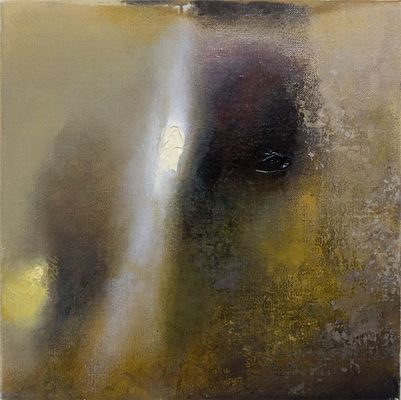
I am not a great reader of poetry but I always return to the work of Melbourne poet, Vincent Buckley (1925- 1988). Perhaps I find his most tantalising piece to be not a finished poem but a fragment left on a scrap of paper discovered on his desk after the poet’s death.
The poetry gathers like oil
In the word-core, and spreads
It has its music meet,
Its music is in movement.
This fragment is more the shell left behind from a volatile thought than a finished poem. I find the last two lines honest but awkward whereas the first two lines work like an arrow. Most likely he could not find a resolution so it was left. Still, in its present form, it remains an eloquent testimony to the ultimate failure of a medium to express mobile thought and sensation, in Buckley’s case, through verbal language. It’s an important matter because this is something all artists have to deal with regardless of the medium.
I have never written a poem, however, I am forever copying fragments from books on paper scraps in a vain effort to fix certain notions in my head. At first, they function as bookmarks that are sometimes returned to when I open the book. But before long, as they accumulate, they fall out littering the table interspersed with A4 photocopies, bills, books and medications.
To return to Buckley’s fragment, the first two lines very much evoke how I paint nowadays. As you age, detail diminishes and patches of light become more luminous and float. I feel the most honest way of dealing with this is by smearing the oil paint on the canvas with the fingers and working close-up, blind. Only if the patches coalesce into an approaching image can the work gain a life.
-
Jonathan Walker was born in Melbourne, Australia and brought up on a dairy farm in Gippsland. In the 1970’s he studied painting at RMIT and won the Harold Wright Scholarship to the British Museum, London. During the 1980’s he exhibited at Pinacotheca Gallery, Richmond and had work shown at the NGV and Heidi City Art Gallery. Over the same period he designed the cover for the “Epigenesi” LP by Giancarlo Toniutti, Italy and conducted a mail exchange work with Achim Wollscheid, Germany. The work with artists through the post resulted in an article published in the bicentenary issue of Art and Australia 1988. He showed in artist run spaces such as WestSpace in the 90’s and 2000’s, and until 2012, taught painting at Victoria University, which is where we (Colleen Ahern and Lisa Radford) as organisers of the exhibition, among many others, had the privilege of being his student.
Walker’s knowledge was imparted to students through the careful selection of music, literature, and artists found in books that he himself had ordered for the library. Walker’s strategy was the generosity of sharing his vast knowledge with references specific to each student and their context.
Walker’s paintings share a similar focus and intimacy.
This exhibition presents a small selection of recent paintings alongside a publication that includes Walker’s writing. Observational and analytical, Walker’s work is a type of material notation — the time of day, colour and how it is blended, the both specific and fleeting location of a reflection on lino or the question of whether a chair leg should be included in a painting.
Please join us on Friday August 21 between 6-8pm to celebrate the opening of the exhibition.
Curated by Colleen Ahern and Lisa Radford.
B. Wurtz
Curated by Nic Tammens
March 26 - April 4, 2015
B.Wurtz works from a basement studio in his home on Manhattan’s Lower East Side.
This local fact is attested to by the plastic shopping bags and newsprint circulars that appear in his work. As formal objects, they don’t make loud claims about their origins but nonetheless transmit street addresses and places of business from the bottom of this long thin island. Like plenty of artists, Wurtz is affected by what is local and what is consumed. His work is underpinned by this ethic. It often speaks from a neighborhood or reads like the contents of a hamper:
“BLACK PLUMS $1.29 lb.”
“Food Bazaar”
“USDA Whole Pork Shoulder Picnic 99c lb.”
“RITE AID Pharmacy, with us it’s personal.”
“H. Brickman & Sons.”
“Sweet Yams 59c lb."
Most of the work in this exhibition was made while the artist was in residence at Dieu Donne, a workshop dedicated to paper craft in Midtown. Here Wurtz fabricated assemblages with paper and objects that are relatively lightweight, with the intention that they would be easily transportable to Australia. This consideration isn’t absolute in Wurtz’s work, but was prescriptive for making the current exhibition light and cheap. Packed in two boxes, these works were sent from a USPS post office on the Lower East Side and delivered to North Melbourne by Australia Post.
Wurtz appears courtesy of Metro Pictures, New York.
Thanks to Rob Halverson, Joshua Petherick, Sari de Mallory, Matt Hinkley, Helen Johnson, Fayen d'Evie, Ask Kilmartin, Lisa Radon, Ellena Savage, Yale Union, and "Elizabeth".
John Nixon
"Archive"
December 15 - January 20, 2014
The presentation of John Nixon's archive offered a rare showcase of this extensive collection of the artist's own publications, catalogues, posters, ephemera, editions and more, from the mid 1980s onwards, alongside a selection of his artworks.
Organized by John Nixon, Joshua Petherick and Matt Hinkley.
"Habitat"
at Minerva, Sydney (organised by Joshua Petherick and Matt Hinkley)
November 15 - December 20, 2014
Lupo Borgonovo, Janet Burchill & Jennifer McCamley,
Lewis Fidock, HR Giger, Piero Gilardi, Veit Laurent Kurz,
Cinzia Ruggeri, Michael E. Smith, Lucie Stahl, Daniel Weil, Wols
Press Release:
“...It contained seven objects. The slender fluted bone, surely formed for flight, surely from the wing of some large bird. Three archaic circuitboards, faced with mazes of gold. A smooth white sphere of baked clay. An age-blackened fragment of lace. A fingerlength segment of what she assumed was bone from a human wrist, grayish white, inset smoothly with the silicon shaft of a small instrument that must once have ridden flush with the surface of the skin - but the thing’s face was seared and blackened.”
William Gibson, “Count Zero”, 1986
"Autumn Projects Archive"
Curated by Liza Vasiliou
March 6 - March 15, 2014
World Food Books, in conjunction with the Virgin Australia Melbourne Fashion Festival 2014, presented the Autumn Projects archive, consisting of a selection of early examples in Australian fashion with a particular interest in collecting designers and labels from the period beginning in the 1980’s, who significantly influenced the discourse of Australian Fashion.
Curated by Liza Vasiliou, the exhibition provided a unique opportunity to view pieces by designers Anthea Crawford, Barbara Vandenberg, Geoff Liddell and labels CR Australia, Covers, Jag along with early experimental collage pieces by Prue Acton and Sally Browne’s ‘Fragments’ collection, suspended throughout the functioning World Food Books shop in Melbourne.
H.B. Peace
presented by CENTRE FOR STYLE
November 14, 2013
"Hey Blinky, you say chic, I say same"
Anon 2013
H.B. Peace is a clothing collaboration between great friends Blake Barns and Hugh Egan Westland. Their pieces explore the divergences between 'character’ and ‘personality’ in garments....etc
Special Thanks to Joshua Petherick and Matt Hinkley of WFB and Gillian Mears
and a Very Special Thank you to Audrey Thomas Hayes for her shoe collaboration.
Janet Burchill & Jennifer McCamley
"Aesthetic Suicide"
May 10 - June 8, 2013
The first of our occasional exhibitions in the World Food Books office/shop space in Melbourne, "Aesthetic Suicide" presented a body of new and older works together by artists Janet Burchill & Jennifer McCamley, including videos, prints, a wall work, and publications.
During shop open hours videos played every hour, on the hour.
2024, English
Softcover, 184 pages 22 x 14 cm
Published by
Monkey / US
$44.00 - Out of stock
Winner of the Yomiuri Prize and recipient of the 2022-23 William F. Sibley Memorial Subvention Award for Japanese Translation.
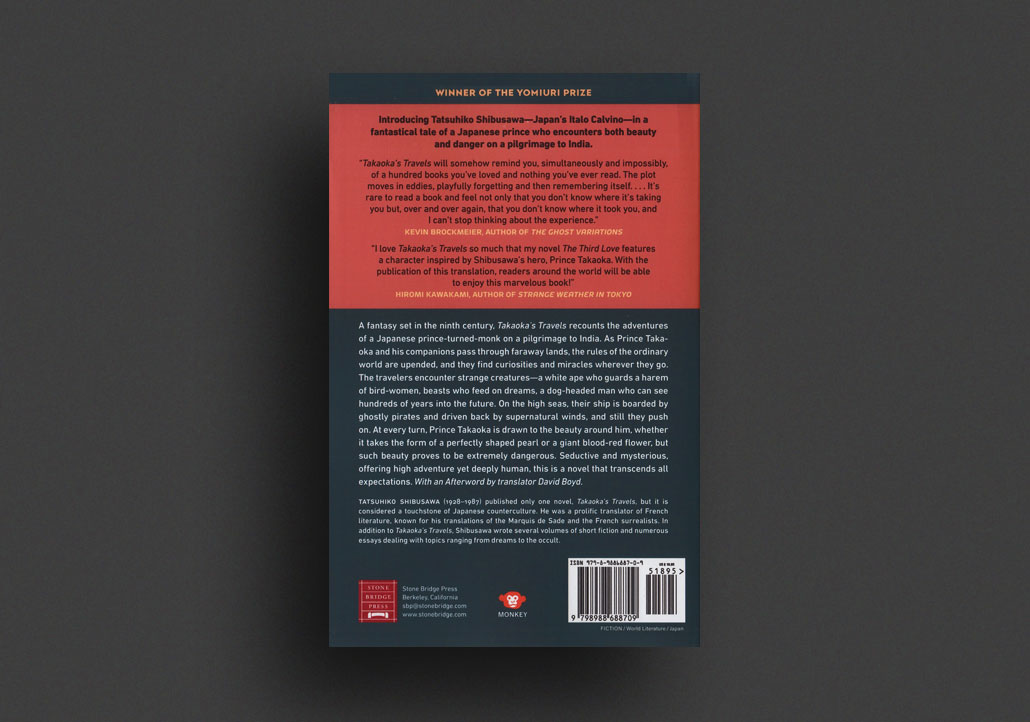
Introducing Tatsuhiko Shibusawa—Japan's Italo Calvino—in this fantastical tale of a Japanese prince who encounters both beauty and danger on a pilgrimage to India.
Tatsuhiko Shibusawa (1928-1987) published only one novel, Takaoka's Travels, but it is considered a touchstone of Japanese counterculture. A specialist in medieval demonology, Shibusawa was a prolific, and controversial, Japanese translator of French literature, known for his translations of the Marquis de Sade, Georges Bataille, Jean Cocteau, and the French surrealists. In 1960 he and his publisher, Kyōji Ishii, were trialled for public obscenity over the publishing of Shibusawa's translation of de Sade's Juliette into the Japanese language. What was to be known as the "Sade Trial" took 9 years and although many of Japan's leading authors testified for the defence, in 1969 the Japanese Supreme Court ruled them guilty and charged. This did not deter Shibusawa. In addition to Takaoka's Travels, he wrote several volumes of short fantasy fiction and numerous essays on black magic, demonology and eroticism, edited the ground-breaking Le Sang Et La Rose arts and literary journal (1968—1969), and in 1981 he was awarded the 9th Izumi Kyoka Literature Prize.
A fantasy set in the ninth century, Takaoka's Travels recounts the adventures of a Japanese prince-turned-monk on a pilgrimage to India. As Prince Takaoka and his companions pass through faraway lands, the rules of the ordinary world are upended, and they find curiosities and miracles wherever they go. The travellers encounter strange creatures—a white ape who guards a harem of bird-women, beasts who feed on dreams, a dog-headed man who can see hundreds of years into the future. On the high seas, their ship is boarded by ghostly pirates and driven back by supernatural winds, and still they push on. At every turn, Prince Takaoka is drawn to the beauty around him, whether it takes the form of a perfectly shaped pearl or a giant blood-red flower, but such beauty proves to be extremely dangerous. Seductive and mysterious, offering high adventure yet deeply human, this is a novel that transcends all expectations.
With an afterword by translator David Boyd.
"In the ninth century, a Japanese prince-turned-monk sets off with companions on a journey to Hindustan (India), the center of Buddhism. . . . An arresting novel that readers will cherish."—David Keymer, Library Journal Starred Review
"A lush and fabulous journey into the unknown with impossible creatures, fantastic dream worlds, and things that seem to echo events long past."—Regina Schroder, Booklist
"Takaoka's Travels will somehow remind you, simultaneously and impossibly, of a hundred books you've loved and nothing you've ever read. The plot moves in eddies, playfully forgetting and then remembering itself. . . . It's rare to read a book and feel not only that you don't know where it's taking you but, over and over again, that you don't know where it took you, and I can't stop thinking about the experience."—Kevin Brockmeier, author of The Ghost Variations
2024, English
Hardcover, 180 pages, 22.9 x 15.2 cm
Published by
No Place Press / US
$48.00 - In stock -
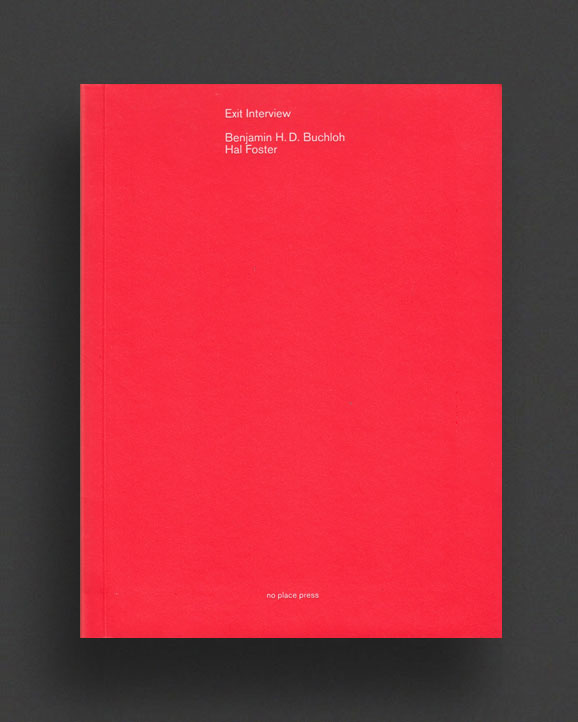
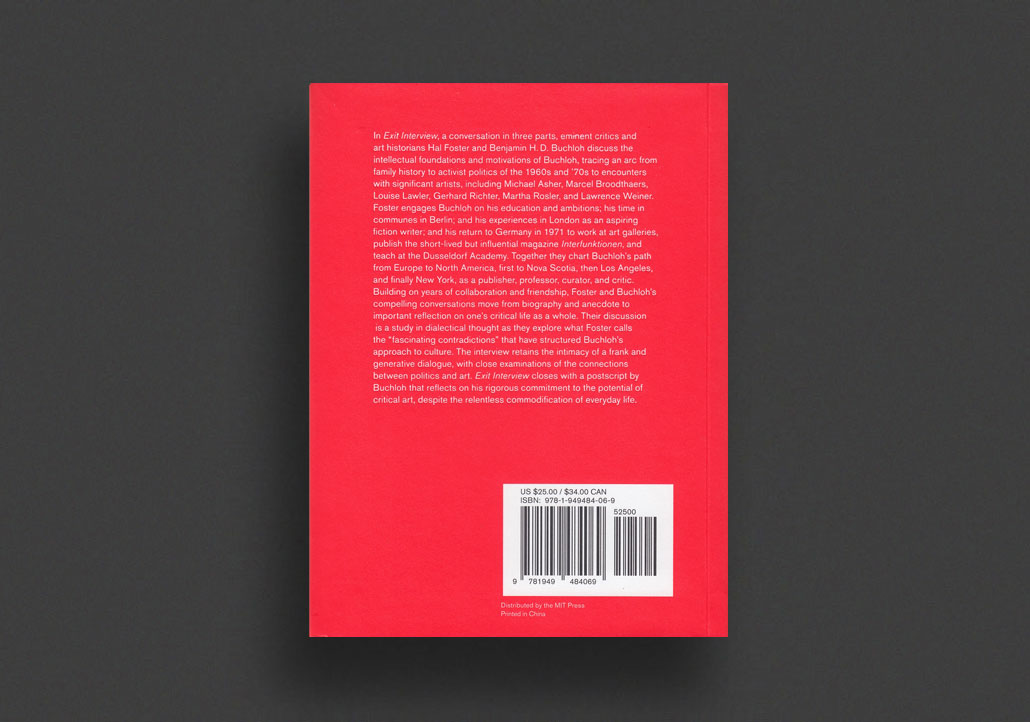
Two of the most important voices in art history discuss their intellectual foundations, the changing role of criticism, and the possibilities for artistic practice today.
In Exit Interview, the prominent art critics and historians Hal Foster and Benjamin Buchloh discuss their intellectual foundations and the projects they've worked on together, from October magazine to Art Since 1900. Through three engaging conversations, Foster engages Buchloh on his early influences and aspirations, his formative years in Berlin, London, and Dusseldorf, and his career in North America, while exploring the impact of other art historians and critics. Buchloh candidly addresses his successes, critical significance, and unexplored avenues in art history, providing a unique window into his motivations and experiences. With a powerful postface by Buchloh, Exit Interview builds from biography and anecdote to important reflection on one's critical life as a whole.
2024, English
Softcover, 248 pages, 21.0 x 14.3 cm
Published by
Sternberg Press / Berlin
$52.00 - Out of stock
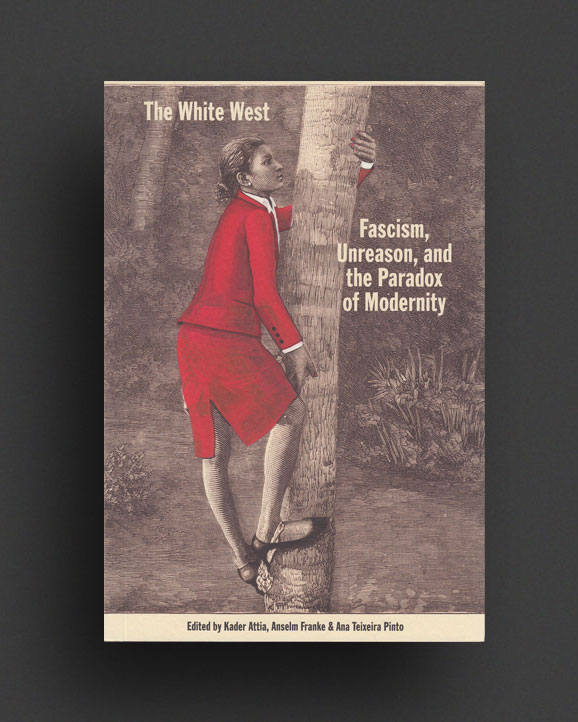
Tracing the relation between fascism and settler colonialism.
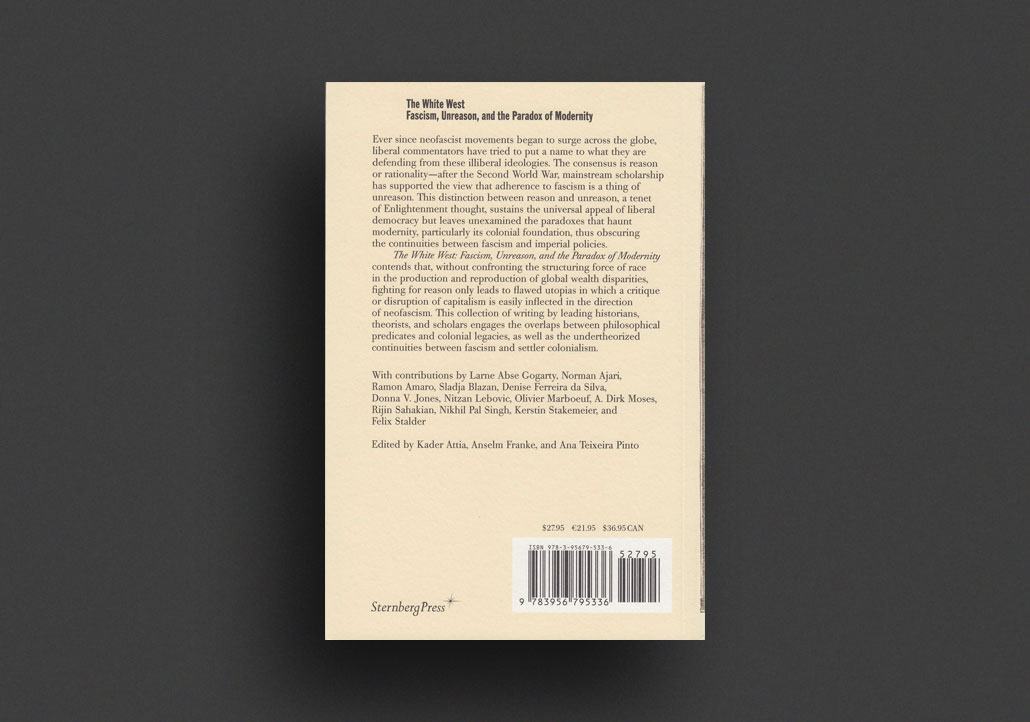
Ever since neofascist movements began to surge across the globe, liberal commentators have tried to put a name to what they are defending from these illiberal ideologies. The consensus is reason or rationality—after the Second World War, mainstream scholarship has supported the view that adherence to fascism is a thing of unreason. This distinction between reason and unreason, a tenet of Enlightenment thought, sustains the universal appeal of liberal democracy but leaves unexamined the paradoxes that haunt modernity, particularly its colonial foundation, thus obscuring the continuities between fascism and imperial policies.
The White West contends that, without confronting the structuring force of race in the production and reproduction of global wealth disparities, fighting for reason only leads to flawed utopias in which a critique or disruption of capitalism is easily inflected in the direction of neofascism. This collection of writing by leading historians, theorists, and scholars is an attempt to engage the overlaps between philosophical predicates and colonial legacies, as well as the undertheorized continuities between fascism and settler colonialism.
Contributors:
Larne Abse Gogarty, Norman Ajari, Ramon Amaro, Sladja Blazan, Denise Ferreira da Silva, Donna V. Jones, Nitzan Lebovic, Olivier Marboeuf, A. Dirk Moses, Rijin Sahakian, Nikhil Pal Singh, Kerstin Stakemeier, Felix Stalder
1983, English
Softcover, 288 pages, 20.96 x 14.61 cm
Published by
Grove Press / New York
$40.00 - Out of stock
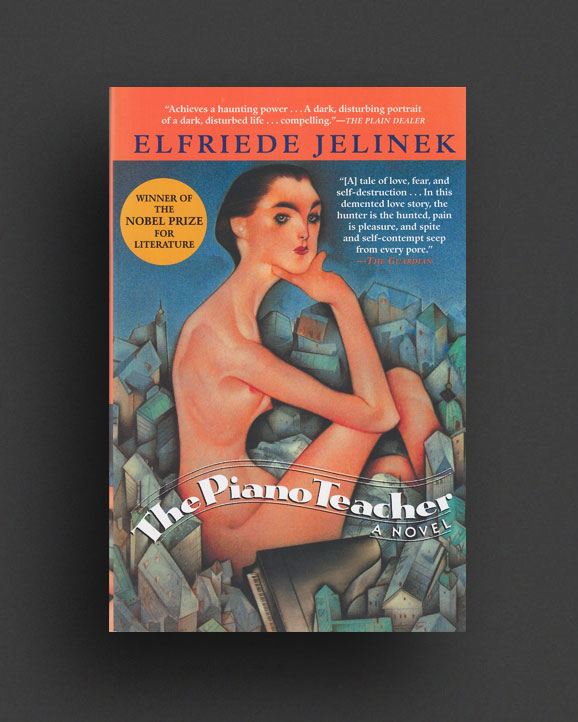
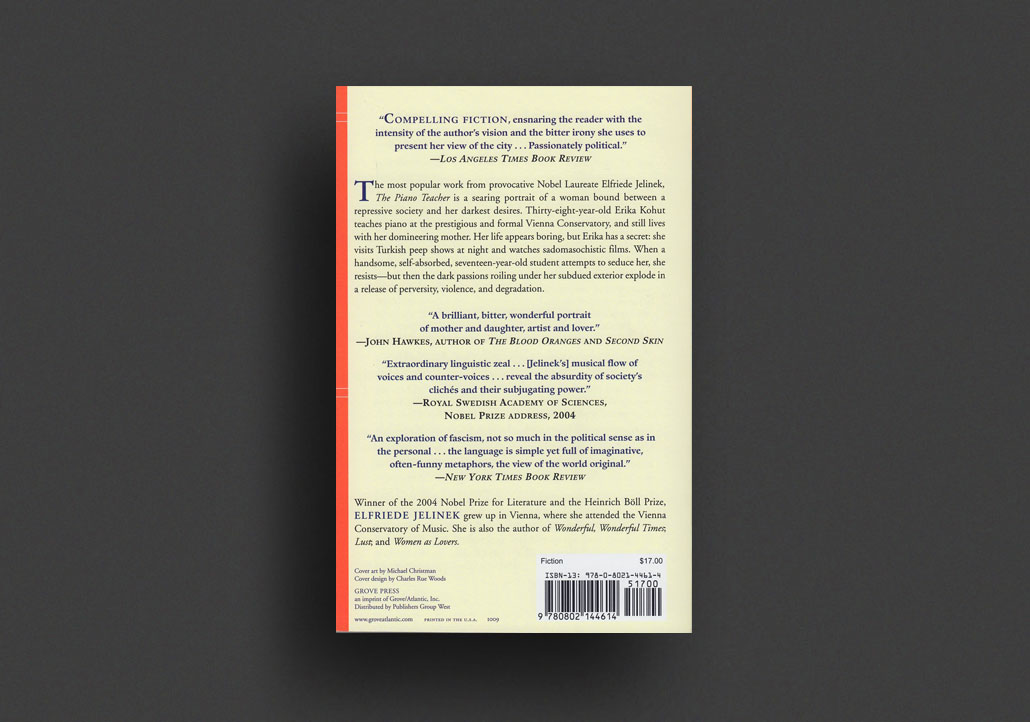
The most popular work from provocative Austrian Nobel laureate Elfriede Jelinek, The Piano Teacher is a searing portrait of a woman bound between a repressive society and her darkest desires. Erika Kohut is a piano teacher at the prestigious and formal Vienna Conservatory, who still lives with her domineering and possessive mother. Her life appears boring, but Erika, a quiet thirty-eight-year-old, secretly visits Turkish peep shows at night and watched sadomasochistic films. Meanwhile, a handsome, self-absorbed, seventeen-year-old student has become enamoured with Erika and sets out to seduce her. She resists him at first, but then the dark passions roiling under the piano teacher's subdued exterior explode in a release of perversity, violence, and degradation.
2024, English
Softcover, 320 pages, 20.2 x 12.7 cm
Published by
The New York Review of Books / New York
$39.00 - In stock -
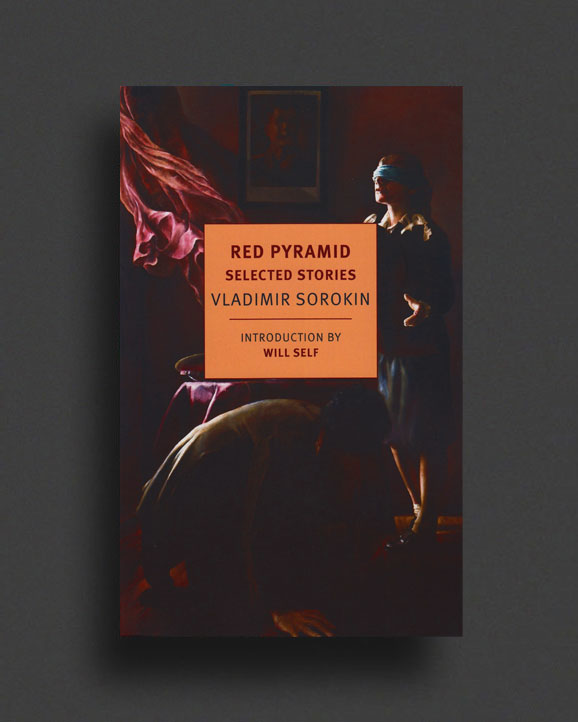
Red Pyramid is a sort of "greatest hits" collection of short stories from across Vladimir Sorokin's career, beginning with juvenilia like "The Pink Tuber," composed with no expectation of either publication or readership; moving on to scatological conceptual texts like "An Obelisk"; then plunging into the more even-tempered, but still quite uncanny, delights of his post-Soviet work.
Stories like "A Month in Dachau" earn Sorokin his moniker as the "Russian De Sade," while others, like "Timka," are shockingly tender-despite their graphic depictions of mass shootings and anal sex.
This collection also contains the infamous "Nastya," a story about a family cannibalizing its daughter on the eve of the twentieth century, for which Sorokin was nearly put on trial; "Horse Soup," which was the first translation from the Russian to win an O'Henry Prize; as well as stories published in Anglophone magazines such as The New Yorker, n+1, Harper's, and The Baffler to great acclaim.
Translated by Max Lawton with equal attention to chewiness and pop flair, Red Pyramid is introduced brilliantly, brutally, and as always, unexpectedly by Will Self. Red Pyramid is perhaps the best place to begin a dive into Sorokin's arch detonation of Russian violence.
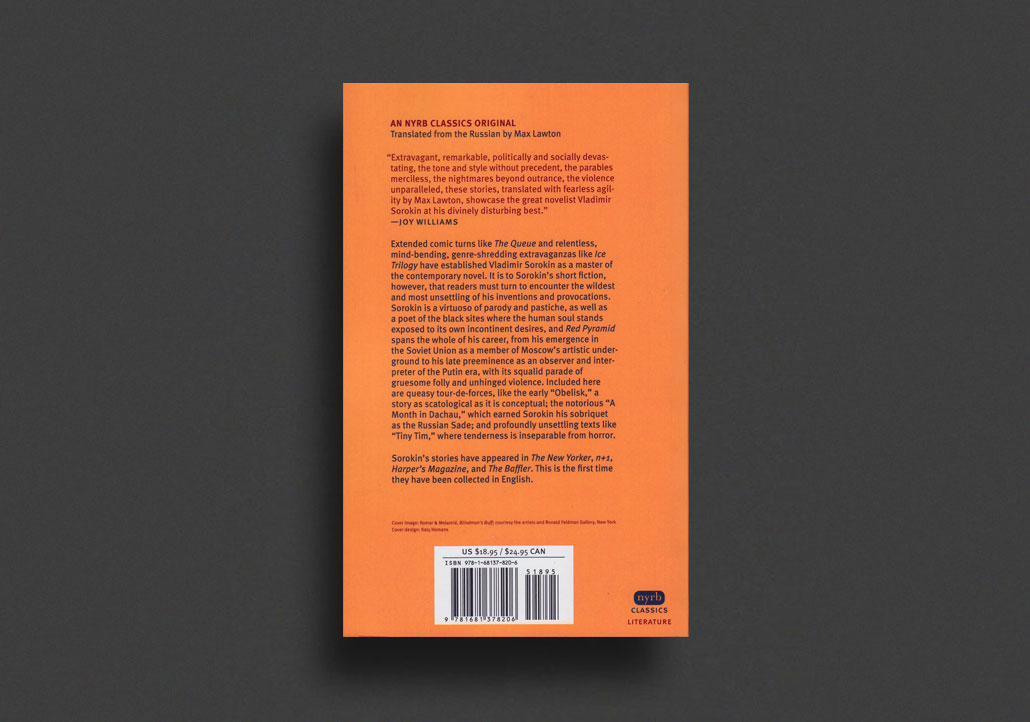
Extended comic turns like The Queue and relentless, mind-bending, genre-shredding extravaganzas like Ice Trilogy have established Vladimir Sorokin as a master of the contemporary novel. It is to Sorokin's short fiction, however, that readers must turn to encounter the wildest and most unsettling of his inventions and provocations. Sorokin is a virtuoso of parody and pastiche, as well as a poet of the black sites where the human soul stands exposed to its own incontinent desires, and Red Pyramid spans the whole of his career, from his emergence in the Soviet Union as a member of Moscow's artistic underground to his late preeminence as an observer and interpreter of the Putin era, with its squalid parade of gruesome folly and unhinged violence. Included here are queasy tour-de-forces, like the early "Obelisk," a story as scatological as it is conceptual; the notorious "A Month in Dachau," which earned Sorokin his sobriquet as the Russian Sade; and profoundly unsettling texts like "Tiny Tim," where tenderness is inseparable from horror.
Sorokin's stories have appeared in The New Yorker, n+1, Harper's Magazine, and The Baffler. This is the first time they have been collected in English.
2019, English / German
Softcover, 436 pages, 17 x 23.5 cm
Published by
Walther König / Köln
Ludwig Forum / Aachen
$85.00 - Out of stock
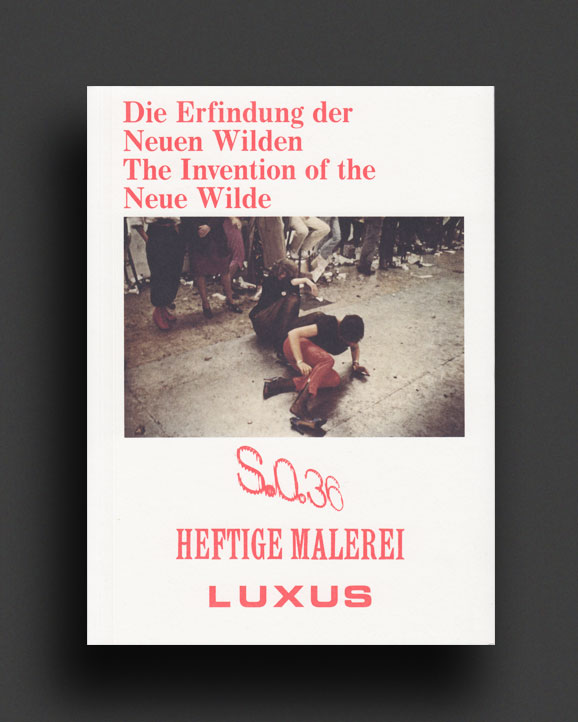
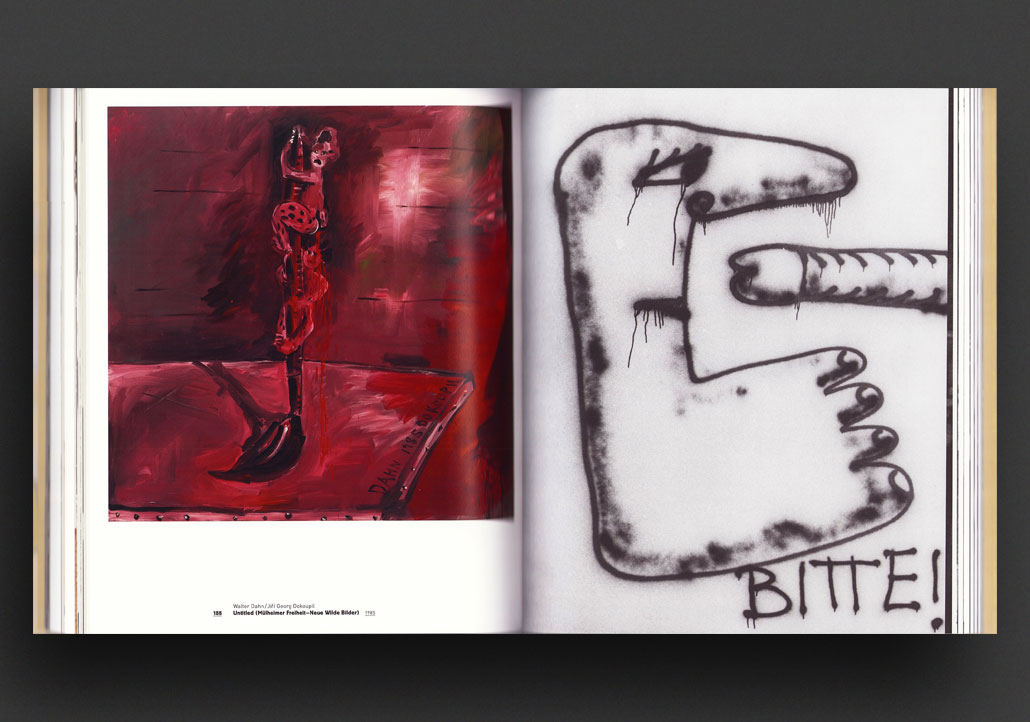
The Invention of the Neue Wilde aims to put a new perspective on the phenomena of the so-called ‘Neue Wilde’ (new Fauves), which was a term used in Germany for neo-expressionism: a movement which saw the re-emergence of expressive painting in the late 1970s and 1980s. Its most famous protagonists include Martin Kippenberger, Werner Büttner, Salome and Walter Dahn.
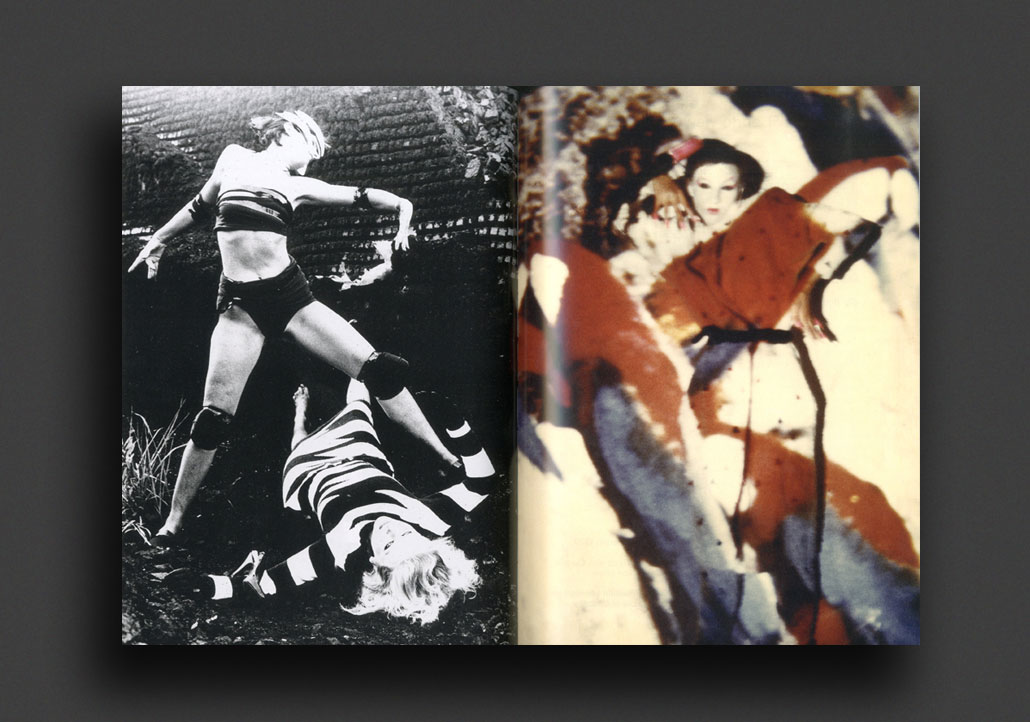
Instead of focusing on the production of paintings by those involved – and a corresponding catalogue of these paintings – it is much more interested in the emergence of the painting boom out of potent interplay between artists, gallerists, collectors and art historians. Here the focus is especially on personal backgrounds and the context in which painters worked.
The argument shows that the artistic practices of the ‘Neuen Wilden’ had little to do with a generalised ‘return’ to panel painting and thus to a traditional concept of art. Painting was in fact embedded in an extended network of artistic production, which was particularly characterised by a destabilisation in the division between high and popular culture as well as by various media, genres and collaborative forms of praxis.
Hitherto neglected photographic and documentary material as well as artists’ posters, records, newspapers, video works and artists’ books testify to the artists’ experimental bent on one hand, their proximity to self-organised, subcultural phenomenon, such as the punk or new wave scenes of the 1980s on the other. On this basis, the much-described ‘return’ to painting can be exposed as a hugely simplified narrative, while sketching out a complex image of the situation around 1980.
Artists: Hans Peter Adamski, Peter Bömmels, Werner Büttner, Luciano Castelli, Walter Dahn, Jiÿí Georg Dokoupil, Rainer Fetting, G. L. Gabriel-Thieler, Anne Jud, Martin Kippenberger, Helmut Middendorf, Christa Näher, Hilka Nordhausen, Markus Oehlen, Brigitta Rohrbach, Salomé, Bettina Semmer, Bettina Sefkow, Claudia Skoda, Rolf von Bergmann, Bernd Zimmer, and others.
Includes texts by Thomas Bayrle, Andreas Beitin, Werner Büttner, Diedrich Diederichsen, Catherine Dossin, Brigitte Franzen, Ramona Heinlein, Christian Höller, Katrin Köpper
Published on the occasion of the exhibition, The Invention of the Neue Wilde: Painting and Subculture around 1980 at Ludwig Forum für Internationale Kunst, Aachen (12 October 2018 –10 March 2019).
English and German text.
2024, English
Hardcover, 312 pages, 29 x 24.5 cm
Published by
Walther König / Köln
$90.00 - Out of stock
Under the name ‘Mülheimer Freiheit’ artist’s Hans Peter Adamski, Peter Bömmels, Walter Dahn, Jiří Georg Dokoupil, Gerard Kever and Gerhard Naschberger exhibited together for the first time in November 1980 at the Paul Maenz Gallery in Cologne and soon thereafter internationally. The way they purposefully questioned the pseudo-individual “creative” artist ego in an unpathetic and humorous way ensures them a special status in the “Hunger nach Bildern” [hunger for images] to this day. Clearly more and different than just “Wilde Malerei” [wild painting] in their approach ‘Mülheimer Freiheit’ was an announcement that was to shape the art scene in Europe for an entire decade.
The book, with many illustrations of works, offers for the first time an overview of the group’s history, made vivid by numerous previously unpublished photographs by Benjamin Katz. Accompanying texts by Margrit Brehm, Wilfried Dickhoff, Axel Heil, Sophie Hirschmüller, Toby Kamps, and Paul Maenz.
Published on occasion of the exhibition ‘Painting Tumult 1979-1988 / Made in Cologne’, 13 Nov 2022–16 Apr 2023, Center of Contemporary Art in Toruń, Poland.
Co-published with the Tumult Foundation.
English edition.
2024, English
Softcover (saddle stiched w. dust jacket in glassine sleeve), 28 pages, 15.2 x 28 cm
Published by
no more poetry / Naarm
$35.00 - In stock -
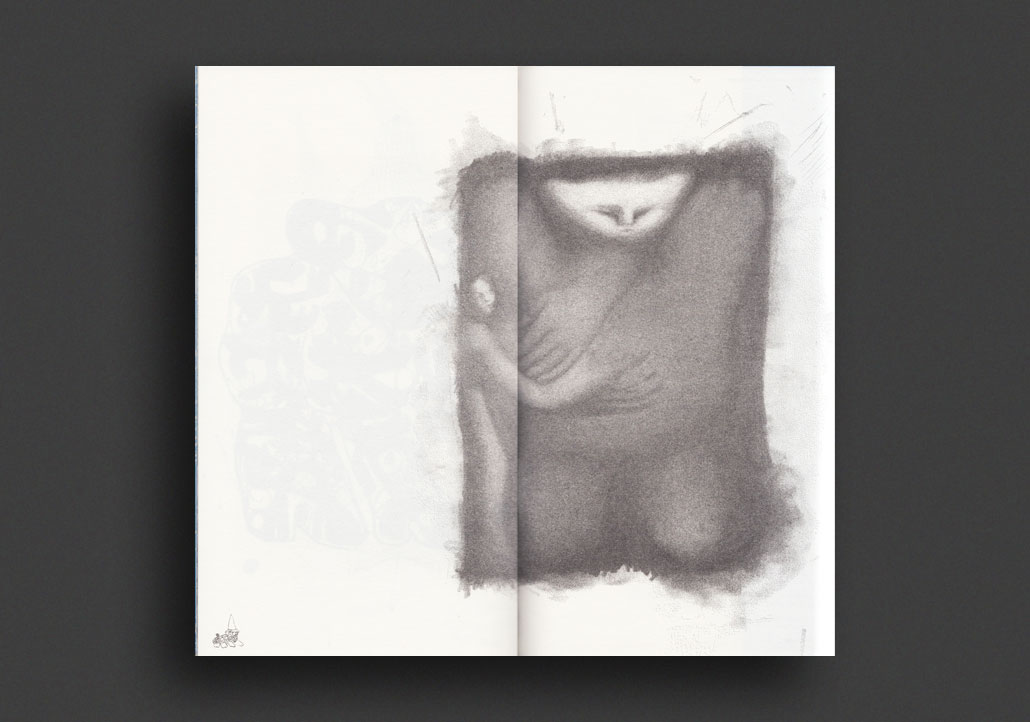
no more poetry presents nmp.19
Hobbyist
the debut books of artworks by Cosi
Kill ! kill ! let there be fresh meat…
— W. Carlos Williams Spring and All
"In the lingering impression, or, print one might be urged to place their finger on the pure substance of an uninhibited adult imagination — to which the writer rejects — obviously, such imagination is deeply habitual, rendered in ink & pencil, in The Knowledge of a practice so innate, or rich, that to disinherit from the author, or the author from it, would represent an absolute undoing, a total annihilation of an apparatus, so far from rudimentary, that it becomes simply (or quite complexly) the image of an entire self. this collection of some twenty-eight artworks, being automatic, incongruent — graphite, charcoal, ink — rigid, finite and complete — convey an underestimated and complex sense of play, by which the author — simply Cosi (as if distilling the self in a single word could be conceived as simple) — becomes a diagrammatic example of a brilliant and full-cream adult, so disinterested in the conformity of adulthood that more difficulty is placed within the absurd notion itself. a self professed Ideas Guy, Cosi shows us the fantastic spaces that so often fight against the drab mundanity of adult existence, illuminating it so justly that it is impossible not to be absorbed by the light, in this way, these drawings are a love story, not only to the author herself, but also to the de-husked onlooker (you). in this congress, this made up thing, that we have accumulated, and labelled: a life, there are rules which can be reduced to a fine coating, and that, like in our homes, we need not clean, but rather, let gather. thrust open your windows to whatever world surrounds you, fill the minimal prison with particles of life! forget banality…they will not build park benches in your name, you mustn't want that, you: sweet reader deserve a life worth living, and here, in this collection, you are offered the exact guide."—Joshua Edward, editor nmp, on nmp.19 Hobbyist by Cosi.
2024, English
Softcover, 242 pages, 18 x 13 cm
Published by
Sublunary Editions / Seattle
$42.00 - Out of stock
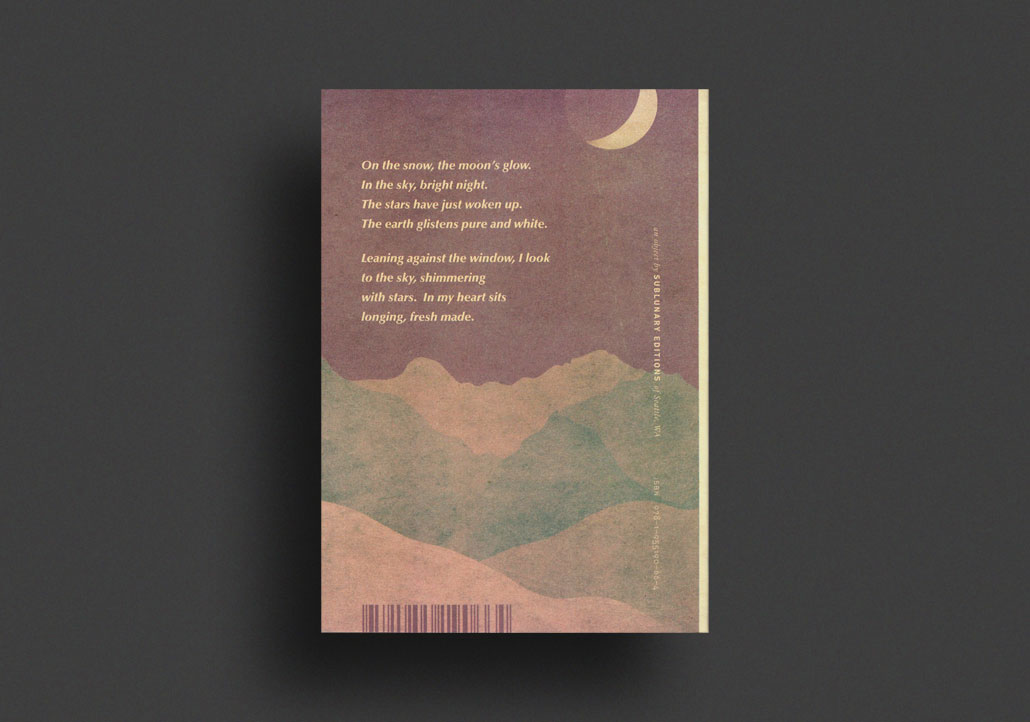
Out there, it’s nothing much.
There’s a little snow,
getting rained on now.
There’s a creeping green
that creeps into the darkness.
That darkness is the night,
soon to be upon all the snow,
upon all the green
in the whole world.
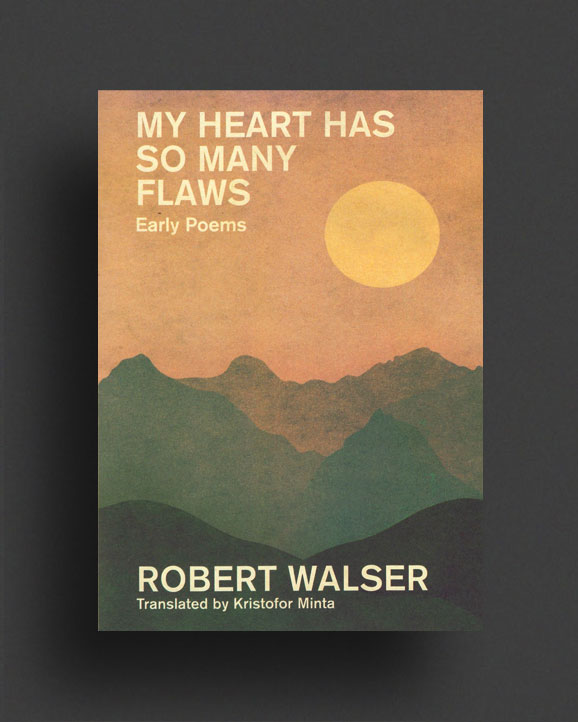
My Heart Has So Many Flaws collects the early verse of Robert Walser, from his poetic beginnings to the first World War. These poems are Walser at his most unguarded, in which we might "find the intense and intensely odd person behind Walser’s work", a writer in the throes of self-creation, already laying claim to what Enrique Vila-Matas called “a commentary on the vanity of all initiative, the vanity of life itself".
This is the most complete volume of Walser's early verse to date, including all of his known poems written before World War I (with a single post-war poem included as a coda).
Robert Walser (1878 –1956) was a Swiss poet, novelist, and composer of a voluminous body of short prose pieces, ranging from complete short stories to feuilleton sketches to the well-known and uncategorizable microscripts. His life was marked by periods of resignation—he repeatedly secured gainful employment, then quit to concentrate on writing. He retreated from noteriety in the literary and social circles of Berlin by enrolling in a butler’s school (and then getting hired as a butler). Eventually, he renounced most worldly ambition, committing himself to the Waldau sanatorium in 1929 after a breakdown. There, he continued writing—enigmatically, cryptographically—the microscripts. Removed to an institution in his home canton, he ceased writing, famously telling Carl Seelig, "I am not here to write, but to be mad." He remained in the Herisau sanatorium from 1933 until his death.
Kristofor Minta is a poet and translator. He is a graduate of Syracuse University's Creative Writing program and has twice been a finalist in the National Poetry Series. His translations (with Herbert Pföstl) of Hans Jürgen von der Wense have been published as A Shelter for Bells (Epidote Press, 2020), and his translation of Rilke's The Voices and Other Poems (Sublunary Editions, 2021) was longlisted for the PEN America Poetry in Translation Award. His debut poetry collection, A Perfectly Ruined Solitude, was published in early 2023 by Sublunary Editions.
2024, Englidh
Softcover, 532 pages, 20.5 x 13 cm
Published by
Contra Mundum Press / New York
$62.00 - Out of stock
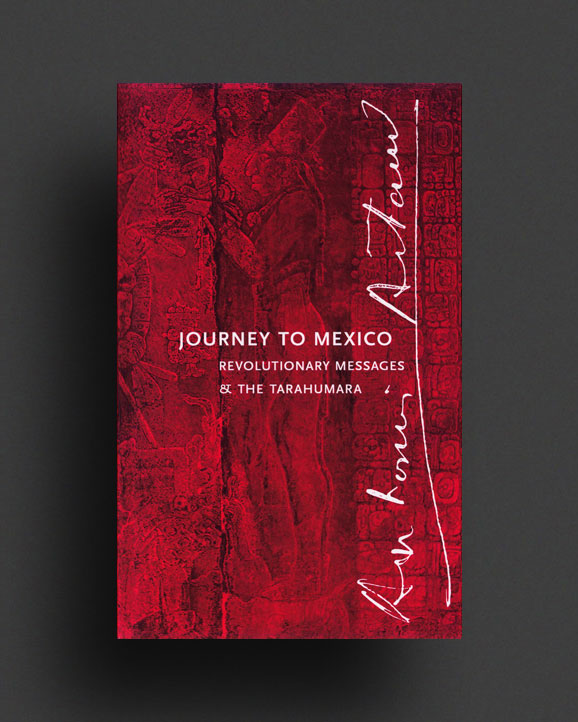
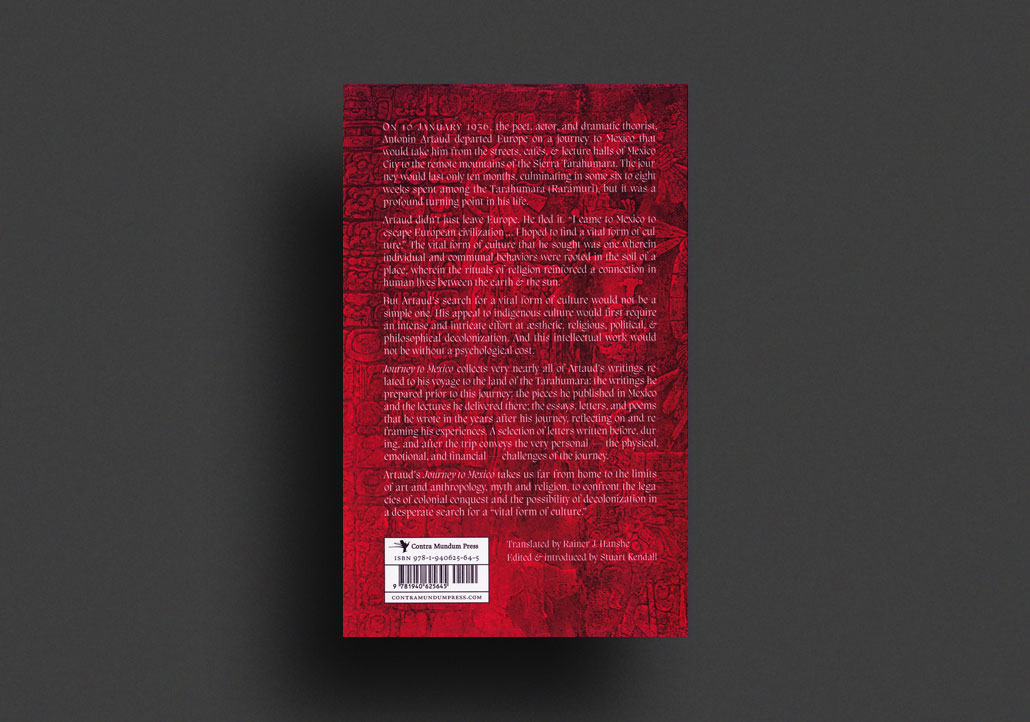
On 10 January 1936, the poet, actor, and dramatic theorist, Antonin Artaud departed Europe on a journey to Mexico that would take him from the streets, cafés, and lecture halls of Mexico City to the remote mountains of the Sierra Tarahumara. The journey would last only ten months, culminating in some six to eight weeks spent among the Tarahumara (Rarámuri), but it was a profound turning point in his life.
Artaud didn’t just leave Europe. He fled it. “I came to Mexico to escape European civilization … I hoped to find a vital form of culture.” The vital form of culture that he sought was one wherein individual and communal behaviors were rooted in the soil of a place, wherein the rituals of religion reinforced a connection in human lives between the earth and the sun.
But Artaud’s search for a vital form of culture would not be a simple one. His appeal to indigenous culture would first require an intense and intricate effort at aesthetic, religious, political, and philosophical decolonization. And this intellectual work would not be without a psychological cost.
Journey to Mexico collects very nearly all of Artaud’s writings related to his voyage to the land of the Tarahumara: the writings he prepared prior to this journey; the pieces he published in Mexico and the lectures he delivered there; the essays, letters, and poems that he wrote in the years after his journey, reflecting on and reframing his experiences. A selection of letters written before, during, and after the trip conveys the very personal — the physical, emotional, and financial — challenges of the journey.
Artaud’s Journey to Mexico takes us far from home to the limits of art and anthropology, myth and religion, to confront the legacies of colonial conquest and the possibility of decolonization in a desperate search for a “vital form of culture.”
2024, English
Hardcover (cloth bound), 240 pages, 22 x 27.9 cm
Published by
Walther König / Köln
$95.00 - Out of stock
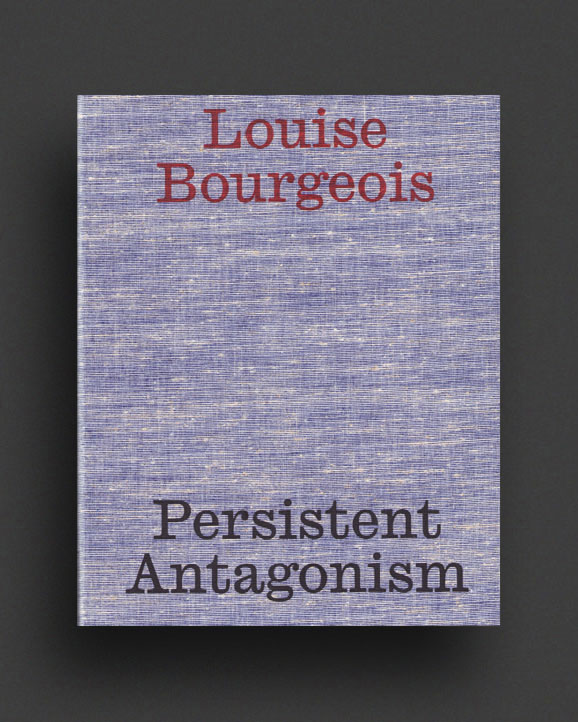
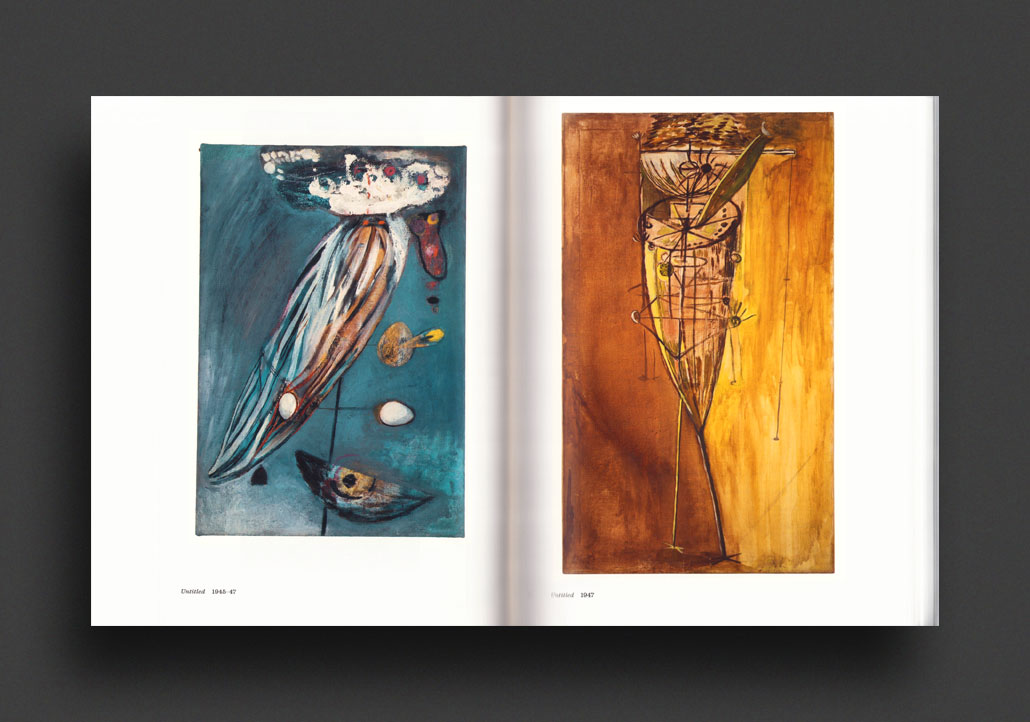
It was not before the 1990s that Louise Bourgeois won global recognition for her artistic achievements, becoming famous for her monumental spider sculptures and room-sized cells. But it was in her early oil paintings that the artist first developed the formal vocabulary and defined the thematic concerns that she would continue to explore.
This catalogue accompanies the first major solo exhibition of Bourgeois’ early paintings in Europe, placing them in dialogue with a selection of later sculptures, installations, drawings and prints.
Edited by Stella Rollig, Sabine Fellner, and Johanna Hofer.
Text by Louise Bourgeois, Bice Curiger, Ulf Küster, and John Yau
2024, English
Softcover, 224 pages, 30.0 x 22.9 cm
Published by
The Tate Gallery / London
$79.00 - Out of stock
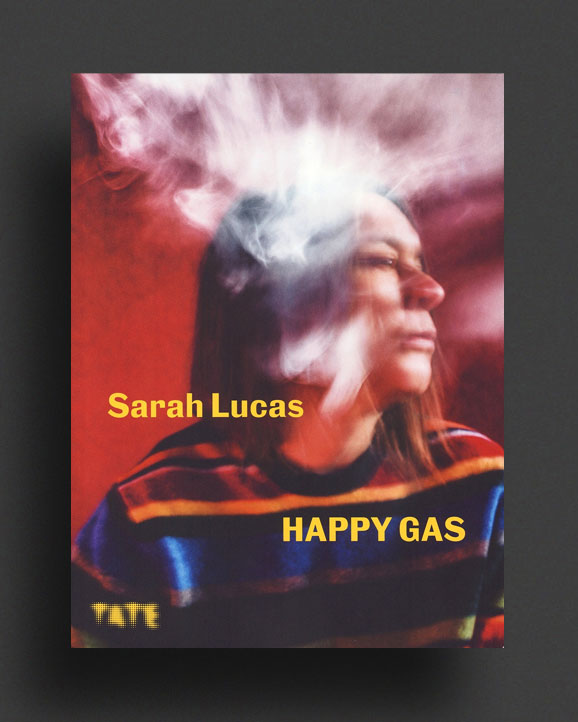
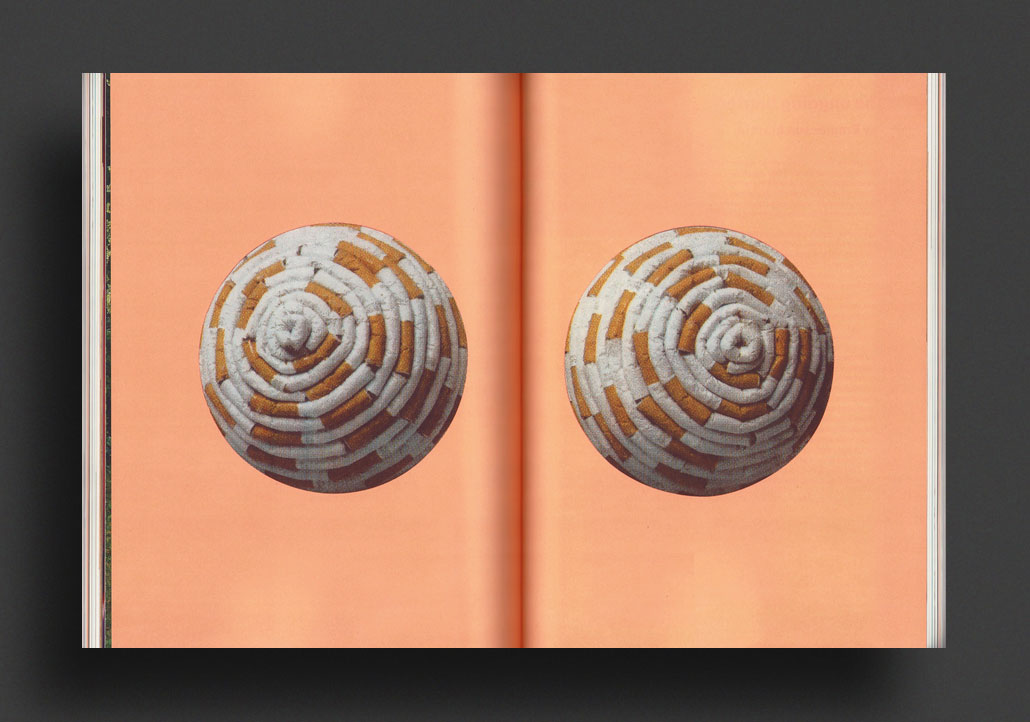
Sarah Lucas is an internationally celebrated artist known for the provocative use of materials and imagery in her work. Incorporating ordinary objects in unexpected ways, she has consistently challenged our understandings of sex, class and gender over the last four decades.
Looking beyond the generation of 1990s Young British Artists during which Lucas emerged, this visually stunning exhibition book invites the public to marvel at the diversity of her work across sculpture, installation and photography. Featuring an artist interview with Louisa Buck, new texts by writers Lauren Elkin and Nathalie Olah and a new poem by the artist Cerith Wyn Evans, Happy Gas is a brash, tender and boundary-breaking exploration of what makes us human.
2024, English / German
Softcover, 224 pages, 28 x 22 cm
Published by
Walther König / Köln
$85.00 - Out of stock
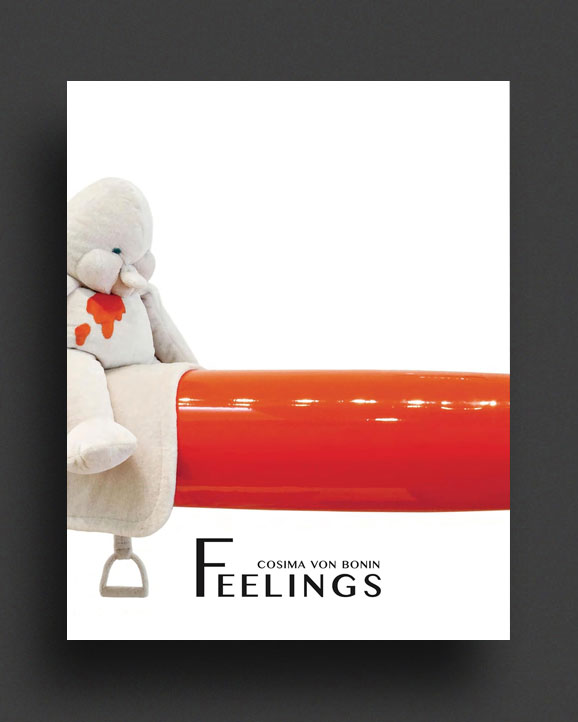
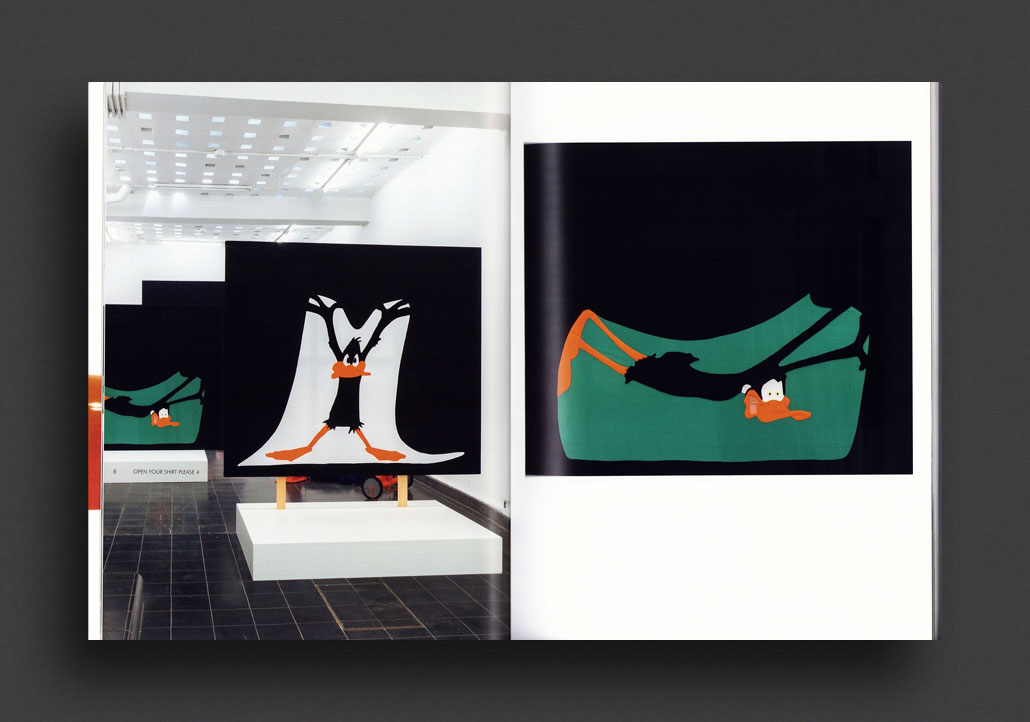
A richly illustrated catalogue, published on occasion of the exhibition ‘Cosima von Bonin: feelings’, 21 Mar – 9 Jun 2024, Schirn, Frankfurt, in which the artist juxtaposes recent works never shown in Germany before with familiar pieces. Works on view at Schirn include sculptures, installations, performances, and a selection of her characteristic ‘Lappen.’
Cosima von Bonin creates transformations of the everyday, drawing on numerous references from pop culture, film, fashion, music and art. In her installations, exhausted soft toys, soft fences, rockets and textile images or cartoon figures like Daffy Duck or Bambi populate the space.
For this catalogue, Katharina Dohm introduces the exhibition, Diedrich Diederichsen illuminates the toy with its various parameters, Clara Drechsler gets to the bottom of the figure of Daffy Duck and its connections to Cosima von Bonin.
English and German text.
2024, English
Softcover, 776 pages, 24 x 17 cm
Published by
Walther König / Köln
KW Institute for Contemporary Art / Berlin
$65.00 - Out of stock
“A sense of art history is part of the critical basis on which artists construct ‘a future’ of art. But the question is, which sense of art history will be shaping that future? Art history has always been far too important to be left up to art historians.”—Ian Burn, 1982
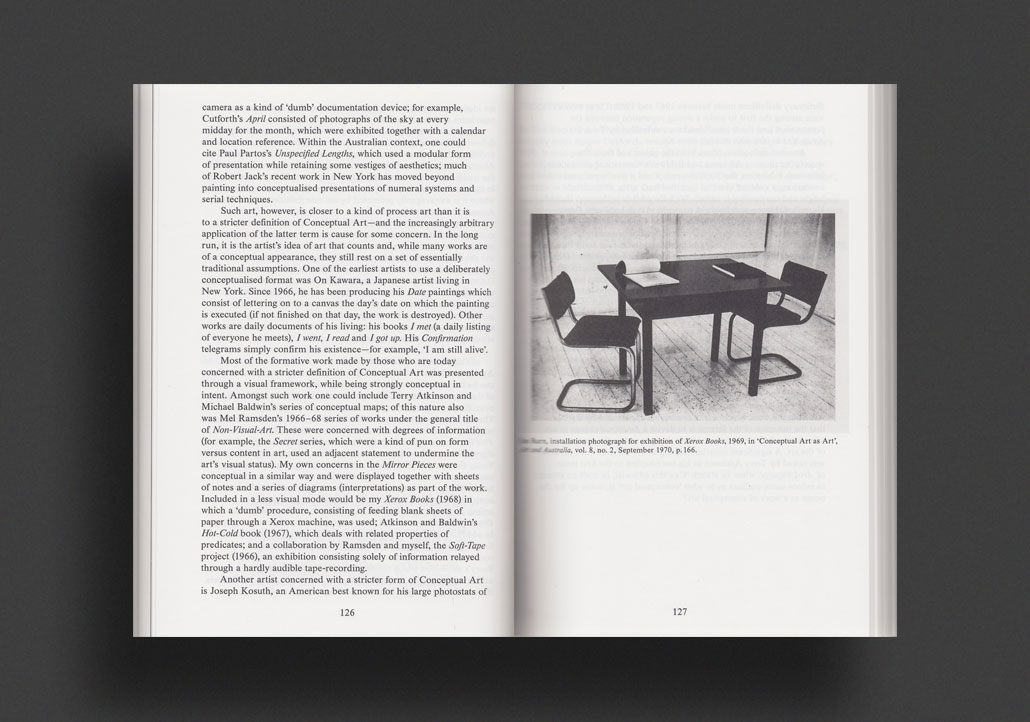
Ian Burn has been described as many things: an activist, a trade-unionist, a journalist, an art critic, a curator and an art historian—and, as he once described himself in a moment of self-deprecating alienation, ‘an exConceptual artist’.
Edited by Burn’s friend, frequent collaborator and eminent art historian, Dr Ann Stephen, this volume brings together 49 pieces of Burn’s own agile and expansive writings that reveals a probing, analytical artist who turned to language to articulate the need for ‘looking at seeing and reading’, who pursued a Marxist politics in the face of neoliberalism and who sought to occupy and transform the margins of landscape painting. Alongside a vast collection of his artworks, the catalogue brings together previously unpublished material and offers a prescient rethinking of art in a decentered world through what Ian Burn called ‘peripheral vision’. The collection concludes with reflections on Burn’s life and work from prominent figures and past collaborators in the form of memorial lectures.
Born in Geelong in 1939, Ian Burn was a conceptual artist. Burn studied painting in Melbourne and went on to live and work in London and New York. Burn moved back to Australia in 1977 and passed away in 1993 at the age of 53.
Ian Burn has been described as many things: an activist, a trade-unionist, a journalist, an art critic, a curator and an art historian—or, as he once described himself in a moment of self-deprecating alienation, ‘an ex-conceptual artist’.
Born in Geelong in 1939, Burn studied painting in Melbourne and went on to live and work in London and New York. Burn moved back to Australia in 1977 and passed away in 1993 at the age of 53.
Burn sought to grapple with how art history intersects and engages with contemporary art and political debate, arguing for a decentred view of the world. His legacy is international and can be seen in retrospective exhibitions as recent as 2022, and his work remains a key touchstone in art history.
Edited by Burn’s friend, frequent collaborator and eminent art historian, Dr Ann Stephen, this volume brings together 49 pieces of Burn’s own agile and expansive writings alongside a vast collection of his artworks. The collection concludes with reflections on Burn’s life and work from prominent figures and past collaborators in the form of memorial lectures.
Design and typesetting by Robert Milne.
Co-published by Walther Koenig and KW Institute for Contemporary Art, Berlin.
2024, English
Softcover, 96 pages, 23.4 x 15.6 cm
Published by
Walther König / Köln
$62.00 - Out of stock
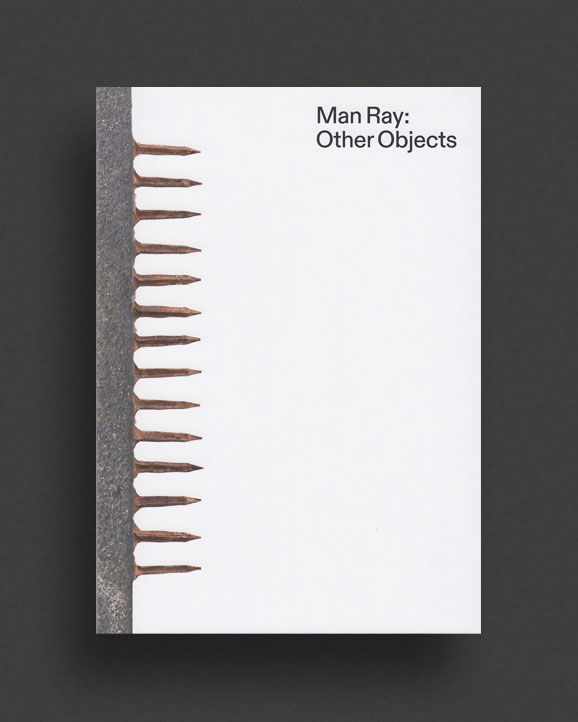
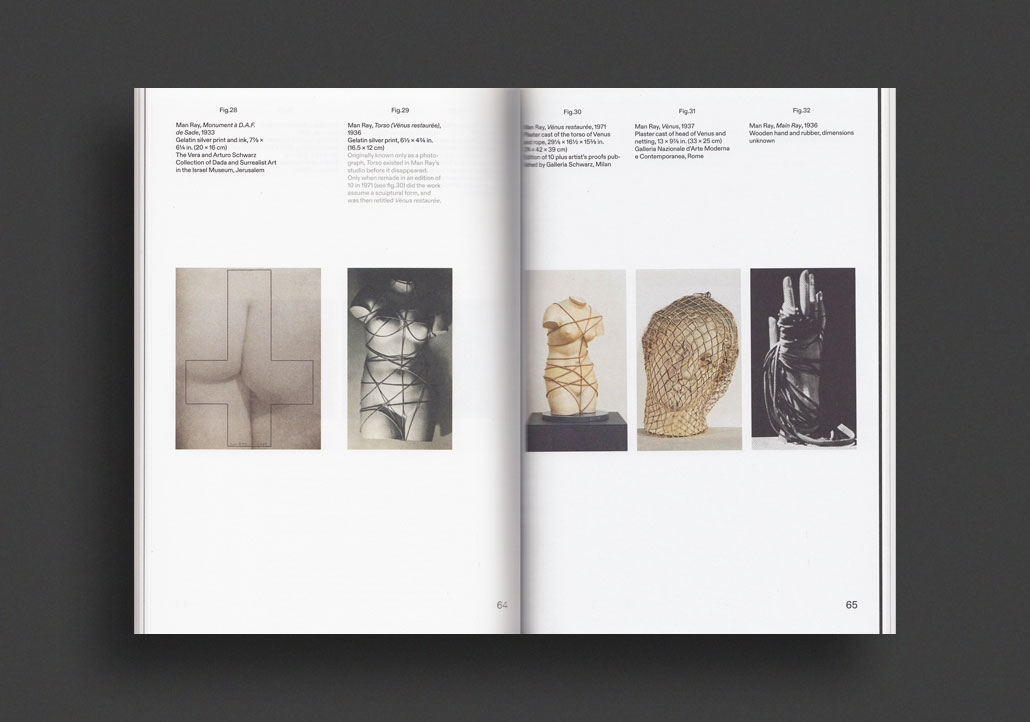
Often considered as unique artworks, Man Ray’s original sculptures possibly never existed. They are often only known through the artist’s accounts in writing, conversations, or conspicuously dated photographs. In place of these absent signifiers, however, Man Ray created alternative variations on multiples occasions throughout his career, under morphed titles, materials, and in various quantities. These he called ‘replicas’, ‘editions’, or ‘new originals’, depending on their appearance and production method. This book explores how originality was manifested in Man Ray’s process of artistic reproduction and multiplication. Featuring essays from Peter Fischli, David Campany, Alyce Mahon, Jennifer Mund and Margrethe Troensegaard.
Published alongside an exhibition of the same name at Luxembourg + co, New York, 6 September – 2 December 2023.
1990, Japanese / French / English
2 volumes in cardboard slipcase (w. exhibition flyer); volume 1 68 pages (colour ill.) volume 2 196 pages (b/w ill.), 22.5 x 29.5 cm
1st Edition, Out of print title / used / good
Published by
Sezon Museum of Art / Tokyo
$100.00 - Out of stock
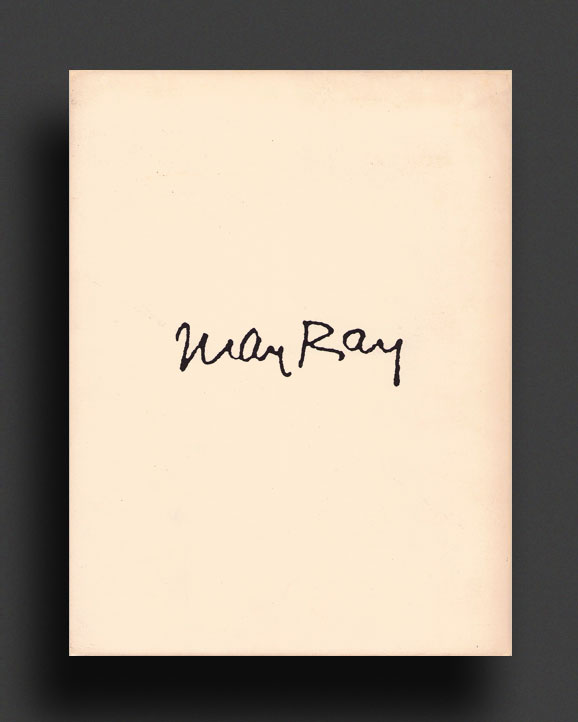
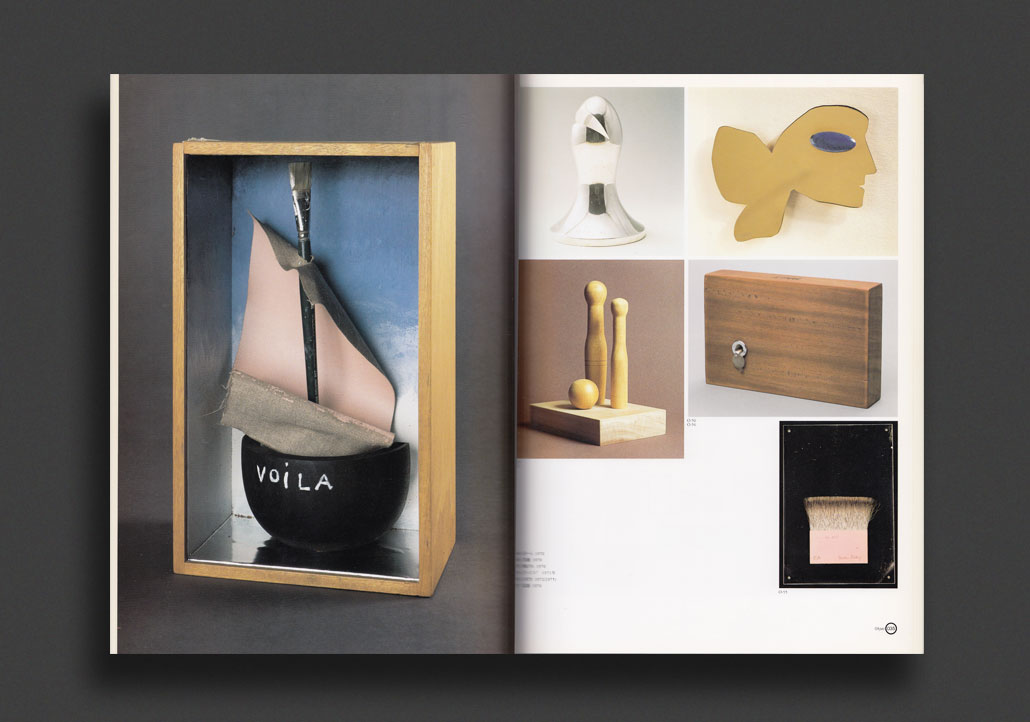
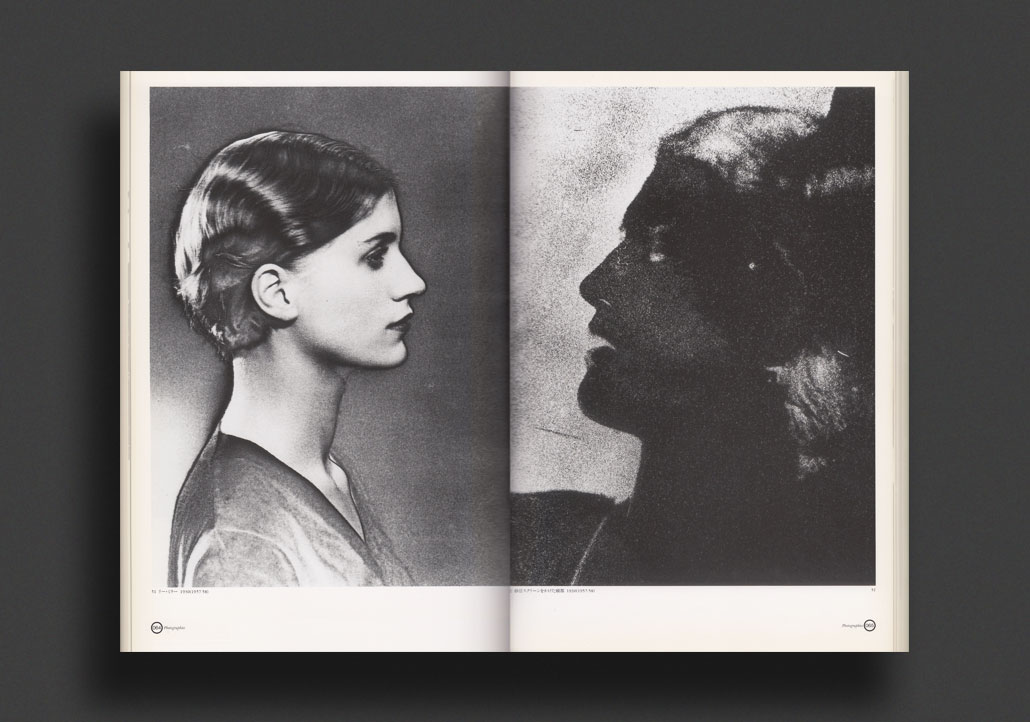
Wonderful, visually exhaustive two-volume boxset catalogue for the traveling exhibition in Japan in 1990—1991, held on the centenary of Man Ray's birth.
Each volume of this Japanese publication on the American artist Man Ray serves as a wonderful index of his incredible lifetime of work. Born Emmanuel Radnitzky in 1890 in Philadelphia, Pennsylvania, Man Ray was a renowned representative of avant-garde photography in the 20th century and is considered as the pioneer of Surrealist photography. A major contributor to the Dada and Surrealist movements, although his ties to each were informal, Man Ray produced major works in a variety of media including drawings, objects and films, but considered himself a painter above all. Volume One compiles many examples of his diverse non-photographic works, reproducing his many paintings, drawings, objects, prints and book editions in full colour. Volume Two (the heavier of the two volumes) focuses on his prolific photographic work, copiously illustrated with a huge catalogue of beautifully reproduced monochromatic works throughout his entire career — Paris, America, Dada, Surrealism and beyond — showcasing his significant contribution to the evaluation of photography as a form of modern art.
Accompanying texts by Merry Foresta, Lucien Treillard, Toshiharu Ito in Japanese, French and English. Primarily in Japanese language. Includes full biography, bibliography and catalogue of all works.
Good—VG copy. Light wear/age/foxing to slipcase and covers otherwise Very Good in general.
1991 exhibition flyer at Seibu laid in.
1970, English
Softcover (folio w. 37 loose leaf prints), 25.5 x 17.5 cm
1st Edition, Out of print title / used / very good
Published by
State University of New York Press / New York
The Art Gallery / Albany
$30.00 - Out of stock
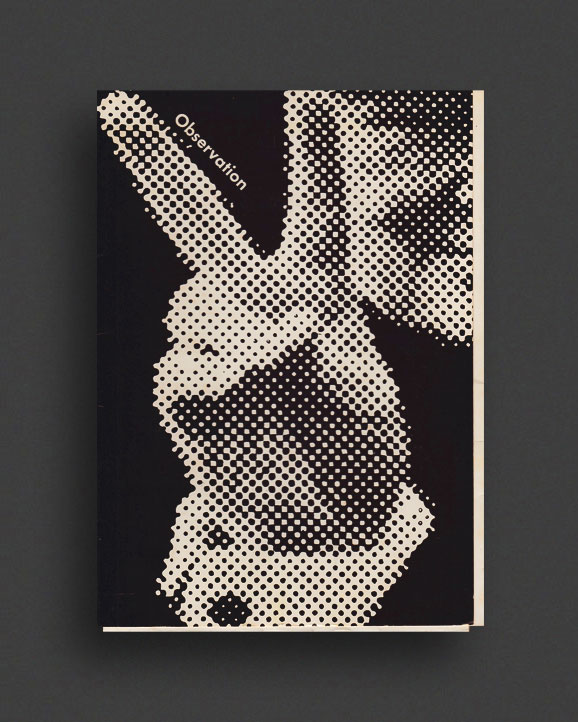
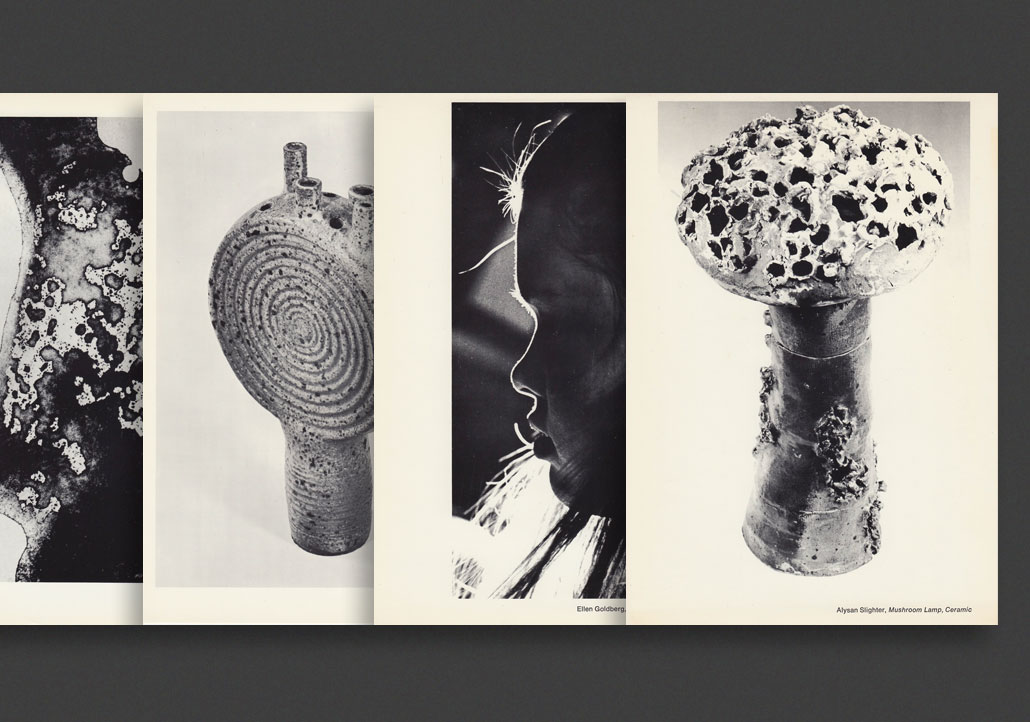
Observation, a Magazine of the Visual Arts, Spring 1970, edited by Betsy Morris and Norah Wylie and published by SUNY at Albany/ The Art Gallery, Albany, New York. Observation is a visual survey of 37 (b/w w. one colour) prints of students and faculty at The State University of New York at Albany in 1970. Photography, ceramics, painting and print making, featuring the artworks of Shirley Penman, Helen Broc, Steven Lobel, et al.
Very Good copy with light general wear.
1998, English / French / Italian
Hardcover + CD (12'23"), 40 pages, 24 x 17 cm
1st Edition, Out of print title / used / very good
Published by
Alga Marghen / Milan
$100.00 - In stock -
First, 1998 hardcover edition, published and printed in Italy, long out-of-print.
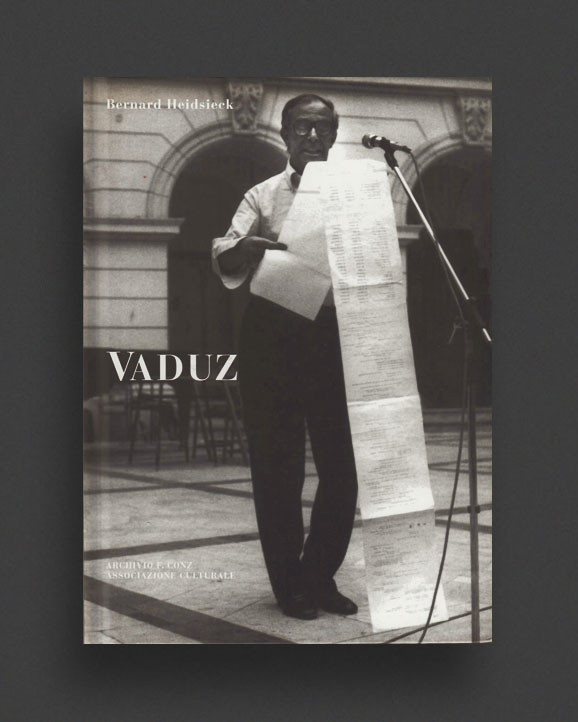
This poem by Bernard Heidsieck starts with Vaduz, the capital of Lichtenstein, and from it, lists all the people and ethnic groups of the world: a great humanist work and an extreme experience of poetry-action. The publication features a recording of the poem, read by Bernard Heidsieck.
Composed June to December 1974 and recorded on a Revox A 700 at author's studio. Commissioned by Roberto Altman in 1974 to celebrate the inauguration of the Art Foundation in Vaduz, capital of the state of Liechtenstein. 40 pages book with CD.
Bernard Heidseick (1928-2014) was a French sound poet, associated with various movements throughout a long career: including Beat, Fluxus, and minimalism. Heidseick decided in the mid-1950s to break off from written poetry, and to bring it outside of books. He opposed passive poetry to active poetry, to an “on its feet” poetry, in his own words. Starting in 1955 he was one of the founders of Sound Poetry, and in 1962 of Action Poetry. As early as 1959 he used a tape recorder as an additional means for writing and retransmitting, opening his research to new experimental fields. While remaining concerned with semantics, Bernard Heidseick became increasingly independent from the constraints of language. He explored all its formal aspects, either by spatializing the text in his written scores, or by the presence of his body in space. He gave sound a formal dimension, notably through an exceptional diction based as much on breathing as on articulating perfectly or on constantly renewing the inflections of his voice. As the years went by he reinvented his writing in order to render our daily life more accurately. Our social, political or economical universe, through its main events, as well as through its extreme ordinariness. In 1955 he developed his first Score-Poems. He then worked continuously on series, with the 13 Biopsies between 1966 and 1969. From 1969 to 1980, he created the 29 Passe-Partout (Catch-alls). From 1978 to 1986, he wrote Derviche/Le Robert (Dervish/Le Robert) composed of 26 sound poems. Then, beginning in 1988, Respirations et brèves rencontres ( Respiration and Brief Encounters) (60 poems created from the archives of recordings of artists' breathing). He organised the first international festival of sound poetry in 1976 and the event Rencontres Internationales 1980 de poésie sonore which took place in Rennes, in Le Havre and at the Pompidou Centre in Paris.
He has organized over 540 public readings of his texts in twenty different countries.
As New, light storage wear only.
1961, English
Softcover, 234 pages, 20.5 x 13 cm
1st Edition, Out of print title / used / very good
Published by
Capricorn Books / New York
$70.00 - Out of stock
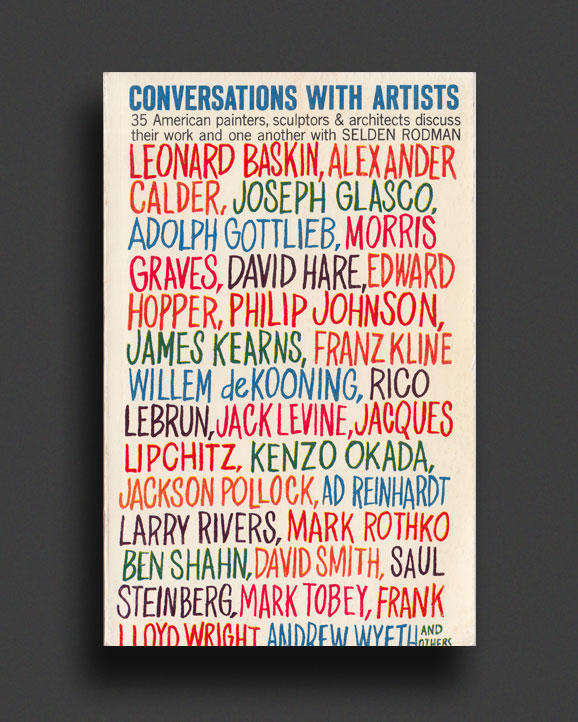
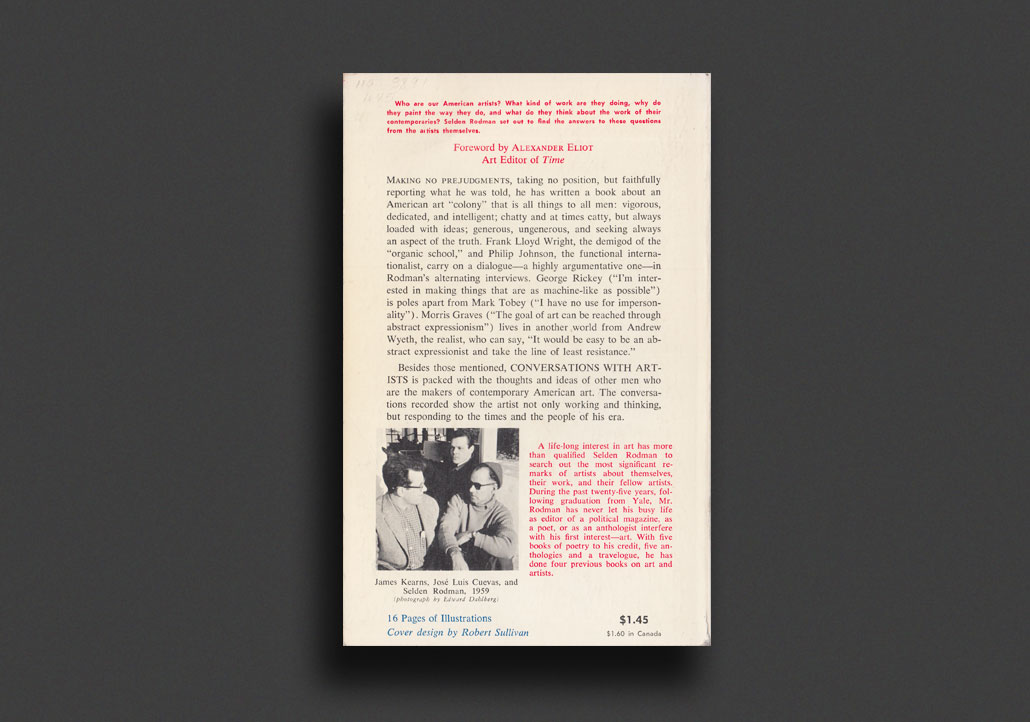
Scarce first paperback edition of this classic survey of conversations, published by Capricorn Books, New York, in 1961. Selden Rodman, a poet, compiled this lively survey of modern American art, architecture and sculpture at the close of the 1950s - by means of amusing and often revealing interviews with several dozen exponents. These revealing and entertaining conversations, convey the vitality, range and excitement of the art world in America in the 1950s through the words of the artist's themselves.
Artists include: Leonard Baskin, Alexander Calder, Joseph Glasco, Adolph Gottlieb, Morris Graves, David Hare, Edward Hopper, Philip Johnson, James Kearns, Frank Kline, Willem de Kooning, Rico Lebrun, Jack Levine, Jacques Lipchitz, Kenzo Okada, Jackson Pollock, Ad Reinhardt, Larry Rivers, Mark Rothko, Ben Shahn, David Smith, Saul Steinberg, Mark Tobey, Frank Lloyd Wright, and Andrew Wyeth.
Very Good copy from the collection of American curator and art critic Norman A. Geske, who authored many books on American art, directed the Sheldon Art Gallery in Nebraska (which included his building collaboration with architect Philip Johnson, who is featured herein), and curated the American Pavillion at the Venice Biennale in 1968, amongst other things. Norman A. Geske collection personal stamp to title page.
1984, English
Softcover, 126 pages, 27 x 19.5 cm
1st UK Edition, Out of print title / used / very good
Published by
Proteus / London
$50.00 - Out of stock
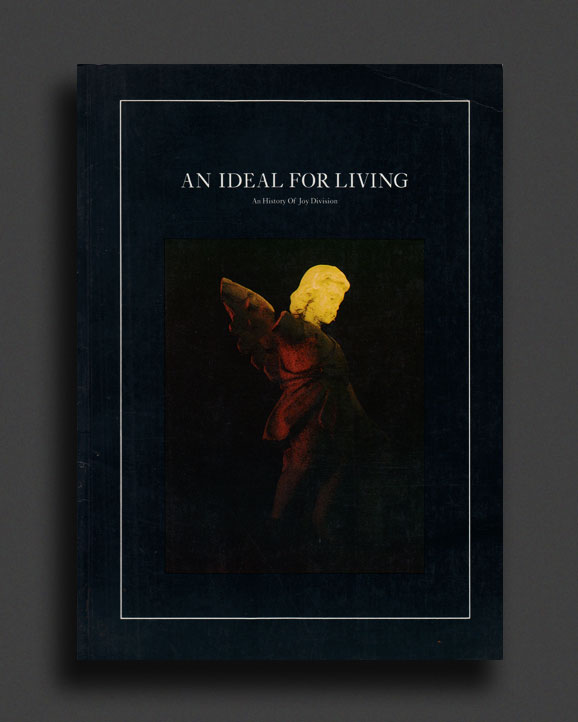
First edition of this 1984 book dedicated entirely to Joy Division "from their origins as The Stiff Kittens and Warsaw to their programmed future as New Order". Heavily illustrated throughout with texts by Mark Johnson, David Less, Paul Morley, Jon Wozencroft. With cover designed by Peter Saville, and complete with detailed historic information about live performances, quotes from the group, full discography, ephemera, merchandise, and many photos from between 1977-1982, this book is highly recommended for all serious collectors and dedicated fans. Was later re-issued in 1986, and in 1988, all editions long out-of-print. This being the original British ed.
Very Good copy with general gloss cover wear and light creasing.
2024, English
Softcover, 288 pages, 24 x 32 cm
Published by
JRP Ringier / Zürich
$140.00 - Out of stock
A collectible publication on Magali Reus' thinking of objecthood (an immersive and highly refined artist's book—three assembled volumes, different types of paper, transparency play on layers—based on three new series by the Dutch artist).
Renowned for her particular take on what contemporary sculpture can be and express, Magali Reus draws on a vast range of formal influences and references, from the domestic to the industrial, the functional to the decorative, creating works that evolve as a fascinating accumulation and layering of visual details.
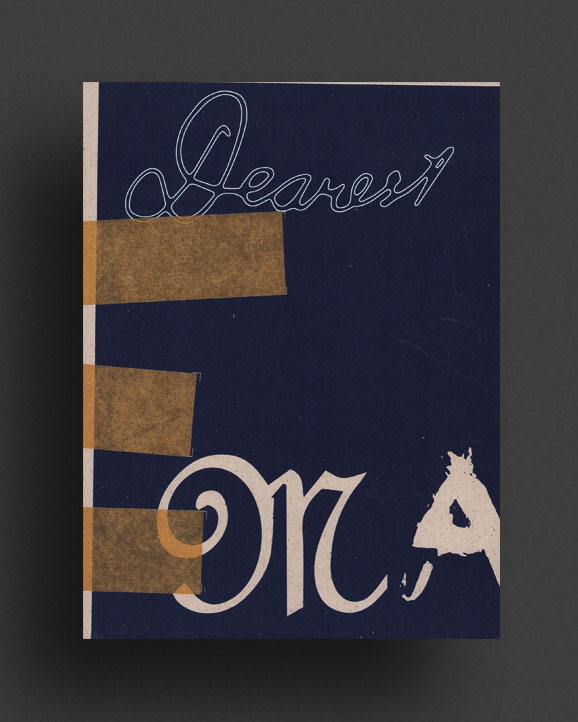
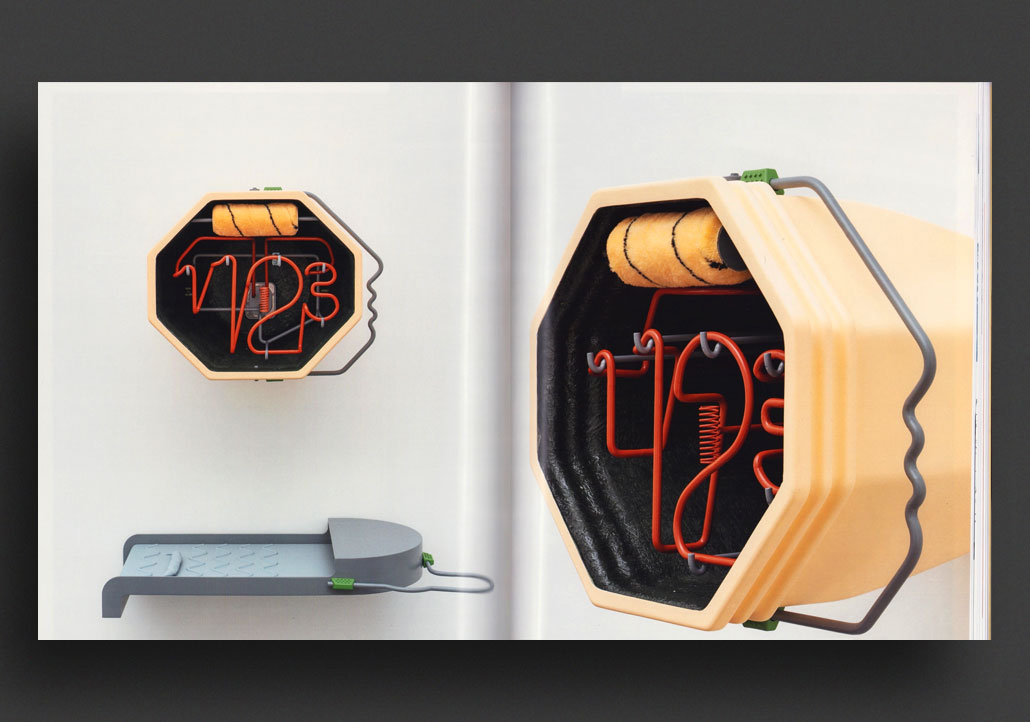
Designed by Irma Boom, one of the most prestigious graphic designers active today, this artist's book offers a unique approach to art making through the unveiling of the sources, visual imagery, and connections that gave birth to the realization of three emblematic series by Magali Reus: "Dearest," 2018; "Empty Every Night," 2019; and "Settings," 2019–2021. Conceived as a space where the viewer can take their time to get a closer, more intimate connection to her work, the publication alternates views of the works, close–up details, and various materials—from a 3D technical rendering and production calculations to mock ups, samples, and research photography. Sharing her production, process, and research archive, Reus allows the reader to decipher the circulation of motifs from one medium to another, her specific take on the ideas of hierarchy, representation, and systems of production, and how she explores the tensions between nature, technology, and the impact of postindustrial human activity. The book gives full credit to her ongoing thinking on objecthood and how the objects and forms she creates take on a strange, disobedient agency. Made of three separate volumes, featuring different paper and taped together, this collectible publication is itself a powerful object.
Three contributions by art critic and curator Anthony Huberman ("Leather and Logistics"), writer and art historian Philomena Epps ("The Other Hour"), and artist and writer Sean Burns ("A Love Affair") analyze the artist's practice through art historical and literary perspectives.
Born in 1981 in The Hague, London-based artist Magali Reus is one of the most acclaimed new voices in contemporary sculpture. Renowned for her interest in the relationship between mass-produced articles and the human body in the context of today's digital society, Magali Reus draws on a vast range of formal influences and references, from the domestic to the industrial, the functional to decorative, creating pieces that evolve as an accumulation and layering of sculptural details. Taking everyday objects as starting points, her work operates on a visual register as a formal configuration, but also as a choreography of emotional and physical experience. For her, objects like fridges, padlocks, seating, and street curbs are not seen only as facilitators of our everyday actions, but also as physical receptacles for our bodies. She is thus interested in positioning them not only as shells or providers, but as objects imbued with their own sense of personality. Detached from their surroundings and translated into immaculate, abstract forms they become uncanny and perplexing, acquiring a very different life, which is almost theatrical. Colliding the macro logic of daily architecture with the more metaphorical projections of a body inhabiting space, Magali Reus' practice focuses on the physical and psychic space of objecthood.
Edited by Frederik Pesch and Irma Boom.
Texts by Anthony Huberman, Philomena Epps, Sean Burns.
2024, English
Softcover, 400 pages, 25 x 18.5 cm
Published by
Bom Dia Boa Tarde Boa Noite / Berlin
$95.00 - Out of stock
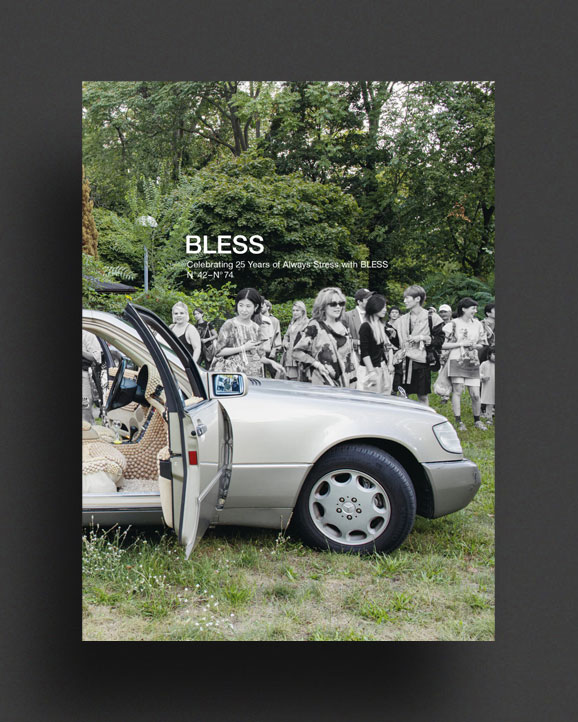
2022 marked the 25th anniversary of BLESS. Since 1997, Desiree Heiss and Ines Kaag have been working together on numerous transdisciplinary projects. Dubbing themselves 'situation designers,' their products blend fashion, art, design, architecture, business and social practice, always aiming to create an equilibrium between mental and physical exertion. Driven by the ambition to create objects for everyday use, BLESS defines her practice and products as a way of life—based on the firm belief that one can shape life today in a way that creates a future worth living in.
The third publication of the Paris and Berlin based designers is one of the three outcomes of the project A Year with… BLESS N° 72 BLESSlet, with which KW Institute for Contemporary Art honored the anniversary. The publication encompasses BLESS's collection and projects from 2010 until 2022, with written reflections on their innovative and witty work by Douglas Fogle & Hanneke Skerath, Anna Gritz & Krist Gruijthuijsen, Nakako Hayashi, Tom McCarthy and Jeppe Ugelvig.
Bless is a provocative collaborative project by Desiree Heiss (born 1971 in Freiburg, Germany) and Ines Kaag (born 1970 in Fürth, Germany) generating products in the fields of fashion accessories, design and fine art.
Bless have exhibited internationally at the 1st Berlin biennale (1998/99), Musée d'Art Moderne de la Ville de Paris (1999), Centre Pompidou (2000), Manifesta 4 (2002), Palais de Tokyo (2003), Moderna Museet, Stockholm (2004), Stedelijk Museum Bureau Amsterdam (2003), Goethe-Institut, Tokyo (2005), Museum Boijmans Van Beuningen, Rotterdam (2006)...
1991, English / Japanese / German
Softcover folder w. 26 double-sided cards, magnifying glass
1st Edition, Out of print title / as new
Published by
P3 Art and Environment / Tokyo
$140.00 $50.00 - In stock -
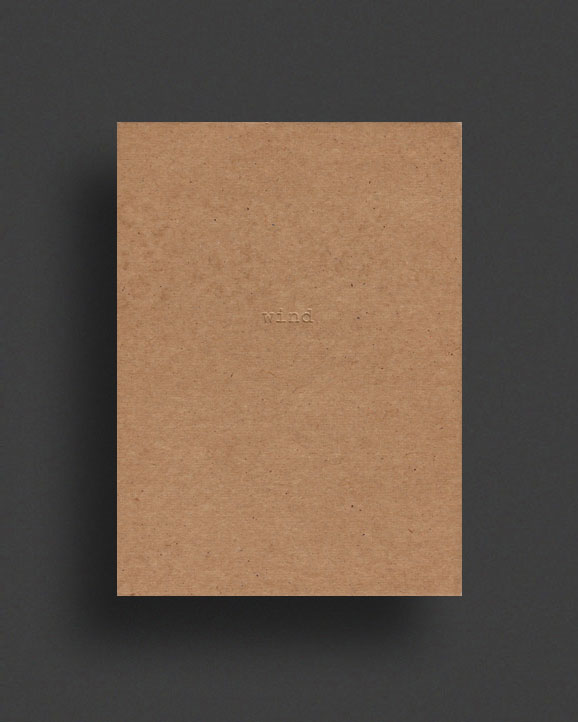
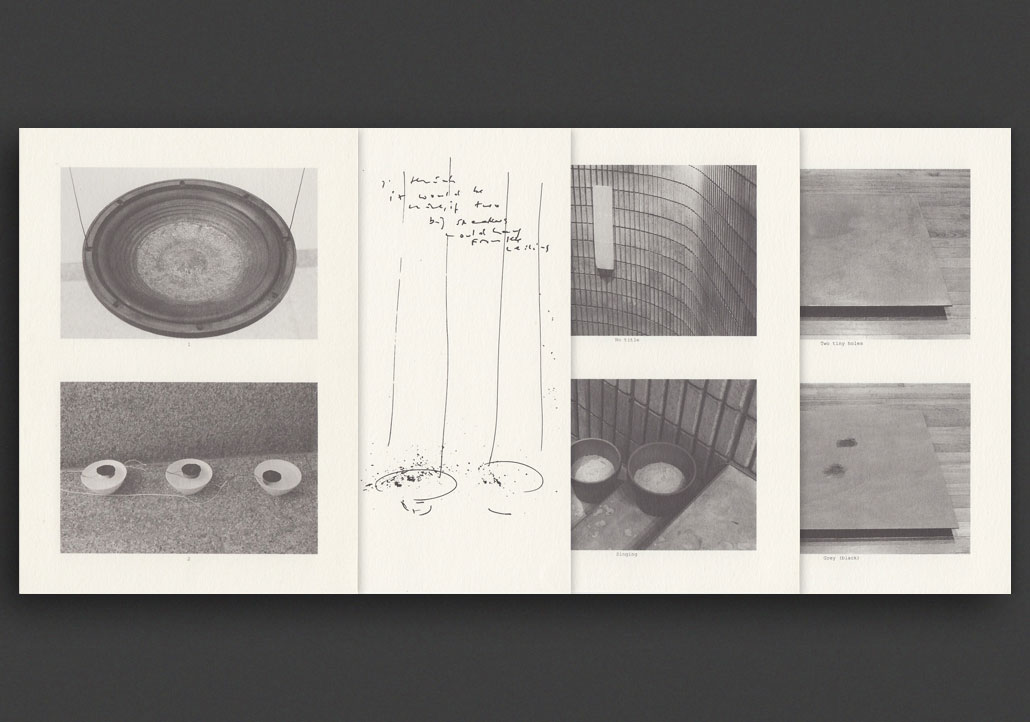
Rare Japanese artist edition, published by P3 Art and Environment, Tokyo, during Rolf Julius' 1991 visit to Japan, and on the occasion of the exhibition "Wind" 3—8 September, 1991. House in embossed cardboard folder, this handsome edition includes 26 double-sided loose leaf cards of photographs, drawings and texts (in Japanese/German/English), and a small plastic magnifying glass.
Rolf Julius was born in 1939 in northern Germany, where he received classical training in the fine arts. In the late 1970s, he gradually discovered certain contemporary composers (in particular La Monte Young, at festivals and on the radio), and became increasingly involved in acoustic performances which he gave in public parks and at alternative venues. In various experimental ways he explored the possibilities offered by sound broadcasting techniques, but even at this early stage (and this would be a constant factor in his approach) the works were developing with an on-going concern for the relationship with the space of the world, and with nature.
As New copy.
1986, English
Hardcover (w. dust jacket), 239 pages, 25 x 31 cm
1st Edition, Out of print title / used / very good
Published by
Thames and Hudson / London
$80.00 $20.00 - Out of stock
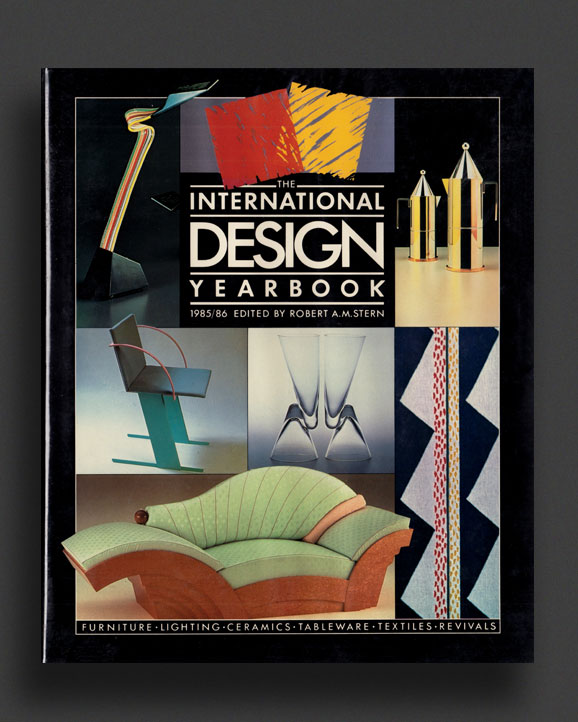
Edited by Robert A.M. Stern, one of the world's leading exponents of the Post-Modern movement, "The International Design Yearbook 1985/86" was "the first volume of an important annual review of domestic design in an international context. It shows the best, the most characteristic and the most exciting recent designs in furniture, lighting, ceramics, textiles, glass and metalware. It illustrates the work not only of such leading figures as Rossi, Hollein, Venturi, Sottsass and Castiglioni, but of hundreds of other contemporary designers around the world, whose work is notable for its topicality and promise, or for its aesthetic or functional excellence."
As well as contemporary design of the mid 1980's, the annual "deals with the reproduction of classic designs by such masters as Eileen Gray, Hoffman, Mackintosh, Rietveld and Le Corbusier." The annual also functioned as a guidebook to the featured designers and the respective companies, manufacturers and retailers of their designs. Biographies for all those designers featured are included, plus texts throughout.
This large book is richly illustrated with wonderful examples of the featured designers in their many forms via 520 illustrations, 382 in colour. Many works rarely (some possibly never) seen documented in any other book.
Includes the work of: Verner Panton, Nathalie du Pasquier, Charlotte Perriand, Paolo Piva, Andrée Putman, Dieter Rams, Gerrit Rietveld, Aldo Rossi, Stanley Tigerman, Brian Faucheux, Jay Stanger, Yrjo Kukkapuro, Hans Gunnarsson, Studio Alchimia, Gabrielle Regondi, John Smith, Alberto Salvati and Ambrogio Tresoldi, Paolo Deganello, Alessio Sarri, Charles Rennie Mackintosh, Matteo Thun, Pierre Jeanneret, Memphis, Giuseppe Terragni, Robert George Sowden, SITE, Afra Scarpa, Tobia Scarpa, Robert Venturi, Ugo La Pietra, Le Corbusier, Ettore Sottsass, Adolf Loos, Robert Mallet-Stevens, Richard Meier, Alessando Mendini, Fujiwo Ishimoto, Hans Hollein, Josef Hoffmann, William Morris, Frank Gehry, Robert A.M. Stern, Eileen Gray, Michael Graves, Michele De Lucchi, Joe Colombo, Achille Castiglioni, Mario Bellini, Gae Aulenti, Hans Ansems, Ron Arad, Emilio Ambasz, Alver Aalto, Daniel Weil, Marco Zanini, to name but a few!
Very Good copy with VG dust jacket, light tanning to page edge.