World Food Books' programme is largely produced on Kulin Nation land. We acknowledge the Wurundjeri people of the Kulin Nation as the first and continuing custodians of this land, and pay respect to their Elders past, present, and emerging.
World Food Books is an arts and special interests bookshop in Naarm / Melbourne. Founded in 2010, World Food Books is devoted to the presentation of a rotating, hand-selection of international art, design, literary and counterculture publications with an emphasis on the anti-traditional, the experimental, the avant-garde, the heretic, the marginal.
Presenting new titles alongside rare and out-of-print books, catalogues and journals spanning the fields of modern and contemporary art, design, photography, illustration, film, literature, poetry, cultural theory, philosophy, sexuality, popular and underground culture in its many radical forms, World Food Books wishes to encourage adventurous, thoughtful and open-minded reading, looking, writing, and exchange of publishing and ideas, both current and historical.
As well as our bookshop, located in Melbourne's historical Nicholas Building, all of our inventory is available internationally via our online mail-order service.
World Food Books semi-regularly co-ordinates "Occasions", a programme of exhibits and events at the bookshop and in partnership with other hosts (such as museums and art galleries) that develop out of the activities, relationships and content of the bookshop itself.
World Food Books
The Nicholas Building
37 Swanston Street
Room 5, Level 6
Melbourne 3000
Australia
SHOP HOURS:
SHOP CLOSED FOR SUMMER
RE—OPEN JAN 2
WEB-SHOP OPEN 24/7
World Food Books
Postal Address:
PO Box 435
Flinders Lane
Victoria 8009
Australia
info@worldfoodbooks.com
Art
Theory / Essay
Architecture / Interior
Graphic Design / Typography
Photography
Fashion
Eros
LGBTQ+
Fiction / Poetry
Weird / Speculative / Science Fiction / Horror
Transgressive / Visceral / Abject
Symbolism / Decadence / Fin de siècle
Film / Video
Painting
Sculpture / Installation
Performance / Dance / Theater
Drawing
Sound / Music
Curatorial
Group Shows / Collections
Periodicals
Out-of-print / Rare
Posters / Ephemera / Discs
Signed Books
World Food Books Gift Voucher
World Food Book Bag
Australian Art
Australian Fiction
Australian Science Fiction / Speculative Fiction
Australian Poetry
Australian Photography
Japanese Photography
Conceptual Art
Minimal Art
Dada
'Pataphysics / Oulipo
Fluxus
Concrete Poetry
Pop Art
Surrealism
Arte Povera
Arte Informale / Haute Pâte / Tachism
Nouveau Réalisme / Zero / Kinetic
Situationism / Lettrism
Collage / Mail Art / Xerox Art
Art Brut / Folk / Visionary / Fantastic
Illustration / Graphic Art / Bandes Dessinées
Furniture
Italian Radical Design / Postmodernism
Textiles
Ceramics / Glass
Counterculture
Protest / Revolt
Philosophy
Psychoanalysis
Anthropology
Anarchism
Socialism / Anarchism / Communism / Capitalism
Literary Theory / Semiotics / Language
Feminism / Women's Studies
Gender Studies / Sexuality
Anthropology
Fetishism / BDSM
Drugs / Psychedelia
Crime / Violence
Animal Rights / Veganism
Occult / Esoterica
Ecology / Earth / Alternative Living
Whole Earth / Crafts
All prices in AUD (Australian dollars)
Pick-Ups
Pick-up orders can be collected in our bookshop during opening hours after order date. Please collect any Pick-up orders within 2 weeks of ordering as we have limited storage space. Orders will be released back into stock if not collected within this time. No refunds can be made for pick-ups left un-collected. If you cannot make it in to the bookshop in this time-frame, please choose postage option.
Return Policy
All sales are final. We do accept returns (for refund or exchange) for items received in error. All our orders are packed with special care using heavy-duty padding and cardboard book-mailers or bubble mailers (for smaller books), using reinforcement where required. We cannot take responsibility for any lost, stolen or damaged parcels.
Insurance
Should you wish to insure your package, please email us directly after placing your order and we can organise this at a small extra expense. Although all standard/express tracked packages are very safe and dependable, we cannot take responsibility for any lost, stolen or damaged parcels. We recommend insurance on valuable orders.
Interested in selling your old books, catalogues, journals, magazines, comics, fanzines, ephemera? We are always looking for interesting, unusual and out-of-print books to buy. We only buy books in our fields of interest and specialty, and that we feel we can resell.
We base these prices on desirability, market value, in-print prices, condition and our current stock levels. We offer cash, store credit, and can take stock on consignment. All
about 25% of the price we expect to get when we sell them, or 30% in store credit. We base these prices on desirability, market value, in-print prices, condition and our current stock levels.
Sell your books any day of the week. You can drop them off and return later. If you have a lot of books, we can visit your Sydney home.
We buy books that we feel we can resell. We offer about 25 % of the price we expect to get when we sell them, or 30% in store credit. We base these prices on desirability, market value, in-print prices, condition and our current stock levels.
Philadelphia Wireman
03 August - 01 September, 2018
World Food Books is proud to announce our next Occasion, the first presentation of sculptures by Philadelphia Wireman in Australia.
The Philadelphia Wireman sculptures were found abandoned in an alley off Philadelphia’s South Street on trash night in 1982. Their discovery in a rapidly-changing neighbourhood undergoing extensive renovation, compounded with the failure of all attempts to locate the artist, suggests that the works may have been discarded after the maker’s death. Dubbed the "Philadelphia Wireman" during the first exhibition of this work, in 1985, the maker’s name, age, ethnicity, and even gender remain uncertain. The entire collection totals approximately 1200 pieces, all intricately bound together with tightly-wound heavy-gauge wire (along with a few small, abstract marker drawings, reminiscent both of Mark Tobey and J.B. Murry). The dense construction of the work, despite a modest range of scale and materials, is singularly obsessive and disciplined in design: a wire armature or exoskeleton firmly binds a bricolage of found objects including plastic, glass, food packaging, umbrella parts, tape, rubber, batteries, pens, leather, reflectors, nuts and bolts, nails, foil, coins, toys, watches, eyeglasses, tools, and jewellery.
Heavy with associations—anthropomorphic, zoomorphic, and socio-cultural responses to wrapped detritus—the totemic sculptures by Philadelphia Wireman have been discussed in the context of work created to fulfil the shamanistic needs of alternative religions in American culture. Curators, collectors, and critics have variously compared certain pieces to sculpture from Classical antiquity, Native American medicine bundles, African-American memory jugs, and African fetish objects. Reflecting the artist’s prolific and incredibly focused scavenging impulse, and despite—or perhaps enhanced by—their anonymity, these enigmatic objects function as urban artefacts and arbiters of power, though their origin and purpose is unknown. Philadelphia Wireman, whatever their identity, possessed an astonishing ability to isolate and communicate the concepts of power and energy through the selection and transformation of ordinary materials. Over the course of the past two decades, this collection has come to be regarded as an important discovery in the field of self-taught art and vernacular art.
Presented in collaboration with Fleisher-Ollman Gallery, Philadelphia, and Robert Heald, Wellington.
Susan Te Kahurangi King
02 February - 10 March, 2018
Susan Te Kahurangi King (24 February 1951 - ) has been a confident and prolific artist since she was a young child, drawing with readily available materials - pencils, ballpoint pens and felt-tip markers, on whatever paper is at hand. Between the ages of four and six Susan slowly ceased verbal communication. Her grandparents William and Myrtle Murphy had developed a special bond with Susan so they took on caring responsibilities for extended periods. Myrtle began informally archiving her work, carefully collecting and storing the drawings and compiling scrapbooks. No drawing was insignificant; every scrap of paper was kept. The King family are now the custodians of a vast collection containing over 7000 individual works, from tiny scraps of paper through to 5 meter long rolls.
The scrapbooks and diaries reveal Myrtle to be a woman of great patience and compassion, seeking to understand a child who was not always behaving as expected. She encouraged Susan to be observant, to explore her environment and absorb all the sights and sounds. Myrtle would show Susan’s drawings to friends and people in her community that she had dealings with, such as shopkeepers and postal workers, but this was not simply a case of a grandmother’s bias. She recognised that Susan had developed a sophisticated and unique visual language and sincerely believed that her art deserved serious attention.
This was an unorthodox attitude for the time. To provide some context, Jean Dubuffet coined the term Art Brut in 1945 to describe work created by self-taught artists – specifically residents of psychiatric institutions and those he considered to be visionaries or eccentrics. In 1972 Roger Cardinal extended this concept by adopting the term Outsider Art to describe work made by non-academically trained artists operating outside of mainstream art networks through choice or circumstance. Susan was born in Te Aroha, New Zealand in 1951, far from the artistic hubs of Paris and London that Dubuffet and Cardinal operated in. That Myrtle fêted Susan as a self-taught artist who deserved to be taken seriously shows how progressive her attitudes were.
Susan’s parents Doug and Dawn were also progressive. Over the years they had consulted numerous health practitioners about Susan’s condition, as the medical establishment could not provide an explanation as to why she had lapsed into silence. Dawn educated herself in the field of homeopathy and went on to treat all twelve of her children using these principles – basing prescriptions on her observations of their physical, mental and emotional state.
Doug was a linguist with an interest in philosophy who devoted what little spare time he had to studying Maori language and culture. To some extent their willingness to explore the fringes of the mainstream made them outsiders too but it was their commitment to living with integrity and their respect for individuality that ensured Susan’s creativity was always encouraged.
Even though Susan’s family supported her artistic pursuits, some staff in schools and hospitals saw it as an impediment to her assimilation into the community and discouraged it in a variety of ways. Her family was not always aware of this and therefore did not fully understand why Susan stopped drawing in the early 1990s. However, rather than dwell on the challenges that Susan faced in pursuit of her artistic practice, they prefer to highlight her achievements. In 2008 Susan began drawing again in earnest, after an almost 20 year interruption, and her work is now shown in galleries around the world.
Susan grew up without television and has been heavily influenced by the comics she read as a child. She is absolutely fearless in the appropriation of recognizable characters, such as Donald Duck and Mickey Mouse, in her work. She twists their limbs, contorts their faces, compresses them together, blends them into complex patterned backgrounds - always imbuing them with an incredible energy. Although Susan often used pop culture characters in her work they are not naive or childlike. These are drawings by a brilliant self-taught artist who has been creating exceptional work for decades without an audience in mind.
Mladen Stilinović
"Various Works 1986 - 1999"
02 February 16 - September 10, 2016
Various works 1986 - 1999, from two houses, from the collections of John Nixon, Sue Cramer, Kerrie Poliness, Peter Haffenden and Phoebe Haffenden.
Including: Geometry of Cakes (various shelves), 1993; Poor People’s Law (black and white plate), 1993; White Absence (glasses, ruler, set square, silver spoon, silver ladel with skin photograph and wooden cubes), 1990-1996; Exploitation of the Dead (grey and red star painting, wooden painting, black spoon with red table, red plate), 1984-1990; Money and Zeros (zero tie, paintings made for friends in Australia (Sue, John, Kerrie), numbers painting), 1991-1992; Words - Slogans (various t-shirts) - “they talk about the death of art...help! someone is trying to kill me”, “my sweet little lamb”, “work is a disease - Karl Marx”; Various artist books, catalogues, monographs, videos; Poster from exhibition Insulting Anarchy; "Circular" Croatian - Australian edition; Artist book by Vlado Martek (Dostoyevsky); more.
Thanks to Mladen Stilinović and Branka Stipančić.
Jonathan Walker
Always Will Need To Wear Winter Shirt Blue + Ochre Small Check Pattern
21 August - 21 September, 2015
Untitled
I am not a great reader of poetry but I always return to the work of Melbourne poet, Vincent Buckley (1925- 1988). Perhaps I find his most tantalising piece to be not a finished poem but a fragment left on a scrap of paper discovered on his desk after the poet’s death.
The poetry gathers like oil
In the word-core, and spreads
It has its music meet,
Its music is in movement.
This fragment is more the shell left behind from a volatile thought than a finished poem. I find the last two lines honest but awkward whereas the first two lines work like an arrow. Most likely he could not find a resolution so it was left. Still, in its present form, it remains an eloquent testimony to the ultimate failure of a medium to express mobile thought and sensation, in Buckley’s case, through verbal language. It’s an important matter because this is something all artists have to deal with regardless of the medium.
I have never written a poem, however, I am forever copying fragments from books on paper scraps in a vain effort to fix certain notions in my head. At first, they function as bookmarks that are sometimes returned to when I open the book. But before long, as they accumulate, they fall out littering the table interspersed with A4 photocopies, bills, books and medications.
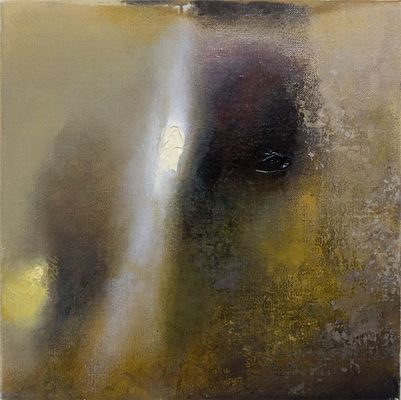
To return to Buckley’s fragment, the first two lines very much evoke how I paint nowadays. As you age, detail diminishes and patches of light become more luminous and float. I feel the most honest way of dealing with this is by smearing the oil paint on the canvas with the fingers and working close-up, blind. Only if the patches coalesce into an approaching image can the work gain a life.
-
Jonathan Walker was born in Melbourne, Australia and brought up on a dairy farm in Gippsland. In the 1970’s he studied painting at RMIT and won the Harold Wright Scholarship to the British Museum, London. During the 1980’s he exhibited at Pinacotheca Gallery, Richmond and had work shown at the NGV and Heidi City Art Gallery. Over the same period he designed the cover for the “Epigenesi” LP by Giancarlo Toniutti, Italy and conducted a mail exchange work with Achim Wollscheid, Germany. The work with artists through the post resulted in an article published in the bicentenary issue of Art and Australia 1988. He showed in artist run spaces such as WestSpace in the 90’s and 2000’s, and until 2012, taught painting at Victoria University, which is where we (Colleen Ahern and Lisa Radford) as organisers of the exhibition, among many others, had the privilege of being his student.
Walker’s knowledge was imparted to students through the careful selection of music, literature, and artists found in books that he himself had ordered for the library. Walker’s strategy was the generosity of sharing his vast knowledge with references specific to each student and their context.
Walker’s paintings share a similar focus and intimacy.
This exhibition presents a small selection of recent paintings alongside a publication that includes Walker’s writing. Observational and analytical, Walker’s work is a type of material notation — the time of day, colour and how it is blended, the both specific and fleeting location of a reflection on lino or the question of whether a chair leg should be included in a painting.
Please join us on Friday August 21 between 6-8pm to celebrate the opening of the exhibition.
Curated by Colleen Ahern and Lisa Radford.
B. Wurtz
Curated by Nic Tammens
March 26 - April 4, 2015
B.Wurtz works from a basement studio in his home on Manhattan’s Lower East Side.
This local fact is attested to by the plastic shopping bags and newsprint circulars that appear in his work. As formal objects, they don’t make loud claims about their origins but nonetheless transmit street addresses and places of business from the bottom of this long thin island. Like plenty of artists, Wurtz is affected by what is local and what is consumed. His work is underpinned by this ethic. It often speaks from a neighborhood or reads like the contents of a hamper:
“BLACK PLUMS $1.29 lb.”
“Food Bazaar”
“USDA Whole Pork Shoulder Picnic 99c lb.”
“RITE AID Pharmacy, with us it’s personal.”
“H. Brickman & Sons.”
“Sweet Yams 59c lb."
Most of the work in this exhibition was made while the artist was in residence at Dieu Donne, a workshop dedicated to paper craft in Midtown. Here Wurtz fabricated assemblages with paper and objects that are relatively lightweight, with the intention that they would be easily transportable to Australia. This consideration isn’t absolute in Wurtz’s work, but was prescriptive for making the current exhibition light and cheap. Packed in two boxes, these works were sent from a USPS post office on the Lower East Side and delivered to North Melbourne by Australia Post.
Wurtz appears courtesy of Metro Pictures, New York.
Thanks to Rob Halverson, Joshua Petherick, Sari de Mallory, Matt Hinkley, Helen Johnson, Fayen d'Evie, Ask Kilmartin, Lisa Radon, Ellena Savage, Yale Union, and "Elizabeth".
John Nixon
"Archive"
December 15 - January 20, 2014
The presentation of John Nixon's archive offered a rare showcase of this extensive collection of the artist's own publications, catalogues, posters, ephemera, editions and more, from the mid 1980s onwards, alongside a selection of his artworks.
Organized by John Nixon, Joshua Petherick and Matt Hinkley.
"Habitat"
at Minerva, Sydney (organised by Joshua Petherick and Matt Hinkley)
November 15 - December 20, 2014
Lupo Borgonovo, Janet Burchill & Jennifer McCamley,
Lewis Fidock, HR Giger, Piero Gilardi, Veit Laurent Kurz,
Cinzia Ruggeri, Michael E. Smith, Lucie Stahl, Daniel Weil, Wols
Press Release:
“...It contained seven objects. The slender fluted bone, surely formed for flight, surely from the wing of some large bird. Three archaic circuitboards, faced with mazes of gold. A smooth white sphere of baked clay. An age-blackened fragment of lace. A fingerlength segment of what she assumed was bone from a human wrist, grayish white, inset smoothly with the silicon shaft of a small instrument that must once have ridden flush with the surface of the skin - but the thing’s face was seared and blackened.”
William Gibson, “Count Zero”, 1986
"Autumn Projects Archive"
Curated by Liza Vasiliou
March 6 - March 15, 2014
World Food Books, in conjunction with the Virgin Australia Melbourne Fashion Festival 2014, presented the Autumn Projects archive, consisting of a selection of early examples in Australian fashion with a particular interest in collecting designers and labels from the period beginning in the 1980’s, who significantly influenced the discourse of Australian Fashion.
Curated by Liza Vasiliou, the exhibition provided a unique opportunity to view pieces by designers Anthea Crawford, Barbara Vandenberg, Geoff Liddell and labels CR Australia, Covers, Jag along with early experimental collage pieces by Prue Acton and Sally Browne’s ‘Fragments’ collection, suspended throughout the functioning World Food Books shop in Melbourne.
H.B. Peace
presented by CENTRE FOR STYLE
November 14, 2013
"Hey Blinky, you say chic, I say same"
Anon 2013
H.B. Peace is a clothing collaboration between great friends Blake Barns and Hugh Egan Westland. Their pieces explore the divergences between 'character’ and ‘personality’ in garments....etc
Special Thanks to Joshua Petherick and Matt Hinkley of WFB and Gillian Mears
and a Very Special Thank you to Audrey Thomas Hayes for her shoe collaboration.
Janet Burchill & Jennifer McCamley
"Aesthetic Suicide"
May 10 - June 8, 2013
The first of our occasional exhibitions in the World Food Books office/shop space in Melbourne, "Aesthetic Suicide" presented a body of new and older works together by artists Janet Burchill & Jennifer McCamley, including videos, prints, a wall work, and publications.
During shop open hours videos played every hour, on the hour.
1973, English
Softcover (staple bound), 96 pages, 20.5 x 14.5 cm
1st Edition, Out of print title / used / very good
Published by
Contempa / Armadale
$45.00 - In stock -
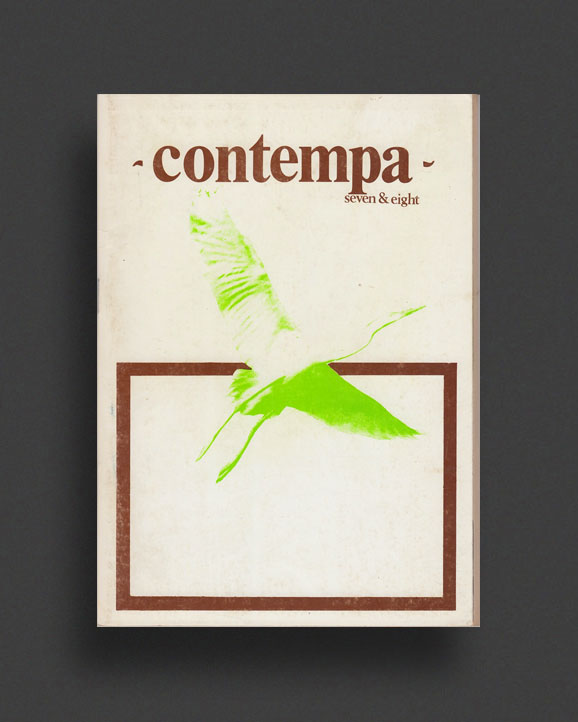
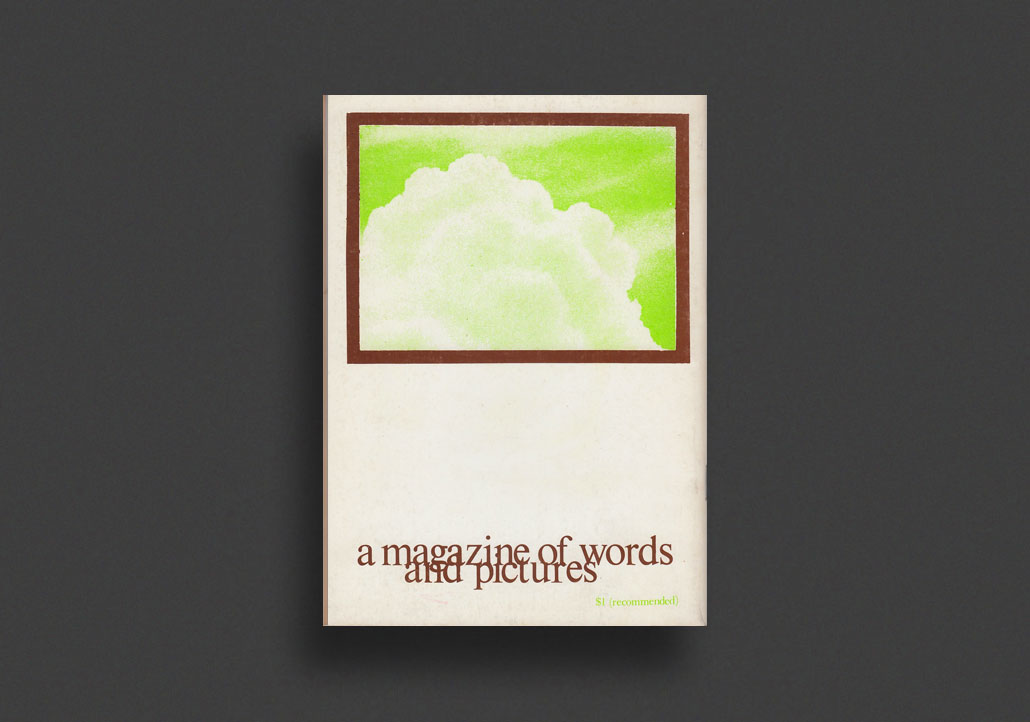
Scarce copy of Contempa, a small literary press magazine edited by Robert Kenny and Phillip Edmonds in Armadale, Victoria, between 1972—1978. Associated with the experimental poetry scene based around Melbourne's La Mama Theatre and the "Generation of '68" poets, Kenny also established the imprint Ragman Productions, and founded a small press, Rigmorale of the Hours, later Rigmorale Books (1974—1986). A combined issue 7 & 8, this 1973 volume of Contempa features poetry, prose and short fiction (and a splash of artwork) by Robert Harris, Ken Taylor, Richard Hopkinson, Kris Hemensley, Robert Kenny, Terry Harrington, Erich Beach, John Jenkins, B.A. Breen, Andrew Robinson, Anne Parrot, David Miller, Phillip Edmonds, Arno Schmidt/Billeter, An Epistle, and more.
Very Good copy.
1970
Hardcover, 80 pages, 30 x 30 cm
1st Edition, Out of print title / used / very good
Published by
Heinz Peter / Berlin
$100.00 - Out of stock
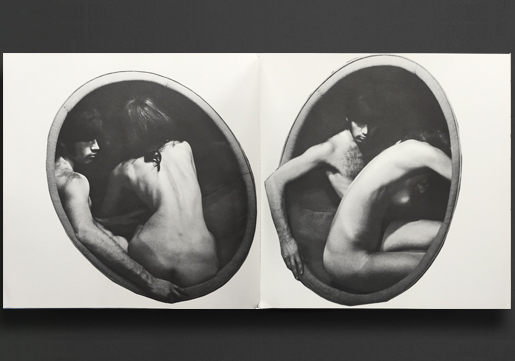
The wonderful, cult 1970 "Vive Le Sex" photobook from Czech photographer, Ica Vilander, who is noted for being one of the few women to shoot nudes in the 1960s.
Vilander was born in 1921 in Brux, Czechoslovakia and later moved to Berlin in 1944, where she studied graphics and experimental photography. Working for the legendary Willy Fleckhaus designed Twen magazine, Vilander garnered a lot of attention internationally with her nude portraits and dynamic, graphic approach to photography, yet by 1980 she disappeared into photo history obscurity as she almost completely retired from public life. Her originals are very rare, as most were destroyed, but her wonderful published collections have become some of the more prized and elusive nude photobooks of the 1960s/1970s.
"Vive Le Sex", in its large square format and hardcover, is a perfect example of Vilander's joyous approach to photographing the nude male and female; mixing elements of collage with photography, dynamic cropping, and a free-spirited use of styling and props that reflected the hippie lifestyle that surrounded her family and friends, who were all regular subjects of her photos, alongside actors, musicians, artists.
First, only edition.
1972, English
Softcover (staple-bound w. card covers), 72 pages, 38.5 x 27.5 cm
1st Edition, Out of print title / used / very good
Published by
Uitgeverij Bert Bakker / The Hague
$280.00 - Out of stock
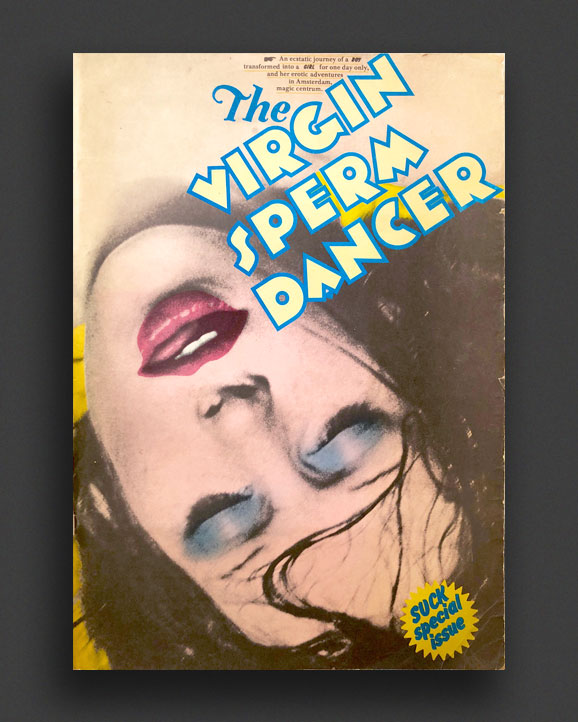
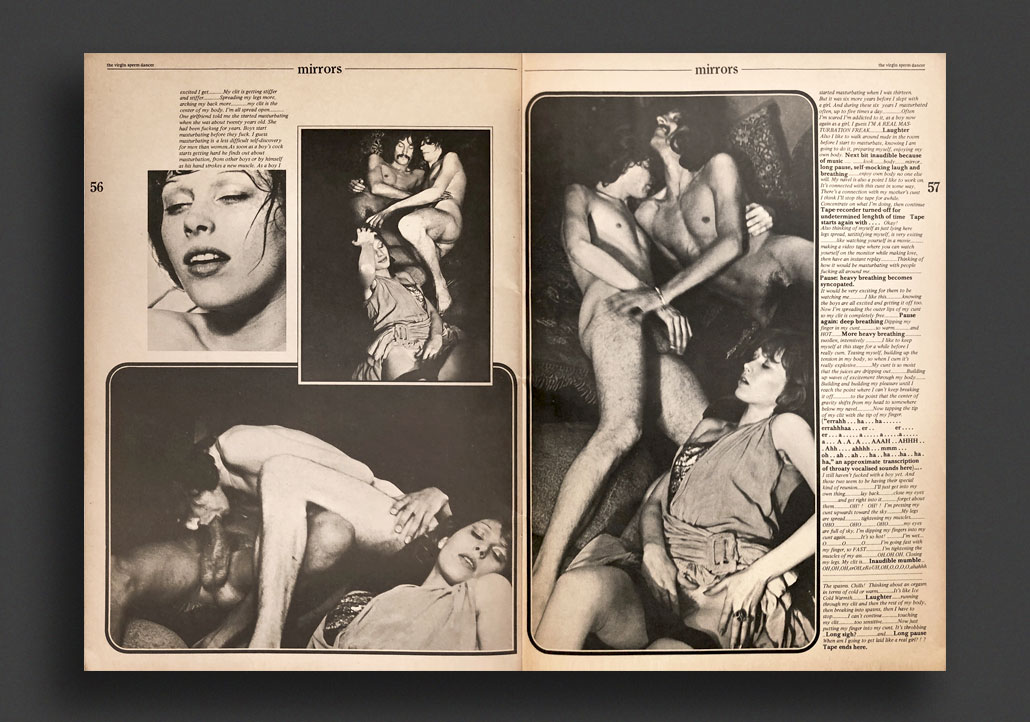
The Virgin Sperm Dancer : An ecstatic journey of a boy transformed into a girl for one day only, and her erotic adventures in Amsterdam, magic centrum. This is the photographic story of Joop, a modern boy who wakes up one morning as Joopie, a succulent young lady who only has a day to enjoy the benefits of her new body before the metamorphosis is reversed. Joopie wastes no time and embarks on her erotic adventures, every step of which is documented in explicit detail. A rare, cult classic of the European sexual liberation movement of the early 1970's, conceived by the photographer Anna Beeke as an anti-pornographic statement and published as a special issue of Willem de Ridder's notorious and glorious "Suck" magazine.
"The makers of the Virgin Sperm Dancer cannot be held responsible for word burns and image jitters up to and including the first degree."
"The Virgin Sperm Dancer" features text by American expatriate and editor of Suck (as well as The Insect Trust Gazette, International Times, and The Fanatic) William Levy - known as the "Talmudic Wizard of Amsterdam", design by one of Holland's most innovative, risk taking designers, Beeke's husband Anthon Beeke, and wonderful black and white photographs Anna Beeke herself - credited as "Ginger Gordon". This joyous and provocative, uncensored and over-sized book is a tour of gender-bending counter-culture sex in and adjacent to Amsterdam's famed Vondelpark in 1972, complete with public sex and auto-eroticism, orgies and trans-sexual baked bread! "This charmingly liberated fairy story is gleefully hardcore - the point of the exercise, after all." — Martin Parr and Gerry Badger's "The Photobook: A History, volume III" (Phaidon Press, London, 2014). Also cited in Alessandro Bertelotti's "Books of Nudes" (Abrahams, New York, 2007).
Final instructions : "This is not a work of fiction or of one man. Keep your eye on it's bi-unity. I am smiling now. But if you don't think my story marvellous and you should happen to meet me, kindly pass as though we don't know each other."
"But for those readers with delicate lusts and whose curiosity reaches greater detail... When you finish this book roll the pages into thin tubes. Insert carefully into your rectal opening where this specially treated paper will dissolve and act as a chemical re-agent to push each and every word image into your blood-stream and finally into the deep memory of your brain... "
Very Good with light tanning and cover wear (some very small edge nicks and light creasing, pinching)
199?, Polish/English/German
Softcover (staple-bound), 24 pages, 22.5 x 15.5 cm
1st Edition, Out of print title / used / good
Published by
Carmina Académica / Poland
$150.00 - In stock -
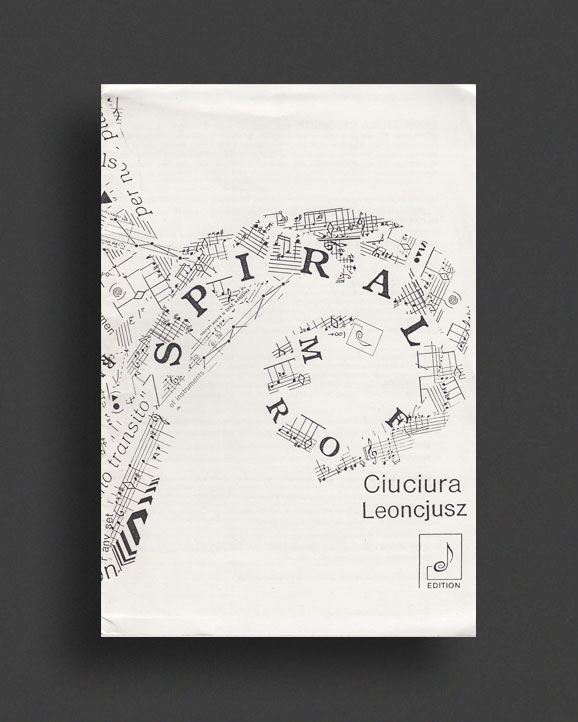
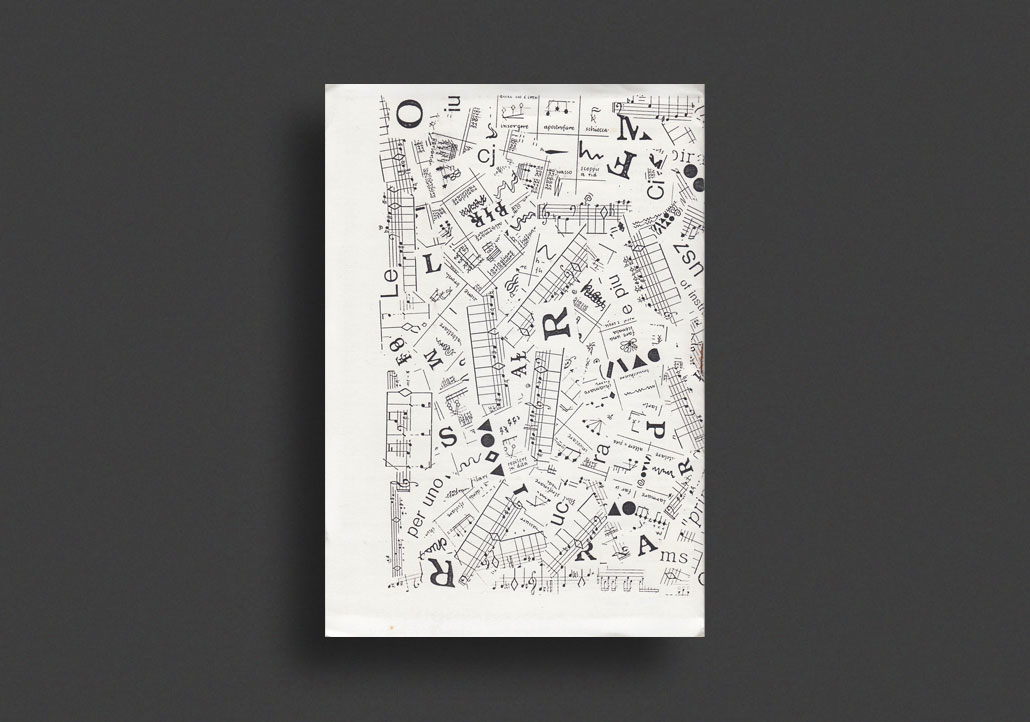
Extremely rare, self-published, undated (presumably around 1992) publication "Spiral Form" by Leoncjusz Ciuciura, one of Poland's most visionary composers of contemporary music. The message of his compositions relates to infinity, and "Spiral Form", outlined in this theoretical "score", is the most perfect instillation of this concept. Written in 1964 but according to the author's idea the piece started in the beginning of the universe and will play literally forever. "The basic feature of the spiral form is the dynamic intergrating tendency of all elements to an inner unity, cohesion and substantial perfection. The spiral form is a total form "in statu nascendi" and transits from micro to macro form."
Tri-lingual Polish/English/German texts by the composer, accompanied by graphics and biography.
A member of the Polish Authors’ Society, ZAiKS, from 1962, many of Ciuciura’s compositions combined elements of improvisation, linking music and pantomime, dance, theatre and other forms of art. A firm believer in the “self-improvement” of his compositions, Ciuciura argued that:
"Since 1964 until the present, each performance [of my work] is a world premiere and therefore the date of that performance should be changed and updated accordingly. Beginning with my Spirale per uno e piu’ I have launched my own concept of musical form, a spiral form, where the starting point could be visual graphics, sonorist elements, prepared sounds, as well as minimal music, Momentformen, collage, happening, conceptualism, etc. Thanks to the elements of expectation, virtual reality and eschatology, this new, spiral form of a musical composition opens the door to self-realization, self-discovery and self-improvement."
Leoncjusz Ciuciura (1930—2017) was a Polish composer, an ardent advocate for contemporary music and co-organizer of the Polish Chapter of Jeunesses Musicales International. He studied composition with Tadeusz Szeligowski at the State Higher School of Music in Warsaw (1954–60). He founded the music publishing firm Carmina Académica, with which he was active as an editor. In 1960 he received the Minister of Culture and Arts Award, in 1962 first prize in the International Competition for Composers in Prague, and in 1963 third prize in the Grzegorz Fitelberg Competition in Katowice. Virtually all of his works are essays in combinatorial permutation with optional instrumental or vocal additions, subtractions, multiplications, or divisions.
Good—VG copy with light wear, staple rusted.
1969, English
Softcover, 52 pages, 21 x 13.5 cm
1st Edition, Out of print title / used / good
Published by
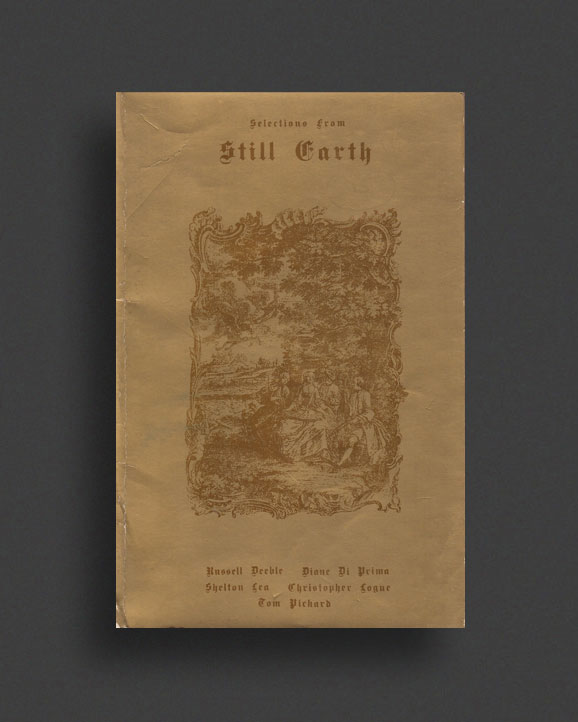
Still Earth / Melbourne
$140.00 - Out of stock
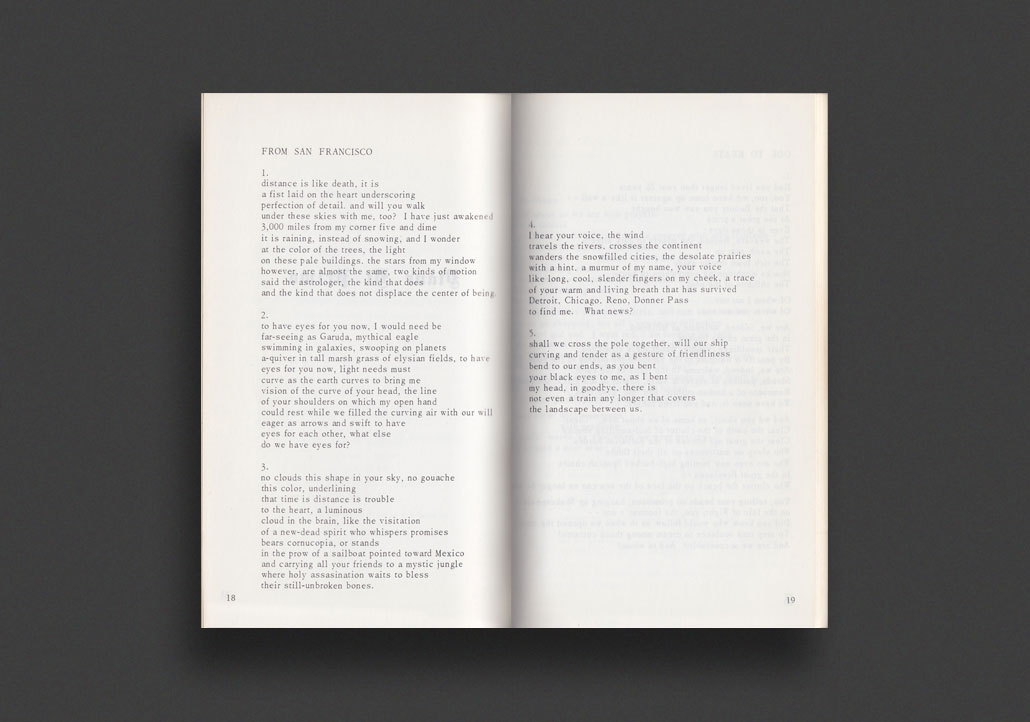
Exceptionally rare first 1969 poetry collection published by Still Earth Publications, Melbourne, an imprint founded by poet Russell Deeble and gallerist, artist, poet and publisher, Sweeney Reed, son of Albert Tucker and Joy Hester, adopted son of Heide founders John and Sunday Reed, whose Strines and Sweeney Reed Galleries championed concrete poetry, abstraction, and pop art in Australia.
This inaugural collection features a generous selection of daring poetry by Melbourne poets Russell Deeble and Shelton Lea, American poet Diane Di Prima, and British poets Christopher Logue and Tom Pickard.
"Disgusting" as one catalogue put it.
Good copy with wear to gold foiled covers, very good internally.
1998, English / Japanese
2 vols. 106 pages/16 pages, 28 x 23 cm
1st Edition, Out of print title / used / very good
Published by
Synergy Inc. / Tokyo
$140.00 - Out of stock
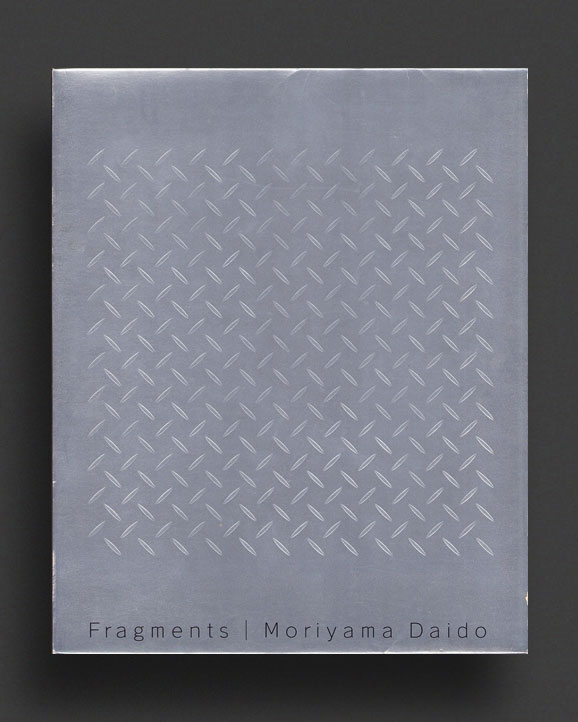
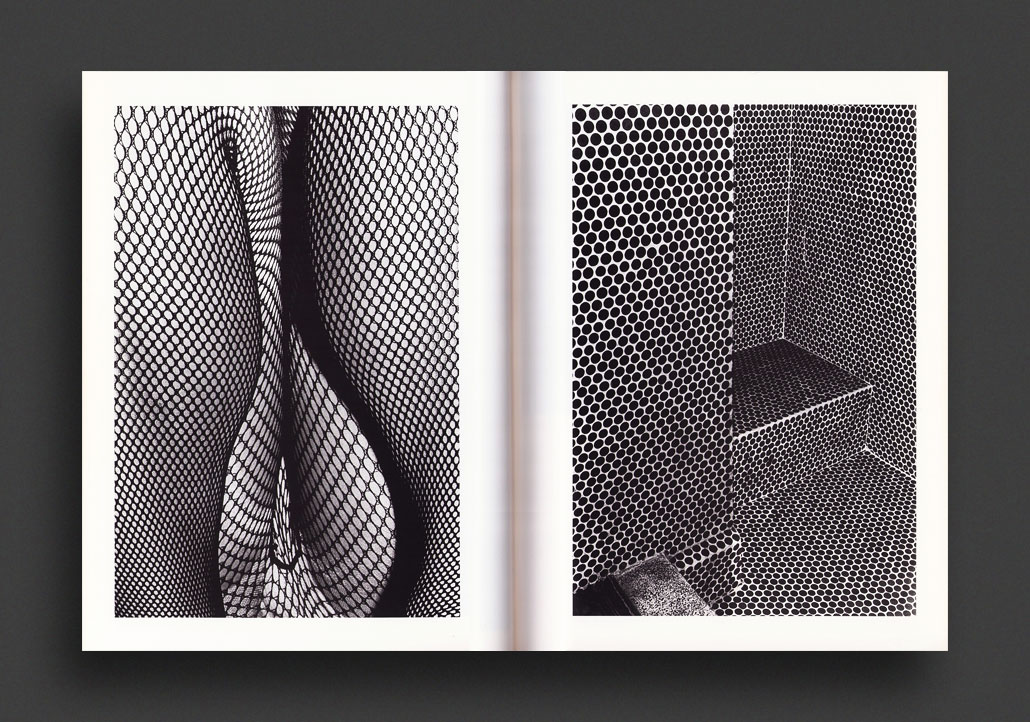
First edition of this photographic survey of Daido Moriyama, published on the occasion of the 1998 retrospective exhibition at Tokyo's Parco Gallery. Long out-of-print, this evocative collection of photographic works by Moriyama spanning his entire career, 106 pages of almost entirely b/w photographs, with the exception of one colour plate, with an accompanying 16 page booklet essay in Japanese and English by art critic Sawaragi Noi, all housed in silver cardboard slipcase with embossed metal design, art directed and designed by Hideki Nakajima.
Very good copy with light wear.
1992, English
Softcover (staple-bound) 16 pages, 22 x 17 cm
1st Edition, Out of print title / used / very good
Published by
Noosa Regional Gallery / Queensland
$15.00 - Out of stock
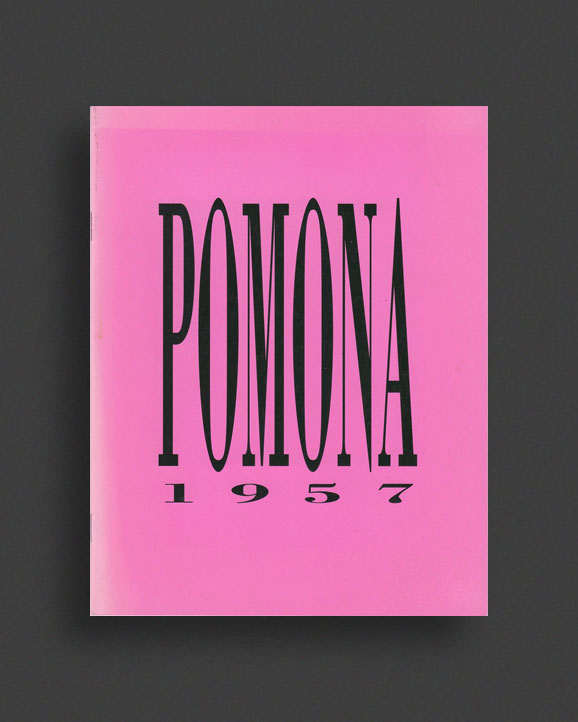
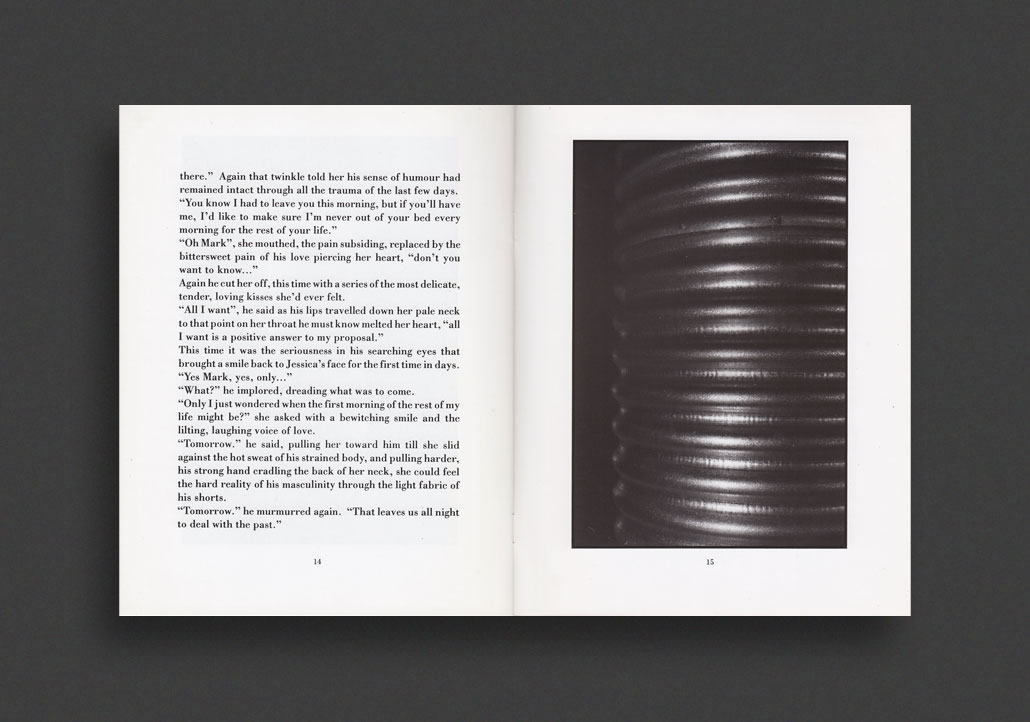
Scarce Aleks Danko catalogue published on the occasion of his solo exhibition, Pomona 1957, at Noosa Regional Gallery, Queensland, 21 July—23 August, 1992. Illustrated throughout with a story by Jacqueline Thomas, introduction by gallery director Ann Verbeek, designed by Danko and Ian Robertson. Published in an edition of 400 copies.
Aleks Danko (b. 1950) is an Australian performance artist and sculptor. The son of Ukrainian migrants, he was born in Adelaide, and educated at the South Australian School of Art and the Hawthorn Institute of Education. He started exhibiting in Adelaide in 1970. Aleks Danko’s career spans more than 5 decades and encompasses diverse media, from sculpture and installation to text and language-based works. Drawing actively on Australia’s political and cultural history, his work is infused with satirical humour and a subtle critique of contemporary social values.
Very Good copy. Tanning to fluro cover edges.
2019, English
Softcover, 600 pages, 26 x 31 cm
Published by
Walther König / Köln
Haus der Kunst / Munich
$90.00 - Out of stock
English edition of the first major exhibition catalogue on Jörg Immendorff (1945-2007) since his death, this beautifully produced 600-page volume offers a thematic overview of more than four decades of the artist's work, with more than 120 iconic paintings. Published on the occasion of a major retrospective of the artist, curated by Ulrich Wilmes, at Haus der Kunst (Jörg Immendorff - For all Beloved in the World - September 14, 2018–January 27, 2019), this incredible book contains a foreword by Ulrich Wilmes and Manuel Borja-Villel; along with contributions by Okwui Enwezor, Johanna Adorjan, Ulf Jensen, Danièle Cohn, Harald Szeemann, Pamela Kort, and Feridun Zaimoglu.
Jörg Immendorff (1945-2007) cultivated his image as an artist and tough guy, but he also had a soft and thoughtful side that can be discovered in addition to his political sense of mission in the retrospective For all Beloved in the World. A painting of a baby with red skin and a bouquet of flowers from 1966 lends the exhibition its title. The work is part of a larger series that depicts babies of different origins, chubby and laughing, trimmed to simplicity, “as a symbol of love and peace,” as Immendorff explained.
In the mid-1960s, as a student at the Düsseldorf Art Academy in the class of Joseph Beuys, Immendorff first slipped into the role of the agitator. The actions of the Lidl Academy, which he developed with his first wife Chris Reinicke, represent his desire to change the world, to rebel against—what he felt—the uninspired and uninspiring political policies in Germany. Intuition and creativity were to be liberated through action. "Lidl" is an artificial word created in the tradition of Dada.
Later, Immendorff became sympathetic to the ideas of the KPD (German Communist Party). For several years he worked as a secondary school teacher and developed a visual language in which word and image stood side by side on equal footing. His “Accountability Report” is a series of paintings marked by clear pedagogical and political messages.
It was not until the late 1970s that Immendorff (1945-2007) decided to dedicate himself completely to art. In 1976, he participated in the Venice Biennale; in 1977, he created his Café Deutschland series, inspired by Renato Guttuso’s Caffé Greco (1976), which Immendorff had seen in an exhibition in Cologne. In the Café Deutschland images, Immendorff explores the politics of his time—it was a period marked by the RAF and domestic conflicts on both sides of the Berlin Wall—and in which the reunification of the two Germanys seemed beyond the realm of reality. In gloomy, theatrical settings, Immendorff portrayed himself as a border crosser between East and West. In addition to the clear political motivation, the pictures also show Immendorff's view of the world, in which ideas—embodied by historical figures—are in dialogue with each other through space and time.
In 1998 Immendorff learned that he has ALS ( amyotrophic lateral sclerosis). His world became progressively darker and his work was increasingly directed inward. He worked until his death—in the end only with the help of assistants who, following his instructions, realized his ideas in the studio. This final work phase includes key pieces such as Last Self-portrait I - The Painting Calls (1998) or Untitled (2000) with the vanitas motif borrowed from Hans Baldung Grien of a runner balancing on two globes. The political and social message gradually disappeared from Immendorff’s late work.
2000, English
Hardcover (w. dust jacket), 400 pages, 24 x 32 cm
1st Edition, Out of print title / used / very good
Published by
Argo / Prague
$190.00 - Out of stock
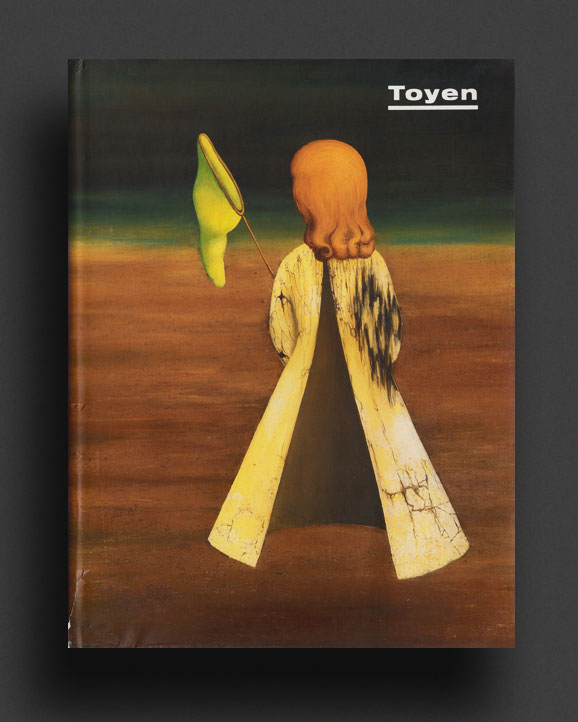
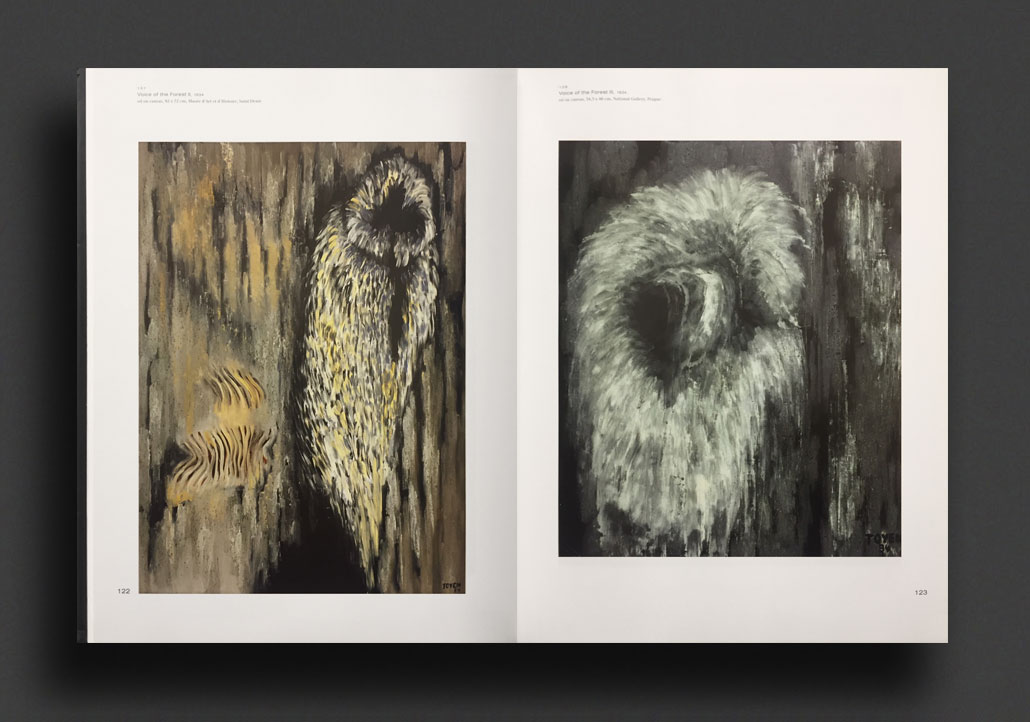
First edition of the most comprehensive English-language monograph ever published on Czech Surrealist Toyen (Marie Cerninova; 1902-1980). Published on the occasion of the major survey exhibition in the Prague City Gallery, this exhaustive 400 page hardcover volume is profusely illustrated with around 480 of Toyen's works, many undocumented elsewhere, alongside contemporary specialist studies on her work, with major contributions by Czech art historian and curator Karel Srp, Radovan Ivsic, Karolina Vocadlo, and Marie Cerminova. Highly recommended.
Marie Čermínová (1902 – 1980), known as Toyen, was a Czech painter, drafter and illustrator and a member of the Surrealist movement. Born in Smíchov, Bohemia, she left home at the age of 16 and worked at a soap factory in Zizkov while putting himself through school. She worked closely with fellow Surrealist poet and artist Jindřich Štyrský, both joining and exhibiting with the Devětsil group in 1923. In the 1920s they travelled to Paris and founded an artistic alternative to Abstraction and Surrealism, which they dubbed Artificialism, returning to Prague in 1928. Toyen's sketches, book illustrations, and paintings were frequently erotic, illustrating the Marquis de Sade's "Justine" under Štyrský's publishing imprint, Edice 69, as well as contributing many erotic sketches to Štyrský's Eroticka Revue (1930–33), published on strict subscription terms with a circulation of 150 copies. Toyen and Štyrský gradually grew more interested in Surrealism. After their associates Vítězslav Nezval and Jindřich Honzl met André Breton in Paris, they founded the Czech Surrealist Group along with other artists, writers, film makers and the composer Jaroslav Ježek. Toyen was one of the few female Surrealists, along with Claude Cahun, Leonora Carrington and a handful of others. While Cahun examined the fluidity of gender roles, Toyen dispensed with gender altogether. Toyen often dressed in men's clothing and preferred masculine pronouns, choosing a non-conformist position when it came to gender and sexuality, themes heavily mined in Surrealist art. Forced underground during the Nazi occupation and Second World War, he sheltered his second artistic partner, Jindřich Heisler, a poet of Jewish descent who had joined the Czech Surrealist Group in 1938. The two relocated to Paris in 1947, before the Communist takeover of Czechoslovakia in 1948. In Paris, they worked with André Breton, Benjamin Péret, and other members of the surrealist movement.
Very Good copy in Good-Very Good dust jacket (small tear to bottom-left corner).
2002, French
Softcover, 264 pages, 23.5 cm x 27.5 cm
1st Edition, Out of print title / used / good
Published by
Artha / Saint Etienne
$200.00 - In stock -
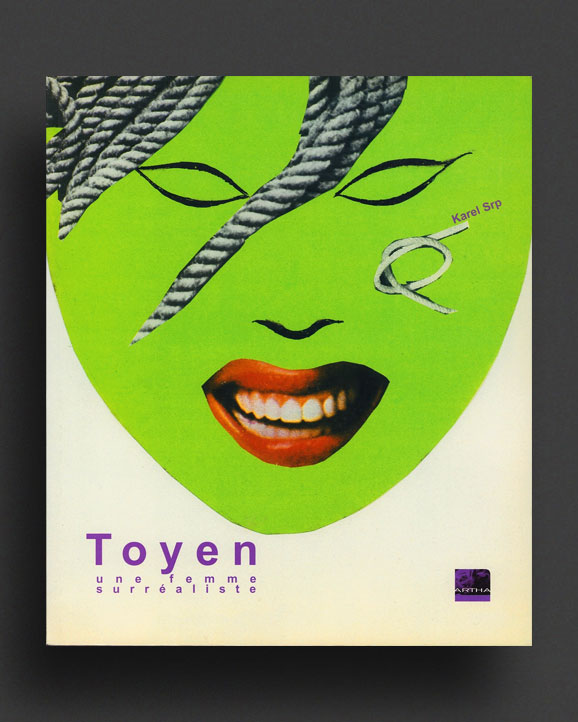
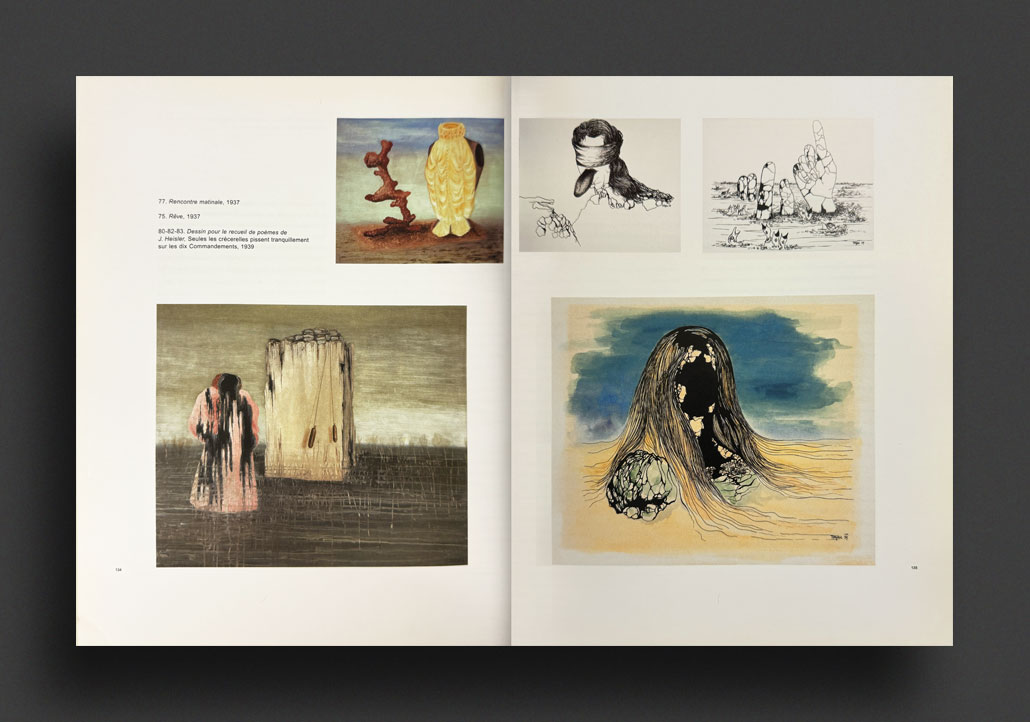
First edition of Une Femme Surrealiste — one of the finest reference volumes ever published on the great Czech transgender surrealist Toyen (1902—1980). Edited by noted Toyen authority and exhibition curator Karel Srp, this lavishly illustrated catalogue was published on the occasion of the major retrospective exhibition held June 20 —Sep 30, 2002 at the Musee d'Art Moderne, Saint Etienne, France. Photo illustrated chronology and extensive catalogue of artworks in colour and b/w (149 works — paintings, drawings, lithographs, collages.....) Texts in French.
Marie Čermínová (1902 – 1980), known as Toyen, was a Czech painter, drafter and illustrator and a member of the Surrealist movement. Born in Smíchov, Bohemia, she left home at the age of 16 and worked at a soap factory in Zizkov while putting himself through school. She worked closely with fellow Surrealist poet and artist Jindřich Štyrský, both joining and exhibiting with the Devětsil group in 1923. In the 1920s they travelled to Paris and founded an artistic alternative to Abstraction and Surrealism, which they dubbed Artificialism, returning to Prague in 1928. Toyen's sketches, book illustrations, and paintings were frequently erotic, illustrating the Marquis de Sade's "Justine" under Štyrský's publishing imprint, Edice 69, as well as contributing many erotic sketches to Štyrský's Eroticka Revue (1930–33), published on strict subscription terms with a circulation of 150 copies. Toyen and Štyrský gradually grew more interested in Surrealism. After their associates Vítězslav Nezval and Jindřich Honzl met André Breton in Paris, they founded the Czech Surrealist Group along with other artists, writers, film makers and the composer Jaroslav Ježek. Toyen was one of the few female Surrealists, along with Claude Cahun, Leonora Carrington and a handful of others. While Cahun examined the fluidity of gender roles, Toyen dispensed with gender altogether. Toyen often dressed in men's clothing and preferred masculine pronouns, choosing a non-conformist position when it came to gender and sexuality, themes heavily mined in Surrealist art. Forced underground during the Nazi occupation and Second World War, he sheltered his second artistic partner, Jindřich Heisler, a poet of Jewish descent who had joined the Czech Surrealist Group in 1938. The two relocated to Paris in 1947, before the Communist takeover of Czechoslovakia in 1948. In Paris, they worked with André Breton, Benjamin Péret, and other members of the surrealist movement.
Good copy with knock to bottom spine corner, light age wear.
1969, Japanese
Softcover, 218 pages, 21 x 14.8 cm
1st Edition, Out of print title / used / good
Published by
Misaki Shobo / Tokyo
$45.00 - Out of stock
Erotica September 1969, Japan's erotic magazine for bibliophiles, published in the 1960s—1970s by Misaki Bookstore. Each issue densely packed with illustrations, articles, news, and feature stories around the universe of Eros from around the world during a time of great sexual revolution. Covering all manner of sexual customs and subject matter from the arts and literature, film and manga, philosophy and radical politics, Erotica was Japan's leading erotic academic journal, featuring, amongst it's heavy historical and contemporary papers, the cutting-edge of Japanese and international erotic artists, from Hans Bellmer to Toshio Saeki.
Erotica September 1969 is themed "The Situation of Eros".
Good copy, wear/age.
1970, Japanese
Softcover, 250 pages, 21 x 14.8 cm
1st Edition, Out of print title / used / good
Published by
Misaki Shobo / Tokyo
$30.00 - Out of stock
Erotica December 1970, Japan's erotic magazine for bibliophiles, published in the 1960s—1970s by Misaki Bookstore. Each issue densely packed with illustrations, articles, news, and feature stories around the universe of Eros from around the world during a time of great sexual revolution. Covering all manner of sexual customs and subject matter from the arts and literature, film and manga, philosophy and radical politics, Erotica was Japan's leading erotic academic journal, featuring, amongst it's heavy historical and contemporary papers, the cutting-edge of Japanese and international erotic artists, from Hans Bellmer to Toshio Saeki.
Erotica December 1970 is themed "The Eros of Theatre: The Aesthetics of Voluptuousness".
Good copy, light wear/age.
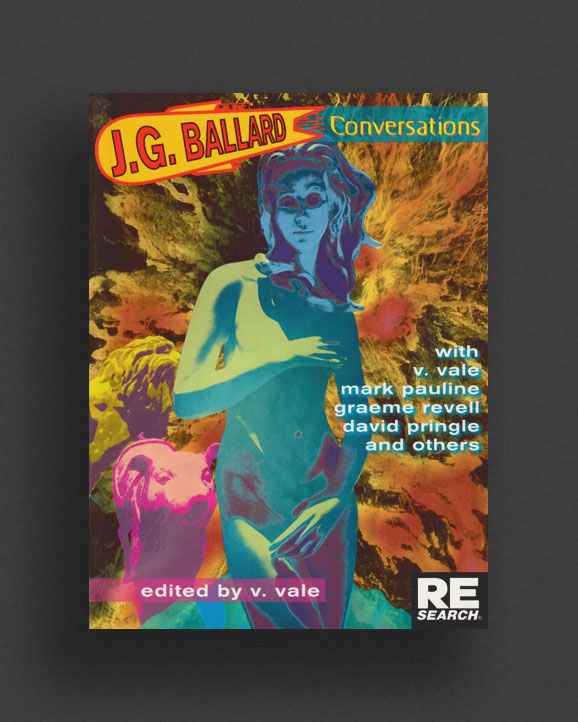
2005, English
Softcover, 240 pages, 17.78 x 13.21 cm
Published by
RE/SEARCH / San Francisco
$44.00 - Out of stock
A collection of never-before-published interviews, by the author of "Cocaine Nights" (Flamingo), "Crash" (Vintage), and "Millennium People" (Flamingo). It presents thoughts on the Internet and virtual reality, the impact of 9-11, extremism, the media industries, the meaning of Las Vegas and gated communities, and the infantilization of America and the world.
This new volume of interviews from RE/Search shows Ballard whole — a moralist, standing at the intersection between Jonathan Swift and Salvador Dali. Over four decades Ballard has exerted a deep influence over diverse writers like Angela Carter, Jean Baudrillard, Michel Houellebecq and Don DeLillo. His Booker Prize-nominated "Empire of the Sun" was filmed by Steven Spielberg. Never has Ballard sounded so concerned, fatherly, or political. (In an earlier, 1984 RE/Search interview, Ballard impishly exclaims, "I want more nuclear weapons!") The interviews make it abundantly clear that while Ballard has always proclaimed the death of reason and the visceral origins of technology, he now sees these developments as almost wholly negative. "What bothers me," the author says of that notorious techno-pornographic novel "Crash," "is that something is happening that you could almost call the 'Normalizing of the Psychopathic' — the greater and greater areas of what used to be regarded as the psychopathic by, say, my parents." It doesn't seem to occur to Ballard that anyone might have read his violently sexual stories literally.
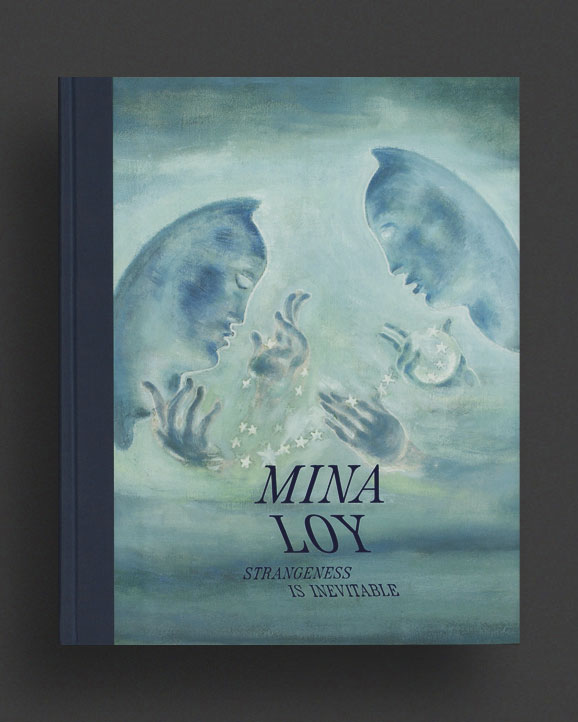
2023, English
Hardcover, 240 pages, 22.3 x 27.3 cm
Published by
Princeton University Press / New York
$70.00 - Out of stock
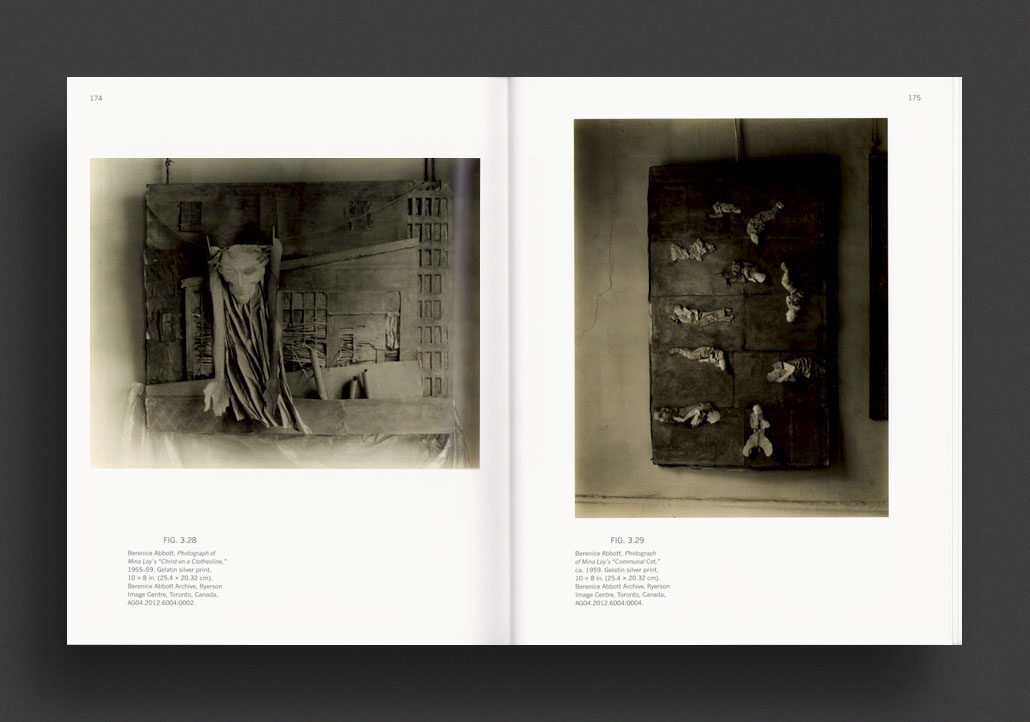
A richly illustrated exploration of Mina Loy's art and writings.
Mina Loy (1882-1966) was one of the most iconoclastic figures in modernism. A groundbreaking poet, she also left an indelible mark in painting, drawing, prose, art criticism and fashion. This book is the first to examine the full scope of her extraordinary career, demonstrating Loy's transformative impact on the visual arts as well as the literary avant-garde of the twentieth century. Presenting dozens of Loy's paintings, drawings and constructions alongside selections of her poems and writings, this book gives a comprehensive overview of the complex images and objects Loy created and situates them in the larger context of her life and work. It explores Loy's pursuit of truth and beauty, arguing that her engagement with the emphatically "unbeautiful" materials of the Bowery - such as rags and bottle caps - reflects her questioning of truth.
The book positions Loy within the broader context of surrealist art; sheds light on her relationships with influential figures such as Gertrude Stein, Marcel Duchamp and Wyndham Lewis; and addresses Loy's enduring relevance today. Featuring rare and previously unpublished artworks, Mina Loy: Strangeness Is Inevitable reveals this visionary artist's extraordinary contributions as an image-maker, writer, and cultural arbiter, introducing her work to a new generation of readers and charting new directions in art history, women's studies, poetry, and modernist studies.
Published in association with the Bowdoin College Museum of Art Exhibition Schedule Bowdoin College Museum of Art, Brunswick, Maine April 6 September 17, 2023
2005, Japanese
Softcover (w. dust jacket), 160 pages, 21.5 x 15.5 cm
1st Edition, Out of print title / used / fine
Published by
Futami Shobo / Japan
$140.00 - Out of stock
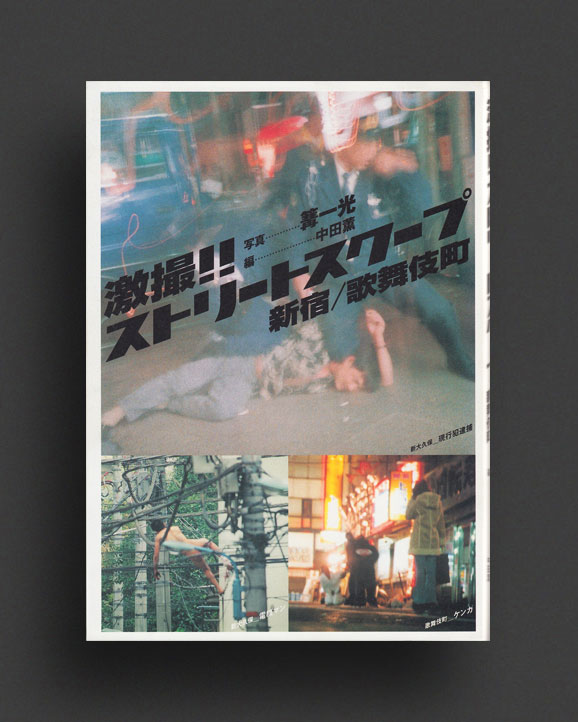
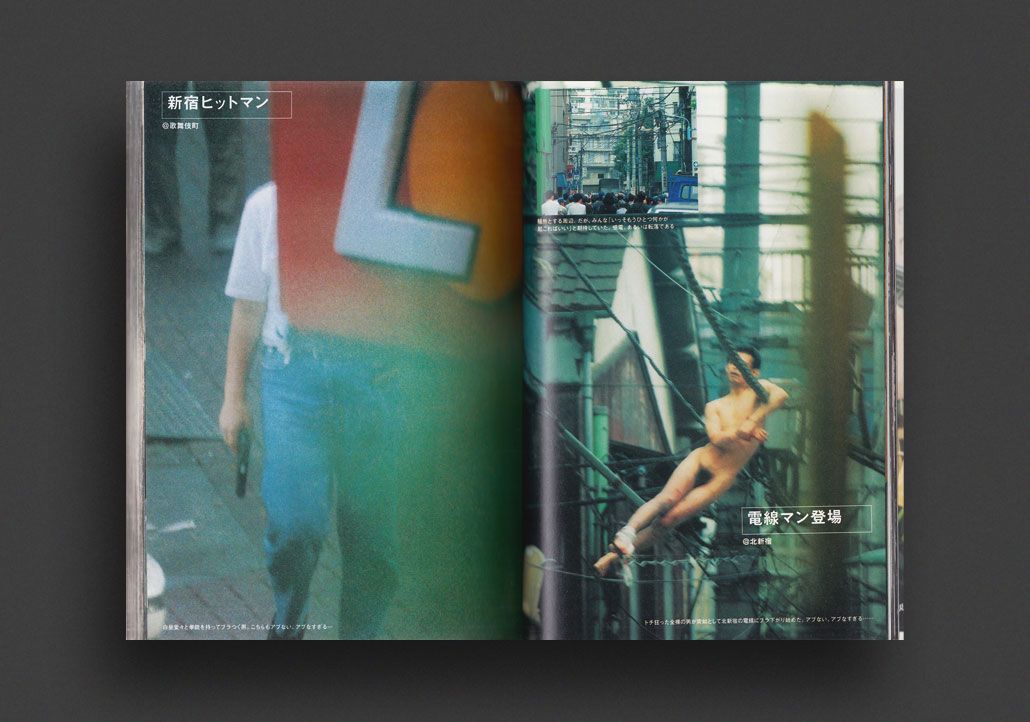
Rare, controversial photo book of Ikko Kagari, publisher of a number of these extraordinary, extremely questionable, surreptitious infrared photography collections in the 1980's—1990's, including the controversial coveted classic "Molester Rush" and "Document Commuter Train". This 2005 collection was published by Futami Shobo, collecting his colour and b/w photography from the streets of Shinjuku and Kabuki-cho areas of Tokyo. Candid and voyeuristic, this is the side of Tokyo usually hidden from view — violence, despair, gluttony and perversion — street photography behind the veil. While many are sexual in nature, in the same vein as his earlier photo books documenting clandestine sexual activities in public places, others show various human dramas unfolding on the street, like unauthorised photo journalism capturing the violent and desperate side of Tokyo. Homicide, suicide, gang violence, overdoses and intoxication, homelessness... Human behaviour seldom published. File alongside the works of Kohei Yoshiyuki, Kiyotaka Tsurisaki, and ¡Alarma!.
Very Good—Near Fine copy.
1994 / 1995, Japanese / English
2 Vol. set, hardcovers (w. corflute envelope slipcases) in box, 196 + 182 pages, 32.5 x 23.5 cm
1st Edition, Out of print title / used / very good
Published by
Sequoia / Tokyo
$500.00 - Out of stock
"I dedicate this book to all lives"
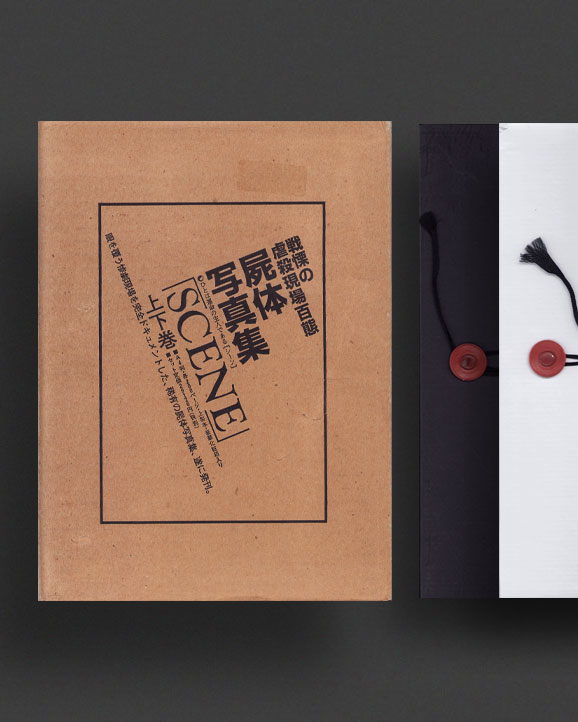
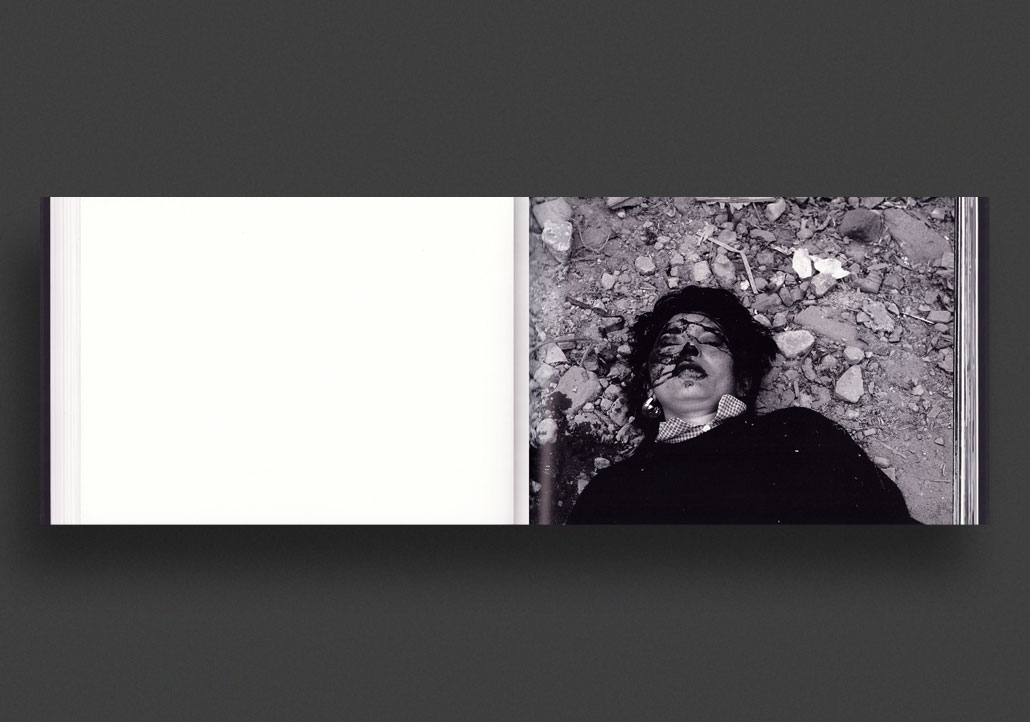
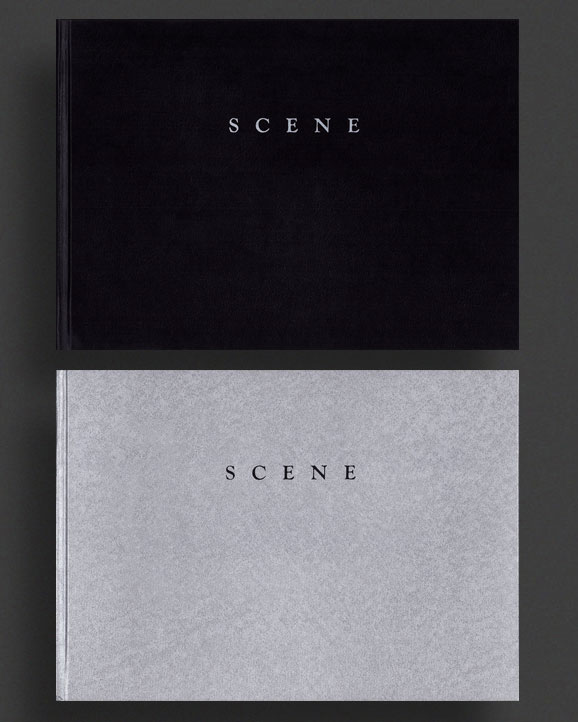
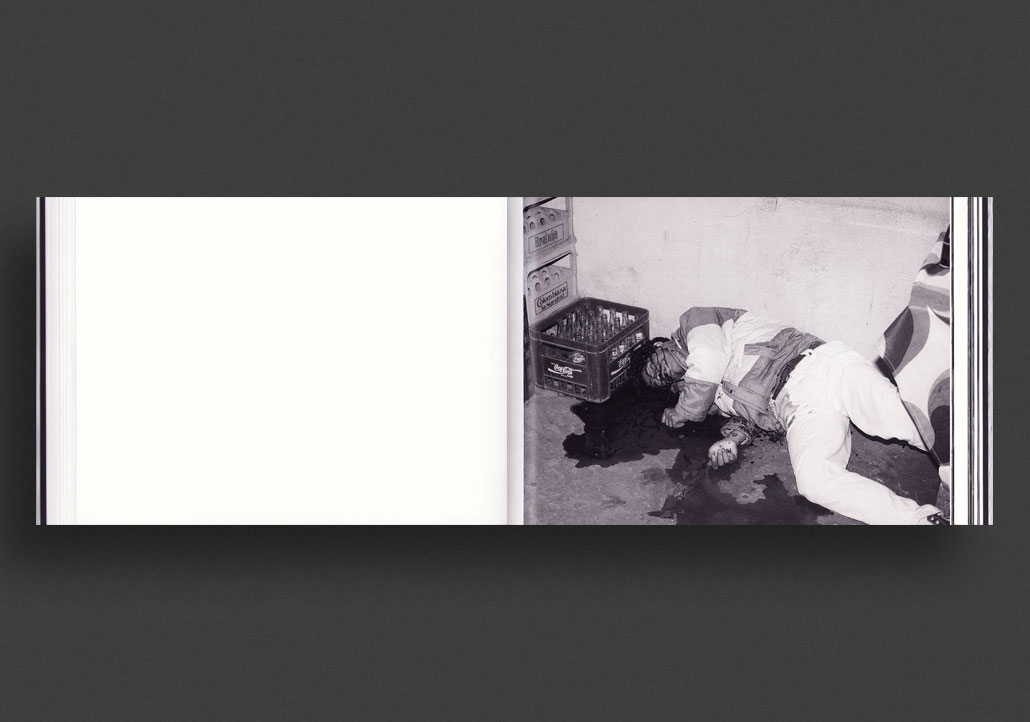
Very rare, highly collectible cult classic two-volume death photo book series, SCENE Vol. 1 and Vol. 2, published in 1994 and 1995 in Japan only. A lavish production, with both heavy books printed in hardcover filled with high-quality reproductions of anonymous, uncredited corpse photography, seemingly sociopolitical photo-journalism of human massacre stripped of text/language as a confronting stream of graphic images in conceptual photo book form. SCENE presents an unwavering, unapologetic exploration of a world usually hidden from view — the dead and death. Not for the faint of heart. Compiled by Kunio Shimizu and Yoichi Shibata for publisher Hirofumi Nagashima, each book is housed in elaborate button-and-tie-bound corflute envelopes, Vol. 1 in black, Vol. 2 in silver. Select plates have been featured in the pages of Kotaro Kobayshi’s underground publications TOO NEGATIVE and ULTRA NEGATIVE from the same period.
This extra special copy was issued as both volumes together in publisher's printed box with seldom seen single promo sheet included for each book (inserted into each book). The ultimate complete edition of this underground photo classic. HEAVY in every sense.
Both books 1990's dead stock with only standard storage wear from button-bind pressure to envelopes/wear to button metal, box with yellowed tape seal (opened) and general storage wear/age.
2024, English
Hardcover (w. dust jacket), 128 pages, 28.6 x 19.1 cm
Published by
Inventory Press / New York
Visual Arts Center at the University of Texas at Austin / Austin
$75.00 - Out of stock
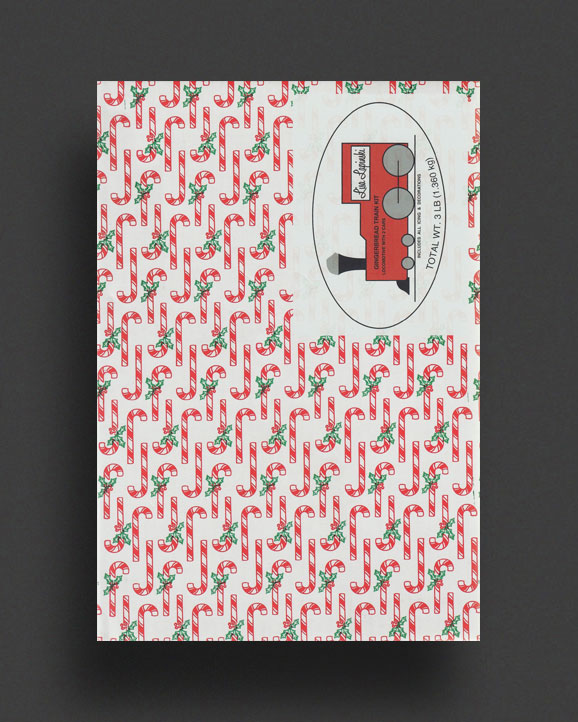
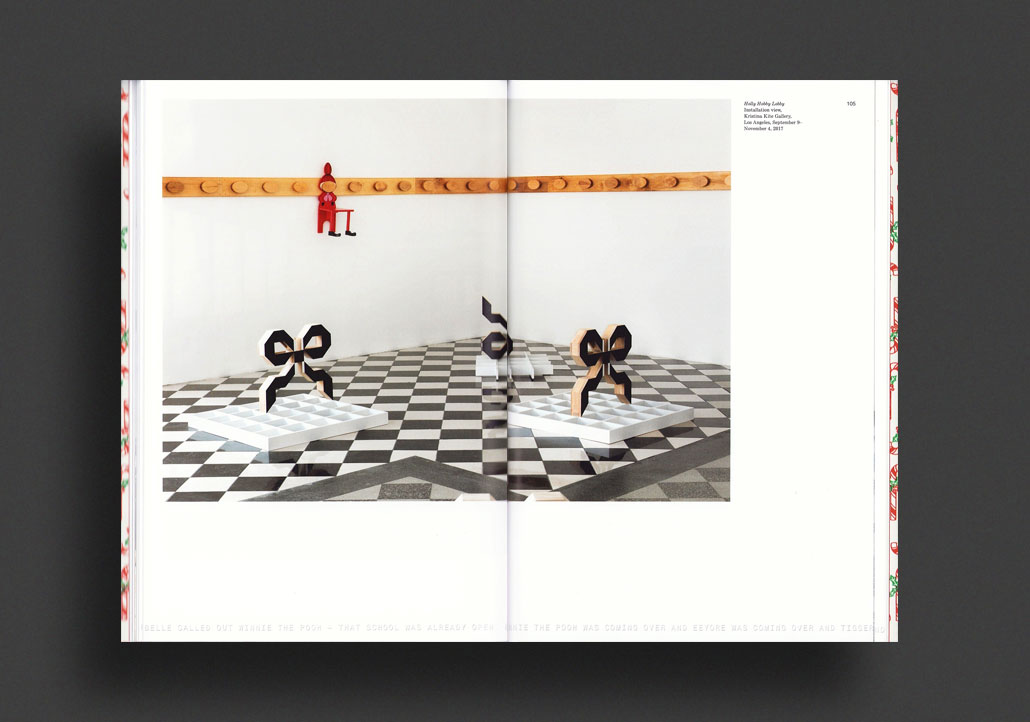
This is the most comprehensive monograph to date on Los Angeles–based artist Lisa Lapinski (born 1967), celebrated for her formally complex sculpture in a variety of mediums—including wood, wire, cement and clay—in addition to painting, photography, drawing and found material, often containing philosophical and historical references.
Published on the occasion of Lisa Lapinski: Drunk Hawking, her 2020 midcareer survey at the Visual Arts Center (VAC) at the University of Texas at Austin, Lisa Lapinski: Miss Swiss includes previously unpublished images of Lapinski’s exhibitions and artworks from 2000 to the present. It also features contributions by Bruce Hainley, Graham Bader, Kyle Dancewicz, Sabrina Tarasoff and MacKenzie Stevens, as well as a conversation between the artist and linguist Viola Schmitt.
2024, English
Hardcover (clothbound), 216 pages, 27.94 x 27.94 cm
Published by
Karma / New York
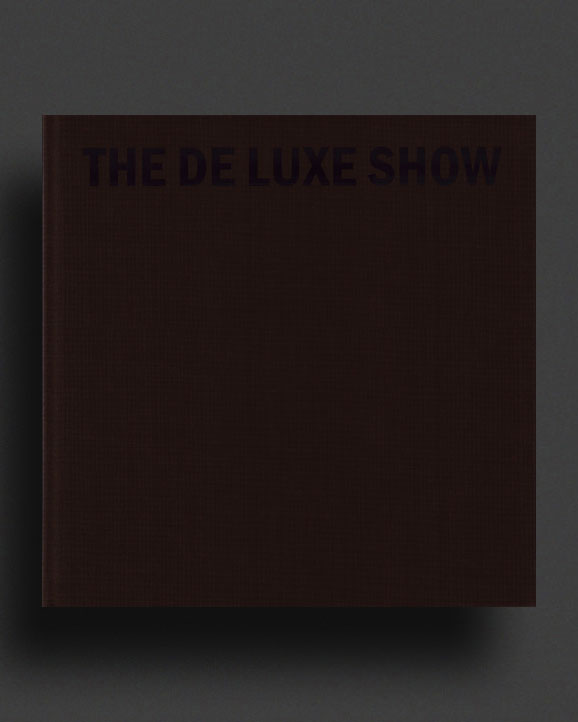
$85.00 $50.00 - In stock -
A 50th-anniversary tribute to one of America's first racially integrated exhibitions.
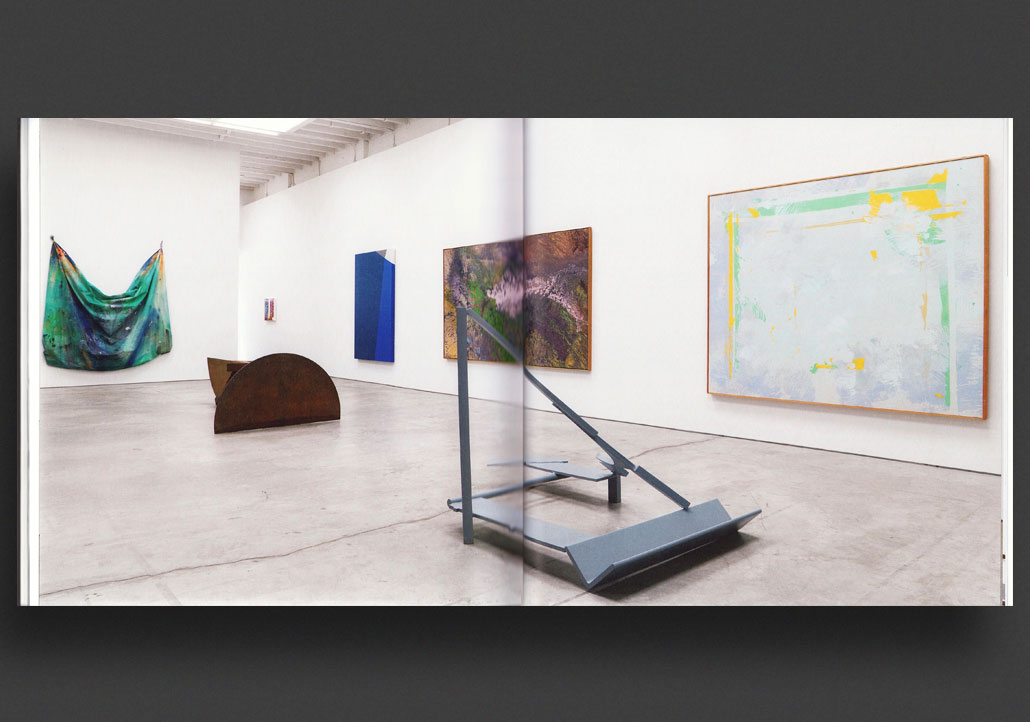
In August 1971 Peter Bradley mounted the landmark exhibition The De Luxe Show at the legendary DeLUXE theater in Houston's Fifth Ward. The De Luxe Show was a milestone in civil rights history, as one of the first racially integrated shows in the United States. Curated by Bradley with the backing of collector and philanthropist John de Menil, the exhibition featured emerging and established abstract modern painters and sculptors of the time, including Darby Bannard, Peter Bradley, Anthony Caro, Dan Christensen, Ed Clark, Frank Davis, Sam Gilliam, Robert Gordon, Richard Hunt, Virginia Jaramillo, Daniel Johnson, Craig Kauffman, Alvin Loving, Kenneth Noland, Jules Olitski, Larry Poons, Michael Steiner, William T. Williams and James Wolfe.
In August 2021, for its 50th anniversary, Karma and Parker Gallery staged a contemporary bicoastal tribute to The De Luxe Show. The tribute honors the long, pioneering legacies of the artists of The De Luxe Show, and continues the dialogue between these innovators in the field of abstraction that began 50 years ago. This fully illustrated catalog includes texts and installation images from the original 1971 catalog, as well as a newly commissioned text by Amber Jamilla Musser and a text by Bridget R. Cooks that expands upon her 2013 essay in Gulf Coast.
1959, English
Softcover, 220 pages, 18 x 11 cm
Out of print title / used / good
Published by
Penguin Books / London
$12.00 - In stock -
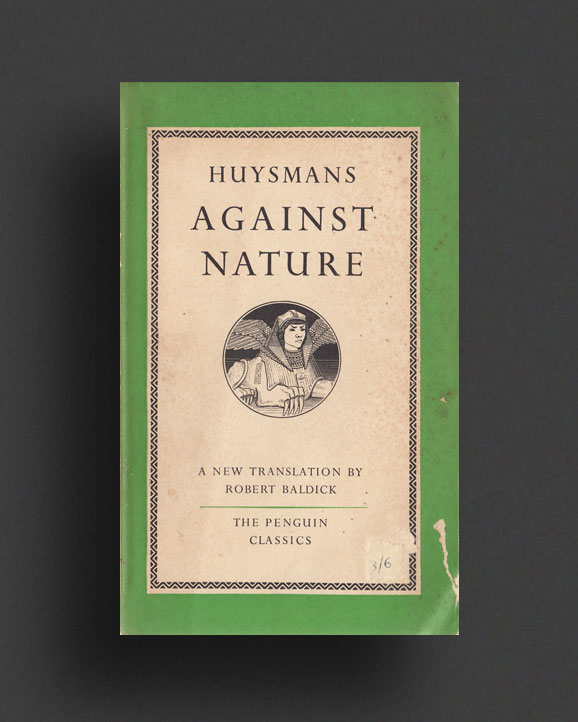
1959 Penguin edition with Robert Baldick translation.
"Because of his extreme sensitivity to the absurd and grotesque in human affairs, the protagonist of this masterpiece of decadence has estranged himself from society and savors the most bizarre aspects of human existence in his quest for novelty. This landmark novel is filled with weird images and biting wit."
Infamous as the inspiration for the novel which slowly corrupts Oscar Wilde's "Dorian Gray", Joris-Karl Huysmans' A Rebours ("Against The Grain" or "Against Nature") is the original handbook of decadence. A wildly original fin-de-siecle novel, Against Nature contains only one character. Des Esseintes is a decadent, ailing aristocrat who retreats to an isolated villa where he indulges his taste for luxury and excess. Veering between nervous excitability and debilitating ennui, he gluts his aesthetic appetites with classical literature and art, exotic jewels (with which he fatally encrusts the shell of his tortoise), rich perfumes and a kaleidoscope of sensual experiences. Against Nature, in the words of the author, exploded 'like a grenade' and has enjoyed a cult following to this day.
Joris-Karl Huysmans (1848-1907) is now recognized as one of the most challenging and innovative figures in European literature and an acknowledged principal architect of the fin-de-siecle imagination. He was a career civil servant who wrote ten novels, most notably "A Rebours and La-Bas". Huysmans died in 1907.
Average-Good copy, general wear, foxing, tanning
1985, English
Softcover, 176 pages, 13.5 x 21 cm
Out of print title / used / good
Published by
John Calder / London
$30.00 - Out of stock
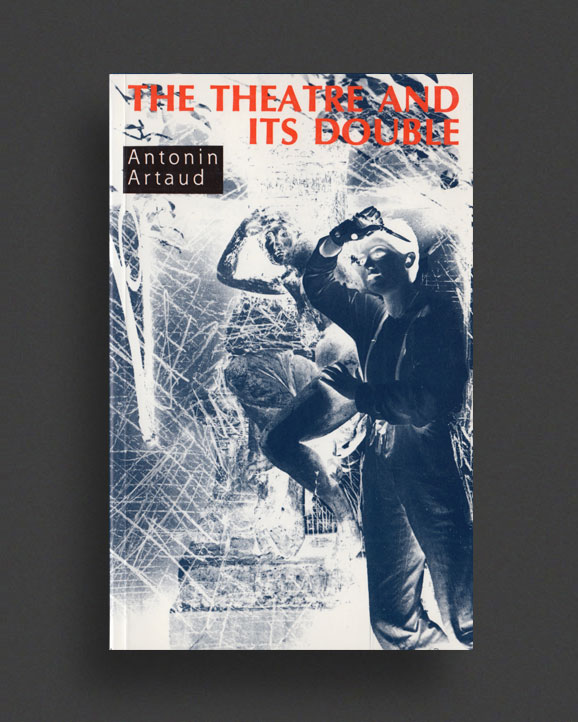
This collection of essays remains the most radical text on performance in print today. This volume contains the famous Manifestos of the Theatre of Cruelty and the definitions of this theatre; the underlying impulses of performance (described by Artaud as its 'metaphysics'); some suggestions on a physical training method for actors and actresses; a long appreciation of the expressive values of Eastern dance drama. Also included is Seraphim's Theatre, in which Artaud attempts an actor's application of the Taoist principles of fullness and emptiness. "We cannot go on prostituting the idea of the theater, the only value of which is in its excruciating, magical relation to reality and danger," Artaud wrote. He fought vigorously against an encroaching conventionalism he found anathema to the very concept of theater. He sought to use theater to transcend writing, "to break through the language in order to touch life." The Theatre and Its Double is widely read throughout the world as a source of inspiration for new drama, for those in search of the meaning of the theatre, as well as for the beauty of its lines. This remarkable French playwright and poet was born in 1896. He was a leading figure in the Surrealist movement and despite a divergence of ideas remained a dedicated Surrealist all his life, devoting his time to the study of problems of conflict between man's physical and intellectual natures. He died in 1948.
Very Good copy of 1985 English edition.
2024, English
Softcover, 176 pages, 20.07 x 13.46 cm
Published by
Semiotext(e) / Los Angeles
$38.00 - Out of stock
Translated by Holly James
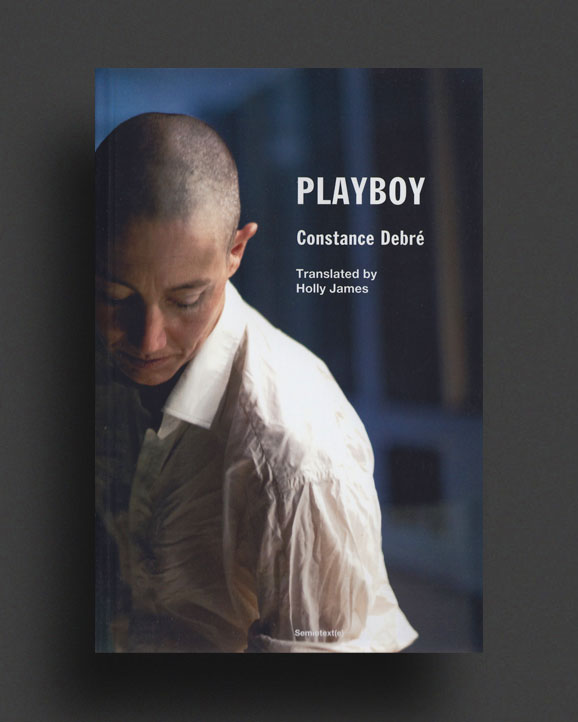
The prequel to Love Me Tender, narrating Debré's transformation from affluent career woman to broke single lesbian and writer.
I see all her beauty, I see the beauty of women. I see my own body, new. I tell myself there are so many things that are possible.
First published in France in 2018, Playboy is the first volume of Constance Debré's renowned autobiographical trilogy that describes her decision, at age forty-three, to abandon her marriage, her legal career, and her bourgeois Parisian life to become a lesbian and a writer.
The novel unfolds in a series of short, sharp vignettes. The narrator's descriptions of her first female lovers—a married woman fifteen years older than her, a model ten years her junior—are punctuated by encounters with her ex-husband, her father, and her son.
As Debré recently told Granta: “It was a bit like Saint Augustine and his conversion. In the same week, I had sex with a girl and I had the feeling that I could write. I had this incredible feeling that I could catch things, that life was there to be caught.”
Looking at the world through fresh eyes, the narrator of Playboy questions everything that once lay beneath the surface of her well-managed life. Laconic, aggressive, and radically truthful, she examines gender and marriage, selfishness and sacrifice, money and family, even the privilege inherent in her downward mobility.
Writing her way toward her own liberation, Debré chronicles the process that made her one of the most brilliant, important French writers today.
2022, English
Softcover, 168 pages, 13.8 x 20.3 cm
Published by
Semiotext(e) / Los Angeles
$38.00 - Out of stock
A novel of lesbian identity and motherhood, and the societal pressures that place them in opposition.
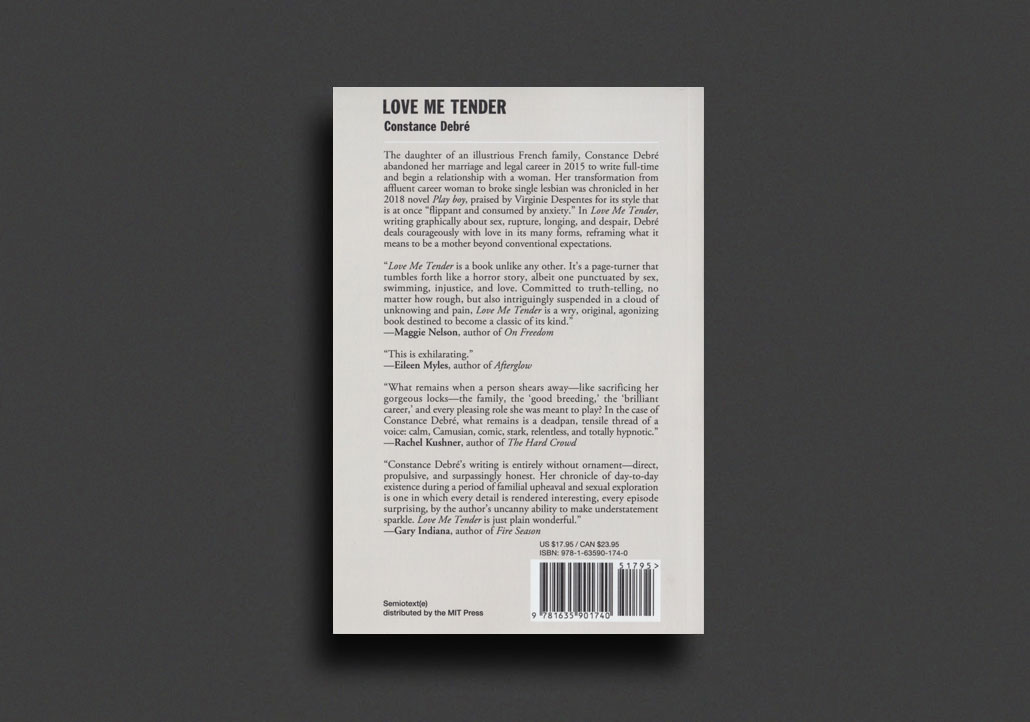
The daughter of an illustrious French family whose members include a former Prime Minister, a model, and a journalist, Constance Debré abandoned her marriage and legal career in 2015 to write full-time and begin a relationship with a woman. Her transformation from affluent career woman to broke single lesbian was chronicled in her 2018 novel Play boy, praised by Virginie Despentes for its writing that is at once "flippant and consumed by anxiety."
In Love Me Tender, Debré goes on to further describe the consequences of that life-changing decision. Her husband, Laurent, seeks to permanently separate her from their eight-year old child. Vilified in divorce court by her ex, she loses custody of her son and is allowed to see him only once every two weeks for a supervised hour. Deprived of her child, Debré gives up her two-bedroom apartment and bounces between borrowed apartments, hotel rooms, and a studio the size of a cell. She involves herself in brief affairs with numerous women who vary in age, body type, language, and lifestyle. But the closer she gets to them, the more distant she feels. Apart from cigarettes and sex, her life is completely ascetic: a regime of intense reading and writing, interrupted only by sleep and athletic swimming. She shuns any place where she might observe children, avoiding playgrounds and parks "as if they were cluster bombs ready to explode, riddling her body with pieces of shrapnel."
Writing graphically about sex, rupture, longing, and despair in the first person, Debré's work is often compared with the punk-era writings of Guillaume Dustan and Herve Guibert, whose work she has championed. As she says of Guibert: "I love him because he says I and he's a pornographer. That seems to be essential when you write. Otherwise you don't say anything." But in Love Me Tender, Debré speaks courageously of love in its many forms, reframing what it means to be a mother beyond conventional expectations.
Translated by Holly James.
1997, Japanese
Softcover (w. dust jacket and obi), 154 pages, 29.7 x 21 cm
1st Edition, Out of print title / used / very good
Published by
Treville / Tokyo
$240.00 - Out of stock
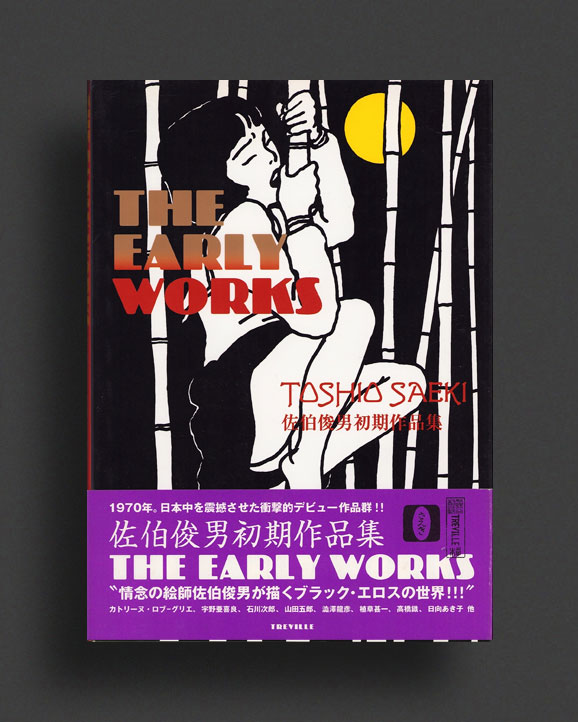
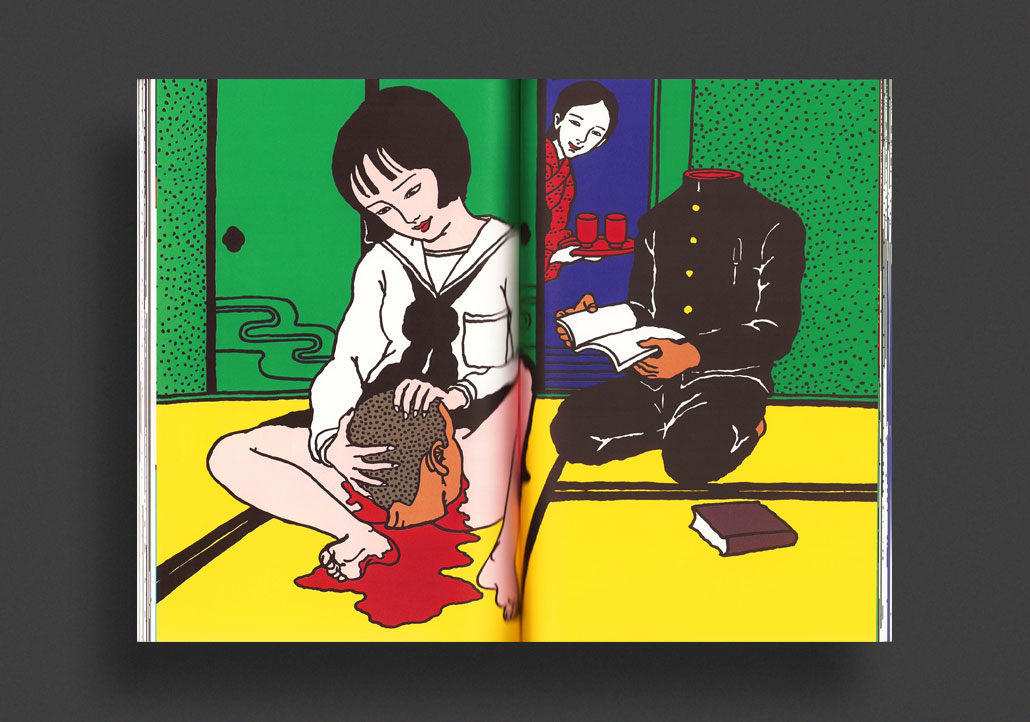
First 1997 edition collection of "The Early Works" by the Japanese master of Ero guro Toshio Saeki, published by Treville in 1997 and long out-of-print. An extensive collection of incredible works gathered from his first major book in 1970, his acclaimed 1971 Red Book, the panel-by-panel replication of an early Saeki manga story, and much more. Texts by Akira Uno, Alain Robbe-Grillet and Timothy Leary.
Toshio Saeki (1945—2019) was an illusive Japanese illustrator and painter, and icon of 1970s Tokyo counterculture, known for combining Japanese folklore, Yōkai spirits and elements of Western art with his own sophisticated aesthetics to create a unique, sensational world of eros, dark humour, and horror. Given the title “Erotic Engineer” by Timothy Leary, Saeki's provocative art broke all sexual taboos, questioned Japanese ideology and traditional views on love, desire and gender roles. Saeki’s surgically-precise graphic work is closely related to the Japanese cultural phenomenon ‘Erotic, Grotesque, Nonsense’ (ero, guro, nansensu).
“Toshio Saeki conjures death with a pen”—Shūji Terayama, 1969.
Very Good copy in VG dust jacket and obi, light wear.
1994, Japanese
Softcover in die-cut, foiled slipcase, 162 pages
1st Edition, Out of print title / used / very good
Published by
Treville / Tokyo
$180.00 - Out of stock
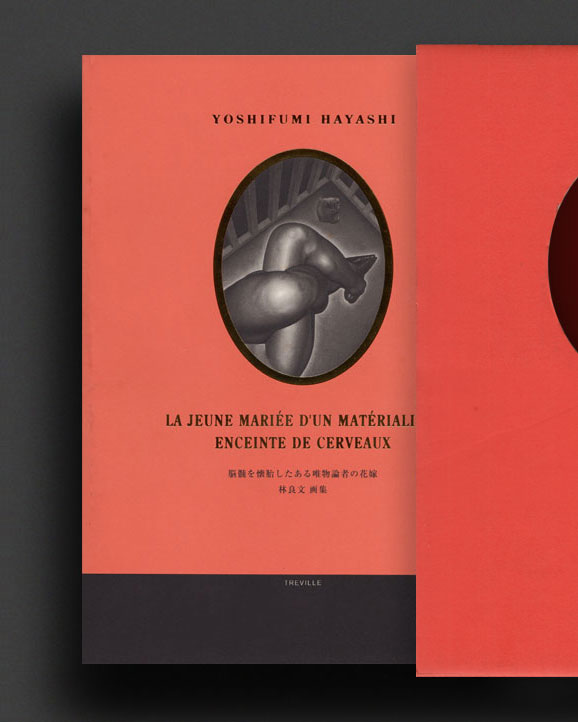
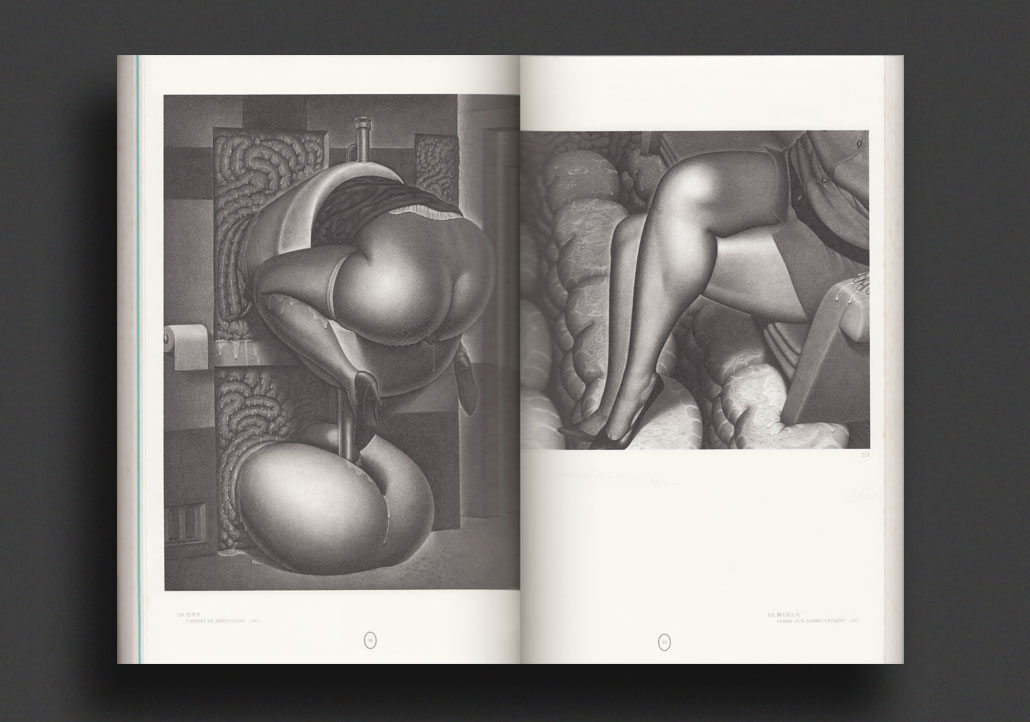
First edition of the rare, long out-of-print first major monograph on Japanese artist Yoshifumi Hayashi, published only in Japan in this slipcased edition in 1994. Profusely illustrated throughout, chronologically surveying self-taught Hayashi's work from his mid-1970s De Chirico-inspired sci-fi-scapes quickly evolving into his life's-work of grotesque, disembodied eroticism rendered masterfully in graphite. All the artist’s deepest and darkest paranoias, fetishes, and obsessions are laid bare here, tracing the development of various themes and subjects throughout in a delirium of convulsing legs, breasts, vulvas, intestines, brains and modernist architectural interiors. This book is a must for anyone interested in Hayashi's work. Accompanying texts by Roger Borderie, Gilbert Bellquet, Issei Sagana, Hiroshi Fujita. Also includes a rare portrait of the reclusive Hayashi.
Contemporary Japanese erotic artist Yoshifumi Hayashi (b. 1948, Fukuoka, Japan) dropped out of Chuo University Department of Philosophy in 1972, moving to Paris in 1974, where he began to produce pencil drawings through self study. At first his main influence was the metaphysical world of De Chirico, but soon his focus shifted to the lower half of the female anatomy. Exhibiting and publishing his drawings in France in the late 1970's, Hayashi gained a cult following for his dark explorations of fetishized female physiology and mutating genitalia, rendered masterfully in pencil. Often mentioned in relation to the likes of Hans Bellmer, H.R. Giger, and even David Cronenberg, Hayashi's drawings were featured in specialist fetish magazines, and director Walerian Borowczyk even made a film in 1980 of the artist at work, yet still little is known about Hayashi, who continues to work and exhibit internationally.
Very Good copy with Good slipcase with some general wear.