World Food Books' programme is largely produced on Kulin Nation land. We acknowledge the Wurundjeri people of the Kulin Nation as the first and continuing custodians of this land, and pay respect to their Elders past, present, and emerging.
World Food Books is an arts and special interests bookshop in Naarm / Melbourne. Founded in 2010, World Food Books is devoted to the presentation of a rotating, hand-selection of international art, design, literary and counterculture publications with an emphasis on the anti-traditional, the experimental, the avant-garde, the heretic, the marginal.
Presenting new titles alongside rare and out-of-print books, catalogues and journals spanning the fields of modern and contemporary art, design, photography, illustration, film, literature, poetry, cultural theory, philosophy, sexuality, popular and underground culture in its many radical forms, World Food Books wishes to encourage adventurous, thoughtful and open-minded reading, looking, writing, and exchange of publishing and ideas, both current and historical.
As well as our bookshop, located in Melbourne's historical Nicholas Building, all of our inventory is available internationally via our online mail-order service.
World Food Books semi-regularly co-ordinates "Occasions", a programme of exhibits and events at the bookshop and in partnership with other hosts (such as museums and art galleries) that develop out of the activities, relationships and content of the bookshop itself.
World Food Books
The Nicholas Building
37 Swanston Street
Room 5, Level 6
Melbourne 3000
Australia
SHOP HOURS:
THU–SAT 12–6
WEB-SHOP OPEN 24/7
World Food Books
Postal Address:
PO Box 435
Flinders Lane
Victoria 8009
Australia
info@worldfoodbooks.com
Art
Theory / Essay
Architecture / Interior
Graphic Design / Typography
Photography
Fashion
Eros
LGBTQ+
Fiction / Poetry
Weird / Speculative / Science Fiction / Horror
Transgressive / Visceral / Abject
Symbolism / Decadence / Fin de siècle
Film / Video
Painting
Sculpture / Installation
Performance / Dance / Theater
Drawing
Sound / Music
Curatorial
Group Shows / Collections
Periodicals
Out-of-print / Rare
Posters / Ephemera / Discs
Signed Books
World Food Books Gift Voucher
World Food Book Bag
Australian Art
Australian Fiction
Australian Science Fiction / Speculative Fiction
Australian Poetry
Australian Photography
Japanese Photography
Conceptual Art
Minimal Art
Dada
'Pataphysics / Oulipo
Fluxus
Concrete Poetry
Pop Art
Surrealism
Arte Povera
Arte Informale / Haute Pâte / Tachism
Nouveau Réalisme / Zero / Kinetic
Situationism / Lettrism
Collage / Mail Art / Xerox Art
Art Brut / Folk / Visionary / Fantastic
Illustration / Graphic Art / Bandes Dessinées
Furniture
Italian Radical Design / Postmodernism
Textiles
Ceramics / Glass
Counterculture
Protest / Revolt
Philosophy
Psychoanalysis
Anthropology
Anarchism
Socialism / Anarchism / Communism / Capitalism
Literary Theory / Semiotics / Language
Feminism / Women's Studies
Gender Studies / Sexuality
Anthropology
Fetishism / BDSM
Drugs / Psychedelia
Crime / Violence
Animal Rights / Veganism
Occult / Esoterica
Ecology / Earth / Alternative Living
Whole Earth / Crafts
All prices in AUD (Australian dollars)
Pick-Ups
Pick-up orders can be collected in our bookshop during opening hours after order date. Please collect any Pick-up orders within 2 weeks of ordering as we have limited storage space. Orders will be released back into stock if not collected within this time. No refunds can be made for pick-ups left un-collected. If you cannot make it in to the bookshop in this time-frame, please choose postage option.
Return Policy
All sales are final. We do accept returns (for refund or exchange) for items received in error. All our orders are packed with special care using heavy-duty padding and cardboard book-mailers or bubble mailers (for smaller books), using reinforcement where required. We cannot take responsibility for any lost, stolen or damaged parcels.
Insurance
Should you wish to insure your package, please email us directly after placing your order and we can organise this at a small extra expense. Although all standard/express tracked packages are very safe and dependable, we cannot take responsibility for any lost, stolen or damaged parcels. We recommend insurance on valuable orders.
Interested in selling your old books, catalogues, journals, magazines, comics, fanzines, ephemera? We are always looking for interesting, unusual and out-of-print books to buy. We only buy books in our fields of interest and specialty, and that we feel we can resell.
We base these prices on desirability, market value, in-print prices, condition and our current stock levels. We offer cash, store credit, and can take stock on consignment. All
about 25% of the price we expect to get when we sell them, or 30% in store credit. We base these prices on desirability, market value, in-print prices, condition and our current stock levels.
Sell your books any day of the week. You can drop them off and return later. If you have a lot of books, we can visit your Sydney home.
We buy books that we feel we can resell. We offer about 25 % of the price we expect to get when we sell them, or 30% in store credit. We base these prices on desirability, market value, in-print prices, condition and our current stock levels.
Philadelphia Wireman
03 August - 01 September, 2018
World Food Books is proud to announce our next Occasion, the first presentation of sculptures by Philadelphia Wireman in Australia.
The Philadelphia Wireman sculptures were found abandoned in an alley off Philadelphia’s South Street on trash night in 1982. Their discovery in a rapidly-changing neighbourhood undergoing extensive renovation, compounded with the failure of all attempts to locate the artist, suggests that the works may have been discarded after the maker’s death. Dubbed the "Philadelphia Wireman" during the first exhibition of this work, in 1985, the maker’s name, age, ethnicity, and even gender remain uncertain. The entire collection totals approximately 1200 pieces, all intricately bound together with tightly-wound heavy-gauge wire (along with a few small, abstract marker drawings, reminiscent both of Mark Tobey and J.B. Murry). The dense construction of the work, despite a modest range of scale and materials, is singularly obsessive and disciplined in design: a wire armature or exoskeleton firmly binds a bricolage of found objects including plastic, glass, food packaging, umbrella parts, tape, rubber, batteries, pens, leather, reflectors, nuts and bolts, nails, foil, coins, toys, watches, eyeglasses, tools, and jewellery.
Heavy with associations—anthropomorphic, zoomorphic, and socio-cultural responses to wrapped detritus—the totemic sculptures by Philadelphia Wireman have been discussed in the context of work created to fulfil the shamanistic needs of alternative religions in American culture. Curators, collectors, and critics have variously compared certain pieces to sculpture from Classical antiquity, Native American medicine bundles, African-American memory jugs, and African fetish objects. Reflecting the artist’s prolific and incredibly focused scavenging impulse, and despite—or perhaps enhanced by—their anonymity, these enigmatic objects function as urban artefacts and arbiters of power, though their origin and purpose is unknown. Philadelphia Wireman, whatever their identity, possessed an astonishing ability to isolate and communicate the concepts of power and energy through the selection and transformation of ordinary materials. Over the course of the past two decades, this collection has come to be regarded as an important discovery in the field of self-taught art and vernacular art.
Presented in collaboration with Fleisher-Ollman Gallery, Philadelphia, and Robert Heald, Wellington.
Susan Te Kahurangi King
02 February - 10 March, 2018
Susan Te Kahurangi King (24 February 1951 - ) has been a confident and prolific artist since she was a young child, drawing with readily available materials - pencils, ballpoint pens and felt-tip markers, on whatever paper is at hand. Between the ages of four and six Susan slowly ceased verbal communication. Her grandparents William and Myrtle Murphy had developed a special bond with Susan so they took on caring responsibilities for extended periods. Myrtle began informally archiving her work, carefully collecting and storing the drawings and compiling scrapbooks. No drawing was insignificant; every scrap of paper was kept. The King family are now the custodians of a vast collection containing over 7000 individual works, from tiny scraps of paper through to 5 meter long rolls.
The scrapbooks and diaries reveal Myrtle to be a woman of great patience and compassion, seeking to understand a child who was not always behaving as expected. She encouraged Susan to be observant, to explore her environment and absorb all the sights and sounds. Myrtle would show Susan’s drawings to friends and people in her community that she had dealings with, such as shopkeepers and postal workers, but this was not simply a case of a grandmother’s bias. She recognised that Susan had developed a sophisticated and unique visual language and sincerely believed that her art deserved serious attention.
This was an unorthodox attitude for the time. To provide some context, Jean Dubuffet coined the term Art Brut in 1945 to describe work created by self-taught artists – specifically residents of psychiatric institutions and those he considered to be visionaries or eccentrics. In 1972 Roger Cardinal extended this concept by adopting the term Outsider Art to describe work made by non-academically trained artists operating outside of mainstream art networks through choice or circumstance. Susan was born in Te Aroha, New Zealand in 1951, far from the artistic hubs of Paris and London that Dubuffet and Cardinal operated in. That Myrtle fêted Susan as a self-taught artist who deserved to be taken seriously shows how progressive her attitudes were.
Susan’s parents Doug and Dawn were also progressive. Over the years they had consulted numerous health practitioners about Susan’s condition, as the medical establishment could not provide an explanation as to why she had lapsed into silence. Dawn educated herself in the field of homeopathy and went on to treat all twelve of her children using these principles – basing prescriptions on her observations of their physical, mental and emotional state.
Doug was a linguist with an interest in philosophy who devoted what little spare time he had to studying Maori language and culture. To some extent their willingness to explore the fringes of the mainstream made them outsiders too but it was their commitment to living with integrity and their respect for individuality that ensured Susan’s creativity was always encouraged.
Even though Susan’s family supported her artistic pursuits, some staff in schools and hospitals saw it as an impediment to her assimilation into the community and discouraged it in a variety of ways. Her family was not always aware of this and therefore did not fully understand why Susan stopped drawing in the early 1990s. However, rather than dwell on the challenges that Susan faced in pursuit of her artistic practice, they prefer to highlight her achievements. In 2008 Susan began drawing again in earnest, after an almost 20 year interruption, and her work is now shown in galleries around the world.
Susan grew up without television and has been heavily influenced by the comics she read as a child. She is absolutely fearless in the appropriation of recognizable characters, such as Donald Duck and Mickey Mouse, in her work. She twists their limbs, contorts their faces, compresses them together, blends them into complex patterned backgrounds - always imbuing them with an incredible energy. Although Susan often used pop culture characters in her work they are not naive or childlike. These are drawings by a brilliant self-taught artist who has been creating exceptional work for decades without an audience in mind.
Mladen Stilinović
"Various Works 1986 - 1999"
02 February 16 - September 10, 2016
Various works 1986 - 1999, from two houses, from the collections of John Nixon, Sue Cramer, Kerrie Poliness, Peter Haffenden and Phoebe Haffenden.
Including: Geometry of Cakes (various shelves), 1993; Poor People’s Law (black and white plate), 1993; White Absence (glasses, ruler, set square, silver spoon, silver ladel with skin photograph and wooden cubes), 1990-1996; Exploitation of the Dead (grey and red star painting, wooden painting, black spoon with red table, red plate), 1984-1990; Money and Zeros (zero tie, paintings made for friends in Australia (Sue, John, Kerrie), numbers painting), 1991-1992; Words - Slogans (various t-shirts) - “they talk about the death of art...help! someone is trying to kill me”, “my sweet little lamb”, “work is a disease - Karl Marx”; Various artist books, catalogues, monographs, videos; Poster from exhibition Insulting Anarchy; "Circular" Croatian - Australian edition; Artist book by Vlado Martek (Dostoyevsky); more.
Thanks to Mladen Stilinović and Branka Stipančić.
Jonathan Walker
Always Will Need To Wear Winter Shirt Blue + Ochre Small Check Pattern
21 August - 21 September, 2015
Untitled
I am not a great reader of poetry but I always return to the work of Melbourne poet, Vincent Buckley (1925- 1988). Perhaps I find his most tantalising piece to be not a finished poem but a fragment left on a scrap of paper discovered on his desk after the poet’s death.
The poetry gathers like oil
In the word-core, and spreads
It has its music meet,
Its music is in movement.
This fragment is more the shell left behind from a volatile thought than a finished poem. I find the last two lines honest but awkward whereas the first two lines work like an arrow. Most likely he could not find a resolution so it was left. Still, in its present form, it remains an eloquent testimony to the ultimate failure of a medium to express mobile thought and sensation, in Buckley’s case, through verbal language. It’s an important matter because this is something all artists have to deal with regardless of the medium.
I have never written a poem, however, I am forever copying fragments from books on paper scraps in a vain effort to fix certain notions in my head. At first, they function as bookmarks that are sometimes returned to when I open the book. But before long, as they accumulate, they fall out littering the table interspersed with A4 photocopies, bills, books and medications.
To return to Buckley’s fragment, the first two lines very much evoke how I paint nowadays. As you age, detail diminishes and patches of light become more luminous and float. I feel the most honest way of dealing with this is by smearing the oil paint on the canvas with the fingers and working close-up, blind. Only if the patches coalesce into an approaching image can the work gain a life.
-
Jonathan Walker was born in Melbourne, Australia and brought up on a dairy farm in Gippsland. In the 1970’s he studied painting at RMIT and won the Harold Wright Scholarship to the British Museum, London. During the 1980’s he exhibited at Pinacotheca Gallery, Richmond and had work shown at the NGV and Heidi City Art Gallery. Over the same period he designed the cover for the “Epigenesi” LP by Giancarlo Toniutti, Italy and conducted a mail exchange work with Achim Wollscheid, Germany. The work with artists through the post resulted in an article published in the bicentenary issue of Art and Australia 1988. He showed in artist run spaces such as WestSpace in the 90’s and 2000’s, and until 2012, taught painting at Victoria University, which is where we (Colleen Ahern and Lisa Radford) as organisers of the exhibition, among many others, had the privilege of being his student.
Walker’s knowledge was imparted to students through the careful selection of music, literature, and artists found in books that he himself had ordered for the library. Walker’s strategy was the generosity of sharing his vast knowledge with references specific to each student and their context.
Walker’s paintings share a similar focus and intimacy.
This exhibition presents a small selection of recent paintings alongside a publication that includes Walker’s writing. Observational and analytical, Walker’s work is a type of material notation — the time of day, colour and how it is blended, the both specific and fleeting location of a reflection on lino or the question of whether a chair leg should be included in a painting.
Please join us on Friday August 21 between 6-8pm to celebrate the opening of the exhibition.
Curated by Colleen Ahern and Lisa Radford.
B. Wurtz
Curated by Nic Tammens
March 26 - April 4, 2015
B.Wurtz works from a basement studio in his home on Manhattan’s Lower East Side.
This local fact is attested to by the plastic shopping bags and newsprint circulars that appear in his work. As formal objects, they don’t make loud claims about their origins but nonetheless transmit street addresses and places of business from the bottom of this long thin island. Like plenty of artists, Wurtz is affected by what is local and what is consumed. His work is underpinned by this ethic. It often speaks from a neighborhood or reads like the contents of a hamper:
“BLACK PLUMS $1.29 lb.”
“Food Bazaar”
“USDA Whole Pork Shoulder Picnic 99c lb.”
“RITE AID Pharmacy, with us it’s personal.”
“H. Brickman & Sons.”
“Sweet Yams 59c lb."
Most of the work in this exhibition was made while the artist was in residence at Dieu Donne, a workshop dedicated to paper craft in Midtown. Here Wurtz fabricated assemblages with paper and objects that are relatively lightweight, with the intention that they would be easily transportable to Australia. This consideration isn’t absolute in Wurtz’s work, but was prescriptive for making the current exhibition light and cheap. Packed in two boxes, these works were sent from a USPS post office on the Lower East Side and delivered to North Melbourne by Australia Post.
Wurtz appears courtesy of Metro Pictures, New York.
Thanks to Rob Halverson, Joshua Petherick, Sari de Mallory, Matt Hinkley, Helen Johnson, Fayen d'Evie, Ask Kilmartin, Lisa Radon, Ellena Savage, Yale Union, and "Elizabeth".
John Nixon
"Archive"
December 15 - January 20, 2014
The presentation of John Nixon's archive offered a rare showcase of this extensive collection of the artist's own publications, catalogues, posters, ephemera, editions and more, from the mid 1980s onwards, alongside a selection of his artworks.
Organized by John Nixon, Joshua Petherick and Matt Hinkley.
"Habitat"
at Minerva, Sydney (organised by Joshua Petherick and Matt Hinkley)
November 15 - December 20, 2014
Lupo Borgonovo, Janet Burchill & Jennifer McCamley,
Lewis Fidock, HR Giger, Piero Gilardi, Veit Laurent Kurz,
Cinzia Ruggeri, Michael E. Smith, Lucie Stahl, Daniel Weil, Wols
Press Release:
“...It contained seven objects. The slender fluted bone, surely formed for flight, surely from the wing of some large bird. Three archaic circuitboards, faced with mazes of gold. A smooth white sphere of baked clay. An age-blackened fragment of lace. A fingerlength segment of what she assumed was bone from a human wrist, grayish white, inset smoothly with the silicon shaft of a small instrument that must once have ridden flush with the surface of the skin - but the thing’s face was seared and blackened.”
William Gibson, “Count Zero”, 1986
"Autumn Projects Archive"
Curated by Liza Vasiliou
March 6 - March 15, 2014
World Food Books, in conjunction with the Virgin Australia Melbourne Fashion Festival 2014, presented the Autumn Projects archive, consisting of a selection of early examples in Australian fashion with a particular interest in collecting designers and labels from the period beginning in the 1980’s, who significantly influenced the discourse of Australian Fashion.
Curated by Liza Vasiliou, the exhibition provided a unique opportunity to view pieces by designers Anthea Crawford, Barbara Vandenberg, Geoff Liddell and labels CR Australia, Covers, Jag along with early experimental collage pieces by Prue Acton and Sally Browne’s ‘Fragments’ collection, suspended throughout the functioning World Food Books shop in Melbourne.
H.B. Peace
presented by CENTRE FOR STYLE
November 14, 2013
"Hey Blinky, you say chic, I say same"
Anon 2013
H.B. Peace is a clothing collaboration between great friends Blake Barns and Hugh Egan Westland. Their pieces explore the divergences between 'character’ and ‘personality’ in garments....etc
Special Thanks to Joshua Petherick and Matt Hinkley of WFB and Gillian Mears
and a Very Special Thank you to Audrey Thomas Hayes for her shoe collaboration.
Janet Burchill & Jennifer McCamley
"Aesthetic Suicide"
May 10 - June 8, 2013
The first of our occasional exhibitions in the World Food Books office/shop space in Melbourne, "Aesthetic Suicide" presented a body of new and older works together by artists Janet Burchill & Jennifer McCamley, including videos, prints, a wall work, and publications.
During shop open hours videos played every hour, on the hour.
2024, English / Japanese
Softcover (w. dust jacket + obi), 128 pages, 25.5 x 17.8 cm
Published by
Atelier Third / Tokyo
$70.00 - In stock -
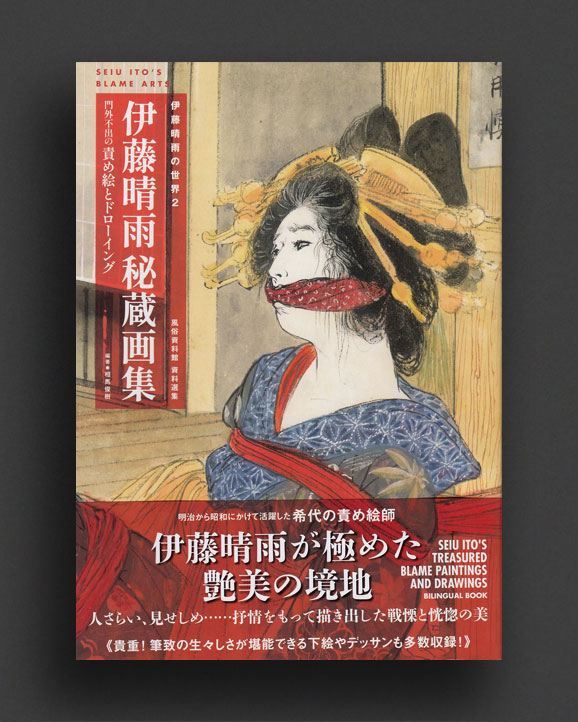
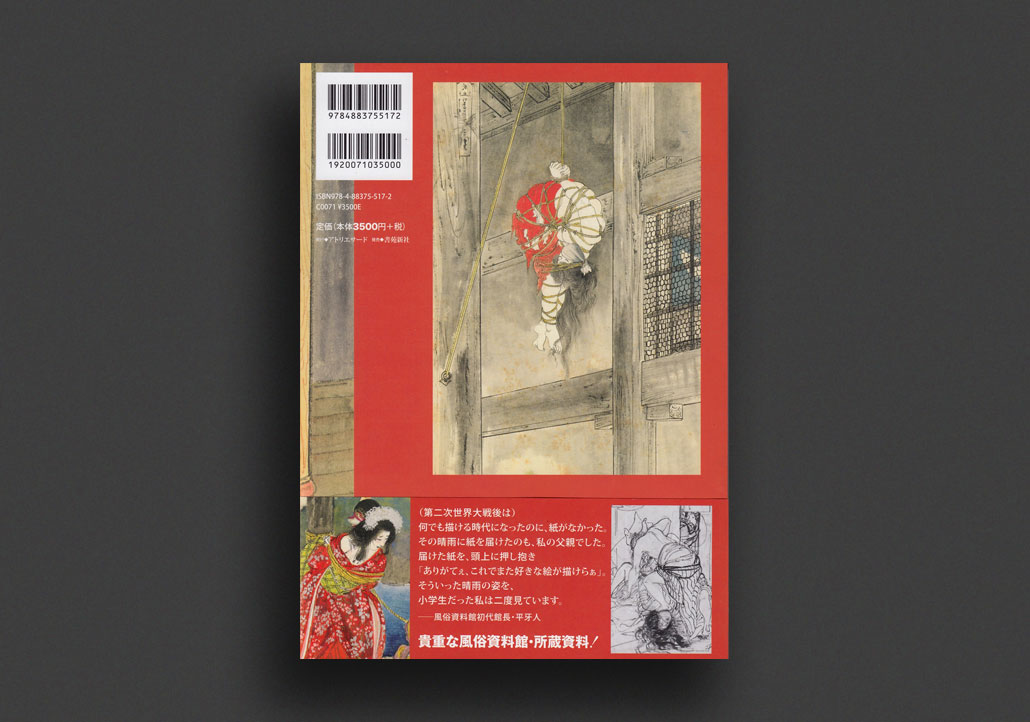
Brand new artbook collection of treasured blame paintings and drawings from Seiu Ito, "the father of modern kinbaku", published in bi-lingual English and Japanese. A kidnapping, a show off... This is an art book where you can fully enjoy the beauty of fear and ecstasy, depicted with lyricism by a rare torture artist who was active in the first half of the 20th century. Profusely illustrated, this volume contains many unpublished sketches and drawings that show the freshness of the brushstrokes and the trial and error that has gone into capturing the body and facial expressions. Includes private artworks from the "Abnormal Museum", Japan's only membership-only library specializing in SM and fetishism. Located in Iidabashi, Tokyo, this museum collects and preserves valuable materials.
Seiu Ito (1891—1960) Seiu Ito, also romanised as Seiyu Itoh, was a Japanese painter, recognised today as "the father of modern kinbaku". Ito's life was the subject of director Noboru Tanaka's 1977 Nikkatsu Roman porno film Beauty's Exotic Dance: Torture!, the final entry in his "Showa Era trilogy". Ito uses his skilful technique to draw realistic torture pictures, and as a master of these paintings, he has many fans and has written masterpieces such as "The Story of Blame." On the other hand, he not only left behind many masterpieces of ghost paintings, but also loved the street customs of Edo and wrote books about Edo customs.
1995, Japanese
Softcover, 116 pages, 27.5 x 21 cm
1st Edition, Out of print title / used / very good
Published by
Take Shobo / Tokyo
$80.00 - In stock -
"Mr. Araki and the Six Women"
Scarce copy of this lesser known Araki title — Nobuyoshi Araki's "Obscene Photo Magazine" La-Chat Vol. 2 from 1995, packed cover-to-cover with glossy nude photography in colour and b/w. A gorgeous photo journal of 6 women with Araki's hand-written diary entries throughout.
Very Good copy with light wear.
2024, English
Softcover, 368 pages, 20.1 x 12.7 cm
Published by
The New York Review of Books / New York
$39.00 - Out of stock
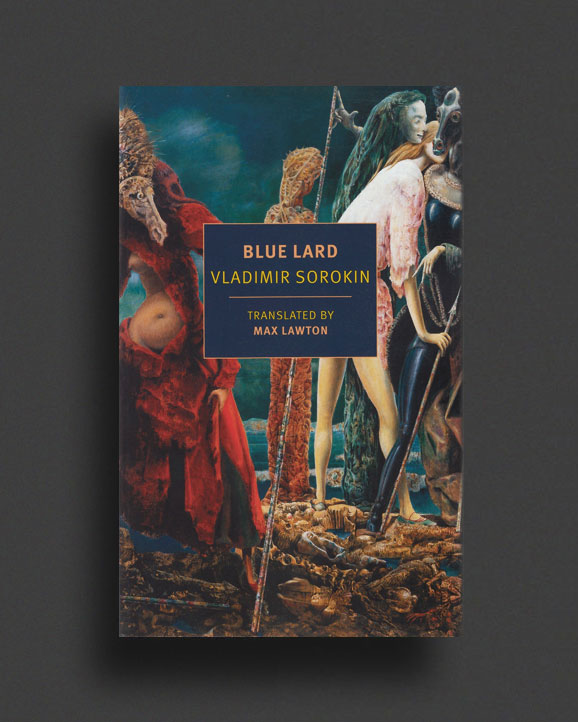
Vladimir Sorokin's Blue Lard is the most iconic and iconoclastic Russian novel of the last forty years. Thanks in part to its depiction of Stalin and Khrushchev having sex, which inspired a Putinist youth group to throw shredded copies of the author's books into an enormous toilet erected in front of Moscow's Bolshoi Theater, Blue Lard is the novel that tore Sorokin out of the Moscow Conceptualist underground and into the headlines.
The book begins in a futuristic laboratory where genetic scientists speak in a Joycean dialect of Russian mixed with Chinese-peppered with ample neologisms-and work to clone famous Russian writers, who are then made to produce texts in the style of their forebears. The goal of this "script-process" is not the texts themselves, but the blue lard that collects in the small of their backs as they write.
This substance is to be used to power reactors on the moon-that is, until a sect of devout nationalists breaks in to steal the blue lard, planning to send it back in time to an alternate version of the Soviet Union, one that exists on the margins of a Europe conquered by a long-haired Hitler with the ability to shoot electricity from his hands. What will come of this blue lard? Who will finally make use of its mysterious powers?
Blue Lard is a stylistically acrobatic book, translated by Max Lawton into an English idiom just as bizarre as the Russian original. Evoking both Pulp Fiction and the masterpieces of the Marquis de Sade, Sorokin's novel is a brutal, heady trip that annihilates all of its twentieth- (and twenty-first-) century competition in the Russian canon-and that annihilates Russia itself in a resounding act of heavy-metal dissidence.
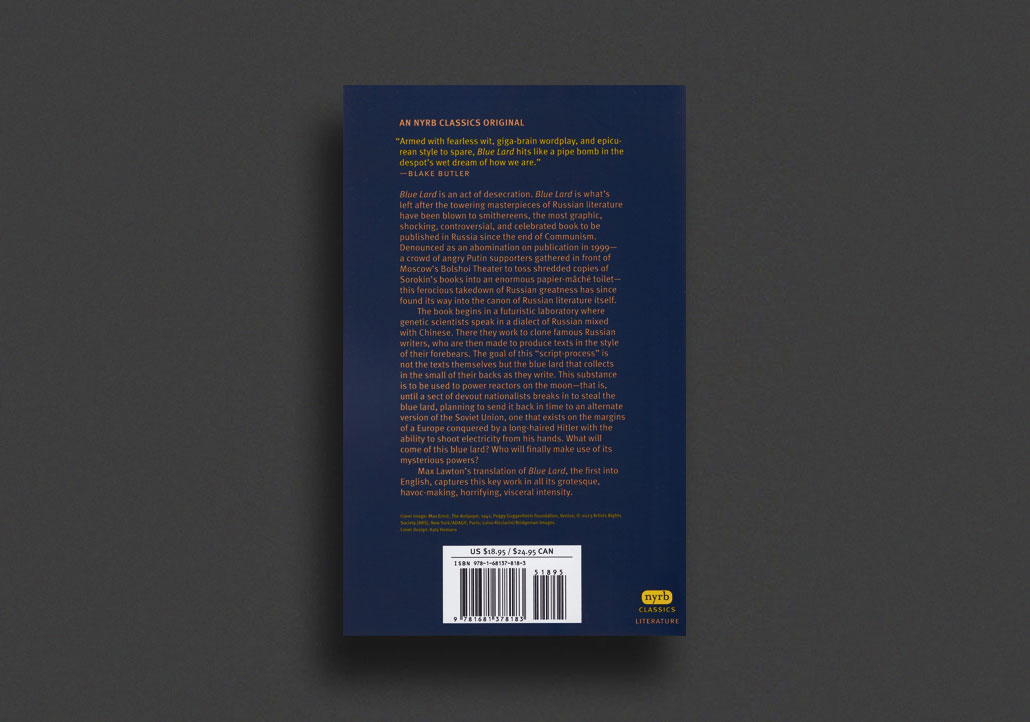
Blue Lard is an act of desecration. Blue Lard is what's left after the towering masterpieces of Russian literature have been blown to smithereens, the most graphic, shocking, controversial, and celebrated book to be published in Russia since the end of Communism. Denounced as an abomination on publication in 1999-a crowd of angry Putin supporters gathered in front of Moscow's Bolshoi Theater to toss shredded copies of Sorokin's books into an enormous papier-m che toilet-this ferocious takedown of Russian greatness has since found its way into the canon of Russian literature itself.
The book begins in a futuristic laboratory where genetic scientists speak in a dialect of Russian mixed with Chinese. There they work to clone famous Russian writers, who are then made to produce texts in the style of their forebears. The goal of this "script-process" is not the texts themselves but the blue lard that collects in the small of their backs as they write. This substance is to be used to power reactors on the moon-that is, until a sect of devout nationalists breaks in to steal the blue lard, planning to send it back in time to an alternate version of the Soviet Union, one that exists on the margins of a Europe conquered by a long-haired Hitler with the ability to shoot electricity from his hands. What will come of this blue lard? Who will finally make use of its mysterious powers?
Max Lawton's translation of Blue Lard, the first into English, captures this key work in all its grotesque, havoc-making, horrifying, visceral intensity.
?, English
Softcover, 58 pages, 23 x 15.5 cm
Out of print title / used / fine
Published by
Unknown / Earth
$20.00 - Out of stock
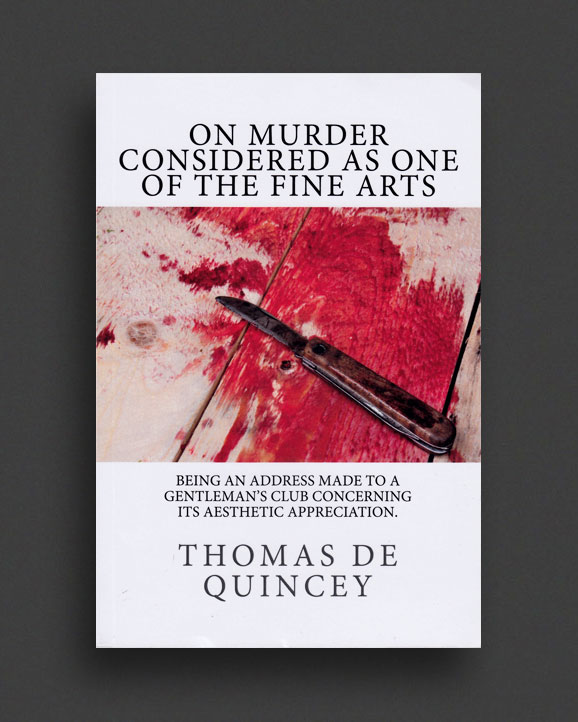
"People begin to see that something more goes to the composition of a fine murder than two blockheads to kill and be killed - a knife - a purse - and a dark lane..."
"On Murder Considered as one of the Fine Arts" is an essay first published in 1827 in Blackwood's Magazine by English writer, essayist, and literary critic, best known for his Confessions of an English Opium-Eater, Thomas De Quincey (1785—1859). The essay is a fictional, satirical account of an address made to a gentleman's club concerning the aesthetic appreciation of murder.
In this provocative and blackly funny essay, Thomas de Quincey considers murder in a purely aesthetic light and explains how practically every philosopher over the past two hundred years has been murdered - 'insomuch, that if a man calls himself a philosopher, and never had his life attempted, rest assured there is nothing in him'. De Quincey's innovative, idiosyncratic artistic vision found space for gruesome reportage, satire, literary criticism, and aesthetic judgments, in a work strewn with examples ranging from antiquity to his own time, including the urban serial-killer John Williams. In addition to this essay's Swiftian exercise in irony, he investigated the Williams case further in a post-script, resulting in a dramatic suspense-filled narrative that prefigures Capote's In Cold Blood and the modern true-crime genre. Specifically, "On Murder Considered as one of the Fine Arts" centers on the notorious career of the murderer John Williams, who in 1811 brutally killed seven people in London's East End. De Quincey's response to Williams's attacks turns morality on its head, celebrating and coolly dissecting the art of murder; a perverse cause de celebration creeping out of the dank London fog.
De Quincey's seminal 1827 work was greatly influential on such writers as Poe, Baudelaire and Borges, lauded by such critics as G. K. Chesterton, Wyndham Lewis and George Orwell, and the trace of its impact can still be found today in modern satire, black humour and crime and detective fiction.
Near Fine, light wear.
2024, English
Hardcover (w. dust jacket), 496 pages, 19.05 x 16.51 cm
Published by
Yale University Press / New Haven
$62.00 - Out of stock
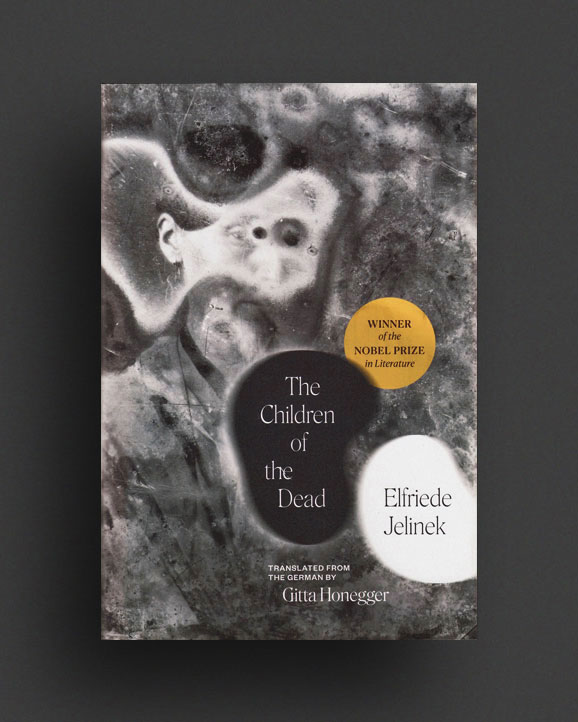
The magnum opus of 2004 Nobel laureate Elfriede Jelinek—a spectral journey through the catastrophic history embedded in the landscape of Austria
"The surface of Jelinek's prose cracks and bursts . . . fissured by phantasmagorical description, gallows humor, multilingual puns, and scouring sarcasm. . . . Jelinek's novel is finally . . . a furious accumulation of lost moments and possible outcomes, an enormous, spectral kaleidoscope erected before the unfathomable."—Dustin Illingworth, Washington Post
The Alpenrose is a mountain resort nestled in Austria's scenic landscape among historic churches and castles. It is a vacation idyll that attracts tourists from all over Europe. It is also a mass burial site.
Amid the snow-topped peaks and panoramic vistas, ghosts haunt the forest: Edgar Gstranz, a young skier who died in a car crash; Gudrun Bichler, a philosophy student who committed suicide in her bathtub; and Karin Frenzel, a widow who (perhaps) died in a bus accident. As the three slip in and out of the hotel, engaging unsuspecting tourists and seeking a way to return to life, the soil begins to crack under their feet as the dead of the Holocaust awaken: zombies determined to exact their revenge.
Scrupulously rendered for the first time in English by Gitta Honegger, The Children of the Dead takes readers on a mind-bending ride through time, space, and memory. Concocted from experimental theater, splatter film, Gothic literature, philosophy, religion, and more, Jelinek's phantasmagorical masterwork is a fierce confrontation with our fraught legacies in the name of the innocent dead.
2023, English
Softcover, 176 pages, 22 x 30 cm
Published by
Art Paper Editions / Ghent
$110.00 - Out of stock
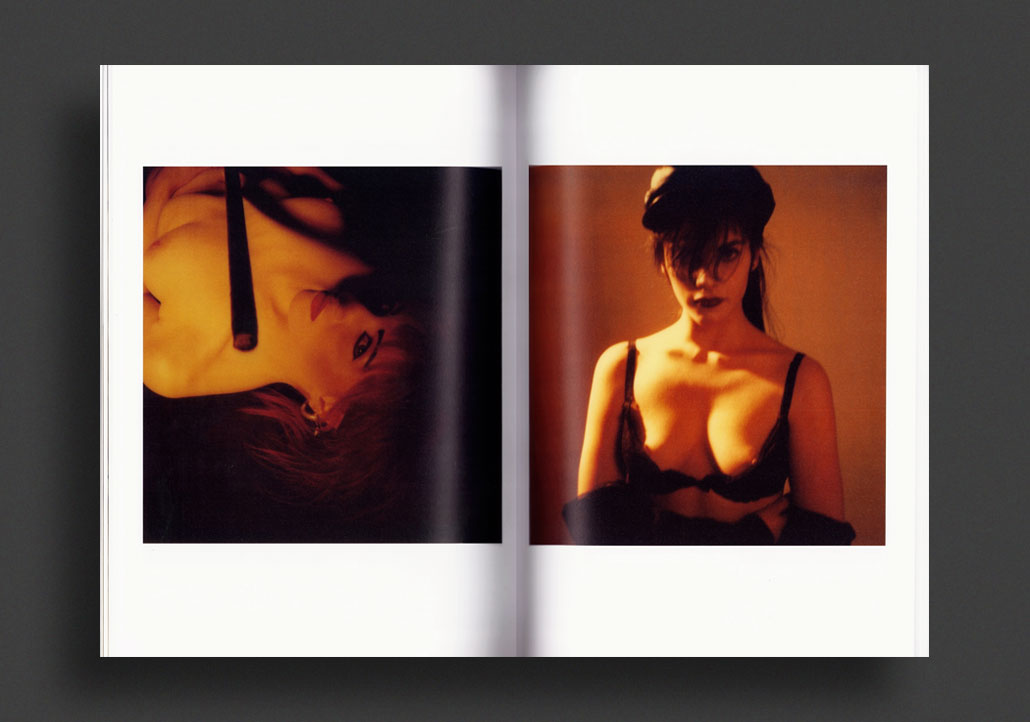
For more than three decades Richard Kern has sought to unravel and illuminate the complex and often darker sides of human nature. Kern makes the psychological space between the sitter, photographer and audience his subject. With his dry, matter of fact approach, he underlines the absurdity of truth and objectivity in photography while playing with our reliance upon taxonomies around sexual representation.
This publications contains more than 200 polaroids taken by Kern between 1980 and 2005 while shooting.
Edition of 1000
2007, English
Softcover, 294 pages, 21 x 14.5 cm
Published by
Carroll & Graf / New York
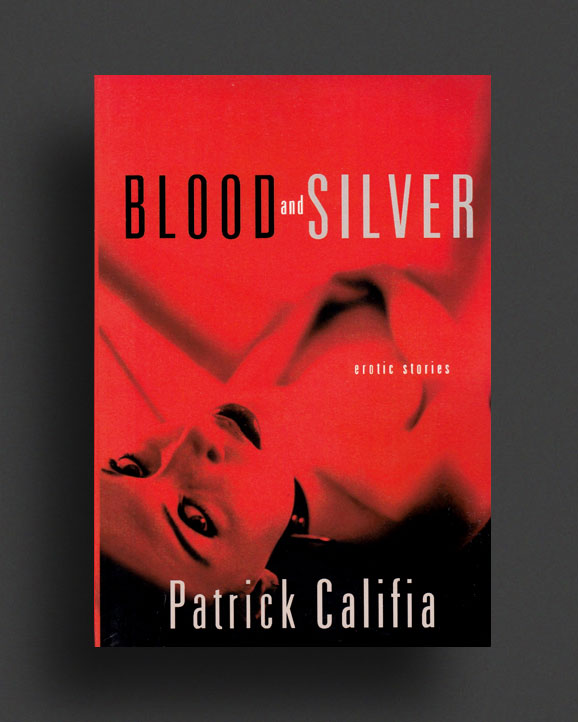
$59.00 - Out of stock
Blood and Silver brings together the best stories from two erotic fiction classics—Melting Point and No Mercy—by world-renowned author and activist Patrick Califia. Blood and Silver is fiction without a safe word—smart, transgressive, and always hot.
"Califia's stories are intriguing, erotic, exhilarating, and unnerving."—The Bay Area Reporter
"Califia refuses to let power roles be ritualized into simple and safe erotic personae. Sex and desire are not simple and safe, she seems to say-and we must honor them anyway."—Dr. Carol Queen
"Not for the fainthearted."—Lambda Book Report
Patrick Califia is one of the most widely known writers of lesbian and S/M erotica. His books include Macho Sluts, Doing It for Daddy, Doc and Fluff, and Boy in the Middle, among more than twenty others. Califia lives in San Francisco.
2018, English
Softcover, 104 pages, 20.32 x 13.34 cm
Published by
Snuggly Books / UK
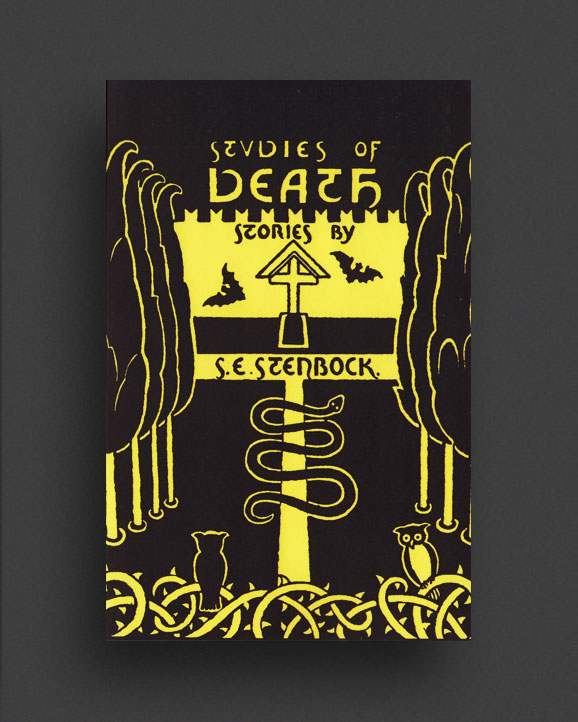
$30.00 - Out of stock
During his lifetime the eccentric Count Eric Stenbock published a single collection of short stories, Studies of Death. These seven tales, at once feverish, morbid, and touching, are a key work of English decadence and the Yellow Nineties.
Stanislaus Eric Stenbock (1860–1895), Count of Bogesund, was born in the South West England to Lucy Sophia Frerichs, an English cotton heiress, and Count Erich Stenbock, who was of a distinguished Swedish noble family of the Baltic German House of nobility in Reval. He inherited his family’s estates in 1885 and returned to live in his manor house at Kolkbriefly for a period before returning to England. In his life he published three volumes of poetry and one collection of short stories, Studies of Death. He died as a result of alcoholism and opium addiction.
2024, English
Softcover, 106 pages, 22.86 x 15.24 cm
Published by
Incunabula / USA
Incunabula / US
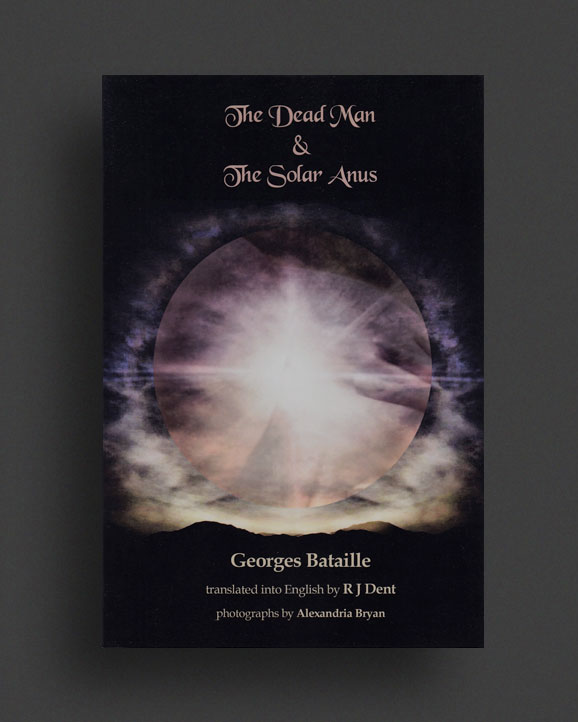
$34.00 - Out of stock
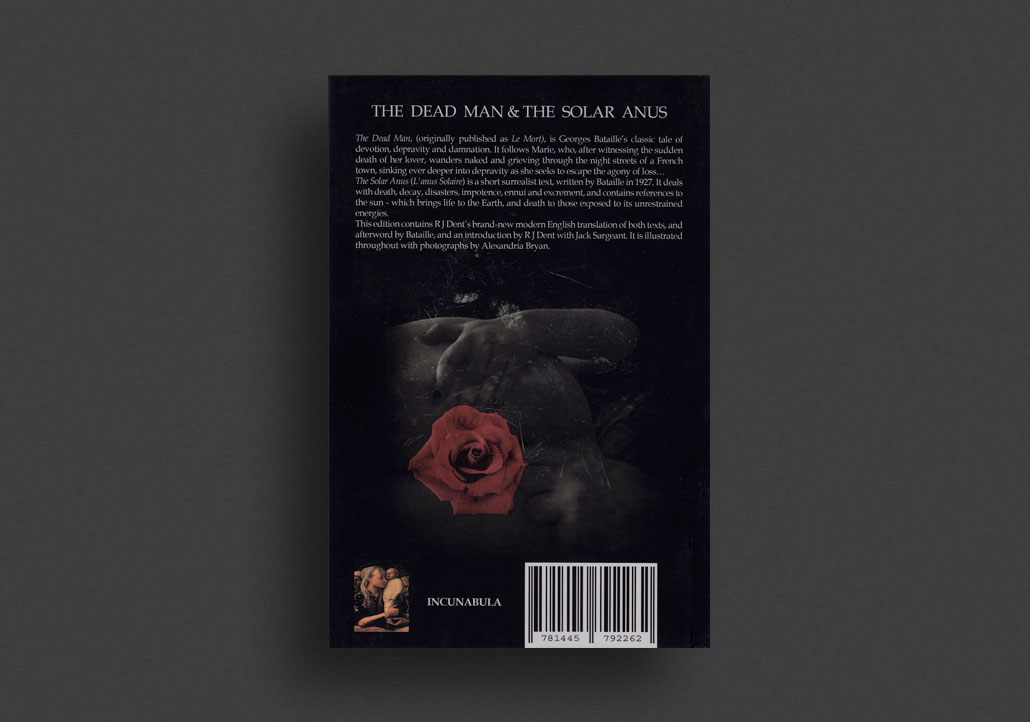
The Dead Man, (originally published as Le Mort), is Georges Bataille's classic tale of devotion, depravity and damnation. It follows Marie, who, after witnessing the sudden death of her lover, wanders naked and grieving through the night streets of a French town, sinking ever deeper into depravity as she seeks to escape the agony of loss... The Solar Anus (L'anus Solaire) is a short surrealist text, written by Bataille in 1927. It deals with death, decay, disasters, impotence, ennui and excrement, and contains references to the sun - which brings life to the Earth, and death to those exposed to its unrestrained energies.
This edition contains R J Dent's brand-new modern English translation of both texts, and afterword by Bataille, and an introduction by R J Dent with Jack Sargeant. It is illustrated throughout with photographs by Alexandria Bryan.
1987, Japanese
Softcover, 176 pages, 22 x 15 cm
1st Edition, Out of print title / used / fine
Published by
Atelier Peyotl / Tokyo
$120.00 - In stock -
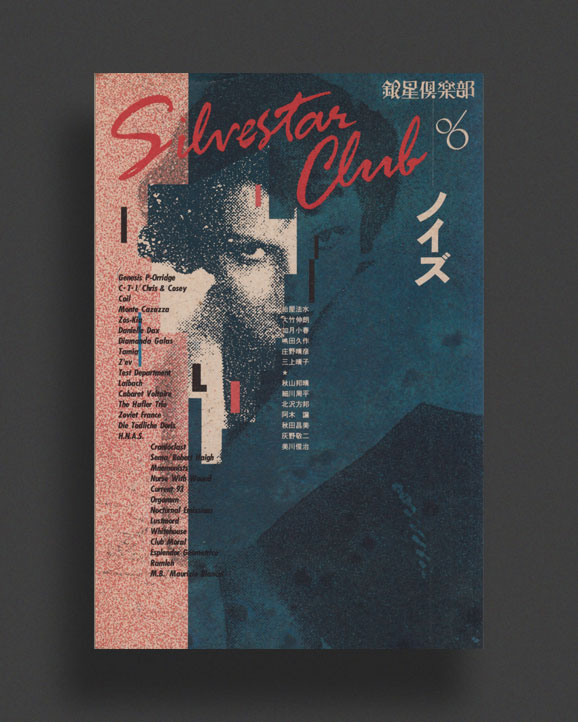
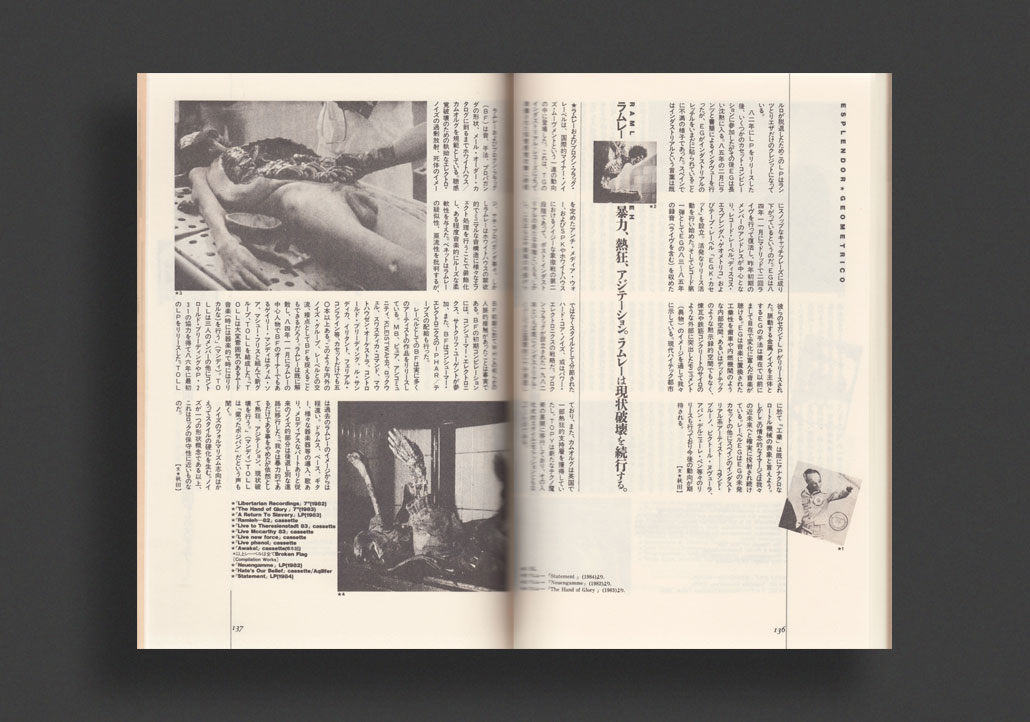
The 1987 "Noise" issue of cult Japanese underground magazine Silvestar Club, published and edited by Yuichi Konno and Atelier Peyotl (publishers of Night Vision/Yaso/Peyotl/Wave...). Features Zoviet France, H.N.A.S., Nurse with Wound, SPK, Etant Donnes, P16.D4, M.B. / Maurizio Bianchi, Sema / Robert Haigh, Coil, Whitehouse, Current 93, Chris & Cosey, Monte Cazazza, Throbbing Gristle, Genesis P-Orridge, Organum, Nocturnal Emissions, Tamia, Ramleh, Club Moral, Esplendor Geometico, Lustmord, Mnemonists, Die Tödliche Doris, The Hafler Trio, Cranioclast, Cabaret Voltaire, Zos-Kia, Test Department, Diamanda Galas, Z'ev, Danielle Dax, and much more. Articles on iconic live performances by Wire and Dome, plus essays by music critic, editor (Rock Magazine, Ego, et al) and Vanity label owner Yuzuru Agi; noise artist Merzbow's Masami Akita; experimental musician Keiji Haino; noise artist Toshiji Mikawa; experimental programmer Ryoichiro Debuchi; plus Tokyo Grand Guignol Theater group artists Norimizu Ameya and Kyusaku Shimada; theatre director Koharu Kisaragi; computer graphics artist for films Haruhiko Shono; visual artist Seiko Mikami; music critic Kuniharu Akiyama... ! Discographies, performance documentation, related artworks, record sleeves, flyers, and much more, printed across multiple raw paper stocks. A must! A perfect pre-cursor (and certainly as good as) Masami Akita's Noise War book of 1992. Texts in Japanese.
Very Good—Fine copy.
1996, Japanese
Softcover (w. dust jacket and obi-strip), 256 pages, 21 x 14.8 cm
1st Edition, Out of print title / used / very good
Published by
Core Magazine / Tokyo
$120.00 - Out of stock
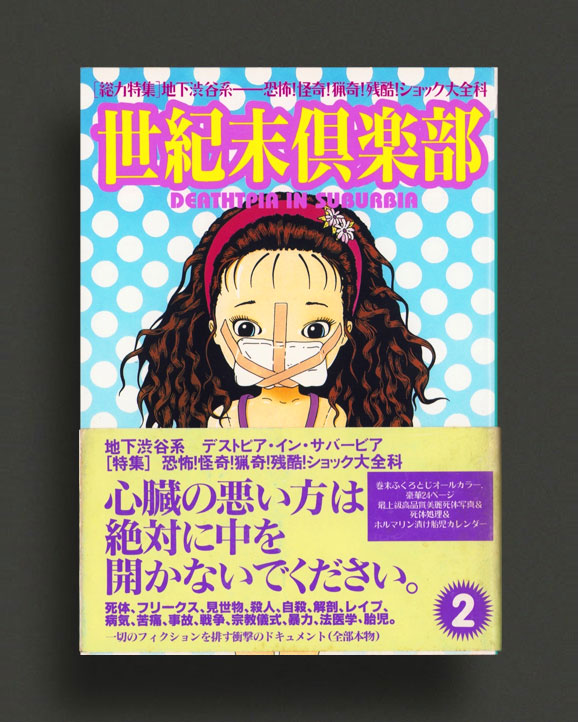
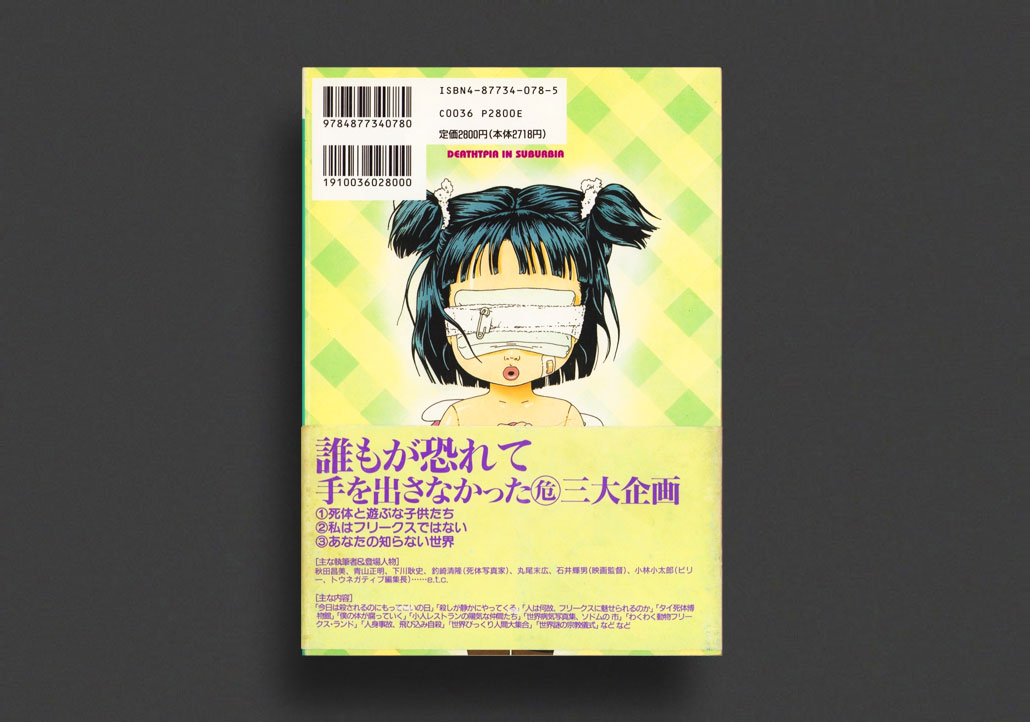
Don't judge a book by it's cover — you've been warned! Straight out of the young nihilist 90s, the second volume of the very short-lived and absolutely demented Seikimatsu Club (End of the Century Club), published in Tokyo between 1996—2000 for a total of only five volumes. This second volume, "Deathtpia in Suburbia", has the feature theme of Horror! Bizarre! Bizarre! Cruelty! and is packed to the absolute brim with "corpses, freaks, spectacles, murders, suicides, autopsies, rapes, sickness, pain, accident, war, religious rituals, violence, forensics, foetuses. A shocking document that eliminates all fiction (all genuine)!"
With contributors to this issue including Masami Akita (Merzbow), Masaaki Aoyama (author), Kiyotaka Tsurisaki (corpse photographer), Suehiro Maruo (ero guro manga artist), Teruo Ishii (ero guro film director), Kotaro Kobayashi (Too Negative editor-in-chief), Trevor Brown (artist), you should know what you are getting yourself into.
Following the trajection of fellow Japanese abnormal subculture magazines such as Kotaro Kobayashi's notorious Too Negative, Ultra Negative, ORG, etc., and in the spirit of a new wave of 90's nihilist publishing around the world (Answer Me!, Killing Times, Fuck!, AMOK, Feral House, etc.) End of the Century Club stares directly into the dark recesses of humanity and presents its viewers with the uncompromising extremes of our global culture. The real stuff. Where Too Negative presents itself as a glossy colour photo/art magazine, End of the Century Club is almost like a Whole Earth Catalog to the authentic macabre. With articles, interviews, reports, catalogues and hundreds of images spanning all manner of medical/autopsy/corpse photography, death journalism, serial killers, formalihide babies, war/shock accident/crime scenes, hara-kiri, murder, rape, slaughterhouse, forensic books, international underground magazines, Photobook of World Diseases, City of Sodom, corpses on the internet, Underground Baby Contest, Atlas of Dermatology, complete guide to Freaks movies, the Garbage Pail Kids, religious ceremonies, animal deformities, Interview with "The King of Cult" ero guro film director Teruo Ishii, bizarro sex, acrotomophila, artist Joel Peter Witkin's world, interview with Masaaki Aoyama, interview with corpse photographer Kotaro Kobayashi (Death, Hardcore Works, Too Negative, Billy, etc.), photography of George Dureau, interview with fetish film director and producer Kaoru Adachi, interview with experimental film director Shozin Fukui (Metal Days, Gerorisuto, Caterpillar, 964 Pinocchio, Rubber's Lover...), article on "Serial Killers & Record Junkies" by Toshihiko Hironaka (of Boris, Balzac, Hellbent fame), and all sorts of other curios from the mondo, bizarro realm.
Includes "gorgeous" 24-page high-quality corpse photo booklet feature and cover art by Trevor Brown.
Not for the fain-hearted. You'll feel like a shower after.
Very Good copy with dust jacket and obi.
1997, Japanese
Softcover (w. dust jacket and obi-strip), 256 pages, 21 x 14.8 cm
1st Edition, Out of print title / used / very good
Published by
Core Magazine / Tokyo
$120.00 - Out of stock
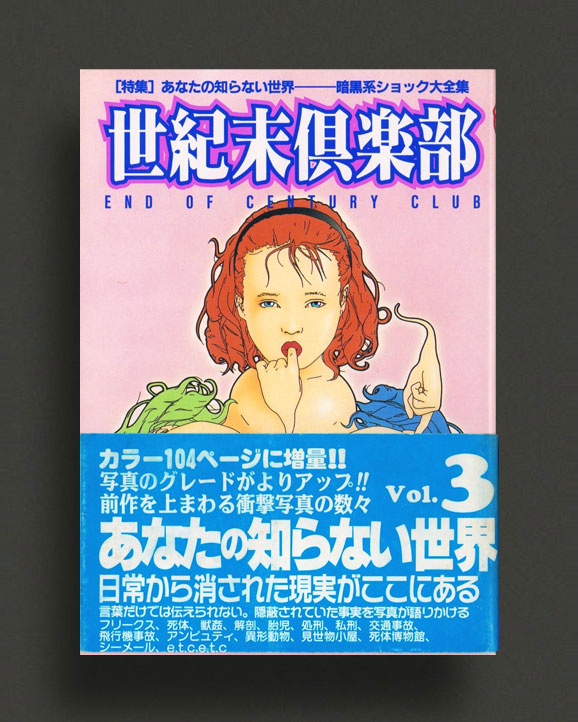
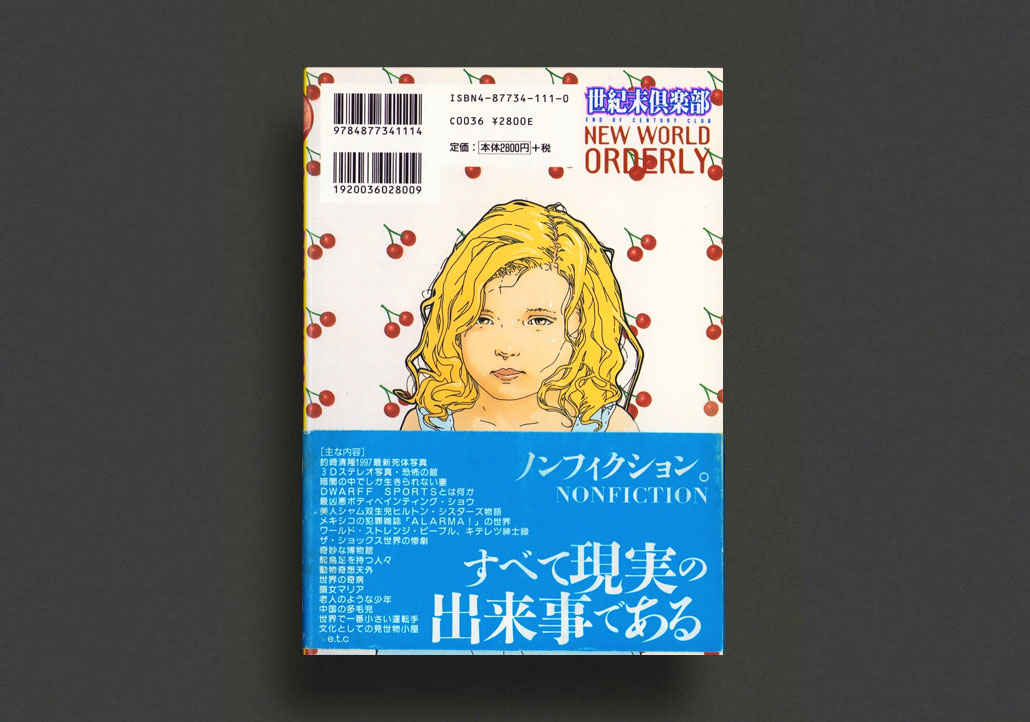
Don't judge a book by it's cover — you've been warned! Straight out of the young nihilist 90s, the third volume of the very short-lived and absolutely demented Seikimatsu Club (End of the Century Club), published in Tokyo between 1996—2000 for a total of only five volumes. This third volume, "The World You Don't Know", has the feature theme of exposing "a reality erased from everyday life", which sums it up... packed to the absolute brim with "freaks, corpses, bestiality, autopsies, fetal executions, lynchings, traffic accidents, plane crashes, amputee, heteromorphic animals, freak shows, corpse museums, shemales, etc. A shocking document that eliminates all fiction (all genuine)!"
With contributors to this issue including Masami Akita (Merzbow), Masaaki Aoyama (author), Kiyotaka Tsurisaki (corpse photographer), Hideshi Hino (horror manga artist / Guinea Pig director), Kotaro Kobayashi (Too Negative editor-in-chief), Trevor Brown (artist), you should know what you are getting yourself into.
Following the trajection of fellow Japanese abnormal subculture magazines such as Kotaro Kobayashi's notorious Too Negative, Ultra Negative, ORG, etc., and in the spirit of a new wave of 90's nihilist publishing around the world (Answer Me!, Killing Times, Fuck!, AMOK, Feral House, etc.) End of the Century Club stares directly into the dark recesses of humanity and presents its viewers with the uncompromising extremes of our global culture. The real stuff. Where Too Negative presents itself as a glossy colour photo/art magazine, End of the Century Club is almost like a Whole Earth Catalog to the authentic macabre. With articles, interviews, reports, catalogues and hundreds of images spanning all manner of medical/autopsy/corpse photography, death journalism, serial killers, formalihide babies, war/shock accident/crime scenes, human intersection, murder art show, lobster boy, 3D stereo photography hall of horrors, donkey fucker (please no!), strange diseases of the world, amputee lovers, siamese twins, deformed children, amazing Photo Press historical stories, animal deformities, huge Hideshi Hino art gallery, book guide and interview, ALARMA! photo gallery, Trevor Brown art gallery, corpse photography, columns and features on and by Kiyotaka Tsurisaki (Death, Hardcore Works, Too Negative, Ultra Negative, Billy, etc.), Father Yod (YaHoWha 13) record guide, Medical Atlas by Naruhiko Tanaka, lots of noise record reviews by Masami Akita (Merzbow) inc. Smell & Quim, M.B., Lustmord, Ramleh, Genocide Organ, Richard Ramirez, Agoraphobic Nosebleed, Whitehouse, Extreme Hair Stench, Genital Masticator, Traci Lords Loves Noise, Morder, etc., interview with artist Wes Benscoter (heavy metal illustrator for Slayer, Mortician, Kreator, Deceased, Cattle Decapitation, etc) on the occasion of his NG Gallery body painting show, complete Freak book library, and all sorts of other curios from the mondo, bizarro realm. Lots of full colour gore.
Not for the fain-hearted. You'll feel like a shower after.
Very Good copy with dust jacket and obi.
1984, English
Softcover, 112 pages, 21 x 15 cm
1st Edition, Out of print title / used / very good
Published by
The George Bataille Event / London
$45.00 - Out of stock
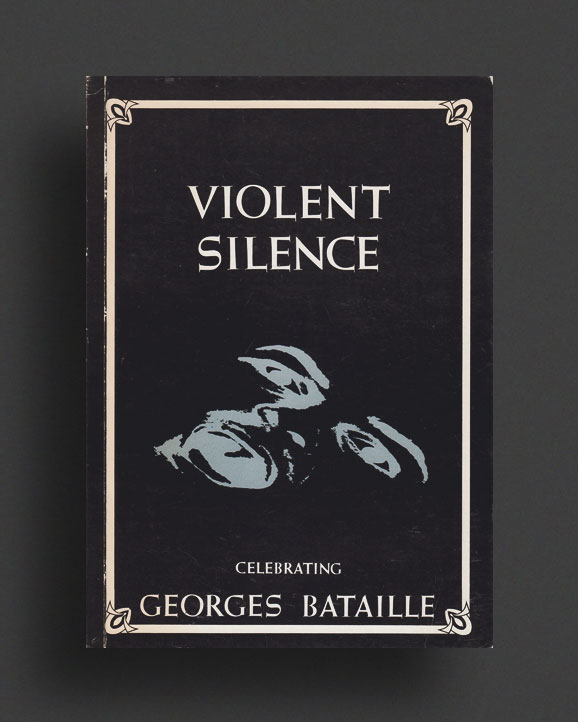
First, only edition of Violent Silence: Celebrating George Bataille edited by Paul Buck and published on the occasion of The George Bataille Event 1984, organised by Paul Buck and Roger Ely in London. Devoted entirely to the work of French philosopher and author George Bataille (1897—1962) whose influential works spanning philosophy, literature, sociology, anthropology, and history of art, which included essays, novels, and poetry, explored such subjects as eroticism, mysticism, surrealism, and transgression. This anthology of writings, illustrated by English poet, artist, anarchist and jazz musician, Jeff Nuttall, features an English translation of Bataille’s “The Dead Man,” a valuable chronology and bibliography of Bataille (in English and French), plus texts by Paul Buck, Cosey Fanni Tutti, Pierre Guyotat, Roger Ely, Mitsou Ronat, Laure, Roberta Graham and Ken Hollings, Bernard Noël, and others.
Very Good copy, light wear.
1976, English
Softcover, 134 pages, 21.5 x 15 cm
1st Edition, Out of print title / used / very good
Published by
Semiotext(e) / Los Angeles
$190.00 - Out of stock
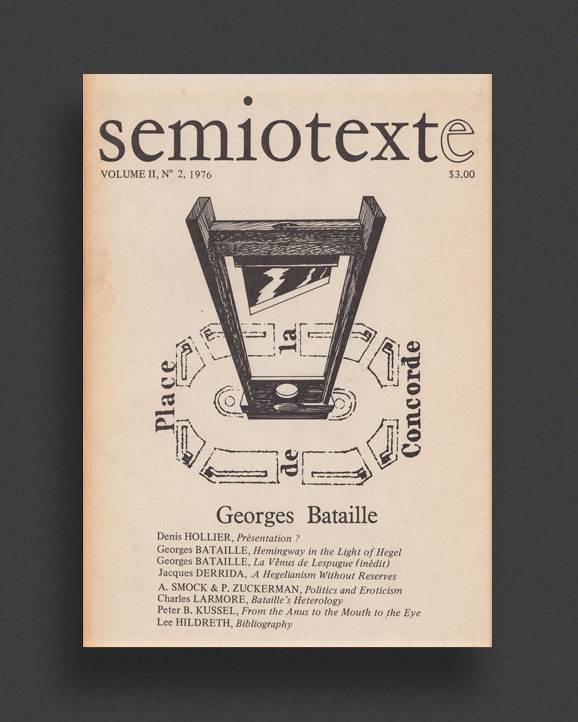
Rare copy of the Georges Bataille issue of the original Semiotext(e) journal, published and edited by Sylvère Lotringer between 1974—1985, with later book-length issues appearing in the 1990s. Devoted entirely to the work of French philosopher and author Georges Bataille (1897—1962) whose influential works spanning philosophy, literature, sociology, anthropology, and history of art, which included essays, novels, and poetry, exploring such subjects as eroticism, mysticism, surrealism, and transgression. Edited by Lotringer and John Rajchman, featuring texts by Bataille, Jacques Derrida, Denis Hollier, Ann Smock and Phyllis Zuckerman, Charles Larmore, Peter B. Kussel, Lee Hildreth...
Founded in 1974, Semiotext(e) began as a journal that emerged from a semiotics reading group led by Sylvère Lotringer at the Columbia University philosophy department. Initially, the magazine was devoted to readings of thinkers like Nietzsche and Saussure. In 1978, Lotringer and his collaborators published a special issue, Schizo-Culture, in the wake of a conference of the same name he had organized two years before at Columbia University. The magazine brought together artists and thinkers such as Gilles Deleuze, Kathy Acker, John Cage, Michel Foucault, Jack Smith, Martine Barrat and Lee Breuer. Schizo-Culture brought out connections between high theory and underground culture that had not yet been made, and forged the "high/low" aesthetic that remains central to the Semiotext(e) project.
Very Good copy with light tanning/wear to raw stocks.
1978, English
Softcover, 226 pages, 25.5 x 17 cm
1st Edition, Out of print title / used / good
Published by
Semiotext(e) / Los Angeles
$200.00 - Out of stock
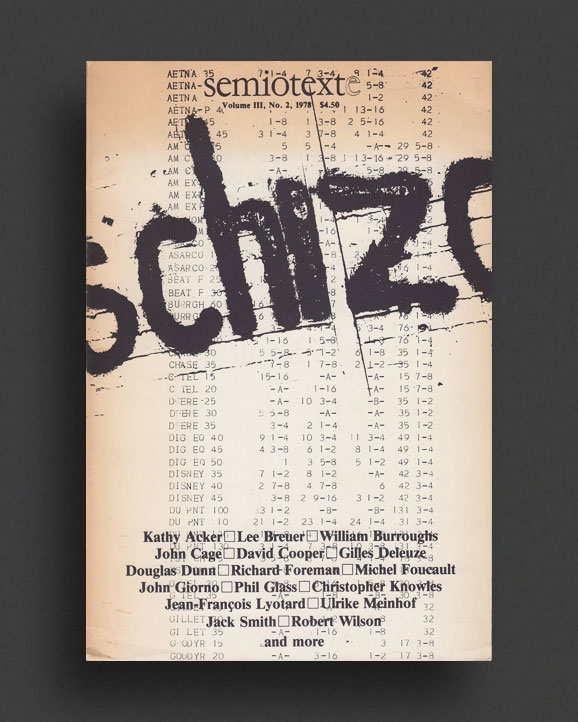
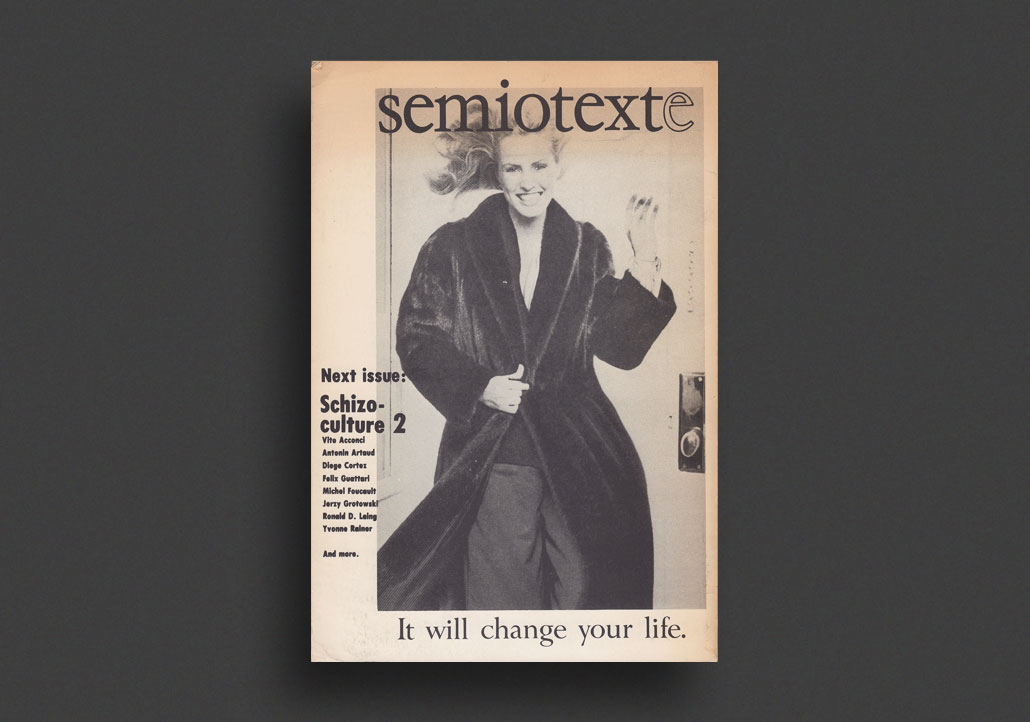
Rare copy of the breakthrough "Schizo-Culture" issue of the original Semiotext(e) journal, published and edited by Sylvère Lotringer between 1974—1985, with later book-length issues appearing in the 1990s. This historical, controversial issue, “consummated the magazine’s rupture with academe”—Sylvère Lotringer. "Schizo-Culture' was published in the wake of the legendary 1975 “Schizo-Culture” conference, conceived by the early Semiotext(e) collective, that began as an attempt to introduce the then-unknown radical philosophies of post-’68 France to the American avant-garde. The event featured a series of seminal papers, from Deleuze’s first presentation of the concept of the “rhizome” to Foucault’s introduction of his History of Sexuality project. The conference was equally important on a political level, and brought together a diverse group of activists, thinkers, patients, and ex-cons in order to address the challenge of penal and psychiatric institutions. The combination proved to be explosive, but amid the fighting and confusion “Schizo-Culture” revealed deep ruptures in left politics, French thought, and American culture. The “Schizo-Culture” issue of the Semiotext(e) journal came three years later. Designed by a group of artists and filmmakers including Kathryn Bigelow and Denise Green with schizophrenia type/image-setting, the issue’s contributors included a kind of who’s who of New York’s downtown art scene (Jack Smith, William S. Burroughs, Kathy Acker...), documenting the artistic chaos, offering interviews with artists, theorists, writers, and No Wave and pre-punk musicians together with new texts from Deleuze, Lyotard, Foucault, Laing, and other conference participants and key “French theory” figures. It also featured a delirious essay about markings on the savage body, by one Alphonso F. Lingis; an intimate interview with a member of an all-female street gang in the Bronx; and a detailed history of behavior-modification programs inside US correctional institutions (post-Attica), written from inside by prisoner activist Eddie Griffin. Gary Indiana has said that reading “Schizo-Culture” was one of the things that made it clear to him that he would inevitably move to New York.
Includes: Michel Foucault, Robert Wilson, Francois Peraldi, Guy Hocquenghem, The Ramones, William S. Burroughs, Louis Wolfson, Lee Breuer, Eddie Griffin, Wendy Clark, Elie C. Messinger, David Cooper, Martine Barrat, John Giorno, Alphonso F. Lingis, Bernard-Henri Levy, Kathy Acker, Richard Foreman, André Cadere, Ulrike Meinhof, Gilles Deleuze, John Cage, Pat Steir , Jean-Jacques Abrahams, Phil Glass, Jack Smith, Jean Francois Lyotard, Douglas Dunn, and others...
Good copy with age wear, marking and tanning to raw stocks.
1987, English
Softcover, 352 pages, 27 x 22 cm
1st Edition, Out of print title / used / very good
Published by
Semiotext(e) / Los Angeles
Autonomedia / New York
$80.00 - Out of stock
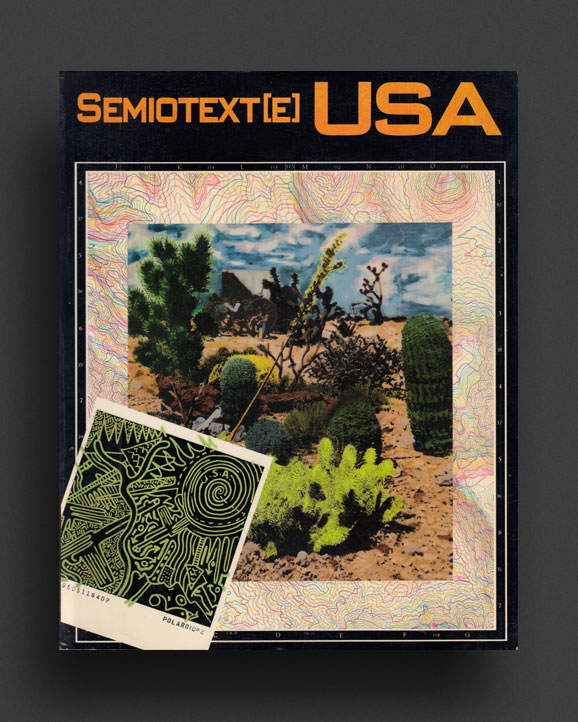
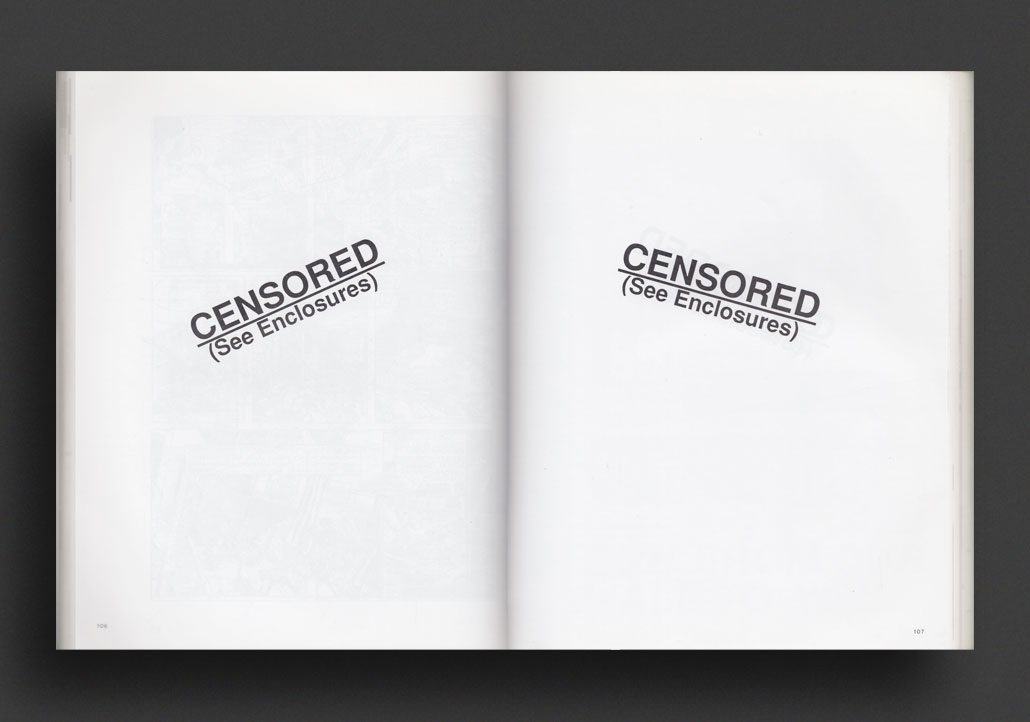
Rare copy of one of the remarkable special book issues of the original Semiotext(e) journal — the notorious Semiotext(e) U.S.A., published in 1987, edited by Jim Fleming and Peter Lamborn Wilson (Hakim Bey), and designed by Sue Ann Harkley. Complete with the unprintable 4-pages, in still-sealed plastic pocket. ("Calling it "subversive" and "obscene," five book printers in the spring of 1987 refused to print Semiotext(e) USA. A sixth printer agreed to do all but four pages, which we have printed separately and included here.") Semiotext(e) U.S.A. is an absolute treasure and time-capsule of subcultural publishing in the 1980s—1990s, centering around Autonomedia and Semiotext(e). The original publisher's blurb says it all:
"THE JOURNAL DENOUNCED IN THE U.S. SENATE FOR ITS ADVOCACY OF "ANIMAL SEX" PRESENTS..."
"A huge compendium of works in AMERICAN PSYCHOTOPOGRAPHY Areas not found on the official map of consensus perception — Maps of energies, secret maps of the USA in the form of words and images.
We are amazed. We are NOT BORED. We have discarded the outworn charm of post-modern incommunicadismo. Passion and involvement, self-abandoned craziness, funny, sexy, dangerous, unabashedly precious, punk, loud and direct. SF, speculative fiction, weird fantasy — Pornography — Other mutated genres — Sermons, rants, broadsheets, crackpot pamphlets, manifestoes — Xerox and mimeo zines — Punkzines — Mail art — Kids' poetry — Subverted advertisements — American samizdat — Astounding rhetoric, elegant propaganda — Underground comix — Geographical documentation (maps, monuments, guides to weird places, photographs) — Stolen top secret documents — And a special feature: scores of personal and classified ads. each one with a box-number or address, to connect YOU with the edges of the USA — Anarchists, unidentified flying leftists, neo-pagans, secessionists, the lunatic fringe of survivalism, cults, foreign agents, mad bombers, ban-the-bombers, nudists, monarchists, children's liberation, tax resisters, zero-workers, mimeo poets, vampires, feuilletonistes, xerox pirates, prisoners, pataphysicians, unrepentant faggots, witches, hardcore youth, poetic terrorists...
For the realization of almost-unheard of desires"
Founded in 1974, Semiotext(e) began as a journal that emerged from a semiotics reading group led by Sylvère Lotringer at the Columbia University philosophy department. Initially, the magazine was devoted to readings of thinkers like Nietzsche and Saussure. In 1978, Lotringer and his collaborators published a special issue, Schizo-Culture, in the wake of a conference of the same name he had organized two years before at Columbia University. The magazine brought together artists and thinkers such as Gilles Deleuze, Kathy Acker, John Cage, Michel Foucault, Jack Smith, Martine Barrat and Lee Breuer. Schizo-Culture brought out connections between high theory and underground culture that had not yet been made, and forged the "high/low" aesthetic that remains central to the Semiotext(e) project.
Good—VG copy with some wear and creasing to the covers and a couple of loose pages at the end. Complete with still-sealed additional censored pages.
1973, Japanese
Softcover, unpaginated (approx 200 pages), 21 x 14.5 cm
1st Edition, Out of print title / used / very good
Published by
Tatsumi / Tokyo
$70.00 - Out of stock
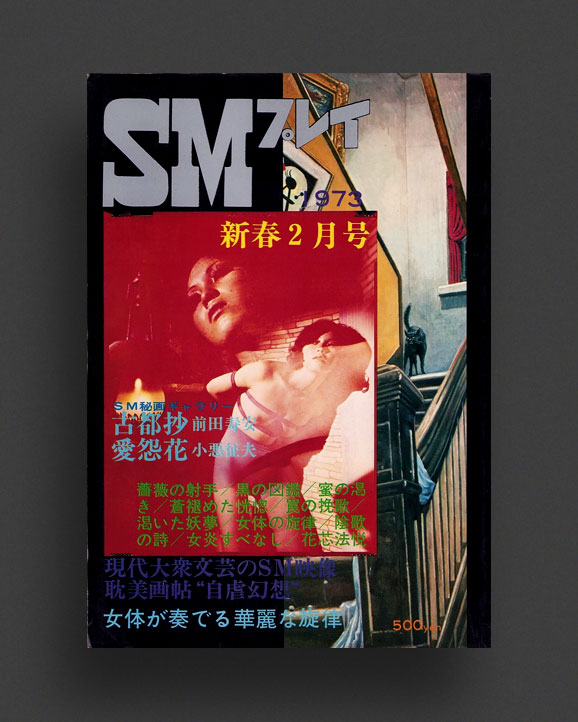
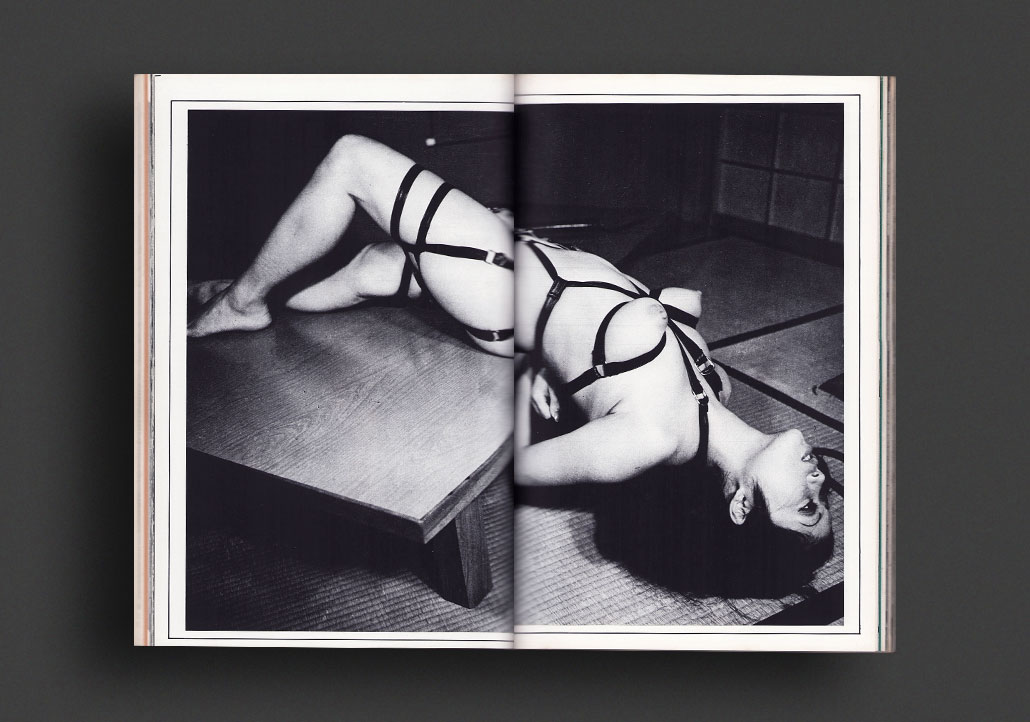
Scarce February 1973 issue (one of the best) of cult Japanese SM magazine, SM Play, edited by bondage master, photographer and editor, Aokiro Ueda, and published by Tatsumi Publishing, Tokyo. Launched in 1972, SM Play was a beautifully produced bondage magazine heavy with high quality photography features in gorgeous gravure black and white and lavish colour, with many fold-outs and great illustrated stories/art galleries by leading kinbaku artists of the time. This issue featuring contributions by fantasy illustrator Ran Akiyoshi, pink film director Satoru Kobayashi, Seiji Kawakami, Juan Maeda, Yukio Koaku, Jun Fujisaki, and many others. Editor Ueda edited the early kinbaku magazine Yomiuri Romance, which published bondage photos before Kitan Club. He also contributed to early fetish magazine Fuzokuka, and published valuable early SM photo books as early as 1952. He collaborated with pink film directors in the 1970s—1980s such as Satoru Kobayashi, Giichi Nishihara and Tetsuji Takechi.
Very Good copy.
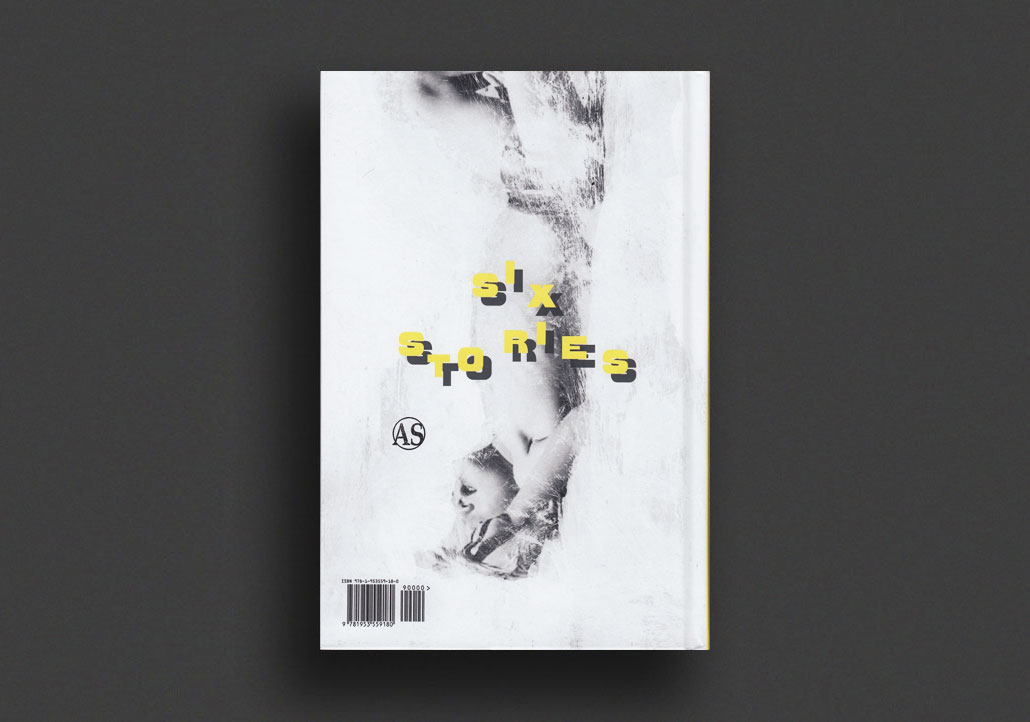
2024, English
Hardcover, 124 pages, 22 x 14.5 cm
Published by
Amphetamine Sulphate / Austin
$50.00 - Out of stock
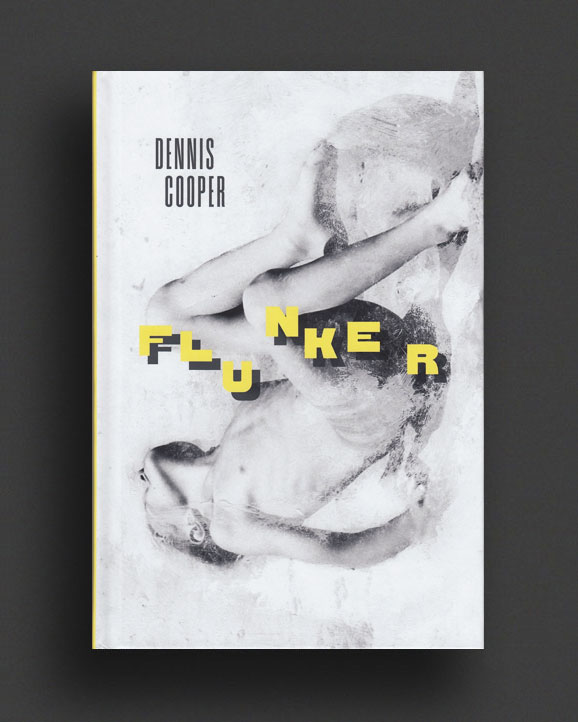
When Dennis Cooper decides to publish a new collection of short stories with Amphetamine Sulphate, you just know the master will have something extra special in mind.
Yet again, this is Dennis Cooper without limits.
Poignant, uncompromising.
The original and the best.
Full colour cover design by Michael Salerno
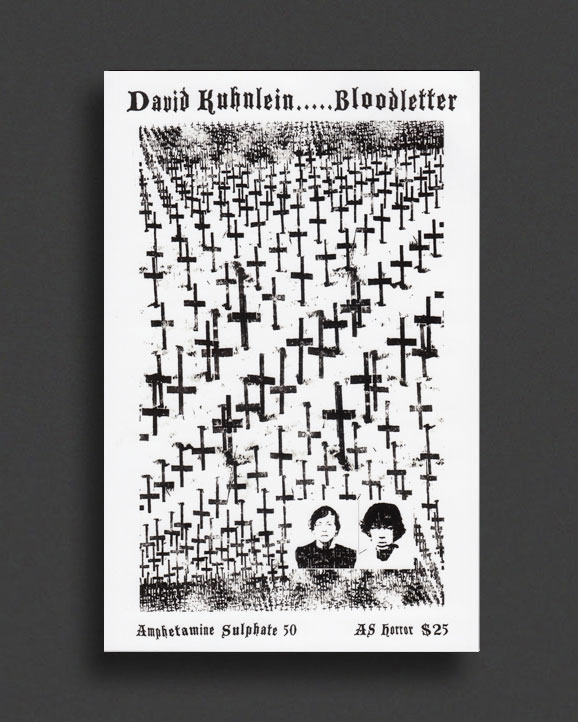
2024, English
Softcover (+ art cards), 112 pages, 21.5 x 14 cm
Published by
Amphetamine Sulphate / Austin
$40.00 - In stock -
I WILL FILL MY BELOVED MEXICO WITH BETTER DISFIGURED GHOSTS
David Kuhnlein writes like he’s casting a spell. Bloodletter is entrancingly evil, every sentence a revelation and a curse: “How much can you care for someone if you can’t afford to dress them in a body bag? ” A grotesque world unfurls from his searing prose: “Ghosts reveal their measurements in smoke, different shades, more rings in the middle if they died long ago. Satan can’t keep up.” Blood sacrifices have never been so beautiful.—Danielle Chelosky
"Half our clothes are on the floor. The other half hang from the ceiling. Labyrinthine flesh-piles make a staircase. Polishing the soot off a breast with my sleeve, I dance horizontally. The band regurgitates into their instruments to slow the tempo, blowing catchy bubbles of sick. Sweat snows upward, stagnant when we see ourselves pooled within it, mosquitoes in a tin can. Vestigial, amoebic replications, abominable degenerations of the ape, totems fucked through stained glass. I toast the trash.
Out of mounds, shaved together into a consciousness, a golden star excretes, floating toward me in a mist, apples singed in her teenaged hair, waist the width of a cigarette. I’m going to bugger her so hard they’ll have to put a serial number on the headstone. “If I’m to your taste, mister, this might spell the end for you.” What more could I ask of a woman?
A heart condition of a child, torqued to breed too soon. I offer dialectic fugues, 77 press her forehead, cast a sigil tuned to the cacophony around us. Swaying, she enters a canyon trance, plummeting under magma.
Beautiful funerals for all my friends. Remember me as an itch."
With cover design, illustrations and Art Cards by Steven Purtill (Human Rights, Coyote, Small Talk at the Clinic etc.)
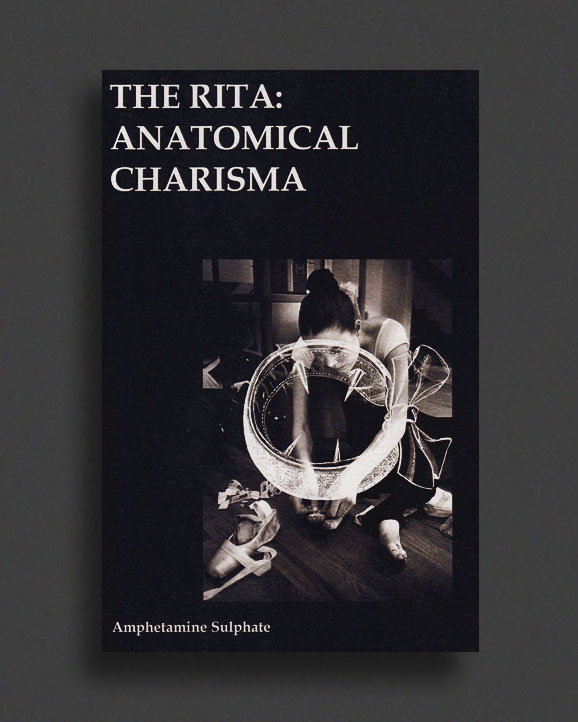
2017, English
Softcover (staple-bound), unpaginated, 21.5 x 13.5 cm
Published by
Amphetamine Sulphate / Austin
$34.00 - Out of stock
High quality art plates, exclusively designed and executed for THE RITA. My guess is that a lot of people reading this book know something personal about immersion.
The experience of watching meaning change over time solely for yourself, depth being equal to the ease with which you get information, the ability to 'read' that information, the extent to which you can invest yourself in that information.
Things you see, you can see over and over, because you love them. Love is best and most correct when you know something but you feel like you can never truly own it'? no matter what, it is always outside of you. Gabrielle Losoncy
1986, Japanese
Softcover, 106 pages, 30 x 21 cm
1st Edition, Out of print title / used / very good
Published by
V-Zone / Japan
$100.00 - Out of stock
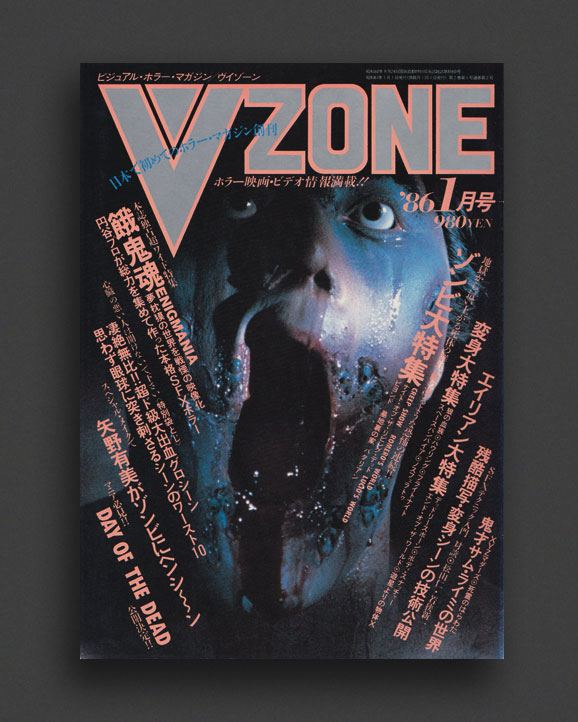
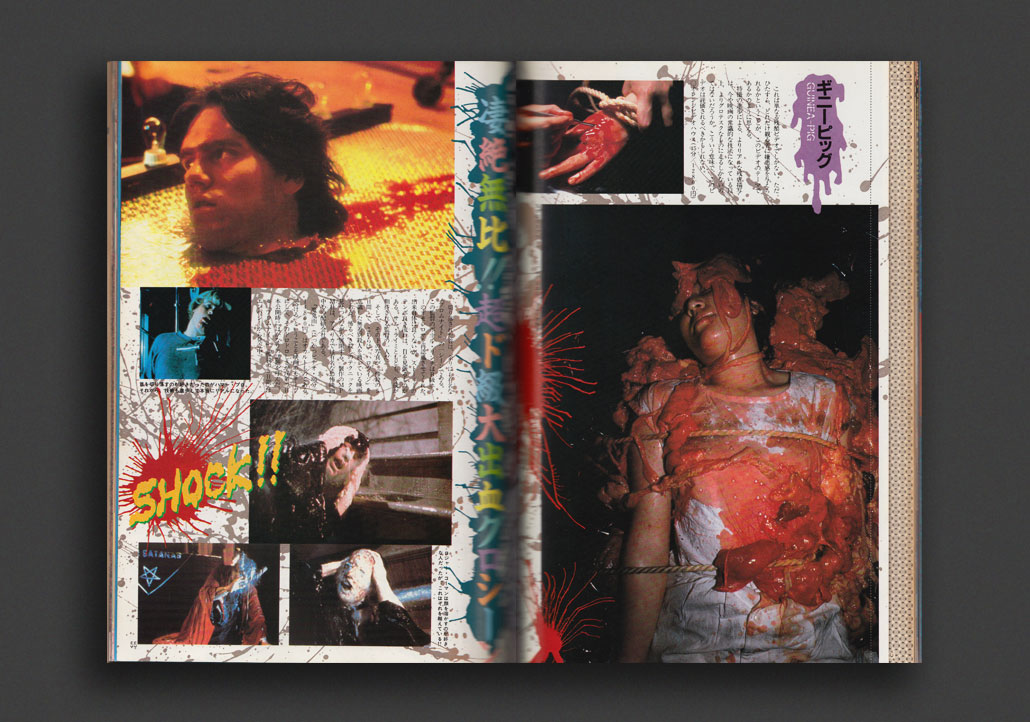
Rare 1986 collectible second issue of V-Zone, the wild, short-lived cult horror/sci-fi/fantasy movie magazine from Japan, published between 1985—1987. This issue is particularly sought after for the rare special feature on the controversial Guinea Pig 2: Flower of Flesh and Blood, a film written and directed by horror magna master Hideshi Hino, that was withdrawn from the US and Japanese video market for it's realistic gruesome special effects. The film achieved further notoriety after incident in which American actor Charlie Sheen is said to have watched the film and believed that it depicted the actual killing and dismemberment of a real woman, prompting him to report it to authorities. The feature herein includes the sealed shut pages that readers had to cut it open to see the gruesome images of various shock films. This copy is still sealed!
At the height of the home video revolution of the 1980s, V-Zone committed it's graphic-saturated pages to the explosion of horror, fantasy, and science fiction films that came with it. V-Zone's coverage of American horror is unparalleled in the world of Japanese magazines, but they also focused attention on historical and underground western science fiction and cult cinema, whilst also playing an important role in fostering the new wave of Japanese gore and V-Cinema (direct-to-video splatter films). Heavy with film features, interviews, stills, ads and reviews, each issue has amazing behind-the-scenes reportage from industry conventions and sfx fan parties, content you would not find anywhere but Japan, including a regular column by legendary Godzilla special effects artist Shinichi Wakasa on how to make your own SFX makeup, gore, and even craft realistic squibs with dimestore prophylactics.
Needless to say, V-Zone is a must for any 1980s video collector or lover of gore.
Very Good copy.
2024, English
Softcover, 170 pages, 25 x 15 cm
First Edition,
Published by
Pep Talk / Los Angeles
$75.00 - In stock -
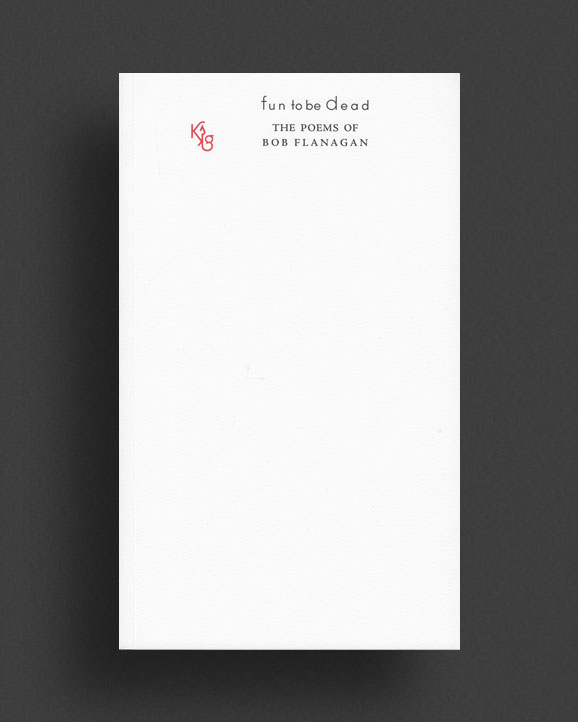
The first complete collection of Bob Flanagan’s poetry, edited by Sabrina Tarasoff and with contributions by Jack Skelley, Sheree Rose, Chiara Moioli, David Trinidad, Dodie Bellamy, and Dennis Cooper.
Cause for celebration: Bob Flanagan’s tortured, elegant poetry is finally back in print! Alive with carnality, love, abjection, relentless self-exposure and fatalist laughs, these poems are as fresh and stunning as when they were first written. Bob's work lays bare the eroticism of punishment and the punishing possibilities of the erotic. Every meticulously chosen word between these covers drips with blood, cum and tears.—Amy Gerstler, author of Index of Women, Bitter Angel, and Early Heaven
Bob Flanagan makes me sick and I love it. Is there a right way to be ill? I dunno. Probably you’re meant to keep quiet or frighten anybody too much, just be a strung-out angel in waiting, please. This is very much fucking not what Bob Flanagan did. He took his wrecked body, his pain, his urges and, yup, his death, everything that he was supposed to keep to himself, and he turned it into work that’s ferociously alive, hilarious, strange. In these poems, he’s singing to you in the back of the ambulance while the dogs prowl outside and ‘the sky glows orange like a match.’ It’s beautiful, it hurts.—Charlie Fox, author of This Young Monster
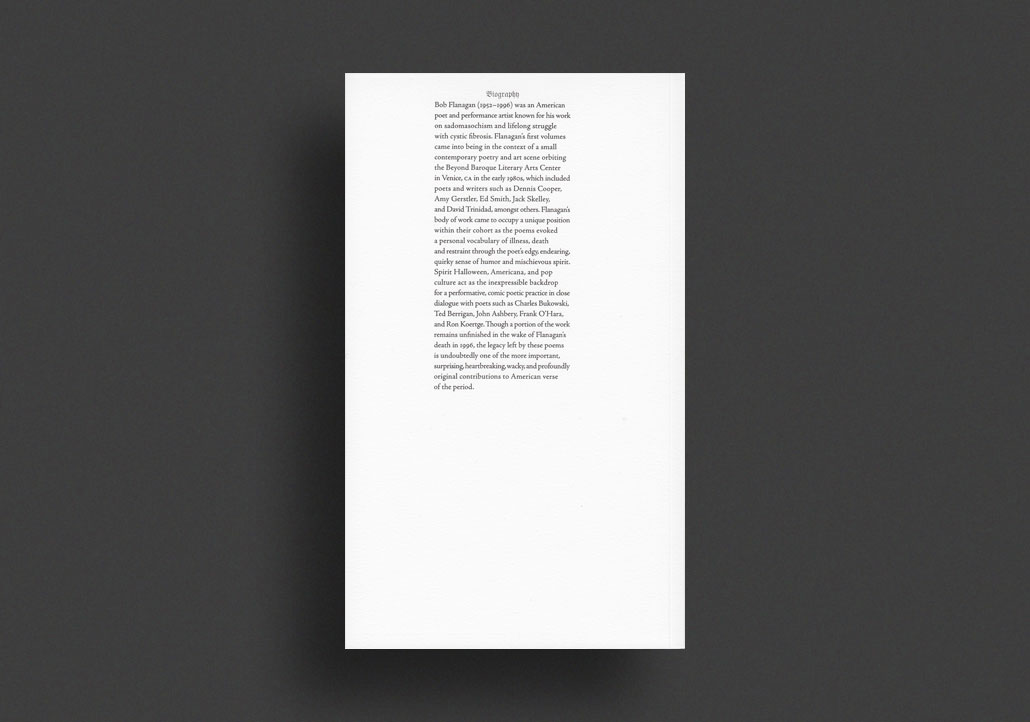
Bob Flanagan (1952—1996) was an American poet and performance artist known for his work on sadomasochism and lifelong struggle with cystic fibrosis. Flanagan's first volumes came into being in the context of a small contemporary poetry and art scene orbiting the Beyond Baroque Literary Arts Center in Venice, CA in the early 1980s, which included poets and writers such as Dennis Cooper, Amy Gerstler, Ed Smith, Jack Skelley, and David Trinidad, amongst others. Flanagan's body of work came to occupy a unique position within their cohort as the poems evoked a personal vocabulary of illness, death and restraint through the poet's edgy, endearing, quirky sense of humor and mischievous spirit. Spirit Halloween, Americana, and pop culture act as the inexpressible backdrop for a performative, comic poetic practice in close dialogue with poets such as Charles Bukowski Ted Berrigan, John Ashbery, Frank O'Hara, and Ron Koertge. Though a portion of the work remains unfinished in the wake of Flanagan's death in 1996, the legacy left by these poems is undoubtedly one of the more important, surprising, heartbreaking, wacky, and profoundly original contributions to American verse of the period.
2024, English
Softcover, 510 pages, 28 x 21 cm
Published by
Rickmoe Publishing / US
$72.00 - Out of stock
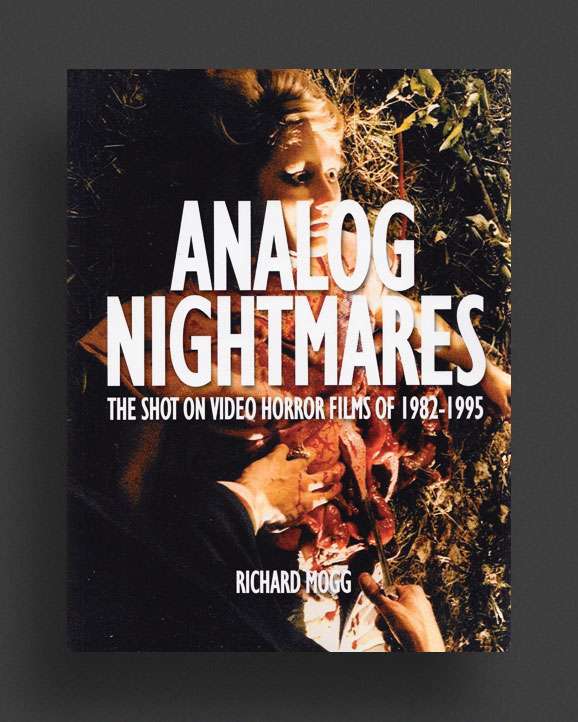
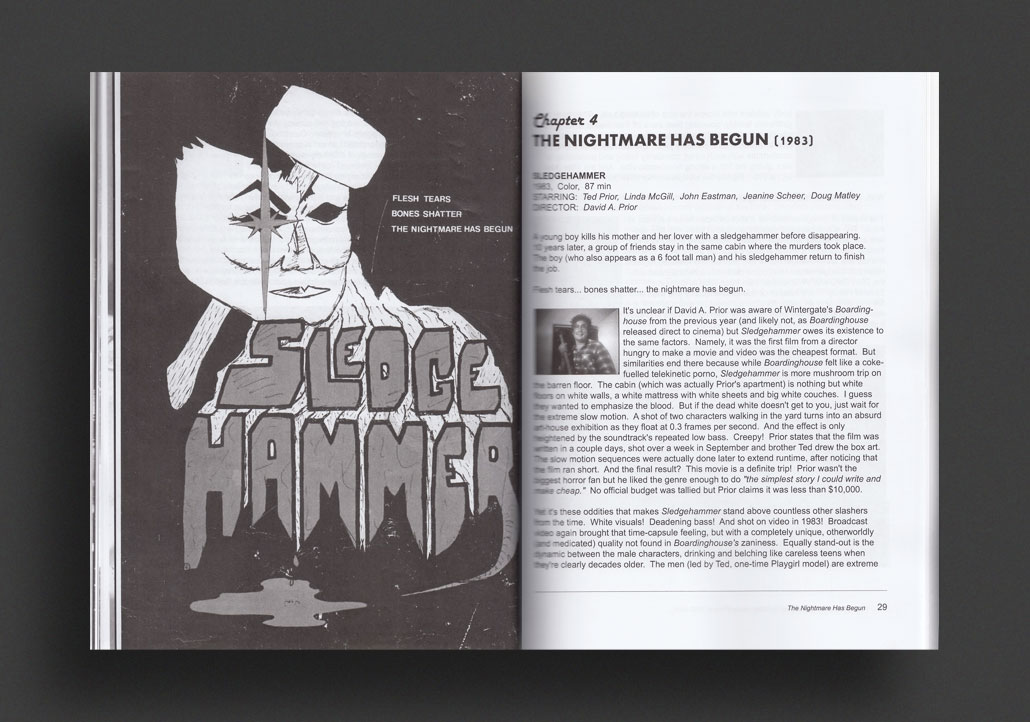
The most comprehensive, all-inclusive look at the history and evolution of shot on video horror films. In 1982, "Boardinghouse" became the first shot on video feature-length horror film ever made. Totally lensed on videotape, the film was later transferred to 16mm and blown-up to 35mm for theatrical exhibition. In 1983, David A. Prior shot "Sledgehammer" on video and eventually released the film on videotape. For the first time, analog video became the format used in motion picture productions. It was smeary, messy and it wasn't film... but it was cheap. In 1985, United Home Video boldly released "Blood Cult" with the claim it was "the first movie made for the home video market." The booming popularity of video stores coupled with a never-satisfied demand for content ensured these films longevity. Soon hundreds of titles followed, all video-created features by independent unknowns. They weren't from Hollywood. They weren't trained. But they had a lot of heart and a love for horror. And they made their own movies against the odds. For the first time EVER - "ANALOG NIGHTMARES" has brought these films together. Everything from "Boardinghouse" to "Zombie Holocaust" individually reviewed, categorized and presented chronologically by production year. Over 260 films! Featuring in-depth interviews with the filmmakers themselves - some speaking for the very first time! TIM BOGGS! MARK POLONIA! DONALD FARMER! TIM RITTER! JOEL D. WYNKOOP! DOUG STONE! ANDREA ADAMS! GARY WHITSON! DAVE CASTIGLIONE! PHIL HERMAN! ERIC STANZE! JAMES L. EDWARDS! WALTER RUETHER! TODD JASON COOK! NICK MILLARD! DAVID "THE ROCK" NELSON! RON BONK!
1975, English
Softcover, 202 pages, 18 x 11 cm
Out of print title / used / very good
Published by
Quartet Books / London
$25.00 - Out of stock
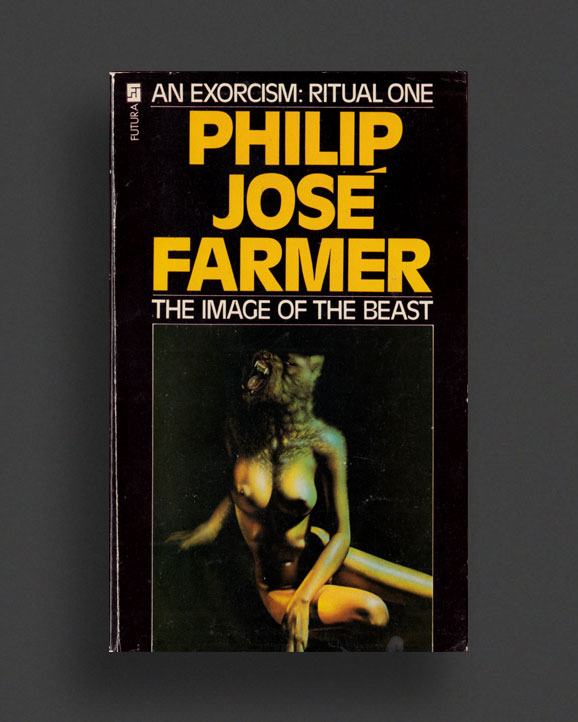
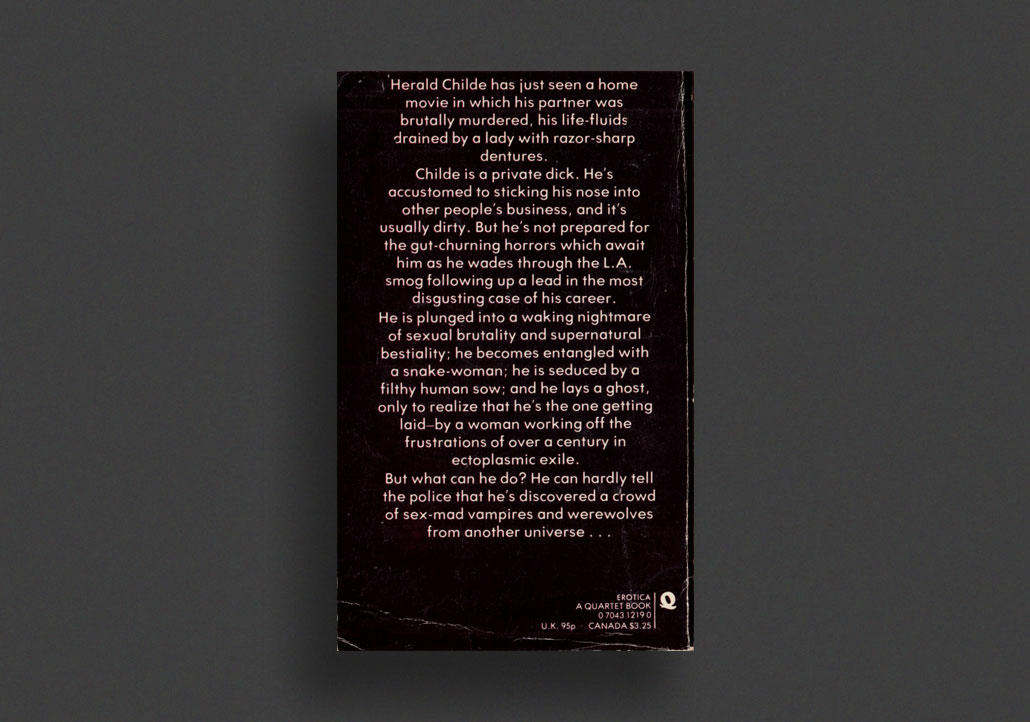
Image of the Beast (1968) is a horror erotic novel by American writer Philip José Farmer. Private dick Herald Childe is sent a snuff movie of his partner being brutally murdered. His pursuit of her killers leads him into a waking nightmare of sexual brutality and supernatural bestiality, as he becomes entangled with sex-starved she-ghosts, snake-women and a filthy human sow. Philip Jose Farmer conjures up a universe of unrelenting sexual degradation and horror populated by erogenous vampires, werewolves and other polymorphic creatures from the darkest recesses of the human imagination.
Philip José Farmer (1918—2009) is a three-time Hugo Award winner, and Nebula Grand Master. He has long been recognized as one of the foremost writers in the fields of science fiction and fantasy. He is best known for being the author who introduced sex into science fiction in 1952 with his groundbreaking novella "The Lovers"; his biographies of Tarzan and Doc Savage; his fascination for and reworking of the lore of legendary pulp heroes; his Riverworld, World of Tiers, and Dayworld series; his Wold Newton Family concept; and his occasional tongue-in-cheek pseudonymous works written as if by fictional characters.
Very Good copy of the 1975 Quartet edition, light edge wear.