World Food Books' programme is largely produced on Kulin Nation land. We acknowledge the Wurundjeri people of the Kulin Nation as the first and continuing custodians of this land, and pay respect to their Elders past, present, and emerging.
World Food Books is an arts and special interests bookshop in Naarm / Melbourne. Founded in 2010, World Food Books is devoted to the presentation of a rotating, hand-selection of international art, design, literary and counterculture publications with an emphasis on the anti-traditional, the experimental, the avant-garde, the heretic, the marginal.
Presenting new titles alongside rare and out-of-print books, catalogues and journals spanning the fields of modern and contemporary art, design, photography, illustration, film, literature, poetry, cultural theory, philosophy, sexuality, popular and underground culture in its many radical forms, World Food Books wishes to encourage adventurous, thoughtful and open-minded reading, looking, writing, and exchange of publishing and ideas, both current and historical.
As well as our bookshop, located in Melbourne's historical Nicholas Building, all of our inventory is available internationally via our online mail-order service.
World Food Books semi-regularly co-ordinates "Occasions", a programme of exhibits and events at the bookshop and in partnership with other hosts (such as museums and art galleries) that develop out of the activities, relationships and content of the bookshop itself.
World Food Books
The Nicholas Building
37 Swanston Street
Room 5, Level 6
Melbourne 3000
Australia
SHOP HOURS:
THU–SAT 12–6
WEB-SHOP OPEN 24/7
World Food Books
Postal Address:
PO Box 435
Flinders Lane
Victoria 8009
Australia
info@worldfoodbooks.com
Art
Theory / Essay
Architecture / Interior
Graphic Design / Typography
Photography
Fashion
Eros
LGBTQ+
Fiction / Poetry
Weird / Speculative / Science Fiction / Horror
Transgressive / Visceral / Abject
Symbolism / Decadence / Fin de siècle
Film / Video
Painting
Sculpture / Installation
Performance / Dance / Theater
Drawing
Sound / Music
Curatorial
Group Shows / Collections
Periodicals
Out-of-print / Rare
Posters / Ephemera / Discs
Signed Books
World Food Books Gift Voucher
World Food Book Bag
Australian Art
Australian Fiction
Australian Science Fiction / Speculative Fiction
Australian Poetry
Australian Photography
Japanese Photography
Conceptual Art
Minimal Art
Dada
'Pataphysics / Oulipo
Fluxus
Concrete Poetry
Pop Art
Surrealism
Arte Povera
Arte Informale / Haute Pâte / Tachism
Nouveau Réalisme / Zero / Kinetic
Situationism / Lettrism
Collage / Mail Art / Xerox Art
Art Brut / Folk / Visionary / Fantastic
Illustration / Graphic Art / Bandes Dessinées
Furniture
Italian Radical Design / Postmodernism
Textiles
Ceramics / Glass
Counterculture
Protest / Revolt
Philosophy
Psychoanalysis
Anthropology
Anarchism
Socialism / Anarchism / Communism / Capitalism
Literary Theory / Semiotics / Language
Feminism / Women's Studies
Gender Studies / Sexuality
Anthropology
Fetishism / BDSM
Drugs / Psychedelia
Crime / Violence
Animal Rights / Veganism
Occult / Esoterica
Ecology / Earth / Alternative Living
Whole Earth / Crafts
All prices in AUD (Australian dollars)
Pick-Ups
Pick-up orders can be collected in our bookshop during opening hours after order date. Please collect any Pick-up orders within 2 weeks of ordering as we have limited storage space. Orders will be released back into stock if not collected within this time. No refunds can be made for pick-ups left un-collected. If you cannot make it in to the bookshop in this time-frame, please choose postage option.
Return Policy
All sales are final. We do accept returns (for refund or exchange) for items received in error. All our orders are packed with special care using heavy-duty padding and cardboard book-mailers or bubble mailers (for smaller books), using reinforcement where required. We cannot take responsibility for any lost, stolen or damaged parcels.
Insurance
Should you wish to insure your package, please email us directly after placing your order and we can organise this at a small extra expense. Although all standard/express tracked packages are very safe and dependable, we cannot take responsibility for any lost, stolen or damaged parcels. We recommend insurance on valuable orders.
Interested in selling your old books, catalogues, journals, magazines, comics, fanzines, ephemera? We are always looking for interesting, unusual and out-of-print books to buy. We only buy books in our fields of interest and specialty, and that we feel we can resell.
We base these prices on desirability, market value, in-print prices, condition and our current stock levels. We offer cash, store credit, and can take stock on consignment. All
about 25% of the price we expect to get when we sell them, or 30% in store credit. We base these prices on desirability, market value, in-print prices, condition and our current stock levels.
Sell your books any day of the week. You can drop them off and return later. If you have a lot of books, we can visit your Sydney home.
We buy books that we feel we can resell. We offer about 25 % of the price we expect to get when we sell them, or 30% in store credit. We base these prices on desirability, market value, in-print prices, condition and our current stock levels.
Philadelphia Wireman
03 August - 01 September, 2018
World Food Books is proud to announce our next Occasion, the first presentation of sculptures by Philadelphia Wireman in Australia.
The Philadelphia Wireman sculptures were found abandoned in an alley off Philadelphia’s South Street on trash night in 1982. Their discovery in a rapidly-changing neighbourhood undergoing extensive renovation, compounded with the failure of all attempts to locate the artist, suggests that the works may have been discarded after the maker’s death. Dubbed the "Philadelphia Wireman" during the first exhibition of this work, in 1985, the maker’s name, age, ethnicity, and even gender remain uncertain. The entire collection totals approximately 1200 pieces, all intricately bound together with tightly-wound heavy-gauge wire (along with a few small, abstract marker drawings, reminiscent both of Mark Tobey and J.B. Murry). The dense construction of the work, despite a modest range of scale and materials, is singularly obsessive and disciplined in design: a wire armature or exoskeleton firmly binds a bricolage of found objects including plastic, glass, food packaging, umbrella parts, tape, rubber, batteries, pens, leather, reflectors, nuts and bolts, nails, foil, coins, toys, watches, eyeglasses, tools, and jewellery.
Heavy with associations—anthropomorphic, zoomorphic, and socio-cultural responses to wrapped detritus—the totemic sculptures by Philadelphia Wireman have been discussed in the context of work created to fulfil the shamanistic needs of alternative religions in American culture. Curators, collectors, and critics have variously compared certain pieces to sculpture from Classical antiquity, Native American medicine bundles, African-American memory jugs, and African fetish objects. Reflecting the artist’s prolific and incredibly focused scavenging impulse, and despite—or perhaps enhanced by—their anonymity, these enigmatic objects function as urban artefacts and arbiters of power, though their origin and purpose is unknown. Philadelphia Wireman, whatever their identity, possessed an astonishing ability to isolate and communicate the concepts of power and energy through the selection and transformation of ordinary materials. Over the course of the past two decades, this collection has come to be regarded as an important discovery in the field of self-taught art and vernacular art.
Presented in collaboration with Fleisher-Ollman Gallery, Philadelphia, and Robert Heald, Wellington.
Susan Te Kahurangi King
02 February - 10 March, 2018
Susan Te Kahurangi King (24 February 1951 - ) has been a confident and prolific artist since she was a young child, drawing with readily available materials - pencils, ballpoint pens and felt-tip markers, on whatever paper is at hand. Between the ages of four and six Susan slowly ceased verbal communication. Her grandparents William and Myrtle Murphy had developed a special bond with Susan so they took on caring responsibilities for extended periods. Myrtle began informally archiving her work, carefully collecting and storing the drawings and compiling scrapbooks. No drawing was insignificant; every scrap of paper was kept. The King family are now the custodians of a vast collection containing over 7000 individual works, from tiny scraps of paper through to 5 meter long rolls.
The scrapbooks and diaries reveal Myrtle to be a woman of great patience and compassion, seeking to understand a child who was not always behaving as expected. She encouraged Susan to be observant, to explore her environment and absorb all the sights and sounds. Myrtle would show Susan’s drawings to friends and people in her community that she had dealings with, such as shopkeepers and postal workers, but this was not simply a case of a grandmother’s bias. She recognised that Susan had developed a sophisticated and unique visual language and sincerely believed that her art deserved serious attention.
This was an unorthodox attitude for the time. To provide some context, Jean Dubuffet coined the term Art Brut in 1945 to describe work created by self-taught artists – specifically residents of psychiatric institutions and those he considered to be visionaries or eccentrics. In 1972 Roger Cardinal extended this concept by adopting the term Outsider Art to describe work made by non-academically trained artists operating outside of mainstream art networks through choice or circumstance. Susan was born in Te Aroha, New Zealand in 1951, far from the artistic hubs of Paris and London that Dubuffet and Cardinal operated in. That Myrtle fêted Susan as a self-taught artist who deserved to be taken seriously shows how progressive her attitudes were.
Susan’s parents Doug and Dawn were also progressive. Over the years they had consulted numerous health practitioners about Susan’s condition, as the medical establishment could not provide an explanation as to why she had lapsed into silence. Dawn educated herself in the field of homeopathy and went on to treat all twelve of her children using these principles – basing prescriptions on her observations of their physical, mental and emotional state.
Doug was a linguist with an interest in philosophy who devoted what little spare time he had to studying Maori language and culture. To some extent their willingness to explore the fringes of the mainstream made them outsiders too but it was their commitment to living with integrity and their respect for individuality that ensured Susan’s creativity was always encouraged.
Even though Susan’s family supported her artistic pursuits, some staff in schools and hospitals saw it as an impediment to her assimilation into the community and discouraged it in a variety of ways. Her family was not always aware of this and therefore did not fully understand why Susan stopped drawing in the early 1990s. However, rather than dwell on the challenges that Susan faced in pursuit of her artistic practice, they prefer to highlight her achievements. In 2008 Susan began drawing again in earnest, after an almost 20 year interruption, and her work is now shown in galleries around the world.
Susan grew up without television and has been heavily influenced by the comics she read as a child. She is absolutely fearless in the appropriation of recognizable characters, such as Donald Duck and Mickey Mouse, in her work. She twists their limbs, contorts their faces, compresses them together, blends them into complex patterned backgrounds - always imbuing them with an incredible energy. Although Susan often used pop culture characters in her work they are not naive or childlike. These are drawings by a brilliant self-taught artist who has been creating exceptional work for decades without an audience in mind.
Mladen Stilinović
"Various Works 1986 - 1999"
02 February 16 - September 10, 2016
Various works 1986 - 1999, from two houses, from the collections of John Nixon, Sue Cramer, Kerrie Poliness, Peter Haffenden and Phoebe Haffenden.
Including: Geometry of Cakes (various shelves), 1993; Poor People’s Law (black and white plate), 1993; White Absence (glasses, ruler, set square, silver spoon, silver ladel with skin photograph and wooden cubes), 1990-1996; Exploitation of the Dead (grey and red star painting, wooden painting, black spoon with red table, red plate), 1984-1990; Money and Zeros (zero tie, paintings made for friends in Australia (Sue, John, Kerrie), numbers painting), 1991-1992; Words - Slogans (various t-shirts) - “they talk about the death of art...help! someone is trying to kill me”, “my sweet little lamb”, “work is a disease - Karl Marx”; Various artist books, catalogues, monographs, videos; Poster from exhibition Insulting Anarchy; "Circular" Croatian - Australian edition; Artist book by Vlado Martek (Dostoyevsky); more.
Thanks to Mladen Stilinović and Branka Stipančić.
Jonathan Walker
Always Will Need To Wear Winter Shirt Blue + Ochre Small Check Pattern
21 August - 21 September, 2015
Untitled
I am not a great reader of poetry but I always return to the work of Melbourne poet, Vincent Buckley (1925- 1988). Perhaps I find his most tantalising piece to be not a finished poem but a fragment left on a scrap of paper discovered on his desk after the poet’s death.
The poetry gathers like oil
In the word-core, and spreads
It has its music meet,
Its music is in movement.
This fragment is more the shell left behind from a volatile thought than a finished poem. I find the last two lines honest but awkward whereas the first two lines work like an arrow. Most likely he could not find a resolution so it was left. Still, in its present form, it remains an eloquent testimony to the ultimate failure of a medium to express mobile thought and sensation, in Buckley’s case, through verbal language. It’s an important matter because this is something all artists have to deal with regardless of the medium.
I have never written a poem, however, I am forever copying fragments from books on paper scraps in a vain effort to fix certain notions in my head. At first, they function as bookmarks that are sometimes returned to when I open the book. But before long, as they accumulate, they fall out littering the table interspersed with A4 photocopies, bills, books and medications.
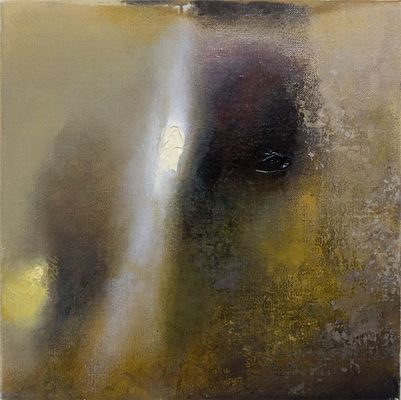
To return to Buckley’s fragment, the first two lines very much evoke how I paint nowadays. As you age, detail diminishes and patches of light become more luminous and float. I feel the most honest way of dealing with this is by smearing the oil paint on the canvas with the fingers and working close-up, blind. Only if the patches coalesce into an approaching image can the work gain a life.
-
Jonathan Walker was born in Melbourne, Australia and brought up on a dairy farm in Gippsland. In the 1970’s he studied painting at RMIT and won the Harold Wright Scholarship to the British Museum, London. During the 1980’s he exhibited at Pinacotheca Gallery, Richmond and had work shown at the NGV and Heidi City Art Gallery. Over the same period he designed the cover for the “Epigenesi” LP by Giancarlo Toniutti, Italy and conducted a mail exchange work with Achim Wollscheid, Germany. The work with artists through the post resulted in an article published in the bicentenary issue of Art and Australia 1988. He showed in artist run spaces such as WestSpace in the 90’s and 2000’s, and until 2012, taught painting at Victoria University, which is where we (Colleen Ahern and Lisa Radford) as organisers of the exhibition, among many others, had the privilege of being his student.
Walker’s knowledge was imparted to students through the careful selection of music, literature, and artists found in books that he himself had ordered for the library. Walker’s strategy was the generosity of sharing his vast knowledge with references specific to each student and their context.
Walker’s paintings share a similar focus and intimacy.
This exhibition presents a small selection of recent paintings alongside a publication that includes Walker’s writing. Observational and analytical, Walker’s work is a type of material notation — the time of day, colour and how it is blended, the both specific and fleeting location of a reflection on lino or the question of whether a chair leg should be included in a painting.
Please join us on Friday August 21 between 6-8pm to celebrate the opening of the exhibition.
Curated by Colleen Ahern and Lisa Radford.
B. Wurtz
Curated by Nic Tammens
March 26 - April 4, 2015
B.Wurtz works from a basement studio in his home on Manhattan’s Lower East Side.
This local fact is attested to by the plastic shopping bags and newsprint circulars that appear in his work. As formal objects, they don’t make loud claims about their origins but nonetheless transmit street addresses and places of business from the bottom of this long thin island. Like plenty of artists, Wurtz is affected by what is local and what is consumed. His work is underpinned by this ethic. It often speaks from a neighborhood or reads like the contents of a hamper:
“BLACK PLUMS $1.29 lb.”
“Food Bazaar”
“USDA Whole Pork Shoulder Picnic 99c lb.”
“RITE AID Pharmacy, with us it’s personal.”
“H. Brickman & Sons.”
“Sweet Yams 59c lb."
Most of the work in this exhibition was made while the artist was in residence at Dieu Donne, a workshop dedicated to paper craft in Midtown. Here Wurtz fabricated assemblages with paper and objects that are relatively lightweight, with the intention that they would be easily transportable to Australia. This consideration isn’t absolute in Wurtz’s work, but was prescriptive for making the current exhibition light and cheap. Packed in two boxes, these works were sent from a USPS post office on the Lower East Side and delivered to North Melbourne by Australia Post.
Wurtz appears courtesy of Metro Pictures, New York.
Thanks to Rob Halverson, Joshua Petherick, Sari de Mallory, Matt Hinkley, Helen Johnson, Fayen d'Evie, Ask Kilmartin, Lisa Radon, Ellena Savage, Yale Union, and "Elizabeth".
John Nixon
"Archive"
December 15 - January 20, 2014
The presentation of John Nixon's archive offered a rare showcase of this extensive collection of the artist's own publications, catalogues, posters, ephemera, editions and more, from the mid 1980s onwards, alongside a selection of his artworks.
Organized by John Nixon, Joshua Petherick and Matt Hinkley.
"Habitat"
at Minerva, Sydney (organised by Joshua Petherick and Matt Hinkley)
November 15 - December 20, 2014
Lupo Borgonovo, Janet Burchill & Jennifer McCamley,
Lewis Fidock, HR Giger, Piero Gilardi, Veit Laurent Kurz,
Cinzia Ruggeri, Michael E. Smith, Lucie Stahl, Daniel Weil, Wols
Press Release:
“...It contained seven objects. The slender fluted bone, surely formed for flight, surely from the wing of some large bird. Three archaic circuitboards, faced with mazes of gold. A smooth white sphere of baked clay. An age-blackened fragment of lace. A fingerlength segment of what she assumed was bone from a human wrist, grayish white, inset smoothly with the silicon shaft of a small instrument that must once have ridden flush with the surface of the skin - but the thing’s face was seared and blackened.”
William Gibson, “Count Zero”, 1986
"Autumn Projects Archive"
Curated by Liza Vasiliou
March 6 - March 15, 2014
World Food Books, in conjunction with the Virgin Australia Melbourne Fashion Festival 2014, presented the Autumn Projects archive, consisting of a selection of early examples in Australian fashion with a particular interest in collecting designers and labels from the period beginning in the 1980’s, who significantly influenced the discourse of Australian Fashion.
Curated by Liza Vasiliou, the exhibition provided a unique opportunity to view pieces by designers Anthea Crawford, Barbara Vandenberg, Geoff Liddell and labels CR Australia, Covers, Jag along with early experimental collage pieces by Prue Acton and Sally Browne’s ‘Fragments’ collection, suspended throughout the functioning World Food Books shop in Melbourne.
H.B. Peace
presented by CENTRE FOR STYLE
November 14, 2013
"Hey Blinky, you say chic, I say same"
Anon 2013
H.B. Peace is a clothing collaboration between great friends Blake Barns and Hugh Egan Westland. Their pieces explore the divergences between 'character’ and ‘personality’ in garments....etc
Special Thanks to Joshua Petherick and Matt Hinkley of WFB and Gillian Mears
and a Very Special Thank you to Audrey Thomas Hayes for her shoe collaboration.
Janet Burchill & Jennifer McCamley
"Aesthetic Suicide"
May 10 - June 8, 2013
The first of our occasional exhibitions in the World Food Books office/shop space in Melbourne, "Aesthetic Suicide" presented a body of new and older works together by artists Janet Burchill & Jennifer McCamley, including videos, prints, a wall work, and publications.
During shop open hours videos played every hour, on the hour.
1998, Japanese
Hardcover (w. dust jacket), 104 pages, 30.3 x 23.2 cm
Signed by artist,
1st Edition, Out of print title / used / very good
Published by
Asahi Shimbun / Japan
$200.00 - Out of stock
First 1998 hardcover edition of Kuniyoshi Kaneko's Vicious Angel, one of the finest volumes by Japanese painter, illustrator and photographer Kuniyoshi Kaneko (1936—2015), this copy with signed by the artist to the first blank page. Increasingly rare, Vicious Angel collects in one place the famous literary illustration of Kaneko, including Lewis Carroll's "Alice in Wonderland" and "Alice's Dream," George Bataille's "Story of The Eye" and "Madame Edwarda," and many others works spanning the 1970s to the 1990s. Kaneko's unique figurative drawings of young men and women in enigmatic, metaphysical scenes of surreal, stylised erotic abandon, channel the spirits of Cocteau, Bellmer, and Balthus; his controversial interpretations graced the pages and covers of these literary classics as they entered the Japanese consciousness. Free of convention, Kaneko's dreamlike scenarios were very often of same-sex, homo-erotic, even fetishistic nature, and his artwork, encouraged by editor and writer Shibusawa Tatsuhiko (1928—1987), became a staple in the underground publishing scene of 1970's Tokyo. Vicious Angel includes a biography, photographic portraits, bibliography, and an introductory essay by Kuniyoshi Kaneko entitled "In honor of the Holy God".
VG copy in CG dust jacket, light edge wear.
1984, Japanese
Hardcover (w. dust jacket) in slipcase (w. obi), 110 pages, 31cm x 24 cm
1st Edition, Out of print title / used / fine
Published by
Shogakukan / Tokyo
$160.00 - In stock -
First 1984 edition of Kuniyoshi Kaneko's Theatre of Eros, one of the finest monographic volumes on Japanese painter, illustrator and photographer Kuniyoshi Kaneko (1936—2015), this copy with signed dedication by the artist (dated "1984.1.2") to the first blank page. Profusely illustrated throughout in colour and b/w with Kaneko's figurative paintings and drawings of young men and women in enigmatic, metaphysical scenes of surreal, stylised erotic beauty, channeling the spirits of Cocteau and Balthus, including his famous illustrations for Lewis Carroll's Alice in Wonderland, his illustrations for Orpheus, an array of his beloved oil on canvas and pastel and paper works, plus much more. Free of convention, Kaneko's dreamlike scenarios were very often of same-sex, homo-erotic, even fetishistic nature, and his artwork, encouraged by editor and writer Shibusawa Tatsuhiko (1928—1987), became a staple in the underground publishing scene of 1970's Tokyo. Theatre of Eros includes an extensive, illustrated biography, many photographic portraits, and a conversation with Japanese essayist and poet Mutsuo Takahashi (b. 1937). Takahashi was one of the most prominent poets of postwar Japan, known for his bold poetic work of male-male eroticism.
A beautifully preserved complete copy with original publisher's obi, and inserted with a file of various Kaneko Japanese media press clippings, 1984 Seibu gallery Theatre of Eros exhibition flyer, and the complete pages of an amazing photographic feature on Japanese pop star (and YMO-founder Haruomi Hosono collaborator) Miharu Koshi art directed and designed by Kaneko himself.
F copy in NF slipcase and obi.
1967, French
Softcover, 30 pages, 28.8 x 23.1 cm
1st Edition, Out of print title / as new
Published by
Éditions Surréalistes / Paris
$800.00 - In stock -
First 1967 edition of Le Puits Dans La Tour / Débris De Reves (Well in The Tower / Shards of Dreams) a cycle of twelve drawings by the Czech surrealist artist Toyen (1902-1980) and text by Croatian poet Radovan Ivšić (1921-2009). This deluxe original work, published by Éditions Surréalistes in Paris, includes one of the most important series of engraved compositions by Toyen and was printed in a limited, numbered edition of 900 copies on Mandeure paper, in Paris on September 30, 1967, by Fequet and Baudier, typographers. A gorgeous publication on warm rough-cut heavy paper stock, sewn binding wrapped in black printed covers on olive card stock featuring Toyen's title drawing. This copy No. 374 of 900.
Toyen (1902–1980) was a Czech Surrealist painter and writer born Marie Čermínová who adopted a gender-ambiguous pseudonym, becoming a central founding figure in the Prague and Paris Surrealist movements. Her work explores themes of gender, sexuality, and the subconscious, and she is known for collaborations with poet Jindřich Štyrský and poet Vítězslav Nezval.
Radovan Ivšić (1921–2009) was a Croatian poet, writer, playwright, essayist, translator and surrealist of global standing, achieved the greatest acclaim with his poem Narcissus (1942), his play King Gordogan (1943) and poetry collection Black (1974). His uncompromising creative work and life were spent in resistance to either Right or Left wing totalitarianism. Such values brought him into the surrealist movement through collaborative friendships with André Breton, Benjamin Peret, Miro, Toyen and others. He was one of the signers of the last Manifeste du surréalisme, 1955. He married the French poetess Annie Le Brun.
As New pristine, unread copy from Radovan Ivšić's own stock. Light cover corner / edge wear, otherwise perfect.
1981, English
Softcover, 48 pages, 40 x 28 cm
1st Edition, Out of print title / used / very good
Published by
Charles E. Tuttle / Tokyo
$140.00 - Out of stock
Scarce first Japanese edition (entirely in English language), published in Tokyo by Charles Tuttle, of this beautifully produced over-sized 1981 book by H. R. Giger. Foreword by Timothy Leary.
In 1981, a year after being awarded the Oscar for Best Achievement for Visual Effects for Alien, the book H.R. GIGER N.Y. CITY was published. This series of post Alien works, the result of an intense period of non-stop painting, literally day and night, were inspired by Giger's trip to New York City and a template which his colleague Cornelius de Fries, brought back from one of his excursions into the electronic industry. The stencil was actually a sheet of scrap metal from which electrical components had been punched out. Alongside these incredible works are drawings, articles, press clippings, posters and polaroids from Giger's time in New York City.
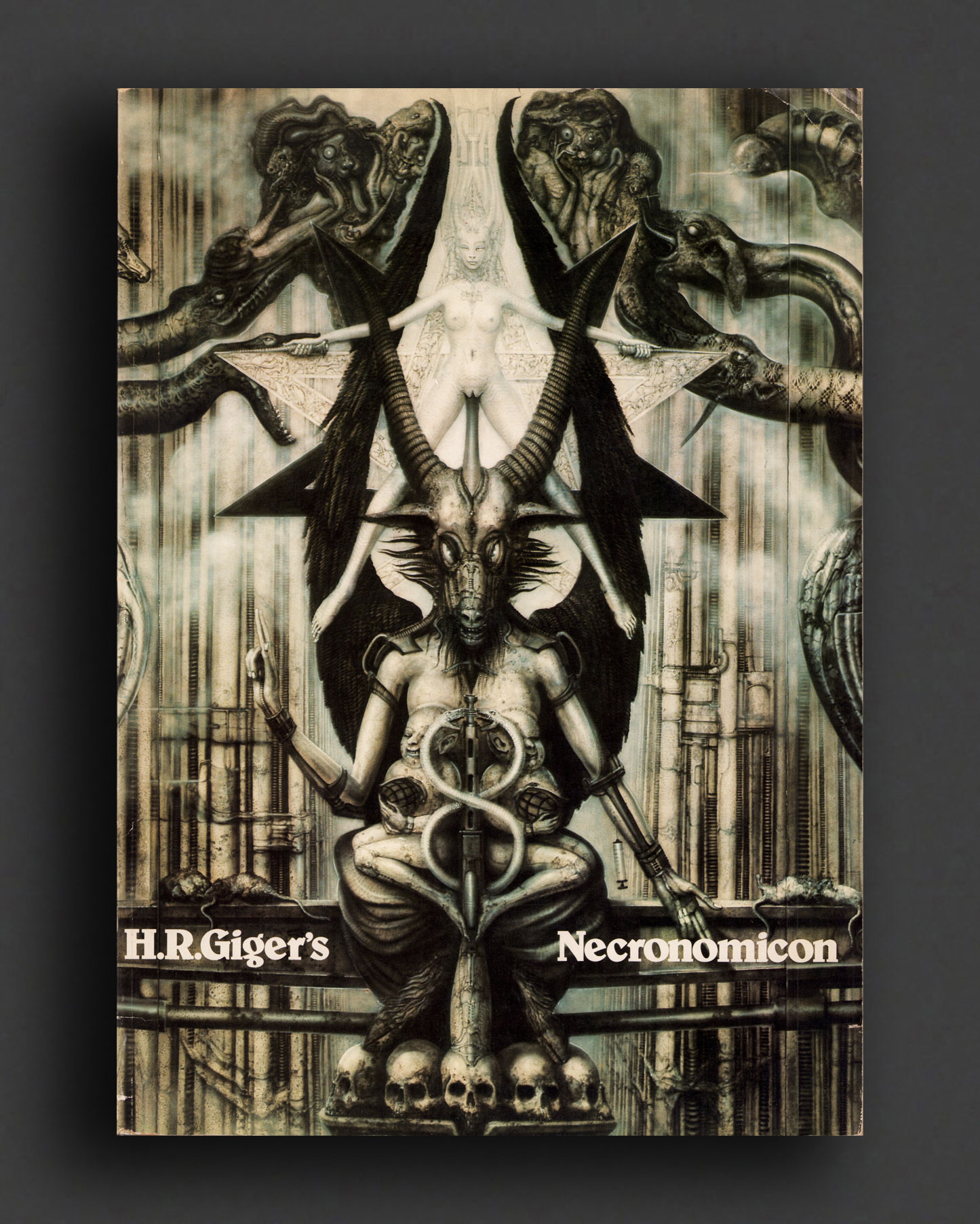
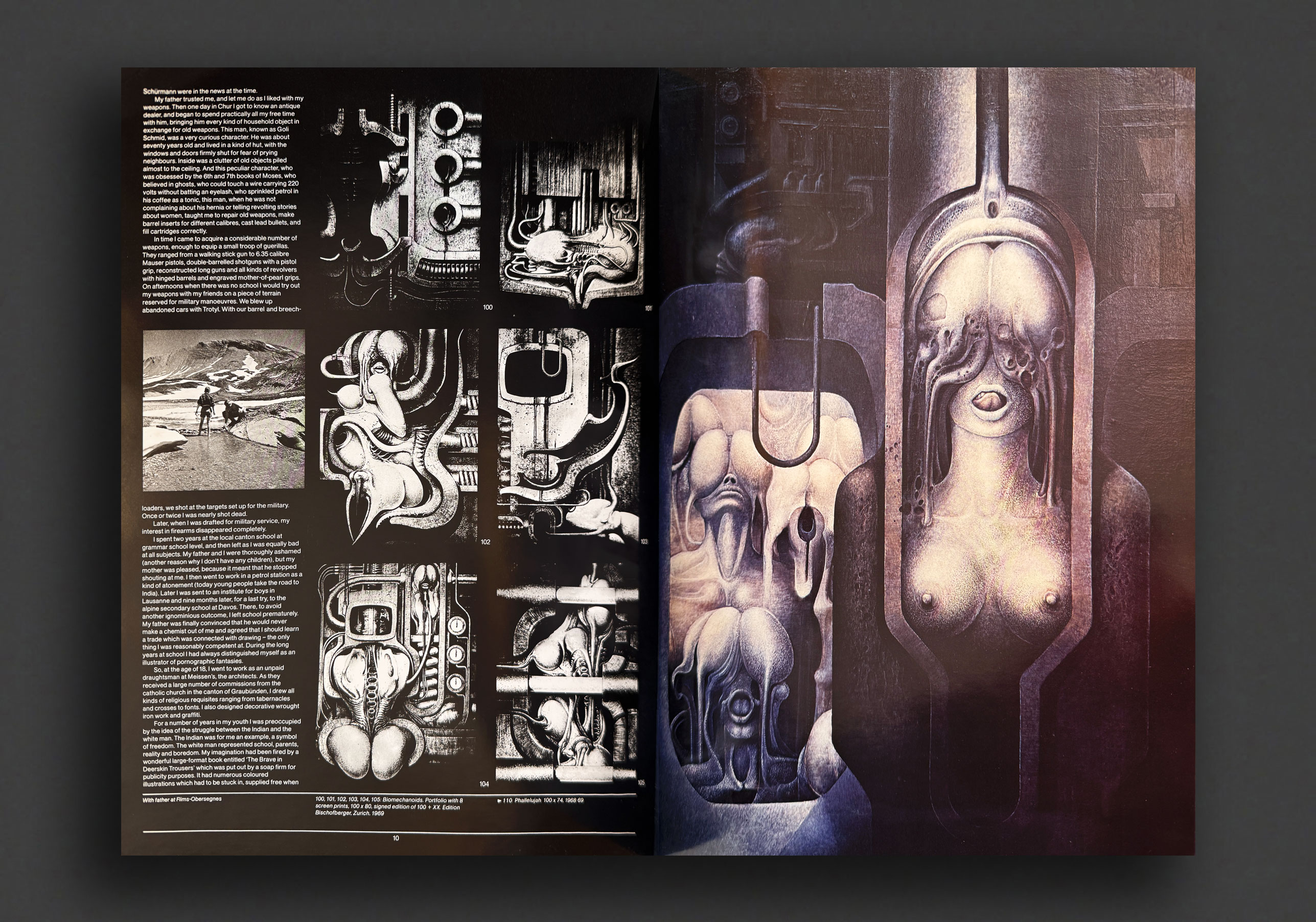
Fantastic Swiss surrealist painter, sculptor and set designer Hans Rudolf “Ruedi” Giger was born in 1940, the son of a chemist. He spoke of a father who viewed art as a "breadless profession", and strongly encouraged his son to enter into pharmaceutics. Despite this, in 1962, he moved to Zürich, where he studied Architecture and industrial design at the School of Applied Arts until 1970. Giger's style and thematic execution have been hugely influential. His design for the Alien was inspired by his painting Necronom IV and earned him an Oscar in 1980. His books of paintings, particularly Necronomicon and Necronomicon II (1985) and the frequent appearance of his art in Omni magazine continued his rise to international prominence. Giger is also well known for artwork on several music recording albums. His most distinctive stylistic innovation is that of a representation of human bodies and machines in a cold, interconnected relationship, he described as "biomechanical". His paintings often display fetishistic sexual imagery. His main influences were painters Ernst Fuchs and Salvador Dalí. He was also a personal friend of Timothy Leary. Giger suffered from night terrors and his paintings are all to some extent inspired by his experiences with that particular sleep disorder, making his first paintings as a means of art therapy. In 1998 Giger acquired the Château St. Germain in Gruyères, Switzerland, and it now houses the H. R. Giger Museum, a permanent repository of his work.
Good—Very Good copy, tight binding with some cover wear and corner wear, some sunning to edges.
2015, English
Softcover, 426 pages, 23 x 18 cm
Published by
The MIT Press / Massachusetts
$90.00 - In stock -
This long-awaited biography of Alfred Jarry reconstructs a life both "ubuesque" and pataphysical.
When Alfred Jarry died in 1907 at the age of thirty-four, he was a legendary figure in Paris-but this had more to do with his bohemian lifestyle and scandalous behavior than his literary achievements. A century later, Jarry is firmly established as one of the leading figures of the artistic avant-garde.
Even so, most people today tend to think of Alfred Jarry only as the author of the play Ubu Roi, and of his life as a string of outlandish "ubuesque" anecdotes, often recounted with wild inaccuracy. In this first full-length critical biography of Jarry in English, Alastair Brotchie reconstructs the life of a man intent on inventing (and destroying) himself, not to mention his world, and the "philosophy" that defined their relation.
Brotchie alternates chapters of biographical narrative with chapters that connect themes, obsessions, and undercurrents that relate to the life. The anecdotes remain, and are even augmented- Jarry's assumption of the "ubuesque," his inversions of everyday behavior (such as eating backward, from cheese to soup), his exploits with gun and bicycle, and his herculean feats of drinking. But Brotchie distinguishes between Jarry's purposely playing the fool and deeper nonconformities that appear essential to his writing and his thought, both of which remain a vital subterranean influence to this day.
"Alastair Brotchie brilliantly evokes the avant-garde artistic movements of fin-de-siecle Paris in all their glittering grubbiness."—Charlotte Keith, Varsity
"An enthralling, scrupulously researched, and elegantly written biography."—Mark Ford, The New York Review of Books
"[Brotchie] gives us an unmatched and vivid picture of the belle epoque's avant-garde, of which Jarry was an important, original part."—Michael Moorcock, The Guardian
"[Brotchie] skilfully moves between providing a relatively straightforward and sympathetic account of the writer's life and critically sorting through the narratives that have sustained and shaped the long-standing image of Jarry... Brotchie's refusal to mythologise stands as the book's greatest strength, and as a fitting testament to the manifold complexity of Alfred Jarry."—Karl Whitney, 3:AM Magazine
"How a schoolboy caricature evolved into Jarry's best-known creation, his monstrous 'every-man', Pere Ubu, is a fascinating story which Brotchie tells with impressive scholarship, sympathy and wit."—Peter Blegvad, The Spectator
"Brotchie's painstaking and drily funny biography is now the most ample account of Jarry and his importance that is available in our language; it is unlikely ever to be bettered."—Kevin Jackson, The Literary Review
2018, English
Hardcover, 480 pages, 17.4 x 23.2 cm
Published by
Atlas Press / London
$74.00 - In stock -
Georges Bataille's secret society, long the stuff of legend, is now revealed in its texts, meditations, rules and prohibitions.
This book recounts what must be one of the most unusual intellectual journeys of modern times, in which the influential philosopher, cultural theorist and occasional pornographer Georges Bataille (1897-1962), having spent the early 1930s in far-left groups opposing the rise of fascism, abandoned that approach in order to transfer the struggle onto "the mythological plane."
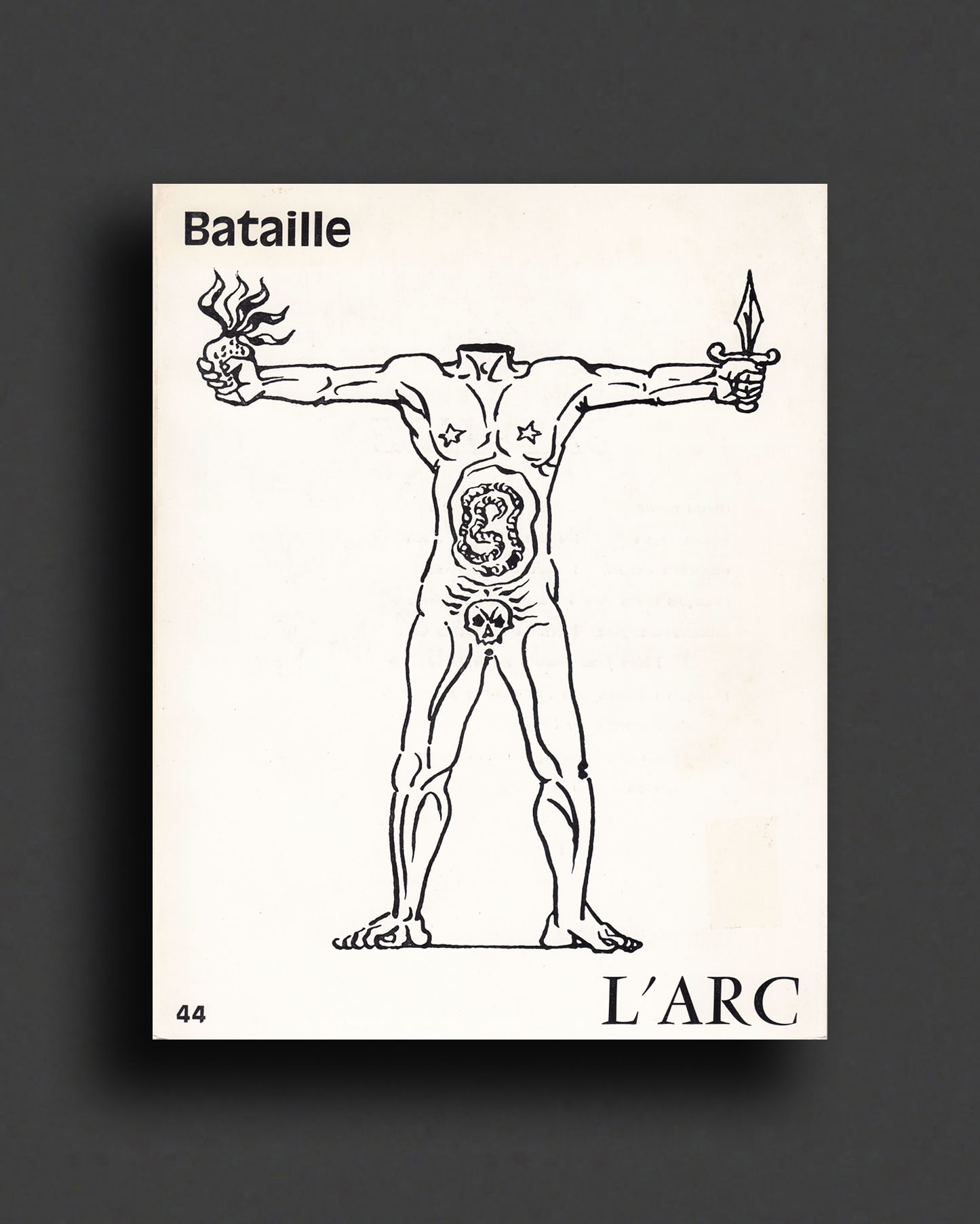
In 1937, Bataille founded two groups in order to explore the combinations of power and the "sacred" at work in society. The first group, the College of Sociology, gave lectures that were intended to reveal the hidden undercurrents within a society on the verge of catastrophe. The second group was Acéphale, a genuine secret society and anti-religion whose emblem was a headless figure that, in part, represented the death of God. Until the discovery a few years ago of the group's internal papers (which include theoretical texts, meditations, minutes of meetings, rules and prohibitions and even a membership list), almost nothing was known of its activities.
This book is the first to collect a representative selection of the writings of Bataille, and of those close to him, in the years leading up to World War II. The texts published here comprise lectures given to the College of Sociology by Bataille, Roger Caillois and Michel Leiris, essays from the Acéphale journal and a large cache of the internal papers from the secret society. A desperate narrative unfolds, wherein Bataille risked all in a wholly unreasonable quest--with a few fellow travelers, he undertook what he later described as a "journey out of this world."
Additional texts by Roger Caillois, Pierre Klossowski, Michel Leiris, and by Georges Ambrosino, Pierre Andler, Michel Carrouges, Jacques Chavy, Jean Dautry, Henri Dobier, Henri Dussat, Imre Kelemen, Jean Rollin, Patrick Waldberg.
And with drawings by André Masson
Highest recommendation!
1994, English
Softcover, 352 pages, 20.5 x 15 cm
Published by
Exact Change / Boston
$38.00 - Out of stock
Andre Breton described Maldoror as "the expression of a revelation so complete it seems to exceed human potential." Little is known about its pseudonymous author, aside from his real name (Isidore Ducasse), birth in Uruguay (1846) and early death in Paris (1870). Lautreamont bewildered his contemporaries, but the Surrealists modeled their efforts after his black humor and poetic leaps of logic, exemplified by the oft-quoted line, "As beautiful as the chance meeting on a dissecting table of a sewing machine and an umbrella." Maldoror's shocked first publisher refused to bind the sheets of the original edition--and perhaps no better invitation exists to this book, which warns the reader, "Only the few may relish this bitter fruit without danger."
This is the only complete annotated collection of Lautreamont's writings available in English, in Alexis Lykiard's superior translation. For this latest edition, Lykiard updates his introduction to include recent scholarship.
1980, German
Hardcover (w. dust jacket), 384 pages, 22 x 21 cm
1st Edition, Out of print title / used / very good
Published by
Rogner & Bernhard / Münich
$30.00 - Out of stock
First 1980 German language hardcover edition of 'Man Ray - The Rigour of Imagination', a wonderful monographic study on Man Ray by Italian art historian, writer, curator and friend of Man Ray, Arturo Schwarz. This book, an intimate survey of Man Ray's life and works first issued in 1977, was made in close collaboration with Man Ray until his death in 1976 and was the first to reveal Man Ray's real name, Emmanuel Radnitzky. Profusely illustrated in colour and monochrome with Man Ray's diverse breadth of paintings, drawings, photography, film, sculptural objects, publications, editions, exhibition and studio documentation, as well as personal photography.
Arturo Schwarz (1924 – 2021) was an Italian scholar, art historian, poet, writer, lecturer, art consultant and curator of international art exhibitions. He lived in Milan, where he amassed a large collection of Dada and Surrealist art, including many works by personal friends such as Marcel Duchamp, André Breton, Man Ray, and Jean Arp.
"Painter, creator of poetic objects, photographer, writer, filmmaker: Man Ray, born in Philadelphia in 1890, decisively shaped the cultural history of the 20th century with his genius. For the first time, this book, on which the artist actively collaborated until his death in 1976, presents and documents all aspects of his life and work.
Throughout his life, Man Ray performed pioneering work in all media; in all areas of the visual arts, photography, and film, he tirelessly searched for new means of expression that questioned everything established, usual, and taken for granted. His childlike curiosity, creative desire, and wit, which persisted well into old age, allowed him to take the most surprising paths and perform the most bewildering twists and turns. He transformed photography into art and placed it on a par with painting by "painting" his rayographs, photographs taken without a camera, or, in 1917, by being the first to create "paintings" with an airbrush, whose soft shading transferred the effects of photography to the canvas. He translated word games into optical puzzles and vice versa; he used objects and assemblages to develop highly idiosyncratic photographs; he set his inventions or rediscoveries in the field of photography in motion in the most fascinating examples of Dadaist and Surrealist film. Many of his works anticipate modern developments in art by decades.
Exhibitions of the European avant-garde around 1910 (Armory Show, Gallery 291 by Alfred Stieglitz, among others) had torn the young Man Ray from the academic waters of American art. As early as 1915/16, he placed himself at the forefront of the American avant-garde with Marcel Duchamp and Francis Picabia, who had fled into exile in America before the World War, and was present at the birth of New York Dada. The European Dadaists and Surrealists in Paris welcomed him into their midst with open arms in 1921 [...]"—from the jacket blurb
Very Good copy in VG dust jacket.
1970—1980,
Offset poster (82 x 48 cm)
1st Edition, Out of print title / used / very good
Published by
Galerie Alexandre Iolas / Paris
$280.00 - Out of stock
Gorgeous vintage Man Ray (1890—1976) exhibition poster from the 1970s of the artist at the legendary Galerie Alexandre Iolas, Paris, where the American artist spent much of his life as a significant contributor to the Dada and Surrealist movements. Issued by the gallery in a beautiful offset print on lovely wove paper featuring Man Ray's "Pêchage"Peaches"), 1969, painted wooden box, artificial peaches and cotton.
A stunning collector's item, ready to frame.
Dimensions : 82 x 48 cm
Very Good condition, well preserved.
2023, English
Softcover, 64 pages, 10.5 x 8 cm
Published by
Hanuman Editions / US
$36.00 - In stock -
In this brief, dense essay, Daumal bids us to resist the very notion of the truth, and to recognize it as an artistic and metaphysical dead-end.
René Daumal (1908-1944) was a French poet and writer often associated with surrealism (though he fought against the label), spiritualism, and 'pataphysics. He is perhaps best remembered for the posthumously published novel, Mount Analogue (1952).
From the first series redux of Hanuman Books, the legendary and cult series of chapbooks that were printed in southern India and published out of the storied Chelsea Hotel in New York City between 1986 and 1993. Founded by American curator Raymond Foye and artist Francesco Celemente, Hanuman Books was dedicated mainly to the extreme deconstructive edge of the countercultural poetic, musical, and artistic currents of the 1960s and 1970s, spanning the era of the Cold War, the AIDS crisis, the Harlem Ballroom scene, the Beats, Warhol's Factory etc. Hanuman Books sought to marry the folk-minimal-artisanal with the cutting edge, playfully marketing their books as ‘secret’ documents of an avant-garde subculture, meant to be passed on covertly at street corners just as millenarian chapbooks of medieval times were supposed to have been. Printed in India, the small format is meant to mimic the chapbook form of the Hanuman Chalisa (a folk compendium of chants to the Hindu god Hanuman, sold very cheaply in the bazaars of India) that made them perfect for slipping illicitly into any pocket. Redux editions edited by Shruti Belliappa and Joshua Rothes.
2024, English
Hardcover, 192 pages, 30.5 x 22.9 cm
Published by
Fulgur Press / UK
$110.00 - In stock -
Sultry and gothic, Slinger’s legendary 1970s photomontage project returns to print with unpublished archival photos and text from the artist.
First published in 1977 and long out of print, Slinger's classic photobook, An Exorcism: A Photo Romance, explores the feminine psyche. Developed from a visit to Lilford Hall in 1970, Slinger provides us with a series of haunting images that chart a process of self-discovery and awakening. This new edition from Fulgur Press has been expanded with new images from the original series held in the artist’s archive and offers a previously unpublished narrative by Slinger.
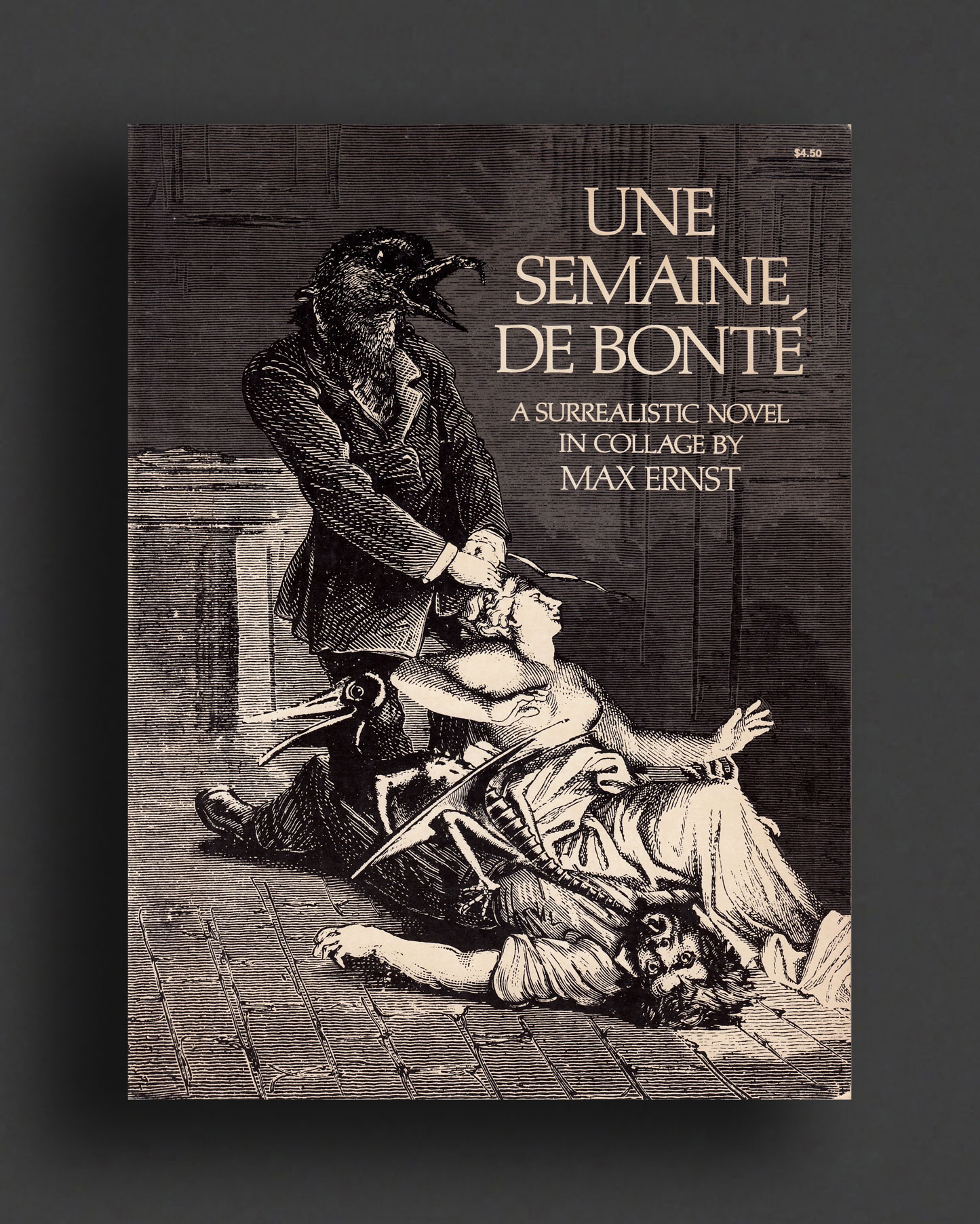
Penny Slinger is a Los Angeles–based artist whose work investigates the feminine, the magical and the erotic. While studying at Chelsea College of Art in the late 1960s, Slinger encountered Max Ernst’s Une semaine de bonté (1934), initiating an enduring involvement with both the Surrealist movement and the medium of collage. She has published three books of provocative photo collage: 50% The Visible Woman, An Exorcism and Mountain Ecstasy. Her work is in many international museum collections, including Tate Britain.
1982, English
Softcover, 218 pages, 22.5 x 15 cm
Out of print title / used / very good
Published by
Columbia University Press / New York
$70.00 - In stock -
1982 Columbia classics re-print of Powers of Horror: An Essay on Abjection (French: Pouvoirs de l'horreur. Essai sur l'abjection), a 1980 book by Julia Kristeva. The work is an extensive treatise on the subject of abjection, in which Kristeva draws on the theories of Sigmund Freud and Jacques Lacan to examine horror, marginalization, castration, the phallic signifier, the "I/Not I" dichotomy, the Oedipal complex, exile, and other concepts appropriate to feminist criticism and queer theory.
According to Kristeva, the abject marks a "primal order" that escapes signification in the symbolic order; the term is used to refer to the human reaction (horror, vomit) to a threatened breakdown in meaning caused by the loss of the distinction between subject and object, or between the self and the other.
"Kristeva is one of the leading voices in contemporary French criticism, on a par with such names as Genette, Foucault, Greimas and others. ... [Powers of Horror is] an excellent introduction to an aspect of contemporary French literature which has been allowed to become somewhat neglected in the current emphasis on para-philosophical modes of discourse. The sections on Celine, for example, are indispensable reading for those interested in this writer and place him within a context that is both illuminating and of general interest."—Paul de Man
1982 English translation by Leon S. Roudiez. Single spine crease, light knocking/creasing to baord extremities, otherwise VG throughout.
2017, English
Softcover, 256 pages, 21 x 14 cm
Published by
New Directions / New York
$40.00 - Out of stock
"The president of the republic of dreams"—Louis Aragon
"An intoxicating sui generis novel by the greatest mesmerist of modern times"—André Breton
"Genius in its pure state. The Proust of dreams."—Jean Cocteau
The wealthy scientist Martial Canterel guides a group of visitors through his expansive estate, Locus Solus, where he displays his various deranged inventions: a machine propelled by the weather, which constructs a mosaic out of varying hues of human teeth; a hairless cat charged with a powerful electric battery; a bizarre theater in which corpses are reanimated with a special serum to enact the most important movements of their past lives. Wondrously imaginative and narrated with Roussel’s deadpan wit, Locus Solus is unlike anything else ever written.
Translated from French by Rupert Copeland Cunningham
"[H]e was a seminal influence on surrealism, Dadaism, the nouveau roman, and the Oulipo….Roussel could have attempted to go the way of a popular writer like Rostand or of an avant-garde writer like Breton, but, both admirably and foolishly, he remained Roussel to the end."—Ryan Ruby, Lapham's Quarterly
"Raymond Roussel's works immediately absorbed me: I was taken by the prose style even before learning what was behind it—the process, the machines, the mechanisms—and no doubt when I discovered his process and his techniques, the obsessional side of me was seduced a second time by the shock of learning of the disparity between this methodically applied process, which was slightly naive, and the resulting intense poetry."—Michel Foucault
"There is hidden in Roussel something so strong, so ominous, and so pregnant with the darkness of the 'infinite spaces' that frightened Pascal, that one feels the need for some sort of protective equipment when one reads him."—John Ashbery
2025, English
Softcover, 640 pages, 24 x 16.99 cm
Published by
Intellect Ltd / US
$110.00 - In stock -
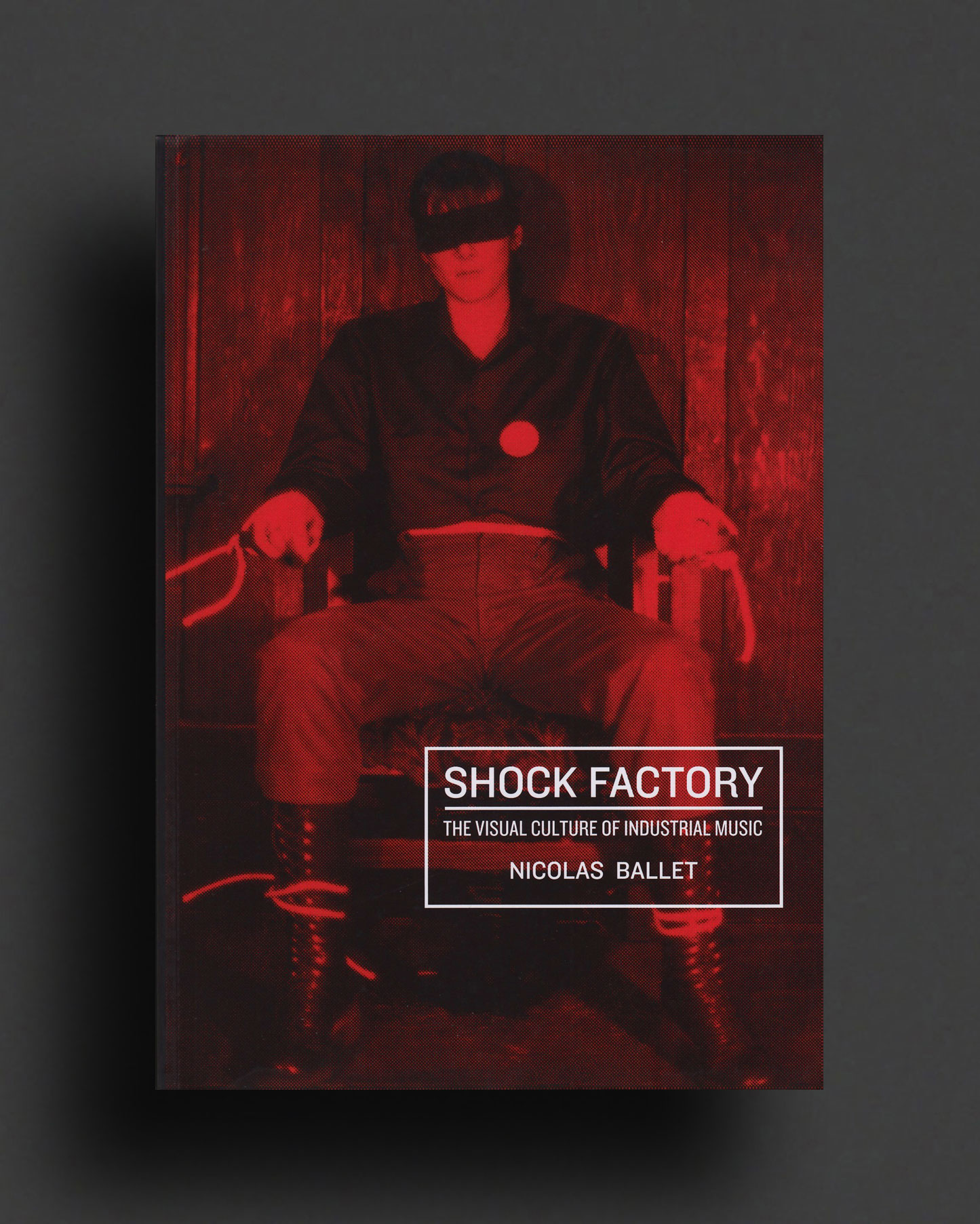
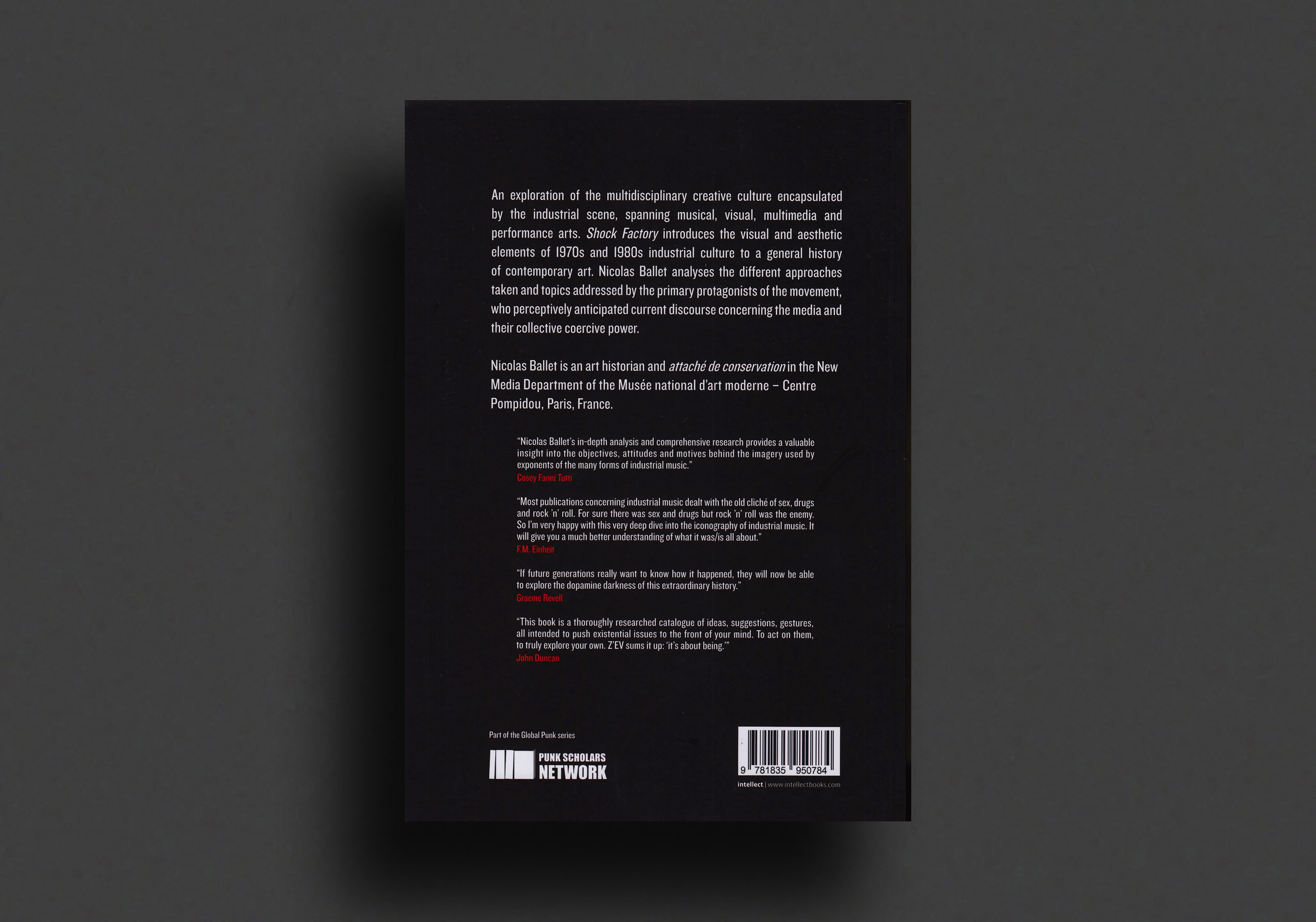
Industrial music has long been recognized for its sonic innovations, but the radical visual culture that accompanied this underground movement has remained largely unexplored. Shock Factory: The Visual Culture of Industrial Music presents the first comprehensive examination of how industrial artists created a coherent aesthetic language across multiple media—from xerox art and mail art to installation and performance—fundamentally challenging modernist utopias while prophetically anticipating contemporary discourse about media manipulation and technological control.
Emerging in mid-1970s Britain from the post-punk underground before expanding globally throughout the 1980s, artists like Throbbing Gristle, Cabaret Voltaire, SPK, Test Dept, Laibach, Einstürzende Neubauten, Nurse With Wound, Current 93, Coil, Psychic TV, Boyd Rice, Whitehouse, Merzbow, Hijokaidan, Hunting Lodge, Controlled Bleeding, Hafler Trio, Z'EV, Nocturnal Emissions, 23 Skidoo, Clock DVA, Master/Slave Relationship, and Monte Cazazza developed sophisticated visual strategies that matched their abrasive soundscapes with equally confrontational imagery.
At 640 pages, this award-winning monograph reveals how industrial artists systematically appropriated reprographic techniques—particularly xerox art and photocollage—to create disturbing visual narratives investigating mind control, criminality, occultism, pornography, psychiatry, and totalitarianism. Through détournement strategies borrowed from Situationist theory, they exposed the coercive mechanisms of mass media and technological society, creating a visual vocabulary that challenged viewers to confront uncomfortable truths about modern power structures. What emerges is a movement that perceptively anticipated contemporary concerns about surveillance, media manipulation, and collective psychological control. Industrial artists' exploration of these themes through deliberately provocative imagery served not as mere provocation but as sophisticated critique of the very media systems they inhabited. Their radical aesthetic choices—degraded reproduction quality, found imagery manipulation, shock tactics—created hybrid forms that defied traditional categorization while establishing independent networks that bypassed conventional art world structures.
Shock Factory positions industrial music's visual culture within broader art historical narratives, revealing connections to Dada, Surrealism, and conceptual art while demonstrating the movement's unique contributions to contemporary visual culture. The book arrives at a moment when questions about technology, media manipulation, and social control have never been more urgent, demonstrating how these artists' radical visual strategies continue to offer valuable insights for our digital age.
For scholars of contemporary art, music history, and media studies, this book provides essential documentation of an overlooked movement that significantly influenced subsequent artistic developments. For readers interested in underground culture and avant-garde aesthetics, Shock Factory reveals the sophisticated visual thinking that accompanied one of the most innovative musical movements of the past half-century.
"A history of industrial music needed to be written. Nicolas Ballet has accomplished this. Thoroughly. This is the book's greatest strength. It explores the significance of noise as a reflection of a world in decay and screaming as a need. And doing it so it reveals a significant connection between industrial music and contemporary art. This is also what makes it an essential book: its contribution to dismantling categories and rethinking history from mixed creative territories."—David G. Torres
Nicolas Ballet is an art historian and assistant curator at the Centre Pompidou in the New Media Department. He is the author of books and articles exploring the visual and sonic contributions of countercultures and experimental artistic practices.
1964, German
Hardcover (w. dust jacket), 124 pages, 28 x 21.5 cm
1st Edition, Out of print title / used / very good
Published by
Forum Verlag / Vienna
$50.00 - In stock -
1964 first hardcover edition of this monographic study on the Viennese School of Fantastic Realist Painting and the work of Erich Brauer, Ernst Fuchs, Rudolf Hausner, Wolfgang Hutter, and Anton Lehmden. Illustrated with colour plates throughout and a large gallery of monochrome reproductions of many paintings by each artist. Texts in German by AP Gütersloh, W. Schmied, H. Hakel, and Kurt Eigl.
"René Gustav Hocke calls the group of artists to whom this volume is dedicated "one of the greatest surprises in contemporary intellectual Europe." Five painters are grouped together under the term "Vienna School": Brauer, Fuchs, Hausner, Hutter, and Lehmden. As diverse as the individual, expressive artists' personalities are, they all share a commitment to objective, figurative art; they all paint beautiful, precious pictures with technical perfection, high-quality works full of interesting ideas. In Erich Brauer's pure, luminous colors, an oriental, fairytale world emerges; Ernst Fuchs's painting, trained by the old masters, revolves around religious themes and problems in a sensitive, highly individual way; Anton Lehmden paints, in the words of his teacher, "cities and landscapes that need not be on earth." Rudolf Hausner is, to quote Gütersloh again, "the tragedian and tragedian of this group", the only true representative of international surrealism. Wolfgang Hutter is assigned the cheerful subject, "his botanical drum contains more beautiful flowers than grow in forests and gardens." Thus, each of the five painters represents fantastic realism in their own unique way, an art movement that is gaining increasing attention around the world and deserves to be honored in book form by renowned experts in the field."—from the introduction
VG-NF copy in VG dust jacket, page toning, some dj toning and wear to edges.
1989, English
Softcover, 213 pages, 20.5 x 18 cm
1st Edition, Out of print title / used / very good
Published by
City Lights Books / San Francisco
$120.00 - In stock -
First 1989 City Lights English translation, long out-of-print.
Tears of Eros is the culmination of Georges Bataille's inquiries into the relationship between violence and the sacred. Taking up such figures as Giles de Rais, Erzebet Bathory, the Marquis de Sade, El Greco, Gustave Moreau, Andre Breton, Voodoo practitioners, and Chinese torture victims, Bataille reveals their common death. This essay, illustrated with artwork from every era, was developed out of ideas explored in Death and Sexuality and Prehistoric Lascaux or the Birth of Art . In it Bataille examines death—the "little death" that follows sexual climax, the proximate death in sadomasochistic practices, and death as part of religious ritual and sacrifice. "Bataille is one of the most important writers of the century."— Michel Foucault Georges Bataille was born in Billom, France, in 1897. He was a librarian by profession. Also a philosopher, novelist, and critic he was founder of the College of Sociology. In 1959, Bataille began Tears of Eros , and it was completed in 1961, his final work. City Lights published two of his other Story of the Eye and The Impossible . Bataille died in 1962.
French essayist, philosophical theorist, and novelist, often called the "metaphysician of evil." Bataille was interested in sex, death, degradation, and the power and potential of the obscene. He rejected traditional literature and considered that the ultimate aim of all intellectual, artistic, or religious activity should be the annihilation of the rational individual in a violent, transcendental act of communion. Roland Barthes, Julia Kristeva, and Philippe Sollers have all written enthusiastically about his work.
Very Good copy, light wear to extremities/corners.
2005, English
Softcover, 304 pages, 23 x 15.5 cm
1st Edition, Out of print title / used / very good
Published by
Creation Books / London
$60.00 - Out of stock
Scarce 2005 edition published by Creation Books.
The spectre of Gilles de Rais, satanist and child-killer, eclipses French history like a dark star. A fallen general, once the champion of Jeanne d'Arc, de Rais' riches and experimentations led him to the very gates of Hell.
With quotations, essays and fiction, as well as a complete chronology and register of people and places in de Rais' brief but cataclysmic existence, "Dark Star is a rich evocation of the satanic allure of the most intriguing figure in the annals of mass murder.
Features the writings of Georges Bataille, Blaise Cendrars, J-K Huysmans, Valentine Penrose, Angela Carter, Jean Genet, Marquis de Sade, André Breton, Arthur Rimbaud, Gustave Flaubert, Richard Thoma, James Havoc, Charles Perrault, and many others
"Gilles de Rais - one of the most glorious, sinister, enigmatie figures in all European history"—Henry Miller
Very Good copy with some age rippling to the cover laminate. Some foxing to block top.
1971, English
Softcover, 162 pages, 20 x 13 cm
1st Edition, Out of print title / used / very good
Published by
The Athlone Press / UK
$45.00 - In stock -
First 1971 edition of Norma Rinsler's study of life and work of Gérard de Nerval (1808-1855), one of the most important writers of nineteenth-century France, both in prose and in verse. A precursor of the symbolists and the surrealists, Nerval has fascinated many major literary figures, including Proust and Breton, Eliot and Apollinaire, Michaux and Leiris, Artaud and Char. Dr. Rinsler examines the peculiar problems presented by Nerval's recurrent mental illness, its effect upon his creative work and the relationship between prose and poetry in the pattern which emerges. She discusses the predominant themes of his work and the various interpretations to which they have given rise and, while giving her own very personal view, she also outlines the contribution made by other scholars to the study of this most mysterious of poets.
Poet, storyteller, autobiographer, translator, and visionary, Gérard de Nerval (1808-55) explored the blurry boundaries between dream and reality, fact and fiction, imagination and madness in his groundbreaking writings. Nerval was a pioneering modernist, a precursor of the French Symbolists, and a vital influence on writers such as Marcel Proust, André Breton, and Antonin Artaud. His works include Voyage en Orient (Journey to the Orient), Sylvie - which Umberto Eco deemed a "masterpiece," Les Filles du Feu (The Daughters of Fire), Les Illuminés (The Illuminati), and Aurélia - which opens with "Dream is a second life."
VG copy light age/wear.
1980, English
Hardcover (w. dust jacket), 224 pages, 30 x 23 cm
1st Edition, Out of print title / used / very good
Published by
Fleetbooks / New York
$30.00 - Out of stock
"Unblushing color, is the sexual world around us painted by outstanding artists of the twentieth century. In this extraordinary book, the modern world, the flesh, and the devil are captured as never before."
Foreword by Henry Miller.
Within it are 163 newly photographed works of art, each one faithfully reproduced, unretouched, in four color lithography. On these oversized pages is reflected the erotic life of our times from never before published Picasso watercolors of 1901-02 to the initial publication of recent works by George Segal, Andy Warhol, Larry Rivers, R.B. Kitaj, Tom Wesselman and many others.
1980 hardcover survey by Bradley Smith, '20th Century Masters of Erotic Art' is a lavishly illustrated (colour and b/w) collection of erotic works from private and public collections and museums. "Within it are 163 newly photographed works of art, each one faithfully reproduced, unretouched, in four-color lithography. On these oversized pages is reflected the erotic life of our times from never before published Picasso watercolors of 1901-02 to the initial publication of recent works by George Segal, Andy Warhol, Larry Rivers, R.B. Kitaj, Tom Wesselman and many others." Featuring further works by Leonor Fini, Otto Dix, Ernst Fuchs, Fernando Botero, Hans Bellmer, André Masson, Mel Ramos, Friedrich Schröder Sonnenstern, Paul Wunderlich, Richard Lindner, Elias Friedensohn, Roberto Matta, Graham Ovenden, Francisco Toledo, Carlos Revilla, Egon Schiele, Leonard Foujita, Henk Pander, Pablo Picasso, Alexander Calder, Max Ernst, Félix Labisse, Paul Delvaux, Salvador Dalí, and many other painters and illustrators who have conveyed human sexuality through fantasy, romance, symbolism, and super realism, contributing to the development of diverse erotic themes in art becoming more prominent and accepted in the modern era. We've since regressed.
Good copy in Good DJ, wear to dj extremities.
1990, English
Softcover, 122 pages, 21 x 13.5 cm
1st Edition, Out of print title / used / very good
Published by
Atlas Press / London
$70.00 - Out of stock
Rare first 1990 English Atlas Press edition, published in an edition of 1000 copies.
Introduced by Antony Melville. Translated by Jon Graham.
Perhaps the most important Surrealist automatic text, The Immaculate Conception (1930) traces the interior and exterior life of man from Conception and Intra-Uterine Life to Death and The Original Judgement. The central section is a celebrated series of “simulations” of various types of mental instability.
Maurice Nadeau (in The History of Surrealism) described the book as “An astonishing series of poems in prose, more brilliant than those of either Breton or Eluard on his own … if all that remained of the Surrealist movement were the pages of The Immaculate Conception, man, alerted, could not turn away from the astounding mystery of his condition.”
Very Good copy some wear/light creasing to covers.
2025, English
Softcover (staple-bound), 16 pages, 29.7 x 21 cm
Edition of 50,
Published by
Light of Day Books / Melbourne
$10.00 - In stock -
Number 19 in the ongoing series of artist zines published by Light of Day Books, Melbourne, each in an edition of 50 copies.
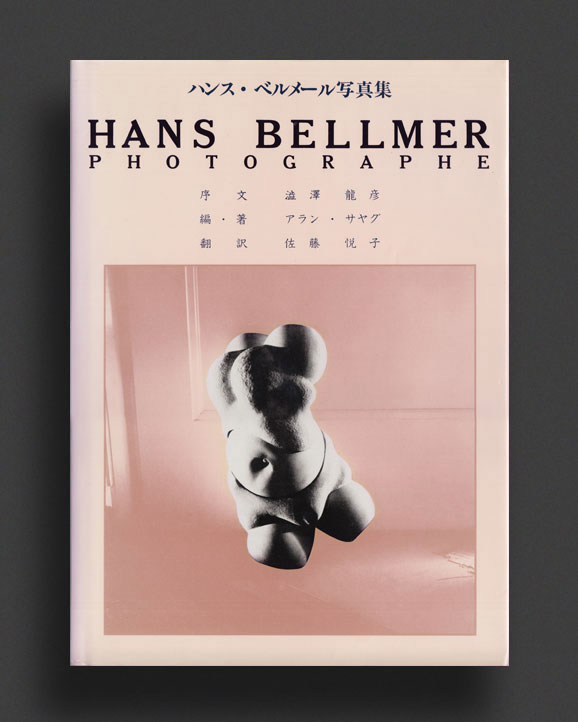
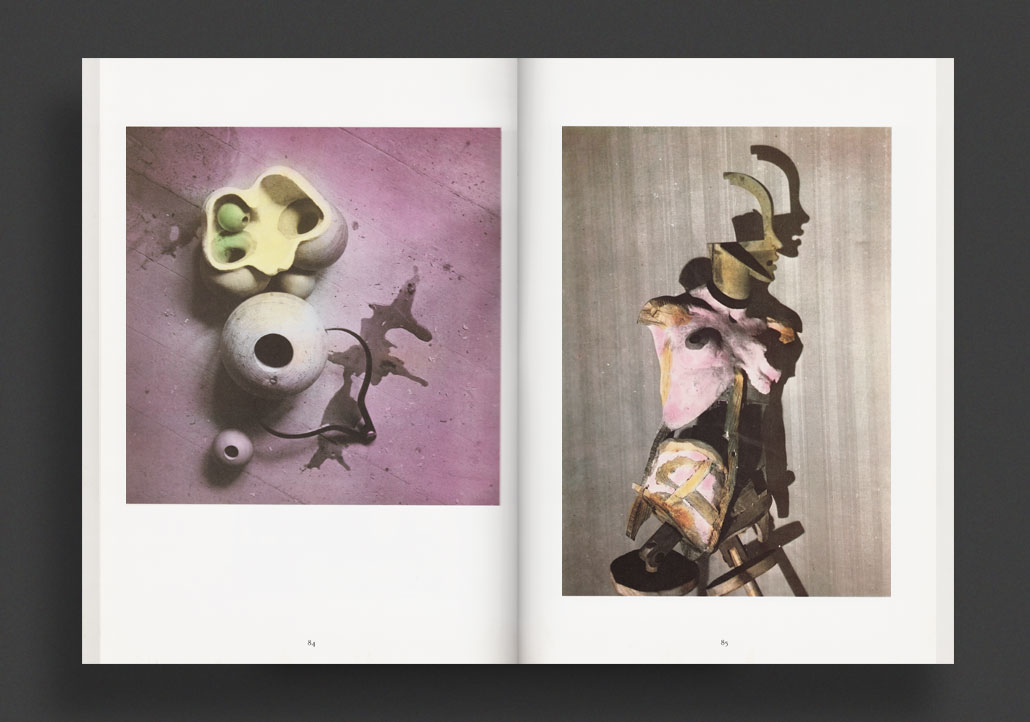
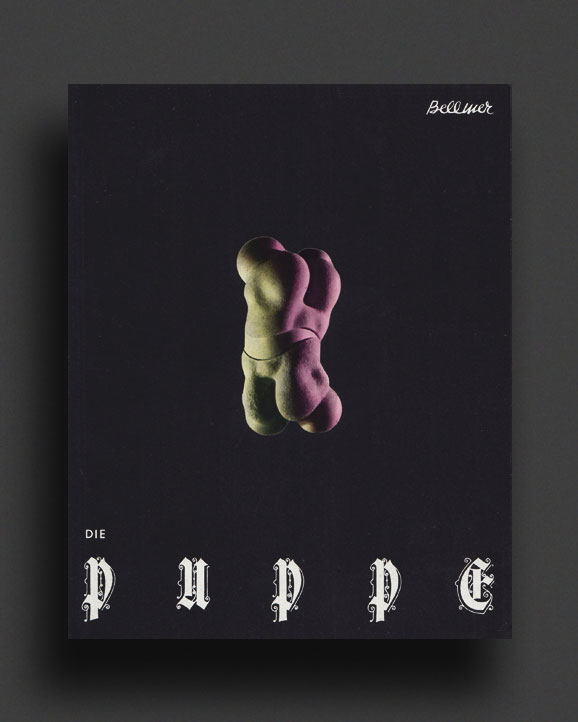
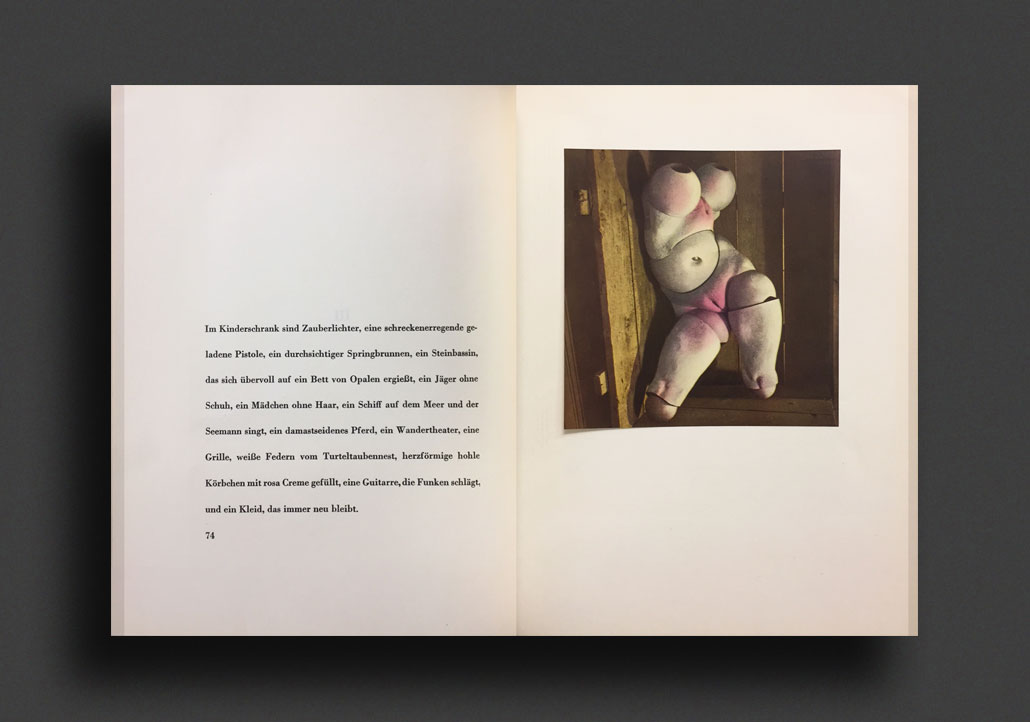
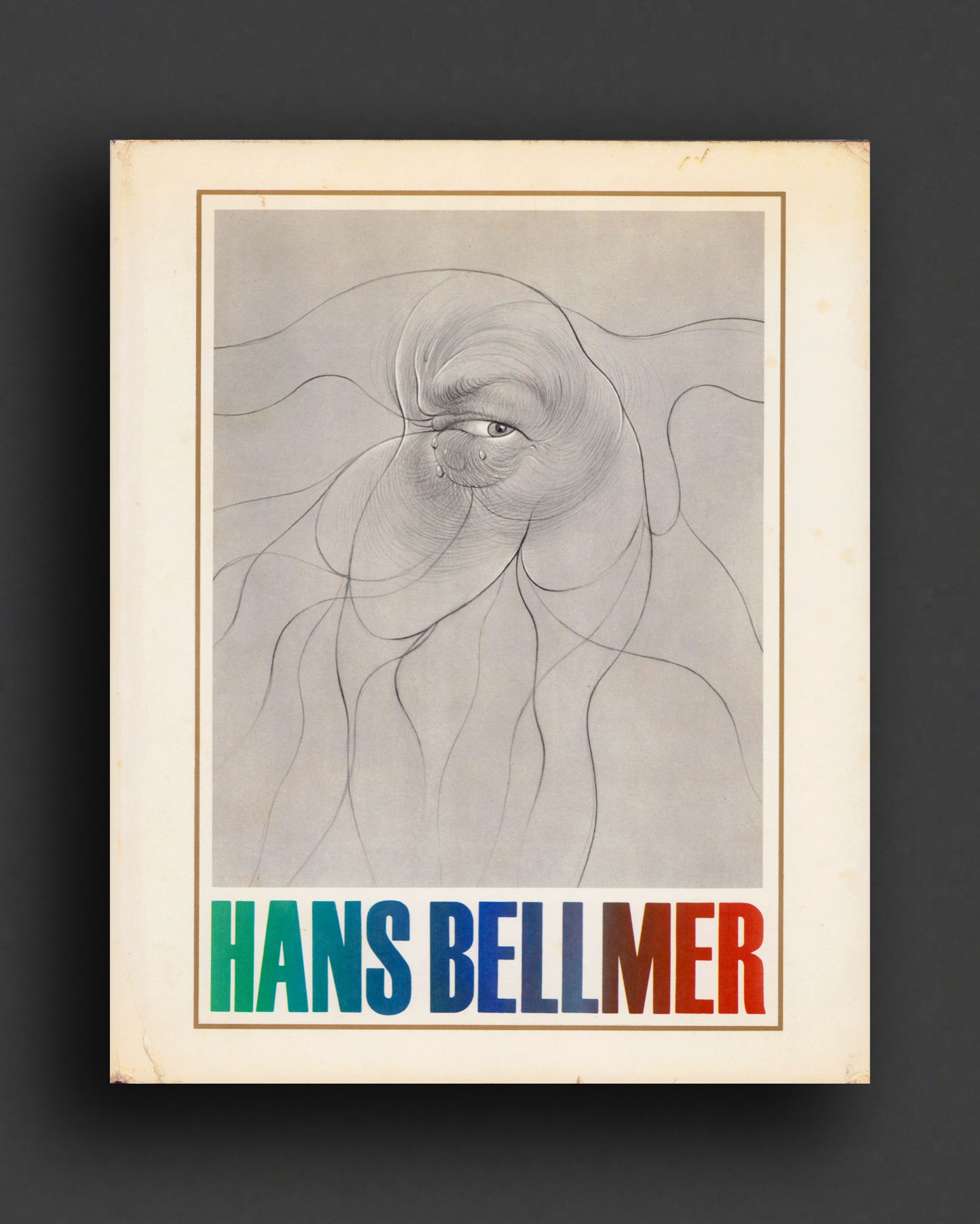
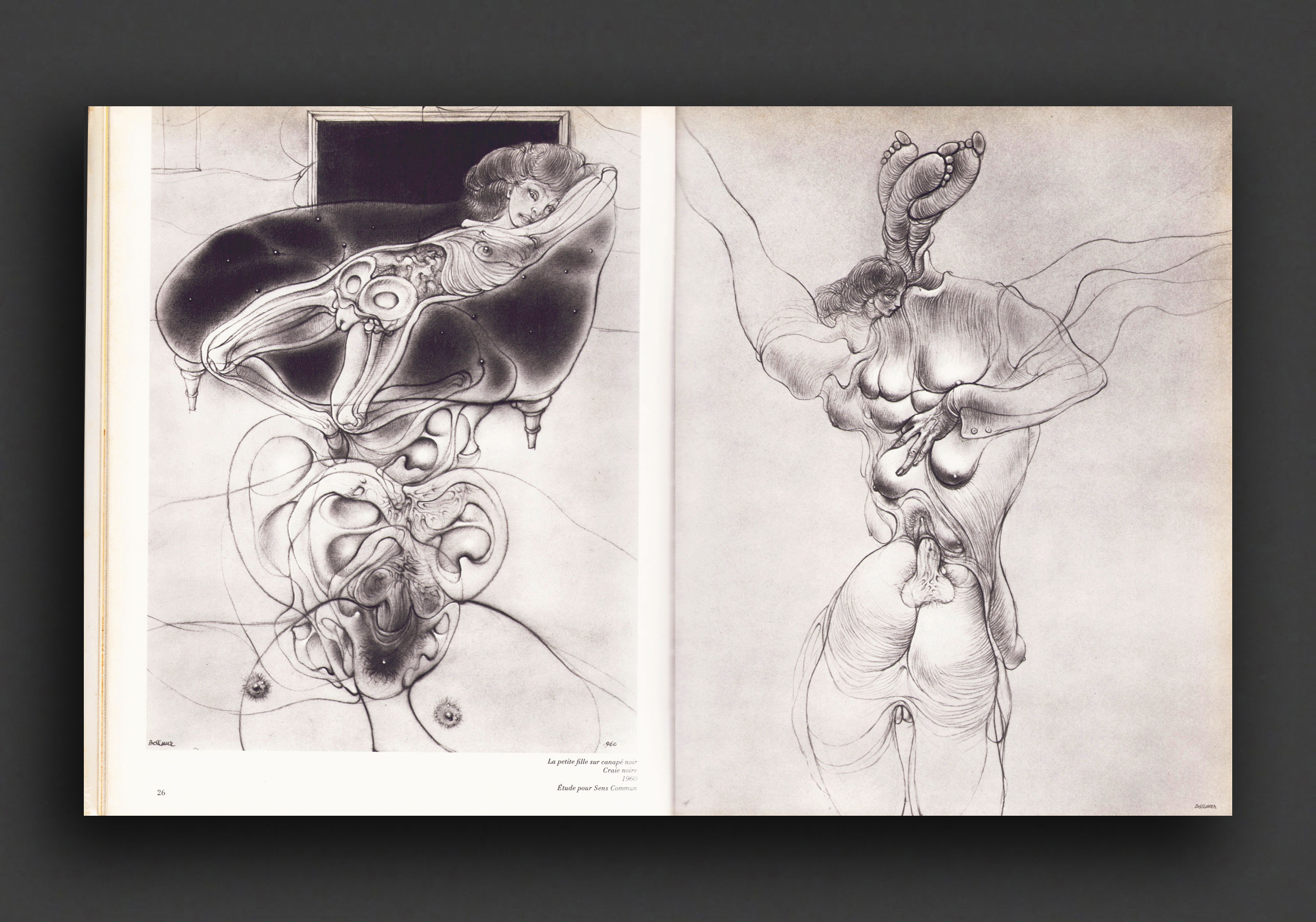
Selected images from the 1949 Les Jeux de la poupée (The Game of the Doll) a landmark collaborative work by Hans Bellmer and poet Paul Éluard. Features the hand-coloured photographs of Bellmer’s mutated, jointed female dolls arranged in unsettling, dreamlike poses that blur the line between desire, control, and dismemberment. The images, both tender and disturbing, exemplify Bellmer’s obsession with the fragmented female form and reflect his resistance to the fascist ideal of bodily perfection. The photographs are a key surrealist exploration of eroticism, identity, and the unconscious. Les Jeux de la poupée remains one of Bellmer’s most significant and controversial achievements.
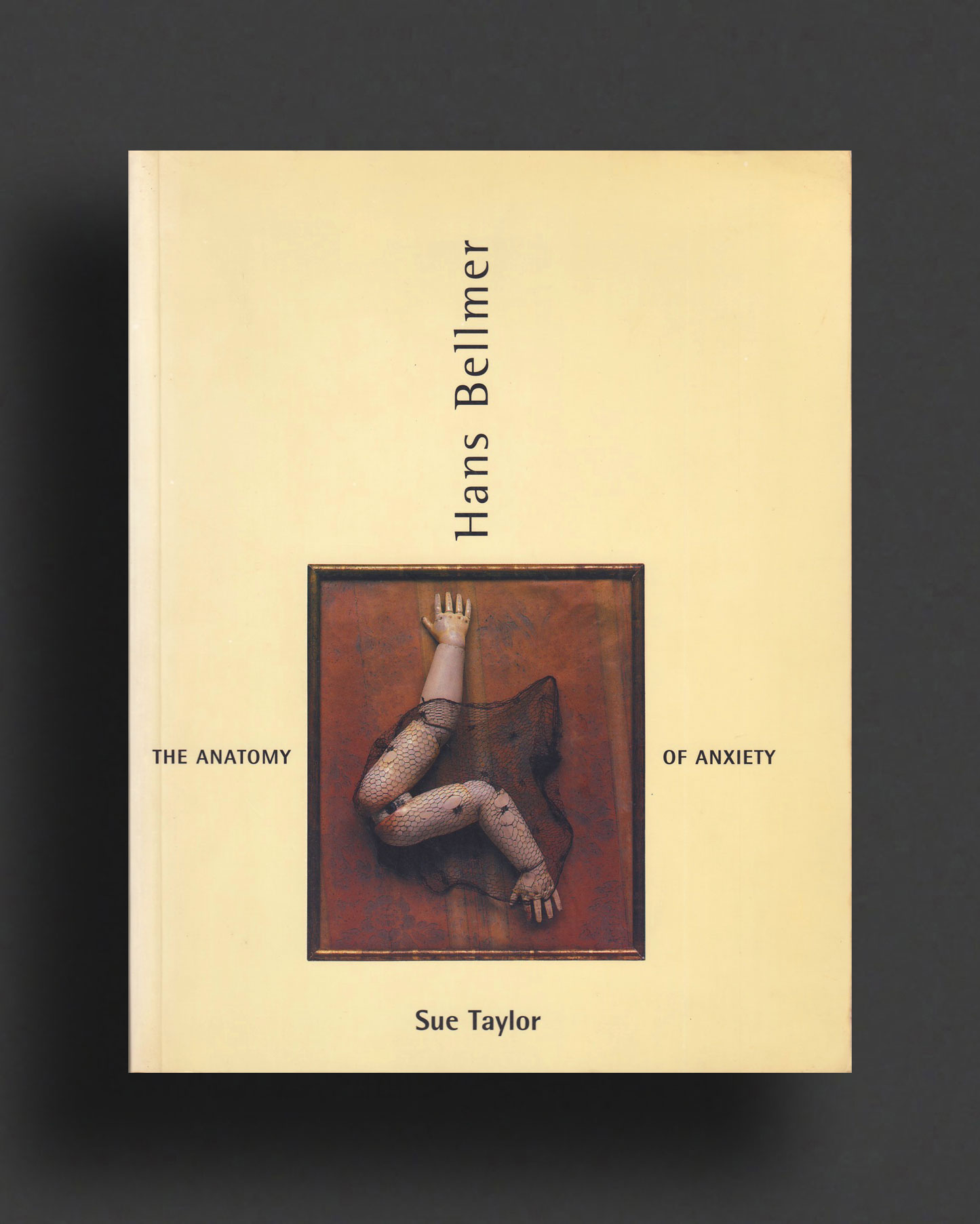
Hans Bellmer (1902–1975) was a German artist best known for his provocative life-sized dolls and surrealist photography, which challenged ideals of beauty, authority, and fascism. Inspired by personal experiences, psychological rebellion, and literary influences, Bellmer began constructing articulated female dolls in the 1930s, photographing them in unsettling, dreamlike scenes that explored themes of eroticism, control, and fragmentation. His work was condemned by the Nazi regime as “degenerate,” prompting his move to France in 1938, where he became associated with the Surrealists. During World War II, he supported the French Resistance and was briefly imprisoned. After the war, Bellmer abandoned doll-making and focused on erotic drawings and prints. He lived in Paris with his partner Unica Zürn until her suicide in 1970, and continued working until his death in 1975.
2025, English
Softcover, 131 pages, 20.2 x 12.7 cm
Published by
The New York Review of Books / New York
$35.00 - In stock -
A new translation of one of the defining works of the French surrealist movement, an energetic autobiographical novel that is at once both a tumultuous romance story and an initiation into the surrealism of everyday life.
The most renowned of all surrealist literary works, Andre Breton's Nadja has been stirring passions and imaginations since its first publication in 1928. At once a poignant romance, an autobiography, a philosophical inquiry into questions of identity, and a lively illustration of the surrealist belief in life-changing chance, Nadja relates the fortuitous meeting and brief, tumultuous relationship between Breton, surrealism's founder and primary theorist, and the "wandering soul" who called herself Nadja, "because in Russian it's the beginning of the word for hope, and because it's only the beginning."
Over the course of a single breathless week, recounted with scrupulous precision and a poet's sense of drama, Breton and Nadja pursue an adventure that stands outside of societal or moral conventions, and that brings both of them to what Breton termed "the extreme limit of the surrealist aspiration." Bookending this beguiling and ultimately tragic story are a series of "petrifying coincidences," episodes that initiate the reader into the surrealism of everyday life, and a penetrating examination of Breton's own share of responsibility in Nadja's ultimate fate, ending with the shattering intrusion into the author's life of a final transformative occurrence.
In this, the first new translation of Nadja in more than sixty years, award-winning translator and surrealism scholar Mark Polizzotti brings a fresh perspective to this unique and haunting tale. Making use of the most recent research (including the revelation of Nadja's identity and life story and the discovery of Breton's original manuscript), he sets the narrative in its historical and biographical context and corrects a number of inaccuracies in the previous English version.
This vibrant, emotionally resonant translation breathes new energy and urgency into a book that has long been recognized as one of the seminal masterpieces of twentieth-century modernism.
2023, English / French
Softcover, 219 pages, 15.2 x 21.5 cm
Published by
City Lights Books / San Francisco
$40.00 - In stock -
Erotic-macabre poetry by an overlooked Surrealist woman from the Middle East.
"You know very well, Joyce, that you are for me—and very objectively too—the greatest poet of our time. Surrealist poetry, that's you."—André Breton
"Your poems know the essential cries, those which speak of passion in its vertigo."—Gaston Bachelard, author of The Poetics of Space
The most significant Surrealist poet to emerge in 1950s Paris was a woman, Joyce Mansour. Mansour was a Syrian Jewish exile from Egypt whose fierce, macabre, erotically charged works gave André Breton's Surrealist group a much-needed jolt after the ravages of the Second World War. Among new adherents, only Mansour wrote poems commensurate with those of Robert Desnos, René Char, Benjamin Péret, and other poets from the movement's heyday. Yet she remains curiously neglected in English translation, and even her posthumous reputation in France suffers from the patriarchal and chauvinist biases of the French literary establishment.
Emerald Wounds: Selected Poems by Joyce Mansour is a much-needed corrective to this state of affairs, a compact yet career-spanning, bilingual anthology of this incendiary poet. With a biographical introduction by translator Emilie Moorhouse, Emerald Wounds showcases the entire arc of Mansour's trajectory as a poet, from the at-once gothic and minimalist fragments of her first collection in 1953, Screams, to the serpentine power of her final poems of the 1980s. Juxtaposing the original French poems with their English translations, Mansour's voice surges forward uncensored and raw, communicating the frustrations, anger, and sadness of an intelligent, worldly woman who defies the constraints and oppression of a male-dominated society that sees women as superficial objects of desire rather than multidimensional, autonomous subjects. Mansour is a poet the world needs today.
2025, English
Softcover, 130 pages, 20.3 x 17.8 cm
Published by
The New York Review of Books / New York
$34.00 - Out of stock
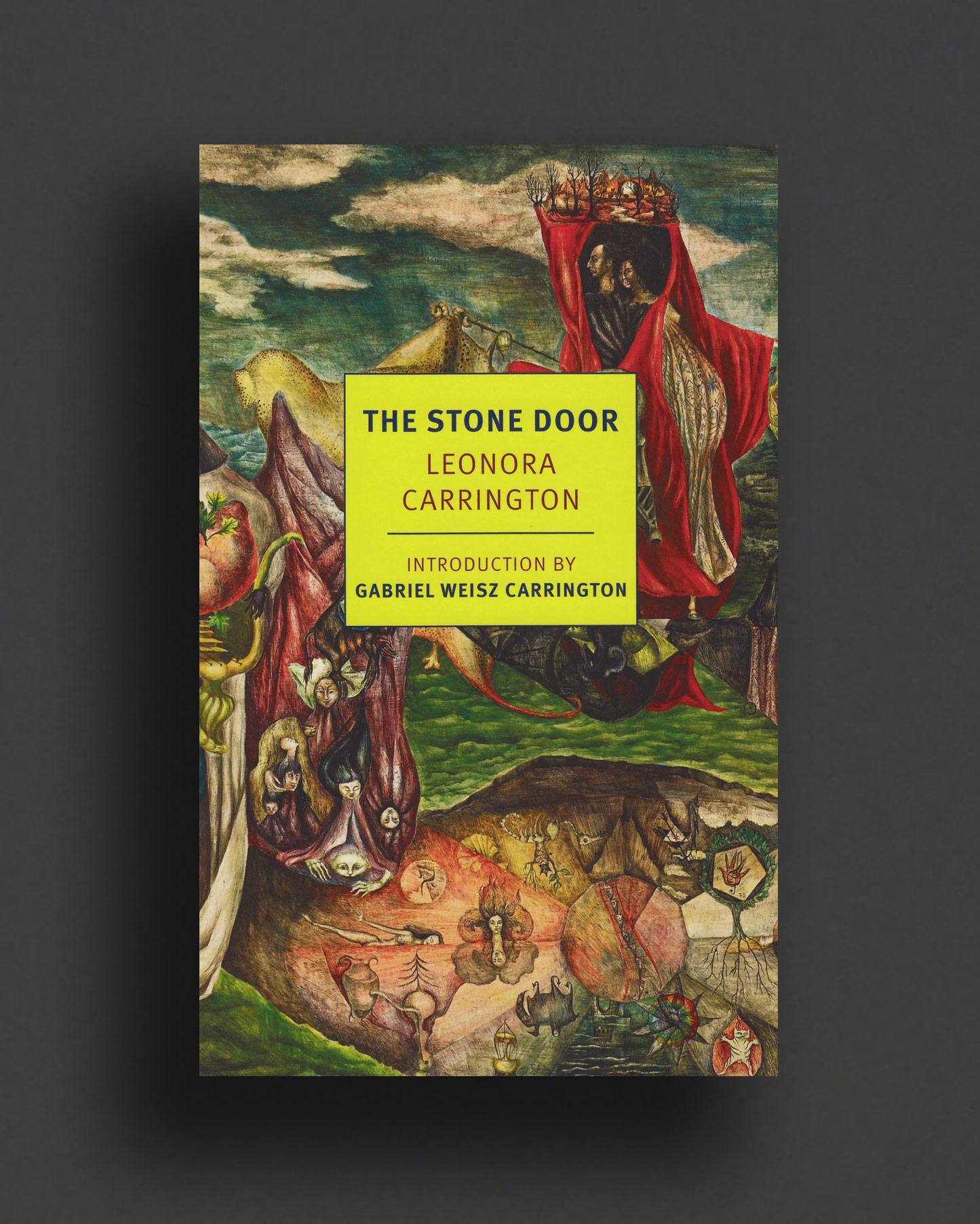
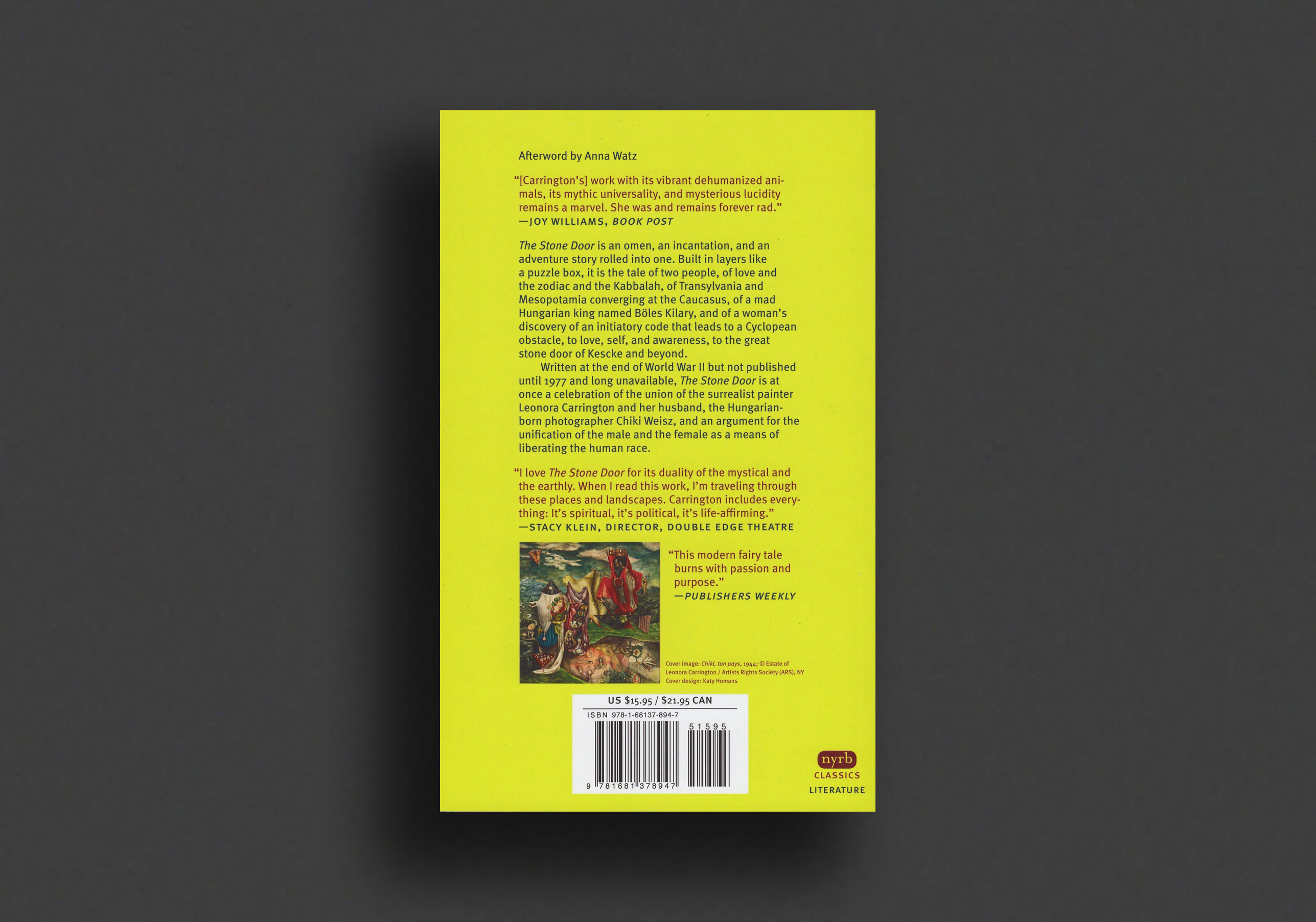
Ancient Mesopotamia, the Zodiac, and the land of the dead feature in this wildly surrealistic adventure story—Leonora Carrington's revolutionary second novel, long out of print.
The Stone Door is an omen, an incantation, and an adventure story rolled into one. Built in layers like a puzzle box, it is the tale of two people, of love and the Zodiac and the Kabbalah, of Transylvania and Mesopotamia converging at the Caucasus, of a mad Hungarian King named Böles Kilary and of a woman's discovery of an initiatory code that leads to a Cyclopean obstacle, to love, self and awareness, to the great stone door of Kescke and beyond.
Written at the end of World War II but not published until 1977 and long unavailable, The Stone Door is at once a celebration of the union of the surrealist painter Leonora Carrington and her husband, the Hungarian-born photographer Chiki Weisz, and an argument for the unification of the male and the female as a means of liberating the human race.