World Food Books' programme is largely produced on Kulin Nation land. We acknowledge the Wurundjeri people of the Kulin Nation as the first and continuing custodians of this land, and pay respect to their Elders past, present, and emerging.
World Food Books is an arts and special interests bookshop in Naarm / Melbourne. Founded in 2010, World Food Books is devoted to the presentation of a rotating, hand-selection of international art, design, literary and counterculture publications with an emphasis on the anti-traditional, the experimental, the avant-garde, the heretic, the marginal.
Presenting new titles alongside rare and out-of-print books, catalogues and journals spanning the fields of modern and contemporary art, design, photography, illustration, film, literature, poetry, cultural theory, philosophy, sexuality, popular and underground culture in its many radical forms, World Food Books wishes to encourage adventurous, thoughtful and open-minded reading, looking, writing, and exchange of publishing and ideas, both current and historical.
As well as our bookshop, located in Melbourne's historical Nicholas Building, all of our inventory is available internationally via our online mail-order service.
World Food Books semi-regularly co-ordinates "Occasions", a programme of exhibits and events at the bookshop and in partnership with other hosts (such as museums and art galleries) that develop out of the activities, relationships and content of the bookshop itself.
World Food Books
The Nicholas Building
37 Swanston Street
Room 5, Level 6
Melbourne 3000
Australia
SHOP HOURS:
THU–SAT 12–6
WEB-SHOP OPEN 24/7
World Food Books
Postal Address:
PO Box 435
Flinders Lane
Victoria 8009
Australia
info@worldfoodbooks.com
Art
Theory / Essay
Architecture / Interior
Graphic Design / Typography
Photography
Fashion
Eros
LGBTQ+
Fiction / Poetry
Weird / Speculative / Science Fiction / Horror
Transgressive / Visceral / Abject
Symbolism / Decadence / Fin de siècle
Film / Video
Painting
Sculpture / Installation
Performance / Dance / Theater
Drawing
Sound / Music
Curatorial
Group Shows / Collections
Periodicals
Out-of-print / Rare
Posters / Ephemera / Discs
Signed Books
World Food Books Gift Voucher
World Food Book Bag
Australian Art
Australian Fiction
Australian Science Fiction / Speculative Fiction
Australian Poetry
Australian Photography
Japanese Photography
Conceptual Art
Minimal Art
Dada
'Pataphysics / Oulipo
Fluxus
Concrete Poetry
Pop Art
Surrealism
Arte Povera
Arte Informale / Haute Pâte / Tachism
Nouveau Réalisme / Zero / Kinetic
Situationism / Lettrism
Collage / Mail Art / Xerox Art
Art Brut / Folk / Visionary / Fantastic
Illustration / Graphic Art / Bandes Dessinées
Furniture
Italian Radical Design / Postmodernism
Textiles
Ceramics / Glass
Counterculture
Protest / Revolt
Philosophy
Psychoanalysis
Anthropology
Anarchism
Socialism / Anarchism / Communism / Capitalism
Literary Theory / Semiotics / Language
Feminism / Women's Studies
Gender Studies / Sexuality
Anthropology
Fetishism / BDSM
Drugs / Psychedelia
Crime / Violence
Animal Rights / Veganism
Occult / Esoterica
Ecology / Earth / Alternative Living
Whole Earth / Crafts
All prices in AUD (Australian dollars)
Pick-Ups
Pick-up orders can be collected in our bookshop during opening hours after order date. Please collect any Pick-up orders within 2 weeks of ordering as we have limited storage space. Orders will be released back into stock if not collected within this time. No refunds can be made for pick-ups left un-collected. If you cannot make it in to the bookshop in this time-frame, please choose postage option.
Return Policy
All sales are final. We do accept returns (for refund or exchange) for items received in error. All our orders are packed with special care using heavy-duty padding and cardboard book-mailers or bubble mailers (for smaller books), using reinforcement where required. We cannot take responsibility for any lost, stolen or damaged parcels.
Insurance
Should you wish to insure your package, please email us directly after placing your order and we can organise this at a small extra expense. Although all standard/express tracked packages are very safe and dependable, we cannot take responsibility for any lost, stolen or damaged parcels. We recommend insurance on valuable orders.
Interested in selling your old books, catalogues, journals, magazines, comics, fanzines, ephemera? We are always looking for interesting, unusual and out-of-print books to buy. We only buy books in our fields of interest and specialty, and that we feel we can resell.
We base these prices on desirability, market value, in-print prices, condition and our current stock levels. We offer cash, store credit, and can take stock on consignment. All
about 25% of the price we expect to get when we sell them, or 30% in store credit. We base these prices on desirability, market value, in-print prices, condition and our current stock levels.
Sell your books any day of the week. You can drop them off and return later. If you have a lot of books, we can visit your Sydney home.
We buy books that we feel we can resell. We offer about 25 % of the price we expect to get when we sell them, or 30% in store credit. We base these prices on desirability, market value, in-print prices, condition and our current stock levels.
Philadelphia Wireman
03 August - 01 September, 2018
World Food Books is proud to announce our next Occasion, the first presentation of sculptures by Philadelphia Wireman in Australia.
The Philadelphia Wireman sculptures were found abandoned in an alley off Philadelphia’s South Street on trash night in 1982. Their discovery in a rapidly-changing neighbourhood undergoing extensive renovation, compounded with the failure of all attempts to locate the artist, suggests that the works may have been discarded after the maker’s death. Dubbed the "Philadelphia Wireman" during the first exhibition of this work, in 1985, the maker’s name, age, ethnicity, and even gender remain uncertain. The entire collection totals approximately 1200 pieces, all intricately bound together with tightly-wound heavy-gauge wire (along with a few small, abstract marker drawings, reminiscent both of Mark Tobey and J.B. Murry). The dense construction of the work, despite a modest range of scale and materials, is singularly obsessive and disciplined in design: a wire armature or exoskeleton firmly binds a bricolage of found objects including plastic, glass, food packaging, umbrella parts, tape, rubber, batteries, pens, leather, reflectors, nuts and bolts, nails, foil, coins, toys, watches, eyeglasses, tools, and jewellery.
Heavy with associations—anthropomorphic, zoomorphic, and socio-cultural responses to wrapped detritus—the totemic sculptures by Philadelphia Wireman have been discussed in the context of work created to fulfil the shamanistic needs of alternative religions in American culture. Curators, collectors, and critics have variously compared certain pieces to sculpture from Classical antiquity, Native American medicine bundles, African-American memory jugs, and African fetish objects. Reflecting the artist’s prolific and incredibly focused scavenging impulse, and despite—or perhaps enhanced by—their anonymity, these enigmatic objects function as urban artefacts and arbiters of power, though their origin and purpose is unknown. Philadelphia Wireman, whatever their identity, possessed an astonishing ability to isolate and communicate the concepts of power and energy through the selection and transformation of ordinary materials. Over the course of the past two decades, this collection has come to be regarded as an important discovery in the field of self-taught art and vernacular art.
Presented in collaboration with Fleisher-Ollman Gallery, Philadelphia, and Robert Heald, Wellington.
Susan Te Kahurangi King
02 February - 10 March, 2018
Susan Te Kahurangi King (24 February 1951 - ) has been a confident and prolific artist since she was a young child, drawing with readily available materials - pencils, ballpoint pens and felt-tip markers, on whatever paper is at hand. Between the ages of four and six Susan slowly ceased verbal communication. Her grandparents William and Myrtle Murphy had developed a special bond with Susan so they took on caring responsibilities for extended periods. Myrtle began informally archiving her work, carefully collecting and storing the drawings and compiling scrapbooks. No drawing was insignificant; every scrap of paper was kept. The King family are now the custodians of a vast collection containing over 7000 individual works, from tiny scraps of paper through to 5 meter long rolls.
The scrapbooks and diaries reveal Myrtle to be a woman of great patience and compassion, seeking to understand a child who was not always behaving as expected. She encouraged Susan to be observant, to explore her environment and absorb all the sights and sounds. Myrtle would show Susan’s drawings to friends and people in her community that she had dealings with, such as shopkeepers and postal workers, but this was not simply a case of a grandmother’s bias. She recognised that Susan had developed a sophisticated and unique visual language and sincerely believed that her art deserved serious attention.
This was an unorthodox attitude for the time. To provide some context, Jean Dubuffet coined the term Art Brut in 1945 to describe work created by self-taught artists – specifically residents of psychiatric institutions and those he considered to be visionaries or eccentrics. In 1972 Roger Cardinal extended this concept by adopting the term Outsider Art to describe work made by non-academically trained artists operating outside of mainstream art networks through choice or circumstance. Susan was born in Te Aroha, New Zealand in 1951, far from the artistic hubs of Paris and London that Dubuffet and Cardinal operated in. That Myrtle fêted Susan as a self-taught artist who deserved to be taken seriously shows how progressive her attitudes were.
Susan’s parents Doug and Dawn were also progressive. Over the years they had consulted numerous health practitioners about Susan’s condition, as the medical establishment could not provide an explanation as to why she had lapsed into silence. Dawn educated herself in the field of homeopathy and went on to treat all twelve of her children using these principles – basing prescriptions on her observations of their physical, mental and emotional state.
Doug was a linguist with an interest in philosophy who devoted what little spare time he had to studying Maori language and culture. To some extent their willingness to explore the fringes of the mainstream made them outsiders too but it was their commitment to living with integrity and their respect for individuality that ensured Susan’s creativity was always encouraged.
Even though Susan’s family supported her artistic pursuits, some staff in schools and hospitals saw it as an impediment to her assimilation into the community and discouraged it in a variety of ways. Her family was not always aware of this and therefore did not fully understand why Susan stopped drawing in the early 1990s. However, rather than dwell on the challenges that Susan faced in pursuit of her artistic practice, they prefer to highlight her achievements. In 2008 Susan began drawing again in earnest, after an almost 20 year interruption, and her work is now shown in galleries around the world.
Susan grew up without television and has been heavily influenced by the comics she read as a child. She is absolutely fearless in the appropriation of recognizable characters, such as Donald Duck and Mickey Mouse, in her work. She twists their limbs, contorts their faces, compresses them together, blends them into complex patterned backgrounds - always imbuing them with an incredible energy. Although Susan often used pop culture characters in her work they are not naive or childlike. These are drawings by a brilliant self-taught artist who has been creating exceptional work for decades without an audience in mind.
Mladen Stilinović
"Various Works 1986 - 1999"
02 February 16 - September 10, 2016
Various works 1986 - 1999, from two houses, from the collections of John Nixon, Sue Cramer, Kerrie Poliness, Peter Haffenden and Phoebe Haffenden.
Including: Geometry of Cakes (various shelves), 1993; Poor People’s Law (black and white plate), 1993; White Absence (glasses, ruler, set square, silver spoon, silver ladel with skin photograph and wooden cubes), 1990-1996; Exploitation of the Dead (grey and red star painting, wooden painting, black spoon with red table, red plate), 1984-1990; Money and Zeros (zero tie, paintings made for friends in Australia (Sue, John, Kerrie), numbers painting), 1991-1992; Words - Slogans (various t-shirts) - “they talk about the death of art...help! someone is trying to kill me”, “my sweet little lamb”, “work is a disease - Karl Marx”; Various artist books, catalogues, monographs, videos; Poster from exhibition Insulting Anarchy; "Circular" Croatian - Australian edition; Artist book by Vlado Martek (Dostoyevsky); more.
Thanks to Mladen Stilinović and Branka Stipančić.
Jonathan Walker
Always Will Need To Wear Winter Shirt Blue + Ochre Small Check Pattern
21 August - 21 September, 2015
Untitled
I am not a great reader of poetry but I always return to the work of Melbourne poet, Vincent Buckley (1925- 1988). Perhaps I find his most tantalising piece to be not a finished poem but a fragment left on a scrap of paper discovered on his desk after the poet’s death.
The poetry gathers like oil
In the word-core, and spreads
It has its music meet,
Its music is in movement.
This fragment is more the shell left behind from a volatile thought than a finished poem. I find the last two lines honest but awkward whereas the first two lines work like an arrow. Most likely he could not find a resolution so it was left. Still, in its present form, it remains an eloquent testimony to the ultimate failure of a medium to express mobile thought and sensation, in Buckley’s case, through verbal language. It’s an important matter because this is something all artists have to deal with regardless of the medium.
I have never written a poem, however, I am forever copying fragments from books on paper scraps in a vain effort to fix certain notions in my head. At first, they function as bookmarks that are sometimes returned to when I open the book. But before long, as they accumulate, they fall out littering the table interspersed with A4 photocopies, bills, books and medications.
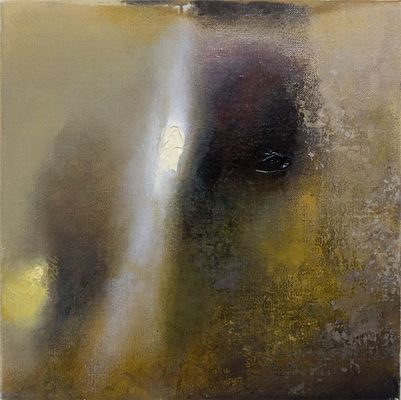
To return to Buckley’s fragment, the first two lines very much evoke how I paint nowadays. As you age, detail diminishes and patches of light become more luminous and float. I feel the most honest way of dealing with this is by smearing the oil paint on the canvas with the fingers and working close-up, blind. Only if the patches coalesce into an approaching image can the work gain a life.
-
Jonathan Walker was born in Melbourne, Australia and brought up on a dairy farm in Gippsland. In the 1970’s he studied painting at RMIT and won the Harold Wright Scholarship to the British Museum, London. During the 1980’s he exhibited at Pinacotheca Gallery, Richmond and had work shown at the NGV and Heidi City Art Gallery. Over the same period he designed the cover for the “Epigenesi” LP by Giancarlo Toniutti, Italy and conducted a mail exchange work with Achim Wollscheid, Germany. The work with artists through the post resulted in an article published in the bicentenary issue of Art and Australia 1988. He showed in artist run spaces such as WestSpace in the 90’s and 2000’s, and until 2012, taught painting at Victoria University, which is where we (Colleen Ahern and Lisa Radford) as organisers of the exhibition, among many others, had the privilege of being his student.
Walker’s knowledge was imparted to students through the careful selection of music, literature, and artists found in books that he himself had ordered for the library. Walker’s strategy was the generosity of sharing his vast knowledge with references specific to each student and their context.
Walker’s paintings share a similar focus and intimacy.
This exhibition presents a small selection of recent paintings alongside a publication that includes Walker’s writing. Observational and analytical, Walker’s work is a type of material notation — the time of day, colour and how it is blended, the both specific and fleeting location of a reflection on lino or the question of whether a chair leg should be included in a painting.
Please join us on Friday August 21 between 6-8pm to celebrate the opening of the exhibition.
Curated by Colleen Ahern and Lisa Radford.
B. Wurtz
Curated by Nic Tammens
March 26 - April 4, 2015
B.Wurtz works from a basement studio in his home on Manhattan’s Lower East Side.
This local fact is attested to by the plastic shopping bags and newsprint circulars that appear in his work. As formal objects, they don’t make loud claims about their origins but nonetheless transmit street addresses and places of business from the bottom of this long thin island. Like plenty of artists, Wurtz is affected by what is local and what is consumed. His work is underpinned by this ethic. It often speaks from a neighborhood or reads like the contents of a hamper:
“BLACK PLUMS $1.29 lb.”
“Food Bazaar”
“USDA Whole Pork Shoulder Picnic 99c lb.”
“RITE AID Pharmacy, with us it’s personal.”
“H. Brickman & Sons.”
“Sweet Yams 59c lb."
Most of the work in this exhibition was made while the artist was in residence at Dieu Donne, a workshop dedicated to paper craft in Midtown. Here Wurtz fabricated assemblages with paper and objects that are relatively lightweight, with the intention that they would be easily transportable to Australia. This consideration isn’t absolute in Wurtz’s work, but was prescriptive for making the current exhibition light and cheap. Packed in two boxes, these works were sent from a USPS post office on the Lower East Side and delivered to North Melbourne by Australia Post.
Wurtz appears courtesy of Metro Pictures, New York.
Thanks to Rob Halverson, Joshua Petherick, Sari de Mallory, Matt Hinkley, Helen Johnson, Fayen d'Evie, Ask Kilmartin, Lisa Radon, Ellena Savage, Yale Union, and "Elizabeth".
John Nixon
"Archive"
December 15 - January 20, 2014
The presentation of John Nixon's archive offered a rare showcase of this extensive collection of the artist's own publications, catalogues, posters, ephemera, editions and more, from the mid 1980s onwards, alongside a selection of his artworks.
Organized by John Nixon, Joshua Petherick and Matt Hinkley.
"Habitat"
at Minerva, Sydney (organised by Joshua Petherick and Matt Hinkley)
November 15 - December 20, 2014
Lupo Borgonovo, Janet Burchill & Jennifer McCamley,
Lewis Fidock, HR Giger, Piero Gilardi, Veit Laurent Kurz,
Cinzia Ruggeri, Michael E. Smith, Lucie Stahl, Daniel Weil, Wols
Press Release:
“...It contained seven objects. The slender fluted bone, surely formed for flight, surely from the wing of some large bird. Three archaic circuitboards, faced with mazes of gold. A smooth white sphere of baked clay. An age-blackened fragment of lace. A fingerlength segment of what she assumed was bone from a human wrist, grayish white, inset smoothly with the silicon shaft of a small instrument that must once have ridden flush with the surface of the skin - but the thing’s face was seared and blackened.”
William Gibson, “Count Zero”, 1986
"Autumn Projects Archive"
Curated by Liza Vasiliou
March 6 - March 15, 2014
World Food Books, in conjunction with the Virgin Australia Melbourne Fashion Festival 2014, presented the Autumn Projects archive, consisting of a selection of early examples in Australian fashion with a particular interest in collecting designers and labels from the period beginning in the 1980’s, who significantly influenced the discourse of Australian Fashion.
Curated by Liza Vasiliou, the exhibition provided a unique opportunity to view pieces by designers Anthea Crawford, Barbara Vandenberg, Geoff Liddell and labels CR Australia, Covers, Jag along with early experimental collage pieces by Prue Acton and Sally Browne’s ‘Fragments’ collection, suspended throughout the functioning World Food Books shop in Melbourne.
H.B. Peace
presented by CENTRE FOR STYLE
November 14, 2013
"Hey Blinky, you say chic, I say same"
Anon 2013
H.B. Peace is a clothing collaboration between great friends Blake Barns and Hugh Egan Westland. Their pieces explore the divergences between 'character’ and ‘personality’ in garments....etc
Special Thanks to Joshua Petherick and Matt Hinkley of WFB and Gillian Mears
and a Very Special Thank you to Audrey Thomas Hayes for her shoe collaboration.
Janet Burchill & Jennifer McCamley
"Aesthetic Suicide"
May 10 - June 8, 2013
The first of our occasional exhibitions in the World Food Books office/shop space in Melbourne, "Aesthetic Suicide" presented a body of new and older works together by artists Janet Burchill & Jennifer McCamley, including videos, prints, a wall work, and publications.
During shop open hours videos played every hour, on the hour.
1981 / 2025, English
Softcover, 112 pages, 22.2 x 20.6 cm
Published by
Colpa Press / San Francisco
$72.00 - In stock -
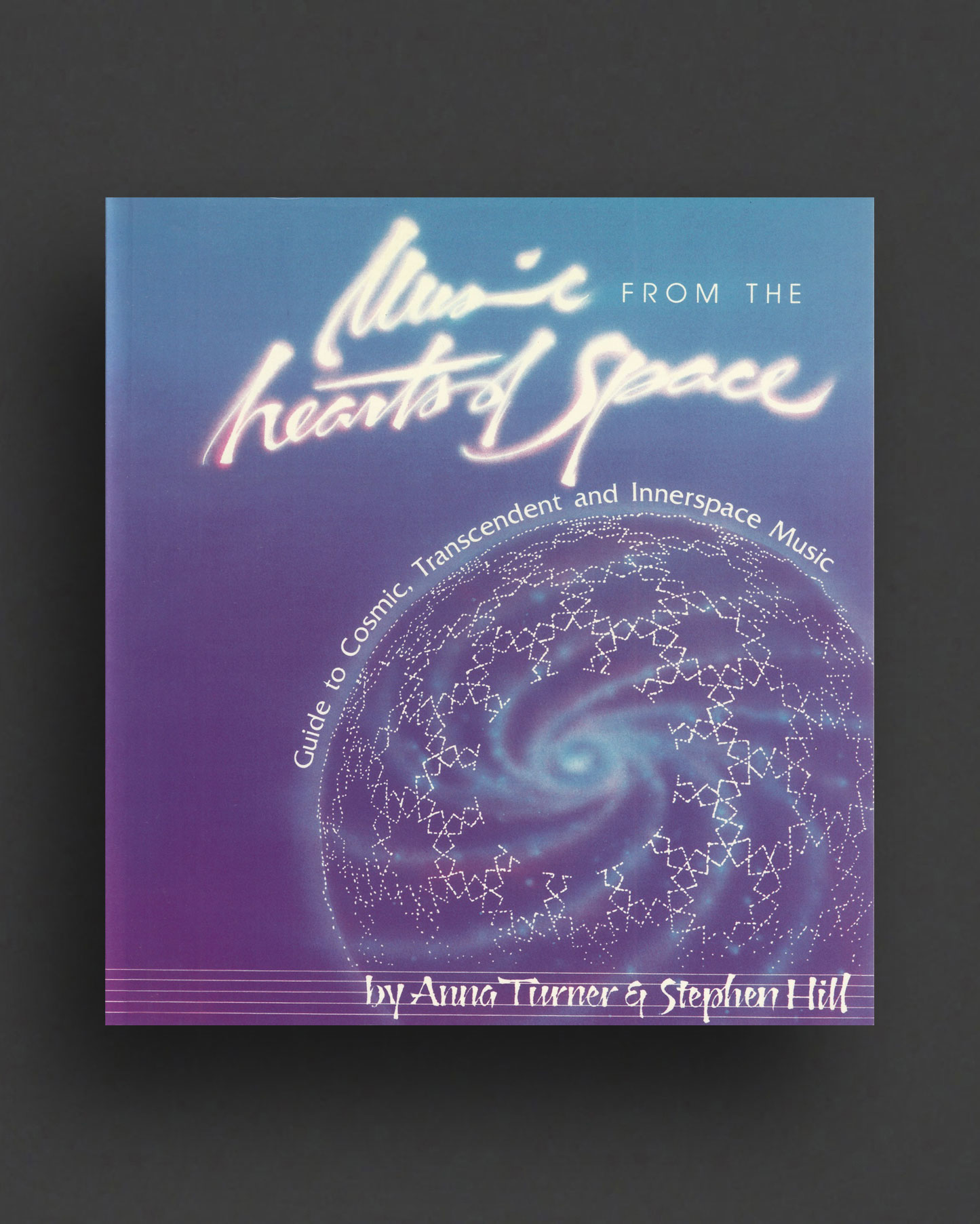
Originally published in 1981, this reprint of the classic guide to New Age music is an annotated listing of the music heard on the seminal radio program Music from the Hearts of Space, hosted by Stephen Hill and Anna Turner, since 1973. First produced in 1973 by presenter Stephen Hill with co-producer Anna Turner, Hearts of Space is a pioneering weekly syndicated public radio show in California featuring music of a contemplative nature drawn largely from the ambient, New Age and electronic genres, while also including classical, world, Celtic, experimental, and other music selections. For many years, Hill has applied the term "space music" to the music broadcast on the show, irrespective of genre. It is the longest-running radio program of its type in the world. It was first broadcast as Music from the Hearts of Space, a three-hour long late-night show on KPFA-FM in Berkeley, California. Each episode ends with Hill gently saying, "Safe journeys, space fans ... wherever you are."
This annotated listening guide traverses the spectrum of space music presented on the radio throughout the 1970s-80s, with the editors providing introductions, glossary of genres, descriptions of each record, alongside interspersed reflections on sound by scholars, composers, artists, poets, architects — everyone from Cage to Inayat Khan, Steiner to Wagner. Includes a list of related material including reading, retail and mail-order resources, as well as a full index and record label contacts.
An indispensable volume for anyone interested in ambient music, beautifully designed by Janaia Marisolle and impeccably reproduced by Colpa Press, San Francisco.
1977, Japanese
Softcover (staple-bound), 64 pages, 28 x 21 cm
1st Edition, Out of print title / used / good
Published by
Feminist / Tokyo
$65.00 - In stock -
The inaugural 1977 issue of "Feminist", a rare and important record of the women's liberation movement in Japan in the the 1970s and document of the cross-currents of international female theorists, artists, poets, authors, and activists in the women's movement. This first issue with cover story on Yoko Ono, shot by Michiko Matsumoto, one of post war Japan's leading photographers. Edited by Japanese critic, American literature researcher, and poet, Ikuko Atsumi (who also co-edited "Burning Hearts: Women Poets of Japan" with Kenneth Rexroth, The Seabury Press/New Directions, 1977), with Diane L. Simpson, and contributors including women's rights activist/journalist Yayori Matsui (noted for her work to raise awareness of sex slaves and sex tourism in post-war Asia), photographer Michiko Matsumoto, Japanese linguist Sachiko Ide, Japanese poet, literary critic, and scholar Muneko Mizuta, historian Masaaki Sugiyama, author/activist Yumiko Sakuma, with this issue covering the controversy surrounding the formation of the magazine, a feature with performer/educator Mitsuko Hase, modern mythology, masculinity, media, misogyny, the Feminine imagination, the media's disdain for Asians, The Blood Bowl Sutra / women and the Buddhist faith, a report from the frontlines of the American women's movement (w. photography by Michiko Matsumoto), visiting women's studies courses around the world (University of Southern California), book reviews, feminist news, and the cover feature with artist Yoko Ono, "Yoko Ono's Philosophy" and a conversation with editor Ikuko Atsumi by Mitsuko Hase (w. photography by Michiko Matsumoto).
Good—VG copy with age/wear to cover extremities, some foxing/staining.
2010, English
Softcover, 128 pages, 30.5 x 22.5 cm
1st Edition, Out of print title / used / very good
Published by
Richardson / New York
$220.00 - In stock -
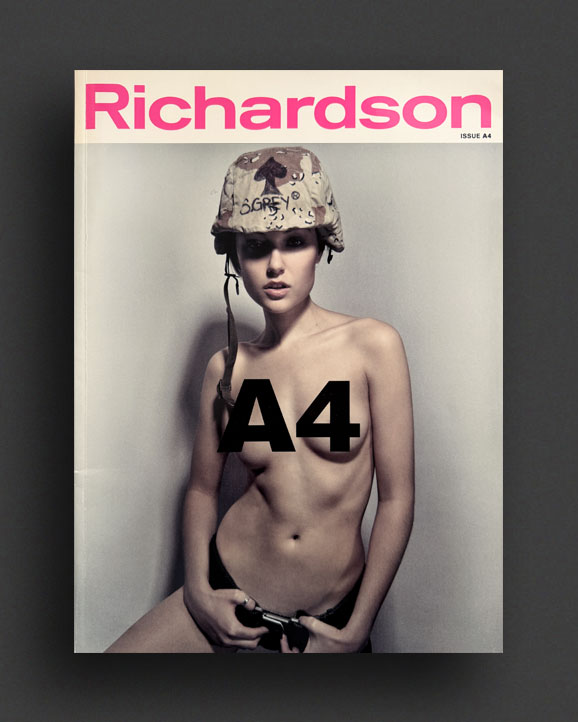
Incredible fourth issue ("The Female Gaze Issue") of Richardson magazine, the cult magazine that navigates the murky boundaries between art and obscenity, edited by Andrew Richardson (of Richardson label, fashion stylist w. Supreme, CK, Valentino, etc.) and art direction by Laura Genninger of STUDIO 191 (designer of AnOther Magazine, etc.). This fourth issue (The Female Gaze Issue) features the Sasha Grey cover photographed by Glen Luchford (w. continued photo feature inside), and featuring work by Carolee Schneemann, Valie Export, Genesis P-Orridge, GB Jones, Alex Needham, Amy Kellner, Kira Jolliffe, Bunny Yeager, Tristan Taormino, Michelle Maccarone, Mila Djordjevic, Gunter Rambow, V. Vale/ Re/Search, Simon Ford, Clara Herve & Eugene Krafft, Carol Bove, Sue Williams, Tracy Emin, Carolin Kunst & Sunje Todt, Kotaro Iizawa, and much more. Riddled with bans and confiscations due to explicit un-censored imagery by Japanese censorship standards.
Very Good copy.
1985, English
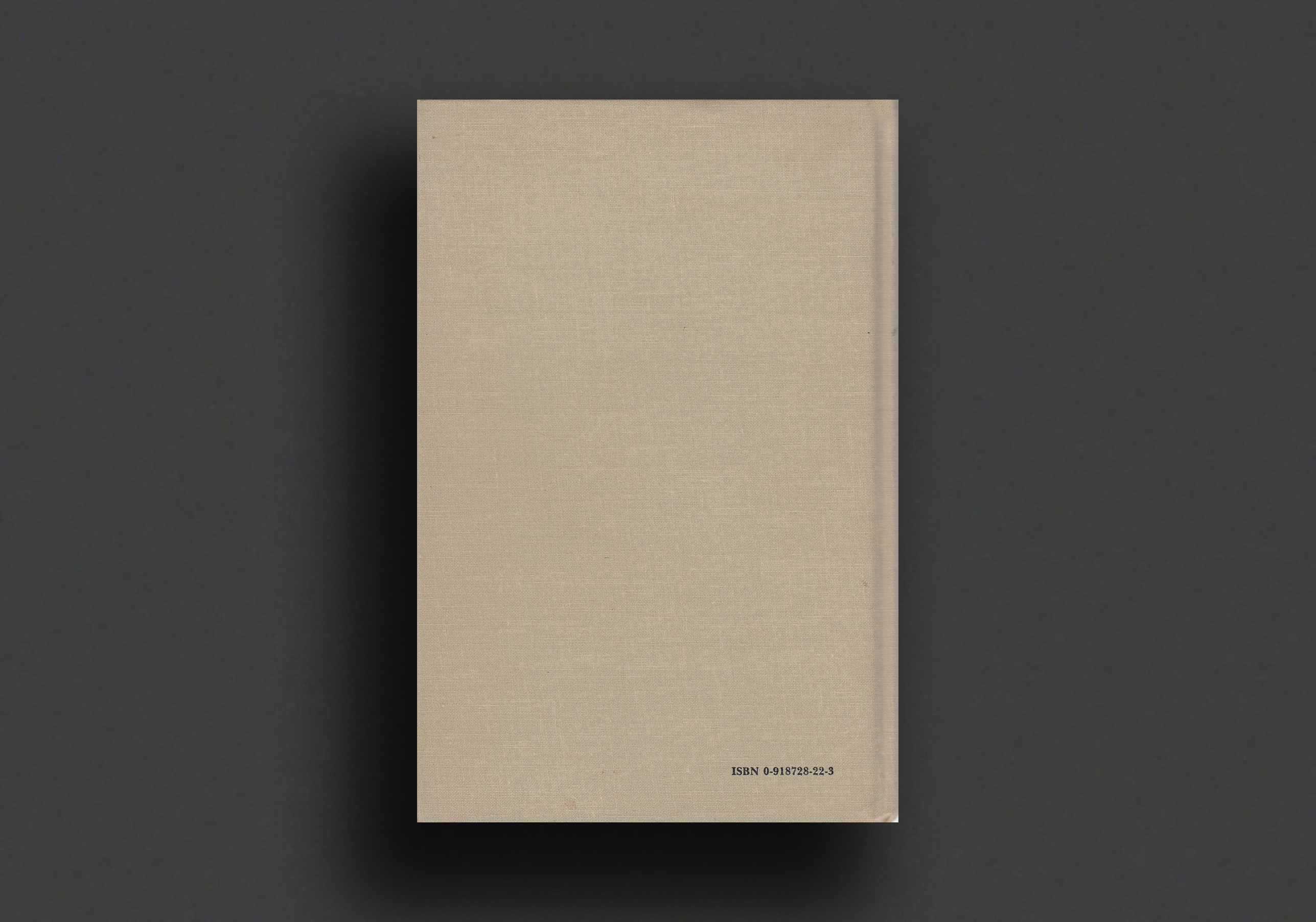
Hardcover (clothbound), 136 pages, 23.5 x 15.5 cm
1st Edition, Out of print title / used / very good
Published by
Pendragon Press / New York
$140.00 - Out of stock
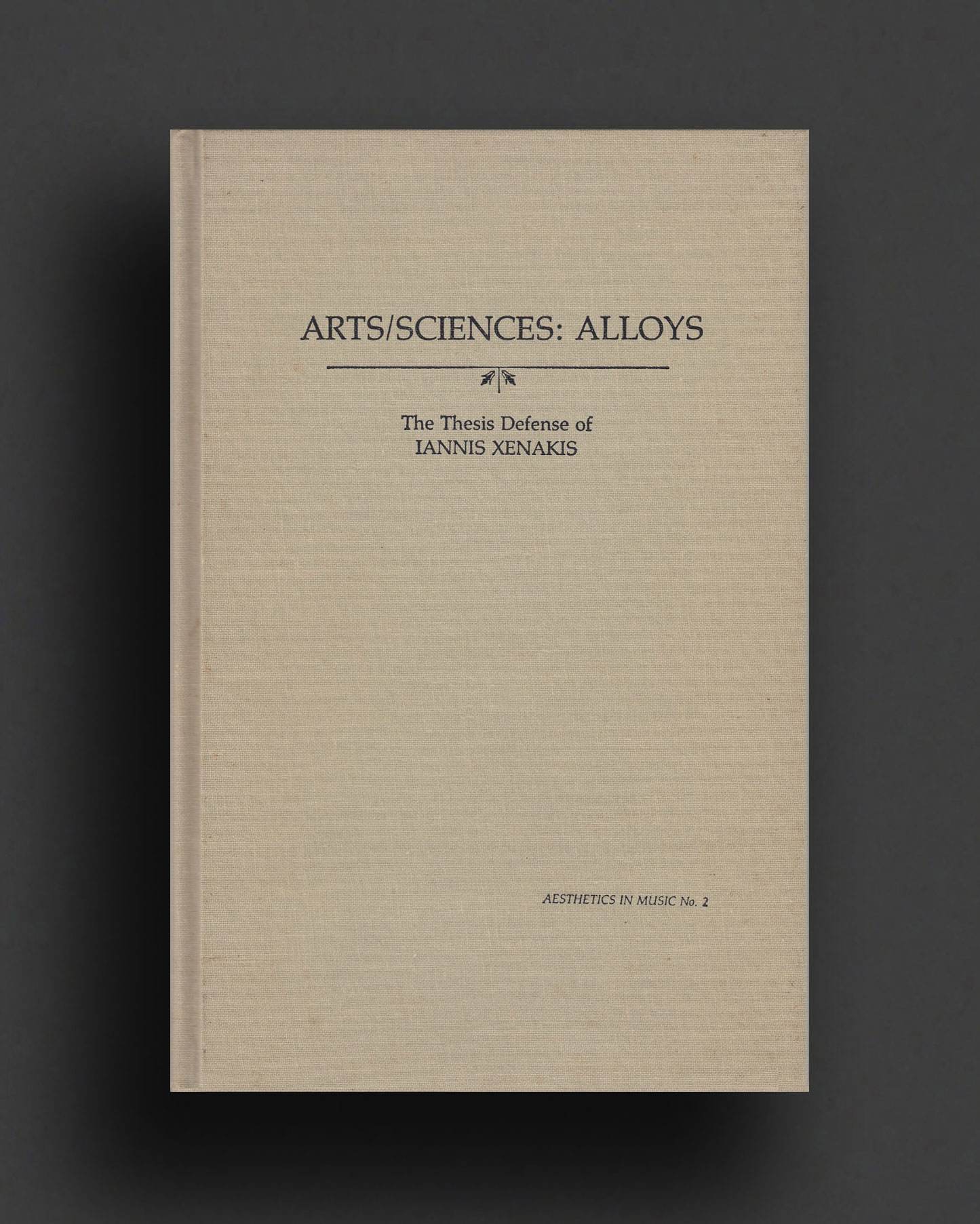
Very rare first 1985 hardcover English translation of the thesis defence of Romanian-born Greek-French avant-garde composer Iannis Xenakis (1922—2001), tape recorded for a "Doctorat d'État" at the Sorbonne in Spring 1976 before composer Olivier Messiaen, art critic Michel Ragon, philosopher Olivier Revault d'Allonnes, philosopher Michel Serres, and philosopher Bernard Teyssèdre (all dialogues recorded within). Translated to English for the first time by Sharon Kanach.
In this fascinating essay Iannis Xenakis succeeds in unraveling the intricate web between the arts and sciences, thereby demonstrating their interdependency as in the components of an alloy. A complete list of works and bibliography are included. In this translation Xenakis explains not only his musical and theoretical writings - but also the role of mathematics as a philosophical catalyst in both his musical and architectural works. He discusses in detail his unique use of computers as a graphic tool in the composition of some of his scores. Unexpected aspects of his character are gracefully revealed in these highly readable exposés.
Xenakis is responding to a panel of noted French masters from the various disciplines in which he has worked and cleverly manages to answer specific questions in one field while simultaneously addressing perhaps less-initiated exponents from other, seemingly unrelated areas. He succeeds in unraveling the intricate web between the arts and sciences, thereby demonstrating their inter-dependency as in the components of alloys.
Very Good copy with some very light marks to cloth covers. Please note this is the first 1985 printing, rather than the later 1994 printing, also scarce.
1981, English
Softcover, 116 pages, 28 x 21 cm
1st Edition, Out of print title / used / very good
Published by
PARCO / Tokyo
$60.00 - In stock -
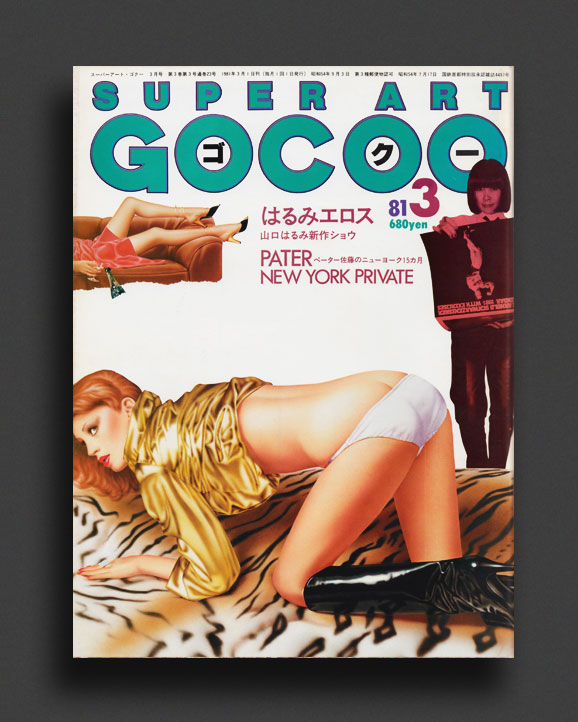
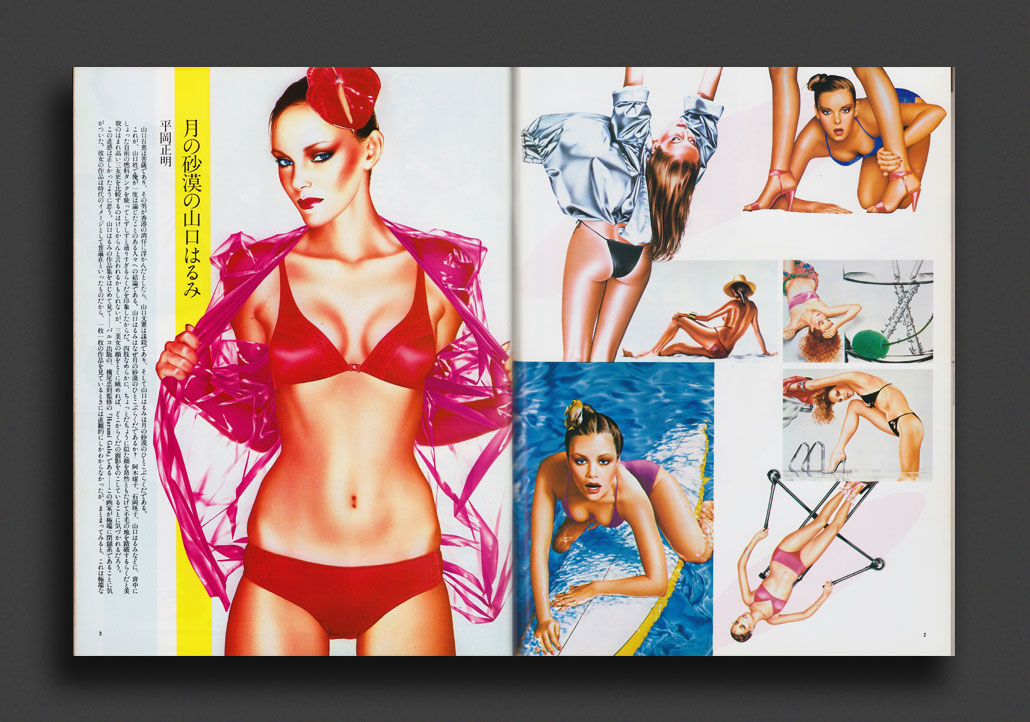
Like no other magazine - Super Art Gocoo was the wild late 1970s—1980s art journal from art director Ryōichi Enomoto and published by the mighty Parco gallery, imprint and department-store-like-no-other in Tokyo. With a cover by Harumi Yamaguchi, this bumper issue from 1981 is also largely dedicated to "Harumi Eros" — the work of legendary Japanese airbrush queen Harumi Yamaguchi and her "Gals". Not only does it feature a heavily illustrated behind-the-scenes with Yamaguchi it also visits the studio of fellow-airbrush master Pater Sato in his New York New Wave period. There is also lots of work by the great graphic artist Tadanori Yokoo, a feature on legendary French underground magazine Façade (1976—1983), a story on American dancer/choreographer/composer/Steve Reich collaborator Laura Dean, the photography of Hiroshi Yamazaki, graphic designer Kiyoshi Awazu, graphic designer Yutaka Sugita, a discussion between Japanese pop artists Akiko Yano and Nanako Sato, Tokyo Designers Space Report, plus articles, reviews, reports on art, dance, film, fashion, music, magazines, books.... The Face, Terry Riley, etc. Parco were instrumental in exhibiting, publishing and promoting Japanese and international graphic artists and new pop culture in this period, and these journals create a wonderful time-capsule at the height of that incredible time.
Very Good - Fine copy.
2025, English
Softcover, 200 pages, 20.3 x 12.7 cm
Published by
Semiotext(e) / Los Angeles
$38.00 - In stock -
A masterful study of the elusive French composer, on the centenary of his death.
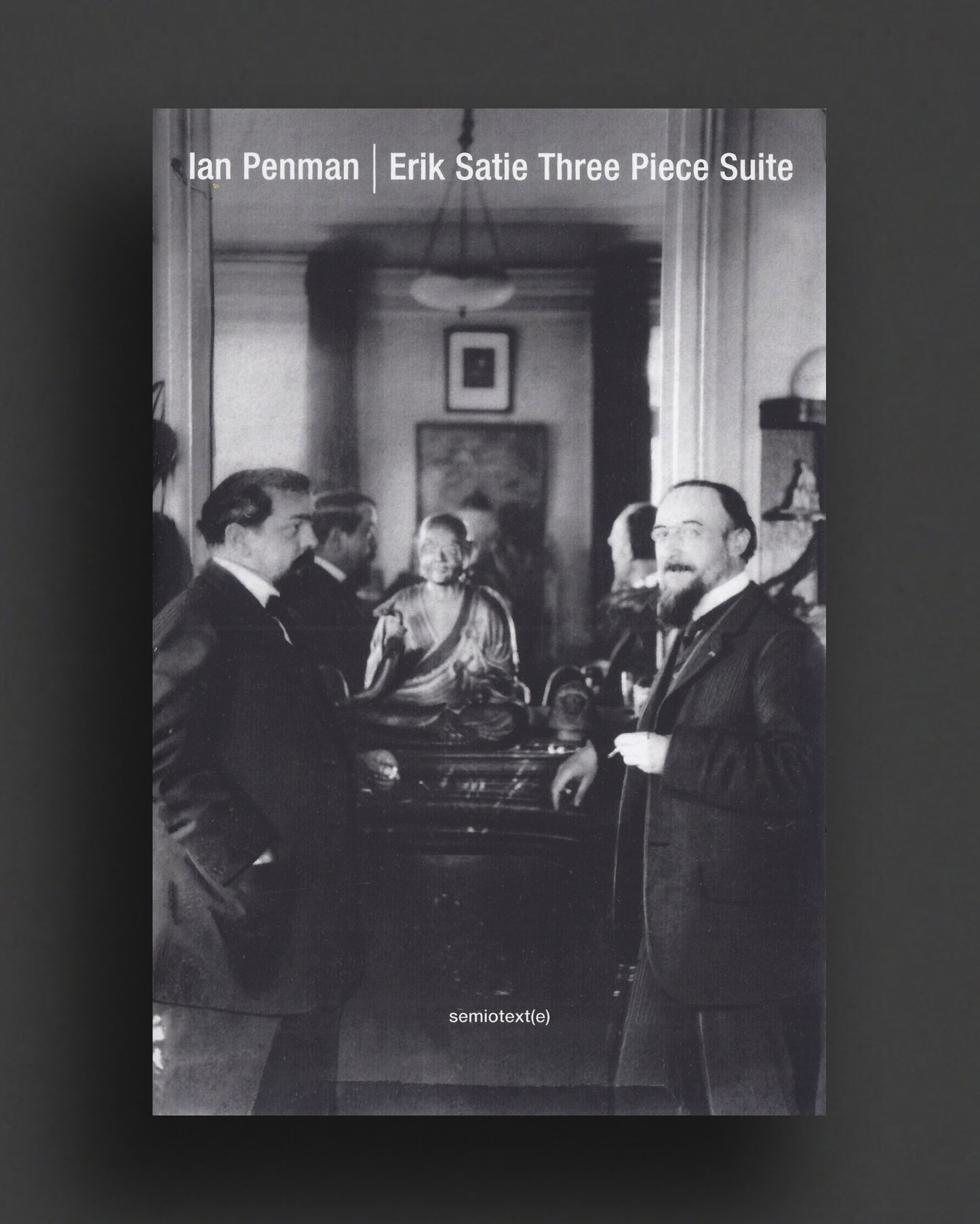
Composer, pianist, and writer Erik Satie was one of the great figures of Belle Époque Paris. Known for his unvarying image of bowler hat, three-piece suit, and umbrella, Satie was a surrealist before surrealism and a conceptual artist before conceptual art. Friend of Cocteau and Debussy, Picabia and Picasso, Satie was always a few steps ahead of his peers at the apex of modernism. There's scarcely a turn in postwar music, both classical and popular, that Satie doesn't anticipate. Moving from the variety shows of Montmartre's Le Chat Noir to suburban Arcueil, from the Parisian demimonde to the artistic avant-garde, cult critic Ian Penman's masterful Erik Satie Three Piece Suite is an exhilarating and playful three-part study of this elusive and endlessly fascinating figure, published to mark the centenary of Satie's death.
1991, English
Softcover, 118 pages, 21 x 14.5 cm
Out of print title / used / very good
Published by
AK Press / Edinburgh
$50.00 - Out of stock
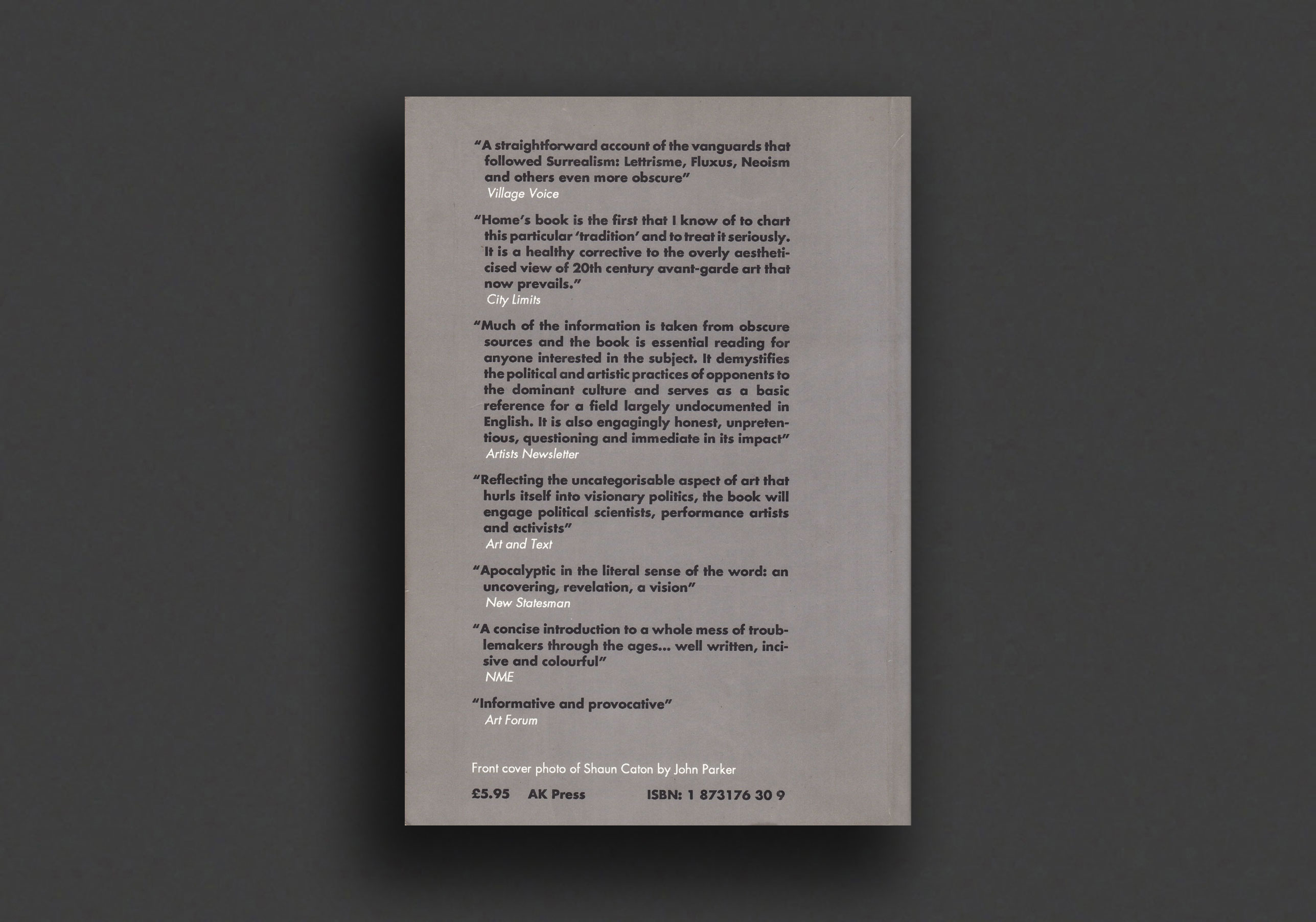
First AK Press 1991 edition of Stewart Home's THE ASSAULT ON CULTURE: UTOPIAN CURRENTS FROM LETTRISM TO CLASS WAR, first published in 1988 by Aporia Press and Unpopular Books. Chapters: Cobra, The Lettriste Movement, The Lettriste International (1952-57), The College Of Pataphysics, Nuclear Art and the International Movement for an Imaginist Bauhaus, From the "First World Congress of Liberated Artists" to the foundation of the Situationist International, The Situationist International in its heroic phase (1957-62)., On the theoretical poverty of the Specto-Situationists and the legitimate status of the Second International, The decline and fall of the Specto-Situationist critique, The origins of Fluxus and the movement in its 'heroic' period, The rise of the depoliticized Fluxus aesthetic, Gustav Metzger and Auto-Destructive Art, Dutch Provos, Kommune 1, Motherfuckers, Yippies and White Panthers, Mail Art, Beyond Mail Art, Punk, Neoism, Class War, plus bibliography.
*A straightforward account of the vanguards that followed Surrealism: Lettrisme, Fluxus, Neoism and others even more obscure"—Village Voice
"Home's book is the first that I know of to chart this particular 'tradition' and to treat it seriously.
It is a healthy corrective to the overly aestheti-cised view of 20th century avant-garde art that now prevails."—City Limits
"Much of the information is taken from obscure sources and the book is essential reading for anyone interested in the subject. It demystifies the political and artistic practices of opponents to the dominant culture and serves as a basic reference for a field largely undocumented in English. It is also engagingly honest, unpreten-tious, questioning and immediate in its impact"—Artists Newsletter
"Reflecting the uncategorisable aspect of art that hurls itself into visionary politics, the book will engage political scientists, performance artists and activists"—Art and Text
"Apocalyptic in the literal sense of the word: an uncovering, revelation, a vision"—New Statesman
"A concise introduction to a whole mess of troublemakers through the ages... well written, incisive and colourful"—NME
"Informative and provocative"—Art Forum
Very Good copy.
2010, English
Softcover (+ audio CD), 62 pages, 19 x 13 cm
1st Edition, Out of print title / as new
Published by
Thin Man Press / London
$65.00 - Out of stock
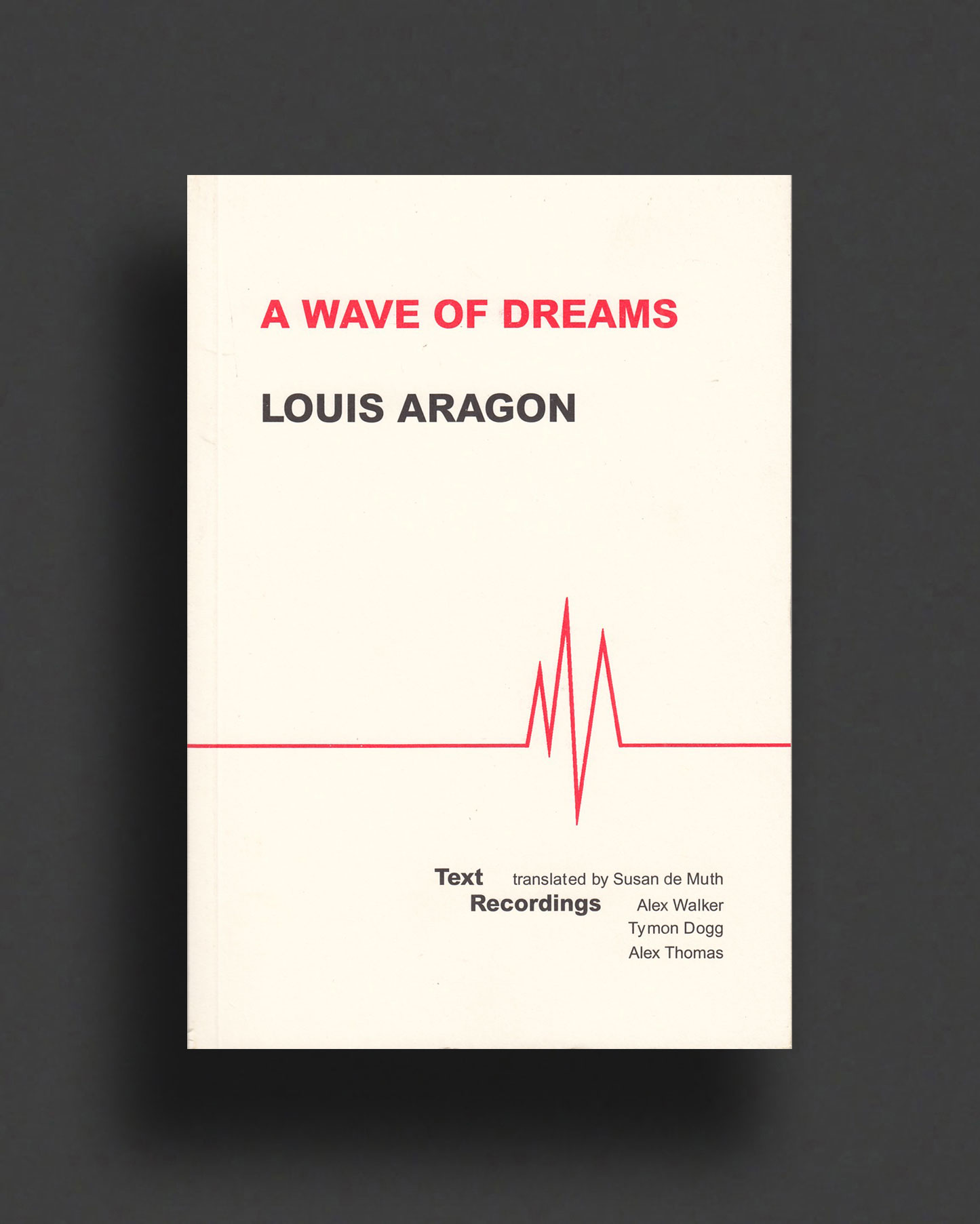
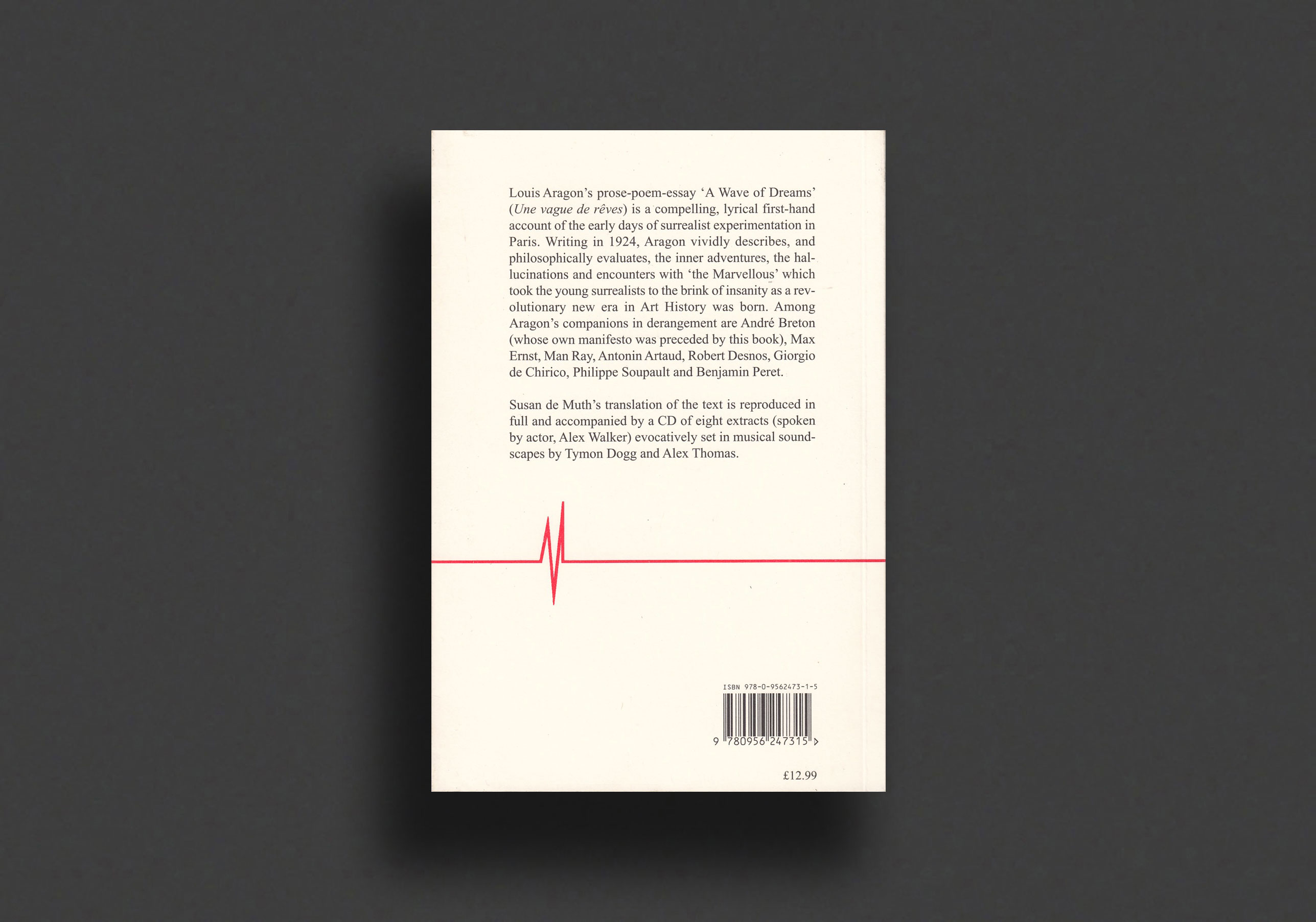
This is the first time Aragon's seminal 1924 French surrealist text has been published in English as a single volume. Aragon's extraordinary prose-poem-essay A Wave of Dreams (Une vague de reves), is a compelling, lyrical, first-hand account of the early days of surrealist experimentation in Paris. Writing in 1924, Aragon vividly describes, and philosophically evaluates, the inner adventures, the hallucinations and encounters with the 'Marvellous' which took the young surrealists to the brink of insanity as a revolutionary new era in Art History was born. Among Aragon’s companions in derangement are André Breton (whose own Surrealist Manifesto was preceded by this book), Max Ernst, Man Ray, Antonin Artaud, Robert Desnos, Georgio de Chirico, Philippe Soupault and Benjamin Peret.
This beautifully presented art book contains Susan de Muth’s translation of the text in English with an introduction by Dawn Ades.
The physical copy of A Wave of Dreams is accompanied by a complimentary CD of eight extracts from the test, spoken by actor Alex Walker, evocatively set in musical soundscapes by Tymon Dogg and Alex Thomas.
"A leftfield treat…mysteriously opaque and strangely lovely."—Thomas H Green, Daily Telegraph.
Fine—As New.
2025, English
Softcover, 200 pages. 23 x 16.6 cm
Published by
Memo Review / Naarm
$35.00 - Out of stock
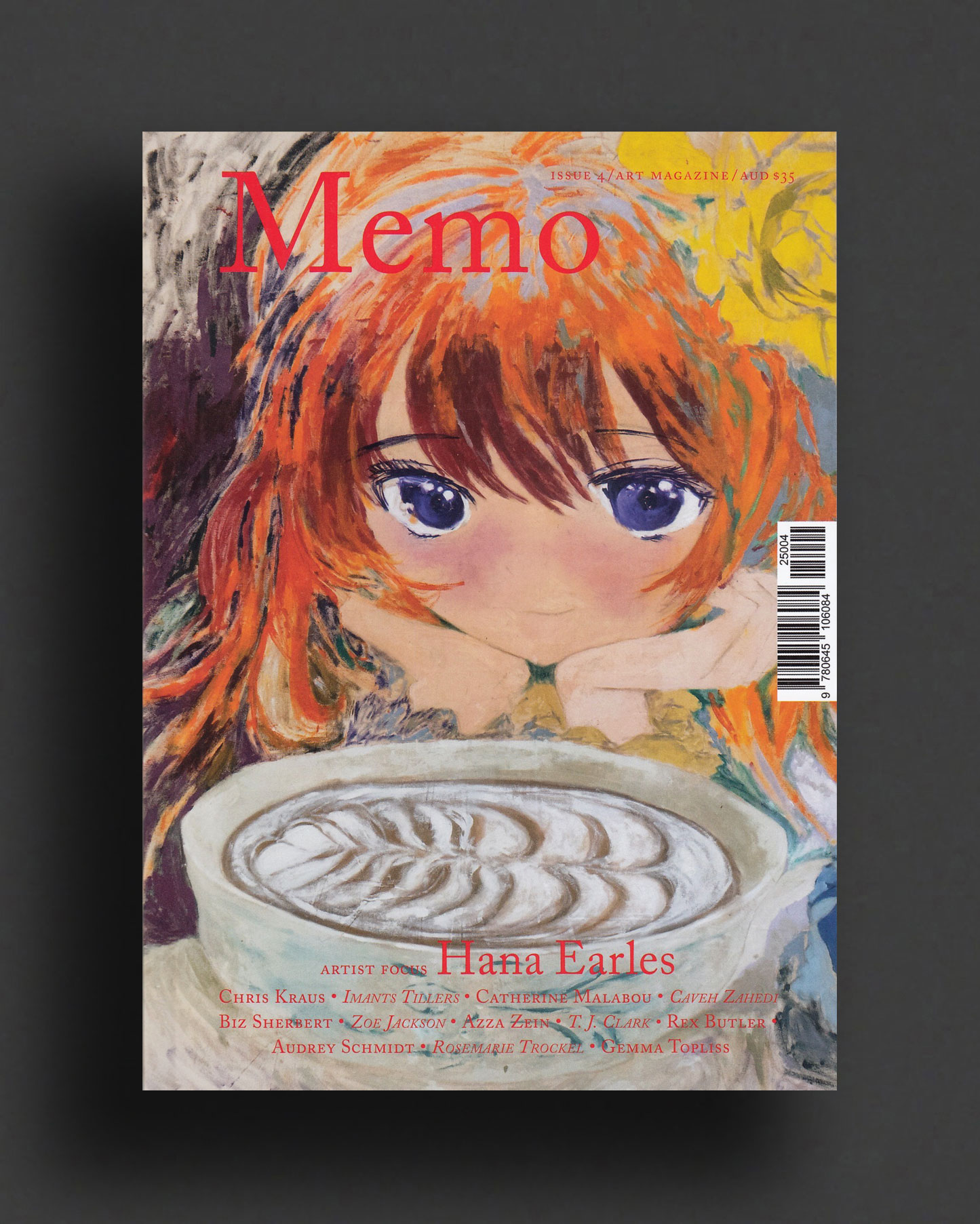
Issue 4 of Memo Review focuses on Frankfurt-based artist Hana Earles, a defining figure in the recent history of Melbourne’s backyard gallery scene. Other pieces include renowned French philosopher Catherine Malabou on Cyril Schäublin’s 'Unrest', Chris Kraus on her literary evolution, Micaela Sahhar on media and institutional censorship of Palestine, and features on Caveh Zahedi, Carol Jerrems, Rosemarie Trockel, Hany Armanious, Nora Turato, Robert Rooney and more. Also featured: eminent art historian T. J. Clark’s Marxist-inflected commitment to modernity comes under review by Francis Plagne, and Keith Broadfoot restages Imants Tiller’s canonical von Guérard copy, Mount Analogue, as repetition and resurrection of Australian art through the colonial sublime.
"Across this issue, a recurring tension emerges between what can be said, what must be withheld, and who controls the threshold between the two. In conversation with Declan Fry, Chris Kraus reflects on her new novel’s blend of small-town crime and Trump-era “cancellation,” asking how a writer can depict other people’s lives when social media, true crime, and activist vocabularies are all busy turning them into types, or erasing them altogether. Micaela Sahhar turns to Anna Akhmatova, the poet who defied Stalin’s censors, to trace how media and cultural institutions now treat Palestine as a zone of censorship, suppression, and risk management. That climate finds an echo in Berlin, where Tania Bruguera’s hundred-hour Hannah Arendt reading at the Hamburger Bahnhof was overtaken first by pro-Palestine activists, then by the institution’s own fear. As Hilary Thurlow argues, what played out was not a clash of opposing camps but a sign of the Left’s deeper fractures under the pressure of moral absolutism. And is this not close to Nicolas Hausdorf ’s claim that the West’s moral language, forged in the crucible of the twentieth century’s horrors, has been worn thin by empty repetitions and meme-like escalation, until it can no longer bear its original meaning?
Meanwhile, the old question of “effective political art” persists. Rex Butler reads 65,000 Years: A Short History of Australian Art as a kind of visual plebiscite, a wall of works in which every artist gets a vote and every vote counts the same — a quasi-“Voice” in exhibition form — while there are revisitations of the weary Marxist art historian T. J. Clark, whose new collected essays are reviewed by Francis Plagne.
Elsewhere, the veil is not political but ontological. For Susie Anderson and Hannah Presley, the veil marks a space of partial revelation in which artists choose what to show and what to keep, set in stark contrast to the radical transparency of Caveh Zahedi’s life-as-art practice, with all its personal collateral, as explored by Chelsea Hopper.
Questions of exposure return again in Biz Sherbert’s interview with Hana Earles, where scribbled text, titles, and even Jo Malone perfume bottles act as “secret doorways” between diary-like interiority and the messy surface of painting. Seen this way, Earles’s work, steeped in psyops, Manson girls, anime adolescence, Addison Rae, mumblecore, and spiritual acceleration, offers an oblique map of Melbourne’s outwardly impoverished backyard-gallery ecology over the past decade — the Meows, Guzzlers, Asbestoses, and Punk Cafés at the fringes of the city’s institutional officialdom. Call it, with Gemma Topliss, façadism." — Paris Lettau
Contributors:
2014, English
Harcover, 224 pages, 17.6 x 23.4 cm
Published by
Atlas Press / London
$69.00 - In stock -
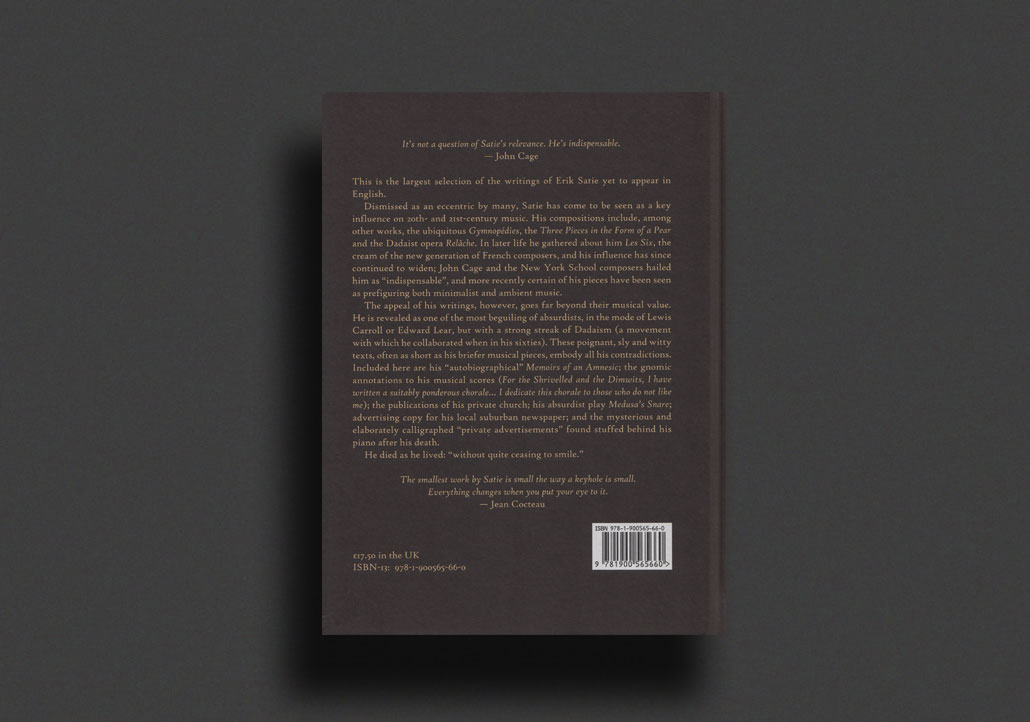
Dismissed as an eccentric by many, Satie has come to be seen as a key influence on 20th- and 21st-century music. His compositions include, among other works, the ubiquitous Gymnopédies, the Three Pieces in the Form of a Pear and the Dadaist opera Relâche. In later life he gathered about him Les Six, the cream of the new generation of French composers, and his influence has since continued to widen; John Cage and the New York School composers hailed him as “indispensable”, and more recently certain of his pieces have been seen as prefiguring both minimalist and ambient music.
The appeal of his writings, however, goes far beyond their musical value. He is revealed as one of the most beguiling of absurdists, in the mode of Lewis Carroll or Edward Lear, but with a strong streak of Dadaism (a movement with which he collaborated to some extent). These poignant, sly and witty texts, often as short as his briefer musical pieces, embody all his contradictions. Included here are his “autobiographical” Memoirs of an Amnesic; the gnomic annotations to his musical scores (For the Shrivelled and the Dimwits, I have written a suitably ponderous chorale… I dedicate this chorale to those who do not like me); the publications of his private church; his absurdist play Medusa’s Snare; advertising copy for his local suburban newspaper; and the mysterious and elaborately calligraphed “private advertisements” found stuffed behind his piano after his death.
Satie referred to himself as “a man in the manner of Adam (he of Paradise)”, and added: “My humour is reminiscent of Cromwell’s. I am also indebted to Christopher Columbus, as the American spirit has sometimes tapped me on the shoulder, and I have joyfully felt its ironically icy bite.” He died as he lived: “without quite ceasing to smile.” This is the largest selection of the writings of Erik Satie yet to appear in English.
Edited and introduced by Ornella Volta, translated by Antony Melville.
The smallest work by Satie is small the way a keyhole is small. Everything changes when you put your eye to it. — Jean Cocteau
1970, Japanese
Softcover (staple-bound w. 2 x flexi-disc), 16 pages, 24.5 x 20.5 cm
1st Edition, Out of print title / used / very good
Published by
Asahi Sonorama / Tokyo
$150.00 - Out of stock
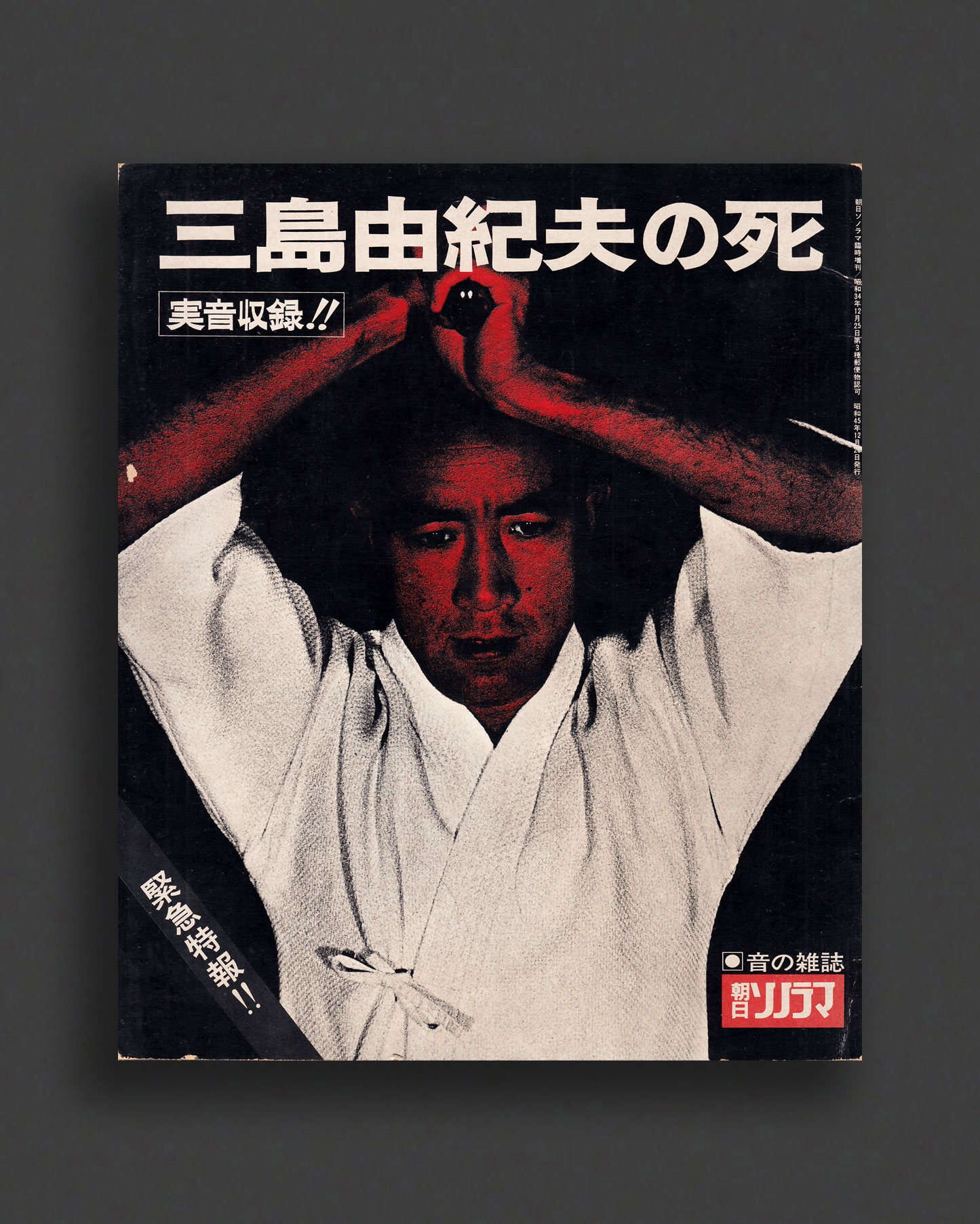
The Death of Yukio Mishima! is a special edition "Sounds Magazine" published in 1970 by Asahi Sonorama in Tokyo to commemorate the sudden, shocking death of Japanese writer Yukio Mishima, one of the most important postwar stylists of the Japanese language. Kimitake Hiraoka (b. 1925), known by his pen name Yukio Mishima, was a Japanese author, poet, playwright, actor, model, Shintoist, ultranationalist, and the leader of an attempted coup d'état on 25th November 1970 that culminated in his own spectacular suicide, in a traditional seppuku (hara-kiri), or samurai ritual disemboweling. He was 45 years old.
This commemorative magazine is entirely devoted to Mishima, published right after the news of his suicide, presenting two 7" flexi-discs compiling alarming, moment by moment audio recordings from the 25th November 1970 — announcements from the scene by the self-defense forces and the chief-of-police; the Shield Society members arrested for intruding; right-wing group salute to Mishima's spirit; Mishima's speech about his motivation for founding The Tatenokai (Shield Society) – a private militia dedicated to traditional Japanese values and veneration of the Emperor, his training in kendo and bodybuilding, the Japanese language; audio of Mishima's mentor and friend, Nobel Prize-winning novelist Yasunari Kawabata, rushing to the scene of the incident; nationalist politician and writer Shintaro Ishihara talks about Mishima’s death; a discussion about the life and death of Mishima at the Tokyo University; and more. The publication is full of photographs of Mishima performing and training, giving his speech on Nov 25, and a shocking crime scene image after the incident. It also reproduces the full text of his shield society manifesto.
VG copy, light wear to cover corners/edges, light page toning, flexi-discs likely unplayed.
2025, Japanese
Softcover, 336 pages, 21 x 14.5 cm
Published by
PARCO / Tokyo
$100.00 - In stock -
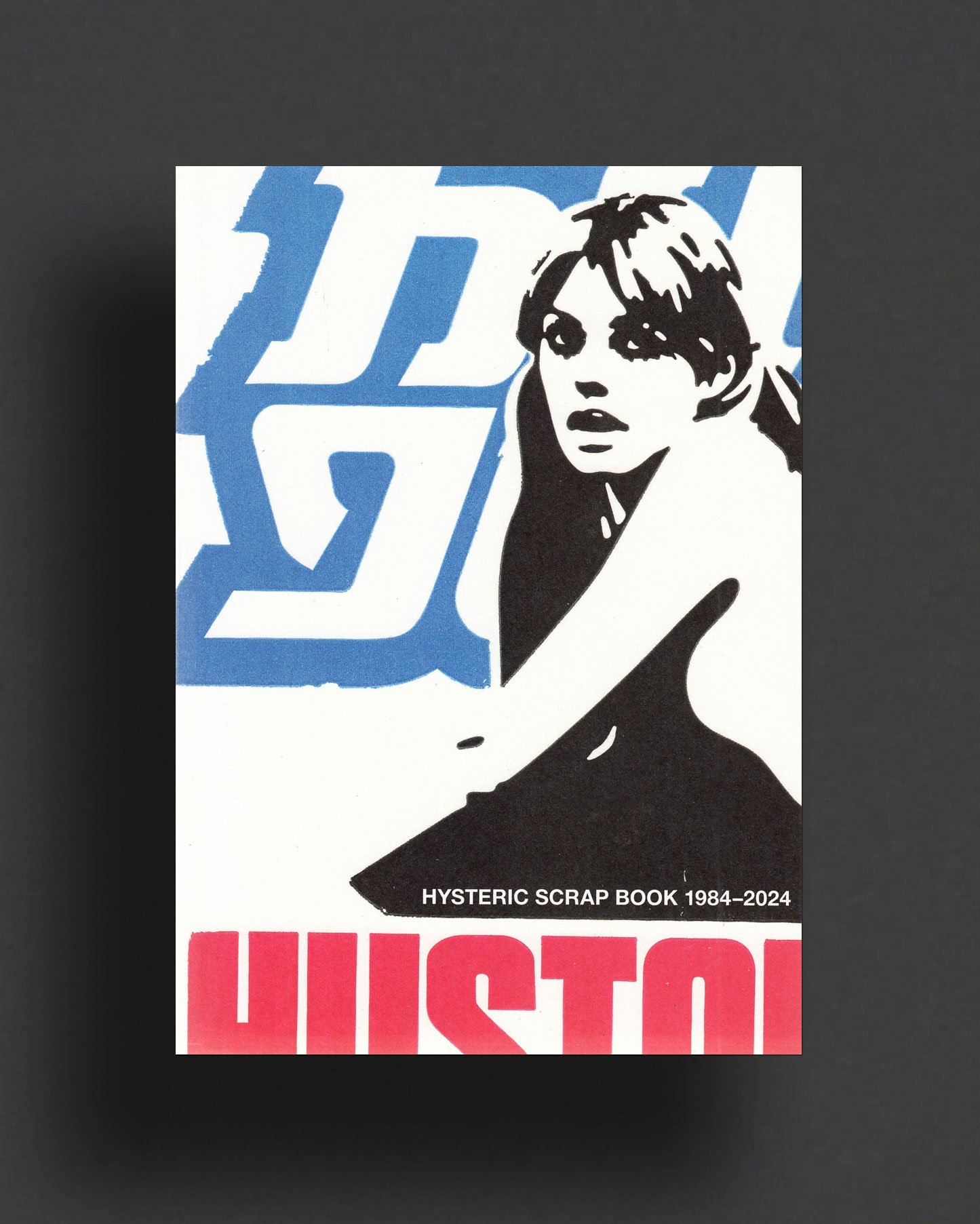
The definitive visual scrapbook of the Japanese cult brand "Hysteric Glamour", tracing its history from creation in 1984 to today, a leader in the Japanese fashion and cultural scenes, designed by founder Nobuhiko Kitamura and published by Parco on the brand's 40th anniversary.
Based on American casual wear, Hysteric Glamour was created by artist Nobuhiko Kitamura in 1984. With a suggestive Warhol-esque logo of a banana and two oranges, Hysteric Glamour represented a crossover of pop culture, music, art, subculture and vintage sensitivity, with a unique and very contemporary world view. The Hysteric aesthetic was heavy with themes around 1960s mass media mod and pop, as well as comic books, pornography, psychedelia, bondage, acid, glam... Like 1970s Fiorucci for 1990s Harajuku. The brand has captivated youth culture from all over the world, regularly featuring the work of pop artists, illustrators, music icons and photographers with visuals adorning T-shirts, denim, jackets, accessories to books and exhibitions. Beginning with an early collaboration with Sonic Youth, they've worked with Richard Kern, Daidō Moriyama, Jennifer Herrema / Royal Trux, Iggy Pop, Frank Kozik, Ed Templeton, yokodoll, Hajime Sorayama, Nirvana, The Cramps, Sofia Coppola, Courtney Love, Terry Richardson, Masahisa Fukase, Patti Smith, Cindy Sherman, Nobuyoshi Araki, Glenn Ligon, Primal Scream, Niagara / Destroy All Monsters, Andy Warhol, and many more.
This book collects the archive materials created by Hysteric Glamour over 40 years, including rare items from the late 1980s to the 1990s. In addition, we introduce a wide variety of creations such as music, graphic design, advertising, photography, art books and more with a chaotic visual like scrapbooking. This is a must have for Hysteric Glamour fans, designed by Nobuhiko Kitamura to include precious images published for the first time that cannot be seen on the internet.
1974, English
Hardcover (w. dust jacket), 216 pages, 21 x 16 cm
1st Edition, Out of print title / used / very good
Published by
Thames and Hudson / London
$30.00 - Out of stock
First HC Edition.
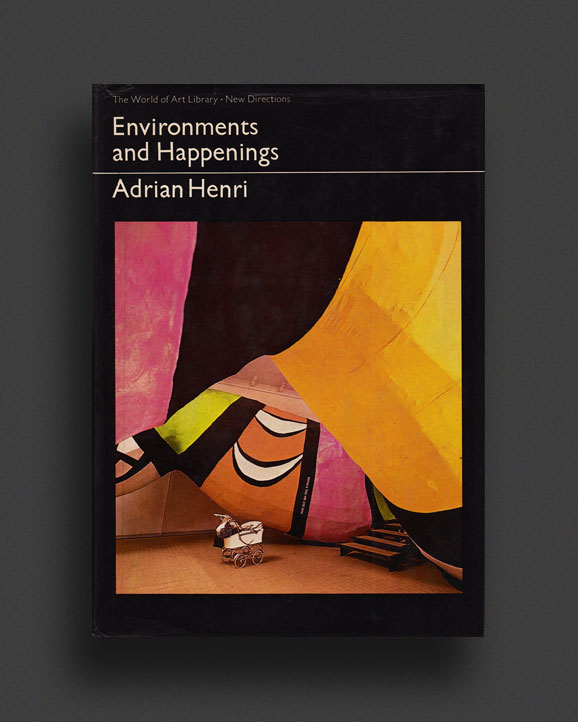
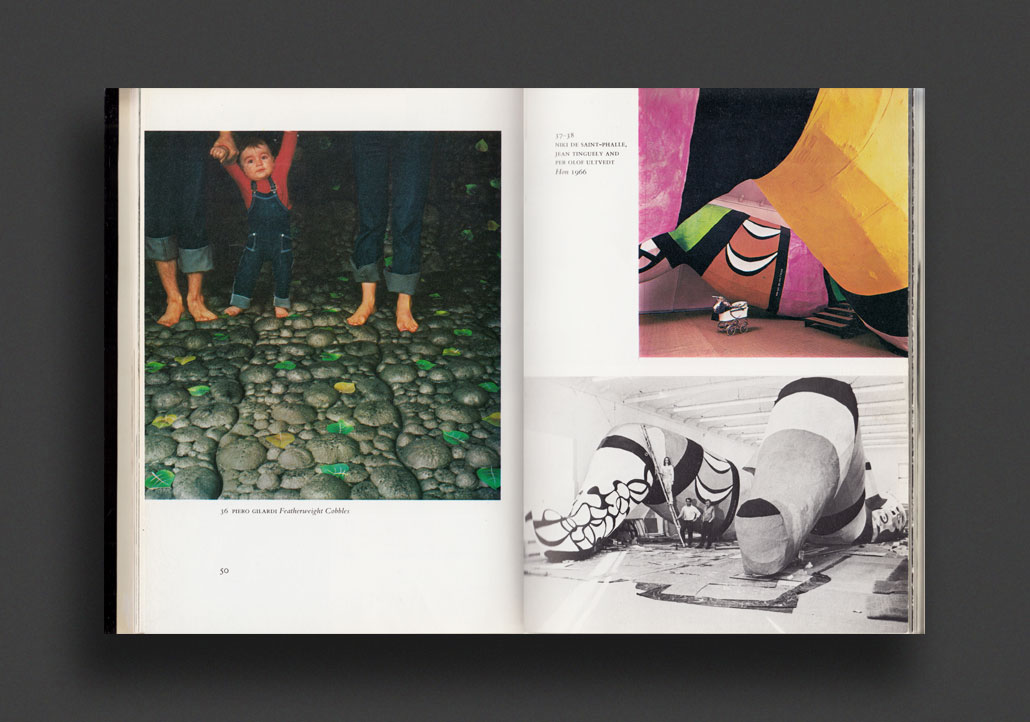
Environments and Happenings by painter and poet Adrian Henri, published by Thames & Hudson in 1974, forms one of the first mainstream book surveys to trace the phenomenon of environmental/performative/total living artworks that became prevalent in the 1960s/70s. This historical study is profusely illustrated in colour and b/w with many international works from Fluxus to Zero to Dolle Mina to Nouveau Réalisme to Provo to Gutai to The Situationists and much more. Includes the works of Joseph Beuys, Clarence Schmidt, Ray Johnson, Öyvind Fahlström, Paul Thek, Yves Klein, Allan Kaprow, Hans Haacke, Kurt Schwitters, Marcel Duchamp, Guerllia Art Action Group, Daniel Spoerri, Wolf Vostell, Gustav Metzger, Peter Kuttner, Jackson Pollock, Alison Knowles, Dick Higgins, Robert Morris, Situationist International, Ferdinand Kriwet, Klaus Rinke, Duane Hanson, A-Yo, Meret Oppenheim, Space Structure Workshop, Ferdinand Cheval, Dolle Mina (Mad Mina), Robert Smithson, Jeff Nuttall, Stefan Wewerka, Christo, Dennis Oppenheim, Vladimir Tatlin, Provo, Barry Flanagan, Andy Warhol, Meredith Monk, Atsuko Tanaka, Kazuo Shiraga, Ed Keinholz, Yayoi Kusama, Piero Gilardi, Niki de Saint-Phalle, Jean Tinguely, Claes Oldenburg, Les Levine, James Rosenquist, Red Grooms, Tom Wesselmann, George Segal, Eduardo Paolozzi, and many many more. Includes reproductions of performance scripts, partial chronology, etc.
Very Good copy in Good DJ some light wear, price-clipping to inner.
1975, English
Softcover, 64 pages, 18 x 11.5 cm
1st Edition, Out of print title / used / good
Published by
Thames and Hudson / London
$15.00 - In stock -
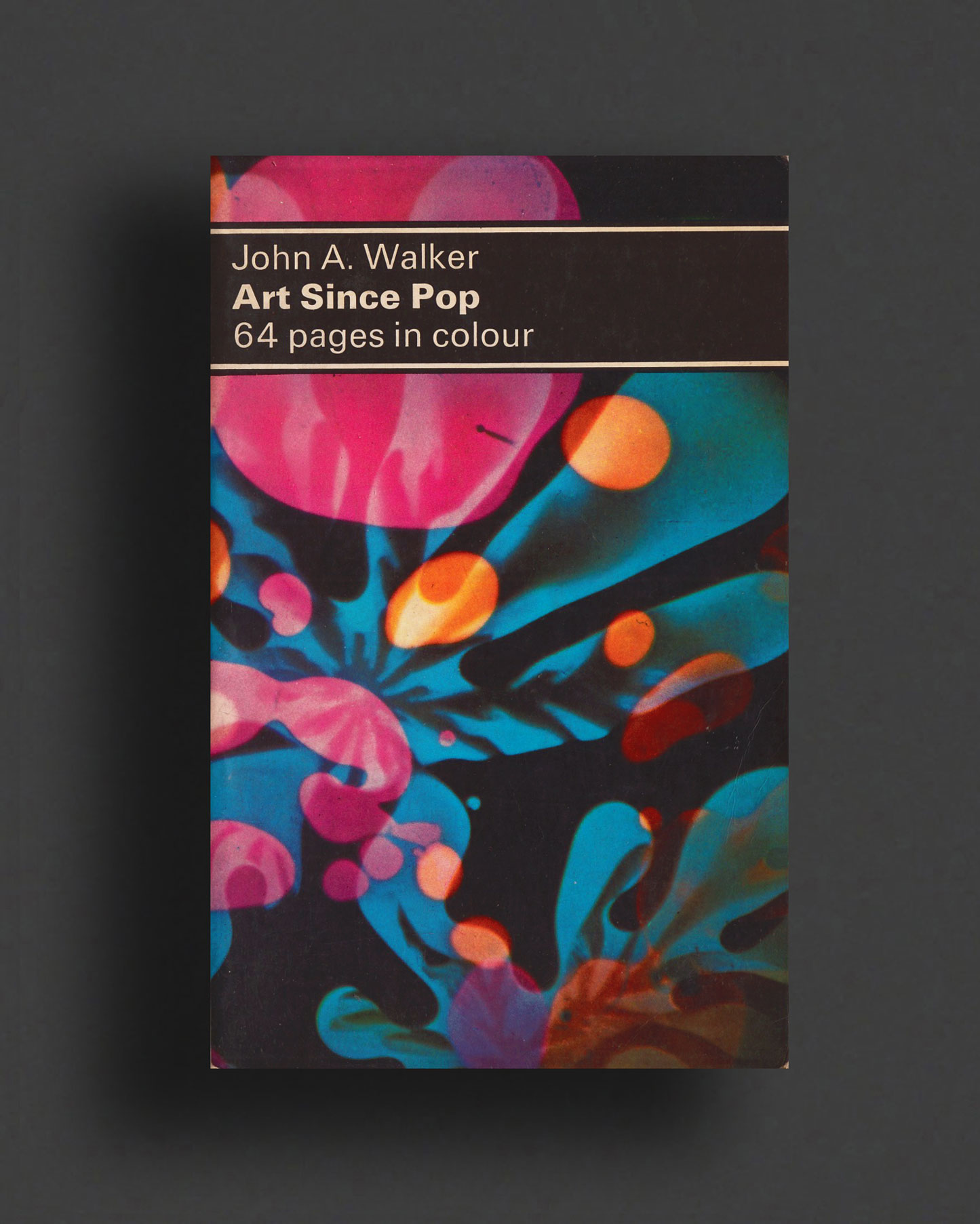
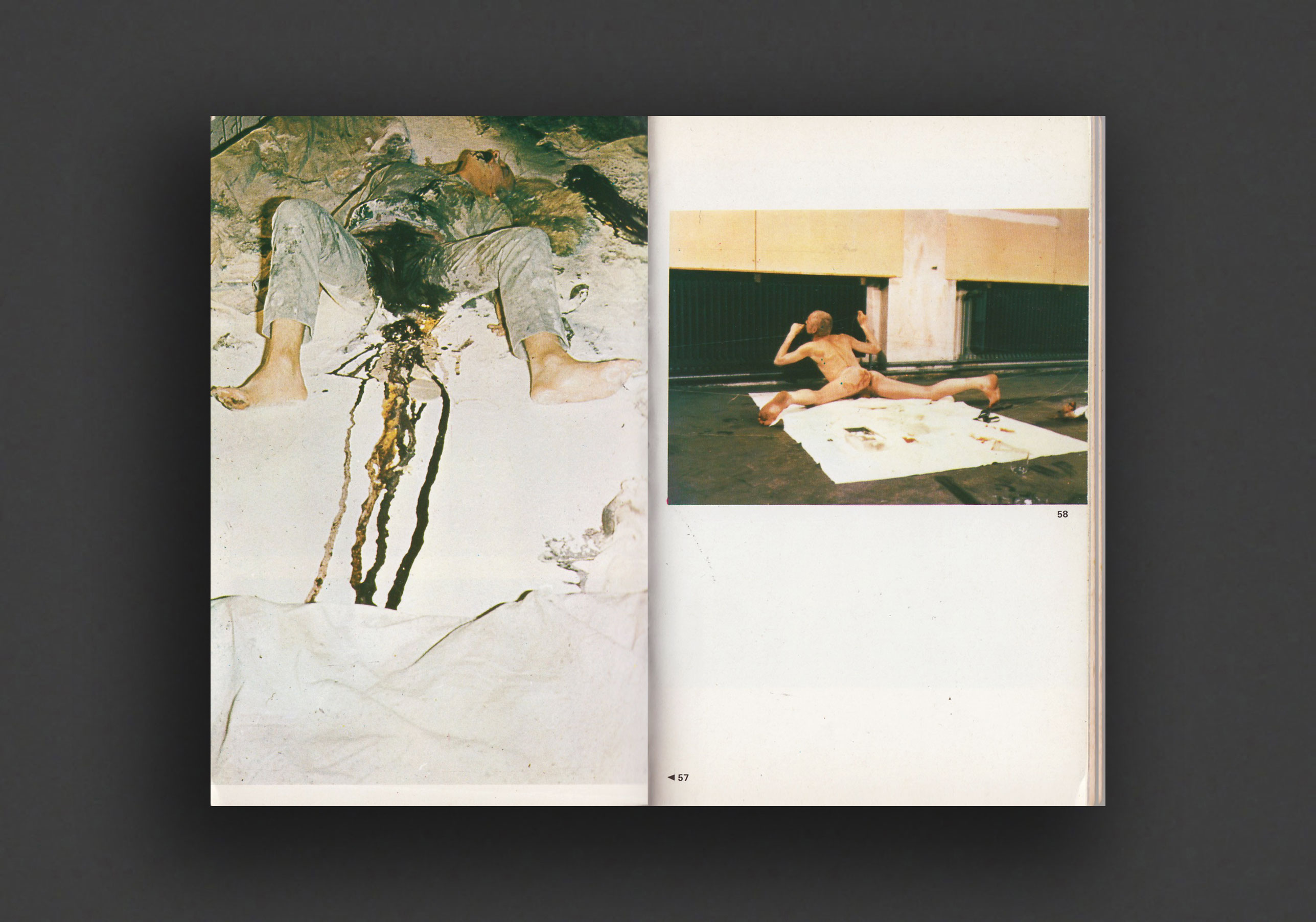
1975, profusely illustrated pocket-book survey of the many strands of contemporary art which have emerged since the appearance of Pop culture.
"Art after Pop, if not exactly uncharted territory, is only now beginning to turn into art history. This book sets out to disentangle the many strands which have appeared since Pop started the cult of cool in art. The Pop artists proved that figuration was not dead; and their Photo-Realist successors have carried the icy gloss finish to its limits. The Abstract Expressionists, too, have had successors, who proved that abstraction was not dead either; these were the Hard Edge artists, whose rejection of illusion was part of the trend towards the reduction of form and content to a minimum. With Minimal Art many people expected painting and sculpture to disappear altogether; this has not happened, but they have been joined by a number of would-be successors: Environments, Actions, Land art, photographic records, printed definitions, Conceptual art. The contact with popular culture, with the Rock underground, even with cybernetics and academic philosophy, has changed the physical appearance of art without changing the art world - and without diminishing the resources of creativity which mankind still puts into art."
John A. Walker is a critic of contemporary art and the author of a glossary of twentieth-century art terms.
Good—VG copy, general light wear/tanning/marking, previous owner's name to title page.
2025, English
Softcover, 460 pages, 26 x 20.3 cm
Published by
Primary Information / New York
$85.00 - In stock -
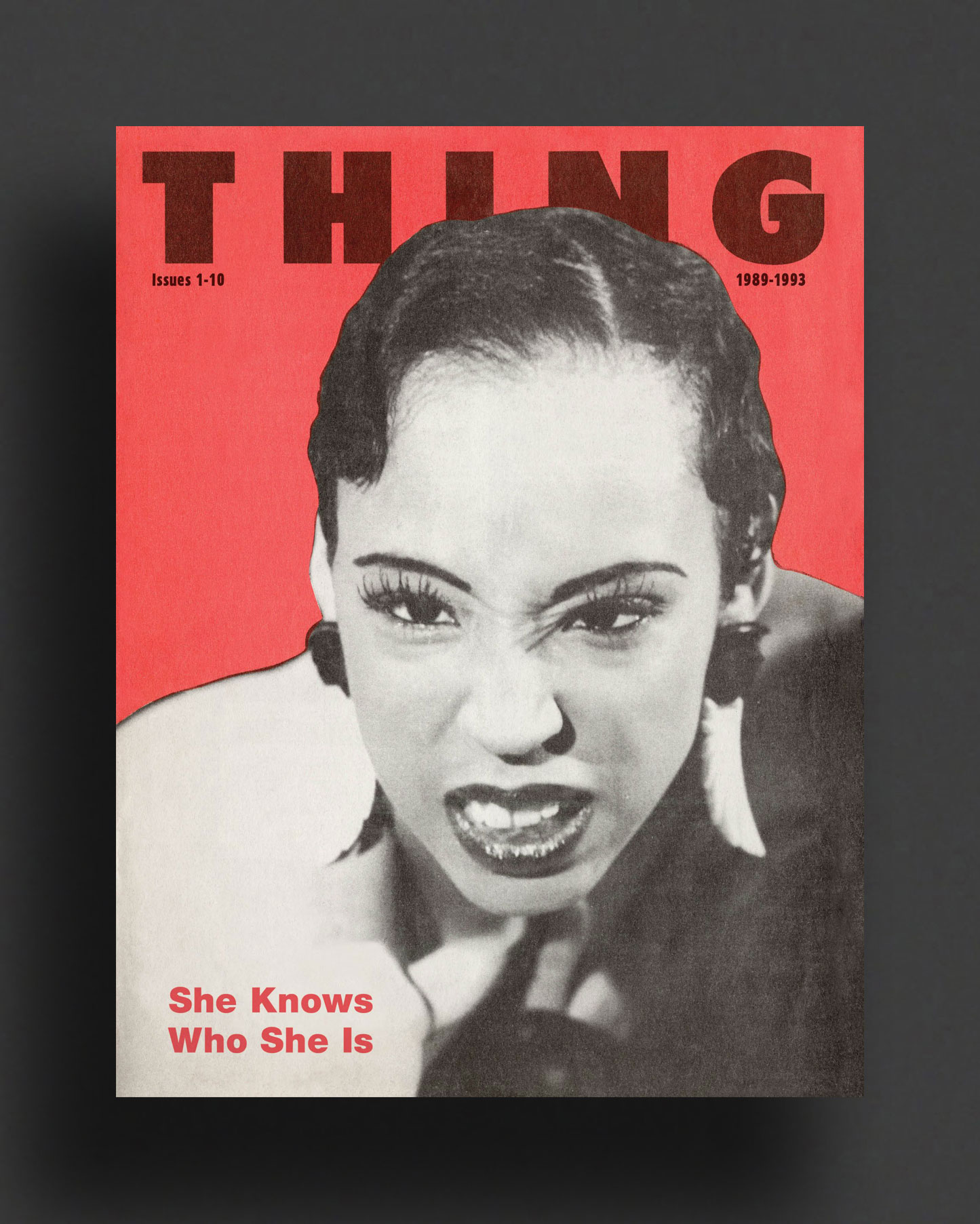
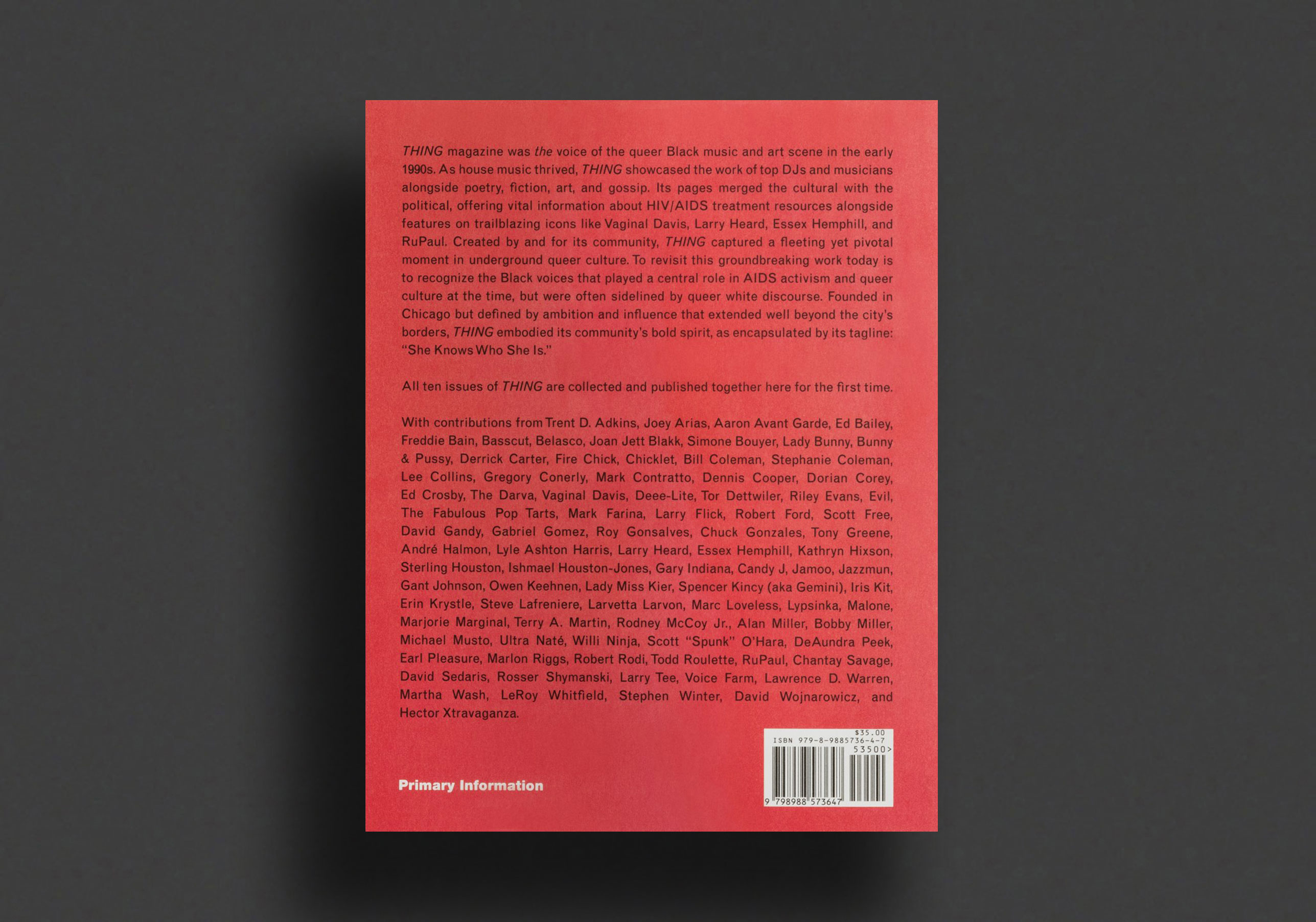
Started in 1989 by designer and writer Robert Ford, THING magazine was the voice of the Queer Black music and art scene in the early 1990s. Ford and his editors were part of the burgeoning House music scene, which originated in Chicago’s Queer underground, and some of the top DJs and musicians from that time were featured in the magazine, including Frankie Knuckles, Gemini, Larry Heard, Rupaul, and Deee-Lite. THING published ten issues from 1989-1993, before it was cut short by Ford’s death from AIDS-related illness. All ten issues of THING are collected and published here for the first time.
As House music thrived, THING captured the multidisciplinary nature of the scene, opening its pages to a wide range of subjects: poetry and gossip, fiction and art, interviews and polemics. The HIV/AIDS crisis loomed large in its contents, particularly in the personal reflections and vital treatment resources that it published. An essay by poet Essex Hemphill was published alongside the gossip columnist Michael Musto and Rupaul dished wisdom alongside a diary from the March on Washington for Lesbian, Gay, and Bi Equal Rights and Liberation. Joan Jett Blakk’s revolutionary presidential campaign is contained in these pages, as are some of the most underground, influential literary voices of the time, such as Dennis Cooper, Vaginal Davis, Gary Indiana, Marlon Riggs, David Wojnarowicz, and even David Sedaris.
THING was very much in dialogue with the club kids in New York and other Queer publishing ventures, but in many ways, it fostered an entirely unique perspective—one with more serious ambitions. In a moment when the gay community was besieged by the HIV/AIDS crisis and a wantonly cruel government, the influence and significance of this cheaply-produced newsprint magazine vastly exceeded its humble means, presenting a beautiful portrait of the ball and club culture that existed in Chicago with deep intellectual reflections. THING was a publication by and for its community and understood the fleetingness of its moment. To reencounter this work today, is to reinstate the Black voices who were so central to the history of HIV/AIDS activism and Queer and club culture, but which were often sidelined by white Queer discourse. In many ways, THING offered a blueprint for the fundamental role a magazine plays in bringing together a community, its tagline summing up the bold stakes of this important venture: “She Knows Who She Is.”
The magazine included contributions from Trent D. Adkins, Joey Arias, Aaron Avant Garde, Ed Bailey, Freddie Bain, Basscut, Belasco, Joan Jett Blakk, Simone Bouyer, Lady Bunny, Bunny & Pussy, Derrick Carter, Fire Chick, Chicklet, Stephanie Coleman, Bill Coleman, Lee Collins, Gregory Conerly, Mark Contratto, Dennis Cooper, Dorian Corey, Ed Crosby, The Darva, Vaginal Davis, Deee-Lite, Tor Dettwiler, Riley Evans, Evil, The Fabulous Pop Tarts, Mark Farina, Larry Flick, Robert Ford, Scott Free, David Gandy, Gemini, Gabriel Gomez, Roy Gonsalves, Chuck Gonzales, Tony Greene, André Halmon, Lyle Ashton Harris, Larry Heard, Essex Hemphill, Kathryn Hixson, Sterling Houston, Ishmael Houston-Jones, Gary Indiana, Candy J, Jamoo, Jazzmun, Gant Johnson, Owen Keehnen, Lady Miss Kier, Spencer Kincy, Iris Kit, Erin Krystle, Steve LaFreniere, Larvetta Larvon, Marc Loveless, Lypsinka, Malone, Marjorie Marginal, Terry A. Martin, Rodney McCoy Jr., Alan Miller, Bobby Miller, Michael Musto, Ultra Naté, Willi Ninja, Scott “Spunk” O’Hara, DeAundra Peek, Earl Pleasure, Marlon Riggs, Robert Rodi, Todd Roulette, RuPaul, Chantay Savage, David Sedaris, Rosser Shymanski, Larry Tee, Voice Farm, Lawrence D. Warren, Martha Wash, LeRoy Whitfield, Stephen Winter, David Wojnarowicz, and Hector Xtravaganza.
Managing Editors: James Hoff and Sam Korman
Designer: Rick Myers
Copy Editor: Allison Dubinsky
2025, English
Hardcover, 176 pages, 27.6 x 20.4 cm
Published by
Hayward Gallery Publishing / London
$74.00 - In stock -
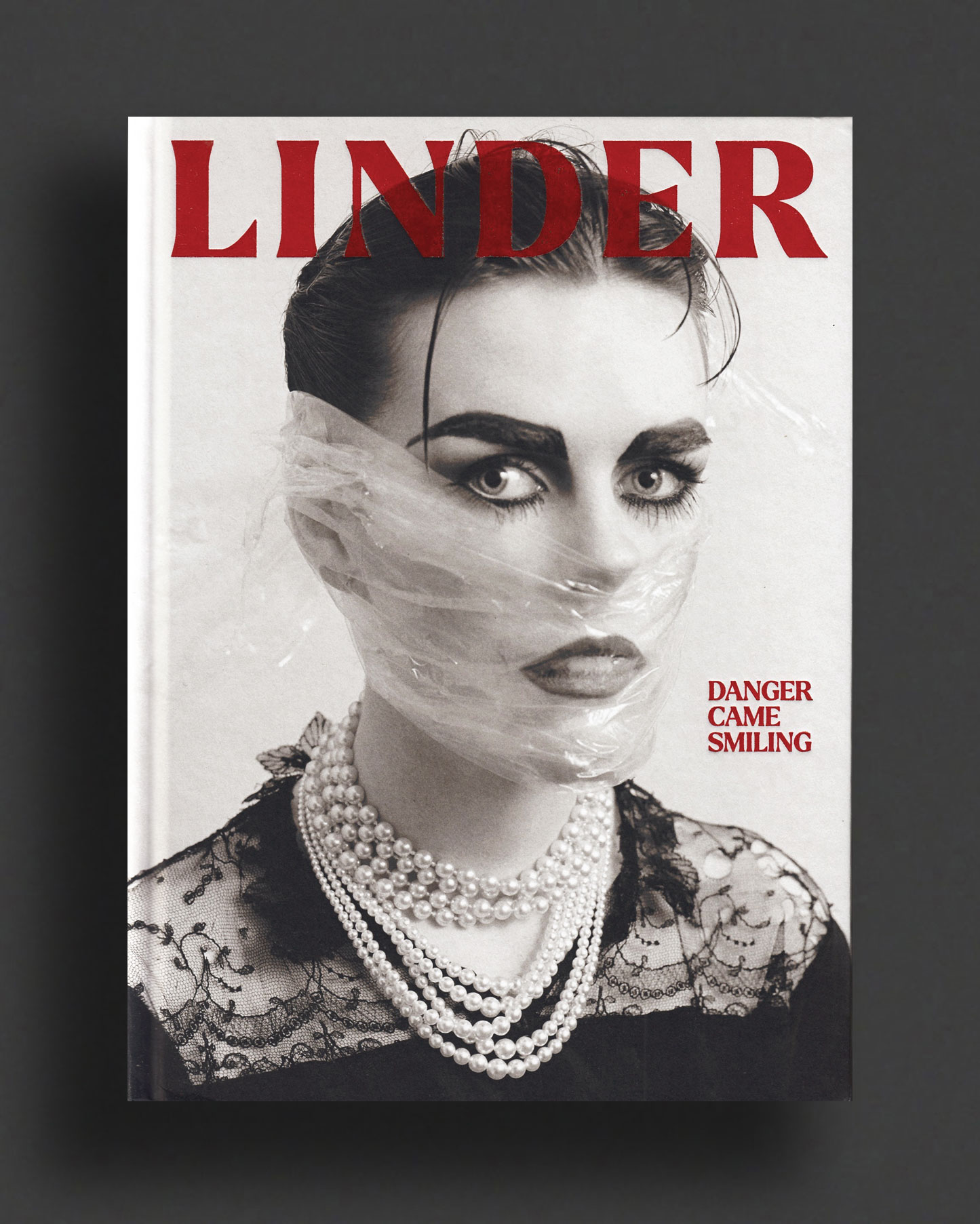
Major survey of the artistic provocateur and trailblazer Linder (b.1954, Liverpool) offering an illuminating overview of the past 50 years of this iconic artist's career, exploring the full range of Linder's thought-provoking work and underscoring the experimental and feminist impulses of her practice.
Linder first emerged in the late 1970s as a prominent figure within the dynamic landscapes of punk and post-punk music; her photomontage on the cover of Buzzcocks' single 'Orgasm Addict' in 1977 became an iconic image of the punk scene. Following her punk period, Linder went on to become an internationally recognised artist renowned for her multifaceted practice. Her journey has been one of relentless exploration, venturing into realms as varied as fashion, music, performance, perfume, textiles and film. At the heart of her explorations lies a profound engagement with the poetics of protest, where artistic inquiry intertwines seamlessly with cultural critique. Throughout her career, Linder has used photomontage as a potent instrument for dissecting and reshaping the portrayal and commercialisation of gender norms and sexual identity. Drawing from source materials extracted from magazines of the late twentieth century, she exposes the weighty stereotypes imposed on both ends of the gender spectrum: automobiles, DIY culture and pornography for men; fashion and domesticity for women. In addition to using found images from magazines, Linder has also used photographs of herself taking on various feminine personae, which navigate concepts of personal invention and the performative dimensions of identity.
Her art is informed by a rich tapestry of influences spanning religious art, surrealism, mysticism and the ever-evolving landscape of social media. This volume - with new essays by Rachel Thomas, Marina Warner and Chris Kraus, and an interview with the artist by Gillian Fox - accompanies a major touring exhibition.
2025, English
Softcover, 640 pages, 24 x 16.99 cm
Published by
Intellect Ltd / US
$110.00 - In stock -
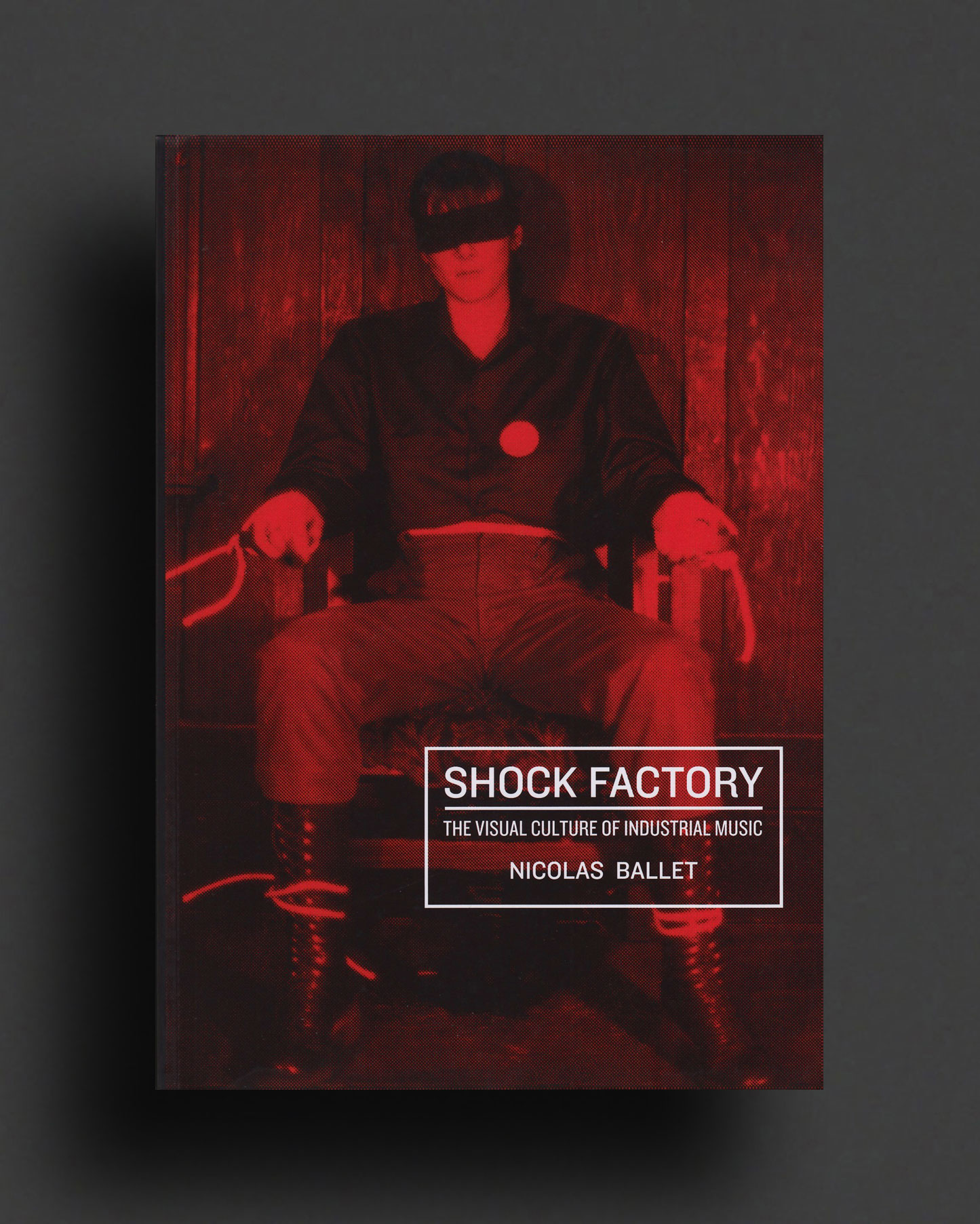
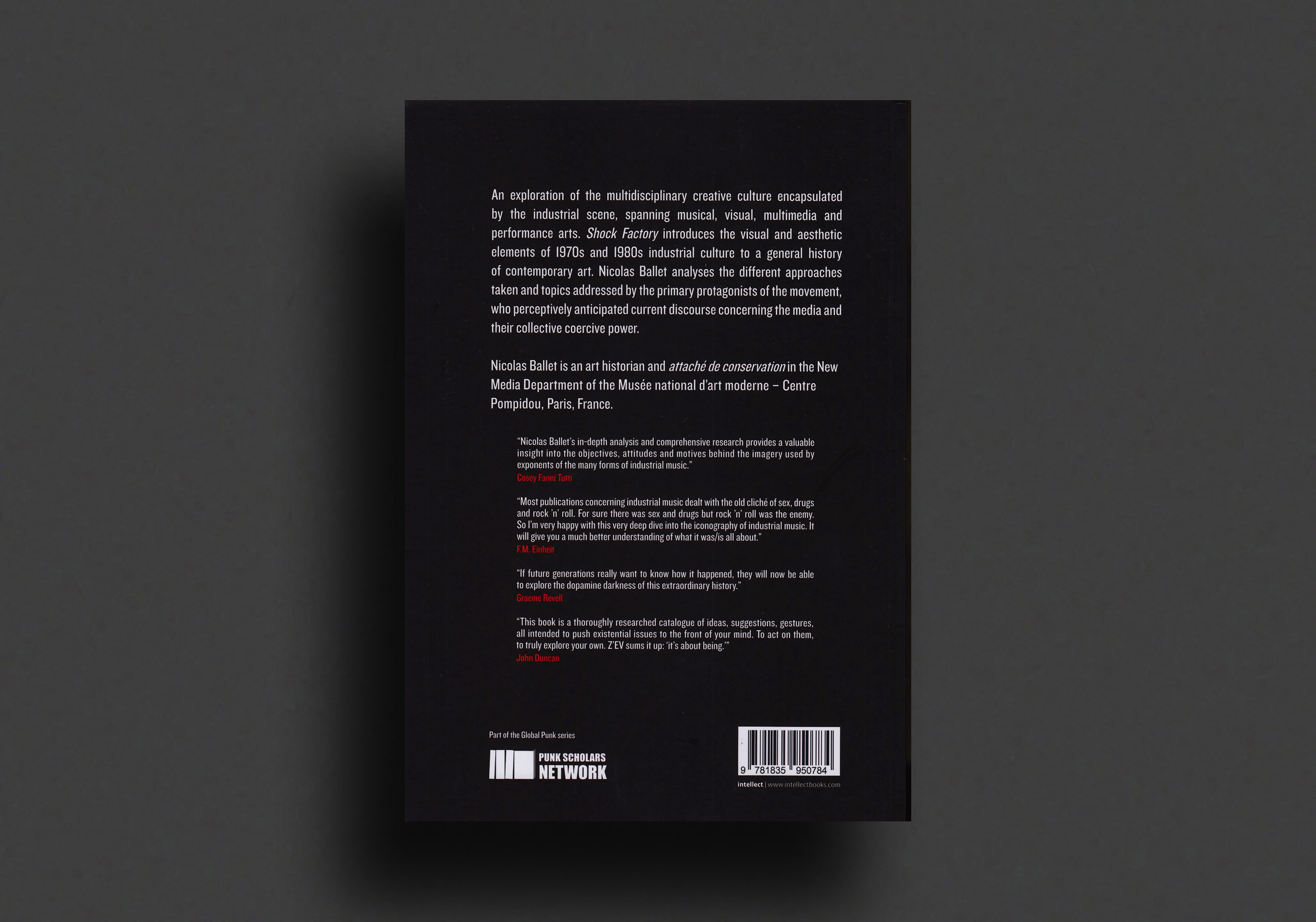
Industrial music has long been recognized for its sonic innovations, but the radical visual culture that accompanied this underground movement has remained largely unexplored. Shock Factory: The Visual Culture of Industrial Music presents the first comprehensive examination of how industrial artists created a coherent aesthetic language across multiple media—from xerox art and mail art to installation and performance—fundamentally challenging modernist utopias while prophetically anticipating contemporary discourse about media manipulation and technological control.
Emerging in mid-1970s Britain from the post-punk underground before expanding globally throughout the 1980s, artists like Throbbing Gristle, Cabaret Voltaire, SPK, Test Dept, Laibach, Einstürzende Neubauten, Nurse With Wound, Current 93, Coil, Psychic TV, Boyd Rice, Whitehouse, Merzbow, Hijokaidan, Hunting Lodge, Controlled Bleeding, Hafler Trio, Z'EV, Nocturnal Emissions, 23 Skidoo, Clock DVA, Master/Slave Relationship, and Monte Cazazza developed sophisticated visual strategies that matched their abrasive soundscapes with equally confrontational imagery.
At 640 pages, this award-winning monograph reveals how industrial artists systematically appropriated reprographic techniques—particularly xerox art and photocollage—to create disturbing visual narratives investigating mind control, criminality, occultism, pornography, psychiatry, and totalitarianism. Through détournement strategies borrowed from Situationist theory, they exposed the coercive mechanisms of mass media and technological society, creating a visual vocabulary that challenged viewers to confront uncomfortable truths about modern power structures. What emerges is a movement that perceptively anticipated contemporary concerns about surveillance, media manipulation, and collective psychological control. Industrial artists' exploration of these themes through deliberately provocative imagery served not as mere provocation but as sophisticated critique of the very media systems they inhabited. Their radical aesthetic choices—degraded reproduction quality, found imagery manipulation, shock tactics—created hybrid forms that defied traditional categorization while establishing independent networks that bypassed conventional art world structures.
Shock Factory positions industrial music's visual culture within broader art historical narratives, revealing connections to Dada, Surrealism, and conceptual art while demonstrating the movement's unique contributions to contemporary visual culture. The book arrives at a moment when questions about technology, media manipulation, and social control have never been more urgent, demonstrating how these artists' radical visual strategies continue to offer valuable insights for our digital age.
For scholars of contemporary art, music history, and media studies, this book provides essential documentation of an overlooked movement that significantly influenced subsequent artistic developments. For readers interested in underground culture and avant-garde aesthetics, Shock Factory reveals the sophisticated visual thinking that accompanied one of the most innovative musical movements of the past half-century.
"A history of industrial music needed to be written. Nicolas Ballet has accomplished this. Thoroughly. This is the book's greatest strength. It explores the significance of noise as a reflection of a world in decay and screaming as a need. And doing it so it reveals a significant connection between industrial music and contemporary art. This is also what makes it an essential book: its contribution to dismantling categories and rethinking history from mixed creative territories."—David G. Torres
Nicolas Ballet is an art historian and assistant curator at the Centre Pompidou in the New Media Department. He is the author of books and articles exploring the visual and sonic contributions of countercultures and experimental artistic practices.
1992, Japanese
Hardcover (w. dust jacket), 238 pages, 22 x16 cm
1st Edition, Out of print title / used / fine
Published by
Seikyūsha / Tokyo
$200.00 - Out of stock
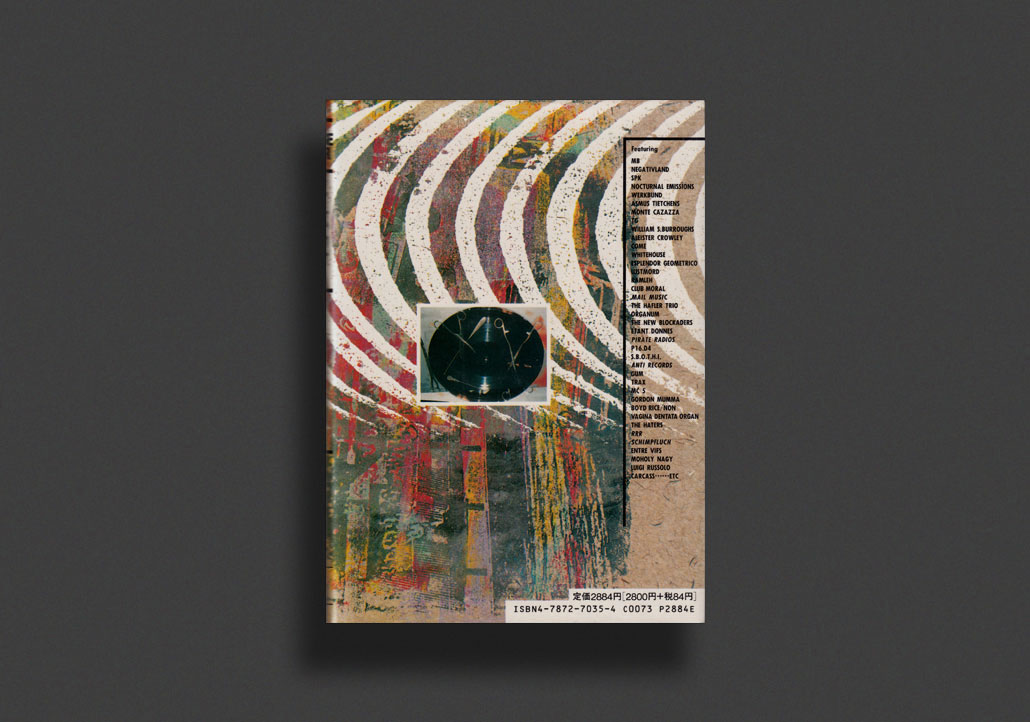
MB, Negativland, SPK, Nocturnal Emissions, Werkbund, Asmus Tietchens, Monte Cazazza, Throbbing Gristle, William S. Burroughs, Aleister Crowley, COME, Whitehouse, Esplendor Geometico, Lustmord, Ramleh, Club Moral, Mail Music, The Hafler Trio, Organum, The New Blockaders, Etant Donnes, Pirate Radios, P16.D4, S.B.O.T.H.I., Anti Records, Gum, Trax, MC5, Gordon Mumma, Boyd Rice / NON, Vagina Dentata Organ, The Haters, RRR Records, Schimpfluch, Entre Vifs, Moholy Nagy, Luigi Russolo, Carcass....
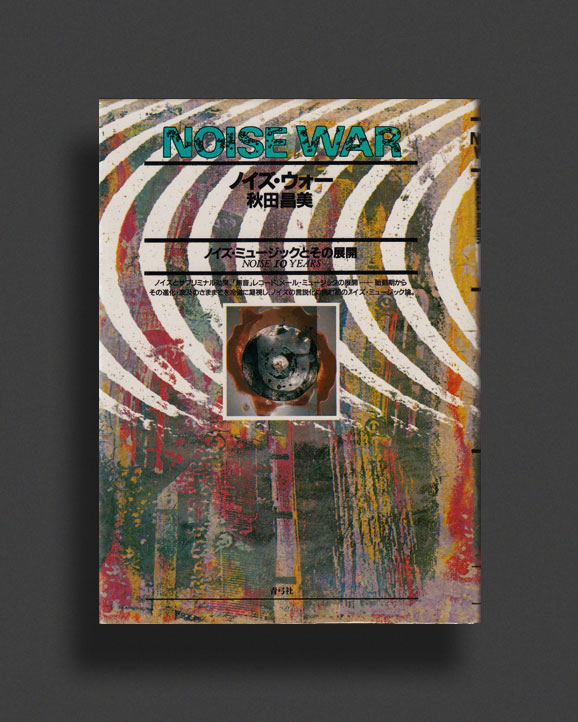
First (only) hardcover edition of the seldom seen and highly coveted "Noise War", written by Merzbow's Masami Akita and published only in Japan in 1992. Long out-of-print, "Noise War" surveys 10 years of noise, tracing developments and interests in the work of Burroughs and Crowley into the the birth of industrial music, power electronics, experimental noise and noise art/performance, bionic noise, metal alchemy, noise electronics, anti-information and avant-garde radio, mail art, noise collage/exchange music, media attack, record destruction, ambient noise, and much more, delving into the work of keys artists and record labels from all over the world within the survey period, but also influential historical figures. Heavily illustrated throughout in black and white with record sleeves, posters, photographs, and finishes with Akita's compiled noise record list.
Merzbow is a noise project created in Tokyo, Japan in 1979 under the direction of noise technician Masami Akita. As well as a legendary underground noise artist, Akita is a prolific writer in Japan and frequently writes on the arts, music, erotica, esoterica, modern architecture, and animal rights, with articles on emerging subcultures and underground extreme cultures appearing in publications like SM Sniper, Studio Voice and Fool's Mate. His development of the Merzbow aesthetic ran parallel with a series of investigative books in which he catalogued and introduced a vast amount of hermetic types of music, sexual practices and autonomous creativity to a fairly conservative (but not close-minded) Japanese audience. "Noise War" is the most sought after of these very books.
Japanese text, fine copy with fine metallic endpapers, metallic illustrated hardcovers, and illustrated dust jacket. Tight with little-to-no wear.
1990, Japanese
Hardcover (w. dust jacket), 206 pages, 13.6 cm x 19.4 cm
1st Edition, Out of print title / used / fine
Published by
Seikyūsha / Tokyo
$80.00 - In stock -
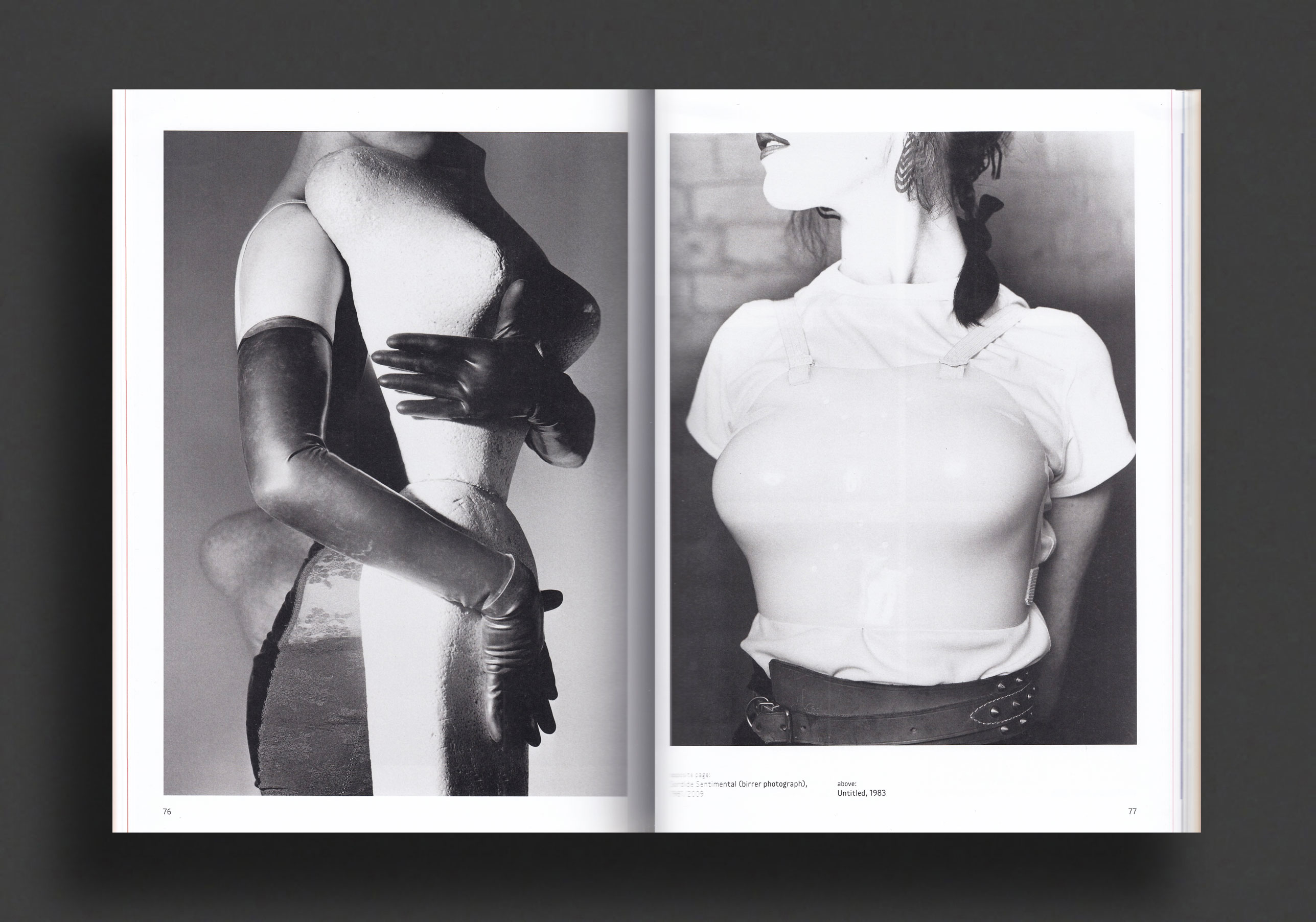
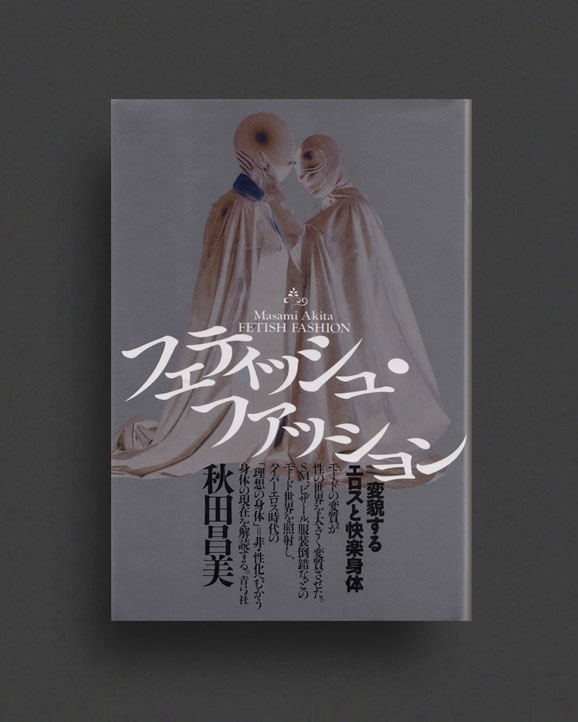
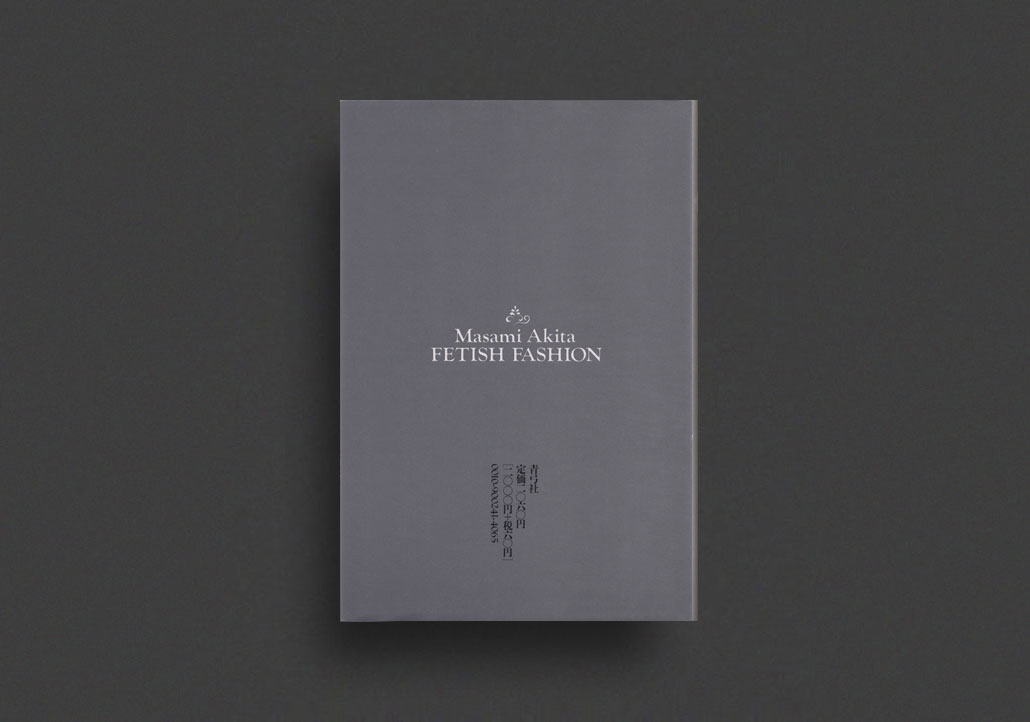
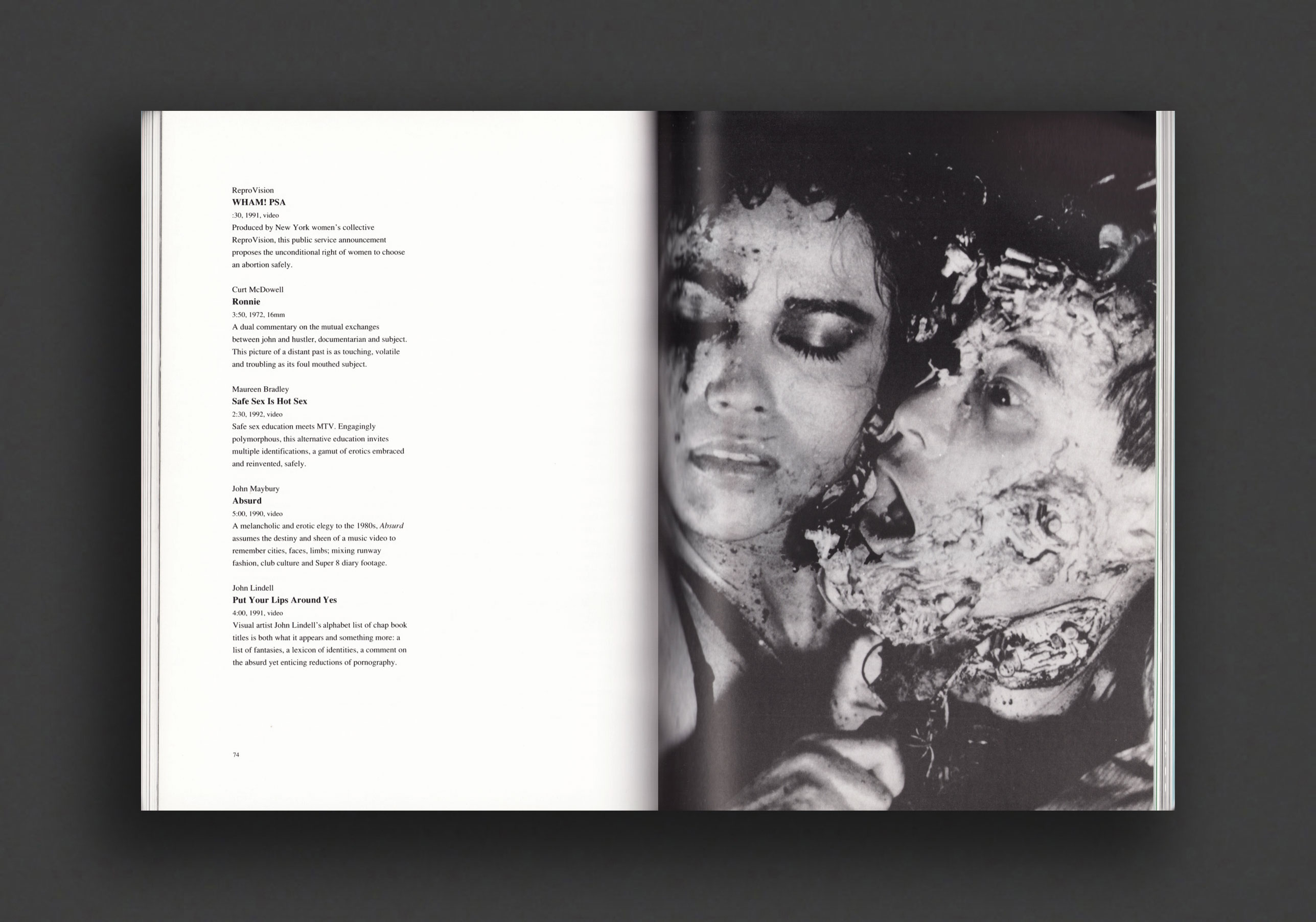
First hardcover edition of "Fetish Fashion", written by Merzbow's Masami Akita and published only in Japan in 1990, an in-depth exploration of the eroticisation and transformation of the body through fetish fashion that revolutionised the world of sexuality, from SM Bizarre, Transvestism, Rubber/latex, mistresses and dominatrixes, bondage clubs, male and female castration, restraints, piercing, the fascist artificial body, medical fetish/medical art (including Romain Slocombe), and much more, all subjects illustrated in b/w. Merzbow is a noise project created in Tokyo, Japan in 1979 under the direction of noise technician Masami Akita. As well as a legendary underground noise artist, Akita is a prolific writer in Japan and frequently writes on the arts, music, erotica, esoterica, modern architecture, and animal rights, with articles on emerging subcultures and underground extreme cultures appearing in publications like SM Sniper, Studio Voice and Fool's Mate. His development of the Merzbow aesthetic ran parallel with a series of investigative books in which he catalogued and introduced a vast amount of hermetic types of music, sexual practices and autonomous creativity to a fairly conservative (but not close-minded) Japanese audience. "Fetish Fashion" is one of these very books.
First edition, Japanese text, fine copy with fine illustrated dust jacket.
1992, English
Softcover (w. dust jacket), 140 pages, 26 x 20 cm
1st Edition, Out of print title / used / very good
Published by
MIMA / Melbourne
$35.00 - Out of stock
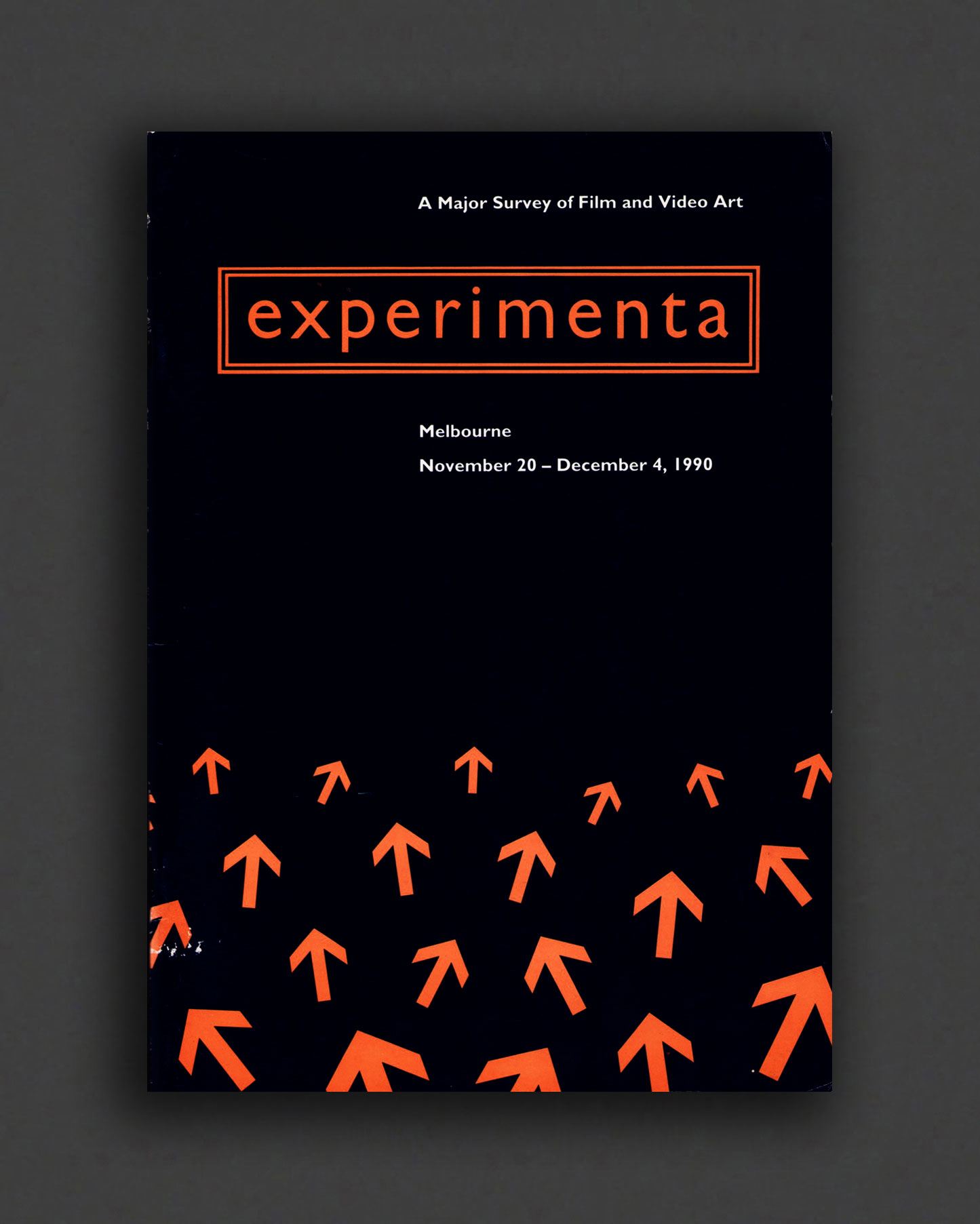
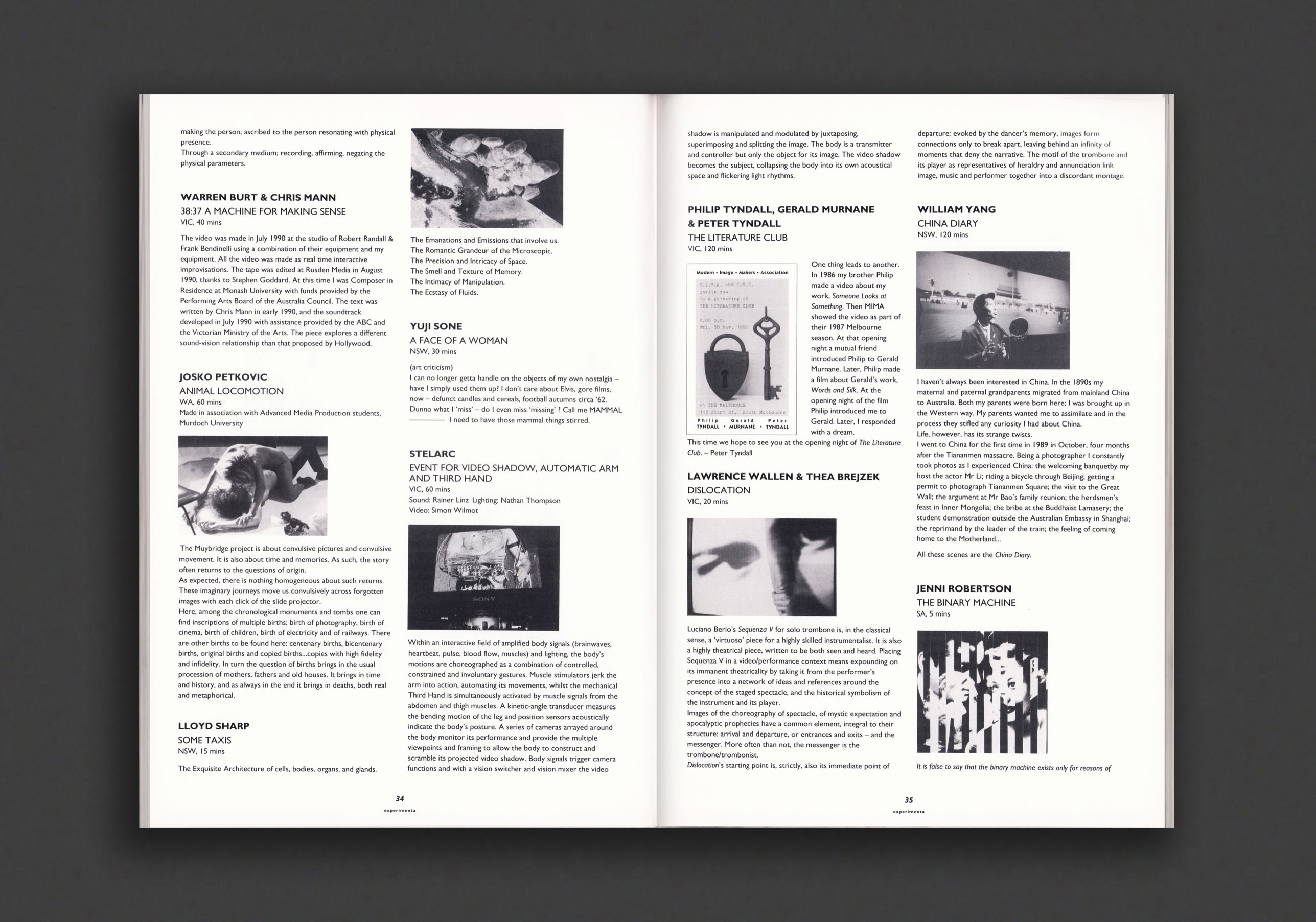
Scarce catalogue edited by Adrian Martin and published in 1990 to accompany experimenta — A Major Survey of Film and Video Art, Melbourne, November 20—December 4, 1990, presented by Modern Image Makers Association Inc. (MIMA) and founded in 1988. Showcasing Australian video art, media art, installation and performance works.
Contents include: An introduction to Experimenta 1992 by Lizzette Atkins, Of Prisms and Tools: The Possibility of an Avant Garde by Vikki Riley, Australian Screenings, Introduction by Steven Ball, Opening Night, Signposts To The Imagination Re-animated; (re)constructing an art, Techknowledge, Dusan Marek's Cobweb On A Parachute — Essay by Arthur Cantrill, David Perry's The Refracting Glasses, Interview with David Perry, Passionate Uncertainty, Text and Textures, Engineering Memory: Views of History, Politics, Culture and Geography, Helical Scans: Diverse Ways of Seeing (Video) Programme 1 and 2, One Way Street: Fragments for Walter Benjamin, Sound and Image, Experience and The Other, The Fall Of The Berlin Wall, The Open 'Iron Curtain' and Post-Socialist Drama, Artists seen by artists, Die Mauer—The negative horizon, The Czech Avant Garde 1911-1941 essay by Jaroslav Andel, Programme 1, Programme 2, Video Programmes From 'New Europe' curated by Heiko DaxI, U.K., Intimate Imaginaries, Artist Screening: Michael Maziere, Slow Glass, U.S.A., Shalom Gorewitz-Experimental Television Center, New York, WAX, or the discovery of television among the bees, Flesh Histories, Programme 1, Programme 2, Japan, Emotional Wave: Image Network Japan, V.I.E.W., Shinya Tsukamoto's Tetsuo: The Iron Man, Interview with Shinya Tsukamoto, Performance: Introduction by Jeffrey Fereday, Artist statements, Installation: Introduction by Jennifer Phipps, Artist statements, Medienkunst—A survey of German, installation art— introduction by Heiko Daxl, Medienkunst-Artist statements, Special Events, Noisefest 2, Techno Garden, Century Endings - An Afternoon of Performance in the Great Hall, Seminars and Talks, Essays: Video As Art: Personal Observations From New York by Shalom Gorewitz, Some Thoughts on the German State of Things: Teaching Video by Ingo Petzke, An Attempt Toward The Anti-Oedipus-Japanese Video Art After The '80s by Junji Ito, Schedule of events, Artist index, Title index...
Includes the work of Arthur and Corinne Cantrill, Arf Arf, Ian Haig, GANG, Jun Kurosawa, Warren Burt, Chris Mann, Anne Ferran, Sadie Benning, Michelle Handelman, Monte Cazazza, Pete Spence, Fiona MacDonald, Cyber Dada Manifesto, Dale Nason, Troy Innocent, Dusan Marek, Critical Art Ensemble, John Maybury, David Perrt, Steven Ball, Karel Hašler, Otakar Vávra, Jiří Lehovec, Michael Maziere, David Blair, Danny Fass, Joe Kelly, Shelly Silver, Laurens Tan, John Gillies, and many more.
VG copy light wear to extremities/DJ.
1991—1997, English
Softcover (staple-bound), 70 pages ea. approx x 9 issues, 27 x 21 cm
1st Edition, Out of print title / used / good
Published by
Musicworks / Toronto
$80.00 - In stock -
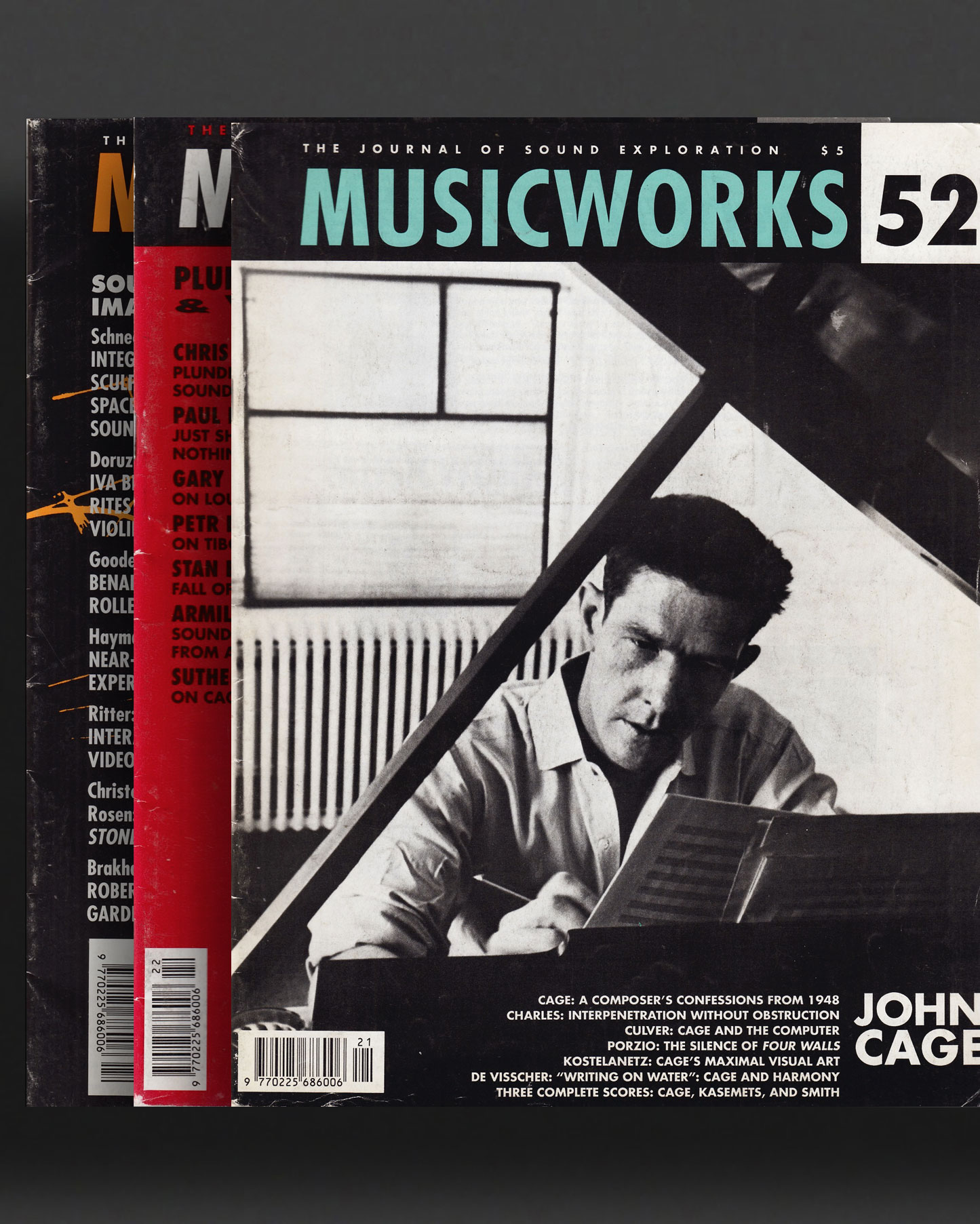
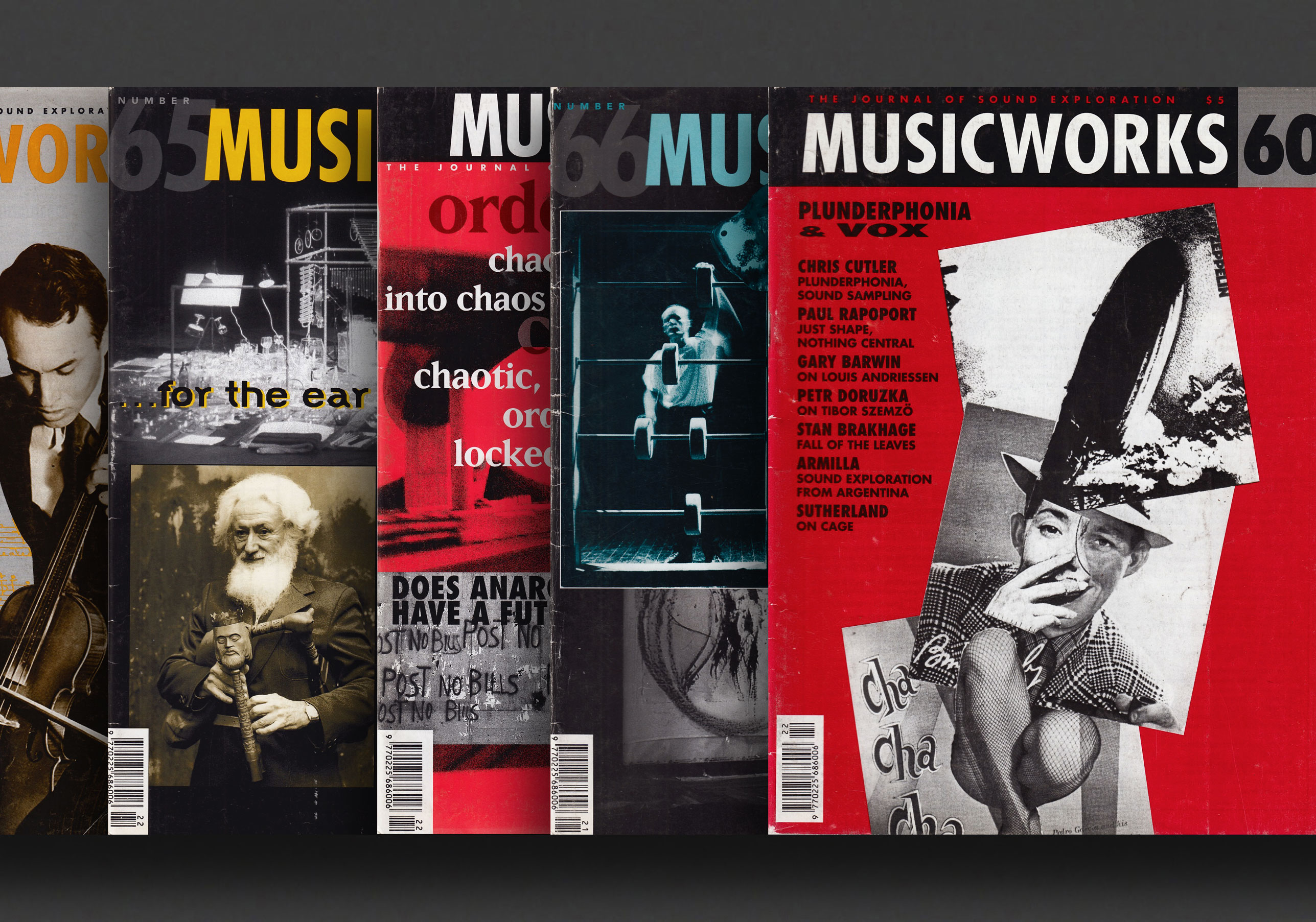
Lot of 9 issues (1991—1997) of Musicworks, The Journal of Sound Exploration, published out of Toronto. Launched in January 1978 by Andrew Timar and John Oswald, best known for his plunderphonics, Musicworks was a long-running Canadian avant-garde music magazine devoted to experimental, improvised and Electroacoustic music. These issues together feature an abundance of exclusive interviews, essays, reviews, theoretical texts, scores, colloquies, artworks, features on and by Stan Brakhage, Chris Cutler, John Cage, Tibor Szemző, Pauline Oliveros, Trevor Wishart, Carolee Schneemann, Josef Režný, Jerry Hunt, Kazue Sawai, Glenn Branca, Yūji Takahashi, Tim Hodgkinson, Louis Andriessen, Glenn Gould, Harry Partch, Akio Suzuki, Fergus Kelly, Petr Kotik, Nicholas Gebhardt, Barbara Benary, Andrew Culver, Udo Kasemets, Franz Van Rossum, R.I.P. Hayman, Iva Bittová, Nobuo Kubota, David Rokeby, François Girard, J.S. Bach, Jocelyn Robert, Don Ritter, Glenn Gould, Paul Rapoport, and many more. Scarce and incredible resource for improvised and avant-garde compositional music/performance/video histories from this publisher and cassette label.
Good copy with with general light magazine wear.
1990, English
Softcover (staple-bound), 54 pages, 30 x 21 cm
1st Edition, Out of print title / used / very good
Published by
MIMA / Melbourne
$25.00 - Out of stock
Scarce catalogue edited by Adrian Martin and published in 1990 to accompany experimenta — A Major Survey of Film and Video Art, Melbourne, November 20—December 4, 1990, presented by Modern Image Makers Association Inc. (MIMA) and founded in 1988. Showcasing Australian video art, media art, installation and performance works, this iteration also included programs of Lettrist Cinema and French Avant-Garde film from the 1980s. Illustrated throughout with information on all of the works, accompanied by essays: Adrian Martin – "The Adventures of Form", John Conomos – "Video as Moonlighting", Christian Lebrat – "The Lettrist Cinema of the 1950s", Vikki Riley – "The Picture Can't Get Any Louder", John Flaus – "In the Eye's Mind - Paul Winkler Retrospective.
Includes the work of Arthur and Corinne Cantrill, Maria Kozic and Ian Haig, Peter Callas, Josko Petkovic, Edward Colless, Tona Keane, Arf Arf, Shelley Lasica, Peter Tyndall, Gerald Murnane, William Yang, John Nixon, Primary Source, Warren Burt, Chris Mann, Stelarc, Pete Spence, Philip Brophy, David Cox, Maurice Lemaitre, Frederique Devaux, Cyber Dada Manifesto, Dale Nason, Troy Innocent, Lydia Lunch, Foil, Swans, Einsturzende Neubauten, Butthole Surfers, Violinda, Steven Ball, and so many more...
VG copy light wear to extremities.
2025, English
Softcover, 144 pages, 20 x 14.5 cm
Published by
un / Naarm
$30.00 - In stock -
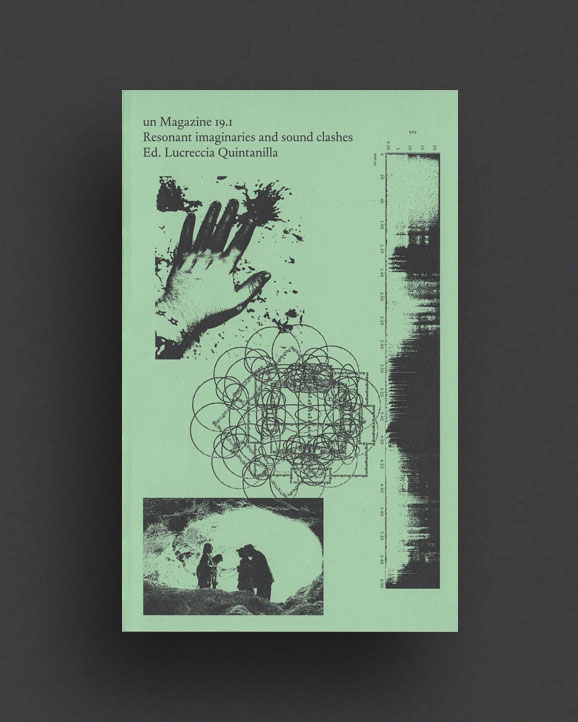
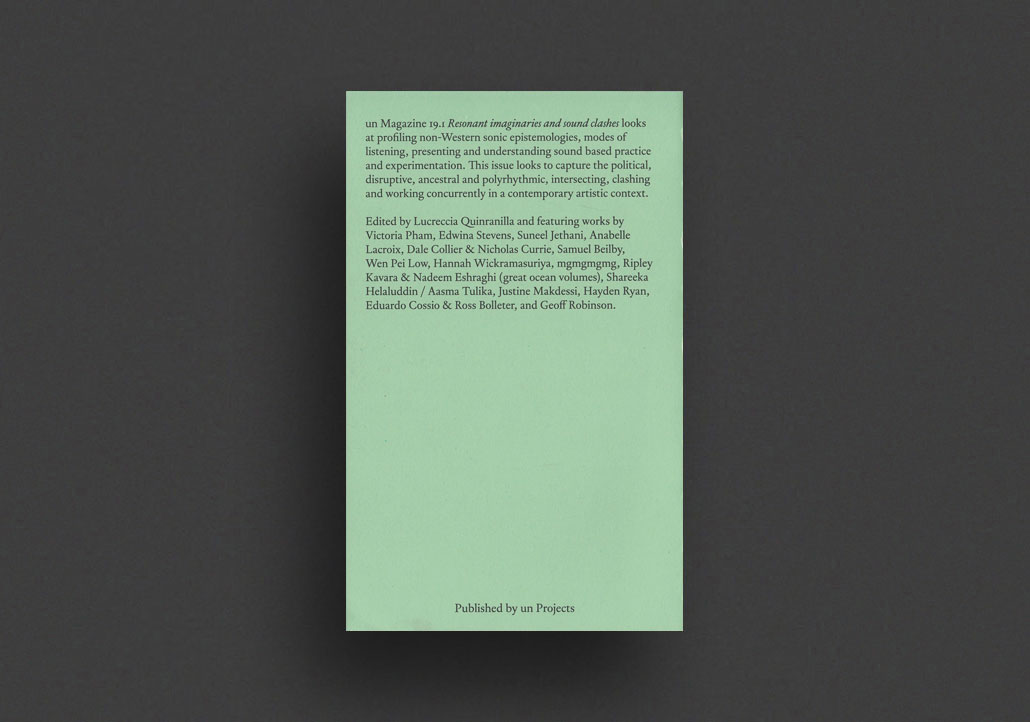
un 19.1 Resonant Imaginaries
Edited by Lucreccia Quintanilla
Contributions by Anabelle Lacroix, Shareeka Helaluddin, Aasma Tulika, Daisy Currie, Nicholas Currie, Edwina Stevens, Nadeem Tiafau Eshraghi, Ripley Kavara, mgmgmgmg, Hannah Wickramasuriya, Hayden Ryan, Justine Makdessi, Geoff Robinson, Samuel Beilby, Victoria Pham, Wen Pei Low, Suneel Jethani.
1994, English
Softcover, 160 pages, 22 x 28 cm
1st Edition, Out of print title / used / very good
Published by
SAF Publishing / London
$70.00 - Out of stock
First edition of Wrong Movements : A Robert Wyatt History, published in the UK in 1994; researched, compiled, edited and written by Michael King. An enchanting and essential portrait of one of progressive music's founding fathers. Robert Wyatt (b. 1945) is an English musician. A founding member of the influential Canterbury scene bands Soft Machine and Matching Mole, he was initially a kit drummer and singer before becoming paraplegic following an accidental fall from a window in 1973, which led him to abandon band work, explore other instruments, and a forty-year solo career as one of the most singular voices and composers in the world. A key player during the formative years of British jazz fusion, psychedelia and progressive rock, Wyatt's own work became increasingly interpretative, collaborative and politicised from the mid 1970s onwards. Michael King's meticulous biography pieces together a chronological account of Wyatt's 30 year career and is packed with previously unpublished archive material and rare photographs, posters, letters, articles, et al. Punctuated by commentary from Robert Wyatt himself, as well as Alfreda (Alfie) Benge, Hugh Hopper, Daevid Allen, Kevin Ayers, Mike Ratledge, Keith Tippett, Carla Bley, Fred Frith and many others, Wrong Movements paints a fascinating portrait of this highly respected and individual musician. Includes a comprehensive discography of official releases, compiled with customary accuracy by Manfred Bress, editor of Canterbury Nachrichten. This includes details of guest appearances and samplers as well as the various editions of solo material, Softs albums et al. An essential reference for any enthusiastic listener.
Very Good copy.