World Food Books' programme is largely produced on Kulin Nation land. We acknowledge the Wurundjeri people of the Kulin Nation as the first and continuing custodians of this land, and pay respect to their Elders past, present, and emerging.
World Food Books is an arts and special interests bookshop in Naarm / Melbourne. Founded in 2010, World Food Books is devoted to the presentation of a rotating, hand-selection of international art, design, literary and counterculture publications with an emphasis on the anti-traditional, the experimental, the avant-garde, the heretic, the marginal.
Presenting new titles alongside rare and out-of-print books, catalogues and journals spanning the fields of modern and contemporary art, design, photography, illustration, film, literature, poetry, cultural theory, philosophy, sexuality, popular and underground culture in its many radical forms, World Food Books wishes to encourage adventurous, thoughtful and open-minded reading, looking, writing, and exchange of publishing and ideas, both current and historical.
As well as our bookshop, located in Melbourne's historical Nicholas Building, all of our inventory is available internationally via our online mail-order service.
World Food Books semi-regularly co-ordinates "Occasions", a programme of exhibits and events at the bookshop and in partnership with other hosts (such as museums and art galleries) that develop out of the activities, relationships and content of the bookshop itself.
World Food Books
The Nicholas Building
37 Swanston Street
Room 5, Level 6
Melbourne 3000
Australia
SHOP HOURS:
SHOP CLOSED FOR SUMMER
RE—OPEN JAN 2
WEB-SHOP OPEN 24/7
World Food Books
Postal Address:
PO Box 435
Flinders Lane
Victoria 8009
Australia
info@worldfoodbooks.com
Art
Theory / Essay
Architecture / Interior
Graphic Design / Typography
Photography
Fashion
Eros
LGBTQ+
Fiction / Poetry
Weird / Speculative / Science Fiction / Horror
Transgressive / Visceral / Abject
Symbolism / Decadence / Fin de siècle
Film / Video
Painting
Sculpture / Installation
Performance / Dance / Theater
Drawing
Sound / Music
Curatorial
Group Shows / Collections
Periodicals
Out-of-print / Rare
Posters / Ephemera / Discs
Signed Books
World Food Books Gift Voucher
World Food Book Bag
Australian Art
Australian Fiction
Australian Science Fiction / Speculative Fiction
Australian Poetry
Australian Photography
Japanese Photography
Conceptual Art
Minimal Art
Dada
'Pataphysics / Oulipo
Fluxus
Concrete Poetry
Pop Art
Surrealism
Arte Povera
Arte Informale / Haute Pâte / Tachism
Nouveau Réalisme / Zero / Kinetic
Situationism / Lettrism
Collage / Mail Art / Xerox Art
Art Brut / Folk / Visionary / Fantastic
Illustration / Graphic Art / Bandes Dessinées
Furniture
Italian Radical Design / Postmodernism
Textiles
Ceramics / Glass
Counterculture
Protest / Revolt
Philosophy
Psychoanalysis
Anthropology
Anarchism
Socialism / Anarchism / Communism / Capitalism
Literary Theory / Semiotics / Language
Feminism / Women's Studies
Gender Studies / Sexuality
Anthropology
Fetishism / BDSM
Drugs / Psychedelia
Crime / Violence
Animal Rights / Veganism
Occult / Esoterica
Ecology / Earth / Alternative Living
Whole Earth / Crafts
All prices in AUD (Australian dollars)
Pick-Ups
Pick-up orders can be collected in our bookshop during opening hours after order date. Please collect any Pick-up orders within 2 weeks of ordering as we have limited storage space. Orders will be released back into stock if not collected within this time. No refunds can be made for pick-ups left un-collected. If you cannot make it in to the bookshop in this time-frame, please choose postage option.
Return Policy
All sales are final. We do accept returns (for refund or exchange) for items received in error. All our orders are packed with special care using heavy-duty padding and cardboard book-mailers or bubble mailers (for smaller books), using reinforcement where required. We cannot take responsibility for any lost, stolen or damaged parcels.
Insurance
Should you wish to insure your package, please email us directly after placing your order and we can organise this at a small extra expense. Although all standard/express tracked packages are very safe and dependable, we cannot take responsibility for any lost, stolen or damaged parcels. We recommend insurance on valuable orders.
Interested in selling your old books, catalogues, journals, magazines, comics, fanzines, ephemera? We are always looking for interesting, unusual and out-of-print books to buy. We only buy books in our fields of interest and specialty, and that we feel we can resell.
We base these prices on desirability, market value, in-print prices, condition and our current stock levels. We offer cash, store credit, and can take stock on consignment. All
about 25% of the price we expect to get when we sell them, or 30% in store credit. We base these prices on desirability, market value, in-print prices, condition and our current stock levels.
Sell your books any day of the week. You can drop them off and return later. If you have a lot of books, we can visit your Sydney home.
We buy books that we feel we can resell. We offer about 25 % of the price we expect to get when we sell them, or 30% in store credit. We base these prices on desirability, market value, in-print prices, condition and our current stock levels.
Philadelphia Wireman
03 August - 01 September, 2018
World Food Books is proud to announce our next Occasion, the first presentation of sculptures by Philadelphia Wireman in Australia.
The Philadelphia Wireman sculptures were found abandoned in an alley off Philadelphia’s South Street on trash night in 1982. Their discovery in a rapidly-changing neighbourhood undergoing extensive renovation, compounded with the failure of all attempts to locate the artist, suggests that the works may have been discarded after the maker’s death. Dubbed the "Philadelphia Wireman" during the first exhibition of this work, in 1985, the maker’s name, age, ethnicity, and even gender remain uncertain. The entire collection totals approximately 1200 pieces, all intricately bound together with tightly-wound heavy-gauge wire (along with a few small, abstract marker drawings, reminiscent both of Mark Tobey and J.B. Murry). The dense construction of the work, despite a modest range of scale and materials, is singularly obsessive and disciplined in design: a wire armature or exoskeleton firmly binds a bricolage of found objects including plastic, glass, food packaging, umbrella parts, tape, rubber, batteries, pens, leather, reflectors, nuts and bolts, nails, foil, coins, toys, watches, eyeglasses, tools, and jewellery.
Heavy with associations—anthropomorphic, zoomorphic, and socio-cultural responses to wrapped detritus—the totemic sculptures by Philadelphia Wireman have been discussed in the context of work created to fulfil the shamanistic needs of alternative religions in American culture. Curators, collectors, and critics have variously compared certain pieces to sculpture from Classical antiquity, Native American medicine bundles, African-American memory jugs, and African fetish objects. Reflecting the artist’s prolific and incredibly focused scavenging impulse, and despite—or perhaps enhanced by—their anonymity, these enigmatic objects function as urban artefacts and arbiters of power, though their origin and purpose is unknown. Philadelphia Wireman, whatever their identity, possessed an astonishing ability to isolate and communicate the concepts of power and energy through the selection and transformation of ordinary materials. Over the course of the past two decades, this collection has come to be regarded as an important discovery in the field of self-taught art and vernacular art.
Presented in collaboration with Fleisher-Ollman Gallery, Philadelphia, and Robert Heald, Wellington.
Susan Te Kahurangi King
02 February - 10 March, 2018
Susan Te Kahurangi King (24 February 1951 - ) has been a confident and prolific artist since she was a young child, drawing with readily available materials - pencils, ballpoint pens and felt-tip markers, on whatever paper is at hand. Between the ages of four and six Susan slowly ceased verbal communication. Her grandparents William and Myrtle Murphy had developed a special bond with Susan so they took on caring responsibilities for extended periods. Myrtle began informally archiving her work, carefully collecting and storing the drawings and compiling scrapbooks. No drawing was insignificant; every scrap of paper was kept. The King family are now the custodians of a vast collection containing over 7000 individual works, from tiny scraps of paper through to 5 meter long rolls.
The scrapbooks and diaries reveal Myrtle to be a woman of great patience and compassion, seeking to understand a child who was not always behaving as expected. She encouraged Susan to be observant, to explore her environment and absorb all the sights and sounds. Myrtle would show Susan’s drawings to friends and people in her community that she had dealings with, such as shopkeepers and postal workers, but this was not simply a case of a grandmother’s bias. She recognised that Susan had developed a sophisticated and unique visual language and sincerely believed that her art deserved serious attention.
This was an unorthodox attitude for the time. To provide some context, Jean Dubuffet coined the term Art Brut in 1945 to describe work created by self-taught artists – specifically residents of psychiatric institutions and those he considered to be visionaries or eccentrics. In 1972 Roger Cardinal extended this concept by adopting the term Outsider Art to describe work made by non-academically trained artists operating outside of mainstream art networks through choice or circumstance. Susan was born in Te Aroha, New Zealand in 1951, far from the artistic hubs of Paris and London that Dubuffet and Cardinal operated in. That Myrtle fêted Susan as a self-taught artist who deserved to be taken seriously shows how progressive her attitudes were.
Susan’s parents Doug and Dawn were also progressive. Over the years they had consulted numerous health practitioners about Susan’s condition, as the medical establishment could not provide an explanation as to why she had lapsed into silence. Dawn educated herself in the field of homeopathy and went on to treat all twelve of her children using these principles – basing prescriptions on her observations of their physical, mental and emotional state.
Doug was a linguist with an interest in philosophy who devoted what little spare time he had to studying Maori language and culture. To some extent their willingness to explore the fringes of the mainstream made them outsiders too but it was their commitment to living with integrity and their respect for individuality that ensured Susan’s creativity was always encouraged.
Even though Susan’s family supported her artistic pursuits, some staff in schools and hospitals saw it as an impediment to her assimilation into the community and discouraged it in a variety of ways. Her family was not always aware of this and therefore did not fully understand why Susan stopped drawing in the early 1990s. However, rather than dwell on the challenges that Susan faced in pursuit of her artistic practice, they prefer to highlight her achievements. In 2008 Susan began drawing again in earnest, after an almost 20 year interruption, and her work is now shown in galleries around the world.
Susan grew up without television and has been heavily influenced by the comics she read as a child. She is absolutely fearless in the appropriation of recognizable characters, such as Donald Duck and Mickey Mouse, in her work. She twists their limbs, contorts their faces, compresses them together, blends them into complex patterned backgrounds - always imbuing them with an incredible energy. Although Susan often used pop culture characters in her work they are not naive or childlike. These are drawings by a brilliant self-taught artist who has been creating exceptional work for decades without an audience in mind.
Mladen Stilinović
"Various Works 1986 - 1999"
02 February 16 - September 10, 2016
Various works 1986 - 1999, from two houses, from the collections of John Nixon, Sue Cramer, Kerrie Poliness, Peter Haffenden and Phoebe Haffenden.
Including: Geometry of Cakes (various shelves), 1993; Poor People’s Law (black and white plate), 1993; White Absence (glasses, ruler, set square, silver spoon, silver ladel with skin photograph and wooden cubes), 1990-1996; Exploitation of the Dead (grey and red star painting, wooden painting, black spoon with red table, red plate), 1984-1990; Money and Zeros (zero tie, paintings made for friends in Australia (Sue, John, Kerrie), numbers painting), 1991-1992; Words - Slogans (various t-shirts) - “they talk about the death of art...help! someone is trying to kill me”, “my sweet little lamb”, “work is a disease - Karl Marx”; Various artist books, catalogues, monographs, videos; Poster from exhibition Insulting Anarchy; "Circular" Croatian - Australian edition; Artist book by Vlado Martek (Dostoyevsky); more.
Thanks to Mladen Stilinović and Branka Stipančić.
Jonathan Walker
Always Will Need To Wear Winter Shirt Blue + Ochre Small Check Pattern
21 August - 21 September, 2015
Untitled
I am not a great reader of poetry but I always return to the work of Melbourne poet, Vincent Buckley (1925- 1988). Perhaps I find his most tantalising piece to be not a finished poem but a fragment left on a scrap of paper discovered on his desk after the poet’s death.
The poetry gathers like oil
In the word-core, and spreads
It has its music meet,
Its music is in movement.
This fragment is more the shell left behind from a volatile thought than a finished poem. I find the last two lines honest but awkward whereas the first two lines work like an arrow. Most likely he could not find a resolution so it was left. Still, in its present form, it remains an eloquent testimony to the ultimate failure of a medium to express mobile thought and sensation, in Buckley’s case, through verbal language. It’s an important matter because this is something all artists have to deal with regardless of the medium.
I have never written a poem, however, I am forever copying fragments from books on paper scraps in a vain effort to fix certain notions in my head. At first, they function as bookmarks that are sometimes returned to when I open the book. But before long, as they accumulate, they fall out littering the table interspersed with A4 photocopies, bills, books and medications.
To return to Buckley’s fragment, the first two lines very much evoke how I paint nowadays. As you age, detail diminishes and patches of light become more luminous and float. I feel the most honest way of dealing with this is by smearing the oil paint on the canvas with the fingers and working close-up, blind. Only if the patches coalesce into an approaching image can the work gain a life.
-
Jonathan Walker was born in Melbourne, Australia and brought up on a dairy farm in Gippsland. In the 1970’s he studied painting at RMIT and won the Harold Wright Scholarship to the British Museum, London. During the 1980’s he exhibited at Pinacotheca Gallery, Richmond and had work shown at the NGV and Heidi City Art Gallery. Over the same period he designed the cover for the “Epigenesi” LP by Giancarlo Toniutti, Italy and conducted a mail exchange work with Achim Wollscheid, Germany. The work with artists through the post resulted in an article published in the bicentenary issue of Art and Australia 1988. He showed in artist run spaces such as WestSpace in the 90’s and 2000’s, and until 2012, taught painting at Victoria University, which is where we (Colleen Ahern and Lisa Radford) as organisers of the exhibition, among many others, had the privilege of being his student.
Walker’s knowledge was imparted to students through the careful selection of music, literature, and artists found in books that he himself had ordered for the library. Walker’s strategy was the generosity of sharing his vast knowledge with references specific to each student and their context.
Walker’s paintings share a similar focus and intimacy.
This exhibition presents a small selection of recent paintings alongside a publication that includes Walker’s writing. Observational and analytical, Walker’s work is a type of material notation — the time of day, colour and how it is blended, the both specific and fleeting location of a reflection on lino or the question of whether a chair leg should be included in a painting.
Please join us on Friday August 21 between 6-8pm to celebrate the opening of the exhibition.
Curated by Colleen Ahern and Lisa Radford.
B. Wurtz
Curated by Nic Tammens
March 26 - April 4, 2015
B.Wurtz works from a basement studio in his home on Manhattan’s Lower East Side.
This local fact is attested to by the plastic shopping bags and newsprint circulars that appear in his work. As formal objects, they don’t make loud claims about their origins but nonetheless transmit street addresses and places of business from the bottom of this long thin island. Like plenty of artists, Wurtz is affected by what is local and what is consumed. His work is underpinned by this ethic. It often speaks from a neighborhood or reads like the contents of a hamper:
“BLACK PLUMS $1.29 lb.”
“Food Bazaar”
“USDA Whole Pork Shoulder Picnic 99c lb.”
“RITE AID Pharmacy, with us it’s personal.”
“H. Brickman & Sons.”
“Sweet Yams 59c lb."
Most of the work in this exhibition was made while the artist was in residence at Dieu Donne, a workshop dedicated to paper craft in Midtown. Here Wurtz fabricated assemblages with paper and objects that are relatively lightweight, with the intention that they would be easily transportable to Australia. This consideration isn’t absolute in Wurtz’s work, but was prescriptive for making the current exhibition light and cheap. Packed in two boxes, these works were sent from a USPS post office on the Lower East Side and delivered to North Melbourne by Australia Post.
Wurtz appears courtesy of Metro Pictures, New York.
Thanks to Rob Halverson, Joshua Petherick, Sari de Mallory, Matt Hinkley, Helen Johnson, Fayen d'Evie, Ask Kilmartin, Lisa Radon, Ellena Savage, Yale Union, and "Elizabeth".
John Nixon
"Archive"
December 15 - January 20, 2014
The presentation of John Nixon's archive offered a rare showcase of this extensive collection of the artist's own publications, catalogues, posters, ephemera, editions and more, from the mid 1980s onwards, alongside a selection of his artworks.
Organized by John Nixon, Joshua Petherick and Matt Hinkley.
"Habitat"
at Minerva, Sydney (organised by Joshua Petherick and Matt Hinkley)
November 15 - December 20, 2014
Lupo Borgonovo, Janet Burchill & Jennifer McCamley,
Lewis Fidock, HR Giger, Piero Gilardi, Veit Laurent Kurz,
Cinzia Ruggeri, Michael E. Smith, Lucie Stahl, Daniel Weil, Wols
Press Release:
“...It contained seven objects. The slender fluted bone, surely formed for flight, surely from the wing of some large bird. Three archaic circuitboards, faced with mazes of gold. A smooth white sphere of baked clay. An age-blackened fragment of lace. A fingerlength segment of what she assumed was bone from a human wrist, grayish white, inset smoothly with the silicon shaft of a small instrument that must once have ridden flush with the surface of the skin - but the thing’s face was seared and blackened.”
William Gibson, “Count Zero”, 1986
"Autumn Projects Archive"
Curated by Liza Vasiliou
March 6 - March 15, 2014
World Food Books, in conjunction with the Virgin Australia Melbourne Fashion Festival 2014, presented the Autumn Projects archive, consisting of a selection of early examples in Australian fashion with a particular interest in collecting designers and labels from the period beginning in the 1980’s, who significantly influenced the discourse of Australian Fashion.
Curated by Liza Vasiliou, the exhibition provided a unique opportunity to view pieces by designers Anthea Crawford, Barbara Vandenberg, Geoff Liddell and labels CR Australia, Covers, Jag along with early experimental collage pieces by Prue Acton and Sally Browne’s ‘Fragments’ collection, suspended throughout the functioning World Food Books shop in Melbourne.
H.B. Peace
presented by CENTRE FOR STYLE
November 14, 2013
"Hey Blinky, you say chic, I say same"
Anon 2013
H.B. Peace is a clothing collaboration between great friends Blake Barns and Hugh Egan Westland. Their pieces explore the divergences between 'character’ and ‘personality’ in garments....etc
Special Thanks to Joshua Petherick and Matt Hinkley of WFB and Gillian Mears
and a Very Special Thank you to Audrey Thomas Hayes for her shoe collaboration.
Janet Burchill & Jennifer McCamley
"Aesthetic Suicide"
May 10 - June 8, 2013
The first of our occasional exhibitions in the World Food Books office/shop space in Melbourne, "Aesthetic Suicide" presented a body of new and older works together by artists Janet Burchill & Jennifer McCamley, including videos, prints, a wall work, and publications.
During shop open hours videos played every hour, on the hour.
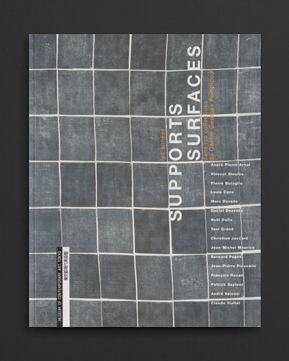
2000, Japanese
Softcover, 200 pages, 29.8 x 23.5 cm
1st edition, Out of print title / Used*,
Published by
Museum of Contemporary Art / Tokyo
$90.00 - Out of stock
Supports/Surfaces developed away from Paris, in the south of France, with the first major exhibition held in 1969 at the Musée d'Art Moderne de la Ville de Paris. In June 1969, during an exhibition at the Havre Museum entitled "La peinture en question", Vincent Bioulès, Louis Cane, Marc Devade, Daniel Dezeuze, Noël Dolla, Jean-Pierre Pincemin, Patrick Saytour, André Valensi, Bernard Pagès and Claude Viallat write in the catalog: "The subject of the painting is the painting itself and paintings on display refer only to themselves. They make no appeal to an "elsewhere" (the personality of the artist, his biography, history of art, for example). Early exhibtions took place in towns like Coaraze, Montpellier, Nimes and Nice in the mid-1960s. After the student revolts of 1968, the movement ratcheted up its activities, exploding in such exhibitions as "Supports/Surfaces," which took place at ARC in Paris in September 1970. These shows occurred at or around the same time as those of other French artist groups like GRAV and BMPT (Daniel Buren, Olivier Mosset, Michel Parmentier and Niele Toroni). Like them, Supports/Surfaces questioned the role of painting as both an art object and a social one.
As its name suggests, Supports/Surfaces was interested in articulating what its artists felt were all too readily ignored aspects of painting: basic concepts like 'support' and 'surface,' for example, and the presence of painting as a product of individual labor. At the same time, these artists were very much interested in painting and its own peculiar history. Daniel Dezeuze points out that he was looking for a means of “revolting against the art world and the world in general without having to make anti-art.” (Raphael Rubinstein, Polychrome Profusion: Selected Art Criticism: 1990 – 2002.) In fact, those involved with Supports/Surfaces, as Rubinstein also notes, were some of the few French artists of the period to engage directly with American Painting from Abstract Expressionism to Color Field, albeit doing so within the context of their Maoist discourse.
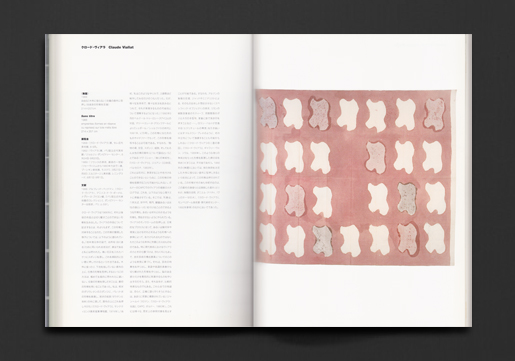
This scarce, Museum of Contemporary Art Tokyo catalogue gives a generous overview of the many works of the artists of Supports/Surfaces, through colour and black and white photographs across 200 pages. It also provides texts (in Japanese), interviews, historical photos of the group and their installations, work list, a chronology and a biography. This catalogue was produced to accompany a major travelling exhibition of Supports/Surfaces in Tokyo in 2000, which presented the vast collection of work from the Centre Georges Pompidou, Paris. The exhibition was also staged in Paris in 1998, for which a French edition of this book exists.
*Condition: Very Good/Fine – All care is taken to provide accurate condition details of used books, photos available on request.
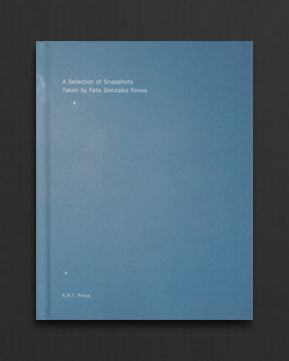
2010, English
Hardcover, 160 pages, 17.2 x 22.4 cm
Published by
A.R.T. Press / New York
$59.00 - Out of stock
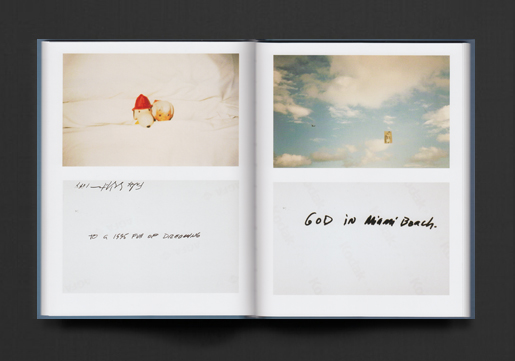
This book presents a selection of snapshots and accompanying inscriptions sent by Felix Gonzalez-Torres to Doug Ashford, Julie Ault, Bill Bartman, Susan Cahan, Amada Cruz, David Deitcher, Suzanne Ghez, Ann Goldstein, Claudio González, Jim Hodges, Susan Morgan, Robert Nickas, Mario Nuñez, and Christopher Williams between 1990–1995.
The snapshots are quick poetic communiqués, a visual report on Felix's outlook at particular moments in time, small gestures of hope, pleasure, and desire. They give evidence to some of his multiple fascinations: pets, furniture, collectible dolls, politics, art, friendship, beauty, love and optimism.
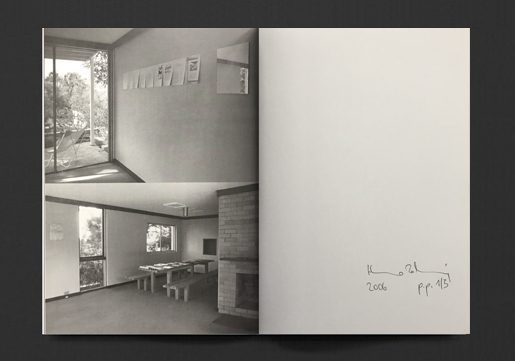
2006, English
Softcover, 74 pages, 21 x 29.5 cm
Edition of 40 (signed and numbered, w. 5 artist's proofs and 2 printer's proofs), As New,
Published by
David Pestorius / Brisbane
$270.00 - Out of stock
Heimo Zobernig
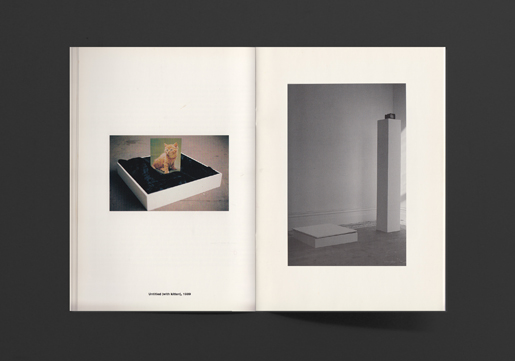
Untitled, 2006
Edition for Pacemaker
Artist's book, b&w, offset + photocopied, perfect bound
Edition of 40 (signed and numbered, w. 5 artist's proofs and 2 printer's proofs)
Published by David Pestorius Projects on the occasion of Heimo Zobernig's exhibition at Artspace, Sydney (7 April - 6 May, 2006), and as a special edition for the free French and English quarterly Pacemaker.
Print Production by The Printing Office, Brisbane.
This book includes offset printed photo-documentation by Richard Stringer of Heimo Zobernig's exhibition at the Pestorius Sweeney House, Brisbane (18 June - 23 July, 2005), together with, amongst other things, photocopies of pages from the following publications: Conceptual Art and Conceptual Aspects. ed. Ian Burn and Joseph Kosuth, New York City: New York Cultural Centre, 1970; Art & Language: Catalogue Raisonné November 1965 - Feb 1969. Leamington Spa and Zurich: Art and Language Press and Galerie Bischofberger, 1970; Ian Burn, Dialogue: Writings in Art History. ed. Geoffrey Batchen. North Sydney: Allen & Unwin, 1991; Paul Maenz Koln 1970 - 1980 - 1990: An Avant-GardeGallery And The Art of Our Time. ed. Gerd de Vries. Koln: DuMont, 1991 (with the permission of Paul Maenz).
Acknowledgements: The Power Institute, Catherine Chevalier, Eva Svennung, Paul Maenz, Nick Tsoutas.
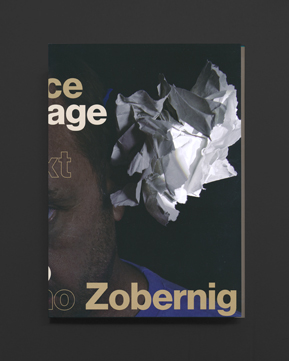
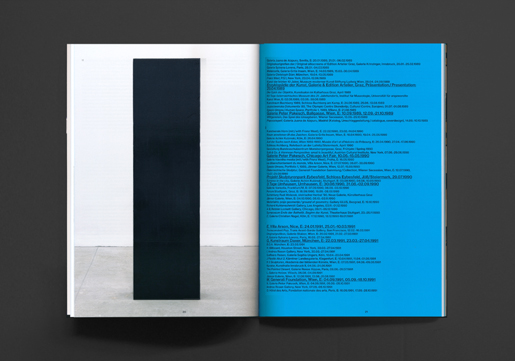
2013, English
Softcover, 256 pages (colour & b/w ill.), 29.7 x 21 cm
Published by
Walther König / Köln
$58.00 - Out of stock
Heimo Zobernig uses a variety of media, including painting, sculpture, video, installations, architectural interventions and performance art. His works seem to question the usual art narrative, in media such as architecture, design and theatre, by stirring up the underlying ideological positions and reinterpreting them with a characteristic economy of means, materials and methodologies. In this beautifully designed publication accompanying and documenting the exhibitions at the Palacio Velázquez/Museo Reina Sofia in Madrid and at the Kunsthaus Graz, all of the works presented are traced back historically to the beginning of the 1980s with regard to their origins. Alongside a contextualising text by the exhibition's curator, Jürgen Bock, commenting on the oeuvre of this internationally renowned Austrian artist are Achim Hochdörfer on the meaning of painting, Andrew Renton on Beckettian theatricality and Gertrud Sandqvist on its art-historical aspects.
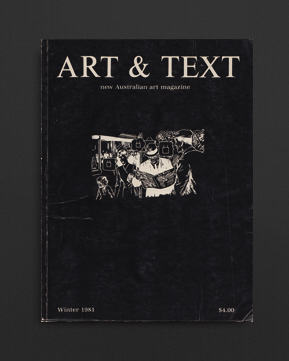
1981, English
Softcover, 68 pages, 18.5 x 24 cm
1st Edition, Out of print title / used*,
Published by
Art & Text / Prahran
$45.00 - Out of stock
ART & TEXT 2
Winter 1981
Edited by Paul Taylor
CONTENTS:
"On Some Alternatives to the Code in the Age of Hyperreality: the Hermit and the City—Dweller" by John Young and Terry Blake
"The Desire of Maria Kozic" by Adrian Martin
"David Wilson’s New Sculpture" by Patrick McCaughey
"Modernism and Realism: Some Orientations" by Terry Smith
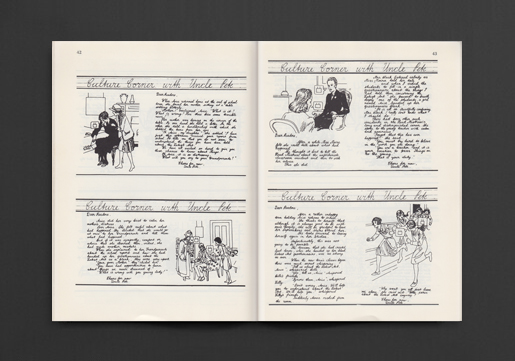
"Culture Corner" by Peter Tyndall
Manifestos:
"Manifesto for a future Sculpture Triennial" by Judy Annear
"Manifesto for a Renewed Art Practice 1980" by John Nixon (missing)
Book Reviews:
"About Looking by John Berger" by Ian North
"The Shock of the New: Art and the Century of Change by Robert Hughes" by David Bromfield
"The Years of Hope: Australian Art and Criticism 1959 — 1968 by Gary Catalano" by Noel Hutchison
note: this copy is missing the insert manifesto "Manifesto for a Renewed Art Practice 1980" by John Nixon
Art & Text, one of the landmark contemporary art magazines of the 1980s and 1990s. Founded in Melbourne, Australia, in 1981 by Paul Taylor (1957–92), who soon moved to New York City to make his mark as an art critic, the magazine went on to become one of a handful of international art magazines that succeeded in capturing the turmoil and passing brilliance of that period of postmodernism.
Very Good - general wear/tanning.
2014, English
Softcover, 224 pages (colour ill.), 21.5 x 15.6 cm
Published by
Afterall / London
Walther König / Köln
$28.00 - Out of stock
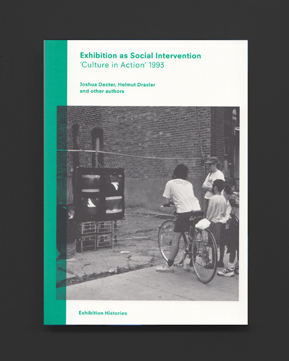
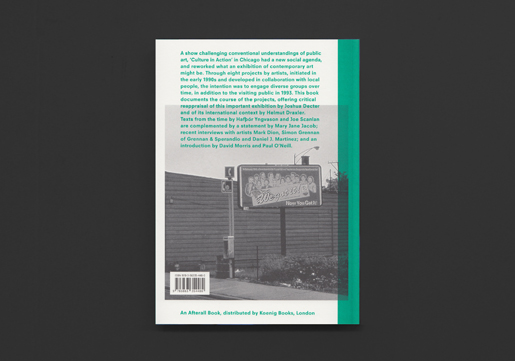
A show challenging the conventional understanding of public art,Culture in Action in Chicago had a new social agenda, and rethought what an exhibition of contemporary art might be. This project was curated by Mary Jane Jacob as part of the Sculpture Chicago programme in 1993.
Through eight projects by artists initiated in the early 1990s and developed in collaboration with local people, the intention was to engage diverse groups over time, in addition to the visiting public in 1993.
In this fifth book in Afterall's Exhibition Histories series, the course of these projects is documented, with a critical reappraisal of this important exhibition in newly commissioned essays and interviews, together with reviews from the time.
Included are interviews with Mary Jane Jacob, Mark Dion and Simon Grennan.
2015, English / Spanish
Softcover w. dustjacket, 144 pages (colour & b/w ill.), 16 x 23 cm
Published by
Mousse Publishing / Milan
$23.00 - Out of stock
Fabiola Iza, Chris Sharp, eds.
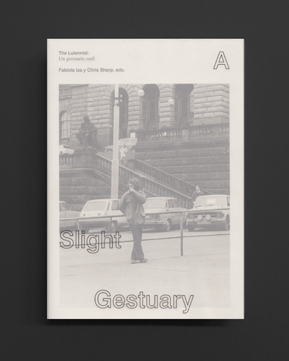
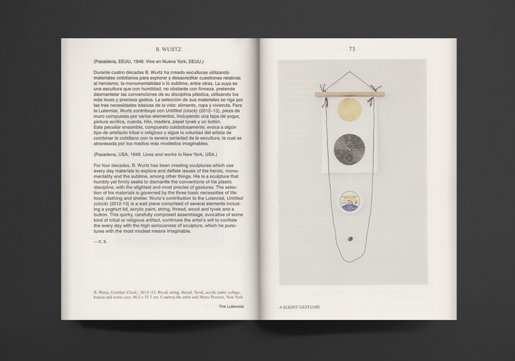
Economy, “in the sense of doing a lot with a little or sometimes nothing at all,” is one of the founding principles of the Lulennial, a biennial organized by Fabiola Iza and Chris Sharp at Lulu, a 9-square meter independent space in Mexico City. The diminutive space is not necessarily a constraint if the works exhibited (and featured in this accompanying publication) are the startling outcome of slight gestures, like those created by Jirí Kovanda, Roman Ondák, Kirsten Pieroth, Wilfredo Prieto, and Martín Soto Climent, just to name some of the more than 25 participants in the exhibition. Other instigators of this peculiar attitude, the purpose of which is to achieve the maximum effect through the smallest of means, range from Billy Apple to Graciela Carnevale to Mierle Laderman Ukeles and La Monte Young, among others.
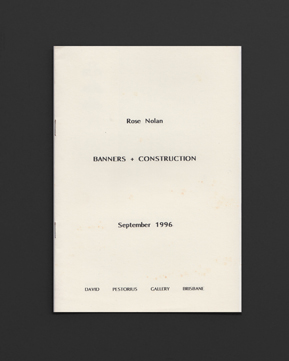
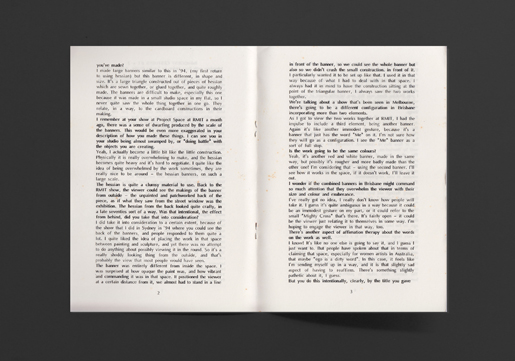
1996, English
Softcover (stapled), 6 pages, 14.8 x 21 cm
1st Edition, Out of print title / Used*,
Published by
David Pestorius / Brisbane
$40.00 - Out of stock
Published September 1996 by David Pestorius Gallery, Brisbane,
With an interview with Sandra Bridie
1995, English
Softcover, 30 pages (colour ill.), 14.8 x 21 cm
1st Edition, Out of print title / Used*,
Published by
David Pestorius / Brisbane
$96.00 - Out of stock
Published on the occasion of Gail Hastings Five Sculptures at David Pestorius Gallery, Brisbane, 1995
With a text by David Pestorius
2015, English
Softcover, 110 pages, 23 x 28 cm
Published by
Sculpture Centre / New York
$62.00 - Out of stock
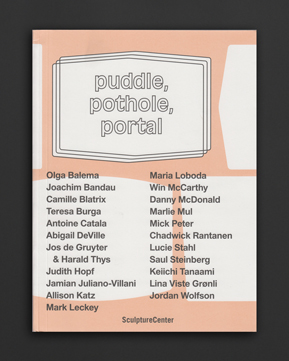
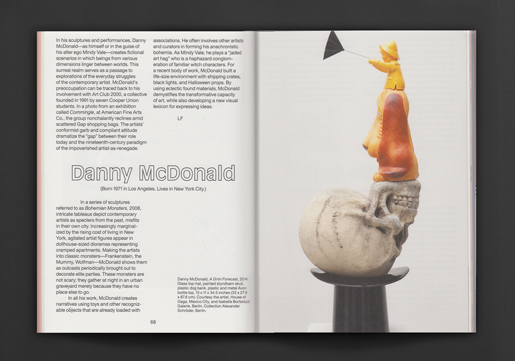
Thinking through early twentieth-century cartoons, the kaleidoscopic drawings of Saul Steinberg, the film Who Framed Roger Rabbit? and other children's entertainment, Puddle, Pothole, Portal explores the coexistence of disparate elements within shared spaces. Contributing artists are Olga Balema, Camille Blatrix, Teresa Burga, Antoine Catala, Abigail DeVille, Jos de Gruyter & Harald Thys, Jamian Juliano-Villani, Allison Katz, Mark Leckey, Maria Loboda, Win McCarthy, Danny McDonald, Marlie Mul, Mick Peter, Chadwick Rantanen, Lucie Stahl, Saul Steinberg, and Keiichi Tanaami.
2015, English
Softcover, 148 pages, 214 x 20 cm
Published by
Sternberg Press / Berlin
$50.00 $20.00 - Out of stock
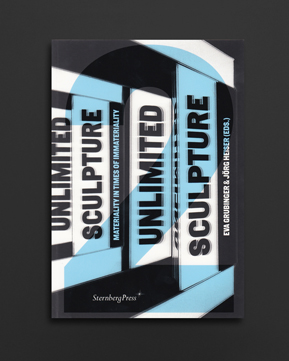
Eva Grubinger, Jörg Heiser (Eds.)
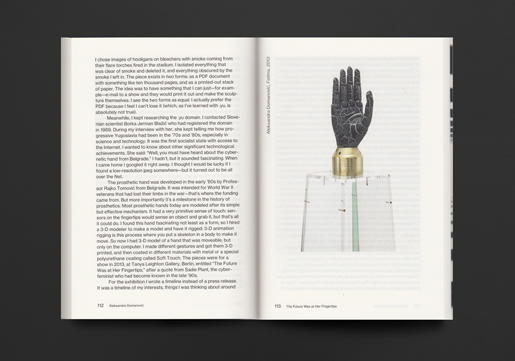
Contributions by Aleksandra Domanović, Mark Fisher, Nathalie Heinich, Mark Leckey, Jean-François Lyotard and Bernard Blistène, Jussi Parikka, Christiane Sauer, Timotheus Vermeulen
While the first volume Sculpture Unlimited (2011) dealt with the question of how the contemporary field of sculpture can be defined in a useful and stimulating manner against its long history, the second volume looks at the present and future. Once again edited by Eva Grubinger and Jörg Heiser, with contributions by internationally reputed artists and scholars, this volume poses the following question: If we assume that computers and algorithms increasingly control our lives, that they not only regulate social and communicative traffic but also produce new materials and things, does this increase or decrease the space for artistic imagination and innovation? Where is the place of art and sculpture, provided we don’t want art to resort to merely maintaining aesthetic traditions?
With sculpture as a leading reference, the contributions address theory, aesthetics, and technology: Do current philosophical movements such as new materialism and object-oriented ontology affect our notion of the art object? Does so-called post-Internet art have a future? And how does the Internet of Things relate to objects and things in art?
Design by Surface
2015, English
Softcover, 276 pages (colour ill.), 22 x 28 cm
Published by
JRP Ringier / Zürich
$66.00 - Out of stock
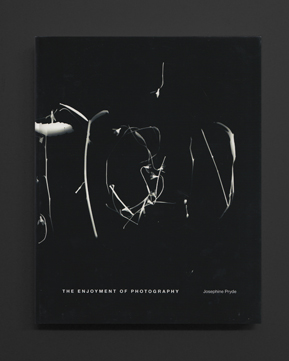
This publication presents a broad selection of Josephine Pryde's work from 1990 to 2014. In photographic works that encompass the full range of the medium's historical and current genres, styles, and techniques, but also through sculpture and writing, the Berlin- and London-based artist (*1967) offers incisive, often ironic, and provocative commentary on the values, hierarchies, and economies subtending the field of contemporary art against the backdrop of larger societal shifts. Estranging the familiar or conversely expressing the common in a radically unforeseen manner, Pryde's ingenuous choice of subject matter, unusual formal solutions and surprising juxtapositions continue to capture international exhibition audiences.
Prefaced by art historian André Rottmann, the volume features new essays by scholar Rhea Anastas and artist/critic Melanie Gilligan that insightfully survey Pryde's work over the last two decades, providing in-depth discussions of the artist's continuous engagements with photographic imagery, visual culture, social and artistic conventions, as well as political issues associated with feminism (among other concerns). An illustrated exhibition chronology and detailed bibliography provides further information on the artist's career.
Featuring more than 350 color images, this most comprehensive monograph available on Pryde's work to date appears subsequent to the artist's mid-career survey exhibitions at the Kunstverein für die Rheinlande und Westfalen, Düsseldorf, and at Kunsthalle Bern in 2012.
Published in collaboration with Kunsthalle Bern and Kunstverein für die Rheinlande und Westfalen, Düsseldorf.
2015, English
Hardcover, 220 pages (colour & b/w ill.), 24.4 x 30 cm
Published by
Black Inc / Melbourne
$60.00 - Out of stock
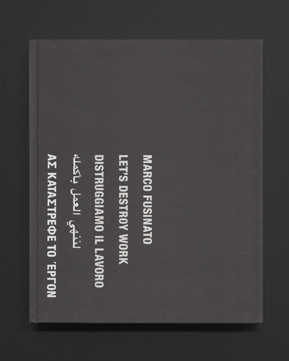
On the eve of All the World's Futures at the 2015 Venice Biennale, Schwartz City is pleased to announce the publication of Let's Destroy Work, the first major monograph on Marco Fusinato. A comprehensive overview of the past two decades of Fusinato's projects in art and music, featured projects include FREE (1998–2004), a series of guerrilla performances in unsuspecting music stores around the world; Mass Black Implosion (2007–), an ongoing series of propositional scores; Aetheric Plexus (2009–2013), a viewer-triggered installation of white noise and white light; and TM/MF (2000), a collaborative project with Thurston Moore.
Included is new writing by Branden W. Joseph, Professor in Art History at Columbia University; a text by US-based music critic Byron Coley; and essays from insurrectional anarchist writer Alfredo M. Bonanno's publication 'Let's Destroy Work, Let's Destroy the Economy'. The book is rich in colour and mono illustrations of Fusinato's works, and a selection of reference images.
Marco Fusinato's practice references the rhetoric of radical politics (its ambitions and failures), noise as music and the conditions and conventions of conceptual art. Through wide-ranging forms of work in gallery contexts and performances, he foregrounds moments of disruption and impact in which lie the possibility of a shift in perception or change in the course of events. Fusinato performs regularly in the international experimental music underground, obliterating the guitar into improvised noise-spit tsunamis.
2006, English
Softcover, 156 pages ( 44 colour ill.) 16.5 x 23.5cm
Published by
Self-Published
$25.00 - Out of stock
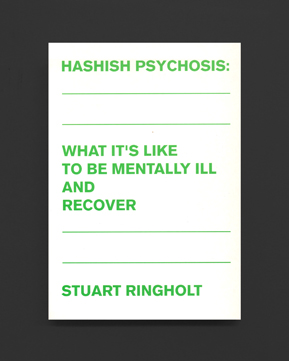
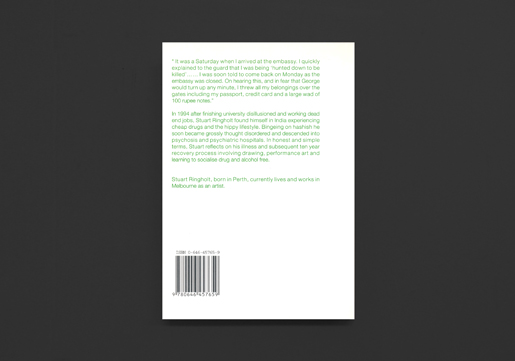
"It was a Saturday when I arrived at the embassy. I quickly explained to the guard that I was being 'hunted down to be killed'... I was soon told to come back on Monday as the embassy was closed. On hearing this, and in fear that George would turn up any minute, I threw all my belongings over the gates including my passport, credit card and a large wad of 100 rupee notes."
In 1994 after finishing university disillusioned and working dead end jobs, Stuart Ringholt found himself in India experiencing cheap drugs and the hippy lifestyle. Bingeing on hashish he soon became grossly thought disordered and descended into psychosis and psychiatric hospitals. In honest and simple terms, Stuart reflects on his illness and subsequent ten year recovery process involving drawing, performance art and learning to socialise drug free.
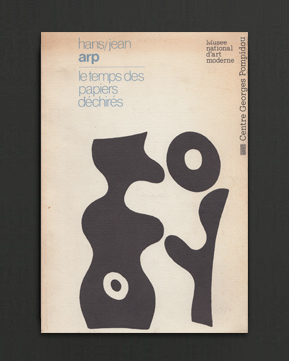
1983, French
Softcover, 79 pages, 30 x 21cm
1st Edition, Out of print title / Used*,
Published by
Centre Georges Pompidou / Paris
$48.00 - Out of stock
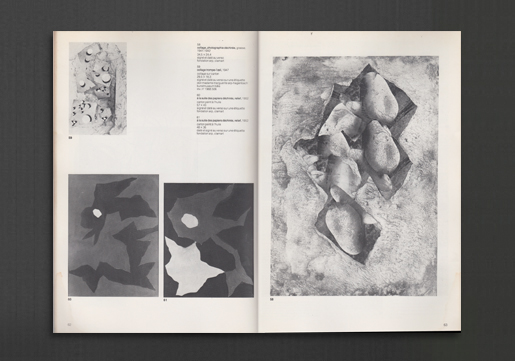
Exhibition catalogue published to accompany the exhibition Hans/Jean Arp "Le Temps des papiers déchirés" at Centre Georges Pompidou in Paris, 28 January - 28 March 1983. Includes a great selection of his torn paper works, as well as other works on paper, paintings, reliefs, sculpture and photography.
2002, English
Softcover (glue-bound w. fold-out pages), 96 pages, 21 x 25 cm
1st Edition, Out of print title / Used*,
Published by
ICA / Philadelphia
$65.00 - Out of stock
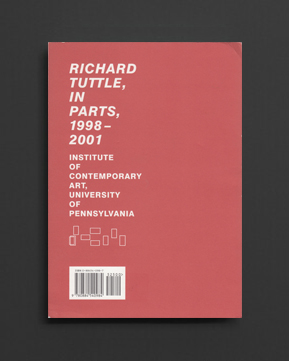
In Parts: 1998-2001
A Project by Richard Tuttle
Published by ICA Philadelphia
Texts by Ingrid Schaffner and Charles Bernstein.
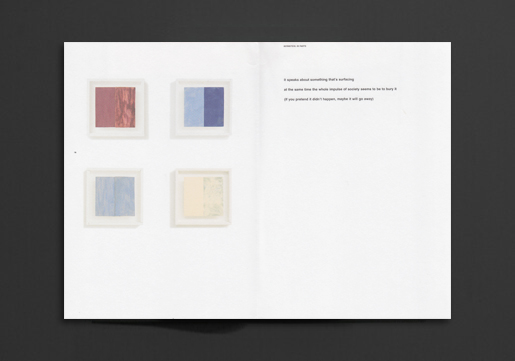
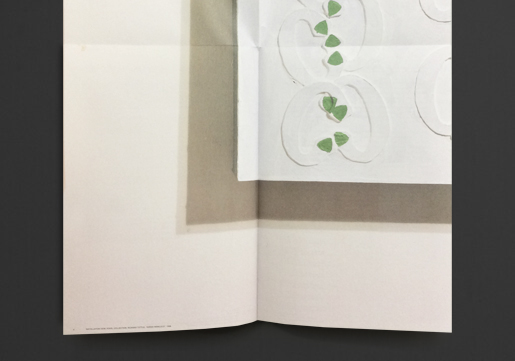
In "In Parts: 1998-2001", Richard Tuttle draws on 13 discrete bodies of work dating from 1998 to the early 2000s. Fully illustrated catalogue (with elaborate fold-out pages that capture details of Tuttle's work close-up w. surrounding interiors and objects) and designed in collaboration with the Purtill Family Business, this book includes an essay by Ingrid Schaffner, Senior Adjunct Curator at the Institute of Contemporary Art, and text by the poet Charles Bernstein, a frequent collaborator with Tuttle.
2015, English
Softcover, 140 pages (colour ill.), 17 x 24 cm
Published by
Westspace / Melbourne
$15.00 - Out of stock
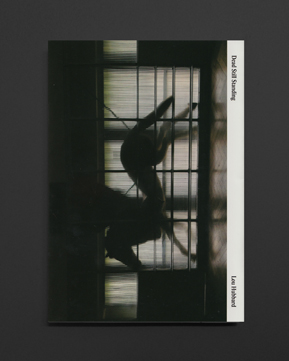
Dead Still Standing
Lou Hubbard
30TH JAN 2015 – 28TH FEB 2015 · WEST SPACE
This exhibition brings together sculpture, ambitious in concept and scale, alongside a suite of new video works that examine the dynamics of training, submission and the aesthetics of sentimentality. The project is an opportunity for Hubbard to fully explore these strands using the entire site of West Space to unfold the formal and narrative synchronicity in her video and sculptural processes.
Hubbard continues to focus on the nature of submission in acts of training that reveal the effect of training on one’s nature; this culminating in expressions of the cruel and sentimental. Building on Hubbard’s ability to draw out emotional resonances through careful selection and placement of the found and readily-at-hand objects. Horses, dogs, Victorian era furnishings and sports equipment form the strange ensemble of objects that Hubbard calls upon in Dead Still Standing, this shifting between formal play with materials and a sense of perversity through these objects to produce disturbing feelings in the viewer. In this way, West Space becomes a series of rooms with objects and screens: mute and screaming, equine and canine, past and present.
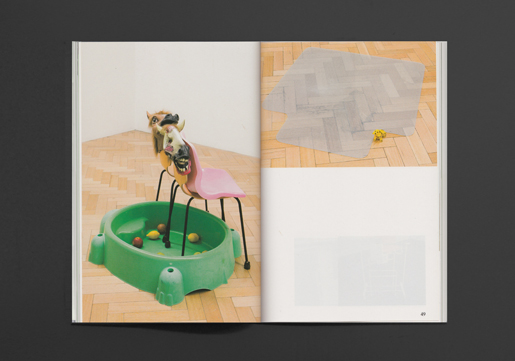
This paperback takes the form of a visual essay and associative archive that not only documents the exhibition but also takes a broader look at Hubbard’s 15-year practice. Edited by West Space Program Curator Liang Luscombe and designed by James Oates
2012, German/English
Softcover, 240 pages, 23 x 16.5 cm
Published by
Texte Zur Kunst / Berlin
$29.00 - Out of stock
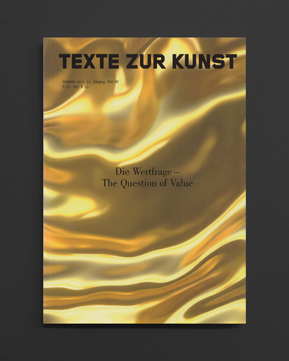
The December issue of Texte zur Kunst examines processes of value-formation in the art world and beyond. It pursues the question of which factors and players are involved in the production of value, but in doing so it is less interested in the motivations behind individual actions than in the specific structure of the mechanisms effecting value-formation. Value can be understood as an accumulation of human labor in an (artistic) object, although not every object containing human labor is, of course, experienced as valuable. In this sense, value can also be an attribution of artistic relevance, which implies clearly distinguishing it from the concept of monetary value: Value is not the same as price. In each of the various segments of the art world—the market, the exhibition circuit, academic studies, critique—specific criteria for value-formation have evolved. Furthermore, the process by which value is producedproves to be basically open and incomplete, and value is something that is newly negotiated time and again. This is true of the field of art, but also of all other areas of social interaction.
Plus reviews from Basel, Berlin, Bregenz, Cologne, Düsseldorf, Frankfurt/M., New York, Paris, Rotterdam, and Vienna.
Exclusive new artists’ editions:
Simon Denny, Jeff Koons, and Franz Erhard Walther
English Content
Preface
Isabelle Graw
The Value of the Art Commodity
Twelve theses on human labor, mimetic desire, and aliveness
At Any Cost
Seven questions for Todd Levin
André Orléan
What Is the Economic Value Worth?
Mikkel Bolt Rasmussen
The End of Contemporary Art’s Bubble Economy
Diedrich Diederichsen
Time, Object, Commodity
The Value of Autonomy
A conversation between Kerstin Stakemeier and Marina Vishmidt about the reproduction of art
Reviews
Chris Reitz
House Beautiful
On John M Armleder at the Swiss Institute, New York
John Miller
Napoleon in Rags
On Andreas Wegner at Petra Rinck Galerie, Düsseldorf
James Voorhies
Attraction and Repulsion in What It All Means
On Eran Schaerf at Zwinger Galerie, Berlin
David Joselit
The Power to Style
On Bernadette Corporation at Artists Space, New York
Sven Lütticken
Why Collaboration Matters in Art and Elsewhere as Never Before
On Surplus Authors at Witte de With, Rotterdam
André Rottmann
Sculpture as Retrieval
On Gabriel Orozco at the Deutsche Guggenheim, Berlin
Obituary
Daniel Buren
Michael Asher – God Is in the Details
Artists’ Editions
Simon Denny
Wer nicht umsteigt, wird abgeschaltet, 2012
Jeff Koons
Untitled (Antiquity Drawing), 2012
Franz Erhard Walther
Materialhandlung, 2012
2014, English
Softcover, 118 pages, 13.2 x 20 cm
Published by
Sternberg Press / Berlin
$28.00 - Out of stock
Edited by Natasha Soobramanien
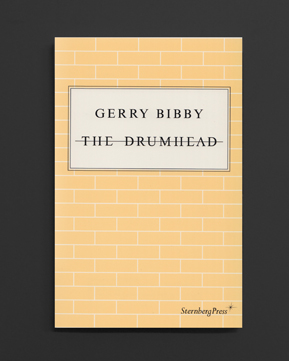
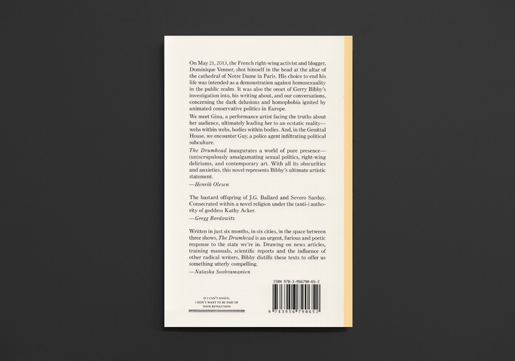
Artist Gerry Bibby’s first publication is a work of fiction that expands on the use of text in his sculpture, performance, and image work. Evoking William Burroughs’s The Wild Boys and Robert Walser’s The Walk, these “language costumes” pay homage to an unruly tradition of radical and queer literary presences over the last century. Their captivating passages brim with wit, wry observation, and (occasional) disgust, offering viewers “ways out,” even if only while reading.
Commissioned by If I Can’t Dance, I Don’t Want to Be Part of Your Revolution, The Drumhead follows a two-year collaboration with KUB Arena of the Kunsthaus Bregenz, The Showroom London, CCA Glasgow, and the Institute of Modern Art, Brisbane. The book immodestly distills these institutional encounters into a multipart narrative that delves into the lives and psyches of those in the service industry. Exhaustion and frustration besiege a set of characters and the architecture that barely contains them, all of which are cipher-like in their multiplicity (and duplicity).
Design by HIT
2002, English / German
Hardcover, 192 pages (colour & b/w ill.), 23.2 x 26.1 cm
1st Edition, Out of print title / Used*,
Published by
Hatje Cantz / Berlin
$50.00 - Out of stock
Cosima von Bonin
Fondorientierte Ausstattung, 2002
In her collaborations with other artists there is evidence of an approach that contradicts the expected image of autonomous, inspired artistic individualism. Her open homage and references to exemplary artists including Bas Jan Ader, Poul Gernes, Blinky Palermo and André Cadere confirm her preference for melancholic, ephemeral artistry.
The fact that Poul Gernes once built a ship in order simply to burn it on the open sea, and that Bas Jan Ader set off alone in a small sailing boat in 1975 in order to cross the Atlantic in 60 days, a project that ended in his vanishing without trace, allows Cosima von Bonin's "skerry cruiser", stranded in all pomp and elegance here in Graz, to appear not only as a metaphor for unfettered proliferation and boundless world domination but, above all, as a symbol of failure, of misadventure, perhaps even of hubris. It is also significant that the skerry cruiser, developed around 1900 by the young Finn Estlander, a racing boat tuned with utter rationality according to hedonistic considerations and sailing purism, is best suited to rough water and offers a minimal and thus at the same time sensitive sailing experience. It also represents a form of luxury not only of a financial nature but also constituting the very pinnacle of refinement. In its every aspect, even though it completely fulfils a very precise purpose, the skerry cruiser is an object that is actually superfluous. The skerry cruiser is Cosima von Bonin's greatest single item to date.
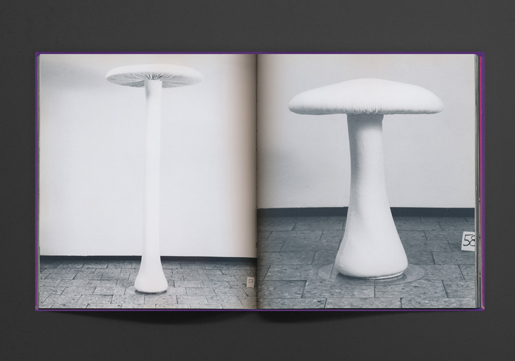
Failure and breaks within various systems are at the core of Cosima von Bonin's interest. Equally important are the material and thematic transformation of known images and shapes. This becomes visible in giant mushrooms of different sizes covered with fabric. The mushrooms are amongst the most characteristic appearances in the artist's work. They keep reappearing in different shows, frequently, acting as road signs guiding the observer through the complex interdependencies of her installations. Cosima von Bonin pushes further the ambivalent meaning of the mushroom as both protective umbrella and carrier of hallucinogenic substances or as masculine symbol by subjecting it to a metamorphosis, recreating it as a soft and quiet carrier of secrets. Usually, they grow in groups and thus also refer to the inclusion of her artistic environment without any outward explicit explanation. In the face of the absurd shifting of dimensions, one might remember the story of 'Alice in Wonderland' by the English mathematician Lewis Carroll, where Alice manipulates the size of her body by eating magic mushroom pieces. In this respect, Bonin's mushrooms in their pure white materiality receive aural autonomy. Moreover, with the super-dimensionality of her works she refers to today's shifts between natural and technical limits, accelerated ecological and economical processes, and expresses doubts regarding unquestioning belief in progress in order to develop different utopian models.
Her own special form of globalisation is shown in her complex social network, as for instance in the case of the musicians in the show. In this way a text by Dirk von Lowtzows (Tocotronic) is included in the catalogue, whilst Justus Köhncke, in the title of his latest CD "Was ist Musik" (What is music), refers to the fact that music is life and community. With his cover version of Münchner Freiheit's song "Du bist nicht allein" (You are not alone) he offers a possible response to Bas Jan Ader's "please don't leave me". In her catalogue Cosima von Bonin covers Yves St. Laurent's Layout, whose sentence "I was born with a nervous breakdown" is focused on by Dirk von Lowtzow. The fact that she sews rather than paints her pictures is to be interpreted as a reaction to Blinky Palermo and Sigmar Polke, reaching beyond the not be neglected female-specific aspect. However, she takes things further than the mere use of deco fabrics as picture carriers, developing her sujets in her own complicated language. This also has the effect of including the observer if everyday life in society is not reflected by means of a Mercedes star or a shirt, but rather by the artist confronting us in her show with an imaginative luxurious version of the rear seat equipment of a Mercedes.
Cosima von Bonin was born in 1962 in Mombassa and lives and works in Cologne.
2014, English
Softcover, 240 pages, 145 x 210 mm
$43.00 - Out of stock
Edited by Antony Hudek
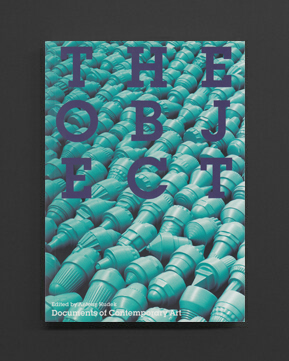
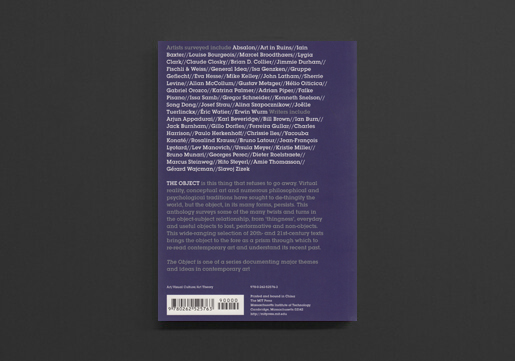
Artists increasingly refer to “post-object-based" work while theorists engage with material artifacts in culture. A focus on “object-based" learning treats objects as vectors for dialogue across disciplines. Virtual imaging enables the object to be abstracted or circumvented, while immaterial forms of labor challenge materialist theories. This anthology surveys such reappraisals of what constitutes the “objectness" of production, with art as its focus.
Among the topics it examines are the relation of the object to subjectivity; distinctions between objects and things; the significance of the object’s transition from inert mass to tool or artifact; and the meanings of the everyday in the found object, repetition in the replicated or multiple object, loss in the absent object, and abjection in the formless or degraded object. It also explores artistic positions that are anti-object; theories of the experimental, liminal or mental object; and the role of objects in performance. The object becomes a prism through which to reread contemporary art and better understand its recent past.
Artists surveyed include
Georges Adéagbo, Art in Ruins, Iain Baxter, Louise Bourgeois, Pavel Büchler, Lygia Clark, Claude Closky, Brian Collier, Jimmie Durham, Fischli & Weiss, Luca Frei, Meschac Gaba, Isa Genzken, Gruppe Geflecht, Eva Hesse, Mike Kelley, John Latham, Antje Majewski, Gustav Metzger, Cady Noland, Gabriel Orozco, Adrian Piper, Falke Pisano, Eva Rothschild, Aura Satz, Kenneth Snelson, Hito Steyerl, Josef Strau, Alina Szapocznikow, Joelle Tuerlinckx, Erwin Wurm
Writers include
Homi K. Bhabha, Jack Burnham, Ewa Lajer-Burcharth, Lynne Cooke, Gillo Dorfles, Jean Fisher, Ferreira Gullar, Charles Harrison, Paulo Herkenhoff, Julia Kristeva, Bruno Latour, Bracha Lichtenberg-Ettinger, Jean-Fran?ois Lyotard, Lev Manovich, Ursula Meyer, Bruno Munari, Georges Perec, Hans-Jorg Rheinberger, Dieter Roelstraete, Howard Singerman, Nancy Spector, Marcus Steinweg, Anne Wagner, Gérard Wajcman, Slavoj Zizek
2014, English
Softcover, 240 pages, 145 x 210 mm
Published by
The MIT Press / Massachusetts
Whitechapel / London
$52.00 - Out of stock
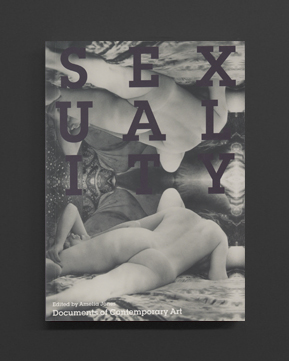
It has been argued, most notably in psychoanalytic and modernist art discourse, that the production of works of art is fundamentally driven by sexual desire. It has been further argued, particularly since the early 1970s, that sexual drives and desires also condition the distribution, display and reception of art.
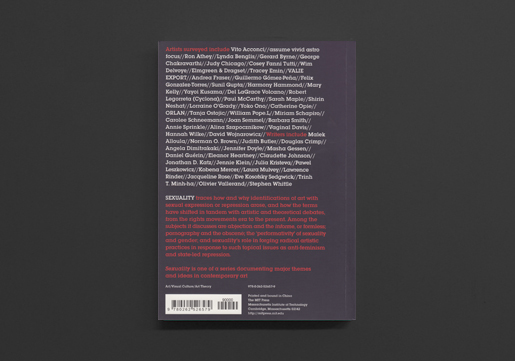
This anthology traces how and why this identification of art with sexual expression or repression arose and how the terms have shifted in tandem with artistic and theoretical debates, from the era of the rights movements to the present. Among the subjects it discusses are abjection and the “informe,” or formless; pornography and the obscene; the performativity of gender and sexuality; and the role of sexuality in forging radical art or curatorial practices in response to such issues as state-sponsored repression and anti-feminism in the broader social realm.
Artists surveyed include:
Vito Acconci, Assume Vivid Astro Focus, Lynda Benglis, Louise Bourgeois, Gerard Byrne, George Chakravarthi, Judy Chicago, Vaginal Davis, Wim Delvoye, Elmgreen & Dragset, Valie Export, Félix González-Torres, Guillermo Gómez-Peña, Harmony Hammond, Claudette Johnson, Mary Kelly, Yayoi Kusama, Robert Legorreta, Paul McCarthy, Sarah Maple, Shirin Neshat, Lorraine O’Grady, Yoko Ono, Catherine Opie, Orlan, William Pope.L, Miriam Schapiro, Carolee Schneemann, Joan Semmel, Barbara Smith, Annie Sprinkle, Alina Szapocznikow, Del LaGrace Volcano, Hannah Wilke, David Wojnarowicz
Writers include:
Malek Alloula, Norman O. Brown, Judith Butler, Douglas Crimp, Angela Dimitrakaki, Michel Foucault, Daniel Guérin, Eleanor Heartney, Jonathan D. Katz, Rosalind Krauss, Julia Kristeva, Paweł Leszkowicz, Herbert Marcuse, Kobena Mercer, Laura Mulvey, Lawrence Rinder, Jacqueline Rose, Eve Kosofsky Sedgwick, Susan Sontag, Trinh T. Minh-ha, Stephen Whittle
About the Editor
Amelia Jones is Grierson Chair in Art History and Communication Studies at McGill University. Her books include Irrational Modernism: A Neurasthenic History of New York Dada (MIT Press), Self/Image: Technology, Representation and the Contemporary Subject, and Seeing Differently: A History and Theory of Identification and the Visual Arts.
2011, English
Paperback, 130 pages, 17 x 25 cm
Published by
Blaffer Art Museum / University of Houston
$70.00 - Out of stock
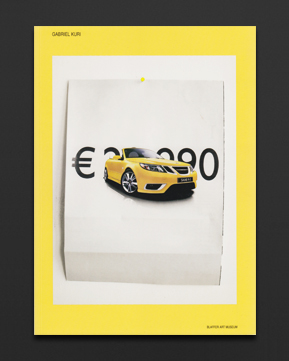
Over the past decade, Gabriel Kuri (born 1970) has been ransacking the paradoxes of material consumption, extracting both visual and linguistic value from the tracking systems and trivial marketing mechanisms that fill our daily lives. Kuri's sculptures and collages are often fashioned from the residue of monetary exchanges and consumed goods that the artist collects on a daily basis, but their richness lies in their unusual calibration of manual and conceptual properties: his works reward eye and mind equally. "Model for a Victory Parade," for example, consists of a conveyor belt with a crumpled energy-drink can trapped and perpetually tumbling at one end. The visual appeal of this work quickly opens out into speculations on the ironies of humankind's energy consumption.
"Nobody Needs to Know the Price of Your Saab" is presented in conjunction with Kuri's survey at Blaffer Art Museum.
Published by Blaffer Art Museum
Texts by Claudia Schmuckli, Elena Filipovic, Abraham Cruzvillegas.
Using familiar materials such as receipts, newspaper, band soaps, and plastic bags, Gabriel Kuri focuses our attention on contemporary consumer culture and the circulation of money, information, and energy in both our global economy and in our day-to-day activities. Kuri has been described as a playful accountant who uses personal experience as a point of departure to explore the ways we quantify and chart the most basic events and transactions in our lives.
Kuri is among a loose collection of artists from Mexico to gain international attention in recent years. His first solo museum exhibition in the U.S. includes approximately 30 sculptures and 15 collages, including Untitled (Superama), a series of three nine-foot-tall tapestries intricately hand-woven in Mexico to resemble Wal-mart receipts.
2014, English / Italian
Hardcover (cloth bound), 96 pages, 16 x 23 cm
Published by
Mousse Publishing / Milan
$35.00 - Out of stock
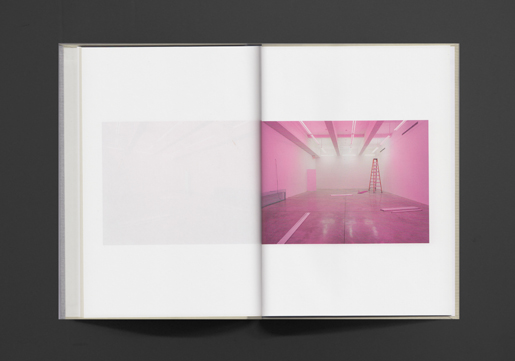
Jason Dodge's practice attempts to give new life to objects, exploring their potential and provoking the viewer's cognitive ability to imagine a corresponding narrative. Focusing on specific aspects of two works, A permanently open window and Changing the lights – From rose light to white light, from white light to rose light, by hand, over and over, Jason Dodge's artist book is not merely a documentation of his works but, in the artist's words, “a record of light changing over a day, in one case naturally and in one case manually”.
The publication was conceived and designed to accompany Jason Dodge's permanent installation realized for the Maramotti Collection, in Reggio Emilia – a permanently open window located in what was once the tower of a factory's electrical power plant, an abandoned industrial space, now transformed into a commercial outlet – and contains selected images from both projects, as well as a text.