World Food Books' programme is largely produced on Kulin Nation land. We acknowledge the Wurundjeri people of the Kulin Nation as the first and continuing custodians of this land, and pay respect to their Elders past, present, and emerging.
World Food Books is an arts and special interests bookshop in Naarm / Melbourne. Founded in 2010, World Food Books is devoted to the presentation of a rotating, hand-selection of international art, design, literary and counterculture publications with an emphasis on the anti-traditional, the experimental, the avant-garde, the heretic, the marginal.
Presenting new titles alongside rare and out-of-print books, catalogues and journals spanning the fields of modern and contemporary art, design, photography, illustration, film, literature, poetry, cultural theory, philosophy, sexuality, popular and underground culture in its many radical forms, World Food Books wishes to encourage adventurous, thoughtful and open-minded reading, looking, writing, and exchange of publishing and ideas, both current and historical.
As well as our bookshop, located in Melbourne's historical Nicholas Building, all of our inventory is available internationally via our online mail-order service.
World Food Books semi-regularly co-ordinates "Occasions", a programme of exhibits and events at the bookshop and in partnership with other hosts (such as museums and art galleries) that develop out of the activities, relationships and content of the bookshop itself.
World Food Books
The Nicholas Building
37 Swanston Street
Room 5, Level 6
Melbourne 3000
Australia
SHOP HOURS:
SHOP CLOSED FOR SUMMER
RE—OPEN JAN 2
WEB-SHOP OPEN 24/7
World Food Books
Postal Address:
PO Box 435
Flinders Lane
Victoria 8009
Australia
info@worldfoodbooks.com
Art
Theory / Essay
Architecture / Interior
Graphic Design / Typography
Photography
Fashion
Eros
LGBTQ+
Fiction / Poetry
Weird / Speculative / Science Fiction / Horror
Transgressive / Visceral / Abject
Symbolism / Decadence / Fin de siècle
Film / Video
Painting
Sculpture / Installation
Performance / Dance / Theater
Drawing
Sound / Music
Curatorial
Group Shows / Collections
Periodicals
Out-of-print / Rare
Posters / Ephemera / Discs
Signed Books
World Food Books Gift Voucher
World Food Book Bag
Australian Art
Australian Fiction
Australian Science Fiction / Speculative Fiction
Australian Poetry
Australian Photography
Japanese Photography
Conceptual Art
Minimal Art
Dada
'Pataphysics / Oulipo
Fluxus
Concrete Poetry
Pop Art
Surrealism
Arte Povera
Arte Informale / Haute Pâte / Tachism
Nouveau Réalisme / Zero / Kinetic
Situationism / Lettrism
Collage / Mail Art / Xerox Art
Art Brut / Folk / Visionary / Fantastic
Illustration / Graphic Art / Bandes Dessinées
Furniture
Italian Radical Design / Postmodernism
Textiles
Ceramics / Glass
Counterculture
Protest / Revolt
Philosophy
Psychoanalysis
Anthropology
Anarchism
Socialism / Anarchism / Communism / Capitalism
Literary Theory / Semiotics / Language
Feminism / Women's Studies
Gender Studies / Sexuality
Anthropology
Fetishism / BDSM
Drugs / Psychedelia
Crime / Violence
Animal Rights / Veganism
Occult / Esoterica
Ecology / Earth / Alternative Living
Whole Earth / Crafts
All prices in AUD (Australian dollars)
Pick-Ups
Pick-up orders can be collected in our bookshop during opening hours after order date. Please collect any Pick-up orders within 2 weeks of ordering as we have limited storage space. Orders will be released back into stock if not collected within this time. No refunds can be made for pick-ups left un-collected. If you cannot make it in to the bookshop in this time-frame, please choose postage option.
Return Policy
All sales are final. We do accept returns (for refund or exchange) for items received in error. All our orders are packed with special care using heavy-duty padding and cardboard book-mailers or bubble mailers (for smaller books), using reinforcement where required. We cannot take responsibility for any lost, stolen or damaged parcels.
Insurance
Should you wish to insure your package, please email us directly after placing your order and we can organise this at a small extra expense. Although all standard/express tracked packages are very safe and dependable, we cannot take responsibility for any lost, stolen or damaged parcels. We recommend insurance on valuable orders.
Interested in selling your old books, catalogues, journals, magazines, comics, fanzines, ephemera? We are always looking for interesting, unusual and out-of-print books to buy. We only buy books in our fields of interest and specialty, and that we feel we can resell.
We base these prices on desirability, market value, in-print prices, condition and our current stock levels. We offer cash, store credit, and can take stock on consignment. All
about 25% of the price we expect to get when we sell them, or 30% in store credit. We base these prices on desirability, market value, in-print prices, condition and our current stock levels.
Sell your books any day of the week. You can drop them off and return later. If you have a lot of books, we can visit your Sydney home.
We buy books that we feel we can resell. We offer about 25 % of the price we expect to get when we sell them, or 30% in store credit. We base these prices on desirability, market value, in-print prices, condition and our current stock levels.
Philadelphia Wireman
03 August - 01 September, 2018
World Food Books is proud to announce our next Occasion, the first presentation of sculptures by Philadelphia Wireman in Australia.
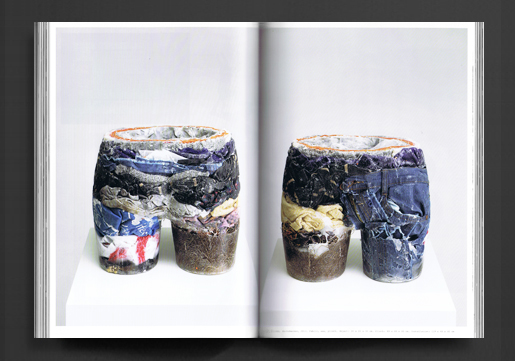
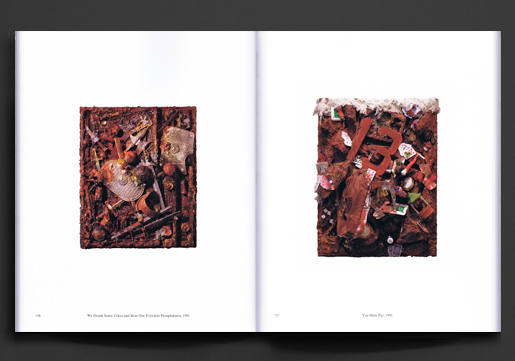
The Philadelphia Wireman sculptures were found abandoned in an alley off Philadelphia’s South Street on trash night in 1982. Their discovery in a rapidly-changing neighbourhood undergoing extensive renovation, compounded with the failure of all attempts to locate the artist, suggests that the works may have been discarded after the maker’s death. Dubbed the "Philadelphia Wireman" during the first exhibition of this work, in 1985, the maker’s name, age, ethnicity, and even gender remain uncertain. The entire collection totals approximately 1200 pieces, all intricately bound together with tightly-wound heavy-gauge wire (along with a few small, abstract marker drawings, reminiscent both of Mark Tobey and J.B. Murry). The dense construction of the work, despite a modest range of scale and materials, is singularly obsessive and disciplined in design: a wire armature or exoskeleton firmly binds a bricolage of found objects including plastic, glass, food packaging, umbrella parts, tape, rubber, batteries, pens, leather, reflectors, nuts and bolts, nails, foil, coins, toys, watches, eyeglasses, tools, and jewellery.
Heavy with associations—anthropomorphic, zoomorphic, and socio-cultural responses to wrapped detritus—the totemic sculptures by Philadelphia Wireman have been discussed in the context of work created to fulfil the shamanistic needs of alternative religions in American culture. Curators, collectors, and critics have variously compared certain pieces to sculpture from Classical antiquity, Native American medicine bundles, African-American memory jugs, and African fetish objects. Reflecting the artist’s prolific and incredibly focused scavenging impulse, and despite—or perhaps enhanced by—their anonymity, these enigmatic objects function as urban artefacts and arbiters of power, though their origin and purpose is unknown. Philadelphia Wireman, whatever their identity, possessed an astonishing ability to isolate and communicate the concepts of power and energy through the selection and transformation of ordinary materials. Over the course of the past two decades, this collection has come to be regarded as an important discovery in the field of self-taught art and vernacular art.
Presented in collaboration with Fleisher-Ollman Gallery, Philadelphia, and Robert Heald, Wellington.
Susan Te Kahurangi King
02 February - 10 March, 2018
Susan Te Kahurangi King (24 February 1951 - ) has been a confident and prolific artist since she was a young child, drawing with readily available materials - pencils, ballpoint pens and felt-tip markers, on whatever paper is at hand. Between the ages of four and six Susan slowly ceased verbal communication. Her grandparents William and Myrtle Murphy had developed a special bond with Susan so they took on caring responsibilities for extended periods. Myrtle began informally archiving her work, carefully collecting and storing the drawings and compiling scrapbooks. No drawing was insignificant; every scrap of paper was kept. The King family are now the custodians of a vast collection containing over 7000 individual works, from tiny scraps of paper through to 5 meter long rolls.
The scrapbooks and diaries reveal Myrtle to be a woman of great patience and compassion, seeking to understand a child who was not always behaving as expected. She encouraged Susan to be observant, to explore her environment and absorb all the sights and sounds. Myrtle would show Susan’s drawings to friends and people in her community that she had dealings with, such as shopkeepers and postal workers, but this was not simply a case of a grandmother’s bias. She recognised that Susan had developed a sophisticated and unique visual language and sincerely believed that her art deserved serious attention.
This was an unorthodox attitude for the time. To provide some context, Jean Dubuffet coined the term Art Brut in 1945 to describe work created by self-taught artists – specifically residents of psychiatric institutions and those he considered to be visionaries or eccentrics. In 1972 Roger Cardinal extended this concept by adopting the term Outsider Art to describe work made by non-academically trained artists operating outside of mainstream art networks through choice or circumstance. Susan was born in Te Aroha, New Zealand in 1951, far from the artistic hubs of Paris and London that Dubuffet and Cardinal operated in. That Myrtle fêted Susan as a self-taught artist who deserved to be taken seriously shows how progressive her attitudes were.
Susan’s parents Doug and Dawn were also progressive. Over the years they had consulted numerous health practitioners about Susan’s condition, as the medical establishment could not provide an explanation as to why she had lapsed into silence. Dawn educated herself in the field of homeopathy and went on to treat all twelve of her children using these principles – basing prescriptions on her observations of their physical, mental and emotional state.
Doug was a linguist with an interest in philosophy who devoted what little spare time he had to studying Maori language and culture. To some extent their willingness to explore the fringes of the mainstream made them outsiders too but it was their commitment to living with integrity and their respect for individuality that ensured Susan’s creativity was always encouraged.
Even though Susan’s family supported her artistic pursuits, some staff in schools and hospitals saw it as an impediment to her assimilation into the community and discouraged it in a variety of ways. Her family was not always aware of this and therefore did not fully understand why Susan stopped drawing in the early 1990s. However, rather than dwell on the challenges that Susan faced in pursuit of her artistic practice, they prefer to highlight her achievements. In 2008 Susan began drawing again in earnest, after an almost 20 year interruption, and her work is now shown in galleries around the world.
Susan grew up without television and has been heavily influenced by the comics she read as a child. She is absolutely fearless in the appropriation of recognizable characters, such as Donald Duck and Mickey Mouse, in her work. She twists their limbs, contorts their faces, compresses them together, blends them into complex patterned backgrounds - always imbuing them with an incredible energy. Although Susan often used pop culture characters in her work they are not naive or childlike. These are drawings by a brilliant self-taught artist who has been creating exceptional work for decades without an audience in mind.
Mladen Stilinović
"Various Works 1986 - 1999"
02 February 16 - September 10, 2016
Various works 1986 - 1999, from two houses, from the collections of John Nixon, Sue Cramer, Kerrie Poliness, Peter Haffenden and Phoebe Haffenden.
Including: Geometry of Cakes (various shelves), 1993; Poor People’s Law (black and white plate), 1993; White Absence (glasses, ruler, set square, silver spoon, silver ladel with skin photograph and wooden cubes), 1990-1996; Exploitation of the Dead (grey and red star painting, wooden painting, black spoon with red table, red plate), 1984-1990; Money and Zeros (zero tie, paintings made for friends in Australia (Sue, John, Kerrie), numbers painting), 1991-1992; Words - Slogans (various t-shirts) - “they talk about the death of art...help! someone is trying to kill me”, “my sweet little lamb”, “work is a disease - Karl Marx”; Various artist books, catalogues, monographs, videos; Poster from exhibition Insulting Anarchy; "Circular" Croatian - Australian edition; Artist book by Vlado Martek (Dostoyevsky); more.
Thanks to Mladen Stilinović and Branka Stipančić.
Jonathan Walker
Always Will Need To Wear Winter Shirt Blue + Ochre Small Check Pattern
21 August - 21 September, 2015
Untitled
I am not a great reader of poetry but I always return to the work of Melbourne poet, Vincent Buckley (1925- 1988). Perhaps I find his most tantalising piece to be not a finished poem but a fragment left on a scrap of paper discovered on his desk after the poet’s death.
The poetry gathers like oil
In the word-core, and spreads
It has its music meet,
Its music is in movement.
This fragment is more the shell left behind from a volatile thought than a finished poem. I find the last two lines honest but awkward whereas the first two lines work like an arrow. Most likely he could not find a resolution so it was left. Still, in its present form, it remains an eloquent testimony to the ultimate failure of a medium to express mobile thought and sensation, in Buckley’s case, through verbal language. It’s an important matter because this is something all artists have to deal with regardless of the medium.
I have never written a poem, however, I am forever copying fragments from books on paper scraps in a vain effort to fix certain notions in my head. At first, they function as bookmarks that are sometimes returned to when I open the book. But before long, as they accumulate, they fall out littering the table interspersed with A4 photocopies, bills, books and medications.
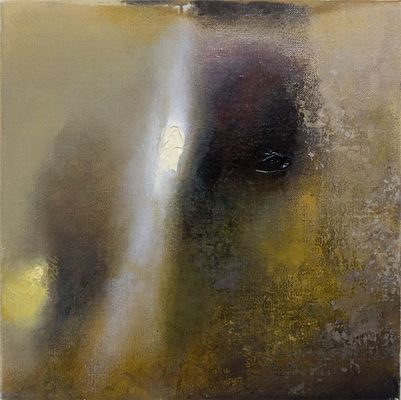
To return to Buckley’s fragment, the first two lines very much evoke how I paint nowadays. As you age, detail diminishes and patches of light become more luminous and float. I feel the most honest way of dealing with this is by smearing the oil paint on the canvas with the fingers and working close-up, blind. Only if the patches coalesce into an approaching image can the work gain a life.
-
Jonathan Walker was born in Melbourne, Australia and brought up on a dairy farm in Gippsland. In the 1970’s he studied painting at RMIT and won the Harold Wright Scholarship to the British Museum, London. During the 1980’s he exhibited at Pinacotheca Gallery, Richmond and had work shown at the NGV and Heidi City Art Gallery. Over the same period he designed the cover for the “Epigenesi” LP by Giancarlo Toniutti, Italy and conducted a mail exchange work with Achim Wollscheid, Germany. The work with artists through the post resulted in an article published in the bicentenary issue of Art and Australia 1988. He showed in artist run spaces such as WestSpace in the 90’s and 2000’s, and until 2012, taught painting at Victoria University, which is where we (Colleen Ahern and Lisa Radford) as organisers of the exhibition, among many others, had the privilege of being his student.
Walker’s knowledge was imparted to students through the careful selection of music, literature, and artists found in books that he himself had ordered for the library. Walker’s strategy was the generosity of sharing his vast knowledge with references specific to each student and their context.
Walker’s paintings share a similar focus and intimacy.
This exhibition presents a small selection of recent paintings alongside a publication that includes Walker’s writing. Observational and analytical, Walker’s work is a type of material notation — the time of day, colour and how it is blended, the both specific and fleeting location of a reflection on lino or the question of whether a chair leg should be included in a painting.
Please join us on Friday August 21 between 6-8pm to celebrate the opening of the exhibition.
Curated by Colleen Ahern and Lisa Radford.
B. Wurtz
Curated by Nic Tammens
March 26 - April 4, 2015
B.Wurtz works from a basement studio in his home on Manhattan’s Lower East Side.
This local fact is attested to by the plastic shopping bags and newsprint circulars that appear in his work. As formal objects, they don’t make loud claims about their origins but nonetheless transmit street addresses and places of business from the bottom of this long thin island. Like plenty of artists, Wurtz is affected by what is local and what is consumed. His work is underpinned by this ethic. It often speaks from a neighborhood or reads like the contents of a hamper:
“BLACK PLUMS $1.29 lb.”
“Food Bazaar”
“USDA Whole Pork Shoulder Picnic 99c lb.”
“RITE AID Pharmacy, with us it’s personal.”
“H. Brickman & Sons.”
“Sweet Yams 59c lb."
Most of the work in this exhibition was made while the artist was in residence at Dieu Donne, a workshop dedicated to paper craft in Midtown. Here Wurtz fabricated assemblages with paper and objects that are relatively lightweight, with the intention that they would be easily transportable to Australia. This consideration isn’t absolute in Wurtz’s work, but was prescriptive for making the current exhibition light and cheap. Packed in two boxes, these works were sent from a USPS post office on the Lower East Side and delivered to North Melbourne by Australia Post.
Wurtz appears courtesy of Metro Pictures, New York.
Thanks to Rob Halverson, Joshua Petherick, Sari de Mallory, Matt Hinkley, Helen Johnson, Fayen d'Evie, Ask Kilmartin, Lisa Radon, Ellena Savage, Yale Union, and "Elizabeth".
John Nixon
"Archive"
December 15 - January 20, 2014
The presentation of John Nixon's archive offered a rare showcase of this extensive collection of the artist's own publications, catalogues, posters, ephemera, editions and more, from the mid 1980s onwards, alongside a selection of his artworks.
Organized by John Nixon, Joshua Petherick and Matt Hinkley.
"Habitat"
at Minerva, Sydney (organised by Joshua Petherick and Matt Hinkley)
November 15 - December 20, 2014
Lupo Borgonovo, Janet Burchill & Jennifer McCamley,
Lewis Fidock, HR Giger, Piero Gilardi, Veit Laurent Kurz,
Cinzia Ruggeri, Michael E. Smith, Lucie Stahl, Daniel Weil, Wols
Press Release:
“...It contained seven objects. The slender fluted bone, surely formed for flight, surely from the wing of some large bird. Three archaic circuitboards, faced with mazes of gold. A smooth white sphere of baked clay. An age-blackened fragment of lace. A fingerlength segment of what she assumed was bone from a human wrist, grayish white, inset smoothly with the silicon shaft of a small instrument that must once have ridden flush with the surface of the skin - but the thing’s face was seared and blackened.”
William Gibson, “Count Zero”, 1986
"Autumn Projects Archive"
Curated by Liza Vasiliou
March 6 - March 15, 2014
World Food Books, in conjunction with the Virgin Australia Melbourne Fashion Festival 2014, presented the Autumn Projects archive, consisting of a selection of early examples in Australian fashion with a particular interest in collecting designers and labels from the period beginning in the 1980’s, who significantly influenced the discourse of Australian Fashion.
Curated by Liza Vasiliou, the exhibition provided a unique opportunity to view pieces by designers Anthea Crawford, Barbara Vandenberg, Geoff Liddell and labels CR Australia, Covers, Jag along with early experimental collage pieces by Prue Acton and Sally Browne’s ‘Fragments’ collection, suspended throughout the functioning World Food Books shop in Melbourne.
H.B. Peace
presented by CENTRE FOR STYLE
November 14, 2013
"Hey Blinky, you say chic, I say same"
Anon 2013
H.B. Peace is a clothing collaboration between great friends Blake Barns and Hugh Egan Westland. Their pieces explore the divergences between 'character’ and ‘personality’ in garments....etc
Special Thanks to Joshua Petherick and Matt Hinkley of WFB and Gillian Mears
and a Very Special Thank you to Audrey Thomas Hayes for her shoe collaboration.
Janet Burchill & Jennifer McCamley
"Aesthetic Suicide"
May 10 - June 8, 2013
The first of our occasional exhibitions in the World Food Books office/shop space in Melbourne, "Aesthetic Suicide" presented a body of new and older works together by artists Janet Burchill & Jennifer McCamley, including videos, prints, a wall work, and publications.
During shop open hours videos played every hour, on the hour.
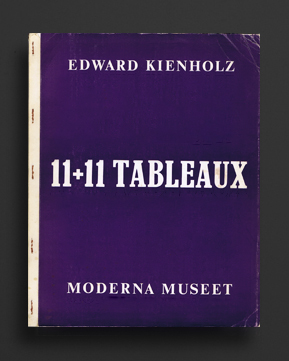
1970, English / Swedish
Softcover (card backing, cloth tape binding with staples), 144 pages (many foldout colour), 21.5 x 27 cm
1st ed., Out of print title / used*,
Published by
Moderna Museet / Stockholm
$75.00 - Out of stock
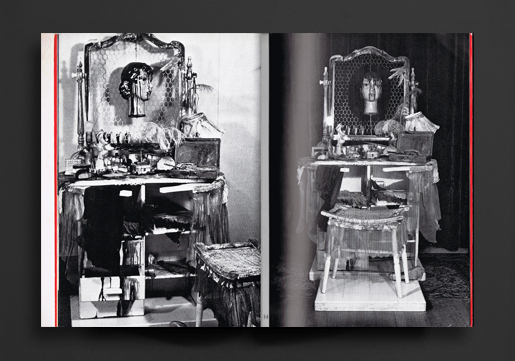
First printing of the great "11+11 Tableaux" monographic book on the work of Edward Kienholz, published by the Moderna Museet in 1970 on the occasion of a gigantic travelling exhibition in 1970. Brought out the same year as Kienholz's "1960 -1970" (Dusseldorf), which roughly shares the same content as this book, "11+11 Tableaux" functions as a sort-of bound archive/artist's book of Kienholz's major sculptural "Tableaux" works and installations throughout the 1960's, each work illustrated through colour fold-out gloss pages and multiple black and white images, accompanied by introductory texts in English and Swedish. Also features a biography and bibliography. An incredible book on Kienholz and an enormously valuable reference source on the artist's amazing early works. First edition.
Edward Kienholz (October 23, 1927 – June 10, 1994) was an American installation artist and assemblage sculptor whose work was highly critical of aspects of modern life. From 1972 onwards, he assembled much of his artwork in close collaboration with his artistic partner and fifth wife, Nancy Reddin Kienholz. Throughout much of their career, the work of the Kienholzes was more appreciated in Europe than in their native United States, though American museums have featured their art more prominently since the 1990s.
Art critic Brian Sewell called Edward Kienholz "the least known, most neglected and forgotten American artist of Jack Kerouac's Beat Generation of the 1950s, a contemporary of the writers Allen Ginsberg, William Burroughs and Norman Mailer, his visual imagery at least as grim, gritty, sordid and depressing as their literary vocabulary".
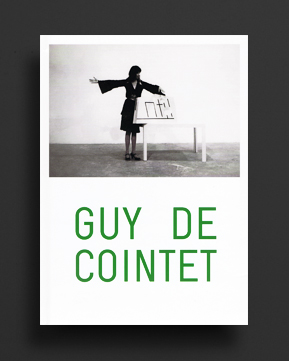
2016, English
Hardcover, 160 pages, 17 x 24 cm
Published by
JRP Ringier / Zürich
$88.00 - Out of stock
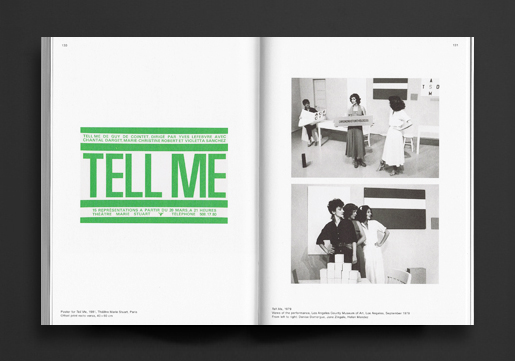
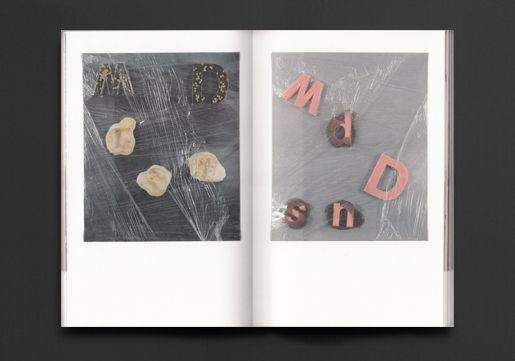
The book, written by Marie de Brugerolle and published with the Estate of Guy de Cointet, is the first to offer an overview of Cointet's enigmatic and influential oeuvre.
Guy de Cointet (American, b. France. 1934–1983) was fascinated with language, which he explored primarily through performance and drawing. His practice involved collecting random phrases, words, and even single letters from popular culture and literary sources—he often cited Raymond Roussel's novel "Impressions of Africa" as influential—and working these elements into non-linear narratives, which were presented as plays to his audience.
Paintings and works on paper would then figure prominently within these performances. In his play "At Sunrise . . . A Cry Was Heard" (1976), a large painting depicting letters bisected by a white sash served as a main subject and prop, with the lead actress continuously referring to it and reading its jumble of letters as if it were an ordinary script. His drawings likewise are almost readable but just beyond comprehension.
De Cointet is recognized as one of the major figures in the Conceptual art movement that emerged in Los Angeles in the 1970s, having strongly influenced a number of prominent artists working in southern California today, including Paul McCarthy and Mike Kelley, for whom both drawing and performance figure significantly in their artistic practices.
Edited by Clément Dirié.
Text by Larry Bell, Marie de Brugerolle, Gérard Wajcman.
2017, English
Softcover, 32 pages, 20 x 27
Published by
Ludwig Museum / Cologne
Walther König / Köln
$18.00 - Out of stock
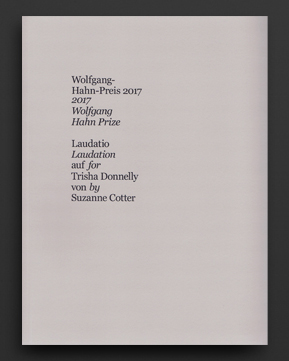
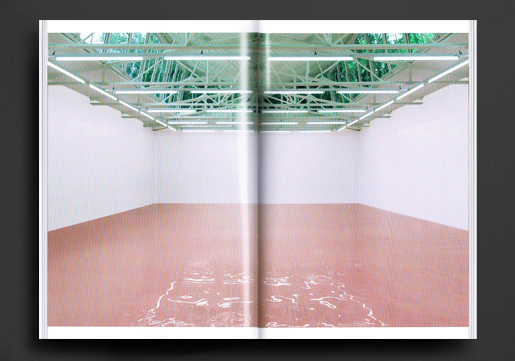
Catalogue published on the occasion of Trisha Donnelly's 2017 solo exhibition at Cologne's Ludwig Museum (organised by Suzanne Cotter) and her award of the Wolfgang-Hahn-Preis.
Trisha Donnelly was born in 1974 in San Francisco, California. She completed the Bachelor of Fine Arts at the University of California in 1995 and the Master of Fine Arts at the Yale University School of Art in 2000. Since 1999, she has participated in exhibitions, having held several institutional exhibitions at Villa Serralves in Porto (2016), the Serpentine Gallery in London (2014), the San Francisco Museum of Modern Art (2013), Portico, Frankfurt (2010), the Museo d'Arte Moderna di Bologna (2009), the Renaissance Society of the University of Chicago and the Institute of Contemporary Art in Philadelphia (both in 2008), the Modern Art Oxford (2007) 2005). In the last ten years, she has appeared in numerous group exhibitions, including at the 54th and 55th Venice Biennale (2011 and 2013), at dOCUMENTA (13) (2012), in The Quick and the Dead at the Walker Art Center (2009) and Il Tempo del Postino (2007 in Manchester, 2009 in Basel). In Germany, Donnelly had her first institutional solo exhibition in 2005 at the Kölnischer Kunstverein within the framework of the Central Art Prize awarded to her in 2004. In 2015 the Julia Stoschek Collection showed Trisha Donnelly's work as an exhibition number ten. Early exhibitions took place, among others, at her Galerie Air de Paris in Paris, Galerie Eva Presenhuber, Zurich, and Casey Kaplan in New York. There she caught the eye in 2002 with her performance, When she dressed as a messenger of Napoleon on a horse, she rode before Casey Kaplan's gallery and read a mysterious message. An action that was repeated in the Cologne Kunstverein in 2005, in that a black horse was supposed to have been guided through the exhibition hall - an event whose facticity the artist likes to leave open.
This play with the unknown and the production of situations in which the viewer is completely thrown back to his own individual perception without a reference frame may be one of the most important features of Trisha Donnelly's work. An approach to their partly also immaterial work can ultimately only happen if one encounters them. Donnelly's avoidance of the public, explanatory texts, or title-bearing titles points to a strategy that is not oriented towards events and spectacles. It is rather the inexplicable, rumorous experiences or experiences that Donnelly tries to make experience in her works. In an interview with Cathrin Lorch in 2005 (Kunstbulletin, September, 2005), Donnelly once mentioned that they are trying to condense things. Each piece of work was created in an attempt to search for patterns that created a "mental sculpture". In addition to the already mentioned Central Art Prize, Donnelly received the Rob Pruitt's Art Award, the Prix de la Fondation Luma in Arles in 2010, the 10th Prize of the Sharjah Biennial in 2011 and the International Faber-Castell Prize for Drawing in 2012. In 2011 she was among the finalists for the Hugo Boss Prize 2012, awarded by the Solomon R. Guggenheim Foundation. In addition to the already mentioned Central Art Prize, Donnelly received the Rob Pruitt's Art Award, the Prix de la Fondation Luma in Arles in 2010, the 10th Prize of the Sharjah Biennial in 2011 and the International Faber-Castell Prize for Drawing in 2012. In 2011 she was among the finalists for the Hugo Boss Prize 2012, awarded by the Solomon R. Guggenheim Foundation. In addition to the already mentioned Central Art Prize, Donnelly received the Rob Pruitt's Art Award, the Prix de la Fondation Luma in Arles in 2010, the 10th Prize of the Sharjah Biennial in 2011 and the International Faber-Castell Prize for Drawing in 2012. In 2011 she was among the finalists for the Hugo Boss Prize 2012, awarded by the Solomon R. Guggenheim Foundation.
2017, English
Softcover, 80 pages, 20.4 x 30.4 cm
Published by
Walther König / Köln
$38.00 - Out of stock
Neotene, Silicone, Evian, Viagra, Bionin, and Necrion, among others, are the materials from which Pamela Rosenkranz’s work is made of. We’re arguably more familiar with the esoteric promises with which some of these products are imbued than we are with the material substances which make them up. Yet the apparently pure and timeless aesthetic qualities they deliver have a biological basis. The immersive installation Pamela Rosenkranz has created for the Swiss Pavilion activates the knowledge mobilized in the technological, scientific, and conceptual development of products, subverting the culturally consolidated meanings of art. By guiding our perception of the Pavilion through a skilful interplay of supposedly immaterial elements such as light, colour, scent, sound and organic components such as hormones and even bacteria, Rosenkranz confronts the historically, religiously, and commercially transmitted image of what it means to be human with its biological genesis.
Rosenkranz isolates the large interior space with plastics, filling it with a monochrome liquid mass matching a standardised northern European skin-tone. This Eurocentric skin colour, reminiscent of the «carnate» used in Renaissance painting to render the visual qualities of human flesh, is employed in today’s advertising industry as a proven way to physically enhance attention. Rosenkranz contrasts this skin colour—the product of a natural history involving migration, exposure to the sun, and nutrition—with a verdant green coating the institutional mantle of the Swiss Pavilion. Whereas the artificial green light in the patio blurs the distinction between inside and outside, a special wall paint that is biologically attractive further dissolves the clean separation between culture and nature. Smells and sound penetrate the architecture. The synthetic sound of water, generated by an algorithm in real time, disseminates throughout the space, and a scent evoking the smell of fresh baby skin billows through the Pavilion. Invading all of our senses, this installation appropriates immemorial aesthetic reflexes that both art and commercial culture rely on, but renders them cognitively disturbing. As in a placebo effect, it’s hard to know here whether our physiological responses are triggered by imagination alone or if the effects we’re experiencing are the hallucinatory product of our bodies and their natural/cultural histories: “Our Product”.
Curated by Susanne Pfeffer
This publication is a thorough document to accompany this new work. Published in 2017 with text by Susanne Pfeffer.
2017, English
Hardcover, 294 pages, 22.6 x 29 cm
Published by
Hammer / Los Angeles
Prestel / Munich
$90.00 - Out of stock
Published in conjunction with the first North American survey of the work of Jimmie Durham, this beautifully illustrated catalogue explores Durham's vital contributions to contemporary art since the 1970s, both in the US and internationally.
Born of Cherokee descent, in 1940s Arkansas, Jimmie Durham takes up such issues as the politics of representation, histories of genocide, and citizenship and exile. This volume collects an array of Durham s sculptures, drawings, photography, video, and performance. It includes essays about Durham s material choices and their metaphoric potential; his participation in the NYC art scene in the 1980s; his use of language; and his ties to Mexico after living in Cuernavaca. An interview with Durham traces his involvement with the American Indian Movement and his self-exile from the US, which along with his essays and poetry, illuminate his life and work. This book provides an opportunity to gain a deeper understanding of Durham, arguably one of the most important artists working today.
Jimmie Durham : At the Centre of the World
Contributions by Anne Ellegood, Jennifer A. Gonzalez, Fred Moten, Jessica L. Horton, Paul Chaat Smith, MacKenzie Stevens, Elisabeth Sussman, Jessica Berlanga Taylor.
2016, English
Softcover, 224 pages, 174 x 238 mm
Published by
JRP Ringier / Zürich
$88.00 - Out of stock
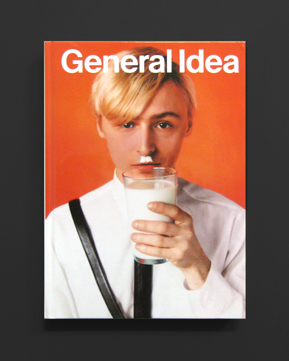
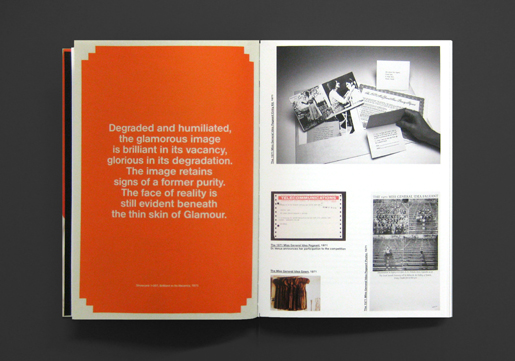
This volume presents an overview of the Canadian collective oeuvre—an oeuvre still haunted by Miss General Idea, a fictive character who was at once muse and object, image and concept. Founded in Toronto in 1969 by Felix Partz, Jorge Zontal—both disappeared in 1994—and AA Bronson, the trio adopted a generic identity that "freed it from the tyranny of individual genius." Their complex intermingling of reality and fiction took the form of a transgressive and often parodic take on art and society. Treating the image as a virus infiltrating every aspect of the real world, General Idea set out to colonize it, modify its content and so come up with an alternative version of reality.
Paintings, installations, sculptures, photographs, videos, magazines, and TV programs: General Idea's is an authentically multimedia oeuvre, that has lost nothing of its freshness and can now be seen as anticipating certain aspects of a current art scene undergoing radical transformation. The book covers the collective's main areas of concern and themes, such as the artist and the creative process, glamour as a creative tool, art's links with the media and mass culture, architecture and archaeology, sexuality and AIDS, etc. Including newly commissioned essays and republished texts, it is richly illustrated with documents and reproductions of the most important projects realized by General Idea from 1969 to 1994.
Published with the Musée d’art moderne de la Ville de Paris and the Art Gallery of Ontario, Toronto. French edition by Paris Musées.
1983, Japanese
Hardcover (clothbound w. dustjacket), 151 pages, 20.5 x 30 cm
1st Edition, Out of print title / used / good
Published by
Centre Georges Pompidou / Paris
Editions Filipacchi / Paris
Musee National D'art Moderne / Paris
Orion Press / Tokyo
$190.00 - Out of stock
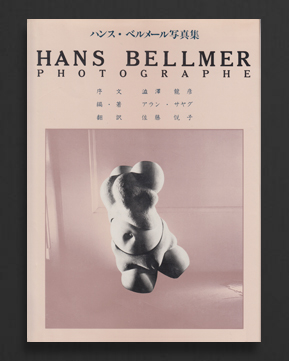
Rare, exquisitely designed and produced book dedicated entirely to the photography of the German artist Hans Bellmer (13 March 1902 – 23 February 1975), best known for the life-sized pubescent female dolls he produced in the mid-1930s. "Bellmer was born in the city of Kattowitz, then part of the German Empire (now Katowice, Poland). Up until 1926, he'd been working as a draftsman for his own advertising company. He initiated his doll project to oppose the fascism of the Nazi Party by declaring that he would make no work that would support the new German state. Represented by mutated forms and unconventional poses, his dolls were directed specifically at the cult of the perfect body then prominent in Germany. Bellmer was influenced in his choice of art form by reading the published letters of Oskar Kokoschka (Der Fetisch, 1925)."
Produced in French by Editions Filipacchi, Centre Georges Pompidou, and Musee National D'art Moderne in Paris in 1983, this very scarce Japanese printing (produced and printed in Japan that same year) features a different cover, with translations to the Japanese language of the introductory essay and texts. Densely illustrated with amazing and beautifully printed colour and black and white photography of Bellmer's dolls, many studies of the female nude, and photography of objects and sculptural assemblages, this book is a wonderful volume capturing an important Surrealist visionary of our time through his stunning photography.
Good copy in dust-jacket, general wear and some age tanning to edges.
2015, English
Softcover, 120 pages, 15 x 21.6 cm
Published by
Afterall / London
The MIT Press / Massachusetts
$40.00 - Out of stock
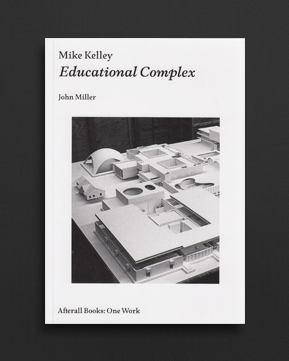
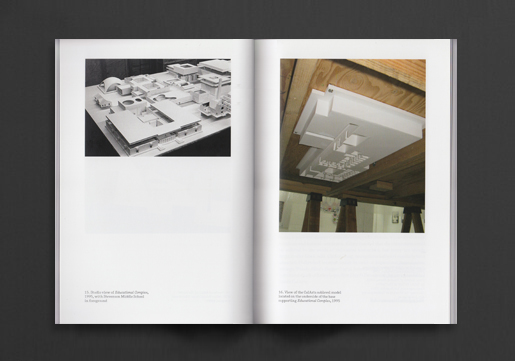
One of the most influential artists of our time, Mike Kelley (1954–2012) produced a body of innovative work mining American popular culture as well as modernist and postmodernist art—relentless examinations of subjectivity and of society that are both sinister and ecstatic. With a wide range of media, Kelley’s work explores themes as varied as post-punk politics, religious systems, social class, and repressed memory. Using architectural models to represent schools he attended, his 1995 work,Educational Complex, presents forgotten spaces as frames for private trauma, real or imagined. The work’s implications are at once miniature and massive. In this book, John Miller offers an illustrated examination of this milestone work that marked a significant change in Kelley’s practice.
A “complex” can mean an architectural configuration, a psychological syndrome, or a political apparatus, and Miller approaches Educational Complex through corresponding lines of inquiry, considering the making of the work, examining it in terms of education and trauma (sexual or otherwise), and investigating how it tests the ideological horizon of art as an institution. Miller shows that in Educational Complex, Kelley expands his political and aesthetic focus, including not only such artifacts as generic forms of architecture but (inspired by the infamous McMartin Preschool case) popular fantasies associated with ritual sex abuse and false memory syndrome. Through this archaeology of the contemporary, Miller argues, Kelley examines the mandate for education and the liberal democratic premises underpinning it.
Author John Miller, Professor of Professional Practice in the Department of Art History at Barnard College, is an artist and critic whose work has been exhibited internationally. He was Mike Kelley’s friend and colleague from 1978 until Kelley’s death in 2012.
2017, English / Italian
Softcover, 440 pages, 18.5 x 26.5 cm
Published by
Mousse Publishing / Milan
$18.00 - Out of stock
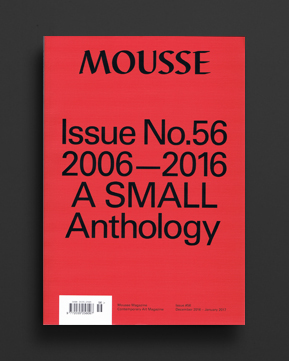
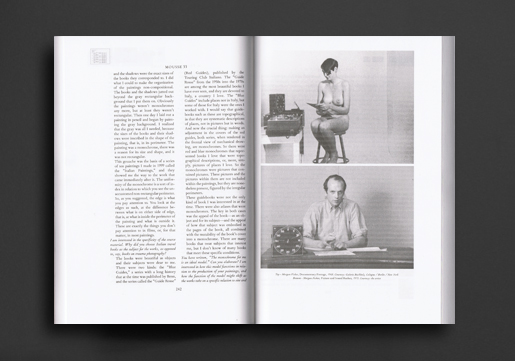
10-year anniversary special issue: a selection of essays, interviews, conversations, and projects appeared in the first ten years of Mousse.
Featuring: Chantal Akerman, Cecilia Alemani, Jennifer Allen, Kai Althoff, Bruce Altshuler, Ed Atkins, Lutz Bacher, Darren Bader, Alex Bag, John Baldessari, Phyllida Barlow, Kirsty Bell, Andrew Berardini, Jonathan Berger, Michael Bracewell, Tom Burr, Maurizio Cattelan, Marc Camille Chaimowicz, Sofía Hernández Chong Cuy, Carolyn Christov-Bakargiev, Stuart Comer, Lauren Cornell, Nicholas Cullinan, Roberto Cuoghi, Nick Currie, Massimo De Carlo, Gino De Dominicis, Gigiotto Del Vecchio, Simon Denny, Brian Dillon, Jimmie Durham, Dominic Eichler, Peter Eleey, Matias Faldbakken, Luigi Fassi, Elena Filipovic, Morgan Fisher, Isa Genzken, Yervant Gianikian & Angela Ricci Lucchi, Liam Gillick, Massimiliano Gioni, Isabelle Graw, Ed Halter, Jens Hoffmann, Judith Hopf, William E. Jones, Omar Kholeif, Alexander Kluge, Jiří Kovanda, William Leavitt, Elisabeth Lebovici, Andrea Lissoni, Helen Marten, Chus Martínez, Nick Mauss, Lucy McKenzie, Fionn Meade, Simone Menegoi, John Menick, Ute Meta Bauer, Massimo Minini, Hans Ulrich Obrist, Trevor Paglen, Stefania Palumbo, Francesco Pedraglio, Otto Piene, Laura Poitras, Elizabeth Price, Seth Price, Laure Prouvost, Alessandro Rabottini, Carol Rama, Filipa Ramos, Jason Rhoades, Dieter Roelstraete, Esperanza Rosales, Nicolaus Schafhausen, Fender Schrade, Stuart Sherman, Frances Stark, Jamie Stevens, Hito Steyerl, Sturtevant, Sabrina Tarasoff, Ana Teixeira Pinto, Oscar Tuazon, Giorgio Verzotti, Jan Verwoert, Francesco Vezzoli, Adrián Villar Rojas, Peter Wächtler, Ian Wallace, Klaus Weber, Cathy Wilkes, Christopher Williams, Jordan Wolfson.
Mousse is a bimonthly magazine published in Italian and English. Established in 2006, Mousse contains interviews, conversations, and essays by some of the most important figures in international criticism, visual arts, and curating today, alternated with a series of distinctive articles in a unique tabloid format. Mousse keeps tabs on international trends in contemporary culture thanks to its city editors in major art capitals such as Berlin, New York, London, Paris, and Los Angeles.
Mousse (Mousse Publishing) is also publisher of catalogues, essays and curatorial projects, artist books and editions.
2010, English / Norwegian
Softcover, 86 pages (colour ill. throughout), 145 x 200 mm
Published by
Bergen Kunsthall / Norway
$30.00 - Out of stock
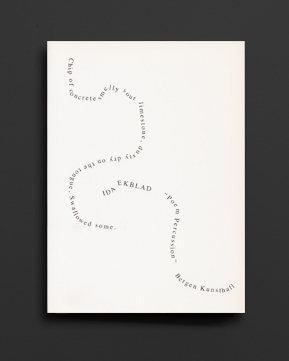
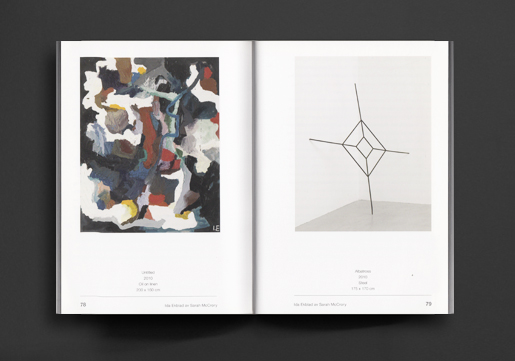
Accompanying publication to Ida Ekblad's solo exhibition "Poem Percussion" at Bergen Kunsthall in Norway in late 2010.
Includes full-colour reproductions of much of Ida's work from over the previous two years, painting and sculpture, plus installation photographs, a selection of six of her poems, and essays by Caoimhin Mac Giolla Léith and Sarah McCrory.
2007, English
Softcover (spiral bound), 28 pages (colour and b&w ill.), 280 x 210 mm
Published by
Frank Lloyd Gallery / Los Angeles
$55.00 - Out of stock
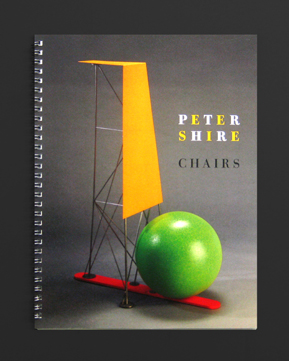
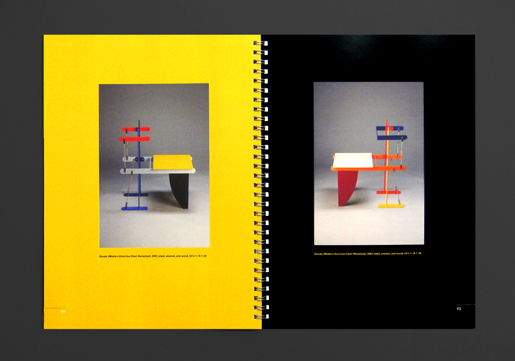
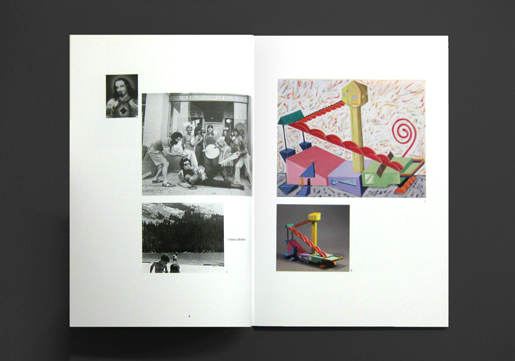
This spiral-bound twenty-eight page catalogue was published to accompany Peter Shire's solo exhibition at the Frank Lloyd Gallery October 20 through November 24, 2007. The catalogue includes sixteen colour plates of Shire's playful, sculptural chairs, as well as an introduction and artist interview conducted by Frank Lloyd.
2005, English
Softcover, 40 pages (colour and b&w ill.), 280 x 210 mm
Published by
Chouinard Foundation / South Pasadena
$55.00 - Out of stock
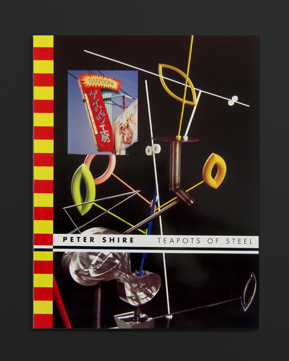
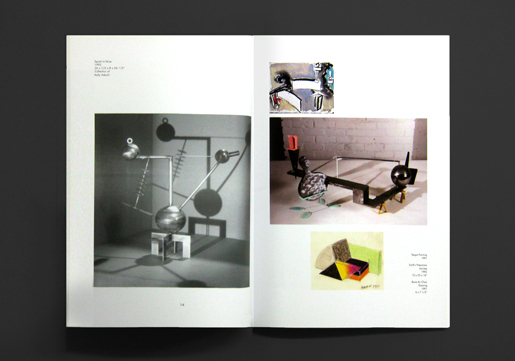
Publication to accompany the exhibition "Teapots of Steel" by Los Angeles artist Peter Shire, curated by Gary Wong for Chouinard Foundation in South Pasadena, 2005. Profusely illustrated throughout in colour and black and white of rarely seen sculptural works and drawings by Shire.
2006, English
Softcover, 54 pages (colour and b&w ill.), 280 x 210 mm
Published by
Tobey C. Moss Gallery / Los Angeles
$35.00 - Out of stock
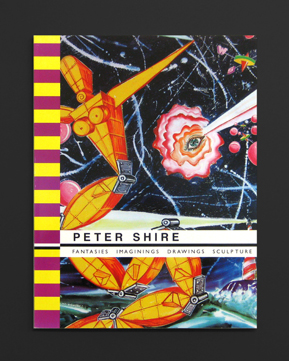
Catalogue from the exhibition "Fantasies Imaginings Drawings Sculpture" at Tobey C Moss Gallery, Los Angeles 2006. Profusely illustrated throughout with rarely seen large-scale public works, facades, sculptures, drawings and paintings by Shire.
2017, English
Softcover, 550 pages, 21 × 28 cm
Published by
Novembre / Lausanne
$45.00 - Out of stock
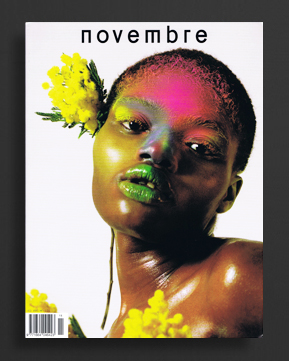
Novembre 11: Isa Genzken, Sanya Kantarovsky, Jessi Reaves, Thomas Hauser, Dan Hoy, Ib Kamara, Robert Kulisek, Corey Olsen, Olympia Scarry, Alexandra Bircken, Ada Sokol, Hans Ulrich Obrist, Danielle van Camp and many more.
Reinforcing Novembre as a collectible object, issue 11 presents outstanding visuals, exclusive poetry, typographic collaborations, and the leading fashion collections.
Under the candid caption “arts and fashion in Switzerland and the world”, Novembre activates intergenerational discussions, producing international content that explores the critical stakes inherent to the Swiss identity: its neutrality notably fortifies its supposed integrity and inviolability, whilst placing the Confederation in an extremely productive and influential position within the arts on a global level.
Through the organic association of fashion, design and art, Novembre highlights the products which proliferate in schools, studios, galleries, showrooms, institutions, trade shows, fairs, hotels and bank lobbies and living rooms – addressing issues of integration, independence, equality, and exchange.
Novembre is currently published and independently by Florence Tétier (Paris), Florian Joye (Lausanne), and Jeanne-Salomé Rochat (Berlin), who united after their graduation from ECAL University of Arts, Switzerland.
2017, English
Hardcover, 216 pages, 29.5 x 23.5 cm
Published by
ICA / Miami
Koenig Books / London
$70.00 - Out of stock
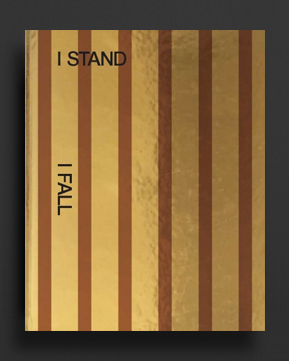
The publication I Stand, I Fall, a comprehensive survey of work by John Miller, coincides with the first American museum exhibition dedicated to the influential conceptual artist.
Through almost 150 images, this catalogue comprehensively traces Miller’s use of the figure throughout his career in order to incisively comment on the status of art and life in American culture.
The book features a range of media, including painting, sculpture, drawing, photography, installation and video; never-before-seen works from the 1980s; new large-scale sculptures; and the artistʼs most ambitious architectural installation to date – a vast and immersive mirrored labyrinth that went on view at the ICA Miami’s Atrium Gallery.
I Stand, I Fall, surveys Miller’s use of the figure in order to examine themes of citizenship and politics, and the conventions of realism in contemporary art.
Organized chronologically, the exhibition begins with his drawings and paintings from 1982-1983, the majority of which have never been presented publicly.
Influenced by the pastoral genre of painting and American social realism of the 1920s and 30s, these deadpan, even grotesque, works explore issues of urban and suburban Americana, public space, and the human
Published retrospectively after the exhibition John Miller: I Stand, I Fall at Institute of Contemporary Art, Miami, 18 February – 12 June 2016.
2017, English
Hardcover, 440 pages, 20.5 x 17 cm
Published by
Koenig Books / London
Serpentine Gallery / London
$50.00 - In stock -
John Latham (1921 – 2006) is widely considered a pioneer of British conceptual art.
His multifaceted practice encompasses sculpture, installation, painting, film, land art, engineering, found-object, assemblage, performance happenings and theoretical writings, the diversity of which is galvanised by his unique understanding of our place in the universe.
This publication traces the trajectory of Latham’s practice and brings together archival material, including documentary photographs, texts, correspondence and various ephemera, in order to build a picture of the artist’s life and work. Latham saw the artist as holding up a mirror to society: an individual whose dissent from the norm could lead to a profound reconfiguration of reality as we know it.
Latham has been associated with several national and international artistic movements, including the first phase of conceptual art in the 1960s. He was an important contributor to the Destruction in Art Symposium of 1966, and also a co-founding member of the Artist Placement Group APG (1966-89).
The Serpentine Gallery exhibition (and this accompanying catalogue) spans Latham’s career to include his iconic spray and roller paintings; his one-second drawings; films such as Erth (1971), and Latham’s monumental work, Five Sisters (1976) from his Scottish Office placement with APG.
Texts by Rita Donagh, Amira Gad, Richard Hamilton, Katherine Jackson, Elisa Kay, Adam Kleinman, Noa Latham, Hans Ulrich Obrist, Yana Peel, Cally Spooner, Barbara Steveni, David Toop.
Published on the occasion of the exhibition, A World View: John Latham at Serpentine Gallery, London, 2 March – 21 May 2017.
2008, English
Softcover, 156 pages, 24 x 16.5 cm
Published by
Walther König / Köln
$48.00 - Out of stock
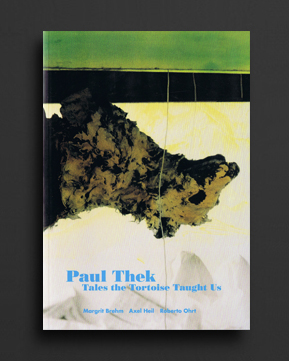
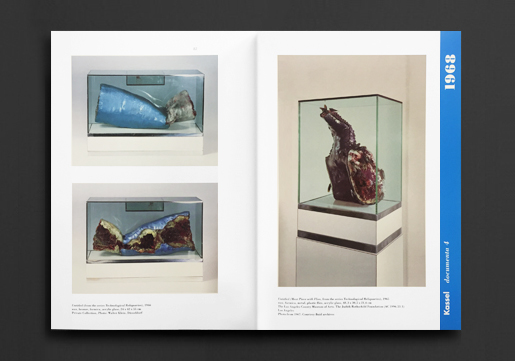
Paul Thek (1933 – 1988) is the epitome of an ‘artist’s artist’ whose influence extends through to recent generations. This comprehensive exhibition comprising over 300 works and ranging across all periods of his artistic creativity, is concerned with the phenomenal influence his work continues to exert on contemporary art and his historical significance: from legendary outsider to the central figure of an art movement.
In their anti-heroic diversity and multimediality, and with their references to art, literature, and religion, his works (painting, photography, video, sculpture and installations) are among the central sources for the revolt and eruption of art in the 1960s. Published to accompany the exhibition at ZKM Karlsruhe and Sammlung Falckenberg Hamburg in 2008.
English text.
2015, English / Dutch
Hardcover, 100 pages, 19 x 25 cm
1st edition, Out of print title / As New,
Published by
Museum Boijmans Van Beuningen / Rotterdam
$150.00 - Out of stock
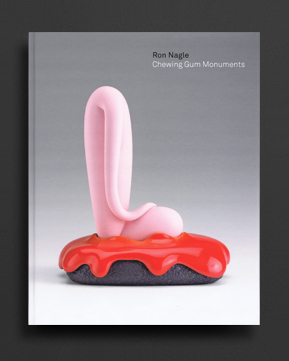
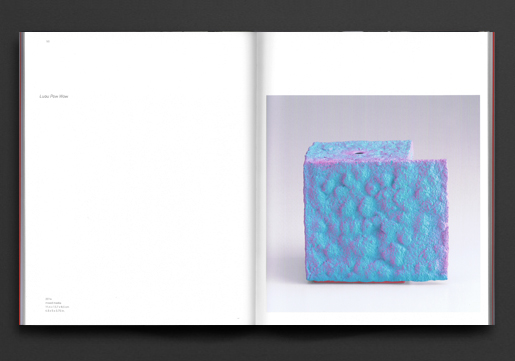
Beautifully produced and scarcely seen catalogue published on the occasion of Californian artist Ron Nagle's first solo exhibition in the Netherlands at the Museum Boijmans Van Beuningen in 2015, Chewing Gum Monuments.
In Chewing Gum Monuments, Nagle created an installation with more than 20 new sculptures and a series of recent drawings. The works combine the perfection that comes with 40 years of experience with the immediacy of a well-composed song. All works in the exhibition are reproduced throughout this book in full-colour, large reproductions.
Although small in size, Nagle’s objects have a monumental presence. Since the 1970s he has worked on an idiosyncratic oeuvre that helped to propel traditional studio ceramics into the arena of fine art. He has united two seemingly irreconcilable worlds: abstraction and the traditional cup form.
Nagle uses a carefully chosen palette of paints and glazes, which are meticulously applied, often in several layers. The finish matches the transcendent beauty of 16th-century Momoyama ceramics even if the day-glo accents and matte spray paints reinforce the objects’ contemporary character. Nagle’s roots are in California’s hot-rod culture and his attraction to the “Finish Fetishism” of the West Coast art scene.
In addition to the sculptures, the museum also exhibited several of Nagle’s drawings. In recent years drawing has become a substantial part of his artistic practice. The direct expression afforded by drawing inspires him to explore new directions. Nagle makes the drawings in the evening, after a day of working in the ceramic studio, while watching endless reruns of his favourite Charlie Chan episodes. The iterative act induces a state of peripheral cognition in which the drawings “flow” automatically. Nagle considers these drawings flat sculptures in which the black lines of the graphite, the cloudy white paint and the gold glimmers express an instant beauty: the quality he strives for in his three-dimensional work. These works are also reproduced in full here.
Also includes texts, biography and bibliography.
1994, English
Hardcover, 160 pages, 260 x 250 mm
Out of print title / Used*,
Published by
Los Angeles County Museum of Art / Los Angeles
Thames and Hudson / London
$25.00 - Out of stock
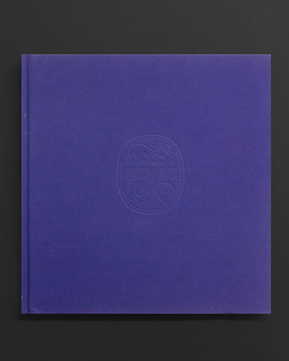
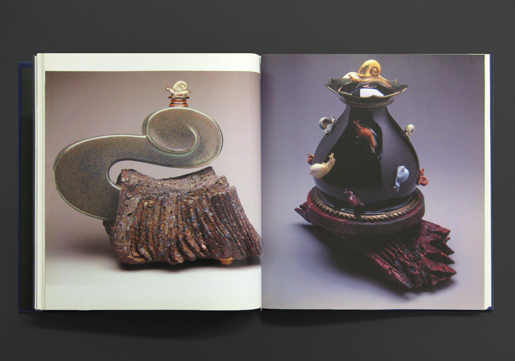
Adrian Saxe, the contemporary Californian ceramist, takes his inspiration from such diverse sources as Chinese bronzes, French porcelain garnitures and American pop culture, to produce pieces which are astonishing and entertaining technical tours de force. Their sumptuous glazes, richly ornate materials and elegant forms are leavened with refreshing doses of humour and post-modernist references to numerous art-historical traditions. A Chinese ritual vessel is topped by a high-heeled shoe; a gilded gourd-shaped jar sprouts Mickey Mouse ears complete with sparkling earstud; an aubergine mutates into a teapot. Occasioned by the 50th birthday of the artist, "The Clay Art of Adrian Saxe" is an survey of his achievement featuring 85 works, many photographed from several angles with enlarged colour views. Authoritative commentary is provided by Martha Drexler Lynn and Jim Collins of Notre Dame University.
In a 1993 review of Saxe's work, art critic Christopher Knight wrote:
“With outrageous humor and unspeakable beauty, he makes intensely seductive objects that exploit traditional anthropomorphic qualities associated with ceramics. Having pressed the question of the utility of his own art in a post-industrial world, his work engages us in a dialogue about our own place in a radically shifting cultural universe. The result is that Saxe has become the most significant ceramic artist of his generation.”
2000, German
Revised edition, Out of print title / used*
Published by
Hatje Cantz / Berlin
$150.00 - Out of stock
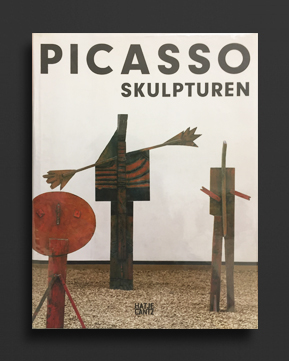
The huge and now highly collectable, revised catalogue raisonné of Pablo Picasso's sculptural work.
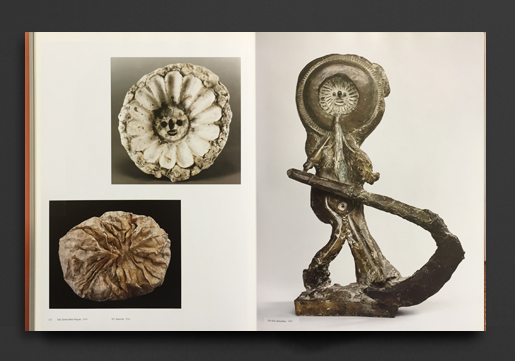
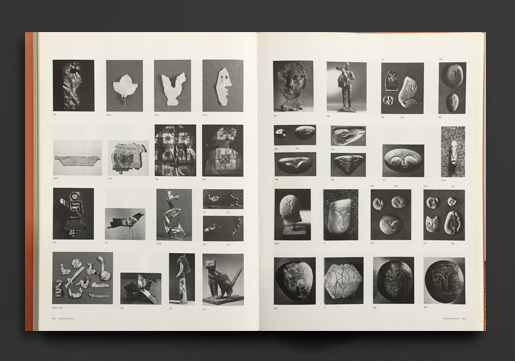
For years Pablo Picasso's sculptural oeuvre was one of the best-kept secrets of 20th century art. It was only through retrospectives in Paris, London and New York during the 1960's that Picasso the sculptor became known to a larger public who discovered a complexity and variety in his sculptures that easily rivals that of his paintings and drawings. Pablo Picasso: The Sculptures is a catalogue raisonné of Picasso's sculptures, a seminal work informed by conversations between the author, Picasso specialist Werner Spies, and Picasso himself. This now highly collectable 2000 edition was thoroughly revised and includes numerous colour illustrations of important pieces. In all this volume features over 740 works by the artist, ranging from miniature paper figures to constructions from metal, wood, and found objects, from folding sculptures made from tin to massive, at times monumental works. A definitive statement on Picasso's sculptural oeuvre, this book provides a key to understanding and appreciating works that, in their ingenuity and their inventiveness, still provide an inexhaustible source of inspiration for today's artists.
Texts in German.
2017, English
Softcover, 112 pages, 24 x 17 cm
Ed. of 500,
Published by
ACCA / Melbourne
$20.00 - Out of stock
Claire Lambe: Mother Holding Something Horrific, was published to accompany the Melbourne-based, English-born artist Claire Lambe's exhibition at ACCA, 8 April – 25 June, 2017. Curated by ACCA’s Artistic Director, Max Delany and Curator, Annika Kristensen, Claire Lambe: Mother Holding Something Horrific charges ACCA’s gallery spaces with a series of corporeal sculptures and dramatic installations that are at once uncanny, anarchic and full of life and libido.
As the most significant publication on Claire Lambe’s practice to date, the catalogue features a forward by Max Delany, a republished poem from 2011 by fellow artist Elizabeth Newman, a newly commissioned essay by author Emma Jane Unsworth, and Claire Lambe in conversation with Max Delany and Annika Kristensen, alongside an extensive colour documentation of Lambe’s work in progress, production stills, studio views, artist notes and reference materials.
Softcover, 200 pages, 21 x 13.6 cm
Ed. of 650 copies,
Published by
Taka Ishii Gallery / Tokyo
$83.00 - Out of stock
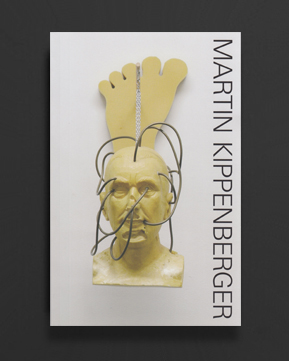
This catalogue, published in an edition of 650 copies on the occasion of the exhibition "Martin Kippenberger" at Taka Ishii Gallery, Tokyo, January 10-February 7, 2015,
is a great piece of documentation of the exhibition. Through 192 photographs spanning 200 pages, this book takes in each and every work and installation view in great detail.
This solo exhibition of works by German artist Martin Kippenberger (1953–1997) , made possible in collaboration with the Estate of Martin Kippenberger and Galerie Gisela Capitain, was the artist’s first major solo exhibition in Japan. Kippenberger was one of the most influential artists to come out of postwar Germany and he played a pivotal role in establishing the postmodernism aesthetic between the late 1970s and 1990s. He was an artist, actor, dancer, heavy drinker, novelist, musician, and traveller. His unique and wild lifestyle was matched by his prolific and varied output, which spanned multiple media including paintings, sculptures, collages, posters, photographs, performances, installations, multiples, and books. The core of the Taka Ishii exhibition was a large-scale installation, which was originally produced in the 1990s and comprises 38 multiples, six posters, one painting, and three hotel drawings.
Text by Minoru Shimizu (English and Japanese), plus a list of all works in the exhibition.
2016, English
Softcover, 112 pages, 22.9 x 29.2 cm
Published by
Sternberg Press / Berlin
$36.00 - Out of stock
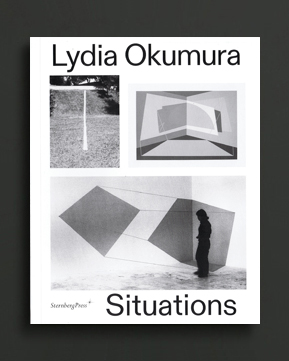
Edited by Rachel Adams
Texts by Rachel Adams, Sandra H. Olsen, Mari Rodriguez Binnie; interview with Lydia Okumura
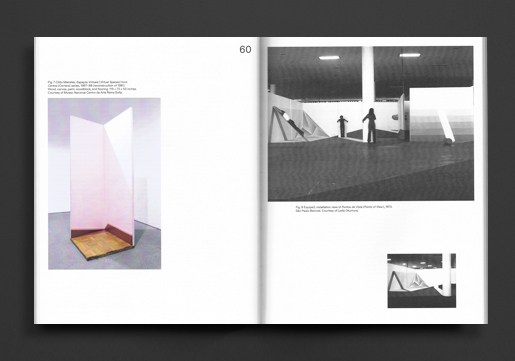
For almost fifty years, Lydia Okumura has explored the realm of geometric abstraction. She challenges our perception of space through sculptures, installations, and works on paper that blur distinctions between dimensions. In the 1970s, a young artist in her native São Paulo, she studied the Japanese art magazine Bijutsu Techou, which introduced her to Conceptual art, Minimalism, Land art, and Arte Povera. These movements, along with Brazilian Concretism and Neoconcretism, influenced Okumura’s work. Using simple materials such as string, glass, and paint, her dynamic work balances line, plane, and shadow.
Okumura’s oeuvre—although reminiscent of the work of Latin American artists such as Lygia Pape and Carmen Herrera, as well as contemporaries such as Dorothea Rockburne and Robert Irwin—has remained under-recognized. She has exhibited widely in São Paulo and is part of multiple museum collections, but she is much less known in her adopted country, the United States. “Lydia Okumura: Situations” (September 8, 2016–January 8, 2017) is the artist’s first solo exhibition in the United States. Through the exhibition and catalogue, the UB Art Galleries seek to encourage a critical reassessment of Okumura’s oeuvre within art history. The catalogue includes an essay on Okumura and her work, by curator Rachel Adams; an account of vanguardism in Brazilian art from 1960 to 1975, by art historian Mari Rodriguez Binnie; a conversation between Adams and Okumura; and extensive photo documentation of Okumura’s work from the 1970s until today.
Copublished with UB Art Galleries
Design by Mark Owens with Sarah Cleeremans
1977, French
Softcover (w. dust jacket), 212 pages, 21.5 x 26 cm
1st Edition, Out of print title / Used*,
Published by
Georges Pompidou Musee National d'Art Moderne / Paris
$130.00 - Out of stock
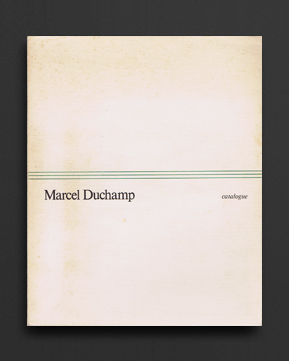
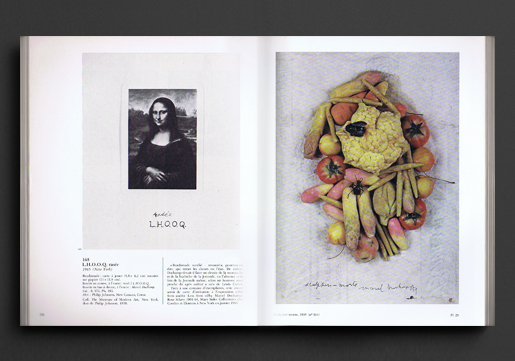
Published by Georges Pompidou Musee National d'Art Moderne in Paris in 1977, this fantastic book, "L'Oeuvre de Marcel Duchamp, Tome II", presents Marcel Duchamp's catalogue raisonne; 212 pages chronologically documenting his rich history of works in detail, heavily illustrated throughout in colour and black and white, with French texts and a full bibliography. It also goes beyond that, looking to aspects of his work including Photography, Esotericism, Perspective... The second of a four-part book set detailing the life and work of French-American artist Marcel Duchamp (1887-1968), published on the occasion of a 1977 exhibition. This particular volume (Tome II) is the Duchamp catalogue raisonne, and became a very valuable resource book on the artist in the late 1970s.
First edition of this scarce French book.