World Food Books' programme is largely produced on Kulin Nation land. We acknowledge the Wurundjeri people of the Kulin Nation as the first and continuing custodians of this land, and pay respect to their Elders past, present, and emerging.
World Food Books is an arts and special interests bookshop in Naarm / Melbourne. Founded in 2010, World Food Books is devoted to the presentation of a rotating, hand-selection of international art, design, literary and counterculture publications with an emphasis on the anti-traditional, the experimental, the avant-garde, the heretic, the marginal.
Presenting new titles alongside rare and out-of-print books, catalogues and journals spanning the fields of modern and contemporary art, design, photography, illustration, film, literature, poetry, cultural theory, philosophy, sexuality, popular and underground culture in its many radical forms, World Food Books wishes to encourage adventurous, thoughtful and open-minded reading, looking, writing, and exchange of publishing and ideas, both current and historical.
As well as our bookshop, located in Melbourne's historical Nicholas Building, all of our inventory is available internationally via our online mail-order service.
World Food Books semi-regularly co-ordinates "Occasions", a programme of exhibits and events at the bookshop and in partnership with other hosts (such as museums and art galleries) that develop out of the activities, relationships and content of the bookshop itself.
World Food Books
The Nicholas Building
37 Swanston Street
Room 5, Level 6
Melbourne 3000
Australia
SHOP HOURS:
THU–SAT 12–6
WEB-SHOP OPEN 24/7
World Food Books
Postal Address:
PO Box 435
Flinders Lane
Victoria 8009
Australia
info@worldfoodbooks.com
Art
Theory / Essay
Architecture / Interior
Graphic Design / Typography
Photography
Fashion
Eros
LGBTQ+
Fiction / Poetry
Weird / Speculative / Science Fiction / Horror
Transgressive / Visceral / Abject
Symbolism / Decadence / Fin de siècle
Film / Video
Painting
Sculpture / Installation
Performance / Dance / Theater
Drawing
Sound / Music
Curatorial
Group Shows / Collections
Periodicals
Out-of-print / Rare
Posters / Ephemera / Discs
Signed Books
World Food Books Gift Voucher
World Food Book Bag
Australian Art
Australian Fiction
Australian Science Fiction / Speculative Fiction
Australian Poetry
Australian Photography
Japanese Photography
Conceptual Art
Minimal Art
Dada
'Pataphysics / Oulipo
Fluxus
Concrete Poetry
Pop Art
Surrealism
Arte Povera
Arte Informale / Haute Pâte / Tachism
Nouveau Réalisme / Zero / Kinetic
Situationism / Lettrism
Collage / Mail Art / Xerox Art
Art Brut / Folk / Visionary / Fantastic
Illustration / Graphic Art / Bandes Dessinées
Furniture
Italian Radical Design / Postmodernism
Textiles
Ceramics / Glass
Counterculture
Protest / Revolt
Philosophy
Psychoanalysis
Anthropology
Anarchism
Socialism / Anarchism / Communism / Capitalism
Literary Theory / Semiotics / Language
Feminism / Women's Studies
Gender Studies / Sexuality
Anthropology
Fetishism / BDSM
Drugs / Psychedelia
Crime / Violence
Animal Rights / Veganism
Occult / Esoterica
Ecology / Earth / Alternative Living
Whole Earth / Crafts
All prices in AUD (Australian dollars)
Pick-Ups
Pick-up orders can be collected in our bookshop during opening hours after order date. Please collect any Pick-up orders within 2 weeks of ordering as we have limited storage space. Orders will be released back into stock if not collected within this time. No refunds can be made for pick-ups left un-collected. If you cannot make it in to the bookshop in this time-frame, please choose postage option.
Return Policy
All sales are final. We do accept returns (for refund or exchange) for items received in error. All our orders are packed with special care using heavy-duty padding and cardboard book-mailers or bubble mailers (for smaller books), using reinforcement where required. We cannot take responsibility for any lost, stolen or damaged parcels.
Insurance
Should you wish to insure your package, please email us directly after placing your order and we can organise this at a small extra expense. Although all standard/express tracked packages are very safe and dependable, we cannot take responsibility for any lost, stolen or damaged parcels. We recommend insurance on valuable orders.
Interested in selling your old books, catalogues, journals, magazines, comics, fanzines, ephemera? We are always looking for interesting, unusual and out-of-print books to buy. We only buy books in our fields of interest and specialty, and that we feel we can resell.
We base these prices on desirability, market value, in-print prices, condition and our current stock levels. We offer cash, store credit, and can take stock on consignment. All
about 25% of the price we expect to get when we sell them, or 30% in store credit. We base these prices on desirability, market value, in-print prices, condition and our current stock levels.
Sell your books any day of the week. You can drop them off and return later. If you have a lot of books, we can visit your Sydney home.
We buy books that we feel we can resell. We offer about 25 % of the price we expect to get when we sell them, or 30% in store credit. We base these prices on desirability, market value, in-print prices, condition and our current stock levels.
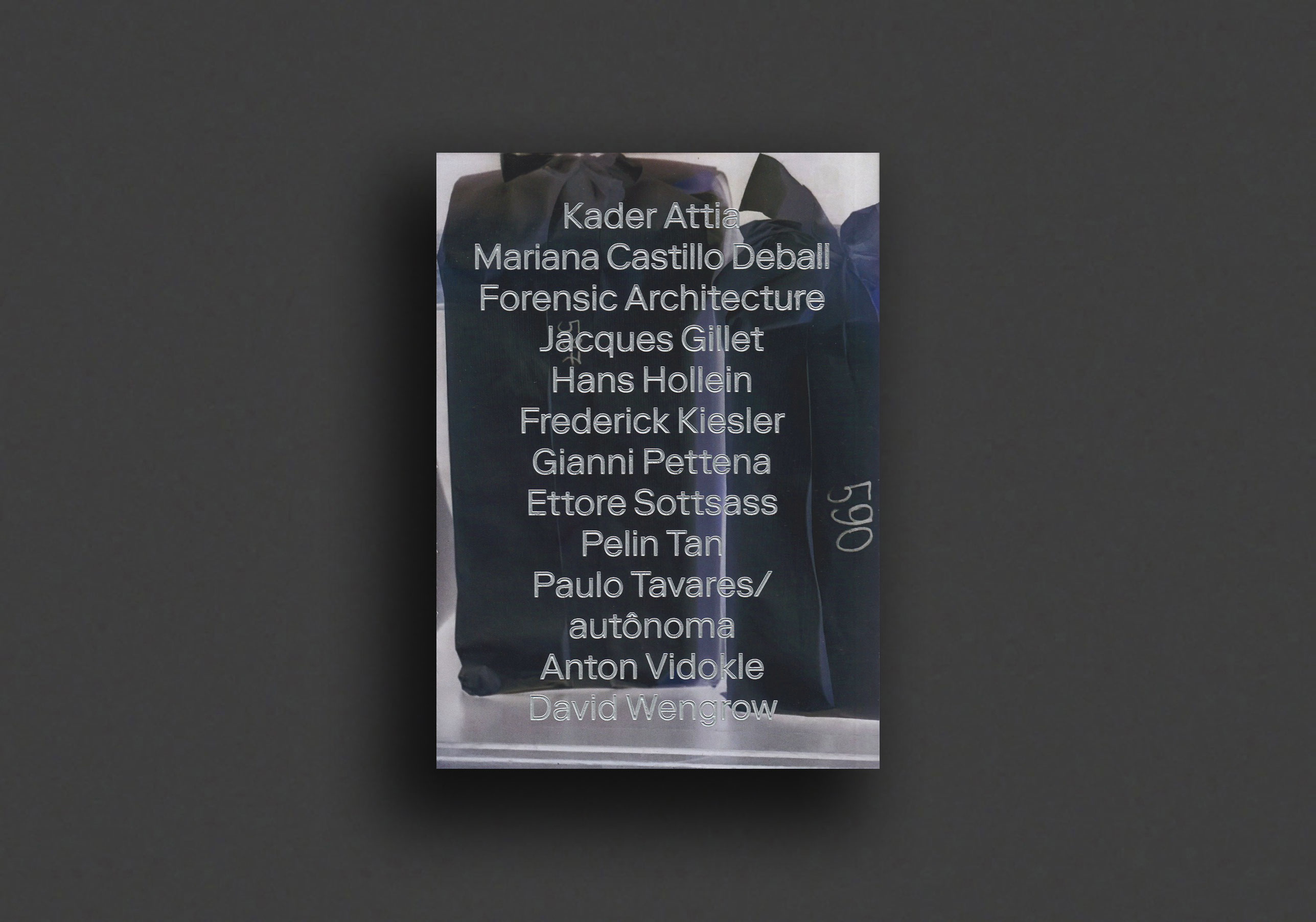
Philadelphia Wireman
03 August - 01 September, 2018
World Food Books is proud to announce our next Occasion, the first presentation of sculptures by Philadelphia Wireman in Australia.
The Philadelphia Wireman sculptures were found abandoned in an alley off Philadelphia’s South Street on trash night in 1982. Their discovery in a rapidly-changing neighbourhood undergoing extensive renovation, compounded with the failure of all attempts to locate the artist, suggests that the works may have been discarded after the maker’s death. Dubbed the "Philadelphia Wireman" during the first exhibition of this work, in 1985, the maker’s name, age, ethnicity, and even gender remain uncertain. The entire collection totals approximately 1200 pieces, all intricately bound together with tightly-wound heavy-gauge wire (along with a few small, abstract marker drawings, reminiscent both of Mark Tobey and J.B. Murry). The dense construction of the work, despite a modest range of scale and materials, is singularly obsessive and disciplined in design: a wire armature or exoskeleton firmly binds a bricolage of found objects including plastic, glass, food packaging, umbrella parts, tape, rubber, batteries, pens, leather, reflectors, nuts and bolts, nails, foil, coins, toys, watches, eyeglasses, tools, and jewellery.
Heavy with associations—anthropomorphic, zoomorphic, and socio-cultural responses to wrapped detritus—the totemic sculptures by Philadelphia Wireman have been discussed in the context of work created to fulfil the shamanistic needs of alternative religions in American culture. Curators, collectors, and critics have variously compared certain pieces to sculpture from Classical antiquity, Native American medicine bundles, African-American memory jugs, and African fetish objects. Reflecting the artist’s prolific and incredibly focused scavenging impulse, and despite—or perhaps enhanced by—their anonymity, these enigmatic objects function as urban artefacts and arbiters of power, though their origin and purpose is unknown. Philadelphia Wireman, whatever their identity, possessed an astonishing ability to isolate and communicate the concepts of power and energy through the selection and transformation of ordinary materials. Over the course of the past two decades, this collection has come to be regarded as an important discovery in the field of self-taught art and vernacular art.
Presented in collaboration with Fleisher-Ollman Gallery, Philadelphia, and Robert Heald, Wellington.
Susan Te Kahurangi King
02 February - 10 March, 2018
Susan Te Kahurangi King (24 February 1951 - ) has been a confident and prolific artist since she was a young child, drawing with readily available materials - pencils, ballpoint pens and felt-tip markers, on whatever paper is at hand. Between the ages of four and six Susan slowly ceased verbal communication. Her grandparents William and Myrtle Murphy had developed a special bond with Susan so they took on caring responsibilities for extended periods. Myrtle began informally archiving her work, carefully collecting and storing the drawings and compiling scrapbooks. No drawing was insignificant; every scrap of paper was kept. The King family are now the custodians of a vast collection containing over 7000 individual works, from tiny scraps of paper through to 5 meter long rolls.
The scrapbooks and diaries reveal Myrtle to be a woman of great patience and compassion, seeking to understand a child who was not always behaving as expected. She encouraged Susan to be observant, to explore her environment and absorb all the sights and sounds. Myrtle would show Susan’s drawings to friends and people in her community that she had dealings with, such as shopkeepers and postal workers, but this was not simply a case of a grandmother’s bias. She recognised that Susan had developed a sophisticated and unique visual language and sincerely believed that her art deserved serious attention.
This was an unorthodox attitude for the time. To provide some context, Jean Dubuffet coined the term Art Brut in 1945 to describe work created by self-taught artists – specifically residents of psychiatric institutions and those he considered to be visionaries or eccentrics. In 1972 Roger Cardinal extended this concept by adopting the term Outsider Art to describe work made by non-academically trained artists operating outside of mainstream art networks through choice or circumstance. Susan was born in Te Aroha, New Zealand in 1951, far from the artistic hubs of Paris and London that Dubuffet and Cardinal operated in. That Myrtle fêted Susan as a self-taught artist who deserved to be taken seriously shows how progressive her attitudes were.
Susan’s parents Doug and Dawn were also progressive. Over the years they had consulted numerous health practitioners about Susan’s condition, as the medical establishment could not provide an explanation as to why she had lapsed into silence. Dawn educated herself in the field of homeopathy and went on to treat all twelve of her children using these principles – basing prescriptions on her observations of their physical, mental and emotional state.
Doug was a linguist with an interest in philosophy who devoted what little spare time he had to studying Maori language and culture. To some extent their willingness to explore the fringes of the mainstream made them outsiders too but it was their commitment to living with integrity and their respect for individuality that ensured Susan’s creativity was always encouraged.
Even though Susan’s family supported her artistic pursuits, some staff in schools and hospitals saw it as an impediment to her assimilation into the community and discouraged it in a variety of ways. Her family was not always aware of this and therefore did not fully understand why Susan stopped drawing in the early 1990s. However, rather than dwell on the challenges that Susan faced in pursuit of her artistic practice, they prefer to highlight her achievements. In 2008 Susan began drawing again in earnest, after an almost 20 year interruption, and her work is now shown in galleries around the world.
Susan grew up without television and has been heavily influenced by the comics she read as a child. She is absolutely fearless in the appropriation of recognizable characters, such as Donald Duck and Mickey Mouse, in her work. She twists their limbs, contorts their faces, compresses them together, blends them into complex patterned backgrounds - always imbuing them with an incredible energy. Although Susan often used pop culture characters in her work they are not naive or childlike. These are drawings by a brilliant self-taught artist who has been creating exceptional work for decades without an audience in mind.
Mladen Stilinović
"Various Works 1986 - 1999"
02 February 16 - September 10, 2016
Various works 1986 - 1999, from two houses, from the collections of John Nixon, Sue Cramer, Kerrie Poliness, Peter Haffenden and Phoebe Haffenden.
Including: Geometry of Cakes (various shelves), 1993; Poor People’s Law (black and white plate), 1993; White Absence (glasses, ruler, set square, silver spoon, silver ladel with skin photograph and wooden cubes), 1990-1996; Exploitation of the Dead (grey and red star painting, wooden painting, black spoon with red table, red plate), 1984-1990; Money and Zeros (zero tie, paintings made for friends in Australia (Sue, John, Kerrie), numbers painting), 1991-1992; Words - Slogans (various t-shirts) - “they talk about the death of art...help! someone is trying to kill me”, “my sweet little lamb”, “work is a disease - Karl Marx”; Various artist books, catalogues, monographs, videos; Poster from exhibition Insulting Anarchy; "Circular" Croatian - Australian edition; Artist book by Vlado Martek (Dostoyevsky); more.
Thanks to Mladen Stilinović and Branka Stipančić.
Jonathan Walker
Always Will Need To Wear Winter Shirt Blue + Ochre Small Check Pattern
21 August - 21 September, 2015
Untitled
I am not a great reader of poetry but I always return to the work of Melbourne poet, Vincent Buckley (1925- 1988). Perhaps I find his most tantalising piece to be not a finished poem but a fragment left on a scrap of paper discovered on his desk after the poet’s death.
The poetry gathers like oil
In the word-core, and spreads
It has its music meet,
Its music is in movement.
This fragment is more the shell left behind from a volatile thought than a finished poem. I find the last two lines honest but awkward whereas the first two lines work like an arrow. Most likely he could not find a resolution so it was left. Still, in its present form, it remains an eloquent testimony to the ultimate failure of a medium to express mobile thought and sensation, in Buckley’s case, through verbal language. It’s an important matter because this is something all artists have to deal with regardless of the medium.
I have never written a poem, however, I am forever copying fragments from books on paper scraps in a vain effort to fix certain notions in my head. At first, they function as bookmarks that are sometimes returned to when I open the book. But before long, as they accumulate, they fall out littering the table interspersed with A4 photocopies, bills, books and medications.
To return to Buckley’s fragment, the first two lines very much evoke how I paint nowadays. As you age, detail diminishes and patches of light become more luminous and float. I feel the most honest way of dealing with this is by smearing the oil paint on the canvas with the fingers and working close-up, blind. Only if the patches coalesce into an approaching image can the work gain a life.
-
Jonathan Walker was born in Melbourne, Australia and brought up on a dairy farm in Gippsland. In the 1970’s he studied painting at RMIT and won the Harold Wright Scholarship to the British Museum, London. During the 1980’s he exhibited at Pinacotheca Gallery, Richmond and had work shown at the NGV and Heidi City Art Gallery. Over the same period he designed the cover for the “Epigenesi” LP by Giancarlo Toniutti, Italy and conducted a mail exchange work with Achim Wollscheid, Germany. The work with artists through the post resulted in an article published in the bicentenary issue of Art and Australia 1988. He showed in artist run spaces such as WestSpace in the 90’s and 2000’s, and until 2012, taught painting at Victoria University, which is where we (Colleen Ahern and Lisa Radford) as organisers of the exhibition, among many others, had the privilege of being his student.
Walker’s knowledge was imparted to students through the careful selection of music, literature, and artists found in books that he himself had ordered for the library. Walker’s strategy was the generosity of sharing his vast knowledge with references specific to each student and their context.
Walker’s paintings share a similar focus and intimacy.
This exhibition presents a small selection of recent paintings alongside a publication that includes Walker’s writing. Observational and analytical, Walker’s work is a type of material notation — the time of day, colour and how it is blended, the both specific and fleeting location of a reflection on lino or the question of whether a chair leg should be included in a painting.
Please join us on Friday August 21 between 6-8pm to celebrate the opening of the exhibition.
Curated by Colleen Ahern and Lisa Radford.
B. Wurtz
Curated by Nic Tammens
March 26 - April 4, 2015
B.Wurtz works from a basement studio in his home on Manhattan’s Lower East Side.
This local fact is attested to by the plastic shopping bags and newsprint circulars that appear in his work. As formal objects, they don’t make loud claims about their origins but nonetheless transmit street addresses and places of business from the bottom of this long thin island. Like plenty of artists, Wurtz is affected by what is local and what is consumed. His work is underpinned by this ethic. It often speaks from a neighborhood or reads like the contents of a hamper:
“BLACK PLUMS $1.29 lb.”
“Food Bazaar”
“USDA Whole Pork Shoulder Picnic 99c lb.”
“RITE AID Pharmacy, with us it’s personal.”
“H. Brickman & Sons.”
“Sweet Yams 59c lb."
Most of the work in this exhibition was made while the artist was in residence at Dieu Donne, a workshop dedicated to paper craft in Midtown. Here Wurtz fabricated assemblages with paper and objects that are relatively lightweight, with the intention that they would be easily transportable to Australia. This consideration isn’t absolute in Wurtz’s work, but was prescriptive for making the current exhibition light and cheap. Packed in two boxes, these works were sent from a USPS post office on the Lower East Side and delivered to North Melbourne by Australia Post.
Wurtz appears courtesy of Metro Pictures, New York.
Thanks to Rob Halverson, Joshua Petherick, Sari de Mallory, Matt Hinkley, Helen Johnson, Fayen d'Evie, Ask Kilmartin, Lisa Radon, Ellena Savage, Yale Union, and "Elizabeth".
John Nixon
"Archive"
December 15 - January 20, 2014
The presentation of John Nixon's archive offered a rare showcase of this extensive collection of the artist's own publications, catalogues, posters, ephemera, editions and more, from the mid 1980s onwards, alongside a selection of his artworks.
Organized by John Nixon, Joshua Petherick and Matt Hinkley.
"Habitat"
at Minerva, Sydney (organised by Joshua Petherick and Matt Hinkley)
November 15 - December 20, 2014
Lupo Borgonovo, Janet Burchill & Jennifer McCamley,
Lewis Fidock, HR Giger, Piero Gilardi, Veit Laurent Kurz,
Cinzia Ruggeri, Michael E. Smith, Lucie Stahl, Daniel Weil, Wols
Press Release:
“...It contained seven objects. The slender fluted bone, surely formed for flight, surely from the wing of some large bird. Three archaic circuitboards, faced with mazes of gold. A smooth white sphere of baked clay. An age-blackened fragment of lace. A fingerlength segment of what she assumed was bone from a human wrist, grayish white, inset smoothly with the silicon shaft of a small instrument that must once have ridden flush with the surface of the skin - but the thing’s face was seared and blackened.”
William Gibson, “Count Zero”, 1986
"Autumn Projects Archive"
Curated by Liza Vasiliou
March 6 - March 15, 2014
World Food Books, in conjunction with the Virgin Australia Melbourne Fashion Festival 2014, presented the Autumn Projects archive, consisting of a selection of early examples in Australian fashion with a particular interest in collecting designers and labels from the period beginning in the 1980’s, who significantly influenced the discourse of Australian Fashion.
Curated by Liza Vasiliou, the exhibition provided a unique opportunity to view pieces by designers Anthea Crawford, Barbara Vandenberg, Geoff Liddell and labels CR Australia, Covers, Jag along with early experimental collage pieces by Prue Acton and Sally Browne’s ‘Fragments’ collection, suspended throughout the functioning World Food Books shop in Melbourne.
H.B. Peace
presented by CENTRE FOR STYLE
November 14, 2013
"Hey Blinky, you say chic, I say same"
Anon 2013
H.B. Peace is a clothing collaboration between great friends Blake Barns and Hugh Egan Westland. Their pieces explore the divergences between 'character’ and ‘personality’ in garments....etc
Special Thanks to Joshua Petherick and Matt Hinkley of WFB and Gillian Mears
and a Very Special Thank you to Audrey Thomas Hayes for her shoe collaboration.
Janet Burchill & Jennifer McCamley
"Aesthetic Suicide"
May 10 - June 8, 2013
The first of our occasional exhibitions in the World Food Books office/shop space in Melbourne, "Aesthetic Suicide" presented a body of new and older works together by artists Janet Burchill & Jennifer McCamley, including videos, prints, a wall work, and publications.
During shop open hours videos played every hour, on the hour.
1999, English
Hardcover (w. dust jacket), 256 pages, 26 x 21 cm
1st Edition, Out of print title / used / very good
Published by
Yale University Press / New Haven
$55.00 - Out of stock
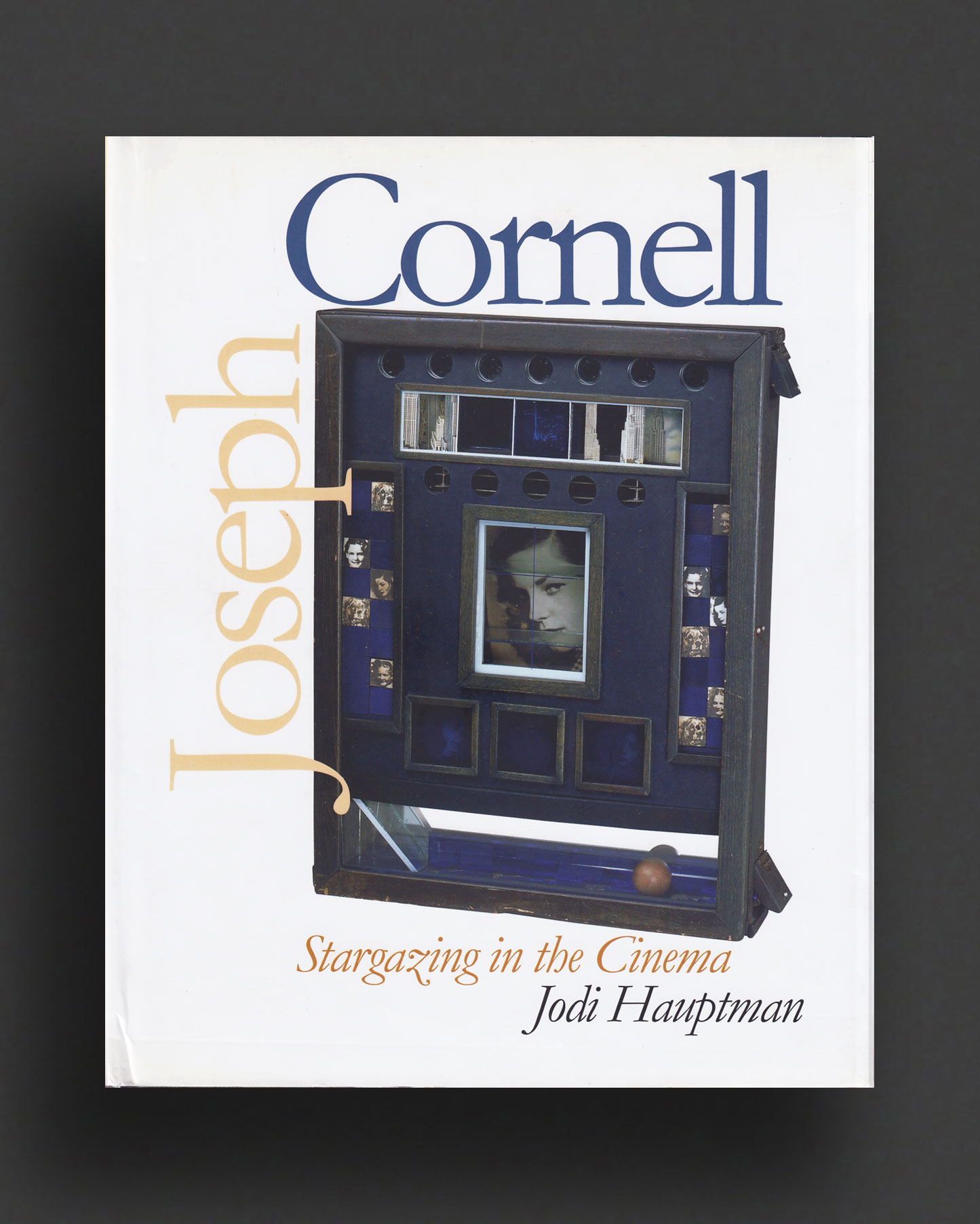
Published in 1999 and now out-of-print, Joseph Cornell - Stargazing in the Cinema is the first study devoted exclusively to Cornell's relationship with the cinema, examining his "portrait-hommages" to female movies stars, including Greta Garbo, Lauren Bacall, Hedy Lamarr, and Jennifer Jones. The elusive Cornell (1903-1972) was an American visual artist and filmmaker, one of the pioneers and most celebrated exponents of assemblage. Influenced by the Surrealists, he was also an avant-garde experimental filmmaker. Romantic, obsessive and shy, Cornell never moved out of his mother’s house, yet his strange, exquisite art brought him fame and friendships with Duchamp, Dalí and Warhol. Jodi Hauptman here discusses the artist's "cinematic imagination" and the ways he adapted techniques of accumulation and juxtaposition to the art of portrayal, arguing that Cornell's movie star portraits are his most emblematic works. Hauptman explores the links between collection and desire, contending that Cornell is both surrealist and historian.
VG in VG dust jacket.
2024, English / French
Softcover, 272 pages, 22 x 28 cm
Published by
JRP Ringier / Zürich
MUDAM / Luxembourg
$78.00 - Out of stock
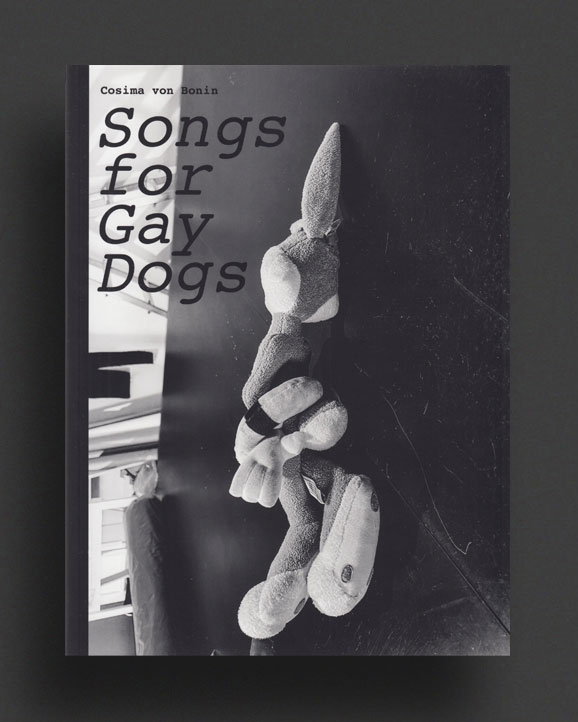
A book spanning Cosima von Bonin's work of the last decade, and a personal journey into her private world and references.
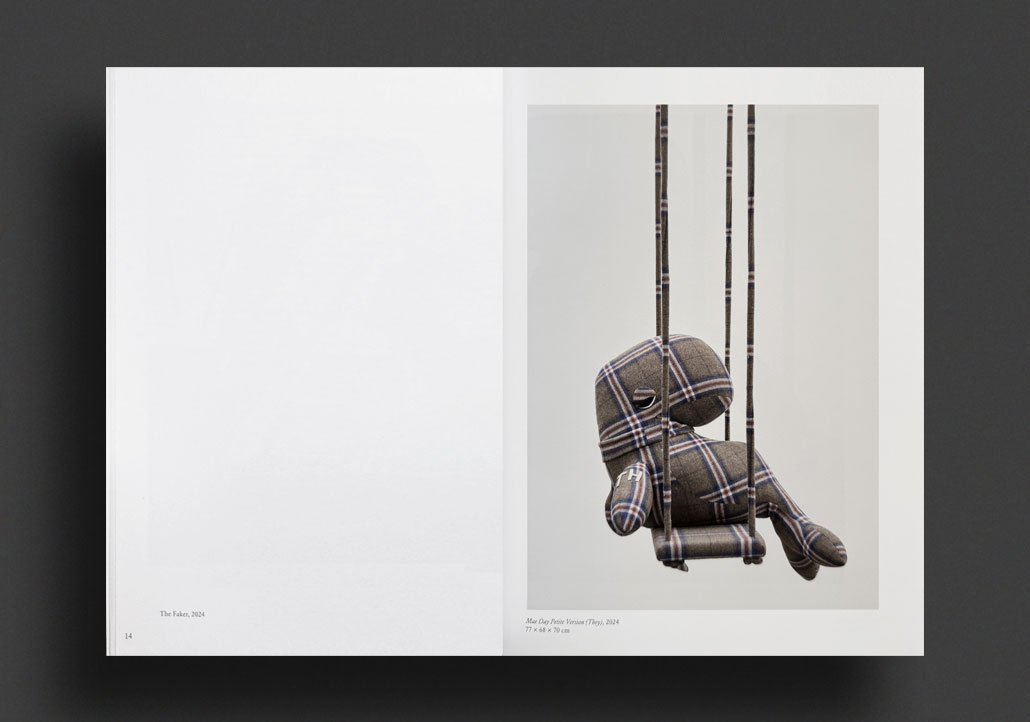
Published to accompany the German artist's comprehensive exhibition at Mudam Luxembourg (October 2024–March 2025), Cosima von Bonin's new monograph Songs for Gay Dogs is both a book spanning her work of the last decade, and a personal journey into her private world and references, designed by her long-time friend and collaborator Yvonne Quirmbach.
Introduced by Mudam Director Bettina Steinbrügge, it assembles a play by Australian writer and art critic Estelle Hoy that brings to life Cosima von Bonin's recurring characters, an essay by Mudam curator Clémentine Proby about the carnivalesque in her work, a contribution by Pop journalist and Cologne figure Clara Dreschler, and a "Privato" chapter comprising images, texts, and documentation from the artist's personal archive. The book includes 200 illustrations, previously unseen images, and pictures of Cosima von Bonin's newly commissioned installation in Mudam's Grand Hall.
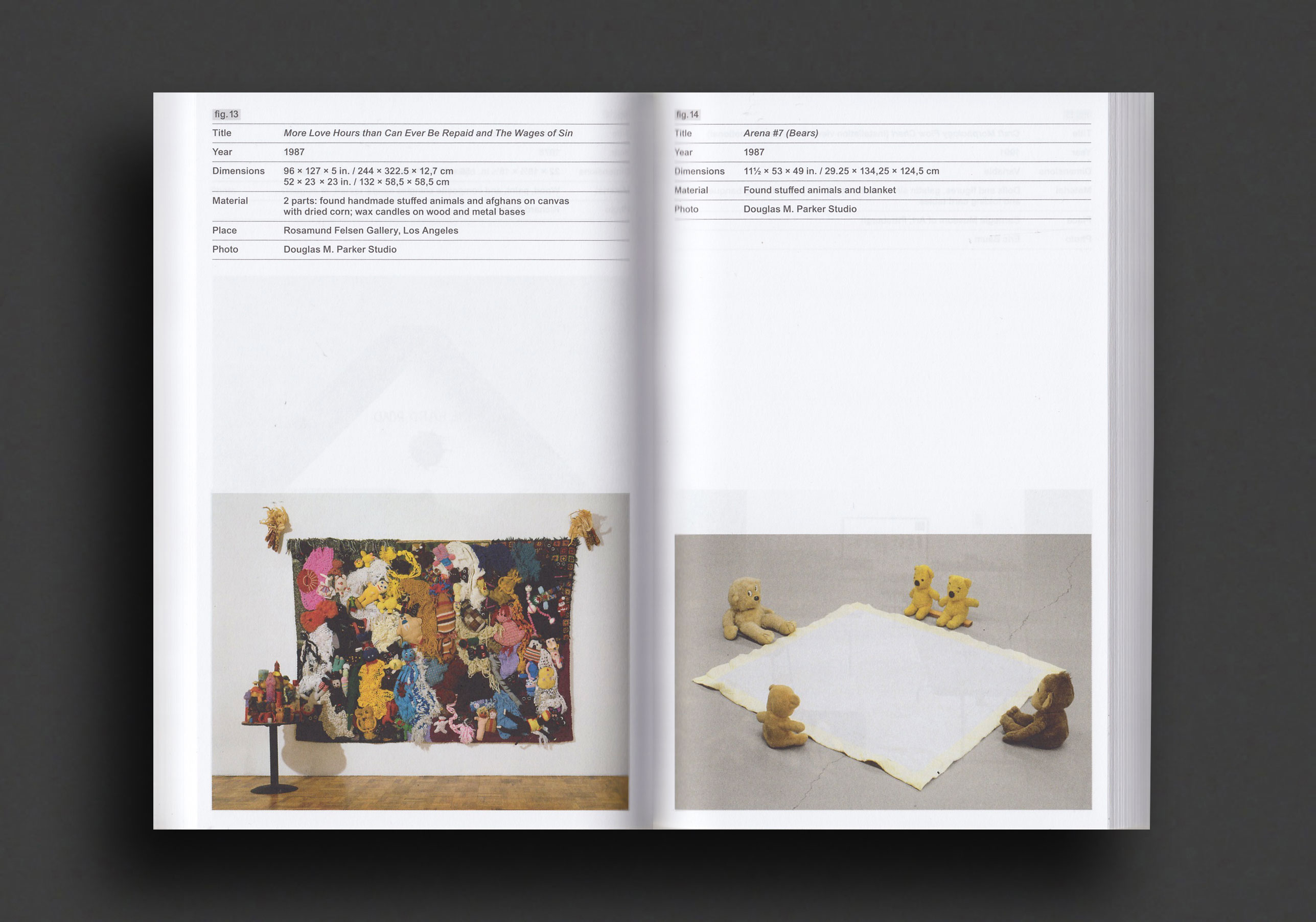
Cosima von Bonin (born 1962 in Mombasa, lives in Cologne) began her career in the early 1990s, following in the footsteps of Martin Kippenberger. A prolific artist, she produced oversized stuffed animals and other fantastical creatures, as well as pseudo-Minimalist sculptures using comedy, cartoons, and pop culture to question social constructions and relations. She explores the relationship of the individual to work, the capitalist production system, and leisure society. She uses knitted and woven fabrics to create objects that enable her to mock industrial means of production, which she feels infantilize the individual. By advocating a life of dolce far niente, of carefree idleness, von Bonin is proposing a form of resistance against the consumerist regime. Her exhibitions include the Schirn Kunsthalle Frankfurt and Mudam Luxembourg, both 2024; Magasin III Jaffa, Tel Aviv (2019); CCS Bard, Annandale-on-Hudson (2018); and Sculpture Center, New York (2016). She participated in the 59th Biennale di Venezia (2022); Skulptur Projekte Münster (2017); Glasgow International (2016); MUMOK, Vienna (2014); Artipelag, Sweden (2013); Mildred Lane Kemper Art Museum, St. Louis (2011); Arnolfini, Bristol (2011); Musée d'Art Moderne et Contemporain, Geneva (2011); Museum Ludwig, Cologne (2011); Kunsthaus Bregenz, Austria (2010); Museum of Contemporary Art, Los Angeles (2008); and Documenta, Kassel (2007 & 1982).
Edited by Clémentine Proby and Cosima von Bonin.
Texts by Bettina Steinbrügge, Clara Dreschler, Clémentine Proby, Estelle Hoy.
1980, Japanese / German
Softcover, 100 pages, 29 x 22 cm
1st Edition, Out of print title / used / average
Published by
Seibu Museum of Art / Tokyo
$35.00 - Out of stock
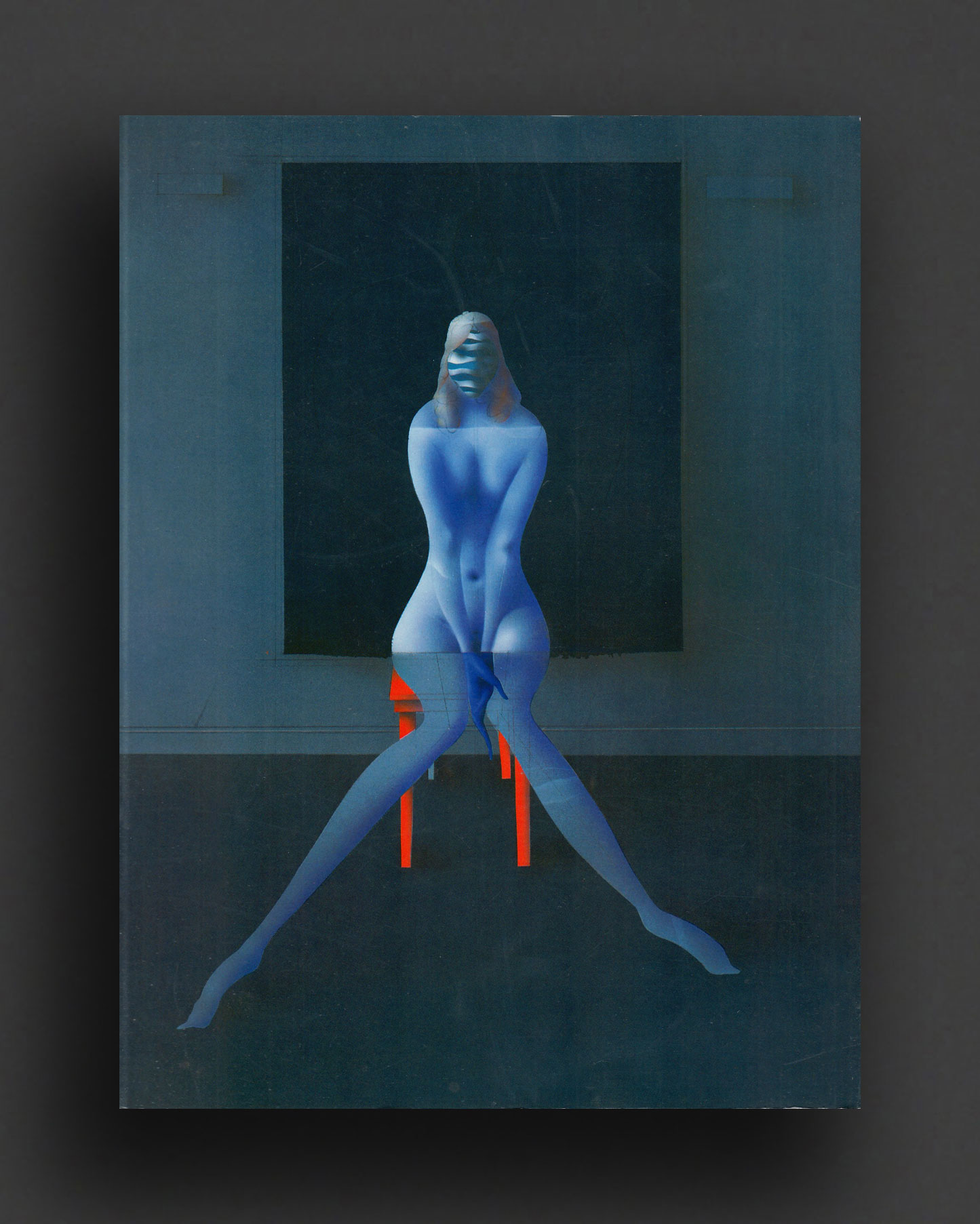
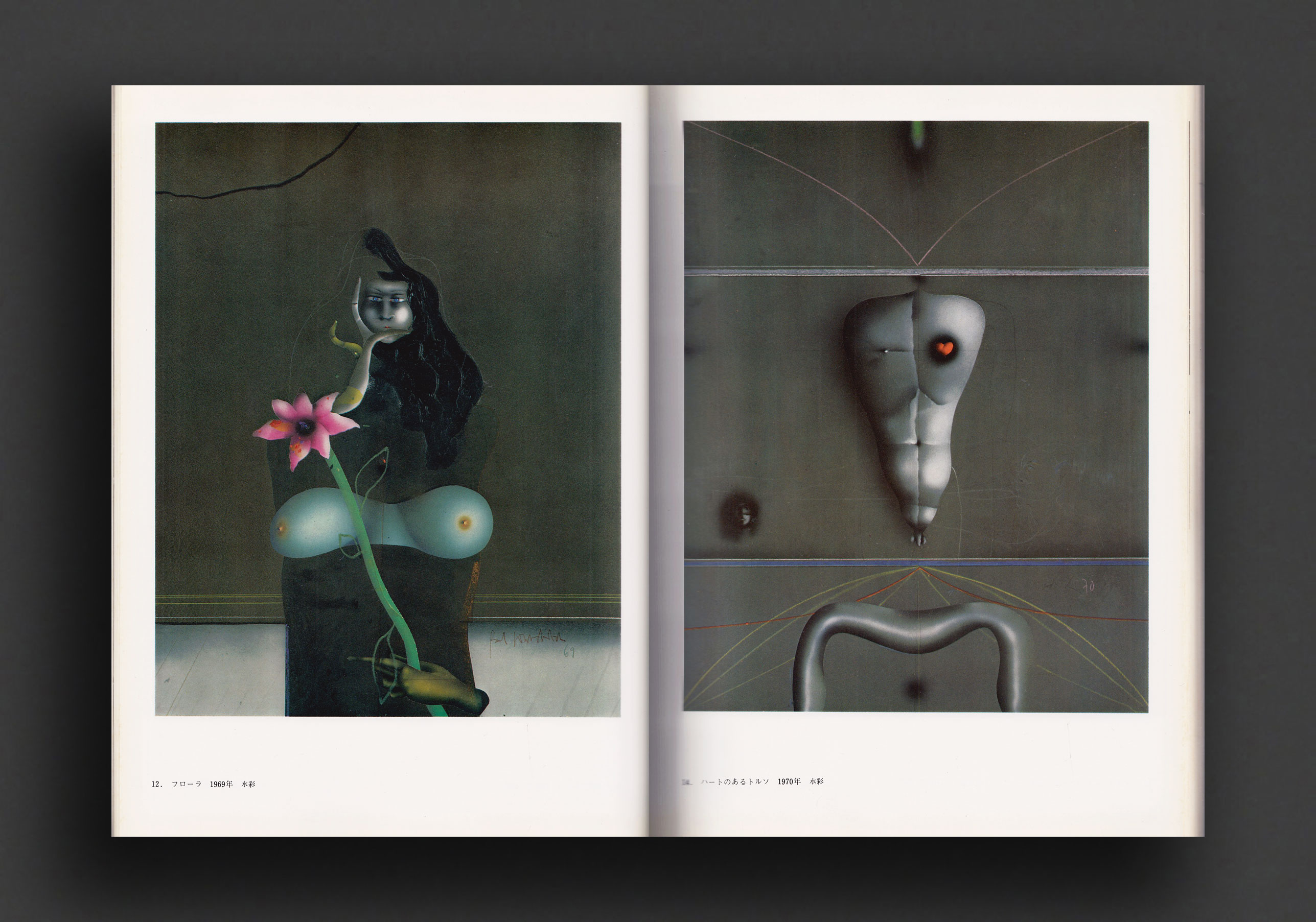
1980 Japanese catalogue published on the major survey exhibition of German painter, sculptor and graphic artist, Paul Wunderlich (1927—2010). Illustrated heavily with works spanning his entire career to date reproduced in colour and b/w, texts in Japanese and German.
Paul Wunderlich (1927—2010) is known for his erotic, Surrealist-inspired paintings, prints, and sculptures featuring mythological imagery. A pioneer of Magic Realism, Wunderlich received the Japan Cultural Forum Award and the Kunstpreis des Landes Schleswig-Holstein among other accolades. Despite his iconic works being held in some of the world’s most prominent museums, such as the Museum of Modern Art, the British Museum, and the Victoria and Albert Museum, Wunderlich remains an “artist’s artist.” He studied graphic arts at the University of Fine Arts in Hamburg; he later learned printmaking techniques from Oskar Kokoschka and Emil Nolde. His early paintings displayed an abstract, Tachist style, although he embraced figuration in the late 1950s and he developed his characteristic style. He portrayed dismembered figures and sexually provocative imagery reminiscent of the Surrealists, but also influenced art movements such as Art Deco and Art Nouveau. His work was critically received as so scandalous that, in 1960, his lithograph series Qui s’explique (1959) was seized by authorities in Hamburg, and he often had trouble with raids that destroyed his works. Paul Wunderlich was married to photographer Karin Székessy in 1971, and the couple pursued art projects together.
Average-Good copy with a fold to back cover corner, otherwise Good copy all-round, some light wear/tanning to page edges.
2020, English
Hardcover, 162 pages, 23.5 x 29.2 cm
Published by
Lévy Gorvy / New York
$135.00 $70.00 - In stock -
Text by Robert Storr, Flavia Frigeri, Robert Lumley. Poetry by Sylvia Gorelick, Lara Mimosa Montes.
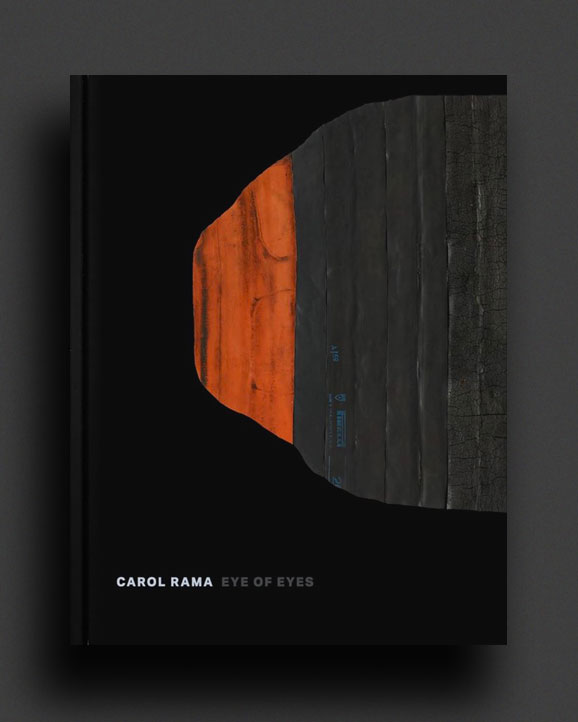
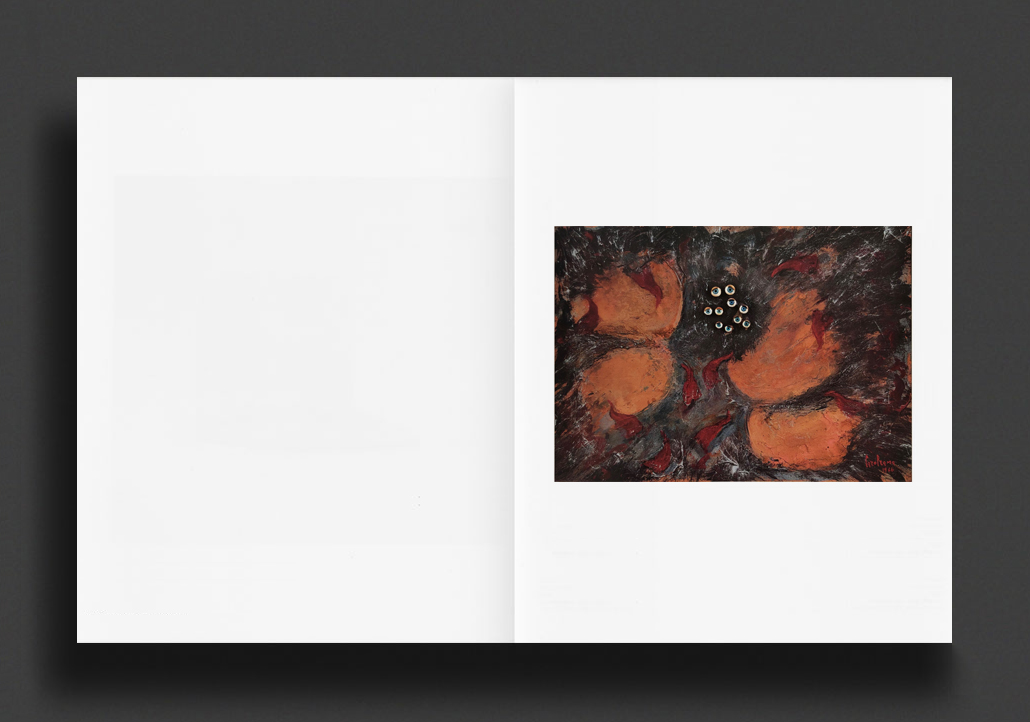
Accompanying Lévy Gorvy’s exhibition of the same name, this beautifully produced catalog highlights the celebrated Italian painter Carol Rama’s (1918–2015) engagement with the artistic landscape of her home city of Turin.
Alongside color plates, an essay by Robert Storr explores Rama’s examination of conventionally obscured and shamed parts of human bodies, and shows how she diverged from the oppressive social order of her time. Curator Flavia Frigeri places Rama within the artistic landscape of the city in her essay, and a text by the writer Robert Lumley explores Rama’s engagement with the political scene in Turin.
An illustrated chronology of Rama and the city highlights exhibitions of artists whose catalogs Rama collected in her home library, and newly commissioned poetry by Sylvia Gorelick and Lara Mimosa Montes responds to Rama and her oeuvre.
SALE due to light transit corner bumping.
1998, English
Softcover, 208 pages, 25.5 x 17.8 cm
Published by
University of Minnesota Press / Minnesota
$59.00 - In stock -
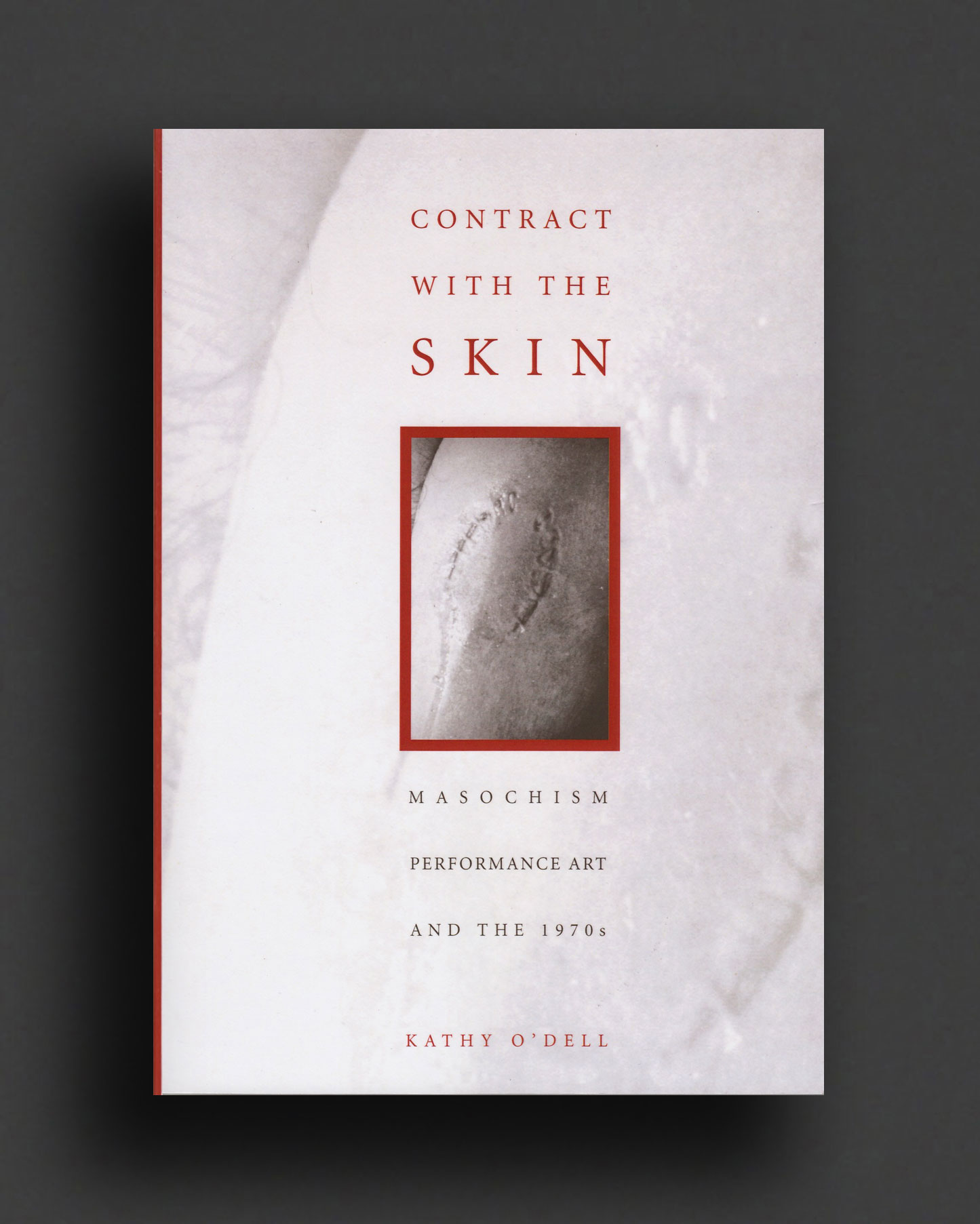
Places masochistic performance within a social and historical context.
Having yourself shot. Putting out fires with your bare hands and feet. Biting your own body and photographing the marks. Sewing your own mouth shut. These seemingly aberrant acts were committed by performance artists during the 1970s. Why would anyone do these things? What do these kinds of masochistic performances tell us about the social and historical context in which they occurred? Fascinating and accessibly written, Contract with the Skin addresses such questions through a reconsideration of these acts in relation to psychoanalytic and legal concepts of masochism.
O’Dell argues that the growth of masochistic performance during the 1970s must be seen in the context of society’s response to the Vietnam War and contemporaneous changes in theories of contract. She contends that the dynamic that exists between audience and performer during these masochistic acts relates to tensions resulting from ruptures in the social contract. Indeed, as the war in Vietnam waned, so did masochistic performance, only to reemerge in the 1980s in relation to the “war on AIDS” and the censorious “culture wars.”
Focusing on 1970s performance artists Vito Acconci, Chris Burden, Gina Pane, and collaborators Marina Marina Abramović/Ulay as well as those with similar sensibilities from the late 1980s onward (Bob Flanagan, David Wojnarowicz, Simon Leung, Catherine Opie, Ron Athey, Lutz Bacher, and Robby Garfinkel), O’Dell provides photographic documentation of performances and quotations from interviews with many of the artists. Throughout, O’Dell asks what we can do about the institutionalized forms of masochism for which these performances are metaphors.
Contract with the Skin is a provocative guide to this little-studied area, and offers new ways of thinking about performance art and artistic production.
2025, English / French
Softcover, 256 pages, 24 x 17.5 cm
Published by
May Revue / Paris
$34.00 - Out of stock
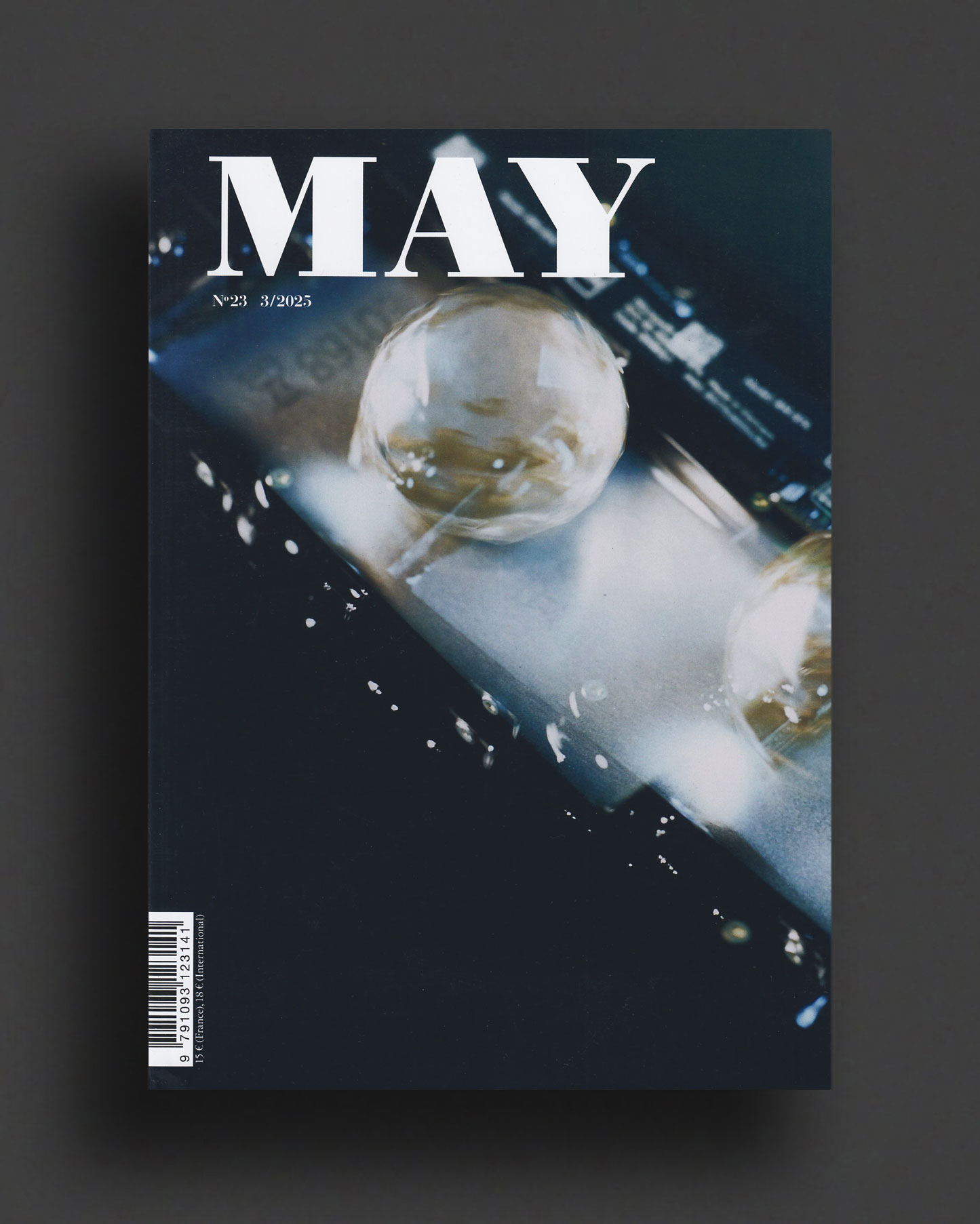
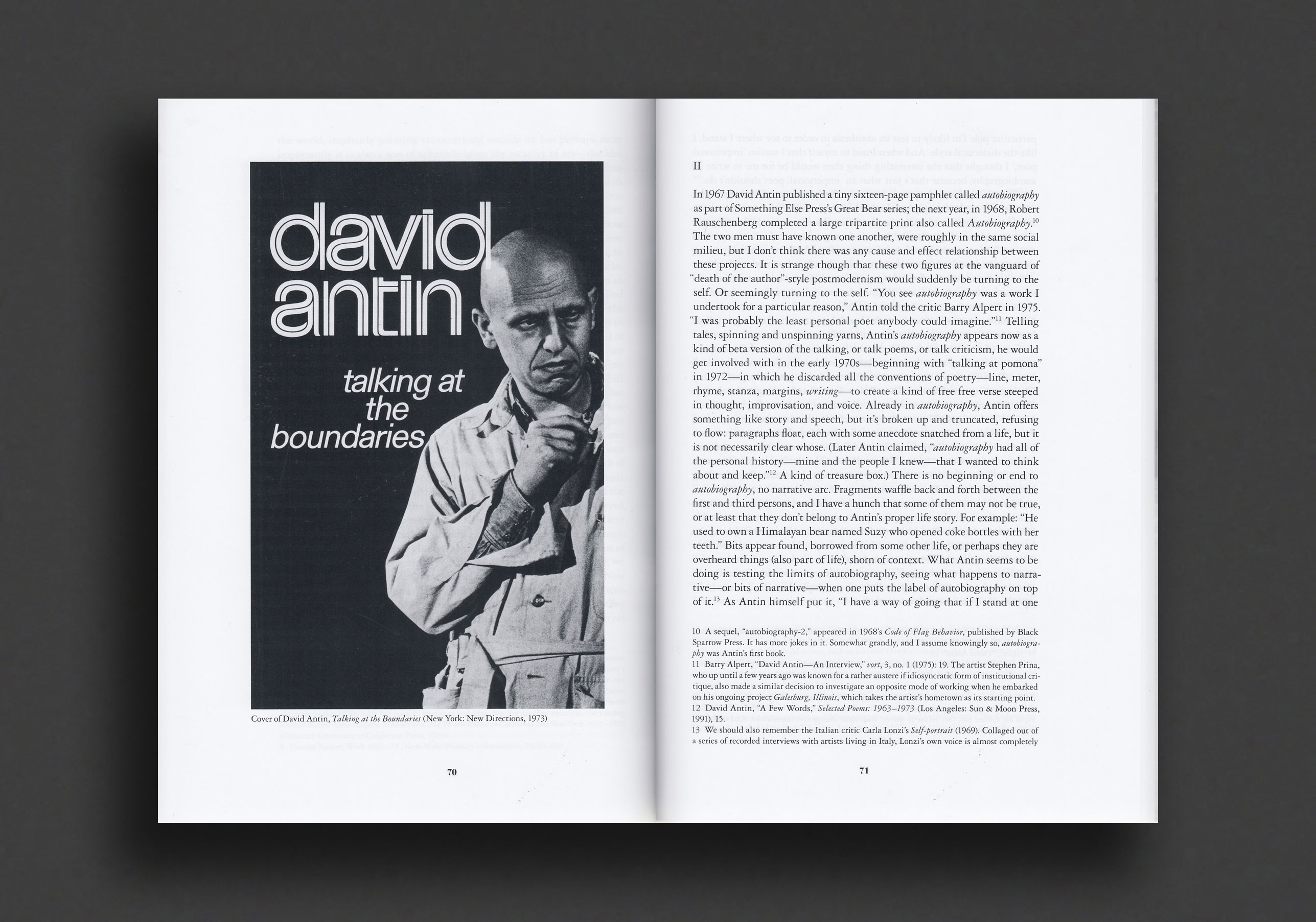
Annie Ochmanek, Code and Critique by Felix Bernstein, Look Who's Talking by Alex Kitnick, Ruth Wolf-Rehfeldt by Isabelle Sully, Have You Ever Done Anything Like This? by Ama Birch, Frances Stark by Stella Cilman, Renee Gladman by Laura Nelson, Josephine Pryde, "Lacan: The Exhibition" by Cassandra Seltman, Cauleen Smith by Stephanie LaCava, the 60th Venice Biennale by Ken Okiishi, Constance DeJong by Rhys Evans, Civil War & Kirsten Dunst by Asha Schechter, Brice Dellsperger by Aodhan Madden, Mathias Poledna by Noah Barker, Women's History Museum by Ada O'Higgins, Renaud Jerez.
Launched in 2009 in Paris, May revue examines, once or twice a year, contemporary art practice and theory in direct engagement with the issues, contexts and strategies that construct these two fields. An approach that could be summed up as critique at work – or as critique actively performed in text and art forms alike. It features essays, interviews, art works and reviews by artists, writers and diverse practitioners of the arts.
2016, English
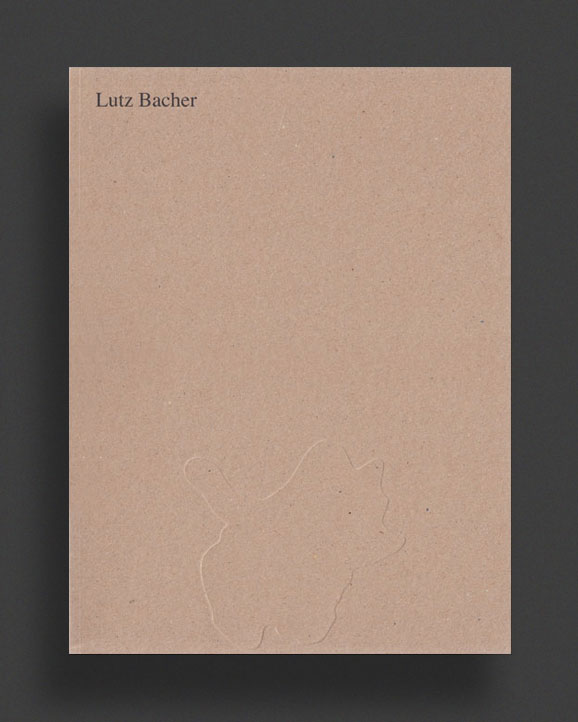
Softcover (w. blind debossing), 404 pages, 20.3 x 30.7 cm
Ed. of 800 ,
1st Edition, Out of print title / as new
Published by
Galerie Buchholz / Köln
$180.00 - In stock -
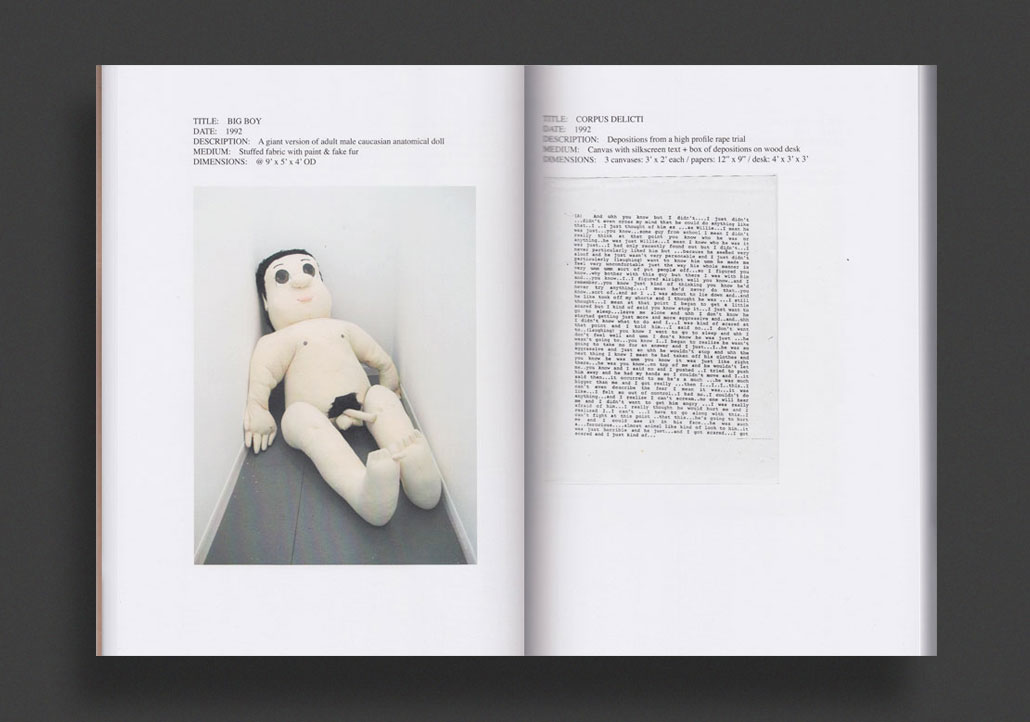
Lutz Bacher wrote this novel in August 2010 in California. It was published in 2016 by Galerie Daniel Buchholz in an edition of 800 copies.
Over her 40-year career, Bacher has produced conceptual works that defy classification in a variety of formats, including videotapes, photographs, and other mixed media. Described as eclectic, rough, open-ended, and disturbing, many works incorporate elements from pop culture, personal artefacts, and found objects, and address questions of identity as expressed through sexuality and the human body.
As New sealed copy. Out-of-print.
2014, English
Softcover, 352 pages, 23 x 30.5 cm
1st Edition, Out of print title / as new
Published by
JRP Ringier / Zürich
Portikus / Frankfurt
$180.00 - Out of stock
Edited by Gregor Muir, Sophie von Olfers, Beatrix Ruf. Text by Caoimhin Mac Giolla Leith.
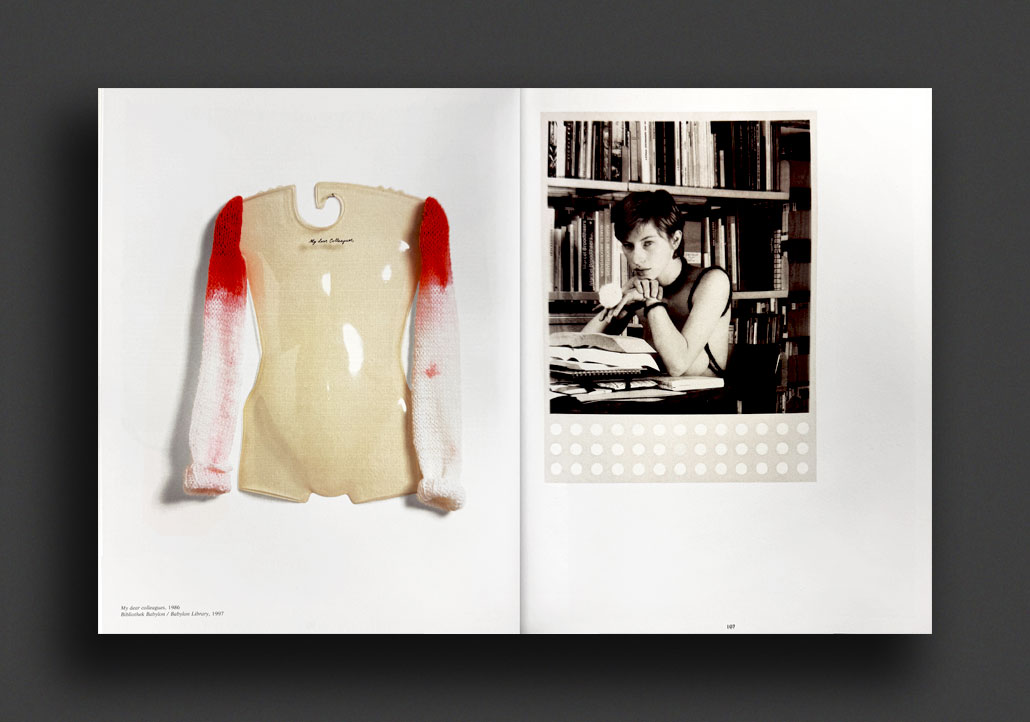
From the earliest days of her career in the 1970s, Bay Area artist Lutz Bacher has consistently drawn upon fragmentary information from popular culture and her own life to produce works that play with the instability of identity and the mercuriality of images. Using media ranging from artists’ books, installation, sculpture and video to photography, painting and screen printing, Bacher deploys images and objects in a physical, visceral manner. While always remaining somehow elusive, her mixture of bodies and ideas, the popular and the personal, is particularly relevant to problems in art and culture today. With this publication, Bacher has compiled her work from 1975 to 2013 into a single hefty volume. Lutz Bacher: Snow is accompanied by a new essay by Caoimhin Mac Giolla Leith.
2005, English / German
Softcover, 192 pages, 22.5 x 27 cm
1st Edition, Out of print title / used / fine
Published by
Walther König / Köln
$260.00 - Out of stock
Rare copy of Rosemarie Trockel's Post Menopause catalogue (raisonné), published on the occasion of the major 2005—2006 exhibition Rosemarie Trockel: Menopause, at the Museum Ludwig, Köln, and MAXXI-Museo nazionale delle arti del XXI secolo, Rome.
This wonderful, major survey disappeared from print very fast, quickly becoming a valuable item in the mid-2000s. A catalogue raisonné of sorts, collecting Rosemarie Trockel's work from 1980—2005 (sculpture, wool works, drawings, publications, garments, photography, video — including many very rarely seen objects), Post Menopause remains one the best, most comprehensive, and Trockel-esque books produced on one of Germany's most important and influential conceptual artists. Not surprisingly, since Post Menopause was realised in close collaboration between Trockel herself with Museum Ludwig curator Barbara Engelbach, and designed by her regular design collaborator, and sometimes muse, the great graphic designer Yvonne Quirmbach. Extensive chronological cataloguing of all works, biography, bibliography, and bilingual (English and German) essays by Brigid Doherty, Silvia Eiblmayr, Barbara Engelbach, Kasper König, and Gregory Williams.
A highly recommended and invaluable resource on the artist.
Rosemarie Trockel (*1952) is widely regarded as one of the most important and influential conceptual artists in Germany. Her sculptures, collages, ceramics, knitted works, drawings and photographs are noted for their subtle social critique and range of subversive, aesthetic strategies—including the reinterpretation of “feminine” techniques, the ironic shifting of cultural codes, a delight in paradox, and a refusal to conform to the commercial and institutional ideologies of the art system.
Fine copy.
2024, English
Softcover, 244 pages, 19.5 x 13.5 cm
Published by
Mousse / Milan
$49.00 - Out of stock
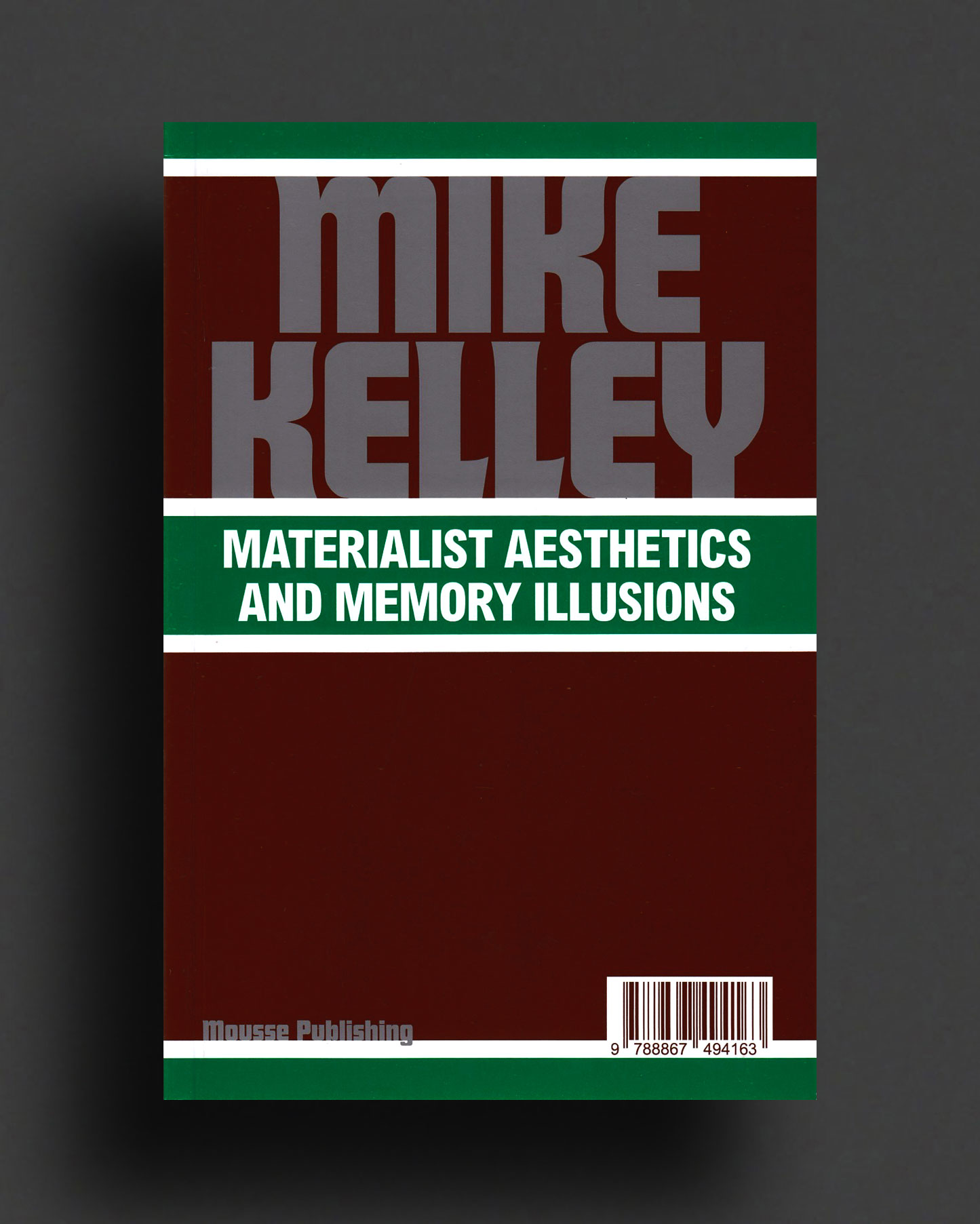
Mike Kelley is best known as one of the most influential visual artists of his generation. But he was also an insightful theorist who wrote profusely about his work as well as on aesthetics in the 1980s, 1990s, and 2000s, an epoch marked, in his view, by victim culture and the pop psychology phenomenon known as repressed memory syndrome.
Mike Kelley: Materialist Aesthetics and Memory Illusions presents the artist in a new light, almost as an empirical philosopher delivering his position through art as well as writing. In a meticulous and transdisciplinary approach, Laura López Paniagua presents Kelley’s oeuvre as a stance in materialist aesthetics and weaves thoughtful relations between the artist’s critique, statements, and comments and the theories of thinkers such as Georges Bataille, Walter Benjamin, Pierre Bourdieu, Sigmund Freud, Jacques Lacan, and Maurice Merleau-Ponty. López Paniagua focuses on Kelley’s artistic production between 1995 and his death in 2012, analyzing these works vis-à-vis the concept of memory, one of the artist’s obsessions and leitmotivs throughout his career.
An essay by Laura López Paniagua, with an introduction by John Miller.
2024, Second edition
1971, English
Softcover, 112 pages, 26 x 18.5 cm
1st Edition, Out of print title / used / very good
Published by
Hayward Gallery Publishing / London
$25.00 - Out of stock
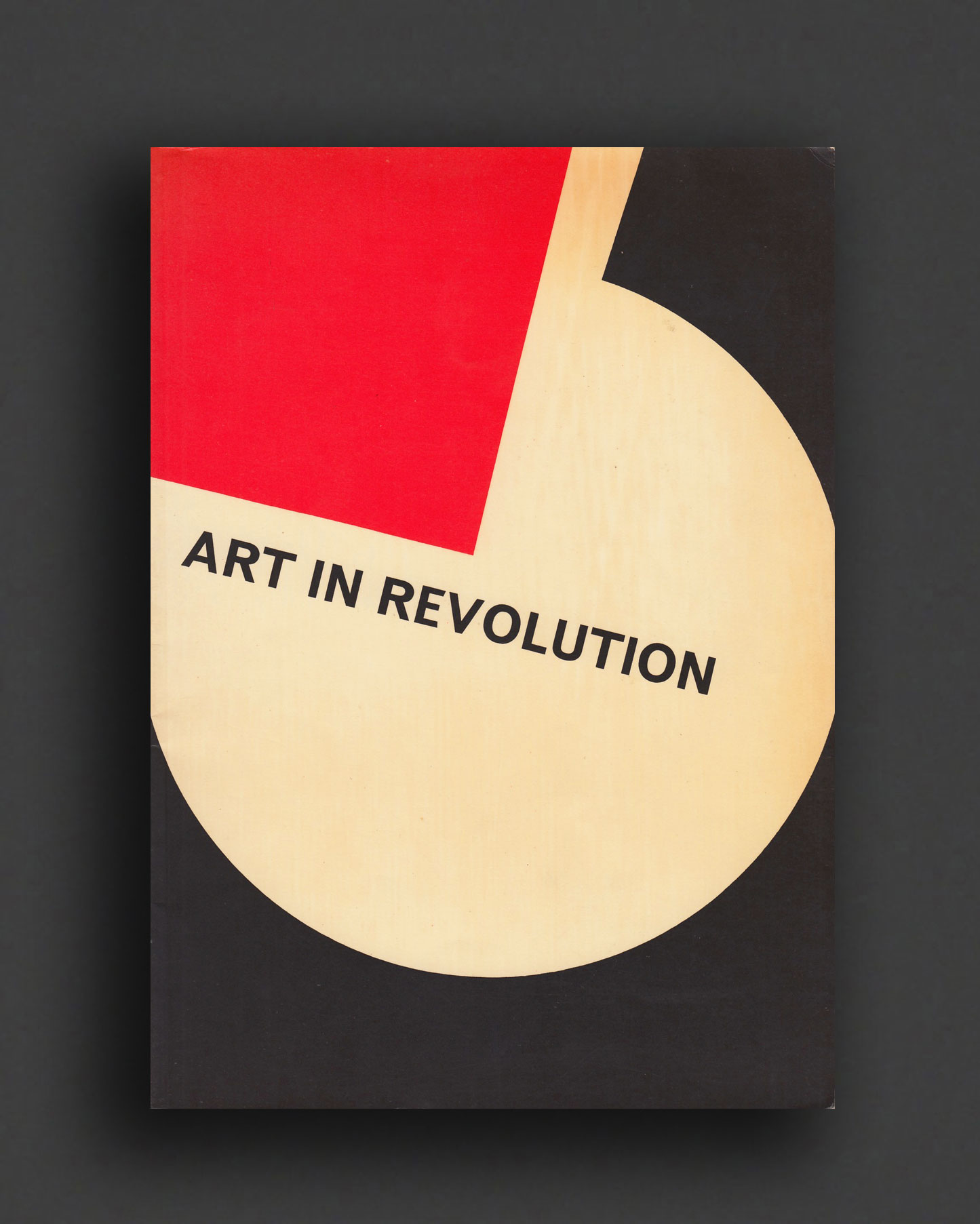
Catalogue published on the occasion of the exhibition "Art in Revolution: Soviet Art and Design since 1917" at Hayward Galllery, London 26 February — 18 April 1971. Designed by Brian Dunce, it includes a series of articles and statements reproduced, texts by Anatoly Lunacharsky, Vsevolod Meyerhold, plus illustrated essays spanning Constructivism, poster design, architecture, film, theatre, etc. by Camilla Gray-Prokofieva, O A Shvidkovsky, Kenneth Frampton, OSA Group, Edward Wright, Edward Braun, Lutz Becker and others.
VG copy with tanned covers light general wear/age.
2007, English
Softcover, 160 pages, 20.5 x 15.5 cm
Published by
Atlas Press / London
$34.00 - In stock -
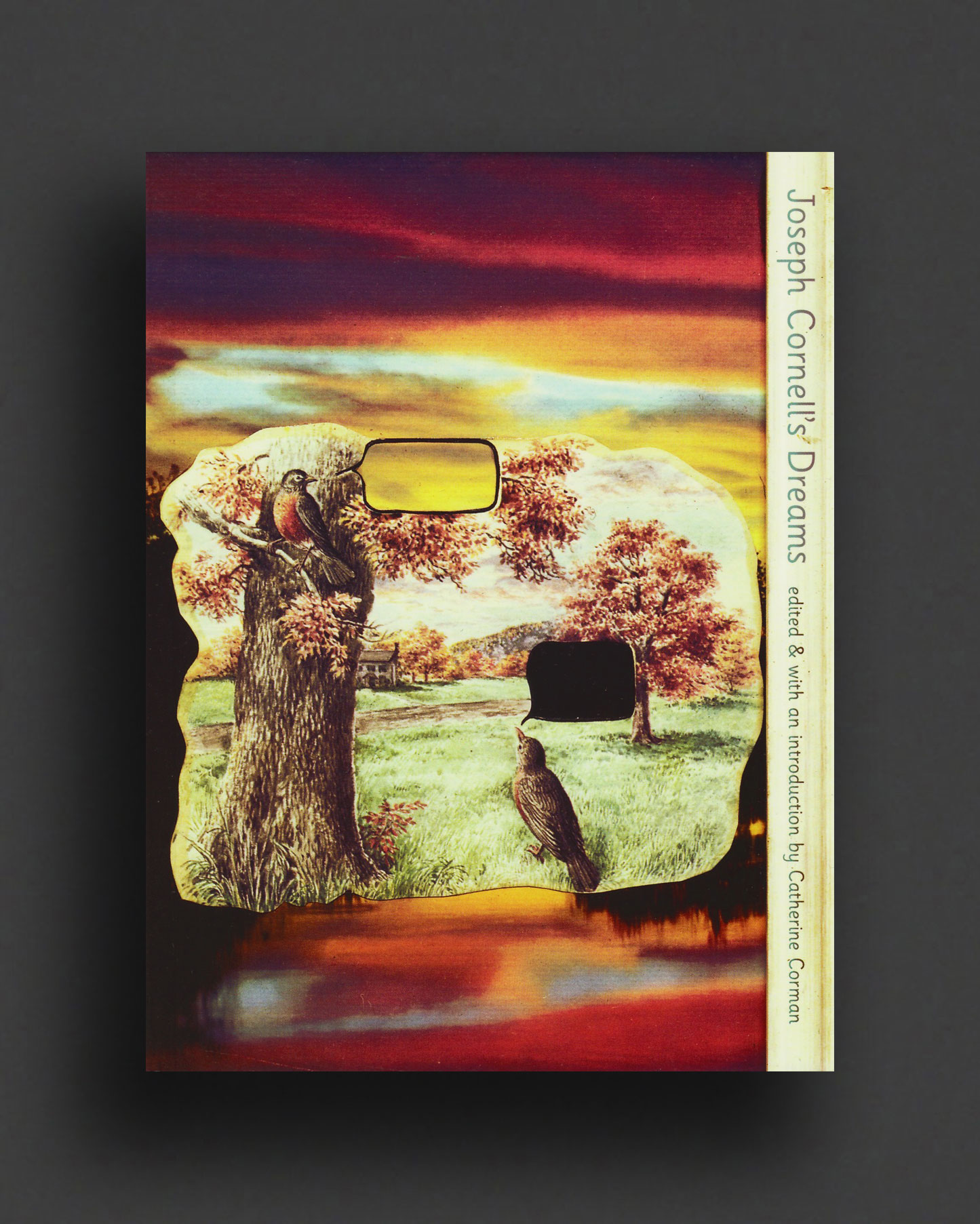
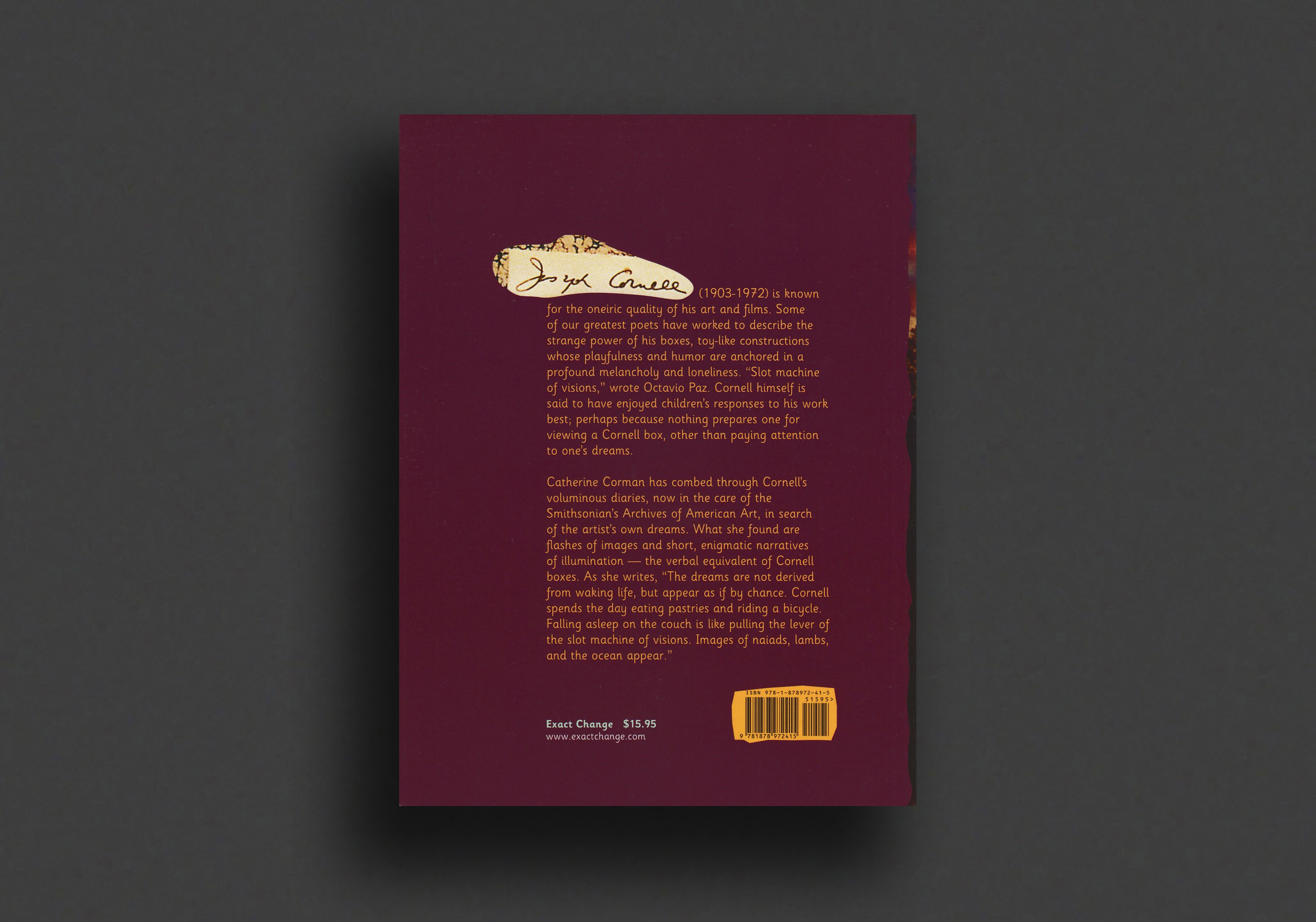
Joseph Cornell is well known for the oneiric quality of his art and films. Many have tried, often in vain, to put into words the strange power of his boxes—toy-like constructions whose playfulness and humor are anchored in a profound melancholy and loneliness. "Slot machines of visions," said Octavio Paz. Cornell himself is said to have enjoyed children's responses to his work; perhaps because nothing prepares one better for viewing a Cornell box than having an unbiased mind. Catherine Corman has combed through the voluminous diaries that Cornell kept throughout his life, now in the care of the Smithsonian's Archives of American Art, in search of the artist's own dreams. What she found are brief flashes of images, and short, enigmatic narratives of illumination -- the verbal equivalent of Cornell boxes.
In 1993, Mary Ann Caws edited a large portion of Cornell's diaries for publication by Thames & Hudson, an invaluable sourcebook for Cornell studies. This new, shorter volume is a poetic addition to that literature, equally indispensible to those interested in Cornell as it contains previously unpublished writings, but also because it is as intriguing and mysterious to the uninitiated as the magical boxes themselves.
1985, English
Softcover, 300 pages, 27.5 x 21 cm
1st Edition, Out of print title / used / very good
Published by
Quartet Books / London
$130.00 - Out of stock
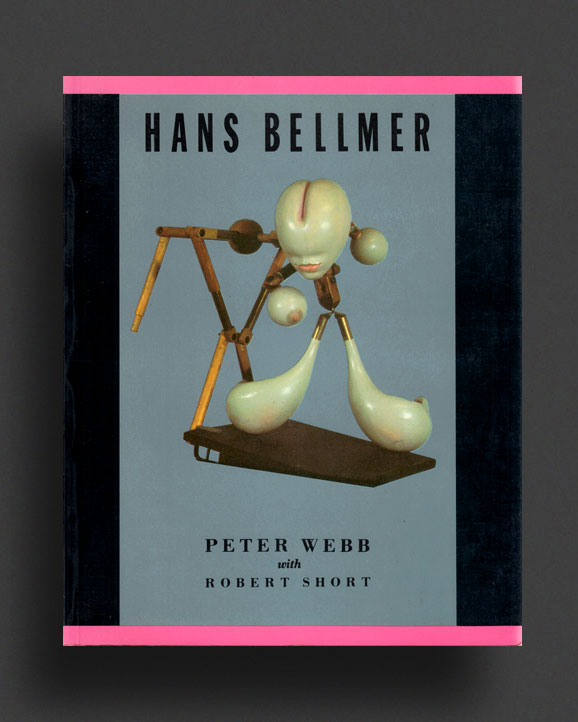
Now rare, first 1985 edition of the first fundamental and comprehensive English-language study of Hans Bellmer (1902—1975), the most provocative representative of Surrealism, authored by Peter Webb with Robert Short and published by Quartet in London. Heavily illustrated throughout with many rare images, in colour and b/w, many photographs and artworks, with bibliography, catalogue and references. An essential, illuminating book for anyone interested in Bellmer's work and life and the development of his historical Doll project, playing close attention to the often neglected but integral visionary texts by Bellmer that accompanied his artworks, with an abundance of written works translated throughout in English for the first time.
"Surrealism was one of the most exciting and influential of twentieth century art movements and much has been written about it since its great flowering in the 1930s. The lives and work of its leading figures (Ernst, Magritte, Dali and Miró) have been extensively researched, but Hans Bellmer, perhaps the most controversial and misunderstood of all the surrealists, has until now remained a mystery. Peter Webb, who interviewed Bellmer shortly before his death, has spent two years unravelling the story of this photographer, sculptor, painter, engraver and writer, and his book provides the first opportunity to evaluate Bellmer's considerable artistic achievement."—book jacket blurb
Very Good copy, mild wear.
1992, Japanese
Hardcover, 98 pages (w. fold-outs), 42 x 30 cm
Out of print title / used / good
Published by
Treville / Tokyo
$140.00 $100.00 - Out of stock
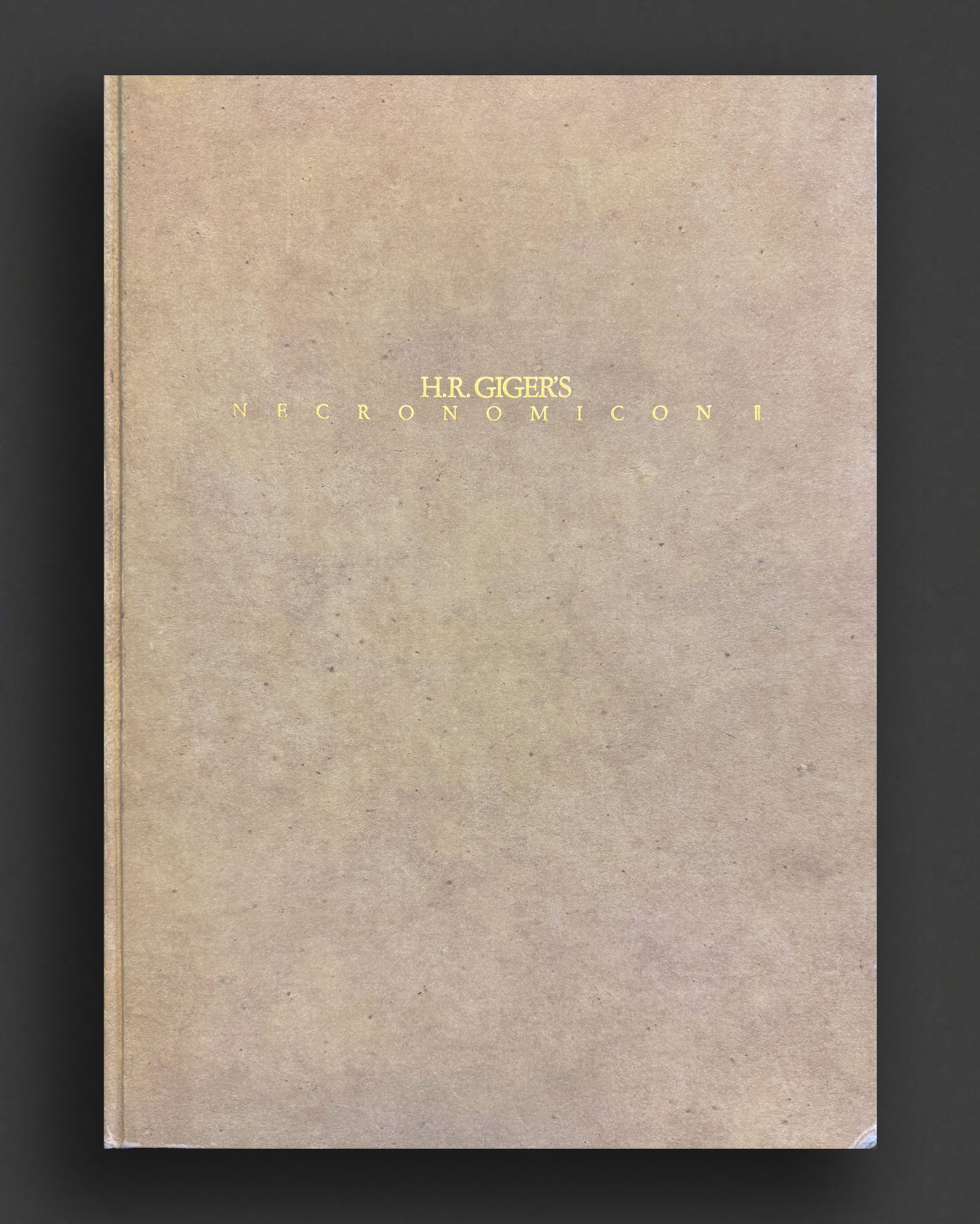
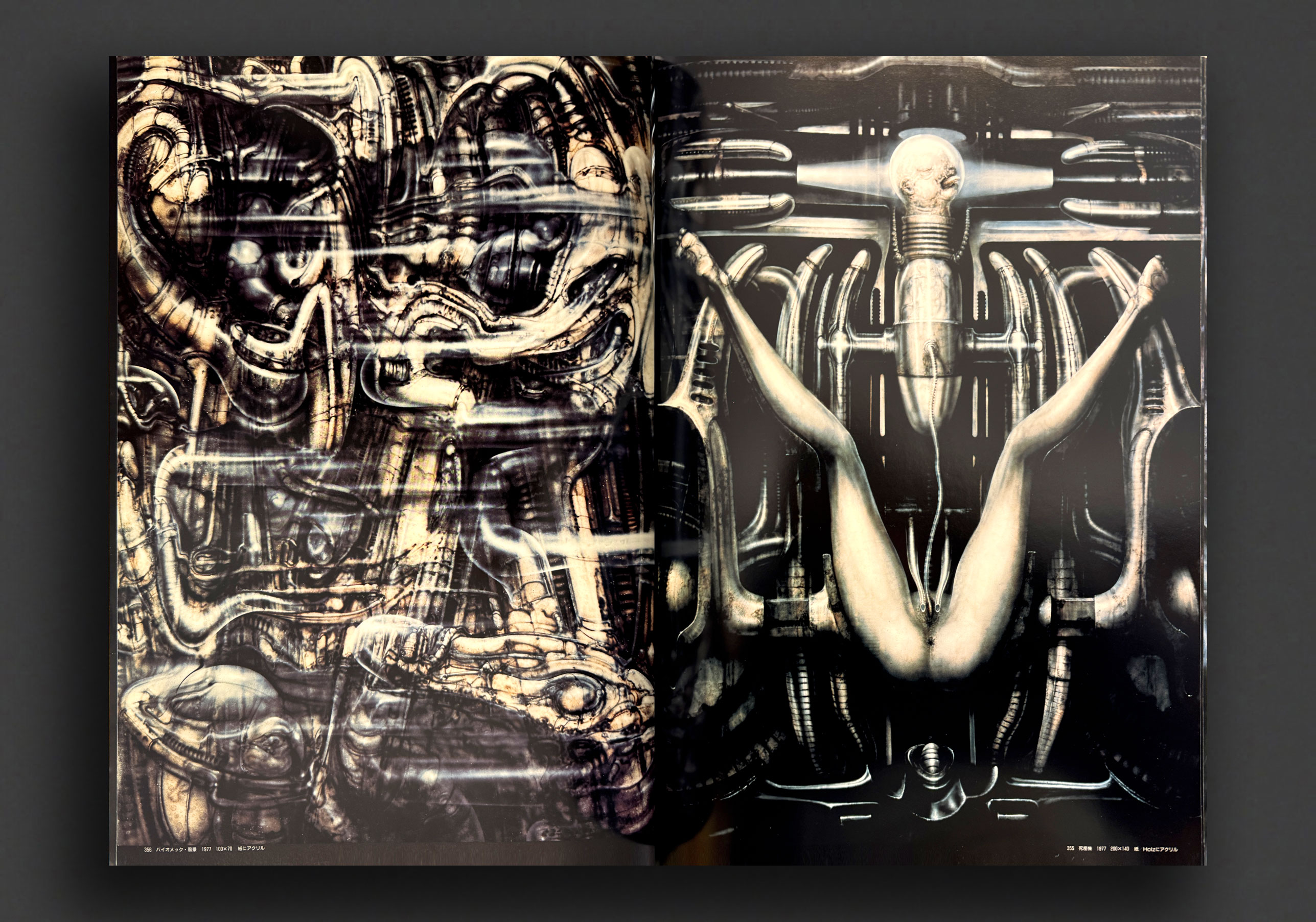
First special Japanese hardcover edition of H.R. Giger's Necronomicon II, the second oversized and visually overwhelming Giger-designed collection that takes us further through the incredible history of one of the most brilliant fantasy artists of the century. Reproducing Giger's award-winning work for the film ALIEN, lavish reproductions of his major paintings, environments, sculptural works, his work for never-shot film "The Tourist", his early grotesque ink illustrations, collaborations with Blondie's Debbie Harry, his "New York City" series from the late 1970's and so much more, all beautifully reproduced in full-colour and black and white, full-bleed spreads, including fold-out pages. Also includes interviews, texts, biography. These Giger folio books have become very desirable, collectable editions in their various printings around the world, the series encompassing the work of one of the world's most unique and influential visionaries of the macabre. This is volume 2 of 2 of "HR Giger's Necronomicon" where Al Azred's legendary magical book of the most wonderful abominations and perversions, "Necronomicon" (made infamous in the pages of HP Lovecraft's "Cthulhu" mythology), becomes a visual reality!
First hardcover Japanese edition, published by Hardcover edition published by Treville, Tokyo, in 1992. Light foxing/splitting/bumping to spine top and bottom, one semi-detaching from binding on endpaper, otherwise internally VG well preserved throughout.
2025, English / Dutch
Softcover, 464 pages, 29.7 x 21 cm
Published by
WIELS / Brussels
$110.00 - In stock -
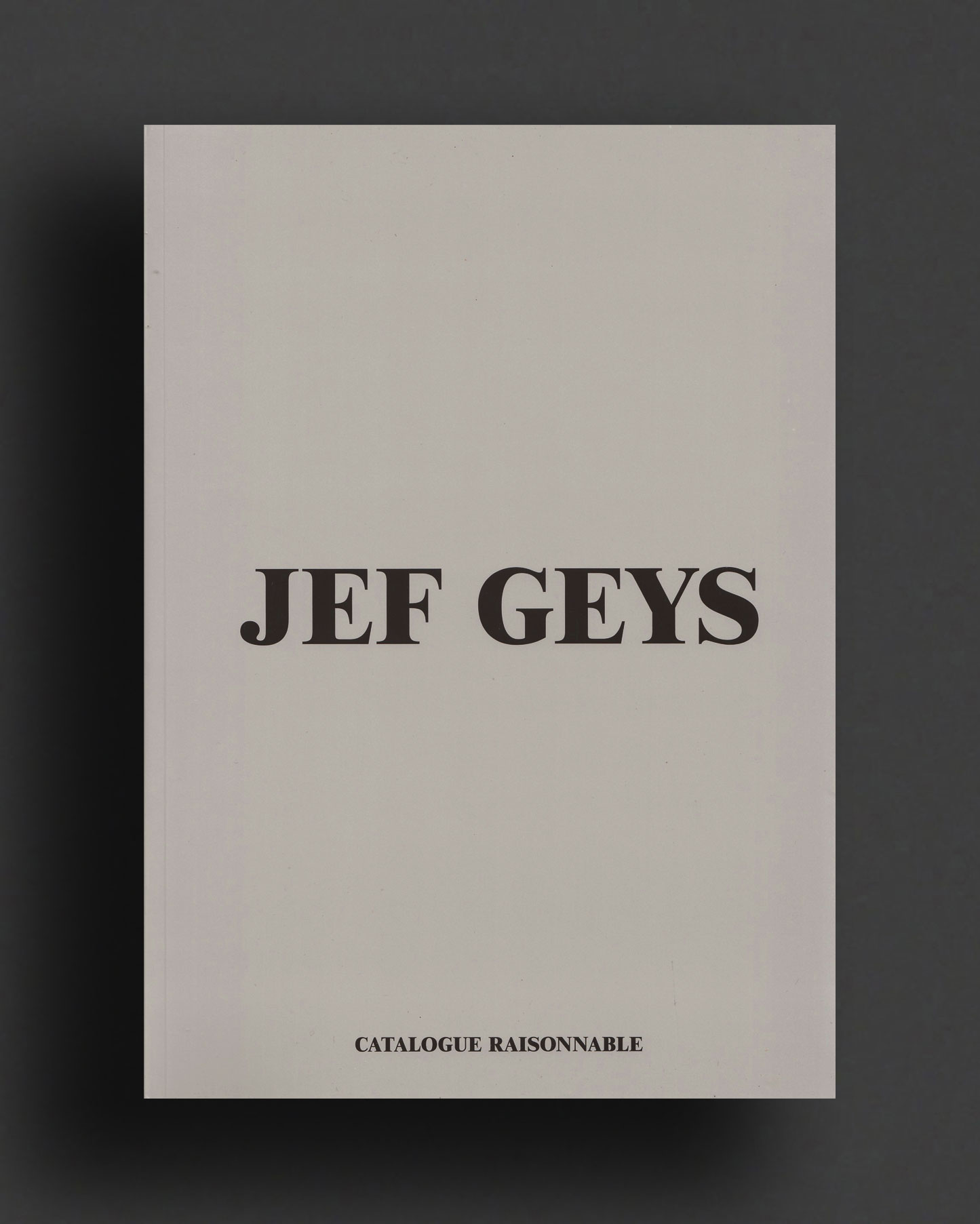
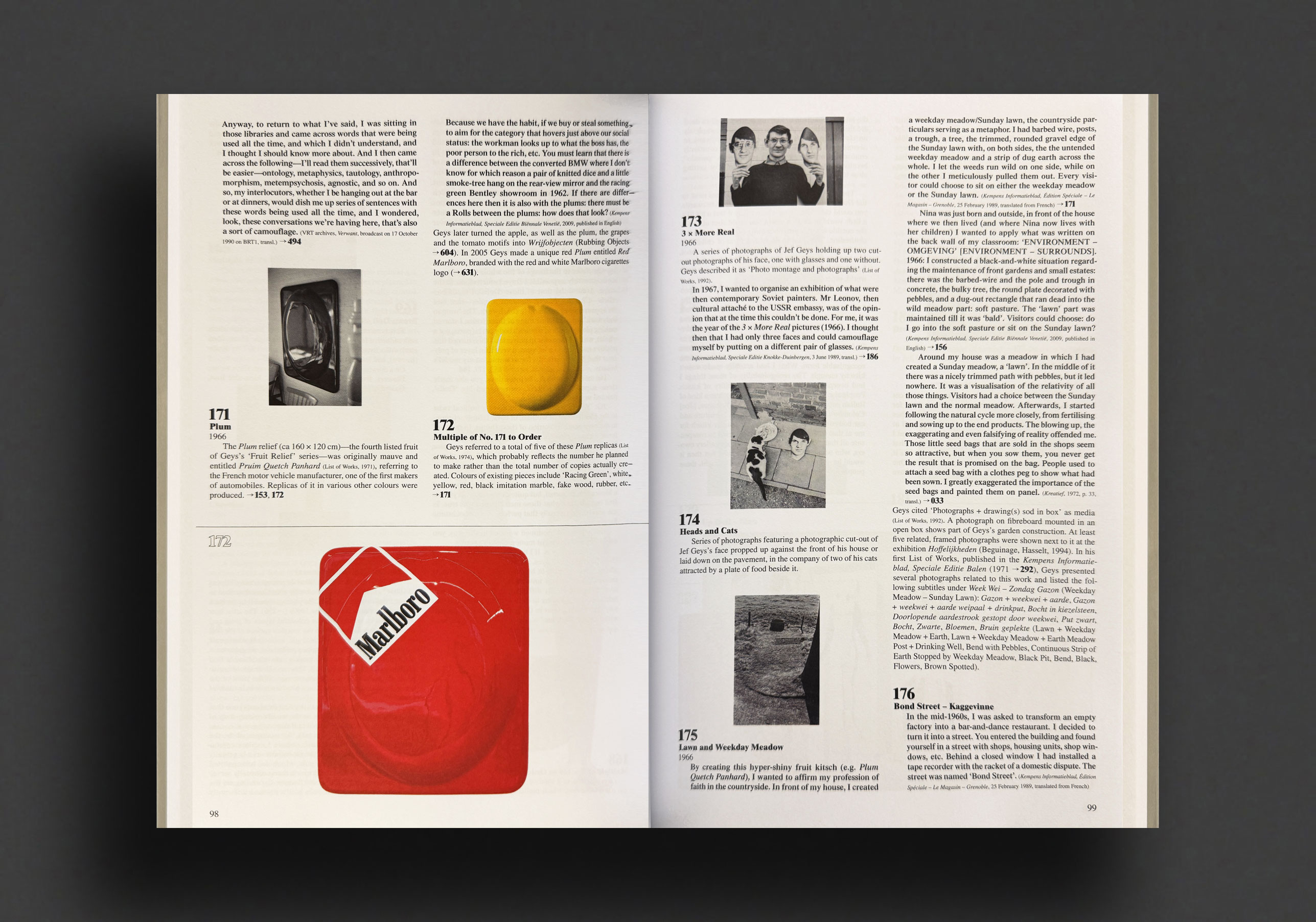
The first total survey of Jef Geys' work. Art critics commonly describe the work of Belgian artist Jef Geys (1934-2018) as "unruly, and impossible to categorize in conventional art-historical categories." Despite Geys' subversive and critical attitude towards the art world, this ambitious publication shows that his work is not only deeply engaged and socially critical but also funny and sensory.
Since the early 1960s Geys had compiled an archive of everything he considered part of his artistic practice in to form of his "List of Works" serving as his oeuvre's index. With a total of 844 entries, Catalogue Raisonnable, is the first total survey of Jef Geys' work.
Through access to the artist's archive, close collaboration with Geys' next of kin, and thorough art-historical research, this publication offers a rare opportunity for understanding and appreciating the fascinating practice of one of Belgium's greatest artistic figures.
Jef Geys (1934-2018) was a prominent Belgian conceptual artist known for his multifaceted and often provocative work that intersected art with everyday life. Born in Leopoldsburg, Belgium, Geys was a teacher by profession, a role that deeply influenced his artistic practice. His work is characterized by its exploration of social, political, and cultural themes, often challenging the boundaries between art and daily experience.
Geys gained recognition for his innovative approach to art, which included photography, installation, sculpture, and publications. One of his notable projects was the "Kempens Informatieblad," a self-published newspaper that combined local news with critical commentary on contemporary art and society. This project exemplified his commitment to making art accessible and relevant to the broader public. Throughout his career, Geys exhibited internationally, including notable appearances at Documenta in Kassel and the Venice Biennale. His work remains influential, celebrated for its critical engagement with the world and its capacity to blur the lines between art, education, and activism.
Texts by Dirk Snauwaert and Charlotte Friling.
1992, English
Softcover, 460 pages, 24 x 17.25 cm
1st Edition, Out of print title / used / good
Published by
Godine / New England
$40.00 - Out of stock
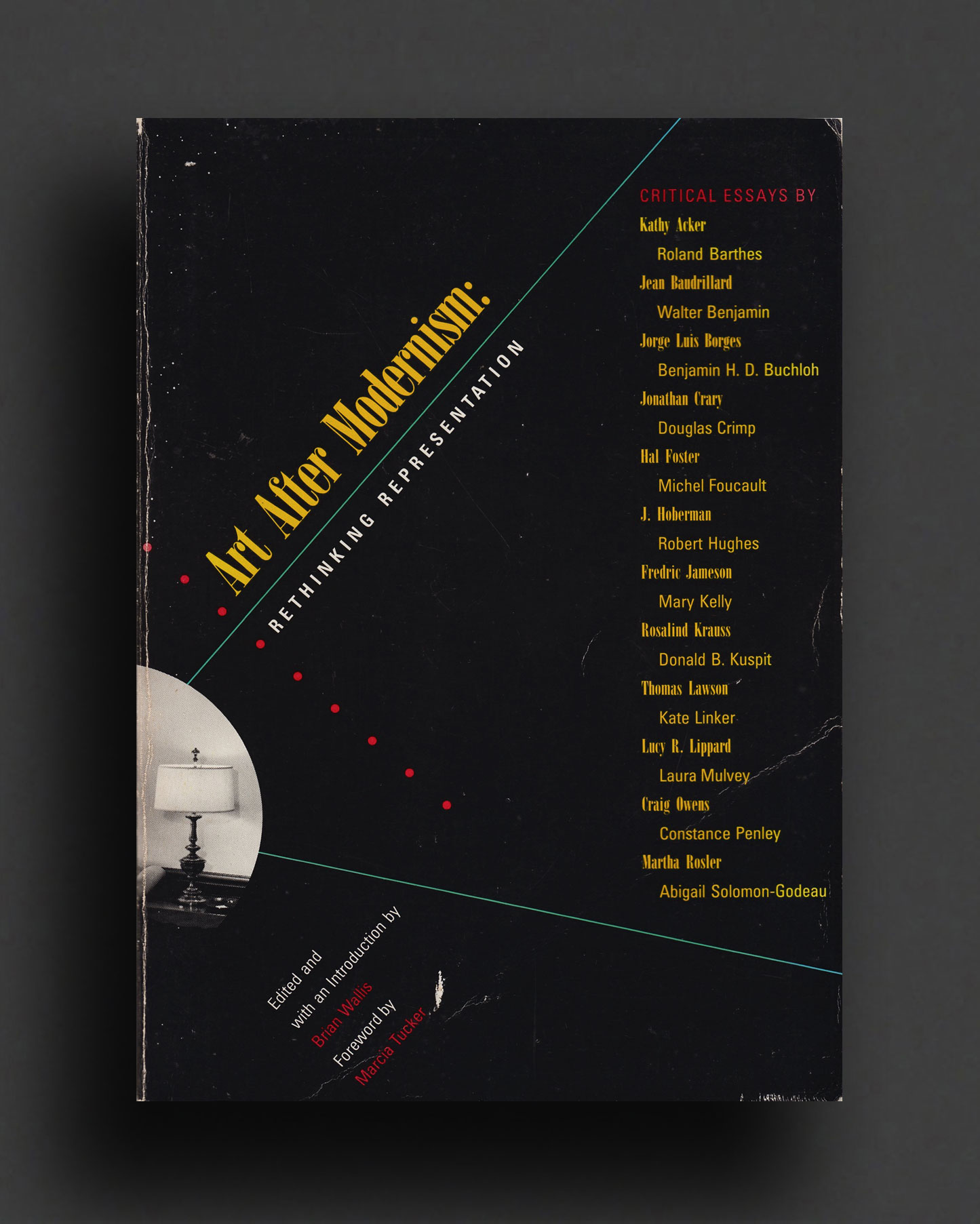
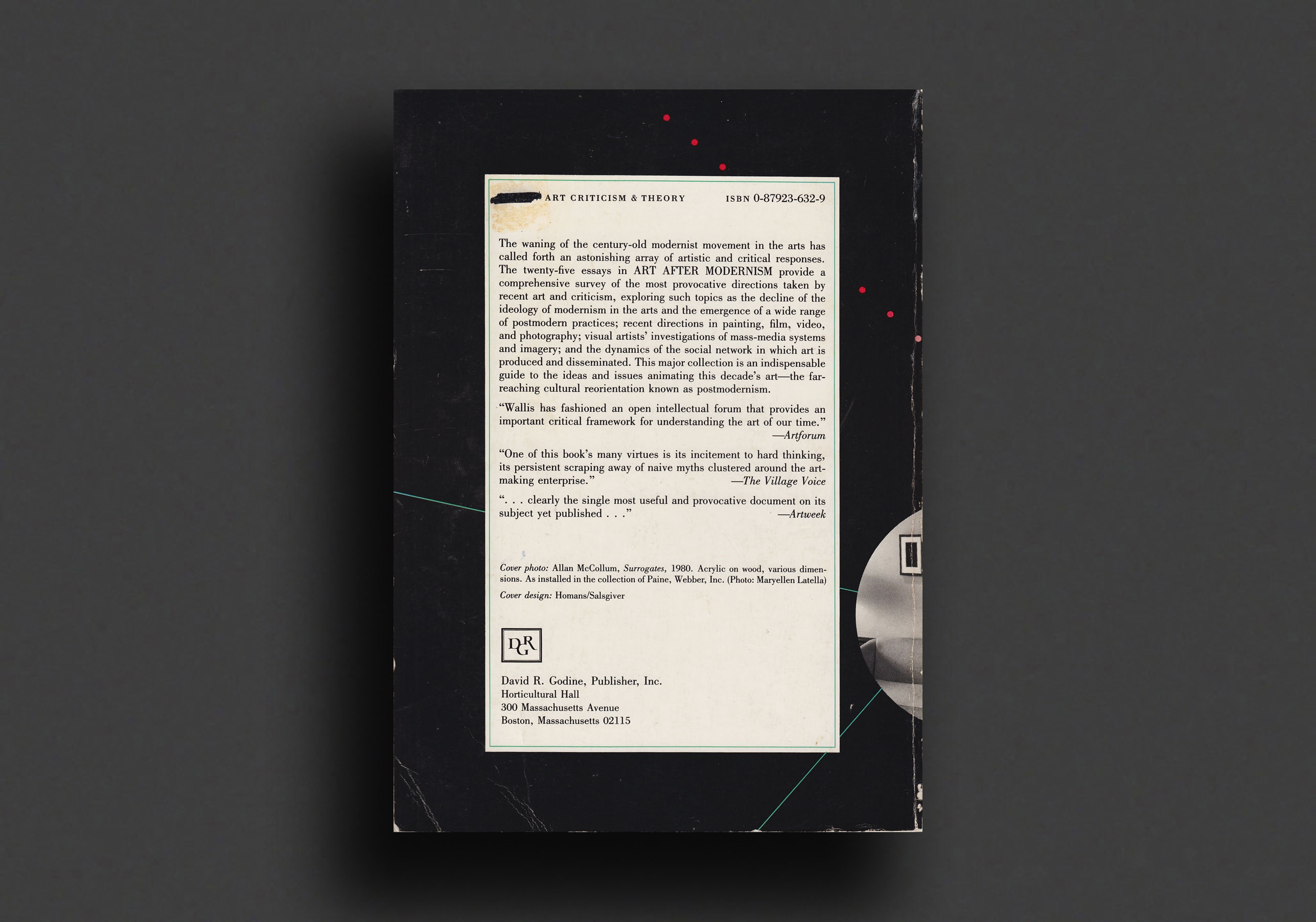
An anthology of writing on modernism edited by Brian Wallis and foreword by Marcia Tucker. Includes essays by Kathy Acker, Roland Barthes, Jean Baudrillard, Walter Benjamin, Jorge Luis Borges, Benjamin H.D. Buchloh, Jonathan Crary, Douglas Crimp, Hal Foster, Michel Foucault, J. Hoberman, Robert Hughes, Fredric Jameson, Mary Kelly, Rosalind Krauss, Donald Kuspit, Thomas Lawson, Kate Linker, Lucy R. Lippard, Laura Mulvey, Craig Owens, Constance Penley, Martha Rosler, Abigail Solomon-Godeau. Photographs selected and arranged by Louise Lawler in collaboration with Wallis. Includes short biography for each contributor.
"The waning of the century-old modernist movement in the arts has called forth an astonishing array of artistic and critical responses. The twenty-five essays in Art After Modernism provide a comprehensive survey of the most provocative directions taken by recent art and criticism, exploring such topics as the decline of the ideology of modernism in the arts and the emergence of a wide range of postmodern practices; recent directions in painting, film, video and photography; visual artists' investigations of mass-media systems and imagery; and the dynamics of the social network in which art is produced and disseminated. This major collection is an indispensable guide to the ideas and issues animating this decade's art the far-reaching cultural reorientation known as postmodernism."
Good copy with general handling wear/cover creasing.
1981, English
Softcover, 320 pages, 15.5 x 23.5 cm
1st Edition, Out of print title / used / very good
Published by
The MIT Press / Massachusetts
$45.00 - Out of stock
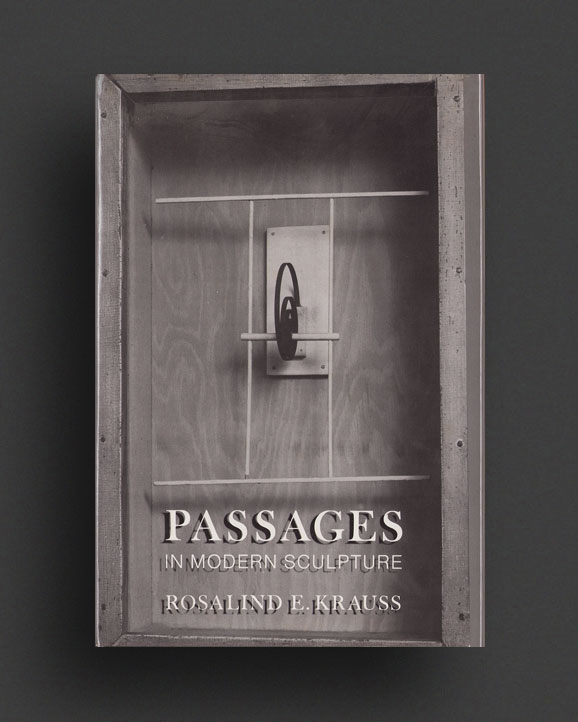
First 1981 edition of Passages in Modern Sculpture, Rosalind E. Krauss classic study of major works by important sculptors since Rodin in the light of different approaches to general sculptural issues to reveal the logical progressions from nineteenth-century figurative works to the conceptual work of the present.
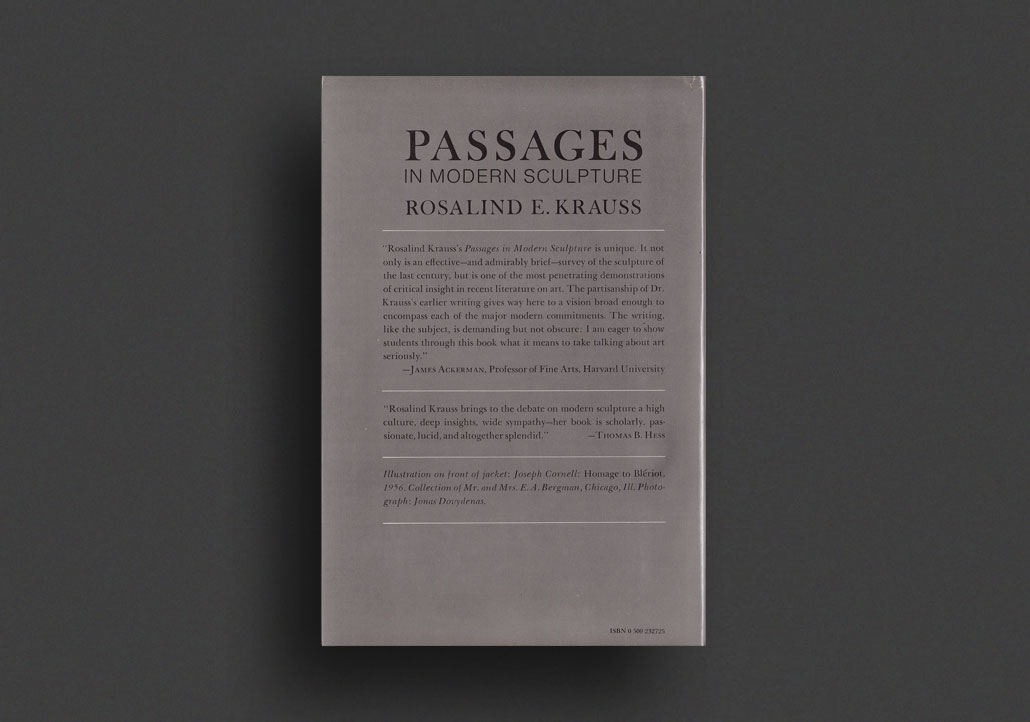
"...Krauss's book is undoubtedly the best treatment of its subject yet written. As a textbook, it ought to raise the level of discourse in art history classes, for it is the meaning, not the chronology, of sculpture since Rodin that is the book's central concern. Krauss avoids the conventional plodding survey and divides the book into a sequence of 'case studies' that permit sustained attention to specific works and artists. In so doing, she attempts to trace a 'tradition' to stand behind that portion of American sculpture of the past 15 years which she espouses critically."—Art in America
"Distinguished art historian and critic Rosalind Krauss analyzes with exceptional clarity and insight the major works that have led 20th century sculpture from the traditional and figurative to the revolutionary conceptual art of the 1970s—an art which has developed a new 'syntax' that discards 'narrative' for instantaneous impact and boldly breaks new ground. Beginning with a penetrating study of Rodin's modernity in rejecting 'narrative' in his 'The Gates of Hell,' she moves successively through detailed examinations of futurism, constructivism, Duchamps' 'readymades,' Brancusi, David Smith's 'Tanktotem,' sculptural realism, and the introduction of light, motion, and theatrical elements into sculpture by Picabia, Calder, Oldenburg, and others right up to younger sculptors like Carl Andre, Blochner, and others [including Robert Morris, Don Judd, Richard Serra, Sol Le Witt, Robert Smithson, and Michael Heizer]. As critic and theorist, Krauss makes demands that will challenge even the most sophisticated."—Publishers Weekly
Rosalind E. Krauss, editor and cofounder of October magazine, is University Professor at Columbia University. She is the author of The Originality of the Avant-Garde and Other Modernist Myths, The Optical Unconscious, Bachelors, and Perpetual Inventory, all published by the MIT Press.
Good—Very Good copy with general light wear.
1977, English
Hardcover (w. dust jacket), 308 pages, 24 x 16 cm
1st UK Edition, Out of print title / used / very good
Published by
Thames and Hudson / London
$65.00 - In stock -
First 1977 hardcover edition of Passages in Modern Sculpture, Rosalind E. Krauss classic study of major works by important sculptors since Rodin in the light of different approaches to general sculptural issues to reveal the logical progressions from nineteenth-century figurative works to the conceptual work of the present.
"...Krauss's book is undoubtedly the best treatment of its subject yet written. As a textbook, it ought to raise the level of discourse in art history classes, for it is the meaning, not the chronology, of sculpture since Rodin that is the book's central concern. Krauss avoids the conventional plodding survey and divides the book into a sequence of 'case studies' that permit sustained attention to specific works and artists. In so doing, she attempts to trace a 'tradition' to stand behind that portion of American sculpture of the past 15 years which she espouses critically."—Art in America
"Distinguished art historian and critic Rosalind Krauss analyzes with exceptional clarity and insight the major works that have led 20th century sculpture from the traditional and figurative to the revolutionary conceptual art of the 1970s—an art which has developed a new 'syntax' that discards 'narrative' for instantaneous impact and boldly breaks new ground. Beginning with a penetrating study of Rodin's modernity in rejecting 'narrative' in his 'The Gates of Hell,' she moves successively through detailed examinations of futurism, constructivism, Duchamps' 'readymades,' Brancusi, David Smith's 'Tanktotem,' sculptural realism, and the introduction of light, motion, and theatrical elements into sculpture by Picabia, Calder, Oldenburg, and others right up to younger sculptors like Carl Andre, Blochner, and others [including Robert Morris, Don Judd, Richard Serra, Sol Le Witt, Robert Smithson, and Michael Heizer]. As critic and theorist, Krauss makes demands that will challenge even the most sophisticated."—Publishers Weekly
Rosalind E. Krauss, editor and cofounder of October magazine, is University Professor at Columbia University. She is the author of The Originality of the Avant-Garde and Other Modernist Myths, The Optical Unconscious, Bachelors, and Perpetual Inventory, all published by the MIT Press.
Very Good in VG dust jacket designed by Krauss with interior architect Alan Buchsbaum!
2006, English
Softcover, 272 pages, 27.1 x 21.4 cm
Published by
Hayward Gallery Publishing / London
$75.00 - In stock -
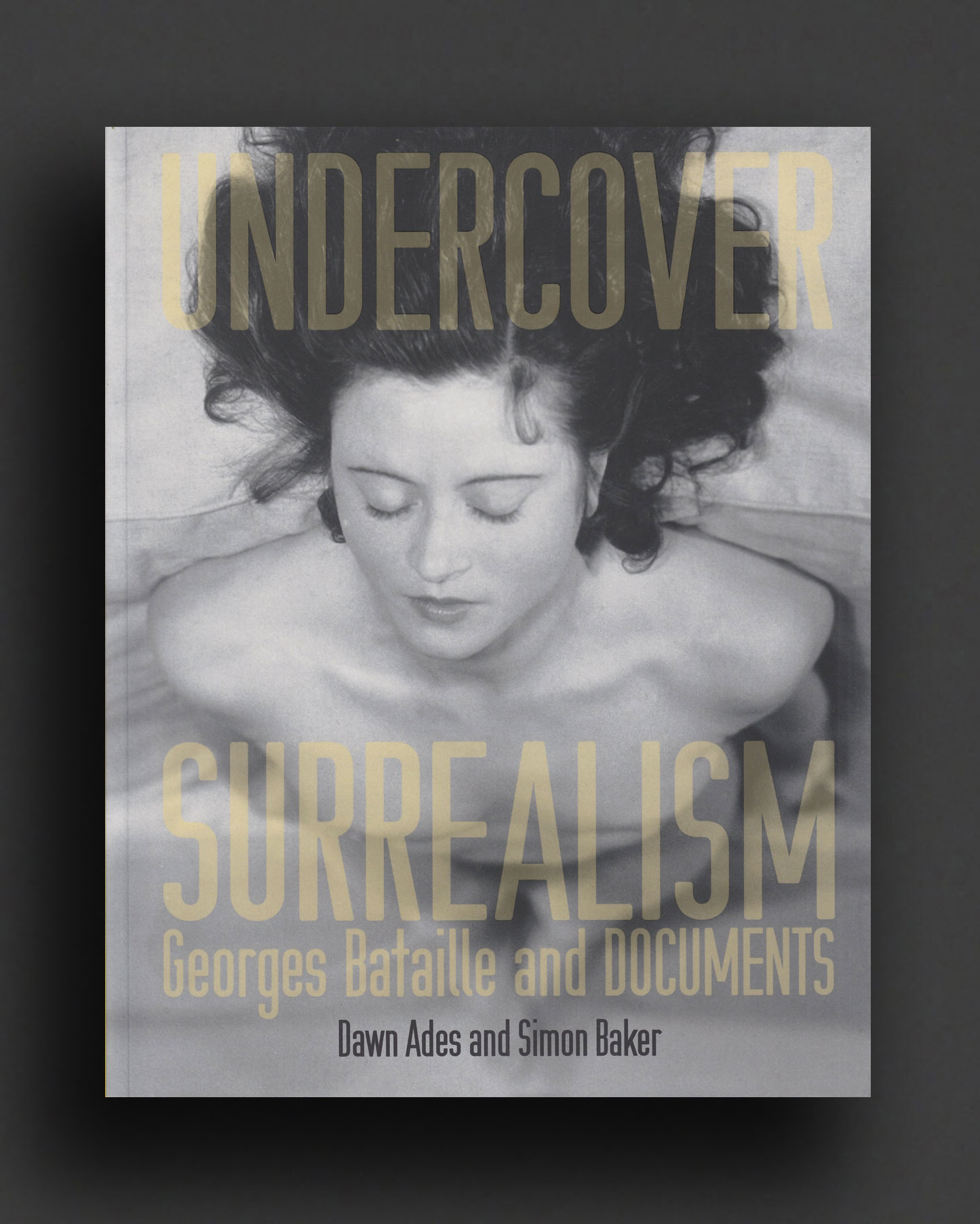
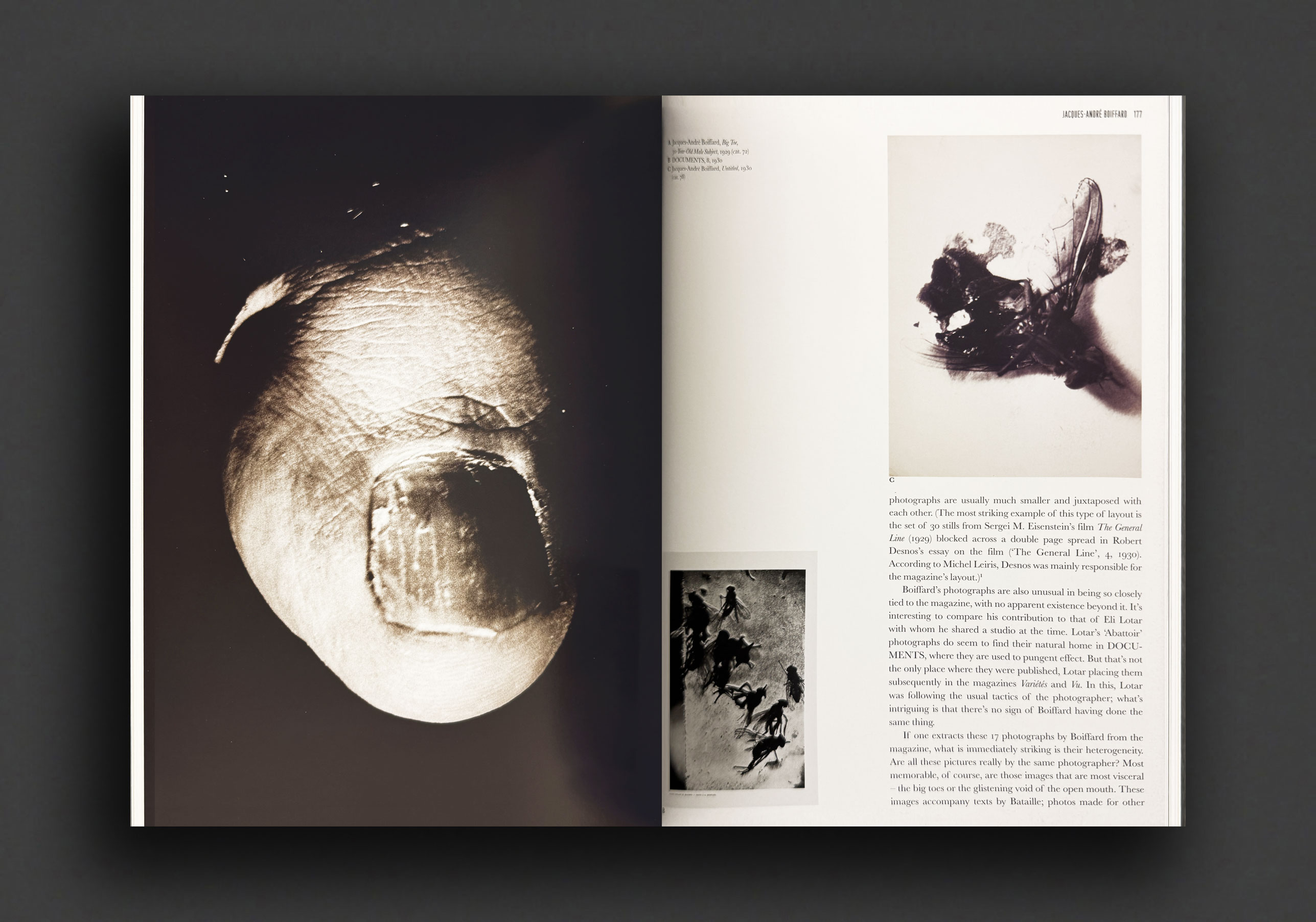
An exploration of the unsettling collisions of art and culture in Georges Bataille's revolutionary journal and a new consideration of twentieth-century masterpieces by Picasso, Miro, Dali, and others against the canvas of their renegade times.
In the Paris art world of the 1920s, Georges Bataille and his journal DOCUMENTS represented a dissident branch of surrealism. Bataille—poet, philosopher, writer, and self-styled "enemy within" surrealism—used DOCUMENTS to put art into violent confrontation with popular culture, ethnography, film, and archaeology. Undercover Surrealism, taking the visual richness of DOCUMENTS as its starting point, recovers the explosive and vital intellectual context of works by Picasso, Miro, Dali, Giacometti, and others in 1920s Paris.
Profusely illustrated (featuring 180 colour images) and filled with valuable English translations of original French texts from DOCUMENTS accompanied by essays and shorter descriptive texts, Undercover Surrealism recreates and recontextualizes Bataille's still unsettling approach to culture. Putting Picasso's Three Dancers back into its original context of sex, sacrifice, and violence, for example, then juxtaposing it with images of gang wars, tribal masks, voodoo ritual, Hollywood musicals, and jazz, makes the urgency and excitement of Bataille's radical ideas startlingly vivid to a twenty-first-century reader.
2024, English
Hardcover (w. dust jacket), 334 pages, 32 x 22 cm
Published by
Centre Pompidou / Paris
$110.00 - In stock -
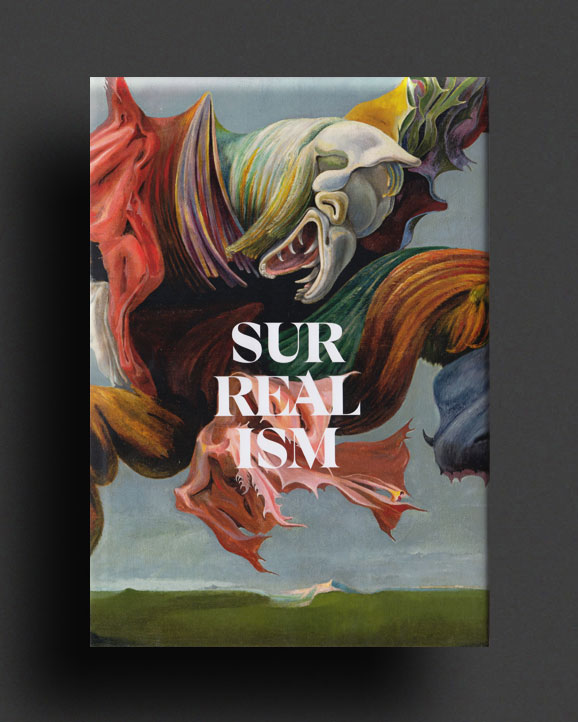
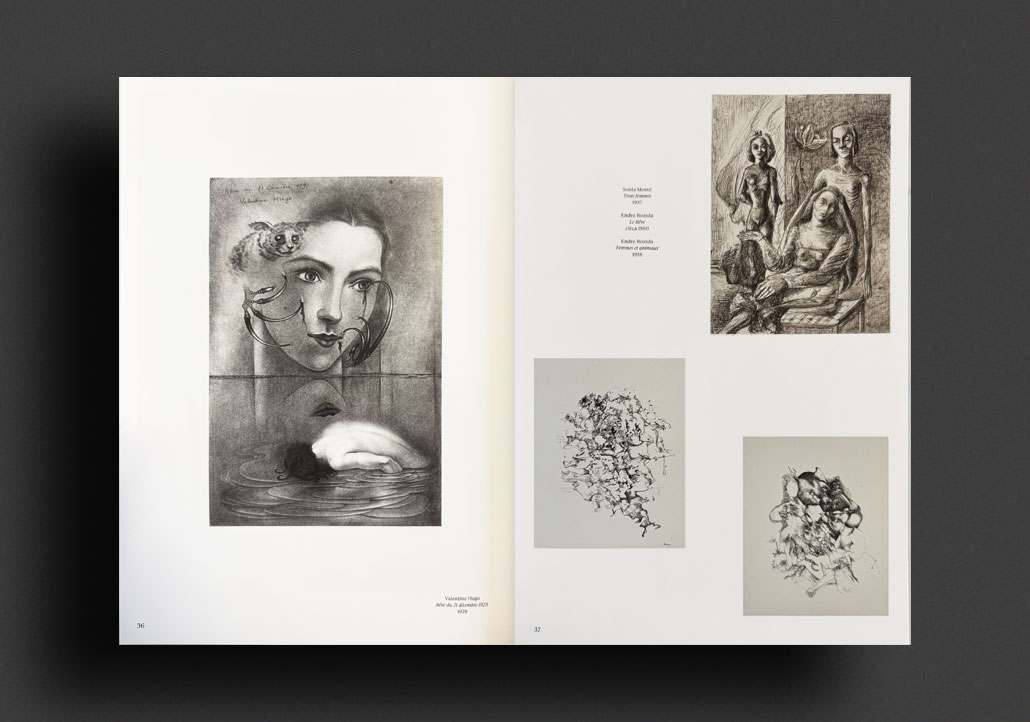
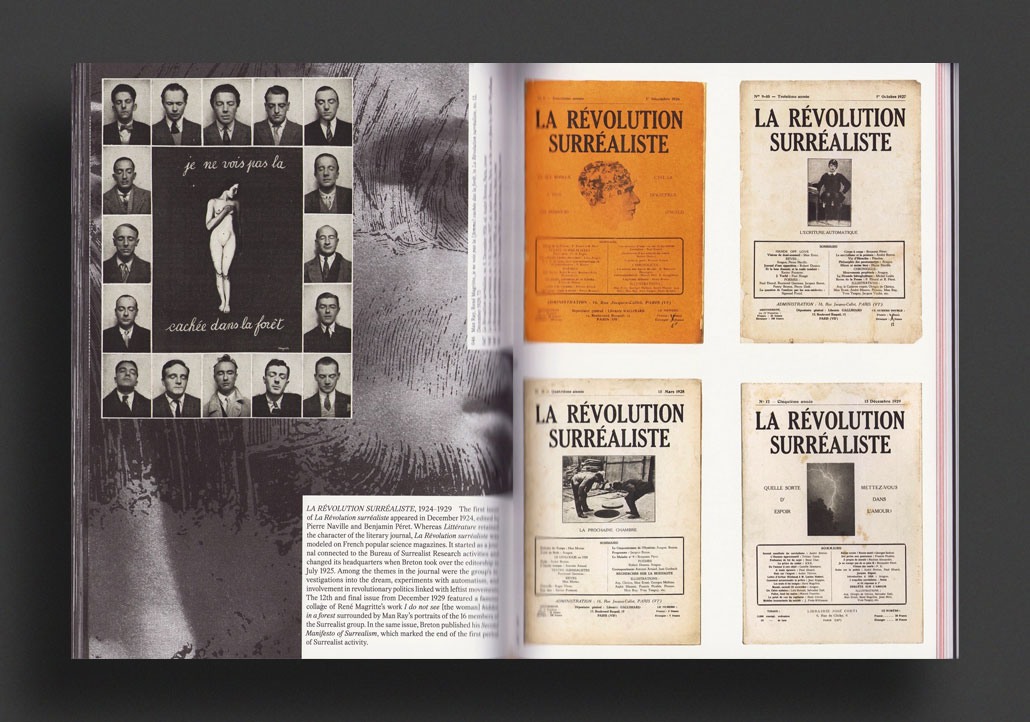
The defining book for the centenary of Surrealism. From September 2024 to January 2025, the Centre Pompidou will celebrate the 100th anniversary of André Breton's Surrealist Manifesto. For the next two years, their unprecedented Surrealist exhibition will tour the art galleries of the world, accompanied by this special catalogue.
Perhaps more than any other artistic movement, Surrealism had a cataclysmic effect on the modern mind, changing forever the way we think about experiencing the world. By rejecting the gross linearity that typified several centuries of preceding artworks, the legendary Surrealists Magritte, Ernst, Carrington, Dali, Tanning and so many others reached beyond the facade of that which is patently visible and found something more. Featuring original essays from leading academics and excerpts from the Surrealist Manifesto itself, this stands among the most essential Surrealist catalogues ever published.
2020, English
Hardcover, 200 pages, 26.7 x 33 cm
Published by
Hauser & Wirth / Zurich
$120.00 - Out of stock
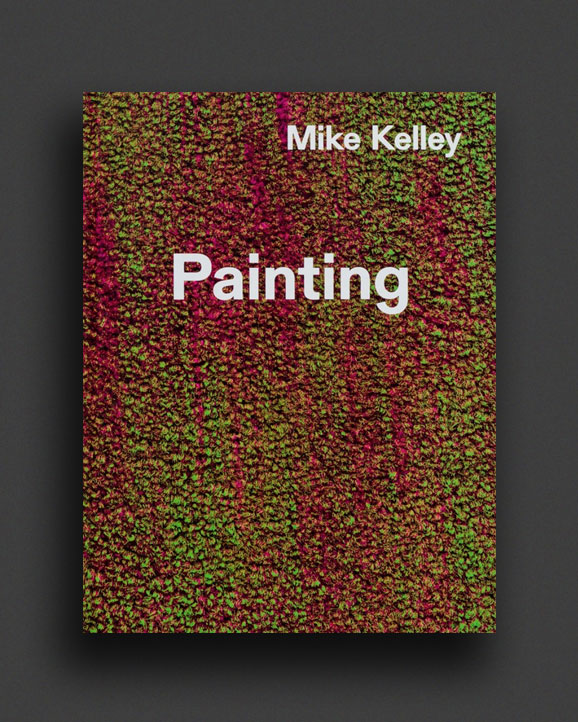
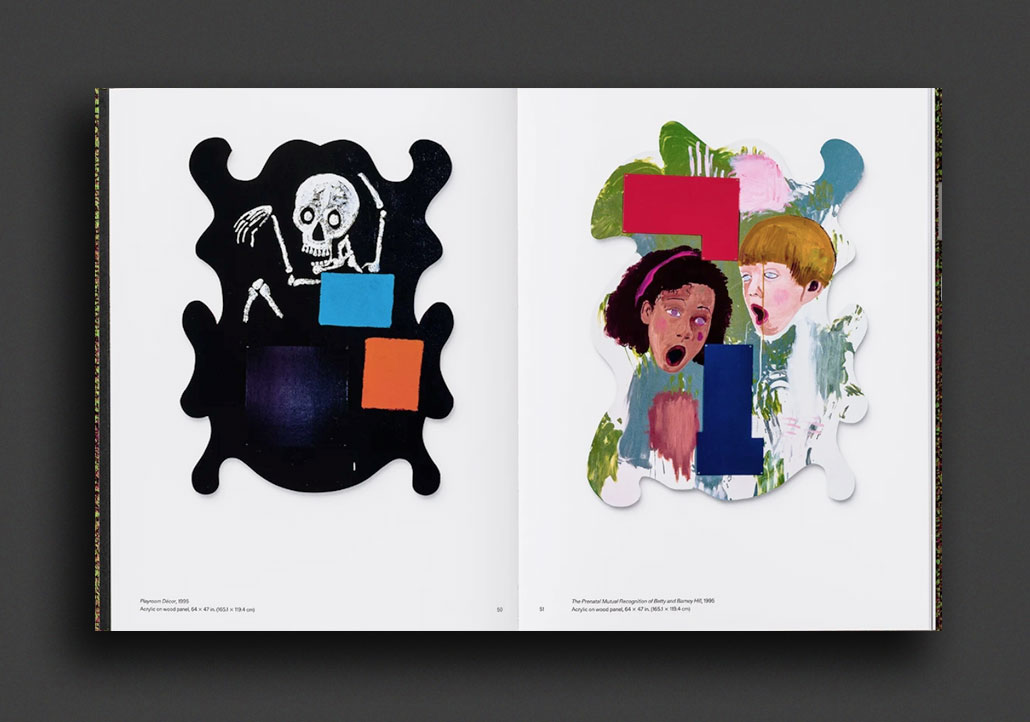
Featuring paintings from series that span from 1994 through 2009, this volume traces Mike Kelley's (1954–2012) engagement with the medium through bodies of work including The Thirteen Seasons (Heavy on the Winter), a series of oval-shaped paintings on wood; Timeless Painting, which marked Kelley's distinct return to painting in colour, and which he described as "mannerist take-offs on Hans Hofmann's compositional theory of ‘push and pull'"; and the Horizontal Tracking Shots series.
2025, English
Softcover, 88 pages, 16 x 11 cm
Published by
Spector Books / Leipzig
$30.00 - In stock -
Envision a world without architecture, a world-tecture without arche, the latter meaning not only beginning or origin but also the authority to arrange and subordinate persons, objects, and processes into an identifiable power structure. Pre-architecture is not simply “not architecture”—it is what architecture could have become but ultimately disavowed. The same unfulfilled potentialities haunt not only the distant past but also architecture’s anxious present in a time of environmental crisis, energetic transformation, and related social challenges. The publication, which accompanies the exhibition of the same name in Brussels, refers to the beginnings of human habitat and features a transdisciplinary field of architects, artists, sociologists, and archaeologists. Speculating on the “birth” of design, it questions the cultural, social, economic, and political foundations of spatial organization.
Silvia Franceschini is a curator at CIVA in Brussels. Previously, she was a curator at Z33 House for Contemporary Art, Design, and Architecture, Hasselt. Nikolaus Hirsch is artistic director of CIVA, Brussels. He has previously held the positions of dean at the Städelschule, Frankfurt, and director of Portikus Kunsthalle, Frankfurt. Spyros Papapetros teaches art and architectural theory and historiography at the School of Architecture and the Programs on Media and Modernity as well as European Cultural Studies at Princeton University.
2024, English
Softcover, 328 pages, 21 x 28 cm
Published by
Spector Books / Leipzig
$110.00 - In stock -
The book Archive of Dreams is published in conjunction with the exhibition of the same name that will open the Archiv der Avantgarden. Marking the hundredth anniversary of the first surrealist manifesto and the founding of the Bureau of Surrealist Research in Paris in 1924, the volume is dedicated to the surrealist movement as well as the networks it engendered and the artistic stimuli it provided in the twentieth century. The idea was for the Bureau to collect dream testimonies in whatever form, not only to preserve and analyse them but also to give active expression to them in artistic processes. The publication shows how the practices of the avantgardes blurred the boundaries between dream and reality, between the traditional, passive notion of the archive and the idea of active, innovative artistic experiment — and thus ultimately also between the past, the present, and possible futures.
Works and documents from the period before, during, and after the Second World War shed light on the working methods of international artists and the global network they were involved in. They are complemented by diverse reflections on global protest movements and the traumas of war, thus connecting, too, to everyday experiences in a Europe beset by warfare.
1970/1971, French
Softcover, 2 volumes, unpaginated, 28.5 x 19 cm
1st Edition, Out of print title / used / very good
Published by
Marie Concorde / Paris
$320.00 - In stock -
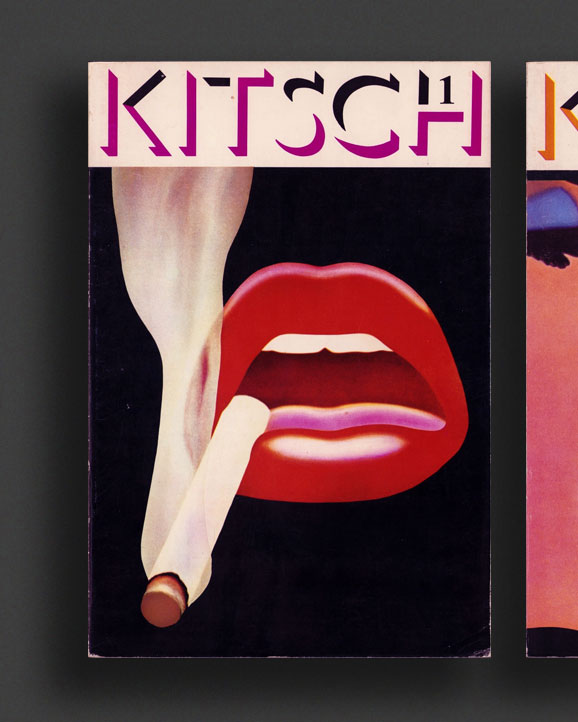
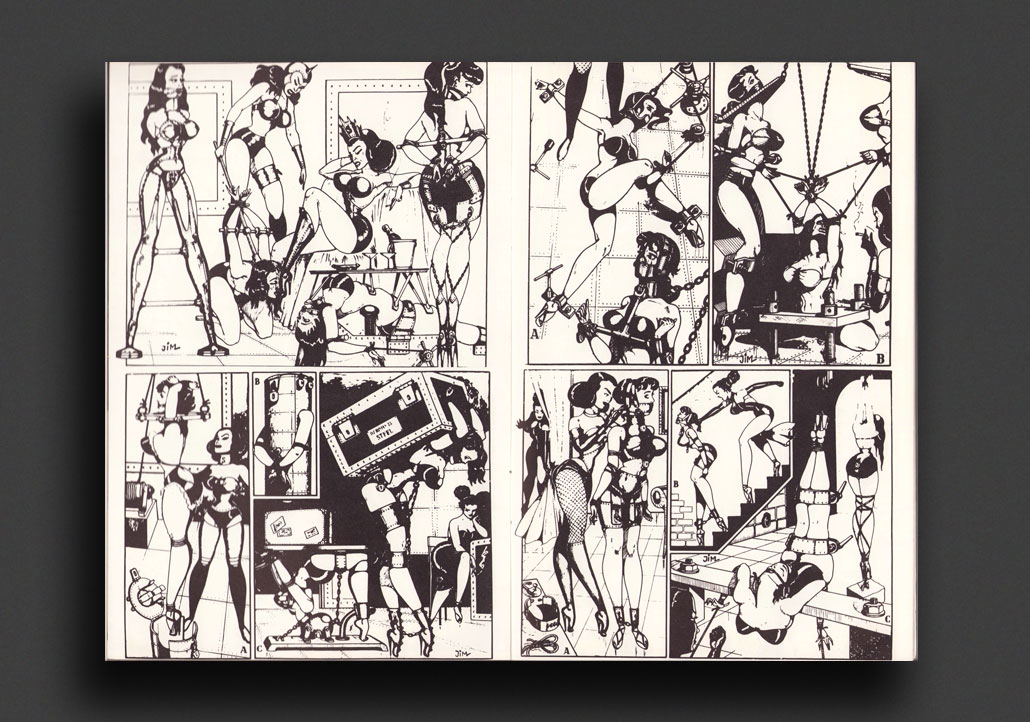
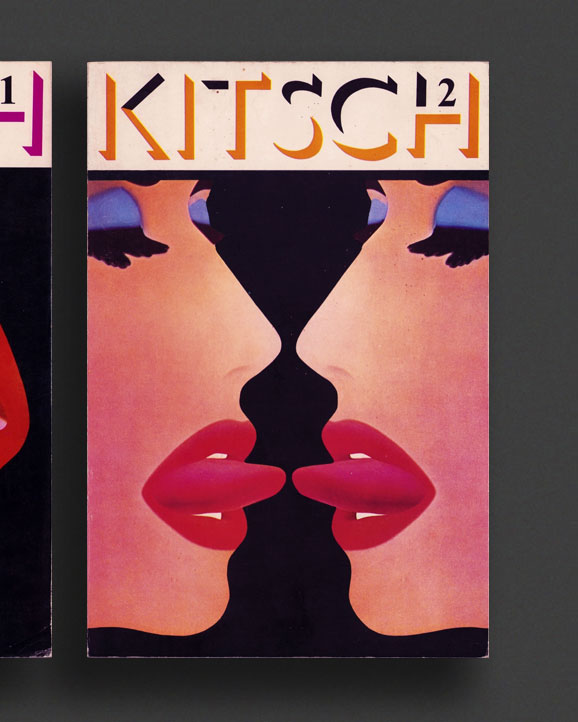
Both of the only volumes ever produced of this wonderful French avant-garde journal, published in Paris at the beginning of the 1970s. A visual manifesto against the prudishness of the times, KITSCH presented hundreds of illustrations of mostly erotic, fetish and fantastic/grotesque artwork by artists from all over the world, and spanning generations, with both issues wrapped in the most striking Tom Wesselmann covers. KITSCH 1 includes Toshio Saeki, Guido Crepax, Richard Linder, Robert Crumb, Guy Bourdin, Petr Herel, Hannes Jahn, Roman Cieślewicz, Ben Vautier, Christian Bour, Jacques Sternberg, Roland Topor, Jim, Allen Jones, Thomas Weir, alongside photo essays on upskirt polaroids, Satanik, Diabolik, fashion and more. KITSCH 2 includes Aslan, Roy Lichtenstein, Virgil Finlay, Jim Osborne, Ronald Lipking, Greg Irons, George Grosz, Egon Schiele, Mel Ramos, alongside photo essays on subjects such as "Pop Art", "Human Concern" and Paris' "Pigalle" district, further featuring work by H.C.Westermann, Paul Thek, Edward Keinholz, William Tunberg, Christian Schad, William Weegee, James Rosenquist, Frank Gallo, Tom Wesselmann, and many more.
Very good copies both, light wear.