World Food Books' programme is largely produced on Kulin Nation land. We acknowledge the Wurundjeri people of the Kulin Nation as the first and continuing custodians of this land, and pay respect to their Elders past, present, and emerging.
World Food Books is an arts and special interests bookshop in Naarm / Melbourne. Founded in 2010, World Food Books is devoted to the presentation of a rotating, hand-selection of international art, design, literary and counterculture publications with an emphasis on the anti-traditional, the experimental, the avant-garde, the heretic, the marginal.
Presenting new titles alongside rare and out-of-print books, catalogues and journals spanning the fields of modern and contemporary art, design, photography, illustration, film, literature, poetry, cultural theory, philosophy, sexuality, popular and underground culture in its many radical forms, World Food Books wishes to encourage adventurous, thoughtful and open-minded reading, looking, writing, and exchange of publishing and ideas, both current and historical.
As well as our bookshop, located in Melbourne's historical Nicholas Building, all of our inventory is available internationally via our online mail-order service.
World Food Books semi-regularly co-ordinates "Occasions", a programme of exhibits and events at the bookshop and in partnership with other hosts (such as museums and art galleries) that develop out of the activities, relationships and content of the bookshop itself.
World Food Books
The Nicholas Building
37 Swanston Street
Room 5, Level 6
Melbourne 3000
Australia
SHOP HOURS:
THU–SAT 12–6
WEB-SHOP OPEN 24/7
World Food Books
Postal Address:
PO Box 435
Flinders Lane
Victoria 8009
Australia
info@worldfoodbooks.com
Art
Theory / Essay
Architecture / Interior
Graphic Design / Typography
Photography
Fashion
Eros
LGBTQ+
Fiction / Poetry
Weird / Speculative / Science Fiction / Horror
Transgressive / Visceral / Abject
Symbolism / Decadence / Fin de siècle
Film / Video
Painting
Sculpture / Installation
Performance / Dance / Theater
Drawing
Sound / Music
Curatorial
Group Shows / Collections
Periodicals
Out-of-print / Rare
Posters / Ephemera / Discs
Signed Books
World Food Books Gift Voucher
World Food Book Bag
Australian Art
Australian Fiction
Australian Science Fiction / Speculative Fiction
Australian Poetry
Australian Photography
Japanese Photography
Conceptual Art
Minimal Art
Dada
'Pataphysics / Oulipo
Fluxus
Concrete Poetry
Pop Art
Surrealism
Arte Povera
Arte Informale / Haute Pâte / Tachism
Nouveau Réalisme / Zero / Kinetic
Situationism / Lettrism
Collage / Mail Art / Xerox Art
Art Brut / Folk / Visionary / Fantastic
Illustration / Graphic Art / Bandes Dessinées
Furniture
Italian Radical Design / Postmodernism
Textiles
Ceramics / Glass
Counterculture
Protest / Revolt
Philosophy
Psychoanalysis
Anthropology
Anarchism
Socialism / Anarchism / Communism / Capitalism
Literary Theory / Semiotics / Language
Feminism / Women's Studies
Gender Studies / Sexuality
Anthropology
Fetishism / BDSM
Drugs / Psychedelia
Crime / Violence
Animal Rights / Veganism
Occult / Esoterica
Ecology / Earth / Alternative Living
Whole Earth / Crafts
All prices in AUD (Australian dollars)
Pick-Ups
Pick-up orders can be collected in our bookshop during opening hours after order date. Please collect any Pick-up orders within 2 weeks of ordering as we have limited storage space. Orders will be released back into stock if not collected within this time. No refunds can be made for pick-ups left un-collected. If you cannot make it in to the bookshop in this time-frame, please choose postage option.
Return Policy
All sales are final. We do accept returns (for refund or exchange) for items received in error. All our orders are packed with special care using heavy-duty padding and cardboard book-mailers or bubble mailers (for smaller books), using reinforcement where required. We cannot take responsibility for any lost, stolen or damaged parcels.
Insurance
Should you wish to insure your package, please email us directly after placing your order and we can organise this at a small extra expense. Although all standard/express tracked packages are very safe and dependable, we cannot take responsibility for any lost, stolen or damaged parcels. We recommend insurance on valuable orders.
Interested in selling your old books, catalogues, journals, magazines, comics, fanzines, ephemera? We are always looking for interesting, unusual and out-of-print books to buy. We only buy books in our fields of interest and specialty, and that we feel we can resell.
We base these prices on desirability, market value, in-print prices, condition and our current stock levels. We offer cash, store credit, and can take stock on consignment. All
about 25% of the price we expect to get when we sell them, or 30% in store credit. We base these prices on desirability, market value, in-print prices, condition and our current stock levels.
Sell your books any day of the week. You can drop them off and return later. If you have a lot of books, we can visit your Sydney home.
We buy books that we feel we can resell. We offer about 25 % of the price we expect to get when we sell them, or 30% in store credit. We base these prices on desirability, market value, in-print prices, condition and our current stock levels.
Philadelphia Wireman
03 August - 01 September, 2018
World Food Books is proud to announce our next Occasion, the first presentation of sculptures by Philadelphia Wireman in Australia.
The Philadelphia Wireman sculptures were found abandoned in an alley off Philadelphia’s South Street on trash night in 1982. Their discovery in a rapidly-changing neighbourhood undergoing extensive renovation, compounded with the failure of all attempts to locate the artist, suggests that the works may have been discarded after the maker’s death. Dubbed the "Philadelphia Wireman" during the first exhibition of this work, in 1985, the maker’s name, age, ethnicity, and even gender remain uncertain. The entire collection totals approximately 1200 pieces, all intricately bound together with tightly-wound heavy-gauge wire (along with a few small, abstract marker drawings, reminiscent both of Mark Tobey and J.B. Murry). The dense construction of the work, despite a modest range of scale and materials, is singularly obsessive and disciplined in design: a wire armature or exoskeleton firmly binds a bricolage of found objects including plastic, glass, food packaging, umbrella parts, tape, rubber, batteries, pens, leather, reflectors, nuts and bolts, nails, foil, coins, toys, watches, eyeglasses, tools, and jewellery.
Heavy with associations—anthropomorphic, zoomorphic, and socio-cultural responses to wrapped detritus—the totemic sculptures by Philadelphia Wireman have been discussed in the context of work created to fulfil the shamanistic needs of alternative religions in American culture. Curators, collectors, and critics have variously compared certain pieces to sculpture from Classical antiquity, Native American medicine bundles, African-American memory jugs, and African fetish objects. Reflecting the artist’s prolific and incredibly focused scavenging impulse, and despite—or perhaps enhanced by—their anonymity, these enigmatic objects function as urban artefacts and arbiters of power, though their origin and purpose is unknown. Philadelphia Wireman, whatever their identity, possessed an astonishing ability to isolate and communicate the concepts of power and energy through the selection and transformation of ordinary materials. Over the course of the past two decades, this collection has come to be regarded as an important discovery in the field of self-taught art and vernacular art.
Presented in collaboration with Fleisher-Ollman Gallery, Philadelphia, and Robert Heald, Wellington.
Susan Te Kahurangi King
02 February - 10 March, 2018
Susan Te Kahurangi King (24 February 1951 - ) has been a confident and prolific artist since she was a young child, drawing with readily available materials - pencils, ballpoint pens and felt-tip markers, on whatever paper is at hand. Between the ages of four and six Susan slowly ceased verbal communication. Her grandparents William and Myrtle Murphy had developed a special bond with Susan so they took on caring responsibilities for extended periods. Myrtle began informally archiving her work, carefully collecting and storing the drawings and compiling scrapbooks. No drawing was insignificant; every scrap of paper was kept. The King family are now the custodians of a vast collection containing over 7000 individual works, from tiny scraps of paper through to 5 meter long rolls.
The scrapbooks and diaries reveal Myrtle to be a woman of great patience and compassion, seeking to understand a child who was not always behaving as expected. She encouraged Susan to be observant, to explore her environment and absorb all the sights and sounds. Myrtle would show Susan’s drawings to friends and people in her community that she had dealings with, such as shopkeepers and postal workers, but this was not simply a case of a grandmother’s bias. She recognised that Susan had developed a sophisticated and unique visual language and sincerely believed that her art deserved serious attention.
This was an unorthodox attitude for the time. To provide some context, Jean Dubuffet coined the term Art Brut in 1945 to describe work created by self-taught artists – specifically residents of psychiatric institutions and those he considered to be visionaries or eccentrics. In 1972 Roger Cardinal extended this concept by adopting the term Outsider Art to describe work made by non-academically trained artists operating outside of mainstream art networks through choice or circumstance. Susan was born in Te Aroha, New Zealand in 1951, far from the artistic hubs of Paris and London that Dubuffet and Cardinal operated in. That Myrtle fêted Susan as a self-taught artist who deserved to be taken seriously shows how progressive her attitudes were.
Susan’s parents Doug and Dawn were also progressive. Over the years they had consulted numerous health practitioners about Susan’s condition, as the medical establishment could not provide an explanation as to why she had lapsed into silence. Dawn educated herself in the field of homeopathy and went on to treat all twelve of her children using these principles – basing prescriptions on her observations of their physical, mental and emotional state.
Doug was a linguist with an interest in philosophy who devoted what little spare time he had to studying Maori language and culture. To some extent their willingness to explore the fringes of the mainstream made them outsiders too but it was their commitment to living with integrity and their respect for individuality that ensured Susan’s creativity was always encouraged.
Even though Susan’s family supported her artistic pursuits, some staff in schools and hospitals saw it as an impediment to her assimilation into the community and discouraged it in a variety of ways. Her family was not always aware of this and therefore did not fully understand why Susan stopped drawing in the early 1990s. However, rather than dwell on the challenges that Susan faced in pursuit of her artistic practice, they prefer to highlight her achievements. In 2008 Susan began drawing again in earnest, after an almost 20 year interruption, and her work is now shown in galleries around the world.
Susan grew up without television and has been heavily influenced by the comics she read as a child. She is absolutely fearless in the appropriation of recognizable characters, such as Donald Duck and Mickey Mouse, in her work. She twists their limbs, contorts their faces, compresses them together, blends them into complex patterned backgrounds - always imbuing them with an incredible energy. Although Susan often used pop culture characters in her work they are not naive or childlike. These are drawings by a brilliant self-taught artist who has been creating exceptional work for decades without an audience in mind.
Mladen Stilinović
"Various Works 1986 - 1999"
02 February 16 - September 10, 2016
Various works 1986 - 1999, from two houses, from the collections of John Nixon, Sue Cramer, Kerrie Poliness, Peter Haffenden and Phoebe Haffenden.
Including: Geometry of Cakes (various shelves), 1993; Poor People’s Law (black and white plate), 1993; White Absence (glasses, ruler, set square, silver spoon, silver ladel with skin photograph and wooden cubes), 1990-1996; Exploitation of the Dead (grey and red star painting, wooden painting, black spoon with red table, red plate), 1984-1990; Money and Zeros (zero tie, paintings made for friends in Australia (Sue, John, Kerrie), numbers painting), 1991-1992; Words - Slogans (various t-shirts) - “they talk about the death of art...help! someone is trying to kill me”, “my sweet little lamb”, “work is a disease - Karl Marx”; Various artist books, catalogues, monographs, videos; Poster from exhibition Insulting Anarchy; "Circular" Croatian - Australian edition; Artist book by Vlado Martek (Dostoyevsky); more.
Thanks to Mladen Stilinović and Branka Stipančić.
Jonathan Walker
Always Will Need To Wear Winter Shirt Blue + Ochre Small Check Pattern
21 August - 21 September, 2015
Untitled
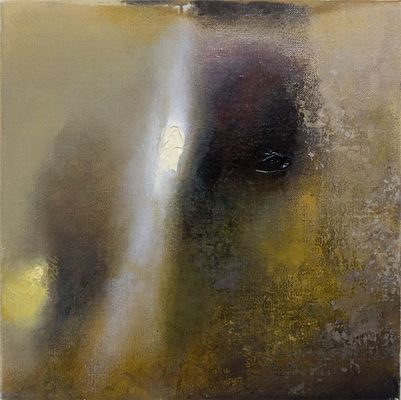
I am not a great reader of poetry but I always return to the work of Melbourne poet, Vincent Buckley (1925- 1988). Perhaps I find his most tantalising piece to be not a finished poem but a fragment left on a scrap of paper discovered on his desk after the poet’s death.
The poetry gathers like oil
In the word-core, and spreads
It has its music meet,
Its music is in movement.
This fragment is more the shell left behind from a volatile thought than a finished poem. I find the last two lines honest but awkward whereas the first two lines work like an arrow. Most likely he could not find a resolution so it was left. Still, in its present form, it remains an eloquent testimony to the ultimate failure of a medium to express mobile thought and sensation, in Buckley’s case, through verbal language. It’s an important matter because this is something all artists have to deal with regardless of the medium.
I have never written a poem, however, I am forever copying fragments from books on paper scraps in a vain effort to fix certain notions in my head. At first, they function as bookmarks that are sometimes returned to when I open the book. But before long, as they accumulate, they fall out littering the table interspersed with A4 photocopies, bills, books and medications.
To return to Buckley’s fragment, the first two lines very much evoke how I paint nowadays. As you age, detail diminishes and patches of light become more luminous and float. I feel the most honest way of dealing with this is by smearing the oil paint on the canvas with the fingers and working close-up, blind. Only if the patches coalesce into an approaching image can the work gain a life.
-
Jonathan Walker was born in Melbourne, Australia and brought up on a dairy farm in Gippsland. In the 1970’s he studied painting at RMIT and won the Harold Wright Scholarship to the British Museum, London. During the 1980’s he exhibited at Pinacotheca Gallery, Richmond and had work shown at the NGV and Heidi City Art Gallery. Over the same period he designed the cover for the “Epigenesi” LP by Giancarlo Toniutti, Italy and conducted a mail exchange work with Achim Wollscheid, Germany. The work with artists through the post resulted in an article published in the bicentenary issue of Art and Australia 1988. He showed in artist run spaces such as WestSpace in the 90’s and 2000’s, and until 2012, taught painting at Victoria University, which is where we (Colleen Ahern and Lisa Radford) as organisers of the exhibition, among many others, had the privilege of being his student.
Walker’s knowledge was imparted to students through the careful selection of music, literature, and artists found in books that he himself had ordered for the library. Walker’s strategy was the generosity of sharing his vast knowledge with references specific to each student and their context.
Walker’s paintings share a similar focus and intimacy.
This exhibition presents a small selection of recent paintings alongside a publication that includes Walker’s writing. Observational and analytical, Walker’s work is a type of material notation — the time of day, colour and how it is blended, the both specific and fleeting location of a reflection on lino or the question of whether a chair leg should be included in a painting.
Please join us on Friday August 21 between 6-8pm to celebrate the opening of the exhibition.
Curated by Colleen Ahern and Lisa Radford.
B. Wurtz
Curated by Nic Tammens
March 26 - April 4, 2015
B.Wurtz works from a basement studio in his home on Manhattan’s Lower East Side.
This local fact is attested to by the plastic shopping bags and newsprint circulars that appear in his work. As formal objects, they don’t make loud claims about their origins but nonetheless transmit street addresses and places of business from the bottom of this long thin island. Like plenty of artists, Wurtz is affected by what is local and what is consumed. His work is underpinned by this ethic. It often speaks from a neighborhood or reads like the contents of a hamper:
“BLACK PLUMS $1.29 lb.”
“Food Bazaar”
“USDA Whole Pork Shoulder Picnic 99c lb.”
“RITE AID Pharmacy, with us it’s personal.”
“H. Brickman & Sons.”
“Sweet Yams 59c lb."
Most of the work in this exhibition was made while the artist was in residence at Dieu Donne, a workshop dedicated to paper craft in Midtown. Here Wurtz fabricated assemblages with paper and objects that are relatively lightweight, with the intention that they would be easily transportable to Australia. This consideration isn’t absolute in Wurtz’s work, but was prescriptive for making the current exhibition light and cheap. Packed in two boxes, these works were sent from a USPS post office on the Lower East Side and delivered to North Melbourne by Australia Post.
Wurtz appears courtesy of Metro Pictures, New York.
Thanks to Rob Halverson, Joshua Petherick, Sari de Mallory, Matt Hinkley, Helen Johnson, Fayen d'Evie, Ask Kilmartin, Lisa Radon, Ellena Savage, Yale Union, and "Elizabeth".
John Nixon
"Archive"
December 15 - January 20, 2014
The presentation of John Nixon's archive offered a rare showcase of this extensive collection of the artist's own publications, catalogues, posters, ephemera, editions and more, from the mid 1980s onwards, alongside a selection of his artworks.
Organized by John Nixon, Joshua Petherick and Matt Hinkley.
"Habitat"
at Minerva, Sydney (organised by Joshua Petherick and Matt Hinkley)
November 15 - December 20, 2014
Lupo Borgonovo, Janet Burchill & Jennifer McCamley,
Lewis Fidock, HR Giger, Piero Gilardi, Veit Laurent Kurz,
Cinzia Ruggeri, Michael E. Smith, Lucie Stahl, Daniel Weil, Wols
Press Release:
“...It contained seven objects. The slender fluted bone, surely formed for flight, surely from the wing of some large bird. Three archaic circuitboards, faced with mazes of gold. A smooth white sphere of baked clay. An age-blackened fragment of lace. A fingerlength segment of what she assumed was bone from a human wrist, grayish white, inset smoothly with the silicon shaft of a small instrument that must once have ridden flush with the surface of the skin - but the thing’s face was seared and blackened.”
William Gibson, “Count Zero”, 1986
"Autumn Projects Archive"
Curated by Liza Vasiliou
March 6 - March 15, 2014
World Food Books, in conjunction with the Virgin Australia Melbourne Fashion Festival 2014, presented the Autumn Projects archive, consisting of a selection of early examples in Australian fashion with a particular interest in collecting designers and labels from the period beginning in the 1980’s, who significantly influenced the discourse of Australian Fashion.
Curated by Liza Vasiliou, the exhibition provided a unique opportunity to view pieces by designers Anthea Crawford, Barbara Vandenberg, Geoff Liddell and labels CR Australia, Covers, Jag along with early experimental collage pieces by Prue Acton and Sally Browne’s ‘Fragments’ collection, suspended throughout the functioning World Food Books shop in Melbourne.
H.B. Peace
presented by CENTRE FOR STYLE
November 14, 2013
"Hey Blinky, you say chic, I say same"
Anon 2013
H.B. Peace is a clothing collaboration between great friends Blake Barns and Hugh Egan Westland. Their pieces explore the divergences between 'character’ and ‘personality’ in garments....etc
Special Thanks to Joshua Petherick and Matt Hinkley of WFB and Gillian Mears
and a Very Special Thank you to Audrey Thomas Hayes for her shoe collaboration.
Janet Burchill & Jennifer McCamley
"Aesthetic Suicide"
May 10 - June 8, 2013
The first of our occasional exhibitions in the World Food Books office/shop space in Melbourne, "Aesthetic Suicide" presented a body of new and older works together by artists Janet Burchill & Jennifer McCamley, including videos, prints, a wall work, and publications.
During shop open hours videos played every hour, on the hour.
2017, English / German
Softcover, 431 pages, 20.3 x 27.1 cm
Published by
Walther König / Köln
$65.00 $15.00 - In stock -
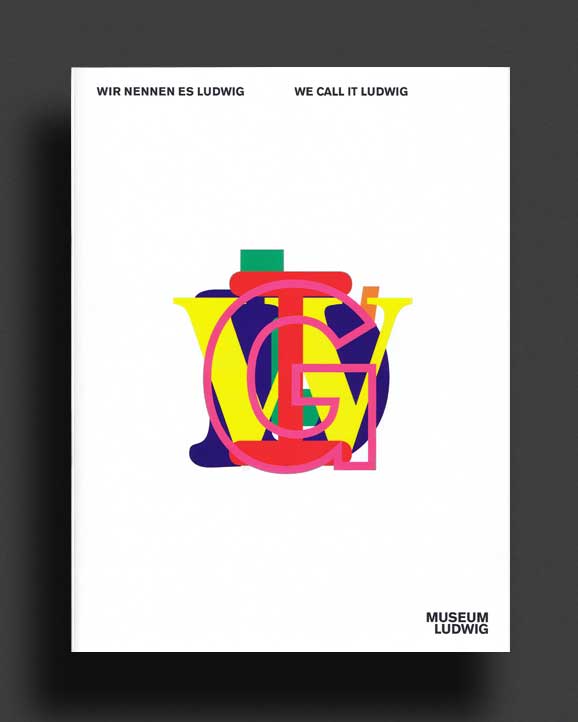
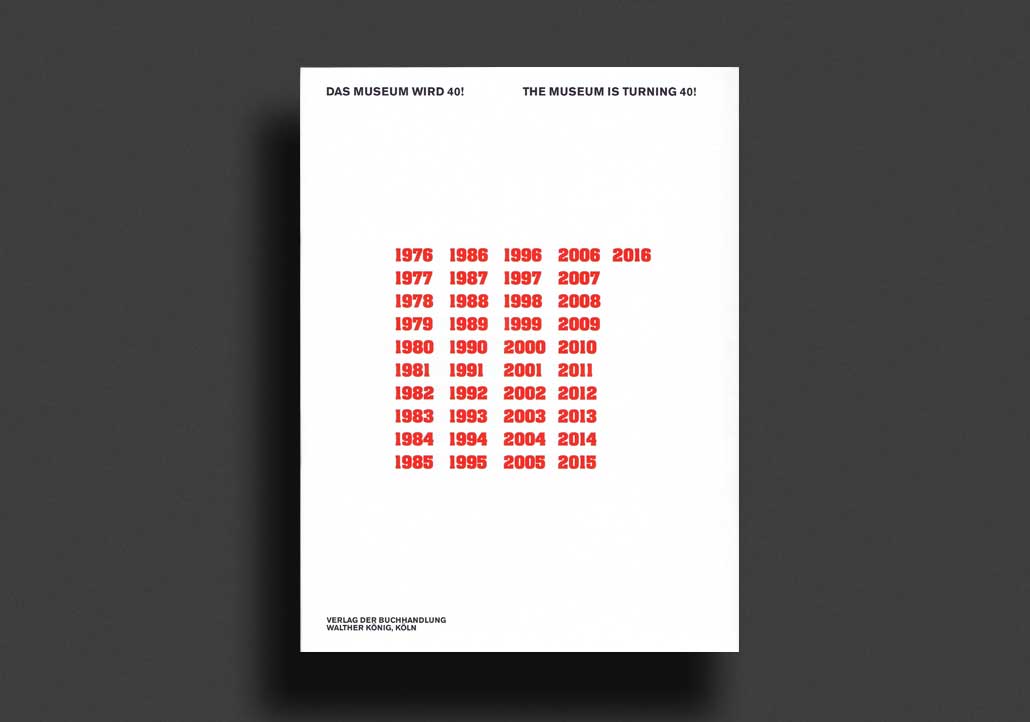
This publication documents the first forty years of exhibitions at the Museum Ludwig through an archive of installations and ephemera. It includes impressions from all the directors of the institution as well as the architects of the building. The conceptual starting point is the anniversary exhibition "We Call It Ludwig: The Museum Is Turning 40!" (2016), which is reflected here in a complete overview of all the works on display. For the anniversary exhibition, which was jointly conceived by the director and all the museum’s curators, twenty-five international artists and artist collectives were invited to engage in depth with the institution and to react to the question of what the Museum Ludwig means to them.
Participating artists included Georges Adéagbo, Ai Weiwei, Ei Arakawa & Michel Auder, Minerva Cuevas, Maria Eichhorn, Andrea Fraser, Meschac Gaba, Guerrilla Girls, Hans Haacke, Diango Hernández, Candida Höfer, Bodys Isek Kingelez, Kuehn Malvezzi, Christian Philipp Müller, Marcel Odenbach, Ahmet Ögüt, Claes Oldenburg, Pratchaya Phinthong, Alexandra Pirici & Manuel Pelmuş, Gerhard Richter, Avery Singer, Jürgen Stollhans, Rosemarie Trockel, Villa Design Group, Christopher Williams.
The expansive archive portion of this large book includes important work by countless artists spanning 40 years.
Edited by Yilmaz Dziewior
1957, Italian
Hardcover (w. dust jacket), 184 pages, 25 x 20 cm
Out of print title / used / good
Published by
Conchiglia / Milan
$390.00 - Out of stock
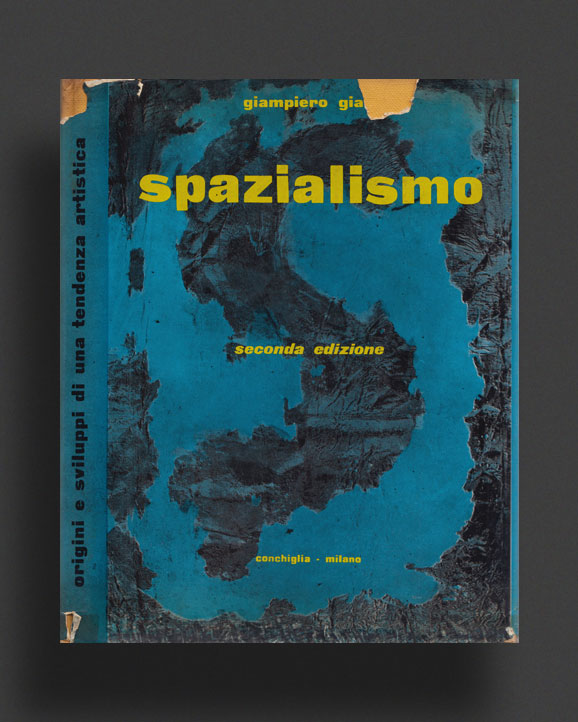
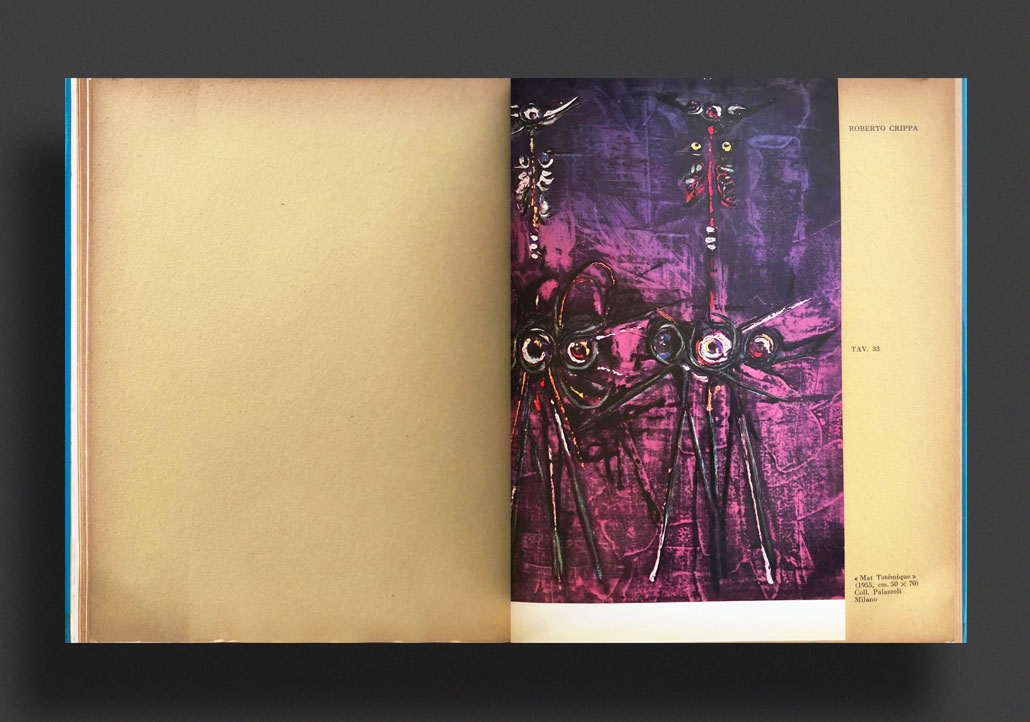
Very rare comprehensive study on Spatialism ("Origins and Developments of an Artistic Trend"), the art movement founded by Lucio Fontana in Milan in 1947. Published by Conchiglia, Milan, Italy, in 1957, and edited by Giani Giampiero, this lavish volume republishes all the original manifesto documents of the movement, beginning in Buenos Aires with the Manifiesto Blanco of 1946 through Fontana's subsequent Spazialismo declarations, alongside theoretical texts and drawings by Fontana and associates; extensive photographic documentation of social gatherings and landmark exhibitions of the movement; beautiful and generous surveys of the work by all representative exponents of the movement, with multiple works reproduced through vivid colour plates, texts and photographic portraits; plus more. An indispensable historical reference on one of the most important post-war modern art movements of 20th century Italy. Features the work of Lucio Fontana, Ettore Sottsass, Emilio Scanavino, Cesare Peverelli, Gino Morandis, Enrico Donati, Bruno De Toffoli, Mario Deluigi, Roberto Crippa, Giuseppe Capogrossi, Aldo Bergolli, Edmondo Bacci. This is the expanded second edition in blue jacket and produced with various paper stocks throughout (first, in yellow jacket, published 1956).
Spatialism (Italian: Spazialismo) is an art movement founded by Italian artist Lucio Fontana in Milan in 1947 in which he grandiosely intended to synthesize colour, sound, space, movement, and time into a new type of art. The main ideas of the movement were anticipated in his Manifiesto blanco (White Manifesto) published in Buenos Aires in 1946. In it he spoke of a new "spatial" art in keeping with the spirit of the post-war age. It repudiated the illusory or "virtual" space of traditional easel painting and sought to unite art and science to project colour and form into real space by the use of up-to-date techniques such as neon lighting and television. Five more manifestos followed; they were more specific in their negative than their positive aspects, and carried the concept of Spatialism little further than the statement that its essence consisted in "plastic emotions and emotions of colour projected upon space". In 1947 Fontana created a "Black Spatial Environment", a room painted black, which was considered to have foreshadowed Environment art. His stabbed and slashed canvases (beginning in 1949 and 1959 respectively) are also considered to embody Spatialism. Although Fontana's ideas were vague, his outlook was influential, for he was one of the first, certainly the first European artist to truly promote the idea of art as gesture or performance, rather than as the creation of an enduring physical work.
Good copy. Some damage to dust jacket with some chipping. As common with this fragile volume a page has disconnected from binding, but all present and in clean order. Overall a very nicely kept copy with standard age wear. A rare and precious work.
1994, French
Softcover, 158 pages, 28.7 × 23 cm
1st Edition, Out of print title / used / very good
Published by
Fondation pour l'Architecture / Brussels
$190.00 - Out of stock
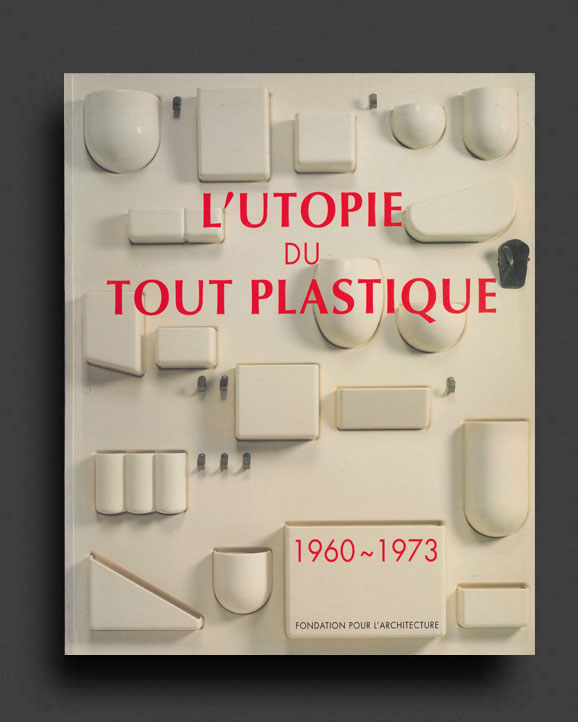
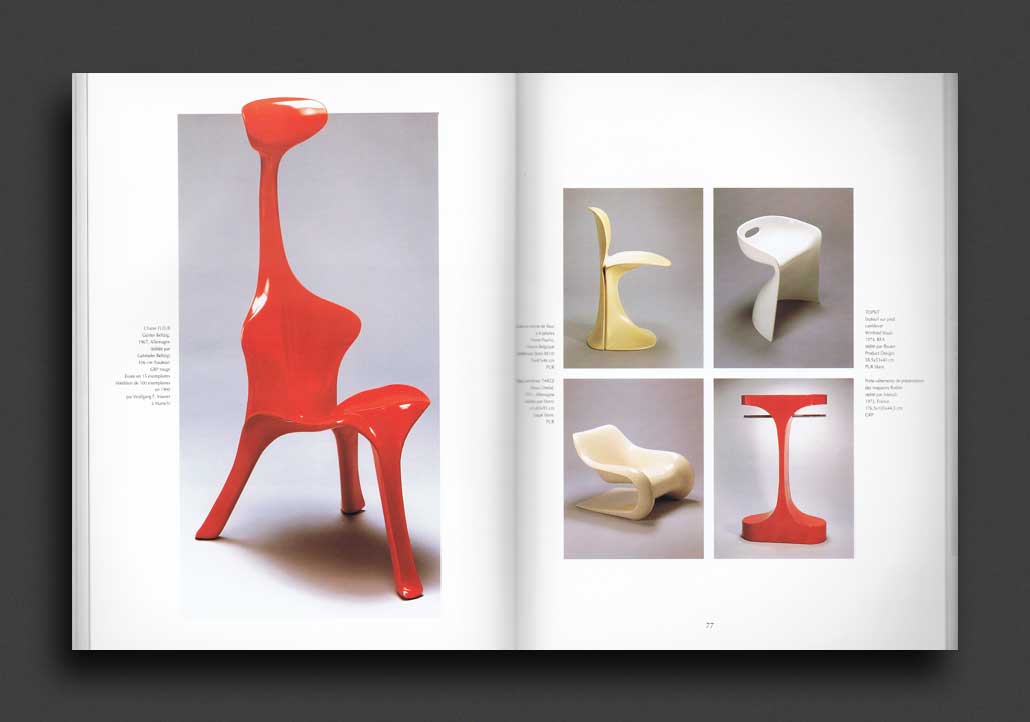
Very rare first Belgian edition of "L'Utopie du Tout Plastique 1960-1973", published in Brussels in 1994 by Fondation pour l'Architecture. Long out of print, this comprehensive volume quickly became an invaluable bible for plastic collectors of the 1960s, 1970s period. In 1994, on the occasion of a major exhibition in Brussels, editors Philippe Decelle, Diane Hennebert, and Pierre Loze compiled the most detailed printed survey of plastic products to date, from Art, Functional Furniture, Fiberglass, Inflatable PVC, Transparent PMMA, Pop and Radical Design, Cookware, Electronics, Mod Fashions, Utopian Arhitecture. Heavily researched and lavishly illustrated throughout with close to 200 of the finest examples, L’ Utopie has become the standard reference on 1960s plastic design - an essential aid in identifying the designers, companies and manufacture details of many classic plastic objects from this era.
Includes detailed biographies of the artists, designers, architects, manufacturers, plus a chronology and bibliography.
Translated blurb:
"The sixties are marked by unprecedented prosperity and technological progress. To this optimism corresponds an extraordinary freedom of creation until the oil crisis of 1973 which tempers this enthusiasm. The vogue of plastic is linked to this society of abundance. Yellow, red, orange, soft, hard, inflatable, it identifies with cheap, serial and disposable productions. Starting from a private collection unique in the world, the book offers a selection of plastic objects created between 1960 and 1973. Tupperware box, Kelton watch, Courrèges dress, Ettore Sottsass portable typewriter Valentine for Olivetti, first chair of Verner Panton, Joe Colombo ABS plastic chair, Niki de Saint Phalle's Nana, Caesar's Compression, cupola of the United States Pavilion by Richard Buckminster Fuller at the Montreal World's Fair or Frei Otto and Günter Behnisch overhead roof for the stadium of the Olympic Games in Munich, all show their diversity, their spirit and sometimes their beauty of the inventiveness of the time."
Features the work of Pierre Paulin, Sergio Mazza, Vico Magistretti, César, Studio 65, Nicola L, Piero Gilardi, Verner Panton, Arman, Gianfranco Frattini, Jonathan De Pas, Donato d'Urbino, Paolo Lomazzi, Gae Aulenti, Anna Castelli Ferrieri, Joe Colombo, Enzo Mari, Iseo Hosoe, Mario Bellini, Dorothée Maurer-Becker, Cesare Leonardi and Franca Stagi, Günter Beltzig, Maurice Calka, Eero Aarnio, Wendell Castle, Alberto Rosselli, Quasar Khanh, Rossi Molinary, Ennio Lucini, Ugo la Pietra, Ettore Sottsass, Superstudio, Archizoom, Roy Adzak, Studio Gruppo 14, Dieter Rams, Reinhold Weiss, Marco Zanuso, Rodolfo Bonetto, Roger Tallon, Pierre Cardin, Courreges, Frei Otto, Buckminster Fuller, Jean Maneval, Paolo Soleri, Archigram, and many more.
Very Good copy, only light wear and edge tanning.
1968, English
Hardcover (w. dust jacket), 208 pages, 23.2 x 16.7 cm
1st Edition, Out of print title / used / very good
Published by
Architectural Press / London
$90.00 - Out of stock
First edition of "Exhibitions, Exhibits, Industrial and Trade Fairs", published in 1968 by the Architectural Press in London.
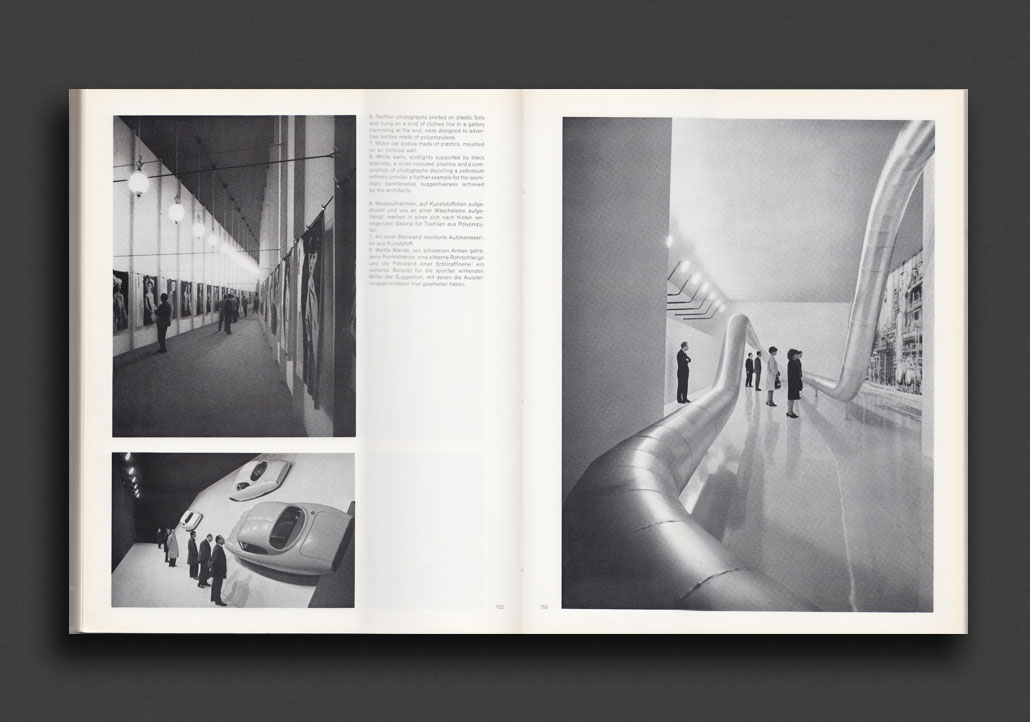
Deeply researched and profusely illustrated with exceptional black and white photography, architectural plans and diagrams, with text by author Wolfgang Clasen, this unique and inspiring book makes the point that "Architectural documentation is particularly important when dealing with a category of works of architecture which are not built to last."
This book perfectly captures a special and most innovative period in modern design and architecture. As the jacket announces: "We are living in an Exhibition Age: Expo 67 in Montreal is scarcely over and we are already looking ahead to the next World Exhibition in Osaka in 1970. In addition to their primary function of communication, exhibitions have a secondary function of almost equal importance: for because of the temporary nature of most exhibition buildings they provide architects and designers with a testing ground where new ideas, new structures and techniques can be tried out.
This book illustrates and describes eighty examples of exhibitions of all kinds taken from thirteen countries and all five continents; the period covered is from 1960 to the present day. Particular emphasis is laid on the newest trends and on such things as nature of most exhibition buildings they provide architects and designers with a testing ground where new ideas, new structures and techniques can be tried out."
Amongst the many fine examples of cultural exhibitions, commercial and trade expos and temporary pavilions are examples of works by Gio Ponti, Buckminster Fuller, Achille and Pier Giacomo Castiglioni, Le Corbusier, Ettore Sottsass Jr., Wim Crouwel, Total Design, Vittorio Gregotti, Eero Saarinen, Angelo Mangiarotti, Will Burtin, Charles and Ray Eames, Paolo Nestler, Henri Kay Henrion, Rolf Gutbrod, Xenakis, Frei Otto, Ulf Linde, Per-Olof Ultvedt, Will Burtin, Walter Kuhn, and many more.
Separate chapters on fair stands, display units and exhibit systems round off this exhaustive treatise on exhibition architecture with a full index of architects and designers.
Text in English and German.
Very good copy, with original Gio Ponti dust-jacket protected under mylar wrap. Light wear/tan/dust to edges.
2021, English
Softcover, 240 pages, 21.5 x 30.5 cm
Published by
Primary Information / New York
$84.00 - In stock -
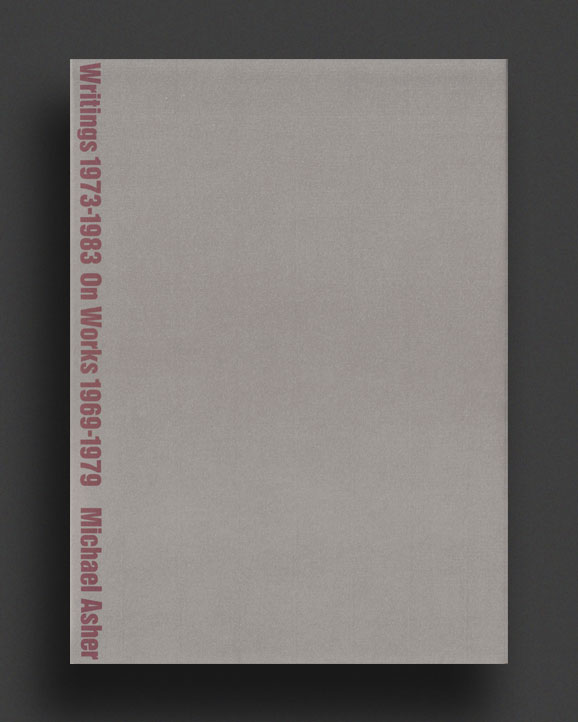
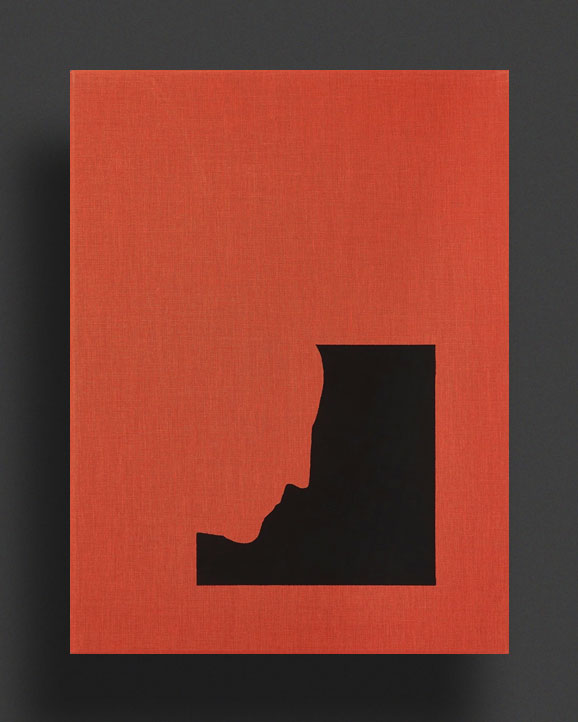
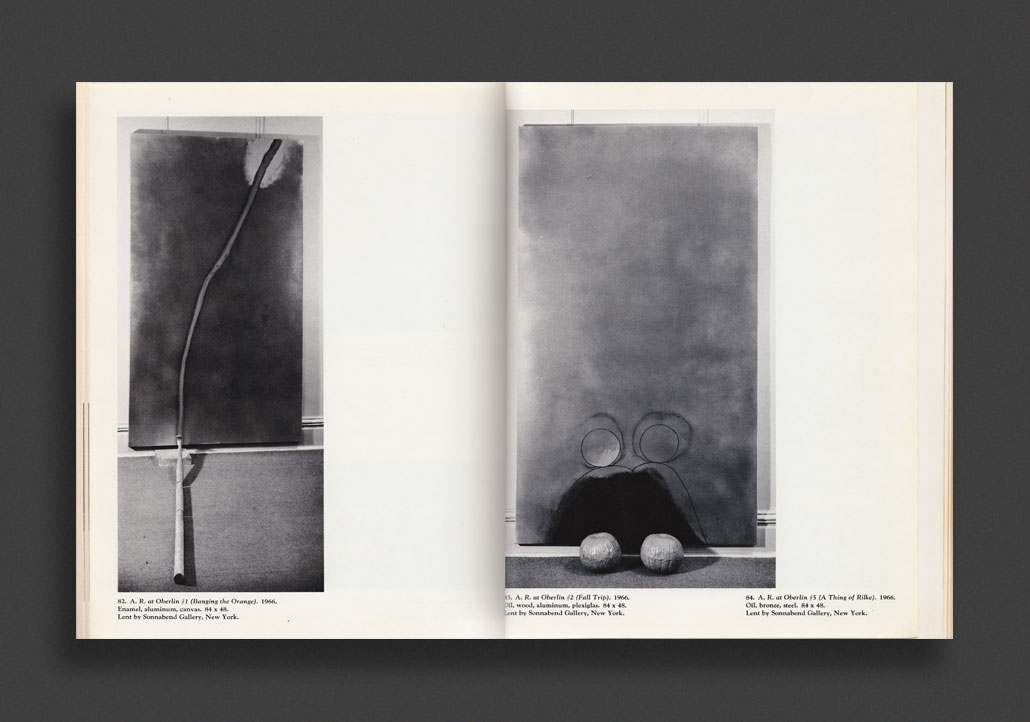
Writings 1973–1983 on Works 1969–1979 is an essential document of a decade of formative work by Michael Asher. Originally published in 1983, the book presents 33 works through the artist’s writings, photographic documentation, architectural floor plans, exhibition announcements, and other ephemera.
Asher did not create traditional art objects; instead, he chose to alter the existing institutional apparatus through which art is presented, creating work dependent on the architectural, social, or economic systems that undergird how art is produced and experienced. For example, in 1974, he removed the partition wall dividing the office and gallery space of the Claire Copley Gallery in Los Angeles. In another work from 1978, Asher had a bronze replica of a nineteenth-century sculpture of George Washington moved from the exterior of the Art Institute of Chicago to a room in the museum that housed eighteenth-century art, changing its location, but also its function from a public monument to an indoor sculpture, as it was originally intended.
Due to its site specificity and immateriality, Asher’s work ceased to exist after an exhibition, which makes this highly sought-after book the definitive mode through which one can gain insight into the work he made during this period. As the artist states in the introduction: “This book as a finished product will have a material permanence that contradicts the actual impermanence of the art-work, yet paradoxically functions as a testimony to that impermanence of my production.”
Initiated by Kasper König, Writings 1973-1983 on Works 1969-1979 was originally co-published by the Press of the Nova Scotia College of Art and Design and the Museum of Contemporary Art, Los Angeles, and was largely shaped by Asher’s close collaboration with art historian Benjamin H.D. Buchloh, who succeeded König as editor of the press.
Managing Editor: James Hoff
Managing Designer: Rick Myers
2022, English
Hardcover (w. dust jacket in hard cloth-covered slipcase w. softcover supplement), 252 pages, 34 x 25 cm
Published by
Hauser & Wirth / Zurich
$190.00 - Out of stock
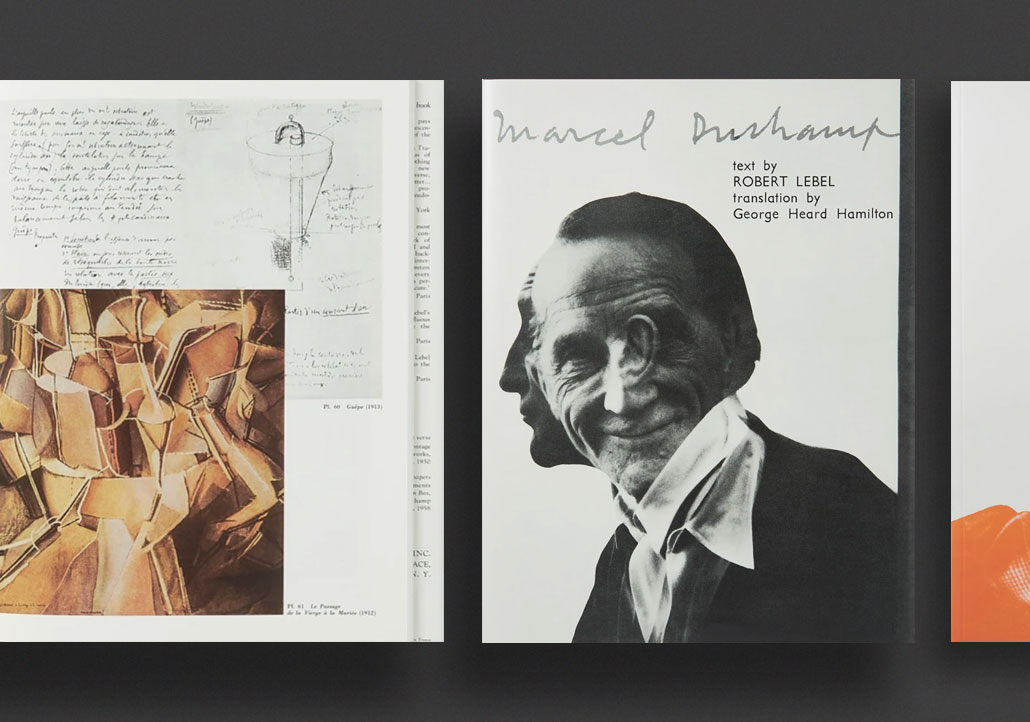
Duchamp’s historic 1959 catalogue raisonné-cum-artist's book now back in print in a facsimile English edition. ‘Marcel Duchamp’ became the go-to book on the artist for many decades following its publication in late 1959, when exclusive grand-deluxe and deluxe editions in French, along with trade editions in French and English, were simultaneously released. While Trianon Press’s French trade edition was reprinted numerous times, the Grove Press English edition languished out of print for the better part of two generations—until now, with Hauser & Wirth Publishers’ fully authorized facsimile re-edition.
By Robert Lebel. Edited by Jean-Jacques Lebel and Association Marcel Duchamp. Foreword by Harald Falckenberg. Introduction by Michaela Unterdörfer. Text by Marcel Duchamp, André Breton, Henri-Pierre Roché, Jean-Jacques Lebel, Man Ray, Michael Taylor.
Marcel Duchamp, the artist’s first legendary monograph and draft catalogue raisonné, was written by art historian and novelist Robert Lebel and published in French in 1959; later that same year, it was translated into English by George Heard Hamilton for Grove Press. The book was a cooperation between Lebel and Duchamp, and beyond Lebel’s extensive writing and bibliography, additional chapters were authored by Duchamp, H.P. Roché and André Breton. The coupling of these texts with diverse archival photographs and an illustrated compendium of Duchamp’s artworks delivered a complex and personal rendering of the artist’s life and inner circle. For the first time since its release more than 60 years ago, this landmark publication is back in circulation with Hauser & Wirth Publishers’ meticulous facsimile of the English edition, reflecting everything from its hand-tipped images to its recto-verso dust jacket appearing as close to the original as possible.
Fully authorized by artist Jean-Jacques Lebel—Robert Lebel’s son—and the Association Marcel Duchamp, the facsimile is accompanied by a supplement volume of essays and archival material that tells the story of Duchamp and Lebel’s close collaboration, and, as contributor Michael Taylor writes, how the original publication signified a "sea change in the artist’s receptivity to critical interpretation." The supplement includes texts by both Robert and Jean-Jacques Lebel and a newly discovered note by Man Ray, among a bevy of photographs from the Lebel and Duchamp archives, extending the story presented in the 1959 edition.
Robert Lebel’s analysis of Duchamp’s oeuvre remains fresh to this day, as does the book’s design, which was personally supervised by the artist. Hauser & Wirth Publishers reanimated Marcel Duchamp with the curatorial-design firm fluid, who recast the original typefaces as digital fonts, positioning each letter and image exactly as it was in the original. To achieve a near-exact facsimile, fluid consulted with paper conservators and printers to recreate the book with modern materials that match those available in 1959. This precise production quality assures that today’s readers will experience this historic book as Marcel Duchamp and Robert Lebel intended.
1976, English
Softcover, 314 pages, 15 x 21 cm
1st Edition, Out of print title / used / very good
Published by
E P Dutton / New York
$90.00 - Out of stock
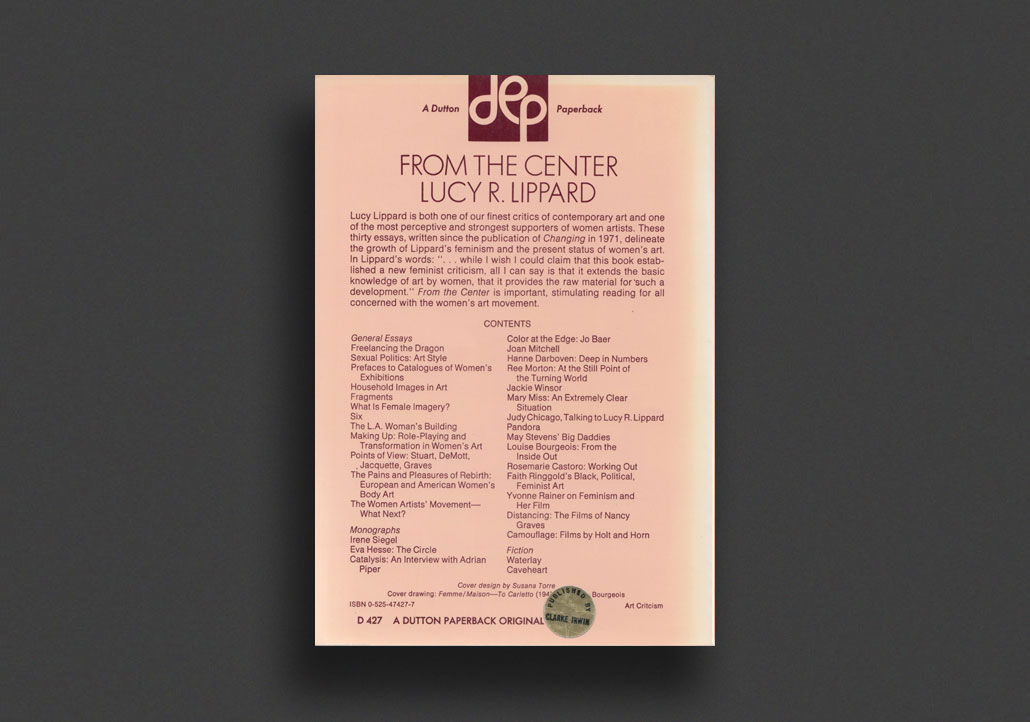
First 1976 printing of this fantastic and now rarely seen classic book collection of essays by internationally acclaimed writer, art critic, activist and curator, Lucy R. Lippard.
"FROM THE CENTER : Feminist Essays on Women's Art" is broken into three sections: GENERAL ESSAYS, MONOGRAPHS, and FICTION. GENERAL ESSAYS include 12 major essays such as "Sexual Politics : Art Style", "Household Images in Art", "Fragments", "What is Female Imagery", "Making Up: Role-Playing and Transformation in Women's Art", "The Pains and Pleasures of Rebirth: European and American Women's Body Art", "The Womens' Art Movement - What Next?" and more. MONOGRAPHS is made up of writings dedicated to single artists, including essays on the work of Eva Hesse, Adrian Piper, Jo Baer, Joan Mitchell, Hanne Darboven, Ree Morton, Irene Siegel, Rosemarie Castoro, Louise Bourgeois, Faith Ringgold, Yvonne Rainer, Judy Chicago, Jackie Winsor, Nancy Graves and many more. A suburb collection, illustrated throughout with examples of the artists written about, including a colour plate section.
Very Good copy with cover/spine tanning, light wear.
1970, English
Softcover, 100 pages, 25 x 21 cm
1st Edition, Out of print title / used / good
Published by
Whitney Museum / New York
$40.00 - Out of stock
1970 catalogue published to accompany the first major survey of Jim Dine at the Whitney Museum of American Art from February 27 to April 19, 1970. Illustrated profusely throughout with the works of Dine, along with many portraits (inc. by Lee Friedlander), essay by John Gordon, autobiographical note by Jim Dine, biography, bibliography, exhibition list, etc.
Jim Dine (b. 1935) is an American artist whose œuvre extends over sixty years. Dine’s work includes painting, drawing, printmaking (in many forms including lithographs, etchings, gravure, intaglio, woodcuts, letterpress and linocuts), sculpture and photography; his early works encompassed assemblage and happenings. Dine has been associated with numerous art movements throughout his career including Neo-Dada (use of collage and found objects), Abstract Expressionism (the gestural nature of his painting), and Pop Art (affixing everyday objects including tools, rope, articles of clothing and even a bathroom sink) to his canvases, yet he has actively avoided such classifications. At the core of his art, regardless of the medium of the specific work, lies an intense process of autobiographical reflection, a relentless exploration and criticism of the self through a number of highly personal motifs which include: the heart, the bathrobe, tools, antique sculpture, and the character of Pinocchio. Dine’s approach is all-encompassing, incorporating his entire lived experience.
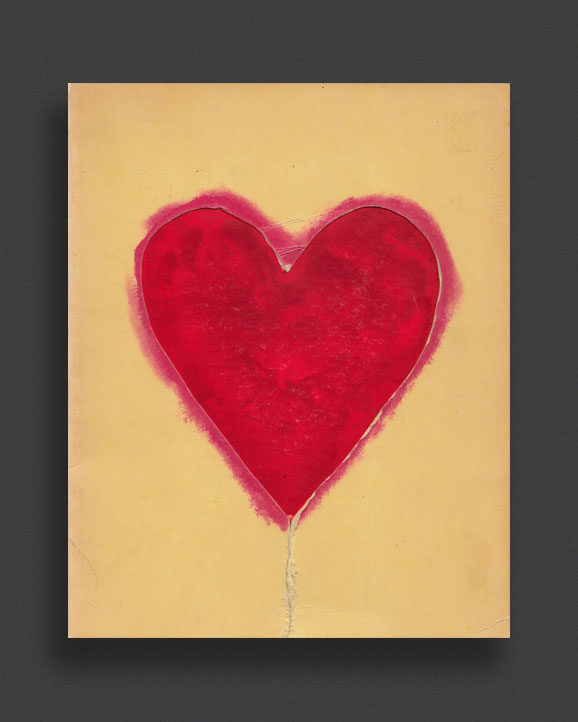
Good copy with light cover wear and creasing, including the very common split at the base of the die-cut heart motif (tape repaired from behind).
1996, English
Softcover (staple-bound), 20 pages, 15 x 21 cm
1st Edition, Out of print title / used / good
Published by
ACCA / Melbourne
BARBERism / Sydney
$45.00 - Out of stock
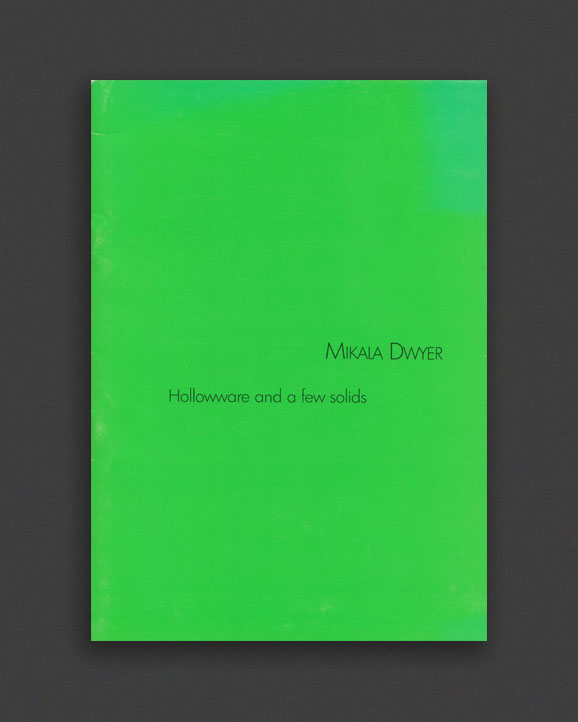
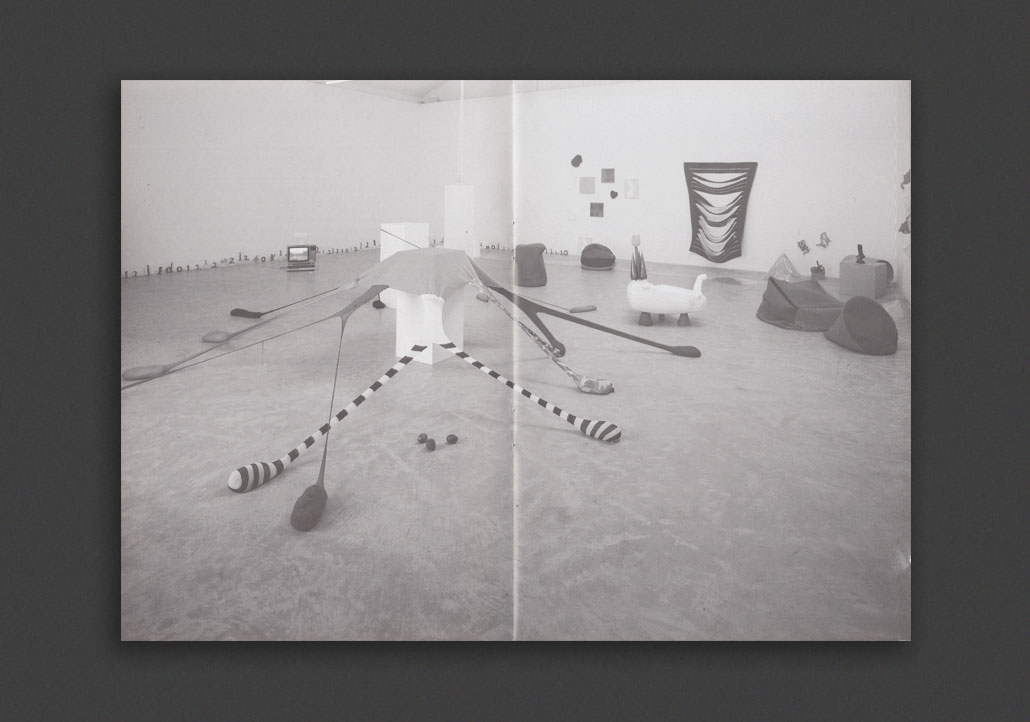
Lovely catalogue published to accompany Dwyer’s first solo show in Melbourne 'Hollowware and a Few Solids', Australian Center for Contemporary Art, Melbourne, 4 May–16 Jun 1996. Illustrated throughout with texts by Linda Michael, Rex Butler, and Edward Colless.
Good copy, with some cover wear.
1976, English
Softcover, 249 pages, 28.2 x 18.5 cm
1st Edition, Out of print title / used / very good
Published by
New York University Press / New York
$100.00 - Out of stock
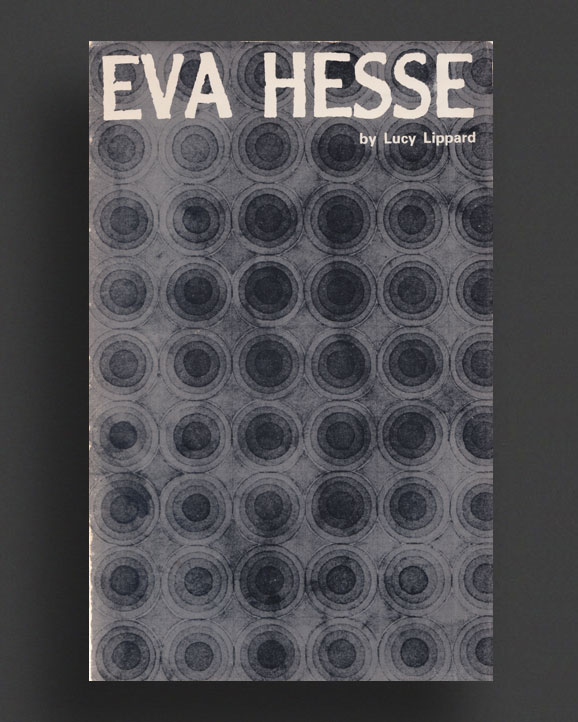
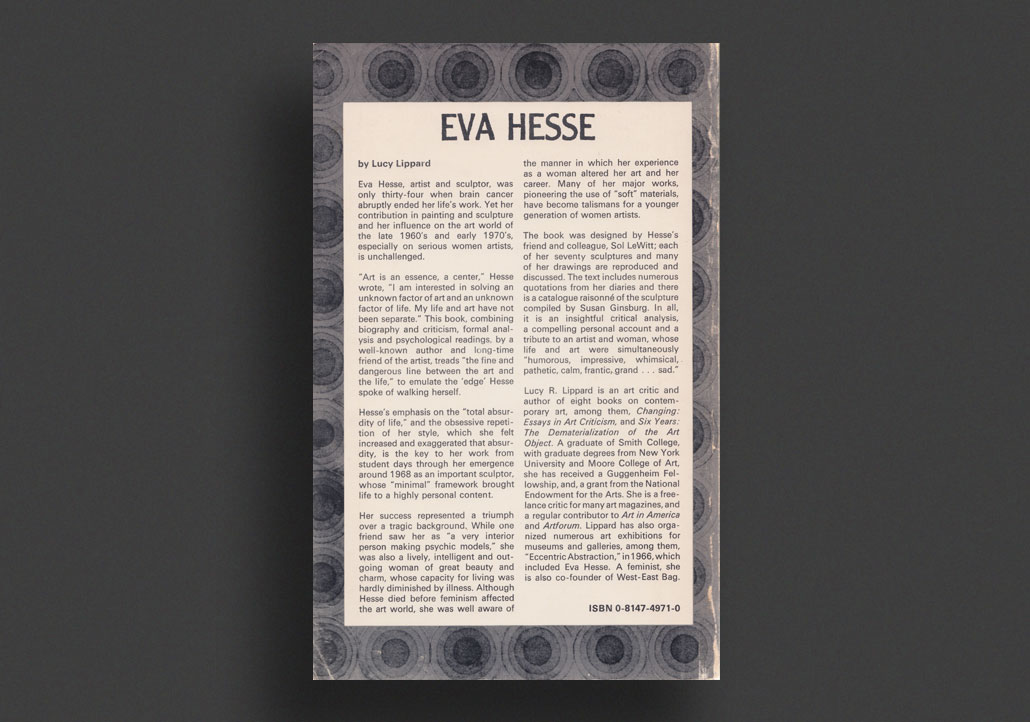
First 1976 edition of the best book on American artist Eva Hesse (1936—1970), and one of the great artist monographs. Long out-of-print, this classic text is both an insightful critical analysis and a tribute to an artist whose genius has become increasingly apparent with the passage of time. Authored by American writer, art critic, activist, and curator Lucy R. Lippard (b. 1937), Eva Hesse was designed by Hesse's friends and colleagues Sol LeWitt and Pat Stier; her sculptures, drawings, and paintings are reproduced throughout the entire book and discussed; and the text includes numerous quotations from her diaries.
Eva Hesse (1936—1970), was a German-born American sculptor, known for her pioneering work in materials such as latex, fiberglass, and plastics. As Lippard points out, Hesse's use of obsessive repetition in her works served to increase and exaggerate the absurdity she saw in her life. In many ways, her works were "psychic models," as Robert Smithson has said, of "a very interior person." In pioneering the use of "soft" materials, her sculptures betrayed her awareness of the manner in which her experience as a woman altered her art and career. Although she died before feminism affected the art world to any great extent, her major works have since become talismans for succeeding generations of women artists.
Very Good copy of the softcover first edition.
2021, English
Softcover, 64 pages, 17 x 22.2 cm
Edition of 300,
Published by
Hassla Books / New York
$58.00 - Out of stock
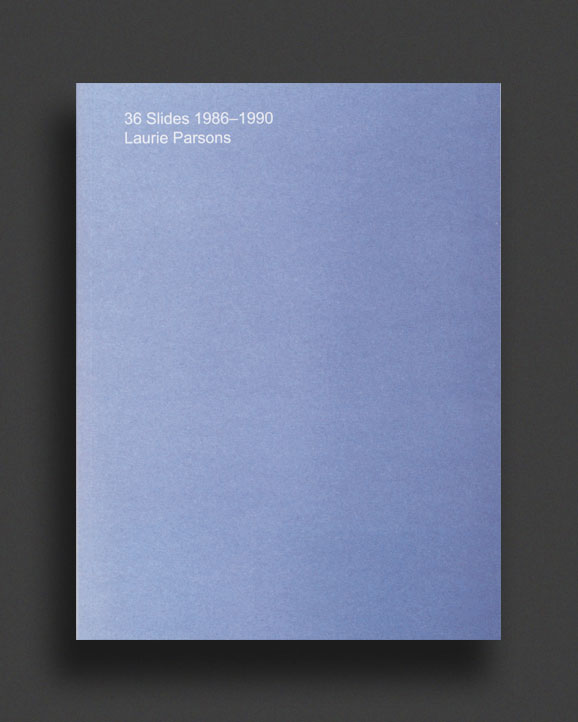
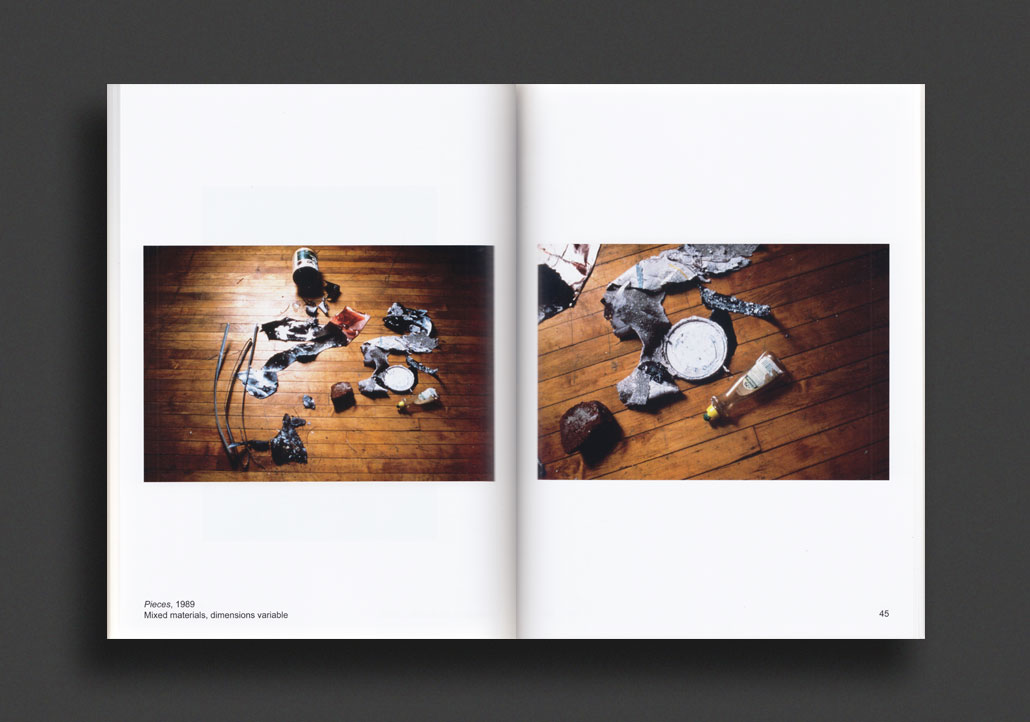
Published in an edition of only 300 copies, 36 Slides 1986–1990 is illustrated throughout and accompanied by text by American curator and critic Bob Nickas.
"The images that comprise this book come from two sheets of slides that I have held onto for almost thirty years now. (Each plastic sleeve holds up to twenty slides, for a total of forty in all. Four of the pockets with these sheets are empty.) Over that time I have projected them in talks I gave here and there, although never a talk devoted solely to the person who took them. That would be Laurie Parsons, an artist who was active between 1986 and 1994, a period of about nine years. In the first three, she focused on found objects, things she would bring back from the urban, natural, industrial environment, or their intersection. The earliest among them were stray pieces of wood, about sixty: splintered, peeling of paint, weathered by the elements, sun-bleached, deeper in the grain. With these, Parsons said she was "interested in the presence they had that I found as powerful as that of a piece of 'art.'" Whatever was brought back to the room where she lived, one side kept clear for an object's consideration, she photographed, always with slide film. She wanted to see the object as an image, her way of determining if it had the potential to be "a piece." [...] — Bob Nickas, 2021
In 1994, after being active with a number of exhibitions in the late 1980s—early 1990s, including exhibits at Lorence-Monk Gallery in New York; Galerie Rolf Ricke in Cologne; Andrea Rosen Gallery in New York; Le Consortium in Dijon, the then-35-year-old American artist Laurie Parsons (born 1959) stopped making art. She became a social worker, helping homeless people and the mentally ill, including adolescent psychiatric patients. After that, no more art. Or at least, no more making new work within explicitly designated art contexts. Parsons didn’t develop an activist art practice or move into what came to be known as socially engaged art; she left, and part of what she left behind is the fact that she left. More recently, though, Parsons’s retreat has garnered new attention and her work has been reappraised alongside that of other women artists such as Andrea Fraser, Lee Lozano, Agnes Martin, Cady Noland, Charlotte Posenenske, Elaine Sturtevant and Rosemary Tonks, who all stopped working permanently or dropped out of the art world for a significant period of time — in part as a form of critical resistance to a patriarchal and market-oriented art world. .
2011, English
Softcover, 144 pages, 24 x 31 cm
Published by
Yale University Press / New Haven
$89.00 - Out of stock
This stunning book offers an important mid-career retrospective of the work of American artist Richard Hawkins (born 1961), whose paintings, collages, and mixed-media pieces are making a crucial contribution to the contemporary art scene. Color plates present approximately 80 of Hawkins's works, representing each stage of his career and including pieces never before published.
Based in Los Angeles, Hawkins addresses numerous contemporary issues in his art, especially those related to gender and identity and their connections to classical antiquity. The authors of the catalogue provide informative essays on aspects of Hawkins's work, the development of his vision, and his unique place in the contemporary art world.
1968, Italian / English
Softcover, 84 pages, 32.5 x 24 cm
1st Edition, Out of print title / used / very good
Published by
Editoriale Domus / Milan
$65.00 - Out of stock
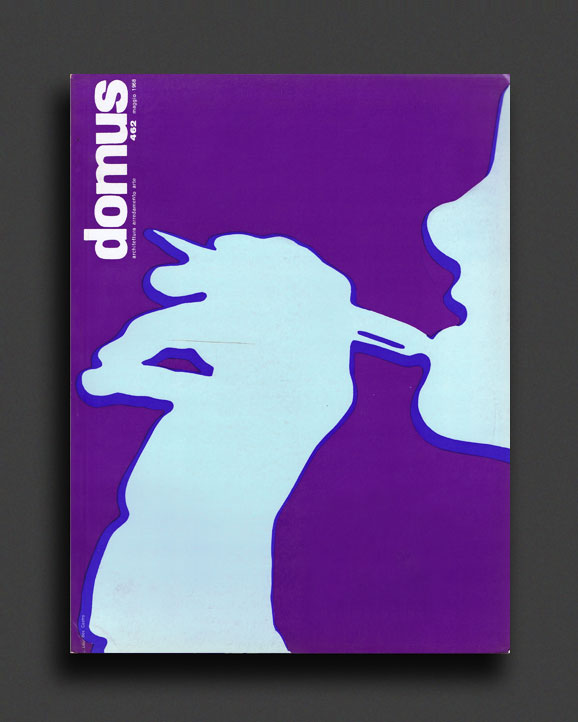
Founded in 1928 as a “living diary” by the great Milanese architect and designer Gio Ponti, domus has been hailed as the world’s most influential architecture and design journal, distributed in 89 countries. With exuberant style and rigor, it offered energetic up-to-date coverage and analysis of major themes, developments and stylistic movements in product, structure, interior, and industrial design. Called the "Mediterranean Megaphone," domus has always been considered the most concrete published expression of Italian style, documenting generations of radical, practical, and beautiful production, both local and across the world. Amongst a seemingly endless archive of contributions and features, domus frequently covered the works of the protagonists of the Anti and Radical Design movements, modern architecture, new experiments in environmental/spatial/commercial design, international product design, the activities of the Arte Povera, Pop art, Minimal Art and Nouveau Réalisme movements, and much more.
domus No. 462 Maggio 1968
Editor : Gio Ponti
Editorial committee and contributors include : Cesare Casati, Pierre Restany, Agnoldomenico Pica, Pierre Restany, Carmela Haerdtl, Joseph Rykwert, Ettore Sottsass jr., Charles and Ray Eames,
Kho Liang je, Bernard Rudofsky, George Nelson, Fausto Melotti, Tommaso Trini, Tapio Wirkkalaand, Rut Bryk, and more.
features :
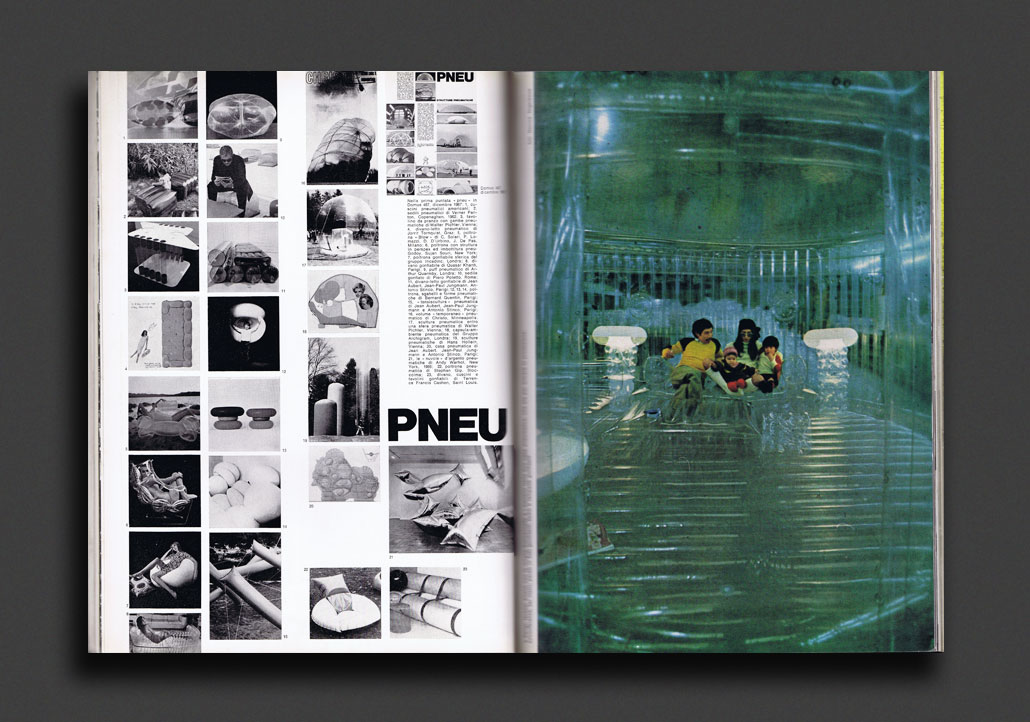
Archizoom; The Living Theatre; "The New Headquarters for the Ford Foundation in New York" by architects Kevin Roche, John Dinkeloo and Associates; "National Aquarium in Washington" by architects Kevin Roche, John Dinkeloo and Associates, with Office of Charles Eames; "Pneu: Inflatable Structures and Forms"; "A Mini Space" by Joe Colombo; new lamp edition from Didier Bernardin; Multiples by Franco Angeli, Lucio Fontana, Gino Marotta, Gianni Colombo, David Morris, Fabrizio Cocchia, etc. by Tommaso Trini; "Charles Rennie Mackintosh 1868-1968; "Magistretti in Paris : the Cerruti 1881 styling centre"; Art exhibitions all over the world; Book reviews; Lourdes Castro / Cesar / Jean-Pierre Raynaud by Pierre Restany; "The House of Roger Tallon"; Pino Pascali; Giulio Paolini; and much more.
Beautifully printed in Italy and heavily illustrated throughout with vivid colour and black and white photography across multiple paper stocks, page crops and fold-out spreads.
1971, English
Softcover, 104 pages, 25 x 22 cm
Ed. of 2000,
1st Edition, Out of print title / used / very good
Published by
Solomon R. Guggenheim Foundation / New York
$150.00 - Out of stock
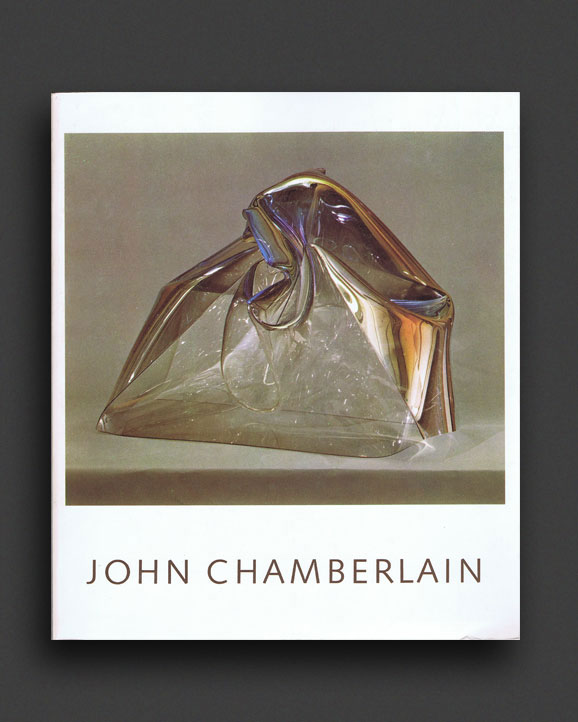
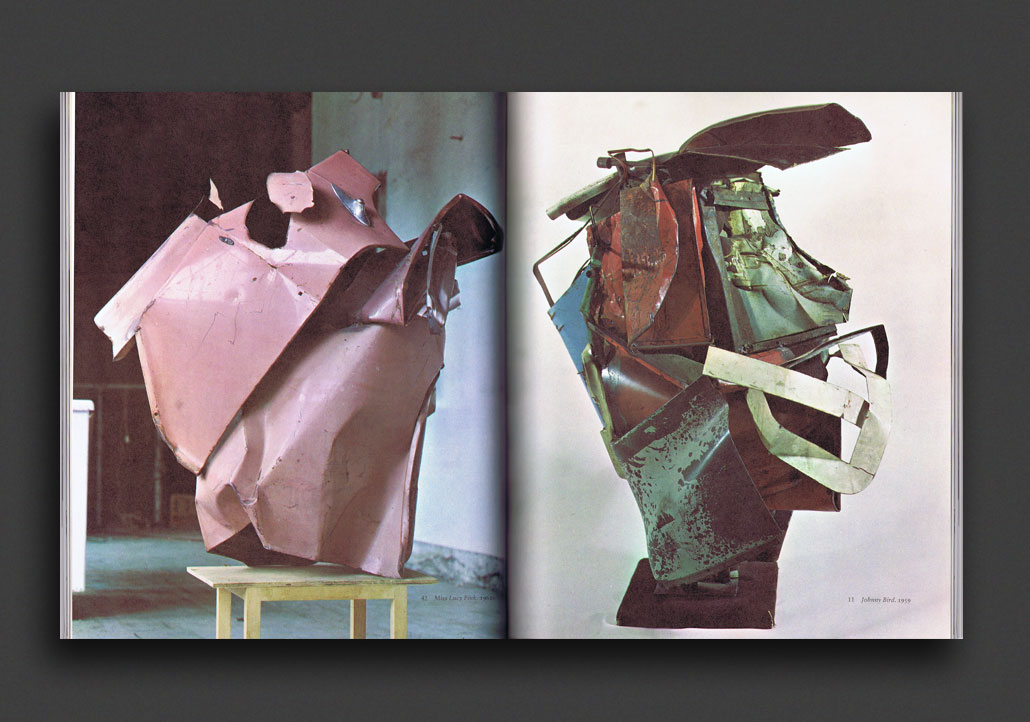
The very collectible, and never technically publicly distributed, John Chamberlain "A Retrospective Exhibition" catalogue from 1971, published in an edition of only 2000 copies. Edited by Diane Waldman and published on the occasion of Chamberlain's first museum retrospective in 1971, this beautiful catalogue is profusely illustrated in black and white and colour throughout with over 100 of Chamberlain's works. American artist John Chamberlain's work transformed the strengths of Abstract Expressionism into a three-dimensional form through the use of industrial materials.
In addition to the scholarly essay by Diane Waldman discussing the artist’s influences in great detail, a selection of excerpts from a conversation between Chamberlain, former editor of Art in America Elizabeth C. Baker, artist Donald Judd, and Waldman is also a crucial feature. Also includes a checklist of all 109 works, as well as a bibliography.
The last end page expressly states: "2000 copies of this catalogue designed by Malcolm Grear, typeset by Craftsman Type, Inc. have been printed by Scroll Press, Inc. in December 1971 for the trustees of The Solomon R. Guggenheim Foundation on the occasion of the exhibition "John Chamberlain: A Retrospective Exhibition."
First and only edition of this scarce book, Very Good-Fine condition.
1968, Italian
Softcover, 16 pages, 30 x 22 cm
1st Edition, Out of print title / used / good
Published by
Galleria L'Attico / Rome
$350.00 - Out of stock
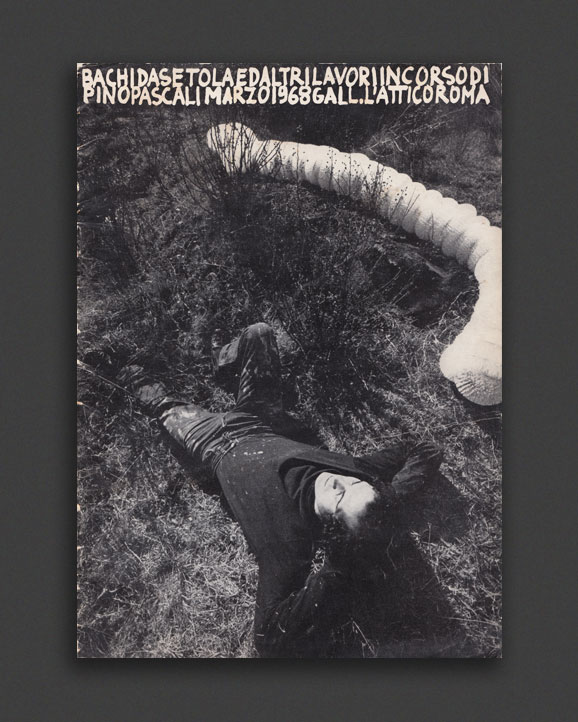
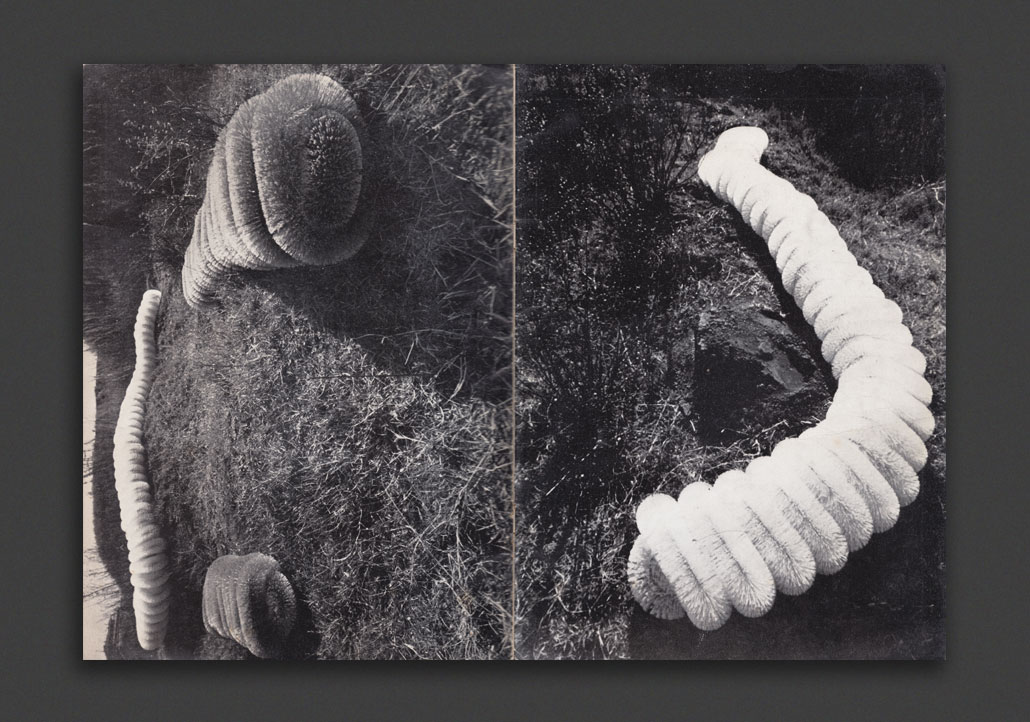
Extremely rare catalogue of Pino Pascali, published to accompany his solo exhibition at the legendary Galleria L'Attico in Rome, March 1968, only months before his death at the age of thirty-two following a tragic motorcycle accident in Rome. This exhibition at Fabio Sargentini's Galleria L'Attico was the very first exhibition of Pascali's iconic "Bristleworms", sculptures in the shape of large caterpillars made with industrial acrylic brushes supported by an iron structure and positioned to invade the gallery space. Beautifully illustrated throughout with many full-bleed b/w and colour illustrations of Pascali's work (Bristleworms and other works in progress) and the artist himself. Photography by Ugo Mulas. Very little text, in Italian. A stunning and historical publication.
Pino Pascali (1935—1968) was born in Bari, Italy in 1935 and moved to Rome in 1955 to learn scene painting and set design at the Academy of Art. Whilst working as an advertisement illustrator and designer Pascali met fellow Arte Povera artist Jannis Kounellis, which lead to his first solo exhibition in 1965 of his "fake sculptures," a series of shaped-canvases that first appear to be solid sculptures but are actually paintings that present abstract forms suggesting animals, plants and landscapes. Soon after, Pascali created his "weapon series," which is perhaps his most famous group of works. Assembled from found materials and painted olive-green, it faithfully recreates every detail of the weapon it mimics. However, as the weapon cannot fire or kill, it becomes an innocent, oversized toy. Opposite to the "weapon series" in appearance, Pascali presented organic forms in a dream-like universe that, like the "fake sculptures," play on the relationship between illusion and reality. During his brief activity as a sculptor during the flourishing years of Pop, Concept, and Environmental Art, Pascali produced 149 works, many of which are true icons of twentieth-century Italian art and helped lay the foundations of the Arte Povera movement. The day of his untimely death at the age of 32, following a tragic motorcycle accident on 11 September 1968, coincided with the moment of his greatest public recognition (his presentation at the Venice Biennale and the posthumous awarding of the Sculpture Grand Prix). His short, enigmatic career has served as an important, almost mythological, contribution to post-war European art.
L'Attico was an Italian contemporary art gallery founded in 1957 by Bruno Sargentini and his son Fabio devoted to Italian and international Art Informel. Throughout the late 1950s and 1960s L'Attico exhibited the likes of Lucio Fontana, Jean Fautrier, Vasco Bendini, Giuseppe Capogrossi, Roberto Matta, and many others, but it was with the success of the late 1960s exhibitions by Pino Pascali and Jannis Kounellis that distinguished L'Attico as a true avant-garde gallery, laying the foundations for what would later become Arte Povera. First located in Piazza di Spagna 20, L'Attico moved in 1969 to a garage in Via Beccarla where Jannis Kounellis created the exhibition with twelve live horses, defined by Sargentini himself as "the most famous exhibition in a private gallery of the twentieth century". Sargentini was instrumental in forging a strong bond between New York and Rome in the late 1960s, and presented American artists such as Terry Riley, Trisha Brown, Simone Forti, La Monte Young, Philip Glass, Steve Reich, Charlemagne Palestine, Joan La Barbera, Vito Acconci, Sol LeWitt and Robert Smithson, alongside European artists such as Jean Tinguely, Joseph Beuys, Mario and Marisa Merz, Gino De Dominicis, and many more. From 1972, L'Attico was based in a large apartment in via del Paradiso, near Campo de 'Fiori in Rome, further exhibiting works by such artists as Marcel Duchamp, Alighiero Boetti, Luigi Ontani, Marisa Merz, Hidetoshi Nagasawa, Nam June Paik, Gilbert and George, Hans Bellmer, Emilio Prini and more. In 2010, MACRO presented an exhibition that traces its cultural and artistic activity from the period between 1966 and 1978.
Very Good copy with some light creasing and tanning from age.
2019, English
Softcover, 208 pages, 20.3 x 25.4 cm
Published by
MoMA / New York
$55.00 - Out of stock
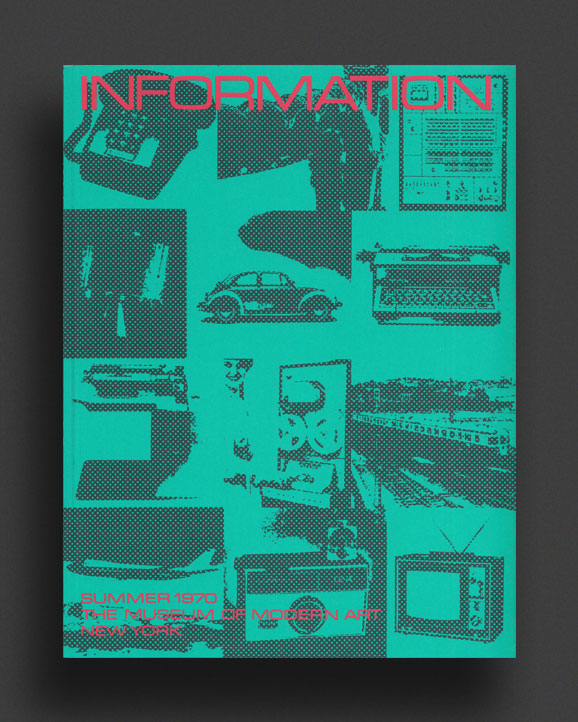
The 50th anniversary edition of MoMA's landmark book on conceptual art.
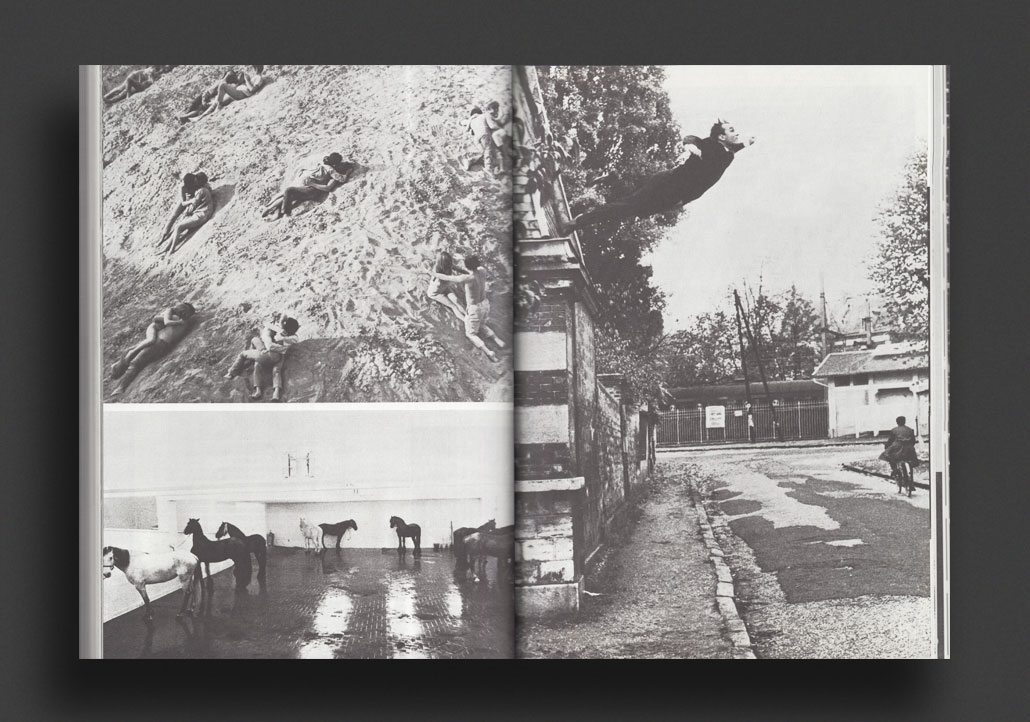
In the summer of 1970, the Museum of Modern Art in New York mounted the now legendary exhibition Information, one of the first surveys of conceptual art. Conceived by MoMA’s celebrated curator Kynaston McShine as an “international report” on contemporary trends, the show and attendant catalog together assembled the work of more than 150 artists from 15 countries to explore the parameters and possibilities of the emerging art practices of the era. Noting the participating artists’ attunement to the “mobility and change that pervades their time,” McShine underscored their interest in “ways of rapidly exchanging ideas, rather than embalming the idea in an ‘object.’” Indeed, much of the work in the exhibition engaged mass-communications systems, such as broadcast television and the postal service, and addressed viewers directly, often encouraging their participation in return.
The catalog, rather than merely document the show, functioned autonomously: it included a list of recommended reading, a chance-based index by critic Lucy Lippard, and individual artist contributions in the form of photographic documentation, textual description, drawings and diagrams—some relating to work in the exhibition and others to artworks as yet unrealized. This facsimile edition of the original Information catalog, which has long been out of print, invites reengagement with MoMA’s landmark exhibition while illuminating the early history of conceptual art.
Kynaston McShine was formerly Chief Curator at Large at The Museum of Modern Art, New York.
Artists include Vito Acconci, Carl Andre, Siah Armajani, Keith Arnatt, Art & Language Press, Art & Project, Richard Artschwager, David Askevold, Terry Atkinson, David Bainbridge, John Baldessari, Michael Baldwin, Barrio, Robert Barry, Frederick Barthelme, Bernhard & Hilla Becher, Joseph Beuys, Mel Bochner, Bill Bollinger, George Brecht, Stig Broegger, Stanley Brouwn, Daniel Buren, Victor Burgin, Donald Burgy, Ian Burn and Mel Ramsden, James Lee Byars, Jorge Luis Carballa, Christopher Cook, Roger Cutforth, Carlos D'Alessio, Hanne Darboven, Walter de Maria, Jan Dibbets, Gerald Ferguson, Rafael Ferrer, Barry Flanagan, Group Frontera, Hamish Fulton, Gilbert & George, Giorno Poetry Systems, Dan Graham, Hans Haacke, Ira Joel Haber, Randy Hardy, Michael Heizer, Hans Hollein, Douglas Huebler, Robert Huot, Peter Hutchinson, Richards Jarden, Stephen Kaltenbach, On Kawara, Joseph Kosuth, Christine Kozlov, John Latham, Barry Le Va, Sol Lewitt, Lucy Lippard, Richard Long, Bruce McLean, Cildo Campos Meirelles, Marta Minujin, Robert Morris, N.E. Thing Co., Bruce Nauman, New York Graphic Workshop, Newspaper, Group Oho, Helio Oiticica, Yoko Ono, Dennis Oppenheim, Panamarenko, Giulio Paolini, Paul Pechter, Giuseppe Penone, Adrian Piper, Michelangelo Pistoletto, Emilio Prini, Alejandro Puente, Markus Raetz, Yvonne Rainer, Klaus Rinke, Edward Ruscha, J.M. Sanejouand, Richard Sladden, Robert Smithson, Keith Sonnier, Ettore Sottsass Jr., Erik Thygesen, John Van Saun, Guilherme Magalhaes Vaz, Bernar Venet, Jeff Wall, Lawrence Weiner, Ian Wilson.
2022, English
Softcover, 160 pages, 22 x 15 cm
Published by
Soberscove Press / Chicago
$55.00 - In stock -
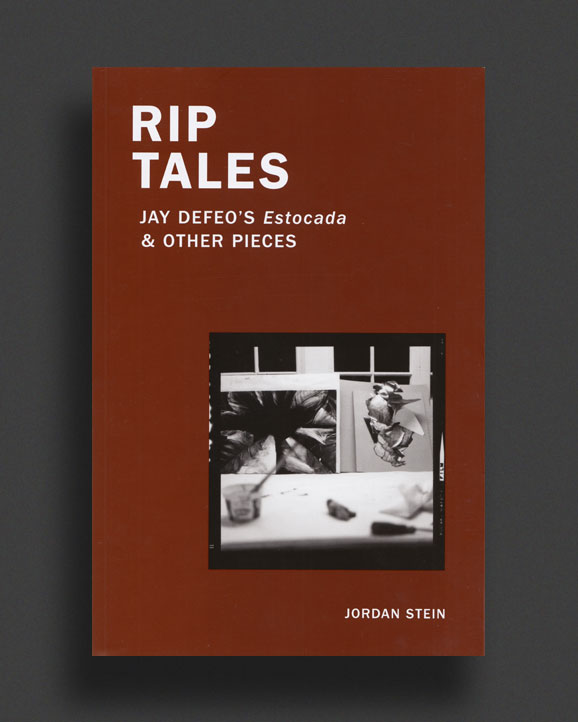
On the life and afterlives of Jay DeFeo's Estocada, a work created in the shadow of The Rose.
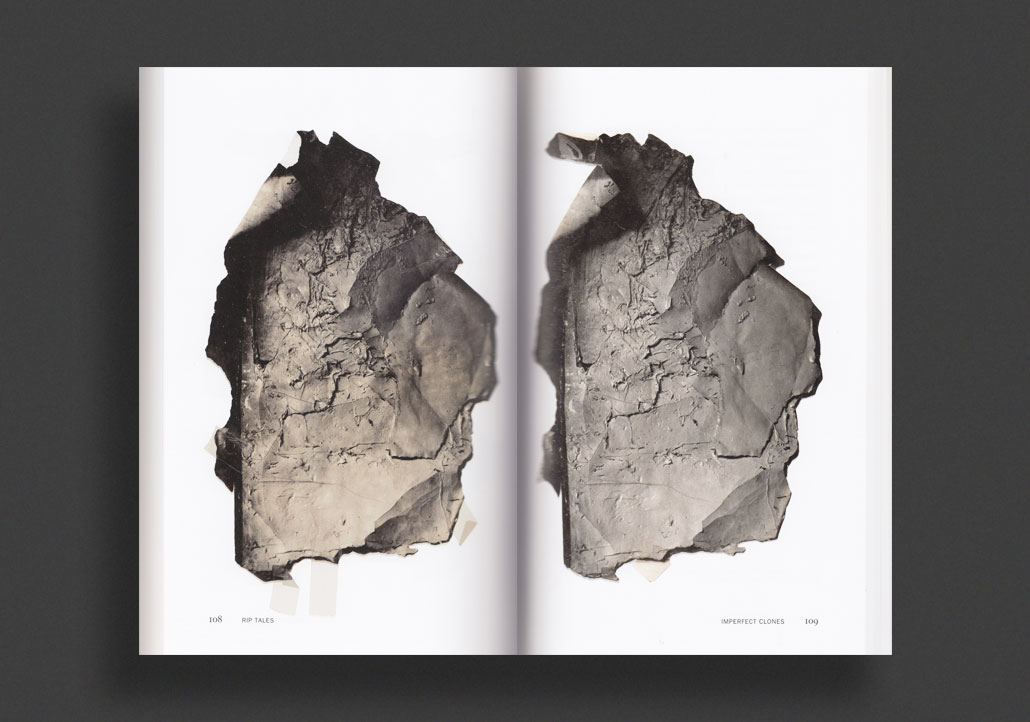
In 1965, Jay DeFeo (1929-89) was evicted from her San Francisco apartment, along with the 2,000-pound colossus of a painting for which she would become legendary, The Rose. The morning after it was carried out the front window, DeFeo was forced to destroy the only other artwork she'd started in six years, an enormous painting on paper stapled directly to her hallway wall. The unfinished Estocada—a kind of shadow Rose—was ripped down in unruly pieces and reanimated years later in her studio through photography, photocopy, collage and relief.
Drawing from largely unpublished archival material, Rip Tales traces for the first time Estocada's material history, interweaving it with stories about other Bay Area artists—Zarouhie Abdalian, April Dawn Alison, Ruth Asawa, Lutz Bacher, Bruce Conner, Dewey Crumpler, Trisha Donnelly and Vincent Fecteau—that likewise evoke themes of transformation, intuition and process. Foregrounding a Bay Area ethos that could be defined by its resistance to definition, Rip Tales explores the unpredictable edges of artworks and ideas.
2012, English
Hardcover, 320 pages, 26.7 x 30.5 cm
Published by
Yale University Press / New Haven
Whitney Museum of American Art / New York
$120.00 - Out of stock
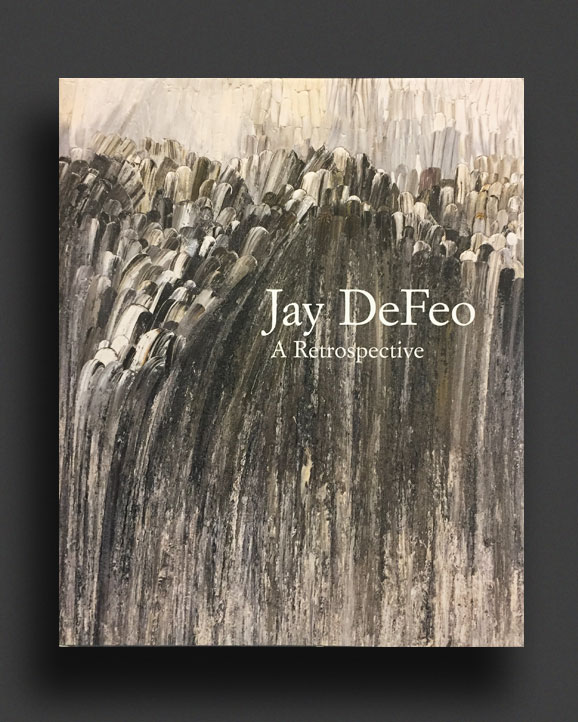
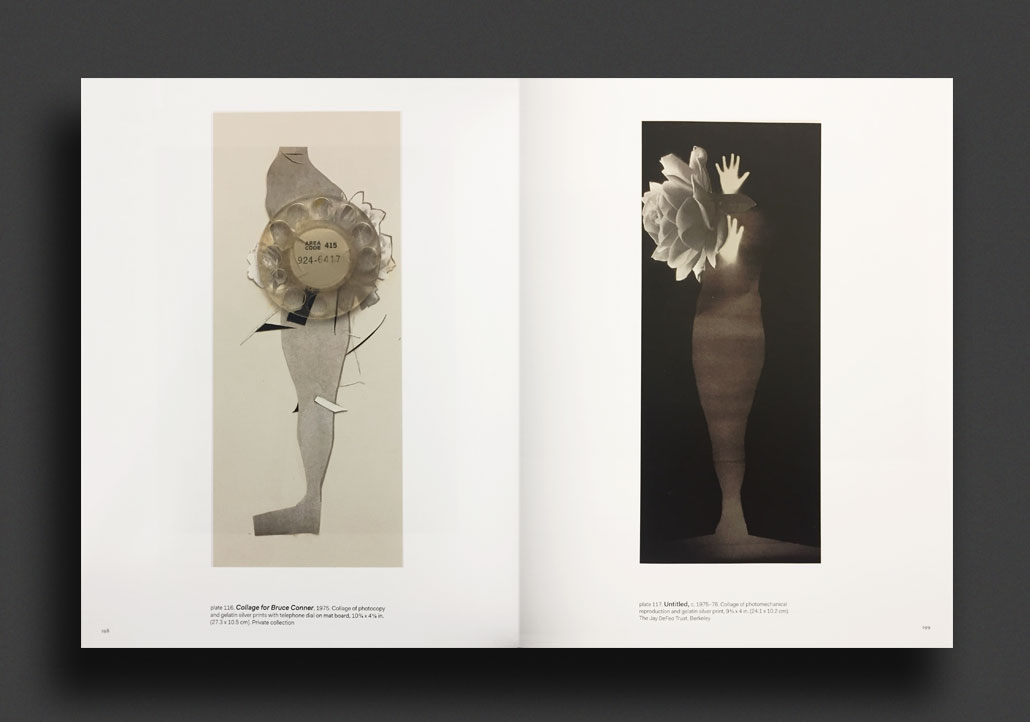
Jay DeFeo (1929-1989) was part of a vibrant community of avant-garde artists, poets, and musicians in San Francisco during the 1950s and 1960s. Her circle included Wallace Berman, Joan Brown, Bruce Conner, Wally Hedrick, Edward Kienholz, and Michael McClure. Although best known for her monumental painting The Rose (1958-66), DeFeo worked in a wide range of media and produced an astoundingly diverse and compelling body of work over four decades. DeFeo's unconventional approach to materials and her intensive, physical method make her a unique figure in postwar American art.
In the first comprehensive monograph on DeFeo, Dana Miller looks at the breadth of the artist's work, her cross-disciplinary practice, broad range of interests and influences, as well as pivotal moments in her career. In addition, Miller dispels misconceptions and assumptions about the artist and also offers new insight into her under-recognized works from the 1970s and 1980s. Greil Marcus explores the significance of titles in DeFeo's work; Michael Duncan considers her approach to her career and the marketplace; Corey Keller looks at DeFeo's photographic oeuvre; and Carol Mancusi-Ungaro examines her materials and processes.
The book features new photography, archival images, and a number of previously unpublished works. Also included are a biographical chronology, an extensive bibliography, and an exhibition history.
2016, English / Spanish
Softcover, 144 pages, 23.5 x 17 cm
Published by
Lulu / Mexico City
Mousse Publishing / Milan
$48.00 - Out of stock
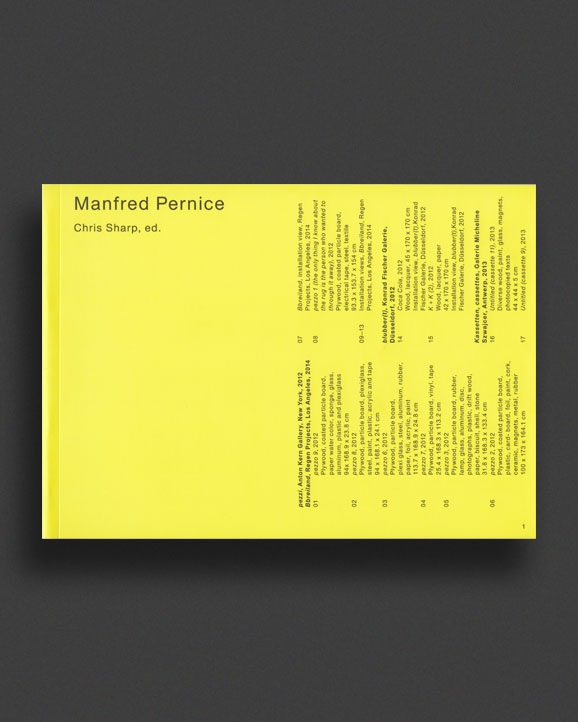
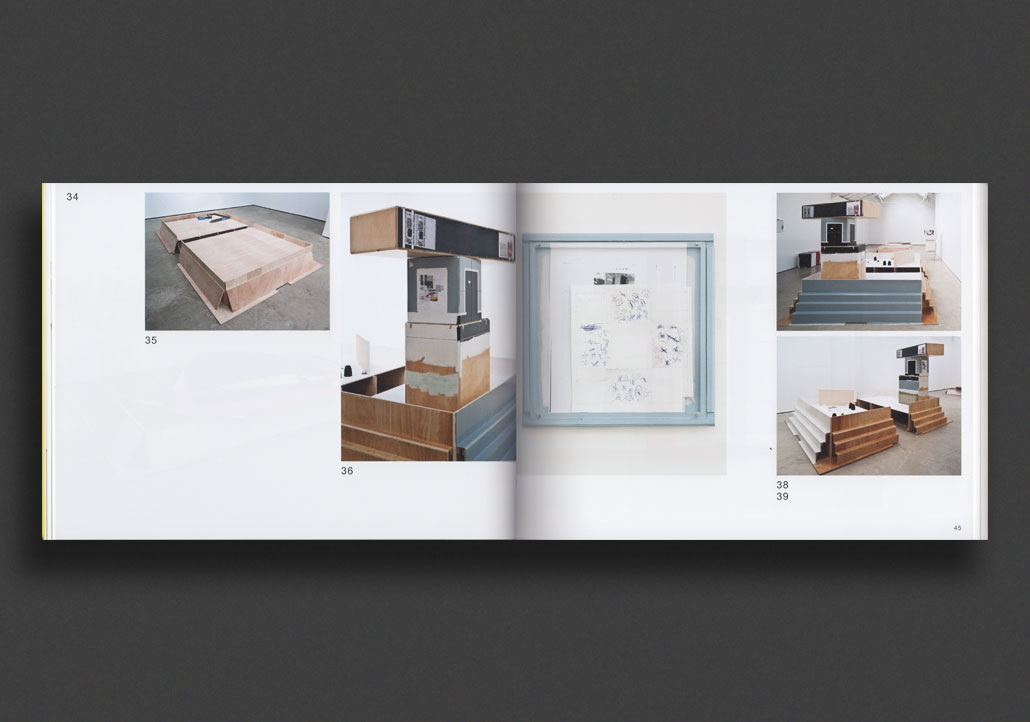
Published on the occasion of Manfred Pernice’s solo exhibition at Lulu, Mexico City, this monographic catalogue focuses on the artist's ongoing Kassetten (cassettes) series, initially begun in 2012. Spanning back to 1996, the book features abundant documentation of the various manifestations of the works, visual references, and other recent sculptures as well as texts by Lulu co-founder Chris Sharp.
2012, English
Softcover, 96 pages, 22.5 x 20 cm
1st Edition, Out of print title / as new
Published by
Ludwig Museum / Cologne
Walther König / Köln
$90.00 - Out of stock
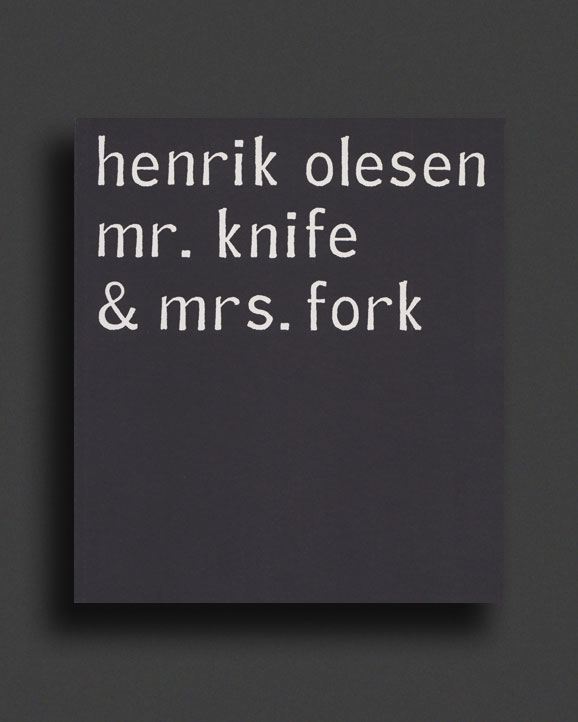
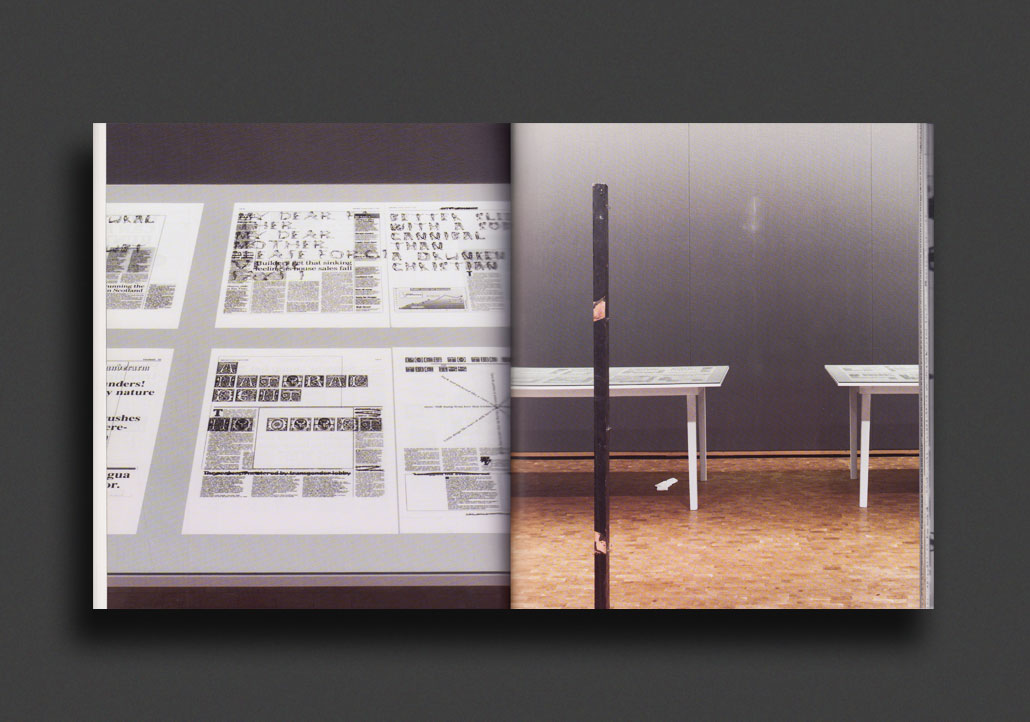
Scarce first edition of the now out-of-print artist's book by Henrik Olesen, Mr. Knife and Mrs. Fork, published on the occasion of the Wolfgang-Hahn-Prize awarded to him in 2012. Illustrated throughout in detail (colour and b/w) with an essay by Josef Strau and an introduction by Carla Cugini this book provides a literary, artistic and scientific insight into Olesen's work.
As New copy.
2021, English
Softcover, 240 pages, 14.5 x 21 cm
Published by
Whitechapel / London
The MIT Press / Massachusetts
$40.00 - Out of stock
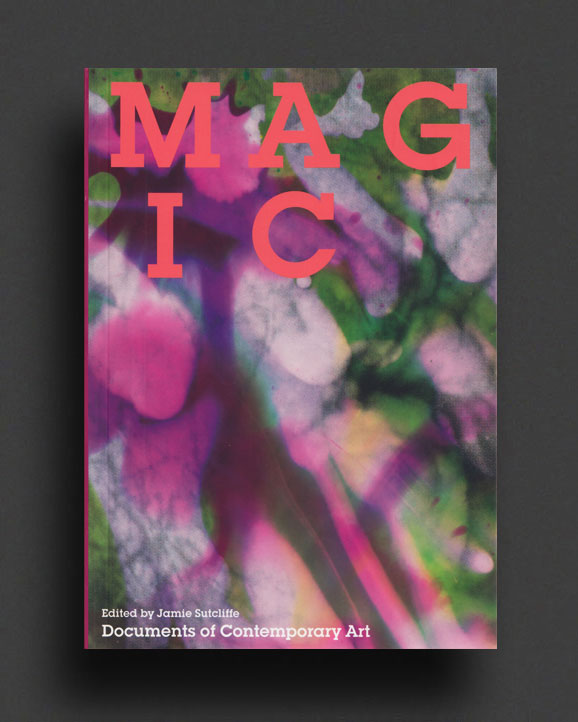
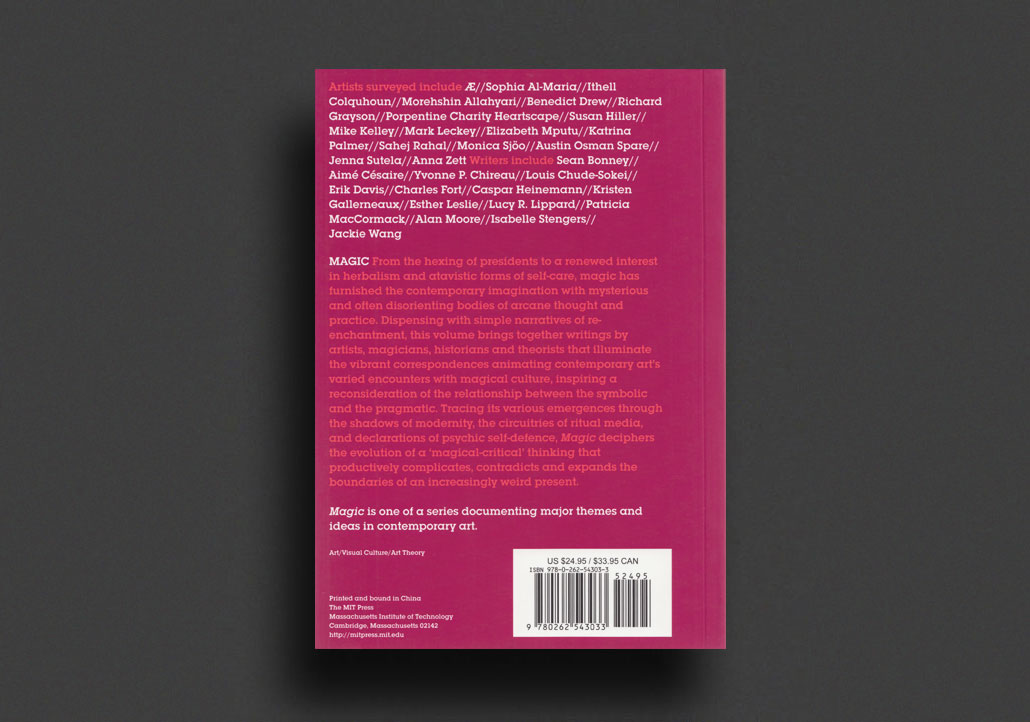
From the hexing of presidents to a renewed interest in herbalism and atavistic forms of self-care, magic has furnished the contemporary imagination with mysterious and complex bodies of arcane thought and practice. This volume brings together writings by artists, magicians, historians, and theorists that illuminate the vibrant correspondences animating contemporary art's varied encounters with magical culture, inspiring a reconsideration of the relationship between the symbolic and the pragmatic.
Dispensing with simple narratives of re-enchantment, Magic illustrates the intricate ways in which we have to some extent always been captivated by the allure of the numinous. It demonstrates how magical culture's tendencies toward secrecy, occlusion, and encryption might provide contemporary artists with strategies of remedial communality, a renewed faith in the invocational power of personal testimony, and a poetics of practice that could boldly question our political circumstances, from the crisis of climate collapse to the strictures of socially sanctioned techniques of medical and psychiatric care.
Tracing its various emergences through the shadows of modernity, the circuitries of ritual media, and declarations of psychic self-defence, Magic deciphers the evolution of a 'magical-critical' thinking that productively complicates, contradicts and expands the boundaries of our increasingly weird present.
Artists surveyed:
Holly Pester, Katrina Palmer, Ithell Colquhoun, Anna Zett, Monica Sjoeo, Sofia Al-Maria, Jack Burnham, Jeremy Millar, Susan Hiller, Mike Kelley, Morehshin Allahyari, Center for Tactical Magic, David Steans, Porpentine, Travis Jeppesen, Linda Stupart, Caspar Heinemann, Elizabeth Mputu, Faith Wilding, David Hammons, Ana Mendieta, Henri Michaux, Kenneth Anger, Benedict Drew, Mark Leckey, Robert Morris, Jenna Sutela, Haroon Mirza, Zadie Xa, Saya Woolfalk, Ian Cheng, Tabita Rezaire, Thee Temple ov Psychick Youth, Elijah Burgher, Pier Paolo Pasolini, Sahej Rahal
Writers:
Charles Fort, Victoria Nelson, Gary Lachman, Yvonne P. Chireau, Randall Styers, Isabelle Stengers, Alan Moore, Simon O' Sullivan, Lucy Lippard, Louis Chude Sokei, Patricia MacCormack, Mark Pilkington, AE, Annie Besant & C.W. Leadbeater, Michel Leiris, Aime Cesaire, Austin Osman Spare, Erik Davis, Mark Dery, Elaine Graham, Jeffrey Sconce, Giulia Smith, Esther Leslie, Alice Bucknell, Gary Zhexi Zhang, Hannah Gregory, Kristen Gallerneaux, Mahan Moalemi, Jamie Sutcliffe, Gregory Sholette, Aaron Gach, Eugene Thacker, Diane Di Prima, Allan Doyle, Aria Dean, Emily LaBarge, Lou Cornum, Joy KMT, Scott Wark, McKenzie Wark, Phil Hine, Jackie Wang, Sean Bonney
1996, English
Softcover, 424 pages, 17.8 x 25.4 cm
Published by
University of California Press / Berkley
$86.00 - Out of stock
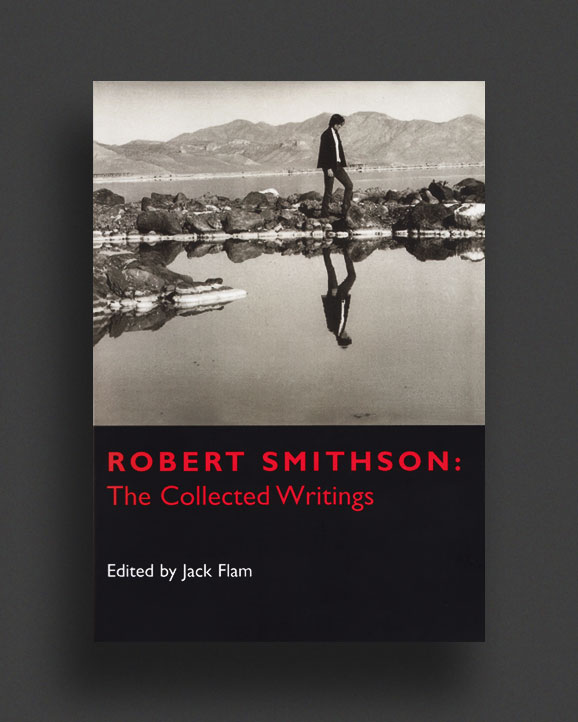
Since the 1979 publication of The Writings of Robert Smithson, Robert Smithson's significance as a spokesman for a generation of artists has been widely acknowledged and the importance of his thinking to contemporary artists and art critics continues to grow. In addition to a new introduction by Jack Flam, The Collected Writings includes previously unpublished essays by Smithson and gathers hard-to-find articles, interviews, and photographs. Together these provide a full picture of his wide-ranging views on art and culture.
Robert Smithson (1938-1973), one of the most important artists of his generation, produced sculpture, earthworks, drawings, and paintings in addition to the writings collected here.
Jack Flam is Distinguished Professor of Art History at Brooklyn College and the Graduate Center of the City University of New York. His Matisse on Art: Revised Edition (1995) is also available from California.
2019, English
Softcover, 678 pages, 21.5 x 27.5 cm
Ed. of 2000,
Published by
Primary Information / New York
$89.00 - Out of stock
Out of print.
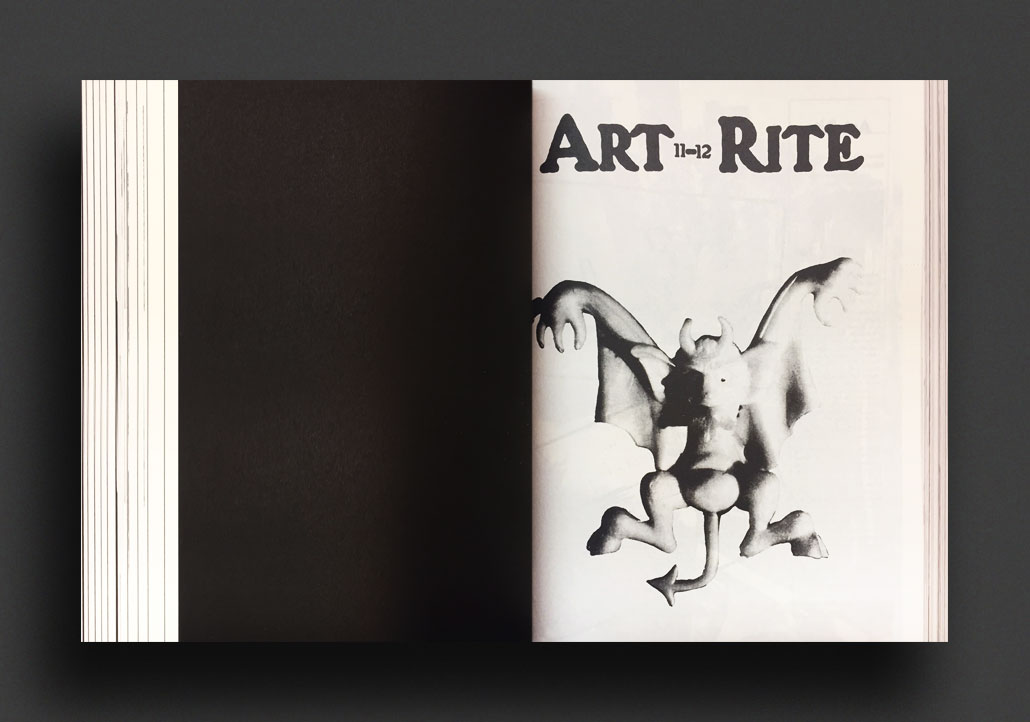
Edited by Walter Robinson, Edit DeAk, and Joshua Cohn, Art-Rite was published in New York City between 1973 and 1978. The periodical has long been celebrated for its underground/overground position and its cutting, humorous, on-the-streets coverage and critique of the art world. Art-Rite moved easily through the expansive community it mapped out, paying homage to an emergent generation of artists, including many who were—or would soon become—the defining voices of the era. Through hundreds of interviews, reviews, statements, and projects for the page—as well as artist-focused and thematic issues on video, painting, performance, and artists’ books—Art-Rite’s sharp editorial vision and commitment to spotlighting the work of artists stands as a meaningful and lasting contribution to the art history of New York City and beyond.
All issues of Art-Rite are collected and published here.
Featured artists include Vito Acconci, Kathy Acker, Bas Jan Ader, Laurie Anderson, John Baldessari, Gregory Battcock, Lynda Benglis, Mel Bochner, Marcel Broodthaers, Trisha Brown, Chris Burden, Scott Burton, Ulises Carrión, Judy Chicago, Lucinda Childs, Christo, Diego Cortez, Hanne Darboven, Agnes Denes, Ralston Farina, Richard Foreman, Peggy Gale, Gilbert & George, John Giorno, Philip Glass, Leon Golub, Peter Grass, Julia Heyward, Nancy Holt, Ray Johnson, Joan Jonas, Richard Kern, Lee Krasner, Shigeko Kubota, Les Levine, Sol LeWitt, Lucy Lippard, Babette Mangolte, Brice Marden, Agnes Martin, Gordon Matta-Clark, Rosemary Mayer, Annette Messager, Elizabeth Murray, Alice Neel, Brian O’Doherty, Genesis P-Orridge, Nam June Paik, Charlemagne Palestine, Judy Pfaff, Lil Picard, Yvonne Rainer, Judy Rifka, Dorothea Rockburne, Ed Ruscha, Robert Ryman, David Salle, Carolee Schneemann, Richard Serra, Jack Smith, Patti Smith, Robert Smithson, Holly Solomon, Naomi Spector, Nancy Spero, Pat Steir, Frank Stella, Alan Suicide (Vega), David Tremlett, Richard Tuttle, Andy Warhol, William Wegman, Lawrence Weiner, Hannah Wilke, Robert Wilson, Yuri, and Irene von Zahn.
2014, English / German
Hardcover, 492 pages, 30 x 29 cm
Published by
Sternberg Press / Berlin
$100.00 - Out of stock
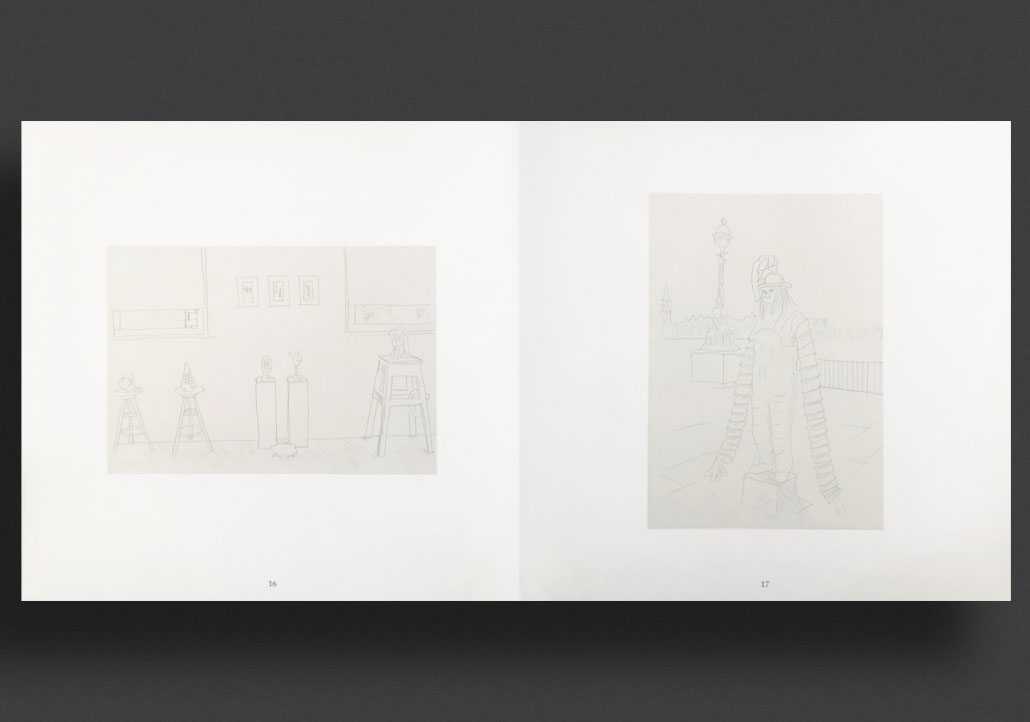
Like a pictorial encyclopedia, Das Wunder des Lebens contains over four hundred drawings that show all that the modern world has to offer, from maps and city views to cars and airplanes. However, unlike conventional pictorial dictionaries, there is no symbolic system. We see laundry bags and paint buckets as well as a nun and a man with a hat in front of a double window, a shy animal with a thick fur, and breakfast on a Victorian table. Juxtapositions are normalized, and normality becomes a farce. Everything is exposed to everyone; everything becomes equal.
Jos de Gruyter & Harald Thys have been working together as an artist duo since the end of the 1980s. Their photographs, drawings, objects, and videos—steeped in black humor, critical (self)-reflection and overlapping reality, fiction and suppressed history—play with notions of the superficial and banal.
Copublished with Kunsthalle Wien and Kunsthalle Basel on the occasion of the eponymous exhibition at the former, February 7–May 4, 2014, and “Projekt 13” at the latter, January 16–March 14, 2010
As New with possible light corner bumping during storage.