World Food Books' programme is largely produced on Kulin Nation land. We acknowledge the Wurundjeri people of the Kulin Nation as the first and continuing custodians of this land, and pay respect to their Elders past, present, and emerging.
World Food Books is an arts and special interests bookshop in Naarm / Melbourne. Founded in 2010, World Food Books is devoted to the presentation of a rotating, hand-selection of international art, design, literary and counterculture publications with an emphasis on the anti-traditional, the experimental, the avant-garde, the heretic, the marginal.
Presenting new titles alongside rare and out-of-print books, catalogues and journals spanning the fields of modern and contemporary art, design, photography, illustration, film, literature, poetry, cultural theory, philosophy, sexuality, popular and underground culture in its many radical forms, World Food Books wishes to encourage adventurous, thoughtful and open-minded reading, looking, writing, and exchange of publishing and ideas, both current and historical.
As well as our bookshop, located in Melbourne's historical Nicholas Building, all of our inventory is available internationally via our online mail-order service.
World Food Books semi-regularly co-ordinates "Occasions", a programme of exhibits and events at the bookshop and in partnership with other hosts (such as museums and art galleries) that develop out of the activities, relationships and content of the bookshop itself.
World Food Books
The Nicholas Building
37 Swanston Street
Room 5, Level 6
Melbourne 3000
Australia
SHOP HOURS:
Thu–Fri 12–6, Sat 12–5
WEB-SHOP OPEN 24/7
World Food Books
Postal Address:
PO Box 435
Flinders Lane
Victoria 8009
Australia
Art
Theory / Essay
Architecture / Interior
Graphic Design / Typography
Photography
Fashion
Eros
LGBTQ+
Fiction / Poetry
Weird / Speculative / Science Fiction / Horror
Transgressive / Visceral / Abject
Symbolism / Decadence / Fin de siècle
Film / Video
Painting
Sculpture / Installation
Performance / Dance / Theater
Drawing
Sound / Music
Curatorial
Group Shows / Collections
Periodicals
Out-of-print / Rare
Posters / Ephemera / Discs
Signed Books
World Food Books Gift Voucher
World Food Book Bag
Australian Art
Australian Fiction
Australian Science Fiction / Speculative Fiction
Australian Poetry
Australian Photography
Japanese Photography
Conceptual Art
Minimal Art
Dada
'Pataphysics / Oulipo
Fluxus
Concrete Poetry
Pop Art
Surrealism
Arte Povera
Arte Informale / Haute Pâte / Tachism
Nouveau Réalisme / Zero / Kinetic
Situationism / Lettrism
Collage / Mail Art / Xerox Art
Art Brut / Folk / Visionary / Fantastic
Illustration / Graphic Art / Bandes Dessinées
Furniture
Italian Radical Design / Postmodernism
Textiles
Ceramics / Glass
Counterculture
Protest / Revolt
Philosophy
Psychoanalysis
Anthropology
Anarchism
Socialism / Anarchism / Communism / Capitalism
Literary Theory / Semiotics / Language
Feminism / Women's Studies
Gender Studies / Sexuality
Anthropology
Fetishism / BDSM
Drugs / Psychedelia
Crime / Violence
Animal Rights / Veganism
Occult / Esoterica
Ecology / Earth / Alternative Living
Whole Earth / Crafts
All prices in AUD (Australian dollars)
Pick-Ups
Pick-up orders can be collected in our bookshop during opening hours after order date. Please collect any Pick-up orders within 2 weeks of ordering as we have limited storage space. Orders will be released back into stock if not collected within this time. No refunds can be made for pick-ups left un-collected. If you cannot make it in to the bookshop in this time-frame, please choose postage option.
Return Policy
All sales are final. We do accept returns (for refund or exchange) for items received in error. All our orders are packed with special care using heavy-duty padding and cardboard book-mailers or bubble mailers (for smaller books), using reinforcement where required. We cannot take responsibility for any lost, stolen or damaged parcels.
Insurance
Should you wish to insure your package, please email us directly after placing your order and we can organise this at a small extra expense. Although all standard/express tracked packages are very safe and dependable, we cannot take responsibility for any lost, stolen or damaged parcels. We recommend insurance on valuable orders.
Interested in selling your old books, catalogues, journals, magazines, comics, fanzines, ephemera? We are always looking for interesting, unusual and out-of-print books to buy. We only buy books in our fields of interest and specialty, and that we feel we can resell.
We base these prices on desirability, market value, in-print prices, condition and our current stock levels. We offer cash, store credit, and can take stock on consignment. All
about 25% of the price we expect to get when we sell them, or 30% in store credit. We base these prices on desirability, market value, in-print prices, condition and our current stock levels.
Sell your books any day of the week. You can drop them off and return later. If you have a lot of books, we can visit your Sydney home.
We buy books that we feel we can resell. We offer about 25 % of the price we expect to get when we sell them, or 30% in store credit. We base these prices on desirability, market value, in-print prices, condition and our current stock levels.
Philadelphia Wireman
03 August - 01 September, 2018
World Food Books is proud to announce our next Occasion, the first presentation of sculptures by Philadelphia Wireman in Australia.
The Philadelphia Wireman sculptures were found abandoned in an alley off Philadelphia’s South Street on trash night in 1982. Their discovery in a rapidly-changing neighbourhood undergoing extensive renovation, compounded with the failure of all attempts to locate the artist, suggests that the works may have been discarded after the maker’s death. Dubbed the "Philadelphia Wireman" during the first exhibition of this work, in 1985, the maker’s name, age, ethnicity, and even gender remain uncertain. The entire collection totals approximately 1200 pieces, all intricately bound together with tightly-wound heavy-gauge wire (along with a few small, abstract marker drawings, reminiscent both of Mark Tobey and J.B. Murry). The dense construction of the work, despite a modest range of scale and materials, is singularly obsessive and disciplined in design: a wire armature or exoskeleton firmly binds a bricolage of found objects including plastic, glass, food packaging, umbrella parts, tape, rubber, batteries, pens, leather, reflectors, nuts and bolts, nails, foil, coins, toys, watches, eyeglasses, tools, and jewellery.
Heavy with associations—anthropomorphic, zoomorphic, and socio-cultural responses to wrapped detritus—the totemic sculptures by Philadelphia Wireman have been discussed in the context of work created to fulfil the shamanistic needs of alternative religions in American culture. Curators, collectors, and critics have variously compared certain pieces to sculpture from Classical antiquity, Native American medicine bundles, African-American memory jugs, and African fetish objects. Reflecting the artist’s prolific and incredibly focused scavenging impulse, and despite—or perhaps enhanced by—their anonymity, these enigmatic objects function as urban artefacts and arbiters of power, though their origin and purpose is unknown. Philadelphia Wireman, whatever their identity, possessed an astonishing ability to isolate and communicate the concepts of power and energy through the selection and transformation of ordinary materials. Over the course of the past two decades, this collection has come to be regarded as an important discovery in the field of self-taught art and vernacular art.
Presented in collaboration with Fleisher-Ollman Gallery, Philadelphia, and Robert Heald, Wellington.
Susan Te Kahurangi King
02 February - 10 March, 2018
Susan Te Kahurangi King (24 February 1951 - ) has been a confident and prolific artist since she was a young child, drawing with readily available materials - pencils, ballpoint pens and felt-tip markers, on whatever paper is at hand. Between the ages of four and six Susan slowly ceased verbal communication. Her grandparents William and Myrtle Murphy had developed a special bond with Susan so they took on caring responsibilities for extended periods. Myrtle began informally archiving her work, carefully collecting and storing the drawings and compiling scrapbooks. No drawing was insignificant; every scrap of paper was kept. The King family are now the custodians of a vast collection containing over 7000 individual works, from tiny scraps of paper through to 5 meter long rolls.
The scrapbooks and diaries reveal Myrtle to be a woman of great patience and compassion, seeking to understand a child who was not always behaving as expected. She encouraged Susan to be observant, to explore her environment and absorb all the sights and sounds. Myrtle would show Susan’s drawings to friends and people in her community that she had dealings with, such as shopkeepers and postal workers, but this was not simply a case of a grandmother’s bias. She recognised that Susan had developed a sophisticated and unique visual language and sincerely believed that her art deserved serious attention.
This was an unorthodox attitude for the time. To provide some context, Jean Dubuffet coined the term Art Brut in 1945 to describe work created by self-taught artists – specifically residents of psychiatric institutions and those he considered to be visionaries or eccentrics. In 1972 Roger Cardinal extended this concept by adopting the term Outsider Art to describe work made by non-academically trained artists operating outside of mainstream art networks through choice or circumstance. Susan was born in Te Aroha, New Zealand in 1951, far from the artistic hubs of Paris and London that Dubuffet and Cardinal operated in. That Myrtle fêted Susan as a self-taught artist who deserved to be taken seriously shows how progressive her attitudes were.
Susan’s parents Doug and Dawn were also progressive. Over the years they had consulted numerous health practitioners about Susan’s condition, as the medical establishment could not provide an explanation as to why she had lapsed into silence. Dawn educated herself in the field of homeopathy and went on to treat all twelve of her children using these principles – basing prescriptions on her observations of their physical, mental and emotional state.
Doug was a linguist with an interest in philosophy who devoted what little spare time he had to studying Maori language and culture. To some extent their willingness to explore the fringes of the mainstream made them outsiders too but it was their commitment to living with integrity and their respect for individuality that ensured Susan’s creativity was always encouraged.
Even though Susan’s family supported her artistic pursuits, some staff in schools and hospitals saw it as an impediment to her assimilation into the community and discouraged it in a variety of ways. Her family was not always aware of this and therefore did not fully understand why Susan stopped drawing in the early 1990s. However, rather than dwell on the challenges that Susan faced in pursuit of her artistic practice, they prefer to highlight her achievements. In 2008 Susan began drawing again in earnest, after an almost 20 year interruption, and her work is now shown in galleries around the world.
Susan grew up without television and has been heavily influenced by the comics she read as a child. She is absolutely fearless in the appropriation of recognizable characters, such as Donald Duck and Mickey Mouse, in her work. She twists their limbs, contorts their faces, compresses them together, blends them into complex patterned backgrounds - always imbuing them with an incredible energy. Although Susan often used pop culture characters in her work they are not naive or childlike. These are drawings by a brilliant self-taught artist who has been creating exceptional work for decades without an audience in mind.
Mladen Stilinović
"Various Works 1986 - 1999"
02 February 16 - September 10, 2016
Various works 1986 - 1999, from two houses, from the collections of John Nixon, Sue Cramer, Kerrie Poliness, Peter Haffenden and Phoebe Haffenden.
Including: Geometry of Cakes (various shelves), 1993; Poor People’s Law (black and white plate), 1993; White Absence (glasses, ruler, set square, silver spoon, silver ladel with skin photograph and wooden cubes), 1990-1996; Exploitation of the Dead (grey and red star painting, wooden painting, black spoon with red table, red plate), 1984-1990; Money and Zeros (zero tie, paintings made for friends in Australia (Sue, John, Kerrie), numbers painting), 1991-1992; Words - Slogans (various t-shirts) - “they talk about the death of art...help! someone is trying to kill me”, “my sweet little lamb”, “work is a disease - Karl Marx”; Various artist books, catalogues, monographs, videos; Poster from exhibition Insulting Anarchy; "Circular" Croatian - Australian edition; Artist book by Vlado Martek (Dostoyevsky); more.
Thanks to Mladen Stilinović and Branka Stipančić.
Jonathan Walker
Always Will Need To Wear Winter Shirt Blue + Ochre Small Check Pattern
21 August - 21 September, 2015
Untitled
I am not a great reader of poetry but I always return to the work of Melbourne poet, Vincent Buckley (1925- 1988). Perhaps I find his most tantalising piece to be not a finished poem but a fragment left on a scrap of paper discovered on his desk after the poet’s death.
The poetry gathers like oil
In the word-core, and spreads
It has its music meet,
Its music is in movement.
This fragment is more the shell left behind from a volatile thought than a finished poem. I find the last two lines honest but awkward whereas the first two lines work like an arrow. Most likely he could not find a resolution so it was left. Still, in its present form, it remains an eloquent testimony to the ultimate failure of a medium to express mobile thought and sensation, in Buckley’s case, through verbal language. It’s an important matter because this is something all artists have to deal with regardless of the medium.
I have never written a poem, however, I am forever copying fragments from books on paper scraps in a vain effort to fix certain notions in my head. At first, they function as bookmarks that are sometimes returned to when I open the book. But before long, as they accumulate, they fall out littering the table interspersed with A4 photocopies, bills, books and medications.
To return to Buckley’s fragment, the first two lines very much evoke how I paint nowadays. As you age, detail diminishes and patches of light become more luminous and float. I feel the most honest way of dealing with this is by smearing the oil paint on the canvas with the fingers and working close-up, blind. Only if the patches coalesce into an approaching image can the work gain a life.
-
Jonathan Walker was born in Melbourne, Australia and brought up on a dairy farm in Gippsland. In the 1970’s he studied painting at RMIT and won the Harold Wright Scholarship to the British Museum, London. During the 1980’s he exhibited at Pinacotheca Gallery, Richmond and had work shown at the NGV and Heidi City Art Gallery. Over the same period he designed the cover for the “Epigenesi” LP by Giancarlo Toniutti, Italy and conducted a mail exchange work with Achim Wollscheid, Germany. The work with artists through the post resulted in an article published in the bicentenary issue of Art and Australia 1988. He showed in artist run spaces such as WestSpace in the 90’s and 2000’s, and until 2012, taught painting at Victoria University, which is where we (Colleen Ahern and Lisa Radford) as organisers of the exhibition, among many others, had the privilege of being his student.
Walker’s knowledge was imparted to students through the careful selection of music, literature, and artists found in books that he himself had ordered for the library. Walker’s strategy was the generosity of sharing his vast knowledge with references specific to each student and their context.
Walker’s paintings share a similar focus and intimacy.
This exhibition presents a small selection of recent paintings alongside a publication that includes Walker’s writing. Observational and analytical, Walker’s work is a type of material notation — the time of day, colour and how it is blended, the both specific and fleeting location of a reflection on lino or the question of whether a chair leg should be included in a painting.
Please join us on Friday August 21 between 6-8pm to celebrate the opening of the exhibition.
Curated by Colleen Ahern and Lisa Radford.
B. Wurtz
Curated by Nic Tammens
March 26 - April 4, 2015
B.Wurtz works from a basement studio in his home on Manhattan’s Lower East Side.
This local fact is attested to by the plastic shopping bags and newsprint circulars that appear in his work. As formal objects, they don’t make loud claims about their origins but nonetheless transmit street addresses and places of business from the bottom of this long thin island. Like plenty of artists, Wurtz is affected by what is local and what is consumed. His work is underpinned by this ethic. It often speaks from a neighborhood or reads like the contents of a hamper:
“BLACK PLUMS $1.29 lb.”
“Food Bazaar”
“USDA Whole Pork Shoulder Picnic 99c lb.”
“RITE AID Pharmacy, with us it’s personal.”
“H. Brickman & Sons.”
“Sweet Yams 59c lb."
Most of the work in this exhibition was made while the artist was in residence at Dieu Donne, a workshop dedicated to paper craft in Midtown. Here Wurtz fabricated assemblages with paper and objects that are relatively lightweight, with the intention that they would be easily transportable to Australia. This consideration isn’t absolute in Wurtz’s work, but was prescriptive for making the current exhibition light and cheap. Packed in two boxes, these works were sent from a USPS post office on the Lower East Side and delivered to North Melbourne by Australia Post.
Wurtz appears courtesy of Metro Pictures, New York.
Thanks to Rob Halverson, Joshua Petherick, Sari de Mallory, Matt Hinkley, Helen Johnson, Fayen d'Evie, Ask Kilmartin, Lisa Radon, Ellena Savage, Yale Union, and "Elizabeth".
John Nixon
"Archive"
December 15 - January 20, 2014
The presentation of John Nixon's archive offered a rare showcase of this extensive collection of the artist's own publications, catalogues, posters, ephemera, editions and more, from the mid 1980s onwards, alongside a selection of his artworks.
Organized by John Nixon, Joshua Petherick and Matt Hinkley.
<a href=http://wfb.public-office.info/artist/john-nixon>All titles by John Nixon
"Habitat"
at Minerva, Sydney (organised by Joshua Petherick and Matt Hinkley)
November 15 - December 20, 2014
Lupo Borgonovo, Janet Burchill & Jennifer McCamley,
Lewis Fidock, HR Giger, Piero Gilardi, Veit Laurent Kurz,
Cinzia Ruggeri, Michael E. Smith, Lucie Stahl, Daniel Weil, Wols
Press Release:
“...It contained seven objects. The slender fluted bone, surely formed for flight, surely from the wing of some large bird. Three archaic circuitboards, faced with mazes of gold. A smooth white sphere of baked clay. An age-blackened fragment of lace. A fingerlength segment of what she assumed was bone from a human wrist, grayish white, inset smoothly with the silicon shaft of a small instrument that must once have ridden flush with the surface of the skin - but the thing’s face was seared and blackened.”
William Gibson, “Count Zero”, 1986
"Autumn Projects Archive"
Curated by Liza Vasiliou
March 6 - March 15, 2014
World Food Books, in conjunction with the Virgin Australia Melbourne Fashion Festival 2014, presented the Autumn Projects archive, consisting of a selection of early examples in Australian fashion with a particular interest in collecting designers and labels from the period beginning in the 1980’s, who significantly influenced the discourse of Australian Fashion.
Curated by Liza Vasiliou, the exhibition provided a unique opportunity to view pieces by designers Anthea Crawford, Barbara Vandenberg, Geoff Liddell and labels CR Australia, Covers, Jag along with early experimental collage pieces by Prue Acton and Sally Browne’s ‘Fragments’ collection, suspended throughout the functioning World Food Books shop in Melbourne.
H.B. Peace
presented by CENTRE FOR STYLE
November 14, 2013
"Hey Blinky, you say chic, I say same"
Anon 2013
H.B. Peace is a clothing collaboration between great friends Blake Barns and Hugh Egan Westland. Their pieces explore the divergences between 'character’ and ‘personality’ in garments....etc
Special Thanks to Joshua Petherick and Matt Hinkley of WFB and Gillian Mears
and a Very Special Thank you to Audrey Thomas Hayes for her shoe collaboration.
Janet Burchill & Jennifer McCamley
"Aesthetic Suicide"
May 10 - June 8, 2013
The first of our occasional exhibitions in the World Food Books office/shop space in Melbourne, "Aesthetic Suicide" presented a body of new and older works together by artists Janet Burchill & Jennifer McCamley, including videos, prints, a wall work, and publications.
During shop open hours videos played every hour, on the hour.
1994, Japanese / English
Hardcover (w. obi strip), 382 pages, 27 x 22 cm
Signed by Araki,
1st Edition, Out of print title / used / fine
Published by
Fuga Shobo / Tokyo
$220.00 - In stock -
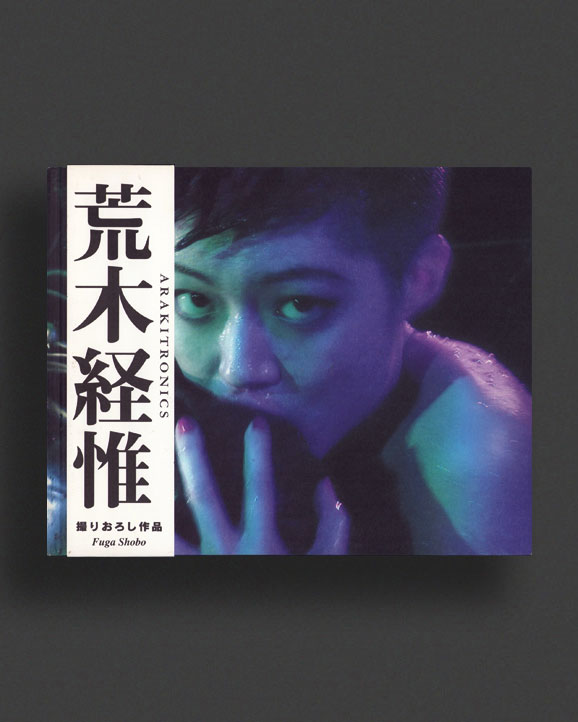
Fine, signed copy of Nobuyoshi Araki's 1994 photo book, Arakitronics, the first work of Araki created on digital camera, yet quintessentially Araki. Shot in 1994 in a studio with a single female model, and briefly a stand-in "lover", and of course Araki in cameo. This heavy hardcover book is comprised cover-to-cover with full-bleed full-colour rich glossy fetish and bondage-themed nudes of his model performing. Shot in a digital stream, "Araki's attempt here is a challenge to the traditional way of photography that gives a privileged meaning to one cut and is to be governed by arbitrary aesthetics [...] the essential anarchism of the image is opposed to the principle that has continued to secretly control photography"—Koitaro Iizawa (photo critic, historian) in his Afterword. In print the photos can at times be rough and lacking in resolution, but they express "the direct power inherent to Eros".
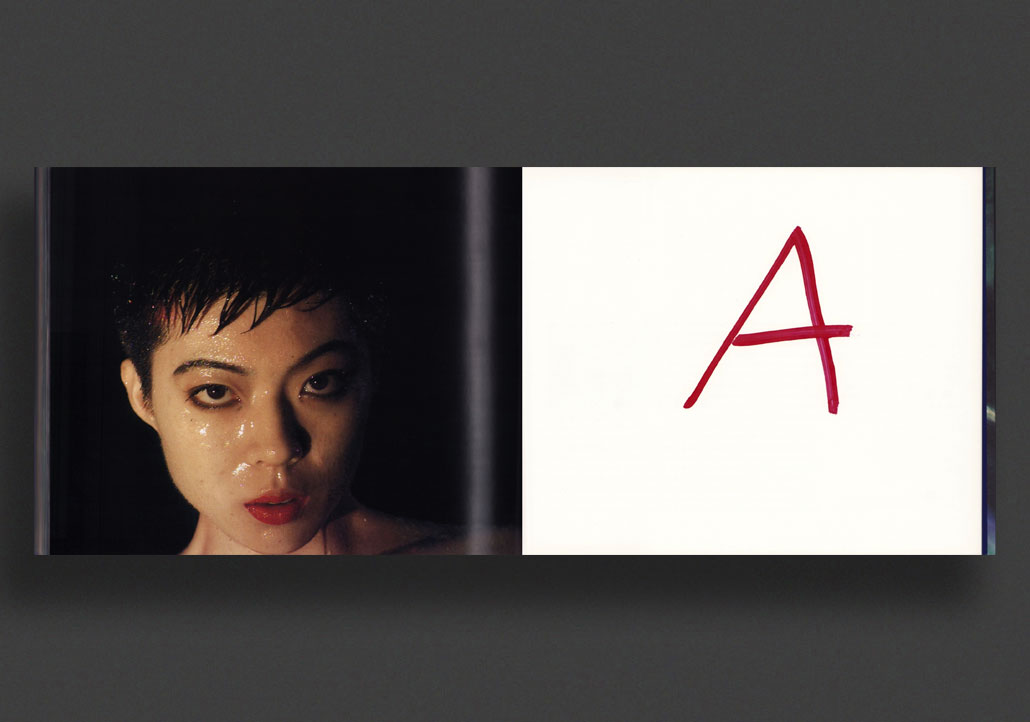
This special copy signed by Araki on the one available blank page in his trademark "A" in large red marker!
Nobuyoshi Araki is a prolific Japanese photographer who has produced thousands of photographs over the course of his career. He became famous for “Un Voyage Sentimental” (1971), a series of photos depicting both banal and deeply intimate scenes of his wife and lifelong muse, essayist Aoki Yoko (whom the artist credits for making him a photographer), during their honeymoon. To date the 75 year old has produced 450 photo books and counting. With a repertoire that knows no boundaries, Araki's diaristic style of photography has captured the world around him (his cat Chiro, the people and landscapes of Japan and his travels, flowers, family), though it is Araki’s intensely sexual imagery that has elicited particular controversy and fascination throughout his career. Similarly to Helmut Newton, Araki has often addressed subversive themes — such as bondage in the Japanese style Kinbaku — in his provocative depictions of female nudes. He typically works in black-and-white photography, and his hallmark style is deliberately casual. “Rather than shooting something that looks like a professional photograph, I want my work to feel intimate, like someone in the subject’s inner circle shot them,” he says. Pushing against the world of commercialised photography, he is celebrated for his history of self-publishing and distributing his work, beginning with his Xerox Photo Albums of 1970. Amongst many others, Araki has collaborated with American photographer Nan Goldin and Icelandic musician Björk.
Near Fine copy with VG obi and clean interior.
2007, English
Hardcover (w. slipcase), 557 pages, 30.5 x 21.5 cm
1st Edition, Out of print title / used / very good
Published by
Taschen / Cologne
$150.00 - In stock -
"This book contains everything about me. Photography is love and death – that will be written on my gravestone."—Nobuyoshi Araki
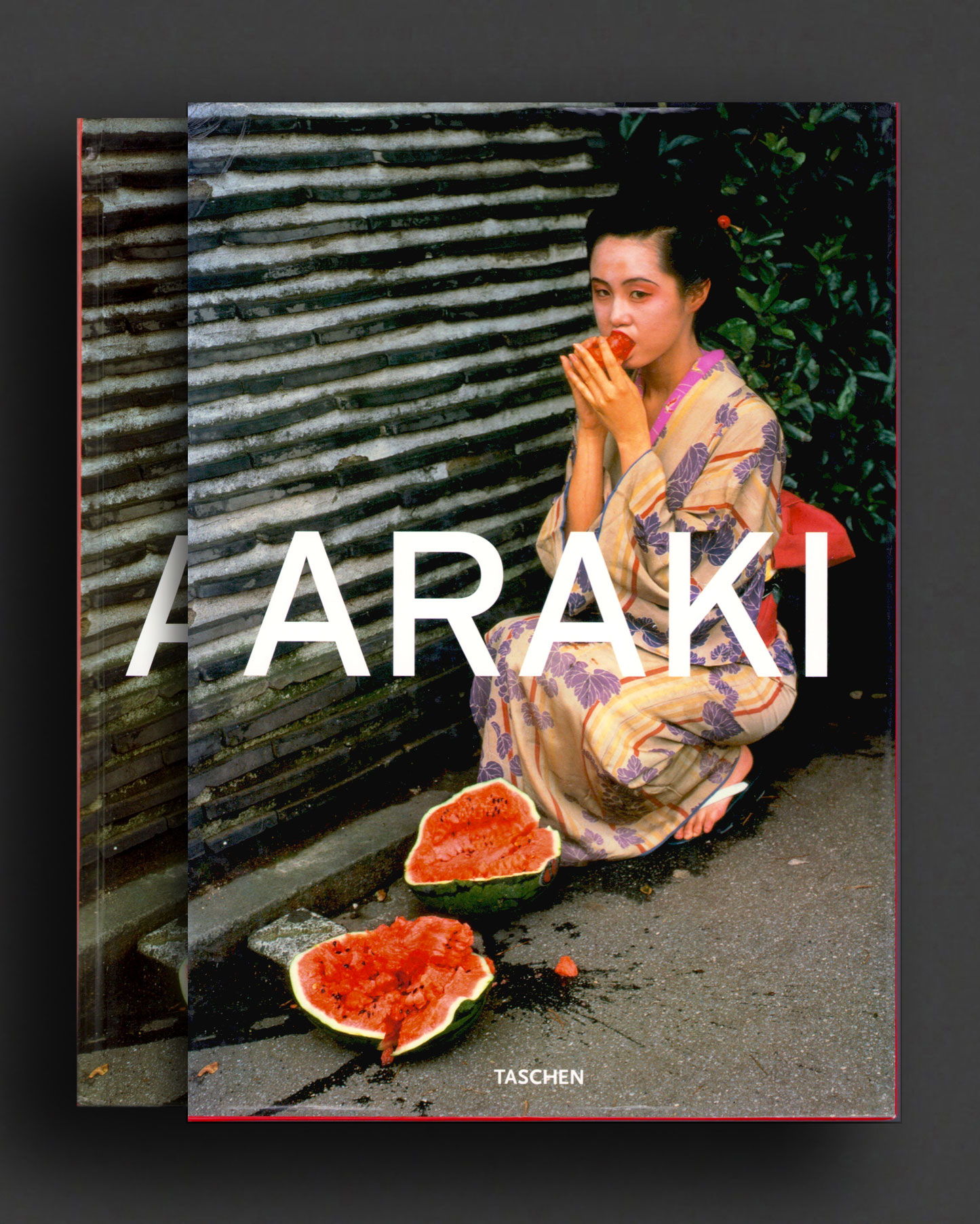
Over-sized, slip-cased Twenty-fifth anniversary hardcover edition of ARAKI. In this definitive retrospective of his career, Nobuyoshi Araki compiles over 500 pages of photographs spanning several decades. The selection, personally curated by the artist, delves deep into Araki's signature visual world : Tokyo street scenes, faces and dishes, sensuously vibrant flowers, female genitalia, and the Japanese art of rope bondage known as kinbaku.
Very Good copy in photo-illustrated boards housed in VG photo-illustrated slipcase. Knock to slipcase corner only.
2022, English
2 softcover books in hard slipcase, 954 pages, 21.6 × 14 cm
Published by
Primary Information / New York
$77.00 - In stock -
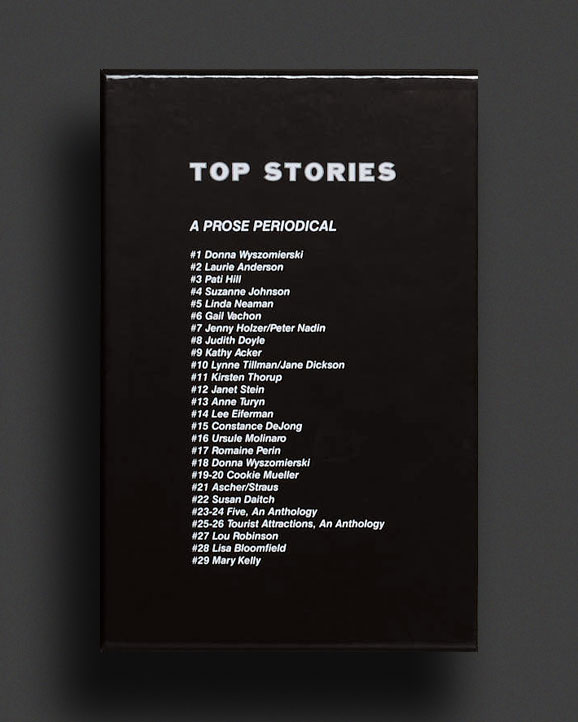
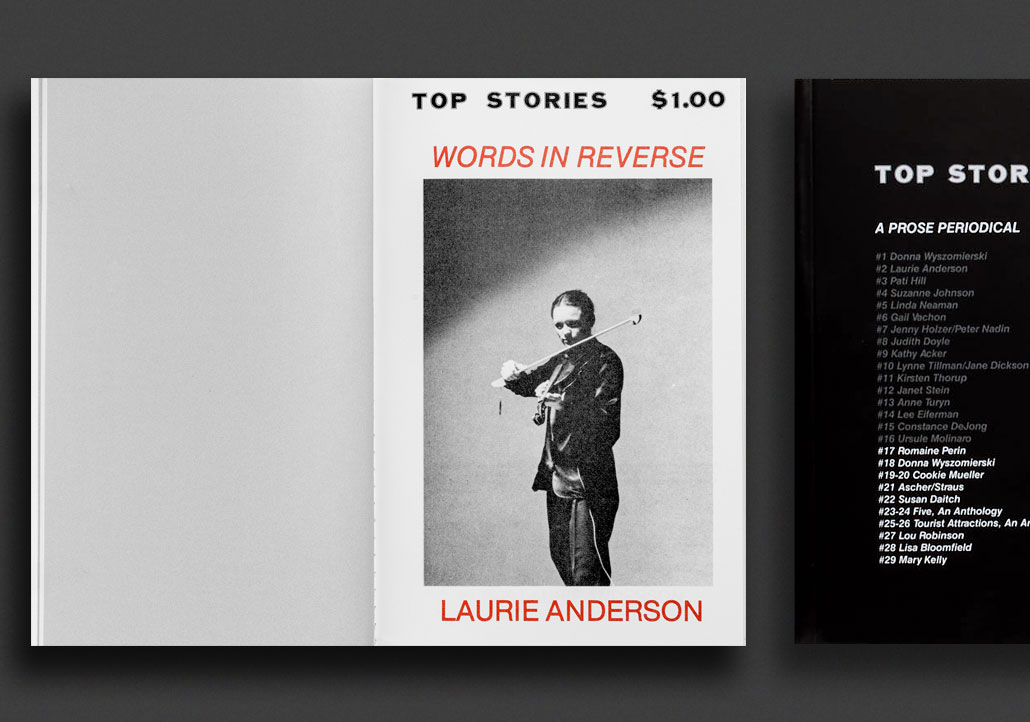
An essential anthology of fiction, art and more from the experimental, punk-feminist 1980s downtown journal, with work by Kathy Acker, Constance DeJong, Cookie Mueller and more.
Published between 1978 and 1991, Top Stories was a prose periodical specializing in experimental writing with a collaborative, punk-feminist ethos, edited by New York–based photographer Anne Turyn (born 1954). Turyn founded the publication in Buffalo, New York, before moving the operation to Chelsea in the 1980s, where issues were produced in Chinatown, distributed by mail order and through Printed Matter, and printed in runs between 500 and 2,000. With 29 issues in total, the publication played a key historical role in the development of the group of artists and writers who helped define the “downtown” scene of the 1980s.
All 29 issues of the periodical are collected in this anthology, which compiles experimental fiction, art, photography and graphic design.
Primary contributors include Kathy Acker, Laurie Anderson, Sheila Ascher, Douglas Blau, Lisa Bloomfield, Linda L. Cathcart, Cheryl Clarke, Susan Daitch, Constance DeJong, Jane Dickson, Judith Doyle, Lee Eiferman, Robert Fiengo, Joe Gibbons, Pati Hill, Jenny Holzer, Gary Indiana, Tama Janowitz, Suzanne Jackson, Suzanne Johnson, Caryl Jones-Sylvester, Mary Kelly, Judy Linn, Micki McGee, Ursule Molinaro, Cookie Mueller, Peter Nadin, Linda Neaman, Glenn O’Brien, Romaine Perin, Richard Prince, Lou Robinson, Janet Stein, Dennis Straus, Sekou Sundiata, Leslie Thornton, Kirsten Thorup, Lynne Tillman, Anne Turyn, Gail Vachon, Brian Wallis, Jane Warrick, and Donna Wyszomierski.
David Armstrong, Nan Goldin, JT Hryvniak, Peter Hujar, Nancy Linn, Trish McAdams, Linda Neaman, Marcia Resnick, Michael Sticht, and Aja Thorup all make appearances as well, contributing artwork for the covers or as illustrations.
1994—1997, Japanese
Softcover, various page count, 29.7 x 22.2 cm
1st Edition, Out of print title / used / very good
Published by
SDI nets / Tokyo
$200.00 - In stock -
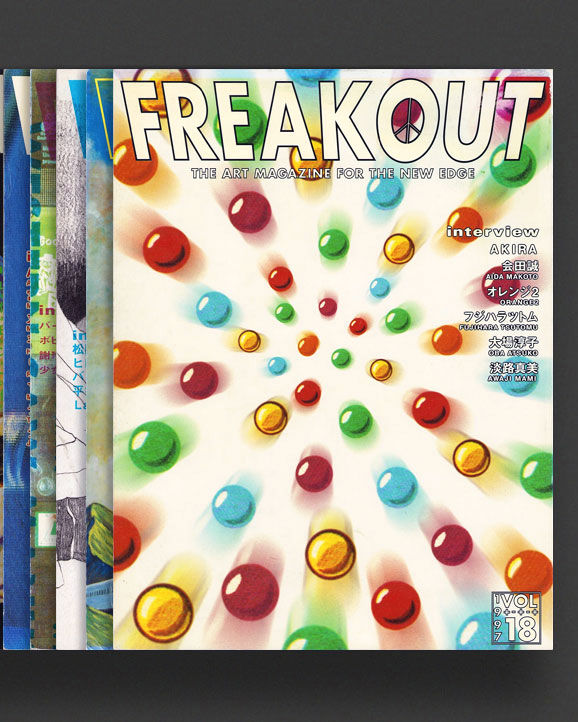
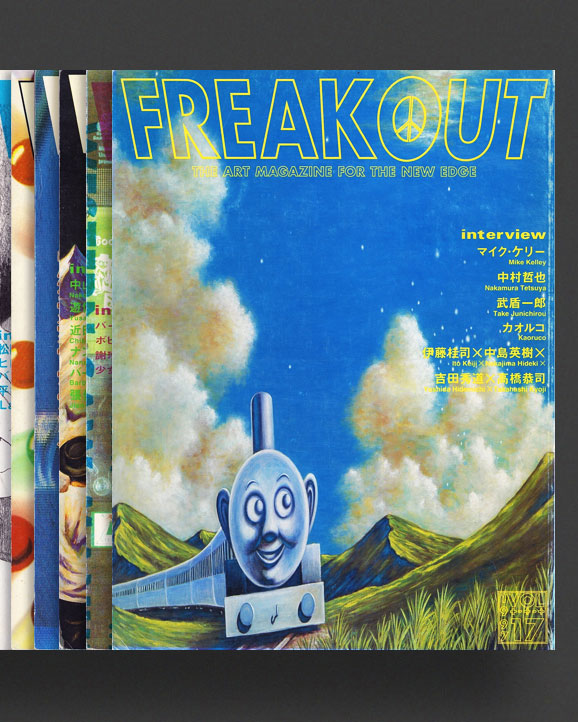
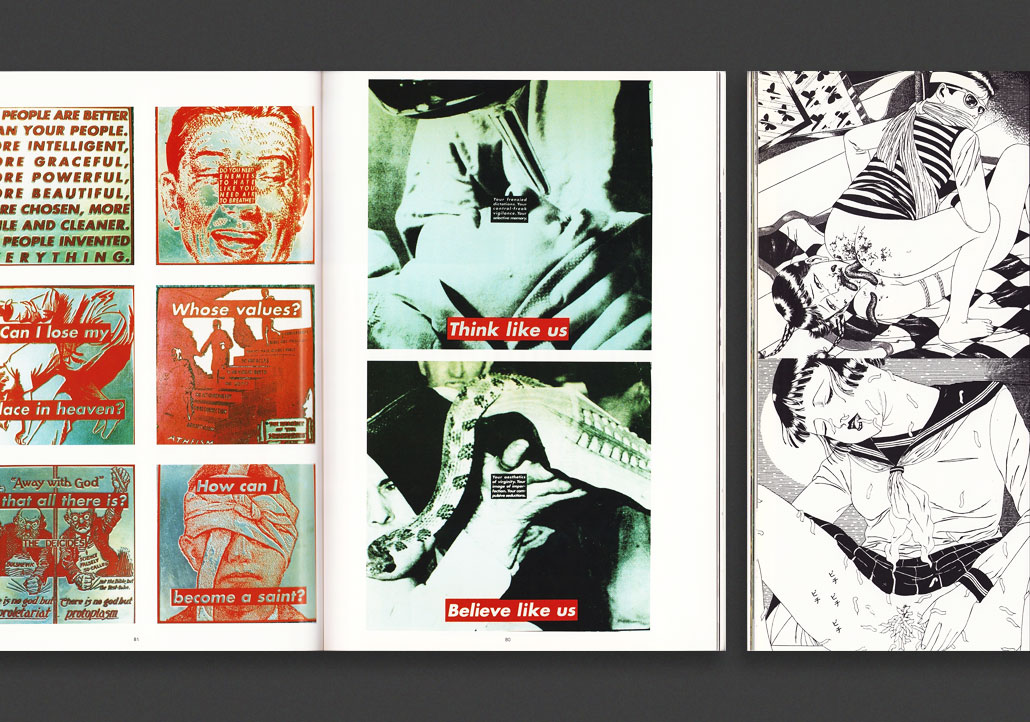
Rare lot of eight issues of the short-lived and now seldom seen 1990's Shibuya-kei / art subculture magazine from Japan, FREAKOUT, published between 1994—1997. Like a hysterical teenage pop fanzine version of Raygun, FREAKOUT ("The Art Magazine for the New Edge"), packed as much sugar-coated 90's nihilism into the little-known magazine's short life-span as possible. Showcasing a new generation of provocative international artists alongside their Japanese pop (counter)culture counterparts, filled with illustrations, manga, and early vector-art kitsch psychedelia — in short, a demonic embodiment of Shibuya-kei aesthetics — these issues include exclusive interviews and artist features, galleries and articles on Mike Kelley, Barbara Kruger, Suehiro Maruo, Richard Prince, Jenny Holzer, Kyoji Takahashi, Janine Antoni, Noritoshi Hirakawa, Matthew Barney, Nakamura Tetsuya, Manuel Ocampo, Miyamae Masaki, Akira, Junichiro Take, Nancy Burson, Makoto Aida, Jean-Michel Basquiat, KAORUKO, Richard Nonas, and much more... from doll-house TV gore to restroom portraiture.
Includes issue 4, 5, 17, 18, 19, 20, 21, 22 (1994—1997)
All Very Good copies, light cover wear.
1981, Japanese
Softcover (w. dust jacket), 240 pages, 17.5 x 11 cm
1st Edition, Out of print title / used / very good
Published by
Sunday Inc. / Tokyo
$110.00 - In stock -
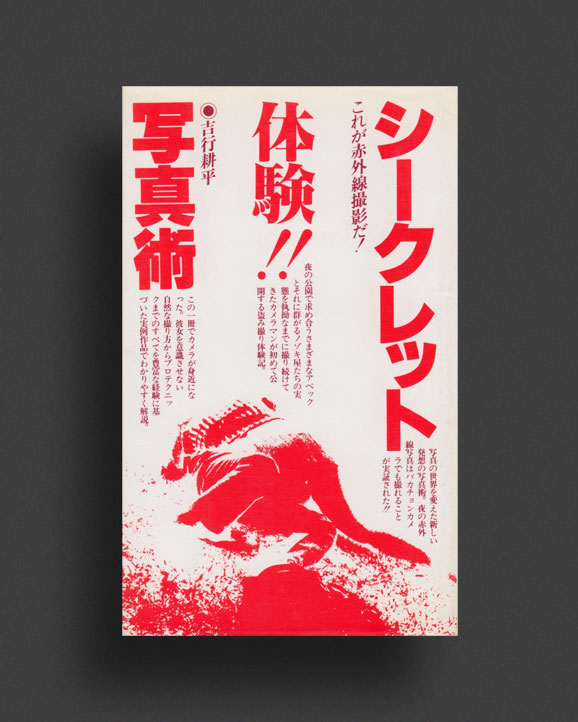
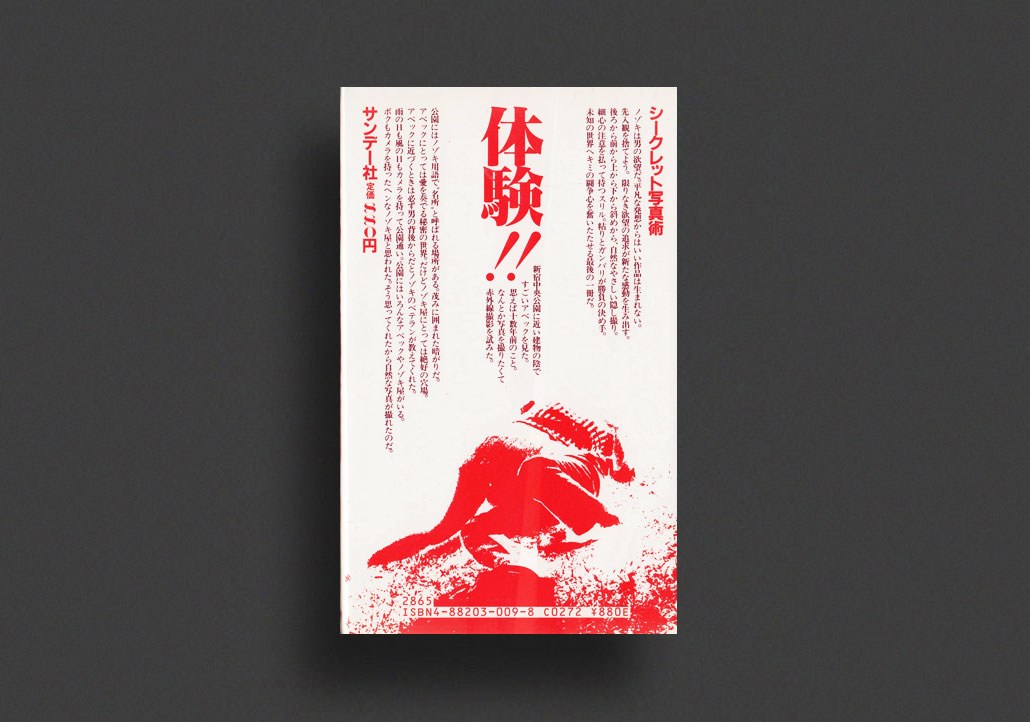
Rare first 1981 edition of Yoshiyuki's heavily illustrated instructional photobook, published the year following his voyeuristic masterpiece, Document Park (1980), a controversial volume of 74 photographs taken by the Japanese photographer using a 35mm camera, infrared film, and flash to document a secret community of lovers and voyeurs who gathered in Shinjuku Park and Yoyogi Park between 1971 and 1973. "This Is Infrared!" is Kohei's essential accompanying handbook for all those curious about his clandestine techniques that still amaze to this day, for many various reasons. Profusely illustrated with many of the infamous photographs from his Document Park book and many photograph collections that have not been published elsewhere, Kohei's D.I.Y. manual is a thorough analysis of his honed peeping techniques, camera equipment, various strategies (in the field and in the darkroom), technical specifications and aesthetic concerns, complete with manga illustrations, set-by-step guides and a sense of humour.
"My curiosity and lewdness were the starting point for peeping photos in the park. I used infrared film. Last May I published a photo book called "Park" (Documentary). It documents couples in parks, the peeping toms who flock to them, and the world of gays who gather in parks. Since I published this photo book, I've been asked a lot of questions like "What kind of camera is an infrared camera?" It's a bit tiring, as some of the people asking are quite knowledgeable about photography, and some are even professional photographers."—excerpt from Kohei Yoshiyuki's introduction
From "The Monroe-effect" (action photography on windy days...) to pigeon-cameras, "This Is Infrared!" goes beyond the night works to explore the many convictions of the determined peeping-tom. Nothing like it. Apart from those of Ikko Kagari... Fits right in the pocket.
Kohei Yoshiyuki (b. 1946—2022) came to recognition in 1972 when material from his photo project “The Park” was featured in magazine Shukan Shincho, and a year later, in respected photo journal Camera Mainichi. However, it was the 1979 photo exhibition “The Park” at Komai Gallery and 1980 photo book “Document: The Park” that established him within the contemporary photographic landscape. As Martin Parr writes in The Photobook: A History, Volume II, The Park is "a brilliant piece of social documentation, capturing perfectly the loneliness, sadness and desperation that so often accompany sexual or human relationships in a big, hard metropolis like Tokyo." Since then, Yoshiyuki was a recurrent fixture in Japan debauchery journal Super Photo Magazine along photographers: Nobuyoshi Araki, Daido Moriyama, Keizo Kitajima and Seiji Kurata.
Very Good copy in VG dust jacket.
1983, Japanese
Softcover (w. dust jacket), 240 pages, 17.5 x 11 cm
1st Edition, Out of print title / used / very good
Published by
Hama Shobo / Tokyo
$180.00 - In stock -
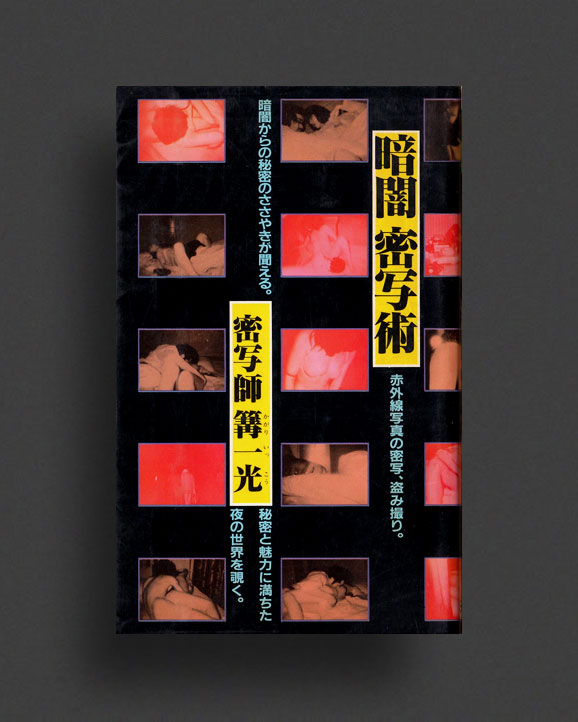
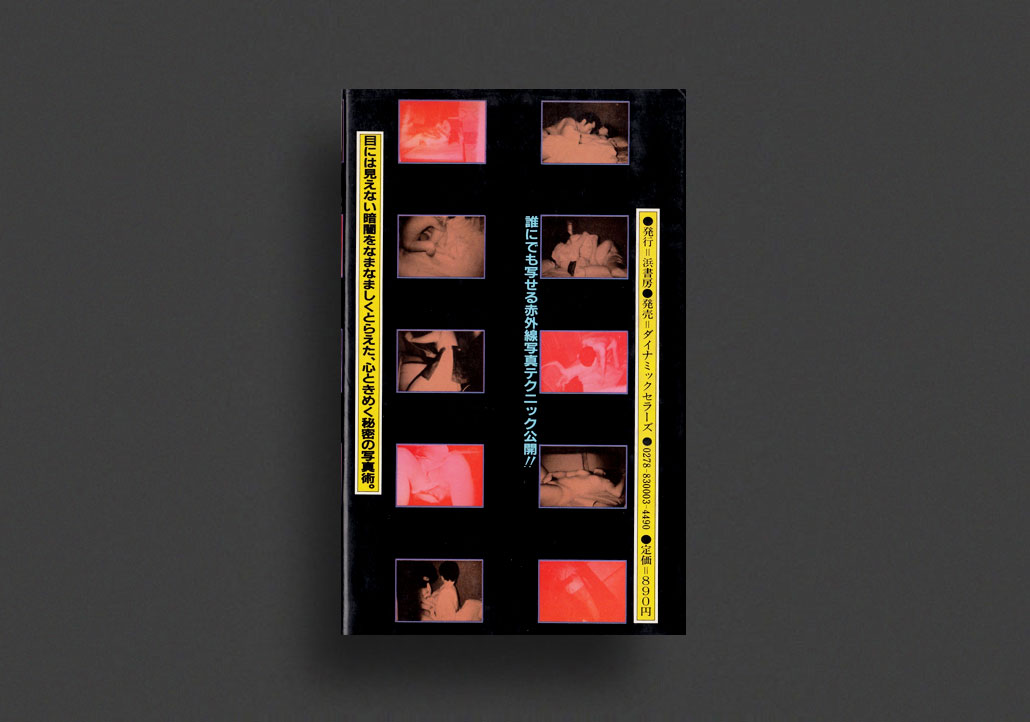
Rare 1983 photo/text book published the year following Ikko Kagari's infamous "Document Commuter Train" (1982). After the acclaim of his masterpiece photobook, Kagari stepped further into the darkness with this collection of his close-up candid infrared photography. Kagari takes to the streets, the parks, the gay beats, the girl's toilets, the alley-ways, the bars, the back-rooms, and back onto the trains with his "modern eroticism of the voyeur in the cold metropolis". "Full of secrets and charm", Kagari here accompanies his photography with texts on his experiences, insights, technical clandestine methods, along with amazing and humorous instructional manga. Kagari made a number of these extraordinary, extremely questionable, surreptitious infrared photography collections in the 1980's, featuring secret "close-up photography" documenting sexual activities in public places — groping and upskirt photographs taken on packed Tokyo Metro commuter trains, in nightclubs, on escalators, couples making it in public toilets, parked cars and in parks with infrared strobe techniques reminiscent of Kohei Yoshiyuki's incredible Document Park (the two often featured side-by-side in books and journals, both their masterpiece photobooks cited in Parr & Badger's The Photobook series). Kagari's grainy, blown-out infrared images that blur all lines between voyeur/participant and simulated/real, make for disorientating, sometimes claustrophobic, uneasy viewing. But they are also absolutely stunning, effective photo books that feel as conceptual as they do devious. Kagari's fleeting in flagrante scenes capture erotic desire and criminal impulse engulfed by the soft folds of entangled garment fabrics with stunning technique.
Good—VG copy in G—VG dust jacket. One binding split beginning on one spread only, some foxing to block edges.
1979, German
Softcover, 419 pages, 28 x 22 cm
1st Edition, Out of print title / used / very good
Published by
Kunsthaus Zürich / Zürich
Bentelli Verlag / Bern
$60.00 - In stock -
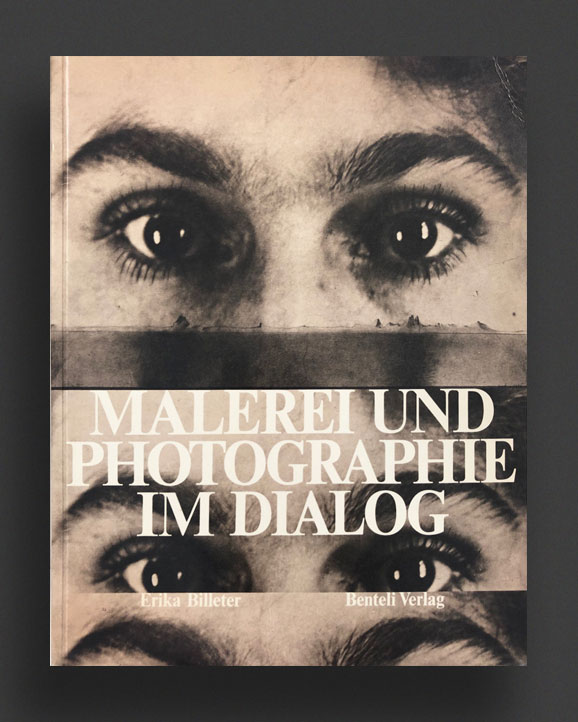
Wonderful over-sized catalogue published on the occasion of the exhibition Malerei und Photographie im Dialog / Painting and Photography in Dialogue, Kunsthaus Zürich, May 13 to July 24, 1977. Profusely illustrated, this heavy volume documents this historical survey of the relationship between photography and painting from 1840 to the present (late 1970s); with a full catalogue of works, artists' biographies, bibliography. Edited by Erika Billeter with texts throughout by art historian Josef A. Schmoll. Includes the work of Edvard Munch, Urs Lüthi, Wols, Vito Acconci, John Baldessari, Eadweard Muybridge, Hannah Höch, Raoul Hausmann, Hans-Peter Feldmann, Oskar Schlemmer, Francis Bacon, Hilla and Bernd Becher, Les Levine, Constant Puyo, Clarence Hudson White, Jan Groover, Jochen Gerz, Duane Michels, Mario Merz, Giulio Paolini, Ruth Francken, Theo Von Doesburg, Kurt Schwitters, Ferdinand Hodler, Herbert Bayer, Marcel Duchamp, Gertrude Käsebier, Edward Steichen, Alighiero Boetti, Klaus Rinke, Giuseppe Penone, Pierre Bonnard, Paul Klee, Gerhard Richter, Monika Baumgartl, Yves Klein, Wolf Vostell, Heinrich Kühn, Georges Mathieu, Peter Roehr, Sarkis, Jiro Takamatsu, Michael Heizer, Umberto Boccioni, Hans Bellmer, William Wegman, Raoul Ubac, Margrit Jäggli, André Kertész, Jiri Kolar, Kasimir Malevich, Henri de Toulouse-Lautrec, Dennis Oppenheim, Christian Boltanski, Dan Graham, Jan Dibbets, Jürgen Klauke, Bruce Nauman, Jean Tinguely, Vettor Pisani, Max Ernst, Joseph Cornell, Allen Kaprow, Arnulf Rainer, Mieczyslaw Berman, Jim Dine, George Brecht, Man Ray, Paul Wunderlich, Karin Székessy, Tom Wesselmann, Chuck Close, Eugène Delacroix, Duane Hanson, Heinrich Zille, Félix Vallotton, Carl Durheim, Gilbert and George, Joseph Beuys, Thomas Eakins, Robert Rauschenberg, Édouard Vuillard, Carlo Carrà, Alphonse Mucha, Les Krims, Albert Steiner, Giorgio de Chirico, Keiji Uematsu, Ernst Ludwig Kirchner, Heinrich Zille, Franco Fontana, Richard Long, Ben Shahn, Edmund Kesting, László Moholy-Nagy, Anton Stankowski, Paul Nash, Rene Magritte, Paul T. Frankl, John Heartfield, El Lissitzky, Georges Hugnet, Gordon Matta-Clark....
Very Good copy, crease to top cover corner.
2017, English
Hardcover, 264 pages, 23.2 x 23.2 cm
Published by
Koenig Books / London
Jeu de Paume / Paris
$115.00 - In stock -
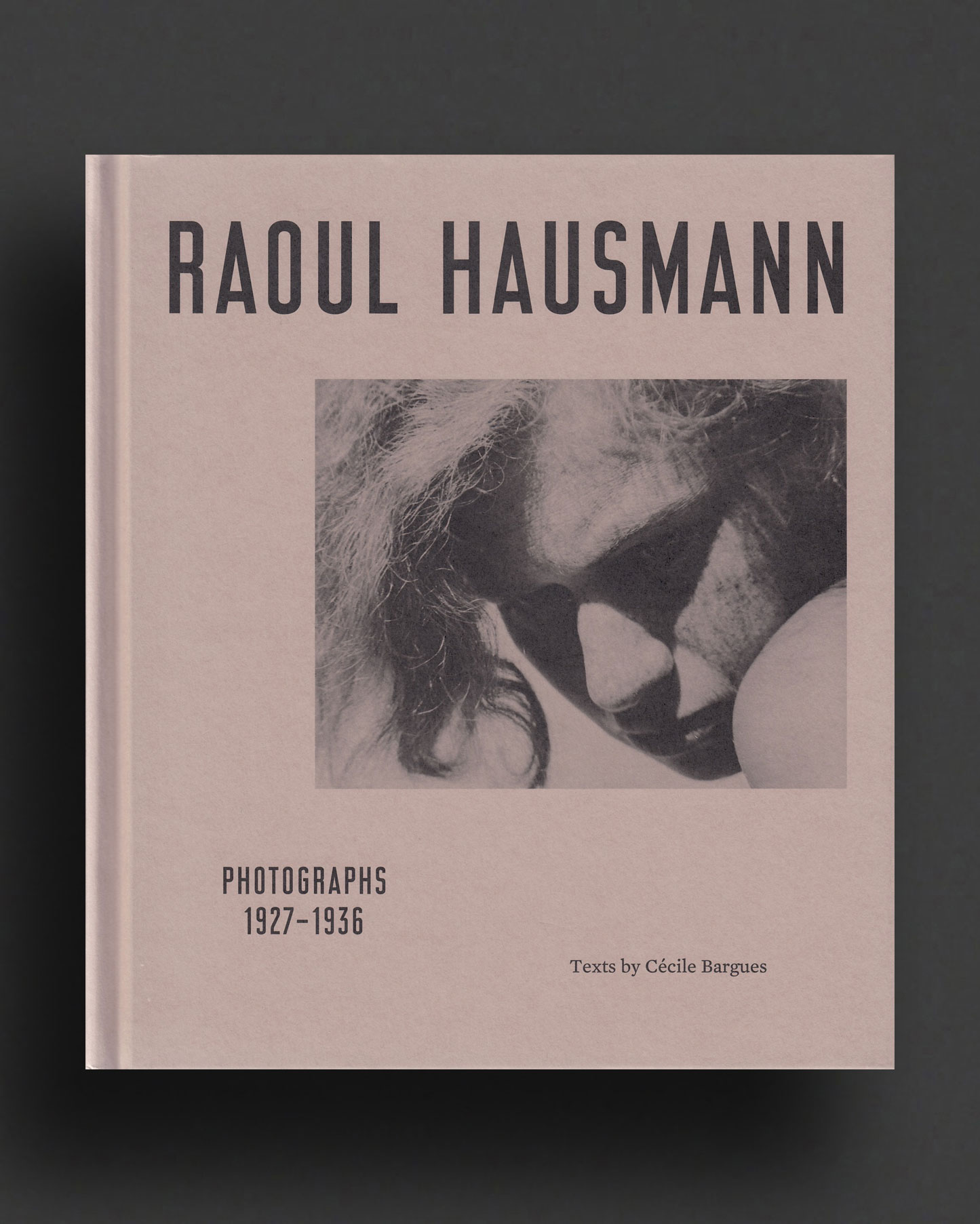
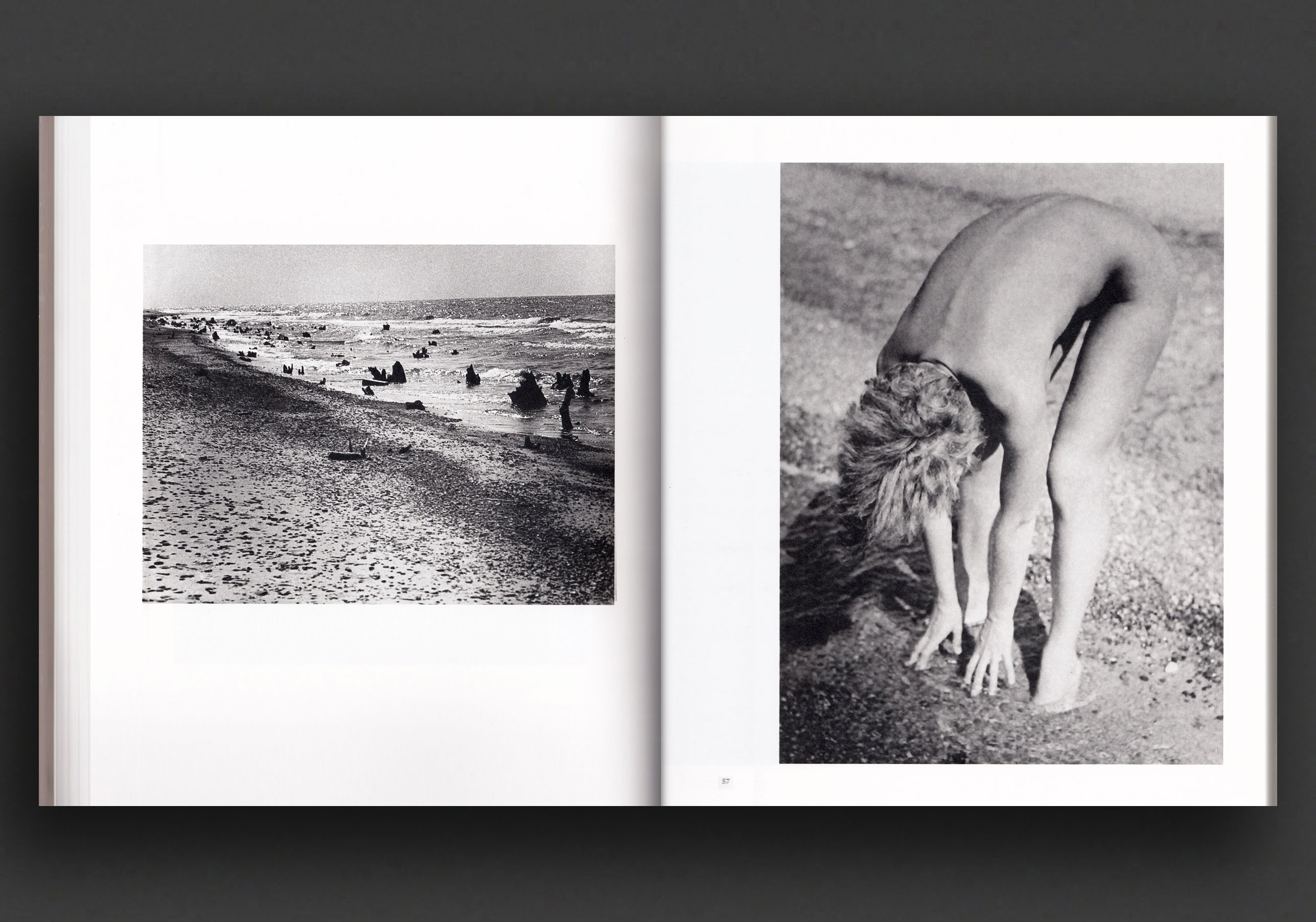
Raoul Hausmann (1886–1971) is remembered primarily for the central role he played in Berlin Dada with his assemblages, photomontages and optophonetic poems. Raoul Hausmann: Photographs 1927–1936 presents a comprehensive study of Hausmann as a photographer during the interwar years.
Beginning in 1927, while living in Germany, Hausmann became an avid, restless photographer—picking up the camera particularly during his stays at the North Sea and Baltic coasts. Forced into exile in Ibiza by the rise of the Nazi Party, Hausmann's photos focused on the local populace and vernacular architecture in his temporary home until he was forced to emigrate again in 1936. It was in this intense ten-year period, surveyed in this volume, that Hausmann would develop an individualized photographic style, simultaneously documentary and lyrical, and reflect extensively on the medium.
Edited by David Benassayag, Cécile Bargues, David Barriet, Béatrice Didier.
Text by Cécile Bargues, Nik Cohn.
2025, English
Hardcover, 304 pages, 29 x 22 cm
Published by
Hatje Cantz / Berlin
$105.00 - In stock -
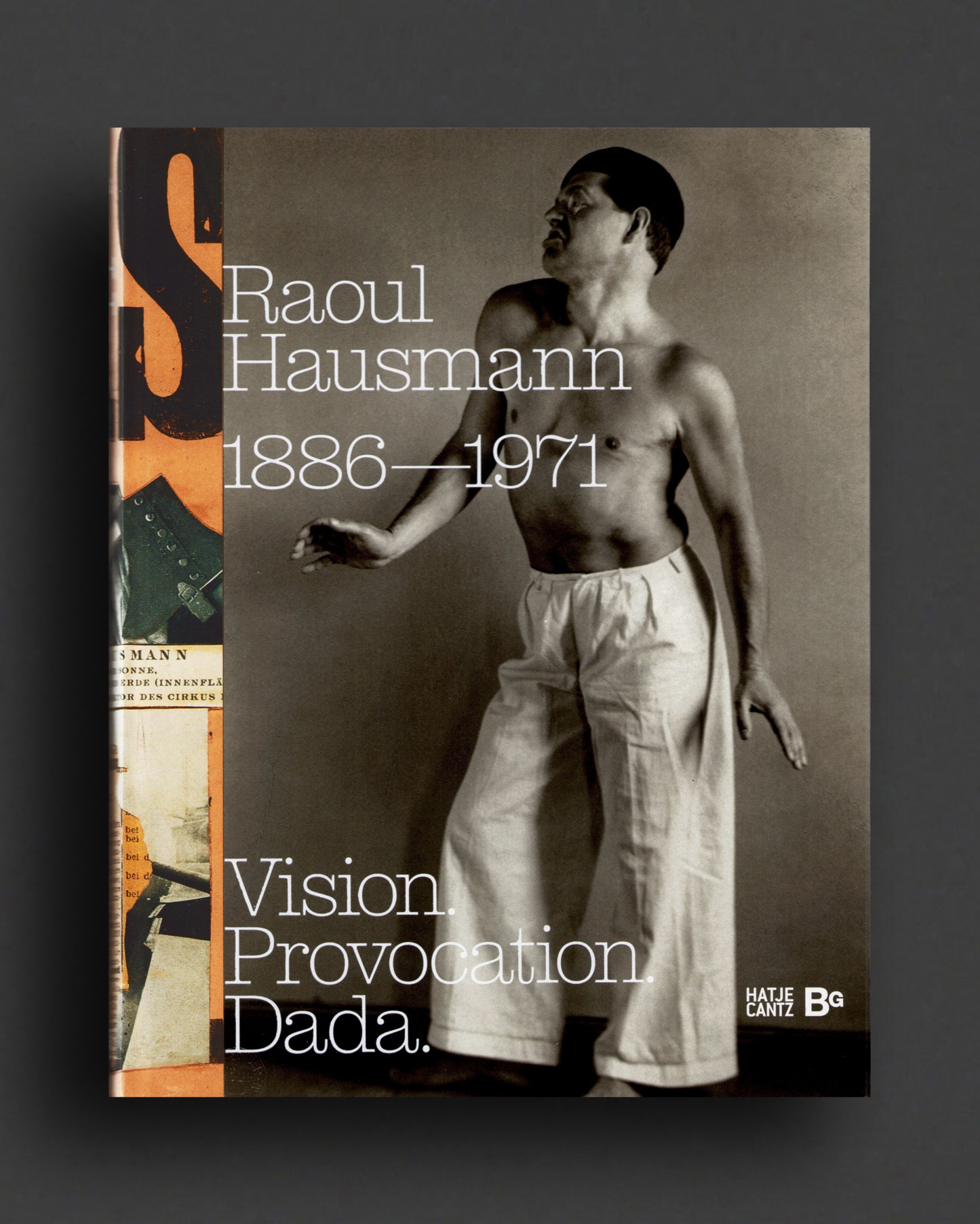
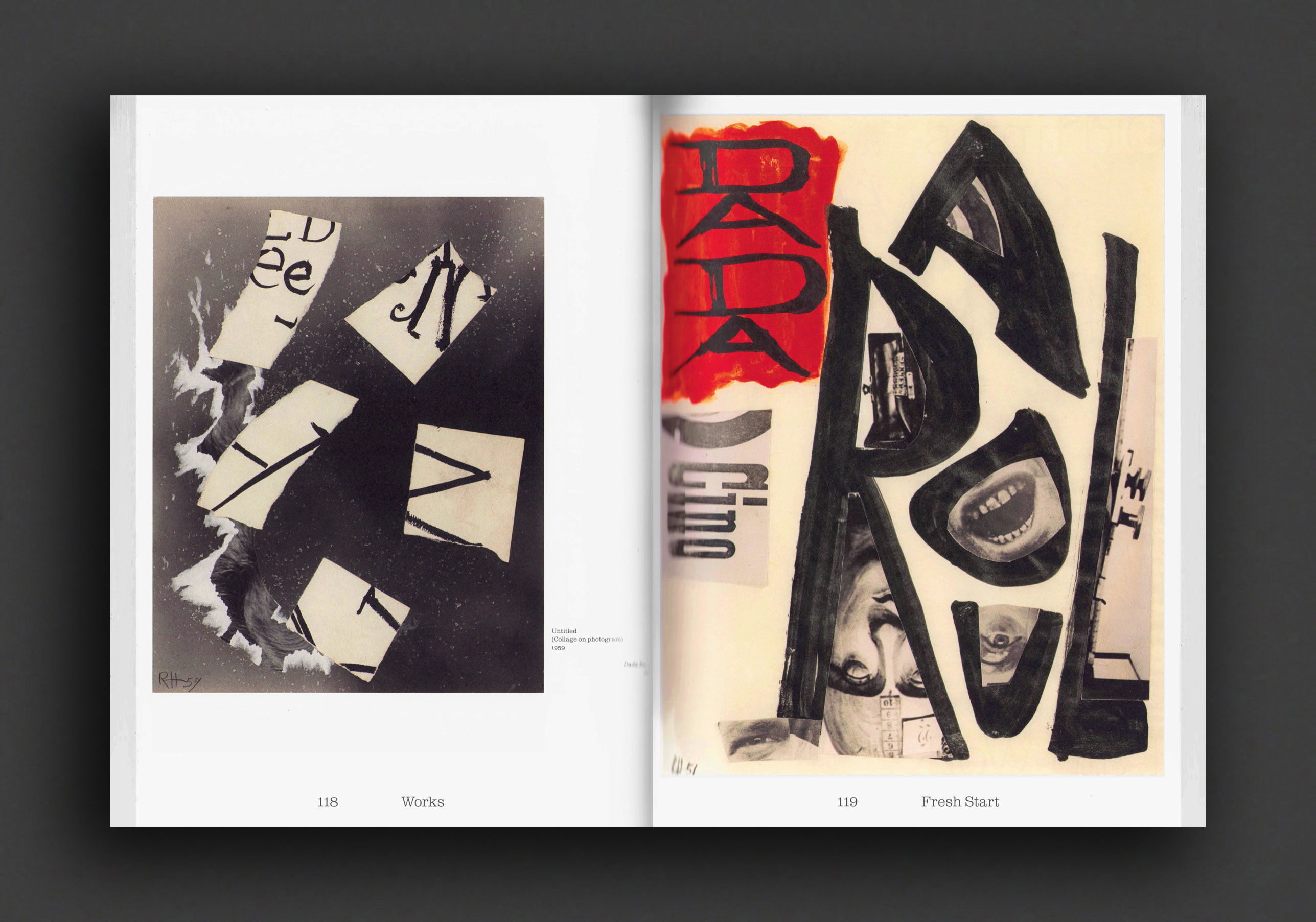
A spectacular appraisal of one of the most innovative avant-garde artists of the Dada scene
Raoul Hausmann fought convention all his life. Radically resolved to be "unscrupulously honest" in both art and life, the Dadaist was a multimedia activist of the first hour and a sharp-tongued critic of society. Now his visionary output can be enjoyed in all its breadth. With more than 300 illustrations, this catalogue from the Berlinische Galerie traces his path: the early Expressionist works, gems of Dada from the Berlin years, Hausmann's photography, but also fashion, dance and literature, and the artist's lesser-known productivity in exile. Twelve essays by international experts in the history of art and literature, media studies, and psychoanalysis examine the multilayered oeuvre to offer a multifaceted panorama of Hausmann's astonishing significance—even today. Another appealing feature of the catalogue is its attractive, artistic design.
Raoul Hausmann (1886-1971) was an exceptionally innovative avant-garde artist. He co-invented collage, explored body, words, and space in early happenings, merged the visual with the haptic, and translated sound into images. In and beyond art, the provocative "Dadasoph" called out the establishment.
Edited by: Ralf Burmeister, Thomas Köhler
Graphic Design: Gregor Schreiter
Texts by: Hanne Bergius, Peter Bexte, Ralf Burmeister, Amélie Castellanet, Annina Guntli, Nadine Hartmann, Thomas Köhler, Annelie Lütgens, Agatha Mareuge, Nils Philippi, Bernd Stiegler, Hélène Thiérard, Timm Ulrichs, Michael White
2018, English / Japanese
Hardcover (w. dust jacket), 234 pages, 23 x 31 cm
1st Edition, Out of print title / as new
Published by
Kokushokankokai / Tokyo
$90.00 - In stock -
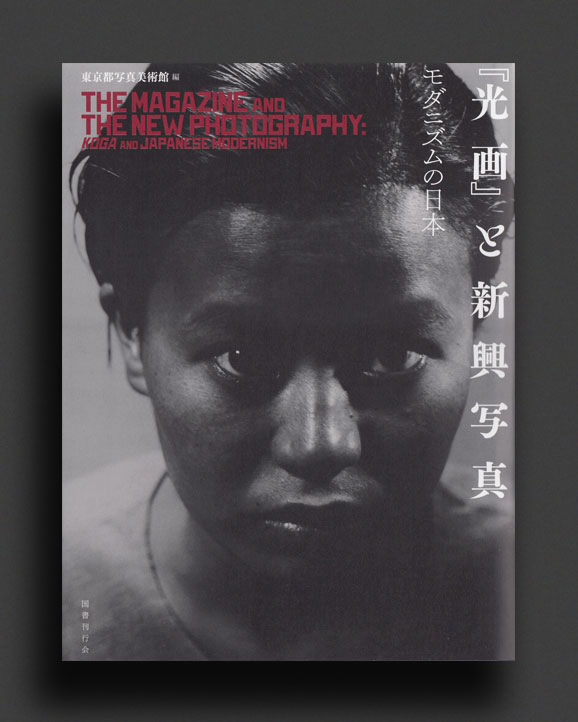
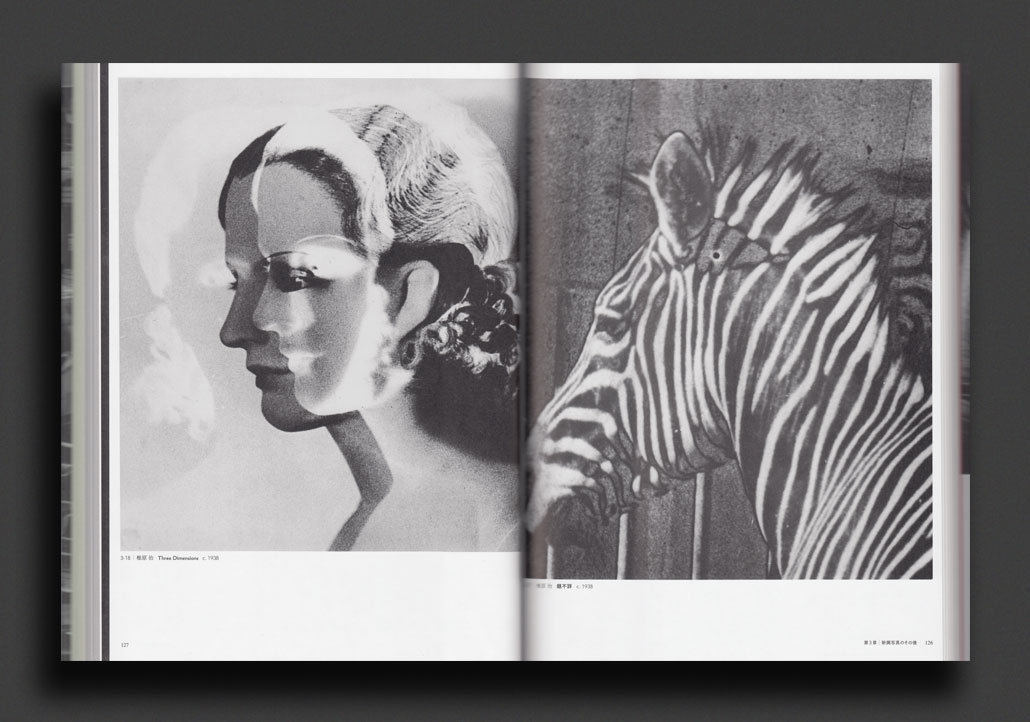
Shinkō Shashin, the New Photography, influenced by Germany’s Neue Sachlichkeit, the New Objectivity, and by Surrealism, differed strikingly from Pictorialism, which had been the leading form of art photography in Japan. The goal of the New Photography movement, which flourished from about 1930 on, was creative expression possible only through photography, making effective use of the mechanistic nature of the camera and lens. ‘Koga’ was a small-press magazine that remained in print for less than two years, from 1932 to 1933. Founded by Yasuzō Nojima, its central figures were Ihei Kimura and Iwata Nakayama. Kōga also involved amateur photographers, largely from the Kansai region (members of the Naniwa Photography Club and the Ashiya Camera Club, for example) and spurred on the New Photography movement. The New Photography Research Society, of which Kimura Sen’ichi, the editor-in-chief of the magazine Photo Times, was the central figure, had been formed in 1931, with participation by Horino Masao and Watanabe Yoshio. It published its own journal, New Photography Studies, for only three issues. The magazines attracted attention from Kansai-based artists and played an important role in the emergence of the Shinkō Shashin movement, which challenged photography’s unique powers of expression.
Revisiting these two groundbreaking magazines, this major hardcover catalogue, “The Magazine and the New Photography”, provides a comprehensive overview of the Shinko Shashin movement, featuring many works never before re-printed, and all three published issues of the New Photography Studies journal, alongside new major essays, artist biographies, list of works, all in English and Japanese.
As New copy with exhibition ephemera inserted.
2002, Japanese / English
Hardcover (w. dust jacket + obi), 132 pages, 37.2 x 26.1 cm
1st Edition, Out of print title / used / very good
Published by
Bunyusha / Tokyo
$200.00 - In stock -
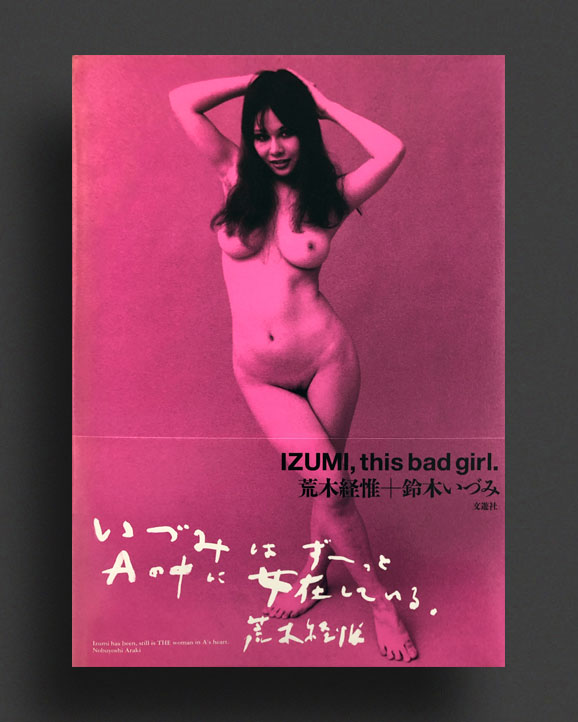
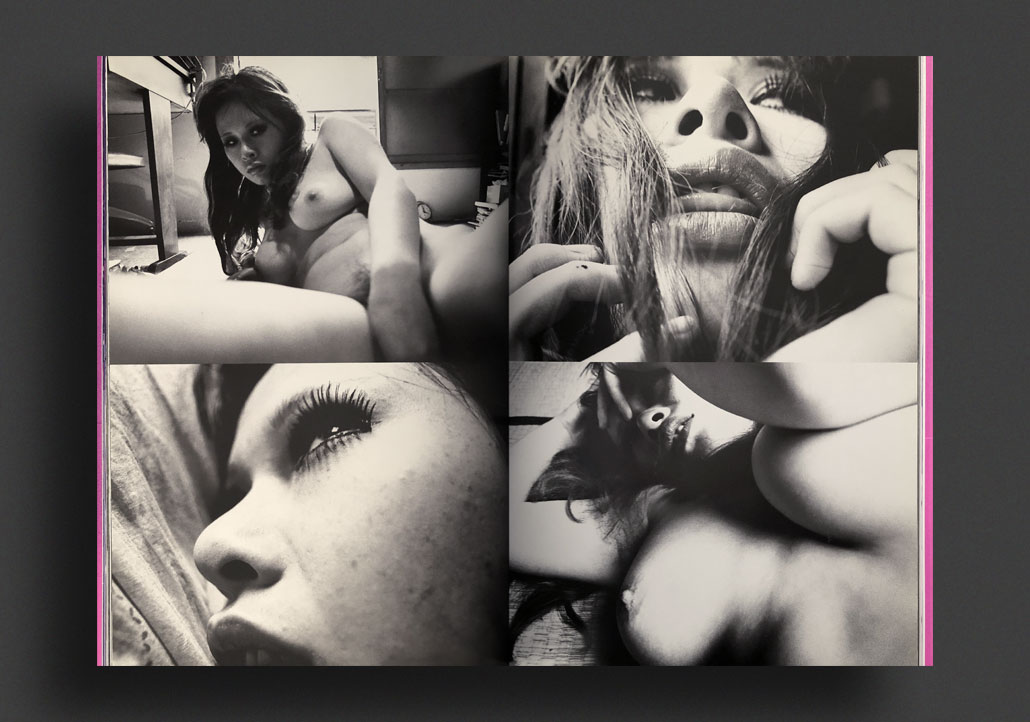
Beautiful, over-sized hardcover first edition of IZUMI,this bad girl., the stunning collection of Araki's photographic collaborations with Japanese sci-fi author, actress and countercultural icon, Izumi Suzuki. A gorgeous example of Araki's early work and one of his most sought after books, now long out-of-print. Because of Izumi's relationship with Araki, the photos are particularly intimate, capturing the singular, but tragically short life of Suzuki. The iconoclastic Izumi debuted as a writer at the age of 20. From the stage (as a member of Shuji Terayama's underground theatre troupe Tenjo Saijiki), the screen (as "pink" film actress), the image (as model and muse to photographer Nobuyoshi Araki), the page (as celebrated pop culture essayist and proto-cyberpunk author), through to the life between with marriage to free jazz alto-saxophonist Kaoru Abe and suicide at age 36 — Izumi's was a life as adventurous and tumultuous as the art she made and the counterculture she inhabited. She took her own life in 1986, leaving behind a decade’s worth of groundbreaking and influential writing.
"Izumi has been, still is THE woman in A's heart"—Nobuyoshi Araki
Very Good copy in dust jacket and obi.
2012, English / German
Softcover, 104 pages, 20.3 x 24.8 cm
1st Edition, Out of print title / as new
Published by
Walther König / Köln
Collection de l'Art Brut / Lausanne
$110.00 - In stock -
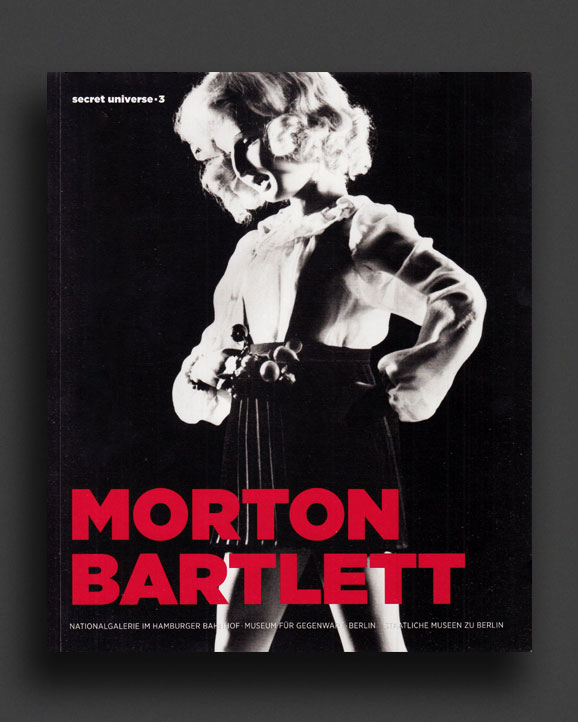
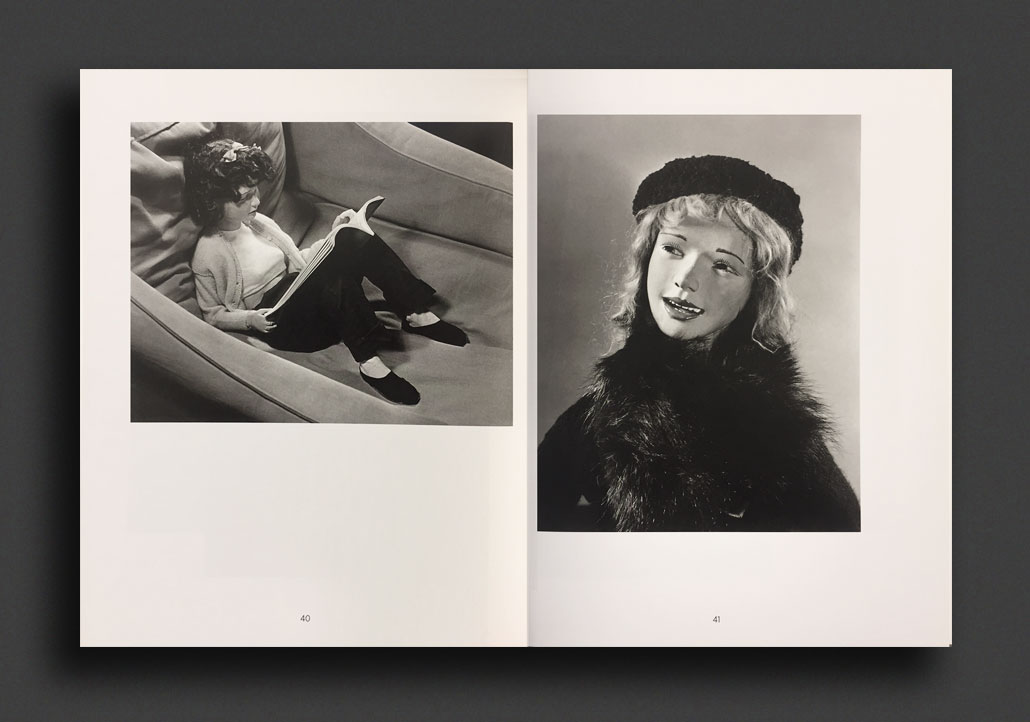
Scarce out-of-print monograph on the work of Morton Bartlett, one of only a couple of books on the artist, published by Collection de l'Art Brut Lausanne and Walther Koenig in 2012 and quickly sold out.
When the freelance photographer and graphic designer Morton Bartlett (1909–1992) died at the age of 83, his relatives found 15 chests among his possessions. Each chest contained a half-life-size doll and its accessories: 12 girls and three boys, a wardrobe of hand-sewn clothes, black-and-white photographs of each doll as well as countless studies and archival materials. Bartlett began designing these dolls in the mid-1930s, studying anatomy books and histories of costume, and learning to sew and mold with clay to make them as true to life as possible. Each doll entailed a huge amount of labor, taking up to a year to complete; Bartlett created costumes and wigs for each one and then staged them in lifelike scenarios and photographed them, documenting a family he had never had and creating a body of work that would remain unexhibited during his lifetime. The third installment in the Bahnhof Museum’s series on outsider artists, this volume examines Bartlett’s extraordinary lifelong obsession.
Edited and with foreword by Udo Kittelmann, Claudia Dichter. Text by Lee Kogan.
As New copy.
1980, Japanese
Softcover (w. dust jacket), 114 pages, 26 x 21 cm
1st Edition, Out of print title / used / very good
Published by
Seven Sha / Tokyo
$550.00 - In stock -
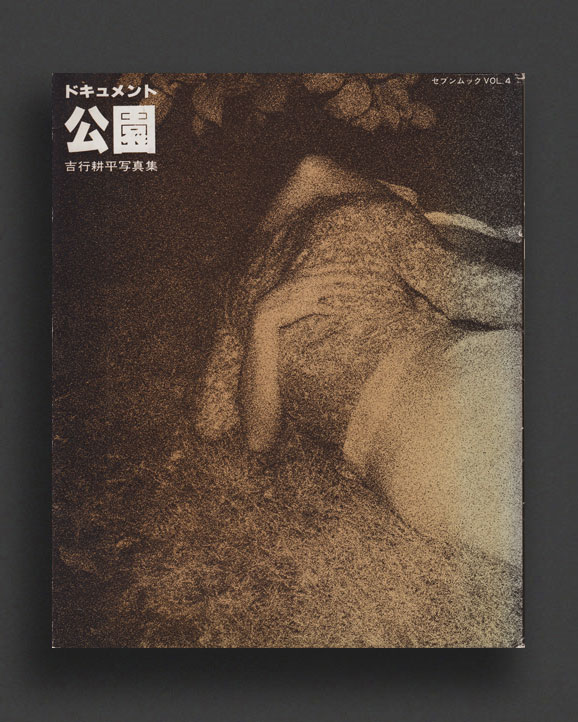
Rare first edition of Kohei Yoshiyuki's cult classic photo book, Document: The Park (Document Park), published in 1980 by Seven Sha, Tokyo. Yoshiyuki's voyeuristic masterpiece, The Park is like no other photo book. A controversial volume of 74 photographs taken by the photographer using a 35mm camera, infrared film, and flash, Yoshiyuki documented a secret community of lovers and voyeurs who gathered in Shinjuku Park and Yoyogi Park between 1971 and 1973. His pictures document the people who gathered in these parks for clandestine trysts under the cloak of darkness, as well as the many spectators lurking in the bushes who watched—and sometimes participated in—these couplings. With their raw, snapshot-like quality, these images not only uncover the hidden illicit sexual encounters of their subjects, both homosexual and heterosexual, but they also serve as a chronicle of a Japan we rarely see. As Martin Parr writes in The Photobook: A History, Volume II, The Park is "a brilliant piece of social documentation, capturing perfectly the loneliness, sadness and desperation that so often accompany sexual or human relationships in a big, hard metropolis like Tokyo."
A beautifully printed book, with original dust-jacket. Includes two conversations with Kohei Yoshiyuki with Kenichi Matsumoto and Nobuyoshi Araki.
Kohei Yoshiyuki (b. 1946—2022) came to recognition in 1972 when material from his photo project “The Park” was featured in magazine Shukan Shincho, and a year later, in respected photo journal Camera Mainichi. However, it was the 1979 photo exhibition “The Park” at Komai Gallery and 1980 photo book “Document: The Park” that established him within the contemporary photographic landscape. Since then, Yoshiyuki was a recurrent fixture in Japan debauchery journal Super Photo Magazine along photographers: Nobuyoshi Araki, Daido Moriyama, Keizo Kitajima and Seiji Kurata.
Very Good copy in Good dust jacket with usual tanning to spine edge, wear to extremities, and dj corner tear hidden inside jacket fold (blank black area, not affecting any content). Otherwise a well preserved copy.
1995, Japanese
Softcover (w. dust jacket), 29.8 x 21.5 cm
1st Edition, Out of print title / used / very good
Published by
Outo Shobo / Tokyo
$200.00 - In stock -
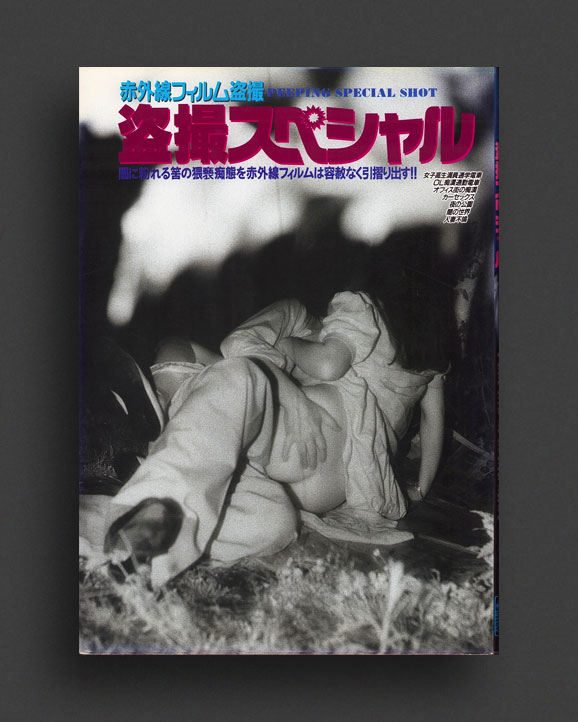
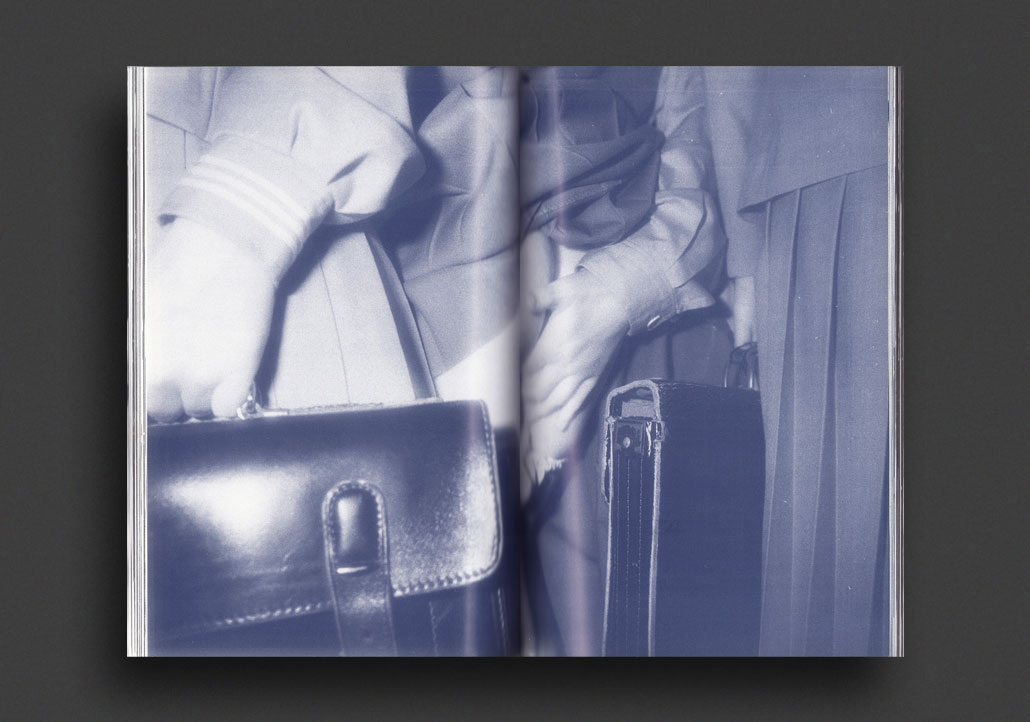
Very rare provocative photo book by Japanese photographer Ikko Kagari, published in 1995 in Tokyo. Kagari made a number of these extraordinary, extremely questionable, surreptitious infrared photography collections in the 1980's—1990's, featuring secret "close-up photography" documenting clandestine sexual activities in public places — groping and upskirt photographs taken on packed Tokyo Metro commuter trains, in nightclubs, on escalators, couples making it in public toilets, parked cars and in parks with infrared strobe techniques reminiscent of Kohei Yoshiyuki's incredible Document Park. Cover-to-cover b/w reproductions of Kagari's grainy, blown-out infrared images that blur all lines between voyeur/participant and simulated/real, make for disorientating, sometimes claustrophobic, uneasy viewing. But they are also absolutely stunning, effective photo books that feel as conceptual as they do devious. Including selections from Kagari's "Document Commuter Train" (1982), as featured in The Photobook: Vol. III, by Parr & Badger, Kagari's fleeting in flagrante scenes capture erotic desire and criminal impulse engulfed by the soft folds of entangled garment fabrics, through foliage and grass, and across the cold darkness of the metropolis, with stunning technique. He went so far as to publish a how-to book for amateurs! Like many of Kagari's other published works, Peeping Special Shot has sparked discussions about consent, privacy, and the ethics of voyeuristic art. As a result, copies of these photo books are now very scarce and highly sought after for those interested in the world of marginal art publishing. The 2000s saw the introduction of women-only carriages on the Tokyo Metro, relegating such shadowy expertise to history.
Mature audiences only.
Very Good copy with VG dust jacket.
1994, Japanese
Softcover (w. dust jacket and obi), 29.5 x 21 cm
1st Edition, Out of print title / used / fine
Published by
Heart Deluxe / Tokyo
Outo Shobo / Tokyo
$380.00 - In stock -
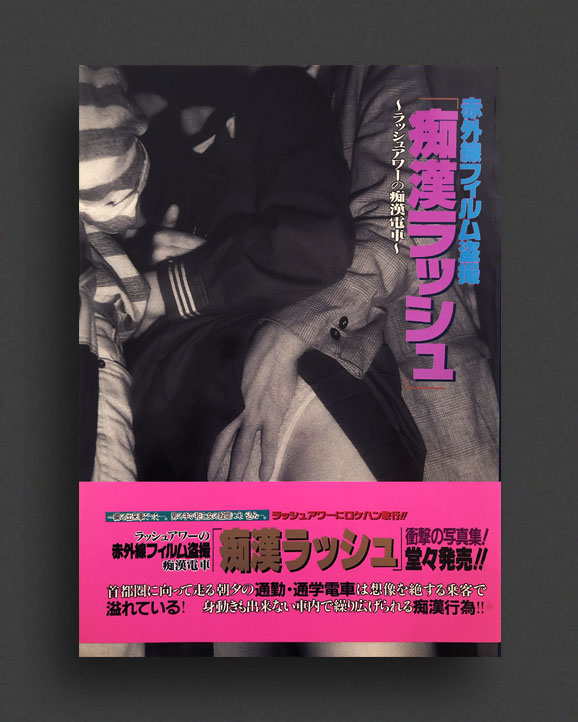
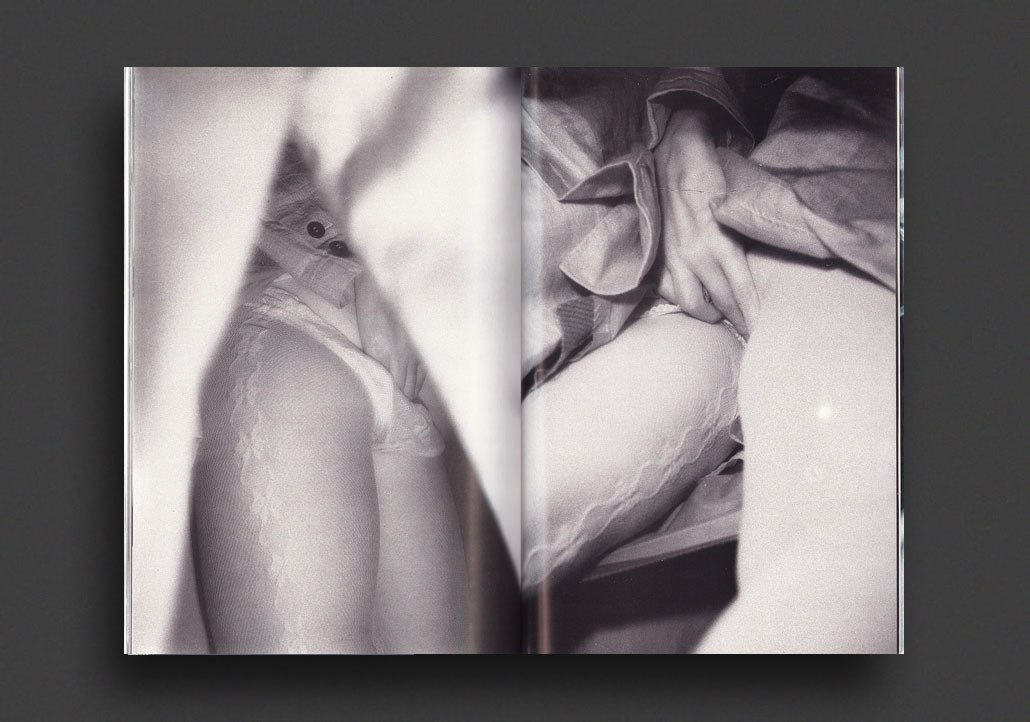
Very rare photo book by Japanese photographer Ikko Kagari, published in 1994 in Tokyo. Kagari made a number of these extraordinary, extremely questionable, surreptitious infrared photography collections in the 1980's—1990's, featuring secret "close-up photography" documenting clandestine sexual activities in public places — groping and upskirt photographs taken on packed Tokyo Metro commuter trains, in nightclubs, on escalators, couples making it in public toilets, parked cars and in parks with infrared strobe techniques reminiscent of Kohei Yoshiyuki's incredible Document Park *the two often featured side-by-side in books and journals). Chikan Rush (Molester Rush) is entirely made up of the infamous rush hour train carriage photography, and has become one of the most sought after. Cover-to-cover b/w reproductions of Kagari's grainy, blown-out infrared images that blur all lines between voyeur/participant and simulated/real, make for disorientating, sometimes claustrophobic, uneasy viewing. But they are also absolutely stunning, effective photo books that feel as conceptual as they do devious. Including selections from Kagari's "Document Commuter Train" (1982), as featured in The Photobook: Vol. III, by Parr & Badger, Kagari's fleeting in flagrante scenes capture erotic desire and criminal impulse engulfed by the soft folds of entangled garment fabrics, through foliage and grass, and across the cold darkness of the metropolis, with stunning technique. Chikan Rush is a contentious work that has sparked discussions about consent, privacy, and the ethics of voyeuristic art. As a result, copies of this photo book are now very scarce and highly sought after for those interested in the world of marginal art publishing. The 2000s saw the introduction of women-only carriages on the Tokyo Metro, relegating such shadowy expertise to history.
Mature audiences only.
NF copy with VG dust jacket and obi. Near Fine overall.
2008, English
Hardcover (w. obi-strip), 220 pages, 23 x 16 cm
1st Edition, Out of print title / used / very good
Published by
Walther König / Köln
$170.00 - In stock -
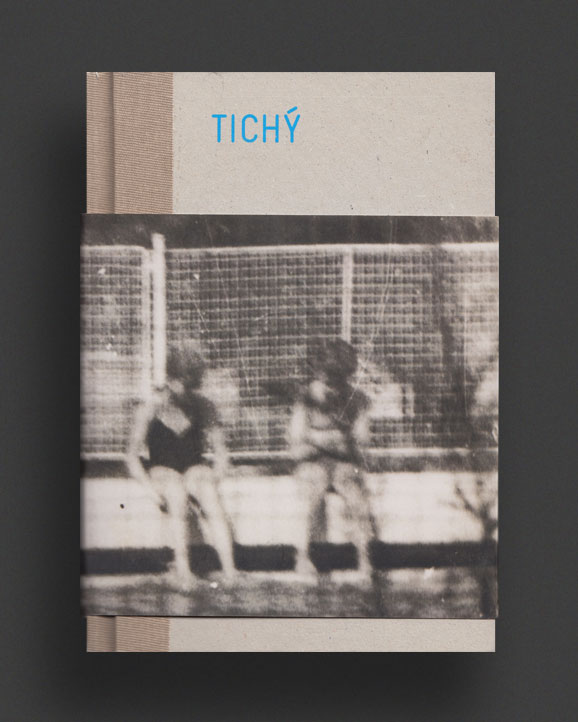
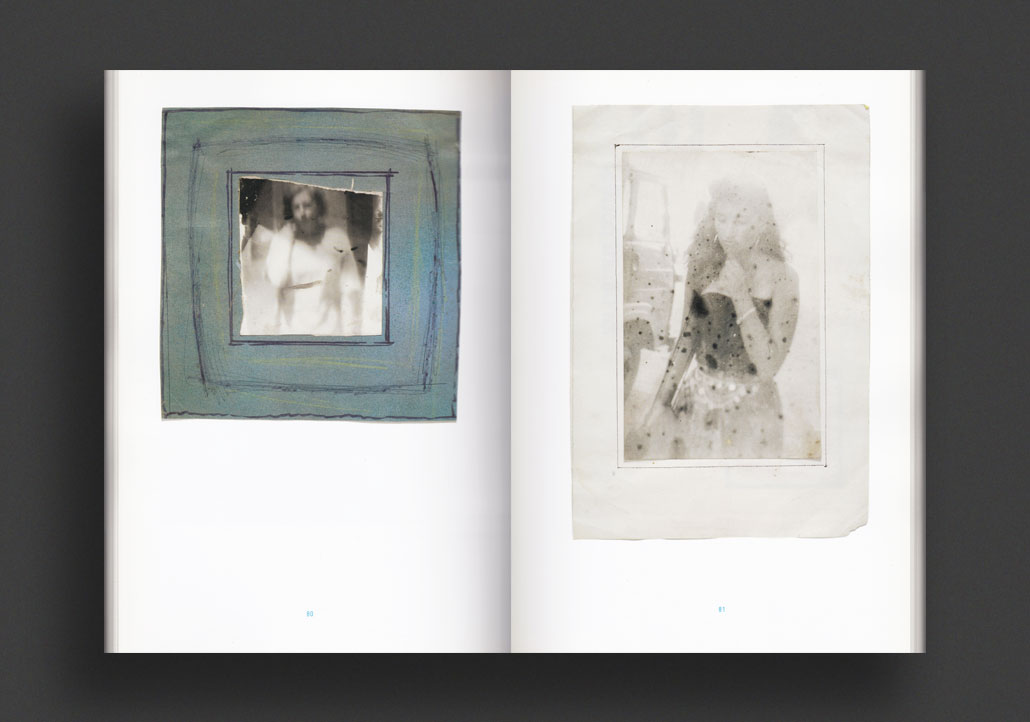
First edition of this beautiful hardcover monograph on the work of Miroslav Tichý, published in 2008 by Walther König and quickly out of print. Profusely illustrated throughout with Tichý's works alongside informative background about the artist and his work by contributors Harald Szeemann, Carolyn Christov-Bakargiev, Clint Burnham, Roman Buxbaum.
After studying at the Academy of Arts in Prague, Miroslav Tichý, born in 1926 in the former Czechoslovakia, withdrew to a life of isolation in his hometown of Kyjov. In the late 1950s, he stopped painting and, during his daily walks, began to take photographs of women with cameras he made by hand. He mounted his prints on handmade frames and added finishing touches in pencil, shifting from photography to drawing. Disregarding the rules of photography, for four decades Tichý created a large oeuvre of poetic, dreamlike views of female beauty.
A former neighbor, Roman Buxbaum, discovered Tichý's hidden work in the 1980s and has been documenting and collecting it ever since. In 2004, the esteemed international curator Harald Szeemann mounted the first solo exhibition of the nearly 80-year-old artist. That same year, Tichý was given the Rencontres d'Arles Photographie Discovery Award and the Kunsthaus Zurich organized a large retrospective. Solo exhibitions at the Centre Pompidou in Paris and the Museum of Modern Art (MMK) Frankfurt followed in 2008. Tichý does not see his exhibitions, for he no longer leaves his house. This beautifully produced, thorough volume collects the work — perfectly.
Very Good copy with light wear. Interior Fine. With original illustrated publisher's obi-strip.
1986, English
Softcover, 319 pages, 175 x 229 mm
1st Edition, Out of print title / used / very good
Published by
The MIT Press / Massachusetts
$45.00 - Out of stock
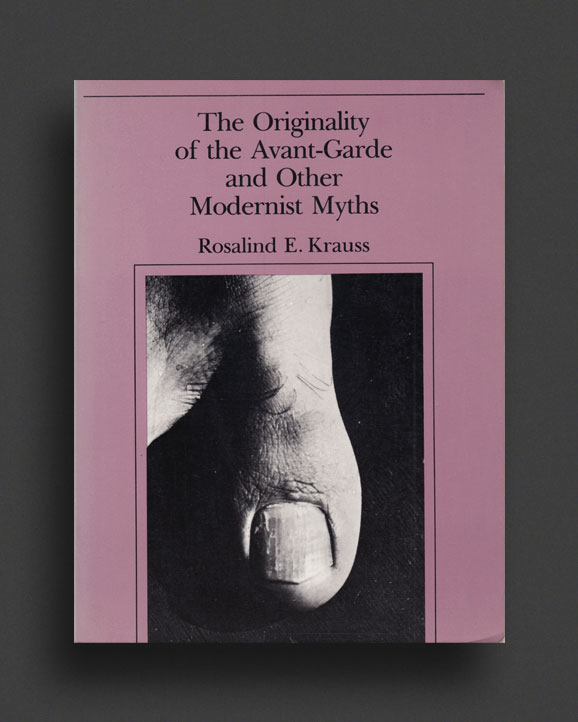
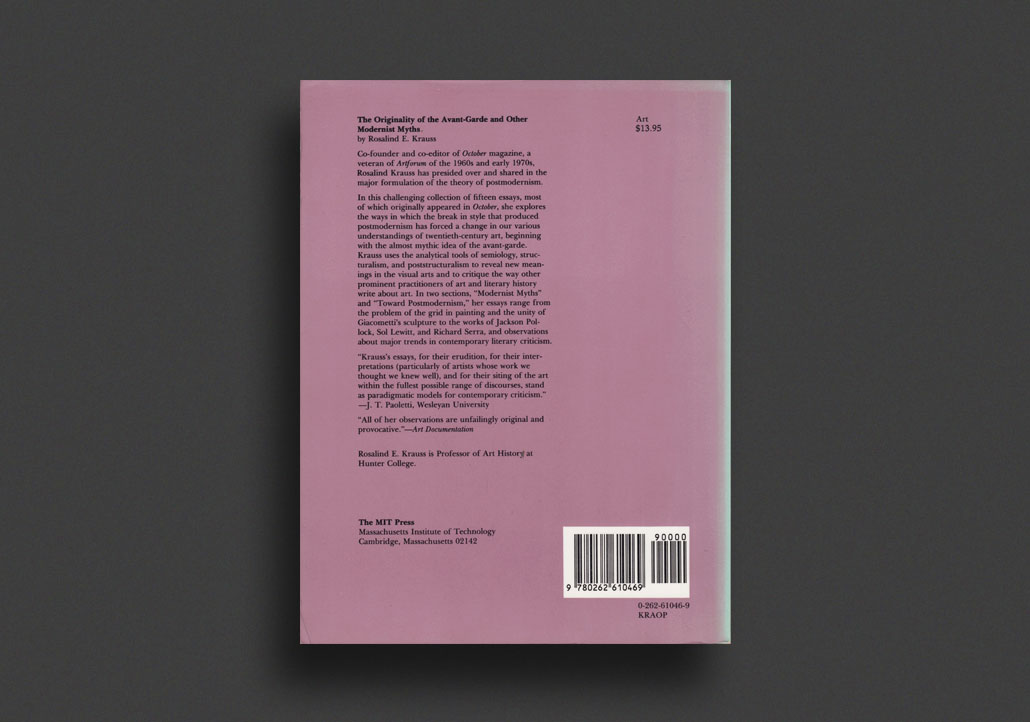
Co-founder and co-editor of October magazine, a veteran of Artforum of the 1960s and early 1970s, Rosalind Krauss has presided over and shared in the major formulation of the theory of postmodernism. In this challenging collection of fifteen essays, most of which originally appeared in October, she explores the ways in which the break in style that produced postmodernism has forced a change in our various understandings of twentieth-century art, beginning with the almost mythic idea of the avant-garde. Krauss uses the analytical tools of semiology, structuralism, and poststructuralism to reveal new meanings in the visual arts and to critique the way other prominent practitioners of art and literary history write about art. In two sections, "Modernist Myths" and "Toward Postmodernism," her essays range from the problem of the grid in painting and the unity of Giacometti's sculpture to the works of Jackson Pollock, Sol Lewitt, and Richard Serra, and observations about major trends in contemporary literary criticism.
Rosalind E. Krauss, University Professor at Columbia University and an editor and cofounder of October magazine, is the author of The Originality of the Avant-Garde and Other Modernist Myths (1985), The Optical Unconscious (1993), The Picasso Papers (1999), and Bachelors (1999), all published by the MIT Press, and coauthor (with Yve-Alain Bois) of Formless: A User's Guide (Zone Books, 1997).
"All of her observations are unfailingly original and provocative."—Art Documentation
Very Good copy of original 1986 edition, 1993 printing.
1993, Japanese
Hardcover (w. dust jacket), 100 pages, 31 x 23 cm
1st Edition, Out of print title / used / very good
Published by
Futami Shobo / Japan
$150.00 - In stock -
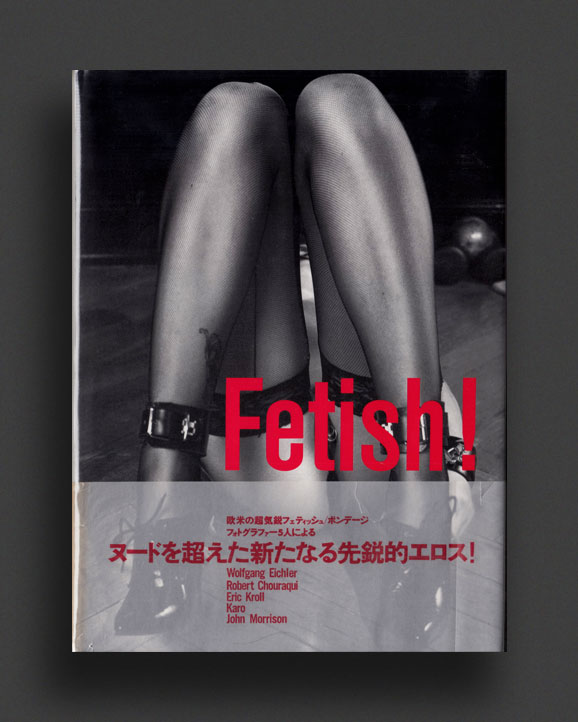
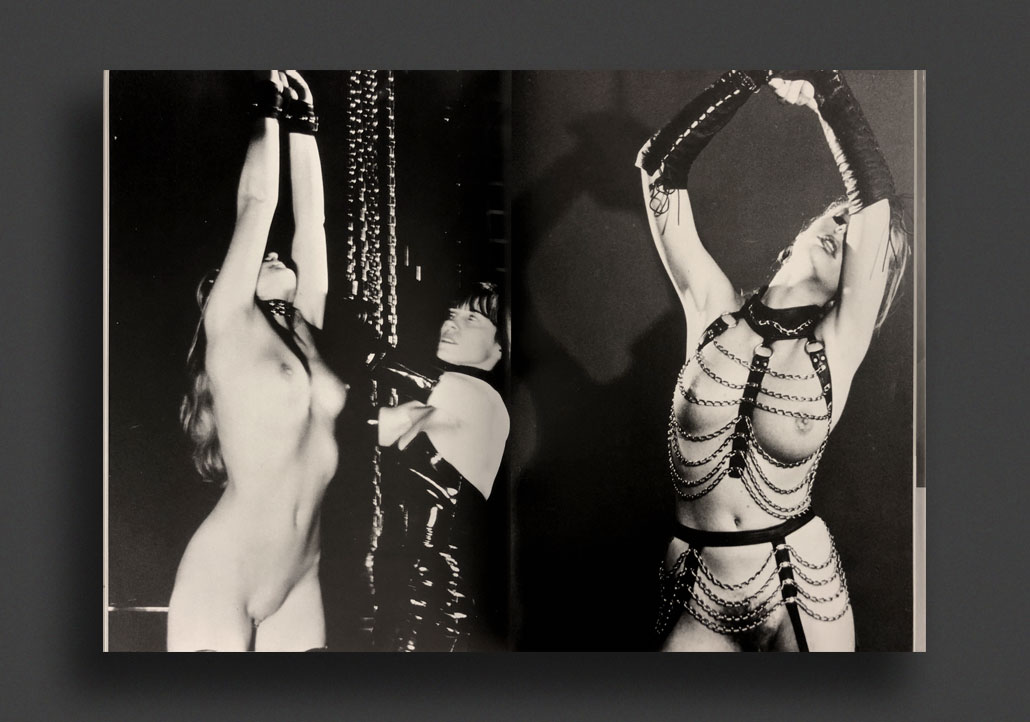
Fetish! from 1993, a rare over-sized hardcover photo collection published in Japan by Futami to celebrate a "new radical eros" compiling the work "five ultra-inspired fetish/bondage photographers from Europe and the United States". Cover-to-cover full-bleed photography of Wolfgang Eichler, Robert Chouraqui, Eric Kroll, Karo, John Morrison.
Very Good—Fine copy in Vey Good—Fine DJ with obi strip (some small tears, creases, tanning to obi)
1992, Japanese
Hardcover (clothbound), 96 pages, 18 x 13.5 cm
1st Edition, Out of print title / used / fine
Published by
Mole / Tokyo
$300.00 - In stock -
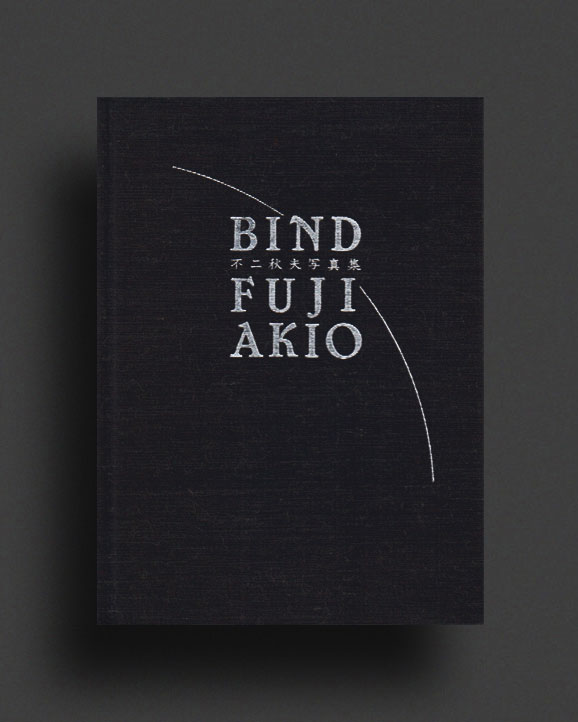
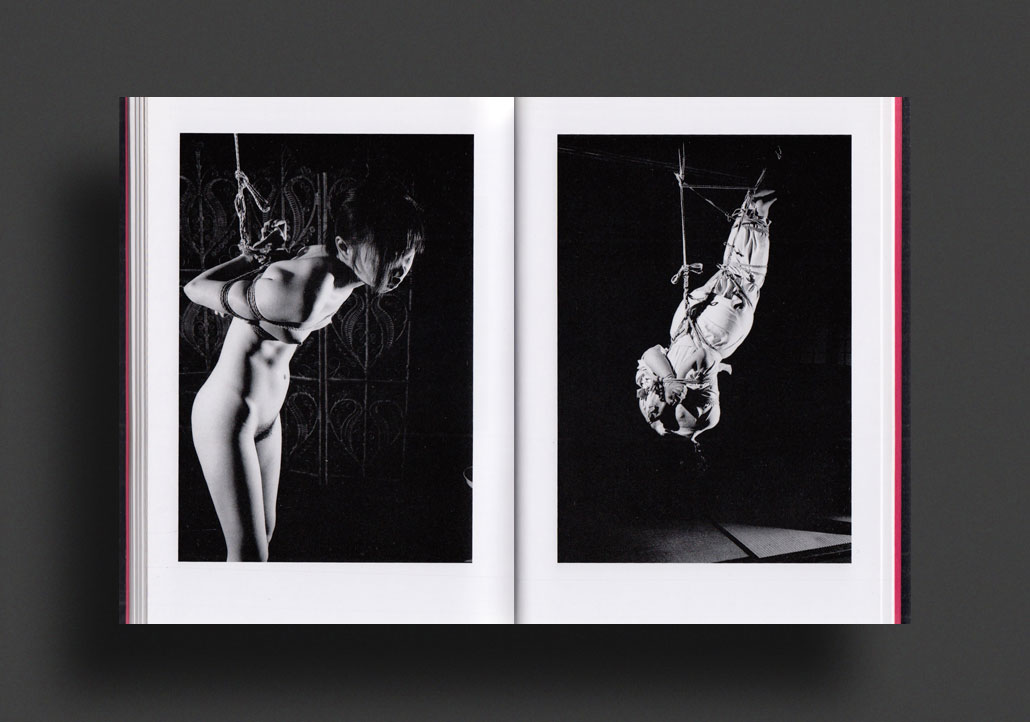
Rare first edition of one of the greatest kinbaku photo books ever published, Bind by Akio Fuji. Published in 1992 by Mole Gallery, Tokyo, to accompany Fuji's exhibition of the same name, Bind is now a classic photo book of masterful aesthetic bondage photography, featuring the rope work of Chimo Nureki, gloriously reproduced in lush black and white plates bound in silver-foiled cloth hardcovers. Exquisite compositions capturing the two artists at the height of their powers, and an important book and exhibition for bringing the world of kinbaku to the recognition of the fine art world in Japan the 1990's.
Akio Fuji (b. 1959) is a pioneer of bondage photography in Japan, founding the legendary bondage enthusiast circle "Kinbiken" in Tokyo in 1985 with rope master Chimuo Nureki (who also produced the magazines Kitan Club and Uramado), developing into the cult kinbaku bulletin Kinbiken Communications, with core contributions by both Fuji and Nureki, Katsuya Kasui, Masami Akita (Merzbow), Yuri Sunohara, Asoji Muroi, Akira Minomura, and other members of the circle. The object of the group was to study the beauty of bondage, observing the techniques of master Nureki through a membership with one of the most distinctive facets of the club being that the bondage women participate as members themselves. Says Nureki, “One of the main reasons I started this circle was to provide a facility for masochistic women, who are often misunderstood and therefore despised.” Kinbiken Communications remain one of the most desirable kinbaku publications of this period, the photography from which is showcased here in Akio Fuji's debut collection, featured heavily in Masami Akita's compilation of the “History of Bondage Photography in Japan”.
Fine copy.
1994, Japanese
Hardcover (w. dust jacket), unpaginated, 30.5 x 22 cm
1st Edition, Out of print title / used / good
Published by
Leed Publishing / Tokyo
$65.00 - In stock -
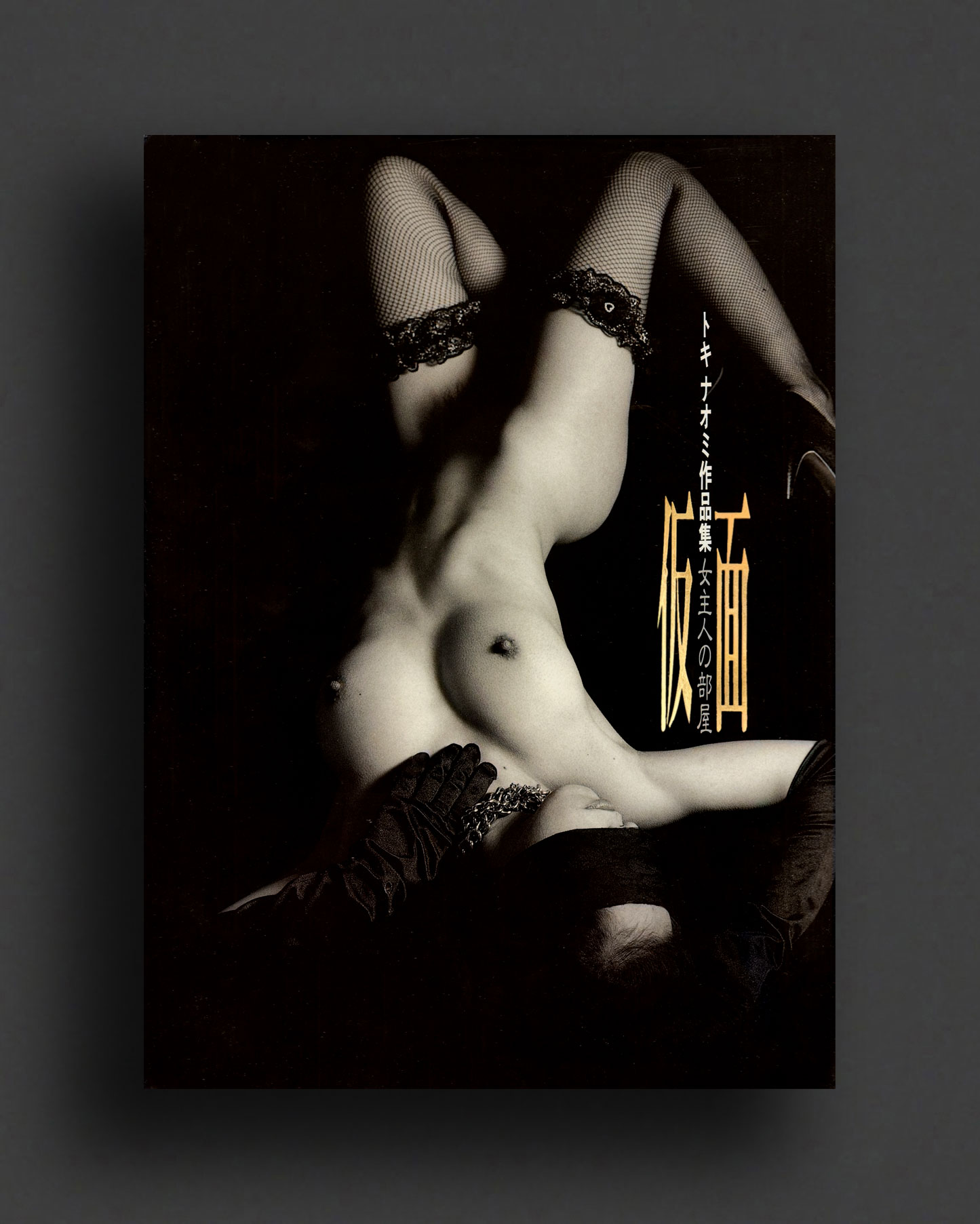
Scarce 1994 hardcover erotic photo book by Japanese female photographer Naomi Toki. 'Masked Mistress' Room' captures Toki's decadent female–gaze of the seductive, fetishised female nude. Her striking monochrome erotica, draped in lace and shadow, would appeal to fans of Irina Ionesco, Ellen von Unwerth or even Günter Blum.
Very Good copy in VG DJ with some edgewear to the black boards, overall light storage buckle.
2023, English
Softcover (staple–bound), 28 pages, 17.8 x 12.7 cm
Published by
Hildegard Press / Canada
$26.00 - Out of stock
1
Increase quantity for EMMA KUNZ: The Polarized Calendula Blooms
Add to cart
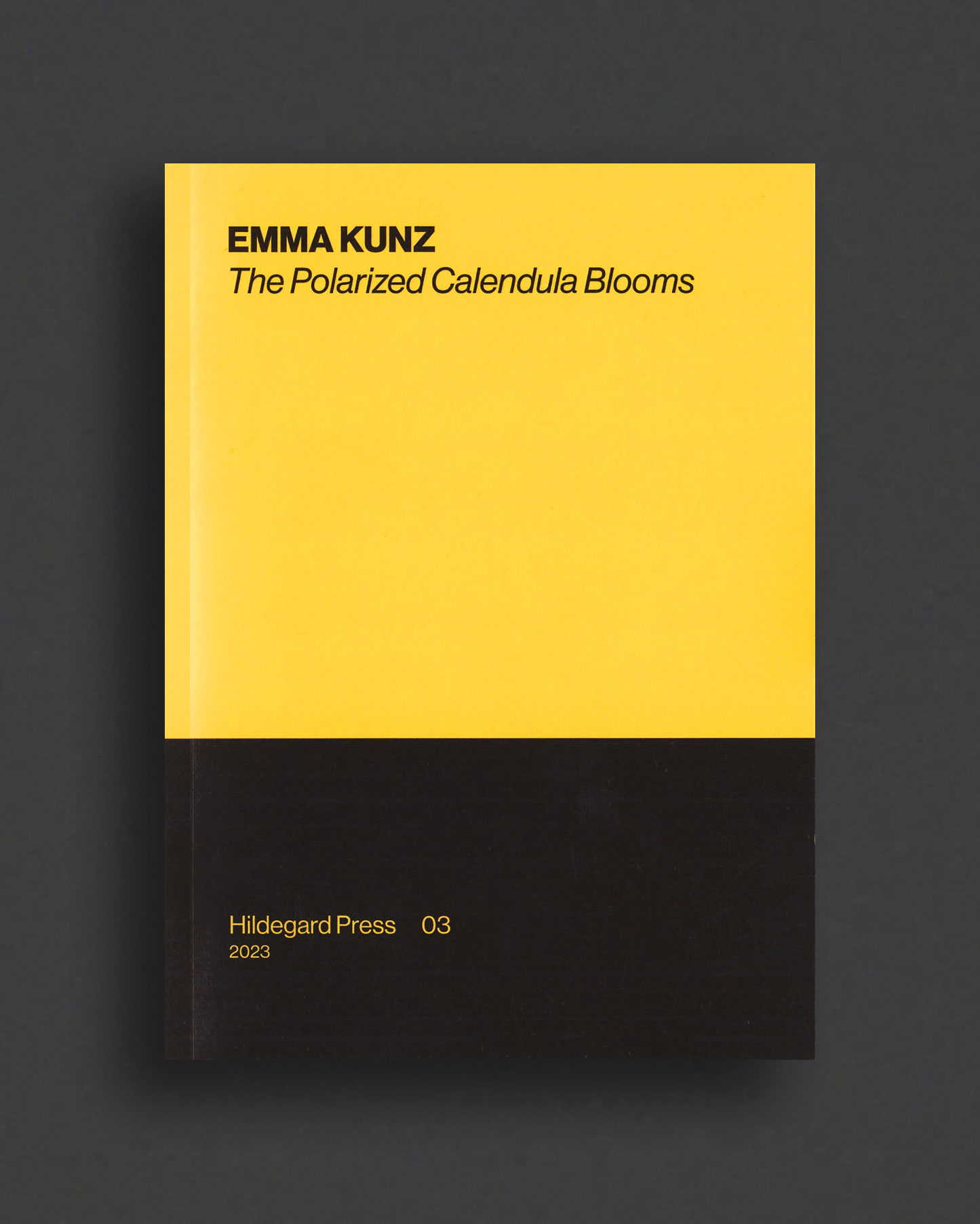
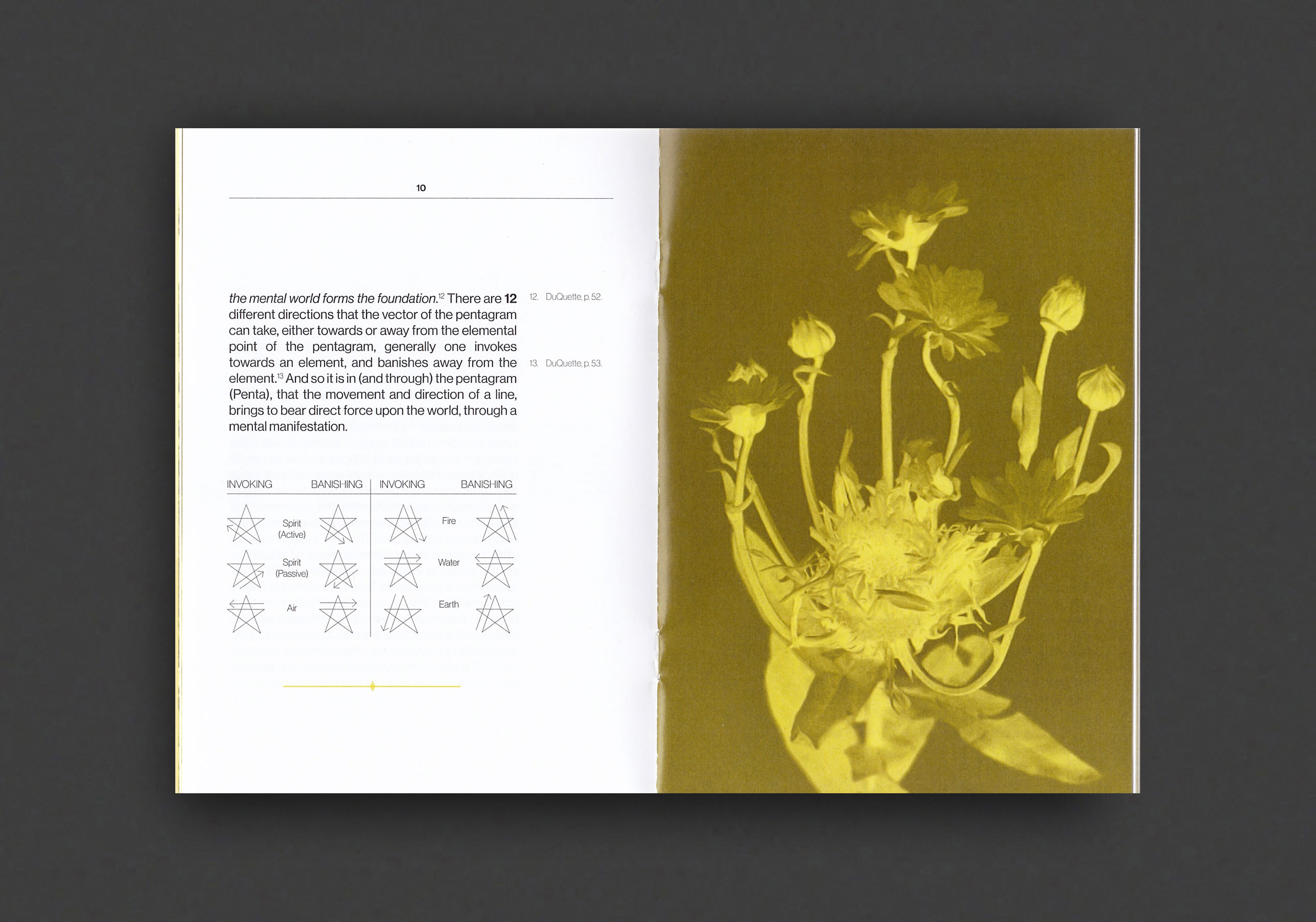
In 1953, the Swiss mystic, healer, and artist Emma Kunz conducted an experiment on calendula flowers growing in her medicinal garden. With the aid of a pendulum she applied a process she termed “polarization” whereby the form of the flowers were altered in order to produce additional blooms following a numerical sequence. This publication explores Kunz’s practice and intentions, the process of polarization, number symbolism, and the contextual implications of the era. An appendix provides a summary of historical and medicinal uses of the calendula flower.
2013, English
Hardcover, 240 pages, 23.2 x 30 cm
1st Edition, Out of print title / used / very good
Published by
Prestel / Munich
$480.00 - In stock -
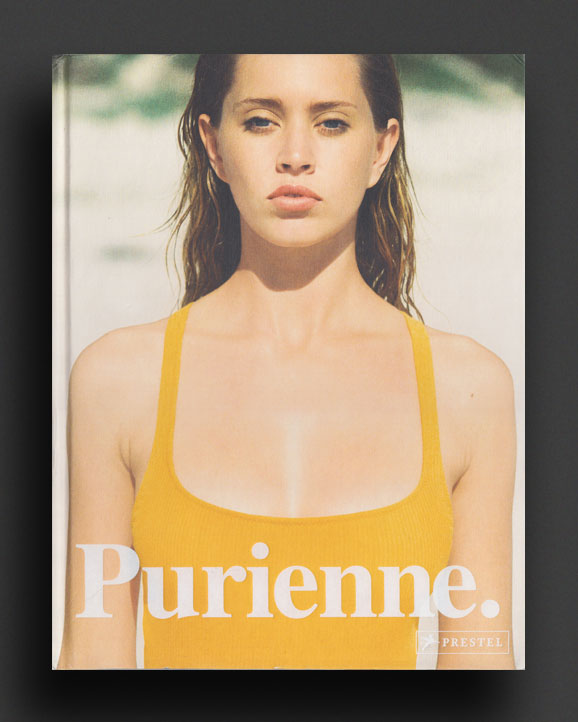
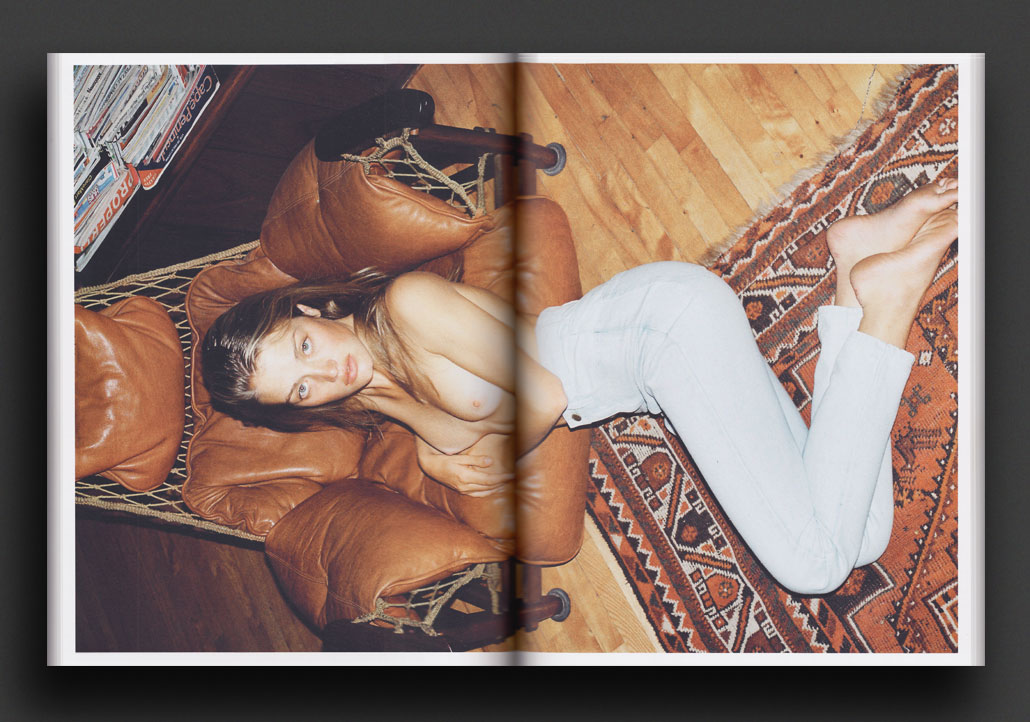
Very collectible first hardcover edition of the first book of photography by Henrik Purienne, published in 2013 and immediately out-of-print.
"Voyeuristic, sun-drenched, and natural, the photographs of fashion photographer Henrik Purienne convey a sexuality that's as nostalgic as it is au courant, at once tender and sultry." Fronted by friend and model Sonja van den Heever, his first book presents a hand-selection of over 200 pages of photographs. Shot mostly in his trademark grainy 35mm film, Purienne's soft-hued and ingeniously lit images often include scratches and other imperfections that belie the sophistication of his technique, evoking the joys of life and the natural beauty of his subject "[...] with unmade faces, hair unruly and clothing, if any, unfussy [...]" in her truest form. Featured across the pages of Lui, Purple, Playboy, and Vogue, and in campaigns for Maison Margiela and Louis Vuitton, "Purienne's images afford us immeasurable scope for desire. [...] We can see and feel the heat through his images."—Tess Martin, Krass Journal No.1
Very Good copy, interior As New, cover with bumping to top of spine and light bump to top corner, none affecting interior pages as heavy boards are overhung.
2006, English
Softcover, 118 pages, 23.5 x 16.5 cm
1st Edition, Out of print title / used / very good
Published by
Hayward Gallery Publishing / London
$25.00 - In stock -
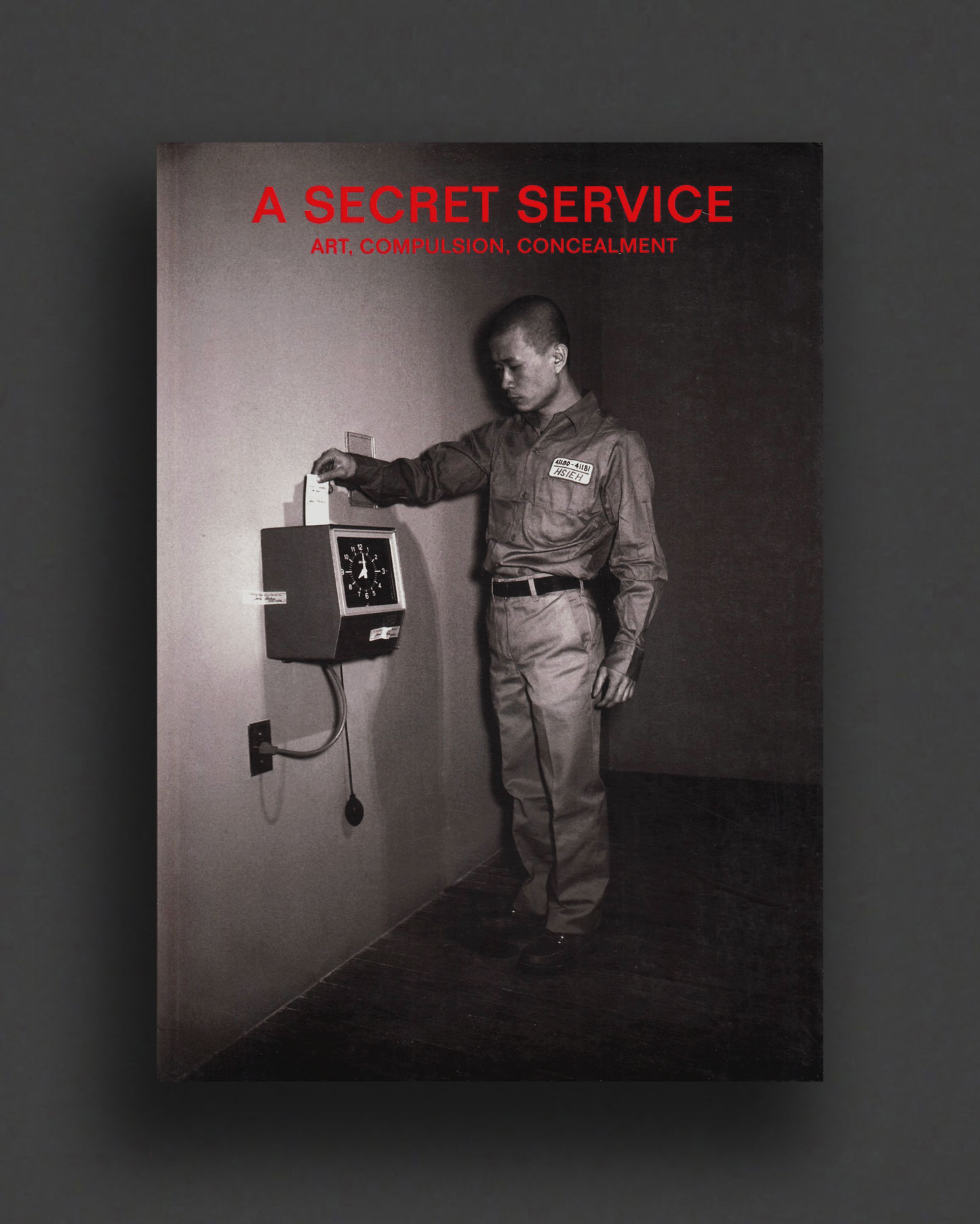
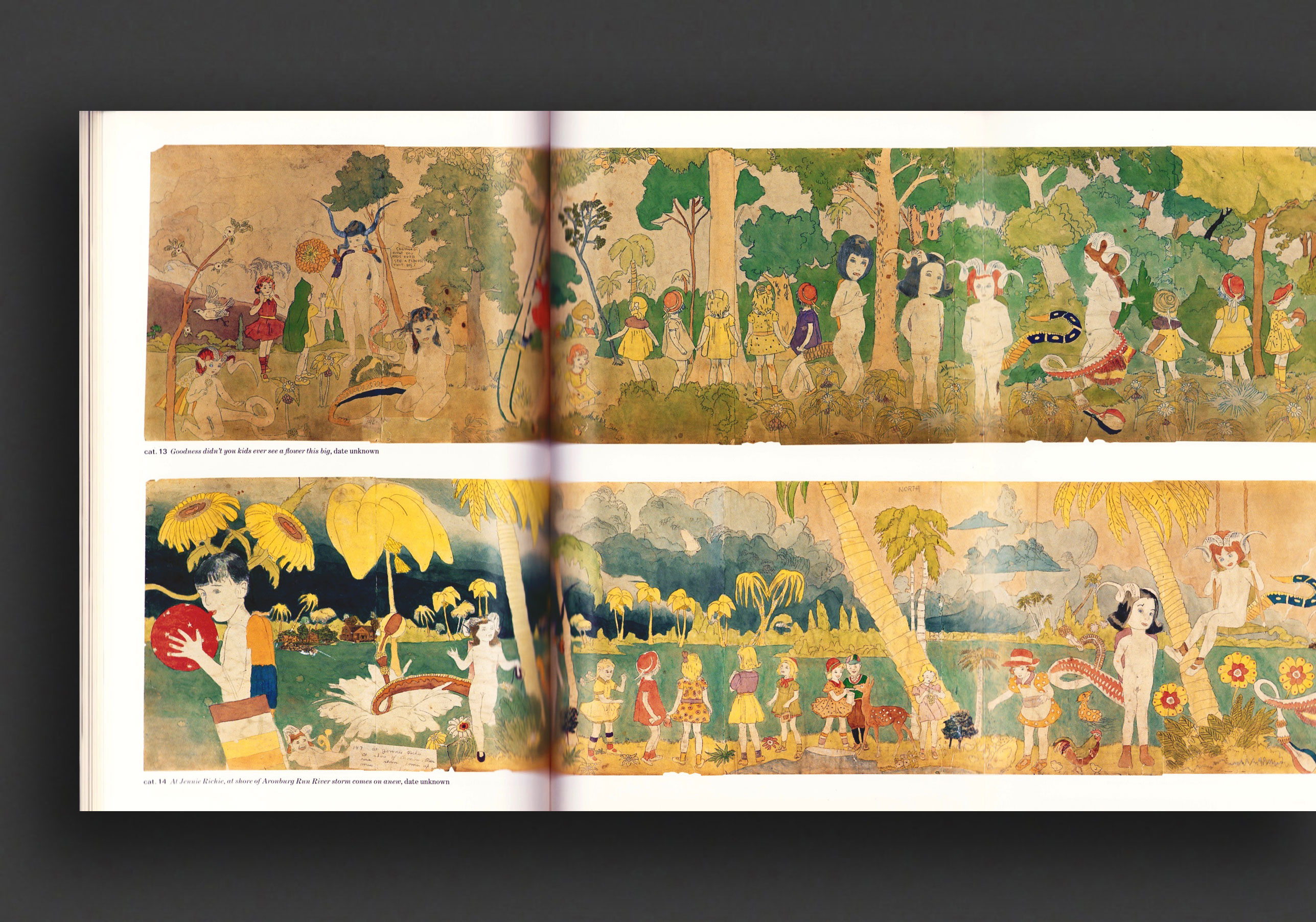
Published in 2006 on the occasion of this Hayward Gallery touring group exhibition, 'A Secret Service: Art, Compulsion, Concealment' explores the work of fifteen international artists and groups whose practices centre on the creation of secret worlds or the exposure of hidden facts and images. Key figures of Modern art, established and emerging contemporary artists and 'outsiders' together address numerous aspects of secrecy: magic, alchemy, sexuality, dreams, religion, political conspiracy, assumed identity and the covert workings of the State. Essays by Richard Grayson, Clare Carolin, and Roger Cardinal, accompany biographies and lavish, full-colour galleries of works by all featured artists: Sophie Calle, Roberto Cuoghi, Henry Darger, Gedewon, Susan Hiller, Tehching Hsieh, Kataryzna Józefowicz, Joachim Koester & Adrian Dannatt, Paul Étienne Lincoln, Mark Lombardi, Mike Nelson, Kurt Schwitters, The Speculative Archive, Jeffrey Vallance, Oskar Voll.
Very Good copy with light wear to covers.
1990, French / Japanese
Hardcover (w. foil dust jacket), unpaginated, 26.5 x 25.5 cm
1st Edition, Out of print title / used / very good
Published by
Fiction Inc. / Tokyo
Kawade Shobo Shinsha / Tokyo
$85.00 - Out of stock
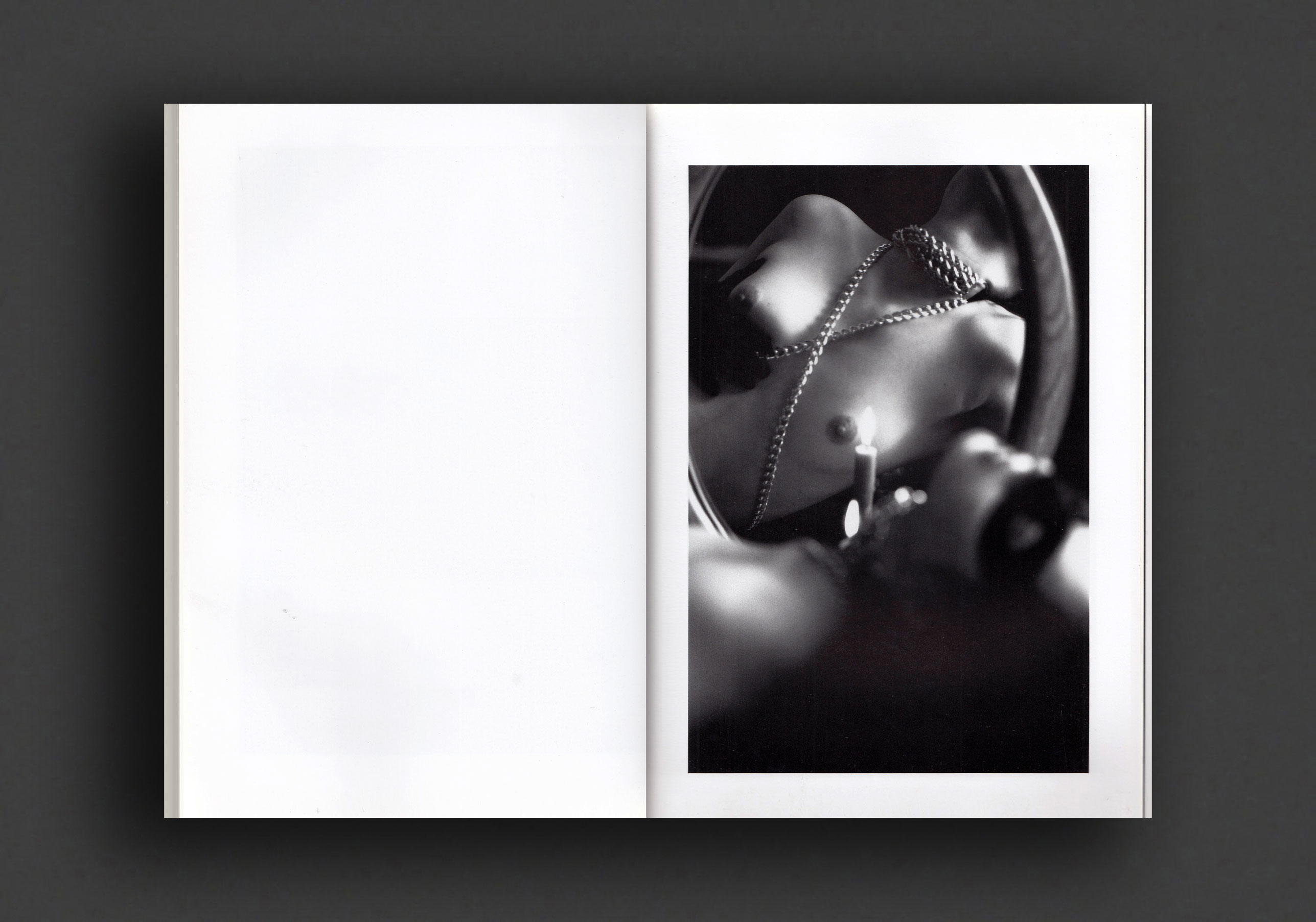
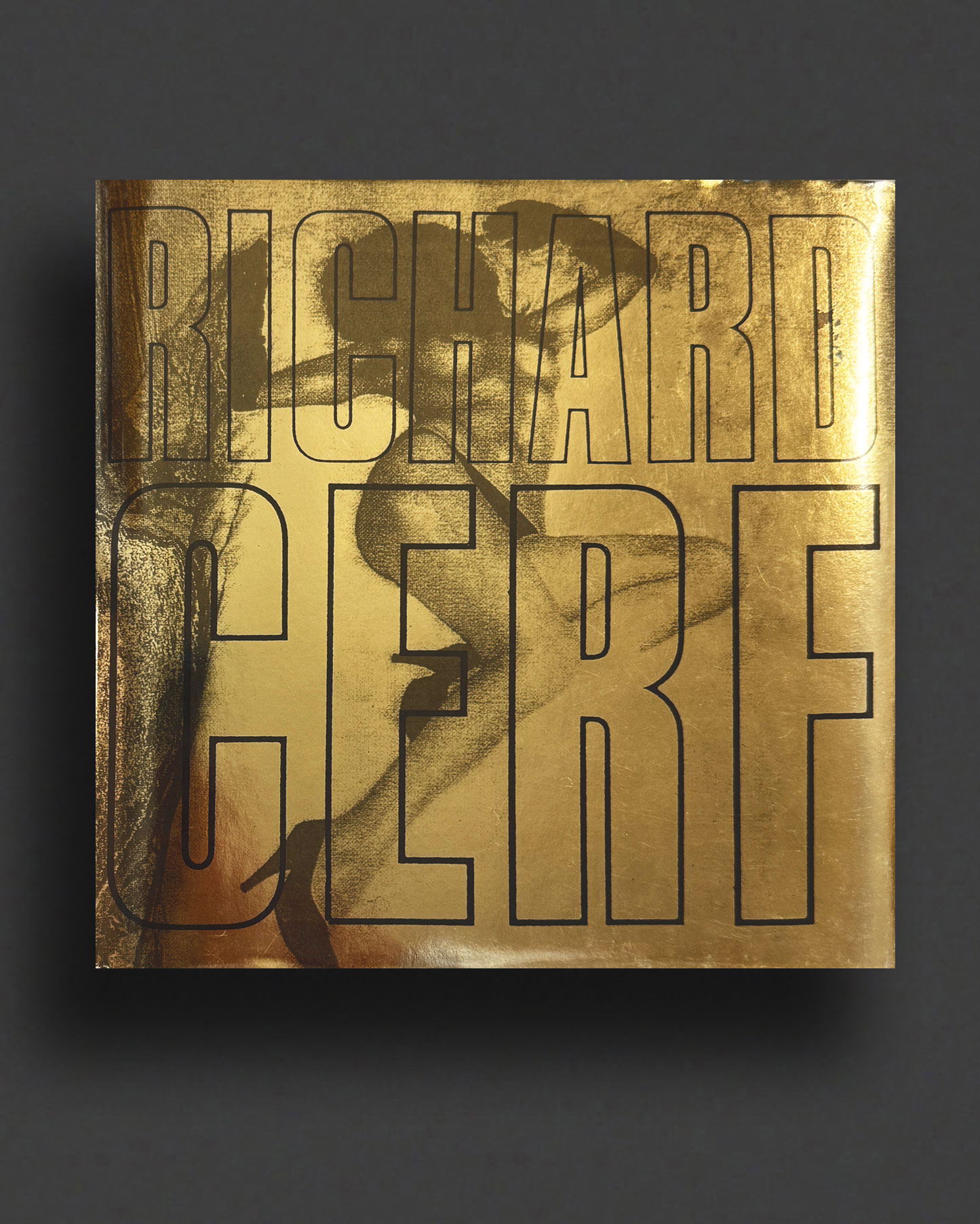
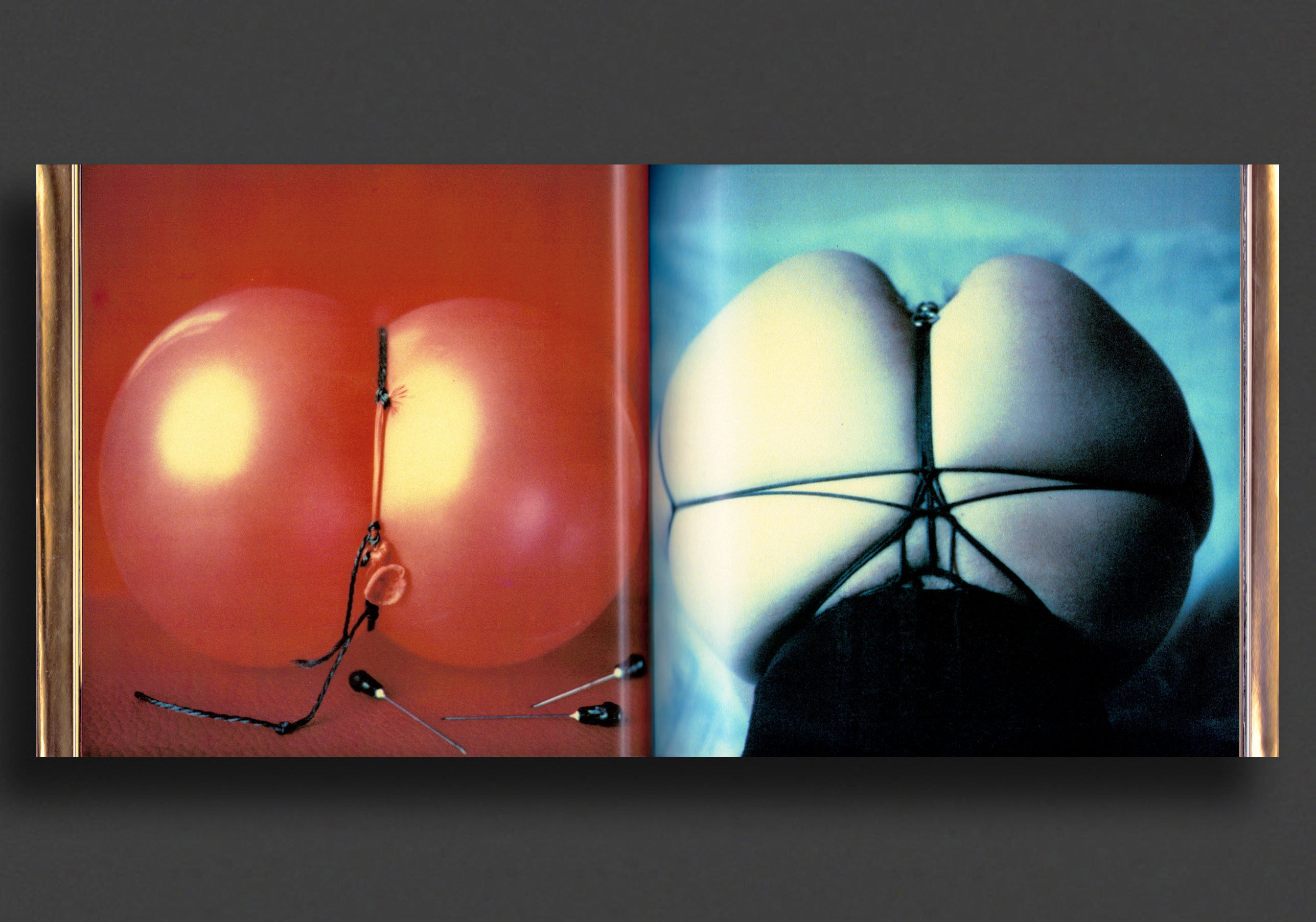
First 1990 hardcover, foil–jacket–wrapped photo book of the mysterious French fetish photographer Richard Cerf (b. 1950), designed by the one-and-only Makoto Orui of Fiction Inc. (and Purple), SALE2, etc., who published this lavish volume in Japan. Stunning reproductions on gloss stock throughout of Cerf's punk–surrealist compositions of nude, fetishistic studies from the 1980's. Cerf's background as a painter gives his erotic works a unique experimental quality, notable for his use of Polaroids, expressionist montage, and strikingly unusual use of colour, costume, and suggestive still–life. In the early 1980s, the influential image magazine Zoom featured a portfolio of his work presented by Yves Aubry, who also provided the text for Cerf's only known French monograph in 1982. This comprehensive oversized book reproduces all of the iconic images of this little known photographer to their finest quality, with a text section on differing paper stocks by "Orgies" editor Georges Marbeck in bi–lingual French and Japanese. Cerf appropriately now lives and works in Bordeaux, France, the once home to fellow fetishist Pierre Molinier.
Very Good copy in VG dust jacket, light wear/age/rubbing only, preserved under mylar wrap.