World Food Books' programme is largely produced on Kulin Nation land. We acknowledge the Wurundjeri people of the Kulin Nation as the first and continuing custodians of this land, and pay respect to their Elders past, present, and emerging.
World Food Books is an arts and special interests bookshop in Naarm / Melbourne. Founded in 2010, World Food Books is devoted to the presentation of a rotating, hand-selection of international art, design, literary and counterculture publications with an emphasis on the anti-traditional, the experimental, the avant-garde, the heretic, the marginal.
Presenting new titles alongside rare and out-of-print books, catalogues and journals spanning the fields of modern and contemporary art, design, photography, illustration, film, literature, poetry, cultural theory, philosophy, sexuality, popular and underground culture in its many radical forms, World Food Books wishes to encourage adventurous, thoughtful and open-minded reading, looking, writing, and exchange of publishing and ideas, both current and historical.
As well as our bookshop, located in Melbourne's historical Nicholas Building, all of our inventory is available internationally via our online mail-order service.
World Food Books semi-regularly co-ordinates "Occasions", a programme of exhibits and events at the bookshop and in partnership with other hosts (such as museums and art galleries) that develop out of the activities, relationships and content of the bookshop itself.
World Food Books
The Nicholas Building
37 Swanston Street
Room 5, Level 6
Melbourne 3000
Australia
SHOP HOURS:
THU–SAT 12–6
WEB-SHOP OPEN 24/7
World Food Books
Postal Address:
PO Box 435
Flinders Lane
Victoria 8009
Australia
info@worldfoodbooks.com
Art
Theory / Essay
Architecture / Interior
Graphic Design / Typography
Photography
Fashion
Eros
LGBTQ+
Fiction / Poetry
Weird / Speculative / Science Fiction / Horror
Transgressive / Visceral / Abject
Symbolism / Decadence / Fin de siècle
Film / Video
Painting
Sculpture / Installation
Performance / Dance / Theater
Drawing
Sound / Music
Curatorial
Group Shows / Collections
Periodicals
Out-of-print / Rare
Posters / Ephemera / Discs
Signed Books
World Food Books Gift Voucher
World Food Book Bag
Australian Art
Australian Fiction
Australian Science Fiction / Speculative Fiction
Australian Poetry
Australian Photography
Japanese Photography
Conceptual Art
Minimal Art
Dada
'Pataphysics / Oulipo
Fluxus
Concrete Poetry
Pop Art
Surrealism
Arte Povera
Arte Informale / Haute Pâte / Tachism
Nouveau Réalisme / Zero / Kinetic
Situationism / Lettrism
Collage / Mail Art / Xerox Art
Art Brut / Folk / Visionary / Fantastic
Illustration / Graphic Art / Bandes Dessinées
Furniture
Italian Radical Design / Postmodernism
Textiles
Ceramics / Glass
Counterculture
Protest / Revolt
Philosophy
Psychoanalysis
Anthropology
Anarchism
Socialism / Anarchism / Communism / Capitalism
Literary Theory / Semiotics / Language
Feminism / Women's Studies
Gender Studies / Sexuality
Anthropology
Fetishism / BDSM
Drugs / Psychedelia
Crime / Violence
Animal Rights / Veganism
Occult / Esoterica
Ecology / Earth / Alternative Living
Whole Earth / Crafts
All prices in AUD (Australian dollars)
Pick-Ups
Pick-up orders can be collected in our bookshop during opening hours after order date. Please collect any Pick-up orders within 2 weeks of ordering as we have limited storage space. Orders will be released back into stock if not collected within this time. No refunds can be made for pick-ups left un-collected. If you cannot make it in to the bookshop in this time-frame, please choose postage option.
Return Policy
All sales are final. We do accept returns (for refund or exchange) for items received in error. All our orders are packed with special care using heavy-duty padding and cardboard book-mailers or bubble mailers (for smaller books), using reinforcement where required. We cannot take responsibility for any lost, stolen or damaged parcels.
Insurance
Should you wish to insure your package, please email us directly after placing your order and we can organise this at a small extra expense. Although all standard/express tracked packages are very safe and dependable, we cannot take responsibility for any lost, stolen or damaged parcels. We recommend insurance on valuable orders.
Interested in selling your old books, catalogues, journals, magazines, comics, fanzines, ephemera? We are always looking for interesting, unusual and out-of-print books to buy. We only buy books in our fields of interest and specialty, and that we feel we can resell.
We base these prices on desirability, market value, in-print prices, condition and our current stock levels. We offer cash, store credit, and can take stock on consignment. All
about 25% of the price we expect to get when we sell them, or 30% in store credit. We base these prices on desirability, market value, in-print prices, condition and our current stock levels.
Sell your books any day of the week. You can drop them off and return later. If you have a lot of books, we can visit your Sydney home.
We buy books that we feel we can resell. We offer about 25 % of the price we expect to get when we sell them, or 30% in store credit. We base these prices on desirability, market value, in-print prices, condition and our current stock levels.
Philadelphia Wireman
03 August - 01 September, 2018
World Food Books is proud to announce our next Occasion, the first presentation of sculptures by Philadelphia Wireman in Australia.
The Philadelphia Wireman sculptures were found abandoned in an alley off Philadelphia’s South Street on trash night in 1982. Their discovery in a rapidly-changing neighbourhood undergoing extensive renovation, compounded with the failure of all attempts to locate the artist, suggests that the works may have been discarded after the maker’s death. Dubbed the "Philadelphia Wireman" during the first exhibition of this work, in 1985, the maker’s name, age, ethnicity, and even gender remain uncertain. The entire collection totals approximately 1200 pieces, all intricately bound together with tightly-wound heavy-gauge wire (along with a few small, abstract marker drawings, reminiscent both of Mark Tobey and J.B. Murry). The dense construction of the work, despite a modest range of scale and materials, is singularly obsessive and disciplined in design: a wire armature or exoskeleton firmly binds a bricolage of found objects including plastic, glass, food packaging, umbrella parts, tape, rubber, batteries, pens, leather, reflectors, nuts and bolts, nails, foil, coins, toys, watches, eyeglasses, tools, and jewellery.
Heavy with associations—anthropomorphic, zoomorphic, and socio-cultural responses to wrapped detritus—the totemic sculptures by Philadelphia Wireman have been discussed in the context of work created to fulfil the shamanistic needs of alternative religions in American culture. Curators, collectors, and critics have variously compared certain pieces to sculpture from Classical antiquity, Native American medicine bundles, African-American memory jugs, and African fetish objects. Reflecting the artist’s prolific and incredibly focused scavenging impulse, and despite—or perhaps enhanced by—their anonymity, these enigmatic objects function as urban artefacts and arbiters of power, though their origin and purpose is unknown. Philadelphia Wireman, whatever their identity, possessed an astonishing ability to isolate and communicate the concepts of power and energy through the selection and transformation of ordinary materials. Over the course of the past two decades, this collection has come to be regarded as an important discovery in the field of self-taught art and vernacular art.
Presented in collaboration with Fleisher-Ollman Gallery, Philadelphia, and Robert Heald, Wellington.
Susan Te Kahurangi King
02 February - 10 March, 2018
Susan Te Kahurangi King (24 February 1951 - ) has been a confident and prolific artist since she was a young child, drawing with readily available materials - pencils, ballpoint pens and felt-tip markers, on whatever paper is at hand. Between the ages of four and six Susan slowly ceased verbal communication. Her grandparents William and Myrtle Murphy had developed a special bond with Susan so they took on caring responsibilities for extended periods. Myrtle began informally archiving her work, carefully collecting and storing the drawings and compiling scrapbooks. No drawing was insignificant; every scrap of paper was kept. The King family are now the custodians of a vast collection containing over 7000 individual works, from tiny scraps of paper through to 5 meter long rolls.
The scrapbooks and diaries reveal Myrtle to be a woman of great patience and compassion, seeking to understand a child who was not always behaving as expected. She encouraged Susan to be observant, to explore her environment and absorb all the sights and sounds. Myrtle would show Susan’s drawings to friends and people in her community that she had dealings with, such as shopkeepers and postal workers, but this was not simply a case of a grandmother’s bias. She recognised that Susan had developed a sophisticated and unique visual language and sincerely believed that her art deserved serious attention.
This was an unorthodox attitude for the time. To provide some context, Jean Dubuffet coined the term Art Brut in 1945 to describe work created by self-taught artists – specifically residents of psychiatric institutions and those he considered to be visionaries or eccentrics. In 1972 Roger Cardinal extended this concept by adopting the term Outsider Art to describe work made by non-academically trained artists operating outside of mainstream art networks through choice or circumstance. Susan was born in Te Aroha, New Zealand in 1951, far from the artistic hubs of Paris and London that Dubuffet and Cardinal operated in. That Myrtle fêted Susan as a self-taught artist who deserved to be taken seriously shows how progressive her attitudes were.
Susan’s parents Doug and Dawn were also progressive. Over the years they had consulted numerous health practitioners about Susan’s condition, as the medical establishment could not provide an explanation as to why she had lapsed into silence. Dawn educated herself in the field of homeopathy and went on to treat all twelve of her children using these principles – basing prescriptions on her observations of their physical, mental and emotional state.
Doug was a linguist with an interest in philosophy who devoted what little spare time he had to studying Maori language and culture. To some extent their willingness to explore the fringes of the mainstream made them outsiders too but it was their commitment to living with integrity and their respect for individuality that ensured Susan’s creativity was always encouraged.
Even though Susan’s family supported her artistic pursuits, some staff in schools and hospitals saw it as an impediment to her assimilation into the community and discouraged it in a variety of ways. Her family was not always aware of this and therefore did not fully understand why Susan stopped drawing in the early 1990s. However, rather than dwell on the challenges that Susan faced in pursuit of her artistic practice, they prefer to highlight her achievements. In 2008 Susan began drawing again in earnest, after an almost 20 year interruption, and her work is now shown in galleries around the world.
Susan grew up without television and has been heavily influenced by the comics she read as a child. She is absolutely fearless in the appropriation of recognizable characters, such as Donald Duck and Mickey Mouse, in her work. She twists their limbs, contorts their faces, compresses them together, blends them into complex patterned backgrounds - always imbuing them with an incredible energy. Although Susan often used pop culture characters in her work they are not naive or childlike. These are drawings by a brilliant self-taught artist who has been creating exceptional work for decades without an audience in mind.
Mladen Stilinović
"Various Works 1986 - 1999"
02 February 16 - September 10, 2016
Various works 1986 - 1999, from two houses, from the collections of John Nixon, Sue Cramer, Kerrie Poliness, Peter Haffenden and Phoebe Haffenden.
Including: Geometry of Cakes (various shelves), 1993; Poor People’s Law (black and white plate), 1993; White Absence (glasses, ruler, set square, silver spoon, silver ladel with skin photograph and wooden cubes), 1990-1996; Exploitation of the Dead (grey and red star painting, wooden painting, black spoon with red table, red plate), 1984-1990; Money and Zeros (zero tie, paintings made for friends in Australia (Sue, John, Kerrie), numbers painting), 1991-1992; Words - Slogans (various t-shirts) - “they talk about the death of art...help! someone is trying to kill me”, “my sweet little lamb”, “work is a disease - Karl Marx”; Various artist books, catalogues, monographs, videos; Poster from exhibition Insulting Anarchy; "Circular" Croatian - Australian edition; Artist book by Vlado Martek (Dostoyevsky); more.
Thanks to Mladen Stilinović and Branka Stipančić.
Jonathan Walker
Always Will Need To Wear Winter Shirt Blue + Ochre Small Check Pattern
21 August - 21 September, 2015
Untitled
I am not a great reader of poetry but I always return to the work of Melbourne poet, Vincent Buckley (1925- 1988). Perhaps I find his most tantalising piece to be not a finished poem but a fragment left on a scrap of paper discovered on his desk after the poet’s death.
The poetry gathers like oil
In the word-core, and spreads
It has its music meet,
Its music is in movement.
This fragment is more the shell left behind from a volatile thought than a finished poem. I find the last two lines honest but awkward whereas the first two lines work like an arrow. Most likely he could not find a resolution so it was left. Still, in its present form, it remains an eloquent testimony to the ultimate failure of a medium to express mobile thought and sensation, in Buckley’s case, through verbal language. It’s an important matter because this is something all artists have to deal with regardless of the medium.
I have never written a poem, however, I am forever copying fragments from books on paper scraps in a vain effort to fix certain notions in my head. At first, they function as bookmarks that are sometimes returned to when I open the book. But before long, as they accumulate, they fall out littering the table interspersed with A4 photocopies, bills, books and medications.
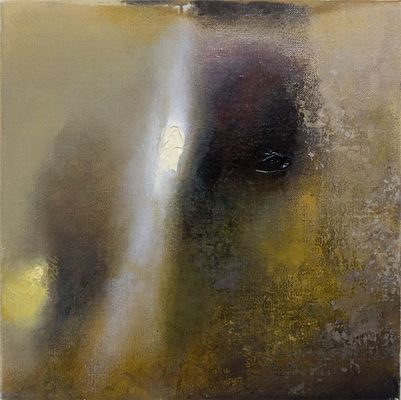
To return to Buckley’s fragment, the first two lines very much evoke how I paint nowadays. As you age, detail diminishes and patches of light become more luminous and float. I feel the most honest way of dealing with this is by smearing the oil paint on the canvas with the fingers and working close-up, blind. Only if the patches coalesce into an approaching image can the work gain a life.
-
Jonathan Walker was born in Melbourne, Australia and brought up on a dairy farm in Gippsland. In the 1970’s he studied painting at RMIT and won the Harold Wright Scholarship to the British Museum, London. During the 1980’s he exhibited at Pinacotheca Gallery, Richmond and had work shown at the NGV and Heidi City Art Gallery. Over the same period he designed the cover for the “Epigenesi” LP by Giancarlo Toniutti, Italy and conducted a mail exchange work with Achim Wollscheid, Germany. The work with artists through the post resulted in an article published in the bicentenary issue of Art and Australia 1988. He showed in artist run spaces such as WestSpace in the 90’s and 2000’s, and until 2012, taught painting at Victoria University, which is where we (Colleen Ahern and Lisa Radford) as organisers of the exhibition, among many others, had the privilege of being his student.
Walker’s knowledge was imparted to students through the careful selection of music, literature, and artists found in books that he himself had ordered for the library. Walker’s strategy was the generosity of sharing his vast knowledge with references specific to each student and their context.
Walker’s paintings share a similar focus and intimacy.
This exhibition presents a small selection of recent paintings alongside a publication that includes Walker’s writing. Observational and analytical, Walker’s work is a type of material notation — the time of day, colour and how it is blended, the both specific and fleeting location of a reflection on lino or the question of whether a chair leg should be included in a painting.
Please join us on Friday August 21 between 6-8pm to celebrate the opening of the exhibition.
Curated by Colleen Ahern and Lisa Radford.
B. Wurtz
Curated by Nic Tammens
March 26 - April 4, 2015
B.Wurtz works from a basement studio in his home on Manhattan’s Lower East Side.
This local fact is attested to by the plastic shopping bags and newsprint circulars that appear in his work. As formal objects, they don’t make loud claims about their origins but nonetheless transmit street addresses and places of business from the bottom of this long thin island. Like plenty of artists, Wurtz is affected by what is local and what is consumed. His work is underpinned by this ethic. It often speaks from a neighborhood or reads like the contents of a hamper:
“BLACK PLUMS $1.29 lb.”
“Food Bazaar”
“USDA Whole Pork Shoulder Picnic 99c lb.”
“RITE AID Pharmacy, with us it’s personal.”
“H. Brickman & Sons.”
“Sweet Yams 59c lb."
Most of the work in this exhibition was made while the artist was in residence at Dieu Donne, a workshop dedicated to paper craft in Midtown. Here Wurtz fabricated assemblages with paper and objects that are relatively lightweight, with the intention that they would be easily transportable to Australia. This consideration isn’t absolute in Wurtz’s work, but was prescriptive for making the current exhibition light and cheap. Packed in two boxes, these works were sent from a USPS post office on the Lower East Side and delivered to North Melbourne by Australia Post.
Wurtz appears courtesy of Metro Pictures, New York.
Thanks to Rob Halverson, Joshua Petherick, Sari de Mallory, Matt Hinkley, Helen Johnson, Fayen d'Evie, Ask Kilmartin, Lisa Radon, Ellena Savage, Yale Union, and "Elizabeth".
John Nixon
"Archive"
December 15 - January 20, 2014
The presentation of John Nixon's archive offered a rare showcase of this extensive collection of the artist's own publications, catalogues, posters, ephemera, editions and more, from the mid 1980s onwards, alongside a selection of his artworks.
Organized by John Nixon, Joshua Petherick and Matt Hinkley.
"Habitat"
at Minerva, Sydney (organised by Joshua Petherick and Matt Hinkley)
November 15 - December 20, 2014
Lupo Borgonovo, Janet Burchill & Jennifer McCamley,
Lewis Fidock, HR Giger, Piero Gilardi, Veit Laurent Kurz,
Cinzia Ruggeri, Michael E. Smith, Lucie Stahl, Daniel Weil, Wols
Press Release:
“...It contained seven objects. The slender fluted bone, surely formed for flight, surely from the wing of some large bird. Three archaic circuitboards, faced with mazes of gold. A smooth white sphere of baked clay. An age-blackened fragment of lace. A fingerlength segment of what she assumed was bone from a human wrist, grayish white, inset smoothly with the silicon shaft of a small instrument that must once have ridden flush with the surface of the skin - but the thing’s face was seared and blackened.”
William Gibson, “Count Zero”, 1986
"Autumn Projects Archive"
Curated by Liza Vasiliou
March 6 - March 15, 2014
World Food Books, in conjunction with the Virgin Australia Melbourne Fashion Festival 2014, presented the Autumn Projects archive, consisting of a selection of early examples in Australian fashion with a particular interest in collecting designers and labels from the period beginning in the 1980’s, who significantly influenced the discourse of Australian Fashion.
Curated by Liza Vasiliou, the exhibition provided a unique opportunity to view pieces by designers Anthea Crawford, Barbara Vandenberg, Geoff Liddell and labels CR Australia, Covers, Jag along with early experimental collage pieces by Prue Acton and Sally Browne’s ‘Fragments’ collection, suspended throughout the functioning World Food Books shop in Melbourne.
H.B. Peace
presented by CENTRE FOR STYLE
November 14, 2013
"Hey Blinky, you say chic, I say same"
Anon 2013
H.B. Peace is a clothing collaboration between great friends Blake Barns and Hugh Egan Westland. Their pieces explore the divergences between 'character’ and ‘personality’ in garments....etc
Special Thanks to Joshua Petherick and Matt Hinkley of WFB and Gillian Mears
and a Very Special Thank you to Audrey Thomas Hayes for her shoe collaboration.
Janet Burchill & Jennifer McCamley
"Aesthetic Suicide"
May 10 - June 8, 2013
The first of our occasional exhibitions in the World Food Books office/shop space in Melbourne, "Aesthetic Suicide" presented a body of new and older works together by artists Janet Burchill & Jennifer McCamley, including videos, prints, a wall work, and publications.
During shop open hours videos played every hour, on the hour.
1978, English
Hardcover (clothbound w. dust jacket), 160 pages, 24.5 x 32 cm
1st Edition, Out of print title / used / very good
Published by
Octopus / London
$65.00 - Out of stock
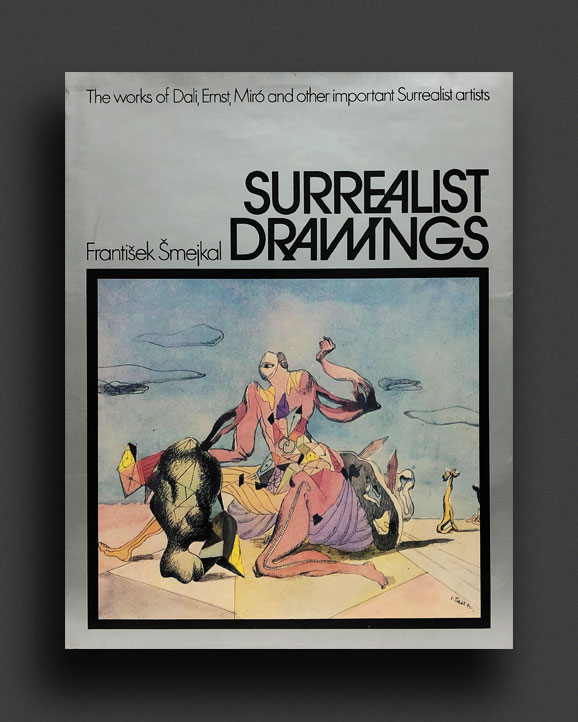
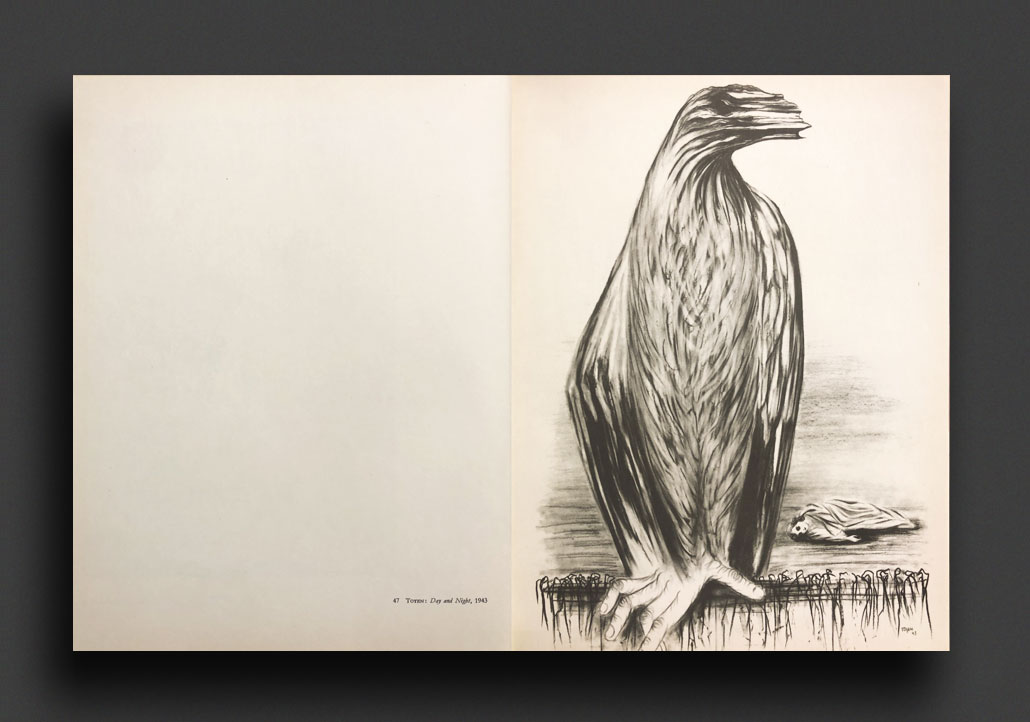
English edition of the great "Surrealist Drawings", edited by František Šmejkal, designed and printed in Czechoslovakia. A beautiful clothbound hardcover folio of drawings by artists affiliated with Surrealism. What makes this lovely collection special is the inclusion of many of the Czech Surrealists, and a generally broad European scope of artists. Czech art historian František Šmejkal has collated a wonderful selection of works on paper by Toyen, Jindřich Štyrský, Wolfgang Paalen, Giorgio de Chirico, Hans Bellmer, Alfred Kubin, Francis Picabia, Jacques Hérold, Yves Tanguy, Man Ray, Josef Istler, Max Ernst, André Breton, František Muzika, Paul Delvaux, Wilfredo Lam, Richard Oelze, Mikuláš Medek, Joan Miró, Josef Sima, Kurt Seligmann, Odilon Redon, Andre Masson, Max Walter Svanberg, Salvador Dali, Arshile Gorky, Victor Brauner, Rene Magritte, and many more.
Highly recommended.
Very Good copy with light edge wear. Very Good dust jacket.
2010, English
Softcover, 160 pages, 24.9 x 29 cm
Published by
Lund Humphries / London
$85.00 - Out of stock
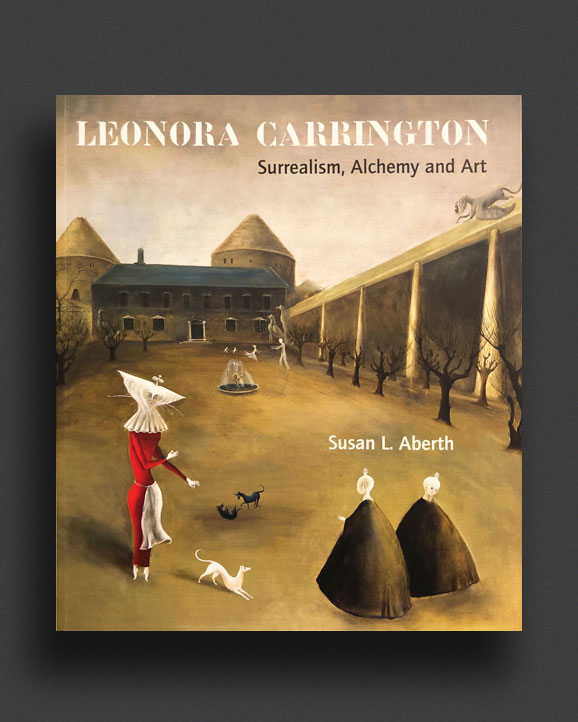
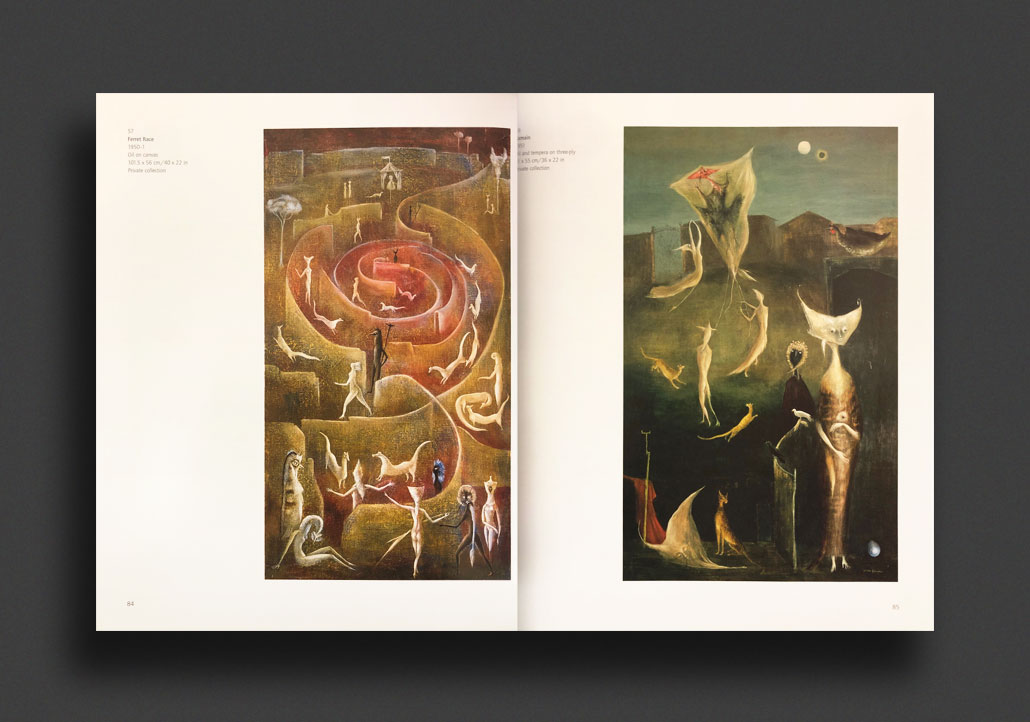
This book remains the definitive survey of the life and work of Surrealist artist Leonora Carrington (1917-2011).
Carrington burst onto the Surrealist scene in 1936, when, as a precocious nineteen-year-old debutante, she escaped the stultifying demands of her wealthy English family by running away to Paris with her lover Max Ernst. She was immediately championed by Andre Breton, who responded enthusiastically to her fantastical, dark and satirical writing style and her interest in fairy tales and the occult. Her stories were included in Surrealist publications, and her paintings in the Surrealists' exhibitions.
After the dramas and tragic separations of the Second World War, Carrington ended up in the 1940s as part of the circle of Surrealist European emigres living in Mexico City. Close friends with Luis Bunuel, Benjamin Peret, Octavio Paz and a host of both expatriate Surrealists and Mexican modernists, Carrington was at the centre of Mexican cultural life, while still maintaining her European connections.
Leonora Carrington: Surrealism, Alchemy and Art provides a fascinating overview of this intriguing artist's rich body of work. The author considers Carrington's preoccupation with alchemy and the occult, and explores the influence of indigenous Mexican culture and beliefs on her production.
Susan L. Aberth received her PhD in Art History from the Graduate Center of the City University of New York; her dissertation was on the art of Leonora Carrington. She is currently Assistant Professor of Art History at Bard College, New York, where she specializes in Latin American Art.
1973, English
Softcover (soft boards), 204 pages, 29.6 x 21.2 cm
1st Edition, Out of print title / used / average
Published by
Harry N. Abrams / New York
Thames and Hudson / London
$25.00 $15.00 - Out of stock
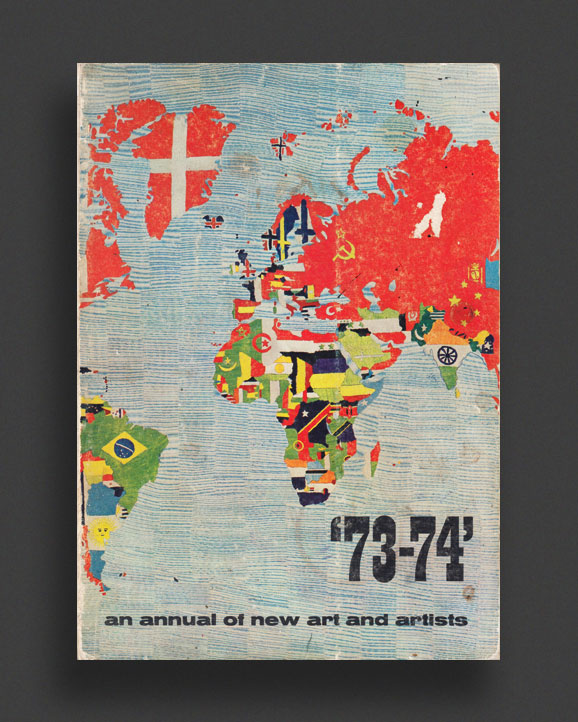
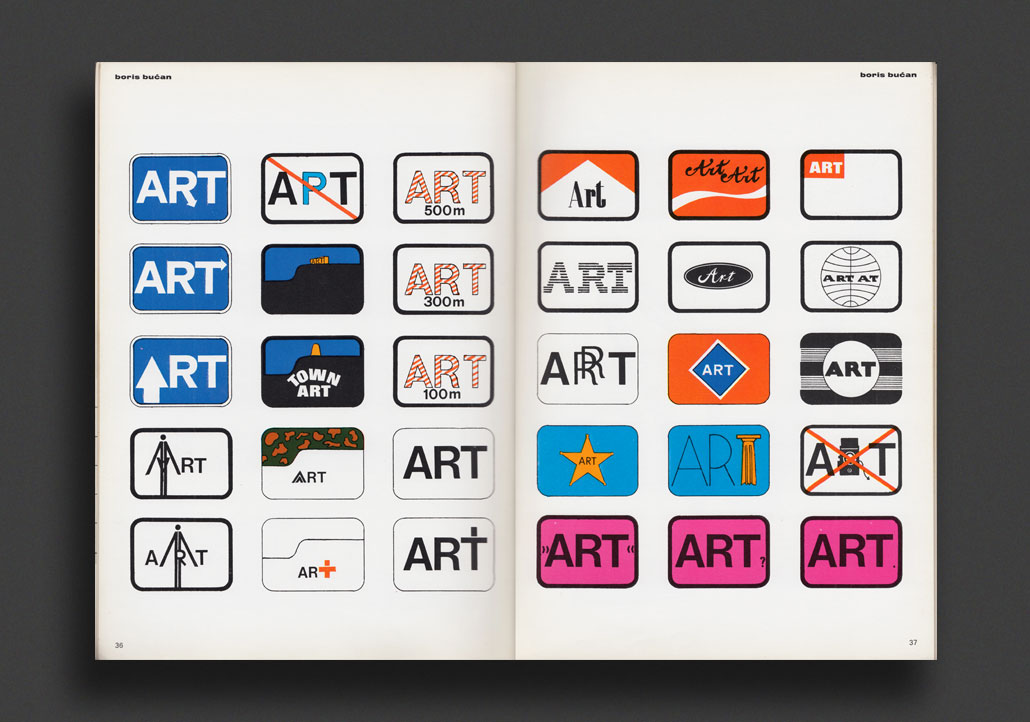
English edition wide ranging and comprehensive survey of conceptual and other contemporary art movements circa 1973—1974, profiling 53 contemporary artists from 18 countries, edited and designed by the legendary Dutch typographer and museum curator, Willem Sandberg, with associates including Jean-Christophe Ammann, Harald Szeemann, Achille Bonito Oliva, Yona Fischer and many others. Original cover by Alighiero Boetti. Profusely illustrated throughout in colour and black and white with collected works by each artist or original pieces made for the publication, aside from the occasional accompanying artist's text it is entirely made up of visuals. Artists featured include : Sergi Aguilar, Gilles Aillaud, Keith Arnatt, Gábor Attalai, Lothar Baumgarten, Ola Billgren, Alighiero Boetti, Christian Boltanski, Marcel Broodthaers, Boris Budan, Luciano Castelli, Mary Corse, William Crozier, Hanne Darboven, Jan Dibbets, Braco Dimitrijević, Gino De Dominicis, Benni Efrat, Luciano Fabro, Robert Filliou, John-E Franzen, Hamish Fulton, Tibor Gayor, Avital Geva, Zbigniew Gostomski, Allan V. Harrison, Jeroen Henneman, Martha Jungwirth, Zdzislaw Jurkiewicz, Per Kirkeby, Christof Kohlhöfer, Harriet Korman, Piotr Kowalski, Richard Long, Urs Lüthi, Inge Mahn, Richard Nonas, Lev Nusberg, Panamarenko, Antonio Soler Pedret, Ireneusz Pierzgalski, Vettor Pisani, Joan Hernández Pijuan, Carl J. Plackrnan, Markus Raetz, Franz Ringel, Salvador Sauna, Kjartan Slettemark, Hugo Suter, Endre Tot, Jerzy Treliński, Carel Visser, Rolf Winnewisser...
Average—Poor copy, contents and interior in good shape and complete, cover and edges with decent wear and marking, spine 75% torn away, although all still thread-bound.
2019, English
Softcover, 208 pages, 25 x 17.5 cm
Published by
Monash Art Projects / Victoria
$25.00 - Out of stock
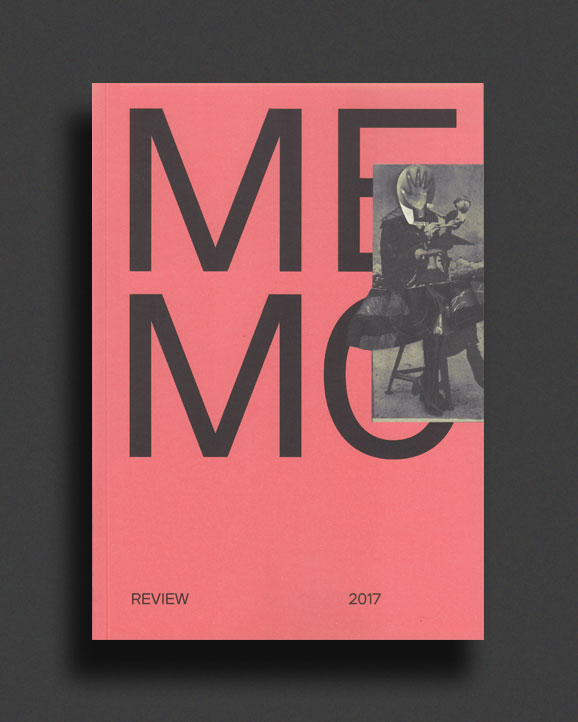
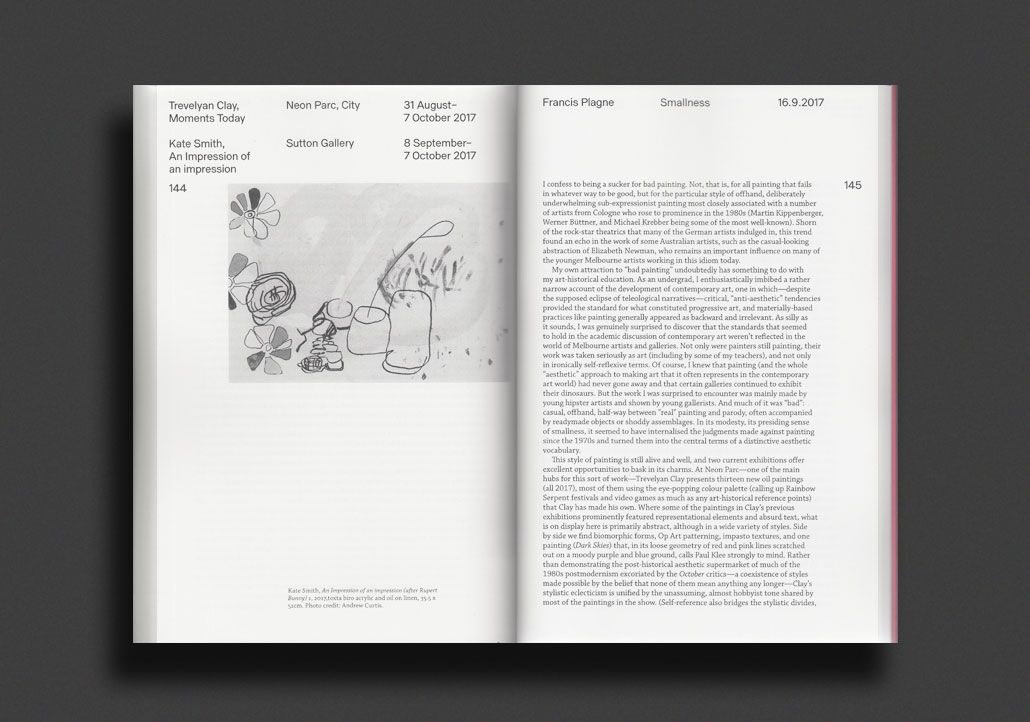
The first hardcopy Memo publication, collecting the 52 reviews from 2017 published by Melbourne's Memo Review. Memo Review is Melbourne's only weekly art criticism, publishing reviews of "a broad variety of art exhibitions at public art museums, commercial galleries and smaller artist-run spaces in Melbourne, offering new critical perspectives from an up-and-coming younger generation of Australian art scholars, writers and artists."
Contributions by Rex Butler, Jane Eckett, Giles Fielke, Chelsea Hopper, Helen Hughes, Beth Kearney, Kylie King, Paris Lettau, Julia Lomas, Ian McLean, Anna Parlane, Victoria Perin, Francis Plagne, Audrey Schmidt, Kate Warren, Anthony White , Amelia Winata. Design by Warren Taylor and Joanna Leucuta, with copy editing by Genevieve Osborn.
2019, English
Softcover, 248 pages, 21 x 28 cm
Published by
Themerson Estate / London
$95.00 $45.00 - In stock -
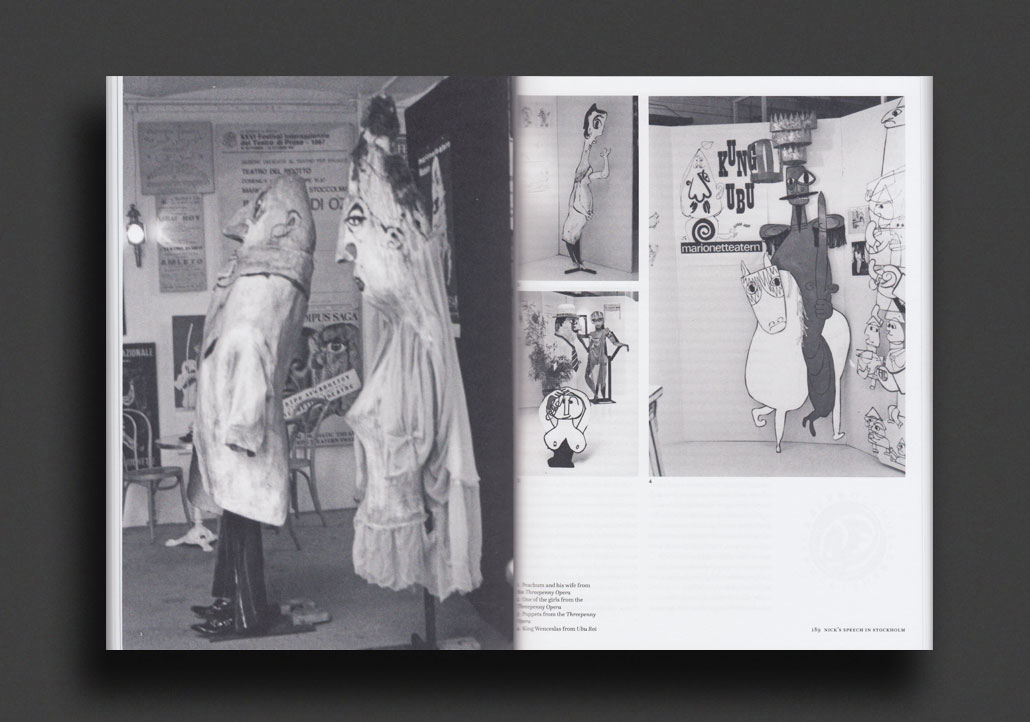
In 1980 the late British art critic and historian Nick Wadley befriended artist Franciszka Themerson (1907–1988), whose work he had admired for many years. This first monograph about the Polish-born painter, illustrator, and print and stage designer introduces her work mainly through his words, gathering together lectures, notes, catalogue introductions, and more. The material covers 60 years of her artistic career, detailing her painting, drawing, reliefs, theatre design, and illustrations for children. More than just a tribute to her extraordinary mastery of the drawn line, it also includes a list of facts and dates which help the reader to understand the artist’s versatility and work.
Themerson collaborated with her husband, the writer Stefan Themerson on many experimental films and illustrated books for children, and in 1948 they founded the adventurous publishing company, Gaberbocchus Press, of which she was the art director. The press was named after a Latinisation of 'Jabberwocky', from Lewis Carroll's 'Alice' coined by Carroll's uncle, Hassard Dodgson. In 31 years the Gaberbocchus Press published over sixty titles, including works by Alfred Jarry, Kurt Schwitters, Bertrand Russell, Raymond Queneau, and the Themersons themselves. Alfred Jarry’s Ubu Roi was its flagship publication, published in many editions and still in print. The Gaberbocchus edition is a most apposite evocation of the spirit of Jarry's grotesque fable. The text, which was hand-written directly onto lithographic plates by the translator, Barbara Wright - interspersed with Themerson's conte crayon illustrations - is printed on loud yellow pages. Themerson's contributions as illustrator contributed enormously to the autograph originality of design of Gaberbocchus books. Apart from appearing in many journals worldwide, several collections of her drawings have been published as books: Forty Drawings for Friends, London 1940-42 (1943), The Way It Walks (1954), Traces of Living (1969) and Music (1998). Themerson's theatre designs included marionette productions of Ubu Roi, Ubu Enchainé and the Threepenny Opera, mostly made for the Marionetteatern in Stockholm, in the 1960s, which toured worldwide for decades, and were rewarded with international acclaim. Many of these were exhibited at the National Theatre in 1993.
2020, English / German
Softcover, 280 pages, 23 x 23 cm
Published by
Ludwig Museum / Cologne
Walther König / Köln
$80.00 - Out of stock
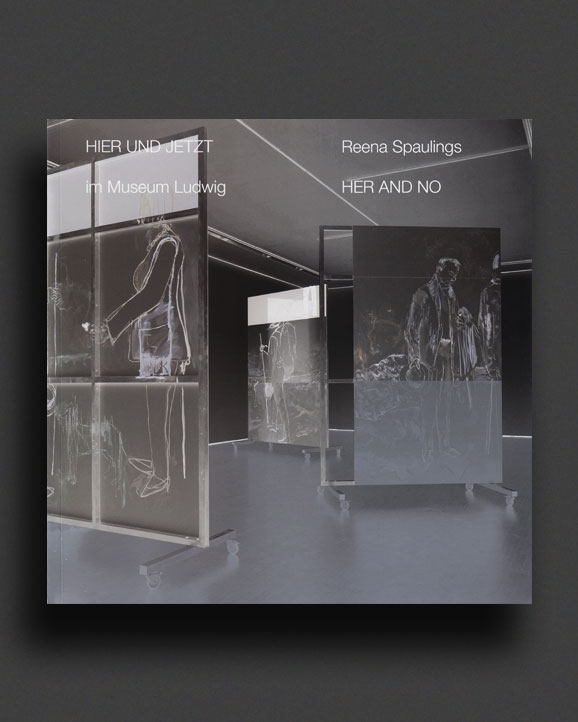
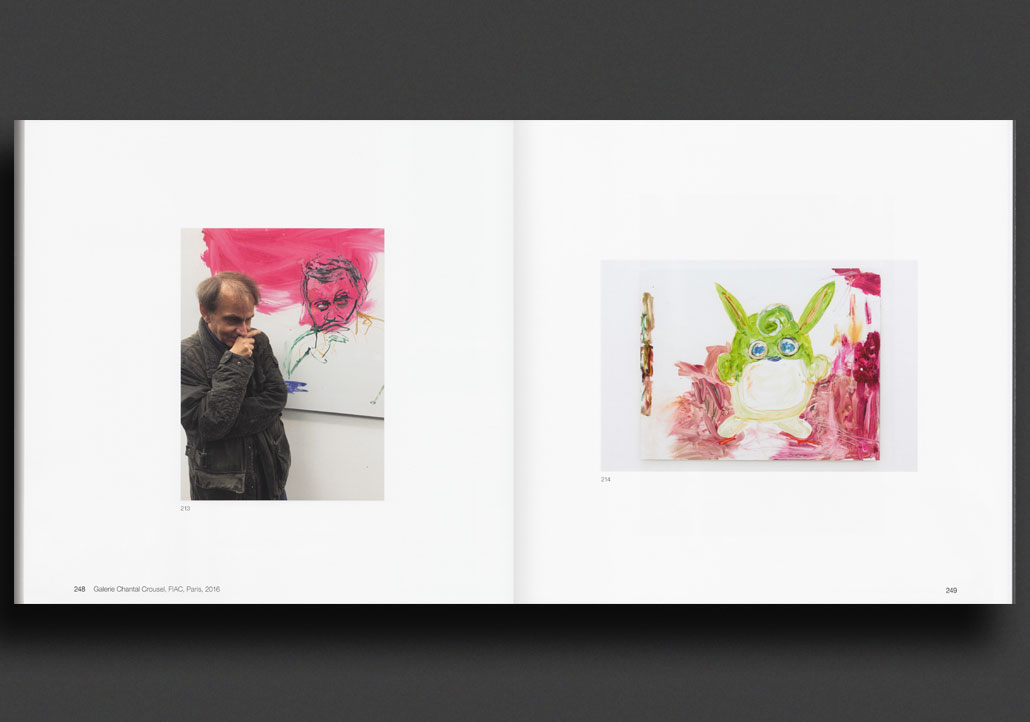
Who—or what—is Reena Spaulings? Since 2004 the name has stood for various collective artistic activities. Initially Reena Spaulings was the title of a novel written by an undisclosed number of anonymous authors from the circle of the artist collective Bernadette Corporation. Around the same time, a commercial gallery with an exhibition space in New York was founded, which since then has represented artists such as Merlin Carpenter, Jutta Koether, Claire Fontaine, and Klara Lidén. Also in 2004, an artist collective was formed that operates under the name of the fictional artist Reena Spaulings, creating collective paintings that are both reflective of the system and self-deprecating.
This catalogue is Reena Spaulings' first comprehensive publication and contains, among other things, a richly illustrated chronology of the collective's work to date, published following the exhibition HER AND NO at the Ludwig Museum in Cologne, Reena Spaulings’s first institutional collaboration with a museum. The presentation focused on the collective’s artistic work, including new works, new versions of existing series of works, and existing works that deal with the status of the artist in society in a wider sense.
Profusely illustrated with contributions from Simon Baier, Caroline Busta, Anna Czerlitzki, Yilmaz Dziewior and Claire Fontaine. Edited by curator Anna Czerlitzki.
1994, English
Softocver, 196 pages, 15.5 x 23.5 cm
1st Edition, Out of print title / used / fine
Published by
University of Chicago Press / Chicago
$45.00 - Out of stock
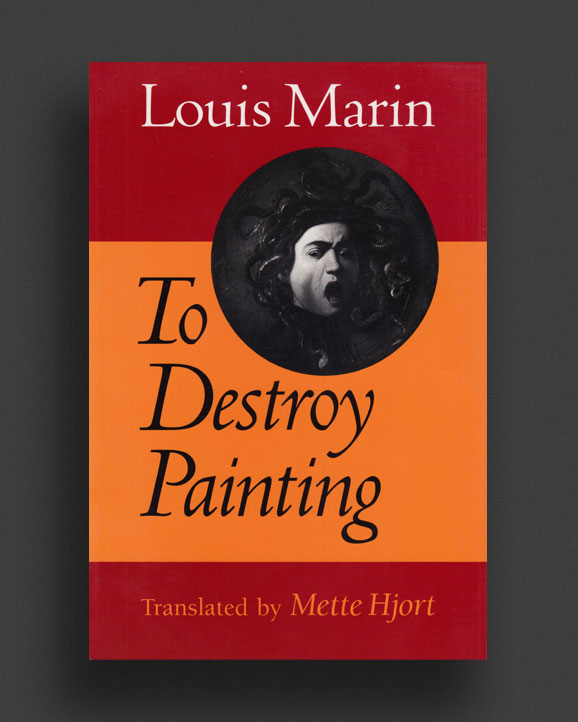
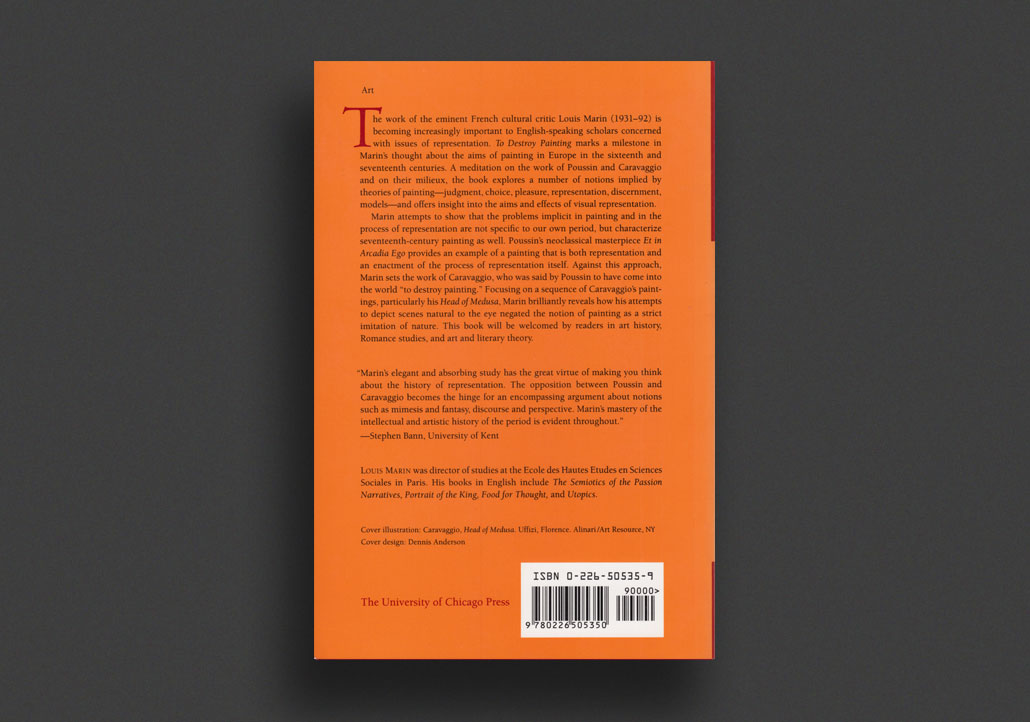
The work of the French cultural critic Louis Marin (1931-1992) is of importance to scholars concerned with issues of representation. This text, first published in France in 1977, presents Marin's theories about the aims of painting in Europe in the 16th and 17th centuries. A meditation on the work of Poussin and Caravaggio and on their milieux, the book explores a number of notions implied by theories of painting and offers insight into the aims and effects of visual representaion.
First edition Very Good—Fine copy.
1972, English
Softcover, 160 pages, 18.5 x 12.5 cm
1st Edition, Out of print title / used / good
Published by
Studio Vista / London
E P Dutton / New York
$30.00 - Out of stock
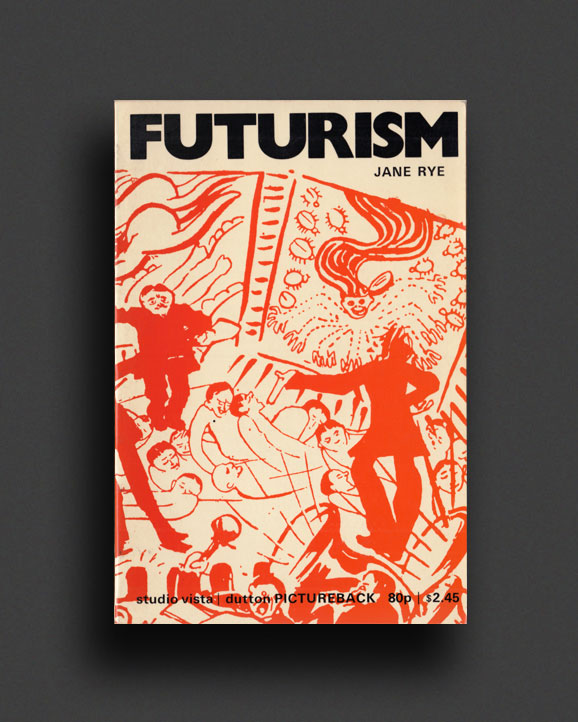
First edition of the Futurism volume of Studio Vista / Dutton's great paperback series. Published in 1971 and written by Jane Rye, this heavily illustrated overview spans Futurism's beginnings as an aggressively modern style in art and literature in the 1920 and 1930s, its activities and developments via central protagonists such as Italian poet Filippo Tommaso Marinetti, who coined the term, Giacomo Balla, Carlo Carrà, Umberto Boccioni, Gino Severini, etc.
Includes chapters on all major Futurist disciplines : Painting and Sculpture, Architecture, Literature, Theatre, plus chapters on Futurism and politics, Futurism within Italy and Futurism outside Italy, a book list, index, and more.
Good copy.
1970, English
Softcover, 168 pages, 18.5 x 12.5 cm
1st Edition, Out of print title / used / good
Published by
Studio Vista / London
E P Dutton / New York
$30.00 - Out of stock
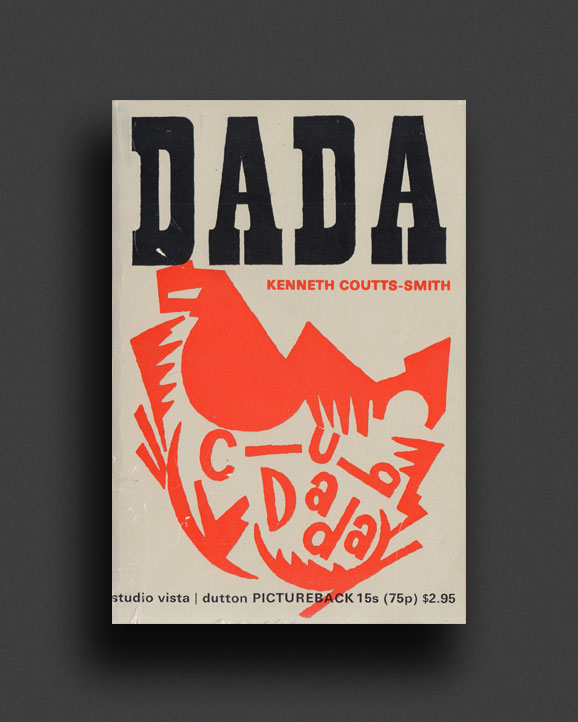
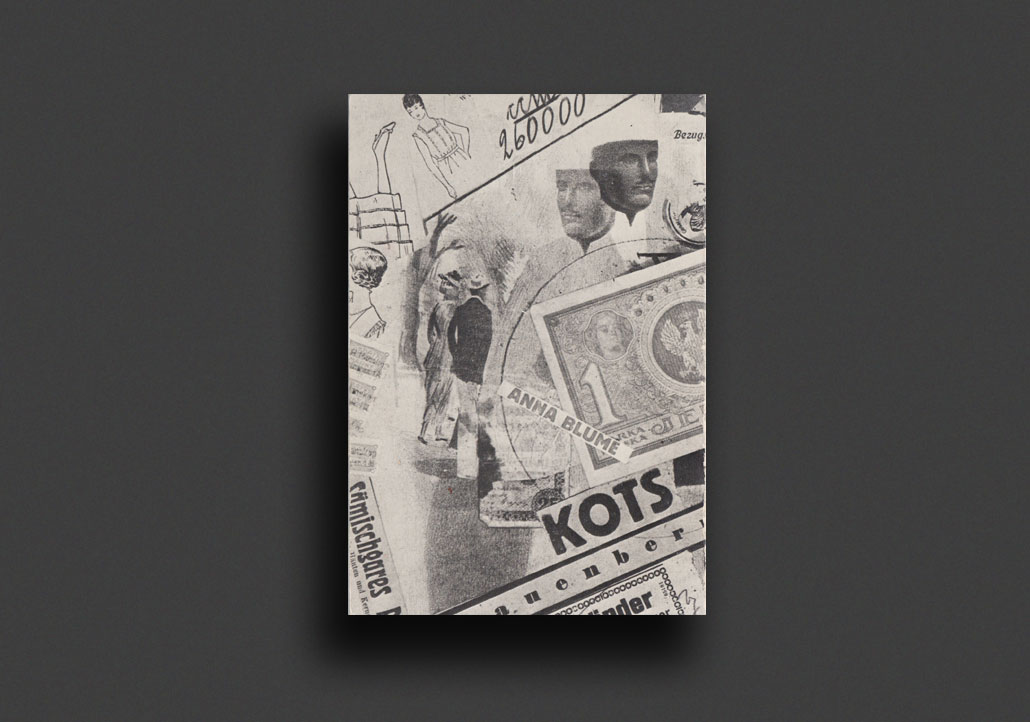
First edition of the Dada volume of Studio Vista / Dutton's great paperback series. Published in 1970 and written by Kenneth Coutts-Smith, this heavily illustrated overview spans Dada's activities via central locations and protagonists such as Picabia, Janco, Duchamp, Schwitters, Ernst, Grosz, Man Ray, Arp, etc.
Chapters : "Zürich - the beginning", "Anti-art and the irrational", "The roots of Dada", "New York - Duchamp and philosophical irony", "Berlin - political commitment", "Cologne - Ernst and the hallucinatory vision", "Hanover - Schwitters, freedom through lyricism", "Paris - last fling and obsequies", "Dada is dead-long live Dada", "Book list", "Index".
1984, German
Hardcover (w. dust jacket), 408 pages, 32 x 26 cm
Out of print title / used / very good
Published by
DuMont / Köln
$35.00 - In stock -
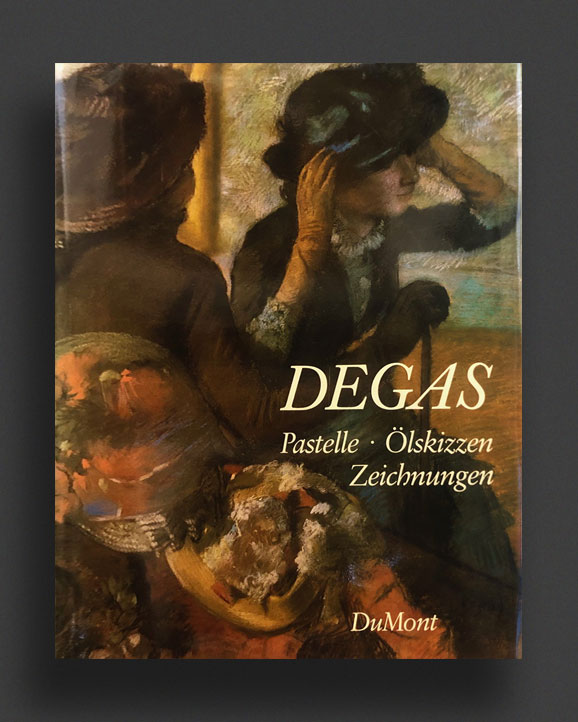
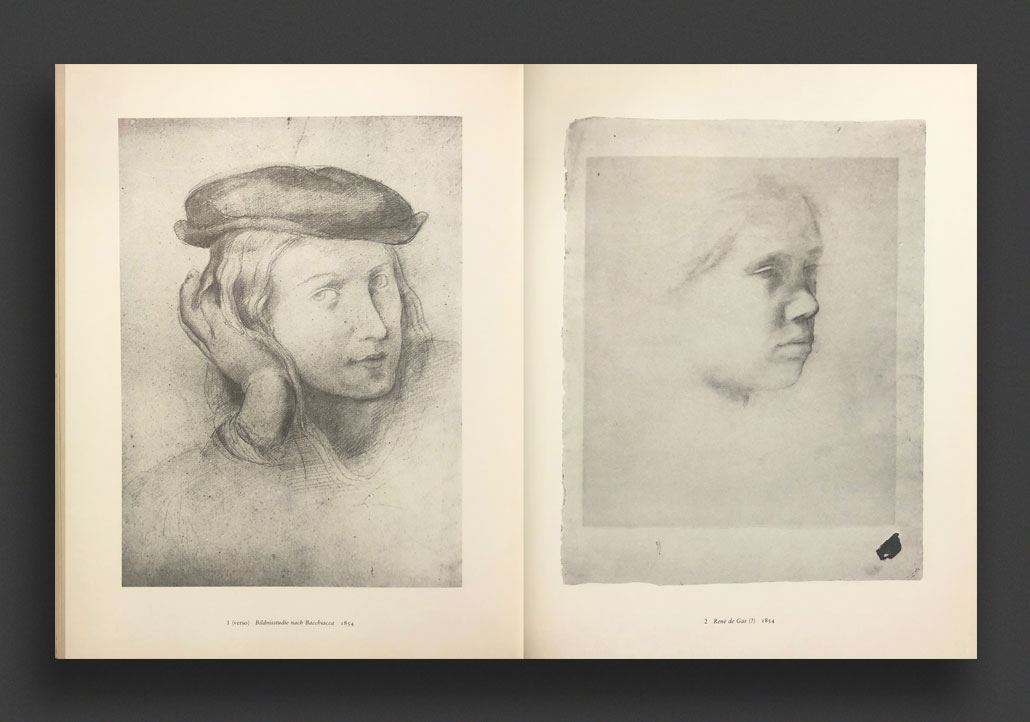
Over-sized hardcover catalogue published on the occasion of the exhibition Edgar Degas: Pastelle, Ölskizen, Zeichnungen, January 14 — March 25, 1984 in the Kunsthalle Tübingen and in the Nationalgalerie Berlin, April 5 — May 20, 1984. Profusely illustrated throughout with 227 pastels, oil sketches and drawings from numerous European, American and Japanese collections, some of which have been published for the first time. Includes biography, bibliography, index and text by Götz Adriani.
Very Good copy of the 8th printing, with VG dust jacket protected under mylar wrap. Cut to front endpaper corner, presumably to remove previous owner name.
2016, English
Softcover, 312 pages, 25.6 x 30.6 cm
1st Edition, Out of print title / used / very good
Published by
NGV (National Gallery of Victoria) / Victoria
$60.00 - Out of stock
Although Edgar Degas is one of the most celebrated French Impressionists, he referred to himself as a Realist artist. Modern life in nineteenth-century Paris provided Degas with a repertoire of motifs he explored with endless variation: from scenes of work and industry to ballet and the theatre, racecourses and boudoirs. The works he created over more than fifty years embrace painting, drawing, printmaking, monotypes, sculpture and photography and have had an immense impact on modern and contemporary art.
This exquisite and authoritative publication includes the finest recent scholarship by world-renowned Degas expert Henri Loyrette and brings together more than 200 works from a vast number of public and private collections worldwide. Degas: A New Vision offers a fresh and dynamic reappraisal of the artist's mature years when his artistic process became a subject in itself, as he worked and reworked compositions in a fluid manner.
Very Good copy, out-of-print.
1974, English
Hardcover (w. dust jacket), 288 pages, 33 x 24 cm
1st Edition, Out of print title / used / very good
Published by
Thames and Hudson / London
$75.00 - In stock -
First hardcover UK edition of this comprehensive volume, published in 1974. Degas: The Complete Etchings, Lithographs and Monotypes collects and beautifully reproduces almost 300 graphic works by one of most celebrated French Impressionists, Degas, compiled and accompanied by text from Jean Adhémar and Françoise Cachin, along with a foreword by John Rewald. An important reference on the artist.
Very Good copy in original dust jacket, preserved under mylar wrap.
1981, English
Softcover, 80 pages, 28 x 21 cm
1st Edition, Out of print title / used / good
Published by
Scala / Florence
$25.00 - In stock -
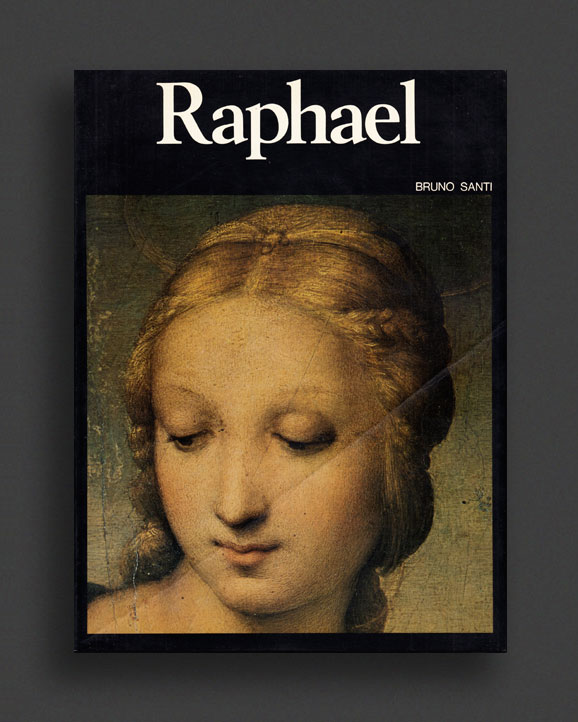
Raphael Sanzio was born in Urbino on 6th April 1483. Around the beginning of the 16th Century Raphael met Pietro Perugino, who influenced his painting perhaps more than any other painter: Peruginesque motifs can be identified in one of Raphael's earliest works, the altarpiece for the Church of Sant'Agostino in Citta di Castello, on which he collaborated with Evangelista da Pian di Meleto. From 1509 he was in Rome, where his first major undertaking was the decoration of the Stanza della Segnatura, commissioned by Pope Julius II. In Raphael, a monographic study published in Florence in 1981, Bruno Santi examines the works produced by this painter throughout his life, from his beginnings in Urbino, to his period in Florence, and his time in Rome. Raphael's work on the Stanza della Signatura is examined in some detail.
Good copy with crease to cover, light wear.
1988, English / German
Hardcover (w. dust jacket in slipcase) / Softcover, 320 + 256 pages, 23 x 28 cm
1st Edition, Out of print title / used / very good
Published by
DuMont / Köln
$70.00 - Out of stock
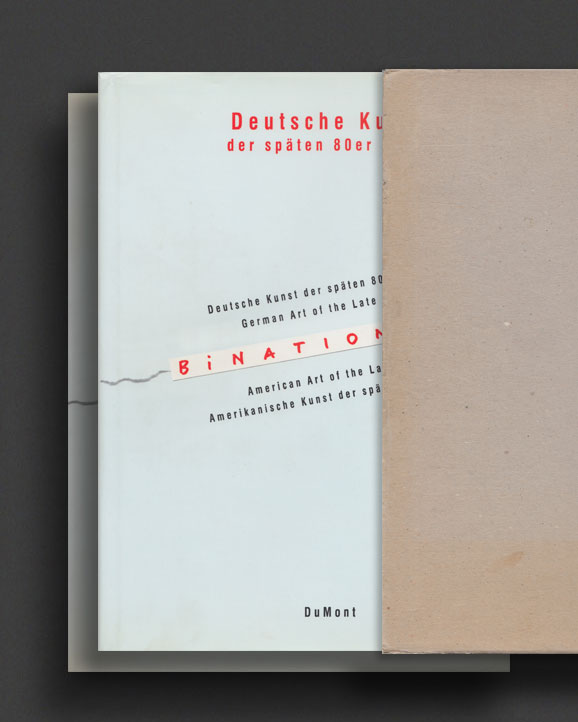
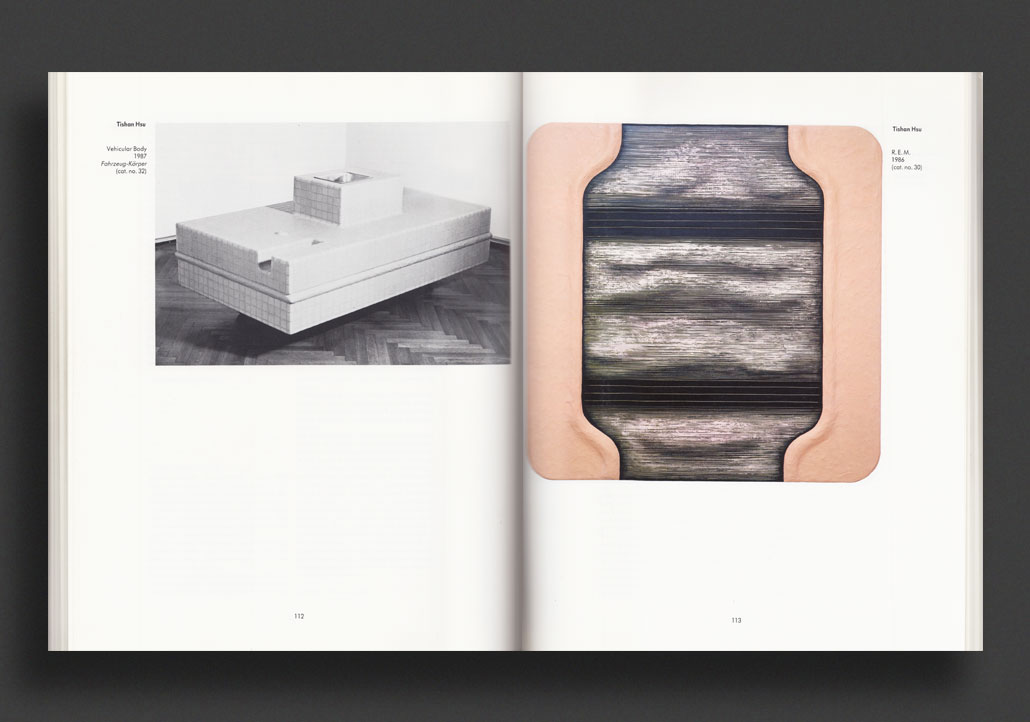
Heavy bi-lingual 2 volume catalogue published on the occasion of the exhibition "The BiNational, American Art of the Late 80s / German Art of the Late 80s" that traveled between the Institute of Contemporary Art, Museum of Fine Arts, Boston Sept 23 — Nov 27, 1988 and Städtische Kunsthalle, Kunstsammlung Nordrhein-Westfalen, Kunstverein für die Rheinlande und Westfalen, Düsseldorf 10 Dec 1988 — 22 Jan, 1989. A major survey of contemporary art from both nations, the two catalogues (one for the American artists, the other for the German) are heavily illustrated throughout in colour and b/w with examples of all artists work, alongside texts in English and German by Trevor Fairbrother, David Joselit, and Elizabeth Sussman, with artist interviews, biographies and much more.
Includes Christopher Wool, Constance DeJong, Robert Gober, Mike Kelley, Georg Herold, Rosemarie Trockel, Werner Büttner, Peter Halley, Andreas Slominski, Tishan Hsu, Jeff Koons, Thomas Ruff, Imi Knoebel, Annette Lemieux, Jorg Immendarff, David McDermott and Peter McGough, Tony Oursler, Stephen Prina, Richard Prince, Tim Rollins + K.O.S., Albert Oehlen, Lorna Simpson, Haim Steinbach, Katherina Fritsch, Philip Taaffe, James Welling, and many more.
Please note: German artist volume in Hardcover (w. dust jacket and publisher's slipcase); American volume in softcover. Both Good-Very Good copies, only light wear, age.
2021, English
Hardcover, 196 pages, 22.9 x 26.2 cm
Published by
Guggenheim Museum / New York
$99.00 - In stock -
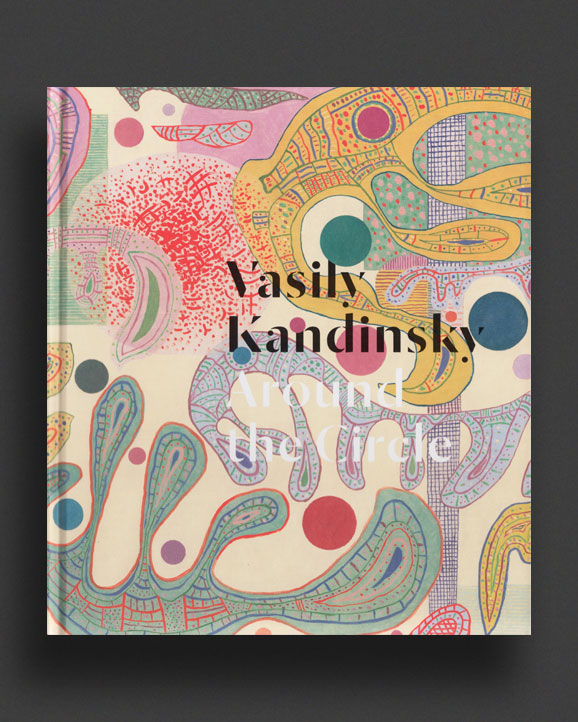
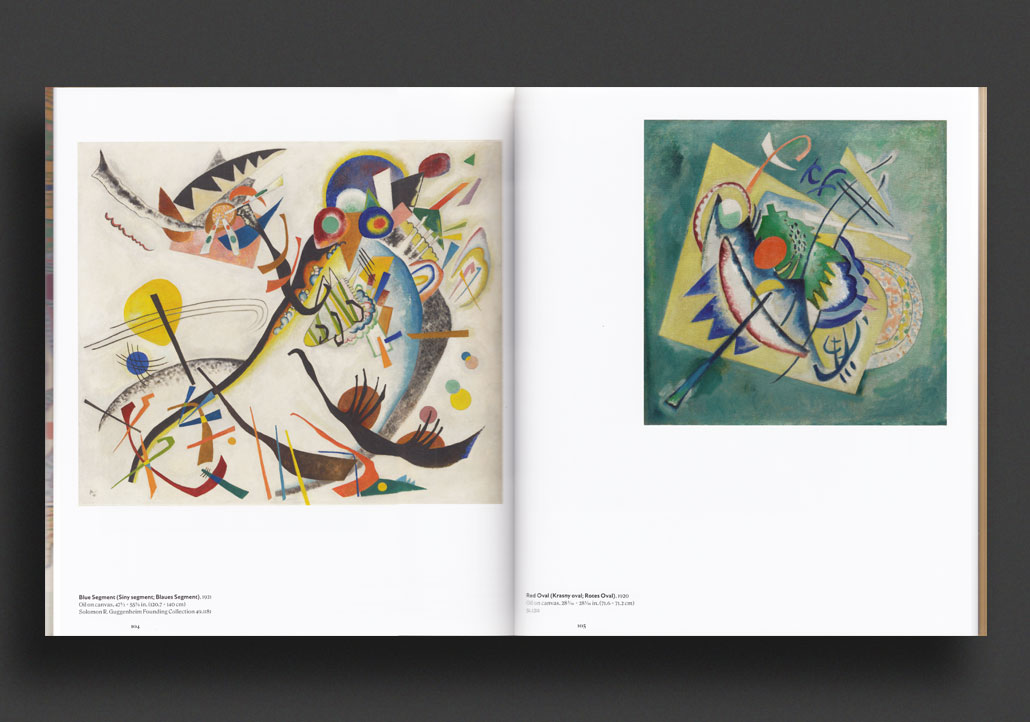
One of the foremost artistic innovators of abstraction in the 20th century, Vasily Kandinsky sought to liberate painting from its ties to the natural world and promote the spiritual in art. This richly illustrated publication looks at Kandinsky anew, through a critical lens, reframing our understanding of this vital figure of European modernism, who was also a prolific aesthetic theorist and writer.
A series of thematic essays considers his engagement with avant-garde artistic communities including the Bauhaus, his relationship to improvisation and music, his travels in Europe and Russia, and the influences behind his self-declared anarchist mode of abstraction, among other topics. Tracing Kandinsky’s life and work through his years in Moscow, several cities in Germany, and Paris, the texts offer striking new insights into an artist whose creative production and style were intimately tied to a sense of place—and displacement—and evolved amid the political and social upheavals catalyzed by the Russian Revolution and World Wars I and II.
Kandinsky’s history is closely linked to that of the Guggenheim Museum. Solomon R. Guggenheim began collecting the artist’s work in 1929; a year later, they met at the Bauhaus, in Dessau. This book features more than half of the museum’s deep holdings of works by Kandinsky, presenting the full arc of his artistic development and career. Included are paintings in oil and oil with sand, reverse-glass paintings, as well as woodcuts, watercolors and drawings on paper. An illustrated chronicle of Kandinsky’s life and career, including selected exhibitions and publications, rounds out the volume.
Edited with text by Tracey Bashkoff, Megan Fontanella. Text by Mark Antliff, Patricia Leighten, George E. Lewis.
2022, English
Hardcover, 350 pages, 24 x 17 cm
Published by
Stolpe Publishing / Stockholm
$65.00 - Out of stock
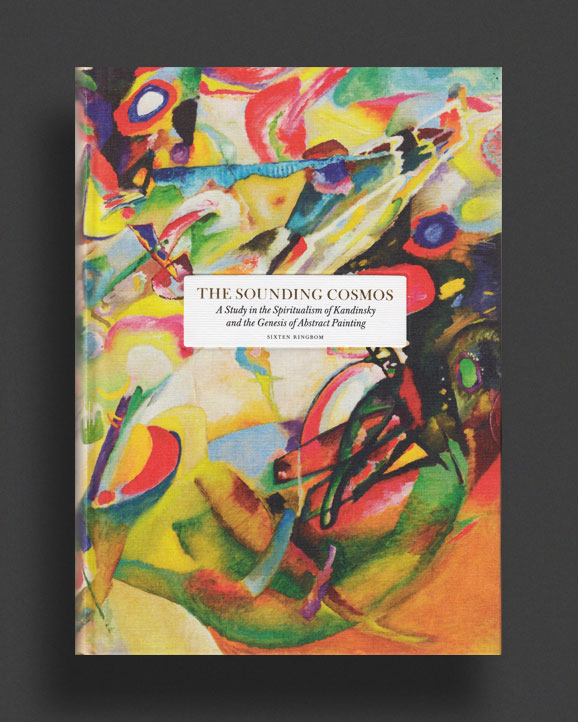
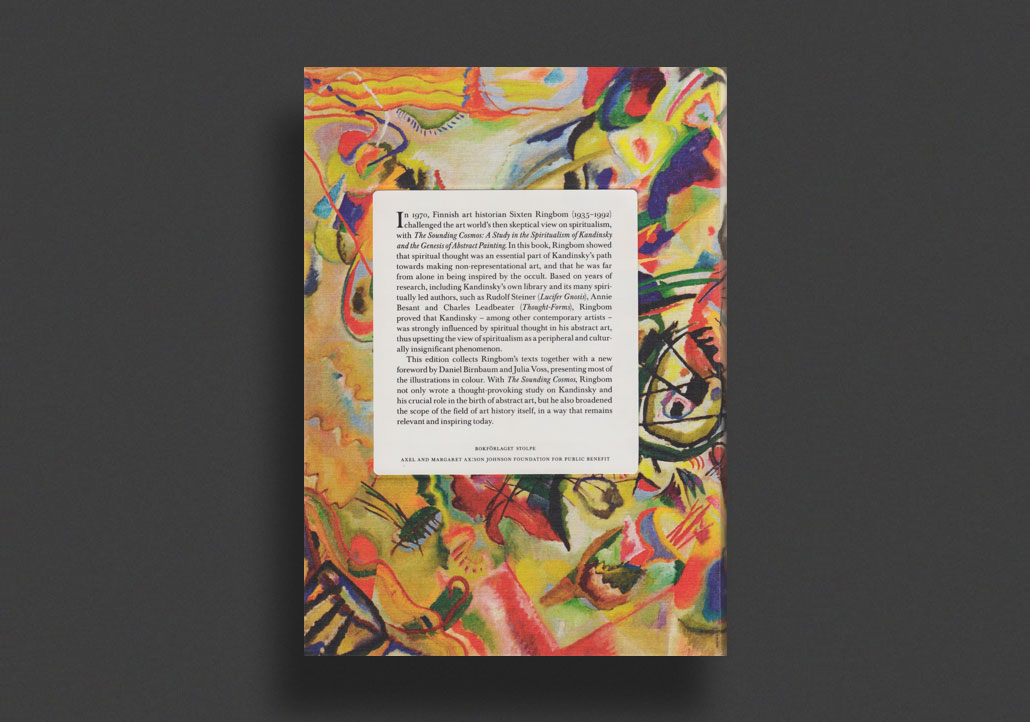
Long unavailable and highly sought after, Ringbom's classic 1970 volume launched the study of esotericism's influence on abstract art.
For many years, relatively few people knew of spiritualism's impact on the birth of abstract art. But when the Finnish art historian Sixten Ringbom's book The Sounding Cosmos was published in 1970, the writing of history changed forever. Through his research on Wassily Kandinsky, one of the pivotal figures in modern art, Ringbom showed how Theosophy and esoteric teachings were absolutely essential to the development of nonfigurative painting.
This discovery generated great debate at the time, and the book was both celebrated and controversial. Although the original publication is extremely rare and sought after, to this day The Sounding Cosmos is a classic of art history that continues to be discussed--especially in recent years, as the presence of esotericism in modernist art from Hilma af Klint to Mondrian and beyond has been revisited.
The Sounding Cosmos is now being reissued for the first time in this elegant new edition. The richly illustrated original text has been supplemented with a new foreword by Daniel Birnbaum and Julia Voss.
Sixten Ringbom (1935-92) was an influential Finnish art historian. In 1965 he completed a PhD under the great art historian Ernst Gombrich. Ringbom succeeded his father as professor of art history at Åbo Akademi University in 1970, and became the first art historian to explore in depth the connections between early abstract art and occultism. He published prolifically until his death in 1992.
1980/1986, English
Softcover, 288 pages, 28 x 21.5 cm
Out of print title / used / good
Published by
The MIT Press / Massachusetts
LACMA / Los Angeles
$45.00 - Out of stock
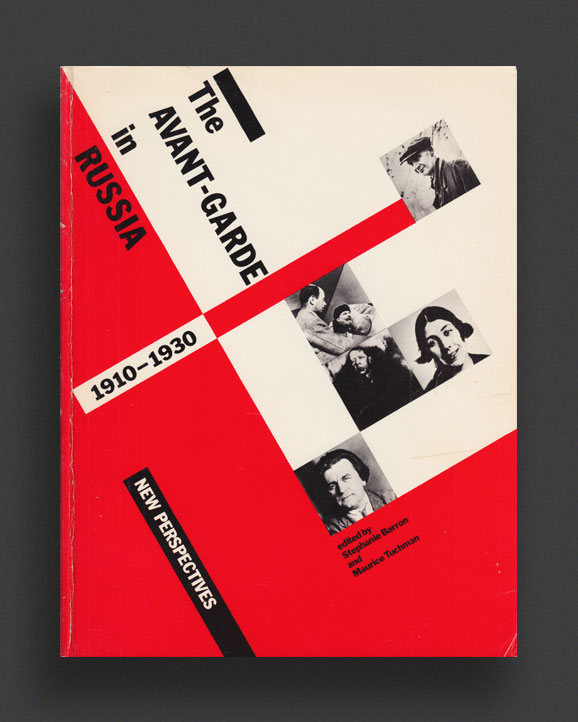
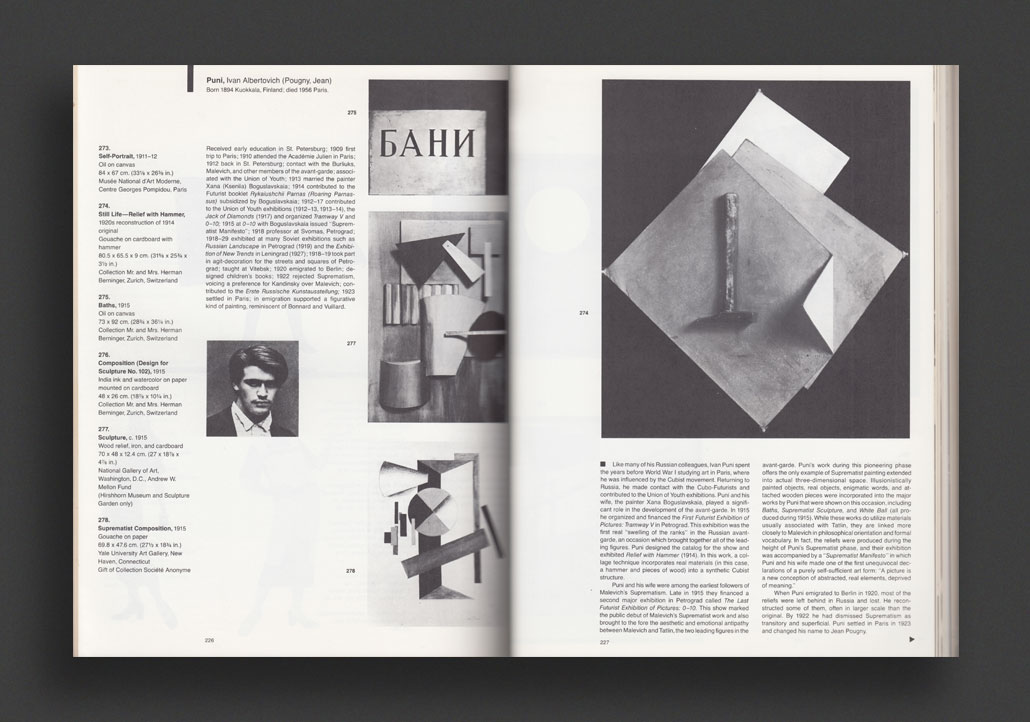
Catalogue published to accompany an exhibition at the Los Angeles County Museum of Art and the Hirshhorn Museum and Sculpture Garden, Smithsonian Institution, Washington, D.C., 1980-1981. Edited by Stephanie Barron and Maurice Tuchman, this groundbreaking, richly illustrated (465 items) book documents "the most comprehensive survey of 1910—1930 Russian avant-garde art ever shown in this country"—Portfolio. Covering painting, sculpture, prints, drawing, books, photographs, costumes and examples of industrial, architectural, and theatrical design, with a special focus on Suprematism and Constructivism, this generous volume contains 19 authoritive and enlightening essays, excellent illustrated reference profiles on each artists, biographies, bibliographies, and a detailed chronology of the period. An essential art history reference, containing the works of Natan Altman, Yurii Annenkov, David Burliuk, Vladimir Burliuk, Marc Chagall, Iiia Chashnik, Vasilii Ermlov, Vera Ermolaeva, Alexandra Exter, Pavel Filanov, Naum Gabo, Natalia Goncharova, Vasilii Kamensky, Vasilii Kandinsky, Ivan Kliun, Gustav Klucis, Petr Konchalovsky, Ivan Kudriashev, Mikhail Larionov, El Lissitzky, Kazimir Malevich, Pavel Mansurov, Mikhail Matiushin, Konstantin Medunetsky, Petr Miturich, Alexei Morgunov, Vera Nikolskaia, Liubov Popova, Ivan Puni, Alexandr Rodchenko, Olga Rozanova, Georgii Stenberg, Vladimir Stenberg, Varvara Stepanova, Nikolia Suetin, Vladimir Tatlin, Nadezhda Udaltsova, Alexandr Vesnin, K.A. Vialov, Georgii Yakulov.
Good copy, with some general cover wear.
2011, German
Hardcover (w. dustjacket), 252 pages, 23 x 28 cm
1st Edition, Out of print title / used / very good
Published by
Prestel / Munich
$50.00 - In stock -
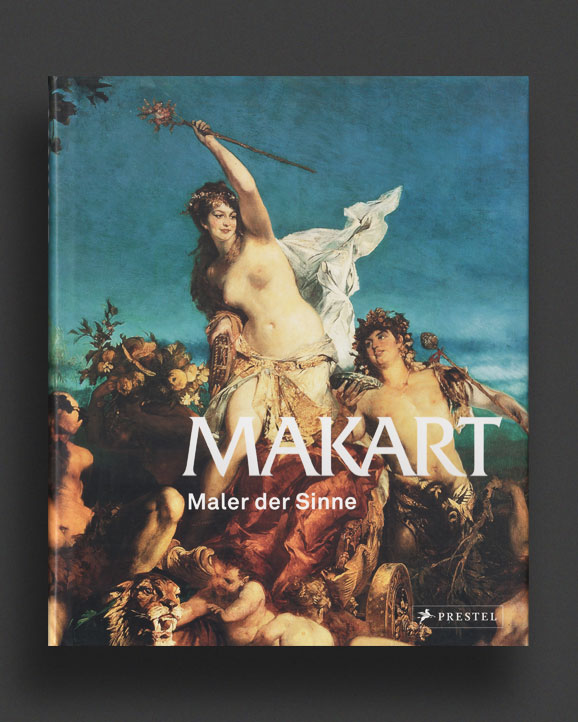
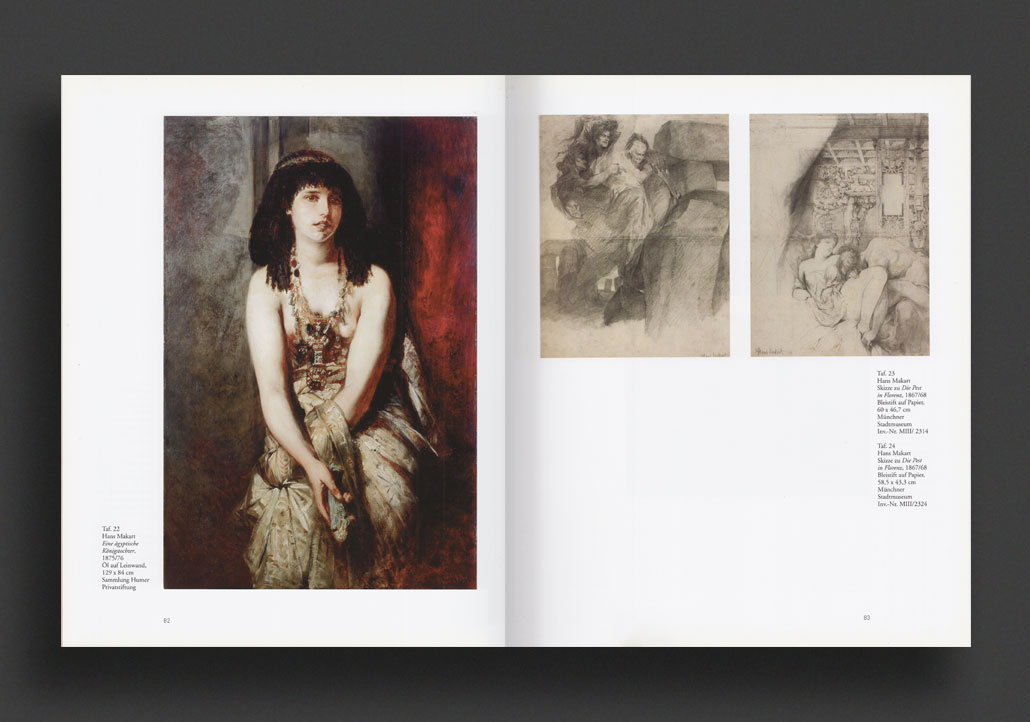
Out-of-print hardcover comprehensive monograph on the Viennese painter Hans Makart, this book presents the work of the artist known as “the magician of colour” in glorious illustrations, set alongside the art of fellow masters.
His name and his style are symbols of an era: Hans Makart. In 1869 the Emperor brought him to Vienna as a history painter, where he quickly became a sought-after painter for the up-and-coming bourgeoisie. His works, which were often perceived as lustful, find their equivalent in the decadence and brought Hans Makart the reputation as a scandal painter, but led to his international fame. His free use of color, which follows Delacroix, as well as the choice of his subjects give his painting a sensuality that is intoxicating in its effect and made him a symbol of a time, the Makart period, through its overwhelming splendor. His interest in the total work of art is expressed in the design of Nicolaus Dumba's study, as well as in his examination of the music of Richard Wagner and the architecture of Gottfried Semper. His influence on the art of the Vienna Secession, e.g. B. on Gustav Klimt, radiated far beyond his early death.
This catalog to an exhibit of Makart’s works includes his legendary room in the Palais Dumba, his monumental paintings, and his controversial and subversive erotic works. The large-scale theatric quality of Makart’s work is evident in the stunning reproductions featured in the book, which allow viewers to appreciate the brilliant palette of his oeuvre.
Agnes Husslein-Arco is Director of the Belvedere Museum in Vienna, Austria. She has published books on Schiele, Mucha, Klimt, Makart and others.
German language. Very Good copy in VG dust jacket.
1974, English
Hardcover (w. dust jacket), 189 pages, 28 x 21 cm
1st Edition, Out of print title / used / good
Published by
Barrie & Jenkins / London
$25.00 - In stock -
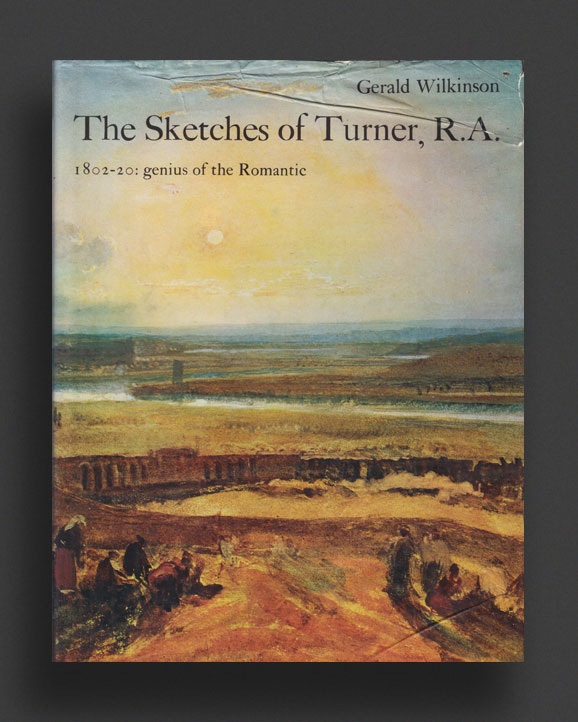
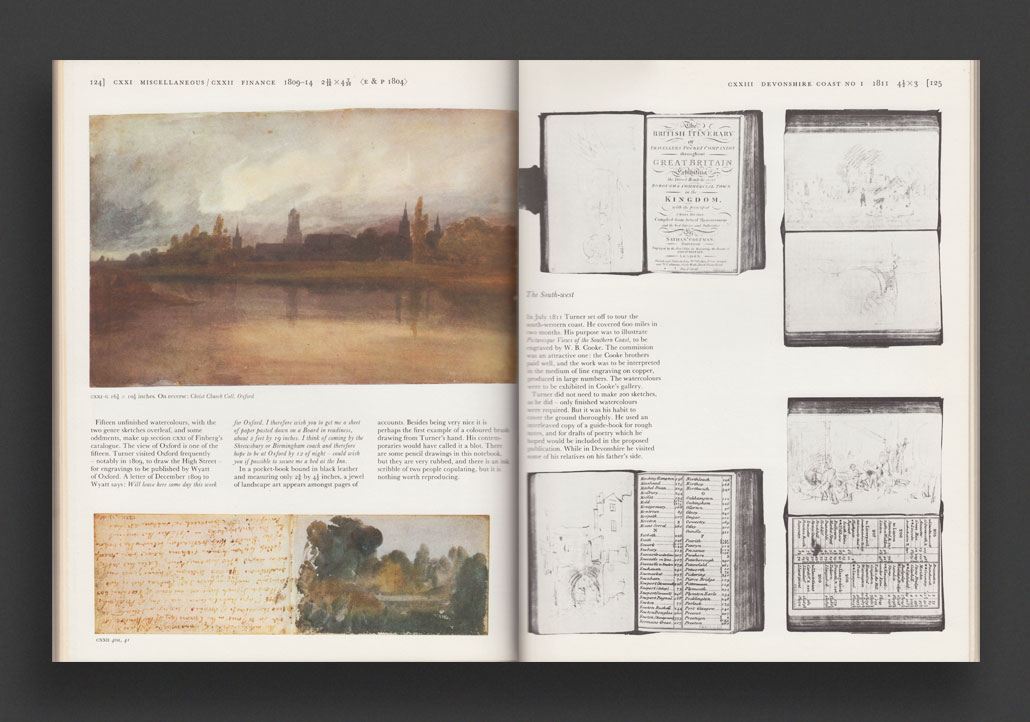
The Sketches of Turner, R.A., 1802-20 : Genius of the Romantic, published by Barrie & Jenkins, London, 1974, presenting over 400 sketches of J. M. W. Turner (1775-1851), including over 100 in colour. Works created in Great Britaain and Continental Europe, with commentary throughout by author Gerald Wilkinson.
Very Good copy with poor dust jacket (creasing and tears, but all present and preserved under mylar wrap)
1978, English
Hardcover (w. dust jacket), 96 pages, 28 x 22 cm
1st Edition, Out of print title / used / very good
Published by
Bonfini Press / Switzerland
$48.00 - Out of stock
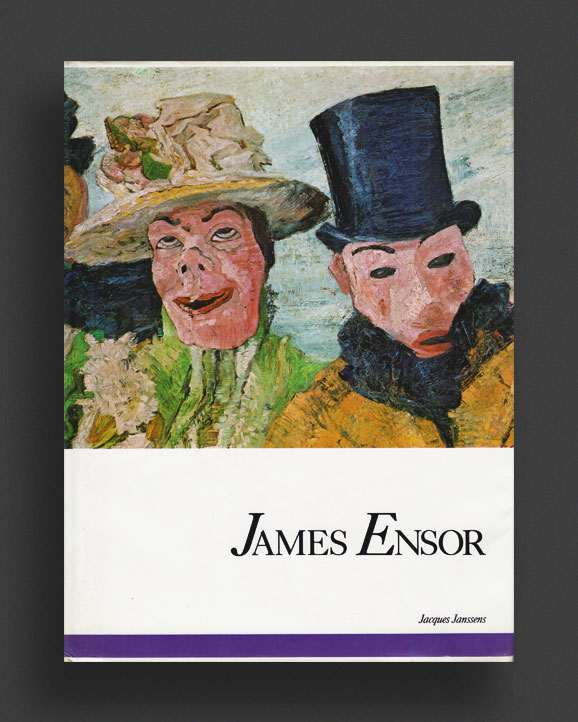
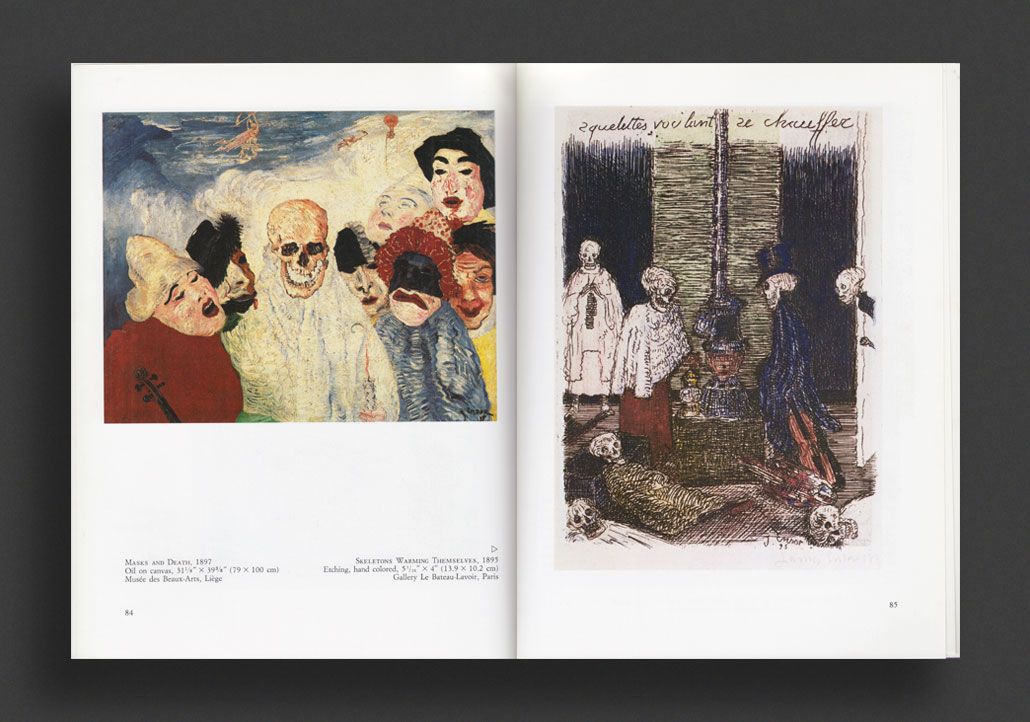
First English-language edition of this hardcover monographic volume on Belgian painter and printmaker James Ensor (1860 —1949), published by Bonfini Press in Switzerland in 1978 and printed in Italy. Profusely illustrated with Ensor's paintings and graphic works in colour and black and white, accompanied by text by Jacques Jansenns. Includes biography and bibliography.
James Sidney Edouard, Baron Ensor (1860 —1949) was a Belgian painter and printmaker, an important influence on expressionism and surrealism who lived in Ostend for almost his entire life. He was associated with the artistic group Les XX. While Ensor's early works, such as Russian Music (1881) and The Drunkards (1883), depict realistic scenes in a somber style, his palette subsequently brightened and he favoured increasingly bizarre subject matter. Such paintings as The Scandalized Masks (1883) and Skeletons Fighting over a Hanged Man (1891) feature figures in grotesque masks inspired by the ones sold in his mother's gift shop for Ostend's annual Carnival. Subjects such as carnivals, masks, puppetry, skeletons, and fantastic allegories are dominant in Ensor's mature work. Ensor dressed skeletons up in his studio and arranged them in colourful, enigmatic tableaux on the canvas, and used masks as a theatrical aspect in his still lifes. Attracted by masks' plastic forms, bright colours, and potential for psychological impact, he created a format in which he could paint with complete freedom. James Ensor is considered to be an innovator in 19th-century art. Although he stood apart from other artists of his time, he significantly influenced such 20th-century artists as Paul Klee, George Grosz, Wols, and many expressionist and surrealist painters of the 20th century.
Very Good in VG dust jacket preserved under mylar wrap.
2018, English
Hardcover, 136 pages, 28.5 x 31.5 cm
Published by
Forma Edizioni / Firenze
$170.00 - In stock -
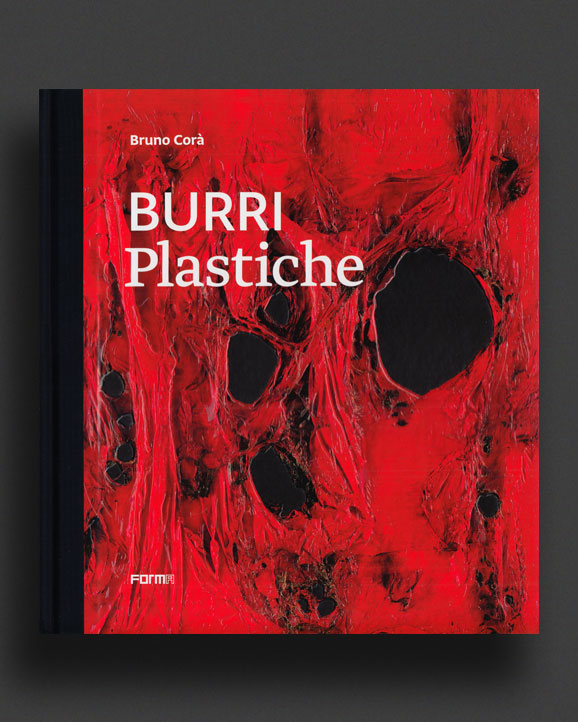
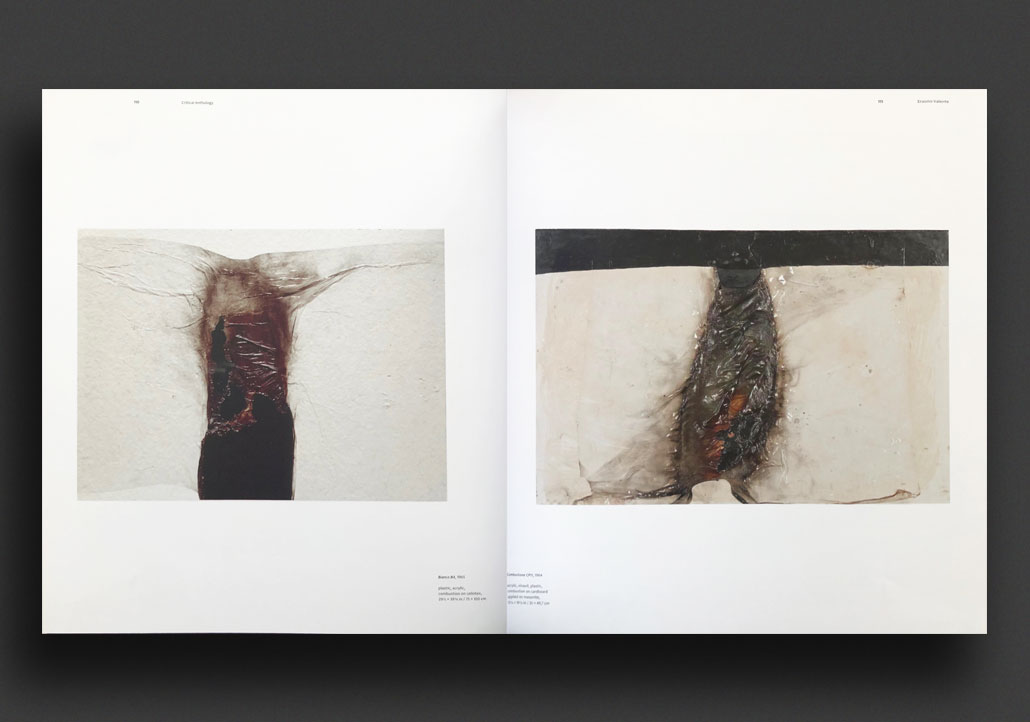
This monograph, edited by noted Italian art critic Bruno Cora and published on the occasion of Art Basel 2018, presents the genesis, critical analysis, and exhibition history of the Combustioni Plastiche [Plastic Combustions] cycle by Alberto Burri. These works span a quarter of a century, from 1953 to 1979, and were created using industrial sheets of different kinds of plastic, with different melting points. They are visceral and technically innovative hybrids, part painting and part sculpture, ranging in size from a few centimetres to larger works installed in places of worship and stage designs for theatre performances. They illuminate Burri's longstanding exploration of the beauty that can be found in mass produced materials, and function as a lens through which we can reassess Burri's entire creative career.
Historical photographs by Claudio Amendola and Ugo Mulas, newspaper articles, and in-depth essays offer a complete analysis of this extraordinary cycle of works in this beautiful over-sized hardcover book.
1960, English
Hardcover (clothbound w. dust jacket), 166 pages, 28 x 22 cm
1st Edition, Out of print title / used / very good
Published by
Arts Inc. / New York
$65.00 - Out of stock
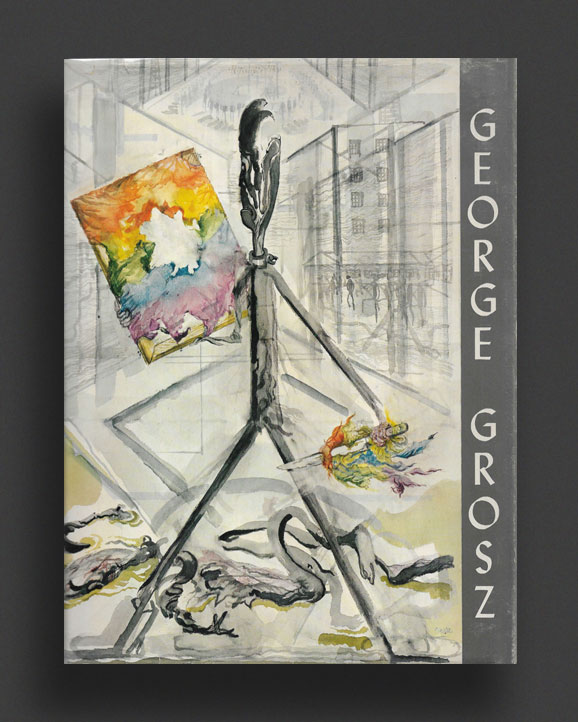
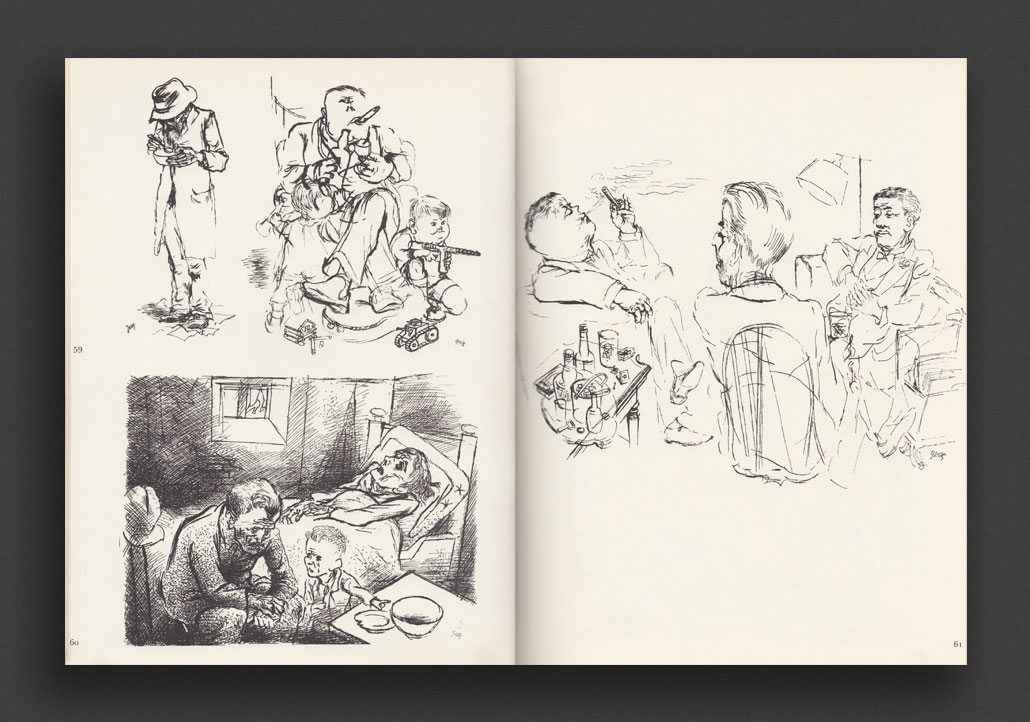
First edition of this, the first and only comprehensive collection of Grosz' works ever published in the English-language, by Arts Inc. in New York, 1960. It presents the paintings and drawings of his two worlds—Germany after World War I, and the America of New York, Cape Cod and Huntington, Long Island—in all their fascinating variety and complexity. Many of these, especially from the artist's American period, are published here for the first time. Illustrated in colour and b/w. Known for his politically charged paintings and caricatural depictions of Berlin life in the 1920s, included are not only those items which fully reveal his familiar, passionate, social-protest artistry, but also works which for pure draftsmanship rank him with the masters. An essay by Grosz himself illuminates brilliantly the philosophy behind his works, particularly those of his later, American, period. Includes a bibliography, catalogue of plates, biography, memoirs, autobiography, introduction by Ruth Berenson and Norbert Muhlen. Edited By Herbert Bittner.
Long out-of-print and the less common English-language edition, good copy with some wear, tanning, good dust-jacket with a few small chips and tears.
2002, English
Softcover, 160 pages, 24.5 x 27.5 cm
1st Edition, Out of print title / used / very good
Published by
Thames and Hudson / London
$55.00 - Out of stock
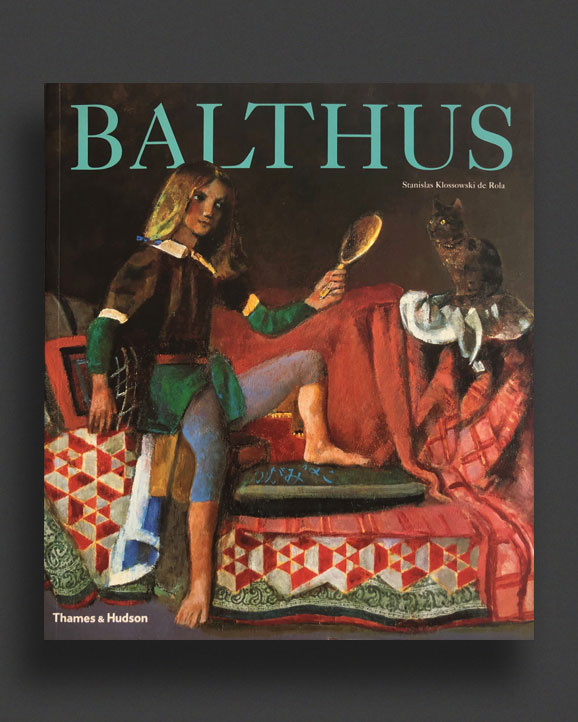
"Balthus is one of the most elusive of living painters. This book offers an insight into the mind and work of the artist, bringing together a wide selection of his most important pictures from the 1930s to the present."
Major monograph compiling the most important works of the great Polish-French artist Balthus. Following his father's death, Stanislas Klossowski de Rola has written a new introduction to this expanded edition that also includes the addition of Balthus's last work, The Waiting, and the controversial Guitar Lesson from 1934. Rare photographs show the young Balthus in his studio, while more recent images by his friend Henri Cartier-Bresson complete this tribute to one of the great artists of recent times.
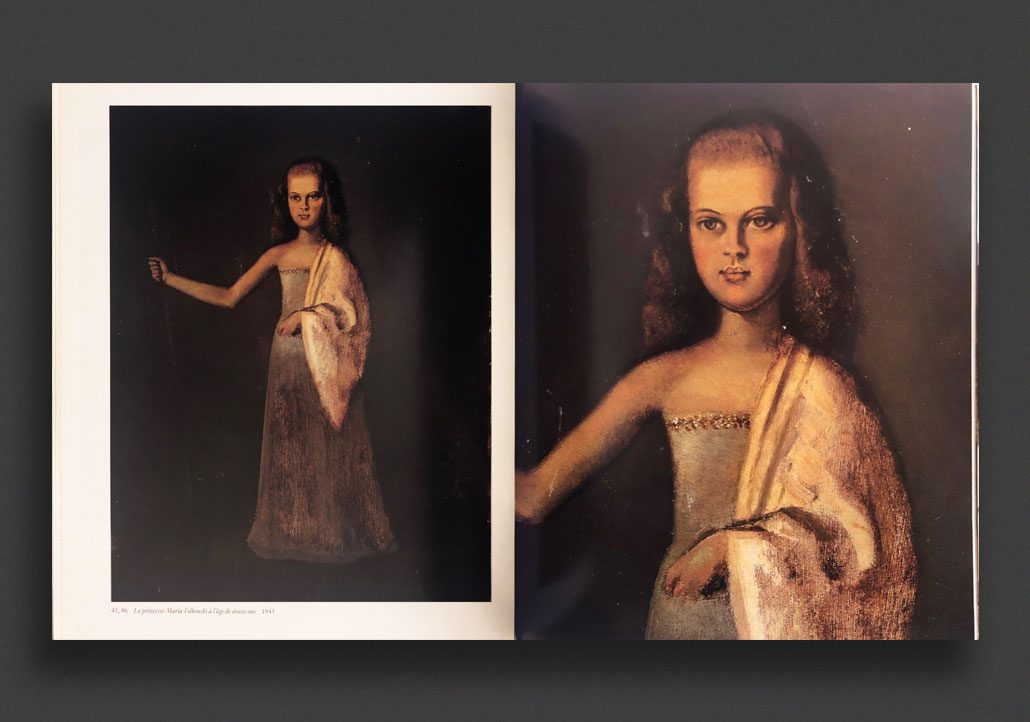
Balthus (1908—2001), was a Polish-French modern artist born in Paris to Polish expatriate parents. His given name was Balthasar Klossowski - his sobriquet "Balthus" was based on his childhood nickname, alternately spelled Baltus, Baltusz, Balthusz or Balthus. His father, Erich Klossowski, was an art historian who wrote a noted monograph on Daumier. His older brother was the philosopher and artist Pierre Klossowski. An unusual figure in the history of twentieth century painting, Balthus both traveled among and drew upon the work of other major artists of his time, while at the same time following a unique individual trajectory. He was mentored by, friends of, and/or even collaborated with seminal creative figures from different eras, including Antonin Artaud, André Breton, and Rainer Maria Rilke, while cultivating his own highly refined style of dreamlike, classically-informed painting. The scenes he usually depicted were very ordinary bourgeois interiors or outdoor settings, which nonetheless managed to reveal the heightened inner states of his subjects as well as the states of mind of those who might be viewing them.
"I always feel the desire to look for the extraordinary in ordinary things; to suggest, not to impose, to leave always with a slight touch of mystery in my paintings."—Balthus
Very Good copy.
2022, English
Hardcover (w. dust jacket), 448 pages, 15.4 x 23.5 cm
Published by
Zone Books / New York
$59.00 - Out of stock
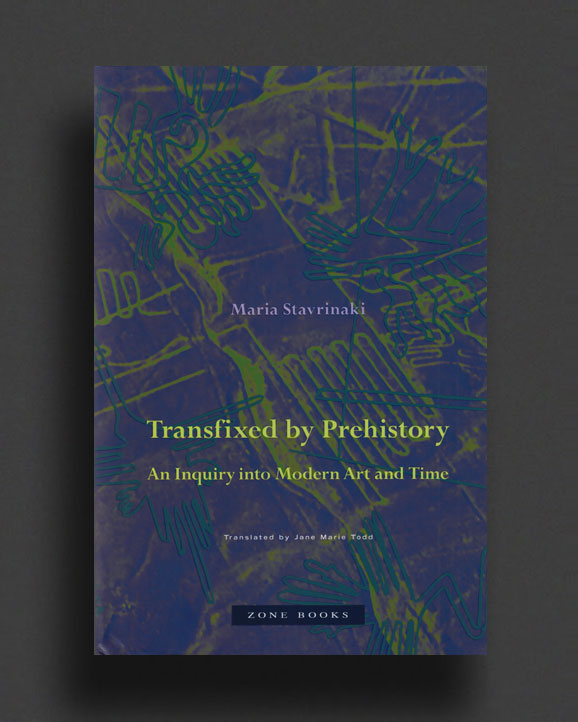
Prehistory is an invention of the late nineteenth century. In that moment of technological progress and acceleration of production and circulation, three major Western narratives about time took shape. One after another, these new fields of inquiry delved into the obscure immensity of the past: first, to surmise the age of the Earth; second, to find the point of emergence of human beings; and third, to ponder the age of art. Maria Stavrinaki considers the inseparability of these accounts of temporality from the disruptive forces of modernity. She asks what a history of modernity and its art would look like if considered through these three interwoven inventions of the longue durée. Transfixed by Prehistory attempts to articulate such a history, which turns out to be more complex than an inevitable march of progress leading up to the Anthropocene. Rather, it is a history of stupor, defamiliarization, regressive acceleration, and incessant invention, since the “new” was also found in the deep sediments of the Earth. Composed of as much speed as slowness, as much change as deep time, as much confidence as skepticism and doubt, modernity is a complex phenomenon that needs to be rethought. Stavrinaki focuses on this intrinsic tension through major artistic practices (Cézanne, Matisse, De Chirico, Ernst, Picasso, Dubuffet, Smithson, Morris, and contemporary artists such as Pierre Huyghe and Thomas Hirschhorn), philosophical discourses (Bataille, Blumenberg, and Jünger), and the human sciences. This groundbreaking book will attract readers interested in the intersections of art history, anthropology, psychoanalysis, mythology, geology, and archaeology.
“Transfixed by Prehistory delivers a stunning reconceptualization of the relationship between time and technology in industrial capitalism.” —Devin Fore
“From Cézanne to Smithson via Paleolithic mandibles, Stavrinaki mobilizes an unlikely group of artifacts to explore the core hermeneutic questions of an Anthropocene epoch in which the symbolic and the geological have become intertwined, if not indistinguishable. Through readings that are not just anecdotally rich and methodologically exemplary but also utterly compelling formally, Transfixed by Prehistory delivers a stunning reconceptualization of the relationship between time and technology in industrial capitalism.” —Devin Fore, Princeton University