World Food Books' programme is largely produced on Kulin Nation land. We acknowledge the Wurundjeri people of the Kulin Nation as the first and continuing custodians of this land, and pay respect to their Elders past, present, and emerging.
World Food Books is an arts and special interests bookshop in Naarm / Melbourne. Founded in 2010, World Food Books is devoted to the presentation of a rotating, hand-selection of international art, design, literary and counterculture publications with an emphasis on the anti-traditional, the experimental, the avant-garde, the heretic, the marginal.
Presenting new titles alongside rare and out-of-print books, catalogues and journals spanning the fields of modern and contemporary art, design, photography, illustration, film, literature, poetry, cultural theory, philosophy, sexuality, popular and underground culture in its many radical forms, World Food Books wishes to encourage adventurous, thoughtful and open-minded reading, looking, writing, and exchange of publishing and ideas, both current and historical.
As well as our bookshop, located in Melbourne's historical Nicholas Building, all of our inventory is available internationally via our online mail-order service.
World Food Books semi-regularly co-ordinates "Occasions", a programme of exhibits and events at the bookshop and in partnership with other hosts (such as museums and art galleries) that develop out of the activities, relationships and content of the bookshop itself.
World Food Books
The Nicholas Building
37 Swanston Street
Room 5, Level 6
Melbourne 3000
Australia
SHOP HOURS:
THU–SAT 12–6
WEB-SHOP OPEN 24/7
World Food Books
Postal Address:
PO Box 435
Flinders Lane
Victoria 8009
Australia
info@worldfoodbooks.com
Art
Theory / Essay
Architecture / Interior
Graphic Design / Typography
Photography
Fashion
Eros
LGBTQ+
Fiction / Poetry
Weird / Speculative / Science Fiction / Horror
Transgressive / Visceral / Abject
Symbolism / Decadence / Fin de siècle
Film / Video
Painting
Sculpture / Installation
Performance / Dance / Theater
Drawing
Sound / Music
Curatorial
Group Shows / Collections
Periodicals
Out-of-print / Rare
Posters / Ephemera / Discs
Signed Books
World Food Books Gift Voucher
World Food Book Bag
Australian Art
Australian Fiction
Australian Science Fiction / Speculative Fiction
Australian Poetry
Australian Photography
Japanese Photography
Conceptual Art
Minimal Art
Dada
'Pataphysics / Oulipo
Fluxus
Concrete Poetry
Pop Art
Surrealism
Arte Povera
Arte Informale / Haute Pâte / Tachism
Nouveau Réalisme / Zero / Kinetic
Situationism / Lettrism
Collage / Mail Art / Xerox Art
Art Brut / Folk / Visionary / Fantastic
Illustration / Graphic Art / Bandes Dessinées
Furniture
Italian Radical Design / Postmodernism
Textiles
Ceramics / Glass
Counterculture
Protest / Revolt
Philosophy
Psychoanalysis
Anthropology
Anarchism
Socialism / Anarchism / Communism / Capitalism
Literary Theory / Semiotics / Language
Feminism / Women's Studies
Gender Studies / Sexuality
Anthropology
Fetishism / BDSM
Drugs / Psychedelia
Crime / Violence
Animal Rights / Veganism
Occult / Esoterica
Ecology / Earth / Alternative Living
Whole Earth / Crafts
All prices in AUD (Australian dollars)
Pick-Ups
Pick-up orders can be collected in our bookshop during opening hours after order date. Please collect any Pick-up orders within 2 weeks of ordering as we have limited storage space. Orders will be released back into stock if not collected within this time. No refunds can be made for pick-ups left un-collected. If you cannot make it in to the bookshop in this time-frame, please choose postage option.
Return Policy
All sales are final. We do accept returns (for refund or exchange) for items received in error. All our orders are packed with special care using heavy-duty padding and cardboard book-mailers or bubble mailers (for smaller books), using reinforcement where required. We cannot take responsibility for any lost, stolen or damaged parcels.
Insurance
Should you wish to insure your package, please email us directly after placing your order and we can organise this at a small extra expense. Although all standard/express tracked packages are very safe and dependable, we cannot take responsibility for any lost, stolen or damaged parcels. We recommend insurance on valuable orders.
Interested in selling your old books, catalogues, journals, magazines, comics, fanzines, ephemera? We are always looking for interesting, unusual and out-of-print books to buy. We only buy books in our fields of interest and specialty, and that we feel we can resell.
We base these prices on desirability, market value, in-print prices, condition and our current stock levels. We offer cash, store credit, and can take stock on consignment. All
about 25% of the price we expect to get when we sell them, or 30% in store credit. We base these prices on desirability, market value, in-print prices, condition and our current stock levels.
Sell your books any day of the week. You can drop them off and return later. If you have a lot of books, we can visit your Sydney home.
We buy books that we feel we can resell. We offer about 25 % of the price we expect to get when we sell them, or 30% in store credit. We base these prices on desirability, market value, in-print prices, condition and our current stock levels.
Philadelphia Wireman
03 August - 01 September, 2018
World Food Books is proud to announce our next Occasion, the first presentation of sculptures by Philadelphia Wireman in Australia.
The Philadelphia Wireman sculptures were found abandoned in an alley off Philadelphia’s South Street on trash night in 1982. Their discovery in a rapidly-changing neighbourhood undergoing extensive renovation, compounded with the failure of all attempts to locate the artist, suggests that the works may have been discarded after the maker’s death. Dubbed the "Philadelphia Wireman" during the first exhibition of this work, in 1985, the maker’s name, age, ethnicity, and even gender remain uncertain. The entire collection totals approximately 1200 pieces, all intricately bound together with tightly-wound heavy-gauge wire (along with a few small, abstract marker drawings, reminiscent both of Mark Tobey and J.B. Murry). The dense construction of the work, despite a modest range of scale and materials, is singularly obsessive and disciplined in design: a wire armature or exoskeleton firmly binds a bricolage of found objects including plastic, glass, food packaging, umbrella parts, tape, rubber, batteries, pens, leather, reflectors, nuts and bolts, nails, foil, coins, toys, watches, eyeglasses, tools, and jewellery.
Heavy with associations—anthropomorphic, zoomorphic, and socio-cultural responses to wrapped detritus—the totemic sculptures by Philadelphia Wireman have been discussed in the context of work created to fulfil the shamanistic needs of alternative religions in American culture. Curators, collectors, and critics have variously compared certain pieces to sculpture from Classical antiquity, Native American medicine bundles, African-American memory jugs, and African fetish objects. Reflecting the artist’s prolific and incredibly focused scavenging impulse, and despite—or perhaps enhanced by—their anonymity, these enigmatic objects function as urban artefacts and arbiters of power, though their origin and purpose is unknown. Philadelphia Wireman, whatever their identity, possessed an astonishing ability to isolate and communicate the concepts of power and energy through the selection and transformation of ordinary materials. Over the course of the past two decades, this collection has come to be regarded as an important discovery in the field of self-taught art and vernacular art.
Presented in collaboration with Fleisher-Ollman Gallery, Philadelphia, and Robert Heald, Wellington.
Susan Te Kahurangi King
02 February - 10 March, 2018
Susan Te Kahurangi King (24 February 1951 - ) has been a confident and prolific artist since she was a young child, drawing with readily available materials - pencils, ballpoint pens and felt-tip markers, on whatever paper is at hand. Between the ages of four and six Susan slowly ceased verbal communication. Her grandparents William and Myrtle Murphy had developed a special bond with Susan so they took on caring responsibilities for extended periods. Myrtle began informally archiving her work, carefully collecting and storing the drawings and compiling scrapbooks. No drawing was insignificant; every scrap of paper was kept. The King family are now the custodians of a vast collection containing over 7000 individual works, from tiny scraps of paper through to 5 meter long rolls.
The scrapbooks and diaries reveal Myrtle to be a woman of great patience and compassion, seeking to understand a child who was not always behaving as expected. She encouraged Susan to be observant, to explore her environment and absorb all the sights and sounds. Myrtle would show Susan’s drawings to friends and people in her community that she had dealings with, such as shopkeepers and postal workers, but this was not simply a case of a grandmother’s bias. She recognised that Susan had developed a sophisticated and unique visual language and sincerely believed that her art deserved serious attention.
This was an unorthodox attitude for the time. To provide some context, Jean Dubuffet coined the term Art Brut in 1945 to describe work created by self-taught artists – specifically residents of psychiatric institutions and those he considered to be visionaries or eccentrics. In 1972 Roger Cardinal extended this concept by adopting the term Outsider Art to describe work made by non-academically trained artists operating outside of mainstream art networks through choice or circumstance. Susan was born in Te Aroha, New Zealand in 1951, far from the artistic hubs of Paris and London that Dubuffet and Cardinal operated in. That Myrtle fêted Susan as a self-taught artist who deserved to be taken seriously shows how progressive her attitudes were.
Susan’s parents Doug and Dawn were also progressive. Over the years they had consulted numerous health practitioners about Susan’s condition, as the medical establishment could not provide an explanation as to why she had lapsed into silence. Dawn educated herself in the field of homeopathy and went on to treat all twelve of her children using these principles – basing prescriptions on her observations of their physical, mental and emotional state.
Doug was a linguist with an interest in philosophy who devoted what little spare time he had to studying Maori language and culture. To some extent their willingness to explore the fringes of the mainstream made them outsiders too but it was their commitment to living with integrity and their respect for individuality that ensured Susan’s creativity was always encouraged.
Even though Susan’s family supported her artistic pursuits, some staff in schools and hospitals saw it as an impediment to her assimilation into the community and discouraged it in a variety of ways. Her family was not always aware of this and therefore did not fully understand why Susan stopped drawing in the early 1990s. However, rather than dwell on the challenges that Susan faced in pursuit of her artistic practice, they prefer to highlight her achievements. In 2008 Susan began drawing again in earnest, after an almost 20 year interruption, and her work is now shown in galleries around the world.
Susan grew up without television and has been heavily influenced by the comics she read as a child. She is absolutely fearless in the appropriation of recognizable characters, such as Donald Duck and Mickey Mouse, in her work. She twists their limbs, contorts their faces, compresses them together, blends them into complex patterned backgrounds - always imbuing them with an incredible energy. Although Susan often used pop culture characters in her work they are not naive or childlike. These are drawings by a brilliant self-taught artist who has been creating exceptional work for decades without an audience in mind.
Mladen Stilinović
"Various Works 1986 - 1999"
02 February 16 - September 10, 2016
Various works 1986 - 1999, from two houses, from the collections of John Nixon, Sue Cramer, Kerrie Poliness, Peter Haffenden and Phoebe Haffenden.
Including: Geometry of Cakes (various shelves), 1993; Poor People’s Law (black and white plate), 1993; White Absence (glasses, ruler, set square, silver spoon, silver ladel with skin photograph and wooden cubes), 1990-1996; Exploitation of the Dead (grey and red star painting, wooden painting, black spoon with red table, red plate), 1984-1990; Money and Zeros (zero tie, paintings made for friends in Australia (Sue, John, Kerrie), numbers painting), 1991-1992; Words - Slogans (various t-shirts) - “they talk about the death of art...help! someone is trying to kill me”, “my sweet little lamb”, “work is a disease - Karl Marx”; Various artist books, catalogues, monographs, videos; Poster from exhibition Insulting Anarchy; "Circular" Croatian - Australian edition; Artist book by Vlado Martek (Dostoyevsky); more.
Thanks to Mladen Stilinović and Branka Stipančić.
Jonathan Walker
Always Will Need To Wear Winter Shirt Blue + Ochre Small Check Pattern
21 August - 21 September, 2015
Untitled
I am not a great reader of poetry but I always return to the work of Melbourne poet, Vincent Buckley (1925- 1988). Perhaps I find his most tantalising piece to be not a finished poem but a fragment left on a scrap of paper discovered on his desk after the poet’s death.
The poetry gathers like oil
In the word-core, and spreads
It has its music meet,
Its music is in movement.
This fragment is more the shell left behind from a volatile thought than a finished poem. I find the last two lines honest but awkward whereas the first two lines work like an arrow. Most likely he could not find a resolution so it was left. Still, in its present form, it remains an eloquent testimony to the ultimate failure of a medium to express mobile thought and sensation, in Buckley’s case, through verbal language. It’s an important matter because this is something all artists have to deal with regardless of the medium.
I have never written a poem, however, I am forever copying fragments from books on paper scraps in a vain effort to fix certain notions in my head. At first, they function as bookmarks that are sometimes returned to when I open the book. But before long, as they accumulate, they fall out littering the table interspersed with A4 photocopies, bills, books and medications.
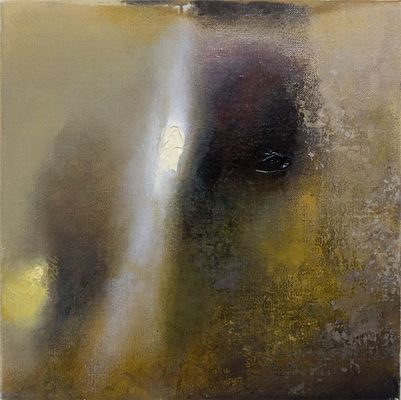
To return to Buckley’s fragment, the first two lines very much evoke how I paint nowadays. As you age, detail diminishes and patches of light become more luminous and float. I feel the most honest way of dealing with this is by smearing the oil paint on the canvas with the fingers and working close-up, blind. Only if the patches coalesce into an approaching image can the work gain a life.
-
Jonathan Walker was born in Melbourne, Australia and brought up on a dairy farm in Gippsland. In the 1970’s he studied painting at RMIT and won the Harold Wright Scholarship to the British Museum, London. During the 1980’s he exhibited at Pinacotheca Gallery, Richmond and had work shown at the NGV and Heidi City Art Gallery. Over the same period he designed the cover for the “Epigenesi” LP by Giancarlo Toniutti, Italy and conducted a mail exchange work with Achim Wollscheid, Germany. The work with artists through the post resulted in an article published in the bicentenary issue of Art and Australia 1988. He showed in artist run spaces such as WestSpace in the 90’s and 2000’s, and until 2012, taught painting at Victoria University, which is where we (Colleen Ahern and Lisa Radford) as organisers of the exhibition, among many others, had the privilege of being his student.
Walker’s knowledge was imparted to students through the careful selection of music, literature, and artists found in books that he himself had ordered for the library. Walker’s strategy was the generosity of sharing his vast knowledge with references specific to each student and their context.
Walker’s paintings share a similar focus and intimacy.
This exhibition presents a small selection of recent paintings alongside a publication that includes Walker’s writing. Observational and analytical, Walker’s work is a type of material notation — the time of day, colour and how it is blended, the both specific and fleeting location of a reflection on lino or the question of whether a chair leg should be included in a painting.
Please join us on Friday August 21 between 6-8pm to celebrate the opening of the exhibition.
Curated by Colleen Ahern and Lisa Radford.
B. Wurtz
Curated by Nic Tammens
March 26 - April 4, 2015
B.Wurtz works from a basement studio in his home on Manhattan’s Lower East Side.
This local fact is attested to by the plastic shopping bags and newsprint circulars that appear in his work. As formal objects, they don’t make loud claims about their origins but nonetheless transmit street addresses and places of business from the bottom of this long thin island. Like plenty of artists, Wurtz is affected by what is local and what is consumed. His work is underpinned by this ethic. It often speaks from a neighborhood or reads like the contents of a hamper:
“BLACK PLUMS $1.29 lb.”
“Food Bazaar”
“USDA Whole Pork Shoulder Picnic 99c lb.”
“RITE AID Pharmacy, with us it’s personal.”
“H. Brickman & Sons.”
“Sweet Yams 59c lb."
Most of the work in this exhibition was made while the artist was in residence at Dieu Donne, a workshop dedicated to paper craft in Midtown. Here Wurtz fabricated assemblages with paper and objects that are relatively lightweight, with the intention that they would be easily transportable to Australia. This consideration isn’t absolute in Wurtz’s work, but was prescriptive for making the current exhibition light and cheap. Packed in two boxes, these works were sent from a USPS post office on the Lower East Side and delivered to North Melbourne by Australia Post.
Wurtz appears courtesy of Metro Pictures, New York.
Thanks to Rob Halverson, Joshua Petherick, Sari de Mallory, Matt Hinkley, Helen Johnson, Fayen d'Evie, Ask Kilmartin, Lisa Radon, Ellena Savage, Yale Union, and "Elizabeth".
John Nixon
"Archive"
December 15 - January 20, 2014
The presentation of John Nixon's archive offered a rare showcase of this extensive collection of the artist's own publications, catalogues, posters, ephemera, editions and more, from the mid 1980s onwards, alongside a selection of his artworks.
Organized by John Nixon, Joshua Petherick and Matt Hinkley.
"Habitat"
at Minerva, Sydney (organised by Joshua Petherick and Matt Hinkley)
November 15 - December 20, 2014
Lupo Borgonovo, Janet Burchill & Jennifer McCamley,
Lewis Fidock, HR Giger, Piero Gilardi, Veit Laurent Kurz,
Cinzia Ruggeri, Michael E. Smith, Lucie Stahl, Daniel Weil, Wols
Press Release:
“...It contained seven objects. The slender fluted bone, surely formed for flight, surely from the wing of some large bird. Three archaic circuitboards, faced with mazes of gold. A smooth white sphere of baked clay. An age-blackened fragment of lace. A fingerlength segment of what she assumed was bone from a human wrist, grayish white, inset smoothly with the silicon shaft of a small instrument that must once have ridden flush with the surface of the skin - but the thing’s face was seared and blackened.”
William Gibson, “Count Zero”, 1986
"Autumn Projects Archive"
Curated by Liza Vasiliou
March 6 - March 15, 2014
World Food Books, in conjunction with the Virgin Australia Melbourne Fashion Festival 2014, presented the Autumn Projects archive, consisting of a selection of early examples in Australian fashion with a particular interest in collecting designers and labels from the period beginning in the 1980’s, who significantly influenced the discourse of Australian Fashion.
Curated by Liza Vasiliou, the exhibition provided a unique opportunity to view pieces by designers Anthea Crawford, Barbara Vandenberg, Geoff Liddell and labels CR Australia, Covers, Jag along with early experimental collage pieces by Prue Acton and Sally Browne’s ‘Fragments’ collection, suspended throughout the functioning World Food Books shop in Melbourne.
H.B. Peace
presented by CENTRE FOR STYLE
November 14, 2013
"Hey Blinky, you say chic, I say same"
Anon 2013
H.B. Peace is a clothing collaboration between great friends Blake Barns and Hugh Egan Westland. Their pieces explore the divergences between 'character’ and ‘personality’ in garments....etc
Special Thanks to Joshua Petherick and Matt Hinkley of WFB and Gillian Mears
and a Very Special Thank you to Audrey Thomas Hayes for her shoe collaboration.
Janet Burchill & Jennifer McCamley
"Aesthetic Suicide"
May 10 - June 8, 2013
The first of our occasional exhibitions in the World Food Books office/shop space in Melbourne, "Aesthetic Suicide" presented a body of new and older works together by artists Janet Burchill & Jennifer McCamley, including videos, prints, a wall work, and publications.
During shop open hours videos played every hour, on the hour.
1989, Japanese
Softcover, 208 pages, 13 x 18 cm
1st Edition, Out of print title / used / very good
Published by
Fiction Inc. / Tokyo
$70.00 - In stock -
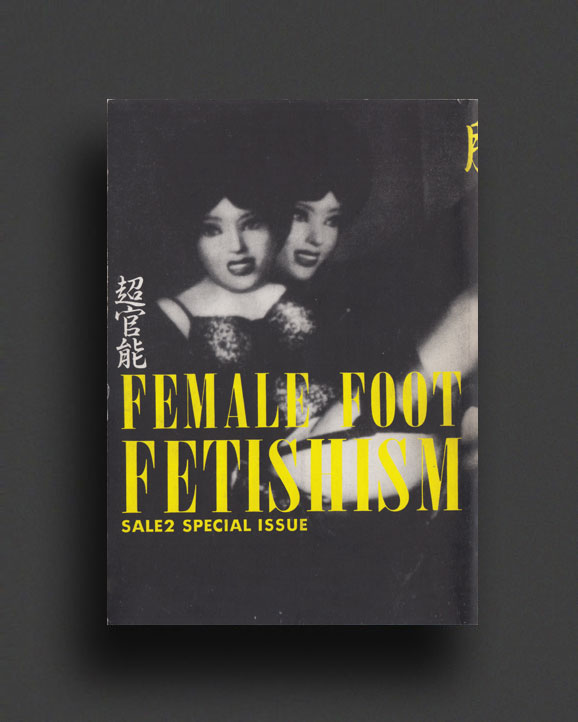
Issue No.36 of the great SALE2 periodical from Tokyo Japan, founded in 1984 by Makoto Orui, who later became art director for Purple magazine in France and Rockin’on magazine in Japan. SALE2 was active for about 14 years during the 1980s—1990s, published regularly as a sort-of fanzine/journal/catalogue/pocket-book by Fiction, Inc., a specialty shop and publisher of fetish and erotica in Tokyo in the 1980-90s. With Orui's distinct design SALE2 developed an exclusive curated editorial set on ‘erotisism and its spiritual philosophy’, with each issue exploring different themes and features, heavy on fetishism and erotic art.
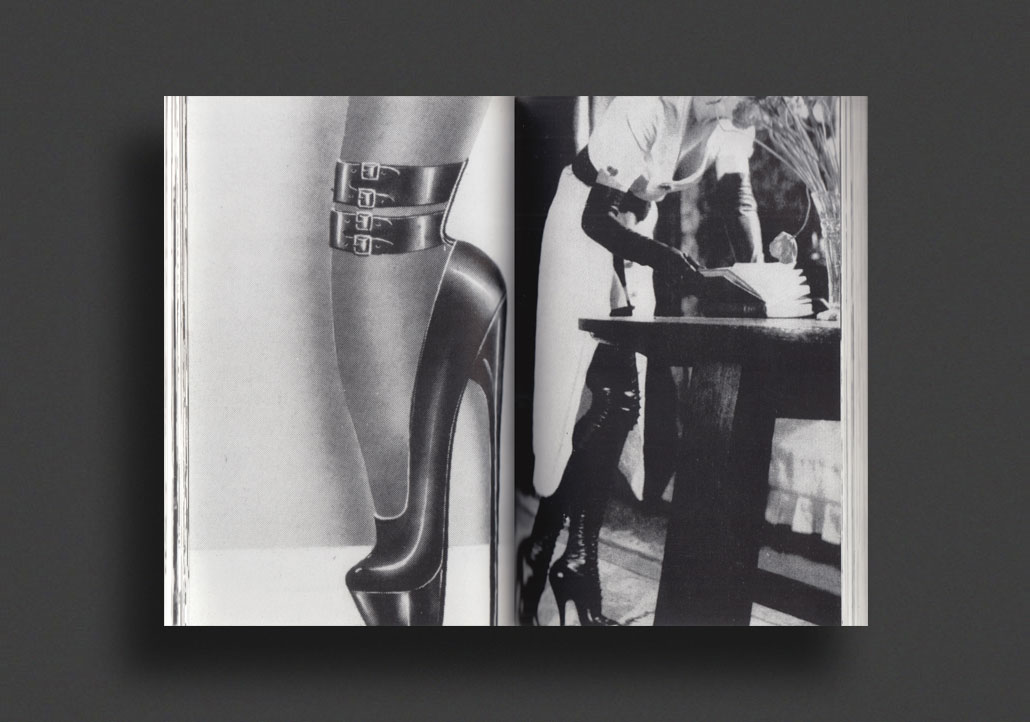
Issue No.36, the "Female Foot Fetishism Special Issue" with the wonderful wraparound Pierre Molinier cover is packed with imagery and essays around the theme of "Foot and Fetish Heel" throughout history, literature, film and fetish publishing, etc. profusely illustrated with drawings, photography, bondage illustrations, film stills, catalogue clippings, and artworks, including works by Bill Ward, Pierre Molinier, Nobuyoshi Araki, and so many more. It also features the Fiction, Inc. section that samples a cross-section of content from catalogue publications including the work of John Willie, Bill Ward, Carlo, Eric Stanton, Irving Claw, Betty Page, and periodicals such as Rubber Magazine, Amateur Bondage, Bizarre Comix, Bizarre Classix, Bizarre Fotos, Stiletto, and much more... Very heavily illustrated throughout with erotic photography and artwork, all texts in Japanese.
Very Good copy.
2025, Chinese
Hardcover (w. dust jacket), 256 pages, 21 x 26.7 cm
Published by
peaceplanfoto / China
$110.00 - In stock -
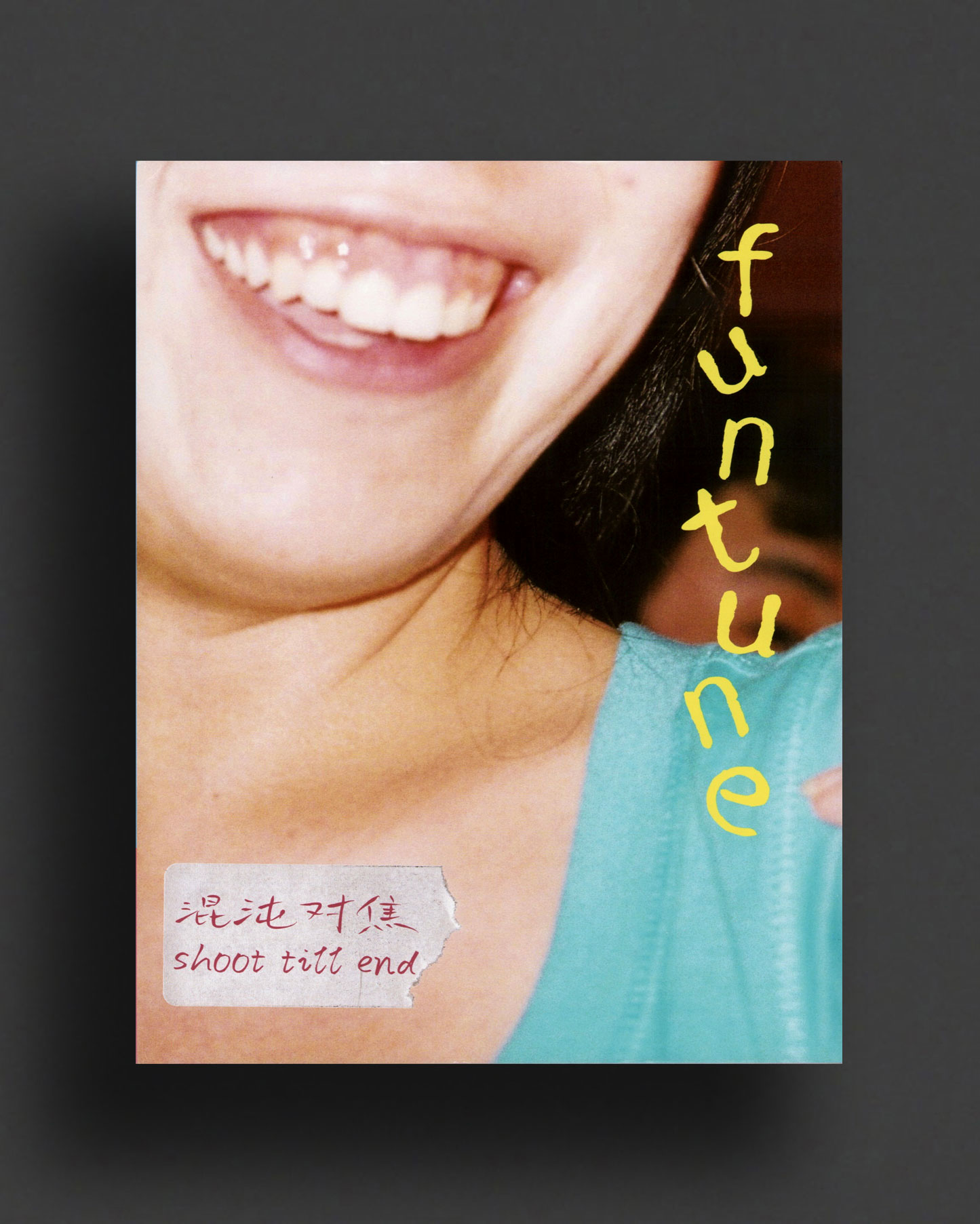
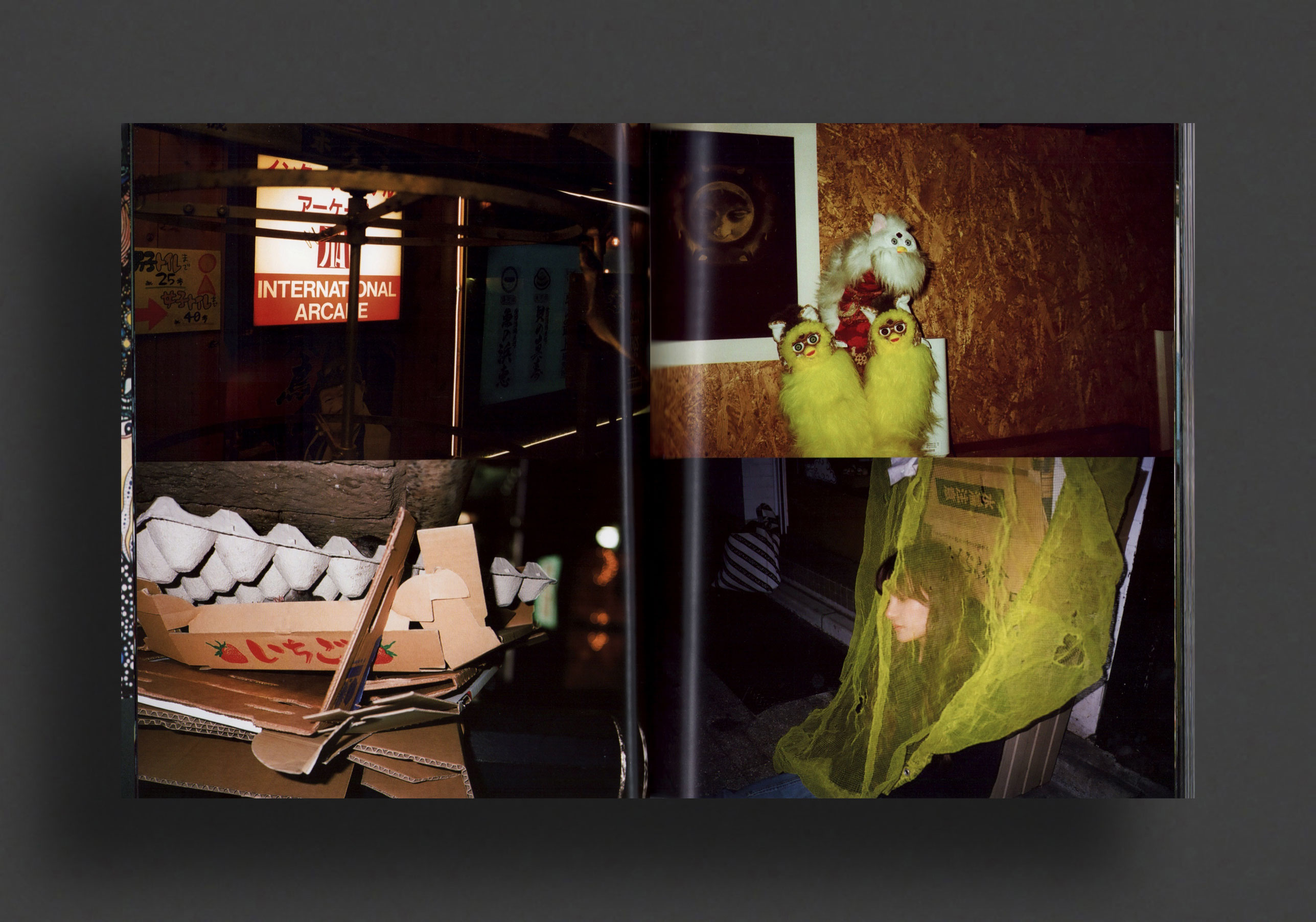
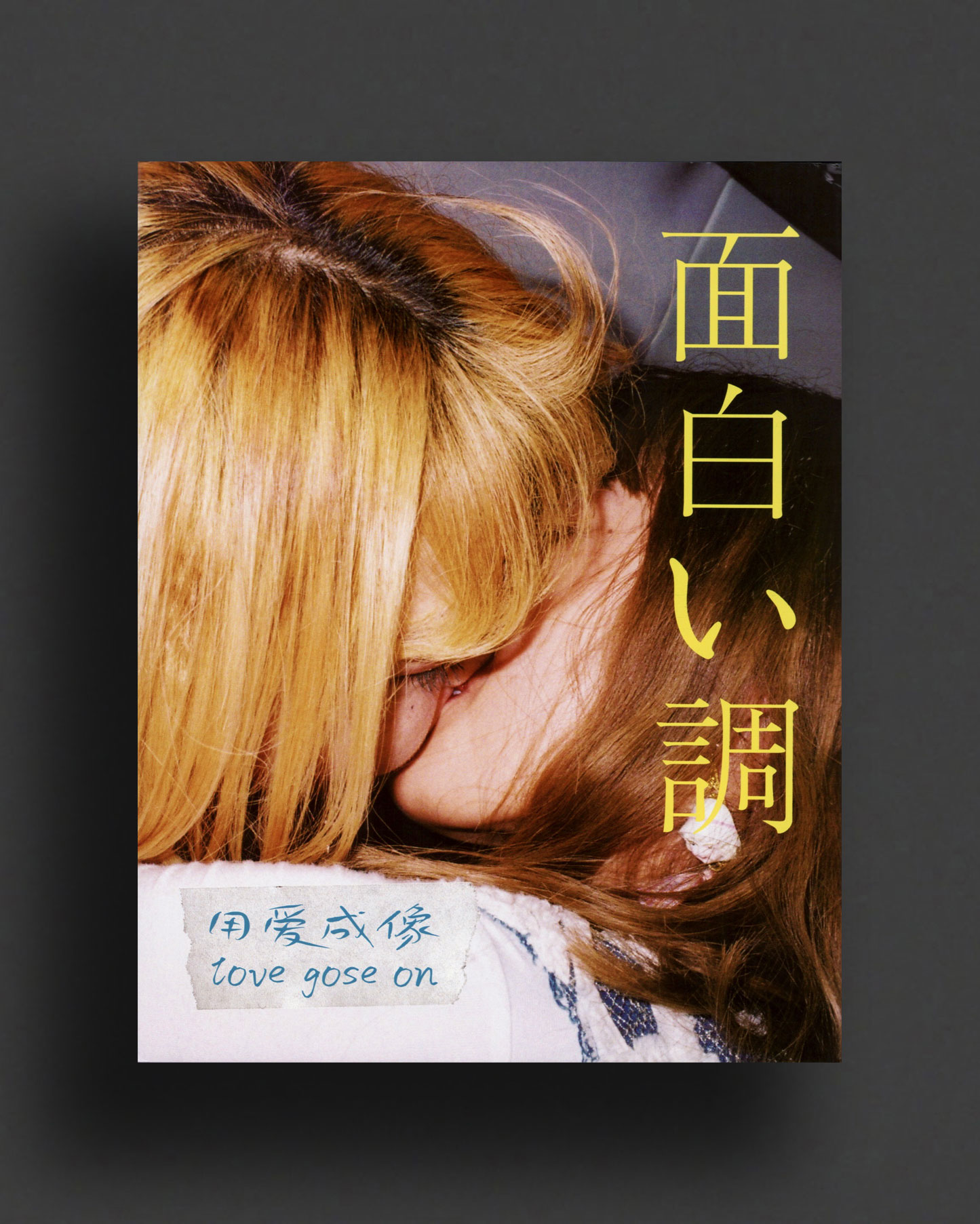
This documentary photography collection, curated by the photography group peaceplanfoto, features the works of documentary photographers vent and papu from Tokyo and Tsingtao.
Employing documentary photography as its core technique, the collection presents 232 photographic works that focus on the urban landscapes and cultural features of these two cities. The fingerprints on
the windows of Tokyo's subways and the light reflections from beer bottles clinking at 3 a.m. in Tsingtao offer authentic glimpses into everyday life. By highlighting the differences and interactions between
the geographical cultures, the works showcase unique cultural phenomena emerging from the backdrop of globalization and urbanization. Meanwhile, they delve deep into the emotions and details of Generation Z in fast-paced modern life, providing visual samples for the study of contemporary social emotions.
Designer booboo used collage and cropping techniques to rework the original images. Through the deconstruction and recombination of visual elements, an innovative narrative logic was established, refining and elevating emotional expressions while offering readers diverse perspectives for interpretation. funtune is not merely a static collection of photographic works but also carries an open-ended narrative nature. Its aim is to document the individual and collective memories of the era, emphasizing the significance of life experiences and human relationships. With the appeal of visual art, it hopes to attract more individuals to participate in documenting and creating contemporary culture, jointly building a cultural archive that is both emotionally resonant and intellectually profound.
1985, Japanese
Hardcover slipcase w. 130 page hardcover book + folder of 8 photographic prints, 37 x 26 cm
1st Edition, Out of print title / used / fine
Published by
Nippon Geijutsu Shuppan (NGS) / Japan
$160.00 - Out of stock
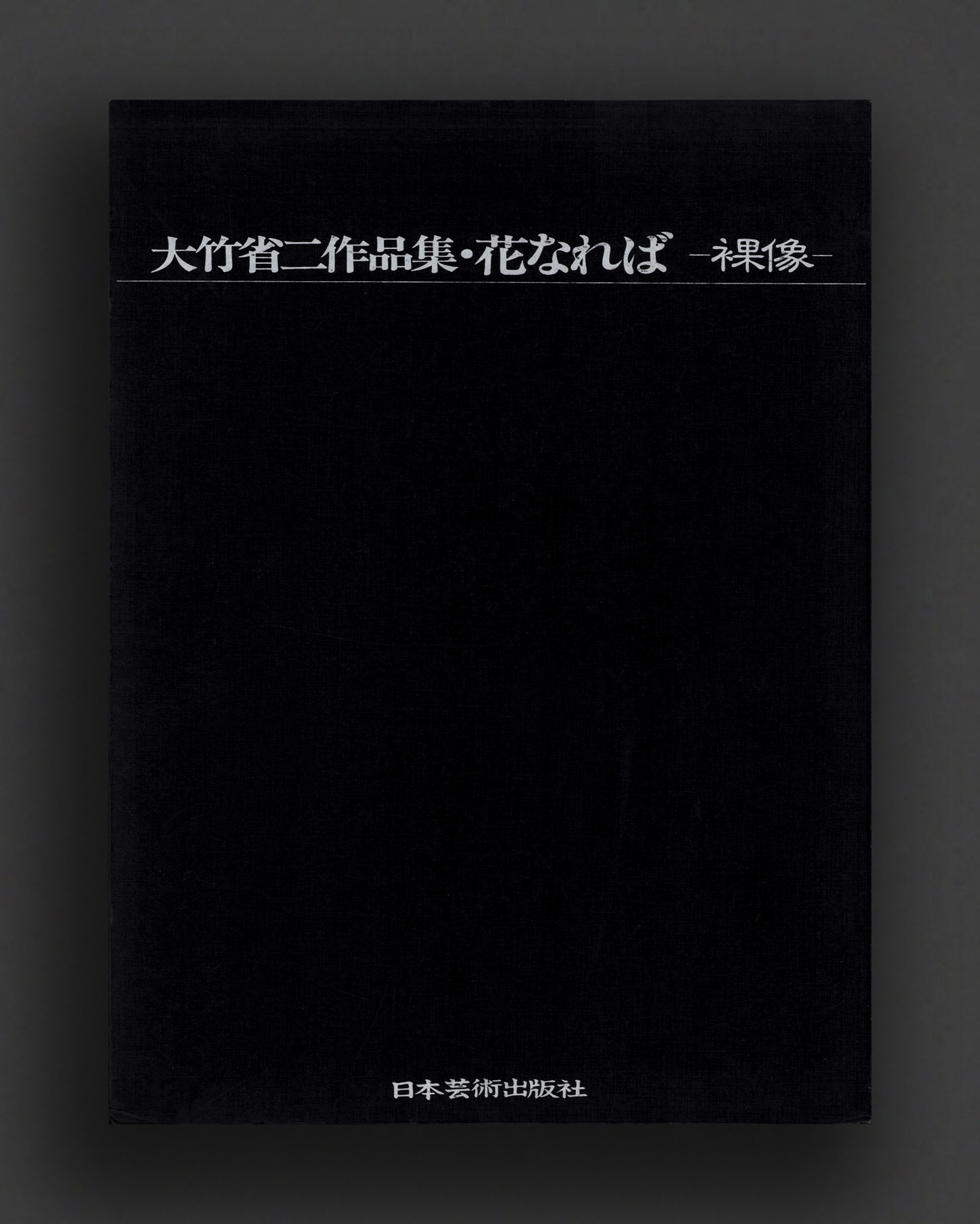
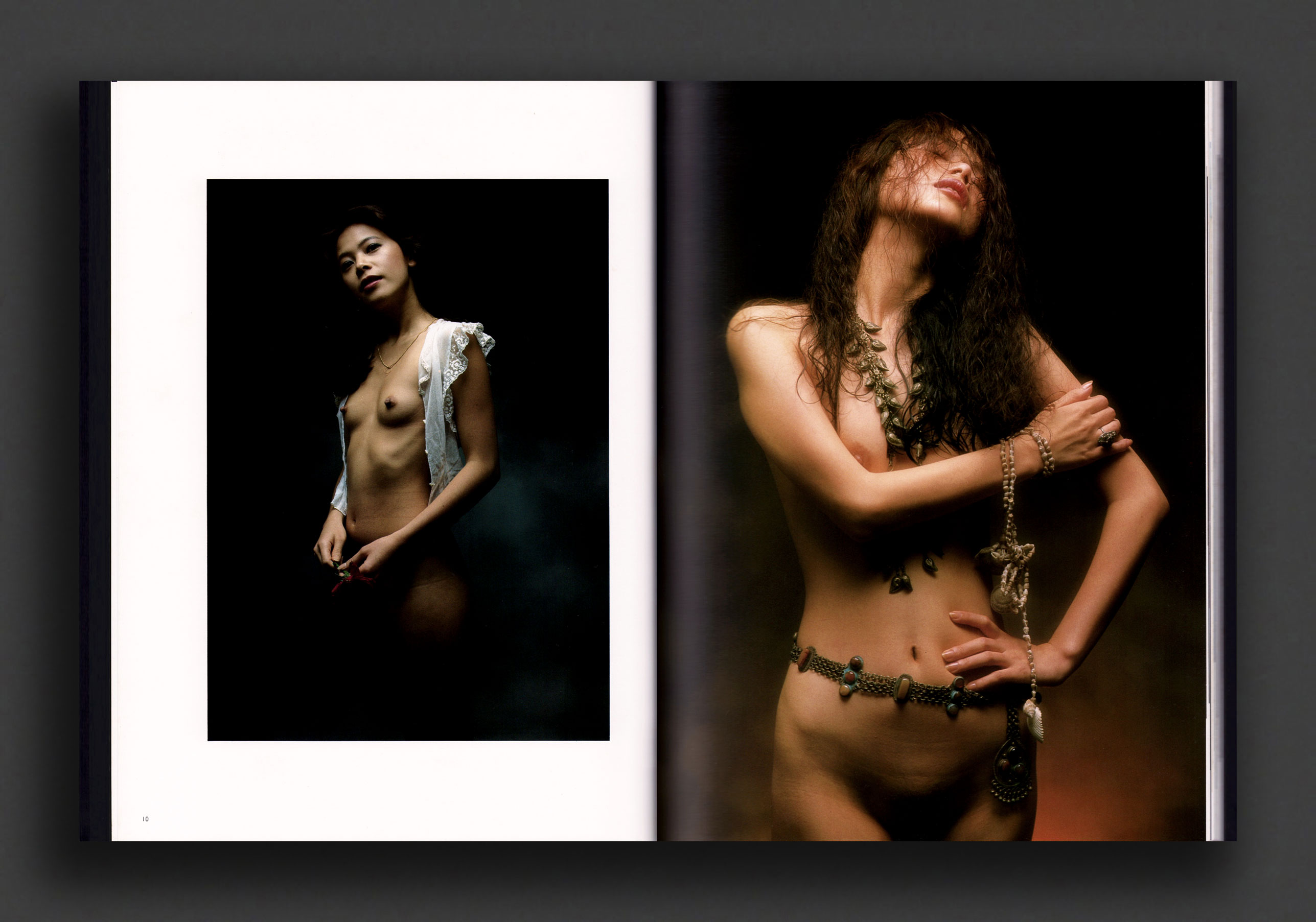
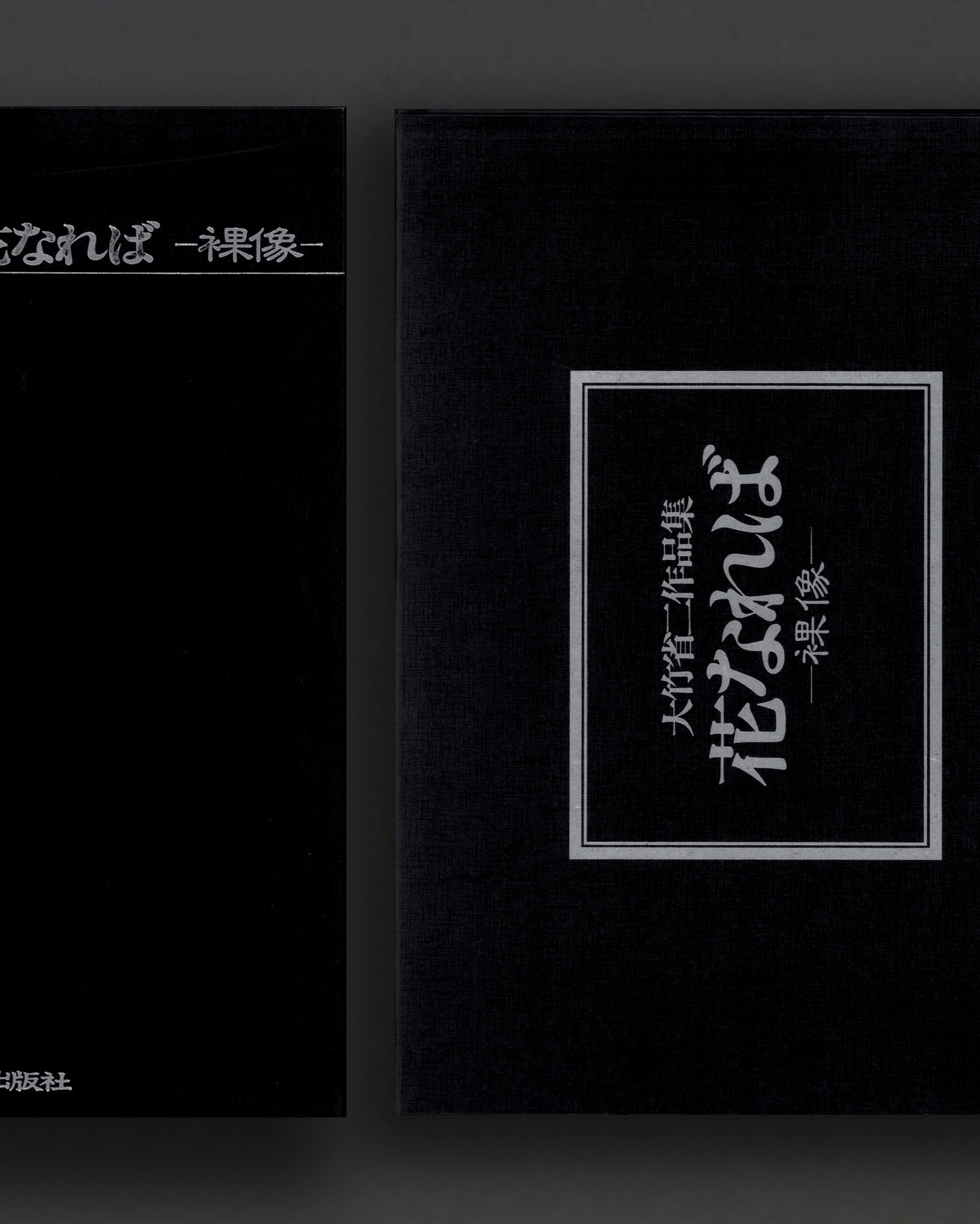
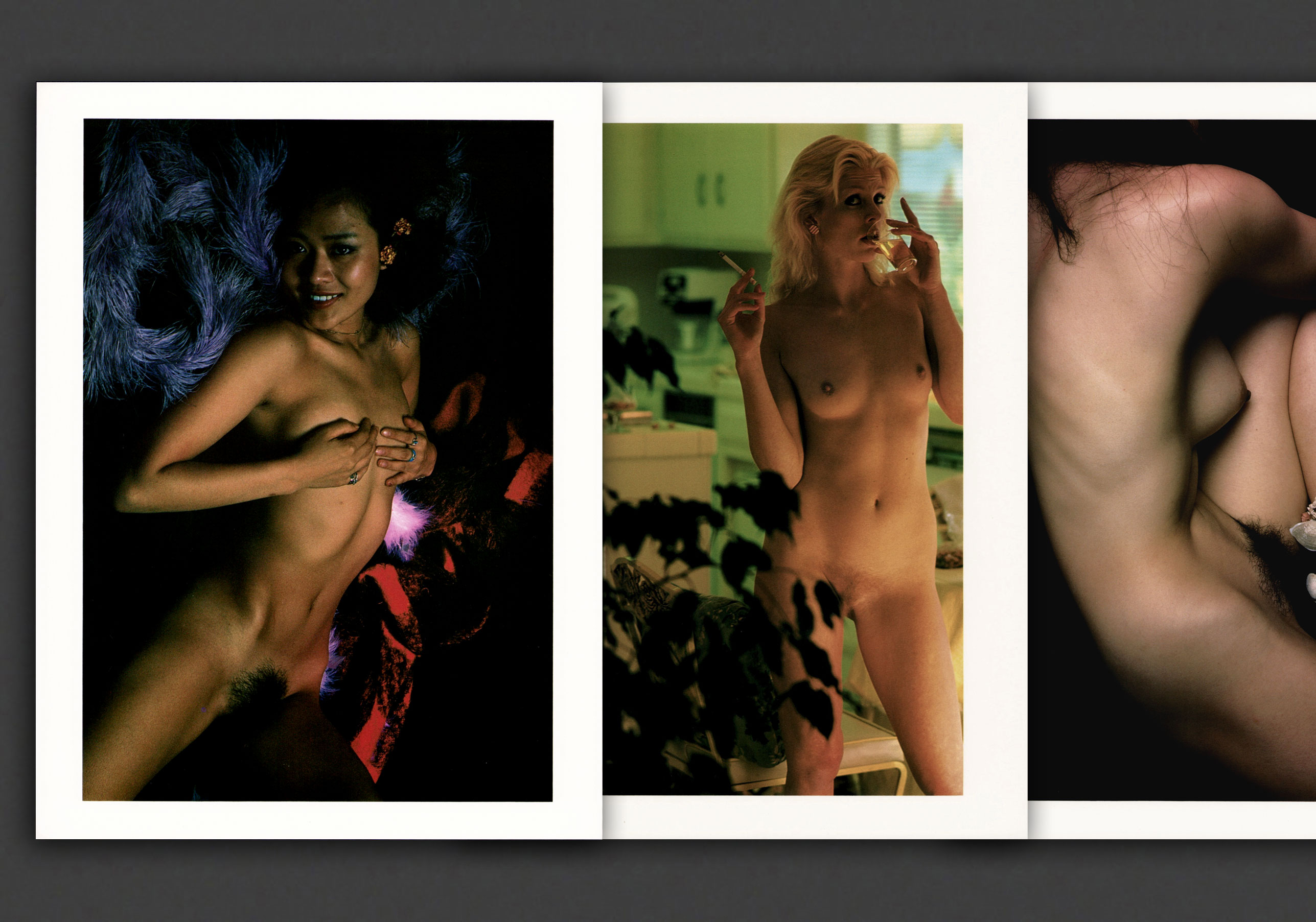
Lavish 1985 boxed edition by Japanese photographer Shoji Otake (1920—2015). Black cloth slipcase housing black cloth hardcover volume of Otake's erotic photography of female nudes spanning his career, plus an additional black cloth folder housing 8 photographic colour prints (34 x 25.5 cm) by Otake, perfectly reserved and protected by Japanese tissue paper, plus publisher's mail-order catalogue inserted. A most complete and deluxe edition issued to private members by Japanese erotic photography specialist publishers NGS (Nihon Geijutsu Shuppansha). Otake is also well-known for his book collections Janet (1974), Family Nude (1977), and many others.
Near Fine copy all round very well preserved.
1982, Japanese
Hardcover (clothbound in dust jacket in heavy slipcase), 200 pages, 31 x 31 cm
1st Edition, Out of print title / used / very good
Published by
Nippon Geijutsu Shuppan (NGS) / Japan
$400.00 - In stock -
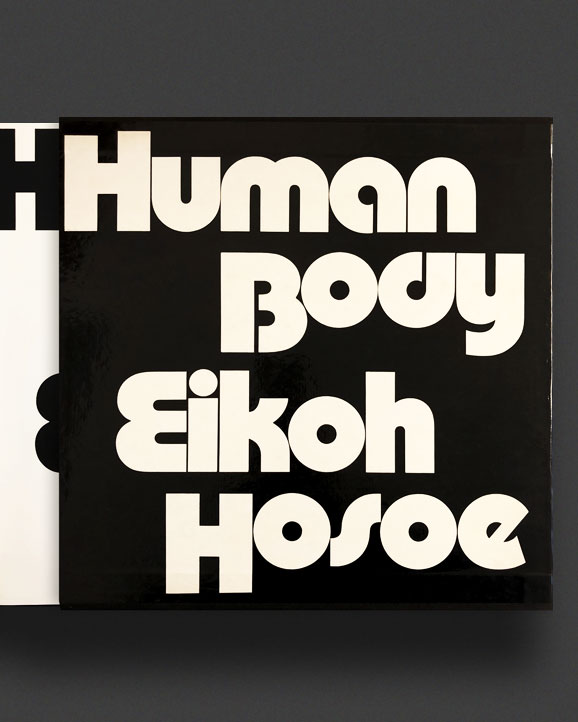
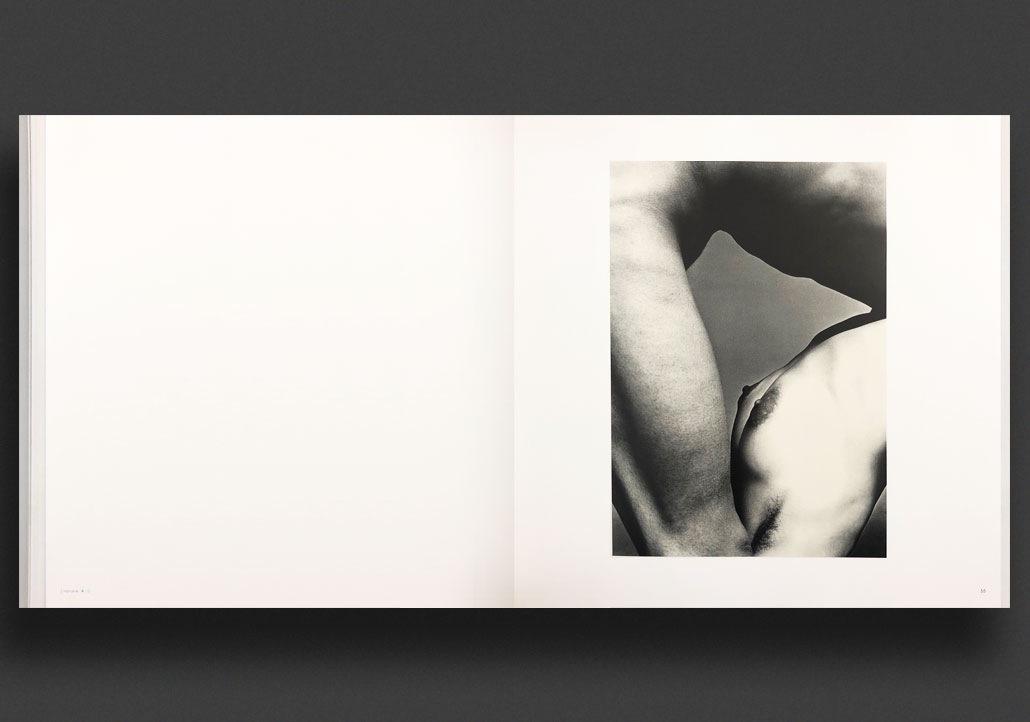
Rare first edition, first printing of Eikoh Hosoe's classic photo book “Human Body”, published by Nippon Geijutsu Shuppansha, Tokyo in 1982. A stunning collection duotone photogravures, “Human Body” is a gorgeously designed retrospective of Hosoe's inimitable nudes and includes work from his critically acclaimed "Man & Woman", "Embrace", "Killed by Roses", as well as many previously unpublished images including many shot in Yosemite and Arizona. Beautiful black cloth bound, de-bossed covers with dust-jacket housed in the original heavy publisher's printed slipcase. An absolute classic, and wonderful copy of one of Hosoe's scarcer books.
Eikoh Hosoe (Hosoe Eikō, born 18 March 1933 in Yonezawa, Yamagata) is a Japanese photographer and filmmaker who emerged in the experimental arts movement of post-World War II Japan. He is known for his psychologically charged images, often exploring subjects such as death, erotic obsession, and irrationality. Through his friendships and artistic collaborations he is linked with the writer Yukio Mishima and 1960s avant-garde artists such as the Butoh dancer Tatsumi Hijikata.
Very Good-Fine copy. Tiny few marks on book-block side-edge of coffee? Otherwise a perfect, preserved copy in original dust-jacket and slipcase with light shelf-wear.
1993, Japanese
Hardcover (w. dust jacket), 194 pages,14 x 20 cm
1st Edition, Out of print title / used / very good
Published by
Fusosha / Tokyo
$120.00 - In stock -
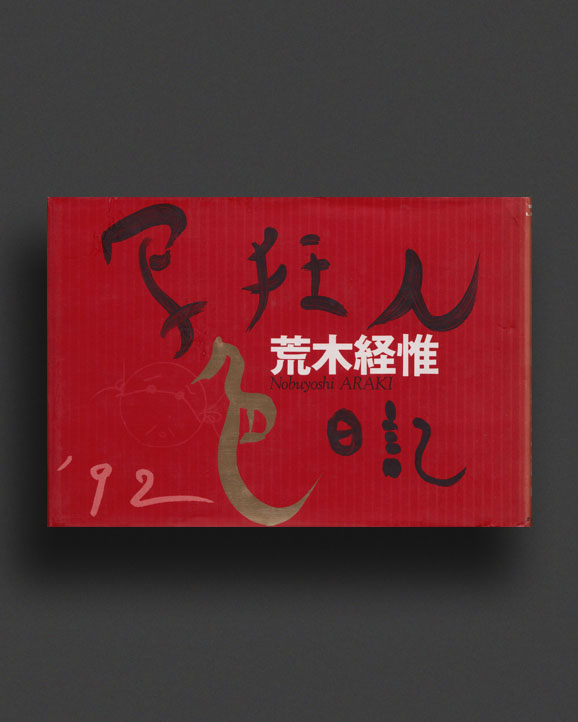
Scarce, first edition of this wonderful 1992 Araki photo album. "For this photographic record, Araki uses the art name Shakyojin (or photo-maniac) in imitation of Gakyojin (obsessive, or maniac, artist), used by the ukiyo-e artist Katsushika Hokusai."- Kotaro Iizawa. From cover to cover this book is entirely comprised of Araki's photographs taken in the year 1992, presented chronologically and in rich colour. It begins and ends with portraits of Araki's beloved cat Chiro, and filled with an abundance of Araki's favourite subjects - women, nudes, flowers, still-lifes, Japanese city details and more Chiro. Filmmaker Jim Jarmusch even makes an appearance. A lovely collection.
Very Good copy in Good dust jacket. Few fox spots to blank end papers.
1991, Japanese
Softcover (staple-bound), 210 pages, 21 x 15 cm
1st Edition, Out of print title / used / very good
Published by
Tsukasa Shobo / Tokyo
$55.00 - In stock -
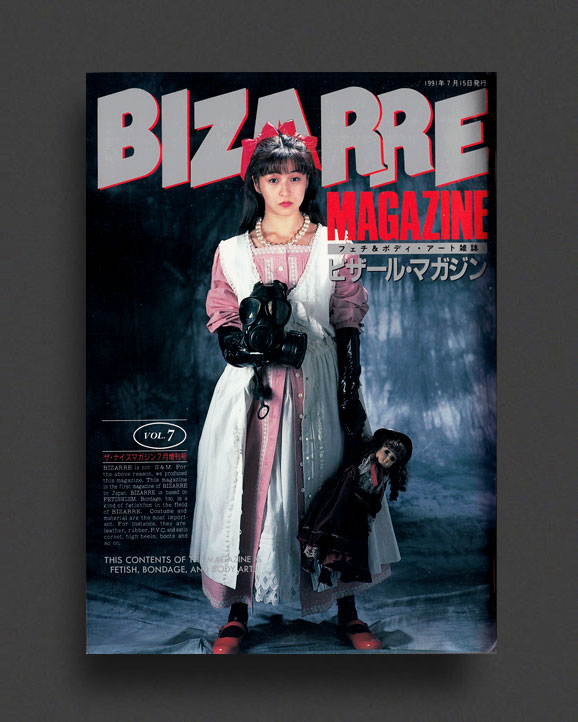
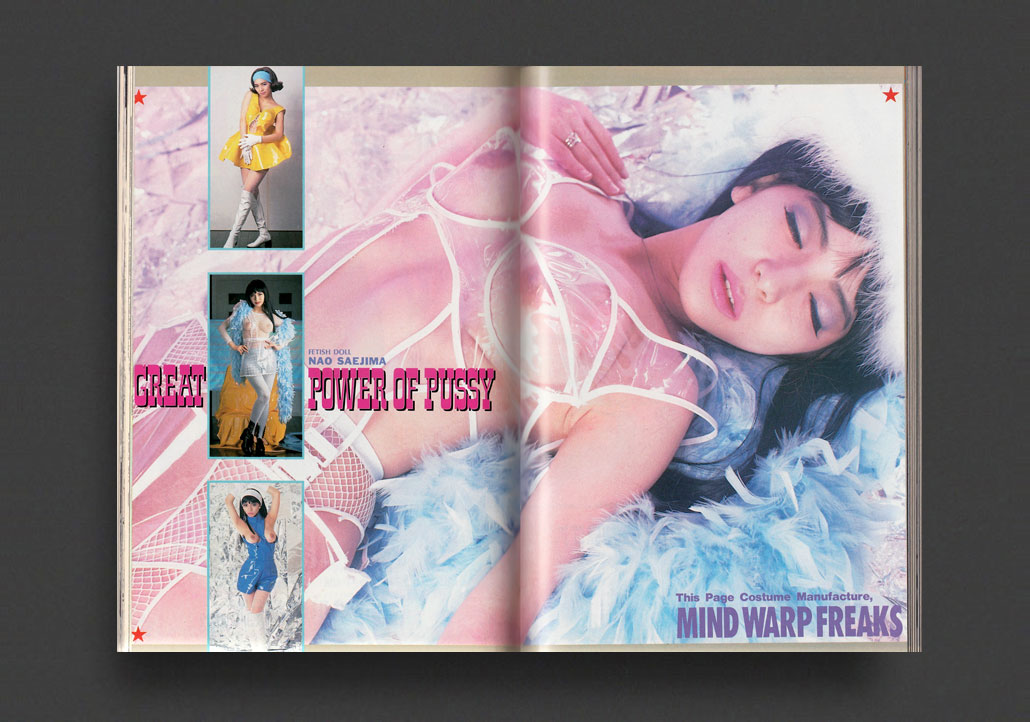
July 1991 issue of Bizarre Magazine, Japan's first glossy magazine devoted fully to all things "bizarre culture" and the new fetish subculture that exploded in the 1990's, published by manga (and SM Fan) publisher Tsukasa Shobo from 1990—2000s. "Fetish, bondage, psycho eros, and body arts". Profusely illustrated throughout with glossy colour and b/w photoshoots styled with fetish fashion materials and costume — models and Japanese AV/pink film idols in rubber, pvc, leather, boots, high heels, corsets, etc. covering all manner of fetishes and cos-themes from cyberpunk to medical, body art, cross-dressing, lesbianism, fem-dom, scene reports from around the world, dominatrix profiles and interviews, lots of manga, articles, stories, advice columns, DIY tutorials, and packed with wild ads for sex clubs, dungeons, bars, bookstores, video catalogues, toys, fashions, reviews of cult books and film, european imports, classifieds, all heavy with illustrations and hundreds, if not thousands of photographs. Each issue was overseen by a rotating group of editors, this issue including material by Kinichi Tanaka, Kaoru Hanano, Ryoko Narumi, Koji Yokoyama, Hitomi Nishina, Masami Akita (Merzbow), Rudolf Schwarzkogler, Domu Kitahara, Kazuya Ota, Erina, Jiro Ishikawa, Nao Saejima, and many more... Much like SM Sniper, Bizarre Magazine favoured the exploration of new innovations of fetish and underground sex culture, emphasising the work of the models, stylists, make-up artists, and fashion designers, as much as the writers or photographers, encompassing the entire "new wave" of SM counterculture embedded in underground music, film, fashion and visual art at the dawn of the 90's.
Cover statement: "BIZARRE is not S&M. For the above reason, we produced this magazine. This magazine is the first magazine of BIZARRE in Japan. BIZARRE is based on FETISHISM. Bondage, too, is a kind of fetishism in the field of BIZARRE. Costume and material are the most important. For instance, they are leather, rubber, P.V.C. and satin corset, high heels, boots and so on."
Very Good copy.
1993, Japanese
Hardcover (w. dust jacket and obi), 82 pages, 24.6 cm x 30.5 cm
Out of print title / used / very good
Published by
Seibundo-Shinkosha / Tokyo
$220.00 - In stock -
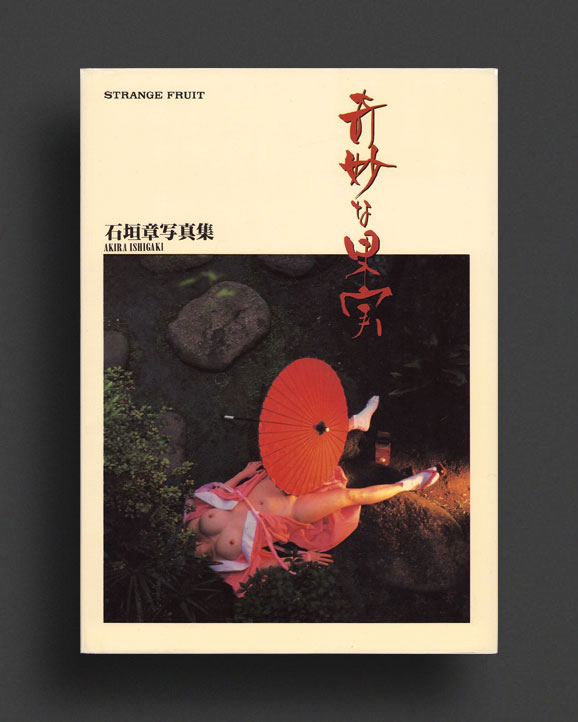
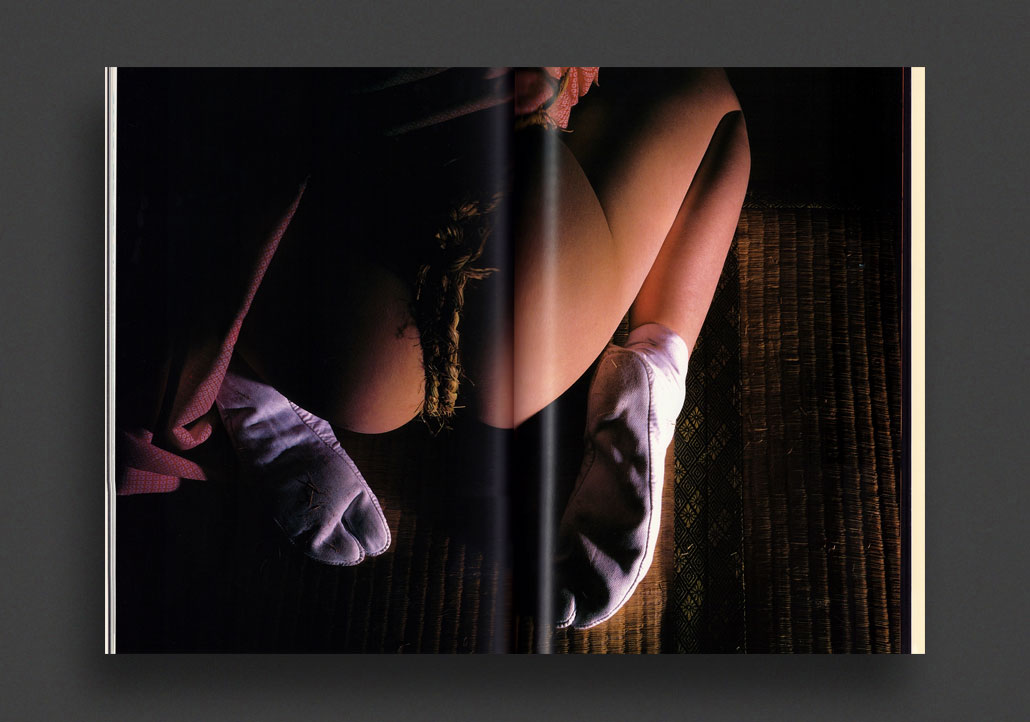
Japanese photographer Akira Ishigaki's award-winning photo book “Strange Fruit”, first issued in a very limited run in 1982 to only modest success and now considered an absolute masterpiece of SM / kinbaku art photography with this 1993 re-edition in collector's hardcover (long out-of-print and rare).
Ishigaki was still in his 20's when his publishers commissioned his second photo book and asked him to include some images of Kinbaku carefully executed by the then little-known bakushi Kaoru Roppongi, apprentice of Kitan Club contributor and Sun & Moon founder, rope master Keiichi Seda. Roppongi published work with SM Select, Sun & Moon and SM Fan, and in 1979 famously collaborated with Dan Oniroku and Naomi Tani.
Shot quickly in 1982 at various locations outside of Tokyo (beaches, woods, an old inn), Strange Fruit is a remarkable and very original piece of work. Haunting, evocative, colourful and beautifully lit, its images take Kinbaku photography, up until then almost exclusively the province of SM and "adult" magazines, to a different level of artistry, one that would pave the way for other large format bondage art books that would appear in the 1990's. As visually accomplished as the finest works of Dan Oniroku, Daido Moriyama, Nobuyoshi Araki or Kishin Shinoyama. A masterpiece of the genre.
Very Good copy of collectible hardcover 1993 edition in VG dust jacket with red original Obi-strip (not pictured). Some foxing to endpapers.
1977, Japanese
Hardcover (w. hard slipcase and illustrated wrap), 100 pages, 25 x 27 cm
Out of print title / used / very good
Published by
Kawade Shobo Shinsha / Tokyo
$400.00 - Out of stock
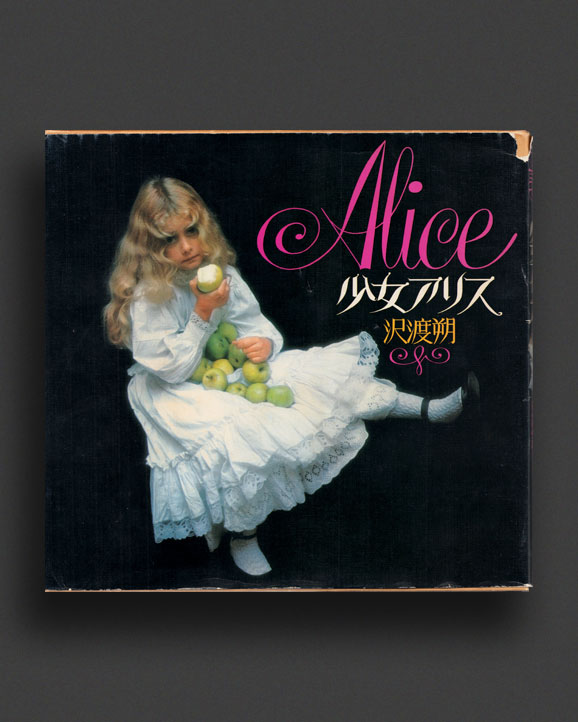
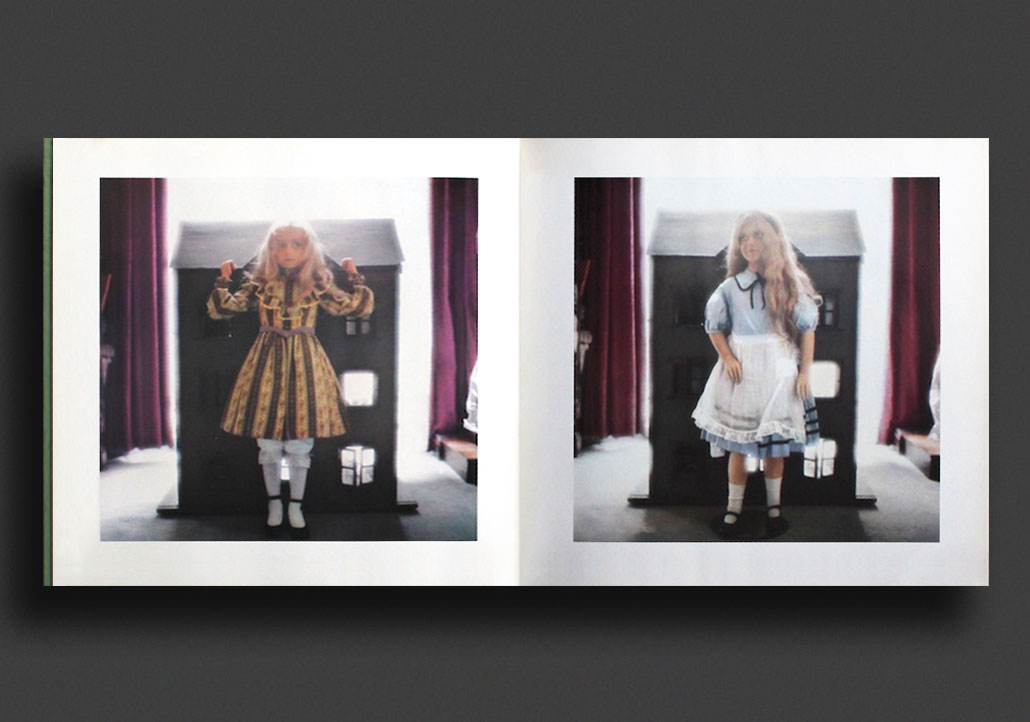
Rare 1977 printing of acclaimed Japanese photographer Hajime Sawatari's cult photo book "Alice" in its first 1973 edition. Sawatari began working as a freelancer in 1966, photographing for many leading fashion magazines in Japan. This, his most famous work, reprinted countless times, is Sawatari's decadent, photographic interpretation of Lewis Carroll's literary classic Alice in Wonderland. Here Sawatari brilliantly engages and re-creates the themes, forms and symbolisms within the original narrative, focusing on the inevitable loss of the childhood innocence of a young girl confronted by the realities of adulthood. Sawatari’s ‘Wonderland’ is a world where phenomenas of the real intertwine with the unconscious, exploring a world that confronts viewers with the surreal, bending the roles between child and adult. Outside of Jan Švankmajer, this is truly one of the strangest, and most risqué, visual interpretations of the well-known story, with a heavy homage to the photography of the original book's author, Lewis Carroll. Sawatari's beautiful, atmospheric photographs (shot in England) are complimented by the design of Seiichi Horiuchi (1932-1987) and accompanying translations and poems by Shuzo Higuchi (1903-1979) and Shuntaro Tanikawa.
Hajime Sawatari is a celebrated fashion and advertising photographer. His photobooks are part of the important cultural renaissance that took place in Japan in the 1960s and '70s and saw the promotion of provocative, avant-garde book publishing.
Very Good copy with some light wear to covers, small chip to illustrated wrap corner, book preserved in box with only usual light tanning.
1973, Japanese
Softcover, 108 pages, 28 x 30 cm
1st Edition, Out of print title / used / very good
Published by
Mainichi Shimbun / Tokyo
$300.00 - In stock -
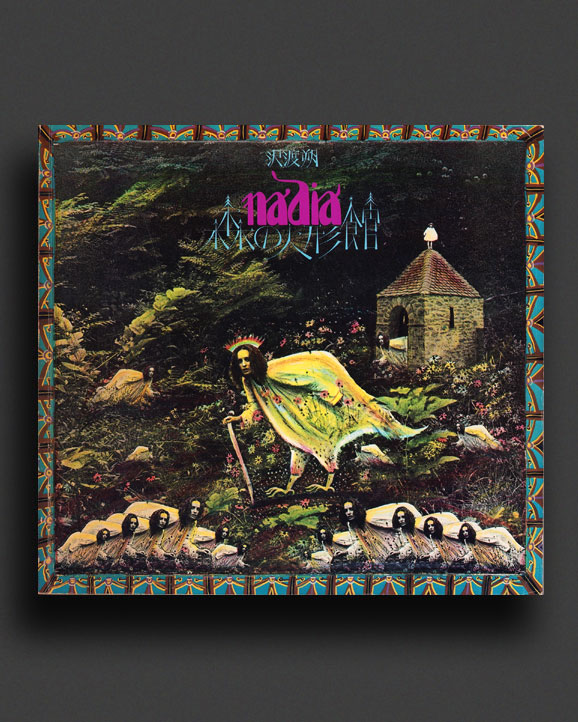
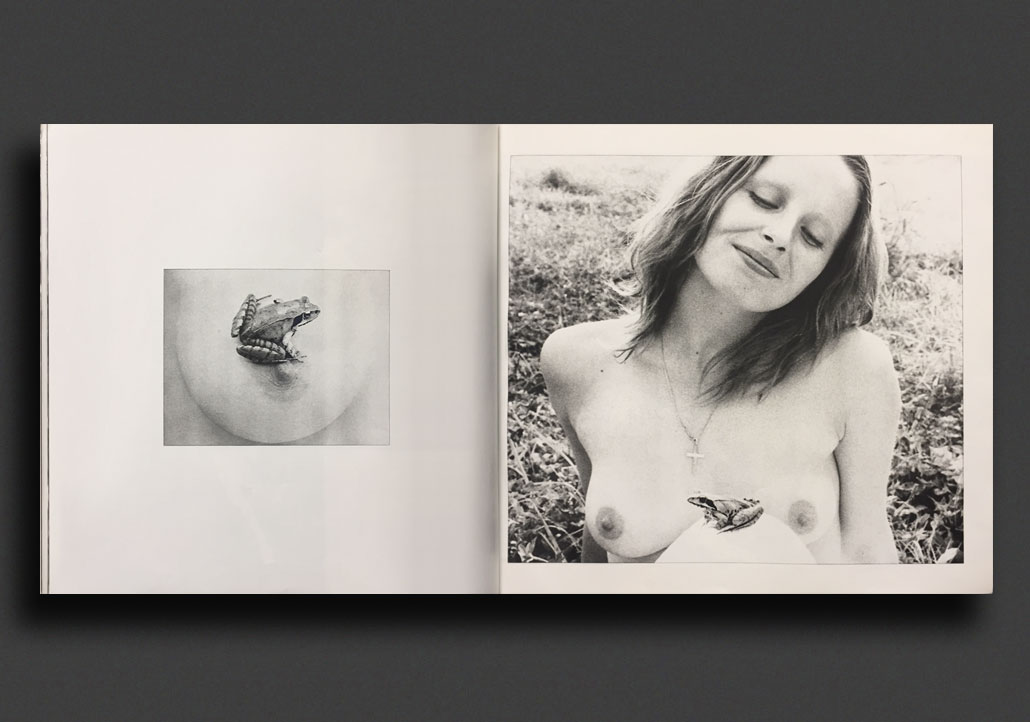
Rare first 1973 edition of acclaimed Japanese photographer Hajime Sawatari's cult photo book "Nadia" (aka Doll Forest Museum/Nadia in the Woods). Sawatari began working as a freelancer in 1966, photographing for many leading fashion magazines in Japan. Sawatari fell in love with the Italian fashion model Nadia Galli while working with her on an advertisement back in 1971. Driven by the photographer’s desire to capture on film everything about the person he loved, Sawatari took Nadia with him on an extensive journey. Traveling around Karuizawa in the summer, Venice, Sicily and other locations in Nadia’s home country, Karuizawa in the Winter, and Tokyo, his focus on Nadia switched between viewing her as a photographic subject and a lover, resulting in Sawatari establishing his own unique semi-fictional style of “capturing a woman in a back-and-forth between reality and fiction,” which marked a clear departure from his previous female portraits, and opened a new frontier in the realm of photography. This dreamlike and intimate series of monochrome portraits of Nadia weaves a fairytale-like, visual travelogue akin to Sawatari's other cult classic of the same year, Alice. Playful, intimate and at times hallucinatory, the book closes with a lovely hand-written letter by Nadia in Japanese and a photographic portrait of Sawatari, also by Nadia. A gorgeous book.
Number 3 in Camera Mainichi's Private series.
Very Good copy, tightly bound and clean with some wear to covers, corners. Very nice copy for a book that is usually heavily damaged.
1995, English / Japanese
Softcover, 128 pages, 30 x 23 cm
1st Edition, Out of print title / used / good
Published by
Photo-Planète Co. / Tokyo
$50.00 - Out of stock
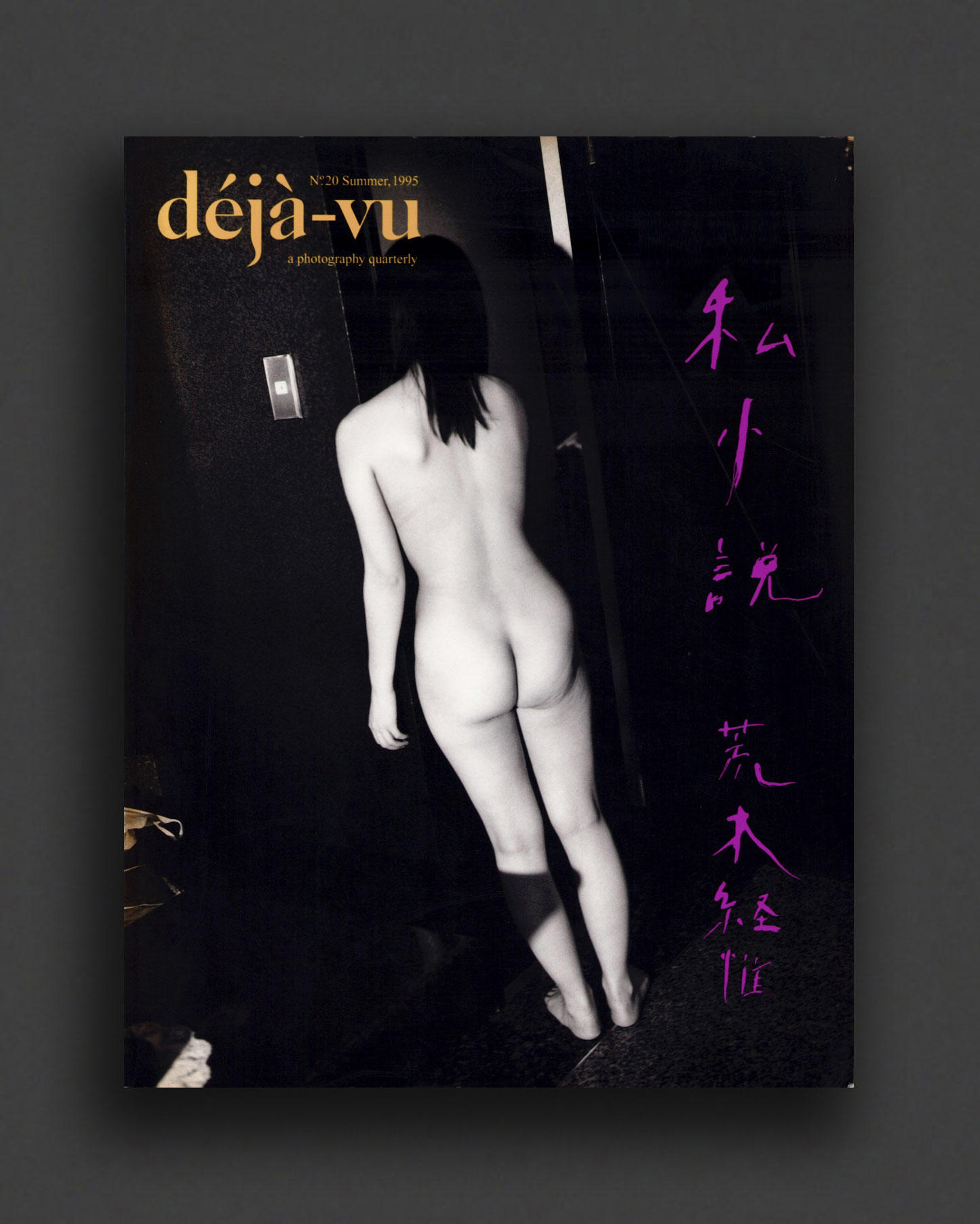
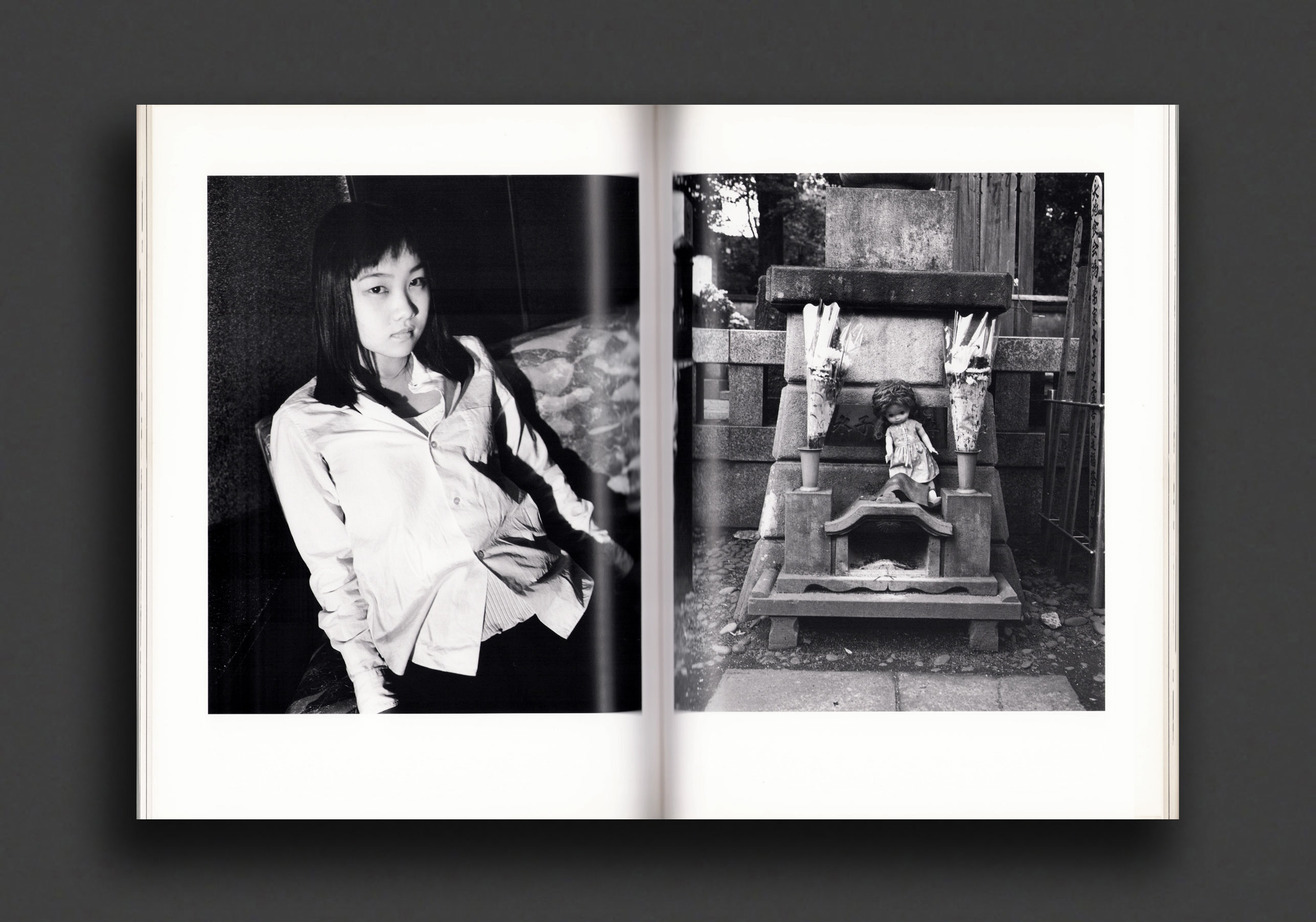
Nobuyoshi Araki special issue of leading Japanese photography quarterly journal, Déjà-Vu, published in Summer 1995, edited by Araki's many-time editor Yasumi Akihito. Profusely illustrated with an abundance of his black and white photography on gloss stock, heavy with his nudes and bondage photography from this era, along with his Tokyo street imagery. Includes writing by various authors on the key themes of his work (summarised in English from the Japanese), interviews with Araki in English and Japanese, discussions on his work by seven female editors, biography and bibliography, reviews of exhibitions in Amsterdam and Paris, and much more. A really great reference and introduction to his work from a key point of his career.
Very Good copy with light wear and a large crease to cover.
1993, Japanese
Softcover (w. dust jacket), unpaginated, 25 x 25 cm
1st Edition, Out of print title / used / very good
Published by
Fuga Shobo / Tokyo
$60.00 - Out of stock
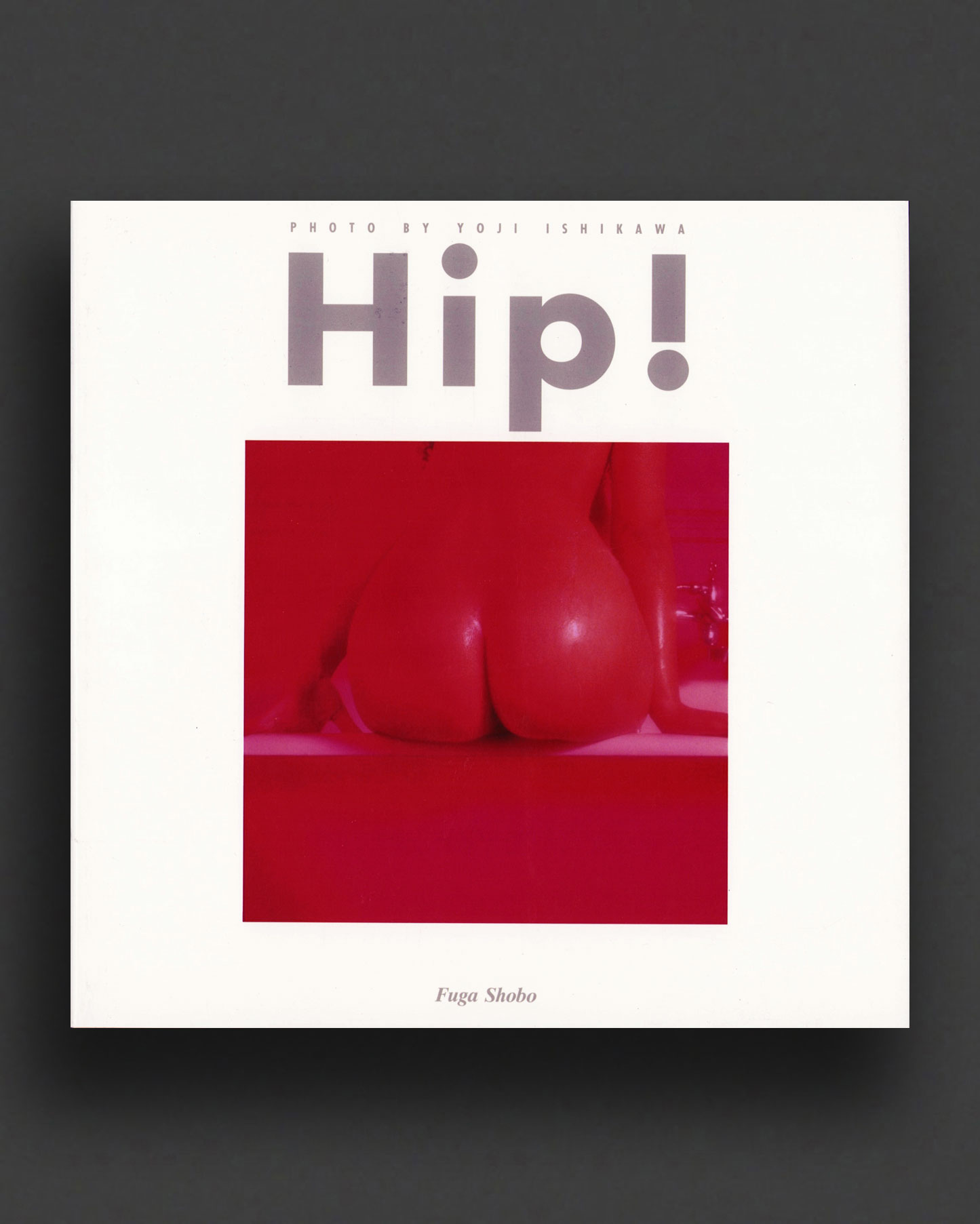
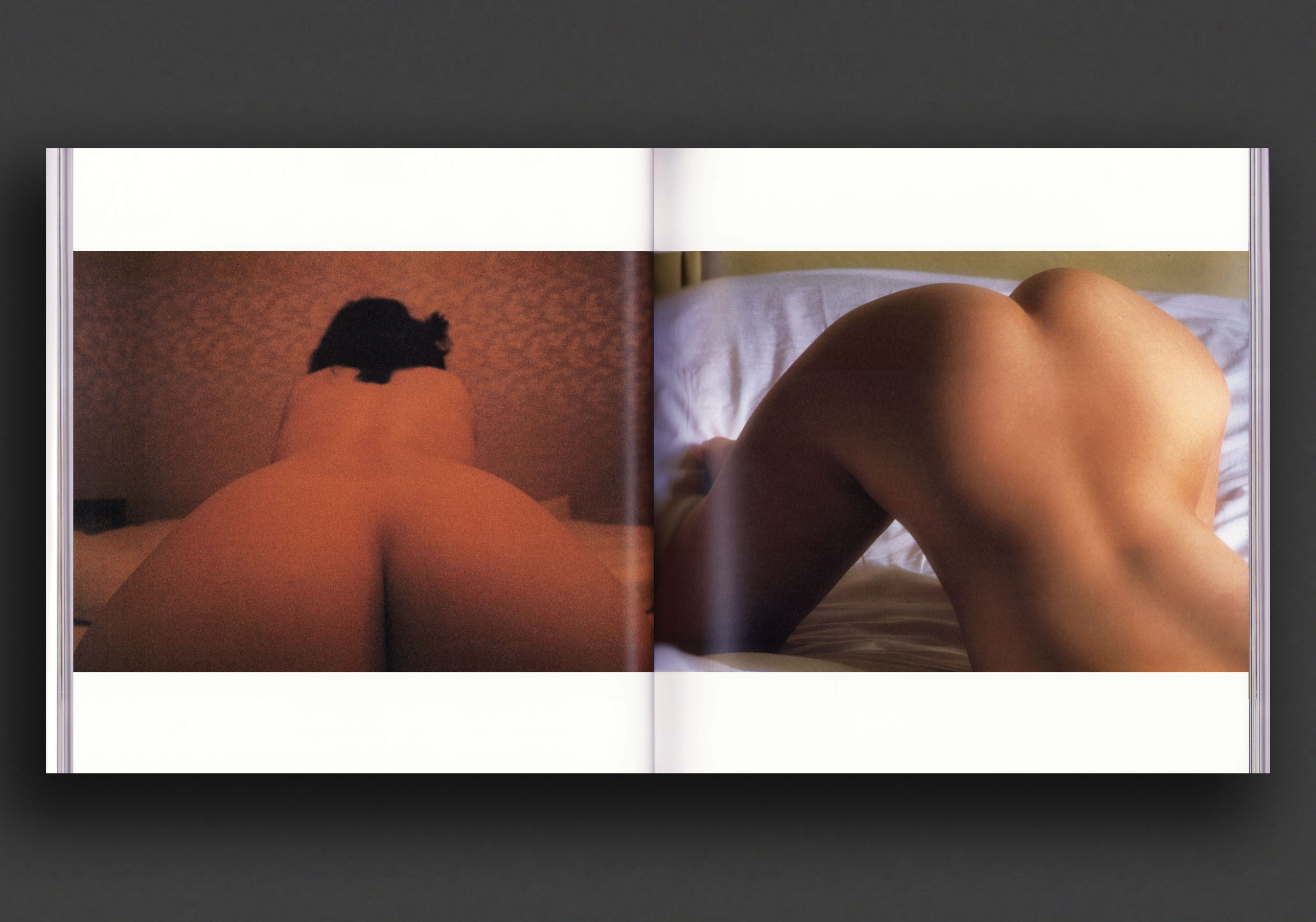
Rare first 1993 edition of renowned Japanese erotic photographer Yoji Ishikawa's "Hip!" or Japanese — 尻 (shiri) — for the "backside" or bottom. Like his later "G, Back" from 1997, "Hip!" is a collection of Ishikawa's photography obsessively focused on this specific attribute of the female nude, much like Hiroshi Maruyama's "Backs", Lyu Hanabusa's "Back", Jeanloup Sieff's "Derrieres" or the paintings of Kacere. Entirely comprised of Ishikawa's nude photographs of young Japanese women's bottoms, Ishikawa's stylistic approach is sometimes romantically soft-focus, sometimes formalistic, sometimes almost as simplistic as a snapshot, at times reminiscent of the work of Sturges, Alterio, Bourboulon or Hamilton. Never available outside Japan, Ishikawa's books gained a cult following and collector prices in the West, and he was recently featured in the Japanese chapter of Bertolotti's acclaimed photo book reference "Books of Nudes" (2007).
Very Good—Near Fine in VG—NF dust jacket. Remainder line to block top.
1994 + 1995, Japanese
2 Volumes, both hardcover (w. dust jacket + obi), unpaginated, 30 x 24 cm
1st Edition, Out of print title / used / very good
Published by
Kaiohsha / Japan
$190.00 - In stock -
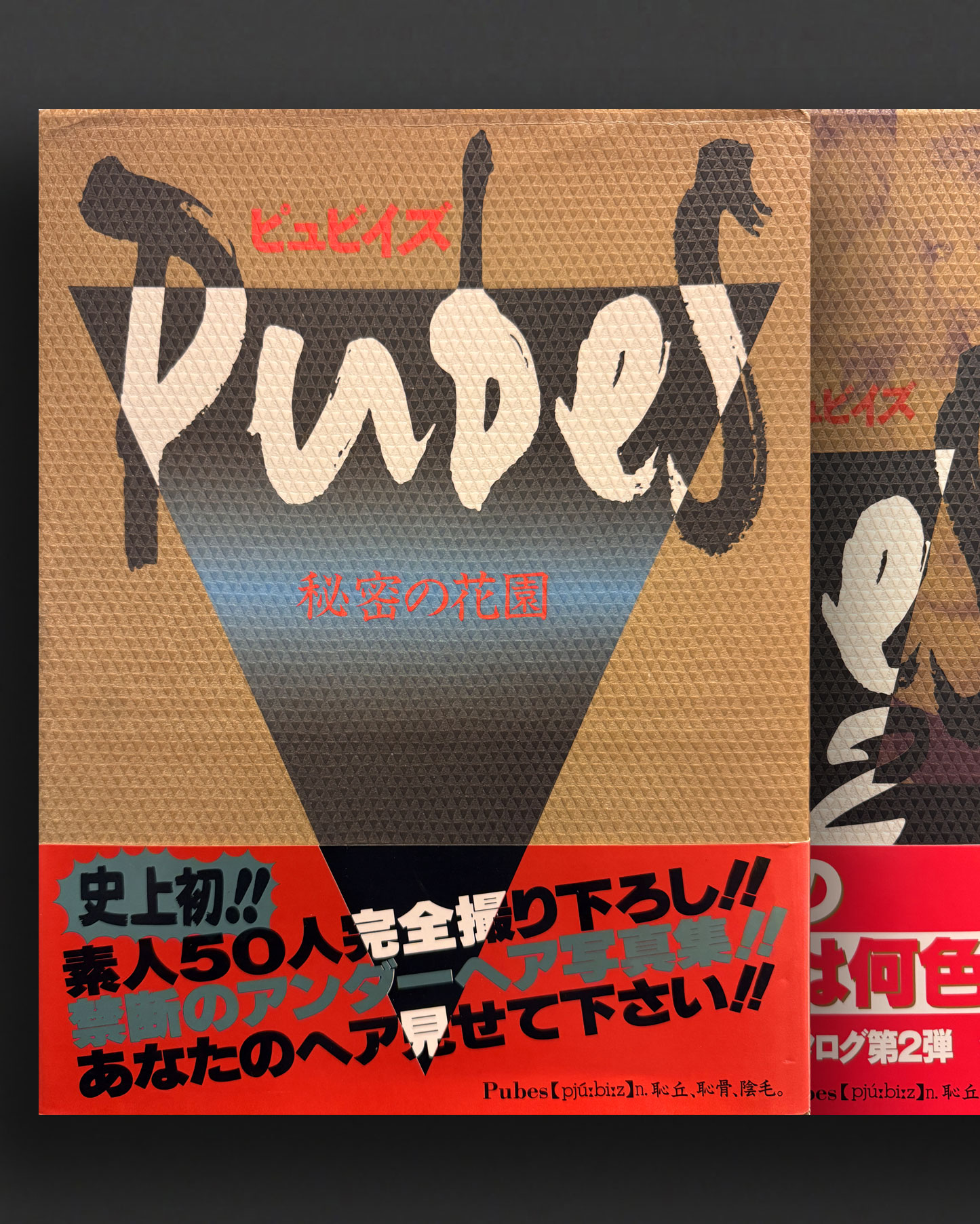
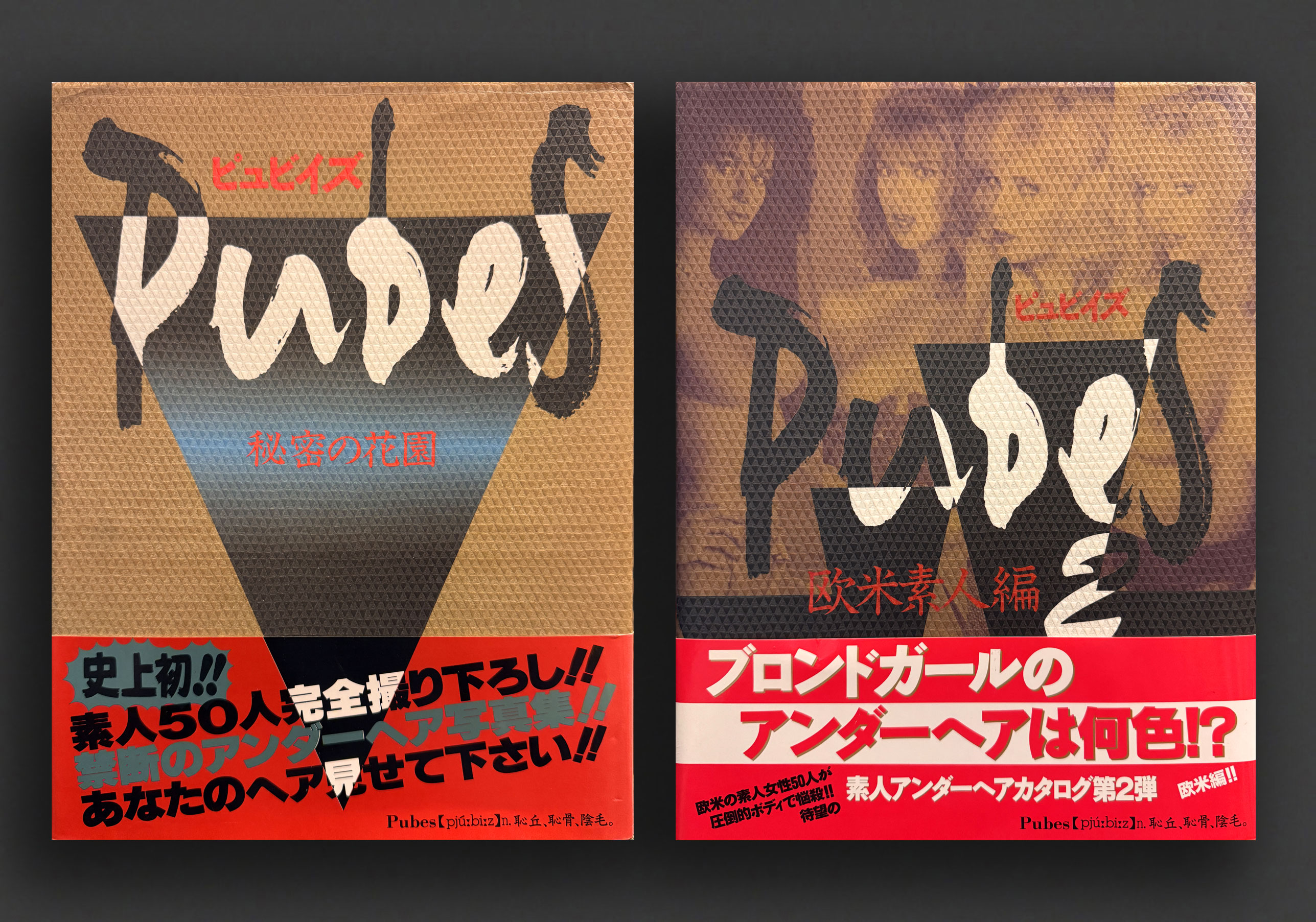
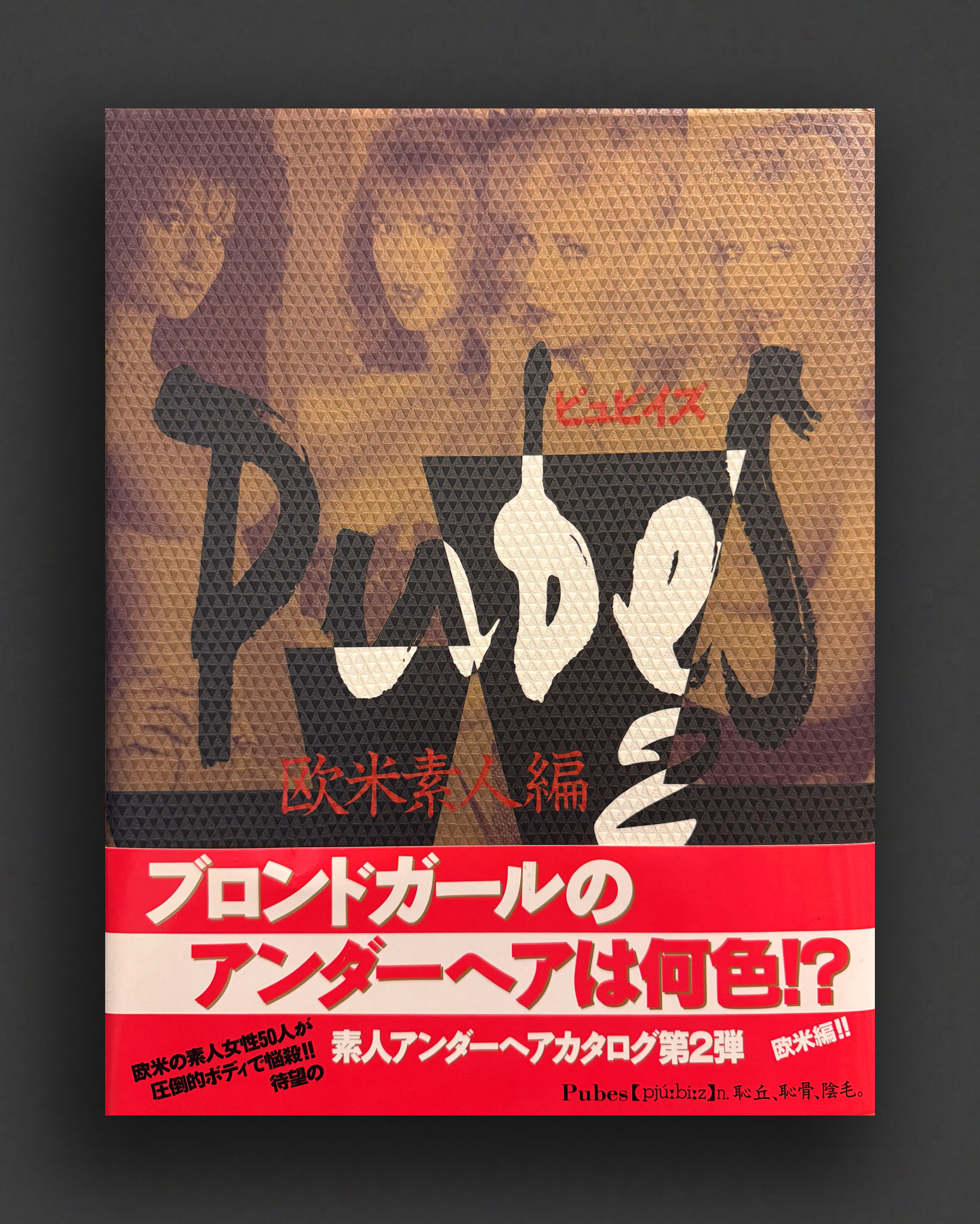
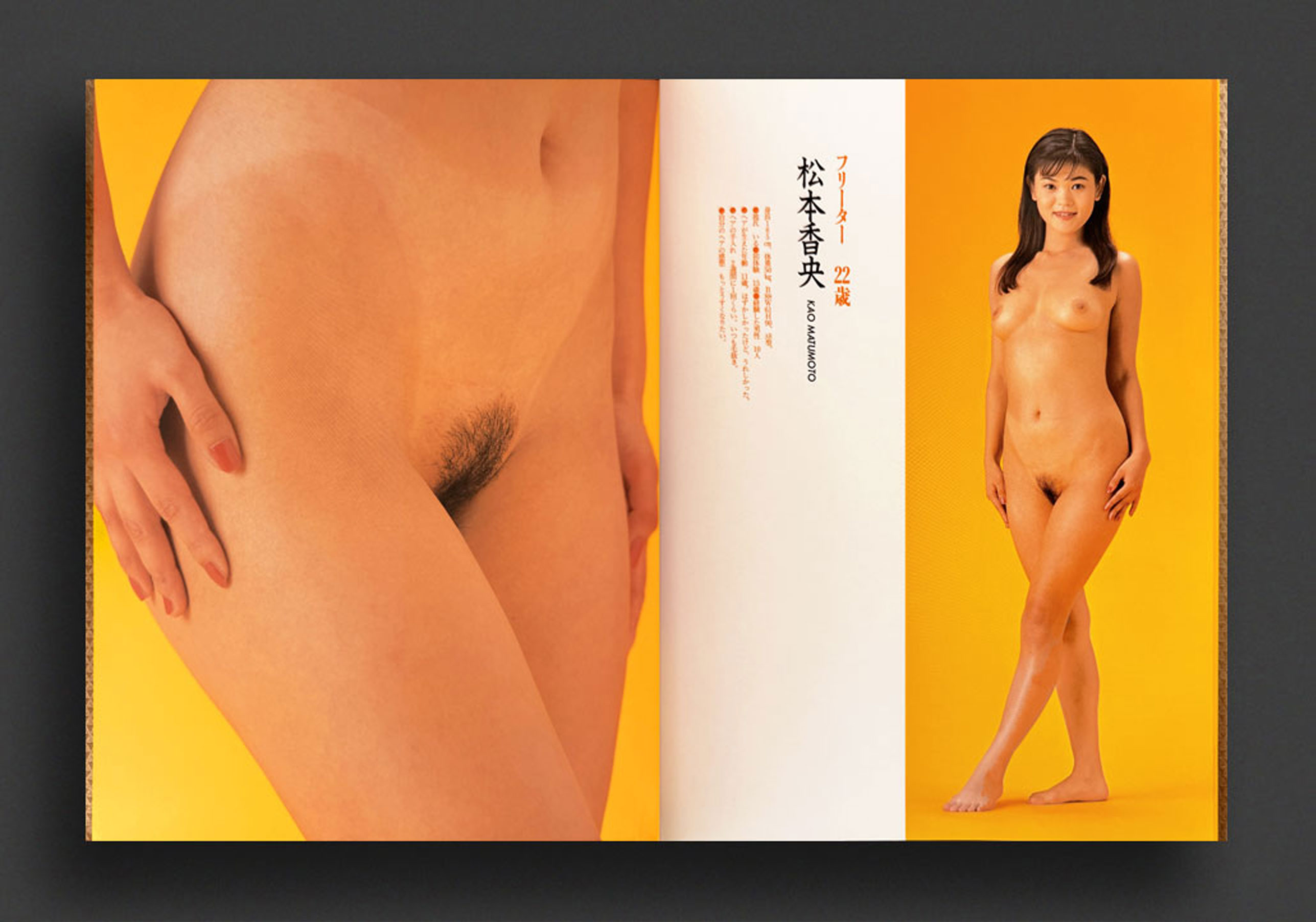
Very rare set of both volumes, Pubes and Pubes 2, of Japanese photographer Masahiko Enomoto's photographic celebration of female pubic hair. First hardcover editions both. Pubes (1994) a survey of amateur Japanese models, Pubes 2 (1995) amateur European and American models. A timely honouring of the forbidden fruit, Japan authorities had recently lifted the ban on the depiction of pubic hair in print and Enomoto's book is one of the boldest and earliest examples of Japanese photographers devoting lavish photo books to the new uncensored nude (Akira Gomi's "Yellows Privacy '94" and Kishin Shinoyama's "Hair" books were both issued the very same year). Hidden hair was not off the hook entirely, and only tolerated when depiction was deemed “artistic”. Enomoto’s approach was unique and confronting with his poppy pubic portrait approach. Pubes — The Secret Garden (with its wonderful debossed triangle motif pattern print covering the dust jacket and endpapers), is entirely comprised of glossy full-colour studio photography spreads of Japanese models in full nude profile with pubic close-ups on the facing pages. A lavishly designed and charming book. Pubes 2, the following year, followed the same fetish principle, only with Western models (and additional breast close-ups, why not?).
Both Very Good copies in VG dust jackets complete with original (VG) publisher's obi strips, and both volumes including all publisher's catalogue inserts of other erotic photo book items.
1996, Japanese
Softcover, 100 pages, 30 x 23 cm
1st Edition, Out of print title / used / very good
Published by
Rockin' On / Tokyo
$40.00 - Out of stock
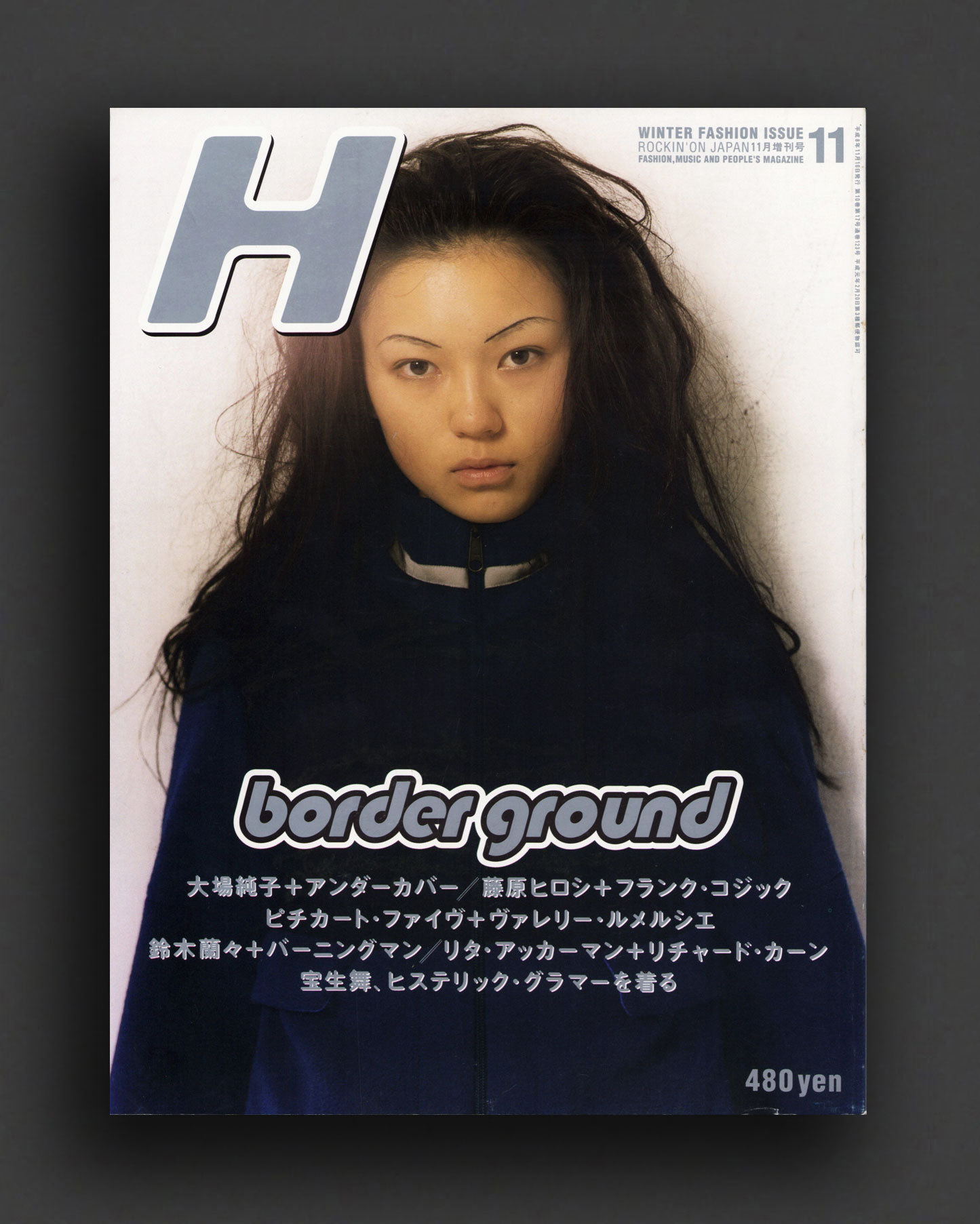
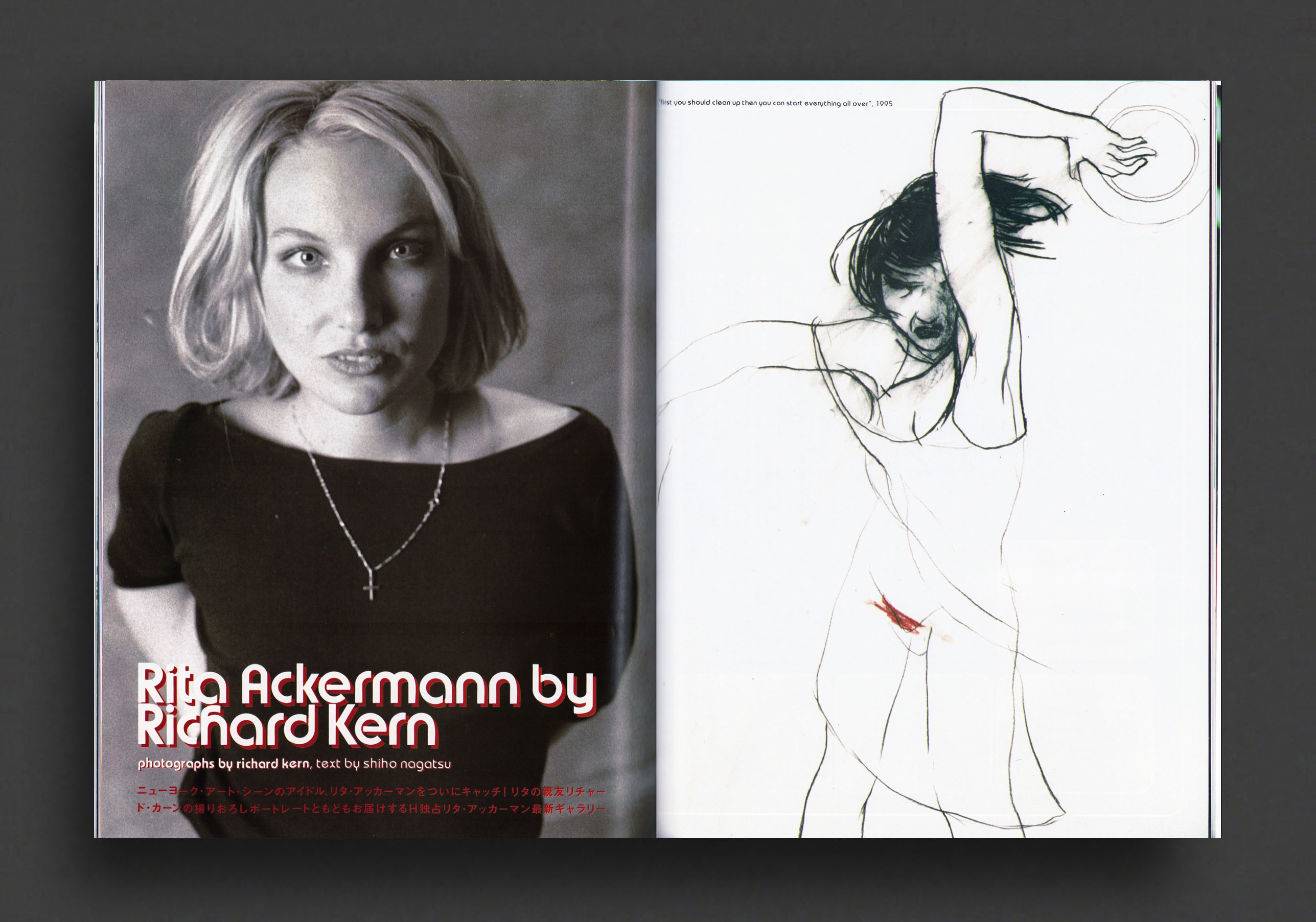
H Magazine November 1996, the culture magazine published by Tokyo publishing house Rockin' On. Each issue packed to the brim with 1990's fashion, photography, film, music, and more, this issue "Border Ground" features Rita Ackerman interview, art gallery and photographs shot by Richard Kern, fashion shoots for Undercover and Hysteric Glamour, Frank Kozik gallery and interview, Pizzicato Five, Ranran Suzuki, fashion shoots by Takashi Homma, Yoshiko Seino, Kenshu Shintsubo, Kyoji Takahashi, and much more.
Good-Very Good copy with some light wear.
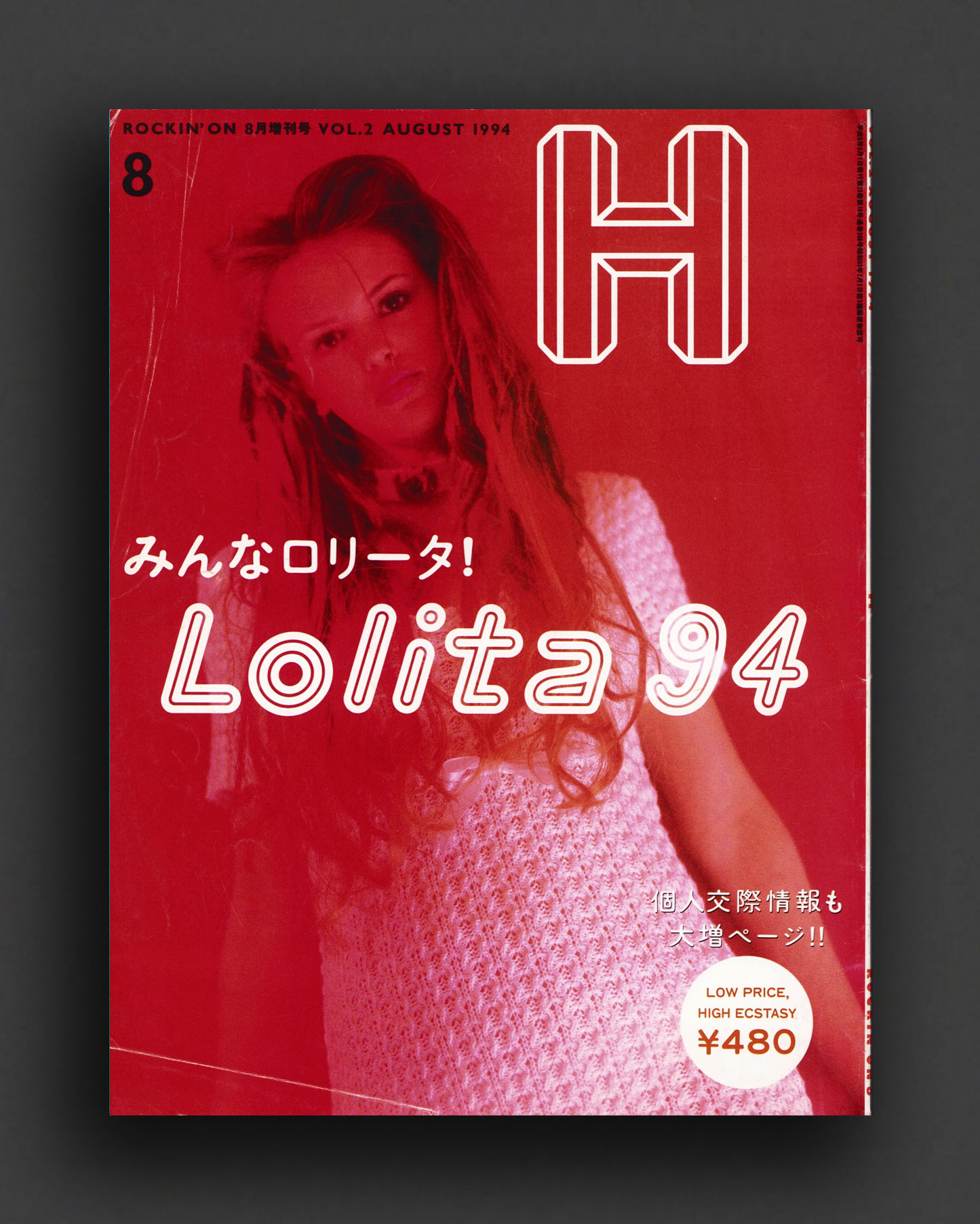
1994, Japanese
Softcover, 100 pages, 30 x 23 cm
1st Edition, Out of print title / used / good
Published by
Rockin' On / Tokyo
$45.00 - Out of stock
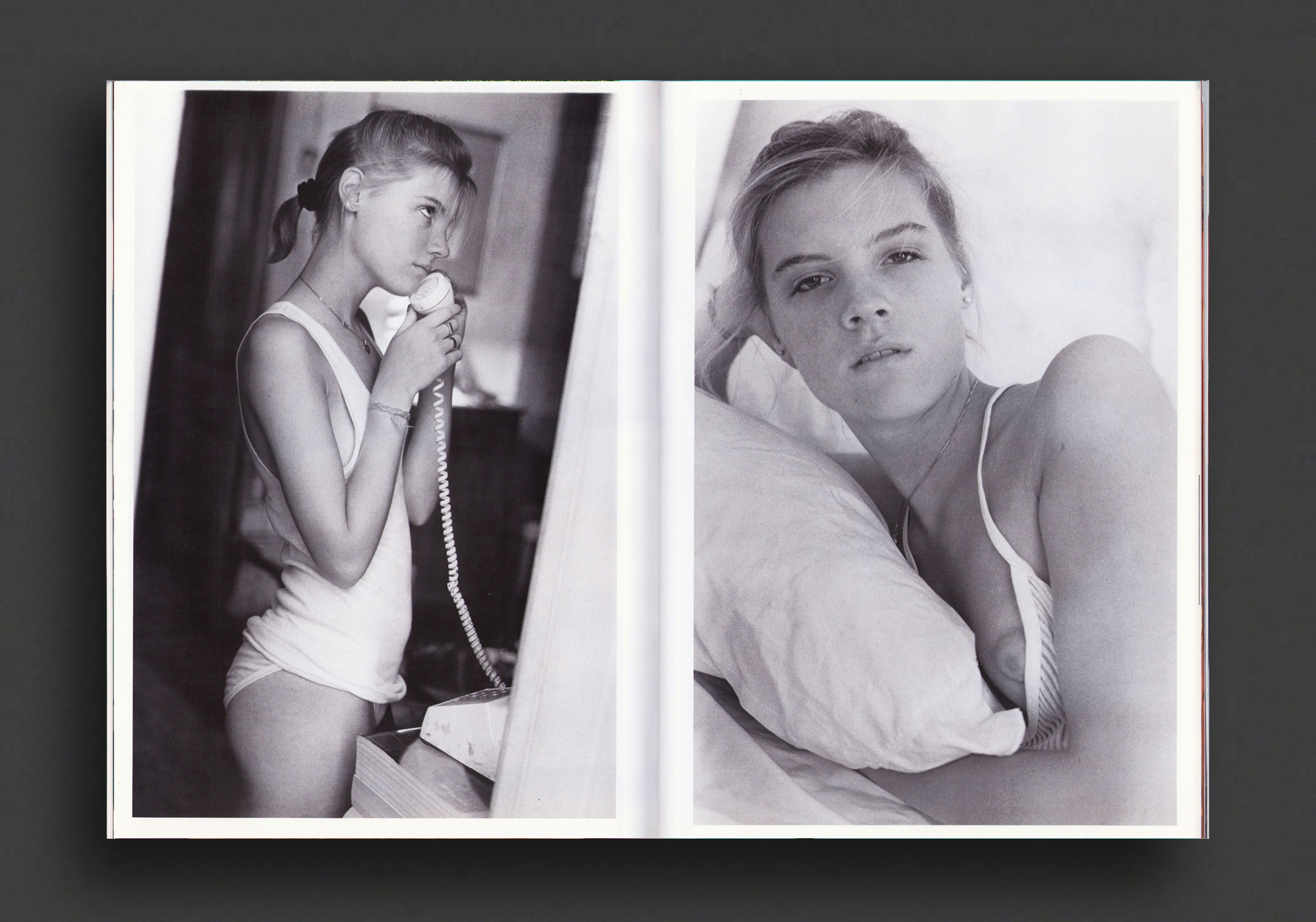
H Magazine August 1994, the culture magazine published by Tokyo publishing house Rockin' On. Each issue packed to the brim with 1990's fashion, photography, film, music, and more, this issue "Lolita 94" features "Lolita photos, Lolita idols, Lolita movies, Lolita underwear, Lolita art and more! The latest Lolita image of 1994 as determined by H" including Christina Ricci, CoCo, Megumi Okina, Shampoo, a genealogy of iconic girls in film from Lillian Gish to Winona Ryder, exclusive interview and ("Good Girls") photographic gallery of artist and Warhol friend Gerard Malanga, Echobelly, Mazzy Star, painter Marlene Dumas, Lolita shopping guide, director Russ Meyer, Undercover, photos by Hirama Itaru, Nina Schultz, Nick Fry, artist Sakuragi Sayumi, lots of manga, and much more.
Average-Good copy with some folds/light wear.
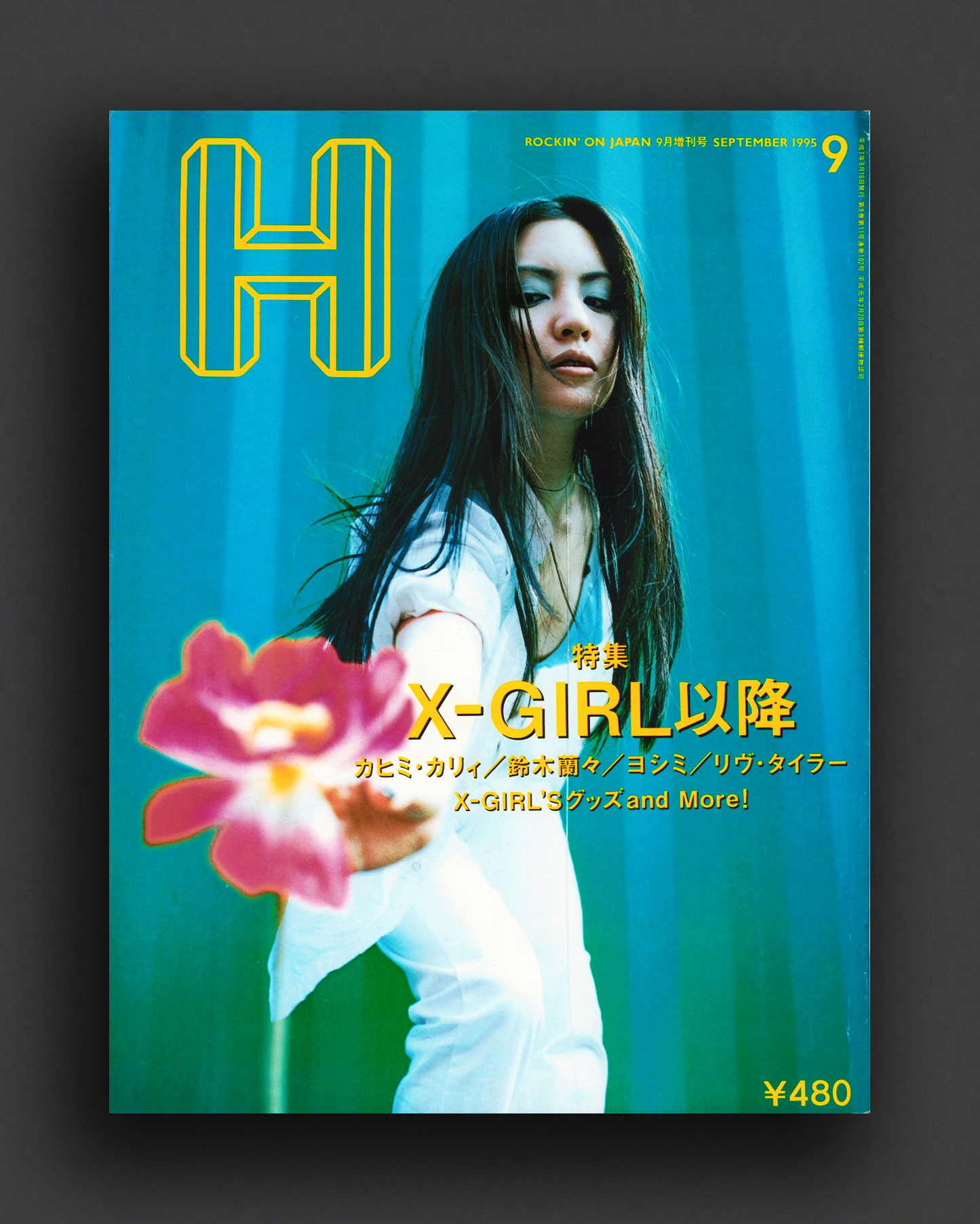
1995, Japanese
Softcover, 100 pages, 30 x 23 cm
1st Edition, Out of print title / used / good
Published by
Rockin' On / Tokyo
$45.00 - In stock -
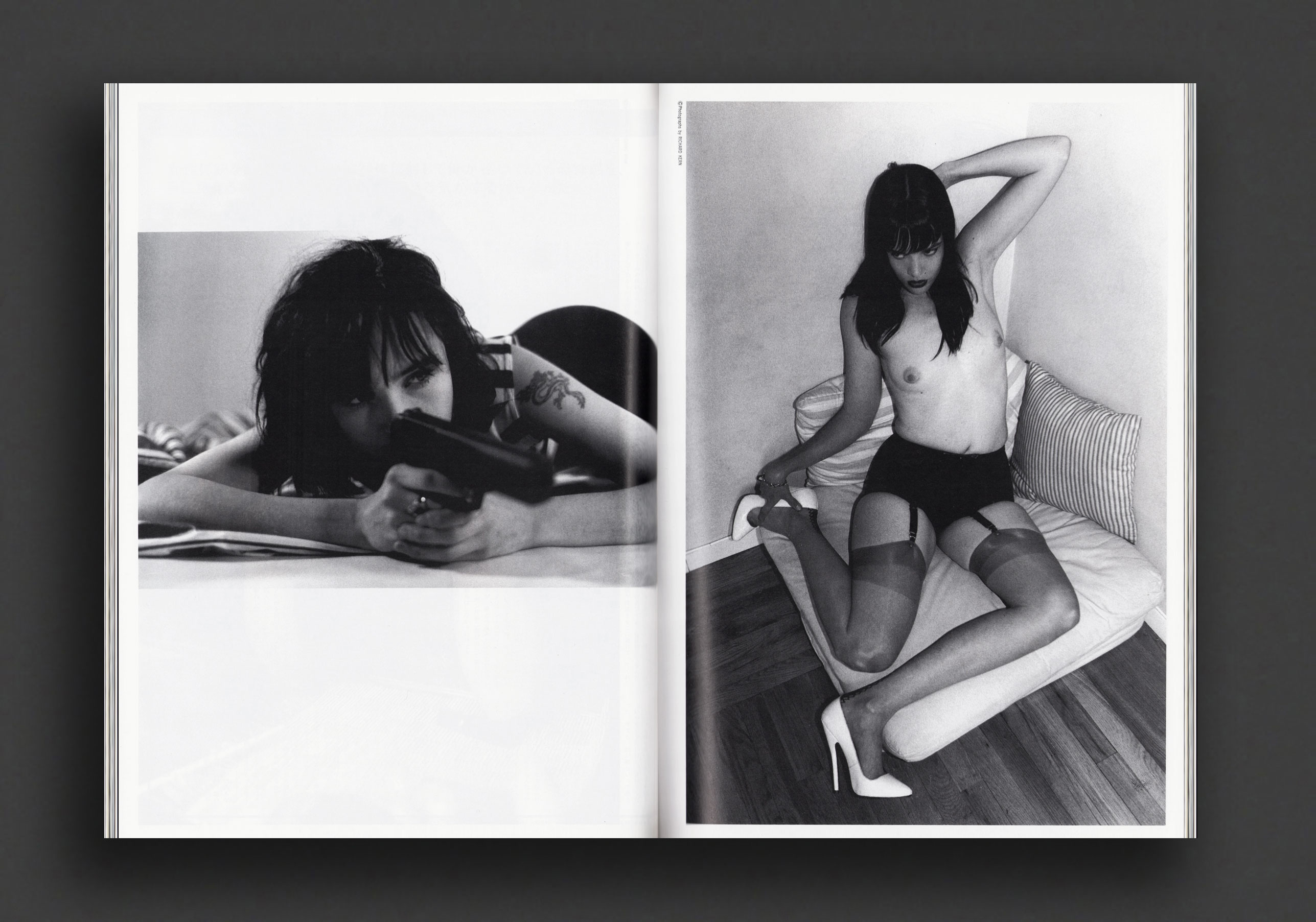
H Magazine September 1995, the culture magazine published by Tokyo publishing house Rockin' On. Each issue packed to the brim with 1990's fashion, photography, film, music, and more, this issue "X-GIRL" with a 54-page photo feature that covers the fashion of pop idols since the breakthrough of X-GIRL, all with interviews - Kahimi Karie, Ranran Suzuki, Yoshimi (Boredoms), Liv Tyler, Maiko Yamada, all the latest from X-GIRL, "GUNS & GIRLS" photo gallery and interview with Richard Kern, WORLD TECHNO NOW! with Takkyu Ishino and Ken Ishii featuring Love Parade '95, and much more.
Good copy with some light wear to extremities.
1996, Japanese
Softcover, 100 pages, 30 x 23 cm
1st Edition, Out of print title / used / very good
Published by
Rockin' On / Tokyo
$25.00 - In stock -
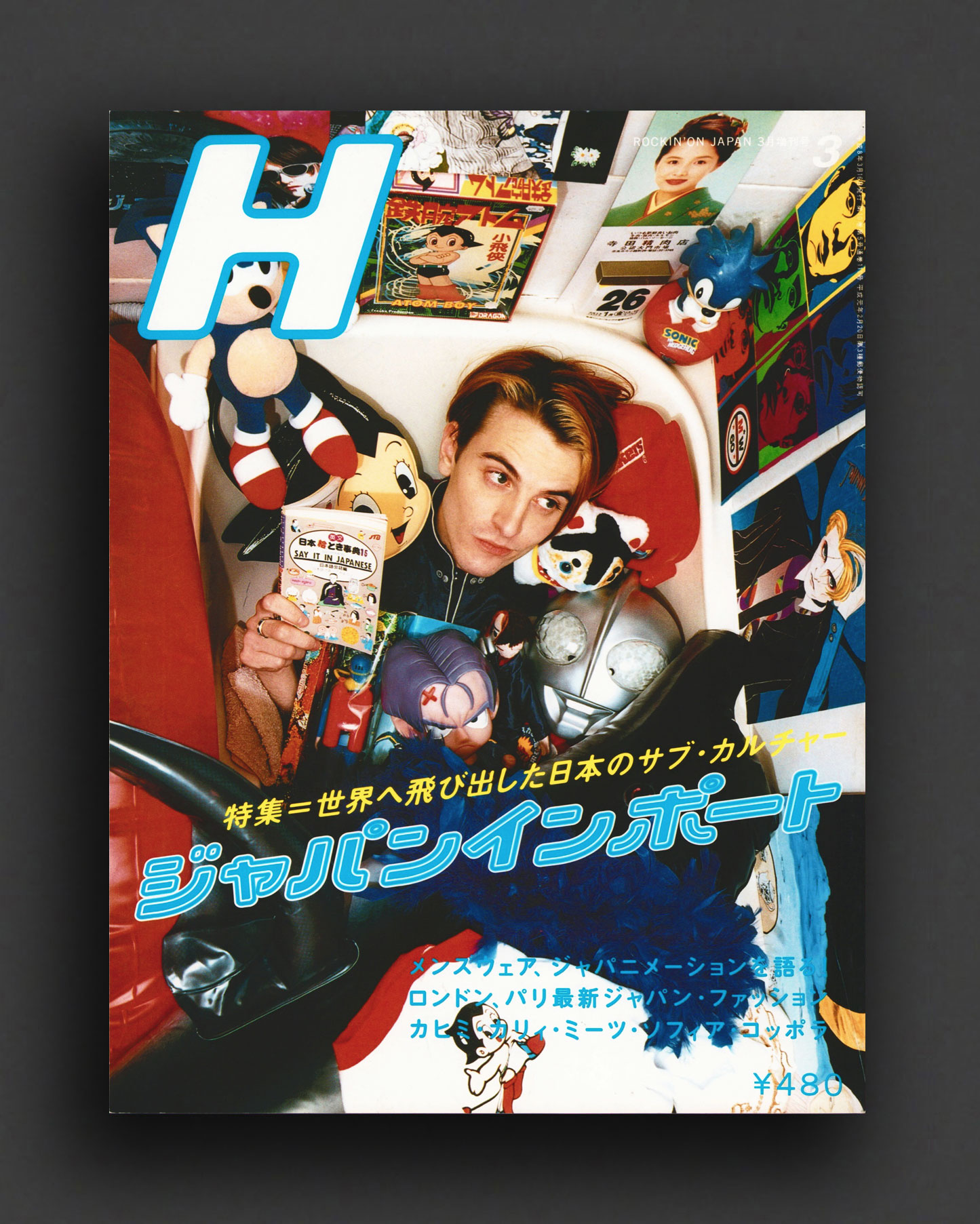
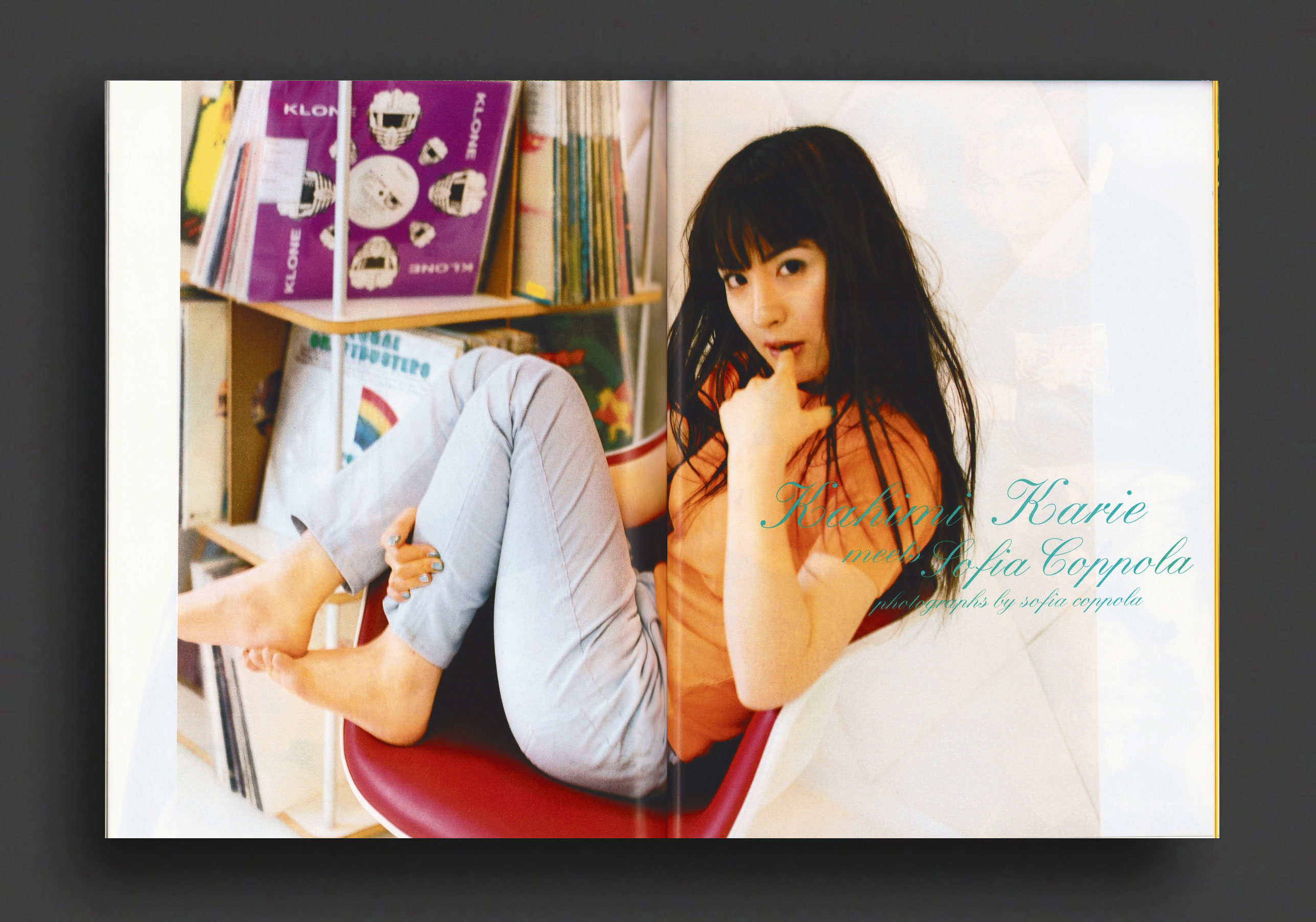
H Magazine March 1996, the culture magazine published by Tokyo publishing house Rockin' On. Each issue packed to the brim with 1990's fashion, photography, film, music, and more, this issue "Japan Import" the explosion of Japanese subcultures into the world from Hello Kitty to Hysteric Glamour to anime into London and Paris, with photo tour diaries, interviews and feature fashion shoots featuring Japanese X-GIRL Kahimi Karie photographed by Sofia Coppola, X-GIRL founder Kim Gordon (Sonic Youth) and Yoshimi (Boredoms), London girls photographed in anime fashions, Araki, Romain Slocombe, manga from Junko Mizuno, Cibo Matto, Ben Lee in Tokyo, and much more.
Good-Very Good copy with some light wear.
1997, Japanese
Softcover, 100 pages, 30 x 23 cm
1st Edition, Out of print title / used / very good
Published by
Rockin' On / Tokyo
$20.00 - Out of stock
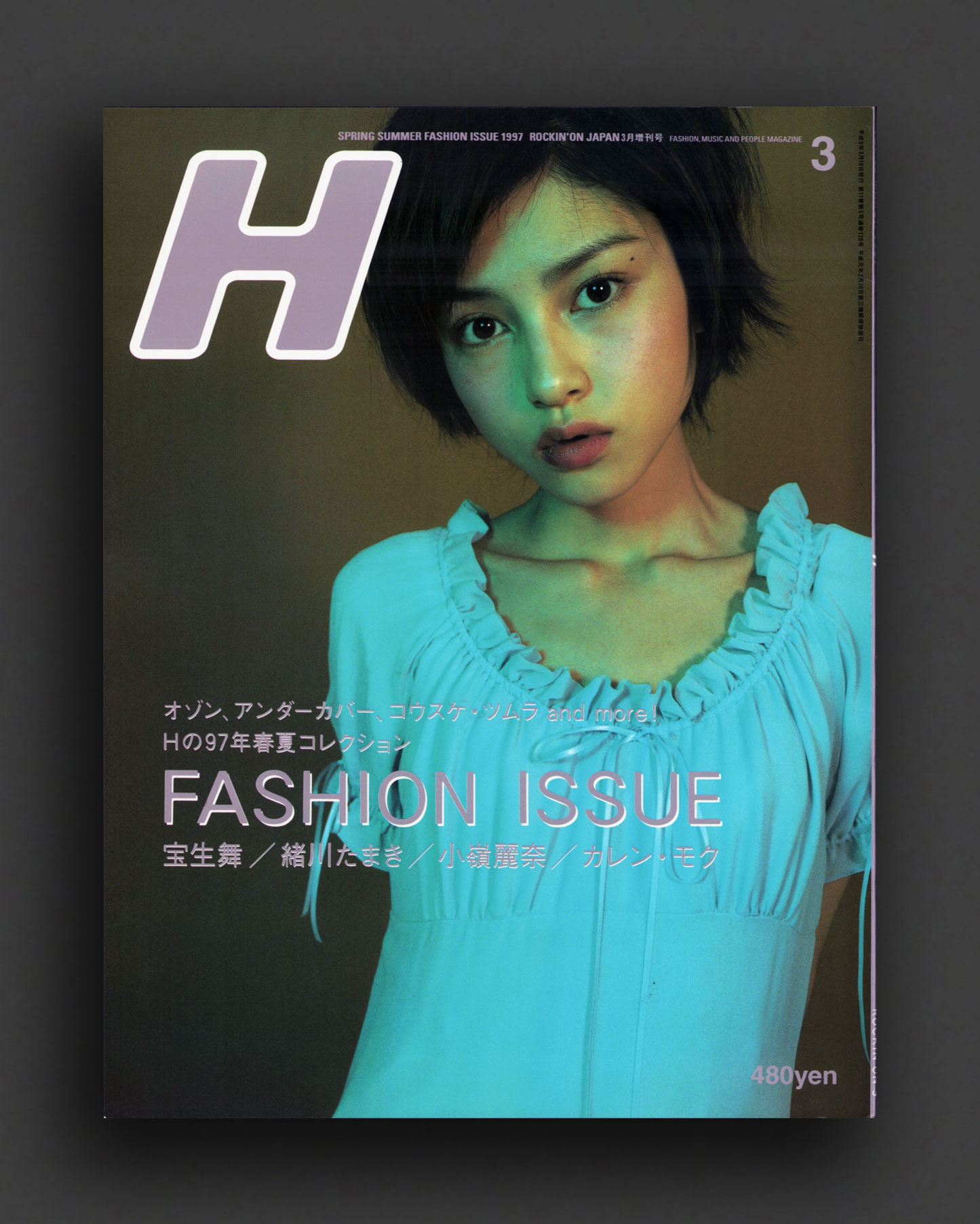
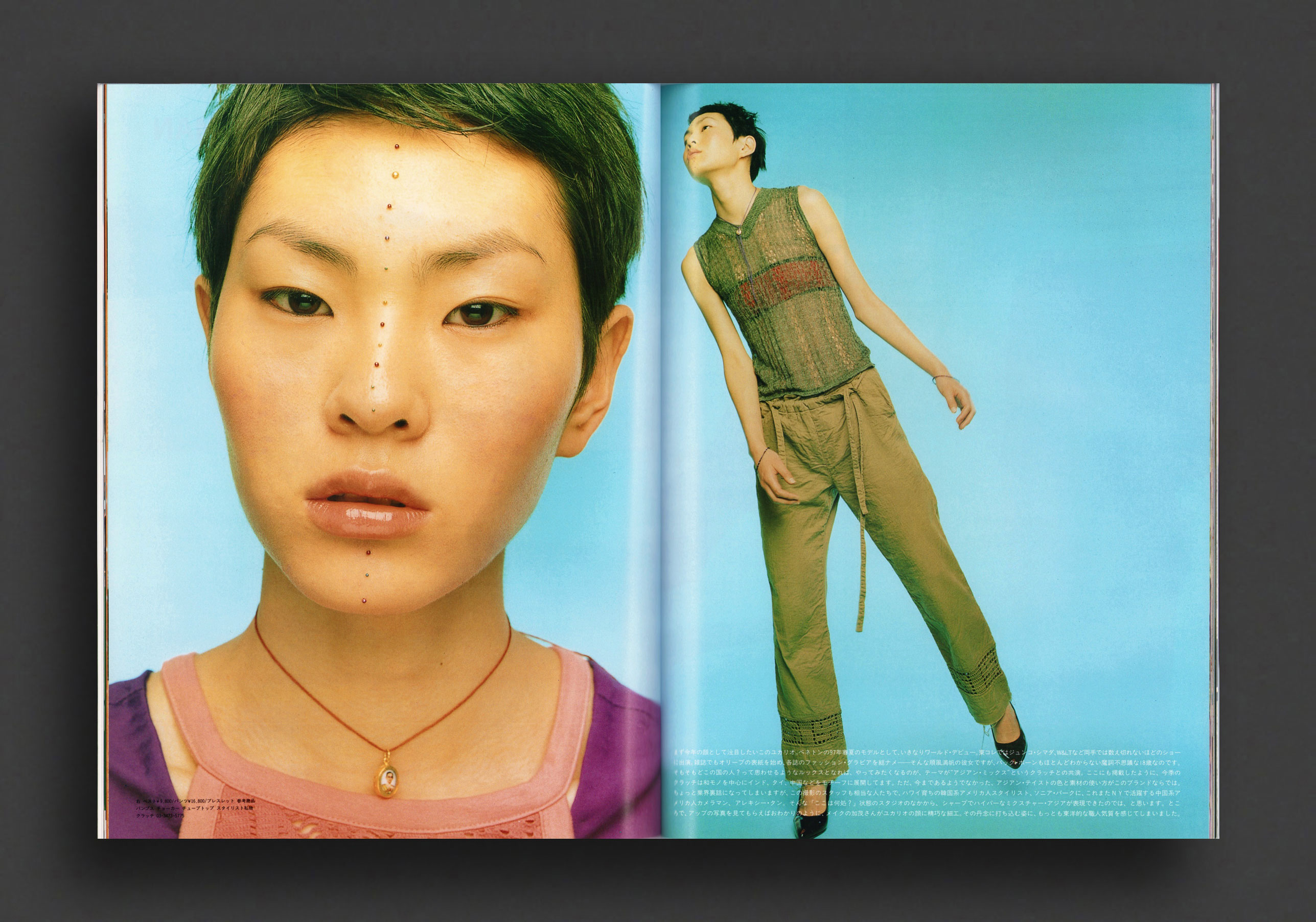
H Magazine March 1997, the culture magazine published by Tokyo publishing house Rockin' On. Each issue packed to the brim with 1990's fashion, photography, film, music, and more, this issue "Fashion" featuring Undercover, Kosuke Tsumura, photography by Takashi Homma, Hiromix, director Hal Hartley, manga from Junko Mizuno, and much more.
Good-Very Good copy with some light wear.
1969, Japanese
Hardcover (w. dust jacket), 214 pages, 22 x 16 cm
1st Edition, Out of print title / used / very good
Published by
Taihen Shuppan-Sha / Japan
$500.00 - In stock -
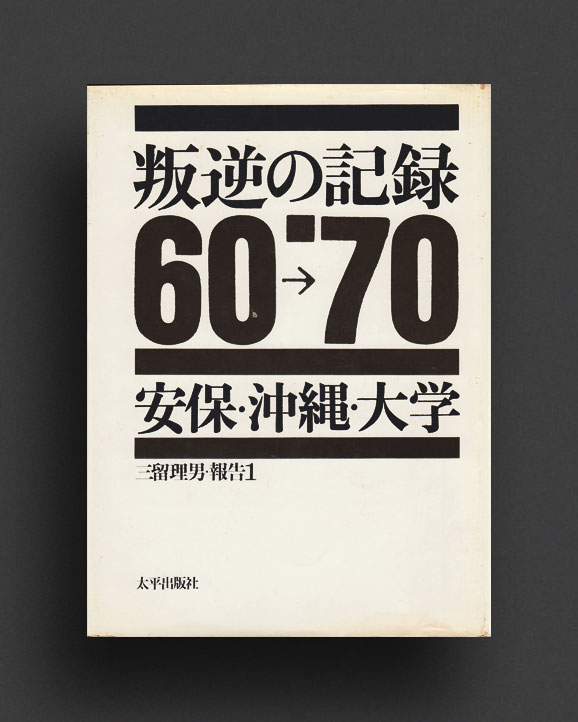
Extremely rare first 1969 hardcover edition of Tadao Mitome's "Records of Revolts 60-70" (or "Documents of Rebellion 60-70"), a stunning collection of Mitome's provocative front-line photographic documentation of Japanese protests during the 1960's, published in 1969. Stunning richly gravure-printed imagery gives a confronting account of the post-war struggles of the "Zengakuren", Japan's radical student activists, including the ANPO protests, a series of massive citizen movement protests throughout Japan from 1959 to 1960 against the US–Japan Security Treaty, which allows the United States to maintain military bases on Japanese soil, the like-wise struggle against the US military presence since the end of World War II in Okinawa, and various other school campus protests, security protests, worker protests, all carefully selected from 150,000 negatives covering 10 years, accompanied by a complete chronological history of the Zengakuren struggle between the 1959—1969. Published at a time of great anti-imperialist government resistance in Japan, "Records of Revolts 60-70", like Kurihara's "Anger Is Our Daily Bread" of the same year, is one of the masterpieces of Japanese protest photo-books of the era. Designed by the legendary designer and activist Kiyoshi Awazu.
Very Good copy with some age/wear/tanning to extremities.
1971, Japanese
Hardcover (w. slip-case) 192 pages, 24 x 18 cm
1st Edition, Out of print title / used / very good
Published by
Shinsensha / Tokyo
$400.00 - In stock -
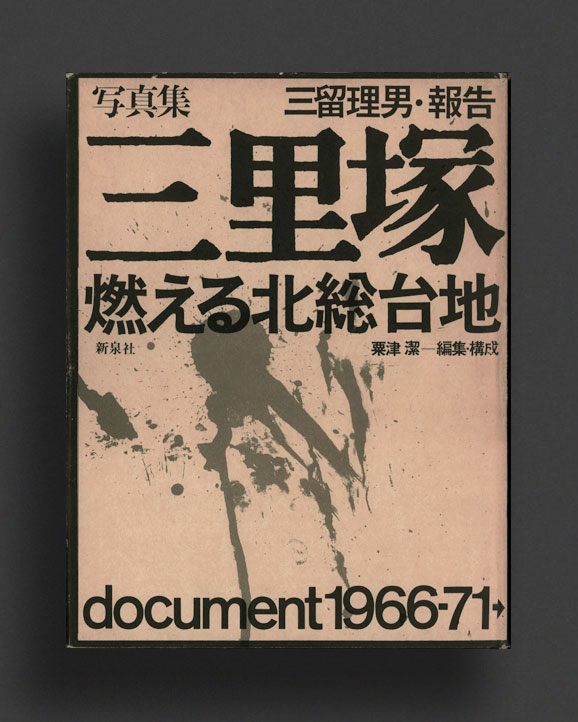
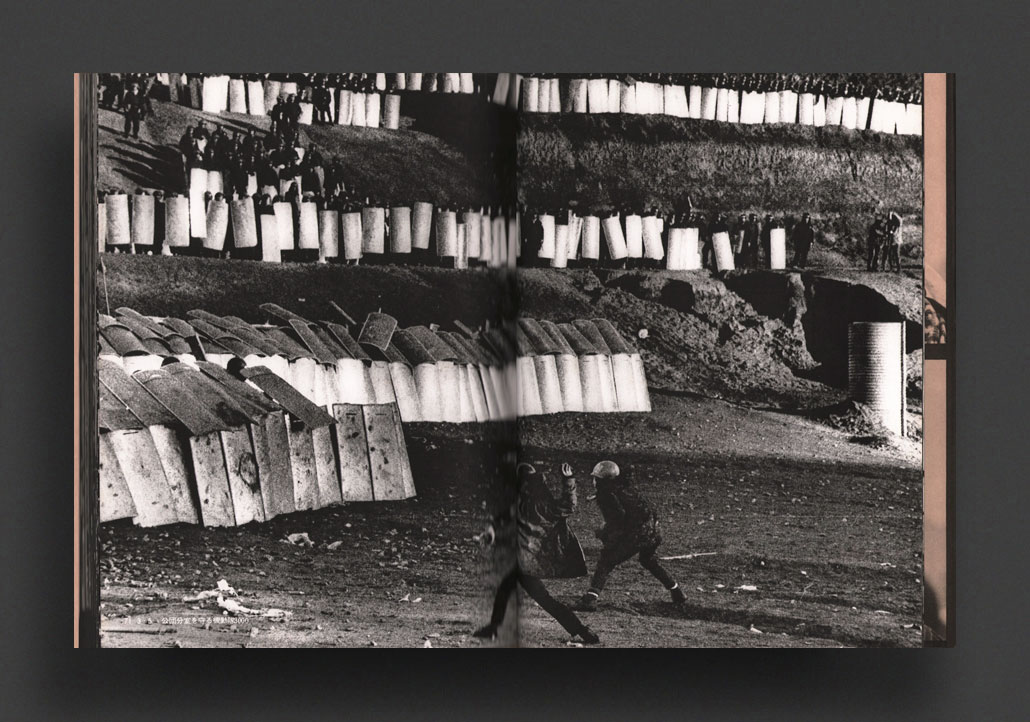
Gorgeous first (boxed) hardcover edition of Tadao Mitome's "protest-book masterpiece" published in 1971, documenting the Sanrizuka resistance to the building of Tokyo's Narita Airport. Photographs follow the thousands of protestors into battle against riot police and record their construction of fortresses and underground tunnels.
“A superb document about the medieval fighting that took place over a period of some five years around Narita airport. Fuelled by the spirit of protest in the late 60s this constituted the first of many often violent anti-airport protests in the region.”
“Sanrizuka documents the intense civil unrest between residents of Sanrizuka, an agricultural area located on the east side of Narita airport, and government authorities, in the run up to the construction and later expansion of the airport. Under a 1966 plan, the airport would have been completed in 1971, but due to the ongoing resettlement disputes, not all of the land for the airport was available by then. Finally, in 1971, the Japanese government began forcibly expropriating land. 291 protesters were arrested and more than 1,000 police, villagers and student militants were injured in a series of riots.“
Editing and art direction by the legendary activist designer Kiyoshi Awazu (1929–2009) with stunning deep gravure printing. Included in “The Japanese Photobook, 1912–1990” by Kaneko Ryuichi and Manfred Heiting and "The Photobook: A History, Volume III" by Martin Parr and Gerry Badger, p. 57.
Very Good copy with some age/wear/light scratching to box.
1994, Japanese / French
Softcover (w. dust jacket + obi), unpaginated, 21 x 15 cm
1st Edition, Out of print title / used / very good
Published by
Shinchosha / Tokyo
$120.00 - Out of stock
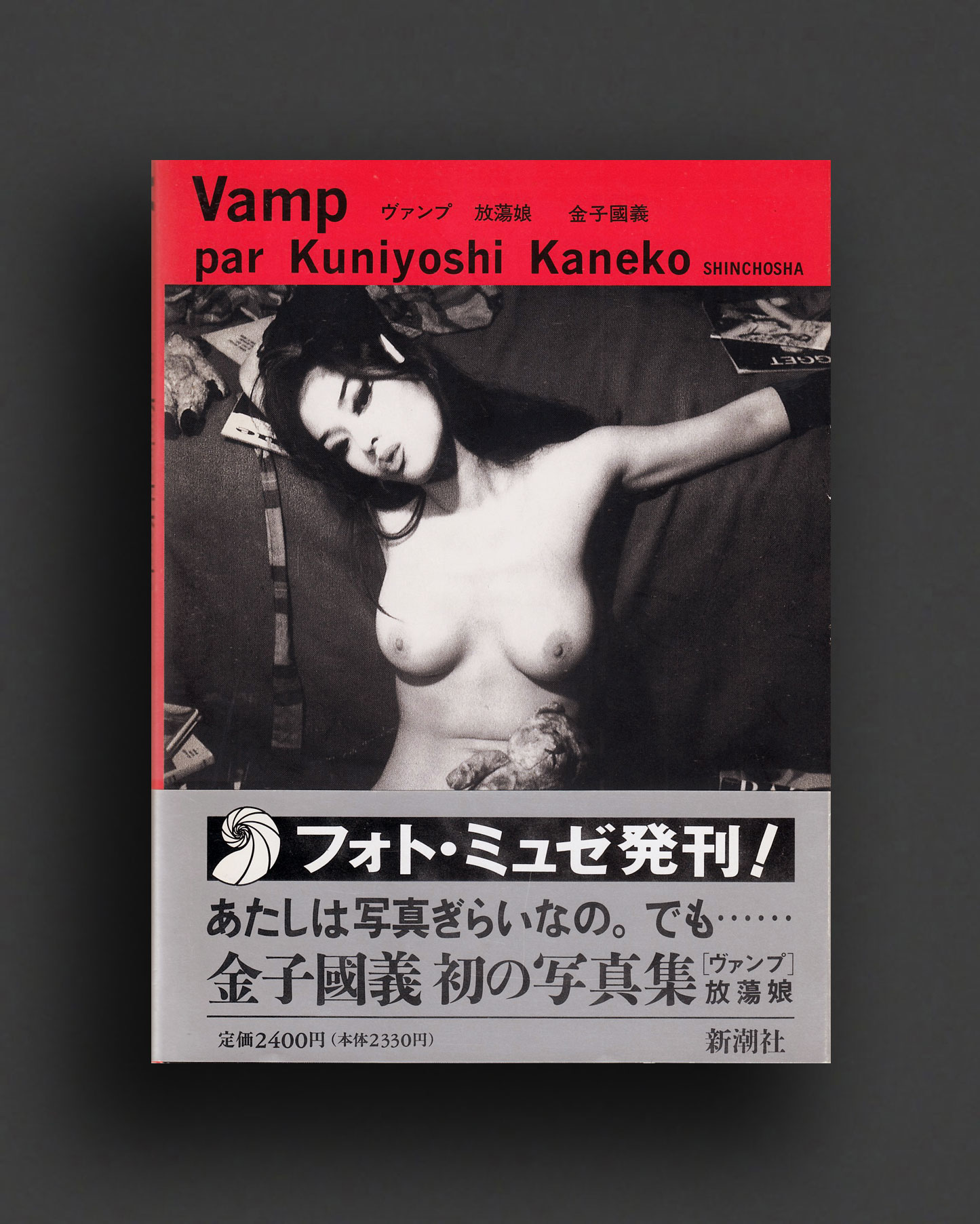
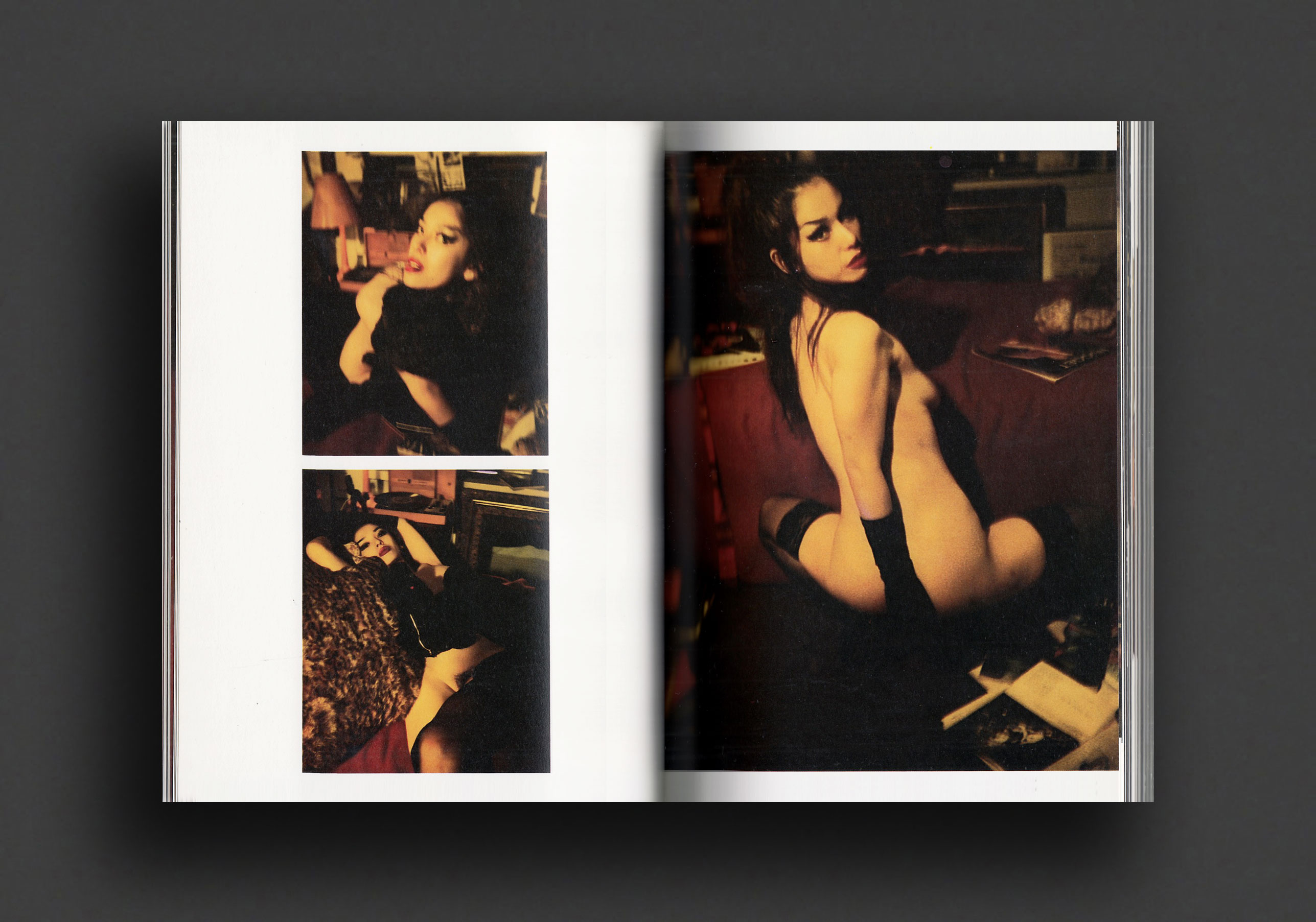
"Vamp" is a collection of erotic photography by Japanese painter, illustrator and photographer Kuniyoshi Kaneko (1936—2015), celebrated for his decadent figurative paintings and drawings of young men and women in enigmatic, metaphysical scenes of surreal, stylised erotic beauty. Free of convention, Kaneko's dreamlike scenarios were very often of same-sex, homo-erotic, even fetishistic nature. This is Kaneko's first photo book, published in 1994 in the "Photo Musee" (Shinchosha) photo book series, an erotic photo collection of deeply hued colour, polaroid and gritty black-and-white nude portraits of Kaneko’s female model (and occasional young male lover), rich with mystery, and exuding androgynous sexuality that will appeal to fans of Pierre Molinier or Irina Ionesco's work. The volume features texts by Kaneko Kuniyoshi, also, in bi-lingual Japanese and French.
"I hate having my picture taken, probably being of a sanguine "photophobic" nature. However, I sometimes agree to pose according to the demands of my friends or particularly exceptional clients, who then don't fail to force me into some obscene postures. It is said that the riffraff I hang out with, taking advantage of the result, make money from them by distributing them, but I don't give a damn. What really matters to me and what, ultimately, is my "cup of tea" filled with?
I hate cooking and, in my case, eating any food is always followed by automatic vomiting. A search of my fridge will betray it no less, if one discovers various provisions such as fish eggs caught in the northern seas, mushrooms similar to sea anemones, a piece of dried and shrunken sandwich bread vaguely reminiscent of a starfish, in their respective shapes, or even a fleshy marinated octopus, and a few jars of candied strawberries and blueberries. They are not there, in truth, to satiate my stomach which is repelled by them but to delight my view with their morphological and chromatic variety which is not detrimental, moreover, to their harmony. In this respect, prominently featured are sea cicadas with monstrous snouts caught in the school as well as some dried fish with strange shapes, which, thank God, keep very well. Contemplating all these inhabitants of my fridge, sitting in front of the wide open door, I feel buried in the depths of the oceans. Besides, my room originally took on an ambiance echoing the latter.
My little brother makes me enjoy it. More adorable than any toy in the world. He is my innate toy that induces me to all transports, initiated by me since forever to vice or virtue. Next to his light, sleeping breath, how many times have I fanned myself, and that to the point of believing I would die! I am then like a delirious boat that cleaves the opacity of the fog of a viscous dawn, the submerged belly swollen with countless gears contributing to my carnal propulsion; the intensity of pleasure ceasing only to begin again, betrayed by the bellowing of my strident siren. Then awakens an immeasurable number of these ants that move in all my labyrinthine folds. From my brain transformed into this black swarm descend Neronian herds that come to fill this tropical forest and these hot streams and invade the virgin interstices of my abundant earth. At the moment when they are about to phagocytize this one, a robust cultivator comes to water them with plenty of water, or rather with plenty of fuel in order to burn them. The vast expanse of the black carpet blazes painfully and the blue of the sky is soon tinged with a sinister purple. My anthill brain then spits out bodies by the thousands. A stifling, honeyed scent fills this necropolis and tests my patience, already stretched to its limit, once again. Seized by a new and even greater dizziness, I faint in the utmost delight, without ceasing to sink deeper with ten ever-desiring fingers."
Very Good copy in VG dust jacket w. VG obi.
1995, English / Japanese
Softcover, 36 pages, 22 x 29 cm
1st Edition, Out of print title / used / very good
Published by
Street Editorial Office / Tokyo
$70.00 - In stock -
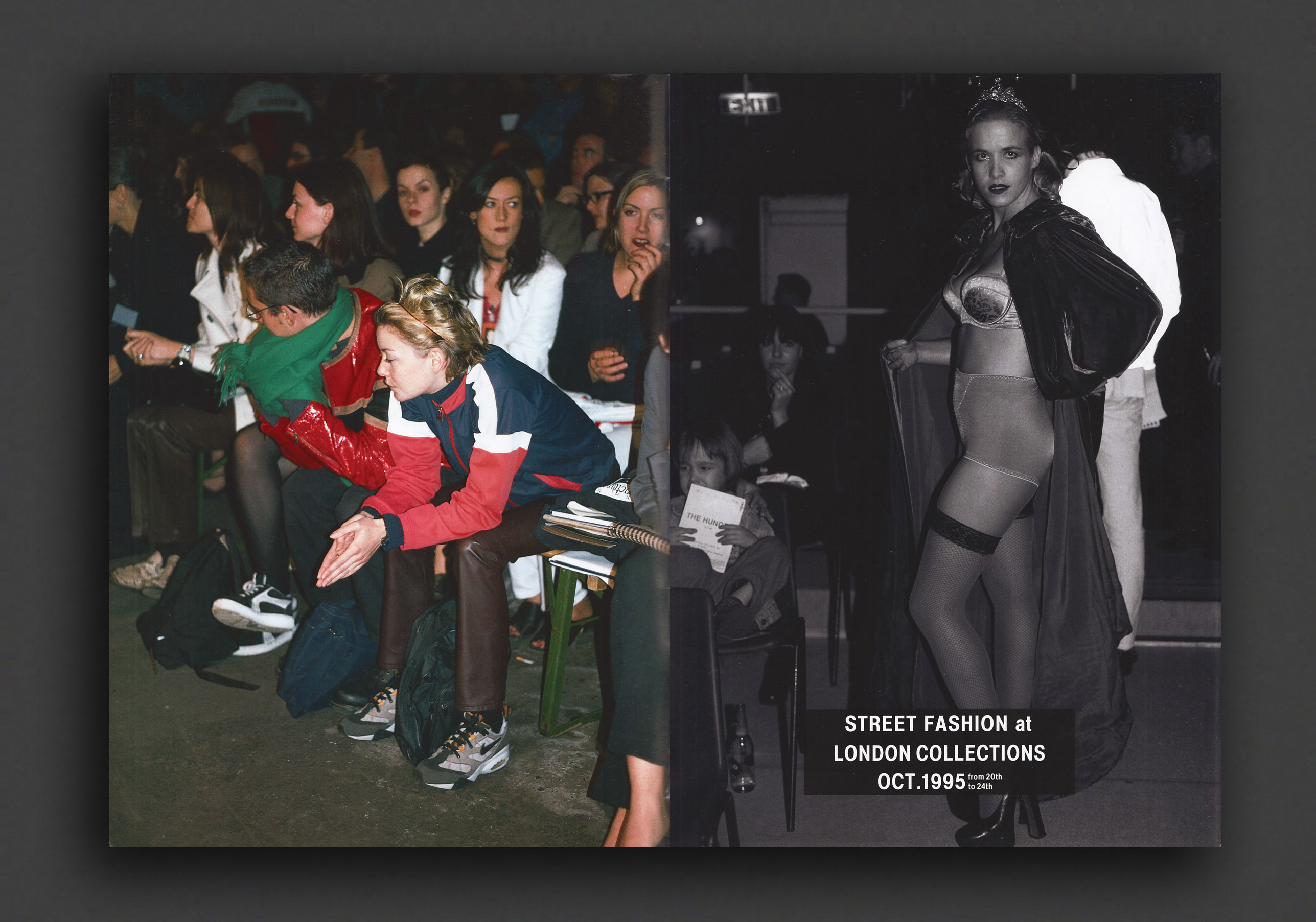
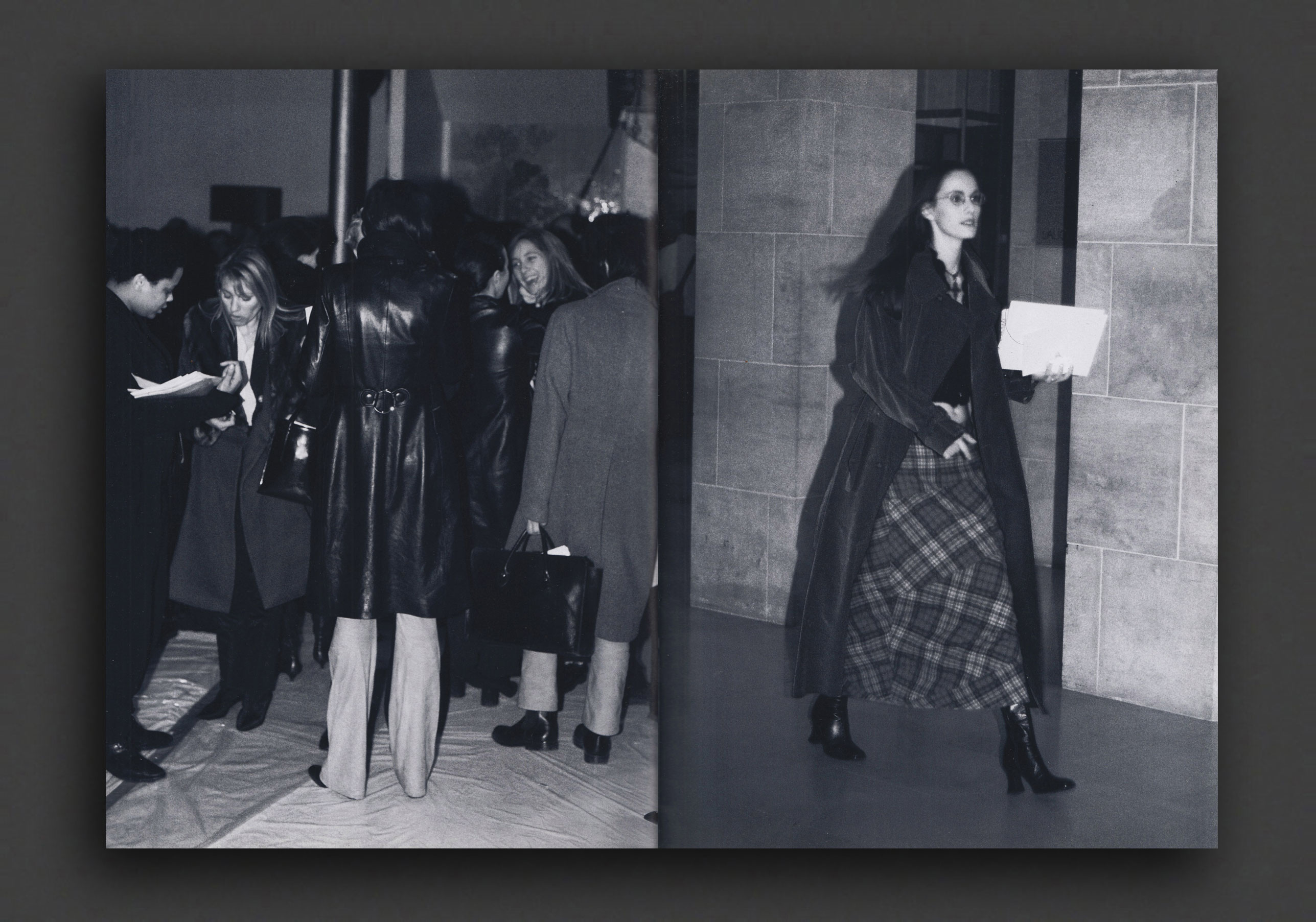
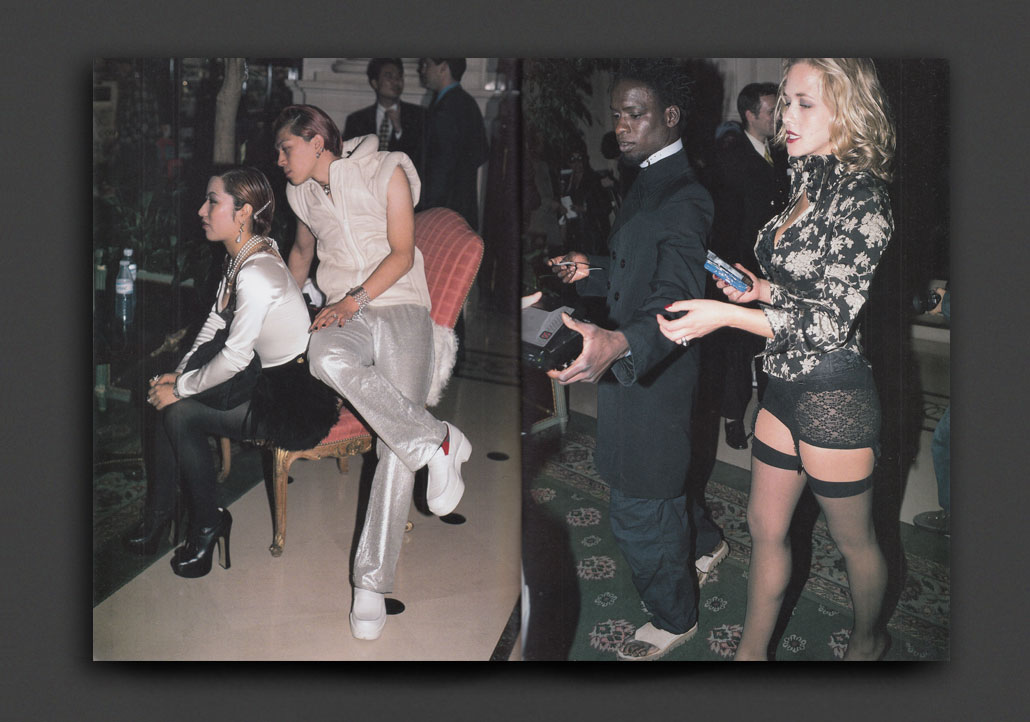
1995 issue of the iconic STREET magazine from Japan. No. 80 "Street Fashion at London Collections : October 1995". Every issue is entirely full-bleed pages of photographs by legendary Japanese street style photographer Shoichi Aoki. For this, one of the special fashion week issues, instead of photographing the world's major fashion events on the runway, Aoki is celebrated for turning his camera to the crowds, documenting the incredible outfits of the people in the audience and surrounds, amongst which are many familiar designers, models, editors, musicians, artists... Aoki's Street (and later also Fruits) are essential style goldmines, creating valuable photographic documents of the times like no other magazine.
Very Good (light wear)
1996, English / Japanese
Softcover, 36 pages, 22 x 29 cm
1st Edition, Out of print title / used / very good
Published by
Street Editorial Office / Tokyo
$70.00 - In stock -
1996 issue of the iconic STREET magazine from Japan. No. 83 "Street Fashion at Paris Prét-Á-Porter Collections : March 1996". Every issue is entirely full-bleed pages of photographs by legendary Japanese street style photographer Shoichi Aoki. For this, one of the special fashion week issues, instead of photographing the world's major fashion events on the runway, Aoki is celebrated for turning his camera to the crowds, documenting the incredible outfits of the people in the audience and surrounds, amongst which are many familiar designers, models, editors, musicians, artists... Aoki's Street (and later also Fruits) are essential style goldmines, creating valuable photographic documents of the times like no other magazine.
Very Good (light wear)
1995, English / Japanese
Softcover, 36 pages, 22 x 29 cm
1st Edition, Out of print title / used / very good
Published by
Street Editorial Office / Tokyo
$70.00 - In stock -
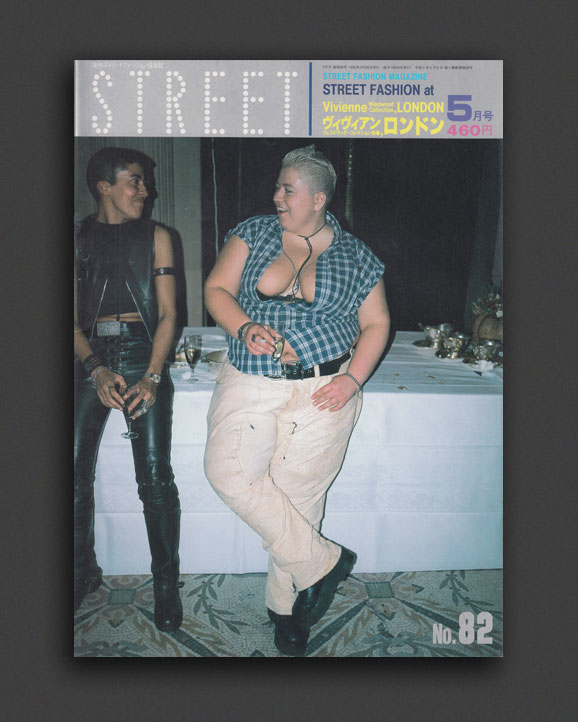
Special 1995 issue of the iconic STREET magazine from Japan. No. 82 "STREET FASHION AT VIVIENNE WESTWOOD COLLECTION : 16 OCTOBER 1995 IN PARIS".
Every issue is entirely full-bleed pages of photographs by legendary Japanese street style photographer Shoichi Aoki. For this, one of the special fashion week issues, instead of photographing the world's major fashion events on the runway, Aoki is celebrated for turning his camera to the crowds, documenting the incredible outfits of the people in the audience and surrounds, amongst which are many familiar designers, models, editors, musicians, artists... Aoki's Street (and later also Fruits) are essential style goldmines, creating valuable photographic documents of the times like no other magazine.
Very Good (very light wear)
1996, English / Japanese
Softcover, 36 pages, 22 x 29 cm
1st Edition, Out of print title / used / very good
Published by
Street Editorial Office / Tokyo
$70.00 - In stock -
1996 issue of the iconic STREET magazine from Japan. No. 85 "STREET FASHION AT PARIS PRET-A-PORTER COLLECTIONS : MARCH 1996".
Every issue is entirely full-bleed pages of photographs by legendary Japanese street style photographer Shoichi Aoki. For this, one of the special fashion week issues, instead of photographing the world's major fashion events on the runway, Aoki is celebrated for turning his camera to the crowds, documenting the incredible outfits of the people in the audience and surrounds, amongst which are many familiar designers, models, editors, musicians, artists... Aoki's Street (and later also Fruits) are essential style goldmines, creating valuable photographic documents of the times like no other magazine.
Good-Very Good copy (light wear)