World Food Books' programme is largely produced on Kulin Nation land. We acknowledge the Wurundjeri people of the Kulin Nation as the first and continuing custodians of this land, and pay respect to their Elders past, present, and emerging.
World Food Books is an arts and special interests bookshop in Naarm / Melbourne. Founded in 2010, World Food Books is devoted to the presentation of a rotating, hand-selection of international art, design, literary and counterculture publications with an emphasis on the anti-traditional, the experimental, the avant-garde, the heretic, the marginal.
Presenting new titles alongside rare and out-of-print books, catalogues and journals spanning the fields of modern and contemporary art, design, photography, illustration, film, literature, poetry, cultural theory, philosophy, sexuality, popular and underground culture in its many radical forms, World Food Books wishes to encourage adventurous, thoughtful and open-minded reading, looking, writing, and exchange of publishing and ideas, both current and historical.
As well as our bookshop, located in Melbourne's historical Nicholas Building, all of our inventory is available internationally via our online mail-order service.
World Food Books semi-regularly co-ordinates "Occasions", a programme of exhibits and events at the bookshop and in partnership with other hosts (such as museums and art galleries) that develop out of the activities, relationships and content of the bookshop itself.
World Food Books
The Nicholas Building
37 Swanston Street
Room 5, Level 6
Melbourne 3000
Australia
SHOP HOURS:
THU–SAT 12–6
WEB-SHOP OPEN 24/7
World Food Books
Postal Address:
PO Box 435
Flinders Lane
Victoria 8009
Australia
info@worldfoodbooks.com
Art
Theory / Essay
Architecture / Interior
Graphic Design / Typography
Photography
Fashion
Eros
LGBTQ+
Fiction / Poetry
Weird / Speculative / Science Fiction / Horror
Transgressive / Visceral / Abject
Symbolism / Decadence / Fin de siècle
Film / Video
Painting
Sculpture / Installation
Performance / Dance / Theater
Drawing
Sound / Music
Curatorial
Group Shows / Collections
Periodicals
Out-of-print / Rare
Posters / Ephemera / Discs
Signed Books
World Food Books Gift Voucher
World Food Book Bag
Australian Art
Australian Fiction
Australian Science Fiction / Speculative Fiction
Australian Poetry
Australian Photography
Japanese Photography
Conceptual Art
Minimal Art
Dada
'Pataphysics / Oulipo
Fluxus
Concrete Poetry
Pop Art
Surrealism
Arte Povera
Arte Informale / Haute Pâte / Tachism
Nouveau Réalisme / Zero / Kinetic
Situationism / Lettrism
Collage / Mail Art / Xerox Art
Art Brut / Folk / Visionary / Fantastic
Illustration / Graphic Art / Bandes Dessinées
Furniture
Italian Radical Design / Postmodernism
Textiles
Ceramics / Glass
Counterculture
Protest / Revolt
Philosophy
Psychoanalysis
Anthropology
Anarchism
Socialism / Anarchism / Communism / Capitalism
Literary Theory / Semiotics / Language
Feminism / Women's Studies
Gender Studies / Sexuality
Anthropology
Fetishism / BDSM
Drugs / Psychedelia
Crime / Violence
Animal Rights / Veganism
Occult / Esoterica
Ecology / Earth / Alternative Living
Whole Earth / Crafts
All prices in AUD (Australian dollars)
Pick-Ups
Pick-up orders can be collected in our bookshop during opening hours after order date. Please collect any Pick-up orders within 2 weeks of ordering as we have limited storage space. Orders will be released back into stock if not collected within this time. No refunds can be made for pick-ups left un-collected. If you cannot make it in to the bookshop in this time-frame, please choose postage option.
Return Policy
All sales are final. We do accept returns (for refund or exchange) for items received in error. All our orders are packed with special care using heavy-duty padding and cardboard book-mailers or bubble mailers (for smaller books), using reinforcement where required. We cannot take responsibility for any lost, stolen or damaged parcels.
Insurance
Should you wish to insure your package, please email us directly after placing your order and we can organise this at a small extra expense. Although all standard/express tracked packages are very safe and dependable, we cannot take responsibility for any lost, stolen or damaged parcels. We recommend insurance on valuable orders.
Interested in selling your old books, catalogues, journals, magazines, comics, fanzines, ephemera? We are always looking for interesting, unusual and out-of-print books to buy. We only buy books in our fields of interest and specialty, and that we feel we can resell.
We base these prices on desirability, market value, in-print prices, condition and our current stock levels. We offer cash, store credit, and can take stock on consignment. All
about 25% of the price we expect to get when we sell them, or 30% in store credit. We base these prices on desirability, market value, in-print prices, condition and our current stock levels.
Sell your books any day of the week. You can drop them off and return later. If you have a lot of books, we can visit your Sydney home.
We buy books that we feel we can resell. We offer about 25 % of the price we expect to get when we sell them, or 30% in store credit. We base these prices on desirability, market value, in-print prices, condition and our current stock levels.
Philadelphia Wireman
03 August - 01 September, 2018
World Food Books is proud to announce our next Occasion, the first presentation of sculptures by Philadelphia Wireman in Australia.
The Philadelphia Wireman sculptures were found abandoned in an alley off Philadelphia’s South Street on trash night in 1982. Their discovery in a rapidly-changing neighbourhood undergoing extensive renovation, compounded with the failure of all attempts to locate the artist, suggests that the works may have been discarded after the maker’s death. Dubbed the "Philadelphia Wireman" during the first exhibition of this work, in 1985, the maker’s name, age, ethnicity, and even gender remain uncertain. The entire collection totals approximately 1200 pieces, all intricately bound together with tightly-wound heavy-gauge wire (along with a few small, abstract marker drawings, reminiscent both of Mark Tobey and J.B. Murry). The dense construction of the work, despite a modest range of scale and materials, is singularly obsessive and disciplined in design: a wire armature or exoskeleton firmly binds a bricolage of found objects including plastic, glass, food packaging, umbrella parts, tape, rubber, batteries, pens, leather, reflectors, nuts and bolts, nails, foil, coins, toys, watches, eyeglasses, tools, and jewellery.
Heavy with associations—anthropomorphic, zoomorphic, and socio-cultural responses to wrapped detritus—the totemic sculptures by Philadelphia Wireman have been discussed in the context of work created to fulfil the shamanistic needs of alternative religions in American culture. Curators, collectors, and critics have variously compared certain pieces to sculpture from Classical antiquity, Native American medicine bundles, African-American memory jugs, and African fetish objects. Reflecting the artist’s prolific and incredibly focused scavenging impulse, and despite—or perhaps enhanced by—their anonymity, these enigmatic objects function as urban artefacts and arbiters of power, though their origin and purpose is unknown. Philadelphia Wireman, whatever their identity, possessed an astonishing ability to isolate and communicate the concepts of power and energy through the selection and transformation of ordinary materials. Over the course of the past two decades, this collection has come to be regarded as an important discovery in the field of self-taught art and vernacular art.
Presented in collaboration with Fleisher-Ollman Gallery, Philadelphia, and Robert Heald, Wellington.
Susan Te Kahurangi King
02 February - 10 March, 2018
Susan Te Kahurangi King (24 February 1951 - ) has been a confident and prolific artist since she was a young child, drawing with readily available materials - pencils, ballpoint pens and felt-tip markers, on whatever paper is at hand. Between the ages of four and six Susan slowly ceased verbal communication. Her grandparents William and Myrtle Murphy had developed a special bond with Susan so they took on caring responsibilities for extended periods. Myrtle began informally archiving her work, carefully collecting and storing the drawings and compiling scrapbooks. No drawing was insignificant; every scrap of paper was kept. The King family are now the custodians of a vast collection containing over 7000 individual works, from tiny scraps of paper through to 5 meter long rolls.
The scrapbooks and diaries reveal Myrtle to be a woman of great patience and compassion, seeking to understand a child who was not always behaving as expected. She encouraged Susan to be observant, to explore her environment and absorb all the sights and sounds. Myrtle would show Susan’s drawings to friends and people in her community that she had dealings with, such as shopkeepers and postal workers, but this was not simply a case of a grandmother’s bias. She recognised that Susan had developed a sophisticated and unique visual language and sincerely believed that her art deserved serious attention.
This was an unorthodox attitude for the time. To provide some context, Jean Dubuffet coined the term Art Brut in 1945 to describe work created by self-taught artists – specifically residents of psychiatric institutions and those he considered to be visionaries or eccentrics. In 1972 Roger Cardinal extended this concept by adopting the term Outsider Art to describe work made by non-academically trained artists operating outside of mainstream art networks through choice or circumstance. Susan was born in Te Aroha, New Zealand in 1951, far from the artistic hubs of Paris and London that Dubuffet and Cardinal operated in. That Myrtle fêted Susan as a self-taught artist who deserved to be taken seriously shows how progressive her attitudes were.
Susan’s parents Doug and Dawn were also progressive. Over the years they had consulted numerous health practitioners about Susan’s condition, as the medical establishment could not provide an explanation as to why she had lapsed into silence. Dawn educated herself in the field of homeopathy and went on to treat all twelve of her children using these principles – basing prescriptions on her observations of their physical, mental and emotional state.
Doug was a linguist with an interest in philosophy who devoted what little spare time he had to studying Maori language and culture. To some extent their willingness to explore the fringes of the mainstream made them outsiders too but it was their commitment to living with integrity and their respect for individuality that ensured Susan’s creativity was always encouraged.
Even though Susan’s family supported her artistic pursuits, some staff in schools and hospitals saw it as an impediment to her assimilation into the community and discouraged it in a variety of ways. Her family was not always aware of this and therefore did not fully understand why Susan stopped drawing in the early 1990s. However, rather than dwell on the challenges that Susan faced in pursuit of her artistic practice, they prefer to highlight her achievements. In 2008 Susan began drawing again in earnest, after an almost 20 year interruption, and her work is now shown in galleries around the world.
Susan grew up without television and has been heavily influenced by the comics she read as a child. She is absolutely fearless in the appropriation of recognizable characters, such as Donald Duck and Mickey Mouse, in her work. She twists their limbs, contorts their faces, compresses them together, blends them into complex patterned backgrounds - always imbuing them with an incredible energy. Although Susan often used pop culture characters in her work they are not naive or childlike. These are drawings by a brilliant self-taught artist who has been creating exceptional work for decades without an audience in mind.
Mladen Stilinović
"Various Works 1986 - 1999"
02 February 16 - September 10, 2016
Various works 1986 - 1999, from two houses, from the collections of John Nixon, Sue Cramer, Kerrie Poliness, Peter Haffenden and Phoebe Haffenden.
Including: Geometry of Cakes (various shelves), 1993; Poor People’s Law (black and white plate), 1993; White Absence (glasses, ruler, set square, silver spoon, silver ladel with skin photograph and wooden cubes), 1990-1996; Exploitation of the Dead (grey and red star painting, wooden painting, black spoon with red table, red plate), 1984-1990; Money and Zeros (zero tie, paintings made for friends in Australia (Sue, John, Kerrie), numbers painting), 1991-1992; Words - Slogans (various t-shirts) - “they talk about the death of art...help! someone is trying to kill me”, “my sweet little lamb”, “work is a disease - Karl Marx”; Various artist books, catalogues, monographs, videos; Poster from exhibition Insulting Anarchy; "Circular" Croatian - Australian edition; Artist book by Vlado Martek (Dostoyevsky); more.
Thanks to Mladen Stilinović and Branka Stipančić.
Jonathan Walker
Always Will Need To Wear Winter Shirt Blue + Ochre Small Check Pattern
21 August - 21 September, 2015
Untitled
I am not a great reader of poetry but I always return to the work of Melbourne poet, Vincent Buckley (1925- 1988). Perhaps I find his most tantalising piece to be not a finished poem but a fragment left on a scrap of paper discovered on his desk after the poet’s death.
The poetry gathers like oil
In the word-core, and spreads
It has its music meet,
Its music is in movement.
This fragment is more the shell left behind from a volatile thought than a finished poem. I find the last two lines honest but awkward whereas the first two lines work like an arrow. Most likely he could not find a resolution so it was left. Still, in its present form, it remains an eloquent testimony to the ultimate failure of a medium to express mobile thought and sensation, in Buckley’s case, through verbal language. It’s an important matter because this is something all artists have to deal with regardless of the medium.
I have never written a poem, however, I am forever copying fragments from books on paper scraps in a vain effort to fix certain notions in my head. At first, they function as bookmarks that are sometimes returned to when I open the book. But before long, as they accumulate, they fall out littering the table interspersed with A4 photocopies, bills, books and medications.
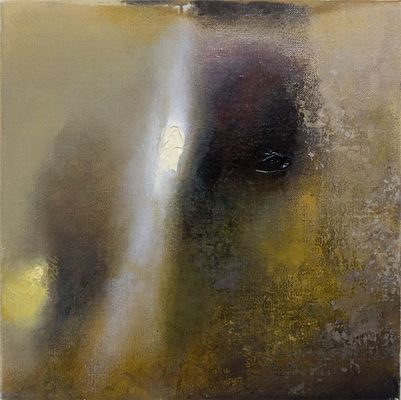
To return to Buckley’s fragment, the first two lines very much evoke how I paint nowadays. As you age, detail diminishes and patches of light become more luminous and float. I feel the most honest way of dealing with this is by smearing the oil paint on the canvas with the fingers and working close-up, blind. Only if the patches coalesce into an approaching image can the work gain a life.
-
Jonathan Walker was born in Melbourne, Australia and brought up on a dairy farm in Gippsland. In the 1970’s he studied painting at RMIT and won the Harold Wright Scholarship to the British Museum, London. During the 1980’s he exhibited at Pinacotheca Gallery, Richmond and had work shown at the NGV and Heidi City Art Gallery. Over the same period he designed the cover for the “Epigenesi” LP by Giancarlo Toniutti, Italy and conducted a mail exchange work with Achim Wollscheid, Germany. The work with artists through the post resulted in an article published in the bicentenary issue of Art and Australia 1988. He showed in artist run spaces such as WestSpace in the 90’s and 2000’s, and until 2012, taught painting at Victoria University, which is where we (Colleen Ahern and Lisa Radford) as organisers of the exhibition, among many others, had the privilege of being his student.
Walker’s knowledge was imparted to students through the careful selection of music, literature, and artists found in books that he himself had ordered for the library. Walker’s strategy was the generosity of sharing his vast knowledge with references specific to each student and their context.
Walker’s paintings share a similar focus and intimacy.
This exhibition presents a small selection of recent paintings alongside a publication that includes Walker’s writing. Observational and analytical, Walker’s work is a type of material notation — the time of day, colour and how it is blended, the both specific and fleeting location of a reflection on lino or the question of whether a chair leg should be included in a painting.
Please join us on Friday August 21 between 6-8pm to celebrate the opening of the exhibition.
Curated by Colleen Ahern and Lisa Radford.
B. Wurtz
Curated by Nic Tammens
March 26 - April 4, 2015
B.Wurtz works from a basement studio in his home on Manhattan’s Lower East Side.
This local fact is attested to by the plastic shopping bags and newsprint circulars that appear in his work. As formal objects, they don’t make loud claims about their origins but nonetheless transmit street addresses and places of business from the bottom of this long thin island. Like plenty of artists, Wurtz is affected by what is local and what is consumed. His work is underpinned by this ethic. It often speaks from a neighborhood or reads like the contents of a hamper:
“BLACK PLUMS $1.29 lb.”
“Food Bazaar”
“USDA Whole Pork Shoulder Picnic 99c lb.”
“RITE AID Pharmacy, with us it’s personal.”
“H. Brickman & Sons.”
“Sweet Yams 59c lb."
Most of the work in this exhibition was made while the artist was in residence at Dieu Donne, a workshop dedicated to paper craft in Midtown. Here Wurtz fabricated assemblages with paper and objects that are relatively lightweight, with the intention that they would be easily transportable to Australia. This consideration isn’t absolute in Wurtz’s work, but was prescriptive for making the current exhibition light and cheap. Packed in two boxes, these works were sent from a USPS post office on the Lower East Side and delivered to North Melbourne by Australia Post.
Wurtz appears courtesy of Metro Pictures, New York.
Thanks to Rob Halverson, Joshua Petherick, Sari de Mallory, Matt Hinkley, Helen Johnson, Fayen d'Evie, Ask Kilmartin, Lisa Radon, Ellena Savage, Yale Union, and "Elizabeth".
John Nixon
"Archive"
December 15 - January 20, 2014
The presentation of John Nixon's archive offered a rare showcase of this extensive collection of the artist's own publications, catalogues, posters, ephemera, editions and more, from the mid 1980s onwards, alongside a selection of his artworks.
Organized by John Nixon, Joshua Petherick and Matt Hinkley.
"Habitat"
at Minerva, Sydney (organised by Joshua Petherick and Matt Hinkley)
November 15 - December 20, 2014
Lupo Borgonovo, Janet Burchill & Jennifer McCamley,
Lewis Fidock, HR Giger, Piero Gilardi, Veit Laurent Kurz,
Cinzia Ruggeri, Michael E. Smith, Lucie Stahl, Daniel Weil, Wols
Press Release:
“...It contained seven objects. The slender fluted bone, surely formed for flight, surely from the wing of some large bird. Three archaic circuitboards, faced with mazes of gold. A smooth white sphere of baked clay. An age-blackened fragment of lace. A fingerlength segment of what she assumed was bone from a human wrist, grayish white, inset smoothly with the silicon shaft of a small instrument that must once have ridden flush with the surface of the skin - but the thing’s face was seared and blackened.”
William Gibson, “Count Zero”, 1986
"Autumn Projects Archive"
Curated by Liza Vasiliou
March 6 - March 15, 2014
World Food Books, in conjunction with the Virgin Australia Melbourne Fashion Festival 2014, presented the Autumn Projects archive, consisting of a selection of early examples in Australian fashion with a particular interest in collecting designers and labels from the period beginning in the 1980’s, who significantly influenced the discourse of Australian Fashion.
Curated by Liza Vasiliou, the exhibition provided a unique opportunity to view pieces by designers Anthea Crawford, Barbara Vandenberg, Geoff Liddell and labels CR Australia, Covers, Jag along with early experimental collage pieces by Prue Acton and Sally Browne’s ‘Fragments’ collection, suspended throughout the functioning World Food Books shop in Melbourne.
H.B. Peace
presented by CENTRE FOR STYLE
November 14, 2013
"Hey Blinky, you say chic, I say same"
Anon 2013
H.B. Peace is a clothing collaboration between great friends Blake Barns and Hugh Egan Westland. Their pieces explore the divergences between 'character’ and ‘personality’ in garments....etc
Special Thanks to Joshua Petherick and Matt Hinkley of WFB and Gillian Mears
and a Very Special Thank you to Audrey Thomas Hayes for her shoe collaboration.
Janet Burchill & Jennifer McCamley
"Aesthetic Suicide"
May 10 - June 8, 2013
The first of our occasional exhibitions in the World Food Books office/shop space in Melbourne, "Aesthetic Suicide" presented a body of new and older works together by artists Janet Burchill & Jennifer McCamley, including videos, prints, a wall work, and publications.
During shop open hours videos played every hour, on the hour.
1992, English
Softcover (w. dust jacket), 140 pages, 26 x 20 cm
1st Edition, Out of print title / used / very good
Published by
MIMA / Melbourne
$35.00 - Out of stock
Scarce catalogue edited by Adrian Martin and published in 1990 to accompany experimenta — A Major Survey of Film and Video Art, Melbourne, November 20—December 4, 1990, presented by Modern Image Makers Association Inc. (MIMA) and founded in 1988. Showcasing Australian video art, media art, installation and performance works.
Contents include: An introduction to Experimenta 1992 by Lizzette Atkins, Of Prisms and Tools: The Possibility of an Avant Garde by Vikki Riley, Australian Screenings, Introduction by Steven Ball, Opening Night, Signposts To The Imagination Re-animated; (re)constructing an art, Techknowledge, Dusan Marek's Cobweb On A Parachute — Essay by Arthur Cantrill, David Perry's The Refracting Glasses, Interview with David Perry, Passionate Uncertainty, Text and Textures, Engineering Memory: Views of History, Politics, Culture and Geography, Helical Scans: Diverse Ways of Seeing (Video) Programme 1 and 2, One Way Street: Fragments for Walter Benjamin, Sound and Image, Experience and The Other, The Fall Of The Berlin Wall, The Open 'Iron Curtain' and Post-Socialist Drama, Artists seen by artists, Die Mauer—The negative horizon, The Czech Avant Garde 1911-1941 essay by Jaroslav Andel, Programme 1, Programme 2, Video Programmes From 'New Europe' curated by Heiko DaxI, U.K., Intimate Imaginaries, Artist Screening: Michael Maziere, Slow Glass, U.S.A., Shalom Gorewitz-Experimental Television Center, New York, WAX, or the discovery of television among the bees, Flesh Histories, Programme 1, Programme 2, Japan, Emotional Wave: Image Network Japan, V.I.E.W., Shinya Tsukamoto's Tetsuo: The Iron Man, Interview with Shinya Tsukamoto, Performance: Introduction by Jeffrey Fereday, Artist statements, Installation: Introduction by Jennifer Phipps, Artist statements, Medienkunst—A survey of German, installation art— introduction by Heiko Daxl, Medienkunst-Artist statements, Special Events, Noisefest 2, Techno Garden, Century Endings - An Afternoon of Performance in the Great Hall, Seminars and Talks, Essays: Video As Art: Personal Observations From New York by Shalom Gorewitz, Some Thoughts on the German State of Things: Teaching Video by Ingo Petzke, An Attempt Toward The Anti-Oedipus-Japanese Video Art After The '80s by Junji Ito, Schedule of events, Artist index, Title index...
Includes the work of Arthur and Corinne Cantrill, Arf Arf, Ian Haig, GANG, Jun Kurosawa, Warren Burt, Chris Mann, Anne Ferran, Sadie Benning, Michelle Handelman, Monte Cazazza, Pete Spence, Fiona MacDonald, Cyber Dada Manifesto, Dale Nason, Troy Innocent, Dusan Marek, Critical Art Ensemble, John Maybury, David Perrt, Steven Ball, Karel Hašler, Otakar Vávra, Jiří Lehovec, Michael Maziere, David Blair, Danny Fass, Joe Kelly, Shelly Silver, Laurens Tan, John Gillies, and many more.
VG copy light wear to extremities/DJ.
1991—1997, English
Softcover (staple-bound), 70 pages ea. approx x 9 issues, 27 x 21 cm
1st Edition, Out of print title / used / good
Published by
Musicworks / Toronto
$80.00 - In stock -
Lot of 9 issues (1991—1997) of Musicworks, The Journal of Sound Exploration, published out of Toronto. Launched in January 1978 by Andrew Timar and John Oswald, best known for his plunderphonics, Musicworks was a long-running Canadian avant-garde music magazine devoted to experimental, improvised and Electroacoustic music. These issues together feature an abundance of exclusive interviews, essays, reviews, theoretical texts, scores, colloquies, artworks, features on and by Stan Brakhage, Chris Cutler, John Cage, Tibor Szemző, Pauline Oliveros, Trevor Wishart, Carolee Schneemann, Josef Režný, Jerry Hunt, Kazue Sawai, Glenn Branca, Yūji Takahashi, Tim Hodgkinson, Louis Andriessen, Glenn Gould, Harry Partch, Akio Suzuki, Fergus Kelly, Petr Kotik, Nicholas Gebhardt, Barbara Benary, Andrew Culver, Udo Kasemets, Franz Van Rossum, R.I.P. Hayman, Iva Bittová, Nobuo Kubota, David Rokeby, François Girard, J.S. Bach, Jocelyn Robert, Don Ritter, Glenn Gould, Paul Rapoport, and many more. Scarce and incredible resource for improvised and avant-garde compositional music/performance/video histories from this publisher and cassette label.
Good copy with with general light magazine wear.
1990, English
Softcover (staple-bound), 54 pages, 30 x 21 cm
1st Edition, Out of print title / used / very good
Published by
MIMA / Melbourne
$25.00 - Out of stock
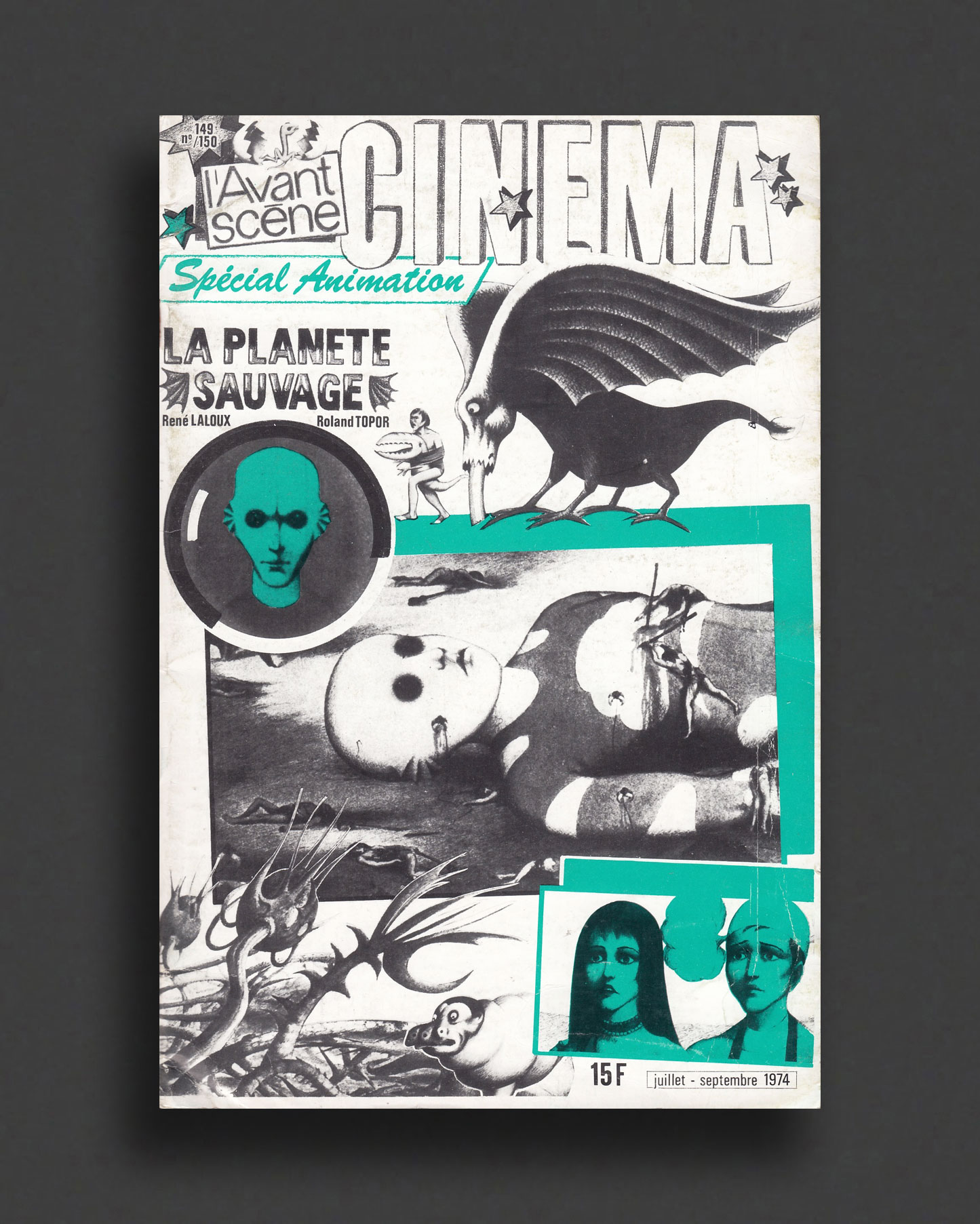
Scarce catalogue edited by Adrian Martin and published in 1990 to accompany experimenta — A Major Survey of Film and Video Art, Melbourne, November 20—December 4, 1990, presented by Modern Image Makers Association Inc. (MIMA) and founded in 1988. Showcasing Australian video art, media art, installation and performance works, this iteration also included programs of Lettrist Cinema and French Avant-Garde film from the 1980s. Illustrated throughout with information on all of the works, accompanied by essays: Adrian Martin – "The Adventures of Form", John Conomos – "Video as Moonlighting", Christian Lebrat – "The Lettrist Cinema of the 1950s", Vikki Riley – "The Picture Can't Get Any Louder", John Flaus – "In the Eye's Mind - Paul Winkler Retrospective.
Includes the work of Arthur and Corinne Cantrill, Maria Kozic and Ian Haig, Peter Callas, Josko Petkovic, Edward Colless, Tona Keane, Arf Arf, Shelley Lasica, Peter Tyndall, Gerald Murnane, William Yang, John Nixon, Primary Source, Warren Burt, Chris Mann, Stelarc, Pete Spence, Philip Brophy, David Cox, Maurice Lemaitre, Frederique Devaux, Cyber Dada Manifesto, Dale Nason, Troy Innocent, Lydia Lunch, Foil, Swans, Einsturzende Neubauten, Butthole Surfers, Violinda, Steven Ball, and so many more...
VG copy light wear to extremities.
1996, English
Softcover, 116 pages, 21 x 15 cm
Ed. of 300,
1st Edition, Out of print title / used / good
Published by
ACCA / Melbourne
$45.00 - In stock -
Very rare copy of Transgression And The Culture Industry — Critical Media: Perspectives On New Technologies, the book document of The Gordon Darling Foundation Seminars 1995, with guest convenors Denise Robinson and Julianne Pierce (VNS Matrix), presenting the papers from seminars held at the Australian Centre For Contemporary Art, Melbourne, 8 April—7 October 1995.
Contents:
"Introduction" – Denise Robinson, "Duchamp's Queer Signature" – Rex Butler, "Transgression And The Culture Industry (Australia/1995)" – Lesley Stern, "The Art Curator, Our Cultural Transponder" – Juan Davila, "Normalizing Transgression" – David M. Halperin, "Introduction" – Julianne Pierce, "The Indifference Engine – 1990s Culture And The Corporate Imagination" – David Cox, "Observations" – Linda Wallace, "The Amazing Mcscent™ Machine" – Bridget Mcgraw, "Rehearsal Of Memory" – Graham Harwood.
"This one day symposium is a response to the sliding formations of the concept of 'transgression', as it is appropriated, mobilised or mutated by our contemporary cultural institutions. The event comprised two elements. A two hour film screening of short films included a selection from 1964 by New York underground film maker, Kenneth Anger and a selection of recent contemporary films from Australia by Christopher Ryan and Leone Knight. A second element involved a presentation of papers published here by Rex Butler, Juan Davila, David Halperin and Lesley Stern. The papers were not intended to act as a commentary of the films or the films to reflect the papers, rather the co-existence of these elements were to function more like a folding of the languages of cinema and visual art: as one possible means of illuminating the effects of the historicisation of 'transgressive strategies in relation to the Culture Industry."—DENISE ROBINSON, Introduction
Good copy with sunned spine edge, crease to back cover corner.
1987, Japanese
Softcover, 168 pages, 13 x 18 cm
1st Edition, Out of print title / used / very good
Published by
Fiction Inc. / Tokyo
$70.00 - Out of stock
Issue No.30 of the great SALE2 periodical from Tokyo Japan, founded in 1984 by Makoto Orui, who later became art director for Purple magazine in France and Rockin’on magazine in Japan. SALE2 was active for about 14 years during the 1980s—1990s, published regularly as a sort-of fanzine/journal/catalogue/pocket-book by Fiction, Inc., a specialty shop and publisher of fetish and erotica in Tokyo in the 1980-90s. With Orui's distinct design SALE2 developed an exclusive curated editorial set on ‘erotisism and its spiritual philosophy’, with each issue exploring different themes and features, heavy on fetishism and erotic art.
Issue No.30, the "Special Issue" features Hans Bellmer, Leonor Fini, Richard Cerf, Gilles Deleuze, Michel Foucault, Paul Wunderlich, Robert Maplethorpe, Andy Warhol, Man Ray, Lewis Carroll, John Willie, Bernard Montorgueil, Guido Crepax, Van Rod, Carlo, Betty Page, Tealdo, clippings from periodicals such as Amateur Bondage, Bondage Life, Bondage Fantasies, Bizarre Comix, Bizarre Classix, Bizarre Fotos, and much more...
Very heavily illustrated throughout with erotic photography and artwork, all texts in Japanese.
Very Good copy with tanning to pages.
1995, English
Softcover, 276 pages, 24.5 x 17 cm
1st Edition, Out of print title / used / very good
Published by
Creation Books / London
$80.00 - Out of stock
From Peeping Tom to Videodrome, Mondo Cane to "shockumentaries", Faces of Death to live TV suicides.
The 1994 cult classic, in the updated and revised 1995 edition, Killing for Culture: Death Film from Mondo to Snuff by David Kerekes & David Slater, the definitive investigation into that controversial and inflammatory of all urban myths: the "snuff" movie. Including: Feature film, Mondo film, Death film, and a comprehensive filmography and index. Illustrated by rare and stunning photographs from cinema, documentary and real life, Killing for Culture is a vital book which examines and questions the human obsession with images of violence, dismemberment and death, and the way our society is coping with an increased profusion of these disturbing yet compelling images from all quarters.
Very Good copy.
1984—1986, English
Softcover (staple-bound), each 52-56 pages, 31.5 x 23.5 cm
1st Edition, Out of print title / used / very good
Published by
A.T.O.M. / Carlton
$60.00 - In stock -
Lot of 4 early 1980's issues of Metro, Australia’s oldest film and media periodical. Founded in 1964 Metro is devoted to critical discourse on Australian screen culture. Includes Issue No. 63 (1984), Issue No. 64 (1984), Issue No. 65 (1984), Issue No. 69 (Autumn 1986), in the old over-sized, stapled format with excellent cover graphics and heavily illustrated throughout. With the subtitle "Media and Education Magazine", Metro was published at the time by the Australian Teachers of Media (A.T.O.M.) with assistance from the Australian Film Commission. Each issue packed with content on Australian film, video art, music videos, film history, film theory, film teaching, film industry, reviews, etc. School kids to Skinheads.
All VG, only light wear.
1982/1992, Japanese
Softcover, 192 pages, 21 x 14.5 cm
Out of print title / used / very good
Published by
Atelier Peyotl / Tokyo
$60.00 - In stock -
"Corpse" Special Feature Issue of cult Japanese underground magazine Yaso, first published in 1982, then re-printed in 1992, edited by Yuichi Konno and Atelier Peyotl (publishers of Night Vision/Yaso/Peyotl/Wave/Silvester Club...). Heavily illustrated with texts in Japanese that look at the theme of death and the dead in the arts, literature, occultism, ancient sciences, philosophy, mythology, poetry, film, crime, and much more. Features John Duncan, Tetsumi Kudo, Cosey Fanni Tutti, Masahisa Fukase, Franz Kafka, Johann Wolfgang von Goethe, Guillaume Apollinaire, Joe Potts (LAFMS), Takashi Ishii, Rudolf II — Holy Roman Emperor, Akinari Ueda, Marcel Duchamp, Chris Burden, Paul Celan, Alain Resnais, Gilyak Amagasaki, Shusaku Arakawa, Pieter Bruegel the Elder, Shuji Terayama, Andy Warhol, Charles Manson, Brian Wilson, Kyoko Endoh, Princess Yongtai, Salvador Dalí, Ono no Komachi, Kiyoshi Kasai, Caravaggio, Throbbing Gristle, Takizawa Bakin, Leno and Rosemary LaBianca, Manson Family, Fyodor Dostoevsky, Wu Zetian, Genesis P-Orridge, Yusuke Nakahara, Ranpo Lagrange, Mitsusada Fukasaku, Nakai Hideo, Richard Wagner, and many more.
Very Good copy.
1992, English / French
Softcover (staple-bound), 64 pages, 24.5 x 19 cm
1st Edition, Out of print title / used / very good
Published by
Purple Institute / Paris
$580.00 - In stock -
The true beginning of Purple — the very rare first issue of Elein Fleiss and Olivier Zahm's Purple Prose, published in 1992. Founded as a reaction against the superficial glamour of the 1980’s, Purple Prose embraced the immediate fanzine aesthetics of what became referred to as 1990's anti-fashion, a far cry from what we now identify with Purple Fashion with.
Purple Prose 1, Automne 1992, features contributions by Dike Blair, Andrea Zittel, Joshua Decter, Henry Bond, Daniel Lemer, Jutta Koether, Andrea Zittel, Roddy Bogawa, Jon Moritsugu, Jacques Boyreau, Jan Avgikos, Martin Kippenberger, Patrick Van Caeckenbergh, Edgar Heap of Birds, David Robbins, Jean-Christophe Menu, Vitaly Glabel, Kitten (pre—Free Kitten: Kim Gordon of Sonic Youth and Pussy Galore's Julia Cafritz), Patrick Bouchitey, Jean-Luc Vilmouth, François Roche, and many more.
Soon after the birth of Purple Prose, Zahm created spin-off publications like Purple Sexe, Purple Fiction and what we now know and love, Purple Fashion. Zahm aimed at fusing together his two worlds, fashion and art, in creating Purple Fashion.
Before entering the world of fashion, Zahm worked as an art critic with widespread recognition for his work as a curator as well as his participation in over 150 exhibitions featuring international contemporary art. In 1994, Zahm and Fleiss curated “The Winter of Love,” a hit show for the Museum of Modern Art in Paris that they later took to P.S.1 in New York. In responding to the superficial glamour of the 1980s, Zahm co-founded Purple Prose magazine. In the introduction of Purple Anthology, Zahm shares why he chose to create Purple Prose:
"We launched Purple Prose in the early 1990s without any means, and without any experience, because we wanted to make a magazine that was radically different. We wanted to support the artists around us that no one else supported, much less talked about. [..] It would be a form of opposition of our own".
Very Good—Near Fine copy, light wear.
2004, English / French
Softcover (staple-bound), 21 x 27.5 cm
1st Edition, Out of print title / used / very good
Published by
Purple Institute / Paris
$180.00 - In stock -
Rare copy of the first issue of The Purple Journal, featuring Elein Fleiss, Jeffrey Rian, Dorothée Perret, Mark Borthwick, Gérard Duguet-Grasser, Laetitia Benat, Marina Faust, Allen Ginsberg, Susan Cianciolo, Henry Roy, Lizzi Bougatsos, Anders Edström, Maurizio Cattelan, Takashi Homma, Michel Zumpf, Chikashi Suzuki, Barbet Schroeder, Alain Lacroix, Jonathan Boulting, Maison Martin Margiela, Cora Maghnaoui, Claude Lévêque, Beth Yahp, Cosmic Wonder, Angela Hill, Ferdinand Gouzon, Comme des Garçons, Curtis Winter, Beth Yahp, Ferdinand Gouzon, Curtis Winter, Manon de Boer, Christophe Brunnquell, Sébastien Jamain, Tiphaine Samoyault, Helmut Lang, Veronique Branquinho, Sébastien Jamain, Dominique Gonzalez-Foerster, Sharon Mesmer, Gérard Duguet-Grasser, and much more. Includes the special Paris supplement (16 pages).
"This is our first issue: joy, hope. Starting out or beginning again (the journal Hélène and the magazine Purple)-anyway, it's a first appearance. A path we'll travel together, we, the editors, and you, the readers. We will show reality as we see it through encounters with people, places, landscapes, artworks. Writing and photographs, original voices. The journey is not mapped out in advance, we'll discover it (as it reveals itself) with the changing seasons."—the editors
In 1992 Olivier Zahm and his partner Elein Fleiss printed the first issue of Purple Prose, a Parisian literary art zine that over the years has evolved into Purple Fashion Magazine. Soon after the birth of Purple Prose, Zahm and Fleiss created spin-off publications like les cahiers purple, Purple Sexe, Purple Fiction, and of course, Purple Fashion. Zahm aimed at fusing together his two worlds, fashion and art, in creating Purple Fashion.
Very Good copy, light wear/age/rippling to page edges.
1982, English
Softcover, 96 pages, 17.5 x 24 cm
1st Edition, Out of print title / used / good
Published by
Art & Text / Prahran
$45.00 - In stock -
ART & TEXT 5
Autumn 1982
Edited by Paul Taylor
Contents:
"Self and Theatricality : Samuel Beckett and Vito Acconci" by Paul Taylor
"Beyond Beckett: Reckless Writing and the Concept of the Avant-Garde within Post-Modern Literature" by Nicholas Zurbrugg
"Dr. Spitzner’s Scrapbook" by Zerox Dreamflesh
"Literal Cloth: Elizabeth Paterson’s Masquerades" by Suzanne Spunner
"Musical Perception and Exploratory Music" by Warren Burt
"On Animism in Art" by Jenny Zimmer
"The 1979 Biennale ― ‘European Dialogue’" by Nick Waterlow
"Rebels and Precursors by Richard Haese and Murray/Murundi by Bonita Ely" by Jill Graham
"On Photo-Discourse" by George Alexander
Art & Text, one of the landmark contemporary art magazines of the 1980s and 1990s. Founded in Melbourne, Australia, in 1981 by Paul Taylor (1957–92), who soon moved to New York City to make his mark as an art critic, the magazine went on to become one of a handful of international art magazines that succeeded in capturing the turmoil and passing brilliance of that period of postmodernism.
Good - general wea, some rippling to bottom corner.
2013, English / Japanese
Softcover (staple-bound), various pagination, 28.5 x 20.5 cm
1st Edition, Out of print title / used / fine
Published by
Comme des Garçons / Tokyo
$45.00 - Out of stock
Copies of the infamous printed collaboration between Rei Kawakubo's Comme des Garçons and legendary manga artist Katsuhiro Otomo, best known as the creator of Akira, both the original 1982 manga series and the 1988 animated film adaptation. Issued as mail-outs privately by Comme to announce the arrival of their 2013—14 Autumn—Winter collection, and not commercially available, these gorgeous, elaborate leaflets designed by CDG founder Rei Kawakubo, showcase Otomo’s Akira artwork in a series of collages put together and coloured by Kawakubo herself, with fold-outs, inserts and die-cut illustrations have become highly desirable, for obvious reasons. Surprisingly Otomo is the first Japanese artist to feature in Comme’s mail outs, so this collaboration was very special for fans of both.
Fine, preserved copy of no. 25 of 28 volumes (issued separately) and now becoming very scarce.
2007, English
Softcover, 118 pages, 25.5 x 20.5 cm
1st Edition, Out of print title / used / fine
Published by
JRP Ringier / Zürich
$60.00 - In stock -
Text by David Bussel, Sven Lütticken, Beatrix Ruf, Jan Verwoert, Onno Ydema.
Jeroen de Rijke and Willem de Rooij, collaborators since 1994, had just represented the Netherlands at the 2005 Venice Biennale and opened their first New York solo show at Friedrich Petzel Gallery when de Rijke died traveling in Africa. This representative sampling of films, photographs and bouquets documents their time together.
Jeroen de Rijke (1970-2006) and Willem de Rooij (b. 1969) have worked together since 1994. Their work revolves around representation problems relating to artistic and media images, cultural-historical artefacts and socio-political forms. The two artists produce films and photographs, using the "beauty" of familiar compositional and formal principles and the tempting projection surface this provides for us. de Rijke/de Rooij's images are always disturbing because they usually concentrate on a single take, action or object; reduced image distillations intensify doubts over "the image", initiating a discourse about our culturally driven readings of phenomena, about how we use images and how they affect us.
De Rijke/de Rooij mingle images and composition principles from painting history, and also from cinema and video, with pictorial worlds from the commercial image industry, and formal-aesthetic elements of contemporary art. Their films are shot using professional film industry resources. They are not shown in the cinema, but exclusively in art venues. Here the artists insist on the best possible cinema setting, controlling the way their works are perceived down to the last pictorial, sound or installative detail. The exhibition space is treated like a sculpture, defined by the technical apparatus and the seating, a hybrid space somewhere between a cinema and an exhibition; it is present as a minimal sculpture, even when the film is not being shown. The artists also structure the audience's experience of time, choosing to avoid the endless loops generally used for exhibitions, with their associated arbitrary availability of the images / films for the public: performances take place at precisely stated times, or by request. But de Rijke/de Rooij are not interested in the cinema's traditional narrative forms: in fact they make the qualities of cinema and film available as moving image aggregates: experience of space and time, dialogues, sound, light, focus are "performers" in their own right and develop their own qualities in parallel. Often slowness is a key feature of their films. It reinforces something that is essential to an artist's work, which would not be possible without it: slowly revealing the ambivalence of an image, a scene, of something presented. So their films often start as an abstract or darkened image, which gradually turns out in the film's own time to be an object, a condition.
The hybrid manifestations of our present are central to the artists' content, transforming their abstract, beautiful works into socio-political pieces, as they convey culturally different identities and realities. As residents in a former colonial state, de Rijke / de Rooij experience the cultural adaptation phenomena and problems as powerful identity generators; as cosmopolitan citizens they experience them as a globalized theme for living together in an age of migration and hybridized cultural identity. Here de Rijke / de Rooij address what is one's "own" and what is "alien" as a refinement of the differences that demand more intensive attention to difference as such. Thus for example an early work called "Of Three Men" (1998) shows the interior of a neo-romanesque church in Amsterdam that is now used as a mosque. Picture details and camera angles are reminiscent of church interiors by the painter Pieter Saenredam. Elements of the action include changing light, a low-hanging chandelier circling slowly and rare movements by three men sitting on the floor. Or "Bantar Gebang" (2000): a single long-shot take in the transfigured pictorial manner of Pieter Breughel the Elder shows daybreak in a slum outside Jakarta; the image becomes increasingly dubious. The familiarity of the pictorial and compositional references - and the beauty of the compositions - are always over-determined in the artists' work and tip representation into critical presence: flowers, ideal love, the cinema, the central-perspective long shot, the numinous quality of a landscape/of nature, the representation of non-commensurate social realities come into conflict with the images of their representation.
Near FIne copy.
1972 / 1974, English
Softcover, 198 pages, 18 x 11 cm
1st Edition, Out of print title / used / very good
Published by
Pelican / London
$15.00 - Out of stock
1974 print of 1972 first edition.
"As late as 1947 the Observer's reviewer decided that films were nothing but 'bits of celluloid and wire', and thus felt 'ready to declare categorically that films are not an art'. Since then the cultural status of the cinema has been recognized and film criticism, so longer on the defensive, is now free to explore its particular possibilities.
In Film as Film V. F. Perkins, himself a film critic, sets out to define what makes a 'good' movie, and to posit some criteria for our judgement of film. He relates theoretical argument to detailed examples from films which achieved both popularity and excellence, including Hitchcock's Psycho, Preminger's Exodus and Eisenstein's Battleship Potemkin, and discusses, in each case, the aims and achievements of the director.
In this challenging and provocative study of an area frequently neglected by the critics, V. F.
Perkins shows how a synthetic theory can shape raw cinematic experience and create a framework for constructive criticism."
Victor Francis Perkins (b. 1936), usually cited as V. F. Perkins, was an English film critic, best known for his work on film aesthetics and interpretation. He was born in Devon.
Very Good copy, light general wear to covers/spine, toning to page.
1957 / ?, English
Softcover, 230 pages, 18 x 11.5 cm
1st Edition, Out of print title / used / very good
Published by
University of California / Berkeley
$35.00 - Out of stock
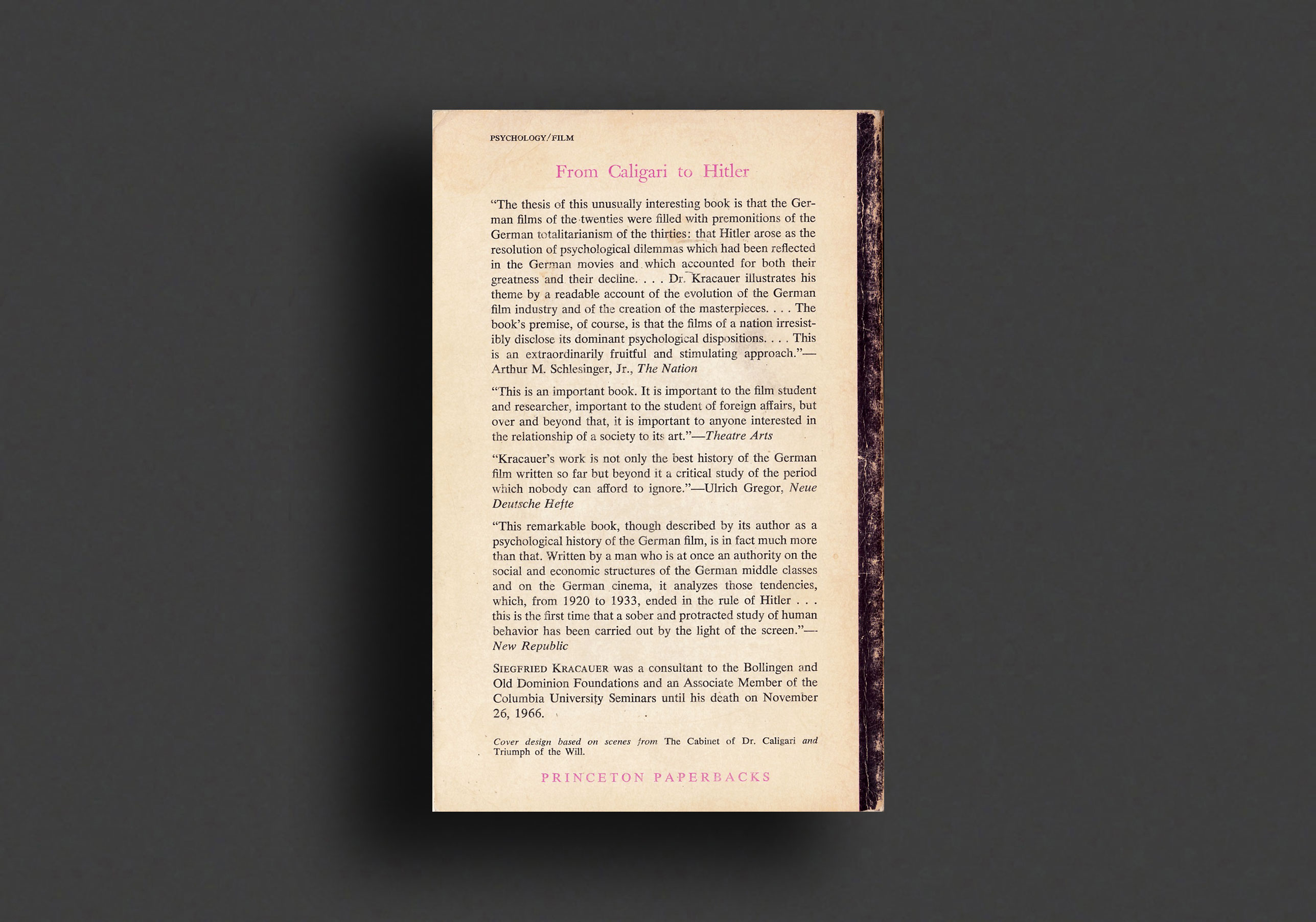
In the fall of 1957 the University of California Press expanded Arnheim’s 1933 book Film by four essays and brought that landmark work back into print as Film as Art, a book continues to occupy an important place in the literature of film. Arnheim’s method, provocative in this age of technological wizardry, was to focus on the way art in film was derived from that medium’s early no sound, no color, no three-dimensional depth.
"This is a book of standards, a theory of film. The greater part of it is an adaptation of Film als Kunst, first published in 1932 in the original German and in English by Faber and Faber in 1933—an edition long out of print but still in demand because it raises fundamental questions that the intervening years have by no means answered.
Arnheim's provocative thesis is that the peculiar virtues of film as art derive from an exploitation of limitations of the medium: the absence of sound, the absence of color, the lack of three-dimensional depth. Silent-film artists made virtues of these necessities and were on their way to developing a new and distinctive art form. Mechanical advancement has led to greater realism and a corresponding loss in artistry.
The four essays which make up the rest of the book are supplementary in nature. The final one discusses the general aesthetic rules for the combination of different media-word, image, and sound—and leads to an evaluation of the talking picture as a medium for artistic expression."
"More than half a century since its initial publication, this deceptively compact book remains among the most incisive analyses of the formal and perceptual dynamics of cinema. No one who cares about film can afford to remain ignorant of its insights and wisdom. As digital technology fundamentally alters motion pictures, the lessons of Film as Art commend themselves as excellent insurance against reinventing the wheel in the new media landscape and hailing it as progress."—Edward Dimendberg author of Film Noir and the Spaces of Modernity
"After more than eight decades, Rudolph Arnheim's small book of film theory remains one of the essential works in defining film art, understanding film less as reproducing the world than as opening up new possibilities for formal play and unexpected imagery. Anyone serious about film, whether scholar, filmmaker or simply a lover of cinema, must take Arnheim seriously."—Tom Gunning, author of The Films of Fritz Lang and D.W. Griffith and the Origins of American Narrative Film
Rudolf Arnheim (1904–2007) was a German-born author, art and film theorist, and perceptual psychologist. He learned Gestalt psychology from studying under Max Wertheimer and Wolfgang Köhler at the University of Berlin and applied it to art. His magnum opus was his book Art and Visual Perception: A Psychology of the Creative Eye (1954). Other major books by Arnheim have included Visual Thinking (1969), and The Power of the Center: A Study of Composition in the Visual Arts (1982). Art and Visual Perception was revised, enlarged and published as a new version in 1974, and it has been translated into fourteen languages. He lived in Germany, Italy, England, and America. Most notably, Arnheim taught at Sarah Lawrence College, Harvard University, and the University of Michigan. He has greatly influenced art history and psychology in America.
Very Good copy of the 1957 edition in later paperback reprint (year unknown).
1974, English
Softcover, 256 pages, 17.8 x 12.7 cm
1st Edition, Out of print title / used / good
Published by
Pelican / London
$30.00 - In stock -
First 1974 edition of Film And Reality: A Historical Survey by Roy Armes.
"Most contemporary film criticism does not take into account the relationship between artistic achievement and the historical context. Film and Reality sets out to redress the balance by offering both a broad outline of the cinema's development and a framework within which critical judgements can be made. Roy Armes explores in this book the varying relationships between image and reality in films from Lumière to the present.
The author first looks at film realism - from the early documentaries of Vertov and Flaherty to cinema-verité - and at the progress of fictional realism - from Stroheim's silent masterpiece, Greed, to the films of Renoir, Rossellini and the television work of Kenneth Loach. In the second part of his book he considers Hollywood and film illusion, showing how The work of Griffith and Chaplin finally gave place to a formalized system of studios, stars and genres. The book concludes with a discussion about the growth of film modernism and demonstrates how film, as a new and important twentieth-century art form closely related to such movements as Expressionism and Surrealism, has found its place as a genuinely new form of expression alongside the novel and the theatre."
The cover shows a still from Buñuel's 'Un Chien Andalou'
Roy Armes (b. 1937) is a British professor emeritus and film scholar who has written numerous books on the history of filmmaking and select filmmakers. He wrote a treatise on the film Omar Gatlato and books on Alain Robbe-Grillet and Alain Resnais.
Good copy, average wear to covers and spine, toning to pages.
2010, English
Softcover, 250 pages, 20.5 x 14 cm
Published by
City Lights Books / San Francisco
$40.00 - Out of stock
Pier Paolo Pasolini (1922-1975) was a major cultural figure in post-WWII Italy, well-known as a poet, novelist, communist intellectual, and filmmaker. "In Danger" is the first anthology in English devoted to his political and literary essays, with a generous selection of his poetry. Against the backdrop of post-war Italy, and through the mid-'70s, Pasolini's writings provide a fascinating portrait of a Europe in which fascists and communists violently clashed for power and where journalists ran great risks. The controversial and openly gay Pasolini was murdered at the age of fifty-three; "In Danger" includes his final interview, conducted hours before his death.
Jack Hirschman (1933 – 2021) was an American poet and social activist who has written more than 50 volumes of poetry. Dismissed from teaching at UCLA for anti-war activities in 1966, he moved to San Francisco in 1973, and was the city's present poet laureate. Hirschman translated nine languages and edited The Artaud Anthology.
2014, English
Softcover, 106 pages, 20.32 x 12.7 cm
Published by
Contra Mundum Press / New York
$34.00 - In stock -
Written between 1963 and 1967, The Divine Mimesis, Pasolini's imitation of the early cantos of the Inferno, offers a searing critique of Italian society and the intelligentsia of the 1960s. It is also a self-critique by the author of The Ashes of Gramsci (1957) who saw the civic world evoked by that book fading absolutely from view.
By the mid-1960s, Pasolini theorized, the Italian language had sacrificed its connotative expressiveness for the sake of a denuded technological language of pure communication. In this context, he projects a 'rewrite' of Dante's Commedia in which two historical embodiments of Pasolini himself occupy the roles of the pilgrim and guide in their underworld journey. Densely layered with poetic and philological allusions, and illuminated by a parallel text of photographs that juxtapose the world of the Italian literati to the simple reality of rural Italian life, this narrative was curtailed by Pasolini several years before he sent it to his publisher, a few months prior to his murder in 1975. Yet, many of Pasolini's projects took the provisional form of "Notes toward..." an eventual work, such as Sopralluoghi in Palestina (Location Scouting in Palestine), Appunti per una Oresteiade africana (Notes for an African Oresteia), and Appunti per un film sull'India (Notes for a Film on India). The Divine Mimesis has a kinship to these filmic works as Pasolini himself ruled it 'complete' though still in a partial form. Written at a turning point in his life when he was wrestling with his poetic 'demons, ' the true center of gravity of Pasolini's Dantean project is the potential of poetry to teach and probe, ethically and aesthetically, in reality. "I wanted to make something seething and magmatic," Pasolini declared, "even if in prose."
In this first English translation of Pasolini's La divina mimesis, Italianist Thomas E. Peterson offers historical, linguistic, and cultural analyses that aim to expand the discourse about an enigmatic author considered by many to be the greatest Italian poet after Montale. Published by Contra Mundum Press one year in advance of the 40th anniversary of Pasolini's death.
1994, English
Softcover, 120 pages, 24 x 19 cm
1st Edition, Out of print title / used / fine
Published by
Stedelijk Museum / Amsterdam
$45.00 - Out of stock
Catalogue published on the occasion of Joan Jonas: Works 1968–1994, curated by Dorine Mignot, Stedelijk Museum, Amsterdam, May 31–June 19, 1994. Joan Jonas’s 1994 retrospective at the Stedelijk Museum, Amsterdam, cemented her position as a key performance and video artist of her generation. As one her first retrospectives outside of the United States, the show highlighted the artist’s popularity in Europe in the 1990s—especially in the Netherlands and Italy—where she would continue to work late into her career. Jonas and Stedelijk curator Dorine Mignot worked in close curatorial collaboration to organize the retrospective around a selection of the artist’s pieces that most accurately represented her practice of drawing on various mediums. Aiming to translate a selection of her live performances into installations, she and Mignot chose appropriate video and audiotapes, as well as selections of props, drawings, costumes, and slides for each gallery.
Profusely illustrated throughout with accompanying texts.
Fine copy.
2011, Japanese / Czech
Softcover (w. dust jacket), 180 pages, 23 x 21 cm
1st Edition, Out of print title / used / fine
Published by
Access / Japan
$90.00 - In stock -
Scarce exhibition catalogue surveying the work of Czech Surrealist artists Jan and Eva Švankmajer, published to accompany a major retrospective in Japan in 2011. Eva Švankmajerová (1940 – 2005, b. Eva Dvořáková in Kostelec nad Černými lesy), was a renowned painter, ceramicist, and writer active in the Czech and Slovak Surrealist Group who's poetry and prose regularly appeared in the journal Analogon. Švankmajerová was married to the Surrealist filmmaker Jan Švankmajer (b. Prague, 1934) and collaborated on many of his award-winning animated masterpieces, including Alice (1988), Faust (1994), Conspirators of Pleasure (1996) and Otesánek (2000). Lavishly illustrated throughout, this catalogue includes chapters on Jan and Eva Švankmajer's independent and collaborative works, spanning painting, objects, collage, ceramics, poetry, graphics, and their highly acclaimed animated film works. Also includes Jan Švankmajer's collaboration with Japanese photographer Eikoh Hosoe. Includes detailed history, list of works and accompanying texts, alongside production insights and studio photography.
As New copy.
2019, English
Softcover, 96 pages, 13.9 x 21.6 cm
Published by
Divided Publishing / London
$39.00 - Out of stock
If winning can only occur in a competition between equal opponents, someone who isn’t equal will need to adopt a different strategy and let go of the promise, or the curse, of victory. Anna Zett takes up the challenge in this collection of personal science fiction, registering the traces systems of power leave in the body, in its locomotory, nervous and digestive systems. Zett’s voice appears in several textual guises, addressing authority, resistance, trauma and the physicality of language. Dedicated to the feminist revolution, the post-socialist subject of Artificial Gut Feeling questions logocentric and capitalist beliefs about the economy of meaning. This book gathers together fists, guts and brains to gain a deeper understanding of the non-verbal roots of dialogue.
Anna Zett (b. 1983, Leipzig) is an artist, writer and filmmaker. Her work combines historical analysis and poetic form with playful embodied practice. In 2014 she released two videos dealing with extinct animals as emblems of colonial capitalism in the West, which were screened widely in the context of contemporary art. In recent years, her research into the cosmology of scientific modernism has focused on post-communist trouble, industrialism and the German heritage of violence. Formally, her artistic emphasis moves towards listening, voice and the human body’s capacity to improvise verbal and non-verbal group communication. Zett has written and directed two experimental radio plays for German public radio and (co-)hosted participatory formats of storytelling, discourse and choreography. Artificial Gut Feeling is her first book. She lives in Berlin.
“This being is able to transform movement into speech. It winds itself about inside me like a thick snake and I have to use all my strength to let it spin and do what it does. When I wilfully try to stop it, it begins to whisper words to me and that is even more unpleasant. If I were to associate this gut feeling with an emotion, I would say disgust. But this disgust is not directly linked to your name...” — Anna Zett
1992, Japanese
Softcover, 176 pages, 13 x 18 cm
1st Edition, Out of print title / used / very good
Published by
Fiction Inc. / Tokyo
$70.00 - In stock -
Issue No.43 of the great SALE2 periodical from Tokyo Japan during the late 1980s and early 1990s.
Published regularly as a sort-of fanzine/journal/catalogue/pocket-book by Fiction, Inc., a specialty shop and publisher of fetish and erotica in Tokyo in the 1980-90s. Each issue covers different themes and features, heavy on fetishism.
Issue No.43, the "Sexploitation Films" issue features "Biker Films, Beach Party Films, LSD Films, Women in Prison Films, Mondo Films...", a filmography from "A Taste of Flesh" (1967) to "The Wild, Wild World of Jayne Mansfield" (1968), a long interview with cult director Herschell Gordon Lewis, Russ Meyer, plus Carlo Mollino, Pierre Molinier, John Willie, Guido Crepax, Irving Claw, Betty Page, Gilles Berquet, and periodicals such as Sweet Gwen's, Bizarre, Gwendoline, Rigorosa Disciplina, and much more...
Very heavily illustrated throughout with erotic photography and artwork, all texts in Japanese.
1991 , English
Softcover, 366 pages, 21 x 14 cm
1st Edition, Out of print title / used / very good
Published by
University of California Press / Berkley
$35.00 - Out of stock
This book brings together the great majority of Roland Barthes's interviews, most of which originally appeared in France in Le Figaro Littéraire, Cahiers du Cinéma, France-Observateur, L'Express, and elsewhere. Barthes replied to questions on the cinema, on his own works, on fashion, writing, and criticism. Here we have Barthes in conversation, speaking directly, with all his individuality. His voice, transcribed here, illuminates the subject of his discourse with the brilliance of his vivid, speaking mina, addressing us directly from the page. These interviews provide an insight into the rich, probing intelligence of one of the great and influential minds of our time.
"As a first introduction to the work of Roland Barthes, The Grain of the Voice could not be bettered. Stimulated by generally intelligent questioners, Barthes here talks about the development of his thought, explains why and how he wrote his many books, and pays tribute to philosophers, linguists, novelists, poets, painters, and film-makers who have interested and inspired him. ... What comes across most vividly is the sheer gusto of a man who never stopped developing and changing, never stopped interacting with contemporaries of all ages and all tastes, and never stopped enjoying his intellectual activities and spiritual explorations."—S. S. Prawer, Washington Post Book World
"Perhaps the best introduction to date on Barthes and his work."—Scott Montgomery, The Bloomsbury Review
Roland Barthes was born in 1915 and studied French literature and classics at the University of Paris. After teaching French at universities in Rumania and Egypt, he joined the Centre National de Recherche Scientifique, where he devoted himself to research in sociology and lexicology. He was a professor of the Collège de France until his death in 1980.
VG copy. Remaindered line to base, otherwise NF.
1998, English
Softcover, 258 pages, 23 x 15 cm
1st Edition, Out of print title / used / very good
Published by
Stanford University Press / Palo Alto
$35.00 - In stock -
Phantom Communities reconsiders the status of the simulacrum—sometimes defined as a copy of a copy, but more rigorously defined as a copy that subverts the legitimacy and authority of its model—in light of recent debates in literature, art, philosophy, and cultural studies.
The author pursues two interwoven levels of analysis. On one level, he explores the poetics of the simulacrum, considered as a form that internalizes repetition, through close readings of a number of exemplary literary texts, paintings, and films from both the Anglo-American and French traditions, including works by Jean Genet, Pierre Klossowski, René Magritte, Andy Warhol, J. G. Ballard, Balthus, and Raúl Ruiz. Through his readings of these works, the author follows the transformations of the simulacrum, showing how its vicissitudes provide an optic for remapping the postmodern canon.
On another level, the author offers an account of the role played by the simulacrum as a theoretical concept that assumes varying analytical and ideological valences in the writings of such theorists as Jean Baudrillard, Fredric Jameson, Michel Foucault, and Gilles Deleuze. In so doing, Phantom Communities intervenes in ongoing interdisciplinary debates concerning the historical and ideological limits of postmodernism, as well as the utopian possibilities of art, literature, and philosophy in a postmodern context.
Moving between these debates and the interpretation of individual works, the author shows how they converge on the fundamental aesthetic and ideological problem raised by the postmodern culture of the simulacrum: imagining the virtual communities that, at the margins of postmodern culture, are at once figured and eclipsed by its proliferating images.
VG copy.