World Food Books' programme is largely produced on Kulin Nation land. We acknowledge the Wurundjeri people of the Kulin Nation as the first and continuing custodians of this land, and pay respect to their Elders past, present, and emerging.
World Food Books is an arts and special interests bookshop in Naarm / Melbourne. Founded in 2010, World Food Books is devoted to the presentation of a rotating, hand-selection of international art, design, literary and counterculture publications with an emphasis on the anti-traditional, the experimental, the avant-garde, the heretic, the marginal.
Presenting new titles alongside rare and out-of-print books, catalogues and journals spanning the fields of modern and contemporary art, design, photography, illustration, film, literature, poetry, cultural theory, philosophy, sexuality, popular and underground culture in its many radical forms, World Food Books wishes to encourage adventurous, thoughtful and open-minded reading, looking, writing, and exchange of publishing and ideas, both current and historical.
As well as our bookshop, located in Melbourne's historical Nicholas Building, all of our inventory is available internationally via our online mail-order service.
World Food Books semi-regularly co-ordinates "Occasions", a programme of exhibits and events at the bookshop and in partnership with other hosts (such as museums and art galleries) that develop out of the activities, relationships and content of the bookshop itself.
World Food Books
The Nicholas Building
37 Swanston Street
Room 5, Level 6
Melbourne 3000
Australia
SHOP HOURS:
THU–SAT 12–6
WEB-SHOP OPEN 24/7
World Food Books
Postal Address:
PO Box 435
Flinders Lane
Victoria 8009
Australia
info@worldfoodbooks.com
Art
Theory / Essay
Architecture / Interior
Graphic Design / Typography
Photography
Fashion
Eros
LGBTQ+
Fiction / Poetry
Weird / Speculative / Science Fiction / Horror
Transgressive / Visceral / Abject
Symbolism / Decadence / Fin de siècle
Film / Video
Painting
Sculpture / Installation
Performance / Dance / Theater
Drawing
Sound / Music
Curatorial
Group Shows / Collections
Periodicals
Out-of-print / Rare
Posters / Ephemera / Discs
Signed Books
World Food Books Gift Voucher
World Food Book Bag
Australian Art
Australian Fiction
Australian Science Fiction / Speculative Fiction
Australian Poetry
Australian Photography
Japanese Photography
Conceptual Art
Minimal Art
Dada
'Pataphysics / Oulipo
Fluxus
Concrete Poetry
Pop Art
Surrealism
Arte Povera
Arte Informale / Haute Pâte / Tachism
Nouveau Réalisme / Zero / Kinetic
Situationism / Lettrism
Collage / Mail Art / Xerox Art
Art Brut / Folk / Visionary / Fantastic
Illustration / Graphic Art / Bandes Dessinées
Furniture
Italian Radical Design / Postmodernism
Textiles
Ceramics / Glass
Counterculture
Protest / Revolt
Philosophy
Psychoanalysis
Anthropology
Anarchism
Socialism / Anarchism / Communism / Capitalism
Literary Theory / Semiotics / Language
Feminism / Women's Studies
Gender Studies / Sexuality
Anthropology
Fetishism / BDSM
Drugs / Psychedelia
Crime / Violence
Animal Rights / Veganism
Occult / Esoterica
Ecology / Earth / Alternative Living
Whole Earth / Crafts
All prices in AUD (Australian dollars)
Pick-Ups
Pick-up orders can be collected in our bookshop during opening hours after order date. Please collect any Pick-up orders within 2 weeks of ordering as we have limited storage space. Orders will be released back into stock if not collected within this time. No refunds can be made for pick-ups left un-collected. If you cannot make it in to the bookshop in this time-frame, please choose postage option.
Return Policy
All sales are final. We do accept returns (for refund or exchange) for items received in error. All our orders are packed with special care using heavy-duty padding and cardboard book-mailers or bubble mailers (for smaller books), using reinforcement where required. We cannot take responsibility for any lost, stolen or damaged parcels.
Insurance
Should you wish to insure your package, please email us directly after placing your order and we can organise this at a small extra expense. Although all standard/express tracked packages are very safe and dependable, we cannot take responsibility for any lost, stolen or damaged parcels. We recommend insurance on valuable orders.
Interested in selling your old books, catalogues, journals, magazines, comics, fanzines, ephemera? We are always looking for interesting, unusual and out-of-print books to buy. We only buy books in our fields of interest and specialty, and that we feel we can resell.
We base these prices on desirability, market value, in-print prices, condition and our current stock levels. We offer cash, store credit, and can take stock on consignment. All
about 25% of the price we expect to get when we sell them, or 30% in store credit. We base these prices on desirability, market value, in-print prices, condition and our current stock levels.
Sell your books any day of the week. You can drop them off and return later. If you have a lot of books, we can visit your Sydney home.
We buy books that we feel we can resell. We offer about 25 % of the price we expect to get when we sell them, or 30% in store credit. We base these prices on desirability, market value, in-print prices, condition and our current stock levels.
Philadelphia Wireman
03 August - 01 September, 2018
World Food Books is proud to announce our next Occasion, the first presentation of sculptures by Philadelphia Wireman in Australia.
The Philadelphia Wireman sculptures were found abandoned in an alley off Philadelphia’s South Street on trash night in 1982. Their discovery in a rapidly-changing neighbourhood undergoing extensive renovation, compounded with the failure of all attempts to locate the artist, suggests that the works may have been discarded after the maker’s death. Dubbed the "Philadelphia Wireman" during the first exhibition of this work, in 1985, the maker’s name, age, ethnicity, and even gender remain uncertain. The entire collection totals approximately 1200 pieces, all intricately bound together with tightly-wound heavy-gauge wire (along with a few small, abstract marker drawings, reminiscent both of Mark Tobey and J.B. Murry). The dense construction of the work, despite a modest range of scale and materials, is singularly obsessive and disciplined in design: a wire armature or exoskeleton firmly binds a bricolage of found objects including plastic, glass, food packaging, umbrella parts, tape, rubber, batteries, pens, leather, reflectors, nuts and bolts, nails, foil, coins, toys, watches, eyeglasses, tools, and jewellery.
Heavy with associations—anthropomorphic, zoomorphic, and socio-cultural responses to wrapped detritus—the totemic sculptures by Philadelphia Wireman have been discussed in the context of work created to fulfil the shamanistic needs of alternative religions in American culture. Curators, collectors, and critics have variously compared certain pieces to sculpture from Classical antiquity, Native American medicine bundles, African-American memory jugs, and African fetish objects. Reflecting the artist’s prolific and incredibly focused scavenging impulse, and despite—or perhaps enhanced by—their anonymity, these enigmatic objects function as urban artefacts and arbiters of power, though their origin and purpose is unknown. Philadelphia Wireman, whatever their identity, possessed an astonishing ability to isolate and communicate the concepts of power and energy through the selection and transformation of ordinary materials. Over the course of the past two decades, this collection has come to be regarded as an important discovery in the field of self-taught art and vernacular art.
Presented in collaboration with Fleisher-Ollman Gallery, Philadelphia, and Robert Heald, Wellington.
Susan Te Kahurangi King
02 February - 10 March, 2018
Susan Te Kahurangi King (24 February 1951 - ) has been a confident and prolific artist since she was a young child, drawing with readily available materials - pencils, ballpoint pens and felt-tip markers, on whatever paper is at hand. Between the ages of four and six Susan slowly ceased verbal communication. Her grandparents William and Myrtle Murphy had developed a special bond with Susan so they took on caring responsibilities for extended periods. Myrtle began informally archiving her work, carefully collecting and storing the drawings and compiling scrapbooks. No drawing was insignificant; every scrap of paper was kept. The King family are now the custodians of a vast collection containing over 7000 individual works, from tiny scraps of paper through to 5 meter long rolls.
The scrapbooks and diaries reveal Myrtle to be a woman of great patience and compassion, seeking to understand a child who was not always behaving as expected. She encouraged Susan to be observant, to explore her environment and absorb all the sights and sounds. Myrtle would show Susan’s drawings to friends and people in her community that she had dealings with, such as shopkeepers and postal workers, but this was not simply a case of a grandmother’s bias. She recognised that Susan had developed a sophisticated and unique visual language and sincerely believed that her art deserved serious attention.
This was an unorthodox attitude for the time. To provide some context, Jean Dubuffet coined the term Art Brut in 1945 to describe work created by self-taught artists – specifically residents of psychiatric institutions and those he considered to be visionaries or eccentrics. In 1972 Roger Cardinal extended this concept by adopting the term Outsider Art to describe work made by non-academically trained artists operating outside of mainstream art networks through choice or circumstance. Susan was born in Te Aroha, New Zealand in 1951, far from the artistic hubs of Paris and London that Dubuffet and Cardinal operated in. That Myrtle fêted Susan as a self-taught artist who deserved to be taken seriously shows how progressive her attitudes were.
Susan’s parents Doug and Dawn were also progressive. Over the years they had consulted numerous health practitioners about Susan’s condition, as the medical establishment could not provide an explanation as to why she had lapsed into silence. Dawn educated herself in the field of homeopathy and went on to treat all twelve of her children using these principles – basing prescriptions on her observations of their physical, mental and emotional state.
Doug was a linguist with an interest in philosophy who devoted what little spare time he had to studying Maori language and culture. To some extent their willingness to explore the fringes of the mainstream made them outsiders too but it was their commitment to living with integrity and their respect for individuality that ensured Susan’s creativity was always encouraged.
Even though Susan’s family supported her artistic pursuits, some staff in schools and hospitals saw it as an impediment to her assimilation into the community and discouraged it in a variety of ways. Her family was not always aware of this and therefore did not fully understand why Susan stopped drawing in the early 1990s. However, rather than dwell on the challenges that Susan faced in pursuit of her artistic practice, they prefer to highlight her achievements. In 2008 Susan began drawing again in earnest, after an almost 20 year interruption, and her work is now shown in galleries around the world.
Susan grew up without television and has been heavily influenced by the comics she read as a child. She is absolutely fearless in the appropriation of recognizable characters, such as Donald Duck and Mickey Mouse, in her work. She twists their limbs, contorts their faces, compresses them together, blends them into complex patterned backgrounds - always imbuing them with an incredible energy. Although Susan often used pop culture characters in her work they are not naive or childlike. These are drawings by a brilliant self-taught artist who has been creating exceptional work for decades without an audience in mind.
Mladen Stilinović
"Various Works 1986 - 1999"
02 February 16 - September 10, 2016
Various works 1986 - 1999, from two houses, from the collections of John Nixon, Sue Cramer, Kerrie Poliness, Peter Haffenden and Phoebe Haffenden.
Including: Geometry of Cakes (various shelves), 1993; Poor People’s Law (black and white plate), 1993; White Absence (glasses, ruler, set square, silver spoon, silver ladel with skin photograph and wooden cubes), 1990-1996; Exploitation of the Dead (grey and red star painting, wooden painting, black spoon with red table, red plate), 1984-1990; Money and Zeros (zero tie, paintings made for friends in Australia (Sue, John, Kerrie), numbers painting), 1991-1992; Words - Slogans (various t-shirts) - “they talk about the death of art...help! someone is trying to kill me”, “my sweet little lamb”, “work is a disease - Karl Marx”; Various artist books, catalogues, monographs, videos; Poster from exhibition Insulting Anarchy; "Circular" Croatian - Australian edition; Artist book by Vlado Martek (Dostoyevsky); more.
Thanks to Mladen Stilinović and Branka Stipančić.
Jonathan Walker
Always Will Need To Wear Winter Shirt Blue + Ochre Small Check Pattern
21 August - 21 September, 2015
Untitled
I am not a great reader of poetry but I always return to the work of Melbourne poet, Vincent Buckley (1925- 1988). Perhaps I find his most tantalising piece to be not a finished poem but a fragment left on a scrap of paper discovered on his desk after the poet’s death.
The poetry gathers like oil
In the word-core, and spreads
It has its music meet,
Its music is in movement.
This fragment is more the shell left behind from a volatile thought than a finished poem. I find the last two lines honest but awkward whereas the first two lines work like an arrow. Most likely he could not find a resolution so it was left. Still, in its present form, it remains an eloquent testimony to the ultimate failure of a medium to express mobile thought and sensation, in Buckley’s case, through verbal language. It’s an important matter because this is something all artists have to deal with regardless of the medium.
I have never written a poem, however, I am forever copying fragments from books on paper scraps in a vain effort to fix certain notions in my head. At first, they function as bookmarks that are sometimes returned to when I open the book. But before long, as they accumulate, they fall out littering the table interspersed with A4 photocopies, bills, books and medications.
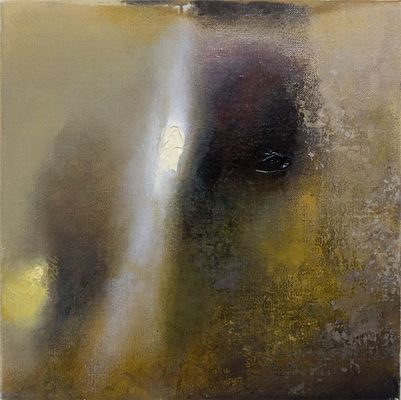
To return to Buckley’s fragment, the first two lines very much evoke how I paint nowadays. As you age, detail diminishes and patches of light become more luminous and float. I feel the most honest way of dealing with this is by smearing the oil paint on the canvas with the fingers and working close-up, blind. Only if the patches coalesce into an approaching image can the work gain a life.
-
Jonathan Walker was born in Melbourne, Australia and brought up on a dairy farm in Gippsland. In the 1970’s he studied painting at RMIT and won the Harold Wright Scholarship to the British Museum, London. During the 1980’s he exhibited at Pinacotheca Gallery, Richmond and had work shown at the NGV and Heidi City Art Gallery. Over the same period he designed the cover for the “Epigenesi” LP by Giancarlo Toniutti, Italy and conducted a mail exchange work with Achim Wollscheid, Germany. The work with artists through the post resulted in an article published in the bicentenary issue of Art and Australia 1988. He showed in artist run spaces such as WestSpace in the 90’s and 2000’s, and until 2012, taught painting at Victoria University, which is where we (Colleen Ahern and Lisa Radford) as organisers of the exhibition, among many others, had the privilege of being his student.
Walker’s knowledge was imparted to students through the careful selection of music, literature, and artists found in books that he himself had ordered for the library. Walker’s strategy was the generosity of sharing his vast knowledge with references specific to each student and their context.
Walker’s paintings share a similar focus and intimacy.
This exhibition presents a small selection of recent paintings alongside a publication that includes Walker’s writing. Observational and analytical, Walker’s work is a type of material notation — the time of day, colour and how it is blended, the both specific and fleeting location of a reflection on lino or the question of whether a chair leg should be included in a painting.
Please join us on Friday August 21 between 6-8pm to celebrate the opening of the exhibition.
Curated by Colleen Ahern and Lisa Radford.
B. Wurtz
Curated by Nic Tammens
March 26 - April 4, 2015
B.Wurtz works from a basement studio in his home on Manhattan’s Lower East Side.
This local fact is attested to by the plastic shopping bags and newsprint circulars that appear in his work. As formal objects, they don’t make loud claims about their origins but nonetheless transmit street addresses and places of business from the bottom of this long thin island. Like plenty of artists, Wurtz is affected by what is local and what is consumed. His work is underpinned by this ethic. It often speaks from a neighborhood or reads like the contents of a hamper:
“BLACK PLUMS $1.29 lb.”
“Food Bazaar”
“USDA Whole Pork Shoulder Picnic 99c lb.”
“RITE AID Pharmacy, with us it’s personal.”
“H. Brickman & Sons.”
“Sweet Yams 59c lb."
Most of the work in this exhibition was made while the artist was in residence at Dieu Donne, a workshop dedicated to paper craft in Midtown. Here Wurtz fabricated assemblages with paper and objects that are relatively lightweight, with the intention that they would be easily transportable to Australia. This consideration isn’t absolute in Wurtz’s work, but was prescriptive for making the current exhibition light and cheap. Packed in two boxes, these works were sent from a USPS post office on the Lower East Side and delivered to North Melbourne by Australia Post.
Wurtz appears courtesy of Metro Pictures, New York.
Thanks to Rob Halverson, Joshua Petherick, Sari de Mallory, Matt Hinkley, Helen Johnson, Fayen d'Evie, Ask Kilmartin, Lisa Radon, Ellena Savage, Yale Union, and "Elizabeth".
John Nixon
"Archive"
December 15 - January 20, 2014
The presentation of John Nixon's archive offered a rare showcase of this extensive collection of the artist's own publications, catalogues, posters, ephemera, editions and more, from the mid 1980s onwards, alongside a selection of his artworks.
Organized by John Nixon, Joshua Petherick and Matt Hinkley.
"Habitat"
at Minerva, Sydney (organised by Joshua Petherick and Matt Hinkley)
November 15 - December 20, 2014
Lupo Borgonovo, Janet Burchill & Jennifer McCamley,
Lewis Fidock, HR Giger, Piero Gilardi, Veit Laurent Kurz,
Cinzia Ruggeri, Michael E. Smith, Lucie Stahl, Daniel Weil, Wols
Press Release:
“...It contained seven objects. The slender fluted bone, surely formed for flight, surely from the wing of some large bird. Three archaic circuitboards, faced with mazes of gold. A smooth white sphere of baked clay. An age-blackened fragment of lace. A fingerlength segment of what she assumed was bone from a human wrist, grayish white, inset smoothly with the silicon shaft of a small instrument that must once have ridden flush with the surface of the skin - but the thing’s face was seared and blackened.”
William Gibson, “Count Zero”, 1986
"Autumn Projects Archive"
Curated by Liza Vasiliou
March 6 - March 15, 2014
World Food Books, in conjunction with the Virgin Australia Melbourne Fashion Festival 2014, presented the Autumn Projects archive, consisting of a selection of early examples in Australian fashion with a particular interest in collecting designers and labels from the period beginning in the 1980’s, who significantly influenced the discourse of Australian Fashion.
Curated by Liza Vasiliou, the exhibition provided a unique opportunity to view pieces by designers Anthea Crawford, Barbara Vandenberg, Geoff Liddell and labels CR Australia, Covers, Jag along with early experimental collage pieces by Prue Acton and Sally Browne’s ‘Fragments’ collection, suspended throughout the functioning World Food Books shop in Melbourne.
H.B. Peace
presented by CENTRE FOR STYLE
November 14, 2013
"Hey Blinky, you say chic, I say same"
Anon 2013
H.B. Peace is a clothing collaboration between great friends Blake Barns and Hugh Egan Westland. Their pieces explore the divergences between 'character’ and ‘personality’ in garments....etc
Special Thanks to Joshua Petherick and Matt Hinkley of WFB and Gillian Mears
and a Very Special Thank you to Audrey Thomas Hayes for her shoe collaboration.
Janet Burchill & Jennifer McCamley
"Aesthetic Suicide"
May 10 - June 8, 2013
The first of our occasional exhibitions in the World Food Books office/shop space in Melbourne, "Aesthetic Suicide" presented a body of new and older works together by artists Janet Burchill & Jennifer McCamley, including videos, prints, a wall work, and publications.
During shop open hours videos played every hour, on the hour.
1975, English
Softcover, 144 pages, 30 x 21 cm
1st Edition, Out of print title / used / very good
Published by
The Tate Gallery / London
$20.00 - Out of stock
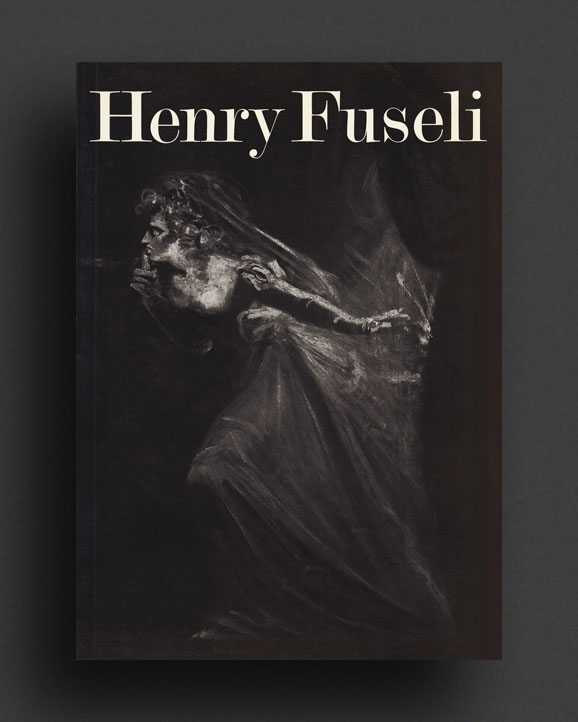
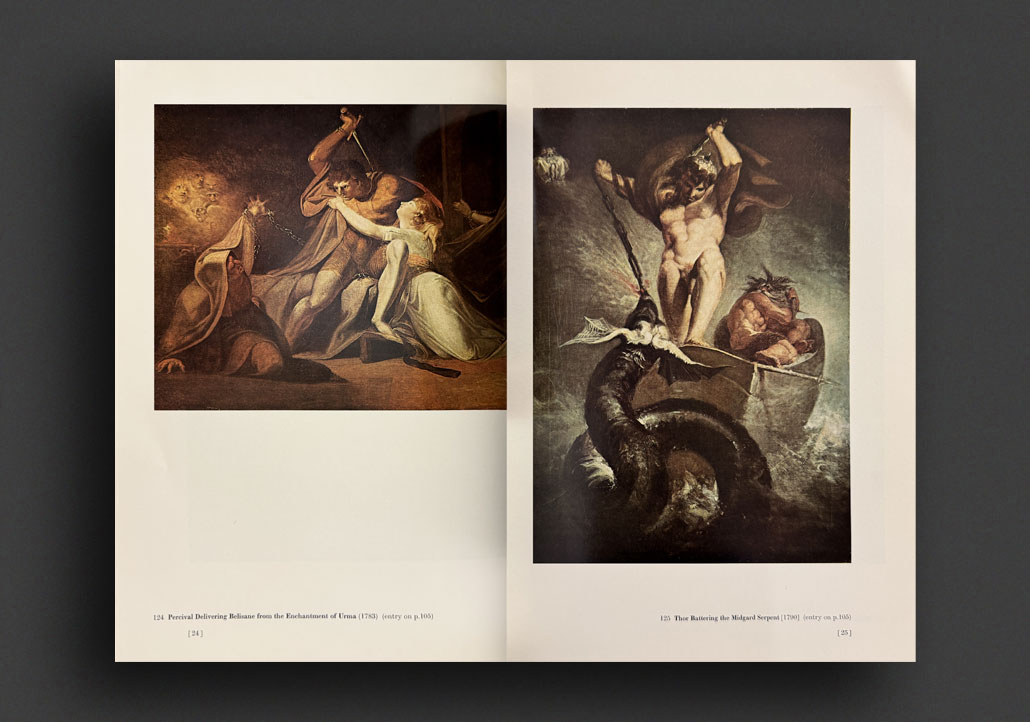
1975 catalogue published by the Tate Gllery, London. Profusely illustrated in b/w with colour plate section. Foreword by Sir Norman Reid, essays 'Fuseli, Lucifer and the Medusa' (by Gert Schiff); 'A Captive' (by Werner Hofmann); 'Biographical Outline' (by Gert Schiff).
Henry Fuseli (1741—1825) was a Swiss painter, draughtsman, and writer on art who spent much of his life in Britain. Many of his successful works depict supernatural experiences, such as The Nightmare. He produced painted works for John Boydell's Shakespeare Gallery and his own "Milton Gallery". He held the posts of Professor of Painting and Keeper at the Royal Academy. His style had a considerable influence on many younger British artists, including William Blake.
VG copy.
1988, English
Softcover, 80 pages, 30 x 23 cm
1st Edition, Out of print title / used / very good
Published by
Taschen / Cologne
$20.00 - Out of stock
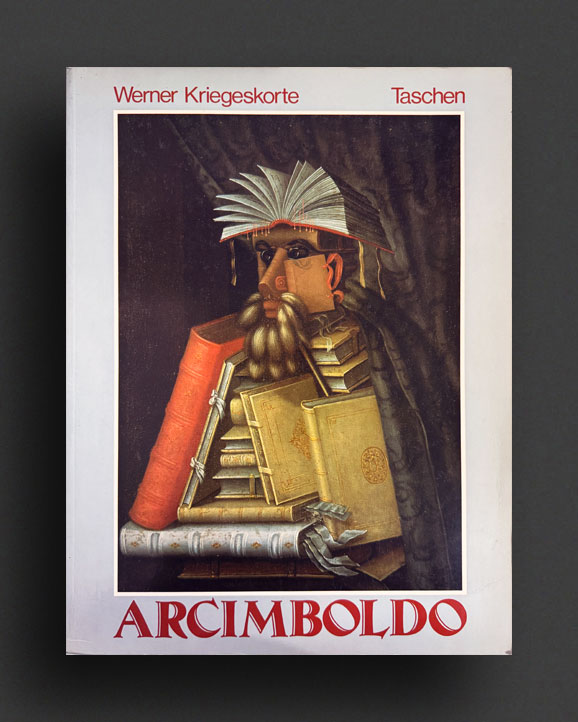
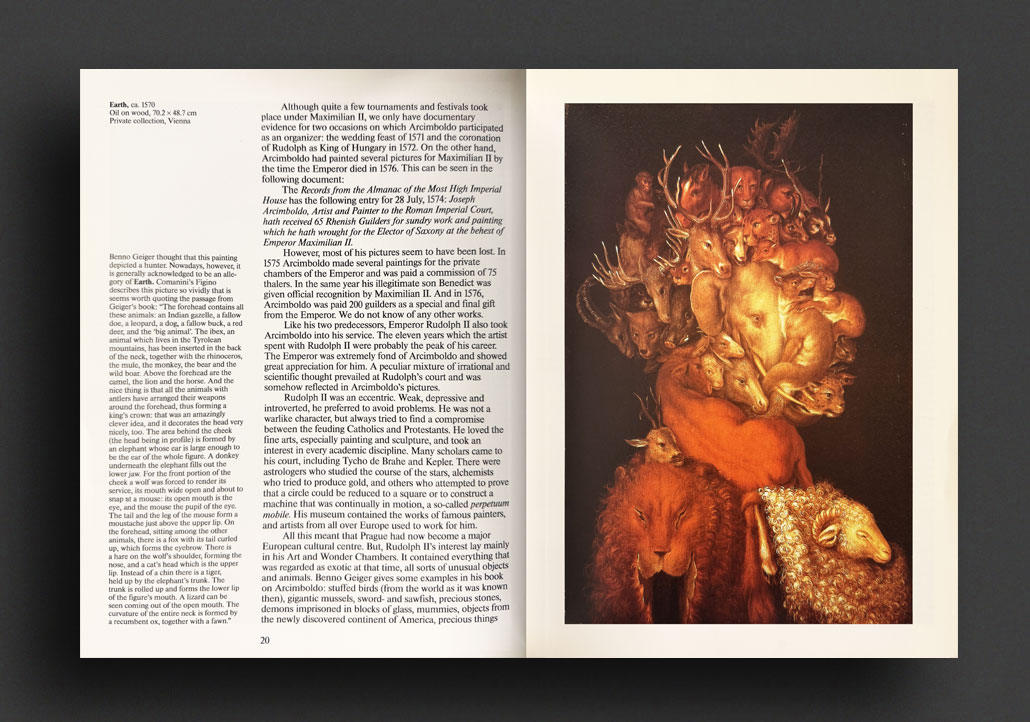
Early (first English?) printing of Werner Kriegeskorte's monograph on Giuseppe Arcimboldo (1527-1593), published in this 1988 English Taschen edition.
Giuseppe Arcimboldo (1527-1593) began his career as an artist in the glass workshops of the Milan Cathedral, where he designed glass windows depicting scenes from the lives of the saints. His talent soon caught the eye of 16th-century rulers, and he moved on to the imperial courts of Ferdinand I, Maximilian II, and Rudolf II in Prague, where he created the scenes for his "Seasons." In Arcimboldo’s allegorical paintings, Spring appears as a young man composed entirely of flowers, Summer as a composition of fruits, Autumn as a head made of grapes, and Winter as a gnarled old man twined with ivy.
Arcimboldo remained true to the allegorical principles informing the artistic and philosophical world view of the 16th century. His paintings are not only full of references to ancient classical gods and goddesses, but above all they reflect the courtly cosmos of the art chambers and "wonder cabinets" in which countless exotic and bizarre objects were housed. With the decline of this allegorical world vision between the Renaissance and Mannerism, Arcimboldo was forgotten—only to be rediscovered by modern artists.
Heavily illustrated throughout.
VG copy
1989, English / German
Softcover (w. dust jacket), 392 pages, 24 x 18.5 cm
1st Edition, Out of print title / used / fine
$165.00 - Out of stock
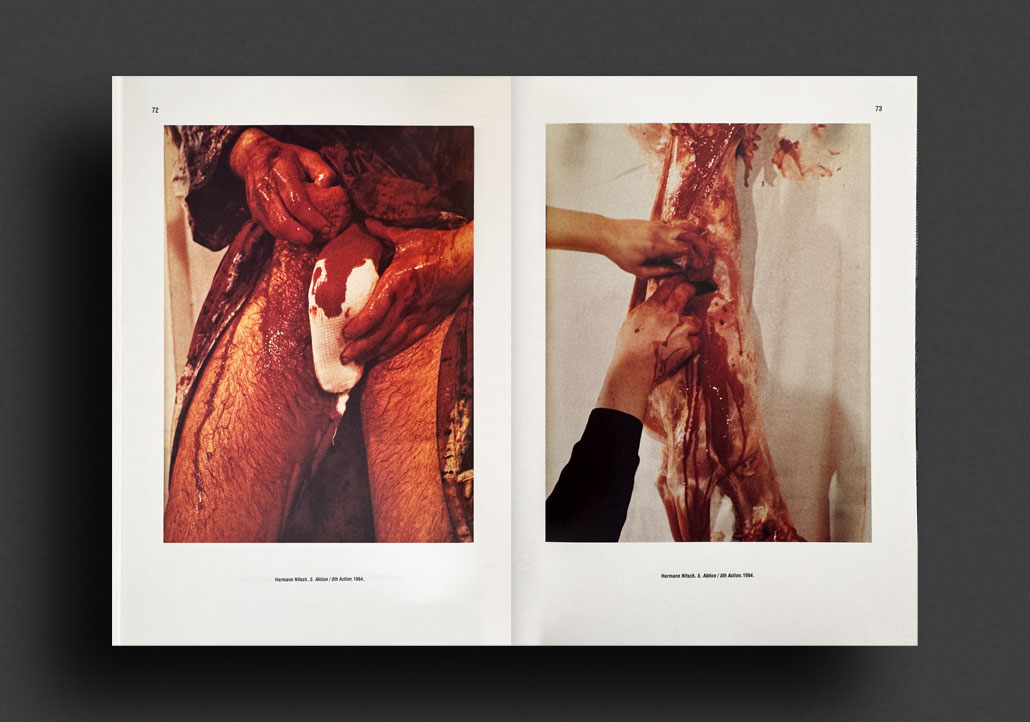
Absolutely essential reference work on the artists associated with the Vienna Actionism group, the second volume of an exhaustive account of Viennese Actionism, this book covering the later years of the movement—1960 through 1971.
Viennese Actionism was the most extreme artistic project of the 1960s, mostly preceding and always surpassing the other performance art, body art and happenings in terms of sheer violent excess. Though never officially a group, Günter Brus, Otto Mühl, Hermann Nitsch and Rudolf Schwarzkogler shared a similar reaction to the restrictive political and cultural climate of the Austrian art scene of the 1950s and 1960s. They established the body as a site of exploration, and its blood, sweat and excrement as art material: performance as the transgression of both social and religious taboo, and art itself as a violent, tragic recognition of brute fact.
Volume two of an exhaustive two-volume exhibition catalogue published in conjunction with show held at Graphische Sammlung Albertina, Wien, March—April 1989 that traveled to Museum Ludwig, Köln, August—September 1989. This handsome volume presents a vast collection of images and essays about Viennese Actionism between 1960—1971, focusing on work produced after 1964, particularly work involving process and performance. Includes essays by Hubert Klocker, entitled "The Dramaturgy of the Organic" and "The Shattered Mirror"; an essay by Konrad Oberhuber entitled "Thoughts on Viennese Actionism" ; biography, action chronology, and related images for artists Günter Brus, Otto Mühl, Hermann Nitsch, and Rudolf Schwarzkogler; bibliography.
Edited by Hubert Klocker.
Texts in both English and German.
Highly recommended.
Near Fine copy.
1996, Japanese / French
Softcover, 150 pages, 28 x 22.5 cm
1st Edition, Out of print title / used / very good
Published by
Asahi Shimbun / Japan
Brain Trust Inc. / Tokyo
$40.00 - In stock -
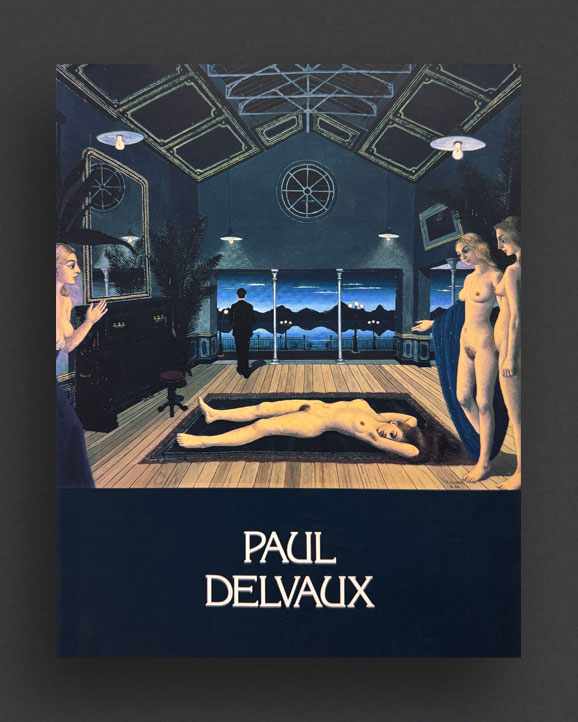
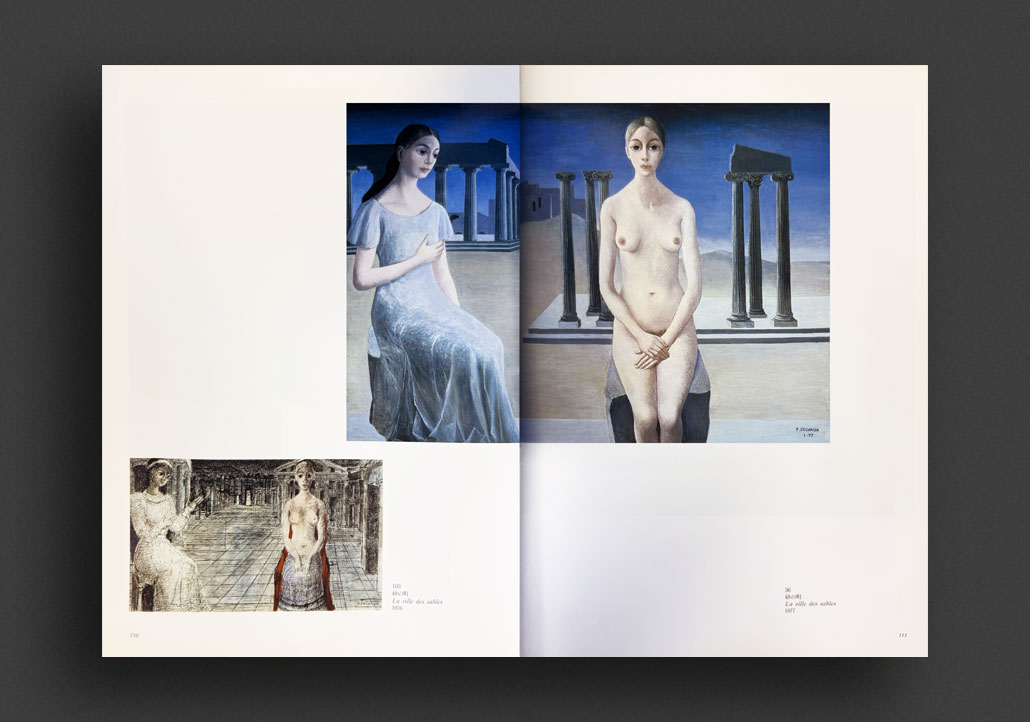
Japanese catalogue on Belgian painter Paul Delvaux (1897—1994), published by a major Japanese touring exhibition of Delvaux's work organised by Brain Trust Inc., Tokyo. Extensively illustrated with colour and b/w reproductions of paintings, drawings, prints, accompanied by texts from Charles Van Deun, Natascha Van Deun, Yoshio Yoshimura, Haruyuki Takase, full catalogue of works, illustrated biography, and more.
Paul Delvaux (1897—1994) was a Belgian painter noted for his dream-like scenes of women, classical architecture, trains and train stations, and skeletons, often in combination. He is often considered a surrealist, although he only briefly identified with the Surrealist movement. He was influenced by the works of Giorgio de Chirico and René Magritte, but developed his own fantastical subjects and hyper-realistic styling, combining the detailed classical beauty of academic painting with the bizarre juxtapositions of surrealism. Throughout his long career, Delvaux explored "Nude and skeleton, the clothed and the unclothed, male and female, desire and horror, eroticism and death – Delvaux's major anxieties in fact, and the greater themes of his later work [...]".
VG copy.
1974, Japanese
Hardcover (cloth-bound w. original illustrated card box and dust jacket) 160 pages, 21 x 21.6
1st Edition, Out of print title / used / very good
$140.00 - In stock -
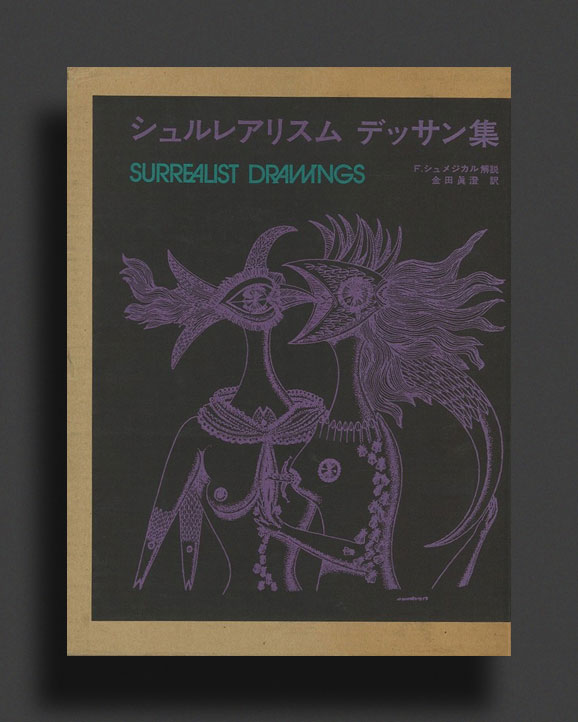
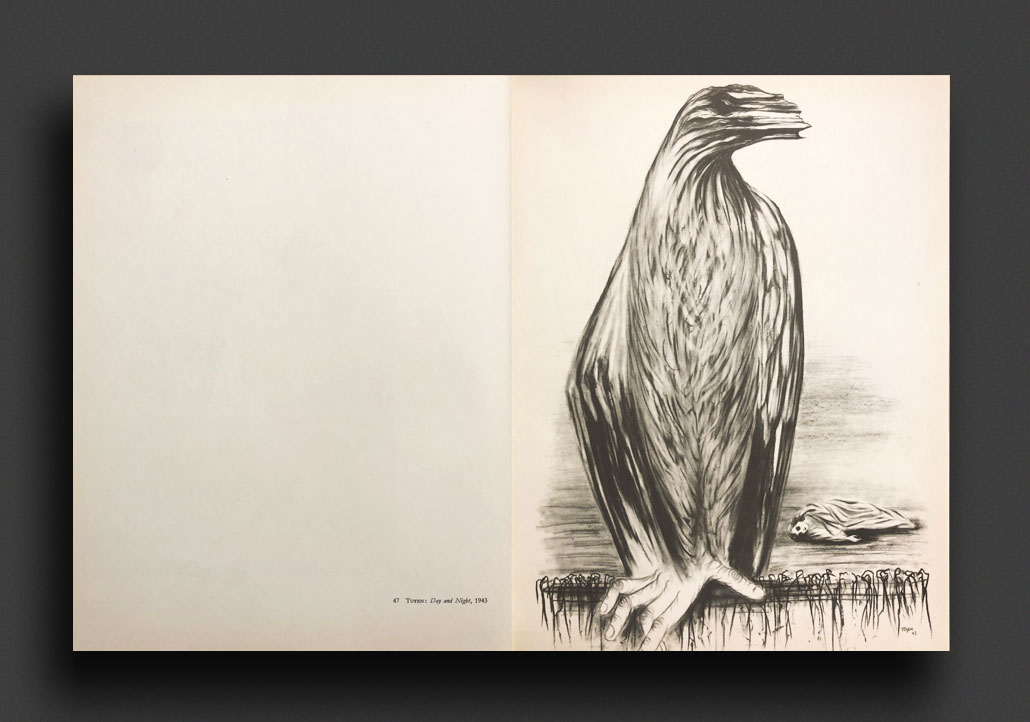
Stunning boxed first printing of the Japanese edition of "Surrealist Drawings" by František Šmejkal, printed and bound in cloth-covers in Japan in 1973. A beautiful clothbound hardcover folio of drawings by artists affiliated with Surrealism. What makes this lovely collection special is the inclusion of many of the Czech Surrealists, and a generally broad European scope of artists. Czech art historian František Šmejkal has collated a wonderful selection of works on paper by Toyen, Jindřich Štyrský, Wolfgang Paalen, Giorgio de Chirico, Hans Bellmer, Alfred Kubin, Francis Picabia, Jacques Hérold, Yves Tanguy, Man Ray, Josef Istler, Max Ernst, André Breton, František Muzika, Paul Delvaux, Wilfredo Lam, Richard Oelze, Mikuláš Medek, Joan Miró, Josef Sima, Kurt Seligmann, Odilon Redon, Andre Masson, Max Walter Svanberg, Salvador Dali, Arshile Gorky, Victor Brauner, Rene Magritte, and many more.
Very Good copy in original slipcase and plastic jacket over cloth. Almost Fine, but with corner bumping to top.
1996, English
Softcover, 354 pages, 25.4 x 20.4 cm
1st Edition, Out of print title / used / very good
Published by
Cambridge University Press / Cambridge
$55.00 - In stock -
First 1996 edition.
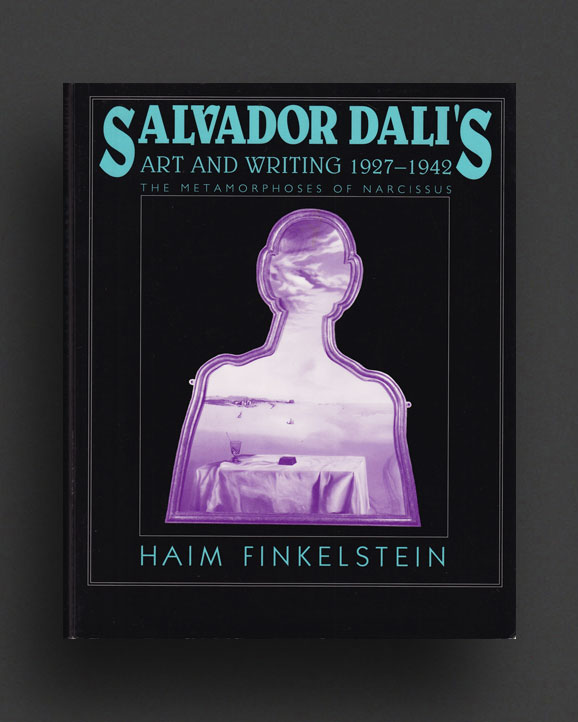
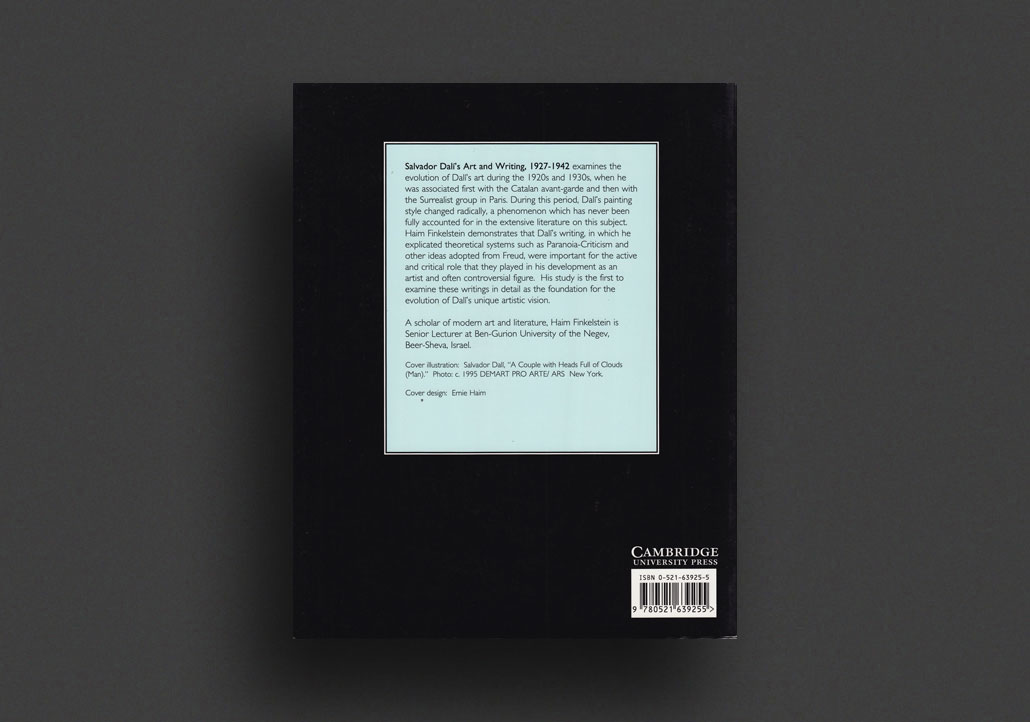
This book examines the evolution of Dalí's art during the 1920s and 1930s when he was associated first with the Catalan avant-garde and then with the Surrealist group in Paris. During this period, Dalí's painting style changed radically, a phenomenon which has never been fully accounted for in the extensive literature on this subject. Haim Finkelstein demonstrates that Dalí's writing, in which he explicated theoretical systems such as Paranoia-Criticism and other ideas adopted from Freud, were important for the active and critical role that they played in his development as an artist and often controversial figure. His 1996 study examines these writings in detail as the foundation for the evolution of Dalí's unique artistic vision.
' … this exuberant, well-focused study charts the metamorphosis of an unsure, neurotic Catalan painter into a dynamic, neurotic internationally famous (ex)-Surrealist.' Art Newspaper
'… certainly one of the better books on Dalí I have encountered … the text is an excellent exposition of what was within Dalí's horizon of expectations almost moment by moment. In this respect, the book is exemplary, going well beyond the tendency towards generalisation apparent in almost every other book-length work on the artist.' British Journal of Aesthetics
VG copy, light wear to extremities.
2021, English
Softcover (w. dust jacket), 112 pages, 22.23 x 14.61 cm
Published by
Hayward Gallery Publishing / London
$48.00 - Out of stock
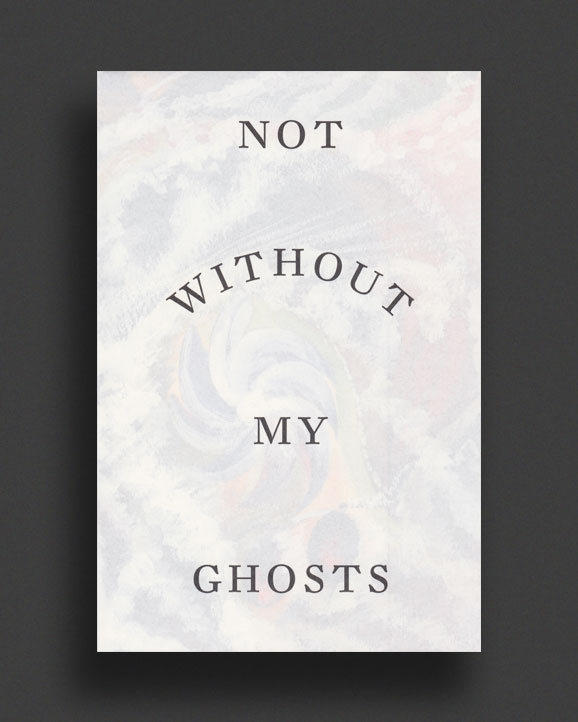
The abiding presence of spiritualism in art, from af Klint to Susan Hiller.
Bringing together more than 30 international artists from the late 19th century to the present day, Not without My Ghosts surveys work inspired by spiritualism and its rich cultural history.
With original essays by art historian Susan L. Aberth and curators Simon Grant and Lars Bang Larsen, this publication explores the anti-authoritarian political agendas of 19th-century spiritualism and the movement’s close association to the history of feminism, as well as its continued influence on contemporary practitioners. Spanning diverse artistic approaches, Not without My Ghosts offers a unique insight into the ties that bind spirit and mediumistic art across the centuries.
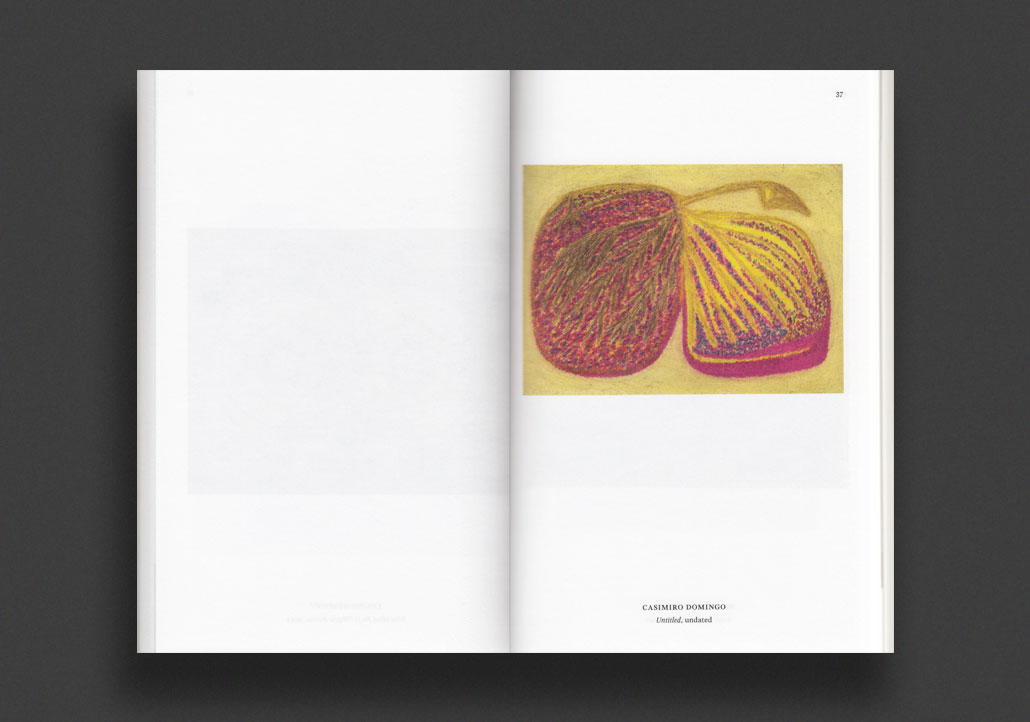
Artists: William Blake, Cameron, Ann Churchill, Ithell Colquhoun, Louise Despont, Casimiro Domingo, Madame Fondrillon, Chiara Fumai, Madge Gill, Susan Hiller, Barbara Honywood, Georgiana Houghton, Anna Mary Howitt, Victor Hugo, Augustin Lesage, Pia Lindman, Ann Lislegaard, André Masson, Grace Pailthorpe, František Jaroslav Pecka, Olivia Plender, Sigmar Polke, Lea Porsager, Austin Osman Spare, Yves Tanguy, Suzanne Treister with The Museum of Blackhole Spacetime Collective
1999, English
Softcover, 128 pages, 24 x 18 cm
1st Edition, Out of print title / used / good
Published by
Creation Books / London
The Tears Corporation / London
$40.00 - Out of stock
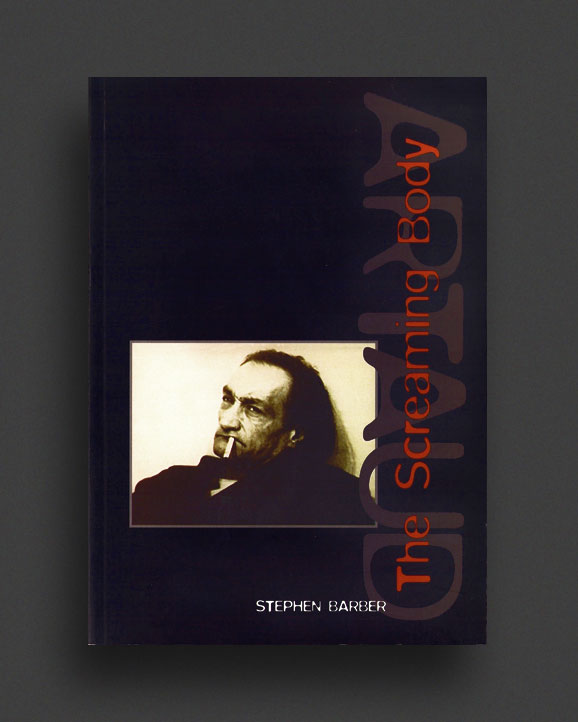
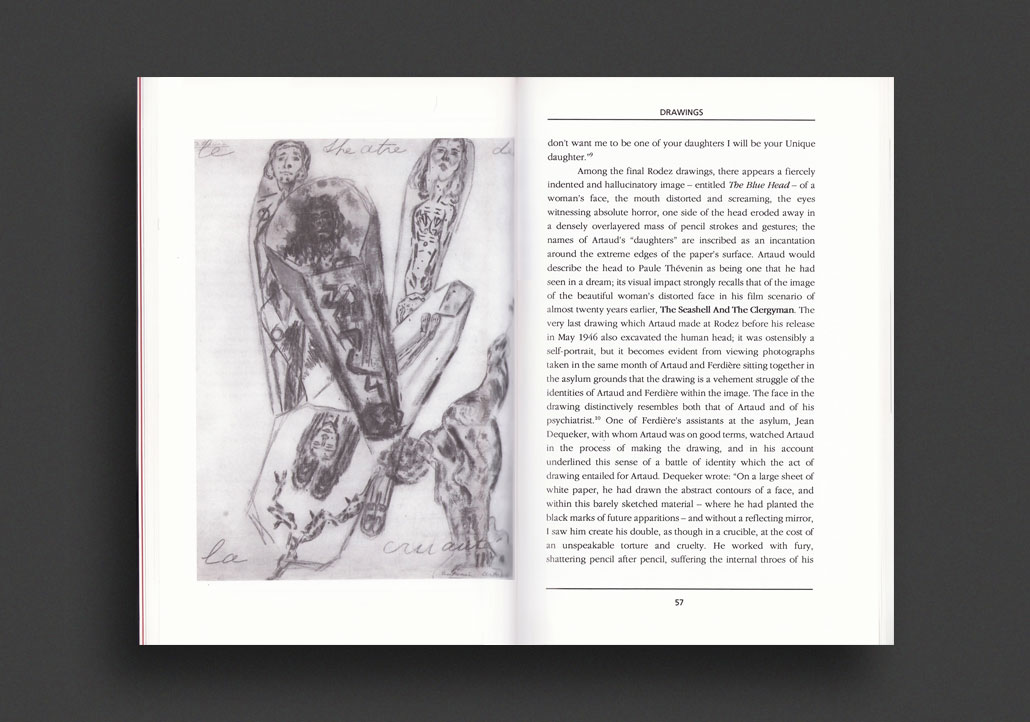
Antonin Artaud (1896-1948) remains the most inspirational, provocative and challenging figure in world-wide contemporary culture. His trajectory extends from the Surrealist movement, to the Theatre of Cruelty, to the lunatic asylums of France, and finally back to Paris and the most astonishing period of his work.
For the first time, the book gives a full and authoritative account of Artaud's film projects, and his conception of Surrealist cinema. It examines his unique series of drawings of the fragmented human body, begun in the ward of a lunatic asylum and finished in a state of furious liberation. Finally, the book captures Artaud's ultimate experiment with the screaming body in the form of his censored recording To Have Done With The Judgement Of God - an experiment which is unprecedented in the history of art, and which ultimately decimates that history.
The Screaming Body is an essential resource and inspiration for those engaged in creating the definitive culture of our time, in film, art, music and writing.
Good copy, some wear to cover otherwise VG throughout rest.
1974, Japanese
Hardcover (w. dust jacket), 127 pages, 29 x 22 cm
1st Edition, Out of print title / used / very good
Published by
Bijutsu Shuppansha / Japan
Rippu Shobo / Japan
$200.00 - Out of stock
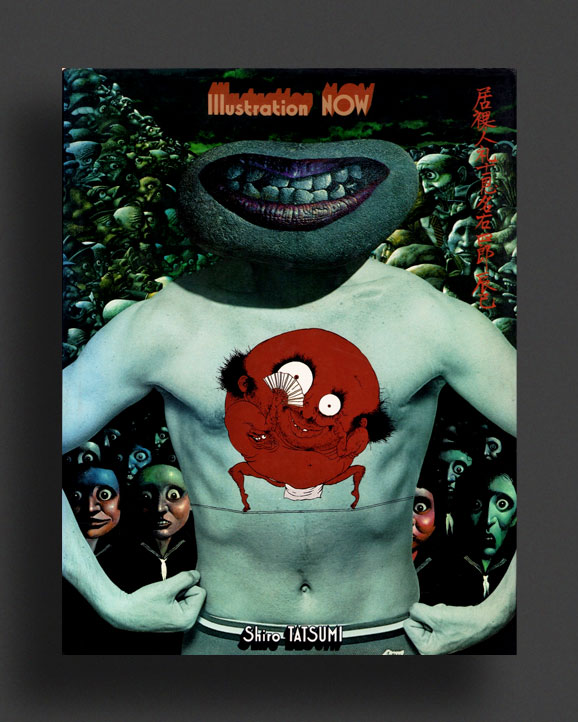
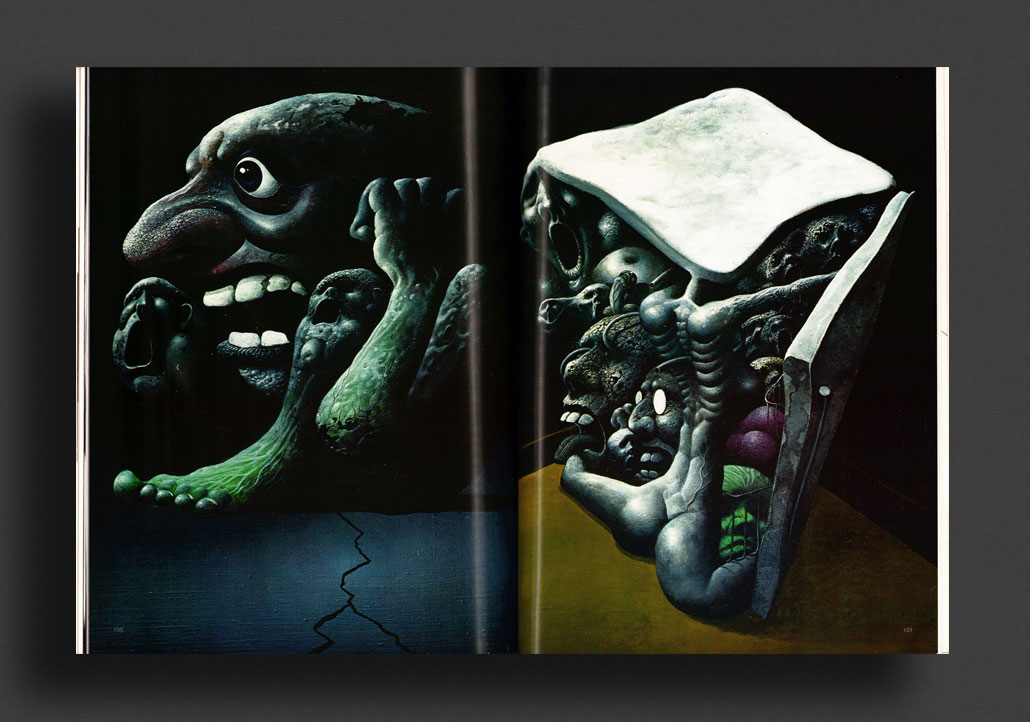
Rare copy of the best book on award-winning Japanese illustrator Shiro Tatsumi (1938—2003). From the legendary Illustration NOW series published by Rippu Shobo in 1974, this lavishly produced book collects the best of Tatsumi's radical graphic phantasmagoria, showcasing his unique work from the Tokyo underground to his award-winning commercial illustration, his never published private drawings and his illustrations of Hell. Fiercely independent and challenging, Tatsumi started his design career with Daido Moriyama’s first photobook, A Photo Theater, then worked on theater posters for the avant-garde performances of Shuji Terayama, and as a commercial illustrator and designer. Designed by Seiichi Horiuchi in the 1970s and presented by Keiichi Tanaami, Yoshitara Isaka, Yosuke Inoue and others, The World of Shiro Tatsumi includes 207 works, with fold-out panels. Highly recommended volume on an artist seldom spoken of outside Japan.
Very Good copy with VG dust jacket. Lacks pull-out poster.
2014, English
Hardcover (clothbound w. dust jacket), 272 pages, 25.5 x 17.3 cm
Published by
D.A.P. / New York
MoMA / New York
$60.00 - In stock -
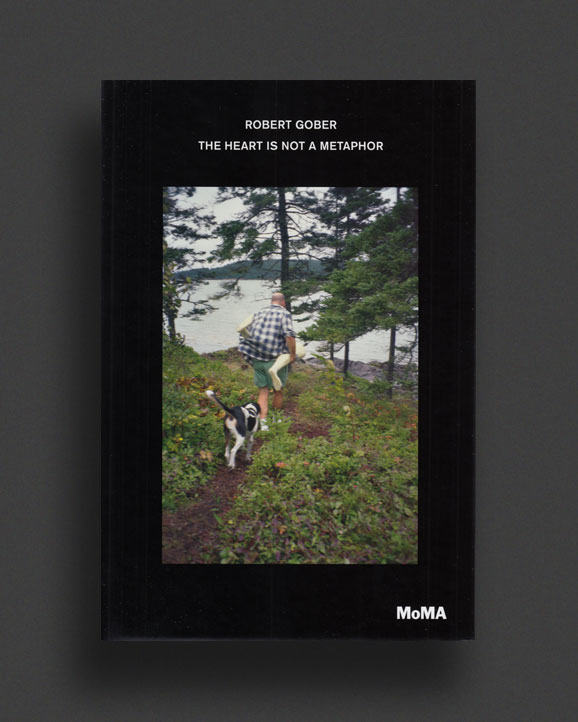
Introduction by Ann Temkin. Essay by Hilton Als. Chronology by Claudia Carson, Paulina Pabocha with Robert Gober. Afterword by Christian Scheidemann.
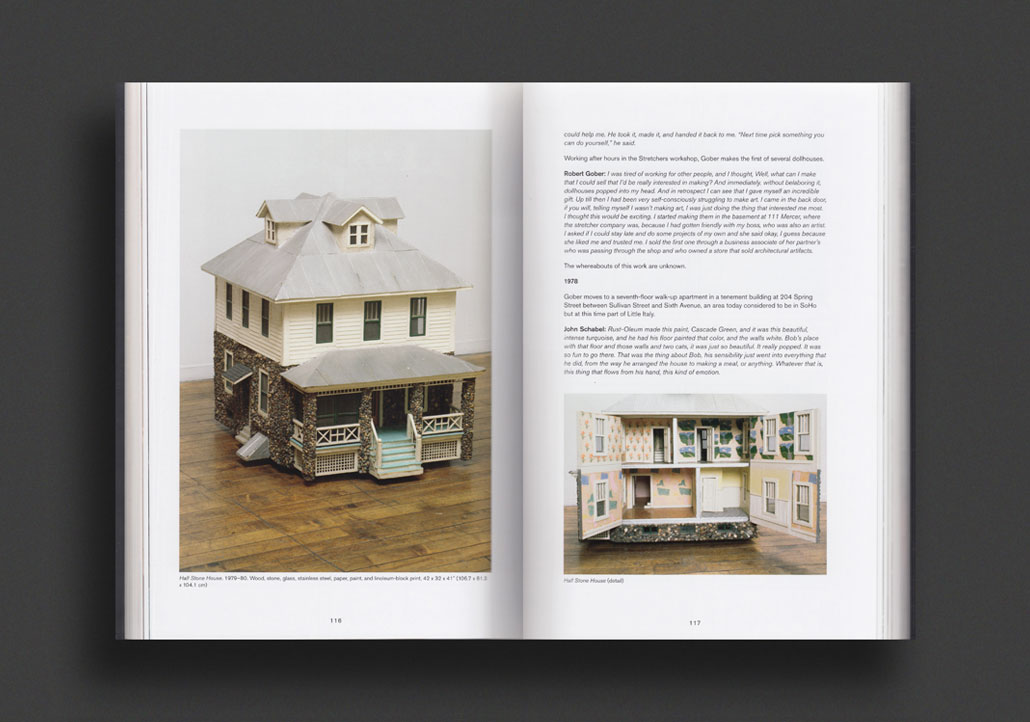
"Untitled" (1991) with "Forest" (1991) in background are reproduced from "Robert Gober: The Heart Is Not a Metaphor".Robert Gober rose to prominence in the mid-1980s and was quickly acknowledged as one of the most significant artists of his generation. Early in his career, he made deceptively simple sculptures of everyday objects--beginning with sinks and moving on to domestic furniture such as playpens, beds and doors. In the 1990s, his practice evolved from single works to theatrical room-sized environments. In all of his work, Gober's formal intelligence is never separate from a penetrating reading of the socio-political context of his time. His objects and installations are among the most psychologically charged artworks of the late twentieth century, reflecting the artist's sustained concerns with issues of social justice, freedom and tolerance. Published in conjunction with the first large-scale survey of the artist's career to take place in the United States, this publication presents his works in all media, including individual sculptures and immersive sculptural environments, as well as a distinctive selection of drawings, prints and photographs. Prepared in close collaboration with the artist, it traces the development of a remarkable body of work, highlighting themes and motifs that emerged in the early 1980s and continue to inform Gober's work today. An essay by Hilton Als is complemented by an in-depth chronology featuring a rich selection of images from the artist's archives, including never-before-published photographs of works in progress.
Robert Gober was born in 1954 in Wallingford, Connecticut. He has had numerous one-person exhibitions, most notably at the Dia Center for the Arts, New York; The Museum of Contemporary Art, Los Angeles; and Schaulager, Basel. In 2001, he represented the United States at the 49th Venice Biennale. Gober's curatorial projects have been shown at The Institute of Contemporary Art, Boston; The Menil Collection, Houston; Hammer Museum, Los Angeles; and the Whitney Museum of American Art, New York. He lives and works in New York.
Ann Temkin is an American art curator, and currently the Marie-Josée and Henry Kravis Chief Curator of Painting and Sculpture at the Museum of Modern Art in New York.
Hilton Als is an American writer and theater critic who writes for The New Yorker.
Claudia Carson is archivist and registrar to Robert Gober.
Paulina Pabocha is Assistant Curator in the Department of Painting and Sculpture at The Museum of Modern Art.
Christian Scheidemann is the Senior Conservator and President of Contemporary Conservation Ltd.
1969, English / Dutch
Illustrated 10-page fold-out (w. loose leaf inserts), 27 × 83 cm
1st Edition, Out of print title / used / very good
Published by
Stedelijk Museum / Amsterdam
$240.00 - In stock -
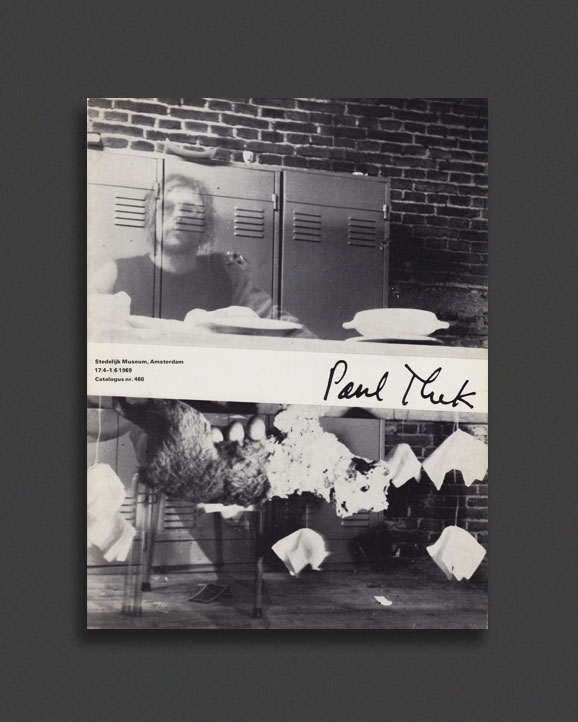
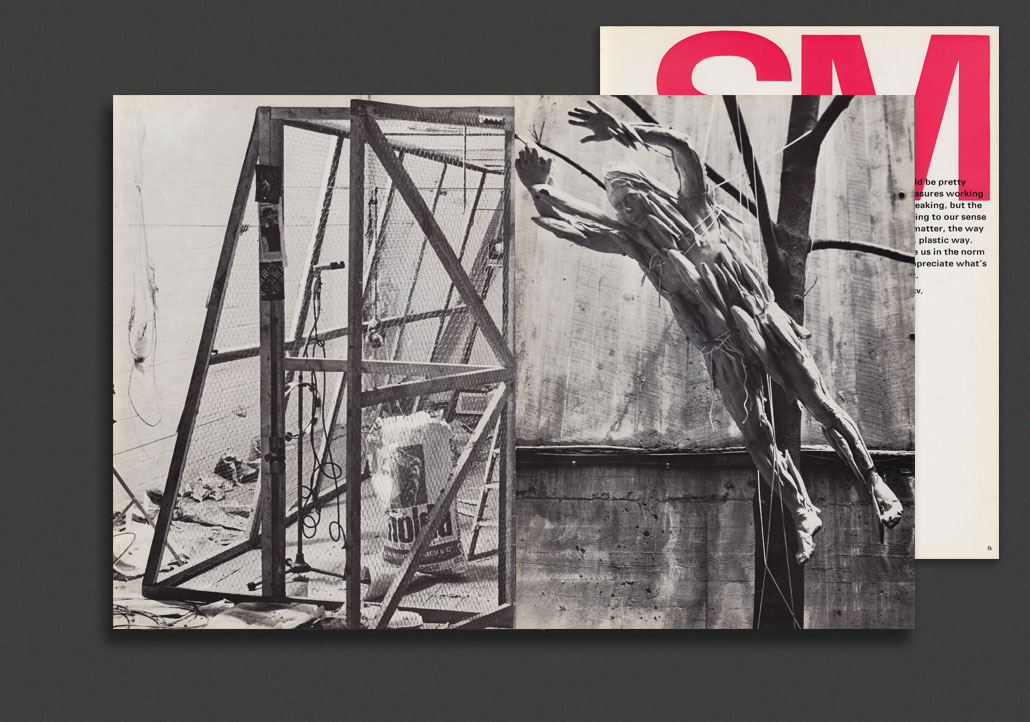
Extremely rare early Paul Thek Stedelijk Museum Amsterdam catalogue, published in 1969. Designed by Wim Crouwel (Total Design) in the form of a 10-page illustrated leporello fold-out of Thek's installations and sculptures and published with SM no. 460. One of the hardest of all Stedelijk Museum catalogues to find, this copy comes complete with the often missing SM biographical/interview/text insert, and also the loose strip inlay with text advertising ‘a document made by Paul Thek and Edwin Klein’ (published that same year), making it a most complete copy available.
Very Good-Fine with all included, preserved in plastic sleeve.
An American sculptor, painter, and installation artist, Paul Thek (1933-1988) is primarily known for hyper-realistic works of human body parts executed in fleshlike beeswax and for his strongly symbolic, room-size installations constructed from transitory materials. A major figure on the 1960s New York art scene, Thek also spent time in Europe, where he paved the way for artists adopting collaborative strategies. Although he gained a large following and was featured in more than one hundred solo and group exhibitions, the anti-establishment "artist's artist" was practically forgotten at the time of his death from AIDS related illness in New York City in 1988, aged 54.
1989, English
Softcover, 214 pages, 21.5 x 13.5 cm
1st Edition, Out of print title / used / very good
Published by
Marion Boyars / London
$55.00 - Out of stock
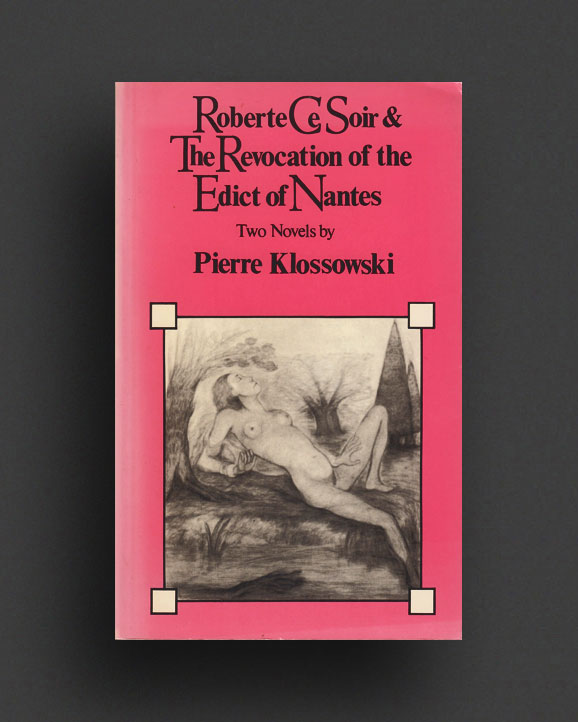
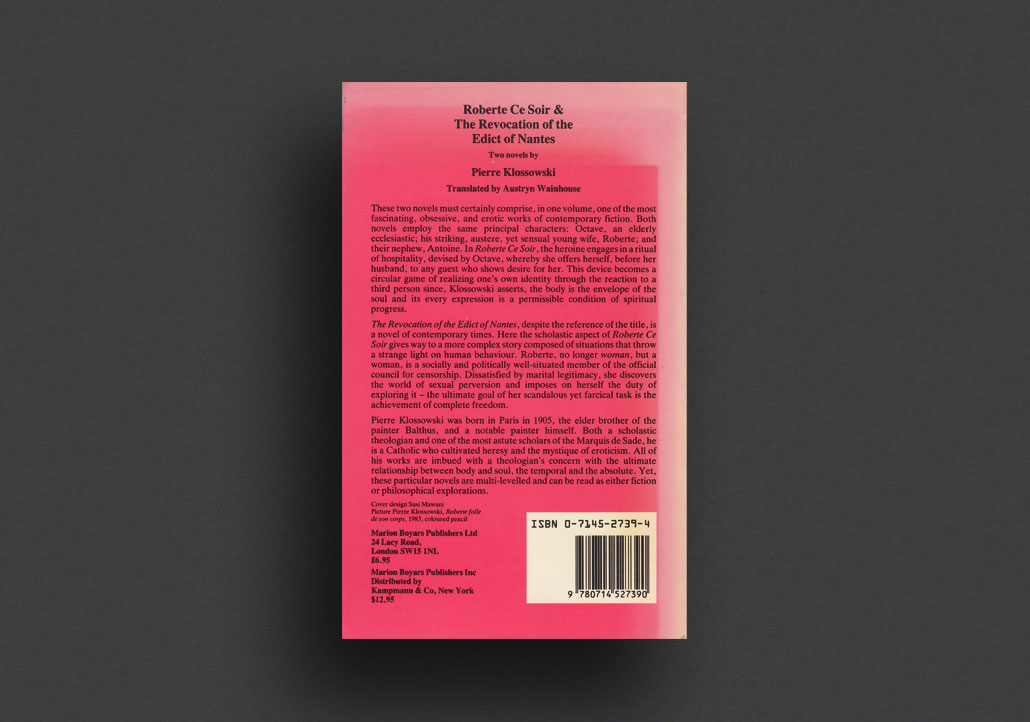
Scarce 1989 softcover edition of the English edition of Roberte Ce Soir and The Revocation of the Edict of Nantes, published by Marion Boyars, London/New York. Together these two novels comprise the most fascinating, obsessive, and erotic works of contemporary French fiction. Like the works of Georges Bataille, and those of the Marquis de Sade before him, Klossowski's fiction explores the connections between the mind and the body through a lens of sexuality. Both of these novels feature Octave, an elderly cleric; his striking young wife Roberte; and their nephew, Antoine in a series of sexual situations. But Klossowski's books are about theology as well, and this merging of the sexual with the religious makes this book one of the most painstakingly baroque and intellectual novels of our time.
Pierre Klossowski (1905, Paris—2001, Paris) was a French writer, translator and artist. He was the eldest son of the artists Erich Klossowski and Baladine Klossowska, and his younger brother was the painter Balthus. As a writer, Pierre Klossowski wrote full length volumes on the Marquis de Sade and Friedrich Nietzsche, a number of essays on literary and philosophical figures, and five novels. Roberte Ce Soir (Roberte in the Evening) provoked controversy due to its graphic depiction of sexuality. He translated several important texts (by Virgil, Ludwig Wittgenstein, Martin Heidegger, Friedrich Hölderlin, Franz Kafka, Nietzsche, and Walter Benjamin) into French, worked on films and was also an artist, illustrating many of the scenes from his novels. Klossowski participated in most issues of George Bataille's review, Acéphale, in the late 1930s. His 1969 book, Nietzsche and the Vicious Circle, greatly influenced French philosophers such as Michel Foucault, Gilles Deleuze, and Jean-François Lyotard.
Very Good copy, sun discolouration to cover boards and spine.
1998, French
Softcover, 140 pages, 21 x 13.5 cm
1st Edition, Out of print title / used / good
Published by
Marval / Paris
$55.00 - Out of stock
"Looking at a painting by Klossowski is to turn oneself into its victim."
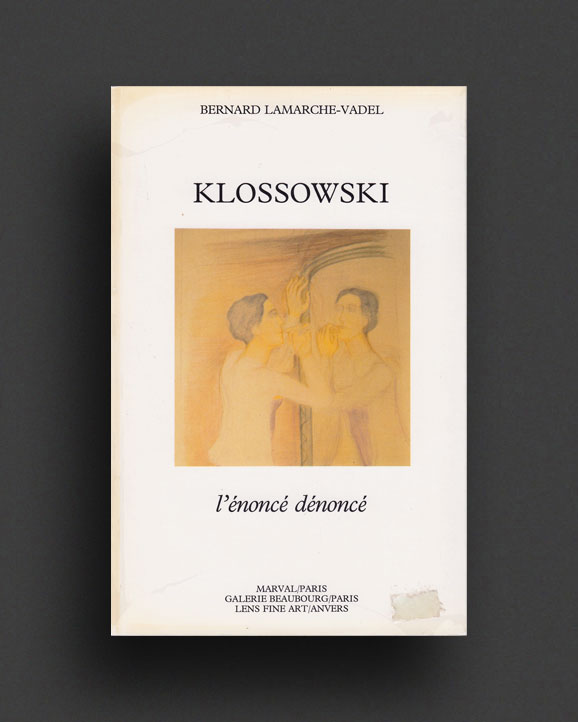
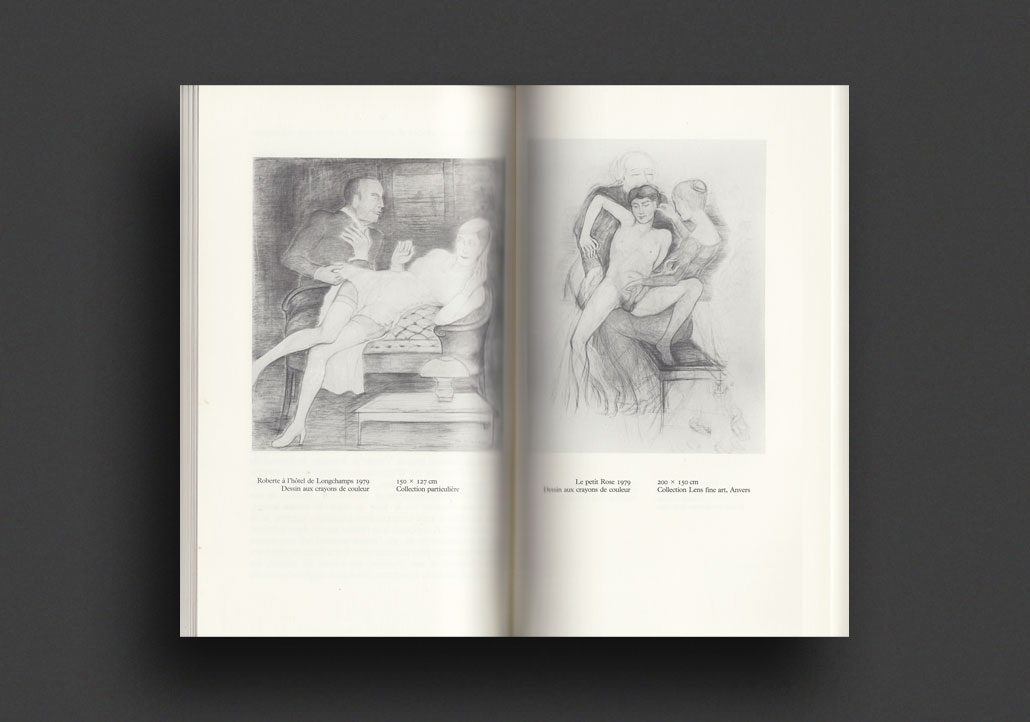
First edition 1998 French paperback study of Pierre Klossowski by French writer, poet, art critic and collector, Bernard Lamarche-Vadel (1949—2000). Heavily illustrated throughout with many fine examples of Klossowski's artworks in colour and b/w, plus biography, portraits, history of exhibitions, and more.
"The great master of heresy desires first and places the observer of his works at the center of their mechanisms. This device lends itself to the description of the great and redoubtable logic of the images that place us on the threshold of the secret of Roberte. Scandalous and classic Klossowski's work is one of the most enigmatic of the twentieth century because it is primarily a process the enigma of which is the subject."
Bernard Lamarche-Vadel (1949—2000) was a French writer, poet, art critic and collector. The son of a veterinarian, self-taught, his tastes for art and literature earned him a paternal anathema. A graduate from the École pratique des hautes études in art sociology (1970), he subsequently taught at the Paris-I Panthéon-Sorbonne University and then at ICART in 1979. A poet and short stories writer, Bernard Lamarche-Vadel bega writing art criticism in the 1970s and founded the magazine Artistes. He became a prolific writer on the arts, publishing many books and organising exhibitions. He appareared in L'Argent (1983) by Robert Bresson. In 2000, at age 50, he committed suicide in his castle of La Rongère. His photographic collection is archived at Musée Nicéphore-Niépce in Chalon-sur-Saône. An exhibition devoted to his work as an art critic was presented in 2009 by the Musée d'Art Moderne de la Ville de Paris.
Very Good copy with some laminate peeling to the covers, tanned edges.
2018, English
Hardcover, 400 pages, 24 x 28.8 cm
1st Edition, Out of print title / as new
Published by
Mumok / Vienna
$70.00 $50.00 - In stock -
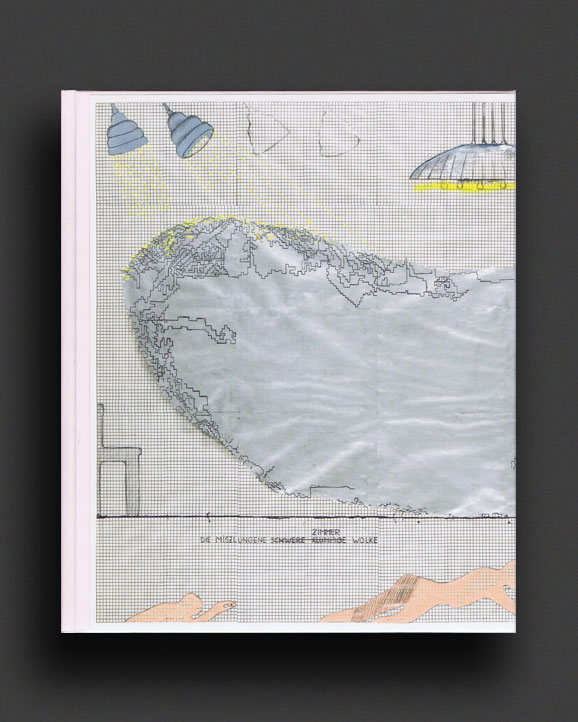
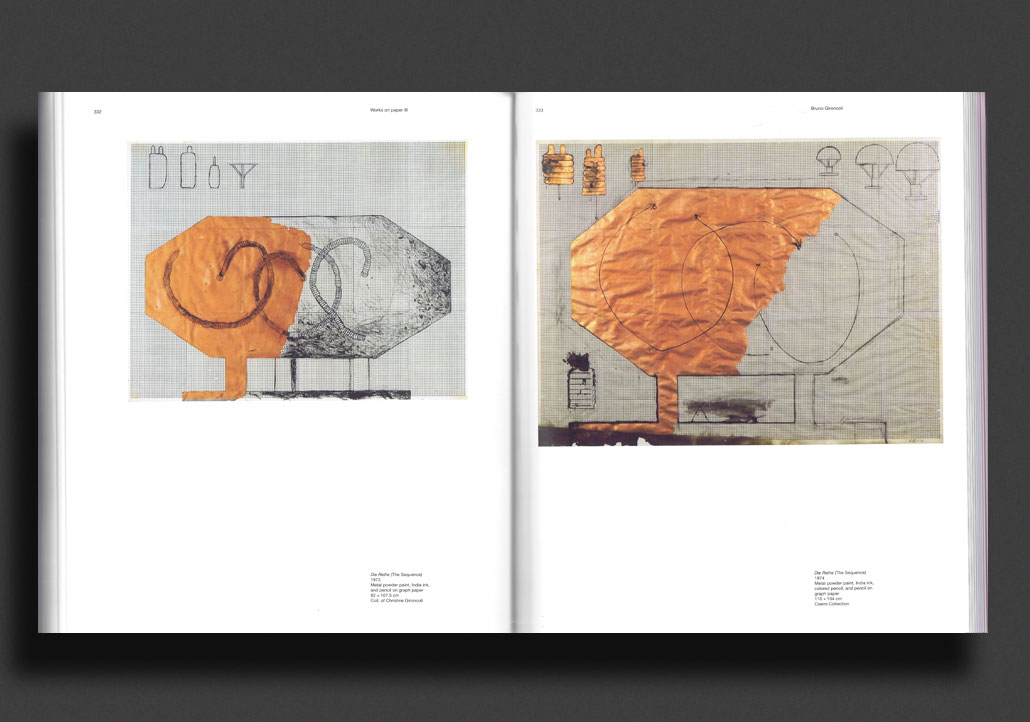
English edition of this heavy hardcover monographic catalogue published on the occasion of a retrospective exhibition of Austrian artist Bruno Gironcoli at mumok, Vienna in 2018. Heavily illustrated throughout, with accompanying texts by Manuela Ammer, Edith Futscher, Peter Gorsen, Charlotte Matter, Karin Steiner.
Bruno Gironcoli is one of the most idiosyncratic artists of the twentieth century. He gained public recognition with his late large-scale sculptures, in which archetypes and trivial elements meld to form futuristic conglomerates. It is less well known that alongside his work in sculpture Gironcoli also produced an extensive body of graphic works. This retrospective exhibition at mumok will for the first time focus on Gironcoli the painter and draughtsman. His works on paper will enter into dialogue with outstanding examples of the artist’s wire sculptures, polyester objects, installations, and monumental sculptures, also opening up new perspectives on the sculptural work.
Right from the beginning, Gironcoli’s works on paper were more than just designs for his sculptures. On paper, the Austrian artist took his ideas into dimensions that by far transcend any concrete work on physical materials. On paper, he animated his own sculptural work: Divorced from the laws of physics, his schematic figures, animals, symbols, and apparatuses enter into hypothetical connections and merge to form fantastic and surreal scenes. Gironcoli’s works on paper are literally “surfaces of considerations” that seek to rescue potential forms of life from alienated signs.
1964 , French
Hardcover, 192 pages, 30.5 x 24.5 cm
1st Edition, Out of print title / used / very good
Published by
Pont Royal Del Duca - Laffont
Paris
$100.00 - Out of stock
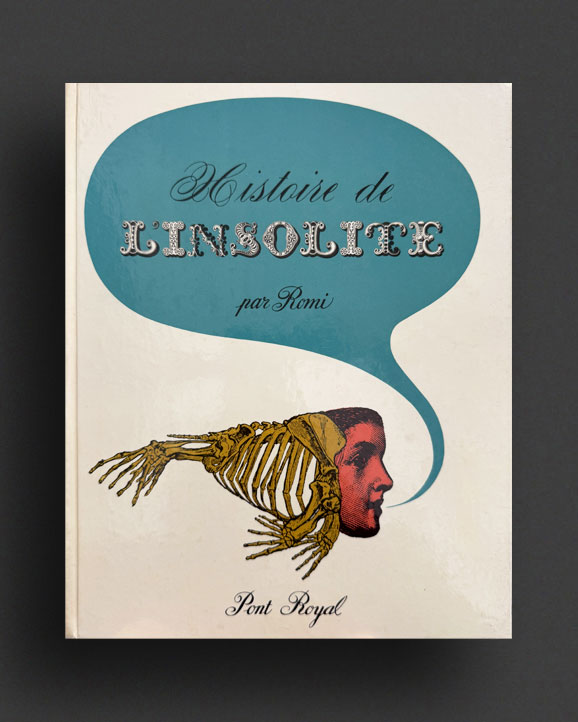
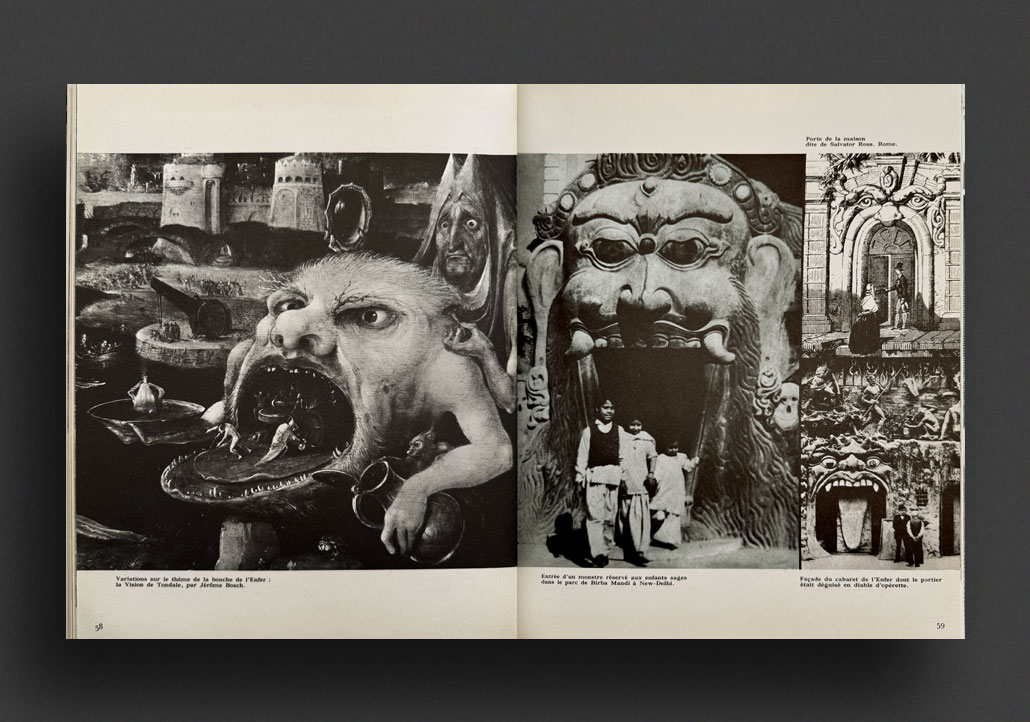
First 1964 hardcover edition of Histoire de l'insolite (History of the Unusual) by Romi. Preface by Philippe Soupault, artistic design by Pierre Chapelot. An incredible visual survey of the weird and wonderful from the history of occultism to the absurd, the cabinet of curiosities to the voyages of science fiction, demonology to psychosis, the Fin de siècle, Futurists, Surrealists, Dadaists, Pataphysicians, the visionaries, the mediums, the curios, the macabre, the bizarre. Profusely illustrated in mono and duotone with many pasted-in lush colour plates, this is a beautiful visual reference of the fantastic throughout history. Chapters include (translated from French): The Sources of the Unusual - A Legendary Bestiary - Fantastic Voyages - The Design to Surprise - Unusual Enterprises, featuring Alfred Jarry, Giuseppe Arcimbaldo, P.T. Barnum, Edward Lear, Hélène Smith, Raymond Roussel, Alessandro Cagliostro, Stanislao Lepri, Hieronymus Bosch, Ferdinand Cheval, and hundreds of other artists, poets, mystics and unknowns. With a preface by none other than Surrealist founder, Dadaist, writer, poet, novelist, critic, political activist, Philippe Soupault (1897-1990).
Very Good copy, highly recommended.
1996/2003, English / Japanese
Softcover (w. dust jacket and obi), 176 pages, 21 x 30 cm
1st Edition, Out of print title / used / very good
Published by
Treville / Tokyo
Pan-Exotica / Tokyo
$300.00 - Out of stock
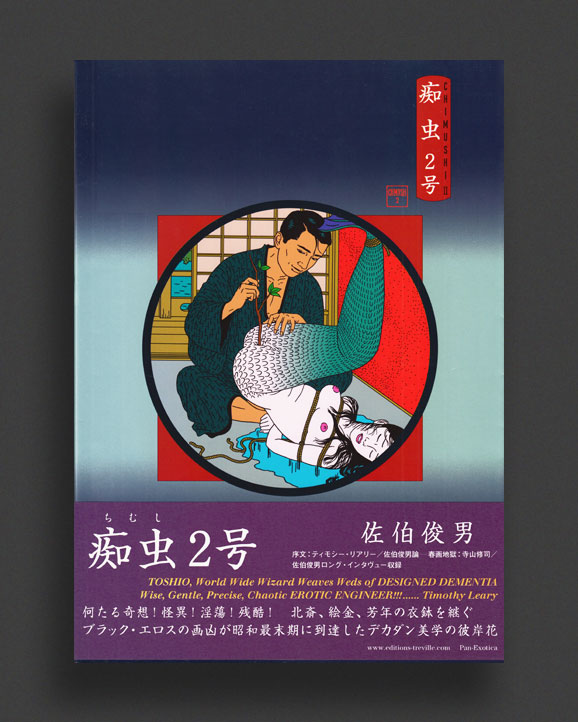
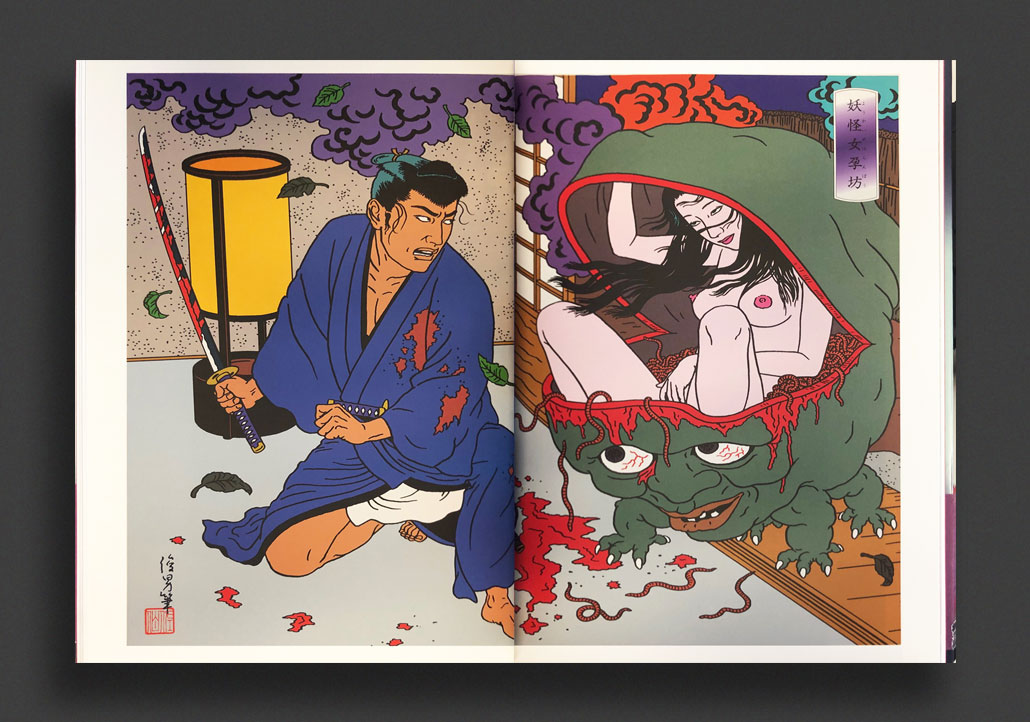
The second volume of Toshio Saeki's erotic nightmare masterpiece, "Chimushi II" was published in 1996 by Treville, only available in Japan, and now very collectible in every edition. A lavishly illustrated book collection of every darkest sexual depravity rendered in vibrant colour by Japanese master of Ero guro, Toshio Saeki, published by Treville and Pan-Exotica, here in the 2003 softcover edition. In the introduction, Timothy Leary writes, "We salute the style and grace with which you tease our secret sensualities. And teach us how our dark, twisted images and fearful fantasies are created by our own minds."
Toshio Saeki (1945—2019) was an illusive Japanese illustrator and painter, and icon of 1970s Tokyo counterculture, known for combining Japanese folklore, Yōkai spirits and elements of Western art with his own sophisticated aesthetics to create a unique, sensational world of eros, dark humour, and horror. Given the title “Erotic Engineer” by Timothy Leary, Saeki's provocative art broke all sexual taboos, questioned Japanese ideology and traditional views on love, desire and gender roles. Saeki’s surgically-precise graphic work is closely related to the Japanese cultural phenomenon ‘Erotic, Grotesque, Nonsense’ (ero, guro, nansensu).
“Toshio Saeki conjures death with a pen”—Shūji Terayama, 1969.
Good—Very Good copy, with light wear/bumping to cover extremities, interior Fine. With Average obi inserted.
2019, English / Polish
Hardcover (4 volumes), 19.5 x 14.5 cm
1st Edition, Out of print title / used / very good
Published by
Bosz / Lesko
$80.00 - In stock -
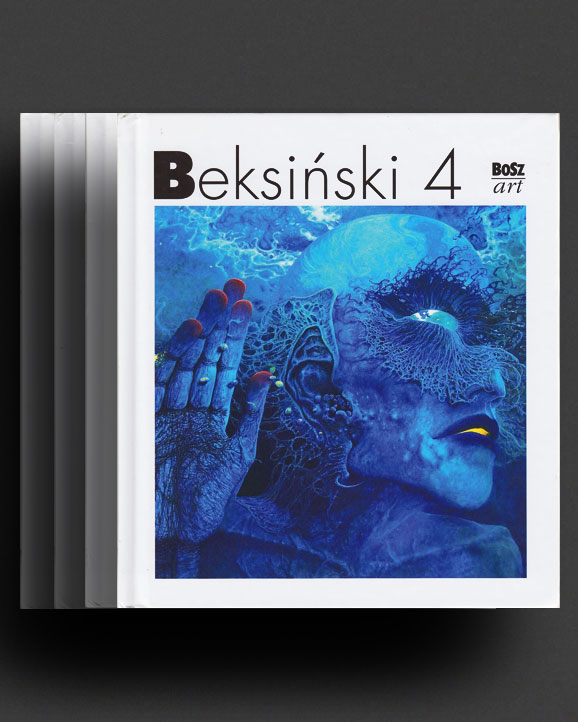
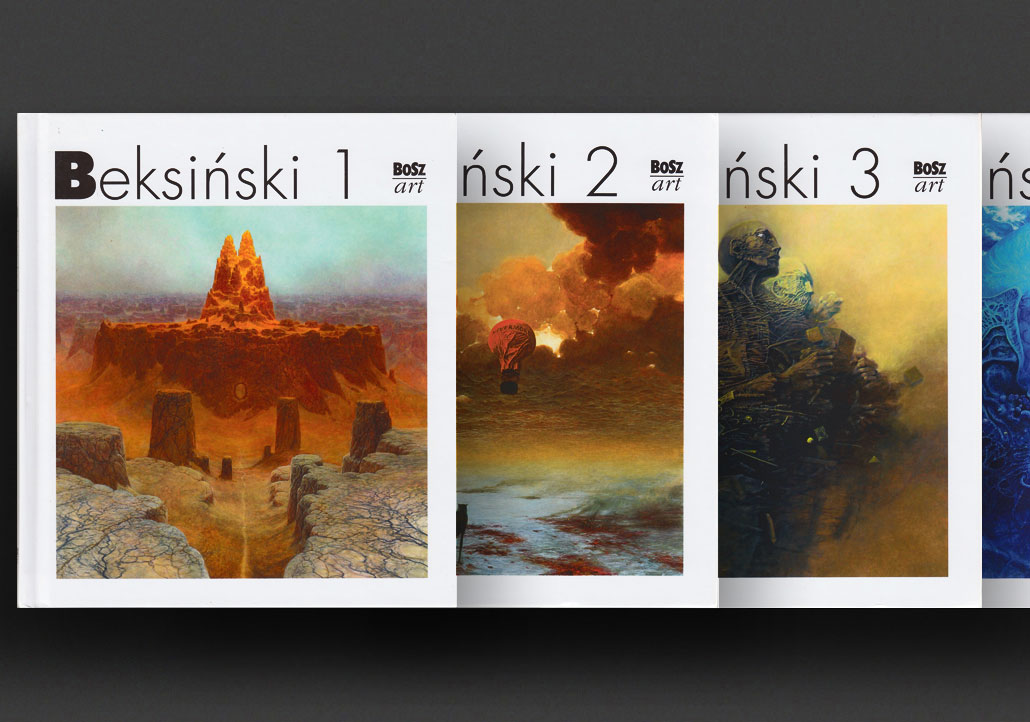
Volumes 1—4 of the Bosz mini-album collected works of legendary Polish artist Zdzisław Beksiński. Issued in 2019, all volumes are hardcover and lavishly illustrated with Beksiński's major works.
"Beksinski's powerfully unique paintings are such as I have never before seen"—H.R. Giger
Zdzisław Beksiński (1929 – 2005) was a Polish painter, photographer and sculptor. Beksiński had no formal training as an artist. Born in Sanok, he studied architecture in Kraków and worked as a construction site supervisor before turning to his passion for art, sculpting with construction site materials for his medium. His early photography would be a precursor to his paintings, often referred to as dystopian surrealism. Beksiński claimed, "I wish to paint in such a manner as if I were photographing dreams". Beksiński undertook painting with a passion, working intensely whilst listening to classical music and quickly becoming a leading figure in contemporary Polish art. In the late 1960s, Beksiński entered what he himself called his "fantastic period", which lasted up to the mid-1980s, during which he created his famed images of desolate, surrealistic landscapes with intricate depictions of anxious, abstracted figures and architecture in states of decay, mutation and decomposition. Although Beksiński's art was often dark, he himself was known to be a pleasant person with a keen sense of humour. Modest and somewhat shy, he avoided public events such as the openings of his own exhibitions and almost never visited museums or exhibitions in general. He always credited music as his main source of inspiration. Beksiński avoided concrete analysis of the content of his work, saying "I cannot conceive of a sensible statement on painting". Beksiński was stabbed to death at his Warsaw apartment in February 2005 by a 19-year-old acquaintance from Wołomin, reportedly because he refused to lend the teenager money.
"In the medieval tradition, Beksinski seems to believe art to be a forewarning about the fragility of the flesh – whatever pleasures we know are doomed to perish – thus, his paintings manage to evoke at once the process of decay and the ongoing struggle for life. They hold within them a secret poetry, stained with blood and rust." — Guillermo del Toro, Mexican film director
Very Good—Fine copies.
2000, German
Softcover, 55 pages, 24 × 28 cm
Published by
Galerie Ascan Crone / Hamburg
$65.00 - In stock -
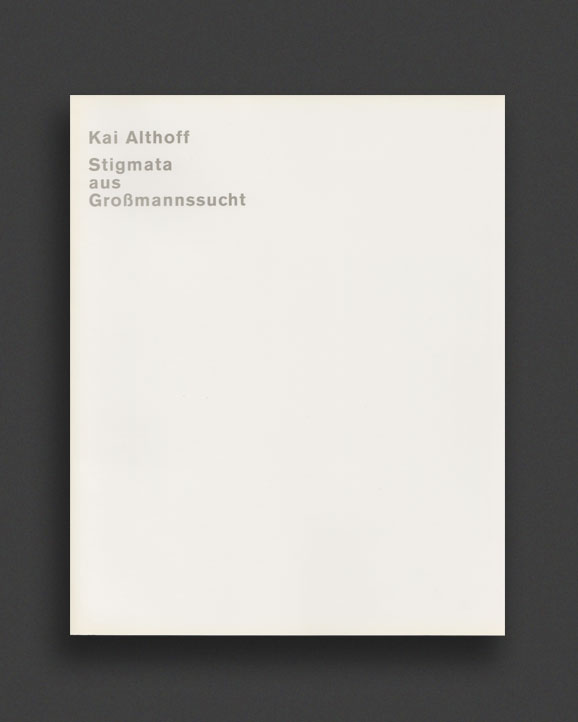
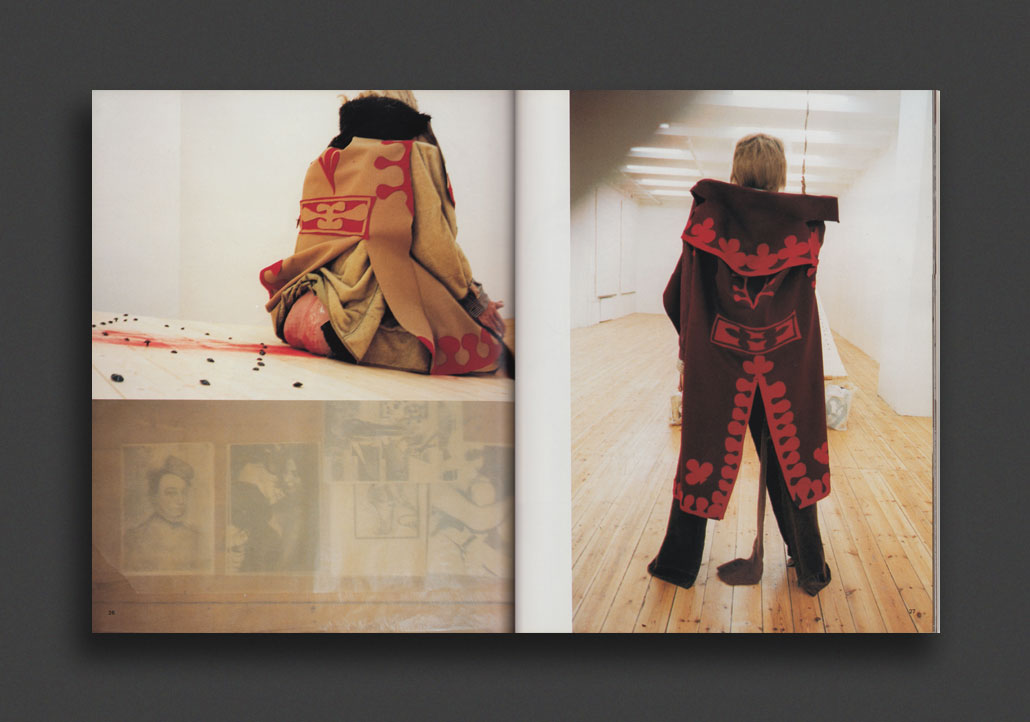
Wonderful early artist's book by German artist Kai Althoff, published in 2000 on the occasion of his solo exhibition at Galerie Ascan Crone, Hamburg, and long out-of-print. Illustrated throughout in colour and black and white with Althoff's paintings, drawings, installations and assorted imagery, alongside a text by German painter Michaela Eichwald.
As New.
Kai Althoff (born 1966 in Cologne) is a German visual artist and musician. Borrowing from moments of history, religious iconography, and counter-cultural movements, Althoff creates imaginary environments in which paintings, sculpture, drawing, video, and found objects commingle. Tapping a multitude of sources, from Germanic folk traditions to recent popular culture, from medieval and gothic religious imagery to early modern expressionism, Althoff’s characters inhabit imaginary worlds that serve as allegories for human experience and emotion. His image bank and painterly style also draw on the past, especially early-20th-century German Expressionism, reconfigured by introducing collaged technique.
2019, English / Polish
Hardcover, 64 pages, 19.5 x 14.5 cm
Published by
Bosz / Lesko
$25.00 - Out of stock
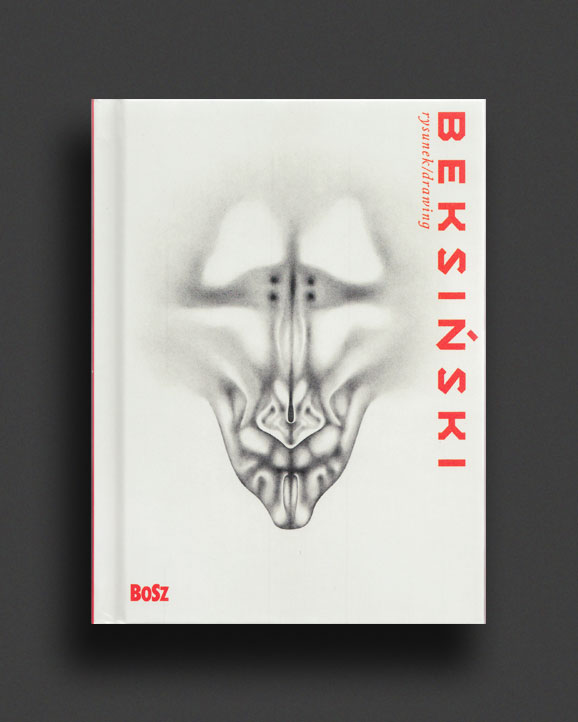
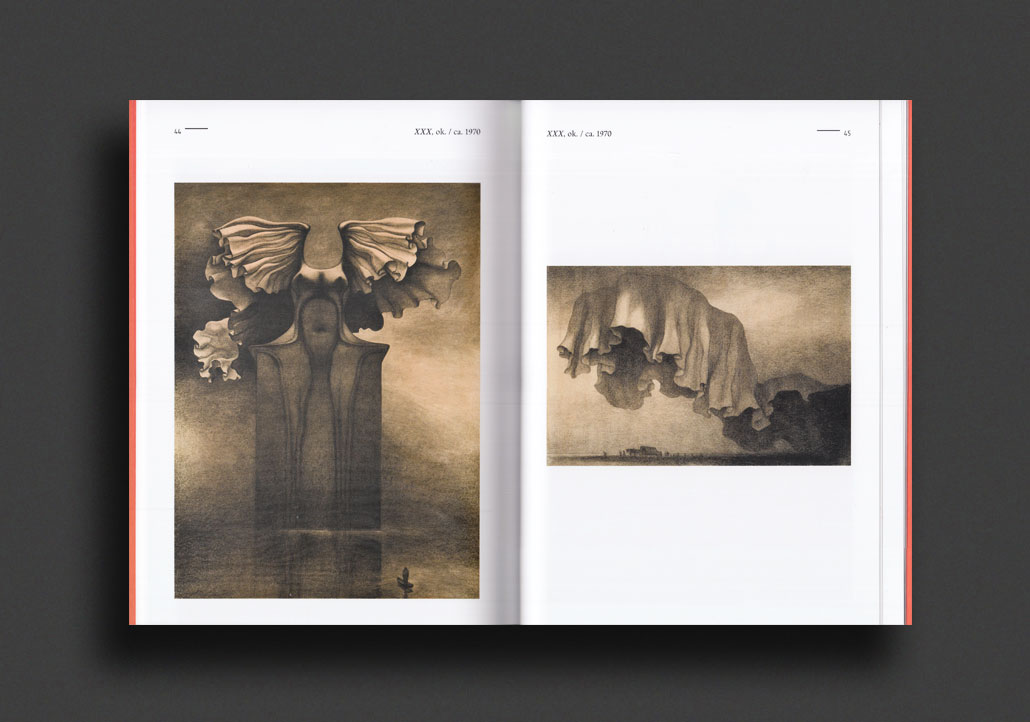
First hardcover edition of this new volume dedicated to the drawings of Zdzisław Beksiński (1929–2005). Profusely illustrated throughout, with an introduction by art historian Wiesław Banach.
"Since early childhood, drawings had been the artist's main means of communication. "Usually, when I explain something to others, I like to draw it on a piece of paper", he would say. In fact, he left thousands of drawings, usually sketches, sometimes even notes reflecting the way he thought and rendered the original idea into a complete work of art. Due to its nature, this album merely presents a selection of his works that mark various stages of Beksinski's artistic activity, starting from his 1946 youthful self-portrait, to pieces from his final years." - Wiestaw Banach
Zdzisław Beksiński (1929 – 2005) was a Polish painter, photographer and sculptor. Beksiński had no formal training as an artist. Born in Sanok, he studied architecture in Kraków and worked as a construction site supervisor before turning to his passion for art, sculpting with construction site materials for his medium. His early photography would be a precursor to his paintings, often referred to as dystopian surrealism. Beksiński claimed, "I wish to paint in such a manner as if I were photographing dreams". Beksiński undertook painting with a passion, working intensely whilst listening to classical music and quickly becoming a leading figure in contemporary Polish art. In the late 1960s, Beksiński entered what he himself called his "fantastic period", which lasted up to the mid-1980s, during which he created his famed images of desolate, surrealistic landscapes with intricate depictions of anxious, abstracted figures and architecture in states of decay, mutation and decomposition. Although Beksiński's art was often dark, he himself was known to be a pleasant person with a keen sense of humour. Modest and somewhat shy, he avoided public events such as the openings of his own exhibitions and almost never visited museums or exhibitions in general. He always credited music as his main source of inspiration. Beksiński avoided concrete analysis of the content of his work, saying "I cannot conceive of a sensible statement on painting". Beksiński was stabbed to death at his Warsaw apartment in February 2005 by a 19-year-old acquaintance from Wołomin, reportedly because he refused to lend the teenager money.
According to Mexican film director Guillermo del Toro "In the medieval tradition, Beksinski seems to believe art to be a forewarning about the fragility of the flesh – whatever pleasures we know are doomed to perish – thus, his paintings manage to evoke at once the process of decay and the ongoing struggle for life. They hold within them a secret poetry, stained with blood and rust."
"Beksinski's powerfully unique paintings are such as I have never before seen" H.R. Giger
2015, English
Softcover, 100 pages, 21.5 x 27.5 cm
Published by
CCA Wattis Institute for Contemporary Arts / San Francisco
MoMA PS1 / New York
Raven Row / London
Sternberg Press / Berlin
$65.00 - In stock -
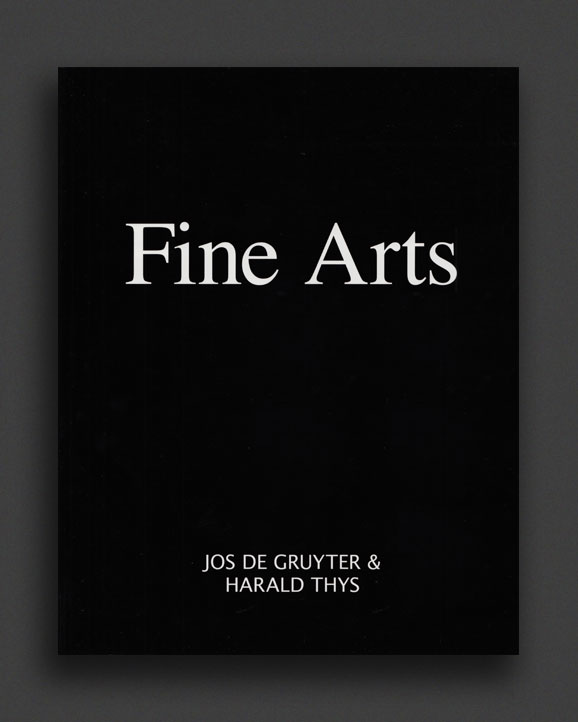
Fine Arts continues Jos de Gruyter & Harald Thys’s playful and dystopic approach to depicting the human condition. The artist duo became watercolorists for the project, harping back to an early amateur pictorial tradition while basing their picture making on a range of quotidian and historical images culled from the Internet. Deadpan images of the banal and the fanciful accompany the grievous and the tragic, without comment. Nostalgia and innocence are dimly stirred and questioned. Although the genre of the watercolorist, and its association with pastoral and colonialist scenes, may be considered outdated, the contemporary mode of sourcing the images implies that these pictures might not be matters of the past. This book brings together the collection of over ninety watercolors in a glossy format reminiscent of a picture book or auction house catalogue.
Copublished with CCA Wattis Institute for Contemporary Arts, San Francisco; MoMA PS1, New York; and Raven Row, London, on the occasion of the eponymous traveling exhibition in 2015.
2025, English
Softcover, 728 pages, 22 x 14 cm
Published by
Sternberg Press / Berlin
$78.00 - Out of stock
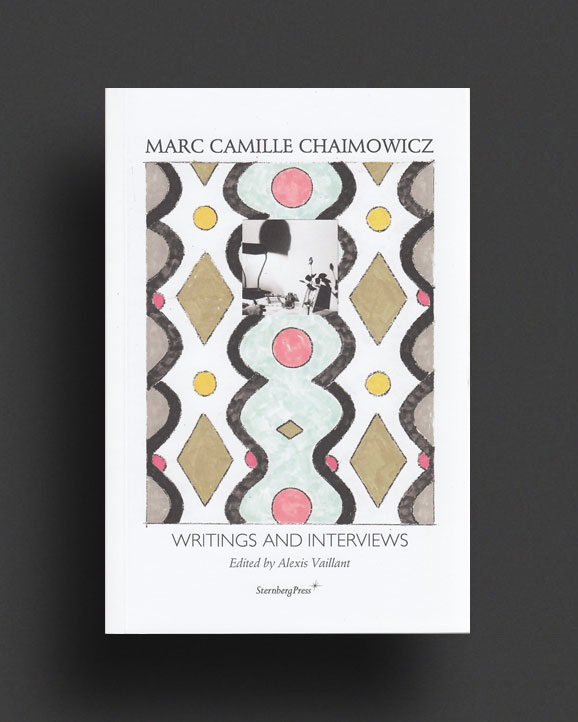
The collected writings of artist Marc Camille Chaimowicz, along with the stories behind them told by Alexis Vaillant.
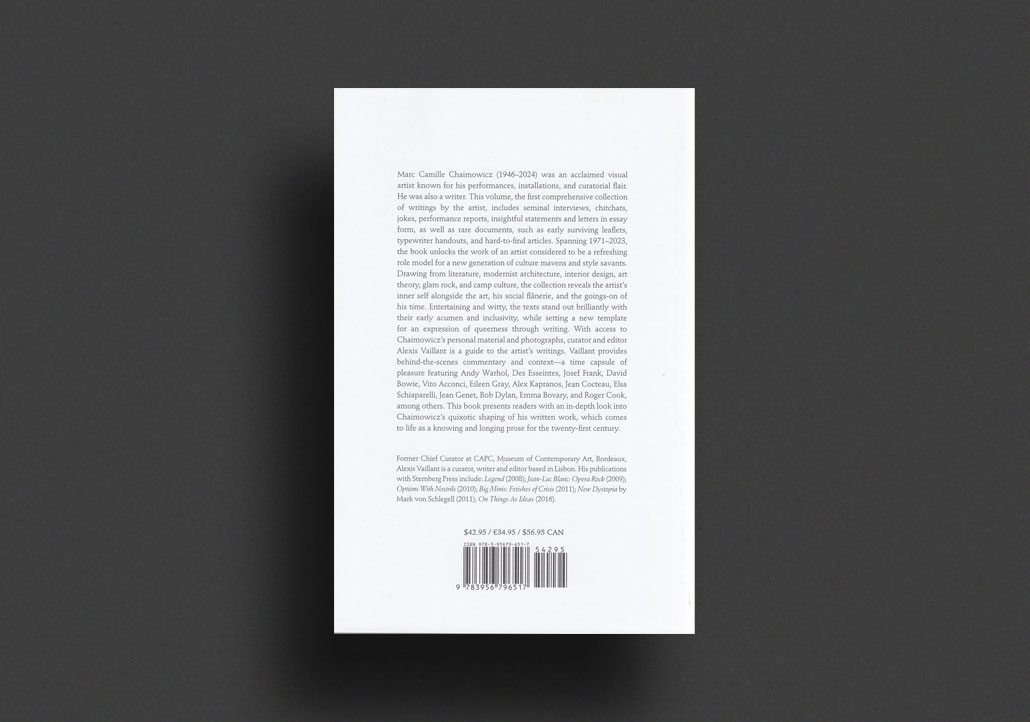
Marc Camille Chaimowicz was an acclaimed visual artist known for his performances, installations and curatorial flair. He was also a writer. This volume, the first comprehensive collection of writings by the artist, includes seminal interviews, chitchats, jokes, performance reports, insightful statements and letters in essay form, as well as rare documents, such as early surviving leaflets, typewriter handouts and hard-to-find articles. Spanning 1971–2023, the book unlocks the work of an artist considered to be a refreshing role model for a new generation of culture mavens and style savants. Drawing from literature, modernist architecture, interior design, art theory, glam rock and camp culture, the collection reveals the artist's inner self alongside the art, social flânerie and the goings-on of his time. Entertaining and witty, the texts stand out brilliantly with their early acumen and inclusivity, while setting a new template for an expression of queerness through writing. With access to Chaimowicz's personal material and photographs, curator and editor Alexis Vaillant is a guide to the artist's writings. Vaillant provides behind-the-scenes commentary and context—a time capsule of pleasure featuring Andy Warhol, Des Esseintes, Josef Frank, David Bowie, Vito Acconci, Eileen Gray, Alex Kapranos, Jean Cocteau, Elsa Schiaparelli, Jean Genet, Bob Dylan, Emma Bovary and Roger Cook, among others. This book presents readers with an in-depth look into Chaimowicz's quixotic shaping of his written work, which comes to life as a knowing and longing prose for the twenty-first century.
Embarked on a pursuit of pleasure, Marc Camille Chaimowicz addresses a multiplicity of topics that range from the agility of a jumping dog and the evocation of the color orange as torture, to the idea of feminized architecture and the description of Vienna as a rare city in which we can both work and dream. This source book provides a unique insight into the artist's pioneering aesthetics of camp. Randomly witty and humorous, and overtly charged and frivolous, the non-conclusive, compelling "writings" of Marc Camille Chaimowicz set a new template for the expression of queerness through writing. They are not only remarkable for the singularity of their wording and their acumen to inclusivity, but for the skillful way in which they illuminate the range of thinking of their author. First, in close dialogue with his work and the self-contained interiority that is in it; then, in connection with the fragmented cultural context the artist has taken part in from 1971 onwards; but ultimately, as points of contact with the socio-political dimension of the present.
Born in Paris in the aftermath of World War II of a Polish father and a French mother, Marc Camille Chaimowicz (1947-2024) moved as a child to the United Kingdom. He studied at Ealing, Camberwell, and the Slate School of Art in London. In new artistic times, careful to bring art and life closer, often using performance, the life of Marc Camille Chaimowicz has become a great workshop. Living in the exhibition spaces, he sets up hotels entrances, decorates them with his own artefacts, and serves there some tea to visitors with musical background. When it became an official art practice which was no longer subversive, Chaimowicz abandoned performance art. From 1975 to 1979, he designed the interior of his Approach Road flat. Wallpapers, curtains, videos he made while performing in his own decor: everything had been tailored-imagined, drawn, and conceived to turn his interior into a room conducive to reverie. From the 1980s onwards, decors and furniture set like in a theatre scenography took their place in museums. Since then, hundreds of exhibitions have featured the interiors series of this international artist.
Former Chief Curator at CAPC, Museum of Contemporary Art, Bordeaux, Alexis Vaillant is a curator, writer, and editor based in Lisbon. His publications with Sternberg Press include- Legend (2008); Jean-Luc Blanc- Opera Rock (2009); Options With Nostrils (2010); Big Minis- Fetishes of Crisis (2011); Mark von Schlegell's New Dystopia (2012); On Things As Ideas (2016).
2024, English / French
Hardcover, 128 pages, 24 x 29.5 cm
Published by
Arsenicgalerie / Paris
$78.00 - Out of stock
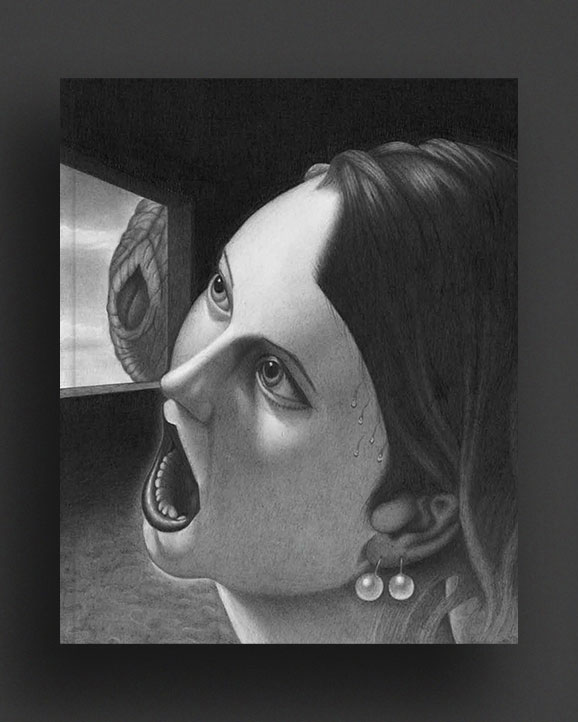
The first monograph on the Japanese artist of desire.
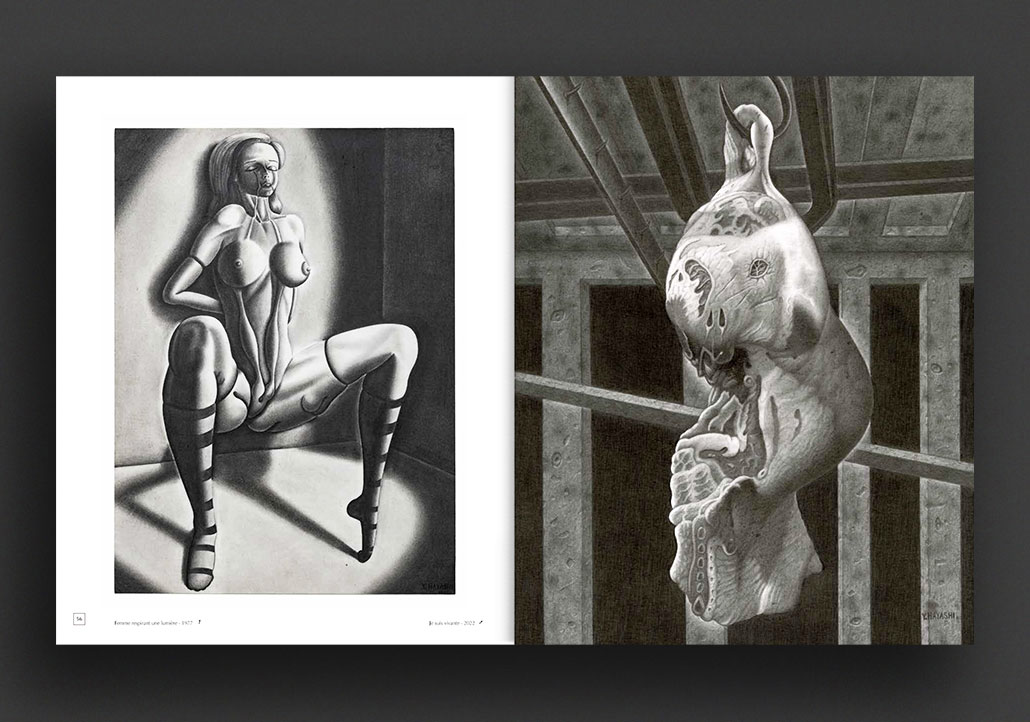
In this lavishly illustrated book, Xavier-Gilles Néret analyzes the work of Yoshifumi Hayashi from an existential and philosophical as well as artistic perspective, drawing on his interviews with the Japanese artist who, for almost half a century, has shamelessly asserted the importance of sexual desire and the body in all its material dimensions.
From his erotic drawings of callipagous women to his sexualized landscapes, from his vulvar and ithyphallic flowers to his "still lifes" teeming with life, Hayashi pursues his quest for the mysteries of matter through the subtle play of light in the gradations of lead pencil, of which he has become a virtuoso alchemist, to fuel irrepressible desire and "repassionate life".
Yoshifumi Hayashi (born 1948 in Fukuoka, Japan) is an artist specializing in scenes of female erotica. In 1974 he moved to Paris, where he began to produce pencil drawings. At first his main influence was the metaphysical world of De Chirico, but soon his focus shifted to the lower half of the female anatomy… Hayashi's art comes straight from the darkest depths of his subconscious and the artist lays his innermost paranoias, fetishes and obsessions. Despite this profoundly personal quality his work is also highly and objectively erotic.
Text by Xavier-Gilles Néret.
Foreword by Catherine Robbe-Grillet.
2000, English
Softcover, 320 pages, 23 x 15.2 cm
1st Edition, Out of print title / used / very good
Published by
Reaktion books / London
$45.00 - In stock -
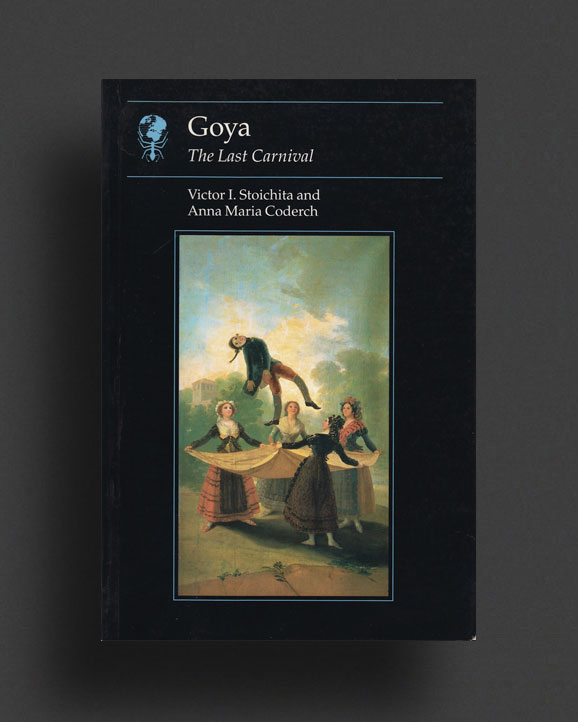
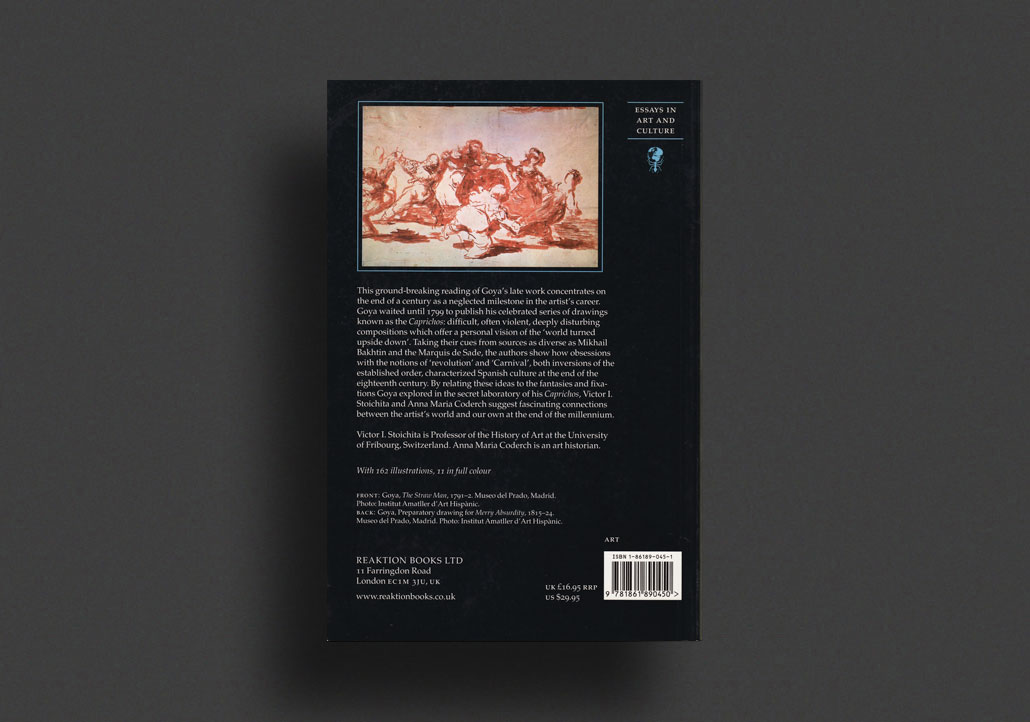
This ground-breaking reading of Goya's late work concentrates on the end of a century as a neglected milestone in the artist's career. Goya waited until 1799 to publish his celebrated series of drawings known as the Caprichos: difficult, often violent, deeply disturbing compositions which offer a personal vision of the 'world turned upside down'. Taking their cues from sources as diverse as Mikhail Bakhtin and the Marquis de Sade, the authors show how obsessions with the notions of 'revolution' and 'Carnival', both inversions of the established order, characterized Spanish culture at the end of the eighteenth century. By relating these ideas to the fantasies and fixations Goya explored in the secret laboratory of his Caprichos, Victor I. Stoichita and Anna Maria Coderch suggest fascinating connections between the artist's world and our own at the end of the millennium.
Heavily illustrated throughout.
Victor L. Stoichita is Professor of the History of Art at the University of Fribourg, Switzerland. Anna Maria Coderch is an art historian.
VG copy.
1983, French
Softcover (w. plastic dust-jacket), 126 pages, 24 x 28 cm
1st Edition, Out of print title / used / very good
Published by
Temps Futurs / France
$150.00 - Out of stock
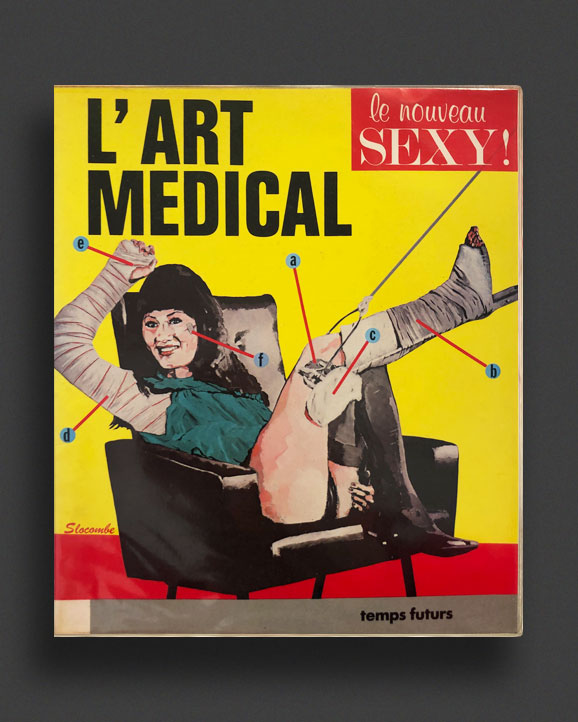
First 1983 edition of the one-of-a-kind L’Art Medical, edited by French author, artist and core member of the "Bazooka" art collective and early Metal Hurlant magazine, Romain Slocombe. Published by Temps Futurs in France in 1983, this incredible book celebrates the phenomenon of "medical art", lavishly illustrated throughout with the incredible work of Slocombe, who brought us the provocative cult classic photobook, City of Broken Dolls. Anyone familiar with that book would know what to expect here. Photographs, paintings and illustrations, alongside Slocombe's study, with artworks throughout by fellow "Bazooka" art collective members, Kiki Picasso, Bernard Vidal, Natsuko, Yoshi Ichimura, Fred Chalmer, Loulou Picasso, plus Didier Eberoni, Kim Tchoun Kwang, Jena-Baptiste Mondino, Natsuko, Yoichi Nagata, Shigenari Onishi, and more. Full of paintings and photography of women in casts and slings, in hospitals and at accident scenes, medical erotica, body manipulation/mutilation, plus many visual historical references to violent fantasy, medical fetishism and bondage in film, illustration, erotic magazines, and other forms of popular culture from Japan and Europe. Nothing like it, and a long out-of-print collector's item.
Very Good copy still in original publisher's plastic dust jacket. Light wear and age.