World Food Books' programme is largely produced on Kulin Nation land. We acknowledge the Wurundjeri people of the Kulin Nation as the first and continuing custodians of this land, and pay respect to their Elders past, present, and emerging.
World Food Books is an arts and special interests bookshop in Naarm / Melbourne. Founded in 2010, World Food Books is devoted to the presentation of a rotating, hand-selection of international art, design, literary and counterculture publications with an emphasis on the anti-traditional, the experimental, the avant-garde, the heretic, the marginal.
Presenting new titles alongside rare and out-of-print books, catalogues and journals spanning the fields of modern and contemporary art, design, photography, illustration, film, literature, poetry, cultural theory, philosophy, sexuality, popular and underground culture in its many radical forms, World Food Books wishes to encourage adventurous, thoughtful and open-minded reading, looking, writing, and exchange of publishing and ideas, both current and historical.
As well as our bookshop, located in Melbourne's historical Nicholas Building, all of our inventory is available internationally via our online mail-order service.
World Food Books semi-regularly co-ordinates "Occasions", a programme of exhibits and events at the bookshop and in partnership with other hosts (such as museums and art galleries) that develop out of the activities, relationships and content of the bookshop itself.
World Food Books
The Nicholas Building
37 Swanston Street
Room 5, Level 6
Melbourne 3000
Australia
SHOP HOURS:
THU–SAT 12–6
WEB-SHOP OPEN 24/7
World Food Books
Postal Address:
PO Box 435
Flinders Lane
Victoria 8009
Australia
info@worldfoodbooks.com
Art
Theory / Essay
Architecture / Interior
Graphic Design / Typography
Photography
Fashion
Eros
LGBTQ+
Fiction / Poetry
Weird / Speculative / Science Fiction / Horror
Transgressive / Visceral / Abject
Symbolism / Decadence / Fin de siècle
Film / Video
Painting
Sculpture / Installation
Performance / Dance / Theater
Drawing
Sound / Music
Curatorial
Group Shows / Collections
Periodicals
Out-of-print / Rare
Posters / Ephemera / Discs
Signed Books
World Food Books Gift Voucher
World Food Book Bag
Australian Art
Australian Fiction
Australian Science Fiction / Speculative Fiction
Australian Poetry
Australian Photography
Japanese Photography
Conceptual Art
Minimal Art
Dada
'Pataphysics / Oulipo
Fluxus
Concrete Poetry
Pop Art
Surrealism
Arte Povera
Arte Informale / Haute Pâte / Tachism
Nouveau Réalisme / Zero / Kinetic
Situationism / Lettrism
Collage / Mail Art / Xerox Art
Art Brut / Folk / Visionary / Fantastic
Illustration / Graphic Art / Bandes Dessinées
Furniture
Italian Radical Design / Postmodernism
Textiles
Ceramics / Glass
Counterculture
Protest / Revolt
Philosophy
Psychoanalysis
Anthropology
Anarchism
Socialism / Anarchism / Communism / Capitalism
Literary Theory / Semiotics / Language
Feminism / Women's Studies
Gender Studies / Sexuality
Anthropology
Fetishism / BDSM
Drugs / Psychedelia
Crime / Violence
Animal Rights / Veganism
Occult / Esoterica
Ecology / Earth / Alternative Living
Whole Earth / Crafts
All prices in AUD (Australian dollars)
Pick-Ups
Pick-up orders can be collected in our bookshop during opening hours after order date. Please collect any Pick-up orders within 2 weeks of ordering as we have limited storage space. Orders will be released back into stock if not collected within this time. No refunds can be made for pick-ups left un-collected. If you cannot make it in to the bookshop in this time-frame, please choose postage option.
Return Policy
All sales are final. We do accept returns (for refund or exchange) for items received in error. All our orders are packed with special care using heavy-duty padding and cardboard book-mailers or bubble mailers (for smaller books), using reinforcement where required. We cannot take responsibility for any lost, stolen or damaged parcels.
Insurance
Should you wish to insure your package, please email us directly after placing your order and we can organise this at a small extra expense. Although all standard/express tracked packages are very safe and dependable, we cannot take responsibility for any lost, stolen or damaged parcels. We recommend insurance on valuable orders.
Interested in selling your old books, catalogues, journals, magazines, comics, fanzines, ephemera? We are always looking for interesting, unusual and out-of-print books to buy. We only buy books in our fields of interest and specialty, and that we feel we can resell.
We base these prices on desirability, market value, in-print prices, condition and our current stock levels. We offer cash, store credit, and can take stock on consignment. All
about 25% of the price we expect to get when we sell them, or 30% in store credit. We base these prices on desirability, market value, in-print prices, condition and our current stock levels.
Sell your books any day of the week. You can drop them off and return later. If you have a lot of books, we can visit your Sydney home.
We buy books that we feel we can resell. We offer about 25 % of the price we expect to get when we sell them, or 30% in store credit. We base these prices on desirability, market value, in-print prices, condition and our current stock levels.
Philadelphia Wireman
03 August - 01 September, 2018
World Food Books is proud to announce our next Occasion, the first presentation of sculptures by Philadelphia Wireman in Australia.
The Philadelphia Wireman sculptures were found abandoned in an alley off Philadelphia’s South Street on trash night in 1982. Their discovery in a rapidly-changing neighbourhood undergoing extensive renovation, compounded with the failure of all attempts to locate the artist, suggests that the works may have been discarded after the maker’s death. Dubbed the "Philadelphia Wireman" during the first exhibition of this work, in 1985, the maker’s name, age, ethnicity, and even gender remain uncertain. The entire collection totals approximately 1200 pieces, all intricately bound together with tightly-wound heavy-gauge wire (along with a few small, abstract marker drawings, reminiscent both of Mark Tobey and J.B. Murry). The dense construction of the work, despite a modest range of scale and materials, is singularly obsessive and disciplined in design: a wire armature or exoskeleton firmly binds a bricolage of found objects including plastic, glass, food packaging, umbrella parts, tape, rubber, batteries, pens, leather, reflectors, nuts and bolts, nails, foil, coins, toys, watches, eyeglasses, tools, and jewellery.
Heavy with associations—anthropomorphic, zoomorphic, and socio-cultural responses to wrapped detritus—the totemic sculptures by Philadelphia Wireman have been discussed in the context of work created to fulfil the shamanistic needs of alternative religions in American culture. Curators, collectors, and critics have variously compared certain pieces to sculpture from Classical antiquity, Native American medicine bundles, African-American memory jugs, and African fetish objects. Reflecting the artist’s prolific and incredibly focused scavenging impulse, and despite—or perhaps enhanced by—their anonymity, these enigmatic objects function as urban artefacts and arbiters of power, though their origin and purpose is unknown. Philadelphia Wireman, whatever their identity, possessed an astonishing ability to isolate and communicate the concepts of power and energy through the selection and transformation of ordinary materials. Over the course of the past two decades, this collection has come to be regarded as an important discovery in the field of self-taught art and vernacular art.
Presented in collaboration with Fleisher-Ollman Gallery, Philadelphia, and Robert Heald, Wellington.
Susan Te Kahurangi King
02 February - 10 March, 2018
Susan Te Kahurangi King (24 February 1951 - ) has been a confident and prolific artist since she was a young child, drawing with readily available materials - pencils, ballpoint pens and felt-tip markers, on whatever paper is at hand. Between the ages of four and six Susan slowly ceased verbal communication. Her grandparents William and Myrtle Murphy had developed a special bond with Susan so they took on caring responsibilities for extended periods. Myrtle began informally archiving her work, carefully collecting and storing the drawings and compiling scrapbooks. No drawing was insignificant; every scrap of paper was kept. The King family are now the custodians of a vast collection containing over 7000 individual works, from tiny scraps of paper through to 5 meter long rolls.
The scrapbooks and diaries reveal Myrtle to be a woman of great patience and compassion, seeking to understand a child who was not always behaving as expected. She encouraged Susan to be observant, to explore her environment and absorb all the sights and sounds. Myrtle would show Susan’s drawings to friends and people in her community that she had dealings with, such as shopkeepers and postal workers, but this was not simply a case of a grandmother’s bias. She recognised that Susan had developed a sophisticated and unique visual language and sincerely believed that her art deserved serious attention.
This was an unorthodox attitude for the time. To provide some context, Jean Dubuffet coined the term Art Brut in 1945 to describe work created by self-taught artists – specifically residents of psychiatric institutions and those he considered to be visionaries or eccentrics. In 1972 Roger Cardinal extended this concept by adopting the term Outsider Art to describe work made by non-academically trained artists operating outside of mainstream art networks through choice or circumstance. Susan was born in Te Aroha, New Zealand in 1951, far from the artistic hubs of Paris and London that Dubuffet and Cardinal operated in. That Myrtle fêted Susan as a self-taught artist who deserved to be taken seriously shows how progressive her attitudes were.
Susan’s parents Doug and Dawn were also progressive. Over the years they had consulted numerous health practitioners about Susan’s condition, as the medical establishment could not provide an explanation as to why she had lapsed into silence. Dawn educated herself in the field of homeopathy and went on to treat all twelve of her children using these principles – basing prescriptions on her observations of their physical, mental and emotional state.
Doug was a linguist with an interest in philosophy who devoted what little spare time he had to studying Maori language and culture. To some extent their willingness to explore the fringes of the mainstream made them outsiders too but it was their commitment to living with integrity and their respect for individuality that ensured Susan’s creativity was always encouraged.
Even though Susan’s family supported her artistic pursuits, some staff in schools and hospitals saw it as an impediment to her assimilation into the community and discouraged it in a variety of ways. Her family was not always aware of this and therefore did not fully understand why Susan stopped drawing in the early 1990s. However, rather than dwell on the challenges that Susan faced in pursuit of her artistic practice, they prefer to highlight her achievements. In 2008 Susan began drawing again in earnest, after an almost 20 year interruption, and her work is now shown in galleries around the world.
Susan grew up without television and has been heavily influenced by the comics she read as a child. She is absolutely fearless in the appropriation of recognizable characters, such as Donald Duck and Mickey Mouse, in her work. She twists their limbs, contorts their faces, compresses them together, blends them into complex patterned backgrounds - always imbuing them with an incredible energy. Although Susan often used pop culture characters in her work they are not naive or childlike. These are drawings by a brilliant self-taught artist who has been creating exceptional work for decades without an audience in mind.
Mladen Stilinović
"Various Works 1986 - 1999"
02 February 16 - September 10, 2016
Various works 1986 - 1999, from two houses, from the collections of John Nixon, Sue Cramer, Kerrie Poliness, Peter Haffenden and Phoebe Haffenden.
Including: Geometry of Cakes (various shelves), 1993; Poor People’s Law (black and white plate), 1993; White Absence (glasses, ruler, set square, silver spoon, silver ladel with skin photograph and wooden cubes), 1990-1996; Exploitation of the Dead (grey and red star painting, wooden painting, black spoon with red table, red plate), 1984-1990; Money and Zeros (zero tie, paintings made for friends in Australia (Sue, John, Kerrie), numbers painting), 1991-1992; Words - Slogans (various t-shirts) - “they talk about the death of art...help! someone is trying to kill me”, “my sweet little lamb”, “work is a disease - Karl Marx”; Various artist books, catalogues, monographs, videos; Poster from exhibition Insulting Anarchy; "Circular" Croatian - Australian edition; Artist book by Vlado Martek (Dostoyevsky); more.
Thanks to Mladen Stilinović and Branka Stipančić.
Jonathan Walker
Always Will Need To Wear Winter Shirt Blue + Ochre Small Check Pattern
21 August - 21 September, 2015
Untitled
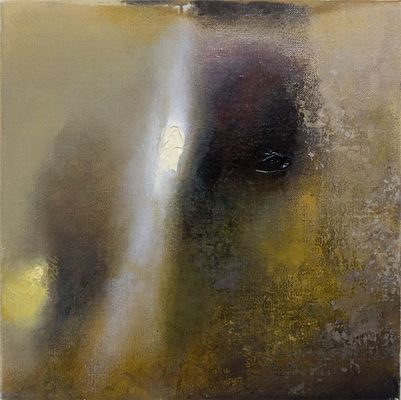
I am not a great reader of poetry but I always return to the work of Melbourne poet, Vincent Buckley (1925- 1988). Perhaps I find his most tantalising piece to be not a finished poem but a fragment left on a scrap of paper discovered on his desk after the poet’s death.
The poetry gathers like oil
In the word-core, and spreads
It has its music meet,
Its music is in movement.
This fragment is more the shell left behind from a volatile thought than a finished poem. I find the last two lines honest but awkward whereas the first two lines work like an arrow. Most likely he could not find a resolution so it was left. Still, in its present form, it remains an eloquent testimony to the ultimate failure of a medium to express mobile thought and sensation, in Buckley’s case, through verbal language. It’s an important matter because this is something all artists have to deal with regardless of the medium.
I have never written a poem, however, I am forever copying fragments from books on paper scraps in a vain effort to fix certain notions in my head. At first, they function as bookmarks that are sometimes returned to when I open the book. But before long, as they accumulate, they fall out littering the table interspersed with A4 photocopies, bills, books and medications.
To return to Buckley’s fragment, the first two lines very much evoke how I paint nowadays. As you age, detail diminishes and patches of light become more luminous and float. I feel the most honest way of dealing with this is by smearing the oil paint on the canvas with the fingers and working close-up, blind. Only if the patches coalesce into an approaching image can the work gain a life.
-
Jonathan Walker was born in Melbourne, Australia and brought up on a dairy farm in Gippsland. In the 1970’s he studied painting at RMIT and won the Harold Wright Scholarship to the British Museum, London. During the 1980’s he exhibited at Pinacotheca Gallery, Richmond and had work shown at the NGV and Heidi City Art Gallery. Over the same period he designed the cover for the “Epigenesi” LP by Giancarlo Toniutti, Italy and conducted a mail exchange work with Achim Wollscheid, Germany. The work with artists through the post resulted in an article published in the bicentenary issue of Art and Australia 1988. He showed in artist run spaces such as WestSpace in the 90’s and 2000’s, and until 2012, taught painting at Victoria University, which is where we (Colleen Ahern and Lisa Radford) as organisers of the exhibition, among many others, had the privilege of being his student.
Walker’s knowledge was imparted to students through the careful selection of music, literature, and artists found in books that he himself had ordered for the library. Walker’s strategy was the generosity of sharing his vast knowledge with references specific to each student and their context.
Walker’s paintings share a similar focus and intimacy.
This exhibition presents a small selection of recent paintings alongside a publication that includes Walker’s writing. Observational and analytical, Walker’s work is a type of material notation — the time of day, colour and how it is blended, the both specific and fleeting location of a reflection on lino or the question of whether a chair leg should be included in a painting.
Please join us on Friday August 21 between 6-8pm to celebrate the opening of the exhibition.
Curated by Colleen Ahern and Lisa Radford.
B. Wurtz
Curated by Nic Tammens
March 26 - April 4, 2015
B.Wurtz works from a basement studio in his home on Manhattan’s Lower East Side.
This local fact is attested to by the plastic shopping bags and newsprint circulars that appear in his work. As formal objects, they don’t make loud claims about their origins but nonetheless transmit street addresses and places of business from the bottom of this long thin island. Like plenty of artists, Wurtz is affected by what is local and what is consumed. His work is underpinned by this ethic. It often speaks from a neighborhood or reads like the contents of a hamper:
“BLACK PLUMS $1.29 lb.”
“Food Bazaar”
“USDA Whole Pork Shoulder Picnic 99c lb.”
“RITE AID Pharmacy, with us it’s personal.”
“H. Brickman & Sons.”
“Sweet Yams 59c lb."
Most of the work in this exhibition was made while the artist was in residence at Dieu Donne, a workshop dedicated to paper craft in Midtown. Here Wurtz fabricated assemblages with paper and objects that are relatively lightweight, with the intention that they would be easily transportable to Australia. This consideration isn’t absolute in Wurtz’s work, but was prescriptive for making the current exhibition light and cheap. Packed in two boxes, these works were sent from a USPS post office on the Lower East Side and delivered to North Melbourne by Australia Post.
Wurtz appears courtesy of Metro Pictures, New York.
Thanks to Rob Halverson, Joshua Petherick, Sari de Mallory, Matt Hinkley, Helen Johnson, Fayen d'Evie, Ask Kilmartin, Lisa Radon, Ellena Savage, Yale Union, and "Elizabeth".
John Nixon
"Archive"
December 15 - January 20, 2014
The presentation of John Nixon's archive offered a rare showcase of this extensive collection of the artist's own publications, catalogues, posters, ephemera, editions and more, from the mid 1980s onwards, alongside a selection of his artworks.
Organized by John Nixon, Joshua Petherick and Matt Hinkley.
"Habitat"
at Minerva, Sydney (organised by Joshua Petherick and Matt Hinkley)
November 15 - December 20, 2014
Lupo Borgonovo, Janet Burchill & Jennifer McCamley,
Lewis Fidock, HR Giger, Piero Gilardi, Veit Laurent Kurz,
Cinzia Ruggeri, Michael E. Smith, Lucie Stahl, Daniel Weil, Wols
Press Release:
“...It contained seven objects. The slender fluted bone, surely formed for flight, surely from the wing of some large bird. Three archaic circuitboards, faced with mazes of gold. A smooth white sphere of baked clay. An age-blackened fragment of lace. A fingerlength segment of what she assumed was bone from a human wrist, grayish white, inset smoothly with the silicon shaft of a small instrument that must once have ridden flush with the surface of the skin - but the thing’s face was seared and blackened.”
William Gibson, “Count Zero”, 1986
"Autumn Projects Archive"
Curated by Liza Vasiliou
March 6 - March 15, 2014
World Food Books, in conjunction with the Virgin Australia Melbourne Fashion Festival 2014, presented the Autumn Projects archive, consisting of a selection of early examples in Australian fashion with a particular interest in collecting designers and labels from the period beginning in the 1980’s, who significantly influenced the discourse of Australian Fashion.
Curated by Liza Vasiliou, the exhibition provided a unique opportunity to view pieces by designers Anthea Crawford, Barbara Vandenberg, Geoff Liddell and labels CR Australia, Covers, Jag along with early experimental collage pieces by Prue Acton and Sally Browne’s ‘Fragments’ collection, suspended throughout the functioning World Food Books shop in Melbourne.
H.B. Peace
presented by CENTRE FOR STYLE
November 14, 2013
"Hey Blinky, you say chic, I say same"
Anon 2013
H.B. Peace is a clothing collaboration between great friends Blake Barns and Hugh Egan Westland. Their pieces explore the divergences between 'character’ and ‘personality’ in garments....etc
Special Thanks to Joshua Petherick and Matt Hinkley of WFB and Gillian Mears
and a Very Special Thank you to Audrey Thomas Hayes for her shoe collaboration.
Janet Burchill & Jennifer McCamley
"Aesthetic Suicide"
May 10 - June 8, 2013
The first of our occasional exhibitions in the World Food Books office/shop space in Melbourne, "Aesthetic Suicide" presented a body of new and older works together by artists Janet Burchill & Jennifer McCamley, including videos, prints, a wall work, and publications.
During shop open hours videos played every hour, on the hour.
1971, English
Hardcover (w. dust jacket), 325 pages, 23 x 29.5 cm
1st Edition, Out of print title / used / very good
Published by
Andre De Rache / Brussels
$200.00 - In stock -
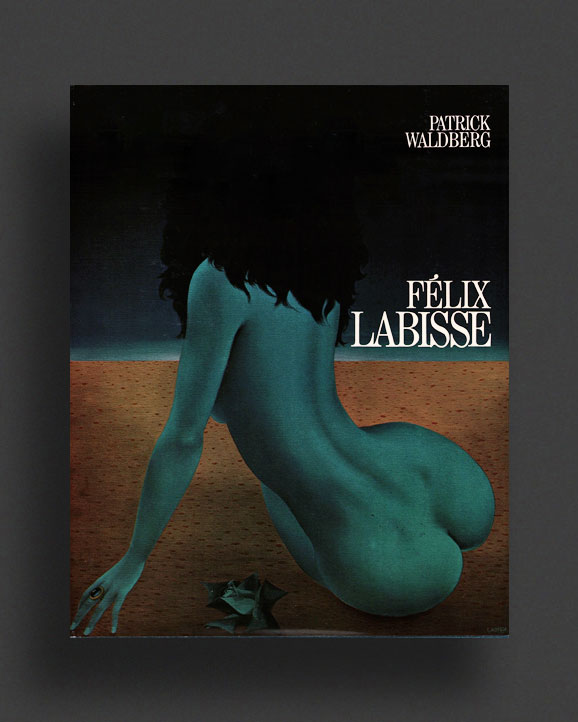
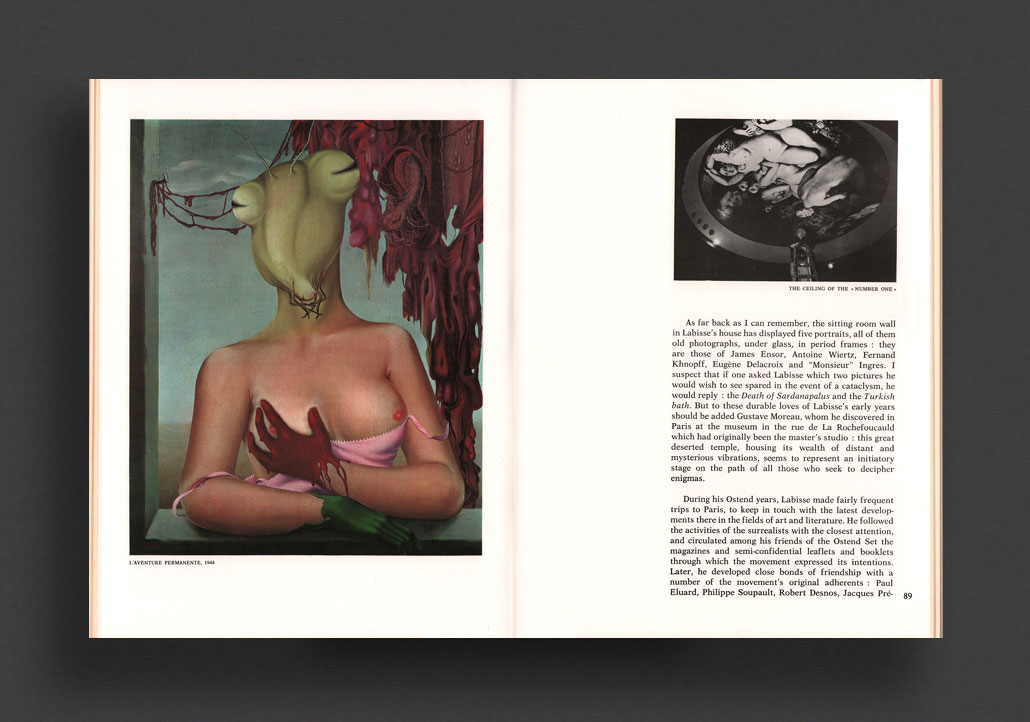
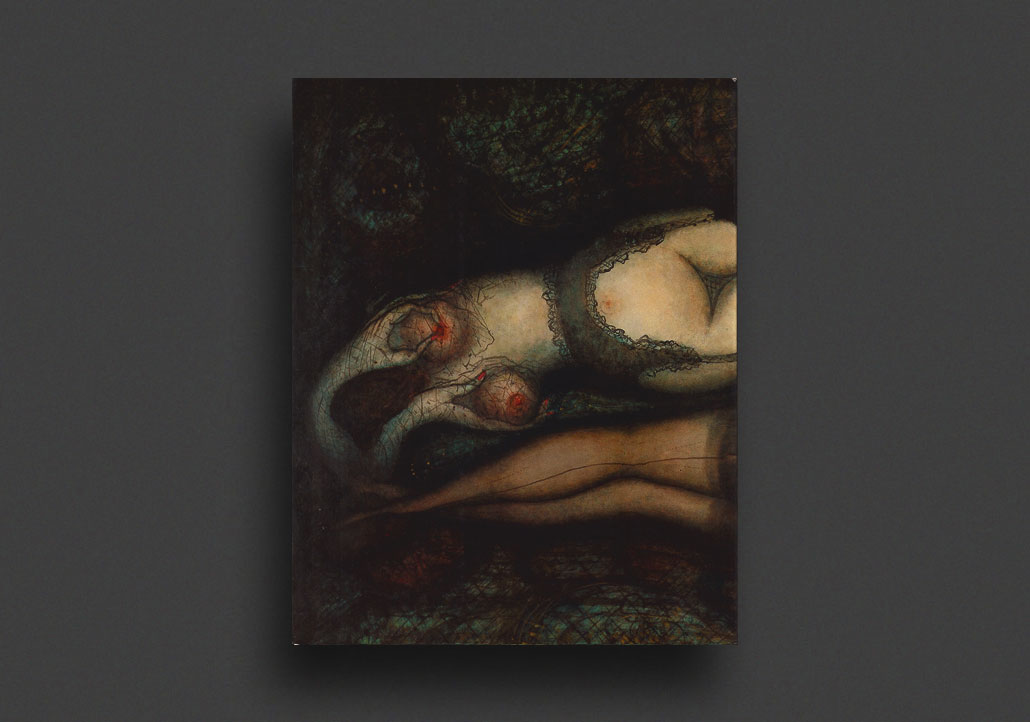
First edition of the best, most comprehensive reference book on the work of French—Belgian Surrealist artist Felix Labisse, and one of the only publications on the artist in the English language. Profusely illustrated throughout in colour and b/w, including many photographs of Labisse's life and artistic circles, with extensive accompanying essays by the great Surrealist biographer and author Patrick Walberg, including chapters: Gayant's child; The Ostend clan; The Wizard of Families; Behind the Scenes of the Party; Devil's Transvestites. Highly recommended.
Félix Labisse (1905—1982) was a self-taught French Surrealist painter, illustrator, and designer. He was born in Marchiennes. He divided his time between Paris and the Belgian coast from 1927. In Ostend he met James Ensor, with whom he became friends for life. In 1927 he set up his own studio there, influenced by his contact with the Ostend artists Ensor, Constant Permeke and Léon Spilliaert. Labisse mainly worked with oil on canvas. Beginning in 1931 he designed extensively literature and for the theater. In 1951 he staged the play Le Diable et le Bon Dieu by Jean-Paul Sartre at the Théâtre Antoine in Paris and in 1954 he staged the play Les Mystères de Paris by Albert Vidalie under the direction of Georges Vitaly at the Theater La Bruyere in Paris. Labisse's work was also influenced by Paul Delvaux and René Magritte. Describing his own work as 'libidoscaphes', his paintings depict fantastical hybrid creatures, heavy with motifs of eroticism and Freudian themes. He painted the first of a series of his iconic blue women in 1960; among them is the Bain Turquoise. He was the subject of a film by Alain Resnais, Visite à Félix Labisse (1947). In 1966 he was elected to the Académie des Beaux-Arts. In 1973 his paintings were shown in a retrospective exhibition at the Museum Boijmans Van Beuningen, Rotterdam. He died in Neuilly-sur-Seine in 1982.
Patrick Waldberg (1913—1985) was a Franco-American art critic known for his profiles of Surrealist artists. Born in Santa Monica, California, Waldberg moved to Paris as a child with his family. In 1932, and while still a student (age 19), he joined Boris Souvarine's Democratic Communist Circle. There he met Georges Bataille and his friends Michel Leiris and André Masson, and was initiated by them into a wild night life. 1937 saw him back in California to take care of "family matters", however, a letter from Georges Bataille reached him there, urging him to return to Paris in order to take part in a Nietzschean secret society Bataille was then forming, called Acéphale ("headless"). Waldberg heeded the call in September 1938, and he says this permanently changed his life. From 1938 to 1940 Waldberg would serve as the secretary of Bataille's "official" group, the College of Sacred Sociology. In 1959 he left Paris to move to the French village of Seillans, where his second wife Line Jubelin was from. Max Ernst and his own second wife Dorothea Tanning joined him there. Their houses are now a Max Ernst museum and a Maison Waldberg museum.
Very Good in VG dust jacket — copy, light wear/age only.
1979, Japanese
Hardcover (w. dust jacket), 236 pages, 20.4 x 20.3 cm
1st Edition, Out of print title / used / average
Published by
Self-published / Kobe City
$65.00 - Out of stock
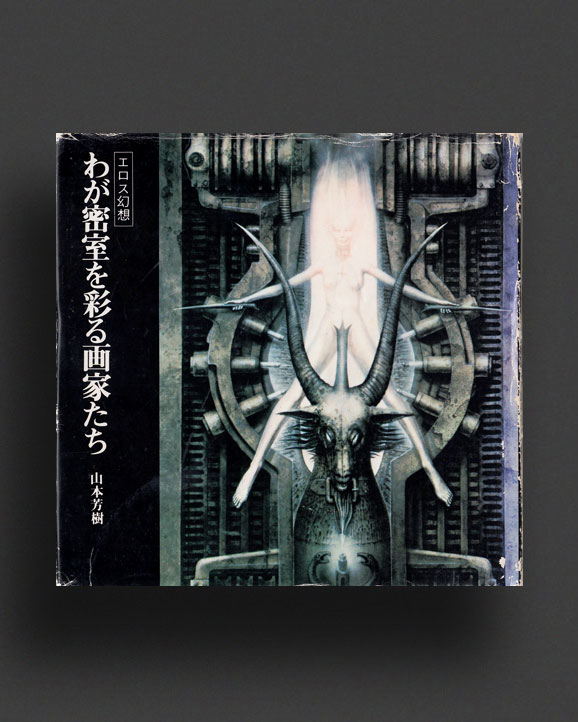
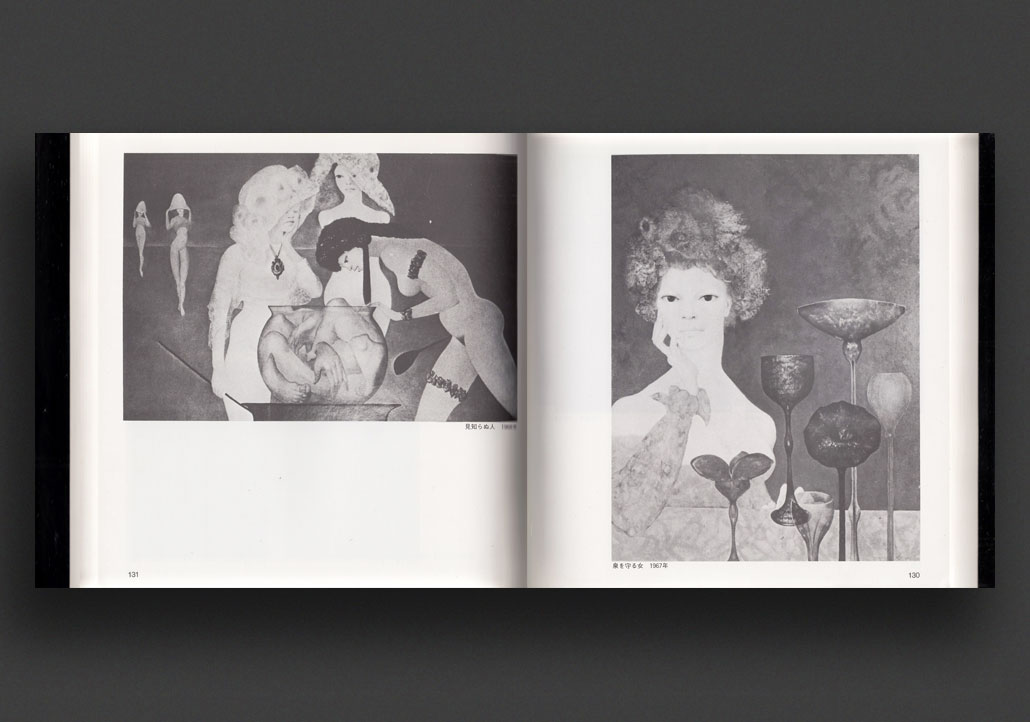
First and only edition of this stunning privately-issued 1979 Japanese hardcover collection of erotic fantasy art, edited and written by Yoshiki Yamamoto. Upon retiring from the Sanyo Electric Railway Company in 1976, Yamamoto devoted himself to the art that he loved and to complete an intimate book study that traces an important lineage of artists of "eros fantasy", focussing on 16 key artists through profusely illustrated chapters, linking artists of the fin de siècle, symbolism, surrealism, and their descendants. A total labour of love. There is no other book like it. "Artists Who Decorate My Secret Room" features profusely illustrated full chapters on Gustave Moreau, Félicien Rops, Gustav Klimt, Franz von Bayros, Egon Schiele, Paul Delvaux, Hans Bellmer, Felix Labisse, Pierre-Yves Trémois, Leonor Fini, Paul Wunderlich, Ernst Fuchs, Tomi Ungerer, H.R. Giger, Raymond Bertrand, Gilles Rimbault, including profiles, many artworks, portraits and texts by Yamamoto, closing with a chronology of further artists and authors through the centuries.
Average—Good copy due to the back hardcover board being reattached. Good dust jacket with the usual wear and tanning of this title, otherwise the book block is VG throughout — crisp and clean.
1994/2022, English
Softcover (staple-bound), 68 pages, 28 x 21.5 cm
Published by
Kunstverein Toronto / Toronto
$45.00 - In stock -
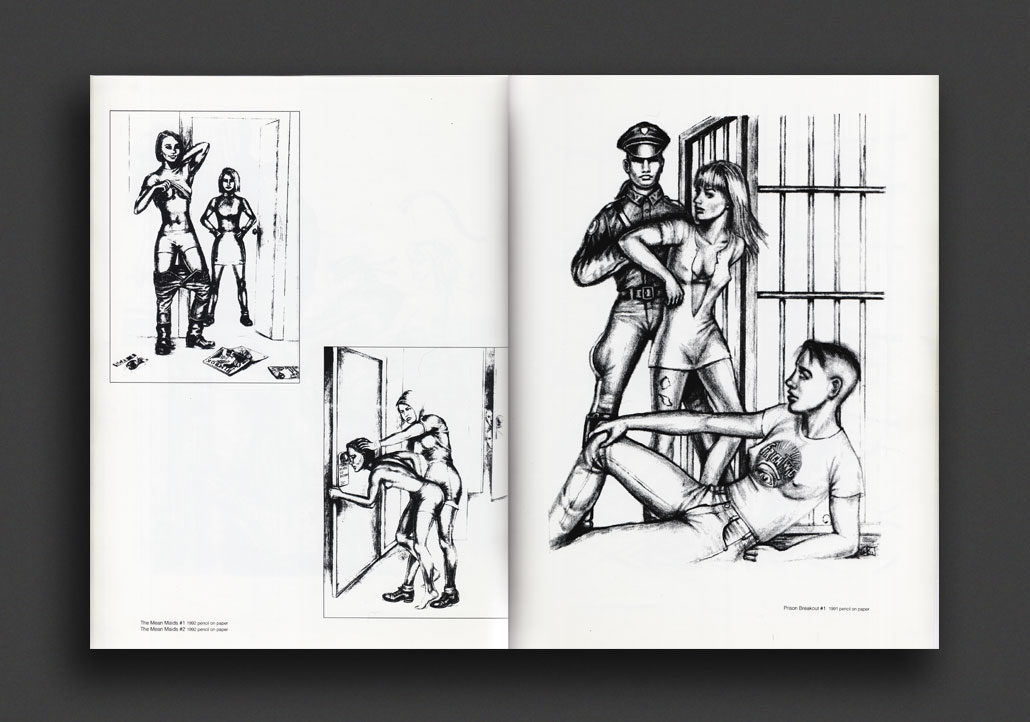
Long-awaited re—print of G.B. Jones' legendary 1994 monograph.
G.B. Jones (b. 1965, Bowmanville, Canada) is recognized for many accomplishments: for the success of her post-punk band Fifth Column (1981–2002), the widespread influence of the many queer punk zines she co-authored, including J.D.s, Double Bill and Hide, her coining of the term “queercore,”and her prolific work as a “no-budget” filmmaker, scene photographer and visual artist. Her drawing series, “Tom Girls,” originally published in J.D.s, replaced Tom of Finland’s iconic, “hyper-virile studs” with bold, uncompromising leather dykes, co-opting Finland’s objectified, male-on-male erotica and presenting a world of “nasty female role models”—Dodie Bellamy.
In 1994, Feature Inc. + Instituting Contemporary Idea in New York released the monograph G.B. Jones. Edited and designed by Steve Lafreniere, the book compiled Jones’ “Tom Girls” drawings alongside show and film posters, record covers, comics and commissioned writing, including contributions and appearances by Dennis Cooper, Vaginal Davis, Dodie Bellamy, Kevin Killian, Caroline Azar, Johnny Noxzema, and others. As part of a campaign by the Canadian Border Services agency against allegedly pornographic or immoral materials in the 1990s, copies of Jones’ book were seized by the Canada Border Services Agency and barred from entering the country on the charge of depicting “bondage.” Jones was later informed that the seized copies had been burned by Border Control agents.
27 years later, in collaboration with Jones, Kunstverein Toronto is putting G.B. Jones back in circulation in Canada. This re—publication of the book was published to accompany a 2022 exhibition of related drawings, photographs, posters, ephemera and tributes that reflect the reach and influence of Jones’ heterogenous practice, both at the time of the original release of G.B. Jones, and today.
2024, English
Hardcover (w. dust jacket), 240 pages, 30.5 x 20.5 cm
Published by
Hauser & Wirth / Zurich
$125.00 - In stock -
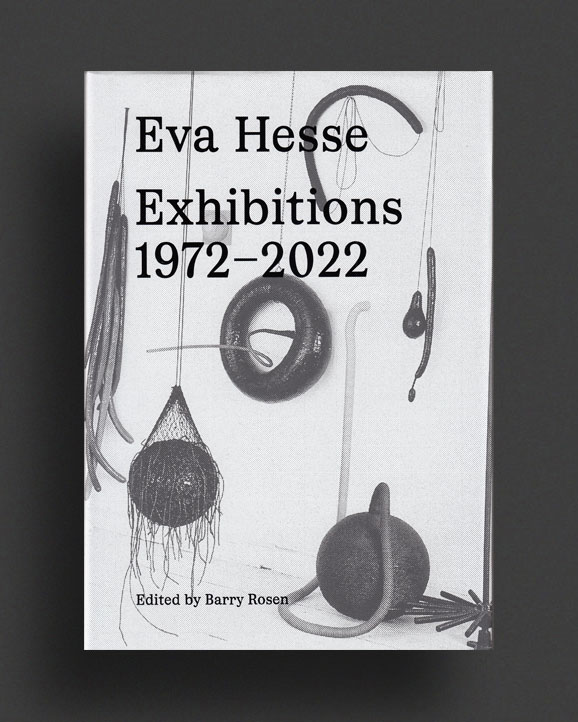
German-born American artist Eva Hesse (1936–70) was a pioneering figure in Postminimalism, known for her use of materials such as latex and fiberglass to evoke fleshy, organic forms. This volume provides a historical account of Hesse’s landmark institutional exhibitions following her death, from 1972 to the present.
Contributions from the museum curators involved in organizing these shows reflect the personal dimension of crafting an exhibition, such as intent and reception. Extensive installation views are included throughout, along with exhibition-related ephemera, lending historical texture to the curators’ essays.
Edited by Barry Rosen. Text by Fiona Bradley, Helen Cooper, Briony Fer, Sabine Folie, Andrea Gyorody, Ellen Johnson, Brigitte Kölle, Luanne McKinnon, Renate Petzinger, Petra Roettig, Nicholas Serota, Linda Shearer, Lena Stringari, Elisabeth Sussman, Fred Wasserman, Catherine de Zegher.
Curators and corresponding exhibitions include: Linda Shearer (Guggenheim Museum, New York, 1972); Nicholas Serota (Whitechapel Gallery, London, 1979); Ellen Johnson (Allen Memorial Art Museum, Oberlin College, Ohio, 1982); Helen Cooper (Yale University Art Gallery, New Haven, 1992); Elisabeth Sussman (San Francisco Museum of Modern Art, 2002); Renate Petzinger (Museum Wiesbaden, Germany, 2002); Sabine Folie (Kunsthalle Wien, Vienna, 2004); Fred Wasserman (Jewish Museum, New York, 2006); Catherine de Zegher (Drawing Center, New York, 2006); Briony Fer (Fruitmarket Gallery, Edinburgh, 2009); Luanne McKinnon (University of New Mexico Art Museum, Albuquerque, 2011); Brigitte Kölle and Petra Roettig (Hamburger Kunsthalle, Hamburg, Germany, 2013–14); Andrea Gyorody (Allen Memorial Art Museum, Oberlin College, Ohio, 2019/22); Lena Stringari (Guggenheim Museum, New York, 2022).
2023, English / German
Hardcover, 624 pages, 35.5 x 28.5 cm
Published by
Walther König / Köln
$220.00 - In stock -
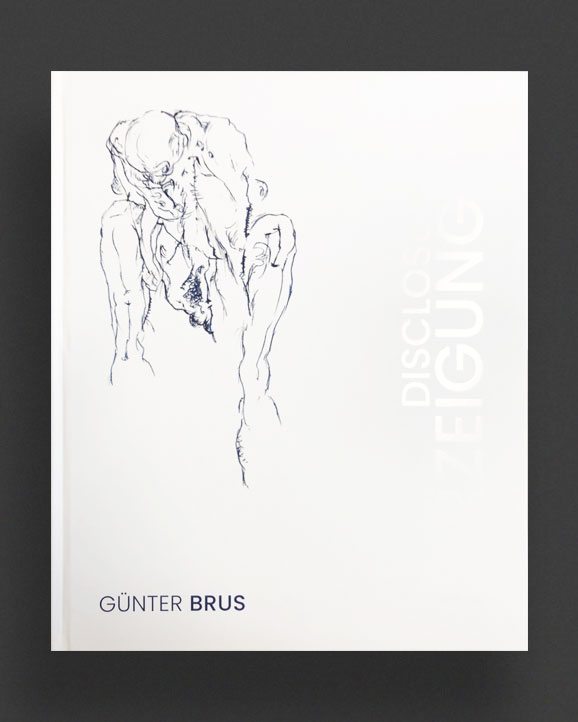
The most comprehensive, exhaustive volume of collected works by Viennese Actionist, painter, graphic artist, experimental filmmaker and writer, Günter Brus (b. 1938).
Under the title ‘Disclosure’, what is probably in terms of its scope and quality the most outstanding private collection of Günter Brus’ work is now presented for the first time. Over the past few decades, the THP Private Foundation has built up an extensive collection of the artist’s work. This ranges from one of his first watercolours from the late 1950s through to the latest works during the lockdown of 2020. This comprehensive monograph contains major works from all of the artist’s creative periods and traces vividly the development of the exceptional artist Günter Brus from Viennese Actionist to celebrated picture-poet.
Published on occasion of the exhibition ‘Günter Brus: Disclosure – A Retrospective from the Collection of the THP Private Foundation’, 28 Oct 2022 – 5th March 2023, Neue Galerie Graz, Austria.
The exhibition was curated by Roman Grabner of Neue Galerie Graz, who edits and contributes to this book. English and German text.
Günter Brus (born 1938 in Ardning, Austria) is an Austrian artist known for his controversial films, performances, and paintings. He was notably a member of the Viennese Actionist Group alongside Otto Muehl and Hermann Nitsch. In 1960, the artist’s interest in the paintings of Jackson Pollock led his transition into making performance-based paintings regarding his own body. Many of the Viennese Actionist’s radical acts were intended as reactions to what they considered the ongoing legacy of Nazi fascism in Austrian culture. His 1968 performance Kunst und Revolution, consisted of the artist consuming his own urine, masturbating in public, and vomiting, he was subsequently jailed for six months. Brus currently lives and works in Graz, Austria.
2000, Japanese
Hardcover (w. dust jacket and obi strip), 48 pages, 31 x 22 cm
1st Edition, Out of print title / used / fine
Published by
Bungeisha / Tokyo
$150.00 - In stock -
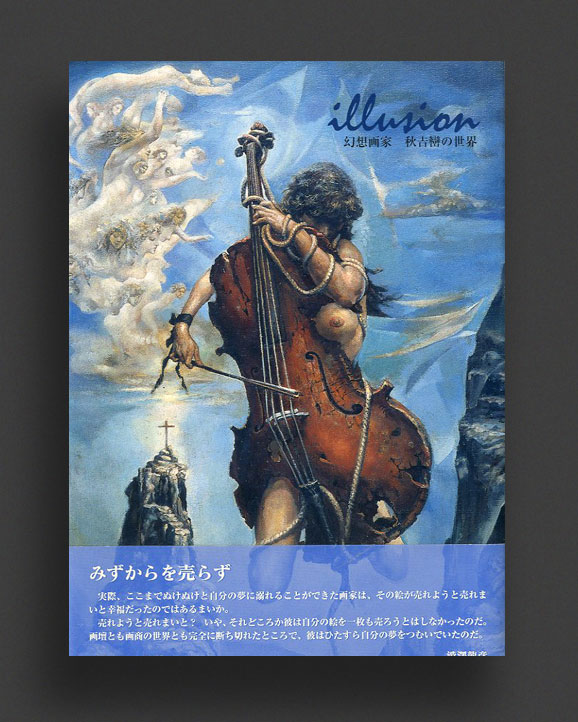
The one and only hardcover monograph dedicated to the fantastic world of artist Ran Akiyoshi (1922—1982), now rare and out-of-print. Virtually unknown and undocumented outside of Japan, Akiyoshi never held an exhibition nor sold any of his drawings in his lifetime. Much like the work of Toshio Saeki or Namio Harukawa, Akiyoshi's creations proliferated throughout the bountiful pages of Tokyo's underground, particularly SM / kinbaku, publishing scene in the 1960s—1970s. Yet Akiyoshi's phantasmagoric world of erotic fantasy is like no other, building sado-masochistic themes within unique, somewhat Lovecraftian and Bosch-esque dreamscapes populated by mythological goddesses and grotesque creatures. His peculiar fantasy drawings were highly praised by Japanese novelist and art critic, Tatsuhiko Shibusawa, an instrumental figure in the Japanese avant-garde who translated de Sade and Bataille to Japanese, and specialised in the study of medieval demonology. This lavishly illustrated hardcover volume collects Akiyoshi's many works together for the first time, surveying his entire career.
Born in Kyongsong (present Seoul), Korea in 1922, Akiyoshi was publicly schooled and self-taught in drawing. After WWII, he moved to Japan, traveled around Kyushu area and finally settled in Tokyo in 1946. Akiyoshi started working for adult entertainment magazines such as "Decameron","Fuzoku Soushi", and "Uramado" in 1950. Around 1958, he began focusing on original drawings while continuing to draw illustrations for various magazines. In the 1970s, Akiyoshi provided iconic cover and insert illustrations to a number of prominent SM magazines, including "SM King", "SM Kitan", and "SM Club". He never held an exhibition nor sold any of his drawings in his lifetime. Akiyoshi died from heart failure in 1982 at the age of 58.
Very Good—Fine copy.
2022, English
Softcover, 272 pages, 13.8 x 21.6 cm
Published by
Bloomsbury Academic / London
$85.00 - In stock -
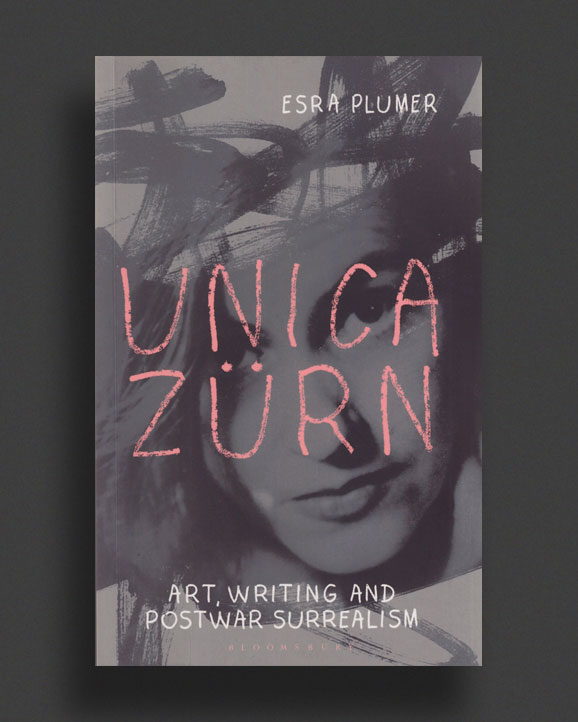
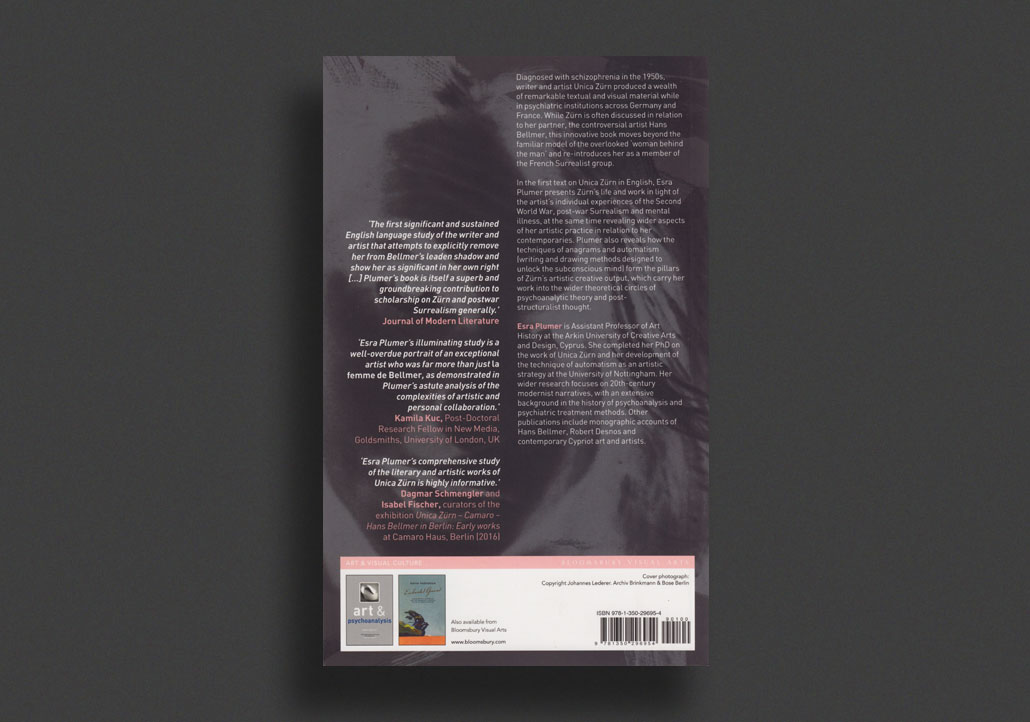
Diagnosed with schizophrenia in the 1950s, writer and artist Unica Zürn produced a wealth of remarkable textual and visual material while in psychiatric institutions across Germany and France. While Zürn is often discussed in relation to her partner, the controversial artist Hans Bellmer, this innovative book moves beyond the familiar model of the overlooked ‘signifigant other’ and re-introduces her as a member of the French Surrealist group.
In the first text on Unica Zürn in English, Esra Plumer presents Zürn’s life and work in light of the artist’s individual experiences of the Second World War, post-war Surrealism and mental illness, at the same time revealing wider aspects of her artistic practice in relation to her contemporaries. Plumer also reveals how the techniques of anagrams and automatism (writing and drawing methods designed to unlock the subconscious mind) form the pillars of Zürn’s artistic creative output, which carry her work into the wider theoretical circles of psychoanalytic theory and post-structuralist thought.
2001, Japanese
Hardcover (w. dust jacket), 164 pages, 25.8 x 19.6 cm
1st Edition, Out of print title / used / fine
Published by
Kokusho Kankokai / Japan
$100.00 - Out of stock
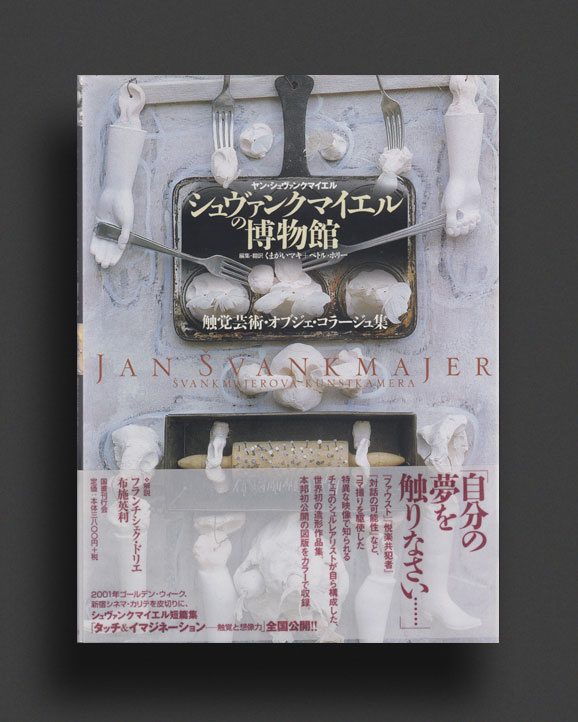
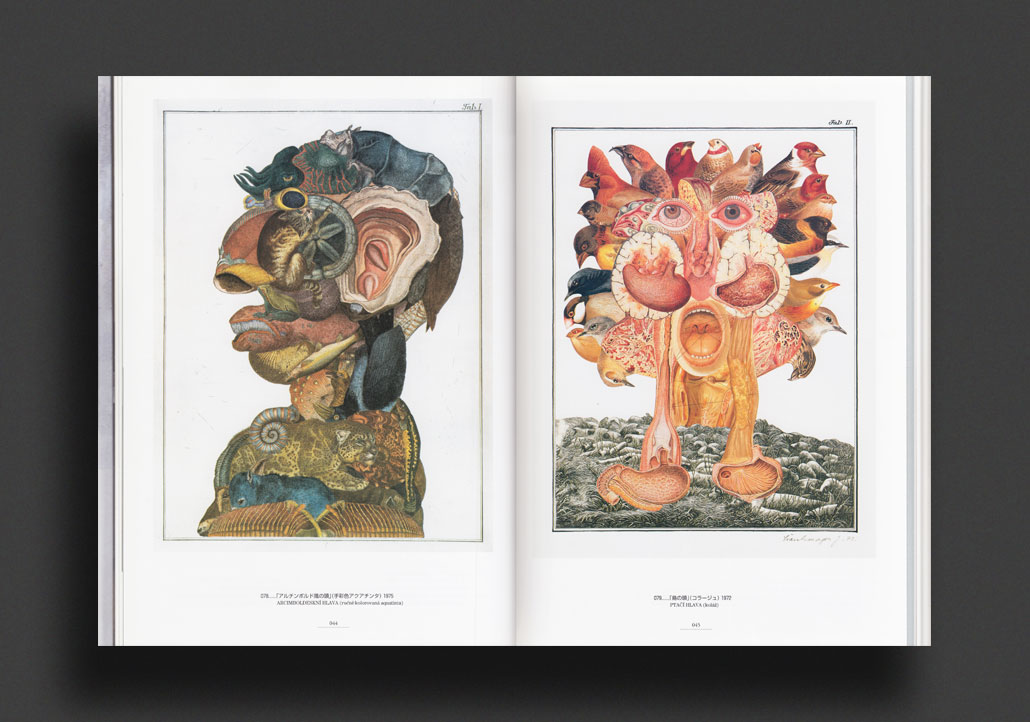
First edition of this wonderful hardcover monographic survey on the work of Czech Surrealist artist, puppeteer, animator, and filmmaker, Jan Švankmajer (b. Prague, 1934), published in Japan in 2001. Profusely illustrated throughout in colour and b/w with chapters dedicated to his sculpture, collage, ceramics, “tactile experiments”, and much more. Well-known for his dark re-imaginings of well-known fairy tales and for his avant-garde merging of live action, stop-motion animation and puppetry, Švankmajer is one of the most distinctive and acclaimed Czech filmmakers. Since the mid-1960s, his films have shocked, mesmerized, repulsed and delighted audiences, amassing international cult-like following. His prolific work off-screen across assemblage and collage mediums, using both man-made and organic materials, share the central thematic elements of his subversive films, such as black humour, metamorphosis, sex, decomposition, mythology, scatology, death, humour and the absurd. Over 300 illustrations with texts by Hideto Fuse, Maki Kumagai, Petr Holly, Jan Švankmajer.
Very Good copy in VG dust jacket.
2017, English / German
Softcover, 328 pages, 30 x 23.5 cm
Out of print title / as new
Published by
Koenig Books / London
$95.00 - Out of stock
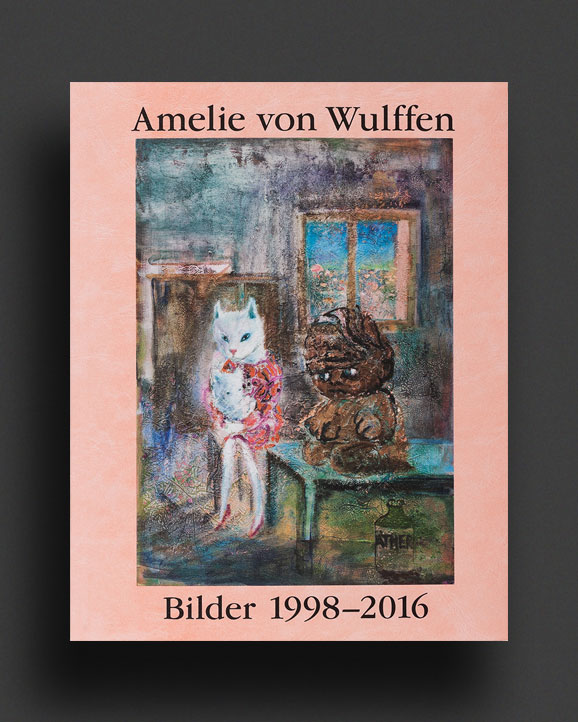
A monograph on Amelie von Wulffen is long overdue. For more than twenty years, the artist has developed a formal and stylistically wide-ranging work (collages, installation works, animation films, drawings, sculptures and painting), which is reflected in its content persistence. Amelie von Wulffen takes a clear account of the German (cultural) history in the precipitation of the private and personal, and argues as an invaluable chronicler of repression. The biting humor that permeates her work does not stop at a human low ground, though not always as directly as in her drawings and comics. The texts of this richly illustrated monograph examine Wulffen's contribution to the painting discourse, Psychoanalytic aspects and show the painter as a role model for a young generation of artists. Amelie von Wulffen, born in Breitenbrunn in 1966, lives and works in Berlin.
Texts by Manfred Hermes, Bernhart Schwenk, Amy Sillman
Edited by Isabel Podeschwa, Bernhart Schwenk, Joe Scotland, Amelie von Wulffen
2023, English
Softcover (staple-bound), 20 pages, 19.5 x 25.5 cm
Published by
Nieves / Zurich
$33.00 - In stock -
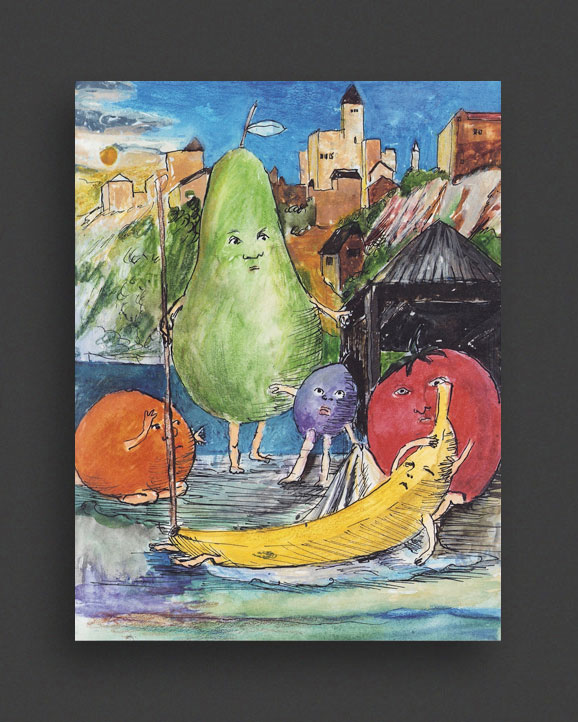
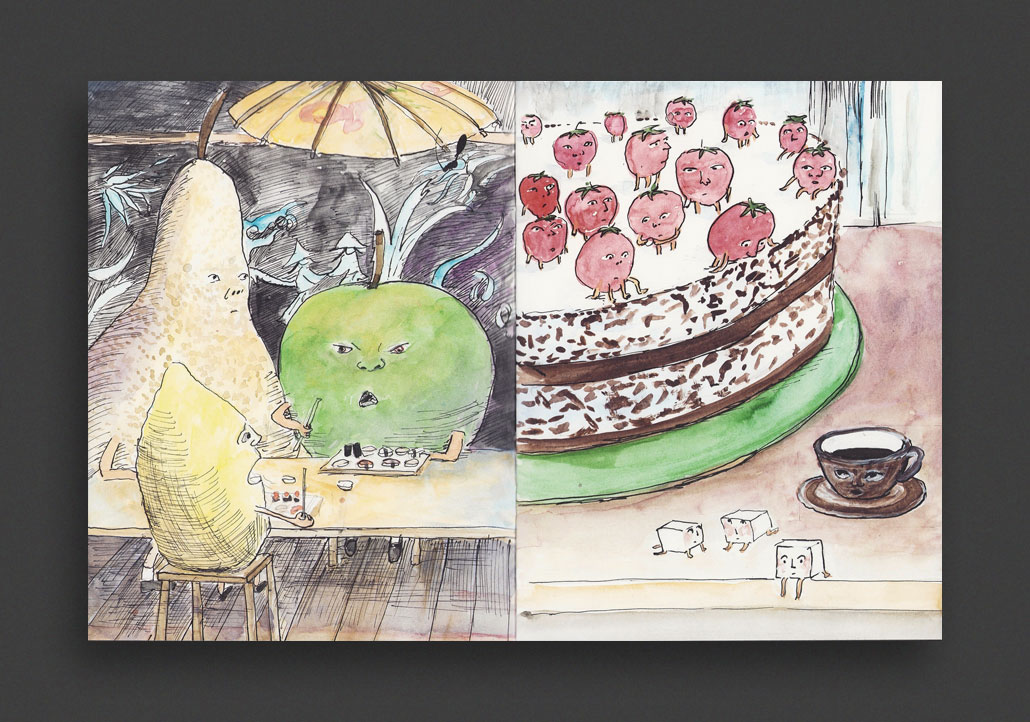
In this small volume, normally-inanimate objects are brought to life by Amelie von Wulffen's paint brush, moving throughout this strange, surreal universe as if they were real people. The result is a series of darkly funny paintings that shed light on our own mundane realities.
Since the 1990s, von Wulffen has created a sophisticated and unique oeuvre that enquires into the historic, economic, and social conditions of painting. Highly self-reflexive, von Wulffen’s practice expands to include the artist herself. She frequently appears in her own work in different guises, interweaving her family’s past with national history and existential questions about a specifically German cultural heritage. Von Wulffen’s works purposefully juxtapose aesthetic incongruities and combine different styles of painting from art history and amateur art to re-purpose their associative weight. In that respect, her work reads as a meta-reflection on the aesthetic incongruities of both post-war Germany as well as contemporary popular and political culture. This effect is compounded by the inclusion of references to decorative arts, furniture and architectural elements.
2022, English / German
Hardcover, 176 pages, 27.5 x 22.4 cm
Published by
Walther König / Köln
Kunsthalle Bern / Bern
Établissement d'en face / Brussels
$70.00 - In stock -
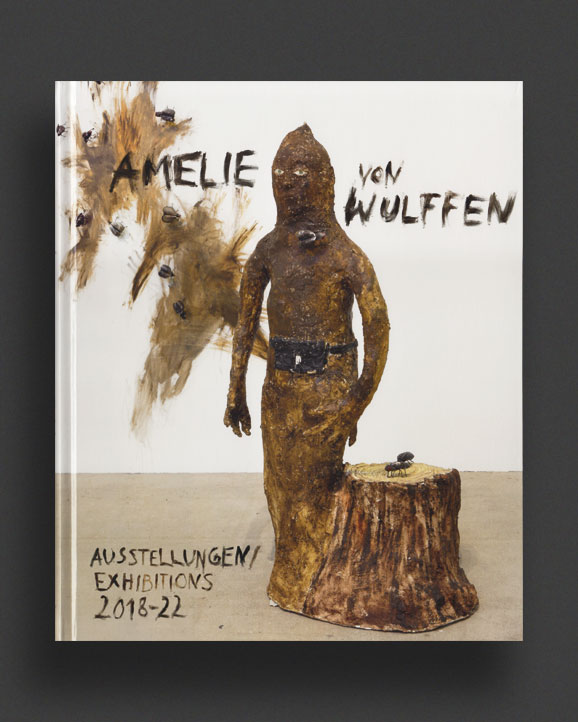
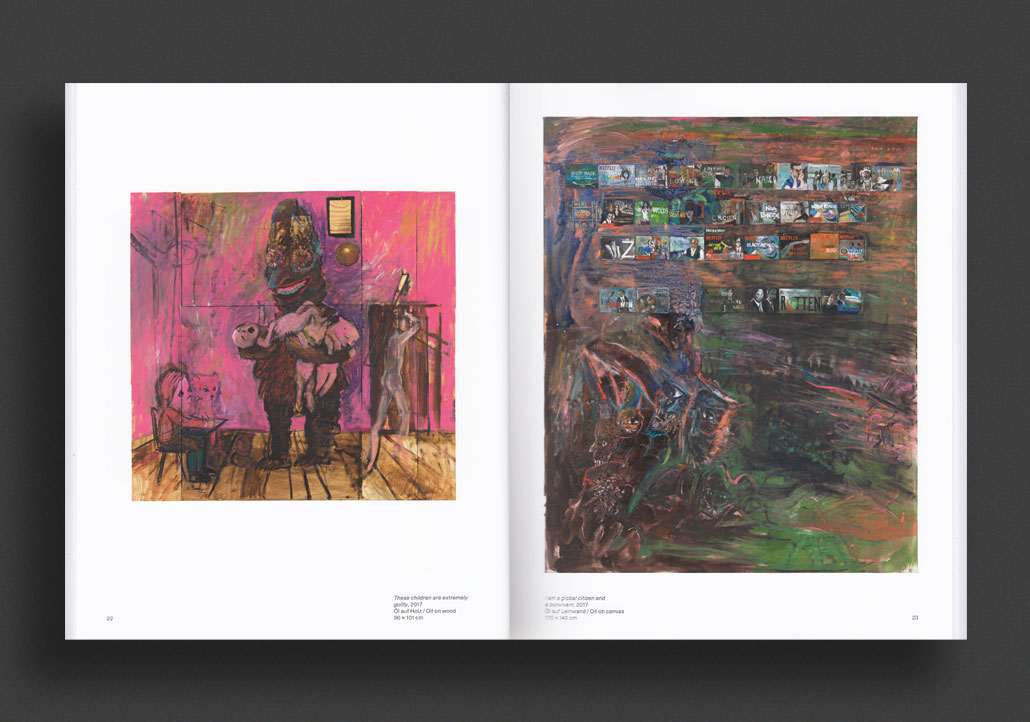
Since the artist’s comprehensive monograph was published in 2017, many new paintings and sculptures have been created. They address emotional and also psychoanalytical issues. At the core of the interest lies the relationship between autonomy and heritage, the unconscious and the conscious, the carrying along of trauma or guilt, as well as hidden longings, fantasies, or the disclosure of shame.
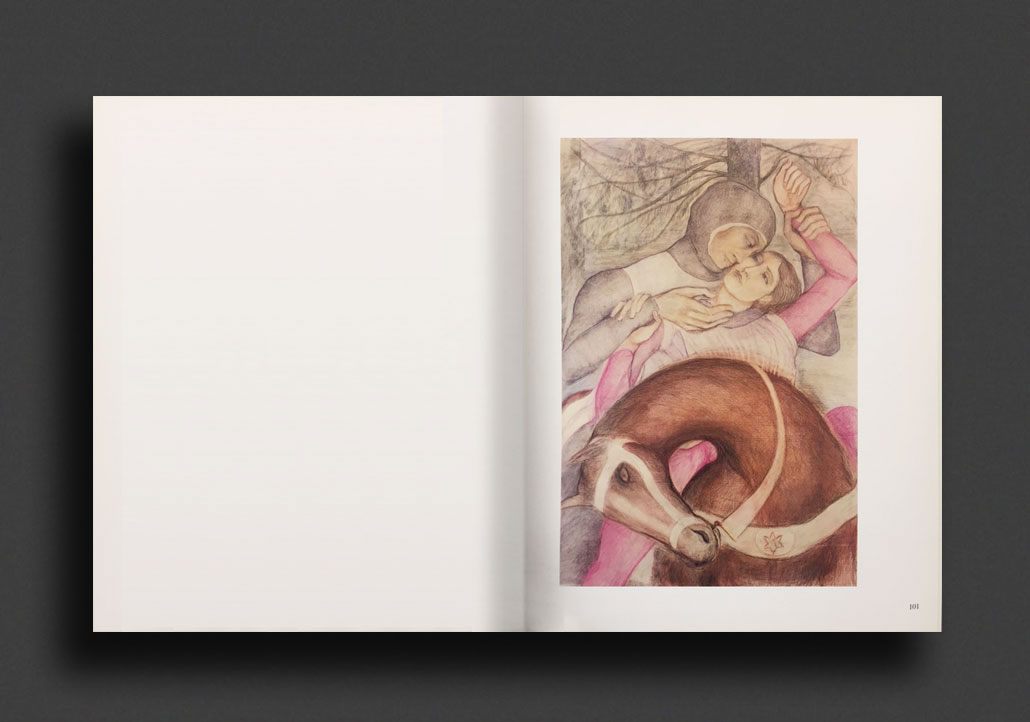
This book documents Amelie von Wulffen’s exhibitions at Reena Spaulings Fine Art, New York / Gió Marconi, Milan / KW Institute for Contemporary Art, Berlin / Établissement d’en face, Brussels / Galerie Meyer Kainer, Wien between 2018 and 2022.
Texts by Helmut Draxler, Valérie Knoll, Tonio Kröner.
English and German text.
2021, English
Softcover, 208 pages, 26 x 19 cm
Published by
Walther König / Köln
$50.00 - In stock -
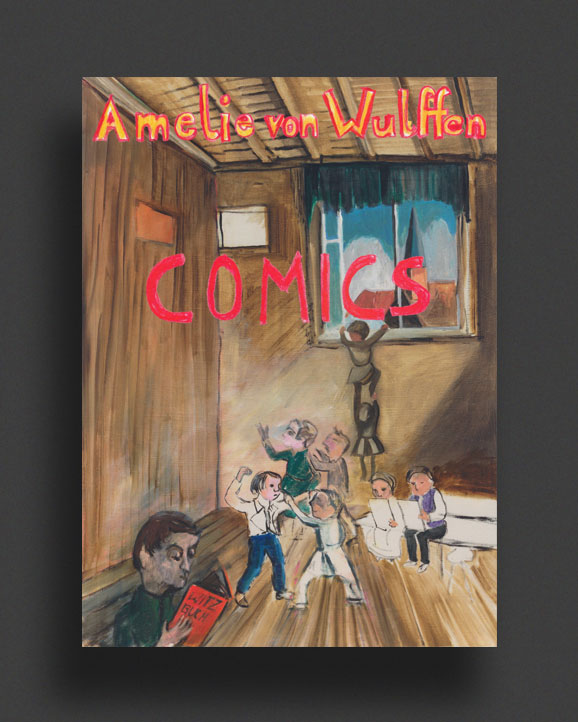
This is an anthology of Berlin-based artist, Amelie von Wulffen’s collected comics from 2011 to 2020,
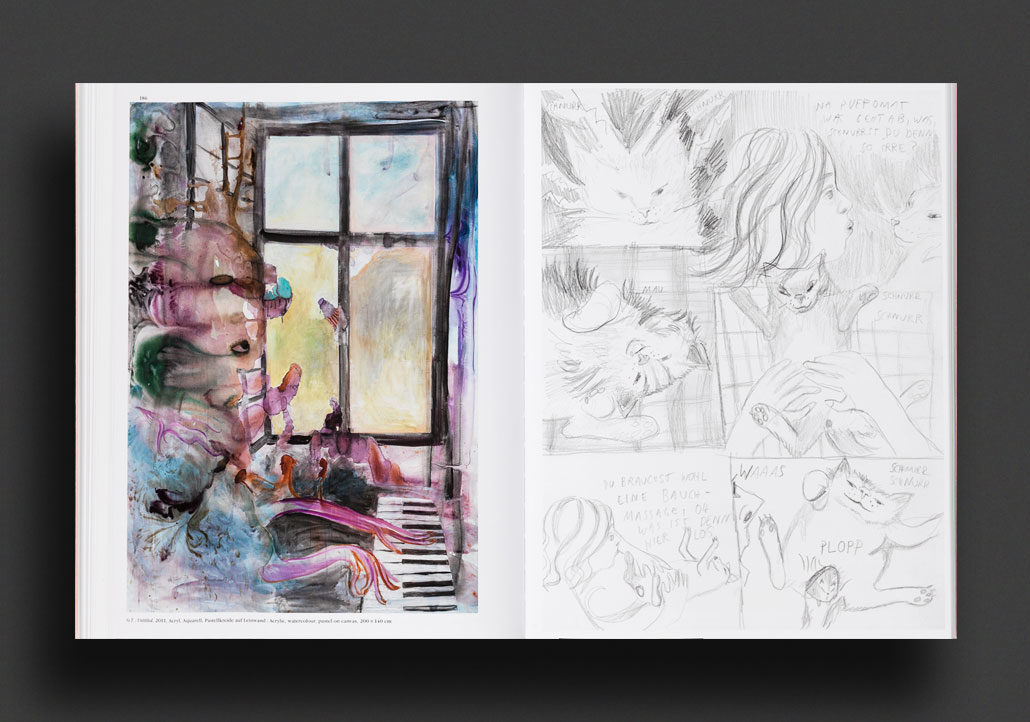
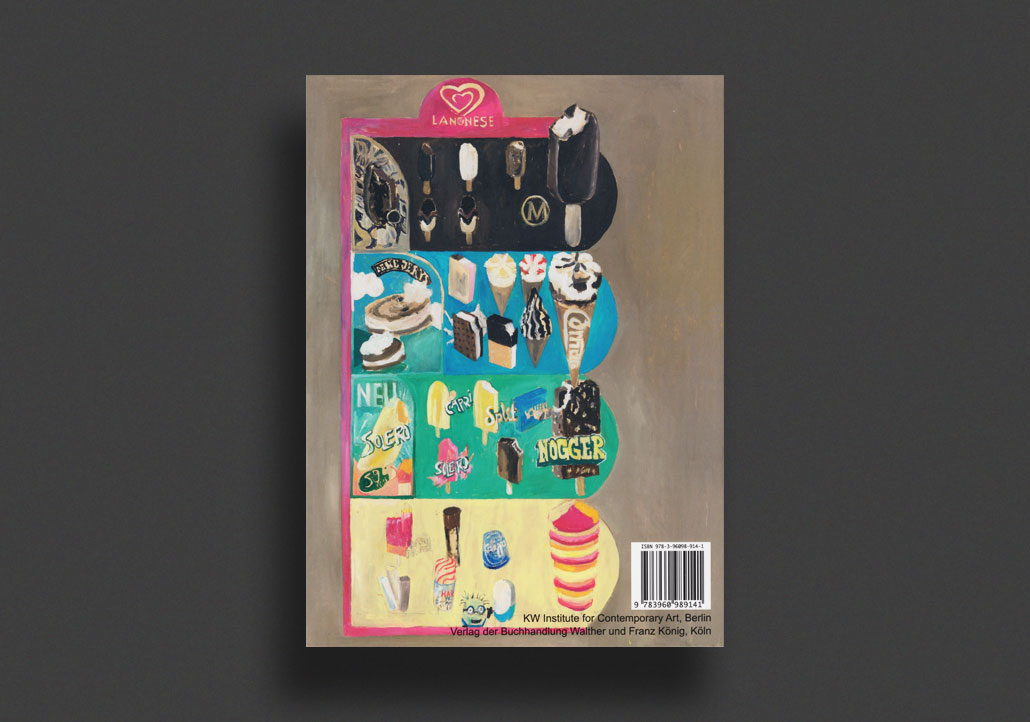
Amelie von Wulffen’s amazing comics—or ego-comics, as she calls them—gathered for the first time. Hilarious, nightmarish, vividly drawn tales from the daily life of a woman artist and her nightmare-like, surreal psycho-geographies, depicting social embarrassments, emotional crisis, encounters with history and art world codes, as well as fruity dramas, and sex dreams. They poignantly and parodically observe fears of failure, loneliness, competition, so-called good taste, and sexual affairs, while questioning a clear cut distinction between high and low, artistic genius and amateurism. From November (2011) to At the cool table (2013), all of contemporary affects, the good ones and the bad ones, are distilled in von Wulffen’s comics.
Published on the occasion of the exhibition at KW Institute of Contemporary Art, Berlin in 2021.
1990, French
Hardcover (clothbound w. dust jacket), 288 pages, 24 x 21 cm
1st Edition, Out of print title / used / very good
Published by
Centre National Des Arts Plastiques / Paris
$220.00 - Out of stock
First beautiful hardcover edition of the comprehensive Pierre Klossowski catalogue raisonné published on the occasion of the major retrospective exhibition of his work held in Paris in 1990-1991 at CNAP. Profusely illustrated in colour and b/w with Klossowski's wonderful works, texts throughout by Catherine Grenier, Bernard Blistene, Claude Ritschard, Pascal Bonitzer, Marie-Dominique Wicker, Franco Cagnetta, André Masson, and Pierre Zucca (in French), a densely illustrated catalogue raisonné spanning his work dated 1952/53 through to 1990 (many not seen elsewhere), biography, exhibition history, and much more. Still the most in-depth book on Klossowski's oeuvre to date.
Pierre Klossowski (1905-2001) was a significant and influential philosopher, writer, translator and artist who befriended Georges Bataille and formulated an original stance on many theological issues, as well as the philosophy of the Marquis de Sade. His first novel, Roberte, ce soir, appeared in 1954 as a limited edition containing six of his own erotic illustrations, after he rejected drawings by his younger brother, the painter Balthus. Following the encouragement of Robert Lebel, Andre Masson and Alberto Giacometti, Klossowski held his first exhibition in Paris in 1956, and subsequently produced numerous life-size drawings of erotic scenes imbued with mythological, allegorical and philosophical connotations. By the 1970s, he had won the acclaim of such eminent thinkers as Maurice Blanchot, Michel Butor, Gilles Deleuze, Michel Foucault and Felix Guattari. Of Klossowski, Gilles Deleuze once said, "That bodies speak has been known for a long time."
Very Good in Very Good dust jacket with some tanning lines.
1965, French
Hardcover (clothbound), 244 pages, 18 x 18 cm
1st Edition, Out of print title / used / good
Published by
Jean-Jacques Pauvert / Paris
$55.00 - Out of stock
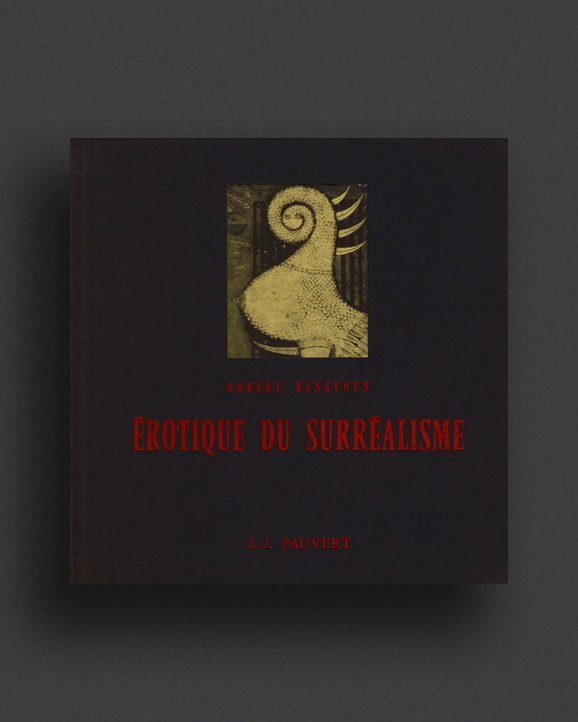
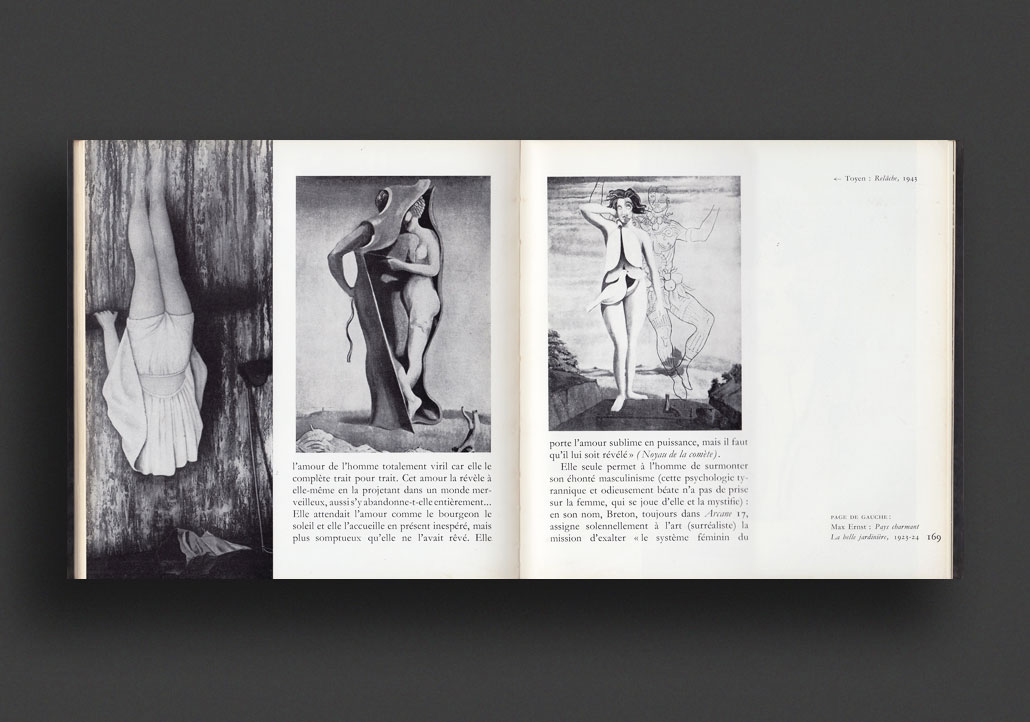
First 1965 clothbound edition of Érotique du Surréalisme, Robert Benayoun's study on the importance of the erotic in the surrealist arts, from L'Androgyne to The Sadist, Le Femme-Enfant to the Poetic Machine, surveying Symbolist and Art Brut precursors, and encompassing the multitude manifestations of eroticism across a broad array of visual and poetic works from the surrealist spectrum, even into the influence in film (a field Benayoun was known in). Reproducing poems and quotes throughout, this heavily illustrated volume reproduces many artworks in b/w and colour plates, including works and works by Max Walter Svanberg, Toyen, Hans Bellmer, Friedrich Schröder Sonnenstern, Heinrich Anton Müller, Marcel Duchamp, Jindřich Štyrský, Brancusi, Victor Brauner, Mimi Parent, Andre Masson, Louis Aragon, Yves Tanguy, Valentine Hugo, Jean Arp, Max Ernst, Balthus, Rene Magritte, André Breton, Giorgio de Chirico, Henry Fuseli, Dali, Man Ray, Henri Rousseau, Picasso, Miro, Edvard Munch, William Blake, Hieronymus Bosch, Ingrid Bergman, Michelangelo Antonioni, Konrad Klapheck, Francis Picabia, Óscar Domínguez, Jean Benoit, Paul Delvaux, Pierre Molinier, and many more.
Good—Very Good copy with light tanning to spine and general tanning/light wear.
1983, English
Hardcover (w. dust jacket), 164 pages, 23.5 x 23.5 cm
1st Edition, Out of print title / used / good
Published by
Wayne State University / Detroit
$50.00 - In stock -
First 1983 hardcover edition.
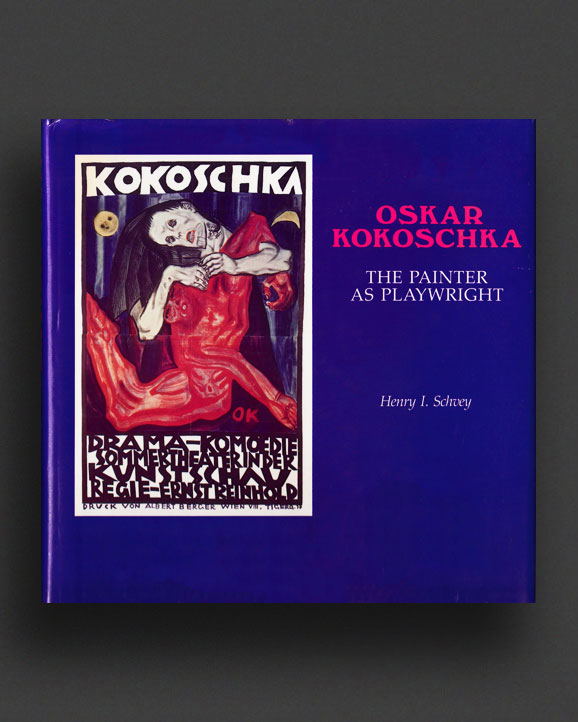
The Austrian painter Oskar Kokoschka (1886-1980) is primarily known as an exponent of Expressionism in the visual arts, through his paintings and through his graphics. His role in the history of modern German drama has rarely been acknowledged, although he was the author of five plays, written over a period of fifty years. Murderer Hope of Women, The Burning Bush, Job, Orpheus and Eurydice, and Comenius are dramatic visual spectacles on themes recurrent in Kokoschka's paintings and graphic work.
Oskar Kokoschka: The Painter as Playwright focuses on the visual elements of the stage works, specifically on the use of color, light, and scenic imagery in their dramatic as well as their symbolic function. It pays close attention to the stylistically and thematically related pictorial works and takes account of Kokoschka's illustrations for each of his plays.
This is the first complete critical discussion of Kokoschka's dramas to appear in any language; it is also the first consideration of Kokoschka's work from an interdisciplinary perspective. Included are over fifty photographs, many of them in color. The text is based on much previously unpublished information, the result of the author's many hours of recorded interviews with Kokoschka and his extensive correspondence with Kokoschka's wife, Olda.
This study eloquently shows the paintings, graphics, and dramas of Oskar Kokoschka to be one "language of images" and identifies him as one of the foremost innovators of twentieth-century theater, the first German Expressionist dramatist.
Good—VG copy, general overall wear, small closed tear to jacket top-back.
2024, English / Japanese
Softcover (w. dust jacket + obi), 128 pages, 25.5 x 17.8 cm
Published by
Atelier Third / Tokyo
$70.00 - In stock -
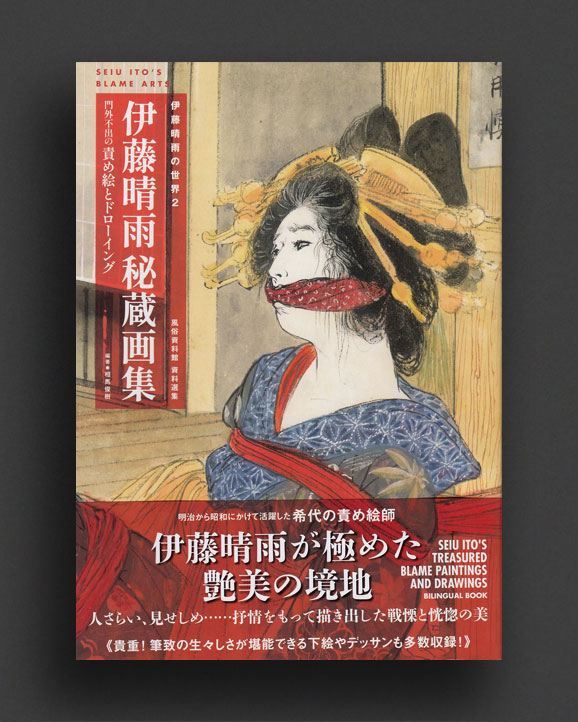
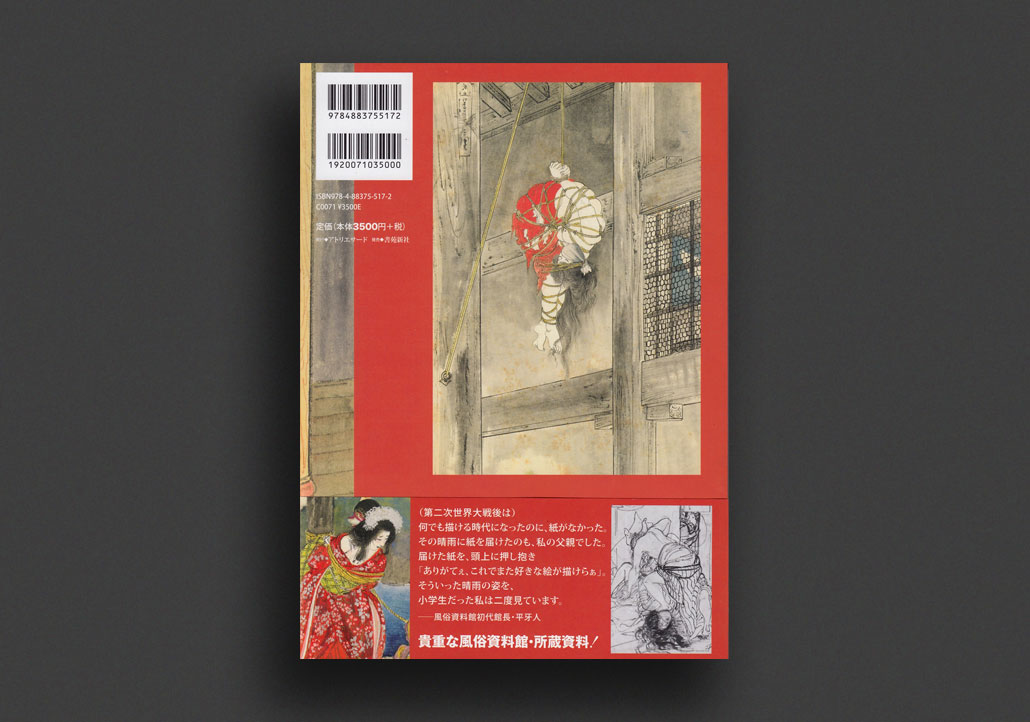
Brand new artbook collection of treasured blame paintings and drawings from Seiu Ito, "the father of modern kinbaku", published in bi-lingual English and Japanese. A kidnapping, a show off... This is an art book where you can fully enjoy the beauty of fear and ecstasy, depicted with lyricism by a rare torture artist who was active in the first half of the 20th century. Profusely illustrated, this volume contains many unpublished sketches and drawings that show the freshness of the brushstrokes and the trial and error that has gone into capturing the body and facial expressions. Includes private artworks from the "Abnormal Museum", Japan's only membership-only library specializing in SM and fetishism. Located in Iidabashi, Tokyo, this museum collects and preserves valuable materials.
Seiu Ito (1891—1960) Seiu Ito, also romanised as Seiyu Itoh, was a Japanese painter, recognised today as "the father of modern kinbaku". Ito's life was the subject of director Noboru Tanaka's 1977 Nikkatsu Roman porno film Beauty's Exotic Dance: Torture!, the final entry in his "Showa Era trilogy". Ito uses his skilful technique to draw realistic torture pictures, and as a master of these paintings, he has many fans and has written masterpieces such as "The Story of Blame." On the other hand, he not only left behind many masterpieces of ghost paintings, but also loved the street customs of Edo and wrote books about Edo customs.
2024, English
Softcover, 80 pages, 23 x 17 cm
Published by
Hatje Cantz / Berlin
$69.00 - In stock -
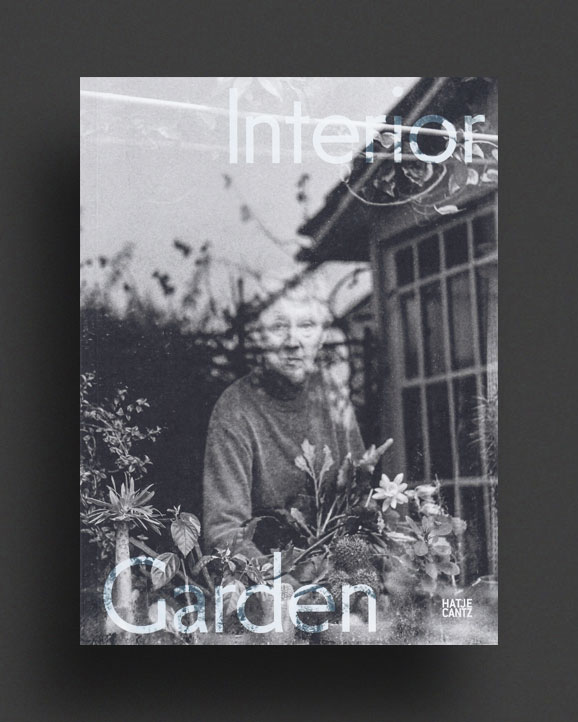
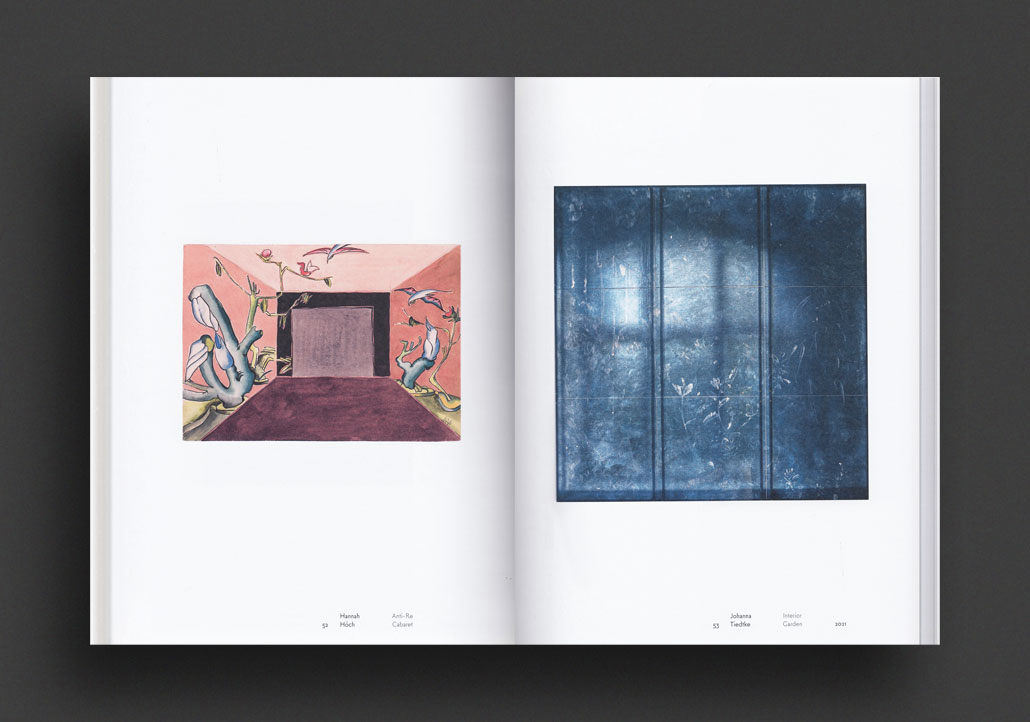
At the beginning of World War II, Dada artist Hannah Höch (1889–1978) retreated to a secluded house on the outskirts of Berlin to escape fascist persecution. The adjoining garden inspired and nourished her. And this is also where she hid her unique collection of dadaist artworks. Eighty years later, this richly illustrated and thoroughly researched book combines Höch’s botanical collages and photographs of the garden with documents on her relationship with the writer Til Brugman. Together with new works by artists Scott Roben and Johanna Tiedtke based on visits to the garden, and an essay by the scholar Alhena Katsof, the book interweaves past and present, private and public, personal and political, and opens up new perspectives on Höch’s long-forgotten refuge.
2024, English
Hardcover, 224 pages, 26.7 x 20.3 cm
Published by
Marsilio / Venice
$90.00 - In stock -
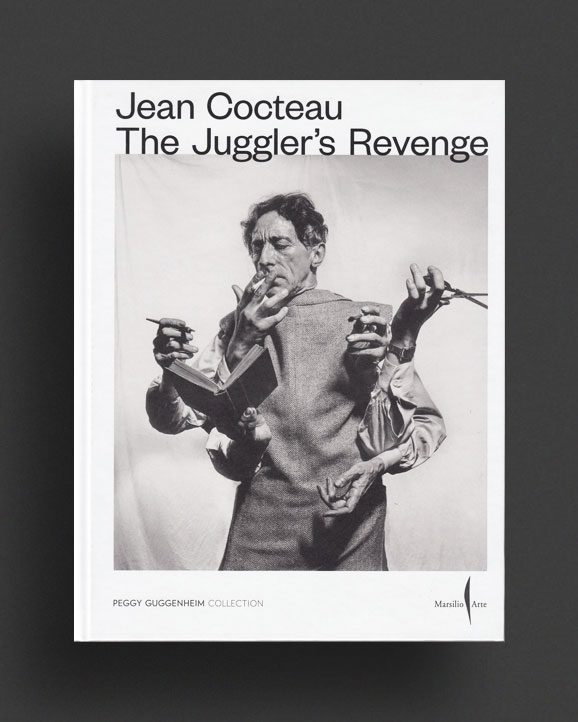
Rediscovering Cocteau’s artistic output, from perfume boxes to sketches of Peggy Guggenheim. Edited with text by Kenneth E. Silver. Text by Blake Oetting.
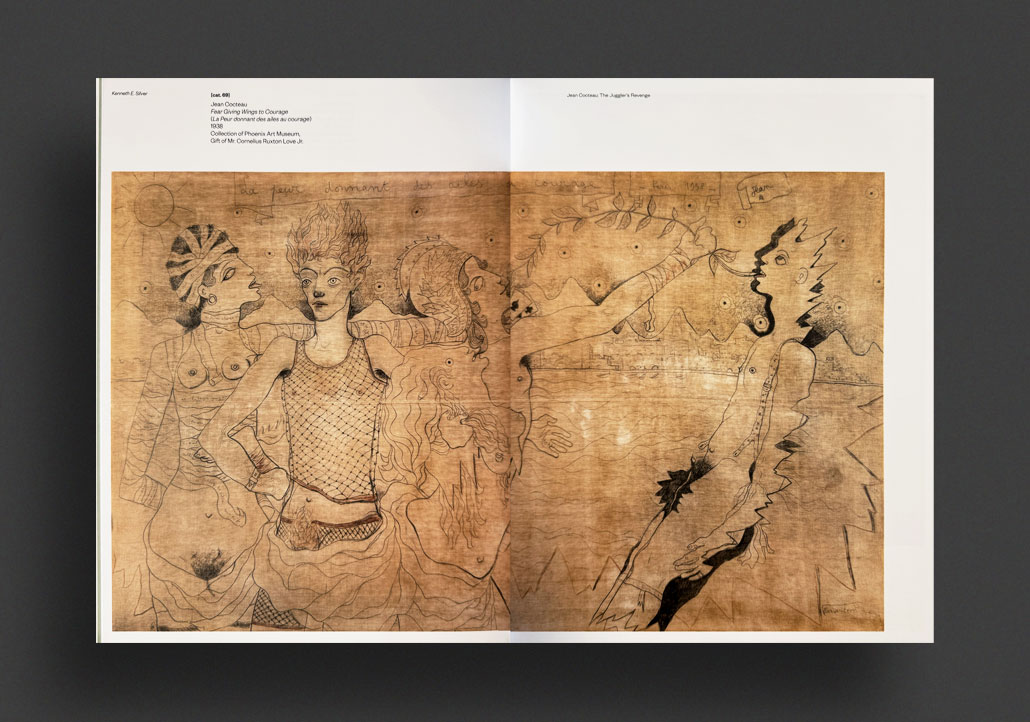
The multifaceted and surprising artist Jean Cocteau was undoubtedly one of the major figures of the Paris cultural scene in the years between the World Wars. In addition to his literary works, Cocteau was a brilliant visual artist: draftsman, filmmaker and muralist and fashion, jewelry and textile designer. The Juggler’s Revenge embraces the versatility for which the artist was often criticized by his contemporaries, retracing the development of his aesthetics and the key moments of his tumultuous life through works created by a variety of techniques and mediums.
Attention is paid to his ambivalent relationship with Cubism, Dadaism and Surrealism, as well as his central role in the “new classicism” of Europe between the wars. A selection of surprising drawings highlights the centrality of desire and sensuality in Cocteau’s practice. His little-studied fashion and jewelry designs show the artist’s incorporation of “high” and “low” culture. This volume corresponds with an exhibition at the Peggy Guggenheim Collection in Venice, an appropriate setting through which to explore his work. Cocteau had close ties with Guggenheim, who in 1938 opened her first gallery with an exhibition of his drawings. He also had a great love for the city itself, traveling there for the first time at the age of 15 and returning regularly for the Film Festival in the years following World War II.
Jean Cocteau (1889–1963) was an author, artist, film director and a key member of French avant-garde culture. Cocteau preferred to be called a poet and referred to his various works as different forms of poetry. He collaborated with dozens of artists throughout his career, including Erik Satie, Guillaume Apollinaire and Pablo Picasso.
1991, English
Softcover (2 vols. both staple-bound), 40 pages, 20 x 14 cm
1st Edition, Out of print title / used / very good
Published by
Tom of Finland / ?
$200.00 - Out of stock
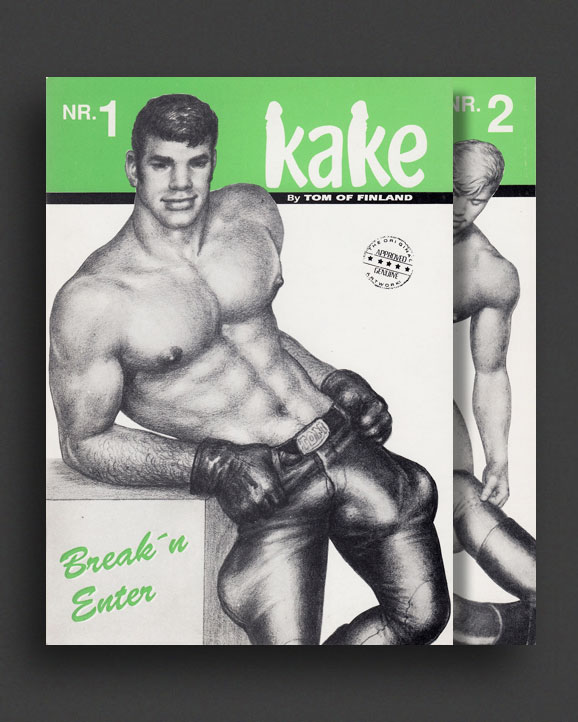
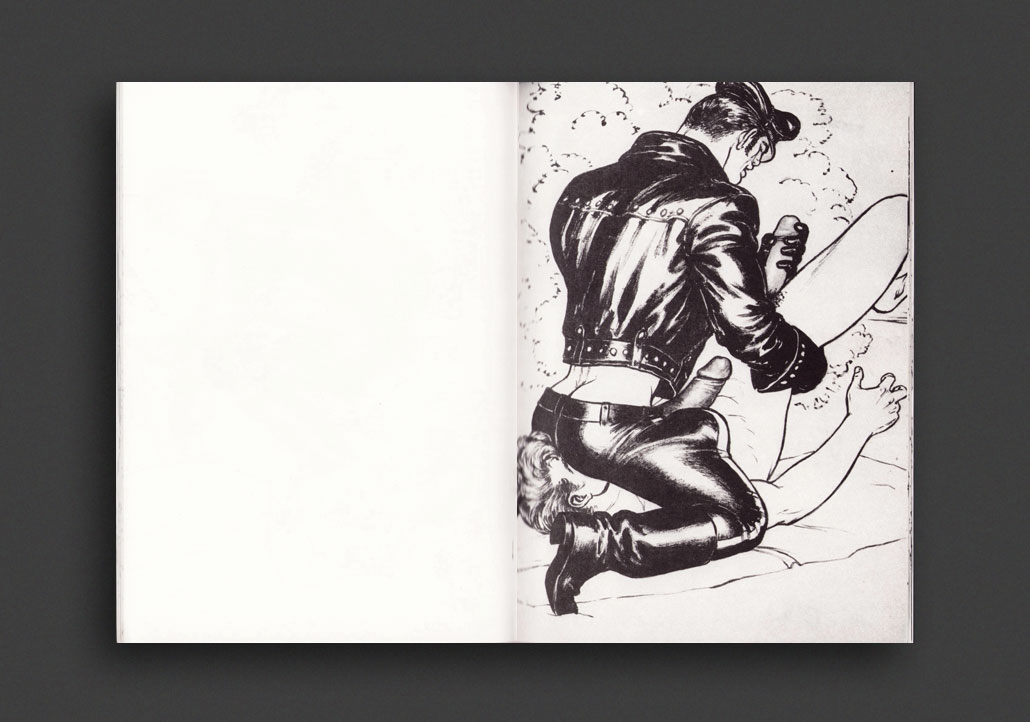
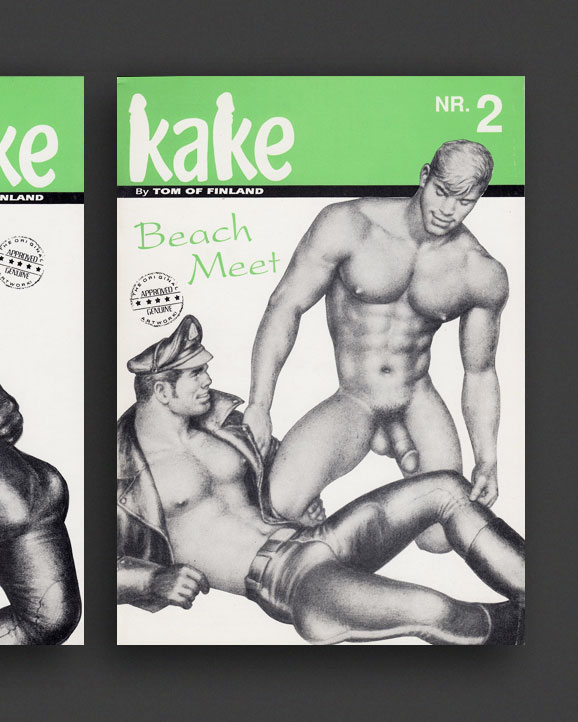
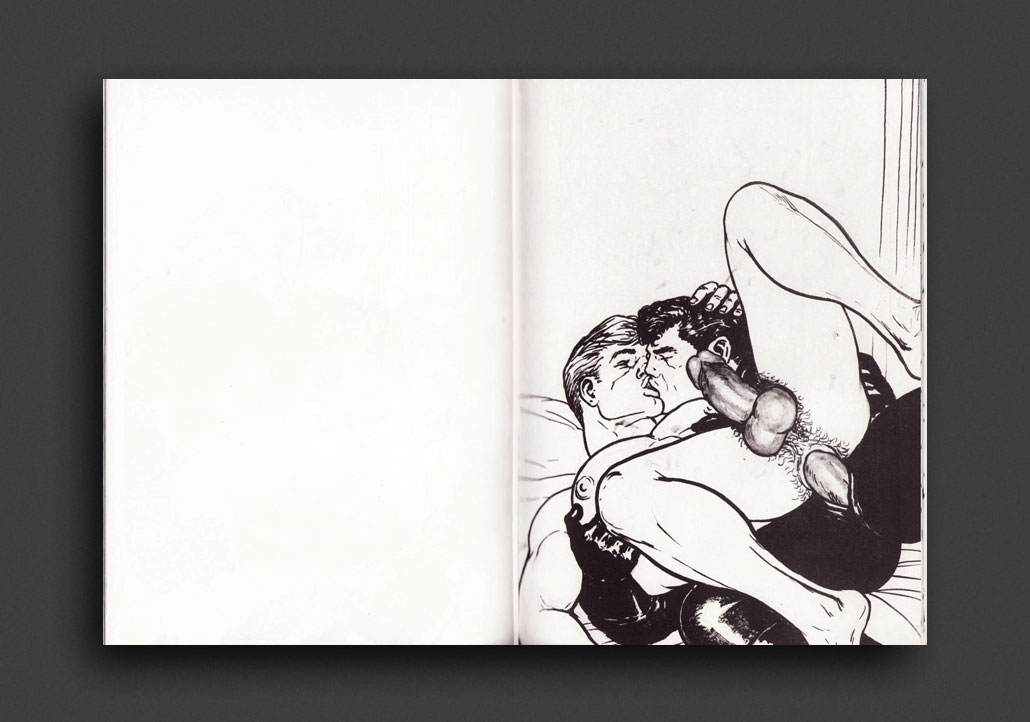
Rare first two issues of the original, explicit, Tom of Finland Kake comics, self-published by Tom of Finland in the green 1991 textured cover editions. Erotic comic stories "Break-n-Enter" and "Beach Meet".
Touko Valio Laaksonen (8 May 1920 – 7 November 1991), best known by his pseudonym Tom of Finland, was a Finnish artist known for his stylized highly masculine homoerotic fetish art, and his influence on late twentieth century gay culture. He has been called the "most influential creator of gay pornographic images" by cultural historian Joseph W. Slade. Over the course of four decades, he produced some 3500 illustrations.
Very Good copies, almost As New with light wear.
1982, English
Hardcover (w. dust jacket), 246 pages,
1st Edition, Out of print title / used / very good
Published by
Allison & Busby / London
$35.00 - Out of stock
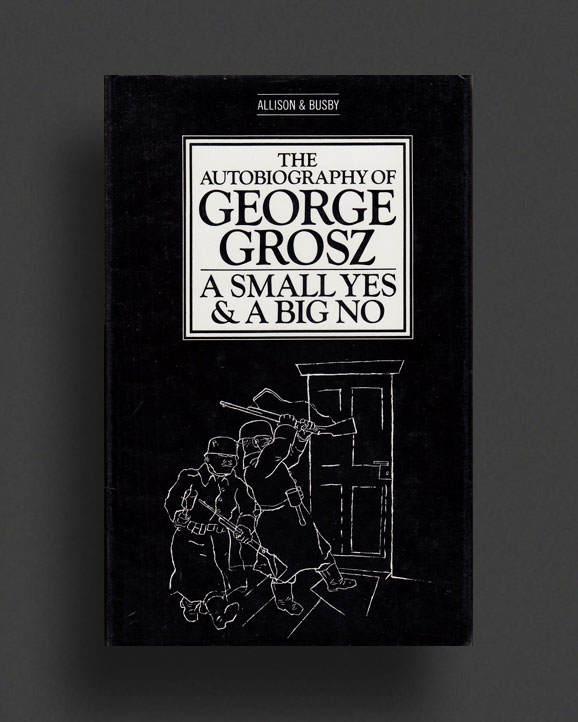
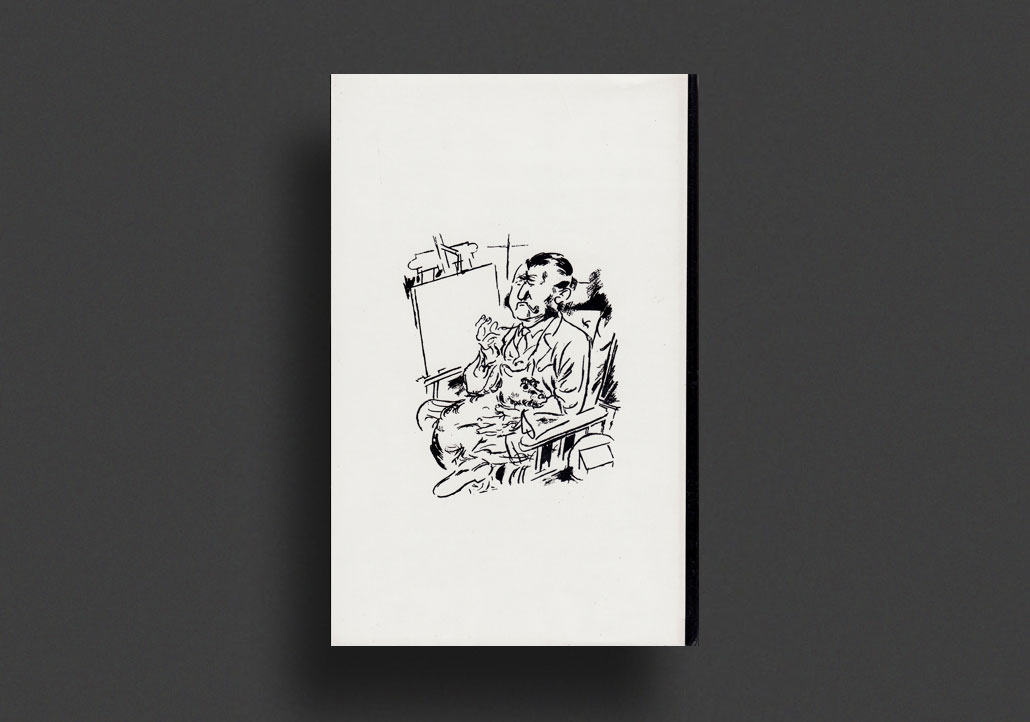
1982 English hardcover edition of The Autobiography of George Grosz: A Small Yes and a Big No, first published by Dial Press in New York City, translated by Lola Sachs Dorin. In 1982, this new translation by Arnold Pomerans of the 1955 German edition was published by Allison and Busby in London.
The autobiography of George Grosz (1893—1959), the great German artist and satirist, is crammed with unique anecdotes and reminiscences. More than just a chronicle of his own life, it becomes in effect a history of the modern movement and is, says the Stuttgarter Zeitung, "a glorious, exciting book".
Grosz recalls his Pomeranian childhood, army life during the First World War, revolution and hunger in its aftermath, the frenzied, disjointed world of Dadaism and Nazism in the Weimar Republic. He describes the cafés, beer-cellars and studios of Paris and Berlin, a dangerous but optimistic journey to Soviet Russia and final emigration to the United States — less than a month before the Nazis came to power.
He conjures up an exciting period and the central figures, the intellectual outsiders, who were responsible for shaping it — a colourful and unforgettable crowd, the artists and writers and film people and political activists, Dali, de Chirico, Rosa Luxemburg, Thomas Mann, Lenin, Brecht, Dos Passos, Joseph von Sternberg, Trotsky, and many others.
Grosz was the most rebellious and explosive of artists, the scourge of militarism, capitalism and the bourgeoisie in the 1920s, whose lines "tore like barbed wire" and whose life and work became a legend. His autobiography is a rich, enjoyable book, here fully available in English for the first time.
Very Good copy, VG dust jacket.
2023, English
Softcover, 416 pages, 21.5 x 16.2 cm
Published by
Yale University Press / New Haven
$79.00 - Out of stock
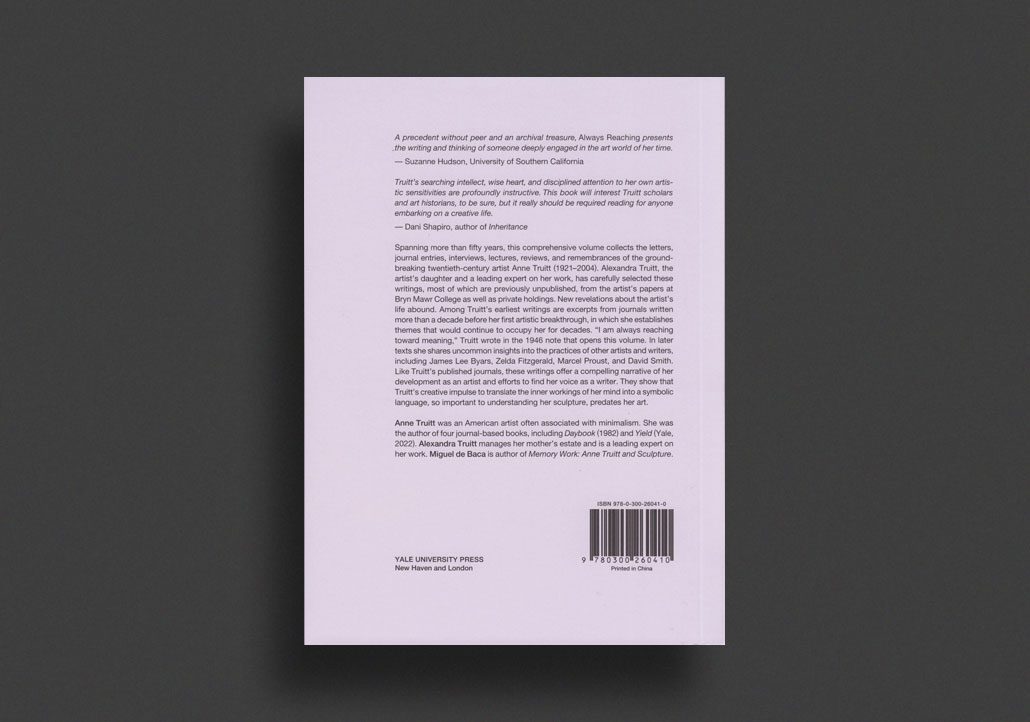
An expansive collection of texts providing insight into the inner life, creativity, and practice of the innovative American artist Anne Truitt.
Edited by Alexandra Truitt
Foreword by Miguel de Baca
Spanning more than fifty years, this comprehensive volume collects the letters, journal entries, interviews, lectures, reviews, and remembrances of the groundbreaking twentieth-century artist Anne Truitt (1921–2004). Alexandra Truitt, the artist’s daughter and a leading expert on her work, has carefully selected these writings, most of which are previously unpublished, from the artist’s papers at Bryn Mawr College as well as private holdings.
Revelations about the artist’s life abound. Among Truitt’s earliest writings are excerpts from journals written more than a decade before her first artistic breakthrough, in which she establishes themes that would occupy her for decades. In later texts she shares uncommon insights into the practices of other artists and writers, both predecessors and peers. Like Truitt’s published journals, these writings offer a compelling narrative of her development as an artist and efforts to find her voice as a writer. They show that Truitt’s creative impulse to translate the inner workings of her mind into a symbolic language, so important to understanding her sculpture, predates her art.
1965, English
Softcover, 246 pages, 20.5 x 15 cm
1st Edition, Out of print title / used / very good
Published by
Harry N. Abrams / New York
$30.00 - Out of stock
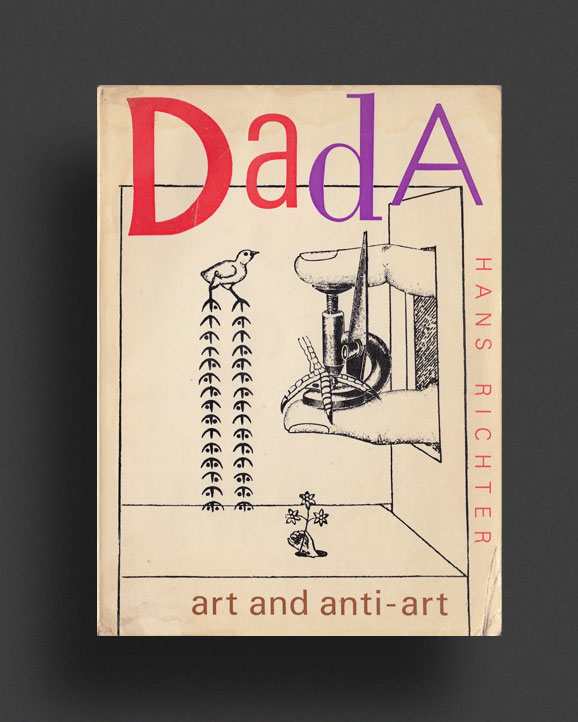
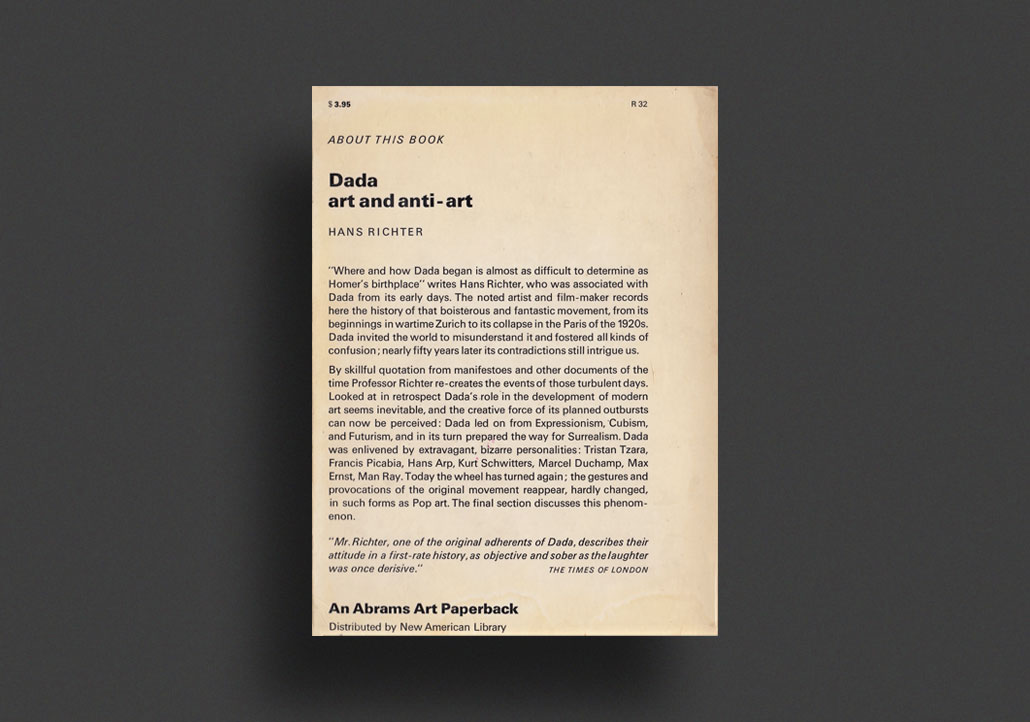
First 1965 English edition of German Dada painter, graphic artist, avant-garde film producer, and art historian, Hans Richter's important book of the Dada movement. "Where and how Dada began is almost as difficult to determine as Homer's birthplace" writes Hans Richter, who was associated with Dada from its early days. The noted artist and film-maker records here the history of that boisterous and fantastic movement, from its beginnings in wartime Zurich to its collapse in the Paris of the 1920s Dada invited the world to misunderstand it and fostered all kinds of confusion; nearly fifty years later its contradictions still intrigue us.
By skilful quotation from manifestoes and other documents of the time Professor Richter re-creates the events of those turbulent days. Looked at in retrospect Dada's role in the development of modern art seems inevitable, and the creative force of its planned outbursts can now be perceived: Dada led on from Expressionism, Cubism, and Futurism, and in its turn prepared the way for Surrealism. Dada was enlivened by extravagant, bizarre personalities: Tristan Tzara, Francis Picabia, Hans Arp, Kurt Schwitters, Marcel Duchamp, Max Ernst, Man Ray. Today the wheel has turned again; the gestures and provocations of the original movement reappear, hardly changed, in such forms as Pop art. The final section discusses this phenomenon.
"Mr.Richter, one of the original adherents of Dada, describes their attitude in a first-rate history, as objective and sober as the laughter was once derisive."—THE TIMES OF LONDON
Very Good copy, light wear to extremities, tanning to covers.
2022, English
Softcover, 142 pages, 24 x 33 cm
1st Edition, Out of print title / as new
Published by
Tina Kim Gallery / New York
$200.00 - Out of stock
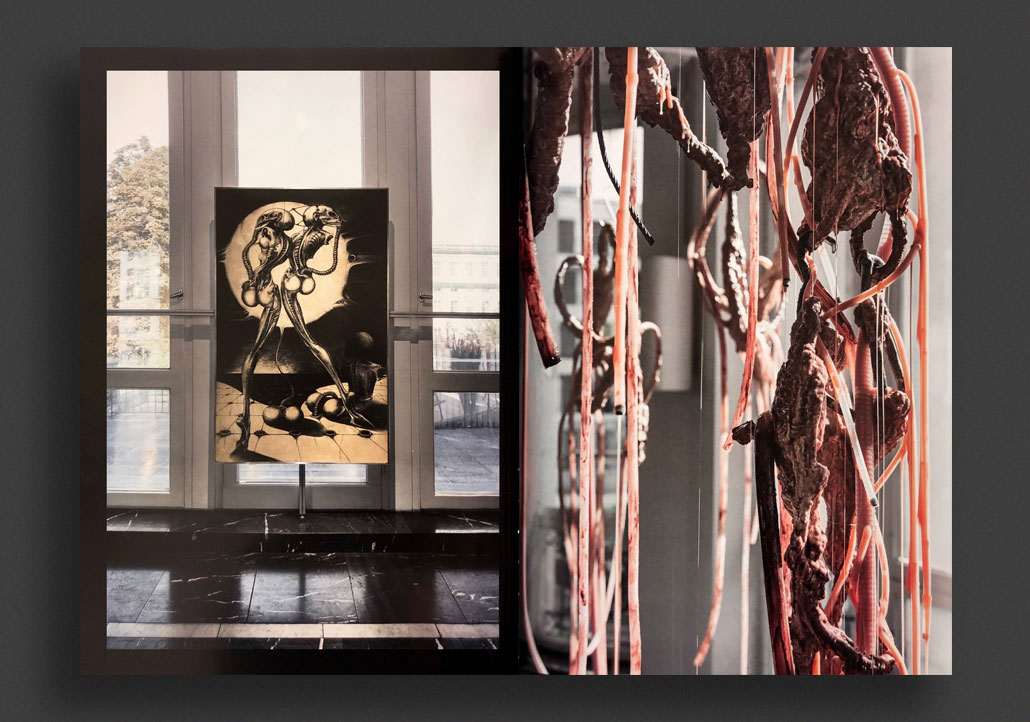
First edition, quickly out-of-print. Published to accompany an exhibition bringing together the worlds of the late Swiss visionary Hans Ruedi Giger (1940–2014) and South Korean artist Mire Lee, at The Schinkel Pavillon, Berlin, September 18, 2021–January 2, 2022, this book beckons towards the darkest aisles of the human body and psyche. Both artists deal in biomechanical phantasmagorias of human and machine forms combining in an indissoluble whole, a constant metamorphosis between the stages of decline and resilience, hopelessness and power, lust and revulsion, male and female – thus emblematic of the polarities of our own existence. With texts by Agnes Gryczkowska, Charlie Fox, and McKenzie Wark and conversations between the artists and Hans Ulrich Obrist.
1979, English / French
Softcover (french folds), 78 pages, 27 x 21.2 cm
1st Edition, Out of print title / used / very good
Published by
Bernard Letu Editeur / Geneva
$55.00 - Out of stock
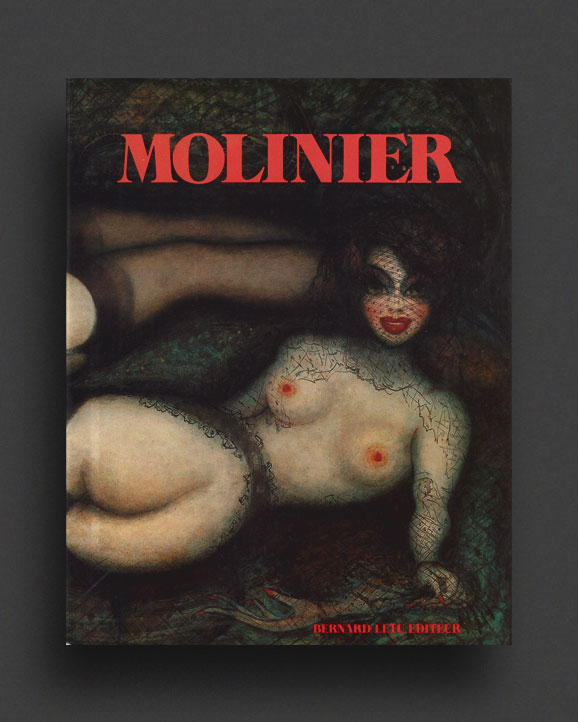
First 1979 edition of this monograph on French painter, photographer and a forerunner of gender performance art and Body Art (Art corporel), Pierre Molinier (1900—1976), published by Bernard Letu Editeur in Geneva. With accompanying text by Egyptian-French Surrealist author Joyce Mansour, this book is a retrospective survey of Molinier's provocative gender-bending paintings and drawings, illustrated throughout in colour and b/w. Texts in English and French.
Pierre Molinier (1900—1976) was a French painter, photographer and a forerunner of gender performance art and Body Art (Art corporel). Molinier spent much of his artistic life working in isolation in Bordeaux, exiled from local and national art scenes. Born in Agen, nothing had predestined Molinier to a life as an artist. Self-taught, from a working-class background, he followed in his father’s footsteps and started out as a house painter. He got married and had two children. Tired of his infidelities and provocative behaviour, his wife left their marital home an in 1950 and Molinier begun photographing himself seriously, staging his own death and erecting a fake gravestone proudly declaring himself ‘a man without morals’. He was thrown out of the Bordeaux Salon des Indépendants as early as 1951 amidst controversy over his orgiastic painting of the same year, Le Grand Combat. Stirring up an obsessive correspondence with the anarchic poet-founder of Surrealism, André Breton, Molinier was soon integrated into the Surrealist group with a solo exhibition at Breton’s Paris gallery in 1956. Molinier’s anti-moral project appealed to the group’s interest in repressed desires, fetishism, and the transgression of bourgeois morals. In 1959, he exhibited at the Exposition International du Surrealism in Paris. From the mid-1960s Molinier chronicled the exploration of his subconscious transsexual desires in "Cent Photographies Erotiques": graphically detailed images of pain and pleasure. Cut-up, reassembled, and manipulated, Molinier painstakingly created elaborate and sensual photomontages in which he assumed the roles of dominatrix and succuba previously taken by the women of his paintings. Either alone with doll-like mannequins or with female models such as German sadomasochist Hanel Koeck, Molinier, who considered himself fundamentally androgynous, appears as a transvestite, employing his body and that of his acquaintances to create visions of hybrid identity, where stockinged multi-limbed, multi-sexed beings imitate pagan figures, Hindu gods, and Masonic symbols, in a rejection of a Christian tradition which he argued, had repressed androgyny. Designed to shock, Molinier’s artwork represented a very intimate disclosure about his own sexual ambiguity, inviting the viewer to bring to the images his or her own response of excitement or disgust. The degree of his artistic perversity and blasphemous tendencies was deemed too much for the French cultural elite, and the man Breton dubbed the “magician of erotic art” was shunned from the art world. Molinier did not participate in the 1965 International Surrealist Exhibition. For the last 11 years of his life Molinier played out his own most profound moments in the 'theatre' of his Bordeaux 'boudoir – atelier'. He committed suicide in 1976, shooting himself with a pistol, something he had foreshadowed in his artwork, time and again. Essentially a leg fetishist, but also considering himself as a shaman, facetious and provocative, anti-bourgeois and anti-religious, Molinier enjoyed transgressing gender identification : his outstanding photographs greatly influenced the European and North American Body Art in the 1970s and continue to fascinate artists today.
Very Good copy.