World Food Books' programme is largely produced on Kulin Nation land. We acknowledge the Wurundjeri people of the Kulin Nation as the first and continuing custodians of this land, and pay respect to their Elders past, present, and emerging.
World Food Books is an arts and special interests bookshop in Naarm / Melbourne. Founded in 2010, World Food Books is devoted to the presentation of a rotating, hand-selection of international art, design, literary and counterculture publications with an emphasis on the anti-traditional, the experimental, the avant-garde, the heretic, the marginal.
Presenting new titles alongside rare and out-of-print books, catalogues and journals spanning the fields of modern and contemporary art, design, photography, illustration, film, literature, poetry, cultural theory, philosophy, sexuality, popular and underground culture in its many radical forms, World Food Books wishes to encourage adventurous, thoughtful and open-minded reading, looking, writing, and exchange of publishing and ideas, both current and historical.
As well as our bookshop, located in Melbourne's historical Nicholas Building, all of our inventory is available internationally via our online mail-order service.
World Food Books semi-regularly co-ordinates "Occasions", a programme of exhibits and events at the bookshop and in partnership with other hosts (such as museums and art galleries) that develop out of the activities, relationships and content of the bookshop itself.
World Food Books
The Nicholas Building
37 Swanston Street
Room 5, Level 6
Melbourne 3000
Australia
SHOP HOURS:
THU–SAT 12–6
WEB-SHOP OPEN 24/7
World Food Books
Postal Address:
PO Box 435
Flinders Lane
Victoria 8009
Australia
info@worldfoodbooks.com
Art
Theory / Essay
Architecture / Interior
Graphic Design / Typography
Photography
Fashion
Eros
LGBTQ+
Fiction / Poetry
Weird / Speculative / Science Fiction / Horror
Transgressive / Visceral / Abject
Symbolism / Decadence / Fin de siècle
Film / Video
Painting
Sculpture / Installation
Performance / Dance / Theater
Drawing
Sound / Music
Curatorial
Group Shows / Collections
Periodicals
Out-of-print / Rare
Posters / Ephemera / Discs
Signed Books
World Food Books Gift Voucher
World Food Book Bag
Australian Art
Australian Fiction
Australian Science Fiction / Speculative Fiction
Australian Poetry
Australian Photography
Japanese Photography
Conceptual Art
Minimal Art
Dada
'Pataphysics / Oulipo
Fluxus
Concrete Poetry
Pop Art
Surrealism
Arte Povera
Arte Informale / Haute Pâte / Tachism
Nouveau Réalisme / Zero / Kinetic
Situationism / Lettrism
Collage / Mail Art / Xerox Art
Art Brut / Folk / Visionary / Fantastic
Illustration / Graphic Art / Bandes Dessinées
Furniture
Italian Radical Design / Postmodernism
Textiles
Ceramics / Glass
Counterculture
Protest / Revolt
Philosophy
Psychoanalysis
Anthropology
Anarchism
Socialism / Anarchism / Communism / Capitalism
Literary Theory / Semiotics / Language
Feminism / Women's Studies
Gender Studies / Sexuality
Anthropology
Fetishism / BDSM
Drugs / Psychedelia
Crime / Violence
Animal Rights / Veganism
Occult / Esoterica
Ecology / Earth / Alternative Living
Whole Earth / Crafts
All prices in AUD (Australian dollars)
Pick-Ups
Pick-up orders can be collected in our bookshop during opening hours after order date. Please collect any Pick-up orders within 2 weeks of ordering as we have limited storage space. Orders will be released back into stock if not collected within this time. No refunds can be made for pick-ups left un-collected. If you cannot make it in to the bookshop in this time-frame, please choose postage option.
Return Policy
All sales are final. We do accept returns (for refund or exchange) for items received in error. All our orders are packed with special care using heavy-duty padding and cardboard book-mailers or bubble mailers (for smaller books), using reinforcement where required. We cannot take responsibility for any lost, stolen or damaged parcels.
Insurance
Should you wish to insure your package, please email us directly after placing your order and we can organise this at a small extra expense. Although all standard/express tracked packages are very safe and dependable, we cannot take responsibility for any lost, stolen or damaged parcels. We recommend insurance on valuable orders.
Interested in selling your old books, catalogues, journals, magazines, comics, fanzines, ephemera? We are always looking for interesting, unusual and out-of-print books to buy. We only buy books in our fields of interest and specialty, and that we feel we can resell.
We base these prices on desirability, market value, in-print prices, condition and our current stock levels. We offer cash, store credit, and can take stock on consignment. All
about 25% of the price we expect to get when we sell them, or 30% in store credit. We base these prices on desirability, market value, in-print prices, condition and our current stock levels.
Sell your books any day of the week. You can drop them off and return later. If you have a lot of books, we can visit your Sydney home.
We buy books that we feel we can resell. We offer about 25 % of the price we expect to get when we sell them, or 30% in store credit. We base these prices on desirability, market value, in-print prices, condition and our current stock levels.
Philadelphia Wireman
03 August - 01 September, 2018
World Food Books is proud to announce our next Occasion, the first presentation of sculptures by Philadelphia Wireman in Australia.
The Philadelphia Wireman sculptures were found abandoned in an alley off Philadelphia’s South Street on trash night in 1982. Their discovery in a rapidly-changing neighbourhood undergoing extensive renovation, compounded with the failure of all attempts to locate the artist, suggests that the works may have been discarded after the maker’s death. Dubbed the "Philadelphia Wireman" during the first exhibition of this work, in 1985, the maker’s name, age, ethnicity, and even gender remain uncertain. The entire collection totals approximately 1200 pieces, all intricately bound together with tightly-wound heavy-gauge wire (along with a few small, abstract marker drawings, reminiscent both of Mark Tobey and J.B. Murry). The dense construction of the work, despite a modest range of scale and materials, is singularly obsessive and disciplined in design: a wire armature or exoskeleton firmly binds a bricolage of found objects including plastic, glass, food packaging, umbrella parts, tape, rubber, batteries, pens, leather, reflectors, nuts and bolts, nails, foil, coins, toys, watches, eyeglasses, tools, and jewellery.
Heavy with associations—anthropomorphic, zoomorphic, and socio-cultural responses to wrapped detritus—the totemic sculptures by Philadelphia Wireman have been discussed in the context of work created to fulfil the shamanistic needs of alternative religions in American culture. Curators, collectors, and critics have variously compared certain pieces to sculpture from Classical antiquity, Native American medicine bundles, African-American memory jugs, and African fetish objects. Reflecting the artist’s prolific and incredibly focused scavenging impulse, and despite—or perhaps enhanced by—their anonymity, these enigmatic objects function as urban artefacts and arbiters of power, though their origin and purpose is unknown. Philadelphia Wireman, whatever their identity, possessed an astonishing ability to isolate and communicate the concepts of power and energy through the selection and transformation of ordinary materials. Over the course of the past two decades, this collection has come to be regarded as an important discovery in the field of self-taught art and vernacular art.
Presented in collaboration with Fleisher-Ollman Gallery, Philadelphia, and Robert Heald, Wellington.
Susan Te Kahurangi King
02 February - 10 March, 2018
Susan Te Kahurangi King (24 February 1951 - ) has been a confident and prolific artist since she was a young child, drawing with readily available materials - pencils, ballpoint pens and felt-tip markers, on whatever paper is at hand. Between the ages of four and six Susan slowly ceased verbal communication. Her grandparents William and Myrtle Murphy had developed a special bond with Susan so they took on caring responsibilities for extended periods. Myrtle began informally archiving her work, carefully collecting and storing the drawings and compiling scrapbooks. No drawing was insignificant; every scrap of paper was kept. The King family are now the custodians of a vast collection containing over 7000 individual works, from tiny scraps of paper through to 5 meter long rolls.
The scrapbooks and diaries reveal Myrtle to be a woman of great patience and compassion, seeking to understand a child who was not always behaving as expected. She encouraged Susan to be observant, to explore her environment and absorb all the sights and sounds. Myrtle would show Susan’s drawings to friends and people in her community that she had dealings with, such as shopkeepers and postal workers, but this was not simply a case of a grandmother’s bias. She recognised that Susan had developed a sophisticated and unique visual language and sincerely believed that her art deserved serious attention.
This was an unorthodox attitude for the time. To provide some context, Jean Dubuffet coined the term Art Brut in 1945 to describe work created by self-taught artists – specifically residents of psychiatric institutions and those he considered to be visionaries or eccentrics. In 1972 Roger Cardinal extended this concept by adopting the term Outsider Art to describe work made by non-academically trained artists operating outside of mainstream art networks through choice or circumstance. Susan was born in Te Aroha, New Zealand in 1951, far from the artistic hubs of Paris and London that Dubuffet and Cardinal operated in. That Myrtle fêted Susan as a self-taught artist who deserved to be taken seriously shows how progressive her attitudes were.
Susan’s parents Doug and Dawn were also progressive. Over the years they had consulted numerous health practitioners about Susan’s condition, as the medical establishment could not provide an explanation as to why she had lapsed into silence. Dawn educated herself in the field of homeopathy and went on to treat all twelve of her children using these principles – basing prescriptions on her observations of their physical, mental and emotional state.
Doug was a linguist with an interest in philosophy who devoted what little spare time he had to studying Maori language and culture. To some extent their willingness to explore the fringes of the mainstream made them outsiders too but it was their commitment to living with integrity and their respect for individuality that ensured Susan’s creativity was always encouraged.
Even though Susan’s family supported her artistic pursuits, some staff in schools and hospitals saw it as an impediment to her assimilation into the community and discouraged it in a variety of ways. Her family was not always aware of this and therefore did not fully understand why Susan stopped drawing in the early 1990s. However, rather than dwell on the challenges that Susan faced in pursuit of her artistic practice, they prefer to highlight her achievements. In 2008 Susan began drawing again in earnest, after an almost 20 year interruption, and her work is now shown in galleries around the world.
Susan grew up without television and has been heavily influenced by the comics she read as a child. She is absolutely fearless in the appropriation of recognizable characters, such as Donald Duck and Mickey Mouse, in her work. She twists their limbs, contorts their faces, compresses them together, blends them into complex patterned backgrounds - always imbuing them with an incredible energy. Although Susan often used pop culture characters in her work they are not naive or childlike. These are drawings by a brilliant self-taught artist who has been creating exceptional work for decades without an audience in mind.
Mladen Stilinović
"Various Works 1986 - 1999"
02 February 16 - September 10, 2016
Various works 1986 - 1999, from two houses, from the collections of John Nixon, Sue Cramer, Kerrie Poliness, Peter Haffenden and Phoebe Haffenden.
Including: Geometry of Cakes (various shelves), 1993; Poor People’s Law (black and white plate), 1993; White Absence (glasses, ruler, set square, silver spoon, silver ladel with skin photograph and wooden cubes), 1990-1996; Exploitation of the Dead (grey and red star painting, wooden painting, black spoon with red table, red plate), 1984-1990; Money and Zeros (zero tie, paintings made for friends in Australia (Sue, John, Kerrie), numbers painting), 1991-1992; Words - Slogans (various t-shirts) - “they talk about the death of art...help! someone is trying to kill me”, “my sweet little lamb”, “work is a disease - Karl Marx”; Various artist books, catalogues, monographs, videos; Poster from exhibition Insulting Anarchy; "Circular" Croatian - Australian edition; Artist book by Vlado Martek (Dostoyevsky); more.
Thanks to Mladen Stilinović and Branka Stipančić.
Jonathan Walker
Always Will Need To Wear Winter Shirt Blue + Ochre Small Check Pattern
21 August - 21 September, 2015
Untitled
I am not a great reader of poetry but I always return to the work of Melbourne poet, Vincent Buckley (1925- 1988). Perhaps I find his most tantalising piece to be not a finished poem but a fragment left on a scrap of paper discovered on his desk after the poet’s death.
The poetry gathers like oil
In the word-core, and spreads
It has its music meet,
Its music is in movement.
This fragment is more the shell left behind from a volatile thought than a finished poem. I find the last two lines honest but awkward whereas the first two lines work like an arrow. Most likely he could not find a resolution so it was left. Still, in its present form, it remains an eloquent testimony to the ultimate failure of a medium to express mobile thought and sensation, in Buckley’s case, through verbal language. It’s an important matter because this is something all artists have to deal with regardless of the medium.
I have never written a poem, however, I am forever copying fragments from books on paper scraps in a vain effort to fix certain notions in my head. At first, they function as bookmarks that are sometimes returned to when I open the book. But before long, as they accumulate, they fall out littering the table interspersed with A4 photocopies, bills, books and medications.
To return to Buckley’s fragment, the first two lines very much evoke how I paint nowadays. As you age, detail diminishes and patches of light become more luminous and float. I feel the most honest way of dealing with this is by smearing the oil paint on the canvas with the fingers and working close-up, blind. Only if the patches coalesce into an approaching image can the work gain a life.
-
Jonathan Walker was born in Melbourne, Australia and brought up on a dairy farm in Gippsland. In the 1970’s he studied painting at RMIT and won the Harold Wright Scholarship to the British Museum, London. During the 1980’s he exhibited at Pinacotheca Gallery, Richmond and had work shown at the NGV and Heidi City Art Gallery. Over the same period he designed the cover for the “Epigenesi” LP by Giancarlo Toniutti, Italy and conducted a mail exchange work with Achim Wollscheid, Germany. The work with artists through the post resulted in an article published in the bicentenary issue of Art and Australia 1988. He showed in artist run spaces such as WestSpace in the 90’s and 2000’s, and until 2012, taught painting at Victoria University, which is where we (Colleen Ahern and Lisa Radford) as organisers of the exhibition, among many others, had the privilege of being his student.
Walker’s knowledge was imparted to students through the careful selection of music, literature, and artists found in books that he himself had ordered for the library. Walker’s strategy was the generosity of sharing his vast knowledge with references specific to each student and their context.
Walker’s paintings share a similar focus and intimacy.
This exhibition presents a small selection of recent paintings alongside a publication that includes Walker’s writing. Observational and analytical, Walker’s work is a type of material notation — the time of day, colour and how it is blended, the both specific and fleeting location of a reflection on lino or the question of whether a chair leg should be included in a painting.
Please join us on Friday August 21 between 6-8pm to celebrate the opening of the exhibition.
Curated by Colleen Ahern and Lisa Radford.
B. Wurtz
Curated by Nic Tammens
March 26 - April 4, 2015
B.Wurtz works from a basement studio in his home on Manhattan’s Lower East Side.
This local fact is attested to by the plastic shopping bags and newsprint circulars that appear in his work. As formal objects, they don’t make loud claims about their origins but nonetheless transmit street addresses and places of business from the bottom of this long thin island. Like plenty of artists, Wurtz is affected by what is local and what is consumed. His work is underpinned by this ethic. It often speaks from a neighborhood or reads like the contents of a hamper:
“BLACK PLUMS $1.29 lb.”
“Food Bazaar”
“USDA Whole Pork Shoulder Picnic 99c lb.”
“RITE AID Pharmacy, with us it’s personal.”
“H. Brickman & Sons.”
“Sweet Yams 59c lb."
Most of the work in this exhibition was made while the artist was in residence at Dieu Donne, a workshop dedicated to paper craft in Midtown. Here Wurtz fabricated assemblages with paper and objects that are relatively lightweight, with the intention that they would be easily transportable to Australia. This consideration isn’t absolute in Wurtz’s work, but was prescriptive for making the current exhibition light and cheap. Packed in two boxes, these works were sent from a USPS post office on the Lower East Side and delivered to North Melbourne by Australia Post.
Wurtz appears courtesy of Metro Pictures, New York.
Thanks to Rob Halverson, Joshua Petherick, Sari de Mallory, Matt Hinkley, Helen Johnson, Fayen d'Evie, Ask Kilmartin, Lisa Radon, Ellena Savage, Yale Union, and "Elizabeth".
John Nixon
"Archive"
December 15 - January 20, 2014
The presentation of John Nixon's archive offered a rare showcase of this extensive collection of the artist's own publications, catalogues, posters, ephemera, editions and more, from the mid 1980s onwards, alongside a selection of his artworks.
Organized by John Nixon, Joshua Petherick and Matt Hinkley.
"Habitat"
at Minerva, Sydney (organised by Joshua Petherick and Matt Hinkley)
November 15 - December 20, 2014
Lupo Borgonovo, Janet Burchill & Jennifer McCamley,
Lewis Fidock, HR Giger, Piero Gilardi, Veit Laurent Kurz,
Cinzia Ruggeri, Michael E. Smith, Lucie Stahl, Daniel Weil, Wols
Press Release:
“...It contained seven objects. The slender fluted bone, surely formed for flight, surely from the wing of some large bird. Three archaic circuitboards, faced with mazes of gold. A smooth white sphere of baked clay. An age-blackened fragment of lace. A fingerlength segment of what she assumed was bone from a human wrist, grayish white, inset smoothly with the silicon shaft of a small instrument that must once have ridden flush with the surface of the skin - but the thing’s face was seared and blackened.”
William Gibson, “Count Zero”, 1986
"Autumn Projects Archive"
Curated by Liza Vasiliou
March 6 - March 15, 2014
World Food Books, in conjunction with the Virgin Australia Melbourne Fashion Festival 2014, presented the Autumn Projects archive, consisting of a selection of early examples in Australian fashion with a particular interest in collecting designers and labels from the period beginning in the 1980’s, who significantly influenced the discourse of Australian Fashion.
Curated by Liza Vasiliou, the exhibition provided a unique opportunity to view pieces by designers Anthea Crawford, Barbara Vandenberg, Geoff Liddell and labels CR Australia, Covers, Jag along with early experimental collage pieces by Prue Acton and Sally Browne’s ‘Fragments’ collection, suspended throughout the functioning World Food Books shop in Melbourne.
H.B. Peace
presented by CENTRE FOR STYLE
November 14, 2013
"Hey Blinky, you say chic, I say same"
Anon 2013
H.B. Peace is a clothing collaboration between great friends Blake Barns and Hugh Egan Westland. Their pieces explore the divergences between 'character’ and ‘personality’ in garments....etc
Special Thanks to Joshua Petherick and Matt Hinkley of WFB and Gillian Mears
and a Very Special Thank you to Audrey Thomas Hayes for her shoe collaboration.
Janet Burchill & Jennifer McCamley
"Aesthetic Suicide"
May 10 - June 8, 2013
The first of our occasional exhibitions in the World Food Books office/shop space in Melbourne, "Aesthetic Suicide" presented a body of new and older works together by artists Janet Burchill & Jennifer McCamley, including videos, prints, a wall work, and publications.
During shop open hours videos played every hour, on the hour.
1985 / 1991, English
Softcover, 142 pages, 18 x 12 cm
1st Edition, Out of print title / used / very good
Published by
Autonomedia / New York
Semiotext(e) / Los Angeles
$35.00 - Out of stock
"A Blake Angel on Bad Acid" — Robert Anton Wilson
"Fascinating..." — William Burroughs
"Who is Hakim Bey? I love him!" — Timothy Leary
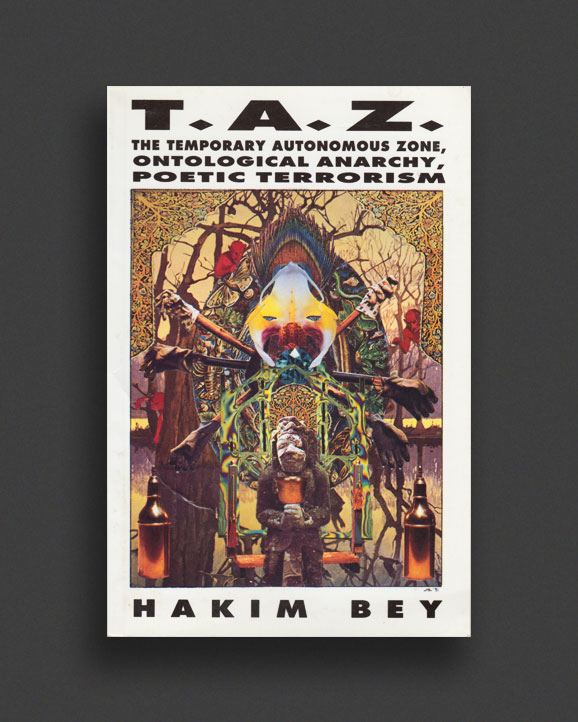
First trade paperback edition of T.A.Z.: The Temporary Autonomous Zone, the underground cult bestseller and first book by anarchist writer and poet Hakim Bey (Peter Lamborn Wilson) published in 1991 by Autonomedia. Originally published in 1985 and circulated in the underground via small private and pirate editions, these texts were an inspiration for a generation of troublemakers and idealists. Both celebrated in the punk underground (where the original book has become a seminal text) and denounced in some anarchist circles, the book has proved itself as both influential and relevant to multiple generations of dreamers, agitators, and activists.
Essays that redefine the psychogeographical nooks of autonomy. Recipes for poetic terror, anarcho-black magic, post-situ psychotropic surgery, denunciations of spiritual addictions to vapid infotainment cults — this is the bastard classic, the watermark impressed upon our minds. Where conscience informs praxis, and action infects consciousness, T.A.Z. is beginning to worm its way into above-ground culture. This book offers inspired blasts of writing, from slogans to historical essays, on the need to insert revolutionary happiness into everyday life through poetic action, and celebrating the radical optimism present in outlaw cultures. It should appeal to alternative thinkers and punks everywhere, as it celebrates liberation, love and poetic living.
This book contains the full text of "Chaos: The Broadsheets of Ontological Anarchism", the complete "Communiques of the Association for Ontological Anarchy", and the new long essay "The Temporary Autonomous Zone".
Very Good copy with some light wear.
1970, English
Softcover, 96 pages, 28 x 21 cm
1st Edition, Out of print title / used / good
Published by
Evergreen Review Inc. / New York
Ever
$20.00 - Out of stock
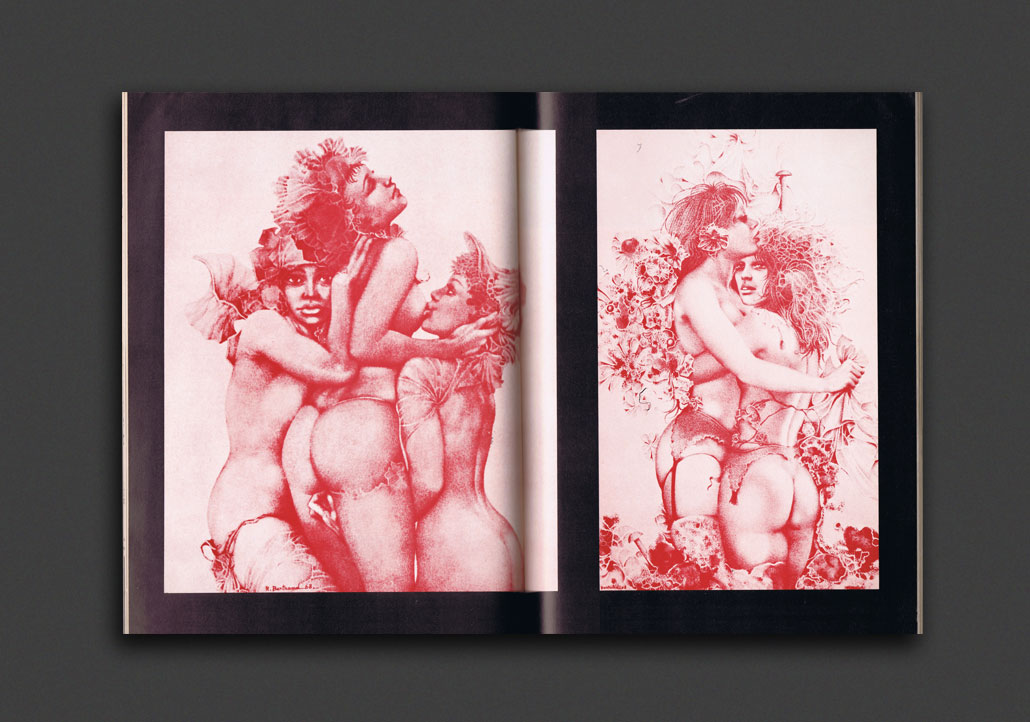
Vol. 14 No. 76 March 1970 issue of Evergreen Review. This issue features Kay Boyle (Long Walk from San Francisco), Bill Amidon (short Story), Michael Rumaker (For Charles Olson, a poem), Nat Hentoff (The Joke), Antonin Liehm (Interview with Jaromil Jires), Al Young (Poem), Ed Sanders (short story), Raymond Bertrand (Erotic Drawings), Roy L. Walford (Original Irreplaceable Vision), Richard Brautigan (short Story, The Betrayed Kingdom), Strong & Sterling (Frank Fleet and His Electronic Sex Machine), John Lahr (Putting Shakespeare in a New Environment), plus regular features, illustrations and much more.
The Evergreen Review was a U.S. based literary magazine founded by Barney Rosset, publisher of Grove Press, and editor Don Allen and Fred Jordan in 1957. It existed in print form until 1973. Evergreen Review debuted pivotal works by Samuel Beckett, Jorge Luis Borges, Charles Bukowski, William S. Burroughs, Marguerite Duras, Jean Genet, Allen Ginsberg, Günter Grass, Jack Kerouac, Norman Mailer, Henry Miller, Pablo Neruda, Vladimir Nabokov, Frank O’Hara, Kenzaburō Ōe, Octavio Paz, Harold Pinter, Susan Sontag, Tom Stoppard, Derek Walcott and Malcolm X. United States Supreme Court Justice William O. Douglas wrote a controversial piece for the magazine in 1969. Kerouac and Ginsberg regularly had their writing published in the magazine. "Evergreen published writing that was literally counter to the culture, and if it was sexy, so much the better. In the context of the time, sex was politics, and the powers-that-be made the suppression of sexuality a political issue. The court battles that Grove Press fought for the legal publication of Lady Chatterly's Lover, Tropic of Cancer, and Naked Lunch, and for the legal distribution of the film I Am Curious: Yellow, spilled onto the pages of Evergreen Review, and in 1964, an issue of Evergreen itself was confiscated in New York State by the Nassau County District Attorney on obscenity charges...
1969, English
Softcover, 96 pages, 28 x 21 cm
1st Edition, Out of print title / used / good
Published by
Evergreen Review Inc. / New York
$20.00 - Out of stock
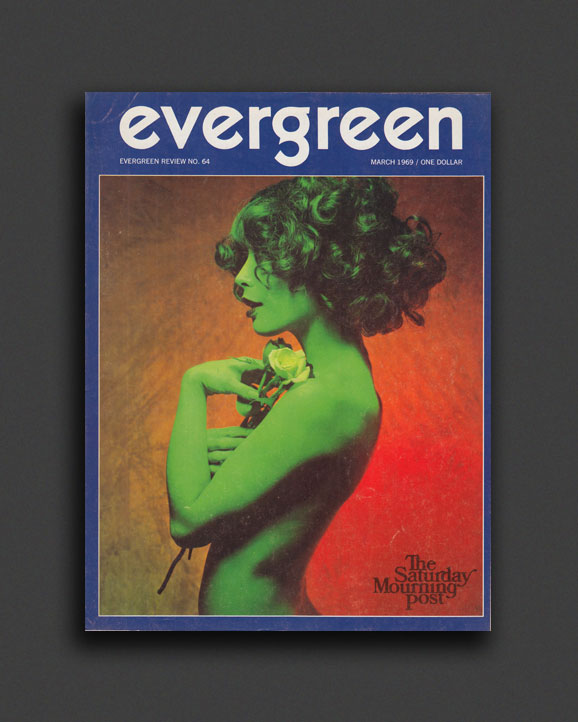
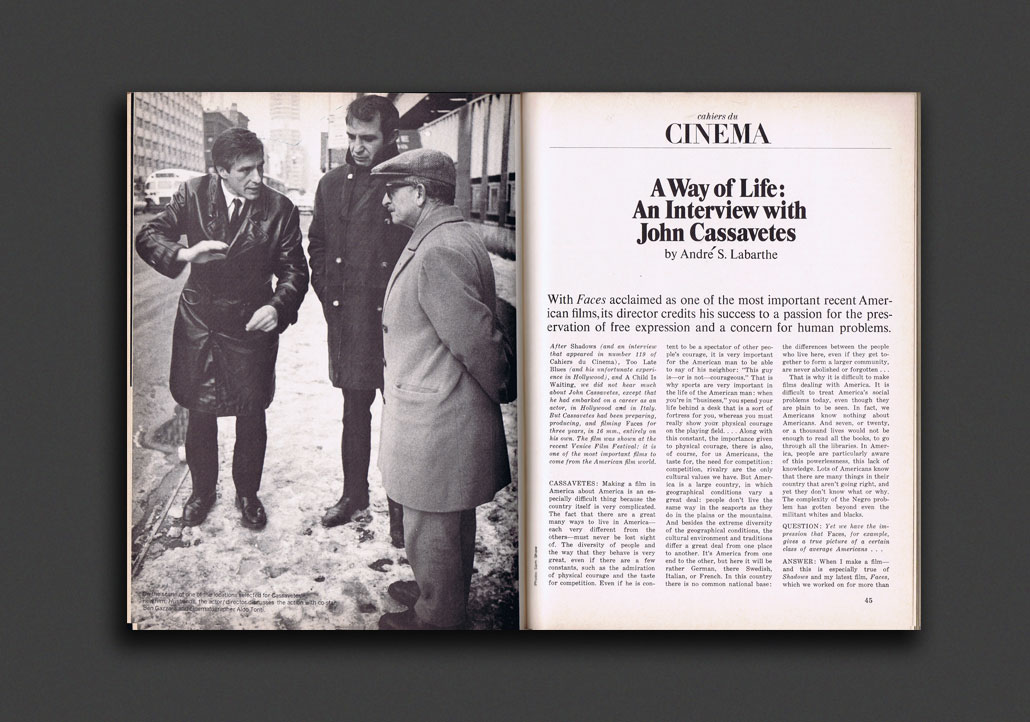
Vol. 13 No. 64 March 1969 issue of Evergreen Review. With a cover photography by Kishin Shinoyama, this issue features "Leo in Jerusalem: diary by Leo Skir"; short stories by Aki Tanino, Joseph Skvorecky and Herbert Gold, poems by David Myers and Charles Plymell, The Dimensions of Community Control by Nat Hentoff, an interview with film director John Cassavetes, plus regular features, illustrations and much more.
The Evergreen Review was a U.S. based literary magazine founded by Barney Rosset, publisher of Grove Press, and editor Don Allen and Fred Jordan in 1957. It existed in print form until 1973. Evergreen Review debuted pivotal works by Samuel Beckett, Jorge Luis Borges, Charles Bukowski, William S. Burroughs, Marguerite Duras, Jean Genet, Allen Ginsberg, Günter Grass, Jack Kerouac, Norman Mailer, Henry Miller, Pablo Neruda, Vladimir Nabokov, Frank O’Hara, Kenzaburō Ōe, Octavio Paz, Harold Pinter, Susan Sontag, Tom Stoppard, Derek Walcott and Malcolm X. United States Supreme Court Justice William O. Douglas wrote a controversial piece for the magazine in 1969. Kerouac and Ginsberg regularly had their writing published in the magazine. "Evergreen published writing that was literally counter to the culture, and if it was sexy, so much the better. In the context of the time, sex was politics, and the powers-that-be made the suppression of sexuality a political issue. The court battles that Grove Press fought for the legal publication of Lady Chatterly's Lover, Tropic of Cancer, and Naked Lunch, and for the legal distribution of the film I Am Curious: Yellow, spilled onto the pages of Evergreen Review, and in 1964, an issue of Evergreen itself was confiscated in New York State by the Nassau County District Attorney on obscenity charges...
1968, English
Softcover, 96 pages, 28 x 21 cm
1st Edition, Out of print title / used / good
Published by
Evergreen Review Inc. / New York
$20.00 - Out of stock
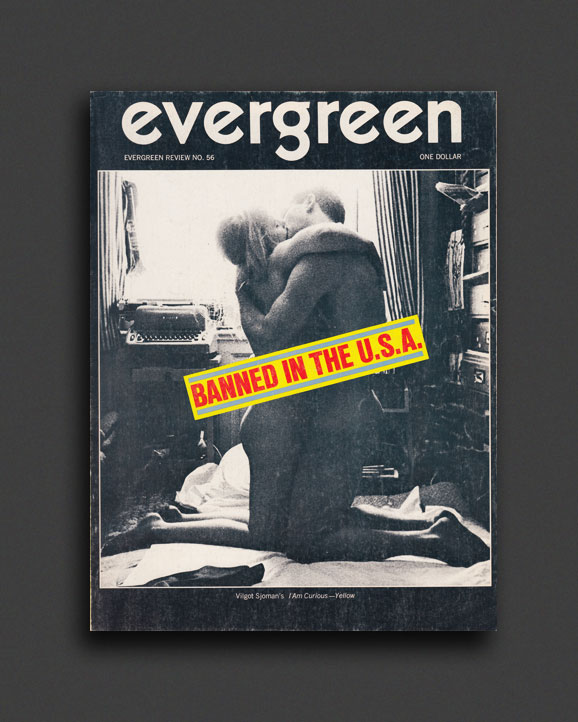
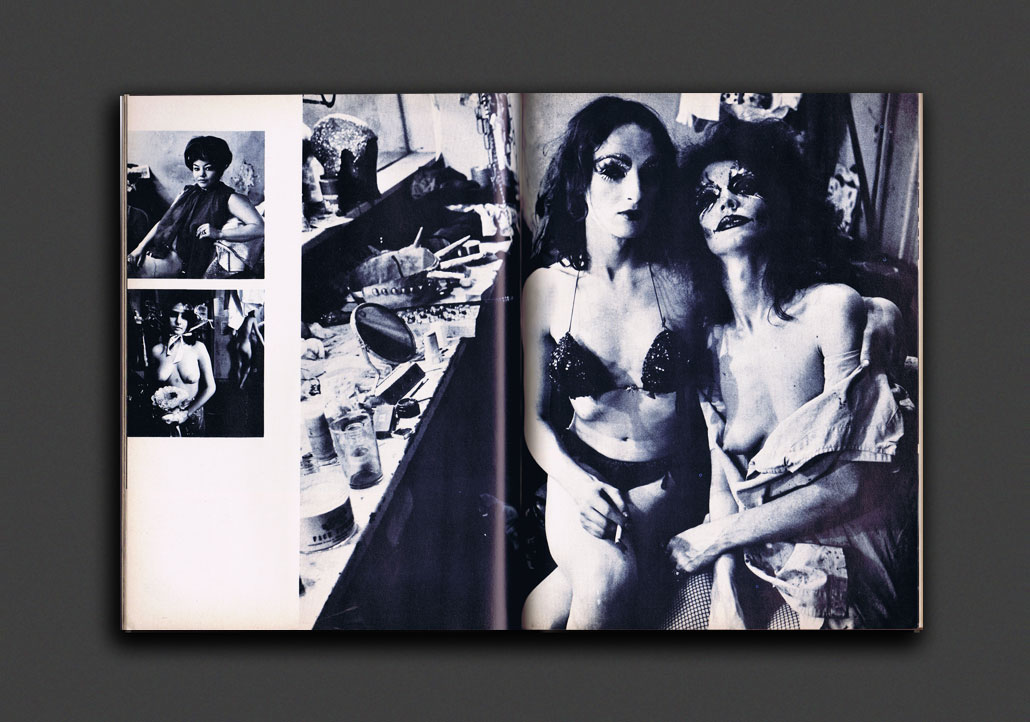
Vol. 12 No. 56 July 1968 issue of Evergreen Review. This issue features "I Was Curious" diary by Vilgot Sjoman, Timothy Leary, John Lahr and Vilgot Sjoman interview on Sex and Politics, Tom Stoppard, Nat Hentoff, story by Aki Tanino, three poems by Tam Fiofori, story by Goffredo Parise, "Psychedelic Burlesque!" pictorial by Mary Ellen Mark, A conversation with "Abu Amar" by Abdullah Schleifer, Jean-Luc Godard's "La Chinoise", plus regular features, illustrations and much more.
The Evergreen Review was a U.S. based literary magazine founded by Barney Rosset, publisher of Grove Press, and editor Don Allen and Fred Jordan in 1957. It existed in print form until 1973. Evergreen Review debuted pivotal works by Samuel Beckett, Jorge Luis Borges, Charles Bukowski, William S. Burroughs, Marguerite Duras, Jean Genet, Allen Ginsberg, Günter Grass, Jack Kerouac, Norman Mailer, Henry Miller, Pablo Neruda, Vladimir Nabokov, Frank O’Hara, Kenzaburō Ōe, Octavio Paz, Harold Pinter, Susan Sontag, Tom Stoppard, Derek Walcott and Malcolm X. United States Supreme Court Justice William O. Douglas wrote a controversial piece for the magazine in 1969. Kerouac and Ginsberg regularly had their writing published in the magazine. "Evergreen published writing that was literally counter to the culture, and if it was sexy, so much the better. In the context of the time, sex was politics, and the powers-that-be made the suppression of sexuality a political issue. The court battles that Grove Press fought for the legal publication of Lady Chatterly's Lover, Tropic of Cancer, and Naked Lunch, and for the legal distribution of the film I Am Curious: Yellow, spilled onto the pages of Evergreen Review, and in 1964, an issue of Evergreen itself was confiscated in New York State by the Nassau County District Attorney on obscenity charges...
1977, English
Softcover (staple-bound), 62 pages, 27.5 x 21.5 cm
1st Edition, Out of print title / used / good
Published by
Centurians / Westminster
London Enterprises / Los Angeles
$65.00 - Out of stock
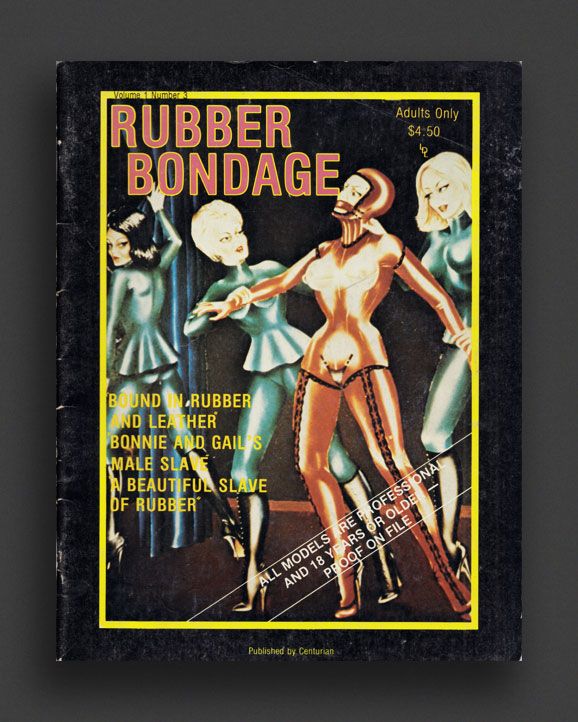
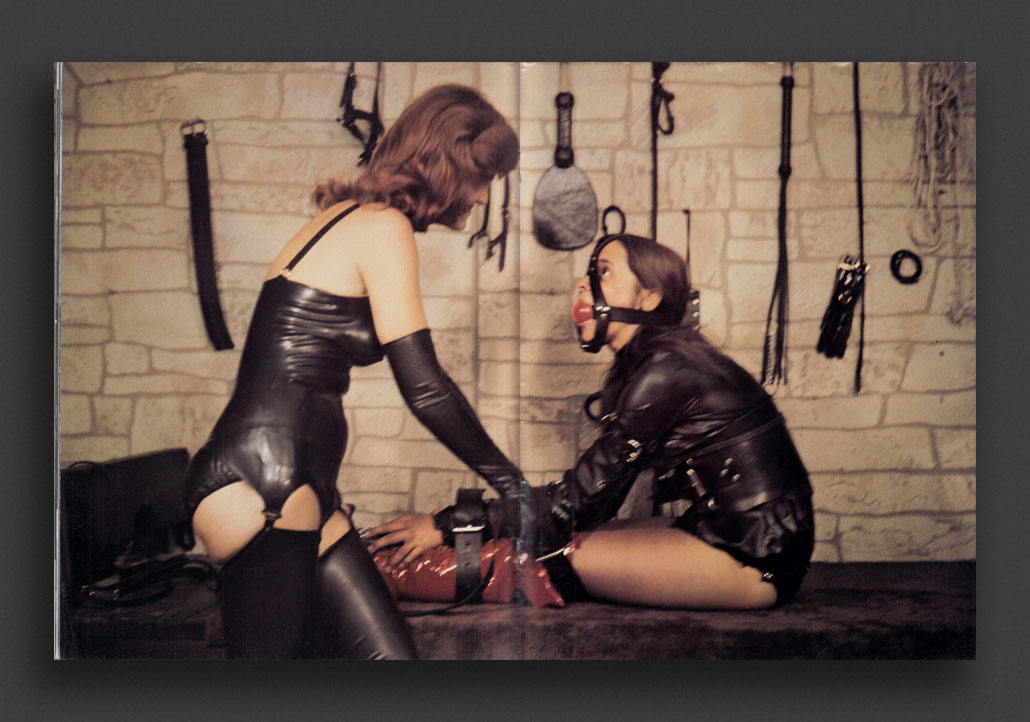
Wonderful, ultra scarce copy of RUBBER BONDAGE Vol. 1, No. 3, published in 1977 by Centurian and London Enterprises. Lavishly illustrated cover-to-cover in colour and b/w pictorials of rubber-clad lesbian, girl-girl domination and bondage illustrations. A huge photographic shoot of girl-girl dungeon domination with a variety of bondage devices, outfits, and equipment (showcasing the wears of Centurians Bazaar) with sections of dom-sub role-reversal throughout the magazine. Also features "A Reader's Photo Collection in Rubber" (body suits and gas masks), loads of magazine ads, including Club Caprice, Atomage and Centurians, and lots of illustrations.
Good copy, with some wear to covers, interior VG.
1992, Japanese
Softcover, 140 pages, 30 x 24 cm
1st Edition, Out of print title / used / very good
Published by
i-D / Tokyo
$40.00 - Out of stock
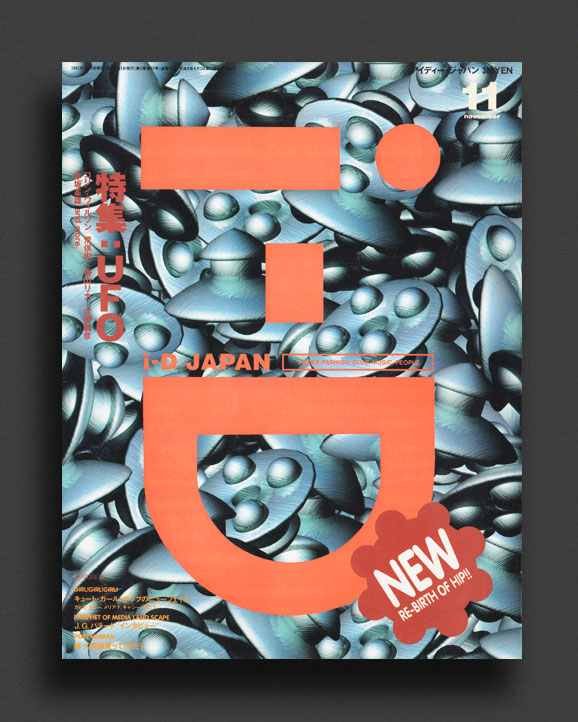
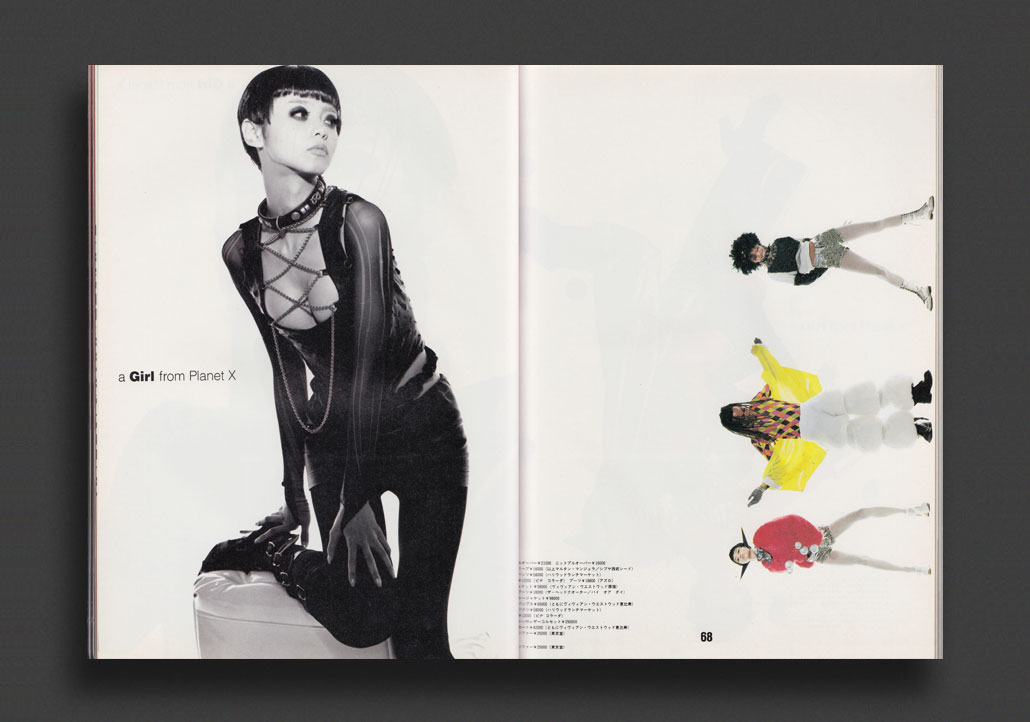
Vintage 1992 issue of i-D JAPAN, Tokyo's version of the famed youth culture magazine founded by designer and former Vogue art director Terry Jones in London 1980. "Ideas, Fashion, Clubs, Music, People." Always a time-capsule, even in Japanese, this issue could well be called the Cyberpunk issue, packed to the brim with articles on J.G. Ballard, the "Post Human" exhibition (Paul McCarthy, Jeff Koons, Cindy Sherman, Ashley Bickerton, Charles Ray, Christian Marclay, Taro Chiezo), a "Neo Full-Metal Dialogue" between body horror/cyberpunk director Shinya Tsukamoto (Tetsuo: The Iron Man) and actor Tomoroh Taguchi (Tetsuo himself!), space/rave fashion ("The Girl from Planet X"), pop singer Kahimi Karie, director Hajime Tabe, Australian painter and legendary Mambo artist David McKay, Brian Eno, Air Jordan, Gameboys, denim... and of course the huge photographic feature on the history "U.F.O.s".
"NEW RE-BIRTH OF HIP"!!
Very Good copy.
1991, Japanese
Softcover, 140 pages, 30 x 24 cm
1st Edition, Out of print title / used / very good
Published by
i-D / Tokyo
$40.00 - Out of stock
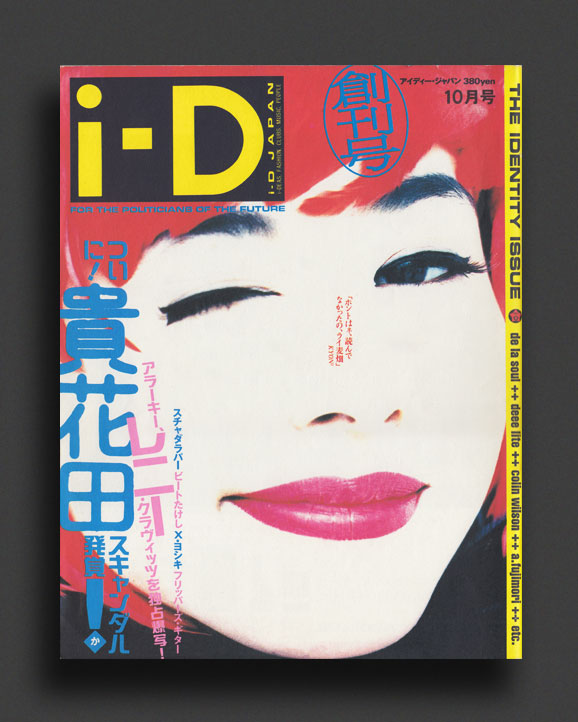
Vintage 1991 issue of i-D JAPAN, Tokyo's version of the famed youth culture magazine founded by designer and former Vogue art director Terry Jones in London 1980. "Ideas, Fashion, Clubs, Music, People." Always a time-capsule, even in Japanese, packed to the brim with early Hysteric Glamour, Deee Lite, Colin Wilson, De La Soul, wearable soundgear, Noise, Primal Scream, Clubbing, TV, Alberto Fujimori, Gameboys, levitating dogs, feet... and the photographic feature "I-Dentity Fashion". "For The Politicians of The Future"
Very Good copy.
1971, English
Softcover, 196 pages, 27.7 x 21.6 cm
1st Edition, Out of print title / used / very good
Published by
Vintage Books / New York
$85.00 - Out of stock
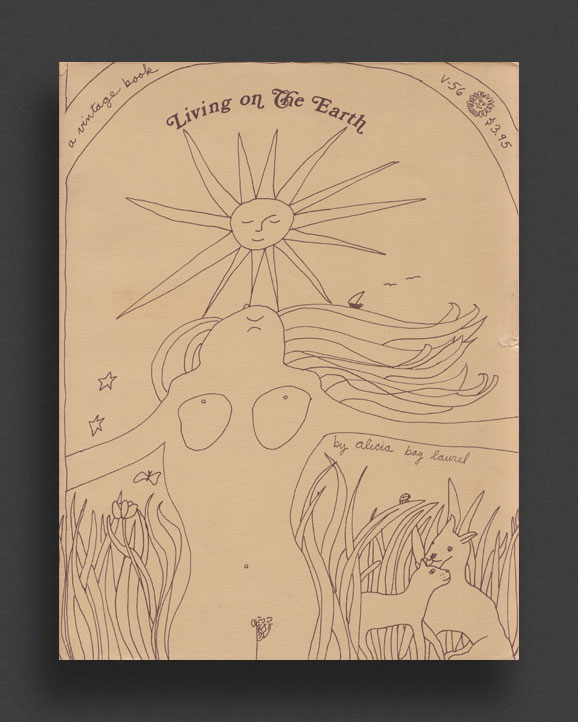
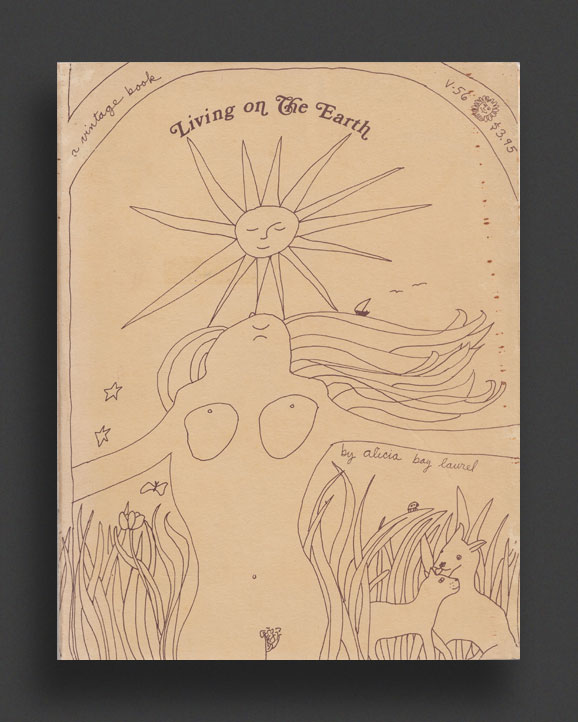
"Celebrations, storm warnings, formulas, recipes, rumors, and country dances harvested by Alicia Bay Laurel."
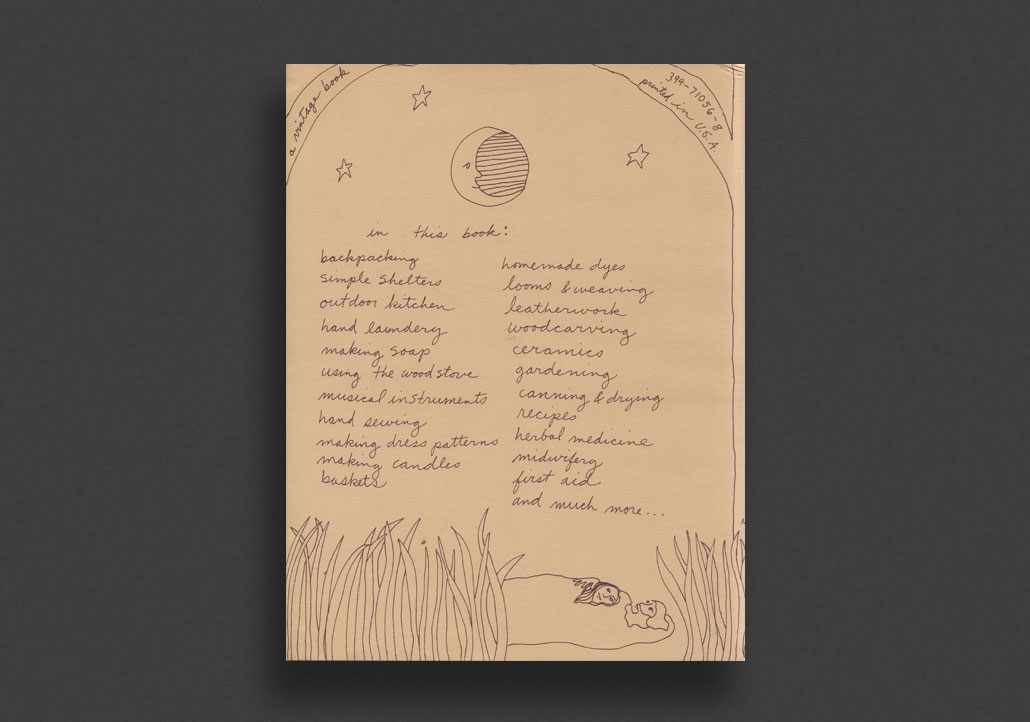
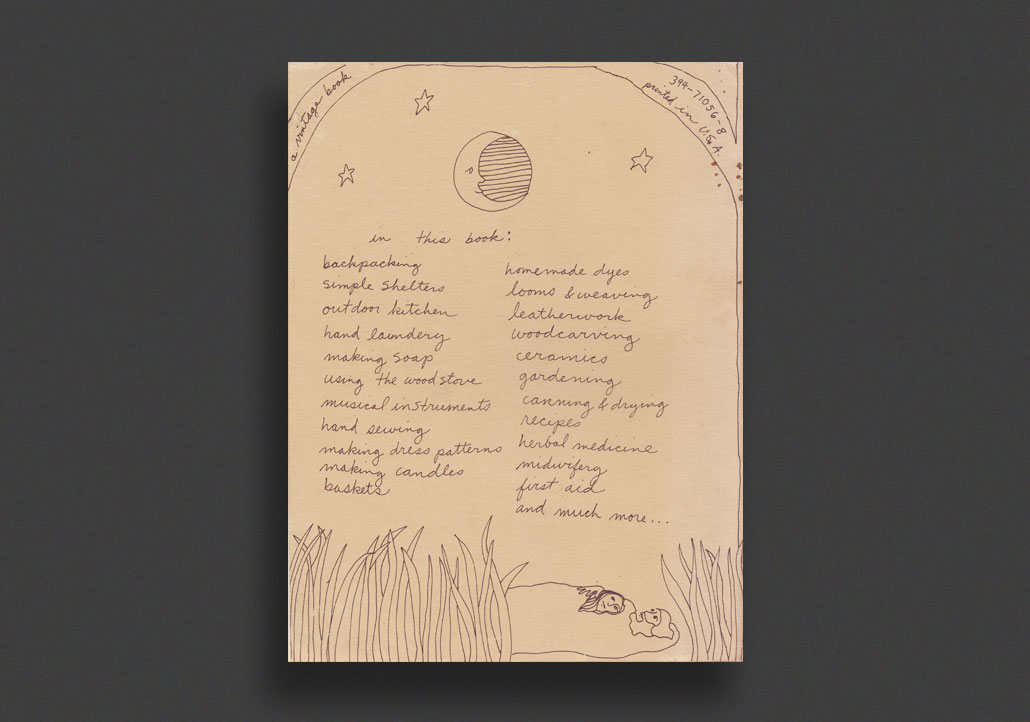
Originally published in Berkeley, California in 1970, more than fifty years ago, the seminal "Living on the Earth" is for people who would rather chop wood for fire than work behind a desk to pay the electric company. It's for people who want the best recipe for lavender soap or huckleberry jam. It's for people who want to make their own clothing, play guitar, learn woodcarving, gardening, canning and drying food, and natural first aid methods. The book has no chapters; no rigid structures or rules. It grew naturally out of the lessons the author has learned, and which she shares. Living on the Earth is a beautiful book to see and read, as well as a spiritually uplifting work whose simplicity radiates warmth and promotes serenity and goodwill to all those who encounter it. The large format paperback is entirely written in Alicia's cursive script and beautifully illustrated on every page with her line drawings. Alicia's innovative illustration and book design styles have been enthusiastically emulated in dozens of books and greeting cards since it's original publishing, and in 2012 "Living on the Earth" was chosen as one of the 101 most influential American cookbooks of the 20th century. Alicia was just 20 years old when the book was first published, and it would go on to become a New York Times "best-seller" and one of the most influential manuals for natural, conscious living ever created.
Very Good copy, beautifully preserved with only a few nicks to the cover edges, very light tanning. Very rarely is the first popular edition found in such lovely condition.
1992, English
Softcover (staple-bound), 80 pages, 28 x 20 cm
1st Edition, Out of print title / used / very good
Published by
OB Enterprises / New York
$45.00 - Out of stock
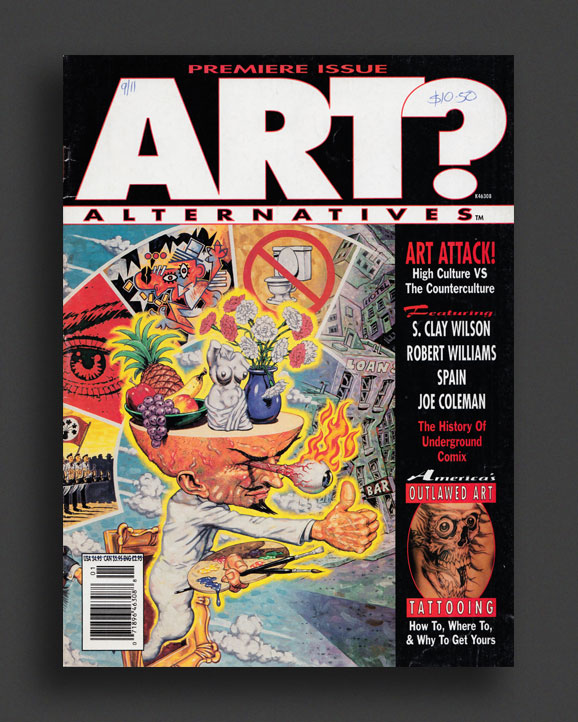
Premiere issue of Art? Alternatives magazine, published in April 1992. Although short-lived, A?A was the perfect embodiment of a spirit in 1990s American visual culture that attacked the distinctions between "high culture" and counterculture, championing the underbelly of new outlaw artistic expression. Edited by Michelle Delio, A?A heralded a sensibility that exploded in 1990s America, that, like the underground press movement of the 1960s/70s that proceeded it, confronted the rise of conservatism and bourgeois attitudes, this time in the face of Reagan-era strip-mall gentrified America. A?A became the mouthpiece of new underground/"lowbrow" art, bringing together the legacy of underground comic art, modern primitivism (tattoo and body art), folk and outsider art, kitsch, occultism, psychedelia, and much more, into a melting pot that foreshadowed such magazines as Juxtapoz, established 2 years later. This premiere issue with a cover feature on artist Robert Williams, features on artists S. Clay Wilson, Spain Rodriguez, Guy Aitchison, and Joe Coleman, legendary Los Angeles gallerist La Luz de Jesus (of Soap Plant and Wacko fame), along with illustrated articles on Underground Comix, Tattooing, and more.
Very Good copy.
1976, English
Softcover, 314 pages, 15 x 21 cm
1st Edition, Out of print title / used / very good
Published by
E P Dutton / New York
$90.00 - Out of stock
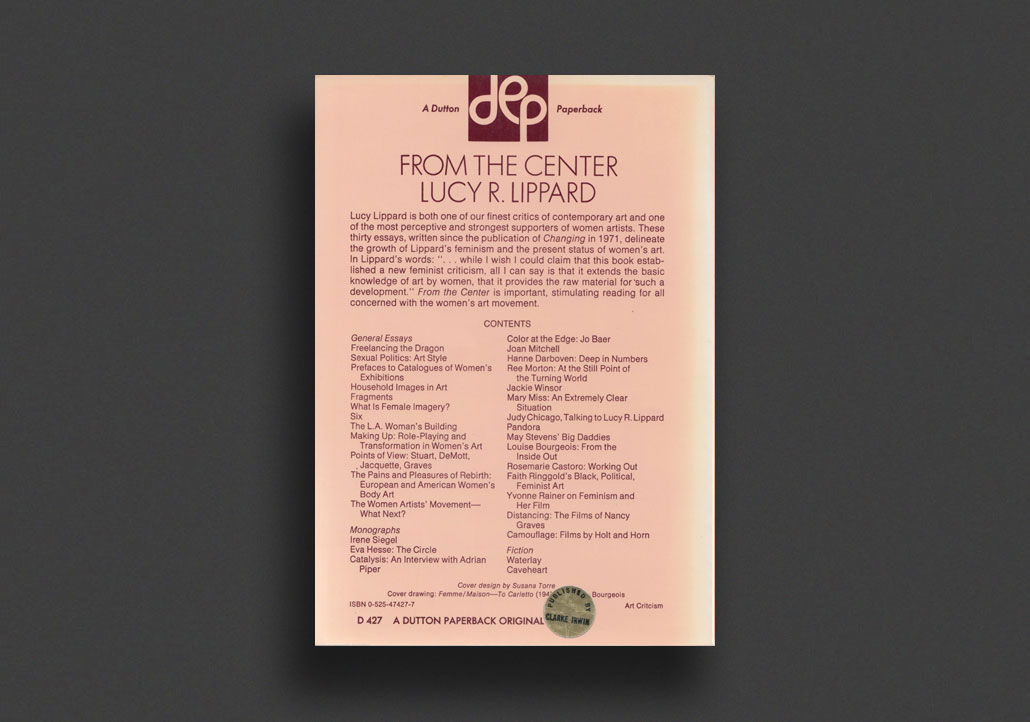
First 1976 printing of this fantastic and now rarely seen classic book collection of essays by internationally acclaimed writer, art critic, activist and curator, Lucy R. Lippard.
"FROM THE CENTER : Feminist Essays on Women's Art" is broken into three sections: GENERAL ESSAYS, MONOGRAPHS, and FICTION. GENERAL ESSAYS include 12 major essays such as "Sexual Politics : Art Style", "Household Images in Art", "Fragments", "What is Female Imagery", "Making Up: Role-Playing and Transformation in Women's Art", "The Pains and Pleasures of Rebirth: European and American Women's Body Art", "The Womens' Art Movement - What Next?" and more. MONOGRAPHS is made up of writings dedicated to single artists, including essays on the work of Eva Hesse, Adrian Piper, Jo Baer, Joan Mitchell, Hanne Darboven, Ree Morton, Irene Siegel, Rosemarie Castoro, Louise Bourgeois, Faith Ringgold, Yvonne Rainer, Judy Chicago, Jackie Winsor, Nancy Graves and many more. A suburb collection, illustrated throughout with examples of the artists written about, including a colour plate section.
Very Good copy with cover/spine tanning, light wear.
2021, English
Hardcover (w. dust jacket), 352 pages, 24 x 16 cm
Published by
Harry N. Abrams / New York
$40.00 - In stock -
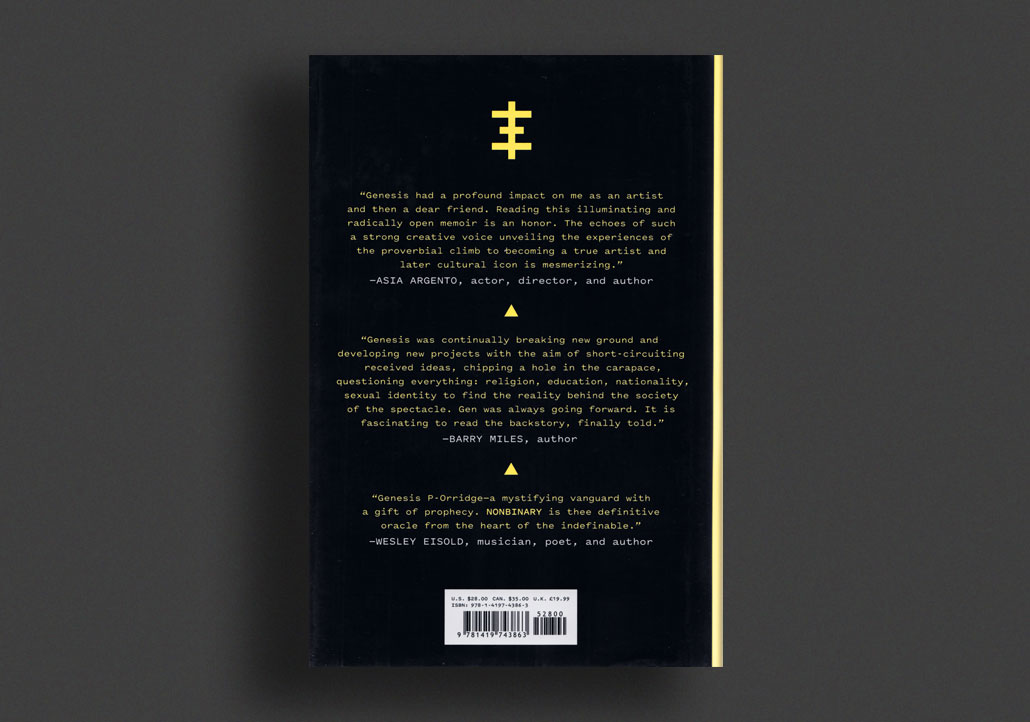
A revealing and beautifully open memoir from pioneering industrial music artist, visual artist, and transgender icon Genesis P-Orridge.
In this groundbreaking book spanning decades of artistic risk-taking, the inventor of “industrial music,” founder of Throbbing Gristle and Psychic TV, and world-renowned fine artist with COUM Transmissions Genesis P-Orridge (1950–2020) takes us on a journey searching for identity and their true self. It is the story of a life of creation and destruction, where Genesis P-Orridge reveals their unwillingness to be stuck—stuck in one place, in one genre, or in one gender. Nonbinary is Genesis’s final work and is shared with hopes of being an inspiration to the newest generation of trailblazers and nonconformists.
Nonbinary is the intimate story of Genesis’s life, weaving the narrative of their history in COUM Transmissions, Throbbing Gristle, and Psychic TV. It also covers growing up in World War II’s fallout in Britain, contributing to the explosion of new music and radical art in the 1960s, and destroying visual and artistic norms throughout their entire life.
In addition to being a captivating memoir of a singular artist and musician, Nonbinary is also an inside look at one of our most remarkable cultural lives that will be an inspiration to fans of industrial music, performance art, the occult, and a life in the arts.
“Genesis had a profound impact on me as an artist and then a dear friend. Reading this illuminating and radically open memoir is an honor. The echoes of such a strong creative voice unveiling the experiences of the proverbial climb to becoming a true artist and later cultural icon is mesmerizing.” — actor, director, and author, Asia Argento
“Genesis was continually breaking new ground and developing new projects with the aim of short circuiting received ideas, chipping a hole in the carapace, questioning everything: religion, education, nationality, sexual identity to find the reality behind the society of the spectacle. Gen was always going forwards. It is fascinating to read the back story, finally told.” — bestselling author, Barry Miles
2020, English
Softcover, 384 pages, 14.8 x 21 cm
Published by
Trapart / Stockholm
$63.00 - In stock -
Sacred Intent gathers conversations between artist Genesis Breyer P-Orridge and longtime friend and collaborator, the Swedish author Carl Abrahamsson. From the first 1986 fanzine interview about current projects, over philosophical insights, magical workings, international travels, art theory and gender revolutions, to 2019’s thoughts on life and death in the the shadow of battling leukaemia, Sacred Intent is a unique journey in which the art of conversation blooms.
With (in)famous projects like C.O.U.M. Transmissions, Throbbing Gristle, Psychic TV, Thee Temple Ov Psychick Youth (TOPY) and Pandrogeny, Breyer P-Orridge has consistently thwarted preconceived ideas and transformed disciplines such as performance art, music, collage, poetry and social criticism; always cutting up the building blocks to dismantle control structures and authority. But underneath the socially conscious and pathologically rebellious spirit, there has always been a devout respect for a holistic, spiritual, magical worldview – one of “sacred intent.”
Sacred Intent is a must read for anyone interested in contemporary art, deconstructed identity, gender evolution, and magical philosophy. The book not only celebrates an intimate friendship, but also the work and ideas of an artist who has never ceased to amaze and provoke. Also included are photographic portraits of Breyer P-Orridge taken by Carl Abrahamsson, transcripts of key lectures, and an interview with Jacqueline “Lady Jaye” Breyer P-Orridge from 2004.
1970, English
Softcover, 450 pages, 20 x 15 cm
1st Edition, Out of print title / used / very good
Published by
E P Dutton / New York
$55.00 - Out of stock
First edition of this seminal 1970 work by Gene Youngblood, with an Introduction by R. Buckminster Fuller, was the first to consider video as an art form. One of the most prescient books written about our modern age, Expanded Cinema was considered the Declaration of Independence for media arts. As the author writes, "The definition of cinema must be expanded to include videotronics, computer science, and atomic light." The introductory essay by R. Buckminster Fuller established an encompassing 1960s countercultural context for this new explosion of technologies. Heavily illustrated throughout, this classic original edition has been long out of print and is of such importance to this day that it has seen a re-publication in 2020.
Gene Youngblood is a well-known theorist of electronic media arts and a respected scholar in the history and theory of experimental film and video art. He has split his career between teaching and journalism and is also widely known as a pioneering voice in the Media Democracy movement.
R. Buckminster Fuller was an architect, designer, inventor, social theorist, and the author of more than thirty books, including the legendary Operating Manual for Spaceship Earth.
Very Good copy with only light age wear.
2021, English
Softcover, 230 pages, 14 x 19.1 cm
Published by
The Song Cave / New York
$58.00 - Out of stock
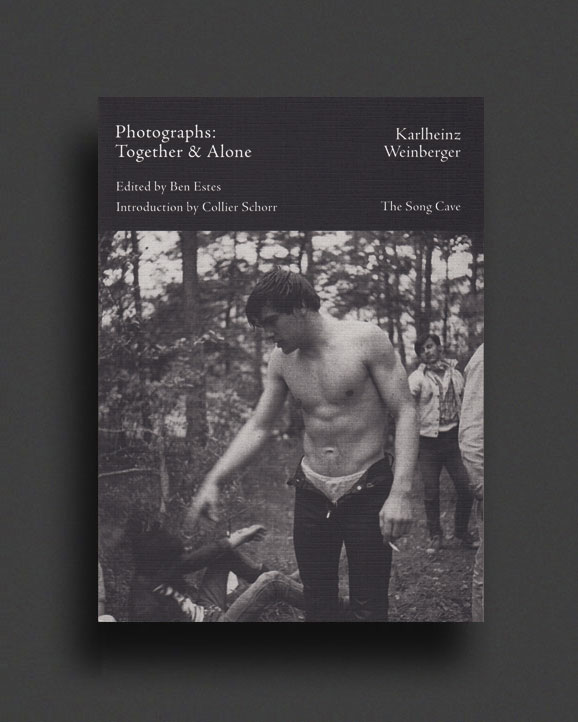
Introduction by Collier Schorr
Edited by Ben Estes
Unseen photos of rebels, outsiders, construction workers and more: celebrating the distinctive gay male gaze of Karlheinz Weinberger.
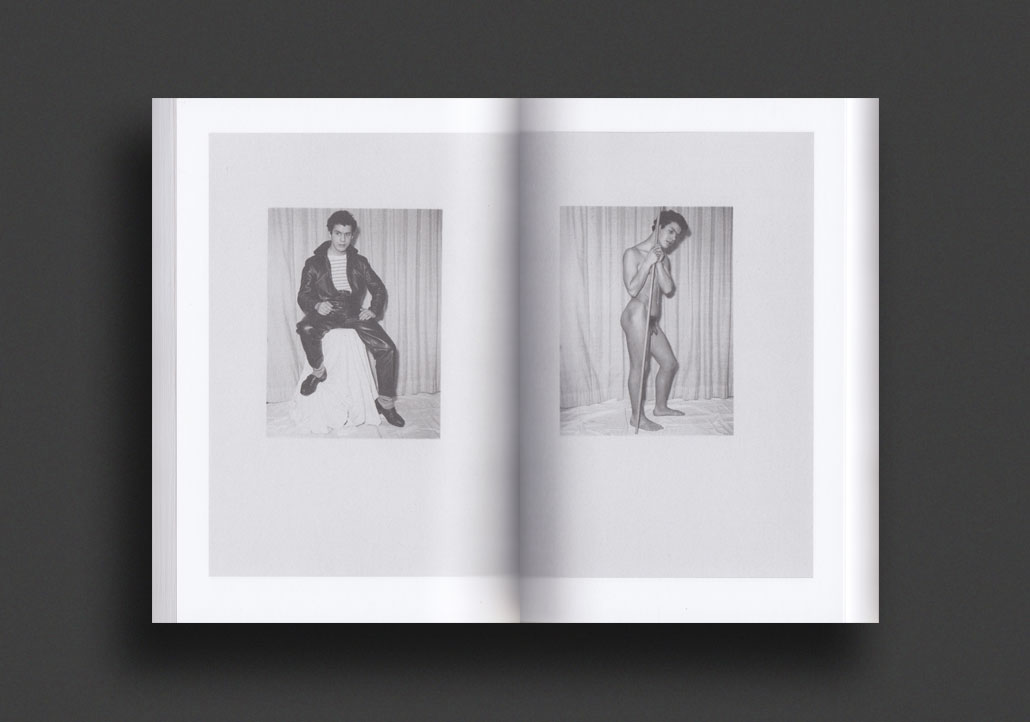
This landmark entry in the lifework of Zürich photographer Karlheinz Weinberger gathers more than 200 never-before-published vintage photographic prints that were rediscovered in 2017. This unique collection pairs images of Weinberger's most famous subjects, the "Halbstarke" — a loosely organized group of Swiss "rebels" in the late 1950s and early 1960s, carousing at local carnivals and on a camping trip — with a much more private side of Weinberger's oeuvre: solo portraits of men from the late 1950s through the mid-1970s, whom he invited into his makeshift studio in the rooms of the apartment he shared with his mother.
The men in these portraits — construction workers, street vendors, bicycle messengers, outsiders — span a spectrum of fully clothed, arms-crossed poses to campy and flirtatious, fully nude and reclined, while others mimic art historical postures. All of these images, though, reveal a palpable tenderness between photographer and subject, offering an expansive, uncritical take on the male form in an era when being photographed was not the casual, ubiquitous record it is today. Though not a professional photographer (he worked as a warehouse stock manager), Weinberger captured his subjects with a distinctly gay male gaze, both carnal and artistic, and this collection is certain to earn his work a larger following and appreciation.
Born in 1921, Karlheinz Weinberger was a Swiss photographer whose work predominantly explored outsider cultures. Between 1943 and 1967 Weinberger published photos of male workers, sportsmen and bikers in the gay magazine Der Kreis under the pseudonym of "Jim." In the late '50s and early '60s he concentrated on Swiss rock 'n' roll youth, whom he photographed with both tenderness and a hint of irony. Weinberger placed little emphasis on exhibiting his work; his first comprehensive show took place only in 2000, six years before his death.
2019, English
Softcover (w. flexi-disc), 280 pages, 26 x 21 cm
Ed. of 2500,
Published by
Primary Information / New York
$65.00 - Out of stock
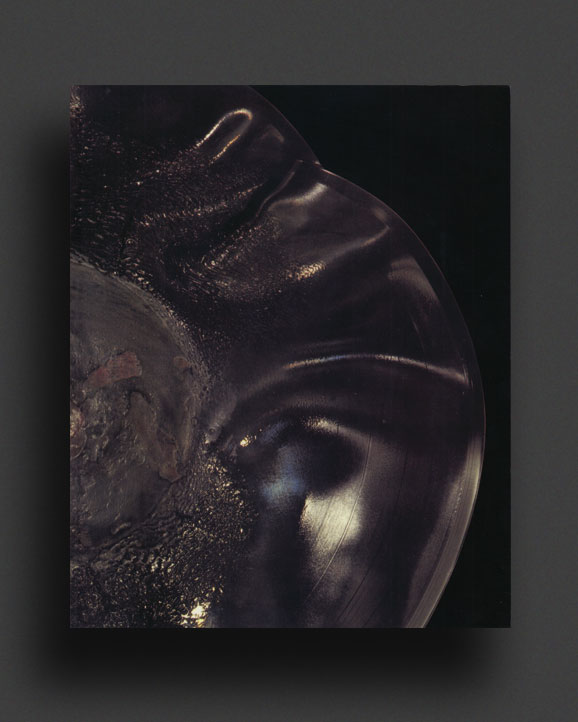
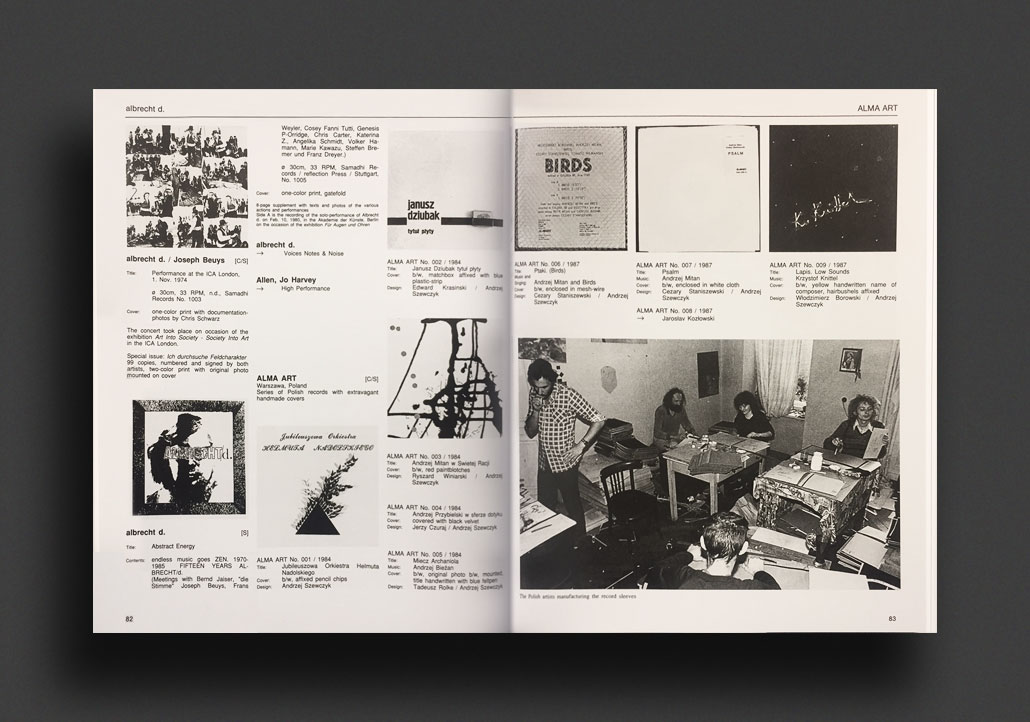
Broken Music is an essential compendium for records created by visual artists. The publication was edited by Ursula Block and Michael Glasmeier and originally published in 1989 by DAAD. Broken Music focuses on recordings, record-objects, artwork for records, and record installations made by thousands of artists between WWII and 1989.
It also includes essays by both editors as well as Theodor W. Adorno, René Block, Jean Dubuffet, Milan Knizak, László Moholy-Nagy, Christiane Seiffert, and Hans Rudolf Zeller, as well as a flexi disc of the Arditti Quartet performing Knizak’s “Broken Music.” The centerpiece of the publication is a nearly 200-page bibliography of artists’ records.
Works chosen for the publication revolved around four criteria: (1) record covers created as original work by visual artists; (2) record or sound-producing objects (multiples/editions/sculptures); (3) books and publications that contain a record or recorded-media object; and (4) records or recorded media that have sound by visual artists.
Artists documented in the volume include Vito Acconci, albrecht/d., Laurie Anderson, Guillaume Apollinaire, Karel Appel, Arman, Hans Arp, Antonin Artaud, John Baldessari, Hugo Ball, Claus van Bebber, John Bender, Harry Bertoia, Jean-Pierre Bertrand, Joseph Beuys, Mel Bochner, Claus Böhmler, Christian Boltanski, KP Brehmer, William Burroughs, John Cage, Henri Chopin, Henning Christiansen, Jean Cocteau, William Copley, Philip Corner, Merce Cunningham, Hanne Darboven, Jim Dine, Marcel Duchamp, Max Ernst, Lawrence Ferlinghetti, Fischli and Weiss, R. Buckminster Fuller, Allen Ginsberg, Philip Glass, Jack Goldstein, Peter Gordon, Hans Haacke, Richard Hamilton, Bernard Heidsieck, Holger Hiller, Richard Huelsenbeck, Isidore Isou, Marcel Janco, Servie Janssen, Jasper Johns, Joe Jones, Thomas Kapielski, Allan Kaprow, Martin Kippenberger, Per Kirkeby, Cheri Knight, Milan Knizak, Richard Kriesche, Christina Kubisch, Laibach, John Lennon, Sol Lewitt, Roy Lichtenstein, Annea Lockwood, Paul McCarthy, Meredith Monk, Josef Felix Müller, Piotr Nathan, Hermann Nitsch, Albert Oehlen, Frank O’Hara, Claes Oldenburg, Yoko Ono, Dennis Oppenheim, Nam June Paik, Charlemagne Palestine, A.R. Penck, Tom Phillips, Robert Rauschenberg, The Red Crayola, Ursula Reuter Christiansen, Gerhard Richter, Jim Rosenquist, Dieter Roth, Gerhard Rühm, Robert Rutman, Sarkis, Thomas Schmit, Conrad Schnitzler, Kurt Schwitters, Selten Gehörte Musik, Richard Serra, Robert Smithson, Michael Snow, Keith Sonnier, Strafe für Rebellion, Jean Tinguely, Moniek Toebosch, Tristan Tzara, Ben Vautier, Yoshi Wada, Emmett Walsh, Andy Warhol, William Wegman, and Lawrence Weiner.
Ursula Block is a curator living in Berlin, Germany. From 1981 until 2014, she ran gelbe Musik, a gallery and record shop in Berlin that featured work by artists at the crossroads between music and art.
Michael Glasmeier is a professor, writer, and editor living in Berlin, Germany. Since the early 1980s, he has curated dozens of shows that explore the intersection between the visual arts, music, film, and language.
2016, English
Softcover, 680 pages, 190 x 250 cm
1st Edition, Out of print title / used / fine
Published by
Steidl / Göttingen
$300.00 - In stock -
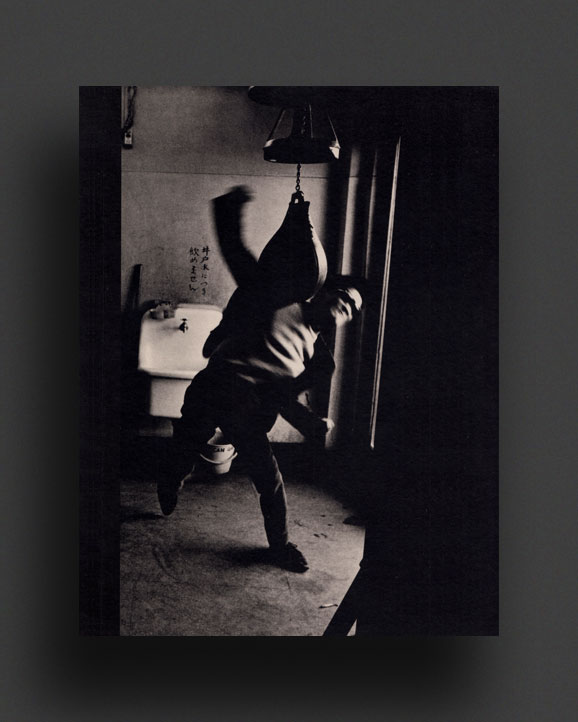
The short-lived Japanese magazine "Provoke," founded in 1968, is nowadays recognized as a major contribution to postwar photography in Japan, featuring the country's finest representatives of protest photography, vanguard fine art and critical theory in only three issues overall. The magazine's goal was to mirror the complexities of Japanese society and its art world of the 1960s, a decade shaped by the country's first large-scale student protests. The movement yielded a wave of new books featuring innovative graphic design combined with photography: serialized imagery, gripping text-image combinations, dynamic cropping and the use of provocatively "poor" materials. The writings and images by "Provoke"'s members-critic Koji Taki, poet Takahiko Okada, photographers Takuma Nakahira, Yakata Takanashi and Daido Moriyama-were suffused with the tactics developed by Japanese protest photographers such as Nobuyoshi Araki, Eikoh Hosoe and Shomei Tomatsu, who pointed at and criticized the mythologies of modern life.
This enormous, and long out-of-print "Provoke" book accompanies the first exhibition ever to be held on the magazine and its creators. Illuminating the various uses of photography in Japan at the time, the catalogue focuses on selected projects undertaken between 1960 and 1975 that offer a strongly interpretative account of currents in Japanese art and society at a moment of historical collapse and renewal.
Out of Print. As New.
2014, English
Hardcover, 528 pages (350 color and b/w ills.), 17 x 24.5 cm
1st Edition, Out of print title / as new
Published by
Sternberg Press / Berlin
$89.00 $40.00 - Out of stock
Out-of-print, now collectible.
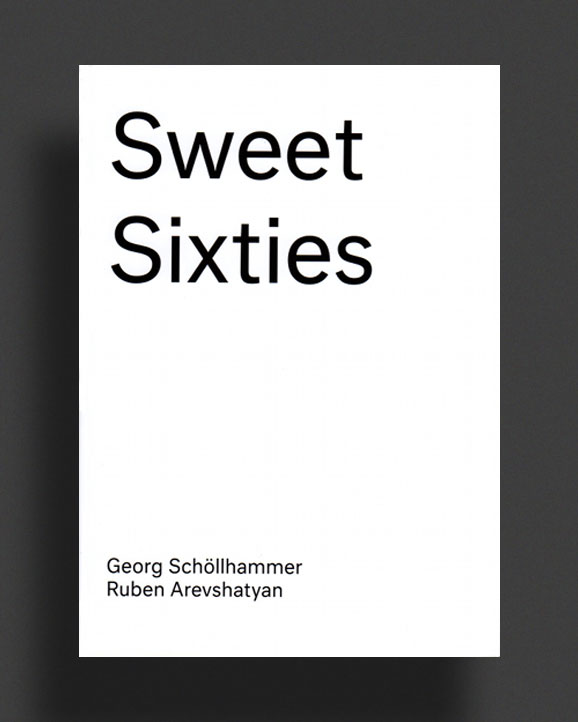
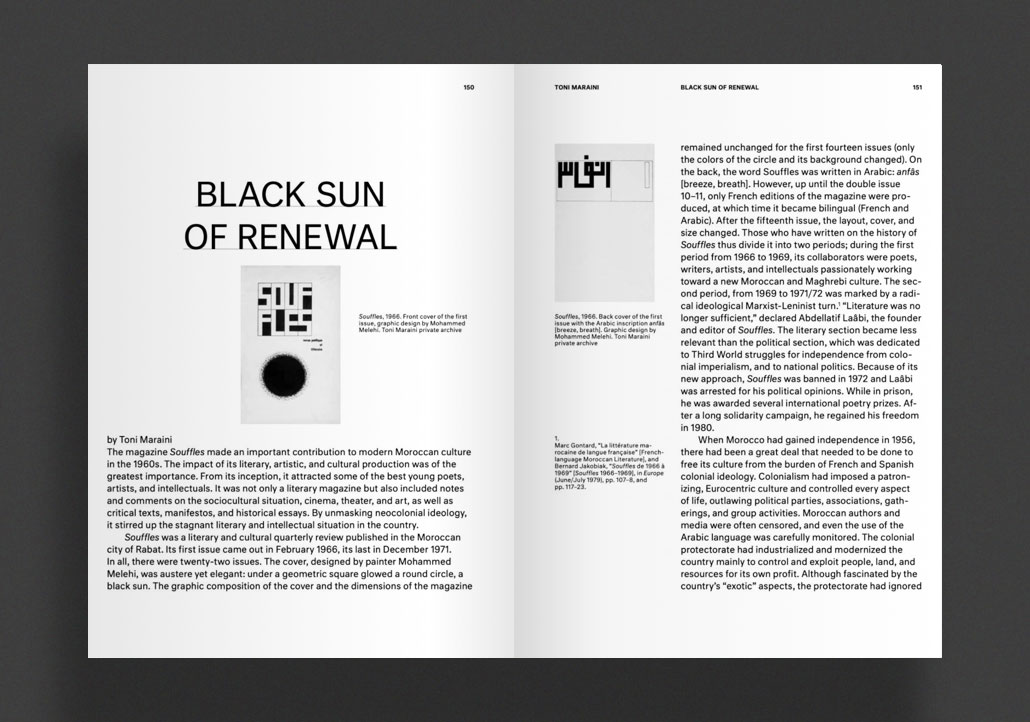
Sweet Sixties Specters and Spirits of a Parallel Avant-Garde Sweet Sixties is a long-term trans-regional research initiative working between art, research, media, and educational contexts in Europe, the Middle East, western and central Asia, Latin America, and northern Africa. Involving a particular group of experimentally oriented arts and research groups as well as individual artists, researchers, and media, Sweet Sixties investigates hidden histories or underexposed cultural junctions and exchange channels in the revolutionary period of the 1960s.
In the 1960s, the landscapes and cities of protectorates and former colonies from India to the Maghreb, from the Soviet Republics to the new states in the southern hemisphere were replete with the spirit and forms of modernity, forms that transmogrify and then dissolve into the thin air of the vernacular. The star maps that are used to survey these artificial worlds often serve to navigate the boundaries between private and public domains. The world full of eerie displacements, gestures of the uncanny, and the constellation of the real exists in a plethora of doubled forms. Question marks and meanderings are all part of this picture. Instruments of communication emerge and are locked away before they have a chance to become immaterial, disappear, and corrode in postmodernity.
The air of the 1960s echoes a spirit of emancipation. And the newly arising art-scapes are interspersed with double agents: diasporas bring their academies; the streams between Soviet, North and South American, Western European, Non-Aligned, etc., are full of interlocutions, hidden pathways, and narratives of trade routes beyond the seemingly stable hegemonies of the blocs.
The stories and spirits of a parallel avant-garde, whose silhouettes have yet to be found on the walls of the Western canon, are the theme of this publication.
As New with some general shelf wear.
1992, Japanese
Softcover, 310 pages, 21 x 15 cm
1st Edition, Out of print title / used / very good
Published by
Million Publishing / Tokyo
$80.00 - Out of stock
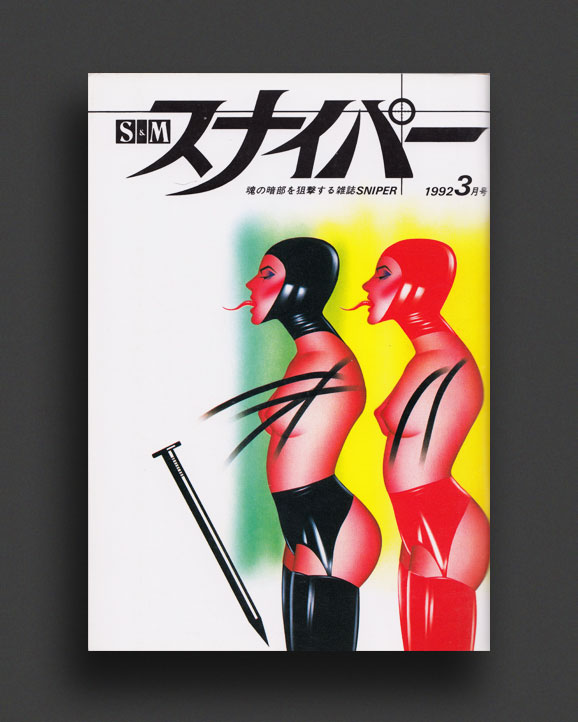
March 1992 issue of S&M Sniper, the cult glossy fetish magazine published in Japan between 1979 - 2009 that, unlike previous SM magazines, didn't centre so much around professional kinbakushi, favouring instead the exploration of new innovations of fetish and underground sex culture and emphasising the work of the models, stylists, make-up artists, and fashions designers, as much as the writers or photographers. The "new wave" of SM culture, embedded in 1980s underground music, fashion and visual art culture in Japan. Explicitly and profusely illustrated, issues are packed from cover-to-cover with all manner of SM and fetish photoshoots, illustrations, comics, essays, diaries, reports, exhibitions, reviews, interviews, and included regular contributors such as Masami Akita (Merzbow), Kazuo Kamimura, Domu Kitahara, Makoto Orui, Kinichi Tanaka, Nobuhiko Ansai, Masaaki Toyoura... Each issue is also brimming with amazing Japanese advertisements and classifieds for the latest bondage clubs, boutiques, fashion, toys, video and publication catalogues, hook-ups, phone sex, and much more. This issue includes Nobuyoshi Araki, Tadao Chigusa, Kenichi Yamakawa, Sachiko Nakamura, Guido Crepax "Story of O" comic instalment, How to Tattoo, all the usual and more... Not for the faint of heart.
Very Good copy.
1971, English
Softcover, 196 pages, 27.7 x 21.6 cm
1st Edition, Out of print title / used / good
Published by
Vintage Books / New York
$65.00 - Out of stock
"Celebrations, storm warnings, formulas, recipes, rumors, and country dances harvested by Alicia Bay Laurel."
Originally published in Berkeley, California in 1970, more than fifty years ago, the seminal "Living on the Earth" is for people who would rather chop wood for fire than work behind a desk to pay the electric company. It's for people who want the best recipe for lavender soap or huckleberry jam. It's for people who want to make their own clothing, play guitar, learn woodcarving, gardening, canning and drying food, and natural first aid methods. The book has no chapters; no rigid structures or rules. It grew naturally out of the lessons the author has learned, and which she shares. Living on the Earth is a beautiful book to see and read, as well as a spiritually uplifting work whose simplicity radiates warmth and promotes serenity and goodwill to all those who encounter it. The large format paperback is entirely written in Alicia's cursive script and beautifully illustrated on every page with her line drawings. Alicia's innovative illustration and book design styles have been enthusiastically emulated in dozens of books and greeting cards since it's original publishing, and in 2012 "Living on the Earth" was chosen as one of the 101 most influential American cookbooks of the 20th century. Alicia was just 20 years old when the book was first published, and it would go on to become a New York Times "best-seller" and one of the most influential manuals for natural, conscious living ever created.
Good copy with some standard ageing, marks and wear not effecting content. Very rarely is the first popular edition found in such nice condition.
1983, English / German
Softcover, 80 pages, 24 x 28.5 cm
1st Edition, Out of print title / used / very good
Published by
Eichborn Verlag / Frankfurt
$190.00 - Out of stock
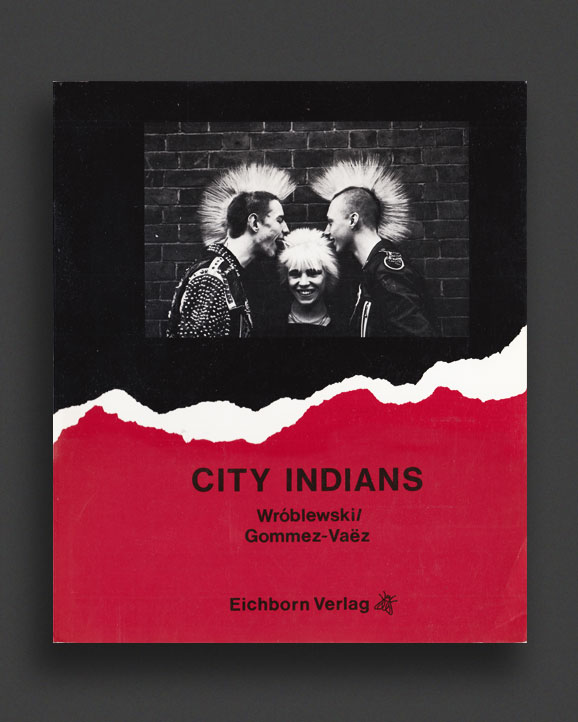
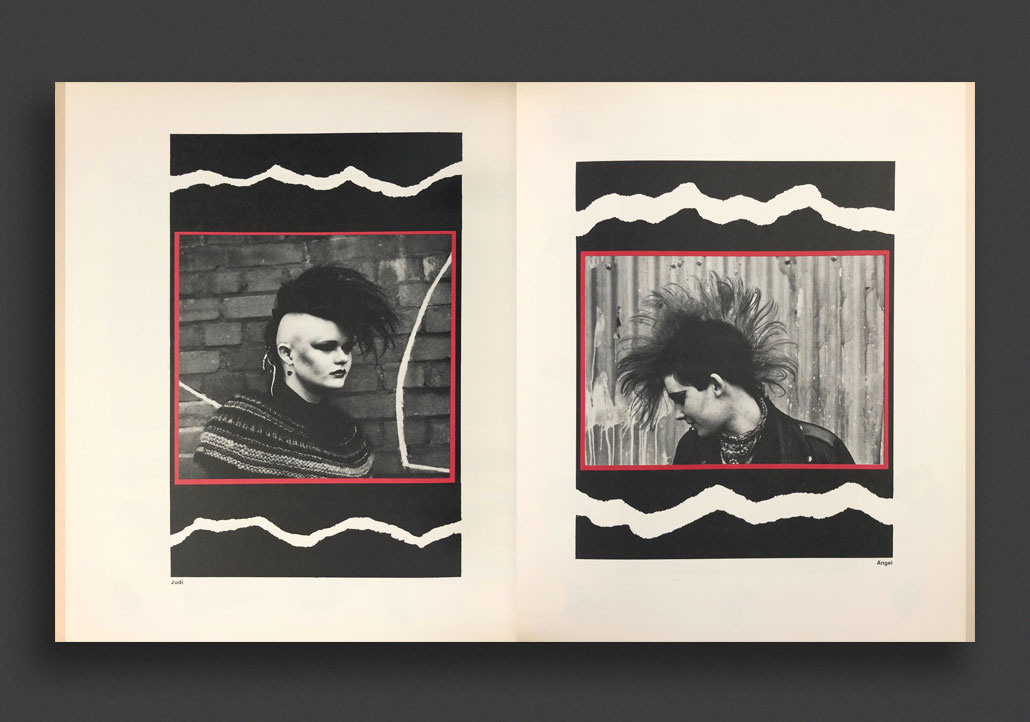
First edition of this rare photographic study of youth tribes between 1977 and 1982 by British photographer Chris Wroblewski and French photographer Nelly Gommez-Vaez. A masterpiece of punk rock and youth culture, City Indians aims to draw a comparison between contemporary subcultures and ancient native tribes thought its influences on hairstyles, tattoos, piercings and fashion. Chapters on "Mohicans", "Skinheads", "Sons of hell", "Sic Boys", "Rastas", and others, with incredible portraits of "City Indians" in Europe and the UK set against Martin Knox's incredible complimentary graphic design and a foreword by Claude Levy-Strauss, a prominent Native American ethnologist. All texts in English and German.
“As the western armies and cultures marched in and took over the civilizations of the east, the displaced and unwanted ceremonies, rituals and modes of dress quietly graduated and entrenched themselves in the west in return. Just as our museums and galleries are cramped with the looted remnants of vanished civilizations so too are our streets and inner cities brimming with the evidence of a tribal past.”
Very Good copy with light cover wear.
1968, English
Newspaper, 8 pages, 41 x 29 cm
1st Edition, Out of print title / used / very good
Published by
The Kerista Tribe / San Francisco
$90.00 - In stock -
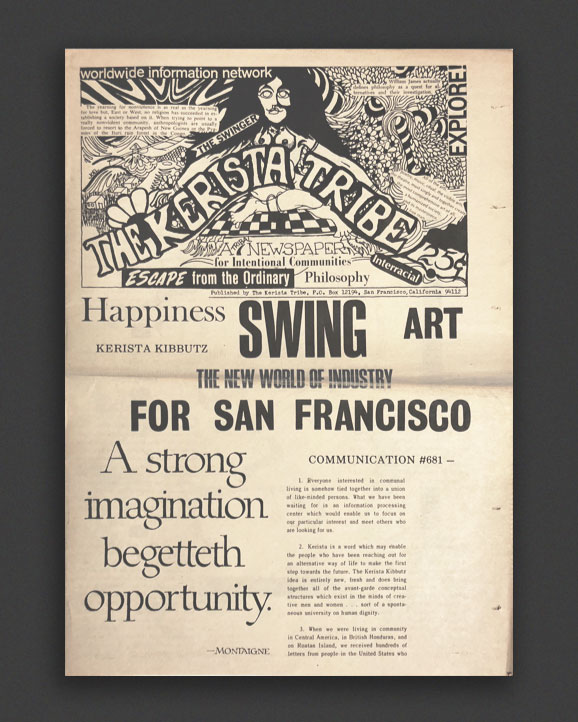
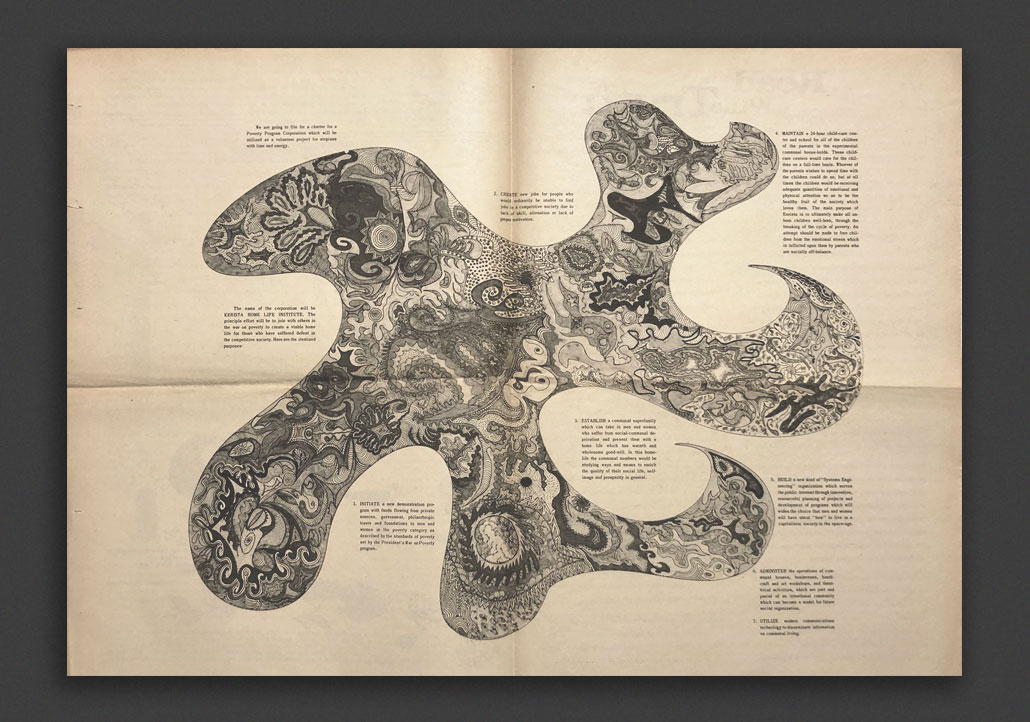
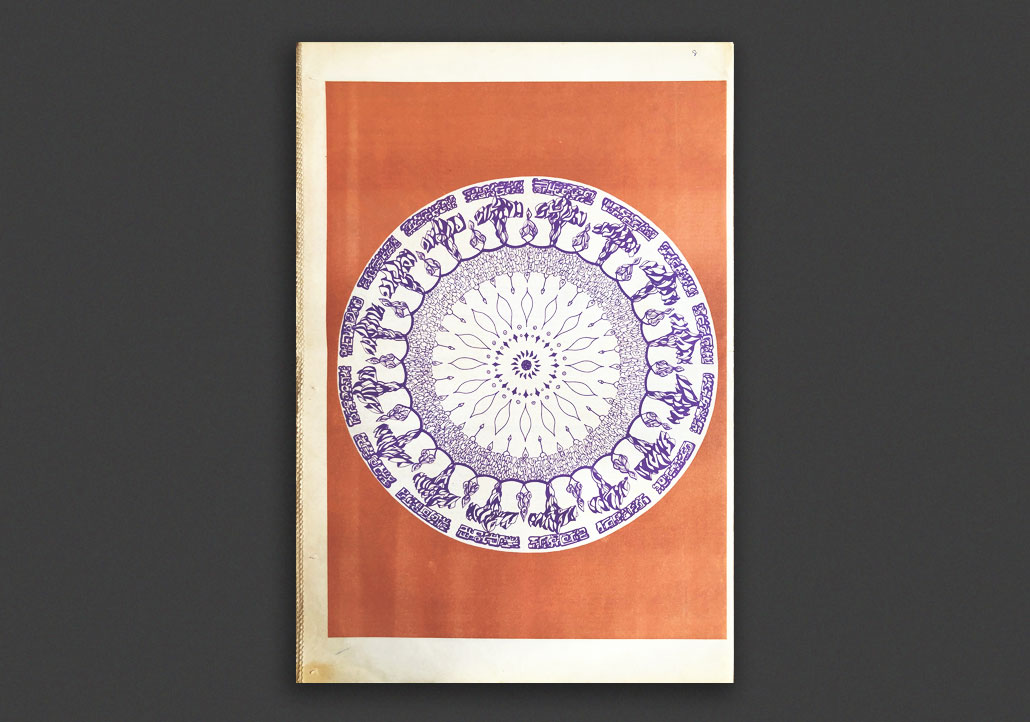
Very rare, inaugural Kerista Tribe newspaper, A Tribal Newspaper, published in 1968 by The Kerista Commune in San Francisco. The Kerista Commune was a utopian community that was started in New York City in 1956 but largely based in the Haight-Ashbury district of San Francisco centred around the idea of independent learning, the creative use of technology, and the ideals of polyfidelity and non-monogamous lifestyles. They published many journals focusing on the esoteric issues of lifestyle, communal living, and Keristan theory and practice. Gorgeously simple and expressive in its combination of typesetting and psychedelic illustration, this first edition of The Kerista Tribe introduces readers to "The Kerista World Peace Plan" and their philosophies of a nonviolent, interracial, intentional community and humanized society, including poetry and quotes from Richard Brautigan to Michel de Montaigne.
Very Good copy with centre fold and light tanning (less yellow than pictured!).
1974, English
Newspaper, 28 pages, 41 x 29 cm
1st Edition, Out of print title / used / very good
Published by
Incorporated Newsagencies / West Melbourne
$90.00 $60.00 - Out of stock
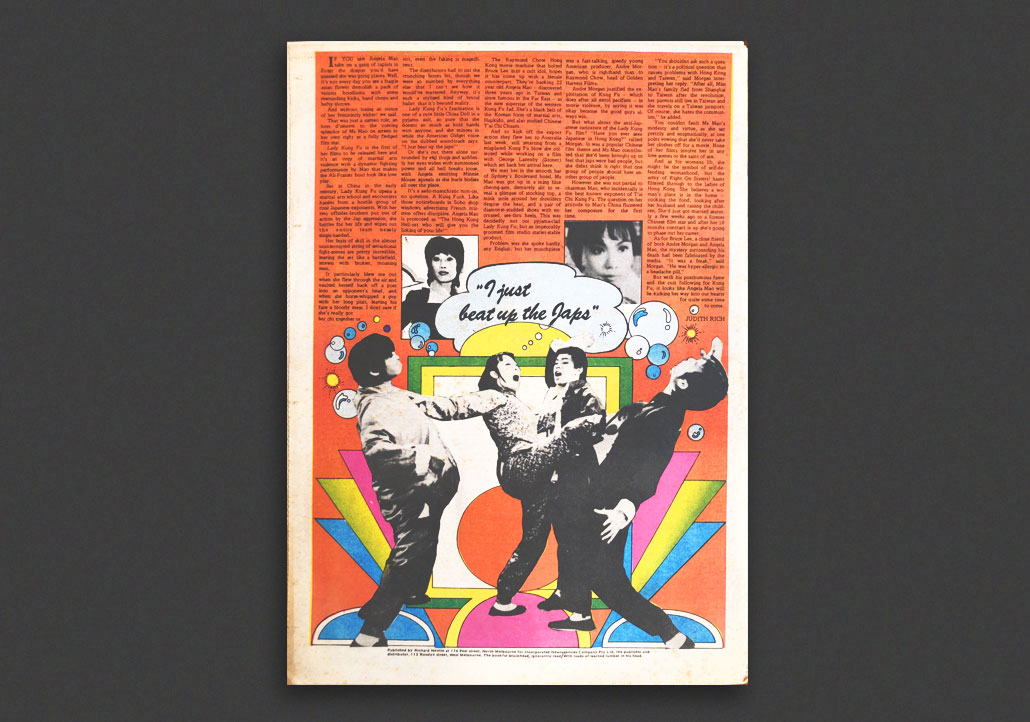
Rare February 1974 issue of The Living Daylights, a radical, riotous weekly counter-culture magazine out of North Melbourne in the 1970's, edited by Oz magazine founder Richard Neville, along with Terence Maher, Michael Morris, and graphic designer Laurel Olszewski, and published by Neville's fellow OZ colleague, Richard Walsh, between 1973-4. The Living Daylights was packed with all happening things in youth counter-culture, filled with articles, cartoons, artwork, sex, drugs, rock n roll and protest. A provocative, humorous and controversial anti-establishment bulletin in the tradition of Oz, regularly featuring the artwork of Martin Sharp, Michael Luenig, Dickie, and Neil McLean! This issue features 186 Years of Penal Outrage, activists against the closure of Lameroo "Free Beach" in Darwin, Bondi photography by Syd Shelton, dodgy Adelaide drug squad, Melbourne marijuana activists, Nimbin news, female singers, women's liberation and beauty trends by Margaret Smith, Confessions of a Working Class Shit Eater by poet Eric Beach, Taiwanese actress Angela Mao, Fritz the Cat, and so much more.
A wonderful, very seldom seen, historical piece of Australian counterculture publishing.
Very Good copy with light wear/tanning.
1974, English
Newspaper, 28 pages, 41 x 29 cm
1st Edition, Out of print title / used / very good
Published by
Incorporated Newsagencies / West Melbourne
$90.00 $60.00 - Out of stock
Rare March 1974 issue of The Living Daylights, a radical, riotous weekly counter-culture magazine out of North Melbourne in the 1970's, edited by Oz magazine founder Richard Neville, along with Terence Maher, Michael Morris, and graphic designer Laurel Olszewski, and published by Neville's fellow OZ colleague, Richard Walsh, between 1973-4. The Living Daylights was packed with all happening things in youth counter-culture, filled with articles, cartoons, artwork, sex, drugs, rock n roll and protest. A provocative, humorous and controversial anti-establishment bulletin in the tradition of Oz, regularly featuring the artwork of Martin Sharp, Michael Luenig, Dickie, and Neil McLean! This issue features Ian Stocks in conversation with science fiction legend Arthur C. Clarke, a guide to smuggling, Allen Ginsberg on cocaine and Abbie Hoffman, Heroin, Pentridge prison, Magic Mushrooms, police brutality against black Australians, Cherry Ripe on the pioneering drag queen anarchy of Sylvia and the Synthetics, meditation, Veronica Perry on the ecology of Shit, the Bitch newspaper, Miles Davis, and so much more.
A wonderful, very seldom seen, historical piece of Australian counterculture publishing.
Very Good copy with light wear/tanning.
1973, English
Newspaper, 24 pages, 43 x 30 cm
1st Edition, Out of print title / used / very good
Published by
Cosmos Periodicals / Cremorne
$60.00 - Out of stock
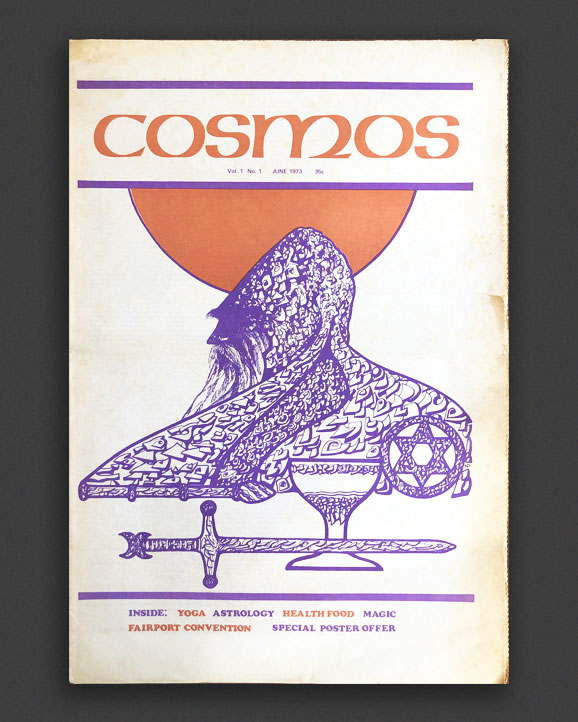
Scarce inaugural issue (June 1973) of Cosmos, The Living Paper, published in Cremorne, Victoria in the 1970s and edited by leading Australian occultist Nevill Drury with Peter Glasson. A magazine dedicated to "the other side" of the counter-culture, "seeking to change society, not by forcibly ramming its ideas into unwilling minds, but by peacefully stressing the need for change in each and every individual as a prescription to the world's ills". Each issue is packed with articles and artwork around subjects such as cosmic music, occultism, ecology, astrology, organic gardening, alternative living, sexuality, theosophy, the arts, literature, politics, and awakened, back-to-the-earth Australia. A wonderful historical piece of Australian counterculture publishing. "From Soil to Psyche."
Good copy with fold and edge wear, tanning (which looks worse in our images than in person).