World Food Books' programme is largely produced on Kulin Nation land. We acknowledge the Wurundjeri people of the Kulin Nation as the first and continuing custodians of this land, and pay respect to their Elders past, present, and emerging.
World Food Books is an arts and special interests bookshop in Naarm / Melbourne. Founded in 2010, World Food Books is devoted to the presentation of a rotating, hand-selection of international art, design, literary and counterculture publications with an emphasis on the anti-traditional, the experimental, the avant-garde, the heretic, the marginal.
Presenting new titles alongside rare and out-of-print books, catalogues and journals spanning the fields of modern and contemporary art, design, photography, illustration, film, literature, poetry, cultural theory, philosophy, sexuality, popular and underground culture in its many radical forms, World Food Books wishes to encourage adventurous, thoughtful and open-minded reading, looking, writing, and exchange of publishing and ideas, both current and historical.
As well as our bookshop, located in Melbourne's historical Nicholas Building, all of our inventory is available internationally via our online mail-order service.
World Food Books semi-regularly co-ordinates "Occasions", a programme of exhibits and events at the bookshop and in partnership with other hosts (such as museums and art galleries) that develop out of the activities, relationships and content of the bookshop itself.
World Food Books
The Nicholas Building
37 Swanston Street
Room 5, Level 6
Melbourne 3000
Australia
SHOP HOURS:
THU–SAT 12–6
WEB-SHOP OPEN 24/7
World Food Books
Postal Address:
PO Box 435
Flinders Lane
Victoria 8009
Australia
info@worldfoodbooks.com
Art
Theory / Essay
Architecture / Interior
Graphic Design / Typography
Photography
Fashion
Eros
LGBTQ+
Fiction / Poetry
Weird / Speculative / Science Fiction / Horror
Transgressive / Visceral / Abject
Symbolism / Decadence / Fin de siècle
Film / Video
Painting
Sculpture / Installation
Performance / Dance / Theater
Drawing
Sound / Music
Curatorial
Group Shows / Collections
Periodicals
Out-of-print / Rare
Posters / Ephemera / Discs
Signed Books
World Food Books Gift Voucher
World Food Book Bag
Australian Art
Australian Fiction
Australian Science Fiction / Speculative Fiction
Australian Poetry
Australian Photography
Japanese Photography
Conceptual Art
Minimal Art
Dada
'Pataphysics / Oulipo
Fluxus
Concrete Poetry
Pop Art
Surrealism
Arte Povera
Arte Informale / Haute Pâte / Tachism
Nouveau Réalisme / Zero / Kinetic
Situationism / Lettrism
Collage / Mail Art / Xerox Art
Art Brut / Folk / Visionary / Fantastic
Illustration / Graphic Art / Bandes Dessinées
Furniture
Italian Radical Design / Postmodernism
Textiles
Ceramics / Glass
Counterculture
Protest / Revolt
Philosophy
Psychoanalysis
Anthropology
Anarchism
Socialism / Anarchism / Communism / Capitalism
Literary Theory / Semiotics / Language
Feminism / Women's Studies
Gender Studies / Sexuality
Anthropology
Fetishism / BDSM
Drugs / Psychedelia
Crime / Violence
Animal Rights / Veganism
Occult / Esoterica
Ecology / Earth / Alternative Living
Whole Earth / Crafts
All prices in AUD (Australian dollars)
Pick-Ups
Pick-up orders can be collected in our bookshop during opening hours after order date. Please collect any Pick-up orders within 2 weeks of ordering as we have limited storage space. Orders will be released back into stock if not collected within this time. No refunds can be made for pick-ups left un-collected. If you cannot make it in to the bookshop in this time-frame, please choose postage option.
Return Policy
All sales are final. We do accept returns (for refund or exchange) for items received in error. All our orders are packed with special care using heavy-duty padding and cardboard book-mailers or bubble mailers (for smaller books), using reinforcement where required. We cannot take responsibility for any lost, stolen or damaged parcels.
Insurance
Should you wish to insure your package, please email us directly after placing your order and we can organise this at a small extra expense. Although all standard/express tracked packages are very safe and dependable, we cannot take responsibility for any lost, stolen or damaged parcels. We recommend insurance on valuable orders.
Interested in selling your old books, catalogues, journals, magazines, comics, fanzines, ephemera? We are always looking for interesting, unusual and out-of-print books to buy. We only buy books in our fields of interest and specialty, and that we feel we can resell.
We base these prices on desirability, market value, in-print prices, condition and our current stock levels. We offer cash, store credit, and can take stock on consignment. All
about 25% of the price we expect to get when we sell them, or 30% in store credit. We base these prices on desirability, market value, in-print prices, condition and our current stock levels.
Sell your books any day of the week. You can drop them off and return later. If you have a lot of books, we can visit your Sydney home.
We buy books that we feel we can resell. We offer about 25 % of the price we expect to get when we sell them, or 30% in store credit. We base these prices on desirability, market value, in-print prices, condition and our current stock levels.
Philadelphia Wireman
03 August - 01 September, 2018
World Food Books is proud to announce our next Occasion, the first presentation of sculptures by Philadelphia Wireman in Australia.
The Philadelphia Wireman sculptures were found abandoned in an alley off Philadelphia’s South Street on trash night in 1982. Their discovery in a rapidly-changing neighbourhood undergoing extensive renovation, compounded with the failure of all attempts to locate the artist, suggests that the works may have been discarded after the maker’s death. Dubbed the "Philadelphia Wireman" during the first exhibition of this work, in 1985, the maker’s name, age, ethnicity, and even gender remain uncertain. The entire collection totals approximately 1200 pieces, all intricately bound together with tightly-wound heavy-gauge wire (along with a few small, abstract marker drawings, reminiscent both of Mark Tobey and J.B. Murry). The dense construction of the work, despite a modest range of scale and materials, is singularly obsessive and disciplined in design: a wire armature or exoskeleton firmly binds a bricolage of found objects including plastic, glass, food packaging, umbrella parts, tape, rubber, batteries, pens, leather, reflectors, nuts and bolts, nails, foil, coins, toys, watches, eyeglasses, tools, and jewellery.
Heavy with associations—anthropomorphic, zoomorphic, and socio-cultural responses to wrapped detritus—the totemic sculptures by Philadelphia Wireman have been discussed in the context of work created to fulfil the shamanistic needs of alternative religions in American culture. Curators, collectors, and critics have variously compared certain pieces to sculpture from Classical antiquity, Native American medicine bundles, African-American memory jugs, and African fetish objects. Reflecting the artist’s prolific and incredibly focused scavenging impulse, and despite—or perhaps enhanced by—their anonymity, these enigmatic objects function as urban artefacts and arbiters of power, though their origin and purpose is unknown. Philadelphia Wireman, whatever their identity, possessed an astonishing ability to isolate and communicate the concepts of power and energy through the selection and transformation of ordinary materials. Over the course of the past two decades, this collection has come to be regarded as an important discovery in the field of self-taught art and vernacular art.
Presented in collaboration with Fleisher-Ollman Gallery, Philadelphia, and Robert Heald, Wellington.
Susan Te Kahurangi King
02 February - 10 March, 2018
Susan Te Kahurangi King (24 February 1951 - ) has been a confident and prolific artist since she was a young child, drawing with readily available materials - pencils, ballpoint pens and felt-tip markers, on whatever paper is at hand. Between the ages of four and six Susan slowly ceased verbal communication. Her grandparents William and Myrtle Murphy had developed a special bond with Susan so they took on caring responsibilities for extended periods. Myrtle began informally archiving her work, carefully collecting and storing the drawings and compiling scrapbooks. No drawing was insignificant; every scrap of paper was kept. The King family are now the custodians of a vast collection containing over 7000 individual works, from tiny scraps of paper through to 5 meter long rolls.
The scrapbooks and diaries reveal Myrtle to be a woman of great patience and compassion, seeking to understand a child who was not always behaving as expected. She encouraged Susan to be observant, to explore her environment and absorb all the sights and sounds. Myrtle would show Susan’s drawings to friends and people in her community that she had dealings with, such as shopkeepers and postal workers, but this was not simply a case of a grandmother’s bias. She recognised that Susan had developed a sophisticated and unique visual language and sincerely believed that her art deserved serious attention.
This was an unorthodox attitude for the time. To provide some context, Jean Dubuffet coined the term Art Brut in 1945 to describe work created by self-taught artists – specifically residents of psychiatric institutions and those he considered to be visionaries or eccentrics. In 1972 Roger Cardinal extended this concept by adopting the term Outsider Art to describe work made by non-academically trained artists operating outside of mainstream art networks through choice or circumstance. Susan was born in Te Aroha, New Zealand in 1951, far from the artistic hubs of Paris and London that Dubuffet and Cardinal operated in. That Myrtle fêted Susan as a self-taught artist who deserved to be taken seriously shows how progressive her attitudes were.
Susan’s parents Doug and Dawn were also progressive. Over the years they had consulted numerous health practitioners about Susan’s condition, as the medical establishment could not provide an explanation as to why she had lapsed into silence. Dawn educated herself in the field of homeopathy and went on to treat all twelve of her children using these principles – basing prescriptions on her observations of their physical, mental and emotional state.
Doug was a linguist with an interest in philosophy who devoted what little spare time he had to studying Maori language and culture. To some extent their willingness to explore the fringes of the mainstream made them outsiders too but it was their commitment to living with integrity and their respect for individuality that ensured Susan’s creativity was always encouraged.
Even though Susan’s family supported her artistic pursuits, some staff in schools and hospitals saw it as an impediment to her assimilation into the community and discouraged it in a variety of ways. Her family was not always aware of this and therefore did not fully understand why Susan stopped drawing in the early 1990s. However, rather than dwell on the challenges that Susan faced in pursuit of her artistic practice, they prefer to highlight her achievements. In 2008 Susan began drawing again in earnest, after an almost 20 year interruption, and her work is now shown in galleries around the world.
Susan grew up without television and has been heavily influenced by the comics she read as a child. She is absolutely fearless in the appropriation of recognizable characters, such as Donald Duck and Mickey Mouse, in her work. She twists their limbs, contorts their faces, compresses them together, blends them into complex patterned backgrounds - always imbuing them with an incredible energy. Although Susan often used pop culture characters in her work they are not naive or childlike. These are drawings by a brilliant self-taught artist who has been creating exceptional work for decades without an audience in mind.
Mladen Stilinović
"Various Works 1986 - 1999"
02 February 16 - September 10, 2016
Various works 1986 - 1999, from two houses, from the collections of John Nixon, Sue Cramer, Kerrie Poliness, Peter Haffenden and Phoebe Haffenden.
Including: Geometry of Cakes (various shelves), 1993; Poor People’s Law (black and white plate), 1993; White Absence (glasses, ruler, set square, silver spoon, silver ladel with skin photograph and wooden cubes), 1990-1996; Exploitation of the Dead (grey and red star painting, wooden painting, black spoon with red table, red plate), 1984-1990; Money and Zeros (zero tie, paintings made for friends in Australia (Sue, John, Kerrie), numbers painting), 1991-1992; Words - Slogans (various t-shirts) - “they talk about the death of art...help! someone is trying to kill me”, “my sweet little lamb”, “work is a disease - Karl Marx”; Various artist books, catalogues, monographs, videos; Poster from exhibition Insulting Anarchy; "Circular" Croatian - Australian edition; Artist book by Vlado Martek (Dostoyevsky); more.
Thanks to Mladen Stilinović and Branka Stipančić.
Jonathan Walker
Always Will Need To Wear Winter Shirt Blue + Ochre Small Check Pattern
21 August - 21 September, 2015
Untitled
I am not a great reader of poetry but I always return to the work of Melbourne poet, Vincent Buckley (1925- 1988). Perhaps I find his most tantalising piece to be not a finished poem but a fragment left on a scrap of paper discovered on his desk after the poet’s death.
The poetry gathers like oil
In the word-core, and spreads
It has its music meet,
Its music is in movement.
This fragment is more the shell left behind from a volatile thought than a finished poem. I find the last two lines honest but awkward whereas the first two lines work like an arrow. Most likely he could not find a resolution so it was left. Still, in its present form, it remains an eloquent testimony to the ultimate failure of a medium to express mobile thought and sensation, in Buckley’s case, through verbal language. It’s an important matter because this is something all artists have to deal with regardless of the medium.
I have never written a poem, however, I am forever copying fragments from books on paper scraps in a vain effort to fix certain notions in my head. At first, they function as bookmarks that are sometimes returned to when I open the book. But before long, as they accumulate, they fall out littering the table interspersed with A4 photocopies, bills, books and medications.
To return to Buckley’s fragment, the first two lines very much evoke how I paint nowadays. As you age, detail diminishes and patches of light become more luminous and float. I feel the most honest way of dealing with this is by smearing the oil paint on the canvas with the fingers and working close-up, blind. Only if the patches coalesce into an approaching image can the work gain a life.
-
Jonathan Walker was born in Melbourne, Australia and brought up on a dairy farm in Gippsland. In the 1970’s he studied painting at RMIT and won the Harold Wright Scholarship to the British Museum, London. During the 1980’s he exhibited at Pinacotheca Gallery, Richmond and had work shown at the NGV and Heidi City Art Gallery. Over the same period he designed the cover for the “Epigenesi” LP by Giancarlo Toniutti, Italy and conducted a mail exchange work with Achim Wollscheid, Germany. The work with artists through the post resulted in an article published in the bicentenary issue of Art and Australia 1988. He showed in artist run spaces such as WestSpace in the 90’s and 2000’s, and until 2012, taught painting at Victoria University, which is where we (Colleen Ahern and Lisa Radford) as organisers of the exhibition, among many others, had the privilege of being his student.
Walker’s knowledge was imparted to students through the careful selection of music, literature, and artists found in books that he himself had ordered for the library. Walker’s strategy was the generosity of sharing his vast knowledge with references specific to each student and their context.
Walker’s paintings share a similar focus and intimacy.
This exhibition presents a small selection of recent paintings alongside a publication that includes Walker’s writing. Observational and analytical, Walker’s work is a type of material notation — the time of day, colour and how it is blended, the both specific and fleeting location of a reflection on lino or the question of whether a chair leg should be included in a painting.
Please join us on Friday August 21 between 6-8pm to celebrate the opening of the exhibition.
Curated by Colleen Ahern and Lisa Radford.
B. Wurtz
Curated by Nic Tammens
March 26 - April 4, 2015
B.Wurtz works from a basement studio in his home on Manhattan’s Lower East Side.
This local fact is attested to by the plastic shopping bags and newsprint circulars that appear in his work. As formal objects, they don’t make loud claims about their origins but nonetheless transmit street addresses and places of business from the bottom of this long thin island. Like plenty of artists, Wurtz is affected by what is local and what is consumed. His work is underpinned by this ethic. It often speaks from a neighborhood or reads like the contents of a hamper:
“BLACK PLUMS $1.29 lb.”
“Food Bazaar”
“USDA Whole Pork Shoulder Picnic 99c lb.”
“RITE AID Pharmacy, with us it’s personal.”
“H. Brickman & Sons.”
“Sweet Yams 59c lb."
Most of the work in this exhibition was made while the artist was in residence at Dieu Donne, a workshop dedicated to paper craft in Midtown. Here Wurtz fabricated assemblages with paper and objects that are relatively lightweight, with the intention that they would be easily transportable to Australia. This consideration isn’t absolute in Wurtz’s work, but was prescriptive for making the current exhibition light and cheap. Packed in two boxes, these works were sent from a USPS post office on the Lower East Side and delivered to North Melbourne by Australia Post.
Wurtz appears courtesy of Metro Pictures, New York.
Thanks to Rob Halverson, Joshua Petherick, Sari de Mallory, Matt Hinkley, Helen Johnson, Fayen d'Evie, Ask Kilmartin, Lisa Radon, Ellena Savage, Yale Union, and "Elizabeth".
John Nixon
"Archive"
December 15 - January 20, 2014
The presentation of John Nixon's archive offered a rare showcase of this extensive collection of the artist's own publications, catalogues, posters, ephemera, editions and more, from the mid 1980s onwards, alongside a selection of his artworks.
Organized by John Nixon, Joshua Petherick and Matt Hinkley.
"Habitat"
at Minerva, Sydney (organised by Joshua Petherick and Matt Hinkley)
November 15 - December 20, 2014
Lupo Borgonovo, Janet Burchill & Jennifer McCamley,
Lewis Fidock, HR Giger, Piero Gilardi, Veit Laurent Kurz,
Cinzia Ruggeri, Michael E. Smith, Lucie Stahl, Daniel Weil, Wols
Press Release:
“...It contained seven objects. The slender fluted bone, surely formed for flight, surely from the wing of some large bird. Three archaic circuitboards, faced with mazes of gold. A smooth white sphere of baked clay. An age-blackened fragment of lace. A fingerlength segment of what she assumed was bone from a human wrist, grayish white, inset smoothly with the silicon shaft of a small instrument that must once have ridden flush with the surface of the skin - but the thing’s face was seared and blackened.”
William Gibson, “Count Zero”, 1986
"Autumn Projects Archive"
Curated by Liza Vasiliou
March 6 - March 15, 2014
World Food Books, in conjunction with the Virgin Australia Melbourne Fashion Festival 2014, presented the Autumn Projects archive, consisting of a selection of early examples in Australian fashion with a particular interest in collecting designers and labels from the period beginning in the 1980’s, who significantly influenced the discourse of Australian Fashion.
Curated by Liza Vasiliou, the exhibition provided a unique opportunity to view pieces by designers Anthea Crawford, Barbara Vandenberg, Geoff Liddell and labels CR Australia, Covers, Jag along with early experimental collage pieces by Prue Acton and Sally Browne’s ‘Fragments’ collection, suspended throughout the functioning World Food Books shop in Melbourne.
H.B. Peace
presented by CENTRE FOR STYLE
November 14, 2013
"Hey Blinky, you say chic, I say same"
Anon 2013
H.B. Peace is a clothing collaboration between great friends Blake Barns and Hugh Egan Westland. Their pieces explore the divergences between 'character’ and ‘personality’ in garments....etc
Special Thanks to Joshua Petherick and Matt Hinkley of WFB and Gillian Mears
and a Very Special Thank you to Audrey Thomas Hayes for her shoe collaboration.
Janet Burchill & Jennifer McCamley
"Aesthetic Suicide"
May 10 - June 8, 2013
The first of our occasional exhibitions in the World Food Books office/shop space in Melbourne, "Aesthetic Suicide" presented a body of new and older works together by artists Janet Burchill & Jennifer McCamley, including videos, prints, a wall work, and publications.
During shop open hours videos played every hour, on the hour.
1989 / 1994, English
Softcover, 47 pages, 27.5 x 21 cm
1st Edition, Out of print title / used / good
Published by
MediaKaos / San Francisco
Alecto Enterprises / San Francisco
$190.00 - Out of stock
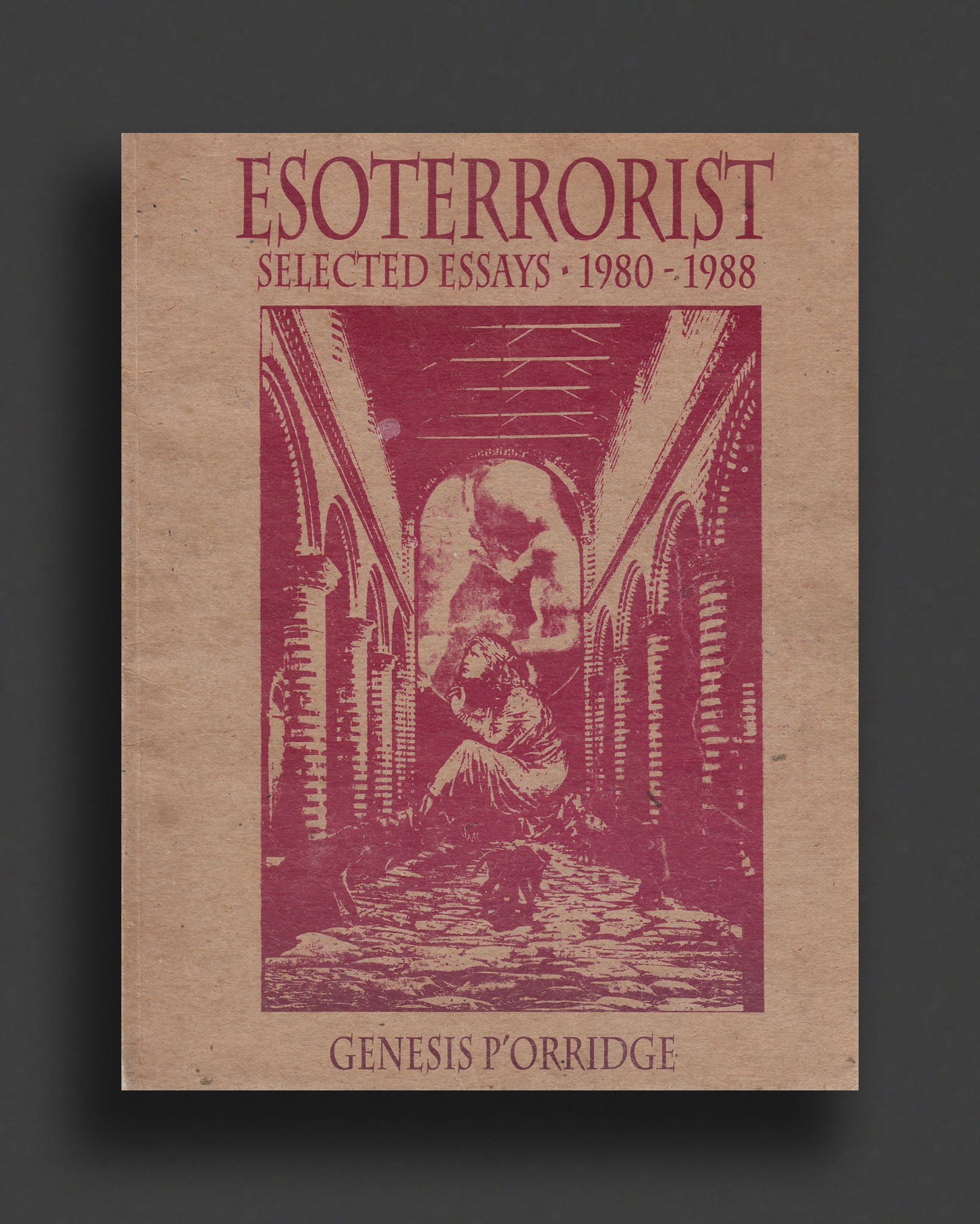
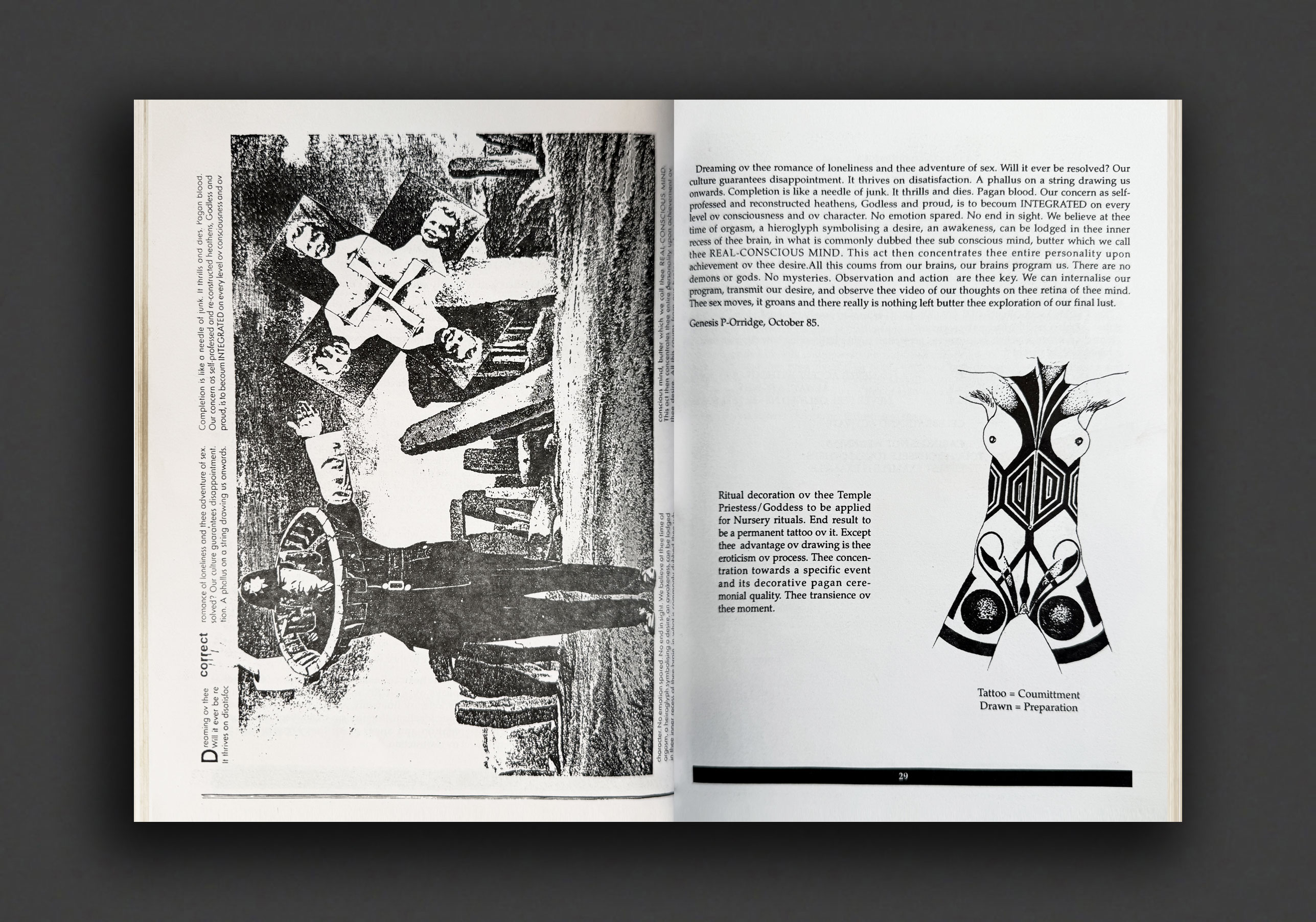
Very rare 1994 MediaKaos/Alecto Enterprises edition of Esoterrorist: Selected Essays 1980-1988 by Genesis P-Orridge, first published in 1989 by OV-Press in a limited edition of 500 copies. Thick screen-printed recycled cardboard covers. “The ideas of Genesis P-orridge, founder and spokesman of the legendary Throbbing Gristle and Psychic TV, are exposed for the first time. Genesis expands upon the theories on music, control, behavior, and the occult as introduced by the Temple ov Psychic Youth. No library of contemporary culture or the occult is complete without this revolutionary, revelationary work!”
Heavily illustrated throughout with Genesis' collage artworks and other illustrations.
"ESOTERRORIST is the product of one Brain's fascinating roller coaster ride along the fringes of culture and sexuality, a virtual mapping of the evolution of an ORIGINAL Cyber-Shaman. Genesis lets us assume that every "thing" is interconnected, interactive, interfaced and intercultural. His essays are all ways experimental, in that thee potential results are not a given, SPLINTERING consensual realities to TEST their substance utilising thee tools ov collision, collage, coumposition. decomposition, progression systéms, "random" chance, juxtaposition, cut-ups, hyperdelic vision and any other method available that melts linear conceptions and reveals holographic webs and fresh spaces. Genesis exposes control systems, explores the recesses of our psyches and leaps tall buildings in a single bound! Genesis uses X-ample to X-plain multi-faceted ideas, meditations, alternatives and processes that Individuals can use to X-termmate control. A "must read" for all trance/ dance/virtual/shamanic/multimedia/flux/tantrik/chaos/ processers, as well as everytwo else. I can think of no other contemporary book that packs more speculation per page. If you read only one book this year, make it this one and become an interactive particle in the ESOTERRORIST web so you WILL continue to exchange information instantaneously regardless of any separation in Time and Space. ESOTERRORIST is a living tome of contemptiorary, post-ritualised fundamentals whose words fuse into the very being ov the reader. Trans-form & Trans-gress within the fabric of ESOTERRORIST.
Joe Matheny; Timothy Leary; Genesis P-Orridge; Joe Rapoza.....?"
(from the back cover)
Good copy with general light tanning and handling wear and pinching creases to thick printed boards. Fragile binding on this edition but this copy all still nicely bound and no loose pages, which is rare.
2025, English
Softcover, 106 pages, 16.5 x 11.5 cm
Published by
David Kordansky Gallery / Los Angeles
$130.00 - In stock -
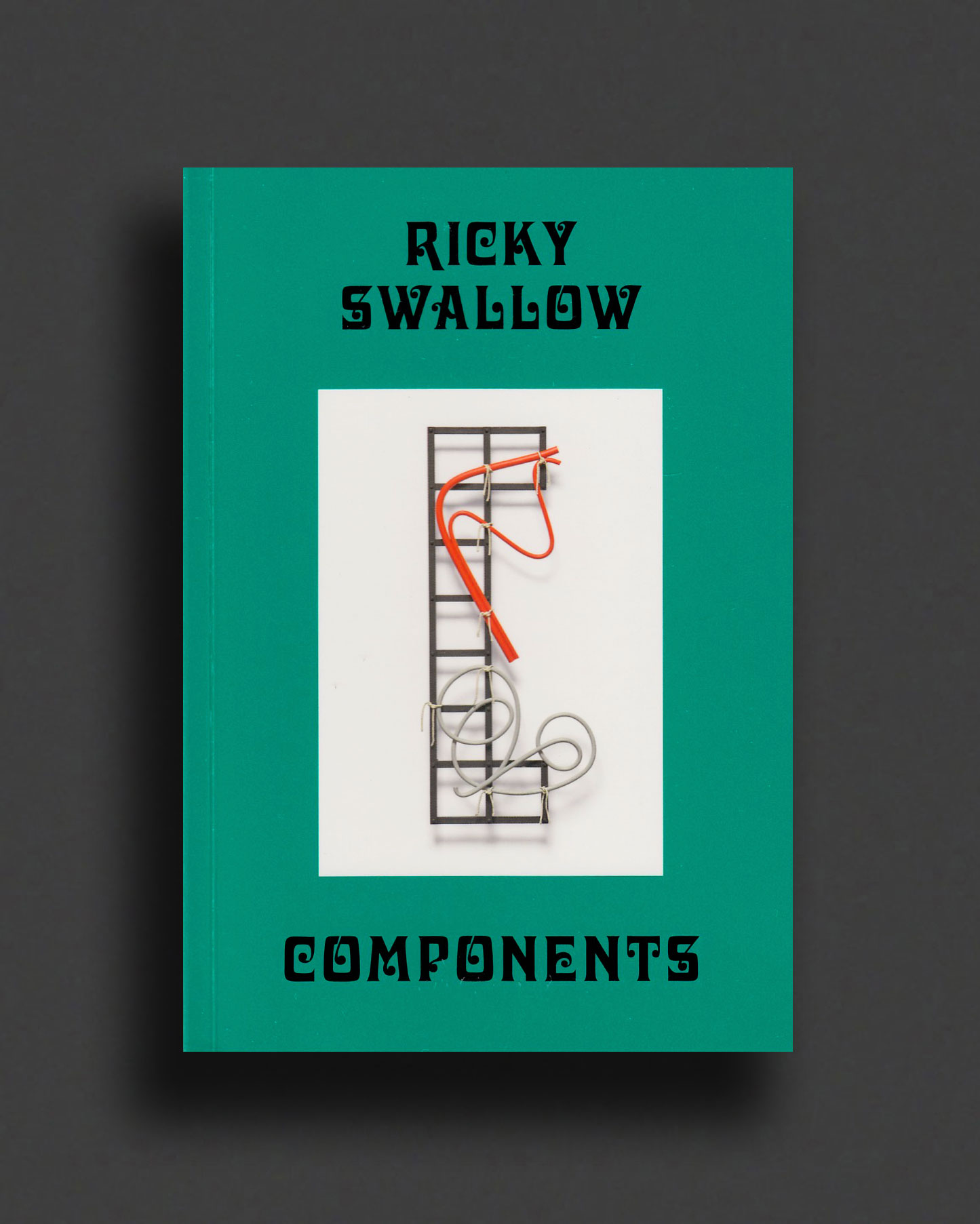
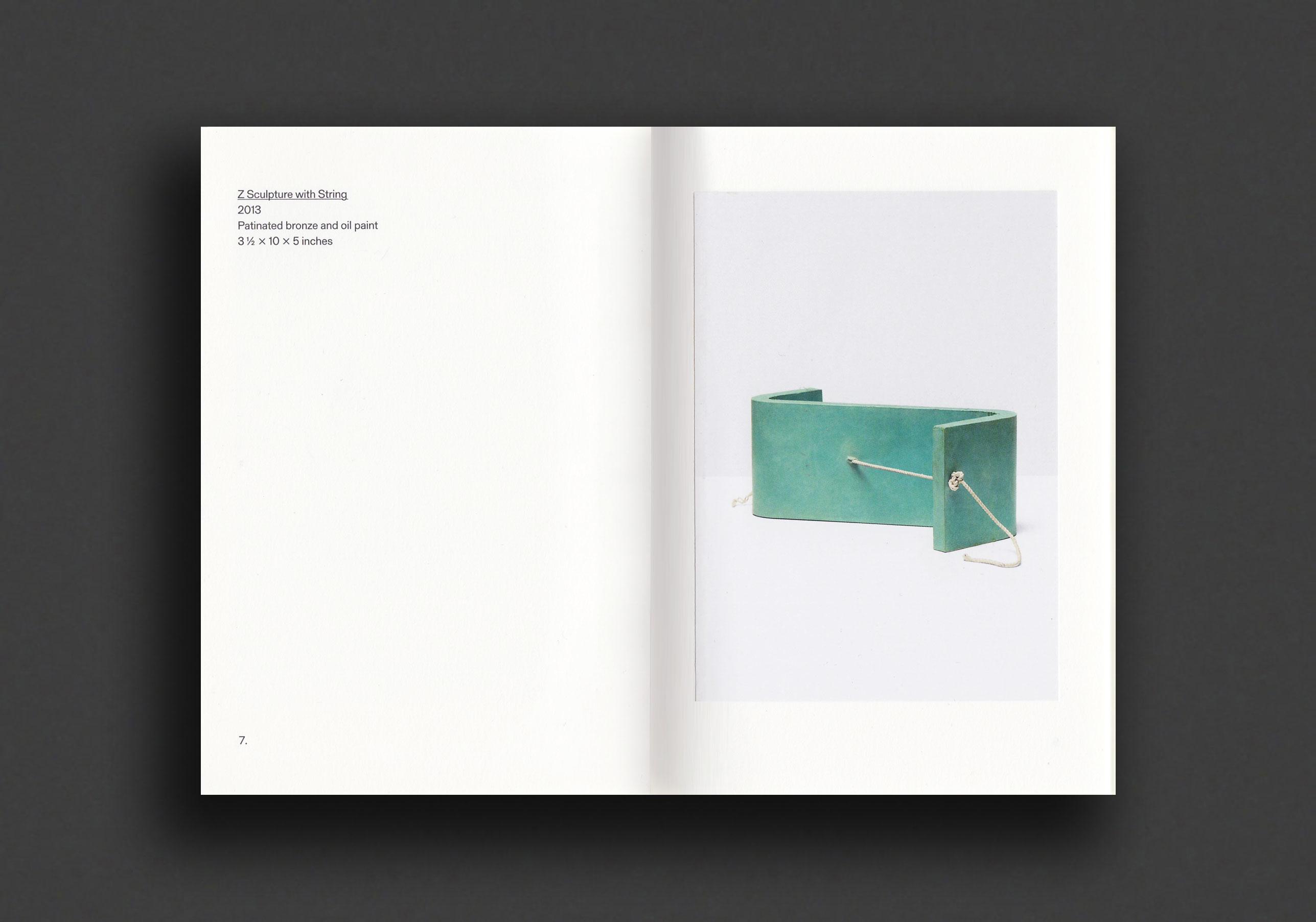
Published on the occasion of the 2024 exhibition Ricky Swallow: COMPONENTS at David Kordansky Gallery, New York. COMPONENTS includes eighteen tipped-in plates alongside rarely exhibited works on paper, an index of sculptural fragments, and an essay from Alex Bacon.
COMPONENTS is published by David Kordansky Gallery and designed by Purtill Family Business and Ricky Swallow.
1997, English
Softcover, 288 pages, 28 x 22 cm
1st Edition, Out of print title / used / very good
Published by
UNSW Press / Sydney
$140.00 - In stock -
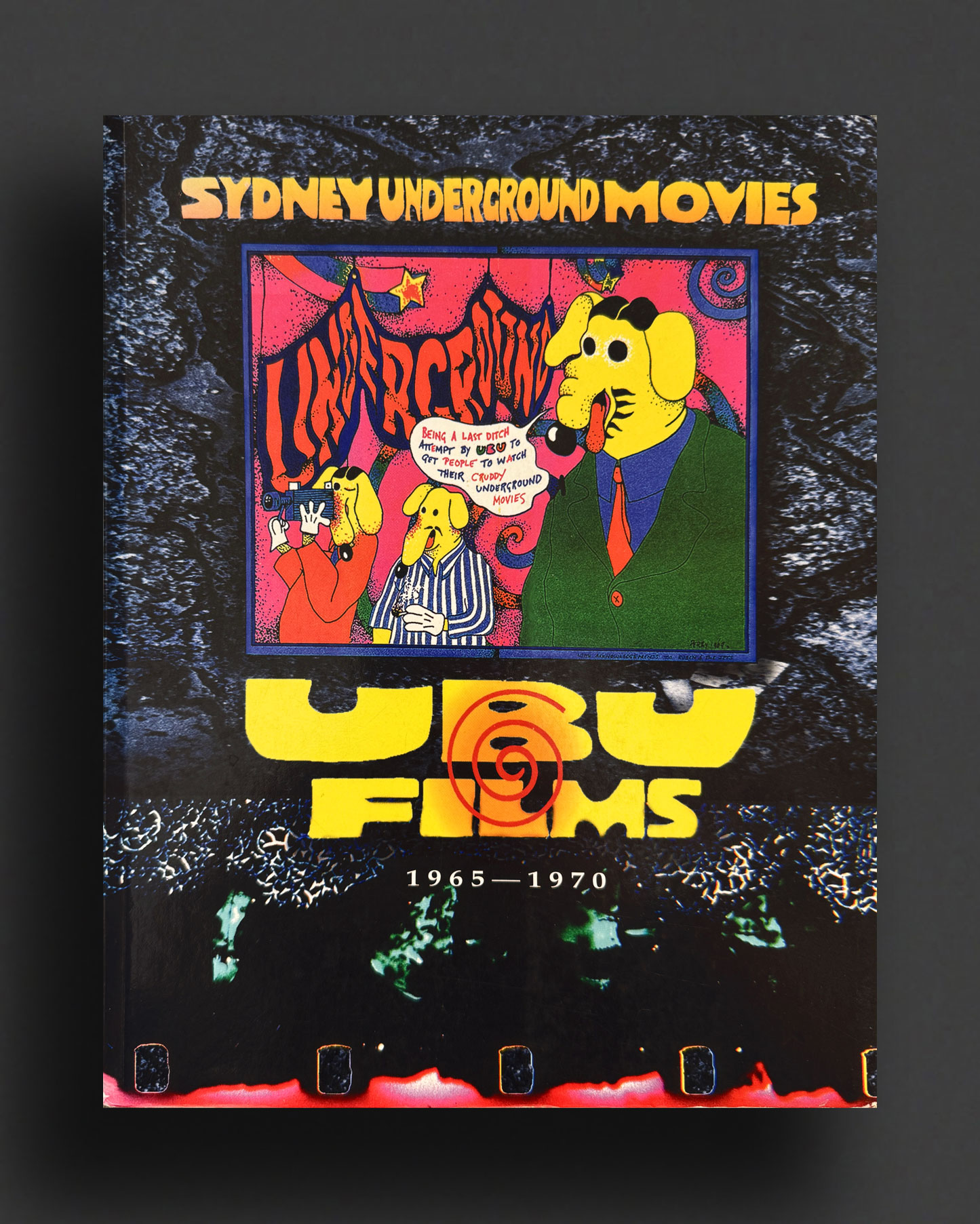
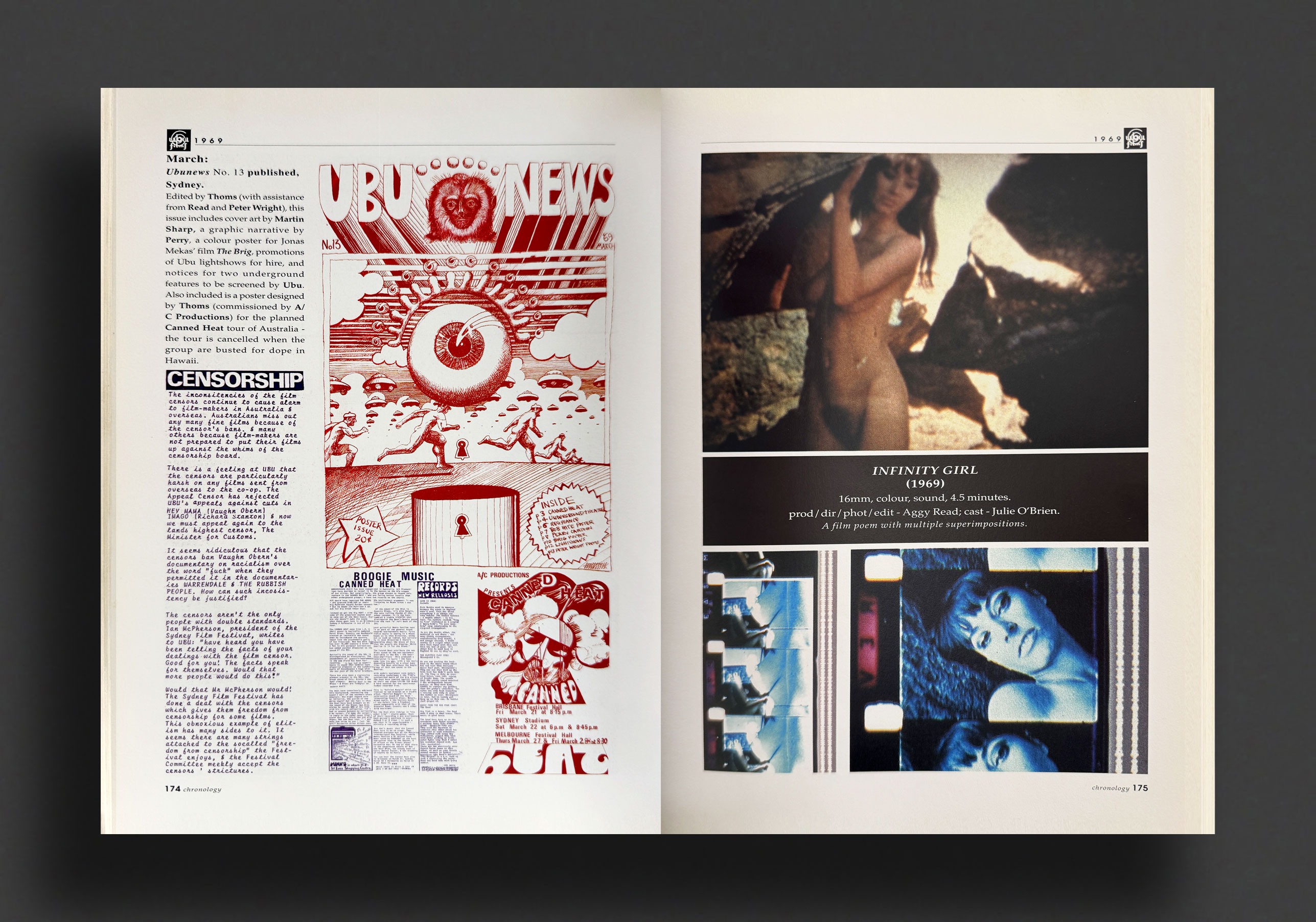
First and only edition of the book of the Ubu Films group. Formed by Albie Thoms, David Perry, Aggy Read and John Clark in Sydney 1965, it was Australia's first group devoted to making, exhibiting and distributing experimental films. Throughout the 1965-1970 period, Ubu produced Australia's first lightshows, published this country's first underground newspaper (Ubunews), and persistently advocated for the reform of censorship laws and the need for government support for the arts.
Flamboyant, controversial and resolutely independent, Ubu Films instigated an extensive network of Australia's underground activity at aa time when Australia's cultural and political landscape was in transition. For only a brief period, Ubu established a viable proposition that film, performance, painting and political action could coalesce into a vibrant interactive community. What follows is the story of its rise and fall.
Reproducing Ubu ephemera (posters, programmes, handbills, Ubunews articles and newspaper pages), countless newspaper and magazine articles, reviews and cartoons advocating and denouncing the many activities (film, performance, music, publishing, etc.) of Ubu, legal documents, behind the scenes photography, film-stills, biographies, film lists and intimate reflections - this amazing, visually-dense and informative chronological volume that is essential reading for anyone interested in Australia's history of underground film, but also for independent film-making in general.
Edited by Peter Mudie.
Peter Mudie is a Canadian born filmmaker, artist and academic. Previously a member of filmmaker cooperatives in London, Toronto and Vienna, he has exhibited his work in galleries and film festivals around the world since 1980. He has written a number of monographs on avant-garde and experimental film (including Dusting the Other; Albie Thoms and David Perry: Films/Dialogues; Below the Centre/ Unterhalb des Mittelpunkts; and Michael Snow: Filmworks). He has presented a number of international touring film exhibitions, in Australia and overseas ―― currently he lives in Perth and lectures in Fine Arts at the University of Western Australia.
Very Good copy.
1974, English
Softcover, 40 pages, 23 x 23 cm
1st Edition, Out of print title / used / very good
Published by
Philip Morris Arts Grant / Canberra
$45.00 - In stock -
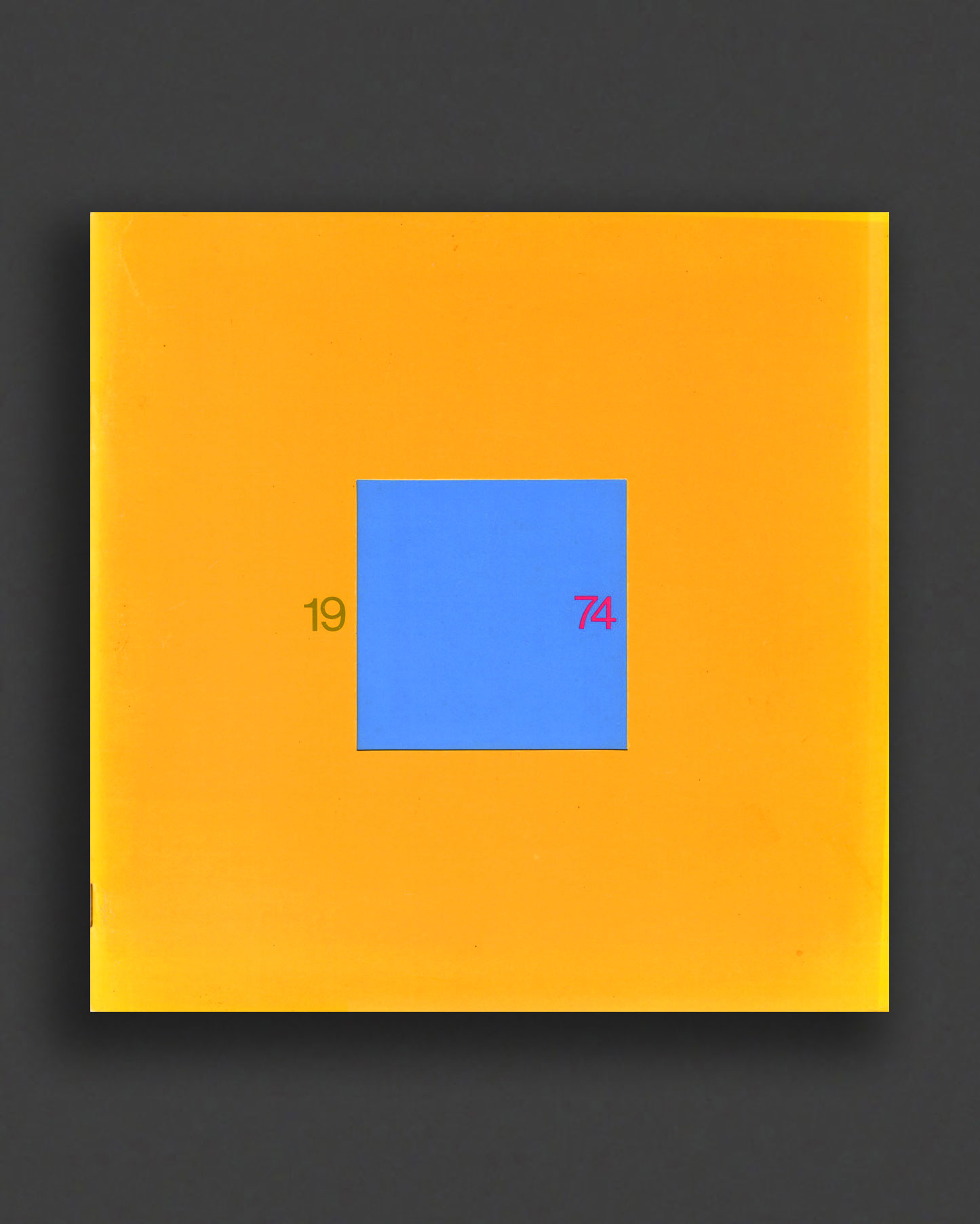
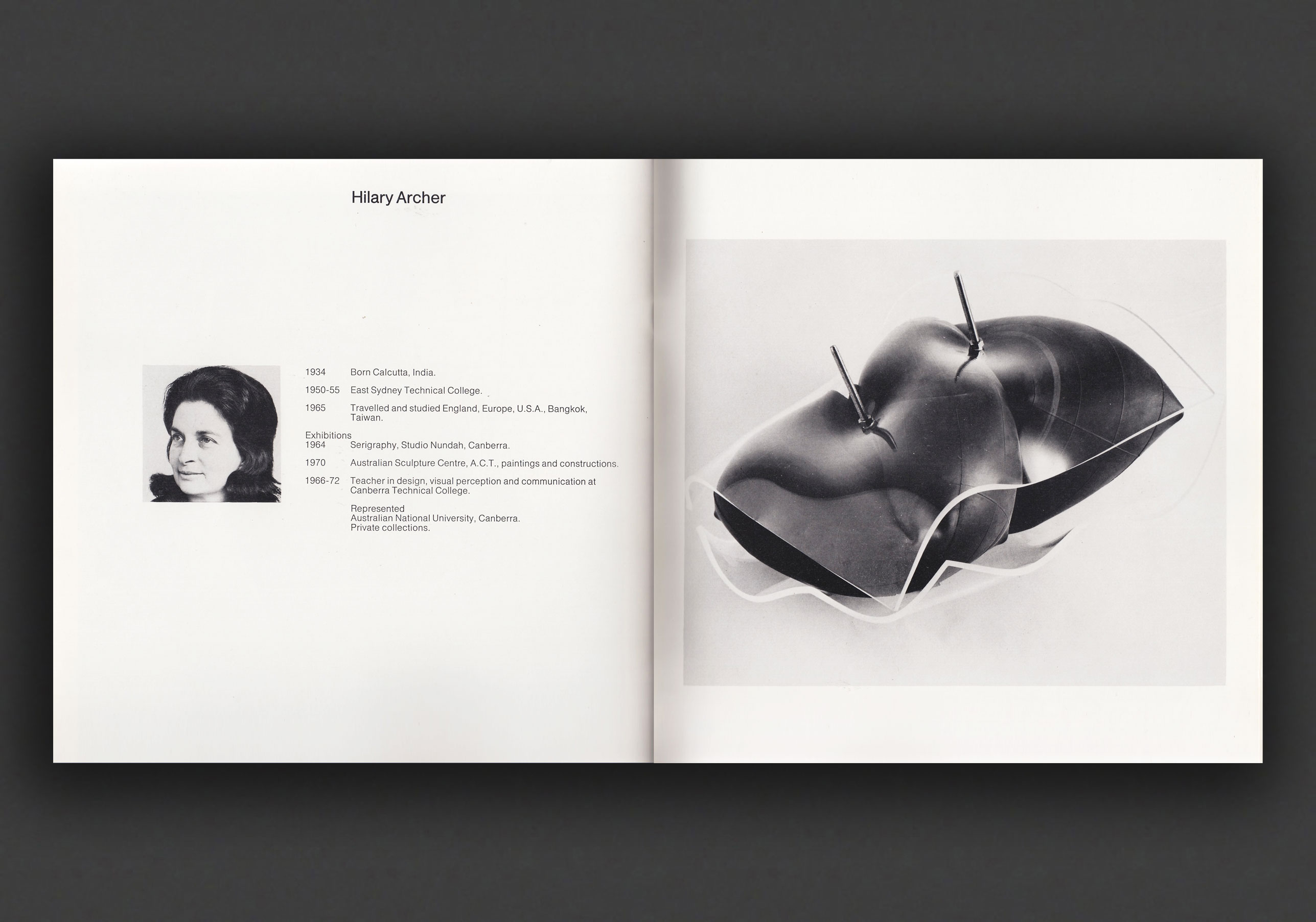
Rare 1974 Australian catalogue of artworks by the recipients of the first Philip Morris Arts Grant. With die-cut cover, the catalogue features early works by artists John Armstrong, David Aspden, Bush Video (commune), Virginia Cuppaidge, Aleks Danko, Margaret Dodd, Rod Dudley, Michael Johnson, Richard Larter, Ian McKay, Alan Oldfield, John Peart, Peter Powditch, Martin Sharp, Alberr Shomaly, Dick Watkins, David Wilson, and Hilary Archer, with accompanying bios and portraits.
Very Good copy, light edge tanning no spine pinching or die-cut damage.
1982, Japanese
Softcover (w. obi), 198 pages, 21.2 x 14.7 cm
1st Edition, Out of print title / used / very good
Published by
JICC Publishing Bureau / Japan
$200.00 - In stock -
Very rare copy of the 1982 Japanese-only LONDON BOOK, researched and photographed by Naoya Nakamura, published in Japan by JICC shuppan. Wrapped in bi-lingual cover adorned with Annabella Lwin of Bow Wow Wow, the London Book is a rare time capsule and guide-book of photographs and interviews (Derek Jarman, Anton Corbijin, Malcolm McLaren, etc.) covering the London post punk scene, divided in various essential categories — film, music, fashion, art, drugs, sex — introducing all the record stores, fashion boutiques, sex shops, night clubs, pubs, markets, cafes, magazines, etc. (Rough Trade, Club for Heroes, World's End, Frisco...) and snapping all the shop assistants, punters, protagonists and London youth, from Oxford Street, Hackney, Notting Hill.... Packed with clippings, archival artwork, advertising, behind the scene photographs (shop interiors, design studios...), maps and directories.
Very Good copy with light tanning/discolouration with rarely preserved publisher's obi (Good with some spine wear and fading)
1985, English
Softcover (w. paste-ins), 224 pages, 21 x 15 cm
1st Edition, Out of print title / used / very good
Published by
Atlas Press / London
$100.00 - In stock -
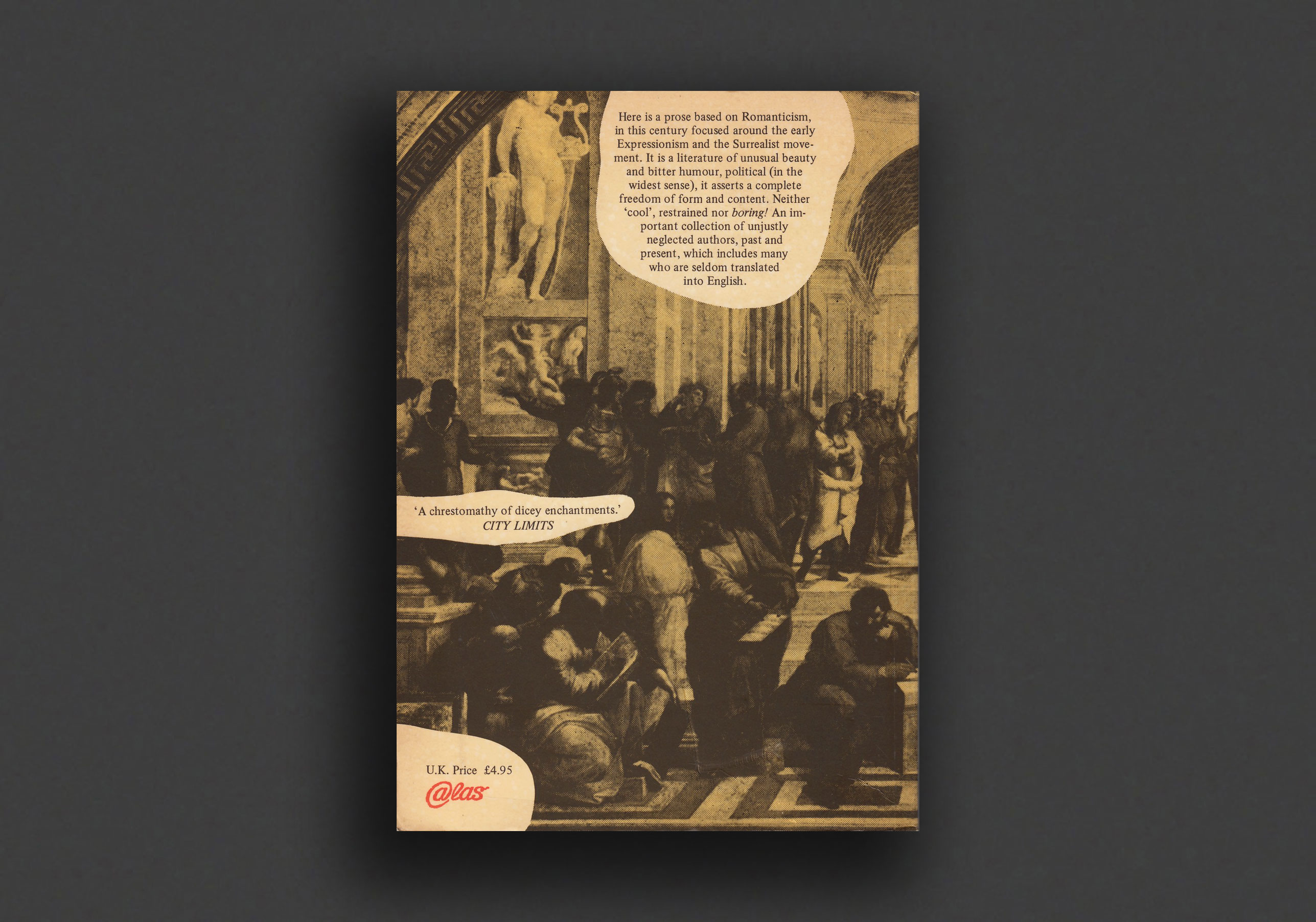
"A chrestomathy of dicey enchantments.'—CITY LIMITS
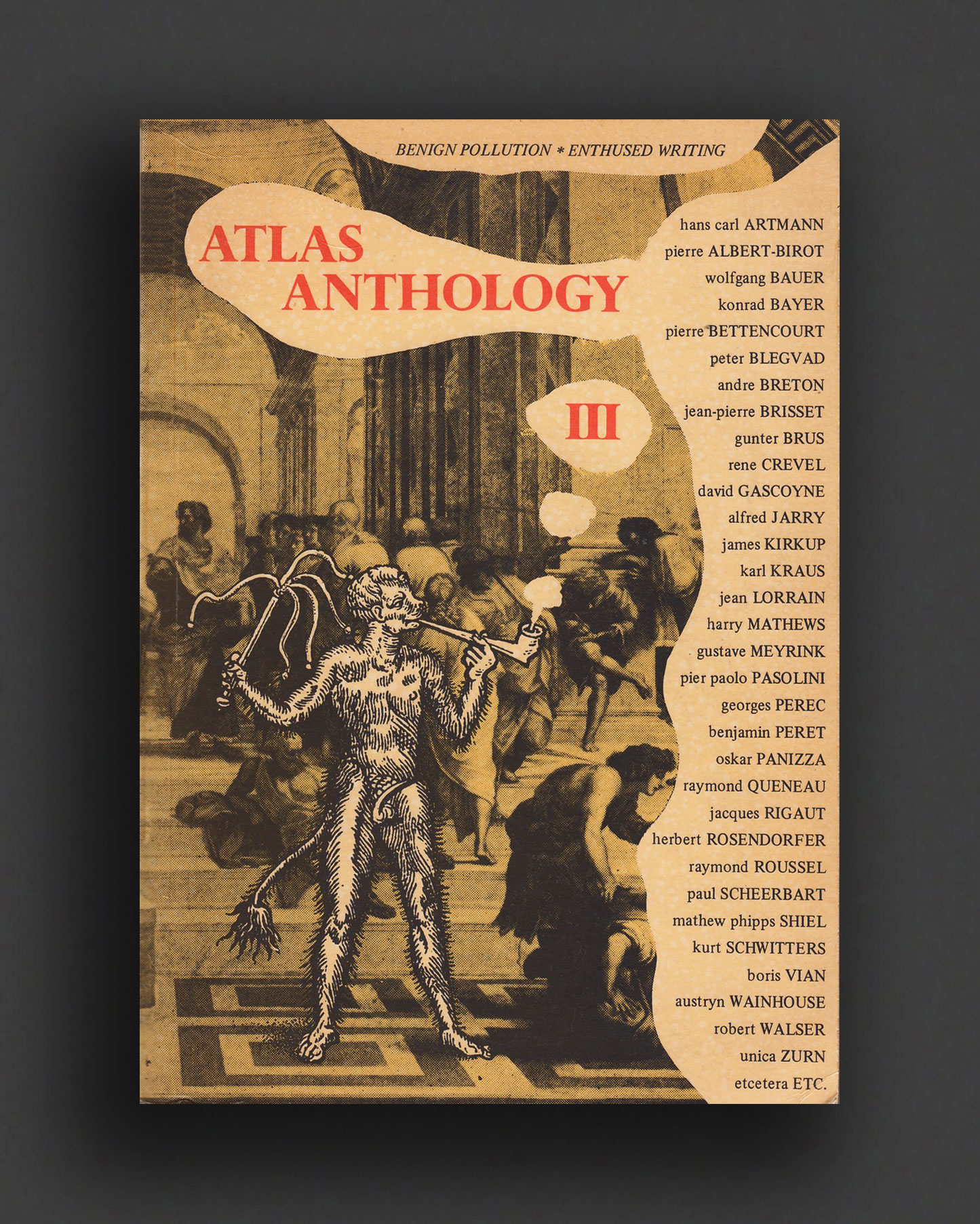
Now rare, long out-of-print 1985 Atlas Anthology 3, edited by Alastair Brotchie & Malcolm Green. "Benign Pollution, Enthused Writing". The third production from the legendary Atlas Press, the third general anthology and the first book to be actually typeset (a very expensive business in those days).
Features: Hans Carl Artmann, Pierre Albert-Birot, Wolfgang Bauer, Konrad Bayer, Pierre Bettencourt, Peter Blegvad, Andre Breton, Jean-Pierre Brisset, Günter Brus, René Crevel, David Gascoyne, Alfred Jarry, James Kirkup, Karl Kraus, Jean Lorrain, Harry Mathews, Gustave Meyrink, Pier Paolo Pasolini, Georges Perec, Benjamin Peret, Oskar Panizza, Raymond Queneau, Jacques Rigaut, Herbert Rosendorfer, Raymond Roussel, Paul Scheerbart, Mathew Phipps Shiel, Kurt Schwitters, Boris Vian, Austryn Wainhouse, Robert Walser, Unica Zürn, Etcetera Etc.
"Here is a prose based on Romanticism, in this century focused around the early Expressionism and the Surrealist movement. It is a literature of unusual beauty and bitter humour, political (in the widest sense), it asserts a complete freedom of form and content. Neither 'cool', restrained nor boring! An important collection of unjustly neglected authors, past and present, which includes many who are seldom translated into English."
Highest recommendation.
Good—Very Good copy complete with all the paste-ins. General wear and tanning.
2024, English
Softcover, 176 pages, 21.4 x 14.6 xcm
Published by
The New York Review of Books / New York
$38.00 $22.00 - In stock -
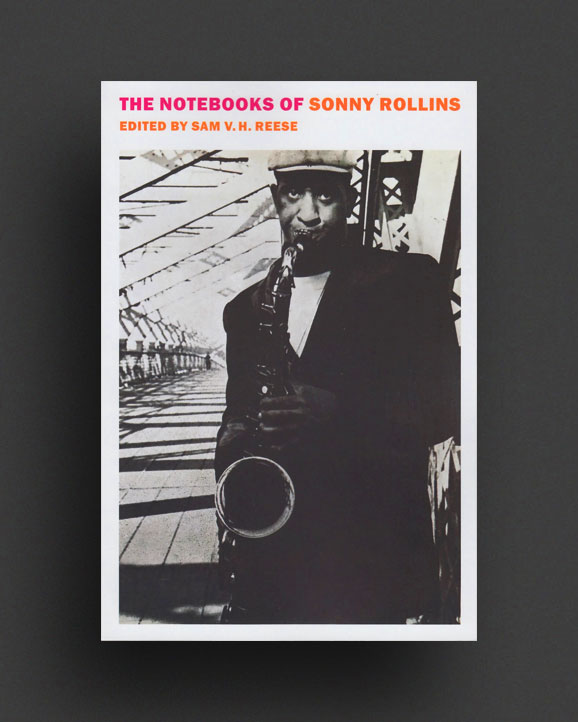
An illuminating selection of writings on a wide variety of topics—everything from technique, music theory, and daily routine to spirituality and systemic racism—from the personal journals of Sonny Rollins, master of the tenor saxophone and "jazz's greatest living improviser" (The New York Times).
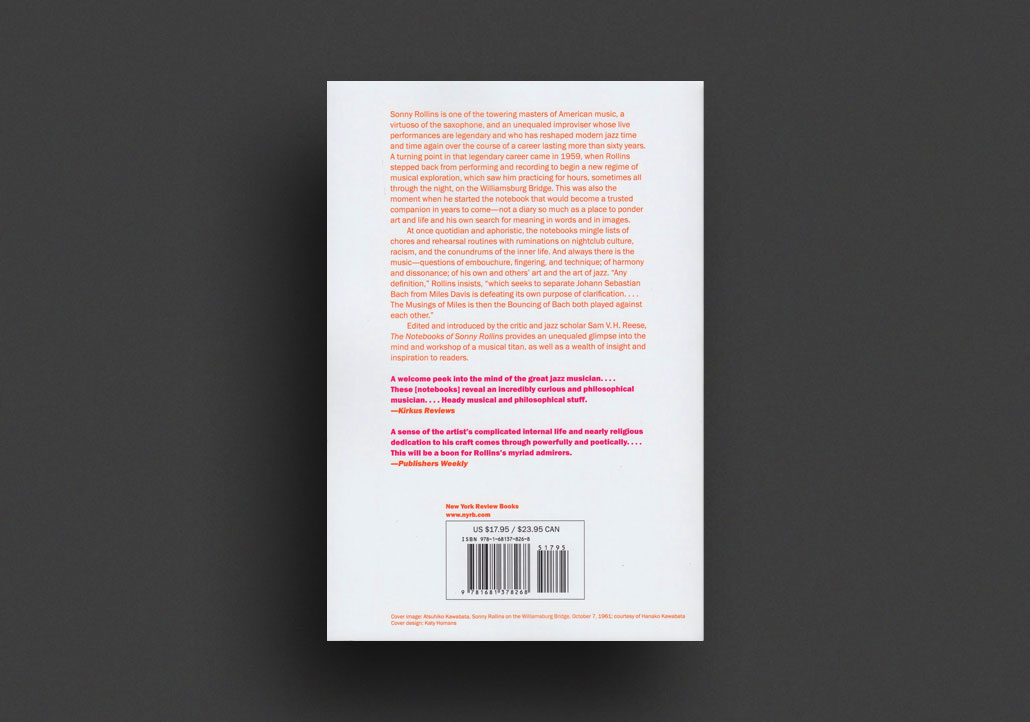
Sonny Rollins is one of the towering masters of American music, a virtuoso of the saxophone, and an unequaled improviser whose live performances are legendary and who has reshaped modern jazz time and time again over the course of a career lasting more than sixty years. A turning point in that legendary career came in 1959, when Rollins stepped back from performing and recording to begin a new regime of musical exploration, which saw him practicing for hours, sometimes all through the night, on the Williamsburg Bridge. This was also the moment when he started the notebook that would become a trusted companion in years to come-not a diary so much as a place to ponder art and life and his own search for meaning in words and in images.
At once quotidian and aphoristic, the notebooks mingle lists of chores and rehearsal routines with ruminations on nightclub culture, racism, and the conundrums of the inner life. And always there is the music-questions of embouchure, fingering, and technique; of harmony and dissonance; of his own and others' art and the art of jazz. "Any definition," Rollins insists, "which seeks to separate Johann Sebastian Bach from Miles Davis is defeating its own purpose of clarification. . . .The Musings of Miles is then the Bouncing of Bach both played against each other."
Edited and introduced by the critic and jazz scholar Sam V.H. Reese, The Notebooks of Sonny Rollins provides an unequaled glimpse into the mind and workshop of a musical titan, as well as a wealth of insight and inspiration to readers.
2009, English
Hardcover, 550 pages, 22 x 28 cm
1st Edition, Out of print title / used / very good
Published by
The MIT Press / Massachusetts
$420.00 - Out of stock
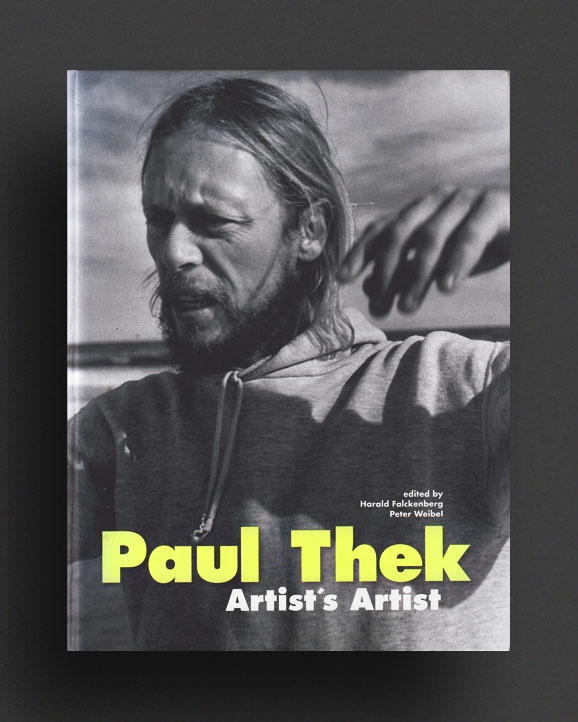
First edition of the scarce, highly sought after, and most comprehensive book ever published on American artist Paul Thek, published in 2009 by MIT Press. Edited by Harald Falckenberg and Peter Weibel, this enormous 550 page monograph contains more than 300 works by this groundbreaking artist, documenting his journey from legendary outsider to central figure in many contemporary art movements.
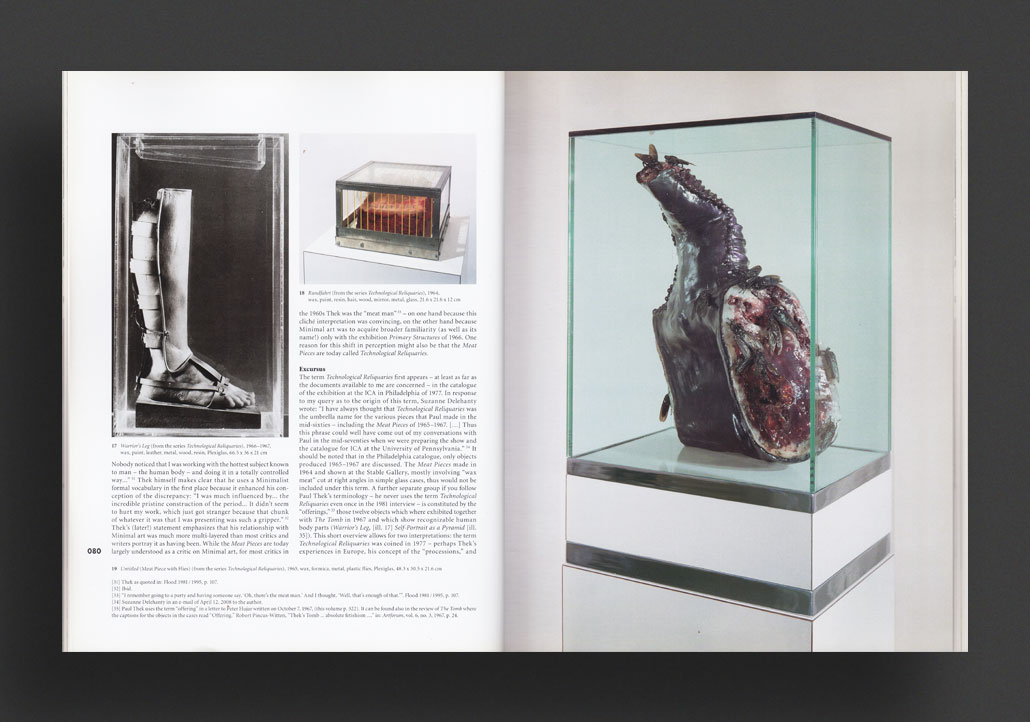
Paul Thek occupied a place between high art and low art, between the epic and the everyday. During his brief life (1933-1988), he went against the grain of art world trends, humanizing the institutional spaces of art with the force of his humor, spirituality, and character. Twenty years after Thek's death from AIDS, we can now recognize his influence on contemporary artists ranging from Vito Acconci and Bruce Nauman to Matthew Barney, Mike Kelley, and Paul McCarthy, as well as Kai Althoff, Jonathan Meese, and Thomas Hirschhorn. This book brings together more than 300 of Thek's works—many of which are published here for the first time—to offer the most comprehensive display of his work yet seen. The book, which accompanies an exhibition at ZKM ? Museum of Contemporary Art presenting Thek's work in dialogue with contemporary art by young artists, includes painting, sculpture, drawing, and installation work, as well as photographs documenting the room-size environments into which Thek incorporated elements from art, literature, theater, and religion. These works chart Thek's journey from legendary outsider to foundational figure in contemporary art. In their antiheroic diversity, Thek's works embody the art revolution of the 1960s; indeed, Susan Sontag dedicated her classic Against Interpretation to him. Thek's treatment of the body in such works as “Technological Reliquaries,” with their castings and replicas of human body parts, tissue, and bones, both evoke the aura of Christian relics and anticipate the work of Damien Hirst. The book, with more than 500 images (300 in colour) and nineteen essays by art historians, curators, collectors, and artists, investigates Thek's work on its own terms, and as a starting point for understanding the work of the many younger artists Thek has influenced.
Essays by Jean-Christophe Ammann, Margrit Brehm, Bazon Brock, Suzanne Delehanty, Harald Falckenberg, Marietta Franke, Stefan Germer, Kim Gordon, Roland Groenenboom, Axel Heil, Gregor Jansen, Mike Kelley, John Miller, Susanne Neubauer, Kenny Schachter, Harald Szeemann, Annette Tietenberg, Peter Weibel, Ann Wilson.
Very Good copy.
1989, English
Softcover, 32 pages, 19 x 14 cm
1st Edition, Out of print title / used / very good
Published by
The Arts Club of Chicago / Chicago
$140.00 - Out of stock
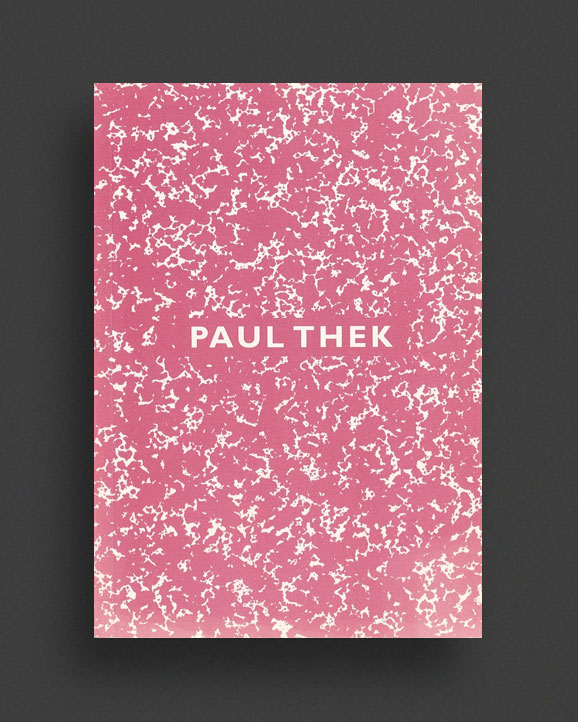
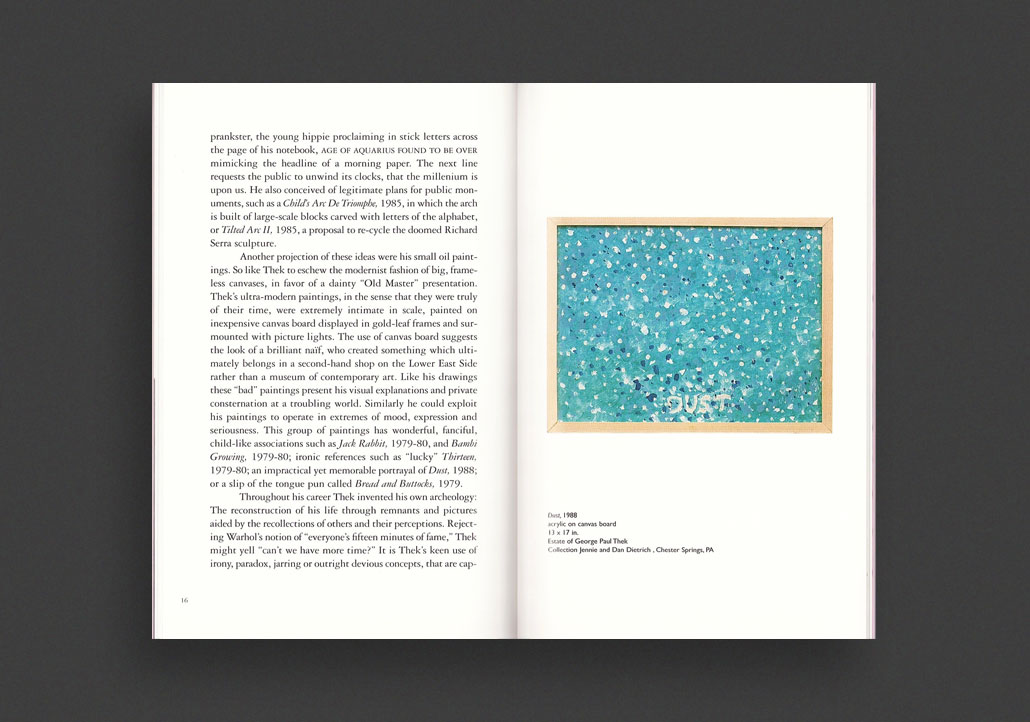
Seldom seen, rare exhibition catalogue, Paintings, Works on Paper and Notebooks 1970—1988, published in conjunction with the exhibition at The Arts Club of Chicago, December 3 1998—January 23 1999. Illustrated throughout in colour and b/w with essays by Kathy Cottong and Michael Klein. Also contains extensive chronology of Thek's life. This archive copy includes an inserted multi-page, stapled gallery press-release, plus a review clipping from the Chicago Reader of the exhibition.
VG—Near Fine copy.
2024, English
Softcover (ringbound, in box), 32 pages, 33 x 25.4 cm
Ed. of 1000,
Published by
American Art Catalogues / USA
$99.00 - Out of stock
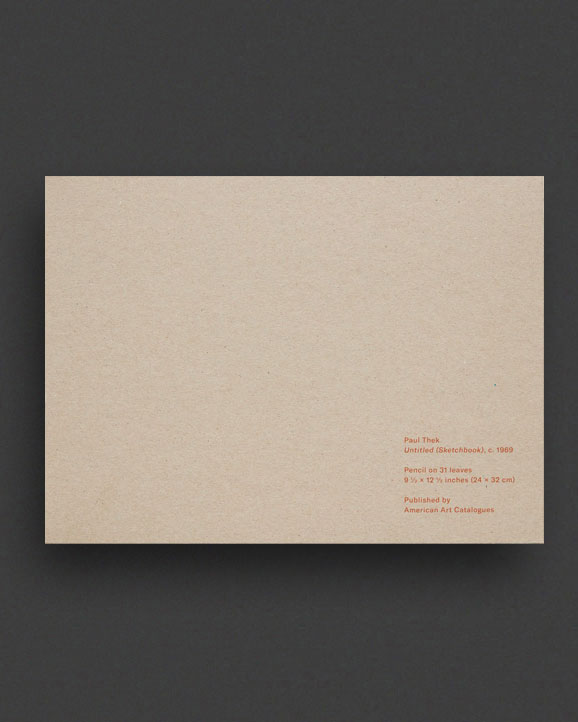
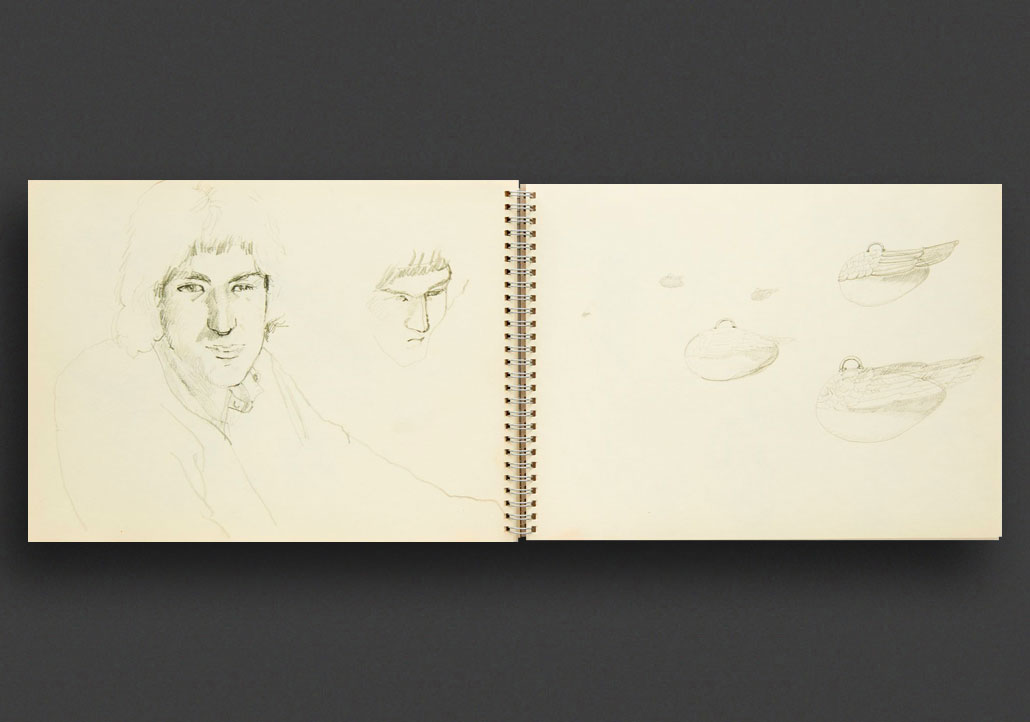
American Art Catalogues presents Paul Thek: Untitled Sketchbook, a facsimile of a notebook from 1969 in which Thek, during his too-brief lifetime, sketched, scribbled, and simmered images and ideas. Featuring thirty-one drawings that have never before been shown publicly, the book is filled with searching self-portraits, likely sketched in a mirror as an act of self-reflection. (“No one has ever interested me quite as much as myself,” he once wrote.) Nearby pages feature images of Christ wearing a crown of thorns alongside strange still lifes: of a crucifix lying next to an empty ashtray, of a mushroom growing what looks like a corkscrew tail, and other of his visions.
Born in Brooklyn, New York, in 1933, Thek first gained attention in the 1960s. His pathbreaking installations, performances, and paintings addressed the body and mortality, which feel in hindsight hauntingly prescient of his death in 1988 at the age of fifty-four of AIDS.“I sometimes think that there is nothing but time,” he said, “that what you see and what you feel is what time looks like at that moment”—which may explain why his art remains so potent here in the present.
Paul Thek (1933–1988) was an artist, sculptor, and one of the first artists to work on large scale environments. Although based in New York for most of his life, he spent a significant part of the 1970s in Europe, where he made theatrical installations in collaboration with other artists. He has been the subject of major exhibitions across the globe including at the ZKM | Center for Art and Media, Karlsruhe; the Sammlung Falckenberg, Hamburg; the Museo Nacional Centro de Arte Reina Sofia, Madrid; the Whitney Museum of American Art, New York; the Institute of Contemporary Art, Philadelphia; the Los Angeles County Museum of Art, and others. Thek's estate is represented by Pace Gallery, Galerie Buchholz, and Mai 36 Galerie.
First Edition of 1,000 Copies
2022, English
Hardcover, 352 pages, 20.3 x 14 cm
Published by
The Visible Press / London
$65.00 - In stock -
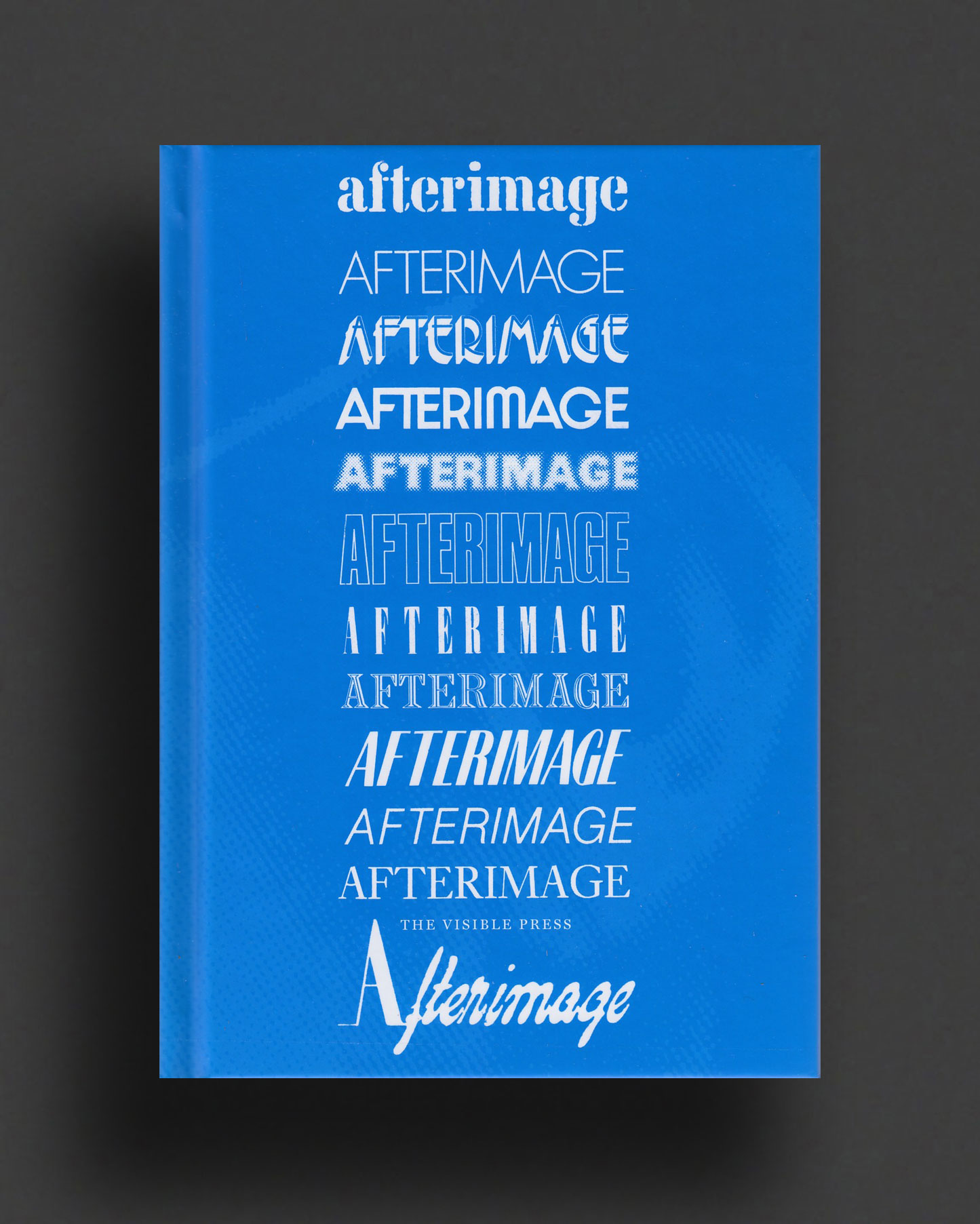
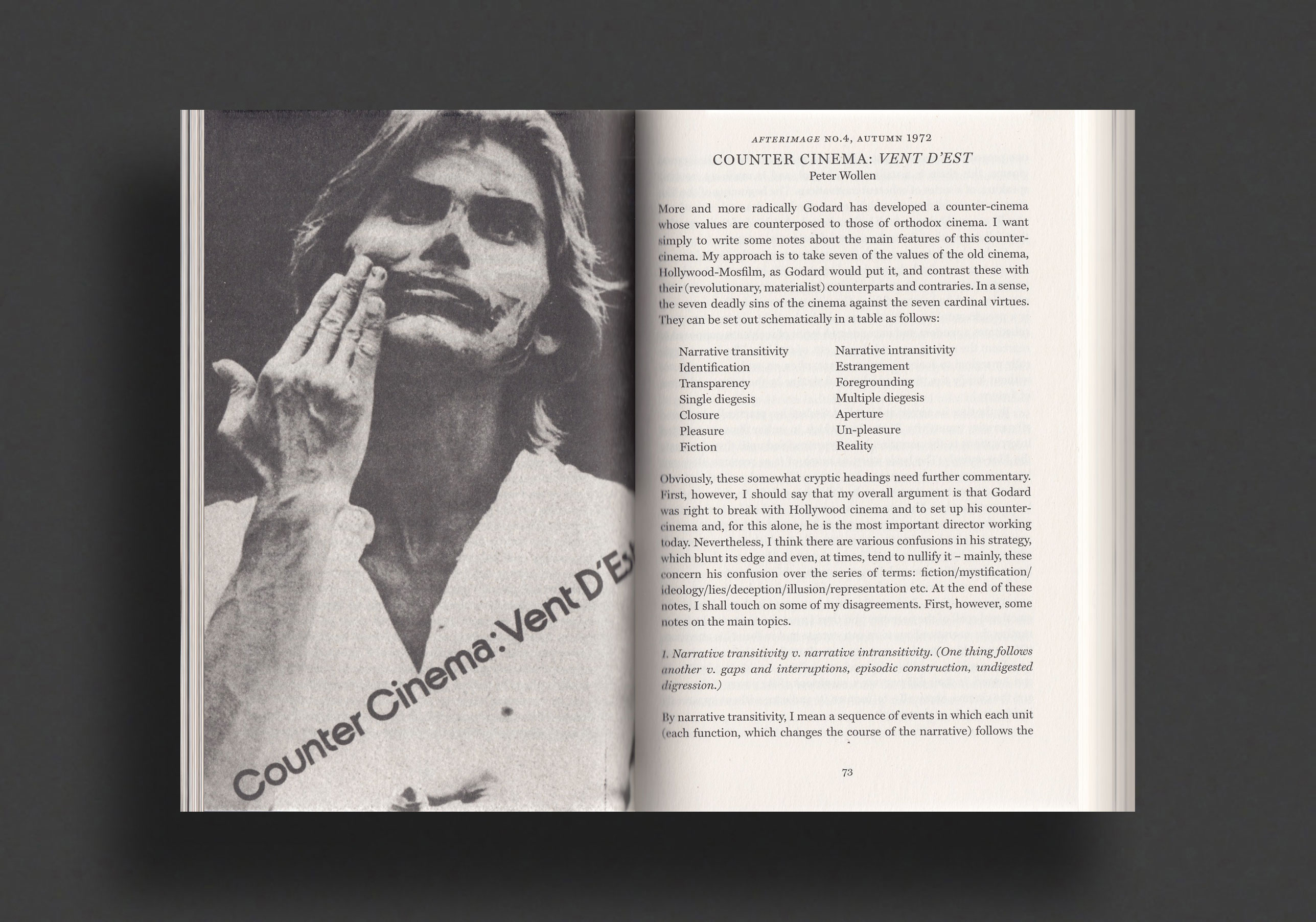
The independent British film journal Afterimage published thirteen issues between 1970 and 1987. International in scope, it surveyed the many forms of radical cinema during an extraordinary period of film history. Having emerged in the wake of post-1968 cultural and political change, Afterimage charted contemporary developments with special issues on themes such as the avant-garde, Latin American cinema and visionary animation, and also looked back at early film pioneers. It published many of the leading critics of the period and vitally provided a forum for filmmakers’ writings and manifestos.
This indispensable collection includes texts by scholars Noël Burch, Roger Cardinal, B. Ruby Rich and Peter Wollen, filmmakers Jean Epstein, Jean-Luc Godard, Derek Jarman and Jan Švankmajer, plus extended interviews with Hollis Frampton and Raúl Ruiz, and more.
The Afterimage Reader is edited by Mark Webber and features new contributions from two of the journal’s editors, Simon Field and Ian Christie.
1907, English
Hardcvoer (leatherbound, gilded), 354 pages, 15.5 x 10 cm
Out of print title / used / good
Published by
George Allen / London
$25.00 - Out of stock
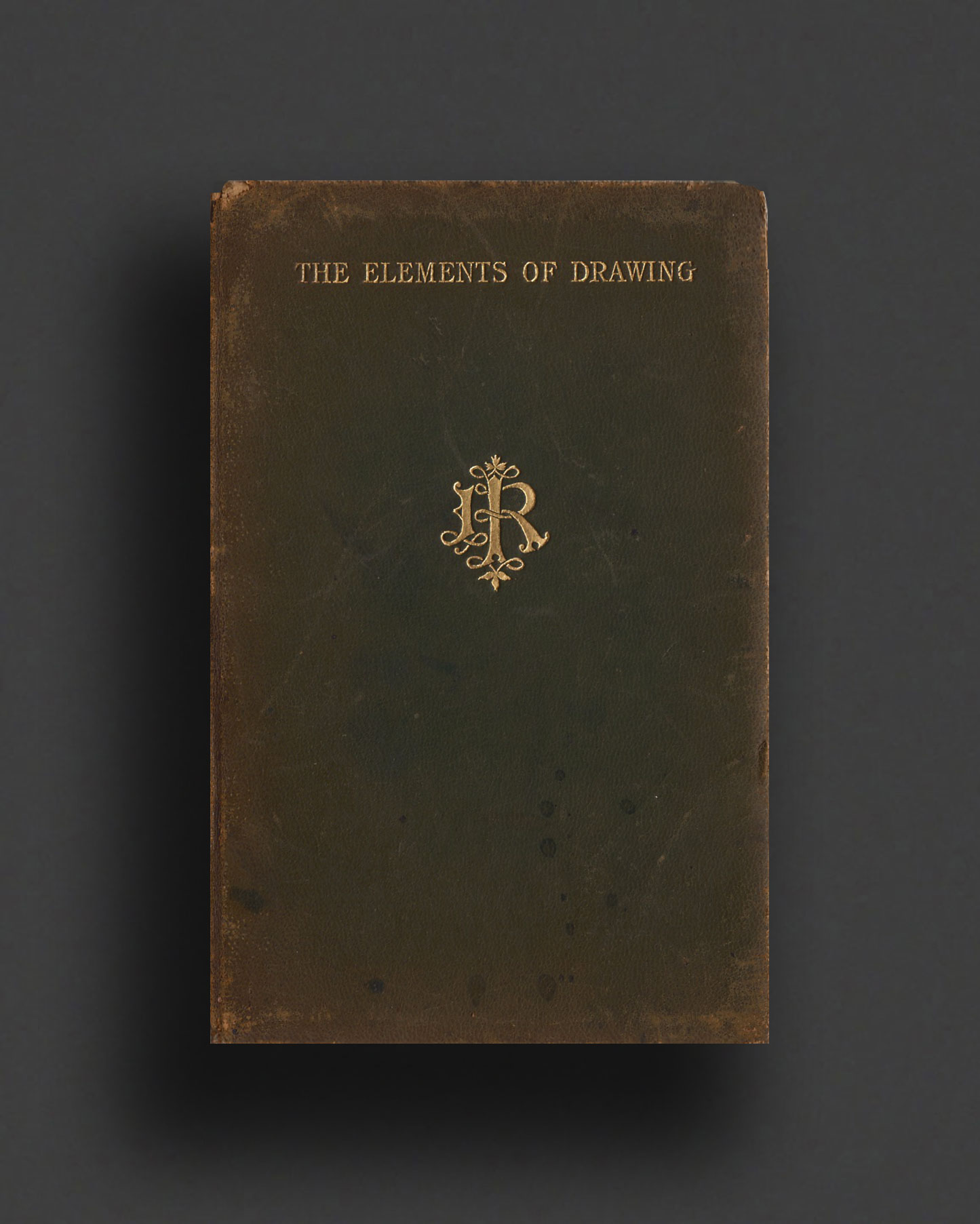
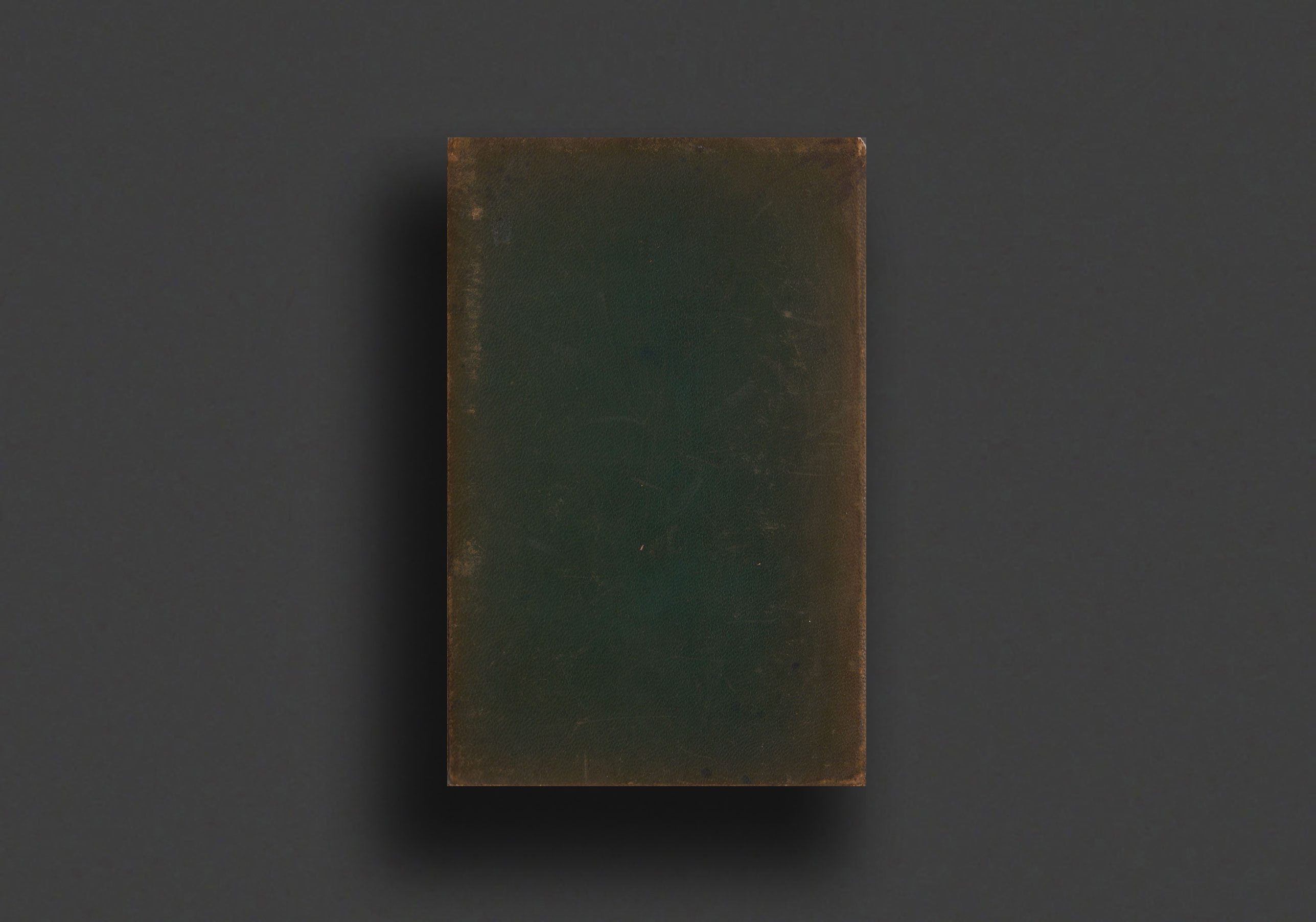
Lovely green leather-bound 1907 hardcover edition of John Rushkin's classic "The Elements of Drawing", published by George Allen, London. Written during the winter of 1856, the First Edition was published in 1857. ""The Elements of Drawing" has never been completely superseded, and as many readers of Mr. Ruskin's works have expressed a desire to possess the book in its old form, it is now reprinted as it stood in 1859, [with the additions and slight alterations from the first edition], and with the addition of an Index."
Can drawing — sound, honest representation of the world as the eye sees it, not tricks with the pencil or a few "effects" — be learned from a book? One of the most gifted draftsmen, who is also one of the greatest art critics and theorists of all time, answers that question with a decided "Yes." He is John Ruskin, the author of this book, a classic in art education as well as a highly effective text for the student and amateur today.
The work is in three parts, cast in the form of letters to a student, successively covering "First Practice," "Sketching from Nature," and "Colour and Composition." Starting with the bare fundamentals (what kind of drawing pen to buy; shading a square evenly), and using the extremely practical method of exercises which the student performs from the very first, Ruskin instructs, advises, guides, counsels, and anticipates problems with sensitivity. The exercises become more difficult, developing greater and greater skills until Ruskin feels his reader is ready for watercolors and finally composition, which he treats in detail as to the laws of principality, repetition, continuity, curvature, radiation, contrast, interchange, consistency, and harmony. All along the way, Ruskin explains, in plain, clear language, the artistic and craftsmanlike reasons behind his practical advice — underlying which, of course, is Ruskin's brilliant philosophy of honest, naturally observed art which has so much affected our aesthetic.
Illustrated by the author.
Average copy with tanning to edges/spine, wear to extremities, some foxing, toned pages. Binding still sound with ribbon present.
1995/2002, Japanese
Softcover (w. dust jacket and obi), 164 pages, 30 x 21 cm
1st Edition, Out of print title / used / very good
Published by
Treville / Tokyo
$300.00 - Out of stock
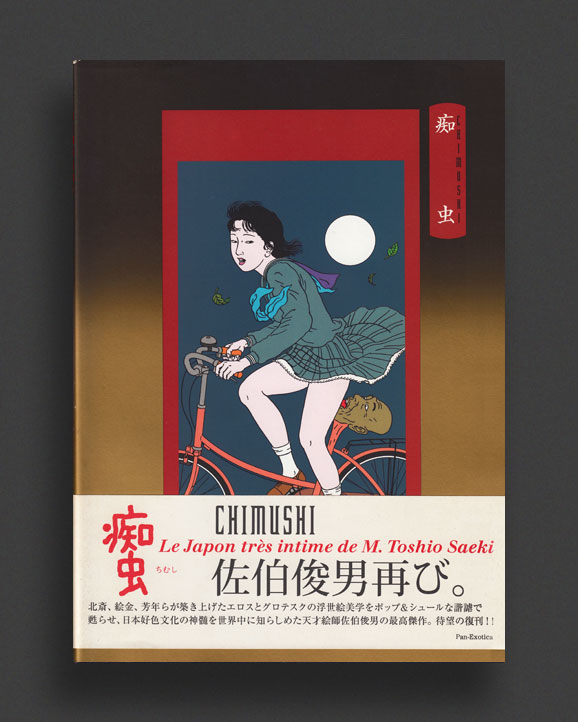
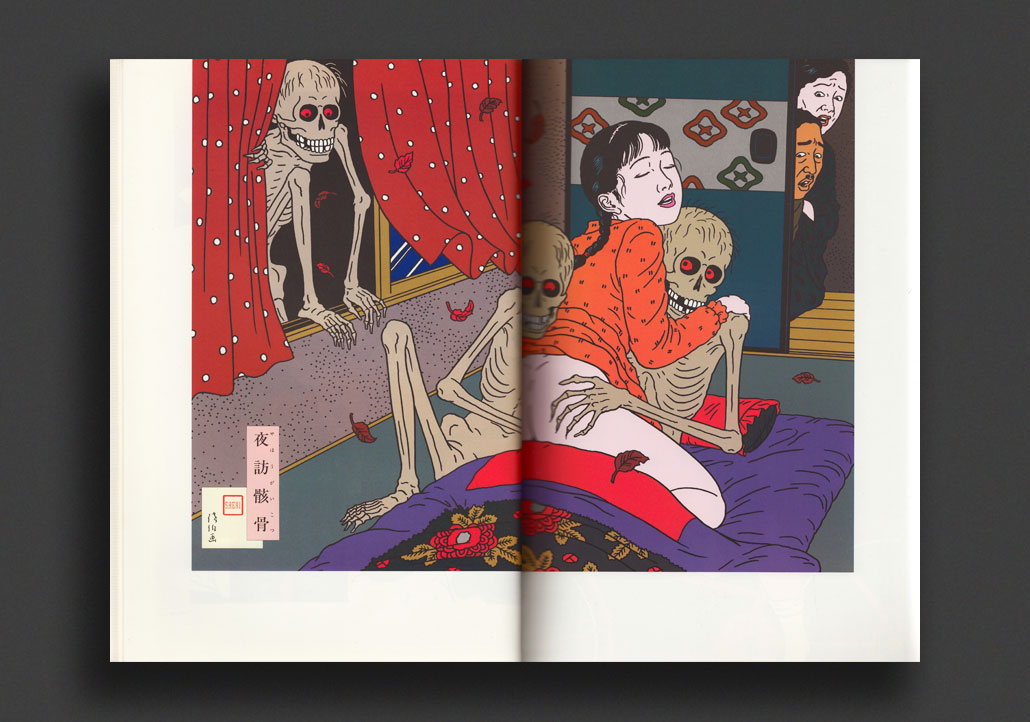
His erotic masterpiece, "Chimushi" is the first comprehensive collection of Toshio Saeki's erotic nightmare artwork, published in 1995 by Treville, only available in Japan, and now very collectible in every edition. One of his most popular books, and certainly his most demented and sexually graphic, each page of Chimushi sees every darkest sexual depravity rendered in vibrant, explicit colour by the unmistakable hand of Saeki, all impeccably printed in Japan by Treville Editions, here in the 2002 softcover edition. Although almost entirely packed with full-page and double-page artworks, the book includes a biography and several articles on Toshi Saeki in Japanese.
Toshio Saeki (1945—2019) was an illusive Japanese illustrator and painter, and icon of 1970s Tokyo counterculture, known for combining Japanese folklore, Yōkai spirits and elements of Western art with his own sophisticated aesthetics to create a unique, sensational world of eros, dark humour, and horror. Given the title “Erotic Engineer” by Timothy Leary, Saeki's provocative art broke all sexual taboos, questioned Japanese ideology and traditional views on love, desire and gender roles. Saeki’s surgically-precise graphic work is closely related to the Japanese cultural phenomenon ‘Erotic, Grotesque, Nonsense’ (ero, guro, nansensu).
“Toshio Saeki conjures death with a pen”—Shūji Terayama, 1969.
Very Good—Near Fine copy, with only the lightest wear to cover extremities. With Near Fine obi and publisher's edition catalogue insert.
1987, English
Softcover, 144 pages, 23 x 16.5 cm
1st Edition, Out of print title / used / good
Published by
Coracle Press / London
$35.00 - Out of stock
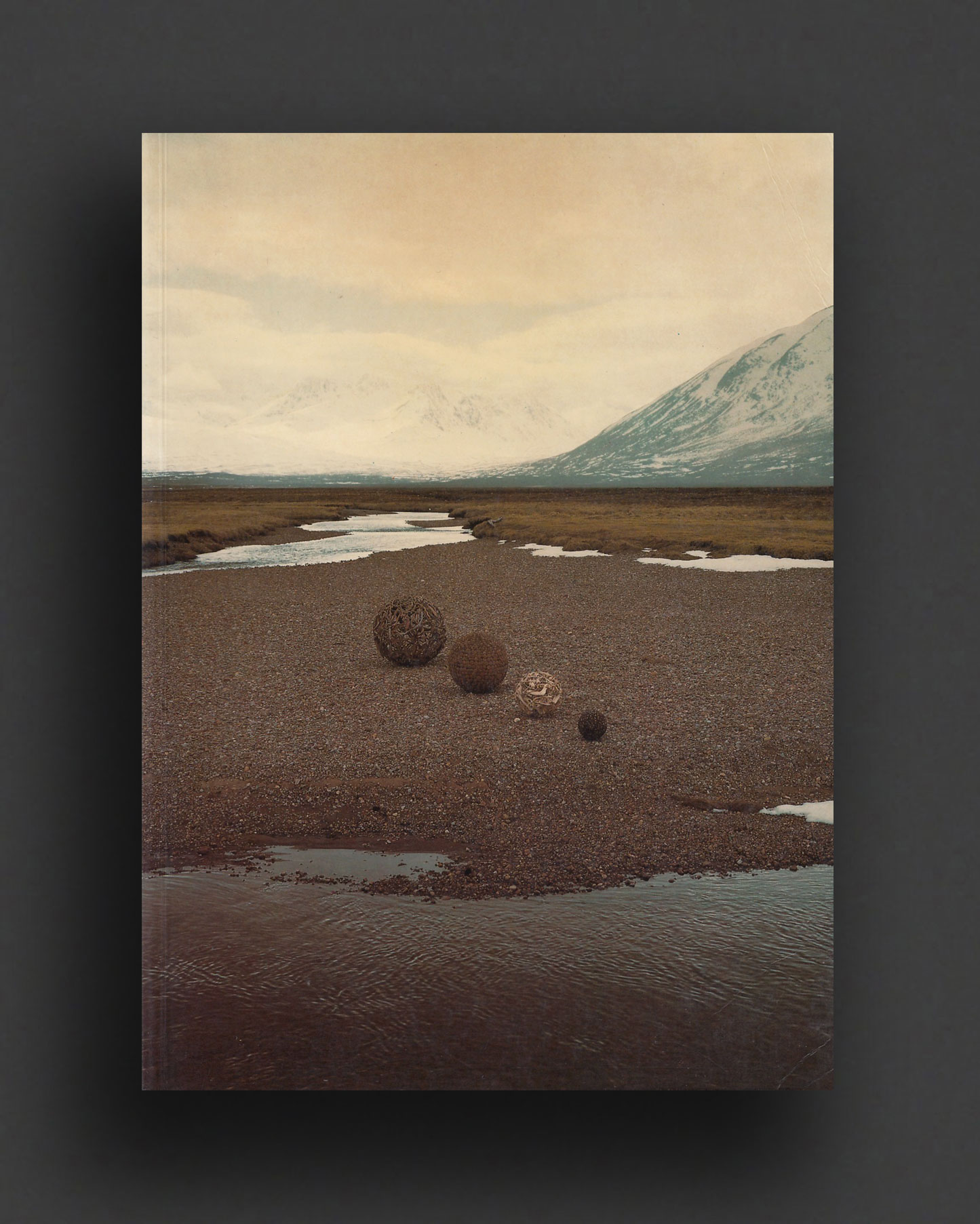
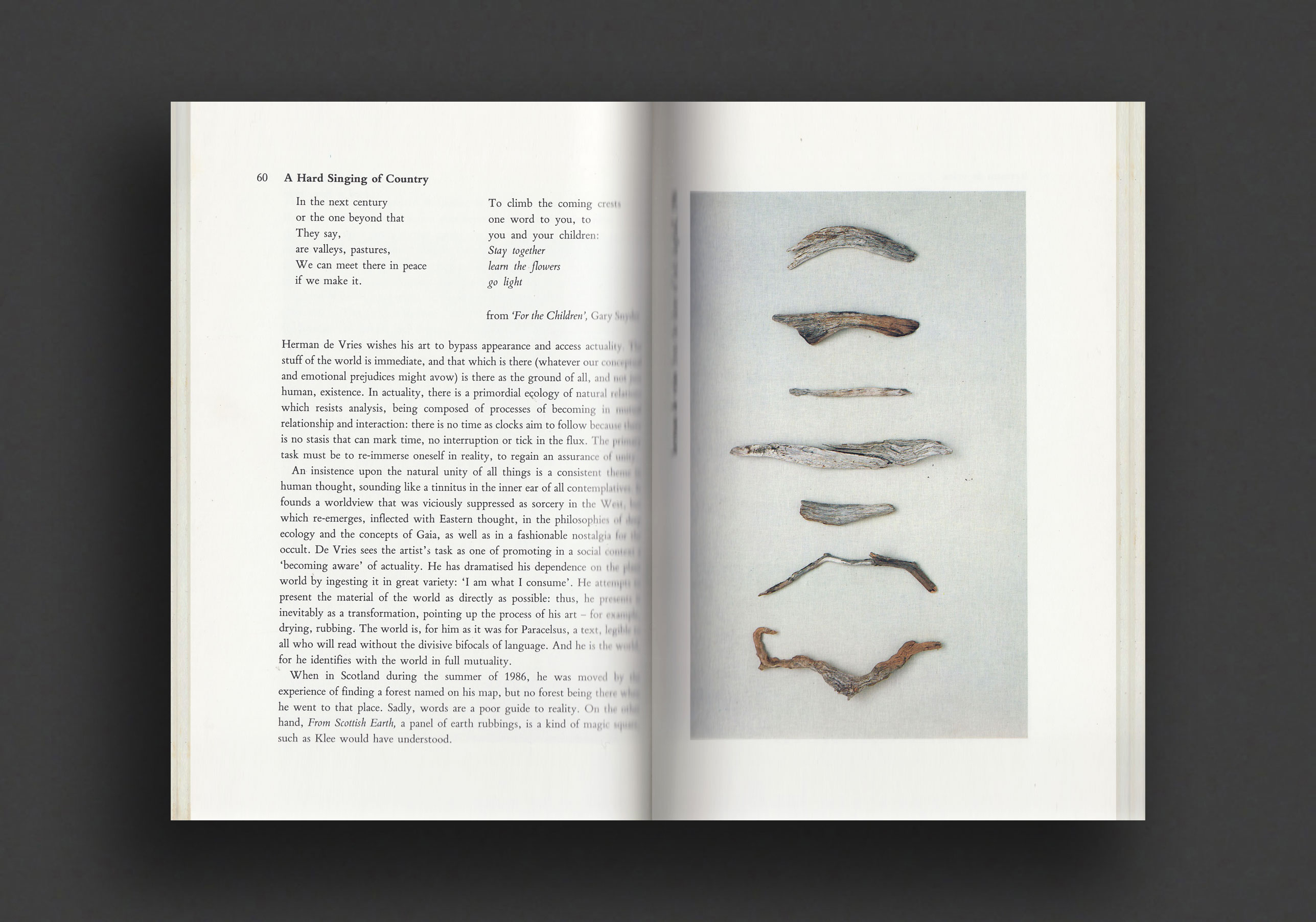
First 1987 edition of this British book/catalogue, The Unpainted Landscape, published to accompany the touring survey of Earth Art, or Land Art or Earthworks, published by Coracle Press, Scottish Arts Council and Graeme Murray Gallery. Heavily illustrated in colour and b/w featuring the works of artists who work with the land — Roger Ackling, Douglas Cocker, Thomas Joshua Cooper, Chris Drury, Ian Hamilton Finlay, Hamish Fulton, Andy Goldsworthy, Bernard Lassus, Richard Long, Raymond Moore, David Nash, lain Patterson, Linda Taylor, David Tremlett, Herman de Vries. Accompanying texts by Simon Cutts, David Reason, Jonathan Williams, Lucius Burckhardt, Graeme Murray, John Bevis, Thomas A. Clark.
"When we think of the landscape and of an art derived from it, we may bring to mind first of all the activity of drawing and painting. The image is redolent, of a solitary wind-blown figure in front of an easel. It is almost as inherent a cliché as the garret or attic for the isolate artist in an urban parallel.
With the selection presented here, we hope to show the work of some artists who, whilst working with the landscape, do so in another way. They do not try to reproduce the appearance of the landscape by way of painted effects. The intrinsic correspondence between the devices of painting and the imposing scene in front of us, as in the traditions and effects of watercolour, has been central to our experience of art.
Nonetheless, in the period of the last twenty years, some artists have established new procedures for an art of landscape, and have chosen to work with wider means at their disposal. They have used the recording photograph, the idea of time and sequence to make a journey, the notion of change and substitution in a place. In fact they have re-examined the composition of an art related to landscape."
Good copy with previous owner's name inked to first blank, light wear/tanning to extremities with age. Some lead pencil underlining to one essay.
1947, English
Hardcover, 292 pages, 20 x 13 cm
Out of print title / used / good
Published by
Chatto & Windus / London
$50.00 - In stock -
Rare 1947 hardcover edition of "Art" by Clive Bell (1881—1964), an English art critic, associated with formalism and the Bloomsbury Group. Like fellow Bloomsbury painter and critic Roger Fry, Bell adored French painting. Written by Bell in the early 20th century and first published in 1914, "Art" was the first publication of his art theory and the introduction to his concept of "significant form". The book aims to develop a comprehensive theory of aesthetics, particularly emphasizing his theory of "significant form" as the core quality that distinguishes works of art from other objects. With a focus on how art elicits aesthetic emotions, Bell's work engages with both historical and contemporary artistic movements, offering insights into the nature of art and its intrinsic value. The opening of "Art" establishes Clive Bell's intention to articulate a clear and actionable theory of aesthetics, positing that a universal understanding of art can be achieved through recognizing a shared quality he terms "significant form." He describes the pervasive belief in the distinctiveness of art, advocating for a more rational approach to aesthetic judgments, . Bell differentiates between mere decorative or descriptive works and those that provoke genuine aesthetic emotion, emphasizing the importance of form over representational accuracy. This foundational premise sets the stage for further discussion about aesthetics, art's relation to life, and the transformative power of artistic experience. Bell's work was influential amongst the Bloomsbury Group and in the development of art criticism and aesthetics in general.
Good copy with marking/foxing/tanning to cloth, endpapers, and block edge, spine sunning and light fraying.
1963, English
Softcover, 190 pages, 18.5 x 12 cm
1st Edition, Out of print title / used / good
Published by
Jupiter Books / London
$20.00 - In stock -
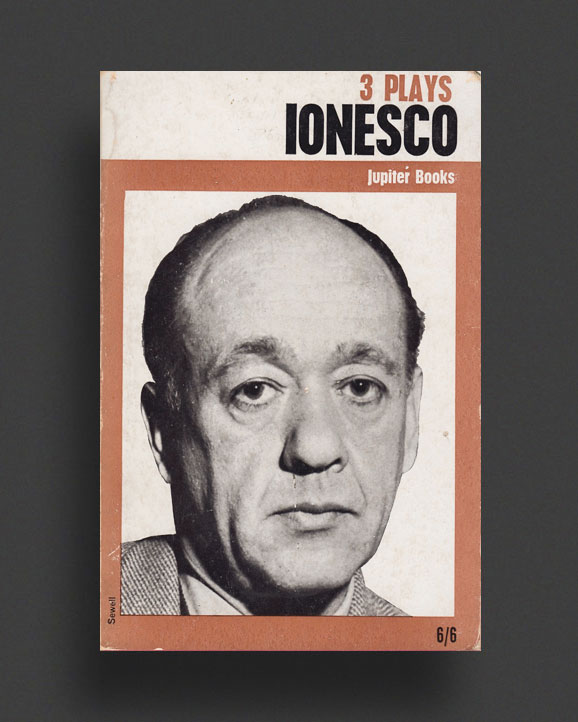
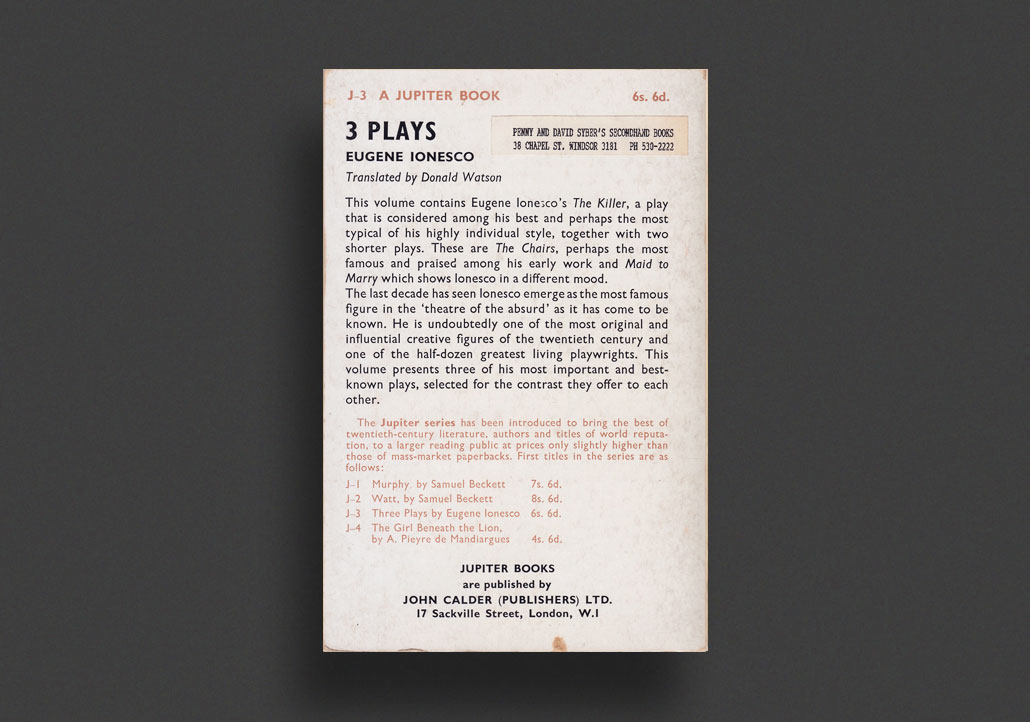
First 1963 Jupiter Books English edition, translated from French by David Watson.
This volume contains Eugene lonesco's The Killer, a play that is considered among his best and perhaps the most typical of his highly individual style, together with two shorter plays. These are The Chairs, perhaps the most famous and praised among his early work and Maid to Marry which shows lonesco in a different mood.
The last decade has seen lonesco emerge as the most famous figure in the 'theatre of the absurd' as it has come to be known. He is undoubtedly one of the most original and influential creative figures of the twentieth century and one of the half-dozen greatest living playwrights. This volume presents three of his most important and best-known plays, selected for the contrast they offer to each other.
Good—VG copy with some light cover rubbing and marking, otherwise VG.
1990, English
Softcover, 144 pages, 20.5 x 14 cm
1st Edition, Out of print title / used / very good
Published by
City Lights Books / San Francisco
$40.00 - Out of stock
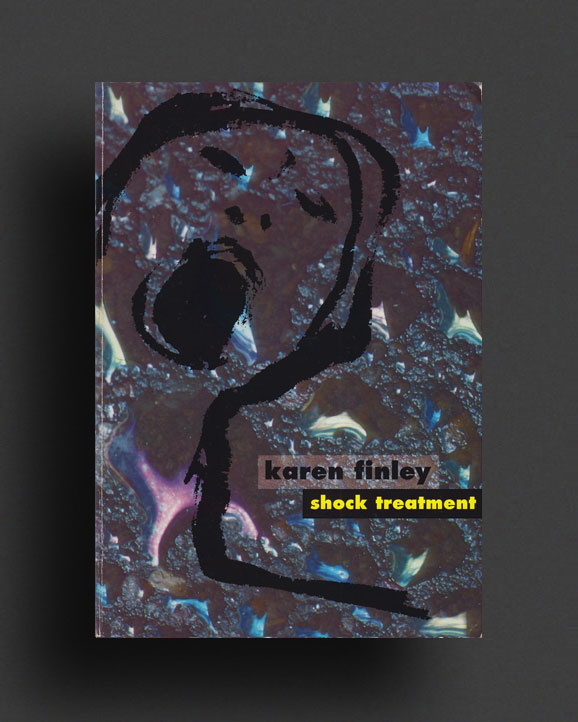
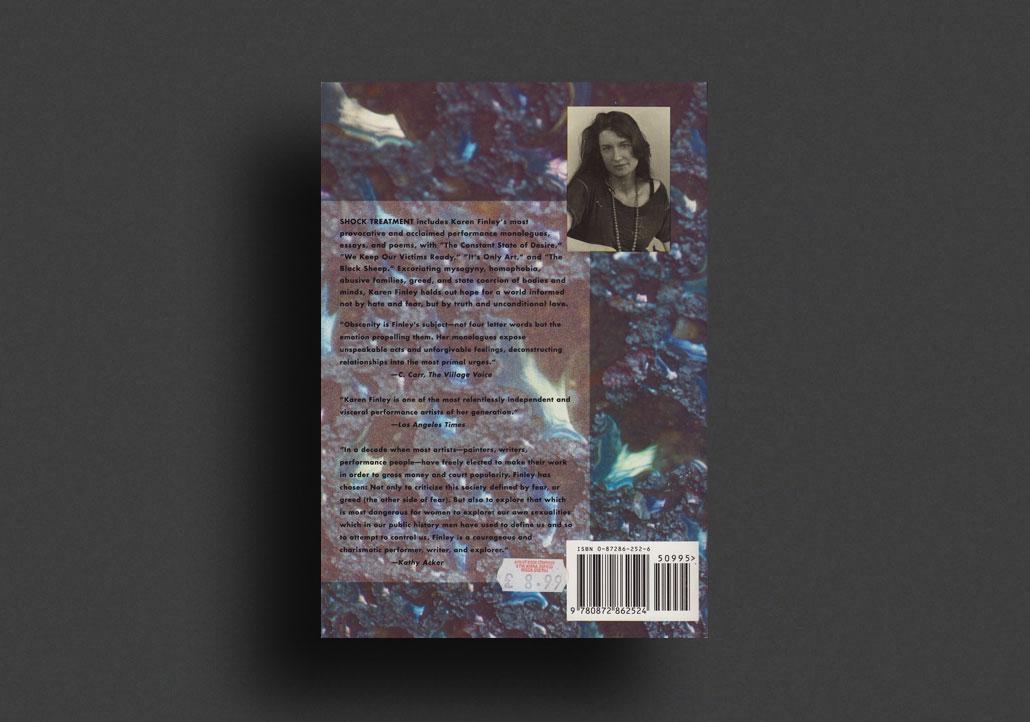
First 1990 edition of Shock Treatment, the collection of Karen Finley’s most provocative and acclaimed performance monologues, essays, and poems, with “The Constant State of Desire,” “We Keep Our Victims Ready,” “It's Only Art,” and “The Black Sheep.” Excoriating misogyny, homophobia, abusive families, greed, and state coercion of bodies and minds, Finley holds out hope for a world informed not by hate and fear, but by truth and unconditional love.
“If you haven’t read this book yet–buy it, take it home, and read it now! This is the work that made me get off my ass and actually do something, and it will inspire you, too.”–Kathleen Hanna, singer, Bikini Kill, Le Tigre and The Julie Ruin
“Finley’s Shock Treatment is more than just ‘art.’ It remains a searing and necessary indictment of America, a call to arms, a great protest against the injustices waged on queers and women during a time in recent American history where government intervention and recognition was so desperately needed. Twenty-five years on, Finley’s work continues to shock and provoke readers and audiences, demonstrating the powerful cultural and political impact her work has had on modern American art and performance art.”–Nathan Smith, Los Angeles Review of Books
No other artist captures the drama and fragility of the AIDS era as Karen Finley does in her 1990 classic book Shock Treatment. “The Black Sheep,” “We Keep Our Victims Ready,” “I Was Never Expected to Be Talented,”–these are some of the seminal works which excoriated homophobia and misogyny at a time when artists and writers were under attack for challenging the status quo. This twenty-fifth anniversary expanded edition features a new introduction in which Finley reflects on publishing her first book as she became internationally known for being denied an NEA grant because of perceived obscenity in her work. She traces her journey from art school to burlesque gigs to the San Francisco North Beach literary scene. A new poem reminds us of Finley’s disarming ability to respond to the era’s most challenging issues with grace and humor.
KAREN FINLEY’s raw and transgressive performances have long provoked controversy and debate. Karen Finley (b. 1956) is an American performance artist, musician, poet, and educator. Her raw and transgressive performances have long provoked controversy and debate. Her performance art, recordings, and books are used as forms of activism. Her work frequently uses nudity and profanity.Finley incorporates depictions of sexuality, abuse, and disenfranchisement in her work. She is a professor at the Tisch School of the Arts at New York University.
VG copy.
1994, English
Softcover (staple-bound), 24 pages, 29 x 23 cm
1st Edition, Out of print title / used / very good
Published by
Chisenhale Gallery / London
$50.00 - In stock -
Scarce copy of the British catalogue published on the occasion of Chilean-Australian artist Juan Davila's solo exhibition, Juanito Laguna, at Chisenhale Gallery 16 November - 18 December 1994, travelling to Ikon Gallery in Birmingham in 1995. Heavily illustrated with exhibition views, works and details from Davila's tremendous painting installation, accompanied by texts by Guy Brett and Carlos Pérez Villalobos.
Juan Davila (b. 1946, Santiago, Chile) is a Chilean-Australian artist and writer who migrated to Melbourne, Australia, in 1974, where he lives and works. One of Australia's most distinguished artists, Juan Davila’s work always arouses controversy. In 2019 the Australian Christian Lobby called for one of his pictures to be removed from Griffith University Art Museum in Brisbane, which was part of an exhibition called The Abyss. The artwork, Holy Family, depicts Mary cradling a giant penis, in the style of the famous Michelangelo sculpture The Pieta. Over the last 3 decades, Juan Davila’s paintings have interrogated cultural, sexual and social identities, resulting in a rich, complex and provocative body of work. Davila’s work has been shaped by the political upheaval during the Pinochet dictatorship of Chile in the 1970s, conveying the violence and psychological turmoil its citizens experienced. A distrust of nationalism and state control has formed a strong thread in Davila’s work ever since, extending to stinging and often hilarious critiques of the Australian political system, aspects of government policy, and public figures in Australia and Latin America.
Published by Chisenhale, London, 1994
Paperback, colour illustrations, pp 24
Text by Guy Brett and Carlos Pérez Villalobos
Juan Davila’s work always arouses controversy. There are attacks and defences. But I would like to write about his work as one which refuses antagonistic, exclusive positions and embraces multiplicity. I do not deny that many of his images have the power to shock and disturb. Familiarity with the discourse of art, and a repertoire of distancing and calming intellectual terms I could employ, does not make these images any less affecting to me, and I imagine the response of others who do not belong to art circles. Here each viewer of the work responds involuntarily and translates their perturbation into words or actions. To me, those images of Davila’s which are cursorily or indignantly described as violent, pornographic or insulting are multiple, not only in the sense of the references they make (their representations), but in relation to the onlooker. These days we are continually exposed to shocking images, but Davila’s do not disturb in the manner of the media which bombard us daily with shattered bodies, lifeless dolls, huddled lumps, piles of dust merging with the particles of print or electronic media that bring them to us. In fact, the very opposite. His bodies are not objectified as a defined and fixed ‘other’. They have a shifting, vulnerable, libidinal quality of uncertain identity that touches us intimately. That he/she out there, that extravagant, unseemly, no-holds-barred conglomerate, is partly myself, is partly mirror, is made up of parts of you and me.
Heavily-illustrated with Chilean/Australian artist Juan Davila's paintings in full-colour, this catalogue was produced on the occasion of Davila's solo exhibition "The Moral Meaning of Wilderness" at Monash University Museum of Art | MUMA Caulfield campus, 4 August - 1 October 2011. Includes essays by Dr. Kate Briggs, and a conversation with Juan Davila.
The Moral Meaning of Wilderness features recent work by Juan Davila, one of Australia’s most distinguished artists. The exhibition sees Davila turn to the genres of landscape and history painting, at a time when the environment is as much a political as a cultural consideration. With technical virtuosity, Davila’s striking representations of nature achieve monumental significance, depicting beauty and emotion while addressing modern society’s ambivalence to nature and increasing consumerism.
The Moral Meaning of Wilderness represents a radical shift in Davila’s practice, whilst continuing to explore art’s relationship to nature, politics, identity and subjectivity in our post-industrial age. Davila pursues his exploration of the role of art as a means of social, cultural and political analysis. While many contemporary artists turned away from representation of the landscape, due to its perceived allegiance to outmoded forms of national identity and representation, Davila has recently sought to revisit and reconsider our surroundings au natural.
His paintings are, at first view, striking representations of nature. The paintings, created since 2003, are undertaken en plain air, a pre-modern technique based on speed of execution in situ, and the use of large scale canvases characteristic of history painting. He has also employed other techniques such as studio painting and representations of the landscape with reference to the sublime, the historical, memory and modernity.
Presented in association with Drill Hall Gallery, The Australian National University, and Griffith University Art Gallery.
1993, English
Softcover, 246 pages, 21 x 13.5 cm
1st Edition, Out of print title / used / very good
Published by
Museum of Contemporary Art / Sydney
$45.00 - Out of stock
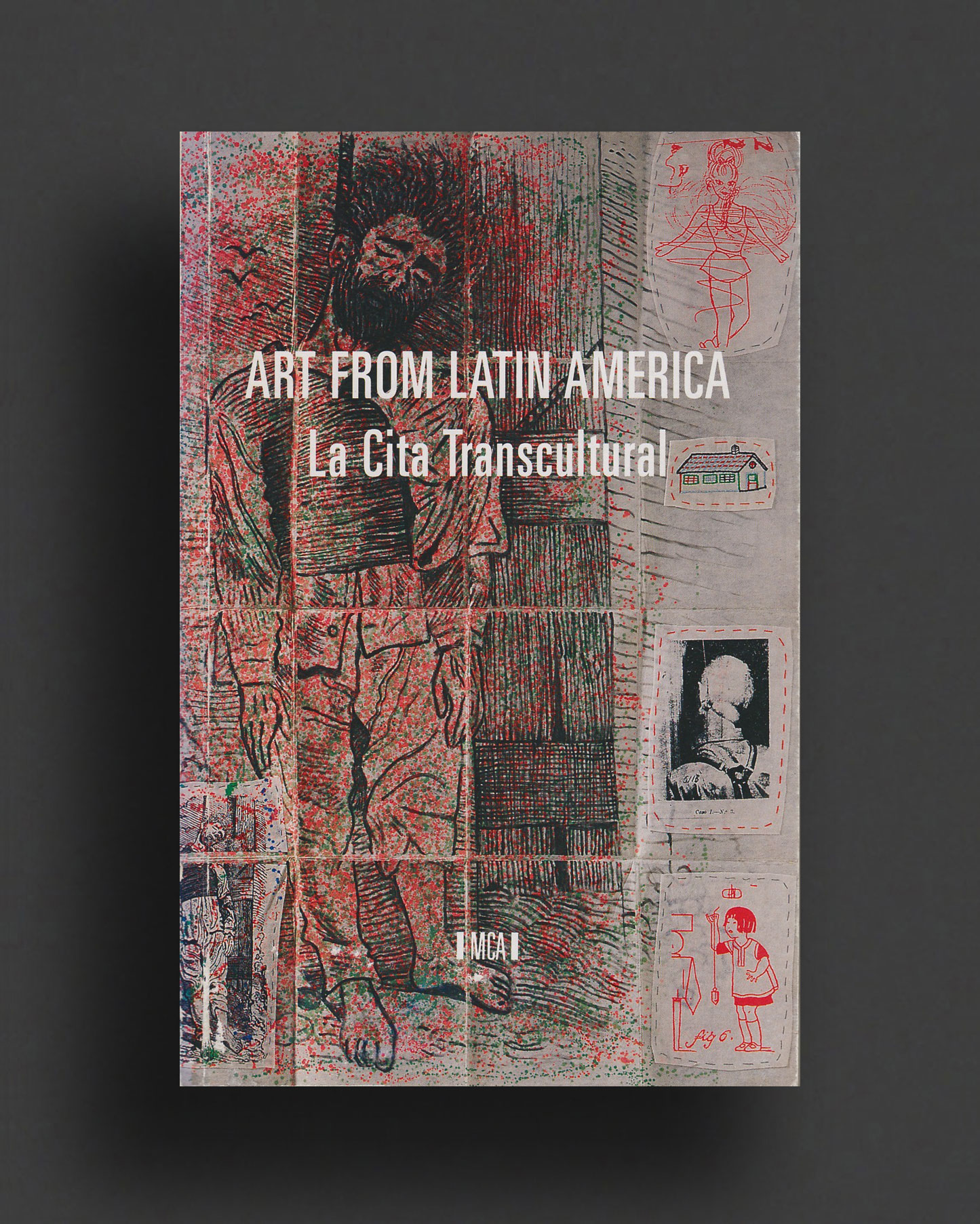
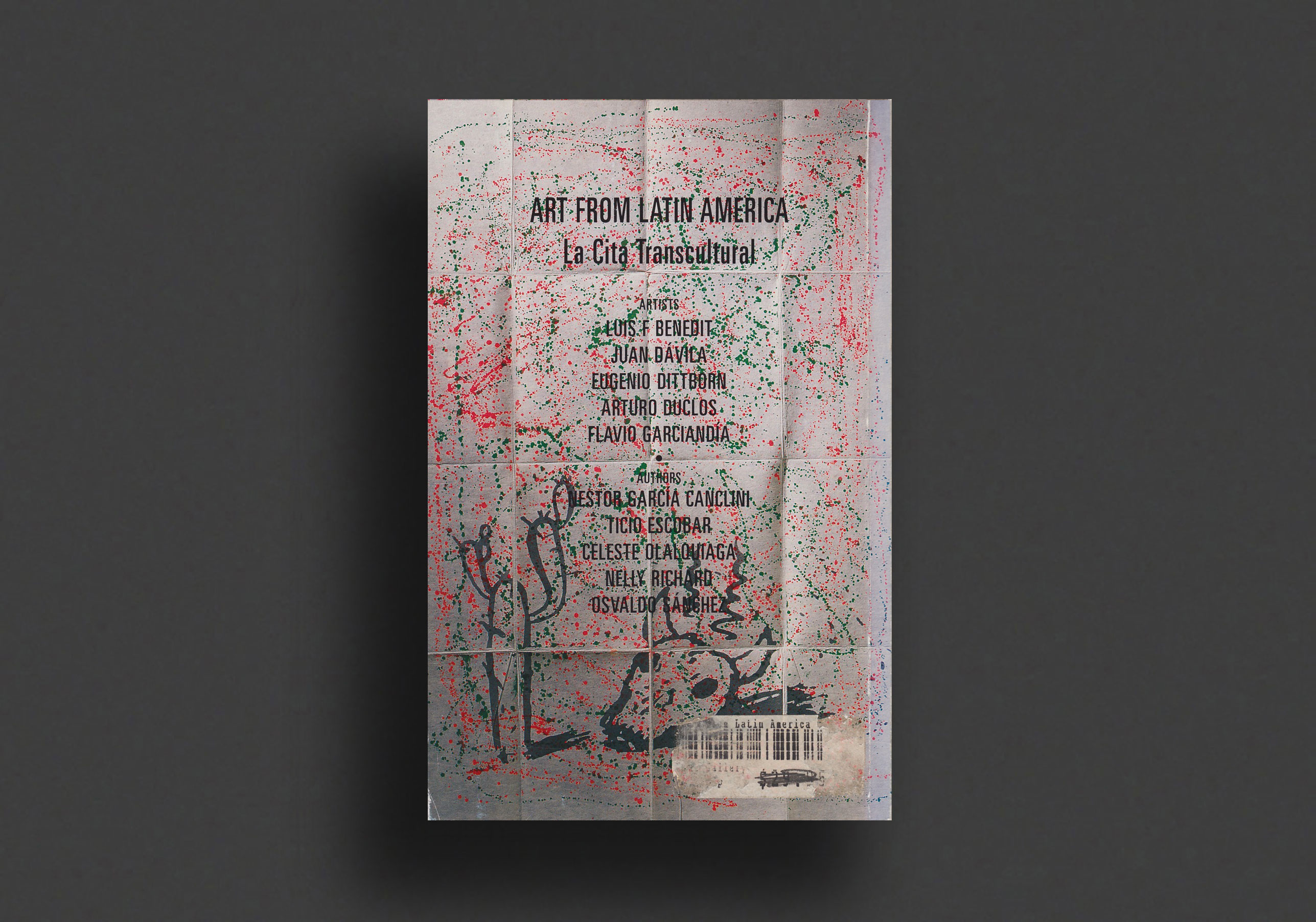
Rare 1993 exhibition book published to accompany "La Cita Transcultural: Art from Latin America", a curatorial project by Nelly Richard, 9 March – 13 June 1993, Museum of Contemporary Art Australia (MCA) Sydney, featuring the work of Luis F Benedit, Juan Davila, Eugenio Dittborn, Arturo Duclos, Flavio Garciandia and the essays of Nestor Garcia Canclini, Ticio Escobar, Celeste Olalquiaga, Nelly Richard, Osvaldo Sanchez.
This major exhibition of artists from Latin America questioned the nostalgic and stereotypical view of Latin America as an exotic and primitive culture. It set up a dialogue between five artists and five authors, emphasising the dislocation, appropriation and reconversion of multiple cultural and artistic references. Through the development of these themes, hybrid identities, signs and cultures were allowed to emerge in the artists’ practice, reflecting the authors’ provisional relationships with language and identity.
This exhibition was the outcome of a dialogue between critic Nelly Richard and artist Juan Davila that began in the early 1980s. Davila was based in Melbourne, but continued to be involved with and explore political and cultural issues in his home country of Chile. Davila and Richard’s discussions evolved from the conflicts and similarities between these greatly divergent cultures with different indigenous and colonial histories. It also considered the larger project of developing a post-colonial understanding of art across a diversity of contexts and regions, acknowledging the heterogeneity of all culture and the complex relationships between centre and periphery.
La Cita Transcultural aimed to initiate an ongoing dialogue and exchange with artists in Chile, Cuba, Argentina and other countries in Latin America.
Very Good copy with residue of old bookshop sticker to back cover. Previous owner's name to title page, Australian curator/author Linda Michael.
1985, Japanese
Softcover, 246 pages, 29.7 x 21 cm
1st Edition, Out of print title / used / good
Published by
Camera Mainichi and The Mainichi Graphic / Japan
$120.00 $80.00 - Out of stock
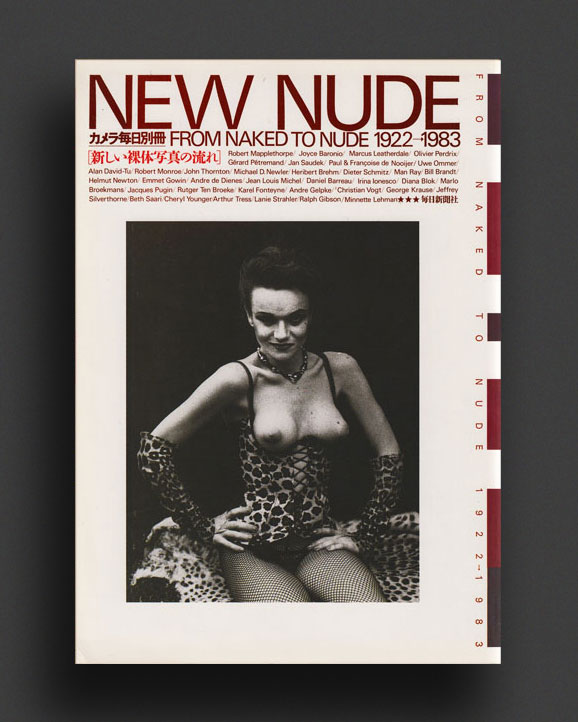
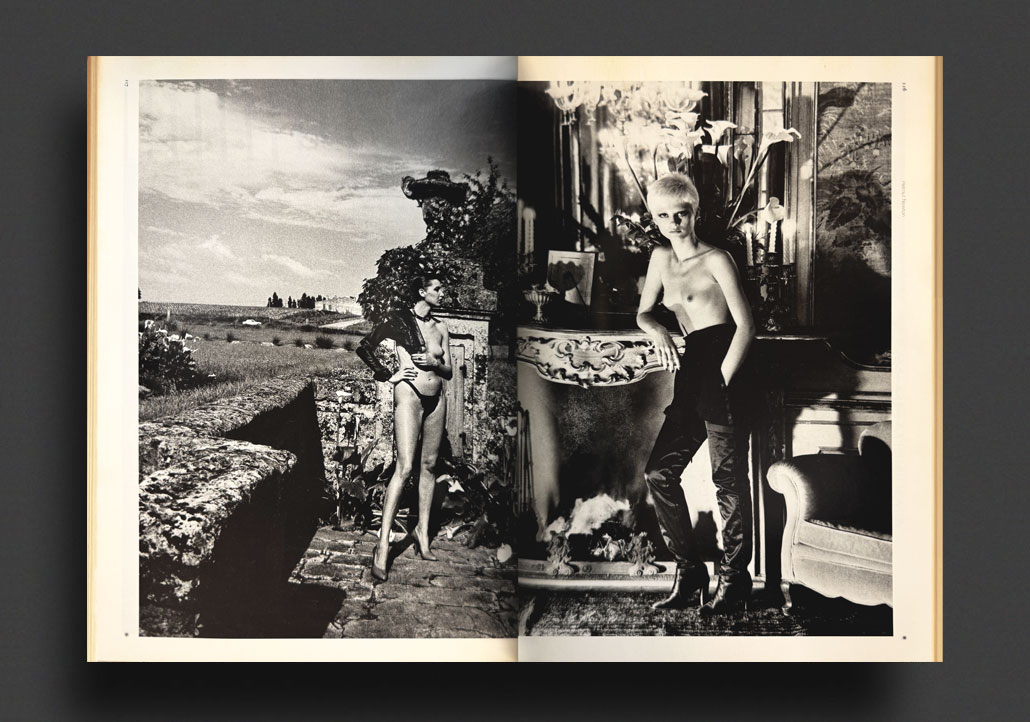
First printing of NEW NUDE 1, published in Japan in 1985 as part of a unique and short-lived book series published by the mighty Camera Mainchi house, showcasing leading photographers and artists on the subject of the nude. Opening with illustrated essays by photo critic Kōtarō Iizawa and others, this lovely volume, printed in Japan, presents works generously and sympathetically presented in colour and black-and-white across various paper-stocks. Includes the work of Joyce Baronio, Jan Saudek, Irina Ionesco, Bill Brandt, Robert Mapplethorpe, Helmut Newton, Man Ray, Dieter Schmitz, Diana Blok, Ralph Gibson, Marcus Leatherdale, Arthur Tress, Christian Vogt, and many others.
Good-VG copy with light general wear/tanning, foxing to inside of covers.
2015, English
Softcover, 216 pages, 15 x 22.6 cm
Published by
October Books / New York
The MIT Press / Massachusetts
$45.00 - Out of stock
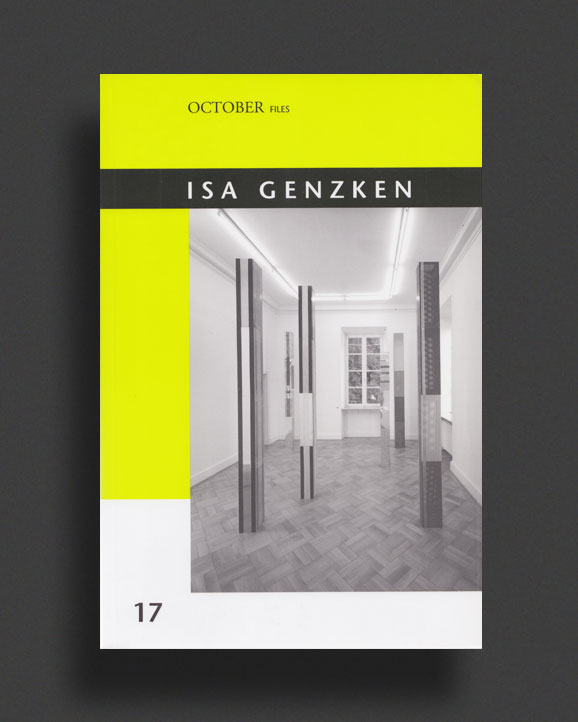
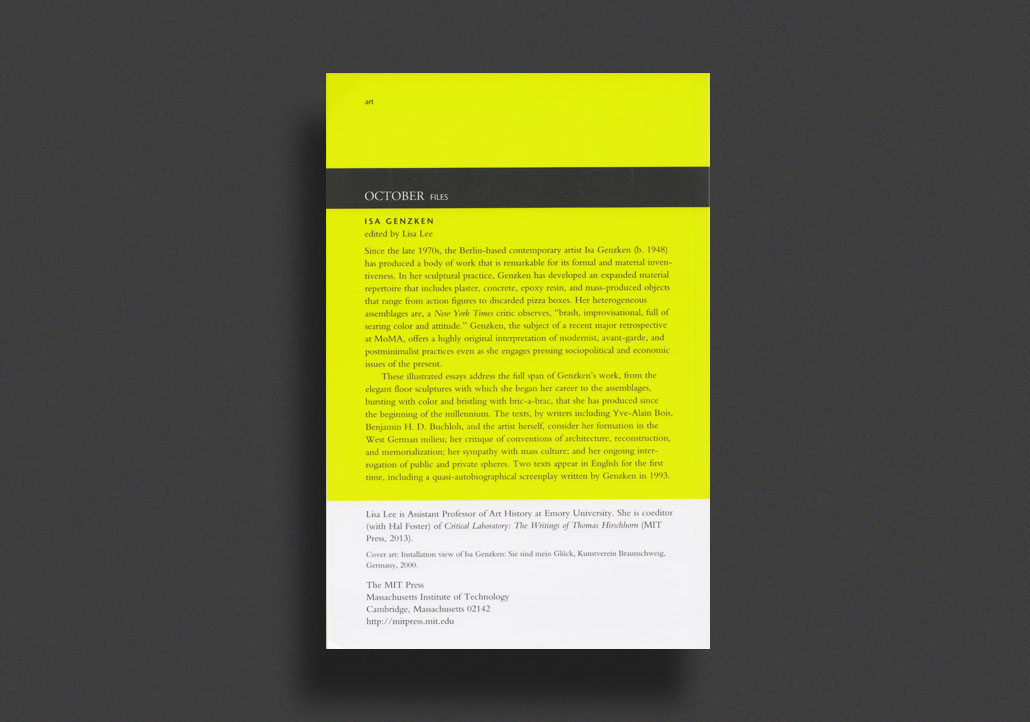
Since the late 1970s, the Berlin-based contemporary artist Isa Genzken (b. 1948) has produced a body of work that is remarkable for its formal and material inventiveness. In her sculptural practice, Genzken has developed an expanded material repertoire that includes plaster, concrete, epoxy resin, and mass-produced objects that range from action figures to discarded pizza boxes. Her heterogeneous assemblages, a New York Times critic observes, are “brash, improvisational, full of searing color and attitude.” Genzken, the recent subject of a major retrospective at MoMA, offers a highly original interpretation of modernist, avant-garde, and post minimalist practices even as she engages pressing sociopolitics and economic issues of the present.
These illustrated essays address the full span of Genzken’s work, from the elegant floor sculptures with which she began her career to the assemblages, bursting with color and bristling with bric-a-brac, that she has produced since the beginning of the millennium. The texts, by writers including Yve-Alain Bois, Benjamin H. D. Buchloh, and the artist herself, consider her formation in the West German milieu; her critique of conventions of architecture, reconstruction, and memorialization; her sympathy with mass culture; and her ongoing interrogation of public and private spheres. Two texts appear in English for the first time, including a quasi-autobiographical screenplay written by Genzken in 1993.
Contributors: Yve-Alain Bois, Benjamin H. D. Buchloh, Diedrich Diederichsen, Hal Foster, Isa Genzken, Isabelle Graw, Lisa Lee, Pamela M. Lee, Birgit Pelzer, Juliane Rebentisch, Josef Strau, Wolfgang Tillmans, Lawrence Weiner.
Contents: Isa Genzken: Two Exercises (1974)
Birgit Pelzer: Axiomatics Subject to Withdrawal (1979)
Benjamin H. D. Buchloh: Isa Genzken: The Fragment as Model (1992)
Benjamin H. D. Buchloh: Isa Genzken: Fuck the Bauhaus. Architecture, Design, and Photography in Reverse (2014)
Isa Genzken: Sketches for a Feature Film (1993)
Isabelle Graw: Free to Be Dependent: Concessions in the Work of Isa Genzken (1996)
Diedrich Diederichsen: Subjects at the End of the Flagpole (2000)
Pamela M. Lee: The Skyscraper at Ear Level (2003)
Benjamin H. D. Buchloh: All Things Being Equal (2005)
Wolfgang Tillmans: Isa Genzken: A Conversation with Wolfgang Tillmans (2003)
Diedrich Diederichsen: Diedrich Diederichsen in Conversation with Isa Genzken (2006)
Lisa Lee: “Make Life Beautiful!” The Diabolic in the Work of Isa Genzken (A Tour Through Berlin, Paris, and New York) (2007)
Lawrence Weiner: Isa Genzken Again (2010)
Juliane Rebentisch: The Dialectic of Beauty: On the Work of Isa Genzken (2007)
Yve-Alain Bois: The Bum and the Architect (2007)
Josef Strau: Isa Genzken: Sculpture as Narrative Urbanism (2009)
Hal Foster: Fantastic Destruction (2014)
1980, English
Stamped envelope/tri-fold card screen-print/20 die-cut prints/2 folded sheets, 42 x 22 cm
1st Edition, Out of print title / used / very good
Published by
Pinacotheca / Melbourne
$180.00 - In stock -
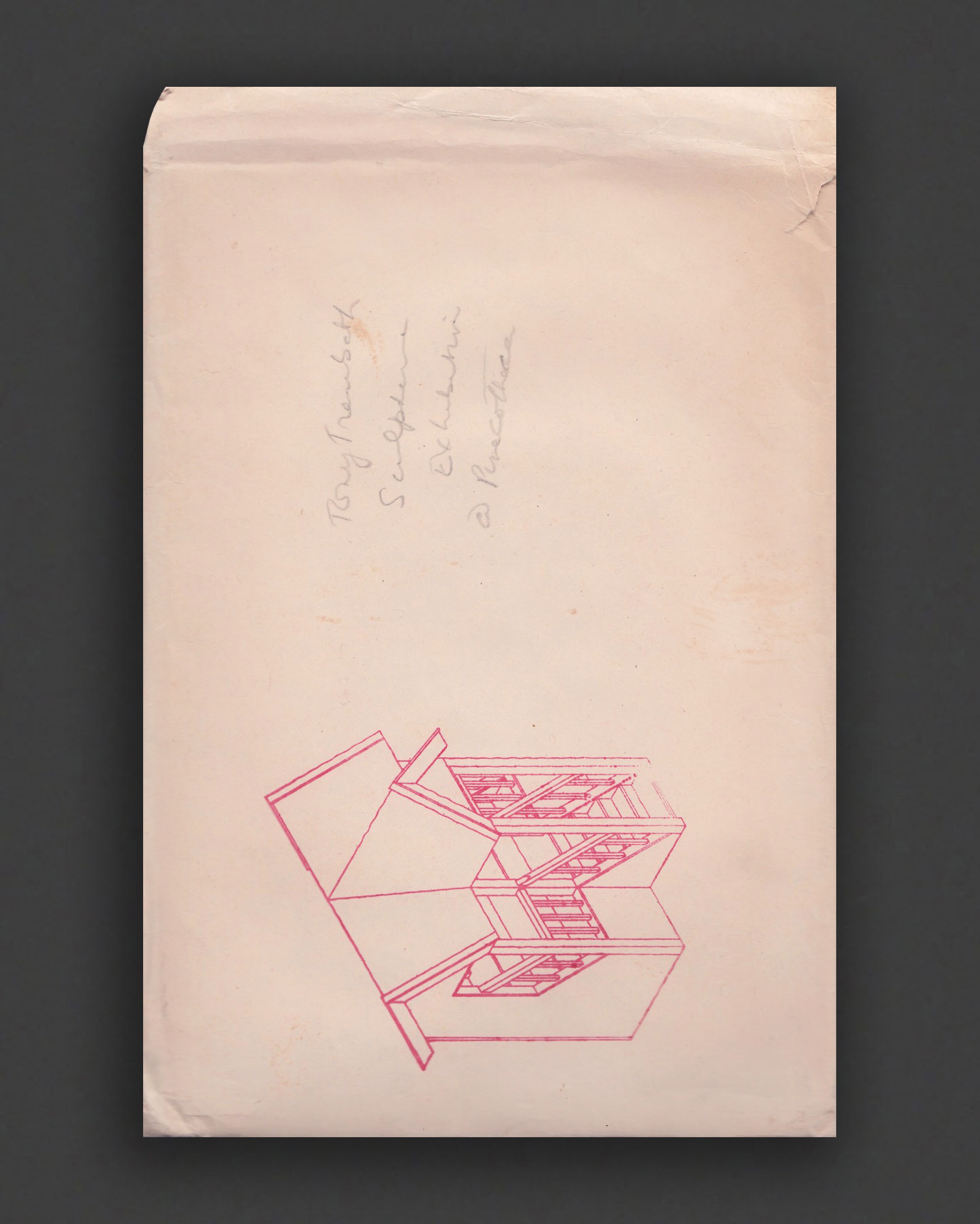
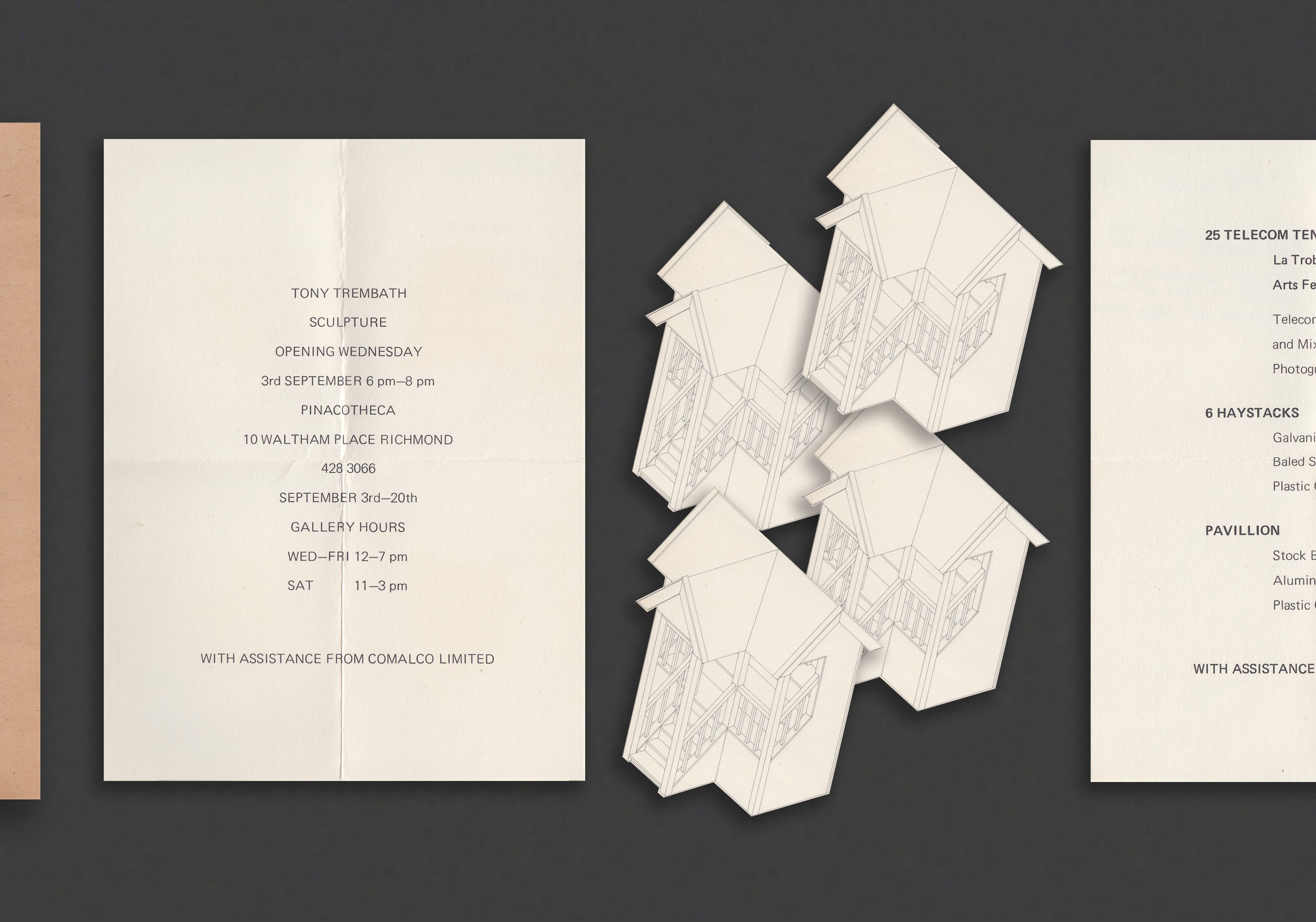
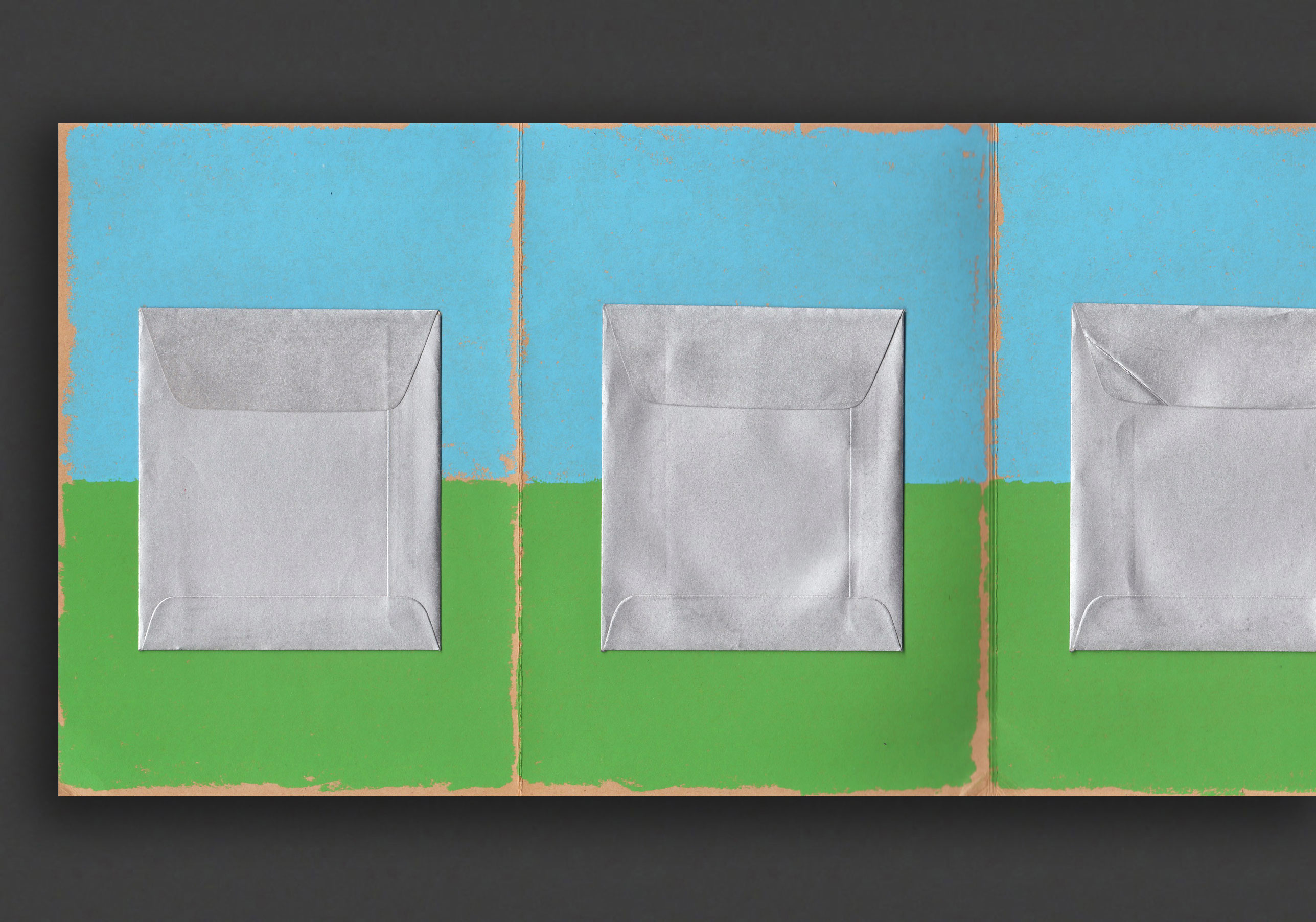
Very rare artist print edition published on the occasion of Tony Trembath's exhibition "Sculpture" at Pinacotheca, Melbourne, 1980. An incredibly intricate edition that reflects Trembath's humorous and conceptually rigorous practice, masterfully printed by Larry Rawling in his legendary Mal Studios printmaking workshop in Melbourne, 1980. Tri-fold 2-colour screen-printed card housing three silver envelopes containing folded exhibition invitation, folded work-list surveying three major sculptural installation/conceptual photography works spanning 1978-1980, and 20 die-cut architectural print works by the artist, all housed in stamped/hand-titled envelope.
Tony Trembath (b.1946 Sale, Victoria) is an Australian cross disciplinary artist whose work ranges from immersive installation, screen printing, sculpture and artists books. He has exhibited extensively across Australia and Internationally.
Pinacotheca was a gallery in Melbourne, Australia. Established in 1967 by Bruce Pollard, it was ideologically committed to the avant-garde and represented a new generation of artists interested in post-object, conceptual and other non-traditional art forms.
Very Good copy with pocket contents like-new, light card edge wear and some wear to envelope opening/corners.
1973, English
Softcover (staple-bound), 30 pages, 25.5 x 18 cm
1st Edition, Out of print title / used / good
Published by
Universal Edition / London
$35.00 - Out of stock
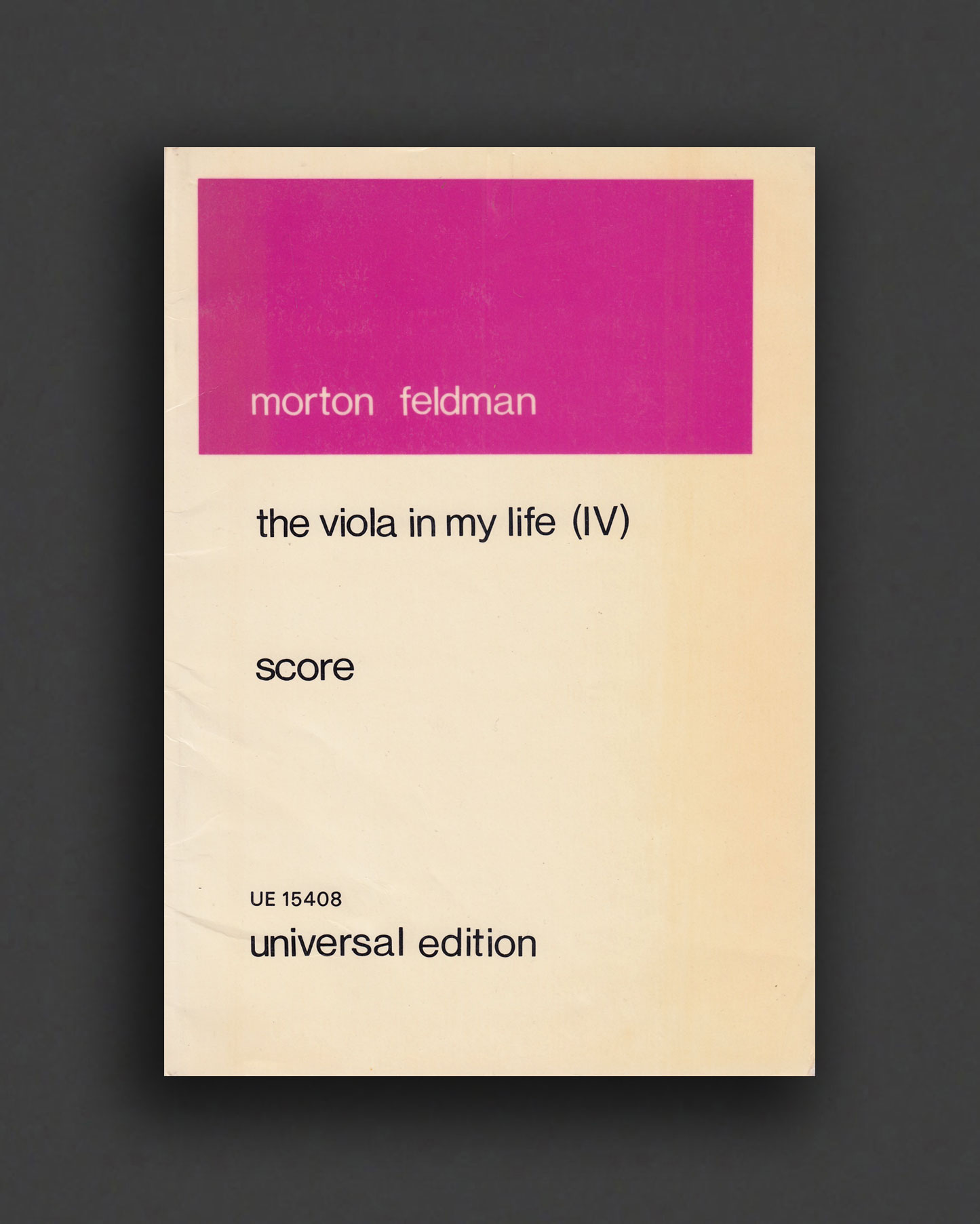
1973 Universal Edition publication of Morton Feldman's "The Viola in My Life (IV)", commissioned for the Venice Biennale 1971.
The cycle The Viola in My Life was begun in July 1970 in Honolulu (composed especially for Karen Phillips, resident performer at Hawaii University) and consists of individual compositions utilising various instrumental combinations with the viola.
“The compositional format is quite simple. Unlike most of my music, the complete cycle of The Viola in My Life (I-IV) is conventionally notated as regards pitches and tempi. I needed the exact time proportions underlying the gradual and slight crescendo characteristic of all the muted sounds the viola plays. It was this aspect that determined the rhythmic sequence of events.” (Feldman)
The attention demanded by Feldman’s music – so soft that it can almost not be heard – is so uniform that it suggests the idea of a surface. We are never quite sure where the sounds are coming from. Time, articulated in most music by rhythm, is perceived as being static. Each sound floats in space, is entirely independent of what has gone before and what has yet to come. Sounds do not progress but merely accumulate in the same place.
The Viola in My Life is a gorgeous succession of delicate sounds in which Feldman, through the interaction of sound and silence, conjures up a desolate magic on a plane where time is somehow altered, transformed.
Morton Feldman (1926-1987) was one of the most original composers of the 20th century, a member of the so-called New York School of composers which also included John Cage, Christian Wolff, and Earle Brown. He was also connected to painters, writers, and poets of the New York School as well, including Mark Rothko, Philip Guston and Franz Kline, Jasper Johns, Robert Rauschenberg, and notably Frank O'Hara. Throughout his career he attempted to locate sound at the moment the listener becomes conscious of its presence. Focusing on the listener's attention on the sounds themselves, Feldman created the "marvelous illusion" of sounds shaping into coherent music through the act of perceiving them, rather than through the act of composing. Each work appears to assemble itself for the listener as they experience it.
Good—VG copy with light handling/pinching wear, tanning, some rust staining from paperclip to the top of score from by performer, likely previous owner Australian composer of concert, jazz, and commercial music, Donald Banks (1923—1980). Banks studied composition privately with Mátyás Seiber in the UK, was associated with Gunther Schuller, Tubby Hayes, Milton Babbitt and Luigi Dallapiccola, scored Hammer horror films, and, back in Australia during the 1970s, was Head of Composition and Electronic Music Studies at the Canberra School of Music and Head of the School of Composition Studies at the New South Wales Conservatorium of Music.
1987, English
Softcover (staple-bound), 50 pages + program ephemera, 27.5 x 21 cm
1st Edition, Out of print title / used / good
Published by
Performing Arts / Los Angeles
$60.00 - Out of stock
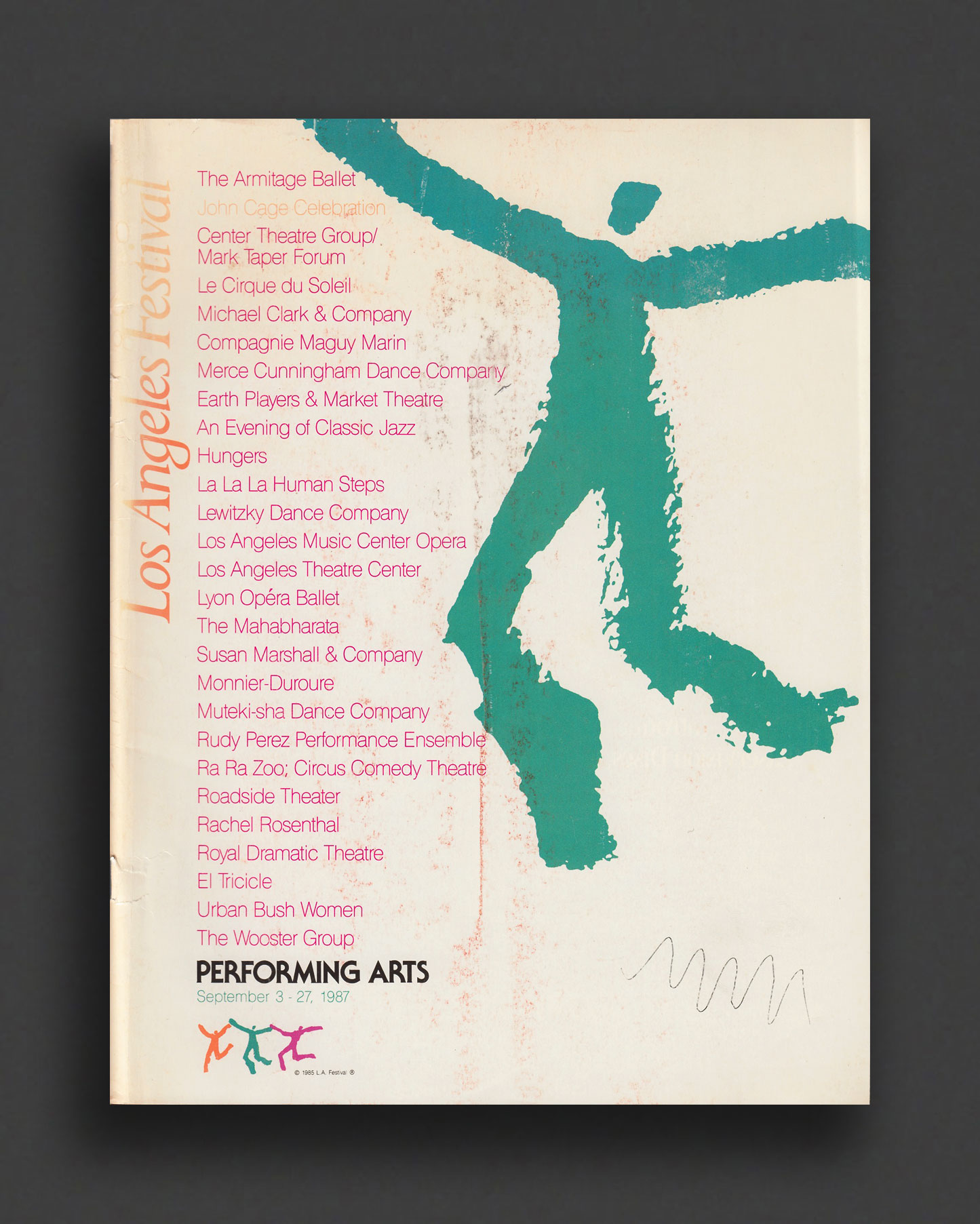
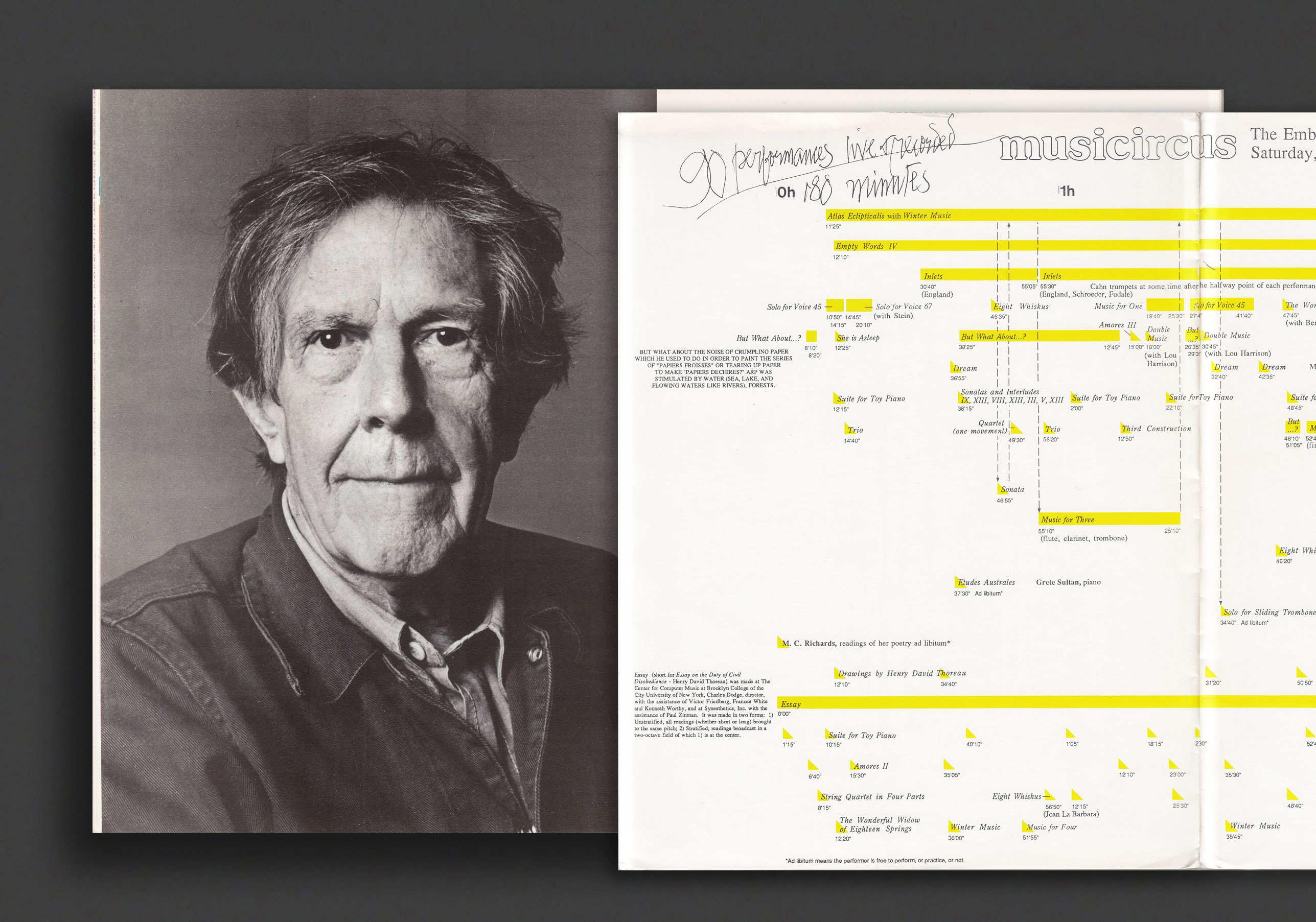
Special John Cage Celebration/Los Angeles Festival issue of Performing Arts Magazine, September 1987. Most of the magazine is dedicated to a huge program feature on the Celebration for John Cage event on the occasion of his 75th birthday with the participation of John Cage, Morton Feldman, Merce Cunningham, Herbert Henck, Malcolm Goldstein, Joel Abdella, John Bergamo, Stephen L. Mosko, David Tudor, John Wyre, Michael Marks, Joan La Barbara, Jim Hildebrandt, Stuart Fox, Julie Feves, Sharon Schroeder, Todor Pelev, Vicky Velich, Frans van Rossum, William Powell, Takehisa Kosugi, Gaylord Mowrey, Matthew Cooker, Bob Becker, Pam Henderson, Vanessa Kibbe, Miles Anderson, Susan Allen, David Stenske, Jeff von der Schmitt, Eeda Kitto, Ed Mann, Bryan Pezzone, Florence Titmus, William Cahn, Frances Moore, Laura Kuennen, Novi Novog, Michele Rudnick, M. C. Richards, Lynn Grants, Nicholas England, Ken Larson, Erika Duke, Robin Engelman, Sheri Wright, Patrick Neher, Grete Sultan, Michael Pugliese, Rachel Rudich, Lynn Angebrandt, Larry Stein, Cynthia Blackstone, Ruth Johnson, Jesse Read, Jeffrey Gauthier, Gregg Johnson, Louis Fudale, Russell Hartenberger, Laura Kuhn, Lucille Botte, Jerry Danielson, L. Winn Le Vert, Kurt Snyder... Includes a overview of Cage by Dutch musicologist and dean of music at California Institute Of The Arts (1983-1990), Frans Van Rossum, along with accompanying texts for each composition performed with biographies for each performing artist, a Cage chronology, discography, full list of compositions, Cage artworks, writings and much more, all illustrated with photographs. There is also additional magazine contents featuring Maguy Marin, The Wooster Group, Michael Clark, Morton Subotnick's electronic opera, "Hungers", and much more related to the festival.
Bonus inclusion of a fold-out durational program for the John Cage "musicircus" event at The Embassy Theatre, Saturday September 12, 1987: "90 Performances Live and Recorded; 188 Minutes" and a program update for the performance of Cage's "Inlets" due to the sudden passing of Morton Feldman ("No one can replace Morton Feldman"). All related to the same Cage celebration.
Average—Good copy w. rubbing to magazine cover and pulling at staples, still all intact w. clean contents and inserts.