World Food Books' programme is largely produced on Kulin Nation land. We acknowledge the Wurundjeri people of the Kulin Nation as the first and continuing custodians of this land, and pay respect to their Elders past, present, and emerging.
World Food Books is an arts and special interests bookshop in Naarm / Melbourne. Founded in 2010, World Food Books is devoted to the presentation of a rotating, hand-selection of international art, design, literary and counterculture publications with an emphasis on the anti-traditional, the experimental, the avant-garde, the heretic, the marginal.
Presenting new titles alongside rare and out-of-print books, catalogues and journals spanning the fields of modern and contemporary art, design, photography, illustration, film, literature, poetry, cultural theory, philosophy, sexuality, popular and underground culture in its many radical forms, World Food Books wishes to encourage adventurous, thoughtful and open-minded reading, looking, writing, and exchange of publishing and ideas, both current and historical.
As well as our bookshop, located in Melbourne's historical Nicholas Building, all of our inventory is available internationally via our online mail-order service.
World Food Books semi-regularly co-ordinates "Occasions", a programme of exhibits and events at the bookshop and in partnership with other hosts (such as museums and art galleries) that develop out of the activities, relationships and content of the bookshop itself.
World Food Books
The Nicholas Building
37 Swanston Street
Room 5, Level 6
Melbourne 3000
Australia
SHOP HOURS:
THU–SAT 12–6
WEB-SHOP OPEN 24/7
World Food Books
Postal Address:
PO Box 435
Flinders Lane
Victoria 8009
Australia
info@worldfoodbooks.com
Art
Theory / Essay
Architecture / Interior
Graphic Design / Typography
Photography
Fashion
Eros
LGBTQ+
Fiction / Poetry
Weird / Speculative / Science Fiction / Horror
Transgressive / Visceral / Abject
Symbolism / Decadence / Fin de siècle
Film / Video
Painting
Sculpture / Installation
Performance / Dance / Theater
Drawing
Sound / Music
Curatorial
Group Shows / Collections
Periodicals
Out-of-print / Rare
Posters / Ephemera / Discs
Signed Books
World Food Books Gift Voucher
World Food Book Bag
Australian Art
Australian Fiction
Australian Science Fiction / Speculative Fiction
Australian Poetry
Australian Photography
Japanese Photography
Conceptual Art
Minimal Art
Dada
'Pataphysics / Oulipo
Fluxus
Concrete Poetry
Pop Art
Surrealism
Arte Povera
Arte Informale / Haute Pâte / Tachism
Nouveau Réalisme / Zero / Kinetic
Situationism / Lettrism
Collage / Mail Art / Xerox Art
Art Brut / Folk / Visionary / Fantastic
Illustration / Graphic Art / Bandes Dessinées
Furniture
Italian Radical Design / Postmodernism
Textiles
Ceramics / Glass
Counterculture
Protest / Revolt
Philosophy
Psychoanalysis
Anthropology
Anarchism
Socialism / Anarchism / Communism / Capitalism
Literary Theory / Semiotics / Language
Feminism / Women's Studies
Gender Studies / Sexuality
Anthropology
Fetishism / BDSM
Drugs / Psychedelia
Crime / Violence
Animal Rights / Veganism
Occult / Esoterica
Ecology / Earth / Alternative Living
Whole Earth / Crafts
All prices in AUD (Australian dollars)
Pick-Ups
Pick-up orders can be collected in our bookshop during opening hours after order date. Please collect any Pick-up orders within 2 weeks of ordering as we have limited storage space. Orders will be released back into stock if not collected within this time. No refunds can be made for pick-ups left un-collected. If you cannot make it in to the bookshop in this time-frame, please choose postage option.
Return Policy
All sales are final. We do accept returns (for refund or exchange) for items received in error. All our orders are packed with special care using heavy-duty padding and cardboard book-mailers or bubble mailers (for smaller books), using reinforcement where required. We cannot take responsibility for any lost, stolen or damaged parcels.
Insurance
Should you wish to insure your package, please email us directly after placing your order and we can organise this at a small extra expense. Although all standard/express tracked packages are very safe and dependable, we cannot take responsibility for any lost, stolen or damaged parcels. We recommend insurance on valuable orders.
Interested in selling your old books, catalogues, journals, magazines, comics, fanzines, ephemera? We are always looking for interesting, unusual and out-of-print books to buy. We only buy books in our fields of interest and specialty, and that we feel we can resell.
We base these prices on desirability, market value, in-print prices, condition and our current stock levels. We offer cash, store credit, and can take stock on consignment. All
about 25% of the price we expect to get when we sell them, or 30% in store credit. We base these prices on desirability, market value, in-print prices, condition and our current stock levels.
Sell your books any day of the week. You can drop them off and return later. If you have a lot of books, we can visit your Sydney home.
We buy books that we feel we can resell. We offer about 25 % of the price we expect to get when we sell them, or 30% in store credit. We base these prices on desirability, market value, in-print prices, condition and our current stock levels.
Philadelphia Wireman
03 August - 01 September, 2018
World Food Books is proud to announce our next Occasion, the first presentation of sculptures by Philadelphia Wireman in Australia.
The Philadelphia Wireman sculptures were found abandoned in an alley off Philadelphia’s South Street on trash night in 1982. Their discovery in a rapidly-changing neighbourhood undergoing extensive renovation, compounded with the failure of all attempts to locate the artist, suggests that the works may have been discarded after the maker’s death. Dubbed the "Philadelphia Wireman" during the first exhibition of this work, in 1985, the maker’s name, age, ethnicity, and even gender remain uncertain. The entire collection totals approximately 1200 pieces, all intricately bound together with tightly-wound heavy-gauge wire (along with a few small, abstract marker drawings, reminiscent both of Mark Tobey and J.B. Murry). The dense construction of the work, despite a modest range of scale and materials, is singularly obsessive and disciplined in design: a wire armature or exoskeleton firmly binds a bricolage of found objects including plastic, glass, food packaging, umbrella parts, tape, rubber, batteries, pens, leather, reflectors, nuts and bolts, nails, foil, coins, toys, watches, eyeglasses, tools, and jewellery.
Heavy with associations—anthropomorphic, zoomorphic, and socio-cultural responses to wrapped detritus—the totemic sculptures by Philadelphia Wireman have been discussed in the context of work created to fulfil the shamanistic needs of alternative religions in American culture. Curators, collectors, and critics have variously compared certain pieces to sculpture from Classical antiquity, Native American medicine bundles, African-American memory jugs, and African fetish objects. Reflecting the artist’s prolific and incredibly focused scavenging impulse, and despite—or perhaps enhanced by—their anonymity, these enigmatic objects function as urban artefacts and arbiters of power, though their origin and purpose is unknown. Philadelphia Wireman, whatever their identity, possessed an astonishing ability to isolate and communicate the concepts of power and energy through the selection and transformation of ordinary materials. Over the course of the past two decades, this collection has come to be regarded as an important discovery in the field of self-taught art and vernacular art.
Presented in collaboration with Fleisher-Ollman Gallery, Philadelphia, and Robert Heald, Wellington.
Susan Te Kahurangi King
02 February - 10 March, 2018
Susan Te Kahurangi King (24 February 1951 - ) has been a confident and prolific artist since she was a young child, drawing with readily available materials - pencils, ballpoint pens and felt-tip markers, on whatever paper is at hand. Between the ages of four and six Susan slowly ceased verbal communication. Her grandparents William and Myrtle Murphy had developed a special bond with Susan so they took on caring responsibilities for extended periods. Myrtle began informally archiving her work, carefully collecting and storing the drawings and compiling scrapbooks. No drawing was insignificant; every scrap of paper was kept. The King family are now the custodians of a vast collection containing over 7000 individual works, from tiny scraps of paper through to 5 meter long rolls.
The scrapbooks and diaries reveal Myrtle to be a woman of great patience and compassion, seeking to understand a child who was not always behaving as expected. She encouraged Susan to be observant, to explore her environment and absorb all the sights and sounds. Myrtle would show Susan’s drawings to friends and people in her community that she had dealings with, such as shopkeepers and postal workers, but this was not simply a case of a grandmother’s bias. She recognised that Susan had developed a sophisticated and unique visual language and sincerely believed that her art deserved serious attention.
This was an unorthodox attitude for the time. To provide some context, Jean Dubuffet coined the term Art Brut in 1945 to describe work created by self-taught artists – specifically residents of psychiatric institutions and those he considered to be visionaries or eccentrics. In 1972 Roger Cardinal extended this concept by adopting the term Outsider Art to describe work made by non-academically trained artists operating outside of mainstream art networks through choice or circumstance. Susan was born in Te Aroha, New Zealand in 1951, far from the artistic hubs of Paris and London that Dubuffet and Cardinal operated in. That Myrtle fêted Susan as a self-taught artist who deserved to be taken seriously shows how progressive her attitudes were.
Susan’s parents Doug and Dawn were also progressive. Over the years they had consulted numerous health practitioners about Susan’s condition, as the medical establishment could not provide an explanation as to why she had lapsed into silence. Dawn educated herself in the field of homeopathy and went on to treat all twelve of her children using these principles – basing prescriptions on her observations of their physical, mental and emotional state.
Doug was a linguist with an interest in philosophy who devoted what little spare time he had to studying Maori language and culture. To some extent their willingness to explore the fringes of the mainstream made them outsiders too but it was their commitment to living with integrity and their respect for individuality that ensured Susan’s creativity was always encouraged.
Even though Susan’s family supported her artistic pursuits, some staff in schools and hospitals saw it as an impediment to her assimilation into the community and discouraged it in a variety of ways. Her family was not always aware of this and therefore did not fully understand why Susan stopped drawing in the early 1990s. However, rather than dwell on the challenges that Susan faced in pursuit of her artistic practice, they prefer to highlight her achievements. In 2008 Susan began drawing again in earnest, after an almost 20 year interruption, and her work is now shown in galleries around the world.
Susan grew up without television and has been heavily influenced by the comics she read as a child. She is absolutely fearless in the appropriation of recognizable characters, such as Donald Duck and Mickey Mouse, in her work. She twists their limbs, contorts their faces, compresses them together, blends them into complex patterned backgrounds - always imbuing them with an incredible energy. Although Susan often used pop culture characters in her work they are not naive or childlike. These are drawings by a brilliant self-taught artist who has been creating exceptional work for decades without an audience in mind.
Mladen Stilinović
"Various Works 1986 - 1999"
02 February 16 - September 10, 2016
Various works 1986 - 1999, from two houses, from the collections of John Nixon, Sue Cramer, Kerrie Poliness, Peter Haffenden and Phoebe Haffenden.
Including: Geometry of Cakes (various shelves), 1993; Poor People’s Law (black and white plate), 1993; White Absence (glasses, ruler, set square, silver spoon, silver ladel with skin photograph and wooden cubes), 1990-1996; Exploitation of the Dead (grey and red star painting, wooden painting, black spoon with red table, red plate), 1984-1990; Money and Zeros (zero tie, paintings made for friends in Australia (Sue, John, Kerrie), numbers painting), 1991-1992; Words - Slogans (various t-shirts) - “they talk about the death of art...help! someone is trying to kill me”, “my sweet little lamb”, “work is a disease - Karl Marx”; Various artist books, catalogues, monographs, videos; Poster from exhibition Insulting Anarchy; "Circular" Croatian - Australian edition; Artist book by Vlado Martek (Dostoyevsky); more.
Thanks to Mladen Stilinović and Branka Stipančić.
Jonathan Walker
Always Will Need To Wear Winter Shirt Blue + Ochre Small Check Pattern
21 August - 21 September, 2015
Untitled
I am not a great reader of poetry but I always return to the work of Melbourne poet, Vincent Buckley (1925- 1988). Perhaps I find his most tantalising piece to be not a finished poem but a fragment left on a scrap of paper discovered on his desk after the poet’s death.
The poetry gathers like oil
In the word-core, and spreads
It has its music meet,
Its music is in movement.
This fragment is more the shell left behind from a volatile thought than a finished poem. I find the last two lines honest but awkward whereas the first two lines work like an arrow. Most likely he could not find a resolution so it was left. Still, in its present form, it remains an eloquent testimony to the ultimate failure of a medium to express mobile thought and sensation, in Buckley’s case, through verbal language. It’s an important matter because this is something all artists have to deal with regardless of the medium.
I have never written a poem, however, I am forever copying fragments from books on paper scraps in a vain effort to fix certain notions in my head. At first, they function as bookmarks that are sometimes returned to when I open the book. But before long, as they accumulate, they fall out littering the table interspersed with A4 photocopies, bills, books and medications.
To return to Buckley’s fragment, the first two lines very much evoke how I paint nowadays. As you age, detail diminishes and patches of light become more luminous and float. I feel the most honest way of dealing with this is by smearing the oil paint on the canvas with the fingers and working close-up, blind. Only if the patches coalesce into an approaching image can the work gain a life.
-
Jonathan Walker was born in Melbourne, Australia and brought up on a dairy farm in Gippsland. In the 1970’s he studied painting at RMIT and won the Harold Wright Scholarship to the British Museum, London. During the 1980’s he exhibited at Pinacotheca Gallery, Richmond and had work shown at the NGV and Heidi City Art Gallery. Over the same period he designed the cover for the “Epigenesi” LP by Giancarlo Toniutti, Italy and conducted a mail exchange work with Achim Wollscheid, Germany. The work with artists through the post resulted in an article published in the bicentenary issue of Art and Australia 1988. He showed in artist run spaces such as WestSpace in the 90’s and 2000’s, and until 2012, taught painting at Victoria University, which is where we (Colleen Ahern and Lisa Radford) as organisers of the exhibition, among many others, had the privilege of being his student.
Walker’s knowledge was imparted to students through the careful selection of music, literature, and artists found in books that he himself had ordered for the library. Walker’s strategy was the generosity of sharing his vast knowledge with references specific to each student and their context.
Walker’s paintings share a similar focus and intimacy.
This exhibition presents a small selection of recent paintings alongside a publication that includes Walker’s writing. Observational and analytical, Walker’s work is a type of material notation — the time of day, colour and how it is blended, the both specific and fleeting location of a reflection on lino or the question of whether a chair leg should be included in a painting.
Please join us on Friday August 21 between 6-8pm to celebrate the opening of the exhibition.
Curated by Colleen Ahern and Lisa Radford.
B. Wurtz
Curated by Nic Tammens
March 26 - April 4, 2015
B.Wurtz works from a basement studio in his home on Manhattan’s Lower East Side.
This local fact is attested to by the plastic shopping bags and newsprint circulars that appear in his work. As formal objects, they don’t make loud claims about their origins but nonetheless transmit street addresses and places of business from the bottom of this long thin island. Like plenty of artists, Wurtz is affected by what is local and what is consumed. His work is underpinned by this ethic. It often speaks from a neighborhood or reads like the contents of a hamper:
“BLACK PLUMS $1.29 lb.”
“Food Bazaar”
“USDA Whole Pork Shoulder Picnic 99c lb.”
“RITE AID Pharmacy, with us it’s personal.”
“H. Brickman & Sons.”
“Sweet Yams 59c lb."
Most of the work in this exhibition was made while the artist was in residence at Dieu Donne, a workshop dedicated to paper craft in Midtown. Here Wurtz fabricated assemblages with paper and objects that are relatively lightweight, with the intention that they would be easily transportable to Australia. This consideration isn’t absolute in Wurtz’s work, but was prescriptive for making the current exhibition light and cheap. Packed in two boxes, these works were sent from a USPS post office on the Lower East Side and delivered to North Melbourne by Australia Post.
Wurtz appears courtesy of Metro Pictures, New York.
Thanks to Rob Halverson, Joshua Petherick, Sari de Mallory, Matt Hinkley, Helen Johnson, Fayen d'Evie, Ask Kilmartin, Lisa Radon, Ellena Savage, Yale Union, and "Elizabeth".
John Nixon
"Archive"
December 15 - January 20, 2014
The presentation of John Nixon's archive offered a rare showcase of this extensive collection of the artist's own publications, catalogues, posters, ephemera, editions and more, from the mid 1980s onwards, alongside a selection of his artworks.
Organized by John Nixon, Joshua Petherick and Matt Hinkley.
"Habitat"
at Minerva, Sydney (organised by Joshua Petherick and Matt Hinkley)
November 15 - December 20, 2014
Lupo Borgonovo, Janet Burchill & Jennifer McCamley,
Lewis Fidock, HR Giger, Piero Gilardi, Veit Laurent Kurz,
Cinzia Ruggeri, Michael E. Smith, Lucie Stahl, Daniel Weil, Wols
Press Release:
“...It contained seven objects. The slender fluted bone, surely formed for flight, surely from the wing of some large bird. Three archaic circuitboards, faced with mazes of gold. A smooth white sphere of baked clay. An age-blackened fragment of lace. A fingerlength segment of what she assumed was bone from a human wrist, grayish white, inset smoothly with the silicon shaft of a small instrument that must once have ridden flush with the surface of the skin - but the thing’s face was seared and blackened.”
William Gibson, “Count Zero”, 1986
"Autumn Projects Archive"
Curated by Liza Vasiliou
March 6 - March 15, 2014
World Food Books, in conjunction with the Virgin Australia Melbourne Fashion Festival 2014, presented the Autumn Projects archive, consisting of a selection of early examples in Australian fashion with a particular interest in collecting designers and labels from the period beginning in the 1980’s, who significantly influenced the discourse of Australian Fashion.
Curated by Liza Vasiliou, the exhibition provided a unique opportunity to view pieces by designers Anthea Crawford, Barbara Vandenberg, Geoff Liddell and labels CR Australia, Covers, Jag along with early experimental collage pieces by Prue Acton and Sally Browne’s ‘Fragments’ collection, suspended throughout the functioning World Food Books shop in Melbourne.
H.B. Peace
presented by CENTRE FOR STYLE
November 14, 2013
"Hey Blinky, you say chic, I say same"
Anon 2013
H.B. Peace is a clothing collaboration between great friends Blake Barns and Hugh Egan Westland. Their pieces explore the divergences between 'character’ and ‘personality’ in garments....etc
Special Thanks to Joshua Petherick and Matt Hinkley of WFB and Gillian Mears
and a Very Special Thank you to Audrey Thomas Hayes for her shoe collaboration.
Janet Burchill & Jennifer McCamley
"Aesthetic Suicide"
May 10 - June 8, 2013
The first of our occasional exhibitions in the World Food Books office/shop space in Melbourne, "Aesthetic Suicide" presented a body of new and older works together by artists Janet Burchill & Jennifer McCamley, including videos, prints, a wall work, and publications.
During shop open hours videos played every hour, on the hour.
1994, English
Softcover, 64 pages, 28 x 21.5 cm
1st Edition, Out of print title / used / fine
Published by
Marion Harris / New York
$65.00 - Out of stock
First softcover edition Marion Harris's 1994 monograph on Morton Bartlett. From the introduction: "the Bartlett collection of sculptures and photographs represents not only a considerable artistic discovery, but a singular expression of American genius. Half life-size to scale, the sculpted group of twelve teenage girls and three accompanying boys, (the latter recognizably self portraits), was created by Morton Bartlett, a reclusive Boston bachelor few knew. These sculptures were how he idealized an unattainable world that eluded him." Profusely illustrated with accompanying essays by Bill Hopkins, Graham Ovenden, Lee Kogan, James Kincaid, Gina Barreca, plus biography, selected bibliography & collection.
Fine copy.
1998, German
Hardcover (w. dust jacket), 118 pages, 30.5 x 28.5 cm
1st Edition, Out of print title / used / very good
Published by
Taschen / Cologne
$70.00 - Out of stock
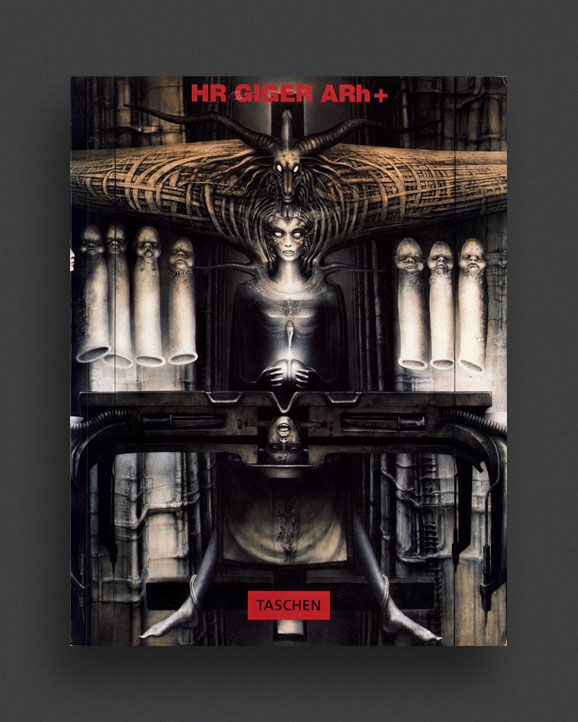
First 1998 hardcover edition of Giger's unrealised film masterpiece. The Mystery of San Gottardo exhaustively collates illustrations, texts, photographs, letters, and notes from a covert, personal project that Giger had been striving to realise for over three decades. “A unique love story… about a man and his love for a freak of nature, Armbeinda, which is really a sentient limb combining an arm and a leg. It is the further development of a recurring image in my work over the last 30 years”, a concept that stemmed from a 1963 creation called "The Beggar," Giger's very first sketch, featuring a leg and an arm holding a hat.
From the publisher:
"The dark king of the horrific, fantastic and bizarrely erotic, Swiss artist Giger might have languished in obscurity, such is the uncompromising vision of his work. However, in the late Seventies Hollywood came calling and his legendary designs for the Alien trilogy propelled him towards international fame and an Oscar. But Allen's Face-hugger, Chestburster and the reptilian Xenomorph are only a few visitors from Giger's monstrous universe. This latest book exhaustively collates illustrations, texts, photographs, letters, and notes from a covert, personal project that Giger has been striving to realise for over three decades. In a story mixing disturbing body horror and old-fashioned adventure tales, Giger illustrates the surreal science-fiction of a dystopian Switzerland where man is rendered into three bio-mechanical life-forms at the age of 60. The sexually insatiable arm-leg creature which rampages throughout this volume must rate as one of Giger's most grotesque creations. After being distracted by Hollywood for far too long, in this book Giger presents his latest outlandish and extraordinary visual excursion, a death-driving nightmare that will continue to unspool in your head long after you've closed the covers."
Highly recommended.
VG copy in G dust jacket with tanning to spine edge a ding to back.
2011, Japanese / Czech
Softcover (w. dust jacket), 180 pages, 23 x 21 cm
1st Edition, Out of print title / used / fine
Published by
Access / Japan
$90.00 - In stock -
Scarce exhibition catalogue surveying the work of Czech Surrealist artists Jan and Eva Švankmajer, published to accompany a major retrospective in Japan in 2011. Eva Švankmajerová (1940 – 2005, b. Eva Dvořáková in Kostelec nad Černými lesy), was a renowned painter, ceramicist, and writer active in the Czech and Slovak Surrealist Group who's poetry and prose regularly appeared in the journal Analogon. Švankmajerová was married to the Surrealist filmmaker Jan Švankmajer (b. Prague, 1934) and collaborated on many of his award-winning animated masterpieces, including Alice (1988), Faust (1994), Conspirators of Pleasure (1996) and Otesánek (2000). Lavishly illustrated throughout, this catalogue includes chapters on Jan and Eva Švankmajer's independent and collaborative works, spanning painting, objects, collage, ceramics, poetry, graphics, and their highly acclaimed animated film works. Also includes Jan Švankmajer's collaboration with Japanese photographer Eikoh Hosoe. Includes detailed history, list of works and accompanying texts, alongside production insights and studio photography.
As New copy.
1982, Japanese
Softcover (w. dust jacket and plastic sleeve), 126 pages, 33 x 25 cm
1st Edition, Out of print title / used / very good
Published by
Bijutsu Shuppansha / Japan
$140.00 - Out of stock
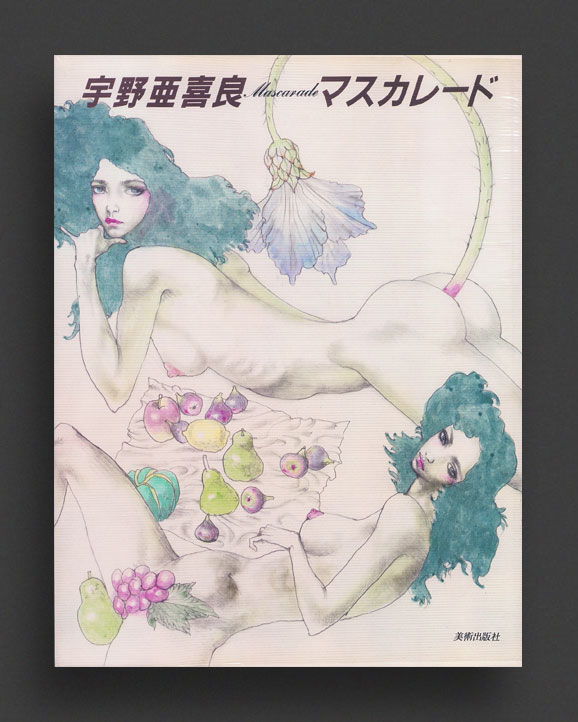
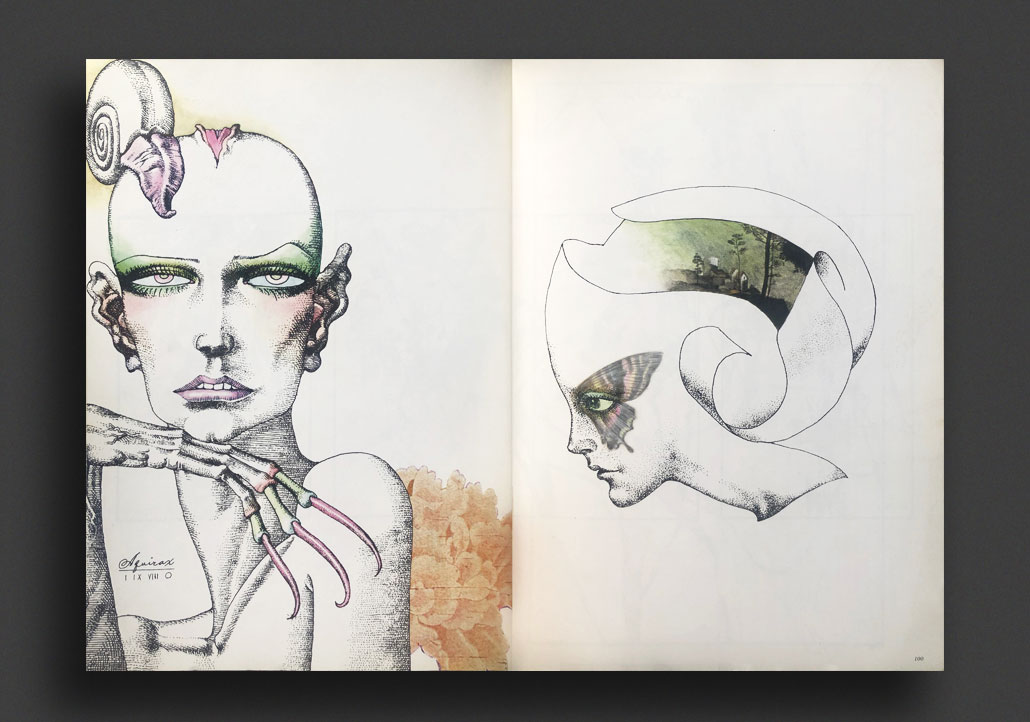
Published in 1982 and long out-of-print, Masquerade is one of the finest artist books of Japanese illustrator and graphic artist Aquirax Uno. Lavishly illustrated and elaborately designed and directed by the artist himself, this beautiful album collects Uno's most stunning fantastical illustration and painting throughout the 1960s—1980s, alongside texts and photography of Uno in his atelier. Masquerade collates a cross-section of Uno's graphic work spanning his entire career, his iconic and innovative print, book, and theatre works, including many new, unpublished works and illustrations printed in large format across many full-colour fold-outs — a wonderful way to capture his decadent, provocative, stream of consciousness line work in intimate detail. Highly recommended!
Aquirax Uno, also known as Akira Uno (b. 1934) is a Japanese graphic artist, illustrator and painter who was very influential in the 1960s and 1970s. His incredibly unique work is characterized by fantastic visuals, capricious and sensuous line flow, flamboyant (and occasionally grotesque) eroticism, and frequent use of collage and psychedelic bright colours. Uno was prominently involved with the Japanese underground art of the 1960s–1970s, and is particularly notable for his frequent collaborations with Shuji Terayama and his experimental theater Tenjo Sajiki.
Aquirax Uno, also known as Akira Uno (b. 1934) is a Japanese graphic artist, illustrator and painter who was very influential in the 1960s–1970s. His incredibly unique work is characterized by fantastic visuals, capricious and sensuous line flow, flamboyant (and occasionally grotesque) eroticism, and frequent use of collage and psychedelic bright colours. Uno was prominently involved with the Japanese underground art of the 1960s–1970s, and is particularly notable for his frequent collaborations with Shuji Terayama and his experimental theater Tenjo Sajiki.
Good copy with heavy foxing to cover edges and end pages, original publisher's textured plastic protector sleeve with usual slight shrinkage from age, edge wear. Sample images only.
2005, Japanese / English
Hardcover (w. dust jacket and obi), 80 pages, 19 x 27 cm
1st Edition, Out of print title / used / fine
Published by
Blue Interactions / Japan
$120.00 - Out of stock
Wonderful hardcover collection of Aquirax Uno's poster work dating 1959-1975.
Aquirax Uno, also known as Akira Uno (b. 1934) is a Japanese graphic artist, illustrator and painter who was very influential in the 1960s and 1970s. His incredibly unique work is characterized by fantastic visuals, capricious and sensuous line flow, flamboyant (and occasionally grotesque) eroticism, and frequent use of collage and psychedelic bright colours. Uno was prominently involved with the Japanese underground art of the 1960s–1970s, and is particularly notable for his frequent collaborations with Shuji Terayama and his experimental theater Tenjo Sajiki.
Near Fine copy with dust jacket and obi.
1972, Japanese
Softcover (w. illustrated slipcase), 34 x 25 cm
1st Edition, Out of print title / used / very good
Published by
Haga Bookstore / Japan
$420.00 - In stock -
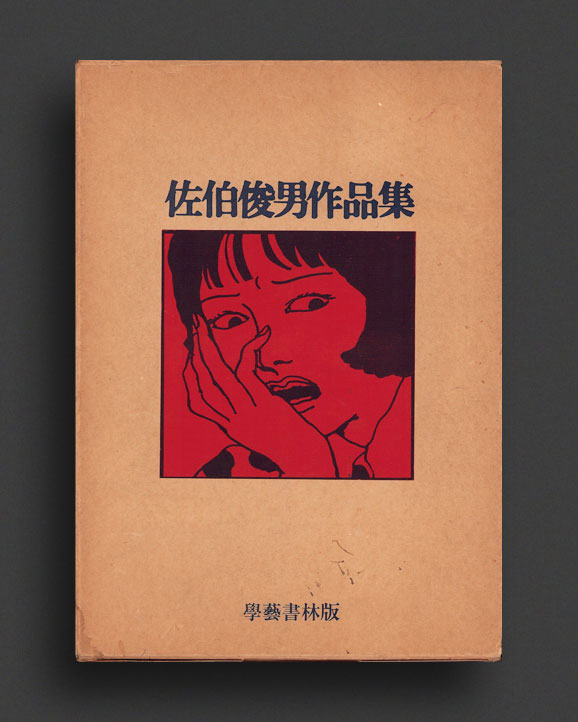
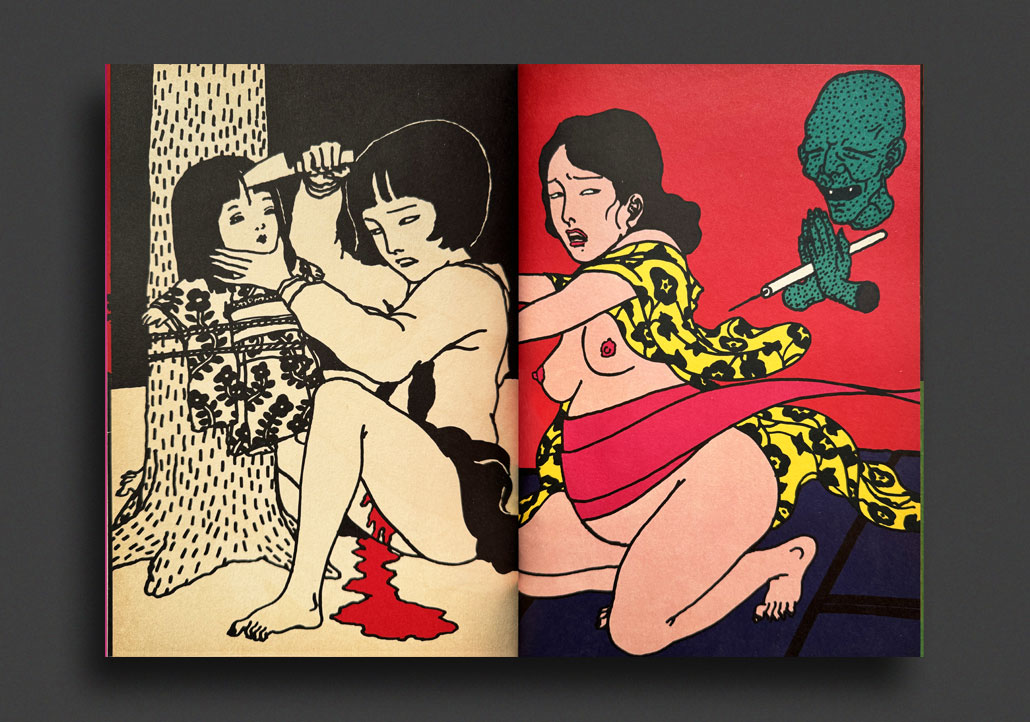
Very rare, complete first edition of this cult work by ero-guro master Toshio Saeki (1945—2019), an absolute favourite, published in 1972 in this over-sized slipcased edition by the legendary Haga Shoten. The most famous work by Toshio Saeki, Red box (Akai Hako) brings together over fifty illustrations drawn by Toshio Saeki in 1972, sublimely reproduced as large-format double-page spread artworks, captivating in their mania and gorgeous, vivid colour printing on matte stock. A stunning book to behold. A masterpiece! A must for any Saeki library.
Toshio Saeki (1945—2019) was an illusive Japanese illustrator and painter, and icon of 1970s Tokyo counterculture, known for combining Japanese folklore, Yōkai spirits and elements of Western art with his own sophisticated aesthetics to create a unique, sensational world of eros, dark humour, and horror. Given the title “Erotic Engineer” by Timothy Leary, Saeki's provocative art broke all sexual taboos, questioned Japanese ideology and traditional views on love, desire and gender roles. Saeki’s surgically-precise graphic work is closely related to the Japanese cultural phenomenon ‘Erotic, Grotesque, Nonsense’ (ero, guro, nansensu).
“Toshio Saeki conjures death with a pen”—Shūji Terayama, 1969.
Very Good copy with light wear/age, usual print buckling, VG—G slipcase with some light wear/age/marking, same dust jacket.
1990, English
Softcover, 362 pages, 21.6 x 24 cm
Reprint,
Out of print title / used / good
Published by
Feral House / Los Angeles
$45.00 - In stock -
"Apocalypse Culture is compulsory reading for all those concerned with the crisis of our times. An extraordinary collection unlike anything I have ever encountered. These are the terminal documents of the twentieth century."—J.G. Ballard
Two thousand years have passed since the death of Christ and the world is going mad. Nihilist prophets, born-again pornographers, transcendental schizophrenics and just plain folks are united in their belief in an imminent global catastrophe. What are the forces lurking behind this mass delirium?
APOCALYPSE CULTURE is a startling, absorbing and exhaustive tour through the nether regions of today’s psychotic brainscape.
First published in 1987, APOCALYPSE CULTURE immediately touched a nerve. Alternately excoriated and lauded as “epochal”, “the most important book of the decade,” APOCALYPSE CULTURE had begun to articulate what many inwardly sensed — the-fear inspired irrationalism and faith, the clash of irreconcilable forces, and the ever-looming specter of fin de race. In its present incarnation for Feral House, APOCALYPSE CULTURE has significantly increased in size, taking on new perspectives on our current crisis, with pertinent revisions of many articles from the original edition.—burb from this expanded and revised 1990 edition.
As New.
1972, German
Softcover, 96 pages, 28 x 205 cm
1st Edition, Out of print title / used / good
Published by
Heyne Verlag / Münich
$35.00 - Out of stock
Wonderful 1972 German book of erotic art selected by Phyllis and Dr. Eberhard Kronhausen, rightly considered international experts in the field. "Their exhibition "Erotic Art," which has been shown in many countries around the world, formed the basis for this illustrated volume. Because this exhibition included loans from museums and galleries, as well as works from the Kronhausen couple's collection and other private collections, it was possible to present images that had previously been inaccessible to the public. In selecting works for this volume, care was taken, on the one hand, to depict these unknown works, and, on the other, to provide a reliable overview of the erotic work of the leading artists (painting, graphic art, and sculpture) of our century. Thus, this book is a fortunate exception; it is a precious document, but also a demonstration of the sexual and cultural revolution of our century."
Features the work of Franz von Bayros, Hans Bellmer, Marc Chagall, Lovis Corinth, Salvador Dali, Paul Delvaux, Otto Dix, J. Dubuffet, Max Ernst, Ernst Fuchs, Willi Geiger, George Grosz, Horst Janssen, Allen Jones, Gustav Klimt, Felix Labisse, Jan Lebenstein, Edward Munch, Claes Oldenburg, Pablo Picasso, Herbert Rauschenberg, George Segal, Max Walter Swanberg, Tomi Ungerer, Andy Warhol, Tom Wesselmann.
Good—VG copy with some laminate seperation to cover extremities and slight corner bump.
1999, Japanese
Softcover, 176 pages, 21 x 15 cm
1st Edition, Out of print title / used / very good
Published by
Atelier Peyotl / Tokyo
$25.00 - Out of stock
"České Magické umění" Special Feature Issue of cult Japanese underground magazine Yaso, published in 1999, edited by Yuichi Konno and Atelier Peyotl (publishers of Night Vision/Yaso/Peyotl/Wave/Silvester Club...). Illustrated with texts in Japanese that look at the theme of Czech Magical Art with a heavy emphasis on animation, but also puppetry, children's literature, theatre, surrealism, film, tracing the region's rich history of alchemy, mythology and fairy tales. Featuring Jiří Trnka, Karel Zeman, Břetislav Pojar, Vladimír Jiránek, Lubomír Beneš, Jiří Barta, Václav Mergl, Jan Švankmajer, Kihachirō Kawamoto, Oldřich Lipský, Petr Matásek, Jindřich Štyrský, Toyen, Noriyuki Sawa, Jiří Kolář, and many more.
Very Good copy.
1996, Japanese
Softcover, 100 pages, 30 x 23 cm
1st Edition, Out of print title / used / very good
Published by
Rockin' On / Tokyo
$40.00 - Out of stock
H Magazine November 1996, the culture magazine published by Tokyo publishing house Rockin' On. Each issue packed to the brim with 1990's fashion, photography, film, music, and more, this issue "Border Ground" features Rita Ackerman interview, art gallery and photographs shot by Richard Kern, fashion shoots for Undercover and Hysteric Glamour, Frank Kozik gallery and interview, Pizzicato Five, Ranran Suzuki, fashion shoots by Takashi Homma, Yoshiko Seino, Kenshu Shintsubo, Kyoji Takahashi, and much more.
Good-Very Good copy with some light wear.
1960, Japanese
Hardcover (w. dust jacket), 106 pages, 26.5 x 18.5 cm
1st Edition, Out of print title / used / very good
Published by
Misuzu Shobo / Tokyo
$100.00 $70.00 - Out of stock
First edition of this lovely 1960 hardcover monograph published in Tokyo on the German Surrealist Max Ernst (1891—1976), as part of a Misuzu Shobo series on Modern European and American artists issued for Japanese readers. With accompanying text by Japanese poet, critic and fellow Surrealist artist Shūzō Takiguchi. A prolific and highly original painter, sculptor, graphic artist, and poet, Ernst's various works are surveyed (paintings, collages, and frottages dating upto the late 1950s) herein generously in colour and b/w reproductions. Ernst was a primary pioneer of the Dada and Surrealism movements.
Very Good copy with some internal blank stock paper tanning. Dust Jacket with some wear and tear to extremities, all preserved in mylar wrap. A lovely copy of this uncommon title.
1977, French
Softcover (staple-bound), 98 pages, 27 x 21.5 cm
1st Edition, Out of print title / used / very good
Published by
Les Humanoïdes Associés / Paris
$35.00 - Out of stock
Metal Hurlant No. 15, March 1977 issue featuring comic stories/art by Nicole Claveloux, Moebius, Enki Bilal, Philippe Druillet, Jacques Lob, Cortman, Chantal Montellier, Edmund Dulac, Richard Dadd, and many more, plus the usual fare of sci-fi, movies, music... Cover art by Philippe Druillet. Original French editions, very scarce outside Europe.
Métal Hurlant (literal translation: "Howling Metal") was a French comics anthology of science fiction and horror comics stories, created in December 1974 by comics artists Jean Giraud (better known as Mœbius) and Philippe Druillet together with journalist-writer Jean-Pierre Dionnet and financial director Bernard Farkas. The four were collectively known as "Les Humanoïdes Associés" (United Humanoids), which became the name of the publishing house releasing Métal Hurlant. English, German and Italian editions were also licensed, including Heavy Metal, published in the US by National Lampoon. Métal hurlant was originally released quarterly with contributors including Moebius and Druillet, depicting such iconic characters as Arzach and Lone Sloane for the first time, as well as work by Richard Corben, Guido Crepax, Alejandro Jodorowsky, Enki Bilal, Caza, Serge Clerc, Alain Voss, Berni Wrightson, Nicole Claveloux, Milo Manara, Frank Margerin, Masse, Chantal Montellier, and many others.
Very Good copy, general light wear, rubbing.
2006, Japanese / French
Hardcover (w. slipcase), 26.5 x 19 cm
1st Edition, Out of print title / used / very good
Published by
Seirin Kogeisha / Tokyo
$330.00 - In stock -
Now very rare out-of-print collection "1970, Toshio Saeki" by the Japanese master of Ero guro, published in 2006 by Seirin Kogeisha. Published in this hardcover, slipcased, numbered edition of 2000 copies, "1970, Toshio Saeki" reproduces a fine selection of colour and b/w works of the erotic bizarre, accompanied by captions and postface by Saeki himself, in Japanese and French.
Toshio Saeki (1945—2019) was an illusive Japanese illustrator and painter, and icon of 1970s Tokyo counterculture, known for combining Japanese folklore, Yōkai spirits and elements of Western art with his own sophisticated aesthetics to create a unique, sensational world of eros, dark humour, and horror. Given the title “Erotic Engineer” by Timothy Leary, Saeki's provocative art broke all sexual taboos, questioned Japanese ideology and traditional views on love, desire and gender roles. Saeki’s surgically-precise graphic work is closely related to the Japanese cultural phenomenon ‘Erotic, Grotesque, Nonsense’ (ero, guro, nansensu).
“Toshio Saeki conjures death with a pen”—Shūji Terayama, 1969.
Very Good copy in VG slipcase.
1992, English
Softcover, 390 pages, 28 x 21.6 cm
1st Edition, Out of print title / used / very good
Published by
Princeton University Press / New York
$100.00 - Out of stock
First 1992 softcover edition of this pioneering work, the first history of the art of the insane, in which the author scrutinizes changes in attitudes toward the art of the mentally ill from a time when it was either ignored or ridiculed, through the era when Paul Klee, along with other major figures in the art world, discovered the extraordinary power of visual statements by psychotic artists such as Adolf Wölfli and Richard Dadd.
John MacGregor draws on his dual training in art history and in psychiatry and psychoanalysis to describe not only this evolution in attitudes, but also the significant influence of the art of the mentally ill on the development of modern art as a whole. His detailed narrative, with its strangely beautiful illustrations, introduces us to a fascinating group of people that includes the psychotic artists, both trained and untrained, and the psychiatrists, psychoanalysts, critics, and art historians who encountered their work.
"The psychotics who haunt Mr. MacGregor's pages desperately fling images at us from the midst of their manias, suicidal depressions or paranoid reconstructions of the cosmos. ... All these painters were lost souls, curved in on themselves. Yet despite their isolation, Mr. MacGregor is able to show that their work is by no means sealed off from culture. However private their visions, the ways they represent them in art are shaped to a surprising degree by the styles and taste that dominate their respective times. Mr. MacGregor has written a valuable, at times even a daring book."—Michael Vincent Miller, The New York Times Book Review
"A delightful surprise, a scholarly but warm, lucid, lucent, nondogmatic work.... Valuable reading for anyone interested in the creative process."—Joanne Greenberg
"This fascinating story, which has never been told before, is told beautifully, and with extraordinary scholarship, in [this] richly illustrated new book."—Oliver Sacks
"[MacGregor] is a dedicated scholar who has spared no effort and has written what must be the first and only account of a very interesting and varied subject."—E. H. Gombrich
John M. MacGregor lives in San Francisco. Since 1985 he has devoted himself to research and writing in psychiatric art.
Very Good copy, light wear. First softcover edition (1992), first hardcover edition issued in 1989.
1972, Japanese
Softcover, 250 pages, 21 x 14.8 cm
1st Edition, Out of print title / used / very good
Published by
Misaki Shobo / Tokyo
$70.00 - In stock -
Erotica April 1972, Japan's erotic magazine for bibliophiles, published in the 1960s—1970s by Misaki Bookstore. Each issue densely packed with illustrations, articles, news, and feature stories around the universe of Eros from around the world during a time of great sexual revolution. Covering all manner of sexual customs and subject matter from the arts and literature, film and manga, philosophy and radical politics, Erotica was Japan's leading erotic academic journal, featuring, amongst it's heavy historical and contemporary papers, the cutting-edge of Japanese and international erotic artists, from Hans Bellmer to Toshio Saeki.
Erotica April 1972 features the artwork of Toshio Saeki, Kyozo Hayashi, Koaku Yukio, Kaname Ozuma, "Alone" by Japanese photographer Takumi Uchida, Meiji sexual history, erotica by poet and painter Mitsuharu Kaneko, European erotic cinema, and much more.
Very Good copy, light wear.
1970, Japanese
Softcover, 250 pages, 21 x 14.8 cm
1st Edition, Out of print title / used / very good
Published by
Misaki Shobo / Tokyo
$70.00 - In stock -
Erotica July 1970, Japan's erotic magazine for bibliophiles, published in the 1960s—1970s by Misaki Bookstore. Each issue densely packed with illustrations, articles, news, and feature stories around the universe of Eros from around the world during a time of great sexual revolution. Covering all manner of sexual customs and subject matter from the arts and literature, film and manga, philosophy and radical politics, Erotica was Japan's leading erotic academic journal, featuring, amongst it's heavy historical and contemporary papers, the cutting-edge of Japanese and international erotic artists, from Hans Bellmer to Toshio Saeki.
Erotica July 1970 features the artwork of Toshio Saeki, Haruo Shinozaki, Masayuki Kitamura, Tomoe Shibaoka, "Pornology" by Japanese photographer Toyohiko Yasui, Swedish erotica, European erotic cinema, Pleasure Machines/Mechanical Sex featuring artworks by Tomi Ungerer and science fiction with illustrations by Yasutaka Tsutsui, the psychology of premajure ejaculation, and much more.
Very Good copy, light wear.
1970, Japanese
Softcover, 250 pages, 21 x 14.8 cm
1st Edition, Out of print title / used / very good
Published by
Misaki Shobo / Tokyo
$50.00 - In stock -
Erotica February 1970, Japan's erotic magazine for bibliophiles, published in the 1960s—1970s by Misaki Bookstore. Each issue densely packed with illustrations, articles, news, and feature stories around the universe of Eros from around the world during a time of great sexual revolution. Covering all manner of sexual customs and subject matter from the arts and literature, film and manga, philosophy and radical politics, Erotica was Japan's leading erotic academic journal, featuring, amongst it's heavy historical and contemporary papers, the cutting-edge of Japanese and international erotic artists, from Hans Bellmer to Toshio Saeki.
Erotica February 1970 features the artwork of Hans Bellmer, Aoi Fujimoto, George Grosz, and Haruo Shinozaki, amongst many others, a "blue film encyclopedia", European erotic film, the Temptation of Saint Anthony in the visual arts, and much more.
Very Good copy, light wear.
1976, English
Softcover, 192 pages, 30.5 x 23 cm
1st Edition, Out of print title / used / good
Published by
NAL / New York
$55.00 - Out of stock
First US edition of this lovely volume of artworks from "The Golden Age of Fantastic Illustration" edited by Brigid Peppin and published in 1976. Profusely illustrated throughout with many stunning full-colour and b/w examples of all the artists featured: Alastair, John D. Batten, Aubrey Beardsley, Francis Donkin Bedford, Robert Anning Bell, Jean de Bosschère, Arthur Gaskin, Vernon Hill, William Thomas Horton, Laurence Housman, Arthur Boyd Houghton, Arthur Hughes, Eleanor Vere Boyle, René Bull, Edward Julius Detmold, Edward Burne-Jones, Harry Clarke, Walter Crane, Gustave Doré, Richard Doyle, Edmund Dulac, Henry Justice Ford, William Holman Hunt, Alfred Garth Jones, Jessie M. King, Rudyard Kipling, Reginald Knowles, Edward Lear, John Everett Millais, H. R. Millar, Louis Fairfax Muckley, Harold E. H. Nelson, Kay Nielsen, Joseph Noel Paton, Arthur Rackham, Charles Ricketts, Charles Robinson, Thomas Robinson, W. Heath Robinson, Dante Gabriel Rossetti, Frederick Sandys, Byam Shaw, Sidney Sime, William Strang, E. J. Sullivan, John Tenniel.
"Late Victorian and early 20th century England saw a unique flowering of book illustration as an art form. Such illustrators as Arthur Rackham, Edmund Dulac and Kay Nielsen are now recognised as remarkable artists. But perhaps their return to fashion stems less from their consummate skill than from a new, possibly more sophisticated appreciation of the fantasy elements in their work. It was in the realms of fantasy that illustration reached its highest levels, through a happy interaction of opportunity and inspiration: developments in printing and reproduction combined with the growth of the middle class audience for books and magazines to offer a perfect medium for expressing the cultural preoccupations of the era."—from the introduction
Very Good copy.
1998, Japanese
Softcover (w. dust jacket), 204 pages, 22 x 15 cm
1st Edition, Out of print title / used / very good
Published by
Isshusha / Japan
$45.00 - Out of stock
Catalogue and historical study by renowned Japanese fairy scholar Kimie Imura, published in Japan to accompany a travelling Japanese exhibition in 1998. Profusely illustrated throughout in full-colour, the book traces the history of the fairy in folk-lore and the arts, from Celtic mythology and Arthurian legend, to the danger of their depiction being rejected by Christianity as the descendants of pagan gods, through the Elizabethan era in the 16th century, where they regained their place in the world of literature and theatre, through the adoration of the 19th century Victorian period and future generations of artists in Japan all weaving the fairy legend into works of painting, music, ballet, literature, book illustration, costume, applied arts, sculpture, and much more. Features the work of George Cruickshank, Honor Charlotte Appleton, Arthur Rackham, Amelia Murray, Edmund Dulac, Joseph Payton, John Simmons, Joseph Zevan, The Doyle brothers, C. Wilhelm, Shigeru Mizuki, Yoshitaka Amano, Itsuko Azuma, Suzuko Makino, Akira Uno, Yukio Satsukime, Yuki Yuuki, Akiko Iwakiri, and many more.
Very Good—Near Fine copy in VG dust jacket with a few ballpoint marks to lower back.
2010, Japanese
Softcover (w. dust jacket and obi), 136 pages, 19 x 14.6 cm
1st Edition, Out of print title / as new
Published by
Atelier Third / Tokyo
$90.00 - Out of stock
Published in 2010 and long out-of-print, this book collects the rare artworks of Japanese artists Ran Akiyoshi and Aya Shijo explores a world of erotic fantasies ranging from surrealism to magic, S&M to spanking, and much more. Two prolific artists whose work proliferated throughout the bountiful pages of Tokyo's underground SM / fetish publishing scene in the 1960s—1970s, but are virtually unknown and undocumented outside of Japan.
Legendary self-taught underground Japanese artist Ran Ran Akiyoshi (1922—1982), virtually unknown and undocumented outside of Japan, Akiyoshi never held an exhibition nor sold any of his drawings in his lifetime. Much like the work of Toshio Saeki or Namio Harukawa, Akiyoshi's creations proliferated throughout the bountiful pages of Tokyo's underground SM / fetish publishing scene in the 1960s—1970s. Yet Akiyoshi's phantasmagoric world of erotic fantasy is like no other, building sado-masochistic themes within unique, somewhat Lovecraftian and Bosch-esque dreamscapes populated by mythological goddesses and grotesque creatures. His peculiar fantasy drawings were highly praised by Japanese novelist and art critic, Tatsuhiko Shibusawa, an instrumental figure in the Japanese avant-garde who translated de Sade and Bataille to Japanese, and specialised in the study of medieval demonology.
Shijo Aya is a legendary underground Japanese artist little-known inside or outside Japan who specialised in fetish/punishment/humiliation imagery. He illustrated for magazines such as Kitan Club, SM King, SM Fan, and SM Play.
As New in dust jacket w. obi.
2024, Japanese
Softcover (w. dust jacket + obi), 176 pages, 19 x 15 cm
Published by
Atelier Third / Tokyo
$70.00 - In stock -
Brand new book collecting 200 rare and phenomenal illustrations of the legendary underground Japanese artist Ran Akiyoshi (1922—1982), many never seen before in print. Virtually unknown and undocumented outside of Japan, Akiyoshi never held an exhibition nor sold any of his drawings in his lifetime. Much like the work of Toshio Saeki or Namio Harukawa, Akiyoshi's creations proliferated throughout the bountiful pages of Tokyo's underground SM / fetish publishing scene in the 1960s—1970s. Yet Akiyoshi's phantasmagoric world of erotic fantasy is like no other, building sado-masochistic themes within unique, somewhat Lovecraftian and Bosch-esque dreamscapes populated by mythological goddesses and grotesque creatures. His peculiar fantasy drawings were highly praised by Japanese novelist and art critic, Tatsuhiko Shibusawa, an instrumental figure in the Japanese avant-garde who translated de Sade and Bataille to Japanese, and specialised in the study of medieval demonology.
Born in Kyongsong (present Seoul), Korea in 1922, Akiyoshi was publicly schooled and self-taught in drawing. After WWII, he moved to Japan, traveled around Kyushu area and finally settled in Tokyo in 1946. Akiyoshi started working for adult entertainment magazines such as "Decameron","Fuzoku Soushi", and "Uramado" in 1950. Around 1958, he began focusing on original drawings while continuing to draw illustrations for various magazines. In the 1970s, Akiyoshi provided iconic cover and insert illustrations to a number of prominent SM magazines, including "SM King", "SM Kitan", and "SM Club". A prolific and private artists, he never held an exhibition nor sold any of his drawings in his lifetime. Akiyoshi died from heart failure in 1982 at the age of 58.
1992, Japanese
Hardcover, 98 pages (w. fold-outs), 42 x 30 cm
Out of print title / used / good
Published by
Treville / Tokyo
$140.00 $100.00 - Out of stock
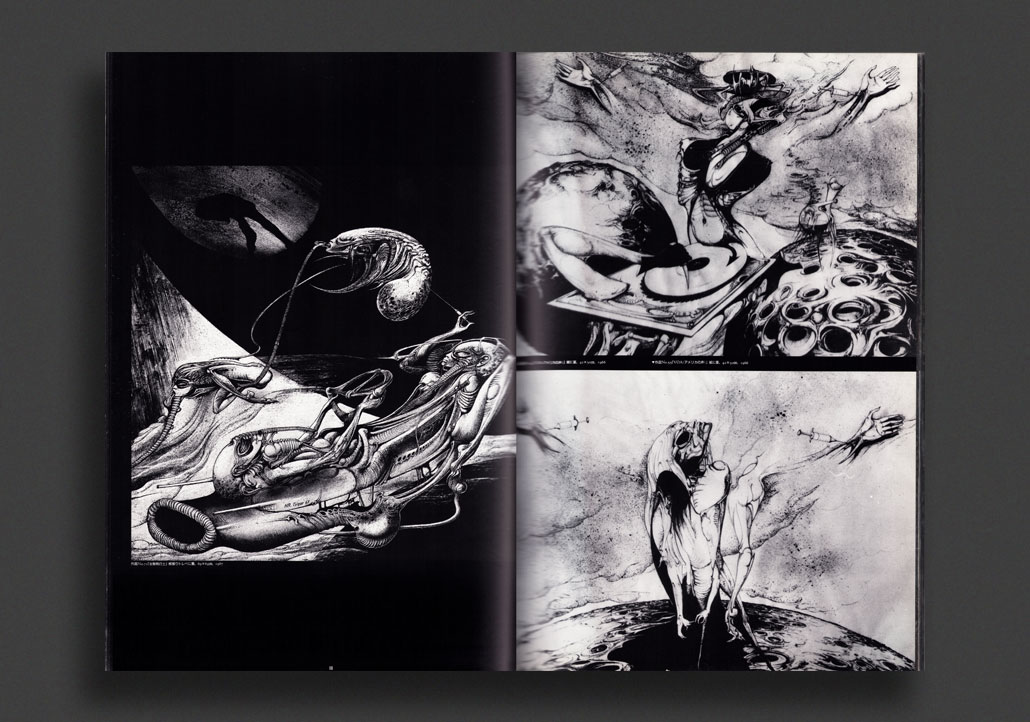
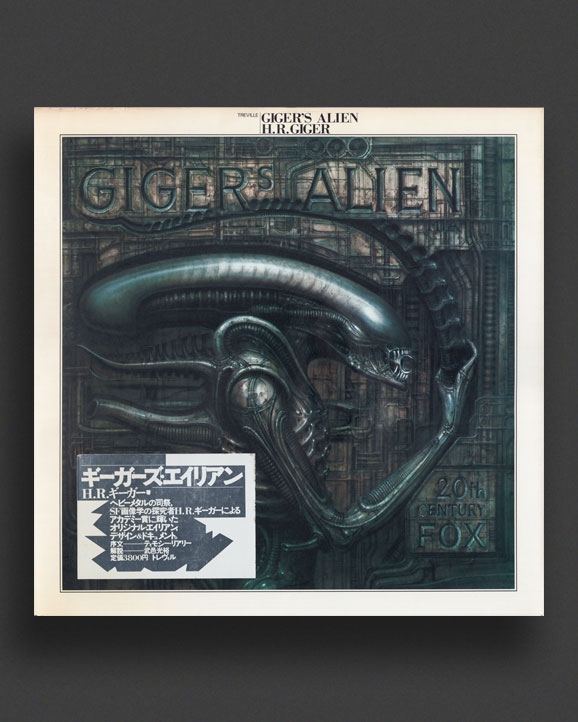
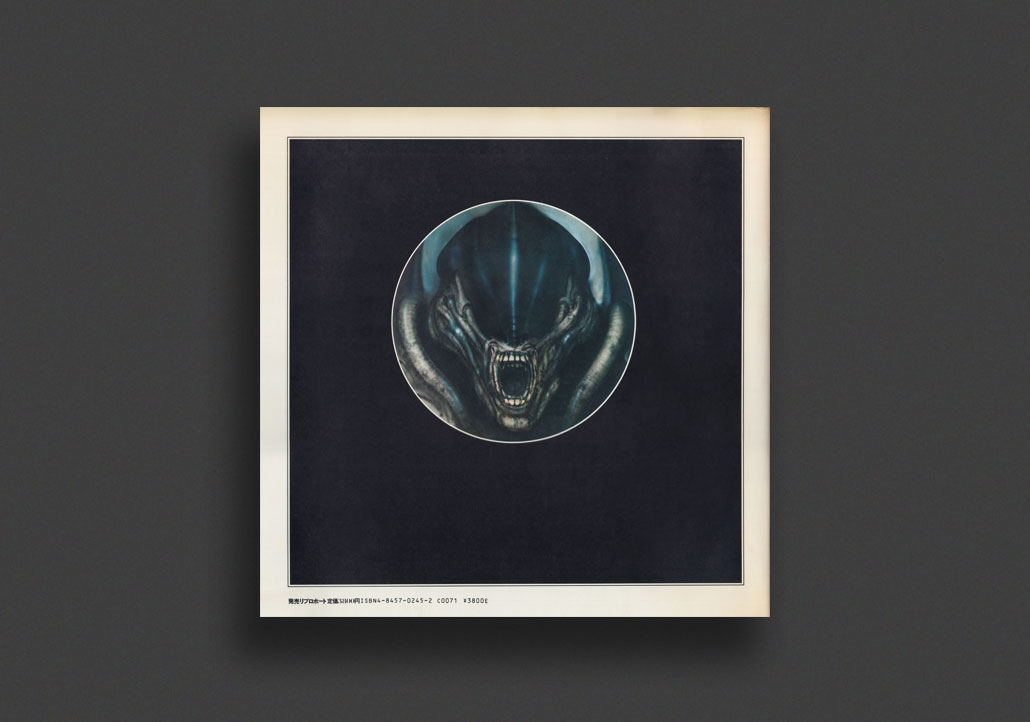
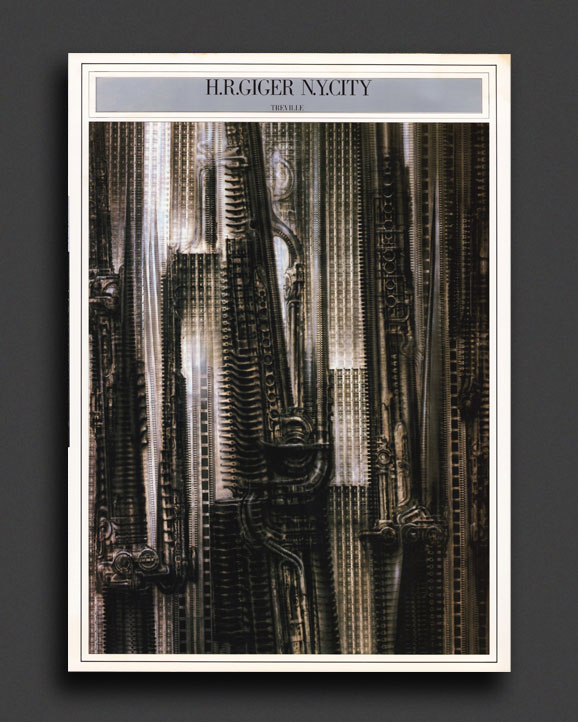
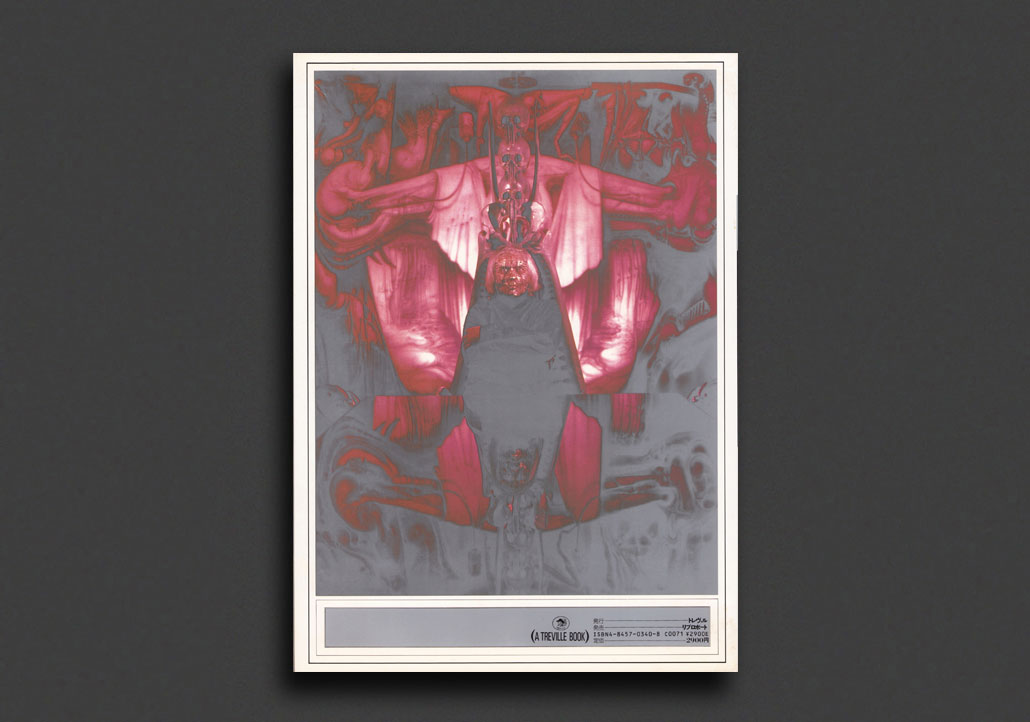
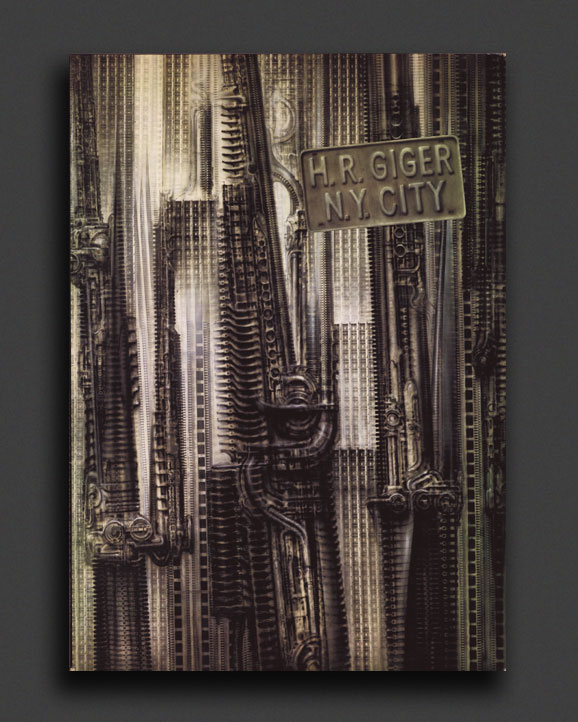
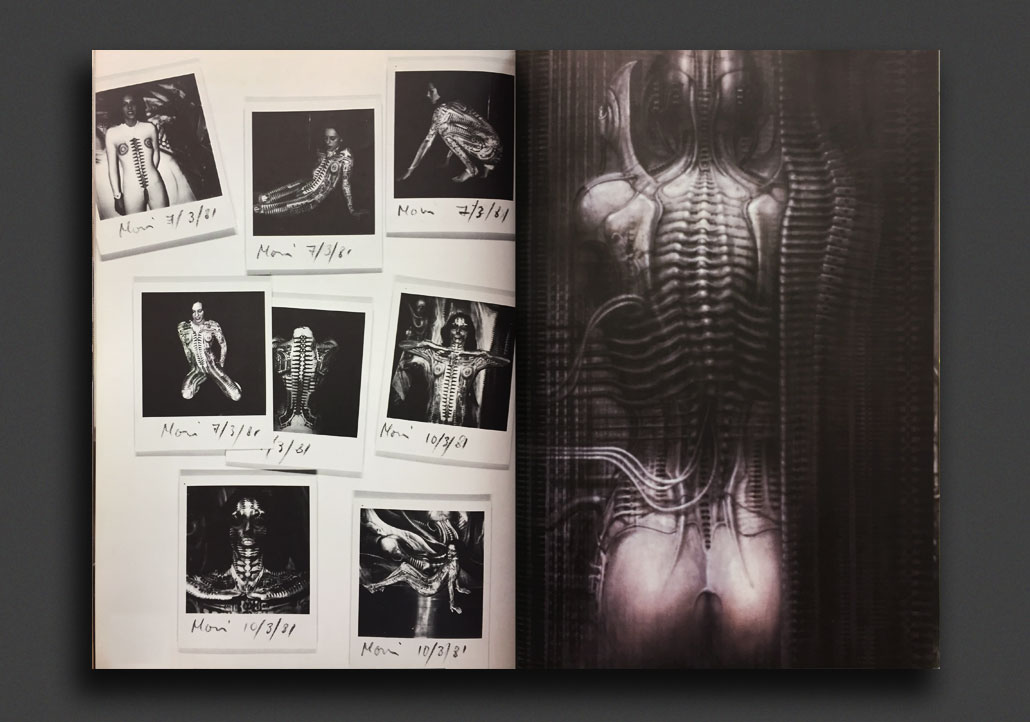
First special Japanese hardcover edition of H.R. Giger's Necronomicon II, the second oversized and visually overwhelming Giger-designed collection that takes us further through the incredible history of one of the most brilliant fantasy artists of the century. Reproducing Giger's award-winning work for the film ALIEN, lavish reproductions of his major paintings, environments, sculptural works, his work for never-shot film "The Tourist", his early grotesque ink illustrations, collaborations with Blondie's Debbie Harry, his "New York City" series from the late 1970's and so much more, all beautifully reproduced in full-colour and black and white, full-bleed spreads, including fold-out pages. Also includes interviews, texts, biography. These Giger folio books have become very desirable, collectable editions in their various printings around the world, the series encompassing the work of one of the world's most unique and influential visionaries of the macabre. This is volume 2 of 2 of "HR Giger's Necronomicon" where Al Azred's legendary magical book of the most wonderful abominations and perversions, "Necronomicon" (made infamous in the pages of HP Lovecraft's "Cthulhu" mythology), becomes a visual reality!
First hardcover Japanese edition, published by Hardcover edition published by Treville, Tokyo, in 1992. Light foxing/splitting/bumping to spine top and bottom, one semi-detaching from binding on endpaper, otherwise internally VG well preserved throughout.
2024, English
Hardcover (w. dust jacket), 334 pages, 32 x 22 cm
Published by
Centre Pompidou / Paris
$110.00 - In stock -
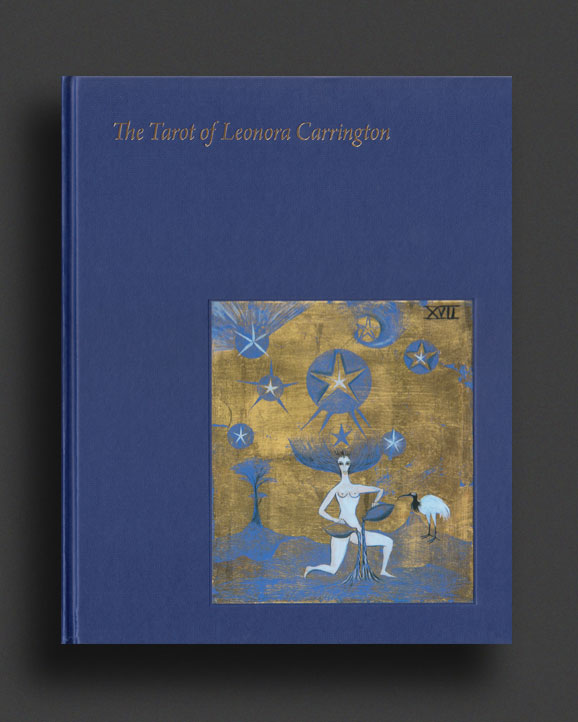
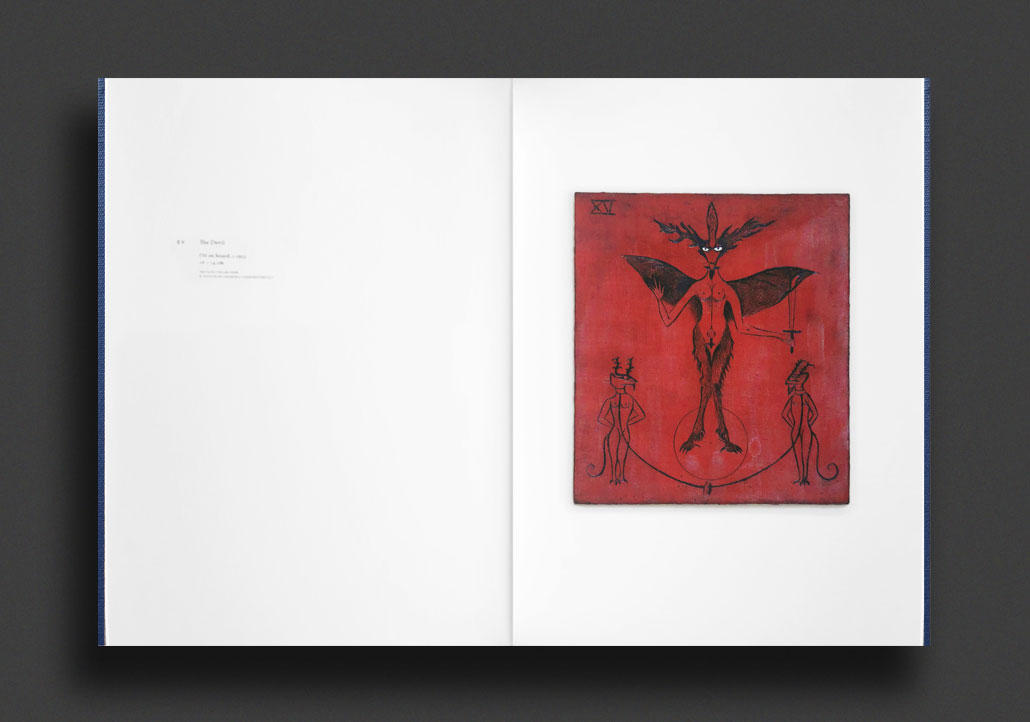
The defining book for the centenary of Surrealism. From September 2024 to January 2025, the Centre Pompidou will celebrate the 100th anniversary of André Breton's Surrealist Manifesto. For the next two years, their unprecedented Surrealist exhibition will tour the art galleries of the world, accompanied by this special catalogue.
Perhaps more than any other artistic movement, Surrealism had a cataclysmic effect on the modern mind, changing forever the way we think about experiencing the world. By rejecting the gross linearity that typified several centuries of preceding artworks, the legendary Surrealists Magritte, Ernst, Carrington, Dali, Tanning and so many others reached beyond the facade of that which is patently visible and found something more. Featuring original essays from leading academics and excerpts from the Surrealist Manifesto itself, this stands among the most essential Surrealist catalogues ever published.
1970, English
Softcover, 318 pages, 19.5 x 11.5 cm
Out of print title / used / good
Published by
Paladin / London
$25.00 - In stock -
1970 edition of this "brilliant inquiry into the psychology of artistic creativity ranges across the arts of cavemen and children, the music of Mozart and John Cage, the painting of Michelangelo and Robert Rauschenberg. It examines the role of the unconscious critical processes in the formal organisation of a work of art, and traces a central theme, that of the 'dying god', the psychological core of our greatest literature, painting and music."
"This is one of the most intelligent books ever written about the psychology of artistic creativity, and it is as relevent to the present situation of psychology as it is to the present situation of art... I know of no other book which so much conduces to a reasoned optimism about the future of art and, indirectly, about the future of human affairs."—John Russell SUNDAY TIMES
"... the fruits of a lifetime's rigorous thought and research... an important book, likely to have a permanent place alongside the work of E. H. Gombrich... outstanding virtues as a pioneer in the theory and understanding of art."—Anthony Curtis SUNDAY TELEGRAPH
G—VG copy, general wear and toning.