World Food Books' programme is largely produced on Kulin Nation land. We acknowledge the Wurundjeri people of the Kulin Nation as the first and continuing custodians of this land, and pay respect to their Elders past, present, and emerging.
World Food Books is an arts and special interests bookshop in Naarm / Melbourne. Founded in 2010, World Food Books is devoted to the presentation of a rotating, hand-selection of international art, design, literary and counterculture publications with an emphasis on the anti-traditional, the experimental, the avant-garde, the heretic, the marginal.
Presenting new titles alongside rare and out-of-print books, catalogues and journals spanning the fields of modern and contemporary art, design, photography, illustration, film, literature, poetry, cultural theory, philosophy, sexuality, popular and underground culture in its many radical forms, World Food Books wishes to encourage adventurous, thoughtful and open-minded reading, looking, writing, and exchange of publishing and ideas, both current and historical.
As well as our bookshop, located in Melbourne's historical Nicholas Building, all of our inventory is available internationally via our online mail-order service.
World Food Books semi-regularly co-ordinates "Occasions", a programme of exhibits and events at the bookshop and in partnership with other hosts (such as museums and art galleries) that develop out of the activities, relationships and content of the bookshop itself.
World Food Books
The Nicholas Building
37 Swanston Street
Room 5, Level 6
Melbourne 3000
Australia
SHOP HOURS:
THU–SAT 12–6
WEB-SHOP OPEN 24/7
World Food Books
Postal Address:
PO Box 435
Flinders Lane
Victoria 8009
Australia
info@worldfoodbooks.com
Art
Theory / Essay
Architecture / Interior
Graphic Design / Typography
Photography
Fashion
Eros
LGBTQ+
Fiction / Poetry
Weird / Speculative / Science Fiction / Horror
Transgressive / Visceral / Abject
Symbolism / Decadence / Fin de siècle
Film / Video
Painting
Sculpture / Installation
Performance / Dance / Theater
Drawing
Sound / Music
Curatorial
Group Shows / Collections
Periodicals
Out-of-print / Rare
Posters / Ephemera / Discs
Signed Books
World Food Books Gift Voucher
World Food Book Bag
Australian Art
Australian Fiction
Australian Science Fiction / Speculative Fiction
Australian Poetry
Australian Photography
Japanese Photography
Conceptual Art
Minimal Art
Dada
'Pataphysics / Oulipo
Fluxus
Concrete Poetry
Pop Art
Surrealism
Arte Povera
Arte Informale / Haute Pâte / Tachism
Nouveau Réalisme / Zero / Kinetic
Situationism / Lettrism
Collage / Mail Art / Xerox Art
Art Brut / Folk / Visionary / Fantastic
Illustration / Graphic Art / Bandes Dessinées
Furniture
Italian Radical Design / Postmodernism
Textiles
Ceramics / Glass
Counterculture
Protest / Revolt
Philosophy
Psychoanalysis
Anthropology
Anarchism
Socialism / Anarchism / Communism / Capitalism
Literary Theory / Semiotics / Language
Feminism / Women's Studies
Gender Studies / Sexuality
Anthropology
Fetishism / BDSM
Drugs / Psychedelia
Crime / Violence
Animal Rights / Veganism
Occult / Esoterica
Ecology / Earth / Alternative Living
Whole Earth / Crafts
All prices in AUD (Australian dollars)
Pick-Ups
Pick-up orders can be collected in our bookshop during opening hours after order date. Please collect any Pick-up orders within 2 weeks of ordering as we have limited storage space. Orders will be released back into stock if not collected within this time. No refunds can be made for pick-ups left un-collected. If you cannot make it in to the bookshop in this time-frame, please choose postage option.
Return Policy
All sales are final. We do accept returns (for refund or exchange) for items received in error. All our orders are packed with special care using heavy-duty padding and cardboard book-mailers or bubble mailers (for smaller books), using reinforcement where required. We cannot take responsibility for any lost, stolen or damaged parcels.
Insurance
Should you wish to insure your package, please email us directly after placing your order and we can organise this at a small extra expense. Although all standard/express tracked packages are very safe and dependable, we cannot take responsibility for any lost, stolen or damaged parcels. We recommend insurance on valuable orders.
Interested in selling your old books, catalogues, journals, magazines, comics, fanzines, ephemera? We are always looking for interesting, unusual and out-of-print books to buy. We only buy books in our fields of interest and specialty, and that we feel we can resell.
We base these prices on desirability, market value, in-print prices, condition and our current stock levels. We offer cash, store credit, and can take stock on consignment. All
about 25% of the price we expect to get when we sell them, or 30% in store credit. We base these prices on desirability, market value, in-print prices, condition and our current stock levels.
Sell your books any day of the week. You can drop them off and return later. If you have a lot of books, we can visit your Sydney home.
We buy books that we feel we can resell. We offer about 25 % of the price we expect to get when we sell them, or 30% in store credit. We base these prices on desirability, market value, in-print prices, condition and our current stock levels.
Philadelphia Wireman
03 August - 01 September, 2018
World Food Books is proud to announce our next Occasion, the first presentation of sculptures by Philadelphia Wireman in Australia.
The Philadelphia Wireman sculptures were found abandoned in an alley off Philadelphia’s South Street on trash night in 1982. Their discovery in a rapidly-changing neighbourhood undergoing extensive renovation, compounded with the failure of all attempts to locate the artist, suggests that the works may have been discarded after the maker’s death. Dubbed the "Philadelphia Wireman" during the first exhibition of this work, in 1985, the maker’s name, age, ethnicity, and even gender remain uncertain. The entire collection totals approximately 1200 pieces, all intricately bound together with tightly-wound heavy-gauge wire (along with a few small, abstract marker drawings, reminiscent both of Mark Tobey and J.B. Murry). The dense construction of the work, despite a modest range of scale and materials, is singularly obsessive and disciplined in design: a wire armature or exoskeleton firmly binds a bricolage of found objects including plastic, glass, food packaging, umbrella parts, tape, rubber, batteries, pens, leather, reflectors, nuts and bolts, nails, foil, coins, toys, watches, eyeglasses, tools, and jewellery.
Heavy with associations—anthropomorphic, zoomorphic, and socio-cultural responses to wrapped detritus—the totemic sculptures by Philadelphia Wireman have been discussed in the context of work created to fulfil the shamanistic needs of alternative religions in American culture. Curators, collectors, and critics have variously compared certain pieces to sculpture from Classical antiquity, Native American medicine bundles, African-American memory jugs, and African fetish objects. Reflecting the artist’s prolific and incredibly focused scavenging impulse, and despite—or perhaps enhanced by—their anonymity, these enigmatic objects function as urban artefacts and arbiters of power, though their origin and purpose is unknown. Philadelphia Wireman, whatever their identity, possessed an astonishing ability to isolate and communicate the concepts of power and energy through the selection and transformation of ordinary materials. Over the course of the past two decades, this collection has come to be regarded as an important discovery in the field of self-taught art and vernacular art.
Presented in collaboration with Fleisher-Ollman Gallery, Philadelphia, and Robert Heald, Wellington.
Susan Te Kahurangi King
02 February - 10 March, 2018
Susan Te Kahurangi King (24 February 1951 - ) has been a confident and prolific artist since she was a young child, drawing with readily available materials - pencils, ballpoint pens and felt-tip markers, on whatever paper is at hand. Between the ages of four and six Susan slowly ceased verbal communication. Her grandparents William and Myrtle Murphy had developed a special bond with Susan so they took on caring responsibilities for extended periods. Myrtle began informally archiving her work, carefully collecting and storing the drawings and compiling scrapbooks. No drawing was insignificant; every scrap of paper was kept. The King family are now the custodians of a vast collection containing over 7000 individual works, from tiny scraps of paper through to 5 meter long rolls.
The scrapbooks and diaries reveal Myrtle to be a woman of great patience and compassion, seeking to understand a child who was not always behaving as expected. She encouraged Susan to be observant, to explore her environment and absorb all the sights and sounds. Myrtle would show Susan’s drawings to friends and people in her community that she had dealings with, such as shopkeepers and postal workers, but this was not simply a case of a grandmother’s bias. She recognised that Susan had developed a sophisticated and unique visual language and sincerely believed that her art deserved serious attention.
This was an unorthodox attitude for the time. To provide some context, Jean Dubuffet coined the term Art Brut in 1945 to describe work created by self-taught artists – specifically residents of psychiatric institutions and those he considered to be visionaries or eccentrics. In 1972 Roger Cardinal extended this concept by adopting the term Outsider Art to describe work made by non-academically trained artists operating outside of mainstream art networks through choice or circumstance. Susan was born in Te Aroha, New Zealand in 1951, far from the artistic hubs of Paris and London that Dubuffet and Cardinal operated in. That Myrtle fêted Susan as a self-taught artist who deserved to be taken seriously shows how progressive her attitudes were.
Susan’s parents Doug and Dawn were also progressive. Over the years they had consulted numerous health practitioners about Susan’s condition, as the medical establishment could not provide an explanation as to why she had lapsed into silence. Dawn educated herself in the field of homeopathy and went on to treat all twelve of her children using these principles – basing prescriptions on her observations of their physical, mental and emotional state.
Doug was a linguist with an interest in philosophy who devoted what little spare time he had to studying Maori language and culture. To some extent their willingness to explore the fringes of the mainstream made them outsiders too but it was their commitment to living with integrity and their respect for individuality that ensured Susan’s creativity was always encouraged.
Even though Susan’s family supported her artistic pursuits, some staff in schools and hospitals saw it as an impediment to her assimilation into the community and discouraged it in a variety of ways. Her family was not always aware of this and therefore did not fully understand why Susan stopped drawing in the early 1990s. However, rather than dwell on the challenges that Susan faced in pursuit of her artistic practice, they prefer to highlight her achievements. In 2008 Susan began drawing again in earnest, after an almost 20 year interruption, and her work is now shown in galleries around the world.
Susan grew up without television and has been heavily influenced by the comics she read as a child. She is absolutely fearless in the appropriation of recognizable characters, such as Donald Duck and Mickey Mouse, in her work. She twists their limbs, contorts their faces, compresses them together, blends them into complex patterned backgrounds - always imbuing them with an incredible energy. Although Susan often used pop culture characters in her work they are not naive or childlike. These are drawings by a brilliant self-taught artist who has been creating exceptional work for decades without an audience in mind.
Mladen Stilinović
"Various Works 1986 - 1999"
02 February 16 - September 10, 2016
Various works 1986 - 1999, from two houses, from the collections of John Nixon, Sue Cramer, Kerrie Poliness, Peter Haffenden and Phoebe Haffenden.
Including: Geometry of Cakes (various shelves), 1993; Poor People’s Law (black and white plate), 1993; White Absence (glasses, ruler, set square, silver spoon, silver ladel with skin photograph and wooden cubes), 1990-1996; Exploitation of the Dead (grey and red star painting, wooden painting, black spoon with red table, red plate), 1984-1990; Money and Zeros (zero tie, paintings made for friends in Australia (Sue, John, Kerrie), numbers painting), 1991-1992; Words - Slogans (various t-shirts) - “they talk about the death of art...help! someone is trying to kill me”, “my sweet little lamb”, “work is a disease - Karl Marx”; Various artist books, catalogues, monographs, videos; Poster from exhibition Insulting Anarchy; "Circular" Croatian - Australian edition; Artist book by Vlado Martek (Dostoyevsky); more.
Thanks to Mladen Stilinović and Branka Stipančić.
Jonathan Walker
Always Will Need To Wear Winter Shirt Blue + Ochre Small Check Pattern
21 August - 21 September, 2015
Untitled
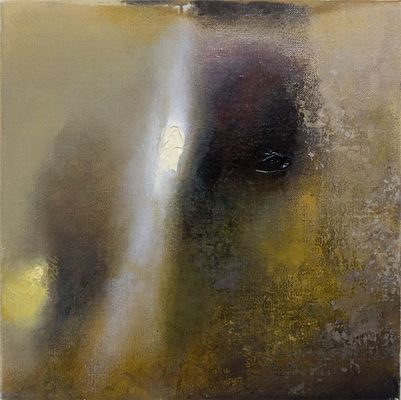
I am not a great reader of poetry but I always return to the work of Melbourne poet, Vincent Buckley (1925- 1988). Perhaps I find his most tantalising piece to be not a finished poem but a fragment left on a scrap of paper discovered on his desk after the poet’s death.
The poetry gathers like oil
In the word-core, and spreads
It has its music meet,
Its music is in movement.
This fragment is more the shell left behind from a volatile thought than a finished poem. I find the last two lines honest but awkward whereas the first two lines work like an arrow. Most likely he could not find a resolution so it was left. Still, in its present form, it remains an eloquent testimony to the ultimate failure of a medium to express mobile thought and sensation, in Buckley’s case, through verbal language. It’s an important matter because this is something all artists have to deal with regardless of the medium.
I have never written a poem, however, I am forever copying fragments from books on paper scraps in a vain effort to fix certain notions in my head. At first, they function as bookmarks that are sometimes returned to when I open the book. But before long, as they accumulate, they fall out littering the table interspersed with A4 photocopies, bills, books and medications.
To return to Buckley’s fragment, the first two lines very much evoke how I paint nowadays. As you age, detail diminishes and patches of light become more luminous and float. I feel the most honest way of dealing with this is by smearing the oil paint on the canvas with the fingers and working close-up, blind. Only if the patches coalesce into an approaching image can the work gain a life.
-
Jonathan Walker was born in Melbourne, Australia and brought up on a dairy farm in Gippsland. In the 1970’s he studied painting at RMIT and won the Harold Wright Scholarship to the British Museum, London. During the 1980’s he exhibited at Pinacotheca Gallery, Richmond and had work shown at the NGV and Heidi City Art Gallery. Over the same period he designed the cover for the “Epigenesi” LP by Giancarlo Toniutti, Italy and conducted a mail exchange work with Achim Wollscheid, Germany. The work with artists through the post resulted in an article published in the bicentenary issue of Art and Australia 1988. He showed in artist run spaces such as WestSpace in the 90’s and 2000’s, and until 2012, taught painting at Victoria University, which is where we (Colleen Ahern and Lisa Radford) as organisers of the exhibition, among many others, had the privilege of being his student.
Walker’s knowledge was imparted to students through the careful selection of music, literature, and artists found in books that he himself had ordered for the library. Walker’s strategy was the generosity of sharing his vast knowledge with references specific to each student and their context.
Walker’s paintings share a similar focus and intimacy.
This exhibition presents a small selection of recent paintings alongside a publication that includes Walker’s writing. Observational and analytical, Walker’s work is a type of material notation — the time of day, colour and how it is blended, the both specific and fleeting location of a reflection on lino or the question of whether a chair leg should be included in a painting.
Please join us on Friday August 21 between 6-8pm to celebrate the opening of the exhibition.
Curated by Colleen Ahern and Lisa Radford.
B. Wurtz
Curated by Nic Tammens
March 26 - April 4, 2015
B.Wurtz works from a basement studio in his home on Manhattan’s Lower East Side.
This local fact is attested to by the plastic shopping bags and newsprint circulars that appear in his work. As formal objects, they don’t make loud claims about their origins but nonetheless transmit street addresses and places of business from the bottom of this long thin island. Like plenty of artists, Wurtz is affected by what is local and what is consumed. His work is underpinned by this ethic. It often speaks from a neighborhood or reads like the contents of a hamper:
“BLACK PLUMS $1.29 lb.”
“Food Bazaar”
“USDA Whole Pork Shoulder Picnic 99c lb.”
“RITE AID Pharmacy, with us it’s personal.”
“H. Brickman & Sons.”
“Sweet Yams 59c lb."
Most of the work in this exhibition was made while the artist was in residence at Dieu Donne, a workshop dedicated to paper craft in Midtown. Here Wurtz fabricated assemblages with paper and objects that are relatively lightweight, with the intention that they would be easily transportable to Australia. This consideration isn’t absolute in Wurtz’s work, but was prescriptive for making the current exhibition light and cheap. Packed in two boxes, these works were sent from a USPS post office on the Lower East Side and delivered to North Melbourne by Australia Post.
Wurtz appears courtesy of Metro Pictures, New York.
Thanks to Rob Halverson, Joshua Petherick, Sari de Mallory, Matt Hinkley, Helen Johnson, Fayen d'Evie, Ask Kilmartin, Lisa Radon, Ellena Savage, Yale Union, and "Elizabeth".
John Nixon
"Archive"
December 15 - January 20, 2014
The presentation of John Nixon's archive offered a rare showcase of this extensive collection of the artist's own publications, catalogues, posters, ephemera, editions and more, from the mid 1980s onwards, alongside a selection of his artworks.
Organized by John Nixon, Joshua Petherick and Matt Hinkley.
"Habitat"
at Minerva, Sydney (organised by Joshua Petherick and Matt Hinkley)
November 15 - December 20, 2014
Lupo Borgonovo, Janet Burchill & Jennifer McCamley,
Lewis Fidock, HR Giger, Piero Gilardi, Veit Laurent Kurz,
Cinzia Ruggeri, Michael E. Smith, Lucie Stahl, Daniel Weil, Wols
Press Release:
“...It contained seven objects. The slender fluted bone, surely formed for flight, surely from the wing of some large bird. Three archaic circuitboards, faced with mazes of gold. A smooth white sphere of baked clay. An age-blackened fragment of lace. A fingerlength segment of what she assumed was bone from a human wrist, grayish white, inset smoothly with the silicon shaft of a small instrument that must once have ridden flush with the surface of the skin - but the thing’s face was seared and blackened.”
William Gibson, “Count Zero”, 1986
"Autumn Projects Archive"
Curated by Liza Vasiliou
March 6 - March 15, 2014
World Food Books, in conjunction with the Virgin Australia Melbourne Fashion Festival 2014, presented the Autumn Projects archive, consisting of a selection of early examples in Australian fashion with a particular interest in collecting designers and labels from the period beginning in the 1980’s, who significantly influenced the discourse of Australian Fashion.
Curated by Liza Vasiliou, the exhibition provided a unique opportunity to view pieces by designers Anthea Crawford, Barbara Vandenberg, Geoff Liddell and labels CR Australia, Covers, Jag along with early experimental collage pieces by Prue Acton and Sally Browne’s ‘Fragments’ collection, suspended throughout the functioning World Food Books shop in Melbourne.
H.B. Peace
presented by CENTRE FOR STYLE
November 14, 2013
"Hey Blinky, you say chic, I say same"
Anon 2013
H.B. Peace is a clothing collaboration between great friends Blake Barns and Hugh Egan Westland. Their pieces explore the divergences between 'character’ and ‘personality’ in garments....etc
Special Thanks to Joshua Petherick and Matt Hinkley of WFB and Gillian Mears
and a Very Special Thank you to Audrey Thomas Hayes for her shoe collaboration.
Janet Burchill & Jennifer McCamley
"Aesthetic Suicide"
May 10 - June 8, 2013
The first of our occasional exhibitions in the World Food Books office/shop space in Melbourne, "Aesthetic Suicide" presented a body of new and older works together by artists Janet Burchill & Jennifer McCamley, including videos, prints, a wall work, and publications.
During shop open hours videos played every hour, on the hour.
1998, English / Japanese
Hardcover (w. dust jacket), 100 pages, 37 x 26 cm
1st Edition, Out of print title / used / fine
Published by
Sakuhinsha / Tokyo
$190.00 - In stock -
Scarce first Japanese hardcover edition of Japanese master of erotic fantasy illustration Hajime Sorayama's absolute classic Torquere (Torture), published in 1998. Following the success of best-seller NAGA, Sorayama's Torquere delves deeper into the darker realm of fantasy fetishism and, as the title suggests, into the world of Sadomasochism. This lavish over-sized volume is illustrated cover-to-cover with Sorayama's most explicit works presented in dramatic, glossy full-colour throughout. Rare in this original hardcover edition.
Hajime Sorayama is revered for his erotic airbrushed illustrations of humanoid robots that explore ideals of femininity and beauty. Drawing on pinup pictures, Sorayama published the first book of his signature “Sexy Robot” series of chromium-plated figures in 1983. Decades later, these striking works have sold for more than $500,000. Sorayama started his career in advertising before freelancing in Hollywood, where he helped to produce visuals for sci-fi films. His illustrations gained widespread attention in 1995, when Penthouse began featuring them in a monthly column. While Sorayama has enjoyed a particular cult status for his sensual cyborgs —who appear empowered rather than objectified —he has also received mainstream commercial attention. Sony enlisted him to produce the first designs for its robotic dog AIBO, which won the grand prize for Japan’s Good Design Award in 1999. Sorayama has also worked with fashion titans such as Thierry Mugler and Dior on projects that have extended his illustrations into the realm of wearables, sculpture, and performance.
Near Fine copy.
1976 / 1984, German
Softcover, 24 x 19.5 cm
Out of print title / used / fine
Published by
Achberger Verlag / Achberg
$28.00 - In stock -
1984 print of the 1976 Joseph Beuys book "Soziale Plastik". "The three authors of this book engage with one of the most dazzling and controversial figures in contemporary cultural life. Joseph Beuys is among the most prominent figures in the modern art scene, and one cannot claim to have grasped the essential characteristics of this scene without also considering Beuys's contribution. This contribution is multifaceted, and the individual parts of his work are often judged very differently. The authors demonstrate how the various works and pronouncements of Joseph Beuys, often described as contradictory, can be considered together to form a unified, coherent, and consistent whole. Drawings, sculptures, performances, and lectures appear as logical stages in the development of an artist who, in recent times, has attracted particular attention by publicly presenting social concepts and advocating for political goals.
Beuys' political engagement can be understood as an integral part of his work, as a necessary consequence of the image of humanity presented throughout his oeuvre and the resulting image of society.
A large number of drawings, sculptures, and action photographs, some previously unpublished, help those unfamiliar with Beuys's work to gain an understanding. For those already acquainted with the work of Joseph Beuys, this book provides new material."
NF—Fine copy. German language.
2025, English
Softcover, 24 pages, 19 x 13 cm
Published by
Innen Books / Zürich
Kosaku Kanechika / Tokyo
$22.00 - In stock -
Ataru Sato's "Erotomania", published by Innen Books, Zürich, with Kosaku Kanechika, Tokyo, 2022. First edition.
2020, English
Softcover (staple-bound), 20 pages, 19 x 13 cm
Published by
Innen Books / Zürich
$22.00 - In stock -
Susan Te Kahurangi King's "Selected Works 1958 – 1980", published by Innen Books, Zürich, in 2020. First edition.
Susan Te Kahurangi King (b. 1951, Te Aroha) is a New Zealand artist self-taught artist whose ability to speak declined by the age of four, and by the age of eight stopped speaking altogether. From an early age she communicated solely through her art. She has methodically created an entire analogous world through extraordinary, surreal, cartoon(ish) drawings using pen, graphite, coloured pencil, crayon and ink. From her childhood drawings, to her notebooks, to her mature work of the 1970s and ’80s up until the point, sometime in the 1980s, when King stopped drawing. In 2008 King returned to art, moving beyond representation.
2018, English
Softcover (staple-bound), 32 pages, 13 x 19 cm
Edition of 300,
Published by
Innen Books / Zürich
$22.00 - In stock -
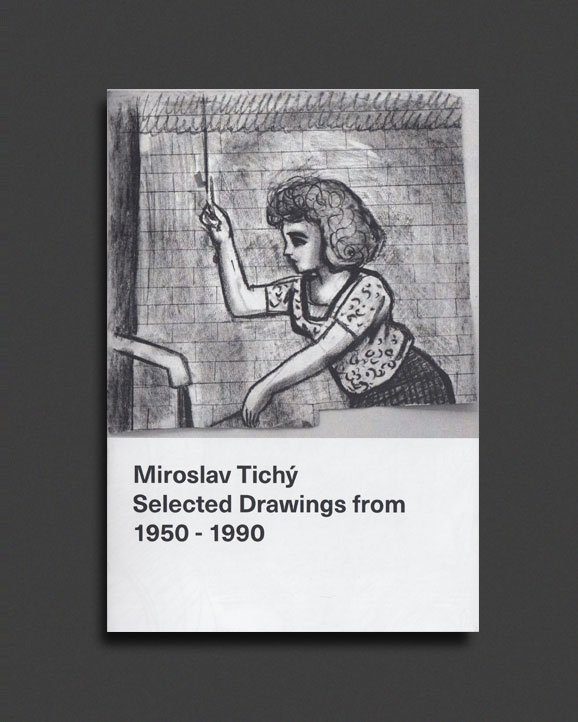
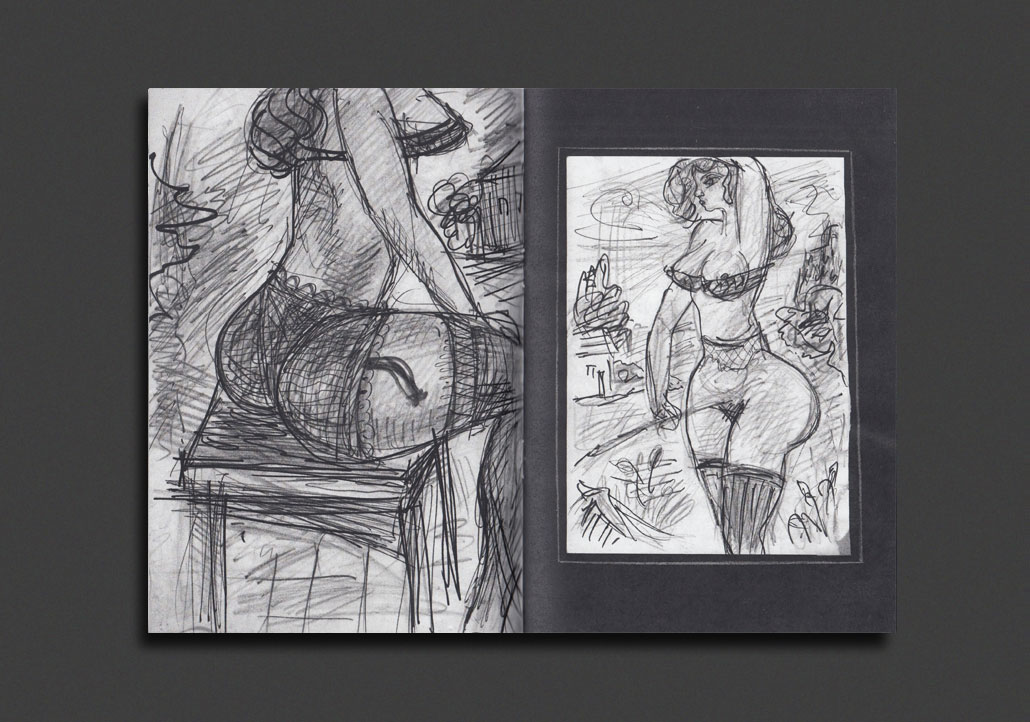
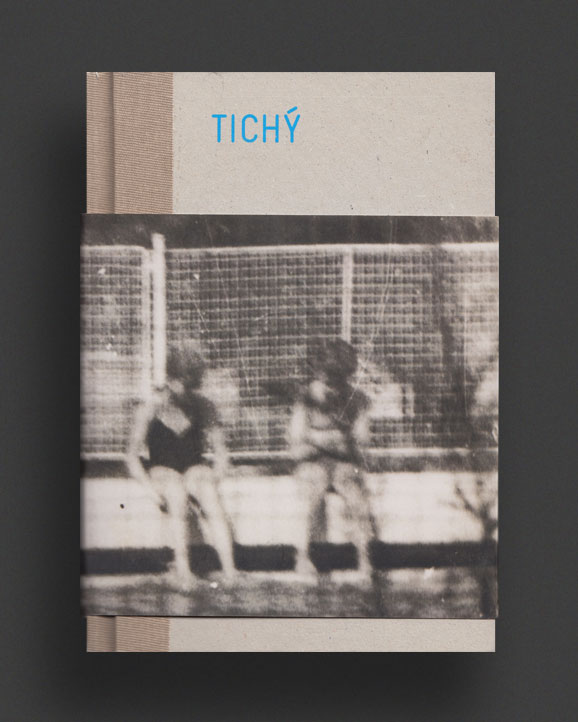
"Selected Drawings from 1950 to 1990" is a limited edition publication dedicated to the rarely seen drawings of the reclusive and mysterious Czech photographer Miroslav Tichý. Published in 2017 by Innen Books in Zürich in an edition of 300 copies only.
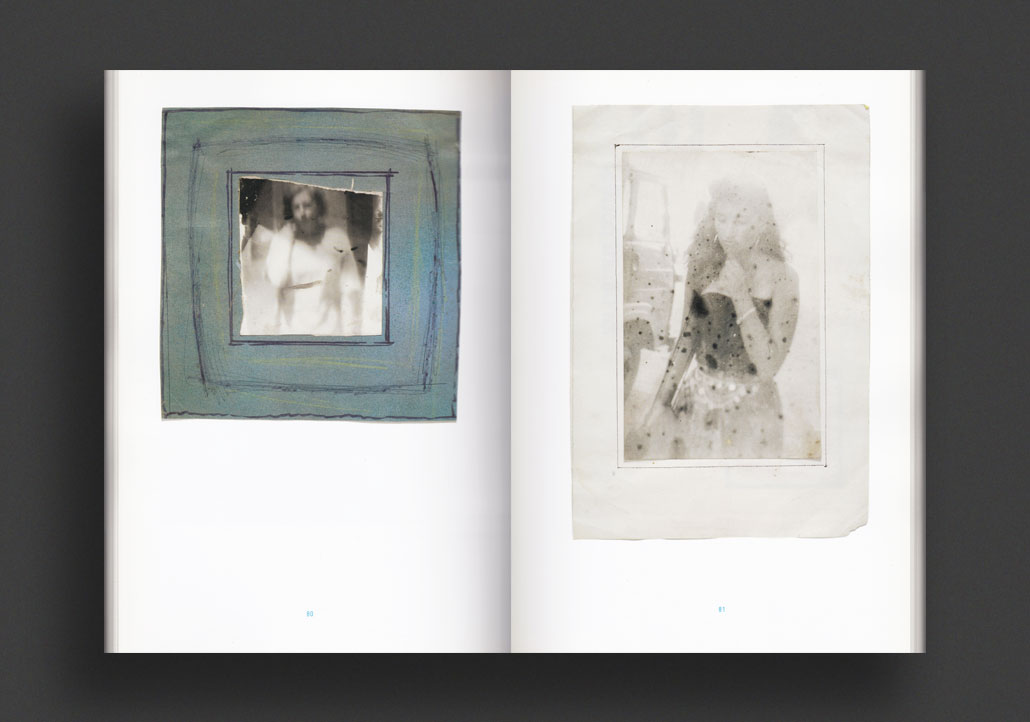
Miroslav Tichy (1926-2011)
After studying at the Academy of Arts in Prague (1945-48), Miroslav Tichy withdrew to a life in isolation in his hometown of Kyjov, Moravia, Czech Republic. In the late 1950s he quit painting and became a distinctive Diogenes-like figure. From the end of the 1960s he began to take photographs mainly of local women, in part with cameras he made by hand. He later mounted them on hand-made frames, added finishing touches with pencil, and thus moved them from photography in the direction of drawing. The result are works of strikingly unusual formal qualities, which disregard the rules of conventional photography. They constitute a large oeuvre of poetic, dreamlike views of feminine beauty in a small town under the Czechoslovak Communist regime.
2010, Japanese
Softcover, 208 pages, 24 x 18.5 cm
1st Edition, Out of print title / used / very good
Published by
Atelier Peyotl / Tokyo
$65.00 - Out of stock
Incredible Hans Bellmer special feature Issue of cult Japanese underground magazine Yaso, published in 2010, edited by Yuichi Konno and Atelier Peyotl (publishers of Night Vision/Yaso/Peyotl/Wave/Silvester Club...). Being a magazine specialising in the doll arts it was only natural that they would dedicate an entire issue to the ground-breaking work of German Surrealist Hans Bellmer and the development of his dolls, and pay homage to his immense influence on Japanese doll artists by discussing his work with them. Heavily illustrated with reproductions of Bellmer's iconic doll photography and drawings, alongside reproduced and translated original texts, extensive chronology of Bellmer and Unica Zürn, the drawing and anagram work of his partner Zürn, an invaluable bibliography of publications related to Bellmer to date, and many portraits of the artist. There is an extensive chronicle of doll history and development stretching from 1902—2010 and a large part of the issue is made up of heavily illustrated exclusive interviews with Japanese artists influenced by the legacy of Bellmer, including Simon Yotsuya, Nori Doi, Ryo Yoshida, Tatsumi Hijikata, Makoto Onozuka, Kishin Shinoyama, Minori Nawata, and more, surveys contemporary doll artists Volks, PEACH-PIT, naruto, Hizuki, Tari Nakagawa, Minori Nawata, Os, Akihiko Aono, mican, Ayumi, Masanao, Katan Amano, Nishioka Bro. & Sis., and many more, and includes essays by Sue Taylor, Alice Mahon, Kumi Ogata... absolutely packed with content and a valuable Bellmer reference in the context of his Japanese influence on the arts.
Very Good copy.
2006, English
Softcover, 204 pages, 23 x 29 cm
1st Edition, Out of print title / used / very good
Published by
A Magazine / Antwerp
The Flanders Fashion Institute / Antwerp
$250.00 - Out of stock
“We make noise not clothes.”
Rare copy of the fourth instalment of Belgium's A Magazine, published in 2006 and now one of the most sought after of the series. This volume was guest-curated by Jun Takahashi of UNDERCOVER, and contains contributions on or by Rei Kawakubo + Comme Des Garcons, Maison Martin Margiela, Terry Jones, Simon Marsden, Olivier Saillard, Hermes, Paolo Roversi, Mark Borthwick, Jan Svankmajer, Terry Richardson, and many, many more. An incredible, visually-packed volume that presents UNDERCOVER behind the scenes, including clothing, scrapbooks, art projects, furniture, collages, sculptures, samples, interviews, texts...
Designed by Paul Boudens.
"A Magazine is a biannual publication, exploring the creative sphere of a selected designer in each issue. We invite a guest curator - an international fashion designer, group or house - to develop innovative, personalized content that expresses their aesthetic and cultural values. Each issue celebrates this designer's ethos: their people, their passion, their stories, emotions, fascinations, spontaneity and authenticity".
Very Good copy with moderate wear to edges/corners, front cover.
2025, English
Hardcover, 128 pages, 24.2 x 17.2 cm
Published by
Magic Hour Press / New York
$90.00 - Out of stock
Edited by Francis Schichtel, Jordan Weitzman, Nan Goldin.
Text by Hilton Als.
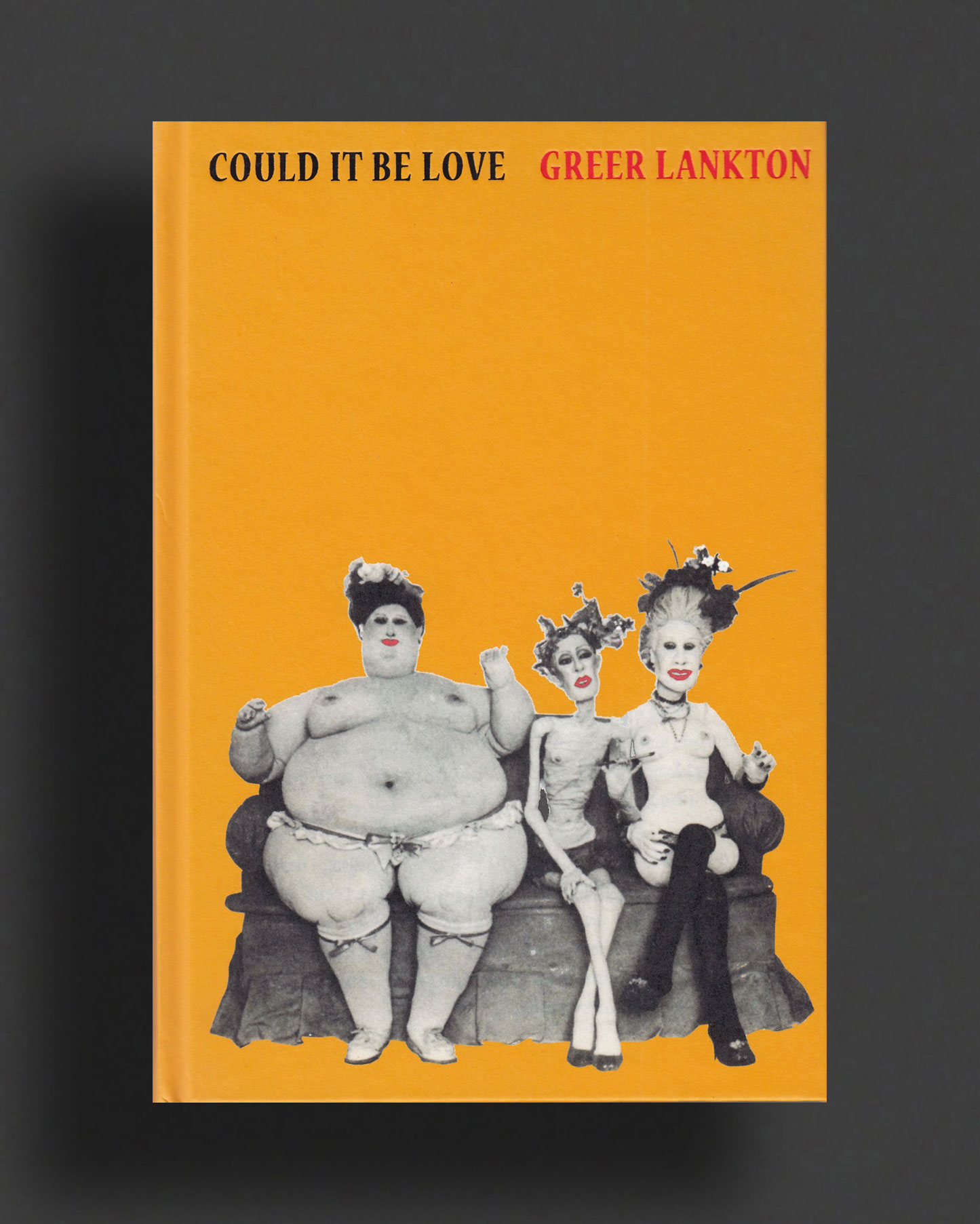
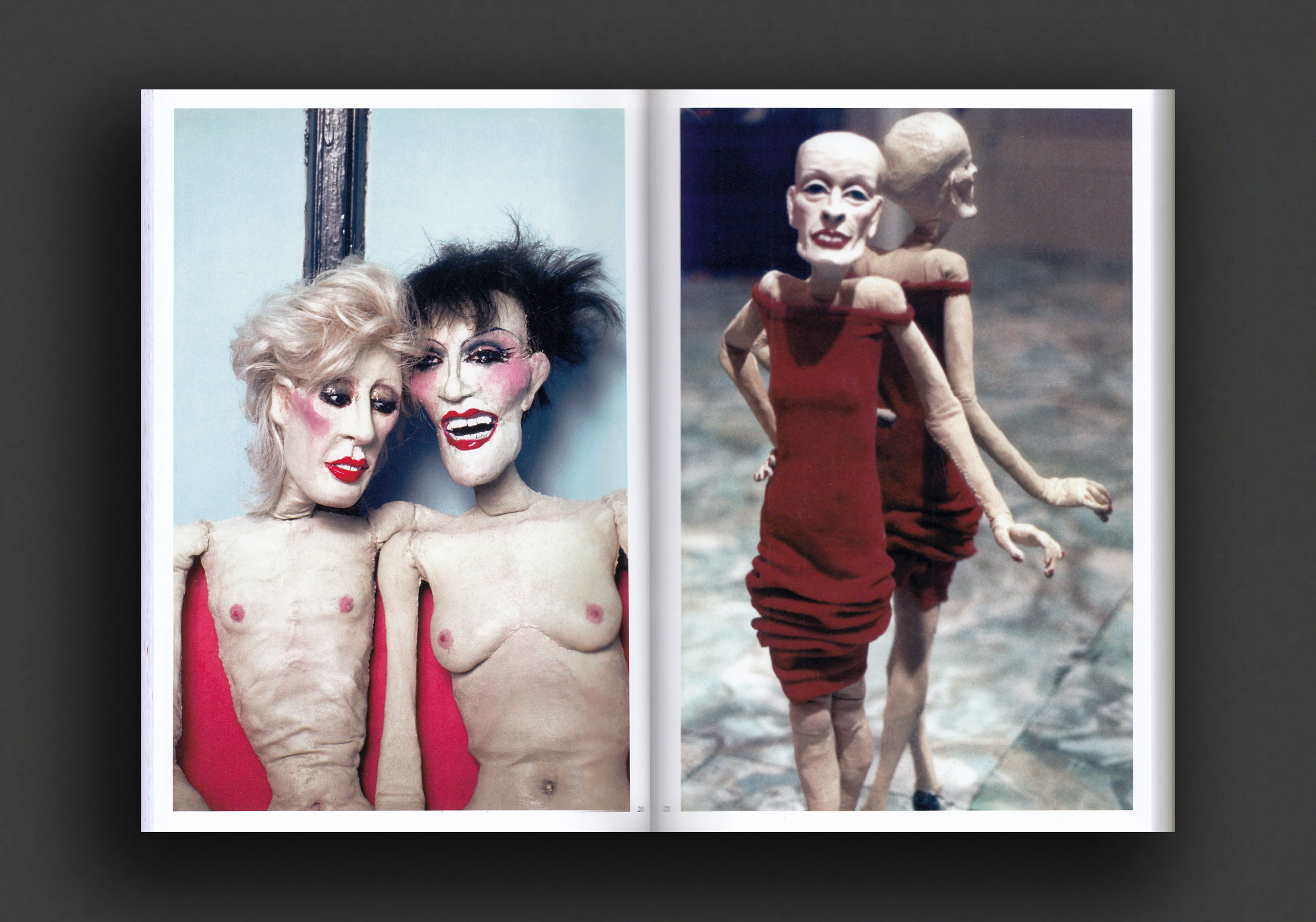
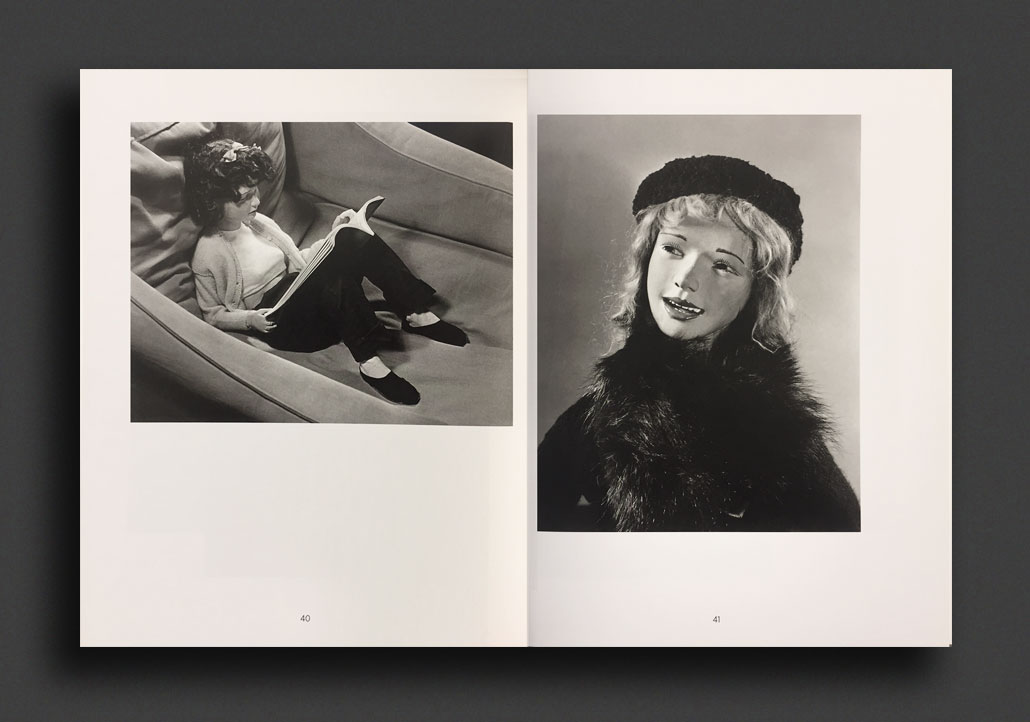
Lankton's iconic and startling doll sculptures as we have never seen them before: through her own eyes
This is the first monograph on the trans visionary artist Greer Lankton (1958–96), whose lifelike doll sculptures shocked 1980s New York. Lankton's dolls, which she began making as a child and produced obsessively until her death at age 38, were a means to explore her fraught relationship with the human body. In the book's 100 photographs, all shot by Lankton herself, these figures take on a life of their own, kvetching at a party, strolling along a beach, or lounging on a stoop in the East Village. Among this extraordinary cast of oddballs—usually femme, often freakish, always radiating a glamorous confidence—we find characters of Lankton's own invention alongside well-known icons such as Divine, Coco Chanel, Andy Warhol and even Lankton herself.
Born in 1958 to a Presbyterian minister in Michigan, Greer Lankton moved to New York in 1978 and became a rising star of the downtown scene. There, her deviant elegance was immortalized in photographs by Peter Hujar, David Armstrong and Lankton's close friend Nan Goldin, who described her as "one of the luminaries of the East Village renaissance: beautiful, glamorous, wild and hysterically funny." Lankton's work was a neighborhood fixture, in exhibitions at the gallery Civilian Warfare and in regular window displays at Einstein's Boutique, and was also celebrated farther afield, in era-defining group shows at PS1 and the Venice Biennale. Her final work, an immersive installation created for the Mattress Factory in 1996, remains on permanent view.
“Now I’m completely bowled over. Greer Lankton has got to be a genius…these are her dolls at her best... One scene is a birthday party for a ninety year old woman of culture and taste. I can’t describe anything that is going on in this scenario because I could actually write a complete novel about the party and the party people…. What a celebration! Hallelujah!!! —Cookie Mueller
“Greer Lankton’s dolls are entire biographies on legs, whole movies, three-dimensional Alice Neels. And they’re all self-projections, all of her contradictory impulses--abjection and eminence, dissipation and what comes after, gender fixed or fluid--examined lovingly and pitilessly. She could locate variously aged and battered versions of herself on the street, in a movie, at a party, alone on a park bench--with her eye she could see herself from outer space, sub speciae aeternitatis. And her taste and her skills were impeccably suited to her unique medium. Why did we have to lose her?”—Lucy Sante
“I found my first encounters with Greer Lankton’s grotesque dolls shocking. My cohort of 80’s artists challenged authorship and valued detachment and did not warm to raw displays of intimacy (and god forbid craft) that were the core of Greer’s prescient, messy battle with beauty and pain. Current culture is hungry for exactly what Greer’s art serves up - the exploration of gender, imperfection, self-expression and authenticity.”—Laurie Simmons
“Lankton’s creatures live in a psychic interline where genitals and gender identity are scrambled in the play of appearances, and reveal an exacerbated, possibly mutilated sexuality as the trigger of personality. Like Theodora Skiptare’s housewife automata that vomit and menstruate, Lankton’s ambisexual dolls wear faces of crumbling self-assurance, or even moronic friendliness and self-contentment, while breathing pain in and out through their pores."—Gary Indiana, Art in America, 1984
“Of course, to say that a doll by Greer Lankton is “just a doll” is absurd. Lankton’s dolls are like no other dolls, and no Lankton doll is like any of her dolls. For that matter many Lankton dolls weren’t even like themselves from one moment to the next. Lankton constantly reworked them ‘changing their gender, identities, sizes and clothes.’ But some…change by being photographed from different angles, using different lighting and backgrounds. Simple as the photographs are, they manage to bring the dolls to life, give them a story.”—Douglas Crimp
“She has become, to this young community what Rimbaud must have been to Paris in the 1920's. She has been compared to Hans Bellmar and to Frida Kahlo, for both have created highly self referential imagery affected heavily by events which have changed the course of their lives.”—Dean Savard, co-founder of Civilian Warfare
1993, Japanese / English
Hardcover (w. dust jacket), 112 pages, 37 x 27 cm
1st Edition, Out of print title / used / fine
Published by
Treville / Tokyo
$200.00 - In stock -
First Japanese hardcover edition of Japanese master of erotic fantasy illustration Hajime Sorayama's classic The Gynoids, published in 1993. This lavish over-sized volume is illustrated cover-to-cover with Sorayama's erotic female cyborgs, or Gynoids, and presented in dramatic, glossy full-colour throughout, alongside his incredible fetish mistresses. The term "Gynoids" was created by the female British SF writer, Gwyneth Jones, and developed by another British writer, Richard Calder. The word is a combination of "droid" (greek "in the image of") and "gyn" (greek "woman"). These female cyborgs of Sorayama combine elements both human and the mechanical. The soft, sensuous body parts are cleverly intertwined with inorganic, machine-like connections and protrusions to create entrancing images which embody complex and subtle tensions.
Hajime Sorayama is revered for his erotic airbrushed illustrations of humanoid robots that explore ideals of femininity and beauty. Drawing on pinup pictures, Sorayama published the first book of his signature “Sexy Robot” series of chromium-plated figures in 1983. Decades later, these striking works have sold for more than $500,000. Sorayama started his career in advertising before freelancing in Hollywood, where he helped to produce visuals for sci-fi films. His illustrations gained widespread attention in 1995, when Penthouse began featuring them in a monthly column. While Sorayama has enjoyed a particular cult status for his sensual cyborgs —who appear empowered rather than objectified —he has also received mainstream commercial attention. Sony enlisted him to produce the first designs for its robotic dog AIBO, which won the grand prize for Japan’s Good Design Award in 1999. Sorayama has also worked with fashion titans such as Thierry Mugler and Dior on projects that have extended his illustrations into the realm of wearables, sculpture, and performance.
1991, English
Softcover, 118 pages, 21 x 14.5 cm
Out of print title / used / very good
Published by
AK Press / Edinburgh
$50.00 - Out of stock
First AK Press 1991 edition of Stewart Home's THE ASSAULT ON CULTURE: UTOPIAN CURRENTS FROM LETTRISM TO CLASS WAR, first published in 1988 by Aporia Press and Unpopular Books. Chapters: Cobra, The Lettriste Movement, The Lettriste International (1952-57), The College Of Pataphysics, Nuclear Art and the International Movement for an Imaginist Bauhaus, From the "First World Congress of Liberated Artists" to the foundation of the Situationist International, The Situationist International in its heroic phase (1957-62)., On the theoretical poverty of the Specto-Situationists and the legitimate status of the Second International, The decline and fall of the Specto-Situationist critique, The origins of Fluxus and the movement in its 'heroic' period, The rise of the depoliticized Fluxus aesthetic, Gustav Metzger and Auto-Destructive Art, Dutch Provos, Kommune 1, Motherfuckers, Yippies and White Panthers, Mail Art, Beyond Mail Art, Punk, Neoism, Class War, plus bibliography.
*A straightforward account of the vanguards that followed Surrealism: Lettrisme, Fluxus, Neoism and others even more obscure"—Village Voice
"Home's book is the first that I know of to chart this particular 'tradition' and to treat it seriously.
It is a healthy corrective to the overly aestheti-cised view of 20th century avant-garde art that now prevails."—City Limits
"Much of the information is taken from obscure sources and the book is essential reading for anyone interested in the subject. It demystifies the political and artistic practices of opponents to the dominant culture and serves as a basic reference for a field largely undocumented in English. It is also engagingly honest, unpreten-tious, questioning and immediate in its impact"—Artists Newsletter
"Reflecting the uncategorisable aspect of art that hurls itself into visionary politics, the book will engage political scientists, performance artists and activists"—Art and Text
"Apocalyptic in the literal sense of the word: an uncovering, revelation, a vision"—New Statesman
"A concise introduction to a whole mess of troublemakers through the ages... well written, incisive and colourful"—NME
"Informative and provocative"—Art Forum
Very Good copy.
1979, German
Softcover, unpaginated, 26 x 21 cm
1st Edition, Out of print title / used / average
Published by
Museum Bochum / Bochum
$65.00 - In stock -
One of the nicest, long long out-of-print catalogues on the work of self-taught German painter Ursula Schultze-Bluhm (1921—1999), also known as Ursula, for a major survey of her work that traveled through Germany in 1979—1980.
Introductory German text by Evelyn Weiss and Heinrich Heine, with a few pages missing from this section, followed by social portraits, with the rest of the book an abundance of works reproduced in colour and b/w (all gallery pages intact) including a fold-out section, followed by a full catalogue of works. A few plates are marked with an X by the previous owner. A truely wonderful selection of her works, mostly painting and ink on paper, but including some incredible sculptural works and installations.
A self-taught artist, Ursula worked intensively on painting and poetry and regularly travelled to Paris, where she met the painter Jean Dubuffet in 1954. Ursula's life and work offer an unconventional narrative of artistic independence. Her art exemplifies the idea that Surrealism is not a style, but an attitude. Ursula subverted reality and found the uncanny in the everyday, challenging the authorities of society and art by imagining new worlds in which old hierarchies are thrown overboard and new ways of life are conceivable. Ursula married fellow Cologne based artist, abstract painter, co-founder of the Quadriga group, Bernard Schultze (1915—2005).
Average—Good copy but with some missing text pages, previous owner's markings, general light wear, discolouration to top cover edge.
2023, English / German
Hardcover, 400 pages, 27 x 22 cm
Published by
Walther König / Köln
$90.00 - In stock -
This first comprehensive book ever published on the work and life of self-taught German painter Ursula Schultze-Bluhm (1921—1999), also known as Ursula. Ursula's life and work offer an unconventional narrative of artistic independence. Her art exemplifies the idea that Surrealism is not a style, but an attitude. Ursula subverted reality and found the uncanny in the everyday, challenging the authorities of society and art by imagining new worlds in which old hierarchies are thrown overboard and new ways of life are conceivable. Ursula shared this utopian imagination with artists such as Leonora Carrington, Leonor Fini, Dorothea Tanning, and Unica Zürn. The aim of this catalogue is to present Ursula's captivating and self-assured work to a new generation of art lovers. It reveals that it is the individuality of Ursula's work that allows it to touch on so many fundamental and topical issues, including female self-determination and the challenging of established gender identities, with a worldview in which everything is interconnected and mutually dependent.
Edited by Stephan Diederich.
Contributions by Stephan Diederich, Yilmaz Dziewior, Helena Kuhlmann, Chus Martinez, Elizabeth A. Povinell.
English and German text.
"Cologne Museum Dives Into German Artist’s Once-Lost Fantastical World: Ursula Schultze-Bluhm, painter of unearthly visions was largely overlooked by the art world…"—New York Times, by Andrew Russeth, 2023.
2013, English
Hardcover, 348 pages, 27.5 x 20 cm
1st Edition, Out of print title / used / very good
Published by
Walther König / Köln
$550.00 - Out of stock
Now exceptionally rare and collectible, Phenotype is the first comprehensive monograph on the biologist Jochen Lempert, who has worked as a photographer since the early 1990s.
Since the early 1990s, the German photographer and biologist Jochen Lempert (born 1958) has used analogue, black-and-white photography to convey his gently reverential vision of nature and sentience—whether that of animals, plants or humans. Often grainy, sometimes verging on abstraction, and sometimes focusing minutely on the activity of some tiny creature, his photographs exude a simple pleasure in fleeting tranquility. Lempert has also taken a quietly particular stance on the presentation of his work: in exhibitions, his images are presented unframed and tacked up on walls, and his books (among them Recent Field Work and Coevolution) are always immediately identifiable for their modest but exquisite design, printing and paper. Continuing this tradition of gorgeous bookmaking, Jochen Lempert: Phenotype reproduces 450 of his works, most of them arranged in groups and sequences, from more than 20 years of artistic production.
Published on the occasion of the exhibition at Hamburger Kunsthalle Gallery of Contemporary Art, 22 June – 29 September 2013.
Very Good copy, light tanning to spine.
2011, English / French
Hardcover (w. dust jacket), 248 pages, 24 x 30 cm
Published by
Kant / Prague
$160.00 - In stock -
Like the Prague exhibition that provided the opportunity to publish it, this stunning, over-sized hardcover book is the 'explosive' result of the meeting between two personalities with a heretical reputation: the great photographer Miroslav Tichý and the former situationist Gianfranco Sanguinetti. Both are better known internationally than they are in the Czech Republic. Their paths were destined to cross - simply for the originality and radical nature of their approach to life. Tichý's work inspired Sanguinetti to make critical and riveting insights into the art of our age. While his comments may fuel polemical debate, they cannot leave the reader indifferent. The photographs by Tichý that are being presented for the first time in this book and at the City Gallery Prague represent a strict selection that prioritises the eloquence of symbols that pervade Tichý's work and which are, according to Sanguinetti, the key to his art.
Lavishly illustrated in colour throughout with all texts in English and French.
Miroslav Tichy (1926-2011)
After studying at the Academy of Arts in Prague (1945-48), Miroslav Tichy withdrew to a life in isolation in his hometown of Kyjov, Moravia, Czech Republic. In the late 1950s he quit painting and became a distinctive Diogenes-like figure. From the end of the 1960s he began to take photographs mainly of local women, in part with cameras he made by hand. He later mounted them on hand-made frames, added finishing touches with pencil, and thus moved them from photography in the direction of drawing. The result are works of strikingly unusual formal qualities, which disregard the rules of conventional photography. They constitute a large oeuvre of poetic, dreamlike views of feminine beauty in a small town under the Czechoslovak Communist regime.
1972 / 1979, English
Softcover, 88 pages, 20 x 12.8 cm
Out of print title / used / very good
Published by
Academy Editions / London
$30.00 - Out of stock
1979 revised edition of this 1972 book, an invaluable Alice reference edited by Graham Ovenden with an introduction by John Davis, published by Academy Editions. Profusely illustrated throughout in colour and b/w, expanded and revised.
"Rarely has an author been so successfully served by an illustrator as Carroll by Tenniel. Yet every decade has produced its own Alice. There have been Art Nouveau, Art Deco, Surrealist and Pop Alices. Virtually every year and in every major country a new illustrated edition of Wonderland and Through The Looking-Glass is published. This book contains a selection of some of the best and most interesting illustrations done over the last century.
Since first published in 1972, The Illustrators of Alice has become a minor classic and a valuable reference book. Reprinted several times, it is now presented revised and updated in a new format."
Very Good—NF copy.
1976, English
Softcover, 88 pages, 20 x 12.8 cm
1st Edition, Out of print title / used / good
Published by
Academy Editions / London
$30.00 - Out of stock
First 1976 edition of this book edited by Graham Ovenden, published by Academy Editions, profusely illustrated throughout with the work of Eleanor Vere Boyle, William Stephen Coleman and Richard Doyle in colour and b/w.
"Children's fairy tales are peopled with creatures who defy the descriptive powers of mere writers. Only a Victorian illustrator was capable of capturing the elusive nymphets and fairies who lived under mushrooms and inhabited adolescent dreams, and the drawings of E.V.B., William Stephen Coleman and Richard Doyle, all included in this panorama of whimsy, mark a high point in the depiction of childhood fantasies, mixing imaginative inspiration with delicate craftsmanship."
Good—VG copy with some light wear/light creasing to boards.
1908 / 1988, English
Hardcover, unpaginated, 24 x 19 cm
Out of print title / used / very good
Published by
William Heinemann / London
$100.00 - In stock -
A lovely 1988 hardcover reissue by William Heinemann, London, of the very collectible 1908 book of Shakespeare's 'A Midsummer Night's Dream' published with Arthur Rackham's stunning illustrations of the woodland realm of Fairyland. One Shakespeare’s most beloved plays and one of Rackham’s most sought after books, the weaving of magic and fairies perfectly suited to his style. Gold gilded clothbound hardcover with the original plastic slip cover. Profusely illustrated with the many b/w and colour plates by Rackham. Issued by the original 1908 publisher (Heinemann) this edition also now rather a scarce find.
Arthur Rackham RWS (1867—1939) was an English book illustrator. He is recognised as one of the leading figures during the Golden Age.
Very Good—Near Fine copy.
1972, French
Hardcover (cloth-bound), 176 pages, 31 x 31 cm
1st Edition, Out of print title / used / good
Published by
Clairefontaine / Lausanne
$140.00 - Out of stock
Wonderful 1972 hardcover edition of one of the most exquisite books on Argentine artist Leonor Fini (1918-1996), published by Clairefontaine, Lausanne, with text by Constantin Jelenski in the original French. This over-sized hardcover volume is profusely illustrated throughout with full-colour paste-in plates (some fold-outs) of Fini's incredible paintings throughout her career to date, alongside her magnificent ink works, portraits of the artist, catalogue of works, biography and bibliography. Printed and bound in numbered edition in Switzerland.
Leonor Fini (1907–1996), an Argentine painter, designer, illustrator, and author, known for her depictions of powerful women, is considered one of the most important women artists of the twentieth century and also one of the most misunderstood.
Fini had no formal artistic training. Born in Buenos Aires, she travelled extensively from a young age, living in Milan and then moving to Paris in 1931-32 where she was considered part of a pre-war generation of Parisian artists, becoming acquainted with Carlo Carrà and Giorgio de Chirico, who inspired much of her work, and also Paul Éluard, Max Ernst, Georges Bataille, Henri Cartier-Bresson, Picasso, Salvador Dalí, and André Pieyre de Mandiargues. She had her first one person show in Paris when she was twenty-five at a gallery directed by Christian Dior. Her work caught on fast and was included in the pivotal and groundbreaking Fantastic Art, Dada and Surrealism exhibition at the MOMA in 1936 while at the same time she had her first New York exhibition at the avant-garde Julien Levy Galley. Surrealist artists in France came to know her as important in the movement. She is mentioned in most comprehensive works about surrealism, although she did not consider herself a surrealist, nor a part of any particular artistic movement. Fini preferred to stake her own claim on modernism with a vision that owes more to the farthest shores of her imagination than to any affiliation with art trends, schools or movements. The originality of her art as well as her intelligence, famous wit and charisma accorded her celebrity status in the Paris art world and beyond beginning in the late thirties. Her panache and glamour, once they found a place in the collective imagination of the time, turned her into a much-publicized fashion and feminist icon. Always controversial, with as many detractors as admirers, she lived and painted consummately on her own terms.
In Paris in 1939 she curated the inaugural exhibition of her friend Leo Castelli’s first gallery (of surrealist furniture) and shortly thereafter, just before the German occupation, she traveled with André and a new lover to Arcachon in the southwest of France to begin waiting out the war. She remained there for almost a year with Salvador and Gala Dali before moving to Monte Carlo where she met the young Italian diplomat, Stanislao Lepri who became one of the great and enduring loves of her life. As the war intensified she moved with Stanislao to Rome where she lived, worked and formed close friendships with Anna Magnani, Luchino Visconti and other leading figures of world of art and letters. After the Liberation of Paris in 1946 she returned there to live and work for the remainder of her life, exhibiting extensively around the world.
The predominant themes in Leonor Fini’s art are sexual tensions, mysteries and games. One of her favored subjects is the interplay between the dominant female and the passive male, and in many of her most powerful works the female takes the form of the sphinx to which she felt a strong identification. She was also a renowned portraitist, and among her subjects were such friends as writers André Pieyre de Mandiargues, Jean Genet, Klaus Mann (son of Thomas), such actresses as Anna Magnani and Suzanne Flon, ballerina Margot Fonteyn, film director Luchino Visconti and artists Meret Oppenheim and Leonora Carrington.
Her genius for stage and screen design is evident in her numerous ground breaking theater decors with their elaborate conception, costumes and phantasmagorical masks. She designed for the Paris Opera, George Balanchine’s ballet Palais de Crystal, and choreographer Roland Petit’s company Ballets de Paris, for Maria Callas at the La Scala theater in Milan, as well as over seventy productions at theaters in Paris between 1946 and 1969. She had a unique talent for film design and created costumes for Fellini's 8 ½ as well as for Renato Castellani's Romeo and Juliet and John Huston’s A Walk with Love and Death.
In the 1970s, she wrote three novels, Rogomelec, Moumour, Contes pour enfants velu and Oneiropompe. Her friends included Jean Cocteau, Giorgio de Chirico, and Alberto Moravia, Fabrizio Clerici and most of the other artists and writers inhabiting or visiting Paris. She illustrated many works by the great authors and poets, including Edgar Allan Poe, Charles Baudelaire and Shakespeare, as well as texts by new writers. She was very generous with her illustrations and donated many drawings to writers to help them get published. She is, perhaps, best known for her graphic illustrations for Histoire d'O.
The provocative and much-publicized life of Leonor Fini was pure theater. Her story is that of a hard-won struggle to forge her life as a woman artist in a man’s world and to invent herself on her own terms. It is the story of a woman possessing exceptional independence, a highly original vision and great personal magnetism who lived passionately through her art and friendships and in the process became a feminist role model.
Good—Very Good copy with light wear to extremities and boards, block edges, front and back blank pages removed by previous owner.
2012, English
Hardcover (clothbound), 72 pages, 24.5 x 20 cm
1st Edition, Out of print title / used / fine
Published by
Kerber Verlag / Berlin
$55.00 - In stock -
The roots of Dado's often nightmarish images can be found in Surrealism. The pictures are imbued with a deep melancholy inherent to all living creatures but which is at the same time an expression of uncompromising humanity. We encounter here milling masses of human suffering, scenes peopled by a variety of aggressive and grotesque monsters and strange beings. Forms melt away and fuse, frequently evoking a catastrophic state of psychic fragmentation and horrific physical decay. In a period hallmarked by informal abstraction, Dado's works of the 1960s became an important touchstone for artists espousing a new wave of figuration, among them Eugen Schönebeck and Georg Baselitz.
This hardcover catalogue presents a selection of Dado's early drawings and paintings, with accompanying text in bi-lingual by Gregor Jansen and Isabelle Monod-Fontaine in English and German.
Dado (Miodrag Djuric, 1933–2010) was born in Montenegro and came to Paris in 1956. His work has been featured in numerous exhibitions, including at the Chicago Art Institute and Centre Pompidou, Paris. In 2009 he represented Montenegro at the Venice Biennale.
Published to accompany the exhibition at Kunsthalle Düsseldorf 21.04. – 24.06.2012.
2006, English
Softcover, 118 pages, 23.5 x 16.5 cm
1st Edition, Out of print title / used / very good
Published by
Hayward Gallery Publishing / London
$25.00 - In stock -
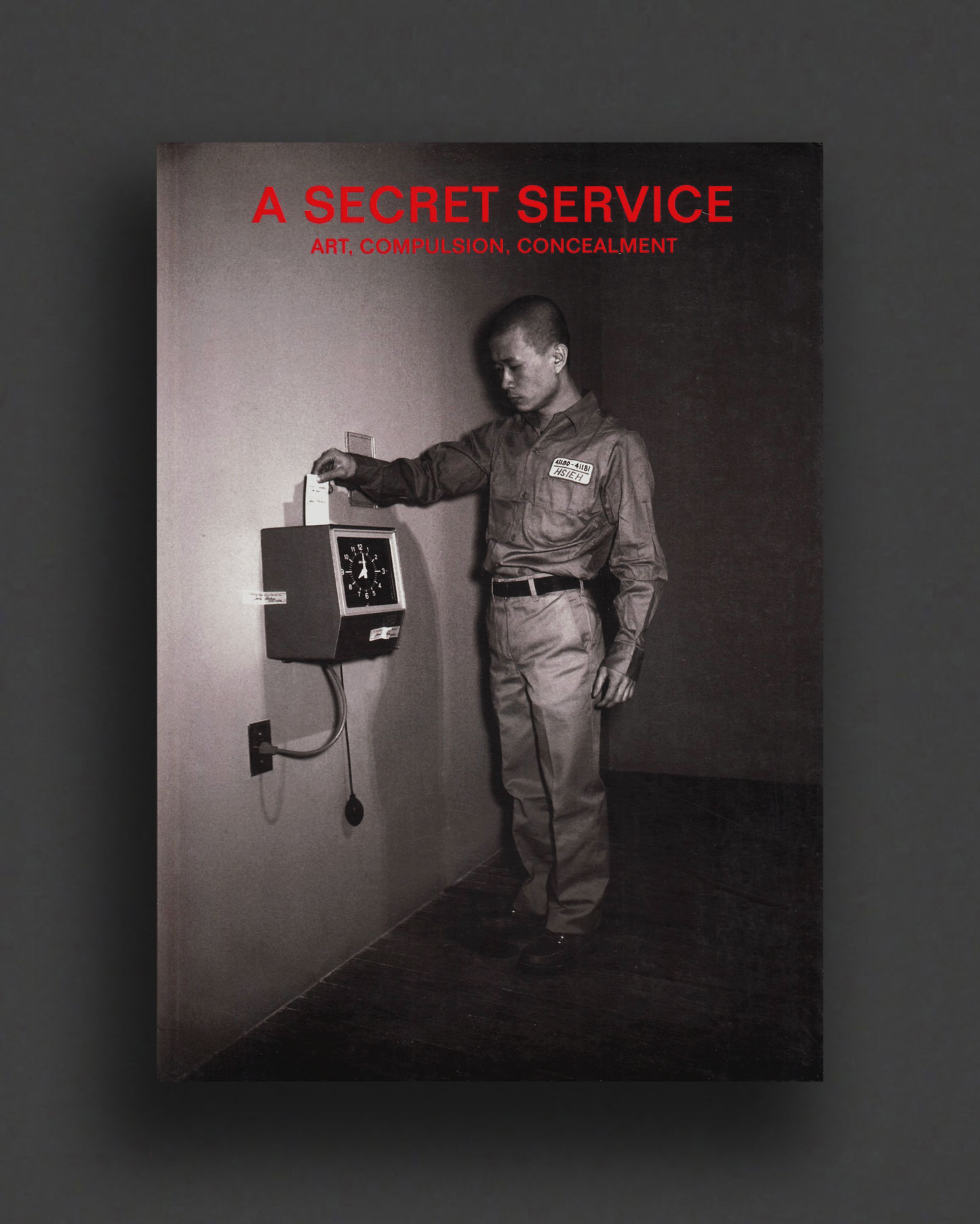
Published in 2006 on the occasion of this Hayward Gallery touring group exhibition, 'A Secret Service: Art, Compulsion, Concealment' explores the work of fifteen international artists and groups whose practices centre on the creation of secret worlds or the exposure of hidden facts and images. Key figures of Modern art, established and emerging contemporary artists and 'outsiders' together address numerous aspects of secrecy: magic, alchemy, sexuality, dreams, religion, political conspiracy, assumed identity and the covert workings of the State. Essays by Richard Grayson, Clare Carolin, and Roger Cardinal, accompany biographies and lavish, full-colour galleries of works by all featured artists: Sophie Calle, Roberto Cuoghi, Henry Darger, Gedewon, Susan Hiller, Tehching Hsieh, Kataryzna Józefowicz, Joachim Koester & Adrian Dannatt, Paul Étienne Lincoln, Mark Lombardi, Mike Nelson, Kurt Schwitters, The Speculative Archive, Jeffrey Vallance, Oskar Voll.
Very Good copy with light wear to covers.
1984, Japanese
Softcover (w. dust jacket), 98 pages (w. fold-outs), 42 x 30 cm
1st Edition, Out of print title / used / very good
Published by
Treville / Tokyo
$220.00 - In stock -
First Japanese edition of H.R. Giger's Necronomicon from 1984. Beginning with a hommage from Salvador Dali and introduction by Clive Baker, the first in this series of oversized and visually overwhelming Giger-designed volumes takes us through the early history of one of the most brilliant fantasy artists of the century. From his "Passegen" series, his work for theatre, posters, album artwork, environments, personal works, is designs for Alejandro Jodorowsky's DUNE, and much more, all beautifully reproduced in full-colour and black and white, full-bleed spreads, including fold-out pages. These Giger folio books have become very desirable, collectable editions in their various printings around the world, the series encompassing the work of one of the world's most unique and influential visionaries of the macabre. This is volume 1 of 2 of "HR Giger's Necronomicon" where Al Azred's legendary magical book of the most wonderful abominations and perversions, "Necronomicon" (made infamous in the pages of HP Lovecraft's "Cthulhu" mythology), becomes a visual reality!
With an introduction by Clive Baker and numerous texts by HR Giger as well as texts by Fritz Billeter and Simon Vinkenoog and a tribute from Salvador Dali. Note: Japanese language edition.
First Japanese edition, published by Treville, Tokyo, in 1984. Very good copy throughout with Very Good dust jacket. Some edge wear with fragile, oversized edition.
1969, Japanese
Hardcover (w. dust jacket) in slipcase, unpaginated, 22 x 16 cm
Signed and numbered edition,
Published by
Gentosha / Tokyo
$280.00 - In stock -
Extremely rare signed first 1969 edition of Japanese illustrator Ken Katayama's masterpiece artbook, Beautiful Days, in limited edition hardcover, numbered and slipcased. Beautiful Days is the most crystallised embodiment of one of the most unique artistic visions of fantasy illustration one could ever find, and the first collection ever published by the artist, when, after discovering the erotic works on the fringe of Surrealism he gave up becoming a painter and gave himself over to the obscene impulses of drawing. "There, so to speak, masturbation became a picture. Until then, I never thought that masturbation could become a painting"—excerpt from Ken Katayama's postscript. Katayama's magnificently, obsessive graphite-rendered world making is, like that of Lewis Carroll before him, made up almost entirely of children; children in states of blank-faced entrancement, possession and naked abandon; groping, lost and frozen in a psychosexual schoolhood theatre. Unlike anything else, aspects of Katayama's bewildering, often sadomasochistic, fairytale visions recall the tales of de Sade, Bataille, Klossowski, Carroll's Alice; the unconscious pictures of Balthus, Hans Bellmer, or Leonor Fini; the architectural dreamscapes of Delvaux or the Metaphysical painters; even the dark psychological renderings of fellow Japanese artist Yoshifumi Hayashi — a haunted landscape of eroticised adolescent memories with recurring motifs of free flowing urination and defecation, violently strewn newspapers, urinals, and apparitions of cat-people. Nothing like it! The work even inspired an experimental film of boyhood memories directed by the provocative film-maker Nakamura Masanobu in 1970.
Signed in 1969 by Katayama.
"If you
keep your hands in your pockets
in your pocket
what are you hiding
that's how I got it
darkness in my pocket, days of dust
I opened the old album and showed
beautiful days other days"
Virtually unknown outside his native Japan, Katayama (b. 1940, Tokyo) studied at the Musahino Art University and in the 1960s and 1970s begin contributing illustrations to underground art and literary magazines such as Black Notebook, Featured Story and fetish magazines such as SM Select, amongst many others. He published art books such as Angel Hour, Lost Child's Top, Match Taker, The Cat in Boots, and many more, and went on to become a successful children's story book illustrator, publishing many works throughout the 1980s—90s.
Very Good copy, beautifully preserved in Very Good slipcase. Signed and numbered first edition. The most complete, finest edition of this work.
1974, English
Hardcover (w. dust jacket), 216 pages, 21 x 16 cm
1st Edition, Out of print title / used / very good
Published by
Thames and Hudson / London
$30.00 - Out of stock
First HC Edition.
Environments and Happenings by painter and poet Adrian Henri, published by Thames & Hudson in 1974, forms one of the first mainstream book surveys to trace the phenomenon of environmental/performative/total living artworks that became prevalent in the 1960s/70s. This historical study is profusely illustrated in colour and b/w with many international works from Fluxus to Zero to Dolle Mina to Nouveau Réalisme to Provo to Gutai to The Situationists and much more. Includes the works of Joseph Beuys, Clarence Schmidt, Ray Johnson, Öyvind Fahlström, Paul Thek, Yves Klein, Allan Kaprow, Hans Haacke, Kurt Schwitters, Marcel Duchamp, Guerllia Art Action Group, Daniel Spoerri, Wolf Vostell, Gustav Metzger, Peter Kuttner, Jackson Pollock, Alison Knowles, Dick Higgins, Robert Morris, Situationist International, Ferdinand Kriwet, Klaus Rinke, Duane Hanson, A-Yo, Meret Oppenheim, Space Structure Workshop, Ferdinand Cheval, Dolle Mina (Mad Mina), Robert Smithson, Jeff Nuttall, Stefan Wewerka, Christo, Dennis Oppenheim, Vladimir Tatlin, Provo, Barry Flanagan, Andy Warhol, Meredith Monk, Atsuko Tanaka, Kazuo Shiraga, Ed Keinholz, Yayoi Kusama, Piero Gilardi, Niki de Saint-Phalle, Jean Tinguely, Claes Oldenburg, Les Levine, James Rosenquist, Red Grooms, Tom Wesselmann, George Segal, Eduardo Paolozzi, and many many more. Includes reproductions of performance scripts, partial chronology, etc.
Very Good copy in Good DJ some light wear, price-clipping to inner.
2024, English
Hardcover, 224 pages, 24.5 x 24.5 cm
Published by
Hatje Cantz / Berlin
Albertina Modern / Vienna
$90.00 - In stock -
Kubin's eerie, unsettling illustrations reveal his preoccupation with the world's evils
For Austrian artist Alfred Kubin (1877-1959), evil was intrinsic to his life and work. After a traumatic childhood growing up in Zell am See and subsequent mental crises, he began his artistic training in Munich in 1898. He processed his nightmares and obsessions in a large number of fantastical drawings. His subjects, perpetually pessimistic, remain relevant a century later: war, famine, pestilence, death and every horror in between. Kubin had a pronounced fear of the feminine, sexuality, night time and of being at the mercy of fate, all of which visited him in uncanny dreams. For Kubin, the aesthetic of evil proved to be the antithesis of the idyll: the deliberate suppression of a hideous reality.
Drawn from the Albertina Museum's collection of over 1,800 drawings by the artist, The Aesthetic of Evil displays Kubin's grotesque vision as well as his superb draftsmanship. Amid the violent, haunting atmosphere of his graphic works it is easy to see how Kubin became trapped in his dark visions, to the point where the inexhaustible, intangible specter of evil consumed his life. Essays by Elisabeth Dutz, Natalie Lettner and Brigitte Holzinger explore Kubin's cosmos of the sinister: his personal iconography of evil fueled by his nightmares and obsessions.
Highest recommendation.