World Food Books' programme is largely produced on Kulin Nation land. We acknowledge the Wurundjeri people of the Kulin Nation as the first and continuing custodians of this land, and pay respect to their Elders past, present, and emerging.
World Food Books is an arts and special interests bookshop in Naarm / Melbourne. Founded in 2010, World Food Books is devoted to the presentation of a rotating, hand-selection of international art, design, literary and counterculture publications with an emphasis on the anti-traditional, the experimental, the avant-garde, the heretic, the marginal.
Presenting new titles alongside rare and out-of-print books, catalogues and journals spanning the fields of modern and contemporary art, design, photography, illustration, film, literature, poetry, cultural theory, philosophy, sexuality, popular and underground culture in its many radical forms, World Food Books wishes to encourage adventurous, thoughtful and open-minded reading, looking, writing, and exchange of publishing and ideas, both current and historical.
As well as our bookshop, located in Melbourne's historical Nicholas Building, all of our inventory is available internationally via our online mail-order service.
World Food Books semi-regularly co-ordinates "Occasions", a programme of exhibits and events at the bookshop and in partnership with other hosts (such as museums and art galleries) that develop out of the activities, relationships and content of the bookshop itself.
World Food Books
The Nicholas Building
37 Swanston Street
Room 5, Level 6
Melbourne 3000
Australia
SHOP HOURS:
SHOP CLOSED FOR SUMMER
RE—OPEN JAN 2
WEB-SHOP OPEN 24/7
World Food Books
Postal Address:
PO Box 435
Flinders Lane
Victoria 8009
Australia
info@worldfoodbooks.com
Art
Theory / Essay
Architecture / Interior
Graphic Design / Typography
Photography
Fashion
Eros
LGBTQ+
Fiction / Poetry
Weird / Speculative / Science Fiction / Horror
Transgressive / Visceral / Abject
Symbolism / Decadence / Fin de siècle
Film / Video
Painting
Sculpture / Installation
Performance / Dance / Theater
Drawing
Sound / Music
Curatorial
Group Shows / Collections
Periodicals
Out-of-print / Rare
Posters / Ephemera / Discs
Signed Books
World Food Books Gift Voucher
World Food Book Bag
Australian Art
Australian Fiction
Australian Science Fiction / Speculative Fiction
Australian Poetry
Australian Photography
Japanese Photography
Conceptual Art
Minimal Art
Dada
'Pataphysics / Oulipo
Fluxus
Concrete Poetry
Pop Art
Surrealism
Arte Povera
Arte Informale / Haute Pâte / Tachism
Nouveau Réalisme / Zero / Kinetic
Situationism / Lettrism
Collage / Mail Art / Xerox Art
Art Brut / Folk / Visionary / Fantastic
Illustration / Graphic Art / Bandes Dessinées
Furniture
Italian Radical Design / Postmodernism
Textiles
Ceramics / Glass
Counterculture
Protest / Revolt
Philosophy
Psychoanalysis
Anthropology
Anarchism
Socialism / Anarchism / Communism / Capitalism
Literary Theory / Semiotics / Language
Feminism / Women's Studies
Gender Studies / Sexuality
Anthropology
Fetishism / BDSM
Drugs / Psychedelia
Crime / Violence
Animal Rights / Veganism
Occult / Esoterica
Ecology / Earth / Alternative Living
Whole Earth / Crafts
All prices in AUD (Australian dollars)
Pick-Ups
Pick-up orders can be collected in our bookshop during opening hours after order date. Please collect any Pick-up orders within 2 weeks of ordering as we have limited storage space. Orders will be released back into stock if not collected within this time. No refunds can be made for pick-ups left un-collected. If you cannot make it in to the bookshop in this time-frame, please choose postage option.
Return Policy
All sales are final. We do accept returns (for refund or exchange) for items received in error. All our orders are packed with special care using heavy-duty padding and cardboard book-mailers or bubble mailers (for smaller books), using reinforcement where required. We cannot take responsibility for any lost, stolen or damaged parcels.
Insurance
Should you wish to insure your package, please email us directly after placing your order and we can organise this at a small extra expense. Although all standard/express tracked packages are very safe and dependable, we cannot take responsibility for any lost, stolen or damaged parcels. We recommend insurance on valuable orders.
Interested in selling your old books, catalogues, journals, magazines, comics, fanzines, ephemera? We are always looking for interesting, unusual and out-of-print books to buy. We only buy books in our fields of interest and specialty, and that we feel we can resell.
We base these prices on desirability, market value, in-print prices, condition and our current stock levels. We offer cash, store credit, and can take stock on consignment. All
about 25% of the price we expect to get when we sell them, or 30% in store credit. We base these prices on desirability, market value, in-print prices, condition and our current stock levels.
Sell your books any day of the week. You can drop them off and return later. If you have a lot of books, we can visit your Sydney home.
We buy books that we feel we can resell. We offer about 25 % of the price we expect to get when we sell them, or 30% in store credit. We base these prices on desirability, market value, in-print prices, condition and our current stock levels.
Philadelphia Wireman
03 August - 01 September, 2018
World Food Books is proud to announce our next Occasion, the first presentation of sculptures by Philadelphia Wireman in Australia.
The Philadelphia Wireman sculptures were found abandoned in an alley off Philadelphia’s South Street on trash night in 1982. Their discovery in a rapidly-changing neighbourhood undergoing extensive renovation, compounded with the failure of all attempts to locate the artist, suggests that the works may have been discarded after the maker’s death. Dubbed the "Philadelphia Wireman" during the first exhibition of this work, in 1985, the maker’s name, age, ethnicity, and even gender remain uncertain. The entire collection totals approximately 1200 pieces, all intricately bound together with tightly-wound heavy-gauge wire (along with a few small, abstract marker drawings, reminiscent both of Mark Tobey and J.B. Murry). The dense construction of the work, despite a modest range of scale and materials, is singularly obsessive and disciplined in design: a wire armature or exoskeleton firmly binds a bricolage of found objects including plastic, glass, food packaging, umbrella parts, tape, rubber, batteries, pens, leather, reflectors, nuts and bolts, nails, foil, coins, toys, watches, eyeglasses, tools, and jewellery.
Heavy with associations—anthropomorphic, zoomorphic, and socio-cultural responses to wrapped detritus—the totemic sculptures by Philadelphia Wireman have been discussed in the context of work created to fulfil the shamanistic needs of alternative religions in American culture. Curators, collectors, and critics have variously compared certain pieces to sculpture from Classical antiquity, Native American medicine bundles, African-American memory jugs, and African fetish objects. Reflecting the artist’s prolific and incredibly focused scavenging impulse, and despite—or perhaps enhanced by—their anonymity, these enigmatic objects function as urban artefacts and arbiters of power, though their origin and purpose is unknown. Philadelphia Wireman, whatever their identity, possessed an astonishing ability to isolate and communicate the concepts of power and energy through the selection and transformation of ordinary materials. Over the course of the past two decades, this collection has come to be regarded as an important discovery in the field of self-taught art and vernacular art.
Presented in collaboration with Fleisher-Ollman Gallery, Philadelphia, and Robert Heald, Wellington.
Susan Te Kahurangi King
02 February - 10 March, 2018
Susan Te Kahurangi King (24 February 1951 - ) has been a confident and prolific artist since she was a young child, drawing with readily available materials - pencils, ballpoint pens and felt-tip markers, on whatever paper is at hand. Between the ages of four and six Susan slowly ceased verbal communication. Her grandparents William and Myrtle Murphy had developed a special bond with Susan so they took on caring responsibilities for extended periods. Myrtle began informally archiving her work, carefully collecting and storing the drawings and compiling scrapbooks. No drawing was insignificant; every scrap of paper was kept. The King family are now the custodians of a vast collection containing over 7000 individual works, from tiny scraps of paper through to 5 meter long rolls.
The scrapbooks and diaries reveal Myrtle to be a woman of great patience and compassion, seeking to understand a child who was not always behaving as expected. She encouraged Susan to be observant, to explore her environment and absorb all the sights and sounds. Myrtle would show Susan’s drawings to friends and people in her community that she had dealings with, such as shopkeepers and postal workers, but this was not simply a case of a grandmother’s bias. She recognised that Susan had developed a sophisticated and unique visual language and sincerely believed that her art deserved serious attention.
This was an unorthodox attitude for the time. To provide some context, Jean Dubuffet coined the term Art Brut in 1945 to describe work created by self-taught artists – specifically residents of psychiatric institutions and those he considered to be visionaries or eccentrics. In 1972 Roger Cardinal extended this concept by adopting the term Outsider Art to describe work made by non-academically trained artists operating outside of mainstream art networks through choice or circumstance. Susan was born in Te Aroha, New Zealand in 1951, far from the artistic hubs of Paris and London that Dubuffet and Cardinal operated in. That Myrtle fêted Susan as a self-taught artist who deserved to be taken seriously shows how progressive her attitudes were.
Susan’s parents Doug and Dawn were also progressive. Over the years they had consulted numerous health practitioners about Susan’s condition, as the medical establishment could not provide an explanation as to why she had lapsed into silence. Dawn educated herself in the field of homeopathy and went on to treat all twelve of her children using these principles – basing prescriptions on her observations of their physical, mental and emotional state.
Doug was a linguist with an interest in philosophy who devoted what little spare time he had to studying Maori language and culture. To some extent their willingness to explore the fringes of the mainstream made them outsiders too but it was their commitment to living with integrity and their respect for individuality that ensured Susan’s creativity was always encouraged.
Even though Susan’s family supported her artistic pursuits, some staff in schools and hospitals saw it as an impediment to her assimilation into the community and discouraged it in a variety of ways. Her family was not always aware of this and therefore did not fully understand why Susan stopped drawing in the early 1990s. However, rather than dwell on the challenges that Susan faced in pursuit of her artistic practice, they prefer to highlight her achievements. In 2008 Susan began drawing again in earnest, after an almost 20 year interruption, and her work is now shown in galleries around the world.
Susan grew up without television and has been heavily influenced by the comics she read as a child. She is absolutely fearless in the appropriation of recognizable characters, such as Donald Duck and Mickey Mouse, in her work. She twists their limbs, contorts their faces, compresses them together, blends them into complex patterned backgrounds - always imbuing them with an incredible energy. Although Susan often used pop culture characters in her work they are not naive or childlike. These are drawings by a brilliant self-taught artist who has been creating exceptional work for decades without an audience in mind.
Mladen Stilinović
"Various Works 1986 - 1999"
02 February 16 - September 10, 2016
Various works 1986 - 1999, from two houses, from the collections of John Nixon, Sue Cramer, Kerrie Poliness, Peter Haffenden and Phoebe Haffenden.
Including: Geometry of Cakes (various shelves), 1993; Poor People’s Law (black and white plate), 1993; White Absence (glasses, ruler, set square, silver spoon, silver ladel with skin photograph and wooden cubes), 1990-1996; Exploitation of the Dead (grey and red star painting, wooden painting, black spoon with red table, red plate), 1984-1990; Money and Zeros (zero tie, paintings made for friends in Australia (Sue, John, Kerrie), numbers painting), 1991-1992; Words - Slogans (various t-shirts) - “they talk about the death of art...help! someone is trying to kill me”, “my sweet little lamb”, “work is a disease - Karl Marx”; Various artist books, catalogues, monographs, videos; Poster from exhibition Insulting Anarchy; "Circular" Croatian - Australian edition; Artist book by Vlado Martek (Dostoyevsky); more.
Thanks to Mladen Stilinović and Branka Stipančić.
Jonathan Walker
Always Will Need To Wear Winter Shirt Blue + Ochre Small Check Pattern
21 August - 21 September, 2015
Untitled
I am not a great reader of poetry but I always return to the work of Melbourne poet, Vincent Buckley (1925- 1988). Perhaps I find his most tantalising piece to be not a finished poem but a fragment left on a scrap of paper discovered on his desk after the poet’s death.
The poetry gathers like oil
In the word-core, and spreads
It has its music meet,
Its music is in movement.
This fragment is more the shell left behind from a volatile thought than a finished poem. I find the last two lines honest but awkward whereas the first two lines work like an arrow. Most likely he could not find a resolution so it was left. Still, in its present form, it remains an eloquent testimony to the ultimate failure of a medium to express mobile thought and sensation, in Buckley’s case, through verbal language. It’s an important matter because this is something all artists have to deal with regardless of the medium.
I have never written a poem, however, I am forever copying fragments from books on paper scraps in a vain effort to fix certain notions in my head. At first, they function as bookmarks that are sometimes returned to when I open the book. But before long, as they accumulate, they fall out littering the table interspersed with A4 photocopies, bills, books and medications.
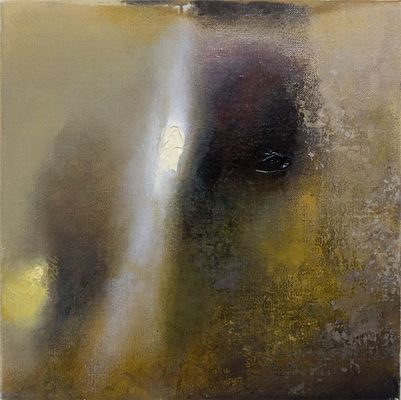
To return to Buckley’s fragment, the first two lines very much evoke how I paint nowadays. As you age, detail diminishes and patches of light become more luminous and float. I feel the most honest way of dealing with this is by smearing the oil paint on the canvas with the fingers and working close-up, blind. Only if the patches coalesce into an approaching image can the work gain a life.
-
Jonathan Walker was born in Melbourne, Australia and brought up on a dairy farm in Gippsland. In the 1970’s he studied painting at RMIT and won the Harold Wright Scholarship to the British Museum, London. During the 1980’s he exhibited at Pinacotheca Gallery, Richmond and had work shown at the NGV and Heidi City Art Gallery. Over the same period he designed the cover for the “Epigenesi” LP by Giancarlo Toniutti, Italy and conducted a mail exchange work with Achim Wollscheid, Germany. The work with artists through the post resulted in an article published in the bicentenary issue of Art and Australia 1988. He showed in artist run spaces such as WestSpace in the 90’s and 2000’s, and until 2012, taught painting at Victoria University, which is where we (Colleen Ahern and Lisa Radford) as organisers of the exhibition, among many others, had the privilege of being his student.
Walker’s knowledge was imparted to students through the careful selection of music, literature, and artists found in books that he himself had ordered for the library. Walker’s strategy was the generosity of sharing his vast knowledge with references specific to each student and their context.
Walker’s paintings share a similar focus and intimacy.
This exhibition presents a small selection of recent paintings alongside a publication that includes Walker’s writing. Observational and analytical, Walker’s work is a type of material notation — the time of day, colour and how it is blended, the both specific and fleeting location of a reflection on lino or the question of whether a chair leg should be included in a painting.
Please join us on Friday August 21 between 6-8pm to celebrate the opening of the exhibition.
Curated by Colleen Ahern and Lisa Radford.
B. Wurtz
Curated by Nic Tammens
March 26 - April 4, 2015
B.Wurtz works from a basement studio in his home on Manhattan’s Lower East Side.
This local fact is attested to by the plastic shopping bags and newsprint circulars that appear in his work. As formal objects, they don’t make loud claims about their origins but nonetheless transmit street addresses and places of business from the bottom of this long thin island. Like plenty of artists, Wurtz is affected by what is local and what is consumed. His work is underpinned by this ethic. It often speaks from a neighborhood or reads like the contents of a hamper:
“BLACK PLUMS $1.29 lb.”
“Food Bazaar”
“USDA Whole Pork Shoulder Picnic 99c lb.”
“RITE AID Pharmacy, with us it’s personal.”
“H. Brickman & Sons.”
“Sweet Yams 59c lb."
Most of the work in this exhibition was made while the artist was in residence at Dieu Donne, a workshop dedicated to paper craft in Midtown. Here Wurtz fabricated assemblages with paper and objects that are relatively lightweight, with the intention that they would be easily transportable to Australia. This consideration isn’t absolute in Wurtz’s work, but was prescriptive for making the current exhibition light and cheap. Packed in two boxes, these works were sent from a USPS post office on the Lower East Side and delivered to North Melbourne by Australia Post.
Wurtz appears courtesy of Metro Pictures, New York.
Thanks to Rob Halverson, Joshua Petherick, Sari de Mallory, Matt Hinkley, Helen Johnson, Fayen d'Evie, Ask Kilmartin, Lisa Radon, Ellena Savage, Yale Union, and "Elizabeth".
John Nixon
"Archive"
December 15 - January 20, 2014
The presentation of John Nixon's archive offered a rare showcase of this extensive collection of the artist's own publications, catalogues, posters, ephemera, editions and more, from the mid 1980s onwards, alongside a selection of his artworks.
Organized by John Nixon, Joshua Petherick and Matt Hinkley.
"Habitat"
at Minerva, Sydney (organised by Joshua Petherick and Matt Hinkley)
November 15 - December 20, 2014
Lupo Borgonovo, Janet Burchill & Jennifer McCamley,
Lewis Fidock, HR Giger, Piero Gilardi, Veit Laurent Kurz,
Cinzia Ruggeri, Michael E. Smith, Lucie Stahl, Daniel Weil, Wols
Press Release:
“...It contained seven objects. The slender fluted bone, surely formed for flight, surely from the wing of some large bird. Three archaic circuitboards, faced with mazes of gold. A smooth white sphere of baked clay. An age-blackened fragment of lace. A fingerlength segment of what she assumed was bone from a human wrist, grayish white, inset smoothly with the silicon shaft of a small instrument that must once have ridden flush with the surface of the skin - but the thing’s face was seared and blackened.”
William Gibson, “Count Zero”, 1986
"Autumn Projects Archive"
Curated by Liza Vasiliou
March 6 - March 15, 2014
World Food Books, in conjunction with the Virgin Australia Melbourne Fashion Festival 2014, presented the Autumn Projects archive, consisting of a selection of early examples in Australian fashion with a particular interest in collecting designers and labels from the period beginning in the 1980’s, who significantly influenced the discourse of Australian Fashion.
Curated by Liza Vasiliou, the exhibition provided a unique opportunity to view pieces by designers Anthea Crawford, Barbara Vandenberg, Geoff Liddell and labels CR Australia, Covers, Jag along with early experimental collage pieces by Prue Acton and Sally Browne’s ‘Fragments’ collection, suspended throughout the functioning World Food Books shop in Melbourne.
H.B. Peace
presented by CENTRE FOR STYLE
November 14, 2013
"Hey Blinky, you say chic, I say same"
Anon 2013
H.B. Peace is a clothing collaboration between great friends Blake Barns and Hugh Egan Westland. Their pieces explore the divergences between 'character’ and ‘personality’ in garments....etc
Special Thanks to Joshua Petherick and Matt Hinkley of WFB and Gillian Mears
and a Very Special Thank you to Audrey Thomas Hayes for her shoe collaboration.
Janet Burchill & Jennifer McCamley
"Aesthetic Suicide"
May 10 - June 8, 2013
The first of our occasional exhibitions in the World Food Books office/shop space in Melbourne, "Aesthetic Suicide" presented a body of new and older works together by artists Janet Burchill & Jennifer McCamley, including videos, prints, a wall work, and publications.
During shop open hours videos played every hour, on the hour.
2023, English
Softcover, 206 pages, 24 x 16 cm
Published by
Hexen Press / France
$67.00 - In stock -
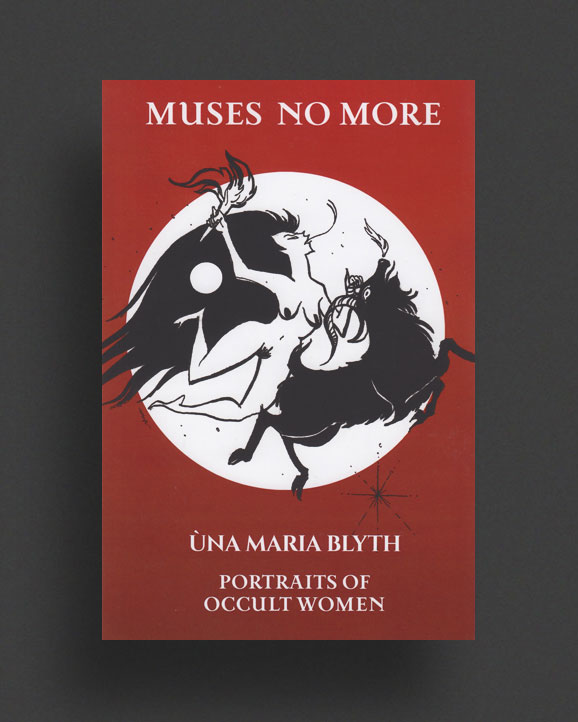
Muses No More: Portraits of Occult Women is a meandering ghost train through the lives, work, politics and beliefs of both familiar and lesser known female occultists from the distant past to the 21st century. From the freedom fighting New Orleans Voudon Queen Marie Laveau to the witch-next-door personality of Sybil Leek, these biographical portraits bring light to women often sidelined in occult spaces and memory in favour of the (white, male) heavyweights such as Arthur E. Waite, Aleister Crowley and Gerald Gardner.
Readers will discover that there was much more to Pamela Colman Smith’s magical undertakings than her illustrations for the Rider Waite Smith tarot deck, and that Doreen Valiente, whilst valiantly fighting for the modernisation of Wicca, was an ardent follower of televised football.
Filled with fascinating historical trivia, there are deeper narratives at play in this compendium too - the struggle for women’s liberation, pleas for modernisation of religious movements, the reign of the patriarchy in many magical traditions, and the fight for civil rights.
Thoroughly well-researched and written with the flair of an impassioned queer, feminist occultist, Muses No More tells the centuries-spanning stories of women who threw off their aprons in favour of the search for greater esoteric knowledge.
The book concludes with tried and tested personal practices and rituals, respectfully designed in honour of these wondrous women, so that we might channel their power and knowledge and pursue the mysteries of the vast unknown.
1966, English
Hardcover (w. dust jacket), 214 pages, 21 x 14.5 cm
1st Edition, Out of print title / used / very good
Published by
Something Else Press / New York
$120.00 - Out of stock
First hardcover English edition, published in 1966 by Something Else Press, New York, of "An Anecdoted Topography of Chance", arguably the most important and entertaining "Artist's Book" of the post-war period. A unique collaborative work by four artists associated with the FLUXUS and Nouveau Realisme movements, Daniel Spoerri, Robert Filliou, Emmett Williams, and Roland Topor.
What is the Topography? Hard to explain an idea so simple yet so brilliantly executed. Following a rambling conversation with his dear friend Robert Filliou, Daniel Spoerri one day mapped the objects lying at random on the table in his room, adding a rigorously scientific description of each. These objects subsequently evoked associations, memories, anecdotes; not only from the original author, but from his friends as well: a beguiling creation was born. Many of the principal participants of FLUXUS make an appearance (and texts by Higgins, Jouffroy, Kaprow, Restany, and Tinguely are included, among others). It is a novel of digressions in the manner of Tristram Shandy or Robbe-Grillet; it's a game, a poem, an encyclopaedia, a cabinet of wonders: a celebration of friendship and creativity.
The Topography personifies (and pre-dates) the whole FLUXUS spirit and constitutes one of the strangest and most compelling insights into the artist's life. From out of the banal detritus of the everyday a virtual autobiography emerges: of four perceptive, witty and eloquent members of the human species.
Translated from the French and further anecdoted by poet Emmett Williams.
First 1966 hardcover edition in Very Good condition, with Good dust jacket, some wear and tear to edges, light fading to spine, preserved in mylar wrap.
Couldn't be more highly recommended.
2023, English
Softcover, 168 pages, 20.5 x 13 cm
Published by
City Lights Books / San Francisco
$35.00 - Out of stock
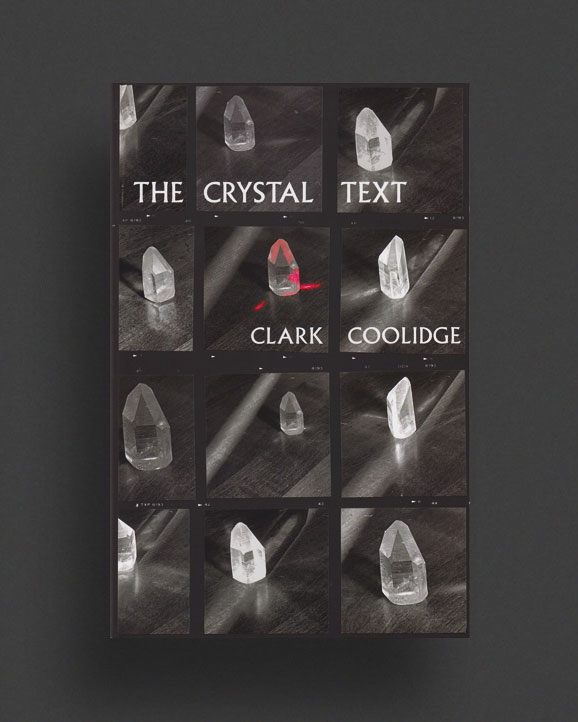
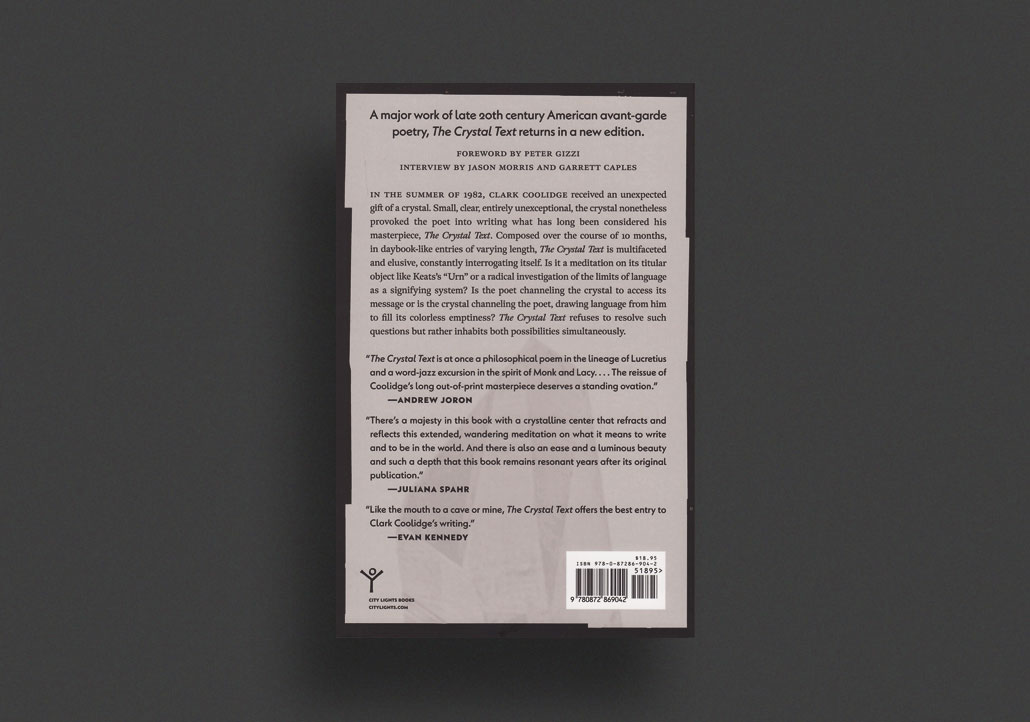
Clark Coolidge’s book-length meditation on a crystal–long considered a masterpiece of American avant-garde poetry–returns in a new edition.
“No other poet ever has so exquisitely, and sometimes also turbulently, written sheer sonic wonder into poetry.”–Lyn Hejinian, author of My Life and My Life in the Nineties
In the summer of 1982, Clark Coolidge received an unexpected gift of a crystal; small, clear, entirely unexceptional, the crystal nonetheless provoked the poet into writing what has long been considered his masterpiece, The Crystal Text (1986). A durational poem composed over the course of 10 months, in daybook-like entries of varying length, The Crystal Text is multifaceted and elusive, constantly interrogating itself. Is it a meditation on its titular object like Keats’s “Urn” or a radical investigation of the limits of language as a signifying system? Is the poet channeling the crystal to access its message or is the crystal channeling the poet, drawing language from him to fill its colorless emptiness? Is it dictation or improvisation? Is the poem a record of its own crystalline growth or does it capture the process of consciousness itself?
The Crystal Text refuses to resolve the questions it raises but rather inhabits its various possibilities simultaneously, resulting in one of the major works of late 20th century American avant-garde poetry. This new edition includes a preface by poet and scholar Peter Gizzi and an afterword in which Coolidge discusses the text with poet Jason Morris and City Lights editor Garrett Caples.
Associated with the New York School and subsequently inspiring the Language Poets, Coolidge remains one of the most singular and original American poets of our time.
Preface by Peter Gizzi
Afterword by Jason Morris
Afterword by Garrett Caples
2023, English
Softcover, 232 pages, 11.5 x 18 cm
Published by
Sternberg Press / Berlin
$40.00 - In stock -
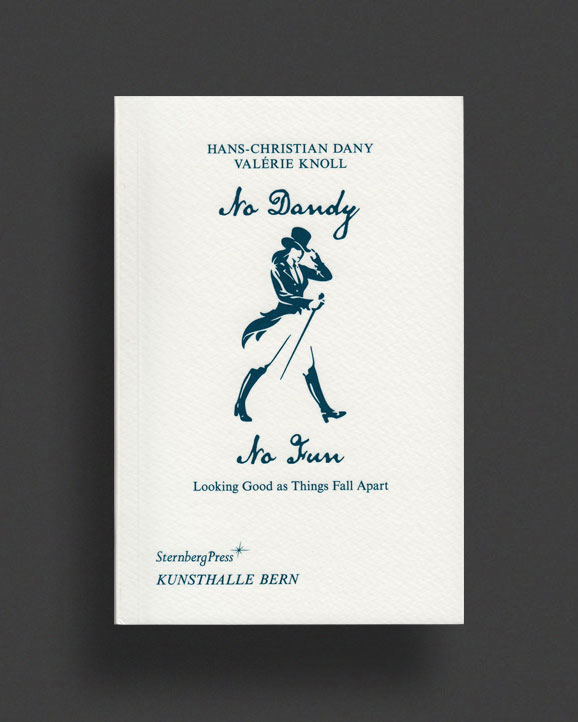
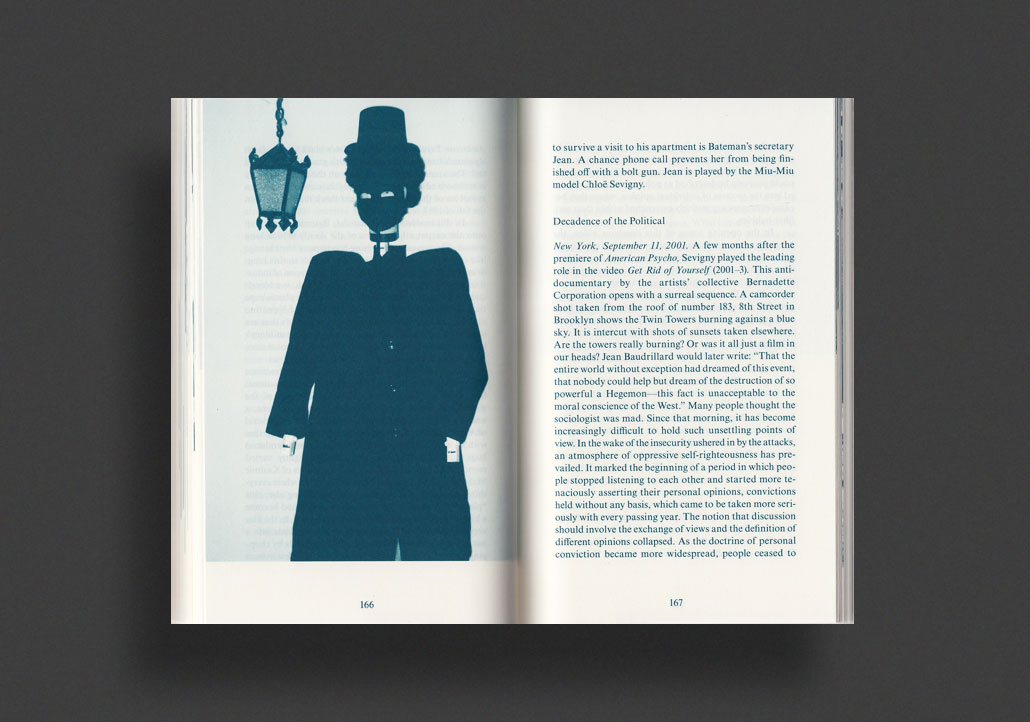
Published following the eponymous exhibition at Kunsthalle Bern in 2020–2021. A cultural examination of the enigmatically iconic figure of the Dandy, both in history and as a figure for the future.
With Kai Althoff, Lutz Bacher, Kévin Blinderman / Pierre-Alexandre Mateos / Charles Teyssou, Marcel Broodthaers, Ursula Böckler, Marc Camille Chaimowicz, Hanne Darboven, Stephan Dillemuth, Victoire Douniama, Lukas Duwenhögger, Cerith Wyn Evans, Sylvie Fleury, Andrea Fraser, Sophie Gogl, Gogo Graham, Jos de Gruyter & Harald Thys, David Hammons, Birgit Jürgenssen, K Foundation, John Kelsey, Michael Krebber, Miriam Laura Leonardi, David Lieske, Mathieu Malouf, Ulrike Ottinger, Mathias Poledna, Raymond Roussel, Heji Shin, Reena Spaulings, Sturtevant, Bernadette Van-Huy, James McNeill Whistler, Virginia Woolf.
Designed by HIT.
1983 / 1995, Japanese
Softcover (w. dust jacket), 176 pages, 21 x 14.8 cm
1st Edition, Out of print title / used / very good
Published by
Seirindo / Tokyo
$60.00 - Out of stock
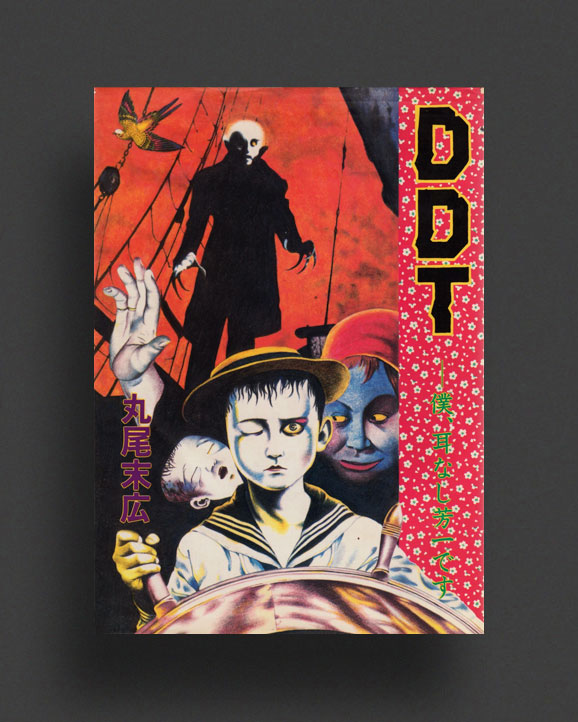
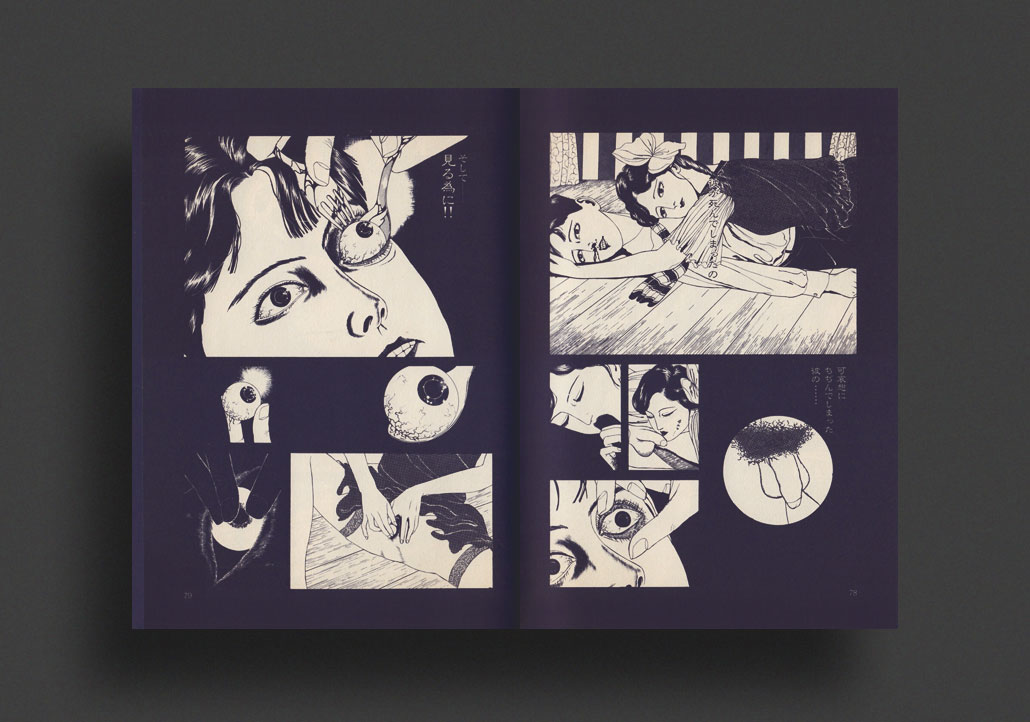
First 1983 edition, 1995 print of Japanese ero guro (erotic grotesque) horror manga master Suehiro Maruo's DDT, a classic collection of artworks and short transgressive manga stories by Maruo (b. 1956) from the early 1980s, arguably the author's most creative period. Packed with sex, violence, gore, and maggots... "These short stories allow Maruo to give free rein to his imagination: funny and absurd, always full of references - notably to surrealism and German expressionism -, they deal with rape, murder and incest. And despite the horror and morbidity, a certain romanticism emerges, each board being able to be contemplated as a work of art in its own right. Between voyeurism and curiosity about the fate of the characters, we enter as if trapped in the fascinating world of Maruo. A work not to be put into everyone's hands."
Very Good copy in VG dust jacket. General light wear.
Suehiro Maruo (b. 1956) is a Japanese manga artist, illustrator, and painter. Maruo's nightmarish manga fall into the Japanese category of "erotic grotesque" ("ero-guro"). Though relatively few of Maruo's manga have been published outside Japan, his work enjoys an international cult following. A high school drop-out in 1972, Maruo moved to Tokyo and began working for a bookbinder. At 17, he made his first manga submission to Weekly Shōnen Jump, but it was considered by the editors to be too graphic and was rejected. Maruo temporarily removed himself from manga until November 1980 when he made his official debut as a manga artist in Ribon no Kishi at the age of 24. It was at this stage that the young artist was finally able to pursue his artistic vision without such stringent restrictions over his work’s visual content. Two years later, his first stand-alone anthology, Barairo no Kaibutsu (Rose Colored Monster) was published. Maruo was a frequent contributor to the underground manga magazine Garo and also produced illustrations for concert posters; CD jackets; magazines; novels; and various other media, including his collaboration with composer John Zorn's band Naked City. The illustrations throughout several of his works show grotesquely dark imagery, strange sexual acts / rituals, as well as sexual-violence towards minors. It is referred to as contemporary "bloody prints" muzan-e (a subset of Japanese ukiyo-e depicting violence or other atrocities.) Maruo himself featured in a 1988 book on the subject with fellow artist Kazuichi Hanawa entitled Bloody Ukiyo-e, presenting their own contemporary works alongside the traditional prints of Yoshitoshi and Yoshiiku.
2024, English
Hardcover (w. dust jacket), 176 pages, 31 x 24.1 cm
Published by
Skira / Milan
$95.00 - In stock -
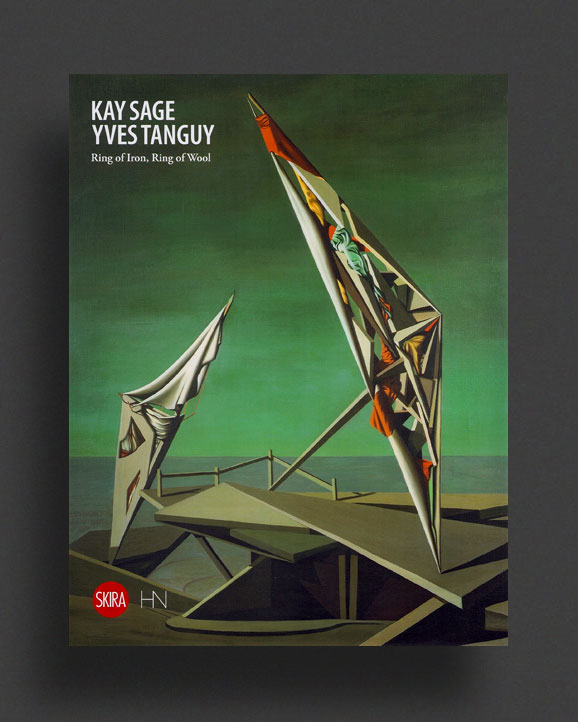
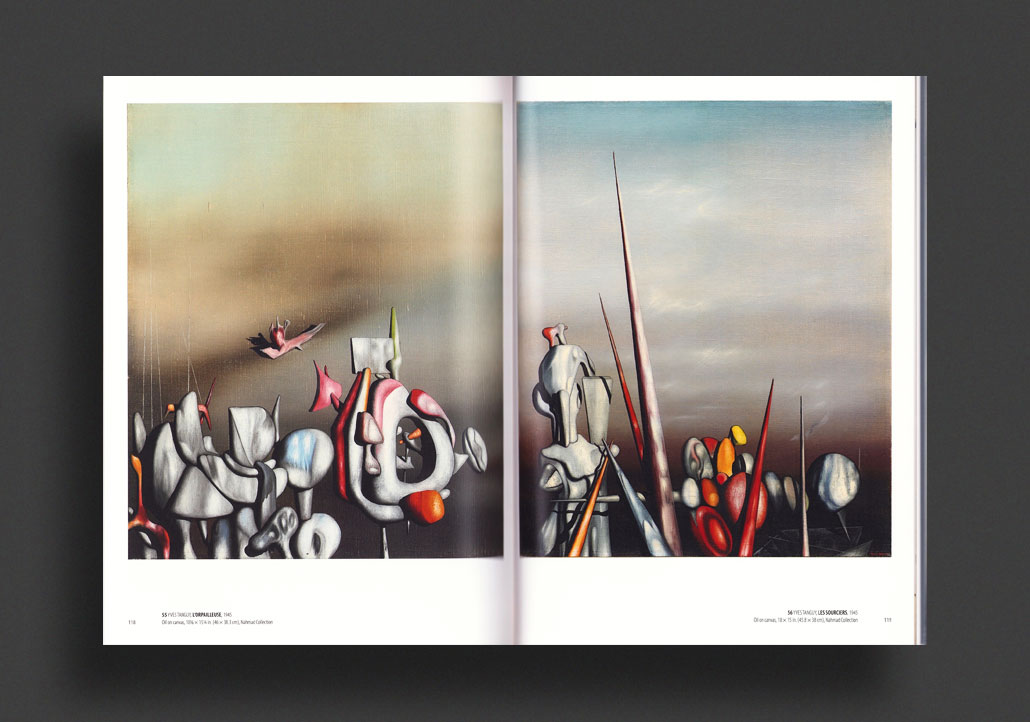
Published on occasion of the exhibition Kay Sage and Yves Tanguy: Ring of Iron, Ring of Wool curated by Dr Victoria-Noel-Johnson, Marzina Marzetti (Director of the Helly Nahmad Gallery) in collaboration with Derek Des Islets and Matthew Foster, Helly Nahmad Gallery, New York, this hardcover catalogue explores the work of Kay Sage (American, 1898—1963) and Yves Tanguy (French-American, 1900—1955), two eminent Surrealist artists who married in 1940. Particular attention will be given to Sage's fascinating life and extraordinary work, which has long been obscured by her relationship with the better-known Tanguy, a key figure of French Surrealism. As such, the publication will analyse the various stages of Sage's life and career in Italy and Paris before returning to New York in 1939, parallel to Tanguy's own exceptional work of the late 1920s—early 1950s, with the aim of highlighting how their personal and professional trajectories affected their respective work and careers thereafter. Sage's dedication to promoting and safeguarding Tanguy's legacy following his premature death in 1955 will also be explored.
1979, Spanish
Hardcover (w. dust jacket), 143 pages, 21 x 21 cm
1st Edition, Out of print title / used / very good
Published by
Ediciones Polígrafa / Barcelona
$65.00 - Out of stock
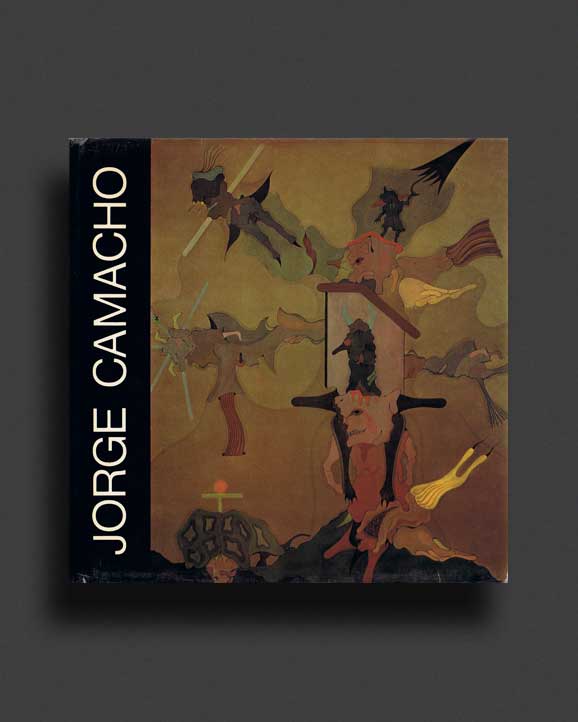
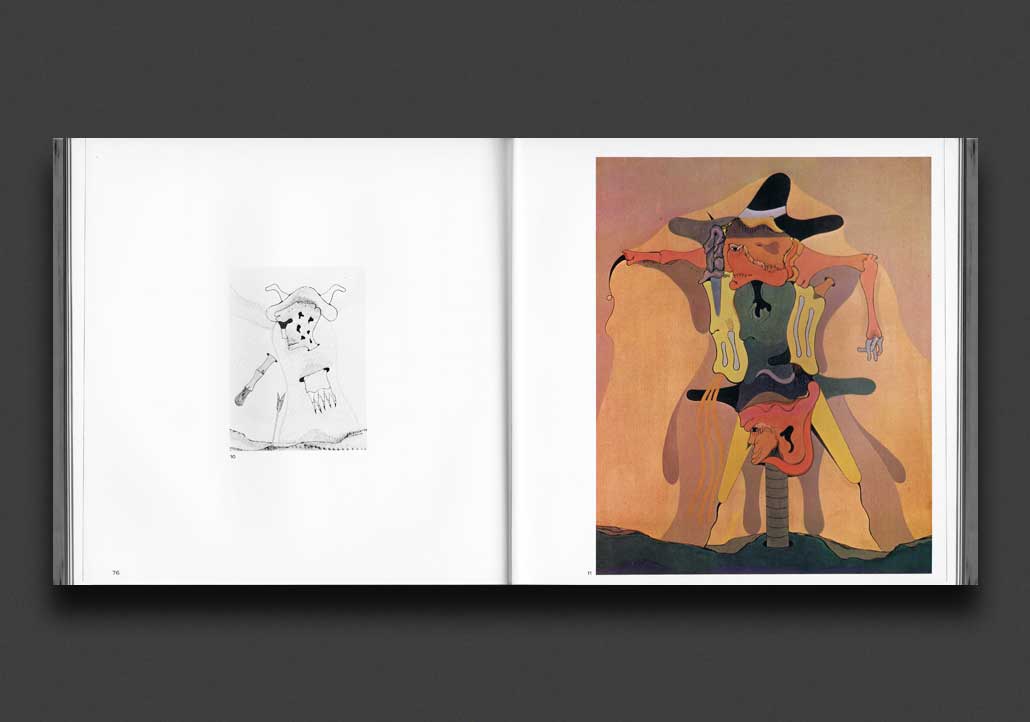
Jorge Camacho is born in 1934 in Havana (Cuba). In 1952, he abandons his law studies and begins painting, driven by an inner strength that still remains for him mysterious. In Mexico, in 1959, he meets the painter Jose Luis Cuevas, with whom he begins a long journey to the sources of pre-Columbian cultures (Teotihuacan, Olmec, Maya, Aztec) that defines a new direction in his painting. Camacho moves to Paris in 1959, where he finds his friend the sculptor Augustin Cardenas. His first solo...
1983, English / French
Softcover (w. 2 fabric swatches tipped in), 21 x 26 cm
1st Edition, Out of print title / used / good
Published by
Comportement Environnement Performance / Lyon
$240.00 - In stock -
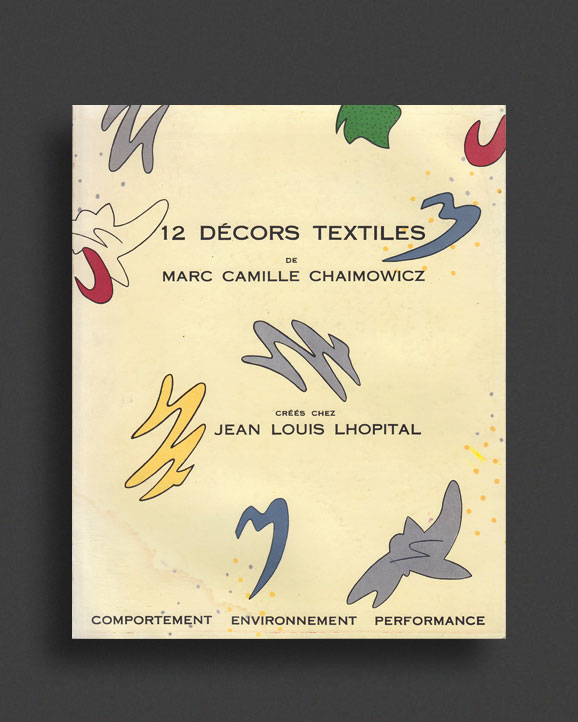
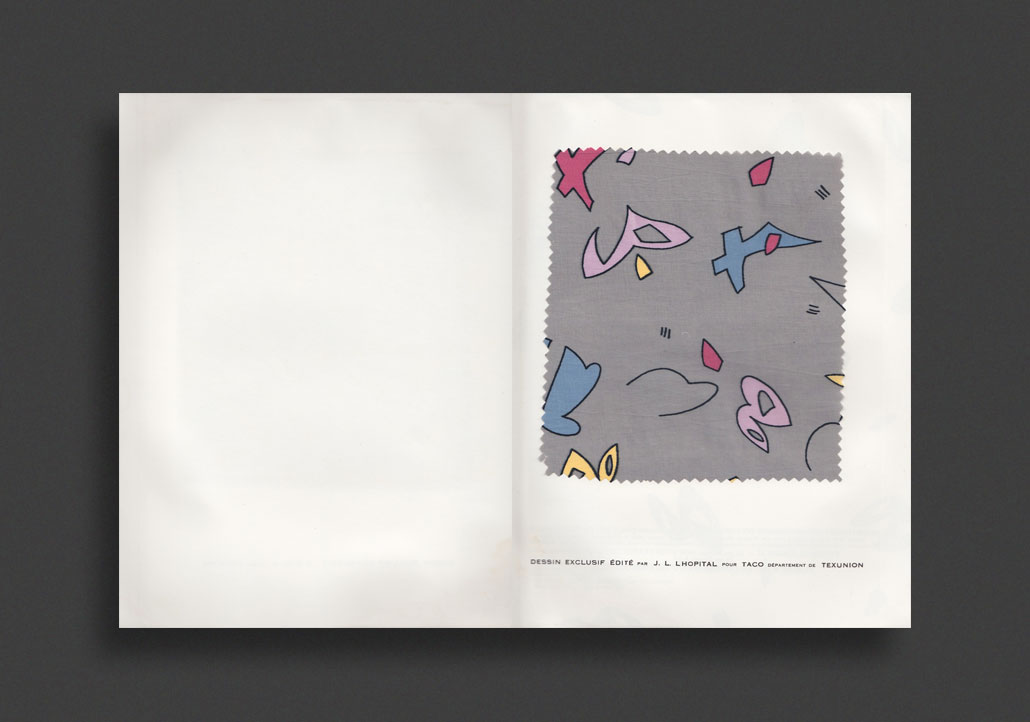
Rare artist's book and catalogue designed by Marc Camille Chaimowicz, 12 Décors Textiles, published in limited edition in 1983. Lavishly illustrated throughout in colour and b/w, reproducing the designs of 12 textile patterns created by the artist, including two hand-printed fabric sample swatches tipped in. Accompanied by text by Hubert Besacier in English and French.
Born in 1947, Paris, Marc Camille Chaimowicz is a London-based artist whose cross-disciplinary work in painting, drawing, collage, sculpture, installation, furniture, lighting, ceramics, textiles, and wallpaper challenges the categorical divisions between fine and applied arts, masculine and feminine, public and private, past and present.
Good copy, with general wear/age to edges/spine, moisture stain to bottom corner, at worst on front board, with associated page rippling. Some markings to covers.
1988, French
14 illustrated prints in illustrated cardboard folio, 30 loose leaf pages, 21.5 x 26.5 cm
Ed. of 150,
1st Edition, Out of print title / used / very good
Published by
Pour l’Art Contemporain / Bourbon-Lancy
$800.00 - In stock -
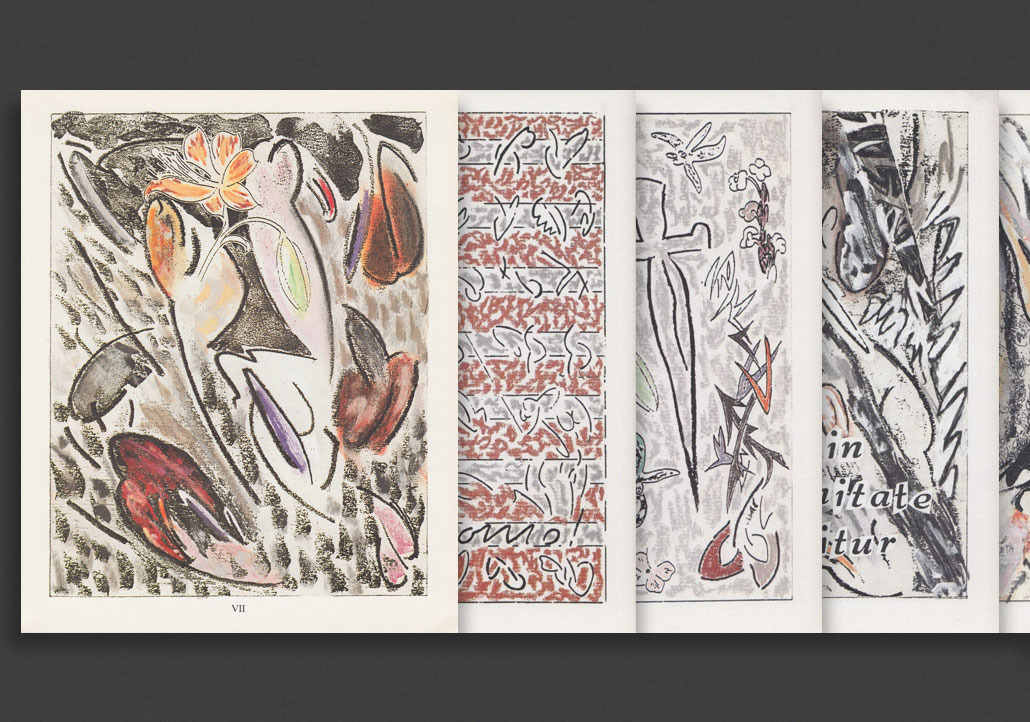
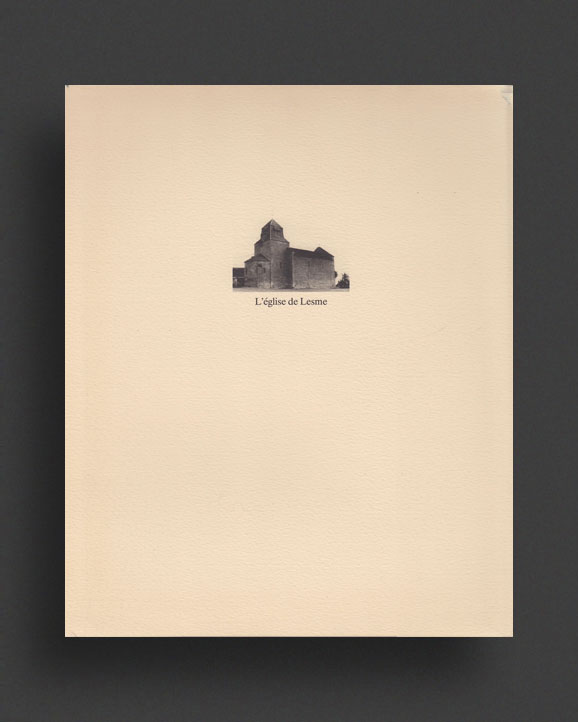
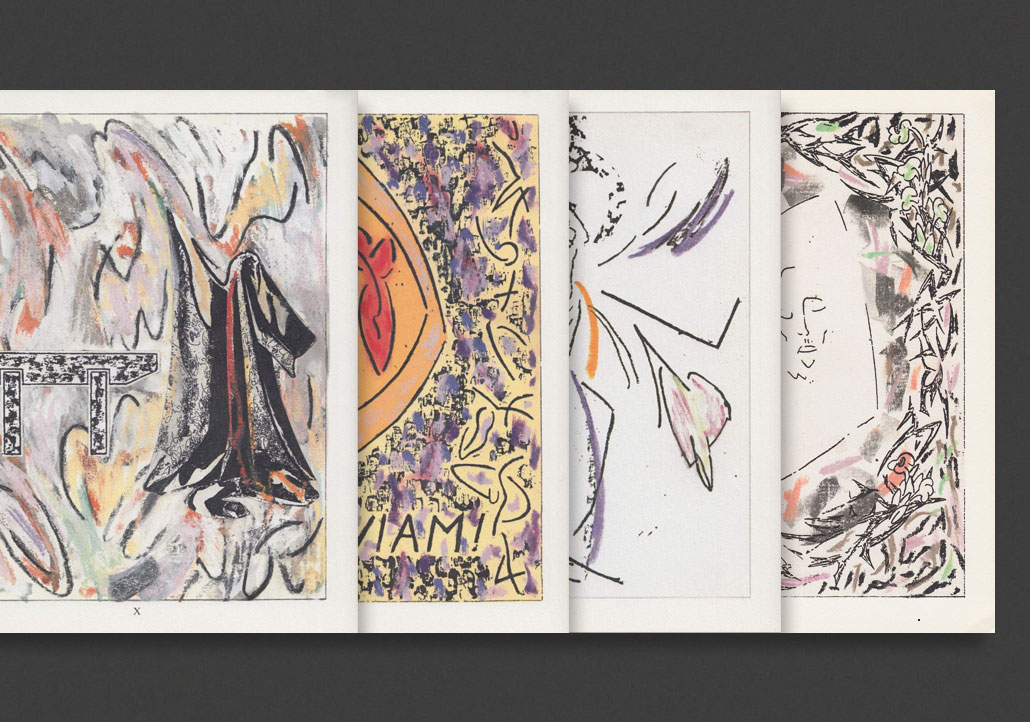
Exquisite and extremely rare artist's portfolio, Chemin de Croix (Stations of the Cross), 14 drawings made by Marc Camille Chaimowicz at the Leighton Artists Colony, Parish of St Mary’s, Banff, during Easter 1988. Published in an edition of 150 copies and printed in full colour on warm, heavy paper stock, housed in illustrated cardboard folio, printed in Dijon on the presses of l'imprimerie Dips on behalf of the artist and Le Coin du Miroir, Dijon A Priori, Lyon Pour l'art contemporain, Bourbon Lancy. The 14 drawing series was created to be exhibited in the church of Lesme in Saône-et-Loire at the request of the association Pour l’Art Contemporain, Bourbon-Lancy, from July 1988—July 1989.
Born in 1947, Paris, Marc Camille Chaimowicz is a London-based artist whose cross-disciplinary work in painting, drawing, collage, sculpture, installation, furniture, lighting, ceramics, textiles, and wallpaper challenges the categorical divisions between fine and applied arts, masculine and feminine, public and private, past and present.
Very Good copy, with light age and corner/edge wear. Prints beautifully preserved within. Small chipping/closed tear to soft folio corners.
2007, English
Hardcover (pressed cloth w. plastic sleeve), 218 pages, 21 x 26.5 cm
1st Edition, Out of print title / used / fine
Published by
JRP Ringier / Zürich
Migros Museum für Gegenwartskunst / Zürich
$1000.00 - Out of stock
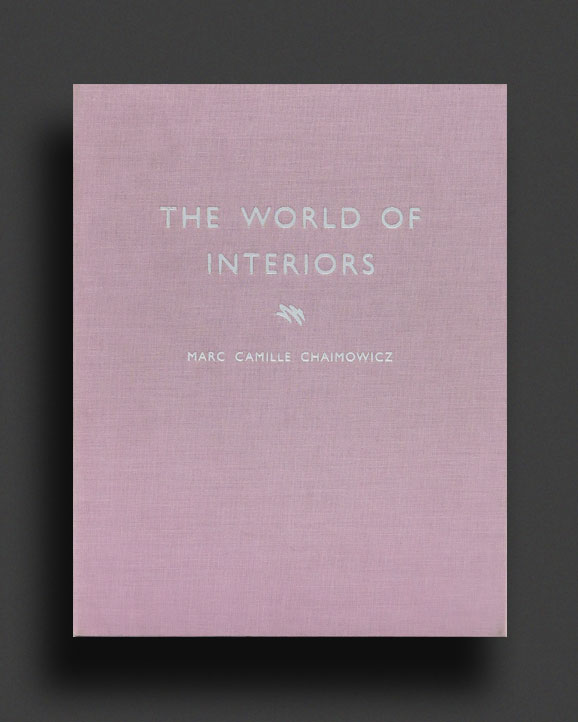
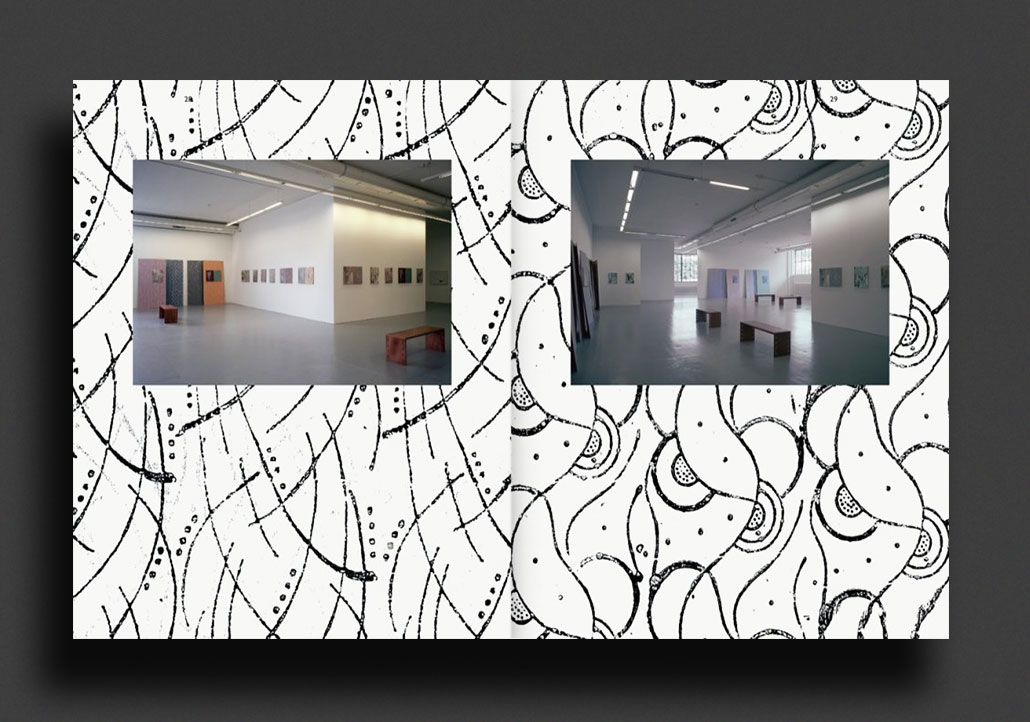
One of the great artist books of our time, Marc Camille Chaimowicz's The World of Interiors disappeared from existence immediately after its publication, becoming a book of legend.
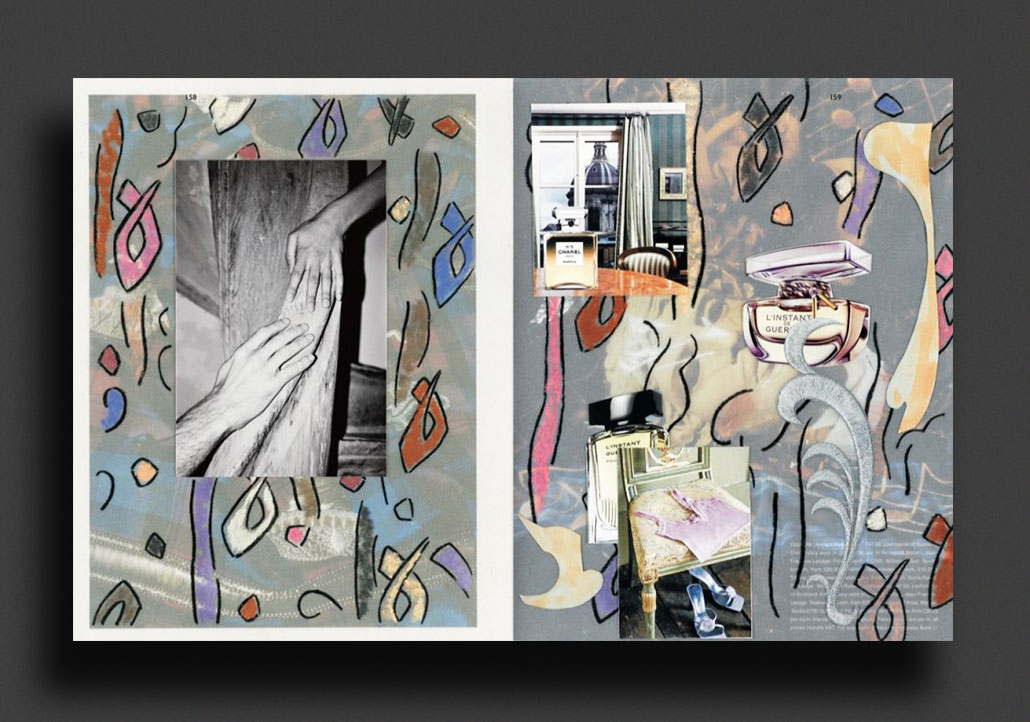
Awarded "The Most Beautiful Swiss Book" in 2007, The World of Interiors was conceived and realized by Chaimowicz (b. post-war Paris) on the occasion of his solo exhibition at the Migros Museum für Gegenwartskunst, Zurich. In the guise of a perfectly reproduced copy of an issue of the famous World Of Interiors magazine, the artist conceived this publication as a reference monograph and a source catalogue, ranging from his first post-Pop scatter installations to works realized in the 1990s. Looking back over nearly 30 years of work, this issue of World Of Interiors is beautifully détourned by Chaimowicz through inserting and collaging his own work (drawings, designs, paintings, photographs of installations, sculptures, his own domestic interiors, furniture, objects), personal writings, clippings from other magazines, references to Cocteau, Proust, Flaubert, Grey, Genet, Giacometti, and texts by contributing writers throughout its glossy pages. Legend has it (and we have this from the best sources) that the publishers received a 'cease and desist' letter from World Of Interiors' publisher Conde Nast immediately after its release and the majority of the print-run was destroyed, making this a very scarce and sought after book. The perfect follow-up Chaimowicz book to his gorgeous "Café du Reve" from 1985.
Born in 1947, Paris, Marc Camille Chaimowicz is a London-based artist whose cross-disciplinary work in painting, drawing, collage, sculpture, installation, furniture, lighting, ceramics, textiles, and wallpaper challenges the categorical divisions between fine and applied arts, masculine and feminine, public and private, past and present. His works are in the Museum of Modern Art, Tate Modern, and Victoria and Albert Museum collections.
A fine example of a very collectable and special book, wrapped in original rose cloth hardcover, protected under mylar wrap..
2022, English
Flexcover (clothbound), 248 pages, 21 x 26 cm
Published by
Les Presses Du Reel / Paris
$72.00 - Out of stock
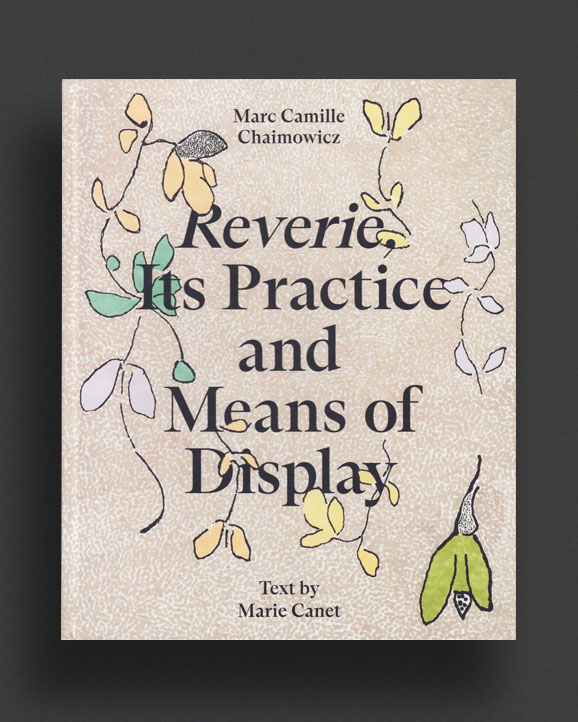
Produced on the occasion of the exhibition Marc Camille Chaimowicz – Zig Zag and Many Ribbons… at MAMC Saint-Etienne in 2022—2023, this reference monograph revisits the conceptual and sensorial developments pursued by the artist since the 1970s.
Includes a ribbon drawn by the artist as an inserted bookmark. Edited by Marc Camille Chaimowicz and Anna Clifford. Text by Marie Canet. Designed by Zak Kyes.
Born in the aftermath of World War II (in 1947 in Paris) of a Polish father and a French mother, Marc Camille Chaimowicz moved as a child to the United Kingdom. He studied at Ealing, Camberwell, and the Slate School of Art in London. In new artistic times, careful to bring art and life closer, often using performance, the life of Marc Camille Chaimowicz has become a great workshop. Living in the exhibition spaces, he sets up hotels entrances, decorates them with his own artefacts, and serves there some tea to visitors with musical background. When it became an official art practice which was no longer subversive, Chaimowicz abandoned performance art. From 1975 to 1979, he designed the interior of his Approach Road flat. Wallpapers, curtains, videos he made while performing in his own decor: everything had been tailored-imagined, drawn, and conceived to turn his interior into a room conducive to reverie. From the 1980s onwards, decors and furniture set like in a theatre scenography took their place in museums. Since then, hundreds of exhibitions have featured the interiors series of this international artist.
Marie Canet is a French art critic, independent curator and professor of aesthetics at the Villa Arson (Nice).
1970, German
Softcover (staple-bound), 12 pages, 21 x 21 cm
1st Edition, Out of print title / used / very good
Published by
Editions Bischoffberger / Zürich
$35.00 - Out of stock
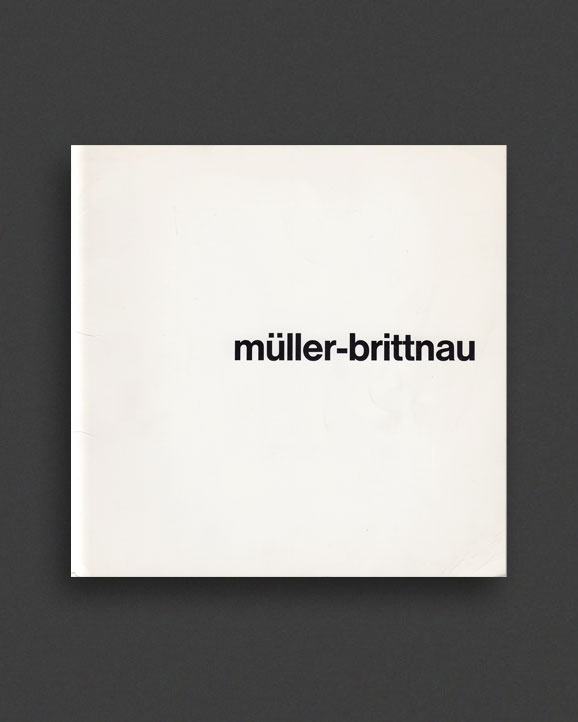
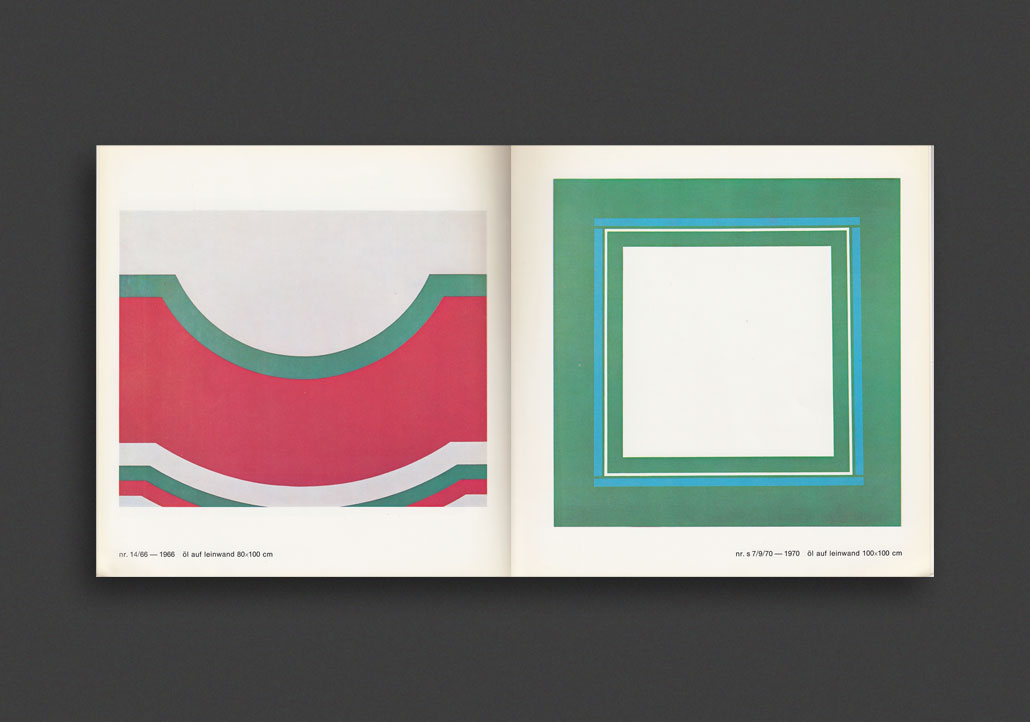
1970 catalogue published on the occasion of the exhibition of Swiss artist Willy Müller-Brittnau (1938—2003) at the Galerie d'art Moderne, Basel; Editions Bischoffberger, Zürich; Galerie Riehentor, Basel, exhibiting the striking hard-edge/colour field works of Müller-Brittnau spanning 1964—1970, boldly illustrated throughout in full-colour. Like many Swiss artists of the period, Willy Müller-Brittnau started out as a graphic designer. First influenced by American action painting in 1958, he went on to develop a geometric pictorial language and made outstanding contributions to colour field painting and signal art in the 1960s and 1970s. In addition to painting, drawing and prints, he created numerous site-specific, sculptural works and developed colour schemes for buildings. Includes portraits of the artist and biography.
Good—Very Good copy with light pinching to spine/light cover/corner wear.
1958, Dutch
Softcover (staple-bound), 26 pages, 26 x 19 cm
1st Edition, Out of print title / used / good
Published by
Stedelijk Museum / Amsterdam
$25.00 - In stock -
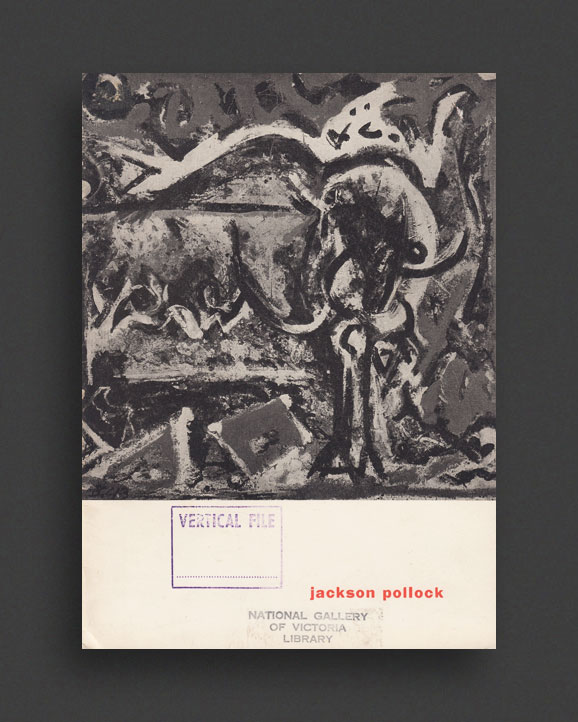
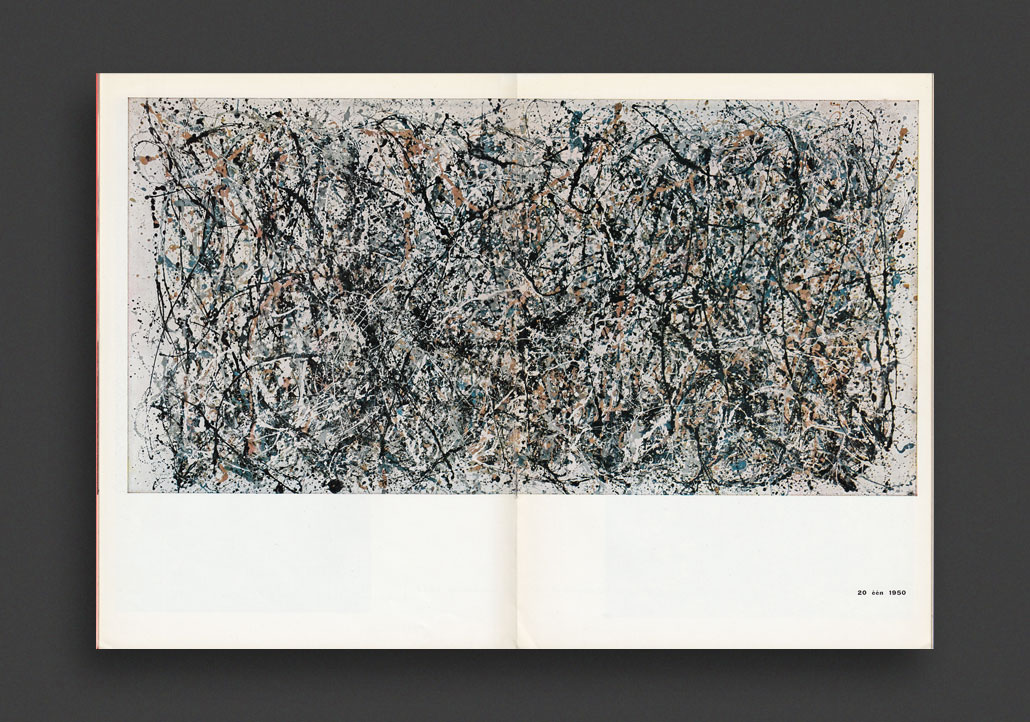
Rare early Jackson Pollock catalogue published by Stedelijk Museum Amsterdam (SM Catalogue nr 189) in 1958, designed by the legendary Willem Sandberg. Profusely illustrated in b/w with Pollock's artworks, including a colour centrefold, printed across various paper stocks, accompanied by biography, exhibition history, catalogue and text by Sam Hunter (translated into Dutch).
Very Good copy but ex-National Gallery of Victoria library copy, therefore two stamps to cover, plus staple holes to top right of cover, otherwise VG throughout.
1983 + 1985, English / Japanese
Softcover (staple-bound), 18 + 28 pages (w. fold-out), 25 x 19 cm
1st Edition, Out of print title / used / very good
Published by
Gatodo Gallery / Japan
$150.00 - Out of stock
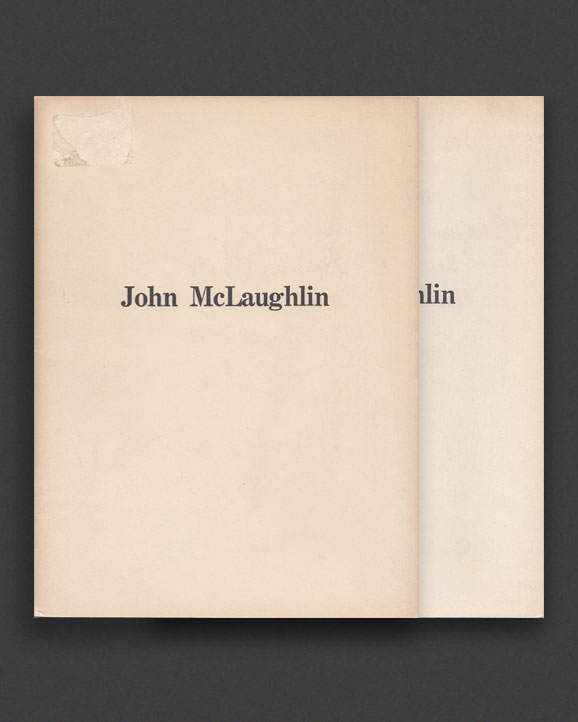
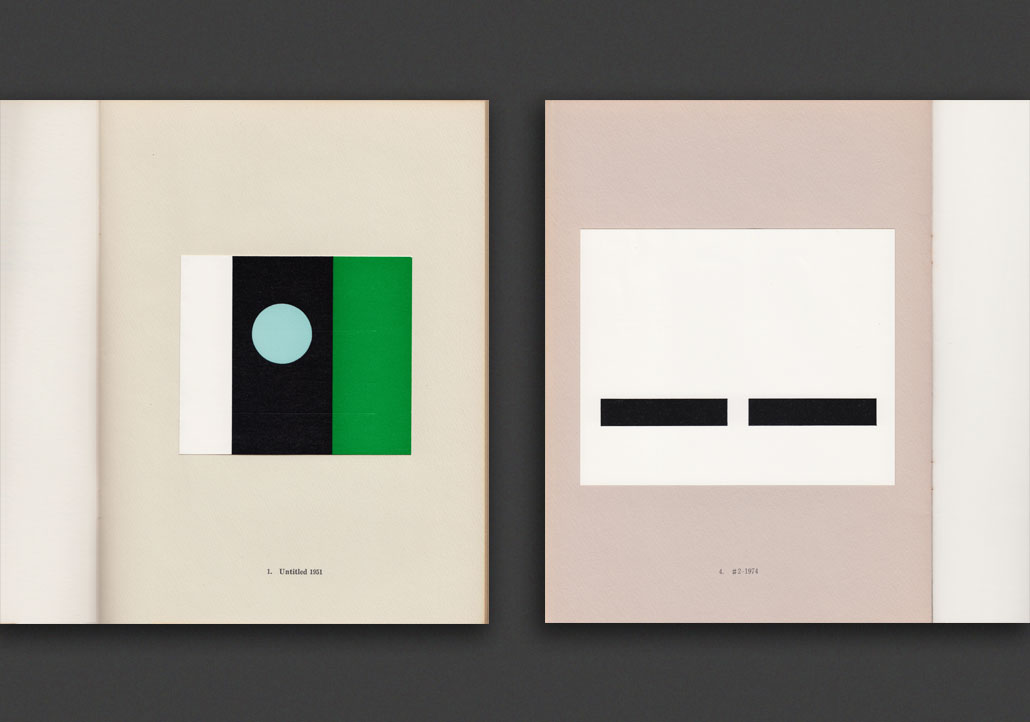
Very rare set of two handsome Japanese catalogues on the work of American artist John McLaughlin, published in 1983 and 1985. The first volume is "John McLaughlin: Paintings 1951-1966", documenting an exhibition at Gatodo Gallery in Japan in 1983. It includes texts by the artist, portrait, biography, bibliography, a checklist of works exhibited, and 8 superb tipped-in colour plates. The second is "John McLaughlin : Late Work", documenting an exhibition at Gatodo Gallery in Japan in 1985. It includes texts by the artist, portrait, biography, bibliography, a checklist of works exhibited, and 5 superb tipped-in colour plates, including fold-out panel and exhibition view. Text in both Japanese and English.
John Dwyer McLaughlin (1898 – 1976) was a highly pivotal and significant American abstract painter. Based primarily in California, he was a pioneer in minimalism and hard-edge painting.
Good—Very Good condition, both volumes clean and very good throughout internally, only with small sticker peel to cover of vol. I, and some small markings to covers of vol. II.
2024, English
Softcover, 96 pages, 20 x 14 cm
Published by
Semiotext(e) / Los Angeles
$34.00 - In stock -
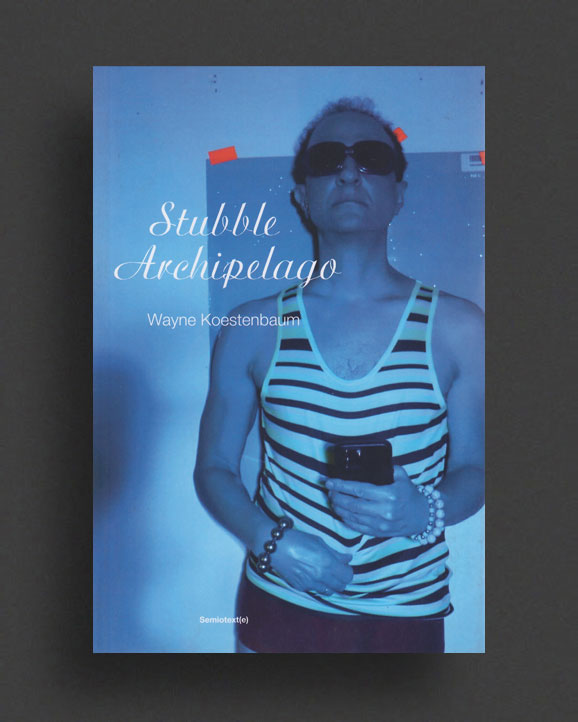
Wild new adventures in word-infatuated flânerie from a celebrated literary provocateur.
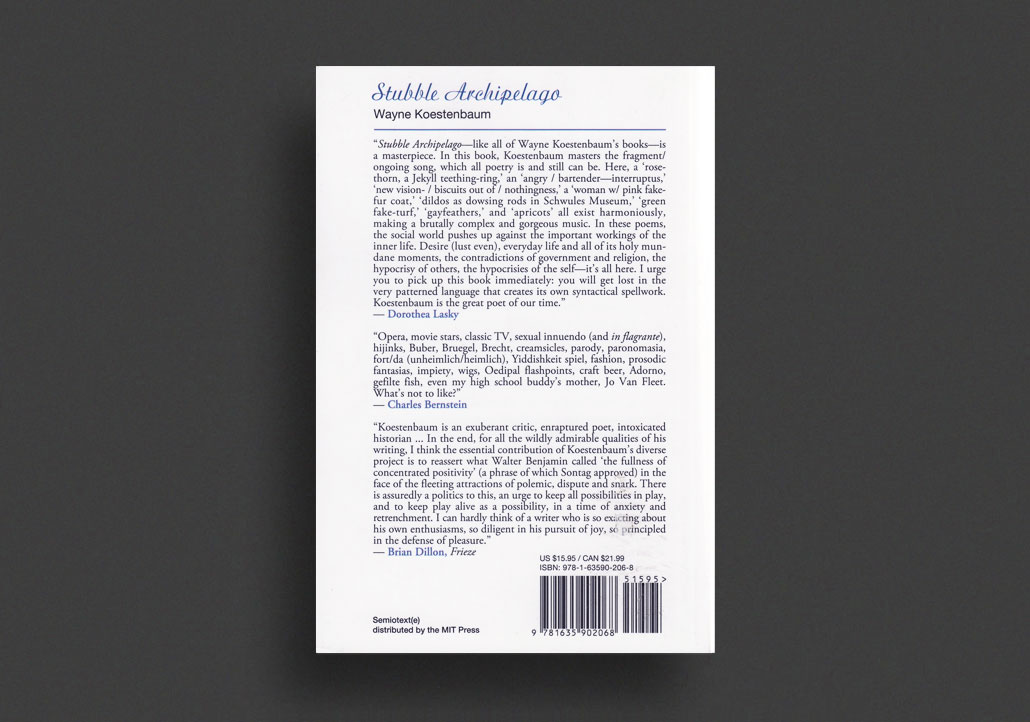
This book of thirty-six poetic bulletins by the humiliation-advice-giver Wayne Koestenbaum will teach you how to cruise, how to dream, how to decode a crowded consciousness, how to find nuggets of satisfaction in unaccustomed corners, and how to sew a language glove roomy enough to contain materials gathered while meandering. Koestenbaum wrote many of these poems while walking around New York City. He'd jot down phrases in a notebook or dictate them into his phone. At home, he'd incorporate these fragmented gleanings into overflowing quasi sonnets. Therefore each poem functions as a coded diary entry, including specific references to sidewalk events and peripatetic perceptions. Flirting, remembering, eavesdropping, gazing, squeezing, sequestering: Koestenbaum invents a novel way to cram dirty liberty into the tight yet commodious space of the sonnet, a fourteen-lined cruise ship that contains ample suites for behavior modification, libidinal experiment, aura-filled memory orgies, psychedelic Bildungsromane, lap dissolves, archival plunges, and other mental saunterings that conjure the unlikely marriage of Kenneth Anger and Marianne Moore. Carnal pudding, anyone? These engorged lyrics don't rhyme; and though each builds on a carapace of fourteen lines, many of the lines spawn additional, indented tributaries, like hoop earrings dangling from the stanzas' lobes. Koestenbaum's poems are comic, ribald, compressed, symphonic. They take liberties with ordinary language, and open up new pockets for sensation in the sorrowing overcoat of the “now.” Imagine: the training wheels have been removed from poetry's bicycle, and the wheeling flâneur is finally allowed a word pie equal to fantasy's appetite. Stubble—a libidinal detail—matters when you're stranded on the archipelago of your most unsanctioned yet tenaciously harbored impulses.
2024, English
Softcover, 128 pages, 20.5 x 14 cm
Published by
Nightboat Books / New York
$38.00 - Out of stock
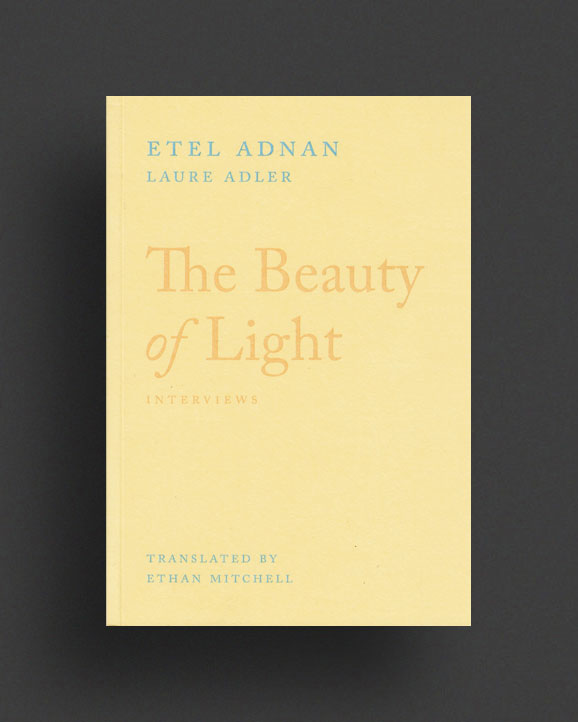
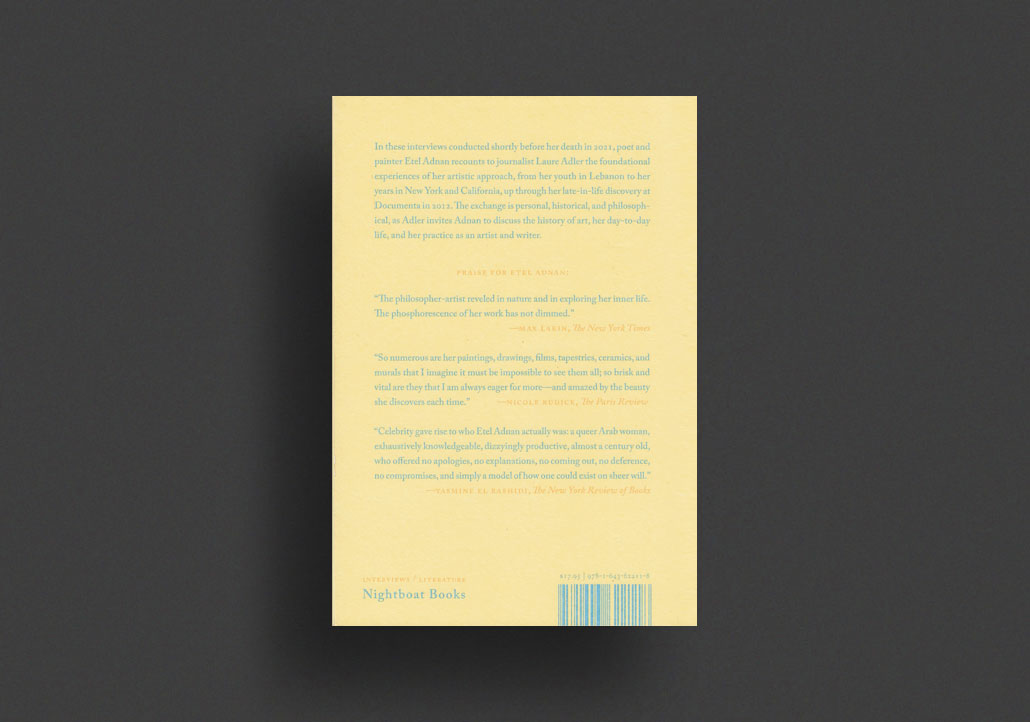
A lively and spontaneous interview with Etel Adnan about her absolute belief in the beauty of the world and the beauty of art.
In these interviews with journalist and editor Laure Adler, conducted in the months before her death in November 2021, Etel Adnan traces with depth and emotion the founding experiences of her artistic approach, between poetry and painting. From her youth in Lebanon, her American years in New York and California, to her late recognition at Documenta in 2012 and her life in France, the conversation covers philosophy, painting, poetry and aesthetics, as well Adnan's views on history and politics in Europe, the Middle East, and the United States. These transcripts usher the experiences and observations of Adnan's long and rich life into an intimate and spontaneous conversation with a dear friend―a window on the “universe” of her imagination.
1992, English
Softcover, 173 pages, 24 x 15 cm
Published by
Dalkey Archive Press / US
$32.00 - Out of stock
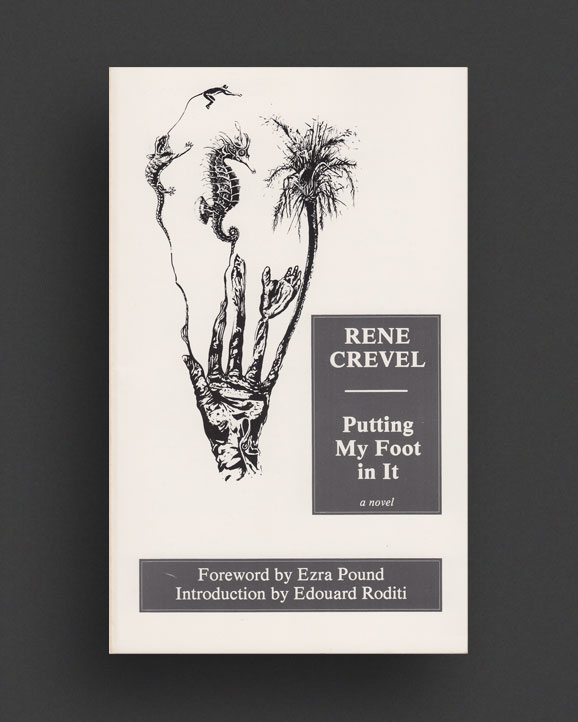
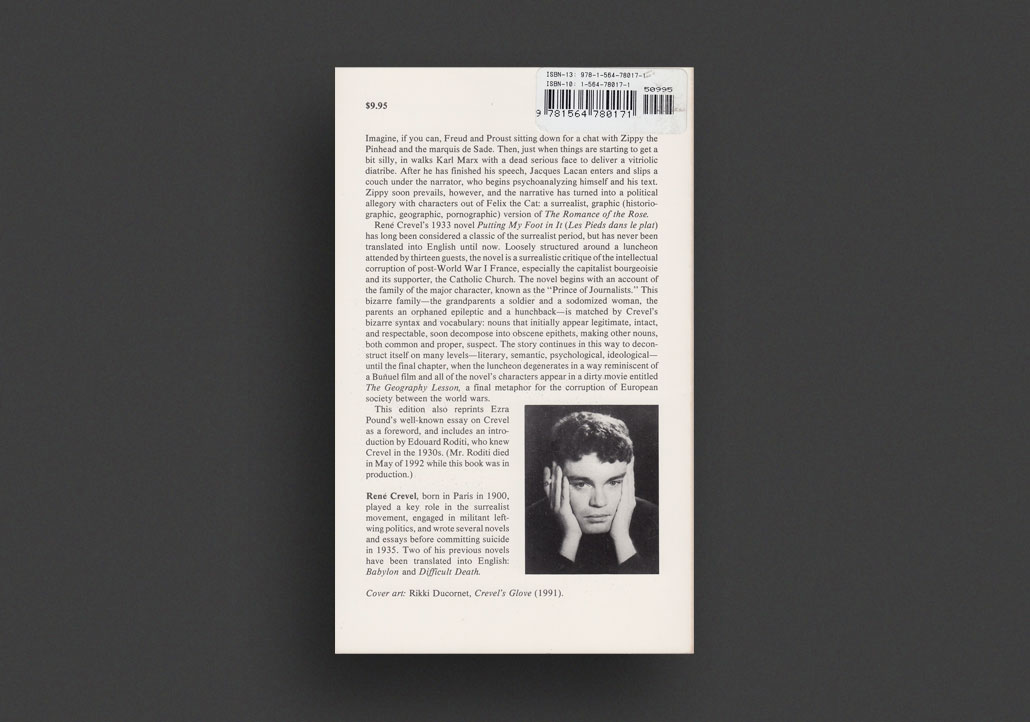
English edition of this 1933 classic surrealist novel by René Crevel (1900-1935), a bisexual communist dadaist who suffered a traumatic religious upbringing and suffered from tuberculosis. Crevel is considered to be one of the most important writers of surrealist fiction, a true genius of the movement. Translated by Thomas Buckley, this edition includes Ezra Pound's well-known essay on Crevel as a foreword, and an introduction by Edouard Roditi.
Imagine, if you can, Freud and Proust sitting down for a chat with Zippy the Pinhead and the marquis de Sade. Then, just when things are starting to get a bit silly, in walks Karl Marx with a dead serious face to deliver a vitriolic diatribe. After he has finished his speech, Jacques Lacan enters and slips a couch under the narrator, who begins psychoanalyzing himself and his text. Zippy soon prevails, however, and the narrative has turned into a political allegory with characters out of Felix the Cat: a surrealist, graphic (historiographic, geographic, pornographic) version of The Romance of the Rose. Rene Crevel's 1933 novel Putting My Foot in It (Les Pieds dans le plat) has long been considered a classic of the surrealist period, but has never been translated into English until now. Loosely structured around a luncheon attended by thirteen guests, the novel is a surrealistic critique of the intellectual corruption of post-World War I France, especially the capitalist bourgeoisie and its supporter, the Catholic Church. The novel begins with an account of the family of the major character, known as the "Prince of Journalists." This bizarre family - the grandparents a soldier and a sodomized woman, the parents an orphaned epileptic and a hunchback - is matched by Crevel's bizarre syntax and vocabulary: nouns that initially appear legitimate, intact, and respectable, soon decompose into obscene epithets, making other nouns, both common and proper, suspect. The story continues in this way to deconstruct itself on many levels - literary, semantic, psychological, ideological - until the final chapter, when the luncheon degenerates in a way reminiscent of a Bunuel film and all of the novel'scharacters appear in a dirty movie entitled The Geography Lesson, a final metaphor for the corruption of European society between the world wars.
2021, English
Hardcover, 244 pages,16.5 x 13 cm
Published by
City Lights Books / San Francisco
$38.00 - Out of stock
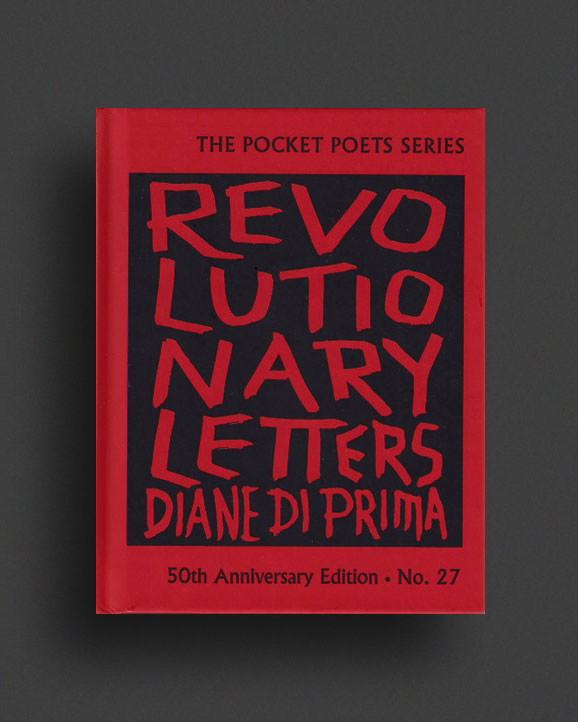
Expanded 50th anniversary edition of the City Lights classic of eco-feminist-Zen Beat poetry, featuring fifteen new poems. Simultaneously released with Diane di Prima's Spring and Autumn Annals on the one-year anniversary of her passing.
By turns a handbook of countercultural living, a manual for street protest, and a feminist broadside against the repressive state apparatus, Revolutionary Letters is a modern classic, as relevant today as it was at its inception, 50 years ago.
During the tumult of 1968, Beat poet Diane di Prima began writing her "letters," poems filled with a potent blend of utopian anarchism and Zen-tinged ecological awareness that were circulated via underground newspapers and stapled pamphlets. In 1971, Lawrence Ferlinghetti published the first collection of these poems in his iconic Pocket Poets Series, and di Prima would go on to publish four subsequent editions, expanding the collection each time. During the last years of her life, di Prima got to work on the final iteration of this lifelong project, collecting all of her previously published "letters" and adding the new work, poems written from 2007 up to the time of her death in October 2020. Published in a board-bound edition that proudly features the original edition's cover art by Lawrence Ferlinghetti.
Praise for Revolutionary Letters, 50th Anniversary Edition:
"There is a generosity and affection in Revolutionary Letters that I find myself returning to, always, when I'm at my most cynical and feeling lost for any understanding of what a better world might look like. When I need to be grounded and re-centered in my understanding of community care as a living, breathing, full-time mission. And, quite simply, when I need to be reminded of how language can begin on the page, and echo far beyond."-Hanif Abdurraqib
"What's astonishing about Diane di Prima's Revolutionary Letters is how these poems are adamantly useful. A manual of insurgent instruction, these poems tell you how to mitigate tear gas and sleep deprivation, eat a healthy diet, and overthrow the state. This book is ever more urgent in our moment, as a resurgent left faces down the apocalypse. Revolutionary Letters is a time machine towards a better future."-Ken Chen
"With this new and expanded edition we are offered a window onto a master poet redefining revolution over her lifetime. Di Prima continues to interrogate the ways in which we have been taught to live, love, eat, write, fight and take control. How can we make the most of this book and its wisdom? It's not enough to simply read it or even to write our own Revolutionary Letters. These poems are not realized until we are called upon to act."-Cedar Sigo
"How do 'we' keep fighting? There is no one way, but sometimes you think about lines in Diane di Prima's Revolutionary Letters. Di Prima's 'letters' feel like they were written to the all of you that always is somewhere coming together. And here you thought this classic couldn't get any better."-Wendy Trevino
2024, English
Softcover, 252 pages, 11 x 17 cm
Published by
Index Journal / Melbourne
$35.00 - In stock -
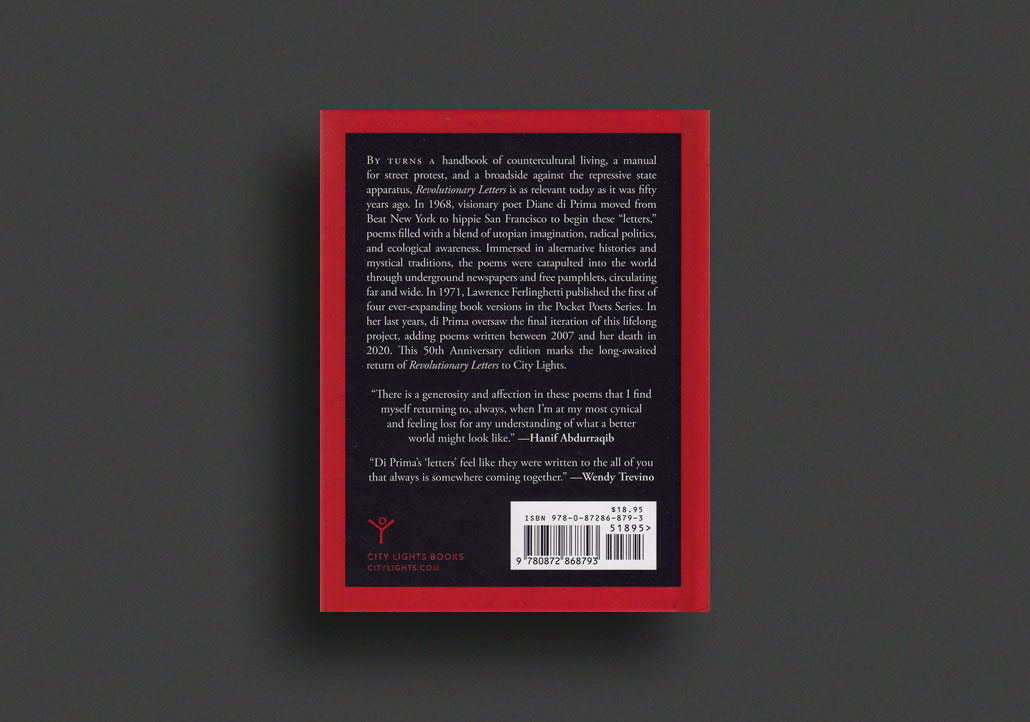
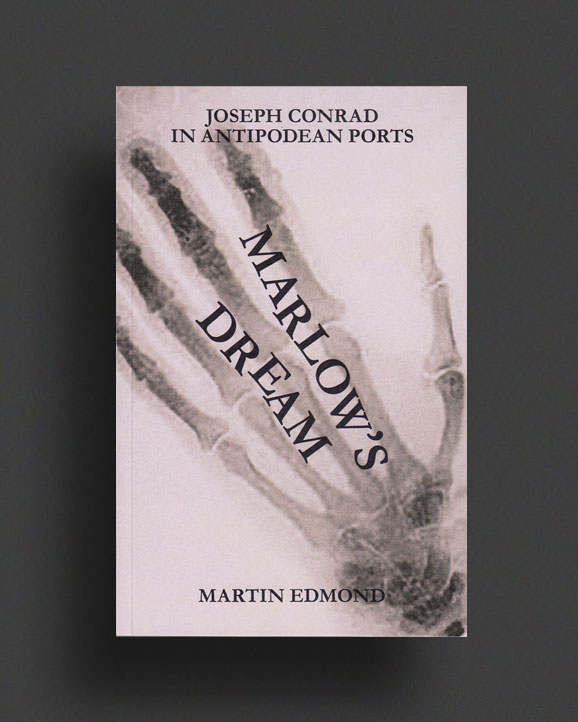
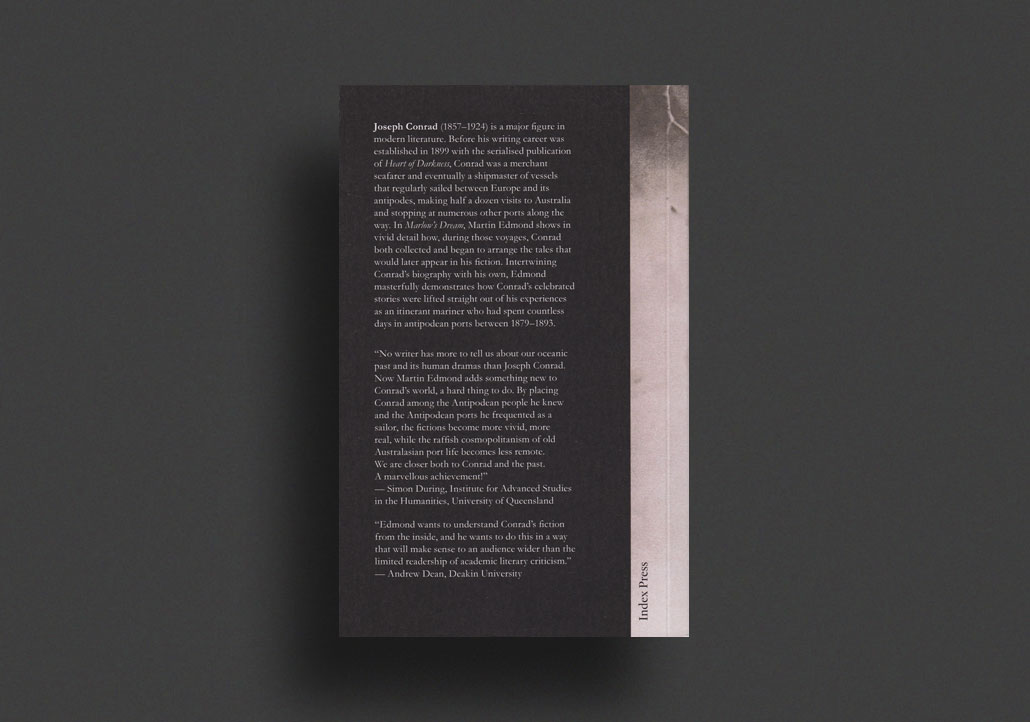
Joseph Conrad is a major figure in modern literature. Before his writing career was established in 1899 with 'Heart of Darkness', Conrad was a merchant seafarer and eventually a shipmaster of vessels that regularly sailed between Europe and its antipodes, with several visits to Australia & New Zealand. In 'Marlow’s Dream', Martin Edmond shows in vivid detail how Conrad both collected and began to arrange the tales that would later appear in his fiction during these voyages. Intertwining Conrad’s biography with his own, Edmond masterfully demonstrates how Conrad’s celebrated stories were lifted straight out of his experiences as an itinerant mariner who had spent countless days in antipodean ports between 1878–93.
Martin Edmond is the author of more than twenty books. He has a Doctorate of Creative Arts from Western Sydney University where he wrote his dissertation, which later appeared as the book Battarbee and Namatjira. Edmond’s works of memoir and biography about art and artists include Dark Night: Walking with McCahon, The Supply Party (on artist Ludwig Becker), Chronicle of the Unsung, winner of the 2005 Montana Book Award for Biography, and The Resurrection of Philip Clairmont. His other books include Luca Antara, Waimarino County, The Autobiography of My Father and The Expatriates (the latter including a history of Joe Trapp, the long-serving director of the Warburg Institute who was from New Zealand). In 2013 he received the New Zealand Prime Minister’s Award for Literary Achievement in Non-Fiction in recognition of hisoutstanding contribution to literature.
1984 / 2003, English
Softcover, 340 pages, 20 x 13 cm
Published by
Canongate Books / Edinburgh
$39.00 - Out of stock
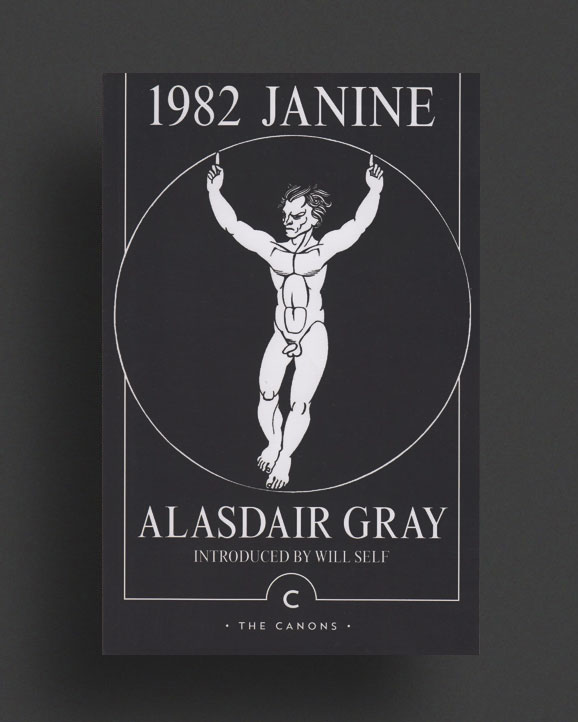
The unforgettable, challenging and experimental second novel from the author of Lanark. Published in 1984, 1982, Janine remains Scottish author Alasdair Gray's most controversial work. Its use of pornography as a narrative device attracted much criticism, although others, including Gray himself, consider it his best work.
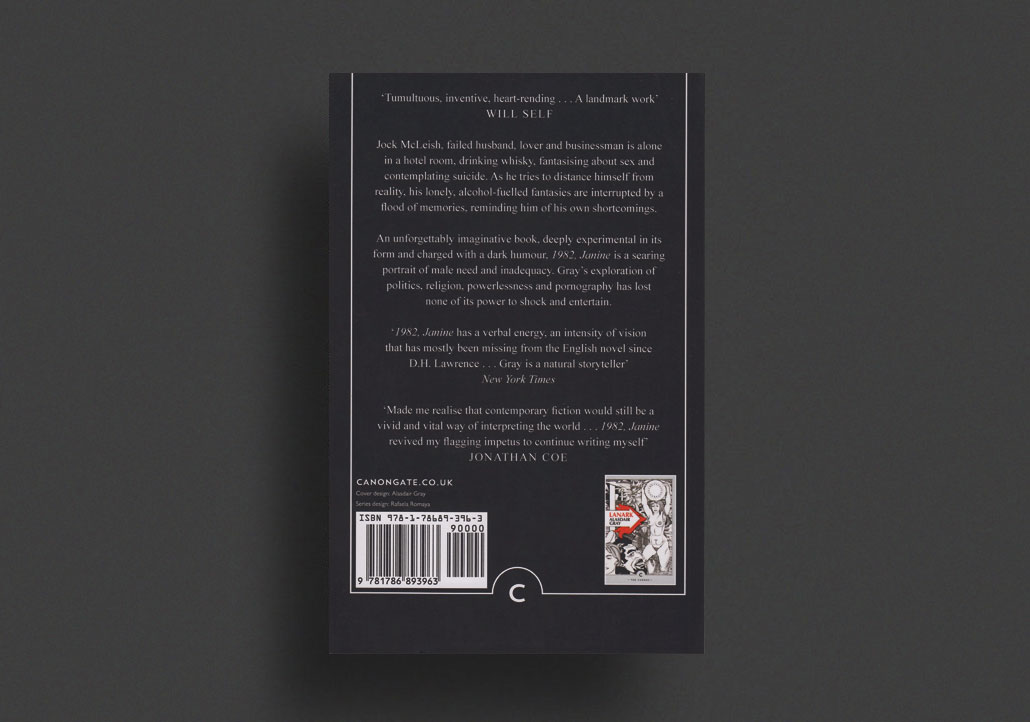
Jock McLeish, failed husband, lover and businessman is alone in a hotel room, drinking whisky, fantasising about sex and contemplating suicide. As he tries to distance himself from reality, his lonely, alcohol-fuelled fantasies are interrupted by a flood of memories, reminding him of his own shortcomings.
An unforgettably imaginative book, deeply experimental in its form and charged with a dark humour, 1982, Janine is a searing portrait of male need and inadequacy. Gray's exploration of politics, religion, powerlessness and pornography has lost none of its power to shock and entertain.
Introduced by Will Self.
"Perhaps the finest artist/writer of his generation . . . Tumultuous, inventive, heart-rending . . . A landmark work"—Will Self
"1982, Janine has a verbal energy, an intensity of vision that has mostly been missing from the English novel since D.H. Lawrence . . . Gray is a natural storyteller and it is the wit and energy of his language that keep the rendering of Jock's lonely, wasted life from being unbearably depressing. The richness of this novel and the pleasures of its language and form are sufficient affirmation, a real message of hope"—New York Times
"Made me realise that contemporary fiction would still be a vivid and vital way of interpreting the world . . . 1982, Janine revived my flagging impetus to continue writing myself"—Jonathan Coe
"1982, Janine is not pornography but a thoughtful and sad study of the human predicament; to be trapped in a world where the little man, woman or country will always be exploited by the big bullies"—Irish Independent
2022, English
Hardcover, 448 pages, 21.5 x 25 cm
Published by
FAB Press / UK
$120.00 - Out of stock
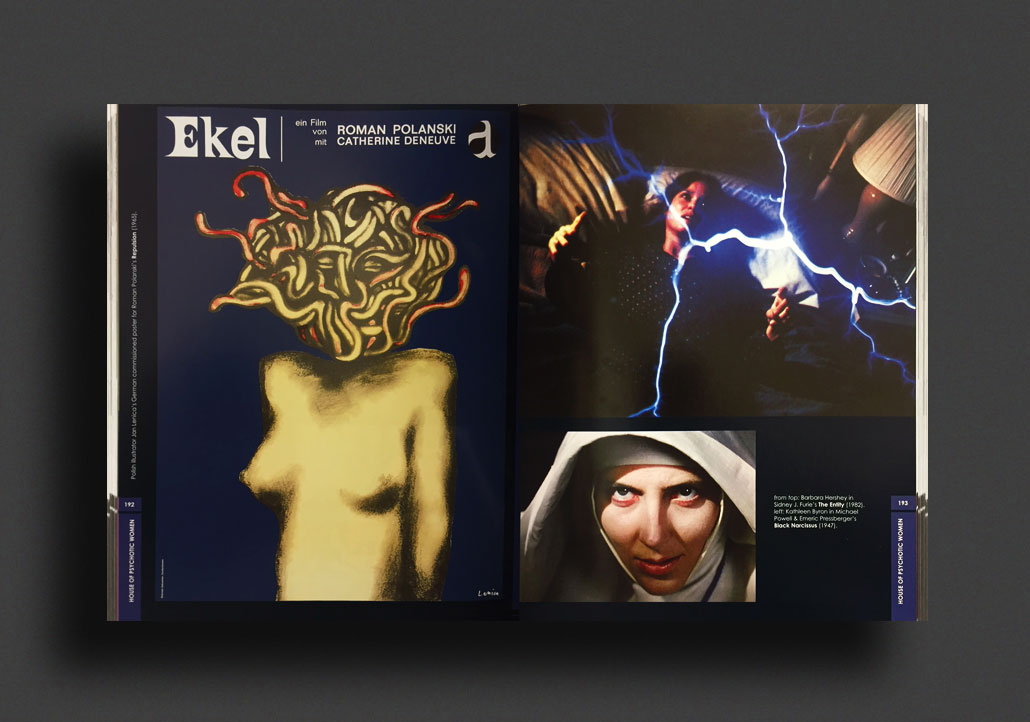
In 2012, a book debuted that would go on to canonical status and usher in a new way of writing about film. Kier-La Janisse's HOUSE OF PSYCHOTIC WOMEN is an autobiographical exploration of female neurosis in horror and exploitation films that examines hundreds of films through a daringly personal lens. In this pioneering work, anecdotes and memories interweave with film history, criticism, trivia and confrontational imagery to create a reflective personal history and a consideration of female madness, both onscreen and off.
To mark its 10th anniversary, Kier-La Janisse and FAB Press have reteamed to produce an expanded edition the book, featuring new writing on 100 more films - many of which were inspired in part by the book itself - and hundreds of new images. This first pressing of the Expanded Edition has been issued as a large format hardcover.
Cinema is full of neurotic personalities, but few things are more transfixing than a woman losing her mind onscreen. Horror as a genre provides the most welcoming platform for these histrionics: crippling paranoia, desperate loneliness, masochistic death-wishes, dangerous obsessiveness, apocalyptic hysteria. Unlike her male counterpart - 'the eccentric' - the female neurotic lives a shamed existence, making these films those rare places where her destructive emotions get to play.
This sharply-designed book, including a 48-page full-colour section, is packed with 680 rare stills, posters, pressbooks and artwork throughout, that combine with family photos and artifacts to form a titillating sensory overload, with a filmography that traverses the acclaimed and the obscure in equal measure. Films covered include The Entity, The Corruption of Chris Miller, Singapore Sling, 3 Women, Toys Are Not for Children, Repulsion, Let's Scare Jessica to Death, The Haunting of Julia, Secret Ceremony, Cutting Moments, Out of the Blue, Mademoiselle, The Piano Teacher, Possession, Antichrist and hundreds more!
2023, English
Hardcover, 106 pages, 21 x 14.5 cm
Published by
Amphetamine Sulphate / Austin
$46.00 - Out of stock
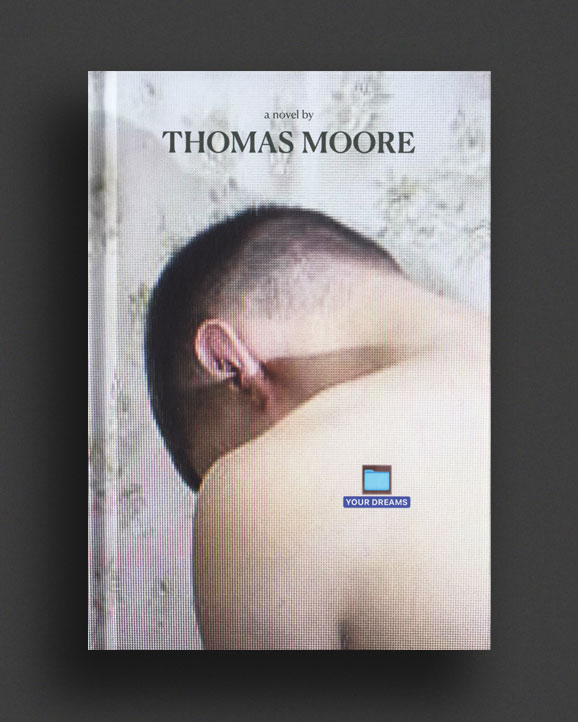
The long-awaited new novel from a major literary talent. With cover design by Michael Salerno (KIDDIEPUNK).
“I’m so close to falling apart. Fuck it. Who isn’t?”
Thomas Moore’s latest novel Your Dreams, the follow-up to 2021’s devastating Forever, is a visceral yet contained inquiry into the endless need to be understood. Eavesdropping on a debate about cancelled bands, listening to a close friend’s explanation of his disturbing desires, facilitating a conversation about kinks at a party until it goes wrong, Moore’s narrator is less of a character than a witness of desperate disconnection. Your Dreams, despite its impulse to hide, faces the reader head-on in an intimate unmasking, still grasping for closeness in a world of limits.
“Simple words. Deep emotions … beyond prose to another plane. Openness that pours through you.”
Jack Skelley, The Los Angeles Review of Books
“Thomas Moore is one of the best writers the world has in stock.”
Dennis Cooper
2021, English
Softcover, 140 pages, 21.5 x 13.5 cm
Published by
Amphetamine Sulphate / Austin
$34.00 - Out of stock
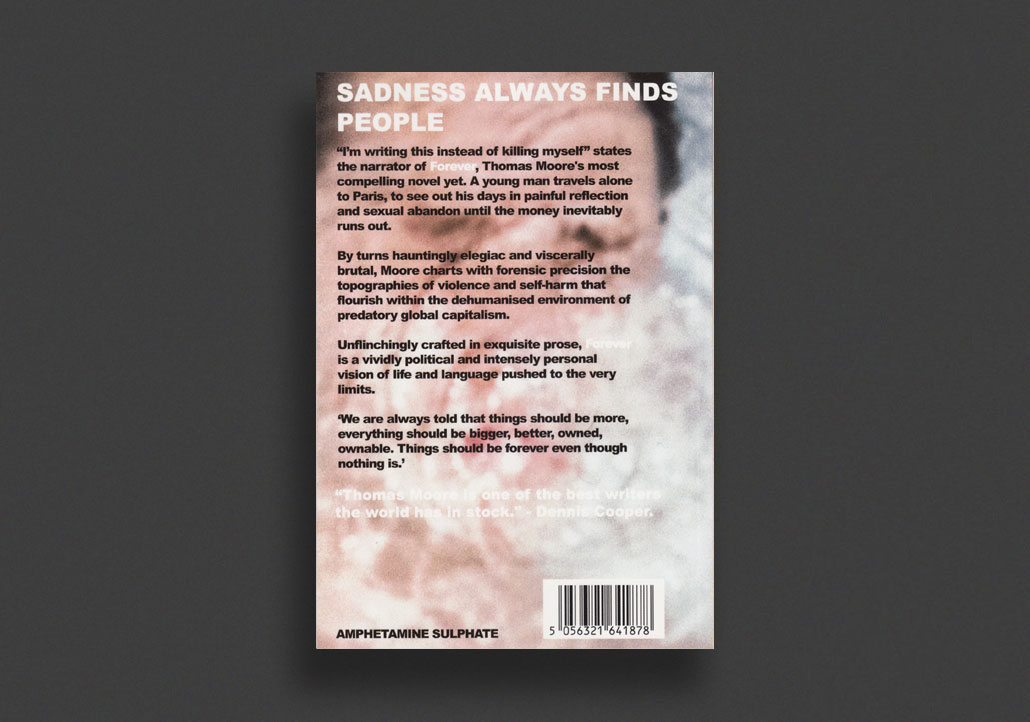
SADNESS ALWAYS FINDS PEOPLE
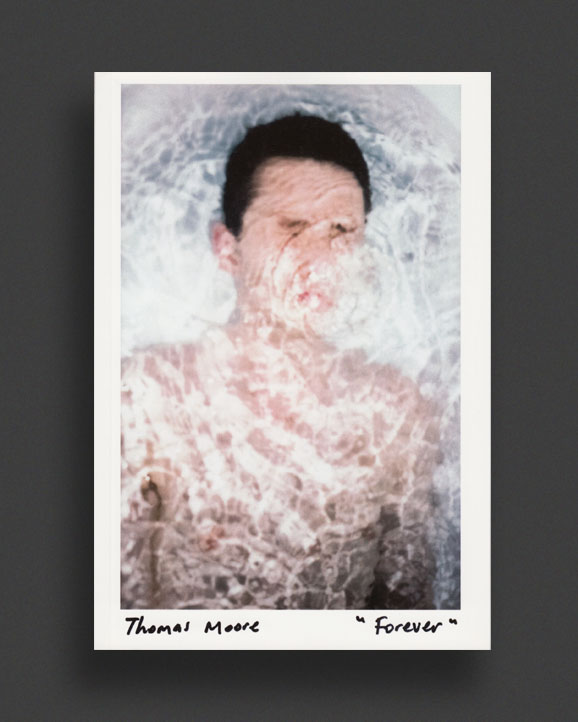
"I'm writing this instead of killing myself" states the narrator of Forever, Thomas Moore's most compelling novel yet. A young man travels alone to Paris, to see out his days in painful reflection and sexual abandon until the money inevitably runs out.
By turns hauntingly elegiac and viscerally brutal, Moore charts with forensic precision the topographies of violence and self-harm that flourish within the dehumanised environment of predatory global capitalism.
Unflinchingly crafted in exquisite prose, Forever is a vividly political and intensely personal vision of life and language pushed to the very limits.
"We are always told that things should be more, everything should be bigger, better, owned, ownable. Things should be forever even though nothing is."
"Thomas Moore is one of the best writers the world has in stock."—Dennis Cooper
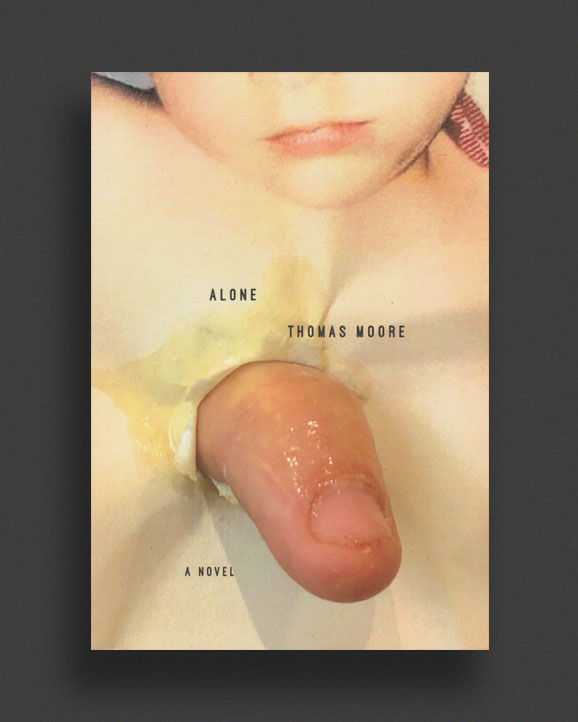
Thomas Moore's previous work include In Their Arms, When People Die, Small Talk at the Clinic (with Steven Purtill), and most recently the novel Alone, also published by Amphetamine Sulphate.
Cover art by Micahel Salerno
2020, English
Softcover, 166 pages, 20.5 x 14 cm
Published by
Amphetamine Sulphate / Austin
$44.00 - Out of stock
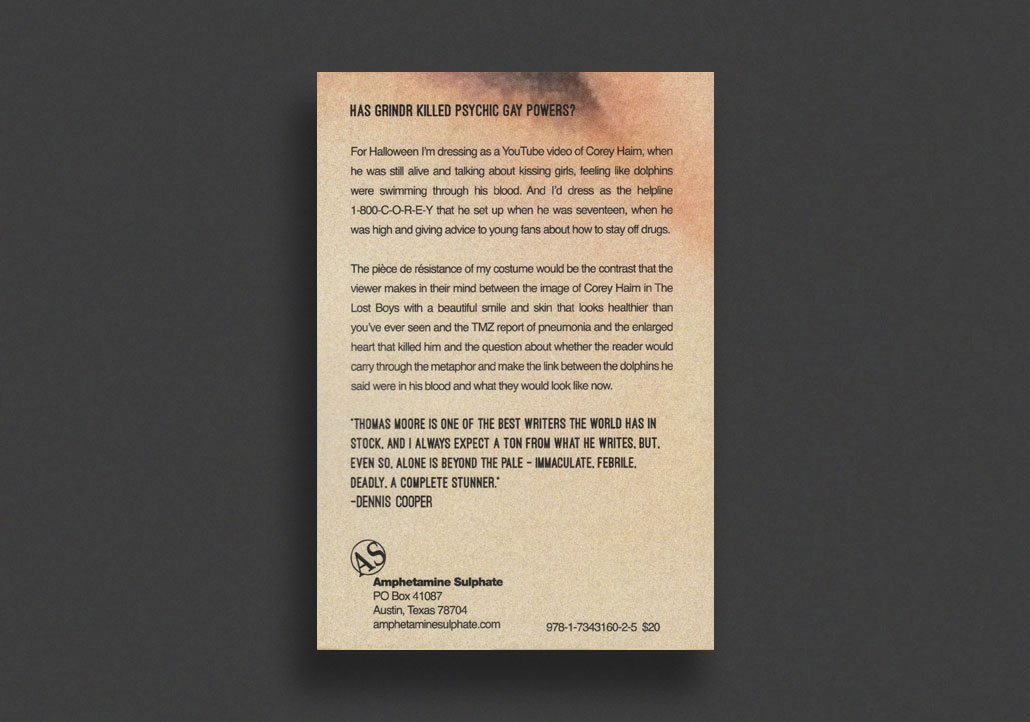
Has Grindr killed psychic gay powers?
For Halloween I’m dressing as a YouTube video of Corey Haim, when he was still alive and talking about kissing girls, feeling like dolphins were swimming through his blood. And I’d dress as the helpline 1-800-C-O-R-E-Y that he set up when he was seventeen, when he was high and giving advice to young fans about how to stay off drugs.
The pièce de résistance of my costume would be the contrast that the viewer makes in their mind between the image of Corey Haim in The Lost Boys with a beautiful smile and skin that looks healthier than you’ve ever seen and the TMZ report of pneumonia and the enlarged heart that killed him and the question about whether the reader would carry through the metaphor and make the link between the dolphins he said were in his blood and what they would look like now.
"Thomas Moore is one of the best writers the world has in stock, and I always expect a ton from what he writes, but, even so, ALONE is beyond the pale — immaculate, febrile, deadly, a complete stunner."—Dennis Cooper